What I Told McKeesport Area School Directors About the Unsafe Reopening Plan Proposed by Administrators

Screen Shot 2020-08-06 at 12.05.02 AM

 
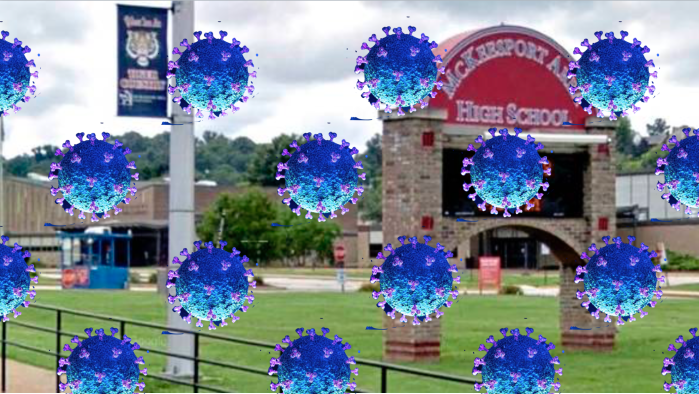
This evening I went back to my high school to tell school board members what I thought of administration’s reopening plan during the global pandemic.


McKeesport Area School Directors have not voted on the proposal yet.


So I gathered my thoughts, put on my mask and went to the work session meeting.


This is what I said:


“Thank you for allowing me to address you this evening. I appreciate all the time and effort you put forward to lead the McKeesport Area School District and do what’s best for students, staff, and families.


I am a life-long resident of this community. Most of my family graduated from this school as did my brother and I. Before I got a job as a teacher at a neighboring district, I subbed here in the high school for years. My daughter has attended the district for the past 6 years and has received a first rate education so far.


However, I am very concerned with Superintendent Dr. Mark Holtzman’s proposed plan to reopen schools. He would have students attend school buildings in-person for half days and do virtual instruction for the other half.


This is not a safe plan for students, staff and families. I ask you to reconsider and move to a reopening plan that begins with all students engaged in distance learning.


The reason is simple. New cases of COVID-19 are spiking throughout Allegheny County. Along with Philadelphia – where students will be getting 100% virtual instruction – we have some of the highest numbers of new cases in the state.


The largest district in Allegheny County – Pittsburgh Public Schools – has already decided to start with all virtual classes as have nearby East Allegheny, Woodland Hills and Wilkinsburg districts. We should do the same.


Safety has to be the primary consideration in reopening plans during a global pandemic. Maslow tells us kids cannot learn effectively unless their bedrock needs such as safety are met.


I appreciate Dr. Holtzman’s concerns about academic loss from distance learning – and under normal circumstances I would agree with him. However, these are not normal circumstances. The kind of academics he is proposing will not be as effective as he seems to believe.


Kids would have roughly 20 minute classes. As a classroom teacher, I know that little more will get done than taking role and getting kids ready to start. I am glad Dr. Holtzman reconsidered his original plan. which would have allowed students to forgo masks in the classroom and congregate only 3 feet apart. He is right to increase precautions with mandatory masks and 6 feet social distancing. But let’s be honest. If you think students will abide by them, you are engaged in magical thinking. Moreover, these precautions will inevitably have a negative effect on learning. Screen-to-screen instruction is less effective than face-to-face instruction, yes. But Mask-to-mask is NOT face-to-face. We may achieve more academically keeping kids online than trying to instruct through plague conditions.

 
But even if I’m wrong about that, it’s simply not worth it.


No academics is worth the death or debilitating illness of a child, family member or teacher.


Kids don’t learn well when their teachers are in quarantine. There are few accommodations made for special needs students on a ventilator. Childcare is the least of your worries if you survive the virus but are left with a lifelong disability as a result.


If we invite kids back into the classroom, we invite COVID-19 as well. If the virus is present in the community – as county data indicates – it will get into our schools where even the best precautions will not stop it from spreading and being brought home to families.


There is significant evidence that even the youngest kids can and do get sick. And those 10 or older are just as susceptible and can spread the disease at least as easily as adults.


Moreover, the CDC reports that African Americans and other people of color are hospitalized from COVID-19 four to five times more often than white people. What are we saying to our black and brown brothers and sisters if we value their health so cheaply. Don’t their lives matter?


Spreading this disease throughout the community will not help anyone.

 
And for those who respond that only a certain percentage of children and adults will die, which members of your family are you willing to sacrifice?

Whose lives are you willing to bet and do you really have the authority to play God?

We’re talking about human life here.


Speaking of which, let’s not forget our teachers and school staff.


Parents at least get a choice whether to send their kids to school in-person or opt for a cyber option. Dr. Holzman’s plan gives no such choice to staff. It does little to protect them from exposure to the virus. If you approve it, you are demanding staff decide between their employment and the possibility that they may take the Coronavirus home to their own children and families.


I have had some amazing teachers in this district who changed my life and made me the person I am today. My daughter loves her teachers. Approving this plan would be a slap in their faces.


Look, I know this is a tough decision. You are being asked to shoulder an incredible burden, but we are relying on you to make the best decision for all of us.


Please do not approve Dr. Holtzman’s reopening plan. Instead have all remote instruction until there have been no new cases in the county for a full two weeks.


Only then will it be safe to reopen school buildings.


Thank you.”


Superintendent Dr. Mark Holtzman responded:


“I’d like to respond to a couple of those statements if you wouldn’t mind.


First of all, it’s not Mark Holtzman’s plan. It’s the McKeesport Area School District’s plan. I worked with my administration tirelessly to make those efforts happen. I’m very proud of the efforts that we made. The time and effort that our administration put in.


I think moving forward looking at the big picture there is a virtual option for families so you are welcome to utilize or exercise that opportunity.


Unfortunately we are commissioned to make a very difficult decision for what’s the betterment of all children and providing options for those families that choose to use virtual learning as a platform is available to yourself, your family and anybody else’s family that is interested.


To say that it’s not fair for one person such as yourself or myself to make a decision to totally not have school in-person, I don’t know is the right decision as well. So I think we’re in the middle of this discussion where I think the best decision is not always the easiest decision.


We’re very comfortable with the proposal that we’re making and we hope that you can find the decision that is within those couple options that is in the best interest of your family.”


(My comments begin at 16:27. The audio is a bit muffled because I kept my mask on while speaking.)


 (Dr. Holtzman’s response begins at 23:13)

 
The school board is set to vote on the reopening plan next week at its meeting on Wednesday, Aug. 12, at 7:30 pm at the high school.


I still hope school directors vote to begin the year with virtual classes.


Like this post?  You might want to consider becoming a Patreon subscriber. This helps me continue to keep the blog going and get on with this difficult and challenging work.

Plus you get subscriber only extras!

Just CLICK HERE.

Patreon+Circle

I’ve also written a book, “Gadfly on the Wall: A Public School Teacher Speaks Out on Racism and Reform,” now available from Garn Press. Ten percent of the proceeds go to the Badass Teachers Association. Check it out!

1500x1000-garn-book-sale-2020-2

Gov. Wolf, You Can’t Shirk Your Duty to Close PA Schools During the Pandemic

Schools-Tour-2-1024x683


“The Buck Stops Here!”


President Harry S. Truman famously displayed a sign on his desk saying exactly that.


It indicated that he didn’t pass the buck but accepted responsibility for the way the country was run.


What does it say on your desk, Gov. Tom Wolf?


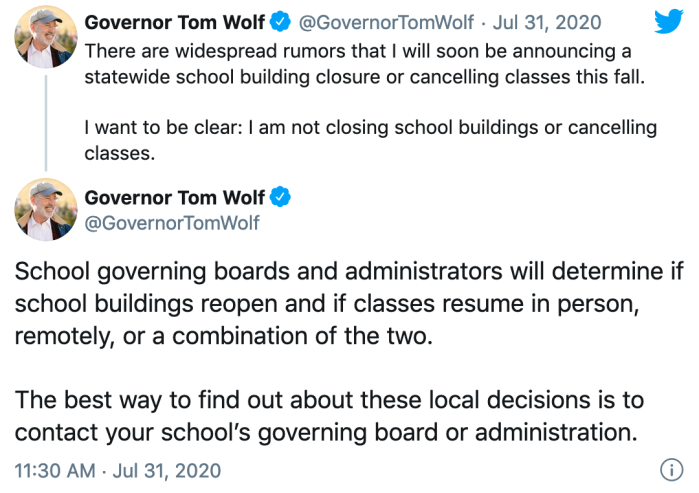
Your latest Tweets don’t fill Pennsylvania residents with confidence:


“There are widespread rumors that I will soon be announcing a statewide school building closure or cancelling classes this fall. I want to be clear: I am not closing school buildings or cancelling classes.”


“School governing boards and administrators will determine if school buildings reopen and if classes resume in person, remotely, or a combination of the two. The best way to find out about these local decisions is to contact your school’s governing board or administration.”


Screen Shot 2020-07-31 at 2.28.51 PM

 
Well, that’s two things you now have in common with President Donald Trump.


First, you’re making policy by Tweet.


Second, you are side stepping your obligations.


“I don’t take responsibility at all,” Trump said when asked about his administration’s inability to test Americans for the Coronavirus during the outbreak.


That’s what you sound like today.


COVID-19 cases have been spiking throughout the Commonwealth since early June – especially in Allegheny, Philadelphia, Delaware and Montgomery counties.


Today in Allegheny County, where I live, the Health Department reported the second highest increase in new cases – 244.

 
That is the most new cases in the state. Philadelphia comes next with 130 new cases. Together, these two counties make up more than 38% of the state’s new COVID-19 cases.


And yet we have school directors looking at this same data and making different decisions.


In the Pittsburgh region, school boards at East Allegheny, Woodland Hills and Wilkinsburg districts have all decided to reopen schools with classes completely on-line – at least to start. Meanwhile, in neighboring districts like McKeesport Area School District and Steel Valley School District, they are moving forward with hybrid plans that incorporate on-line and in-person classes in the physical school buildings.


And those are the outliers.


The majority haven’t made decisions yet complaining of a lack of safety guidelines from the county and a lack of direction from you, the governor.


You don’t get to decide what schools teach or how local communities make educational decisions.


But whether school buildings physically reopen or not during a pandemic is not an educational decision. It is a public safety decision.

 
Back in March when the virus started spreading throughout the state, you choose to close down businesses and schools.


As chief executive of the state, you had an obligation to do that.


It’s a crying shame that many in government have politicized every aspect of this disaster and the response to it.


I know you have taken a lot of criticism from Republicans trying to score points off your quick and sound judgement in this matter. They call you a tyrant because you did what every previous governor has done during a statewide disaster – you made decisions to safeguard lives.


Nothing has changed. If anything, there are significantly more cases reported every day now than in March.


If schools needed to be closed to in-person classes and education needed to be conducted on-line back then, that is still true today.


Perhaps this doesn’t have to be statewide. Perhaps it can be decided county-by-county. But you need to work collaboratively with county officials and school boards to coordinate the response to the virus.


Otherwise, there inevitably will be outbreaks at schools that reopen to in-person schooling. And since most districts are not separated by wide open spaces and residents frequently travel between them to buy groceries or other necessities, those outbreaks will spread.


A district that wisely decides to keep children 100% online will be susceptible to infections from residents in neighboring districts and bring those infections home.


This is not the responsibility of local school directors. It requires an authority that goes beyond the neighborhood and provincial decision making.


This is YOUR responsibility.


Frankly, the federal government, too, should be playing a larger role to help coordinate state responses. After all, the virus is not limited by state lines either.


But just because this President has neglected his duties, that does not give you the right to do the same.


If you refuse to make this decision, many more people will get sick from COVID-19 than would otherwise. Many more people will eventually die.


These are teachers, mothers, fathers, grandparents, and – yes – even children.


You can do something about that.


You have a responsibility to do something about it.


Do your duty.


Like this post?  You might want to consider becoming a Patreon subscriber. This helps me continue to keep the blog going and get on with this difficult and challenging work.

Plus you get subscriber only extras!

Just CLICK HERE.

Patreon+Circle

I’ve also written a book, “Gadfly on the Wall: A Public School Teacher Speaks Out on Racism and Reform,” now available from Garn Press. Ten percent of the proceeds go to the Badass Teachers Association. Check it out!

book-3

The Hybrid Model of School Reopening is Not Safe Either

Screen Shot 2020-07-25 at 10.44.19 AM

 
Safety is in the eye of the beholder.


No matter what you do, life involves some risk.


The question is whether certain actions or courses of action involve acceptable risk and exactly what you consider to be acceptable.


These issues are not academic. School directors across the country are juggling such questions in their reopening plans.


With federal and state officials largely leaving the decision up to local elected school boards of how to hold classes in August and September, people used to choosing between bids for text books and whether to renovate the gymnasium are forced to make life and death decisions for hundreds or thousands of students, staff and their families.


There are three main options:


  • (1) Open schools completely to in-person learning with safety precautions
  • (2) Keep classes entirely on-line as they were in April and May
  • (3) Offer some kind of hybrid of the two


Many schools are opting for this hybrid model.


This means reopening to in-person classes part of the time and on-line learning for the rest.


There are many ways to do this.


In my home district of McKeesport, this means having half of the students attend in the morning and the other half in the afternoon with the balance of their class work being done via the Internet.


In Steel Valley, the district where I work as a middle school teacher, this means half of the students attending full days on Mondays and Tuesdays, half on Thursdays and Fridays and the building is deep cleaned while students are taught completely on-line on Wednesdays.


In either case, parents can opt-in to an entirely virtual plan, but it’s expected that most adults would choose the hybrid model with its partial in-person classes for their children.


Let me be clear – the hybrid plan is preferable to the completely in-person proposal.


It reduces exposure to other people and environments compared to the entirely in-person program.


For instance, being in class half the day reduces student exposure by half. Being in class two out of five days reduces it by 60%.


However, let’s be real.


Any in-person instruction during a global pandemic incurs some risk. And that risk is far from negligible.


Moreover, the amount of risk is greater for adults than it is for children – both because adults would experience much higher exposure under such systems and because COVID-19 seems to affect adults more severely than children.


The hybrid model, then, is tantamount to putting children, teachers and families at risk for a reduced amount of time.


Why take the risk? On the premise that in-person instruction is more robust than on-line learning. Students learn more in the classroom from educators who are physically present than they do on the Internet.


There is significant evidence to back that up. However, this premise ignores the fact that invasive but necessary safety measures like wearing masks and practicing social distancing throughout the day will inevitably have negative effects on learning.


In short, mask-to-mask learning will not be as productive as face-to-face learning. We are in uncharted territory. It is entirely up in the air whether the necessary safety precautions of in-person learning – even during a hybrid model – will be better or worse than distance learning.


So the hybrid model tries to balance the unproven and questionable promise of increased academics against the threat of increased danger of disease.


How much danger? Well that depends to a large degree on where you live and the rate of infection present there.

 
I live in western Pennsylvania just south of Pittsburgh.


When schools closed in Allegheny County last academic year, a handful of people got sick each day, a hundred or more a week. For instance, 23 new COVID-19 cases were reported on March 19, and 133 for the week.


Now there are hundreds of new cases in the county every day and a thousand a week – 198 on July 24, alone, and 1,363 for the week.


Screen Shot 2020-07-25 at 11.34.44 AM
Source: PA Department of Health
Screen Shot 2020-07-25 at 11.34.56 AM
Source: PA Department of Health


That is not an insignificant risk. We have an infection rate of nearly 10%. We have some of the highest numbers in the state.


I don’t know how anyone can look at those numbers and conclude anything except that the risk of infection is GREATER today than it was when we took more precautions against it.


Moreover, the situation is little better nationwide.


Not a single state has met guidelines for reopening schools issued by the Center for Disease Control (CDC) in May.


Moving into Phase 1 would require a “Downward trajectory or near-zero incidence of documented cases over a 14-day period.” Moving to Phase 2 would require a “Downward trajectory or near-zero incidence of documented cases for at least 14 days after entering Phase 1.”


No state has experienced a “downward trajectory” for COVID-19 cases for 28 straight days. In most states, cases are increasing.


Nor does any reopening plan that I have seen – including McKeesport’s and Steel Valley’s – follow the 69-page CDC guidelines published by The New York Times earlier this month, marked “For Internal Use Only,” which was intended for federal public health response teams as they are deployed to hot spots around the country.


That document suggested several expensive and difficult safety measures such as broad testing of students and faculty and contact tracing to find people exposed to an infected student or teacher – none of which is being done locally.

 
The issue gets complicated though because this month the CDC bowed to pressure from the Trump administration and publicly softened its tone about reopening.

 
However, no matter how you look at it, reopening school buildings – even with a hybrid approach – increases risk significantly.

 
If school buildings are reopened with students and staff coming and going – even at a reduced rate through a hybrid plan – one would expect the virus already present in the community to gain access to our schools where it would be further spread to different segments of the community.


Schools are great meeting points. They are where local neighborhoods connect, learn, grow and share. Reopening them in a physical fashion allows for greater sharing of any easily communicable diseases in the area.


So exactly how communicable is COVID-19?


It’s often compared to influenza which infects millions of people every year yet these outbreaks rarely close schools.


Unfortunately, the consequences of getting COVID-19 are much more severe. So far the Coronavirus has shown itself to be 52 times as deadly as the flu.


Only about 0.1 percent of the people who got the flu in the US last year died of it, according to the CDC. Yet about 5.2 percent of those who came down with COVID-19 have died, based on the reported totals of cases and deaths.


During the 2018-19 flu season, about 34,000 people in the US died, according to the CDC. So far, 143,193 people have died of COVID-19 in the US, as of July 23.


And keep in mind there is a vaccine for the flu. There is nothing as yet that fights COVID-19.


Some say that even given such statistics, children are less susceptible than adults.


However, the virus was only discovered in 2019. So little is known about it – for instance, the low percentage of cases in children may be because schools were closed in April and May before many kids were exposed to it.


A recent South Korean study – the most in depth of its kind to examine how the virus affects children – found that it is especially active in older kids.


“For people who lived with parents between the ages of 10 and 19, 18.6% tested positive for the virus within about 10 days after the initial case was detected — the highest rate of transmission among the groups studied. Children younger than 10 spread the virus at the lowest rate, though researchers warned that could change when schools reopen,” wrote Stephen Stapczynski for Bloomberg News.


Jeffrey Shaman, an epidemiologist at Columbia University agreed.


“So long as children are not just a complete dead end – incapable of passing the virus on, which does not seem to be the case – putting them together in schools, having them mix with teachers and other students will provide additional opportunities for the virus to move from person to person,” he said.


Do such facts represent an acceptable risk for opening schools – even with a hybrid model?


Education Secretary Betsy DeVos says it does.


She said, “there’s nothing in the data that suggests that kids being in school is in any way dangerous.”


However, if even .02% of public school students were likely to die if school buildings were reopened, that’s 11,320 children!

 
Are we willing to risk the lives of tens of thousands – perhaps more – children on the unproven promise of a slight improvement in academics?

 
And keep in mind that doesn’t even take into account the cost to adults.

 
According to a new report from the Kaiser Family Foundation (KFF), 1 in 4 teachers in the U.S. – roughly 1.5 million people – are at increased risk for complications if they become infected with the Coronavirus. This includes educators over the age of 65 and those – like myself – with a pre-existing health condition that makes them more vulnerable.

 
According to the CDC, death from COVID-19 is significantly more common in older adults. Though the median age of U.S. teachers is 42.4 years, nearly 19 percent of teachers are 55 and older, reports the National Center for Education Statistics.


Health conditions such as diabetes, cardiovascular disease and kidney disease also increase one’s risk for serious illness from the virus. The CDC warns that roughly 60 percent of American adults have at least one chronic medical condition, and about 40 percent have two or more.


The situation is even more dire when we look at parents and grandparents in students’ homes. The KFF issued a report in July concluding that 3.3 million adults 65 or older live in a household with school-age children.


And let’s not forget the racial component.


Most minorities are more susceptible to COVID-19 because of the higher rates of social inequality they are forced to live under.


According to the CDC, Native Americans and Black people are hospitalized from the Coronavirus five times more often than White people. Hispanic and Latino people are hospitalized four times more often than White people.


Physically reopening school buildings in communities that serve large populations of people of color, then, invites greater risk than in predominantly white communities.


Screen Shot 2020-07-25 at 1.24.46 PM
SOURCE: the CDC


In any case, though, reopening school buildings – even under a hybrid model – significantly increases the risk for all the people living there.


So in summary, it is clear that the three basic options for reopening schools each offer different levels of risk.


A full reopening of schools even with safety precautions brings the highest risk. However, the hybrid model also brings significant danger to students, teachers and families – even if somewhat less than full reopening.


Distance learning has the lowest risk of all. It keeps most children physically separate from each other and thus limits exposure to the virus to the greatest extent. Likewise, it limits jeopardy for educators and other adults because teachers would mostly come into contact with children through the internet and parents would not be further complicated through potential viral contacts of their children.


From an academic standpoint, distance learning certainly has its drawbacks compared with face-to-face learning. But compared with mask-to-mask learning, virtual instruction may actually be preferable.


In any case, increased risk of death or debilitating disease has a chilling effect on learning for all involved.


In most communities – perhaps all – a decision on school reopening that balances safety with academics would lean toward distance learning above anything else.


Even if on-line learning turns out to be less effective than that provided in the hybrid model, any deficiencies can be targeted and ameliorated once the pandemic ends.


As yet, death admits of no such remedies.


Like this post?  You might want to consider becoming a Patreon subscriber. This helps me continue to keep the blog going and get on with this difficult and challenging work.

Plus you get subscriber only extras!

Just CLICK HERE.

Patreon+Circle

I’ve also written a book, “Gadfly on the Wall: A Public School Teacher Speaks Out on Racism and Reform,” now available from Garn Press. Ten percent of the proceeds go to the Badass Teachers Association. Check it out!

book-1


McKeesport Area School District’s Reopening Plan is Based on Dubious Facts, Bad Reasoning & Takes Unnecessary Risks: An Open Letter to the Superintendent

Screen Shot 2020-07-15 at 8.29.25 PM

 
Dr. Mark Holtzman:


I am extremely concerned about the reopening plan for the McKeesport Area School District you offered on video Tuesday.


As a parent of a child in the district and a teacher in a neighboring district, I find the plan you put forward to be absolutely terrifying. It is badly reasoned, based on unproven facts, and takes unnecessary risks with students and staff.


In short, you propose reducing social distancing by half, requiring students to wear masks only occasionally, having zero temperature screenings and keeping schools open when students, staff and/or family get sick.


This is unacceptable.


And given that you said all superintendents in Allegheny County are meeting weekly to discuss reopening, my concern about McKeesport’s plan extends to all other local districts working under similar miscalculations.


Be assured I will send my concerns to the email hotline you provided because it was impossible to have public meetings to discuss this matter. Which brings me to my first concern – how can it be unsafe to meet in-person with the public to discuss reopening schools yet still be safe to open them for our kids?


I am an alumni of McKeesport. So is my wife, my brother and most of the people in my family. I’ve lived here my whole life.


My daughter is set to enter 6th grade this year. Up to this point I have been extremely happy with the education she has received in the district.


I am thankful that you’ve decided to give parents the option of virtual learning for their kids if they do not feel it is safe for them to return to school buildings, but your reopening plan will have impacts far beyond our individual households. A spike in COVID-19 throughout the community due to a bad school reopening plan will not be in anyone’s interests.


I know you are an educator and want to do what is best for the students in your care. However, in this case you have let your drive to ensure the best academics overshadow what is in the best interests of the safety and well being of the children, families and staff in the district.


You say you’re relying on facts as provided by the the Center for Disease Control (CDC), and health departments of Allegheny, Chester and Bucks County. However, almost everything you cite on the video is from one source – Bucks County.

 
Bucks County is very different from where we live in Western Pennsylvania. It encompasses a smaller area north of Philadelphia and has a reduced population – about 628,000 people.


Allegheny County includes the City of Pittsburgh, is geographically larger and has a more numerous population – about 1.216 million people.


Looking at the numbers, Bucks County has not handled the pandemic as well as Allegheny County. Though it has fewer people, they have more cases of COVID-19 – 5,841 compared to our 5,610. What’s worse, their death rate is substantially higher than ours – 511 to our 204.


Frankly, I do not feel comfortable basing almost our entire reopening plan on data provided by one county in the Commonwealth that may or may not have done a good job handling this pandemic.


We need to base our plan on county specific data from Western Pennsylvania and guidelines for the entire state.


In short, the plans provided by Bucks County are reckless and based on sketchy facts.


For instance, in the video you said people only get COVID-19 if they have been within 6 feet of someone not wearing a mask for 15 minutes consecutively. That or there has to be an exchange of fluid – someone sneezing, spraying spittle, etc.


It is true that the CDC has cautioned against being in such close proximity to someone else for such a prolonged period of time – within 6 feet for 15 minutes. However, the organization does NOT claim that this is the only way you can get the virus. They claim that being in this situation with someone who has tested positive for the virus (with or without a mask) means you should quarantine yourself for two weeks.


I am extremely upset that you plan to reduce social distancing in district schools from 6 feet to between 3 and 4 feet.


You again cite Bucks County to justify the position.


“…SARS-CoV-2 is spread most commonly through large respiratory droplets when someone coughs or sneezes. A minimum three-foot distance is clearly associated with significant reductions in infection via respiratory droplets, as most droplets do not travel more than 3 feet due to gravity. This is the current standard used by the World Health Organization (WHO) successfully in many countries throughout the world today.”


Screen Shot 2020-07-15 at 3.52.53 PM


Once again this is not true. The WHO says people should keep at least 3 feet apart but doing so puts you at higher risk than 6 feet.


While it is nice to be assured that respiratory droplets don’t travel beyond three feet, experience tells us otherwise. It shouldn’t take much imagination or memory to recall a time when one of your own droplets traveled further in a moment of excitement. As a classroom teacher, I can tell you this happens often. When kids get excited, teachers better back up.


Be honest. This has nothing to do with 
Bucks County. You let slip the real reason here:


“Our classrooms are not very large – to put children 6 feet apart in school buses, classrooms, hallways, cafeterias, will be next to impossible with the overall square footage of those particular areas.”


I get it. You’re probably right. But that’s not a reason to skimp on safety. There are other alternatives to in-person classes.


If we cannot do it safely, we shouldn’t do it at all. Let’s not pretend it’s safe because of something Bucks County officials pulled out of their butts.


Then we get to temperature screenings – a precaution you say will not be taken when students enter our buildings at the beginning of the day.


This is highly imprudent.


It takes seconds to gauge someone’s temperature with an infrared thermometer – significantly less than getting through a metal detector – something we do routinely everyday at all district schools.


Yes, there is the problem of kids getting backed up in long lines, but that is not insurmountable. Staff can at least try to keep kids separated – perhaps having a staggered start for each grade would help.


Yes, I know the absence of a temperature does not guarantee someone is not infected. But any sense of safety is good. You know the metal detectors are not 100% accurate either.


You say it is up to the parents to make sure their kids don’t come to school with a raised temperature. Now that IS unreasonable. It is unfair to put the health concerns of an entire population on one or two parents who may not comply with the expectation.


I think the bigger concern is something you didn’t mention. What do you do with a child who has a temperature? How will you send him home? Who will see to him until a parent can come and get him? And will that person be at risk of getting sick?


These are hard questions to answer, but going in ignorance of a symptomatic student is worse.

 
Your position on masks is one of the most problematic in your entire reopening plan.


You propose to have children wear masks on buses but not in their classes. And the reason – because it’s just too hard to make kids wear them.


Screen Shot 2020-07-15 at 4.12.42 PM


Wearing masks has been a universal precaution when going out in public. It is one of the best things we can do to reduce the risk of getting the Coronavirus. Respiratory droplets here, there and everywhere, and you are just going to let them fly.


This is unfair to district children and the staff who serve them.


Look. I understand it would be incredibly difficult to get kids to wear masks. But if you cannot do it, pursue a different kind of schooling. Do not have in-person classes if you cannot do so safely.

 
Then we come to your position on what to do if someone gets sick.


First, it is telling that both you and your advisors in Bucks County are pretty sure this WILL eventually happen.


You do not think the precautions you’re taking will stop people from getting sick. You simply find it acceptable if the number of sick people is low.


“As COVID-19 will likely be with us for an extended period of time, and given that all school districts will almost certainly have cases, we want school districts to begin treating it similarly to the way we have successfully handled other communicable diseases in our schools, including pertussis (whooping cough), measles, strep throat, mumps, influenza, and meningitis. It is our strong intention to keep all classrooms, schools, and districts open, in the event of confirmed cases of COVID-19. One closure decision can lead to a potential crippling, and precedent setting domino effect of closures…”


Screen Shot 2020-07-15 at 4.21.30 PM


COVID-19 is not any of the diseases mentioned above. It can be more infectious and the consequences of getting it can be much more severe.


Moreover, we cannot prioritize keeping schools open over public health and safety concerns. But that is what you are proposing here.


You said:


“We won’t close schools if someone gets infected. It takes 6-8 days to get an accurate result from a COVID test. So that disease will have passed through and will no longer exist on any surfaces, classroom areas, people, etc. in the school by the time the COVID is confirmed. Therefore, there’s no reason to close schools. We’ll clean every inch of our classrooms on a daily basis.”


This does not mean that the danger is any less. It means that the danger may have passed by the time we know about it. How many people may be sick by then?


Mark, this is a bad plan. Let me give you a better one.


Start school this year with universal distance learning.


You already mentioned how the district will make sure all students have a one-to-one iPad initiative. You mentioned how virtual learning will be revamped to include face-to-face instruction.


Take it a step further.


Have all teachers develop their own unique distance learning initiatives.


And keep with such a plan until Allegheny County reports zero new cases for at least two weeks.


Then and only then – move forward with in-person schooling that includes as many social distancing protocols as possible.


It’s not perfect, but that would be the safest plan.


I’ll admit it would not be as academically effective as in-person learning.


But be honest. No matter what you do, in-person learning will be less effective this year due to the pandemic.


Kids will not learn to the best of their ability under the shadow of COVID-19. They will be scared and on edge – if they even show up.


We can go back and fix any academic deficits in the years to come. But no one can bring the dead back to life.


It’s much better to err on the side of safety.


I hope you’ll do that.


Our families deserve to be healthy. Your staff deserves to work without having to risk their lives. Our children deserve the chance at a future.


Yours,


Steven Singer


Dr. Holtzman’s full video:

Dr. Holtzman’s Slides on Reopening:


Like this post?  You might want to consider becoming a Patreon subscriber. This helps me continue to keep the blog going and get on with this difficult and challenging work.

Plus you get subscriber only extras!

Just CLICK HERE.

Patreon+Circle

I’ve also written a book, “Gadfly on the Wall: A Public School Teacher Speaks Out on Racism and Reform,” now available from Garn Press. Ten percent of the proceeds go to the Badass Teachers Association. Check it out!

thumbnail_IMG_8249

Pittsburgh Charter Schools Take Federal Bailout Money Meant for Small Businesses

Screen Shot 2020-07-15 at 12.39.01 AM

 
Are charter schools small businesses or public schools?


They can’t be both.


Several Pittsburgh area charter schools took a bailout meant for small businesses after already getting monetary relief meant for public schools.


Environmental Charter School at Frick Park, Hill House Passport Academy Charter School, Manchester Academic Charter School and Penn Hills Charter School of Entrepreneurship all applied for and received substantial low-interest loans from the federal government’s Paycheck Protection Program (PPP).


The $660 billion federal initiative was intended to help businesses keep employees on the payroll and off unemployment benefits during the COVID-19 pandemic. The loans will be forgiven if businesses meet certain conditions such as retaining or rehiring employees.


However, charter schools – including those in the Pittsburgh region – already should have received financial relief through the federal CARES Act.


Pennsylvania got $523 million to distribute to both authentic public schools and charters. However, of the two, only charters were eligible for additional PPP funds.


So these ‘Burgh charters are double dipping. They’re receiving aid from two different federal sources while authentic public schools only can get aid from one.


The Environmental Charter School at Frick Park got a $2 million – $5 million cash infusion from PPP.


The Environmental Charter calls itself a nonprofit organization but there are many reasons to be dubious.


First, nonprofits usually are dedicated to furthering some social cause like helping the poor and minorities.


However, The Environmental Charter actually caters to upper socioeconomic and white students.


It serves wealthier children than surrounding schools. Just one-third of Environmental Charter students are eligible for free or reduced lunches compared to 71% at Pittsburgh Public schools.


Moreover, only 30% of the charter’s students are minorities. Pittsburgh Public serves a student body of which nearly half are African American.


Next, there’s the issue of who runs the institution.


All charter schools in the Commonwealth have to be designated as nonprofits. However, many like the Environmental Charter School hire for-profit companies to actually operate their day-to-day functions and make almost all of their major administrative decisions.


The Environmental Charter is run by Virginia-based Imagine Schools, one of the nation’s largest charter-management companies with more than 71 charters nationwide.


Since Imagine writes the Environmental Charter’s operating budget, the management company ends up paying itself for a number of services.


After the school gets funding from state, federal and community taxes (this year including bailouts from PPP and the CARES act), it pays 12 percent back to Imagine. This came to $406,000 in 2009, according to an independent financial audit.


The school also pays Imagine on a $250,000 loan that the charter operating company took out to launch the program. Payments come out to about $2,500 per month over 20 years with an interest rate of 10.524 percent.


The charter also pays Imagine rent on its building which was purchased in 2006 by Schoolhouse Finance – Imagine’s real estate arm – for $3 million.


The lease costs $526,000 annually and is binding until 2032 unless the school loses its charter.


Given such facts, it’s hard to imagine why we’ve allowed our tax dollars to prop up a business venture that could certainly afford to reduce its profit margins rather than rely on public support.

 
Hill House Passport Academy Charter School got a $150,000 – $350,000 bailout from PPP.


Unlike the Environmental Charter, Hill House does actually cater to low income and minority children. In fact, it was founded to help Pittsburgh students who are failing in another district and in danger of dropping out unless they receive some kind of academic intervention.


However, the results haven’t been stellar. Where the Environmental Charter was too white, Hill House serves almost exclusively black students. It is exponentially more segregated than neighboring authentic public schools (96% minority) and its students still have extremely poor academic performance.


The question remains whether these results are better than they would be at an authentic public school. Does the charter provide any value for these students or is it just a holding area?


Like the Environmental Charter, this so-called nonprofit hires a management company. In this case, it’s the infamous K12 Incorporated – a nationwide cyber charter network with a record of academic failure and financial shenanigans.


In 2016, the company reached a $168.5 million settlement with the state of California. The state claimed K12 had reported incorrect student attendance records and otherwise lied about its academic programs. The company ended up settling with the state for $2.5 million with an additional $6 million to cover the state’s investigation and K12 voided $160 million in credits it had given to the affiliated schools to cover the cost of their contracts.


Hill House offers a blended model with in-person teachers and virtual classes somewhat different than most K12 schools.


However, why the state should bailout such a dubious endeavor is beyond me.


Manchester Academic Charter School got a $350,000 – $1 million loan from PPP.


It is one of the oldest charter schools in the city, having started as a tutoring program in 1968 and becoming a full fledged charter school in 1998.


However, like Hill House, it is infamous for racial segregation and low academic performance. Approximately 99% of students are minorities.


In 2016-17,only 12% of the school’s students were proficient in math (state average is 46%) and 37% were proficient in language arts (state average is 63%).


Where Manchester fails at academics, it excels at administrative salaries. The school’s administrators take home beaucoup bucks while being responsible for fewer students than those at authentic public schools.


For example, Vasilios Scoumis, Manchester CEO for more than two decades, is given a $146,000 salary not counting a potential $15,000 yearly bonus though he is only responsible for 340 students.


Compare that with Pittsburgh Public Schools Superintendent Dr. Anthony Hamlet. He earns a $210,000 salary for managing a district of about 24,000 students.


But such high salaries for relatively little work aren’t only a hallmark at Manchester.
Environmental Charter School CEO John McCann earned $120,000 with a school enrollment of 630 students.


Nice work if you can get it!


Speaking of which, Penn Hills Charter School of Entrepreneurship got $350,000 – $1 million from PPP.


This is another so-called non-profit school run by the Imagine Schools company. It is highly segregated with 82% minority children.


Only 32% of students are proficient in math and 57% in reading – again below state averages.


The school suffered a scandal in 2015 when the state Charter Review Board overruled Penn Hills School Directors decision to deny allowing the charter to expand into a second building.


But given that the Charter Review Board is made up of six members – charter school advocates chosen by former Republican Governor Tom Corbett – any pretense to impartiality is laughable.


Penn Hills School Board – a duly elected body, not government appointees – outlined criticisms of the charter that do not put the entrepreneurial venture in a positive light.


Penn Hills School Board said the charter had failed to produce current student rosters, failed in record management, failed to accurately maintain student tuition payments, improperly billed the school district for special education students, failed to maintain and develop Individual Education Plans (IEPs), had poor academic growth and is under a Department of Education Corrective Action Plan setting forth 31 areas of needed improvement.

 
Directors were also leery of the venture because the charter planned to use half of the new building for students and to lease the remainder as office space.


Finally, the charter school sucks away necessary funding from the authentic public school. The Penn Hills School District paid Imagine about $3 million in 2014-15. Costs increased to $12 million a year and continue to rise.


So one wonders why we’re throwing more money at these charter schools.


Nina Rees, executive director of the National Alliance for Public Charter Schools (NAPCS) has spoken out of both sides of her mouth on the issue. She has insisted that charter schools be regarded as public schools and eligible for emergency aid – all the while advising charter schools also to apply for federal rescue funds for small businesses devastated by the pandemic.


Carol Burris, Executive Director of the Network for Public Education, did not mince words.


“Once again, the charter sector, through the lobbying efforts of Nina Rees…worked behind the scenes to gain fiscal advantage for the privately operated schools they claim are public schools.”


Education historian Diane Ravitch agreed.


“Charters claim to be ‘public schools’ when that’s where the money is,” she said. “But when the money is available for small businesses, they claim to be small businesses.”


Charters go where the money is.


We get the privilege of paying the tab.


If it were up to U.S. Treasury Secretary Steve Mnuchin, we wouldn’t even know about it.


Mnuchin only released the information to the public after 11 news organizations sued the Small Business Administration .


Even now, not all of it is available.


Moreover, the deadline to apply for a PPP loan has been extended to Aug. 8.


So if you haven’t seen some of the most infamous neighborhood charter schools taking advantage of the program, it may only be a matter of time.


ProPublica has put all the information into an easy to use search engine. Just enter a zip code and it will display all the businesses located there that received PPP loans.


This includes high tuition private prep schools like Sewickley Academy and Shady Side Academy both of which got $2 – $5 million, Winchester Thurston School which got $1 million – $2 million, and the charter schools listed above.


You can check it out here: https://projects.propublica.org/coronavirus/bailouts/


Like this post?  You might want to consider becoming a Patreon subscriber. This helps me continue to keep the blog going and get on with this difficult and challenging work.

Plus you get subscriber only extras!

Just CLICK HERE.

Patreon+Circle

I’ve also written a book, “Gadfly on the Wall: A Public School Teacher Speaks Out on Racism and Reform,” now available from Garn Press. Ten percent of the proceeds go to the Badass Teachers Association. Check it out!

book-1

Good News: Harrisburg is Not Cutting Education Funding! Bad News: Handouts for the Rich & Charter Schools

Screen Shot 2020-05-30 at 4.08.07 PM


If you live in Pennsylvania, you can breathe a sigh of relief now that the legislature has passed a stopgap budget that does not cut education funding.


But you can let out that breath in a cry of disgust when you see where much of that money is going and how many underprivileged kids will be left wanting.


GOOD NEWS


With the economy in tatters due to the Coronavirus pandemic, the state legislature never-the-less passed a budget this week providing flat funding for most state programs for five months.


The major exception is public schooling. That has been fully funded for the entire year.


So for 12 months, there will be no state cuts to basic and special education or block grant programs for K-12 schools. Nor will there be state cuts to pre-kindergarten programs or colleges and universities receiving state funding such as community colleges.


That’s really good news in such uncertain times.


School directors can get their own financial houses in order for 2020-2021 without wondering whether the state is going to pull the rug out from under them.


In any other year, flat funding would be a disappointment though.


Public schools have basically three revenue streams – the federal government, the state and local neighborhood taxpayers.


The federal government pays about 10% of the cost across the board. The problem in Pennsylvania is that the state isn’t meeting its obligations thereby forcing local neighborhoods to shoulder most of the costs.


Pennsylvania state government pays a ridiculously low percentage of the bill – 38%.  That’s the 46th lowest in the country. The national average is 51%.


In rich neighborhoods, the local tax base can pick up the slack. In middle class neighborhoods, they can try. But poor communities end up relying more on the state to help or else their kids (who already have greater needs growing up in poverty) have to do without.


Last year, Democratic Gov. Tom Wolf was able to increase funding for K-12 schools by $160 million, $50 million more for special education and $25 million for Pre-K programs.


Even this victory was a baby step to healing the billions of dollars looted from our schools during Republican Tom Corbett’s administration which has never been fully replaced or outpaced with increased inflationary costs.


Flat funding is great in a time of a global pandemic.


But in the broader view, it still shirks our duties to subsequent generations.


BAD NEWS


The 2020-21 state budget also includes $200 million in one-time funds to help districts pay for additional costs incurred during the Coronavirus crisis.


This includes the price of new technology to allow for distance learning, as well as deep cleanings in school buildings, new materials, remodeling, etc.


This money includes $150 million received from the federal government’s CARES Act and $50 million from state taxpayers.


That’s good news. Districts need extra money to help with unforeseen costs during this health crisis.


Unfortunately, this money is not being allocated by need.


Those with greater problems are not given more money to deal with them. Instead, the money is being divided nearly evenly.


If you think that’s fair, imagine dividing $10 so a rich person, a middle class person and a poor person could get lunch. They’d each get $3 and change. The poor person can eat off the dollar menu at a fast food restaurant. The middle class person can use it to pay for tip at a sit-down restaurant. And the rich person can light his cigar with it on the way to a fine dining establishment.


In the case of theCOVID-19 stimulus money, each school district will get a minimum of $120,000 while each intermediate unit, career and technical center, charter school, regional charter school and cyber charter school gets $90,000. If there is any money left over, those funds will be distributed to school districts based on 2018-19 average daily membership.


However, why should cyber charter schools receive this money at all? They don’t have any extra costs for transitioning to distance learning. That is their stock and trade already. Moreover, they don’t have buildings that need deep cleaning or remodeling. This money is a no strings gift to such enterprises while other educational institutions go wanting.


Moreover, brick and mortar charter schools almost always serve smaller student populations than authentic public schools. Why should they receive a flat $90,000? Wouldn’t it be better to given them a portion of this money based on the number of students they serve and the degree of poverty these kids live in?


In fact, wouldn’t it make more sense to do the same among authentic public school districts, too? Why should a rich district where almost everyone already has wi-fi and personal technology devices get the same as a poor one where these services are much less widespread? Why should the state give the wealthy as much help as those who can’t meet their basic obligations to children without it?


It’s not like the Commonwealth doesn’t already have a measure to allocate funding more fairly. The legislature passed a bipartisan Basic Education Funding formula that we could have used to ensured districts would have received funding proportionate to the needs of their students.


The fact that the legislature neglected to use it here shows too many in the Republican majority are not committed to equity. In fact, they revel in being able to bring unnecessary money to their wealthier districts.

THE COMING STORM

 
These measures from the state legislature are a start at addressing the financial impact of the 
Coronavirus crisis.


But the worst is yet to come.


Across the nation with the inevitable loss of taxes after shutting down the economy to save lives during the global Coronavirus outbreak, local districts are bracing for a 15-25% loss in revenues next fiscal year.


In Pennsylvania, districts anticipate $850 million to $1 billion in revenue shortfalls.


That could result in massive teacher layoffs and cuts to student services just as the cost to provide schooling increases with additional difficulties of life during a worldwide pandemic.


The state legislature can’t fix the problem alone.


The $13.5 billion in CARES Act stimulus provided to states is a fraction of the $79 billion that the federal government provided during the Great Recession. U.S. Congress needs to step up federal aide to protect our children and ensure their educations aren’t forfeit for economic woes they played no part in causing.


At the same time, Harrisburg can do more to stop giving handouts to educational entities that don’t need or deserve it thereby freeing up that money to patching holes in funding streams to local districts.


At the top of the list is charter school funding reforms already proposed by Gov. Wolf.


It is way passed time to end gross overpayments to cyber charter schools and eliminate all charter schools ability to profit off of students with disabilities. Gov. Wolf estimates this would save districts more than $200 million while stopping wasteful spending by charters on advertising and other things that should not be bankrolled by taxpayers.


Another way to generate extra money is to stop letting businesses and the wealthy cut their own taxes to support private and parochial schools.


The Educational Improvement Tax Credit (EITC) program allows people and businesses to donate their expected tax bill to the state for the purpose of helping parents pay off enrollment at a private or religious school for their children. Then these same people or businesses get between 75-90% of that donation back.


So if your tax bill is $100 and you donate $100, you can get back $90 – reducing your total tax bill to a mere 10 bucks.

Heck! Since this money is classified as a “donation” you can even claim it on your taxes and get an additional refund – even to the point where you end up making money on the deal! Pennsylvania even allows a “triple dip” – so you get the EITC tax credit, a reduction in your taxable income, and a reduction in your federal taxable income. We actually pay you to shortchange us on your taxes!

Now I’m oversimplifying a bit since you can only use the EITC for up to $750,000 a year, but it’s still a sweet deal for those who take advantage of it.


Meanwhile, this is less money for the rest of us to pay for much needed services. We lost $124 million in 2018-19, alone, to this program. Yet the legislature still voted to increase the program by $25 million last year.


We cannot afford to give away hundreds of millions of dollars annually to private and parochial schools while our authentic public schools which serve more than 90% of our children are underfunded.


And this doesn’t even address the blatant unconstitutionality of the program which, itself, is an obvious workaround to the separation of church and state!


It’s high time we closed this and many other loopholes that allow unscrupulous people and businesses to get away without paying their fair share.


Societies only work when everyone pulls their weight.


The commonwealth will only weather this storm if we stop the fiscal shenanigans and pull together for the benefit of all.


We are all being tested here.


Will Pennsylvania pass or fail?


Like this post?  You might want to consider becoming a Patreon subscriber. This helps me continue to keep the blog going and get on with this difficult and challenging work.

Plus you get subscriber only extras!

Just CLICK HERE.

Patreon+Circle

I’ve also written a book, “Gadfly on the Wall: A Public School Teacher Speaks Out on Racism and Reform,” now available from Garn Press. Ten percent of the proceeds go to the Badass Teachers Association. Check it out!

book-4

Pennsylvania Wants YOU to Give Standardized Tests to Your Kids at Home

Screen Shot 2020-05-23 at 1.23.46 AM


A multi-million dollar corporation wants to make sure Pennsylvania’s children keep getting standardized tests.

 
Data Recognition Corporation (DRC) and the state Department of Education are providing the optional Classroom Diagnostic Tools (CDT) assessments for use in students’ homes.


Students are not required to take the CDT in the Commonwealth unless their district decides to give it. The test is encouraged by the state as a way of telling how students will do on the required tests.

 
With this new option, parents finally can give multiple choice standardized tests to their own children on-line.

 
Which is kind of hilarious because no one really asked for that.

 
In fact, many parents, teachers and students breathed a sigh of relief when the requirement that students take high stakes assessments was waived this year nationwide.

 
With the Coronavirus pandemic closing most school buildings and students transitioning to on-line classes created from scratch by their teachers, there hasn’t been much time for anything else.

 
But the folks at DRC, a division of CTB McGraw-Hill, have been busy, too.

 
The Minnesota-based corporation sent out an email written by Matthew Stem, Deputy Secretary of Elementary and Secondary Education at the Pennsylvania Department of Education (PDE) to district contacts from Pittsburgh to Philadelphia encouraging the use of this newly available online CDT.

 
“I am pleased to announce that PDE is providing the Classroom Diagnostic Tools (CDT) as an optional additional resource for your Continuity of Education Plan,” Stem began.

 
“We anticipate that this option will be available through the reopening of schools in 2020.”

 
So if school boards and administrators choose, districts could assign the CDT at the end of this school year, during the summer or at the start of next school year even if school buildings are not yet open due to lingering pandemic problems.

 
This is the kind of academic continuity we should be rethinking not finding new ways to force on children.

 
For some state officials and testing executives perhaps it’s comforting that no matter what happens in this crazy world, at least we’ll still be able to sort and rank kids into Below Basic, Basic, Proficient or Advanced.

 
The rest of us would prefer more authentic education and assessment.


EVERYDAY USAGE


It should be noted that the CDT is not, in itself, a high stakes test.

 
It’s an optional test districts can assign to students in reading, math and science to predict how well they’ll do on the actual high stakes tests.

 
Normally, districts are encouraged (but not required) to give the CDT to students multiple times a year to determine where they’ll struggle on DRC’s other fine products like the Pennsylvania System of School Assessment (PSSA) tests given to children in grades 3-8 and the Keystone Exams given to high schoolers.

 
Of course this data is often used to determine which classes students are placed in, so it can play a huge role in deciding which resources and opportunities kids have.

 
A child who scores well can get in the advanced courses and gain access to all the field trips, guest speakers, pizza parties and other perks. Kids who score badly are often placed in remedial courses where they forgo all the glitz for extra test prep and the abiding label that they’re inferior to their classmates in the higher academic tracks.

 
However, you don’t really need the CDT to make such placements. Just put all the kids from wealthier families in the higher courses and kids living in poverty in the lower courses and you’ll have pretty much the same distribution.

 
Because standardized testing doesn’t really measure academics. It appraises socio-economics. And race. Let’s not forget race!

 
The Coronavirus pandemic actually leveled the playing field for the first time in nearly a century. Everyone – rich and poor – had their education disrupted.

 
But at least now with the reintroduction of the CDT, we can continue to discriminate against the poor black kids while privileging the richer whiter ones.

 
In some ways, that’s just the everyday injustice of American school policy.

 
However, the method DRC and PDE are using to clear the way for this particular scheme is truly spectacular.


A DISASTER WAITING TO HAPPEN


They’re enlisting parents as test proctors.

 
Normally, as a classroom teacher when my administrator demands I give the CDT to my students, I have to block out a few days and give the tests, myself.

 
I have to pass out entry tickets with each student’s username and password so they can login to the DRC app on their iPads and take the test.

 
If there’s a problem signing in, I have to try and fix it.

 
If kids are kicked out of the testing program and can’t sign back in, I have to deal with it.

 
If there’s a problem with the Internet connection…. I think you get the idea.

 
And all of these problems are extremely common.

 
In the last five years of giving the CDT, I have never had a single day go by when I didn’t experience multiple technological snafus, disruptions or downright clusters.

 
And that’s not to say anything of the times students read a question, don’t understand what it’s asking, wave me over and I’m just as dumbfounded as they are.

 
In fact, the only positive I can imagine from such a situation is that parents will finally get to see how badly written and full of errors these tests truly are. Even the guidance materials are full of misspellings and confusing verbiage.

 
When presented with this nonsense, many kids simply zone out, clicking random answers so they can be done as soon as possible and then put their heads down for the remainder of the time.

 
This is the lions den the state wants to throw parents into.


PARENTS AS CORPORATE DEFENSE

 
Admittedly, parents won’t have a full class of 20-30 students to deal with, but complications are guaranteed.

 
However, the good folks at DRC are prepared for that.

 
They have a handy “Parent/Guardian Test Administration Guide.”

 
Here’s what it has to say on ASSESSMENT SECURITY:


“Parents/Guardians should remind their student that the CDT test content must remain secure at all times. None of the materials from the online test may be copied or recorded in any manner.”

 
That’s quite a step down from what the same company warns students on the PSSA:


“…Copying of material in any manner, including the taking of a photograph, is a violation of the federal Copyright Act. Penalties for violations of the Copyright Act may include the cost of replacing the compromised test item(s) or a fine of no less than $750 up to $30,000 for a single violation. 17 U.S.C. $ 101 et seq”

 
I guess that since the CDT questions are just the ones that prepare you for the REAL test questions, it doesn’t matter as much if their security is put at risk here. Or perhaps the risk of letting kids go without testing and having people realize how unnecessary these tests are is greater than any loss in test security or accuracy.


TECHNICAL ISSUES EXPECTED

 
The guide also cautions that the test only may be taken using a Google Chrome Internet browser. If students don’t have one installed, there is a link for parents to follow so they can install it for their kids.

 
For some parents, I’m sure this would be no problem. But many of my students’ parents have little access or knowledge of technology. They would pull out their hair at the very suggestion and come running to teachers and administrators for help.

 
Which is exactly what DRC suggests they do.

 
Here’s what the guide recommends for technical support:


“If technical issues arise during testing, parents/guardians are asked to contact the student’s teacher and/or the student’s school office for technical support. DRC customer service staff cannot directly support issues related to each home’s technology configurations.[Emphasis mine.]

 
And this is true even if the test, itself, directs parents to contact the corporation:


“If a student receives an error message during the test administration that includes instructions to contact DRC for technical support, the parent or guardian who is assisting with the test administration should contact the student’s teacher or school office for additional instructions. Parents or students should not attempt to contact DRC’s customer service directly for technical assistance.

 
Teachers and/or a school’s technology staff will have the information needed to provide parents/guardians with the level of support to resolve most technology issues. If additional support is required, a school or district representative will reach out to DRC to determine a resolution.”

 
This is certain to put quite a strain on districts since these technological problems will occur not as they normally do within school buildings but potentially miles away in students’ homes.

 
Moreover, one of the most common glitches with the CDT often occurs with the entry tickets. These are typically printed by administrators and distributed to teachers who give them to students on test day. Students use the logins and passwords to gain access to the tests.

 
Stem’s plan would have these tickets distributed digitally over Google Classroom or whatever file sharing service is being utilized.

 
So this requires yet another level of distance and technological competency from parents and students just to access the tests. And once that access is gained, these logins need to be readily available in the highly likely event that students get booted from the program and have to reenter this data.


I’m sure there will be noooooooo problems at all with this. It will run very smoothly.


PARENTS AS PRISON GUARDS

 
But let’s say parents are able to help their children login to the test and no technical problems arise.

 
Can parents let their kids simply take the test alone up in their rooms?

 
No.

 
As a test proctor, you are expected to watch your children every second they’re testing to ensure they aren’t copying any information or cheating.

 
You can let your child have scratch paper, highlighters and calculators. But no preprinted graphic organizers, cell phones, dictionaries, thesauri, grammar or spell checkers, other computers or devices.

 
One concession DRC makes is that parents are encouraged to give the shorter Diagnostic Category CDT and not the full version. I’m sure distinguishing between the two on your child’s screen will be no problem at all.

 
This would reduce the test to 35-45 minutes – about half of the full CDT. However, times may vary – my own students have taken more than 180 minutes sometimes to finish the full version.

 
Still, none of this comes close to my favorite part of this catastrophe in waiting.

 
If parents still are uncertain about how to do all this, there is a link to a series of training videos on the PDE Website.

 
These are pretty much the same videos teachers are required to watch every year before giving the CDTs.


As you can imagine, they are perhaps our favorite moments of the year. We sometimes watch them over and over again. Not because they’re so riveting but because we’re required to before we give these infernal tests!

 
Oh, parents, you are in for a treat if your district decides to take advantage of this wonderful opportunity!


AN IMPOSITION ON PARENT’S TIME


Speaking of which, I wonder when Stem thinks parents will have the time to do all this.

 
Parents are working hard just to make ends meet. They’re trying to earn enough money to support the household, cook dinner, clean house, do laundry, and a host of other things.

 
Teaching is a full-time job and most parents don’t have the privilege to set aside that kind of time nor are they disposed to do this stuff in the first place.

 
When I teach my students over ZOOM, I rarely see parents guiding their kids through the lessons.

 
If a kid falls asleep, it’s up to me to somehow prod him awake over the Internet. If a child isn’t paying attention or playing on her phone, it’s up to me to direct her back on task.

 
In class, that’s fine. It’s my job and I’m right there in front of the child.

 
On-line, I cannot do it nearly as effectively. But I do my best because I can’t realistically expect all parents to step in here.

 
Yet DRC is expecting parents to do just that by becoming test proctors.


CONCLUSIONS

 
This is a terrible idea.

 
It will lead to fabulous disasters where teachers, administrators and parents fumble to make things work as DRC pockets our tax dollars.


Over the past decade, Pennsylvania and local school districts paid more than $1.3 billion for standardized testing. In particular, the state paid DRC more than $741 million for the PSSAs, Keystone Exams and CDT tests. Two of three DRC contracts were given sole source no-bid extensions.

 
Imagine what cash-strapped districts could do with that money.

 
Yet Stem, a former assistant superintendent in Berks County and former administrator in Lancaster, thinks we should give this money to corporations and then break our own backs meeting their needs.


Even if we could give the CDTs seamlessly online at home, it would hurt our most underprivileged children by taking away opportunities and unjustly labeling them failures.

 
No, if you ask me,it is not time to try to save standardized testing with a tone deaf plan to enlist parents as test proctors while kids are chained to the Internet.

 
It’s well past time to rethink the value of these tests in the first place.

 
We don’t need them.

 
Teachers can assess learning without the help of corporate America.


Our kids and their families deserve better than this.

 
Contact your local school directors and demand they NOT give the CDT – not now, not during the Coronavirus pandemic, not when the crisis is over, not ever again.

 
And if they won’t listen, opt your children out of standardized testing including diagnostics like the CDT. Then run for school board, yourself, with other likeminded parents and community members.

 
Write letters to the editor of your local paper, make some noise.


The people still hold the power. And we’re all being tested in more ways than one.


THE FULL EMAIL:

The following communication was initially broadcast by the Pennsylvania Department of Education on May 18, 2020. DRC is forwarding the same message to the district and school contacts on file in our databases.


Screen Shot 2020-05-23 at 8.51.55 AM


May 18, 2020

 
To: Superintendents, Principals, Charter School CEOs, and IU Directors
From: Matt Stem, Deputy Secretary
Subject: Availability of the Classroom Diagnostic Tools (CDT) for use by students at home


I am pleased to announce that PDE is providing the Classroom Diagnostic Tools (CDT) as an optional additional resource for your Continuity of Education Plan. The CDT is a set of online tools designed to provide diagnostic information to guide instruction and provide support to students and teachers. It is aligned with the content assessed on the PSSA and Keystone exams. We anticipate that this option will be available through the reopening of schools in 2020.


This at-home testing option will allow students to access the CDT from a “public” browser without having it installed on their computers or being configured to their District’s Central Office Services network. The test-setup tasks that teachers/school assessment coordinators routinely complete for classroom administrations of the CDT are the same for the at-home administrations. Test tickets (login credentials) will be distributed directly to the students by school staff. Teachers will have access to all CDT data/reports from the at-home administrations as usual. An overview of the at-home testing option and a guidance document for parents/guardians can be accessed from the following links (or directly from DRC’s INSIGHT Portal under General Information >> Documents >> 2019-2020 Classroom Diagnostic Tools >> Memos/Documents).


At-Home Testing Overview: https://pa.drcedirect.com/Documents/Unsecure/Doc.aspx?id=32997b8e-13cf-42f0-9c2c-af1689d89323 
Parent/Guardian Guidance: https://pa.drcedirect.com/Documents/Unsecure/Doc.aspx?id=cc242168-e06e-44d1-9fd4-ef859a519dab 


All CDTs (Full and Diagnostic Category) are available for use. However, it is highly recommended to only have students take the Diagnostic Category CDTs at this time. Students and their parents/guardians may benefit from a much shorter testing experience using the Diagnostic Category CDTs that are aligned to current instructional content. The shorter, more focused testing will still provide teachers and administrators with the same level of reporting and resources to adjust instruction and planning during distance learning.


Thank you for all your efforts to support students during this challenging time. If you have any questions, comments, or concerns, please contact the curriculum coordinator or CDT point of contact at your local Intermediate Unit. If you are interested in using CDT for the first time, contact PDE here.


Sincerely,


Matthew Stem
Deputy Secretary, Office of Elementary and Secondary Education
Pennsylvania Department of Education


Screen Shot 2020-05-23 at 8.52.08 AM


Like this post?  You might want to consider becoming a Patreon subscriber. This helps me continue to keep the blog going and get on with this difficult and challenging work.

Plus you get subscriber only extras!

Just CLICK HERE.

Patreon+Circle

I’ve also written a book, “Gadfly on the Wall: A Public School Teacher Speaks Out on Racism and Reform,” now available from Garn Press. Ten percent of the proceeds go to the Badass Teachers Association. Check it out!

thumbnail_IMG_8249

How Did America’s Schools Cope with Spanish Flu vs. Coronavirus?

Screen Shot 2020-03-30 at 10.23.47 AM


They say history repeats itself.


And if you’ve read any accounts of the bygone days of yesteryear, the current crisis certainly appears like a rerun.


Look at all the closed businesses, frightened people venturing out wearing face masks or self quarantined in their homes. It sure looks a lot like 1918.


The Spanish Flu epidemic that swept the nation a little more than a century ago bares more than a passing resemblance to COVID-19, the coronavirus. And the ways we are trying to cope with the situation are in many cases modeled on what worked a hundred years ago.


For instance, when our ancestors enacted social distancing policies to flatten the curve of infection, their infrastructures were better able to save lives. When they didn’t enact such policies, death tolls were greater.


That’s one of the major reasons many of us today are shut in our homes waiting this whole thing out. We want to give the hospitals a chance to deal with the cases that come in without people all getting sick at once and making a run on ventilators.


However, history has less to say about how we handle things like education.


After all, our forebears didn’t have as unified a response.


In general, closing schools was better to stop the spread of disease than keeping them open.


But what about actual academics? How did our progenitors make up missed work?


There-in lies a tale.


America’s school system seems to have met the crisis in three separate ways.


They either closed entirely, remained open or forced teachers to educate at a distance.


Wait. Educate at a distance? In 1918?


Yep.


But I’m getting ahead of myself.


PITTSBURGH

 
Let’s begin in my hometown of Pittsburgh, Pennsylvania.

 
City officials didn’t take the matter seriously enough and as a result, Pittsburgh ended up with the highest death rate of any major city in the country. The Spanish Flu killed at least 4,500 people – a smaller total than cities like Philadelphia, but it represented more than 1 in every 100 residents. Nearly 24,000 people sought treatment at local hospitals.


According to reports made to the city health department, things got so bad that at the epidemic’s worst, someone in Pittsburgh got the flu every 70 seconds and someone died from it every 10 minutes.


This resulted in a casket shortage across Western Pennsylvania as far away as Greensburg. Even in distant Ligonier, signs were posted along Lincoln Highway warning motorists, “You stop at your own peril.”


City officials were at least partly to blame.


Though local colleges and universities such as the University of Pittsburgh, Duquesne, and Carnegie Tech all closed their doors near the start of the outbreak, city public schools initially were kept open.


In early October, State Health Commissioner B. Franklin Royer made the decision not to close public schools, though Pittsburgh school administrators decided that anyone who was coughing or sneezing should be sent home.


However, as Kenneth White put it in his 1985 article “Pittsburgh in the Great Epidemic of 1918”:


“Enterprising students quickly discovered that a pinch of snuff or pepper, inhaled in school, provided a sure passport to freedom.”

 
By October 22, city council reviewed a report that 27,357 children – about one-third of the student body – were absent from school. Of this number, council knew of 6,070 students who had the flu and 53 who had died. In addition, many parents kept their children home for fear they’d get sick.


Only then were city schools closed – about three weeks after the epidemic took hold in the area.


Some surrounding districts like Ben Avon had closed schools as early as October 5. But many had followed the city’s example and suffered similar consequences.


Pittsburgh schools reopened on November 18. Though the Spanish Flu was not completely gone, it came back in two more waves through the area – however, neither was as devastating as the first crash.


I can find nothing specific about how surviving students made up missed academic work. Only that they missed 19 school days of class during the closure.


NEW YORK CITY


New York City reacted in a similar fashion as Pittsburgh but with different results.


While Pittsburgh’s mortality rate was nearly 1 in 100, New York’s was 4.7 per 1,000. City officials recorded approximately 30,000 deaths out of a population of roughly 5.6 million resulting from influenza or pneumonia.


However, just like Pittsburgh, New York kept its schools open.


In an October 5th New York Times article, Health Commissioner Royal S. Copeland explained his logic behind the controversial decision to keep students in class:


“New York is a great cosmopolitan city and in some homes there is careless disregard for modern sanitation… In schools the children are under the constant guardianship of the medical inspectors. This work is part of our system of disease control. If the schools were closed at least 1,000,000 would be sent to their homes and become 1,000,000 possibilities for the disease. Furthermore, there would be nobody to take special notice of their condition.”


In short, Copeland figured the schools could do a better job of ensuring children’s safety than their parents.


In class, teachers were expected to give each student a daily medical inspection and report the results to the school nurse and/or medical professionals.


According to Francesco Aimone in “The 1918 Influenza Epidemic in New York City: A Review of the Public Health Response”:


“School nurses and medical inspectors were instructed to follow up on teacher inspections and conduct home visits on absentee students to determine whether “… they or members of their family are sick, that physical examinations be carefully made, and that dry sweeping [in their home] be discontinued and ventilation sufficient.”

 
Many disagreed with Copeland’s decision including the Red Cross of Long Island.


Former Health Commissioner Dr. S.S. Goldwater put the blame squarely on the teachers who inspected students with “almost criminal laxity” and found the follow-up inspections “lamentably weak.”


CHICAGO


However, a similar strategy in Chicago didn’t repeat New York’s success.


Keeping schools open in the Windy City more closely emulated the situation in Pittsburgh.


According to a timeline of preventive measures published in the American Journal of Public Health by Chicago’s Health Commissioner Dr. John Dill Robertson, city schools weren’t closed because officials didn’t think children were getting sick more than adults. They thought it would be better to keep students indoors where they could be watched for symptoms.


However, children ended up dying from the flu in Chicago at a higher rate than their parents.


Like in Pittsburgh, any student who coughed or sneezed was immediately sent home – though eventually this also came with a mandatory home quarantine.


SMALLER TOWNS

 
Officials were more sensible in smaller towns like Adrian and Tecumseh, Michigan.


In both municipalities all schools were closed by the end of October when the epidemic began there.


By Dec. 12 there was a plan to reopen, however that was revised as the death toll continued to rise. Schools ultimately remained closed until January 1919.


Schools made up the missing days of class by extending the remaining year.
They stayed open for 30 minutes beyond their usual dismissal time and held half-day sessions on Saturdays.


Another small town that wasn’t taking chances was Pontiac, Illinois.


Not only did officials close the schools, they ended up using them as field hospitals for the sick.


Moreover, when classes were cancelled, school age children were forbidden from leaving their homes unless they had to run an errand. Anyone with the flu was immediately quarantined in his or her home.


Schools were closed on October 15 for what was originally supposed to be just five weeks. However, when the second wave of the flu hit, the closure was extended.


Things got so bad that from December 3rd through January 1st, school buildings were used as a hospital to treat those with the flu.


By early January, the worst had passed and schools were reopened. Beginning on January 10, 1919, the high school held an extra session on Saturday to help make up some of the missed class work.


This seems to be the general pattern. Larger cities tried to push on and keep things as normal as possible – with usually disastrous results. Smaller towns took more serious precautions and limited the death toll.


LAKELAND, FLORIDA


And then there’s Lakeland, Florida.

 
Leave it to this district in Polk County to be the oddball.


On Oct. 10, the schools were officially closed. But not really.


Superintendent of Lakeland Schools Charles Jones and Polk County Board of Public Instruction Superintendent John Moore ordered teachers to continue to report to work so they could help any students who needed remediation.
Jones wrote in the local Ledger newspaper:


“While the teachers will meet at the school building each day for the purpose of assisting any child who is deficient in certain subjects or all subjects, yet I want it understood that the pupils may see the teachers at their homes any time for instruction.”


Such instruction could be given over the telephone, if necessary, he added.


Moore took the matter a step further saying in a resolution published in the paper that teachers who failed to report to school or help students could have their pay docked.


Much of this proto-distance learning involved communication in the local paper.


Its pages included assignments from teachers to students and even teachers home phone numbers if students needed help.
 Examples of these assignments included reading passages from Shakespeare to drawing a map of North America.


IMPLICATIONS


The strangest thing about this incomplete survey of school responses is how much our current system is acting like Lakeland, Florida.


Almost all present day schools are closed with students supposedly self quarantined at home. This helps flatten the curve and minimize the chances of infection.


However, instead of waiting for the crisis to pass before addressing any academic deficiencies, many districts are requiring distance learning.


Teachers are being made to go in to school buildings or work from home creating online courses from scratch with little to no training.


True, this doesn’t expose educators to an added risk of catching the virus, themselves, but it does seem a bit mercenary.


We’re in a public health crisis where thousands of people are getting sick and dying. And the thing ourschool administrators are most concerned about is continued academic performance. They’d rather keep going with whatever quality of instruction can be provided in slapdash fashion than wait until it can be provided in the best possible circumstances.


They’d rather risk leaving behind those students without Internet access or whose special needs can’t be met online. Anything rather than extending the school year?


It’s interesting to compare today’s solutions to those of yesteryear.


Why didn’t more districts in 1918 try to make teachers instruct students through the newspaper and over the phone? Why didn’t more districts make teachers go to school buildings and even students homes during an epidemic?


Are we really doing the right thing by emulating those solutions?


Like this post?  You might want to consider becoming a Patreon subscriber. This helps me continue to keep the blog going and get on with this difficult and challenging work.

Plus you get subscriber only extras!

Just CLICK HERE.

Patreon+Circle

I’ve also written a book, “Gadfly on the Wall: A Public School Teacher Speaks Out on Racism and Reform,” now available from Garn Press. Ten percent of the proceeds go to the Badass Teachers Association. Check it out!

book-4

Bernie Sanders Would Be the First Jewish President – What That Means to Me

5e097191240000c81c5a4809

 
Being Jewish is not something I advertise.


Some of my earliest memories are trying to explain to school friends that no, I didn’t kill Jesus – and, yes, I do eat matzo but it isn’t made with baby’s blood – and would they like to come over to my house and play Legos?


I’ve been called “yid,” “kike,” “heeb,” even just plain “Jew” with the lips curled and the word hurled at me like a knife.


Heck. When I was a kid even the bus driver called me “moneybags,” though my family was far from rich.


So it makes sense to me that Bernie Sanders isn’t running for President as a Jew first.


He’s running on his policies and experience.


But it still hurts when pundits complain that there are now just two white men vying for the democratic nomination.


Um. Okay.
 
Sanders IS Jewish. You know that, right? If he were elected, it would not be business as usual. It would be unprecedented.


Yet that fact is almost always glossed over because it doesn’t fit the media narrative they’re selling.


Sanders is the “crazy socialist,” not the “historic Jew.”


This constant erasure is a slap in the face.


And I mean MY face, not just Sander’s.


I doubt it feels too good to him, either, but it feels personal to me, as well.


My family and I live just outside of Pittsburgh, about a half hour away from the Tree of Life Synagogue in Squirrel Hill where just two years ago 17 people were gunned down in perhaps the worst act of violence against Jews in our nation’s history.


I teach “The Diary of Anne Frank” to middle school children less than 15 minutes away.


I have relatives who belong to that congregation, though I didn’t know any of the 11 people who died.


Let me ask – were they white?


I’ll bet they thought they were, but all it took was an anti-Semite with a gun to challenge that.


Like Bernie, I lost my extended family in the Holocaust – great grandparents, great uncles and aunts, cousins,  who I will never meet. I grew up with only the closest of familial relations.


Before I was old enough to get in to see a PG-13 movie, I knew about mass graves, ghettos, cattle cars and crematoriums.


Generation upon generation of European Jewry never expected to be singled out for extermination. They probably thought of themselves as regular, everyday people, too – an US not a THEM.


Bernie would meet that same standard. Like all of us, he knows we’re white only until someone decides we’re not.


So when talking heads decide to erase the fact of Bernie’s ancestry, they aren’t just playing politics. They’re engaged in naked prejudice.


Let me be clear. I don’t bring this up out of some sense of political tokenism. Bernie shouldn’t be recognized just for appearances sake. He needs to be seen for who and what he is.


This isn’t about identity politics. It’s about basic truth.


When some folks complain about the way Bernie speaks or that he yells too much, they’re really showing a xenophobic bigotry.


Bernie is a Jewish man who grew up in New York.That is how people from there talk.


I’ve known scores of people who speak like that – often at the dinner table during family gatherings. Just because it isn’t a part of your personal experience doesn’t make it acceptable to dismiss.


If you belittled someone for speaking with a Spanish accent, it would be called out for what it is – prejudice.


But by ignoring Bernie’s Judaism, you allow all kinds of discriminatory preconceptions to pass as little more than valid criticisms.


Don’t get me wrong.


I don’t think Bernie’s Judaism is the most important thing about him or his campaign.


I wouldn’t support just any Jew who was running. For example, I wouldn’t back Joe Lieberman or Jared Kushner if they were seeking elected office.


But it DOES mean something that Bernie is in the hunt for the Democratic nomination and is Jewish.


For me, he typifies what is best about us.


He embodies the spirit of doing good for others and trying to make the world a better place. He seeks justice in economic, social, racial, gender and political relationships. He tells truth even when it’s uncomfortable to hear. And that includes the truth about the Israeli government’s reprehensible treatment of the Palestinian people.


In his 30 years in Congress he passed mountains of bipartisan legislation as the amendment king. He refused to support the Iraq War or cuts to social security. He supports unions, workers, public schools and universal healthcare.


Being Jewish does not take precedence to those things. But I hope supporting those things will help redefine what people think of when they think of Judaism.


Like this post?  You might want to consider becoming a Patreon subscriber. This helps me continue to keep the blog going and get on with this difficult and challenging work.

Plus you get subscriber only extras!

Just CLICK HERE.

Patreon+Circle

I’ve also written a book, “Gadfly on the Wall: A Public School Teacher Speaks Out on Racism and Reform,” now available from Garn Press. Ten percent of the proceeds go to the Badass Teachers Association. Check it out!

thumbnail_IMG_8249

Don’t Fear Summer Lee. Fear the Devil’s Bargain Labor Leaders Are Willing to Make Opposing Her

NEBBj8c5_400x400

 
Cancer or unemployment.


That’s the choice Pennsylvanians are being asked to make in 2020.


Do we allow hydraulic fracking to continue to destroy our environment and increase our risk of cancers and other debilitating illnesses?


Or do we clean things up and risk losing jobs?


Some labor leaders seem willing to chose the former on behalf of their constituencies.


That’s why the Pittsburgh-based Allegheny-Fayette Central Labor Council (PA AFL-CIO) voted to oppose the re-election of State Representative Summer Lee, the first black woman elected to the State House from the western part of the Commonwealth.


She chooses life.


And that might put some people out of work.


It’s a sad commentary on the state of the labor movement that union bosses are willing to make this trade – life for a living wage.


And it’s a completely unnecessary choice.


We can have BOTH jobs and health – if Democratic politics allow for minds open enough to see the truth.


Let’s get this straight.


Lee is a badass.


The Democrat represents Homestead and West Homestead – two of the three municipalities in the school district where I work as a middle school teacher. She also represents parts of Pittsburgh, Braddock, Swissvale, Rankin, Turtle Creek, Forest Hills and Churchill.


But the 32-year-old lawyer and community organizer is more than just a politician. She’s a local hero.


Just two years ago, Lee beat 20-year incumbent Paul Costa by a margin of 68-32%.


She helped found UNITE, a grassroots political action committee, which has successfully defeated several old guard Democrats in bed with the fossil fuel industry.


Most notably, UNITE was part of the effort that ousted Allegheny County Council President John DeFazio in favor of another Democratic insurgent, Bethany Hallam. Once again DeFazio’s pro-fracking and fossil fuel platform went down in flames to Hallam’s environmentally friendly policies by a margin of 54%-46%.


Fracking is a relatively new and dangerous method of extracting natural gas from otherwise inaccessible sources like the region’s abundant Marcellus shale. “Fracking fluid” made up of water, sand and harmful chemicals is injected in a high pressure blast into deep rock formations releasing natural gas, petroleum and other substances.


Fracking has been known to increase health risks like respiratory problems, a negative impact on pregnancies, and a host of other problems – and that’s not even considering the risks of spills. The process also has devastating environmental impacts including the escape of greenhouse gases, groundwater pollution and increase risk of earthquakes.


In Harrisburg most debate has centered around removing a Republican-backed sweetheart tax deal for the industry and not outright banning the process altogether.


Lee, Hallam and other UNITE Democrats are changing the conversation, yet some of the area’s labor unions aren’t coming along with these insurgent winners. They’re sticking with establishment figures.


The PA AFL-CIO has endorsed Chris Roland against Lee in the primary. He’s a white North Braddock councilman who supports fracking. 


Lee is a Democratic Socialist with a massively pro-labor campaign. She’s been endorsed by the Service Employees International Union (SEIU) and United Electrical Workers (UE).


She is the only incumbent who the labor council did not endorse.


The only reason is her environmental stance, her race, or both.


Lee supports a Green New Deal and tightening enforcement against illegal air emissions from steel mills.


Roland has already raised $77,635 mostly from local unions. Steamfitters Local 449 and the Laborers’ International Union of North America have both given him $20,000 while the local International Brotherhood of Electrical Workers (IBEW) and Plumbers locals each gave $10,000.


To combat this, Lee has raised $55,789.


Some pundits theorize that the move to stop Lee is doomed from the start because of her incredible popularity in her district. The real motivation is to weaken UNITE’s ability to fundraise against other pro-fracking Democrats.


It’s tragic that the labor movement has come to such a low point with leaders like PA AFL-CIO President Darrin Kelly willing to trade the health and safety of the people living here for the promise of a paycheck.


Kelly has been a vocal opponent of the Green New Deal fearing what it would do to fossil fuel employment in the area.


In an April interview with Payday, he said:


“When you have a situation where you are taking away from someone’s ability to feed their family, that is not going to be looked at favorably. I am going to be against it; I’m going to be vocal against it and not welcome it in Western Pennsylvania.”


He seems to forget that dead people don’t need a paycheck.


Trading the environment and the health and welfare of our friends and neighbors for a living wage is a bad deal.


Moreover, labor leaders opposing environmentalists like Lee ignore key aspects of her proposals.


A Green New Deal would create millions of sustainable new jobs. It would require replacing pipes, weatherizing homes, expanding railways, manufacturing wind turbines – all of which would require people to do the work.


These would be high quality union jobs with good salaries, benefits, safe working conditions, training opportunities, etc.


This opens a once in a generation opportunity for new jobs to upgrade and expand the Commonwealth’s crumbling roads, bridges, energy grid, and water systems. Not only would we repair what exists, we’d build a cleaner, more affordable, and more resilient infrastructure that would be there for our posterity.


We need to expand access to light rail and low-emissions public transit, replace lead pipes, build a smart grid for increased wind and solar power, replace storm water systems to prevent flooding and toxic runoff, and restore wetlands and other natural buffers to protect our communities.


These are exactly the things our labor leaders should be concerned about doing. These are exactly the policies we need to move forward into the future.


It’s time to stop the necrotic paralysis of labor propping up the dying fossil fuels industry. The future is with sustainable energy.


If we want to actually live to see that future, we need to back policies that save our children from getting sick, that preserves Pennsylvania’s natural resources.


Green New Deal Democrats like Lee and Hallam are the future.


It’s time the holdouts in the labor movement get with the program.


78345718_10157331312783860_2217528104966946816_n
Summer Lee, Mark Fallon and me at December’s Public Education Forum in Pittsburgh.


Like this post? I’ve written a book, “Gadfly on the Wall: A Public School Teacher Speaks Out on Racism and Reform,” now available from Garn Press. Ten percent of the proceeds go to the Badass Teachers Association. Check it out!
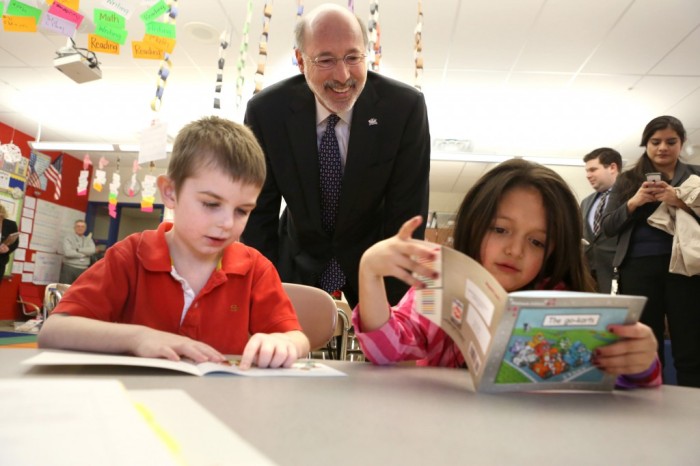
thumbnail_IMG_8249