SAT Adversity Score is an Antidote to Poison None of Us Need Take

Screen Shot 2019-05-26 at 7.40.58 PM


Let’s say someone gave you a vial of poison.


Would you drink it? Of course not.


What if he gave you the antidote, too. Would you take the poison then?


Heck no!


Why would anyone knowingly ingest poison even if they knew they could counteract its effects?


But that’s pretty much the situation high school students across the country are in today with the SAT test.


The College Board has admitted that the test unfairly assesses students – especially poor and minority students. However, if we add an “adversity score” to the raw score, then voila! Fairness!

 
The organization is piloting a program at 150 colleges and universities to adjust SAT scores to account for high schools and neighborhoods “level of disadvantage.”

The program is called the “Environmental Context Dashboard” and has been in the works since 2015 at the request of colleges. It provides admissions officers with information about students’ neighborhoods and high schools, such as the poverty level and the availability of challenging coursework. This is supposed to allow them to put raw scores into context before making admissions decisions.

 
But even if this actually remedies the inherent racial and economic biases inherent in the 93-year-old assessment, why take the bloody thing in the first place!?


The College Board is a 119-year-old organization boasting 6,000 member colleges, universities and other organizations. And despite its nonprofit status, it does make an awful lot of money.

 
The organization’s annual revenue is more than $750 million, according to its most recent publicly available 990 form. The organization’s CEO David Coleman makes $750,000 a year, its President Gaston Caperton makes more than $1.5 million a year, and 22 other employees earn at least $200,000.


Nice work if you can get it.


As such, the College Board needs to ensure millions of teenagers keep taking its moneymaking test as they apply to institutions of higher education. But more than 1,200 colleges and universities no longer require students seeking enrollment to take the SAT and among those that do the upstart ACT test is gaining popularity and market share.


The SAT’s new adversity score is a marketing tool – nothing more.


It’s the act of rats trapped in a corner. They’re admitting everything critics always said about them and offering a white flag.


We have no need to take it. In fact, we would be incredibly stupid to do so.


What the world needs is not an adversity score to counteract all the bad things the SAT does. It needs the absence of the SAT and all such standardized gatekeeper assessments.


Coleman is infamous as the father of a number of failed education reforms including the Common Core.


It’s absolutely hilarious to hear him admitting the biases of standardized testing since he’s been one of its leading proponents since the 1990s. It’s like hearing Colonel Sanders admit he doesn’t really like fried chicken all that much.


In the case of the SAT, he said colleges need to recognize student qualities that the test can’t capture, such as resourcefulness. Essays, letters of recommendation, and the “profiles” most high schools post sometimes capture the challenges and circumstances students face, he said, but in many cases colleges don’t find this information because they’re blinded by students’ tests scores.


Without a tool like the dashboard, he said, “the SAT could be misleading.”


YOU DON’T SAY!


“To warrant that the playing field is now level isn’t right or just,” Coleman added. “In the America we live in … the vast majority of students are working with a lot less than the top third. To then say that the SAT is enough to reflect what you can do, no, it isn’t.”

 
All of which begs the question of why we need the SAT test at all.


Why not just look at those essays and letters of recommendation. Look at student extra curricular activities, employment record – heck! – grades!


Classroom grades represent 180 days worth of data compiled by multiple educators over at least 12-13 years.


Admittedly, they aren’t completely objective but neither are standardized test scores. We do not have the power to crack open children’s skulls and see what’s going on in their brains. But classroom grades offer exponentially more data and of a much more equitable kind.


If all of that isn’t enough to make admissions decisions, then nothing will ever be.


But let’s be honest. This isn’t about the needs of schools or students.


It’s about the needs of big business enterprises like the College Board and the standardized testing companies; it’s about their need to turn a profit.


THAT is what this adversity score is out to save.


We’ve been criticizing the SAT and similar standardized assessments since they were first implemented in 1926. They were the creation of group of psychologists led by Robert M. Yerkes and Carl Brigham.


They were eugenicists who believed that white Europeans were superior to all others and used their pseudoscientific assessments to “prove” their biases. If there’s any doubt of that, I refer you to this passage from Brigham’s seminal work A Study of American Intelligence:

“The decline of American intelligence will be more rapid than the decline of the intelligence of European national groups, owing to the presence here of the negro. These are the plain, if somewhat ugly, facts that our study shows. The deterioration of American intelligence is not inevitable, however, if public action can be aroused to prevent it.”


Yerkes added:


“We should not work primarily for the exclusion of intellectual defectives but rather for the classification of men in order that they may be properly placed.”

 
It’s no wonder that the SAT is biased. Its creators were, and their assumptions about human nature still underlie the entire standardized testing enterprise.


No adversity score will ever undue that.


There comes a time when we need to simply stop the stupid racist crap we’ve been doing for generations – not try to prettify it so we can keep cashing in.


These sorts of conversions of scores have been tried before and routinely criticized as inaccurate.


The College Board tried something similar in the late 90s called the “striver’s tool.” It identified students who scored higher than expected based on racial, socioeconomic, and other data.


But it was shut down after it became a political football comparable to that of affirmative action – the same that has happened among certain conservatives with the new adversity score.


We’ve been engaged in unfair standardized testing for almost a century now.


Isn’t it time we admitted our mistake and moved on?


Or should we just keep drinking our poison and chasing it with a dubious antidote while our betters count their dirty money?


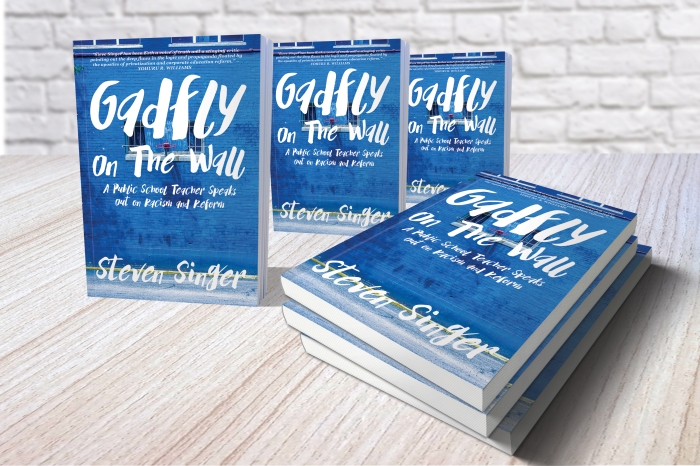
Like this post? I’ve written a book, “Gadfly on the Wall: A Public School Teacher Speaks Out on Racism and Reform,” now available from Garn Press. Ten percent of the proceeds go to the Badass Teachers Association. Check it out!
book-3


Charter Schools Are Quietly Gobbling Up My Public School District


Screen Shot 2019-05-19 at 7.49.57 PM


I work in a little suburban school district just outside of Pittsburgh, Pennsylvania, that is slowly being destroyed by privatization.


Steel Valley Schools have a proud history.


We’re located (in part) in Homestead – the home of the historic steel strike of 1892.


But today it isn’t private security agents and industrial business magnates against whom we’re struggling.


It’s charter schools, voucher schools and the pro-corporate policies that enable them to pocket tax dollars meant to educate kids and then blame us for the shortfall.


Our middle school-high school complex is located at the top of a hill. At the bottom of the hill in our most impoverished neighborhood sits one of the Propel network of charter schools.


Our district is so poor we can’t even afford to bus our kids to school. So Propel tempts kids who don’t feel like making the long walk to our door.


Institutions like Propel are publicly funded but privately operated. That means they take our tax dollars but don’t have to be as accountable, transparent or sensible in how they spend them.


And like McDonalds, KFC or Walmart, they take in a lot of money.


Just three years ago, the Propel franchise siphoned away $3.5 million from our district annually. This year, they took $5 million, and next year they’re projected to get away with $6 million. That’s about 16% of our entire $37 million yearly budget.


Do we have a mass exodus of children from Steel Valley to the neighboring charter schools?


No.


Enrollment at Propel has stayed constant at about 260-270 students a year since 2015-16. It’s only the amount of money that we have to pay them that has increased.


The state funding formula is a mess. It gives charter schools almost the same amount per regular education student that my district spends but doesn’t require that all of that money actually be used to educate these children.


If you’re a charter school operator and you want to increase your salary, you can do that. Just make sure to cut student services an equal amount.


Want to buy a piece of property and pay yourself to lease it? Fine. Just take another slice of student funding.


Want to grab a handful of cash and put it in your briefcase, stuff it down your pants, hide it in your shoes? Go right ahead! It’s not like anyone’s actually looking over your shoulder. It’s not like your documents are routinely audited or you have to explain yourself at monthly school board meetings – all of which authentic public schools like mine have to do or else.


Furthermore, for every student we lose to charters, we do not lose any of the costs of overhead. The costs of running our buildings, electricity, water, maintenance, etc. are the same. We just have less money with which to pay them.


But that’s not all. The state funding formula also requires we give exponentially more money to charters for students labeled special needs – orders of magnitude more than we spend on these kids at my district.


Here’s how the state school code mandates we determine special education funding for charter school kids:


“For special education students, the charter school shall receive for each student enrolled the same funding as for each non-special education student as provided in clause (2), plus an additional amount determined by dividing the district of residence’s total special education expenditure by the product of multiplying the combined percentage of section 2509.5(k) times the district of residence’s total average daily membership for the prior school year. This amount shall be paid by the district of residence of each student.”


So authentic public schools spend a different amount per each special education student depending on their needs. But we have to pay our charter schools an average. If they only accept students without severe disabilities, this amounts to a net profit for the charter schools – and they can spend that profit however they want.


Moreover, if they reclassify students without disabilities or with slight disabilities as special needs, that means more money for them, too. Is anyone checking up on them to make sure they aren’t gaming the system? Heck no! That’s what being a charter school is all about – little transparency, little accountability and a promise of academic results (which don’t have to pan out either).


In the 2015-16 school year, Steel Valley paid the 19th highest amount of its budget to charter schools in the state (9%) and that number is growing.


According to the state Department of Education, here’s how our charter school spending has increased:


Steel Valley Per Student Charter School Tuition:


2000-01 – 2012-13

Non-Special Ed: $9,321

Special Ed: $16,903


2013-14

Non-Special Ed: $9,731

Special Ed: $16,803


2014-15

Non-special Ed: $10,340

Special Ed $20,112


2015-16

Non-Special Ed: $12,326

Special Ed: $25,634


2016-17

Non-Special Ed: $13,879

Special Ed: $29,441


2017-18

Non-Special Ed: $13,484

Special Ed: $25,601


2018-19

Non-special ed: $14,965

Special ed: $32,809


All of this has real world consequences in the classroom. It means fewer teachers and larger class sizes. It means narrowed curriculum and fewer extracurricular activities. It means reduced options and opportunities for all children – just so a new business can duplicate the services already being offered but skim tax dollars off the top.


Our State Senator Jim Brewster understands the problem.


“Charters are strangling school districts, eventually will put them out of business. When you lose your school district, you lose your city,” he said in an article published by Public Source.


Brewster is a Democrat from McKeesport with four school districts being likewise “cannibalized” by charter schools.


Steel Valley School Board President Jim Bulger also characterized the situation as dire.


“ Charter Schools have become a twisted profit-making machine and not what they were originally intended for,” he said.


 “Originally charter schools were meant to serve a demographic that the public schools could not. For example being heavy in the performing arts or items like that. It’s unfortunate that several people have decided to twist this decent idea into a profit-making scheme that bleeds public education and its very soul.”


Much of the problem is in Harrisburg where legislators refuse to see or address the issue. And that’s often the best situation. Others actively make things worse.


For instance, the state used to reimburse each district for 30% of its costs to charter schools. Then in 2011, Republican Gov. Tom Corbett cut that while slashing the education budget by an additional $1 billion a year.


Though some of that money has been restored in subsequent budgets, the charter reimbursement has not. Putting it back in the budget would go far to alleviating the bleeding.


But legislators need to get serious about charter school reform.


We can no longer afford a system that requires authentic public schools to fund their own competition. In fact, schools should never be in competition in the first place. Every school should be excellent – and the only way to get there is to start with adequate, equitable, sustainable funding in the first place.


There are seven charter schools within 5 miles of my district: Propel Homestead, Propel Braddock Hills, Environmental Charter School at Frick PA, Propel Hazelwood, Academy Charter School (in Pittsburgh), Propel Mckeesport, and Propel East (in Monroeville).


In addition, there are 55 private schools in the same area. Though the Commonwealth doesn’t have school vouchers, per se, it does have a backdoor version supported by both Democrats and Republicans. Many of these private and parochial schools gobble up $210 million of state tax dollars through these tax credit programs – the Educational Improvement Tax Credit (EITC) and Opportunity Scholarship Tax Credit (OSTC) programs. And there’s a bill currently being considered in Harrisburg to increase that amount by $100 million this year and even more in subsequent years!


It seems our legislature has no problem spending on the school system so long as it isn’t the PUBLIC school system.


And the reason usually given for such support is the results privatized schools get. They claim to be better alternatives to the public system, but this is rarely if ever true.


Test scores are a terrible way compare schools, but charter and voucher schools rarely – if ever – outpace their authentic public school competitors. They either get similar scores or in many cases do much, MUCH worse.


For instance, take Propel Homestead.


In 2015-16, it served 573 students in grades K-12. Only 22% of students were proficient in math and 40% in Reading on state tests. Both scores are below state average.


Meanwhile, at Steel Valley High School during the same time period, we served 486 students in grades 9-12. In math, 50-54% of our students were proficient and 65-69% were proficient in Reading. That’s above state average in both cases. And we had similar results at our middle and elementary schools.


However, test scores are poor indicators of success.


Steel Valley Schools also had lower class sizes. We averaged 12 students per teacher. Propel Homestead averaged 15 students per teacher.


And then we come to segregation. Though both schools had significant minority populations, Steel Valley Schools had 42% minority enrollment, most of whom are black. Propel Homestead had 96% minority enrollment, most of whom are black.


So the authentic public school option is demonstrably of better quality, but our inability to bus students to-and-from school opens us up to predatory school charlatans who take advantage of our poverty.


And the situation is similar in surrounding communities. Poor districts serving impoverished minority students become targets for privatizers looking to make a fast buck off of our kids and families. They offer them a lower quality education and a slick sales pitch.


They increase segregation, lower academic quality, and get away with much needed funds that could help kids get a better education.


This nonsense has to stop.


The only schools that should be receiving public tax dollars are the authentically public ones.


They should have to abide by the same regulation, the same accountability standards, the same democratic governance, the same enrollment standards as authentic public schools. Otherwise, they should not qualify for public tax dollars.


We’re boring holes in the ship to make rickety life boats.


It’s time to stop the madness.


It’s time to stop letting our best chance to help all kids get eaten alive by the sharks of privatization.


Like this post? I’ve written a book, “Gadfly on the Wall: A Public School Teacher Speaks Out on Racism and Reform,” now available from Garn Press. Ten percent of the proceeds go to the Badass Teachers Association. Check it out!
 

book-4

Who’s Afraid of Public Schools?

Screen Shot 2019-03-15 at 7.51.00 PM


Public schools are the bogeymen of American life.

 
We so often hear the bedtime story of “Failing Schools” that it’s no wonder some folks will do anything to ensure their kids get in elsewhere.

 
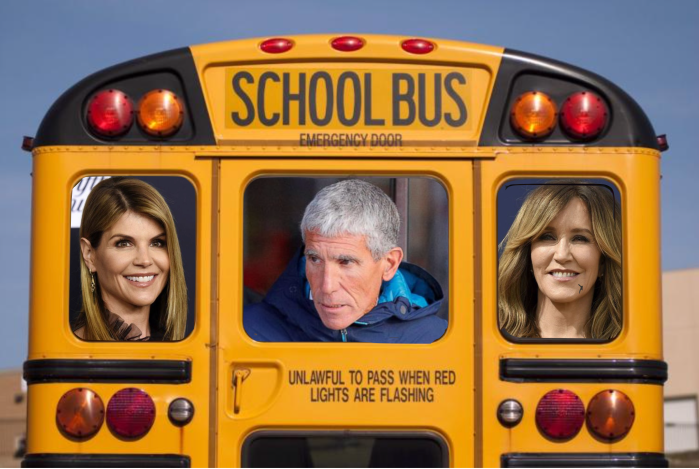
And let’s be honest. It’s the same impulse behind the latest college admissions cheating scandal.

 
A group of wealthy – though not too wealthy – parents thought their children should be able to enroll in the most prestigious schools.

 
So they bribed college admissions officers, cheated on standardized tests or paid coaches or other officials to accept their children as college athletes even if their kids had never played the sport.

 
We see the same kind of thing everyday in public schools – a confederacy of white parents terrified that their kids might have to go to class with black kids. So they dip into their stock portfolios to pay for enrollment at a private or parochial school.

 
Or they take advantage of a tax scholarship or school voucher to avoid an institution with low test scores by enrolling in one where students don’t have to take the tests at all.

 
Or they cross their fingers and enter their kid in a lottery to a charter school praying their precious progeny will escape the horrors of being treated just like everyone else’s kids.

 
And they call it a meritocracy!

 
What a joke!

 
They pretend that their children have earned special treatment.

 
WRONG.

 
No child deserves favoritism – paradoxically –  because all children do!

 
There are really two important but related points here:

 
1)  The children of the privileged don’t deserve a better education than anyone else’s.


2)  Children who come from wealthy families (and or from privileged social circumstances) don’t do anything to distinguish themselves from the underprivileged.

 
But these nouveau riche parents tried to bribe the way forward for their kids anyway even though to do so they had to launder the money through a fake “charity.” They didn’t care that doing so would earn them a tax deduction and thus result in even less money for the underprivileged. They didn’t care about the underlying inequalities in the system. No. They only wanted their children to remain in the class of America’s chosen few.

 
And the best way to do that is with cold, hard cash.

 
America doesn’t run on Dunkin. It runs on greenbacks. Dinero. Swag. Bling. The prosperity doctrine made physical, quantifiable and mean.

 
No one really denies that there are two Americas anymore. We just lie to ourselves about how you get placed in one or the other.

 
And that lie is called excellence, quality, worth – the ultimate in class war gaslighting.

 
It’s a deception that this scandal has shattered to pieces.

 
The privileged don’t earn their privilege. It’s not something they possess on the basis of intelligence or hard work shown through test scores. They don’t have it because of drive, determination or grit – once again shown through test scores. They have it based on wealth – the kind of wealth that buys time and resources to either pass the tests or bribe the gatekeepers to change the scores.

 
Think about it.

 
George W. Bush got into Yale and Harvard and graduated with a 2.35 GPA. Why? Not because he had the grades and demonstrated his worth. He was a legacy. Like at least one third of all admissions to Ivy League schools, he got in purely because he had family who graduated from there.

 
You think Donald Trump threatened the College Board not to release his grades because they were all A’s!?

 
According to one account, his scores were merely “respectable.” Yet he still dropped out of the prestigious Fordham University and transferred to the University of Pennsylvania after two years based on family connections and the reputation of his father, Fred Trump, one of the wealthiest businessmen in New York at the time.

 
Moreover, his kids, Don Jr. and Ivanka, were both enrolled at Penn around the same time as their father made hefty contributions. They began classes in 1996 and 2000, respectively, just as the university and its private Manhattan clubhouse received more than $1.4 million in pledged donations from Trump, the school newspaper reported.


This is not merit. This has nothing to do with what these people deserve. It is money – a pure transaction, you scratch my back and I’ll scratch yours.

 
The only thing that separates what the Trumps and the Bushes did with this latest scandal – the so-called Operation Varsity Blues – is the amount of wealth involved.
If you’re super rich, you can get away with it. If you’re just rich, you’d better not get caught.

 
And if you’re poor or middle class, you’d better stay in your lane.

 
But there shouldn’t be any lanes on this highway. Or at least they should only be in place to maximize fairness and student success.

 
We sneer at the idea of Affirmative Action but only because it’s directed at people of color. No one says anything about the real Affirmative Action that’s been in place since before our country even began – the system of reciprocity and privilege keeping wealthy white families in positions of power like Lords and Ladies while the rest of us serfs scramble for their leavings.

 
All children deserve the same opportunities to succeed. All children deserve the chance to get an excellent education. All children should attend a first class school filled with highly educated and experienced teachers who can draw on plenty of resources, wide curriculum, tutoring, counseling and support.

 
And the only way we’ll ever achieve that is through a robust system of public schools.

 
I’m not saying they’re perfect. In many neighborhoods, they’ve been sabotaged and surgically dismantled, but that’s a problem with an easy solution. Invest in public schools!

 
Because the stated purpose of public education, the reason it exists at all, is equity.
The alternatives – private and charter schools – are essentially unequal.  That’s their raison d’êtreto create a market that justifies their existence.

 
In order for charter and private schools to be a thing, there must be schools that don’t otherwise meet students’ needs. There must be an unreasonable demand that schools indoctrinate students into parents’ religious beliefs. There must be schools that aren’t as well funded or that have to meet ridiculous federal and state mandates.

 
The result is a two-tiered system. Schools for the haves and for the have-nots.
It’s an apparatus that perverts the public to make room for the private.

 
In the public system, students are segregated into communities based on race and class and then their community schools are funded based on what their parents can afford. The rich shower their children with the best of everything. The poor do what they can.

 
Then the federal government pretends to hold everyone “accountable” by forcing students to take standardized tests that merely recreate the economic and racial disparities already present in their districts and neighborhoods. In turn, this provides the justification for charter and voucher schools that further erode public school budgets and increases the downward spiral of disinvestment.


Meanwhile, few notice how the equity built into authentic public schools gets left behind by those enrolling in privatized alternatives. No more open meetings. No more elected school boards. No more public comment or even a voice in how the money is spent.
 

So long as there are two Americas, the fear of being in the wrong one will motivate the privileged to cheat and steal their way to the top. They will horde resources and wealth for themselves and their children while denying it to others.

 
It is a self-perpetuating system – a loop that we’re all caught in.
We must break the chain. We must recognize our common humanity and stop the zero sum game.

 
And perhaps the best way to begin is by supporting authentic public schools and not privatization.

 
We have been taught to fear public education, because it is really our only hope.


Like this post? I’ve written a book, “Gadfly on the Wall: A Public School Teacher Speaks Out on Racism and Reform,” now available from Garn Press. Ten percent of the proceeds go to the Badass Teachers Association. Check it out!
book-4

I Used to be a Reporter. Now I’m a Teacher. I’ve Become What I Used to Observe

thumbnail_Screen Shot 2019-02-28 at 12.04.59 PM

A long time ago, in a newsroom far, far away; your humble narrator was a respected journalist.

Today I am a beloved school teacher in a suburban middle school.

Okay. That may be laying it on a bit thick.

Like any human being whose job it is to get children to do their best and learn something, I’m beloved by some and beloathed by others. And if I’m honest, when I was a reporter, I was never all that respected. But I did win several state journalism awards.

The point I’m trying to make is that like a caterpillar into a butterfly or a tadpole into a frog, I made a startling transformation in career paths that flies somewhat in the face of popular wisdom.

F. Scott Fitzgerald wrote, “There are no second acts in American Lives.” Well, I’m on my third or fourth act and nowhere near ready for the curtain to come down yet.

It’s shocking how far I’ve come, though there’s a surprising amount of overlap between my two professions. In fact, the biggest difference is one of orientation.

I used to get up at 4 a.m., weave into the newsroom and type away for a few hours about the previous night’s school board or city council meeting before my deadline came down, the presses rolled and the morning edition went on sale.

Now I get up at 5 a.m., hobble into the classroom and go to meetings, grade papers or otherwise get ready for a 7-hour invasion by 12- and 13-year-olds, followed by more meetings and papers and planning.

I used to go into the classroom to interview teachers and students about special lessons, state and federal programs or standardized tests.

Now I’m in the classroom questioning myself about my students and what works best to help them learn, trying to navigate the state and federal programs so they get the best return and bang my head against the wall about the constant standardized tests.

I used to independently bebop all over my coverage area, asking questions, doing research, discovering things that many people would rather remain secret.

Now I independently plan my lessons, ask my students questions, do research on best practices and discover things about my children and their lives that many people would rather remain secret.

You’ve heard the old chestnut about education being a career for those unable to act. I’m living proof that it’s a lie.

As a journalist, I reported on. As a teacher, I do.

In my former job, I told. In my current one I show.

Perhaps that’s why I now find it so strange that many of my former colleagues have gone into public relations, communications or have become policy analysts.

I’m not surprised. I can’t say I didn’t know that that door was always open. But it’s peculiar.

In the newsroom, we all heard the stories about grizzled newspapermen and women with shelves stuffed full of awards and prized Rolodexes bursting with hard-earned sources who gave it all up for a 9-5 desk job writing the very press releases we disdained.

We all had friends who were making bank managing people like us and trying to get us to write what the company wanted or spin the story in the direction the advertisers liked.

There is no scorn, no disgust, no derision to match that of a journalist for a corporate sellout, and that’s because in our hearts we all secretly wondered if it wasn’t the better deal.

Every good reporter – like every good teacher – is a radical at heart.

You don’t get into either field to support the status quo. You want to rock the boat. You want to shake things up. You want to change the world for the better – all from the comfort of your swivel chair behind your computer screen or from the well worn tread of your classroom carpet.

Journalists live for the scoop, the big story, the article that shouts off the front page above the fold and which has everyone talking. Teachers live for the student epiphany, the moment the light comes on behind a child’s eyes, the transformation from ignorance to knowledge and – dare I say – wisdom.

But being a press agent or policy hack has none of that splendor.

You have to give it up – all for the right to have a chance at a life.

I loved being a reporter. It was one of the best things I’ve ever done. I got to do things, see things, talk to people, be there for things that I never would have been able to access otherwise. But I could barely pay my bills.

I was dirt poor in the newsroom. We all were.

We worked 50-60 hours a week, had no time for a second job, no time for a social life, no time for a family or kids, and we wanted more.

So I understand the allure of the steady paycheck and becoming a housebroken professional communicator of someone else’s message.

But being a teacher is different.

You still don’t get paid much. You still work long hours – though maybe not quite as long. But you can get that second job – often in the school, itself, tutoring students or in a summer or after school program.

And you get union protections that I only dreamed about as a reporter. A safe workspace, clean and tidy, no outrageous demands (or at least an upper limit on them), and a schedule you can predict and plan a life around.

Best of all, you still get to keep your idealism intact. Or you can try to keep it as you dodge this directive and that unfunded mandate and that deeply racist policy passed down from above.

Don’t get me wrong. Becoming a teacher was hard work. I didn’t go about it the easy way – no Teach for America, one-foot-in/one-foot-out, cheating for me. I dove in head first.

I went back to college and took an intensive, accelerated masters program designed exactly for people changing careers. To get there, I had to swallow a few prerequisites I’d missed in college the first time. Then they placed me in a high school where I watched and then took over multiple classes – all while enrolled in education courses at night and in the summers.

By the time it was all over, I still had the most important things left to learn – (1) whether I could actually teach a full schedule, and (2) whether I liked doing so.

For me, the answers were unequivocally positive. I took to it like I’d taken to journalism. I needed lots of fine tuning, but the basics came naturally. And I loved every exhausting minute of it.

I regret nothing about becoming a teacher. It’s the best job I’ve ever had and am ever likely to have.

As a journalist, I got to rock whole communities with exposes about corruption. As an educator, I get to impact individuals.

I no longer get to be the talk of the town, but I get to change lives all the same – one person at a time.

And there’s something deeply satisfying about it – to look in another person’s eyes and see the need right there in front of you, and to be able to heal it even a fraction of the way well.

This world is hard. It takes people, chews them up and spits them out. There is so rarely a helping hand, a smile, understanding. But to be able to offer your hand, to be able to share a smile, to attempt to understand – that’s pure magic.

When the day is done, I know it was well spent.

I’ve come a long way from the newsroom. And in doing so, I’ve broken journalism’s number one rule – don’t become the story.

I no longer report on the action.

I participate in it.

What a way to make a living!


Still can’t get enough Gadfly? I’ve written a book, “Gadfly on the Wall: A Public School Teacher Speaks Out on Racism and Reform,” now available from Garn Press. Ten percent of the proceeds go to the Badass Teachers Association. Check it out!

cropped-book-1.jpg

Ten of 15 Cyber Charter Schools in PA Are Operating Without a Charter – Close Them All

thumbnail_screen shot 2019-01-29 at 1.38.10 pm


Cyber charter schools are an experiment that failed.


It’s time to pull the plug and recoup our losses.


First, let’s get straight exactly what we’re talking about here.


Like all charter schools, these are contracted institutions. In fact, that’s what charter means – they’re independent businesses that sign a deal with the state to teach kids.


So they’re publicly financed but privately run. And in the case of cyber charters, they agree to educate children online without the benefit of a physical building.


Students access lessons via computer or other device, submit work electronically, get virtual feedback and assessment.


At best, these institutions are the grade school equivalent of the University of Phoenix – good only for independent, self-motivated learners. At worst, they’re the kiddie version of Trump University – a total scam.


In Pennsylvania, 10 of the state’s 15 cyber charter schools are operating with expired charters, according to a report by the Philadelphia Inquirer.


That’s incredibly significant – especially for an industry that enrolls about 35,000 students across the state.


These are charter schools operating without a charter. They only get the right to operate because a local school district or the state has signed a contract allowing them to do so.


If you hire a plumber to fix your toilet, you give him the right to enter your house and do what needs to be done. That doesn’t mean the plumber can walk in anytime he feels like it. There is a limited term of service. Once that term is up, the plumber needs to get out.


In the case of these cyber charters, the authorizer is the Pennsylvania Department of Education (PDE).


Charters are initially issued for three to five years. They are an essential contract between the schools and the supervisory body. The school details how it will operate, what curriculum and education strategies will be used, etc.


The state has the option to revoke the charter if the school violates its agreement or fails to meet requirements for student performance or fiscal management.


After the initial period, charters must be renewed every five years in the state.


Yet for the majority of the Keystone state’s cyber charter schools, this has not happened. The charter agreements have been left to lapse without any decision being made by state officials to renew or cancel them.


Some of the reluctance to decide may stem from the fact that the state Charter Appeal Board – the body which decides on appeals of charter applications – are all serving out expired terms, themselves.  They were all appointed by the previous governor, Republican Tom Corbett, a notable privatization ideologue.


The current Governor Tom Wolf, a Democrat now elected to his second term of office, still hasn’t gotten around to appointing new ones.


Another issue gumming up the works could be staffing issues at PDE that make it impossible to handle the reviews in a timely manner. It could be because the cyber charter schools have not provided all the data required of them by the state for the review to be completed on time. Or it could be because state officials are struggling with a fair and adequate metric with which to assess these schools.


CYBER CHARTER’S DISMAL ACADEMIC RECORD


To be frank, the latter option has to weigh heavily on state auditors. After all, it’s no secret that these schools are an educational disaster. On-line schools in Ohio, Georgia, Indiana, Nevada and New Mexico are all being closed by their respective states.


Study after study consistently shows that cyber charters are much less effective than traditional public schools – heck! They’re even less effective than brick and mortar charter schools!


A recent nationwide study by Stanford University found that cyber charters provide 180 days less of math instruction and 72 days less of reading instruction than traditional public schools.


Keep in mind that there are only 180 days in an average school year. So cyber charters provide less math instruction than not going to school at all.


The same study found that 88 percent of cyber charter schools have weaker academic growth than similar brick and mortar schools.


Student-to-teacher ratios average about 30:1 in online charters, compared to 20:1 for brick and mortar charters and 17:1 for traditional public schools.


Researchers concluded that these schools have an “overwhelming negative impact” on students.


And these results were duplicated almost exactly by subsequent studies from Penn State University in 2016 (enrolling a student in a Pennsylvania cyber charter school is equal to “roughly 90 fewer days of learning in reading and nearly 180 fewer days of learning in math”) and the National Education Policy Center in 2017 (cyber charters “performed significantly worse than feeder schools in both reading and math”).


Even the state’s own data shows lower graduation rates and standardized test scores at cyber charters than at traditional public schools.


According to a 2015-16 state PDE report, about 86 percent of public school students across the Commonwealth finished high school in four years. During the same time, only about 48 percent of cyber charter school students graduated in four-years.

CYBER CHARTER’S COST TOO MUCH


But providing such a poor service to Pennsylvania students is only one reason these schools are problematic. They’re also ruinously expensive.


They cost taxpayers more than $463 million in 2016-17 alone.


The state charter law grants these schools as much money per pupil as brick and mortar schools, yet their costs are much less having forgone a physical building and all that goes with it.


So cyber charters get whatever the local per-pupil expenditure is. It doesn’t matter if a district spends $8,000 on each student or $20,000. Whatever the amount, that goes to the cyber charter.


However, the cost of educating kids is drastically reduced online. Their programs are bare bones compared with what you get at a traditional public school. Most online charters don’t have tutors or teacher aides. They don’t offer band, chorus or extra-curricular activities. You don’t have to pay for any building costs, grounds, upkeep, large staff, etc. But the funding formula ignores this completely. Cyber charters get to keep the difference – whatever it is. In fact, they have an incentive to keep as much as possible because they can do almost whatever they want with it. That includes putting it into operators’ pockets as profit!


And when it comes to special education funding, it gets worse. In Pennsylvania, our funding formula is so out of whack that charters schools of all stripes including cyber charters often end up with more funding for students with special needs than traditional public schools get. However, because of this loophole in the Commonwealth, Pennsylvania online charters have been increasing the number of special education students they enroll and even working to label as many of their students as possible as needing special services on the flimsiest of pretexts.


According to a report by the Pennsylvania Association of School Administrators (PASA), tuition for special education students is often twice as much at cyber charter schools than at traditional public schools.


CYBER CHARTER FRAUD


Unsurprisingly, these conditions have lead to rampant fraud and malfeasance.


Just this past year (2018) the head of the largest cyber charter chain in the state was sentenced to jail for siphoning $8 million from his school into his own pockets.


PA Cyber Charter founder Nicholas Trombetta was found guilty of tax fraud in relation to the theft of public funds. He used that money to buy an airplane, a $900,000 condo, houses for his girlfriend and mother, and nearly $1 million in groceries and personal expenses, according to the grand jury. Trombetta allegedly set up numerous for-profit and nonprofit businesses to provide goods and services to the cyber charter. Federal investigators filed 11 fraud and tax conspiracy charges against him and indicted others in the case.


Another cyber charter founder, June Brown, was also indicted for theft of $6.5 million. Brown ran the Agora Cyber Charter School, which was part of the K12 Inc. empire of virtual charters. She and her executives were indicted on 62 counts of wire fraud, obstruction of justice and witness tampering. She was well known for student test scores and had a reputation for claiming large salaries and filing suits against parents who questioned her, the Philadelphia Inquirer reports.


WHAT TO DO ABOUT IT


It’s no wonder the state has been tardy renewing these schools’ charters!


Frankly, there is no good reason to continue lavishing taxpayer dollars on a system of education that provides  subpar services at an exorbitant expense and is subject to runaway fraud.


But lawmakers have always been reluctant to do the right thing.


After all, there are a slew of wealthy investors who want to make sure the money train of taxpayer dollars keeps flowing to their shady businesses. And lawmakers who enable them are assured hefty campaign contributions.


The only chance we have of saving our children from this monstrous abuse of power and saving our wallets from this shameful waste of funding is if voters make their intentions known.


The people of Pennsylvania need to stand up and demand an end to the cyber charter school experiment.


We need lawmakers with the guts to stand up to big money and rewrite the state’s charter school law.


And that’s part of the problem. The law is a joke.


It’s more than 20 years old and was only amended once in 2002 to allow cyber charters.


Subsequent attempts at requiring more accountability have resulted in horrible compromise bills that would have made the situation much worse and – ultimately – no vote.


With Ohio and California, Pennsylvania was in the “big three” cyber-charter states in 2016, accounting for half of cyber charter enrollment nationally, according to the industry’s authorizers’ association. While 35 states and the District of Columbia allow full-time cyber charter schools, eight do not, including neighboring New Jersey.


The right course is clear.


We just need a people-powered movement to force our lawmakers to do it.


Either that or replace them with those who will.


Still can’t get enough Gadfly? I’ve written a book, “Gadfly on the Wall: A Public School Teacher Speaks Out on Racism and Reform,” now available from Garn Press. Ten percent of the proceeds go to the Badass Teachers Association. Check it out!

cropped-book-1.jpg

LA Teachers Strike is About Charter Schools and High Stakes Testing

utla-strike


On Monday more than 30,000 teachers at 900 schools in Los Angeles, California, will be on strike.


And unlike the wave of teachers strikes last year in red states like West Virginia, this time educators are taking to the streets due to the policies of Democrats.


At issue are things like lowering class sizes and providing more nurses, librarians and counselors.


But behind these issues lies one of the most important facts about our country.


When you get right down to it, there is very little difference between many Democratic policymakers and their Republican counterparts.


You think Betsy Devos is the opposite of Arne Duncan? Wrong.


You think Barack Obama is the opposite of Donald Trump? Wrong again.


Though there are differences, those often amount to differences of degree.


Corporate Democrats like almost all Republicans support the same education policies – school privatization and high stakes testing – that are robbing the LA Unified School District of the funding it needs to meet the needs of its students.


THAT’S why class sizes have ballooned to more than 45 students in secondary schools; 35 students in upper elementary grades; and 25 students in lower elementary grades.


THAT’S why the district does not have nearly enough counselors, psychologists or librarians to give students the support they need.


THAT’S why 80% of schools don’t have full-time nurses.


The second largest district in the country has more charter schools than any other. The overwhelming majority of them are operated by corporate chains and have expanded by 287% over the last 10 years.


These are publicly funded but privately run schools. They don’t have to meet the same standards of accountability or transparency about how they spend taxpayer dollars – all while gobbling up $600 million a year!


That is money that parents and community members are forced to pay but about which they have very little say. It’s money that can – and often does – go right into the pockets of charter school operators without providing its full value to the students it was meant help educate. It’s money set aside for all children but given to educate merely a handful of students chosen by those same businesspeople who run these charters because they think these children will be cheaper and easier to educate.


That’s not Democracy. No self-respecting Democrat should support such a thing – but you’ll find luminaries from Obama to the Clintons to Cory Booker who will tell you what a great idea it is. Along with DeVos, Trump, Jeb Bush and the Koch Brothers.


LA Superintendent Austin Beutner is a Democrat, but he’s also a multimillionaire with experience in corporate downsizing and none in education.


According to an op-ed by President of United Teachers Los Angeles (UTLA) Alex Caputo-Pearl published in the LA Times:


“…Beutner has moved ahead with what we believe is his agenda to dismantle the district. Through an outside foundation, he has brought on firms that have led public school closures and charter expansion in some districts where they have worked, from New Orleans to Washington, D.C. This approach, drawn from Wall Street, is called the “portfolio” model, and it has been criticized for having a negative effect on student equity and parent inclusion.”


These are policies in direct opposition to the progressive ideals at the heart of the Democratic Party. They are, in fact, bedrock Republican ideology and demonstrate the vast divide among Democrats.


New Democrats oppose them. Grassroots Democrats oppose them. Democratic voters oppose them. And it will be telling whether the policymakers in our halls of power will follow the lead of the people or try to shepherd the power behind the party into doing what the patricians think best.


That’s why this strike is important way beyond California. Whatever happens will send echoes throughout the country, because school districts from sea to shining sea are facing similar issues.


In the meantime, the LA Unified District has a $1.8 Billion budget surplus it can use to help meet these needs. But the solutions to the district’s woes require a long-term commitment to public education.


Certainly the state of California needs to increase its per pupil spending. It’s the richest state in the country, yet ranks 43rd out of 50 in this regard.


This would help the district raise teacher salaries to match those of surrounding districts.


But the root problem is a lack of ideological support among policymakers.


Too many Democrats inside and outside the district don’t support the very idea of public schools. They’d rather boost privatization.


Too many Democrats support unnecessary and harmful high stakes standardized testing which not only unfairly paints the district as a failure for the poverty of its students but forces out things of real education value like the arts and ethnic studies.


Too many Democrats have no problem doing this in a district that serves a majority of students of color while providing only the best for middle class white kids.


That’s why today the American people stand with the UTLA as they go on strike.


It’s why we always stand with educators – You can’t put students first if you put teachers last.


Democrats need to get their priorities straight.


It’s time to decide if they’re going to continue being Trump lite or reclaim their progressive heritage and rejoin the rest of the nation.


Still can’t get enough Gadfly? I’ve written a book, “Gadfly on the Wall: A Public School Teacher Speaks Out on Racism and Reform,” now available from Garn Press. Ten percent of the proceeds go to the Badass Teachers Association. Check it out!
book-2

Public School Students are Being Erased From TV, Movies and Other Media

thumbnail_img_8471


Ninety percent of America’s students go to public schools.


But you wouldn’t know that if you opened a book, turned on the TV or went to a movie.


The media is engaged in a disinformation campaign erasing public schools and public school students from our entertainments.


It’s another way marketing and advertising is forced down our throats and into our leisure hours.


Not only do the multi-billion dollar corporations who fund these entertainments want to convince us we need this pill, that appliance, those technological doo-hickeys — they need to cajole and inveigle us that we need school privatization, too.


And what better way to do that than to give us heroes that  – what-do-you-know – just happen to go to charter, voucher and private schools?


No one takes Betsy DeVos, the billionaire heiress who bought her position as education secretary to tear down public schools, seriously. But we certainly do when it comes to Hollywood, the Boob Tube and Young Adult literature.


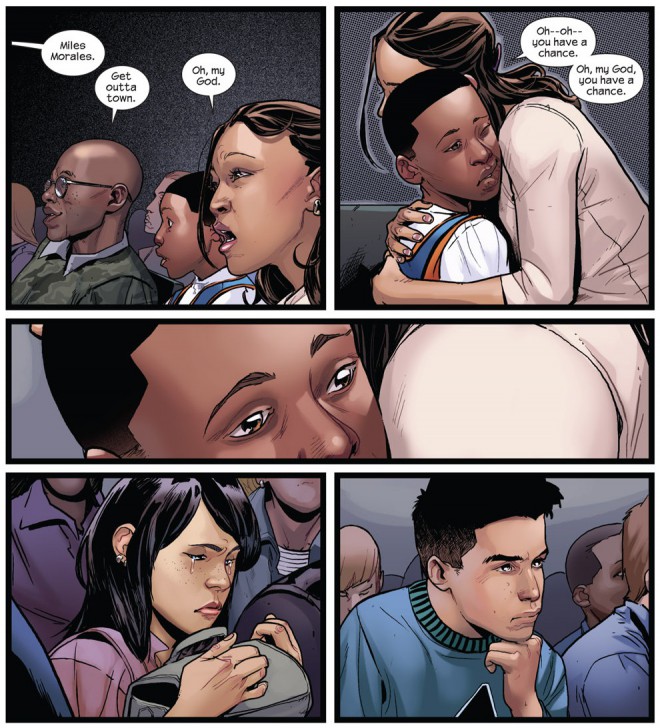
Take Miles Morales, an Afro-Latino Spiderman, who just made his big screen debut in Marvel’s “Spiderman: Into the Spiderverse.”


It’s refreshing to see the iconic Spideysuite worn by a character of color, but why change his alma mater, too?


The original webslinger, Peter Parker, was an everyperson teen who went to a public school. But Morales goes to a private school in the movie and a charter school in the comic books on which the film is loosely based.


Then we have “The Kid Who Would Be King” a modern day retelling of the King Arthur legend. In the film, Alex finds Excalibur and becomes king – while attending a British academy, the U.K.’s version of an American charter school.


And let’s not forget “The Hate U Give.” In both the book and the movie, the protagonist, 16-year-old African American Starr Carter, deals with a white police officer murdering her black friend. And her struggle is worsened by the incomprehension she meets at her mostly white, privileged private school.


Why are all these stories taking place where a tiny sliver of kids are educated?


What happened to all the public school students?


It’s not like privatized education has ever been starving for representation in the mass media.


If anything, private schools have historically been overrepresented – Lord of the Flies, A Separate Peace, Dead Poets Society, Catcher in the Rye, etc.


At least in the past you could count on the default setting for kids to be public school. Unless it was an integral part of the plot, it was just assumed that everyday kids went to everyday public schools.


John Travolta and Olivia Newton John dreamed of those summer nights, but they went to Rydell High.


Molly Ringwald and the rest of the Breakfast Club attended Saturday detention, but during the week they were in class at Shermer High.


Sarah Michelle Gellar’s Buffy and co. fought off vampires, but they had homework at Sunnydale High.


Even Bella Swann navigated her vampire-werewolf love triangle at Forks High!


But today’s fictional teens wouldn’t be caught dead in one of those traditional institutions.


And nothing could be more unrealistic!


We’re whitewashing the reality to make America’s children and parents feel deficient for the schools they actually attend and – for the most part – are quite satisfied with.


It’s not about representation for the 10 percent enrolled in privatized schools. It’s about expanding the market to get more children and families to abandon public schools and pony up the dough (or siphon off the taxes) to enroll in these institutions, too.


Or at least TRY to enroll.


MILES MORALES


Back in 2011, when writer Brian Bendis and artist Sara Pichelli created Morales for Marvel comics, he was a reaction to the election of Barack Obama. As such, even his schooling had to reflect that.


In Ultimate Comics Spider-Man, he is shown winning the last spot in a charter school lottery to enroll in Brooklyn Visions Academy.


The comic book panels mirror almost frame-for-frame the school privatization propaganda film “Waiting for Superman.” Pro-charter school Obama becomes pro-privatization Spider-man.


1otro

miles-gets-in

miles-morales-gets-in

It’s almost like the big corporations who own the super heroes can’t tell who the good guys and the bad guys are anymore.


Here we have an American icon hawking a solution to child education that increases segregation, does away with duly-elected school boards, does away with the kinds of regulations that protect kids’ rights and instead allows unscrupulous charter operators to reduce services for children and pocket the difference.


It’s like watching Mickey Mouse explain how your folks should invest all their money with Bernie Madoff.


For some reason, in the movie version Morales’ charter school is rewritten as a private school for smart kids. I wonder why they made the change. It’s almost like there’s no appreciable difference between private schools and charter schools. And there isn’t!


THE KID WHO WOULD BE KING


https://www.youtube.com/watch?v=Cg-h8TwQCgs


Speaking of which, let’s examine the strange case of “The Kid Who Would be King.” The movie is technically not out yet, so it’s hard to see if it will make much use of its apparent Academy setting.


However, the trailer includes lots of shots of kids in traditional prep school dress with a stylized formal crest on blazers and pants. It almost seems like the setting is little more than an excuse to embrace a certain aesthetic in the costumes more than a plot point.


Or perhaps the marketing department just wants moviegoers to associate the film with the Harry Potter movies.


After all, Hogwarts is the ultimate in quasi-privatization. Special kids go to a special school where they are taught special classes. It’s never quite clear how it’s all paid for, though the kids do have to buy their own supplies.


Would “The Kid Who Would Be King” be any better if the kids in it went to public schools? They certainly would be more relatable to the average child.


First conceived in the early 2000s, British academies are not bound by national rules for staffing and curriculum, and receive more money from the government for administration while reducing funding to the traditional schools nearby.  However, according to a new peer-reviewed study by the London School of Economics, primary academies have not been able to meet the promise of increasing test scores.


The authors conclude:


“The English government has radically restructured its school system under an assumption that academisation delivers benefits to schools and students. There is neither any sign of a positive effect nor any suggestion that benefits might be increasing with years of exposure. If anything, the opposite is the case.”


Oh whatever! The blazers look nice!


THE HATE U GIVE


And that brings me to “The Hate U Give.”


Starr’s private school does at least seem to be important to the plot. After her best friend is gunned down by a gangbanger, a 10-year-old Starr is sent to Williamson Prep, a private school in the white suburbs. The family remains in the neighborhood and even takes great pride in living among other black people. But for some reason the idea of public school and the trauma of this event are entwined in their minds. They want more for Starr than just a public school experience.


Consider this bit of narration:


“The high school is where you go to get jumped, high or pregnant. We don’t go there. Williamson is another world. So when I’m here, I’m Starr version 2. Basically Williamson Starr doesn’t give anyone a reason to call her ghetto. And I hate myself for doing it.”


Years later, she’s one of very few African American students at the private school. When another black friend is subsequently murdered by the police before her eyes during a traffic stop, her white privileged classmates don’t understand what she’s going through.


I wonder if things would have been different at a public school. I wonder if by enrolling her in private school her parents hadn’t taken away the kind of support system she could have used to help deal with the tragedy.


Starr overcomes it all, and symbolically pulls a “Rest in Peace Khalil” T-shirt over her school uniform signaling her refusal to be a divided person any longer. It might have been even stronger had she re-enrolled in her public school, too.


Let me be clear: I’m not saying these are bad movies, books or comics. I actually quite like most of them. But I wonder if most people realize that when they consume this stuff they’re getting something a little extra with their entertainment – corporate propaganda.


It doesn’t seem to be an accident that so few schools are being so overrepresented in the mass media.


The global conglomerates are always looking for a way to make a buck, and product placement has always been a surefire way to do it.


Unfortunately, such underhand tricks can have a large impact on the cultural landscape.


If we continue to be bombarded by unsubstantiated images of public schools not being good enough and privatized education as the savior for our children, we will lose our system of public education.


Schools will no longer be funded by tax dollars. Parents will have to pay for them out of their own pockets.


At very least this will result in an even more stratified education system where wealth not only buys comfort and resources but knowledge, as well.


Still can’t get enough Gadfly? I’ve written a book, “Gadfly on the Wall: A Public School Teacher Speaks Out on Racism and Reform,” now available from Garn Press. Ten percent of the proceeds go to the Badass Teachers Association. Check it out!

book-1

Charter School Lobby Silent as Charter Teachers Continue Strike

www.usnews.com


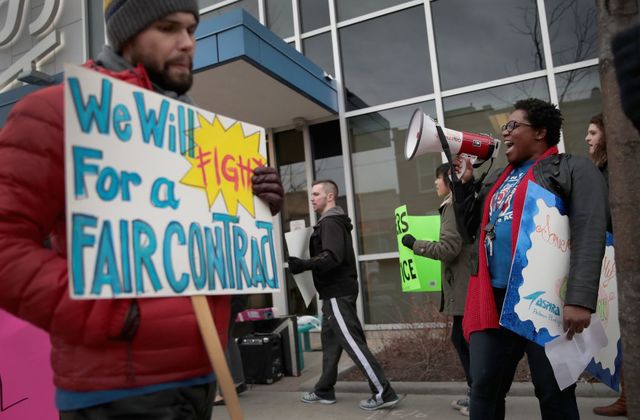
Charter school teachers in Chicago are in their fourth day of a strike.


Yet I wonder why the leaders of the charter movement are quiet.


Where is Peter Cunningham of the Education Post?


Where is Shaver Jeffries of Democrats for Education Reform?


Not a word from Campbell Brown or Michelle Rhee?


Nothing from Bill Gates, Cory Booker, Barack Obama or Hillary Clinton?


Not a peep from Betsy DeVos or Donald Trump?


This is a historic moment. Teachers at various charter schools have unionized before, but it has never come to an outright strikenot once since the federal charter school law was established in 1994.


You’d think the charter cheerleaders – the folks who lobby for this type of school above every other type – would have something to say.


But no.


They are conspicuously silent.


I wonder why.


Could it be that this is not what they imagined when they pushed for schools to be privately run but publicly financed?


Could it be that they never intended workers at these schools to have any rights?


Could it be that small class size – one of the main demands of teachers at the 15 Acero schools – was never something these policymakers intended?


It certainly seems so.


For decades we’ve been told that these types of schools were all about innovation. They were laboratories where teachers and administrators could be freed from the stifling regulations at traditional public schools.


Yet whenever wealthy operators stole money or cut services to maximize profits or engaged in shady real estate deals or collected money for ghost children or cherry picked the best students or fomented “no excuses” discipline policies or increased segregation or denied services to special education kids or a thousand other shady business practices – whenever any of that happened, we were told they were just unfortunate side effects. Malfeasance and fraud weren’t what charters were all about. They were about the children.


And now when charter teachers speak out and demand a better environment for themselves and their students, these ideologues have nothing to say.


Funny.


It’s not hard to figure out what’s going on here.


The latest audit of Acero shows they have $10 million a year in additional revenue that they aren’t spending on the students. Yet they’re cutting the budget by 6 percent annually. Meanwhile, Acero’s CEO Richard Rodriguez is taking home more than $260,000 for overseeing 15 schools while Chicago Public Schools CEO Janice Jackson makes slightly less money for managing more than 500 schools.


If the school privatization lobby cared about kids, it shouldn’t be hard to come out against Acero and in favor of these teachers and students.


But nothing.


Silence.


It seems to prove what charter critics have been saying all along – and how full of crap the privatization lobby has always been.


In short, the charter movement is all about the rich getting richer. It has never been about helping students and families.


Well, maybe it was once upon a time when union leader Albert Shanker backed the plan. But even he turned against it when he saw how it enriched the moneymen and corporations while doing very little for children.


The fact of the matter is that the only people at charters on the side of teachers, parents and students are the people generally associated with opposing them.


I, myself, am a huge foe of school privatization in all its forms – and that includes school vouchers and charter schools.


However, I have nothing against charter students, parents or teachers.


I know many educators who’ve worked at charters. In most cases they are dedicated, caring professionals who’d rather work at a traditional public school but had to settle for employment where they could find it even if that meant less pay, longer hours, and fewer rights.


I know many parents who sent their kids to charter schools because of funding inequalities or rampant high stakes testing at traditional public schools. In every case, they are doing the best they can for their children – navigating a system they hate looking for the best opportunities.


I’ve taught many students who’ve gone to charter schools and then returned to my traditional public school classroom disillusioned from their subpar experience in privatized education. Without exception they are great kids who try their hardest to succeed despite huge deficits from the years lost at charters.


These people are not our enemy. We are their allies.


We are pushing for a better education system for all of us. And this strike is part of that.


If the operators of Acero charter schools in Chicago (formerly UNO’s charter schools) agree to a living wage for teachers and lower class sizes, it sets a standard for the industry. It helps push other charters to do the same. It pushes charter schools to become more like traditional public schools. And that’s a good thing.


The amenities at traditional public schools should not be rarities.


Every school should have an elected school board. Every school should have public meetings, transparency and be accountable for how it spends tax dollars. Every school should have to accept the kids living in its borders and provide them the proper services and respect their rights. Every school should treat its employees like professionals and pay them a fair wage for a fair day’s work.


Ultimately, I think this means the end of the charter school concept. But that doesn’t have to mean the end of all these charter schools. Many of them that can operate effectively and efficiently should become traditional public schools. That may mean incorporation into existing districts or creations of new ones. It may mean additional funding from the state and federal government.


In the case of fly-by-night charters that do nothing but enrich their investors while cheating kids out of an education, they should be closed immediately and the persons responsible should be prosecuted to the full extent of the law (whatever that is, if at all possible).


I don’t have all the answers, and what’s right in one neighborhood may be wrong in another. However, I am confident that there is a solution.


No matter how this strike is resolved, the fact that it exists – and is probably a precursor to more such strikes – points the way to a brighter future for everyone.


It’s a victory for workers over wealth.


And that is a victory for students, too.


Like this post? I’ve written a book, “Gadfly on the Wall: A Public School Teacher Speaks Out on Racism and Reform,” now available from Garn Press. Ten percent of the proceeds go to the Badass Teachers Association. Check it out!
book-3

Dear Lawmakers, Please Hire Teachers as Education Aides – Not TFA Alumni

thumbnail_IMG_8375


Dear freshmen lawmakers,


We did it!


After a fiercely contested election, we have finally begun to turn the tide back toward progressive politics.


Midterms usually are sparsely attended, but this year we had an unprecedented turnout.  A total of 23 states had double-digit percentage-point increases compared with their 1982-2014 midterm election averages.


And the result is one of the largest and most diverse groups of freshman Congresspeople ever!


We got rid of a ton of incumbents – 104 lawmakers won’t be returning to Washington, DC, in January, making this the third-highest turnover since 1974.


And those taking their place will be largely female. Out of 256 women who ran for U.S. House or Senate seats, 114 have won so far (Some races are still too close to call), according to the Center for American Women and Politics at Rutgers University. That makes the 116th Congress the largest class of female lawmakers ever.


Moreover, this incoming group will be incredibly diverse.


We have Jahana Hayes, a nationally-recognized teacher, who will be the first Black Congresswoman from Connecticut. Ayanna Presley, the first black Congresswoman from Massachusetts.


Angie Craig will be the first out LGBTQ Congresswoman from Minnesota. Chris Pappas, the first openly gay Congressman from New Hampshire.


Sharice Davids and Deb Haaland from Kansas and New Mexico will be the first Native American women elected to Congress – ever. And Davids will also be the first openly LGBTQ Congresswoman from the Sunflower State.


Ilhan Omar and Rashida Tlaib will be the first-ever Muslim women in Congress. Omar, a former refugee, will also be the first Somali-American and Tlaib will be the first Palestinian-American woman in Congress. This is especially noteworthy because there have only been two other Muslims to serve in the legislative branch, both men: Rep. Keith Ellison and Rep. André Carson.


And let’s not forget New York’s Alexandria Ocasio-Cortez. Not only is she a Democratic Socialist, but the 29-year-old will be the youngest woman ever elected to Congress!


With so many new faces and so much more representation, is it too much to ask for a change in the way things are done in Washington?


Many progressives are hoping not.


After all, it was people power that propelled these new lawmakers into government.


We marched in the rain, licked envelopes, made phone calls, wrote letters, and knocked on doors. We went to rallies and bake sales and stood by the polls with our little signs and fliers.


And we did it, because we wanted a change.


So, incoming lawmakers, that’s why I’m writing to you.


As a public school teacher, a father of a school-age child, an education activist and a concerned citizen, it really matters to me what happens to our schools.


Yet so many politicians – Republicans and Democrats – have turned a blind eye to our concerns for years.


No matter their party affiliation, they’ve pushed for increasing school privatization – charter and voucher schools. They’ve hammered us with biased and unscientific standardized tests and used the results to justify any number of atrocities including school closures, withholding funding and even stealing the democratic process from taxpayers. Instead of listening to the concerns of teachers and parents, they’ve followed the caprice of every bored billionaire who thinks they know how to better our schools with halfcocked schemes that cost us billions in taxpayer dollars while wasting children’s time and depriving them of an authentic education.


They’ve chased every new technological fad without regard to how it affects students or their privacy. They’ve let our schools become increasingly more segregated and made deals with private prison companies and unscrupulous security and business interests that made our schools a gateway to incarceration as much as they are to college or careers. They’ve actively engaged or silently stood by as classroom teachers lost autonomy, rights and professionalism. And finally, though many of them talk a good game, they haven’t done nearly enough to ensure that every student gets the same opportunities, resources and equitable funding.


Why?


Often the answer is ignorance.


They don’t properly understand the issues facing our schools. They don’t hear from parents, teachers and students – the rank and file. They only hear from the wealthy businesses and philanthrocapitalists preying on our schools like vultures over road kill.


In many cases this is because of the poor quality of education aides on Capital Hill.


Several years ago, I went to DC with other education advocates to ask our representatives to change course. Though we made reservations to speak with our duly-elected lawmakers months in advance, very few of them had the guts to see us face-to-face. We were almost always sent to education aides – well meaning and fresh faced kids only a few years out of college – who wrote down our concerns and sent us on our way with rarely any follow up from the people we’d come to see.


And more often than not, these eager young go-getters were Teach for America (TFA) alumni.


I’m not sure if you know what that means.


TFA is a nefarious neoliberal organization more interested in busting unions and influencing policy than helping kids learn.


They recruit people in college who didn’t major in education to become teachers for a few years before moving on to bigger and better things.


Often these rookies have only a few weeks training and just hours of experience before taking over their own classrooms. And unlike education majors, they only need to commit to the job for two years.


This not only does our children a disservice, it does very little to make these former teaching temps into education experts.


But that’s how they’re treated on Capital Hill.


Through programs like TFA’s Capitol Hill Fellows Program, alumni are placed in full-time, paid staff positions with legislators so they can “gain insights into the legislative process by working in a Congressional office” and work “on projects that impact education and opportunities for youth.”


Why do so many lawmakers hire them? Because they don’t cost anything.


Their salaries are paid in full by TFA through a fund established by Arthur Rock, a California tech billionaire who hands the organization bags of cash to pay these educational aides’ salaries. From 2006 to 2008, alone, Rock – who also sits on TFA’s board – contributed $16.5 million for this purpose.


This isn’t about helping lawmakers understand the issues. It’s about framing the issues to meet the policy initiatives of the elite and wealthy donors.


It’s about selling school privatization, high stakes testing and ed-tech solutions.


As Ocasio-Cortez said on a recent call with Justice Democrats, “I don’t think people who are taking money from pharmaceutical companies should be drafting health care legislation. I don’t think people who are taking money from oil and gas companies should be drafting our climate legislation.”


I’d like to add the following: people taking money from the testing and school privatization industry shouldn’t be drafting education policy. People who worked as temps in order to give themselves a veneer of credibility should not be treated the same as bona fide experts who dedicate their lives to kids in the classroom.


But that’s what many lawmakers of both parties have been enabling.


It’s not hard to find authentic experts on education.


There are 3.2 million public school teachers working in this country.


There are still 116,000 fewer public education jobs than there were before the recession of 2007, according to a report by the Economic Policy Institute, a progressive nonprofit think tank.


If we add the number of teaching jobs needed to keep up with growing enrollment, we’re missing 389,000 educators.


So that’s hundreds of thousands of laid off and retired teachers out there – a huge brain trust, a plethora of professionals who know – really know – what goes on in our schools, what they need to succeed and what policies could fix them.


THAT’S where you should go to find your educational aides – not TFA.


And these experts are not hard to find. You can contact the teachers unions – the National Education Association and American Federation of Teachers. Or, better yet, contact the various education activist groups focused on policy – the Badass Teachers Association or the Network for Public Education. And if you want experts at the crossroads of education and equity, you can contact civil rights groups who focus on our schools like Journey for Justice, a nationwide collective of more than 38 organizations of Black and Brown parents and students in several cities.


Or you can give education bloggers (many of whom are teachers or former teachers) a call – people like Peter Greene, Mercedes Schneider, Nancy Flanagan, Jose Luis Vilson, Julian Vasquez-Helig, and others.


Heck! You can give me a shout out.


We’re here.


We want to help.


So congratulations on your election victories. Let’s work together to transform them into intelligent policies for all our children everywhere.


Like this post? I’ve written a book, “Gadfly on the Wall: A Public School Teacher Speaks Out on Racism and Reform,” now available from Garn Press. Ten percent of the proceeds go to the Badass Teachers Association. Check it out!

book-3

Charter School Cheerleaders Elected to Leadership with PA House Dems

img_4466-1484759518-4360


Democratic gains in the midterm elections were a repudiation of the policies of Donald Trump.


Yet holding nearly the same views as Trump’s Education Secretary Betsy DeVos earned two Pennsylvania state representatives high leadership positions with House Democrats.


Rep. Jordan Harris, D-Philadelphia, was elected minority whip – the second highest position after floor leader. Rep. Joanna McClinton, another Philadelphia Democrat, was selected chair of the Democratic Caucus.


Even after making gains in the election, Democrats did not get control of either the state House or Senate from Republicans, but kept control of the Governor’s mansion.


New leadership positions will last for two years, but have many scratching their heads.


Both Harris and McClinton are staunch supporters of charter schools over and above traditional public schools just like DeVos, a Republican megadonor before being selected for Trump’s cabinet.


Harris and McClinton support school vouchers – just like DeVos – if labeled opportunity scholarships. In their relatively short time in Harrisburg they’ve pushed for charter school expansion and even state takeovers of struggling schools serving mostly children of color.


Such strong neoconservative values might make it hard to tell which party the two belong to if it weren’t for one thing – the color of their skin.


Both Harris and McClinton are African American.


In fact, McClinton will make state history as the first woman of color in her leadership position. Harris will be the first black whip since Rep. K. Leroy Irvis in the 1970s.


Even so, their views put them in direct opposition with many civil rights leaders.


The National Association for the Advancement of Colored People (NAACP) and Black Lives Matter have called for a moratorium on new charter schools. Journey for Justice (J4J), a nationwide civil rights collective made up of more than of 38 organizations of Black and Brown parents and students in several cities including Philadelphia and Pittsburgh, has gone even further demanding more community based traditional public schools.


Jitu Brown, national director of J4J, put it this way:


“Who are these bankers and why are they concerned about my school? Isolation is defeat. Privatizers are not reformers. They are colonizers and settlers. We do not negotiate with our executioner. We need to kill the privatization movement. We have worked in silos and adopted the values of our oppressors. You want a seat at the table, but you are on the menu too. We have more in common with each other than any of us do with our oppressors. People will vote against their interest with hatred that they learned centuries ago – but we need to be different. We cannot adopt the language of our oppressors. We don’t have failing schools, we have been failed.”


Perhaps Harris and McClinton’s support has something to do with campaign finance. Both have accepted large sums from the charter school industry.


Harris’s 2012 campaign was funded 58% by school privation business interests – Students First PAC and its associates. That breaks down to $37,295 from Make a Difference PAC, $30,000 directly from Students First PAC and $2,000 from Economic Development PAC.


And he’s still bankrolled mostly by that industry. More recently, he has taken $25,000 from Excellent Schools Pa and $11,500 from Students First Pa PAC.


McClinton has taken $5,250 from Excellent Schools PA and $1,000 from Students First PAC. However, she also received $3,000 from the public school friendly Pennsylvania Federation of Teachers.


Students First PA and Students First PAC are Pennsylvania political action committees associated with the national school privatization lobbying firm American Federation for Children (AFC) which is chaired by DeVos.


What are Democratic House leaders doing taking large campaign contributions from Trump’s Education Secretary?


Moreover, both Harris and McClinton got their start in politics working for state Sen. Anthony “Tony” Williams, D-Philadelphia, the biggest recipient of school privatization money in the entire state. He took at least $5 million from the industry during his failed bid for governor in 2010, and an additional $7 million for a failed run at Philly Mayor in 2015.


Harris was an intern for Williams and McClinton was Williams’ chief counsel.


Even in Harrisburg, some question the two state reps ties to the far right billionaires bankrolling the school privatization industry. After all, these are the same people whose candidates just lost the midterms – and now fresh from an electoral victory Dems are elevating those of their own who are taking money from the same well!?


Student First PAC wasn’t just a main contributor to Harris and McClinton. It contributed $1 million to Republican gubernatorial candidate Scott Wagner before he was defeated by Democrat Tom Wolf. It also contributed boatloads of money to numerous GOP candidates in the Commonwealth running against Democrats just this last election cycle.


So why would the Democratic caucus vote for Harris and McClinton as new faces of party leadership?


Part of the reason seems to be a power struggle inside the party between the two halves of the state.


Leadership had been over-represented by lawmakers from the west – the Pittsburgh region and thereabouts. Harris and McClinton’s new positions go further to balancing the power with the east – the Philadelphia region.


Moreover, there was a legitimate concern that party leadership was too white and male.


However, there were other eastern Democrats, other women and people of color in the chamber who didn’t come with the baggage of Harris and McClinton.


Harris was asked point blank if he’d stop taking charter school money if elected to a leadership position, according to anonymous sources. He gave no indication that he would.


In his role as whip, Harris will have the greater opportunity to work for the charter school industry.


The whip is responsible for making sure that Democratic members attend sessions and generally understand the specifics of legislation and procedural votes in the House.


However, his comments on education policy are extremely biased.


For instance, he took exception when a report by the nonprofit Public Citizens for Children and Youth concluded that Pennsylvania’s charter schools are not outperforming traditional public schools, and the state’s 20-year-old charter law needs to be reformed.


The report says only 21 percent of Pennsylvania’s charters made the grade on the state School Performance Profile versus 54 percent of traditional district schools.


Harris response?


“I think it’s unfair to take all of the traditional public schools in the state and all of the charter schools in the state and compare them to each other.”


Really? Yet you propose we increase the number of charter schools BECAUSE they allegedly produce better academic outcomes. How can you know that if you’re unwilling to compare them? Or are you only unwilling to compare them when the results don’t support the policy positions you’re being paid to promote?


Harris also joined with Republican state Rep. John Taylor (another Philadelphia politician) to allow the state to takeover the lowest performing districts and give them over to charter school operators on the model of New Orleans after Hurricane Katrina.


Almost a third of the state’s most struggling schools — 95, according to PA Department of Education — are located in Philadelphia. Taylor and Harris’s proposal was called the Educational Opportunity and Accountability Act.


Harris and McClinton, who represent adjacent areas of south Philadelphia, have rallied for charter schools and de facto school vouchers together.


“People have told me that I’ve been trying to dismantle public education,” said Harris. “No! I just know what it’s like to grow up in a neighborhood without options.”


The options he’s pushing for will greatly help corporations accepting public tax dollars to run schools at a profit, cherry pick enrollment, cut services and otherwise spend that money behind closed doors without accountability.


Payments to charter schools represent one of the fastest growing portions of the School District of Philadelphia’s budget. These costs are pushing the district toward fiscal uncertainty. Yet Harris and McClinton are pushing for a similar model throughout the Commonwealth.


Harris calls the push for more charter schools a “righteous movement.”


I’m sure Betsy DeVos would agree.


Education advocates in the Keystone state find themselves in a precarious position.


Though many of our candidates won in this midterm election, we will have to keep a close eye on Harrisburg.


Where will Harris and McClinton lead the party?


Will they encourage their colleagues to take money from the school privatization industry – the same industry bankrolling their opponents?


Or will they keep their biases to themselves and work for the betterment of the party and the communities it is sworn to represent?


Like this post? I’ve written a book, “Gadfly on the Wall: A Public School Teacher Speaks Out on Racism and Reform,” now available from Garn Press. Ten percent of the proceeds go to the Badass Teachers Association. Check it out!

book-2