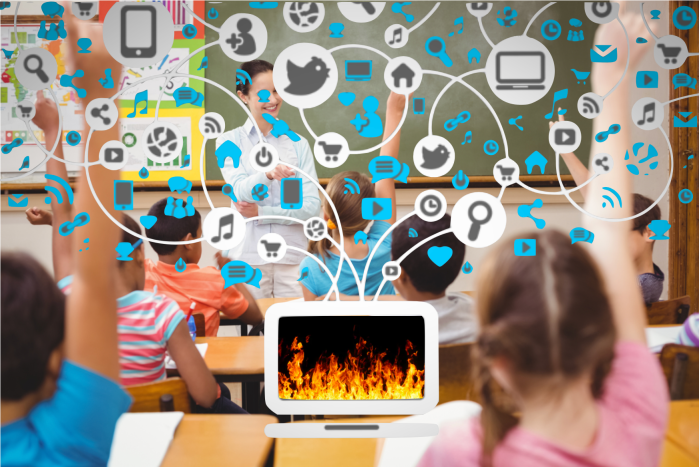
The Internet is NOT the Best Place for Kids to Learn After the Coronavirus Pandemic

Screen Shot 2020-05-09 at 12.46.20 PM

 
If the Coronavirus quarantine has taught educators one thing, it’s this.


Online learning is not better than in-person schooling.


After all these years of corporations throwing apps at us and well-meaning administrators providing us with devices and philanthrocapitalists pumping billions of dollars into ed tech first academic schemes, we can all see now that the emperor has no clothes.


When schools nationwide are closed to stop the spread of a global pandemic and learning is restricted to whatever teachers can cobble together on sites like Google Classroom and ZOOM, we can all see the Imperial scepter blowing in the wind.


The problem is that this is only clear to parents, students and teachers.


The people who get to make ed policy decisions are as blind as ever – as witnessed by New York Gov. Andrew Cuomo’s tone deaf insistence that his state reimagine schools with the help of billionaire school saboteur Bill Gates.


But the rest of us – you know, those grounded in reality – can see the problems with remote learning staring us in the face.


Most importantly, the Internet is not a conducive environment for learning.


I don’t mean that learning can’t take place there.


You could learn in a fox hole while being shelled by enemy forces. But if your content extends to something more complex than “Duck” or other survival tactics, this may not be the best place to learn it. After all, environment plays a key role in knowledge acquisition.


Moreover, different people learn things better in different circumstances. And, contrary to our current education policies that view children as stakeholders or consumers, they are in fact people.


There are some children who learn better online than in a brick and mortar classroom. But these kids are few and far between.


In general, the younger the child (both physically and psychologically), the more important it is that he or she be given the opportunity to learn in an actual classroom.


Why?


It really comes down to who controls the environment.


In a classroom, the teacher decides most everything about the physical space and what possibilities there will be. She places the books, hangs the posters, sets the lighting, displays student work, etc.


In a virtual environment, the space is defined to a small degree by the teacher, but it is mostly determined by the ed tech provider and the open world of the Internet.


In short, teachers have much more control over physical classrooms and can remove distractions.


Online, educators have very little control over this.


LINE OF SIGHT

 
For instance, in my physical classroom, if I wanted to see what a student was doing, all I had to do is walk up to him and look.


I controlled what I see, and hiding things from me was difficult.


Online, if I want to see what a student is doing (let’s say on a video communications platform like ZOOM), I have little control over what I see. The student is in control of the camera. If it is pointing at the student or placed so as to hide certain behavior or even if the camera is currently on or not is not in my control. Students are empowered to hide anything they want, and there’s not much I can do about it.


When teaching online, I’ve had students texting on cell phones, playing video games on computers, having side conversations with friends in their bedrooms, playing with pets – and trying to hide this with the way they display themselves on camera.


I’ve had kids mysteriously turn off the camera or point it away from their faces until I ask them to switch it back on or swivel it back to themselves.


DO YOU HEAR WHAT I HEAR?

 
When I first started teaching online a few weeks ago, one of the most powerful tools at my disposal seemed to be the mute button.


If several kids weren’t hearing me because of side chatter, I could simply mute everyone and fill the blessed silence with instruction.


However, I soon discovered that this is deceptive.


Just because you don’t hear the students, doesn’t mean they aren’t talking. Some kids use the online chat stream to continue side chatter. Others forgo that entirely for text and Facebook messaging.


What’s worse, it’s often hard for the teacher to even know whether anything she said is actually being heard.


TOO MUCH CHOICE

 
One of the great strengths of online learning is that it gives students an incredible amount of choice. But that is also its greatest weakness.


I can give assignments through a file sharing site like Google Classroom and let students complete it at their own pace.


The problem is that kids (especially young kids) need their pace monitored.


You can’t give them too much time to get something done because many will procrastinate through the deadline.


In my physical classroom, I would often give an assignment and then provide at least some time for them to start it. The idea was that even if they don’t finish it with me, they are more likely to complete something they already began.


However, online it is completely up to them when to do an assignment. They are responsible for their own time management – and that’s a skill we, as educators, struggle to teach them.


As a result, most students don’t get these assignments done on time – if at all.


Even when they do the work, I’m bombarded by a slew of submissions around midnight or the early hours of the AM.


HOW TO ASK A QUESTION YOU DON’T KNOW YOU HAVE


Then there’s the question of… well… questions.


In my brick and mortar classroom, if a child was unsure of something, all she had to do was raise her hand and ask. Online, there are multiple ways to communicate with me – kids can send me an email, message me or verbally ask me something during a video chat.


The problem is that sometimes they don’t know they’re confused.


In my physical classroom, since all students are working on an assignment together in that same time and space, I can go from desk to desk and see how they’re progressing.


If they’re getting something wrong, I can correct it in real time. I can give suggestions and encouragement even before the work is done.


Online, I’m mostly limited to commenting on the final project. If a student didn’t understand the directions – and didn’t even understand that he didn’t understand the directions – I don’t know until the work is done.


This presents a problem. Do I explain the error and ask him to to do the work all over again? Or do I explain the error but accept the work for what it is?


I’ll admit, I usually do the later.


STUDENTS M.I.A.


Which brings me to mysterious absences.


I don’t mean kids who don’t show up to video conferences – though there are many of those.


I mean kids who for all intents and purposes appear to be there in ZOOM and then suddenly disappear never to return that day.


They could have a device or Internet issue. And if this happens every once in a while, it’s understandable. But what about kids who do this all the time?


If your iPad isn’t charged one day, I guess things happen. But if it isn’t charged everyday, that’s a problem. Your problem – one you need to solve.


I know every district is different in this regard, but my school provides every student with devices and even WiFi if necessary. Even in the physical classroom, using devices always came with a chorus of whines about them not being charged.


Once again, we’re putting this responsibility on students and families. In the days before distance learning, we could question whether that was fair. In the Coronavirus dystopia, we have little choice but to do it.


However, this brave new world even makes an issue out of bathroom breaks.


In the brick and mortar classroom, kids would ask to go to the restroom and then be sent one at a time. Online some kids just turn off their camera or leave it idling on an empty seat or the ceiling. It is next to impossible to tell whether these breaks are genuine or even to estimate their duration.


Some students are gone for the majority of the meeting. In a world where video conferences are few and far between, is it so much to ask that you use the restroom BEFORE going to ZOOM?


INVADERS

 
But let’s not forget unwanted guests.


These platforms require students to know a dedicated Web address and sometimes a password to get in.


Yet these are children. They sometimes share these security measures with people who were not invited.


Even in my physical classroom, sometimes students not on my roster would try to get in to talk with a friend or even just sit in on my amazing lessons. I could stop them at the door and send them on their way.


Online, some sites like ZOOM give me similar power, and others like Kahoot (a game based learning platform) do not. Even when every person entering has to be approved by me, all I see is the name they’ve given their device. If an enterprising stranger wanted to rename their device to that of one of my students, I probably wouldn’t catch it until they were in.


There have been several times when someone with one of my students’ names got into a ZOOM meeting, but either refused or couldn’t turn on their camera. I had no choice but to boot them out.


On some sites like Kahoot, there is no video. I had no idea who was signing in – I just saw the name they input.


So sometimes I had two students with the same name. Or I had let’s say 8 kids in the class but 9 kids were signing on to Kahoot.


It’s maddening!


ASSESSMENTS AND CHEATING

 
Now let’s talk tests.


I don’t like tests. I think they can too easily become cruel games of “guess what the testmaker was thinking.”


But they are a necessary evil to judge what information students have learned. Moreover, a creative teacher can design them to reduce the regurgitation of facts and increase critical analysis backed by facts.


In a physical classroom, teachers can monitor students during test taking. Online, they can’t. So there’s always a question of cheating.


Every scrap of information in human history is available somewhere online. If students try hard enough, they can find the answer to any question with a deft Google search.


However, to be honest I don’t think I’ve had too much trouble with this as yet. My students either don’t care enough to cheat, cannot figure out how to do so effectively or have too much self respect.


Or maybe I just haven’t caught them.


In the physical classroom, I had several students try to pass off others work – essays or poems – as their own. But I haven’t assigned anything so ambitious through distance learning yet.


CONCLUSIONS

 
Perhaps that’s why it drives me nuts when policymakers and media types make statements about what an overwhelming success this has all been.


Teachers and districts have tried their best. Students and families are giving their all. But this experiment does not demonstrate why we should all embrace distance learning once the Coronavirus pandemic is under control.


It shows why we MUST return to the brick and mortar classroom as soon as it is safe to do so.


Reimagining school will not require more ed tech.


It may require much less.


Kids need to be in the presence of physical human beings in a real environment with their peers to maximize their learning.


We need smaller classes, equitable funding, desegregation, social justice, wide curriculum, and an end to high stakes testing, school privatization, science denial and anti-intellectualism.


But more than anything, we need policymakers who are willing to listen to and include the people on the ground when making decisions that affect us all.


Like this post?  You might want to consider becoming a Patreon subscriber. This helps me continue to keep the blog going and get on with this difficult and challenging work.

Plus you get subscriber only extras!

Just CLICK HERE.

Patreon+Circle

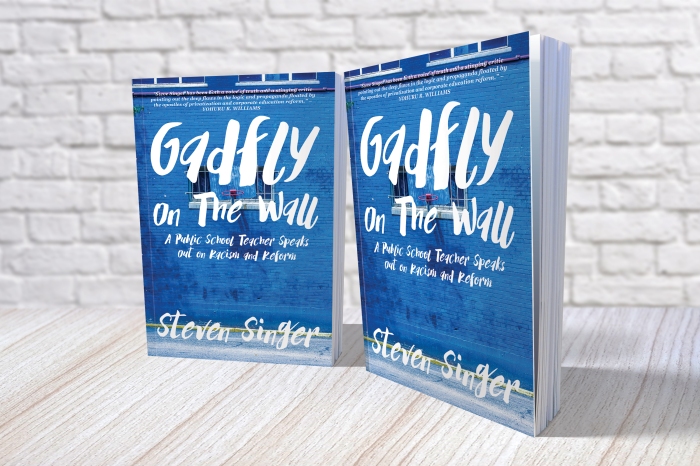
I’ve also written a book, “Gadfly on the Wall: A Public School Teacher Speaks Out on Racism and Reform,” now available from Garn Press. Ten percent of the proceeds go to the Badass Teachers Association. Check it out!
book-4

HBO’s “Bad Education” Aims at Public School Theft While Ignoring More Frequent Fraud at Charter Schools & Testing Companies

BADED_29OCT18_0125.RAF

 
“Bad Education” is a frustrating movie to watch as a public school teacher.


It does a fine job telling the true story of a wealthy New York district where administrators stole millions of dollars for themselves.


But it ignores the far more frequent waste and malfeasance caused by school privatization, high stakes testing and runaway ed tech.


Maybe I’m being too sensitive, but there is no subject more political than public schools.


During the current Coronavirus pandemic, teachers and schools are finally getting some respect from people who are trying to “home school” their own kids while the nation’s classrooms are shuttered.


But education budgets are still routinely slashed, and every policymaker from Betsy DeVos to Barack Obama still thinks there is nothing better than closing public schools and replacing them with charter and/or voucher schools.


Pundits continually decry low test scores while applauding every means to increase racial and economic segregation. They push every policy to increase the school to prison pipeline for black and brown students.


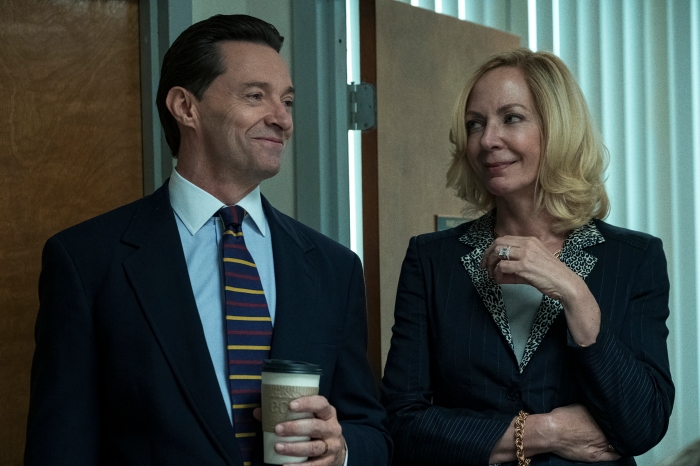
And now HBO drops this movie about Rosalyn School District Superintendent Frank Tassone (Hugh Jackman) who embezzled $11 million from taxpayers.
What happened in Rosalyn was scandalous. But it’s an outlier.


Such misappropriation and outright theft rarely happens at public schools. After all, the records are all public. It just takes someone to check up.


For REAL theft you have to go to charter and voucher schools where the law literally allows them to spend our money without most of that public oversight.


Viewers like me from Pennsylvania still remember Nick Trombetta. The founder and former CEO of the Pennsylvania Cyber Charter School stole a similar sum (at least $8 million), and got much less prison time (20 months vs. Tassone who served 3 years). Trombetta used taxpayer dollars to buy a$300,000 private jet for goodness sake! He bought a $933,000 condo in Florida! He bought $180,000 houses for his girlfriend and mother in Ohio. He did all this and more – and his lawyers got the charges down to tax evasion! Why is there no movie about THAT?


Or how about June Brown?


As the head of Agora Cyber Charter School, which was part of the K12 Inc. charter empire, she was indicted for stealing $6.5 million from taxpayers. She and her executives were indicted on 62 counts of wire fraud, obstruction of justice and witness tampering. She had a reputation for claiming large salaries and filing suits against parents who questioned her.


Where’s that movie?
The history of charter schools reads like a who’s who of hucksters and thieves!


Electronic Classroom of Tomorrow (ECOT) the largest charter school in Ohio was forced to shut down and auction off all its taxpayer funded property because administrators  grossly inflated its students body of 12,000 online students to the state.


New Jersey charter schools spent as much as $800 million of taxpayer dollars to buy property that they then charged taxpayers additional money to rent from the charter schools, according to an IRS investigation.


The Network for Public Education published a report in 2019 detailing more than $1 billion in federal dollars misappropriated by charters – including hundreds of millions spent on charters that never even opened or that closed soon after opening.


I think those would make good movies. Don’t you?


But let’s not forget the other vulture industries that prey on our public school system without providing much of value in return.


If you want REAL fraud, you have to go to the standardized testing and ed tech industry sucking away billions or taxpayer dollars while providing services that are either unnecessary or downright destructive.


Why do we give every public school child high stakes tests in grades 3 through 8 and once in high school? Because the federal government says so.


These tests don’t tell us how well students are doing in school. We have at least 180 days of classroom grades that tell us that.


These tests taken over a period of a few days tell us what the corporation making them thinks is important. And they nearly always show that richer kids are doing better than poorer kids, and that whiter kids are somehow “smarter” than blacker kids.


And for this prized data we pay billions of dollars to big businesses every year.
It’s one of the largest captive markets in existence. That’s some 50.4 million children forced to take standardized assessments. The largest such corporation, Pearson, boasts profits of $9 billion annually. It’s largest competitor, CBT/ McGraw-Hill, makes $2 billion annually. Others include Education Testing Services and Riverside Publishing better known through its parent company Houghton Mifflin Harcourt.


If many of these companies sound like book publishers, that’s because they are or their parent companies are. And that’s no coincidence. It’s another way they bolster their own market.


Not only do many of these testing corporations make, provide and score standardized assessments, they make and provide the remedial resources used to help students pass.


So if your students are having difficulty passing the state test, often the same company has a series of workbooks or a software package to help remediate them. It’s a good business model. Cash in before kids take the test. Cash in when they take it. And if kids fail, cash in again to remediate them.


Ever wonder why our test scores are so low? Because it’s profitable! The money is all on the side of failure, not success. In fact, from an economic point of view, there is a disincentive to succeed. Not for teachers and students, but for the people who make and grade the tests.

 
In fact, when I sat down to watch “Bad Education” I thought it was going to be about high stakes testing cheating scandals. I thought it was going to be about how the pressure to have students score well on the tests have in some cases resulted in teachers and/or administrators changing answers to inflate the scores.


But no. That’s not mentioned at all. There’s talk about test scores but their value is never questioned for one second.


Hugh Jackman’s superintendent dreams of leading his schools from getting the 4th highest test scores to having the 1st highest. But nowhere does anyone mention how these tests were literally developed by Nazi eugenicists or how they have been challenged countless times for violating children’s civil rights or even the sizable parent-led opt out movement in the same New York suburbs where the film takes place.


Okay.  Maybe I AM being too sensitive.


The film does seem to have a theme about how we expect everything from schools and teachers and don’t reward them well enough. But this is undercut by the obvious villainy of people who use that discrepancy to take advantage of the trust the public has placed in them.


Public schools rarely act this way.


I fear that many people will miss that point.


Instead it will be more fuel to the fire that public schools are bad and must be replaced.


There’s even a parting shot about Jackman’s character’s pension.


I’m all for drama.
But when filmmakers bend over backward to ignore the elephant in the room, I tend to lose my appetite for popcorn.


Like this post?  You might want to consider becoming a Patreon subscriber. This helps me continue to keep the blog going and get on with this difficult and challenging work.

Plus you get subscriber only extras!

Just CLICK HERE.

Patreon+Circle

I’ve also written a book, “Gadfly on the Wall: A Public School Teacher Speaks Out on Racism and Reform,” now available from Garn Press. Ten percent of the proceeds go to the Badass Teachers Association. Check it out!

book-4

You Can’t Have My Students’ Lives to Restart Your Economy


Screen Shot 2020-04-18 at 6.36.25 PM


It’s okay if a few children die to start up the economy.


That is literally the opinion being offered by media influencers and policymakers as Coronavirus social distancing efforts continue passed the 30-day mark.


In the midst of a global pandemic, we’ve closed down all nonessential businesses while people self quarantine at home waiting for the curve of infection to plateau and then drop off. Medical experts tell us this is the only way to ensure there are enough ventilators and hospital beds for those who get sick.


As it is, more than 700,000 Americans have tested positive for COVID-19 and 38,000 have died – more than the wars in Iraq and Afghanistan, the September 11 terrorist attacks, Hurricane Katrina and the Oklahoma City bombing – combined. In fact, the United States has the highest number of Coronavirus deaths in the world.


Screen Shot 2020-04-18 at 4.11.10 PM


Yet there is a concerted effort by the Trump Administration and plutocrats everywhere to get business back up and running. And to do that, they need the schools to reopen so parents can return to work.


They literally want to reopen schools as soon as possible – even if it isn’t 100% safe.


And if that means students, teachers and parents die, at least their sacrifices will have been worth it.


“Schools are a very appetizing opportunity,” said Dr. Mehmet Oz as a guest on Fox News’ Sean Hannity show.

 
“I just saw a nice piece in [British medical journal] The Lancet arguing the opening of schools may only cost us 2 to 3%, in terms of total mortality. Any, you know, any life is a life lost, but … that might be a tradeoff some folks would consider.”

 
Dr. Oz walked back the comment after popular backlash, but I believed him the first time. Many people would find that acceptable.


Dr. Phil McGraw (who unlike Dr. Oz is not a licensed doctor) said the following on Fox News’ The Ingraham Angle:


“The fact of the matter is, the longer this lockdown goes on, the more vulnerable people get. And it’s like there’s a tipping point. There’s a point at which people start having enough problems in lockdown that it will actually create more destruction and actually more deaths across time than the actual virus will itself.”


He then compared coronavirus deaths to deaths from smoking, swimming pools and car crashes – which critics pointed out result from mostly voluntary behavior.


Once again, Dr. Phil walked back his comments after public outrage. And once again, I saw where he was coming from – because it’s clear where these celebrity talking heads are getting their information.


You find the same opinion tucked into many otherwise informative articles about the virus and education.


Education Next published a piece by Walton Family Foundation advisor and American Enterprise Institute fellow John Bailey with this precious little nugget tucked in its middle:


“Currently, the public health benefits of school closures and home quarantining outweigh the costs. But at what point does that equation flip? When do the economic, societal, and educational costs outweigh the public health benefits of these aggressive social distancing actions?”


The rich need the poor to get back to work. And they’re willing to put our lives on the line to do it.


What’s worse, they’re willing to put our children’s lives on the line.


I don’t know about you, but I’m not willing to risk my daughter’s life so that the stock market can open back up.


As a public school teacher, I’m not willing to bet my students lives so that the airlines and cruise industry can get back in the green.


Nor am I willing to gamble with my own life even if it means the NBA, NFL and MLB can start playing games and Hollywood can start premiering first run movies again.


There’s still so much we don’t know about COVID-19.


Initial reports concluded that older people were more susceptible to it, but as infections have played out worldwide, we’ve seen that 40% of patients are between 20-50 years of age. Children seem mostly asymptomatic. However, many immunologists suspect they are acting as carriers spreading the virus to the older people with whom they come into contact.

 
Children have a more difficult time with the constant hand washing and separating themselves at least 6 feet apart recommended by health experts. This is one of the justifications for closing schools in the first place. If we reopen schools too quickly, it could jumpstart another wave of infections.


In fact, that’s exactly what the Imperial College of London found in its own modeling study on likely U.S. and U.K. outcomes.


School closures can be effective to help suppress the transmission rates and flatten the curve, the report concluded, IF CONTINUED OVER FIVE MONTHS.


That’s a long time. But it gets worse.


In the absences of mass vaccinations – which may be as much as two years away – the study found the virus is likely to rebound for a second and third wave.


Screen Shot 2020-04-17 at 11.56.34 PM


So when would it be safe to reopen schools?


Honestly, no one really knows.

 
Former US Food and Drug Administration Commissioner Scott Gottlieb released a more optimistic answer in the “National Coronavirus Response: Roadmap to Reopening.”


The report maintains the need to continue social distancing including school closures until cases peak and we see sustained declines in new cases for 14 days.


That seems to be a fair minimum standard.


However, we are not there yet. The death toll continues to rise in the US and may continue to do so for some time yet.


Despite the science, every state has a different date in mind for when schools will reopen.


Since the beginning of April,a total of 21 state departments of education (including Pennsylvania’s) have decided to keep schools closed for the remainder of the academic year until at least August or September. Six states plus Washington, D.C., still have plans to reopen their schools before the end of the month.


Screen Shot 2020-04-17 at 11.53.43 PM


Beyond the question of WHEN to reopen schools is the even more complicated one of HOW or IF.


President and chief executive of the National Association of State Boards of Education Robert Hull said administrators across the country are asking not how – but if – schools will reopen in the fall.


“Everybody says we hope we return to normal,” Hull said. “It’s not going to return to normal anytime soon because the new normal is going to be different.”


Multiple possibilities are being considered.


A major factor will be how well districts can test incoming students for infection.


The best solution would be quick and cheap Coronavirus screenings. If we could mass produce such tests and distribute them to schools or have the results be a precondition to coming to school, things might be able to run pretty much as normal.


If US schools all had digital thermometers (as they do in Singapore), students temperatures could be taken before letting them in to the building. Anyone running a fever could be sent home.


Some policymakers are even considering spot checking students throughout the day with thermometers and using video cameras to trace the path of any students running a temperature to tell who they may have come into contact with before being identified. However, this seems pretty disruptive to me and – especially in the younger grades – might terrify students and make them conversely feel less safe in school because of the very efforts done to ensure their safety.


In all likelihood, policymakers see to think schools will probably have to run while engaging in some sort of social distancing. And that’s not easy. Nearly everything from the way the academic day is organized to the maturity level of most students goes against this need.


One thought provoking proposal is reducing class size to no more than 10 students.


This would also have educational benefits allowing teachers the ability to give more one-on-one instruction. However, most classes are double or triple this size now. Few school buildings are large enough to double or triple the number of classrooms needed at the same time.


One solution to this is that children could attend on alternate days or on a half day basis – one group in the morning, another in the afternoon. The drawback is that this would reduce the hours students are in class. Lessons would either have to be cut down to essentials or some part of assignments may have to go online.


This might also narrow the curriculum so that the arts, music, and other subjects would be eliminated. Gym classes would probably have to be cancelled and lunches might have to be in the classroom, itself, instead of allowing large groups of students to congregate in the cafeteria.


Just ensuring that students aren’t all in the hallway at the same time would be a challenge. Class dismissals might be staggered or perhaps the teachers would move from room-to-room while the students stay put.


Moreover, the simple act of busing students to-and-from school is likewise complicated. If students sit further apart on the bus, that means each district needs either more buses at the same time or double the time to transport students at arrival and dismissal.


None of this would be cheap. It could necessitate more money on transportation, support staff and teachers. In a country where education budgets haven’t yet recovered from the Great Recession of George W. Bush, reopening schools safely would require an influx of cash.


But without it, the economy cannot get back under way.


When schools closed in March, many districts switched to some kind of distance learning. Teachers put assignments on-line and even teach through Internet meeting sites like ZOOM. Continuing this in some form – for part or all of the day – is also being considered. However, it causes as many problems as it solves.


Parents need to be able to get back to work. Many can’t stay at home taking care of their children indefinitely. And they can’t leave their kids to their own devices while trying to learn via computer, device or app.


Moreover, these cyber schooling efforts come with educational drawbacks. Just about every educational expert acknowledges that learning in-person is preferable. Students with special needs are particularly at risk because many of their individual education plans (IEPs) cannot be met remotely. And even though efforts have been made to help impoverished students gain access to the necessary technology and Internet access, the problem has by no means been universally solved. Not to mention privacy concerns with student data being pirated by unscrupulous ed tech companies.


Another issue is high stakes standardized testing.


With the Coronavirus crisis, the tests were cancelled this year – and no one has really missed them.


If lessons have to be cut to essentials, standardized testing and the need for endless test prep should be the first things to go. In fact, students, educators, parents and college professors will tell you how useless these assessments are. They reflect basic economic inequalities and enforce them by tying education funding to the test scores.


Poor kids score badly and rich kids score well, so the funding becomes a reward for the privileged and a punishment for the underprivileged.


That’s why it’s laughable when Hull laments “issues of equity” including how to measure what students are learning and how to help those who have fallen behind.


Equity is a matter of funding and opportunities – not test scores. Regardless of the problems with reopening schools, we could solve a long standing issue by erasing high stakes testing from the academic map.


But that’s been the elephant in the classroom for a long time.


Economic interests have trumped academic ones for decades.


Will we continue to value money over children? Will we pave the post-Coronavirus future over the bodies of sick children and adults?


Like any crisis, COVID-19 is another opportunity to get things right.


Here’s hoping we have our priorities straight this time.


Here’s hoping schools stay closed until we’re certain reopening them won’t endanger students, teachers and the community.


Like this post?  You might want to consider becoming a Patreon subscriber. This helps me continue to keep the blog going and get on with this difficult and challenging work.

Plus you get subscriber only extras!

Just CLICK HERE.

Patreon+Circle

I’ve also written a book, “Gadfly on the Wall: A Public School Teacher Speaks Out on Racism and Reform,” now available from Garn Press. Ten percent of the proceeds go to the Badass Teachers Association. Check it out!

book-4

Bernie Sanders Supporters Have Every Right to Be Furious

Screen Shot 2020-04-12 at 4.34.30 PM

 
Dear non-Bernie Sanders supporters,


Shut up.


Seriously.


Sit down, and shut the fuck up.


You’ve been doing an awful lot of talking lately, and there’s a few things you need to hear.


We, the Bernie supports, are sick and tired of the never-ending flow of bullshit coming out of your mouths.


For the past five years you’ve called us Bernie Bros, Bernie’s Internet army, Russian bots, naive, sexist, racist, privileged, pigs.


Yet women, people of color, LGBTQ folks, social, racial and ethnic minorities make up a sizable portion of our numbers, but somehow we’re prejudiced.


You didn’t listen to us in 2016 when we said Hilary Clinton was unelectable. You didn’t listen to us when we said Donald Trump had a real chance at winning. But you blamed the entire catastrophe on the handful of us who didn’t vote for your candidate.


And now the second Bernie Sanders suspends his 2020 campaign, you’re all over us to commit to your boy, Joe Biden.


We’ve been here before. We have a pretty good idea how this story ends. Maybe you’d do well to listen to us for once.

 
We’ve spent years of intense effort changing the narrative of politics in America. We’ve held live streams, phone banked, knocked on doors, overfilled arenas. We’ve pushed Medicare for all, raising the minimum wage, universal college, a Green New Deal.


And the only thing you can say is “I told you so”?


All you have to say is “blue no matter who”?


It’s just “Get in line or you’ll be responsible – again.”


Let me ask you a question: what are YOU responsible for?


When Bernie was winning state after state, the media acted like it was a literal invasion of brownshirts. When Biden was winning, it was the best news since sliced bread.


Who’s responsible for that?


Bernie was running away with the primary until nearly all the other candidates mysteriously dropped out all at once right before Super Tuesday. And now we find out Barack Obama gave them each a call before hand – putting his finger on the scale.


Who’s responsible?


The Democratic National Committee literally pushed to continue primaries in Illinois, Florida and Arizona during a pandemic in case waiting might bolster Bernie – the candidate with policies tailor made to fight COVID-19. And the result has been a flood of sick people and a nearly insurmountable delegate lead.


Who’s responsible?


Once again – no one.


Not a single establishment Democrat, Hillary or Biden supporter has ever said, “We fucked up.” It’s only what everyone else did. No accountability for your actions at all.


Don’t Bernie supporters have a right to be pissed off about it?


Can we just have a moment to express our authentic human rage?

 
This may come as a shock but almost all Bernie supporters want to beat Trump in November.


And now we have no choice but Biden with which to do it.


We have a candidate with a long history of outrageous and provable lies – including statements only a month old that he was arrested while visiting Nelson Mandela in South Africa.


We have only a candidate with a history of inappropriate touching of women and a credible rape allegation.


We have a candidate who degraded Anita Hill to help far right Republican Clarence Thomas get on the Supreme Court.


We have a candidate who wrote the bankruptcy bill that stopped protection from millions right before a recession.


We have a candidate who has repeatedly been willing to cut social security.


We have a candidate who refuses to support Medicare for all – even during a global pandemic.


And you think Berners are somehow out of line for expressing anger over this shit?


You need to wake up.


At this point, we need unity more than ever.


We need to come together and defeat Trump.


But to do that, we need more than just hatred of the incumbent.


Sure we need someone who will nominate sane Supreme Court justices, but we need a base that will give him the support to get these nominees approved and not leave them in the wind like Merrick Garland.


We need real policies that people can get behind. And even if Bernie came up short on delegates, his policies are still incredibly popular – more popular than he is.


If you want some of us to pull the lever for your boy in November, you’d do a lot better fixing Biden’s policy positions than gaslighting Bernie folk.


You’d do a lot better getting Biden to pick strong progressives for cabinet positions and leadership positions in his electoral campaign than trying to bully us into obedience.


You’d do a lot better committing to Bernie as a second choice if Biden somehow demonstrates he’s unable to continue with the campaign (and you KNOW what I mean).


And perhaps more than anything – you’d do well to give us a little fucking space.


Berners need time to mourn.


I said that before and someone thought I was joking. I’m not.


If Bernie folk have a weakness, it’s that we’re believers.


We believed in our political revolution.


We believed in the idea of “Not me. Us.”


We believed a better world was possible.


Now that better world is further out of reach.


And all you have to offer us is one that’s slightly less fucked.


Like this post?  You might want to consider becoming a Patreon subscriber. This helps me continue to keep the blog going and get on with this difficult and challenging work.

Plus you get subscriber only extras!

Just CLICK HERE.

Patreon+Circle

I’ve also written a book, “Gadfly on the Wall: A Public School Teacher Speaks Out on Racism and Reform,” now available from Garn Press. Ten percent of the proceeds go to the Badass Teachers Association. Check it out!

book-3

Top 10 Reasons to Vote for Joe Biden in the 2020 General Election

Screen Shot 2020-04-10 at 2.39.40 PM

 
With Bernie Sanders dropping out of the 2020 Democratic Primary, I can think of only these 10 reasons to vote for Joe Biden in the November general election:


10) He’s not Donald Trump.

9) He’s not Donald Trump.

8) He’s not Donald Trump.

7) He’s not Donald Trump.

6) He’s not Donald Trump.

5) He’s not Donald Trump.

4) He’s not Donald Trump.

3) He’s not Donald Trump.

2) He’s not Donald Trump.

1) He’s not Donald Trump.


Like this post?  You might want to consider becoming a Patreon subscriber. This helps me continue to keep the blog going and get on with this difficult and challenging work.

Plus you get subscriber only extras!

Just CLICK HERE.

Patreon+Circle

I’ve also written a book, “Gadfly on the Wall: A Public School Teacher Speaks Out on Racism and Reform,” now available from Garn Press. Ten percent of the proceeds go to the Badass Teachers Association. Check it out!

Screen shot 2018-01-07 at 1.14.14 AM

Virtual Learning Through Quarantine Will Leave Poor and Disabled Students Behind

Screen Shot 2020-03-25 at 9.49.54 AM


In the wake of the coronavirus crisis with most people self quarantined at home, schools across the country are shut down.


Some offer (or are considering offering) distance learning over the Internet.


However, this poses problems.


Not all student services can be provided via computer.


And not all students even have a computer, online compatible device or Internet access.


Should our nation’s public schools soldier on anyway and provide some kind of learning experience for those not thus encumbered at the expense of those who will be left behind?

 
The U.S. Senate’s proposed coronavirus aid package includes a provision to waive existing federal law that requires all schools to provide services to special education students. Removing this specification would allow districts to move forward with virtual learning without having to worry about meeting the needs of their special education students.


Advocates worry that even a temporary suspension of the Individuals with Disabilities Education Act (IDEA) could have devastating long term effects on students with disabilities and ultimately remove the requirement upheld for the last 45 years that they receive a free public education.

 
Education Secretary Betsy DeVos offered a gleeful statement in favor of dispensing with protections for students with autism, cerebral palsy, learning disorders and other special needs:


“It was extremely disappointing to hear that some school districts were using information from the Department of Education as an excuse not to educate kids. This is a time for creativity and an opportunity to pursue as much flexibility as possible so that learning continues. It is a time for all of us to pull together to do what’s right for our nation’s students.


“Nothing issued by this Department should in any way prevent any school from offering educational programs through distance instruction. We need schools to educate all students out of principle, rather than educate no students out of fear. These are challenging times, but we expect schools to rise to the occasion, and the Department stands ready to assist you in your efforts.”


The Department of Education issued a Fact Sheet that went even further:


“To be clear: ensuring compliance with the Individuals with Disabilities Education Act (IDEA), Section 504 of the Rehabilitation Act (Section 504), and Title II of the Americans with Disabilities Act should not prevent any school from offering educational programs through distance instruction.”


This is tantamount to prioritizing the education of some students over others. In short, if we follow DeVos’ guidelines, we will be saying that regular education students are more important than students with special needs.


It is a dangerous precedent.


However, perhaps even more dangerous is the abdication of any responsibility for, even complete erasure of any mention of poor students without Internet access.


This just underlines the importance of legislation. Special education students have IDEA. Poor students have nothing. There is no right to education for them at all.


If there had been some legislation specifically enshrining the rights of the underprivileged, however, it is clear this administration would be likewise proposing measures to dispense with it.


I understand that we are in a crisis. I understand that some think it is better to take half measures so that something gets done rather than nothing.


However, the coronavirus outbreak is expected to be a temporary situation. It may last weeks or months, but it will not last forever.


We want to do things in the best interests of children now, but we also must be aware of later. And trying to meet some kids needs now while writing off a large chunk of the rest would have a huge negative impact later.


If we educate just the privileged kids, we will be worsening the socioeconomic gap between students – a gap that is already too wide.


According to the most recent federal data, nearly 7 million students in the United States do not have Internet access at home. That is about 14 percent of all U.S. students. And of those with online access at home, 18 percent do not have home access to broadband Internet so they would also have difficulty retrieving lessons or participating in Zoom meetings online.

 
Moving to distance learning on the Internet would leave tens of millions of children behind.

 
Is this really what we want to do?


In addition, there is the question of quality.


Few teachers are trained or have experience with distance learning. They will probably be able to provide some kind of learning – but it will almost certainly not be the best they could be providing.


Moreover, there are real questions about the quality of learning that CAN be provided in a virtual environment even under the best of circumstances.


Cyber schools are a perfect fit for some students. Older and more mature students would probably have an easier time adjusting to it.


However, many students – especially younger ones – need the face-to-face interactions of school to get the most out of the experience. Forcing them into a mold that may at best be unsuited to them individually and at worst developmentally inappropriate will only cause them undo trauma.


I understand that everyone wants to appear like they’re doing something to meet the challenges provided by this crisis. However, sometimes the best thing to do is nothing.


One day the quarantine will be lifted. At that point, we can reopen the schools.


This may mean a few months of summer school. Or we could extend the 2020-21 school year to make up the difference.

 
Neither are perfect solutions. But they’re both better than virtual learning.


Neither require us to write off our poor and special education students.


And THAT is the most important thing.


Public schools don’t have to settle for whatever fad is offered from disaster capitalists.


We can still do what’s right for our kids.


All of our kids.


Like this post?  You might want to consider becoming a Patreon subscriber. This helps me continue to keep the blog going and get on with this difficult and challenging work.

Plus you get subscriber only extras!

Just CLICK HERE.

Patreon+Circle

I’ve also written a book, “Gadfly on the Wall: A Public School Teacher Speaks Out on Racism and Reform,” now available from Garn Press. Ten percent of the proceeds go to the Badass Teachers Association. Check it out!

book-4

Public Schools Can Recover from the COVID-19 Quarantine by Skipping High Stakes Tests

Screen Shot 2020-03-14 at 7.40.21 PM

 
There is one plus from being sick during a global pandemic.


You get perspective.


While all the schools in Pennsylvania are closed for at least the next two weeks to help stop the spread of COVID-19 (colloquially known as the Coronavirus), I self-quarantined a day early.


No, I don’t think I have the virus, but I’m not taking any chances.


Still, sitting here at my laptop with a steaming mug of tea, I’m filled with optimism.


My symptoms don’t match those of the virus – no fever, no dry cough, no difficulty breathing, no runny nose or sore throat. I just sneeze occasionally, have an intermittent wet cough and feel a bone deep fatigue.


Probably not the culprit sending the world into shutdown mode. But best to rest up anyway.


I’m also filled with a deep sense of gratitude that I’m a public school teacher.


My last class was a rough one – 7th graders running around the room with half written poetry demanding instruction, guidance, reassurance. My morning 8th graders were likewise rushing to complete a poetry assignment – frantically asking for help interpreting Auden, Calvert, Henley, Poe, Thomas.


What a privilege it has been to be there for them! How much I will miss that over the few next weeks!


Who would ever have thought we’d go into self quarantine to stop people from getting infected?


It says something about us that what seemed impossible just a few days ago has become a reality. We actually saw a problem and took logical steps to avoid it!


I know – we could have done a better job. We could have acted more quickly and in many areas we haven’t done nearly enough (New York, I’m looking at you).


But what we have done already shows that human beings aren’t finished. We have massive problems waiting to be solved – global climate change, social and racial inequality, the corrupting influence of money in politics, etc. However, we CAN do the logical thing and solve these problems!


No matter how crazy it seems now, tomorrow could be filled with rational solutions. If only we allow ourselves that chance.


So my spirits are high here in my little hollow nestled in with my family.


But being a teacher I can’t help thinking about what’s to come next.


Eventually this whole ordeal will be over.


Schools will reopen. Things will get back to normal. Or try to, anyway.


The challenge will be attempting to overcome the month or more of lost schooling.


Some will be thankful they relied on virtual schooling to fill in the gaps. When this whole crisis began, officials chided us to make preparations for “teleschool” in case of just this eventuality.


I’m glad we didn’t.


Frankly, (1) it would have been a huge cost that schools don’t have the money to meet and (2) it would have been money down the drain.


There is nothing innovative about sending kids on-line to do their assignments. The majority of work that can be done that way is of the lowest quality.


That’s workbook nonsense that the laziest and most checked out educators of generations past gave to their students to keep them quiet.


We see students in China who are being educated that way finding ways around it – giving their education apps low star reviews in the app store so that they’ll be removed, etc.


Here in the USA, all children don’t even have access to the Internet. They rely on the local libraries to get online – not a good idea in a pandemic.


So most schools have had to do without.


School is cancelled for about a month or so, and then – hopefully – it will return.


The question remains – what do we do when we get back to class?


We could extend the school year, but families have vacations planned and other obligations. This wouldn’t solve much and frankly I don’t think it will happen unless we’re out for longer than expected.


I anticipate being back in school by mid April or so. That would leave about a month and a half left in the year.


This really leaves us with only two options: (1) hold our end of the year standardized tests and then fit in whatever else we can, or (2) forgo the tests and teach the curriculum.


If we have the tests, we could hold them shortly after school is back in session. That at least would give us more time to teach, but it would reduce the quality of the test scores. Kids wouldn’t be as prepared and the results would be used to further dismantle the public school network.


Much better I think is option two: skip the tests altogether.


Frankly, we don’t need them. Teachers observe students every day. We give formal and informal assessments every time we see our kids. We’re like scientists engaged in a long-term study taking daily measurements and meticulously recording them before coming to our year end conclusions called classroom grades.


In my classes, I think I could teach just about the same material in the remaining time if I didn’t have to worry about the high stakes tests.


In 7th grade, this would mean finishing up our almost completed poetry unit – having kids put together their poetry portfolios and sharing them. Then we’d begin our final novel of the year, “Silent to the Bone” by E.L. Konigsburg, talk about mystery stories, reader perspectives and how truth impacts fiction.


In 8th grade, we could likewise finish up poetry with some presentations on students’ favorites from the assigned group. Then we could read the play version of “The Diary of Anne Frank,” and selections from Harper Lee’s “To Kill a Mockingbird.”We could discuss propaganda, prejudice and compare the historical perspective of Europe and the United States.


In both cases, we might have to forgo a year-end project, but at least we’d cover the majority of what we proposed at the beginning of the year.


Students would leave their respective grades with just about everything we set out to give them. They’d be prepared and ready to meet the challenges of the coming grade.


That seems a worthy goal to me.


But I hear someone ask – what about the standardized testing? Won’t students be less prepared having skipped over those assessments?


The answer is no. They would not be less prepared.


They would be better educated without a sword of Damocles hanging over their heads.


The shame is that this alteration in schedule would probably only last one year.


In 2020-21, we’d probably reinstate these standardized assessments.


This is at least a month of wasted schooling. If we got rid of all the pretests and administrator required teaching-to-the-test, we could clear up a good 9-weeks of extra class time.


Imagine what teachers could do with those surplus days!


My 8th graders could read the whole of “Mockingbird,” for one. instead of just selections. My 7th graders could read another entire novel – probably Paul Zindel’s “The Pigman.” Not to mention the addition of more women and writers of color, the extra time for creative writing, an emphasis on finding your own point of view.


And for me that’s the benefit of this COVID-19 crisis. It shows us what could be – what we could do if we were only brave enough to try.


Happy self-quarantine, everyone!


Like this post?  You might want to consider becoming a Patreon subscriber. This helps me continue to keep the blog going and get on with this difficult and challenging work.

Plus you get subscriber only extras!

Just CLICK HERE.

Patreon+Circle

I’ve also written a book, “Gadfly on the Wall: A Public School Teacher Speaks Out on Racism and Reform,” now available from Garn Press. Ten percent of the proceeds go to the Badass Teachers Association. Check it out!
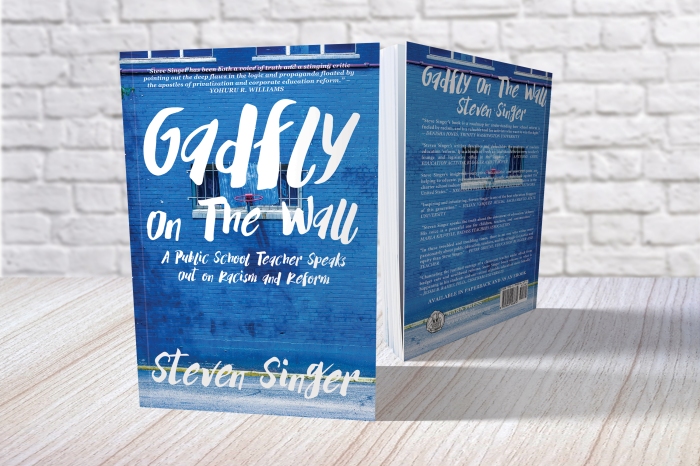
book-2

Bernie Sanders Would Be the First Jewish President – What That Means to Me

5e097191240000c81c5a4809

 
Being Jewish is not something I advertise.


Some of my earliest memories are trying to explain to school friends that no, I didn’t kill Jesus – and, yes, I do eat matzo but it isn’t made with baby’s blood – and would they like to come over to my house and play Legos?


I’ve been called “yid,” “kike,” “heeb,” even just plain “Jew” with the lips curled and the word hurled at me like a knife.


Heck. When I was a kid even the bus driver called me “moneybags,” though my family was far from rich.


So it makes sense to me that Bernie Sanders isn’t running for President as a Jew first.


He’s running on his policies and experience.


But it still hurts when pundits complain that there are now just two white men vying for the democratic nomination.


Um. Okay.
 
Sanders IS Jewish. You know that, right? If he were elected, it would not be business as usual. It would be unprecedented.


Yet that fact is almost always glossed over because it doesn’t fit the media narrative they’re selling.


Sanders is the “crazy socialist,” not the “historic Jew.”


This constant erasure is a slap in the face.


And I mean MY face, not just Sander’s.


I doubt it feels too good to him, either, but it feels personal to me, as well.


My family and I live just outside of Pittsburgh, about a half hour away from the Tree of Life Synagogue in Squirrel Hill where just two years ago 17 people were gunned down in perhaps the worst act of violence against Jews in our nation’s history.


I teach “The Diary of Anne Frank” to middle school children less than 15 minutes away.


I have relatives who belong to that congregation, though I didn’t know any of the 11 people who died.


Let me ask – were they white?


I’ll bet they thought they were, but all it took was an anti-Semite with a gun to challenge that.


Like Bernie, I lost my extended family in the Holocaust – great grandparents, great uncles and aunts, cousins,  who I will never meet. I grew up with only the closest of familial relations.


Before I was old enough to get in to see a PG-13 movie, I knew about mass graves, ghettos, cattle cars and crematoriums.


Generation upon generation of European Jewry never expected to be singled out for extermination. They probably thought of themselves as regular, everyday people, too – an US not a THEM.


Bernie would meet that same standard. Like all of us, he knows we’re white only until someone decides we’re not.


So when talking heads decide to erase the fact of Bernie’s ancestry, they aren’t just playing politics. They’re engaged in naked prejudice.


Let me be clear. I don’t bring this up out of some sense of political tokenism. Bernie shouldn’t be recognized just for appearances sake. He needs to be seen for who and what he is.


This isn’t about identity politics. It’s about basic truth.


When some folks complain about the way Bernie speaks or that he yells too much, they’re really showing a xenophobic bigotry.


Bernie is a Jewish man who grew up in New York.That is how people from there talk.


I’ve known scores of people who speak like that – often at the dinner table during family gatherings. Just because it isn’t a part of your personal experience doesn’t make it acceptable to dismiss.


If you belittled someone for speaking with a Spanish accent, it would be called out for what it is – prejudice.


But by ignoring Bernie’s Judaism, you allow all kinds of discriminatory preconceptions to pass as little more than valid criticisms.


Don’t get me wrong.


I don’t think Bernie’s Judaism is the most important thing about him or his campaign.


I wouldn’t support just any Jew who was running. For example, I wouldn’t back Joe Lieberman or Jared Kushner if they were seeking elected office.


But it DOES mean something that Bernie is in the hunt for the Democratic nomination and is Jewish.


For me, he typifies what is best about us.


He embodies the spirit of doing good for others and trying to make the world a better place. He seeks justice in economic, social, racial, gender and political relationships. He tells truth even when it’s uncomfortable to hear. And that includes the truth about the Israeli government’s reprehensible treatment of the Palestinian people.


In his 30 years in Congress he passed mountains of bipartisan legislation as the amendment king. He refused to support the Iraq War or cuts to social security. He supports unions, workers, public schools and universal healthcare.


Being Jewish does not take precedence to those things. But I hope supporting those things will help redefine what people think of when they think of Judaism.


Like this post?  You might want to consider becoming a Patreon subscriber. This helps me continue to keep the blog going and get on with this difficult and challenging work.

Plus you get subscriber only extras!

Just CLICK HERE.

Patreon+Circle

I’ve also written a book, “Gadfly on the Wall: A Public School Teacher Speaks Out on Racism and Reform,” now available from Garn Press. Ten percent of the proceeds go to the Badass Teachers Association. Check it out!

thumbnail_IMG_8249

Don’t Fear Summer Lee. Fear the Devil’s Bargain Labor Leaders Are Willing to Make Opposing Her

NEBBj8c5_400x400

 
Cancer or unemployment.


That’s the choice Pennsylvanians are being asked to make in 2020.


Do we allow hydraulic fracking to continue to destroy our environment and increase our risk of cancers and other debilitating illnesses?


Or do we clean things up and risk losing jobs?


Some labor leaders seem willing to chose the former on behalf of their constituencies.


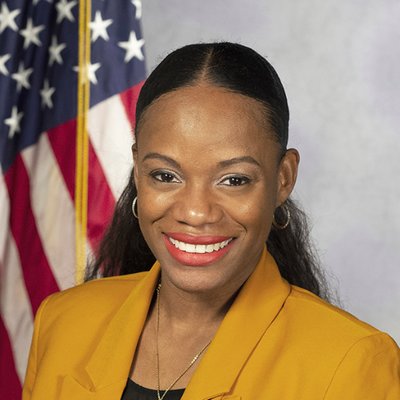
That’s why the Pittsburgh-based Allegheny-Fayette Central Labor Council (PA AFL-CIO) voted to oppose the re-election of State Representative Summer Lee, the first black woman elected to the State House from the western part of the Commonwealth.


She chooses life.


And that might put some people out of work.


It’s a sad commentary on the state of the labor movement that union bosses are willing to make this trade – life for a living wage.


And it’s a completely unnecessary choice.


We can have BOTH jobs and health – if Democratic politics allow for minds open enough to see the truth.


Let’s get this straight.


Lee is a badass.


The Democrat represents Homestead and West Homestead – two of the three municipalities in the school district where I work as a middle school teacher. She also represents parts of Pittsburgh, Braddock, Swissvale, Rankin, Turtle Creek, Forest Hills and Churchill.


But the 32-year-old lawyer and community organizer is more than just a politician. She’s a local hero.


Just two years ago, Lee beat 20-year incumbent Paul Costa by a margin of 68-32%.


She helped found UNITE, a grassroots political action committee, which has successfully defeated several old guard Democrats in bed with the fossil fuel industry.


Most notably, UNITE was part of the effort that ousted Allegheny County Council President John DeFazio in favor of another Democratic insurgent, Bethany Hallam. Once again DeFazio’s pro-fracking and fossil fuel platform went down in flames to Hallam’s environmentally friendly policies by a margin of 54%-46%.


Fracking is a relatively new and dangerous method of extracting natural gas from otherwise inaccessible sources like the region’s abundant Marcellus shale. “Fracking fluid” made up of water, sand and harmful chemicals is injected in a high pressure blast into deep rock formations releasing natural gas, petroleum and other substances.


Fracking has been known to increase health risks like respiratory problems, a negative impact on pregnancies, and a host of other problems – and that’s not even considering the risks of spills. The process also has devastating environmental impacts including the escape of greenhouse gases, groundwater pollution and increase risk of earthquakes.


In Harrisburg most debate has centered around removing a Republican-backed sweetheart tax deal for the industry and not outright banning the process altogether.


Lee, Hallam and other UNITE Democrats are changing the conversation, yet some of the area’s labor unions aren’t coming along with these insurgent winners. They’re sticking with establishment figures.


The PA AFL-CIO has endorsed Chris Roland against Lee in the primary. He’s a white North Braddock councilman who supports fracking. 


Lee is a Democratic Socialist with a massively pro-labor campaign. She’s been endorsed by the Service Employees International Union (SEIU) and United Electrical Workers (UE).


She is the only incumbent who the labor council did not endorse.


The only reason is her environmental stance, her race, or both.


Lee supports a Green New Deal and tightening enforcement against illegal air emissions from steel mills.


Roland has already raised $77,635 mostly from local unions. Steamfitters Local 449 and the Laborers’ International Union of North America have both given him $20,000 while the local International Brotherhood of Electrical Workers (IBEW) and Plumbers locals each gave $10,000.


To combat this, Lee has raised $55,789.


Some pundits theorize that the move to stop Lee is doomed from the start because of her incredible popularity in her district. The real motivation is to weaken UNITE’s ability to fundraise against other pro-fracking Democrats.


It’s tragic that the labor movement has come to such a low point with leaders like PA AFL-CIO President Darrin Kelly willing to trade the health and safety of the people living here for the promise of a paycheck.


Kelly has been a vocal opponent of the Green New Deal fearing what it would do to fossil fuel employment in the area.


In an April interview with Payday, he said:


“When you have a situation where you are taking away from someone’s ability to feed their family, that is not going to be looked at favorably. I am going to be against it; I’m going to be vocal against it and not welcome it in Western Pennsylvania.”


He seems to forget that dead people don’t need a paycheck.


Trading the environment and the health and welfare of our friends and neighbors for a living wage is a bad deal.


Moreover, labor leaders opposing environmentalists like Lee ignore key aspects of her proposals.


A Green New Deal would create millions of sustainable new jobs. It would require replacing pipes, weatherizing homes, expanding railways, manufacturing wind turbines – all of which would require people to do the work.


These would be high quality union jobs with good salaries, benefits, safe working conditions, training opportunities, etc.


This opens a once in a generation opportunity for new jobs to upgrade and expand the Commonwealth’s crumbling roads, bridges, energy grid, and water systems. Not only would we repair what exists, we’d build a cleaner, more affordable, and more resilient infrastructure that would be there for our posterity.


We need to expand access to light rail and low-emissions public transit, replace lead pipes, build a smart grid for increased wind and solar power, replace storm water systems to prevent flooding and toxic runoff, and restore wetlands and other natural buffers to protect our communities.


These are exactly the things our labor leaders should be concerned about doing. These are exactly the policies we need to move forward into the future.


It’s time to stop the necrotic paralysis of labor propping up the dying fossil fuels industry. The future is with sustainable energy.


If we want to actually live to see that future, we need to back policies that save our children from getting sick, that preserves Pennsylvania’s natural resources.


Green New Deal Democrats like Lee and Hallam are the future.


It’s time the holdouts in the labor movement get with the program.


78345718_10157331312783860_2217528104966946816_n
Summer Lee, Mark Fallon and me at December’s Public Education Forum in Pittsburgh.


Like this post? I’ve written a book, “Gadfly on the Wall: A Public School Teacher Speaks Out on Racism and Reform,” now available from Garn Press. Ten percent of the proceeds go to the Badass Teachers Association. Check it out!
thumbnail_IMG_8249

There Are No Bernie Bros, Just Diverse Supporters Being Made Into What They’re Not

bernie_sanders_36

 
It’s time to call the whole “Bernie Bros” phenomenon exactly what it is – racist, sexist, homophobic propaganda.


I don’t mean that Bernie Sanders’ supporters are any of those things.


I mean that the term used to lump us all together is.


There is no monolithic group of angry straight men backing the Vermont Senator’s bid for the Democratic nomination for President in 2020. Nor was there in 2016.


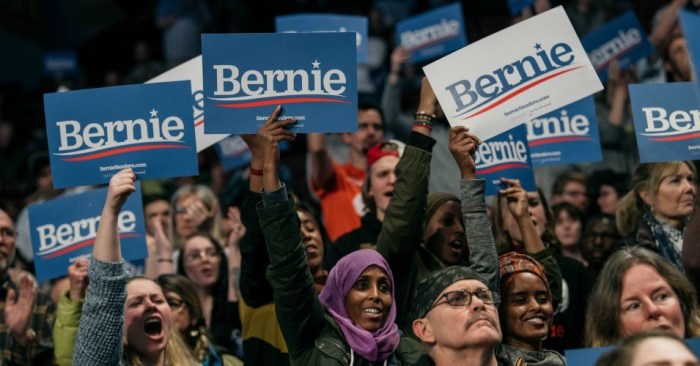
A substantial portion of Sanders’ supporters are female, racially diverse and/or LGBTQ.


Women under 45 make up a larger share of Sanders’ base than do men of the same age, according to February findings from The Economist.


Moreover, women have given more money to his campaign than to any other candidate.


In November, Sanders raised about $17.1 million in itemized contributions, or 40% of his total funds from women, according to Nicole Goodkind of Fortune.


In particular, that’s more than $13 million in small donations from nearly 280,000 suburban women. And he took in more than $2 million more from suburban women in large donations.


Women support him just as much as men do, “if not more,” according to a Vox analysis of polling between November 2018 and March 2019.


But he’s also extremely popular with people of color.


In fact, the same Vox analysis found that Sanders is more popular among people of color than among white people.


Heck! Sanders’ polling numbers with black voters were double that of Sen. Kamala Harris (D-CA) who was also seeking the nomination before dropping out in December, according to a March Morning Consult poll – and Harris actually is a person of color.


Both The Economist’s latest numbers and Univision Noticias poll found Sanders was the second choice of Latino and Hispanic voters after former front runner Joe Biden. Moreover, 39% of Latinos in California said they prefer Sanders, compared to 21% for Biden and 5% for Warren, according to the Public Policy Institute of California.


Meanwhile, he also has strong support in the LGBTQ community.


Sanders is the first-choice for 34 percent of Democratic primary voters who identify as LGBTQ, according to the latest Morning Consult poll. That’s more than Elizabeth Warren at 19%, Joe Biden at 18%, Michael Bloomberg at 7%, even Pete Buttigieg at 12% – and Buttigieg is openly gay.


Sanders has a long record of supporting gay rights. In the 1980s as Burlington mayor, he proclaimed a Gay Pride Day, while during his tenure in the House, he opposed both the Defense of Marriage Act and Don’t Ask, Don’t Tell – a law that barred gay and lesbian military service members from proclaiming their sexual orientation. And in 2009, Sanders endorsed marriage rights for gay couples — three years before then-Vice President Biden did the same.


If that’s not enough, the Sanders campaign has women and people of color in prominent leadership positions.


Two women of color, Ohio state Sen. Nina Turner and San Juan, Puerto Rico Mayor Carmen Yulín Cruz, are co-chairs of the campaign, along with Indian-American Rep. Ro Khanna (D-CA) and Ben & Jerry’s co-founder Ben Cohen. Sanders’ campaign manager is longtime progressive activist Faiz Shakir.


Are all these women and minorities really Bernie Bros?


The term was coined four years ago by Atlantic writer Robinson Meyer to characterize those backing the Vermont Senator as mansplaining internet trolls – a sexist mob who refused to support Hillary Clinton because of her gender and not her neoliberal policies and anti-progressive history.


And that’s really the crux of it.


The Bernie Bros phenomenon is an attempt to use identity politics to minimize the beliefs of people – to paste over their actual identities as real, live women and men, to erase the opinions of diverse people – to create a fake picture of who these people are.


But don’t take my word for it. Take that of Barbara Smith, the black feminist author who coined the term “identity politics” and has thrown her support behind Sanders in 2016 and 2020:


“It was absolutely meaningful for Bernie Sanders or for anyone else to say, ‘No, I’m going to step away from that white-skin privilege, I’m going to interrogate what is going on here around race. And then I’m going to do what most people never do: I’m going to actually put my body on the line and take a stand and work with those whose oppression we are committed to ending,’ That’s what Bernie Sanders did.”


Bernie’s opponents are trying to weaponize the language of civil rights activism against that very same movement.


To dismiss his supporters as “Bernie Bros” is just not true.


It is merely tone policing – an attempt to silence passionate political advocacy because it is too loud, too enthusiastic and – frankly – too nonwhite, lower class and ideologically progressive.


To be sure there are some belligerent Bernie supporters out there – just as there are for every candidate running.


But to suggest that Bernie’s supporters are somehow more ill-tempered, rude or unwilling to compromise is to display your own prejudices.


Clinton is not even running for anything in 2020, yet she misses no opportunity to attack Sanders as unliked and has even said she would not support him if he won the nomination. She repeatedly criticizes him as unsupportive once she locked up the party’s nomination in 2016, yet Sanders relentlessly campaigned for her in the last two months before the election – appearing at 39 rallies in 13 states on her behalf.


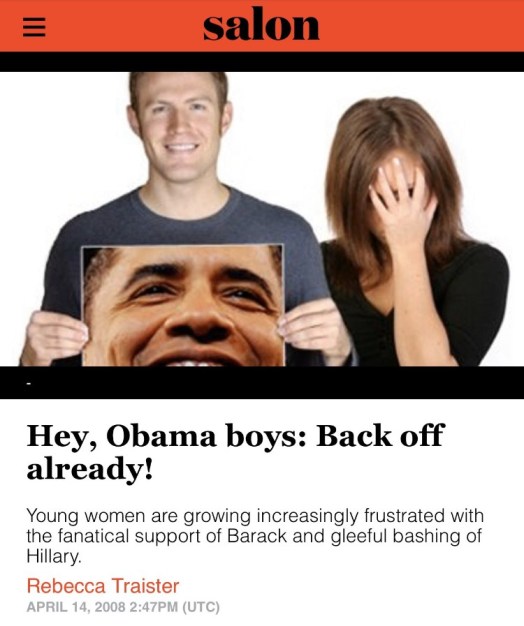
In fact, her supporters tried a similar bit of propaganda back in 2008 when she was running against Barack Obama where Clinton supporter Rebecca Traister ran an article in Salon entitled, “Hey, Obama boys: Back off already!”


thumbnail_IMG_9317


This is just more establishment propaganda meant to divide progressive voters who actually care about social justice issues so that the big money candidates can more easily get the party’s nomination.


It is insinuation, libel and slander. It is racist, sexist and anti-LGBTQ.


And though most of the remaining Democratic candidates are white, Bernie is also a minority. He’s Jewish.


Their carping on his irritating voice and mannerisms border on the anti-Semitic.


But no one talks about that – least of all Bernie who is too busy talking about policies that would benefit us alloften in a Jewish Brooklyn accent.


Moderates complain that regardless of the primary, in the general election we must vote blue no matter who. It is imperative we end the Trump presidency in any way possible.


Erasing the voices of the most energetic and committed constituency in the election is not the way to accomplish this.


A significant share of Sanders supporters — myself included — consider Warren their second choice, and if she wins the party’s nomination, would cast a ballot for her with little to no hesitation. And this despite her own foray into bogus accusations of sexism against Sanders that backfired actually increasing his support among women and minorities.


Sanders’ supporters willingness to consider other nominees besides their top choice will probably depend to a large degree on the fairness with which the primary is conducted.


As we saw in Iowa, the Democratic Party has not committed itself to ensuring this goal.


If anything is likely to derail a Democratic victory in 2020, it is that partisanship and incompetence.


If we want any chance at uniting behind a common candidate – Sanders or otherwise – we need to stop deleting our strongest allies under such a false characterization.


Let the people decide who they want to represent them against Trump.


And when they support Sanders, respect that decision without degrading them behind a prejudicial and politically convenient lie.


Screen Shot 2020-02-08 at 12.42.51 AM


Like this post? I’ve written a book, “Gadfly on the Wall: A Public School Teacher Speaks Out on Racism and Reform,” now available from Garn Press. Ten percent of the proceeds go to the Badass Teachers Association. Check it out!

book-3