Charter School Lobby Silent as Charter Teachers Continue Strike

www.usnews.com


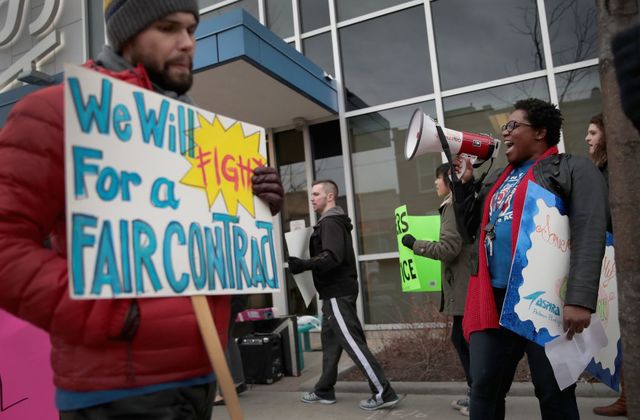
Charter school teachers in Chicago are in their fourth day of a strike.


Yet I wonder why the leaders of the charter movement are quiet.


Where is Peter Cunningham of the Education Post?


Where is Shaver Jeffries of Democrats for Education Reform?


Not a word from Campbell Brown or Michelle Rhee?


Nothing from Bill Gates, Cory Booker, Barack Obama or Hillary Clinton?


Not a peep from Betsy DeVos or Donald Trump?


This is a historic moment. Teachers at various charter schools have unionized before, but it has never come to an outright strikenot once since the federal charter school law was established in 1994.


You’d think the charter cheerleaders – the folks who lobby for this type of school above every other type – would have something to say.


But no.


They are conspicuously silent.


I wonder why.


Could it be that this is not what they imagined when they pushed for schools to be privately run but publicly financed?


Could it be that they never intended workers at these schools to have any rights?


Could it be that small class size – one of the main demands of teachers at the 15 Acero schools – was never something these policymakers intended?


It certainly seems so.


For decades we’ve been told that these types of schools were all about innovation. They were laboratories where teachers and administrators could be freed from the stifling regulations at traditional public schools.


Yet whenever wealthy operators stole money or cut services to maximize profits or engaged in shady real estate deals or collected money for ghost children or cherry picked the best students or fomented “no excuses” discipline policies or increased segregation or denied services to special education kids or a thousand other shady business practices – whenever any of that happened, we were told they were just unfortunate side effects. Malfeasance and fraud weren’t what charters were all about. They were about the children.


And now when charter teachers speak out and demand a better environment for themselves and their students, these ideologues have nothing to say.


Funny.


It’s not hard to figure out what’s going on here.


The latest audit of Acero shows they have $10 million a year in additional revenue that they aren’t spending on the students. Yet they’re cutting the budget by 6 percent annually. Meanwhile, Acero’s CEO Richard Rodriguez is taking home more than $260,000 for overseeing 15 schools while Chicago Public Schools CEO Janice Jackson makes slightly less money for managing more than 500 schools.


If the school privatization lobby cared about kids, it shouldn’t be hard to come out against Acero and in favor of these teachers and students.


But nothing.


Silence.


It seems to prove what charter critics have been saying all along – and how full of crap the privatization lobby has always been.


In short, the charter movement is all about the rich getting richer. It has never been about helping students and families.


Well, maybe it was once upon a time when union leader Albert Shanker backed the plan. But even he turned against it when he saw how it enriched the moneymen and corporations while doing very little for children.


The fact of the matter is that the only people at charters on the side of teachers, parents and students are the people generally associated with opposing them.


I, myself, am a huge foe of school privatization in all its forms – and that includes school vouchers and charter schools.


However, I have nothing against charter students, parents or teachers.


I know many educators who’ve worked at charters. In most cases they are dedicated, caring professionals who’d rather work at a traditional public school but had to settle for employment where they could find it even if that meant less pay, longer hours, and fewer rights.


I know many parents who sent their kids to charter schools because of funding inequalities or rampant high stakes testing at traditional public schools. In every case, they are doing the best they can for their children – navigating a system they hate looking for the best opportunities.


I’ve taught many students who’ve gone to charter schools and then returned to my traditional public school classroom disillusioned from their subpar experience in privatized education. Without exception they are great kids who try their hardest to succeed despite huge deficits from the years lost at charters.


These people are not our enemy. We are their allies.


We are pushing for a better education system for all of us. And this strike is part of that.


If the operators of Acero charter schools in Chicago (formerly UNO’s charter schools) agree to a living wage for teachers and lower class sizes, it sets a standard for the industry. It helps push other charters to do the same. It pushes charter schools to become more like traditional public schools. And that’s a good thing.


The amenities at traditional public schools should not be rarities.


Every school should have an elected school board. Every school should have public meetings, transparency and be accountable for how it spends tax dollars. Every school should have to accept the kids living in its borders and provide them the proper services and respect their rights. Every school should treat its employees like professionals and pay them a fair wage for a fair day’s work.


Ultimately, I think this means the end of the charter school concept. But that doesn’t have to mean the end of all these charter schools. Many of them that can operate effectively and efficiently should become traditional public schools. That may mean incorporation into existing districts or creations of new ones. It may mean additional funding from the state and federal government.


In the case of fly-by-night charters that do nothing but enrich their investors while cheating kids out of an education, they should be closed immediately and the persons responsible should be prosecuted to the full extent of the law (whatever that is, if at all possible).


I don’t have all the answers, and what’s right in one neighborhood may be wrong in another. However, I am confident that there is a solution.


No matter how this strike is resolved, the fact that it exists – and is probably a precursor to more such strikes – points the way to a brighter future for everyone.


It’s a victory for workers over wealth.


And that is a victory for students, too.


Like this post? I’ve written a book, “Gadfly on the Wall: A Public School Teacher Speaks Out on Racism and Reform,” now available from Garn Press. Ten percent of the proceeds go to the Badass Teachers Association. Check it out!
book-3

The Holiday Season Brings Fear and Resentment for Many Students

thumbnail_starr-main-blog2

“I hate Christmas.”


Teachers hear that with surprising regularity around this time of year.


I hate Christmas. I hate Thanksgiving. I hate every holiday.


America’s public school students are living under tremendous pressure.


The social safety net is full of holes. And our children are left to fall through the ripped and torn fabric.


The sad fact is that one in four students in America’s classrooms have experienced a traumatic event.


So if your classroom is typical, 25% of your students have witnessed violence or been subject to a deeply distressing experience.


That could be drug or alcohol abuse, food insecurity, severe beatings, absent caregivers or neglect.


These figures, provided by Neena McConnico, Director of Boston Medical Center’s Child Witness to Violence Project, are indicative of a truth about this country that we don’t want to see.


Our Darwinian public policies leave many children to suffer the effects of poverty – and our society doesn’t want to deal with it.


In impoverished communities, these percentages are even higher and the results more devastating.


The Center for Disease Control’s comprehensive Adverse Childhood Experiences study links the toxic stress of unaddressed trauma to heart disease, liver disease, and mental, emotional, and behavioral disorders.


Young children exposed to more than five adverse experiences in the first three years of life face a 75 percent likelihood of having delays in language, emotional, or brain development, according to McConnico.


This translates directly to negative behaviors in the classroom.


Children who witness violence often have trouble in school because they suffer from post-traumatic stress, which can manifest as inattention, distractibility, hyperactivity, insomnia, aggression, and emotional outbursts.


Or, alternately, these children can sometimes withdraw and appear to be unfazed by their experiences. In some ways, that’s even more dangerous because while they avoid negative attention, they often get no attention at all.


It’s bad enough in the everyday. But it gets worse around the holidays.


Some of it is due to the structure and safety of school being removed. During holiday breaks, children are left to the mercy of sometimes chaotic and uncertain home lives.


Some of it is due to unrealistic expectations inevitably conjured up by the holiday season, itself. Even grown adults have trouble with depression around this time of year. But when you’re a troubled child, the unrealistic expectations and disappointments can be doubly impactful.


Loved ones are missing due to incarceration, divorce, abandonment, health issues, or death. Talk of family gatherings or a special meal can trigger hurt feelings for children who know their caregivers can’t or won’t provide them.


And it’s not always neglect. Sometimes there just isn’t the money for these things. We live in a gig economy where many people work multiple jobs just to survive. All it takes is missing one paycheck or one illness to disrupt holiday celebrations.


Even when parents have enough money, some just don’t bother to buy their kids anything. Sometimes families get to a better financial point but children have had to live through a period of food insecurity and are haunted by it. So even though the household is stable now, kids eat all their treats on the way to school because they always are fearful that the food will run out.


When kids have these sorts of fears, the ubiquitous holiday movies, TV shows, Christmas songs and commercials can set them off further.


It’s the most wonderful time of year for some, but not for all. For many students, the holidays are a time of dread and resentment.


That’s why it’s so important for teachers to be aware of what’s happening to their students.


For the quarter of American children who experience trauma at home, school may be their only safe harbor in a world of storms. Teachers may be the only people they see all day who offer a safe place, a stable environment and a friendly word.


For some kids, teachers are the only adults in their lives who make them feel valuable and supported.


We offer our students so much more than reading, writing and math. We’re allies, mentors, protectors and role models.


I wish we could save them from all the terrors of this world, but we can’t.


Let me be clear – I am in no way a super teacher.


But here are a few things I do in my classroom to help alleviate some of the stresses of the season – and often year round.


1)  Prioritize Relationships


Let your kids know you care. The student-teacher relationship is sacred. Nourish it. Be reliable, honest, and dependable.


As Teddy Roosevelt famously said, “Nobody cares how much you know until they know how much you care.”


2)  Listen to Them

 
Sometimes the best thing a teacher can do is just listen to students’ problems. You don’t always have to offer a solution. Our kids are dealing with so many adult pressures. Offering them the ability to get it all out in the presence of a caring adult can be a treasured gift.


“It’s really that simple,” McConnico says. “Listen, reflect back to them that they have been heard, validate the child’s feelings without judgment, and thank the child for sharing with you.”


3)  Create Opportunities to be Successful

Some people see teaching as essentially an act of evaluation and assessment. We observe students and then tell them what they did wrong.

This is extremely narrow-minded. When you get to know your students, you can offer them tasks in which you expect they’ll succeed. It’s the kind of thing we do all the time – differentiating instruction and offering choice so that students can achieve the goal in the manner best suited to them.

Sometimes you really have to work at it. If a child has extreme behavior issues, you can observe closely to find the one thing he or she does right and then praise them for it. This doesn’t always work, but when it does, it pays off tremendously!

Positive experiences lead to more positive experiences. It’s like putting training wheels on a bike. It scaffolds learning by supporting kids emotional needs before their academic ones.

4)  Routines

I am a huge fan of routine. Kids know exactly what we’re going to do in my class everyday – or at least they have a clear conception of the normal outline of what happens there.

I try to have very clear expectations, timelines and consequences. For kids who live in chaotic homes, this is especially comforting. It’s just another way of creating a safe place where all can learn.


5)  There’s Nothing Wrong With Downtime

I know. Teachers are under enormous pressure from administrators to fill every second of the day. But sometimes the best use of class time is giving students a break.


Let students finish assignments in class, read for pleasure, draw, even just daydream and relax. You can overdo it, but everyone can benefit from a little R & R.


This is especially true for traumatized children. Give them time to regroup from the mental and emotional stress. I find that it actually helps motivate kids to work harder when assignments are given.


The holidays can be a stressful time in school.


Kids get overexcited, they can’t concentrate, they’re torn left and right by the various emotions of the season.


As teachers, it’s our job to understand the full scope of what’s going on with our kids and make our classes as nourishing and safe as possible.


Like this post? I’ve written a book, “Gadfly on the Wall: A Public School Teacher Speaks Out on Racism and Reform,” now available from Garn Press. Ten percent of the proceeds go to the Badass Teachers Association. Check it out!
book-4

Billionaire Heiress Lashes Out at Unions Because Her Fortune Didn’t Buy Election

U.S. Education Secretary Betsy DeVos Speaks To Media After Visiting Students At Marjory Stoneman Douglas High School


Betsy DeVos is furious!


She and her family spent boatloads of money this election cycle and few of their candidates won.


Instead, lawmakers were largely selected by these things called… ew… voters.


She was so enraged that she used her platform as Secretary of Education – another prudent purchase by her family – to lash out at teachers unions for – get this – having too much influence!!!!!


She told Fox Business Network:


“The teachers union has a stranglehold on many of the politicians in this country, both at the federal level and at the state-level.”


That’s rich coming from her, but one can see where she’s coming from.


In the midterms 23 states had double-digit percentage-point increases in turnout compared with 1982-2014. That resulted in a blue wave in the U.S. House – one of the largest and most diverse groups of freshman Congresspeople ever.


This is the third-highest turnover since 1974. We showed 104 incumbents the door.


DeVos didn’t pay for THAT!


How dare those Joe and Jane Sixpacks come out to the polls and upset the plans the billionaire class had plunked down their hard-inherited wealth to ensure!


How dare teachers and school employees pool their nickles and dimes to have a say about their own professions!


The only people who should have a voice in public policy are the… uh, public?


No.


Parents and students?


No!


Plutocrats like DeVos and family?


Yeah! That’s right!


You can’t spell Democracy without DEMOnstrative Wealth!


We can’t let our schools be run by parents or students  or the people who work there. Decisions can’t be made by just anyone. It has to be by the BEST people. And who better than the rich?


That’s why this election cycle has DeVos so irate.


She spent $1 million through her affiliated Students First PAC to elect Scott Wagner Governor of Pennsylvania – but those darn VOTERS spoiled everything by re-electing Gov. Tom Wolf instead!


The DeVos family spent more than $635,000 to keep Scott Walker as Governor of Wisconsin, but those naysaying nellies who pay taxes decided to go with Democratic challenger Tony Evers, instead.


I mean, come on, people! That’s just not fair!


We’re making her waste her enormous fortune without getting any return on the investment!


And she DOES expect tit-for-tat.


She famously wrote:


“I have decided to stop taking offense at the suggestion that we are buying influence. Now I simply concede the point. They are right. We do expect something in return. We expect to foster a conservative governing philosophy consisting of limited government and respect for traditional American virtues. We expect a return on our investment.”


Her boss – and philosophical soul mate – Donald Trump feels the same way. He once bragged at a rally:


 “I’ve given to everybody because that was my job. I gotta give it to them, because when I want something I get it. When I call, they kiss my ass.”


DeVos doesn’t just talk the talk. She walks the walk.


One of the most infamous examples of quid pro quo was when the DeVos family gave Michigan Republicans $1.45 million over a seven-week period as an apparent reward for passing a no-accountability charter school law in 2016. That’s $25,000 per day! The editors of the Detroit Free Pressdescribed it as a “filthy, moneyed kiss.”


Yet somehow it’s unions that have a “stranglehold” on politicians and policy!?


Let’s get one thing straight – money should not be able to buy political influence. Period.


That’s union money. That’s billionaire money. That’s anyone’s money.


But that requires major reforms to how we finance political campaigns. It requires several Supreme Court decisions such as Citizens United to be overturned. It requires additional regulations and transparency from our legislature.


Until that happens, no one can afford to stop making these campaign contributions.


In Buckley v. Valeo and several additional rulings that built on it, The Supreme Court wrongly ruled that money equals speech and thus any limitation on political spending would violate the First Amendment.


Therefore, no one can afford to limit their voice by voluntarily closing their pocketbook.


People with truckloads of cash – like DeVos – cry wolf when the unwashed masses pool their resources to the point where they can come close to matching the wealthy.


But make no mistake – with the rampant economic inequality in this country, the rich can outspend the poor. And they often do.


It doesn’t take a political genius to see that our national policies invariably favor the wealthy and ignore the poor. That’s no accident. It’s the rich getting what they’ve paid for.


If anyone has a “stranglehold” on politicians it’s silver spooned magnates like DeVos who can transform the whims of winning a lottery of birth into political appointments and massive influence on policy.


But DeVos wasn’t done whining to a sympathetic audience on Fox Business Channel.


She continued:


“…they [i.e. teachers unions] are very resistant to the kind of changes that need to happen. They are very protective of what they know, and there are protective, really protective of adult jobs and not really focused on what is right for individual students.”


Really? How would you know? You never sent your kids to public school. You never went to public school, yourself. You’ve only ever visited a handful of public schools after purchasing your position in Trump’s cabinet (Check the receipts to the Senators who confirmed her!).


Moreover, it takes a certain level of ignorance to claim that teachers get into the classroom because they DON’T care about children. That’s like saying firemen don’t want to protect people from fires or lawyers don’t want to serve their clients legal needs.


Having a well-educated, experienced, caring teacher in the classroom IS what’s in the best interests of students. That means having a teacher with collective bargaining rights so she can grade her students fairly without fear of political ramifications if someone complains to the school board. That means being able to blow the whistle if classroom conditions are unsafe or policies handed down by functionaries (like DeVos) aren’t helping kids learn.


Teachers want change. They’re begging for change – just not the kinds of change DeVos is pushing.


But she went on:


 “One of the most fundamental things again is focusing on individual children and knowing that all students are different, they learn differently. I have four children, they were all very different, very different learners.”


This is not exactly a news flash to any teacher anywhere. We’re constantly differentiating our instruction to help students with different learning styles, kids in special education, kids who are gifted, kids on the autistic spectrum, kids with dyslexia, etc. It’s just too bad that policy mavens like DeVos keep pushing more standardized tests and Common Core. Sure today she’s saying all kids learn differently. Tomorrow she’ll be pushing us to assess them the same way.


But she went on:


 “We have to allow for more kinds of schools, more kinds of educational experiences, and to do that we need to empower more families to make those decisions on behalf of their students.”


And there it is! Her obsession with school privatization – charter and voucher schools! She’s selling them because her portfolio is heavily invested in them. She is not a philosophical believer in a certain kind of pedagogy. She’s a privatization pimp, pushing schools without transparency, accountability or regulations so that public tax dollars can flow into private pockets – and to Hell with what that does to the students enrolled there!


To enable her scheme, she needs to attack teachers:


“We have a lot of forces that are protecting what is and what is known, a lot of forces protecting the status quo. We need to combat those, break them, and again empower and allow parents to make decisions on behalf of their individual children because they know their children best.”


Betsy, charter and voucher schools are not reform. They ARE the status quo. They’re the same crap championed by Obama and the Bushes and the Clintons.


Republicans are famous for their privatization advocacy. But most Democrats are in favor of it, too.


Sure most career Democrats will argue against school vouchers while quietly approving Opportunity Scholarship Tax Credits (OSTC), Educational Improvement Tax Credits (EITC) and a host of other Trojan horse programs that do the same thing under a different name.


We’ve been increasing school privatization and standardized testing for decades. It hasn’t helped anyone except investors.


More than 90% of parents throughout the country send their children to public schools. That’s not because they have no other choices. Every time – literally every time – there is a referendum on school vouchers, voters turn it down. Civil rights organizations from the National Association for the Advancement of Colored People (NAACP) to Black Lives Matter and Journey for Justice are calling for a moratorium on charter schools. In fact, for the last three years, charter school growth has stalled. It’s  dropped each year – from 7 to 5 to 2 percent.


That’s because people are sick of these far right and neoliberal policies. If we listen to what parents and students really want, it’s not the garbage DeVos is selling.


This whole unseemly tantrum from our Education Secretary is just sour grapes.


Her stranglehold is loosening. And she doesn’t know how to regain her grip.


Like this post? I’ve written a book, “Gadfly on the Wall: A Public School Teacher Speaks Out on Racism and Reform,” now available from Garn Press. Ten percent of the proceeds go to the Badass Teachers Association. Check it out!
book-1

Dear Lawmakers, Please Hire Teachers as Education Aides – Not TFA Alumni

thumbnail_IMG_8375


Dear freshmen lawmakers,


We did it!


After a fiercely contested election, we have finally begun to turn the tide back toward progressive politics.


Midterms usually are sparsely attended, but this year we had an unprecedented turnout.  A total of 23 states had double-digit percentage-point increases compared with their 1982-2014 midterm election averages.


And the result is one of the largest and most diverse groups of freshman Congresspeople ever!


We got rid of a ton of incumbents – 104 lawmakers won’t be returning to Washington, DC, in January, making this the third-highest turnover since 1974.


And those taking their place will be largely female. Out of 256 women who ran for U.S. House or Senate seats, 114 have won so far (Some races are still too close to call), according to the Center for American Women and Politics at Rutgers University. That makes the 116th Congress the largest class of female lawmakers ever.


Moreover, this incoming group will be incredibly diverse.


We have Jahana Hayes, a nationally-recognized teacher, who will be the first Black Congresswoman from Connecticut. Ayanna Presley, the first black Congresswoman from Massachusetts.


Angie Craig will be the first out LGBTQ Congresswoman from Minnesota. Chris Pappas, the first openly gay Congressman from New Hampshire.


Sharice Davids and Deb Haaland from Kansas and New Mexico will be the first Native American women elected to Congress – ever. And Davids will also be the first openly LGBTQ Congresswoman from the Sunflower State.


Ilhan Omar and Rashida Tlaib will be the first-ever Muslim women in Congress. Omar, a former refugee, will also be the first Somali-American and Tlaib will be the first Palestinian-American woman in Congress. This is especially noteworthy because there have only been two other Muslims to serve in the legislative branch, both men: Rep. Keith Ellison and Rep. André Carson.


And let’s not forget New York’s Alexandria Ocasio-Cortez. Not only is she a Democratic Socialist, but the 29-year-old will be the youngest woman ever elected to Congress!


With so many new faces and so much more representation, is it too much to ask for a change in the way things are done in Washington?


Many progressives are hoping not.


After all, it was people power that propelled these new lawmakers into government.


We marched in the rain, licked envelopes, made phone calls, wrote letters, and knocked on doors. We went to rallies and bake sales and stood by the polls with our little signs and fliers.


And we did it, because we wanted a change.


So, incoming lawmakers, that’s why I’m writing to you.


As a public school teacher, a father of a school-age child, an education activist and a concerned citizen, it really matters to me what happens to our schools.


Yet so many politicians – Republicans and Democrats – have turned a blind eye to our concerns for years.


No matter their party affiliation, they’ve pushed for increasing school privatization – charter and voucher schools. They’ve hammered us with biased and unscientific standardized tests and used the results to justify any number of atrocities including school closures, withholding funding and even stealing the democratic process from taxpayers. Instead of listening to the concerns of teachers and parents, they’ve followed the caprice of every bored billionaire who thinks they know how to better our schools with halfcocked schemes that cost us billions in taxpayer dollars while wasting children’s time and depriving them of an authentic education.


They’ve chased every new technological fad without regard to how it affects students or their privacy. They’ve let our schools become increasingly more segregated and made deals with private prison companies and unscrupulous security and business interests that made our schools a gateway to incarceration as much as they are to college or careers. They’ve actively engaged or silently stood by as classroom teachers lost autonomy, rights and professionalism. And finally, though many of them talk a good game, they haven’t done nearly enough to ensure that every student gets the same opportunities, resources and equitable funding.


Why?


Often the answer is ignorance.


They don’t properly understand the issues facing our schools. They don’t hear from parents, teachers and students – the rank and file. They only hear from the wealthy businesses and philanthrocapitalists preying on our schools like vultures over road kill.


In many cases this is because of the poor quality of education aides on Capital Hill.


Several years ago, I went to DC with other education advocates to ask our representatives to change course. Though we made reservations to speak with our duly-elected lawmakers months in advance, very few of them had the guts to see us face-to-face. We were almost always sent to education aides – well meaning and fresh faced kids only a few years out of college – who wrote down our concerns and sent us on our way with rarely any follow up from the people we’d come to see.


And more often than not, these eager young go-getters were Teach for America (TFA) alumni.


I’m not sure if you know what that means.


TFA is a nefarious neoliberal organization more interested in busting unions and influencing policy than helping kids learn.


They recruit people in college who didn’t major in education to become teachers for a few years before moving on to bigger and better things.


Often these rookies have only a few weeks training and just hours of experience before taking over their own classrooms. And unlike education majors, they only need to commit to the job for two years.


This not only does our children a disservice, it does very little to make these former teaching temps into education experts.


But that’s how they’re treated on Capital Hill.


Through programs like TFA’s Capitol Hill Fellows Program, alumni are placed in full-time, paid staff positions with legislators so they can “gain insights into the legislative process by working in a Congressional office” and work “on projects that impact education and opportunities for youth.”


Why do so many lawmakers hire them? Because they don’t cost anything.


Their salaries are paid in full by TFA through a fund established by Arthur Rock, a California tech billionaire who hands the organization bags of cash to pay these educational aides’ salaries. From 2006 to 2008, alone, Rock – who also sits on TFA’s board – contributed $16.5 million for this purpose.


This isn’t about helping lawmakers understand the issues. It’s about framing the issues to meet the policy initiatives of the elite and wealthy donors.


It’s about selling school privatization, high stakes testing and ed-tech solutions.


As Ocasio-Cortez said on a recent call with Justice Democrats, “I don’t think people who are taking money from pharmaceutical companies should be drafting health care legislation. I don’t think people who are taking money from oil and gas companies should be drafting our climate legislation.”


I’d like to add the following: people taking money from the testing and school privatization industry shouldn’t be drafting education policy. People who worked as temps in order to give themselves a veneer of credibility should not be treated the same as bona fide experts who dedicate their lives to kids in the classroom.


But that’s what many lawmakers of both parties have been enabling.


It’s not hard to find authentic experts on education.


There are 3.2 million public school teachers working in this country.


There are still 116,000 fewer public education jobs than there were before the recession of 2007, according to a report by the Economic Policy Institute, a progressive nonprofit think tank.


If we add the number of teaching jobs needed to keep up with growing enrollment, we’re missing 389,000 educators.


So that’s hundreds of thousands of laid off and retired teachers out there – a huge brain trust, a plethora of professionals who know – really know – what goes on in our schools, what they need to succeed and what policies could fix them.


THAT’S where you should go to find your educational aides – not TFA.


And these experts are not hard to find. You can contact the teachers unions – the National Education Association and American Federation of Teachers. Or, better yet, contact the various education activist groups focused on policy – the Badass Teachers Association or the Network for Public Education. And if you want experts at the crossroads of education and equity, you can contact civil rights groups who focus on our schools like Journey for Justice, a nationwide collective of more than 38 organizations of Black and Brown parents and students in several cities.


Or you can give education bloggers (many of whom are teachers or former teachers) a call – people like Peter Greene, Mercedes Schneider, Nancy Flanagan, Jose Luis Vilson, Julian Vasquez-Helig, and others.


Heck! You can give me a shout out.


We’re here.


We want to help.


So congratulations on your election victories. Let’s work together to transform them into intelligent policies for all our children everywhere.


Like this post? I’ve written a book, “Gadfly on the Wall: A Public School Teacher Speaks Out on Racism and Reform,” now available from Garn Press. Ten percent of the proceeds go to the Badass Teachers Association. Check it out!
book-3

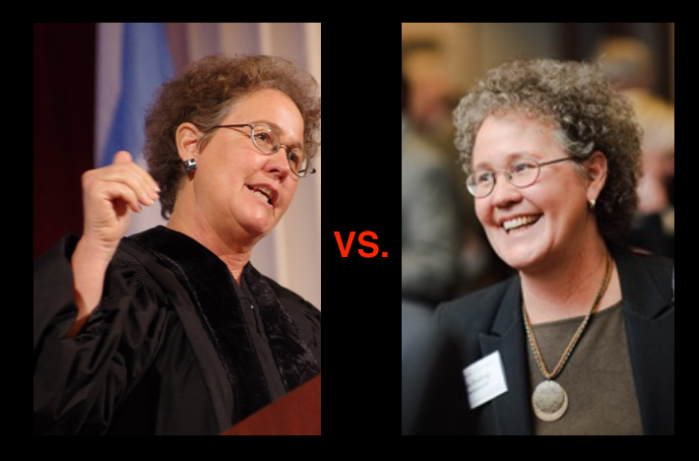
Linda Darling-Hammond vs. Linda-Darling Hammond – How a Once Great Educator Got Lost Among the Corporate Stooges

Screen Shot 2018-11-12 at 7.31.40 AM


Linda Darling-Hammond is one of my education heroes.


Perhaps that’s why her recent article in the Washington Post hurts so much.


In it, she and her think tank buddies slam education advocates Diane Ravitch and Carrol Burris for worrying about who governs schools – as if governance had nothing to do with quality education for children.


I’d expect something like that from Bill Gates.


Or Campbell Brown.


Or Peter Cunningham.


But not Hammond!


She’s not a know-nothing privatization flunky. She’s not a billionaire who thinks hording a bunch of money makes him an authority on every kind of human endeavor.


She’s a bona fide expert on teacher preparation and equity.


She founded the Center for Opportunity Policy in Education at Stanford University, where she is professor emeritus.


And she was the head of Barrack Obama’s education policy working group in 2008 when he was running for President.


In fact, she was the reasons many educators thought Obama was going to be a breath of fresh air for our schools and students. Everyone thought she was a lock for Education Secretary should Hope and Change win the day. But when he won, he threw her aside for people like Arne Duncan and John King who favored school privatization and high stakes standardized testing.


These days she spends most of her time as founder and president of the California-based Learning Policy Institute.


It’s a “nonprofit” think tank whose self-described mission is “to conduct independent, high-quality research to improve education policy and practice.”


The Learning Policy Institute published a report called “The Tapestry of American Public Education: How Can We Create a System of Schools Worth Choosing for All?


The report basically conflates all types of choice within the public school system.


On the one hand, it’s refreshing to have policy analysts admit that there ARE alternatives within the public school system above and beyond charter and voucher schools.


On the other, it’s frustrating that they can’t see any fundamental differences between those that are publicly managed and those outsourced to private equity boards and appointed corporate officers.


Hammond and her colleagues Peter Cookson, Bob Rothman and Patrick Shields talk about magnet and theme schools.


They talk about open enrollment schools – where districts in 25 states allow students who live outside their borders to apply.


They talk about math and science academies, schools focusing on careers in health sciences and the arts, schools centered on community service and social justice, international schools focused on global issues and world languages, and schools designed for new English language learners.


They talk about schools organized around pedagogical models like Montessori, Waldorf and International Baccalaureate programs.


And these are all options within the public school system, itself.


In fact, the report notes that the overwhelming majority of parents – three quarters – select their neighborhood public school as their first choice.


However, Hammond and co. refuse to draw any distinction between these fully public schools and charter schools.


Unlike the other educational institutions mentioned above, charter schools are publicly funded but privately run.


They take our tax dollars and give them to private equity managers and corporate appointees to make all the decisions.


Though Hammond admits this model often runs into problems, she refuses to dismiss it based on the few instances where it seems to be working.


Despite concerns from education advocates, fiscal watchdogs and civil rights warrior across the country, Hammond and co. just can’t get up the nerve to take a stand.


The NAACP and Black Lives Matter have called for a moratorium on all new charter schools in the country. Journey for Justice has requested a focus on community schools over privatization. But Hammond – a once great advocate for equity – can’t get up the moral courage to stand with these real agents of school reform.


She stands with the corporate school reformers – the agents of privatization and profit.


“School choice is a means that can lead to different ends depending on how it is designed and managed…” write Hammond and her colleagues.


In other words, if charters result in greater quality and access for all students, they are preferable to traditional public schools.


However, she admits that charters usually fail, that many provide worse academic outcomes than traditional public schools serving similar students.


She notes that 33% of all charters opened in 2000 were closed 10 years later. Moreover, by year 13, that number jumped to 40%. When it comes to stability, charter schools are often much worse than traditional public schools.


And virtual charter schools – most of which are for-profit – are even worse. They “…have strong negative effects on achievement almost everywhere and graduate fewer than half as many of their students as public schools generally.”


However, after noting these negatives, Hammond and co. go on to provide wiggle room for privatization. They discuss how state governments can do better making sure charter schools don’t go off the rails. They can provide more transparency and accountability. They can outlaw for-profit charters and put caps on the number of charters allowed in given districts and states, set rules on staffing and curriculum – all the kinds of measures already required at traditional public schools.


But the crux of their objection is here:


“In a recent commentary in this column, authors Diane Ravitch and Carol Burris erroneously asserted that our report aims to promote unbridled alternatives to publicly funded and publicly operated school districts. Quite the opposite is true.”


In other words, they continue to lump privatized schools like charters in with fully public schools.


They refuse to make the essential distinction between how a school is governed and what it does. So long as it is funded with public tax dollars, it is a public school.


That’s like refusing to admit there is any difference in the manner in which states are governed. Both democracies and tyrannies are funded by the people living in those societies. It does not then follow that both types of government are essentially the same.


But they go on:


“The report aims to help states and districts consider how to manage the broad tapestry of choices available in public schools in ways that create quality schools with equitable access and integrative outcomes.”


Most tellingly, the authors admonish us to, “Focus on educational opportunities for children, not governance structures for adults” (Emphasis mine).


The way a school is governed is not FOR ADULTS. It is FOR CHILDREN. That is how we do all the other things Hammond and co. suggest.


“Work to ensure equity and access for all.”


That doesn’t just happen. You have to MAKE it happen through laws and regulations. That’s called governance.


“Create transparency at every stage about outcomes, opportunities and resources.”


That’s governance. That’s bureaucracy. It’s hierarchy. It’s one system overlooking another system with a series of checks and balances.


“Build a system of schools that meets all students’ needs.”


Again, that doesn’t just happen. We have to write rules and systems to make it happen.


Allowing private individuals to make decisions on behalf of private organizations for their own benefit is not going to achieve any of these goals.


And even in the few cases where charter schools don’t give all the decisions to unelected boards or voluntarily agree to transparency, the charter laws still allow them to do this. They could change at any time.


It’s like building a school on a cliff. It may be fine today, but one day it will inevitably fall.


I wrote about this in detail in my article “The Best Charter School Cannot Hold a Candle to the Worst Public School.”


It’s sad that Hammond refuses to understand this.


I say “refuse” because there’s no way she doesn’t get it. This is a conscious – perhaps political – decision on her part.


Consider how it stacks up against some of the most salient points she written previously.


For instance:


“A democratic education means that we educate people in a way that ensures they can think independently, that they can use information, knowledge, and technology, among other things, to draw their own conclusions.”


Now that’s a Linda Darling-Hammond who knows the manner in which something (a state) is governed matters. It’s not just funding. It’s democratic principles – principles that are absent at privatized schools.


“Bureaucratic solutions to problems of practice will always fail because effective teaching is not routine, students are not passive, and questions of practice are not simple, predictable, or standardized. Consequently, instructional decisions cannot be formulated on high then packaged and handed down to teachers.”


This Linda Darling-Hammond is a fighter for teacher autonomy – a practice you’ll find increasingly constrained at privatized schools. In fact, charter schools are infamous for scripted education, endless test prep and everything Hammond used to rail against.


“In 1970 the top three skills required by the Fortune 500 were the three Rs: reading, writing, and arithmetic. In 1999 the top three skills in demand were teamwork, problem-solving, and interpersonal skills. We need schools that are developing these skills.”


I wonder what this Linda Darling-Hammond would say to the present variety. Privatized schools are most often test prep factories. They do none of what Hammond used to advocate for. But today she’s emphatically arguing for exactly the kind of school she used to criticize.


“If we taught babies to talk as most skills are taught in school, they would memorize lists of sounds in a predetermined order and practice them alone in a closet.”


Isn’t this how they routinely teach at charter schools? Memorize this. Practice it only in relation to how it will appear on the standardized test. And somehow real life, authentic learning will follow.


“Students learn as much for a teacher as from a teacher.”


Too true, Linda Darling-Hammond. How much learning do you think there is at privatized schools with much higher turnover rates, schools that transform teachers into glorified Walmart greeters? How many interpersonal relationships at privatized institutions replacing teachers with iPads?


“Life doesn’t come with four choices.”


Yes, but the schools today’s Linda Darling-Hammond are advocating for will boil learning down to just that – A,B,C or D.


“We can’t fire our way to Finland.”


Yet today’s Linda Darling-Hammond is fighting for schools that work teachers to the bone for less pay and benefits and then fire them at the slightest pretense.


In short, I’m sick of this new Linda Darling-Hammond. And I miss the old Linda Darling-Hammond.


Perhaps she’s learned a political lesson from the Obama administration.


If she wants a place at the neoliberal table, it’s not enough to actually know stuff and have the respect of the people in her profession.


She needs to support the corporate policies of the day. She needs to give the moneymen what they want – and that’s school privatization.


This new approach allows her to have her cake and eat it, too.


She can criticize all the evils of actual charter schools while pretending that there is some middle ground that allows both the monied interests and the students to BOTH get what they want.


It’s shrewd political gamesmanship perhaps.


But it’s bad for children, parents and teachers.


Like this post? I’ve written a book, “Gadfly on the Wall: A Public School Teacher Speaks Out on Racism and Reform,” now available from Garn Press. Ten percent of the proceeds go to the Badass Teachers Association. Check it out!

cropped-book-1.jpg

Grit is Sh!t – It’s Just an Excuse to do Nothing for Struggling Students

 Screen Shot 2018-11-08 at 3.29.01 PM


Let’s say you’re out in public and you see a crying child alone in the street.


What would you do?


Would you run up to her and help? Or would you just shrug, mutter some derisive comment about the brat and walk on?


Our public school policymakers want us to do the later. In fact, they have a whole pedagogical justification for ignoring the needs of children.


It’s called “academic tenacity,” a “growth mindset” or “grit.”


And it goes something like this:


That child isn’t learning? If she just worked harder, she would.


It’s the political equivalent of “pull yourself up by your own bootstraps” applied to the classroom.


And it’s super helpful for politicians reluctant to allocate tax dollars to actually help kids succeed.


The idea and the euphemisms used to describe it were coined by Carol Dweck as early as 1999. It was subsequently popularized by seventh-grade math teacher and psychologist Angela Duckworth.


In the early 2000s, Duckworth realized that IQ wasn’t the only thing separating successful students from those who struggled. There was also the tendency to overcome adversity or not.


Hey, Angela. Darwin called. He wants his Theory of Natural Selection back.


You know Survival of the Fittest was never meant to be prescriptive. As human beings, we’re supposed to be better than mere animals that typically leave the pack’s sick and injured behind to get eaten by predators.


But whatever.


The term “grit,” is defined as a “passion and perseverance for long-term goals,” according to Frontiers in Psychology. And it’s become one of the buzziest of buzzwords in academia.


So much so, that as you’re reading this, standardized test manufacturers are working to develop an assessment to find it in students.


The agencies that administer the National Assessment of Education Progress (NAEP) and the Program for International Student Assessment (PISA) are close to including character assessments as a measure of student performance.


Oh goody!


They foresee a brave new world where multiple-choice tests will determine not just the entire scope of human knowledge but character as well!


But what no one wants to admit is that grit is… well… shit.


It’s just an excuse for a society that refuses to help those most in need.


In our world, there are haves and have-nots. But if we stop there, we ignore how and why this situation came to be.


Who places kids into segregated schools? WE DO.


Who allocates funding based largely on parental income? US.


We set kids up to succeed or fail before they even enter the school system with an economy that rewards the already rich and punishes generational poverty.


Yet when anyone suggests offering help to even the playing field – to make things more fair – a plethora of policy wonks wag their fingers and say, “No way! They did it to themselves.”


It’s typical “blame the victim” pathology to say that some kids get all the love, time and resources they need while others can do without — they just need more “grit” and a “growth mindset.”


Life’s tough. Get over it.


That’s easy for YOU to say! Because it’s the have’s who make the rules, it’s the people at the top who are telling the people at the bottom they’re to blame for their own suffering.


So you forget all the ways society has helped you and yours. YOU deserve all the credit for your successes.


But for those people over there, let’s forget all the ways society has refused to help and instead blame THEM for not overcoming the obstacles (we put) in their path.


Don’t get me wrong. I’m not saying effort counts for nothing. But it’s part of a complicated matrix of nature and nurture.


Our environments shape us, but we have some control over what we do with what we’re given.


Yet as a society, we can’t simply ignore our responsibilities toward others and throw it all on the individual.


Good teachers know how to get the best out of their students. We know that most kids – if given a safe, encouraging environment – can succeed.


The key often is to scaffold that success. Give them something to do that they can actually master. Then give them something slightly more challenging.


You teach them that they have the ability to succeed and success becomes a self-fulfilling prophecy – and not the opposite.


However, the teacher – and even the school, itself – can only do so much.


As a society, we need to change the environment in which these kids grow up.


We need to fully fund our public schools to meet the needs of all students. That means more funding, services and opportunities for the underserved than for those who already have the best of everything and don’t need to rely as heavily on the school system for support.


We need wraparound services, counseling, tutoring, after school programs, community schools, jobs programs, continuing education for adults and other services to help heal the trauma of growing up poor in America.


But leaving it all to this magical thing called “grit” is just ignoring our responsibilities to our fellow human beings.


When you see someone suffering, you need to help them – not comfort yourself with excuses for ignoring them.


Like this post? I’ve written a book, “Gadfly on the Wall: A Public School Teacher Speaks Out on Racism and Reform,” now available from Garn Press. Ten percent of the proceeds go to the Badass Teachers Association. Check it out!
book-2

Pennsylvania’s Keystone Exam – the Monster We Refuse to Let Die


Screen Shot 2018-10-22 at 12.16.27 PM


Let’s say there was a monster loose in Pennsylvania and you caught it.


Its days of wandering loose causing chaos and destruction were over.


But what would you do with such a beast now?


Would you kill it outright? Stop it from ever hurting anyone ever again?


Or would you simply neutralize it – place it perhaps in the center of a labyrinth, continue feeding it, and in fact create a whole religion based on worshipping it?


In the keystone state, we have just such a creature, and we’re going with the second option – the maze, nourishment and a cult.


The monster is, of course, the Keystone Exams. And like the Minotaur of ancient myth, we’re building a bureaucratic prison in which to house it.


Sure, we’ve spent billions of dollars on these unnecessary, badly written and biased graduation assessments.


And, heck, it would just make more sense to stop doing something that isn’t working, wastes money and causes legitimate problems for students.


But this is Pennsylvania! We’re not going to admit we made a mistake. Better to bury it under red tape and pretend like this is what we meant all along. Nothing to see here, folks. Nothing to see…


When lawmakers originally came up with this plan… correction: when testing companies bribed federal lawmakers to force state lawmakers to enact this cockamamey plan – it was supposed to function as a graduation requirement.


Pass these tests or no diploma for you.


However, somehow Harrisburg politicians couldn’t get up the nerve to actually bar tens of thousands of worthy students from graduating when they had already proven they deserved it by passing 12 years of grade school.


So after kicking the can down the road for more than 6 years, they came up with this solution. Make it a graduation requirement, but include a whole truckload of other options that could count instead.


In short, we’re creating endless corridors of paperwork, placing the tests in the center and going on with our day.


The good news: if students can make it through the labyrinth, they never need to take or pass the Keystone Exams!


The bad news: we’re still paying millions of dollars to support these tests and we’re still forcing our teachers to make all instruction about them.


And that’s what we in the Commonwealth call a “victory.”


Yippee!


The bill to circumvent the Keystone Exams by providing multiple means of getting a diploma was passed by the state house and senate. Gov. Tom Wolf is expected to sign it into law this week.


If he does, students will still be given the Keystone Exams (unless opted out) and could demonstrate they’re worthy of a diploma by passing them. But students will have many additional ways to prove they’re worthy of a cap and gown, such as:


  • Show proficiency on the SAT, PSAT or ACT;
  • Pass an Advanced Placement or International Baccalaureate exam;
  • Complete a dual-enrollment program;
  • Complete an apprenticeship program;
  • Get accepted to an accredited four-year nonprofit institution of higher education;
  • Complete a service-learning project;
  • Secure a letter of full-time employment;
  • Achieve an acceptable score on a WorkKeys assessment, an exam administered by the ACT which assesses workplace skills including math, reading comprehension and applied technology.


To sweeten the pot even further, this won’t even go into effect until the 2021-22 school year.


So in four years, high school seniors will be racing to submit their letters of college admission, or letters of employment or SAT scores or whatever to prove they actually deserve that diploma.


But that will not be the end of it.


Just because victims thrown into the labyrinth have an easy path to avoiding the monster doesn’t mean the monster won’t affect them.


Teaching evaluations are still based on test scores. Schools evaluations are still based on test scores.


This continues the tremendous state pressure for local districts to make instruction all about testing.


Kids don’t have to pass the test, but their everyday classroom experiences will still be largely determined by these test.


Heck, many districts will probably “voluntarily” decide to make passing the test a graduation requirement just to force their students to take them seriously.


So anyone who’s out celebrating that the Keystone Exams are dead is premature.


State Sen. Andy Dinniman, at least, understands this.


“Remember, the Keystones have been delayed and the graduation requirement associated with them has been stopped, but they will still be required in Pennsylvania schools for federal accountability,” he said in statement.


“Meanwhile, we know they are expensive, redundant and unnecessary and I will continue to work to end them once and for all.”


Dinniman, a Democrat, is minority chair of the Senate Education Committee.


It’s a problem all too typical in the state.


Most lawmakers are too timid to take any type of real stand. They’d rather support some half-measure so they can claim to be in favor of either or both sides of an argument.


For instance, consider the time it takes to finish the tests.


Parents, teachers and students have complained about how these assessments waste academic time that could be better used to teach the necessary skills needed to pass.


So Gov. Wolf cut the Keystone Exams and Pennsylvania System of School Assessment (PSSA) test by a total of almost 2 hours a year.


However, at the same time, his administration suggests students take a series of additional pretests that are supposed to predict success on the PSSA or Keystone Exams – tests such as the Classroom Diagnostic Tools (CDT) assessment.


If schools follow the state’s instructions and give students this exam in reading, math and science 3 to 5 times a year, that’s an additional 50-90 minutes per test. That comes to 22.5 hours of additional testing!


So 22.5 hours minus 2 hours equals… NOT A REDUCATION IN TESTING!


But it gives lawmakers plausible deniability.


They can claim to be cutting testing while actually suggesting we increase it.


And we see the same sort of thing here.


Lawmakers can claim to be reducing the power of the Keystone Exams while still enshrining it as the driving force behind all instruction in the state.


What we need are leaders and not politicians.


We need people willing to take a stand and do what’s right even if that puts them at odds with the moneyed special interests.


That takes more than polls and market analysis.


It takes moral courage.


But there’s no test for that.


Like this post? I’ve written a book, “Gadfly on the Wall: A Public School Teacher Speaks Out on Racism and Reform,” now available from Garn Press. Ten percent of the proceeds go to the Badass Teachers Association. Check it out!

book-3

Want to Make a Difference? Canvass for Local Candidates You Believe In


door-to-door_small-500x300


Knock! Knock! Knock!


I stood there on the porch staring at my own knuckles in disbelief.


My 9-year-old daughter was looking up at me with a look like “What did you just do?”


But there was no time to say anything.


The door was opening.


An older gentleman stood in the entryway looking like he had just been stirred from sleep.


“Hello! Is this…” I began and Pam, who was standing next to me filled in the name.


“Yes,” he grumbled.


I introduced the three of us and told the man that we were canvassing his neighborhood for two local candidates running for state legislature.


And then I stopped because I wasn’t sure what to say next.


Luckily Pam jumped in and told him what our candidates stood for – education, healthcare and working families.


“Are these Democrats?” he groused. “I’m done with them. After what they did to that judge, I’m done.”


“You mean Kavanaugh?” I said.


He nodded.


My mouth opened to say something but what do you say?


Brett Kavanaugh was accused by multiple women of sexual assault but was saved from a thorough FBI investigation by his buddy, Donald Trump. He cried, whined and spouted partisan conspiracy theories yet still was confirmed to a lifetime appointment to the U.S. Supreme Court.


Really, what was this guy’s problem? Did he think we shouldn’t investigate Supreme Court Justices when credible accusers hurl accusation of abuse? Did he think Kavanaugh’s chief accuser – Dr. Christine Blasey Ford – made the whole thing up so that she could have her reputation forever tied to an attempted rape and her family displaced from their home and forced into hiding because of constant death threats? Did he think we should give privileged white guys lifetime judicial appointments based on what? Political affiliation? Skin tone?


Pam tried to bring up a few other topics – about how Republicans in our state of Pennsylvania are actively working to cut this man’s healthcare, calling this man’s generation “the greediest generation” and other topics.


But it did no good. Fox News had gotten there first.


So we handed him our campaign literature, thanked him and went on our way.


Sometimes that’s the best you can do.


And it’s not nothing.


IMG_8282


If you’re reading this blog, I’m assuming you’re a lot like me.


You see the madness of our modern age and wonder what the heck went wrong?


A reality TV show clown is President of the United States of America. And all over this country, the conservative clown car is spitting out candidates for major office.


Even here in the keystone state, we have Scott Wagner running for Governor on the leftover promises of our previous GOP Governorslashing education funding, firing teachers and lower taxes for the wealthy.


Meanwhile, the world is falling apart. The U.N. just released a major report finding that we have about a dozen years to make significant changes to our energy consumption or else global climate change will be irreversible. Yet our leaders complain there’s nothing they can do!


It’s enough to make one lose hope in the future.


As a father and a public school teacher, I can’t afford that despair.


There needs to be at least the slimmest glimmer of the possibility of a new day.


And I’m here to tell you, friends, it’s out there.


It starts with you.


If you want real progressive change, you have to go out there and make it – one day at a time.


We can turn back the tide of self-destruction. We can beat back the politics of bread and circuses. We can take back this country and build a better future.


But it will take more than one day.


It will take all of us, doing incremental good, every day we can.


So my suggestion is to make a commitment to voting this Nov. 6.


I know our electoral system is a mess. I know many people are being purged from the rolls and our districts are gerrymandered and the entire system is set up against us.


But if all of us try to vote, we can still win.


Find a candidate you can support and go out there and campaign for him or her.


I know there are a lot of phonies running for office. There are an awful lot of fake progressives who will talk nicely to your face and then sell you out to corporations and the wealthy at their first opportunity.


Just know that they’re not all like that.


Find yourself someone you can trust – probably someone new to the game coming on the scene to change things.


In the Pittsburgh area I found Lindsey Williams.


thumbnail_IMG_8273
Lindsey Williams and Me


She’s an amazing lady with real conviction running for State Senate in the 38th District – that’s most of Northern Allegheny County from Franklin Park eastward, as well as Highland Park and sections of East Liberty in Pittsburgh.


Her number one priority is the same as mine – education.


That should come as no surprise from a candidate who’s also the communications director for the Pittsburgh Federation of Teachers.


But Williams actually lives her values.


Before coming to Pittsburgh, she was fired for union organizing at the National Whistleblowers Center. Ironically, she was working there to tell the story of people who were retaliated against for reporting waste, fraud, and abuse, and found herself a target for attempting to organize a staff union. She eventually won the resulting case with the National Labor Relations Board.


When her campaign literature says she “won’t back down” fighting for working families. That’s what it means.


And her priorities – education, healthcare and labor – aren’t pie in the sky promises. She has a fiscally responsible plan to support them by creating a severance tax on natural-gas drilling and closing a loophole that allows businesses headquartered in other states to avoid state taxes. She wants to keep taxes low for homeowners while making sure the wealthy and corporations pay their fair share.


Perhaps that’s why a conservative dark money organization aligned with her Republican challenger, Jeremy Shaffer, has created knockoff campaign signs that look just like Williams with the word “Socialist” emblazoned on them.


It’s a desperation tactic.


Shaffer is down in the polls. The district – once a Republican stronghold – went to Hillary Clinton in the last election.


Even Shaffer, a Ross Township supervisor, is a throwback – he’s a far right extremist who primaried incumbent state Sen. Randy Vulakovich (R-Shaler) in May.


And his platform is nothing but tax cuts for the rich and school privatization for the rest of us. In effect, he’s a mini-Trump come to bring the circus to town.


So not only is Williams a candidate I can believe in, her race really matters to the overall state picture. If the Democrats only pick up her seat in November and don’t lose any others, we’ll crush the GOP’s veto-proof majority!


thumbnail_IMG_8275


But I didn’t come out this weekend just for Williams.


I also was there to canvass for Betsy Monroe, a Fox Chapel medical professional at Highmark running for State House in the same North Hills area.


She was inspired to get into politics after Trump’s election and the subsequent 2017 Women’s March.


She noticed that state Rep. Hal English (R-Hampton) had run unopposed in the last two elections, so she decided to run against him, herself.


Monroe was particularly angered by English’s vote to criminalize abortions after 20 weeks for all women in the Commonwealth. (The bill was vetoed by Democratic Gov. Tom Wolf back before the GOP had a veto proof majority.) She thought it was unfair for lawmakers to decide what adult women can do with their own bodies.


However, there was one other woman I was there to support – my own daughter.


For someone in elementary school, she is incredibly interested in politics. I caught her on Saturday literally writing political stump speeches for her stuffed animals. Let me tell you, Eeyore the donkey from the Hundred Acre Wood has some mighty progressive views on women’s rights!


I wanted my little one to see real women in politics, fighting to make a difference.

 
The news is always so grim. I wanted her to see that there are people out there fighting for the good.


And you know what? It helped me, too.


At this point I need to pause and give a huge “Thank You” to two people – Pamela Harbin and Jodi Hirsch.


IMG_8279
Me and Pamela Harbin


Jodi is an amazing organizer who put together the event in the first place.


I wanted to get more involved in the election and Jodi knew exactly how I could do that and which candidates I’d be most interested in.


Pam is a local activist I’ve known for years. I fought with her side-by-side against the statewide education budget cuts, charter schools, standardized testing and a host of Corporations Gone Wild shenanigans.


I was new to this whole canvassing thing, so she agreed to go with my daughter and me to show us the ropes.


I couldn’t have done it without her.


Thankfully, not every door we knocked on went like the grumpy gentlemen described above.


Frankly, most people weren’t home or didn’t answer the door.


Some people – especially young folks – proudly responded that they don’t vote or have no idea what’s going on.


Others were energized by what was happening and were looking forward to going to the polls and being heard.


“You know I’ll be there!” said one gentleman. “I’m straight Dem. Right on down the line. I’ve had enough of this Trump crap.”


But more people than I’d expected took pride in their nonpartisanship.


They wouldn’t commit to anything – just took our literature, heard us out and said they’d decide at the polls.


I always wondered what an undecided voter looked like. I saw a lot of them this weekend.


But that’s why we were there – to help nudge the uncommitted.


Hopefully on Nov. 6 they’ll think of Pam, my daughter and me.


Maybe even the Fox News fan who thought Kavanaugh got a raw deal will have his resolved softened.


Maybe he’ll think of my daughter’s chubby cheeks and innocent eyes as he considers voting for people who’d gladly steal her future for the prospect of more tax cuts for the rich.


Then again, maybe not. But who knows?


We tried.


If you live in Pennsylvania and want to get involved, click HERE.


Like this post? I’ve written a book, “Gadfly on the Wall: A Public School Teacher Speaks Out on Racism and Reform,” now available from Garn Press. Ten percent of the proceeds go to the Badass Teachers Association. Check it out!

thumbnail_IMG_8249

The Best Way to Prepare for School Shootings is to Reduce the Chances They’ll Happen at All

Screen Shot 2018-09-27 at 9.18.21 AM


I participated in yet another active shooter drill at my school this week.


“Death to the infidels!” shouted Mr. O’Grady, one of my fellow teachers, as he stormed the classroom with a Nerf blaster rifle.


I had stuffed myself under a table in another teacher’s reading nook.


But it did no good.


One of the soft yellow balls came sproinging out of the gun and bounced off the carpet into my groin.


Then someone blew a whistle and the scenario was over.


The classroom full of teachers collected ourselves from behind overturned tables and under desks before uncertainly getting to our feet.


“Who got hit?” asked the principal as he poked his head into the room.


A flurry of hands went up including mine.


The students had been dismissed about an hour earlier. The body count was made up entirely of faculty and staff – teachers, administrators, security guards, substitutes, lunch ladies, etc.


The lesson we were supposed to take away from the activity was that hiding was a losing strategy.


“Do something,” one of the police officers conducting the drill said.


They wanted us to swarm the shooter, throw things at him (Nerf balls in our scenario) or make a run for it. Anything but simply staying put and being sitting ducks.


It made me wonder why our lawmakers don’t heed the same advice.


Do something?


Yeah. Why doesn’t Harrisburg do something? Why doesn’t Washington?


That’s where you can make a real difference to keep our schools safe.


Instead of making the world safer for our kids, we’re trying to lock them up in a castle and keep the violence out.


But it’s impossible. You can’t keep out human nature.


The same things that cause shooters to enter the school and go on a killing spree are already in our classrooms.


O’Grady may have imagined he was a member of Al-Qaeda as he pretended to blow his co-workers away, but if a shooter ever enters our building, he’s more likely to be a co-worker, parent or student.


We don’t need more ways to keep them out. We CAN’T keep them out and still do our jobs!


All we can do is try to alleviate the pressure, to counsel mental distress, heal physical trauma, guard against societal hurts.


And if that doesn’t work, we can lower the stakes and limit the amount of damage done.


Turning the school into a prison will not help. Turning teachers into guards (armed or otherwise) will not solve anything.


Back in 1999 in the wake of the Columbine school shooting, the Secret Service and U.S. Department of Education warned against all the things we’re doing now – police officers in the schools, metal detectors, cameras, etc.


Instead, they advised us as follows:


“Specifically, Initiative findings suggest that [school] officials may wish to consider focusing their efforts to formulate strategies for preventing these attacks in two principal areas:


  • developing the capacity to pick up on and evaluate available or knowable information that might indicate that there is a risk of a targeted school attack; and,


  • employing the results of these risk evaluations or “threat assessments” in developing strategies to prevent potential school attacks from occurring.”


That means prevention over disaster prepping. Homeland Security and education officials wanted us to pay close attention to our students, their needs and their struggles.


We keep our schools safe by looking to the humans in them and not new ways to barricade the building or watch the whole disaster unfold on closed circuit TV.


The fact is that our schools are actually much safer than the communities that support them. Numerous studies have concluded that students are more secure in school than on the streets or even in their own homes.


If we want to make the schools safer, we need to make the communities safer.


And, no, I’m not just talking about high poverty neighborhoods populated mostly by people of color. I mean everywhere – in our society, itself.


There are too many guns out there. We have more firearms than people!


According to the Graduate Institute of International and Development Studies in Geneva, Americans now own 40 per cent of all guns in the world – more than the next 25 countries combined. And with every mass shooting and the hysteria trumped up by gun manufacturers with each surge in profits, that number continues to climb.


You can do whatever you want to the schools, but you’ll never increase safety until you deal with THAT problem.


The fact is countries with more guns have more gun deaths. States and Countries with more rigorous gun control have fewer gun deaths.


(If you doubt it, see Florida’s “The Geography of Gun Deaths,” and a 2016 review of 130 studies in 10 countries, published in Epidemiologic Reviews.)


We need sane, sensible gun regulations. We need government buyback programs. And we need to smash the NRA’s stranglehold on our political process.


These ridiculous safety drills are simply whistling in the dark.


They’re not harmless. They’re HARMFUL.


They actually make our schools less safe.


Metal detectors, surveillance cameras, and resource officers do not create safer schools. According to a study released by the National Association of School Psychologists :


“There is no clear research evidence that the use of metal detectors, security cameras, or guards in schools is effective in preventing school violence (Addington, 2009; Borum, Cornell, Modzeleski, & Jimerson, 2010; Casella, 2006; Garcia, 2003). In fact, research has shown that their presence negatively impacts students’ perceptions of safety and even increases fear among some students (Bachman, Randolph, & Brown, 2011; Schreck & Miller, 2003). In addition, studies suggest that restrictive school security measures have the potential to harm school learning environments (Beger, 2003; Phaneuf, 2009).”


At this week’s active shooter drill in my school, one of the student aides asked the principal when he thought the state would be arming teachers.


For him, it wasn’t a matter of if. It was a matter of when.


And if you listen to the cowardly garbage spewing out of our lawmakers mouths, you can certainly understand why he believes that.


However, arming teachers or even adding more armed police to the school will not make our classrooms more secure.


There is overwhelming evidence that it will do just the opposite.


As Melinda Wenner Moyer reports in Scientific American, “guns are associated with an increased risk for violence and homicide”—but not with greater safety.


Just look at the facts.


Security cameras were present at Sandy Hook and Virginia Tech. They didn’t stop anything from happening.


Armed resource officers were present at Columbine and Parkland. That didn’t stop anything from happening.


All these measures do is criminalize our students. It turns them from prospective learners into would-be prison inmates – and as we know, our prisons are not exactly the safest places to be.


“How’d I do?” asked Mr. O’Grady, my co-worker who had posed as the shooter during the last scenario.


“You shot me in the dick,” I said.


He laughed. And I laughed.


But it was the kind of laugh that dies in your throat and leaves a taste of ashes.


School safety is a joke in 2018. Not because of what teachers and districts are doing.


When society fails to meet its obligations – as it does time-and-again – it’s our schools that continually step up to take the slack.


The problem is that we can’t even pretend to do this one on our own.


We can’t keep the schools safe if you won’t do anything about the community – if you won’t reduce poverty, violence and trauma.


We can’t keep the schools safe, if you won’t do something about the river of guns that flow through our nation like a high caliber Mississippi.


Do something?


Take your own advice, America.


Like this post? I’ve written a book, “Gadfly on the Wall: A Public School Teacher Speaks Out on Racism and Reform,” now available from Garn Press. Ten percent of the proceeds go to the Badass Teachers Association. Check it out!
WANT A SIGNED COPY?

Click here to order one directly from me to your door!

book-1

FBI Warns EdTech Puts Student Safety at Risk

students-99506_960_720


Pandora’s box may not be a heavy wooden chest.


It might just be a laptop or an iPad.


The Federal Bureau of Investigations (FBI) issued a warning late last week about the proliferation of educational technologies (EdTech) in schools and the dangers they pose to student safety and privacy.


The devices and applications singled out by US domestic intelligence services all involve software that asks for and saves student input.


This includes classroom management tools like Class Dojo and eBackpack as well as student testing and remediation applications like Classroom Diagnostic Tools and StudyIsland.


The alert cautions schools and parents that the widespread collection of student data involved in these applications could cause safety concerns if the information is compromised or exploited.


It’s just such technologies that have proliferated at a breakneck pace in districts throughout the country while legislation, cybersecurity and even awareness of the danger has lagged behind.


The Bureau is concerned about EdTech services because many are “adaptive, personalized learning experiences” or “administrative platforms for tracking academics, disciplinary issues, student information systems, and classroom management programs.”


The Bureau clarified that use of EdTech applications was not, in itself, the problem. They are a tool, and like any tool, they can be used for good or ill.


Advocates say when used correctly, these systems offer the potential for student collaboration, and for teachers to collect and compare information about students to help design better lessons. On the other hand, critics warn that the problems with most EdTech is essential to the way it operates and that it is designed more for the purposes of student data mining and profitization by corporations than with academic success for children in mind.


In either case, the dangers posed by such devices are indisputable.


The amount and kinds of data being collected about students has not been well publicized or understood. Many school boards, administrators, teachers, parents and students may be using EdTech without a full appreciation of how it often surreptitiously collects data on children.


Analysts listed several types of student particulars being stockpiled:


  • “personally identifiable information (PII);


  • biometric data;


  • academic progress;


  • behavioral, disciplinary, and medical information;


  • Web browsing history;


  • students’ geolocation;


  • IP addresses used by students; and


  • classroom activities.”


This is highly sensitive information that could be extremely harmful to students if it fell into the wrong hands.


Pedophiles could use this data to find and abduct children. Criminals could use it to blackmail them. It could even be sold to unscrupulous corporations or exploited by other children to bully and harass classmates.


These concerns are not merely academic. Data breaches have already occurred.


According to the FBI:


“…in late 2017, cyber actors exploited school information technology (IT) systems by hacking into multiple school district servers across the United States. They accessed student contact information, education plans, homework assignments, medical records, and counselor reports, and then used that information to contact, extort, and threaten students with physical violence and release of their personal information. The actors sent text messages to parents and local law enforcement, publicized students’ private information, posted student PII on social media, and stated how the release of such information could help child predators identify new targets.”


Though the Bureau did not mention them by name, it cited two specific cybersecurity failures in 2017 at two large EdTech companies where millions of student’s private information became publicly available.


The FBI seems to be referring to Edmodo and Schoolzilla. Hackers stole 77 million user accounts from Edmodo last year and sold that data to a “dark web” marketplace. Likewise, Schoolzilla stored student information on a publicly accessible server, according to a security researcher, thereby exposing the private information of approximately 1.3 million children.


It was these data breaches that prompted the Department of Education to issue a Cyber Advisory alert in October of 2017 warning that cyber criminals were targeting schools that had inadequate data security. Criminals were trying to gain access to this sensitive material about students to “shame, bully, and threaten children.”


In February, another cybercrime was reported by the Internal Revenue Service. The agency released an “urgent alert” about scammers targeting school districts with W-2 phishing schemes.


Of particular concern to the FBI are school devices connected directly to the Internet. They offer hackers an immediate link to private student information. This is true even if a school device is in the student’s home.


Tablets, laptops or monitoring devices such as cameras or microphones could be exploitable by tech savvy criminals – especially since many EdTech programs allow remote-access capabilities without the user even being aware of what is happening.


Indeed, some EdTech companies collect information on students’ feelings; become student data brokers and use voice-activated speakers in the classroom.


The FBI listed several recommendations for parents and families:


  • “Research existing student and child privacy protections of the Family Educational Rights and Privacy Act (FERPA), the Protection of Pupil Rights Amendment (PPRA), the Children’s Online Privacy Protection Act (COPPA), and state laws as they apply to EdTech services.

  • Discuss with their local districts about what and how EdTech technologies and programs are used in their schools.


  • Conduct research on parent coalition and information-sharing organizations which are available online for those looking for support and additional resources.


  • Research school-related cyber breaches which can further inform families of student data vulnerabilities.


  • Consider credit or identity theft monitoring to check for any fraudulent use of their children’s identity.


  • Conduct regular Internet searches of children’s information to help identify the exposure and spread of their information on the Internet.”


The warning concluded by asking those who have information about cybercrimes or who have been victimized by data breaches to file a complaint with the Internet Crime Complaint Center at www.ic3.gov.


For some, the FBI’s warning highlights the need for greater education funding for cybersecurity.


“While other industries are investing in greater IT security to protect against cyber threats, many schools are facing budget constraints that result in declining resources for IT security programs,” staff members from the Future of Privacy Forum wrote on their blog. “Schools across the country lack funding to provide and maintain adequate security,” they wrote.


Others see the problem as one of antiquated legislation not keeping up with changing technologies.


The FBI memo highlights a need for Congress to update federal student privacy laws, said Rachael Stickland, co-founder and co-chair of the Parent Coalition for Student Privacy.


At present, these issues are covered haphazardly from state to state, a situation Strickland finds intolerably inadequate.


The main federal law safeguarding student data privacy, The Family Educational Rights and Privacy Act, should be updated, she said. It must address exactly which ways districts should be allowed to share data with EdTech companies.


“What we need is a comprehensive approach at the federal level to address these outdated federal laws,” she said. “We really need these modernized to address not only the cybersecurity threats but also the potential misuse of this data.”


However, some critics are skeptical of the very use of EdTech in the classroom, at all.


They see the potential dangers being so massive and difficult to guard against that any remedies to fix the problem would be counterproductive.


Instead of spending millions or billions more on cybersecurity measures, we should use any additional funding for more essential budget items like teachers, tutors, nurses and counselors.


The goal is to provide a quality education – not to provide a quality education with increasingly complex technologies. If the former can be done with the latter, that’s fine. But if we have to choose between the two, we should go with proven methods instead of the latest fads.


EdTech corporations are making staggering profits off public schools while almost every other area goes lacking. In the nexus of business and industry, we may be losing sight of what’s best for students.


The question is have we already opened Pandora’s box, and if we haven’t, can we stop ourselves from doing so?


Like this post? I’ve written a book, “Gadfly on the Wall: A Public School Teacher Speaks Out on Racism and Reform,” now available from Garn Press. Ten percent of the proceeds go to the Badass Teachers Association. Check it out!
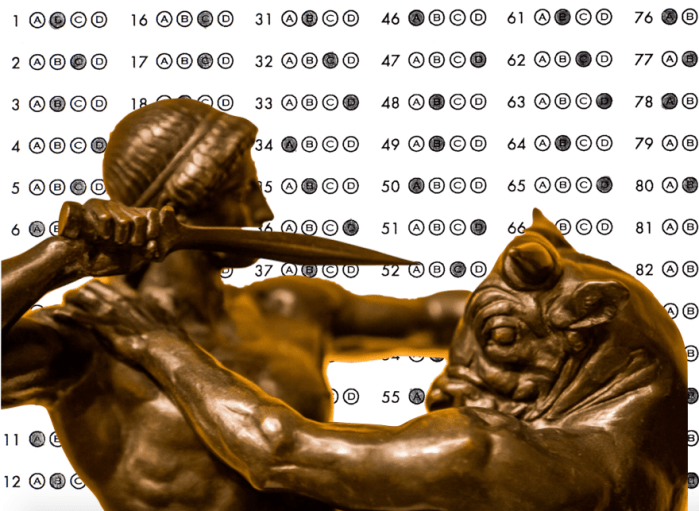
WANT A SIGNED COPY?

Click here to order one directly from me to your door!

book-3