Nurses don’t want to strike. But going to the hospital and being cared for by an overworked, underpaid, unsupported nurse is not going to improve your health.
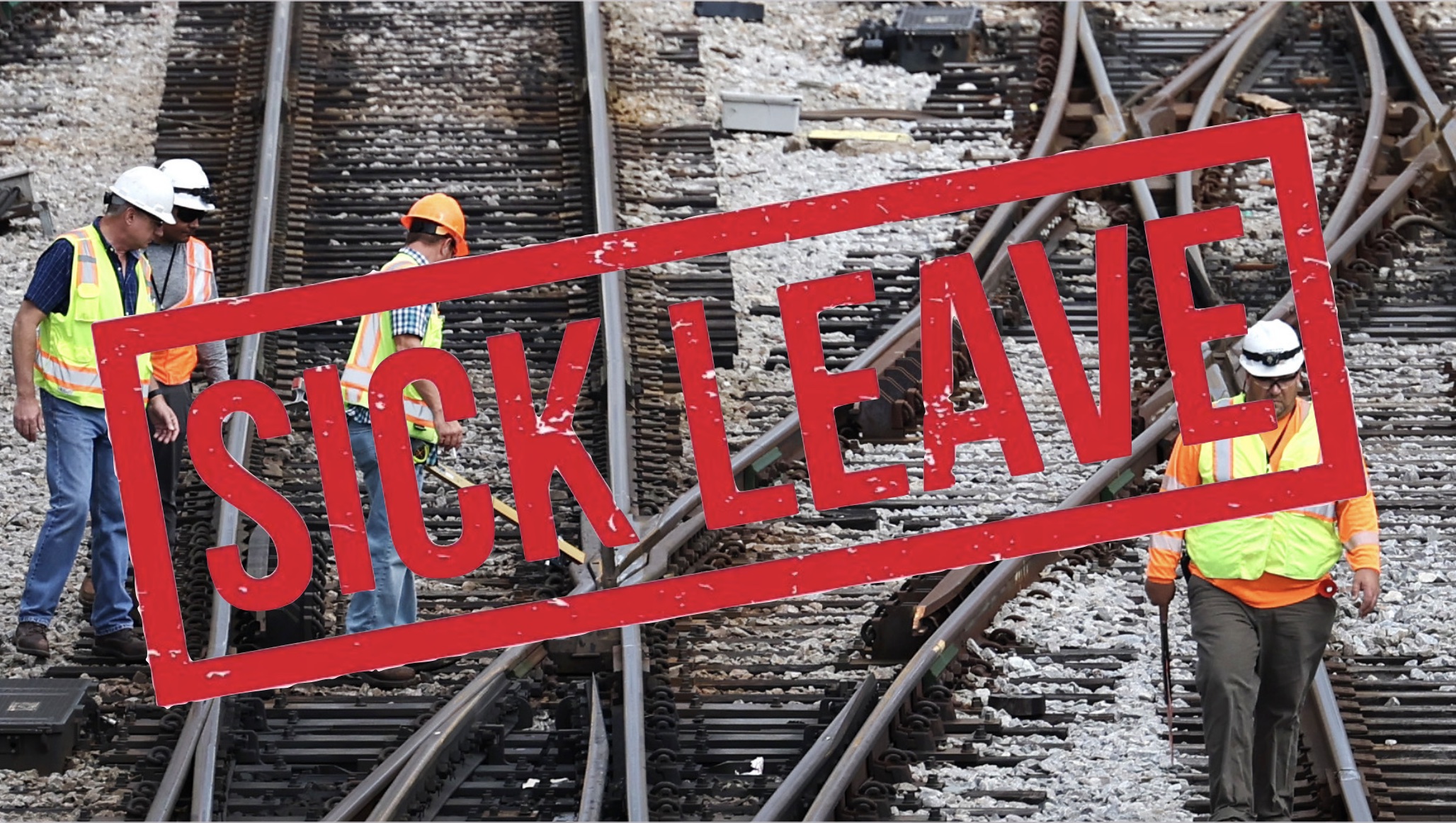
Railway workers would certainly rather get on with their jobs than contend with the bosses or Congress. But having no paid sick leave and a lack of adequate pay will not help move goods across the country any better, either.
Instead, we are at the mercy of employers to step up and do so. And when it comes to the poorest but most important workers – the ones without which our country would grind to a stop – employers are often extremely reluctant to do so.
Roughly a quarter of the private workforce — more than 33 million people — have no paid sick days so they can take care of themselves if they get ill. Even worse, more than 80 percent of private sector workers have no access to paid leave so they can care for a family member.
And it’s indisputably a racial and class phenomenon.
Higher-paid, professional workers almost universally have paid sick and family leave. But, of course, most of these workers don’t just lack pigment on their collars, they lack it on their faces, too. Among the lowest-paid quarter of the workforce, the majority of whom are Black and Latinx workers, only half of them have any paid sick days, and just 7 percent have paid family leave.
So workers of color, the poor, and disproportionately women are much more likely to lack sick and family leave than those who are paid more, have white skin and are male.
And before you explode with indignation, let it be known that this could be rectified any day our government sees fit.
Our representatives could stop holding water for groups like the railway companies that pulled in $20 billion in profits last year alone. Our government could represent us, the people, instead of businesses that could afford to do better but don’t because we aren’t holding them accountable and our Congress and the President refuse to stop them or even let us force them to do right by subjecting them to a strike.
It is past time for our government to begin respecting the rights of workers to organize and collectively bargain for better treatment.
We just suffered through a pandemic where these so-called essential workers had to put themselves in the most danger just to keep society running while the rest of us stayed home and were unequally protected.
If these workers are truly essential, they at least deserve sick and family leave. Otherwise, it is all too obvious how bogus the term is.
The U.S. can no longer run on the unrespected work of an underclass of the poor and people of color.
Like this post? You might want to consider becoming a Patreon subscriber. This helps me continue to keep the blog going and get on with this difficult and challenging work.
“Teachers, we are operating on a lockdown. Please keep your doors locked until we tell you it has been lifted.”
Before me a sea of wide eyes and scared faces.
I slowly walked toward the door continuing the lesson I had been giving before the announcement. The door was already shut and secured but I nonchalantly turned the extra deadbolt.
“Click!” it sounded like a gunshot across the suddenly silent room.
I continued talking while making my way back to the blackboard pretending that nothing out of the ordinary was happening.
That’s just life in the classroom these days.
According to Eduction Week, there have been 38 school shootings in the US this year resulting in injuries or deaths. That’s up from 34 last year and the highest it’s been since the media source began tracking such things in 2018.
During the height of the Covid-19 pandemic, there were only 10 such shootings in 2020, and 24 each in 2019 and 2018.
That comes to a total of 130 school shootings in the last five years.
“Mr. Singer, can I go to the bathroom?” DeVon asked.
“I’m sorry,” I said. “We’re still under lockdown. I’ll write you a pass as soon as it’s lifted.”
It seems like nowhere is safe.
Three of this year’s shootings were in my home state of Pennsylvania.
A 14-year-old student was killed and four others wounded (ages 17, 15, 14, and 14) in a shooting near the high school athletic field after a football scrimmage.
“Mr. Singer, what’s happening?” Olivia asked.
I turned to her confused at first then I realized what she meant.
“The lockdown? Let me check my laptop. No…. Nothing. I really don’t know, Honey. But I’m sure whatever it is, it will be over soon. Why don’t you get back to the assignment?”
Every few years we do this. Teachers huddle in classrooms and try to react to a shooting scenario. We either barricade ourselves in our classrooms or try to find an escape route. We help train police and local medical personnel.
At this years training, teachers were given a talk by a law enforcement “expert” who regaled us with his time working as a Blackwater mercenary in Afghanistan. He told us how difficult it was to make decisions under fire but that sometimes you had to make the hard decisions.
“Some of you teachers have kids in wheelchairs in your classrooms. You think you’re going to get your whole class out of the building and to safety!? You have to ask yourself, how are you going to get that kid in the wheelchair out? What are you going to do if a child flips out or is too scared to move? I know it’s not nice to think about, but sometimes you have to make decisions that will save the most people – not necessarily everyone.”
It made me want to vomit. But he wasn’t telling me anything I didn’t already know.
I like to believe I’d pick the child up out of his wheelchair, throw him over my shoulder and carry him to safety. I hope I could calm down a child having a panic attack and whisk her out of the building.
“Mr. Singer, I really have to go to the bathroom.”
“You can’t hold it just a little longer, DeVon?”
“No,” he said hoping from foot to foot.
“Number 1 or number 2?”
He giggled and held up one finger.
I reluctantly pointed to the trash can.
“Take it over there to the corner. I’ll stand in front of you so…”
“Attention teachers! The lockdown has now been lifted. You may continue as normal.”
I sighed, unlocked the door and wrote DeVon a bathroom pass.
We never did find out what triggered the lockdown. One time it was a gunshot in the surrounding neighborhood. Another time it was an unauthorized adult seeking access to the building.
Not just on the days when one of these tragedies strike – but every day.
It is not safe for students and teachers – it will NEVER be completely safe, but it can be safer.
That’s the point – how safe can we make it?
And why aren’t we doing anything to reach that goal other than preparing for the worst?
Like this post? You might want to consider becoming a Patreon subscriber. This helps me continue to keep the blog going and get on with this difficult and challenging work.
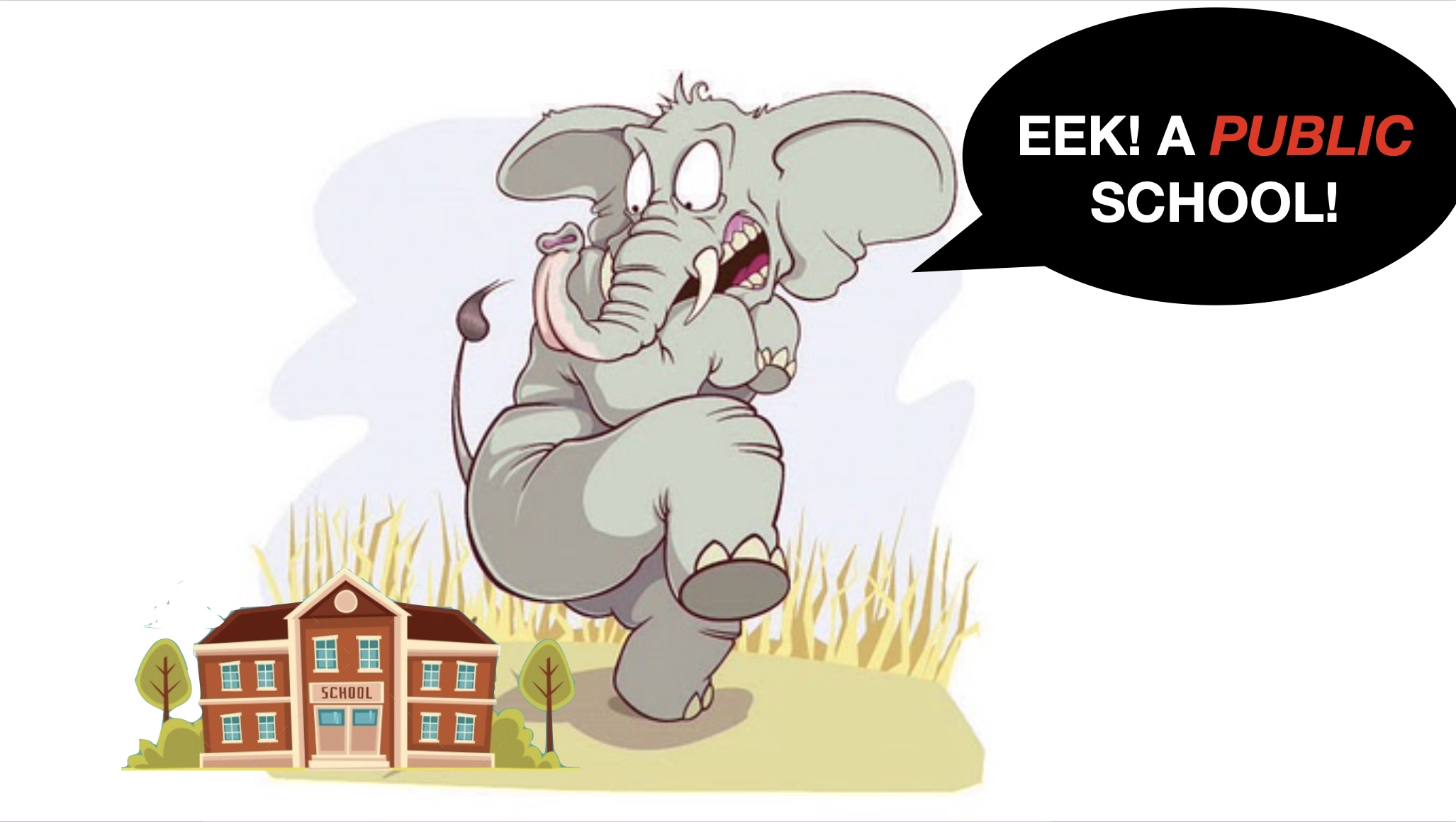
“Democrats are pushing woke ideology, racism, and sexuality on children in the classroom. As your governor, I will ban this on day one…”
Yikes. This is like promising to ban sorcery in school – another thing we don’t teach.
This isn’t the Republican Party I remember when I was growing up.
Instead of personal autonomy and free trade, today’s GOP solemnly swears to eliminate a series of racially and sexually motivated phantasms that are like shadows under a child’s bed. I suppose it’s easier to get rid of something that’s never existed than to fix the real problems we actually have.
But let’s be honest – for some folks this kind of unhinged messaging works.
Many Republicans claim anti-male discrimination is wide spread. Men are blamed for so many things in our society they’re forced to turn to porn and video games because they have no other options, Green claimed.
And women have become “… too weak and pathetic to take care of themselves. They want a great big giant government to take care of them. It’s such a hypocrisy. They claim they want the future to be female, but they aren’t capable of taking care of themself.”
How did we get here? Public schools that teach sexual politics.
Male students are not responsible for a world created by past generations but they ARE responsible for picking a side and doing something about it as they become adult members of society.
Republicans literally think public school teachers are turning kids gay.
That’s the impetus behind Florida Gov. Ron DeSantis’s controversial “Don’t Say Gay” bill and several copycat bits of legislation the American Legislative Exchange Council (ALEC) is pumping out across the country.
They insist that even mentioning LGBTQ people exist is grooming children into a sexuality they wouldn’t otherwise have.
First, believing this shows massive ignorance.
No one can really be coerced into a sexuality they didn’t already possess. As you grow and mature, you have sexual preferences. It’s not really a matter of nurture – it’s nature. People are born this way.
Second, stubbornly refusing to acknowledge that there are other ways to express your sexuality is not going to make people ignore their innate inclinations. The idea seems to be that if kids never find out there are other options, they’ll simply be satisfied with heterosexuality – how they’re told to think and feel.
And finally, it is extremely unfair to LGBTQ people. We already live in a culture that celebrates cis hetero-normativity. Trying to erase everyone else causes real harm and trauma to both people who are different and to those who are not but never get to fully understand the entire spectrum of humanity.
Teachers are not making kids gay, but they are telling kids that gay people are real. We are trying to stop bullying and homophobia. And let’s be honest – that’s really what Republicans are objecting to here.
They want it to be okay to hate gay people.
Sorry. Not in public school.
3) Teaching kids to be trans
This is where the backlash against using appropriate pronouns and recognizing trans people is coming from.
As much as Republicans hate gay people, they absolutely despise and fear the trans community.
Once again they conflate acknowledging the existence of the other with coercing students to become the other. Just knowing that trans is an authentic way human beings can live is seen as a threat. But if this kind of knowledge makes you trans, you almost certainly were trans already.
It hurts no one to see the world as bigger than just one way of living. This is reality, after all. And that’s what Republicans are rebelling against.
Far from teachers coercing students to become trans, the GOP wants us to bully children not to be. They want to constrain difference, punish and hide it.
It’s not Critical Race Theory (which is a legal framework) nor do we teach anyone to hate white people. But we do teach what whiteness has done and continues to do.
-Median household income for Black people, at $43,862, is 37 precent less than that of white people, at $69,823.
-Census data shows Black couples are more than twice as likely as whites to be denied a mortgage or a home improvement loan, which leads to just 59 percent of the median home equity white households have, and just 13 percent of Black wealth.
-A Black child born today can expect to live four years less than a white one.
They shouldn’t make children hate white people, but they may encourage them to hate white supremacy.
And that’s what Republicans are really against.
5) Teaching kids to be sexually active
This may be the strangest fantasy the GOP is trying to spread about public school.
They say we’re making kids engage in sexual activity. Which is strange because according to the Centers for Disease Control, fewer US children are choosing to engage in sexual activity.
An estimated 55% of male and female teens have had sexual intercourse by age 18, according to the CDC’s National Center for Health Statistics (NCHS).
However, these percentages have declined since 1988 when 51% of female and 60% of male teens had engaged in sexual activity.
If public schools are teaching kids to bump uglies, we’re doing a bad job.
Are kids more sexualized today than in the past? Probably. But that’s a result of the culture. When you sell teenagers shorts with the word “juicy” on the butt, don’t complain about public schools.
Some schools offer sex education classes, but they are focused on health and wellness. There is no encouragement to have sex. In fact, many such classes are still teaching abstinence only instead of safe contraception.
The idea that public schools are teaching sex is just dog whistle politics. It is Republicans trying to scare parents that public schools are instilling values they don’t share. It is blaming public schools for social ills that the schools didn’t cause and don’t control.
Looked at calmly and rationally, all of these fantasies are just scare tactics to get the gullible to react emotionally on election day.
They want to terrify responsive voters into giving GOP candidates the power to stop a host of things that never really existed. They want an excuse for doing nothing to solve the actual problems of the day.
There’s a reason they spend so much time railing against woke education – they want to ensure America remains asleep.
A fitful sleep – tossing and turning in various Republican nightmares.
Like this post? You might want to consider becoming a Patreon subscriber. This helps me continue to keep the blog going and get on with this difficult and challenging work.
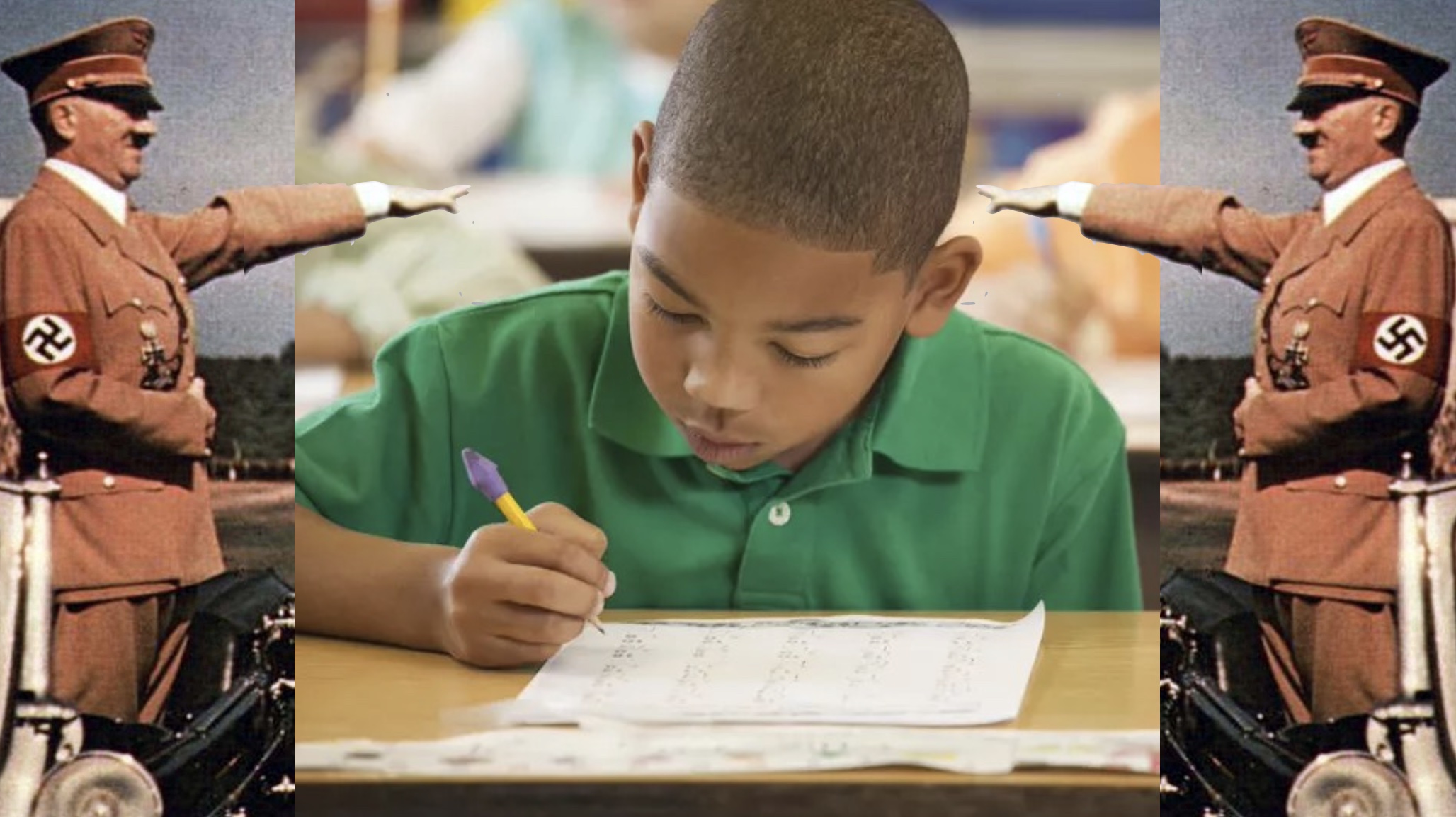
These assessments were based on explicitly eugenicist foundations – the idea that certain races were distinctly superior to others.
Colleague Lewis Terman made the goal clear in his book, The Measurement of Intelligence, that these “experimental” tests will show “enormously significant racial differences in general intelligence, differences which cannot be wiped out by any scheme of mental culture.”
In 1923, another psychologist, Carl Brigham, took these ideas further in his seminal workA Study of American Intelligence. In it, he used data gathered from these IQ tests to argue the following:
“The decline of American intelligence will be more rapid than the decline of the intelligence of European national groups, owing to the presence here of the negro. These are the plain, if somewhat ugly, facts that our study shows. The deterioration of American intelligence is not inevitable, however, if public action can be aroused to prevent it.”
The practice was even upheld by the US Supreme Court in the 1927 Buck v. Bell decision. Justices decided that mandatory sterilization of “feeble-minded” individuals was, in fact, Constitutional.
Of the ruling, which has never been explicitly overturned, Justice Oliver Wendell Holmes wrote, “It is better for all the world, if instead of waiting to execute degenerate offspring for crime, or to let them starve for their imbecility, society can prevent those who are manifestly unfit from continuing their kind…. Three generations of imbeciles are enough.”
Eventually Brigham took his experience with Army IQ tests to create a new assessment for the College Board – the Scholastic Aptitude Test – now known as the Scholastic Assessment Test or SAT. It was first given to high school students in 1926 as a gatekeeper. Just as the Army intelligence tests were designed to distinguish the superior from the inferior, the SAT was designed to predict which students would do well in college and which would not. It was meant to show which students should be given the chance at a higher education and which should be left behind.
And unsurprisingly it has always – and continues to – privilege white students over children of color. The same as nearly every standardized test still does.
HAS IT CHANGED?
None of this can be challenged. These are historical facts. They are simply what happened justified in the words of the people who perpetrated them.
In 1964, a Department of Education report found that the average black high school senior scored below 87% of white seniors (in the 13 percentile) on standardized assessments. Fifty years later, the National Assessment of Educational Progress (NAEP) found that black seniors had narrowed the gap until they were merely behind 81% of white seniors (scoring in the 19th percentile).
Is that really the kind of progress you want to champion?
The reason for the disparity has nothing to do with the learning students of color (and the poor whose scores are similar) achieve nor their worth as human beings.
Discrimination is purposefully built in to the standardization process, according to W. James Popham, PhD, Professor Emeritus at the University of California at Los Angeles and former test maker. He explained in an interview with Frontline:
“Traditionally constructed standardized achievements, the kinds that we’ve used in this country for a long while, are intended chiefly to discriminate among students … to say that someone was in the 83rd percentile and someone is at 43rd percentile. And the reason you do that is so you can make judgments among these kids. But in order to do so, you have to make sure that the test has in fact a spread of scores. One of the ways to have that test create a spread of scores is to limit items in the test to socioeconomic variables, because socioeconomic status is a nicely spread out distribution, and that distribution does in fact spread kids’ scores out on a test.”
The scores have to fall into categories – Below Basic, Basic, Proficient and Advanced, for instance. If too many students cluster in the middle, the results are invalid. We need the scores spread out – even if we must resort to non-educational factors to get there.
Family income is not something the tests ignore, says Popham. It is an essential component specifically tested for in question construction. In fact, he claims that between 15-80% of the questions (depending on the subject area) on norm-referenced exams are linked to socio-economic status (SES).
Thus minorities with higher percentages of impoverished people are selected against. Not because of any explicit racist ideology – but to get the pretty bell curve standardized assessments require.
“Too often, test designers rely on questions which assume background knowledge more often held by White, middle-class students. It’s not just that the designers have unconscious racial bias; the standardized testing industry depends on these kinds of biased questions in order to create a wide range of scores.”
For example, Choi recalled a 10th grade student in his class asking him about a standardized test question. “With a puzzled look, she pointed to the prompt asking students to write about the qualities of someone who would deserve a “key to the city.” Many of my students, nearly all of whom qualified for free and reduced lunch, were not familiar with the idea of a ‘key to the city.’”
So when they get such a question wrong, it isn’t necessarily because they don’t know the concept being tested, but they don’t understand what was being asked in the first place.
“Compare two 1998 SAT verbal [section] sentence-completion items with similar themes: The item correctly answered by more blacks than whites was discarded by the Educational Testing Service, whereas the item that has a higher disparate impact against blacks became part of the actual SAT. On one of the items, which was of medium difficulty, 62% of whites and 38% of African-Americans answered correctly, resulting in a large impact of 24%…On this second item, 8% more African-Americans than whites answered correctly…”
In other words, the criteria for whether a question is chosen for future tests is if it replicates the outcomes of previous exams – specifically tests where students of color score lower than white children. And this is still the criteria test makers use to determine which questions to use on future editions of nearly every assessment in wide use in the US.
We no longer profess eugenicist ideas of racial purity embedded in our assessments as self evident or based on science. But they’re there none-the-less.
Today, the very concept of intelligence being quantifiable remains in question.
In “The Mismeasurement of Man,” evolutionary biologist Stephen Jay Gould challenged many of these ideas – in particular those of Terman. Rather than see intelligence as a genetic trait, Gould envisioned it more abstractly and thus shattered the idea that any mere number could capture human value.
We can’t just give a faulty bridge a new coat of paint. We must demolish it and rebuild an entirely new structure to carry us into the future.
Like this post? You might want to consider becoming a Patreon subscriber. This helps me continue to keep the blog going and get on with this difficult and challenging work.
He takes notes in class, does all his homework and participates in discussions.
He writes insightful essays and demonstrates a mastery of spelling and grammar.
He reads aloud with fluency and inflection. He asks deep questions about the literature and aces nearly all of his classroom reading comprehension tests.
But after reluctantly subjecting my classes to the MAP and being instructed to analyze the results with my colleagues, we noticed this contradiction.
In many cases, scores did not match up with teacher expectations for our students.
In about 60-80% of cases, students who had demonstrated high skills in the subject were given scores below the 50th percentile – many below the 25th percentile.
These were kids with average to high grades who the MAP scored as if they were in the bottom half of their peers across the state.
Heck! A third of my students are in the advanced class this year – but the MAP test would tell me most of them need remediation!
If we look at that data dispassionately, there are possible explanations. For one, students may not have taken the test seriously.
And to some degree this is certainly the case. The MAP times student responses and when they are input fast and furious, it stops the test taker until the teacher can unlock the test after warning them against rapid guessing.
However, the sheer number of mislabeled students is far too great to be accounted for in this way. Maybe five of my students got the slow down sloth graphic. Yet so many more were mislabeled as failures despite strong classroom academics.
Nice for them. However, I am not some rube reading this in the paper. I am not examining some spreadsheet for which I have no other data. I am IN the classroom every day observing these very same kids. I’ve been right there for almost an entire grading period of lessons and assessments – formative and summative. I have many strong indications of what these kids can do, what they know and what they don’t know.
I am a Nationally Board Certified Teacher with more than two decades experience. But Northwest Evaluation Association (NWEA), a testing company out of Portland, Oregon, wants me to believe that after 90 minutes it knows my students better than I do after six weeks!
Time to admit the MAP is a faulty product.
But it’s not just that one standardized test. We find the same disparity with the PSSA and other like assessments.
Nationally, classroom grades are better than these test scores.
By contrast, teacher-created tests are just the opposite. They are designed almost exclusively to assess whether learning has taken place and to what degree. Comparability isn’t really something we do. That’s the province of administrators and other support staff.
The primary job of teaching is just that – the transfer of knowledge, offering opportunities and a conducive environment for students to learn.
You can’t give a person a blood transfusion if you can’t accurately measure how much blood you’re giving her. And comparing how much blood was given to a national average of transfusions is not helpful.
You need to know how much THIS PERSON needs. You need to know what would help her particular needs.
When good students get bad test scores, it invariably means you have a bad test.
Until society accepts this obvious truth, we will never be able to provide our students with the education they deserve.
Good students will continue to be mislabeled for the sake of a standardized testing industry that is too big to fail.
Like this post? You might want to consider becoming a Patreon subscriber. This helps me continue to keep the blog going and get on with this difficult and challenging work.
You want to guarantee every student has access to technical and vocational courses and make sure every school building has at least one dedicated mental health counselor on staff. Outstanding!
It does not mean tax dollars going to private and parochial schools. It does not mean our money going to institutions where we get no say in how it’s spent. It does not mean circumventing duly elected school boards. It does not mean the public paying for religious indoctrination or the kind of right wing biased education routinely provided at private schools.
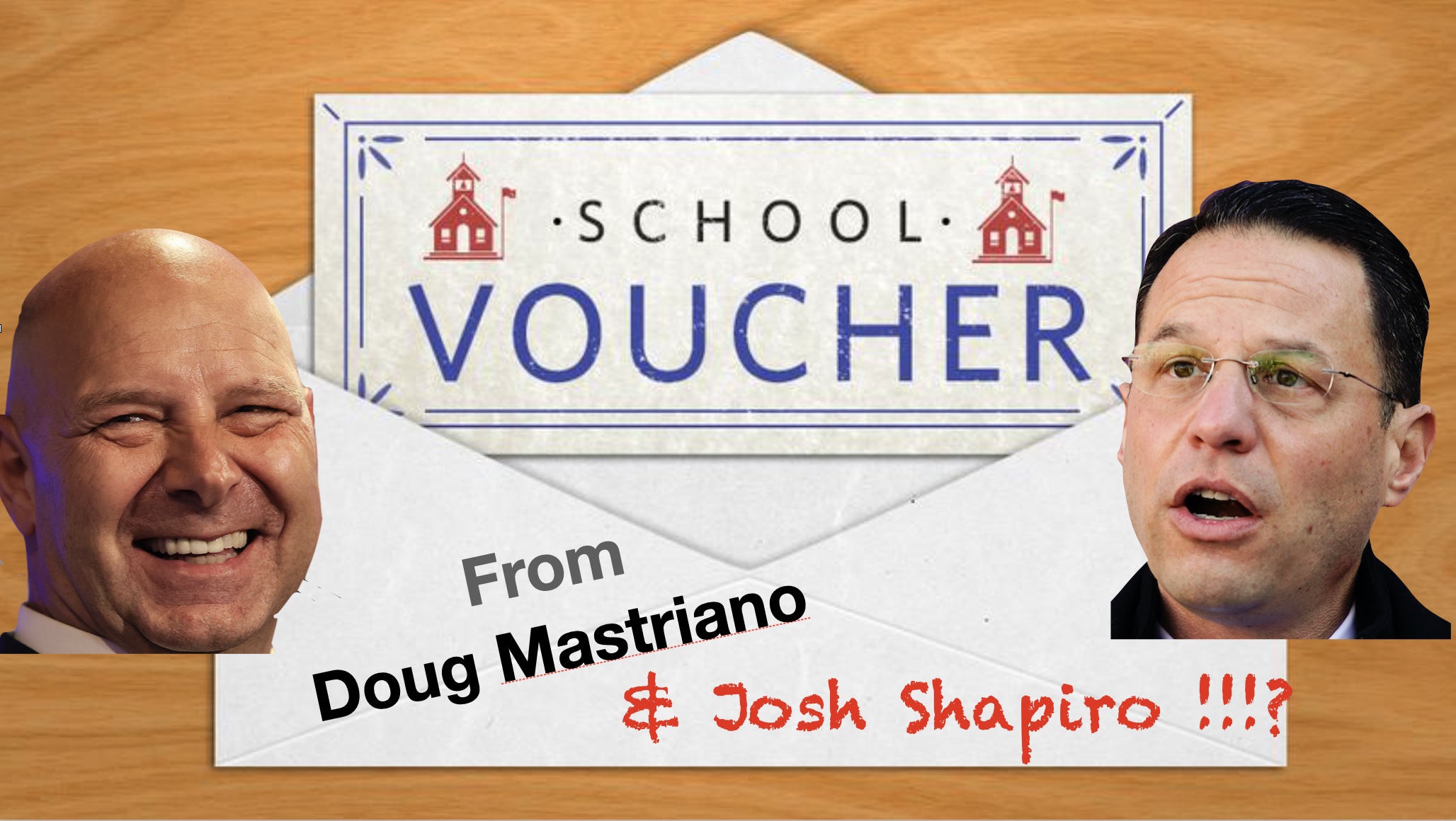
This doesn’t sound like the candidate teachers like me have been backing since before this election cycle began. Frankly, it’s almost what your gubernatorial opponent, MAGA Republican Doug Mastriano, champions.
Mastriano – a Trump insurrectionist – says he wants to use state education funding to give EVERY student a school voucher they can use at almost any school in the Commonwealth – public, private or parochial.
You seem to want vouchers ONLY for students at the most underfunded and struggling schools.
Josh favors adding choices for parents and educational opportunity for students and funding lifeline scholarships like those approved in other states and introduced in Pennsylvania.
“And I’m for making sure we add scholarships like lifeline scholarships to make sure that that’s additive to their education. That it gives them other opportunities…to be able to help them achieve success”
These so-called Lifeline Scholarships are a Republican lead measure to give direct-to-student tax-funded scholarships that parents and guardians in the state’s most neglected public schools could use for a variety of options including going toward tuition at a different school.
It would affect about 191,000 students in 382 schools, across 76 of the state’s 500 school districts. However, Two-thirds of the cost of the program (63.1%) is born by four districts – Philadelphia (43.9%), Reading (8.9%), Allentown (5.8%) and Pittsburgh (4.5%).
This would create another taxpayer funded system of education. Affected districts would lose so much funding it would ultimately force them to reduce programs, services, and staffing and/or raise property taxes to compensate.
Your opponent is perhaps the most odious person to ever run for Governor in the state. He looks to usher in an era of theocratic fascism, curtail human rights and take the Commonwealth back to the Middle Ages.
But that doesn’t mean you should run closer to his positions in the vain hope of stealing some of his base.
Pennsylvanians can’t afford losing their only chance at self rule because of demoralization and despair at a candidate too weak to support the platform he began this campaign on – championing public education.
I urge you to reconsider this flirtation with Republican values and school vouchers.
I hope you are better than this.
We deserve a governor who is better than this.
Please have the courage to stand by authentic public schools.
Like this post? You might want to consider becoming a Patreon subscriber. This helps me continue to keep the blog going and get on with this difficult and challenging work.
To many people, Queen Elizabeth II is more than just a 70-year figure head – she remains a symbol of the British colonial empire — an institution that enriched itself through violence, theft and oppression.
But one needn’t look solely at European nations pillaging Africa and Asia to condemn the practice.
We’ve got colonialism right here – down the street, in our own neighborhoods.
According to the Oxford English Dictionary, colonialism is:
“the policy or practice of acquiring full or partial political control over another country, occupying it with settlers, and exploiting it economically.”
That’s a pretty good description of the relationship between charter schools and the communities where they insert themselves.
Consider what a charter school does.
It is a school funded by taxpayer dollars but free from regulations protecting the people it supposedly serves.
This is fundamentally different from authentic public schools which are funded in the same way but subject to the leadership of an elected board of directors made up of members of the community. At charter schools, decisions can be made entirely by an appointed board who are not beholden to the public but to the organizers and investors who created the charter school in the first place.
To be fair, a charter school cannot exist in a community unless its operators can convince enough parents to enroll their children. However, no one needs to invite the charter school into the community in the first place.
Like with any business, these entrepreneurs can decide to set up shop pretty much anywhere, and though local public schools are tasked with approving or disapproving their request to locate within district boundaries, most state charter school laws provide very few resources to authentic public schools to turn charter schools away. Moreover, when charter applications are denied, the community that turned them away are often overruled by unelected privatization-friendly functionaries in state government.
Think about what a transformation has been thus accomplished.
Stakeholders such as students, families, teachers, and communities become merely economic resources ripe for hegemony – not free people with the right to control their own destinies.
After all, just because a small number of parents have decided to enroll their kids at a charter school, that doesn’t mean the community at large – which is far more numerous and will have to fund this endeavor – supports it. Moreover, the money taxpayers are expected to offload on the charter school come from their existent public schools – and the slight reduction in students does not equal a proportionate reduction in cost. Most expenses are fixed regardless of enrollment. You still have to heat and cool the building, staff the classes, etc. So the community has to decide whether to shortchange the majority of children who continue to be enrolled at the authentic public school or (as often is the case) pay more in taxes to make up the difference.
Make no mistake – this is theft. It is pillaging and looting a community. The citizens lose their right to self government, how their land is used and how their resources are utilized. They become enslaved to the so-called free market.
Perhaps the most pernicious effect is the change in attitude, as Ohio social studies teacher Dr. Chuck Greanoff writes:
“Our minds are targets of colonization, the goal being the replacement of any sense of a common good and shared responsibly with the neoliberal axiom that economic self-interest is the only right and natural course of action. You are to think like consumers, not citizens. You are to shop for the best schools for your student, not invest your time and effort in improving them for everyone.”
Others have gone even farther finding racism in the daily administration of charter schools, themselves. After all, many charter schools locate themselves around inner city black communities and therefore exploit the children of color they find there.
Bloggers Russ Walsh and Jonathan Pelto noted how similarly both colonialists and charter school operators often treat the people in the communities where they are located.
Colonialism is often white Europeans acting on brown indigenous people. The colonizers are going to “raise those savages up” or in the words of noted imperialist Rudyard Kipling, ease the “white man’s burden.”
Walsh notes that we see the same apparent motivation among charter school operators with regard to the often black and brown children enrolled in their schools. They use militaristic, highly autocratic systems of discipline to keep these children in-line.
“The children of the inner city are being treated by their “benefactors” as inferiors. Charter schools are colonial enterprises.”
However, the most damning testimony comes from Julian Vasquez Heilig’s Cloaking Inequality blog. He published a guest piece written by a former New Orleans charter school dean of students decrying just such colonial practices.
“…while working as the Dean of Students for a charter school in New Orleans, it took me some time to realize that I had been enforcing rules and policies that stymied creativity, culture and student voice…
My daily routine consisted of running around chasing young Black ladies to see if their nails were polished, or if they added a different color streak to their hair, or following young men to make sure that their hair wasn’t styled naturally as students were not able to wear their hair in uncombed afro styles. None of which had anything to do with teaching and learning, but administration was keen on making sure that before Black students entered the classroom that they looked “appropriate” for learning. As if students whose hair was natural or those whose parents could not afford a uniform tie could not achieve like others who possessed these items…
…everything at the school was done in a militaristic/prison fashion. Students had to walk in lines everywhere they went, including to class and the cafeteria. The behavioral norms and expectations called for all students to stand in unison with their hands to their sides, facing forward, silent until given further instruction.”
Students should not be treated like prisoners. Children should not be forced to comply with such harsh rules of conduct. And no one should be compelled to give up their cultural heritage for any reason – but especially because those in charge don’t value them as human beings.
It’s way past time we admit it.
This is colonialism.
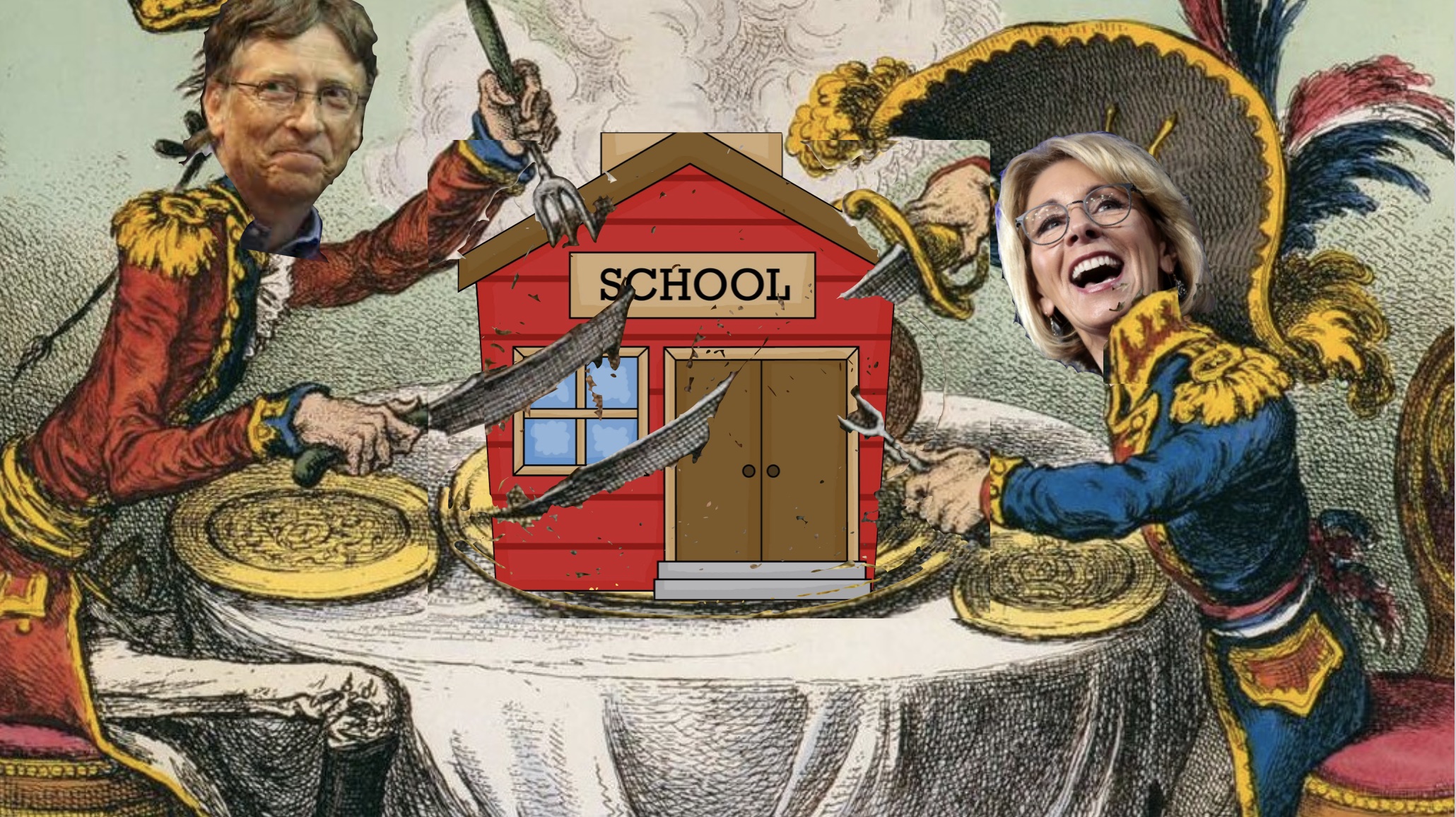
Charter schools are colonial enterprises.
We can and should criticize the UK for its history of violence and oppression. We can and should include many US international policies in the same condemnation.
But we mustn’t stop there.
Colonialism is on our streets and in our schools.
We have been colonized by the rich and powerful and our children of color have received the worst of it.
We must end the charter school experiment.
We must end the neighborhood colonialism that too few are willing to call by its rightful name.
-Vasquez Heilig, J., Khalifa, M., & Tillman, L. (2013). Why have NCLB and high-stakes reforms failed?: Reframing the discourse with a post-colonial lens. In K. Lomotey and R. Milner (Eds.), Handbook of Urban Education. New York: Routledge.
Like this post? You might want to consider becoming a Patreon subscriber. This helps me continue to keep the blog going and get on with this difficult and challenging work.
She was in her 90s and had been unwell since before COVID. But she was also our matriarch, the point around which so much of our interrelations orbited and met.
After the funeral, I found myself at my uncle’s house somehow tasked with watching over several young cousins who had had just about enough of sitting around quietly in itchy suits and dresses.
To get a moment to myself, I set them a task: go downstairs among the assorted relatives and ask them to tell you a story about Ce Ce. Best story wins.
They went off like an explosion. And when they came back, they each had a touching tale about Ce Ce.
One was about how she defended a niece who wanted to marry someone of another faith. Another story was a fond recollection of the sweet and sour spaghetti sauce she used to make, the recipe of which is lost forever.
I was even surprised to hear some stories I had never known like that after my grandfather died, a semi-famous painter had asked Ce Ce on a date!
When my little cousins’ recitations were done, they were united in one thing – wanting to know who won.
I stumbled. I stammered.
I really had no way of judging such a thing.
They had all brought back such wonderful stories. Who won? We were ALL enriched by hearing them.
And the results of these tests are used to make high stakes decisions about which classes the students can enroll in, which enrichments, field trips or remediation they require, and even how much funding will be given or withheld from the schools and districts where they attend.
What if we took classroom grades as seriously as we take standardized test scores?
What if we valued them MORE?
The world would be a very different place.
The entire narrative of failing students and failing schools would turn on its head. After all, graduation rates have steadily increased over the last decade.
Students are completing more courses and more difficult courses. And students are even getting higher grades in these classes!
The new analysis comes from the U.S. Department of Education, and tracks transcripts of a representative sample of high school graduates in 1990, 2000, 2009, and 2019.
It does not include scores from 2020 and 2022 when both classroom grades and national test scores fell. But that’s clearly because of the pandemic and the fact that most students educations and testing schedules were disrupted.
Before COVID, students increasingly were taking higher-level courses, and their Grade Point Averages (GPAs) were steadily rising — from an average of 2.68 in 1990 to 2.94 in 2000, 3.0 in 2009, and 3.11 in 2019.
This is true of students from all backgrounds, but disparities still existed. On average, white and Asian students had higher GPAs than Black and Hispanic students. Though girls, overall, had higher GPAs than boys.
However, on the National Assessment of Educational Progress (NAEP), given to a sample of students across the country, test scores during the same period did not show a similar increase. Math and reading scores in 2019 were slightly lower than in 2009 and unchanged from 2005. Science scores haven’t budged since 2009.
It doesn’t take much to show why classroom grades are better at assessing student learning. Compare them with standardized test scores.
Students earn grades based on a wide range of assessments, activities, and behaviors – quizzes, class participation, oral and written reports, group assignments, homework, and in-class work.
Standardized tests, on the other hand, are not assigned on such a multifaceted range of factors. Instead, they are designed to obtain a measure of student proficiency on a specified set of knowledge and skills within limited academic areas, such as mathematics or reading.
Classroom grades are tapestries sown from many patches showing a year’s worth of progress. Standardized tests are at best snapshots of a moment in time.
So the biggest difference isn’t a matter of validity, it is pragmatism. Test scores can be used to rate students from all over the country or the world. They can be used to sort kids into a hierarchy of best to worst. Though why anyone would want to do that is beyond me. The purpose of education is not like the National Football League (NFL). It’s to encourage learning, not competition based on a simulation of learning.
And there is evidence that classroom grades are more valid than standardized test scores.
Kids with perfect scores on the SAT or American College Testing (ACT) tests don’t achieve more than kids who received lower scores or never took the tests in the first place.
Researchers followed more than 123,000 students who attended universities that don’t require applicants to take these tests as a prerequisite for admission. They concluded that SAT and ACT test scores do not correlate with how well a student does in college.
However, classroom grades do have predictive value – especially when compared to standardized tests. Students with high grades in high school but middling test scores do better in college than students with higher test scores and lower grades.
Why? Because grades are based on something other than the ability to take one test. They demonstrate a daily commitment to work hard. They are based on 180 days (in Pennsylvania) of classroom endeavors, whereas standardized tests are based on the labor of an afternoon or a few days.
Classroom grades would not have such consistent predictive value if they were nothing but the result of grade inflation or lenient teachers.
In fact, of the two assessments – classroom grades and standardized tests – one is far more essential to the daily learning of students than the other.
We could abolish all standardized testing without any damage to student learning. In fact, the vacuum created by the loss of these high stakes tests would probably result in much less teaching to the test. Days, weeks, months of additional class time would suddenly appear and much more learning would probably take place.
Academic decisions about which classes students can enroll in or what remediation is necessary could just as easily be made based on classroom grades and teacher observations. And funding decisions for schools and districts could be made based on need and equity – not the political football of standardized testing.
However, getting rid of classroom grades would be much more disruptive. Parents and students would have few measures by which to determine if students had learned the material. Teachers would have fewer tools to encourage children to complete assignments. And if only test scores remained, the curriculum would narrow to a degree unheard of – constant, daily test prep with no engagement to ones life, critical thinking or creativity.
To be fair, there are mastery-based learning programs that try to do without grades, but they are much more experimental and require a complete shift in how we view learning. This is a more holistic system that requires students to demonstrate learning at one level before moving ahead to the next. However, it is incredibly labor intensive for teachers and often relies heavily on edtech solutions to make it viable.
I’m not saying this is an impossible system or even taking a stance on its value. But a large scale shift away from classroom grades would be chaotic, confusing and probably a failure without serious support, scaffolding and parental, teacher and student buy-in.
At the end of the day, classroom grades are the best tool we have to determine whether learning has taken place and to what degree. We should do everything we can to change the way policymakers prefer the standardized approach to the personalized one.
‘It would be nice if all of the data which sociologists require could be enumerated because then we could run them through IBM machines and draw charts as the economists do. However, not everything that can be counted counts, and not everything that counts can be counted.”
Thus, the urge to quantify student learning seems predicated on the popular maxim: If you can’t measure it, you can’t manage it.
Classroom grades are actually concerned with the project at hand – assessment of learning.
Which brings me back to my little cousins.
When I told them I couldn’t possibly pick a winner between them based on their stories, there were lots of groans of annoyance.
They viewed the whole project as a competition and they wanted to win.
I hope on reflection they’ll see that we all won.
Everything isn’t a contest. We are not all opponents.
If they can grasp that, it would be the greatest lesson I could teach.
Like this post? You might want to consider becoming a Patreon subscriber. This helps me continue to keep the blog going and get on with this difficult and challenging work.
I’m a public school teacher in western Pennsylvania, and when I returned to school this week before classes started, I noticed my stapler was irreparably jammed from last year.
The secretary lead me to a closet full of brand new Swingline staplers.
I thanked her, took one back to my room and started stapling.
Three staples in, it was irreparably jammed.
When I returned home that evening and complained to my family about the woes of the day, my sweet 13-year-old daughter offered me a stapler we had around the house.
When I brought it to school, it worked like a dream.
It wasn’t some top of the line model. It was another basic Swingline stapler. It was slightly less boxy and more modern than the kind I got from the office. But it worked. That’s the important difference.
So why did the office have a closet full of faulty staplers?
Those staplers – that many staplers – probably add up to hundreds of dollars.
And they don’t even work!
Sadly, the full extent of the waste district-wide is much farther reaching than just the staplers.
Later that very day, teachers in my building were forced to sit through a virtual training on the MAP test.
This is an assessment made by Northwest Evaluation Association (NWEA), a so-called non-profit organization out of Portland, Oregon.
The company claims its assessments are used by over 9,500 schools and districts in 145 countries – but none is more popular than the MAP.
Some states even require the MAP as part of their standardized testing machinery. However, in the Commonwealth, the MAP is used as a pre-test or practice assessment by districts that elect to pay for it.
My building – the middle school – used a variety of different assessments throughout the years for this purpose – IXL, CDT, etc.
My district had used the MAP consistently for years at the elementary schools, so someone in administration thought it made sense to bring it to the middle school now and eventually institute it in the high school, as well.
Do we really need an assessment BEFORE the state mandated assessments?
Heck no!
Classroom teachers give enough assignments and tests of their own to know where their students are academically throughout the year. We grade them after all. What do you think that’s based on – guessing?
But certain administrators just love these pre-tests. They love looking at spreadsheets of student data and comparing one grading period to another. They think if the numbers go higher, it will be proof they’re good principals and functionaries.
It’s pathetic to be honest. What a waste of taxpayer dollars that could be used for actual learning! What a waste of class time that could be used for actual teaching!
And what a negative impact these assessment actually have on students and their learning!
For instance, at the MAP training, teachers were told the assessment’s job was to show how our students were doing in Reading, Math and Science compared with an average test taker.
How is constantly comparing them to a norm going to help them improve?
If I went on a diet and stepped on the scale, learning that my weight loss wasn’t as high as an average dieter would not help me stay away from sweets. If anything, it would inspire me to go on a binge in the snack drawer.
When learning a skill, it doesn’t help to know how well others are or are not learning that same skill. It matters how much you are learning in comparison to yourself. Yesterday I knew THIS. Today I know a bit MORE. Who cares what the so-called average learner can do!?
But no matter how many times I say such things to administrators or paid trainers from NWEA, they just don’t get it.
At this training, the instructor actually wanted to know what “elevator speech” teachers were going to give to parents about why the MAP was important!
It’s bad enough we’re being forced to give this crappy assessment, but now you want us to spout propaganda to the very people paying our salaries!?
Having trusted teachers sooth community worry with corporate propaganda would be a big win for the testing company.
However, I’ll give the trainer one thing – she understood that the MAP assessment scores would not be useful unless students could be encouraged to take the test seriously. Nobody tries their best at something they think is unimportant.
Her solution was two-fold. First, NWEA has produced several propaganda videos to show students why the test is important.
Teachers are supposed to monitor all this on a screen and intervene when it occurs. We’re supposed to counsel kids not to just guess and then allow them back on the test. If the algorithm still thinks students are guessing, we’re supposed to suspend their test and make them take it all over again.
Teachers throughout the state have to take on-line classes every year about what we are and are not allowed to do during the PSSA test. Stopping students who seem to be guessing, is not allowed. I’m not even allowed to point out if a student skipped a question on the test!
I certainly can’t scrap a PSSA test that I think a student didn’t give his best effort on and make him do it again!
So how exactly is this MAP test a practice for the real thing!?
Even under the best of circumstances, it’s an artificial environment where scores are massaged to give an unrealistic picture of how students will do on the PSSA.
Of course, administration at my school has one more trick up its sleeve to get students to take the MAP test seriously.
These people are making lots of money off this standardized testing baloney!
According to a 2015 brochure from NWEA about the MAP test, it costs $13.50 per student to take the test every year. And that’s just for the Reading and Math. It costs an additional $2.50 per pupil for the Science test.
So if we estimate 1000 students at the elementary and middle school level, that’s roughly $16,000 a year to take the test.
And that doesn’t include the price of trainings like the one I had to sit through this week.
According to that same brochure, the cost for a single days training is $4,000, though sometimes it can be reduced to $3,500 if you buy the right package.
Trainings can go up to $40,000 for multiple days and an in-person trainer.
I wonder how much money my district flushed down the toilet on this garbage.
We need a test of basic decency for decision makers.
Like this post? You might want to consider becoming a Patreon subscriber. This helps me continue to keep the blog going and get on with this difficult and challenging work.
Honestly, I don’t know how we’d cram all the desks in the room. I can barely fit 15 in there now.
Where would we put the books, computers and cabinets? The students, alone, would be wall-to-wall.
Just imagine that many middle school kids stuffed into the room arguing about who’s touching who and which classmate stole their pencil or book. Not to mention the children striving to get my attention to solve disputes, get help with classwork, ask permission to use the bathroom – and a thousand other issues!
For example, there’s no way we could afford a school nurse at each building like we have today. We’d be lucky to have one nurse for all four buildings in the district – elementary schools, middle schools and the high school. If a student feels sick, there’s not much I could do except send the child to the office to try to call home and get a parent or guardian to pick the kid up early. And if the parents can’t make it, just let the kid put his or her head down?
What if the issue’s more psychological? There might be a school counselor somewhere in the district so a student can talk out an issue he or she is having – perhaps conflict resolution with a former friend, discuss peer pressure to try drugs or maybe deal with suicidal thoughts. But there’s probably a long waiting list to see this mythical counselor. Hopefully, the problem is not too urgent.
I feel especially bad for the special education students. Aides would be almost non-existent so many kids with special needs would have to struggle through issues with which we’d normally help them. All the individual Education Plans (IEPs) would have to be rewritten to take this new normal into account.
Even lunch would be disrupted. After all, there would be fewer cafeteria workers so it would be harder just to cook a hot meal and make sure it gets onto a tray in time for students to eat it.
There’s no doubt about it.
My classroom would be very different if Mastriano wins the gubernatorial election in November.
At my district of Steel Valley in Munhall on the western side of the Commonwealth, the situation probably would be much like I described.
I can’t imagine how any teacher could adequately tend to double the students, but I might not have to imagine it.
I’d probably be laid off.
More than half of Steel Valley’s staff would be out of a job – 92 of our current 172 school nurses, counselors, aides, cafeteria workers and teachers would be looking for work.
And that’s just where I’m employed.
Things would be even worse for my daughter where she attends McKeesport Area School District.
According to PSEA estimates, the nearby McKeesport district would lose 281 of 521 staff – a 54% reduction. Classes would go from an average of 17 students to an average of 46. That’s an increase of 29 students per class!
How can she learn in that kind of environment!? She isn’t in college yet. She isn’t in some University of Pittsburgh survey class that meets in an auditorium. She’s in middle school!
But it would be pretty similar at public schools, charter schools, career and technical centers and intermediate units across the state.
From one side of the Commonwealth to the other, we’d go from 239,902 staff to 121,198. Class size would go from an average of 16 students per class to 33. That’s an increase of 17 students per class or 109%.
Like so many wannabe big time policymakers, he is very light on the details of how we would educate the state’s 1.7 million students. This whole proposal was just something he blurted out during a March 2022 WRTA radio interview.
It’s his plan to completely eliminate local school property taxes. Funding would be provided directly to parents via “Education Opportunity Accounts,” and families could then decide whether they want a public, private, charter or home school option.
To go from a statewide average funding level of $19,000 a student to $9,000 a student requires a cut of $17.6 billion, or 53%.
But if the remainder isn’t being paid by property taxes, that’s a roughly $15.3 billion a year expenditure by the state that used to be paid by local property taxes. Where is he getting that money from? And if the state can afford to pay that much, why not just pay the full $19,000 per student and make none of these unnecessary cuts? Or why not just pay half and reduce property taxes by that much? Mastriano is not exactly forthcoming on any of this.
PSEA admits that to come up with its own estimates of the damage the organization filled in a few details. The union assumes the state would fully fund the $9,000-per-student voucher and leave other local non-property taxes and federal revenues untouched.
That might not happen. We could be looking at an even more draconian situation.
The biggest question the PSEA is sidestepping is the impact of allowing taxpayer dollars to fund so many different types of schooling.
Even under Mastriano’s plan, nontraditional educational providers like charter schools would suffer because like traditional public schools they would be receiving less funding from the state than they do now. And parents using their vouchers to pay for private schools for their children would still have to make up a pretty big gap between the amount of the voucher and the cost of private school tuition.
However, since traditional public schools serve the overwhelming majority of the state’s students, they would take the biggest hit financially. If more parents use their voucher to pay for private, charter or home schools, that’s less funding for our public school system. That means even greater cuts to student services and more staff layoffs.
Moreover, what if parents use the voucher for a fly-by-night educational option that doesn’t meet it’s obligations?
And when it comes to charter schools that took federal funding, 12% never even opened. They just gobbled up the cash with nothing to show for it.
What will happen to students whose parents lose their vouchers in schools like these? Who will pay for these kids to be educated? Or will they have to go without?
The books are riddled with counter factual claims and political bias in every subject imaginable such as abortion, gay rights and the Endangered Species Act, which one labels a “radical social agenda.” They disparage religions other than Protestant Christianity and cultures other than those descended from White Europeans.
If someone wants to pay for such an education out of their own pocket, that’s one thing. But to ask taxpayers to fund such propaganda is something else entirely!
Thankfully, Pennsylvania voters don’t have to accept this. Not yet anyway.
There are still more than three months before the election. Voters can choose the Democratic gubernatorial candidate Josh Shapiro. He has promised to INCREASE education funding and not just blow up the whole system.
To see an interactive map of how Mastriano’s education cuts would affect your school district, click here.
For now this is only a bad dream. We still have time to wake up and vote accordingly.
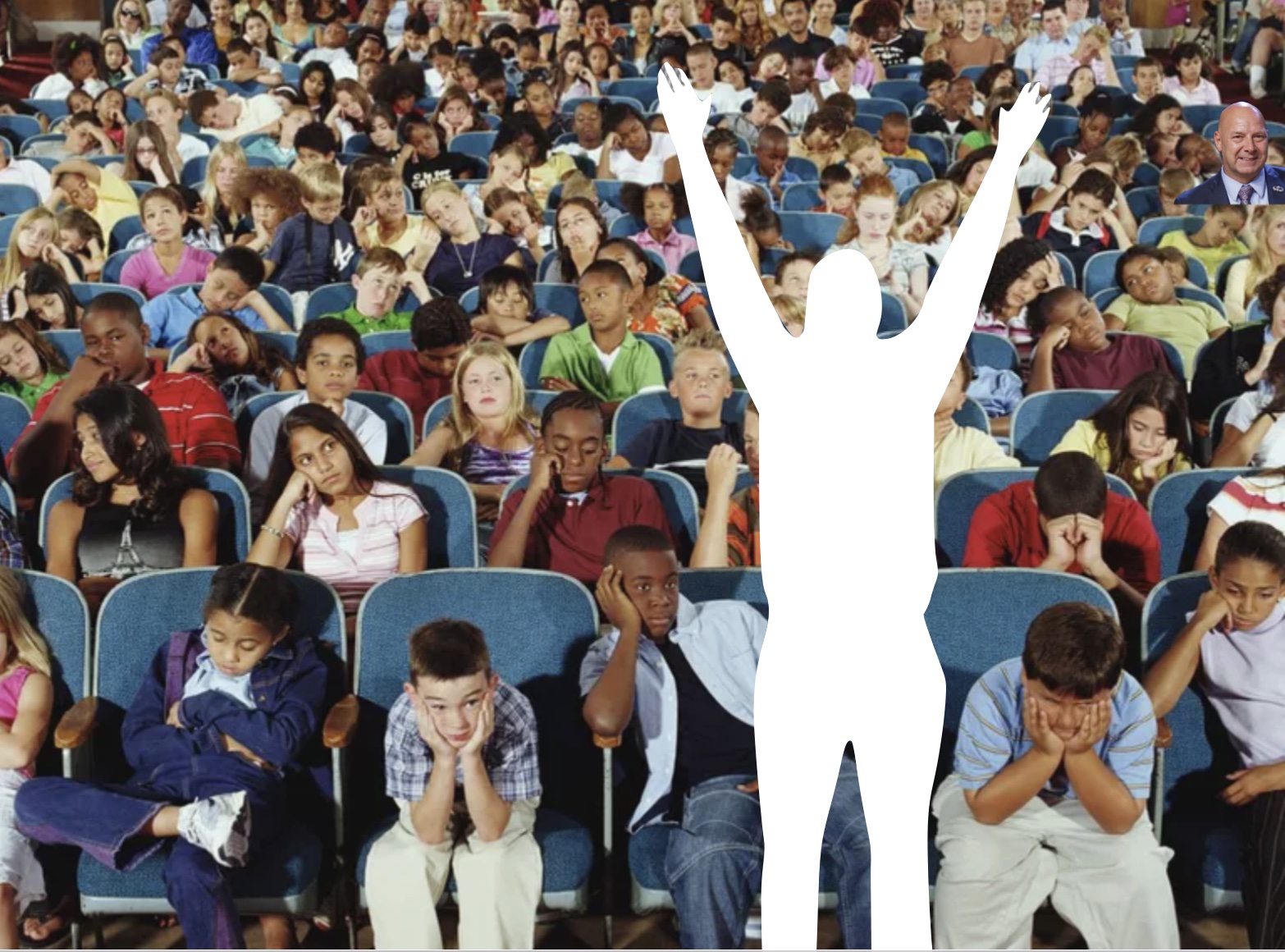
Students should not have to submerge themselves in a sea of classmates and hope the teacher will have time to educate them.
We should invest in education, not sell off our future for a fast buck today.
Like this post? You might want to consider becoming a Patreon subscriber. This helps me continue to keep the blog going and get on with this difficult and challenging work.








 gadflyonthewallblog