Billionaire Heiress Lashes Out at Unions Because Her Fortune Didn’t Buy Election

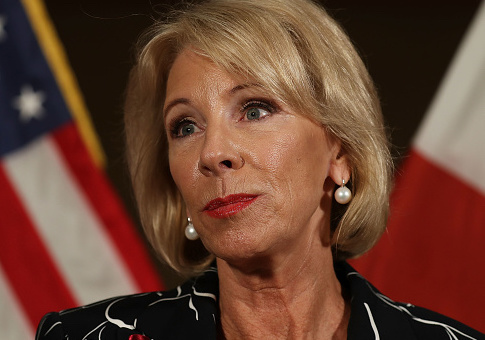
U.S. Education Secretary Betsy DeVos Speaks To Media After Visiting Students At Marjory Stoneman Douglas High School


Betsy DeVos is furious!


She and her family spent boatloads of money this election cycle and few of their candidates won.


Instead, lawmakers were largely selected by these things called… ew… voters.


She was so enraged that she used her platform as Secretary of Education – another prudent purchase by her family – to lash out at teachers unions for – get this – having too much influence!!!!!


She told Fox Business Network:


“The teachers union has a stranglehold on many of the politicians in this country, both at the federal level and at the state-level.”


That’s rich coming from her, but one can see where she’s coming from.


In the midterms 23 states had double-digit percentage-point increases in turnout compared with 1982-2014. That resulted in a blue wave in the U.S. House – one of the largest and most diverse groups of freshman Congresspeople ever.


This is the third-highest turnover since 1974. We showed 104 incumbents the door.


DeVos didn’t pay for THAT!


How dare those Joe and Jane Sixpacks come out to the polls and upset the plans the billionaire class had plunked down their hard-inherited wealth to ensure!


How dare teachers and school employees pool their nickles and dimes to have a say about their own professions!


The only people who should have a voice in public policy are the… uh, public?


No.


Parents and students?


No!


Plutocrats like DeVos and family?


Yeah! That’s right!


You can’t spell Democracy without DEMOnstrative Wealth!


We can’t let our schools be run by parents or students  or the people who work there. Decisions can’t be made by just anyone. It has to be by the BEST people. And who better than the rich?


That’s why this election cycle has DeVos so irate.


She spent $1 million through her affiliated Students First PAC to elect Scott Wagner Governor of Pennsylvania – but those darn VOTERS spoiled everything by re-electing Gov. Tom Wolf instead!


The DeVos family spent more than $635,000 to keep Scott Walker as Governor of Wisconsin, but those naysaying nellies who pay taxes decided to go with Democratic challenger Tony Evers, instead.


I mean, come on, people! That’s just not fair!


We’re making her waste her enormous fortune without getting any return on the investment!


And she DOES expect tit-for-tat.


She famously wrote:


“I have decided to stop taking offense at the suggestion that we are buying influence. Now I simply concede the point. They are right. We do expect something in return. We expect to foster a conservative governing philosophy consisting of limited government and respect for traditional American virtues. We expect a return on our investment.”


Her boss – and philosophical soul mate – Donald Trump feels the same way. He once bragged at a rally:


 “I’ve given to everybody because that was my job. I gotta give it to them, because when I want something I get it. When I call, they kiss my ass.”


DeVos doesn’t just talk the talk. She walks the walk.


One of the most infamous examples of quid pro quo was when the DeVos family gave Michigan Republicans $1.45 million over a seven-week period as an apparent reward for passing a no-accountability charter school law in 2016. That’s $25,000 per day! The editors of the Detroit Free Pressdescribed it as a “filthy, moneyed kiss.”


Yet somehow it’s unions that have a “stranglehold” on politicians and policy!?


Let’s get one thing straight – money should not be able to buy political influence. Period.


That’s union money. That’s billionaire money. That’s anyone’s money.


But that requires major reforms to how we finance political campaigns. It requires several Supreme Court decisions such as Citizens United to be overturned. It requires additional regulations and transparency from our legislature.


Until that happens, no one can afford to stop making these campaign contributions.


In Buckley v. Valeo and several additional rulings that built on it, The Supreme Court wrongly ruled that money equals speech and thus any limitation on political spending would violate the First Amendment.


Therefore, no one can afford to limit their voice by voluntarily closing their pocketbook.


People with truckloads of cash – like DeVos – cry wolf when the unwashed masses pool their resources to the point where they can come close to matching the wealthy.


But make no mistake – with the rampant economic inequality in this country, the rich can outspend the poor. And they often do.


It doesn’t take a political genius to see that our national policies invariably favor the wealthy and ignore the poor. That’s no accident. It’s the rich getting what they’ve paid for.


If anyone has a “stranglehold” on politicians it’s silver spooned magnates like DeVos who can transform the whims of winning a lottery of birth into political appointments and massive influence on policy.


But DeVos wasn’t done whining to a sympathetic audience on Fox Business Channel.


She continued:


“…they [i.e. teachers unions] are very resistant to the kind of changes that need to happen. They are very protective of what they know, and there are protective, really protective of adult jobs and not really focused on what is right for individual students.”


Really? How would you know? You never sent your kids to public school. You never went to public school, yourself. You’ve only ever visited a handful of public schools after purchasing your position in Trump’s cabinet (Check the receipts to the Senators who confirmed her!).


Moreover, it takes a certain level of ignorance to claim that teachers get into the classroom because they DON’T care about children. That’s like saying firemen don’t want to protect people from fires or lawyers don’t want to serve their clients legal needs.


Having a well-educated, experienced, caring teacher in the classroom IS what’s in the best interests of students. That means having a teacher with collective bargaining rights so she can grade her students fairly without fear of political ramifications if someone complains to the school board. That means being able to blow the whistle if classroom conditions are unsafe or policies handed down by functionaries (like DeVos) aren’t helping kids learn.


Teachers want change. They’re begging for change – just not the kinds of change DeVos is pushing.


But she went on:


 “One of the most fundamental things again is focusing on individual children and knowing that all students are different, they learn differently. I have four children, they were all very different, very different learners.”


This is not exactly a news flash to any teacher anywhere. We’re constantly differentiating our instruction to help students with different learning styles, kids in special education, kids who are gifted, kids on the autistic spectrum, kids with dyslexia, etc. It’s just too bad that policy mavens like DeVos keep pushing more standardized tests and Common Core. Sure today she’s saying all kids learn differently. Tomorrow she’ll be pushing us to assess them the same way.


But she went on:


 “We have to allow for more kinds of schools, more kinds of educational experiences, and to do that we need to empower more families to make those decisions on behalf of their students.”


And there it is! Her obsession with school privatization – charter and voucher schools! She’s selling them because her portfolio is heavily invested in them. She is not a philosophical believer in a certain kind of pedagogy. She’s a privatization pimp, pushing schools without transparency, accountability or regulations so that public tax dollars can flow into private pockets – and to Hell with what that does to the students enrolled there!


To enable her scheme, she needs to attack teachers:


“We have a lot of forces that are protecting what is and what is known, a lot of forces protecting the status quo. We need to combat those, break them, and again empower and allow parents to make decisions on behalf of their individual children because they know their children best.”


Betsy, charter and voucher schools are not reform. They ARE the status quo. They’re the same crap championed by Obama and the Bushes and the Clintons.


Republicans are famous for their privatization advocacy. But most Democrats are in favor of it, too.


Sure most career Democrats will argue against school vouchers while quietly approving Opportunity Scholarship Tax Credits (OSTC), Educational Improvement Tax Credits (EITC) and a host of other Trojan horse programs that do the same thing under a different name.


We’ve been increasing school privatization and standardized testing for decades. It hasn’t helped anyone except investors.


More than 90% of parents throughout the country send their children to public schools. That’s not because they have no other choices. Every time – literally every time – there is a referendum on school vouchers, voters turn it down. Civil rights organizations from the National Association for the Advancement of Colored People (NAACP) to Black Lives Matter and Journey for Justice are calling for a moratorium on charter schools. In fact, for the last three years, charter school growth has stalled. It’s  dropped each year – from 7 to 5 to 2 percent.


That’s because people are sick of these far right and neoliberal policies. If we listen to what parents and students really want, it’s not the garbage DeVos is selling.


This whole unseemly tantrum from our Education Secretary is just sour grapes.


Her stranglehold is loosening. And she doesn’t know how to regain her grip.


Like this post? I’ve written a book, “Gadfly on the Wall: A Public School Teacher Speaks Out on Racism and Reform,” now available from Garn Press. Ten percent of the proceeds go to the Badass Teachers Association. Check it out!
book-1

Dear Lawmakers, Please Hire Teachers as Education Aides – Not TFA Alumni

thumbnail_IMG_8375


Dear freshmen lawmakers,


We did it!


After a fiercely contested election, we have finally begun to turn the tide back toward progressive politics.


Midterms usually are sparsely attended, but this year we had an unprecedented turnout.  A total of 23 states had double-digit percentage-point increases compared with their 1982-2014 midterm election averages.


And the result is one of the largest and most diverse groups of freshman Congresspeople ever!


We got rid of a ton of incumbents – 104 lawmakers won’t be returning to Washington, DC, in January, making this the third-highest turnover since 1974.


And those taking their place will be largely female. Out of 256 women who ran for U.S. House or Senate seats, 114 have won so far (Some races are still too close to call), according to the Center for American Women and Politics at Rutgers University. That makes the 116th Congress the largest class of female lawmakers ever.


Moreover, this incoming group will be incredibly diverse.


We have Jahana Hayes, a nationally-recognized teacher, who will be the first Black Congresswoman from Connecticut. Ayanna Presley, the first black Congresswoman from Massachusetts.


Angie Craig will be the first out LGBTQ Congresswoman from Minnesota. Chris Pappas, the first openly gay Congressman from New Hampshire.


Sharice Davids and Deb Haaland from Kansas and New Mexico will be the first Native American women elected to Congress – ever. And Davids will also be the first openly LGBTQ Congresswoman from the Sunflower State.


Ilhan Omar and Rashida Tlaib will be the first-ever Muslim women in Congress. Omar, a former refugee, will also be the first Somali-American and Tlaib will be the first Palestinian-American woman in Congress. This is especially noteworthy because there have only been two other Muslims to serve in the legislative branch, both men: Rep. Keith Ellison and Rep. André Carson.


And let’s not forget New York’s Alexandria Ocasio-Cortez. Not only is she a Democratic Socialist, but the 29-year-old will be the youngest woman ever elected to Congress!


With so many new faces and so much more representation, is it too much to ask for a change in the way things are done in Washington?


Many progressives are hoping not.


After all, it was people power that propelled these new lawmakers into government.


We marched in the rain, licked envelopes, made phone calls, wrote letters, and knocked on doors. We went to rallies and bake sales and stood by the polls with our little signs and fliers.


And we did it, because we wanted a change.


So, incoming lawmakers, that’s why I’m writing to you.


As a public school teacher, a father of a school-age child, an education activist and a concerned citizen, it really matters to me what happens to our schools.


Yet so many politicians – Republicans and Democrats – have turned a blind eye to our concerns for years.


No matter their party affiliation, they’ve pushed for increasing school privatization – charter and voucher schools. They’ve hammered us with biased and unscientific standardized tests and used the results to justify any number of atrocities including school closures, withholding funding and even stealing the democratic process from taxpayers. Instead of listening to the concerns of teachers and parents, they’ve followed the caprice of every bored billionaire who thinks they know how to better our schools with halfcocked schemes that cost us billions in taxpayer dollars while wasting children’s time and depriving them of an authentic education.


They’ve chased every new technological fad without regard to how it affects students or their privacy. They’ve let our schools become increasingly more segregated and made deals with private prison companies and unscrupulous security and business interests that made our schools a gateway to incarceration as much as they are to college or careers. They’ve actively engaged or silently stood by as classroom teachers lost autonomy, rights and professionalism. And finally, though many of them talk a good game, they haven’t done nearly enough to ensure that every student gets the same opportunities, resources and equitable funding.


Why?


Often the answer is ignorance.


They don’t properly understand the issues facing our schools. They don’t hear from parents, teachers and students – the rank and file. They only hear from the wealthy businesses and philanthrocapitalists preying on our schools like vultures over road kill.


In many cases this is because of the poor quality of education aides on Capital Hill.


Several years ago, I went to DC with other education advocates to ask our representatives to change course. Though we made reservations to speak with our duly-elected lawmakers months in advance, very few of them had the guts to see us face-to-face. We were almost always sent to education aides – well meaning and fresh faced kids only a few years out of college – who wrote down our concerns and sent us on our way with rarely any follow up from the people we’d come to see.


And more often than not, these eager young go-getters were Teach for America (TFA) alumni.


I’m not sure if you know what that means.


TFA is a nefarious neoliberal organization more interested in busting unions and influencing policy than helping kids learn.


They recruit people in college who didn’t major in education to become teachers for a few years before moving on to bigger and better things.


Often these rookies have only a few weeks training and just hours of experience before taking over their own classrooms. And unlike education majors, they only need to commit to the job for two years.


This not only does our children a disservice, it does very little to make these former teaching temps into education experts.


But that’s how they’re treated on Capital Hill.


Through programs like TFA’s Capitol Hill Fellows Program, alumni are placed in full-time, paid staff positions with legislators so they can “gain insights into the legislative process by working in a Congressional office” and work “on projects that impact education and opportunities for youth.”


Why do so many lawmakers hire them? Because they don’t cost anything.


Their salaries are paid in full by TFA through a fund established by Arthur Rock, a California tech billionaire who hands the organization bags of cash to pay these educational aides’ salaries. From 2006 to 2008, alone, Rock – who also sits on TFA’s board – contributed $16.5 million for this purpose.


This isn’t about helping lawmakers understand the issues. It’s about framing the issues to meet the policy initiatives of the elite and wealthy donors.


It’s about selling school privatization, high stakes testing and ed-tech solutions.


As Ocasio-Cortez said on a recent call with Justice Democrats, “I don’t think people who are taking money from pharmaceutical companies should be drafting health care legislation. I don’t think people who are taking money from oil and gas companies should be drafting our climate legislation.”


I’d like to add the following: people taking money from the testing and school privatization industry shouldn’t be drafting education policy. People who worked as temps in order to give themselves a veneer of credibility should not be treated the same as bona fide experts who dedicate their lives to kids in the classroom.


But that’s what many lawmakers of both parties have been enabling.


It’s not hard to find authentic experts on education.


There are 3.2 million public school teachers working in this country.


There are still 116,000 fewer public education jobs than there were before the recession of 2007, according to a report by the Economic Policy Institute, a progressive nonprofit think tank.


If we add the number of teaching jobs needed to keep up with growing enrollment, we’re missing 389,000 educators.


So that’s hundreds of thousands of laid off and retired teachers out there – a huge brain trust, a plethora of professionals who know – really know – what goes on in our schools, what they need to succeed and what policies could fix them.


THAT’S where you should go to find your educational aides – not TFA.


And these experts are not hard to find. You can contact the teachers unions – the National Education Association and American Federation of Teachers. Or, better yet, contact the various education activist groups focused on policy – the Badass Teachers Association or the Network for Public Education. And if you want experts at the crossroads of education and equity, you can contact civil rights groups who focus on our schools like Journey for Justice, a nationwide collective of more than 38 organizations of Black and Brown parents and students in several cities.


Or you can give education bloggers (many of whom are teachers or former teachers) a call – people like Peter Greene, Mercedes Schneider, Nancy Flanagan, Jose Luis Vilson, Julian Vasquez-Helig, and others.


Heck! You can give me a shout out.


We’re here.


We want to help.


So congratulations on your election victories. Let’s work together to transform them into intelligent policies for all our children everywhere.


Like this post? I’ve written a book, “Gadfly on the Wall: A Public School Teacher Speaks Out on Racism and Reform,” now available from Garn Press. Ten percent of the proceeds go to the Badass Teachers Association. Check it out!
book-3

Charter School Cheerleaders Elected to Leadership with PA House Dems

img_4466-1484759518-4360


Democratic gains in the midterm elections were a repudiation of the policies of Donald Trump.


Yet holding nearly the same views as Trump’s Education Secretary Betsy DeVos earned two Pennsylvania state representatives high leadership positions with House Democrats.


Rep. Jordan Harris, D-Philadelphia, was elected minority whip – the second highest position after floor leader. Rep. Joanna McClinton, another Philadelphia Democrat, was selected chair of the Democratic Caucus.


Even after making gains in the election, Democrats did not get control of either the state House or Senate from Republicans, but kept control of the Governor’s mansion.


New leadership positions will last for two years, but have many scratching their heads.


Both Harris and McClinton are staunch supporters of charter schools over and above traditional public schools just like DeVos, a Republican megadonor before being selected for Trump’s cabinet.


Harris and McClinton support school vouchers – just like DeVos – if labeled opportunity scholarships. In their relatively short time in Harrisburg they’ve pushed for charter school expansion and even state takeovers of struggling schools serving mostly children of color.


Such strong neoconservative values might make it hard to tell which party the two belong to if it weren’t for one thing – the color of their skin.


Both Harris and McClinton are African American.


In fact, McClinton will make state history as the first woman of color in her leadership position. Harris will be the first black whip since Rep. K. Leroy Irvis in the 1970s.


Even so, their views put them in direct opposition with many civil rights leaders.


The National Association for the Advancement of Colored People (NAACP) and Black Lives Matter have called for a moratorium on new charter schools. Journey for Justice (J4J), a nationwide civil rights collective made up of more than of 38 organizations of Black and Brown parents and students in several cities including Philadelphia and Pittsburgh, has gone even further demanding more community based traditional public schools.


Jitu Brown, national director of J4J, put it this way:


“Who are these bankers and why are they concerned about my school? Isolation is defeat. Privatizers are not reformers. They are colonizers and settlers. We do not negotiate with our executioner. We need to kill the privatization movement. We have worked in silos and adopted the values of our oppressors. You want a seat at the table, but you are on the menu too. We have more in common with each other than any of us do with our oppressors. People will vote against their interest with hatred that they learned centuries ago – but we need to be different. We cannot adopt the language of our oppressors. We don’t have failing schools, we have been failed.”


Perhaps Harris and McClinton’s support has something to do with campaign finance. Both have accepted large sums from the charter school industry.


Harris’s 2012 campaign was funded 58% by school privation business interests – Students First PAC and its associates. That breaks down to $37,295 from Make a Difference PAC, $30,000 directly from Students First PAC and $2,000 from Economic Development PAC.


And he’s still bankrolled mostly by that industry. More recently, he has taken $25,000 from Excellent Schools Pa and $11,500 from Students First Pa PAC.


McClinton has taken $5,250 from Excellent Schools PA and $1,000 from Students First PAC. However, she also received $3,000 from the public school friendly Pennsylvania Federation of Teachers.


Students First PA and Students First PAC are Pennsylvania political action committees associated with the national school privatization lobbying firm American Federation for Children (AFC) which is chaired by DeVos.


What are Democratic House leaders doing taking large campaign contributions from Trump’s Education Secretary?


Moreover, both Harris and McClinton got their start in politics working for state Sen. Anthony “Tony” Williams, D-Philadelphia, the biggest recipient of school privatization money in the entire state. He took at least $5 million from the industry during his failed bid for governor in 2010, and an additional $7 million for a failed run at Philly Mayor in 2015.


Harris was an intern for Williams and McClinton was Williams’ chief counsel.


Even in Harrisburg, some question the two state reps ties to the far right billionaires bankrolling the school privatization industry. After all, these are the same people whose candidates just lost the midterms – and now fresh from an electoral victory Dems are elevating those of their own who are taking money from the same well!?


Student First PAC wasn’t just a main contributor to Harris and McClinton. It contributed $1 million to Republican gubernatorial candidate Scott Wagner before he was defeated by Democrat Tom Wolf. It also contributed boatloads of money to numerous GOP candidates in the Commonwealth running against Democrats just this last election cycle.


So why would the Democratic caucus vote for Harris and McClinton as new faces of party leadership?


Part of the reason seems to be a power struggle inside the party between the two halves of the state.


Leadership had been over-represented by lawmakers from the west – the Pittsburgh region and thereabouts. Harris and McClinton’s new positions go further to balancing the power with the east – the Philadelphia region.


Moreover, there was a legitimate concern that party leadership was too white and male.


However, there were other eastern Democrats, other women and people of color in the chamber who didn’t come with the baggage of Harris and McClinton.


Harris was asked point blank if he’d stop taking charter school money if elected to a leadership position, according to anonymous sources. He gave no indication that he would.


In his role as whip, Harris will have the greater opportunity to work for the charter school industry.


The whip is responsible for making sure that Democratic members attend sessions and generally understand the specifics of legislation and procedural votes in the House.


However, his comments on education policy are extremely biased.


For instance, he took exception when a report by the nonprofit Public Citizens for Children and Youth concluded that Pennsylvania’s charter schools are not outperforming traditional public schools, and the state’s 20-year-old charter law needs to be reformed.


The report says only 21 percent of Pennsylvania’s charters made the grade on the state School Performance Profile versus 54 percent of traditional district schools.


Harris response?


“I think it’s unfair to take all of the traditional public schools in the state and all of the charter schools in the state and compare them to each other.”


Really? Yet you propose we increase the number of charter schools BECAUSE they allegedly produce better academic outcomes. How can you know that if you’re unwilling to compare them? Or are you only unwilling to compare them when the results don’t support the policy positions you’re being paid to promote?


Harris also joined with Republican state Rep. John Taylor (another Philadelphia politician) to allow the state to takeover the lowest performing districts and give them over to charter school operators on the model of New Orleans after Hurricane Katrina.


Almost a third of the state’s most struggling schools — 95, according to PA Department of Education — are located in Philadelphia. Taylor and Harris’s proposal was called the Educational Opportunity and Accountability Act.


Harris and McClinton, who represent adjacent areas of south Philadelphia, have rallied for charter schools and de facto school vouchers together.


“People have told me that I’ve been trying to dismantle public education,” said Harris. “No! I just know what it’s like to grow up in a neighborhood without options.”


The options he’s pushing for will greatly help corporations accepting public tax dollars to run schools at a profit, cherry pick enrollment, cut services and otherwise spend that money behind closed doors without accountability.


Payments to charter schools represent one of the fastest growing portions of the School District of Philadelphia’s budget. These costs are pushing the district toward fiscal uncertainty. Yet Harris and McClinton are pushing for a similar model throughout the Commonwealth.


Harris calls the push for more charter schools a “righteous movement.”


I’m sure Betsy DeVos would agree.


Education advocates in the Keystone state find themselves in a precarious position.


Though many of our candidates won in this midterm election, we will have to keep a close eye on Harrisburg.


Where will Harris and McClinton lead the party?


Will they encourage their colleagues to take money from the school privatization industry – the same industry bankrolling their opponents?


Or will they keep their biases to themselves and work for the betterment of the party and the communities it is sworn to represent?


Like this post? I’ve written a book, “Gadfly on the Wall: A Public School Teacher Speaks Out on Racism and Reform,” now available from Garn Press. Ten percent of the proceeds go to the Badass Teachers Association. Check it out!

book-2

Why is There a Racial Achievement Gap?

Screen Shot 2018-11-16 at 12.15.01 PM


Sometimes the most racist aspects of a society are right there in front of you, but no one seems to notice.


Take the racial achievement gap.


It’s a term used to describe the fact that black and Latino students don’t do as well academically as white students.


Why does it even exist?


Why do students of color in the United States achieve less than their white peers?


They have worse grades, lower test scores, meager graduation rates and fewer achieve advanced degrees.


As of 2018, they had the lowest mean score of any racial group on the Scholastic Aptitude Test (SAT).


And it’s been like that for more than half a century.


In 1964, a Department of Education report found that the average black high school senior scored below 87% of white seniors (in the 13 percentile). Fifty years later, the National Assessment of Educational Progress (NAEP) found that black seniors had narrowed the gap until they were merely behind 81% of white seniors (scoring in the 19th percentile).


So what does that mean?


It’s a question that has haunted our education system for more than a century.


And the various answers that have been offered to explain it often reveal more about our society than they do about black and Latino children.


CLAIM 1: People of color are just genetically inferior


I know. This sounds glaringly racist.


And it is.


Yet this was the favorite answer for the achievement gap at the start of the 20th Century (More on that later).


However, it has been espoused as recently as 1995 by Charles Murray and Richard Herrnstein in The Bell Curve where the authors attributed relative black failure and low socio-economic status to biological inadequacy.


Murray and Herrnstein sparked such an intense academic debate at the time that the American Psychological Association (APA) convened a Task Force on Intelligence. Instead of soundly disproving this theory, the resulting APA report could come to no definite conclusion: “At this time, no one knows what is responsible for the differential,” the authors wrote.


Today the idea that people of color are genetically inferior has been soundly defeated.


There is simply no evidence that racial characteristics are strongly correlated with intelligence.


If it were true, for example, you’d expect to see the same achievement gap from native born Africans immigrating to this country as those who are born in the US. But that is not the case. In fact, we see just the opposite effect – a sizable percentage of African immigrants earn some of the best grades, have some of the highest test scores, and disproportionately graduate from high school and achieve advanced degrees.


This is something that distinguishes foreign-born Africans – especially those from Sub-Saharan Africa – even from other immigrants. African immigrants sit near the top of the scale of so-called model minorities.


If the problem was mere genes, this wouldn’t be so.


CLAIM 2: America’s people of color are culturally inferior


You’d think it would be obvious how racist such a claim is, but it is an increasingly popular explanation of the achievement gap.


In The End of Racism, popular conservative writer Dinesh D’Souza blamed the racial accomplishment gap on black cultural defects. “[T]he old discrimination” has declined and been replaced by “rational discrimination” based “on accurate group generalizations,” wrote D’Souza.


In other words, it’s not genes, but pathological community values that keep many people of color at the bottom. Black and brown students would do better in school if their culture fostered hard work, determination, grit and valued learning. They’d learn more if their parents weren’t always in jail or having innumerable children to increase their food stamp benefits.


From a purely ideological standpoint, this is textbook racism – the belief that some racially defined groups are in some sense better or worse than others.


It’s the minstrel show as case study. It boils down the attributes of 40 million people to mere stereotypes and pretends that they’re real.


The truth is most people of color don’t fit the corny clichés. In the real world, most black folks do not commit crime, only about 6 percent of unmarried black women give birth each year, and most black people are not recipients of welfare benefits. Indeed, fewer than 200,000 black adults in the entire US currently receive cash welfare benefits from the government. That’s out of about 30 million black adults in all. So these are not cultural norms.


Furthermore, black crime rates, out-of-wedlock birthrates, and welfare dependence have gone down in recent years, while white rates have increased.


Such claims show more about those making them than the people the claims are supposed to be about. When a black person struggles, the cause is assumed to be a deeply ingrained cultural attribute. When the same happens to white people, it’s an anomaly.


For instance, in the 80’s and 90’s the media blamed black culture and black communities for the crack epidemic. But today those same talking heads excuse the mostly white and rural opioid crisis as an aberration. No one seems to claim that it is because the white family is breaking down or white culture is in decline.


Black families are disproportionately poor and thus suffer higher rates of everything that comes with it.


But this is not an artifact of their culture anymore than it is for poor whites.


CLAIM 3: People of color experience higher rates of poverty and thus struggle more academically.


Finally we have a claim based in fact and not racial stereotypes!


When we look at test scores, like those on the NAEP, we see that state racial achievement gaps are strongly correlated with state racial socioeconomic disparities.


Poor people achieve worse academic outcomes than wealthier people. And this is true across race and ethnicity.


It just makes sense. Living in poverty means less access to healthcare, neonatal care, pre-kindergarten, and fewer books in the home. It often means fewer educated family members to serve as a model. And it often means suffering from malnutrition and psychological trauma. Impoverished parents usually have to work multiple jobs just to make ends meet and thus have less time to help with homework or see to their children. All of this has a direct impact on education.


The fact that a larger percentage of people of color are poor, helps explain the disparity of achievement between races.


The fact that achievement gaps tend to be largest in places where racial socioeconomic disparities are largest, supports this theory. Moreover, in neighborhoods with greater socioeconomic equality, the racial achievement gap is likewise smaller or nonexistent.


Achievement gaps are strongly correlated with racial gaps in income, poverty rates, unemployment rates, and educational attainment.


However, poverty, alone, does not explain away the problem.


Even when racial disparities are few and far between (typically in states with small black and/or Hispanic populations), the gap can persist.


We shouldn’t discount poverty. It goes a long way to explaining the problem. It just doesn’t go all the way.


CLAIM 4: Racist policies and bias widen the achievement gap


There are numerous factors that can adversely affect achievement for children of color above and beyond poverty. These include the availability and quality of early childhood education, the quality of public schools, patterns of residential and school segregation, and state educational and social policies.


For example, more than 60 years after Brown v. Board, school segregation is still a problem. In fact, in many parts of the country, they are actually more segregated today than they were at the height of the civil rights movement in the 1960s.


According to a report from the U.S. Government Accountability Office, from 2000 to 2014, school segregation has more than doubled nationwide. That’s twice the number of schools comprised almost entirely of students living in high poverty and/or students of color.


The number went from 7,009 to 15,089 schools. And that’s just the worst offenders – schools with more than three quarters of students from only one race or class. Throughout the country there are thousands more schools not as extreme but still serving mostly poor and/or minority students, and thus receiving fewer resources, more teacher layoffs, dealing with larger classes and crumbling infrastructure.


Even where segregation isn’t a problem, racist policies can creep into the academic culture.


A report by the Government Accountability Office (GAO) found that black students in K-12 schools are far more likely to be disciplined — whether through suspension or referral to law enforcement — than their racial counterparts.


A 2014 study found that people generally view black boys as older and less innocent starting at the age of 10. Another study released in 2017 produced similar results, finding that Americans overall view black girls as less innocent and more mature for their age, from ages 5 to 14.


These have real world consequences for children’s academic development. If even well-meaning (and mostly white) teachers are more likely to see children of color as potential trouble makers, that can be a self-fulfilling prophecy. And kids who are in trouble often have more difficulty making the grade.


Finally, there is the influence of charter and voucher schools, many of which target their enrollment at students of color.


These are schools that are (at least in part) publicly funded but privately managed. They are not required to have nearly the same transparency as traditional public schools, don’t have to be democratically controlled and can often be run for a profit.


They can cut services to students on a whim and if students struggle, they can give them the boot forcing them to try to catch up at the local public school.


These practices are so worrying that the National Association for the Advancement of Colored People (NAACP) and Black Lives Matter have both called for a moratorium on all new charter schools. Journey for Justice has gone even further with a call for more community schools.


Bias and policies like these can have a big impact on students, but we haven’t even discussed the largest culprit.


CLAIM 5: The standardized testing industry is essentially biased


We’ve talked a lot about why there’s a racial achievement gap.


We haven’t talked that much about if.


You have to admit, it’s counterintuitive to think that there should be academic hierarchies based on race. One race is better than others at school? Really? Isn’t that, itself, a racist assumption?


If there is no evidence for genetic or social differences along racial lines, can we explain everything else by way of socioeconomics and racist policies?


Perhaps. But even more so, we need to question the mechanism that started this whole debate in the first place – standardized testing.


That is the primary mechanism used to determine if there is a racial achievement gap at all.


If that mechanism is biased, so is the result.


This is particularly troubling for an industry that was built on the eugenicist premises with which we started this article.


Standardized testing, as we know it, originates from the work of Francis Galton – Charles Darwin’s cousin and an English statistician. In 1869, he wrote in Hereditary Genius that “[t]he average intellectual standard of the negro race is some two grades below our own.” Galton nearly invented the western eugenics movement, but couldn’t find a method to test his theories.


Enter France’s Alfred Binet and Thodore Simon. In 1905 they developed an IQ test that 11 years later was revised by Stanford University psychologist Lewis Terman for use in America.


In his book, The Measurement of Intelligence, Terman wrote that these “experimental” tests will show “enormously significant racial differences in general intelligence, differences which cannot be wiped out by any scheme of mental culture.”


For Terman, the achievement gap wasn’t a problem. It was a feature he was actively trying to prove, and he thought he had done so with his experiments on 1.7 million U.S. servicemen in World War I.


His deeply biased work convinced a generation of scholars. Princeton University psychologist Carl C. Brigham presented the results as evidence of genetic racial hierarchy in A Study of American Intelligence – merely three years before he used these same ideas to craft the SAT test in 1926.


Though that same SAT test has been revised since Brigham’s time, the fundamental principals behind it remain the same. Along with the PSAT, it was taken by more than 6.7 million students in the 2015-16 school year.


The ideals of the eugenicists lost popularity after World War II, but they were by no means finished. Famed physicist William Shockley and educational psychologist Arthur Jensen carried these concepts into the 1960s before they were revived again in The Bell Curve in the ‘90s.


These are not just bugs in the system. They are what the system was meant to prove in the first place.


Our worship of the data has made us all unwitting accomplices of an ideal that is prejudiced in its axioms.


By defining academic success or failure primarily as success or failure on standardized tests, we’ve effectively barred generations of children of color from the benefits of an education. And in using these same tests for “accountability” purposes to reward or punish their schools by granting or denying resources, high stakes testing has become the academic gatekeeper. Biased assessments have been used to grant real world opportunity.


How many opportunities have been denied because of them? How many black and brown children have been denied entry to college, professions, graduate schools, jobs, places at the highest ranked schools?


How many young black and brown children have been convinced of their own ignorance because of a test score of dubious quality?


CONCLUSIONS


So we return to the question with which we began this article:


Why is there a racial achievement gap?


The answer is NOT because of genetic or cultural deficiencies in children of color.


The gap stems from a combination of disproportionate levels of poverty among black and brown people, racist bias and policies embedded in our public school system and – more than anything else – reliance on a flawed assessment system.


If we want to really close the achievement gap, we must do several things. First, we must continually discredit and criticize the genetic and social critique of racial minorities at the heart of the conservative movement.


Next, we must create a more just and equitable education system. This means fairly funding our schools. We must increase integration. We must halt the spread of charter and voucher schools. We need to make sure all our teachers and principals have cultural sensitivity training and increase the numbers of teachers of color in our school system.


And we must get rid of our system of standardized testing.


It’s a tall order, but that’s the only way to close an even more pressing gap – the gap between our reality and our ideals.


Like this post? I’ve written a book, “Gadfly on the Wall: A Public School Teacher Speaks Out on Racism and Reform,” now available from Garn Press. Ten percent of the proceeds go to the Badass Teachers Association. Check it out!
book-4

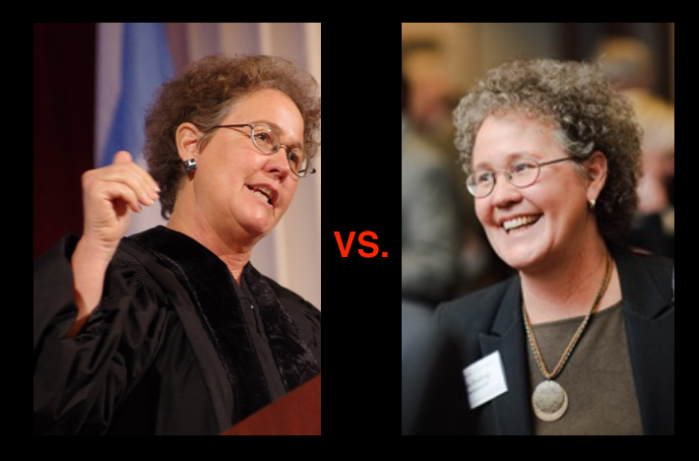
Linda Darling-Hammond vs. Linda-Darling Hammond – How a Once Great Educator Got Lost Among the Corporate Stooges

Screen Shot 2018-11-12 at 7.31.40 AM


Linda Darling-Hammond is one of my education heroes.


Perhaps that’s why her recent article in the Washington Post hurts so much.


In it, she and her think tank buddies slam education advocates Diane Ravitch and Carrol Burris for worrying about who governs schools – as if governance had nothing to do with quality education for children.


I’d expect something like that from Bill Gates.


Or Campbell Brown.


Or Peter Cunningham.


But not Hammond!


She’s not a know-nothing privatization flunky. She’s not a billionaire who thinks hording a bunch of money makes him an authority on every kind of human endeavor.


She’s a bona fide expert on teacher preparation and equity.


She founded the Center for Opportunity Policy in Education at Stanford University, where she is professor emeritus.


And she was the head of Barrack Obama’s education policy working group in 2008 when he was running for President.


In fact, she was the reasons many educators thought Obama was going to be a breath of fresh air for our schools and students. Everyone thought she was a lock for Education Secretary should Hope and Change win the day. But when he won, he threw her aside for people like Arne Duncan and John King who favored school privatization and high stakes standardized testing.


These days she spends most of her time as founder and president of the California-based Learning Policy Institute.


It’s a “nonprofit” think tank whose self-described mission is “to conduct independent, high-quality research to improve education policy and practice.”


The Learning Policy Institute published a report called “The Tapestry of American Public Education: How Can We Create a System of Schools Worth Choosing for All?


The report basically conflates all types of choice within the public school system.


On the one hand, it’s refreshing to have policy analysts admit that there ARE alternatives within the public school system above and beyond charter and voucher schools.


On the other, it’s frustrating that they can’t see any fundamental differences between those that are publicly managed and those outsourced to private equity boards and appointed corporate officers.


Hammond and her colleagues Peter Cookson, Bob Rothman and Patrick Shields talk about magnet and theme schools.


They talk about open enrollment schools – where districts in 25 states allow students who live outside their borders to apply.


They talk about math and science academies, schools focusing on careers in health sciences and the arts, schools centered on community service and social justice, international schools focused on global issues and world languages, and schools designed for new English language learners.


They talk about schools organized around pedagogical models like Montessori, Waldorf and International Baccalaureate programs.


And these are all options within the public school system, itself.


In fact, the report notes that the overwhelming majority of parents – three quarters – select their neighborhood public school as their first choice.


However, Hammond and co. refuse to draw any distinction between these fully public schools and charter schools.


Unlike the other educational institutions mentioned above, charter schools are publicly funded but privately run.


They take our tax dollars and give them to private equity managers and corporate appointees to make all the decisions.


Though Hammond admits this model often runs into problems, she refuses to dismiss it based on the few instances where it seems to be working.


Despite concerns from education advocates, fiscal watchdogs and civil rights warrior across the country, Hammond and co. just can’t get up the nerve to take a stand.


The NAACP and Black Lives Matter have called for a moratorium on all new charter schools in the country. Journey for Justice has requested a focus on community schools over privatization. But Hammond – a once great advocate for equity – can’t get up the moral courage to stand with these real agents of school reform.


She stands with the corporate school reformers – the agents of privatization and profit.


“School choice is a means that can lead to different ends depending on how it is designed and managed…” write Hammond and her colleagues.


In other words, if charters result in greater quality and access for all students, they are preferable to traditional public schools.


However, she admits that charters usually fail, that many provide worse academic outcomes than traditional public schools serving similar students.


She notes that 33% of all charters opened in 2000 were closed 10 years later. Moreover, by year 13, that number jumped to 40%. When it comes to stability, charter schools are often much worse than traditional public schools.


And virtual charter schools – most of which are for-profit – are even worse. They “…have strong negative effects on achievement almost everywhere and graduate fewer than half as many of their students as public schools generally.”


However, after noting these negatives, Hammond and co. go on to provide wiggle room for privatization. They discuss how state governments can do better making sure charter schools don’t go off the rails. They can provide more transparency and accountability. They can outlaw for-profit charters and put caps on the number of charters allowed in given districts and states, set rules on staffing and curriculum – all the kinds of measures already required at traditional public schools.


But the crux of their objection is here:


“In a recent commentary in this column, authors Diane Ravitch and Carol Burris erroneously asserted that our report aims to promote unbridled alternatives to publicly funded and publicly operated school districts. Quite the opposite is true.”


In other words, they continue to lump privatized schools like charters in with fully public schools.


They refuse to make the essential distinction between how a school is governed and what it does. So long as it is funded with public tax dollars, it is a public school.


That’s like refusing to admit there is any difference in the manner in which states are governed. Both democracies and tyrannies are funded by the people living in those societies. It does not then follow that both types of government are essentially the same.


But they go on:


“The report aims to help states and districts consider how to manage the broad tapestry of choices available in public schools in ways that create quality schools with equitable access and integrative outcomes.”


Most tellingly, the authors admonish us to, “Focus on educational opportunities for children, not governance structures for adults” (Emphasis mine).


The way a school is governed is not FOR ADULTS. It is FOR CHILDREN. That is how we do all the other things Hammond and co. suggest.


“Work to ensure equity and access for all.”


That doesn’t just happen. You have to MAKE it happen through laws and regulations. That’s called governance.


“Create transparency at every stage about outcomes, opportunities and resources.”


That’s governance. That’s bureaucracy. It’s hierarchy. It’s one system overlooking another system with a series of checks and balances.


“Build a system of schools that meets all students’ needs.”


Again, that doesn’t just happen. We have to write rules and systems to make it happen.


Allowing private individuals to make decisions on behalf of private organizations for their own benefit is not going to achieve any of these goals.


And even in the few cases where charter schools don’t give all the decisions to unelected boards or voluntarily agree to transparency, the charter laws still allow them to do this. They could change at any time.


It’s like building a school on a cliff. It may be fine today, but one day it will inevitably fall.


I wrote about this in detail in my article “The Best Charter School Cannot Hold a Candle to the Worst Public School.”


It’s sad that Hammond refuses to understand this.


I say “refuse” because there’s no way she doesn’t get it. This is a conscious – perhaps political – decision on her part.


Consider how it stacks up against some of the most salient points she written previously.


For instance:


“A democratic education means that we educate people in a way that ensures they can think independently, that they can use information, knowledge, and technology, among other things, to draw their own conclusions.”


Now that’s a Linda Darling-Hammond who knows the manner in which something (a state) is governed matters. It’s not just funding. It’s democratic principles – principles that are absent at privatized schools.


“Bureaucratic solutions to problems of practice will always fail because effective teaching is not routine, students are not passive, and questions of practice are not simple, predictable, or standardized. Consequently, instructional decisions cannot be formulated on high then packaged and handed down to teachers.”


This Linda Darling-Hammond is a fighter for teacher autonomy – a practice you’ll find increasingly constrained at privatized schools. In fact, charter schools are infamous for scripted education, endless test prep and everything Hammond used to rail against.


“In 1970 the top three skills required by the Fortune 500 were the three Rs: reading, writing, and arithmetic. In 1999 the top three skills in demand were teamwork, problem-solving, and interpersonal skills. We need schools that are developing these skills.”


I wonder what this Linda Darling-Hammond would say to the present variety. Privatized schools are most often test prep factories. They do none of what Hammond used to advocate for. But today she’s emphatically arguing for exactly the kind of school she used to criticize.


“If we taught babies to talk as most skills are taught in school, they would memorize lists of sounds in a predetermined order and practice them alone in a closet.”


Isn’t this how they routinely teach at charter schools? Memorize this. Practice it only in relation to how it will appear on the standardized test. And somehow real life, authentic learning will follow.


“Students learn as much for a teacher as from a teacher.”


Too true, Linda Darling-Hammond. How much learning do you think there is at privatized schools with much higher turnover rates, schools that transform teachers into glorified Walmart greeters? How many interpersonal relationships at privatized institutions replacing teachers with iPads?


“Life doesn’t come with four choices.”


Yes, but the schools today’s Linda Darling-Hammond are advocating for will boil learning down to just that – A,B,C or D.


“We can’t fire our way to Finland.”


Yet today’s Linda Darling-Hammond is fighting for schools that work teachers to the bone for less pay and benefits and then fire them at the slightest pretense.


In short, I’m sick of this new Linda Darling-Hammond. And I miss the old Linda Darling-Hammond.


Perhaps she’s learned a political lesson from the Obama administration.


If she wants a place at the neoliberal table, it’s not enough to actually know stuff and have the respect of the people in her profession.


She needs to support the corporate policies of the day. She needs to give the moneymen what they want – and that’s school privatization.


This new approach allows her to have her cake and eat it, too.


She can criticize all the evils of actual charter schools while pretending that there is some middle ground that allows both the monied interests and the students to BOTH get what they want.


It’s shrewd political gamesmanship perhaps.


But it’s bad for children, parents and teachers.


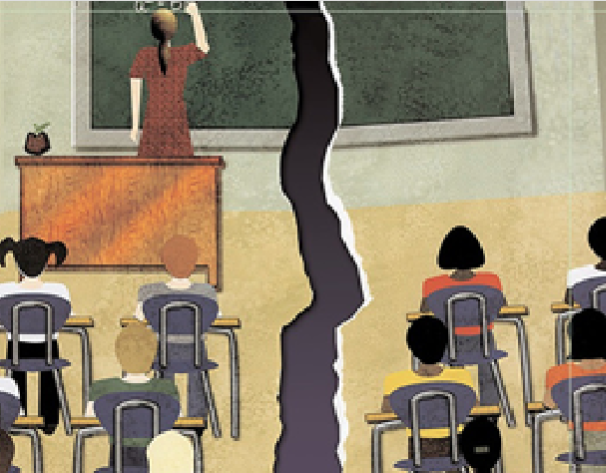
Like this post? I’ve written a book, “Gadfly on the Wall: A Public School Teacher Speaks Out on Racism and Reform,” now available from Garn Press. Ten percent of the proceeds go to the Badass Teachers Association. Check it out!
cropped-book-1.jpg

Five Reasons to Vote NO on the Allegheny County Children’s Fund

Screen Shot 2018-10-17 at 12.14.03 PM


You can’t raise taxes without a plan of how to spend the money.


But that’s exactly what voters in and around Pittsburgh, Pennsylvania, are being asked to approve this Nov. 6.


Come election day, all voters in Allegheny County will be confronted with what’s been called the Children’s Fund, a referendum asking for a voluntary 5% property tax hike that allegedly would go to pay for early learning, after-school programs and healthy meals for kids.


But there are no details about who will provide these services, who will be responsible for the money, exactly what else the money might be used for or almost anything substantive about it.


It’s just a check with “For Kids” scrawled in the Memo and everything else left blank.


The plan is highly controversial drawing criticism from across the Mon Valley including school directors, education advocates and even progressive groups like the Pennsylvania Interfaith Impact Network (PIIN).


Here are the top five reasons you should vote NO on the referendum:


1) It Raises Taxes Without Stipulating Where the Money Goes


Here’s what we do know.


The Children’s Fund would be financed by 0.25 mills of property tax — $25 on each $100,000 of assessed value, beginning Jan. 1.


That’s expected to generate roughly $18 million a year that would begin to be distributed in 2020.


If approved, it would change the county Home Rule Charter to establish the fund as part of county government. It would create a new office under the supervision of the county manager.

A Citizens’ Advisory Commission would “review and advise” the work of the new office, according to the proposed charter amendment.


However, County Council and County Executive Rich Fitzgerald would have to do the work of actually creating all this stuff. They’d have to pass an ordinance establishing how this all works, what powers the advisory commission has, etc. They would have to determine whether the money goes to existing programs or new ones. They’d have to set up audits of the money every five years, conduct a study to recommend goals and a focus for how the funding is spent.


That’s an awful lot left undecided.


It makes no sense for voters to hand over the money BEFORE we figure all this other stuff out.


It’s not at all how good government works.


You’re supposed to define a problem or need and then come up with a plan to meet that need. You prepare a budget that justifies raising taxes and then you vote on it.


This is exactly the opposite. We’re getting the money before the plan of how to spend it.


That’s a recipe for fraud and financial mismanagement.


2) It’s Unclear Who Would Be In Charge of the Money


Who would be accountable for this money?


We know who gets to decide this – County Council and the Chief Executive. But we don’t know who they will pick or what powers they’ll delegate to these people. Nor do we know what kind of oversight there will be or what kind of regulations will exist for how it can be spent.


This is a blind statement of trust.


It’s like saying – “Here’s $18 million. Go buy us something nice.”


What if they mismanage the money? And what would that even mean for money with so few strings attached? And how would we know? How transparent would this process be?


It’s kind of hard to approve such a plan with so many variables up in the air.


3) The Campaign was Not Grass Roots


To hear supporters talk, you’d think this was a bottom up crusade created by, organized by and conducted by everyday citizens from our communities.


It wasn’t.


Sure, volunteers for the Children’s Fund went door-to-door to collect more than 40,000 signatures from voters last summer.


But they weren’t all volunteers.


Financial documents show that the whole initiative has been funded by various nonprofit organizations that could, themselves, become beneficiaries of this same fund.


According to the Children’s Fund’s own campaign finance report, as of June there were three nonprofit corporations who donated $427,000 to the campaign: the Human Services Center of Turtle Creek gave $160,000, Pressley Ridge Foundation gave $150,000, and Allies for Children gave a donation of $45,000 and another for $72,000.


That’s like McDonalds spending a hundred thousand dollars to fix up the school cafeterias so it could land a multi-million dollar annual contract!


It’s a huge conflict of interest.


At very least, it’s purposefully misleading.


Many of those “volunteers” gathering signatures weren’t working for free. They were part of the $100,000 spent by the campaign to hire Vote Goal Organizing for paid signature collectors.


That doesn’t look like charity. It looks like philanthrocapitalism – when corporations try to disguise grabs for power and profit as philanthropy.


Corporations – even so-called nonprofit corporations – rarely do things out of sheer goodness. They’re acting in the best interest of the company.


I see no reason to think this “Children’s Fund” is any different.


4) It Works Around Instead of With Local Government


Though almost everyone agrees with the stated goals of the Children’s Fund, many organizations and government officials complained that they were not consulted and made a part of the process.


Two Pittsburgh Public School directors went on record in the Pittsburgh Post Gazette about a lack of communication.


“First and foremost, we have not had any conversations with the organizers of the referendum,” board president Regina Holley said. “There are lots of ifs and whats that have not been answered.”


Kevin Carter, another city school director added, “In my role as a school board member, they didn’t talk to us about this at all.”


“When you leave your largest school district in the region out of this conversation, are you doing this around children?” he asked, citing that the district serves 25,000 students daily.


This has been a common thread among officials. No one wants to say they’re against collecting money that’s ostensibly for the benefit of children, but it’s hard to manage the money if you’re not part of the process.


And it’s not just protocol. Many are worried that this lack of communication may be emblematic of how the fund will be run. If organizers aren’t willing to work with local governments to get the job done, how will they know what each community needs? How will they meet those needs? Is that even what the fund will really be about?


Richard Livingston, Clairton school board president, noted concern that the money collected might not be spent evenly throughout the county. For all he knows, it could just be spent in the city or in select areas.


Indeed, this is not the best way to start any endeavor funded by all, for the benefit of all children.


5) It’s Redundant


While it’s true that the county could use more funding to meet the needs of students, numerous organizations already exist that attempt to provide these services.


There are a plethora of Pre-K, after school tutoring and meal services in the Mon Valley. In fact, much of this is done at the county’s various neighborhood schools.


If organizers were only concerned with meeting these needs, why form an office within county government that would have an appointed advisory commission? Why not just increase the funding at the local schools and/or organizations already doing this work?


In fact, this is exactly the reason the Pennsylvania Interfaith Impact Network is against the initiative.


According to the organization’s statement:


“At PIIN, we believe that the faith community is a sacred partner with our public schools, and we have long been supportive of both the community schools model and increasing state funding to provide an excellent, high-quality education to every child in our region. We believe in funding for early childhood learning, after school programs, and nutritious meals. However, we cannot support a ballot initiative that creates an unnecessary entity, with an unknown advisory board, and an unclear process for directing our tax dollars.


This is why we are urging our membership to reject the Allegheny County Children’s Fund Initiative at the polls this November.”


Another related organization, Great Public Schools-Pittsburgh, also released a statement with “several specific concerns” about the potential fund. These include how the money would be distributed, which organizations would benefit from it, and questions about its redundancy.


Several pre-K programs already exist but are not fully funded, the organization noted. Why don’t we just fund them?


The group is a coalition of the Education Rights Network, One Pennsylvania, the Pittsburgh Federation of Teachers, PIIN, and the Service Employees International Union.


The group’s statement noted concerns but fell short of urging an outright NO vote.


The bottom line is that many people are concerned about inadequate funding for children’s programs.


But this “Children’s Fund” is not a solution to that problem.


This is the creation of another bureaucracy that can take our tax dollars and do almost whatever it wants with them.


There is no guarantee it will help kids.


In fact, it looks a lot more like a power and money grab by corporate interests, many of whom would prefer to privatize our school system.


This November, when you go to the polls, do the right thing for our kids.


Vote NO on the Allegheny County Children’s Fund.


IMG_8288


Like this post? I’ve written a book, “Gadfly on the Wall: A Public School Teacher Speaks Out on Racism and Reform,” now available from Garn Press. Ten percent of the proceeds go to the Badass Teachers Association. Check it out!
book-4

College Remediation is Less About Bad Students Than Academic Elitism

51b1a5d1ef37dc704930ac333d90b1b9


Ah, college.


The school on a hill.


The marble columns, wood paneled studies and ivy encrusted gardens.


It’s never really been a place for everybody. But in rhapsodizing the college experience, our lawmakers have pushed for universities to enroll an increasing number of students. The demand for free or reduced tuition – especially for low-income students – has meant more kids putting on a letterman jersey and giving it the ol’ college try.


Teenagers who wouldn’t dream of higher education in previous decades are going for it today.


And the result has been a greater proportion of incoming college freshman taking remedial courses before they can even begin the normal post-secondary track.


According to a 2017 report by the Hechinger Report, more than half a million students at two- and four-year colleges in 44 states had to take such courses.


This costs up to an estimated $7 billion a year.


So, as usual in our country, we’re looking for someone to blame. And look! Here’s our favorite scapegoat – the public school system!


The gripe goes like this: Incoming college freshman wouldn’t need remediation if the public schools had bothered to teach them correctly!


However, the argument ignores several important factors and jumps to a completely unearned conclusion.


1) Public schools don’t decide who is accepted at colleges. College admissions departments do.


If people in higher learning think all these teenagers don’t belong in college, don’t accept them. Period.


But that would mean fewer students, less tuition and forgoing the lucrative revenue stream provided by – surprise! – these same remediation courses!


We pretend that colleges are special places where honor and scholarship rule the day. It isn’t necessarily so.


They are run by people, and like anywhere else, those people can be ethical and egalitarian or petty and materialistic.


Colleges aren’t immune to small mindedness or the economic realities facing institutions of learning everywhere.


Like most schools, they’re starved for funding.


The state and federal government have slashed subsidies to colleges and universities just as they have to public schools. Colleges have to make up the shortfall somewhere.


So they enroll students who don’t meet their own academic standards and then charge them for the privilege of attempting to get up to snuff.


It’s a good deal. You get to blame kids coming in AND reap the rewards.


2) How exactly do we determine that these kids need remediation?


In many schools, they use standardized tests like the SAT or ACT to make this determination. Others give their own pretest to all incoming freshman and assign remediation based on the results.


You’d expect more from institutions of higher learning.


You’d expect them to know how inadequate standardized tests are at assessing student knowledge. After all, most of the mountain of studies that conclude these tests are worthless are conducted at the college level. However, it seems people in admissions don’t always read the scholarly work of their colleagues in the departments of education and psychology.


I remember when I was in college, several classmates were being pressured to take remedial courses but refused. It didn’t stop them from graduating with honors.


3) Let’s say some of this remediation actually is necessary. Why would that be so?


These are high school graduates. What has changed in public schools over the past few decades to increase the need for these additional services at colleges?


It seems to me the answer is three-fold:


1) School budgets have been cut to the bare bone

2) Schools have to fight for limited funding with charter and voucher institutions

3) Standardized testing and Common Core have been dominating the curriculum.


If you cut funding to schools, they won’t be able to prepare students as well.


That’s a pretty simple axiom. I know business-minded number crunchers will extol the virtue of “doing more with less” and other such self-help platitudes, but much of it is nonsense.


You never hear them explain how cutting CEO salaries will mean corporations will run more effectively. It’s only workers and schools that they think deserve tough love and penury.


Look, schools with less funding mean fewer teachers. That means larger class sizes. That means it’s more difficult to learn – especially for students who don’t already come from privileged backgrounds.


None of this is bettered by the addition of charter and voucher schools sucking up the limited money available. We don’t have enough for one school system – yet we’re asking two or more parallel systems to exist on that same amount. And we’re stacking the deck in favor of privatized systems by prioritizing their funding and not holding them to the same accountability and transparency standards as traditional public schools.


It’s like deliberately placing leeches on a runners back and wondering why she’s started going so slowly.


Moreover, it’s ironic that the Common Core revolution was conducted to make students “college and career ready.” It has done just the opposite.


Narrowing the curriculum to weeks and months of test prep has consequences. You can increase students ability to jump through the hoops of your one federally mandated state test. But that doesn’t translate to other assessments. It doesn’t mean they’ll do better on the SAT or other college entrance exams. Nor does it mean they’ll possess the authentic learning we pretend we’re after in the first place.


The bottom line: if we really want to improve student academic outcomes in public schools, we need to fully and equitably fund them. We need to abandon school privatization schemes and fully support public schools. And we need to stop the obsession with standardized assessments, curriculum and – yes – even canned standards, themselves.


That might actually reduce the numbers of students who allegedly need remediation at the college level.


However, there is another aspect that we need to consider that is harder to remedy…


4) Developmental psychology.


Schools – whether they be post-secondary, secondary or primary – are built to meet the needs of human beings. And human beings don’t grow according to a preconceived schedule.


Just because you think someone should be able to do X at a certain age, doesn’t mean they’re developmentally ready to do so.


Speaking from experience, I was a C student in math through high school. It wasn’t until I got to college that I started to excel in that subject and earned top marks.


I didn’t have to take any remedial courses, but I was forced to take a quantitative reasoning course as part of my liberal arts majors.


I’m not alone in this. Many people aren’t cognitively ready for certain concepts and skills until later. That doesn’t make them deficient in any way nor does it betray any problems in their schooling.


That’s just how their brains work. We can whine about it or we can accept human nature and do what we can to help students cope.


And this brings me to my final reason behind the college remediation trend – a problem that is more insidious than all the others combined.


5) The elitism behind the whole post-secondary system.


For centuries, higher learning has been seen as a privilege of the wealthy and the upper class. Sure a few exceptional plebians were let into our hallowed halls just to “prove” how egalitarian we were.


But college was never seen as something fit for everyone.


As such, the attitude has always been that students are on their own. Many who enroll will not end up graduating. And that’s seen as perfectly acceptable. It’s part of the design.


It’s the baby sea turtle school of education – thousands of hatchlings but few survive to adulthood.


However, if you really want to make college the right fit for an increasing number of students, you have to get rid of the elitist attitude.


If students come to college and need remediation, stop whining and provide it.


And it shouldn’t incur an extra cost from students, either. This should just be a normal part of the process.


If a patient comes to the emergency room with heart disease, you don’t penalize him because he didn’t eat heart healthy. You do what you can to help him heal. Period.


That’s how colleges and universities need to approach their students.


You know – the way public schools already do.


SOLUTIONS


In summary, it’s not a case of colleges vs. public schools. And anyone who tells you differently probably has a hidden agenda – the standardization and privatization industry, for instance.


We need to support colleges and universities. We need to support public schools. Both need additional funding and political will.


However, colleges need to become more accepting and supportive of the students enrolled there. They need to meet them where they are and provide whatever they need to succeed.


Moreover, public schools need the autonomy and respect routinely given to college professors.


The answer is a transformation of BOTH institutions.


That’s how you make a better school system for everyone.


That or we could just keep grumbling at each other, forever pointing fingers instead of working together to find solutions.


Like this post? I’ve written a book, “Gadfly on the Wall: A Public School Teacher Speaks Out on Racism and Reform,” now available from Garn Press. Ten percent of the proceeds go to the Badass Teachers Association. Check it out!
book-3

Report: US Shortchanged Public Schools by Hundreds of Billions of Dollars Over Decades

taking-candy-from-a-baby


Fun Fact: Between 2005 and 2017, the federal government withheld $580 billion it had promised to spend on students from poor families and students with disabilities.


Fun Fact: Over that same period, the personal net worth of the nation’s 400 wealthiest people ballooned by $1.57 trillion.


So, rich people, consider this the bill.


A new report called “Confronting the Education Debt” commissioned by the Alliance to Reclaim Our Schools (AROS) details the shortfall in minute detail.


For instance:


  • $347 billion owed to educate low-income students most of whom are children of color.


  • $233 billion owed to provide services for students with disabilities.


And this is just the shortfall of the last dozen years! That’s just money due to children who recently graduated or are currently in the school system!


We’ve been cheating our children out of the money we owe them for more than half a century!


Federal education funding levels were first established in 1965 as part of Pres. Lyndon Johnson’s War on Poverty in the landmark education law, the Elementary and Secondary Education Act (ESEA).


That law, which has become little more than a boondoggle for the standardized testing and school privatization industries, originally was passed to address inequality in America’s education funding.


Now this report from a coalition of groups including the Education Justice Research and Organizing Center, the National Education Association, the American Federation of Teachers, Center for Popular Democracy and the Action Center on Race and the Economy points out the multifarious ways we have failed to live up to the standards we set in that original legislation and beyond.


One of the most glaring examples of neglect is Title I funding.


The Johnson administration admitted that schools with a high concentration of students living below the poverty line needed extra support to succeed at the same levels as students from middle class or more affluent backgrounds. So the law promised to provide an additional 40 percent for each poor child above what the state already spent per pupil.


And then it promptly failed to fund it. In 1965 and every year since!


These are not just numbers. With this money, high poverty schools could provide:


  • “health and mental health services for every student, including dental and vision services; and

  • a full-time nurse in every Title I school; and

  • a full-time librarian for every Title I school; and

  • a full-time additional counselor in every Title I school, or

  • a full-time teaching assistant in every Title I classroom.”


A decade later, in 1975, the same thing happened with The Individuals with Disabilities Education Act (IDEA).


Congress told local districts they’d have to do more to help disabled students succeed academically. However, doing so costs money. Lawmakers admitted that disabled students cost more to educate and that local districts often struggle to find the funding to help them succeed.


Once again, Congress pledged to pay up to 40 percent of that additional cost, with local and state funds covering the remainder.


Once again, Congress failed to fund it.


STATE AND LOCAL FAILURE


But it’s not just the federal government that has shirked its duties to school children.


State and local governments also stiffed generations of students out of the resources they deserved – especially if those students have black or brown skin.


Beside the federal government, public schools are funded by their local municipalities and the state. Local governments pay for about 45 percent of school budgets.


However, since most of this allotment is determined by property tax revenues, it ensures the poor get fewer resources than the rich. Kids from rich neighborhoods get lots of resources. Kids from poor areas get the scraps. Inequality is built into the funding formula to ensure that students don’t start out on an even playing field and that economic handicaps are passed on from one generation to the next.


State governments are no better. They provide about 47 percent of school budgets.


As such, they are in the position to right the wrongs of the local community by offsetting the inequality of local governments – but only 11 states do so. Twenty states close their eyes and provide the same funding to each school – rich and poor alike – regardless of need or what each community can afford to provide for its own children. But 17 states are even worse. They actually play Robin Hood in reverse – they funnel more money to wealthier districts than to poor ones.


As a result, schools nationwide serving mostly students of color and/or poor children spend less on each child than districts serving mostly white and/or affluent children.


TAX CUTS


And while our federal, state and local governments have failed to meet their responsibilities to students, they have required fewer taxes from business and industry.


In the late 1940s and 1950s, the top marginal tax rate was more than 90 percent. Today it is 37 percent.


Congress just passed a series of whooping tax cuts that go into effect in 2019. More than half of the benefit of these cuts will go to the richest five percent of taxpayers. The law is expected to cost the federal treasury as much as $1.5 trillion in lost revenues over the next decade.


Nearly every state levies a much greater share of taxes from low- and middle-income families than from the wealthy.


And that’s before we even start talking about corporations!


While the US federal corporate tax is 35 percent, the effective tax rate that corporations pay after loopholes and deductions is only about 14 percent. This costs the federal government at least $181 billion in annual revenue, based on 2013 estimates by the Government Accountability Office. Local and state corporate tax and abatement programs make it even worse.


This is a choice. We are not requiring the rich to pay their fair share.


SCHOOL-TO-PRISON


Instead of investing in ways to help educate children, one of the only areas we’ve increased funding is incarceration.


The private prison industry is booming, fueled in part by a lack of opportunities in schools.


According to the report:


“In 2017, the National Association of School Resource Officers claimed that school policing was the fastest-growing area of law enforcement. The school safety and security industry was reported to be a $2.7 billion market as of 2015. Most of that $2.7 billion is public money now enriching the private security industry instead of providing real supports to students.”


According to the US Department of Education, 1.6 million students go to a school that employs a law enforcement officer but not a guidance counselor.


That is not an unalterable economic reality. It is a failure of priorities. It is the mark of a society that is not willing to help children but will swoop in to punish them if they get out of line.


SCHOOL PRIVATIZATION


Finally, the report identifies school privatization as a contributing factor to this systemic neglect.


Charter schools are legal in 44 states plus Washington, D.C. and Puerto Rico. They have “systematically stripped public school budgets through the creation of parallel structures of privately-operated, publicly-funded schools.”


Cost studies in San Diego, Los Angeles, Nashville, Michigan, Pennsylvania, Durham and other localities have come to the same conclusion: “the privatization of schools has contributed to austerity conditions in traditional public schools.”


Yet Congress continues to appropriate millions of dollars to the Department of Education’s Charter Schools Program (CSP), which funds new charter start-ups and expansions. The program has a budget of $500 million this year, alone. It is the largest single backer of charter schools in the nation.


According to the report, “In other words, the U.S. Department of Education is operating a program that directly undermines public schools.”


SOLUTIONS


But the report isn’t just about what’s wrong. It outlines how we can make it right.


It outlines three policy initiatives:


1)      “Full funding of Title I and IDEA to target federal support to low-income children and students with disabilities.

2)      The creation of 25,000 Sustainable Community Schools by 2025.

3)      A new focus for the U.S. Department of Education, on ensuring and incentivizing equity in public schools across the country.”


And we can pay for it by:


A. “Make the wealthy pay their fair share of taxes.

  • Rescind the 2017 tax code changes, which overwhelmingly favor the top 1 percent of income earners.
  • Close the federal carried interest loophole, a step that could increase federal revenues by between $1.8 and $2 billion annually or, according to some researchers, by as much as $18 billion annually.
  • If the carried interest loophole is not closed at the federal level, states can impose a surcharge on carried interest income at the state level, raising millions for state budgets.
  • Enact so-called “millionaire’s taxes” that increase the tax rate on a state’s highest earners. New York and California have already passed such law.


B. Require wealthy corporations to pay their fair share.

  • End or reduce corporate tax breaks that cost the federal government at least $181 billion annually.

  • Reduce state and local subsidies to businesses for economic development projects and hold school funding immune from tax abatements.

  • Enforce and strengthen programs like Payment in Lieu of Taxes (PILOT) to ensure that wealthy institutions pay their fair share towards local budgets.


C. Divest from the school-to-prison pipeline.

  • School safety and security is now a $2.7 billion industry. Much of that money is public money, going to profitable corporations instead of schools.
  • Divest from expensive security systems, metal detectors and legions of school-based police officers and instead invest in counselors, health and mental-health providers and other supports that make schools safer.


D. Place a moratorium on new charter schools and voucher programs.

  • A moratorium on the federal Charter Schools Program would free up $500 million annually, which could be used to support the creation of Sustainable Community schools.”


The executive summary concludes with the following statistic.


Even a 10 percent increase in funding for each high poverty student maintained through 12 years of public school can dramatically change the likelihood of academic success. It can boost the chances that students will graduate high school, achieve 10 percent higher earnings as adults and a 6 percentage point reduction in the annual incidence of adult poverty, according to a 2015 report.

“Ten percent is pocket-change for a nation that has orchestrated the rise of an unmatched billionaire class. In the richest nation in the world, it is possible to fully fund all our public schools, and to provide Black, Brown and low-income children with the educational resources and additional supports and services they need to achieve at the highest levels.”


The facts are in, folks.


We can no longer gripe and complain about a public education system we fail to support without recognizing the cause. We have failed to meet our responsibilities to our children – especially our children of color.


The solution is simple – equity.


We need to demand the rich do the right thing.


We cannot achieve greatness as a nation when wealth and privilege continue to shirk their duties and our lawmakers do little more than enable greed and corruption.


The bill is here.


Time to settle up.


READ THE WHOLE REPORT.


Like this post? I’ve written a book, “Gadfly on the Wall: A Public School Teacher Speaks Out on Racism and Reform,” now available from Garn Press. Ten percent of the proceeds go to the Badass Teachers Association. Check it out!

WANT A SIGNED COPY?

Click here to order one directly from me to your door!

book-2

There is Virtually No Difference Between Nonprofit and For-Profit Charter Schools

Screen Shot 2018-09-06 at 3.18.04 PM


Stop kidding yourself.


Charter schools are a bad deal.


It doesn’t matter if they’re for-profit or nonprofit.


It doesn’t matter if they’re cyber or brick-and-mortar institutions.


It doesn’t matter if they have a history of scandal or success.


Every single charter school in the United States of America is either a disaster or a disaster waiting to happen.


The details get complicated, but the idea is really quite simple.


It goes like this.


Imagine you left a blank check on the street.


Anyone could pick it up, write it out for whatever amount your bank account could support and rob you blind.


Chances are you’d never know who cashed it, you’d never get that money back and you might even be ruined.


That’s what a charter school is – a blank check.


It’s literally a privately operated school funded with public tax dollars.


Operators can take almost whatever amount they want, spend it with impunity and never have to submit to any real kind of transparency or accountability.


Compare that to a traditional public school – an institution invariably operated by duly elected members of the community with full transparency and accountability in an open forum where taxpayers have access to internal documents, can have their voices heard and even seek an administrative position.


THAT’S a responsible way to handle public money!


Not forking over our checkbook to virtual strangers!


Sure, they might not steal our every red cent. But an interloper who finds a blank check on the street might not cash it, either.


The particulars don’t really matter. This is a situation rife with the possibility of fraud. It is a situation where the deck is stacked against the public in every way and in favor of charter school operators.


But most people don’t want to take such a strong stance. They’d rather find good and bad people on both sides and pretend that’s the same thing as impartiality.


It isn’t.


Sometimes one side is just wrong.


Policymakers may try to feign that there are good and bad charter schools and that the problems I’m talking about only apply to the nefarious ones.


But that’s a delusion.


There is no good way to write a blank check and leave it on the street to the whims of passers-by.


Most apologists want to draw the distinction between for-profit and nonprofit charters.


But as Jeff Bryant, an editor at Education Opportunity Network, puts it, this is a “Distinction without a difference.”


These terms only define an organization’s tax status – not whether it is engaged in gathering large sums of money for investors.


The law is full of loopholes that allow almost any organization – not just charter schools – to claim nonprofit status while enriching those at the top.


We live in an age of philanthrocapitalism, where the wealthy disguise schemes to enrich themselves as benevolence, generosity and humanitarianism.


So-called “nonprofit” charter schools are just an especially egregious example. No matter what label you pin to their name, they all offer multiple means to skim public funding off the top without adding any value for students.


For instance, take the use of management companies.


A for-profit charter school can simply cut services to students and pocket the savings as profit.


A nonprofit charter school can do the same thing after engaging in one additional step.


All I have to do is start a “nonprofit” charter school and then hire a for-profit management company to run it. Then my management company can cut services and pocket the profits!


It’s really that simple! I turn over nearly all of my public tax dollars to the management company that then uses it to operate the school – and keeps whatever it doesn’t spend.


Heck! It doesn’t even matter who owns the company! It could even be me!


The law actually allows me to wear one hat saying I’m nonprofit and then put on a different hat and rake in the cash! The only difference is what hat I’m wearing at the time!


SO I get to claim to be a nonprofit while enjoying all the advantages of being for-profit.


flowchart960
SOURCE: Florida Sun Sentinel


I may even be able to buy things with public tax dollars through my for-profit management company and then if my “nonprofit” school goes belly up, I get to keep everything I bought! Or my management company does.


So the public takes all the risk and I reap all the reward. And I’m still graced with the label “nonprofit.”


Oh, and speaking of spending, being a “nonprofit” doesn’t stop me from the worst kind of real estate shenanigans routinely practiced by the for-profit charter schools.


Both types of privatized institution allow for huge windfalls in real estate. If I own property X, I can sell it to my charter school (or management company) and then pay myself with tax dollars. Who determines how much I pay for my own property? ME! That’s who!


And I can still be a nonprofit.


Think that’s bad? It’s just the tip of the iceberg.


Thanks to some Clinton-era tax breaks, an investor in a charter school can double the original investment in just seven years!

I can even get the public to pay for the same building twice! And even then taxpayers still won’t own it!


But that’s the complicated stuff. There’s an even easier way to get rich off the public with my “nonprofit” charter school, and operators do it all the time: write myself a fat check!


After all, I’ve gotta’ pay, myself, right? And who’s in charge of determining how much I’m worth? ME!


I can even pay myself way more than my counterparts at traditional public schools who oversee exponentially more staff and students.


For instance, as New York City Schools Chancellor, Richard Carranza is paid $345,000 to oversee 135,000 employees and 1.1 million students. Meanwhile, as CEO of Success Academy charter school chain, Eva Moskowitz handles a mere 9,000 students, for which she is paid $782,175.


And this is by no way a unique example.


There are just so many ways to cash in with a charter school even at a so-called “nonprofit” – especially if I want to dip my toe into legally dubious waters!


I could do like the almost exclusively “nonprofit” Gulen charter schools and exist solely as a means to raise money for an out-of-favor political movement in Turkey.


I could use charter funds to finance other businesses. I could decide to discontinue programs that students receive in traditional public schools such as providing free or reduced lunches but keep the cash. I could fake enrollment and have classes full of “ghost students” that the local, state and federal government will pay me to educate.


Fraud and mismanagement are rampant at charter schools because we don’t require them to be as accountable as their traditional public school counterparts.


If a traditional public school tried this chicanery, we’d almost certainly catch it at the monthly meetings or frequent audits. But charter schools don’t have to submit to any of that. They’re public money spent behind closed doors with little to no requirement to explain themselves – ever.


And all of this – nearly every bit of criticism I’ve leveled against the industry – doesn’t even begin to take into account the educational practices at these types of schools.


There is plenty of evidence that charters provide a comparable or worse education than children routinely receive at traditional public schools.


Where it is comparable, the issue is clouded by selective enrollment, inadequately servicing students with special needs and generally encouraging the hardest to teach to get an education elsewhere. Where it is worse, it is colossally worse, robbing children not just of funding but what is likely their only chance at an education.


But we don’t even need to go there.


We only need the issue of fiscal responsibility to bring down this behemoth.


Charter schools are no way to run a school. They are a blatant failure to meet our fiduciary responsibilities.


Traditional public schools are the best way to run a school. They protect the public’s investment of money and resources while providing a quality education to students.


So all this talk about nonprofit and for-profit charter schools is either a mark of supreme ignorance or a ploy for weak willed politicians to weasel their way out of taking a stand on an issue whose merits are obvious to anyone who knows what really happens in our education system.


It’s time to stop wasting taxpayer money on this expensive fraud.


It’s time for the charter school experiment to end.


And it’s way passed time to support fully public schools.


Like this post? I’ve written a book, “Gadfly on the Wall: A Public School Teacher Speaks Out on Racism and Reform,” now available from Garn Press. Ten percent of the proceeds go to the Badass Teachers Association. Check it out!

WANT A SIGNED COPY?

Click here to order one directly from me to your door!

book-1

Nationwide Poll Shows Overwhelming Support for Public Schools in All Areas Except One

5e6d4156-a078-4458-bdec-72746eca6e98


Waylon Jennings classic country hit advises Mama’s not to let their babies grow up to be cowboys.


Now, I guess we can add teachers to that list.


According to the 50th annual PDK Poll of attitudes about public schools, Americans trust and support teachers, but don’t want their own children to join a profession they see as underpaid and undervalued.


In almost every other way, they support public schools and the educators who work there.


When it comes to increasing school funding, increasing teacher salary, allowing teachers to strike, and an abundance of other issues, the poll found a majority of people unequivocally in favor of endeavors meant to bolster learning.


In fact, support for education and educators has never been so high in half a century.


“Two-thirds of Americans say teachers are underpaid, and an overwhelming 78% of public school parents say they would support teachers in their community if they went on strike for more pay,” according to PDK’s Website.


If true, this result illuminates an incredible tone deafness among politicians like Scott Wagner in Pennsylvania who is running for governor on the platform that teachers make too much money. According to the poll, only 6% of Americans agree with him.


Moreover, those who support teachers strikes include 6 in 10 Republicans.


“Those who would be most affected by a teacher walk-out — say they would support teachers in their community if they went on strike for more pay. Among the general public, 73% say they would support a job action for higher wages.”


These are record high results that are also reflected in respondents unwillingness to encourage their own children to become teachers in the current political landscape.


For the first time since the question was asked in 1969, a majority of 54% say they would not want their child to become a teacher.


The reason? Poor pay and benefits.


Moreover, a lack of adequate funding is cited as the most common problem facing public schools – a finding that’s held true since the early 2000s. In fact, for the 17th consecutive year, Americans have named the lack of funding as the biggest problem facing their local schools.


It seems that either or both major political parties could easily pick up broad popular support by doing an about face on education. Instead of backing standardization and privatization, they should get behind public education.


The topic has typically served as a wedge issue between progressives and corporate Democrats while Republicans have almost exclusively backed a strategy to “starve the beast” and promote privatization.


However, Democrats and/or Republicans who ran on respecting and remunerating teachers as well as increasing support for the public schools that employ them would find major support among voters.


The PDK poll is based on responses from 1,042 adults including 515 parents of school-age children. They were randomly and representatively sampled in May 2018 through on-line surveys.


The 2018 results include particular support for the public school system as opposed to charter and voucher schools.


Nearly 8 in 10 people said they prefer reforming the existing public school system rather than finding an alternative approach.


That’s a higher response than any year since the question was first asked 20 years ago. Moreover, it’s not just an opinion about nationwide schooling: 78% say they’d rather reform than replace the local school system, as well.


In addition, there is support among Americans to not only increase funding, but also spend it more equitably.


A majority (60%) support spending more on students who need extra help than spending the same amount on every child (39%).


Responds were more divided on where the influx of funding should come from.


Half of respondents favor raising taxes and half say the schools should spend less on students who require fewer resources.


This is related to public perception of exactly which students are receiving unfair funding. The poll revealed that most people recognize some resource inequality based on race and geographic region but they think most is based on parental wealth: 75% of respondent say public school students serving mostly poor students have fewer resources than those serving rich students.


One of the most interesting findings is always the public’s overall perception of schools.


And this poll – as in previous editions – found a sharp difference in respondents appraisal of schools nationwide vs. the schools in their own neighborhoods.


Fifty-five percent say that on a national scale students today get a worse education than those in previous generations.


However:


The public schools continue to suffer from an image deficit. Among those who know them best, parents of current students, 70% give their oldest child’s school an A or B grade. Among the public more broadly, by contrast, only four in 10 give their local schools an A or B. In results that are typical across the years, far fewer give top grades to the public schools nationally, just 19%.”


In other words, people seem to think that nationally our schools stink. But the schools in our own neighborhoods are pretty good.


The reason is simple. National perception is formed by the media. Local perception is formed by actual empirical evidence.


The forces of school privatization and their propaganda network has pushed the lie of “failing schools” for so long, that people believe it – except in their own neighborhoods where they see it to be false.


But the questions weren’t all about how schools should be run. They also asked about security – a hot topic when school shootings happen at least once a month.


“Parents lack strong confidence that schools can protect their children against a school shooting but favor armed police, mental health screenings, and metal detectors more than arming teachers to protect their children.”


This bodes badly for the Trump administrations plans to push guns on public school teachers instead of enacting common sense gun regulations.


As usual, policymakers are trying to herd Americans to their point of view instead of listening to their constituencies.


And that seems to be the big take away from this year’s poll.


Americans want and support public education.


It’s time our so-called leaders got with the program.


Like this post? I’ve written a book, “Gadfly on the Wall: A Public School Teacher Speaks Out on Racism and Reform,” now available from Garn Press. Ten percent of the proceeds go to the Badass Teachers Association. Check it out!

WANT A SIGNED COPY?

Click here to order one directly from me to your door!

book-2