Charter Schools Will Always Waste Money Because They Duplicate Services

Screen Shot 2019-06-14 at 11.37.43 PM

 
You can’t save money buying more of what you already have.


Constructing two fire departments serving the same community will never be as cheap as having one.


Empowering two police departments to patrol the same neighborhoods will never be as economical as one.


Building two roads parallel to each other that go to exactly the same places will never be as cost effective as one.


This isn’t exactly rocket science. In fact, it’s an axiom of efficiency and sound financial planning. It’s more practical and productive to create one robust service instead of two redundant ones.


However, when it comes to education, a lot of so-called fiscal conservatives will try to convince us that we should erect two separate school systems – a public one and a privatized one.


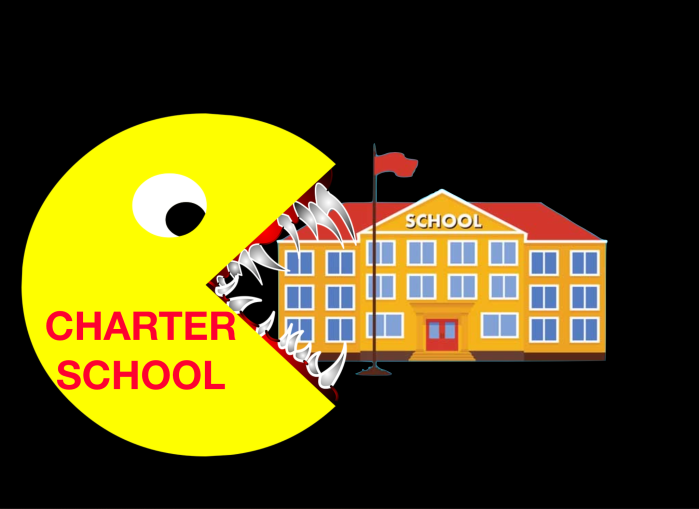
The duplicate may be a voucher system where we use public tax dollars to fund private and parochial schools. It may be charter schools where public money is used to finance systems run by private organizations. Or it may be some combination of the two.


But no matter what they’re suggesting, it’s a duplication of services.


And it’s a huge waste of money.


Consider the case of my home state of Pennsylvania.


Charter schools cost Commonwealth taxpayers more than $1.8 billion a year and take more than 25 percent of the state’s basic education funding – yet they only enroll about 6 percent of students.


Just imagine – 94% of Pennsylvania students lose out on opportunities because we’re allowing so much money to be siphoned off for a small fraction of students.


The Keystone state only has 179 charter schools enrolling 135,100 students – the sixth highest charter enrollment in the country. Of those, about a fourth are online cyber charters.


Is it fair to Ma and Pa Taxpayer that they are forced to bear the extra burden of reproducing these services for a handful of students?


And make no mistake. This is one of the leading causes of property tax increases in the state.


The ideology of some results in a direct hit to everyone’s pocketbooks.


According to a recent report by the Pennsylvania Association of School Business Officials (PASBO), “Charter school tuition is one of the largest areas of mandated cost growth for school districts.”


The report found that state charter schools are growing at a rate of 10 percent a year. The PASBO calculates at least 37 cents of every new dollar of property taxes in the fiscal year 2017-2018 went right to charters. And that percentage is only expected to grow.


Part of this is due to a blind, deaf and dumb state legislature that no longer does anything to help alleviate these costs to local school districts. Neighborhood schools can only try to compensate by cutting services for students where it can and raising property taxes where it can’t make ends meet.


More than one third of school superintendents surveyed by PASBO report a worsening financial picture in their districts—and they put the blame on charter schools.


“With the state providing no state support for mandatory charter school tuition costs,” the study says, “the increases in this single budget item have the potential to decimate school district budgets.”


Part of this is the extremely unfair way the state determines how much money to give charter schools.


The legislature has constructed a funding formula that gives every advantage to charter schools while short changing authentic public schools at every turn.


For instance, as Jeff Bryant puts it in his article “The Charter School ‘Dumpster Fire’ in Pennsylvania Provides an Important Lesson for 2020 Democratic Candidates”:


“Charter school tuition charged to Pennsylvania public schools is calculated as if charters had to provide the same services public schools have to provide, such as transportation—they don’t. Also, the tuition bill public schools pay to charters is calculated as if every student cost the same to educate—they don’t.


Instead, the state requires authentic public schools to pay charters way more than authentic public schools get to educate the children in their care – and state law even allows charter operators to pocket the savings as profit.


But this just pours lighter fluid on Bryant’s already raging “dumpster fire.”


Even if Pennsylvania was entirely equitable in how it allocated funding between these two types of school, it would still be wasting our tax dollars because it would still be engaged in duplication of services.


There is simply no good reason to do this. At least, not if providing the best education to students is our goal.


There are few places in the entire country – if any – where charter schools are able to accommodate all students. They cater to nitch markets where operators expect they can turn a profit. There are essentially no communities with a charter school and no authentic public school but many where you find just the opposite.


Moreover, the quality of education provided at charter schools does not live up to the hype of its advertising.


Except in extremely rare circumstances, charter schools have never been shown to provide better outcomes than authentic public schools. Almost every study conducted – even those funded by the school privatization industry – show that these two types of schools produce similar results or in many cases that authentic public schools are much better.


And this despite the fact that such studies are already stacked in charter schools favor because unlike authentic public schools, charter schools often have selective enrollment. A school that gets to cherrypick the best and brightest students has an incredible advantage over those that can’t – yet even with such an uneven starting point charter schools rarely show large academic gains.


For instance, a recent study of charter school students in Pennsylvania conducted by the school privatization friendly Center for Research on EDucation Outcomes (CREDO), found that charter students do about the same on reading exams but score worse in math than students in authentic public schools. The study also found major disparities between charter schools – with cyber charters performing especially poorly.


However, this study’s methodology has been called into question suggesting that even its meager praise of charter schools may be exaggerated. Yet the overall results are in-line  with previous research that also found charter schools in the state generally  produce students who aren’t as prepared as authentic public school students.


Pennsylvania passed its charter school law in 1997.


It’s way passed time for lawmakers in this state and beyond to acknowledge that was a mistake.


We cannot continue to force voters to pay for a supply-side ideology that not only has been disproven through decades of data but that many do not share.


That is why we have charter and voucher schools – a prejudice against authentic public education and desire to allow businesses to cash in on education dollars.


The duplication of services has nothing to do with helping students learn.


It’s about creating a slush fund for unscrupulous corporations and hangers on to get easy cash.


No true fiscal conservative can support charter schools.


Just as no one who values children can continue to justify this economic double vision.


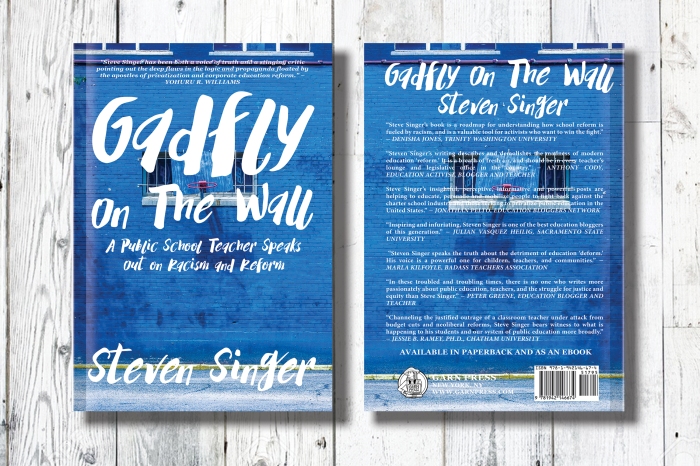
Like this post? I’ve written a book, “Gadfly on the Wall: A Public School Teacher Speaks Out on Racism and Reform,” now available from Garn Press. Ten percent of the proceeds go to the Badass Teachers Association. Check it out!

cropped-book-1.jpg

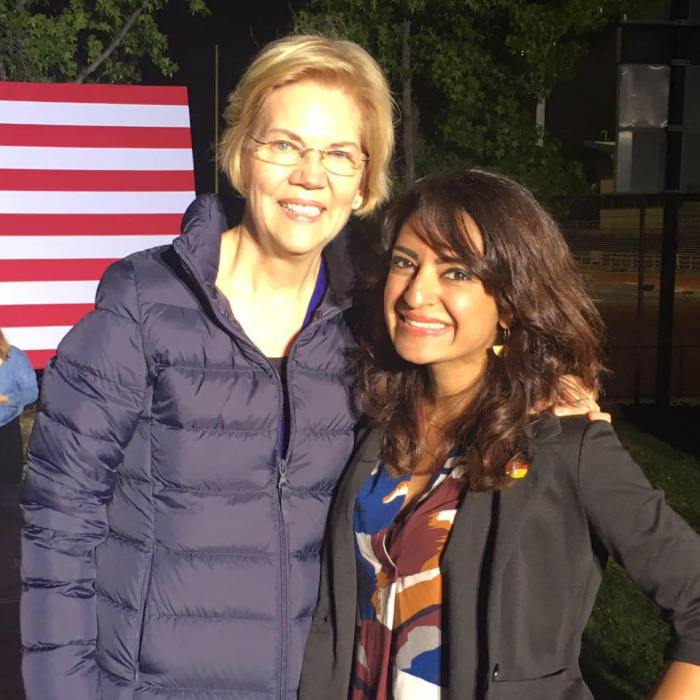
Charter School Teacher Introduces Elizabeth Warren at Rally

61665090_10109374029691176_8067465538567143424_n


CORRECTION:

In the first draft of this article, I called Sonya Mehta a “Charter School Lobbyist” in the title. On further examination of the facts, I realize this is unfair. She was a charter school TEACHER. I apologize to Ms. Mehta and truly regret any harm I have done her. I have changed the title to better reflect the facts. However, be advised that the text of the article, itself, has remained almost completely unchanged. Everything in the article is true to the best of my knowledge and backed up with sources that the reader can see by following the links in the text. My concern remains centered on Warren and what exactly her intentions are via education policy.


The biggest news from Elizabeth Warren’s rally in Oakland, California, on Friday wasn’t what she said.

 
It was who introduced her and what that says about Warren and her 2020 Presidential campaign.

 
According to the San Francisco Chronicle, “Warren was introduced by Sonya Mehta, a former Oakland schoolteacher.”

 
However, this characterization is inaccurate.

 
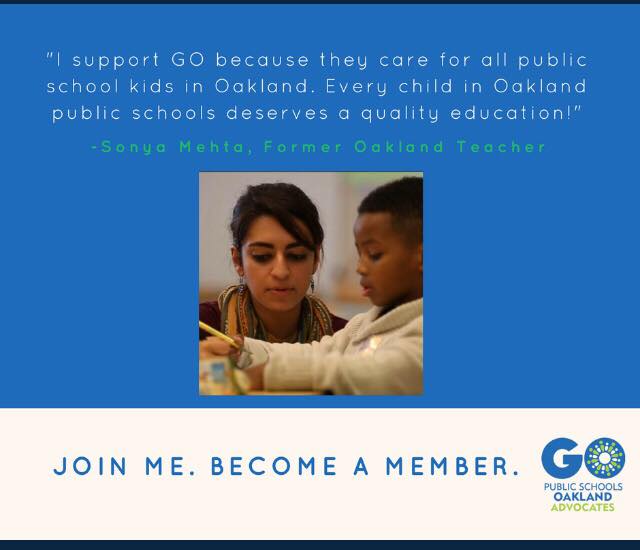
Mehta was not an authentic public school teacher. She taught in a non-union charter school called “Learning Without Limits.” She also was a policy fellow at GO Public Schools Oakland, which is a toxic charter promoter focused around that city.


62239250_2491072120944114_6527485798902661120_n

62044390_2491072744277385_2756662503386644480_n

 
In her introduction, Mehta didn’t explicitly advocate for school privatization. She promoted Warren’s early education and free college policies (Her speech can be seen here beginning at 57:30). But why would Warren, one of the smartest and most knowledgeable candidates in the race for the White House, let herself be associated with such a divisive and toxic legacy?


Only 6% of all U.S. students attend charter schools, yet with little accountability, selective enrollment, and the ability to pocket taxpayer money as profit, they cannibalize the funding necessary for the 90% that attend authentic public schools.

 
Warren should know better than this. Along with Bernie Sanders, Warren sits on the Senate Education Committee (HELP – Health, Education, Labor, Pensions).


So the question is this: was this a mistake made by her campaign staff or is this indicative of where Warren is on education policy?


She has said some very positive things in this campaign, not the least of which is that if elected, she would nominate someone with teaching experience as Secretary of Education.

 
But if Mehta is what she thinks an authentic teacher looks like, we are in big trouble.

 
We don’t need another Betsy Devos or Arne Duncan clone who just so happens to have taught at a regressive charter school. In fact, we already had that, too, in John King.

 
Sadly, that’s not even where the story ends.


Warren’s senior education policy advisor is Josh Delaney, a Teach for America temp who turned a 5-week crash course in education into two years in the classroom and then a career as an “expert” on our schools.

 
This is simply not acceptable for anyone courting education voters.

 
You can’t go to Oakland, a city which just experienced a massive teacher strike caused by school privatization, and then let yourself be introduced by someone with ties to school privatization!

 
Go Public Schools Oakland, the organization Mehta is associated with, is the major charter organization in city battling the union.

 
Who knows if Warren was intending to take sides on this issue, but she certainly seems to be signaling that if she did, it might not be with parents, teachers and students. It could be with the hedge fund billionaires backing school privatization.

 
How can she be so strong against these same people when it comes to Wall Street and economic inequality but appear completely ignorant (at best) or disingenuous (at worst) when it comes to school policy?

 
A look at Warren’s stated education policies over her history in public life doesn’t exactly calm the waters, either.


According to the Network for Public Education, Warren holds some regressive views when it comes to our schools.


The non-profit gives her a C on charter schools.


She has spoken out against some of the worst excesses of the industry, but supports the concept of schools that are publicly financed but privately operated.


In 2016 Warren strongly opposed lifting the cap on charter schools in Massachusetts. In 2017, Senator Warren expressed deep concern regarding the “waste, fraud, and abuse of federal money” at the hands of for-profit charter schools and charter school management organizations.


Unfortunately, she also praised the charter industry:


“Many charter schools in Massachusetts are producing extraordinary results for our students, and we should celebrate the hard work of those teachers and spread what’s working to other schools.”

 
Warren earned a B for her stance on school vouchers.

 
She had the courage to criticize DeVos, but her history with the concept of using public money to finance private education is complicated.

 
In a 2017 letter to DeVos, prior to her confirmation as Secretary of education, Senator Warren said the evidence on private school vouchers is “mixed at best” and called them “expensive and dangerous failures that cost taxpayers billions of dollars while destroying public education systems.”


However, back in 2003, she seems to have thought differently. She wrote a book with her daughter called “The Two-Income Trap: Why Middle-Class Mothers and Fathers are Going Broke.” In it, she makes a case for a universal school voucher program. She strongly supported giving parents taxpayer-funded vouchers they could use at any school – public, private or parochial. This would “relieve parents from the terrible choice of leaving their kids in lousy schools or bankrupting themselves to escape those schools.”


Later she said she never meant those vouchers to be used at private schools, but that is  unclear from the text.


However, as spotty as Warren’s history is on school privatization, it is much worse when it comes to high stakes testing.


The Network for Public Education gives her a F on this issue.


In 2015, as Congress debated rolling back high stakes testing requirements that have unfairly assessed students for decades and used test scores as an excuse to deny poor and minority students the resources they need to succeed, Warren demanded testing stay in place. Along with three Democratic senators endorsed by Democrats for Education Reform (DFER), a lobbyist organization for the testing and school privatization industry, she insisted on stronger accountability measures based on testing to gain their support for the Every Student Succeeds Act (ESSA).


Let me be clear: none of this is intended to be a purity test.


If the only candidate we can support is a perfect one, we will never find any politician to support.


But Warren has to make a decision whose side she is on.


At very least, she needs to come out and make a public statement clarifying her views here. She needs to say that she does not support charter schools or vouchers. Shouldn’t every Democratic candidate who wants the votes of educators do that?


Watch the whole rally here. Mehta’s introduction begins at 57:30.


Like this post? I’ve written a book, “Gadfly on the Wall: A Public School Teacher Speaks Out on Racism and Reform,” now available from Garn Press. Ten percent of the proceeds go to the Badass Teachers Association. Check it out!
thumbnail_IMG_8249

Charter Schools Are Quietly Gobbling Up My Public School District


Screen Shot 2019-05-19 at 7.49.57 PM


I work in a little suburban school district just outside of Pittsburgh, Pennsylvania, that is slowly being destroyed by privatization.


Steel Valley Schools have a proud history.


We’re located (in part) in Homestead – the home of the historic steel strike of 1892.


But today it isn’t private security agents and industrial business magnates against whom we’re struggling.


It’s charter schools, voucher schools and the pro-corporate policies that enable them to pocket tax dollars meant to educate kids and then blame us for the shortfall.


Our middle school-high school complex is located at the top of a hill. At the bottom of the hill in our most impoverished neighborhood sits one of the Propel network of charter schools.


Our district is so poor we can’t even afford to bus our kids to school. So Propel tempts kids who don’t feel like making the long walk to our door.


Institutions like Propel are publicly funded but privately operated. That means they take our tax dollars but don’t have to be as accountable, transparent or sensible in how they spend them.


And like McDonalds, KFC or Walmart, they take in a lot of money.


Just three years ago, the Propel franchise siphoned away $3.5 million from our district annually. This year, they took $5 million, and next year they’re projected to get away with $6 million. That’s about 16% of our entire $37 million yearly budget.


Do we have a mass exodus of children from Steel Valley to the neighboring charter schools?


No.


Enrollment at Propel has stayed constant at about 260-270 students a year since 2015-16. It’s only the amount of money that we have to pay them that has increased.


The state funding formula is a mess. It gives charter schools almost the same amount per regular education student that my district spends but doesn’t require that all of that money actually be used to educate these children.


If you’re a charter school operator and you want to increase your salary, you can do that. Just make sure to cut student services an equal amount.


Want to buy a piece of property and pay yourself to lease it? Fine. Just take another slice of student funding.


Want to grab a handful of cash and put it in your briefcase, stuff it down your pants, hide it in your shoes? Go right ahead! It’s not like anyone’s actually looking over your shoulder. It’s not like your documents are routinely audited or you have to explain yourself at monthly school board meetings – all of which authentic public schools like mine have to do or else.


Furthermore, for every student we lose to charters, we do not lose any of the costs of overhead. The costs of running our buildings, electricity, water, maintenance, etc. are the same. We just have less money with which to pay them.


But that’s not all. The state funding formula also requires we give exponentially more money to charters for students labeled special needs – orders of magnitude more than we spend on these kids at my district.


Here’s how the state school code mandates we determine special education funding for charter school kids:


“For special education students, the charter school shall receive for each student enrolled the same funding as for each non-special education student as provided in clause (2), plus an additional amount determined by dividing the district of residence’s total special education expenditure by the product of multiplying the combined percentage of section 2509.5(k) times the district of residence’s total average daily membership for the prior school year. This amount shall be paid by the district of residence of each student.”


So authentic public schools spend a different amount per each special education student depending on their needs. But we have to pay our charter schools an average. If they only accept students without severe disabilities, this amounts to a net profit for the charter schools – and they can spend that profit however they want.


Moreover, if they reclassify students without disabilities or with slight disabilities as special needs, that means more money for them, too. Is anyone checking up on them to make sure they aren’t gaming the system? Heck no! That’s what being a charter school is all about – little transparency, little accountability and a promise of academic results (which don’t have to pan out either).


In the 2015-16 school year, Steel Valley paid the 19th highest amount of its budget to charter schools in the state (9%) and that number is growing.


According to the state Department of Education, here’s how our charter school spending has increased:


Steel Valley Per Student Charter School Tuition:


2000-01 – 2012-13

Non-Special Ed: $9,321

Special Ed: $16,903


2013-14

Non-Special Ed: $9,731

Special Ed: $16,803


2014-15

Non-special Ed: $10,340

Special Ed $20,112


2015-16

Non-Special Ed: $12,326

Special Ed: $25,634


2016-17

Non-Special Ed: $13,879

Special Ed: $29,441


2017-18

Non-Special Ed: $13,484

Special Ed: $25,601


2018-19

Non-special ed: $14,965

Special ed: $32,809


All of this has real world consequences in the classroom. It means fewer teachers and larger class sizes. It means narrowed curriculum and fewer extracurricular activities. It means reduced options and opportunities for all children – just so a new business can duplicate the services already being offered but skim tax dollars off the top.


Our State Senator Jim Brewster understands the problem.


“Charters are strangling school districts, eventually will put them out of business. When you lose your school district, you lose your city,” he said in an article published by Public Source.


Brewster is a Democrat from McKeesport with four school districts being likewise “cannibalized” by charter schools.


Steel Valley School Board President Jim Bulger also characterized the situation as dire.


“ Charter Schools have become a twisted profit-making machine and not what they were originally intended for,” he said.


 “Originally charter schools were meant to serve a demographic that the public schools could not. For example being heavy in the performing arts or items like that. It’s unfortunate that several people have decided to twist this decent idea into a profit-making scheme that bleeds public education and its very soul.”


Much of the problem is in Harrisburg where legislators refuse to see or address the issue. And that’s often the best situation. Others actively make things worse.


For instance, the state used to reimburse each district for 30% of its costs to charter schools. Then in 2011, Republican Gov. Tom Corbett cut that while slashing the education budget by an additional $1 billion a year.


Though some of that money has been restored in subsequent budgets, the charter reimbursement has not. Putting it back in the budget would go far to alleviating the bleeding.


But legislators need to get serious about charter school reform.


We can no longer afford a system that requires authentic public schools to fund their own competition. In fact, schools should never be in competition in the first place. Every school should be excellent – and the only way to get there is to start with adequate, equitable, sustainable funding in the first place.


There are seven charter schools within 5 miles of my district: Propel Homestead, Propel Braddock Hills, Environmental Charter School at Frick PA, Propel Hazelwood, Academy Charter School (in Pittsburgh), Propel Mckeesport, and Propel East (in Monroeville).


In addition, there are 55 private schools in the same area. Though the Commonwealth doesn’t have school vouchers, per se, it does have a backdoor version supported by both Democrats and Republicans. Many of these private and parochial schools gobble up $210 million of state tax dollars through these tax credit programs – the Educational Improvement Tax Credit (EITC) and Opportunity Scholarship Tax Credit (OSTC) programs. And there’s a bill currently being considered in Harrisburg to increase that amount by $100 million this year and even more in subsequent years!


It seems our legislature has no problem spending on the school system so long as it isn’t the PUBLIC school system.


And the reason usually given for such support is the results privatized schools get. They claim to be better alternatives to the public system, but this is rarely if ever true.


Test scores are a terrible way compare schools, but charter and voucher schools rarely – if ever – outpace their authentic public school competitors. They either get similar scores or in many cases do much, MUCH worse.


For instance, take Propel Homestead.


In 2015-16, it served 573 students in grades K-12. Only 22% of students were proficient in math and 40% in Reading on state tests. Both scores are below state average.


Meanwhile, at Steel Valley High School during the same time period, we served 486 students in grades 9-12. In math, 50-54% of our students were proficient and 65-69% were proficient in Reading. That’s above state average in both cases. And we had similar results at our middle and elementary schools.


However, test scores are poor indicators of success.


Steel Valley Schools also had lower class sizes. We averaged 12 students per teacher. Propel Homestead averaged 15 students per teacher.


And then we come to segregation. Though both schools had significant minority populations, Steel Valley Schools had 42% minority enrollment, most of whom are black. Propel Homestead had 96% minority enrollment, most of whom are black.


So the authentic public school option is demonstrably of better quality, but our inability to bus students to-and-from school opens us up to predatory school charlatans who take advantage of our poverty.


And the situation is similar in surrounding communities. Poor districts serving impoverished minority students become targets for privatizers looking to make a fast buck off of our kids and families. They offer them a lower quality education and a slick sales pitch.


They increase segregation, lower academic quality, and get away with much needed funds that could help kids get a better education.


This nonsense has to stop.


The only schools that should be receiving public tax dollars are the authentically public ones.


They should have to abide by the same regulation, the same accountability standards, the same democratic governance, the same enrollment standards as authentic public schools. Otherwise, they should not qualify for public tax dollars.


We’re boring holes in the ship to make rickety life boats.


It’s time to stop the madness.


It’s time to stop letting our best chance to help all kids get eaten alive by the sharks of privatization.


Like this post? I’ve written a book, “Gadfly on the Wall: A Public School Teacher Speaks Out on Racism and Reform,” now available from Garn Press. Ten percent of the proceeds go to the Badass Teachers Association. Check it out!


book-4

The Best School Innovation Would Be More People

thumbnail_o-TEACHER-COLLABORATION-facebook


Public schools thrive on innovation.


In nearly every classroom around the country you’ll find teachers discovering new ways to reach students and foster skills, understanding and creativity.


But if you pan out to the macro level, the overwhelming majority of innovations aren’t organic. They’re imposed on us by bureaucrats and functionaries from outside the classroom:


Education Technologies.


School privatization.


Standardized tests and Common Core.


For the last two decades, these are the kinds of innovations that have been forced on public schools at gun point.


And each and every one of them is pure bullshit.


They are corporate schemes written by the wealthy to cash in on education dollars for themselves. Big business hands them out to their paid political lapdogs to push through our state and federal legislatures to become laws and policies the rest of us have to obey.


They have nothing to do with helping students learn. Their purpose is to boost profits.


Just look at the difference between the ways the word innovation is defined.


Merriam Webster says the word signifies “the introduction of something new” or  “a new idea, method, or device: Novelty.”


But BusinessDictionary.com finds a tellingly distinct meaning:


“The process of translating an idea or invention into a good or service that creates value or for which customers will pay.”


It is that second business-friendly definition that has dominated our schools and narrowed our view until the only concept of advancement and revolution has been centered exclusively on the profit principle.


It is time to put a stop to all of it.


No more useless iPads, apps, software and so-called “personalized” educational technologies that do little more than allow marketers to steal student data and profit off of a new form of school where everything can be provided by technology at a cost while the quality of services takes a nosedive. No more technology for technology’s sake instead of using it as a tool to promote authentic learning.


No more laughable charter and voucher schools where education budgets become slush funds for corporations who don’t have to provide the same standard of services to students or the community. No more operating without  transparency or accountability.


No more outmoded and disproven standardized tests. No more canned academic standards that strip classroom educators of autonomy while reducing effective teaching behind a smoke screen of test scores that merely conflate the economic situation students live in with their academic abilities. No more corporations creating bogus multiple choice assessments whose only utility is to demonstrate how many more test prep materials we need to buy from the same company or industry.


It’s too bad we’re not interested in that FIRST definition of innovation, or at least innovation tied with the motive of providing quality education for children.


If we were interested in that kind of real, authentic school reform, we would focus on things that really matter. And chief among those would be one main thing, one major innovation that would be easy to accomplish but could change the fabric of our schools from top to bottom – people.


After all, that is what our public schools need the most – more people.


Have you walked into a public school lately? Peak your head into the faculty room. It’s like snatching a glance of the flying Dutchman. There are plenty of students, but at the front of the overcrowded classrooms, you’ll find a skeleton crew.


Today’s public schools employ 250,000 fewer people than they did before the recession of 2008–09. Meanwhile enrollment has increased by 800,000 students. So if we want today’s children to have not better but just the same quality of services kids received in this country only a decade ago, we’d need to hire almost 400,000 more teachers!


Instead, our children are packed into classes of 25, 30 even 40 students!


And the solution is really pretty simple – people not apps. Human beings willing and able to get the job done.


If we were fighting a war, we’d find ways to increase the number of soldiers in our military. Well, this is a war on ignorance – so we need real folks to get in the trenches and win the battle.


We need teachers, counselors, aides and administrators promoted from within and not functionaries from some think tank’s management program.


We need more people with masters or even more advanced teaching degrees – not business students with a three-week crash course in education under their belts who are willing to teach for a few years before becoming a self-professed expert and then writing education policy in the halls of government.


We need people from the community taking a leadership role deciding how our schools should be run, not simply appointing corporate lackeys to these positions at charter or voucher schools and narrowing down the only choices parents have to “Take It” or “Leave It.”


We need people. Real live people who can come into our schools and do the actual work with students.


And that means money. It means cutting the crap boondoggles to corporations and spending on flesh and blood reform.


It means fixing the funding inequality at the heart of nearly every public school in the country. No more spending tens or hundreds of thousands on wealthy students and merely hundreds on poor ones. No more dilapidated school buildings for the poor and palaces for the rich. No more socialistic pulling together for the wealthy and rugged individualism for the poor.


THIS is how you solve our education crisis – a crisis not caused by falling test scores or failing schools. A crisis caused by vulture capitalists preying on our educational institutions and our students as if they were some bloated carcass on the side of the road and not our best hope for the future.


It’s really that simple.


It’s a matter of ideology based on empiricism not “common sense” Laissezfaire maxims of “This is how we’ve always done it.”


We’ve been trying so-called corporate education reform for decades now – through Bush and Obama and now Trump. It doesn’t work.


It’s time we stopped making excuses for failing policies and got back to the best thing that works.


People.


Like this post? I’ve written a book, “Gadfly on the Wall: A Public School Teacher Speaks Out on Racism and Reform,” now available from Garn Press. Ten percent of the proceeds go to the Badass Teachers Association. Check it out!
book-2

Tying Kids’ Lunch Money to Test Scores? It’s No Crueler Than High Stakes Testing

Screen Shot 2019-02-22 at 9.06.34 PM


UPDATED


Most people agree that the best way to get kids to read isn’t by threatening to take away their lunch.

 
But an Arkansas state Representative is threatening to do just that – sort of.


Rep. Alan Clark, a West Memphis Republican, proposed a bill that would cut “Lunch Funding” for impoverished children in state schools where students struggle with standardized reading tests.


However, he’s not proposing we take away kids’ food.


If passed, the bill would reduce a district’s National School Lunch funding – a state mechanism that distributes extra resources to schools with high concentrations of students who qualify for free lunch programs – if student test scores don’t rise over a period of time. This would cut things like professional development and tutoring.


However, this has been confused with the federal program of the same name and drawn almost universal condemnation.


“I would never starve kids,” Clark said. But he would starve their schools of resources.


Either way, his proposal is obviously unfair.


Only a monster would think you can incentivize reading comprehension by threats and coercion.


It’s like saying “You’d better understand this complex puzzle OR ELSE!


Learning doesn’t work that way.


But Clark sees things from a different perspective – that of business and industry. He told KTHV, a state television network:


“In most businesses I would be laughed at for suggesting such a small goal. But sadly many educators act like I have asked them to storm the beaches at Normandy… It appears I have much more faith in our schools than many of our educators do.”


This is what happens when you elect people without empathy or intelligence to public office.


I wonder if Clark would do a better job representing the people of his state if they threatened to lower his salary based on his popularity polls.


It says a lot about us that people react so viscerally to the inaccurate idea that Clark is suggestion we withhold food from bad test takers. That’s unthinkable. But it isn’t really that much more cruel than the way we actually treat students.


Our entire federal education policy is based on just such inhuman treatment of children.


After all, we still hold kids, schools and teachers “accountable” by student test scores. The consequences though aren’t an empty belly. They’re crowded classrooms and fewer tutors.


In every state of the union, students are required to take high stakes standardized tests in reading and math. If they don’t do well, we take away their resources.


Sure, we don’t deny them food, but we deny them many other things they need to learn.


We lower funding to their schools so that they have larger class sizes, fewer teachers, narrowed curriculum, etc. We threaten to withhold their diplomas and any chance of ever earning more than minimum wage. In many cases we tie teachers salaries, reputations and even employment to these same scores. Sometimes we even take away their parents right to govern their children’s schools so that all administrative decisions are made by state flunkies. Or we force their authentic public schools to become charter institutions so that spending decisions happen behind closed doors without accountability and even whether a student can enroll or not becomes a decision of the private management company and not simply something that is the students’ by right of living in the district.


It may not be as severe as the idea of Test Scores for Food, but it’s the same in kind.


In both cases, we tell kids – “Increase test scores, OR ELSE!” It’s just a difference of consequence.


Call me crazy, but that’s nearly as cruel and wrongheaded.


Keep in mind, all of this takes for granted that standardized tests are adequate and fair assessments of student learning in the first place. This has never been proven. In fact, it has been cast in serious doubt after more than a century of academic study. Ask anyone to narrow their thinking down to four prepackaged choices and you’ll find them trying to guess what the test-maker wanted more than what the truth is. Critical thinking, analysis, innovation – these escape any multiple choice exam.


But even if we go with this empty assumption, it flies in the face of everything we know about the way human beings acquire knowledge and demonstrate skills.


When kids struggle with learning, you can’t get them to do better with threats. Or at least you can only do that if those children are doing poorly on purpose.


Kids who just aren’t trying hard enough might be incentivized by threats. But even then it transforms learning into a means to an end. Once you do that, you destroy their natural curiosity. Learning will never again be an end in itself. It will be a menial task you only do to get something else that you really want.


However, in most cases kids don’t struggle because they’re just lazy. They don’t need an incentive. They need help. They need resources.


It’s no wonder that children in rich and middle class neighborhoods have less trouble getting higher test scores. They have lower class sizes, more teachers, wider curriculum, more extra curricular activities, access to tutors, counselors, nurses and after school programs.


Poor kids don’t. THAT’S why they struggle.


And what do we do when that happens? We take away the meager resources they have!


If a teacher tried any of this crap in her classroom, she’d be fired for dereliction of duty – and she’d deserve it!


Just imagine if you told the kids who were struggling in your class that they didn’t deserve tutoring. Instead you were going to give extra help to the kids who got the best scores on the exam!


And if the struggling children continued to do poorly, you took away their desks. Now they had to sit on the floor!


THIS is the kind of thing we’re doing to our children nationwide.


It’s called TEST AND PUNISH, and it’s federal policy – often backed up by state and local law.


Moreover, it’s supported by both Republicans and Democrats alike.


We may not be  denying poor kids a meal, but we are denying them an equal opportunity at an education just the same.


It’s way past time that we wake up and see that.


We can point and jeer at what we thought this regressive Arkansas nitwit was doing, but we’re really pointing and jeering at ourselves.


NOTE: An earlier version of this story – like many in the state and national press – wrongly suggested that Clark wanted to withhold lunches from poor children based on test scores.


Still can’t get enough Gadfly? I’ve written a book, “Gadfly on the Wall: A Public School Teacher Speaks Out on Racism and Reform,” now available from Garn Press. Ten percent of the proceeds go to the Badass Teachers Association. Check it out!
book-3


Rahm Emanuel’s Non-Apology Apology for Being a School Privatization Cheerleader

thumbnail_IMG_8543


Rahm Emanuel’s recent op-ed in The Atlantic may be one of the dumbest things I have ever read.


The title “I Used to Preach the Gospel of Education Reform. Then I Became the Mayor” seems to imply Emanuel has finally seen the light.


The outgoing Chicago Mayor USED TO subscribe to the radical right view that public schools should be privatized, student success should be defined almost entirely by standardized testing, teachers should be stripped of union protections and autonomy and poor black and brown people have no right to elect their own school directors.


But far from divorcing any of this Reagan-Bush-Trump-Clinton-Obama crap, he renews his vows to it.


This isn’t an apologia. It’s rebranding.


Emanuel had been White House Chief of Staff at the beginning of President Barack Obama’s first term. He’s a former U.S. Representative, and senior adviser to President Bill Clinton.


Yet he’s persona non grata.


Now that the extremely unpopular chief executive has decided not to seek re-election, he’s trying to secure his legacy – to make sure the history books don’t remember him as the Democrat In Name Only (DINO) mayor who closed an unprecedented number of schools serving mostly minority students while catering to the will of rich investors. He doesn’t want to be remembered as the lord on a hill whose own children went to private school while he cut services and increased class size for black and brown kids. He’s trying to save a series of abysmal policy failures so that he and his neoliberal pals like Cory Booker and Arne Duncan can still hold their heads high in Democratic circles. In a time when authentic progressives like Alexandria Ocasio-Cortez and Bernie Sanders have won the heart of the party, he wants to ensure there’s still room for that old time corporate education reform he is infamous for.


Like I said – dumb.


To quote the Principal in Billy Madison:


“…what you’ve just said is one of the most insanely idiotic things I have ever heard. At no point in your rambling, incoherent response were you even close to anything that could be considered a rational thought. Everyone in this room is now dumber for having listened to it. I award you no points, and may God have mercy on your soul.”

 
If only he’d respond like Madison:


Okay, a simple ‘wrong’ would’ve done just fine, but thanks.”


But like that straight man school administrator in an Adam Sandler movie, I’m going to give you the long answer. I’m going to explain why what Emanuel said was supremely stupid.


He begins the piece with a lengthy description of how he got one over on those darn teachers unions.


He wanted what was best for children, but those pesky teachers just wouldn’t do it until he twisted their arms and got them to play ball.


And keep in mind – this is the softer, gentler Emanuel who wants you to like him! This is the Emanuel who’s trying on progressive clothing to look more appealing!


Hey, Rahm, attacking working people while casting yourself as a savior is so two years ago. We’ve had a conservative Supreme Court hobble unions’ ability to stop free riders and a teacher uprising since then. Union educators from West Virginia to Oklahoma to Los Angeles, California, have gone on strike demanding Republican and Democratic chief executives like yourself make positive change for children.


No one’s buying your fairytales anymore.


But it leads into a series of important points he wants to make:


“For most of my career, I preached the old gospel of education reform. But now research and experience suggest that policy makers need to embrace a new path forward and leave the old gospel behind. Principals, not just teachers, drive educational gains. The brain-dead debate between charter and neighborhood schools should be replaced with a focus on quality over mediocrity. To get kids to finish high school, the student experience should center on preparing them for what’s next in life. Finally, classroom success hinges on the support that students get outside school. If other cities follow Chicago’s lead in embracing those ideas, they’re likely to also replicate its results.”


Oh and what results those are! But we’ll come back to that.


He reasons that principals drive educational gains. In fact, this is his a-ha moment. Don’t focus on teachers, focus on principals.


He pats himself on the back for raising principals’ salaries and recruiting only people who think and believe just like him. Then he didn’t have to watch over them so closely and they were even promoted to higher administrative positions.


Wow. What an innovation! Stack your school system with yes-people and your initiatives will get done. Great. No room for diversity of thought. No one who thinks outside of the box. Just functionaries and flunkies who do what you say.


This is sounding like a great case for progressive education reforms already! If you’re a fascist dictator.


Next comes my favorite – a further commitment to school privatization hidden behind the flimsiest rechristening in history.


Stop talking about charter schools vs. authentic public schools, he writes. Talk about quality schools vs. mediocre ones.


What bull crap!


Imagine if pirates were robbing ships on the high seas. Would you talk about good pirates and bad pirates? Imagine if vampires were attacking people in the night and draining their blood. Would you talk about good vampires and bad vampires?


I mean Dracula did suck Mina dry, but he spends the rest of his nights reading to orphan children. Long John Silver may have stolen hundreds of chests of gold from merchant ships, but he donates every tenth doubloon to fighting global warming!


Hey, Rahm, you can’t escape from the argument of whether school privatization is good or bad. Charter schools drain funding from authentic public schools and give it to private investors. They allow unscrupulous operators to cut services and pocket the profits. They increase segregation, decrease democracy and transparency, give choice mainly to business people who get to decide if your child is allowed to enroll in their school – all while getting similar or worse results than authentic public schools.


If you stopped taking corporate money for one second, maybe you could understand this simple point – no system will ever be fair that allows theft and then protects the thieves.


But on to your next point. You want to focus the student experience on what comes next in life. You want to focus on jobs and career readiness.


This is just dumbing down what it means to get an education. Going to school shouldn’t be reduced to a career training program. If we only teach kids how to manufacture widgets, what will they do when the widget factory closes?


We need to teach them how to think for themselves. We need to offer them real opportunities for self-discovery and challenge them to think deeply through an issue.


When kids graduate, we don’t want to have simply made a generation of workers. We need them to be thinking adults and citizens who can participate fully in our democratic process and help lead our country toward a better and brighter future – not just learn how to code.


Finally you talk about the support students get out of school. That’s stupid because…


Actually it’s not.


You’ve got a point there. We do need to support programs to help students succeed outside the classroom – summer reading, after school tutoring, etc. However, making kids sign a pledge to go to college in order to be eligible for a summer job? That’s kind of cruel when many have no way to pay for college in the first place. Moreover, it completely ignores the huge section of children who have no desire to go to college and would rather go to career or technical schools.


And that brings me to his dismal record of failure described by neoliberals as success.


Emanuel pushed forward a policy that in order to graduate, Chicago seniors must prove that after 12th grade they’re going to college, trade school, an internship, the military or would otherwise be gainfully employed. OR ELSE they can’t get a diploma!


Rahm’s all about adding more hoops for poor minority kids to jump through. Very rarely is he about providing any help for them to make the jump.


He’s a pull-yourself-up-by-your-own-bootstraps Democrat. Or what we used to call – a Republican.


Emanuel wants to tout his record as “proof” that his methods worked.


Let’s look at them.


He has closed 50 public schools46 of which serve mostly black students. Southside residents had to resort to a month-long hunger strike to keep their last neighborhood school open. He laid off hundreds of teachers and staff – many just before school opened. Yet he always had money for state of the art charter schools like the $27 million new charter school for the University of Chicago as part of the Obama Presidential Library. In addition, his economic policy consisted of closing public health clinics for the poor and installing red light cameras to increase fines – none of which actually boosted the economy.


And then we get to the scandal that made a third term as mayor impossible. Emanuel actually covered up the police killing of unarmed black teen, Laquan McDonald, so it wouldn’t hurt his re-election campaign.


In October of 2014, Officer Jason Van Dyke shot the 17-year-old 16 times. Most of those bullets went into the teenager after he was already flat on the ground and the officer was at least 10 feet away.


Emanuel quickly issued a $5 million settlement to McDonald’s family on the condition they keep quiet about the incident. It wasn’t until after Emanuel had won re-election, that an independent journalist put two-and-two together and asked for the officer’s dashcam video to be released. It took the full power of the media and a lawsuit to accomplish this resulting in charges against Van Dyke for first degree murder. Just last year the officer was found guilty of second degree murder and 16 counts of aggravated battery with a firearm, but was found not guilty of official misconduct. He was sentenced to 6.75 years in prison.


This is not a sterling mayoral record. It is not a proven record of success.


He says graduation rates are up as are rates of Chicago students who go on to college. He neglects to mention that they’re up nationwide. He neglects to mention that the quality of education these kids receive is often watered down to whatever will help them pass the federally mandated standardized test. He neglects to mention the loss of teacher autonomy, and the rise in class size.


Face it. Emanuel is a crappy mayor. Chicago and the nation will be better if he fades into the sunset.


His political career was backed by the same big money conservatives that back Republicans like Chris Christie, Mitt Romney and Bruce Rauner. He was a puppet of charter schools, hedge fund managers and the Koch Brothers.


In fact, his corruption was so bad that during the 2016 primary, he became an issue for Democratic Presidential contenders.


Bernie Sanders actually called him out in a tweet saying: “I want to thank Rahm Emanuel for not endorsing me. I don’t want the endorsement of a mayor shutting down schools and firing teachers.”


Emanuel had endorsed Hilary Clinton, and her education advisor Ann O’Leary wrote in a private email to senior campaign staff that this might actually hurt the candidate’s primary chances. She wanted Clinton to distance herself from the troubled mayor or at least explain how she differed from his troubled policies.


They eventually settled on saying nothing. That didn’t backfire at all!


Look. Democrats need to learn the exact opposite of the lesson Rahm is selling here.


Corporate education reform is poison. School privatization is not progressive. High stakes testing is not progressive. Hiring like-minded flunkies to run your schools is not progressive. Closing black kids’ schools is not progressive.


Emanuel has learned nothing. Have we?


Still can’t get enough Gadfly? I’ve written a book, “Gadfly on the Wall: A Public School Teacher Speaks Out on Racism and Reform,” now available from Garn Press. Ten percent of the proceeds go to the Badass Teachers Association. Check it out!
cropped-book-1.jpg

Pittsburgh Christian Academy Tries to Become a Charter School to Cash in on Taxpayer Funding

thumbnail_IMG_8528


The line between public and private school is getting awfully thin in Pittsburgh.


City public school directors received a request from Imani Christian Academy, a religious school in the East Hills, to be allowed to transform into Imani Academy Charter School for the Fall term of 2019.


Though parochial schools have metamorphosed into charter schools in Florida, Tennessee and Washington, D.C., this would be the first such transformation in Pennsylvania, according to Ana Meyers, executive director of the Pennsylvania Coalition of Public Charter Schools.


The change would require Imani to give up its religious curriculum in exchange for being fully funded by taxpayer dollars.


However, there are numerous red flags in the school’s application that make one wonder if operators are being entirely honest about giving up a faith-based curriculum.


First, there is the proposal by the school, itself.


The application does not specify that religious values will be taught in the classroom. However, its personnel budget lists a comparative religion teacher on staff. The list of proposed teachers also includes a middle/high school religious studies teacher.


That’s not exactly common practice at most public schools though teaching about religion in a secular context is allowed.


According to the Anti-defamation League’s Website:


“Public schools may not teach religion, although teaching about religion in a secular context is permitted. The Bible may be taught in a school, but only for its historical, cultural or literary value and never in a devotional, celebratory or doctrinal manner, or in such a way that encourages acceptance of the Bible as a religious document.”


Even so, it’s awfully convenient that a school whose mission statement currently includes “We share Christ with our children daily and seek to help them grow into mature Christians” would somehow magically become secular overnight.


If Imani’s charter is approved, it would be required to discontinue any religious component in its curriculum. The state school code requires even charter schools to be “nonsectarian in all operations.” The proposed academy would not be permitted to display any religious objects or symbols on the premises.


Yet one wonders who will check to make sure this actually happens.


Charter schools are not required to be nearly as transparent as fully public schools. They are not required to have open meetings of school directors, release their documents for public inspection or any of a host of other safeguards that you’ll find standard at the state’s hundreds of fully public districts.


Pennsylvania charter schools have had operators embezzle millions of dollars from taxpayers to buy private jets, apartments and jewelry. It took investigators years to uncover such graft.


Will the few auditors tasked with keeping charter schools honest even be equipped to determine whether parochial schools suddenly turned charter actually refrain from ministering to students?


According to Public Source, a nonprofit digital newspaper covering the Pittsburgh area, one of the qualities Imani is looking for in an operator for its charter school is the ability to use the school building after-school hours for religious instruction and activities.


So during the day, there will be an entirely secular K-12 school at the site of the present day parochial school that just happens to teach comparative religious studies. Then at a certain time of day, it will transform into an optional religious school offering church functions!?


This is a violation of the Separation of Church and State waiting to happen.


But it’s not only the establishment clause of the U.S. Constitution that is in danger of being trampled.


Imani’s proposal is not fiscally responsible.


The charter application proposes its CEO/head of school be paid a salary of $145,000 a year for an institution that would enroll merely 230 students.


Pittsburgh Public School Superintendent Dr. Anthony Hamlet earns a salary of $210,000 a year and he oversees a district with 24,652 students!


The proposed academy would also employ a principal at $85,000 annual salary.


That’s not exactly good reimbursement of services for the outlay of cash taxpayers are expected to pay.


Imani has struggled financially for several years.


In 2014, the school had more than $400,000 in additional expenses over its revenue, according to its form 990 filed with the IRS. The very next year, it had a budget surplus of almost the same amount. By 2016 – the most recent year on file – its expenses again were more than its revenue – this time by more than $500,000.


Imani CEO and Head of School Paulo Nzambi explained  the up and down budgeting to state officials in 2017 this way. The parochial school relied on the state’s defacto school voucher program – the Education Improvement Tax Credit. However, payments were delayed resulting in the use of a line of credit to pay bills.


It’s just such financial uncertainties that are pushing Imani to become a charter school in the first place. Even with school vouchers, parochial schools rely heavily on tuition from parents. However, you always know where the money is coming from in a charter school. Like religious and private schools, these institutions are privately managed – but like public schools they’re funded entirely by taxpayers.


Before setting up shop, any new charter school in Pennsylvania must get the approval of the school board from the district where it would be located. If the board does not approve the application, charter school administrators can appeal to the state Charter Appeals Board.


Pittsburgh school board held a public hearing on Imani’s application in December and earlier this month. Next, the district’s review team will offer its suggestions on the application. District solicitor Ira Weiss says the board is scheduled to vote on the matter at its Feb. 27 meeting.


If approved, the district would be required to pay for each student at the new charter school based on the district’s per-student spending formula.


The Pittsburgh district already pays approximately $82.8 million – about 13 percent of its total budget – for charter school tuition.


Imani Christian Academy currently operates out of the former East Hills Elementary School building, which it purchased from the city school district for $1 million in 2008.


The objections brought up here are really just the tip of the iceberg.


The proposal leaves many questions unanswered. For instance, though the new academy would be located within the geographical boundaries of the Pittsburgh Public School District, where would it get its students from? Would current students at the religious school get preferential enrollment – and what if they don’t already live in and pay taxes to Pittsburgh?


Let’s hope Pittsburgh school directors do the right thing and deny this request.


Still can’t get enough Gadfly? I’ve written a book, “Gadfly on the Wall: A Public School Teacher Speaks Out on Racism and Reform,” now available from Garn Press. Ten percent of the proceeds go to the Badass Teachers Association. Check it out!

thumbnail_IMG_8249


Ten of 15 Cyber Charter Schools in PA Are Operating Without a Charter – Close Them All

thumbnail_screen shot 2019-01-29 at 1.38.10 pm


Cyber charter schools are an experiment that failed.


It’s time to pull the plug and recoup our losses.


First, let’s get straight exactly what we’re talking about here.


Like all charter schools, these are contracted institutions. In fact, that’s what charter means – they’re independent businesses that sign a deal with the state to teach kids.


So they’re publicly financed but privately run. And in the case of cyber charters, they agree to educate children online without the benefit of a physical building.


Students access lessons via computer or other device, submit work electronically, get virtual feedback and assessment.


At best, these institutions are the grade school equivalent of the University of Phoenix – good only for independent, self-motivated learners. At worst, they’re the kiddie version of Trump University – a total scam.


In Pennsylvania, 10 of the state’s 15 cyber charter schools are operating with expired charters, according to a report by the Philadelphia Inquirer.


That’s incredibly significant – especially for an industry that enrolls about 35,000 students across the state.


These are charter schools operating without a charter. They only get the right to operate because a local school district or the state has signed a contract allowing them to do so.


If you hire a plumber to fix your toilet, you give him the right to enter your house and do what needs to be done. That doesn’t mean the plumber can walk in anytime he feels like it. There is a limited term of service. Once that term is up, the plumber needs to get out.


In the case of these cyber charters, the authorizer is the Pennsylvania Department of Education (PDE).


Charters are initially issued for three to five years. They are an essential contract between the schools and the supervisory body. The school details how it will operate, what curriculum and education strategies will be used, etc.


The state has the option to revoke the charter if the school violates its agreement or fails to meet requirements for student performance or fiscal management.


After the initial period, charters must be renewed every five years in the state.


Yet for the majority of the Keystone state’s cyber charter schools, this has not happened. The charter agreements have been left to lapse without any decision being made by state officials to renew or cancel them.


Some of the reluctance to decide may stem from the fact that the state Charter Appeal Board – the body which decides on appeals of charter applications – are all serving out expired terms, themselves.  They were all appointed by the previous governor, Republican Tom Corbett, a notable privatization ideologue.


The current Governor Tom Wolf, a Democrat now elected to his second term of office, still hasn’t gotten around to appointing new ones.


Another issue gumming up the works could be staffing issues at PDE that make it impossible to handle the reviews in a timely manner. It could be because the cyber charter schools have not provided all the data required of them by the state for the review to be completed on time. Or it could be because state officials are struggling with a fair and adequate metric with which to assess these schools.


CYBER CHARTER’S DISMAL ACADEMIC RECORD


To be frank, the latter option has to weigh heavily on state auditors. After all, it’s no secret that these schools are an educational disaster. On-line schools in Ohio, Georgia, Indiana, Nevada and New Mexico are all being closed by their respective states.


Study after study consistently shows that cyber charters are much less effective than traditional public schools – heck! They’re even less effective than brick and mortar charter schools!


A recent nationwide study by Stanford University found that cyber charters provide 180 days less of math instruction and 72 days less of reading instruction than traditional public schools.


Keep in mind that there are only 180 days in an average school year. So cyber charters provide less math instruction than not going to school at all.


The same study found that 88 percent of cyber charter schools have weaker academic growth than similar brick and mortar schools.


Student-to-teacher ratios average about 30:1 in online charters, compared to 20:1 for brick and mortar charters and 17:1 for traditional public schools.


Researchers concluded that these schools have an “overwhelming negative impact” on students.


And these results were duplicated almost exactly by subsequent studies from Penn State University in 2016 (enrolling a student in a Pennsylvania cyber charter school is equal to “roughly 90 fewer days of learning in reading and nearly 180 fewer days of learning in math”) and the National Education Policy Center in 2017 (cyber charters “performed significantly worse than feeder schools in both reading and math”).


Even the state’s own data shows lower graduation rates and standardized test scores at cyber charters than at traditional public schools.


According to a 2015-16 state PDE report, about 86 percent of public school students across the Commonwealth finished high school in four years. During the same time, only about 48 percent of cyber charter school students graduated in four-years.

CYBER CHARTER’S COST TOO MUCH


But providing such a poor service to Pennsylvania students is only one reason these schools are problematic. They’re also ruinously expensive.


They cost taxpayers more than $463 million in 2016-17 alone.


The state charter law grants these schools as much money per pupil as brick and mortar schools, yet their costs are much less having forgone a physical building and all that goes with it.


So cyber charters get whatever the local per-pupil expenditure is. It doesn’t matter if a district spends $8,000 on each student or $20,000. Whatever the amount, that goes to the cyber charter.


However, the cost of educating kids is drastically reduced online. Their programs are bare bones compared with what you get at a traditional public school. Most online charters don’t have tutors or teacher aides. They don’t offer band, chorus or extra-curricular activities. You don’t have to pay for any building costs, grounds, upkeep, large staff, etc. But the funding formula ignores this completely. Cyber charters get to keep the difference – whatever it is. In fact, they have an incentive to keep as much as possible because they can do almost whatever they want with it. That includes putting it into operators’ pockets as profit!


And when it comes to special education funding, it gets worse. In Pennsylvania, our funding formula is so out of whack that charters schools of all stripes including cyber charters often end up with more funding for students with special needs than traditional public schools get. However, because of this loophole in the Commonwealth, Pennsylvania online charters have been increasing the number of special education students they enroll and even working to label as many of their students as possible as needing special services on the flimsiest of pretexts.


According to a report by the Pennsylvania Association of School Administrators (PASA), tuition for special education students is often twice as much at cyber charter schools than at traditional public schools.


CYBER CHARTER FRAUD


Unsurprisingly, these conditions have lead to rampant fraud and malfeasance.


Just this past year (2018) the head of the largest cyber charter chain in the state was sentenced to jail for siphoning $8 million from his school into his own pockets.


PA Cyber Charter founder Nicholas Trombetta was found guilty of tax fraud in relation to the theft of public funds. He used that money to buy an airplane, a $900,000 condo, houses for his girlfriend and mother, and nearly $1 million in groceries and personal expenses, according to the grand jury. Trombetta allegedly set up numerous for-profit and nonprofit businesses to provide goods and services to the cyber charter. Federal investigators filed 11 fraud and tax conspiracy charges against him and indicted others in the case.


Another cyber charter founder, June Brown, was also indicted for theft of $6.5 million. Brown ran the Agora Cyber Charter School, which was part of the K12 Inc. empire of virtual charters. She and her executives were indicted on 62 counts of wire fraud, obstruction of justice and witness tampering. She was well known for student test scores and had a reputation for claiming large salaries and filing suits against parents who questioned her, the Philadelphia Inquirer reports.


WHAT TO DO ABOUT IT


It’s no wonder the state has been tardy renewing these schools’ charters!


Frankly, there is no good reason to continue lavishing taxpayer dollars on a system of education that provides  subpar services at an exorbitant expense and is subject to runaway fraud.


But lawmakers have always been reluctant to do the right thing.


After all, there are a slew of wealthy investors who want to make sure the money train of taxpayer dollars keeps flowing to their shady businesses. And lawmakers who enable them are assured hefty campaign contributions.


The only chance we have of saving our children from this monstrous abuse of power and saving our wallets from this shameful waste of funding is if voters make their intentions known.


The people of Pennsylvania need to stand up and demand an end to the cyber charter school experiment.


We need lawmakers with the guts to stand up to big money and rewrite the state’s charter school law.


And that’s part of the problem. The law is a joke.


It’s more than 20 years old and was only amended once in 2002 to allow cyber charters.


Subsequent attempts at requiring more accountability have resulted in horrible compromise bills that would have made the situation much worse and – ultimately – no vote.


With Ohio and California, Pennsylvania was in the “big three” cyber-charter states in 2016, accounting for half of cyber charter enrollment nationally, according to the industry’s authorizers’ association. While 35 states and the District of Columbia allow full-time cyber charter schools, eight do not, including neighboring New Jersey.


The right course is clear.


We just need a people-powered movement to force our lawmakers to do it.


Either that or replace them with those who will.


Still can’t get enough Gadfly? I’ve written a book, “Gadfly on the Wall: A Public School Teacher Speaks Out on Racism and Reform,” now available from Garn Press. Ten percent of the proceeds go to the Badass Teachers Association. Check it out!
cropped-book-1.jpg

As LA Teachers Strike Over Charter Schools, Democrat Cory Booker Speaks at Pro-Charter Rally

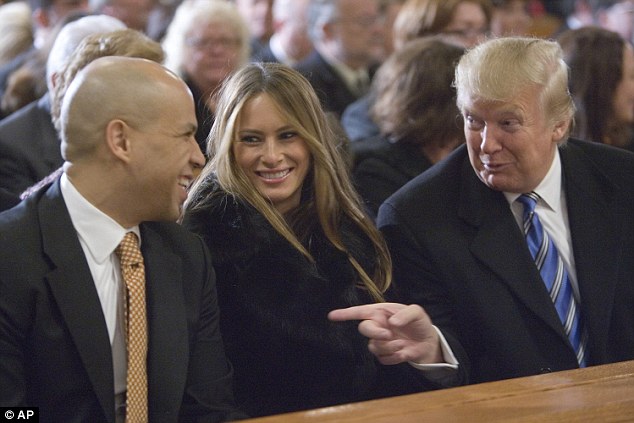
thumbnail_corydonaldtrump


What a slap in the face!


In California, 30,000 Los Angeles teachers are on strike because charter schools are gobbling up their funding without providing the same level of quality services or accountability.


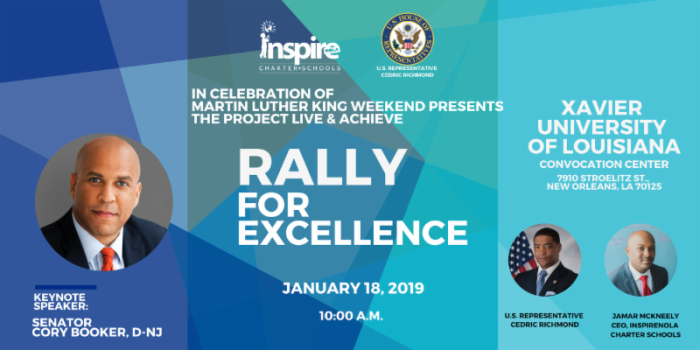
Meanwhile in New Orleans, Sen. Cory Booker is giving the keynote address at a charter school rally.


That wouldn’t be surprising if Booker was a Republican.


Donald Trump’s Education Secretary Betsy DeVos is a big time champion of school privatization over public schools.


But like LA Superintendent Austin Beutner, Booker – a New Jersey lawmaker – is supposed to be a Democrat.


The party is supposed to stand for social goods, doing what’s best for everyone not just the few.


However, when Booker gave the keynote address at the “Project LIVE & Achieve” Rally for Excellence today, he made it clear whose side he’s on. And it’s not parents, children or communities.


booker_mlk


Organizers estimate 5,000 students from more than 20 city charter schools attended the rally instead of attending their classes.


Traditional public schools aren’t allowed to spend tax dollars or waste class time by forcing students to attend political rallies. But since charter schools like all of New Orleans schools after Hurricane Katrina don’t have to follow the same rules, this is your tax dollars at work.


The rally was hosted by InspireNOLA Charter Schools and U.S. Representative Cedric Richmond, a Louisiana Democrat.


The charter network’s Website describes the rally as part of InspireNOLA’s celebration of Martin Luther King weekend.


What a disgrace!

thumbnail_b16c81fc7a8b7c203e0f6a706700260d

Dr. Yohuru Williams, a professor of history at Fairfield University in Connecticut and an MLK scholar, has written extensively about how school privatization and high stakes testing are in direct contradiction with Dr. King’s writings and speeches.


“While it seeks to claim the mantle of the [civil rights] movement and Dr. King’s legacy, corporate education reform is rooted in fear, fired by competition and driven by division,” says Williams. “It seeks to undermine community rather than build it and, for this reason, it is the ultimate betrayal of the goals and values of the movement.”


Dr. King certainly wouldn’t have approved of today’s rally. After all, King said:


“To save man from the morass of propaganda is one of the chief aims of education. Education must enable one to sift and weigh evidence, to discern the true from the false, the real from the unreal, and the facts from the fiction.”


Forcing children to go to a political rally and then pretending their mandatory presence is somehow a show of support is exactly the kind of propaganda King was railing against.


“The function of education,” King explained in 1947, “is to teach one to think intensively and to think critically.”


Booker, who clearly has ambitions of a Presidential run, has violated those principles time and again.


Before he became a U.S. Senator, he was Newark mayor. In that position he accepted a $100 million donation from Facebook founder Mark Zuckerberg to implement a series of drastic reforms in city schools.


The people of Newark only found out about it on Oprah Winfrey’s TV show when Booker was a guest and announce the grant. Almost all of that money went to charter schools, according to the New Republic.


thumbnail_maxresdefault


Such publicity stunts and mugging for the cameras may be why The Gaurdian even described Booker as a “neoliberal egomaniac.”


While numerous corporate Democrats like Booker share his love of charter schools, his positions go even further to the right. Like DeVos, with whom he sat on the board of pro-privatization Alliance for School Choice, he also is a proponent of school vouchers. This despite any credible evidence that voucher programs actually create better educational outcomes for students.


And Devos isn’t the only radical right privatization-monger in Booker’s circle. Michelle Rhee, the former DC schools chancellor known for union busting and a series of reforms that resulted in a citywide cheating scandal, is someone Booker calls “a friend of mine”


Though as a Senator, Booker held the party line and voted against his long-time friend DeVos’ nomination as Education Secretary, he told CNN that he hadn’t changed his position on school privatization:


“When it comes to my record of supporting what I believe that any child born in any zip code in America should have a high quality school and I don’t care if that’s a charter school or a traditional district school. If it’s a bad school I’m going to fight against it just like I supported charter school closures in Newark that weren’t serving the genius of my kids. So I haven’t changed one iota.”


Yet his record flies in the face of his rhetoric.


As Newark Mayor he privileged charter schools and helped them spread throughout the city while underfunding traditional public schools. And though he continually brings up the “amazing” academic record of Newark’s charter schools, he strangely omits the a cheating scandal they experienced similar to Rhee’s.


636588408131916332-mark019


According to a report by the state Department of Education’s Office of Fiscal Accountability and Compliance, testing documents were not secured at these schools. State investigators flagged at least 15 charter schools for further inquiry because some tests had unusually high rates of wrong-to-right erasure marks. One school had rates more than three times greater than the state average.


Charter schools are often run by appointed officials and not elected school boards. They meet behind closed doors and never have to explain how and why they’re spending taxpayer dollars. Though much hand wringing has been done over charters that are explicitly run for a profit, even those designated “not for profit” can cut students services and pocket the difference. There are a multitude of ways these schools can cheat students out of the resources and educations they deserve while protecting the administrators and business people making a buck off them.


In LA, administrators like Buetner – who has no experience with education but is a millionaire investor in school privatization – actually sabotage the public schools in order to feed the profit-making machine of charters.


And now the opposition to these shenanigans is spilling into the streets in both red and blue states. There have been seven major teacher protests in the last year in states like Arizona, Oklahoma, West Virginia, and now California.


It’s past time for Democrats to take a stand along with them and oppose school privatization in all of its forms.


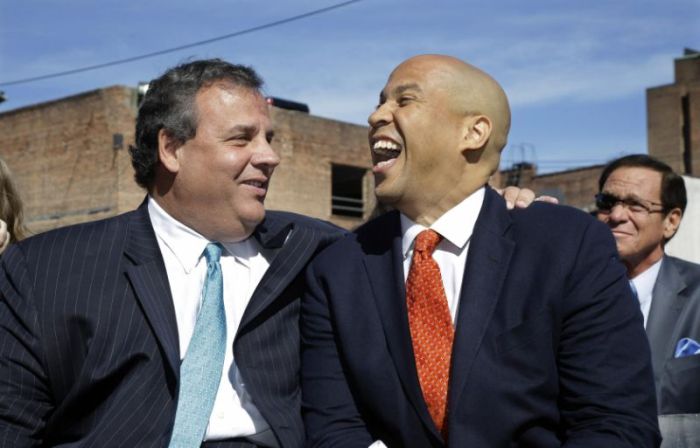
thumbnail_o-cory-booker-chris-christie-facebook


Yet when The Intercept asked all 47 members of the Senate Democratic Caucus to weigh in on the LA Teacher strike and charter school proliferation, only 7 responded.


Rep. Alexandria Ocasio-Cortez, D-N.Y., and Rep. Ro Khanna, D-Calif. have made no bones about the connection. Sen. Bernie Sanders, I-Vt., also expressed support for striking teachers, even tweeting a link to a Jacobin article about school privatization. Though didn’t mention charter’s directly, he has  spoken out about school privatization before, including last year when Puerto Rico announced its plans to open charter schools in the wake of Hurricane Maria.


The problem is that many Democrats won’t go that far. They’ll say they support LA Teachers but won’t admit that school privatization is the cause of their woes. They refuse to take a stand against the billionaire backers of the industry and side with the grassroots parents and children fighting for fully public schools.


However, few go as far as Booker to openly champion the industry.


At least, few Democrats.


Still can’t get enough Gadfly? I’ve written a book, “Gadfly on the Wall: A Public School Teacher Speaks Out on Racism and Reform,” now available from Garn Press. Ten percent of the proceeds go to the Badass Teachers Association. Check it out!

book-1

LA Teachers Strike is About Charter Schools and High Stakes Testing

utla-strike


On Monday more than 30,000 teachers at 900 schools in Los Angeles, California, will be on strike.


And unlike the wave of teachers strikes last year in red states like West Virginia, this time educators are taking to the streets due to the policies of Democrats.


At issue are things like lowering class sizes and providing more nurses, librarians and counselors.


But behind these issues lies one of the most important facts about our country.


When you get right down to it, there is very little difference between many Democratic policymakers and their Republican counterparts.


You think Betsy Devos is the opposite of Arne Duncan? Wrong.


You think Barack Obama is the opposite of Donald Trump? Wrong again.


Though there are differences, those often amount to differences of degree.


Corporate Democrats like almost all Republicans support the same education policies – school privatization and high stakes testing – that are robbing the LA Unified School District of the funding it needs to meet the needs of its students.


THAT’S why class sizes have ballooned to more than 45 students in secondary schools; 35 students in upper elementary grades; and 25 students in lower elementary grades.


THAT’S why the district does not have nearly enough counselors, psychologists or librarians to give students the support they need.


THAT’S why 80% of schools don’t have full-time nurses.


The second largest district in the country has more charter schools than any other. The overwhelming majority of them are operated by corporate chains and have expanded by 287% over the last 10 years.


These are publicly funded but privately run schools. They don’t have to meet the same standards of accountability or transparency about how they spend taxpayer dollars – all while gobbling up $600 million a year!


That is money that parents and community members are forced to pay but about which they have very little say. It’s money that can – and often does – go right into the pockets of charter school operators without providing its full value to the students it was meant help educate. It’s money set aside for all children but given to educate merely a handful of students chosen by those same businesspeople who run these charters because they think these children will be cheaper and easier to educate.


That’s not Democracy. No self-respecting Democrat should support such a thing – but you’ll find luminaries from Obama to the Clintons to Cory Booker who will tell you what a great idea it is. Along with DeVos, Trump, Jeb Bush and the Koch Brothers.


LA Superintendent Austin Beutner is a Democrat, but he’s also a multimillionaire with experience in corporate downsizing and none in education.


According to an op-ed by President of United Teachers Los Angeles (UTLA) Alex Caputo-Pearl published in the LA Times:


“…Beutner has moved ahead with what we believe is his agenda to dismantle the district. Through an outside foundation, he has brought on firms that have led public school closures and charter expansion in some districts where they have worked, from New Orleans to Washington, D.C. This approach, drawn from Wall Street, is called the “portfolio” model, and it has been criticized for having a negative effect on student equity and parent inclusion.”


These are policies in direct opposition to the progressive ideals at the heart of the Democratic Party. They are, in fact, bedrock Republican ideology and demonstrate the vast divide among Democrats.


New Democrats oppose them. Grassroots Democrats oppose them. Democratic voters oppose them. And it will be telling whether the policymakers in our halls of power will follow the lead of the people or try to shepherd the power behind the party into doing what the patricians think best.


That’s why this strike is important way beyond California. Whatever happens will send echoes throughout the country, because school districts from sea to shining sea are facing similar issues.


In the meantime, the LA Unified District has a $1.8 Billion budget surplus it can use to help meet these needs. But the solutions to the district’s woes require a long-term commitment to public education.


Certainly the state of California needs to increase its per pupil spending. It’s the richest state in the country, yet ranks 43rd out of 50 in this regard.


This would help the district raise teacher salaries to match those of surrounding districts.


But the root problem is a lack of ideological support among policymakers.


Too many Democrats inside and outside the district don’t support the very idea of public schools. They’d rather boost privatization.


Too many Democrats support unnecessary and harmful high stakes standardized testing which not only unfairly paints the district as a failure for the poverty of its students but forces out things of real education value like the arts and ethnic studies.


Too many Democrats have no problem doing this in a district that serves a majority of students of color while providing only the best for middle class white kids.


That’s why today the American people stand with the UTLA as they go on strike.


It’s why we always stand with educators – You can’t put students first if you put teachers last.


Democrats need to get their priorities straight.


It’s time to decide if they’re going to continue being Trump lite or reclaim their progressive heritage and rejoin the rest of the nation.


Still can’t get enough Gadfly? I’ve written a book, “Gadfly on the Wall: A Public School Teacher Speaks Out on Racism and Reform,” now available from Garn Press. Ten percent of the proceeds go to the Badass Teachers Association. Check it out!
book-2