School Directors Shouldn’t Double Down on PA’s Keystone Exam Circus 

 
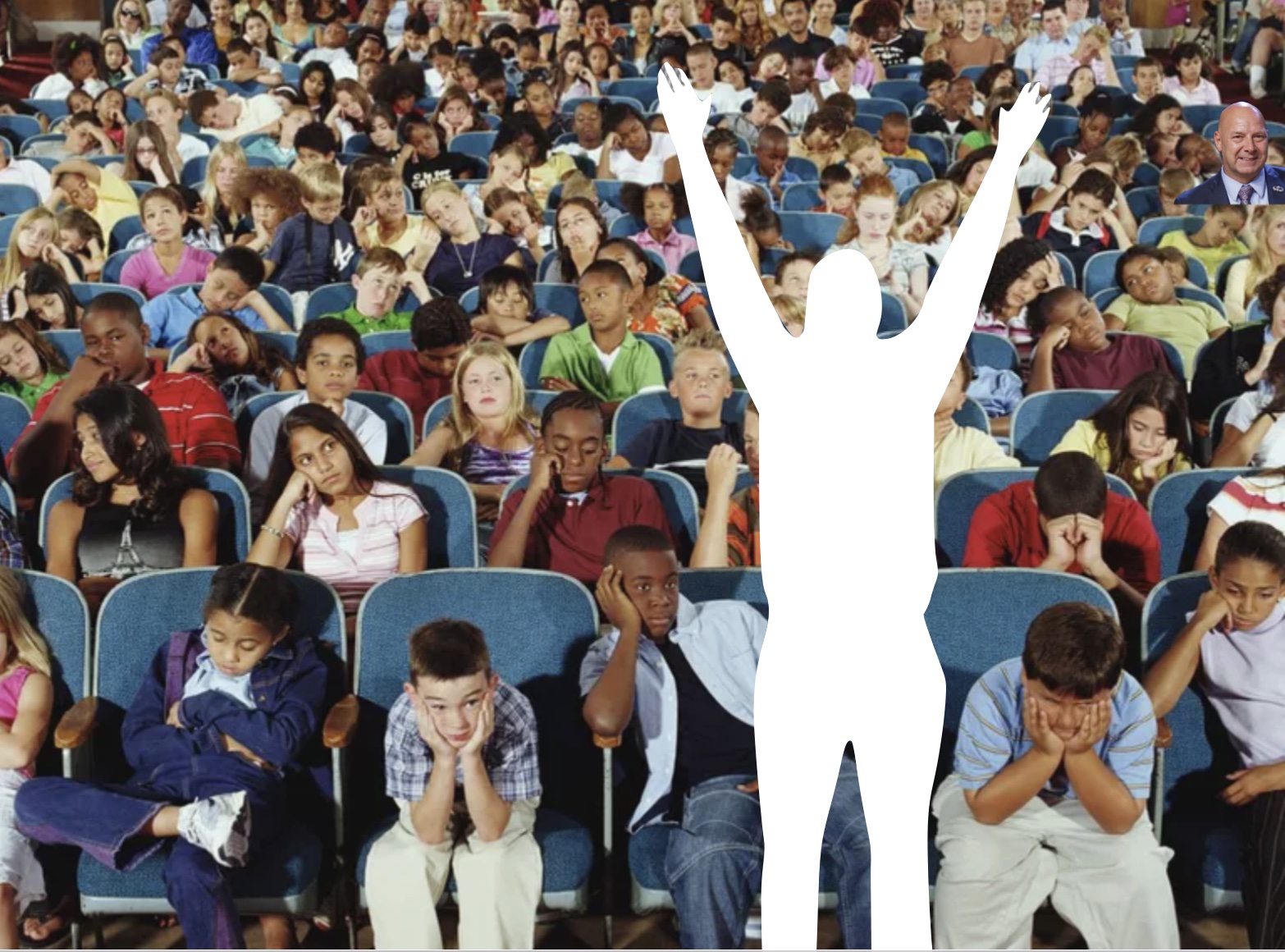
Ladies and Gentlemen, children of all ages, welcome to the Commonwealth of Pennsylvania’s Keystone Exam Circus! 


Here you will see children of 14 to 18-years-old perform death defying stunts just in order to graduate! 


They’ll jump through the flaming hoop of the Algebra I Exam! 


They’ll hop through the spiked hoop of the Literature Exam! 


And they’ll even bound through the nitroglycerine filled hoop of the Biology Exam! 


All this just so they can qualify for a diploma they’ve already earned by passing 12 years or more of coursework


Now isn’t that the greatest show on Earth!!!!!!? 


Apparently, some school directors must think so. Because they’ve decided to force all the students in their districts into the center ring.  


Because as stupid as the state law is – and it is very, very stupid – it doesn’t require all students to pass these tests to graduate. Kids don’t even have to take the tests if they don’t want.  


If they so choose, they may skip one or more of these ridiculous assessments in favor of an alternative


They can take a different test like the SAT, ACT, etc., achieve an industry-based competency certification, successfully complete a service-learning project, or finish an internship or cooperative education program, among other metrics.  


Sure! It’s a glorified fetch quest full of unnecessary complications and anxiety, but it’s better than being forced to pass a cockamamie fill-in-the-bubble corporate boondoggle


Unfortunately some school board members don’t see it that way.  


It’s not that they want to remove this senseless hurdle from students who have already proven they’ve learned the prerequisite skills to graduate. They still want kids to go on a wild goose chase, but they can’t stomach the idea of kids picking their own goose.  


To switch back to the metaphor with which I started this piece, they would rather students jump through the standardized testing hoop – the one made by Data Recognition Corp (DRC), the Minnesota corporation that writes the Keystone Exams and has been gorging on $533 million in Commonwealth tax dollars for the last decade. Not the hoop that pays the College Board or one that – God forbid – doesn’t make a huge corporation any richer.


Why?  


It’s beyond me.  


Maybe they think forcing students down the DRC path will help improve district academics.  


Maybe they love fill-in-the-bubble tests.  


Or maybe they just hate kids…  
 

I don’t know. 


But one thing is certain – the Keystone Exams are a costly mistake the state forces taxpayers to fund and kids to endure unnecessary gatekeeping and narrowed classroom curriculum.  


The whole mess started when the federal government reauthorized its education law formerly called No Child Left Behind (NClB). That law required kids to take standardized tests in middle school and once in high school. When Congress changed the name to the Every Student Succeeds Act (ESSA), it allowed more flexibility in the high school test. It didn’t just have to be a standardized test. The state could pick from all kinds of options. Pennsylvania chose one of almost everything including new standardized tests – the Keystones!

But the state legislature couldn’t decide whether to make it a graduation requirement until just last year.


Students who graduated in May (2023) were the first required to pass these exams or qualify with an alternate assessment, and the data is still out on its full impact. 


A report conducted by The Philadelphia Education Research Consortium estimated that only about one third of city students would meet graduation requirements by passing the Keystone Exams. Specifically, nearly 50 Philadelphia high schools had less than 25% of their students with Keystone proficiency rates sufficient to graduate. The report concluded that some additional percentage of students would graduate with alternate assessments but there was no way to estimate what percentage that would be. Would fewer graduate? The same? More? No one knows yet.  

Given this uncertainty, it’s difficult to fathom why school board members  would want to require tests that may stand in the way of students’ future success. 

This is especially true in districts serving poorer families. 

Kids in wealthier districts almost always do better on the Keystone Exams than those in poorer districts, according to a report by State Auditor General Eugene DePasquale and State Sen. Andy Dinniman

In fact, the report notes that of the 100 state schools with the highest scores, only five were located in impoverished districts —where the average household income is below $50,000. 


Why would any district – especially those serving students with lower socioeconomics – feed kids into such a system, especially when they don’t have to play that game? 


“The Department of Education itself said they [the Keystone Exams] are not an accurate or adequate indicator of career or academic readiness,” Dinniman said. “…These tests have faced opposition from almost every educational organization that exists.” 

He’s right. 

A 2019 report conducted by the state Legislative Budget and Finance Committee found that state educators (both principals and classroom teachers) overwhelmingly disapprove of the state’s standardized tests. That includes the Pennsylvania System of School Assessment (PSSA) tests given in grades 3-8 and Keystone Exams given in high school. Educators think these tests are ineffective, expensive and harmful to district curriculum and students. 

When it comes to the PSSAs, 76% of teachers and 67% of principals said the tests were bad assessments. 


For the Keystone Exams, 60% of teachers and 45% of principals said the tests were ineffective indicators of student achievement. 

 
Both principals and teachers said their curriculum had been narrowed to prepare students for PSSAs and Keystone Exams. Instead of going into more depth on regular classwork or learning new skills, the focus shifts to teaching to the tests. 


Taking the tests also eats up valuable class time. Administering the assessments takes between 5.7 to 8 days for each kind of test – the PSSA and the Keystone Exams, according to principals. 

In addition, the report details the cost of giving these tests. In fiscal year 2017-2018, the state Department of Education paid $42.17 million for these tests.  

This is part of a national trend

“Standardized tests and test preparation have subsequently become big business and that multibillion dollar business continued to grow since the enactment of NCLB and the subsequent enactment of ESSA. According to the Pew Center on the States, annual state spending on standardized tests increased from $423 million before the NCLB (enacted in 2002) to upwards of $1.1 billion in 2008 (to put this in perspective this reflects a 160 percent increase compared to a 19.22 percent increase in inflation during the same time period). A more recent study by the Brown Center on Education Policy at Brooking put the cost at upwards of $1.7 billion in 2011 related to state spending on standardized tests.” 


In just one year (2019) the state paid DRC $17.6 million to administer and score the Keystone Exams, said DePasquale. Between 2015 and 2021, the state spent nearly $100 million on the exams. And if we add in the PSSA, the corporation has collected $533 million from the Commonwealth over the last decade, DePasquale said


Why are some school board members so dead set on making sure we keep paying them?  


Federal law requires some kind of accountability measure before graduation whether it be a standardized test or something else. Why can’t the state simply use classroom grades for this measure? These are the daily assessment of student learning. How does it help students by inserting a corporation to make more money off of taxpayers?  


The whole process is a complicated, unnecessary circus with our kids in the role of trained monkeys spinning plates so big business can slurp up more of our money. 


I hope school directors will begin to understand this and not give in to the standardized testing spectacle. 


It’s time for someone to send the clowns back home. 


Like this post?  You might want to consider becoming a Patreon subscriber. This helps me continue to keep the blog going and get on with this difficult and challenging work.

Plus you get subscriber only extras!

Just CLICK HERE.

Patreon+Circle

I’ve also written a book, “Gadfly on the Wall: A Public School Teacher Speaks Out on Racism and Reform,” now available from Garn Press. Ten percent of the proceeds go to the Badass Teachers Association. Check it out!

Finally! PA Court Rules Unfair School Funding is Unconstitutional! 

Welcome to Pennsylvania, where a common-sense judgement takes 8 years in court


And regressive Republicans respond with more illogical nonsense. 

 
A judge in Commonwealth Court finally ruled this week that the state’s school funding system violates the state constitution.  

 
It took school districts, parents, and advocacy groups banding together to file the lawsuit back in 2014, but it was really kind of a no-brainer. 

It basically comes down to whether you can provide a mountain of funding to rich kids while throwing a few pennies at poor kids.

Spoiler alert: You can’t.

The reason? The state Constitution guarantees a “thorough and efficient system of public education to serve the needs of the Commonwealth” – and cake for rich kids while poor kids get crumbs just isn’t thorough or efficient or meets the needs of the Commonwealth.

The problem is that the state funds schools based heavily on local taxes – so rich neighborhoods can afford to pile on the monetary support while poor ones do the best they can but fall far short of their wealthier counterparts.

If the state paid more of the cost of educating Commonwealth children, this would be less of an issue. But Pennsylvania is 43rd in the country when it comes to the share of revenue for local school districts that it pays.

The result is one of the biggest spending gaps between rich and poor kids in the nation.  

Judge Renée Cohn Jubelirer, a Republican, ruled that this was discrimination. In short

“…the Pennsylvania Constitution imposes upon Respondents an obligation to provide a system of public education that does not discriminate against students based on the level of income and value of taxable property in their school districts… 

The disparity among school districts with high property values and incomes and school districts with low property values and incomes is not justified by any compelling government interest nor is it rationally related to any legitimate government objective…

[Therefore] Petitioners and students attending low wealth districts are being deprived of equal protection of law.” 


Unfortunately, no mention was made in the nearly 800-page ruling of exactly how to fix the problem. 

The trial began in November 2021 and lasted more than three months. You’d think the judge had time to toss off a line or two about what to do next, maybe that it’s up to the state to take up the slack or something.  


But no. 


Which leaves room for right wing creeps like the Commonwealth Foundation to crawl out from under a rock and give their own nonsense solution.


Enter Nathan Benefield, senior vice president of the Harrisburg based conservative and libertarian think tank that pushes for the destruction of any common good – especially public schools


Benefield wrote a response to the ruling praising it for leaving the legislature and executive branch to find a solution, rather than “mandating more money to a broken system.” 

Um, Benefield? Buddy? It’s broken mostly because we haven’t paid to keep it in good repair.

But he goes on…

“The only way to ensure that ‘every student receives a meaningful opportunity’ is for education funding to follow the child. Students that are trapped in their zip-code assigned school — especially in low-income and minority communities — often have no alternatives when their academic or social needs are unmet.” 

So the solution to not having enough money is more choice!?

I can’t afford to buy breakfast. Having a choice between raisin bran and pancakes won’t make a difference. I CAN’T AFFORD EITHER ONE!!!!

If every district received fair funding, it wouldn’t matter what your zip code is anymore. That’s the whole freaking point!

But look for neofacists and libertools to start spouting this kind of rhetoric at every turn now that they can’t hide behind the old excuse that it’s somehow fair to steal poor kids lunch money and give it to rich kids.

The next step is not entirely clear.

Some think it likely that the state will appeal the decision to the Pennsylvania Supreme Court. 

However, they would have a pretty weak case if they did, said Maura McInerney, an attorney for the plaintiffs.

“The record is very, very clear that local school districts are not adequately resourced,” she said. “I think it would be extremely difficult to be successful on appeal.” 

Judge Jubilerer wrote in her ruling that she hoped everyone would work together now to find a solution:

“The Court is in uncharted territory with this landmark case. Therefore, it seems only reasonable to allow Respondents, comprised of the Executive and Legislative branches of government and administrative agencies with expertise in the field of education, the first opportunity, in conjunction with Petitioners, to devise a plan to address the constitutional deficiencies identified herein.” 

It may sound naive, but it’s happened in other states – specifically New York and New Jersey. 

A suit filed in 2014 in New York argued that the state never fully funded a 2007 Foundation Aid program. The program was supposed to consider district wealth and student need in order to create an equitable distribution of state funding. 

The Empire State settled in 2021 and is now required to phase-in full funding of Foundation Aid by the 2024 budget. 

New Jersey tackled the issue way back in 1981. A state court ruled officials had to provide adequate K-12 foundational funding, universal preschool and at-risk programs. 

This made New Jersey the first state to mandate early education. The state also undertook the most extensive construction program in the country to improve the quality of school buildings in impoverished neighborhoods, according to the Education Law Center. 

Could such sweeping reforms be coming to the Keystone state?

“For years, we have defunded our public schools at the expense of our students,” said state Sen. Lindsey Williams (D- 38th district), who is the minority chair of the PA Senate education committee. “[The ruling] is game-changing for our students across the Commonwealth.” 

Sen. Vincent Hughes of Philadelphia, the ranking Democrat on the state Senate’s Appropriations Committee, said the state can afford a big boost in aid to the poorest schools right now because we have billions of surplus dollars in the bank. 

This is exactly what is needed.

During the trial, plaintiffs presented evidence that schools are underfunded by $4.6 billion, an estimate that they said does not account for gaps in spending on special education, school buildings and other facilities. 

 Some organizations like PA Schools Work are calling on legislators to act now by adding approximately $4 billion in Basic Education Funding. They even suggest the increase be at the rate of one billion per year over the next four years to make it more feasible. Finally, they propose this money be distributed through the Fair Funding Formula and the Level Up supplement so that it is more equitably distributed to districts in need.

To make matters even more complicated, the state uses an “outdated” formula to calculate how to allocate school funding.  

The legislature developed a new formula based on enrollment numbers and how much it costs to educate students who are living in poverty, English language learners, or have an Individualized Education Plan (IEP).  However, a large chunk of money isn’t distributed using that new formula.

The way I see it, the Commonwealth has a lot of education funding issues to fix.

Hopefully, this ruling finally means we’ve stopped arguing over whether a problem exists and can start focusing on how to solve it.

That, itself, would be a huge victory!


Like this post?  You might want to consider becoming a Patreon subscriber. This helps me continue to keep the blog going and get on with this difficult and challenging work.

Plus you get subscriber only extras!

Just CLICK HERE.

Patreon+Circle

I’ve also written a book, “Gadfly on the Wall: A Public School Teacher Speaks Out on Racism and Reform,” now available from Garn Press. Ten percent of the proceeds go to the Badass Teachers Association. Check it out!

Will We Even Try to Keep Students and Teachers Safe from Gun Violence? Or Just Keep Preparing for the Worst?

“Teachers, we are operating on a lockdown. Please keep your doors locked until we tell you it has been lifted.”

Before me a sea of wide eyes and scared faces.

I slowly walked toward the door continuing the lesson I had been giving before the announcement. The door was already shut and secured but I nonchalantly turned the extra deadbolt.

“Click!” it sounded like a gunshot across the suddenly silent room.

I continued talking while making my way back to the blackboard pretending that nothing out of the ordinary was happening.

That’s just life in the classroom these days.

According to Eduction Week, there have been 38 school shootings in the US this year resulting in injuries or deaths. That’s up from 34 last year and the highest it’s been since the media source began tracking such things in 2018.

During the height of the Covid-19 pandemic, there were only 10 such shootings in 2020, and 24 each in 2019 and 2018.

That comes to a total of 130 school shootings in the last five years.

“Mr. Singer, can I go to the bathroom?” DeVon asked.

“I’m sorry,” I said. “We’re still under lockdown. I’ll write you a pass as soon as it’s lifted.”

It seems like nowhere is safe.

Three of this year’s shootings were in my home state of Pennsylvania.

The first was on January 19 at Pittsburgh’s Oliver Citywide Academy, a special education school.

A 15-year-old boy waiting in a van to go home was shot and killed after at least one person opened fire outside the school.


The second was on April 5 at Erie High School. A 16-year-old student was shot and injured at the school.

The third was on Sept 27 at Roxborough High School in Philadelphia.

A 14-year-old student was killed and four others wounded (ages 17, 15, 14, and 14) in a shooting near the high school athletic field after a football scrimmage.

“Mr. Singer, what’s happening?” Olivia asked.

I turned to her confused at first then I realized what she meant.

“The lockdown? Let me check my laptop. No…. Nothing. I really don’t know, Honey. But I’m sure whatever it is, it will be over soon. Why don’t you get back to the assignment?”

“Okay.”

Such violence isn’t limited to schools.

On Sept 24 three people were shot in Kennywood Park, a popular amusement park in West Mifflin.


Two years ago in September a 15-year-old boy was killed and another was wounded in a shooting at the Haunted Hills Hayride in North Versailles.

In 2020 a man was shot and killed at Monroeville Mall. In 2015, a 17-year-old entered the men’s department on the lower level of Macy’s department store in the evening and shot his intended target and two bystanders, leaving two with critical injuries.

Is there anywhere safe anymore?

You can’t go to the mall. You can’t go on a haunted hayride. You can’t go to an amusement park.

I had students who were hiding in the mall during the 2015 shooting. My daughter wasn’t involved in any shootings but she went to Kennywood this summer.

Where does it stop?

Why are we doing so little?

A few weeks ago my school had another active shooter training for teachers while the students, thankfully, had a day off.

Every few years we do this. Teachers huddle in classrooms and try to react to a shooting scenario. We either barricade ourselves in our classrooms or try to find an escape route. We help train police and local medical personnel.

At this years training, teachers were given a talk by a law enforcement “expert” who regaled us with his time working as a Blackwater mercenary in Afghanistan. He told us how difficult it was to make decisions under fire but that sometimes you had to make the hard decisions.

“Some of you teachers have kids in wheelchairs in your classrooms. You think you’re going to get your whole class out of the building and to safety!? You have to ask yourself, how are you going to get that kid in the wheelchair out? What are you going to do if a child flips out or is too scared to move? I know it’s not nice to think about, but sometimes you have to make decisions that will save the most people – not necessarily everyone.”

It made me want to vomit. But he wasn’t telling me anything I didn’t already know.

I like to believe I’d pick the child up out of his wheelchair, throw him over my shoulder and carry him to safety. I hope I could calm down a child having a panic attack and whisk her out of the building.

But could I really? Alone?

We do everything we can to prepare ourselves in case something like this happens – but as a society we do nothing – NOTHING – to prevent shootings from happening in the first place.

Where’s increased gun regulations to make sure these weapons aren’t getting into the hands of criminals or the mentally unstable?

Where are bans on assault weapons and other weapons of mass destruction and war?

Where is increased liability for those recklessly selling firearms?

Where is anything we could be doing to make our schools, malls and places of entertainment safer?

“Mr. Singer, I really have to go to the bathroom.”

“You can’t hold it just a little longer, DeVon?”

“No,” he said hoping from foot to foot.

“Number 1 or number 2?”

He giggled and held up one finger.

I reluctantly pointed to the trash can.

“Take it over there to the corner. I’ll stand in front of you so…”

“Attention teachers! The lockdown has now been lifted. You may continue as normal.”

I sighed, unlocked the door and wrote DeVon a bathroom pass.

We never did find out what triggered the lockdown. One time it was a gunshot in the surrounding neighborhood. Another time it was an unauthorized adult seeking access to the building.

It could be much worse. And it will happen again.

The chances of it being a school shooter are low.

The chances of myself or my students being hurt or killed is even lower.

But it’s still too high.

Living under the constant shadow of this threat is creating a trauma that we’ve given up trying to solve and just call normal.

It is unacceptable.

We need to do more.

Not just on the days when one of these tragedies strike – but every day.

It is not safe for students and teachers – it will NEVER be completely safe, but it can be safer.

That’s the point – how safe can we make it?

And why aren’t we doing anything to reach that goal other than preparing for the worst?


Like this post?  You might want to consider becoming a Patreon subscriber. This helps me continue to keep the blog going and get on with this difficult and challenging work.

Plus you get subscriber only extras!

Just CLICK HERE.

Patreon+Circle

I’ve also written a book, “Gadfly on the Wall: A Public School Teacher Speaks Out on Racism and Reform,” now available from Garn Press. Ten percent of the proceeds go to the Badass Teachers Association. Check it out!

What my PA Public School Classroom Would Look Like under Gov. Doug Mastriano

Just one teacher. And 33 kids.

That’s what my classroom would look like if Pennsylvanians vote for Doug Mastriano as our next governor.

The Republican state representative wants to slash education budgets in half – yes, IN HALF!

And that means doubling class size – at least.

Honestly, I don’t know how we’d cram all the desks in the room. I can barely fit 15 in there now.

Where would we put the books, computers and cabinets? The students, alone, would be wall-to-wall.

Just imagine that many middle school kids stuffed into the room arguing about who’s touching who and which classmate stole their pencil or book. Not to mention the children striving to get my attention to solve disputes, get help with classwork, ask permission to use the bathroom – and a thousand other issues!

I’d try my best to meet their needs but under Mastriano we just wouldn’t have the resources we used to have.

For example, there’s no way we could afford a school nurse at each building like we have today. We’d be lucky to have one nurse for all four buildings in the district – elementary schools, middle schools and the high school. If a student feels sick, there’s not much I could do except send the child to the office to try to call home and get a parent or guardian to pick the kid up early. And if the parents can’t make it, just let the kid put his or her head down?

What if the issue’s more psychological? There might be a school counselor somewhere in the district so a student can talk out an issue he or she is having – perhaps conflict resolution with a former friend, discuss peer pressure to try drugs or maybe deal with suicidal thoughts. But there’s probably a long waiting list to see this mythical counselor. Hopefully, the problem is not too urgent.

I feel especially bad for the special education students. Aides would be almost non-existent so many kids with special needs would have to struggle through issues with which we’d normally help them. All the individual Education Plans (IEPs) would have to be rewritten to take this new normal into account.

Even lunch would be disrupted. After all, there would be fewer cafeteria workers so it would be harder just to cook a hot meal and make sure it gets onto a tray in time for students to eat it.

There’s no doubt about it.

My classroom would be very different if Mastriano wins the gubernatorial election in November.

The former US Army Colonel who participated in the January 6 insurrection proposes slashing education funding from $19,000 on average, per student, to $9,000.

According to an analysis by the Pennsylvania State Education Association (PSEA), the plan would mean a 33 percent overall cut in public school revenue, or a $12.75 billion loss. It would require approximately 118,704 layoffs – 49 percent of all employees in schools around the state.

At my district of Steel Valley in Munhall on the western side of the Commonwealth, the situation probably would be much like I described.

I can’t imagine how any teacher could adequately tend to double the students, but I might not have to imagine it.

I’d probably be laid off.

More than half of Steel Valley’s staff would be out of a job – 92 of our current 172 school nurses, counselors, aides, cafeteria workers and teachers would be looking for work.

And that’s just where I’m employed.

Things would be even worse for my daughter where she attends McKeesport Area School District.

According to PSEA estimates, the nearby McKeesport district would lose 281 of 521 staff – a 54% reduction. Classes would go from an average of 17 students to an average of 46. That’s an increase of 29 students per class!

How can she learn in that kind of environment!? She isn’t in college yet. She isn’t in some University of Pittsburgh survey class that meets in an auditorium. She’s in middle school!

But it would be pretty similar at public schools, charter schools, career and technical centers and intermediate units across the state.

From one side of the Commonwealth to the other, we’d go from 239,902 staff to 121,198. Class size would go from an average of 16 students per class to 33. That’s an increase of 17 students per class or 109%.

However, the PSEA estimate is actually a best case scenario for Mastriano’s proposal.

Like so many wannabe big time policymakers, he is very light on the details of how we would educate the state’s 1.7 million students. This whole proposal was just something he blurted out during a March 2022 WRTA radio interview.

It’s his plan to completely eliminate local school property taxes. Funding would be provided directly to parents via “Education Opportunity Accounts,” and families could then decide whether they want a public, private, charter or home school option.

To go from a statewide average funding level of $19,000 a student to $9,000 a student requires a cut of $17.6 billion, or 53%.

But if the remainder isn’t being paid by property taxes, that’s a roughly $15.3 billion a year expenditure by the state that used to be paid by local property taxes. Where is he getting that money from? And if the state can afford to pay that much, why not just pay the full $19,000 per student and make none of these unnecessary cuts? Or why not just pay half and reduce property taxes by that much? Mastriano is not exactly forthcoming on any of this.

PSEA admits that to come up with its own estimates of the damage the organization filled in a few details. The union assumes the state would fully fund the $9,000-per-student voucher and leave other local non-property taxes and federal revenues untouched.

That might not happen. We could be looking at an even more draconian situation.

The biggest question the PSEA is sidestepping is the impact of allowing taxpayer dollars to fund so many different types of schooling.

Even under Mastriano’s plan, nontraditional educational providers like charter schools would suffer because like traditional public schools they would be receiving less funding from the state than they do now. And parents using their vouchers to pay for private schools for their children would still have to make up a pretty big gap between the amount of the voucher and the cost of private school tuition.

However, since traditional public schools serve the overwhelming majority of the state’s students, they would take the biggest hit financially. If more parents use their voucher to pay for private, charter or home schools, that’s less funding for our public school system. That means even greater cuts to student services and more staff layoffs.

Moreover, what if parents use the voucher for a fly-by-night educational option that doesn’t meet it’s obligations?

For example, according to reports by the Network for Public Education, about half of all charter schools close in 15 years. And 27% close in five years.

And when it comes to charter schools that took federal funding, 12% never even opened. They just gobbled up the cash with nothing to show for it.

What will happen to students whose parents lose their vouchers in schools like these? Who will pay for these kids to be educated? Or will they have to go without?

And when it comes to private schools, does Mastriano mean only secular private schools or does he include parochial schools? Will your tax dollars be used to pay for students religious education?

And what about the curriculum at these private schools or some home school programs? Many use texts published by Bob Jones University Press, Accelerated Christian Education, or A Beka.

The books are riddled with counter factual claims and political bias in every subject imaginable such as abortion, gay rights and the Endangered Species Act, which one labels a “radical social agenda.” They disparage religions other than Protestant Christianity and cultures other than those descended from White Europeans.

They teach that humans and dinosaurs lived at the same time, some dinosaurs survive into the present day (i.e. the Loch Ness monster), evolution is a myth disproved by REAL science and homosexuality is a choice.

Teaching these things in school is not just educational malpractice, it’s exactly the kind of indoctrination the right is claiming without evidence happens at public schools.

If someone wants to pay for such an education out of their own pocket, that’s one thing. But to ask taxpayers to fund such propaganda is something else entirely!

Thankfully, Pennsylvania voters don’t have to accept this. Not yet anyway.

There are still more than three months before the election. Voters can choose the Democratic gubernatorial candidate Josh Shapiro. He has promised to INCREASE education funding and not just blow up the whole system.

To see an interactive map of how Mastriano’s education cuts would affect your school district, click here.

For now this is only a bad dream. We still have time to wake up and vote accordingly.

Students should not have to submerge themselves in a sea of classmates and hope the teacher will have time to educate them.

We should cut class size, not increase it.

We should hire more teachers, not rely on a skeleton crew.

We should invest in education, not sell off our future for a fast buck today.


Like this post?  You might want to consider becoming a Patreon subscriber. This helps me continue to keep the blog going and get on with this difficult and challenging work.

Plus you get subscriber only extras!

Just CLICK HERE.

Patreon+Circle

I’ve also written a book, “Gadfly on the Wall: A Public School Teacher Speaks Out on Racism and Reform,” now available from Garn Press. Ten percent of the proceeds go to the Badass Teachers Association. Check it out!

Will PA Schools Ask Parents to Oversee CDT Testing at Home?

Should parents be asked to administer on-line tests to their own children at home?

Back in May someone at Data Recognition Corporation (DRC) had an idea.

Since a global pandemic had shuttered classrooms, no children were being forced to take the multi-billion dollar testing company’s products.

Federally mandated assessments like the Pennsylvania System of School Assessments (PSSA) and Keystone Exams – which are made by DRC – were cancelled.

And local districts weren’t even making students take assessments like the Classroom Diagnostic Tools (CDT) – an optional test to determine if kids were ready to take the mandatory tests.

If someone at DRC didn’t act quickly, the Commonwealth might ask for a refund on the $1.3 billion it spent on standardized testing in the last eight years.


 The Minnesota-based DRC, a division of CTB McGraw-Hill, wasn’t about to issue any refunds.

So someone had to figure out a way to keep children testing even though they were currently at home sheltering in place.

But that’s it!

Tests like the CDTs are taken online anyway. Theoretically, kids could access them in their own homes, they just need someone to help them sign in, navigate the Web portal and make sure they aren’t cheating.

Normally, that would be the job of classroom teachers, but educators can’t do that AND have students test at the same time.

During the pandemic with most schools shuttered, teachers only communicate with students remotely – through applications like video conferencing sites such as Zoom. If teachers proctored the tests, too, that would require students to take the tests on one Web accessible device and have the teachers communicate with them on another.

Can you imagine a child taking a test on her iPad while participating in a Zoom meeting on her cell phone? If she even had both devices? And the bandwidth to run both simultaneously?

That’s where parents come in.

Students can test on their computers or devices with their parents, in-person, troubleshooting and monitoring their behavior.

Thus, a truly stupid idea was born.

To my knowledge, not a single district in the Keystone state has yet taken advantage of this scheme.

And why would they?

Even the most data driven local administrator or test obsessed school director knows that a sure way to infuriate parents is to ask them to do something that is essentially the school’s job.

Moreover, in these difficult times, parents have their hands full just keeping food on the table. If they can somehow get their kids to log in to their online classes every day, that’s a plus. If they can get their kids to actually turn in the assignments, it’s a miracle.

But to add proctoring a test on top of everything else!? Districts would have to be nuts to even try!

However, DRC and the state Department of Education aren’t giving up.

As an increasing number of schools go on-line, the state extended the program through the 2020-21 school year, and some districts are actively considering it.

Here’s how it’s supposed to work.

Classroom teachers would provide parents with testing materials including a log-in ticket for each child in the home taking the test. Students would have to access the test online through the Chrome Internet browser. Then they’d have to copy and past the URL into the browser (which would be provided in the testing materials), and input their usernames and passwords.

Normally, the test is given in writing, science and math, has 50-60 questions and can last between 50 and 90 minutes. However, DRC is recommending districts give a new shorter version of the assessment that has 15-18 questions and can last between 20-30 minutes (10-20 minutes longer for the reading test).

During this time, you should watch your children as they take the tests. It is up to you to make sure they aren’t copying down any information from the test or cheating.


 You can let your child have scratch paper, highlighters and calculators. But no preprinted graphic organizers, cell phones, dictionaries, thesauri, grammar or spell checkers, other computers or devices.

And if you have any technical issues, DRC wants you to know the company has your back. Meaning that they can’t and won’t help – call your local school district.

Here’s what DRC’s Parent/Guardian Test Administration Guide recommends for technical support:

“If technical issues arise during testing, parents/guardians are asked to contact the student’s teacher and/or the student’s school office for technical support. DRC customer service staff cannot directly support issues related to each home’s technology configurations.[Emphasis mine.]


 And this is true even if the test, itself, directs parents to contact the corporation:

“If a student receives an error message during the test administration that includes instructions to contact DRC for technical support, the parent or guardian who is assisting with the test administration should contact the student’s teacher or school office for additional instructions. Parents or students should not attempt to contact DRC’s customer service directly for technical assistance.

Teachers and/or a school’s technology staff will have the information needed to provide parents/guardians with the level of support to resolve most technology issues. If additional support is required, a school or district representative will reach out to DRC to determine a resolution.”


 However, technical problems are never much of an issue with the CDT – and by “never” I mean ALWAYS.

In the past five years that I’ve given the test to my students in the classroom, they are routinely kicked off the program, have trouble accessing it, and their answers are not always counted, requiring them to re-enter inputs numerous times.

Taking this test remotely is certain to put quite a strain on districts since these technological problems will occur not as they normally do within school buildings but potentially miles away in students’ homes.

Let’s be honest – this plan will not work well.

Few students will be able to take the tests and finish.

Of those that do, even fewer will give it their best effort outside of a classroom setting. In fact, there is no quicker way to turn off a student’s curiosity and motivation to learn than sitting them down in front of a standardized test.

Of those that do somehow manage to finish and score well, there will be no certainty that they didn’t cheat.

Many of my students have secondary electronic devices like cell phones that they use in addition to their iPads. In fact, that’s a part of my remote classes.

I often have them play review games like Kahoot where the questions are displayed through their Zoom screens and they input the answers on their cell phones.

A significant percentage of students will inevitably use these secondary devices to define unknown vocabulary, Google facts and anything else to get the right answers – if they care enough about the results.

In my own remote classes, tests are designed to either assess student skills or access information they already compiled in-class on several study guides which they are encouraged to use during the test. In short, cheating is more work than paying attention in class.

These CDTs will not be like that at all. The scores will be completely worthless – more so than usual.

And few parental proctors will be able to fully comprehend, control or participate in the process.

So why not just skip parents and have classroom teachers proctor the tests through Zoom?

Because of the physical distance involved.

On video conferencing sites, teachers can only see what their students are doing if the kids turn their cameras on. They rarely do.

And even if kids DO turn their cameras on, they have complete control over what those cameras are pointed at, how long they stay on, etc.

It would not take a very enterprising student to cheat while a teacher tried to monitor 20 students online at the same time.

So why not wait until in-person classes resume?

Because it is entirely uncertain when it will be safe to do so given rising infection rates across the country.

However, even if it were safe, most schools are running way below capacity and with hybrid schedules. Students have shortened periods or attend on alternate days. Giving a standardized test under these conditions would be piecemeal, disjointed, discourage kids from even attending school and eat up a tremendous amount of very limited class time.

It would be like taking a dehydrated person’s blood instead of giving him a drink of water.

No matter how you look at it, this is a project designed to fail.

Because it is not about academics. It is about economics.

This is about DRC saving its bottom line. That’s all.

And any administrator or school director who can’t see that is incredibly naive.

Why take these tests at all? Especially during a global pandemic?

We already know students are struggling.

Many are checked out and don’t participate in the remote instruction being offered. And many of those who do participate are having a hard time learning without as much social interaction and hands on activities.

We should be focusing on ways to improve remote instruction. We don’t need a standardized test to tell us that. We certainly don’t need a test before the test.

Most districts use CDT data to place kids in their classes the following year. Kids with high test scores are put in advanced classes, kids with low scores in remedial classes, etc.

We already have daily assessments of how kids are doing. They’re called classroom grades. We don’t have to halt all instruction to allow some corporation to take over for days at a time.

Parents should call their local administrators and school directors and demand the CDTs not be given this year.

In fact, not only should the CDTs not be given this year – they should not be given at all – any year. They’re a total waste of time that dampen kids curiosity and drive to learn.

Moreover, the federally mandated tests (in the Commonwealth, the PSSAs and Keystone Exams) should be cancelled again this year for the same reasons. In fact, they should be abolished altogether.

This is another reason why corporate education reformers have been so adamant that schools remain open during the pandemic. Remote learning means increased difficulty in giving standardized assessments. It’s not that pro-testing fanatics value schooling so much – they don’t want to have to go another year without testing companies making huge profits giving these assessments.

The worst school policies are driven by economics, not academics.

And that’s what we have here, too.

So will any district be stupid enough to attempt to save DRC by sacrificing students and parents?

Only time will tell.


Click here to see DRC’s Parent/Guardian Test Administration Guide

Click here to see DRC’s CDT Public Browser Option – Test and Technology Setup Guidance


Like this post?  You might want to consider becoming a Patreon subscriber. This helps me continue to keep the blog going and get on with this difficult and challenging work.

Plus you get subscriber only extras!

Just CLICK HERE.

Patreon+Circle

I’ve also written a book, “Gadfly on the Wall: A Public School Teacher Speaks Out on Racism and Reform,” now available from Garn Press. Ten percent of the proceeds go to the Badass Teachers Association. Check it out!

Gov. Wolf, You Can’t Shirk Your Duty to Close PA Schools During the Pandemic

Schools-Tour-2-1024x683


“The Buck Stops Here!”


President Harry S. Truman famously displayed a sign on his desk saying exactly that.


It indicated that he didn’t pass the buck but accepted responsibility for the way the country was run.


What does it say on your desk, Gov. Tom Wolf?


Your latest Tweets don’t fill Pennsylvania residents with confidence:


“There are widespread rumors that I will soon be announcing a statewide school building closure or cancelling classes this fall. I want to be clear: I am not closing school buildings or cancelling classes.”


“School governing boards and administrators will determine if school buildings reopen and if classes resume in person, remotely, or a combination of the two. The best way to find out about these local decisions is to contact your school’s governing board or administration.”


Screen Shot 2020-07-31 at 2.28.51 PM

 
Well, that’s two things you now have in common with President Donald Trump.


First, you’re making policy by Tweet.


Second, you are side stepping your obligations.


“I don’t take responsibility at all,” Trump said when asked about his administration’s inability to test Americans for the Coronavirus during the outbreak.


That’s what you sound like today.


COVID-19 cases have been spiking throughout the Commonwealth since early June – especially in Allegheny, Philadelphia, Delaware and Montgomery counties.


Today in Allegheny County, where I live, the Health Department reported the second highest increase in new cases – 244.

 
That is the most new cases in the state. Philadelphia comes next with 130 new cases. Together, these two counties make up more than 38% of the state’s new COVID-19 cases.


And yet we have school directors looking at this same data and making different decisions.


In the Pittsburgh region, school boards at East Allegheny, Woodland Hills and Wilkinsburg districts have all decided to reopen schools with classes completely on-line – at least to start. Meanwhile, in neighboring districts like McKeesport Area School District and Steel Valley School District, they are moving forward with hybrid plans that incorporate on-line and in-person classes in the physical school buildings.


And those are the outliers.


The majority haven’t made decisions yet complaining of a lack of safety guidelines from the county and a lack of direction from you, the governor.


You don’t get to decide what schools teach or how local communities make educational decisions.


But whether school buildings physically reopen or not during a pandemic is not an educational decision. It is a public safety decision.

 
Back in March when the virus started spreading throughout the state, you choose to close down businesses and schools.


As chief executive of the state, you had an obligation to do that.


It’s a crying shame that many in government have politicized every aspect of this disaster and the response to it.


I know you have taken a lot of criticism from Republicans trying to score points off your quick and sound judgement in this matter. They call you a tyrant because you did what every previous governor has done during a statewide disaster – you made decisions to safeguard lives.


Nothing has changed. If anything, there are significantly more cases reported every day now than in March.


If schools needed to be closed to in-person classes and education needed to be conducted on-line back then, that is still true today.


Perhaps this doesn’t have to be statewide. Perhaps it can be decided county-by-county. But you need to work collaboratively with county officials and school boards to coordinate the response to the virus.


Otherwise, there inevitably will be outbreaks at schools that reopen to in-person schooling. And since most districts are not separated by wide open spaces and residents frequently travel between them to buy groceries or other necessities, those outbreaks will spread.


A district that wisely decides to keep children 100% online will be susceptible to infections from residents in neighboring districts and bring those infections home.


This is not the responsibility of local school directors. It requires an authority that goes beyond the neighborhood and provincial decision making.


This is YOUR responsibility.


Frankly, the federal government, too, should be playing a larger role to help coordinate state responses. After all, the virus is not limited by state lines either.


But just because this President has neglected his duties, that does not give you the right to do the same.


If you refuse to make this decision, many more people will get sick from COVID-19 than would otherwise. Many more people will eventually die.


These are teachers, mothers, fathers, grandparents, and – yes – even children.


You can do something about that.


You have a responsibility to do something about it.


Do your duty.


Like this post?  You might want to consider becoming a Patreon subscriber. This helps me continue to keep the blog going and get on with this difficult and challenging work.

Plus you get subscriber only extras!

Just CLICK HERE.

Patreon+Circle

I’ve also written a book, “Gadfly on the Wall: A Public School Teacher Speaks Out on Racism and Reform,” now available from Garn Press. Ten percent of the proceeds go to the Badass Teachers Association. Check it out!

book-3

Good News: Harrisburg is Not Cutting Education Funding! Bad News: Handouts for the Rich & Charter Schools

Screen Shot 2020-05-30 at 4.08.07 PM


If you live in Pennsylvania, you can breathe a sigh of relief now that the legislature has passed a stopgap budget that does not cut education funding.


But you can let out that breath in a cry of disgust when you see where much of that money is going and how many underprivileged kids will be left wanting.


GOOD NEWS


With the economy in tatters due to the Coronavirus pandemic, the state legislature never-the-less passed a budget this week providing flat funding for most state programs for five months.


The major exception is public schooling. That has been fully funded for the entire year.


So for 12 months, there will be no state cuts to basic and special education or block grant programs for K-12 schools. Nor will there be state cuts to pre-kindergarten programs or colleges and universities receiving state funding such as community colleges.


That’s really good news in such uncertain times.


School directors can get their own financial houses in order for 2020-2021 without wondering whether the state is going to pull the rug out from under them.


In any other year, flat funding would be a disappointment though.


Public schools have basically three revenue streams – the federal government, the state and local neighborhood taxpayers.


The federal government pays about 10% of the cost across the board. The problem in Pennsylvania is that the state isn’t meeting its obligations thereby forcing local neighborhoods to shoulder most of the costs.


Pennsylvania state government pays a ridiculously low percentage of the bill – 38%.  That’s the 46th lowest in the country. The national average is 51%.


In rich neighborhoods, the local tax base can pick up the slack. In middle class neighborhoods, they can try. But poor communities end up relying more on the state to help or else their kids (who already have greater needs growing up in poverty) have to do without.


Last year, Democratic Gov. Tom Wolf was able to increase funding for K-12 schools by $160 million, $50 million more for special education and $25 million for Pre-K programs.


Even this victory was a baby step to healing the billions of dollars looted from our schools during Republican Tom Corbett’s administration which has never been fully replaced or outpaced with increased inflationary costs.


Flat funding is great in a time of a global pandemic.


But in the broader view, it still shirks our duties to subsequent generations.


BAD NEWS


The 2020-21 state budget also includes $200 million in one-time funds to help districts pay for additional costs incurred during the Coronavirus crisis.


This includes the price of new technology to allow for distance learning, as well as deep cleanings in school buildings, new materials, remodeling, etc.


This money includes $150 million received from the federal government’s CARES Act and $50 million from state taxpayers.


That’s good news. Districts need extra money to help with unforeseen costs during this health crisis.


Unfortunately, this money is not being allocated by need.


Those with greater problems are not given more money to deal with them. Instead, the money is being divided nearly evenly.


If you think that’s fair, imagine dividing $10 so a rich person, a middle class person and a poor person could get lunch. They’d each get $3 and change. The poor person can eat off the dollar menu at a fast food restaurant. The middle class person can use it to pay for tip at a sit-down restaurant. And the rich person can light his cigar with it on the way to a fine dining establishment.


In the case of theCOVID-19 stimulus money, each school district will get a minimum of $120,000 while each intermediate unit, career and technical center, charter school, regional charter school and cyber charter school gets $90,000. If there is any money left over, those funds will be distributed to school districts based on 2018-19 average daily membership.


However, why should cyber charter schools receive this money at all? They don’t have any extra costs for transitioning to distance learning. That is their stock and trade already. Moreover, they don’t have buildings that need deep cleaning or remodeling. This money is a no strings gift to such enterprises while other educational institutions go wanting.


Moreover, brick and mortar charter schools almost always serve smaller student populations than authentic public schools. Why should they receive a flat $90,000? Wouldn’t it be better to given them a portion of this money based on the number of students they serve and the degree of poverty these kids live in?


In fact, wouldn’t it make more sense to do the same among authentic public school districts, too? Why should a rich district where almost everyone already has wi-fi and personal technology devices get the same as a poor one where these services are much less widespread? Why should the state give the wealthy as much help as those who can’t meet their basic obligations to children without it?


It’s not like the Commonwealth doesn’t already have a measure to allocate funding more fairly. The legislature passed a bipartisan Basic Education Funding formula that we could have used to ensured districts would have received funding proportionate to the needs of their students.


The fact that the legislature neglected to use it here shows too many in the Republican majority are not committed to equity. In fact, they revel in being able to bring unnecessary money to their wealthier districts.

THE COMING STORM

 
These measures from the state legislature are a start at addressing the financial impact of the 
Coronavirus crisis.


But the worst is yet to come.


Across the nation with the inevitable loss of taxes after shutting down the economy to save lives during the global Coronavirus outbreak, local districts are bracing for a 15-25% loss in revenues next fiscal year.


In Pennsylvania, districts anticipate $850 million to $1 billion in revenue shortfalls.


That could result in massive teacher layoffs and cuts to student services just as the cost to provide schooling increases with additional difficulties of life during a worldwide pandemic.


The state legislature can’t fix the problem alone.


The $13.5 billion in CARES Act stimulus provided to states is a fraction of the $79 billion that the federal government provided during the Great Recession. U.S. Congress needs to step up federal aide to protect our children and ensure their educations aren’t forfeit for economic woes they played no part in causing.


At the same time, Harrisburg can do more to stop giving handouts to educational entities that don’t need or deserve it thereby freeing up that money to patching holes in funding streams to local districts.


At the top of the list is charter school funding reforms already proposed by Gov. Wolf.


It is way passed time to end gross overpayments to cyber charter schools and eliminate all charter schools ability to profit off of students with disabilities. Gov. Wolf estimates this would save districts more than $200 million while stopping wasteful spending by charters on advertising and other things that should not be bankrolled by taxpayers.


Another way to generate extra money is to stop letting businesses and the wealthy cut their own taxes to support private and parochial schools.


The Educational Improvement Tax Credit (EITC) program allows people and businesses to donate their expected tax bill to the state for the purpose of helping parents pay off enrollment at a private or religious school for their children. Then these same people or businesses get between 75-90% of that donation back.


So if your tax bill is $100 and you donate $100, you can get back $90 – reducing your total tax bill to a mere 10 bucks.

Heck! Since this money is classified as a “donation” you can even claim it on your taxes and get an additional refund – even to the point where you end up making money on the deal! Pennsylvania even allows a “triple dip” – so you get the EITC tax credit, a reduction in your taxable income, and a reduction in your federal taxable income. We actually pay you to shortchange us on your taxes!

Now I’m oversimplifying a bit since you can only use the EITC for up to $750,000 a year, but it’s still a sweet deal for those who take advantage of it.


Meanwhile, this is less money for the rest of us to pay for much needed services. We lost $124 million in 2018-19, alone, to this program. Yet the legislature still voted to increase the program by $25 million last year.


We cannot afford to give away hundreds of millions of dollars annually to private and parochial schools while our authentic public schools which serve more than 90% of our children are underfunded.


And this doesn’t even address the blatant unconstitutionality of the program which, itself, is an obvious workaround to the separation of church and state!


It’s high time we closed this and many other loopholes that allow unscrupulous people and businesses to get away without paying their fair share.


Societies only work when everyone pulls their weight.


The commonwealth will only weather this storm if we stop the fiscal shenanigans and pull together for the benefit of all.


We are all being tested here.


Will Pennsylvania pass or fail?


Like this post?  You might want to consider becoming a Patreon subscriber. This helps me continue to keep the blog going and get on with this difficult and challenging work.

Plus you get subscriber only extras!

Just CLICK HERE.

Patreon+Circle

I’ve also written a book, “Gadfly on the Wall: A Public School Teacher Speaks Out on Racism and Reform,” now available from Garn Press. Ten percent of the proceeds go to the Badass Teachers Association. Check it out!

book-4

Pennsylvania Wants YOU to Give Standardized Tests to Your Kids at Home

Screen Shot 2020-05-23 at 1.23.46 AM


A multi-million dollar corporation wants to make sure Pennsylvania’s children keep getting standardized tests.

 
Data Recognition Corporation (DRC) and the state Department of Education are providing the optional Classroom Diagnostic Tools (CDT) assessments for use in students’ homes.


Students are not required to take the CDT in the Commonwealth unless their district decides to give it. The test is encouraged by the state as a way of telling how students will do on the required tests.

 
With this new option, parents finally can give multiple choice standardized tests to their own children on-line.

 
Which is kind of hilarious because no one really asked for that.

 
In fact, many parents, teachers and students breathed a sigh of relief when the requirement that students take high stakes assessments was waived this year nationwide.

 
With the Coronavirus pandemic closing most school buildings and students transitioning to on-line classes created from scratch by their teachers, there hasn’t been much time for anything else.

 
But the folks at DRC, a division of CTB McGraw-Hill, have been busy, too.

 
The Minnesota-based corporation sent out an email written by Matthew Stem, Deputy Secretary of Elementary and Secondary Education at the Pennsylvania Department of Education (PDE) to district contacts from Pittsburgh to Philadelphia encouraging the use of this newly available online CDT.

 
“I am pleased to announce that PDE is providing the Classroom Diagnostic Tools (CDT) as an optional additional resource for your Continuity of Education Plan,” Stem began.

 
“We anticipate that this option will be available through the reopening of schools in 2020.”

 
So if school boards and administrators choose, districts could assign the CDT at the end of this school year, during the summer or at the start of next school year even if school buildings are not yet open due to lingering pandemic problems.

 
This is the kind of academic continuity we should be rethinking not finding new ways to force on children.

 
For some state officials and testing executives perhaps it’s comforting that no matter what happens in this crazy world, at least we’ll still be able to sort and rank kids into Below Basic, Basic, Proficient or Advanced.

 
The rest of us would prefer more authentic education and assessment.


EVERYDAY USAGE


It should be noted that the CDT is not, in itself, a high stakes test.

 
It’s an optional test districts can assign to students in reading, math and science to predict how well they’ll do on the actual high stakes tests.

 
Normally, districts are encouraged (but not required) to give the CDT to students multiple times a year to determine where they’ll struggle on DRC’s other fine products like the Pennsylvania System of School Assessment (PSSA) tests given to children in grades 3-8 and the Keystone Exams given to high schoolers.

 
Of course this data is often used to determine which classes students are placed in, so it can play a huge role in deciding which resources and opportunities kids have.

 
A child who scores well can get in the advanced courses and gain access to all the field trips, guest speakers, pizza parties and other perks. Kids who score badly are often placed in remedial courses where they forgo all the glitz for extra test prep and the abiding label that they’re inferior to their classmates in the higher academic tracks.

 
However, you don’t really need the CDT to make such placements. Just put all the kids from wealthier families in the higher courses and kids living in poverty in the lower courses and you’ll have pretty much the same distribution.

 
Because standardized testing doesn’t really measure academics. It appraises socio-economics. And race. Let’s not forget race!

 
The Coronavirus pandemic actually leveled the playing field for the first time in nearly a century. Everyone – rich and poor – had their education disrupted.

 
But at least now with the reintroduction of the CDT, we can continue to discriminate against the poor black kids while privileging the richer whiter ones.

 
In some ways, that’s just the everyday injustice of American school policy.

 
However, the method DRC and PDE are using to clear the way for this particular scheme is truly spectacular.


A DISASTER WAITING TO HAPPEN


They’re enlisting parents as test proctors.

 
Normally, as a classroom teacher when my administrator demands I give the CDT to my students, I have to block out a few days and give the tests, myself.

 
I have to pass out entry tickets with each student’s username and password so they can login to the DRC app on their iPads and take the test.

 
If there’s a problem signing in, I have to try and fix it.

 
If kids are kicked out of the testing program and can’t sign back in, I have to deal with it.

 
If there’s a problem with the Internet connection…. I think you get the idea.

 
And all of these problems are extremely common.

 
In the last five years of giving the CDT, I have never had a single day go by when I didn’t experience multiple technological snafus, disruptions or downright clusters.

 
And that’s not to say anything of the times students read a question, don’t understand what it’s asking, wave me over and I’m just as dumbfounded as they are.

 
In fact, the only positive I can imagine from such a situation is that parents will finally get to see how badly written and full of errors these tests truly are. Even the guidance materials are full of misspellings and confusing verbiage.

 
When presented with this nonsense, many kids simply zone out, clicking random answers so they can be done as soon as possible and then put their heads down for the remainder of the time.

 
This is the lions den the state wants to throw parents into.


PARENTS AS CORPORATE DEFENSE

 
Admittedly, parents won’t have a full class of 20-30 students to deal with, but complications are guaranteed.

 
However, the good folks at DRC are prepared for that.

 
They have a handy “Parent/Guardian Test Administration Guide.”

 
Here’s what it has to say on ASSESSMENT SECURITY:


“Parents/Guardians should remind their student that the CDT test content must remain secure at all times. None of the materials from the online test may be copied or recorded in any manner.”

 
That’s quite a step down from what the same company warns students on the PSSA:


“…Copying of material in any manner, including the taking of a photograph, is a violation of the federal Copyright Act. Penalties for violations of the Copyright Act may include the cost of replacing the compromised test item(s) or a fine of no less than $750 up to $30,000 for a single violation. 17 U.S.C. $ 101 et seq”

 
I guess that since the CDT questions are just the ones that prepare you for the REAL test questions, it doesn’t matter as much if their security is put at risk here. Or perhaps the risk of letting kids go without testing and having people realize how unnecessary these tests are is greater than any loss in test security or accuracy.


TECHNICAL ISSUES EXPECTED

 
The guide also cautions that the test only may be taken using a Google Chrome Internet browser. If students don’t have one installed, there is a link for parents to follow so they can install it for their kids.

 
For some parents, I’m sure this would be no problem. But many of my students’ parents have little access or knowledge of technology. They would pull out their hair at the very suggestion and come running to teachers and administrators for help.

 
Which is exactly what DRC suggests they do.

 
Here’s what the guide recommends for technical support:


“If technical issues arise during testing, parents/guardians are asked to contact the student’s teacher and/or the student’s school office for technical support. DRC customer service staff cannot directly support issues related to each home’s technology configurations.[Emphasis mine.]

 
And this is true even if the test, itself, directs parents to contact the corporation:


“If a student receives an error message during the test administration that includes instructions to contact DRC for technical support, the parent or guardian who is assisting with the test administration should contact the student’s teacher or school office for additional instructions. Parents or students should not attempt to contact DRC’s customer service directly for technical assistance.

 
Teachers and/or a school’s technology staff will have the information needed to provide parents/guardians with the level of support to resolve most technology issues. If additional support is required, a school or district representative will reach out to DRC to determine a resolution.”

 
This is certain to put quite a strain on districts since these technological problems will occur not as they normally do within school buildings but potentially miles away in students’ homes.

 
Moreover, one of the most common glitches with the CDT often occurs with the entry tickets. These are typically printed by administrators and distributed to teachers who give them to students on test day. Students use the logins and passwords to gain access to the tests.

 
Stem’s plan would have these tickets distributed digitally over Google Classroom or whatever file sharing service is being utilized.

 
So this requires yet another level of distance and technological competency from parents and students just to access the tests. And once that access is gained, these logins need to be readily available in the highly likely event that students get booted from the program and have to reenter this data.


I’m sure there will be noooooooo problems at all with this. It will run very smoothly.


PARENTS AS PRISON GUARDS

 
But let’s say parents are able to help their children login to the test and no technical problems arise.

 
Can parents let their kids simply take the test alone up in their rooms?

 
No.

 
As a test proctor, you are expected to watch your children every second they’re testing to ensure they aren’t copying any information or cheating.

 
You can let your child have scratch paper, highlighters and calculators. But no preprinted graphic organizers, cell phones, dictionaries, thesauri, grammar or spell checkers, other computers or devices.

 
One concession DRC makes is that parents are encouraged to give the shorter Diagnostic Category CDT and not the full version. I’m sure distinguishing between the two on your child’s screen will be no problem at all.

 
This would reduce the test to 35-45 minutes – about half of the full CDT. However, times may vary – my own students have taken more than 180 minutes sometimes to finish the full version.

 
Still, none of this comes close to my favorite part of this catastrophe in waiting.

 
If parents still are uncertain about how to do all this, there is a link to a series of training videos on the PDE Website.

 
These are pretty much the same videos teachers are required to watch every year before giving the CDTs.


As you can imagine, they are perhaps our favorite moments of the year. We sometimes watch them over and over again. Not because they’re so riveting but because we’re required to before we give these infernal tests!

 
Oh, parents, you are in for a treat if your district decides to take advantage of this wonderful opportunity!


AN IMPOSITION ON PARENT’S TIME


Speaking of which, I wonder when Stem thinks parents will have the time to do all this.

 
Parents are working hard just to make ends meet. They’re trying to earn enough money to support the household, cook dinner, clean house, do laundry, and a host of other things.

 
Teaching is a full-time job and most parents don’t have the privilege to set aside that kind of time nor are they disposed to do this stuff in the first place.

 
When I teach my students over ZOOM, I rarely see parents guiding their kids through the lessons.

 
If a kid falls asleep, it’s up to me to somehow prod him awake over the Internet. If a child isn’t paying attention or playing on her phone, it’s up to me to direct her back on task.

 
In class, that’s fine. It’s my job and I’m right there in front of the child.

 
On-line, I cannot do it nearly as effectively. But I do my best because I can’t realistically expect all parents to step in here.

 
Yet DRC is expecting parents to do just that by becoming test proctors.


CONCLUSIONS

 
This is a terrible idea.

 
It will lead to fabulous disasters where teachers, administrators and parents fumble to make things work as DRC pockets our tax dollars.


Over the past decade, Pennsylvania and local school districts paid more than $1.3 billion for standardized testing. In particular, the state paid DRC more than $741 million for the PSSAs, Keystone Exams and CDT tests. Two of three DRC contracts were given sole source no-bid extensions.

 
Imagine what cash-strapped districts could do with that money.

 
Yet Stem, a former assistant superintendent in Berks County and former administrator in Lancaster, thinks we should give this money to corporations and then break our own backs meeting their needs.


Even if we could give the CDTs seamlessly online at home, it would hurt our most underprivileged children by taking away opportunities and unjustly labeling them failures.

 
No, if you ask me,it is not time to try to save standardized testing with a tone deaf plan to enlist parents as test proctors while kids are chained to the Internet.

 
It’s well past time to rethink the value of these tests in the first place.

 
We don’t need them.

 
Teachers can assess learning without the help of corporate America.


Our kids and their families deserve better than this.

 
Contact your local school directors and demand they NOT give the CDT – not now, not during the Coronavirus pandemic, not when the crisis is over, not ever again.

 
And if they won’t listen, opt your children out of standardized testing including diagnostics like the CDT. Then run for school board, yourself, with other likeminded parents and community members.

 
Write letters to the editor of your local paper, make some noise.


The people still hold the power. And we’re all being tested in more ways than one.


THE FULL EMAIL:

The following communication was initially broadcast by the Pennsylvania Department of Education on May 18, 2020. DRC is forwarding the same message to the district and school contacts on file in our databases.


Screen Shot 2020-05-23 at 8.51.55 AM


May 18, 2020

 
To: Superintendents, Principals, Charter School CEOs, and IU Directors
From: Matt Stem, Deputy Secretary
Subject: Availability of the Classroom Diagnostic Tools (CDT) for use by students at home


I am pleased to announce that PDE is providing the Classroom Diagnostic Tools (CDT) as an optional additional resource for your Continuity of Education Plan. The CDT is a set of online tools designed to provide diagnostic information to guide instruction and provide support to students and teachers. It is aligned with the content assessed on the PSSA and Keystone exams. We anticipate that this option will be available through the reopening of schools in 2020.


This at-home testing option will allow students to access the CDT from a “public” browser without having it installed on their computers or being configured to their District’s Central Office Services network. The test-setup tasks that teachers/school assessment coordinators routinely complete for classroom administrations of the CDT are the same for the at-home administrations. Test tickets (login credentials) will be distributed directly to the students by school staff. Teachers will have access to all CDT data/reports from the at-home administrations as usual. An overview of the at-home testing option and a guidance document for parents/guardians can be accessed from the following links (or directly from DRC’s INSIGHT Portal under General Information >> Documents >> 2019-2020 Classroom Diagnostic Tools >> Memos/Documents).


At-Home Testing Overview: https://pa.drcedirect.com/Documents/Unsecure/Doc.aspx?id=32997b8e-13cf-42f0-9c2c-af1689d89323 
Parent/Guardian Guidance: https://pa.drcedirect.com/Documents/Unsecure/Doc.aspx?id=cc242168-e06e-44d1-9fd4-ef859a519dab 


All CDTs (Full and Diagnostic Category) are available for use. However, it is highly recommended to only have students take the Diagnostic Category CDTs at this time. Students and their parents/guardians may benefit from a much shorter testing experience using the Diagnostic Category CDTs that are aligned to current instructional content. The shorter, more focused testing will still provide teachers and administrators with the same level of reporting and resources to adjust instruction and planning during distance learning.


Thank you for all your efforts to support students during this challenging time. If you have any questions, comments, or concerns, please contact the curriculum coordinator or CDT point of contact at your local Intermediate Unit. If you are interested in using CDT for the first time, contact PDE here.


Sincerely,


Matthew Stem
Deputy Secretary, Office of Elementary and Secondary Education
Pennsylvania Department of Education


Screen Shot 2020-05-23 at 8.52.08 AM


Like this post?  You might want to consider becoming a Patreon subscriber. This helps me continue to keep the blog going and get on with this difficult and challenging work.

Plus you get subscriber only extras!

Just CLICK HERE.

Patreon+Circle

I’ve also written a book, “Gadfly on the Wall: A Public School Teacher Speaks Out on Racism and Reform,” now available from Garn Press. Ten percent of the proceeds go to the Badass Teachers Association. Check it out!


thumbnail_IMG_8249

Mike Turzai is Willing to Sacrifice Pennsylvania’s Students and Families to the Economy

Screen Shot 2020-05-05 at 1.09.00 AM

 
Mike Turzai says he’s furious with Pedro Rivera.


Why is the highest ranking Republican in Pennsylvania’s House of Representatives so angry with the state Secretary of Education?


Rivera said the Commonwealth’s public schools, which have been closed since mid March due to the Coronavirus pandemic, would not reopen until it was safe to do so.


If that means schools don’t reopen on time in the Fall, so be it.


Specifically, on Wednesday, Rivera said:


“At the end of the day, we’re going to make sure that the health and welfare of our students is first and foremost, front and center. And we’re not going to allow and ask students to return to school in an unsafe environment. We’re preparing for the best, but we’re planning for the worst.”


Turzai was so infuriated by this statement that he wrote a letter to Rivera – which the Pittsburgh area representative immediately shared with the media – he went on right wing talk radio to complain, and he posted a video on his Facebook page.


You know a Boomer is really mad when he goes on the social media.


Though his comments include his usual greatest hits against public schools and those greedy teachers, Turzai’s main point was simply science denial.


On Facebook, after a long list of activities that he said kids enjoy doing like sports and lab experiments, he said this:


“All of those can be done safely, and [kids] are not at risk unless they have an underlying medical issue. The fact of the matter is kids can develop herd immunity, and if you [Rivera] have not yet developed a plan where we can safely educate kids in schools, then you are going to have to rethink education forward…”


So there you have it, folks.


Turzai wants Pennsylvania to reopen schools on time whether scientists and health experts think it’s safe or not because – Turzai knows best.


Pennsylvania’s village idiot thinks he knows best about schools.


And as usual he’s as wrong as you can get.


The COVID-19 virus is relatively new. That’s what the 19 in its name means. It was only discovered in 2019.


It’s already killed more Americans than the Vietnam War (69,579 vs. 58,220). There’s no vaccine. And we really don’t know with much certainty how it will affect people in the long term.


And as to herd immunity, Sweden tried that – eschewing social distancing and letting people just get the virus – and the result is a death rate twice that of the US.


While it is true that children seem to be mostly asymptomatic, thousands have contracted the disease and several have died.


However, the Center for Disease Control (CDC) points out the bigger issue in the organization’s April report on its Website:


“Pediatric COVID-19 patients might not have fever or cough. Social distancing and everyday preventive behaviors remain important for all age groups because patients with less serious illness and those without symptoms likely play an important role in disease transmission.”

So if we reopen schools before it is safe to do so, we run the risk of (1) kids dying, (2) kids becoming carriers and bringing the disease to any adults they come into contact with who are much more susceptible and (3) teachers and school staff getting sick and dying.


Turzai has no problem with any of that.


He thinks the risk is worth it.


Why?


Well, that’s the party line he’s been handed by the Trump administration, and he does whatever he is told by his bosses.


Oh? The taxpayers thought THEY were his bosses?


No. You are just the chumps who kept re-electing him.


He doesn’t work for you.


He works for the Republican Party machine which is trying to turn people against Democratic governors like our own Tom Wolf.


And, man, does he want to be the next GOP challenger to Wolf. That’s really what this whole business is about – casting Turzai as even more radical than Scott Wagner, the last far right dope who tried for the governors mansion and was soundly defeated by voters.


He’s trying to show he’s just as stupid as Donald Trump. The President says we should all drink bleach to get rid of COVID-19? Well Turzai says we should let our kids get sick and die or make us sick.


Republicans truly have become the party of stupid.


The media helps covidiots like Turzai by uncritically reprinting his outrageous lies.


Turzai is like a man who calmly says it’s not raining outside while a thunderstorm beats down on the neighborhood. Instead of pointing out the truth, the media simply reports what Turzai said and at most gives equal weight to a meteorologist. But there is no OPINION about facts! And whether scientific consensus holds with his crackpot conspiracy theories about how the Coronavirus spreads or not IS a fact.


Is social distancing fun?


No.


If I could push a button and magically make the Coronavirus go away, I would.


But you have to live in the real world.


We have to get rid of the virus.


We need real tests to be able to tell if people have the virus. The Trump administration has completely botched that. This is why countries like South Korea are seeing hardly any new cases at all while our numbers are still extremely high.


Not to mention the fact that we have a bunch of morons who value their freedom to put themselves at risk without any thought to their responsibilities to the rest of society who they will also be endangering.


Until we can truly tell who has the virus, who had the virus, who is immune, and how to cure it, the prospect of reopening schools or the economy will be grim.


We should not put people at risk unnecessarily.
And we certainly shouldn’t put children at risk.


Don’t let fools like Turzai use a global pandemic to hawk their political agendas.


He goes on in his video to say that if the state’s public schools don’t open on time, we should consider things like universal cyber schooling, and (non sequitur alert!) charter and voucher schools.


It’s his everyday wish list wrapped in a Coronavirus-bow.


That’s how dumb this dummy thinks Pennsylvanians are.


I sure hope he’s wrong about that, too.


MYTHBUSTERS: A quick rebuttal to the other lies spewed in Turzai’s Facebook video


-Does Pennsylvania spend more than most other states on education?


We’re in the top 10 for over all spending, but we don’t distribute it equally. Kids in rich districts get tons of money. kids in poor districts get scraps. That’s why there’s a lawsuit demanding the state ensure all kids get an equitable education.


-Are pension payments high?


Yes, because while teachers and schools paid into the program, the state legislature deferred to pay its share for years and years. Now it’s due. We agreed to give state workers benefits when we hired them. We can’t go back on that now.


-Do administrators know if teachers are teaching online during the pandemic?


Yes. Parents, students AND administrators know because it’s all online. Administrators can monitor teachers MORE closely via the Internet – not less. That’s why there’s an overwhelmingly increased appreciation of what educators are doing now – it’s out in the open.


-Should educators call special needs students for three hours everyday?


Only if they aren’t already spending the majority of their days actually teaching students on-line. I’m on ZOOM meetings most days interacting with students on video conferences for almost as much time as I would in person if schools were open. And if you add in the amount of time it takes to come up with new lessons on learning platforms we’re unfamiliar with, program them in and troubleshoot them, most teachers are putting in MORE hours than usual.


Like this post?  You might want to consider becoming a Patreon subscriber. This helps me continue to keep the blog going and get on with this difficult and challenging work.

Plus you get subscriber only extras!

Just CLICK HERE.

Patreon+Circle

I’ve also written a book, “Gadfly on the Wall: A Public School Teacher Speaks Out on Racism and Reform,” now available from Garn Press. Ten percent of the proceeds go to the Badass Teachers Association. Check it out!

book-1

Gov. Wolf Proposes Saving $280 Million a Year in PA With Charter School Reform

24489812593_b28b14c382_h-696x464


Charter schools waste taxpayer money.


Pennsylvania Gov. Tom Wolf proposes we stop wasting that money by holding charter schools as accountable as the state’s authentic public schools.


The Democratic governor made his most recent proposal yesterday as part of his 2020-21 budget address.


It’s a common sense proposal that only seems revolutionary because officials have been so blinded with school privatization fantasies.


Charter schools are funded with tax dollars but can be run by business interests thereby forgoing elected school boards and a host of regulations meant to safeguard children and the community’s investment.


The Commonwealth is infamous for allowing some of the most permissive charter school policies in the nation, which destabilize authentic public schools and force local tax increases and reductions in student services while charter operators get rich.


During his budget proposal, Wolf suggested three main improvements.


First, he wants charter schools to use a new tiered funding formula to determine how much money they get for special education students enrolled in their schools. He estimates this would save $147 million annually.


Right now, charters get tuition based on the average amount the local public school spends on special education.


This incentivizes charters to enroll (and identify) children with minimal special needs. That way, the school gets more money than needed to help students learn and operators can pocket the difference.


Charter-image-3-1024x538


It also incentivizes charters not to enroll students with greater special needs because operators won’t receive the money necessary to meet them.


This helps explain why charter schools in the Commonwealth typically enroll fewer and less needy special education students than authentic public schools do. Charters typically end up collecting $10,000 or more per student than they spend providing services, according to Education Voters of Pennsylvania, a public school advocacy group.


Charter-Image-4-1024x538


Wolf’s new proposal would more closely match the level of special education students need with the funding charter schools get for enrolling them, thus removing any financial incentives for selective enrollment of these students.


Second, Wolf wants to stop cyber charter schools from collecting the same amount of money for each student as brick and mortar schools get.


Cyber charters schools do not have school buildings to keep up. They do not have physical classrooms, cafeterias, hallways, gymnasiums, athletic fields, etc. In most cases, they have administrative offices and laptop computers given to students to use at their own homes.


At present, the statewide tuition rate for cyber charter schools ranges from $7,700 to $21,400 per student per year.


Wolf figures that number should be a flat $9,500. That should save an estimated $133 million annually.


However, Wolf’s proposal is double the cost of providing a full-time education at home via computer. It reduces the waste, but his figure could still use a trim.


Finally, the governor proposes fixing the way we mediate financial disputes between charter schools and authentic public schools.


Right now, if a school district does not pay the tuition for its resident students who attend a charter school or there is some dispute between the two on tuition payments, the charter school turns to the state Department of Education (PDE) to reconcile the dispute. Wolf proposes several changes to increase fairness, accountability, and transparency in this process. For instance, he wants to require charter schools to report their expenditures and deductions so they could be included in deciding what the tuition should be at a given charter school.


If enacted such reforms would save $280 million a year and go a long way to fixing many of the problems with charter school finances.


The Democratic governor has suggested similar improvements before – even going so far as to threaten enacting some of them with executive orders if the Republican-controlled legislature continues to shirk its duty. However, yesterday’s budget proposal was the closest it has come to fruition.


Typically, Ana Meyers, executive director of the Pennsylvania Coalition of Public Charter Schools, saw Wolf’s proposal as an attack on her industry.


Wolf wants to cut funding to charters to increase it at public schools, she said, but charter schools are, also, public schools.


“The level of hypocrisy from our governor knows no bounds,” she said in a written statement. “Charter school students and their families are not second-class citizens. These parents pay their taxes and their children attend a PA-designated public school. There is no reason why charter school students deserve less financial support than their district peers.”


However, wolf’s proposal does not leave charter school students with less. It reduces waste and helps authentic public schools keep the same level of services without having to resort to local tax increases.


Charter schools should not be allowed to squander taxpayer money, and students at authentic public schools and their communities should not be forced to pay for that fiscal irresponsibility.


“Our charter school system is in desperate need of reform,” Wolf said. “It’s time to close the loopholes, it’s time to establish real standards, and it’s time to level the playing field.”


Wolf’s proposal doesn’t stop with his budget outline.


Democratic legislators are set to introduce a 120-page proposal in Harrisburg that builds on it even further.

 
The legislation – House Bill 2261 to be introduced by Rep. Joseph Ciresi (D-Montgomery), and Senate Bill 1024, to be introduced by Senators Lindsey Williams (D-Allegheny) and James Brewster (D-Allegheny), would do the following:


  • Require charter school trustees and administrators to comply with the same financial and ethical reporting standards as school board members and district officials;
  • Require charter school meetings to comply with the Sunshine Act;
  • Require any company running a charter school to open up their records;
  • Establish a statewide, data-driven cyber charter school tuition rate;
  • Apply the state special education funding formula used by public schools to charter schools;
  • Require charter schools to use actual accounting and enrollment in calculating tuition – backed up by PA Department of Education – to make sure payments are fair, consistent, and promises are kept;
  • Require charter schools to carry enough insurance to take care of kids and families if the charter closes or the parent company goes out of business;
  • Create a standard state framework for charter school applications;
  • Standardize the method to change charter schools’ missions and goals to reward innovation and best practices, and ensure school districts have the tools needed to evaluate changes to charters;
  • Create a state grading system for charters to allow high-performing schools even more self-determination while focusing attention on low-performing schools;
  • Stop the creation of new cyber charter schools until the existing schools improve performance and require PDE to create enrollment and performance standards.

Here’s hoping that such common sense initiatives can find bipartisan support.


Like this post? I’ve written a book, “Gadfly on the Wall: A Public School Teacher Speaks Out on Racism and Reform,” now available from Garn Press. Ten percent of the proceeds go to the Badass Teachers Association. Check it out!
thumbnail_IMG_8249