McKeesport School Board Recklessly Votes to Reopen to Half Day In-Person Classes During a Global Pandemic

Screen Shot 2020-08-13 at 1.03.00 AM

 
For a moment there, I thought things might go differently.


With Covid-19 cases exponentially more numerous today than they were when schools closed in March, last night McKeesport Area School Directors voted whether to reopen buildings to half day in-person classes.


And it really looked like they might decide against it.


For about 10 seconds.

 
The first vote was from Jim Brown, and it was a “No.”


Then came Dave Donato.


He has made no secret that he champions in-person reopening. Since no residents came before the board to praise the plan – either at tonight’s meeting or last week’s work session – he read aloud a letter he said he received from someone advocating for it.


But when the time came to vote, Donato stopped. He paused.


And for a moment things looked like they might come out right.


Then he voted in favor of the reopening plan.


The final vote was 7-2 in favor with Brown and Mindy Sturgess voting against.
Donato, Joseph Lopretto, Tom Filotei, Ivan Hampton, Steven Kondrosky, Jim Poston and Diane Elias voted in favor of it.


I was there at the meeting in my hometown western Pennsylvania district, one of four people who signed up to speak.


No one else was allowed in the meeting, but it was streamed live online.


The tone directors took with the public was markedly different.


Last week, no one was turned away even if they weren’t signed up to speak. But tonight, they actually sent two people home.


Also last week school directors didn’t enforce any time limit on public comments. This week, Donato started the meeting with a warning that anyone who spoke for more than 3 minutes would be stopped.


In both cases, there were only a handful of people who signed up to speak. And no one spoke at great length.


The first speaker tonight went over her time but was allowed to finish. The next was brief.


Then it came to me.


I knew my comments asking to start the school year remotely wouldn’t fit in a 3 minute time frame, but I was not about to be silenced.


I made my comments (which I reproduce in full below) and when the timer went off, I kept going.


Superintendent Dr. Mark Holtzman said, “Mr. Singer, your time is up.”


I responded, “I’m sorry. I thought my duly elected representatives would want to hear what I had to say. I’ll continue…”


When I was again challenged, it was Sturgess who came to my defense.


She was fearless the entire meeting with questions and comments about the reopening plan and how she thought it was ill considered.


When she spoke up asking for me to be allowed to finish, Lopretto became visibly upset.


“Mindy, why don’t you just take the president’s seat!?” he said.


Lopretto got into an argument with her about it, which ended when he gave up and allowed me to finish.


It’s surprising that even after such antagonism, board members like Donato later seemed to almost reconsider their votes when the time came.


If anything I said seemed to get through to them, it may have been how I concluded:

“If I’m wrong about this, maybe kids will get a slightly less effective academic experience than they would otherwise. But if you vote for in-person classes and you’re wrong, kids will get sick, teachers will get sick, family members will get sick and many will die.


I can live with the consequences of my decision.


Please consider all these things carefully before casting your vote. There are many lives depending on it.”


In the end, we lost.


The district will reopen to in-person classes.


Frankly, before the meeting I had thought it a lost cause.


But now that it’s over, I think if just a few more parents had come to the meeting and spoken against the plan, we might have won.


If the teachers union had been clearer about educators’ concerns and not allowed the superintendent to rhapsodize on the bravery of district employees putting their lives on the line for students, we might have won.


However, the parents I talked to were too frightened of speaking out, too scared of reprisals against their children, and too certain that they wouldn’t be heard anyway.


The teachers I talked to complained about their comments to administration being gas lit and pushed aside. Fear or reprisal, silencing and the good ol’ boys network.


To be honest, it was not easy to sign up to speak at all.


There was a link online to sign up last week, but I had great difficulty finding it, myself, just seven days later. And if you didn’t have your name down by 3 pm on the day before the meeting, you were told sign ups were closed.


These are not the actions of a school board that welcomes public comment.


If just a few more of us could have persevered, I think we could have changed directors’ minds.


But it was not to be.


All that’s left is to see after you and yours – and remember.


Remember the names of those who voted in favor of reopening. Write them down.


If the epidemic brings a tragedy down on McKeesport, we know who to blame.


MY COMMENTS:


“Thank you for allowing me to address this board for the second week in a row.


I am here again to ask you to reconsider administration’s school reopening plan. I think it is imperative physical classrooms remain closed and students begin the year with distance learning.


South Allegheny and Duquesne City Schools just passed resolutions this week to do exactly that for their students. They join surrounding districts East Allegheny, Woodland Hills, Wilkinsburg and Pittsburgh Public Schools putting the safety of students, staff and families first.


Even the Superintendent of Mt. Lebanon School District has requested his school board reconsider its reopening plan and instead move to remote learning.


If it’s good enough for the rich kids in Mt. Lebanon, I think it’s good enough for McKeesport kids, too.


You have to face the facts.


In the last seven days, 311 new cases of COVID-19 were identified in Allegheny County. In the previous week it was 890 new cases.


That may fall under the bar of Gov. Wolf’s new guidelines for districts to mandate remote learning, but it comes awfully close to hopping over it. And it certainly puts online learning as a viable option for county districts.


Moreover, the Director of the Centers for Disease Control (CDC) Robert Redfield has said the number of cases in the US could be 10 times higher based on antibody tests.


McKeesport Area School District has been hit harder than most. According to the county Website, there have been 189 cases in McKeesport for a case rate of 95.8 per 10,000. There have been an additional 31 cases in White Oak for a case rate of 39.4 per 10,000.


But the death rate in McKeesport is one of the highest in our part of the county. Seven people have died from McKeesport due to this virus.


That’s more than White Oak (0), North Versailles (2), Duquesne (2), West Mifflin (1), Glassport (0), Port Vue (0), Liberty (0), or Elizabeth Township (0).


Jefferson Hills and Baldwin come close with 5 deaths a piece. And Monroeville – which is much more populous than McKeesport – matches us with 7.


Last week, Dr. Mark Holtzman said “We’re very comfortable with the proposal that we’re making.” I don’t see how you can be comfortable with that kind of data.


A new report from the American Academy of Pediatrics found more than 97,000 children tested positive for Covid-19 just in the last two weeks of July.


To put that in context, out of more than 5 million people diagnosed with the virus in the US, approximately 338,000 are children.


And nearly a third of those cases have come as we’ve reopened schools and summer camps, as we’ve increasingly exposed kids to the virus.
Children typically had low infection rates because schools were closed in March and kids were quarantined before the virus had spread through most of the country.


Since June, there have been numerous outbreaks at summer schools. And with some schools now starting their academic year, outbreaks have been even more numerous.

 
The fact is – if we reopen schools to in-person classes, chances are good that kids will get sick. Staff will get sick. And they’ll bring it home to their families.


Last week, Dr. Holtzman told me I was welcome to utilize a virtual option for my daughter and that this personal parental choice is all that should matter.


I disagree for several reasons.


First, the virtual option on offer for parents at this time is not as effective as the online learning the district could provide if all classes were meeting remotely. As Dr. Holtzman outlined, if the buildings were closed, classroom teachers could conduct synchronous lessons online for all students. This would increase social interaction with real, live people and increase learning outcomes.


By contrast, the existent cyber program is asynchronous, do-at-your-own-pace and less socially interactive.


Obviously, in-person classes would be better academically. But (1) they put children at undue risk of death or permanent health problems as a result of complications from the virus, and (2) what is on offer is not traditional in-person schooling but rushed 20 minute classes behind face masks, plexiglass barriers and a cloud of well-earned fear and anxiety.


So if you insist on reopening the school buildings at this time, I will have to enroll my daughter in the cyber program.


However, a decision to have in-person classes will still affect me and my family.

 
There is Coronavirus in our community. If you have in-person classes – even on a half day basis – you would be inviting it into our schools where it could infect others and be brought back to their homes. You would effectively be increasing the amount of infection in our community – both in and out of the schools.


When I go to the local Giant Eagle to do my shopping, I would be more likely to become infected because of what you decide here tonight.


When I go to gas up my car, if I pick up take out, if I even go for a walk in my own neighborhood, I would be more likely to be exposed to a person infected with the Coronavirus and thus get sick, myself, because of your decision tonight.


So don’t tell me that my choice as a parent in this matter is all that should concern me.


Finally, let me speak for the staff because few others seem willing to do so.


The teachers, custodians, bus drivers, secretaries, support staff and others do not get to make a choice. They have to either accept the plan you’re voting on tonight or look for employment elsewhere. They have to decide whether to put – not just themselves – but their own children and families at risk just to continue receiving a paycheck.


They have done so much for us. They are the lifeblood of this district. Don’t they deserve more consideration than this?


Please. Do not start the school year with this hybrid plan.


I know administration has worked tirelessly on it. And that effort has not been wasted.


There will come a time to go to a hybrid reopening plan. But that time is not now.


When the spread has been contained, when everyone who wants to be tested can do so in a timely manner, when we can adequately contract trace infections, hopefully there will be a vaccine but even if not when Allegheny County has had close to zero new cases for two full weeks, then it will be time to start reopening buildings.


But let’s not jump the gun now. Let’s wait and see how things go. Wait until the new year and see what happens at other districts that are not so safety minded. At least wait 9-weeks.


If I’m wrong about this, maybe kids will get a slightly less effective academic experience than they would otherwise. But if you vote for in-person classes and you’re wrong, kids will get sick, teachers will get sick, family members will get sick and many will die.


I can live with the consequences of my decision.


Please consider all these things carefully before casting your vote. There are many lives depending on it.”


DR. HOLTZMAN’S RESPONSE:


“Mr. Singer, I’d like to address you with a few of my own statistics. Allegheny County at this particular point anyone under the age of 40 the mortality rate is zero. Anyone under the age of 50 there’s been two fatalities due to Covid. Currently reference to CDC. There’s a current study on the CDC Website right now that clearly states that children or young adults under the age of 19 are five times more likely to die from the flu than Covid-19. These are statistics that go along with the statistics you’re sharing that are often one-sided when you think about those processes.


I think when you talk about coming to a meeting tonight, going to the grocery store, getting take out, we’re putting ourselves at risk every day. It’s an unfortunate scenario. It’s an unfortunate situation. Many people are having people at their homes, they’re going to Kennywood, they’re playing sports out in the community, and that risk of spread is just as big of a risk without a reward. So I think in our case we’re looking for an opportunity to educate children that need desperately positive adults in their life and the opportunity to be educated. We’re not taking a risk for no reward as many do as they go on vacation this summer and consider the spread differently.


So I would take those as part of your comments about some of the things you shared with us so that we’re both on the same page. There’s no easy answers to this solution. And many districts are doing different things based on their community and their community needs. We’re just trying to do what’s best for children.


I appreciate your comment. I appreciate your continuing to blog about me on social media. I’m not a social media person, but it’s something that you do regularly, and we’re here to do what’s best for your children, my children and all the children in the school district. So thank you.”


FACT CHECK:


  • Moreover, his assertion that “children or young adults under the age of 19 are five times more likely to die from the flu than Covid-19” is misleading because children have been mostly quarantined since March and many who do get infected with Coronavirus are asymptomatic. That’s why there have been fewer reported cases until recently. Former Food and Drug Commissioner Dr. Scott Gottlieb said, “The reality is that flu last year infected 11.8 million kids. We have not infected anywhere near that number of kids with Covid, and we don’t want to find out what it might look like if we did… We really do want to prevent outbreaks in the school setting.”


(My comments are at 29 minutes left in the video.

Holtzman’s response comes at 20 minutes left.

The vote takes place at 10 minutes left.)


Like this post?  You might want to consider becoming a Patreon subscriber. This helps me continue to keep the blog going and get on with this difficult and challenging work.

Plus you get subscriber only extras!

Just CLICK HERE.

Patreon+Circle

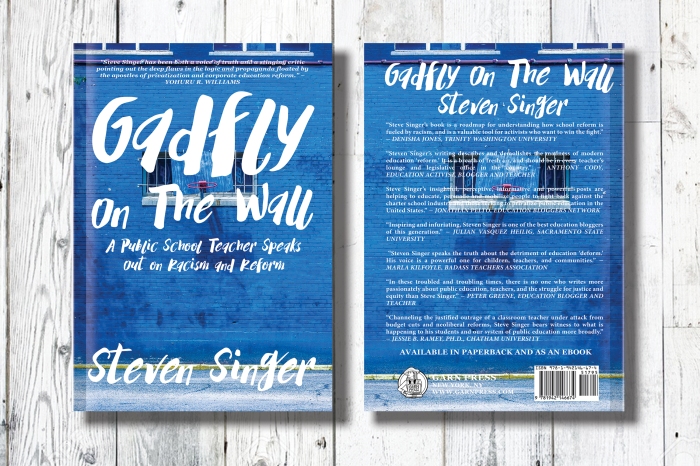
I’ve also written a book, “Gadfly on the Wall: A Public School Teacher Speaks Out on Racism and Reform,” now available from Garn Press. Ten percent of the proceeds go to the Badass Teachers Association. Check it out!
book-1

Parental Choice Won’t Save Us From Unsafe School Reopening Plans

Screen Shot 2020-08-10 at 5.21.25 PM


I am the parent of a public school student.


And I have a choice.


I get to decide whether my daughter will go back to school in-person or online.


That’s the only thing that should matter to me.


At least, that’s what the superintendent of my home district told me when I went before school directors last week asking them to reconsider administration’s unsafe reopening plan.


At McKeesport Area School District (MASD), Dr. Mark Holtzman and administration propose unlocking the doors for half day in-person classes Mondays through Fridays.


Kids would be split into two groups – one attending in the mornings, the other in the afternoons. That way, with buildings at half capacity, there would be enough physical space for social distancing. The remainder of the time, kids would be learning online.


However, if you don’t approve, you can opt out.


Any parent who is uncomfortable with this plan could keep his or her children home and have them participate in the district’s existent cyber program.


The board hasn’t voted on the proposal yet. It won’t do so until Wednesday.


But as I stood up there at the podium last week outlining all the ways this scheme was unsafe and asking my duly-elected representatives to instead consider distance learning for all children, Holtzman told me to be happy I could choose whatever I wanted for my own child and sit back down.


Which brings up the question – is parental choice enough?


Is the fact that I can choose for my daughter the only concern I should have?


Thankfully, no one is forcing me to subject my child to in-person classes. If I don’t think they’re safe, I can keep her away and still have access to an education for her through the Internet.


What else do I want?


Plenty.


First of all, the quality of education offered by the district cyber program is not the same as the district could provide if all students were enrolled in virtual classes.


Dr. Holtzman has outlined what that would look like if school buildings were shut down by the governor or the district were overcome with sick students, teachers and/or family.


Teachers would provide synchronous classes online through video platforms like Zoom. Students would get to interact virtually with each other and their teachers.


By contrast, the existent cyber program is asychronous. Students watch videos and do assignments at their own pace, but human contact and social interaction – even via the Internet – is much harder to come by.


Let’s be honest – both options pale in comparison to face-to-face instruction. But the kind of instruction students will receive in-person during this global pandemic will not be face-to-face. Students will interact behind masks and plexiglass barriers under an ever present shadow of fear and menace. Under the proposed MASD plan, teachers would have a mere 20 minutes a period to try to get something done other than just taking role, attempting to get students to comply with safety precautions and calming their fears.


Both cyber options are preferable because they avoid these problems. But one of them – the synchronous option with a dedicated class and a teacher behind the curriculum – is superior to the one being offered.


Is it selfish to want the better plan for my daughter?


Should I just be glad I have a choice at all? Should I put the individual good of my child aside for the good of others?


No. Because administration’s plan is not in the best interests of other children, either.


If we reopen schools to in-person classes, chances are good that kids will get sick.


A new report from the American Academy of Pediatrics found more than 97,000 children tested positive for Covid-19 just in the last two weeks of July.


To put that in context, out of more than 5 million people diagnosed with the virus in the US, approximately 338,00 are children.


And nearly a third of those cases have come as we’ve reopened schools and summer camps, as we’ve increasingly exposed kids to the virus.


Children typically had low infection rates because schools were closed in March and kids were quarantined before the virus had spread through most of the country.


Since June, there have been numerous outbreaks at summer schools in Massachusetts, Arkansas, Arizona, Connecticut, New York, Wisconsin, Missouri, Michigan, and Hawaii, among others. And with some schools now starting their academic year, outbreaks have been even more numerous.

 
I live in Allegheny County – the western Pennsylvania region around Pittsburgh – where Covid cases have spiked.


Many local school districts like East Allegheny, Woodland Hills and Wilkinsburg have passed plans to start the year with classes being conducted 100% online. South Allegheny and Duquesne City Schools just passed such plans in the last few days. And the biggest district in this part of the state – Pittsburgh Public Schools – has done the same.


If the virus is present in the community – as county health department data shows – opening the schools to students also opens them to Coronavirus.


But with the schools open, the virus will no longer be confined to just a few homes. It will come with kids to class and spread among students and staff before it’s brought to their homes as well.


That’s how epidemics work. Opening the schools will spread the virus throughout the entire community.


And that will affect me, too, regardless of whether I choose a cyber option for my daughter or not.


When I go to the local grocery store, gas up my car, even go for a walk – I will be more likely to come into contact with someone infected with the virus and get sick.


I can make the safe decision for my family but still suffer the consequences of the irresponsible decisions of others – especially school directors.
In fact, it doesn’t even have to be my own local school board. The decisions of school directors in neighboring districts affects me, too.


After all, in my part of the state, school districts are pretty small geographically – not nearly as large as most counties. There are 42 public districts in Allegheny County, alone. So it should be no surprise that I routinely travel through several different districts just running day-to-day errands.


MASD school directors can decide to keep buildings closed (and I hope they will) but if a district just one township or borough over decides differently, we will suffer the consequences in McKeesport, too.


This is why issues of public safety are usually decided at the county, state or federal level. These decisions affect all of us, but these days no one wants to take the responsibility.


It doesn’t even make sense democratically.


Since I don’t live in more than one district, I don’t get a say in what school directors at neighboring districts decide. I just have a say in what happens in my tiny portion of the world. But the consequences are not nearly as respectful of our man-made borders.


For instance, I work as a teacher at a neighboring district. But since I do not live there, I am barred from speaking at the board meetings unless I am invited to speak as an employee of the district.


I can give a report as part of the safety commission if invited by administrators, but I can’t otherwise sign up to speak as an employee concerned about how district policies affects me, my students or their families.


I’m a believer in local control, but sometimes control can be too localized.


This is why you haven’t heard much from many educators. If they’re allowed to speak, they’re often afraid of how doing so will make them a target for reprisals. If they can get their union to back them, they can speak collectively that way, but otherwise, they have no pathway to being heard at all.


As a parent, I get a choice for my child in my district.


But what choice do teachers have – especially if they don’t live where they teach?


If school directors decide to reopen to in-person classes, they’re forcing educators to decide between their employment and their own families. If teachers return to the classroom with their students in a physical setting, they risk not only their own lives but that of their friends and families.


That concerns me even with my choices as a parent.


I’ve had some outstanding teachers. My daughter loves her teachers. Is it okay if I don’t want to see them get sick and their lives cut short? If I worry about my own chances of surviving the pandemic and the demands of my employer?


Finally, what about people of color? The Centers for Disease Control (CDC) says African Americans and other minorities are hospitalized from the virus four to five times more often than white people.


I think their lives matter. But as minorities and people subjected to systemic inequalities, they get less of a say in policy. Should decisions that disproportionately impact their health really be up to a committee? Doesn’t their right to life surpass the decisions making abilities of a handful of elected officials or even middle and upper class parents?


Don’t get me wrong. I’m thankful I have choices as a parent for how my daughter is educated.


But that doesn’t overcome my concerns about a bad school reopening strategy.


School directors need to make reopening decisions that are in the best interests of everyone because we’re all in this together.


That’s what so many folks seem to be forgetting.


Yes, even from a completely selfish point of view, unsafe school reopening will affect each of us.


But epidemics spread through communities. Only communities can effectively combat them.


Dividing ourselves into smaller and smaller fiefdoms only empowers the virus. If we all try to fight Covid-19 individually, we will lose.


We have to understand that what’s good for our friends and neighbors is in our individual interest, too.


We have to care about our fellow human beings.


That’s why I will continue to fight these unsafe plans and ask school directors to reopen schools virtually.


That’s the path I’ve chosen.


Like this post?  You might want to consider becoming a Patreon subscriber. This helps me continue to keep the blog going and get on with this difficult and challenging work.

Plus you get subscriber only extras!

Just CLICK HERE.

Patreon+Circle

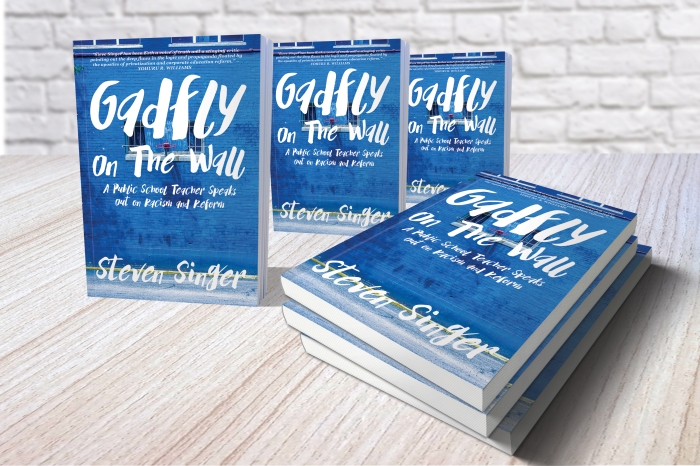
I’ve also written a book, “Gadfly on the Wall: A Public School Teacher Speaks Out on Racism and Reform,” now available from Garn Press. Ten percent of the proceeds go to the Badass Teachers Association. Check it out!
book-2

The Hybrid Model of School Reopening is Not Safe Either

Screen Shot 2020-07-25 at 10.44.19 AM

 
Safety is in the eye of the beholder.


No matter what you do, life involves some risk.


The question is whether certain actions or courses of action involve acceptable risk and exactly what you consider to be acceptable.


These issues are not academic. School directors across the country are juggling such questions in their reopening plans.


With federal and state officials largely leaving the decision up to local elected school boards of how to hold classes in August and September, people used to choosing between bids for text books and whether to renovate the gymnasium are forced to make life and death decisions for hundreds or thousands of students, staff and their families.


There are three main options:


  • (1) Open schools completely to in-person learning with safety precautions
  • (2) Keep classes entirely on-line as they were in April and May
  • (3) Offer some kind of hybrid of the two


Many schools are opting for this hybrid model.


This means reopening to in-person classes part of the time and on-line learning for the rest.


There are many ways to do this.


In my home district of McKeesport, this means having half of the students attend in the morning and the other half in the afternoon with the balance of their class work being done via the Internet.


In Steel Valley, the district where I work as a middle school teacher, this means half of the students attending full days on Mondays and Tuesdays, half on Thursdays and Fridays and the building is deep cleaned while students are taught completely on-line on Wednesdays.


In either case, parents can opt-in to an entirely virtual plan, but it’s expected that most adults would choose the hybrid model with its partial in-person classes for their children.


Let me be clear – the hybrid plan is preferable to the completely in-person proposal.


It reduces exposure to other people and environments compared to the entirely in-person program.


For instance, being in class half the day reduces student exposure by half. Being in class two out of five days reduces it by 60%.


However, let’s be real.


Any in-person instruction during a global pandemic incurs some risk. And that risk is far from negligible.


Moreover, the amount of risk is greater for adults than it is for children – both because adults would experience much higher exposure under such systems and because COVID-19 seems to affect adults more severely than children.


The hybrid model, then, is tantamount to putting children, teachers and families at risk for a reduced amount of time.


Why take the risk? On the premise that in-person instruction is more robust than on-line learning. Students learn more in the classroom from educators who are physically present than they do on the Internet.


There is significant evidence to back that up. However, this premise ignores the fact that invasive but necessary safety measures like wearing masks and practicing social distancing throughout the day will inevitably have negative effects on learning.


In short, mask-to-mask learning will not be as productive as face-to-face learning. We are in uncharted territory. It is entirely up in the air whether the necessary safety precautions of in-person learning – even during a hybrid model – will be better or worse than distance learning.


So the hybrid model tries to balance the unproven and questionable promise of increased academics against the threat of increased danger of disease.


How much danger? Well that depends to a large degree on where you live and the rate of infection present there.

 
I live in western Pennsylvania just south of Pittsburgh.


When schools closed in Allegheny County last academic year, a handful of people got sick each day, a hundred or more a week. For instance, 23 new COVID-19 cases were reported on March 19, and 133 for the week.


Now there are hundreds of new cases in the county every day and a thousand a week – 198 on July 24, alone, and 1,363 for the week.


Screen Shot 2020-07-25 at 11.34.44 AM
Source: PA Department of Health
Screen Shot 2020-07-25 at 11.34.56 AM
Source: PA Department of Health


That is not an insignificant risk. We have an infection rate of nearly 10%. We have some of the highest numbers in the state.


I don’t know how anyone can look at those numbers and conclude anything except that the risk of infection is GREATER today than it was when we took more precautions against it.


Moreover, the situation is little better nationwide.


Not a single state has met guidelines for reopening schools issued by the Center for Disease Control (CDC) in May.


Moving into Phase 1 would require a “Downward trajectory or near-zero incidence of documented cases over a 14-day period.” Moving to Phase 2 would require a “Downward trajectory or near-zero incidence of documented cases for at least 14 days after entering Phase 1.”


No state has experienced a “downward trajectory” for COVID-19 cases for 28 straight days. In most states, cases are increasing.


Nor does any reopening plan that I have seen – including McKeesport’s and Steel Valley’s – follow the 69-page CDC guidelines published by The New York Times earlier this month, marked “For Internal Use Only,” which was intended for federal public health response teams as they are deployed to hot spots around the country.


That document suggested several expensive and difficult safety measures such as broad testing of students and faculty and contact tracing to find people exposed to an infected student or teacher – none of which is being done locally.

 
The issue gets complicated though because this month the CDC bowed to pressure from the Trump administration and publicly softened its tone about reopening.

 
However, no matter how you look at it, reopening school buildings – even with a hybrid approach – increases risk significantly.

 
If school buildings are reopened with students and staff coming and going – even at a reduced rate through a hybrid plan – one would expect the virus already present in the community to gain access to our schools where it would be further spread to different segments of the community.


Schools are great meeting points. They are where local neighborhoods connect, learn, grow and share. Reopening them in a physical fashion allows for greater sharing of any easily communicable diseases in the area.


So exactly how communicable is COVID-19?


It’s often compared to influenza which infects millions of people every year yet these outbreaks rarely close schools.


Unfortunately, the consequences of getting COVID-19 are much more severe. So far the Coronavirus has shown itself to be 52 times as deadly as the flu.


Only about 0.1 percent of the people who got the flu in the US last year died of it, according to the CDC. Yet about 5.2 percent of those who came down with COVID-19 have died, based on the reported totals of cases and deaths.


During the 2018-19 flu season, about 34,000 people in the US died, according to the CDC. So far, 143,193 people have died of COVID-19 in the US, as of July 23.


And keep in mind there is a vaccine for the flu. There is nothing as yet that fights COVID-19.


Some say that even given such statistics, children are less susceptible than adults.


However, the virus was only discovered in 2019. So little is known about it – for instance, the low percentage of cases in children may be because schools were closed in April and May before many kids were exposed to it.


A recent South Korean study – the most in depth of its kind to examine how the virus affects children – found that it is especially active in older kids.


“For people who lived with parents between the ages of 10 and 19, 18.6% tested positive for the virus within about 10 days after the initial case was detected — the highest rate of transmission among the groups studied. Children younger than 10 spread the virus at the lowest rate, though researchers warned that could change when schools reopen,” wrote Stephen Stapczynski for Bloomberg News.


Jeffrey Shaman, an epidemiologist at Columbia University agreed.


“So long as children are not just a complete dead end – incapable of passing the virus on, which does not seem to be the case – putting them together in schools, having them mix with teachers and other students will provide additional opportunities for the virus to move from person to person,” he said.


Do such facts represent an acceptable risk for opening schools – even with a hybrid model?


Education Secretary Betsy DeVos says it does.


She said, “there’s nothing in the data that suggests that kids being in school is in any way dangerous.”


However, if even .02% of public school students were likely to die if school buildings were reopened, that’s 11,320 children!

 
Are we willing to risk the lives of tens of thousands – perhaps more – children on the unproven promise of a slight improvement in academics?

 
And keep in mind that doesn’t even take into account the cost to adults.

 
According to a new report from the Kaiser Family Foundation (KFF), 1 in 4 teachers in the U.S. – roughly 1.5 million people – are at increased risk for complications if they become infected with the Coronavirus. This includes educators over the age of 65 and those – like myself – with a pre-existing health condition that makes them more vulnerable.

 
According to the CDC, death from COVID-19 is significantly more common in older adults. Though the median age of U.S. teachers is 42.4 years, nearly 19 percent of teachers are 55 and older, reports the National Center for Education Statistics.


Health conditions such as diabetes, cardiovascular disease and kidney disease also increase one’s risk for serious illness from the virus. The CDC warns that roughly 60 percent of American adults have at least one chronic medical condition, and about 40 percent have two or more.


The situation is even more dire when we look at parents and grandparents in students’ homes. The KFF issued a report in July concluding that 3.3 million adults 65 or older live in a household with school-age children.


And let’s not forget the racial component.


Most minorities are more susceptible to COVID-19 because of the higher rates of social inequality they are forced to live under.


According to the CDC, Native Americans and Black people are hospitalized from the Coronavirus five times more often than White people. Hispanic and Latino people are hospitalized four times more often than White people.


Physically reopening school buildings in communities that serve large populations of people of color, then, invites greater risk than in predominantly white communities.


Screen Shot 2020-07-25 at 1.24.46 PM
SOURCE: the CDC


In any case, though, reopening school buildings – even under a hybrid model – significantly increases the risk for all the people living there.


So in summary, it is clear that the three basic options for reopening schools each offer different levels of risk.


A full reopening of schools even with safety precautions brings the highest risk. However, the hybrid model also brings significant danger to students, teachers and families – even if somewhat less than full reopening.


Distance learning has the lowest risk of all. It keeps most children physically separate from each other and thus limits exposure to the virus to the greatest extent. Likewise, it limits jeopardy for educators and other adults because teachers would mostly come into contact with children through the internet and parents would not be further complicated through potential viral contacts of their children.


From an academic standpoint, distance learning certainly has its drawbacks compared with face-to-face learning. But compared with mask-to-mask learning, virtual instruction may actually be preferable.


In any case, increased risk of death or debilitating disease has a chilling effect on learning for all involved.


In most communities – perhaps all – a decision on school reopening that balances safety with academics would lean toward distance learning above anything else.


Even if on-line learning turns out to be less effective than that provided in the hybrid model, any deficiencies can be targeted and ameliorated once the pandemic ends.


As yet, death admits of no such remedies.


Like this post?  You might want to consider becoming a Patreon subscriber. This helps me continue to keep the blog going and get on with this difficult and challenging work.

Plus you get subscriber only extras!

Just CLICK HERE.

Patreon+Circle

I’ve also written a book, “Gadfly on the Wall: A Public School Teacher Speaks Out on Racism and Reform,” now available from Garn Press. Ten percent of the proceeds go to the Badass Teachers Association. Check it out!

book-1


Waiting For a Teaching Assignment This Year is Like Anticipating a Death Sentence

Screen Shot 2020-07-20 at 8.38.17 AM

 
Going to the mailbox each time, my heart flutters.


I open the lid and see a stack of letters. My heart sinks.


Is today the day?


Has my teaching assignment finally arrived?


It’s not that I’m so anxious to find out what grade I’ll be teaching this year or whether I have lunch duty or have to monitor in-school suspension.


It’s whether I get to live or die.


And that’s no hyperbole.


As the summer whittles down, my district has yet to release its reopening plan. Meanwhile, no communication from administrators or school directors, no public meetings, nothing.


Meanwhile surrounding districts release plans that go against Center for Disease Control (CDC) guidelines in the name of expediency, politicians use the issue to demonize teachers and rally their base, and our unions pretend the only problem is a lack of funding.


The Sword of Damocles dangles over my head and the rope that keeps it in place looks more frayed with every pendulum swing.


For a person like me with at least two pre-existing conditions, an assignment in the school building during a global pandemic could be a death sentence.


Teaching has taken a huge toll on my body. I have heart disease and Crohn’s Disease. Not to mention that I’m certainly not getting any younger.


That’s at least twice the average risk of getting COVID-19 if my employer decides to assign me back in the building.


And it’s something my doctors made a point of mentioning.


From the middle of June to the middle of August, teachers like me try to take care of all our personal needs before the hectic classroom schedule begins.


That means renewing clearances, financial planning, medical visits, etc.


So when I went to a routine cardiologist appointment, I was somewhat taken aback as the doctor told me, “Remember, you can’t get sick.”


“I’m sorry? What?” I said.


He had just given me a clean bill of health.


“Remember, you can’t get sick. You simply cannot afford it,” he said.


Then he went on to complain about living in a country that put economics before science.


I heard much the same from my gastroenterologist.


They were both furious at how the pandemic is being handled but had no more advice on how I could protect myself.


“If they want you to go back to work, what else can you do?” one asked me.


Refuse?” I said.


I still don’t have a better answer.


It’s incredibly unfair that decision makers may force me to choose between my job and my life.


I love my job.


Teaching has been one of the most meaningful experiences I’ve ever had. Every day I get to help kids become the people they want to be. I get to introduce them to a world of reading where voices long past get to speak to each of them individually. I get to show them how to participate in a conversation that’s been raging for millennia.


It’s challenging and exhausting and difficult, but I know I’m making a difference.


I love every minute of it.


But I love breathing more.


I don’t want to be buried under a respirator as my lungs slowly fill with fluid.


I don’t want to die gasping for breath.


Not if I don’t have to.


“You might want to update your will,” a friend told me with a grin when I mentioned this to him.


But there’s really nothing to smile about here.


I feel like I’m about to be thrown to the wolves.


After 17 years in the classroom, years of helping kids learn how to read and write, years of listening to their needs and worries, years of helping them overcome their anxieties and fears, years of advice, counsel and friendship – is this all I’m worth to the community?


I chaperoned field trips with school directors and their children, I’ve taught board members kids and sat across from the adults at parent-teacher meetings regaling them with tales of mischief and academic triumphs. Will they now callously decide that I need to put my life at risk or else step down?


How many times did I joke and laugh with administrators, how many times did I try my best to do what they asked, how many times did I go above and beyond – and now have they no qualms about making my wife a widow and forcing my daughter to navigate the rest of her childhood without her daddy?


It doesn’t have to be this way.


A sane society wouldn’t reopen school buildings when Coronavirus cases are spiking. A rational country wouldn’t politicize safety precautions, undermine scientists and disparage facts. It would pay people to stay home, suspend rent payments, provide everyone with personal protective equipment (PPE) and universal healthcare.


And it’s not too late.


By the end of August, we can continue the distance learning initiatives we began in the spring.


To be honest, there were a truckload of problems in April and May. But at least we know what they are and can do better a second time around.

We can make sure all students have access to computers, devices and the Internet. We can make expectations clear and achievable and increase project based assignments. We can habituate participation, increase interactivity and offer multiple chances to do the work.


I’m not saying it would be perfect. On-line learning will never be as effective as in-person learning.


But any education attempted under the shadow of a pandemic will be less productive than under normal circumstances.


Even if we dispense with masks and social distancing in the classroom – which would be incredibly risky for all involved – children would be on edge, traumatized and frightened.


Distance learning is the safest way to go. Any academic shortfalls could be made up in subsequent years. But you have to survive first.


My life would certainly be at risk in the physical classroom. But so would every other staff member, children’s families and even the students, themselves.


The same people advocating for a full reopen of schools like to cite studies showing young people are immune or mostly asymptomatic. But kids were the first group to be quarantined.


As we have opened summer camps and daycare centers, an increasing number of children – especially those 10-19 – have gotten sick. And even the younger ones have been known to bring the virus home to their parents.


If my life has no value to you, what about your own? What about your child’s life?


Being a teacher kind of commits you to a sort of optimism.


To dedicate your life to young people, you have to believe the future can be better than the present and the past.


I let out a deep breath and went through the letters in my mailbox.


My assignment wasn’t there.


It may arrive tomorrow or the day after.


The uncertainty is hard, but it’s better than some certainties. I still have every hope that my community will not sacrifice my life.


But if it does, I will not go quietly.


I can’t be here for your kids, if I’m not here.


Like this post?  You might want to consider becoming a Patreon subscriber. This helps me continue to keep the blog going and get on with this difficult and challenging work.

Plus you get subscriber only extras!

Just CLICK HERE.

Patreon+Circle

I’ve also written a book, “Gadfly on the Wall: A Public School Teacher Speaks Out on Racism and Reform,” now available from Garn Press. Ten percent of the proceeds go to the Badass Teachers Association. Check it out!

book-4

Pittsburgh Charter Schools Take Federal Bailout Money Meant for Small Businesses

Screen Shot 2020-07-15 at 12.39.01 AM

 
Are charter schools small businesses or public schools?


They can’t be both.


Several Pittsburgh area charter schools took a bailout meant for small businesses after already getting monetary relief meant for public schools.


Environmental Charter School at Frick Park, Hill House Passport Academy Charter School, Manchester Academic Charter School and Penn Hills Charter School of Entrepreneurship all applied for and received substantial low-interest loans from the federal government’s Paycheck Protection Program (PPP).


The $660 billion federal initiative was intended to help businesses keep employees on the payroll and off unemployment benefits during the COVID-19 pandemic. The loans will be forgiven if businesses meet certain conditions such as retaining or rehiring employees.


However, charter schools – including those in the Pittsburgh region – already should have received financial relief through the federal CARES Act.


Pennsylvania got $523 million to distribute to both authentic public schools and charters. However, of the two, only charters were eligible for additional PPP funds.


So these ‘Burgh charters are double dipping. They’re receiving aid from two different federal sources while authentic public schools only can get aid from one.


The Environmental Charter School at Frick Park got a $2 million – $5 million cash infusion from PPP.


The Environmental Charter calls itself a nonprofit organization but there are many reasons to be dubious.


First, nonprofits usually are dedicated to furthering some social cause like helping the poor and minorities.


However, The Environmental Charter actually caters to upper socioeconomic and white students.


It serves wealthier children than surrounding schools. Just one-third of Environmental Charter students are eligible for free or reduced lunches compared to 71% at Pittsburgh Public schools.


Moreover, only 30% of the charter’s students are minorities. Pittsburgh Public serves a student body of which nearly half are African American.


Next, there’s the issue of who runs the institution.


All charter schools in the Commonwealth have to be designated as nonprofits. However, many like the Environmental Charter School hire for-profit companies to actually operate their day-to-day functions and make almost all of their major administrative decisions.


The Environmental Charter is run by Virginia-based Imagine Schools, one of the nation’s largest charter-management companies with more than 71 charters nationwide.


Since Imagine writes the Environmental Charter’s operating budget, the management company ends up paying itself for a number of services.


After the school gets funding from state, federal and community taxes (this year including bailouts from PPP and the CARES act), it pays 12 percent back to Imagine. This came to $406,000 in 2009, according to an independent financial audit.


The school also pays Imagine on a $250,000 loan that the charter operating company took out to launch the program. Payments come out to about $2,500 per month over 20 years with an interest rate of 10.524 percent.


The charter also pays Imagine rent on its building which was purchased in 2006 by Schoolhouse Finance – Imagine’s real estate arm – for $3 million.


The lease costs $526,000 annually and is binding until 2032 unless the school loses its charter.


Given such facts, it’s hard to imagine why we’ve allowed our tax dollars to prop up a business venture that could certainly afford to reduce its profit margins rather than rely on public support.

 
Hill House Passport Academy Charter School got a $150,000 – $350,000 bailout from PPP.


Unlike the Environmental Charter, Hill House does actually cater to low income and minority children. In fact, it was founded to help Pittsburgh students who are failing in another district and in danger of dropping out unless they receive some kind of academic intervention.


However, the results haven’t been stellar. Where the Environmental Charter was too white, Hill House serves almost exclusively black students. It is exponentially more segregated than neighboring authentic public schools (96% minority) and its students still have extremely poor academic performance.


The question remains whether these results are better than they would be at an authentic public school. Does the charter provide any value for these students or is it just a holding area?


Like the Environmental Charter, this so-called nonprofit hires a management company. In this case, it’s the infamous K12 Incorporated – a nationwide cyber charter network with a record of academic failure and financial shenanigans.


In 2016, the company reached a $168.5 million settlement with the state of California. The state claimed K12 had reported incorrect student attendance records and otherwise lied about its academic programs. The company ended up settling with the state for $2.5 million with an additional $6 million to cover the state’s investigation and K12 voided $160 million in credits it had given to the affiliated schools to cover the cost of their contracts.


Hill House offers a blended model with in-person teachers and virtual classes somewhat different than most K12 schools.


However, why the state should bailout such a dubious endeavor is beyond me.


Manchester Academic Charter School got a $350,000 – $1 million loan from PPP.


It is one of the oldest charter schools in the city, having started as a tutoring program in 1968 and becoming a full fledged charter school in 1998.


However, like Hill House, it is infamous for racial segregation and low academic performance. Approximately 99% of students are minorities.


In 2016-17,only 12% of the school’s students were proficient in math (state average is 46%) and 37% were proficient in language arts (state average is 63%).


Where Manchester fails at academics, it excels at administrative salaries. The school’s administrators take home beaucoup bucks while being responsible for fewer students than those at authentic public schools.


For example, Vasilios Scoumis, Manchester CEO for more than two decades, is given a $146,000 salary not counting a potential $15,000 yearly bonus though he is only responsible for 340 students.


Compare that with Pittsburgh Public Schools Superintendent Dr. Anthony Hamlet. He earns a $210,000 salary for managing a district of about 24,000 students.


But such high salaries for relatively little work aren’t only a hallmark at Manchester.
Environmental Charter School CEO John McCann earned $120,000 with a school enrollment of 630 students.


Nice work if you can get it!


Speaking of which, Penn Hills Charter School of Entrepreneurship got $350,000 – $1 million from PPP.


This is another so-called non-profit school run by the Imagine Schools company. It is highly segregated with 82% minority children.


Only 32% of students are proficient in math and 57% in reading – again below state averages.


The school suffered a scandal in 2015 when the state Charter Review Board overruled Penn Hills School Directors decision to deny allowing the charter to expand into a second building.


But given that the Charter Review Board is made up of six members – charter school advocates chosen by former Republican Governor Tom Corbett – any pretense to impartiality is laughable.


Penn Hills School Board – a duly elected body, not government appointees – outlined criticisms of the charter that do not put the entrepreneurial venture in a positive light.


Penn Hills School Board said the charter had failed to produce current student rosters, failed in record management, failed to accurately maintain student tuition payments, improperly billed the school district for special education students, failed to maintain and develop Individual Education Plans (IEPs), had poor academic growth and is under a Department of Education Corrective Action Plan setting forth 31 areas of needed improvement.

 
Directors were also leery of the venture because the charter planned to use half of the new building for students and to lease the remainder as office space.


Finally, the charter school sucks away necessary funding from the authentic public school. The Penn Hills School District paid Imagine about $3 million in 2014-15. Costs increased to $12 million a year and continue to rise.


So one wonders why we’re throwing more money at these charter schools.


Nina Rees, executive director of the National Alliance for Public Charter Schools (NAPCS) has spoken out of both sides of her mouth on the issue. She has insisted that charter schools be regarded as public schools and eligible for emergency aid – all the while advising charter schools also to apply for federal rescue funds for small businesses devastated by the pandemic.


Carol Burris, Executive Director of the Network for Public Education, did not mince words.


“Once again, the charter sector, through the lobbying efforts of Nina Rees…worked behind the scenes to gain fiscal advantage for the privately operated schools they claim are public schools.”


Education historian Diane Ravitch agreed.


“Charters claim to be ‘public schools’ when that’s where the money is,” she said. “But when the money is available for small businesses, they claim to be small businesses.”


Charters go where the money is.


We get the privilege of paying the tab.


If it were up to U.S. Treasury Secretary Steve Mnuchin, we wouldn’t even know about it.


Mnuchin only released the information to the public after 11 news organizations sued the Small Business Administration .


Even now, not all of it is available.


Moreover, the deadline to apply for a PPP loan has been extended to Aug. 8.


So if you haven’t seen some of the most infamous neighborhood charter schools taking advantage of the program, it may only be a matter of time.


ProPublica has put all the information into an easy to use search engine. Just enter a zip code and it will display all the businesses located there that received PPP loans.


This includes high tuition private prep schools like Sewickley Academy and Shady Side Academy both of which got $2 – $5 million, Winchester Thurston School which got $1 million – $2 million, and the charter schools listed above.


You can check it out here: https://projects.propublica.org/coronavirus/bailouts/


Like this post?  You might want to consider becoming a Patreon subscriber. This helps me continue to keep the blog going and get on with this difficult and challenging work.

Plus you get subscriber only extras!

Just CLICK HERE.

Patreon+Circle

I’ve also written a book, “Gadfly on the Wall: A Public School Teacher Speaks Out on Racism and Reform,” now available from Garn Press. Ten percent of the proceeds go to the Badass Teachers Association. Check it out!

book-1

Mask-to-Mask Instruction May Be More Problematic Than Distance Learning

Screen Shot 2020-07-11 at 5.40.35 AM

 
People talk about the upcoming school year as if we have a choice between in-person classes or distance learning.


We don’t.


The fact is there will be NO face-to-face learning this year.


Neither in our school buildings or on-line.


No matter which path we choose, we will be teaching behind a mask or behind a computer screen.


There is no middle ground here – nor should there be.


Even if schools try to execute some hybrid model where kids only attend classes in-person two or three days a week and go on-line for the remainder of the time, when they are in the school building everyone will be wearing masks.


And that’s as it should be.


When in a public place during a global pandemic like that of COVID-19, we need to wear face masks to reduce the spread of the disease.


But let’s not pretend this has no side effects.


Social distancing, limited mobility, plexiglass barriers, cleanliness protocols – all will have an impact on academics.


So if we reopen physical school buildings, we will not be returning to the kind of face-to-face instruction students enjoyed as recently as January and February.


It will be a completely new dynamic that may present as many difficulties – if not maybe more – than learning on-line.


That’s something people would do well to understand before deciding which course is best.


Mask-to-mask learning will not be face-to-face learning.


Social distancing may rob the physical classroom of almost all of its benefits over distance learning.


Again, I’m not suggesting we do without PPE or safety measures. But let’s be honest about how these measures will alter academics.

 
First, let’s look at masks.


Admit it. It is hard to be heard in a mask.


Imagine trying to get a message across to a classroom of middle school children with a piece of fabric hiding half of your face, obscuring your expressions and garbling your words.


I’m not saying it’s insurmountable, but it’s not indistinguishable from classroom teaching at the beginning of last school year, either.


It generates distance, just as it’s supposed to do. But teaching requires connection, understanding and relationship building.


Many of my students come into my class with trust issues. They’ve been let down by adults and authority figures. They aren’t about to put in their best work for just anyone. They have to know the teacher can be trusted and cares about them as individual people.


How are you supposed to generate trust when students can only see your eyes?


Moreover, masks are a permanent symbol of the danger we’re all in just being together. Every time we look at each other we’ll be reminded of risk, threat and our own vulnerability.


These do not make for good teaching. On Abraham Maslow’s Hierarchy of 
Needs, only physiological necessities like food and water take precedence. Without a sense of safety, it is difficult to impossible for students to achieve their full potentials.


Unfortunately, facial coverings aren’t the only problem. Consider physical proximity.


As a teacher, I rarely sit when students are in the room.


During a 40 minute class, I probably lap the space as many times going from desk to desk observing students progress, answering questions, reading work, making suggestions, etc. This will be much more difficult with the threat of Coronavirus in the room.


How can I closely observe my students from a minimum of 6 feet away?


I would suspect this will be even more profound with kids with special needs. Just because they’re in the classroom with the teacher does not mean the teacher will be able to serve them as well as under normal circumstances. This is bound to lead to increased frustration and acting out.


The most common diagnosis my middle school students have is ADHD. The most common adaptation I’m told to make to help them overcome this is to repeatedly prompt them back on task. And you don’t want to do this in a way that will draw attention to the issue. I often walk up to students and ask questions privately, or point to something on their papers.


This will not be easy when trying to avoid their physical space. Any verbal queues would be loud enough to be heard by the rest of the class.

 
Nor does this allow for students to work together on group projects. They can’t push their desks together and work on assignments cooperatively in the physical classroom. In fact, in the time of COVID, these kinds of projects may actually be better served on-line.


Finally, imagine the difficulty of getting children to comply with social distancing mandates.


If we can’t get adults to wear masks, how can we expect to get their kids to do it?


Moreover, children are mischievous. Some may try to purposefully cough on their classmates just to get a reaction. Others could intentionally take off their masks to annoy classmates. As every teacher knows, some kids will do anything for attention. Even negative attention.


In-person teaching could easily degenerate into a game of trying to get kids to obey the rules with little to no actual instruction going on.


Are administrators and school boards really prepared to suspend students for endangering their classmates? Are parents willing to accept such punishments?


And let’s not forget the elephant in the room.


What do we do when safety measures fail?


When a student gets sick, do we quarantine for two weeks all the other students who came into contact with him? When a teacher gets sick, who teaches her classes while she is in isolation? And do we keep her students home, too?


Before we can reopen schools to in-person instruction, there are a host of problems we have to solve.


We have to figure out how to get kids to and from school without crowding them together on buses. We have to arrange classes and move students safely from point A to point B within the building. We have to figure out how to safely feed them – since no one can wear a mask while they eat. We have to figure out how to adequately ventilate buildings that were in need of repair for decades prior to the crisis.


One has to wonder – is it worth it?


With so many challenges involved with reopening school buildings, might it not be better to just continue distance learning initiatives?


As we’ve seen, the push for in-person schooling isn’t justified by academic concerns.


Though under normal circumstances face-to-face learning is worlds better than on-line learning, that is not what we’ll be doing if we reopen schools this year.


In truth, the pressure to reopen schools during this crisis comes more from political and economic considerations than pedagogical ones.


Lawmakers and policymakers don’t want to put forward the funding necessary to reduce the risks. Teachers fear they’ll be laid off if they speak out against unsafe working conditions. Parents fear they won’t be able to return to their own jobs if they have to stay home to take care of their children.


These issues can all be solved by good government. Our lawmakers need to follow the lead of nearly every other country that has lowered infection rates. We need federal relief checks so people can pay their bills without having to risk their lives working through a pandemic. We need personal protective equipment (PPE), protection from evictions, and universal healthcare so that we can weather the storm.


It is not the job of schools and teachers to fix these problems. We can’t. We can only further enable bad leadership.


But putting aside political and economic issues, there is an obvious best course of action.


Under these circumstances, continuing distance learning is the best choice from the standpoint of both safety AND academics.


In any other year, having a teacher physically present in the classroom with a cohort of students is worlds better than Brady Bunch style ZOOM meetings or assignments posted on-line.


But this isn’t any other year. It’s 2020 and Coronavirus cases have topped 3 million in the United States. There were nearly 60,000 new cases just yesterday.


You don’t close schools when there are only thousands of cases and then reopen them when there are millions.


One thing to recommend on-line learning at the present time is that we know it can be done. We already tried it last school year. There were certainly major problems but we have a good idea what they are and can make changes to at least attempt to solve them.


We can do a better job ensuring all students have access to computers, devices and the Internet. We can make expectations clear and achievable and increase project based assignments. We can habituate participation, increase interactivity and offer multiple chances to do the work.


Don’t get me wrong. Distance learning will never be as effective as face-to-face instruction.


But we will not have face-to-face instruction this year. It will be mask-to-mask or screen-to-screen.


That cannot be emphasized enough.


None of the possible solutions does a perfect job overcoming the problems.


There are not enough adequate virus screenings to tell who has the disease. Nor can we screen those who have it and keep them quarantined from the rest. Nor do we have adequate PPE to reduce infection. Nor does any vaccine appear to be forthcoming.


With the exception of the last point, many other developed countries have done much better with these things and so are in a better position to reopen schools.


But we have to face facts. The United States is not in the same position. In fact, we’ve made wearing a mask a political statement instead of what it is – a public health concern.


Until we solve these issues, there will be no perfect solution for schools. We just have to choose the best of several imperfect options.


In my opinion, the only way forward is distance learning.


To do otherwise is like trying to figure out how to live in a burning building instead of putting out the fire.


The only sane option is to get to a relatively safe place first.


I hope we can do that for our children, families and communities.


I hope that the death cult of capitalism doesn’t require teachers to jump on the pyre of economic growth.


We all deserve better.


Like this post?  You might want to consider becoming a Patreon subscriber. This helps me continue to keep the blog going and get on with this difficult and challenging work.

Plus you get subscriber only extras!

Just CLICK HERE.

Patreon+Circle

I’ve also written a book, “Gadfly on the Wall: A Public School Teacher Speaks Out on Racism and Reform,” now available from Garn Press. Ten percent of the proceeds go to the Badass Teachers Association. Check it out!

1500x1000-garn-book-sale-2020-2

Do NOT Play Russian Roulette with Our Lives – No In-Person Schooling During a Pandemic

Screen Shot 2020-07-06 at 11.41.55 AM

 
Are you responsible for gambling with another person’s life?


The Pennsylvania Supreme Court says “yes.”


Back in 1947, James Malone, 17, and William Long, 13, played a version of Russian Roulette during a sleepover.


Malone stole a revolver from his uncle and Long sneaked into his father’s room and got a bullet.


They put the cartridge in a chamber, spun the cylinder and then took turns pointing the gun at each other and pulling the trigger. On the third try, Malone put the gun to Long’s head, pulled the trigger and the gun fired, killing Long.


Malone was convicted of second degree murder even though he said he hadn’t intended to kill his friend.


The case, Commonwealth v. Malone, eventually went to the state Supreme Court where justices upheld the conviction.


They ruled:


“When an individual commits an act of gross recklessness without regard to the probability that death to another is likely to result, that individual exhibits the state of mind required to uphold a conviction of manslaughter even if the individual did not intend for death to ensue.”

Lawmakers and school administrators better pay heed to this and similar nationwide decisions.


Reopening schools to in-person classes during the COVID-19 pandemic is tantamount to Russian Roulette with the lives of students, teachers and families.


Every day with this virus in the physical classroom is like spinning the cylinder and pulling the trigger.


You might survive, but every time you enter the building your chances of getting sick increase until the law of averages will come for someone… perhaps many someones.


The safest course is to continue with distance learning in the fall despite the numerous academic problems with that method of instruction.


With Coronavirus cases rising by about 50,000 a day in the United States, there is simply too much virus out there to ensure anyone’s safety in the physical classroom.


Students inevitably will get sick and spread the disease to adults – teachers and their own families.


We can’t take such chances with people’s lives.


But don’t just take my word for it.


Decisions makers are taking the possibility seriously enough to try to change the laws to reduce their liability.


They want to ensure they won’t end up in court if they reopen schools and people get sick.

 
In May,Senate Majority Leader Mitch McConnell called for schools to be legally protected from lawsuits that could arise due to resuming classes.


Along with fellow Republican Senator John Cornyn, McConnell proposed new liability laws protecting schools and businesses from Coronavirus-related lawsuits.


McConnell told reporters:


“Can you image the nightmare that could unfold this fall when K-12 kids are still at home, when colleges and universities are still not open? That is a scenario that would only be further aggravated in the absence of some kind of liability protection that reassures school administrators that they can actually open up again… Without it, frankly that’s just not going to happen as soon as it should have.”


The Kentucky Senator went on Fox News in late April saying that such legal protections would be necessary for Republicans to even consider any new Coronavirus relief bills.


And it’s not just lawmakers. In May, 14 college presidents from around the country teleconferenced with Vice President Mike Pence and U.S. Education Secretary Betsy DeVos asking for the same thing.


According to those who were either on the call or were knowledgeable about the conversation, the college presidents said they needed to know their institutions would not get sued if people got sick – which they thought was almost a certainty.


One way the federal government can help “is to have some kind of liability protection,” said University of Texas at El Paso president Heather Wilson, who was on the call. Wilson is a former Republican congresswoman from New Mexico.


Big business is also calling for liability protection. Groups like the U.S. Chamber of Commerce have been asking to be freed during the pandemic from being held liable if workers, customers or others get sick on their property. Notably, a lawyer for Texas Christian University told senators such a situation is “foreseeable, perhaps inevitable.”


All of which begs the question of what we mean by safety.


Is it our responsibility to make sure customers, workers, students and teachers are safe from the virus? Or is it our responsibility to make sure businesses and schools aren’t sued for taking chances with our lives?


There are things we can do to increase safety.


We should not reopen schools until the county where it is located reports zero new Coronavirus cases for two weeks. That would be taking safety seriously.


And it shouldn’t be too much to ask because other countries have been able to do such things.


Other nations have been able to test for the virus and identify those who have the disease. They have been able to trace these people’s contacts and isolate them from the rest of the population.


But that requires a vast expansion of our testing ability through coordinated federal action.


The problem is our lawmakers don’t care enough to do this.


Nor are they willing to provide us with federal relief checks, personal protective equipment (PPE), protection from evictions, and universal healthcare so that were can weather the storm.


It’s much easier to protect business from consumers and protect schools from the kids, teachers and families who make up the community.


Some will say the danger is overblown.


Children, in particular, are less susceptible to COVID-19 than older people.


And while it’s true that young people have shown fewer symptoms and include the lowest numbers of deaths, this virus has been around barely more than a year. We simply don’t know much about it and its long term effects.

 
A recent study from the journal the Lancet found that teenagers are just as susceptible to the disease as older people.


Researchers found few children 5-9 (the youngest included in the study) who had contracted the disease but those ages 10-19 were as likely to contract it as people ages 20-49 – and more likely than adults older than that.

 
So even if young people remain mostly asymptomatic, it is entirely possible they can spread the disease to older people who have a more difficult time fighting it off.

 
The only consensus about children and COVID-19 is that we don’t know enough about how it affects young people.


We certainly don’t want to end up like countries that have opened schools too quickly with too high infection rates.

 
In May, two weeks after Israel fully reopened schools, there was a COVID-19 outbreak. There were at least 130 cases at a single school. Students and staff were infected at dozens of schools causing a rash of renewed closings.

 
We should not be taking chances with schools.

 
Any action comes with some level of risk, but we should err on the side of caution.


Our government needs to serve us.

 
Representatives who do not serve our interests need to be sent packing.


And anyone who gambles with our lives needs to be held liable.


Anyone who demands we place our heads against the barrel of a loaded gun as a prerequisite to jump start the economy, needs to be held responsible for that decision.


The chances of dying during the first round of a game of Russian Roulette using a standard six-shot revolver is 1/6. With each pull, the chances increase – 1/5, 1/4, etc.
The average number of consecutive pulls before the gun fires is 3.5.


We know more about that than the Coronavirus.


In effect, we don’t know how many chambers are loaded, but we know there are bullets in the gun.


There are too many hidden factors to be able to say for sure what our chances are exactly. And in the presence of such ignorance, we should assume the worst.


That’s exactly what decision makers are doing by trying to protect themselves from responsibility.


We should take that as seriously as a loaded gun put to our temples.


Like this post?  You might want to consider becoming a Patreon subscriber. This helps me continue to keep the blog going and get on with this difficult and challenging work.

Plus you get subscriber only extras!

Just CLICK HERE.

Patreon+Circle

I’ve also written a book, “Gadfly on the Wall: A Public School Teacher Speaks Out on Racism and Reform,” now available from Garn Press. Ten percent of the proceeds go to the Badass Teachers Association. Check it out!

book-2

Standardized Tests Increase School Segregation

Screen Shot 2020-06-18 at 5.46.22 PM

 
Let’s say your community has two schools.


One serves mostly white students and the other serves mostly black students.


How do you eliminate such open segregation?


After all, in 1954 the U.S. Supreme Court struck down school segregation in Brown vs. Board of Education as essentially separate and unequal.


It’s been nearly 70 years. We must have a recourse to such things these days. Mustn’t we?


Well, the highest court in the land laid down a series of decisions, starting with Milliken vs. Bradley in 1974, that effectively made school integration voluntary especially within district lines. So much so, in fact, that according to a report from the U.S. Government Accountability Office, from 2000 to 2014, school segregation more than doubled nationwide.

 
But let’s say you did find some right-minded individuals who cared enough to make the effort to fix the problem.


What could they do?

 
The most obvious solution would be to build a single new school to serve both populations.


So if you could find the will and the money, you could give it a try.

 
Unfortunately, that alone wouldn’t solve the problem.


Why?


Standardized tests.


Even when students from different racial or ethnic groups aren’t physically separated by district boundaries or school buildings, the way we rate and sort these students within the same space causes segregation.


This is because our manner of placing kids into classes, itself, is discriminatory.


We have exactly this situation in my own western Pennsylvania district, Steel Valley. We have two elementary schools – Barrett and Park – one of which serves mostly black kids and the other which serves mostly white kids. However, even when the children get to our single middle and high schools, segregation persists.


They may finally be in the same building, but they aren’t in the same classes.


Most academic tracks have at least a lower and a higher level of each course. The former is invariably organized around remediation and basic skills, the latter around critical thinking and creativity.


Moreover, being in the higher level course comes with increased opportunities for mentoring, field trips, special speakers, contests, prizes, and self esteem. And the lower courses can degenerate into mindless test prep.


Which would you rather your child experience?


We don’t enroll students in one or the other at random. Nor do we place them explicitly based on their race or ethnicity.


Increasingly schools enroll students based primarily on their test scores.


Classroom grades, student interest, even teacher recommendations are largely ignored. Kids who pass their state mandated standardized assessments generally get in the higher classes and those who fail get in the lower classes.


And – Surprise! Surprise! – since test scores are highly correlated with race and class, most of the black kids are in the lower classes and most of the white kids are in the higher classes.


Let me be clear.


This isn’t because there’s something wrong with the poor kids and children of color or something right about higher socioeconomic status and white kids.


It’s because of (1) economic inequality, and (2) implicit bias in the tests.


In short, standardized assessments at best show which kids have had all the advantages. Which ones have had all the resources, books in the home, the best nutrition, live in the safest environments, get the most sleep, don’t live with the trauma of racism and prejudice everyday.


However, even more than that is something indisputable but that most policymakers and media talking heads refuse to acknowledge: standardized testing is a tool of white supremacy.


It was invented by eugenicists – people who believed that white folks were racially superior to darker skinned people. And the purpose of these tests from the very beginning was to provide a scientific (now recognized as pseudo scientific) justification for their racism.


A standardized test is an assessment where the questions are selected based on what the “standard” test taker would answer. And since this norm is defined as a white, middle-to-upper-class person, the tests enshrine white bias.


I don’t mean that 2+2=4 has a racial bias. But most questions aren’t so simple. They ask test takers to read passages and pick out certain things that are more obvious to people enculturated as white than those enculturated as black. They use the vocabulary of middle to upper class people just to ask the questions.


This is white supremacy. Using these tests as a gatekeeper for funding, tracking, and self-respect is educational apartheid.

 
Black students make up almost 17 percent of American students nationwide. If all things were equal, you’d expect them to make up a similar percentage of advanced courses. However, they account for only 10 percent of students in Gifted and Talented Education (GATE) classes.

 
In some areas it’s worse than others.


For example, according to a Department of Education Office for Civil Rights report from 2014, black students in the northern California city of Sacramento make up 16.3 percent of the population but only 5.5 percent of GATE programs. Meanwhile, in the south of the state, in San Diego, 8 percent of students are black, but make up just 3 percent of GATE classes.


Those are big disparities. In fact, the phenomenon is so common that social scientists created a term to describe it – racialized tracking.


But it has also been the subject of civil rights complaints.

 
In New Jersey the imbalance was so extreme the American Civil Liberties Union (ACLU) filed a complaint in 2014 against the South Orange–Maplewood School District. In a statement, the ACLU said racial segregation across academic tracks “has created a school within a school at Columbia High School.” More than 70 percent of students in lower classes were black while more than 70 percent of students in advanced classes were white.


Even so there wasn’t much that could be done. The matter ended with the Office for Civil Rights ordering the district to hire a consultant to fix the problem, but it still persists to this day.


This “school within a school” went from metaphor to reality in Austin, Texas. In 2007, a city school, the Lyndon Baines Johnson Early College High School, split into two different entities existing within the same building. And the main factor separating the two was race.


The second floor became the Liberal Arts and Science Academy (LASA), a public magnet high school serving mostly white and Asian students. Meanwhile, the majority black and Latino students stayed on the first floor taking regular education courses.


How can that be legal? Because too many people want it that way.


LASA is ranked the best Texas high school and the 11th-best high school in the United States. In fact, whenever you see those lists of the best schools in the country, they are often the result of a wealthy local tax base combined with how many poor and minority kids they were able to keep out.


It’s a matter of priorities.


Many people – especially white people – talk a good game about equity but what they really want for their own children is privilege.


It’s what happens when you let scarcity dominate public education, and it doesn’t have to be this way.


We can invest in our schools so that all children have what they need – so that they aren’t in competition for dwindling resources.


But this must go hand-in-hand with an emphasis on social justice. Black lives matter. We cannot continue to treat black children as disposable.


Being gifted, talented or advanced can’t be reduced to a score on a standardized test. In fact, I’d argue that such measures should be banished from our conception of excellence altogether as the tests, themselves, should be discontinued.


This doesn’t mean we can ignore the centuries of racist policies that keep our children of color down – housing segregation, inequitable funding, over policing, a lack of resources, being left out of specialized programs. Nor does it mean that we can ignore implicit bias white teachers invariably have about black students.
But we have to dismantle the systemic racism enshrined in our school policies. The most well-meaning individuals will make little headway if the system, itself, is corrupt.


The two must be accomplished hand-in-hand, at the micro and macro level.


Integration is absolutely essential. We must ensure that all of our students get to go to school together – but not just in the same buildings, in the same classes.


This requires an end to standardized testing but maybe also an end to advanced placement courses as we know them. Why focus on higher order thinking only for the privileged kids – do it for all. Individual student needs can be met with dual teachers in the room, pullout resources and the like.


It is important to meet the needs of every student, but we cannot in doing so allow unspoken bias to be the gatekeeper of opportunity.


Equity is not just a pretty word. It has to be one of our most cherished goals.


Otherwise our policies and our people will leave many children behind.


Like this post?  You might want to consider becoming a Patreon subscriber. This helps me continue to keep the blog going and get on with this difficult and challenging work.

Plus you get subscriber only extras!

Just CLICK HERE.

Patreon+Circle

I’ve also written a book, “Gadfly on the Wall: A Public School Teacher Speaks Out on Racism and Reform,” now available from Garn Press. Ten percent of the proceeds go to the Badass Teachers Association. Check it out!
1500x1000-garn-book-sale-2020-2

Defund the Police to Fund Public Schools

Screen Shot 2020-06-07 at 11.16.45 AM

 
Back in the pre-Coronavirus days when we still had in-person classes I used to come to school in a suit.


Every day, suit and tie.


I didn’t have to – the dress code allowed me to wear pretty much whatever I wanted and most teachers dressed much more casually.


Now let me be clear – I’m not saying my way was the only way. Each teacher has his or her own way of doing things that work in their particular cases. But as for me, I’ve always agreed with the old adage that you should come dressed for the job you want, not necessarily the job you have.


I think educators are professionals. They should be respected and taken seriously.


And on the first day of school that’s what I want to tell my students without even opening my mouth: Hey! We’re doing important work here today.


However, as time goes on I often wear whimsical ties. A saxophone, multicolored fish, Space Invaders on test days.


In fact, this year some of the kids nicknamed me “tie man” and even if they didn’t have me as their teacher they’d pop their heads into the room to see what was hanging from my neck that day.


So when I see police officers lined up at George Floyd rallies, I’m aware of what they’re saying without saying a word.

 
Wearing riot gear, armed with billy clubs and shields. Tear gas canisters and rubber bullets at the ready. Backed by military style tanks and helicopters flying overhead.


That all sends a message: We’re not here to protect and serve. We’re here to pacify and put down.


And like my choice of school attire, this message isn’t just for the observer. It’s for the wearer, too.


There’s no mistaking what you’re there to do with a sport jacket across your shoulders and a piece of fabric knotted around your neck. Just as I’m sure there’s no mistaking your intent when you survey the public behind a plexiglass helmet with a heavy wooden club in your gloved fist.


You’re a soldier and the protesters are your enemy.


Any individual police officer can act differently, but if they do, they’re going against the tide.


That’s why many people are saying “Defund the Police.”


To some that may sound kind of scary.


Defund the police? If we do that, who will protect us from violent criminals?


But hear me out.


Defunding the police doesn’t have to mean abolishing the police (though some would go that far).


For me, it means a radical reinvention of what it means to be a police officer and their role in our society.


Let’s not forget that policing began in this country not so much as law enforcement but as a way to catch runaway slaves and put down labor unions.


It’s not enough to suggest our law enforcers not dress like stormtroopers.


It’s not enough that we ask often progressive mayors not to use their police as thugs and bullies.


It’s not enough that we demand racists be screened out of the hiring process and for more rigorous training before officers become a permanent part of the force.


We should do all of that, but let’s not be blind to what we’ve seen the last week.


A 75-year-old man shoved to the ground and left to bleed in Buffalo, NY. A police SUV driving through a crowd of protestors in Brooklyn knocking several to the ground. A group of police in Philadelphia using a baton to hit a man on the head before pinning him to the ground. In Minneapolis police shouting “Light ‘em up” before firing paint canisters at a woman standing on her own front porch. And in many cities police using teargas, flash-bangs and rubber bullets on a peaceful protesters.


The fact that there was so much police brutality at nationwide anti-police brutality protests proves the need to radically rethink what it means to be law enforcement. And that starts with the money we put aside for this purpose.


If the police are not an occupying army, we shouldn’t fund them or outfit them like the military.


According to a recent analysis of U.S. Census Bureau data conducted by the Urban Institute, the cost of policing has tripled in the last four decades to $115 billion while violent crime has declined.


Screen Shot 2020-06-07 at 8.55.56 AM


Screen Shot 2020-06-07 at 8.56.14 AM


In most cities, the police budget is orders of magnitude greater than many other departments. For example, Los Angeles spends $1.8 billion annually on law enforcement – nearly 18% of the city’s entire budget.


From 2014-19, New York City spent $41.1 billion on police and corrections while spending $9.9 billion on homeless services and $6.8 billion on housing preservation and development. If you combined the city’s spending on homelessness and housing and quadrupled it, that would still be less than what the city spent on policing and corrections.


Screen Shot 2020-06-07 at 8.56.41 AM


Even before the Coronavirus pandemic ravaged the economy, legislators made deep cuts to other services like education, parks, libraries, housing, public transportation, youth programs, arts and culture, and many more. But police budgets have only gotten bigger or remained largely untouched.


As Joe Biden said while Vice President, “Don’t tell me what you value, show me your budget, and I’ll tell you what you value.”


If we don’t want the police to be militarized thugs that keep people in line by force, we shouldn’t give them the tools to do so. 
Officer Friendly doesn’t patrol in a tank and Barney Fife never fired a rubber bullet or tear gas canister at anyone in Mayberry.


Likewise, if we value things like social services and public schools, we should give a lot of the savings to them. A culture of life invests in future generations. The land of the brave and home of the free does not value obedience over free thought and the learning necessary to become an educated participant in our democracy.


I live in Pennsylvania.


No other state in the country has a bigger gap between what it spends on rich vs. poor students, according to the U.S. Department of Education.


untitled


The state legislature has been paying less and less of public schools’ budgets over the last four decades. The Commonwealth used to contribute 54% of all public school costs in the early 1970s. Today it pays only 35% of the costs, leaving local taxpayers to take up the slack. Since districts are not equally wealthy, that increases the disparity of resources between rich and poor districts.


The difference is significant. Rich districts spend $10,000 to $20,000 on each student, while poorer districts barely pull together $5,000-$6,000.


In addition, impoverished students have greater needs than rich ones. They often don’t have books in the home or access to Pre-kindergarten. Poor students often suffer from food insecurity, malnutrition, a lack of neonatal care, worse attendance, are less well rested and have greater special needs and suffer greater traumas than wealthier students. Moreover, it is no accident that the group privileged with an abundance of funding is made up mostly of white students and those being underprivileged are mostly students of color.

 
What better way to show that black lives really do matter than to invest in black minds?


The situation isn’t limited to Pennsylvania.


Education still hasn’t recovered from the Great Recession. You see today’s public schools employ 250,000 fewer people than they did before the recession of 2008–09. Meanwhile enrollment has increased by 800,000 students.


So if we wanted today’s children to have the same quality of service kids received in this country only a decade ago, we’d need to hire almost 400,000 more teachers!


Instead, our children are packed into classes of 25, 30 even 40 students!

 
And it’s about to get worse!


Across the nation with the inevitable loss of taxes after shutting down the economy to save lives during the global Coronavirus outbreak, local districts are bracing for a 15-25% loss in revenues next fiscal year.

In Pennsylvania, districts anticipate $850 million to $1 billion in revenue shortfalls.

That could result in massive teacher layoffs and cuts to student services just as the cost to provide schooling increases with additional difficulties of life during a worldwide pandemic.


If police are there to protect people, what are they protecting us from?


The system is set up to criminalize citizens and keep them in line with brutality.


We’ve criminalized homelessness, drug addiction, even poverty, itself. And lacking a quality education increases a student’s chances of becoming part of the criminal justice system – the school-to-prison pipeline.


We need a new system that works for us.


We need a system where murdering black people – even if you’re wearing a uniform – sends you to jail, and not only after global protests.


We need a system where people feel safe, where no one has to worry about being targeted because of skin color, nationality, religion, immigration status, sexuality, gender or creed.


We need a system where mass gatherings don’t trigger a police response but a political one to redress our grievances.


And to get there we need to defund the police.


Like this post?  You might want to consider becoming a Patreon subscriber. This helps me continue to keep the blog going and get on with this difficult and challenging work.

Plus you get subscriber only extras!

Just CLICK HERE.

Patreon+Circle

I’ve also written a book, “Gadfly on the Wall: A Public School Teacher Speaks Out on Racism and Reform,” now available from Garn Press. Ten percent of the proceeds go to the Badass Teachers Association. Check it out!

book-1

Good News: Harrisburg is Not Cutting Education Funding! Bad News: Handouts for the Rich & Charter Schools

Screen Shot 2020-05-30 at 4.08.07 PM


If you live in Pennsylvania, you can breathe a sigh of relief now that the legislature has passed a stopgap budget that does not cut education funding.


But you can let out that breath in a cry of disgust when you see where much of that money is going and how many underprivileged kids will be left wanting.


GOOD NEWS


With the economy in tatters due to the Coronavirus pandemic, the state legislature never-the-less passed a budget this week providing flat funding for most state programs for five months.


The major exception is public schooling. That has been fully funded for the entire year.


So for 12 months, there will be no state cuts to basic and special education or block grant programs for K-12 schools. Nor will there be state cuts to pre-kindergarten programs or colleges and universities receiving state funding such as community colleges.


That’s really good news in such uncertain times.


School directors can get their own financial houses in order for 2020-2021 without wondering whether the state is going to pull the rug out from under them.


In any other year, flat funding would be a disappointment though.


Public schools have basically three revenue streams – the federal government, the state and local neighborhood taxpayers.


The federal government pays about 10% of the cost across the board. The problem in Pennsylvania is that the state isn’t meeting its obligations thereby forcing local neighborhoods to shoulder most of the costs.


Pennsylvania state government pays a ridiculously low percentage of the bill – 38%.  That’s the 46th lowest in the country. The national average is 51%.


In rich neighborhoods, the local tax base can pick up the slack. In middle class neighborhoods, they can try. But poor communities end up relying more on the state to help or else their kids (who already have greater needs growing up in poverty) have to do without.


Last year, Democratic Gov. Tom Wolf was able to increase funding for K-12 schools by $160 million, $50 million more for special education and $25 million for Pre-K programs.


Even this victory was a baby step to healing the billions of dollars looted from our schools during Republican Tom Corbett’s administration which has never been fully replaced or outpaced with increased inflationary costs.


Flat funding is great in a time of a global pandemic.


But in the broader view, it still shirks our duties to subsequent generations.


BAD NEWS


The 2020-21 state budget also includes $200 million in one-time funds to help districts pay for additional costs incurred during the Coronavirus crisis.


This includes the price of new technology to allow for distance learning, as well as deep cleanings in school buildings, new materials, remodeling, etc.


This money includes $150 million received from the federal government’s CARES Act and $50 million from state taxpayers.


That’s good news. Districts need extra money to help with unforeseen costs during this health crisis.


Unfortunately, this money is not being allocated by need.


Those with greater problems are not given more money to deal with them. Instead, the money is being divided nearly evenly.


If you think that’s fair, imagine dividing $10 so a rich person, a middle class person and a poor person could get lunch. They’d each get $3 and change. The poor person can eat off the dollar menu at a fast food restaurant. The middle class person can use it to pay for tip at a sit-down restaurant. And the rich person can light his cigar with it on the way to a fine dining establishment.


In the case of theCOVID-19 stimulus money, each school district will get a minimum of $120,000 while each intermediate unit, career and technical center, charter school, regional charter school and cyber charter school gets $90,000. If there is any money left over, those funds will be distributed to school districts based on 2018-19 average daily membership.


However, why should cyber charter schools receive this money at all? They don’t have any extra costs for transitioning to distance learning. That is their stock and trade already. Moreover, they don’t have buildings that need deep cleaning or remodeling. This money is a no strings gift to such enterprises while other educational institutions go wanting.


Moreover, brick and mortar charter schools almost always serve smaller student populations than authentic public schools. Why should they receive a flat $90,000? Wouldn’t it be better to given them a portion of this money based on the number of students they serve and the degree of poverty these kids live in?


In fact, wouldn’t it make more sense to do the same among authentic public school districts, too? Why should a rich district where almost everyone already has wi-fi and personal technology devices get the same as a poor one where these services are much less widespread? Why should the state give the wealthy as much help as those who can’t meet their basic obligations to children without it?


It’s not like the Commonwealth doesn’t already have a measure to allocate funding more fairly. The legislature passed a bipartisan Basic Education Funding formula that we could have used to ensured districts would have received funding proportionate to the needs of their students.


The fact that the legislature neglected to use it here shows too many in the Republican majority are not committed to equity. In fact, they revel in being able to bring unnecessary money to their wealthier districts.

THE COMING STORM

 
These measures from the state legislature are a start at addressing the financial impact of the 
Coronavirus crisis.


But the worst is yet to come.


Across the nation with the inevitable loss of taxes after shutting down the economy to save lives during the global Coronavirus outbreak, local districts are bracing for a 15-25% loss in revenues next fiscal year.


In Pennsylvania, districts anticipate $850 million to $1 billion in revenue shortfalls.


That could result in massive teacher layoffs and cuts to student services just as the cost to provide schooling increases with additional difficulties of life during a worldwide pandemic.


The state legislature can’t fix the problem alone.


The $13.5 billion in CARES Act stimulus provided to states is a fraction of the $79 billion that the federal government provided during the Great Recession. U.S. Congress needs to step up federal aide to protect our children and ensure their educations aren’t forfeit for economic woes they played no part in causing.


At the same time, Harrisburg can do more to stop giving handouts to educational entities that don’t need or deserve it thereby freeing up that money to patching holes in funding streams to local districts.


At the top of the list is charter school funding reforms already proposed by Gov. Wolf.


It is way passed time to end gross overpayments to cyber charter schools and eliminate all charter schools ability to profit off of students with disabilities. Gov. Wolf estimates this would save districts more than $200 million while stopping wasteful spending by charters on advertising and other things that should not be bankrolled by taxpayers.


Another way to generate extra money is to stop letting businesses and the wealthy cut their own taxes to support private and parochial schools.


The Educational Improvement Tax Credit (EITC) program allows people and businesses to donate their expected tax bill to the state for the purpose of helping parents pay off enrollment at a private or religious school for their children. Then these same people or businesses get between 75-90% of that donation back.


So if your tax bill is $100 and you donate $100, you can get back $90 – reducing your total tax bill to a mere 10 bucks.

Heck! Since this money is classified as a “donation” you can even claim it on your taxes and get an additional refund – even to the point where you end up making money on the deal! Pennsylvania even allows a “triple dip” – so you get the EITC tax credit, a reduction in your taxable income, and a reduction in your federal taxable income. We actually pay you to shortchange us on your taxes!

Now I’m oversimplifying a bit since you can only use the EITC for up to $750,000 a year, but it’s still a sweet deal for those who take advantage of it.


Meanwhile, this is less money for the rest of us to pay for much needed services. We lost $124 million in 2018-19, alone, to this program. Yet the legislature still voted to increase the program by $25 million last year.


We cannot afford to give away hundreds of millions of dollars annually to private and parochial schools while our authentic public schools which serve more than 90% of our children are underfunded.


And this doesn’t even address the blatant unconstitutionality of the program which, itself, is an obvious workaround to the separation of church and state!


It’s high time we closed this and many other loopholes that allow unscrupulous people and businesses to get away without paying their fair share.


Societies only work when everyone pulls their weight.


The commonwealth will only weather this storm if we stop the fiscal shenanigans and pull together for the benefit of all.


We are all being tested here.


Will Pennsylvania pass or fail?


Like this post?  You might want to consider becoming a Patreon subscriber. This helps me continue to keep the blog going and get on with this difficult and challenging work.

Plus you get subscriber only extras!

Just CLICK HERE.

Patreon+Circle

I’ve also written a book, “Gadfly on the Wall: A Public School Teacher Speaks Out on Racism and Reform,” now available from Garn Press. Ten percent of the proceeds go to the Badass Teachers Association. Check it out!
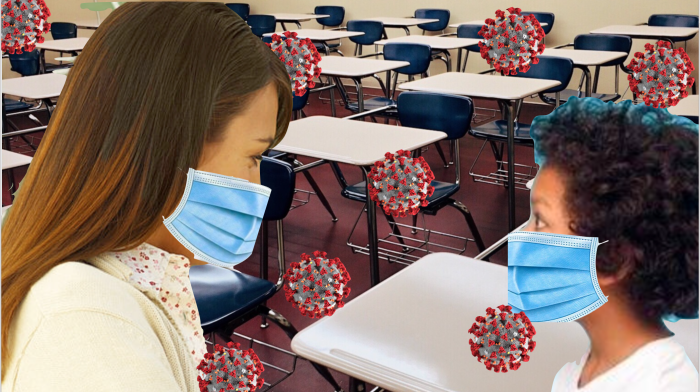
book-4