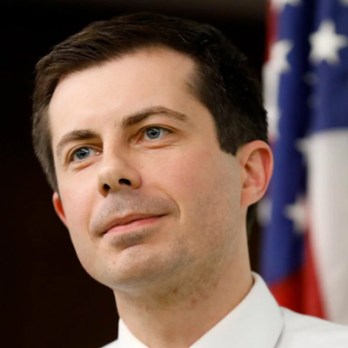
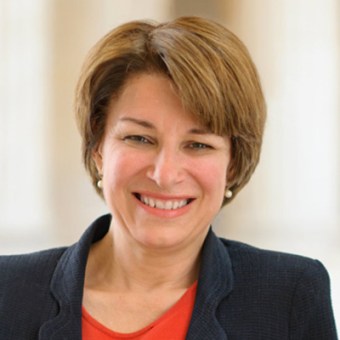
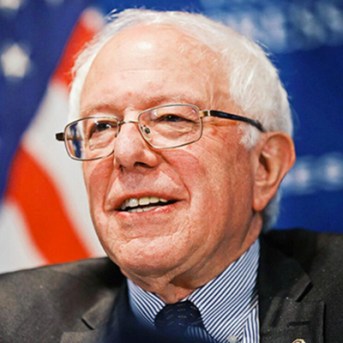
The candidates who are expected to attend Saturday’s forum include: Former Vice President Joe Biden; Mayor Pete Buttigieg of South Bend, Indiana; billionaire businessman Tom Steyer; and Sens. Amy Klobuchar of Minnesota, Bernie Sanders of Vermont and Elizabeth Warren of Massachusetts.
All the presidential candidates who either qualified for the October debate or hold statewide office were invited to attend, according to organizers.
To be honest, I don’t know if I’ll get the chance to actually ask a question. I might spend the whole time listening, but that would be far from wasted.
Forcing candidates to tell educators to their faces what they intend for public schools is a worthwhile endeavor in itself.
But I must be honest – there is a possibility I may get the microphone and have the opportunity to ask something.
So I’ve prepared the following questions – one for each candidate expected to be at the forum:
Along with Sen. Sanders, you have one of the most progressive and comprehensive education plans of any candidate running in 2020. In fact, it’s one of the best of any candidate who has ever sought the Democratic nomination. However, you seem to equivocate on standardized testing and national academic standards. On the one hand, you say that you’re against high stakes testing, but on the other you speak about putting an emphasis on student careers, and aligning high school graduation requirements with that of colleges. You even say you’d direct “the Department of Education to issue guidance on how schools can leverage existing federal programs to facilitate education-to-workforce preparedness.” This sounds a lot like Barack Obama’s Race to the Top which held school funding hostage to regressive reforms and Common Core which used standardized tests to determine what would be taught in schools. My question is this: please explain exactly if and exactly how high stakes standardized testing and Common Core fit in with your education policies?
If anyone has any other suggestions, please post them in the comments. And if someone else this weekend or later in the campaign season happens to get a chance to query one of the candidates, feel free to use one or all of what I have compiled here.
My hope is that this interest in education isn’t just a political stunt but will translate to better school policies no matter who wins the election in 2020.
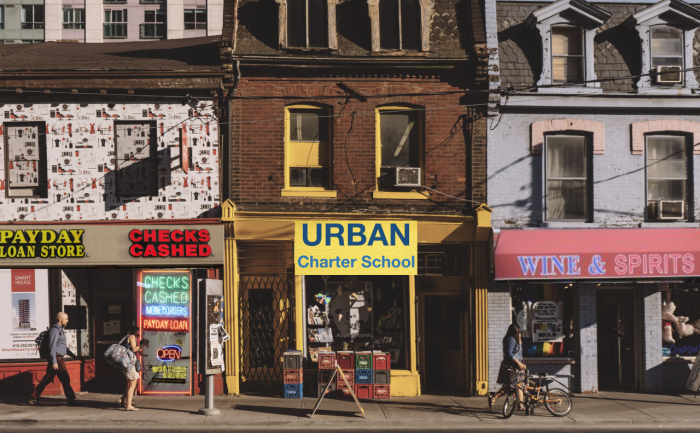
Liquor stores, payday lenders and charter schools.
It is no accident.
In the inner city, the underemployed compete for a shortage of minimum wage jobs, healthcare is minimal, public transportation inadequate and the schools are underfunded and short staffed.
Businesses are on every corner, but they aren’t set up for the convenience of those living there.
Ethnic isolation – whether caused by poverty, legal coercion, safety in numbers or white flight – often puts the segregated at a disadvantage. It creates a quarantined economy set up for profiteers and carpetbaggers to get rich off the misery of the poor.
The system is set up to wring as much blood as it can from people forced to live as stones.
As W.E.B. DuBois described it nearly a century ago, “Murder sat on our doorstep, police were our government, and philanthropy dropped in with periodic advice.”
The economy is glutted with enterprises offering cheap promises of relief but which actually reinforce the status quo.
Yet in higher income black neighborhoods in the same cities, you don’t find these same liquor stores.
They are established in the poorest neighborhoods to offer cheap, temporary respite from the trauma of living in poverty. Yet they increase the likelihood of alcoholism, addiction and violence.
The same goes for payday lenders.
These are basically legal loan sharks who offer ready cash at exorbitant interest rates. Typically these payday loans are meant to last the length between paychecks – approximately two weeks. However, they come with extremely high interest rates. For instance, the average $375 loan ends up costing $520 (139%) in interest.
These businesses aren’t located in the suburbs or wealthy parts of town. You find them typically in the inner cities and poor black neighborhoods. They promise temporary help with one-time purchases and unexpected expenses, but in truth most are used to pay for necessities like rent or food.
They end up trapping users in a debt spiral where they have to take out payday loans to pay off previous payday loans. This is mostly because these loans are made based on the lender’s ability to collect, not the borrower’s ability to repay while meeting other financial obligations.
And these are just two of the most common features of this predatory economy – capitalist enterprises designed to enrich businesses for exploiting consumers beyond their ability to cope.
Others include high priced but limited stock grocery markets, fast food restaurants, gun stores, inner city rental properties and charter schools.
Think about it: (1) charter schools disproportionately locate in poor black communities, (2) offer the promise of relief from inequality but end up recreating or worsening the same unjust circumstances and (3) they are often owned by rich white folks from outside the neighborhood who profit off the venture.
1) LOCATION
Who attends charter schools and where are they located?
The charter sector represents only a tiny fraction of students attending public school.
This doesn’t come close to a majority for any racial group. Consider the fact that authentic public schools enroll approximately:
•7 million black students (14% of the total)
•12 million Hispanic students (24% of the total)
•24 million white students (48% of the total)
NOTE: These figures include charter school students. To get the totals of authentic public school students (above) I subtracted the charter students out. SOURCE:NCES
More students of all ethnicities attend authentic public schools than charter schools – by orders of magnitude. However, those that are enrolled at charter schools are not distributed evenly. Charter schools do educate a disproportionate percentage of students of color – especially among Hispanic students.
Why? Do black and brown families seek them out or is it just the opposite – charters seek out melanin abundant children.
So like liquor stores and payday lenders, charter schools are disproportionately located in highly segregated, urban communities often with a majority black and Hispanic population. And since they are businesses (unlike their authentic public school counterparts), they literally target this demographic because it fits their profit model.
These are the people they think they can sell on the charter model. And they often do.
2) EXPLOITATION
How do charter schools disadvantage the students enrolled there?
Like other vulture capitalist enterprises, they exploit the students they purport to serve by convincing people of color to accept fewer services than they already get at authentic public schools.
Charter schools are permitted to run without elected school boards. Decisions are often made by appointed bureaucrats behind closed doors. They are not required to hold public meetings or present school documents as public records. Parents have no way of having their voices heard except that they can take it or leave it.
Charter schools can cut student services and pocket the savings. This is true regardless of whether they are designated for-profit or non-profit. It’s just a matter of which loopholes you have to go through. In both circumstances there are ways for the business people running charter schools to make financial gains at the expense of the community and its children. And the result is larger class sizes, narrower curriculum, fewer field trips and extra-curricular activities – but also larger salaries and perks for administrators and investors.
Authentic public schools have to accept all students who live within their boundaries.
Charter schools are not required to accept all students who live in their coverage areas or even all who apply for enrollment. They can and often do cherry pick the easiest students to educate. The can dissuade special needs students or students with less stable families from applying by forgoing special services and/or requiring prerequisites like costly uniforms and parental voluntarism. Or they can simply choose whomever they wish from the applicant pool and claim the decision was based on a lottery that never needs to be audited for fairness.
Charters market themselves as providing a superior education, but this is not supported by the facts.
Nearly every study conducted on the matter has found that charter schools do NOT outperform authentic public schools. In fact, many charters get much worse results – especially cyber charter schools.
But that’s just academics. There are even clearer economic indications of how charter schools squander the tax dollars that fund them while authentic public schools are more stable and provide better value for the money.
According to a 2015 report by Wisconsin-based Center for Media and Democracy, dozens of charter schools that have accepted federal funding closed without even opening in the first place! The federal government has spent $3.7 billion to boost the charter sector only to have these “ghost schools” pop up and spirit away our tax dollars.
This includes:
•In 2011 and 2012, the federal government gave $3.7 million in taxpayer dollars to 25 Michigan “ghost” schools that never even opened to students.
•In California, more than $4.7 million in federal taxpayer money was handed out to create charter schools that subsequently closed within a few years.
•In Ohio, out of the 88 schools created by planning and implementation grants under the federal “Charter School Program” (CSP) for state education agencies between 2008 and 2013, at least 15 closed within a few years; a further seven schools never even opened. These charters received more than $4 million in federal taxpayer dollars.
There is even more evidence that charter schools are not nearly as stable as authentic public schools.
So charter schools provide fewer services, worse results, and a greater chance of closure or wasting limited funding without even opening at all – not a good return on investment for students of color.
3) OWNERSHIP
And who owns and operates these charter schools?
There has been very little research on this topic.
The most detailed information I could find comes from the charter school industry, itself, specifically the National Alliance for Public Charter Schools (NAPCS), a nonprofit that describes itself as “committed to advancing the public charter school movement.”
According to the NAPCS, about one-third of charter schools in 2016-17 were operated by management organizations that run multiple schools. This includes KIPP, Success Academy, Green Dot Charter Schools, Uncommon Schools and Rocketship Charter Schools.
The remainder (57%) are owned by what they call freestanding charter schools – which just means organizations that run only one school.
These institutions can be run by a wide range of groups including religious organizations and local business organizations such as chambers of commerce or economic development authorities.
They are a kind of “false consciousness,” an extension of the segregation economy exploiting black and brown children.
They are disproportionately located in poor and minority neighborhoods because operators think they can sell their educational model to people of color fed up with the inequality of their neighborhoods.
Yet they provide fewer services at greater cost to black communities – they convince impoverished minorities to give up the few educational guarantees they already have in favor of a worse situation. And the result is a continuation or worsening of the status quo while enriching vulture capitalists.
It’s a scam, a flimflam ripoff, a bamboozling hoax.
Like the liquor stores and payday lenders that dot the inner city landscape, charter schools are yet another way to exploit black people for the crime of putting their faith once again in capitalism to break their chains.
We need to tear down the systems of inequality that privilege some at the expense of others – and doing that requires a robust system of public education for all.
It is not only a prerequisite for social justice but it is one of the central facets of the fight, itself.
You can’t use capitalism – a system that relies on inequality – as a method to assure equity.
Justice requires fairness. And the road to fairness can only be discerned by enlightenment.
Education is both the path and the goal.
It’s passed time we stop exploiting those who wish to walk that path by convincing them to go another way.
Charter schools siphon money from authentic public schools serving the neediest students creating a deficit spiral. Money gushes out of public districts which have to cut teachers and programs to patch budget gaps which in turn result in even more parents pulling their children out of the public schools and trying to enroll them in charters.
Comments can be as long or short as you want, but here are some suggestions to keep in mind when writing.
1) Begin by telling who you are.
2) Explain the problem with charter schools briefly. Use real world examples if you can. There’s nothing wrong with referring to a newspaper article or blog. And if you can mention specifics from your school district, all the better.
3) Make suggestions for reform. You can address anything, but PDE is specifically looking for comments on these topics:
· Charter school applications: Strong regulations would require the application be comprehensive, set high standards, ensure only operators with needed skills are approved and maintain maximum local control.
· Admissions policies: Strong regulations would ensure charters conduct fair lotteries that don’t allow cherry picking. Schools should be located in areas that are accessible to poor students and those relying on public transportation. Charters should be required to create recruitment plans for specific groups of vulnerable students including EL students, students with disabilities, economically disadvantaged students and students in foster care.
· Accountability for boards of trustees: Strong regulations would aim to prevent financial wrongdoing, eliminate conflicts of interest, and impose stronger penalties for the misuse of public funds.
· Information on charter management companies: Strong regulations would end high fees paid to charter management companies and increase transparency of boards, budgets, costs and contracts.
· Insurance, financial and accounting standards: Strong regulations would ensure there were independent auditors and accountants as well as increased transparency.
· Funding: This is about the subsidy redirection process that forces PDE to pay charters directly when they dispute a bill with a school district. Strong regulations would ensure all disputed funds go into an escrow account rather than just being paid.
· Academic accountability: Strong regulations would ensure all charters should be part of a performance system that is used in renewal and revocation decisions. The lowest performing charter schools should be subject to closure without appeal.
“We are recommending that your comments include the following:
1. We strongly support the Pennsylvania Department of Education’s decision to develop these regulations.
2. The regulations must end the conflicts of interest, financial self-dealing and lack of transparency that occur in the charter sector today. Charters must be held accountable for their performance in operations, finance and academics.
3. We strongly support local control over charter school opening and closing. Elected school boards know the needs of the community the best and are responsible to taxpayers and families.
4. The charter school law acknowledges that charter schools have an impact on the finances of school districts. The districts should be able to consider that impact when making decisions to open or renew a charter.”
Here is the letter I will be sending:
Dear Pedro A. Rivera:
Thank you for seeking comments from Pennsylvania residents about our 22-year-old charter school law.
I live in the Pittsburgh area and am both a public school teacher and the father of a public school student.
I have seen the damage charter schools can do in my career at the Steel Valley School District in Munhall. We have a Propel charter school in our community. Just three years ago, the Propel franchise siphoned away $3.5 million from our district annually. This year, they took $5 million, and next year they’re projected to get away with $6 million. That’s about 16% of our entire $37 million yearly budget.
Meanwhile, enrollment at Propel has stayed constant at about 260-270 students a year since 2015-16. It’s only the amount of money that we have to pay them that has increased.
The state funding formula is a mess. It gives charter schools almost the same amount per regular education student that my district spends but doesn’t require that all of that money actually be used to educate these children.
In the 2015-16 school year, Steel Valley paid the 19th highest amount of its budget to charter schools in the state (9%) and that number is growing.
2000-01 – 2012-13
Non-Special Ed: $9,321
Special Ed: $16,903
2013-14
Non-Special Ed: $9,731
Special Ed: $16,803
2014-15
Non-special Ed: $10,340
Special Ed $20,112
2015-16
Non-Special Ed: $12,326
Special Ed: $25,634
2016-17
Non-Special Ed: $13,879
Special Ed: $29,441
2017-18
Non-Special Ed: $13,484
Special Ed: $25,601
2018-19
Non-special ed: $14,965
Special ed: $32,809
All of this has real world consequences in the classroom. It means fewer teachers and larger class sizes. It means narrowed curriculum and fewer extracurricular activities. It means reduced options and opportunities for all children – just so a new business can duplicate the services already being offered but skim tax dollars off the top.
So here are the reforms I think we need to make.
There is zero reason why there should be charter schools at all. We do not need to spend public tax dollars on schools that are privately operated. If a school takes public money, it should be run by the public – specifically an elected school board. So we should repeal the charter school law in its entirety. We should be like Montana, North and South Dakota, Nebraska, Kentucky and West Virginia and have zero charter schools.
Of course, that leaves us with the question of what to do with the charter schools that already exist here. First, we have to commit to a complete moratorium on any new charter schools – ever. Then we need to decide what to do with those that already exist.
I think we should do a thorough audit of each of them. Any charter school that fails the audit, closes. They should have to prove they haven’t been wasting taxpayer funds and are providing a real service to students and families. They also should not be drawing any kind of profit from their efforts.
If we have any charter schools that meet these stipulations, we should reform them into fully authentic public schools. They should have to be run by elected school boards. They should have to abide by every rule authentic public schools already do – fully transparent, public meetings, accept all students in their coverage areas, etc.
Finally, any funding shortfall caused by keeping these schools in existence would have to be subsidized by the state. They would not get any funding that goes to the existing authentic public school. The charter schools that we are transforming into authentic public schools would have to be funded by an additional revenue stream from the state – and this may require an increase in state taxes. No one wants that but it’s the only fair way and will help reduce the number of ex-charter schools we rehabilitate.
I realize my suggestion goes against what we have always done and may provoke heated opposition. But I think it is what is best.
Moreover, if we have to find a compromise position, this is where we start from. If we must keep charter schools in Pennsylvania, they should be as transparent as authentic public schools, they should have to be run by elected school boards, they should not be able to make a profit (regardless of their tax status), they should have to accept all students in their coverage areas, and they should be fully funded by the state and not as parasites to authentic public schools.
Thank you for considering my position. There are thousands of parents, teachers, students and community members who feel as I do and we will work to support your efforts and/or push you to do right thing.
Thanks again.
Yours,
Steven Singer
If you live in Pennsylvania, I strongly encourage you to send a letter (whether by email or snail mail) today. Feel free to borrow as much as you like from what I have here.
Together we can make a difference for our children and our communities. Please share widely and encourage your commonwealth friends and family to raise their voices as well.
From Pittsburgh to Philadelphia and all places in between, it’s time we were heard.
And as I was anxiously trying to get all this together in time for me to rush to my morning duty when the meeting was over, I quickly took a sip of my tea and tried to listen to what my administrator was saying from the front of the room.
When he got his answer – actually he had to say it himself because none of us were ready to play this game so early in the morning – he offered us an olive branch.
Isn’t that the way of it? Shame then reconciliation. Blame then peace.
Those are just the achievement scores, he said. Admin. generously doesn’t expect us to be able to do much about those. They go up one year and down the next.
The day before the meeting I was conferencing with a student about his essay on Charles Dickens’ “A Christmas Carol.” I pointed out that he had misspelled Christmas as “Crismist.”
He refused to fix it.
Literally refused.
I pointed out that the word was already typed out and spelled correctly in the prompt. All he had to do was erase what he had written and rewrite it correctly.
He said he didn’t care – that it didn’t matter.
So I tried to explain how people who don’t know him would read this paper and make snap judgments about him based on simple mistakes like this.
Well that last one was just too much. We were told that Admin. planned to do just the opposite – to make the Classroom Diagnostic Tools (CDT) testsMORE invasive by changing the schedule to make them appear more like the end of the year state mandated tests.
He said eventually we could look at some of these other ways to change things administratively, but he wanted to put the onus on us. What can WE do to increase growth?
Students need more than another standardized test. And they need more than another teacher who only cares about their test scores – regardless of whether you measure them in growth or achievement.
These kids are stressed out, living under immense pressure, coping with poverty, prejudice, an unstable society, climate change, an uncertain future and an economy that promises them little more than crushing debt as a best case scenario.
If you want to make an impact, a good place to start would be a realistic conception of what it means to be a teacher and what we actually can and should be held responsible for.
“Frankly suggesting that stronger transparency standards for publicly-funded charter schools would ‘limit parental choice’ is an incoherent talking point that really should not be taken seriously. Increased transparency only ‘limits choice’ if the charter schools themselves refuse to accept higher transparency standards.”
Intercept journalist Ryan Grim, who was present at the rally, noted that the group of protestors was funded by the Waltons.
The group was from Memphis Lift Parent Institute which bused in people from around the country. It was supported by a GoFundMe page showing numerous $1,000 donations from anonymous sources.
While it’s true that you’ll find polls showing strong support for charters among people of color, the overwhelming majority of these polls are conducted by pro-charter groups. They’re like the American Apple Foundation finding high support for U.S. apples – little more than paid advertising.
Billionaires like DeVos, Bill Gates and the Waltons have spent incredible amounts of money to convince the public that school privatization is grassroots, but we have the receipts.
Andre Perry, an education policy expert at the Brookings Institution, describes the Walton foundation as hiding behind black faces to obscure who’s really in charge – they’re exploiting black people for a “white agenda.”
“It’s a sad thing that education reform is about how much money you have and not about what connection you have with black communities,” Perry said.
The Walton Foundation gave $9 million to the United Negro College Fund for a scholarship to the organization’s fellowship program for students interested in education reform. They are literally paying to indoctrinate black people to the ideology that school privatization is in their best interests.
This also includes $530,000 to the Congressional Black Caucus Foundation to sponsor an affiliated education policy advocacy and campaign training workshop and an additional $170,000 to sponsor events.
Walton money has also gone to two other pro-charter groups – nearly $2 million to the 100 Black Men of America campaign and $7.3 million to the National Urban League.
It is up to every thinking American to look at the facts and understand the extent to which we are being bamboozled by white elites at the expense of our black and brown brothers and sisters.
If you take a walk through any Costco on a weekend afternoon, you can see that Americans LOVE to get free stuff, no matter how small it is. Why else would we wait in line for a morsel of food that likely has lots of germs on it?
Because, it’s FREE.
So, what if I offered you the chance to send your child to private school, for free? You’d likely jump at the chance, right? After all, our perception is that private schools are exclusive. Private schools are much better than public schools, right?
You must pay for private schools, which puts them out of reach for many families. So, the chance to attend one for free? Sure!
But much like you might regret eating that bite of bacteria-laden food from the sample lady at Costco, you might want to really examine that “free” private school before you send your child.
Because that “private” school is not a private school at all. It’s a charter school. And charter schools are public schools. Besides, except for a few exceptions (that charter supporters never miss an opportunity to point out), they do not perform as well as traditional public schools. In fact, right here in Pennsylvania, we do not have one cyber charter school that is performing at an acceptable level per our own Pennsylvania Department of Education (PDE) reports.
First, let me be clear. I have never once heard a charter school say that they are a private school. However, they use smoke and mirrors to trick parents into thinking that they are a private school. And, they usually refer to themselves as “charter schools” instead of “public charter schools” and many taxpayers do not even know what a charter school is.
So, the lack of the word “public” combined with a few tricks leads parents to believe that they are getting something special, something exclusive, when in fact they are not.
School Uniforms: Now, mind you, I’m not against the idea of school uniforms. There certainly is a lot of value in the concept. But I think we’d all agree that school uniforms are not a public school kinda thing. Right? If I say the words “school uniform” my guess is that the first vision that pops into your brain is dark blue, dark green, maybe even plaid….but the vision of a Catholic/private school uniform.
“Tuition Free”: Look at any magazine or TV advertisements for charter schools, and you’re likely to see the phrase “tuition free.” Wow! Free! I love free! But guess what? It’s a public school. There never was any tuition. Again, another trick to make parents think that they are getting a private school for free.
Advertising: When was the last time you saw a television commercial for your local elementary school? Yeah, me neither. The very fact that they advertise on TV, billboards and magazines leads you to believe that they are private schools. After all, a public school wouldn’t spend millions of dollars on advertising, would they? No, traditional public schools wouldn’t, as the community likely would have a meltdown over it. But it’s standard practice with the public charter schools. Millions of taxpayer dollars are spent on advertising, much of it deceitful to attract students. And take note: one thing that is absent from the advertising is mention of how well that charter school is performing. Because it’s nothing to brag about!
Tricky Words: In their advertising and promotions, charter schools use tricky words to persuade parents into believing something, without outright saying it. Here are a few examples.
The most obvious is the lack of the word “school” in many of the names. I perused a list of all the charter schools in Pennsylvania. Almost a third of them contain the words “preparatory,” “academy,” “institute” or “center” in their name. When you see or hear those words, you don’t think about public education, do you?
“Specialized” or “tailored” curriculum are a few others. The words are actually pretty meaningless, but lead parents to believe that this school must be better than a public school, right?
Wrong.
Admissions Process: When you want to put your child in your local public school, it usually is called enrollment or registration. Charter schools call it an “admissions” process, which gives it an air of exclusivity about it. Truth is, they do get to pick their students. The lottery admissions process they use are not transparent, and they’re not accountable to telling anyone how they enroll students. But using the word ‘admissions’ is very much a loaded and slanted word, compared to enroll or register.
Marketing Exclusivity: Some charters like to promote themselves as exclusive or only being for a select group of students. Again, these are public charter schools using taxpayer dollars to operate. Allowing taxpayer money to promote exclusivity in our schools is a dangerous path to go down, in my opinion. After all, minorities and disabled children have only been in public schools for a few decades. Excluding groups of children, or insinuating that you do, is backwards progress.
Charter schools are public schools. Many parents and taxpayers do not know this due to deceptive marketing tactics. Charters in PA have been allowed to play by their own set of rules, and that has to stop.
I’ll be the first to stand up and say that our traditional public schools need some assistance. But diverting funds away from them and to charters with little accountability is not the way to improve our schools.
Lisa Lightner is a Special Education Advocate who lives in southeastern PA with her family. Her blog, A Day in our Shoes, offers free (yes really, free) IEP advice for parents.
Now that the city is doing better, school officials are suggesting Peduto should give that tax revenue back to the schools. And that suggestion infuriates the mayor.
In addition, it’s not true that Pittsburgh’s 2020 budget includes no tax increase.
The city has a surplus due to construction of new high-end apartments. City Council could have budgeted some of this money to pay for the parks. Instead, leaders like Peduto were too cowardly to take the blame, themselves, and put it out as a question to voters.
Both entities spend about the same amount annually. In 2020, the city has a proposed $608 million budget, and the schools have a proposed $665.6 million budget.
Moreover, there is nothing unfair about school officials asking for the tax revenue back from the city that they generously offered it when the municipality was in need.
Now that the city is out of peril (and has been since 2018), it should pay back that money. To be honest, it should do so with 14 years worth of interest – but no one is suggesting that.
At least it is time for Pittsburgh to stop leeching off its schools and give this revenue back.
The fact that Peduto is whining about something so obviously fair and equitable makes him look like a spoiled child.
The same goes for his suggestion of state takeover of district finances.
District spokeswoman Ebony Pugh said, “There have been no significant issues raised related to how the district conducts its finances.”
Peduto just wants the schools to have to endure the same indignity the city did thereby putting municipal leaders in a better light.
After all, it was the school district which helped the city – not the other way round. And it was the city that needed the state to take over its finances, not the schools.
It was Pittsburgh Public School’s Chief Financial Officer Ronald Joseph who explicitly proposed a take-back of wage tax revenue that was diverted to the city in 2005.
When the city was placed under Act 47 state oversight, the formula was changed to give a quarter percent more to the city from the school’s allotment – thus 1.75% went to the schools and 1.25% went to the city.
Pittsburgh left Act 47 in 2018 but the wage tax distribution has remained the same.
“Why in the heck can’t the school board balance their budget?” Peduto said. “Where is all this money going?”
Answer: Some of it is still going unnecessarily to fill your municipal coffers.
“If they are looking to have part of the city’s wage tax, then they should be willing to open the books and let the state come in and do exactly what we had to do through Act 47, which was difficult restructuring for the future. If we didn’t have that, the city would be bankrupt.”
So let me get this straight. In order to give back the revenue the schools generously loaned the city, you need a look at their finances? I sure wouldn’t lend you a dollar or else I’d have to show you my tax returns and checking account just to get the loan repaid.
“If they simply say, ‘We’re going to take your revenue to fix our hole,’ and not be the leaders that they were elected to be in making tough decisions like raising taxes, then I have no time for that, absolutely none, and I will fight them in Harrisburg.”
How generous! That’s like threatening to go to Mom and Dad to settle your dispute. A real leader would know he was in the wrong and just pay up.
This isn’t the first time Peduto has clashed with city schools.
He seems to think his role as mayor supersedes that of the school district which operates independently through an elected nine-member board.
“They have to remember they’re a board. They’re not a government. They’re no different than the water board or the Port Authority board or the airport board. They’re a board of education. Their job should be solely making sure that kids are getting a good education. When there becomes labor strife in the city, labor strife that could affect the economic development of the city for years to come, they need to move out of the way and let [elected] leaders lead.”
Dr, Hamlet said this was a “bargaining process, not a political” one, and that Peduto needed to let administration continue the process of bargaining with the teachers – a process that resulted in a new contract without a strike.
The relationship has been chilly even before Hamlet was hired in 2016.
Like many charter schools, the Hill District institution is incredibly segregated. According to ProPublica, 96% of students are children of color. It has no gifted program, offers no AP courses, has no students taking the SAT or ACT test, no calculus classes, no advanced math, no physics, geometry, chemistry or 8th grade algebra courses.
Peduto said he would lobby for additional funding for city schools in Harrisburg but district solicitor Ira Weiss said the mayor never followed through.
Peduto proposed increasing school revenue by helping to rent out unused school space. That hasn’t happened, either, said Weiss.
Peduto suggested increasing student after school programs by working together with the district and others like the YMCA and the Student Conservation Association. While a few such programs do exist, there is no broad collaboration, said Errika Fearby Jones, the executive director of Dr. Hamlet’s office.
Peduto’s summer reading program with the city and the Carnegie Library of Pittsburgh likewise never materialized – though the library runs its own program.
Moreover, Peduto’s plan to restart the Generations Together program with the University of Pittsburgh to promote cross-generational learning never happened either. Pitt shut down the program in 2002.
Curtiss Porter, who served as Peduto’s chief education and neighborhood reinvestment officer during the first year of his administration, blames the problem on a disagreement about who should be in charge.
The city and school district had a good working relationship when he was there, he said, but there was “a clear demarcation” between the two bodies, which made it difficult to implement some of Peduto’s ideas.
“At critical junctures…the school district made it clear that they were willing partners but that they did not have to bow to the city,” he said. “[They] made it clear the city had no jurisdiction over education.”
And that disconnect appears to continue today.
Peduto is engaged in an ignorant and arrogant power struggle with city schools that helps no one.
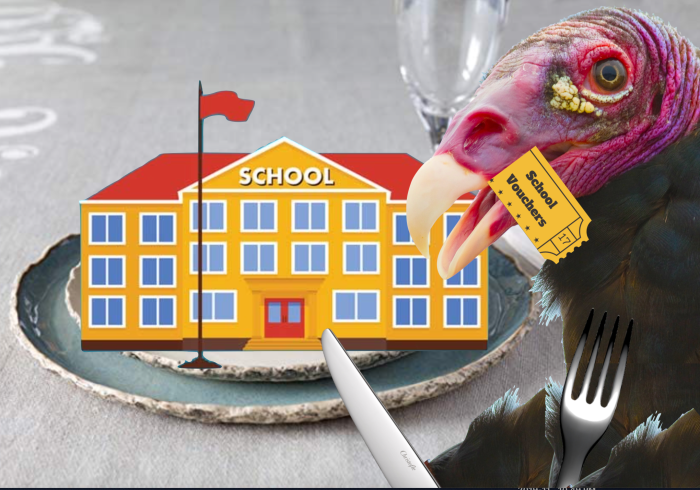
The Republican Speaker of the state House is expected to propose a school voucher bill Monday that will treat Harrisburg Schools as nothing more than carrion fit for plunder by school privatization vultures.
But instead of helping the school and its students get back on their feet, Turzai proposes siphoning away as much as $8.5 million in state funding set aside for the school’s aide. Alternatively, that money would go to help offset some of the cost of sending Harrisburg students to private or parochial schools if they so desire.
There are already 612 children living in district boundaries who attend nonpublic schools who would immediately benefit. So even if no additional students decided to take advantage of the program, that’s a $2.5 million cost to cover partial tuition for students the state is not currently paying to educate. If any additional students decided to take advantage of the program, the cost would increase.
It’s unclear where the other half of the money would even come from that the state is supposed to match.
Thinking people know this is nonsense on so many levels. If the public schools have problems, there’s no reason to believe school vouchers hold the answer. After all, the best way to save yourself from drowning is to patch up the boat you’re already on. You shouldn’t jump to a lifeboat willy-nilly with no assurance that your escape craft is more seaworthy than the one you’re already sailing on.
And in fact, there is no evidence that voucher schools are better than authentic public schools.
A 2018 Study from the University of Virginia found that once you take family income out of the equation, there are absolutely zero benefits of going to a private school. The majority of the advantage comes from simply having money and all that comes with it – physical, emotional, and mental well-being, living in a stable and secure environment, knowing where your next meal will come from, etc.
Turzai is literally proposing legislation on an outdated far right talking point. But his whole plan isn’t exactly fresh. We’ve seen versions of it almost every legislative session.
While Republicans have the numbers to overturn any veto, it is doubtful they would actually do so. Historically they only need to show DeVos and her billionaire friends like the Koch Brothers that they tried to pass their ALEC-written legislation. They don’t actually have to pass it. In fact, doing so would make them responsible for it and could result in voters – even in such gerrymandered districts – turning against them.
But all it would take is a receiver to be appointed for the following districts to be affected:
Allentown City, Bethlehem Area, Coatesville Area, Easton Area, Erie City, Hazleton Area, Hempfield Area, Lancaster, Penn-Trafford, Reading, Wilkes-Barre Area and York City school districts.
So this could easily become a backdoor voucher initiative for our poorest districts to become the next course on the buzzards’ menu.
But perhaps the strangest turn in this whole concern is Turzai’s apparent ambition.
In order to belong to both worlds, I’ve had to abide by one ironclad rule that I’m about to break:
Never write about my home district.
Oh, I write about issues affecting my district. I write about charter schools, standardized testing, child poverty, etc. But I rarely mention how these things directly impact my school, my classroom, or my students.
I change the names to protect the innocent or gloss over the specifics with ambiguity.
To put it bluntly, we have two elementary schools – one mostly for white kids and one mostly for black kids.
Our district is located on a steep hill with Barrett Elementary at the bottom and the other schools – Park Elementary, the middle and high school – at the top.
These schools serve students from K-4th grade. By 5th grade they are integrated once again when they all come to the middle school and then the high school. There the mix is about 40% black to 60% white.
But having each group start their education in distinctly segregated fashion has long lasting effects.
Maybe it has something to do with the differences in services we provide at each elementary school. Maybe it has to do with the resources we allocate to each school. Maybe it has something to do with how modern each building is, how new the textbooks, the prevalence of extracurricular activities, tutoring and support each school provides.
But it also has to do with the communities these kids come from and the needs they bring with them to school. It has something to do with the increasing need for special education services especially for children growing up in poverty. It has something to do with the need for structure lacking in home environments, the need for safety, for counseling, for proper nutrition and medical services.
No one group has a monopoly on need. But one group has greater numbers in need and deeper hurts that require healing. And that group is the poor.
According to 2017 Census data, around 27% of our Steel Valley children live in poverty – much more than the Allegheny County average of 17% or the Pennsylvania average of 18%.
And of those poor children, many more are children of color.
Integrating our schools, alone, won’t solve this problem.
If you’ll allow me a brief diversion, it reminds me of a historical analogue of which you’ve probably never heard – the Great Stink of 1858.
Let me take you back to London, England, in Victorian times.
The British had been using the Thames River to wash away their garbage and sewage for centuries, but the river being a tidal body wasn’t able to keep up with the mess.
Moreover, getting your drinking water from the same place you use to wash away your sewage isn’t exactly a healthy way to live.
But people ignored it and went on with their lives as they always did (if they didn’t die of periodic cholera outbreaks) until 1858.
That year was a particularly dry and hot one and the Thames nearly evaporated into a dung-colored slime.
But the politicians of the time refused to do anything to fix the problem. They sprayed lime on the curtains. They even sprayed it onto the fecal water – all to no avail.
It took two decades but they did it right and almost immediately the cholera outbreaks stopped.
They calculated how big a sewage system would have to be constructed for the contemporary population and then made it twice as big. And the result is still working today!
Scientists estimate if they hadn’t doubled the size it would have given out by the 1950s.
This seems to be an especially important bit of history – even for Americans more than a continent and a century distant.
It seems to me an apt metaphor for what we’re experiencing here in Steel Valley.
Everyone knows what’s causing the stink in our district – school segregation.
Likewise, we know what needs to be done to fix it.
We need a new elementary complex for all students K-4. (I’d actually like to see 5th grade there, too.) And we need busing to get these kids to school regardless of where they live.
The excuse for having two segregated elementary schools has typically been our segregated communities and lack of adequate public transportation.
We’re just a school district. We can’t fix the complex web of economic, social and racial issues behind where people live (though these are matters our local, state and federal governments can and should address). However, we can take steps to minimize their impact at least so far as education is concerned.
In short, our kids have always walked to school. Kids at the bottom of the hill in Homestead and West Homestead walk to Barrett. Kids at the top in Munhall walk to Park. But we never required elementary kids to traverse that hill up to the middle and high school until they were at least 10 years old.
We didn’t think it fair to ask young kids to walk all the way up the hill. Neighborhood schools reduced the distance – but kept the races mostly separate.
We need busing to remove this excuse.
I’ve heard many people deny both propositions. They say we can jury rig a solution where certain grades go to certain schools that already exist just not on a segregated basis. Maybe K-2 could go to Park and 3-4 could go to Barrett.
It wouldn’t work. The existent buildings will not accommodate all the children we have. Frankly, the facilities at Barrett just aren’t up to standard. Even Park has seen better days.
We could renovate and build new wings onto existing schools, but it just makes more sense to build a new school.
After all, we want a solution that will last for years to come. We don’t want a Band-Aid that only lasts for a few years.
And I do sympathize with this position. After all, as Superintendent Ed Wehrer said, the district is still paying off construction of the high school, which was built in the 1970s.
I’m sure McKeesport administrators and school board members along with those at other neighboring districts could provide Steel Valley with the expertise we need to get this done. I’m sure we could find the political will to help us get this done.
And that’s really my point: our problem is less about what needs to happen than how to do it.
We should at least try to do this right!
We can’t just give up before we’ve even begun.
Debates can and should be had about where to build the new school, how extensive to have the busing and other details. But the main plan is obvious.
Sure, some fools will complain about sending their little white kids to class with black kids. We heard similar comments at the town hall meeting. But – frankly – who cares what people like that think? The best thing we could do for their children would be to integrate the schools so that parental prejudices come smack into conflict with the realities of life.
And if doing so makes them pull out of Steel Valley, good riddance. You never need to justify doing the right thing.
Monitor this student’s progress in this way, that student’s progress in another way, differentiate the following, document this medical condition, write up this behavior, check for that kind of hall pass, post and teach these academic standards, etc., etc., etc.
Some of these directives I agree with and others I do not. But that is treated as an irrelevance because the one thing I’m never told to do is to think for myself. The one thing that seems to be expressly forbidden – is that I think for myself.
Teaching may be the only profession where you are required to get an advanced degree including a rigorous internship only to be treated like you have no idea what you’re doing.
It makes me wonder – why did I take all those courses on the history of education if I was never supposed to have the autonomy to apply them? Why did I have to learn about specific pedagogies if I was never to have the opportunity to create my own curriculum? Why was I instructed how to assess student learning if I was never meant to trust my own judgment and rely instead solely on prepackaged, canned standardized tests?
Because it seems to me that there is a bit of a mixed message here.
On the one hand, teachers are given so many directives there’s no room for thought. On the other, teachers can’t do their jobs without it.
So what exactly do they want from me?
The principal can’t educate classes from his desk in the administrative office. The school board director can’t do it from his seat in council chambers. Lawmakers can’t do it from Washington, DC, or the state capital. Only the teacher can do it from her place in the classroom, itself.
If we trusted teachers to do their jobs, they would be empowered to accomplish more. And I don’t mean blind trust. I don’t mean closing our eyes and letting teachers do whatever they want unimpeded, unadvised and unappraised. I mean letting teachers do the work in the full light of day with observation by trained professionals that know the same pedagogy, history and psychology we do – trained administrators who are or were recently teachers, themselves.
We don’t want a school system that produces independent thinkers. We want it to simply recreate the status quo. We want the lower classes to stay put. We want social mobility and new ideas to be tightly controlled and kept only within certain boundaries.
And that is why our school system keeps teachers so tightly constrained – because we want status quo students.













 gadflyonthewallblog