Top 7 Ways Technology Stifles Student Learning in My Classroom

Screen Shot 2019-07-30 at 9.25.31 PM

 
As a middle school teacher, I have real concerns about the ways technology is used in the classroom and the effects it’s having on students.


That does not make me a technophobe.


The fact that you are reading this article on a blog – a regularly updated Website containing personal writings or a weBLOG – should prove that point.


I use technology in my everyday life and in many ways find it indispensable.


However, that does not mean I embrace all uses of technology just as criticizing some forms does not mean I think we should get rid of them all.


But after 17 years of teaching, I have legitimate concerns about what all this technology is doing to our students and our schools.


I have seen technologies come and go. Some – like a computerized grade book – have been extremely helpful, and I would not want to have to do my job without them.


Others have fallen by the wayside, been discontinued or proven a waste of time or even worse – they’ve become impediments rather than assistants to student learning.


In general, I think we have become too reliant on technology in schools. We’ve welcomed and incorporated it without testing it, or even reflecting upon whether it promises to offer better pathways toward student comprehension and discovery or whether it merely offers flash and novelty devoid of substance. And perhaps even more frightening, we have not investigated the ways in which using these technologies actually puts student privacy and intellectual growth at risk.
So, without further ado, here are the top 7 ways technology stifles student learning in my classroom:


1) It Stops Kids from Reading


I’m a language arts teacher. I want my students to read.


I could simply assign readings and hope students do them, but that’s not practical in today’s fast-paced world. When kids are bombarded by untold promises of instant gratification, a ream of paper bordered by cardboard doesn’t hold much of a claim on their attentions.


So like many teachers, I bring reading into the classroom, itself. I usually set aside class time every other day for students to read self-selected books for about 15 minutes. Students have access to the school library and a classroom library filled with books usually popular with kids their age or popular with my previous students. They can pick something from outside these boundaries, but if they haven’t already done so, I have them covered.


In the days before every student had an iPad, this worked fairly well. Students often had books with them they wanted to read or would quickly select one from my collection and give it a try.


Sometimes when there was down time in class, when they had finished assignments or tests early, they would even pick up their self-selected books and read a little.


What a different world it was!


Now that every student has an omnipresent technological device, this has become increasingly impossible. I still set aside 15 minutes, but students often waste the time looking for an eBook on-line and end up reading just the first chapter or two since they’re free. Others read nothing but the digital equivalent of magazine articles or look up disparate facts. And still others try to hide that they’re not reading at all but playing video games or watching YouTube videos.


Even under the best of circumstances, the act of reading on a device is different than reading a printed page.


The act of reading traditional books is slower, closer and more linear. It’s the way teachers really want kids to read and which will most increase comprehension.


Reading on a screen is a product of social media. We scroll or scan through, seeking specific information and clicking on hyperlinks.


The old style of reading was transformative, absorbing and a much deeper and richer experience. The newer style is more superficial, mechanical and extrinsic. (And, Yes, I’m aware of which style of reading you’re engaged in now!)


To be fair, some students actually prefer reading eBooks on devices and may even experience the richness of the original style. But they are few and far between. Usually students use the devices to escape from the deeper kind of reading because they’ve never really done it before and don’t understand what it really is. And when they have this choice, they may never find out.


2) It’s a Distraction


As a teacher, I want my students to be able to focus on one thing at a time. There are situations and assignments that call for multitasking, but usually we need students to be able to look at text closely, examine an argument, identify figurative language or write creatively, etc. They can’t do that if they’re constantly checking their devices.


We have to admit that iPads, laptops, social media, etc. are addictive. If given the chance, many teenagers will spend hours there. Heck, many adults will, too. It’s common for students to rush through assignments to get back to watching videos about the latest on-line gaming trend Fortnite, or listen to music with earbuds, or others such things.


Technology is usually associated in their minds with entertainment, not education. I’m not saying that technologies don’t have their place. If you want to look up information quickly, devices are great. But the most common words I tell my students on any given day are “Apples up.” In others words, turn your iPads face down and focus on the lesson at hand.


3) It’s Unhealthy


For most students, technology is not a novelty. It is something with which they already have a lot of experience. Many studies find that kids between the ages of 13-18 spend up to 18 hours a day in front of a screen.


Why are we adding to that in the classroom?


Children need face-to-face interactions. They need to learn social skills, how to communicate with people, not screen avatars. They need time outdoors, time to get up and move around and interact with the world. Heck! They need unstructured time where they actually experience boredom and have to find ways to cope.


We’re robbing them of these skills by giving in to the electronic nanny. And it’s creating children who are less able to survive without that technological crutch.


As technology has become more widespread in my classes, I’ve noticed attention spans decreasing. So has self control, mindfulness and an ability for critical thinking.


4) It Costs Too Much


Public schools are already grossly underfunded. We have to pick and choose the most effective tools to help kids learn. Technology is often very expensive and takes away valuable money and resources that could be better spent elsewhere.


And the way these technologies are marketed is often reminiscent of the drug trade. The first uses are free. But if you want to expand, it will cost.


Even those that don’t demand briefcasefulls of cash often recoup their costs by collecting and selling student data.


In the school system, we are privy to an enormous amount of information about the children in our care – information that we are tasked with keeping safe. Ed tech software and technologies also routinely collect data on students. But they are not as constrained or legally responsible for it in the way schools and teachers are.


Some of the data technologies collect is indeed necessary for whatever task they perform – tabulating which questions students get correct and incorrect, etc. However, much of it is unnecessary for those tasks – information about student preferences or marketing information.

 
We have no guarantee that this data is secure. The FBI has warned schools, parents and students of information breaches at these ed tech companies. And the contracts these companies have with schools and/or users are shady at best. They don’t guarantee your data will be secure, don’t accept liability and even when they do, they routinely warn that their policies can change at any time without warning – especially if they go bankrupt.


These are costs too expensive to pay.


5) It Has Never Been Proven to Help Kids Learn

Educational technologies’ claims about student learning outcomes are based on faith not facts. There are few (if any) long-term, large scale, peer reviewed studies showing that most technologies are effective educational tools.

 
This is partially because they’re too new to have been around long enough to be adequately tested. Moreover, the field is flooded with “studies” payed for by the same companies or organizations being studied – which is like having McDonald’s tell you the McRib is nutritious. Some small-scale peer reviewed studies have been done, but the results have been inconclusive.


We are literally unleashing these devices and software applications on children without knowing their full effects.


Ed tech is a market-based solution to an academic problem. It is the triumph of big business over pedagogy.


Our children deserve better than this.


6) It Perpetuates Bad Pedagogy and Assessment

Ed tech is almost always organized around standardized testing. It takes the multiple choice test as the ultimate form of assessment and arranges itself around that paradigm.


Software basically teaches to the test. It shows users the kinds of questions that will be asked, how to solve them and then gauges their success by giving them test-based questions.


It’s ironic because the marketing departments of these corporations usually sell this junk as “personalized learning,” “individualized learning,” or “competency” or “proficiency based education.” They want you to think that the program is tailor made to the user when it’s actually just a prepackaged mess. If you can’t answer a question of type A, you don’t get to move on to a question of type B. That’s all.


This can be an effective method for increasing test scores – if students aren’t so tuned out by the experience that they don’t engage with what they’re being presented – which is what I often find with my students when I’ve been forced to subject them to this nonsense.


However, learning how to take a multiple choice test on reading is not the same as learning how to read and understand. It is not the same as interacting with, comprehending and forming an opinion about that reading.


This is not the best way to teach just as having students fill out endless worksheets is not, nor is even having a flesh-and-blood teacher do endless test prep.


It is brainwashing – teaching kids to think like the designers of a test when we should be teaching them how to think for themselves and like themselves.


7) It Undermines Public Schools and Teachers


Ed tech companies are not philanthropies. They are in this business to turn a profit. And the best way to do that is to displace and disrupt the public education system.


There is an entire testing and school privatization industrial complex out there trying to prove that traditional public schools are bad and need replaced with business solutions.


These aren’t just charter schools or private and parochial schools cashing in on vouchers siphoning tax money away from children and into their private pockets. These are ed tech companies, too.


The ultimate goal is to get rid of the very concept of school, itself, and to replace it with on-line cyber schooling that can be accessed anywhere without the need for any living, breathing teachers in the mix. Or at best, they want to reduce the teacher to a mere facilitator. It is the device and the software that teach. It is only the human being’s job to make sure the student is engaging with the technology.


This is not in the best interest of students. It is in the best interests of companies and corporations.


When we give away our responsibilities, our autonomy, and our humanity to these businesses, we are selling out our children.


I’m not saying that all technology is bad or even that it should never be used in the classroom.


But we must approach it with caution and intelligence. We should always know why we’re using it, what end we expect it to have and fully comprehend the consequences.


Otherwise our children will be left to pay for our own shortsightedness.


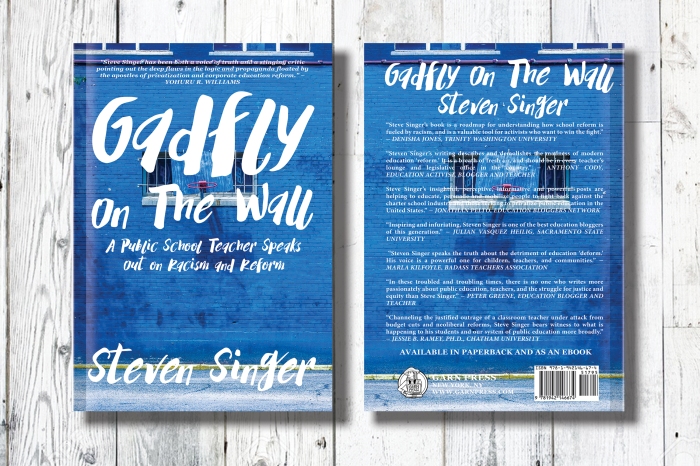
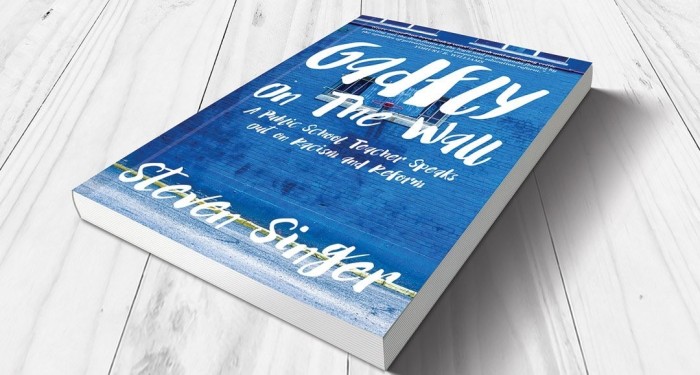
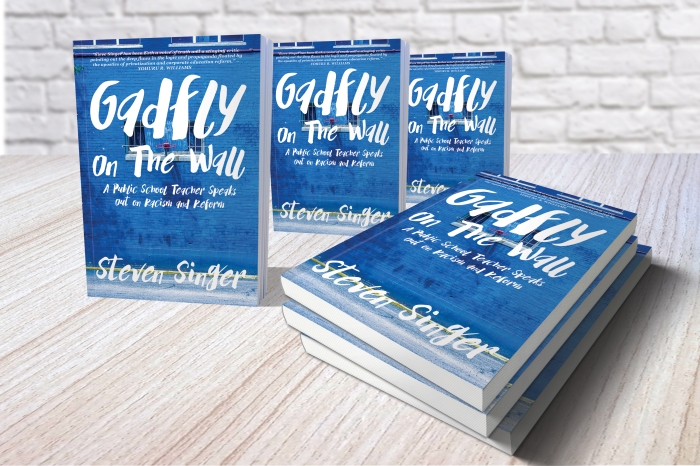
Like this post? I’ve written a book, “Gadfly on the Wall: A Public School Teacher Speaks Out on Racism and Reform,” now available from Garn Press. Ten percent of the proceeds go to the Badass Teachers Association. Check it out!

ebook-2 (1)

eBackpack Bankruptcy May Put Student & Teacher Data in Peril

kelly-sikkema-266805-660x400@2x

 
Teachers put their assignments into an on-line data base.


Students access them on their computers, iPads or other devices and then submit their work via the Internet.


What could go wrong?


Plenty. Especially when the company that provides this service goes bankrupt.


And that’s exactly what’s happened with Texas-based educational technology company eBackpack.


All those teacher assignments and student works are still there in computer servers somewhere. And now that eBackpack has filed Chapter 7 bankruptcy, all of it has become assets the company could decide to sell off to pay its debts.

 
The company explicitly reserves the right to do so according to its own Privacy Statement:


“The information we collect is used to improve the content of our Web pages and the quality of our service, and is not shared with or sold to other organizations for commercial purposes, except to provide products or services you’ve requested, when we have your permission, or under the following circumstances:


-We transfer information about you if eBackpack or part of it is acquired by or merged with another company. In this event, eBackpack will notify you before information about you is transferred and becomes subject to a different privacy policy.” [Emphasis mine]


Well that’s comforting. I wonder how a company that will no longer exist will have staff to notify former customers about what’s happening to the mountains of data we put in its hands.


Even under the best of circumstances, who will it notify? Teachers? Students? Parents? Or just the administrators or school boards who managed the over all accounts for individual districts?


eBackpack’s Terms of Service Agreement contains several red flags that someone should have noticed before students’ privacy was jeopardized:

 
“-eBackpack may assign its rights and obligations under these Terms to a third party without your consent.


“-You agree to use the Service at your own risk, without any liability whatsoever to eBackpack.


-1.1. Your use of the Service is at your sole risk. The Service is provided on an “as is,” “as available” and “with all faults” basis. The Service is owned and copyrighted by eBackpack and offered through a subscription, not sold, to you.


-10.1. eBackpack reserves the right at any time and from time to time to modify or discontinue, temporarily or permanently, the Service (or any part thereof) with or without notice.


-By submitting Content to eBackpack, you grant eBackpack a perpetual, worldwide, non-exclusive, royalty-free right to copy, display, modify, transmit, make derivative works of, and distribute your Content for the purpose of providing or developing the Service.


-14.2. You consent to eBackpack’s use and/or references to your name, directly or indirectly, in eBackpack’s marketing and training materials. You consent to eBackpack’s use of your communication with eBackpack for marketing and training materials. You may not use eBackpack’s name or trademark without eBackpack’s prior written consent.”

 
It’s not like schools weren’t warned.

 
Less than a year ago, the Federal Bureau of Investigations (FBI) issued a strong statement cautioning consumers that edtech companies put student data at risk.


The bureau advised parents, teachers and administrators to take several steps to safeguard children’s privacy. The organization also pushed for the federal government to revise privacy laws to better protect kids from this industry.


In addition, commonsense.org – a nonprofit studying education issues – conducted a three-year review of 100 edtech companies. It concluded that 74% of these businesses hold the right to transfer any personal information they collect if the company is acquired, merged, or files for bankruptcy.


The authors wrote that there is “a widespread lack of transparency, as well as inconsistent privacy and security practices” in how student information is collected, used, and disclosed.


Why would any company want such student data?


It helps market products and, itself, can be a very marketable product.


For instance, imagine how much more effective the hiring process would be if businesses had access to applicants school attendance records. Imagine if businesses had an applicant’s entire academic record.


Employers could buy vast amounts of data and use algorithms to sort through it looking for red flags without fully comprehending what was being compiled. Imagine an applicant being turned down for a job because of low middle school attendance but not being able to explain that this was due to a legitimate illness.


There are reasons we protect people’s privacy. You shouldn’t have to explain your score on a 3rd grade spelling test the rest of your life or have the need for special education services become a liability on your credit record.


Yet all of these things are possible when student data is up for grabs as it may be in this instance.

 
This is personal to me.


My district uses eBackpack.


Yet it was for these exact reasons that I never jumped on the bandwagon with my own students in my classroom.


I experimented somewhat with the platform, myself, to see what it offered and to weigh whether the advantages canceled out the disadvantages.


If I had decided to move forward, I would have asked parent permission first, but in the end, I decided it wasn’t worth the risk – and boy am I glad!


Yet having interacted with the platform at all, I received the following email from the company yesterday:


“Dear User,


We regret to inform you that this 2018-2019 school year is the last year eBackpack will be operating.  We will not be accepting any renewals going forward and we will not be providing any services past July 31, 2019. All services will be terminated on that date. Please download and save to your own devices any data prior to July 31, 2019. Once the services for eBackpack are turned off, your files and data will no longer be accessible, and we will not have staff available to respond to any customer inquiries. We appreciate your support over the past years and we will truly miss working with you all!

 
If you have any questions or concerns, please feel free to send an email to edison@ebackpack.com or billing@ebackpck.com.
Again, we appreciate your time with us and all of your support.

 
Thank you,
 eBackpack Team”


I haven’t tried to contact the company, but I’m seeing on Reddit that others have been unable to do so.


One customer wrote:


“We use eBackpack and we are unable to pay our bill as no one answers their number or responds to emails. A quick Google search shows recent bankruptcy procedure. Anyone know anything? Am I the only one still using them?”


EBACKPACK, LLC did in fact file a chapter 7 bankruptcy case on Feb 8, according to docket information on-line.

 
Chapter 7 is sometimes called straight bankruptcy or liquidation bankruptcy. In general, the court appoints a trustee to oversee the case, take the company’s assets, sell them and distribute the money to the creditors who file claims. However, the trustee doesn’t take every last bit of company property. Owners are allowed to keep enough  “exempt” property to get a “fresh start.”


This is big business. Venture capitalists have invested more than $1.8 billion in the edtech industry in 2015, alone.

 
At this time, it is still unclear exactly how many students and teachers have been put at risk.


I can’t find information anywhere about how many student or teacher accounts are in jeopardy or how many districts used the platform.

 
Hopefully this will be a wakeup call that the edtech industry needs to be more closely monitored and regulated.

 
We cannot continue to put convenience and profit ahead of student and teacher safety.


Like this post? I’ve written a book, “Gadfly on the Wall: A Public School Teacher Speaks Out on Racism and Reform,” now available from Garn Press. Ten percent of the proceeds go to the Badass Teachers Association. Check it out!
thumbnail_IMG_8249

Student Test Scores May Play a Smaller Role in Future PA Teacher Evaluations

Group Of Elementary Age Children In Art Class With Teacher


Pennsylvania lawmakers may have finally realized that treating teachers like crap isn’t a good way to improve public schools.


Across the country it’s getting harder to fill teaching positions with qualified educators. And that’s because of the way we treat the people who volunteer to educate the next generation.


You can’t raise expectations while taking away resources, union protections, and fair ways to evaluate their work.


And to his credit, state Sen. Ryan Aument seems to have finally seen the light.


In 2012, the Republican from Lancaster County was one of the leading proponents of the Commonwealth’s new teacher evaluation system which drastically increased the amount student test scores are used to assess educators.


But now Aument and other Republicans are proposing new legislation to cut back on these same measures.


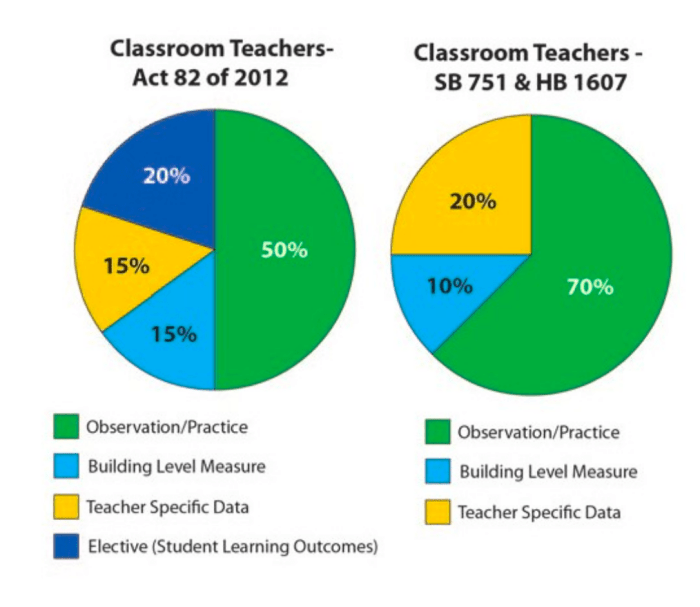
Under the current system, only 50 percent of state teachers annual evaluations come from observations of what they actually do in the classroom. The rest comes from student test scores and other factors that are out of their control.


The proposed legislation would increase teacher observations to 70 percent of their evaluations and try to account for student poverty – in addition to student test scores – in the remaining 30 percent.


If passed, the new evaluation system would begin in the 2021-22 school year.


Screen Shot 2019-07-19 at 12.17.23 AM
Source: PSEA

The proposed legislation – Senate Bill 751passed in the Senate by a vote of 38-11.


However, the identical House Bill 1607 proposed by Rep. Jesse Topper (R-Bedford County) was not considered in time before the legislative session ended. It is expected to come up for a vote in the fall.


J.J. Abbott, a spokesperson for Democratic Gov. Tom Wolf, said that the governor generally supports the proposal. It has also been endorsed by the Pennsylvania State Education Association (PSEA) and the Pennsylvania Association of School Administrators (PASA).


Each year teachers are judged either Distinguished, Proficient, Needs Improvement or Failing. The first two are passing scores. The last two are not and require teachers to be more closely monitored, more frequently evaluated, complete a performance improvement plan and if improvements are not made, they can be fired.


If approved, the new bill would shorten the window when teachers are penalized for bad evaluations.


Under the current system, teachers who get two “Needs Improvement” ratings in 10 years can be sacked. The new bill shortens that period to four years. This incentivizes improvement and doesn’t hold a bad evaluation over a teacher’s head for a decade.


Moreover, the current law only allows principals to judge a very small percentage of their staff as Distinguished – the top of the scale. The proposed law puts no cap on this allowing them to give more honest and accurate evaluations.


Finally, there’s the issue of Student Learning Outcomes or SLOs. These are cumbersome and time consuming evaluations teachers are currently required to create and submit to their administrators for approval before conducting complicated performance measures of their classes that must be reviewed a second time by administrators as part of the annual evaluation.


I can’t find anywhere in either bill that spells out that these SLOs would be discontinued, but that does appear to be the case. There is no mention of them whatsoever in the new proposals where in the current law they make up 20% of the total evaluation.


The only thing I see that’s even close to the SLO is the requirement under Section 1138.7. Overall performance rating. Part II:


“A classroom teacher shall provide documented input to an evaluator on the development of teacher-specific data measures and annual results of data. The documented input shall be included with documentation of the classroom teacher’s overall annual rating.”


However, I don’t think this is the same thing.


Despite bipartisan support, there are important groups calling for caution on the proposal.


Teachers in the Philadelphia and Pittsburgh districts – the areas of the state with the highest percentage of impoverished students – say that they weren’t consulted on the bill and have not had time to fully consider it. Both groups belong to the American Federation of Teachers (AFT).


They worry that the poverty index included in the bill may not accurately account for  economic disparities and whether the proposal really reduces the influence of standardized testing on teacher evaluations. After all, test scores are part of the teacher specific evaluation which under the proposal would go from 15-20 percent of educator’s evaluations. It may be the elimination of the SLOs which rely on student performance that ultimately reduce student outcomes from the evaluation while slightly increasing standardized test scores.


In any case, educators and advocates should scour the proposed legislation in the summer months to ensure that legislators know the full impact of what they’ll be asked to vote on as early as September.


The proposal may have been initiated in part to deal with the nationwide plague of teachers walking off the job due to unfair legislative practices and the demonization of educators. Since 1996, the number of undergraduate education majors has declined by 55 percent. And, according to the Pennsylvania Department of Education, the number of newly issued instructional teaching certificates in the Commonwealth has dropped by 71 percent since 2009. The state used to issue more than 14,000 new teachers licenses  annually. In 2016-17, the state only gave out 4,412.


Perhaps offering educators more equitable evaluations may help stem the tide – otherwise we’ll soon find our classrooms filled with students that no one is willing to teach.


Another reason behind the new proposal may be a reaction to previous bad legislation in Harrisburg.


It seems to be an attempt to numb some of the sting from a 2017 bill that ended seniority-based teacher layoffs in the Commonwealth and instead tied those decisions to these teacher evaluations.


Now teachers who receive Unsatisfactory evaluations – even if that only means they need improvement – are the first to go. It allows administrators to stack the deck against teachers they don’t like, teachers at the top of the pay scale or who advocate for policies different than those favored by the bosses.


Frankly, it’s a lawsuit waiting to happen.


That bill was passed mostly by the Republican majority and though Wolf could have vetoed it, he chose to let it become law without his signature.


As bad as it is, it set a fire under legislators to at least create a better system for teacher evaluation which they seem to have actually taken seriously.


One concern lawmakers have with the current system is that it tends to penalize the best teachers and buoy the worst ones.


The best teachers get their evaluations dragged down if they work in low performing districts just as struggling teachers get theirs pushed up if they work in high performing ones.


It’s hoped that judging teachers more on what they actually do and trying to account for the poverty level of the students they teach will avoid this trap.


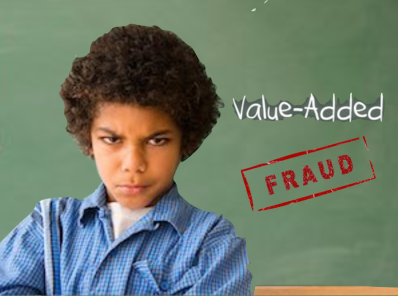
In truth, it’s unfair to judge teachers on student test scores at all. Mountains of research have concluded that such so-called Value-Added Measures (VAM) are inaccurate and discriminatory.


Relying on these measures even to a lessor degree opens the state and individual districts up to legal challenges as has happened in other states.


But at least this new suggestion improves over the present system in many ways.


We’ll have to see if Philadelphia and Pittsburgh teachers end up endorsing the plan and whether the House finally passes the measure and Wolf signs it.


Stay tuned.


Like this post? I’ve written a book, “Gadfly on the Wall: A Public School Teacher Speaks Out on Racism and Reform,” now available from Garn Press. Ten percent of the proceeds go to the Badass Teachers Association. Check it out!

book-2

Will This Be On The Test?

Screen Shot 2019-07-12 at 12.30.13 AM


As a public school teacher, I’m confronted with an awful lot of urgent questions.


Sometimes all at once and in rapid fire succession.


But perhaps the most frequent one I get is this:


“Mr. Singer, will this be on the test?”


Seriously?


Will this be on the test?


In 8th grade Language Arts, we’re discussing the relative merits of the death penalty vs. life imprisonment – or the history behind the Nazi invasion of Holland – or the origin of Dill Harris’ obsession with Boo Radley — and this little kid wants to know if any of it is going to be on the test!?


What in the almighty universe does he think we’re doing here!?


I pause, take a deep breath and reflect.
After all, it could be worse. The kiddo could have interrupted the flow just to ask to go to the bathroom.


So I try to put a positive spin on the inquiry.


It does give me some important information about this student. It tells me that he is really concerned about doing well in my class.


The kids that don’t care about that, the ones who are more preoccupied with survival or fear or malnutrition or a thousand other adult cares foisted too early on childish shoulders – those are the ones I really worry about.


But this kid isn’t like that at all. He just wants to know the rules.


On the other hand, it also tells me that he really doesn’t care about what we’re talking about.


Oh, this student cares about getting a good grade, to be judged proficient and to move on to the next task in a series of Herculean labors. But does he care about the tasks or does he just want to end the labor?


He sees school like a tiger sees a circus – a series of hoops to jump through in order to get a juicy hunk of meat as a reward at the end of the day.
For him, our class contains no magic, no mystery – it’s just a pure extrinsic transaction.


I tell you X and then you spit it back up again. Then I’m supposed to give you a gold star and send you on your way to do things that really matter.


And I suppose it bothers me this much because it’s a way of looking at things that ignores the larger context of education.


If we must see things as either assignments or tests, as either work toward a goal or a reward for working toward a goal – well, then isn’t everything in life a test, really?


After all, every action has its own rewards and significance.


Looked at from that vantage point, one can feel almost sorry for these sorts of students. Because in a matter of minutes the bell will ring and they will leave the classroom to encounter this awesome experience we call life.


It’s a collection of majesty and the mundane that will be unfiltered through bell schedules and note taking, homework and assignments.


It will just be.


And no matter what it consists of these children will be tried, tested and judged for it.


Some of it will be tests of skill. They’ll encounter certain obstacles that they’ll have to overcome.


Can they express themselves in writing? Can they compose an email, a text, a Facebook post that gets across what they’re really trying to say?


Presumably, they’ll want to apply for a job someday. That requires typing a cover letter, a resume, and being able to speak intelligently during an interview.


But even beyond these professional skills, they’ll come into contact with other human beings. And what they say and how they interact will be at least partially determined by what they’ve learned both in and out of the classroom.


People will judge them based on what kind of person they think they are – is this someone knowledgeable about the world, do they have good judgement, can they think logically and solve a problem, do they have enough background knowledge about the world to be able to make meaning and if they don’t know something (as inevitably everyone must) do they know where to find the answers they seek?


When they come into social contact with others, will they have digested enough knowledge and experience to form interesting, empathetic characters and thus will they be able to experience deep relationships?


Will they be victims of their own ignorance, able to be pushed around and tricked by any passing intellect or will they be the masters of their own inner space, impervious to easy manipulation?


Will they be at the mercy of history and politics or will they be the captains of consciousness and context molding educated opinions about justice, ethics and statecraft?


Because for these students all of that, all of their lives really, is an assessment in a way. And the grades aren’t A, B, C, D or F. There is no Advanced, Proficient, Basic or Below Basic. It is not graded on a curve.


It’s a test that’s timed in the minutes they breath and in each pump their hearts push blood throughout their bodies.


This exam will assess everything they do, everything they think, everything that’s done to them and every action they do or think in response.


This is an evaluation with the highest stakes. They will not get to take it again. And if they fail, their grade will be final.


But what they don’t seem to realize is that no matter how they score, the result will be the same as it is for everyone who’s ever been born – it will be terminal.


Because each of these students, and only these students, as they grow and mature will have the power to determine ultimately what that score will be.


We are all judged and evaluated, but it is our own judgements that we have to live with – and this passive acceptance of being tested and this petty goal of grade grubbing your life away, it denies your individual agency, your freedom of thought.


So, you ask if this will be on the test?


The answer is yes.


Everything is on the test.


But you’re asking the wrong question.

 
That’s what I really want to say.

 
That’s what I want to shout at a world that sees learning as nothing but a means to a job and education as nothing but the fitting of cogs to a greasy machine.


Yet invariably, when the question comes I usually narrow it all down to just this simple answer.


“Yes.


It will.”


NOTE: This article owes a debt to the author and YouTube personality John Green. It was partially inspired by a speech he gave to introduce his video about The Agricultural Revolution:


“Will this be on the test?
The test will measure whether you’re an informed, engaged, productive citizen of the world.


It will take place in schools and bars and hospitals and in dorm rooms and in places of worship.


You will be tested on first dates, in job interviews, while watching football and while scrolling through your twitter feed.


The test will test your ability to think about things other than celebrity marriages, whether you’ll be easily persuaded by empty political rhetoric and whether you’ll be able to place your life and your community in a broader context.


The test will last your entire life and it will be comprised of the millions of decisions that when taken together make your life, yours.


And everything, everything will be on it.


I know right, so pay attention.”


Like this post? I’ve written a book, “Gadfly on the Wall: A Public School Teacher Speaks Out on Racism and Reform,” now available from Garn Press. Ten percent of the proceeds go to the Badass Teachers Association. Check it out!
book-4

The Last Day of School

thumbnail_IMG_8831

On the last day of school this year, my 8th grade students gave me one of the greatest salutes a teacher can get.


They reenacted the closing scene of “The Dead Poets Society.”


You know. The one where Robin Williams’ Mr. Keating has been fired from a boarding school for teaching his students to embrace life, and as he collects his things and leaves, the students get up on their desks as a testament to his impact and as a protest to the current administration’s reductive standardization.


That’s what my students did for me. And I almost didn’t even notice it at first.


The whole thing went down like this.

 
The bell rang and an announcement was made telling us that the day was done.

 
I was immediately rushed by a crowd of children turning in final projects, shaking my hand, saying goodbye.

 
In fact, I was so occupied with the students right in front of me that I didn’t notice what was happening with the ones just behind them.

 
I heard someone say in a ringing voice, “Oh Captain, my Captain!”

 
I looked up and there they were.

 
About a dozen students were standing on their desks, looking down at me with big goofy grins.


Some had their hands on their hearts. One had raised his fist in the air. I think someone in the back was even making jazz hands. But they were each standing up there with the same look on their faces – a mixture of independence, humor and gratitude.


It shouldn’t have come as a surprise that this happened. Some of them had threatened months ago to make just such a demonstration.

 
We had watched the movie together back in April at the introduction of our poetry unit. I guess it was my way of trying to show them that poetry could make a deep impact on people. But I certainly hadn’t wanted them to put themselves at risk by standing on the furniture.


In fact, I had specifically cautioned them NOT to do this exact thing because someone might fall off their desk and hurt themselves.


But on the last day of school after the last bell has rung and my tenure as their teacher has expired – well, things are different then.


“Thank you,” I said. “That is really one of the nicest things students have ever done for me.”


Then I took out my phone and asked if I could snap a few pictures, because who’d ever believe me if I didn’t? They didn’t mind.


thumbnail_IMG_8835thumbnail_IMG_8830thumbnail_IMG_8832


When I was done, they hopped down one at a time, many of them rushing forward to give me a hug.


This class will always be a special one in my heart.


We’ve come a long way together.


For most of them, I was their language arts teacher for two years. When they first came in the classroom they were just babies. Now they are going off to high school.


Unless you’re a parent, you wouldn’t believe how much kids can grow and change in just a few short years. And the middle school years are some of the most extreme. The line between child and adult fades into nothingness.


I’ve had a handful of children who were enrolled in my classes for multiple years before, but I’d never had so many. In some ways, we were more like a family than a classroom.


I had been there when parents got sick, left, died. I knew them all so well – who would ask questions just to stall, who never got enough sleep and why (often Fortnite), which ones had athletic aspirations, which were incredible artists, etc. Some had come out of the closet to me and their classmates but not at home.


Many of us went on a school field trip to Washington, DC, together. We’d toured the Holocaust Museum and Arlington National Cemetery. When I was invited to do a TED talk, they tracked it down on YouTube. They even found my Twitter account and made merciless fun of my profile picture. And when I actually had my book published on education issues last year, a bunch of my kids even came out to hear me talk about it at local book stores.


It’s hard to explain the depth of the relationship.


At the end of the year, I always give my students a survey to gauge how they think I did as their teacher. It’s not graded, and they can even turn it in anonymously.


The results are almost always positive, but this year, I got responses like never before:


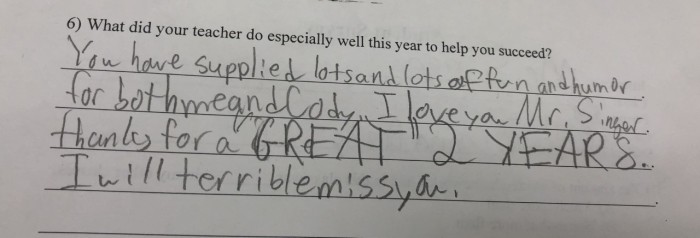
“I love you, Mr. Singer. Thanks for a great 2 years. I will terribly miss you.”


thumbnail_IMG_8849

“I’ve never been bored here. You are the first teacher that made me want to go to their class and has been one of my favorites.”


thumbnail_IMG_8847

“He stayed cool as a cucumber and was never angry… Basically the greatest teacher I’ve had all year.”


thumbnail_IMG_8846

 He was “fair to all students.”


thumbnail_IMG_8845

“He was more inclusive to many different groups.”


thumbnail_IMG_8844

“He made sure I didn’t fool around. He let me hand in my work late. He was always very kind and he cares about us. He shows us that he cares about how we feel. He made sure everything was fair.”


thumbnail_IMG_8843

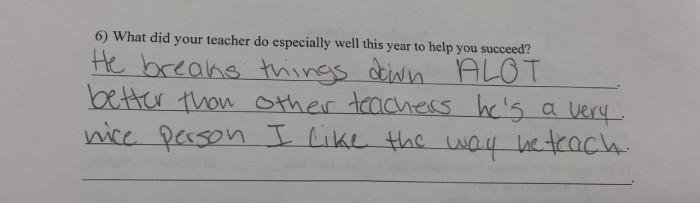
“He breaks things down A LOT better than other teachers. He’s a very nice person. I like the way he teaches.”


thumbnail_IMG_8842


“Mr. Singer did well to motivate us and help us to succeed and get a better grade.”


thumbnail_IMG_8841


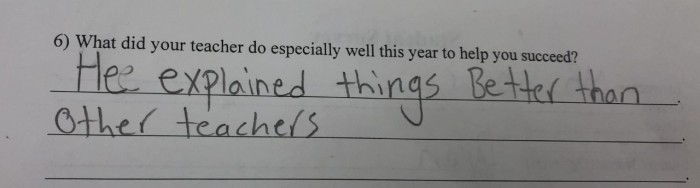
“He explained things better than other teachers.”


thumbnail_IMG_8840

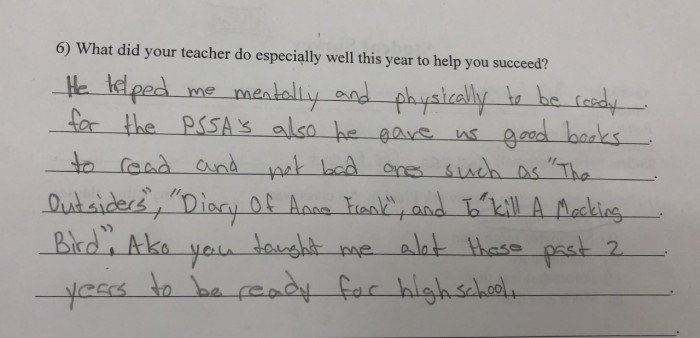
“He helped me mentally and physically to be ready for the PSSAs. Also he gave us good books to read and not bad ones such as “The Outsiders,” “The Diary of Anne Frank,” and “To Kill a Mockingbird.” Also you taught me a lot these past 2 years to be ready for high school.”


thumbnail_IMG_8839


“To be absolutely honest, I don’t think my teacher needs to improve. He actually has done more than the rest of my teachers.”


thumbnail_IMG_8838


“Well he encouraged me to succeed more in his class and in life as well. He also taught me that the meaning of life is not how you take it but where you go with it. I’m thankful that he taught me more than the history my actual history teacher taught me. He also told me the truth of our history. He talked about the parts no one else would talk about.”


thumbnail_IMG_8837


I’m not sure there’s much to say beyond that.


As these now former students reluctantly walked away in ones or twos, a few stayed behind.


I did a lot of reassuring that 9th grade would be great and that I’d probably be right here if they needed me.


I overheard one girl say to another that a certain teacher was good but not “Mr. Singer good.” I thanked her and she blushed because I wasn’t supposed to hear that.


There were tears. Some of them shed by me.


But when the last student left, I remained at my desk surrounded by a hum of fluorescent lights and ear numbing silence.


There is no emptiness like that of a space that has just been filled – a space that cries out for more.


My classroom is like that. And so is my heart.


Don’t get me wrong. I need this summer break to recover.


But I also need the end of August, when a new group of students will come rushing through those doors.


Here’s looking forward to the first day of school.


Like this post? I’ve written a book, “Gadfly on the Wall: A Public School Teacher Speaks Out on Racism and Reform,” now available from Garn Press. Ten percent of the proceeds go to the Badass Teachers Association. Check it out!
book-1

Classroom Teachers are the Real Scholastic Experts – Not Education Journalists

Screen Shot 2019-05-06 at 4.29.19 PM


When you want an expert on health, you go to a doctor.


When you want an expert on law, you go to a lawyer.


So why is it that when the news media wants an expert on education they go to… themselves!?


That’s right. Education journalists are talking up a storm about schools and learning.


You’ll find them writing policy briefs, editorials and news articles. You’ll find them being interviewed about topics like class size, funding and standardized tests.


But they aren’t primary sources. They are distinctly secondary.


So why don’t we go right to the source and ask those most in the know – classroom teachers!?


According to a Media Matters analysis of education coverage on weeknight cable news programs in 2014, only 9 percent of guests on MSNBC, CNN and Fox News were educators.


This data is a bit out of date, but I couldn’t find a more recent analysis. Moreover, it seems pretty much consistent with what I, myself, have seen in the media.


Take Wyatt Cenac’s “Problem Areas,” a comedy journalism program on HBO. The second season focuses entirely on education issues. Though Cynac interviews numerous people in the first episode (the only one I saw), he put together a panel of experts to talk about the issues that he would presumably return to throughout the season. Unfortunately, only two of these experts were classroom teachers.


There were more students (3), policy writers (3) and education journalists (3). There were just as many college professors (2), civil rights leaders (2), and politicians (2). Plus there was one historian (Diane Ravitch).


I’m not saying Cynac shouldn’t have talked to these other people. From what I’ve seen, his show is a pretty good faith attempt to talk about the issues, but in under representing classroom teachers, we’re left with a false consensus. It’s like having one climate denier debate one scientist. They aren’t equal and should not be equally represented.


And that’s as good as it gets!


Turn to most discussions of education or scholastic policy in the news and the discourse is bound to be dominated by people who are not now and have never been responsible for a class full of K-12 students.


Allowing journalists who cover education to rebrand themselves as “experts” is just not good enough.


Take it from me. Before I became a classroom teacher, I was a newspaperman, myself. Yet it’s only now that I know all that I didn’t know then.


If anyone values good, fact-based reporting, it’s me. But let’s not confuse an investigator with a practitioner. They both have important jobs. We just need to be clear about which job is being practiced when.


Reporters are not experts on the issues they cover. Certainly they know more than the average person or some political flunkey simply towing the party line. But someone who merely observes the work is not as knowledgeable as someone who does it and has done it for decades, someone with an advanced degree, dedication and a vocation in it.


Moreover, there is a chasm between education reporting and the schools, themselves, that is not present between journalists and most fields of endeavor. In the halls of academia, even the most fair-minded outsiders often are barred from direct observation of the very thing they’re trying to describe. We rarely let reporters in to our nation’s classrooms to see what’s happening for themselves. All they can do most of the time is uncritically report back what they’ve been told.


It’s almost as if sportswriters never got to see athletes play or political reporters never got to attended campaign rallies. How could their ideas about these subjects be of the same value as the practitioners in these fields!?


It couldn’t.


Think about it. Journalists are rarely permitted inside our schools to see the day-to-day classroom experience. Legal issues about which students may be photographed, filmed or interviewed, the difficulty of getting parental permissions and the possibility of embarrassment to principals and administrators usually keeps the school doors closed to them.


In many districts, teachers aren’t even allowed to speak on the record to the media or doing so can make them a political target. So reporters often have great difficulty just disclosing the opinions of those most knowledgeable about what is going on.


At best, our nation’s education reporters are like aliens from another galaxy trying to write about human behavior without actually having seen it. It’s like a bad science fiction movie where some alien with plastic ears asks, “What is this thing you call love?”


Sorry. These are not experts. And if we pretend that they are, we are being incredibly dishonest.


Some of this obfuscation is by design.


Education reporting is incredibly biased in favor of market-based solutions to academic problems.


Why? The corporations that own the shrinking number of newspapers, news stations and media outlets are increasingly the same huge conglomerates making money off of these same policies. The line between news and advertising has faded into invisibility in too many places.


Huge corporations make hundreds of millions of dollars off of the failing schools narrative. They sell new standardized tests, new test prep materials, new Common Core books, trainings for teachers, materials, etc. If they can’t demonstrate that our schools are failing, their market shrinks.


Even when they don’t put editorial pressure on journalists to write what the company wants, they hire like-minded people from the get go.


Too many education journalists aren’t out for the truth. They’re out to promote the corporate line.


This is why it’s so important to center any education discussion on classroom teachers. They are the only people with the knowledge and experience to tell us what’s really going on.


And – surprise! – it’s not the same narrative you’re getting from corporate news.


Schools are being defunded and dismantled by the testing and privatization industry. Corporate special interests are allowed to feed off our schools like vultures off road kill. And all the while, it is our children who suffer the results.


High stakes standardized testing must end. Charter and voucher schools must end. Parasitic education technologies must be controlled, made accountable and in many cases barred from our schools altogether.


But that’s a truth you can only find by talking to the real experts – classroom teachers.


Until we prize their voices above all others, we will never know the whole truth.


Like this post? I’ve written a book, “Gadfly on the Wall: A Public School Teacher Speaks Out on Racism and Reform,” now available from Garn Press. Ten percent of the proceeds go to the Badass Teachers Association. Check it out!

book-1

A Gadfly’s Dozen: Top 13 Education Articles of 2018 (By Me)

thumbnail_IMG_8445


I’m not going to mince words.


This year, 2018, has been a monster.


We’ve been fighting the dumbest and most corrupt President of our lives – Donald Trump. And we’ve been making progress.


Thanks to the midterm election blue wave in the U.S. House, Trump will finally have a check on his power.


We have more black and brown representatives, more women, more nationalities, ethnicities and faiths in the halls of power than ever before.


Charter schools and vouchers are more unpopular today than at any other point in history. High stakes testing is on the decline. And everywhere you look educators and education activists are being heard and making a difference.


But it’s taken an incredible toll on the activist community.


We have had to be out there fighting this ridiculous crap day-in-day-out 365 days a year.


And even then, we’ve suffered devastating losses – family separations at the border, children dying in detention, an increase in hate crimes and gun deaths, all while climate change runs rapidly out of control.


I wish I felt more hopeful. But as I cast my eyes back on the year that was, I’m struck with a sense of bone-deep despair.


I am confident Trump will go down and he will take so many with him.


But the forces of regression, prejudice and stupidity that forced him upon us don’t appear to be going anywhere.


Behind Donald is another Trump waiting to take his place. And behind him another one – like an infinite set of Russian Matryoshka dolls.


Oh, many of them look more appealing than Donald. They dress better, are more articulate and can remember all the words to the National Anthem. But they are just as committed to serving themselves at our expense.


So with that in mind, I invite you to join me on a brief look back at the year that was.


First, let me thank everyone who bought my book, “Gadfly on the Wall: A Public School Teacher Speaks Out on Racism and Reform” from Garn Press. It was amazing to have finally achieved the dream of being published (in paper with a binding and everything)! I never made anyone’s best seller list, but it was gratifying to have hundreds of copies make it into readers’ hands. I hope people found it helpful (and still do because it’s still out there where better books are sold).


Also, I got to check another item off my bucket list with the invitation to film a TED Talk at Central Connecticut State University. My topic was “The Plot to Destroy Public Education.” It’s been viewed almost 1,000 times. I invite you to watch it here.


As to the blog, itself, I’ve been writing now for four and a half years. This year, I’ve had more than 211,000 hits. To be honest, that’s quite a drop. In 2017, I had 366,000 hits. But I’m hearing about similar dips all over the blogosphere. Facebook changed its algorithm this year making it much harder for people to see the work of amateurs like me. Zuckerberg’s multi-billion dollar corporation doesn’t refuse to spread the written word – it just charges a fee that I can’t afford. Moreover, the Federal Communications Commission (FCC) repealed Net Neutrality at about this time last year making things even more dodgy.


However, on the plus side, the blog is up to more than 1,429,000 hits total! That’s pretty good for a publication that’s only been around since July 2014. And it doesn’t count all the readers I get from articles reposted on the Badass Teachers Association Blog, Huffington Post, Commondreams.org, the LA Progressive, Alternet, BillMoyers.com or other sites.


In addition, about 500 more people followed me this year for a total of 13,361.


That should do it for an overview.


One final item before I get to the look back. I’m making a slight change this year to how I do things. Instead of publishing two separate articles – a Top 10 list and a List of Honorable Mentions – I’m combing the two into this one.


I’ll begin with three pieces that didn’t necessarily get the number of hits I thought they were worth. Then I’ll count down my 10 most popular pieces of 2018.


So without further ado, here’s what’s kept Gadfly buzzing this year:


Honorable Mentions


 13) The Necessity and Importance of Teachers


Published: June 29 teacher-elementary-Getty-blog


Views: 520


Description: There’s an increasing (unspoken) insistence that schools do away with teachers and replace them with technology, apps, algorithms and other edtech marvels with more strings attached than your standard marionette. This is my attempt to prove how and why real, live teachers are important.


Fun Fact: How sad this article was and remains necessary.


12) There is Virtually No Difference Between Nonprofit and For-Profit Charter Schools


Published: Sept. 7 Screen Shot 2018-09-06 at 3.18.04 PM


Views: 1,464


Description: You often hear privatization cheerleaders defend charter schools by making a distinction between the good ones and the bad ones. This usually just means those that are for-profit and those that are not-for-profit. But in this article, I show that this distinction is bogus.


Fun Fact: This may be one of the most important facts you can share with someone who’s had a big gulp of the charter school Kool-aide.


11) Top 10 Reasons You Can’t Fairly Evaluate Teachers on Student Test Scores


Published: Aug. 6 Screen Shot 2018-08-02 at 12.49.24 AM


Views: 1,552


Description: Policy makers don’t talk about it as much these days, but there are still plenty of laws on the books requiring states to evaluate teachers on student test scores. It’s called VAM or Value Added Measures. Here’s why it’s totally unfair.


Fun Fact: I’m not sure if anyone else has ever put together all these arguments against VAM. Hopefully, it can serve as a good go-to article when a corporate shill starts rhapsodizing on the benefits of this farce.


Top 10 by Popularity


10) Grit is Sh!t – It’s Just an Excuse to do Nothing for Struggling Students


Published: Nov. 8 Screen Shot 2018-11-08 at 3.29.01 PM


Views: 3,102


Description: Ask a Common Core propagandizer why their canned academic standards haven’t resulted in an increase in test scores and you’ll get this whooper: ‘It’s the students’ fault. They need more grit.’ Here’s why that’s a steaming pile of something that rhymes with grit.


Fun Fact: Some folks hated this article simply because of my potty mouth. But a whole lot of people were as fed up with this particular suit of the Emperor’s new clothes as I am.


9) Twenty-One Reasons People Hate, Hate, HATE Betsy DeVos


Published: March 12 n7kdmgvgx13jmo6cvmpu


Views: 3,824


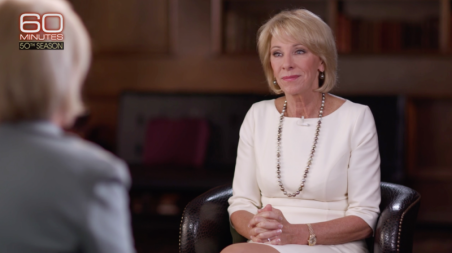
Description: During Betsy Devos’ 60 Minutes interview, the billionaire heiress turned Education Secretary just couldn’t figure out why people hated her so much. It thought I’d send her a clue – or 21.


Fun Fact: The biggest criticism I got on this article was that I stopped at only 21 reasons. I should have gone on – but then I might still be writing…


8) The Best Charter School Cannot Hold a Candle to the Worst Public School


Published: May 26 Screen Shot 2018-05-24 at 7.43.41 AM


Views: 3,929


Description: A question I often get is this: Why do you think Charter Schools are always a bad thing? Here is my answer.


Fun Fact: This article shocked a lot of progressives who backed Obama and Clinton. But it had to be said. Democracy is always better than tyranny just as public schools are always better than charter schools.


7) Few Kids in the World Can Pass America’s Common Core Tests, According to New Study


Published: Jan 23 chinese-children-crush-americans-in-math-thanks-to-a-mindset-americans-only-display-in-one-place-sports


Views: 5,061


Description: If all students the world over had to pass America’s Common Core tests, they wouldn’t be able to do it. You’d think that would have implications for how we assess learning in the USA. But nope. Standardized tests are big business. Wouldn’t want to kill that cash cow just because we’re hurting our children, now would we?


Fun Fact: This should have been a bigger story, but we already rewrote our federal education law, the Every Student Succeeds Act, which enshrines standardized testing in most states. So nothing can be done until it comes up for another revision in a few years where lawmakers will again drag their feet and somehow rediscover their love of standardized testing all over again!


6) When You Mistreat Teachers, Beware the Unintended Lessons for Students


Published: Jan 10 5a552b35785e6.image


Views: 7.048


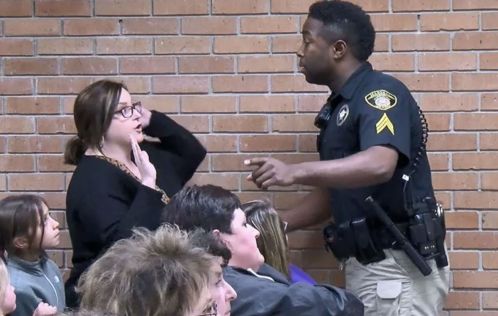
Description: A Louisiana school resource officer threw a school teacher to the ground and arrested her for asking a question at a school board meeting. This was my analysis of what such actions were teaching students.


Fun Fact: A Lafayette judge ruled 10 months later that the school board violated Louisiana’s open meetings law and had to negate the pay raise for the superintendent that the teacher was asking about.


5) The Six Biggest Problems with Data-Driven Instruction


Published: Sept 25 0


Views: 7,525


Description: A lot of folks in education think that everything in our schools should be data driven. Here’s why they’re wrong. It should be data-informed but student driven.


Fun Fact: A lot of educators, parents and students were as sick of hearing about “date-driven” instruction as I was. Feel free to use this article on the next fool who brings out this stale chestnut.


4) Teacher Autonomy – An Often Ignored Victim of High Stakes Testing


Published: Oct 12 Screen Shot 2018-10-12 at 12.12.38 PM


Views: 11.405


Description: Standardized testing is terrible in so many ways. It hurts students. It hurts schools. But we often forget how it stops teachers from effectively doing their jobs.


Fun Fact: This one brought a lot of memories to educators – memories of how things are supposed to be and how they’ve changed for the worst. We need to continue asking questions about the purpose of education and how our school policies are betraying that purpose.


3) Billionaire Heiress Lashes Out at Unions Because Her Fortune Didn’t Buy Election


Published: Nov 30

U.S. Education Secretary Betsy DeVos Speaks To Media After Visiting Students At Marjory Stoneman Douglas High School


Views: 11,723


Description: Poor Betsy. She and her family spent a lot of money on this election on regressive candidates who had no intention of working in your best interest. And many of them lost!


Fun Fact: Wouldn’t it be great if everyone got one vote? Wouldn’t it be great if money couldn’t buy elections?


2) Five Reasons to Vote NO on the Allegheny County Children’s Fund


Published: Oct 18 Screen Shot 2018-10-17 at 12.14.03 PM


Views: 18,593


Description: In the Pittsburgh area, we were asked to vote on a referendum to increase spending on children. It sounded like a great idea until you looked at the details. It was just a power grab by the forces of privatization.


Fun Fact: The referendum lost by about as many votes as this article received. I can’t prove my writing changed anyone’s mind, but it was hugely popular here in the ‘Burgh. I’d see people passing around printed copies at council meetings. It was reposted everywhere. I feel like this one made a real difference and helped us stop a bad law. Too bad it couldn’t help us enact a good one.


  1. African Immigrants Excel Academically. Why Don’t African Americans?


Published: June 6 static.politico.com


Views: 20,022


Description: I start with a basic fact about native born African Americans vs. foreign born African Immigrants. Then I try to account for the difference.


Fun Fact: This seems like an important question to me. But it was a controversial one. Some folks were furious I even asked the question. But more people were interested in this piece than anything else I wrote all year.


Gadfly’s Other Year End Round Ups

This wasn’t the first year I’ve done a countdown of the year’s greatest hits. I usually write one counting down my most popular articles (like the one you just read from 2018) and one listing articles that I thought deserved a second look. Here are all my end of the year articles since I began this crazy journey in 2014:


2017:


What’s the Buzz? A Crown of Gadflies! Top 10 Articles (by Me) in 2017


thumbnail_Screen shot 2017-12-26 at 3.44.17 PM


Hidden Gadfly – Top 5 Stories (By Me) You May Have Missed in 2017


7fd6a56c2ffc7a03c9fd2f431a543e92


2016

Worse Than Fake News – Ignored News. Top 5 Education Stories You May Have Missed in 2016


ignoring-wisdom


Goodbye, 2016, and Good Riddance – Top 10 Blog Post by Me From a Crappy Year


screen-shot-2016-12-27-at-3-29-49-am

2015


Gadfly’s Choice – Top 5 Blogs (By Me) You May Have Missed from 2015

Screen shot 2016-01-02 at 11.01.09 PM


Who’s Your Favorite Gadfly? Top 10 Blog Posts (By Me) That Enlightened, Entertained and Enraged in 2015

Screen shot 2015-12-30 at 12.57.49 AM


2014


Off the Beaten Gadfly – the Best Education Blog Pieces You Never Read in 2014

Wonderfull illusion art painting


Top 10 Education Blog Posts (By Me) You Should Be Reading Right Now!


computer-people-png-300x202


Still can’t get enough Gadfly? I’ve written a book, “Gadfly on the Wall: A Public School Teacher Speaks Out on Racism and Reform,” now available from Garn Press. Ten percent of the proceeds go to the Badass Teachers Association. Check it out!

thumbnail_IMG_8249

Teachers, It’s Okay to Smile

shutterstock_303112742


I’m standing in front of my first period class after a long Thanksgiving break.


Papers are rustling.


Pencils are being sharpened.


Voices are lowering to a whisper.


And it occurs to me how glad I am to be here.


So I tell my students.


“We have a lot to go over today,” I begin and most of my middle school faces turn serious.


“But I just want to tell you all how happy I am to be here.”


Curiosity moves across those adolescent brows like a wave from one side of the room to the other.


Some even looked worried like they are afraid I am going to tell them I’m sick or dying.


“It’s true,” I continue. “I’m glad to be here this morning with all of you.


“I think teachers sometimes don’t say that enough.


“This is a great class. You’re all really good students, and I’ve watched you work hard and grow.


“For many of you this is the second year you’ve had me as your language arts teacher. For others, this is your first time with me. It doesn’t matter. I’m glad I can be with you and help get you ready for the challenges that you’ll face next year in high school.


“I’ve said this before and I’ll say it again – I am not just some guy who stands up here and gives you assignments. I’m your resource. If there’s anything I can do to make your year a better one, please ask.


“If you’re having trouble with the work or you’re confused about something, I’m here. If you need help with something – even if it’s not school related – I’m here. If you just want to talk or someone to listen – I’m here.”


I pause to see if there are any questions.


There aren’t, but neither is their any apparent doubt, bewilderment, perplexity.


The class looks back at me in silence with serene eyes and smiling lips.


And then we go on with our day.


Is it a big deal?


No.


But I think it’s worth noting.


Not that I’m some super teacher. I’m not.


I mess up all the time. But I feel like what I said this morning was right somehow.


It’s simple and easy and more of us should do it.


Kids can get the impression that teachers aren’t human. They’re these mysterious creatures who pass judgment on them — and where do they even go when class ends? Who knows?


I remember when I was a young educator one of my mentors told me the old chestnut “Don’t smile until Christmas.”


I saw where she was coming from. It’s easier to command firm discipline if students don’t think of you as anything but an educating machine. But I could never go through with it.


I smile on the first day – probably the first minute students walk into the room.


I greet them with a grin – every day.


And I think that’s right.


Discipline is a means to an end. You have to have some sort of order in your class so you can facilitate learning. But that doesn’t mean you should preside over prisoners locked in a penitentiary of their own education.


Learning should be about choice, fun and curiosity. It should be about expressing yourself as much as it is about finding details and forming grammatical sentences.


Everything we do should be in service to the student.


Reading comprehension is to help the student understand what is being said and then form an opinion about it.


Writing is to help the student express the maelstrom of their own thoughts in a way that can be understood by others.


I think we lose sight of that.


It’s okay to enjoy the work – for both students and teachers.


It’s okay to enjoy each other’s company.


In fact, you SHOULD do so if you can.


It does not somehow degrade the experience of learning. It enhances it.


When my classes are over, I always have several students gathering around my desk wanting to prolong our interaction even if it means they’ll be late to lunch or late going home.


Kids ask about my break and I ask about theirs. We talk about favorite TV shows, songs we like or even local news stories.


They share with me their middle school crushes and ask advice.


You have to draw a line between teacher and friend – and between teacher and parent. Because the kids are looking for you to be both.


But you can’t.


We walk a strange middle ground, but I think that’s necessary.


If I’m going to help students know things, I have to let them know me to a point, and I have to get to know them.


I can’t share everything with them, but they have to know I care.


As Theodore Roosevelt said:


“People don’t care how much you know until they know how much you care.”


So go ahead and smile, teachers.


Let your students know you care about them.


It will improve both your lives – and maybe even your teaching.


Like this post? I’ve written a book, “Gadfly on the Wall: A Public School Teacher Speaks Out on Racism and Reform,” now available from Garn Press. Ten percent of the proceeds go to the Badass Teachers Association. Check it out!

book-2

Dear Lawmakers, Please Hire Teachers as Education Aides – Not TFA Alumni

thumbnail_IMG_8375


Dear freshmen lawmakers,


We did it!


After a fiercely contested election, we have finally begun to turn the tide back toward progressive politics.


Midterms usually are sparsely attended, but this year we had an unprecedented turnout.  A total of 23 states had double-digit percentage-point increases compared with their 1982-2014 midterm election averages.


And the result is one of the largest and most diverse groups of freshman Congresspeople ever!


We got rid of a ton of incumbents – 104 lawmakers won’t be returning to Washington, DC, in January, making this the third-highest turnover since 1974.


And those taking their place will be largely female. Out of 256 women who ran for U.S. House or Senate seats, 114 have won so far (Some races are still too close to call), according to the Center for American Women and Politics at Rutgers University. That makes the 116th Congress the largest class of female lawmakers ever.


Moreover, this incoming group will be incredibly diverse.


We have Jahana Hayes, a nationally-recognized teacher, who will be the first Black Congresswoman from Connecticut. Ayanna Presley, the first black Congresswoman from Massachusetts.


Angie Craig will be the first out LGBTQ Congresswoman from Minnesota. Chris Pappas, the first openly gay Congressman from New Hampshire.


Sharice Davids and Deb Haaland from Kansas and New Mexico will be the first Native American women elected to Congress – ever. And Davids will also be the first openly LGBTQ Congresswoman from the Sunflower State.


Ilhan Omar and Rashida Tlaib will be the first-ever Muslim women in Congress. Omar, a former refugee, will also be the first Somali-American and Tlaib will be the first Palestinian-American woman in Congress. This is especially noteworthy because there have only been two other Muslims to serve in the legislative branch, both men: Rep. Keith Ellison and Rep. André Carson.


And let’s not forget New York’s Alexandria Ocasio-Cortez. Not only is she a Democratic Socialist, but the 29-year-old will be the youngest woman ever elected to Congress!


With so many new faces and so much more representation, is it too much to ask for a change in the way things are done in Washington?


Many progressives are hoping not.


After all, it was people power that propelled these new lawmakers into government.


We marched in the rain, licked envelopes, made phone calls, wrote letters, and knocked on doors. We went to rallies and bake sales and stood by the polls with our little signs and fliers.


And we did it, because we wanted a change.


So, incoming lawmakers, that’s why I’m writing to you.


As a public school teacher, a father of a school-age child, an education activist and a concerned citizen, it really matters to me what happens to our schools.


Yet so many politicians – Republicans and Democrats – have turned a blind eye to our concerns for years.


No matter their party affiliation, they’ve pushed for increasing school privatization – charter and voucher schools. They’ve hammered us with biased and unscientific standardized tests and used the results to justify any number of atrocities including school closures, withholding funding and even stealing the democratic process from taxpayers. Instead of listening to the concerns of teachers and parents, they’ve followed the caprice of every bored billionaire who thinks they know how to better our schools with halfcocked schemes that cost us billions in taxpayer dollars while wasting children’s time and depriving them of an authentic education.


They’ve chased every new technological fad without regard to how it affects students or their privacy. They’ve let our schools become increasingly more segregated and made deals with private prison companies and unscrupulous security and business interests that made our schools a gateway to incarceration as much as they are to college or careers. They’ve actively engaged or silently stood by as classroom teachers lost autonomy, rights and professionalism. And finally, though many of them talk a good game, they haven’t done nearly enough to ensure that every student gets the same opportunities, resources and equitable funding.


Why?


Often the answer is ignorance.


They don’t properly understand the issues facing our schools. They don’t hear from parents, teachers and students – the rank and file. They only hear from the wealthy businesses and philanthrocapitalists preying on our schools like vultures over road kill.


In many cases this is because of the poor quality of education aides on Capital Hill.


Several years ago, I went to DC with other education advocates to ask our representatives to change course. Though we made reservations to speak with our duly-elected lawmakers months in advance, very few of them had the guts to see us face-to-face. We were almost always sent to education aides – well meaning and fresh faced kids only a few years out of college – who wrote down our concerns and sent us on our way with rarely any follow up from the people we’d come to see.


And more often than not, these eager young go-getters were Teach for America (TFA) alumni.


I’m not sure if you know what that means.


TFA is a nefarious neoliberal organization more interested in busting unions and influencing policy than helping kids learn.


They recruit people in college who didn’t major in education to become teachers for a few years before moving on to bigger and better things.


Often these rookies have only a few weeks training and just hours of experience before taking over their own classrooms. And unlike education majors, they only need to commit to the job for two years.


This not only does our children a disservice, it does very little to make these former teaching temps into education experts.


But that’s how they’re treated on Capital Hill.


Through programs like TFA’s Capitol Hill Fellows Program, alumni are placed in full-time, paid staff positions with legislators so they can “gain insights into the legislative process by working in a Congressional office” and work “on projects that impact education and opportunities for youth.”


Why do so many lawmakers hire them? Because they don’t cost anything.


Their salaries are paid in full by TFA through a fund established by Arthur Rock, a California tech billionaire who hands the organization bags of cash to pay these educational aides’ salaries. From 2006 to 2008, alone, Rock – who also sits on TFA’s board – contributed $16.5 million for this purpose.


This isn’t about helping lawmakers understand the issues. It’s about framing the issues to meet the policy initiatives of the elite and wealthy donors.


It’s about selling school privatization, high stakes testing and ed-tech solutions.


As Ocasio-Cortez said on a recent call with Justice Democrats, “I don’t think people who are taking money from pharmaceutical companies should be drafting health care legislation. I don’t think people who are taking money from oil and gas companies should be drafting our climate legislation.”


I’d like to add the following: people taking money from the testing and school privatization industry shouldn’t be drafting education policy. People who worked as temps in order to give themselves a veneer of credibility should not be treated the same as bona fide experts who dedicate their lives to kids in the classroom.


But that’s what many lawmakers of both parties have been enabling.


It’s not hard to find authentic experts on education.


There are 3.2 million public school teachers working in this country.


There are still 116,000 fewer public education jobs than there were before the recession of 2007, according to a report by the Economic Policy Institute, a progressive nonprofit think tank.


If we add the number of teaching jobs needed to keep up with growing enrollment, we’re missing 389,000 educators.


So that’s hundreds of thousands of laid off and retired teachers out there – a huge brain trust, a plethora of professionals who know – really know – what goes on in our schools, what they need to succeed and what policies could fix them.


THAT’S where you should go to find your educational aides – not TFA.


And these experts are not hard to find. You can contact the teachers unions – the National Education Association and American Federation of Teachers. Or, better yet, contact the various education activist groups focused on policy – the Badass Teachers Association or the Network for Public Education. And if you want experts at the crossroads of education and equity, you can contact civil rights groups who focus on our schools like Journey for Justice, a nationwide collective of more than 38 organizations of Black and Brown parents and students in several cities.


Or you can give education bloggers (many of whom are teachers or former teachers) a call – people like Peter Greene, Mercedes Schneider, Nancy Flanagan, Jose Luis Vilson, Julian Vasquez-Helig, and others.


Heck! You can give me a shout out.


We’re here.


We want to help.


So congratulations on your election victories. Let’s work together to transform them into intelligent policies for all our children everywhere.


Like this post? I’ve written a book, “Gadfly on the Wall: A Public School Teacher Speaks Out on Racism and Reform,” now available from Garn Press. Ten percent of the proceeds go to the Badass Teachers Association. Check it out!

book-3

Teacher Autonomy – An Often Ignored Victim of High Stakes Testing


Screen Shot 2018-10-12 at 12.12.38 PM


When I think of the modern day public school teacher, I think of Gulliver’s Travels.


Not because I’ve ever taught the Jonathan Swift classic to my students, but because of its most indelible image.


Gulliver is shipwrecked on the island of the Lilliputans – tiny people who have tied the full sized sailor to the ground with thousands of itty bitty strings.


If that is not the picture of a public school teacher, I don’t know what is!


We are constantly restrained – even hogtied – from doing what we know is right.


And the people putting us in bondage – test obsessed lawmakers, number crunching administrators and small-minded government flunkies.


You see, teachers are in the classroom with students day in, day out. We are in the best position to make informed decisions about student learning. The more autonomy you give us, the better we’ll be able to help our students succeed.


But in an age of high stakes testing, Common Core and school privatization run amuck, teacher autonomy has been trampled into the dirt.


Instead, we have a militia of armchair policy hacks who know nothing about pedagogy, psychology or education but who want to tell us how to do our jobs.


It’s almost like we’ve forgotten that educator self-determination ever was a value people thought worth preserving in the first place.


Whereas in generations past it was considered anywhere from merely advisable to absolutely essential that instructors could make up their own minds about how best to practice their craft, today we’d rather they just follow the script written by our allegedly more competent corporate masters.


The way I see it, the reason for this is fivefold:


  1. Testing

    School used to be about curriculum and pedagogy. It was focused on student learning – not how we assess that learning. Now that standardized tests have been mandated in all 50 states as a means of judging whether our schools are doing a good job (and assorted punishments and rewards put in place), it’s changed the entire academic landscape. In short, when you make school all about standardized tests, you force educators to teach with that as their main concern.

  2. Common Core

    Deciding what students should learn used to be the job of educators, students and the community. Teachers used their extensive training and experience, students appeal to their own curiosity, and the community tailored its expectations based on its needs. However, we’ve given up on our own judgment and delegated the job to publishing companies, technology firms and corporations. We’ve let them decide what students should learn based on which pre-packed products they can most profitably sell us. The problem is when you force all academic programs to follow canned academic standards written by functionaries, not educators, you put teachers in a straight jacket constraining them from meeting their students’ individual needs.


3. Grade Promotion Formulas

It used to be that teachers decided which students passed or failed their classes. And when it came to which academic course students took next, educators at least had a voice in the process. However, we’ve standardized grade promotion and/or graduation policies around high stakes test scores and limited or excluded classroom grades. When you’re forced to rely on a formula which cannot take into account the infinite variables present while excluding the judgment of experienced experts in the classroom, you are essentially forbidding educators from one of the most vital parts of the academic process – having a say in what their own courses mean in the scheme of students educational journeys.


4. Scripted Curriculum

Perhaps the most pernicious aspect of this whole process has been the attempted erasure of the teacher – as a thinking human being – from the classroom, itself. Instead of letting us be people who observe and adapt to the realities in front of us, many of us have been forced to read from a script. It should go without saying that when you constrain educators to abide by scripted curriculum – what we used to call “teacher proof curriculum” – or pacing guides, you remove their ability to be teachers, at all.


5. Value Added Evaluations


We used to trust local principals and administrators to decide which of their employees where doing a good job. Now even that decision has been taken away and replaced by junk science formulas that claim to evaluate a teacher’s entire impact on a student’s life with no regard to validity, fairness or efficiency. However, local principals and administrators are there in the school building every day. They know what’s happening, what challenges staff face and even the personalities, skills and deficiencies of the students, themselves. As such, they are in a better position to evaluate teachers’ performance than these blanket policies applied to all teachers in a district or state – things like valued-added measures or other faith based formulas used to estimate or quantify an educator’s positive or negative impact.


It’s no wonder then that teachers are leaving the profession in droves.


You can’t freeze someone’s salary, stifle their rights to fair treatment while choking back their autonomy and still expect them to show up to work everyday eager and willing to do the job.


The National Center for Education Statistics (NCES) conducted a representative sample of more than 37,000 American public school elementary and secondary teachers showing widespread dissatisfaction with the job in general and a lack of autonomy in particular.

In fact, they cited this lack of self-determination as a leading contributor to the nationwide teacher shortage. Having control over how you do your job is essential to being fully satisfied with your work.

Teacher-Autonomy


If you’re just following orders, your accomplishments aren’t really yours. It’s the difference between composing a melody and simply recreating the sounds of an amateur musician with perfect fidelity.

Today’s teachers rarely get to pick the textbooks they use, which content or skills to focus on, which techniques will be most effective in their classrooms, how to discipline students, how much homework to give – and they have next to zero say about how they will be evaluated.

And to make matters worse, sometimes it isn’t that educators are forbidden from exercising autonomy, but that they are given such a huge laundry list of things they’re responsible for that they don’t have the time to actually be creative or original. Once teachers meet the demands of all the things they have to cram into a single day, there is little room for reflection, revision or renewal.

School policy is created at several removes from the classroom. We rarely even ask workaday teachers for input less than allowing them to participate in the decision making process.

We imagine that policy is above their pay grade. They are menial labor. It’s up to us, important people, to make the big decisions – even though most of us have little to no knowledge of how to teach!

Finnish educator and scholar Pasi Sahlberg says that this is exactly the opposite of what we should be doing if we really cared about improving both the teaching profession and the quality of education we provide students.

In the United States, autonomy usually stops at the district or administrative level and results in decision-making that ignores the voices of educators and the community, he says.

Sahlberg continues:

“School autonomy has often led to lessening teacher professionalism and autonomy for the benefit of greater profits for those who manage or own private schools, charter schools or other independent schools. This is perhaps the most powerful lesson the US can learn from better-performing education systems: teachers need greater collective professional autonomy and more support to work with one another. In other words, more freedom from bureaucracy, but less from one another.”

Perhaps the biggest roadblock to increased autonomy is political.

Lawmakers and pundits conflate teacher professionalism and increased decision making with union membership.

And they do have a point. Having a seat at the bargaining table is vital to educators’ self-determination.

In some states, local teachers unions negotiate annual contracts with their districts. However, most states have statewide teacher contracts that are negotiated only by state teachers unions.

These contracts can directly affect exactly how much independence teachers can exercise in the classroom since they can determine things like the specific number of hours that teachers can work each week or limit the roles that teachers can play in a school or district.

There are even some tantalizing schools that are entirely led and managed by teachers. The school does not have formal administrators – teachers assume administrative roles, usually on a revolving basis. But such experiments are rare.

In most places, teacher autonomy is like the last dinosaur.

It represents a bygone age when we envisioned education completely differently.

We could try to regain that vision and go in a different direction.

But if things remain as they are, the dinosaur will go extinct.

Autonomy is a hint at what we COULD be and what we COULD provide students…

…if we only had the courage to stop standardizing and privatizing our country to death.


Like this post? I’ve written a book, “Gadfly on the Wall: A Public School Teacher Speaks Out on Racism and Reform,” now available from Garn Press. Ten percent of the proceeds go to the Badass Teachers Association. Check it out!
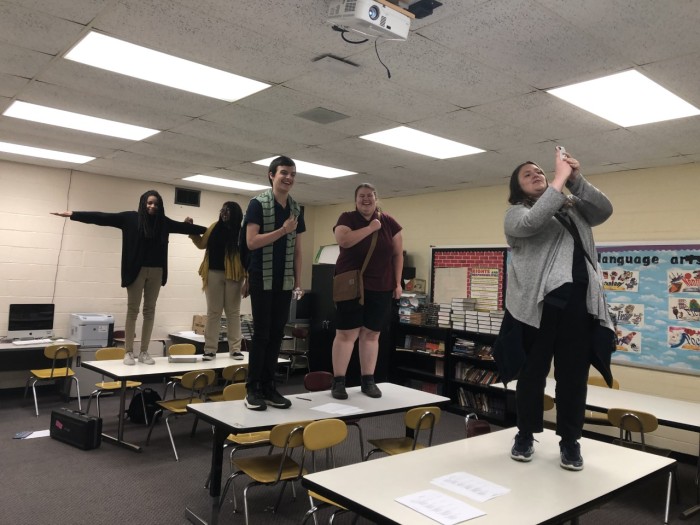
WANT A SIGNED COPY?

Click here to order one directly from me to your door!

book-1