
Top 10 Things I Want My Students to do During the Coronavirus Quarantine

Screen Shot 2020-03-20 at 7.03.55 PM


Dear Students,


A schoolteacher without a classroom is kind of like a firefighter without a fire.


Or a police officer without crime.


But here we are – self-quarantined at home.


Our classroom sits empty, and everyday this week we sit here at home wondering what to do.


I want you to know that I’ve been thinking about all of you.


I hope you’re doing alright during this unprecedented moment in history. It probably seemed like a lot of fun when it first happened.


No school for the foreseeable future!


The whole thing came together so quickly that our district didn’t even have time to get together work to send home with you. And like most schools throughout the country, many of you don’t have home internet access so we can’t fairly give you on-line lessons, either.


So you’ve been at home with little guidance from us. Sure we have free breakfast and lunches available for pick up at the school, but you’re probably growing a bit stir crazy.


I know I am. (And I’m sure your folks are, too!)


I’m at home with my daughter trying to keep her busy.


We’ve been creating Mario Maker boards for each other on our Nintendo 3DS and Switch.


We keep trying to stump each other, and me, being a teacher, I keep trying to get her to think outside of the box.


“Why don’t you try making a board where you have to get a mushroom through a maze?”


Or


“Why don’t you try making a board where the walls close in?”
Or


“I wonder if you could beat a Thwomp in a race down a pit?”


We were having a really good time until I tried to get her to watch a science video. I put on the original Carl Sagan’s “Cosmos” from the early 1980s.


My daughter loves looking up at the stars and asking me questions about the constellations. I thought this would be a perfect fit – after all, Sagan was an astronomer and can answer her questions way better than I can.


However, the old school effects were simply no match for today’s aesthetic. She revolted after about 20 minutes.


Today I won her over though with the new Cosmos series featuring Neil deGrasse Tyson. She turned to me after about five minutes and said, “Much better.”


We’ve been drawing and reading and playing video games and having a good ol’ time.


I hope you have people at home who can help you get through all this, too.


I’ve been getting a lot of emails recently from your folks.


They want to know what they should be doing to help you academically.


Whenever this whole thing is over – and it will be over someday soon I hope – they want to make sure you won’t fall too far behind.


Let me start with a word of caution.


We don’t know how long this self-quarantine will last.


We’re trying to stay home to stop the spread of this virus – COVID-19. It can be deadly to some people – even some young people like you.


It’s in everybody’s best interest that we wait this thing out so that the hospitals can deal with the people who get sick.


Then when the disease has passed, we can continue our normal lives.


But no one knows how long that will take. It could be a few more weeks – but more likely months.


It is very possible that we will not go back to school again until after the summer.


So it’s hard to say exactly what you should do to keep yourself in the best academic shape because we don’t know what you’ll be coming back to.


We DO know that we won’t have to make up some or all of the days we missed.


And we know we won’t (here in Pennsylvania) have to take the PSSA or Keystone tests this year.


But when this is over, what grade will you be in? Will you just move on to the next grade or will there be a bit of mopping up to do first? And if you don’t finish the curriculum, will you be ready for the challenges ahead?


We don’t know any of that yet.


But here are a few guidelines and some things you might want to do while you’re at home.


You don’t have to do all of them, but they’re some things to think about.


So here’s my top 10 things for my students to do during quarantine:


1) Finish Whatever School Work You Can


You may have some outstanding school work with you in your book bag. I know I sent my seventh graders home with their poetry projects. My eighth graders should either be done or have taken their projects home to finish.


So if you have work that’s not done, finish it to the best of your ability. You certainly have enough time.


2) Read a Book


I ask all of may students to have a self-selected book handy for sustained silent reading in class. Hopefully you brought it home. If not, take a look around the house. Maybe you’ve got a dusty tome hanging out in some corner. Or – hey – if you have Internet access, you probably have the ability to get an ebook.


Read something – anything you want.


It will while away the hours, relax you and maybe get your mind to thinking about things above and beyond how much mac and cheese you’ve got stored in the cupboard.


3) Keep a Journal


Do you realize you’re living through a moment of history? People will look back on this and wonder how people got through it. You could fill in the blanks for some future researcher. Just a description of your everyday activities, what you’re thinking and feeling, your hopes and dreams – all of it has historical value. Plus, you’ll get some practice expressing yourself in writing. And just think – a simple story about how you survived the great toilet paper shortage of 2020 could end up being taught in the classrooms of the future!


Make it a good one!

4) Take a Break from Video Games


I know some of you have built a fort out of sofa cushions, covered it in blankets and are nestled in this hideaway doing nothing but playing Fortnite or Roblox or Minecraft with friends on-line. And you know what? There’s nothing wrong with that. You go ahead and do that.


Just remember to take breaks for more than just food and the bathroom. Getting lost in a fantasy world is great so long as you leave yourself a trail of breadcrumbs to get back out again.


Don’t forget the trail. Don’t forget there’s a world out there that needs you. Set definite limits for how long you spend in there and try really hard to adhere to them.


5) Watch Something Educational on TV or the Internet


Education isn’t limited to something a teacher told you to do. Find a video or TV show that explains something you never knew before. Youtube is great for this if you know what to look for.


I don’t mean to find some rant by your favorite Youtuber. I mean find something about science, history, art, literature, math, etc. Make it something you care about but might not watch just for fun.


You’ll be surprised at what you can find out there. The channel CrashCourse with author John Greene (“The Fault in Our Stars”) and his brother Hank is particularly informative, entertaining and far reaching. I also love John Michael Godier for all things astronomy and Composer David Bruce for discussions of music.


6) Watch/Read the News


There are extraordinary things happening every day. Knowing about them can help you prepare for what’s next and think about what we can and should be doing to make things better.


7) Listen to Music/ Draw/ Do Something Creative


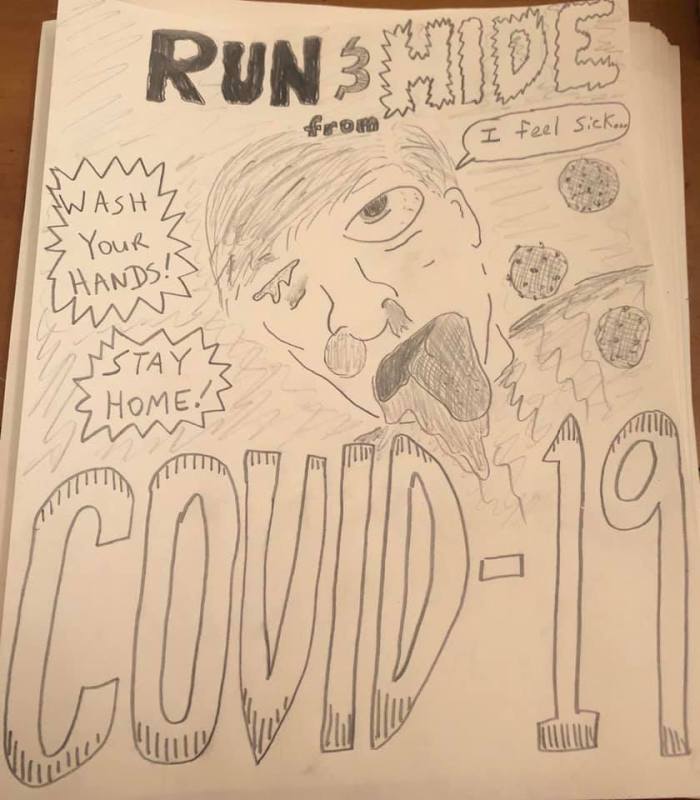
I know you. You’re a bundle of creative energy bound together waiting to explode. Go do that. Whatever you enjoy doing, create something. Write a song, make a comic book, paste together a collage. Express yourself, and if you’re not in the mood for that – enjoy the expressions of others. Listen to music, read a poem, watch a movie.


8) Help Out Your Folks


We, adults, can seem like we’ve got it all under control. We don’t. We’re just as anxious, fearful and uncertain as you about this whole self-quarantine thing. None of us were around the last time something like this happened (the 1918 Spanish Flu epidemic). Anything you can do – helping take out the trash, cleaning up messes, even just trying extra hard not to argue with your siblings – can be a big help.


9) Talk to Friends and Family about How You’re Feeling


No one expects you to be a robot. These are trying times. It’s okay to feel a certain way about that. Share those feelings with someone you trust. And be a sympathetic ear for them to do the same. The best way we can get through all this is with each other’s help.


10) Know That You Are Loved


My dear precious little students! There are people out there who love you so much. There are people who would move Heaven and Earth to keep you safe. I know you’re scared and bored and anxious. But remember we’re in this together. And no matter where you are or what you’re doing there’s at least your crazy English teacher who loves you very much and can’t wait to see you all again.


Stay safe!
 

89984455_10157624686428860_90771698554503168_n


Like this post?  You might want to consider becoming a Patreon subscriber. This helps me continue to keep the blog going and get on with this difficult and challenging work.

Plus you get subscriber only extras!

Just CLICK HERE.

Patreon+Circle

I’ve also written a book, “Gadfly on the Wall: A Public School Teacher Speaks Out on Racism and Reform,” now available from Garn Press. Ten percent of the proceeds go to the Badass Teachers Association. Check it out!
thumbnail_IMG_8249

Public Schools Can Recover from the COVID-19 Quarantine by Skipping High Stakes Tests

Screen Shot 2020-03-14 at 7.40.21 PM

 
There is one plus from being sick during a global pandemic.


You get perspective.


While all the schools in Pennsylvania are closed for at least the next two weeks to help stop the spread of COVID-19 (colloquially known as the Coronavirus), I self-quarantined a day early.


No, I don’t think I have the virus, but I’m not taking any chances.


Still, sitting here at my laptop with a steaming mug of tea, I’m filled with optimism.


My symptoms don’t match those of the virus – no fever, no dry cough, no difficulty breathing, no runny nose or sore throat. I just sneeze occasionally, have an intermittent wet cough and feel a bone deep fatigue.


Probably not the culprit sending the world into shutdown mode. But best to rest up anyway.


I’m also filled with a deep sense of gratitude that I’m a public school teacher.


My last class was a rough one – 7th graders running around the room with half written poetry demanding instruction, guidance, reassurance. My morning 8th graders were likewise rushing to complete a poetry assignment – frantically asking for help interpreting Auden, Calvert, Henley, Poe, Thomas.


What a privilege it has been to be there for them! How much I will miss that over the few next weeks!


Who would ever have thought we’d go into self quarantine to stop people from getting infected?


It says something about us that what seemed impossible just a few days ago has become a reality. We actually saw a problem and took logical steps to avoid it!


I know – we could have done a better job. We could have acted more quickly and in many areas we haven’t done nearly enough (New York, I’m looking at you).


But what we have done already shows that human beings aren’t finished. We have massive problems waiting to be solved – global climate change, social and racial inequality, the corrupting influence of money in politics, etc. However, we CAN do the logical thing and solve these problems!


No matter how crazy it seems now, tomorrow could be filled with rational solutions. If only we allow ourselves that chance.


So my spirits are high here in my little hollow nestled in with my family.


But being a teacher I can’t help thinking about what’s to come next.


Eventually this whole ordeal will be over.


Schools will reopen. Things will get back to normal. Or try to, anyway.


The challenge will be attempting to overcome the month or more of lost schooling.


Some will be thankful they relied on virtual schooling to fill in the gaps. When this whole crisis began, officials chided us to make preparations for “teleschool” in case of just this eventuality.


I’m glad we didn’t.


Frankly, (1) it would have been a huge cost that schools don’t have the money to meet and (2) it would have been money down the drain.


There is nothing innovative about sending kids on-line to do their assignments. The majority of work that can be done that way is of the lowest quality.


That’s workbook nonsense that the laziest and most checked out educators of generations past gave to their students to keep them quiet.


We see students in China who are being educated that way finding ways around it – giving their education apps low star reviews in the app store so that they’ll be removed, etc.


Here in the USA, all children don’t even have access to the Internet. They rely on the local libraries to get online – not a good idea in a pandemic.


So most schools have had to do without.


School is cancelled for about a month or so, and then – hopefully – it will return.


The question remains – what do we do when we get back to class?


We could extend the school year, but families have vacations planned and other obligations. This wouldn’t solve much and frankly I don’t think it will happen unless we’re out for longer than expected.


I anticipate being back in school by mid April or so. That would leave about a month and a half left in the year.


This really leaves us with only two options: (1) hold our end of the year standardized tests and then fit in whatever else we can, or (2) forgo the tests and teach the curriculum.


If we have the tests, we could hold them shortly after school is back in session. That at least would give us more time to teach, but it would reduce the quality of the test scores. Kids wouldn’t be as prepared and the results would be used to further dismantle the public school network.


Much better I think is option two: skip the tests altogether.


Frankly, we don’t need them. Teachers observe students every day. We give formal and informal assessments every time we see our kids. We’re like scientists engaged in a long-term study taking daily measurements and meticulously recording them before coming to our year end conclusions called classroom grades.


In my classes, I think I could teach just about the same material in the remaining time if I didn’t have to worry about the high stakes tests.


In 7th grade, this would mean finishing up our almost completed poetry unit – having kids put together their poetry portfolios and sharing them. Then we’d begin our final novel of the year, “Silent to the Bone” by E.L. Konigsburg, talk about mystery stories, reader perspectives and how truth impacts fiction.


In 8th grade, we could likewise finish up poetry with some presentations on students’ favorites from the assigned group. Then we could read the play version of “The Diary of Anne Frank,” and selections from Harper Lee’s “To Kill a Mockingbird.”We could discuss propaganda, prejudice and compare the historical perspective of Europe and the United States.


In both cases, we might have to forgo a year-end project, but at least we’d cover the majority of what we proposed at the beginning of the year.


Students would leave their respective grades with just about everything we set out to give them. They’d be prepared and ready to meet the challenges of the coming grade.


That seems a worthy goal to me.


But I hear someone ask – what about the standardized testing? Won’t students be less prepared having skipped over those assessments?


The answer is no. They would not be less prepared.


They would be better educated without a sword of Damocles hanging over their heads.


The shame is that this alteration in schedule would probably only last one year.


In 2020-21, we’d probably reinstate these standardized assessments.


This is at least a month of wasted schooling. If we got rid of all the pretests and administrator required teaching-to-the-test, we could clear up a good 9-weeks of extra class time.


Imagine what teachers could do with those surplus days!


My 8th graders could read the whole of “Mockingbird,” for one. instead of just selections. My 7th graders could read another entire novel – probably Paul Zindel’s “The Pigman.” Not to mention the addition of more women and writers of color, the extra time for creative writing, an emphasis on finding your own point of view.


And for me that’s the benefit of this COVID-19 crisis. It shows us what could be – what we could do if we were only brave enough to try.


Happy self-quarantine, everyone!


Like this post?  You might want to consider becoming a Patreon subscriber. This helps me continue to keep the blog going and get on with this difficult and challenging work.

Plus you get subscriber only extras!

Just CLICK HERE.

Patreon+Circle

I’ve also written a book, “Gadfly on the Wall: A Public School Teacher Speaks Out on Racism and Reform,” now available from Garn Press. Ten percent of the proceeds go to the Badass Teachers Association. Check it out!
book-2

Bernie Sanders Would Be the First Jewish President – What That Means to Me

5e097191240000c81c5a4809

 
Being Jewish is not something I advertise.


Some of my earliest memories are trying to explain to school friends that no, I didn’t kill Jesus – and, yes, I do eat matzo but it isn’t made with baby’s blood – and would they like to come over to my house and play Legos?


I’ve been called “yid,” “kike,” “heeb,” even just plain “Jew” with the lips curled and the word hurled at me like a knife.


Heck. When I was a kid even the bus driver called me “moneybags,” though my family was far from rich.


So it makes sense to me that Bernie Sanders isn’t running for President as a Jew first.


He’s running on his policies and experience.


But it still hurts when pundits complain that there are now just two white men vying for the democratic nomination.


Um. Okay.
 
Sanders IS Jewish. You know that, right? If he were elected, it would not be business as usual. It would be unprecedented.


Yet that fact is almost always glossed over because it doesn’t fit the media narrative they’re selling.


Sanders is the “crazy socialist,” not the “historic Jew.”


This constant erasure is a slap in the face.


And I mean MY face, not just Sander’s.


I doubt it feels too good to him, either, but it feels personal to me, as well.


My family and I live just outside of Pittsburgh, about a half hour away from the Tree of Life Synagogue in Squirrel Hill where just two years ago 17 people were gunned down in perhaps the worst act of violence against Jews in our nation’s history.


I teach “The Diary of Anne Frank” to middle school children less than 15 minutes away.


I have relatives who belong to that congregation, though I didn’t know any of the 11 people who died.


Let me ask – were they white?


I’ll bet they thought they were, but all it took was an anti-Semite with a gun to challenge that.


Like Bernie, I lost my extended family in the Holocaust – great grandparents, great uncles and aunts, cousins,  who I will never meet. I grew up with only the closest of familial relations.


Before I was old enough to get in to see a PG-13 movie, I knew about mass graves, ghettos, cattle cars and crematoriums.


Generation upon generation of European Jewry never expected to be singled out for extermination. They probably thought of themselves as regular, everyday people, too – an US not a THEM.


Bernie would meet that same standard. Like all of us, he knows we’re white only until someone decides we’re not.


So when talking heads decide to erase the fact of Bernie’s ancestry, they aren’t just playing politics. They’re engaged in naked prejudice.


Let me be clear. I don’t bring this up out of some sense of political tokenism. Bernie shouldn’t be recognized just for appearances sake. He needs to be seen for who and what he is.


This isn’t about identity politics. It’s about basic truth.


When some folks complain about the way Bernie speaks or that he yells too much, they’re really showing a xenophobic bigotry.


Bernie is a Jewish man who grew up in New York.That is how people from there talk.


I’ve known scores of people who speak like that – often at the dinner table during family gatherings. Just because it isn’t a part of your personal experience doesn’t make it acceptable to dismiss.


If you belittled someone for speaking with a Spanish accent, it would be called out for what it is – prejudice.


But by ignoring Bernie’s Judaism, you allow all kinds of discriminatory preconceptions to pass as little more than valid criticisms.


Don’t get me wrong.


I don’t think Bernie’s Judaism is the most important thing about him or his campaign.


I wouldn’t support just any Jew who was running. For example, I wouldn’t back Joe Lieberman or Jared Kushner if they were seeking elected office.


But it DOES mean something that Bernie is in the hunt for the Democratic nomination and is Jewish.


For me, he typifies what is best about us.


He embodies the spirit of doing good for others and trying to make the world a better place. He seeks justice in economic, social, racial, gender and political relationships. He tells truth even when it’s uncomfortable to hear. And that includes the truth about the Israeli government’s reprehensible treatment of the Palestinian people.


In his 30 years in Congress he passed mountains of bipartisan legislation as the amendment king. He refused to support the Iraq War or cuts to social security. He supports unions, workers, public schools and universal healthcare.


Being Jewish does not take precedence to those things. But I hope supporting those things will help redefine what people think of when they think of Judaism.


Like this post?  You might want to consider becoming a Patreon subscriber. This helps me continue to keep the blog going and get on with this difficult and challenging work.

Plus you get subscriber only extras!

Just CLICK HERE.

Patreon+Circle

I’ve also written a book, “Gadfly on the Wall: A Public School Teacher Speaks Out on Racism and Reform,” now available from Garn Press. Ten percent of the proceeds go to the Badass Teachers Association. Check it out!

thumbnail_IMG_8249

The Coronavirus Could Be A Big Moneymaker for EdTech Companies

Screen Shot 2020-02-26 at 10.11.50 PM

 
There is a special place in Hell for people who cash in on tragedy.


But that place is reserved for the super rich – and that’s all that matters in Donald Trump’s America.


Federal officials are urging schools to prepare for possible disruptions due to the coronavirus – a disease that originated in China last month and has affected more than 77,000 people worldwide (of which more than 2,600 have died).


Only 14 people have been infected in the U.S., and the Center for Disease Control (CDC) writes on its Website that the “immediate health risk from COVID-19 is considered low” for the average American – especially those who have not traveled recently to Wuhan, the surrounding Hubei Province or elsewhere in mainland China.


However, this is certainly scary news for anyone – especially parents, teachers and students.


In fact, federal officials singled out schools at a press conference on Tuesday about possible responses to the disease if it gets worse on these shores.


Nancy Messonnier, a director at the CDC, said:


“You should ask your children’s schools about their plans for school dismissals or school closures. Ask about plans for teleschool.”


To which every teacher in America responded, “Teleschool!?”


So we’re worried about this disease which is somewhat more deadly than the fluNOT primarily because of the risk to students’ health or lives; NOT because of the risk of it going undiagnosed due to the disincentive of rising healthcare costs; NOT because we’re woefully unprepared due to Trump firing the entire U.S. pandemic response team two years ago and then not replacing them!


No! We’re concerned mostly because KIDS MIGHT MISS SCHOOL!!!!

 
But, hey, no worries because the Trump administration figures this new and unpredictable disease which typically causes symptoms like fever, cough and shortness of breath can be circumvented with… cyber school?

 
Limit kids exposure by letting them stay at home and do their lessons on the computer.


And if they have an online management system where teachers give virtual assignments and kids turn them in through the cloud, even better!


Thank you, education technology firms! You have saved American education. Again.


What a pile of crap!


Let’s get one thing clear. This suggestion has nothing to do with student well being. It is a blatant attempt to turn a potential pandemic into a cash cow.


EdTech already is a multi-billion dollar industry. If we successfully tie navigation of disasters with this sector, profits could potentially climb through the roof!


As it stands now, technology companies are lined up outside our schools pretending to provide the best the 21st Century has to offer to solve every school issue from excessive tardiness to lack of motivation to academic decline.


And now they’re offering the cure to the coronavirus – or at least the cure to any pedagogical delay that might result from school closures – either precautionary or due to an outbreak.


First of all, if schools close because of this disease, students will be scared. They aren’t going to be able to focus on academics.


Kids would need love and understanding – not more homework.


Second, not all kids have Internet access at home. Many of our most underprivileged children need to go to a public place like a library to get online. So if we require students to submit assignments this way during a closure, we’re forcing them to increase their chances of infection at a public place or get behind in their work. Not exactly fair.


Third, the kind of lessons you can provide through “teleschool” are subpar at best.


This is the automated checkout counter of school. It is the robocall customer service of education.


Most children need real live human beings to achieve their best. That’s why you just can’t give a kid a math book and – Voilà – they know how to reduce fractions!


Sure, they can try to muddle through a computer program or do virtual work and submit it online. But how is that really different from the bad old days when the most checked out educators would disseminate a worksheet to the class and then hide behind a newspaper at their desks?


This is the kind of curriculum we used to criticize teachers for and that very few modern day educators could get away with in our modern public school system – UNLESS they do it behind a computer and/or software package.


This is not being “future ready” or “innovative.” It is the worst practices of the past repackaged so a bunch of suits at the corporate offices can cash in.


Finally, it opens students up to severe privacy concerns. In 2018 the Federal Bureau of Investigations (FBI) warned that EdTech solutions like these often put student security at risk.


Much of this software asks for and saves student inputs which can be compromised or actively sold to third parties.

 
These are “adaptive, personalized learning experiences” or “administrative platforms for tracking academics, disciplinary issues, student information systems, and classroom management programs.”

 
Pedophiles could use this data to find and abduct children. Criminals could use it to blackmail them. It could even be sold to unscrupulous corporations or exploited by other children to bully and harass classmates.


And, in fact, such things have happened.

 
While it may be frustrating to makeup missed schools days, doing so doesn’t have the same risks and – eventually – provides kids with the same quality of education that they miss.

 
It just doesn’t offer opportunities for corporations to make big bucks.


Advocates claim online tools like Class Dojo and Apple Classroom provide unique opportunities that have never been available before for such teleschooling.


However, we’ve always been able to do this stuff – just not so easily on a computer.


Schools have always been able to send workbooks home with students full of drill and kill assignments. They just rarely did so because we all knew the quality of such workbooks was mediocre at best.


Compared with a flesh-and-blood teacher and the interpersonal interactions of school, this was poor return on the community’s investment in their children.


Teleschooling is pretty much the same thing just with flashier bells and whistles.


It’s no wonder that this is the kind of solution we get from an administration that thinks Betsy Devos should head the Department of Education.


Why would we trust the same people who can’t figure out how to contain the coronavirus to solve its impact on education?


Sadly in an age when the human genome has been successfully mapped and bio-weapons are a real tool at the disposal of unscrupulous governments, one can only be skeptical of a mysterious new virus that suddenly shows up in a country like China experiencing massive pro-democracy protests. That’s one way to get disaffected citizens off the streets.


And now the same disease has come to our shores on the eve of the 2020 Presidential election. You’ll forgive me for admiring what could be the most effective means of  voter suppression in modern politics!


This may be an unlikely scenario – especially given the degree of secrecy and competence it would require – but if history has taught us anything, it’s that the powerful will stop at nothing to keep their power.


Beyond mere financial gain, some may hope that teleschooling in the wake of predictable disasters could dumb down our children’s education just enough to deprive them of that lesson, themselves.


The best way to stop skepticism is to undercut the education of the next generation.


Like this post?  You might want to consider becoming a Patreon subscriber. This helps me continue to keep the blog going and get on with this difficult and challenging work.

Plus you get subscriber only extras!

Just CLICK HERE.

Patreon+Circle

I’ve also written a book, “Gadfly on the Wall: A Public School Teacher Speaks Out on Racism and Reform,” now available from Garn Press. Ten percent of the proceeds go to the Badass Teachers Association. Check it out!

book-1

Don’t Extend Kids’ School Day; Shorten Parents’ Work Week

86696511_623051901813150_4570864634906542080_n

 
It’s rough being the parent of an American school student.

 
You often leave for work before your kids have even made it to school yet – and you get home long after they’ve returned.

 
When exactly are you supposed to parent?


Your kids have to get themselves to school. They have to get themselves home. And helping with homework, talking about their days, even setting a good example are all luxuries you have to pay dearly for with an ever-shrinking amount of time.


So what’s the solution?


For those of the think tank persuasion, the answer is more school.

 
Parents and kids schedules aren’t aligned? Well, align them then. Have kids in class from 9 to 5 just like their parents.

 
Not only will that make it easier for adults to take them to-and-from school, but it will prepare kids for the rigors of the adult world.


The neoliberal Center for American Progress, for instance, suggests that synching the school and workday would better allow parents to meet their obligations to their children.


This is especially true, they say, for kids in low-income communities where competitive grant programs could fund the initiative while also holding the money hostage unless their schools engage in more test prep as part of their curriculums.


It’s a terrible idea proposed by terrible individuals working for billionaire philanthrocapitalists.


The think tank is run by John Podesta who was chief of staff for President Bill Clinton and manager of President Barack Obama’s transition team – which tells you a lot about Democratic politics of the last several decades.


However, it does hold a kernel of truth.


The school and workday ARE out of step with each other.


This DOES cause problems.


Something SHOULD be done.


But the solution isn’t to lengthen the time kids are required to spend in the classroom. It is solved by reducing the amount of time their parents have to stay at work.


Think about it.


A LONGER SCHOOL DAY WOULD BE HARMFUL TO STUDENTS


Currently, most children attend school for six to seven hours a day.


If school started earlier or was in session later, we’d be forcing many kids to put in as much as 12-hour days – especially when you factor in transportation and after-school activities.


Students in rural areas or those who live the farthest from school would be the most impacted. Many kids get to school early for breakfast. So if classes began at 9 am, many kids would need to get to school by 8:30 am at the latest – that could mean leaving home by 7:30 am. If the school day ended at 5 pm, these same kids wouldn’t get home until 6 to 7 pm or later.


This would not lead to better academic performance or well adjusted kids. It would result in exhausted and burned out students. Some – perhaps many – would probably cut out after-school activities which would hurt their social, emotional and physical development.


Moreover, kids need time – free time – to discover who they are. They need time to spend with friends, build relationships and enjoy themselves.


They shouldn’t be forced to be adults before they are developmentally ready to do so.


And it’s not just me who says so. Youth advocate Vicki Abeles is sounding the alarm against the idea of a longer school day, too. Abeles, who authored Beyond Measure: Rescuing an Overscheduled, Overtested, and Underestimated Generation, wrote in The New York Times:


“Many of our children are already stretched to unhealthy breaking points, loaded down with excessive homework, extracurricular activities and outside tutoring because they’re led to believe high test scores, a slew of Advanced Placement classes and a packed résumé are their ticket to college and success. This has led to an epidemic of anxious, unhealthy, sleep-deprived, burned-out, disengaged, unprepared children — and overwhelmed and discouraged teachers. The key is creating a healthier, more balanced, more engaging and effective school day, not a longer one.”


Moreover, this is not what other high achieving nations do to succeed. Countries like Finland, Singapore, and China have SHORTER school days – not longer ones. They just try to make the most of the class time they have.


In fact, U.S. teachers already spend more time in the classroom with students than their peers in practically every other developed nation, according to the Organization for Economic Cooperation and Development.


Maybe instead of listening to think tank fools like Podesta, we should pay attention to educators around the world.


And this is to say nothing of cost.


Nine years ago, it took $10 million to lengthen the day at 50 Chicago schools. Each school got $150,000 just to pay for additional salary to compensate teachers for the extra time. The district projected that it would have cost $84 million to increase the program to all its schools.


But that doesn’t include the cost for additional electricity, maintenance and other utilities which is more difficult to estimate.


Who’s going to pay this extra money? We don’t even adequately fund the time kids spend in class NOW! We’re going to stretch tax revenue even further to increase those hours!?


This is the definition of doing more with less. More time, less quality.


SHORTENING THE ADULT WORK WEEK


It would make far more sense to cut parents’ time at work than to increase children’s time at school.


Adults already work too many hours as it is.


In fact, doing so actually makes adults better at their jobs.


That’s not just conjecture or wish fulfillment. It’s been tried and proven correct.


In 2019, Microsoft conducted an experiment at its offices in Japan where employees had to take every Friday off as a paid vacation day. The result was a boost in productivity of 40 percent.


In 2018, Perpetual Guardian, a New Zealand trustee services firm, did almost the same thing on a trial basis. It had employees work four eight-hour days a week but paid them for five. Once again this resulted in an increase in productivity, but also lower stress levels and higher job satisfaction.


The idea of a 32-hour workweek (instead of the traditional 40) is gaining support. After all, much of our time on the job is wasted.


The average number of truly productive hours in an eight-hour day is two hours and 53 minutes, according to a survey of U.K. office workers. Human beings aren’t robots. We can’t just sit at our desks and work. We have all these pointless meetings, frivolous emails and phone calls, co-worker discussions, disruptions and distractions. Imagine if we didn’t have to waste so much time and could focus on other endeavors after putting in a few effective hours at the office. We could get things done and still have time to live our lives.


The five-day, 40-hour workweek is a relatively new invention. A century ago, it was not uncommon for people to work six ten-hour days with only Sundays off for religious worship. Then Henry Ford started giving his autoworkers more time off to create leisure time – so they might have reason to actually buy the cars they were making. It became common practice throughout the country in 1938 when Congress passed the Fair Labor Standards Act. The law was meant to improve conditions and pay for manufacturing workers – and it did that. However, that doesn’t mean it was the be all, end all. We should continue the trend to shorten the workweek even further.


In fact, this is what people expected would happen – that work hours would continue to shrink over time.


In 1930, the economist John Maynard Keynes predicted that the working week eventually would be cut to 15 hours. He figured that by 2030, people would have far more leisure time as their material needs were met.


However, the trend changed in the 1970s as Americans started spending more – not less – time at their jobs. This also coincided with the weakening of labor unions, corporate downsizing and demanding more from employees for decreasing wages and benefits.


Now the US and Korea lead the developed world in long workdays. Americans average 1,786 work hours a year, which is 423 more hours than workers in Germany and over 100 hours more than workers in Japan, according to the Organization for Economic Cooperation and Development (OECD).


CONCLUSION

 
These long hours take a toll on our health and well-being.


It’s telling that instead of realizing that adults need fewer hours on the job, policy wonks try to convince us to make our children shoulder the same burden.


It reminds me of Max Weber’s thesis in his seminal “The Protestant Ethic and the Spirit of Capitalism.” In the book, the sociologist and economist argues that underneath our economic values lies an abiding belief in a Puritan work ethic. The value of work is given a religious and ethical fervor far beyond what it gains us monetarily.


Perhaps we need to take a step back from these unconscious and toxic values to see what is really in the best interests of individuals and families.


It is far past time to shorten the workweek for adults.


That would give us the time we need to be better parents to our children, allow us to be more present and available for them.


It would be far better for families to spend more time together learning and growing than to throw that time down an endless bin of empty industry.


Like this post? I’ve written a book, “Gadfly on the Wall: A Public School Teacher Speaks Out on Racism and Reform,” now available from Garn Press. Ten percent of the proceeds go to the Badass Teachers Association. Check it out!
book-4

Gov. Wolf Proposes Saving $280 Million a Year in PA With Charter School Reform

24489812593_b28b14c382_h-696x464


Charter schools waste taxpayer money.


Pennsylvania Gov. Tom Wolf proposes we stop wasting that money by holding charter schools as accountable as the state’s authentic public schools.


The Democratic governor made his most recent proposal yesterday as part of his 2020-21 budget address.


It’s a common sense proposal that only seems revolutionary because officials have been so blinded with school privatization fantasies.


Charter schools are funded with tax dollars but can be run by business interests thereby forgoing elected school boards and a host of regulations meant to safeguard children and the community’s investment.


The Commonwealth is infamous for allowing some of the most permissive charter school policies in the nation, which destabilize authentic public schools and force local tax increases and reductions in student services while charter operators get rich.


During his budget proposal, Wolf suggested three main improvements.


First, he wants charter schools to use a new tiered funding formula to determine how much money they get for special education students enrolled in their schools. He estimates this would save $147 million annually.


Right now, charters get tuition based on the average amount the local public school spends on special education.


This incentivizes charters to enroll (and identify) children with minimal special needs. That way, the school gets more money than needed to help students learn and operators can pocket the difference.


Charter-image-3-1024x538


It also incentivizes charters not to enroll students with greater special needs because operators won’t receive the money necessary to meet them.


This helps explain why charter schools in the Commonwealth typically enroll fewer and less needy special education students than authentic public schools do. Charters typically end up collecting $10,000 or more per student than they spend providing services, according to Education Voters of Pennsylvania, a public school advocacy group.


Charter-Image-4-1024x538


Wolf’s new proposal would more closely match the level of special education students need with the funding charter schools get for enrolling them, thus removing any financial incentives for selective enrollment of these students.


Second, Wolf wants to stop cyber charter schools from collecting the same amount of money for each student as brick and mortar schools get.


Cyber charters schools do not have school buildings to keep up. They do not have physical classrooms, cafeterias, hallways, gymnasiums, athletic fields, etc. In most cases, they have administrative offices and laptop computers given to students to use at their own homes.


At present, the statewide tuition rate for cyber charter schools ranges from $7,700 to $21,400 per student per year.


Wolf figures that number should be a flat $9,500. That should save an estimated $133 million annually.


However, Wolf’s proposal is double the cost of providing a full-time education at home via computer. It reduces the waste, but his figure could still use a trim.


Finally, the governor proposes fixing the way we mediate financial disputes between charter schools and authentic public schools.


Right now, if a school district does not pay the tuition for its resident students who attend a charter school or there is some dispute between the two on tuition payments, the charter school turns to the state Department of Education (PDE) to reconcile the dispute. Wolf proposes several changes to increase fairness, accountability, and transparency in this process. For instance, he wants to require charter schools to report their expenditures and deductions so they could be included in deciding what the tuition should be at a given charter school.


If enacted such reforms would save $280 million a year and go a long way to fixing many of the problems with charter school finances.


The Democratic governor has suggested similar improvements before – even going so far as to threaten enacting some of them with executive orders if the Republican-controlled legislature continues to shirk its duty. However, yesterday’s budget proposal was the closest it has come to fruition.


Typically, Ana Meyers, executive director of the Pennsylvania Coalition of Public Charter Schools, saw Wolf’s proposal as an attack on her industry.


Wolf wants to cut funding to charters to increase it at public schools, she said, but charter schools are, also, public schools.


“The level of hypocrisy from our governor knows no bounds,” she said in a written statement. “Charter school students and their families are not second-class citizens. These parents pay their taxes and their children attend a PA-designated public school. There is no reason why charter school students deserve less financial support than their district peers.”


However, wolf’s proposal does not leave charter school students with less. It reduces waste and helps authentic public schools keep the same level of services without having to resort to local tax increases.


Charter schools should not be allowed to squander taxpayer money, and students at authentic public schools and their communities should not be forced to pay for that fiscal irresponsibility.


“Our charter school system is in desperate need of reform,” Wolf said. “It’s time to close the loopholes, it’s time to establish real standards, and it’s time to level the playing field.”


Wolf’s proposal doesn’t stop with his budget outline.


Democratic legislators are set to introduce a 120-page proposal in Harrisburg that builds on it even further.

 
The legislation – House Bill 2261 to be introduced by Rep. Joseph Ciresi (D-Montgomery), and Senate Bill 1024, to be introduced by Senators Lindsey Williams (D-Allegheny) and James Brewster (D-Allegheny), would do the following:


  • Require charter school trustees and administrators to comply with the same financial and ethical reporting standards as school board members and district officials;
  • Require charter school meetings to comply with the Sunshine Act;
  • Require any company running a charter school to open up their records;
  • Establish a statewide, data-driven cyber charter school tuition rate;
  • Apply the state special education funding formula used by public schools to charter schools;
  • Require charter schools to use actual accounting and enrollment in calculating tuition – backed up by PA Department of Education – to make sure payments are fair, consistent, and promises are kept;
  • Require charter schools to carry enough insurance to take care of kids and families if the charter closes or the parent company goes out of business;
  • Create a standard state framework for charter school applications;
  • Standardize the method to change charter schools’ missions and goals to reward innovation and best practices, and ensure school districts have the tools needed to evaluate changes to charters;
  • Create a state grading system for charters to allow high-performing schools even more self-determination while focusing attention on low-performing schools;
  • Stop the creation of new cyber charter schools until the existing schools improve performance and require PDE to create enrollment and performance standards.

Here’s hoping that such common sense initiatives can find bipartisan support.


Like this post? I’ve written a book, “Gadfly on the Wall: A Public School Teacher Speaks Out on Racism and Reform,” now available from Garn Press. Ten percent of the proceeds go to the Badass Teachers Association. Check it out!

thumbnail_IMG_8249

The Ongoing Study of How and When Teachers Should Praise Students

Screen Shot 2020-02-01 at 5.25.55 PM


Should teachers praise their students?


It’s a simple question with a multiplicity of answers.


A 2020 study published in the journal Educational Psychology concludes that teachers who use praise see a 30% increase in good behavior from their classes.


Meanwhile, reprimands actually increase misbehavior and unwillingness to comply with instruction.


Researches suggest a 3:1 or 4:1 praise-to-reprimand ratio. So for every one reprimand, a teacher should provide three or four positive reinforcements.


Unfortunately, this study flies in the face of previous research.


According to a 2014 study by the Sutton Trust, teachers who give struggling pupils “lavish praise” can make them even less likely to succeed.


Too much praise can “convey a message of low expectations.”


Researchers warned that if failure brings students too much sympathy, they are more likely to associate that approval with underachievement.


Yet it’s fine for educators to express anger at underachievement because it doesn’t create positive associations with performing badly. In fact, it motivates them to try harder.


But another study from 1998 turns this on its head.


This examination found that it wasn’t a matter of praise or reprimand. What was important was the kind of praise being given to children.


In short, researchers concluded that the wrong kind of praise can have disastrous consequences.


If teachers praised the hard work students did on an assignment – even if that work was not completed successfully – it resulted in willingness to work out new approaches in the future.

 
However, if instead the teacher praised the students ability or achievement, that could result in a tendency to give up when confronted with future failures.


So what are teachers to do?


Frankly, researchers don’t know.


They look at discrete data sets and try to make broad conclusions.


However, when you’re dealing with something as complex as the minds of children, this approach is destined for failure.


There are simply too many variables at play.


And that’s something every classroom teacher with any experience knows in her bones.


Teaching is not like baking a cake. There is no one recipe that will work every time on every student.


Being an educator is an art as much as it is a science.


In my own classroom, I praise my students a lot.


I reprimand, too.


And though I try to focus on effort, I admit to commending students on the results at times.


This year I was tasked with creating a new writing course for 8th graders called “Writing is Fundamental.”


Each day, I give students a writing task – usually focusing on the more creative side – and then I wander from desk to desk observing, answering questions and ultimately reading and commenting on their finished work in real time.


It’s exhausting.


At first, I try to be positive even when the writing isn’t that great. But then as I get to know the students and their abilities, I begin to be more critical and offer ways in which they can – and sometimes must – try to improve.


The results are mixed.


Some students – especially the lowest achievers – tend to respond to praise like a flower does to light. They soak it up and blossom.


I had one student who entered the class so embarrassed about his writing he was literally hiding under the desk and making jokes about how terrible a writer he was.


After just a week, he was working longer than any other student in the class to craft his responses and made sure to share his work with me and sometimes the entire class.


By the end of the semester, he wasn’t going to win any awards, but his writing had improved by leaps and bounds. And his attitude was almost that of a different person.


However, in the same class, there were students who didn’t respond as positively.


One child who was used to taking honors courses was put off by the creative nature of the writing. He preferred to write expository essays and hated the focus on details, figurative language and creativity.


Students were not required to share their work with the class but doing so earned them participation points. So he felt obliged to do so and was extremely upset that – in his own mind – his work didn’t compare favorably with some of his classmates.


Other students more used to having their work evaluated on standardized tests were indignant at my continual pushing them to improve. They knew that what they had written would be good enough on the standardized test, so there was no point working any further to refine their craft.


When it comes to praise, teachers are put in a very difficult position.


We want to help encourage our students but we don’t want that encouragement to ring false.


If all I ever did was tell students what a good job they were doing, they would soon catch on that it was meaningless. Every child can’t win a self esteem prize every day for whatever they do.


However, an amazing piece of work from a student who always does amazing work isn’t as impressive as moderately improved work from a student who has struggled constantly up to this point.


More than writing, I try to teach my students that learning is not about a destination – it’s a journey. And only they can truly decide whether the work they’ve done has value.


I offer advice on how they might revise their work, but it’s often up to them whether they want to keep refining a piece of writing or whether they have done enough for the day.


I’d be lying if I said the relationships I had with students has no baring on this. Many of them want to make me proud of them, but hopefully they get beyond this point.


In a semester course, the relationships are more transient and not as powerful. But in my year-long classes, they’re deeper and more far-reaching.


And that’s really the point that I think this body of research misunderstands.


It’s not praise or reprimands that matter as much as it is relationships.


Students learn from educators they trust. And part of gaining that trust is giving the proper kind of feedback – encouraging but honest, critical but helpful, opinionated but respectful.


Maybe if we trusted classroom teachers more to talk authoritatively about their experiences, we’d know more about the realities of education.


Coming into the classroom occasionally to observe student behavior is extremely shallow when compared to the everyday empiricism of lifelong educators.


Perhaps before we decide whether to praise students or not, we should agree to give classroom teachers their due.


Like this post? I’ve written a book, “Gadfly on the Wall: A Public School Teacher Speaks Out on Racism and Reform,” now available from Garn Press. Ten percent of the proceeds go to the Badass Teachers Association. Check it out!
book-4

Did Rosa Parks Really Support Charter Schools?

Screen Shot 2020-01-28 at 8.36.33 PM


They say history is written by the victors.


But fortunes change, and sometimes you can even reclaim a figure from the past who the last round of winners had cast in an unlikely role.


Take Rosa Parks.


She is universally hailed as a hero of the civil rights movement because of her part in the Montgomery Bus Boycott.


Everyone knows the story. Parks, a black seamstress in Alabama, refused to give up her seat to a white man on a segregated bus and was arrested. Then working with the National Association for the Advancement of Colored People (NAACP), Dr. Martin Luther King, Jr., and many other activists, she helped encourage black people throughout the city to stop riding the buses until they were eventually desegregated.


But did you know that 40 years later after she had moved to Detroit, Parks tried to open a charter school?


It’s true – from a certain point of view.


And school privatization cheerleaders are quick to reference her advocacy.


President Bill Clinton used the anecdote to sell the charter school concept in a speech to the NAACP in Pittsburgh in 1997.


Joe Nathan, one of the authors of the first charter school law, still likes to troll readers of this blog by bringing that factoid up in the comments.


Keri Rodrigues, one of the founders of the Walton front group the National Parents Union, uses it like a trump card on Twitter to shut down privatization critics.


The facts are somewhat more complicated.


CHARTER SCHOOL CRITICISM


Charter schools are funded with tax dollars but not bound by the same regulations as authentic public schools including the need to be run by elected school boards. In fact, they are often operated by appointed business interests.


Today charter schools are roundly criticized for their limited accountability, lack of local control, tendency to profit off the children they serve, ability to cherry pick students enrolled in them, propensity for draining funding from neighborhood public schools, frequently poor academic records, and inclination to increase racial and economic segregation.


Yet lobbyists and industry insiders insist they are civil rights reforms. Being able to tout Parks as a charter pioneer helps them make their case.


But did she really do this?


I mean Parks went to segregated schools, herself, before Brown v. Board. You’re telling me she actually advocated to start a segregated school in Detroit decades later?


THE FACTS


Parks did lend her name to a charter school proposal in 1997 that would have opened an institution named for her and her late husband, the Raymond and Rosa Parks Academy for Self Development.


However, according to Anna Amato, an education consultant who worked with Parks on the proposal, the Detroit Board of Education put the item on their agenda but took no action.


Parks then moved on to other concerns – of which she had many.


She spent most of her life fighting the good fight.


In 1957 she moved with her husband and mother to Detroit, where from 1965 to 1988 she was a member of the staff of Michigan Congressman John Conyers, Jr. She remained active in the NAACP fighting against housing segregation in the city, traveling to support Selma to Montgomery marches, developed “Pathways to Freedom” bus tours of civil rights sights, served on the Board of Advocates for Planned Parenthood, and many other actions.


The proposed charter school wasn’t exactly a highlight. Nor does it seem to fit with her other endeavors.


LEGAL BATTLE


But the Rosa Parks who was involved in that proposal was a very different lady than the one who refused to give up her bus seat all those years ago.


Parks was 84 at the time of the charter school plan and somewhat isolated from close family. When she died in 2005 at the age of 92, her estate was the subject of a bitter legal dispute.


The issue wasn’t the money so much as the priceless historical artifacts associated with her life.


Her will left most of the estate to Elaine Steele, a retired Detroit judge and friend of Parks who was also involved in the charter school proposal. She was co-director of Parks’ after-school program, the Raymond and Rosa Parks Institute for Self Development.


Parks, who was later diagnosed with dementia, had abruptly stopped giving interviews in 1995 and lived a mostly secluded life from then on.


Her family disputed that the will created in July 1998 represented Parks true intentions. They sued to challenge the estate plan, accusing Steele of using undue influence on Parks. After a protracted battle, the courts eventually sided with Steele.


But the picture this paints is not a friendly one.


We have an octogenarian Parks lending her name to numerous projects all under the direction of consultants.


QUESTIONABLE ASSOCIATES, QUESTIONABLE INVOLVEMENT

 
Amato, in particular, seems to have gone on to become a champion of school privatization and education technologies.


She made her name in Detroit pushing these policies for decades.


In 1994 she founded Edtec Central, an organization that helps launch and run charter schools. At one point the company operated “two specialized strict discipline academies and one alternative high school in Michigan” as well as provided support and consulting services to other local charter schools. However, there is very little current information on the organization. It’s unclear whether it is still in operation.


But as of 2017, Amato still was. She wrote an op-ed praising Donald Trump’s Education Secretary Betsy DeVos called “DeVos Is a Hero to Detroit’s At-Risk Kids.”


This appears to be the woman who advised Parks about opening a charter school.


How much Parks was involved is hard to say.


When The New York Times wrote an article about the proposed charter school in 1997 by Halimah Abdullah, Parks either refused to be interviewed or was left out of it. But Amato, Steele and even Nathan were quoted at length.


It’s hard to believe a journalist for the Times could be such a bad writer as just not to include Parks in the article, especially in a piece titled “Rights Hero Presses Plan For School In Detroit.”


It’s much more likely that Parks declined to be included or was purposely left out of the loop by her circle of handlers possibly to hide her slow mental deterioration.


It’s understandable why Parks may have surrounded herself with consultants and caregivers.


In 1994 when she was 81, Parks was robbed and assaulted in her home in central Detroit. The assailant, Joseph Skipper, broke down her door but claimed he had chased away an intruder. He requested a reward and when Parks paid him, he demanded more. Parks refused and he attacked her.


Parks was treated for facial injuries and swelling. Though Skipper, a black man, was eventually caught and prosecuted, the incident left Parks shaken and anxious to the degree that she moved from her house to a secure high-rise apartment.


Another peak into her personal life was revealed in 2002, when Parks received an eviction notice from her apartment for not paying rent. Both the Hartford Memorial Baptist Church and Little Ceasars owner Mike Ilitch claimed to have paid the bill, but Steele says the eviction notice came in error. Parks family blames the incident on financial mismanagement from caregivers. When NBC news reported the story, the network noted she had been diagnosed with dementia.


In total, these events provide a sad look at the last years of a civil rights icon. And it’s during this late period that the charter school project was developed.


Was it one of Parks’ passions? It’s impossible to tell. It is at least as likely that an elderly and suggestible Parks was surrounded by people who may have been using her name to get across their own agenda.


PARKS ON SEGREGATION


Consider how out of character a charter school was to Parks former legacy.


In 1995 (just two years before the charter school proposal) Parks did agree to an interview where she talked about the importance of education and reminisced on the evils of school segregation:


Interviewer: Was there a teacher that influenced you?


Parks: My mother was a teacher and I went to the same school where she was teaching. My very first teacher was Miss Sally Hill, and I liked her very much. In fact, I liked school when I was very young, in spite of the fact that it was a one-room school for students all ages, from the very young to teens, as long as they went to school. It was only a short term for us, five months every year, instead of the regular nine months every year.


Interviewer: What was it like in Montgomery when you were growing up?


Parks: Back in Montgomery during my growing up there, it was completely legally enforced racial segregation, and of course, I struggled against it for a long time. I felt that it was not right to be deprived of freedom when we were living in the Home of the Brave and Land of the Free.”


These do not sound like the words of a woman who two years later would push for a segregated school to be opened in her name.


PARKS ON DESEGREGATION


Moreover, this flies in the face of her work at the Highlander Folk School in 1955. Before she participated in the bus boycott, she took a two-week workshop entitled “Racial Desegregation: Implementing the Supreme Court Decision.”The idea was to learn how she could encourage youth groups to push for desegregation.


The workshop was her first experience of an integrated learning environment. In a 1956 interview she said that she found “for the first time in my adult life that this could be a unified society, that there was such a thing as people of all races and backgrounds meeting and having workshops and living together in peace and harmony… I had heard there was such a place, but I hadn’t been there.”
Parks took copious notes during the sessions, detailing what each speaker said and her reactions to them. In one section she wrote, “Desegregation proves itself by being put in action. Not changing attitudes, attitudes will change.”


Her time there was brief but transformative. It led directly to her refusal to give up her seat and subsequent history of activism. To think that someone so committed to the cause of desegregation would willingly engage in its opposite staggers the mind.


But a lot can happen in the intervening decades.


Maybe she came to think that well resourced segregated charter schools were preferable to poorly resourced integrated public schools. However, she must have realized that when schools are integrated it is harder to withhold resources. Perhaps she gave up on integration in favor of Afrocentric charters, but that would be a fundamental change in her thinking, indeed.


IMPORTANCE FOR TODAY


If Parks did wholeheartedly support the charter school project proposed in her name during her twilight years, does it make a difference?


Not really. After all, lots of people make bad decisions – even civil rights heroes.


We remember these people not because of their biggest mistakes, but because of their biggest victories, how they struggled year-after-year in the cause of human dignity.


More important might be an analysis of whether Parks would likely support charter schools today if she were still alive and cognitively sound.


In truth, it seems unlikely that she would. After all, Parks was active in the NAACP all her life. Along with Black Lives Matter and the Journey for Justice, The NAACP voted almost unanimously just a few years ago to demand a moratorium on all new charter schools because they exploit children of color.


It’s easy to imagine Parks leading that charge.


But some folks will tell you Parks ideas of segregation were different than the dictionary definition and that she would be on the side of Betsy DeVos, not modern day civil rights activists.


MICHIGAN’S CHARTER SCHOOL FAILURES


It’s no accident I bring up DeVos.


Like Parks, DeVos’ home is in Michigan and she has had a tremendous effect on education throughout the state, in Detroit, and nationwide.


When Parks’ charter school proposal was issued, the concept was pretty new. The first charter school law in the nation had only been passed in 1991 in Minnesota. Michigan didn’t jump aboard until three years later.


No one knew then exactly what to expect of the policy or what these schools would end up becoming.


Now charter schools have been in Michigan for more than a quarter century and the results are in.


They are an absolute disaster.


A 2016 report from Education Trust-Midwest, a non-partisan research and advocacy organization, found 80 percent of charter schools in Michigan scored below the state average in math and reading proficiency tests.


Moreover, the state leads the nation in for-profit charter schools, according to research by Western Michigan University professor Gary Miron. Grand Rapids-based National Heritage Academies, alone, operates almost 50 for-profit charters throughout the state.


After an intensive investigation, in 2014 the Detroit Free Press criticized these kinds of schools for their lack of financial transparency and excessive overhead costs.


Maybe it’s my own lack of imagination, but I find it difficult to imagine Parks championing schools that get so much worse academic results than traditional public schools. I find it nearly impossible to imagine her fighting for the right to segregate black children into “separate but equal” schools.


INCONSISTENCIES


Charter school apologists will lump Parks in with Trump and DeVos. Not with the Rev. William Barber II, Jitu Brown, Ibram X. Kendi, Nikole Hannah-Jones, Yohuru Williams, Denisha Jones, and other prominent black people who oppose school privatization.


They tell us that Parks name on an application to start a charter school (her signature does not appear on the document) is enough to prove her support for the concept.


Yet never once that I can find did Parks ever speak out on what was allegedly her own proposal. Others spoke out on her behalf, but she declined to be interviewed when the media came calling and didn’t use her iconic status to get the publicity needed to bring it to completion.


Can you imagine a celebrity today opening a charter school named after themselves without even releasing a statement, not to mention a press conference and media blitz? And this wasn’t in the distant past. It was only 1997.


But the school privatization lobby tells us that this is so. And moreover that Parks – who worked her entire life battling the forces of segregation whether it be in our schools, housing or elsewhere – somehow turned against this aim in her last years to open this school.


It’s quite a story they’re telling.


However, the possibility that a declining Parks was convinced to put her name to a project she didn’t fully understand or support is at least as consistent with the facts as the privatization narrative – in fact, more so because it clarifies many inconsistencies.


SYMBOLISM VS FACTS


In any case, this is all conjecture.


Parks’ opinion – whatever it was – only has symbolic value.


The true measure of charter schools are the facts about how they operate and the results they get for students.


They have failed generations of children across the country.


They truly are a civil rights issue – but not the one the school privatization lobby thinks.


Every child has a right to be freed from charter schools and not subjected to them.


Nothing would be more in keeping with the spirit of Rosa Parks than a boycott of charter schools – just like today’s civil rights organization are demanding.


It’s time we as a nation refuse to give up our seats in the public schools and boycott the forces of privatization and profit.


The only way forward is together – not through segregation and exclusion hoping that at least some of us will make it.


Like this post? I’ve written a book, “Gadfly on the Wall: A Public School Teacher Speaks Out on Racism and Reform,” now available from Garn Press. Ten percent of the proceeds go to the Badass Teachers Association. Check it out!

book-1

Who Will Protect My Right NOT to Pay for Your Child’s Religious Education?

Image: Supreme Court Hears Montana State Tax Credit Case


When I was a kid back in middle school, I had a crush on this girl, let’s call her Patty.


She wasn’t the most popular or beautiful girl in class, but I kinda’ liked her.


Of course, she had no idea I was alive.


Or so I thought, until one day she walked straight up to my desk and started rubbing my hair.


I was shocked at first, but then I just closed my eyes and went with it.


I remember the soft caress of her fingers in my mop of curls. She seemed to massage every inch of my scalp. Then she asked, “Where are they?”


“Where are what?” I asked.


“Your horns,” she said. “I want to see your horns.”


“What?” I said. “I don’t have any horns.”


“Of course you do,” she said. “My pastor said all you Jews have horns but you hide them in your hair. I want to see them.”


I had never even heard that bit of anti-Semitism before Patty. But I knew when I was being ridiculed.


The laughter. The embarrassment. I think I asked to go to the bathroom and stayed until the class was over.


Why bring up such childhood trauma?


It has baring on a case before the US Supreme Court this week –  Espinoza v. Montana Department of Revenue.


Three women are suing the state of Montana for refusing to pay for their kids to attend religious schools through a defunct voucher program.


Backing the effort are far right figures and groups like The Cato Institute, The Council for American Private Education, Billy Graham Evangelistic Association, former Wisconsin Governor Scott Walker and the Center for Education Reform – all of which have filed Amici Curiae briefs arguing that prohibiting religious schools from getting public money is somehow a violation of the First Amendment.


If successful, the case would open the door to publicly-funded private religious education across the country – not to mention siphoning much-needed money away from the public schools.


It’s bad enough that kids learn prejudicial lies from the pulpit and parochial schools. It’s worse if the victims of such prejudice have to pay for their tormentors to be thus indoctrinated.


In the Virginia Statute for Religious Freedom of 1779, Thomas Jefferson wrote “to compel a man to furnish contributions of money for the propagation of opinions which he disbelieves and abhors, is sinful and tyrannical . . . ”


I agree. That is sinful and tyrannical. Especially if those abhorrent beliefs lead to actions detrimental to the health and well-being of those being forced to pay for just such ignorance to be renewed in yet another generation.


The incident with Patty wasn’t the first or last time I suffered through religious persecution. I went to public school but the worst torment usually came from kids who had a year or two of parochial education.


For example, I can’t tell you how many times classmates asked me why I killed Jesus.


Now I’m a middle school teacher, myself.


I do my best to foster understanding and acceptance of all peoples no matter their race, gender, orientation or creed.


That doesn’t mean I squash religious discussion or opinions, either.


Kids are allowed to think and say what they choose. If they want to pray or express a religious belief, that’s fine so long as they don’t hurt others.


Though radical right ideologues decry the loss of religion in public schools, all that really means is that the adults don’t get to express their theologies. The kids have never been thus encumbered.


Even so, religious ignorance is never far away.


Every year before I teach “The Diary of Anne Frank” I go over the history of the Holocaust.


At least one student always raises his or her hand and asks if Hitler was Jewish.


I patiently explain that he wasn’t, but they insist that he must have been. After all, Father Such-And-Such said it, so it must be true.


And this is the kind of nonsense that is often taught as fact at parochial schools.


Private religious institutions are infamous for revisionist history and denying climate science. What’s less well-known is how they often try to normalize racist attitudes.


The American Christian Education (ACE) organization provides fundamentalist school curriculum to thousands of religious schools throughout the country. Included in this curriculum is the A Beka Book and Bob Jones University Press textbooks. A Beka publishers, in particular, reported that about 9,000 schools nationwide purchase their textbooks.


In their pages you’ll find glowing descriptions of the Ku Klux Klan, how the massacre of Native Americans saved many souls, African slaves had really good lives, homosexuals are no better than rapists and child molesters, and progressive attempts at equal rights such as Brown vs. Board of Education were illegal and misguided. You know – all the greatest Donald Trump campaign hits!


Today these claims are uncritically being taught to children at schools receiving school vouchers. We’re using public money to increase the racism and prejudice in the next generation.


In any sane country, a case like Espinoza would be about stopping such nonsense! But the plaintiffs and their billionaire backers actually want to EXPAND IT!


The goal is to destroy facts and promote ignorance. That requires the destruction of public schools.


Kyle Olson said as much in a 2018 op-ed for National School Choice Week – a bit of propaganda he helped create in 2011 through his lobbying firm, the Education Action Group. In fact, he credited Jesus, himself, with anti-public school venom.


Olson wrote:


“I would like to think that, yes, Jesus would destroy the public education temple and save the children from despair and a hopeless future.”


These are the folks complaining that public tax dollars aren’t being allowed to fund parochial schools everywhere and where they are allowed to bankroll such schools they aren’t being allowed to do so enough.


Technically, the First Amendment doesn’t allow the government to support religious schools.


But the Espinoza crowd think that laundering the money through Tax Credit Scholarships somehow makes it all okay. A business or rich donor hands money to families to send their kids to private schools. Except that money makes a stop at a “scholarship” organization first, and the donors get to deduct their contributions from their taxes. Blogger Peter Greene tells us to think of it like this:


“I’m the state, and you owe me $100. I am not allowed to gamble, but if you give that $100 to my bookie instead, I’ll consider us square.”


It’s a shell game that pretends spending tax money before it gets deposited in the government’s account frees our public servants from following the rules.


I don’t care where it’s been, that’s my money as good as if you took it from my wallet because it’s money owed to me and every other taxpayer. That money is owed to the public good, not some ideologue’s Sunday school project, and its absence means I have to pay more to fund things we all need like police, firefighters, public transportation, and public schools.


They’re right about one thing. This is an issue of religious freedom, but it’s not about their freedom. It’s about MY freedom not to support their beliefs.


I say – let them believe what they will. It’s their choice, and they have the right to subject their children to it if they want.


But leave me out of it.


Don’t expect me to foot the bill.


I’m rightly compelled to pay for public education because it benefits everyone. It creates an educated populace capable of keeping the lights on. It creates people who know enough about the world that they can make knowledgeable decisions and vote for good leaders.


But parochial schools are exclusionary by design. Spreading their ignorance does not benefit society. It hurts it.


We talk a lot about the First Amendment, but we seem to forget what it actually says:


“Congress shall make no law respecting an establishment of religion, or prohibiting the free exercise thereof;”


That should be our guiding principle – religious freedom.


Let people practice their faiths however they see fit.


But respect my freedom from religion as much as I respect your freedom of it.


Like this post? I’ve written a book, “Gadfly on the Wall: A Public School Teacher Speaks Out on Racism and Reform,” now available from Garn Press. Ten percent of the proceeds go to the Badass Teachers Association. Check it out!

book-3

Trump Administration’s “Junk Food Loophole” is Symptomatic of School Privatization

Screen Shot 2020-01-21 at 11.16.13 PM
 

Who wants children to eat more junk food?


Apparently the Trump administration does.


This seemed to be the Department of Agriculture’s concern when it announced plans last week to further reduce regulations for healthy meals at the nation’s public schools.


The Department’s new scheme would change the Healthy Hunger-Free Kids Act of 2010 to include what critics call a “junk food loophole” in meals offered at public schools – usually breakfasts and lunches.


Currently, sweets and fried foods are allowed only once in a while as part of a balanced meal. But this new proposal would permit them to be offered every day.


Students could substitute healthy choices like fruits for things like blueberry muffins and replace green vegetables with French fries.


Screen Shot 2020-01-21 at 10.53.10 PM
Source: The National Alliance for Nutrition and Activity.


The media rushed to characterize the changes as an attack on Michelle Obama who championed the original legislation during her husband, Barack’s, administration. And – heck – maybe they’re right seeing as the Trump administration made the proposal on Mrs. Obama’s birthday.


But one needn’t guess at political motivations behind the move when it so obviously fits the pattern of school privatization – a way of conceptualizing education supported by both the Obama’s and Trump.


Let me be clear. School cafeterias generally are not privatized. They’re usually run by local school districts. However, the insistence that such programs turn a profit and make decisions based on sales rather than nutrition are symptomatic of the privatization mindset.


We didn’t always require everything to bring in money. We used to see things like education and journalism as public goods and absolved them from the need to generate financial gain.


But that seems like a long time ago.


The current administration’s claim that it’s rolling back restrictions to stop food waste and help public schools increase lunch profits is a case in point.


If profit is king, that’s all that matters. Who cares whether kids are getting better nutrition or not? What matters is the bottom line.


School lunches are not an opportunity to teach kids better eating habits. They are a financial transaction to enrich district budgets at the expense of the children enrolled there.


If children as young as 5 can’t make that decision on their own – well, caveat emptor.


The same goes with things like charter schools and high stakes standardized tests. It doesn’t matter if these things are better or worse for children. It matters whether they make money.


The invisible hand of the market is our pedagogue in chief.


It turns out that these things are rarely – if ever – in the best interests of children. Charter schools increase the likelihood of fiscal mismanagement, school segregation, prejudicial discipline policies, cherry picking which students to enroll – all while reducing transparency and fiscal accountability. Meanwhile, high stakes testing produces assessments that more clearly illuminate parental wealth than student learning – all while creating captive markets for testing, publishing and software companies.


The “junk food loophole” is just more of the same.


The administration contends that fewer middle and upper class kids are buying lunches at school when the choices are healthier. Meanwhile, among the 30 million students who depend on free and low-cost school lunches that are subsidized by the federal government, they say more are simply throwing away healthy foods than eating them.


The administration maintains that more food would be sold and less thrown out if children were given the choice to buy more cheeseburgers and fries than carrots and yogurt.


There certainly is anecdotal evidence to support this. Kids do seem to like junk food. As a middle school teacher, I’ve seen far too many kids bring Flaming Hot Cheetos and energy drinks for breakfast than take a free box of cereal, juice or even a piece of breakfast pizza.


And the number of kids who throw away fresh fruit because they’re forced to put it on their tray is heartbreaking.


However, we tend to focus on the negative and miss the positive.


This idea that kids don’t choose healthy foods actually flies in the face of the Department of Agriculture’s own research on the effects of the Obama-era rules. In its 2019 “School Nutrition and Meal Cost Study,” the department found no significant changes in the amount of food waste since the healthier rules were put in place, and also found that the healthier choices led to more kids participating in school meal programs.


The study also found scores for the Healthy Eating Index (which measures the quality of the diet) shot up drastically from 49.6 in 2009-2010 to 71.3 in 2014-2015.


So there is evidence that the program is actually increasing students’ healthy eating.


If we valued what’s best for children, we would continue – and maybe even strengthen – the legislation.


However, this newest proposal to weaken the law is the second time in three years that the federal government has undercut this policy.


In 2018, the Department started allowing schools to stop offering foods lower in sodium and higher in whole-grains.

 
That decision is being challenged in court by a coalition of six states and Washington, DC, on the grounds that it endangers student health.


If this second set of rollbacks are implemented, they too may be challenged in court.

 
Unfortunately the problem isn’t limited to mealtimes.


This is indicative of the school privatization mindset.


We must stop allowing the profit principle to function as the arbiter of sound academic policy.


Reducing regulations requiring healthy foods in schools is a bad idea. But so are charter schools, high stakes testing, Common Core, runaway ed tech and a host of other market-based school policies.


We can’t continue to ignore what’s best for children in the name of rampant consumerism.


The purpose of school is to teach children – not to exploit them as a captive market for financial gain.


Like this post? I’ve written a book, “Gadfly on the Wall: A Public School Teacher Speaks Out on Racism and Reform,” now available from Garn Press. Ten percent of the proceeds go to the Badass Teachers Association. Check it out!

book-4