McKeesport Teachers Without a Contract Because of Bad Business Manager or Bad Faith School Board?

Which is it?

Does McKeesport Area School District (MASD) have a terrible business manager or a regressive school board?

School directors and the teachers had agreed to a new contract, but the board tabled it in June after concerns that the western Pennsylvania district didn’t have the money to pay for moderate raises.

Then the board skipped the entire month of July without a meeting. Which is fine if you don’t have any pressing business left unfinished, but I guess the livelihoods of hundreds of employees don’t count.

Now classes are set to begin on Aug. 21, yet the board is no closer to solving the problem.

At a school directors’ meeting last week, the board mostly blamed Business Manager Scott Domowicz.

“A contract was negotiated with ineptitude, and we cannot afford it,” said board member Matthew Holtzman. “Our business manager did not negotiate well. We don’t have the money to cover this.”

No board members sat on the negotiating committee? You just left it all up to the business manager?

“This board wants to give the teachers the raises, we can’t afford it,” board member Joseph Lopretto said. “Taxpayers will be looking at a 30% raise in their property taxes over five years.”

Where did you get that percentage from exactly? What are the exact figures, the exact cost?

All of which really comes down to the question – how is this possible!?

The pay raises in the proposed contract are not extravagant and the district does not pay as much as nearby districts.

Over five years, the proposed pay increases are: 6.11% in 2023-24, 6.59% in 2024-25, 6.03% in 2025-26, 4.38% in 2026-27, and 3.26% in 2027-28.

“This contract was offered to us. We accepted this contract. It was not the numbers we wanted, but it’s the numbers that were given to us, and that’s what we went with,” said Gerald McGrew president of the McKeesport Area Education Association (MAEA).

“At the end of five years, our highest salary is still not at some of the local district highest salary now. The parents and the kids are the ones being affected mostly by this.”

So how can this happen?

Can a business manager – a person responsible for a district’s finances – negotiate a contract without a full understanding of what the district can and cannot afford!?

Domowicz was hired in late February 2022 at an annual salary of $100,000. He had been the business manager at Spectrum Charter School in Monroeville for about a year. Before that he was Senior Management Consultant for two decades at Great Lakes Management Consulting, a firm offering accounting and tax preparation services to customers and small business owners in Grosse Pointe, Michigan.

Spectrum Charter School is much smaller than MASD. The privatized school employs 11-20 people and has $1 million to $5 million in annual revenue. MASD has roughly 3,000 students and 300 teachers with a proposed budget of $86 million next year.

The previous Business Manager Joan Wehner had more experience in the education field. She was assistant to the business manager at Penn-Trafford School District for 10 years before coming to McKeesport. She left the district to become business manager at Greensburg Salem School District.

However, could Domowicz really be so clueless about MASD finances to negotiate a contract with the teachers that the district could not pay?

He certainly seemed on top of district finances at the board’s May meeting where he discussed the 2023-24 budget.

Domowicz said next year’s total proposed budget is for $86 million with an approximate fund balance of $10.6 million. This is an increase from the $79.8 million budget approved by the board for 2022-23.

Even though this years budget has a fund balance for the future, expenses are rising.

“Contractual labor agreements and additional staffing represents an increase in payroll expenses of 8 percent,” Domowicz said.

“There (have) been a lot of labor market pressures making recruitment and retention difficult without making some market adjustments to what we are offering in starting salaries. And there (has) been a decline in the median income of the families that we support with the district.”

This does not sound like someone ignorant of the issues.

He even noted that charter school costs were one of the leading causes of financial increases. Every child living in the district who goes to a charter school takes away funding that would have gone to fund MASD. The district paid $2 million toward charter school tuition in 2006-07, which has risen to $14 million in 2022-23.

If this continues, Domowicz said he expects the district will need to pay $16 million next year. That’s 17 percent of the new budget going toward charter schools.

If Domowicz’s figures were accurate all along, why is the school board suddenly refusing to approve the contract with the teachers it had originally offered?

In today’s increasingly anti-intellectual and anti-teacher environment, it is no stretch of the imagination to see why.

The entire country is in the midst of a national educator walk out. Teachers are refusing to stay in the classroom due to poor salary, poor working conditions, heavy expectations and lack of tools or respect.

After decades of neglect only made worse by the Covid-19 pandemic, we’re missing almost a million teachers.

Nationwide, we only have about 3.2 million teachers left!

Finding replacements has been difficult. Across the country, an average of one educator is hired for every two jobs available.

Not only are teachers paid 20% less than other college-educated workers with similar experience, but a 2020 survey found that 67% of teachers have or had a second job to make ends meet.


And now MASD school board is refusing to approve very reasonable raises for educators who have given everything to the district and its children.

This is my school district where my family was educated, where I graduated and where my daughter still attends. I’ve seen so many fine educators give up the ghost and leave the classroom for better opportunities elsewhere.

If MASD school directors don’t do something to solve this problem, we will only lose more talented and experienced teachers. The quality of education will fall further while charter schools gobble up even more of our tax dollars. This means devaluing our properties and paying even higher taxes.

No one wants a tax increase.


The median income in the district is about $34,379, according to Domowicz. The community cannot afford to waste its declining tax revenue.

School directors need to either prove that the business manager they hired is incompetent and replace him – or prioritize educators when writing their budgets. You can’t have an excellent school without excellent teachers. And you can’t have excellent teachers – especially in a time of shortage – without paying them a fair wage.

Even though many school boards don’t have a meeting in July, perhaps MASD directors shouldn’t have done the same without a solution ready in August. That kind of disrespect is just asking for educators to strike – though the MAEA has not threatened to do so.

It is a shame that we are even in this position.

US schools should not have to rely on local tax revenues to fund neighborhood schools. Rich communities can afford to give their children the best of everything and poorer ones like McKeesport have to make do with whatever they can scrape together.

This is not how other modern countries do it. Internationally, schools are more often funded by state or federal governments so that all children get equitable resources. And charter schools do not even exist in many modern nations. However, until our own regressive governments catch up with the rest of the world, it is up to our duly elected representatives at home to get down to work and make sure all our children have the best we can provide.

School directors, no more excuses. Get to work.


Like this post?  You might want to consider becoming a Patreon subscriber. This helps me continue to keep the blog going and get on with this difficult and challenging work.

Plus you get subscriber only extras!

Just CLICK HERE.

Patreon+Circle

I’ve also written a book, “Gadfly on the Wall: A Public School Teacher Speaks Out on Racism and Reform,” now available from Garn Press. Ten percent of the proceeds go to the Badass Teachers Association. Check it out!


Florida Attempting to Revive the “Happy Slave” Myth as Real History

Frederick Douglass was widely considered the most photographed American in the 19th century, though he never smiled in a single portrait.

He stares out of the frame with a look of quiet dignity, but never joviality or contentment.

The reason for this is simple – he didn’t want to perpetuate the myth of the “Happy Slave.”

Douglass was born into bondage until he fled to the North at age 20. He was considered a fugitive for nine more years until 1845 when English friends raised $711.66 to buy his freedom. He was already a famous orator, author and abolitionist.

But he knew the power of a picture and how a still image of him grinning ear-to-ear might be used by slaveholders to indicate that people of color enjoyed their own servitude.

Now 158 years after the Civil War, the Florida Department of Education is trying to perpetuate that same myth with its new guidelines for Black history curriculum in public schools.

Among other things, the guidelines suggest that American slavery was not all bad because enslaved people developed skills that “could be applied for their personal benefit.” 

The guidelines say that teachers’ lessons should “examine the various duties and trades performed by slaves (e.g., agricultural work, painting, carpentry, tailoring, domestic service, blacksmithing, transportation).”

This seems like a strange thing to emphasize about people who were engaged in back-breaking, life-shortening fieldwork on the cotton, rice and sugar cane plantations. Putting the focus on the various tasks they completed seems to make slavery little more than another type of “agricultural work” – just one of many “trades.”

But we’re losing sight of the fact that it was forced labor! That seems an essential feature – a defining characteristic!

So enslaved people might acquire skills in bondage that they did not previously possess. They could sometimes become expert artisans who might earn money to buy things.

But they did not own their own bodies! They were property! That limits your buying power in kind of a major way – not to mention your humanity!

No skills, nothing you could purchase could possibly make you cherish your lack of freedom.

In his autobiography, Douglass wrote:

“I have observed this in my experience of slavery, that whenever my condition was improved, instead of its increasing my contentment, it only increased my desire to be free, and set me to thinking of plans to gain my freedom.”

People like to tell stories of enslaved people singing on the plantations to ease their load and as proof of how much they enjoyed their work.

Of this, Douglass wrote:

“Every tone was testimony against slavery, and a prayer to God for deliverance from chains. The hearing of those wild notes always depressed my spirit, and filled me with ineffable sadness. . . . To those songs I trace my first glimmering conception of the dehumanizing character of slavery. . . . The songs of the slave represent the sorrows of his heart; and he is relieved by them, only as an aching heart is relieved by its tears.”

The new education guidelines in the Sunshine state are the latest since the Stop Woke Act was enacted in July 2022. The law says discussions about race must be taught in an “objective manner” and should not be “used to indoctrinate or persuade students to a particular point of view.” It also states that students should not feel guilty for actions taken in the past by people of their same race or origin.

Florida has taken broad measures to align its education standards with Gov. Ron DeSantis’s vision of a state “where woke goes to die,” which constrains teachers to discuss race, gender and sexuality, if at all, only in a way in which the Governor would approve.

The irony is that these guidelines show exactly why teachers need to discuss these subjects more openly and freely – why authentic history MUST be taughtnot some far right fairytale vision of the past.

Not only are these guidelines insensitive at best, state policymakers do not understand the actual record. They seem to believe in Rudyard Kipling’s “white man’s burden” to colonize, civilize, and Christianize non-Europeans – that slavery was a means of protecting and bringing Africans into the civilized era.

But this is pure nonsense – what’s worse it’s antiquated nonsense.

People who were kidnapped from Africa and forced into slavery across the Atlantic were not savages who were civilized by white slavers.

These were people with their own cultures, heritages and, yes, skills.

Most Africans who were abducted to North America were from West Africa and West Central Africa.

Each regional clan or group had professions or crafts such as weaving, basket making, potting, or iron working. They grew agricultural products, made textiles, manufactured goods, music and art. They made traditional foods and had unique customs.

These skills were used by enslaved people in the American South and beyond creating many industries in the US, but their contributions were most often erased.

Take Jack Daniel’s whiskey.

Around 1850, an enslaved man named Nathan “Nearest” Green taught a white man, Jack Daniel, the art of whiskey distillation – though it would take another 150 years before this would be publicly acknowledged.

Daniel was an orphan working as a day laborer on the farm of Dan Call, a Lynchburg preacher, grocer and distiller. Daniel took an interest in the distillery and pleaded to learn the trade. Call eventually introduced him to Green, who he called “the best whiskey maker that I know of,” according to a 1967 biography, Jack Daniel’s Legacy. He instructed the enslaved man to teach the young boy his distilling process.

Green taught Daniel “sugar maple charcoal filtering” (now called the Lincoln County Process), a universally accepted critical step in the making of Tennessee whiskey. This involves filtering the whiskey through wooden charcoal chips before being placed in casks for aging. Food historians believe this was inspired by similar charcoal filtering techniques used to purify water and foods in West Africa. The process imparts a unique flavor that set Jack Daniel’s whiskey apart from its competitors.

After the Emancipation Proclamation, Daniel bought Call’s distillery, renaming it after himself. More than seven generations of the Green family worked either for or with the Jack Daniel’s brand.

It’s important to note that these were skills Green already possessed. They were not learned in bondage. They were brought with him to this country.

Another example of this would be Black cowboys.

Despite the relative lack of Black faces in Hollywood Westerns, Black men made up about 1 in 4 cowboys in the old West.

Men of color handled cattle, tamed horses, worked ranches, encountered outlaws and starred in rodeos. It’s estimated that anywhere from 5,000 to 8,000 Black cowboys were part of the legendary cattle drives of the 1800s.

Many Black cowboys developed their skills in Africa – not America. People abducted from countries such as Ghana and Gambia were already experienced in managing large herds of cattle and their abilities with animals were highly desirable.

During the Civil War, some Texas ranchers who fought with the Confederacy left enslaved people behind to maintain their ranches.

Once again these were skills brought to this country just as the people possessing them were – by force.

The Cotton Gin offers a more contentious example.

Eli Whitney, a white man, is given credit for inventing the machine that revolutionized the production of cotton by greatly speeding up the process of removing seeds from cotton fiber.

However, there is much debate about where he got the idea.

Some historians believe Catherine Greene, a woman he was living with, devised the cotton gin and Whitney merely built it and applied for the patent, since at that time women were not allowed to do this. Others believe the idea was Whitney’s but Greene played an important role as both designer and financier.

However, according to the University of Houston’s College of Engineering, Whitney got the idea from an enslaved person known to history only as Sam. Sam’s father came up with a kind of comb to get the seeds out of a cotton boll. Whitney heard about the idea and simply mechanized it.

Whether Sam or his father were able to invent the cotton gin because of skills learned in America or Africa is hard to say, but they certainly didn’t profit off of them. If they were given any remuneration, it was nothing in comparison to Whitney.

Ironically, this device made the mass cultivation of cotton profitable. The result was that the enslaved population in the United States jumped from about 250,000 around the time of the Revolutionary War to around 4 million at the time of the Civil War.

Sadly, this is far from the only example of white people getting the credit for the intellectual work of enslaved people.

Jo Anderson came up with the idea or at least co-invented a reaping machine that revolutionized agriculture. But the credit went to Cyrus McCormick, the white man who owned him.

Cutting wheat in the early 1800s was slow, difficult and labor-intensive. Workers had to walk and cut the stalks with scythes, and laborers (also called “binders”) walking behind them gathered and tied the stalks into sheaves. The reaper was a device that sheared a wide path of grain. A worker would just need to rake the cut stalks off the machine’s bed onto the ground in ready-to-bind stacks.

In the 1850s, Benjamin Montgomery invented a steamboat propeller designed for shallow water. But since he was enslaved, his invention could not be patented in his name. His owners – future Confederate President Jefferson Davis and his brother Joseph – then tried to patent the propeller in their names but the request was denied since they were not the inventors. It went unpatented.

In 1831, a freed slave named Henry Boyd invented a “Tester Bed” that used wooden side rails. However, he had to let a white man, George Porter, patent his design for him since he could not do it, himself.

Free Black men were technically allowed to patent inventions but it could be incredibly difficult to do so. Often they ended up putting patents in the names of their white lawyers to give them a better shot at acceptance.

While some of these skills may have been learned in servitude, Black people rarely got to experience the rewards they deserved for using them.

It should be achingly obvious that being kidnapped and enslaved did not in the final analysis profit Black people even if they may have occasionally learned skills or earned a little money. Any suggestion otherwise is pure fantasy.

It is a political fiction that is being revived to stop any attempts at actual justice in this country.

Though they are no longer enslaved, African Americans still suffer from the after affects of our peculiar institution. Jim Crow laws continued until the 1960s and the Civil Rights Movement. Even then policies like red lining, discriminatory hiring practices, and over-policing of Black neighborhoods continued. Though progress has been made at each step along the way, Black people still suffer from institutional racism of which Florida’s new educational guidelines are a prime example.

Just in our public education system, children of color are more likely to find themselves in under-funded schools with fewer opportunities, narrowed curriculum and subjected to evaluation by biased standardized tests. They are targeted by fly-by-night charter schools which often have no elected school boards and worse academic records than neighborhood authentic public schools.

Florida’s new guidelines are another attempt to erase the problem without fixing it – to make even stating the racial realities impossible for teachers in the classroom and thus unlikely to be learned by anyone who doesn’t experience this type of inequity first hand.

As Douglass said in a speech in Cork, Ireland:

“The people of America deprive us [Black people] of every privilege—they turn round and taunt us with our inferiority!—they stand upon our necks, they impudently taunt us, and ask the question, why we don’t stand up erect? They tie our feet, and ask us why we don’t run? That is the position of America in the present time. The laws forbid education, the mother must not teach her child the letters of the Lord’s prayer; and then while this unfortunate state of things exist they turn round and ask, why we are not moral and intelligent; and tell us, because we are not, that they have the right to enslave [us].”

It’s no wonder he did not smile in his photographs.

I doubt his expression would change much, If he were alive today and presented with Florida’s idea of Black history.


Like this post?  You might want to consider becoming a Patreon subscriber. This helps me continue to keep the blog going and get on with this difficult and challenging work.

Plus you get subscriber only extras!

Just CLICK HERE.

Patreon+Circle

I’ve also written a book, “Gadfly on the Wall: A Public School Teacher Speaks Out on Racism and Reform,” now available from Garn Press. Ten percent of the proceeds go to the Badass Teachers Association. Check it out!

Will PA Finally Hold Cyber Charter Schools Accountable?

Pennsylvania pays more than $1 billion every year for its 14 cyber charter schools.

And overpays them by more than $450 million each year.

Now – after half a decade of legislative shenanigans – a new bill actually has the possibility of being passed to hold these types of schools accountable.

Last week House Bill 1422 passed by a vote of 122-81, with all Democrats voting for it, joined by 20 Republicans. Democratic Gov. Josh Shapiro would likely sign the legislation if it comes to his desk.

So now it goes to its biggest hurdle – the Republican-controlled Senate.

The state GOP has held up every cyber charter reform measure since the previous Democratic Gov. Tom Wolf suggested it. However, now that Democrats hold a slim majority in the House, Republicans can no longer stymie it completely.

One of the largest problems centers on the cost of doing business. Cyber charter schools educate students online via computer. So why do local public schools have to pay cyber charters the same money as brick and mortar schools to educate students living in their boundaries? Cyber charters don’t have nearly the brick and mortar – no athletic fields, busing, etc. And the physical structures they do have are much smaller. The result is underfunded public schools and cyber charters bursting with cash.

That means higher public school taxes for you and me while cyber charters spend money like it’s going out of style.

The new measure would stop that by telling public schools exactly how much they must pay cyber charters – $8,000 per student not receiving special education services. Most schools currently spend approximately $10,000.

In addition, cyber charter schools would no longer be given more funding for special education students than authentic public schools. Tuition for special education students would be aligned with the system used for authentic public school districts. These measures, alone, are expected to result in about $456 million in savings.

But that’s not all!

The legislation also seeks additional transparency, eliminating conflicts of interest and requiring cyber charters to comply with the state’s ethics and open records law as authentic public schools are already required to do. It would ban enrollment incentives, restrict advertising and event sponsorships.

Gov. Wolf’s original proposal went even further. He had asked the General Assembly to place a moratorium on new cyber charter schools and cap enrollment in low-performing charter schools until they improve. None of that appears in the current legislation.

The bill’s primary sponsor, Rep. Joe Ciresi, D-Montgomery, said the goal was not to close cyber charter programs, but to stop overfunding them. He said:

“We’re looking to put money back into the public schools and also leave the choice that’s there. We should have choice in this state. We’re asking that it’s a fair playing field.”

A lot of the prohibitions in the new legislation seem to have been inspired by real practices by current cyber charter schools like Commonwealth Charter Academy (CCA), the largest school of this type in the state.

For example, CCA spent approximately $19 million on marketing over a two-year period, including a float featuring Jerold the Bookworm for a Thanksgiving Parade.

The proposed law would prohibit all public schools from paying to sponsor public events such as parades and professional sporting events. Moreover, it would require all public schools who advertise to state that the cost of tuition and other costs are covered by taxpayer dollars.

CCA also uses tax dollars to provide $200 for monthly field trips that can be of debatable educational value. They’ve gone to petting zoos, laser tag, bowling and kayaking. A parent of a CCA student even bragged on Facebook about using these funds for Dave and Busters Arcade, a Motley Crue concert, Eagles tickets, and family vacations to Universal Studios and Disney, according to Education Voters of Pa.

The new bill would prohibit cyber charter schools from paying or reimbursing parents/guardians from educational or field trips as well as offering any cash, gifts or other incentives for enrolling or considering enrolling in a cyber charter school.

It would also force these types of schools to be more financially accountable by requiring them to approve an annual budget by June 30th each year, and make the budget available, as well as imposing fund balance limits so they couldn’t horde taxpayer money – all things already required of authentic public schools.

Charter schools – institutions that are publicly financed but often privately run and not subject to the same rules and regulations as authentic public schools – are still controversial despite the first charter school law being passed in 1991 and having spread through at least 45 states. However, only 27 states also allow CYBER charters like this – schools that teach mostly (or entirely) distance learning through the Internet.

Nationwide, Pennsylvania and Ohio have the largest cyber charter enrollment. In 2020-21, the Keystone State enrolled 61,000 students in cyber charters – and roughly 21,000 attend CCA.

A 2022 report by Children First found that of the states with cyber charters, Pennsylvania spends the most but has the “weakest systems to ensure students and taxpayers are getting their money’s worth.” Moreover, of the roughly $1 billion state taxpayers spend on these schools, several reports suggest that the money comes from the poorest districts, where cyber student academic performance is much lower than at neighboring authentic public schools. These are the students most in need of help.

Many provisions in the proposed bill read like such common sense initiatives, it’s chilling that they aren’t already in place.

The bill would require cyber charter schools to verify the residency of enrolling students, report the number of newly enrolled students and how many of those students have been identified as needing special education. Since cyber charter teachers meet with students online, they would need to visibly see and communicate with enrolled students at least once per week to verify the student’s well-being.

There are also many rules about how a cyber charter school can be governed. You could not have a school director from another school district or a trustee from another charter school serving on the board of the cyber charter school. Boards would require a quorum and a majority vote to take action. They would have to comply with the Sunshine Law, Right-to-Know Law, and the Ethics Act. Cyber charter school boards would need to have at least seven non-related members, at least one of whom must be a parent/guardian of an enrolled student.

But let’s not forget the many ways this new law would make cyber charters more transparent. Cyber charter schools could not lease a facility from a foundation or management company – unfortunately a common practice that allows the school to bill the public for a service to itself multiple times. Any conflicts of interest between the cyber charter school and a foundation or management company would need to be disclosed. Cyber charters would not be allowed to have administrators and their family members serving on the board of a charter school foundation that supports the charter school. No charter school trustee could be employed by the cyber charter school, a foundation that supports the school, or a management company that serves the school. The state Department of Education would need to have access to the records and facilities of any foundation and/or management companies associated with the school. Foundations associated with these schools would need to make budgets, tax returns and audits available.

The overwhelming majority of these regulations simply hold cyber charter schools to the same standard we already use for authentic public schools.

However, what often gets left unsaid is how terribly students do academically at cyber charters – something completely left out of this proposed legislation.

Study after study consistently shows that cyber charters are much less effective than traditional public schools – heck! They’re even less effective than brick and mortar charter schools!

A nationwide study by Stanford University found that cyber charters provide 180 days less of math instruction and 72 days less of reading instruction than traditional public schools.

Keep in mind that there are only 180 days in an average school year. So cyber charters provide less math instruction than not going to school at all.

The same study found that 88 percent of cyber charter schools have weaker academic growth than similar brick and mortar schools.

Student-to-teacher ratios average about 30:1 in online charters, compared to 20:1 for brick and mortar charters and 17:1 for traditional public schools.

Researchers concluded that these schools have an “overwhelming negative impact” on students.

And these results were duplicated almost exactly by subsequent studies from Penn State University in 2016 (enrolling a student in a Pennsylvania cyber charter school is equal to “roughly 90 fewer days of learning in reading and nearly 180 fewer days of learning in math”) and the National Education Policy Center in 2017 (cyber charters “performed significantly worse than feeder schools in both reading and math”).

The legislation being considered here does the important work of holding cyber charters financially accountable. However, there still remains the very real question of whether this type of educational institution is viable under normal circumstances.


It will be interesting to see if Republicans find even accountability a prospect worthy of a vote in the state Senate. Lobbyists for charter school networks like K12 Inc. and Connections Education have spent billions of dollars against something like this ever happening.

I guess we’ll soon see who the Commonwealth GOP really listens to – voters or corporate interests.


Like this post?  You might want to consider becoming a Patreon subscriber. This helps me continue to keep the blog going and get on with this difficult and challenging work.

Plus you get subscriber only extras!

Just CLICK HERE.

Patreon+Circle

I’ve also written a book, “Gadfly on the Wall: A Public School Teacher Speaks Out on Racism and Reform,” now available from Garn Press. Ten percent of the proceeds go to the Badass Teachers Association. Check it out!

Teaching Blind Obedience is Child Abuse

My daughter is not a little soldier.

She does not jump at my orders.

She can be rude, crude and badly behaved.

But I wouldn’t want her any other way – because the alternative is worse.

The same goes for my middle school students.

If you enter my classroom, you may find some children questioning my assignments.

“Mr. Singer, why can’t we chew gum in class?”

“Mr. Singer, why do you give so much homework?”

“Mr. Singer, why do we have to write a rough draft? Why can’t we just write a final copy?”

But you’ll notice my students almost always call me “Mr. Singer.” The reason is trust and respect.

Over time we’ve formed a relationship with each other where they’ve learned to respect me as their teacher and I have tried to earn that trust by treating them kindly and giving good reason for the things I tell them to do.

They are obedient (for the most part), but not BLINDLY obedient.

That may sound like splitting hairs but it’s one of the most important distinctions in education.

When someone knows WHY they’re doing something, they are an agent – they are responsible for their own actions. They are self-disciplined – not drones acting without thinking solely because they were told to do so.

That is incredibly important.

Think of what blind obedience does to adults.

American historian Howard Zinn famously put it this way:

“Civil disobedience is not our problem. Our problem is civil obedience. Our problem is that people all over the world have obeyed the dictates of leaders… and millions have been killed because of this obedience… Our problem is that people are obedient all over the world in the face of poverty and starvation and stupidity, and war, and cruelty. Our problem is that people are obedient while the jails are full of petty thieves… [and] the grand thieves are running the country. That’s our problem.”  

When I was a college undergraduate, I was unsure what to major in and I began my undergraduate work in psychology. Of all the things I learned in those early survey classes before changing course to writing, philosophy and (after a career in journalism) education, the lesson I’ll never forget is the groundbreaking 1961 study by Stanley Milgram, a Yale University psychologist.

Milford famously wondered how many people would willingly comply if a person in a position of authority told university students to deliver a 400-volt electrical shock to another person. His students predicted that no more than 3% of participants would deliver the maximum shocks. However, when he actually conducted the experiment, 65% delivered the maximum shocks.

During the experiment, each subject was asked to press a button that they believed gave increasingly high voltage electric shocks to the student on the other side of a wall if the student gave the wrong answer to a teacher’s questions. It should be noted that the students on the other side of the wall did not actually receive shocks, but the participants BELIEVED that they truly were shocking their fellow students by pressing the button.

Many of the subjects, while believing that the student was actually receiving shocks and hearing their protests and cries for mercy – including complaints of a heart condition – became increasingly agitated and even angry at the experimenter. Yet 36 out of 40 people, in turn, continued to do what they were instructed to do all the way to the end. Even when the student became silent when apparently receiving a shock from a switch labeled “danger: severe shock”, the subject continued based on the instruction that silence is to be read as a wrong answer.

This experiment (which would be highly unethical today) has become a classic in psychology, demonstrating the dangers of obedience.

Milgram wrote in 1974:

“Ordinary people, simply doing their jobs, and without any particular hostility on their part, can become agents in a terrible destructive process. Moreover, even when the destructive effects of their work become patently clear, and they are asked to carry out actions incompatible with fundamental standards of morality, relatively few people have the resources needed to resist authority.”

In fact, these experiments were inspired by history – specifically by the Nazi, Adolph Eichmann, who defended himself at the Nuremberg Trials by saying that he was simply following orders when he commanded the deaths of millions of Jews during the Holocaust.

This is what blind obedience gets us – a society of Nazis willing to do anything if told to do so by the proper authorities.

Parents and teachers are in a delicate situation then.

We’re responsible for guiding children into adulthood, and that often does require a measure of obedience. The question is how to get there without stripping away a child’s agency? How to get children to do generally what is necessary for their learning while still leaving their independence intact?

Let’s be honest – schools play an essential role in teaching obedience. It’s a critical life skill that helps children learn to follow rules and directions. Without obedience, adolescents would have difficulty following rules at home, at school, and in society.

One of the ways schools teach obedience is through rules and consequences. When children break rules, they face consequences such as being sent to the principal’s office, getting detention or being suspended. Such consequences help children learn that there are repercussions for their actions.

Schools also teach obedience through modeling. Teachers and administrators try to set good examples for children by obeying rules, themselves. When children see adults following the rules, they are more likely to do so themselves.

Finally, schools teach obedience through positive reinforcement. When children do the right thing, they are rewarded with praise, stickers, or other incentives. This positive reinforcement helps children learn that obedience is a good thing and that it is something that should be rewarded.

However, as children grow older, it is just as vital that teachers and parents not only foster obedience but also critical thinking about that obedience.

When a child questions a rule (and they will question it), we should not instantly meet that questioning with negativity or shock. We should calmly and rationally answer.

We should not get angry at questions, we should welcome them. Questioning should be a part of instruction because as educators and parents we should not want blind obedience. We should want trust and understanding.

As Albert Einstein said, “Peace cannot be kept by force. It can only be achieved by understanding.”

I was reminded of this when watching the recent documentary “Shiny Happy People” about the Duggar family. The brood of religious fundamentalist Christians made their TV debut in 2004, going on to become a household name with their TLC show “19 Kids and Counting,” presenting Jim Bob and Michelle Duggar and their ever-expanding household as a seemingly “perfect” family. 

However, behind the scenes, the family’s theocratic hierarchy led to sexual, emotional, and physical abuse, which was allegedly brushed aside by their church.

In 2015, it was revealed that the Duggars’ eldest son, Josh James, had molested numerous underage girls, including four of his siblings, when he was aged 14 to 15. These revelations led to the cancellation of “19 Kids and Counting.” In 2021, Josh was arrested after police discovered he had been receiving and was in possession of child pornography.

The family belongs to the Institute in Basic Life Principles (IBLP), a nondenominational Christian sect that serves as an umbrella organization for several ministries founded by minister Bill Gothard in 1961. 

According to the documentary, IBLP teachings require absolute obedience. Authority is distributed in various circles – God being the highest authority, followed by the family’s father, etc. Women are considered to be among the lowest forms of authority. In fact, two of Josh’s sisters who he had abused were even made to go on TV to speak in defense of their abuser. 

We hear a lot of propaganda from religious fundamentalists about how public schools groom students into being politically liberal. However, teaching blind obedience is the true grooming. It is setting people up to become victims of anyone who they perceive as having authority over them.

This is what made the Duggar children ready made victims for their own brother. It sets children up to be easily abused, gaslit, fooled and dominated.

And in doing research on this topic, I found many articles defending absolute obedience by reference to the Bible. The idea that authority is a hierarchy and we should simply follow the instructions of those above us in that hierarchy is as rampant as it is perverted.

Any discipline adults give to children should be in service of them eventually becoming independent and self-disciplined. That means being able to make independent choices about their own behavior without prompting from an adult.

There is a difference between being self-disciplined and being obedient.

A self-disciplined child will complete an action, regardless of who is watching. She will do the behavior because it is the right thing to do. In contrast, an obedient child may follow directions to please a parent, to avoid a consequence or to receive a reward. Being obedient is following directions or commands from an adult. It is exhibiting “good behavior” when an adult is present. Meanwhile, having self-discipline is making those choices without the presence or reminders from adults.

It may be tempting to see children marching in line or sitting calmly with their hands in their laps and consider that an ideal. But as children grow, we must learn to tolerate more frequent independence.

In fact, we must do more than tolerate it. We must cherish it.

The opposite is so much worse.


Like this post?  You might want to consider becoming a Patreon subscriber. This helps me continue to keep the blog going and get on with this difficult and challenging work.

Plus you get subscriber only extras!

Just CLICK HERE.

Patreon+Circle

I’ve also written a book, “Gadfly on the Wall: A Public School Teacher Speaks Out on Racism and Reform,” now available from Garn Press. Ten percent of the proceeds go to the Badass Teachers Association. Check it out!

Efforts to Legalize Child Labor are the Next Logical Step After Corporate Education Reform

 
Standardized testing


Privatizing public schools. 


Defunding poor students.  


What’s next? 


Republicans across the United States have an answer – legalizing child labor


Since 1938 with the Fair Labor Standards Act, the Franklin D. Roosevelt administration restricted children younger than 14 from being employed, and put strict rules in place on when those younger than 18 may be employed, for how many hours and in what fields. 


Today Republicans across the country seem poised to repeal those protections. 


In Wisconsin, Republicans want to allow 14-year-olds to work in bars and restaurants serving alcohol. These kids aren’t legally allowed to drink the beverages they’re pouring but I’m sure that won’t cause any problems. Nooooo! 


In Ohio, the GOP majority legislature is trying to allow kids ages 14 and 15 to work until 9 p.m. during the school year with their parents’ permission. Those teens better make sure their homework is done before their work-WORK because there won’t be anytime before bed. (No matter that this is illegal under federal law. I guess the rest of the country will have to change to accommodate the Buckeye State.) 


Donald Trump’s former press secretary, nepo baby, and current Arkansas Gov. Sarah Huckabee Sanders signed a law in March eliminating permits that employers used to have to check to verify a child’s age and their parent’s consent before hiring a minor. Without this, it’s much easier for companies caught violating child labor laws to claim ignorance. But, hey, freedom. Right? 


And that’s not even counting measures to loosen child labor laws that have been passed in New Jersey, New Hampshire and Iowa. (Iowa Republicans were even going to let 14- and 15-year-olds work in dangerous fields including mining, logging and meatpacking, before coming to their senses!) In the last two years, GOP Lawmakers have proposed loosening child labor laws in at least 10 states, according to a report published last month by the Economic Policy Institute. Some of these bills became law and others were withdrawn or vetoed. 


Make no mistake. These are not aberrations. This is the thrust of the mainstream Republican party today. 


National business lobbyists, chambers of commerce and well-funded conservative groups such as Americans for Prosperity – a conservative political network – and the National Federation of Independent Business – an organization that typically aligns with Republicans – are backing the state bills to increase teen participation in the workforce.  


Meanwhile, child labor violations have increased by almost 70% since 2018, according to The Department of Labor. The agency is increasing enforcement and asking Congress to allow larger fines against violators. 


How did we get here? 


Corporate education reform. 


It’s like the old adage: if a frog is suddenly dropped into a pot of boiling water, it will jump out and save itself from impending death. But, if the frog is gently placed in lukewarm water, with the temperature rising slowly, it will not perceive any danger to itself and will be cooked to death. 


That’s what our national education policy has been for the last two decades. Lawmakers on both sides of the aisle have been slowly raising the temperature and now the water is boiling over. 


We’ve been increasingly treating children less as individual humans who are ends in themselves and instead as cogs in the machine, widgets, things to be molded and manipulated for the good of the economy. 


Here we have an entire industry of standardized testing that makes its money as a parasite on the public school system. The same multi-billion dollar corporations design the tests, grade the tests and then offer remediation when kids don’t pass the tests. It’s a classic captive market where the provider has no incentive but to perpetuate the conditions that increase its bottom line. Students aren’t the consumers of this product – school districts are – and they have no choice but participate. It’s encoded in federal and state law. They have to play along and are, themselves, judged by the results of that compliance. 


Then we have privatization – charter and voucher schools. These are institutions ostensibly set up to educate students, but unlike authentic public schools, these organizations are allowed to turn a profit. Some of them get to hide behind the label “non-profit” but the result is the same. And once you allow financial gain of this sort into the system, that’s what it’s all about. Kids become a means to an end, not an end in themselves.  


And let’s not forget how all of this enters into the finances of public schools. Unlike most countries across the globe, education in the US is supported primarily by local taxes. So rich neighborhoods invariably have robust public schools that provide students with all the resources they need. And poor communities have impoverished schools where students get only whatever parents and teachers can scrounge together. In this country, children are not a worthy cause all by themselves – we only care about them if they’re OURS


The entire apparatus of corporate education reform is focused around jobs. In this ideology, the function of school is to prepare students for employment – that is all. It is not to make students good citizens, knowledgeable voters or even fully realized human beings. Rich kids are prepared for the jobs that will keep them rich. Poor kids are prepared for the service industry – so the rich have someone to wait on them in restaurants and stock grocery store shelves. 


The fact that the Covid pandemic has reduced adults willing to continue working in these fields for such low wages has only motivated the wealthy and powerful to fill those vacancies with younger-and-younger people who won’t understand how much they’re being taken advantage of and won’t complain. 


For example, take this quote from Rex Tillerson, former ExxonMobil CEO

“I’m not sure public schools understand that we’re their customer—that we, the business community, are your customer. What they don’t understand is they are producing a product at the end of that high school graduation. Now is that product in a form that we, the customer, can use it? Or is it defective, and we’re not interested? American schools have got to step up the performance level—or they’re basically turning out defective products that have no future. Unfortunately, the defective products are human beings. So it’s really serious. It’s tragic. But that’s where we find ourselves today.” 


We find the same rhetoric on the left as well as the right. 


The Center for American Progress (CAP) – a so-called liberal Washington think tank lead by Barack Obama  and Hillary Clinton minions like John Podesta – repeat the same conservative talking points. For example, CAP published and article called “Preparing American Students for the Workforce of the Future” which read like a companion piece to Tillerson’s diatribe. They did concede that being ready for “civic life” is important as well as being “career ready,” though. 

So far, few Democrats have taken the next logical step along with their Republican colleagues.

And they ARE colleagues. Don’t let the hyped up media culture war distract you. When you take out social issues, America’s two parties are as different as milk chocolate and dark chocolate. They’re the same basic thing separated only by intensity and bitterness.

Republicans are ready to undo child labor protections. Democrats will only take away kids’ rights at school.


This is what you get when you dehumanize students. This is what you get when you signal it is okay to be a predator on student needs to help fulfill the needs of the economy. 


Money comes first. Students – children – are a distant second.  


So finally the chickens of corporate education reform are coming home to roost. I don’t think we’re going to like the eggs. 


Like this post?  You might want to consider becoming a Patreon subscriber. This helps me continue to keep the blog going and get on with this difficult and challenging work.

Plus you get subscriber only extras!

Just CLICK HERE.

Patreon+Circle

I’ve also written a book, “Gadfly on the Wall: A Public School Teacher Speaks Out on Racism and Reform,” now available from Garn Press. Ten percent of the proceeds go to the Badass Teachers Association. Check it out!

Student Projects are Better Than Tests 


The class was silent. 


Students were hunched over their desks writing on paper, looking in books, consulting planners.  


I stood among them ready to help but surprised at the change that had overcome them.  


Maybe 10 minutes before I had heard groans, complaints and the kind of whining you only get from students at the end of the year.  


“Do we have to keep doing work!?” 


“Can’t we just watch a movie!?” 


“Ms. X- isn’t doing anything with her students!” 


And then I dropped the bomb on them.  


We had less than 3 weeks left in the school year. We had just finished our last text. In 8th grade that was “To Kill a Mockingbird” by Harper Lee. In 7th grade it was “Silent to the Bone” by E.L. Konigsburg.  


Now was the time for the infamous final project.  


Some kids asked me about it at the beginning of the year having heard about it from a brother or sister who had already graduated from my class. 


“Mr. Singer,” they’d say, “Is it true you give a 1,000 point project at the end of the year?” 


I’d laugh and ask who told them that, or if that sounded credible.  


“Do you really think I’d give a 1,000 point project!?” I’d say in my most incredulous voice, and they’d usually laugh along with me.  


But some of them still believed it.  


That was nearly 9 months ago. Yet it all came flooding back when I passed out the assignment sheet.  


In the world of education there are few truths more self-evident than this


Projects are better than tests. 


Just think about it for a minute. 


On the one hand you have a project – an extended group of related assignments demonstrating learning and culminating in a product of some sort – a paper, a poster, a movie, a presentation or some mix of these. 


On the other hand you have a test – a quick snapshot of skills taken out of context.  


Which do you think is the better assessment? 


Imagine a musician.  


You could have her answers questions about notation, rhythm and theory…. Or you could just have her play music.  


Which would best demonstrate that she can play? 


It’s the same with other subjects.  


Take a test on reading – or actually read.  


Take a test on writing – or actually write.  


Take a test on math – or actually….  


You get the picture.  


And so did my students.  


I place a huge emphasis on writing in my English Language Arts classes. In 8th grade, my students have already written at least a dozen single paragraph and two multi-paragraph essays. So they’re pretty familiar with the format. I try to get them to internalize it so that it’s almost second nature.  


So when the final project comes along, it’s really a culmination of everything we’ve done.  


In Harper Lee’s book, there is the symbol of the mockingbird: 


“Your father’s right,” she said. “Mockingbirds don’t do one thing but make music for us to enjoy. They don’t eat up people’s gardens, don’t nest in corncribs, they don’t do one thing but sing their hearts out for us. That’s why it’s a sin to kill a mockingbird.” 


We already discussed how several characters in the book could count as mockingbirds – Tom Robinson, Atticus Finch, Boo Radley, etc.  


So I have students write about mockingbirds in all of the texts we’ve read this year. That includes “The Outsiders” by S. E. Hinton, “The Diary of Anne Frank” and several short stories.  


In 7th grade, we’re at a slightly different place. 


At the end of the year, students have written nearly as many single paragraph essays but no multi-paragraph ones yet. I use the final project to introduce them to the concept and explain how it’s the culmination of what we’ve done before.  


Students write about characters that they like from all the stories we’ve read throughout the year. These would be characters from texts as diverse as the one by Konigsburg, “The Giver” by Lois Lowery, “A Christmas Carol” by Charles Dickens and several short stories.  


As projects go, it’s kind of narrow.  


In the past, I’ve had students make movies together interviewing various characters from their texts. I’ve had them design posters extolling various aspects of the Civil Rights movement. I’ve had them design graphics explaining the difference between internal and external conflict.  


But this is the end of the year – time to keep it simple.  


There’s actually a lot of research supporting this kind of assessment. 


Two separate studies were published by Lucas Education Research with Michigan State University (MSU), the University of Southern California (USC), and the University of Michigan. Researchers took either high school students or third graders and put them through a Project Based Learning (PBL) curriculum. 


The high school experiment conducted by MSU and USC involved 6,000 students in science and humanities from 114 schools about half of which were from low-income households. Students who were taught Advanced Placement (AP) U.S. Government and Politics and AP Environmental Science with a PBL approach outperformed their peers on AP exams by 8 percentage points in the first year and were more likely to earn a passing score of 3 or above, giving them a chance to receive college credit. In the second year, the gap widened to 10 percentage points. One key finding of the study, which included large urban school districts, was that the higher scores were seen among both students of color and those from lower-income households. 


The experiment with third-graders produced similar results. Students from a variety of backgrounds in PBL classrooms scored 8 percentage points higher than peers on a state science test. These results held regardless of a student’s reading level. 


In some ways, this should be obvious.  


When you put assessment in context it is more accurate. When you divorce it from its academic context (as you do with tests) it’s more abstract and less accurate. 


The problem is one of time and ease of execution. 


Put simply – tests are easy to give and grade. Projects are difficult.  


Even designing a good project can take lots of trial and error. Tests are often prepackaged and easy to design – you just have questions clustered around whatever skills you were hoping students would learn. 


It is very difficult for teachers to design entire courses with projects at every step of the way. Some might say it isn’t even desirable since such a course would probably not be able to cover as much material as traditional curriculum and it is generally preferable to use different modes of assessment in a single course. Let’s not forget that some students excel at tests and would suffer academically if the only kind of assessments were project based.  


My personal philosophy is one of moderation. Use projects when you can and when appropriate – but not always. And if you’re going to test, a teacher created assessment is orders of magnitude more valuable than a standardized one. 


And in terms of projects, the best is at the end. What better way to demonstrate the cumulative learning of a course than through a cumulative project?  


My students seem to agree. 


After the initial anxiety of such a hefty project, my kids in both grades settle down pretty quickly and get to work. I think they find the project comfortable because they’ve been exposed to almost every part of it before. This just brings it all together under one project.  


It’s the opposite of learned helplessness. Students already know they can do it. All they have to do is step up and get it done. 


That’s also why I make the project worth such a huge amount of points.  


I already double points for the last grading period. Doing that and having such a hefty final project sends the message to kids that they can’t slack off now. The work they do in the closing days of school will have an outsized impact on their grade. If kids care at all about that – and most still do in middle school – they’ll make the effort.  


It also helps fill the last few days and weeks with a focus on process. Nothing has to be memorized. Nothing is beyond anyone’s ability. We’re going to work together – each student and me – to make sure the final project gets done.  


Usually they accomplish it with flying colors.  


It’s something they often remember and pass on in legend to their younger siblings who bring it up in hushed tones when they enter my classroom for the first time. 


Like this post?  You might want to consider becoming a Patreon subscriber. This helps me continue to keep the blog going and get on with this difficult and challenging work.

Plus you get subscriber only extras!

Just CLICK HERE.

Patreon+Circle

I’ve also written a book, “Gadfly on the Wall: A Public School Teacher Speaks Out on Racism and Reform,” now available from Garn Press. Ten percent of the proceeds go to the Badass Teachers Association. Check it out!
 

After School Satan Clubs Are Teaching Public School Districts an Important Lesson in Free Speech  

Be careful what you wish for – you just might get it. 


That seems to be the lesson public school districts across the country are being forced to learn from an unlikely source – Satan. 


Thousands of districts in the US allow religious organizations and clubs to operate on public school property, especially after classes are over.  


So The Satanic Temple (TST) – an organization that’s not really Satanic or a temple – goes around proposing After-School Satan Clubs at the same districts – and all Hell breaks loose.  


Keep in mind none of these districts need open their grounds to religious organizations. They could simply cite the Separation of Church and State and be done with it.  


The first clause in the Bill of Rights states, “Congress shall make no law respecting an establishment of religion.” This has been interpreted to mean that the government shall neither support nor prohibit religious expression. 


Our right-leaning Supreme Court has chipped away at this notion allowing all kinds of government support – however logic and consistency still mean something. 


Districts apparently CAN ignore the Church/State conundrumBUT – if a district is going to violate this tenant for one organization, it has to be willing to do so for all. 


And that is why TST is making this point.  


Unlike the Church of Satan, a religious institution founded in the 1960s that literally worships the Biblical devil, TST is a non-theistic organization which uses hyperbole and humor to protest the Religious Right and authoritarianism. The organization says it strives to “provide a safe and inclusive alternative” to Christian-based groups that may seek to “convert school children to their belief system.” 


The TST’s latest victory is the first After-School Satan Club in Pennsylvania, which is set to hold its inaugural meeting today


All it took was a police investigation and the threat of a lawsuit from the American Civil Liberties Union (ACLU) to make it happen. 


The Saucon Valley School District in the Lehigh Valley already allows explicitly religious organizations to hold meetings on school grounds like the Good News Club run by the Child Evangelism Fellowship, a Christian fundamentalist organization that seeks to influence schoolchildren as young as five. 


So TST requested permission to start a new club on district property with the slogan “Educatin’ with Satan.” 


“Proselytization is not our goal, and we’re not interested in converting children to Satanism,” writes TST. “We prefer to give children an appreciation of the natural wonders surrounding them, not a fear of everlasting other-worldly horrors.” 


The response was immediate with messages from concerned citizens flooding into the district. 


The point went over many people’s heads. “What’s next, the after-school heroin club?” asked someone in an email. 


Others seemed to understand the district’s hypocrisy in blurring the lines between Church and State: “Please shut down all religious after-school clubs if that’s what needs to be done to keep Satan out of that building,” read another email. 


And then there was this: “I’m gonna’ come in there and shoot everybody,” said a recorded voice. 


The caller wasn’t some hooded devil worshipper. He allegedly was a 20-year-old North Carolina man who was worried, “the After-School Satan Club is trying to turn kids into devils,” according to law enforcement. 


Shortly after, the suspect, Ceu “Van” Uk, was arrested by Charlotte-Mecklenburg Police. He was arraigned on a charge of Terroristic Threats and sent to jail in lieu of $75,000 bail. He is expected to be extradited to Pennsylvania, according to a news release. 


Though violence was averted, the school board and administrators denied the club’s request. They even blamed the After-School Satan Club for the controversy despite it being the target of Uk’s violence. 


“Our community has experienced chaos. Our students, staff, and teachers have had to endure a threat to their safety and welfare,” Superintendent Jaime Vlasaty wrote.  


“The gravity of feelings of instability, anxiety, and fear have been profound.”  


This is exactly what you get when you tear down the wall between Church and State. But the board eventually relented and allowed the club to meet after threats by the ACLU. 


Both the national and Pennsylvania chapter of the ACLU sent a letter to the Saucon Valley School District demanding that it allow the After-School Satan Club access to school facilities just as it allows other clubs. The district eventually agreed. 


The club, which has six student members and is the first of its kind in the Commonwealth, New Jersey or Delaware, is expected to have its first meeting today in the district middle school. 


Sadly, the Pennsylvania incident is just the most recent one in which religious people have resorted to threats of violence to stop others from the same religious expression they take for granted. 


Another After-School Satan Club, which was allowed to meet in February at an elementary school in the Chesapeake School District in Virginia, followed a similar path


Parents protested outside B.M. Williams Primary School, but the first meeting was held on February 16 anyway and reportedly attended by nine students. 


Less than a week later, the elementary school was forced to evacuate following a bomb threat from an email saying the school promoted “devil worship,” according to local media.  


The email mentioned threats toward three people: a Chesapeake school board member, the superintendent and the organizer of the After-School Satan Club. “You are evil, there is no other way to put it,” the email reads. “You promote devil worship and unIslamic values.” 


It’s ironic how so-called religious values like tolerance and non-violence are more frequently found with Satan than adherents of faiths that are supposed to be espousing those beliefs. 


There’s also something glaringly disingenuous when schools complain about these issues –  they could avoid clubs of a religious nature entirely. 


Just respect the Separation of Church and State and your problem goes away.  


If people want religious clubs, hold them where they belong – churches, mosques, synagogues  and other houses of worship. Don’t pretend to legitimize your faith by placing these clubs at school – the same place kids learn science, history, math and reading. 


There are only seven active After-School Satan Clubs, according to June Everett, TST’s director for the project. Donovan Elementary School in Lebanon City Schools near Cincinnati, Ohio, hosts another such club. 


By contrast, there are more than 4,000 Good News Clubs in public schools (often elementary schools) in America. Their stated purpose is: 

“to evangelize boys and girls with the Gospel of the Lord Jesus Christ and establish (disciple) them in the Word of God and in a local church for Christian living.” 


The lessons taught in these Evangelical and similar clubs are far more destructive than anything you’ll find in an irreverent “Satan” club. Good News Clubs and others like them stress Old Testament narratives of a retributive God who punishes sin, warns children that they will suffer an eternity in Hell if they refuse to believe, and stresses complete obedience as the supreme value. They tell children as young as preschoolers that they have “dark” and “sinful” hearts, were born that way, and “deserve to die” and “go to Hell.” Such messages rob children of the innocence and enjoyment of childhood, replacing them with a negative self-image, preoccupation with sin, fear of Hell, and an aversion to critical thinking. 


This is because most religious clubs are Biblically based and interpret that text literally. Meanwhile, The Satanic Temple’s more than 700,000 members don’t worship Satan. They take their central figure as a literary character, a symbol for the “Eternal Rebel,” according to their website. They are against “tyrannical authority” and support “individual sovereignty,” as well as empathy, compassion, and defiance. 


TST has waged public battles against the religious and GOP right on issues involving First Amendment freedoms, LGBTQ rights, and abortion access. 


Their approach has been often irreverent. In keeping with their belief in bodily autonomy, one of the temple members’ latest projects is an online clinic which aims to provide abortion medication by mail. They call it the Samuel Alito’s Mom’s Satanic Abortion Clinic. 


Last October, a Dallas-area Satanic Temple held an “Unbaptism” event. According to its website, an “Unbaptism” is an activity in which “participants renounce superstitions that were  imposed upon them without their consent as a child” — essentially, religious beliefs from which adults want to be disentangled. After all, most religions indoctrinate children into their beliefs before they are old enough to understand them or choose the beliefs for themselves. Why not offer them a chance to reject them once they’re mature enough to make a free choice? 


The fliers for the Saucon Valley program promised kids ages 5 to 12 science and community service projects, puzzles, games, nature activities, arts and crafts, snacks “& tons of fun.” 


This may scare some people, but I say thank goodness for Satan!  


It’s time we stop giving religious organizations the moral high ground as a matter of course.  


They need to prove their moral worth – and one way to do that would be to stop threatening people who have different beliefs. 


Moreover, administrators and school directors need to rediscover their reverence for the Separation of Church and State.  


This is one of the bedrock principles on which our nation was founded.  
 

Find your courage to stand up to religious organizations demanding you shred your morals and responsibilities to everyone in the community. 


If you value religious freedom, practice what you preach. 


Or get ready for an After-School Satan Club in your neighborhood. 


Like this post?  You might want to consider becoming a Patreon subscriber. This helps me continue to keep the blog going and get on with this difficult and challenging work.

Plus you get subscriber only extras!

Just CLICK HERE.

Patreon+Circle

I’ve also written a book, “Gadfly on the Wall: A Public School Teacher Speaks Out on Racism and Reform,” now available from Garn Press. Ten percent of the proceeds go to the Badass Teachers Association. Check it out!

Stop Giving Away Our Tax Dollars to Private & Parochial Schools, Matt Gergely & James Brewster!!! 


I got an email from my state representative the other day, and what did I see?  


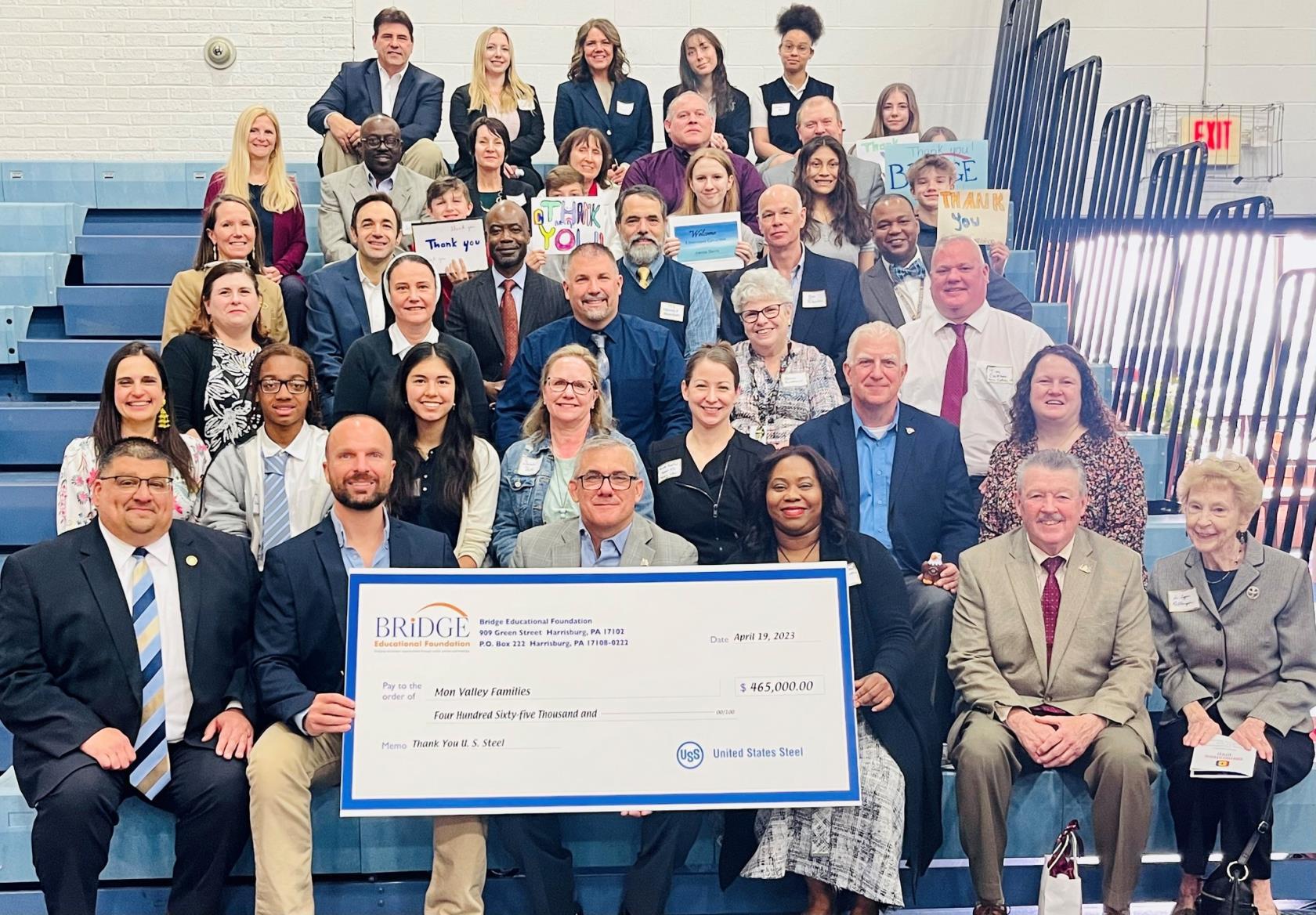
A picture of my smiling elected representatives to both the state House and Senate giving a check for almost half a million dollars to local private and parochial schools! 


What the beach sludge chewing GUM!!?  


Public schools in my home state of Pennsylvania just took the Commonwealth to the state Supreme Court and won because it wasn’t providing fair funding to students. And now my representatives are offering a novelty oversized check to religious schools and private sector academies!?  


This would be bad enough if they were Republicans who run their campaigns against public education and support only free market solutions to everything and White Christian Nationalism in all its forms.  


BUT THESE ARE DEMOCRATS!!!!!!! 


Democrats who somehow think that tromping onto the bleachers at Cornerstone Christian Preparatory Academy with a fistful of our tax dollars is a good photo opportunity!!!!?  


They think this is what they should share with constituents to show all the good work they’re doing!!!?  


Stealing our public tax dollars for schools that we have no business funding while our own schools that serve every child in the state go wanting!!!!!????? 


The email was from State Rep. Matt Gergely of McKeesport who just took office in February. Here’s the message from under the photo: 


“Yesterday, I was honored to help present $465,000 in scholarship funds to many students enrolled in the Educational Improvement Tax Credit Program. Congrats and best of luck to all who will surely benefit from the scholarships that will be provided! 
  
Big thanks to U.S. Steel and the Bridge Foundation for making these dollars a reality, to Sen. Jim Brewster for his continued collaboration, and to Cornerstone Christian Preparatory Academy for hosting the presentation.” 


The Educational Improvement Tax Credit (EITC) was created in 2001 by Republican Gov. Tom Ridge. Here’s how it works. 


 If you expect a tax bill of $X at the end of the year, you can donate that same amount to the state for the purpose of helping parents pay off enrollment at a private or religious school for their children. Then you get between 75-90% of that donation back. 


So if your tax bill is $100 and you donate $100, you can get back $90 – reducing your total tax bill to a mere 10 bucks. 


Heck! Since this money is classified as a “donation” you can even claim it on your taxes and get an additional refund – even to the point where you end up making money on the deal! Pennsylvania even allows a “triple dip” – so you get the EITC tax credit, a reduction in your taxable income, and a reduction in your federal taxable income. We actually pay you to shortchange us on your taxes! 


Now I’m oversimplifying a bit since you can only use the EITC for up to $750,000 a year, but it’s still a sweet deal for businesses. It just really hurts nearly everyone else because it reduces the state’s general fund – by up to $340 million a year. 


When we give away hundreds of millions of dollars every year to religious and parochial schools, we have less money to spend on public schools, roads and all other services that benefit the majority of our citizens – especially the poor who rely more heavily on these services. 


 So why doesn’t the state just budget this amount of money directly to religious and private schools instead of ransacking the general fund after businesses donate it to the tax incentive program? 


Because it’s illegal to give taxpayer dollars to religious and private schools. The establishment clause of the First Amendment forbids it. 


The founders of our country didn’t want a state religion with schools teaching theological propaganda like we had in Great Britain. Moreover, they demanded tax dollars be spent with accountability to the whole public – something you cannot do in a private or religious school which isn’t set up for everyone but only those who choose and can afford to go there. 


However, some nefarious character in the Ridge administration (the Governor was pro-school-voucher but couldn’t get the policy passed in the legislature) thought up a loophole. He said that if tax money is turned into a tax credit, it’s no longer tax money and it doesn’t violate the rules to spend it on religious and private schools. 


So this is a fiscal sleight of hand meant to give businesses a tax break while boosting private schools. 


However, there’s an even more important reason they don’t call these things school vouchers. That term is extremely unpopular with voters. 


People don’t like school vouchers. But if you call it a “scholarship,” it’s more palatable. For instance, while school vouchers are mostly supported by Republicans, a substantial number of Democrats support education tax credit scholarships


I live in Allegheny County in the Pittsburgh region – the second highest area of the Commonwealth for these tax dodge…. I mean credits. The other is Philadelphia. 


Defenders of the project claim this money goes to fund “scholarships” for poor children to help defray the costs of enrollment at these schools. 


However, a family making as much as $100,608 per year can qualify for an EITC scholarship for their child. A family with two children could make up to $116,216 and still qualify. 


According to the law, the state is not allowed to collect income information about people using these vouch… I mean tax scholarships. However, we know that a significant number of them are being utilized at private schools with average tuitions of $32,000 – far more than the few thousand dollars provided by the scholarships. They are apparently being used by wealthy and middle class students who can already afford private schools but are using public tax dollars to reduce the cost. I wonder how many already go to these schools before even taking the scholarship. 


Consider this: one of the largest single recipients of this money in Allegheny County is the exclusive Shady Side Academy in Pittsburgh where tuition ranges from $56,495 for boarding students and $32,995 for day students. The private secular school takes in around $1 million annually from this program so that its wealthy students don’t have to spend as much on enrollment. 


So we are subsidizing the rich. 


And we are robbing the poor to do so. 


Even worse we’re using public money to fund the teaching of climate denial, creationism, indoctrination in religious and political ideologies! 


The state Budget and Policy Center estimates that about 76% of these “scholarships” go to religious schools. Many of these educational institutions are explicitly fundamentalist. This includes the 155 schools in the Association of Christian Schools International (ASCI) where they boast of “the highest belief in biblical accuracy in scientific and historical matters.” It also includes at least 35 schools in the Keystone Christian Education Association. 


And you don’t even have to be a business to divert your tax dollars into the program. 


The largest and shadiest group donating to the EITC Program are Limited Liability Corporations (LLCs). 


These “special purpose entities” are set up to represent individual donors so they can more easily divert tax dollars to private and parochial schools. 


LLCs represent hundreds of individuals who allow the LLC to donate on their behalf and then they get the tax credits passed back to them. It’s a way to encourage the wealthy to get the tax cut and support school privatization without all the hassle of doing the paperwork themselves. 


And most (if not all) of these LLCs are set up by religious organizations to boost their own parochial schools! 


For instance, Business Leadership Organized for Catholic Schools is perhaps the largest LLC receiving EITC funds. 


In Allegheny County, the largest are CASTA-SOS LLC and Pittsburgh Jewish Scholarship LLC. 


CASTA was set up by the Catholic Diocese of Pittsburgh. Pittsburgh Jewish Scholarship benefits Jewish schools in the city. 


Bridge Educational Foundation, a Harrisburg-based scholarship organization, operates the same way. On its Website, the organization claims to have provided $1,000 scholarships to more than 32,000 students in 61 state counties. 


I just cannot understand why Gergely and Brewster are not only supporting this program but think that it will generate good will among voters. 


They should be fighting to end this gaping hole in the state budget. They should be out there working their butts off to get adequate, equitable and sustainable funding for our public schools – not sitting on their butts congratulating themselves for helping religious and private schools get away with our hard-earned money! 


Like this post?  You might want to consider becoming a Patreon subscriber. This helps me continue to keep the blog going and get on with this difficult and challenging work.

Plus you get subscriber only extras!

Just CLICK HERE.

Patreon+Circle

I’ve also written a book, “Gadfly on the Wall: A Public School Teacher Speaks Out on Racism and Reform,” now available from Garn Press. Ten percent of the proceeds go to the Badass Teachers Association. Check it out!


Training Teachers to be Antiracist Sparks Backlash in PA for Good Reasons and Bad

We all agree racism is bad. Right? 


So teaching people to be less racist is good.  


And teaching teachers to be less racist is even better.  


So why are three western Pennsylvania schools suing the state Department of Education (PDE) over guidelines for antiracist teacher training programs? 


The Mars Area, Penn Crest and Laurel school districts filed a lawsuit Monday trying to stop Democratic Gov. Josh Shapiro’s administration from implementing a program called Culturally Relevant and Sustaining Education (CRSE) in every school district in the Commonwealth starting next school year. 


CRSE is a set of 49 cultural competency standards kind of like the Common Core – guidelines for teacher training programs to be used for both new educators and continuing education credits for current educators.  


Plaintiffs complain that the program is vague, requires teachers to think a certain way, encroaches on districts’ autonomy to pick their own curriculum and threatens to take away owed subsidies if districts don’t comply. 


Let’s examine each in turn. 
 

Is the policy vague? No way. It has nine core competencies, each with between 4 and 7 standards. These are guidelines and certainly don’t outline every possible use, but you could argue they’re detailed to a fault. One regulation requires educators to disrupt harmful institutional practices. Another asks educators to acknowledge microaggressions –  when someone unintentionally expresses prejudice towards a person or group. 


Do they require teachers to think a certain way? Yes. They ask teachers to embrace the idea that racism is bad and to strive to work against it.  I’m not seeing how that’s a problem.


Do they encroach on district’s autonomy? That’s debatable – but should districts really resist taking steps to make themselves less racist?  


Do they threaten districts with loss of funding if schools don’t comply? I don’t see anything explicit in the program that says this, but that could be implicit in the program or have been expressed by PDE employees. In any case, I don’t see why it’s a problem to offer tools to do something you really should want to do anyway.


In short, there’s nothing wrong with the guidelines, per se, if you agree that racism is something schools and teachers should strive against. Now I can’t read people’s minds, and I don’t know explicitly what their motivations are, but the real issue seems to be that certain people don’t believe in the cause.  


They don’t believe racism is much of a problem today or that schools should be engaged in antiracist work.  


It’s a culture war issue for them. That’s all. Republicans vs Democrats. So-called conservatives vs so-called liberals. The usual cable TV political football game. 


However, for some of us, the matter isn’t so simple. 


Frankly, I’m of two minds when it comes to these new guidelines for antiracist teacher training. 


On the one hand, I am in favor of teaching people to be less racist – especially when those people are teachers, themselves, who can spread the message even further and use it to be more fair and equitable to students.  


However, taken in context, such guidelines are little more than passing the buck onto teachers while letting the most powerful get away with doing nothing. 


Consider where these guidelines come from.  


They were created by the previous Democratic Gov. Tom Wolf’s administration with help from The New America Foundation. In fact, most of these guidelines come directly from the foundation by use of a creative commons attribution


This is a left-leaning DC think tank with ties to President Barack Obama’s administration. Why does that matter? Look at who funds the organization – The Bill and Melinda Gates Foundation, Bloomberg Family Foundation, JPMorgan Chase Foundation, etc.  


These are the architects of the most dominant education policies of the last two decades – high stakes standardized testing, charter schools, etc.  


Think about that for a minute.  


Here we have the same people responsible for the most racist public school policies of the last several generations writing guidelines to teach educators how to fight racism! 


Well isn’t that something!?  


Imagine if these same billionaire philanthropists demanded an end to their own policies! Now THAT would be antiracism!


Standardized testing is based on eugenics. Children of color and the poor get lower test scores than wealthier whiter kids BY DESIGN, and we use those scores to justify doing all kinds of terrible things to them – narrowing the curriculum at their schools, cutting funding to anything but test prep, closing their schools and forcing them into unproven privatized alternatives.

Speaking of which, take a look at charter and voucher schools. These are institutions surviving on public tax dollars that aren’t held to the same accountability standards. Charter schools target black and brown kids giving them less quality educations and pocketing the tax money provided to educate them as profit. Voucher schools use tax dollars to fund religious and parochial education, teaching blatantly racist and anti-scientific ideas.  


If the people behind CRSE really wanted to make a dent in racism, they’d abolish these policies.  


If the state really wanted to be antiracist, it would stop the tyranny of high stakes testing, abolish no account charter schools and stop funneling tax dollars to private and parochial schools. It would work to reduce school segregation, equitably fund all districts – especially those serving poor and minority children, etc.


But no. They do none of these things. Instead they throw it all on teachers.  


Once again the powerful do nothing to actually fix our problems but put the burden of our crumbling societies on our crumbling public schools and traumatized teachers. 


THAT’S my problem with this program. 


It’s not that they want to teach teachers to be antiracist and to take steps to create more fair and equitable classrooms. It’s that this is all a smokescreen to allow the people who are really behind many of the racist systems in our society to keep getting away with it and perpetuating more and more inequality. 


I can just imagine how well the state would greet educators “disrupt[ing] harmful institutional practices” by refusing to give standardized tests!

Teachers have an attrition rate of nearly 50% every 5 years. We can’t keep dumping every social problem into their laps and expecting them to perform miracles all by themselves.

Public schools are a PART of the solution to our broken society. But they are not the WHOLE.  


We need real public policy to address these issues. We need to get rid of reductive and prejudicial laws.  

And the fact that we don’t have any of that is certain to poison the fervor of many teachers next year who will be required to sit through antiracist programs paid for and conducted by the same folks behind the public school apartheid that is our everyday reality.  


Like this post?  You might want to consider becoming a Patreon subscriber. This helps me continue to keep the blog going and get on with this difficult and challenging work.

Plus you get subscriber only extras!

Just CLICK HERE.

Patreon+Circle

I’ve also written a book, “Gadfly on the Wall: A Public School Teacher Speaks Out on Racism and Reform,” now available from Garn Press. Ten percent of the proceeds go to the Badass Teachers Association. Check it out!

Forgotten Pre-Covid Report Reveals Standardized Testing Weaknesses in PA

The majority of teachers and principals in Pennsylvania hate standardized tests.

An increasing number of parents are refusing to allow their kids to take the tests.

And there may be better alternatives to the state’s Keystone Exams.

These were just some of the key findings of a blockbuster report from June 2019 by the state General Assembly’s Legislative Budget and Finance Committee.

The report, “Standardized Tests in Public Education” was published about 9 months before the Covid-19 pandemic hit.

It effectively got lost in the chaos that followed the global pandemic.

However, now that things are returning to some semblance of normalcy, it seems that bureaucrats from the state Department of Education (PDE) are taking the wrong lessons from the report while the legislature seems to have forgotten it entirely.

The report was conducted because of legislation written by state Sen. Ryan P. Aument (R-Lancaster County). It directed the Legislative Budget and Finance Committee to “study the effectiveness of standardized testing, including the Keystone Exams and SATs, and their use as indicators of student academic achievement, school building performance, and educator effectiveness.”

The key findings are as follows:

1)The majority of principals and teachers disapprove of the state’s standardized tests – both the Pennsylvania System of School Assessment (PSSA) tests given in grades 3-8 and Keystone Exams given in high school. They think these tests are ineffective, expensive and harmful to district curriculum and students.

2) State law allows parents to opt their children out of testing for one reason only – religious grounds. Parents are using this religious exemption in increasing numbers. This puts districts in danger of violating federal participation and accountability standards.

3) It has been suggested that the state allow two additional reasons for parents to opt their children out of testing – philosophical grounds and health concerns. It is unclear whether doing so would increase overall opt outs or not.

4) The federal Every Student Succeeds Act (ESSA) passed in 2015 allows the use of the SAT and/or ACT test to take the place of high school standardized testing. It has been suggested the Commonwealth replace the Keystone Exams with these tests. The report finds the ACT and/or SAT would successfully determine college readiness and reduce the overall amount of standardized testing. However, this would not allow other uses of current state tests like evaluating teacher effectiveness and school building performance.This may not matter though because the report also casts doubt on whether the current tests (PSSA and Keystone Exams) do an adequate job of assessing teacher or building performance now or even if student tests can be accurately used to evaluate teachers and schools.

There’s a lot of information here. Let’s look at each finding in turn.

1) PA Educators Hate Standardized Tests

When it comes to the PSSAs, 67% of principals and 76% of teachers said the tests were ineffective indicators of student achievement.

There was slightly more support for the Keystone Exams. This time 45% of principals said the test was an ineffective indicator of student achievement (with 27% saying the tests were effective). Meanwhile, 60% of teachers said the test was ineffective.

Both principals and teachers said their curriculum had been narrowed to prepare students for PSSAs and Keystone Exams. Instead of going into more depth on regular classwork or learning new skills, the focus shifts to teaching to the tests.

Most principals (approximately 80-90%) said that students are taught test-taking skills, and their schools administered practice tests, bench-mark tests, and/or diagnostic tests to prepare students for the PSSA exams. This held for teachers, too, with 81-88% saying they teach test-taking skills and administer practice tests. Principals also said the costs of this additional test prep varied from $200 to more than $100,000.

Taking the tests also eats up valuable class time. Administering the assessments takes between 5.7 to 8 days for each kind of test – the PSSA and the Keystone Exams, according to Principals.

In addition, the report details the cost of giving these tests. In fiscal year 2017-2018, PDE paid $42.17 million for these tests. This is part of a national trend:

“Standardized tests and test preparation have subsequently become big business and that multibillion dollar business continued to grow since the enactment of NCLB and the subsequent enactment of ESSA. According to the Pew Center on the States, annual state spending on standardized tests increased from $423 million before the NCLB (enacted in 2002) to upwards of $1.1 billion in 2008 (to put this in perspective this reflects a 160 percent increase compared to a 19.22 percent increase in inflation during the same time period). A more recent study by the Brown Center on Education Policy at Brooking put the cost at upwards of $1.7 billion in 2011 related to state spending on standardized tests.”

2) Opt Outs on the Rise

Many states allow parents to opt their children out of standardized testing. Some do so in cases of a physical disability, medical reasons, or emergencies. A few allow opt-outs based on religious objection – like Pennsylvania. Some states allow opt-outs for any reason whatsoever.

The religious exemption is not used widespread throughout the state and most schools meet the 95% participation rate required by the federal government. However, use of the religious exemption is definitely on the rise – enough so that the authors of the report find it alarming:

“Meanwhile, as previously indicated in this section, schools throughout the country are experiencing and grappling with an increase in the number of parents seeking to have their children opt-out of standardized testing now that new state assessments have been implemented pursuant to the federal requirements. Pennsylvania is no exception to this trend and is also experiencing an increase in the number of parents utilizing the religious opt-out.”

For the PSSA tests, opt outs increased from 2013-14 to 2016-17. However, total numbers in school year 2017-18 decreased sightly.

Opt outs went from 1,886 to 6,425 to 15,644 to 19,012 to 16,961.

During the same time period for the Keystone Exams, opt outs steadily increased each year but were at lower overall rates.

For the high school test, opt outs went from 382 to 666 to 1,000 to 1,313 to 1,633.

These are vitally important figures because opt out data is rarely tabulated and released to the public. Many media accounts actually state the opposite of the data in this report – in particular that opting out has decreased since Congress passed the ESSA in 2015. Apparently the media got this one wrong.

Though the religious opt-out is the only reason specifically allowed in state Chapter 4 regulations, PDE reports there are five additional ways that students end up not taking the tests:

1) Other Parental Request – parents simply refusing to let their kids participate but not objecting based on specifically religious reasons.

2) No Attempt and No Exclusion Marked – students who are given the test but do not answer enough questions to receive a score.

3) No Test – no test record on file for unknown reasons.

4) Extended Absence – a student missed the testing and make-up window due to absences.

5) Other – does not fit any of the other categories.

Federal law – in particular No Child Left Behind (NCLB) and subsequent reauthorizations of that legislation – requires states to use student participation in standardized testing as a factor in a state’s accountability system. According to the report, any district with less than 95% of students taking the test should be “addressed.”

The report does not go into any further detail about what this means, other than to say that falling under 95% can:

“…ultimately result in a reduced achievement/proficiency measure… If the student participation rate falls below 95 percent, states are required to calculate student achievement/proficiency by dividing the number of students scoring proficiently by no less than 95 percent of the total students (which effectively assigns a score of “0” to all nonparticipants once the participation rate has fallen below 95 percent).”

In effect, the district gets a bad mark on a piece of paper. So what?

Under NCLB, schools with poor performance could receive sanctions like state takeover or lower funding. However, this is extremely unlikely – especially since the passing of ESSA. This newest reauthorization of the law gives states leeway in designing their accountability systems. It leaves the enforcement of this 95% participation rate up to the states, requiring them to develop an accountability plan in the event that a school or district fails to meet this standard.

So a school would only be punished if the state decided to do so. If a state legislature decided to allow parents to opt their children out for any reason at all, they would not have to take any punitive measures. Since the ESSA, the buck stops at the state house door on this one. California, for example, takes note of low participation rates but these rates are not factored into a school’s rating. On the other hand, Florida mandates direct intervention from the state’s Department of Education until participation rates are met.

3) Impact of New Reasons to Opt Out

This is where things get a bit sticky.

The report mentions the idea of expanding the options for opting-out of statewide assessments (e.g., PSSA and Keystone Exams) to include objections based on philosophical grounds or due to health issues.

On the one hand, the authors write “The impact of adding opt-out categories may be minimal.” They don’t know if more people would use the expanded options or if the same numbers who use the religious exemption today might simply divide themselves up among all three options.

The authors worry, however, that new pathways to opt out may increase the total number of people refusing the tests for their children and would reduce Pennsylvania’s participation rate in standardized testing.

This is a particularly troubling paragraph:

“The existence of opt-outs (religious or otherwise) has the potential to negatively impact a state’s participation rates and may potentially impact a state’s [Local Education Agency (LEAs)] and schools achievement/proficiency rate and ultimately the ability of a state to be in compliance with federally required assessments and accountability measures. Furthermore, providing opt-outs and giving parents notice of such has the potential to conflict with the message about the importance of standardized testing. Ultimately placing the state departments of education and local school districts in the potentially awkward position of having to explain why it is important for students to participate in testing (given the federal requirements), while also giving and notifying parents of the opt-out options for their children. In 2015, US Department of Education sent out letters to a dozen states flagging their low participation rates (statewide, or at the district or subgroup level) on the 2014-15 school year assessments and indicated that they needed to create a plan to reduce opt-outs due to low participation rates.”

This seems to be the order of the day at PDE. It’s why earlier this year, school administrators were advised by state officials to crack down on parents opting their children out of standardized tests.

For the first time in 8 years, I, myself, had to jump through several hoops to opt my own daughter out this year when in the past a simple phone call had sufficed.

I was asked to send in a letter, sign a confidentiality statement and go to the school to examine the test before they would excuse my little girl from the tests. It was an unnecessary hassle meant to discourage parents from doing what they thought was right and exercise their rights through state law.

And all of it is based on a cowardly and incomplete understanding of federal law. If Commonwealth schools fall below 95% participation in the test and get a bad mark on a worthless metric, it doest have to matter. No matter how many letters the federal government sends to the state legislature or PDE, the law is clear. The state is in charge here. Our legislature can choose to side with taxpayers, residents, and citizens or with civil servants and strongly worded letters.

4) Replacing the Keystone Exams

There’s not much more to add to this than the initial finding.

The authors of the report say there would be no problem with replacing the Keystone Exams with the ACT or SAT because these national tests would properly assess students’ college and career readiness.

The report is actually pretty shoddy in this regard not really examining the claims of the College Board which makes both tests. The authors just pretty much accepted the College Board’s word wholesale. Nor was their any evaluation of what teachers and principals thought about these tests like there had been for the PSSA and Keystone Exams.

However, the report does make a good point about test reduction. Many students already take the SAT or ACT test, so eliminating the Keystones would reduce the over all amount of tests they had to take.

Also the authors deserve credit for writing about how using student test scores to evaluate teachers and schools is seriously bad practice.

According to the report, 77 percent of principals and 93 percent of teachers said PSSA tests were not effective indicators for teacher evaluations, with similar figures for the Keystone Exams and building performance evaluations.

While everything in the report may not be 100% accurate, it includes important information that should be wider known.

In particular, it matters that the majority of teachers and principals throughout the state disapprove of standardized testing. If we trust our educators at all, we should take steps to reduce or abolish high stakes testing – not continue the same dismal policy that has achieved nothing positive in 20 years of NCLB.

In addition, the report has trustworthy data about opt outs throughout the Commonwealth. Unlike what has been reported in the media, opting out is not on the decline, it is on the rise.

If we value parents and their autonomy to make decisions for their own children, we should at very least expand their ability to refuse the test for their children without having to give anyone a reason. Being parents is reason enough.

The Keystone Exams should be thrown in the trash, because that’s what they are – trash. At very least they should be replaced with the SAT or ACT. Even better to remove any requirement for standardized tests wholesale – and that includes the PSSA.

The ESSA allows states a lot of leeway about how and what accountability system they use. There is no need to worry about some imperial federal power invading Pennsylvania to force our hand with standardized testing. We should call their bluff on this. I’ll bet that if we did so, many other states would do the same.

Standardized testing is another failed education policy. Our legislators would do good to read this report and make up their own minds about it.

Though a few years and disasters have happened since its publication, it doesn’t deserve to be forgotten by the very people who ordered it to be written in the first place.


Like this post?  You might want to consider becoming a Patreon subscriber. This helps me continue to keep the blog going and get on with this difficult and challenging work.

Plus you get subscriber only extras!

Just CLICK HERE.

Patreon+Circle

I’ve also written a book, “Gadfly on the Wall: A Public School Teacher Speaks Out on Racism and Reform,” now available from Garn Press. Ten percent of the proceeds go to the Badass Teachers Association. Check it out!