Pennsylvania pays more than $1 billion every year for its 14 cyber charter schools.
And overpays them by more than $450 million each year.
Now – after half a decade of legislative shenanigans – a new bill actually has the possibility of being passed to hold these types of schools accountable.
Last week House Bill 1422 passed by a vote of 122-81, with all Democrats voting for it, joined by 20 Republicans. Democratic Gov. Josh Shapiro would likely sign the legislation if it comes to his desk.
So now it goes to its biggest hurdle – the Republican-controlled Senate.
The state GOP has held up every cyber charter reform measure since the previous Democratic Gov. Tom Wolf suggested it. However, now that Democrats hold a slim majority in the House, Republicans can no longer stymie it completely.
One of the largest problems centers on the cost of doing business. Cyber charter schools educate students online via computer. So why do local public schools have to pay cyber charters the same money as brick and mortar schools to educate students living in their boundaries? Cyber charters don’t have nearly the brick and mortar – no athletic fields, busing, etc. And the physical structures they do have are much smaller. The result is underfunded public schools and cyber charters bursting with cash.
That means higher public school taxes for you and me while cyber charters spend money like it’s going out of style.
The new measure would stop that by telling public schools exactly how much they must pay cyber charters – $8,000 per student not receiving special education services. Most schools currently spend approximately $10,000.
In addition, cyber charter schools would no longer be given more funding for special education students than authentic public schools. Tuition for special education students would be aligned with the system used for authentic public school districts. These measures, alone, are expected to result in about $456 million in savings.
But that’s not all!
The legislation also seeks additional transparency, eliminating conflicts of interest and requiring cyber charters to comply with the state’s ethics and open records law as authentic public schools are already required to do. It would ban enrollment incentives, restrict advertising and event sponsorships.
Gov. Wolf’s original proposal went even further. He had asked the General Assembly to place a moratorium on new cyber charter schools and cap enrollment in low-performing charter schools until they improve. None of that appears in the current legislation.
The bill’s primary sponsor, Rep. Joe Ciresi, D-Montgomery, said the goal was not to close cyber charter programs, but to stop overfunding them. He said:
“We’re looking to put money back into the public schools and also leave the choice that’s there. We should have choice in this state. We’re asking that it’s a fair playing field.”
A lot of the prohibitions in the new legislation seem to have been inspired by real practices by current cyber charter schools like Commonwealth Charter Academy (CCA), the largest school of this type in the state.
The proposed law would prohibit all public schools from paying to sponsor public events such as parades and professional sporting events. Moreover, it would require all public schools who advertise to state that the cost of tuition and other costs are covered by taxpayer dollars.
CCA also uses tax dollars to provide $200 for monthly field trips that can be of debatable educational value. They’ve gone to petting zoos, laser tag, bowling and kayaking. A parent of a CCA student even bragged on Facebook about using these funds for Dave and Busters Arcade, a Motley Crue concert, Eagles tickets, and family vacations to Universal Studios and Disney, according to Education Voters of Pa.
The new bill would prohibit cyber charter schools from paying or reimbursing parents/guardians from educational or field trips as well as offering any cash, gifts or other incentives for enrolling or considering enrolling in a cyber charter school.
It would also force these types of schools to be more financially accountable by requiring them to approve an annual budget by June 30th each year, and make the budget available, as well as imposing fund balance limits so they couldn’t horde taxpayer money – all things already required of authentic public schools.
Charter schools – institutions that are publicly financed but often privately run and not subject to the same rules and regulations as authentic public schools – are still controversial despite the first charter school law being passed in 1991 and having spread through at least 45 states. However, only 27 states also allow CYBER charters like this – schools that teach mostly (or entirely) distance learning through the Internet.
A 2022 report by Children First found that of the states with cyber charters, Pennsylvania spends the most but has the “weakest systems to ensure students and taxpayers are getting their money’s worth.” Moreover, of the roughly $1 billion state taxpayers spend on these schools, several reports suggest that the money comes from the poorest districts, where cyber student academic performance is much lower than at neighboring authentic public schools. These are the students most in need of help.
Many provisions in the proposed bill read like such common sense initiatives, it’s chilling that they aren’t already in place.
The bill would require cyber charter schools to verify the residency of enrolling students, report the number of newly enrolled students and how many of those students have been identified as needing special education. Since cyber charter teachers meet with students online, they would need to visibly see and communicate with enrolled students at least once per week to verify the student’s well-being.
There are also many rules about how a cyber charter school can be governed. You could not have a school director from another school district or a trustee from another charter school serving on the board of the cyber charter school. Boards would require a quorum and a majority vote to take action. They would have to comply with the Sunshine Law, Right-to-Know Law, and the Ethics Act. Cyber charter school boards would need to have at least seven non-related members, at least one of whom must be a parent/guardian of an enrolled student.
But let’s not forget the many ways this new law would make cyber charters more transparent. Cyber charter schools could not lease a facility from a foundation or management company – unfortunately a common practice that allows the school to bill the public for a service to itself multiple times. Any conflicts of interest between the cyber charter school and a foundation or management company would need to be disclosed. Cyber charters would not be allowed to have administrators and their family members serving on the board of a charter school foundation that supports the charter school. No charter school trustee could be employed by the cyber charter school, a foundation that supports the school, or a management company that serves the school. The state Department of Education would need to have access to the records and facilities of any foundation and/or management companies associated with the school. Foundations associated with these schools would need to make budgets, tax returns and audits available.
The overwhelming majority of these regulations simply hold cyber charter schools to the same standard we already use for authentic public schools.
However, what often gets left unsaid is how terribly students do academically at cyber charters – something completely left out of this proposed legislation.
A nationwide study by Stanford University found that cyber charters provide 180 days less of math instruction and 72 days less of reading instruction than traditional public schools.
Keep in mind that there are only 180 days in an average school year. So cyber charters provide less math instruction than not going to school at all.
The same study found that 88 percent of cyber charter schools have weaker academic growth than similar brick and mortar schools.
Student-to-teacher ratios average about 30:1 in online charters, compared to 20:1 for brick and mortar charters and 17:1 for traditional public schools.
Researchers concluded that these schools have an “overwhelming negative impact” on students.
And these results were duplicated almost exactly by subsequent studies from Penn State University in 2016 (enrolling a student in a Pennsylvania cyber charter school is equal to “roughly 90 fewer days of learning in reading and nearly 180 fewer days of learning in math”) and the National Education Policy Center in 2017 (cyber charters “performed significantly worse than feeder schools in both reading and math”).
The legislation being considered here does the important work of holding cyber charters financially accountable. However, there still remains the very real question of whether this type of educational institution is viable under normal circumstances.
I guess we’ll soon see who the Commonwealth GOP really listens to – voters or corporate interests.
Like this post? You might want to consider becoming a Patreon subscriber. This helps me continue to keep the blog going and get on with this difficult and challenging work.
So Republicans designed a bill exactly along those lines hoping that if they can get it through both legislative bodies, the Governor will give it his signature. (Under the previous Democratic administration, Gov. Tom Wolf blocked the worst the GOP could throw at him, stopping all kinds of horrible policies from getting through.)
It’s called the Lifeline Scholarship Program – throw a lifeline of $100 million to failing edu-businesses and religious indoctrination centers on the excuse that that will somehow help kids from impoverished neighborhoods.
You could just increase funding at the poorest public schools – but that would make too much sense.
Better to give taxpayer money to private interests with little to no accountability or track record and just hope it works!
“There are not the votes for it. It’s not coming up, and if it comes up, it will be defeated.”
This seems to be the case. Yesterday, the House Rules Committee voted against sending the tuition voucher bill to the full House for a vote. So it is not scheduled for a vote at all.
However, now that the June 30th deadline has been blown, lawmakers probably will try to use this newest school voucher bid as a bargaining chip to get a spending plan – any spending plan – passed. This could drag on for months – it certainly has in the past.
The current voucher iteration is a taxpayer funded tuition subsidy for students attending private schools.
Under this bill, students in the lowest 15% of schools in the commonwealth (as determined by standardized test scores) would be eligible.
So what’s wrong with school vouchers?
1) Vouchers have nothing to do with helping kids escape struggling public schools.
School vouchers overwhelmingly go to kids who already attend private or parochial schools.
This is true even when the law explicitly stipulates the money should only go to poor and needy children.
In the states that have released their data, more than three quarters of families who apply for vouchers for their children already send their kids to private schools. That’s 75% of voucher students in Wisconsin, 80% in Arizona, and 89% in New Hampshire. So these kids didn’t need our tax dollars in the first place. We’re just paying for services they’re already receiving.
Moreover, the very idea is absurd. If the school where the student is enrolled is struggling, why wouldn’t you simply invest in that school to make it better and fix the underlying problem? Why disrupt children’s educations by moving them to another school in another system that is entirely unproven, itself?
2) Using taxpayer money to send your child to a private or parochial school has got nothing to do with getting a quality education.
Large-scale independent studies in Indiana, Louisiana, Ohio and Washington, D.C., show that students who used vouchers were as negatively impacted as if they had experienced a natural disaster. Their standardized test scores went down as much or more than students during the Covid-19 pandemic or Hurricane Katrina in 2005.
They lose the friends, teachers, and communities where they grew up. It’s like yanking a sapling from out of the ground and transplanting it to another climate with another type of soil which may not be suited to it at all.
3) Vouchers have nothing to do with more efficient schools.
Let’s get one thing straight – voucher schools are businesses, often new businesses just opening up. And like any other start-up, the failure rate is extremely high. According to Forbes, 90% of start-ups fail – often within the first few years.
4) Vouchers have nothing to do with freedom or choice.
Unless it’s the choice to be a bigot and indoctrinate your child into your own bigotry.
Vouchers are about exclusion – who gets to attend these PRIVATE schools – and indoctrination – what nonsense they can teach that public schools cannot.
Meanwhile thousands of parochial schools that receive public funding use textbooks provided by The American Christian Education (ACE) group. This includes the A Beka Book and Bob Jones University Press textbooks. A Beka publishers, in particular, reported that about 9,000 schools nationwide purchase their textbooks.
In their pages you’ll find glowing descriptions of the Ku Klux Klan, how the massacre of Native Americans saved many souls, African slaves had really good lives, homosexuals are no better than rapists and child molesters, and progressive attempts at equal rights such as Brown vs. Board of Education were illegal and misguided. You know – all the greatest Trump/MAGA hits!
Call me crazy, but I don’t think that’s a curriculum worthy of taxpayer dollars. I think if you’re going to take public money, you should have to accept all of the public, and you shouldn’t be allowed to teach counterfactual claims and prejudice as if they were fact.
To be fair, this voucher program is not supposed to take money directly from the public system – one of Shapiro’s requirements for his support – but the money has to come from somewhere.
The state treasury would be responsible for managing the program, and it can’t just print money. This is taxpayer funding. We won’t allocate the money to support the schools we have, but we’re willing to send $100 million to schools we have no responsibility for now!? With no fiscal accountability!?
Lots of other states have enacted vouchers like this and surprise, surprise! The program expands enormously. For instance, in New Hampshire, voucher supporters predicted their program would cost taxpayers about $130,000, but within two years the cost had ballooned to more than $14 million.
Pennsylvania schools have monetary needs – but this voucher program is not one of them.
Lawmakers have been tasked by the state Supreme Court with increasing education funding.
That’s education funding for public schools – PUBLIC. Schools.
If they want to give away our tax dollars to their buddies in the private education industry or support religious indoctrination, that’s a different matter entirely.
And shame on Shapiro for giving the most reckless policymakers in the commonwealth on the other side of the aisle hope that these shenanigans will work.
Like this post? You might want to consider becoming a Patreon subscriber. This helps me continue to keep the blog going and get on with this difficult and challenging work.
Keep in mind none of these districts need open their grounds to religious organizations. They could simply cite the Separation of Church and State and be done with it.
The first clause in the Bill of Rights states, “Congress shall make no law respecting an establishment of religion.” This has been interpreted to mean that the government shall neither support nor prohibit religious expression.
Districts apparently CAN ignore the Church/State conundrum – BUT – if a district is going to violate this tenant for one organization, it has to be willing to do so for all.
And that is why TST is making this point.
Unlike the Church of Satan, a religious institution founded in the 1960s that literally worships the Biblical devil, TST is a non-theistic organization which uses hyperbole and humor to protest the Religious Right and authoritarianism. The organization says it strives to “provide a safe and inclusive alternative” to Christian-based groups that may seek to “convert school children to their belief system.”
All it took was a police investigation and the threat of a lawsuit from the American Civil Liberties Union (ACLU) to make it happen.
The Saucon Valley School District in the Lehigh Valley already allows explicitly religious organizations to hold meetings on school grounds like the Good News Club run by the Child Evangelism Fellowship, a Christian fundamentalist organization that seeks to influence schoolchildren as young as five.
So TST requested permission to start a new club on district property with the slogan “Educatin’ with Satan.”
“Proselytization is not our goal, and we’re not interested in converting children to Satanism,” writes TST. “We prefer to give children an appreciation of the natural wonders surrounding them, not a fear of everlasting other-worldly horrors.”
The response was immediate with messages from concerned citizens flooding into the district.
The point went over many people’s heads. “What’s next, the after-school heroin club?” asked someone in an email.
Others seemed to understand the district’s hypocrisy in blurring the lines between Church and State: “Please shut down all religious after-school clubs if that’s what needs to be done to keep Satan out of that building,” read another email.
And then there was this: “I’m gonna’ come in there and shoot everybody,” said a recorded voice.
The caller wasn’t some hooded devil worshipper. He allegedly was a 20-year-old North Carolina man who was worried, “the After-School Satan Club is trying to turn kids into devils,” according to law enforcement.
Shortly after, the suspect, Ceu “Van” Uk, was arrested by Charlotte-Mecklenburg Police. He was arraigned on a charge of Terroristic Threats and sent to jail in lieu of $75,000 bail. He is expected to be extradited to Pennsylvania, according to a news release.
Though violence was averted, the school board and administrators denied the club’s request. They even blamed the After-School Satan Club for the controversy despite it being the target of Uk’s violence.
“Our community has experienced chaos. Our students, staff, and teachers have had to endure a threat to their safety and welfare,” Superintendent Jaime Vlasaty wrote.
“The gravity of feelings of instability, anxiety, and fear have been profound.”
Both the national and Pennsylvania chapter of the ACLU sent a letter to the Saucon Valley School District demanding that it allow the After-School Satan Club access to school facilities just as it allows other clubs. The district eventually agreed.
The club, which has six student members and is the first of its kind in the Commonwealth, New Jersey or Delaware, is expected to have its first meeting today in the district middle school.
Sadly, the Pennsylvania incident is just the most recent one in which religious people have resorted to threats of violence to stop others from the same religious expression they take for granted.
Another After-School Satan Club, which was allowed to meet in February at an elementary school in the Chesapeake School District in Virginia, followed a similar path.
Parents protested outside B.M. Williams Primary School, but the first meeting was held on February 16 anyway and reportedly attended by nine students.
Less than a week later, the elementary school was forced to evacuate following a bomb threat from an email saying the school promoted “devil worship,” according to local media.
The email mentioned threats toward three people: a Chesapeake school board member, the superintendent and the organizer of the After-School Satan Club. “You are evil, there is no other way to put it,” the email reads. “You promote devil worship and unIslamic values.”
It’s ironic how so-called religious values like tolerance and non-violence are more frequently found with Satan than adherents of faiths that are supposed to be espousing those beliefs.
There’s also something glaringly disingenuous when schools complain about these issues – they could avoid clubs of a religious nature entirely.
By contrast, there are more than 4,000 Good News Clubs in public schools (often elementary schools) in America. Their stated purpose is:
“to evangelize boys and girls with the Gospel of the Lord Jesus Christ and establish (disciple) them in the Word of God and in a local church for Christian living.”
The lessons taught in these Evangelical and similar clubs are far more destructive than anything you’ll find in an irreverent “Satan” club. Good News Clubs and others like them stress Old Testament narratives of a retributive God who punishes sin, warns children that they will suffer an eternity in Hell if they refuse to believe, and stresses complete obedience as the supreme value. They tell children as young as preschoolers that they have “dark” and “sinful” hearts, were born that way, and “deserve to die” and “go to Hell.” Such messages rob children of the innocence and enjoyment of childhood, replacing them with a negative self-image, preoccupation with sin, fear of Hell, and an aversion to critical thinking.
This is because most religious clubs are Biblically based and interpret that text literally. Meanwhile, The Satanic Temple’s more than 700,000 members don’t worship Satan. They take their central figure as a literary character, a symbol for the “Eternal Rebel,” according to their website. They are against “tyrannical authority” and support “individual sovereignty,” as well as empathy, compassion, and defiance.
TST has waged public battles against the religious and GOP right on issues involving First Amendment freedoms, LGBTQ rights, and abortion access.
Their approach has been often irreverent. In keeping with their belief in bodily autonomy, one of the temple members’ latest projects is an online clinic which aims to provide abortion medication by mail. They call it the Samuel Alito’s Mom’s Satanic Abortion Clinic.
Last October, a Dallas-area Satanic Temple held an “Unbaptism” event. According to its website, an “Unbaptism” is an activity in which “participants renounce superstitions that were imposed upon them without their consent as a child” — essentially, religious beliefs from which adults want to be disentangled. After all, most religions indoctrinate children into their beliefs before they are old enough to understand them or choose the beliefs for themselves. Why not offer them a chance to reject them once they’re mature enough to make a free choice?
The fliers for the Saucon Valley program promised kids ages 5 to 12 science and community service projects, puzzles, games, nature activities, arts and crafts, snacks “& tons of fun.”
This may scare some people, but I say thank goodness for Satan!
They need to prove their moral worth – and one way to do that would be to stop threatening people who have different beliefs.
Moreover, administrators and school directors need to rediscover their reverence for the Separation of Church and State.
This is one of the bedrock principles on which our nation was founded.
Find your courage to stand up to religious organizations demanding you shred your morals and responsibilities to everyone in the community.
If you value religious freedom, practice what you preach.
Or get ready for an After-School Satan Club in your neighborhood.
Like this post? You might want to consider becoming a Patreon subscriber. This helps me continue to keep the blog going and get on with this difficult and challenging work.
So it should come as no surprise that supply side policymakers are using the current teacher exodus as an excuse to remake the profession in their own image.
The Bureau of Labor Statistics puts the number closer to 567,000 fewer educators in America’s public schools today than there were before the pandemic. That’s 0.57 new hires for every open position – completely unsustainable.
This was exacerbated by the Covid pandemic, but the slow march of teachers out of the classroom has been going on for at least a decade. The federal government and most states have been either unwilling or unable to act – until now.
But it’s instructive to see exactly what it is they’re doing.
If approved by the legislature, newly certified members of those three professions would be eligible to receive up to $2,500 off their state income taxes.
However, the credit would be nonrefundable — recipients would save only the amount of tax they would have paid rather than also receiving the unused portion of the credit as a refund.
According to an Associated Press analysis in March, to receive the full $2,500 annual benefit with the state’s 3.07 flat income tax rate, a teacher (nurse or police officer) would have to make almost $82,000 — far above the normal starting wage for those professions.
The proposal, which seems unpopular on both sides of the aisle, doesn’t even do much to increase recruitment. It should have been used to raise the base salary of teachers instead of focusing on just newbies.
But its intent was clear – get more teachers in the door.
PDE is putting forward a new program starting in July called Culturally Relevant and Sustaining Education (CRSE) which includes 49 cultural competence standards to encourage teachers to be more aware of racial issues in our schools.
The impetus behind enacting these standards is to help recruit more new teachers of color. It’s a worthy goal considering how few teachers are non-white in the Commonwealth. However, increased salary, prestige and autonomy would go a lot farther than this kind of whitewashing.
After all, if the state, the New America Foundation or the billionaire philanthropists backing them actually wanted to decrease racism, they’d be much more successful attacking racist structures than random interactions – reversing the neoliberal policies (charter schools, high stakes testing, etc.) that they, themselves, promote.
The excuse constantly given for such an emphasis on recruiting new teachers is that so few graduates are entering the profession. A decade ago, roughly 20,000 new teachers entered the workforce each year in the Commonwealth, while last year only 6,000 did so, according to the state Department of Education (PDE).
According to the NEA, educators quitting is driving a significant part of the current educator shortage. More teachers quit the job than those who retire, are laid off, are transferred to other locations, go on disability or die. And this has remained true almost every year for the last decade with few exceptions.
If our government really wanted to solve the problem, it would spend at least as much time keeping the experienced teachers we have as trying to get new ones to join their ranks.
“The common refrain that teaching experience does not matter after the first few years in the classroom is no longer supported by the preponderance of the research,” Tara Kini and Anne Podolsky write in Does Teaching Experience Increase Teacher Effectiveness?
“We find that teaching experience is, on average, positively associated with student achievement gains throughout a teacher’s career.”
1) Experienced teachers on average are more effective in raising student achievement (both test scores and classroom grades) than less experienced ones.
2) Teachers do better as they gain experience. Researchers have long documented that teachers improve dramatically during their first few years on the job. However, teachers make even further gains in subsequent years.
3) Experienced teachers also reduce student absences, encourage students to read for recreational purposes outside of the classroom, serve as mentors for young teachers and help to create and maintain a strong school community.
First, there must be an increase in salary. Teacher pay must at least be adequate including the expectation that as educators gain experience, their salaries will rise in line with what college graduates earn in comparable professions. This is not happening now.
In addition, something must be done to improve teachers working conditions. Lack of proper support and supportive administrators is one of the main reasons experienced teachers leave a building or the profession.
And perhaps most obviously, politicians have to stop scapegoating educators for all of society’s problems and even for all of the problems of the school system. Teachers don’t get to make policy. They are rarely even allowed a voice, but they are blamed for everything that happens in and around education.
If we want teachers to work with socially disadvantaged students, they must be provided with the institutional supports needed to be effective and steadily advance their skills.
But this requires making education a priority and not a political football.
As it is now, the same disaster capitalist shenanigans echo over-and-over again in the halls of our country’s education history with disastrous consequences for students.
Perhaps the most obvious example is in New Orleans.
Republicans, Democrats – it doesn’t matter. They both champion nearly the same education policies of standardized testing and school privatization.
Thus it should come as no surprise that our contemporary policy makers are using the current crisis – an ongoing teacher exodus – as an excuse to remodel the education workforce into a more ignorant and malleable one.
When will they ever learn?
When will we ever learn not to trust them?
Like this post? You might want to consider becoming a Patreon subscriber. This helps me continue to keep the blog going and get on with this difficult and challenging work.
I got an email from my state representative the other day, and what did I see?
A picture of my smiling elected representatives to both the state House and Senate giving a check for almost half a million dollars to local private and parochial schools!
Democrats who somehow think that tromping onto the bleachers at Cornerstone Christian Preparatory Academy with a fistful of our tax dollars is a good photo opportunity!!!!?
They think this is what they should share with constituents to show all the good work they’re doing!!!?
The email was from State Rep. Matt Gergely of McKeesport who just took office in February. Here’s the message from under the photo:
“Yesterday, I was honored to help present $465,000 in scholarship funds to many students enrolled in the Educational Improvement Tax Credit Program. Congrats and best of luck to all who will surely benefit from the scholarships that will be provided!
Big thanks to U.S. Steel and the Bridge Foundation for making these dollars a reality, to Sen. Jim Brewster for his continued collaboration, and to Cornerstone Christian Preparatory Academy for hosting the presentation.”
If you expect a tax bill of $X at the end of the year, you can donate that same amount to the state for the purpose of helping parents pay off enrollment at a private or religious school for their children. Then you get between 75-90% of that donation back.
So if your tax bill is $100 and you donate $100, you can get back $90 – reducing your total tax bill to a mere 10 bucks.
Now I’m oversimplifying a bit since you can only use the EITC for up to $750,000 a year, but it’s still a sweet deal for businesses. It just really hurts nearly everyone else because it reduces the state’s general fund – by up to $340 million a year.
So why doesn’t the state just budget this amount of money directly to religious and private schools instead of ransacking the general fund after businesses donate it to the tax incentive program?
The founders of our country didn’t want a state religion with schools teaching theological propaganda like we had in Great Britain. Moreover, they demanded tax dollars be spent with accountability to the whole public – something you cannot do in a private or religious school which isn’t set up for everyone but only those who choose and can afford to go there.
However, some nefarious character in the Ridge administration (the Governor was pro-school-voucher but couldn’t get the policy passed in the legislature) thought up a loophole. He said that if tax money is turned into a tax credit, it’s no longer tax money and it doesn’t violate the rules to spend it on religious and private schools.
So this is a fiscal sleight of hand meant to give businesses a tax break while boosting private schools.
However, there’s an even more important reason they don’t call these things school vouchers. That term is extremely unpopular with voters.
I live in Allegheny County in the Pittsburgh region – the second highest area of the Commonwealth for these tax dodge…. I mean credits. The other is Philadelphia.
Defenders of the project claim this money goes to fund “scholarships” for poor children to help defray the costs of enrollment at these schools.
However, a family making as much as $100,608 per year can qualify for an EITC scholarship for their child. A family with two children could make up to $116,216 and still qualify.
According to the law, the state is not allowed to collect income information about people using these vouch… I mean tax scholarships. However, we know that a significant number of them are being utilized at private schools with average tuitions of $32,000 – far more than the few thousand dollars provided by the scholarships. They are apparently being used by wealthy and middle class students who can already afford private schools but are using public tax dollars to reduce the cost. I wonder how many already go to these schools before even taking the scholarship.
Consider this: one of the largest single recipients of this money in Allegheny County is the exclusive Shady Side Academy in Pittsburgh where tuition ranges from $56,495 for boarding students and $32,995 for day students. The private secular school takes in around $1 million annually from this program so that its wealthy students don’t have to spend as much on enrollment.
And you don’t even have to be a business to divert your tax dollars into the program.
The largest and shadiest group donating to the EITC Program are Limited Liability Corporations (LLCs).
These “special purpose entities” are set up to represent individual donors so they can more easily divert tax dollars to private and parochial schools.
LLCs represent hundreds of individuals who allow the LLC to donate on their behalf and then they get the tax credits passed back to them. It’s a way to encourage the wealthy to get the tax cut and support school privatization without all the hassle of doing the paperwork themselves.
And most (if not all) of these LLCs are set up by religious organizations to boost their own parochial schools!
For instance, Business Leadership Organized for Catholic Schools is perhaps the largest LLC receiving EITC funds.
In Allegheny County, the largest are CASTA-SOS LLC and Pittsburgh Jewish Scholarship LLC.
Bridge Educational Foundation, a Harrisburg-based scholarship organization, operates the same way. On its Website, the organization claims to have provided $1,000 scholarships to more than 32,000 students in 61 state counties.
I just cannot understand why Gergely and Brewster are not only supporting this program but think that it will generate good will among voters.
They should be fighting to end this gaping hole in the state budget. They should be out there working their butts off to get adequate, equitable and sustainable funding for our public schools – not sitting on their butts congratulating themselves for helping religious and private schools get away with our hard-earned money!
Like this post? You might want to consider becoming a Patreon subscriber. This helps me continue to keep the blog going and get on with this difficult and challenging work.
The Mars Area, Penn Crest and Laurel school districts filed a lawsuit Monday trying to stop Democratic Gov. Josh Shapiro’s administration from implementing a program called Culturally Relevant and Sustaining Education (CRSE) in every school district in the Commonwealth starting next school year.
CRSE is a set of 49 cultural competency standards kind of like the Common Core – guidelines for teacher training programs to be used for both new educators and continuing education credits for current educators.
Plaintiffs complain that the program is vague, requires teachers to think a certain way, encroaches on districts’ autonomy to pick their own curriculum and threatens to take away owed subsidies if districts don’t comply.
Let’s examine each in turn.
Is the policy vague? No way. It has nine core competencies, each with between 4 and 7 standards. These are guidelines and certainly don’t outline every possible use, but you could argue they’re detailed to a fault. One regulation requires educators to disrupt harmful institutional practices. Another asks educators to acknowledge microaggressions – when someone unintentionally expresses prejudice towards a person or group.
Do they encroach on district’s autonomy? That’s debatable – but should districts really resist taking steps to make themselves less racist?
Do they threaten districts with loss of funding if schools don’t comply? I don’t see anything explicit in the program that says this, but that could be implicit in the program or have been expressed by PDE employees. In any case, I don’t see why it’s a problem to offer tools to do something you really should want to do anyway.
In short, there’s nothing wrong with the guidelines, per se, if you agree that racism is something schools and teachers should strive against. Now I can’t read people’s minds, and I don’t know explicitly what their motivations are, but the real issue seems to be that certain people don’t believe in the cause.
They don’t believe racism is much of a problem today or that schools should be engaged in antiracist work.
However, for some of us, the matter isn’t so simple.
Frankly, I’m of two minds when it comes to these new guidelines for antiracist teacher training.
On the one hand, I am in favor of teaching people to be less racist – especially when those people are teachers, themselves, who can spread the message even further and use it to be more fair and equitable to students.
But no. They do none of these things. Instead they throw it all on teachers.
Once again the powerful do nothing to actually fix our problems but put the burden of our crumbling societies on our crumbling public schools and traumatized teachers.
THAT’S my problem with this program.
It’s not that they want to teach teachers to be antiracist and to take steps to create more fair and equitable classrooms. It’s that this is all a smokescreen to allow the people who are really behind many of the racist systems in our society to keep getting away with it and perpetuating more and more inequality.
I can just imagine how well the state would greet educators “disrupt[ing] harmful institutional practices” by refusing to give standardized tests!
Public schools are a PART of the solution to our broken society. But they are not the WHOLE.
We need real public policy to address these issues. We need to get rid of reductive and prejudicial laws.
And the fact that we don’t have any of that is certain to poison the fervor of many teachers next year who will be required to sit through antiracist programs paid for and conducted by the same folks behind the public school apartheid that is our everyday reality.
Like this post? You might want to consider becoming a Patreon subscriber. This helps me continue to keep the blog going and get on with this difficult and challenging work.
The majority of teachers and principals in Pennsylvania hate standardized tests.
An increasing number of parents are refusing to allow their kids to take the tests.
And there may be better alternatives to the state’s Keystone Exams.
These were just some of the key findings of a blockbuster report from June 2019 by the state General Assembly’s Legislative Budget and Finance Committee.
However, now that things are returning to some semblance of normalcy, it seems that bureaucrats from the state Department of Education (PDE) are taking the wrong lessons from the report while the legislature seems to have forgotten it entirely.
The report was conducted because of legislation written by state Sen. Ryan P. Aument (R-Lancaster County). It directed the Legislative Budget and Finance Committee to “study the effectiveness of standardized testing, including the Keystone Exams and SATs, and their use as indicators of student academic achievement, school building performance, and educator effectiveness.”
The key findings are as follows:
1)The majority of principals and teachers disapprove of the state’s standardized tests – both the Pennsylvania System of School Assessment (PSSA) tests given in grades 3-8 and Keystone Exams given in high school. They think these tests are ineffective, expensive and harmful to district curriculum and students.
2) State law allows parents to opt their children out of testing for one reason only – religious grounds. Parents are using this religious exemption in increasing numbers. This puts districts in danger of violating federal participation and accountability standards.
3) It has been suggested that the state allow two additional reasons for parents to opt their children out of testing – philosophical grounds and health concerns. It is unclear whether doing so would increase overall opt outs or not.
4) The federal Every Student Succeeds Act (ESSA) passed in 2015 allows the use of the SAT and/or ACT test to take the place of high school standardized testing. It has been suggested the Commonwealth replace the Keystone Exams with these tests. The report finds the ACT and/or SAT would successfully determine college readiness and reduce the overall amount of standardized testing. However, this would not allow other uses of current state tests like evaluating teacher effectiveness and school building performance.This may not matter though because the report also casts doubt on whether the current tests (PSSA and Keystone Exams) do an adequate job of assessing teacher or building performance now or even if student tests can be accurately used to evaluate teachers and schools.
There’s a lot of information here. Let’s look at each finding in turn.
1) PA Educators Hate Standardized Tests
When it comes to the PSSAs, 67% of principals and 76% of teachers said the tests were ineffective indicators of student achievement.
There was slightly more support for the Keystone Exams. This time 45% of principals said the test was an ineffective indicator of student achievement (with 27% saying the tests were effective). Meanwhile, 60% of teachers said the test was ineffective.
Both principals and teachers said their curriculum had been narrowed to prepare students for PSSAs and Keystone Exams. Instead of going into more depth on regular classwork or learning new skills, the focus shifts to teaching to the tests.
Most principals (approximately 80-90%) said that students are taught test-taking skills, and their schools administered practice tests, bench-mark tests, and/or diagnostic tests to prepare students for the PSSA exams. This held for teachers, too, with 81-88% saying they teach test-taking skills and administer practice tests. Principals also said the costs of this additional test prep varied from $200 to more than $100,000.
Taking the tests also eats up valuable class time. Administering the assessments takes between 5.7 to 8 days for each kind of test – the PSSA and the Keystone Exams, according to Principals.
In addition, the report details the cost of giving these tests. In fiscal year 2017-2018, PDE paid $42.17 million for these tests. This is part of a national trend:
“Standardized tests and test preparation have subsequently become big business and that multibillion dollar business continued to grow since the enactment of NCLB and the subsequent enactment of ESSA. According to the Pew Center on the States, annual state spending on standardized tests increased from $423 million before the NCLB (enacted in 2002) to upwards of $1.1 billion in 2008 (to put this in perspective this reflects a 160 percent increase compared to a 19.22 percent increase in inflation during the same time period). A more recent study by the Brown Center on Education Policy at Brooking put the cost at upwards of $1.7 billion in 2011 related to state spending on standardized tests.”
2) Opt Outs on the Rise
Many states allow parents to opt their children out of standardized testing. Some do so in cases of a physical disability, medical reasons, or emergencies. A few allow opt-outs based on religious objection – like Pennsylvania. Some states allow opt-outs for any reason whatsoever.
The religious exemption is not used widespread throughout the state and most schools meet the 95% participation rate required by the federal government. However, use of the religious exemption is definitely on the rise – enough so that the authors of the report find it alarming:
“Meanwhile, as previously indicated in this section, schools throughout the country are experiencing and grappling with an increase in the number of parents seeking to have their children opt-out of standardized testing now that new state assessments have been implemented pursuant to the federal requirements. Pennsylvania is no exception to this trend and is also experiencing an increase in the number of parents utilizing the religious opt-out.”
For the PSSA tests, opt outs increased from 2013-14 to 2016-17. However, total numbers in school year 2017-18 decreased sightly.
Opt outs went from 1,886 to 6,425 to 15,644 to 19,012 to 16,961.
During the same time period for the Keystone Exams, opt outs steadily increased each year but were at lower overall rates.
For the high school test, opt outs went from 382 to 666 to 1,000 to 1,313 to 1,633.
These are vitally important figures because opt out data is rarely tabulated and released to the public. Many media accounts actually state the opposite of the data in this report – in particular that opting out has decreased since Congress passed the ESSA in 2015. Apparently the media got this one wrong.
Though the religious opt-out is the only reason specifically allowed in state Chapter 4 regulations, PDE reports there are five additional ways that students end up not taking the tests:
1) Other Parental Request – parents simply refusing to let their kids participate but not objecting based on specifically religious reasons.
2) No Attempt and No Exclusion Marked – students who are given the test but do not answer enough questions to receive a score.
3) No Test – no test record on file for unknown reasons.
4) Extended Absence – a student missed the testing and make-up window due to absences.
5) Other – does not fit any of the other categories.
Federal law – in particular No Child Left Behind (NCLB) and subsequent reauthorizations of that legislation – requires states to use student participation in standardized testing as a factor in a state’s accountability system. According to the report, any district with less than 95% of students taking the test should be “addressed.”
The report does not go into any further detail about what this means, other than to say that falling under 95% can:
“…ultimately result in a reduced achievement/proficiency measure… If the student participation rate falls below 95 percent, states are required to calculate student achievement/proficiency by dividing the number of students scoring proficiently by no less than 95 percent of the total students (which effectively assigns a score of “0” to all nonparticipants once the participation rate has fallen below 95 percent).”
In effect, the district gets a bad mark on a piece of paper. So what?
Under NCLB, schools with poor performance could receive sanctions like state takeover or lower funding. However, this is extremely unlikely – especially since the passing of ESSA. This newest reauthorization of the law gives states leeway in designing their accountability systems. It leaves the enforcement of this 95% participation rate up to the states, requiring them to develop an accountability plan in the event that a school or district fails to meet this standard.
So a school would only be punished if the state decided to do so. If a state legislature decided to allow parents to opt their children out for any reason at all, they would not have to take any punitive measures. Since the ESSA, the buck stops at the state house door on this one. California, for example, takes note of low participation rates but these rates are not factored into a school’s rating. On the other hand, Florida mandates direct intervention from the state’s Department of Education until participation rates are met.
3) Impact of New Reasons to Opt Out
This is where things get a bit sticky.
The report mentions the idea of expanding the options for opting-out of statewide assessments (e.g., PSSA and Keystone Exams) to include objections based on philosophical grounds or due to health issues.
On the one hand, the authors write “The impact of adding opt-out categories may be minimal.” They don’t know if more people would use the expanded options or if the same numbers who use the religious exemption today might simply divide themselves up among all three options.
The authors worry, however, that new pathways to opt out may increase the total number of people refusing the tests for their children and would reduce Pennsylvania’s participation rate in standardized testing.
This is a particularly troubling paragraph:
“The existence of opt-outs (religious or otherwise) has the potential to negatively impact a state’s participation rates and may potentially impact a state’s [Local Education Agency (LEAs)] and schools achievement/proficiency rate and ultimately the ability of a state to be in compliance with federally required assessments and accountability measures. Furthermore, providing opt-outs and giving parents notice of such has the potential to conflict with the message about the importance of standardized testing. Ultimately placing the state departments of education and local school districts in the potentially awkward position of having to explain why it is important for students to participate in testing (given the federal requirements), while also giving and notifying parents of the opt-out options for their children. In 2015, US Department of Education sent out letters to a dozen states flagging their low participation rates (statewide, or at the district or subgroup level) on the 2014-15 school year assessments and indicated that they needed to create a plan to reduce opt-outs due to low participation rates.”
This seems to be the order of the day at PDE. It’s why earlier this year, school administrators were advised by state officials to crack down on parents opting their children out of standardized tests.
And all of it is based on a cowardly and incomplete understanding of federal law. If Commonwealth schools fall below 95% participation in the test and get a bad mark on a worthless metric, it doest have to matter. No matter how many letters the federal government sends to the state legislature or PDE, the law is clear. The state is in charge here. Our legislature can choose to side with taxpayers, residents, and citizens or with civil servants and strongly worded letters.
4) Replacing the Keystone Exams
There’s not much more to add to this than the initial finding.
The authors of the report say there would be no problem with replacing the Keystone Exams with the ACT or SAT because these national tests would properly assess students’ college and career readiness.
The report is actually pretty shoddy in this regard not really examining the claims of the College Board which makes both tests. The authors just pretty much accepted the College Board’s word wholesale. Nor was their any evaluation of what teachers and principals thought about these tests like there had been for the PSSA and Keystone Exams.
However, the report does make a good point about test reduction. Many students already take the SAT or ACT test, so eliminating the Keystones would reduce the over all amount of tests they had to take.
Also the authors deserve credit for writing about how using student test scores to evaluate teachers and schools is seriously bad practice.
According to the report, 77 percent of principals and 93 percent of teachers said PSSA tests were not effective indicators for teacher evaluations, with similar figures for the Keystone Exams and building performance evaluations.
While everything in the report may not be 100% accurate, it includes important information that should be wider known.
In addition, the report has trustworthy data about opt outs throughout the Commonwealth. Unlike what has been reported in the media, opting out is not on the decline, it is on the rise.
The Keystone Exams should be thrown in the trash, because that’s what they are – trash. At very least they should be replaced with the SAT or ACT. Even better to remove any requirement for standardized tests wholesale – and that includes the PSSA.
The ESSA allows states a lot of leeway about how and what accountability system they use. There is no need to worry about some imperial federal power invading Pennsylvania to force our hand with standardized testing. We should call their bluff on this. I’ll bet that if we did so, many other states would do the same.
Standardized testing is another failed education policy. Our legislators would do good to read this report and make up their own minds about it.
Though a few years and disasters have happened since its publication, it doesn’t deserve to be forgotten by the very people who ordered it to be written in the first place.
Like this post? You might want to consider becoming a Patreon subscriber. This helps me continue to keep the blog going and get on with this difficult and challenging work.
They don’t stop crime. Typically they arrive AFTER a crime has already been committed. If anything, they are an instrument of justice – of ensuring the guilty are punished, but let’s not keep up this fantasy that they routinely prevent crime from taking place.
At best, this is a deterrent to crime. But that only works if the justice system works – and, frankly, our courts are in shambles.
How many times have we seen criminals escape consequences – especially if they’re rich and powerful?
We have people like George Santos in Congress caught in multiple lies and frauds. And nothing seems to be happening to them.
We have people like Matt Gaetz in Congress accused of sex trafficking and assault, and they aren’t even being actively investigated.
You think police deter crime? Not in a country without justice.
If you’re poor and you’re accused of a crime, you often have to spend weeks or months in jail awaiting trial because you can’t make bail. And when you’re incarcerated, you could lose your job, your reputation and who knows what violence may befall you behind bars?
And this is just if you’re accused. There’s no “innocent until proven guilty.” You’re treated like you’re guilty UNLESS you can pay to be treated innocent.
“But this is the justice system,” you say. “The police aren’t responsible for the justice system.”
Maybe not, but they support it. They prop it up. The system couldn’t exist without them.
The purpose of police is to prop up our system – and it is an unjust system.
If police refused to do that, maybe the system might get fixed.
Take the incident in question where Officer Sluganski was killed.
According to accounts in local papers, he and his partner were responding to what they thought was a domestic dispute. A McKeesport resident – a former member of the military – was suffering from PTSD and acting violently toward his family. He had guns in his home and had already made a death threat to people at a banking institution weeks earlier.
The police knew all about the incident, according to the Pittsburgh Post Gazette, but the details don’t seem to have been accurately conveyed to the officers responding to the scene. And the result was gun play and death.
And speaking of supporting the police, what about this mentally ill veteran? If you really want to support our men and women in blue, don’t send so many of our children across the sea to unnecessary wars that enrich the wealthy and waste our resources here at home.
That’s what I’d call supporting the police. Not putting up a stupid sign.
You want to support the police? How about common sense gun regulations so that there aren’t so many firearms out there with which to shoot them? The US literally has more guns than people and you think a yard sign is doing anything for law enforcement!?
It won’t help the police. All it will do is make any criticism of the police or the system they serve seem outrageous.
How dare you criticize our officers or our system!? Don’t you appreciate how this man died!? Don’t you appreciate the bullets he and his partner took for you!?
And that’s the BEST case scenario.
Now let’s look at the other possibility.
You think there’s no harm that can come from signs like this all across our community? Ask a black person.
Eric Garner, Sandra Bland, George Floyd, Breonna Taylor, Michael Brown…. Poor little Antwon Rose! He was a 17-year-old boy shot and killed five years ago as he was running away from police in East Pittsburgh – not far at all from McKeesport and where last week’s incident took place.
I know his mother. He has family and friends in the school where I’m a teacher.
Michael Rosfeld, the officer who killed Antwon, was fired and he was sued civilly in court. But that doesn’t make up for the murder of a child.
Where are Antwon’s signs? Where are his novelty lightbulbs?
Police across the country killed an average of more than three people a day, or nearly 100 people every month last year according to Mapping Police Violence.
In 2021, police killed 1,145 people; 1,152 in 2020; 1,097 in 2019; 1,140 in 2018; and 1,089 in 2017.
And you want me to put up a sign saying “We Support Our Police?”
I know all police officers are not bad. But the system is. It is broken, and putting up a sign like that helps draw attention away from that fact and ensures nothing will get done to fix it.
After all, why should we bother? Everyone here supports our police.
There are real solutions we could enact that might bring us some peace.
Clinicians and medics could responded to mental health calls like the one last week instead of the police. In fact, this has been tried successfully in Denver. If they need backup, THEN call police. But you shouldn’t start the interaction with armed law enforcement officers who do not have sufficient training or expertise for these types of situations.
You could restrict traffic stops for minor violations. Decriminalize things like jaywalking and other minor infractions. We don’t need broken windows policing when it leads to more citizens in body bags and more police getting killed.
And can we get some gun control? Please?
We need broad systematic change to reduce lethal force from police. We need to get rid of qualified immunity for officers so that if they make a mistake, they can be held accountable for it. We need incentives to make them think twice before taking a life.
These are the kinds of things that would START to bring about positive change. These are the kinds of things that I DO support.
But, no, I don’t support police without qualification.
I don’t support anyone that far.
It is ridiculous to oversimplify our world down to such a slogan.
That’s why I will mourn with my community over this senseless act of violence.
And I will appreciate all that law enforcement does right.
But I will also demand better for our boys and girls in blue, our community and my black and brown brothers and sisters who bear the brunt of our societal dysfunction.
Like this post? You might want to consider becoming a Patreon subscriber. This helps me continue to keep the blog going and get on with this difficult and challenging work.
The reason? The state Constitution guarantees a “thorough and efficient system of public education to serve the needs of the Commonwealth” – and cake for rich kids while poor kids get crumbs just isn’t thorough or efficient or meets the needs of the Commonwealth.
The problem is that the state funds schools based heavily on local taxes – so rich neighborhoods can afford to pile on the monetary support while poor ones do the best they can but fall far short of their wealthier counterparts.
Judge Renée Cohn Jubelirer, a Republican, ruled that this was discrimination. In short:
“…the Pennsylvania Constitution imposes upon Respondents an obligation to provide a system of public education that does not discriminate against students based on the level of income and value of taxable property in their school districts…
The disparity among school districts with high property values and incomes and school districts with low property values and incomes is not justified by any compelling government interest nor is it rationally related to any legitimate government objective…
[Therefore] Petitioners and students attending low wealth districts are being deprived of equal protection of law.”
Unfortunately, no mention was made in the nearly 800-page ruling of exactly how to fix the problem.
The trial began in November 2021 and lasted more than three months. You’d think the judge had time to toss off a line or two about what to do next, maybe that it’s up to the state to take up the slack or something.
But no.
Which leaves room for right wing creeps like the Commonwealth Foundation to crawl out from under a rock and give their own nonsense solution.
Benefield wrote a response to the ruling praising it for leaving the legislature and executive branch to find a solution, rather than “mandating more money to a broken system.”
Um, Benefield? Buddy? It’s broken mostly because we haven’t paid to keep it in good repair.
But he goes on…
“The only way to ensure that ‘every student receives a meaningful opportunity’ is for education funding to follow the child. Students that are trapped in their zip-code assigned school — especially in low-income and minority communities — often have no alternatives when their academic or social needs are unmet.”
So the solution to not having enough money is more choice!?
I can’t afford to buy breakfast. Having a choice between raisin bran and pancakes won’t make a difference. I CAN’T AFFORD EITHER ONE!!!!
If every district received fair funding, it wouldn’t matter what your zip code is anymore. That’s the whole freaking point!
But look for neofacists and libertools to start spouting this kind of rhetoric at every turn now that they can’t hide behind the old excuse that it’s somehow fair to steal poor kids lunch money and give it to rich kids.
The next step is not entirely clear.
Some think it likely that the state will appeal the decision to the Pennsylvania Supreme Court.
“The record is very, very clear that local school districts are not adequately resourced,” she said. “I think it would be extremely difficult to be successful on appeal.”
Judge Jubilerer wrote in her ruling that she hoped everyone would work together now to find a solution:
“The Court is in uncharted territory with this landmark case. Therefore, it seems only reasonable to allow Respondents, comprised of the Executive and Legislative branches of government and administrative agencies with expertise in the field of education, the first opportunity, in conjunction with Petitioners, to devise a plan to address the constitutional deficiencies identified herein.”
It may sound naive, but it’s happened in other states – specifically New York and New Jersey.
A suit filed in 2014 in New York argued that the state never fully funded a 2007 Foundation Aid program. The program was supposed to consider district wealth and student need in order to create an equitable distribution of state funding.
The Empire State settled in 2021 and is now required to phase-in full funding of Foundation Aid by the 2024 budget.
New Jersey tackled the issue way back in 1981. A state court ruled officials had to provide adequate K-12 foundational funding, universal preschool and at-risk programs.
This made New Jersey the first state to mandate early education. The state also undertook the most extensive construction program in the country to improve the quality of school buildings in impoverished neighborhoods, according to the Education Law Center.
Could such sweeping reforms be coming to the Keystone state?
“For years, we have defunded our public schools at the expense of our students,” said state Sen. Lindsey Williams (D- 38th district), who is the minority chair of the PA Senate education committee. “[The ruling] is game-changing for our students across the Commonwealth.”
Sen. Vincent Hughes of Philadelphia, the ranking Democrat on the state Senate’s Appropriations Committee, said the state can afford a big boost in aid to the poorest schools right now because we have billions of surplus dollars in the bank.
This is exactly what is needed.
During the trial, plaintiffs presented evidence that schools are underfunded by $4.6 billion, an estimate that they said does not account for gaps in spending on special education, school buildings and other facilities.
Some organizations like PA Schools Work are calling on legislators to act now by adding approximately $4 billion in Basic Education Funding. They even suggest the increase be at the rate of one billion per year over the next four years to make it more feasible. Finally, they propose this money be distributed through the Fair Funding Formula and the Level Up supplement so that it is more equitably distributed to districts in need.
To make matters even more complicated, the state uses an “outdated” formula to calculate how to allocate school funding.
The legislature developed a new formula based on enrollment numbers and how much it costs to educate students who are living in poverty, English language learners, or have an Individualized Education Plan (IEP). However, a large chunk of money isn’t distributed using that new formula.
The way I see it, the Commonwealth has a lot of education funding issues to fix.
Hopefully, this ruling finally means we’ve stopped arguing over whether a problem exists and can start focusing on how to solve it.
That, itself, would be a huge victory!
Like this post? You might want to consider becoming a Patreon subscriber. This helps me continue to keep the blog going and get on with this difficult and challenging work.
There’s plenty of fun to be had if you go to the Waterfront in Homestead, Pennsylvania.
There’s a Dave and Busters, Primate Bros, and even an AMC Loews’s multiplex movie theater.
But right across from the Barnes and Noble is a building with a neon green sign advertising its tenant – Commonwealth Charter Academy (CCA).
This is the newest satellite office of the biggest cyber charter school network in the entire state! One of 51 locations statewide.
These are not your typical brick-and-mortar charter schools. They’re remote schools where students are taught at a distance via computer.
Like other charters, they’re still publicly financed, often privately run, and free from most safety precautions that ensure kids get a quality education at authentic public schools – things like being run by elected school boards, requiring entirely certified teachers, etc. But cyber charters don’t have to house children during the school day. They just need computers and Internet access.
Unfortunately, since Minnesota passed the first charter school law in 1991, they have spread through at least 45 states. However, only 27 states also allow CYBER charters like this – schools that teach mostly (or entirely) distance learning through the Internet.
Oh, sure! There’s an authentic public school in this neighborhood, too, right up the hill. It’s not located in nearly as trendy a spot though. Moreover, its four buildings were constructed around the 1970s and are crumbling down in places. But the new cyber charter school building looks like a palace!
“administrative offices, conference rooms, seminar areas, production labs and live session rooms. Some features include state of the art exterior lighting and signage, high-quality audio/visual and security equipment and 52 new perimeter windows to allow for ample natural lighting. The interior is complete with custom wall graphics, acoustical panels, wood plank ceilings, a fireplace and a Techworks room that provides users with a full digital experience.”
It’s hard to imagine why a glorified office building where students don’t attend school needs to be so fancy. Or why it needs to be located on such prime real estate. With such high rents. On the public dime.
I teach at Steel Valley Middle School nestled among residential homes on top of the hill. There’s no Panera nearby, but there is Munhall MiniMart just up the street.
We have no wood plank ceilings or Techworks rooms, but my classroom has fluorescent lights, a wipe board that doesn’t fully erase, wobbly tables and chairs, and no windows.
CCA doesn’t sound like a school. It sounds like a tech company. And I guess it kind of is.
The K-12 cyber network’s Homestead building isn’t designed for students – it’s designed for executives. The people who make the big bucks work here – though maybe there are a few teachers holed up here and there behind computers typing away to their students through screens across the state.
Much of the responsibility for these students doesn’t seem to rest with teachers. It belongs to their “learning coaches,” adults responsible for assisting kids at home – usually parents or guardians.
According to CCA’s Website, learning coaches are expected to spend five hours each school day helping elementary students with coursework and monitoring lessons, and between two and three hours a day with students in middle school.
Why are we paying CCA again?
And how much are we paying them?
It turns out the so-called non-profit business, which in 2020 posted almost $39 million in net income, gets at least $10,000 per student. So given its enrollment figures, that’s at least $210 million a year – not counting additional money some districts have to provide. For each child from a district that enrolls in a cyber charter, the sending district pays the cyber a rate based on what the district spends on average per pupil – one rate for students in regular education and another for students with disabilities. This means that tuition rates paid to a particular cyber school can be vastly different.
CCA spends millions of dollars each school year on advertising. For example, in its 2018-19 IRS Form 990, a required disclosure for all nonprofits, CCA reported that it paid $8.5 million to Bravo Group, an advertising, marketing, and lobbying firm.
But, of course, these trips aren’t always of much educational value. They’ve gone to petting zoos, laser tag, bowling and kayaking. A parent of a CCA student even bragged on Facebook about using these funds for Dave and Busters Arcade, a Motley Crue concert, Eagles tickets, and family vacations to Universal Studios and Disney, according to Education Voters of Pa.
Can you imagine taking your kids to an expensive theme park, or going to see an NFL game, or seeing Motley Crue play “Shout at the Devil” on the public dime?
Does that sound nice? Absolutely.
But is it fair to all the other schools in the state starving for enough money just to keep the lights on? Is it fair to kids in extra large classes, without new textbooks, and dealing with mold in the bathrooms?
Moreover, is it a good learning strategy to get kids to sit in front of a computer for 30 days with the promise of a field trip at the end of the month?
Only 28.8% of CCA students achieved proficiency on English Language Arts and Math PSSA exams on a two-year, combined basis, according to state Department of Education data. The school’s growth score was negative – so they actually regressed academically. They would have done better not to have even gone to school!
Moreover, the school’s graduation rate falls well below statewide averages and state goals. Its four-year cohort graduation rate is 53%; its five-year rate is 67%; and its six-year rate is 70%. For the 2018-19 school year, more than 10% of CCA students dropped out. That’s about twice as many as the average rate for charter schools and seven times as many as the average rate for authentic public school districts.
In short, the school’s performance ranks among the bottom 5% of schools statewide.
I don’t know about you, but as a teacher, parent and taxpayer in the Commonwealth, none of this makes me happy.
The best I can do is come down to the Waterfront and see the result of all this tax money – mine and yours – in a beautiful new building that isn’t doing anything to help students learn.
If you want an even closer look inside CCA, indeed.com has you covered. The site allowed employees or former employees of companies to review their places of work.
While there were a few reviews that were entirely positive of CCA schools across the state, the overwhelming majority were incredibly negative.
Teacher (Current Employee) – Pittsburgh, PA – September 24, 2022
CCA has changed for staff. They are no longer flexible and change requirements and hours with no notice. Staff need to read the administration’s mind to determine the new rules and regulations that changed continually. Work life balance is a struggle with this school.
High School Special Education Teacher (Former Employee) – Harrisburg, PA – December 2, 2022
CCA started out as a great place to work. Unfortunately, it quickly went down hill. Management had little spies that taught among us and reported back. I felt like I was in grade school all over again. The number of students on any given caseload is 60+ students. It was almost impossible to progress monitor, make phone calls, and complete all necessary paperwork on time. The expectation was to work 12 hour days as well as nights and weekends. No life for you. As time went on management became very top heavy. If you had a target on your back you might as well hang it up. They don’t really help you to improve even though they say they do. Burn out comes quickly and upper management could careless. Professionalism does not exist in this place especially from upper management. CCA does not support you as a teacher. You can easily be replaced and they will. Pros Flexible Schedule Cons
Everything else….Management, Caseload numbers, Professionalism, etc.
Teacher (Current Employee) – Pennsylvania – October 12, 2022
What is the best part of working at the company? Teaching students and coworkers. What is the most stressful part about working at the company? Middle and upper management lack of communication, lack of flexibility, low pay. What is the work environment and culture like at the company? Not healthy. Upper management claims to listen but they don’t implement any suggestions. What is a typical day like for you at the company? 8-4 pm teaching, phone calls, grades, etc.
Administrative Assistant (Former Employee) – Harrisburg, PA – August 9, 2022
Upper management at CCA is unprofessional, some downright rude, and has extremely poor communication. No training or onboarding process, upper management doesn’t seem to know or care what most employees do on a day to day basis, and the environment is unhealthy both physically and mentally. Disappointing that when concerns were even expressed to the CEO, no response was even given at all. There seems to me a mindset that if given bonus money; $1,00 to $5,000 taxed money, periodically, that everything is great, which is not the case and it doesn’t reflect anything other than a means to disperse unused profits, especially since it’s been given to employees regardless of their length of employment or job performance. CCA is lacking integrity and are not what they claim to be in media advertising or to parents.
Administrative Assistant (Current Employee) – Allentown, PA – July 5, 2022
“Equality” is not something that is known for the staff at this company. If you are not in the main office or a teacher you are treated like the “red headed step child”. They care more about money than making sure their staff is financially or mentally taken care of. Cons Pay, Flexibility
Family Mentor (Former Employee) – Harrisburg, PA – March 5, 2022
This position can be fun but also compromising . You can be promised one area then it be changed to an impossible location. Taking too much time to be worth the pay. When location is favorable then the job is great.
Teacher (Current Employee) – Harrisburg, PA – February 13, 2022
Great benefits, but at the cost of your sanity and peace. No work life balance. A constant push for in office/ in person during a Pandemic. If you’re single with no kids and no life this is a great fit. Pros Benefits and shiny buildings Cons
Success coach (Former Employee) – Harrisburg, PA – December 16, 2021
The new managers don’t know anything but are supposed to be your supervisor. You don’t get paid when the kids aren’t there so the job is like part time pay. Pros Benefits are amazing! Cons No advancement, very little direction.
Teacher (Former Employee) – Homestead, PA – August 20, 2021
Management says one thing and does another thing. Too many managers that don’t communicate with employees very well. Not understanding when personal issues arise Pros Great technology Cons Too many chiefs not enough Indians
Accounting Clerk (Former Employee) – Harrisburg, PA – March 4, 2021
Never felt comfortable with coworkers from day one. Also management was very unpleasant and spent way more time than necessary watching employees at their desks. They had seriously ridiculous expectations on performance after only a few weeks on the job. It was expected that I would just know how to do something I had just been trained on and do that task perfectly. Not worth the stress and anxiety it caused. Pros Great benefits Cons Toxic work environment
Teacher (Former Employee) – Pennsylvania – December 19, 2020
Sounds and looks much better to work there than to actually work there. Stressful, lack of communication, no consistency, lack of professionalism, focus on avoiding legal issues is driving force, facade of supportive atmosphere and family like environment. Work life balance is zero. Pros Remote Cons Totally inconsistent and poor leadership
Career Facilitation Coordinator (Former Employee) – Harrisburg, PA – June 29, 2020
CCA cannot be great under current leadership. During my time there, it became evident that students are not at the center of this organization, but instead, the selfish interests of senior leadership prevails (note: I use the term leadership loosely). Among many things, the culture of micromanagement is toxic, resulting in unbelievably high turnover in certain positions. In a functional organization, senior leadership would work to mitigate this issue. Here, matters such as this are swept under the rug. For whatever reason, certain “Directors” are protected and there is no accountability. Professionals are not treated as such and their expertise is grossly undervalued. HR is not objective and gossipy…especially at the senior level, which is extremely unprofessional to say the least. If you’re searching for an innovative and inclusive organization which promotes growth and cohesion, KEEP LOOKING. If you decide to interview, do your best to find out the history of your position. If offered a position, run far and fast. Pros Nice building Cons Zero accountability, culture of nepotism, inauthentic leaders
Unlisted (Former Employee) – Harrisburg, PA – April 19, 2020
Horrible place to work, bad management, inadequate pay. There is no flexibility and employees are not valued at all. Every day of my time there was miserable. Pros None Cons Everything
Teacher (Current Employee) – Pennsylvania – February 22, 2020
The school’s administration is very top-heavy. Teachers’ salaries are low compared to peers in brick and mortar schools. Workload among teachers is not fairly distributed. Teachers are required to award grades to students that do not reflect their learning. Students are awarded up to 35% of their grades for ‘participation’ that does not assure that actual learning took place. The hardest part of the job is not being able to engage the many students who use the cyber-school setting to avoid going to school. The administration does not put adequate resources to removing these students from the school.
Teacher (Former Employee) – Harrisburg, PA – February 17, 2020
Teachers aren’t valued much. Young and inexperienced administrators hand picked if they are yes-men to upper administrators push teachers to the limit. Upper administration has alternative agendas, and the ‘school’ is a company to them. Office cubes are loud and not conducive to work.
Teacher (Current Employee) – Pittsburgh, PA – September 24, 2022
CCA has changed for staff. They are no longer flexible and change requirements and hours with no notice. Staff need to read the administration’s mind to determine the new rules and regulations that changed continually. Work life balance is a struggle with this school.
Instructional Assistant (Former Employee) – Ligonier, PA – July 7, 2019
I worked as an in-home IA with a special needs student. There was almost no guidance from the school as far as coursework, deadlines, etc. All of my student’s goals came from the BCBA, and the school had very little to offer in terms of direction. The first paycheck came two months late, and there were no benefits involved , as it was an independent contractor position. On the plus side, though, with the relaxed approaches to education, it was quite easy to allow the student to work on subjects that interested him, and it was nice to have that kind of independence when it came to planning the school days. Pros Flexibility, relaxed environment, student home-based options, pay. Cons Little guidance, hard to contact the school, communication in general.
Teacher (Former Employee) – Harrisburg, PA – June 8, 2019
When I started at CCA back in 2009, the CEO was Dennis Tulli. He was a wonderful leader who truly cared not only about the students & their families but also every employee who worked for him. He made sure his staff was compensated fairly and provided free health care benefits (no monthly premium) for teachers & their families. Providing CCA met their yearly goals, generous monetary bonuses were given to all employees in September. When Dr. Tulli left and Dr. Flurrie took over, the culture slowly began to change. More and more responsibilities were added to all employees but especially teachers w/o any duties being removed. Night & weekend hours became mandatory but again, there was no compensation. Many veteran teachers, who were making a decent yearly salary, were forced out so they could be replaced by younger less experienced teachers at half the salary. Raises became smaller, w/the exception of this CEO & his senior leadership team, and bonuses all but disappeared. Dr. Flurrie made it known that all employees were replaceable so the theme became “be grateful you’ve got a job here”. Over a 2 year time frame, the culture slowly changed from a democracy, where you could voice your concerns or ideas and know you would be heard, to a micromanaged dictatorship, run from the top down. If you are an older woman, do not expect any advancement opportunities. This CEO primarily gives advancement opportunities to men and young, attractive women. Under Dr. Tulli and for the first year under Dr. Flurrie, there was very little turnover. Once Dr. Flurrie’s “honeymoon” period was over as a CEO, true colors began to show. From his second year to now, the turnover rate has continued to consistently increase. Keeping special education teachers has become a real challenge. We used to be able to work from home but the majority of those positions have been removed so plan to report to an office everyday. Bottom line, if you think CCA is better a option than the traditional brick/mortar schools, you are mistaken. This CEO has eliminated any incentives to choose this company over the traditional public school. – Pros New state-of-the-art building, travel expenses reimbursed, coworkers are generally very friendly/helpful people Cons CEO’s ever increasing ego, smothered by micromanaging administrators, no more work from home/bonuses, low salaries/negligible raises
Success Coach Coordinator (Former Employee) – Philadelphia, PA – December 27, 2018
This was a stressful and uninviting environment. No room for advancement. Would not recommend others to a position with this community. Management upgrades are needed.
Teacher (Current Employee) – Harrisburg, PA – October 24, 2018
As the company continues to grow, so does the ego of the CEO and management. Little thought is considered for the professional teaching staff and all teachers are “replaceable.” Don’t even ask for a work from home day. I miss the old management style of Connections Academy.
Teacher (Former Employee) – Harrisburg, PA – March 13, 2018
CCA is a growing school but be very careful as they grow what do they forget? The special education and general ed caseloads are so high but the school will not increase staff as they leave. Pros Health insurance, team atmosphere with team Cons Micro managed every step, no voice, top down management, non elected school board
Coworkers were wonderful, but the company is not run well and is frustrating and takes advantage of their workers. The highest levels of management are unaware of what the underlings are doing and don’t send a message that employees are valued.
Pros
Collaborrating with coworkers, supporting one another.
Cons
The worst most incompetent employees are the ones who get promoted.
Like this post? You might want to consider becoming a Patreon subscriber. This helps me continue to keep the blog going and get on with this difficult and challenging work.







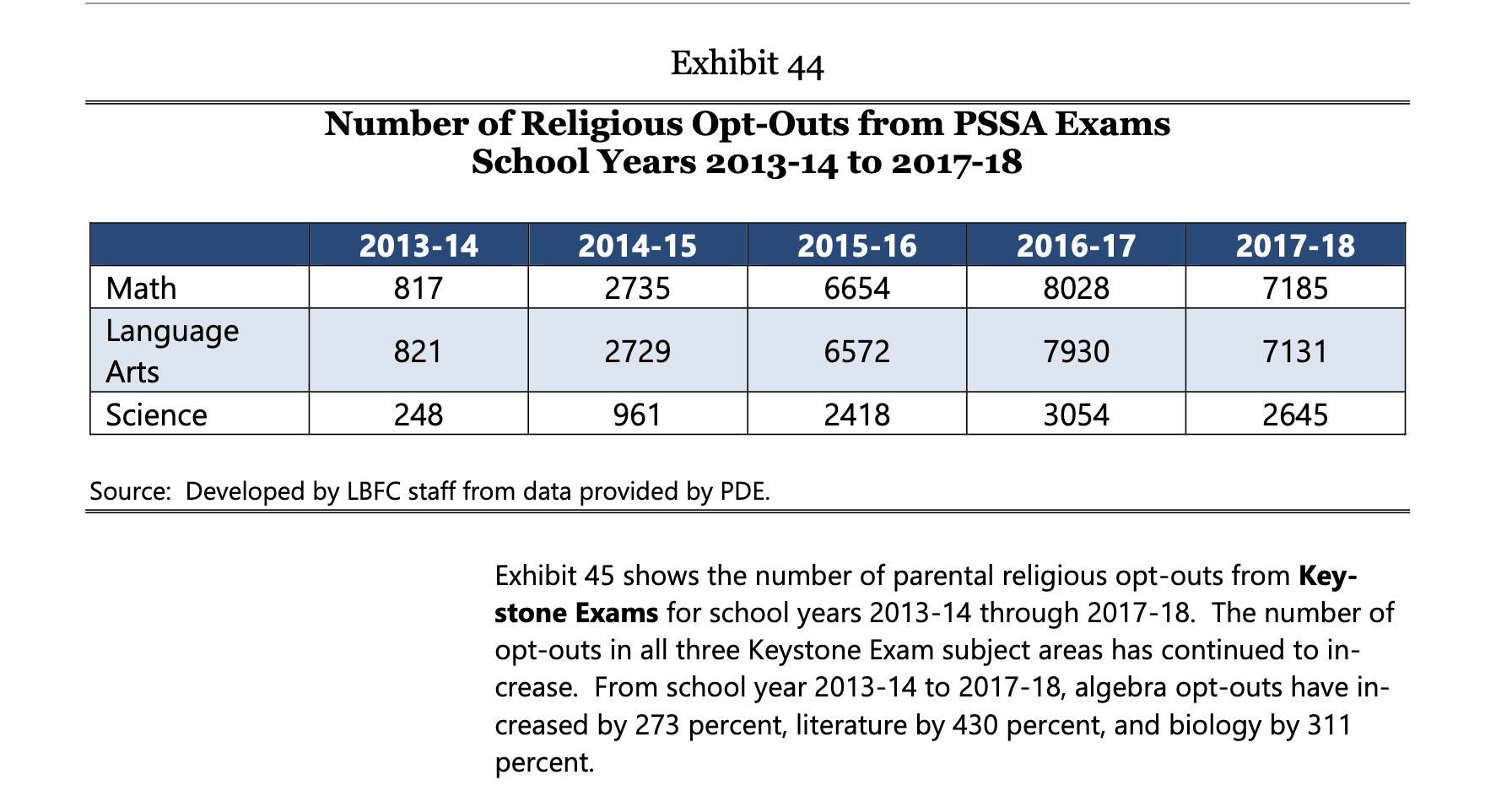
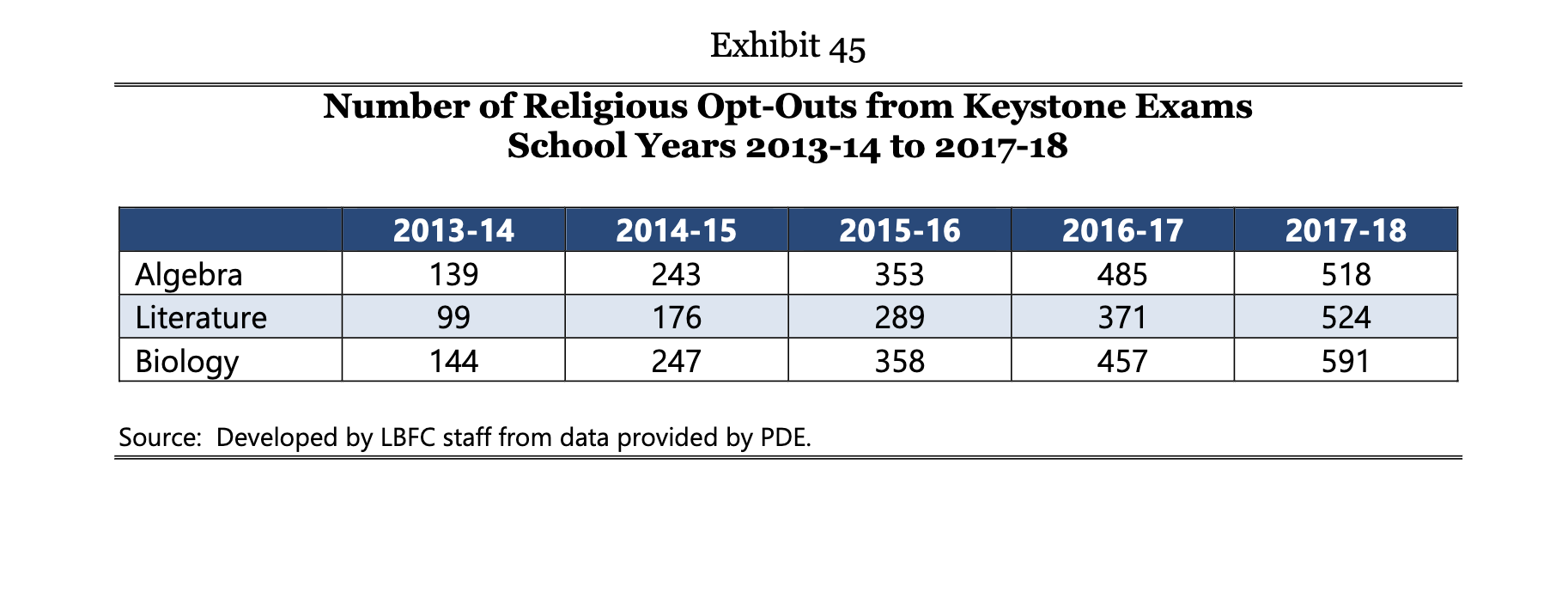


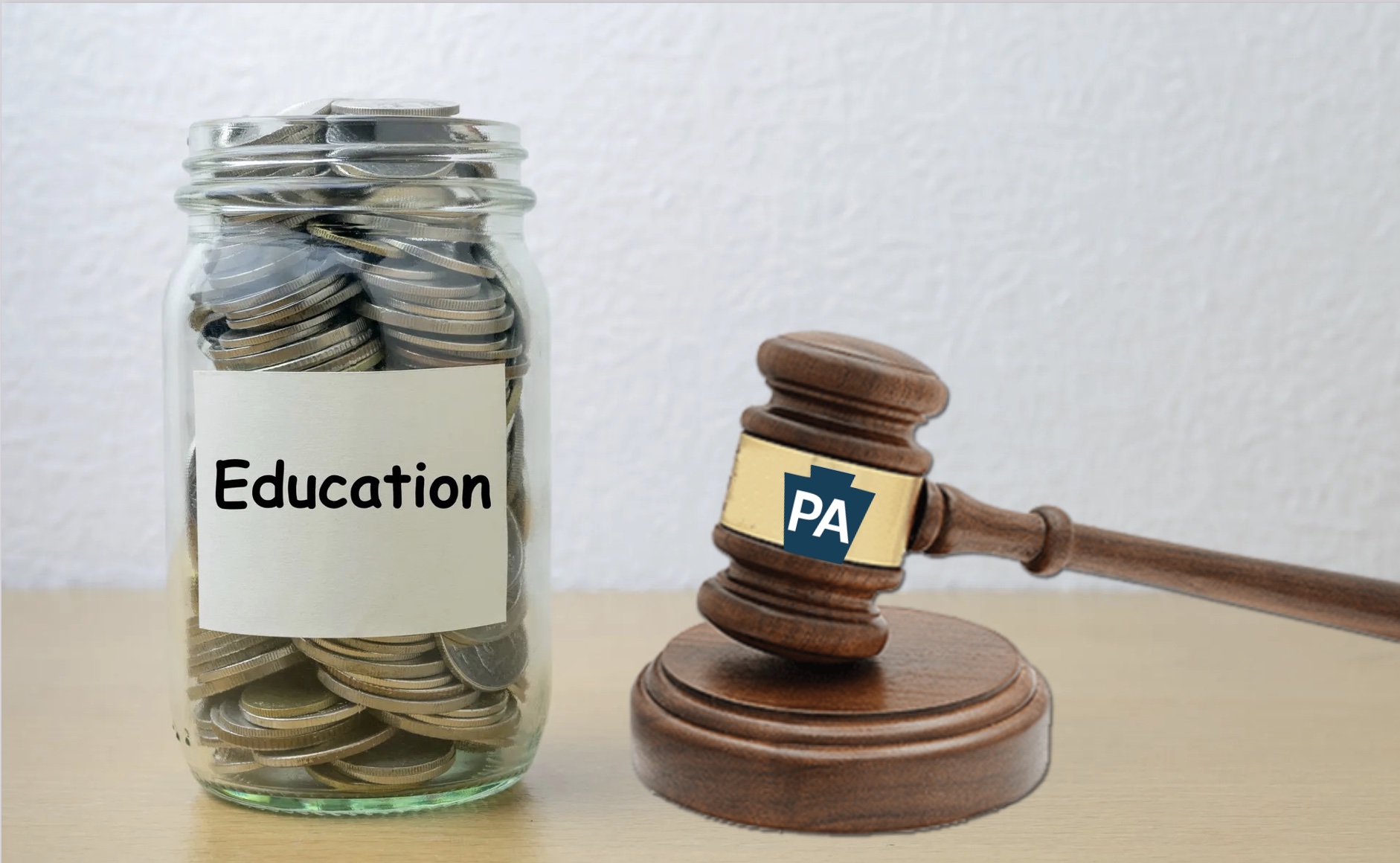

 gadflyonthewallblog