As LA Teachers Strike Over Charter Schools, Democrat Cory Booker Speaks at Pro-Charter Rally

thumbnail_corydonaldtrump


What a slap in the face!


In California, 30,000 Los Angeles teachers are on strike because charter schools are gobbling up their funding without providing the same level of quality services or accountability.


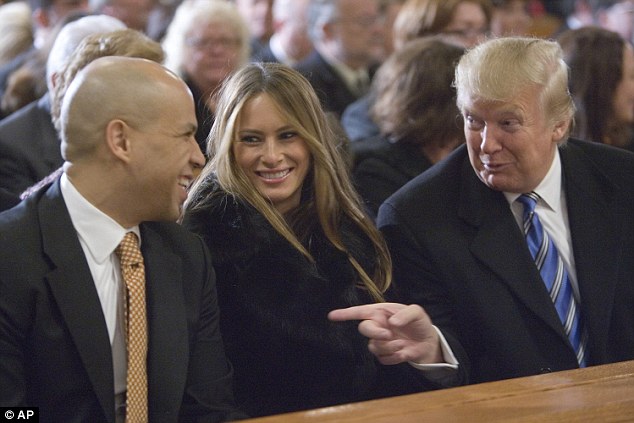
Meanwhile in New Orleans, Sen. Cory Booker is giving the keynote address at a charter school rally.


That wouldn’t be surprising if Booker was a Republican.


Donald Trump’s Education Secretary Betsy DeVos is a big time champion of school privatization over public schools.


But like LA Superintendent Austin Beutner, Booker – a New Jersey lawmaker – is supposed to be a Democrat.


The party is supposed to stand for social goods, doing what’s best for everyone not just the few.


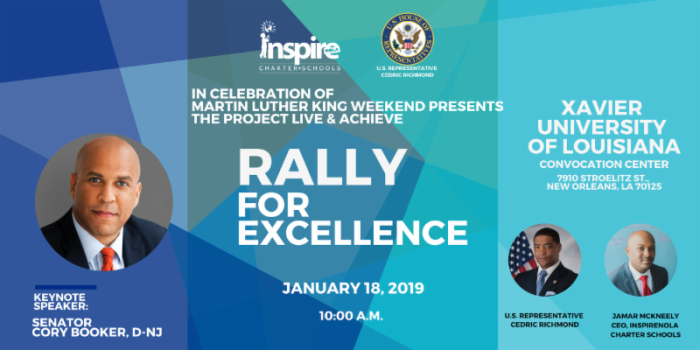
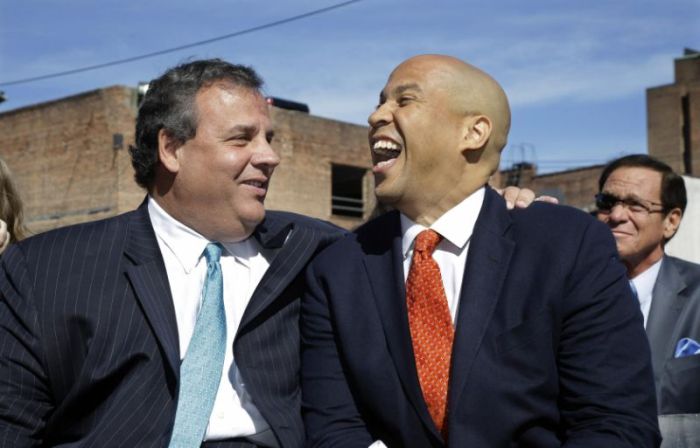
However, when Booker gave the keynote address at the “Project LIVE & Achieve” Rally for Excellence today, he made it clear whose side he’s on. And it’s not parents, children or communities.
 

booker_mlk


Organizers estimate 5,000 students from more than 20 city charter schools attended the rally instead of attending their classes.


Traditional public schools aren’t allowed to spend tax dollars or waste class time by forcing students to attend political rallies. But since charter schools like all of New Orleans schools after Hurricane Katrina don’t have to follow the same rules, this is your tax dollars at work.


The rally was hosted by InspireNOLA Charter Schools and U.S. Representative Cedric Richmond, a Louisiana Democrat.


The charter network’s Website describes the rally as part of InspireNOLA’s celebration of Martin Luther King weekend.


What a disgrace!
thumbnail_b16c81fc7a8b7c203e0f6a706700260d

Dr. Yohuru Williams, a professor of history at Fairfield University in Connecticut and an MLK scholar, has written extensively about how school privatization and high stakes testing are in direct contradiction with Dr. King’s writings and speeches.


“While it seeks to claim the mantle of the [civil rights] movement and Dr. King’s legacy, corporate education reform is rooted in fear, fired by competition and driven by division,” says Williams. “It seeks to undermine community rather than build it and, for this reason, it is the ultimate betrayal of the goals and values of the movement.”


Dr. King certainly wouldn’t have approved of today’s rally. After all, King said:


“To save man from the morass of propaganda is one of the chief aims of education. Education must enable one to sift and weigh evidence, to discern the true from the false, the real from the unreal, and the facts from the fiction.”


Forcing children to go to a political rally and then pretending their mandatory presence is somehow a show of support is exactly the kind of propaganda King was railing against.


“The function of education,” King explained in 1947, “is to teach one to think intensively and to think critically.”


Booker, who clearly has ambitions of a Presidential run, has violated those principles time and again.


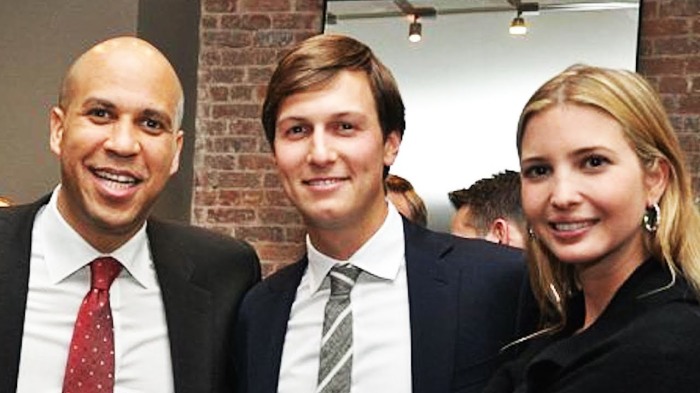
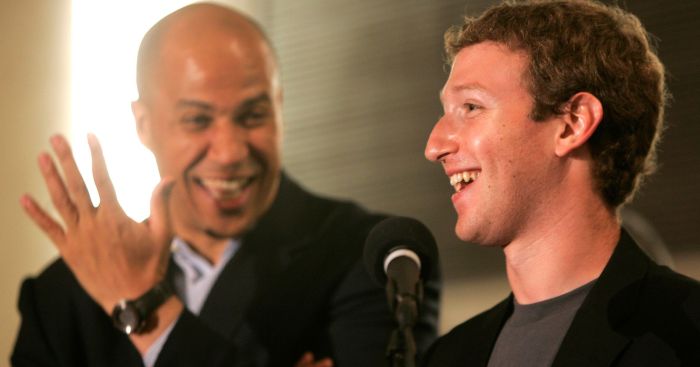
Before he became a U.S. Senator, he was Newark mayor. In that position he accepted a $100 million donation from Facebook founder Mark Zuckerberg to implement a series of drastic reforms in city schools.


The people of Newark only found out about it on Oprah Winfrey’s TV show when Booker was a guest and announce the grant. Almost all of that money went to charter schools, according to the New Republic.
 

thumbnail_maxresdefault


Such publicity stunts and mugging for the cameras may be why The Gaurdian even described Booker as a “neoliberal egomaniac.”


While numerous corporate Democrats like Booker share his love of charter schools, his positions go even further to the right. Like DeVos, with whom he sat on the board of pro-privatization Alliance for School Choice, he also is a proponent of school vouchers. This despite any credible evidence that voucher programs actually create better educational outcomes for students.


And Devos isn’t the only radical right privatization-monger in Booker’s circle. Michelle Rhee, the former DC schools chancellor known for union busting and a series of reforms that resulted in a citywide cheating scandal, is someone Booker calls “a friend of mine”


Though as a Senator, Booker held the party line and voted against his long-time friend DeVos’ nomination as Education Secretary, he told CNN that he hadn’t changed his position on school privatization:


“When it comes to my record of supporting what I believe that any child born in any zip code in America should have a high quality school and I don’t care if that’s a charter school or a traditional district school. If it’s a bad school I’m going to fight against it just like I supported charter school closures in Newark that weren’t serving the genius of my kids. So I haven’t changed one iota.”


Yet his record flies in the face of his rhetoric.


As Newark Mayor he privileged charter schools and helped them spread throughout the city while underfunding traditional public schools. And though he continually brings up the “amazing” academic record of Newark’s charter schools, he strangely omits the a cheating scandal they experienced similar to Rhee’s.
 

636588408131916332-mark019


According to a report by the state Department of Education’s Office of Fiscal Accountability and Compliance, testing documents were not secured at these schools. State investigators flagged at least 15 charter schools for further inquiry because some tests had unusually high rates of wrong-to-right erasure marks. One school had rates more than three times greater than the state average.


Charter schools are often run by appointed officials and not elected school boards. They meet behind closed doors and never have to explain how and why they’re spending taxpayer dollars. Though much hand wringing has been done over charters that are explicitly run for a profit, even those designated “not for profit” can cut students services and pocket the difference. There are a multitude of ways these schools can cheat students out of the resources and educations they deserve while protecting the administrators and business people making a buck off them.


In LA, administrators like Buetner – who has no experience with education but is a millionaire investor in school privatization – actually sabotage the public schools in order to feed the profit-making machine of charters.


And now the opposition to these shenanigans is spilling into the streets in both red and blue states. There have been seven major teacher protests in the last year in states like Arizona, Oklahoma, West Virginia, and now California.


It’s past time for Democrats to take a stand along with them and oppose school privatization in all of its forms.
 

thumbnail_o-cory-booker-chris-christie-facebook


Yet when The Intercept asked all 47 members of the Senate Democratic Caucus to weigh in on the LA Teacher strike and charter school proliferation, only 7 responded.


Rep. Alexandria Ocasio-Cortez, D-N.Y., and Rep. Ro Khanna, D-Calif. have made no bones about the connection. Sen. Bernie Sanders, I-Vt., also expressed support for striking teachers, even tweeting a link to a Jacobin article about school privatization. Though didn’t mention charter’s directly, he has  spoken out about school privatization before, including last year when Puerto Rico announced its plans to open charter schools in the wake of Hurricane Maria.


The problem is that many Democrats won’t go that far. They’ll say they support LA Teachers but won’t admit that school privatization is the cause of their woes. They refuse to take a stand against the billionaire backers of the industry and side with the grassroots parents and children fighting for fully public schools.


However, few go as far as Booker to openly champion the industry.


At least, few Democrats.


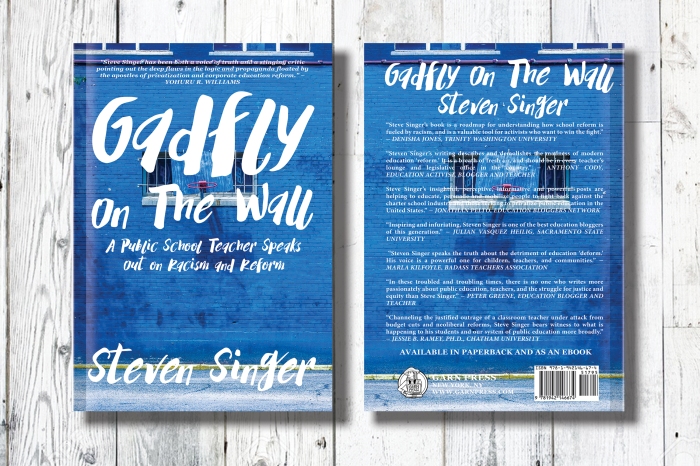
Still can’t get enough Gadfly? I’ve written a book, “Gadfly on the Wall: A Public School Teacher Speaks Out on Racism and Reform,” now available from Garn Press. Ten percent of the proceeds go to the Badass Teachers Association. Check it out!
book-1

There Are Few Things As Reprehensible as a Scab

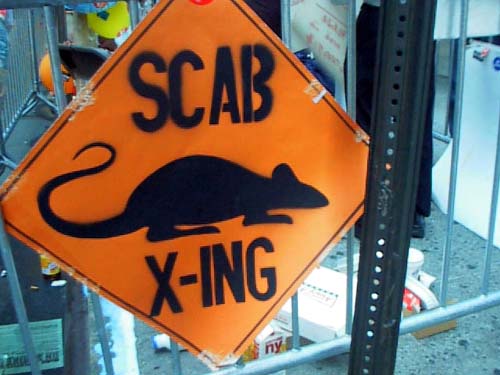
scabrat


There is a special place in Hell for strikebreakers.


Some people kill. Some steal.


But only a filthy, disgusting scab can do all of that in one.


When you take someone else’s job, you’re stealing their bargaining power and killing the community’s chances for their kids.


This week as 30,000 teachers at Los Angeles Unified School District walked out demanding support for their students and their professions, a few slimy worms have crossed the picket line to keep some of the district’s 900 schools open.


Most parents have kept their children home, but some don’t have that choice. And the district is trying to use that opportunity to justify larger class sizes and fewer resources. While sitting on $2 billion in the bank, they pull out their pockets and play dumb. In the richest state in the country, they want you to believe there isn’t enough money to waste on children.


At least not on these black and brown children!


And whether they mean to or not, the craven, no account, flatulent scabs back them up 100%.


According to the LA Times, the district has students cloistered in holding areas while administrators tell them to fill in workbooks or go on their cell phones or iPads to learn via app.


Among these yes-men, you’ll find a handful of substitute teachers who put their own yellow bellies over solidarity with their fellows.


Not only is this sniveling, groveling behavior suitable only to strip the self-respect from the most base criminal, they aren’t even getting thirty pieces of silver for it.


According to the Times, at one school scabs are only being paid $160 a day – less than subs normally make. Yet for each of these fill-ins, the district is paying the Charter Substitute Teacher Network – an outside agency providing these miserable miscreants – $250 a day, which is in fact more than the usual sub rate!


How transparent! The district doesn’t even value its scabs! It would rather pay the corporation that provides these amoral dupes than the dupes, themselves!


How low a weasel do you have to be to take such a job? What kind of dung beetle? What piece of excrement could stoop so low?


No. Wait. That’s an insult to weasels, dung beetles and excrement!


Working people have one thing of value in this economy – their labor.


When you rob a person of the right to withhold that labor, you take away her power. You turn her into little more than a slave whose only choice is take it or leave it.


But when people are given the dignity to join together as one, to unify as one solid whole, they can equal the power of the wealthy and privileged.


They can stand together on their own two feet and demand a fair share.


And in these terrible times, when the powerful look at even public schooling as little more than an opportunity to further enrich themselves through no account charter schools and high stakes testing and endless ed tech bells and whistles – who is left to stand up for our children?


I’ll tell you who! The teachers!


The parents!


The students!


The community!


We are all here united as one. We have drawn a line in the sand – and woe to the pustulent, putrid, pissant who dares cross it!


You want to make America great?


You want to make this country into something we, the people can be proud of?


Don’t cross any picket lines.


Show some backbone, even if it hurts to stand up straight for once.


The only way forward, the only way to create a society worthy of our children, is to join hands and walk toward the promised land – together.


“After God finished the rattlesnake, the toad, the vampire, He had some awful substance left with which He made a scab … When a scab comes down the street, men turn their backs and angels weep in heaven, and the Devil shuts the gates of Hell to keep him out. No man has a right to scab so long as there is a pool of water to drown his carcass in, or a rope long enough to hang his body with.”

Jack London


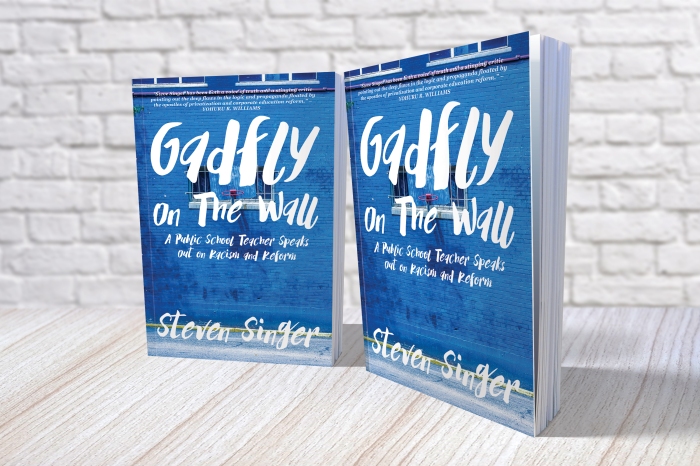
Still can’t get enough Gadfly? I’ve written a book, “Gadfly on the Wall: A Public School Teacher Speaks Out on Racism and Reform,” now available from Garn Press. Ten percent of the proceeds go to the Badass Teachers Association. Check it out!
book-4

LA Teachers Strike is About Charter Schools and High Stakes Testing

utla-strike


On Monday more than 30,000 teachers at 900 schools in Los Angeles, California, will be on strike.


And unlike the wave of teachers strikes last year in red states like West Virginia, this time educators are taking to the streets due to the policies of Democrats.


At issue are things like lowering class sizes and providing more nurses, librarians and counselors.


But behind these issues lies one of the most important facts about our country.


When you get right down to it, there is very little difference between many Democratic policymakers and their Republican counterparts.


You think Betsy Devos is the opposite of Arne Duncan? Wrong.


You think Barack Obama is the opposite of Donald Trump? Wrong again.


Though there are differences, those often amount to differences of degree.


Corporate Democrats like almost all Republicans support the same education policies – school privatization and high stakes testing – that are robbing the LA Unified School District of the funding it needs to meet the needs of its students.


THAT’S why class sizes have ballooned to more than 45 students in secondary schools; 35 students in upper elementary grades; and 25 students in lower elementary grades.


THAT’S why the district does not have nearly enough counselors, psychologists or librarians to give students the support they need.


THAT’S why 80% of schools don’t have full-time nurses.


The second largest district in the country has more charter schools than any other. The overwhelming majority of them are operated by corporate chains and have expanded by 287% over the last 10 years.


These are publicly funded but privately run schools. They don’t have to meet the same standards of accountability or transparency about how they spend taxpayer dollars – all while gobbling up $600 million a year!


That is money that parents and community members are forced to pay but about which they have very little say. It’s money that can – and often does – go right into the pockets of charter school operators without providing its full value to the students it was meant help educate. It’s money set aside for all children but given to educate merely a handful of students chosen by those same businesspeople who run these charters because they think these children will be cheaper and easier to educate.


That’s not Democracy. No self-respecting Democrat should support such a thing – but you’ll find luminaries from Obama to the Clintons to Cory Booker who will tell you what a great idea it is. Along with DeVos, Trump, Jeb Bush and the Koch Brothers.


LA Superintendent Austin Beutner is a Democrat, but he’s also a multimillionaire with experience in corporate downsizing and none in education.


According to an op-ed by President of United Teachers Los Angeles (UTLA) Alex Caputo-Pearl published in the LA Times:


“…Beutner has moved ahead with what we believe is his agenda to dismantle the district. Through an outside foundation, he has brought on firms that have led public school closures and charter expansion in some districts where they have worked, from New Orleans to Washington, D.C. This approach, drawn from Wall Street, is called the “portfolio” model, and it has been criticized for having a negative effect on student equity and parent inclusion.”


These are policies in direct opposition to the progressive ideals at the heart of the Democratic Party. They are, in fact, bedrock Republican ideology and demonstrate the vast divide among Democrats.


New Democrats oppose them. Grassroots Democrats oppose them. Democratic voters oppose them. And it will be telling whether the policymakers in our halls of power will follow the lead of the people or try to shepherd the power behind the party into doing what the patricians think best.


That’s why this strike is important way beyond California. Whatever happens will send echoes throughout the country, because school districts from sea to shining sea are facing similar issues.


In the meantime, the LA Unified District has a $1.8 Billion budget surplus it can use to help meet these needs. But the solutions to the district’s woes require a long-term commitment to public education.


Certainly the state of California needs to increase its per pupil spending. It’s the richest state in the country, yet ranks 43rd out of 50 in this regard.


This would help the district raise teacher salaries to match those of surrounding districts.


But the root problem is a lack of ideological support among policymakers.


Too many Democrats inside and outside the district don’t support the very idea of public schools. They’d rather boost privatization.


Too many Democrats support unnecessary and harmful high stakes standardized testing which not only unfairly paints the district as a failure for the poverty of its students but forces out things of real education value like the arts and ethnic studies.


Too many Democrats have no problem doing this in a district that serves a majority of students of color while providing only the best for middle class white kids.


That’s why today the American people stand with the UTLA as they go on strike.


It’s why we always stand with educators – You can’t put students first if you put teachers last.


Democrats need to get their priorities straight.


It’s time to decide if they’re going to continue being Trump lite or reclaim their progressive heritage and rejoin the rest of the nation.


Still can’t get enough Gadfly? I’ve written a book, “Gadfly on the Wall: A Public School Teacher Speaks Out on Racism and Reform,” now available from Garn Press. Ten percent of the proceeds go to the Badass Teachers Association. Check it out!

book-2

Public School Students are Being Erased From TV, Movies and Other Media

thumbnail_img_8471


Ninety percent of America’s students go to public schools.


But you wouldn’t know that if you opened a book, turned on the TV or went to a movie.


The media is engaged in a disinformation campaign erasing public schools and public school students from our entertainments.


It’s another way marketing and advertising is forced down our throats and into our leisure hours.


Not only do the multi-billion dollar corporations who fund these entertainments want to convince us we need this pill, that appliance, those technological doo-hickeys — they need to cajole and inveigle us that we need school privatization, too.


And what better way to do that than to give us heroes that  – what-do-you-know – just happen to go to charter, voucher and private schools?


No one takes Betsy DeVos, the billionaire heiress who bought her position as education secretary to tear down public schools, seriously. But we certainly do when it comes to Hollywood, the Boob Tube and Young Adult literature.


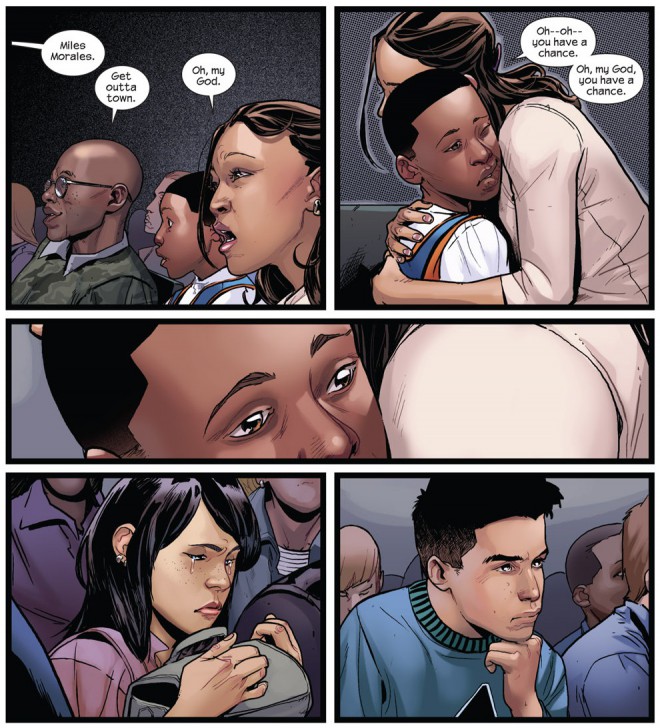
Take Miles Morales, an Afro-Latino Spiderman, who just made his big screen debut in Marvel’s “Spiderman: Into the Spiderverse.”


It’s refreshing to see the iconic Spideysuite worn by a character of color, but why change his alma mater, too?


The original webslinger, Peter Parker, was an everyperson teen who went to a public school. But Morales goes to a private school in the movie and a charter school in the comic books on which the film is loosely based.


Then we have “The Kid Who Would Be King” a modern day retelling of the King Arthur legend. In the film, Alex finds Excalibur and becomes king – while attending a British academy, the U.K.’s version of an American charter school.


And let’s not forget “The Hate U Give.” In both the book and the movie, the protagonist, 16-year-old African American Starr Carter, deals with a white police officer murdering her black friend. And her struggle is worsened by the incomprehension she meets at her mostly white, privileged private school.


Why are all these stories taking place where a tiny sliver of kids are educated?


What happened to all the public school students?


It’s not like privatized education has ever been starving for representation in the mass media.


If anything, private schools have historically been overrepresented – Lord of the Flies, A Separate Peace, Dead Poets Society, Catcher in the Rye, etc.


At least in the past you could count on the default setting for kids to be public school. Unless it was an integral part of the plot, it was just assumed that everyday kids went to everyday public schools.


John Travolta and Olivia Newton John dreamed of those summer nights, but they went to Rydell High.


Molly Ringwald and the rest of the Breakfast Club attended Saturday detention, but during the week they were in class at Shermer High.


Sarah Michelle Gellar’s Buffy and co. fought off vampires, but they had homework at Sunnydale High.


Even Bella Swann navigated her vampire-werewolf love triangle at Forks High!


But today’s fictional teens wouldn’t be caught dead in one of those traditional institutions.


And nothing could be more unrealistic!


We’re whitewashing the reality to make America’s children and parents feel deficient for the schools they actually attend and – for the most part – are quite satisfied with.


It’s not about representation for the 10 percent enrolled in privatized schools. It’s about expanding the market to get more children and families to abandon public schools and pony up the dough (or siphon off the taxes) to enroll in these institutions, too.


Or at least TRY to enroll.


MILES MORALES


Back in 2011, when writer Brian Bendis and artist Sara Pichelli created Morales for Marvel comics, he was a reaction to the election of Barack Obama. As such, even his schooling had to reflect that.


In Ultimate Comics Spider-Man, he is shown winning the last spot in a charter school lottery to enroll in Brooklyn Visions Academy.


The comic book panels mirror almost frame-for-frame the school privatization propaganda film “Waiting for Superman.” Pro-charter school Obama becomes pro-privatization Spider-man.


1otro

miles-gets-in

miles-morales-gets-in

It’s almost like the big corporations who own the super heroes can’t tell who the good guys and the bad guys are anymore.


Here we have an American icon hawking a solution to child education that increases segregation, does away with duly-elected school boards, does away with the kinds of regulations that protect kids’ rights and instead allows unscrupulous charter operators to reduce services for children and pocket the difference.


It’s like watching Mickey Mouse explain how your folks should invest all their money with Bernie Madoff.


For some reason, in the movie version Morales’ charter school is rewritten as a private school for smart kids. I wonder why they made the change. It’s almost like there’s no appreciable difference between private schools and charter schools. And there isn’t!


THE KID WHO WOULD BE KING


Speaking of which, let’s examine the strange case of “The Kid Who Would be King.” The movie is technically not out yet, so it’s hard to see if it will make much use of its apparent Academy setting.


However, the trailer includes lots of shots of kids in traditional prep school dress with a stylized formal crest on blazers and pants. It almost seems like the setting is little more than an excuse to embrace a certain aesthetic in the costumes more than a plot point.


Or perhaps the marketing department just wants moviegoers to associate the film with the Harry Potter movies.


After all, Hogwarts is the ultimate in quasi-privatization. Special kids go to a special school where they are taught special classes. It’s never quite clear how it’s all paid for, though the kids do have to buy their own supplies.


Would “The Kid Who Would Be King” be any better if the kids in it went to public schools? They certainly would be more relatable to the average child.


First conceived in the early 2000s, British academies are not bound by national rules for staffing and curriculum, and receive more money from the government for administration while reducing funding to the traditional schools nearby.  However, according to a new peer-reviewed study by the London School of Economics, primary academies have not been able to meet the promise of increasing test scores.


The authors conclude:


“The English government has radically restructured its school system under an assumption that academisation delivers benefits to schools and students. There is neither any sign of a positive effect nor any suggestion that benefits might be increasing with years of exposure. If anything, the opposite is the case.”


Oh whatever! The blazers look nice!


THE HATE U GIVE


And that brings me to “The Hate U Give.”


Starr’s private school does at least seem to be important to the plot. After her best friend is gunned down by a gangbanger, a 10-year-old Starr is sent to Williamson Prep, a private school in the white suburbs. The family remains in the neighborhood and even takes great pride in living among other black people. But for some reason the idea of public school and the trauma of this event are entwined in their minds. They want more for Starr than just a public school experience.


Consider this bit of narration:


“The high school is where you go to get jumped, high or pregnant. We don’t go there. Williamson is another world. So when I’m here, I’m Starr version 2. Basically Williamson Starr doesn’t give anyone a reason to call her ghetto. And I hate myself for doing it.”


Years later, she’s one of very few African American students at the private school. When another black friend is subsequently murdered by the police before her eyes during a traffic stop, her white privileged classmates don’t understand what she’s going through.


I wonder if things would have been different at a public school. I wonder if by enrolling her in private school her parents hadn’t taken away the kind of support system she could have used to help deal with the tragedy.


Starr overcomes it all, and symbolically pulls a “Rest in Peace Khalil” T-shirt over her school uniform signaling her refusal to be a divided person any longer. It might have been even stronger had she re-enrolled in her public school, too.


Let me be clear: I’m not saying these are bad movies, books or comics. I actually quite like most of them. But I wonder if most people realize that when they consume this stuff they’re getting something a little extra with their entertainment – corporate propaganda.


It doesn’t seem to be an accident that so few schools are being so overrepresented in the mass media.


The global conglomerates are always looking for a way to make a buck, and product placement has always been a surefire way to do it.


Unfortunately, such underhand tricks can have a large impact on the cultural landscape.


If we continue to be bombarded by unsubstantiated images of public schools not being good enough and privatized education as the savior for our children, we will lose our system of public education.


Schools will no longer be funded by tax dollars. Parents will have to pay for them out of their own pockets.


At very least this will result in an even more stratified education system where wealth not only buys comfort and resources but knowledge, as well.


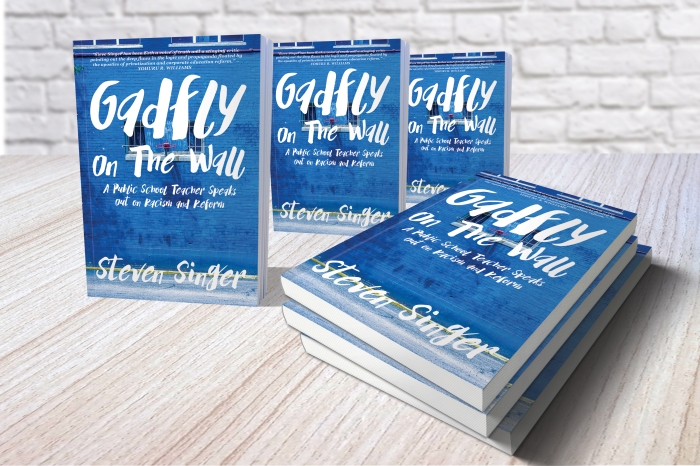
Still can’t get enough Gadfly? I’ve written a book, “Gadfly on the Wall: A Public School Teacher Speaks Out on Racism and Reform,” now available from Garn Press. Ten percent of the proceeds go to the Badass Teachers Association. Check it out!
book-1

Charter School Lobby Silent as Charter Teachers Continue Strike

www.usnews.com


Charter school teachers in Chicago are in their fourth day of a strike.


Yet I wonder why the leaders of the charter movement are quiet.


Where is Peter Cunningham of the Education Post?


Where is Shaver Jeffries of Democrats for Education Reform?


Not a word from Campbell Brown or Michelle Rhee?


Nothing from Bill Gates, Cory Booker, Barack Obama or Hillary Clinton?


Not a peep from Betsy DeVos or Donald Trump?


This is a historic moment. Teachers at various charter schools have unionized before, but it has never come to an outright strikenot once since the federal charter school law was established in 1994.


You’d think the charter cheerleaders – the folks who lobby for this type of school above every other type – would have something to say.


But no.


They are conspicuously silent.


I wonder why.


Could it be that this is not what they imagined when they pushed for schools to be privately run but publicly financed?


Could it be that they never intended workers at these schools to have any rights?


Could it be that small class size – one of the main demands of teachers at the 15 Acero schools – was never something these policymakers intended?


It certainly seems so.


For decades we’ve been told that these types of schools were all about innovation. They were laboratories where teachers and administrators could be freed from the stifling regulations at traditional public schools.


Yet whenever wealthy operators stole money or cut services to maximize profits or engaged in shady real estate deals or collected money for ghost children or cherry picked the best students or fomented “no excuses” discipline policies or increased segregation or denied services to special education kids or a thousand other shady business practices – whenever any of that happened, we were told they were just unfortunate side effects. Malfeasance and fraud weren’t what charters were all about. They were about the children.


And now when charter teachers speak out and demand a better environment for themselves and their students, these ideologues have nothing to say.


Funny.


It’s not hard to figure out what’s going on here.


The latest audit of Acero shows they have $10 million a year in additional revenue that they aren’t spending on the students. Yet they’re cutting the budget by 6 percent annually. Meanwhile, Acero’s CEO Richard Rodriguez is taking home more than $260,000 for overseeing 15 schools while Chicago Public Schools CEO Janice Jackson makes slightly less money for managing more than 500 schools.


If the school privatization lobby cared about kids, it shouldn’t be hard to come out against Acero and in favor of these teachers and students.


But nothing.


Silence.


It seems to prove what charter critics have been saying all along – and how full of crap the privatization lobby has always been.


In short, the charter movement is all about the rich getting richer. It has never been about helping students and families.


Well, maybe it was once upon a time when union leader Albert Shanker backed the plan. But even he turned against it when he saw how it enriched the moneymen and corporations while doing very little for children.


The fact of the matter is that the only people at charters on the side of teachers, parents and students are the people generally associated with opposing them.


I, myself, am a huge foe of school privatization in all its forms – and that includes school vouchers and charter schools.


However, I have nothing against charter students, parents or teachers.


I know many educators who’ve worked at charters. In most cases they are dedicated, caring professionals who’d rather work at a traditional public school but had to settle for employment where they could find it even if that meant less pay, longer hours, and fewer rights.


I know many parents who sent their kids to charter schools because of funding inequalities or rampant high stakes testing at traditional public schools. In every case, they are doing the best they can for their children – navigating a system they hate looking for the best opportunities.


I’ve taught many students who’ve gone to charter schools and then returned to my traditional public school classroom disillusioned from their subpar experience in privatized education. Without exception they are great kids who try their hardest to succeed despite huge deficits from the years lost at charters.


These people are not our enemy. We are their allies.


We are pushing for a better education system for all of us. And this strike is part of that.


If the operators of Acero charter schools in Chicago (formerly UNO’s charter schools) agree to a living wage for teachers and lower class sizes, it sets a standard for the industry. It helps push other charters to do the same. It pushes charter schools to become more like traditional public schools. And that’s a good thing.


The amenities at traditional public schools should not be rarities.


Every school should have an elected school board. Every school should have public meetings, transparency and be accountable for how it spends tax dollars. Every school should have to accept the kids living in its borders and provide them the proper services and respect their rights. Every school should treat its employees like professionals and pay them a fair wage for a fair day’s work.


Ultimately, I think this means the end of the charter school concept. But that doesn’t have to mean the end of all these charter schools. Many of them that can operate effectively and efficiently should become traditional public schools. That may mean incorporation into existing districts or creations of new ones. It may mean additional funding from the state and federal government.


In the case of fly-by-night charters that do nothing but enrich their investors while cheating kids out of an education, they should be closed immediately and the persons responsible should be prosecuted to the full extent of the law (whatever that is, if at all possible).


I don’t have all the answers, and what’s right in one neighborhood may be wrong in another. However, I am confident that there is a solution.


No matter how this strike is resolved, the fact that it exists – and is probably a precursor to more such strikes – points the way to a brighter future for everyone.


It’s a victory for workers over wealth.


And that is a victory for students, too.


Like this post? I’ve written a book, “Gadfly on the Wall: A Public School Teacher Speaks Out on Racism and Reform,” now available from Garn Press. Ten percent of the proceeds go to the Badass Teachers Association. Check it out!

book-3

Teachers, It’s Okay to Smile

shutterstock_303112742


I’m standing in front of my first period class after a long Thanksgiving break.


Papers are rustling.


Pencils are being sharpened.


Voices are lowering to a whisper.


And it occurs to me how glad I am to be here.


So I tell my students.


“We have a lot to go over today,” I begin and most of my middle school faces turn serious.


“But I just want to tell you all how happy I am to be here.”


Curiosity moves across those adolescent brows like a wave from one side of the room to the other.


Some even looked worried like they are afraid I am going to tell them I’m sick or dying.


“It’s true,” I continue. “I’m glad to be here this morning with all of you.


“I think teachers sometimes don’t say that enough.


“This is a great class. You’re all really good students, and I’ve watched you work hard and grow.


“For many of you this is the second year you’ve had me as your language arts teacher. For others, this is your first time with me. It doesn’t matter. I’m glad I can be with you and help get you ready for the challenges that you’ll face next year in high school.


“I’ve said this before and I’ll say it again – I am not just some guy who stands up here and gives you assignments. I’m your resource. If there’s anything I can do to make your year a better one, please ask.


“If you’re having trouble with the work or you’re confused about something, I’m here. If you need help with something – even if it’s not school related – I’m here. If you just want to talk or someone to listen – I’m here.”


I pause to see if there are any questions.


There aren’t, but neither is their any apparent doubt, bewilderment, perplexity.


The class looks back at me in silence with serene eyes and smiling lips.


And then we go on with our day.


Is it a big deal?


No.


But I think it’s worth noting.


Not that I’m some super teacher. I’m not.


I mess up all the time. But I feel like what I said this morning was right somehow.


It’s simple and easy and more of us should do it.


Kids can get the impression that teachers aren’t human. They’re these mysterious creatures who pass judgment on them — and where do they even go when class ends? Who knows?


I remember when I was a young educator one of my mentors told me the old chestnut “Don’t smile until Christmas.”


I saw where she was coming from. It’s easier to command firm discipline if students don’t think of you as anything but an educating machine. But I could never go through with it.


I smile on the first day – probably the first minute students walk into the room.


I greet them with a grin – every day.


And I think that’s right.


Discipline is a means to an end. You have to have some sort of order in your class so you can facilitate learning. But that doesn’t mean you should preside over prisoners locked in a penitentiary of their own education.


Learning should be about choice, fun and curiosity. It should be about expressing yourself as much as it is about finding details and forming grammatical sentences.


Everything we do should be in service to the student.


Reading comprehension is to help the student understand what is being said and then form an opinion about it.


Writing is to help the student express the maelstrom of their own thoughts in a way that can be understood by others.


I think we lose sight of that.


It’s okay to enjoy the work – for both students and teachers.


It’s okay to enjoy each other’s company.


In fact, you SHOULD do so if you can.


It does not somehow degrade the experience of learning. It enhances it.


When my classes are over, I always have several students gathering around my desk wanting to prolong our interaction even if it means they’ll be late to lunch or late going home.


Kids ask about my break and I ask about theirs. We talk about favorite TV shows, songs we like or even local news stories.


They share with me their middle school crushes and ask advice.


You have to draw a line between teacher and friend – and between teacher and parent. Because the kids are looking for you to be both.


But you can’t.


We walk a strange middle ground, but I think that’s necessary.


If I’m going to help students know things, I have to let them know me to a point, and I have to get to know them.


I can’t share everything with them, but they have to know I care.


As Theodore Roosevelt said:


“People don’t care how much you know until they know how much you care.”


So go ahead and smile, teachers.


Let your students know you care about them.


It will improve both your lives – and maybe even your teaching.


Like this post? I’ve written a book, “Gadfly on the Wall: A Public School Teacher Speaks Out on Racism and Reform,” now available from Garn Press. Ten percent of the proceeds go to the Badass Teachers Association. Check it out!

book-2

Dear Lawmakers, Please Hire Teachers as Education Aides – Not TFA Alumni

thumbnail_IMG_8375


Dear freshmen lawmakers,


We did it!


After a fiercely contested election, we have finally begun to turn the tide back toward progressive politics.


Midterms usually are sparsely attended, but this year we had an unprecedented turnout.  A total of 23 states had double-digit percentage-point increases compared with their 1982-2014 midterm election averages.


And the result is one of the largest and most diverse groups of freshman Congresspeople ever!


We got rid of a ton of incumbents – 104 lawmakers won’t be returning to Washington, DC, in January, making this the third-highest turnover since 1974.


And those taking their place will be largely female. Out of 256 women who ran for U.S. House or Senate seats, 114 have won so far (Some races are still too close to call), according to the Center for American Women and Politics at Rutgers University. That makes the 116th Congress the largest class of female lawmakers ever.


Moreover, this incoming group will be incredibly diverse.


We have Jahana Hayes, a nationally-recognized teacher, who will be the first Black Congresswoman from Connecticut. Ayanna Presley, the first black Congresswoman from Massachusetts.


Angie Craig will be the first out LGBTQ Congresswoman from Minnesota. Chris Pappas, the first openly gay Congressman from New Hampshire.


Sharice Davids and Deb Haaland from Kansas and New Mexico will be the first Native American women elected to Congress – ever. And Davids will also be the first openly LGBTQ Congresswoman from the Sunflower State.


Ilhan Omar and Rashida Tlaib will be the first-ever Muslim women in Congress. Omar, a former refugee, will also be the first Somali-American and Tlaib will be the first Palestinian-American woman in Congress. This is especially noteworthy because there have only been two other Muslims to serve in the legislative branch, both men: Rep. Keith Ellison and Rep. André Carson.


And let’s not forget New York’s Alexandria Ocasio-Cortez. Not only is she a Democratic Socialist, but the 29-year-old will be the youngest woman ever elected to Congress!


With so many new faces and so much more representation, is it too much to ask for a change in the way things are done in Washington?


Many progressives are hoping not.


After all, it was people power that propelled these new lawmakers into government.


We marched in the rain, licked envelopes, made phone calls, wrote letters, and knocked on doors. We went to rallies and bake sales and stood by the polls with our little signs and fliers.


And we did it, because we wanted a change.


So, incoming lawmakers, that’s why I’m writing to you.


As a public school teacher, a father of a school-age child, an education activist and a concerned citizen, it really matters to me what happens to our schools.


Yet so many politicians – Republicans and Democrats – have turned a blind eye to our concerns for years.


No matter their party affiliation, they’ve pushed for increasing school privatization – charter and voucher schools. They’ve hammered us with biased and unscientific standardized tests and used the results to justify any number of atrocities including school closures, withholding funding and even stealing the democratic process from taxpayers. Instead of listening to the concerns of teachers and parents, they’ve followed the caprice of every bored billionaire who thinks they know how to better our schools with halfcocked schemes that cost us billions in taxpayer dollars while wasting children’s time and depriving them of an authentic education.


They’ve chased every new technological fad without regard to how it affects students or their privacy. They’ve let our schools become increasingly more segregated and made deals with private prison companies and unscrupulous security and business interests that made our schools a gateway to incarceration as much as they are to college or careers. They’ve actively engaged or silently stood by as classroom teachers lost autonomy, rights and professionalism. And finally, though many of them talk a good game, they haven’t done nearly enough to ensure that every student gets the same opportunities, resources and equitable funding.


Why?


Often the answer is ignorance.


They don’t properly understand the issues facing our schools. They don’t hear from parents, teachers and students – the rank and file. They only hear from the wealthy businesses and philanthrocapitalists preying on our schools like vultures over road kill.


In many cases this is because of the poor quality of education aides on Capital Hill.


Several years ago, I went to DC with other education advocates to ask our representatives to change course. Though we made reservations to speak with our duly-elected lawmakers months in advance, very few of them had the guts to see us face-to-face. We were almost always sent to education aides – well meaning and fresh faced kids only a few years out of college – who wrote down our concerns and sent us on our way with rarely any follow up from the people we’d come to see.


And more often than not, these eager young go-getters were Teach for America (TFA) alumni.


I’m not sure if you know what that means.


TFA is a nefarious neoliberal organization more interested in busting unions and influencing policy than helping kids learn.


They recruit people in college who didn’t major in education to become teachers for a few years before moving on to bigger and better things.


Often these rookies have only a few weeks training and just hours of experience before taking over their own classrooms. And unlike education majors, they only need to commit to the job for two years.


This not only does our children a disservice, it does very little to make these former teaching temps into education experts.


But that’s how they’re treated on Capital Hill.


Through programs like TFA’s Capitol Hill Fellows Program, alumni are placed in full-time, paid staff positions with legislators so they can “gain insights into the legislative process by working in a Congressional office” and work “on projects that impact education and opportunities for youth.”


Why do so many lawmakers hire them? Because they don’t cost anything.


Their salaries are paid in full by TFA through a fund established by Arthur Rock, a California tech billionaire who hands the organization bags of cash to pay these educational aides’ salaries. From 2006 to 2008, alone, Rock – who also sits on TFA’s board – contributed $16.5 million for this purpose.


This isn’t about helping lawmakers understand the issues. It’s about framing the issues to meet the policy initiatives of the elite and wealthy donors.


It’s about selling school privatization, high stakes testing and ed-tech solutions.


As Ocasio-Cortez said on a recent call with Justice Democrats, “I don’t think people who are taking money from pharmaceutical companies should be drafting health care legislation. I don’t think people who are taking money from oil and gas companies should be drafting our climate legislation.”


I’d like to add the following: people taking money from the testing and school privatization industry shouldn’t be drafting education policy. People who worked as temps in order to give themselves a veneer of credibility should not be treated the same as bona fide experts who dedicate their lives to kids in the classroom.


But that’s what many lawmakers of both parties have been enabling.


It’s not hard to find authentic experts on education.


There are 3.2 million public school teachers working in this country.


There are still 116,000 fewer public education jobs than there were before the recession of 2007, according to a report by the Economic Policy Institute, a progressive nonprofit think tank.


If we add the number of teaching jobs needed to keep up with growing enrollment, we’re missing 389,000 educators.


So that’s hundreds of thousands of laid off and retired teachers out there – a huge brain trust, a plethora of professionals who know – really know – what goes on in our schools, what they need to succeed and what policies could fix them.


THAT’S where you should go to find your educational aides – not TFA.


And these experts are not hard to find. You can contact the teachers unions – the National Education Association and American Federation of Teachers. Or, better yet, contact the various education activist groups focused on policy – the Badass Teachers Association or the Network for Public Education. And if you want experts at the crossroads of education and equity, you can contact civil rights groups who focus on our schools like Journey for Justice, a nationwide collective of more than 38 organizations of Black and Brown parents and students in several cities.


Or you can give education bloggers (many of whom are teachers or former teachers) a call – people like Peter Greene, Mercedes Schneider, Nancy Flanagan, Jose Luis Vilson, Julian Vasquez-Helig, and others.


Heck! You can give me a shout out.


We’re here.


We want to help.


So congratulations on your election victories. Let’s work together to transform them into intelligent policies for all our children everywhere.


Like this post? I’ve written a book, “Gadfly on the Wall: A Public School Teacher Speaks Out on Racism and Reform,” now available from Garn Press. Ten percent of the proceeds go to the Badass Teachers Association. Check it out!
book-3

Charter School Cheerleaders Elected to Leadership with PA House Dems

img_4466-1484759518-4360


Democratic gains in the midterm elections were a repudiation of the policies of Donald Trump.


Yet holding nearly the same views as Trump’s Education Secretary Betsy DeVos earned two Pennsylvania state representatives high leadership positions with House Democrats.


Rep. Jordan Harris, D-Philadelphia, was elected minority whip – the second highest position after floor leader. Rep. Joanna McClinton, another Philadelphia Democrat, was selected chair of the Democratic Caucus.


Even after making gains in the election, Democrats did not get control of either the state House or Senate from Republicans, but kept control of the Governor’s mansion.


New leadership positions will last for two years, but have many scratching their heads.


Both Harris and McClinton are staunch supporters of charter schools over and above traditional public schools just like DeVos, a Republican megadonor before being selected for Trump’s cabinet.


Harris and McClinton support school vouchers – just like DeVos – if labeled opportunity scholarships. In their relatively short time in Harrisburg they’ve pushed for charter school expansion and even state takeovers of struggling schools serving mostly children of color.


Such strong neoconservative values might make it hard to tell which party the two belong to if it weren’t for one thing – the color of their skin.


Both Harris and McClinton are African American.


In fact, McClinton will make state history as the first woman of color in her leadership position. Harris will be the first black whip since Rep. K. Leroy Irvis in the 1970s.


Even so, their views put them in direct opposition with many civil rights leaders.


The National Association for the Advancement of Colored People (NAACP) and Black Lives Matter have called for a moratorium on new charter schools. Journey for Justice (J4J), a nationwide civil rights collective made up of more than of 38 organizations of Black and Brown parents and students in several cities including Philadelphia and Pittsburgh, has gone even further demanding more community based traditional public schools.


Jitu Brown, national director of J4J, put it this way:


“Who are these bankers and why are they concerned about my school? Isolation is defeat. Privatizers are not reformers. They are colonizers and settlers. We do not negotiate with our executioner. We need to kill the privatization movement. We have worked in silos and adopted the values of our oppressors. You want a seat at the table, but you are on the menu too. We have more in common with each other than any of us do with our oppressors. People will vote against their interest with hatred that they learned centuries ago – but we need to be different. We cannot adopt the language of our oppressors. We don’t have failing schools, we have been failed.”


Perhaps Harris and McClinton’s support has something to do with campaign finance. Both have accepted large sums from the charter school industry.


Harris’s 2012 campaign was funded 58% by school privation business interests – Students First PAC and its associates. That breaks down to $37,295 from Make a Difference PAC, $30,000 directly from Students First PAC and $2,000 from Economic Development PAC.


And he’s still bankrolled mostly by that industry. More recently, he has taken $25,000 from Excellent Schools Pa and $11,500 from Students First Pa PAC.


McClinton has taken $5,250 from Excellent Schools PA and $1,000 from Students First PAC. However, she also received $3,000 from the public school friendly Pennsylvania Federation of Teachers.


Students First PA and Students First PAC are Pennsylvania political action committees associated with the national school privatization lobbying firm American Federation for Children (AFC) which is chaired by DeVos.


What are Democratic House leaders doing taking large campaign contributions from Trump’s Education Secretary?


Moreover, both Harris and McClinton got their start in politics working for state Sen. Anthony “Tony” Williams, D-Philadelphia, the biggest recipient of school privatization money in the entire state. He took at least $5 million from the industry during his failed bid for governor in 2010, and an additional $7 million for a failed run at Philly Mayor in 2015.


Harris was an intern for Williams and McClinton was Williams’ chief counsel.


Even in Harrisburg, some question the two state reps ties to the far right billionaires bankrolling the school privatization industry. After all, these are the same people whose candidates just lost the midterms – and now fresh from an electoral victory Dems are elevating those of their own who are taking money from the same well!?


Student First PAC wasn’t just a main contributor to Harris and McClinton. It contributed $1 million to Republican gubernatorial candidate Scott Wagner before he was defeated by Democrat Tom Wolf. It also contributed boatloads of money to numerous GOP candidates in the Commonwealth running against Democrats just this last election cycle.


So why would the Democratic caucus vote for Harris and McClinton as new faces of party leadership?


Part of the reason seems to be a power struggle inside the party between the two halves of the state.


Leadership had been over-represented by lawmakers from the west – the Pittsburgh region and thereabouts. Harris and McClinton’s new positions go further to balancing the power with the east – the Philadelphia region.


Moreover, there was a legitimate concern that party leadership was too white and male.


However, there were other eastern Democrats, other women and people of color in the chamber who didn’t come with the baggage of Harris and McClinton.


Harris was asked point blank if he’d stop taking charter school money if elected to a leadership position, according to anonymous sources. He gave no indication that he would.


In his role as whip, Harris will have the greater opportunity to work for the charter school industry.


The whip is responsible for making sure that Democratic members attend sessions and generally understand the specifics of legislation and procedural votes in the House.


However, his comments on education policy are extremely biased.


For instance, he took exception when a report by the nonprofit Public Citizens for Children and Youth concluded that Pennsylvania’s charter schools are not outperforming traditional public schools, and the state’s 20-year-old charter law needs to be reformed.


The report says only 21 percent of Pennsylvania’s charters made the grade on the state School Performance Profile versus 54 percent of traditional district schools.


Harris response?


“I think it’s unfair to take all of the traditional public schools in the state and all of the charter schools in the state and compare them to each other.”


Really? Yet you propose we increase the number of charter schools BECAUSE they allegedly produce better academic outcomes. How can you know that if you’re unwilling to compare them? Or are you only unwilling to compare them when the results don’t support the policy positions you’re being paid to promote?


Harris also joined with Republican state Rep. John Taylor (another Philadelphia politician) to allow the state to takeover the lowest performing districts and give them over to charter school operators on the model of New Orleans after Hurricane Katrina.


Almost a third of the state’s most struggling schools — 95, according to PA Department of Education — are located in Philadelphia. Taylor and Harris’s proposal was called the Educational Opportunity and Accountability Act.


Harris and McClinton, who represent adjacent areas of south Philadelphia, have rallied for charter schools and de facto school vouchers together.


“People have told me that I’ve been trying to dismantle public education,” said Harris. “No! I just know what it’s like to grow up in a neighborhood without options.”


The options he’s pushing for will greatly help corporations accepting public tax dollars to run schools at a profit, cherry pick enrollment, cut services and otherwise spend that money behind closed doors without accountability.


Payments to charter schools represent one of the fastest growing portions of the School District of Philadelphia’s budget. These costs are pushing the district toward fiscal uncertainty. Yet Harris and McClinton are pushing for a similar model throughout the Commonwealth.


Harris calls the push for more charter schools a “righteous movement.”


I’m sure Betsy DeVos would agree.


Education advocates in the Keystone state find themselves in a precarious position.


Though many of our candidates won in this midterm election, we will have to keep a close eye on Harrisburg.


Where will Harris and McClinton lead the party?


Will they encourage their colleagues to take money from the school privatization industry – the same industry bankrolling their opponents?


Or will they keep their biases to themselves and work for the betterment of the party and the communities it is sworn to represent?


Like this post? I’ve written a book, “Gadfly on the Wall: A Public School Teacher Speaks Out on Racism and Reform,” now available from Garn Press. Ten percent of the proceeds go to the Badass Teachers Association. Check it out!

book-2

Linda Darling-Hammond vs. Linda-Darling Hammond – How a Once Great Educator Got Lost Among the Corporate Stooges

Screen Shot 2018-11-12 at 7.31.40 AM


Linda Darling-Hammond is one of my education heroes.


Perhaps that’s why her recent article in the Washington Post hurts so much.


In it, she and her think tank buddies slam education advocates Diane Ravitch and Carrol Burris for worrying about who governs schools – as if governance had nothing to do with quality education for children.


I’d expect something like that from Bill Gates.


Or Campbell Brown.


Or Peter Cunningham.


But not Hammond!


She’s not a know-nothing privatization flunky. She’s not a billionaire who thinks hording a bunch of money makes him an authority on every kind of human endeavor.


She’s a bona fide expert on teacher preparation and equity.


She founded the Center for Opportunity Policy in Education at Stanford University, where she is professor emeritus.


And she was the head of Barrack Obama’s education policy working group in 2008 when he was running for President.


In fact, she was the reasons many educators thought Obama was going to be a breath of fresh air for our schools and students. Everyone thought she was a lock for Education Secretary should Hope and Change win the day. But when he won, he threw her aside for people like Arne Duncan and John King who favored school privatization and high stakes standardized testing.


These days she spends most of her time as founder and president of the California-based Learning Policy Institute.


It’s a “nonprofit” think tank whose self-described mission is “to conduct independent, high-quality research to improve education policy and practice.”


The Learning Policy Institute published a report called “The Tapestry of American Public Education: How Can We Create a System of Schools Worth Choosing for All?


The report basically conflates all types of choice within the public school system.


On the one hand, it’s refreshing to have policy analysts admit that there ARE alternatives within the public school system above and beyond charter and voucher schools.


On the other, it’s frustrating that they can’t see any fundamental differences between those that are publicly managed and those outsourced to private equity boards and appointed corporate officers.


Hammond and her colleagues Peter Cookson, Bob Rothman and Patrick Shields talk about magnet and theme schools.


They talk about open enrollment schools – where districts in 25 states allow students who live outside their borders to apply.


They talk about math and science academies, schools focusing on careers in health sciences and the arts, schools centered on community service and social justice, international schools focused on global issues and world languages, and schools designed for new English language learners.


They talk about schools organized around pedagogical models like Montessori, Waldorf and International Baccalaureate programs.


And these are all options within the public school system, itself.


In fact, the report notes that the overwhelming majority of parents – three quarters – select their neighborhood public school as their first choice.


However, Hammond and co. refuse to draw any distinction between these fully public schools and charter schools.


Unlike the other educational institutions mentioned above, charter schools are publicly funded but privately run.


They take our tax dollars and give them to private equity managers and corporate appointees to make all the decisions.


Though Hammond admits this model often runs into problems, she refuses to dismiss it based on the few instances where it seems to be working.


Despite concerns from education advocates, fiscal watchdogs and civil rights warrior across the country, Hammond and co. just can’t get up the nerve to take a stand.


The NAACP and Black Lives Matter have called for a moratorium on all new charter schools in the country. Journey for Justice has requested a focus on community schools over privatization. But Hammond – a once great advocate for equity – can’t get up the moral courage to stand with these real agents of school reform.


She stands with the corporate school reformers – the agents of privatization and profit.


“School choice is a means that can lead to different ends depending on how it is designed and managed…” write Hammond and her colleagues.


In other words, if charters result in greater quality and access for all students, they are preferable to traditional public schools.


However, she admits that charters usually fail, that many provide worse academic outcomes than traditional public schools serving similar students.


She notes that 33% of all charters opened in 2000 were closed 10 years later. Moreover, by year 13, that number jumped to 40%. When it comes to stability, charter schools are often much worse than traditional public schools.


And virtual charter schools – most of which are for-profit – are even worse. They “…have strong negative effects on achievement almost everywhere and graduate fewer than half as many of their students as public schools generally.”


However, after noting these negatives, Hammond and co. go on to provide wiggle room for privatization. They discuss how state governments can do better making sure charter schools don’t go off the rails. They can provide more transparency and accountability. They can outlaw for-profit charters and put caps on the number of charters allowed in given districts and states, set rules on staffing and curriculum – all the kinds of measures already required at traditional public schools.


But the crux of their objection is here:


“In a recent commentary in this column, authors Diane Ravitch and Carol Burris erroneously asserted that our report aims to promote unbridled alternatives to publicly funded and publicly operated school districts. Quite the opposite is true.”


In other words, they continue to lump privatized schools like charters in with fully public schools.


They refuse to make the essential distinction between how a school is governed and what it does. So long as it is funded with public tax dollars, it is a public school.


That’s like refusing to admit there is any difference in the manner in which states are governed. Both democracies and tyrannies are funded by the people living in those societies. It does not then follow that both types of government are essentially the same.


But they go on:


“The report aims to help states and districts consider how to manage the broad tapestry of choices available in public schools in ways that create quality schools with equitable access and integrative outcomes.”


Most tellingly, the authors admonish us to, “Focus on educational opportunities for children, not governance structures for adults” (Emphasis mine).


The way a school is governed is not FOR ADULTS. It is FOR CHILDREN. That is how we do all the other things Hammond and co. suggest.


“Work to ensure equity and access for all.”


That doesn’t just happen. You have to MAKE it happen through laws and regulations. That’s called governance.


“Create transparency at every stage about outcomes, opportunities and resources.”


That’s governance. That’s bureaucracy. It’s hierarchy. It’s one system overlooking another system with a series of checks and balances.


“Build a system of schools that meets all students’ needs.”


Again, that doesn’t just happen. We have to write rules and systems to make it happen.


Allowing private individuals to make decisions on behalf of private organizations for their own benefit is not going to achieve any of these goals.


And even in the few cases where charter schools don’t give all the decisions to unelected boards or voluntarily agree to transparency, the charter laws still allow them to do this. They could change at any time.


It’s like building a school on a cliff. It may be fine today, but one day it will inevitably fall.


I wrote about this in detail in my article “The Best Charter School Cannot Hold a Candle to the Worst Public School.”


It’s sad that Hammond refuses to understand this.


I say “refuse” because there’s no way she doesn’t get it. This is a conscious – perhaps political – decision on her part.


Consider how it stacks up against some of the most salient points she written previously.


For instance:


“A democratic education means that we educate people in a way that ensures they can think independently, that they can use information, knowledge, and technology, among other things, to draw their own conclusions.”


Now that’s a Linda Darling-Hammond who knows the manner in which something (a state) is governed matters. It’s not just funding. It’s democratic principles – principles that are absent at privatized schools.


“Bureaucratic solutions to problems of practice will always fail because effective teaching is not routine, students are not passive, and questions of practice are not simple, predictable, or standardized. Consequently, instructional decisions cannot be formulated on high then packaged and handed down to teachers.”


This Linda Darling-Hammond is a fighter for teacher autonomy – a practice you’ll find increasingly constrained at privatized schools. In fact, charter schools are infamous for scripted education, endless test prep and everything Hammond used to rail against.


“In 1970 the top three skills required by the Fortune 500 were the three Rs: reading, writing, and arithmetic. In 1999 the top three skills in demand were teamwork, problem-solving, and interpersonal skills. We need schools that are developing these skills.”


I wonder what this Linda Darling-Hammond would say to the present variety. Privatized schools are most often test prep factories. They do none of what Hammond used to advocate for. But today she’s emphatically arguing for exactly the kind of school she used to criticize.


“If we taught babies to talk as most skills are taught in school, they would memorize lists of sounds in a predetermined order and practice them alone in a closet.”


Isn’t this how they routinely teach at charter schools? Memorize this. Practice it only in relation to how it will appear on the standardized test. And somehow real life, authentic learning will follow.


“Students learn as much for a teacher as from a teacher.”


Too true, Linda Darling-Hammond. How much learning do you think there is at privatized schools with much higher turnover rates, schools that transform teachers into glorified Walmart greeters? How many interpersonal relationships at privatized institutions replacing teachers with iPads?


“Life doesn’t come with four choices.”


Yes, but the schools today’s Linda Darling-Hammond are advocating for will boil learning down to just that – A,B,C or D.


“We can’t fire our way to Finland.”


Yet today’s Linda Darling-Hammond is fighting for schools that work teachers to the bone for less pay and benefits and then fire them at the slightest pretense.


In short, I’m sick of this new Linda Darling-Hammond. And I miss the old Linda Darling-Hammond.


Perhaps she’s learned a political lesson from the Obama administration.


If she wants a place at the neoliberal table, it’s not enough to actually know stuff and have the respect of the people in her profession.


She needs to support the corporate policies of the day. She needs to give the moneymen what they want – and that’s school privatization.


This new approach allows her to have her cake and eat it, too.


She can criticize all the evils of actual charter schools while pretending that there is some middle ground that allows both the monied interests and the students to BOTH get what they want.


It’s shrewd political gamesmanship perhaps.


But it’s bad for children, parents and teachers.


Like this post? I’ve written a book, “Gadfly on the Wall: A Public School Teacher Speaks Out on Racism and Reform,” now available from Garn Press. Ten percent of the proceeds go to the Badass Teachers Association. Check it out!
cropped-book-1.jpg

Pennsylvania’s Keystone Exam – the Monster We Refuse to Let Die


Screen Shot 2018-10-22 at 12.16.27 PM


Let’s say there was a monster loose in Pennsylvania and you caught it.


Its days of wandering loose causing chaos and destruction were over.


But what would you do with such a beast now?


Would you kill it outright? Stop it from ever hurting anyone ever again?


Or would you simply neutralize it – place it perhaps in the center of a labyrinth, continue feeding it, and in fact create a whole religion based on worshipping it?


In the keystone state, we have just such a creature, and we’re going with the second option – the maze, nourishment and a cult.


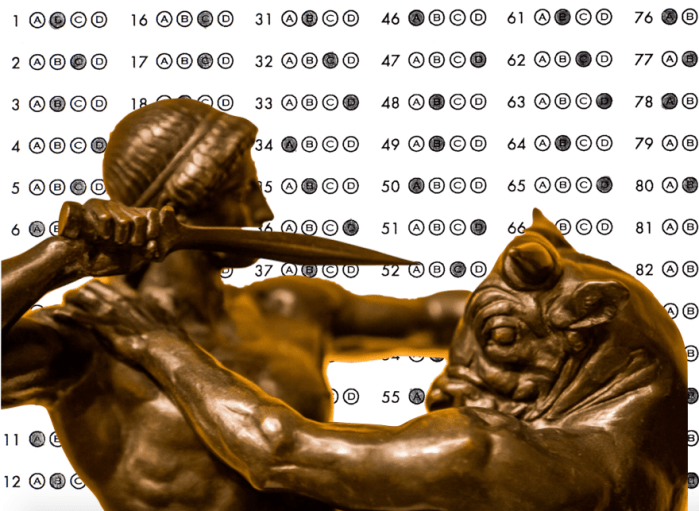
The monster is, of course, the Keystone Exams. And like the Minotaur of ancient myth, we’re building a bureaucratic prison in which to house it.


Sure, we’ve spent billions of dollars on these unnecessary, badly written and biased graduation assessments.


And, heck, it would just make more sense to stop doing something that isn’t working, wastes money and causes legitimate problems for students.


But this is Pennsylvania! We’re not going to admit we made a mistake. Better to bury it under red tape and pretend like this is what we meant all along. Nothing to see here, folks. Nothing to see…


When lawmakers originally came up with this plan… correction: when testing companies bribed federal lawmakers to force state lawmakers to enact this cockamamey plan – it was supposed to function as a graduation requirement.


Pass these tests or no diploma for you.


However, somehow Harrisburg politicians couldn’t get up the nerve to actually bar tens of thousands of worthy students from graduating when they had already proven they deserved it by passing 12 years of grade school.


So after kicking the can down the road for more than 6 years, they came up with this solution. Make it a graduation requirement, but include a whole truckload of other options that could count instead.


In short, we’re creating endless corridors of paperwork, placing the tests in the center and going on with our day.


The good news: if students can make it through the labyrinth, they never need to take or pass the Keystone Exams!


The bad news: we’re still paying millions of dollars to support these tests and we’re still forcing our teachers to make all instruction about them.


And that’s what we in the Commonwealth call a “victory.”


Yippee!


The bill to circumvent the Keystone Exams by providing multiple means of getting a diploma was passed by the state house and senate. Gov. Tom Wolf is expected to sign it into law this week.


If he does, students will still be given the Keystone Exams (unless opted out) and could demonstrate they’re worthy of a diploma by passing them. But students will have many additional ways to prove they’re worthy of a cap and gown, such as:


  • Show proficiency on the SAT, PSAT or ACT;
  • Pass an Advanced Placement or International Baccalaureate exam;
  • Complete a dual-enrollment program;
  • Complete an apprenticeship program;
  • Get accepted to an accredited four-year nonprofit institution of higher education;
  • Complete a service-learning project;
  • Secure a letter of full-time employment;
  • Achieve an acceptable score on a WorkKeys assessment, an exam administered by the ACT which assesses workplace skills including math, reading comprehension and applied technology.


To sweeten the pot even further, this won’t even go into effect until the 2021-22 school year.


So in four years, high school seniors will be racing to submit their letters of college admission, or letters of employment or SAT scores or whatever to prove they actually deserve that diploma.


But that will not be the end of it.


Just because victims thrown into the labyrinth have an easy path to avoiding the monster doesn’t mean the monster won’t affect them.


Teaching evaluations are still based on test scores. Schools evaluations are still based on test scores.


This continues the tremendous state pressure for local districts to make instruction all about testing.


Kids don’t have to pass the test, but their everyday classroom experiences will still be largely determined by these test.


Heck, many districts will probably “voluntarily” decide to make passing the test a graduation requirement just to force their students to take them seriously.


So anyone who’s out celebrating that the Keystone Exams are dead is premature.


State Sen. Andy Dinniman, at least, understands this.


“Remember, the Keystones have been delayed and the graduation requirement associated with them has been stopped, but they will still be required in Pennsylvania schools for federal accountability,” he said in statement.


“Meanwhile, we know they are expensive, redundant and unnecessary and I will continue to work to end them once and for all.”


Dinniman, a Democrat, is minority chair of the Senate Education Committee.


It’s a problem all too typical in the state.


Most lawmakers are too timid to take any type of real stand. They’d rather support some half-measure so they can claim to be in favor of either or both sides of an argument.


For instance, consider the time it takes to finish the tests.


Parents, teachers and students have complained about how these assessments waste academic time that could be better used to teach the necessary skills needed to pass.


So Gov. Wolf cut the Keystone Exams and Pennsylvania System of School Assessment (PSSA) test by a total of almost 2 hours a year.


However, at the same time, his administration suggests students take a series of additional pretests that are supposed to predict success on the PSSA or Keystone Exams – tests such as the Classroom Diagnostic Tools (CDT) assessment.


If schools follow the state’s instructions and give students this exam in reading, math and science 3 to 5 times a year, that’s an additional 50-90 minutes per test. That comes to 22.5 hours of additional testing!


So 22.5 hours minus 2 hours equals… NOT A REDUCATION IN TESTING!


But it gives lawmakers plausible deniability.


They can claim to be cutting testing while actually suggesting we increase it.


And we see the same sort of thing here.


Lawmakers can claim to be reducing the power of the Keystone Exams while still enshrining it as the driving force behind all instruction in the state.


What we need are leaders and not politicians.


We need people willing to take a stand and do what’s right even if that puts them at odds with the moneyed special interests.


That takes more than polls and market analysis.


It takes moral courage.


But there’s no test for that.


Like this post? I’ve written a book, “Gadfly on the Wall: A Public School Teacher Speaks Out on Racism and Reform,” now available from Garn Press. Ten percent of the proceeds go to the Badass Teachers Association. Check it out!
book-3