But occasionally an invitation, a chance encounter or an article in the local news gives a glimpse of who they are or where they end up.
For example, a few months ago I was invited to a ceremony where one of my former students was being awarded the rank of Eagle Scout. He was getting ready to graduate high school now, and in the picture on the invitation he looked about ready to burst out of his scouting uniform – but he had the same smile, the same glimmer of mischief in the eye.
At first, I wasn’t sure if I should attend – if after four years the student – let’s call him Doug – really wanted me to be there. But then he stopped by my classroom after school one day. He must have remembered that I’d still be there grading papers, rewriting lessons, making myself available if needed.
“Are you going to come to the ceremony, Mr. Singer?” he asked in a way that left no doubt how important this was to him.
I remembered Doug in class. He was always such a prankster. He was the first person to crack a joke – even reciting some classic but inappropriate standup routines as if they were his own. I’d shared with him some old Doctor Demento tapes and we’d had a few laughs.
“I asked Mr. Kimble to come, too, but he said he was busy. He’s dead to me now,” he said with a smirk.
He wanted me to see how far he’d come – that as dedicated to humor and jollity as he was, Doug could be serious as stone when need be. He had led his fellow scouts in refurbishing a local veterans memorial and showed himself to be a real leader. If he wanted the world to laugh, it was only in service of making it a better place.
Several weeks later I found myself in a similar situation with another former student.
Unlike the scenario with Doug, I wasn’t expecting anything. In fact, it took me a few moments to even recognize the boy through the man he had become.
I was at a local movie theater with a section of my school’s Dungeons and Dragons club. I started the extracurricular club and am lead sponsor. During the week, we get together and play the tabletop role playing game. I try to have them both organize the adventures and play through them. Some kids function as Dungeon Masters and others have characters like warriors, wizards, elves, orcs and dragon-borns.
On this weekend, one of our local families had paid for the group to see the “Dungeons and Dragons: Honor Among Thieves” movie. I was herding the kids together in front of the movie poster to take a picture of the event when this full-grown man walks up to me and says, “Hey! Mr. Singer!”
I squinted at him, but he had a huge grin on his face and seemed happy to see me. Then I noticed that one of my club members was at his waist pulling on his sleeve asking for some popcorn.
We shook hands and he introduced himself as Jamal’s big brother. Then he asked if his brother was good in class or bad like he had been.
That’s when it came together. I saw through the adult and to the kid he had been – a kid pretty similar to his brother Jamal.
It must have been 10 years ago. He had been a diminutive boy in a class of kids who had hit puberty a few months before him. He had been shy and often got picked on. He tried hard on his assignments – at least the ones he turned in.
The adult version chatted with me as his brother went to the concessions stand with the money he had given him. Though he lived a few neighborhoods away these days, he tried his best to come back to the district to look out for his brother.
He didn’t go into many details, but it was obvious he had gone through a lot in the intervening years. He had a limp and smelled of musty pine trees. But he was clearly there for Jamal when no one else was.
Jamal’s big brother was still smiling, proud that his little brother knew who this brave woman is before the film had explained it.
If you saw him on the street, you might not think him a success story. He seemed an average person just doing what he could to get by. But I knew (at least some) of the journey he had taken to get there. I knew how hard won his peace was. And I recognized that smile still on his face – so rare when he had been in class but now a permanent feature. I think that is success, too.
But the last former student I want to talk about is Marquis.
He was in one of my first classes. I remember him as a gawky middle schooler with string bean arms and legs below a sullen face.
When I started, if there was one student sent to the office that day – it was him. If there was one kid shouting out a swear word or picking a fight, it was Marquis. This was an angry kid who demanded attention – positive, negative, it didn’t matter.
I used to make badly behaved students stay 15 minutes after school for detention. It’s not something I do so much these days but I was a new teacher then – strict and consumed with reciprocal justice. In fact, students had to WORK during my detentions. No sleeping or even doing homework. They had to copy definitions out of the dictionary for the full time. If they slacked off, I added more time. Some days a 15-minute detention could last an hour, because if I reported that they hadn’t satisfied me, the principal would keep them on the weekend or in a longer detention during the week with an administrator.
I remember Marquis whining and complaining as he copied definitions. He’d spend more time whining than working – but eventually he learned.
Eventually he’d come in, sit up straight in his seat and copy those definitions from start to finish like a machine. He did it so well, his scores on my vocabulary quizzes started to improve. But he still ended up getting detentions – at least twice a week.
One day he finished the definitions and I told him he could go. “Can I stay?” he said.
“What?”
“Can I stay and copy definitions a little longer?”
I almost started to cry – right then and there.
So THAT’S why he always got detentions. He wanted somewhere to go after school. He wanted someone to talk to, someplace safe to wait so he could walk home unmolested by the other kids.
He never got detention again because I told him he could stay with me any day he wanted after school for as long as he wanted. And he did. Sometimes we’d talk. Sometimes he’d do work. It didn’t matter, but his behavior in my class improved.
He continued building on that success, too. He went up to the high school and got better and better grades. He kept out of trouble and became one of those kids everyone seems to know and most people seem to like. He was the kind of kid that every teacher had an anecdote about.
I hadn’t thought about him in some time, but then an item appeared in the local news.
Drive-by Shooting Kills Area Man. It was Marquis.
He had just been walking along the street helping some younger kids to the basketball courts. By all accounts he has straightened up his life, got a college degree and was just starting on a career as a social worker in the same community where he grew up.
I turned to my files and I saw I still had a folder with his name on it – back when I used to collect such things. Inside were a few old write ups, and pages and pages of vocabulary words in his childish handwriting.
We never know what will happen to the kids in our classrooms.
We never know who will be successful, who will be happy, who will live fulfilling lives.
But we try – we try SO HARD – to give our kids everything we can.
Doug had a straight path, and so far he’s walked it without incident.
Jamal’s brother had a lot of bumps on the road, but he’s still walking it.
“Count no man happy until the end is known,” wrote the ancient Greek story-teller Herodotus.
Known as the father of history, he meant that you never know if someone is truly happy until their death, because even a seemingly happy person today could have a tragedy befall them tomorrow taking away everything that made them happy.
I think about that sometimes when considering the fate of my former students.
The Mars Area, Penn Crest and Laurel school districts filed a lawsuit Monday trying to stop Democratic Gov. Josh Shapiro’s administration from implementing a program called Culturally Relevant and Sustaining Education (CRSE) in every school district in the Commonwealth starting next school year.
CRSE is a set of 49 cultural competency standards kind of like the Common Core – guidelines for teacher training programs to be used for both new educators and continuing education credits for current educators.
Plaintiffs complain that the program is vague, requires teachers to think a certain way, encroaches on districts’ autonomy to pick their own curriculum and threatens to take away owed subsidies if districts don’t comply.
Let’s examine each in turn.
Is the policy vague? No way. It has nine core competencies, each with between 4 and 7 standards. These are guidelines and certainly don’t outline every possible use, but you could argue they’re detailed to a fault. One regulation requires educators to disrupt harmful institutional practices. Another asks educators to acknowledge microaggressions – when someone unintentionally expresses prejudice towards a person or group.
Do they encroach on district’s autonomy? That’s debatable – but should districts really resist taking steps to make themselves less racist?
Do they threaten districts with loss of funding if schools don’t comply? I don’t see anything explicit in the program that says this, but that could be implicit in the program or have been expressed by PDE employees. In any case, I don’t see why it’s a problem to offer tools to do something you really should want to do anyway.
In short, there’s nothing wrong with the guidelines, per se, if you agree that racism is something schools and teachers should strive against. Now I can’t read people’s minds, and I don’t know explicitly what their motivations are, but the real issue seems to be that certain people don’t believe in the cause.
They don’t believe racism is much of a problem today or that schools should be engaged in antiracist work.
However, for some of us, the matter isn’t so simple.
Frankly, I’m of two minds when it comes to these new guidelines for antiracist teacher training.
On the one hand, I am in favor of teaching people to be less racist – especially when those people are teachers, themselves, who can spread the message even further and use it to be more fair and equitable to students.
But no. They do none of these things. Instead they throw it all on teachers.
Once again the powerful do nothing to actually fix our problems but put the burden of our crumbling societies on our crumbling public schools and traumatized teachers.
THAT’S my problem with this program.
It’s not that they want to teach teachers to be antiracist and to take steps to create more fair and equitable classrooms. It’s that this is all a smokescreen to allow the people who are really behind many of the racist systems in our society to keep getting away with it and perpetuating more and more inequality.
I can just imagine how well the state would greet educators “disrupt[ing] harmful institutional practices” by refusing to give standardized tests!
Public schools are a PART of the solution to our broken society. But they are not the WHOLE.
We need real public policy to address these issues. We need to get rid of reductive and prejudicial laws.
And the fact that we don’t have any of that is certain to poison the fervor of many teachers next year who will be required to sit through antiracist programs paid for and conducted by the same folks behind the public school apartheid that is our everyday reality.
Like this post? You might want to consider becoming a Patreon subscriber. This helps me continue to keep the blog going and get on with this difficult and challenging work.
The majority of teachers and principals in Pennsylvania hate standardized tests.
An increasing number of parents are refusing to allow their kids to take the tests.
And there may be better alternatives to the state’s Keystone Exams.
These were just some of the key findings of a blockbuster report from June 2019 by the state General Assembly’s Legislative Budget and Finance Committee.
However, now that things are returning to some semblance of normalcy, it seems that bureaucrats from the state Department of Education (PDE) are taking the wrong lessons from the report while the legislature seems to have forgotten it entirely.
The report was conducted because of legislation written by state Sen. Ryan P. Aument (R-Lancaster County). It directed the Legislative Budget and Finance Committee to “study the effectiveness of standardized testing, including the Keystone Exams and SATs, and their use as indicators of student academic achievement, school building performance, and educator effectiveness.”
The key findings are as follows:
1)The majority of principals and teachers disapprove of the state’s standardized tests – both the Pennsylvania System of School Assessment (PSSA) tests given in grades 3-8 and Keystone Exams given in high school. They think these tests are ineffective, expensive and harmful to district curriculum and students.
2) State law allows parents to opt their children out of testing for one reason only – religious grounds. Parents are using this religious exemption in increasing numbers. This puts districts in danger of violating federal participation and accountability standards.
3) It has been suggested that the state allow two additional reasons for parents to opt their children out of testing – philosophical grounds and health concerns. It is unclear whether doing so would increase overall opt outs or not.
4) The federal Every Student Succeeds Act (ESSA) passed in 2015 allows the use of the SAT and/or ACT test to take the place of high school standardized testing. It has been suggested the Commonwealth replace the Keystone Exams with these tests. The report finds the ACT and/or SAT would successfully determine college readiness and reduce the overall amount of standardized testing. However, this would not allow other uses of current state tests like evaluating teacher effectiveness and school building performance.This may not matter though because the report also casts doubt on whether the current tests (PSSA and Keystone Exams) do an adequate job of assessing teacher or building performance now or even if student tests can be accurately used to evaluate teachers and schools.
There’s a lot of information here. Let’s look at each finding in turn.
1) PA Educators Hate Standardized Tests
When it comes to the PSSAs, 67% of principals and 76% of teachers said the tests were ineffective indicators of student achievement.
There was slightly more support for the Keystone Exams. This time 45% of principals said the test was an ineffective indicator of student achievement (with 27% saying the tests were effective). Meanwhile, 60% of teachers said the test was ineffective.
Both principals and teachers said their curriculum had been narrowed to prepare students for PSSAs and Keystone Exams. Instead of going into more depth on regular classwork or learning new skills, the focus shifts to teaching to the tests.
Most principals (approximately 80-90%) said that students are taught test-taking skills, and their schools administered practice tests, bench-mark tests, and/or diagnostic tests to prepare students for the PSSA exams. This held for teachers, too, with 81-88% saying they teach test-taking skills and administer practice tests. Principals also said the costs of this additional test prep varied from $200 to more than $100,000.
Taking the tests also eats up valuable class time. Administering the assessments takes between 5.7 to 8 days for each kind of test – the PSSA and the Keystone Exams, according to Principals.
In addition, the report details the cost of giving these tests. In fiscal year 2017-2018, PDE paid $42.17 million for these tests. This is part of a national trend:
“Standardized tests and test preparation have subsequently become big business and that multibillion dollar business continued to grow since the enactment of NCLB and the subsequent enactment of ESSA. According to the Pew Center on the States, annual state spending on standardized tests increased from $423 million before the NCLB (enacted in 2002) to upwards of $1.1 billion in 2008 (to put this in perspective this reflects a 160 percent increase compared to a 19.22 percent increase in inflation during the same time period). A more recent study by the Brown Center on Education Policy at Brooking put the cost at upwards of $1.7 billion in 2011 related to state spending on standardized tests.”
2) Opt Outs on the Rise
Many states allow parents to opt their children out of standardized testing. Some do so in cases of a physical disability, medical reasons, or emergencies. A few allow opt-outs based on religious objection – like Pennsylvania. Some states allow opt-outs for any reason whatsoever.
The religious exemption is not used widespread throughout the state and most schools meet the 95% participation rate required by the federal government. However, use of the religious exemption is definitely on the rise – enough so that the authors of the report find it alarming:
“Meanwhile, as previously indicated in this section, schools throughout the country are experiencing and grappling with an increase in the number of parents seeking to have their children opt-out of standardized testing now that new state assessments have been implemented pursuant to the federal requirements. Pennsylvania is no exception to this trend and is also experiencing an increase in the number of parents utilizing the religious opt-out.”
For the PSSA tests, opt outs increased from 2013-14 to 2016-17. However, total numbers in school year 2017-18 decreased sightly.
Opt outs went from 1,886 to 6,425 to 15,644 to 19,012 to 16,961.
During the same time period for the Keystone Exams, opt outs steadily increased each year but were at lower overall rates.
For the high school test, opt outs went from 382 to 666 to 1,000 to 1,313 to 1,633.
These are vitally important figures because opt out data is rarely tabulated and released to the public. Many media accounts actually state the opposite of the data in this report – in particular that opting out has decreased since Congress passed the ESSA in 2015. Apparently the media got this one wrong.
Though the religious opt-out is the only reason specifically allowed in state Chapter 4 regulations, PDE reports there are five additional ways that students end up not taking the tests:
1) Other Parental Request – parents simply refusing to let their kids participate but not objecting based on specifically religious reasons.
2) No Attempt and No Exclusion Marked – students who are given the test but do not answer enough questions to receive a score.
3) No Test – no test record on file for unknown reasons.
4) Extended Absence – a student missed the testing and make-up window due to absences.
5) Other – does not fit any of the other categories.
Federal law – in particular No Child Left Behind (NCLB) and subsequent reauthorizations of that legislation – requires states to use student participation in standardized testing as a factor in a state’s accountability system. According to the report, any district with less than 95% of students taking the test should be “addressed.”
The report does not go into any further detail about what this means, other than to say that falling under 95% can:
“…ultimately result in a reduced achievement/proficiency measure… If the student participation rate falls below 95 percent, states are required to calculate student achievement/proficiency by dividing the number of students scoring proficiently by no less than 95 percent of the total students (which effectively assigns a score of “0” to all nonparticipants once the participation rate has fallen below 95 percent).”
In effect, the district gets a bad mark on a piece of paper. So what?
Under NCLB, schools with poor performance could receive sanctions like state takeover or lower funding. However, this is extremely unlikely – especially since the passing of ESSA. This newest reauthorization of the law gives states leeway in designing their accountability systems. It leaves the enforcement of this 95% participation rate up to the states, requiring them to develop an accountability plan in the event that a school or district fails to meet this standard.
So a school would only be punished if the state decided to do so. If a state legislature decided to allow parents to opt their children out for any reason at all, they would not have to take any punitive measures. Since the ESSA, the buck stops at the state house door on this one. California, for example, takes note of low participation rates but these rates are not factored into a school’s rating. On the other hand, Florida mandates direct intervention from the state’s Department of Education until participation rates are met.
3) Impact of New Reasons to Opt Out
This is where things get a bit sticky.
The report mentions the idea of expanding the options for opting-out of statewide assessments (e.g., PSSA and Keystone Exams) to include objections based on philosophical grounds or due to health issues.
On the one hand, the authors write “The impact of adding opt-out categories may be minimal.” They don’t know if more people would use the expanded options or if the same numbers who use the religious exemption today might simply divide themselves up among all three options.
The authors worry, however, that new pathways to opt out may increase the total number of people refusing the tests for their children and would reduce Pennsylvania’s participation rate in standardized testing.
This is a particularly troubling paragraph:
“The existence of opt-outs (religious or otherwise) has the potential to negatively impact a state’s participation rates and may potentially impact a state’s [Local Education Agency (LEAs)] and schools achievement/proficiency rate and ultimately the ability of a state to be in compliance with federally required assessments and accountability measures. Furthermore, providing opt-outs and giving parents notice of such has the potential to conflict with the message about the importance of standardized testing. Ultimately placing the state departments of education and local school districts in the potentially awkward position of having to explain why it is important for students to participate in testing (given the federal requirements), while also giving and notifying parents of the opt-out options for their children. In 2015, US Department of Education sent out letters to a dozen states flagging their low participation rates (statewide, or at the district or subgroup level) on the 2014-15 school year assessments and indicated that they needed to create a plan to reduce opt-outs due to low participation rates.”
This seems to be the order of the day at PDE. It’s why earlier this year, school administrators were advised by state officials to crack down on parents opting their children out of standardized tests.
And all of it is based on a cowardly and incomplete understanding of federal law. If Commonwealth schools fall below 95% participation in the test and get a bad mark on a worthless metric, it doest have to matter. No matter how many letters the federal government sends to the state legislature or PDE, the law is clear. The state is in charge here. Our legislature can choose to side with taxpayers, residents, and citizens or with civil servants and strongly worded letters.
4) Replacing the Keystone Exams
There’s not much more to add to this than the initial finding.
The authors of the report say there would be no problem with replacing the Keystone Exams with the ACT or SAT because these national tests would properly assess students’ college and career readiness.
The report is actually pretty shoddy in this regard not really examining the claims of the College Board which makes both tests. The authors just pretty much accepted the College Board’s word wholesale. Nor was their any evaluation of what teachers and principals thought about these tests like there had been for the PSSA and Keystone Exams.
However, the report does make a good point about test reduction. Many students already take the SAT or ACT test, so eliminating the Keystones would reduce the over all amount of tests they had to take.
Also the authors deserve credit for writing about how using student test scores to evaluate teachers and schools is seriously bad practice.
According to the report, 77 percent of principals and 93 percent of teachers said PSSA tests were not effective indicators for teacher evaluations, with similar figures for the Keystone Exams and building performance evaluations.
While everything in the report may not be 100% accurate, it includes important information that should be wider known.
In addition, the report has trustworthy data about opt outs throughout the Commonwealth. Unlike what has been reported in the media, opting out is not on the decline, it is on the rise.
The Keystone Exams should be thrown in the trash, because that’s what they are – trash. At very least they should be replaced with the SAT or ACT. Even better to remove any requirement for standardized tests wholesale – and that includes the PSSA.
The ESSA allows states a lot of leeway about how and what accountability system they use. There is no need to worry about some imperial federal power invading Pennsylvania to force our hand with standardized testing. We should call their bluff on this. I’ll bet that if we did so, many other states would do the same.
Standardized testing is another failed education policy. Our legislators would do good to read this report and make up their own minds about it.
Though a few years and disasters have happened since its publication, it doesn’t deserve to be forgotten by the very people who ordered it to be written in the first place.
Like this post? You might want to consider becoming a Patreon subscriber. This helps me continue to keep the blog going and get on with this difficult and challenging work.
It’s kind of like a judge watching a driver plow his car into a brick wall repeatedly and then instead of taking away his license, awarding him a safe driver certificate.
It doesn’t take a political scientist to figure out why.
The organization’s own report describes the Foundation as “tireless advocates for high-quality academic standards, assessments, and accountability as tools for educational equity.”
The report was written by Dan Goldhaber and Michael DeArmond of the Center for the Analysis of Longitudinal Data in Education Research (CALDER) at the American Institutes for Research with a qualitative analysis by Brightbeam CEO Chris Stewart and his staff.
CALDER is a federally-funded nonprofit organization with several testing industry-funded and conservative think-tank members in management, on the advisory board, and working as independent researchers – in case, you thought anything they produced might be fair and balanced.
Brightbeam is a corporate education reform think tank financed by the usual billionaires such as Michael Bloomberg, Alice Walton, Jim Walton, Laurene Jobs Powell and Mark Zuckerberg. And Stewart is a long-time standardized testing and school privatization cheerleader – not exactly the kind of people who can afford to find much fault in NCLB because doing so would put them out of work.
The report highlights eight key findings – four positive and four negative.
First, the authors of the report pat each other on the back because NCLB collected so much yummy data that had been unavailable previously. In particular, the law extracted data from the nation’s schools based on race, socioeconomics and special needs. “No longer were school districts able to hide the performance of some students behind an average,” the report states.
Moreover, it’s strange to celebrate NCLB for disallowing hiding student performance behind an average when that’s exactly what it does. Everything is an average now! Average test scores, aggregate passing scores, whether your school made adequate yearly progress… it’s all averages! Oh to go back to the times when you could look at a single student’s academic record without having to compare it to anyone else!
Second, the authors claim student test scores increased because of NCLB especially among Black, Hispanic, and low-income students. However, this depends on how you massage the data.
Test scores have stayed relatively the same throughout the last 20 years with dips here and rises there. No matter the test, the overall trajectory has been pretty flat. You can focus here or focus there to create a picture that supports whatever narrative you want, but taken as a whole, there has not been any significant progress as shown by test scores.
Third, the report celebrates the production of “more reliable, comparable education data.” This is a suspect claim.
Are test scores more reliable than classroom grades? That has never been proven. In fact, when it comes to predicting future success in college or careers, there is plenty of evidence that classroom grades do a better job than test scores. After all, tests are based on work done over a relatively few number of days. Grades are based on an entire year’s worth of work.
However, it is true that test scores are more easily comparable because they come from the same assessments. Why this is so important is unclear. Learning is not the same as sports statistics. It is not a competition. Students learn when they’re ready to learn – not based on anyone’s schedule. What matters is if they learn at all.
Fourth, the authors admit “Reforms in teacher evaluation and school turnaround initiatives did not consistently improve student outcomes at scale, in part due to significant variation in quality of implementation.”
It is interesting that even the U.S. Chamber of Commerce can’t spin NCLB into an unquestionable success. But it is almost a cliche among the standardized testing industry that any failures of the big tests are always excused as failures solely of “implementation.” If teachers and districts just tried harder to put the testing industry’s plans into effect, everything would be working perfectly. It’s these darn teachers and schools! Whine! Cry! Sob!
For the negative findings, the report concluded there were unknowns about the impact of NCLB that should be further studied.
First, they were unsure if schools serving minorities and the poor ended up getting more money to improve than they otherwise would have done. SPOILER ALERT: they did not.
The original Elementary and Secondary Education Act passed under Lyndon B. Johnson was focused on equity – the exact concern the authors of the report pretend to be all about. However, when the law was reauthorized as NCLB in 2002 (and reauthorized again in 2015 as the Every Student Succeeds Act) it focused instead on test scores as a gatekeeper to equity. Instead of looking at needs, you had to pass the tests to get the money to meet your needs. And if you had needs, that meant your district and teachers were failing so they had to lose funding to punish them, first. Somehow you were supposed to end up with more funding after all that nonsense.
Second, if schools did get more funding because of test scores, the authors of the report were unsure what schools did with it. SPOILER ALERT: It went to test prep and charter school expansion.
NCLB refocused education on test scores, so if students did badly on the assessments, they needed test prep material. And if the teachers and districts weren’t miraculously overcoming social, economic and special needs of students in impoverished areas, money was given to open competing charter schools.
Did this help? Just the opposite. Now you have two schools vying for an even smaller pot of funding but one of these schools (the charter) doesn’t have to follow the regulations the others school must. So anyone with no background in education can open a school, hire uncertified teachers, make decisions on how to spend tax dollars without an elected school board, etc. Not helpful.
Third, the authors of the report were unsure how many struggling schools became successful under NCLB. SPOILER ALERT: Not many.
You don’t help a malnourished person by starving him even further or making him compete for food. The same with school districts. In almost every case where a school miracle is proposed in which kids simply pull themselves up by their own bootstraps, the reality turns out to be a byproduct of creative accounting or selective data.
Take New Orleans, a district often held up by the testing and privatization industry as a success. This is the only all-charter school district in the country. After 2005 and Hurricane Katrina, a predominantly white Republican legislature forced the district’s public schools to become charters – outright experimenting on a majority African American city. The result? School enrollment declined from 65,000 before the hurricane to 48,000 a dozen years later. The most recent state scores rated 49% of the city’s charter schools as D or F, based on their academic performance. The New Orleans district scores are below the state average, and that’s saying something since Louisiana is one of the lowest performing states in the nation.
Not exactly an overwhelming success.
Fourth, the authors wondered if NCLB might have resulted in non-academic improvements – things like a reduction in chronic absences, school climate, etc. SPOILER ALERT: Nope.
So there you have it. The U.S. Chamber of Commerce Foundation is proud of their little report about the impact of NCLB. They give themselves a gold star.
The reality though is much different than what you’ll find on this bit of propaganda.
Let’s get real. Poverty and wealth are the most important factors determining test scores. This shows up on every standardized test. In fact, that’s what the name means – STANDARDIZED test – these assessments are normed on a bell curve reflecting family income and education. Kids from families from higher socioeconomic brackets are at the top of the curve and poor kids are on the bottom.
And consider this: nearly half the students in the U.S. now qualify for free or reduced lunches – the federal measure of poverty. So if we really want to help kids achieve academically, we need to first reduce the impact of poverty on children and families by making sure that they have access to nutrition, medical care, and good housing. Ensure pregnant women get medical care so their children are born healthy.
In short, don’t give students corporate canned tests. Give them well-maintained schools with nurses, counselors, and libraries with flesh-and-blood librarians. These are just some of the ways we could actually make things better.
It’s been two decades already. People know high stakes testing has failed despite whatever public relations reports are issued by lobbyist organizations. It’s time we had the courage to admit NCLB was a mistake and acted to finally put things right.
It may hurt some businesses that rely on testing to make a buck. It may require big corporations to pay their fair share of taxes. But that is the only way to improve education.
We must put our money where our mouths are – or else be quiet.
Like this post? You might want to consider becoming a Patreon subscriber. This helps me continue to keep the blog going and get on with this difficult and challenging work.
Year after year, decade after decade, the poor and people of color get fewer school resources, larger class sizes, narrowed curriculum and lower acceptance to colleges.
Yet, as defenders of standardized testing (and racist practices in general) love to point out, not all minorities consistently fail these tests.
In particular, Asian-Americans – taken as a whole – score better than white Americans.
So the tests are totally fair, right? Case closed?
Wrong.
Asian-Americans, who make up roughly 5 percent of public school enrollment nationally, are just as much victimized by standardized testing as any other minority. The only difference is their success is held up as an excuse for upholding this deeply inequitable practice.
It’s kind of like if two people were pitted against each other in a race, and one had to run a mile, and the other had to run 1.5 miles – and the second person actually won. Would that make the race fair?
No. Not at all. But the organizers point to the result as proof that running that extra distance in the same amount of time was nondiscriminatory. So stop complaining!
Take the SAT. Asian-American students typically score higher than other students on America’s most popular college gatekeeper as they do on other standardized tests. For instance, among high school students who graduated in 2020, Asian students scored an average of 632 on the SAT math section, compared with 547 for white students. The average math score overall was 523 (out of 800).
What does this really mean?
ASIAN AMERICANS ARE NOT A MONOLITH
First of all, when we talk about Asian-American students doing well on standardized tests, we’re generalizing. We don’t mean all Asians – only a certain percentage of certain kinds of these people. After all, Asia is a pretty big continent.
According to the US Census Bureau, there are roughly 23 million Americans of Asian descent, and the largest subgroups are people of Chinese and Indian ancestry with populations of approximately 5 million each. Next comes people of Filipino (4.2 million), Vietnamese (2.2 million), Korean (1.9 million) and Japanese descent (1.5 million).
But those are just the biggest subgroups. When you add in all Asian-Americans including Pacific Islanders, you get more than 50 different ethnic groups with varying languages, immigration histories and educational experiences.
Any generalization about such a diverse group will leave out important details, including test scores.
ALL ASIANS DON’T GET HIGH TEST SCORES
For example, high test achievement is not something attained universally by all people who can trace their parentage through that part of the world. It’s actually much more common for East Asians than others. In particular, we’re talking about people of Chinese, Korean and similar heritages.
In these countries, college admission often is decided on a single high-stakes test – the gaokao in China or the suneung in South Korea. People whose cultures trace back to these parts of the world are used to engaging in intense test prep as a regular feature of teenage life. So many Asian immigrant parents with ties to these countries often see the SAT or ACT as the equivalent of Asia’s admissions tests and thus engage in test prep as a matter of course, regardless of cost or effort.
This goes far in explaining why Chinese- and Korean-Americans have the highest rate of participation in SAT/ACT test prep – even more than people from other Asian ethnicities.
In one study, more than half of Korean-Americans and 42 percent of Chinese-Americans took an SAT prep course before college compared to 35.6 percent of white students, 32.4 percent of Hispanic students and 40.4 percent of black students. This is true regardless of household income. Affluent Asian Americans were more likely to take test prep, but 46.7 percent of low-income Korean-Americans still took a prep course.
East Asian-Americans show statistically significant gains from test prep much more often than others. This is partially due to having better access to adequately funded K-12 schools than other minority groups. They are less likely to attend racially segregated, poorly resourced schools, unlike their Black and Hispanic peers. Even Asians from lower socio-economic backgrounds tend to get more out of test prep than others because they are more likely to attend well-resourced schools than their counterparts in the same socio-economic bracket.
And let’s not forget that test prep companies target Asian-American communities. You’ll find them in urban centers like Koreatown in Los Angeles or heavily Asian suburbs such as the San Gabriel Valley. Advertising material for these services are often in multiple languages or displayed in Asian-language newspapers and ethnic media.
Most of New York City’s 411 prep centers are based in Queens and Brooklyn, “with over a quarter of them… most notably in the boroughs’ Asian enclaves of Flushing and Sunset Park in Brooklyn,” The New York Times reported.
“On the opposite coast, 861 such tutoring centers exist in California’s Orange, Santa Clara and Los Angeles counties, all heavy with Asian-American families,” the article states.
So it’s no wonder why certain Asian-American communities – especially East Asian communities – tend to favor test prep and achieve high standardized test scores.
ASIANS ARE HELD TO UNFAIR STANDARDS
But let us not forget that East Asians are not ALL ASIANS. If you’re unlucky enough to be from other parts of that massive continent or the island chains of the Pacific, the US will still paint you with the same broad brush.
All Asian-Americans – whether of East Asian descent or not – are held to a higher standard in things like college admissions where overachievement is considered the norm and little else is tolerated.
This is unfair to East Asians because it expects them to jump through more hoops than white people or other ethnic groups just to be accepted, but it is even worse for other Asian subgroups.
A 2022 study of the nine-campus University of California – the state with the country’s largest Asian-American population – concluded that Filipino, Thai, Native Hawaiian/Pacific Islander and Laotian students were admitted at below-average rates and that many ethnicities including Samoans and Chamorros, were underrepresented in the system.
Why? They had lower test scores than admissions officials expected.
Such an emphasis on standardized testing is not healthy for students of any nationality. The College Board makes millions of dollars every year with assessments like the SAT and ACT holding the scores up as proof that certain students have what it takes to excel in college or universities.
This is a rarely mentioned side effect of Asian-American’s standardized testing overachievement. And it may help to explain why – despite scoring well on standardized tests – Asians don’t complete college as often as students from other ethnicities.
According to an analysis of the 23-campus California State University System, all Asian subgroups were less likely than whites to complete their degrees in four years. There were roughly 78,000 Asians attending the university system in 2016, yet their four-year completion rate was 3% below that of all students. Only a few subgroups – Japanese and Asian Indians – had four-year completion rates that exceeded the average.
If test scores and admissions were all it took to achieve post secondary success, you’d expect college completion to be shared by Asian-Americans across the board.
In reality, college attainment varies significantly within the Asian community. While more than half of Japanese and Korean Americans (and nearly 3/4 of Asian Indian Americans) age 24 or older had a bachelor’s degree or higher in 2019, the same was true for less than 1/5 of their Laotian, Hmong and Cambodian counterparts.
CONCLUSIONS
Therefore, it is highly suspect when standardized testing apologists point to Asian-American test scores as proof the system is fair and balanced.
First of all, it conflates the achievements of mostly East Asians with all Americans of eastern heritage. Second, it demands more of one minority group to be accepted as equal to a white majority.
In any case, the standardized testing industry can no longer hide behind the myth of the Asian-American model minority to justify their shady business practices.
Like this post? You might want to consider becoming a Patreon subscriber. This helps me continue to keep the blog going and get on with this difficult and challenging work.
These questions are at the heart of a well-financed war against a simple term – woke-ness.
Since the summer of 2020, oligarchs and their tools in the United States have been waging a disinformation campaign against that term – especially as it pertains to our schools.
Chiding, nagging, insinuating – you hear it constantly, usually with a sneer and wagging finger, but what does it really mean?
To hear certain governors, state legislators and TV pundits talk, you’d think it was the worst thing in the world. But it’s not that at all.
That’s all – just knowing that these things exist and trying to recognize them when present.
I’m not sure what’s so controversial about that. If we all agree racism is bad, why is it undesirable to acknowledge it exists when it’s demonstrably there?
More specifically, being woke means focusing on intersectionality – how issues of race, class and gender overlap and interrelate with each other. It means practicing critical race theory – not the made up dog whistle conservatives use to describe anything they don’t like being taught in school, but the study of how racial bias is inherent in many Western social and legal systems. It means using the lens of Black feminism, queer theory and others to address structural inequality.
Again, why is that a bad thing? If we agree that prejudice is bad, we should want to avoid it in every way possible, and these are the primary tools that enable us to do so.
Shouldn’t we protect hard-fought advances in human rights? Shouldn’t we continue to strive for social justice and the ability of every citizen to freely participate in our democracy – especially in our public schools?
Of course we should!
But leaders of the backlash will disagree.
Like in so many other areas of our culture, they have stolen the term “woke-ness” and tried to co-opt it into another invented grievance. For people who deride their political opponents as being too fragile and unable to handle reality, they certainly find a million things to cry about on their 24-hour news networks to keep their base angry and engaged all the time.
They have targeted and demonized antiracist work. They have tried to discredit the concepts that Black women and LGBTQ people have created to explain and improve the inequitable conditions of their lives.
And the reason is crystal clear – they oppose that work.
They oppose anti-racism. They oppose the rights of Black women and LGBTQ people to better treatment.
They are against everyone but a perceived white, male, heteronormative majority that doesn’t even really exist.
For we are the keepers of history, science and culture.
Who will teach the true history that for more than 400 years in excess of 15 million men, women and children were the victims of the transatlantic slave trade? Who will teach the true history of the fight against human bondage and the struggle for equal rights? Who will teach about women’s fight for suffrage, equal pay, and reproductive freedom? Who will teach about the struggle of the individual to affirm their own gender identity and sexual expression?
It won’t be the College Board, a billion-dollar American business calling itself a non-profit, that after years of stalling finally released its Advanced Placement African American Studies curriculum – a college-level course available for high school students nationwide. In the wake of political backlash, the new course material is as watered-down as weak tea in comparison to previous drafts of the course.
This just goes to show that the free market will never stand up to political power if it is perceived as adversely affecting the bottom line. True education comes not from corporate academic standards or standardized test gatekeepers. It comes from teachers.
Intersectional frames such as those under attack by billionaires posing as populists have been incredibly important in supporting overlooked social problems and addressing today’s human rights failures.
Those of us who know history understand that suppression of knowledge and intellectuals (especially those from marginalized peoples) are a tool used to increase racism and oppression – to overturn the progress of the last century.
Refusing students access to books, criminalizing “divisive concepts,” and discrediting those with whom they disagree have all been tools of domination. Just as denying the persistence of any inequality has been a tool to discredit its victims.
If we give in to these partisan “anti-woke” imperatives, we enable the return of racist and cultural inequalities that had been at least partially rectified years ago. We clear the way for these extremists to bring back a mythical past in which women are meant to be merely subservient to men and where race, gender and sexuality are rigidly defined and limited according to the ruling class.
Teachers, we cannot allow this to happen.
We stand at the gates, the first (and perhaps last) line of defense, because we stand at the schoolhouse doors.
If we are truly educators, we must teach the truth.
We must put the facts in their proper context.
We must encourage our students to think about what came before and what’s happening now.
We must stay woke.
Or the whole world sleeps.
Like this post? You might want to consider becoming a Patreon subscriber. This helps me continue to keep the blog going and get on with this difficult and challenging work.
“Mr. Singer, take a look at this,” he said and handed me a scrap of paper with a few hastily scribbled lines of poetry on it.
“What do you think?” he said and smiled up at me hopefully.
I squinted at the page and said slowly, “I think it’s wonderful. The use of assonance in these lines is perfect…”
And his smile matured into a grin, until…
“…if only Edgar Allan Poe hadn’t already written them.”
Cheating is a part of school.
It’s probably always been.
Students copy off of other students, they take quotes from books without giving the author credit, they make crib sheets to consult during the test.
But since technology has pervaded nearly every aspect of our classrooms, cheating has skyrocketed.
Just ask the students.
According to a survey of 70,000 high school students conducted between 2002 and 2015 across the United States, 95 percent admitted to cheating in one way or another, and 58 percent admitted to plagiarizing papers outright.
I can’t tell you how many times I’ve seen children sit in front of shelves stuffed to bursting with dictionaries as they clandestinely whisper into their phones asking how to spell certain words.
Current generations practically were raised on social media and thus have a warped sense of intellectual property. Watching TikTok parody videos, reposting images on Instagram, and repurposing memes on Facebook or Twitter have eroded their sense of what constitutes intellectual property and what counts as original work.
Going back to Paolo, I don’t think he consciously tried to pass off Poe’s poetry as his own. He was trying to complete an assignment using assonance (repetition of vowel sounds in nearby words) in a poem.
He probably asked his district-issued iPad for examples and was directed to a snippet from Poe’s “The Bells.” So he copied it down, changing a word here and there and thought he had created something new.
It wasn’t word-for-word. It was just very close. He didn’t realize that such an exact approximation of an iconic verse would be so obvious.
And it was my understanding – knowing the student, judging his reaction to being caught, and being able to piece together how this act of plagiarism took place – that informed my reaction.
I explained to him that he needed to go further a field – to create his own lines that might be inspired but more distinct from Poe’s. And he did.
This wasn’t the end product; it was a bump in the road.
However, not all cheating is so forgivable.
There are many cases where students know exactly what they’re doing and simply don’t care or feel the risk is worth the reward.
Students who feel sad, distressed or other negative emotions tend to be more open to plagiarism than those who feel more positive. In fact, one can use student’s negative emotions to predict the chances that they’ll cheat on assignments, according to this research.
Students have admitted that drill-and-kill assignments, testing look-a-likes, etc. are seen as worthless and thus they are more prone to cheating on them.
Students will perpetrate fraud even on assignments that they see as valuable, but they are much more likely to do so on standardized curriculum – the kind policymakers and many administrators are increasingly pressuring districts and teachers to include in the classroom.
The way I look at it, teachers should take steps to stop cheating in the classroom, but without administrative support, they can only go so far. If there aren’t academic consequences for cheating, administrators have tacitly accepted the behavior regardless of what teachers do in the classroom. If there are no consequence – no adequate disincentive – cheating is normalized regardless of the words written in the student handbook.
I’m not saying there shouldn’t be grace and understanding, but there need to be consequences, too. Students feel more free to be authentic and original when they are immersed in a school culture where authenticity is valued over fraud.
After all, even in circumstances where teachers have full support, they can’t catch everything. And I think that’s okay.
You’re a student in school ostensibly here to learn. If you cheat on an assignment (a valuable assignment) you’re just stopping yourself from achieving the intended learning.
You’re limiting your own knowledge, your own skills and abilities. Instead of grasping how to write and read critically, for instance, you get the grade without the learning.
It would be like going to the doctor and presenting fake bloodwork. That’s not going to harm the physician – it’s going to hurt the patient.
It’s the same for accidental and purposeful cheating.
So what can we do about it?
1) Perhaps the most important thing to discourage the unintentional variety is to teach kids what it is – especially with relation to technology.
2) The best way to discourage purposeful cheating is to present students with meaningful work.
If kids actually want to learn what you’re teaching, they’ll be less inclined to fake their way through it.
Of course, this can only be truly effective when educators are allowed a voice in their own curriculum, their expertise is valued, and they are free to determine how best to go about their jobs. But let’s be honest – that’s not going to happen anytime soon.
For example, when my students write an essay, I never give them the prompt and then wait to see the results. We do prewriting together that needs to be approved before they can even begin their first drafts. We discuss it every step of the way until they submit it for a grade – and if it still has issues, I simply don’t accept it. I hand it back with suggestions for changes again and again until it meets the agreed upon standard.
That makes cheating much harder to do. It also puts learning – the journey from point A to B – at the forefront rather than coming up with something arbitrary.
4) Finally, relationships are the bedrock of responsibility.
Nothing in my class is high stakes.
If a student messes up today, there’s always tomorrow. All assignments are accepted late up to a point. All tests can be retaken. Everyone gets another chance to succeed.
It’s a huge burden on me, the teacher, but I think it’s worth it to extend a little grace to students. It’s worth it demonstrating that I value them over their work.
I’m not saying this is perfect or that I have all the answers. But in an age where everyone seems worried about academic integrity without any concern for academic freedom, it’s important to put your priorities front and center.
Cheating may never go away entirely, but at least we can be honest about why it happens and who it hurts.
Like this post? You might want to consider becoming a Patreon subscriber. This helps me continue to keep the blog going and get on with this difficult and challenging work.
This year I teach two different poetry classes – a 7th grade course focusing on writing it, and an 8th grade course focusing on reading it.
It’s not entirely exclusive. We do some writing in 8th grade and some reading in 7th grade, too. But each course is centered more on creation or explication.
My 8th graders seemed hooked when I introduced poetry by reading them a Shakespeare sonnet in a stuffy British voice.
Don’t get me wrong. I love the Bard. After all, my wife and I named our daughter Desdemona. But you might as well lean in to the expectation that Shakespeare is elitist with a question like, “Shall I compare thee to a summer’s day?”
Then follow it up with some video clips from Def Poetry Jam.
My students loved the idea that these street verses by Lamont Carey, J. Ivy and others were both instantly relatable and yet qualify as poetry.
When I told them that rap also met our literature book’s definition, they were floored.
I recited the Whitman poem aloud, and as my voice shook and my eyes watered, a student in the front row said I should have been an actor. But it wasn’t acting. Many of us felt that same emotion. It was right there on the page.
Today they were wrestling with Poe and Dylan Thomas with a kind of seriousness of purpose you rarely see in 13- and 14-year-olds.
In years past, I often had to point to this or that, guide them to consider one thing or another. But this morning, I could have gone to get a cup of coffee, and I don’t think they would have even noticed my absence.
My 7th graders took a bit more convincing.
When I announced we were starting a unit on poetry, they almost all lamented about how much they hated it so much. So I made them write a journal about why they felt that way. No public performances. Just put it down on paper.
It was funny how verbal complaints melted away in the face of stanzas and verse. Many admitted on the page that they liked poetry – some poetry – but they felt scared of getting the wrong answer.
The very first poem brought out such emotion and turmoil. One girl wrote about the recent death of a family member. A boy wrote about how he felt he was never good enough no matter how high his grades.
Some showed off real talent with figurative language – personifying colors, using vivid imagery, perfect similes, a gift for rapid fire rhymes.
Today I had them sing the rhythm of the limerick with me. I lead a chorus of:
Da DUM da da DUM da da DUM, Da DUM da da DUM da da DUM, Da DUM da da DUM, Da DUM da da DUM, Da DUM da da DUM da da DUM.
They laughed. (I did too.) They looked at me like I was crazy. (Perhaps you have to be to teach middle school.)
But they did it.
And they tried to write their limericks.
I’m not saying the results were all perfect. Few of them were. But the kids tried and some will continue trying.
There’s a word for that.
You try to climb to the top of the monkey bars…. You fall down. You get right back up and try again.
It’s play. Pure and simple.
That’s what’s been missing from so much of my kids school days recently.
After how many years of disruptions from the Covid pandemic and then number crunchers demanding this pretest and that standardized benchmark, the kids just want to get out there and play.
They want to be creative.
They’re yearning for it like a drowning swimmer yearns for air.
That’s what we need to prioritize and provide for them as much as possible – now more than ever.
Meanwhile, we’re still being warned against learning loss – a bogeyman designed by testing companies, book publishers and tech bros. Who out there is decrying creativity loss – vanished childhood – missing chances to be a kid?
These are what we should be worried about.
There will be plenty of time to catch up with academics. You can always learn, but you’re only a child once.
Your mind is only that malleable, your personality that open and willing to try new things – once.
Moreover, play and creativity are not antithetical to learning. They are the very heart of it. They are when we pick up, master, review the best!
So let my kids swim, paddle and glide in verse. Let them dive, bathe and wade up to their shoulders and beyond.
Because when they do, they transcend school and learning.
They become poetry, itself.
Like this post? You might want to consider becoming a Patreon subscriber. This helps me continue to keep the blog going and get on with this difficult and challenging work.
The reason? The state Constitution guarantees a “thorough and efficient system of public education to serve the needs of the Commonwealth” – and cake for rich kids while poor kids get crumbs just isn’t thorough or efficient or meets the needs of the Commonwealth.
The problem is that the state funds schools based heavily on local taxes – so rich neighborhoods can afford to pile on the monetary support while poor ones do the best they can but fall far short of their wealthier counterparts.
Judge Renée Cohn Jubelirer, a Republican, ruled that this was discrimination. In short:
“…the Pennsylvania Constitution imposes upon Respondents an obligation to provide a system of public education that does not discriminate against students based on the level of income and value of taxable property in their school districts…
The disparity among school districts with high property values and incomes and school districts with low property values and incomes is not justified by any compelling government interest nor is it rationally related to any legitimate government objective…
[Therefore] Petitioners and students attending low wealth districts are being deprived of equal protection of law.”
Unfortunately, no mention was made in the nearly 800-page ruling of exactly how to fix the problem.
The trial began in November 2021 and lasted more than three months. You’d think the judge had time to toss off a line or two about what to do next, maybe that it’s up to the state to take up the slack or something.
But no.
Which leaves room for right wing creeps like the Commonwealth Foundation to crawl out from under a rock and give their own nonsense solution.
Benefield wrote a response to the ruling praising it for leaving the legislature and executive branch to find a solution, rather than “mandating more money to a broken system.”
Um, Benefield? Buddy? It’s broken mostly because we haven’t paid to keep it in good repair.
But he goes on…
“The only way to ensure that ‘every student receives a meaningful opportunity’ is for education funding to follow the child. Students that are trapped in their zip-code assigned school — especially in low-income and minority communities — often have no alternatives when their academic or social needs are unmet.”
So the solution to not having enough money is more choice!?
I can’t afford to buy breakfast. Having a choice between raisin bran and pancakes won’t make a difference. I CAN’T AFFORD EITHER ONE!!!!
If every district received fair funding, it wouldn’t matter what your zip code is anymore. That’s the whole freaking point!
But look for neofacists and libertools to start spouting this kind of rhetoric at every turn now that they can’t hide behind the old excuse that it’s somehow fair to steal poor kids lunch money and give it to rich kids.
The next step is not entirely clear.
Some think it likely that the state will appeal the decision to the Pennsylvania Supreme Court.
“The record is very, very clear that local school districts are not adequately resourced,” she said. “I think it would be extremely difficult to be successful on appeal.”
Judge Jubilerer wrote in her ruling that she hoped everyone would work together now to find a solution:
“The Court is in uncharted territory with this landmark case. Therefore, it seems only reasonable to allow Respondents, comprised of the Executive and Legislative branches of government and administrative agencies with expertise in the field of education, the first opportunity, in conjunction with Petitioners, to devise a plan to address the constitutional deficiencies identified herein.”
It may sound naive, but it’s happened in other states – specifically New York and New Jersey.
A suit filed in 2014 in New York argued that the state never fully funded a 2007 Foundation Aid program. The program was supposed to consider district wealth and student need in order to create an equitable distribution of state funding.
The Empire State settled in 2021 and is now required to phase-in full funding of Foundation Aid by the 2024 budget.
New Jersey tackled the issue way back in 1981. A state court ruled officials had to provide adequate K-12 foundational funding, universal preschool and at-risk programs.
This made New Jersey the first state to mandate early education. The state also undertook the most extensive construction program in the country to improve the quality of school buildings in impoverished neighborhoods, according to the Education Law Center.
Could such sweeping reforms be coming to the Keystone state?
“For years, we have defunded our public schools at the expense of our students,” said state Sen. Lindsey Williams (D- 38th district), who is the minority chair of the PA Senate education committee. “[The ruling] is game-changing for our students across the Commonwealth.”
Sen. Vincent Hughes of Philadelphia, the ranking Democrat on the state Senate’s Appropriations Committee, said the state can afford a big boost in aid to the poorest schools right now because we have billions of surplus dollars in the bank.
This is exactly what is needed.
During the trial, plaintiffs presented evidence that schools are underfunded by $4.6 billion, an estimate that they said does not account for gaps in spending on special education, school buildings and other facilities.
Some organizations like PA Schools Work are calling on legislators to act now by adding approximately $4 billion in Basic Education Funding. They even suggest the increase be at the rate of one billion per year over the next four years to make it more feasible. Finally, they propose this money be distributed through the Fair Funding Formula and the Level Up supplement so that it is more equitably distributed to districts in need.
To make matters even more complicated, the state uses an “outdated” formula to calculate how to allocate school funding.
The legislature developed a new formula based on enrollment numbers and how much it costs to educate students who are living in poverty, English language learners, or have an Individualized Education Plan (IEP). However, a large chunk of money isn’t distributed using that new formula.
The way I see it, the Commonwealth has a lot of education funding issues to fix.
Hopefully, this ruling finally means we’ve stopped arguing over whether a problem exists and can start focusing on how to solve it.
That, itself, would be a huge victory!
Like this post? You might want to consider becoming a Patreon subscriber. This helps me continue to keep the blog going and get on with this difficult and challenging work.
There’s plenty of fun to be had if you go to the Waterfront in Homestead, Pennsylvania.
There’s a Dave and Busters, Primate Bros, and even an AMC Loews’s multiplex movie theater.
But right across from the Barnes and Noble is a building with a neon green sign advertising its tenant – Commonwealth Charter Academy (CCA).
This is the newest satellite office of the biggest cyber charter school network in the entire state! One of 51 locations statewide.
These are not your typical brick-and-mortar charter schools. They’re remote schools where students are taught at a distance via computer.
Like other charters, they’re still publicly financed, often privately run, and free from most safety precautions that ensure kids get a quality education at authentic public schools – things like being run by elected school boards, requiring entirely certified teachers, etc. But cyber charters don’t have to house children during the school day. They just need computers and Internet access.
Unfortunately, since Minnesota passed the first charter school law in 1991, they have spread through at least 45 states. However, only 27 states also allow CYBER charters like this – schools that teach mostly (or entirely) distance learning through the Internet.
Oh, sure! There’s an authentic public school in this neighborhood, too, right up the hill. It’s not located in nearly as trendy a spot though. Moreover, its four buildings were constructed around the 1970s and are crumbling down in places. But the new cyber charter school building looks like a palace!
“administrative offices, conference rooms, seminar areas, production labs and live session rooms. Some features include state of the art exterior lighting and signage, high-quality audio/visual and security equipment and 52 new perimeter windows to allow for ample natural lighting. The interior is complete with custom wall graphics, acoustical panels, wood plank ceilings, a fireplace and a Techworks room that provides users with a full digital experience.”
It’s hard to imagine why a glorified office building where students don’t attend school needs to be so fancy. Or why it needs to be located on such prime real estate. With such high rents. On the public dime.
I teach at Steel Valley Middle School nestled among residential homes on top of the hill. There’s no Panera nearby, but there is Munhall MiniMart just up the street.
We have no wood plank ceilings or Techworks rooms, but my classroom has fluorescent lights, a wipe board that doesn’t fully erase, wobbly tables and chairs, and no windows.
CCA doesn’t sound like a school. It sounds like a tech company. And I guess it kind of is.
The K-12 cyber network’s Homestead building isn’t designed for students – it’s designed for executives. The people who make the big bucks work here – though maybe there are a few teachers holed up here and there behind computers typing away to their students through screens across the state.
Much of the responsibility for these students doesn’t seem to rest with teachers. It belongs to their “learning coaches,” adults responsible for assisting kids at home – usually parents or guardians.
According to CCA’s Website, learning coaches are expected to spend five hours each school day helping elementary students with coursework and monitoring lessons, and between two and three hours a day with students in middle school.
Why are we paying CCA again?
And how much are we paying them?
It turns out the so-called non-profit business, which in 2020 posted almost $39 million in net income, gets at least $10,000 per student. So given its enrollment figures, that’s at least $210 million a year – not counting additional money some districts have to provide. For each child from a district that enrolls in a cyber charter, the sending district pays the cyber a rate based on what the district spends on average per pupil – one rate for students in regular education and another for students with disabilities. This means that tuition rates paid to a particular cyber school can be vastly different.
CCA spends millions of dollars each school year on advertising. For example, in its 2018-19 IRS Form 990, a required disclosure for all nonprofits, CCA reported that it paid $8.5 million to Bravo Group, an advertising, marketing, and lobbying firm.
But, of course, these trips aren’t always of much educational value. They’ve gone to petting zoos, laser tag, bowling and kayaking. A parent of a CCA student even bragged on Facebook about using these funds for Dave and Busters Arcade, a Motley Crue concert, Eagles tickets, and family vacations to Universal Studios and Disney, according to Education Voters of Pa.
Can you imagine taking your kids to an expensive theme park, or going to see an NFL game, or seeing Motley Crue play “Shout at the Devil” on the public dime?
Does that sound nice? Absolutely.
But is it fair to all the other schools in the state starving for enough money just to keep the lights on? Is it fair to kids in extra large classes, without new textbooks, and dealing with mold in the bathrooms?
Moreover, is it a good learning strategy to get kids to sit in front of a computer for 30 days with the promise of a field trip at the end of the month?
Only 28.8% of CCA students achieved proficiency on English Language Arts and Math PSSA exams on a two-year, combined basis, according to state Department of Education data. The school’s growth score was negative – so they actually regressed academically. They would have done better not to have even gone to school!
Moreover, the school’s graduation rate falls well below statewide averages and state goals. Its four-year cohort graduation rate is 53%; its five-year rate is 67%; and its six-year rate is 70%. For the 2018-19 school year, more than 10% of CCA students dropped out. That’s about twice as many as the average rate for charter schools and seven times as many as the average rate for authentic public school districts.
In short, the school’s performance ranks among the bottom 5% of schools statewide.
I don’t know about you, but as a teacher, parent and taxpayer in the Commonwealth, none of this makes me happy.
The best I can do is come down to the Waterfront and see the result of all this tax money – mine and yours – in a beautiful new building that isn’t doing anything to help students learn.
If you want an even closer look inside CCA, indeed.com has you covered. The site allowed employees or former employees of companies to review their places of work.
While there were a few reviews that were entirely positive of CCA schools across the state, the overwhelming majority were incredibly negative.
Teacher (Current Employee) – Pittsburgh, PA – September 24, 2022
CCA has changed for staff. They are no longer flexible and change requirements and hours with no notice. Staff need to read the administration’s mind to determine the new rules and regulations that changed continually. Work life balance is a struggle with this school.
High School Special Education Teacher (Former Employee) – Harrisburg, PA – December 2, 2022
CCA started out as a great place to work. Unfortunately, it quickly went down hill. Management had little spies that taught among us and reported back. I felt like I was in grade school all over again. The number of students on any given caseload is 60+ students. It was almost impossible to progress monitor, make phone calls, and complete all necessary paperwork on time. The expectation was to work 12 hour days as well as nights and weekends. No life for you. As time went on management became very top heavy. If you had a target on your back you might as well hang it up. They don’t really help you to improve even though they say they do. Burn out comes quickly and upper management could careless. Professionalism does not exist in this place especially from upper management. CCA does not support you as a teacher. You can easily be replaced and they will. Pros Flexible Schedule Cons
Everything else….Management, Caseload numbers, Professionalism, etc.
Teacher (Current Employee) – Pennsylvania – October 12, 2022
What is the best part of working at the company? Teaching students and coworkers. What is the most stressful part about working at the company? Middle and upper management lack of communication, lack of flexibility, low pay. What is the work environment and culture like at the company? Not healthy. Upper management claims to listen but they don’t implement any suggestions. What is a typical day like for you at the company? 8-4 pm teaching, phone calls, grades, etc.
Administrative Assistant (Former Employee) – Harrisburg, PA – August 9, 2022
Upper management at CCA is unprofessional, some downright rude, and has extremely poor communication. No training or onboarding process, upper management doesn’t seem to know or care what most employees do on a day to day basis, and the environment is unhealthy both physically and mentally. Disappointing that when concerns were even expressed to the CEO, no response was even given at all. There seems to me a mindset that if given bonus money; $1,00 to $5,000 taxed money, periodically, that everything is great, which is not the case and it doesn’t reflect anything other than a means to disperse unused profits, especially since it’s been given to employees regardless of their length of employment or job performance. CCA is lacking integrity and are not what they claim to be in media advertising or to parents.
Administrative Assistant (Current Employee) – Allentown, PA – July 5, 2022
“Equality” is not something that is known for the staff at this company. If you are not in the main office or a teacher you are treated like the “red headed step child”. They care more about money than making sure their staff is financially or mentally taken care of. Cons Pay, Flexibility
Family Mentor (Former Employee) – Harrisburg, PA – March 5, 2022
This position can be fun but also compromising . You can be promised one area then it be changed to an impossible location. Taking too much time to be worth the pay. When location is favorable then the job is great.
Teacher (Current Employee) – Harrisburg, PA – February 13, 2022
Great benefits, but at the cost of your sanity and peace. No work life balance. A constant push for in office/ in person during a Pandemic. If you’re single with no kids and no life this is a great fit. Pros Benefits and shiny buildings Cons
Success coach (Former Employee) – Harrisburg, PA – December 16, 2021
The new managers don’t know anything but are supposed to be your supervisor. You don’t get paid when the kids aren’t there so the job is like part time pay. Pros Benefits are amazing! Cons No advancement, very little direction.
Teacher (Former Employee) – Homestead, PA – August 20, 2021
Management says one thing and does another thing. Too many managers that don’t communicate with employees very well. Not understanding when personal issues arise Pros Great technology Cons Too many chiefs not enough Indians
Accounting Clerk (Former Employee) – Harrisburg, PA – March 4, 2021
Never felt comfortable with coworkers from day one. Also management was very unpleasant and spent way more time than necessary watching employees at their desks. They had seriously ridiculous expectations on performance after only a few weeks on the job. It was expected that I would just know how to do something I had just been trained on and do that task perfectly. Not worth the stress and anxiety it caused. Pros Great benefits Cons Toxic work environment
Teacher (Former Employee) – Pennsylvania – December 19, 2020
Sounds and looks much better to work there than to actually work there. Stressful, lack of communication, no consistency, lack of professionalism, focus on avoiding legal issues is driving force, facade of supportive atmosphere and family like environment. Work life balance is zero. Pros Remote Cons Totally inconsistent and poor leadership
Career Facilitation Coordinator (Former Employee) – Harrisburg, PA – June 29, 2020
CCA cannot be great under current leadership. During my time there, it became evident that students are not at the center of this organization, but instead, the selfish interests of senior leadership prevails (note: I use the term leadership loosely). Among many things, the culture of micromanagement is toxic, resulting in unbelievably high turnover in certain positions. In a functional organization, senior leadership would work to mitigate this issue. Here, matters such as this are swept under the rug. For whatever reason, certain “Directors” are protected and there is no accountability. Professionals are not treated as such and their expertise is grossly undervalued. HR is not objective and gossipy…especially at the senior level, which is extremely unprofessional to say the least. If you’re searching for an innovative and inclusive organization which promotes growth and cohesion, KEEP LOOKING. If you decide to interview, do your best to find out the history of your position. If offered a position, run far and fast. Pros Nice building Cons Zero accountability, culture of nepotism, inauthentic leaders
Unlisted (Former Employee) – Harrisburg, PA – April 19, 2020
Horrible place to work, bad management, inadequate pay. There is no flexibility and employees are not valued at all. Every day of my time there was miserable. Pros None Cons Everything
Teacher (Current Employee) – Pennsylvania – February 22, 2020
The school’s administration is very top-heavy. Teachers’ salaries are low compared to peers in brick and mortar schools. Workload among teachers is not fairly distributed. Teachers are required to award grades to students that do not reflect their learning. Students are awarded up to 35% of their grades for ‘participation’ that does not assure that actual learning took place. The hardest part of the job is not being able to engage the many students who use the cyber-school setting to avoid going to school. The administration does not put adequate resources to removing these students from the school.
Teacher (Former Employee) – Harrisburg, PA – February 17, 2020
Teachers aren’t valued much. Young and inexperienced administrators hand picked if they are yes-men to upper administrators push teachers to the limit. Upper administration has alternative agendas, and the ‘school’ is a company to them. Office cubes are loud and not conducive to work.
Teacher (Current Employee) – Pittsburgh, PA – September 24, 2022
CCA has changed for staff. They are no longer flexible and change requirements and hours with no notice. Staff need to read the administration’s mind to determine the new rules and regulations that changed continually. Work life balance is a struggle with this school.
Instructional Assistant (Former Employee) – Ligonier, PA – July 7, 2019
I worked as an in-home IA with a special needs student. There was almost no guidance from the school as far as coursework, deadlines, etc. All of my student’s goals came from the BCBA, and the school had very little to offer in terms of direction. The first paycheck came two months late, and there were no benefits involved , as it was an independent contractor position. On the plus side, though, with the relaxed approaches to education, it was quite easy to allow the student to work on subjects that interested him, and it was nice to have that kind of independence when it came to planning the school days. Pros Flexibility, relaxed environment, student home-based options, pay. Cons Little guidance, hard to contact the school, communication in general.
Teacher (Former Employee) – Harrisburg, PA – June 8, 2019
When I started at CCA back in 2009, the CEO was Dennis Tulli. He was a wonderful leader who truly cared not only about the students & their families but also every employee who worked for him. He made sure his staff was compensated fairly and provided free health care benefits (no monthly premium) for teachers & their families. Providing CCA met their yearly goals, generous monetary bonuses were given to all employees in September. When Dr. Tulli left and Dr. Flurrie took over, the culture slowly began to change. More and more responsibilities were added to all employees but especially teachers w/o any duties being removed. Night & weekend hours became mandatory but again, there was no compensation. Many veteran teachers, who were making a decent yearly salary, were forced out so they could be replaced by younger less experienced teachers at half the salary. Raises became smaller, w/the exception of this CEO & his senior leadership team, and bonuses all but disappeared. Dr. Flurrie made it known that all employees were replaceable so the theme became “be grateful you’ve got a job here”. Over a 2 year time frame, the culture slowly changed from a democracy, where you could voice your concerns or ideas and know you would be heard, to a micromanaged dictatorship, run from the top down. If you are an older woman, do not expect any advancement opportunities. This CEO primarily gives advancement opportunities to men and young, attractive women. Under Dr. Tulli and for the first year under Dr. Flurrie, there was very little turnover. Once Dr. Flurrie’s “honeymoon” period was over as a CEO, true colors began to show. From his second year to now, the turnover rate has continued to consistently increase. Keeping special education teachers has become a real challenge. We used to be able to work from home but the majority of those positions have been removed so plan to report to an office everyday. Bottom line, if you think CCA is better a option than the traditional brick/mortar schools, you are mistaken. This CEO has eliminated any incentives to choose this company over the traditional public school. – Pros New state-of-the-art building, travel expenses reimbursed, coworkers are generally very friendly/helpful people Cons CEO’s ever increasing ego, smothered by micromanaging administrators, no more work from home/bonuses, low salaries/negligible raises
Success Coach Coordinator (Former Employee) – Philadelphia, PA – December 27, 2018
This was a stressful and uninviting environment. No room for advancement. Would not recommend others to a position with this community. Management upgrades are needed.
Teacher (Current Employee) – Harrisburg, PA – October 24, 2018
As the company continues to grow, so does the ego of the CEO and management. Little thought is considered for the professional teaching staff and all teachers are “replaceable.” Don’t even ask for a work from home day. I miss the old management style of Connections Academy.
Teacher (Former Employee) – Harrisburg, PA – March 13, 2018
CCA is a growing school but be very careful as they grow what do they forget? The special education and general ed caseloads are so high but the school will not increase staff as they leave. Pros Health insurance, team atmosphere with team Cons Micro managed every step, no voice, top down management, non elected school board
Coworkers were wonderful, but the company is not run well and is frustrating and takes advantage of their workers. The highest levels of management are unaware of what the underlings are doing and don’t send a message that employees are valued.
Pros
Collaborrating with coworkers, supporting one another.
Cons
The worst most incompetent employees are the ones who get promoted.
Like this post? You might want to consider becoming a Patreon subscriber. This helps me continue to keep the blog going and get on with this difficult and challenging work.




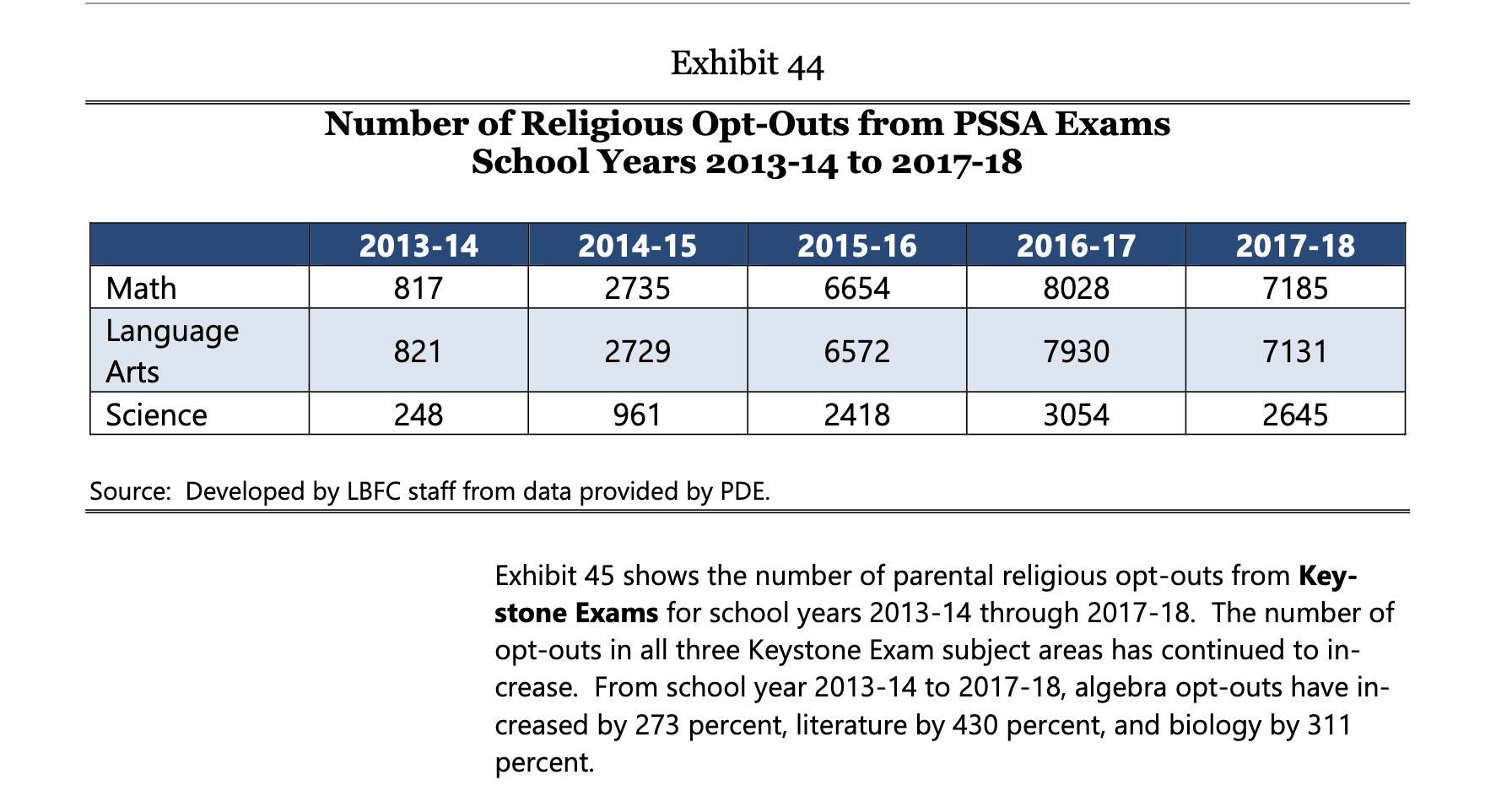
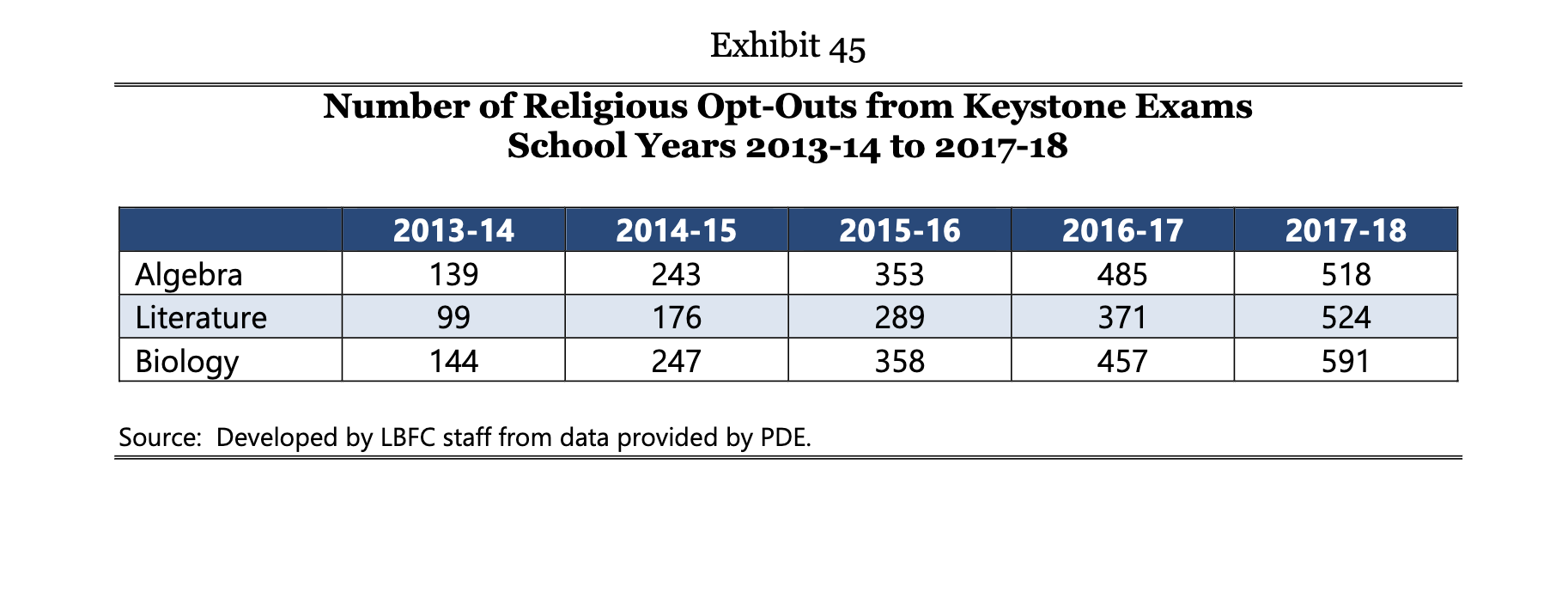



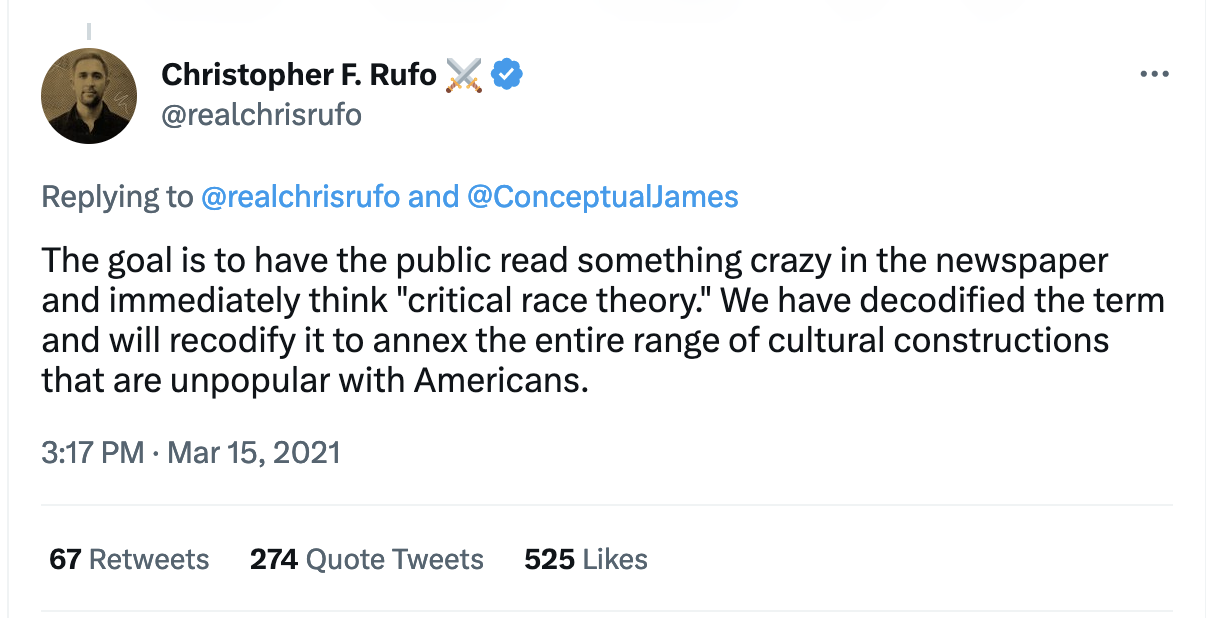


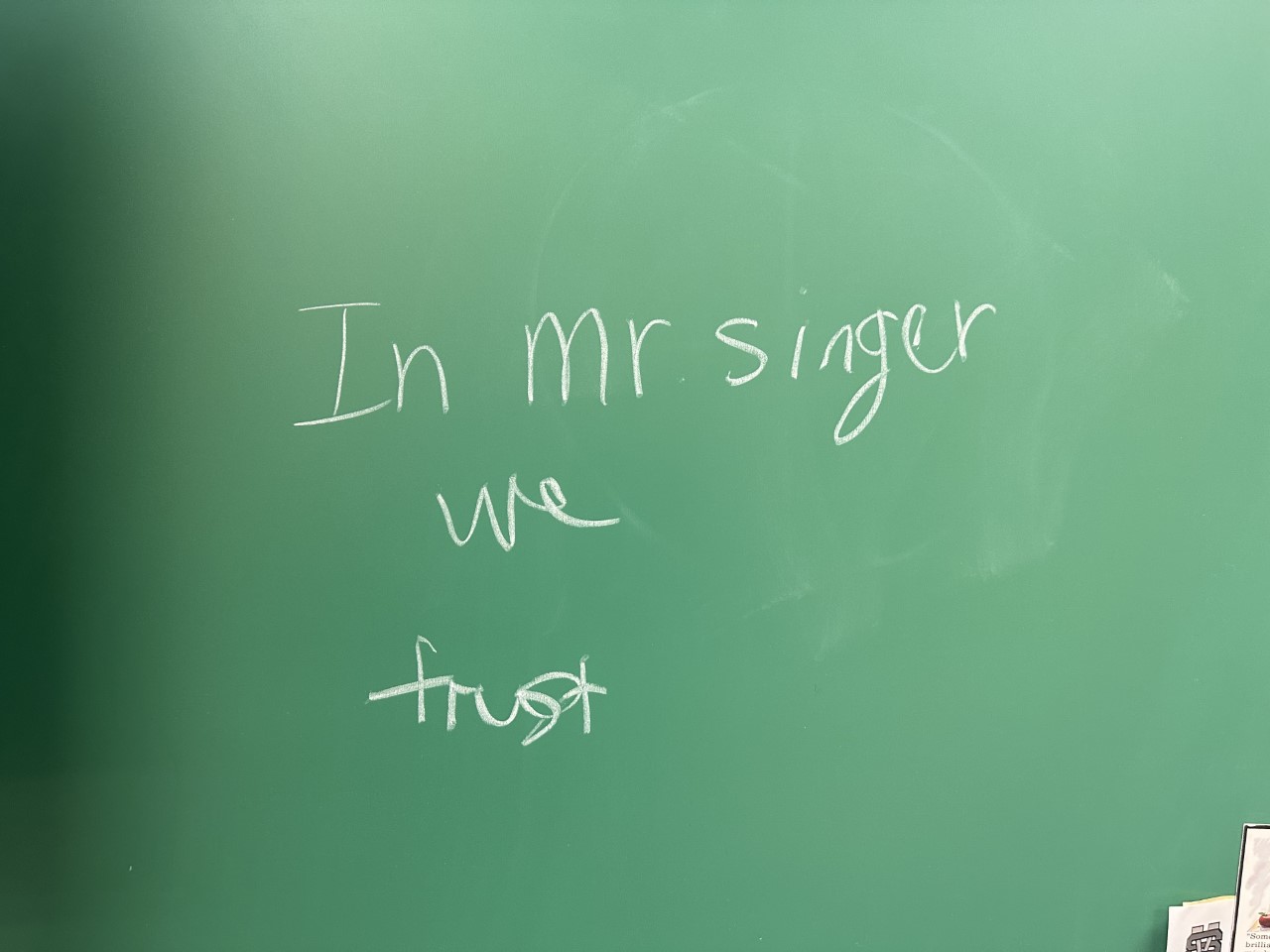
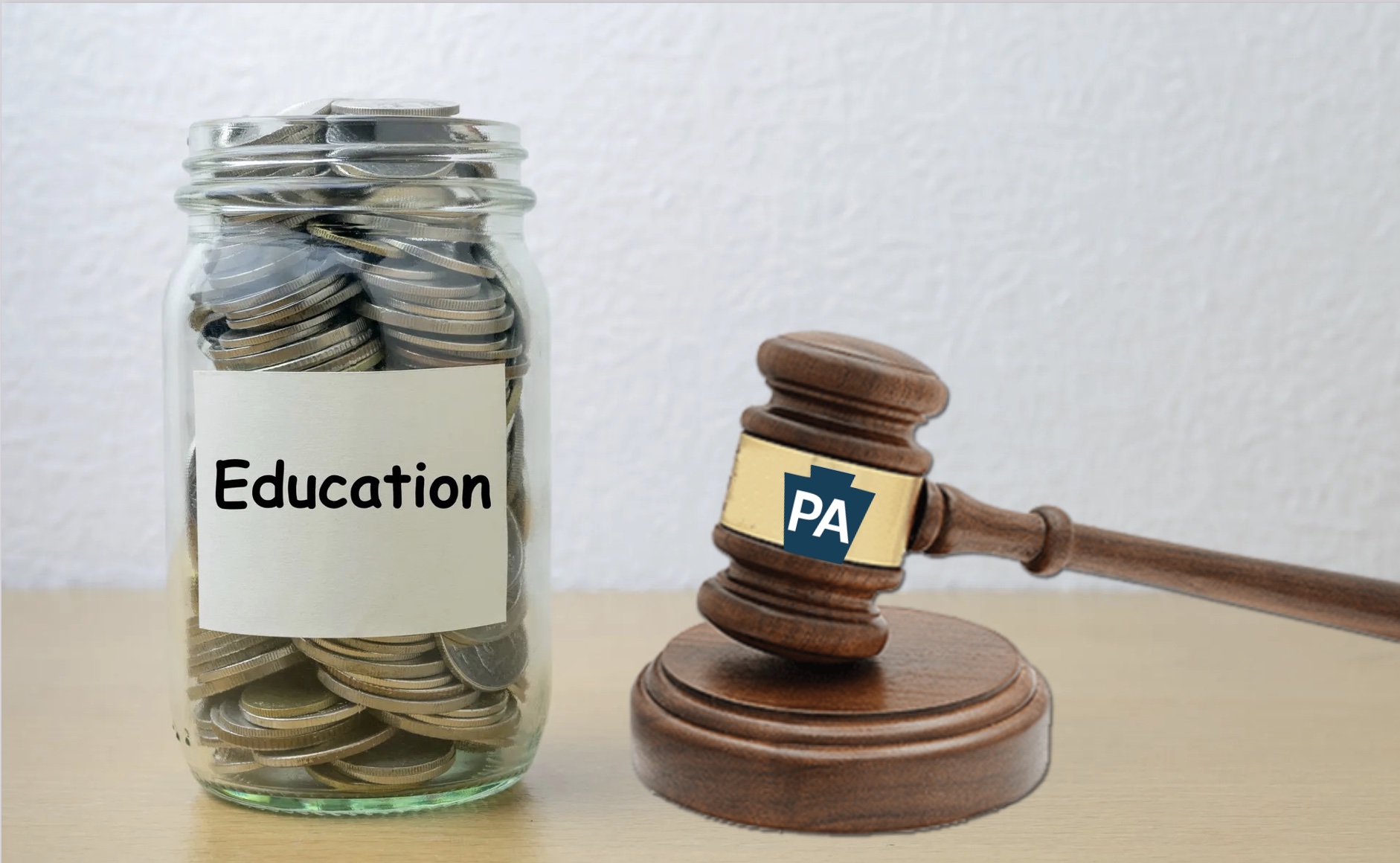

 gadflyonthewallblog