People often ask me what I’d change about education if I could change just one thing.
But they don’t seem to realize that our schools are kind of like Jenga – if you change one thing, you might set off a chain reaction and it all comes tumbling down.
Change one thing – the RIGHT thing – and you may change all of them.
Maybe even for the better!
Why worry about that now?
Monday is my birthday. I’ll be 48.
Old enough to know that birthday wishes don’t come true. Unless maybe you wish for cake and ice cream.
But I can still see myself staring into the candles as friends and family sing the obligatory tune.
The orange flames wave back and forth atop tiny wax fingers threatening to burn down the whole chocolatey confection.
But before they do, I just might give in and make a wish – a birthday wish – and….
No more assessments where a multiplicity of nonacademic factors like parental income, childhood trauma and corporate bias are hidden behind a numeric label.
Educators would no longer be seen as overpaid babysitters but trusted pillars of the community.
They’d be respected – their opinions sought after in educational issues like diamonds.
And the pay! No longer would any teacher need to work more than one job! They’d be compensated like professional athletes. Maybe there’d even be a draft in each state where the most promising prospects out of college would be fought over by schools with children who they think would best be served by their hire.
Imagine a country like that! One that put children first by putting education first!
Imagine how it would change the landscape. Adults who grew up in such a system would be pretty hard to fool because they’d be critical thinkers.
No political charlatan could come in and bamboozle them with nonsense and charisma. No corporation could trick them into pyramid schemes and tax evasion.
No lack of social services, public healthcare, public goods!
Ah! It would be a much better world I think if my wish came true.
But…
Oh…
Sigh!
I don’t see it happening.
No even a little of it.
After two decades in the classroom, the wind always seems to be blowing against such things.
But then again, I have a chance to change the wind come Monday.
We all do.
If you’ll help me blow out the candles.
Like this post? You might want to consider becoming a Patreon subscriber. This helps me continue to keep the blog going and get on with this difficult and challenging work.
For one, all this focus on equity has made it harder to support standardized testing.
That’s a big problem for these folks.
They think that if being against discrimination means also turning against something as obviously innocuous as fill-in-the-bubble tests, maybe it’s today’s brand of anti-racism that has to go.
However, most of us probably don’t see this as a difficult choice.
And today the scores still routinely fail Black and Brown people while passing whites thus barring many people of color from graduation or college entrance.
However, describing such a state of affairs as “racist” has been criticized by a self-described anti-woke backlash.
People as diverse as Fox News correspondents, old school neoliberals and contrarian progressive academicians have taken arms together to fight against what they see as an overstatement of the degree of racism present in modern America and an attack on free speech.
“…an old-school Black progressive who doesn’t hide his disdain for white liberals and what he considers their Black enablers in academia and the culture. He argues that the anti-racism movement of the “elected” is more performative than intellectually serious and that the white allies who provide the shock troops at universities and street rallies are just as gross as white supremacists because their virtue signaling hides their condescension.”
Ultimately Norman concludes, “I agreed with so much of what the writer had to say about specific hypocrisies of white saviors while disagreeing with much of its premise.”
As a white person, I make no judgment on McWhorter’s overall thesis because I don’t feel qualified to do so.
However, as a classroom educator with more than two decades experience teaching mostly poor and minority students, I feel qualified to address the issue of testing.
After all, I have proctored hundreds of these assessments, seen their impact, studied the history and spoken with hundreds of people of color who oppose the tests and a few like McWhorter who defend them.
The linguist’s main argument can be summed up as follows.
Excusing people of color from the tests because they generally score lower is mere pity. People of color don’t need your pity. Give them the tools necessary to pass the tests like everyone else.
“Is it the moral thing to exempt black and Latino kids from the serious competition we consider a normal part of life for all other children, instead of making an effort to prepare them for it?”
First of all, testing should not be about competition. It should be about assessment – telling who knows what, not judging who is worthy of what social and economic position later in life.
Second, it’s not just Black and Brown children who are hurt by the testing. It is ALL children.
The very term “standardized test” means an assessment based around a standard. It privileges the kinds of questions white students are more likely to get correct. After all, that’s how test questions are chosen – not based on the quality of the question but on whether the majority (i.e. white people) get the questions right and the minority (i.e. people of color and others) consistently get it wrong.
It’s not just about knowing math. It’s about knowing the cultural terms, shared experiences and assumptions the math question is embedded in.
McWhorter sees nothing wrong in this. He thinks people of color simply need the tools necessary to pass the tests even if that means being taught to respond as a white person would and to make the same linguistic assumptions and have the same cultural knowledge as privileged white people.
I think it’s kind of sad that in McWhorter’s view Black people would have to engage in such a radical and complete double consciousness or more likely give up their own uniqueness and assimilate as much as possible just to be considered the equal of a white person.
However, another thing he doesn’t seem to understand is that even if he got his wish and the playing field were level giving all children the same chances on the tests, it wouldn’t change a thing.
These exams are made up of multiple choice questions. This is not the best way to determine whether learning has taken place on complex topics. How a linguist could ever suppose even the most rudimentary subtleties of meaning could be captured by a simple A, B, C and D is beyond me.
Wittgenstein, Jakobson, Chomsky… all just so you could choose between a narrow set of prewritten answers!?
“And yet it is considered beyond the pale to discuss getting the kids up to speed: Instead we are to change the standards—the current idea is to bring GPA, performance on a state test, and even attendance into the equation as well. What an honor to black kids to have attendance treated as a measure of excellence. What’s next, rhythm?”
However, it’s not a matter of adding ridiculous or insulting data to the mix to make Black kids look better. It’s about adding enough data to give a clear enough picture of a student’s learning.
At best a standardized test is a snapshot of a student’s learning. It shows what a student answers on a single day or even two or three. By contrast, grade point average (GPA) is made up of student assessments (informal, formal, formative and summative) over the course of 360 some days.
Whether you take other things into account like attendance, poverty level, per pupil spending at the school, etc. – that would just give more information.
In fact, if I were using a metric to accurately assess student learning, I would not include standardized testing at all. I would look at many of these other measures like GPA instead.
These tests are not just immoral because they’re racist, but they’re bad at the act of fairly assessing.
And part of the reason for that is their embedded prejudice.
An assessment that unfairly singles out certain groups not because of their lack of knowledge of the subject being tested but their different enculturation and lack of similar opportunities as the dominant culture can never be a good assessment.
But even if they didn’t do that, they would be like using a pencil to eat soup.
The systems of our society matter. Using the right tool matters.
Whether we call an appreciation of these facts being “woke,” “antiracist” or anything else does not.
Like this post? You might want to consider becoming a Patreon subscriber. This helps me continue to keep the blog going and get on with this difficult and challenging work.
The most popular topic people wanted to read about on my blog this year has been how teachers are dealing with the Covid-19 pandemic.
In short, it’s a mess.
We’re struggling big time.
In the media, they call it a teacher shortage, but it’s really an Exodus away from the profession for educators who are fed up with being treated like crap.
But that’s not the only thing I wrote about in 2021.
At this point in my career with everything crumbling around me, I have no more F’s to give.
I’m laying it all out straight. And this is from a blogger who has often been criticized for not holding anything back BEFORE!
Now I am pointing out all the elephants in the room.
Some of these articles are not for the faint of heart.
If you’re tired of being polite and ignoring all the flaming dumpster fires that well behaved teachers aren’t supposed to mention, then you might enjoy some of these stories.
Description: The title says it all. Stop wasting teachers’ time by making us fill out paperwork that won’t help us do our jobs but will make administrators and principals look good. We make our own plans for ourselves. We don’t need to share with you a bunch of BS with Common Core nonsense and step-by-step blah-blah that will probably have to change in the heat of the moment anyway.
Fun Fact: Teachers in my building rarely say anything to me about my blog. But I got some serious appreciation on my home turf for this one.
Description: We talk about missing teachers, subs, aides, bus drivers, but not parents or guardians. We should. They are absolutely essential to student learning. I think there are a lot of good reasons why parents don’t participate in their children’s schooling, but they will never get the help they need if we continue to ignore this issue and throw everything on teachers and the school.
Fun Fact: So many liberals lost their minds on this article saying I was attacking parents. I’m not. If people were drowning, you would not be attacking them by pointing that out and demanding help fishing them out of the water. It is not “deficit thinking” to acknowledge that someone needs help. It’s authentic advocacy for both students and parents.
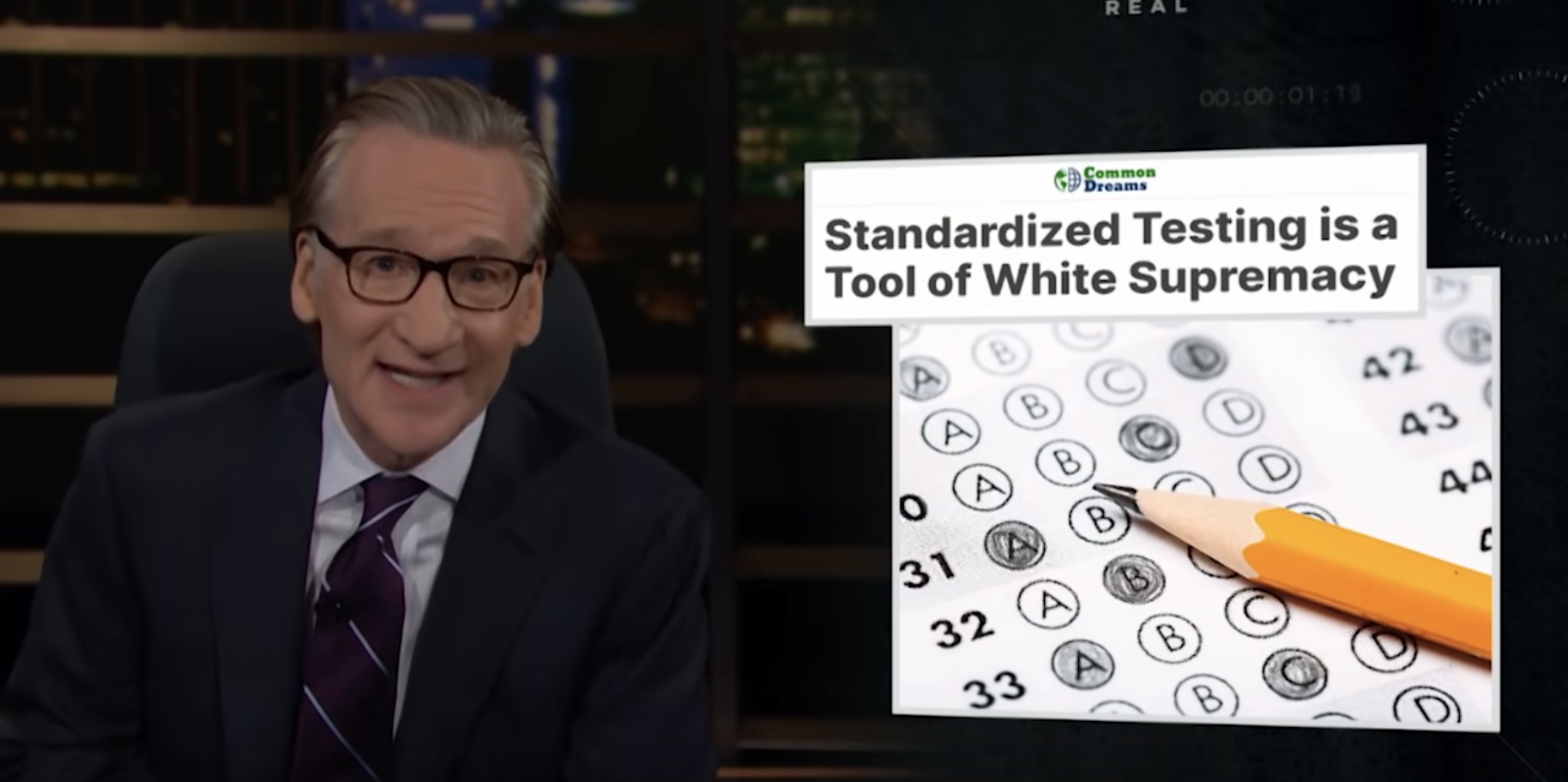
Description: It wasn’t just liberals who were butt hurt by my writing – it was neoliberals, too. Comedian Bill Maher actually mentioned my article “Standardized Testing is a Tool of White Supremacy” on his HBO show. He joked that I was devaluing the term ‘white supremacy.” Sure. These assessments only help white people unfairly maintain their collective boot on the throats of black and brown people. That’s not white supremacy. It’s melanin deficient hegemony. Happy now!?
Fun Fact: Maher’s assertion (I can’t claim it’s an argument because he never actually argued for anything) seems to be popular with neoliberals trying to counter the negative press standardized testing has been receiving lately. We need to arm against this latest corporate talking point and this article and the original give plenty of ammunition. My article was republished on Alternet and CommonDreams.org.
Description: Most of the world does not have competitive after school sports. Kids participate in sports through clubs – not through the schools. I suggested we might do that in the US, too. This would allow schools to use more of their budgets on learning. It would stop crucial school board decisions from being made for the athletics department at the expense of academics. It would remove litigation for serious injuries. Simple. Right?
Fun Fact: So many folks heads simply exploded at this. They thought I was saying we should do away with youth sports. No. Youth sports would still exist, just not competitive sports through the school. They thought poor kids wouldn’t be able to participate. No, sports clubs could be subsidized by the government just as they are in other countries. Some folks said there are kids who wouldn’t go to school without sports. No, that’s hyperbole. True, some kids love sports but they also love socialization, routine, feeling safe, interaction with caring adults and even learning! But I know this is a radical idea in this country, and I have no illusions that anyone is going to take me up on it.
Description: Republicans have a new racist dog whistle. They pretend white people are being taught to hate themselves by reference to a fake history of the US called Critical Race Theory. In reality, schools are teaching the tiniest fraction of the actual history of racism and Republicans need that to stop or else they won’t have any new members in a few generations. I wrote three articles about it this year from different points of view than I thought were being offered elsewhere.
Fun Fact: I’m proud of this work. It looks at the topic from the viewpoint of academic freedom, the indoctrination actually happening (often at taxpayer expense) at private and parochial schools, and the worthy goal of education at authentic public schools. Article B was republished on CommonDreams.org.
Description: I ran for office this year in western Pennsylvania. I tried for Allegheny County Council – a mid-sized position covering the City of Pittsburgh and the rest of the second largest county in the state. Ultimately, I lost, but these three articles document the effort.
Fun Fact: These articles explain why a teacher like me ran for office, how I could have helped public schools, and why it didn’t work out. Article C was republished on CommonDreams.org.
Description: These are terrifying times. In the future people may look back and wonder what happened. These two articles document how I got vaccinated against Covid-19 and my thoughts and feelings about the process, the pandemic, and life in general.
Fun Fact: It hasn’t even been a full year since I wrote these pieces but they somehow feel like they were written a million years ago. So much has changed – and so little.
Description: Pennsylvania Republican state legislators were whining that they didn’t know what teachers were doing in public school. So they proposed a BS law demanding teachers spend even more of their never-ending time giving updates. I suggested legislators could just volunteer as subs and see for themselves.
Fun Fact: So far no Republicans have taken me up on the offer and their cute bit of performative lawmaking still hasn’t made it through Harrisburg.
Description: When it comes to stopping a global pandemic, we need federal action. This can’t be left up to the states, or the counties, or the townships or every small town. But all we get from the federal government about Covid mitigation in schools are guidelines. Stand up and do your F-ing jobs! Make some rules already, you freaking cowards!
Fun Fact: As I write this, President Joe Biden just came out and said there is no federal solution to the pandemic. It’s not that I think the other guy would have done better, but this was a softball, Joe. History will remember. If there is a history after all this is over.
Description: On January 6, a bunch of far right traitors stormed the Capitol. This articles documents what it was like to experience that as a public school teacher with on-line classes during the pandemic.
Fun Fact: Once again, history may want to know. Posterity may have questions. At least, I hope so. The article was republished on CommonDreams.org.
Gadfly’s Other Year End Round Ups
This wasn’t the first year I’ve done a countdown of the year’s greatest hits. I usually write one counting down my most popular articles and one listing articles that I thought deserved a second look (like this one). Here are all my end of the year articles since I began my blog in 2014:
Like this post? You might want to consider becoming a Patreon subscriber. This helps me continue to keep the blog going and get on with this difficult and challenging work.
I love inspiring kids to write. I love coming up with creative and interesting journal topics and poetry assignments. I love explaining the far out concepts – hyperbole, alliteration, onomatopoeia. I love jamming to Blackalicious’ “Alphabet Aerobics,” sharing “Whose Line is it Anyway” videos and trying to write paragraphs to the melodies of Miles Davis.
I don’t love having so little planning time.
I don’t love having to fly by the seat of my pants rehashing lessons that were getting stale two years ago but having no time to make them fresh or original. I don’t love trying to fit in as much grading as I can in class, trying to call or email parents on my lunch break. I don’t love having to fill in for missing staff 4 out of 5 days a week, being a glorified security guard in lunch duty, subbing for a teacher who isn’t absent but who has been called into an unnecessary staff meeting for yet another scattershot initiative to fight bogus learning loss.
I love reading books with my students – both together and separately. I love going to the library and helping them find something suited to their tastes – try a Ray Bradbury classic; maybe a new anime; and when you’re ready, a deep meditation by Toni Morrison. I love reading “The Outsiders” with my classes and experiencing Ponyboy’s story anew every year – feeling the highs, the lows, the losses, the victories. I love seeing the look on children’s faces when the realization dawns that they can no longer honestly say they hate reading, but only that sometimes it’s hard. I love catching them with a book in their bags or the same book on their desks being read over and over again because they love it so much.
Like this post? You might want to consider becoming a Patreon subscriber. This helps me continue to keep the blog going and get on with this difficult and challenging work.
Even Canada follows this practice with hockey. Young athletes don’t play for their high schools; they play for one of three national hockey leagues – the Ontario Hockey League, the Western Hockey League or the Quebec Major Junior Hockey League.
The way we do things in the US – combining athletics and academics under one roof – ends up making each undertaking enemies.
Kids are unnecessarily injured in the games and indoctrinated in an ethic of dominance. In addition, sports programs gobble up limited resources meant for the classroom, and incentivize bad decisions that prize athletics over everything else.
Let’s look at each in turn:
1) Injuries
School sports began as a way to keep kids safe.
About 120 years ago, schools were not involved in organized athletics.
Perhaps the most dangerous are concussions. These are especially frequent in contact sports like football where athletes bump or smash their heads or bodies into each other. Even with protective equipment like helmets and pads, such collisions can cause traumatic brain injuries that can alter the way brains function for a lifetime.
During the 2005-06 season, high school football players sustained more than half a million injuries nationally, according to the Center for Injury Research and Policy at Columbus Children’s Hospital. While football easily incurs the highest risk, even sports like soccer and baseball are responsible for thousands of injuries to adolescents between the ages of 10 to 14 every year.
And that’s only the most obvious danger. It doesn’t even include increased steroid use, fighting during games, hazing violence, excessive training, verbal abuse, and failure to provide proper care during important matches.
Competitive extracurricular sports can be dangerous to young people’s health. It is certainly valid to question whether schools should be involved in such practices incurring liability and potentially harming their own students.
2) Warrior Mindset
And then there’s the question of whether school sports are healthy for our minds as well as our bodies.
At the turn of the 20th Century, schools started organizing their own teams because they wanted to not just keep kids physically safe, but provide a healthy alternative to the kinds of activities they might be lured into on the streets. Based on the Victorian ideal of “Muscular Christianity,” sports was considered something wholesome that would district American children (especially boys) from social ills like gambling and prostitution.
However, even then it was a manifestation of the period’s xenophobia.
In the early 1900s, the US had just admitted a surge of European immigrants. Some people were worried that immigrant children would overrun the kids already here. Physician and poet Oliver Wendell Holmes Sr. described this class of American-born kids as “stiff-jointed, soft-muscled, paste-complexioned youth.” It was suggested that organized sports would help them become as brawny as those just coming to our shores.
So the driving motives behind the creation of school sports were bigotry and fear.
Sadly, not much has changed in the intervening years.
Sports culture creates understandings of the world and self that are not entirely healthy in a democratic society.
For instance, an emphasis on competition instills the ethic that it is the outcome – winning or losing – that is most important. As kids become adults, this informs the way they frame ethical choices. Moreover, it dampens empathy. You’re discouraged from caring about members of the other team and encouraged to be hostile to anyone considered an other. Even teammates are only worthy of care in so much as they help you win. There is always latent competition because there is a constant danger that one of your teammates could take your place.
Moreover, sports do not value critical thinking or individuality. You listen to your coach or team captain or whoever in the hierarchy is above you. Questioning authority is discouraged. Instead, you’re impressed with the duty to follow and accept the decisions of those in charge.
These values would be more helpful in the development of warriors or soldiers – not democratic citizens. We need people who value tolerance, discussion, justice, caring, and diversity of ideals – exactly the opposite of what organized sports instills.
The world view promoted by organized athletic competition is not healthy for our students.
3) Expense
However, even if school sports didn’t hurt kids physically and mentally, they cost a ridiculous amount of money!
However, this is actually a minority of students, only about 42%. That’s because it often costs parents an additional fee for their kids to play on school teams – between $670 – $1,000 a year. This includes sporting registration fees, uniforms, coaching, and lessons.
Costs to districts are hard to quantify but significant.
Football is easily the most expensive high school sport. Consider that many football teams have half a dozen or more coaches, all of whom usually receive a stipend. And some schools go even further hiring professional coaches at full salaries or designate a teacher as the full-time athletic director. The cost of new bleachers can top half a million dollars – about the same as artificial turf. Even maintaining a grass field can cost more than $20,000 a year. Not to mention annual expenses like reconditioning helmets, which can cost more than $1,500 for a large team. To help offset these costs, some communities collect private donations or levy a special tax for initiatives like new gyms or sports facilities.
There are so many costs people rarely consider. For example, when teachers who also serve as coaches travel for game days, schools need to hire substitute teachers. They also need to pay for buses for the team, the band, and the cheerleaders. And that’s before you even take into account meals and hotels during away games. Even when events are at home, schools typically cover the cost of hiring officials, providing security, painting the lines on the field, and cleaning up afterward.
They often end up spending more per student athlete than they do per pupil in the classroom.
Marguerite Roza, the author of Educational Economics, analyzed the finances of one public high school in the Pacific Northwest. She and her colleagues found that the school was spending $328 a student for math instruction and more than four times that much for cheerleading—$1,348 a cheerleader.
One wonders – can we afford school athletics? Wouldn’t it be better to spend school budgets on learning – something all students participate in – rather than something that only benefits a fraction of the student body?
4) Decision Making
The cost of school sports isn’t measured just in dollars and cents but in the kinds of decisions administrators and school board members make for the sake of athletics – regardless of how it impacts academics.
People are often hired for important school positions based on their sports credentials even when their jobs are supposed to be mainly focused on improving student learning.
This is especially true where I live in Western Pennsylvania.
In my home district of McKeesport, when our superintendent, Dr. Mark Holtzman, was hired, he did not have any proven track record of scholastic success but had been a football star when he was a student here.
Likewise, the district where I work as a teacher, Steel Valley, hired Eddie Wehrer as superintendent without any degree in education but experience as a football coach.
The same goes for principals recommending new staff.
Sometimes administrators will lower their standards and recommend a less qualified applicant if he or she has experience as an athletic coach.
Whether they’ll admit it or not, the prospect of a winning season for the football team is often prioritized over new textbooks, smaller class sizes or other improvements.
The act of running for school board is often seen as a way to have greater control over district athletics. Go to most local school board meetings and you’ll hear much more discussion of various teams and extracurricular activities than academic programs.
National organizations like the NFL, NBA and Major League Baseball recruit most of their players from colleges who recruit most of their players from K-12 schools. It’s a lucrative system with billions of dollars in profit on the line.
If students get an excellent education, that’s seen as a personal benefit to them, alone. But if a student athlete gets signed to a sports contract, that enriches the team and the corporation orders of magnitude more than the athlete.
Schools bask in the reflected glory of successful athletes, teams and programs. Grown adults who are too old to participate, themselves, take vicarious pleasure in these successes.
I understand that this is a very controversial topic.
There is a small minority of students who benefits from school athletics and even come to school primarily just to participate in sports.
However, the negatives far outweigh the benefits.
I think it’s time we begin considering separating sports and schools.
Students who want to participate in such activities can do so through private athletic clubs just like kids all over the world.
And before I’m criticized as being anti-sports, consider that such a separation would benefit both endeavors. Students would have more time and resources to focus on learning, while athletes could concentrate more on their chosen sport and train all year long instead of just during a certain season.
I have no illusions that anyone will take my advice. Sports are way too entrenched in American schools and our elected officials can’t even seem to find the courage to enact obvious reforms like gun control, repealing charter schools, ending standardized testing and funding schools equitably.
However, if we really want the best for US children, we should give them what kids the world over already have – schools separate from organized sports.
Like this post? You might want to consider becoming a Patreon subscriber. This helps me continue to keep the blog going and get on with this difficult and challenging work.
We need a popular, national movement demanding action from our state and federal governments. However, in the meantime, there are several things our local school districts can do to stem the tide of educators fleeing the profession.
These are simple, cheap and common sense methods to encourage teachers to stay in the classroom and weather the storm.
However, let me be clear. None of these can solve the problem, alone. And even ALL of these will not stop the long-term flight of educators from our schools without better salaries and treatment.
1) Eliminate Unnecessary Tasks
The list of tasks an average teacher is expected to accomplish every day is completely unrealistic.
Think about it. Just to get through a normal day teachers need to provide instruction, discipline students, grade papers, facilitate classwork, troubleshoot technology, provide written and verbal feedback, counsel disputes, role model correct behavior, monitor the halls, lunches, breakfasts and unstructured time, meet with co-workers, follow Individual Education Plans, scaffold lessons for different learners and learning styles…
If we truly want to help teachers feel empowered to stay in the profession, we need to reduce the burden. And the best way to do that is to eliminate everything unnecessary from their plates.
That means no staff meeting just to have a staff meeting. No shotgun scattered initiatives that teachers are expected to execute and we’ll see what will stick. No reams of paperwork. No professional development that wasn’t specifically requested by teachers or is demonstrably useful.
I’m not saying we should tell teachers they don’t have to plan what they’re doing in their classes. I’m not sure how an educator could realistically enter a classroom of students and just wing it.
However, the process of writing and handing in formal lesson plans is absolutely unnecessary.
Teachers gain nothing from writing detailed plans about what they expect to do in their classes complete with reference to Common Core Academic Standards. They gain nothing from acting as subordinates to an all knowing administrator who probably has not been trained in their curriculum nor has their classroom experience teaching it.
For educators with at least 3-5 years under their belts, formal lesson plans are nothing but an invitation to micromanagement.
Forcing teachers to set aside time from their already overburdened schedules to fill out lesson plans that administrators don’t have time to read and (frankly) probably don’t have the training or experience to fully comprehend is top down managerial madness.
3) More Planning Time
Teachers need time to plan.
It’s pathetic that I actually have to explain this.
Parents need called. Papers need graded. Lessons need strategized. IEP’s need to be read, understood and put into practice.
All this can only happen within a temporal framework. If you don’t give teachers that framework – those minutes and hours – you’re just expecting they’ll do it at home, after school or some other time that will have to be stolen from their own families, robbed from their own needs and down time.
Every administrator on the planet preaches the need for self-care, but few actually offer the time to make it a reality.
Even if we could discover exactly how much time was necessary for every teacher to get everything done in a given day – that wouldn’t be enough time. Because teachers are human beings. We need time to process, to evaluate, to think and, yes, to rest.
I know sometimes I have to stop wrestling with a problem I’m having in class because I’m getting nowhere. After two decades in the classroom I’ve learned that sometimes you have to give your brain a rest and approach a problem again later from a different vantage point.
I need to read a scholarly article or even for pleasure. I need to watch YouTube videos that may be helpful to my students. I need to get up and go for a walk, perhaps even just socialize for a moment with my coworkers.
None of that is time wasted because my brain is still working. My unconscious is still trying untie the Gordian knot of my workday and when I finally sit down to revisit the issue, I often find it looser and more easily handled.
Do not ask your teacher to sub. Do not ask them to attend meetings. Do not ask them to help you plan building wide initiatives – UNLESS you can guarantee it won’t interfere with their plans.
I know this is difficult right now with so many staff falling ill or being so plowed under that they simply can’t make it to work.
Not only will their work suffer but so will their health and willingness to continue on the job.
Some districts are finding creative ways to increase planning time such as releasing students early one day a week. We did that at my district last year and it was extremely helpful to meet all the additional duties required just to keep our building open. However, as the new school year dawned and decision makers decided to simply ignore continuing pandemic issues, this time went away.
If you take away their ability to do that, why would they stay?
4) Better Communication/ Better COVID Safety
Communication is a two way street.
You can’t have one person telling everyone else what to do and expect to have a good working relationship.
Administrators may get to make the final decision, but they need to listen to what their teachers tell them and take that into account before doing so.
This means setting aside the proper time to hear what your staff has to say.
Many administrators don’t want to do that because things can devolve into a series of complaints. But you know what? TOUGH.
It is your job to listen to those complaints and take them seriously.
Sometimes just allowing your staff to voice their concerns is helpful all in itself. Sometimes offering them space to speak sparks solutions to problems – and a whole room full of experienced, dedicated educators can solve any problem better than one or two managers locked away in the office.
However, not only do administrators need to listen, they need to speak.
When issues crop up, they need to make sure the staff is aware of what is happening.
Being a teacher should mean something to district leaders. And they should prove it in every thing they do.
The items I mentioned here go some ways to showing that respect.
Eliminating unnecessary tasks, not requiring formal lesson plans, respecting our planning time, better communicating and safety measures are all necessary to keeping your teachers in the classroom.
But they are not sufficient.
As a nation we need to change our attitude and treatment of teachers.
No profession exists without them. They create every other job that exists.
We need to start paying them accordingly. We need to start treating them as important as they are. We need to ensure that they have the time, tools and satisfaction necessary to be the best they can be.
No district can do that alone. No school director or administrator can do that.
But these are some ways you can start.
Like this post? You might want to consider becoming a Patreon subscriber. This helps me continue to keep the blog going and get on with this difficult and challenging work.
This week the CDC changed its advice to all staff, students and teachers when schools reopen. Instead of wearing masks in schools only when unvaccinated, people should wear masks regardless of whether they’ve been vaccinated or not.
This is necessary to protect children who aren’t eligible for the vaccine and slow the spread of new more infectious variants of the virus, representatives said.
The problem is that too many Americans don’t listen to advice – especially if it goes against their beliefs.
And there are a significant number of Americans who believe whatever crazy nonsense talk radio, Fox News or their savior Donald Trump tell them.
Immunologists talking about infectious disease just don’t rate.
So these people aren’t going to listen to the CDC’s advice.
That presents real problems both for them and for us.
First of all, they’re literally killing themselves.
More than 99% of people who die from Covid-19 these days are unvaccinated, and they make up almost the same percentage of recent hospitalizations.
CDC director Dr. Rochelle Walensky calls this a “pandemic of the unvaccinated”, but they aren’t the only ones paying for it.
We all are.
The Covid-19 pandemic would be effectively over in the United States if everyone who was eligible for the vaccine had received it.
As a result, cases of Covid-19 are on the rise again in most of the United States. In fact, this country leads the world in the daily average number of new infections, accounting for one in every nine cases reported worldwide each day.
The majority of these new cases are the more infectious delta variant, a version of the virus that could jump start cases even among the vaccinated.
And the reason the virus had a chance to mutate and become more resistant to our existing treatments was a ready supply of easy hosts – anti-vaxxers who refused to protect themselves and now have put the rest of the country back at risk.
Their ignorance and selfishness has put all of us in danger.
That makes me mad, and not just at the anti-vaxxers.
I’m mad at the federal government.
You could have done something about this. You SHOULD have done something, but you didn’t.
The Trump’s administration badly bungled the initial stages of the pandemic with late and inadequate international travel bans, failure to use federal authority to supply Personal Protective Equipment (PPE), failure to require mandatory universal paid sick leave for those unable to work due to the virus, and failure to mandate standards for the health and safety of workers.
In contrast, President Joe Biden’s administration has done better in making the vaccine readily available, but still failed to fix many of the problems it inherited and still continually neglecting to mandate anything.
“Hey, Buddy, why don’t you try this?” – is NOT good enough!
We need – “Do this OR ELSE!”
You can’t just make the vaccine available and hope people are smart enough to take it.
They aren’t. Not in America.
Not after decades of allowing lies and disinformation to infect the airwaves. In the name of freedom we’ve let Fox News and the former President poison the minds of admittedly easily lead citizens until their ignorance impacts all of us.
What we need now is to make vaccines a prerequisite to participate in all kinds of social congress – shopping, dinning at restaurants, movies, sporting events, schools, etc. But our government -our FEDERAL government – won’t do that.
Instead it’s a never ending cycle of passing the buck – that’s been our lawmakers response whether Republican or Democrat – to this crisis.
Authority is left it up to the states, who often refuse to allow safety precautions to be regulated or passed the decision on to someone else until it’s being made separately by every minor representative, podunk flunky and school director this side of Mayberry.
What a disgrace!
And here we are again.
The experts are telling us what we should do in the best interests of keeping our children safe. But the federal government refuses to back it up with its full authority.
Just advice. No rules.
Will people be required to wear masks in public schools?
Maybe.
It all depends on what local officials somewhere down the line decide.
In my home state of Pennsylvania, Democratic Governor Tom Wolf announced yesterday that he is not even considering a statewide mask mandate as Coronavirus cases surge nor will he require masks in schools.
Wolf said his strategy to fight the spread of COVID-19 is the vaccine, itself, – the masking mandate was for when there was no vaccine.
“People have the ability, each individual to make the decision to get a vaccine,” Wolf says. “If they do, that’s the protection.”
Meanwhile, Allegheny County Chief Executive Rich Fitzgerald says he’d consider a mask mandate if infections were worse in the county, an area that includes the City of Pittsburgh. Though he suggests schools follow CDC advice, he’s not about to make that decision for them.
So it will be left to local school directors to decide what to do. Probably most of them will allow masks in school but not require them.
It’s a terrible situation with an incredible lack of leadership, but I get it.
School board directors do not have the power of the bully pulpit. They don’t have the power of Chief County Executives, Governors or the President.
If people challenge their decisions (as they probably would) that requires district finances for lengthy court battles and uncomfortable political confrontations for re-election.
None of these folks should have to make these kinds of life and death decisions.
That’s what the President is for. It’s what US Congress is for.
The buck has to stop somewhere. Right!?
But the matter has become so politicized and our representatives so spineless that our entire system hangs by a thread.
What if the federal government mandates masks and certain states or districts don’t listen?
Will its take the national guard to come in and enforce the mandate?
There was a time when lawmakers had the courage to do things like that – to legislate what was in the best interests of society and darn the consequences.
But today’s lawmakers do not have the courage to govern.
And once again, we’re paying for it.
Our society has failed to protect us. It barely functions anymore.
In the few years since we discovered Covid-19, young children have rarely gotten as sick from the virus as adults. However, that is changing. Infections have increased this summer as the delta variant spread until approximately 4.1 million children have been diagnosed with the disease resulting in about 18,000 hospitalizations and more than 350 deaths.
The Delta variant is 225% more contagious, contains 1,000% higher viral loads from earlier variants, and hits those levels in just 3 ½ days. Delta has a stronger bond to ACE-2 receptors in nasal passages and lung cells.
Vaccinated people can get infected if exposed to large enough viral loads. Unvaccinated kids could easily have those high viral loads. This means that everyone is a possible link in the chain of transmission.
But it’s not inevitable.
There is something we could do about it if we act now.
No more mere advice!
Pass some laws, make some rules to keep everyone as safe as possible and finally end this pandemic!
It just takes courage and common sense – two things in short supply in today’s United States.
Like this post? You might want to consider becoming a Patreon subscriber. This helps me continue to keep the blog going and get on with this difficult and challenging work.
The basic thrust of the story is captured in the headline. It says that public schools throughout Pennsylvania have received an influx of funding to deal with the COVID-19 pandemic but school directors are unnecessarily planning to increase taxes anyway.
For example, Pittsburgh Public Schools has received $161 million in three rounds of federal disaster funding. Yet the district is still projecting a $38 million deficit this year.
Ideologues at the Harrisburg based Commonwealth Foundation don’t understand how that’s possible. They want to know why districts can’t just use the disaster funding to pay for continuing expenses?
Because it’s illegal. Duh.
Pittsburgh Superintendent Dr. Anthony Hamlet explains:
“That’s one-time dollars. That money cannot supplant the general fund so the general fund is different. These are supplementary dollars that can’t be used for personnel or anything like that.”
Most of those funds will go to pay for after-school or summer school programs to help students with declining academics after they spent much of the past year at home, he continues.
Moreover, if districts spent that money (illegally) to fill pre-existing budget holes, all they’d be doing is kicking the can of funding deficits down the road a year or two.
Ideologues at the Commonwealth Foundation know that.
In fact, later on in the exact same story, they worry about this very thing.
At the beginning of the story, Elizabeth Stelle, Director of Policy Analysis for the Commonwealth Foundation, says, “We see no reason why the federal funding is not more than enough to cover the needs of districts today.”
But then later in the same story she says, “I’m very concerned they’re going to spend that money on ongoing needs and we’ll be in a very difficult situation a couple years from now.”
Well, which is it Stelle? Are you worried about districts REFUSING to use disaster funds to pay for ongoing needs or are you worried that they WILL use disaster funds for this exact purpose?
WTAE should have had the journalistic integrity to ask her about her blatant contradiction in this story and her reprehensible positions on record. Or perhaps have the integrity not to invite such members of the lunatic fringe on their network and legitimize her position with coverage.
Unfortunately, producers are content to broadcast clickbait to get low information voters agitated against schools without any good reason.
I suppose it gets ratings.
If it bleeds it leads, and if it antagonizes it televises.
Sadly, WTAE wasn’t the only local television station to do so.
This at least was a more skeptical look at the same Commonwealth Foundation report.
But why run anything on the report to begin with?
Were the Flat Earthers busy? Was Q-anon out of conspiracies? Has no one spotted the Illuminati lately?
WPXI characterized the report less about COVID funding misuse than additional funds being unnecessary to begin with.
Reporters said the Commonwealth Foundation report concluded that state districts were not hurting from the pandemic in the first place. And then journalists went to local districts who flatly contradicted that statement with facts.
Gateway School Board President Brian Goppman, for example, said the district cut $3 million from its operating budget due to the pandemic. Moreover, the tax base, itself, has suffered from COVID. When businesses close, that’s less tax revenue to fund social programs like schools.
“Monroeville and especially our district… we get a lot of money from the businesses. Every day that we’re in the pandemic with these restrictions is another day we’re wondering if that business will be around tomorrow,” Goppman said.
And this doesn’t even factor in additional costs to hire more teachers and support staff to help students deal with a year and a half of less than ideal academics caused by quarantines and other safety measures.
They had on Jennifer Stefano, Chief Strategist and Vice President at the Commonwealth Foundation, to talk about public school funding. Stefano is a former Tea Party member and frequent talking head on Fox News and other radical right propaganda networks who famously attacked the Head Start Program that provides early childhood education, health, nutrition, and parent services for low-income families.
She could not have found a more friendly audience in Richert and Battle.
Richert and Battle were pathetically begging for relevance and ratings while letting Stefano spout nonsense statistics about public schools for 8 minutes.
This may come as a shock, but a group like the Commonwealth Foundation that advocates for cutting governmental services doesn’t like public schools.
A real investigative journalist might have just walked into an inner city school to check it out. She would have seen that many schools are literally falling apart.
Or she could look up actual statistics. A full 35 states provide less overall state funding for education today than they did in 2008. Most states still haven’t recovered from George W. Bush’s Great Recession and the subsequent state and local budget cuts it caused. And schools in 27 of those states actually saw per pupil funding fall even further.
Moreover, Pennsylvania is one of the worst. The state government pays only 38% of the cost to educate children leaving the majority up to local communities to make up the difference. That’s the 46th lowest in the country. The national average is 51%.
In fact, our funding inequality is the worst in the nation. According to the U.S. Department of Education, poor schools in the Commonwealth spend 33 percent less on their students than rich ones.
Not because public schools are “flush with cash” – a characterization right out of the mouth of Donald Trump.
However, the Commonwealth Foundation plays with the numbers to mask this reality.
For example, they claim the US spends more per student than nearly any other country in the developed world. But that figure varies tremendously by state with some spending much more than others. Moreover, American schools have costs educational institutions in other countries don’t have such as security and other non-instructional costs.
As we’ve seen, even when you look at per pupil spending across the state, you’re masking funding inequalities from district to district. You’re looking at an average of all spending, which ignores how little we spend at lower income schools and how much we spend at districts catering to rich communities.
Moreover, if we compare the percentage of GDP spent on education with other countries, you’ll see the US spends much less than comparable nations. For example, we spend about 5% of our GDP on schools compared with 6.4% in New Zealand, 6.9% in Finland, 7.5% in Iceland and 7.6% in Denmark.
If you live in a rich neighborhood, your kids get all the best. If you live in a poor one, you don’t get comparable services.
Trolls like the Commonwealth Foundation feed off this burning dumpster fire by covering the inequity of our taxing system which relies too heavily on the poor and middle class and lets the wealthy get by without paying their fair share.
Instead of pointing out the real problem and demanding the rich do their part, the Commonwealth Foundation covers for their billionaire masters. Partisans at the foundation ignore low taxes on the wealthy and blame high taxes on the poor and middle class on things like public schools.
And stories like these only go to further enrage taxpayers so that they’ll support tearing down the very systems that help keep them and their kids afloat.
No news organization should be falling for these lies.
WTAE, KDKA and WPXI should know better.
They are helping tear down media trust in this post truth age.
How ironic that in doing so they are helping destroy education – the one tool essential to navigating through such a landscape.
Find out more about state education funding shortfalls HERE.
Like this post? You might want to consider becoming a Patreon subscriber. This helps me continue to keep the blog going and get on with this difficult and challenging work.
Being Governor of Pennsylvania must be one of the most thankless but important jobs ever.
With a hopelessly gerrymandered legislature, a majority of Republican lawmakers representing a minority of voters stops nearly anything from getting done for the rest of us.
If it weren’t for a Democratic Governor to act as a check and balance on this lunatic fringe, the state would devolve into chaos.
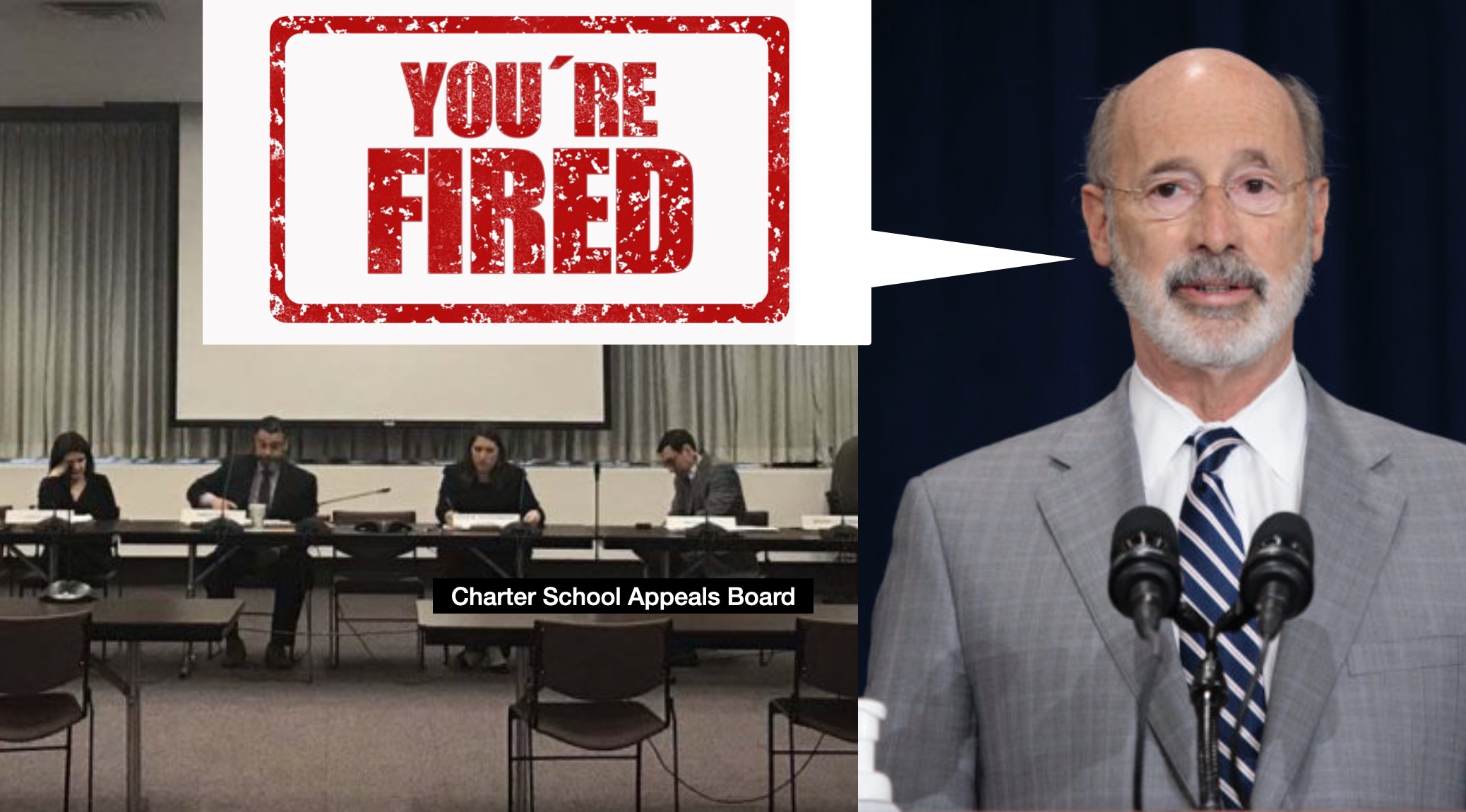
Case in point: the Charter School Appeals Board (CAB).
After all, why would Republicans work with Wolf? What incentive did they have to do so?
Refusing to work with the Democratic Governor kept the previous Republican Governor’s appointees in place long after their tenure should have expired.
This kept the CAB ideologically right wing so the members could rubber stamp charter schools left and right bypassing the will of duly elected school boards all over the Commonwealth.
She literally sat on the board and worked with several sitting members of CAB when she was part of the Corbett administration. Now all these years later she appears before CAB for a hearing asking them to overrule the Harrisburg School Board that had originally denied her charter school’s application.
Guess who won?
The CAB unanimously sided with Dumaresq over elected members of the local community.
So Wolf finally gave these privatization zealots their walking papers.
It’s a pattern we’ve become sickeningly familiar with in Pennsylvania.
Previous CAB members have refused to let school boards consider the financial impact of opening a new charter school. However, the state constitution requires public schools to provide a quality education to students in their district. Therefore, if opening a new charter school would adversely affect a districts finances, doesn’t the constitutional necessity to provide a quality education take precedence?
Many school privatization critics think it does. Will Wolf’s nominees?
Unfortunately, they have several hurdles to clear before the senate would vote on them and we’d find out.
How dare he endanger short term fossil fuel profits just to provide a cleaner environment for our kids and grandkids!
As a result, they’ve vowed to block the Governor’s appointment to a state utility commission. It’s doubtful they’d let CAB nominees through while blocking Wolf’s other appointment.
Moreover, there will doubtless be legal challenges to the Governor’s firing of previous CAB members.
In the meantime, there are at least nine cases scheduled to be decided by CAB from Souderton, Southeast Delco, Pittsburgh, Harrisburg and Philadelphia. And that’s not even counting a recent pair of charter schools in Philadelphia where backers said they would appeal the local school board’s decision to deny their request to open.
Republicans may find themselves forced to choose between waiting out protracted legal challenges while their pet charters languish in appeals limbo or swallowing their pride, doing their damn jobs and voting on Wolf’s nominees!
Do you live in Allegheny County, Pennsylvania? I’m running for County Council in District 9
Like this post? You might want to consider becoming a Patreon subscriber. This helps me continue to keep the blog going and get on with this difficult and challenging work.
However, these are not the most important reasons to cherish our system of public schools.
For all the system’s benefits, there is one advantage that outshines all the others – one gleaming facet that makes public schools not just preferable but necessary.
Where else can you go and see so many different races, cultures, ethnicities, religions, abilities and genders learning together side-by-side from adolescence to adulthood?
Nowhere.
I don’t think you can understate how important that is.
When you grow up with someone, you can’t really remain strangers. Not entirely.
When you sit beside different kinds of people in every class, you learn that you and people like you aren’t the center of the universe. You learn that there are many other ways to be human.
I’m talking about seeing the grace and originality in black names and hairstyles, the fluidity of Arabic writing, the serenity of Asian philosophy…
When you make friends that are diverse, have different beliefs, styles, cultures, you open your mind to different ideas and concepts.
If children are our future, we become that future in school. If we’re educated together in a multifaceted society, we are more at home with our country’s true face, the diversity that truly is America. By contrast, if we become adults in secluded segregation, we find difference to be alien and frightening. We hide behind privilege and uphold our ways as the only ways worth considering.
In fact, privilege is born of segregation. It is nurtured and thrives there.
If we want to truly understand our fellow citizens and see them as neighbors and equals, it is best to come to terms with difference from an early age in school.
Integration breeds multiculturalism, understanding and love.
I’m not saying this happens in every circumstance. All flowers don’t bloom in fertile soil and not all die in a desert. But the best chance we can give our kids is by providing them with the best possible environment to become egalitarian.
Of course, diversity was not there from the beginning.
Through much of our history, we had schools for boys and schools for girls that taught very different things. We had schools for white children and schools (if at all) for black children – each with very different sets of resources.
But as time has gone on, the ideal embodied by the concept of public schooling has come closer to realization. Brown v. Board took away the legality of blatant segregation and brought us together as children in ways that few could have dreamed of previously.
Unfortunately, a lot as happened since then. That ruling has been chipped at and weakened in subsequent decades and today’s schools still suffer from de facto segregation. In many places our children are kept separate by laws that eschew that name but cherish its intent. Instead of outright racial or economic discrimination, our kids are kept apart by municipal borders, by who goes to which school buildings and even by which classes students are sorted into in the same building.
But it’s really just segregation all over again. The poor black kids are enrolled here and the rich white kids there.
The surprising fact is how much we’ve managed to preserve against this regression. Even with its faults, the degree of diversity in public schools far outshines what you’ll find at any other institution.
That’s no accident. It’s by design.
Each type of education has a different goal, different priorities that guide the kind of experiences it provides for students.
Privatized schools are by definition discriminatory. They only want those students of a certain type – whatever that is – which they specialize in serving. This is true even if their selection criteria is merely who can pay the entrance fee.
After all, the root word of privatization is “private.” It means “only for some.” Exclusion is baked in from the start.
By contrast, public schools have to take whoever lives in their coverage area. Sure you can write laws to exclude one group or another based on redlining or other discriminatory housing schemes, but you can’t discriminate outright. Yes, you can use standardized testing to keep children of color out of the classes with the best resources, but you need a gatekeeper to be intolerant in your place. You can’t just be openly prejudiced.
That’s because you’re starting from a place of integration. The system of public education is essentially inclusive. It takes work to pervert it.
And I think that’s worth preserving.
It gives us a place from which to start, to strengthen and expand.
There are so many aspects of public schools to cherish.
But for me it is increased diversity, understanding and integration that is the most important.
What kind of a future would we have as a country if all children were educated in such an environment!?
Like this post? You might want to consider becoming a Patreon subscriber. This helps me continue to keep the blog going and get on with this difficult and challenging work.




















 gadflyonthewallblog