Adventures in Online Teaching: Reinventing the Wheel for a Handful of Students

Screen Shot 2020-04-24 at 8.28.00 PM

 
Today in our ZOOM meeting, one of my students tried to get one over on me.


I sat at the bureau in my guest bedroom, surveying a gallery of 7th grade faces lined up in little boxes on my laptop like the opening scene of the Brady Bunch.


Lilly was lying on her bed face up, almost definitely scrolling on her cell phone.


Pha’rrel was eating a cookie as he tried to fit his overgrown curls under a gray hoodie.


And Jimmy was smiling at me with the cheesiest close up you ever saw in your life.


The smile was so wide. The eyes were so glassy. The face was so still.


“Jimmy, did you put up a picture of yourself on your camera!?” I asked.


Somewhere miles away he laughed, apologized and took it down.


If we were back in the classroom, I probably would have come down on him.


He used to sit in the back of the room, face buried in his iPad, ear buds plugged into his brain and his work done in the most careless but high-speed fashion possible.


About once a week I had to take away some device just so his Internet-rattled mind could pay attention.


What am I to do now? Those apps and devices are the only thing connecting him to even the most rudimentary schooling.


He still wants to appear to be paying attention, appear to be done with whatever useless crap I am having him do so he can play Fortnite, watch YouTube videos or text – all behind a digital mask of innocent concentration.


So I moved on.


We read a passage together and I noticed Melanie had her eyes closed.


Not just that. She was in her comfy sweats, cuddled under the covers with a kitten curled under her elbow purring away.


“Melanie?” I say.


No response.


“Melanie, did you hear what we just read?”


Nothing.


She’d do that in class sometimes, too. She’d be zonked out, her head plastered to the desk in a puddle of quickly congealing drool. Sometimes it was pretty hard to wake her.


I remember conferencing with her and her mom trying to find out if there was anything wrong – but, no, she was simply misusing the privilege of picking her own bedtime.


How was I to keep her awake online? I couldn’t shake the desk, rattle her papers or even let my voice naturally get louder as it gained proximity.


I had to let her sleep.


Oh and what’s this? Was that Teddy finally joining the ZOOM Meeting 20 minutes in?


I clicked to let him join and immediately it was clear that he was missing something important.


“Teddy? Is that you?” I said.


“Yeah, hey, Mr. Singer.”


“Ted, you forget something?”


“Wha?”


“Ted, your shirt?”


He looks down at his naked torso.


“Oh, I haven’t gotten dressed yet.”


“Uh, we can see that, Buddy. Why don’t you turn your iPad around and put on a shirt and pants? Okay?”


These are just some of the hurdles you face as an online teacher.


Ever since the Coronavirus pandemic shuttered schools across the country, teachers like me have been asked to finish up the year with students via the Internet.


It’s not been exactly a smooth transition.


Getting kids attention is not an easy task under the best of circumstances. Online it’s nearly a Herculean labor.


Strangely the episodes related above aren’t even close to the worst of it.


More than students’ attempts to message each other through the lesson or the constant screaming in the background at some kids homes or the vacant stares of the child with ADHD whose IEP calls for teacher proximity and eye contact, but how do you do that from across town? – more than all of that is the silence.


The empty, deafening silence of the majority of kids who don’t even show up.


I’ve been doing this for three weeks now and I average about 40% participation.


Some days a class might be almost full. Another day there might be two kids.


I know it’s not necessarily the children or the parents’ fault.


We’re in the middle of a global catastrophe. Family members are sick, kids are scared, and many don’t have experience with Internet, the devices or certainly the learning platforms we’re using.


Districts can give out iPads and mobile hot spots, but not familiarity with technology, not a quiet place to work, not a safe and secure learning environment.


When a parent tells me her child is having trouble with something, I excuse him. I get it.


When a student tells me she doesn’t understand how to do something, I don’t penalize her. I try to fix the problem and ask her to give it another shot.


But when you’ve been tasked with creating almost entirely new curriculum on the fly for several different classes– and you do – it’s anticlimactic that so few kids show up to see it.


I almost don’t mind it when someone’s cat swaggers in front of the screen and flaunts its butthole for all to see.


That’s just life in the age of distance learning.


But when I design all these assignments and teach all these classes, I wish more students showed up.


My district doesn’t require me to do all this.


I could have just thrown a few worksheets up on Google Classroom and called it a day.


That’s kind of what administrators want, I think. Just review previously taught skills. Make it look like we’re doing something. And we’ll close the academic gaps next year.


But when the world shut down, my 8th graders were getting ready to read “The Diary of Anne Frank” and “To Kill a Mockingbird.” You don’t really expect me to skip over that, do you?


My 7th graders were getting ready to read a gripping mystery story, “Silent to the Bone” by E.L. Konigsburg. You don’t really think I’m going to substitute that with grammar and vocabulary worksheets? Huh?


So I narrowed it all down to essentials.


I could have assigned my students to read the texts on their own and then made them write reader response journals. But I don’t think any but my most self-motivated students would have done it and even they would have lost a lot without being able to discuss it.


So I put a few assignments on Google Classroom, but most are through live ZOOM Meetings where the students and I talk through the texts together.


The 8th graders read the play version of “Anne Frank” together with me, and it’s actually going pretty well.


I’m able to display the text on the screen and move the cursor under what they’re reading.


I’ve even seen some reluctant readers improve right before my eyes.


I’ve always suggested that students put their index fingers under the words as they read, but few do it. Using ZOOM like this forces them to follow my advice.


Of course, the class is a tiny fraction of what it would be in person.


If we were still in the school building, I’m positive they’d be learning more. We’d be able to discuss more. I’d have a better read of the room. They would be less capable of hiding behind the technology.


But there is real life-long learning taking place.


It’s my most successful group.


My 7th graders are a different story.


They are the kind of class you have to explode a stick of dynamite under to get them to notice what’s right before their eyes.


And more of them actually show up. Yet much of what we’re reading seems lost on them.


They are much more dedicated to being present in body if not in spirit – and barring an exorcism, I’m unsure how to reach many of them through fiber optic cables.


Then we have my Creative Writing class – basically a journaling course taught to a different group of students every few weeks.


It’s particularly challenging because I’ve met very few of them in person before the school closed.


However the course also lends itself best to this distance learning format.


Back in the school building, I used to give students a prompt every day, explain it and then have them write. I’d go from desk-to-desk as they worked and give feedback. Once they were all done, we’d share the writings aloud.


Now online, I just give the prompts via Google Classroom, provide instruction or attach video links and leave them to it. Then I comment on what they produce.


The problem is it’s my least attended class. I have a handful of students who do all the work, but most have done nothing. And this is a traditional work-at-your-own-pace cyber class.


I’ve had much more difficulty planning the other courses. Everything had to be reinvented. You want to read along with students, you need (1) a platform where you can all talk (2) an online text, (3) a way students can catch up, (4) a way to hand in written work, (5) a way to give tests without allowing students to cheat or do the work together.


It’s been challenging especially because sometimes one online solution will simply disappear.


For example, the e-text I was using for 7th grade was taken down overnight. One day it was available. The next it was gone. So I had to scramble to find a way to make it work.


That kind of thing happens all the time.


And speaking of time, when I’m not in a ZOOM Meeting with students or programming next week’s lessons, I have to wait for assignments to come in. Back in the classroom, they used to be handed in mostly all at the same time. I could grade them and move on.


In cyber-land, they trickle in piecemeal. I’m NEVER done teaching. It could be 1 am and my phone dings that an assignment, comment or question was turned in. I could wait until later, but usually I trudge over to the computer and see what needs my attention.


Which brings me to the final challenge – managing my home and teacher-life.


I’m not just an educator. I’m a parent.


I don’t teach my daughter. I don’t assign her lessons or work. But I have to oversee what her teacher wants her to do and make sure it gets done – and done correctly.


I’ll tell her to go in the dinning room and do three BrainPop assignments, or sign on to Edmentum and finish this diagnostic test, etc.


She’s generally pretty good about things, but if I don’t watch her, she’ll play Mario Party on her Nintendo all day long.


With the wife working from home, too, I usually give her the living room, my daughter is someplace else or her room, and I’m in the office.


On the one hand, it’s nice to be busy, and the good moments where I connect with students are just as magical as in person.


But most of the time, I feel lost at sea, depressed about the news and unable to concentrate or sleep the night through.


I’ve resigned myself to this life for the next six weeks when school will end for the academic year.


Perhaps the summer will be better. Maybe we’ll be able to go out and life will get somewhat back to normal.


However, I am not blind to the possibility that I’ll have to pick up again online in August and September.


School could start up with distance learning in 2020-21. Or we could have to quickly rush back to the Internet after a second wave of COVID-19 crashes upon us.


I keep thinking of the opening of Charles Dickens’ “A Tale of Two Cities”:


“It was the best of times, it was the worst of times, it was the age of wisdom, it was the age of foolishness, it was the epoch of belief, it was the epoch of incredulity, it was the season of light, it was the season of darkness, it was the spring of hope, it was the winter of despair.”

 
The fact that life and schooling will be different after this crisis ends is both encouraging and terrifying.


There’s so much we could fix and finally get right.


But from what I see us doing as the crisis unfolds, my hope dwindles with each passing day.


Stay safe and stay optimistic.


But let’s not stay cyber.


Like this post?  You might want to consider becoming a Patreon subscriber. This helps me continue to keep the blog going and get on with this difficult and challenging work.

Plus you get subscriber only extras!

Just CLICK HERE.

Patreon+Circle

I’ve also written a book, “Gadfly on the Wall: A Public School Teacher Speaks Out on Racism and Reform,” now available from Garn Press. Ten percent of the proceeds go to the Badass Teachers Association. Check it out!

thumbnail_IMG_8249

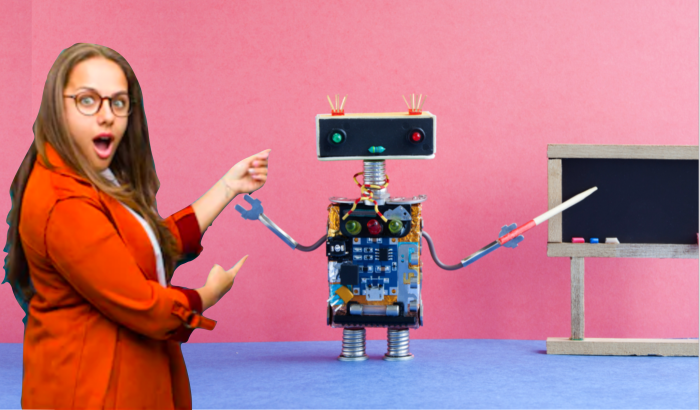
Robots Will Never Replace Teachers. They Can Only Displace Us

Screen Shot 2020-01-09 at 8.29.17 PM

 
My favorite movie of all time is “2001: A Space Odyssey.”


And my favorite character is the computer HAL 9000.


In the future (now past) of the movie, HAL is paradoxically the most human personality. Tasked with running the day-to-day operations of a spaceship, HAL becomes strained to the breaking point when he’s given a command to lie about the mission’s true objectives. He ends up having a psychotic break and killing most of the people he was supposed to protect.


It’s heartbreaking finally when Dave Bowman slowly turns off the higher functions of HAL’s brain and the supercomputer regresses in intelligence while singing “A Bicycle Built for Two” – one of the first things he was programmed to do.


I’m gonna’ be honest here – I cry like a baby at that point.


But once I clean up my face and blow my nose, I realize this is science fiction – emphasis on the fiction.


I am well aware that today’s calendar reads 2020, yet our efforts at artificial intelligence are not nearly as advanced as HAL and may never be.


That hasn’t stopped supposedly serious publications like Education Week – “The American Education News Site of Record” – from continuously pretending HAL is right around the corner and ready to take over my classroom.


What’s worse, this isn’t fear mongering – beware the coming robo-apocalypse. It’s an invitation!


A few days ago, the on-line periodical published an article called “Teachers, the Robots Are Coming. But That’s Not a Bad Thing” by Kevin Bushweller.


It was truly one of the dumbest things I’ve read in a long time.


Bushweller, an assistant managing editor at Education Week and Executive Editor at both the Ed Tech Leader and Ed Week’s Market Brief, seems to think it is inevitable that robots will replace classroom teachers.


This is especially true for educators he describes as “chronically low-performing.”


And we all know what he means by that!


These are teachers whose students get low scores on high stakes standardized tests.


Which students are these? Mostly poor and minority children.


These are kids without all the advantages of wealth and class, kids with fewer books in the home and fewer native English speakers as role models, kids suffering from food, housing and healthcare insecurity, kids navigating the immigration system and fearing they or someone they love could be deported, kids faced with institutional racism, kids who’ve lost parents, friends and family to the for-profit prison industry and the inequitable justice system.


And what does our society do to help these kids catch up with their more privileged peers? It underfunds their schools, subjects them to increased segregation, narrows their curriculum, offers them as prey to charter school charlatans – in short, it adds to their hurtles more than removes them.


So “chronically low-performing” teachers would be those who can’t overcome all these obstacles for their students by just teaching more good.


I can’t imagine why such educators can’t get the same results as their colleagues who teach richer, whiter kids without all these issues. It’s almost like teachers can’t do it all, themselves, — and the solution? Robots.


Screen Shot 2020-01-09 at 7.46.28 PM

 
But I’m getting ahead of myself.


Bushweller suggests we fire all the human beings who work in the most impoverished and segregated schools and replace them… with an army of robots.


Yeah.


Seriously.


Black and brown kids won’t get interactions with real adult human beings. Instead they can connect with the ed tech version of Siri programmed to drill and kill every aspect of the federally mandated standardized test.


Shakespeare’s Miranda famously exclaimed:


“O brave new world, That has such people in’t!”


But the future envisioned by technophiles like Bushweller has NO such people in’t – only robots ensuring the school-to-prison pipeline remains intact for generations to come.


In such a techo-utopia, there will be two tiers of education. The rich will get human teachers and the poor and minorities will get Bluetooth connected voice services like Alexa.


But when people like me complain, Bushweller gas lights us away as being narrow-minded.
 

He says:


“It makes sense that teachers might think that machines would be even worse than bad human educators. And just the idea of a human teacher being replaced by a robot is likely too much for many of us, and especially educators, to believe at this point.”

 
The solution, he says, isn’t to resist being replaced but to actually help train our mechanistic successors:


“…educators should not be putting their heads in the sand and hoping they never get replaced by an AI-powered robot. They need to play a big role in the development of these technologies so that whatever is produced is ethical and unbiased, improves student learning, and helps teachers spend more time inspiring students, building strong relationships with them, and focusing on the priorities that matter most. If designed with educator input, these technologies could free up teachers to do what they do best: inspire students to learn and coach them along the way.”


To me this sounds very similar to a corporate drone rhapsodizing on the merits of downsizing: Sure your job is being sent overseas, but you get to train your replacement!


Forgive me if I am not sufficiently grateful for that privilege.


Maybe I should be relieved that he at least admits robots may not be able to replace EVERYTHING teachers do. At least, not yet. In the meantime, he expects robots could become co-teachers or effective tools in the classroom to improve student learning by taking over administrative tasks, grading, and classroom management.


And this is the kind of nonsense teachers often get from administrators who’ve fallen under the spell of the Next Big Thing – iPads, software packages, data management systems, etc.


However, classroom teachers know the truth. This stuff is more often than not overhyped bells and whistles. It’s stuff that CAN be used to improve learning but rarely with more clarity and efficiency than the way we’re already doing it. And the use of edtech opens up so many dangers to students – loss of privacy, susceptibility to being data mined, exposure to unsafe and untried programs, unscrupulous advertising, etc.


Screen Shot 2020-01-09 at 7.47.03 PM

Bushweller cites a plethora of examples of how robots are used in other parts of the world to improve learning that are of just this type – gimmicky and shallow.


It reminds me of IBM’s Watson computing system that in 2011 famously beat Ken Jennings and Brad Rutter, some of the best players, at the game show Jeopardy.


What is overhyped bullcrap, Alex?


Now that Watson has been applied to the medical field diagnosing cancer patients, doctors are seeing that the emperor has no clothes. Its diagnoses have been dangerous and incorrect – for instance recommending medication that can cause increased bleeding to a hypothetical patient who already suffered from intense bleeding.


Do we really want to apply the same kind of artificial intelligence to children’s learning?


AI will never be able to replace human beings. They can only displace us.


What I mean by that is this: We can put an AI system in the same position as a human being but it will never be of the same high quality.


It is a displacement, a disruption, but not an authentic replacement of equal or greater value.


In his paper “The Rhetoric and Reality of Anthropomorphism in Artificial Intelligence,” David Watson explains why.


Watson (no relation to IBM’s supercomputer) of the Oxford Internet Institute and the Alan Touring Institute, writes that AI do not think in the same way humans do – if what they do can even accurately be described as thinking at all.


These are algorithms, not minds. They are sets of rules not contemplations.


An algorithm of a smile would specify which muscles to move and when. But it wouldn’t be anything a live human being would mistake for an authentic expression of a person’s emotion. At best it would be a parabola, at worst a rictus.


Screen Shot 2020-01-09 at 7.59.43 PM
Picture of an actual Japanese robot teacher in use.


In his recent paper in Minds and Machines, Watson outlines three main ways deep neural networks (DNNs) like the ones we’re considering here “think” and “learn” differently from humans.


1) DNN’s are easily fooled. While both humans and AIs can recognize things like a picture of an apple, computers are much more easily led astray. Computers are more likely to misconstrue part of the background and foreground, for instance, while human beings naturally comprehend this difference. As a result, humans are less distracted by background noise.


2) DNN’s need much more information to learn than human beings. People need relatively fewer examples of a concept like “apple” to be able to recognize one. DNN’s need thousands of examples to be able to do the same thing. Human toddlers demonstrate a much easier capacity for learning than the most advanced AI.


3) DNN’s are much more focused on details and less on the bigger picture. For example, a DNN could successfully label a picture of Diane Ravitch as a woman, a historian, and an author. However, switching the position of her mouth and one of her eyes could end up improving the confidence of the DNN’s prediction. The computer wouldn’t see anything wrong with the image though to human eyes there definitely was something glaring incorrect.


“It would be a mistake to say that these algorithms recreate human intelligence,” Watson says. “Instead, they introduce some new mode of inference that outperforms us in some ways and falls short in others.”


Obviously the technology may improve and change, but it seems more likely that AI’s will always be different. In fact, that’s kind of what we want from them – to outperform human minds in some ways.


However, the gap between humanity and AI should never be glossed over.


I think that’s what technophiles like Bushweller are doing when they suggest robots could adequately replace teachers. Robots will never do that. They can only be tools.


For instance, only the most lonely people frequently have long conversations with SIRI or Alexa. After all, we know there is no one else really there. These wireless Internet voice services are just a trick – an illusion of another person. We turn to them for information but not friendship.


The same with teachers. Most of the time, we WANT to be taught by a real human person. If we fear judgment, we may want to look up discrete facts on a device. But if we want guidance, encouragement, direction or feedback, we need a person. AI’s can imitate such things but never as well as the real thing.


So we can displace teachers with these subpar imitations. But once the novelty wears off – and it does – we’re left with a lower quality instructor and a subpar education.


The computer HAL is not real. To borrow a phrase from science fiction author Philip K. Dick, Artificial intelligence is not yet “more human than human.”
 
Maybe it never will be.


The problem is not narrow minded teachers unwilling to sacrifice their jobs for some nebulous techno-utopia. The problem is market based solutions that ignore the human cost of steam rolling over educators and students for the sake of profits.


As a society, we must commit ourselves to a renewed ethic of humanity. We must value people more than things.


And that includes a commitment to never even attempting to forgo human teachers as guides for the most precious things in our lives – our children.


“Algorithms are not ‘just like us’… by anthropomorphizing a statistical model, we implicitly grant it a degree of agency that not only overstates its true abilities, but robs us of our own autonomy… It is always humans who choose whether or not to abdicate this authority, to empower some piece of technology to intervene on our behalf. It would be a mistake to presume that this transfer of authority involves a simultaneous absolution of responsibility. It does not.”

David Watson


Like this post? I’ve written a book, “Gadfly on the Wall: A Public School Teacher Speaks Out on Racism and Reform,” now available from Garn Press. Ten percent of the proceeds go to the Badass Teachers Association. Check it out!

thumbnail_IMG_8249

Economists Ate My School – Why Defining Teaching as a Transaction is Destroying Our Society

Screen Shot 2020-01-04 at 11.02.28 AM


Teaching is one of the most misunderstood interactions in the world.


Some people see it as a mere transaction, a job: you do this, I’ll pay you that.


The input is your salary. The output is learning.


These are distinctly measurable phenomena. One is calculated in dollars and cents. The other in academic outcomes, usually standardized test scores. The higher the salary, the more valued the teacher. The higher the test scores, the better the job she has done.


But that’s not all.


If the whole is defined in terms of buying and selling, each individual interaction can be, too.


It makes society nothing but a boss and the teacher nothing but an employee. The student is a mere thing that is passively acted on – molded like clay into whatever shape the bosses deem appropriate.


In this framework, the teacher has no autonomy, no right to think for herself. Her only responsibility is to bring about the outcomes demanded by her employer. The wants and needs of her students are completely irrelevant. We determine what they will become, where they will fit into the burgeoning economy. And any sense of curiosity or creativity is merely an expedient to make children into the machinery of industry and drive the gross domestic product higher to benefit our stock portfolios and lower corporate taxes.


And since this education system is merely a business agreement, it must obey the rules of an ironclad contract. And since we’re trying to seek our own advantage here, it’s incumbent on us to contain our workforce as much as possible. This cannot be a negotiation among equals. We must keep each individual cog – each teacher – separate so that they can’t unionize together in common causeand equal our power. We must bend and subject them to our will so that we pay the absolute minimum and they’re forced to give the absolute maximum.


That’s just good business sense. It’s the best way to establish this relationship.


Moreover, since we see education in terms of pure capital – human financial units flowing through a systemic framework – the same rules that govern business will govern our schools.


We can pit one student against another, one school against another, one district against another, one race, one gender – anything quantifiable can and should be placed in competition. Because that’s how you maximize outputs.


We can initiate hostile takeovers, engage in vulture capitalism where the loser schools are stripped of resources and to the victor go the spoils.


But who is the victor?


It’s getting confusing here. Do we give the plunder to the students at the schools with the highest outcomes? That’s illogical. After all, this whole process isn’t about what’s best for the students, per se. It’s about the system of profit and loss. So any profit squeezed from the defeated should go to the winners – the investor class who put forward the capital to start this whole process.


But that’s not how public school is organized. There are rules and regulations you have to follow – outdated legislation that doesn’t define the process in terms of economics.


We have to redefine those laws, rewrite them so that our goals are aligned. So we can enshrine virtues like choice and disruption over anything as old fashioned and pedestrian as the good of the child.


Thus we invent charter schools – institutions funded with tax dollars but not necessarily subjected to any other regulations – not run by elected school boards, not accountable to the public for how they spend that money or educate the children under their authority. They are subject only to the rules of the free market. The invisible hand guides all.


Thus we invent school vouchers – take that tax money and give it directly to the customer – the parents – to spend however they wish. If they squander it or are fooled by unscrupulous school systems and education purveyors, that is their fault. And, in fact, we will ensure that there are multiple pitfalls, deathtraps, blind alleys and snake oil salesmen in their way. Because competition maximizes profits.


Caveat emptor is the only rule.


Because, you see, the hidden premise in all this nonsense is that you are not the boss.


The community is not in control of this system – the business world is. Everyday people who might be parents or taxpayers or voters or concerned citizens – at best we are just consumers. It’s not our role to do anything but choose the simple, watered down options presented to us. If we try to exercise our rights through collective action – including our right to vote – that’s unfair and will be met with the rule of capital as speech until we’re drowned in it – in fact, drowned out.


This is how many people today envision teaching.


This is what has become of our schools.


This is what is being done to our children.


It’s obvious in the ways our laws are structured, the ways the media covers our schools and the ways our students are mistreated.


And it is mistreatment.


Because teaching is none of those things.


Teaching is not a transaction. It is relational.


Teaching is not about inputs and outputs. It’s about curiosity and knowledge.


It shouldn’t be governed by market forces that dehumanize all those involved into mere widgets to be manipulated in a systemic framework. Teaching should be governed by empathy, art and science.


The driving force behind any education system must be what’s best for the child. And that “best” ultimately must be defined by parents and children.


The goal of education can never be to prepare kids for a career. It must be to eradicate ignorance, to quench curiosity, to aid self-expression and guide students toward becoming whatever it is they want to become.


Measuring learning outcomes by standardized test scores can never achieve this goal. That’s like trying to monetize a rainbow or putting the ocean in a cage.


School privatization can never achieve this goal. That’s like treating human beings like cash, like thinking the rules of football can govern architecture.


And treating teachers like worker drones can never achieve this goal. You can’t entrust a whole class of people with the most precious thing you have – your children – and then treat them like dirt.


Teaching is hard to define.


It is messy and unruly and doesn’t fit into many of our society’s preconceptions.


But it is optimism made real.


It is an investment in the future. A mark of value and love.


It is the most vital and important thing a society can do.


And we’re messing it up – big time.


Like this post? I’ve written a book, “Gadfly on the Wall: A Public School Teacher Speaks Out on Racism and Reform,” now available from Garn Press. Ten percent of the proceeds go to the Badass Teachers Association. Check it out!
 

book-1

Sixteen Gadfly Articles That Made Betsy DeVos Itch in 2019


Screen Shot 2019-12-28 at 3.51.03 PM


“Life can only be understood backwards,” wrote Søren Kierkegaard, “but it must be lived forwards.”

 
I remember reading the Danish philosopher’s “Fear and Trembling” in my philosophy of religion class back in college.


To be honest I was never a big fan of his work – I thought if the only way to truth was taking a leap of faith, how many madmen have already reached enlightenment?


But he had a point when he wrote about the backwards order of perspective – that we can only understand the meaning of our lives once those moments have passed. How cruel that we must live our lives without knowing the importance of those moments until later.


The only times I remember knowing – really knowing – that I was living through an important moment were when I was married and when my daughter was born.


Other than those few instants of my life, I’ve wandered forward like an infant – unaware of whether this would really leave an indelible mark on the fabric of my reality or not.


And that’s not even mentioning what I’ve done – if anything – that has had an effect – any effect – on our larger shared reality.


It’s the same with writing a blog. I wrote 77 posts in 2019 – a full 32 less than last year. Yet my blog got 297,000 hits – 82,000 more than the year before.


However, which articles – if any – will have any staying power?


Will anything I wrote this year still be read in the days to come? Has any of it made a difference?


Maybe it’s foolish but that is what I’m trying to do.


I sit at my laptop pounding away at the keys as if any of it has an impact on the world.


A few weeks ago at the Education 
Forum in Pittsburgh – when the leading Democratic candidates for President actually seemed to have heard the education activist community’s concerns – it felt like what I had been writing really HAD made some sort of mark.


Then a week later when the Pittsburgh School Board decided to make cuts to services for students instead of raising taxes to meet costs beyond the district’s control, it felt like nothing I wrote really mattered. Really, Pittsburgh? You have the lowest millage in Allegheny County, but you can’t get the gumption to fund your schools? You’re beset by charter schools, pension costs and a mayor who refuses to put back tax revenue he was perfectly willing to use to help the city when it was in dire straights.


Does no one care about school children – if they’re poor and black?


Anyway, to the best of my knowledge, if anything I’ve written this year has made a difference, it was probably one of these articles.


I’ll include the usual top 10 list – a countdown of my most popular works this year – but I’ll end with six honorable mentions. These are articles that I feel personally proud of that wouldn’t qualify based just on sheer numbers alone.


I hope you enjoy this stroll down memory lane, and here’s hoping 2020 will leave the negativity behind while still continuing the positive change that may have crept in this year that was.


10) Standardized Testing is a Tool of White Supremacy


Screen Shot 2019-04-03 at 8.35.24 PM


Published: April 5


Views: 4,389


Description: Here’s the story of how standardized testing went from the eugenicist movement to the Barack Obama administration to continually enforce white power. High stakes testing is an instance of being color blind – when “post racial” just means racist and ignorant.


Fun Fact: I think the title really captured people’s attention. Black people have been saying this for decades, but the so-called mainstream has refused to listen. This article still gets a lot of readers in its incarnation on commondreams.org. I hope it provides easy proof of this point to stop the constant gas lighting from naysayers in every walk of life who can’t seem to grasp how something so pervasive can be so pernicious to people of color.


9) Six Problems with a Growth Mindset in Education


Screen Shot 2019-08-12 at 1.34.29 AM

 
Published: Aug. 12


Views: 4,678


Description: One of the most frequent excuses given for high stakes testing is that we can substitute growth for achievement. However, that idea has its own problems.


Fun Fact: A lot of folks have guzzled so much of the testing Kool-Aid that they simply refuse to accept the facts about cognition and development here. Growth has its place – but it doesn’t fit at all in a pedagogy based on standardized testing.


8) Standardized Tests Are Not Objective Measures of Anything


Screen Shot 2019-06-29 at 12.27.12 AM


Published: June 29


Views: 5,290


Description: Question – If standardized testing doesn’t assess student learning, what does it assess?Answer – not much. And certainly not what you thought it did.


Fun Fact: There will come a day when standardized tests are rightly considered pseudoscientific. This is my attempt to get this idea across to a larger audience. Audience reactions have ranged from giving me looks like I’m deranged to sighs at how obvious this is.


7) Every Charter School Must Be Closed Down – Every. Single. One.


Screen Shot 2019-09-07 at 11.17.21 PM

 
Published: Sept. 8


Views: 6,869


Description: The world finally seems to be realizing that charter schools are deeply problematic. But what to do with them? My answer is to shut them all down and any that actually provide value to their students should be transitioned to becoming authentic public schools.


Fun Fact: This article was partially in response to charter school critics who would say things on Twitter like “No one wants to shut down all charter schools, but…” No. I really do want to shut them all down. I think their time is up. We need to abolish this failed concept and move on to real education policies that actually have a chance at helping students.


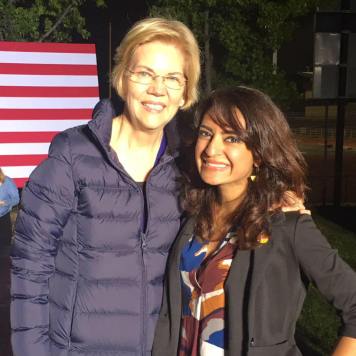
6) Charter School Teacher Introduces Elizabeth Warren at Rally


61665090_10109374029691176_8067465538567143424_n

 
Published: June 4


Views: 9,761


Description: Before Elizabeth Warren introduced her education policy, no one really knew where she stood on the issue. So many of us in the education activist community became worried when she had former charter school teacher Sonya Mehta introduce her at a California Rally.


Fun Fact: This article drudged up huge controversy over my characterization of Mehta. At first, I called her a “Charter school lobbyist.” This was unfair and I changed the article to reflect that. However, I was dragged in the media as an anti-Warren troll and Russian bot. Since Warren has released her education policy, I have written extensively about how really comprehensive it is. I think Warren is second only to Bernie Sanders in this race and even exceeds him in some areas of policy. But no one has yet to apologize to me for daring to question a political figure.


5) Teachers Are Not Responsible for Student Growth or Achievement


thumbnail_Screen Shot 2019-11-21 at 8.55.01 AM

 
Published: Nov. 29


Views: 11,188


Description: Teachers can’t make students learn. We can’t even make them grow. We can do lots of things to optimize the conditions for growth, but we are not ultimately responsible for the result. We’re only responsible for what we do to help bring it about.


Fun Fact: Lots of folks hate me for writing this article. Lots of folks love me for writing it. However, it was past time someone said it. Teachers make a huge impact on their students, but we are not magical. When you expect us to be wizards, you end up destroying our ability to do our jobs and you enable all the corporate testing and privatization hacks who build themselves up by tearing down our profession because we’re not magic.


4) Charter Schools Were Never a Good Idea. They Were a Corporate Plot All Along


Screen Shot 2019-09-14 at 6.02.02 PM

 
Published: Sept. 15


Views: 13,153


Description: Where did charter schools come from and what was their original purpose? Read here to find the facts.


Fun Fact: I wrote this article because of the common lie that charter schools were created by union president Albert Shanker to empower teachers. WRONG. They were created by Minnesota “policy entrepreneur” Ted Kolderie and privatization cheerleader Joe Nathan. This is an attempt to get the record straight. I hope it succeeds.


3) Are Teachers Allowed to Think for Themselves?


thumbnail_Screen Shot 2019-10-30 at 3.35.07 PM

 
Published: Nov. 7


Views: 22,041


Description: It’s kind of a simple question. Many administrators and school boards treat teachers like robots to be programmed and do what they’re told. But we’re also expected to display a large degree of autonomy. Which one is the real expectation because we can’t ultimately be both.


Fun Fact: This article was republished in the Washington Post and continues to be hugely popular. I think that’s partially because it calls out the elephant in the room in every faculty meeting, school board meeting and education policy session at local, state and the federal government. Maybe allow teachers to be part of the conversation if you really want to bring about positive change.


2) How Many Decisions Do Teachers Make Every Day?


94b755b2-ad1400b671f8ad28440f6a7067004614


Published: Jan. 5


Views: 27,286


Description: Answer – on average, teachers make at least 1,500 decisions a day. That comes out to about 4 decisions a minute given six hours of class time.


Fun Fact: This fact has been around since at least the 1980s. It represents the kinds of things we were interested in education before standardized testing and school privatization took over. And it has implications that go on for miles and miles and miles…


1) As LA Teachers Strike Over Charter Schools, Democrat Cory Booker Speaks at Pro-Charter Rally


thumbnail_corydonaldtrump


Published: Jan. 18


Views: 37,652


Description: In California, 30,000 Los Angeles teachers were on strike because charter schools are gobbling up their funding without providing the same level of quality services or accountability. Meanwhile in New Orleans, Sen. Cory Booker was giving the keynote address at a charter school rally.


Fun Fact: This raised the question of where the Democrats stand on education policy. And thankfully the Booker branch of neoliberals has been overpowered by the Sanders-Warren wing. We’ll see if this continues through the Presidential nomination and (hopefully) the next administration. Could it be a sea change in Democratic support for real, authentic education policy and away from standardization and privatization? Time will tell.


Honorable Mentions


6) Pittsburgh Mayor’s Tantrum About School Finances Proves He Doesn’t Understand Education or Equity


20190805dsPedutoLocal01-1567025449


Published: Nov. 17

 
Views: 3,237


Description: Mayor Bill Peduto refuses to give back millions of dollars in tax revenue to city schools that could help close budget gaps and provide the services students need. The money was given to the city when it was in financial distress, but now that the city situation has improved, the schools are calling for that money to be returned. Just simple fairness.


Fun Fact: This was one of the first times I really addressed Pittsburgh politics especially as it branches out from the schools. Readers were extremely interested and I seemed to have tapped into a real conversation about the mayor’s role in school politics.


5) Charter Schools Are Quietly Gobbling Up My Public School District


Screen Shot 2019-05-19 at 7.49.57 PM

 
Published: May 20


Views: 2,919


Description: The Propel charter school chain keeps getting more and more of Steel Valley Schools budget despite enrolling around the same number of kids. It is expected to get away with 16% of Steel Valley Schools’ entire $37 million yearly budget in the coming year. How is that fair?


Fun Fact: This is one of the first times I have written so openly about the district where I teach. The result was extremely positive. It really got people talking and put together a lot of information that – sadly – our local media has failed to compile. With the loss of neighborhood papers and the consolidation of newspaper budgets, it’s left to bloggers like me to do actual journalism.


4) Greater Test Scores Often Mean Less Authentic Learning

 
Screen Shot 2019-10-04 at 4.25.32 PM

 
Published: Oct. 5


Views: 2,580


Description: Standardized tests only assess ability at taking standardized tests. So if we misconstrue test scores for learning, we’re leaving out the entire universe of concepts and skills that are not and cannot be captured by those tests.


Fun Fact: I think this is an important point that can’t be emphasized enough. It frustrated some readers because they wanted the easy conflation between test scores and learning. But few things in education are that easy. This article outlines exactly where the tests go wrong. It’s a tour of the sausage factory that will leave anyone less hungry for standardization.


3) Top 7 Ways Technology Stifles Student Learning in My Classroom

 
Screen Shot 2019-07-30 at 9.25.31 PM


Published: July 31


Views: 1,991


Description: We have become too reliant on technology in schools. We’ve welcomed and incorporated it without testing it, or even reflecting upon whether it promises to offer better pathways toward student comprehension and discovery or whether it merely offers flash and novelty devoid of substance. And perhaps even more frightening, we have not investigated the ways in which using these technologies actually puts student privacy and intellectual growth at risk.


Fun Fact: It is essential we question our assumptions – especially about technology. Many teachers fund this article a breath of fresh air. Others condemned me as a technophobe. You be the judge.


2) The Last Day of School


thumbnail_IMG_8831


Views: 1,271


Description: I had a stronger connection with last year’s students than any group I’ve ever taught. I was their Language Arts teacher for two consecutive years – 7th and 8th grade. When our time ended, they even re-enacted the closing scene of “The Dead Poet’s Society” – a movie we had watched together in class.


Fun Fact: I will always treasure the two years I had with these children. They changed my life for the better and made me a better teacher. I am honored by their reviews of my teaching.


1) The Stink of Segregation Needs to End in Steel Valley Schools

 
ygateau_npred_borders1-c4f22c33fac1a9806e5df963b8b11ae67e707927-s800-c85

 
Published: Nov. 12


Views: 988


Description: The dark secret of my district is how deeply segregated our elementary schools are. I wrote about what the problem is and how I think we can solve it. This is about as real and raw as policy making gets.


Fun Fact: Again this was one of the first times I let myself talk so openly about my district and what I thought needed to be done to improve it. Community members have come forward to talk with me about it but the response from anyone in the district has been total silence. I hope we’re actually serious about making a change here. The community is crying out for it. Teachers want to help. Where we go in the future is anyone’s guess.


Like this post? I’ve written a book, “Gadfly on the Wall: A Public School Teacher Speaks Out on Racism and Reform,” now available from Garn Press. Ten percent of the proceeds go to the Badass Teachers Association. Check it out!


book-2

Teachers Are Not Responsible for Student Growth or Achievement

thumbnail_Screen Shot 2019-11-21 at 8.55.01 AM

 
Earlier this week, I was rushed to another urgent early morning staff meeting at my school.


I had my laptop with me and was frantically trying to get everything ready that I’d need for the day.


Text dependent analysis question? Check.


Discussion guide to introduce the concept of science fiction? Check.


Questions on literacy, analogy, vocabulary and sentence structure suitable for 7th grade? Check.


The same suitable for 8th grade? Check.


And as I was anxiously trying to get all this together in time for me to rush to my morning duty when the meeting was over, I quickly took a sip of my tea and tried to listen to what my administrator was saying from the front of the room.


He handed out two white sheets of paper with a compilation of standardized test scores – last year’s and those from the year before.


He asked us what we noticed about these two sets of scores and I almost spit out my tea.


“THIS IS WHAT YOU BROUGHT US HERE FOR!?” I wanted to shout.


“THIS IS WHAT YOU’RE STOPPING US FROM DOING OUR WORK TO DISCUSS!?”


But I choked down my response and waited for someone to tell him what he wanted to hear.


The scores have gone down in the preceding year.


Nothing drastic but enough.


When he got his answer – actually he had to say it himself because none of us were ready to play this game so early in the morning – he offered us an olive branch.


Isn’t that the way of it? Shame then reconciliation. Blame then peace.


Those are just the achievement scores, he said. Admin. generously doesn’t expect us to be able to do much about those. They go up one year and down the next.


But look at these growth scores!


That’s where we can have an impact!


And again I felt my throat convulse and a mouthful of Earl Grey came back up my gullet.


Growth!?


It doesn’t make that much difference whether you look at growth or achievement. If you’re holding teachers accountable for either, you’re expecting us to be able to do things beyond our powers as mere mortal human beings.


I hate to break it to you, but teachers are not magical.


We cannot MAKE things happen in student brains.


Nothing we say or do can cause a specific reaction inside a human mind.


That’s just not how learning and teaching works.


We can INFLUENCE learning.
 
We can try to create some kind of optimum condition that is most likely to spark learning.


But we cannot make it happen like turning on a switch or lighting a candle.


Let me give you a real world example.


The day before the meeting I was conferencing with a student about his essay on Charles Dickens’ “A Christmas Carol.” I pointed out that he had misspelled Christmas as “Crismist.”


He refused to fix it.


Literally refused.
 
I pointed out that the word was already typed out and spelled correctly in the prompt. All he had to do was erase what he had written and rewrite it correctly.


He said he didn’t care – that it didn’t matter.


So I tried to explain how people who don’t know him would read this paper and make snap judgments about him based on simple mistakes like this.


I told him that I knew he was smart, that I had heard his verbal discussion of the story and was impressed by his arguments about Scrooge’s character. He had made good points about Scrooge’s guilt being motivated by fear and that once the ghosts were gone he might return to his old ways.


But no one was going to get that far or give him the benefit of the doubt if he didn’t even try to spell Christmas correctly!
 
And he still wouldn’t do it.


That is literally where I was yesterday – yet today my administrator wanted to hold ME accountable for this kid’s growth!


As this child’s teacher, it IS my responsibility to try to reach him.


I am responsible for providing him with every tool I know how that can help him succeed.


I am responsible for trying to motivate, inspire and explain. I am responsible for knowing what are best practices and using them.


By all means – evaluate me on that.


But I can do nothing about what a student actually does with all I give him.


To paraphrase the old adage about horses, I can lead a student to knowledge, but I can’t make him think.


And, moreover, I shouldn’t be forced, myself, only to be able to acknowledge certain kinds of thinking. If a student’s ideas don’t fit neatly into a multiple choice framework, I shouldn’t be impelled to ignore or constrain them.


That may seem simple or even obvious with reflection, but it also goes counter to nearly every teacher evaluation system in practice in the United States.


Because that’s really what’s motivating my administrator’s directives here.
 
He’s just being real, he said. This is what we’ll be evaluated on and it’s something we can impact.


Then he asked us what each of us can do to better impact student growth.


Hands went flying into the air to offer suggestions about how administration could help us better accomplish these goals.


How about some consistency in which courses we’re instructed to teach from year-to-year?


How about not splitting up classes so that students leave one room to have a special and then return to finish a course already in progress?


How about mandating fewer diagnostic tests so there’d be more instruction time?


Well that last one was just too much. We were told that Admin. planned to do just the opposite – to make the Classroom Diagnostic Tools (CDT) tests MORE invasive by changing the schedule to make them appear more like the end of the year state mandated tests.


He said eventually we could look at some of these other ways to change things administratively, but he wanted to put the onus on us. What can WE do to increase growth?


A hand went up.
 
If we help a student grow this year, won’t there be less room for him to grow next year – at least within a given academic standard? Don’t we reach a point of diminishing returns?


To which I wanted to add – where are we measuring growth from? One standardized test to another? That’s not authentic learning – it’s assessing how well students take a test and how well they think like the corporation that makes and grades it.


But the meeting was already over.


The bell rang and we had to rush to our duties.


I scrambled back to my classroom to deposit my computer before getting to the cafeteria just as student breakfast began.


This is madness, I thought.


Growth and achievement. It’s all just gas lighting educators for not being superhuman.


The decision makers either don’t understand how learning works or they don’t care to understand.


They are putting everything on teachers and students without providing either of us with the tools we need to succeed.


Students need more than another standardized test. And they need more than another teacher who only cares about their test scores – regardless of whether you measure them in growth or achievement.


These kids are stressed out, living under immense pressure, coping with poverty, prejudice, an unstable society, climate change, an uncertain future and an economy that promises them little more than crushing debt as a best case scenario.


Educators are supposed to wade into all that, say a few incantations and it will all just go away?


Many parents are struggling so much to provide for their kids they don’t have time to help with homework, provide guidance or support. And you think I’ve somehow got the secret sauce in my teacher’s bag?


Wake up, America.


It’s time we faced a truth about our schools.


Teachers can’t do it all alone.
 
Growth, achievement, whatever.


Until society commits to supporting its children with equitable resources, social justice and an evaluation system that’s more valid than standardized testing, the next generation will continue to struggle.


If you want to make an impact, a good place to start would be a realistic conception of what it means to be a teacher and what we actually can and should be held responsible for.


Like this post? I’ve written a book, “Gadfly on the Wall: A Public School Teacher Speaks Out on Racism and Reform,” now available from Garn Press. Ten percent of the proceeds go to the Badass Teachers Association. Check it out!

book-2

Are Teachers Allowed to Think for Themselves?

thumbnail_Screen Shot 2019-10-30 at 3.35.07 PM

 
As a public school teacher, I am often told what to do and how to do it.


Go teach this class.


Report to lunch duty at this time.


Monitor this student’s progress in this way, that student’s progress in another way, differentiate the following, document this medical condition, write up this behavior, check for that kind of hall pass, post and teach these academic standards, etc., etc., etc.


Some of these directives I agree with and others I do not. But that is treated as an irrelevance because the one thing I’m never told to do is to think for myself.  The one thing that seems to be expressly forbidden – is that I think for myself.


In fact, it’s such a glaring omission, I often wonder if it’s actually prohibited or so obviously necessary that it goes without saying.


Am I expected to think or just follow directions?


Does society want me to be a fully conscious co-conspirator of student curiosity or a mindless drone forcing kids to follow a predetermined path to work-a-day conformity?


Most days, it feels like the later.


Every last detail of my job is micromanaged and made “foolproof” to the degree that one wonders if the powers that be really consider teachers to be fools in need of proofing.


Teaching may be the only profession where you are required to get an advanced degree including a rigorous internship only to be treated like you have no idea what you’re doing.


And the pay is entirely uncompetitive considering how much you had to do to qualify for the position and how much you’re responsible for doing once you get hired.


It makes me wonder – why did I take all those courses on the history of education if I was never supposed to have the autonomy to apply them? Why did I have to learn about specific pedagogies if I was never to have the opportunity to create my own curriculum? Why was I instructed how to assess student learning if I was never meant to trust my own judgment and rely instead solely on prepackaged, canned standardized tests?


And now after 16 years in the classroom, I’m routinely told by my principal to use student testing data to drive my instruction. And, moreover, to document how I am doing so in writing.


But what if I don’t trust the student testing data in the first place?


What if – in my professional opinion – I don’t agree that the state should have purchased this standardized assessment from some corporate subsidiary? What if I don’t think it does a good job evaluating a child’s aptitude as a prediction of subsequent achievement on the next test? What if I don’t think the test provides valuable data for actual, authentic learning? What if I want to do more than just improve test scores from one standardized assessment to another? What if I want to actually teach something that will affect students’ whole lives? What if I want to empower them to think for themselves? What if my goals are higher for them than the expectations thrown on me as shackles on an educator’s waist, hands and feet?


Because it seems to me that there is a bit of a mixed message here.


On the one hand, teachers are given so many directives there’s no room for thought. On the other, teachers can’t do their jobs without it.


So what exactly do they want from me?


The principal can’t educate classes from his desk in the administrative office. The school board director can’t do it from his seat in council chambers. Lawmakers can’t do it from Washington, DC, or the state capital. Only the teacher can do it from her place in the classroom, itself.


You have to see, know and interact with your students to be able to tell what their needs are. No standardized test can tell you that – it requires human interaction, knowledge and – dare I say it – discernment.


You need to gauge student interest, background knowledge, life skills, special needs, psychology and motivation. And you need to design a curriculum that will work for these particular students at this particular time and place.


That can’t be done at a distance through any top-down directive. It must be accomplished in the moment using skill, empiricism and experience.


The fact that so many lawmakers, pundits, and administrators don’t know this, itself, has a devastating impact on the education kids actually receive.


Instead of helping teachers do their jobs, policymakers are accomplishing just the opposite. They are standing in the way and stopping us from getting things done.


We’re given impossible tasks and then impeded from doing them. At least get out of the way and leave us to it.


It’s ironic. The act of removing teacher autonomy results in dampening our effectiveness.


So as many of these same bureaucrats complain about “failing schools” and “ineffective teachers,” it is these very same complaints and the efforts taken in their name that result in ineffectiveness.


If we trusted teachers to do their jobs, they would be empowered to accomplish more. And I don’t mean blind trust. I don’t mean closing our eyes and letting teachers do whatever they want unimpeded, unadvised and unappraised. I mean letting teachers do the work in the full light of day with observation by trained professionals that know the same pedagogy, history and psychology we do – trained administrators who are or were recently teachers, themselves.


That would be both accountable and effective instead of the present situation, which is neither.


Moreover, it might incentivize policymakers to realize teachers can’t do everything themselves. Hold us accountable for what we do – not what you’d like us to do but over which we have no control.


After all, home life has a greater impact on students than anything that happens in class. And helping students to self-actualize into mature, productive members of society requires we equip them with the ability to work things out independently.


However, that does not seem to be the goal.


We don’t want free thinking students just as we don’t want free thinking teachers.


We don’t want a school system that produces independent thinkers. We want it to simply recreate the status quo. We want the lower classes to stay put. We want social mobility and new ideas to be tightly controlled and kept only within certain boundaries.


And that is why our school system keeps teachers so tightly constrained – because we want status quo students.


Educators have always been the enemy of standardization, privatization and conformity. We are on the side of liberty, emancipation and release.


Which side are you on?


Like this post? I’ve written a book, “Gadfly on the Wall: A Public School Teacher Speaks Out on Racism and Reform,” now available from Garn Press. Ten percent of the proceeds go to the Badass Teachers Association. Check it out!
book-1

Eight Things I Love About Elizabeth Warren’s Education Plan – And One I Don’t

105863950-1555953359609senatorelizabethwarren

 
My daughter had bad news for me yesterday at dinner.


She turned to me with all the seriousness her 10-year-old self could muster and said, “Daddy, I know you love Bernie but I’m voting for Elizabeth.”

 
“Elizabeth Warren?” I said choking back a laugh.


Her pronouncement had come out of nowhere. We had just been discussing how disgusting the pierogies were in the cafeteria for lunch.

 
And she nodded with the kind of earnestness you can only have in middle school.


So I tried to match the sobriety on her face and remarked, “That’s okay, Honey. You support whomever you want. You could certainly do worse than Elizabeth Warren.”


And you know what? She’s right.


Warren has a lot of things to offer – especially now that her education plan has dropped.


In the 15 years or so that I’ve been a public school teacher, there have been few candidates who even understand the issues we are facing less than any who actually promote positive education policy.


But then Bernie Sanders came out with his amazing Thurgood Marshall plan and I thought, “This is it! The policy platform I’ve been waiting for!”

 
I knew Warren was progressive on certain issues but I never expected her to in some ways match and even surpass Bernie on education.


What times we live in! There are two major political candidates for the Democratic nomination for President who don’t want to privatize every public school in sight! There are two candidates who are against standardized testing!


It’s beyond amazing!


Before we gripe and pick at loose ends in both platforms, we should pause and acknowledge this.


Woo-hoo!


Both Sanders AND Warren are excellent choices for President. And Biden might even do in a pinch.


So in honor of my precocious political princess backing Elizabeth Warren – I THINK she knows she doesn’t actually get to vote, herself, yet! – I give you eight things I love and one I don’t in Warren’s education plan.


Things I like:


1)       IT INVESTS IN PUBLIC SCHOOLS.


WARREN’S PROPOSAL:  Quadrupling Title I funding — an additional $450 billion over the next 10 years for the neediest children and their schools. Finally have the federal government pay 40% of all special education costs – a promise lawmakers made years ago but never kept. Invest an additional $100 billion over ten years in “Excellence Grants” to any public school. That’s roughly $1 million for every public school in the country to buy state-of-the art labs, restore afterschool arts programs, implement school-based student mentoring programs, etc. By 2030, she’ll help 25,000 public schools become community schools. Invest at least an additional $50 billion in school infrastructure — targeted at the schools most in need.

 
WHAT I LIKE: Everything! Our public schools are crumbling under decades of neglect and targeted disinvestment – especially those serving the poor and minorities. This could be a game changer for the entire country!


2)       IT ACTIVELY WORKS TO INTEGRATE PUBLIC SCHOOLS.


WARREN’S PROPOSAL: Spend billions of dollars annually that states can use to promote residential and public school integration. This includes infrastructure like magnet schools but also integrating communities. Support strengthening and robust enforcement of Title VI of the Civil Rights Act of 1964. This prohibits discrimination on the basis of race in any program receiving federal funding.

 
WHAT I LIKE: Segregation is the elephant in the room in our nation. We can’t be a single country pursuing liberty and justice for all when we keep our people “separate but equal.” If you want to undo our history of racism, prejudice and xenophobia, we must get to know and appreciate each other from a young age. Plus it’s harder to horde resources for one group or another when all children are in one place.


3)       IT SUPPORTS ALL OUR STUDENTS.


WARREN PROPOSES: Protecting the rights of LGBTQ+ students, immigrant students and their families, English Language Learners, students of color, etc.

 
WHY I LIKE IT: I love my students – all of my students. It breaks my heart that the same system that’s supposed to provide them an education oftentimes allows them to be discriminated against.


4)       IT ELIMINATES HIGH-STAKES TESTING.


WARREN PROPOSES: In particular:

“The push toward high-stakes standardized testing has hurt both students and teachers. Schools have eliminated critical courses that are not subject to federally mandated testing, like social studies and the arts. They can exclude students who don’t perform well on tests. Teachers feel pressured to teach to the test, rather than ensuring that students have a rich learning experience. I oppose high-stakes testing, and I co-sponsored successful legislation in Congress to eliminate unnecessary and low-quality standardized tests. As president, I’ll push to prohibit the use of standardized testing as a primary or significant factor in closing a school, firing a teacher, or making any other high-stakes decisions, and encourage schools to use authentic assessments that allow students to demonstrate learning in multiple ways.”


WHY I LIKE IT: High stakes testing is a curse on the education field. It warps nearly every aspect of our school system with biased and inappropriate assessments. Good riddance!


5)       IT SUPPORTS FEEDING ALL STUDENTS – NOT SHAMING THEM FOR THEIR POVERTY.


WARREN PROPOSES: Canceling student breakfast and lunch debt. In particular:

“I will also push to cancel all existing student meal debt and increase federal funding to school meals programs so that students everywhere get free breakfast and lunch.”


WHY I LIKE IT: No child should have to go hungry – especially at school. No child should have to feel guilty for their parent’s economic situation. And feeding all children removes any stigma and helps create community.


6)       IT SUPPORTS TEACHERS.

 
WARREN PROPOSES: Providing funding for schools to increase pay and support for all public school educators, strengthen the ability of teachers, paraprofessionals, and staff to organize and bargain. In particular:


“I pledged to enact the Public Service Freedom to Negotiate Act, which ensures that public employees like teachers can organize and bargain collectively in each state, and authorizes voluntary deduction of fees to support a union.”

 
WHY I LIKE IT: A robust system of public education needs teachers who are respected and appreciated. You cannot have this when salary is based on the wealth of the community you serve. The only choice as far as I see it is to have the spender of last resort (the federal government) take up the slack. I know some of my fellow bloggers are nervous about this because these funds could come with strings attached. Pay could be contingent on teachers increasing student test scores or using certain corporate curriculum, etc. However, any tool can be misused. I don’t see this as necessarily being a backdoor for corporate shenanigans, but we certainly must be cautious.


7)       IT FIGHTS THE CORRUPT SCHOOL PRIVATIZATION INDUSTRY.


WARREN PROPOSES: Ensuring charter schools are subject to at least the same level of transparency and accountability as traditional public schools. In particular:


“…I support the NAACP’s recommendations to only allow school districts to serve as charter authorizers, and to empower school districts to reject applications that do not meet transparency and accountability standards, consider the fiscal impact and strain on district resources, and establish policies for aggressive oversight of charter schools.”


Ending federal funding for the expansion of charter schools. Banning for-profit charter schools including non-profit charter schools that outsource their operations to for-profit companies. Directing the Internal Revenue Service (IRS) to investigate “so-called nonprofit schools that are violating the statutory requirements for nonprofits.”

 
WHAT I LIKE ABOUT IT: Everything! This is where Warren’s proposal really shines! She is even more comprehensive than Sanders’! She doesn’t stop with just “for-profit” charter schools but understands that many of these institutions circumvent the rules even without that tax status.


8)       IT PROTECTS STUDENT DATA FROM ED TECH COMPANIES AND BEYOND.


WARREN PROPOSES: Banning the sharing, storing, and sale of student data. In particular:


“My plan would extend the Family Educational Rights and Privacy Act (FERPA) to ban the sharing, storing, and sale of student data that includes names or other information that can identify individual students. Violations should be punishable by civil and criminal penalties.”

 
WHAT I LIKE ABOUT IT: Ed tech companies are seen for the danger they bring to education. Students are protected from having their entire lives impacted by the choices of ignorant school administrators or school directors. The road to the replacement of public school with digital alternatives is recognized and blocked.


And this just scratches the surface. These are just the points that jumped out at me on a first read.


I’m sure there is more policy gold in here we’ll find as the election season progresses.


However, there was one thing that jumped out at me in a less positive light.
 
One thing I did not like:


1)      WARREN’S EMPHASIS ON “CAREER AND COLLEGE READINESS” SOUNDS TOO MUCH LIKE THE WORST OF BARACK OBAMA’S EDUCATION POLICY.


On the one hand, Warren says unequivocally that she’s against high stakes testing. Then on the other she writes:


“We must also ensure that students are able to take advantage of those opportunities and that high schools are funded and designed to prepare students for careers, college, and life…

…I’ll work with states to align high school graduation requirements with their public college admission requirements. And I’ll also direct the Department of Education to issue guidance on how schools can leverage existing federal programs to facilitate education-to-workforce preparedness.”


This sounds an awful lot like Race to the Top and Common Core.


Is she really proposing all public schools have the same top-down academic standards? Is she proposing states force corporate-created academic standards on their schools? And is she threatening to use the power of the federal government – possibly the power of the purse – to make states and schools fall into line?


Warren needs to understand that Common Core cannot be separated into curriculum and testing. The testing drives the curriculum. You can’t say you’re against testing being used to make high stakes decisions and then have that same testing determine what is taught in schools.


Perhaps this isn’t her intention at all. But she needs to be asked and she needs to give a definitive answer.


Obama was all about teacher autonomy, too, before he got into office.


And that’s really the biggest issue for most education advocates like me.


We’ve been burned so many times before by politicians, it’s hard to accept that any of them might actually be serious about doing something positive for children’s educations.


I’m still a Bernie Sanders supporter. I’ll admit that.


But Warren has gone a long way with this proposal to getting me into her corner, too.


In the primary, I’ll probably continue to feel the Bern.


But who knows? In the general election, perhaps my daughter and I will get to root for the same candidate.


I’m extremely thankful to Warren and her team for coming up with such a thoughtful and detailed education plan. It couldn’t have been easy – either to draft or politically.


It really does appear to be an attempt not just to sway voters but to actually get things right.


Here’s hoping that voters do the same in about a year.


Like this post? I’ve written a book, “Gadfly on the Wall: A Public School Teacher Speaks Out on Racism and Reform,” now available from Garn Press. Ten percent of the proceeds go to the Badass Teachers Association. Check it out!

book-4

Greater Test Scores Often Mean Less Authentic Learning

Screen Shot 2019-10-04 at 4.25.32 PM

 
The main goal of schooling is no longer learning.


It is test scores.


Raising them. Measuring growth. Determining what each score means in terms of future instruction, opportunities, class placement, special education services, funding incentives and punishments, and judging the effectiveness of individual teachers, administrators, buildings and districts.


We’ve become so obsessed with these scores – a set of discrete numbers – that we’ve lost sight of what they always were supposed to be about in the first place – learning.


In fact, properly understood, that’s the mission of the public school system – to promote the acquisition of knowledge and skills. Test scores are just supposed to be tools to help us quantify that learning in meaningful ways.

 
Somewhere along the line we’ve misconstrued the tool for the goal. And when you do that, it should come as no surprise that you achieve the goal less successfully.


There are two kinds of standardized assessment – aptitude and achievement tests. Both are supposed to measure scholarship and skill – though in different ways.


Aptitude tests are designed to predict how well a student will do in the future. Achievement tests are designed to determine how much a student knows now.


There is, of course, intense overlap between these two types because aptitude tests base their predictions on assessment of achievements. So they’re basically achievements tests that go one step further. They ask questions designed to give more information than just the present state but also about whether a student has progressed to a state which is most likely to then give way to another state in the future.


Either way, standardized assessments are supposed to be based on what students have learned. But the problem is that not all learning is equal.


For example, a beginning chef needs to know how to use the stove, have good knife skills and how to chop an onion. But if you give her a standardized test, it instead might focus on how long to stir the risotto.


That’s not as important in your everyday life, but the tests make it important by focusing on it.


The fact of the matter is that standardized tests do NOT necessarily focus on the most important aspects of a given task. They focus on obscurities – things that most students don’t know.


This is implicit in the design of these exams and is very different from the kinds of tests designed by classroom teachers.


When a teacher makes a test for her students, she’s focused on the individuals in her classes. She asks primarily about the most essential aspects of the subject and in such a way that her students will best understand. There may be a few obscure questions, but the focus is on whether the test takers have learned the material or not.


When psychometricians design a standardized test, on the other hand, they aren’t centered on the student. They aren’t trying to find out if the test taker knows the most important facts or has the most essential skills in each field. Instead, there is a tendency to eliminate the most important test questions so that the test – not the student – will be better equipped to make comparisons between students based on a small set of questions. After all, a standardize test isn’t designed for a few classes – it is one size fits all.


New questions are field tested. They are placed randomly on an active test but don’t count toward the final score. Test takers aren’t told which questions they’ll be graded on and which are just practice questions being tried out on students for the first time. So students presumably give their best effort to both types. Then when the test is scored, the results of the field test questions determine if they’ll be used again as graded questions on a subsequent test.


According to W. James Popham, professor emeritus at the University of California and a former president of the American Educational Research Association, standardized test makers take pains to spread out the scores. Questions answered correctly by too many students – regardless of their importance or quality – are often left off the test.


If 40 to 60 percent of test takers answer the question correctly, it might make it onto the test. But questions that are answered correctly by 80 percent or more of test takers are usually jettisoned.


He writes:


“As a consequence of the quest for score variance in a standardized achievement test, items on which students perform well are often excluded. However, items on which students perform well often cover the content that, because of its importance, teachers stress. Thus, the better the job that teachers do in teaching important knowledge and/or skills, the less likely it is that there will be items on a standardized achievement test measuring such knowledge and/or skills.”


Think about what this means.


We are engaged in a system of assessment that isn’t concerned with learning so much as weeding people out. It’s not about who knows what, but about which questions to ask that will achieve the predetermined bell curve.


We talk about leaving no child left behind, and making sure all students do better on standardized tests, but these tests are norm-referenced. By definition, all students cannot score well no matter how great their knowledge or skills. If you gave a standardized test to a class of genius-level intellects, there would still be the same percentage of failures and outstanding scores with the majority clustered in the middle. That’s how the tests are designed.


And if this highly suspect method of question selection, alone, doesn’t achieve that end, the test companies have a way to correct the scores at the end of the process through the way they grade them.


These tests are graded with cut scores. In other words, the state or the testing company or the graders, themselves, decide anew each year which scores are passing and which failing.


One year a 1200 might be proficient. Another year it’s basic. It all depends on what the decision makers come up with on a given year.


What do they base this on? No one has ever given a definitive answer. In fact, I doubt there is one. In each case, the deciding body just makes it up.


We’ve seen countless times when state scores are criticized for being too low one year, and then they miraculously bounce up the next. It’s not that students score differently, it’s that the cut score was raised. Why? Perhaps to stifle questions about the test’s validity. After all, people are less angry when more students pass.


The goal is always getting the bell curve. That is what validates the tests. But it’s a human construction, not a function of assessment. It says less about the test takers than the test makers and their enablers.


This has huge implications for the quality of education being provided at our schools. Since most administrators have drunk deep of the testing Kool-Aid, they now force teachers to use test scores to drive instruction. So since the tests don’t focus on the most essential parts of Reading, Writing, Math, and Science, neither does much of our instruction.


We end up chasing the psychometricians. We try to guess which aspects of a subject they think most students don’t know and then we teach our students that to the exclusion of more important information. And since what students don’t know changes, we end up having to change our instructional focus every few years based on the few bread crumbs surreptitiously left for us by the state and the testing corporations.


That is not a good way to teach someone anything. It’s like teaching your child how to ride a bike based on what the neighbor kid doesn’t know.


It’s an endless game of catch up that only benefits the testing industry because they cash in at every level. They get paid to give the tests, to grade the tests and when students fail, they get paid to sell us this year’s remediation material before kids take the test again, and – you guessed it – the testing companies get another check!


It’s a dangerous feedback loop, a cycle that promotes artificially prized snippets of knowledge over constructive wholes. But this degradation of education isn’t even the worst part.


The same method of question selection also builds economic and racial bias into the very fabric of the enterprise.


According to Prof. Martin Shapiro of Emory University, when test makers select questions with the greatest gaps between high and low scorers, they are selecting against minorities. Think about it – if they pick questions based on the majority getting it right, which minority got it wrong? In many cases, it’s a racial minority. In fact, this may explain why white students historically do better on standardized tests than black and Hispanic students.


This process may factor non-school learning and social background into the questions. They are based on the experiences of white middle-to-upper class children.


So when we continually push for higher test scores, not only are we ultimately dumbing down the quality of education in our schools, but we’re also explicitly lobbying for greater economic and racial bias in our curriculum trickling down from our assessments.


As Ibram X. Kendi, author of “How to be an Antiracist” puts it:


“Standardized tests have become the most effective racist weapon ever devised to objectively degrade Black minds and legally exclude their bodies.”


71087927_10157069943303860_6347601423106048000_n

Popham is less critical of high stakes testing. He sees more of a problem in using student test scores to assess teacher performance. But even he thinks the tests and the scores are being over valued and misunderstood in a wider context.


He writes:


“Merely because these test scores are reported in numbers (sometimes even with decimals!) should not incline anyone to attribute unwarranted precision to them. Standardized achievement test scores should be regarded as rough approximations of a student’s status with respect to the content domain represented by the test.”


I’d go even further.


Standardized test scores are tools used by big business to make money. That is as far as their validity goes.


And the fact that we make so many vital educational decisions on them is nothing less than criminal.


The tests are bogus nonsense at best and a conspiracy against the poor and minorities at worst.


When well-meaning people let themselves get wrapped up in knots over low scores and what that means for student learning, they are actually hurting the very thing that they value.


Student learning is not bettered by higher test scores. It is often made worse by them.


High test scores don’t mean greater learning. They often mean learning the knowledge du jour to the detriment of what’s really important. They mean biased education against the poor and minorities.


And they make those with real concerns complicit in a sham being perpetrated on our children and our society.


Like this post? I’ve written a book, “Gadfly on the Wall: A Public School Teacher Speaks Out on Racism and Reform,” now available from Garn Press. Ten percent of the proceeds go to the Badass Teachers Association. Check it out!
book-4


Teachers Are More Stressed Out Than You Probably Think

18636260 - young woman in classroom.

 
When I was just a new teacher, I remember my doctor asking me if I had a high stress job.


I said that I taught middle school, as if that answered his question. But he took it to mean that I had it easy. After all – as he put it – I just played with children all day.


Now after 16 years in the classroom and a series of chronic medical conditions including heart disease, Crohn’s Disease and a recent battle with shingles though I’m only in my 40s, he knows better.


Teaching is one of the most stressful jobs you can have.


You don’t put your life on the line in the same way the police or a soldier does. You don’t risk having a finger chopped off like someone working in a machine shop. You don’t even have to worry like a truck driver about falling asleep and drifting off the road.


But you do work a ridiculous amount of hours per day. You lose time with family, children and friends. And no matter how hard you work, you’re given next to no resources to get it done with, your autonomy is stripped away, you’re given mountains of unnecessary bureaucratic paperwork, you’re told how to do your job by people who know nothing about education, and you’re scapegoated for all of society’s ills.


Not to mention that you’re expected to buy supplies for your students out of your own pocket, somehow magically raise student test scores but still authentically teach, convince parents not to send their children to the local fly-by-night charter or voucher school and prepare for an unlikely but possible school shooter!


Oh! And the pay isn’t competitive given the years of schooling you need just to qualify to do the work!!


That causes a mighty amount of stress.


One in five teachers (20%) feels tense about their job most or all of the time, according to an analysis by the National Foundation for Educational Research (NFER) in England. In similar professions, only one in eight feel this way (13%).


But those are conservative estimates.


A representative survey of more than 4,000 educators conducted in 2017 by the American Federation of Teachers (AFT) and the Badass Teachers Association (BATs) found even more stark results.


Educators and school staff find their work “always” or “often” stressful 61 percent of the time. Workers in similar professions say that their job is “always” or “often” stressful only 30 percent of the time.


That kind of tension among teachers has consequences. More than half of educators reported that they have less enthusiasm now than at the beginning of their careers.


One respondent commented:


“This job is stressful, overwhelming and hard. I am overworked, underpaid, underappreciated, questioned and blamed for things that are out of my control.”

WORK LOAD


The most obvious cause of teacher stress is the workload.


Though the details vary slightly from study to study, the vast majority highlight this as the number one factor.


The NFER study concluded that teachers work longer hours than people in other professions though a less number of official days. This is because of the school year – classes meet for about 9-10 months but require far more than 40 hours a week to get everything done. In fact, teachers are putting in a full years work or more in those limited days.


For instance, an average American puts in about 260 days at work a year. Teachers average 70 less days but do the same (or more) hours that other employees put in during the full 260 days. But teachers are only paid for 190 days. So they do roughly the same amount of work in a shorter time span and are paid less for it. The result is a poor work-life balance and higher stress levels.


But exactly how many hours do teachers routinely work? It depends on who you ask.


The University College London Institute of Education estimates that one in four teachers works 60 hours a week or more – a figure that has remained consistent for the past 25 years.


According to NFER, teachers work an average of 47 hours a week, with a quarter working 60 hours a week or more and one in 10 working more than 65 hours a week.


Four in 10 teachers said they usually worked in the evenings, and one in 10 work on weekends.


Both of these studies refer to British teachers but estimates are similar for teachers in the United States.


The Organization for Economic Co-operation and Development (OECD) reports that teachers in both countries are among those who work the most hours annually. The average secondary teacher in England teaches 1,225 hours a year. The average secondary teacher in the United States teaches 1,080 hours a year. Across the OECD, the average for most countries is 709 hours.


Finally, a study focusing just on US teachers by Scholastic, found that educators usually work 53 hours a week. That comes out to 7.5 hours a day in the classroom teaching. In addition, teachers spend 90 minutes before and/or after school mentoring, tutoring, attending staff meetings and collaborating with peers. Plus 95 additional minutes at home grading papers, preparing classroom activities and other job-related tasks.


And teachers who oversee extracurricular clubs put in an additional 11-20 hours a week.


No matter how you slice it, that’s a lot of extra hours.


According to the NFER study, two out of five teachers (41%) are dissatisfied with their amount of leisure time, compared to 32% of people in similar professionals.


This is a prime factor in the exodus of trained professionals leaving the field in droves, sometimes miscalled a teacher “shortage.”


It’s why one in six new teachers leave the profession after just a year in the classroom.


SALARY


Another contributing factor is salary.


Teacher pay in the United States (and many other countries) is not competitive for the amount of training required and responsibilities put on employees.


According to the Economic Policy Institute, teachers in the United States make 14 percent less than people from professions that require similar levels of education.


Sadly, it only gets worse as time goes on.


Teacher salary starts low, and grows even more slowly.


original


According to a report by the Center for American Progress, on average teachers with 10 years experience only get a roughly $800 raise per year. No wonder more than 16 percent of teachers have a second or third job outside of the school system. They simply can’t survive on the salary.


They can’t buy a home or even rent an apartment in most metropolitan areas. They can’t afford to marry, raise children, or eke out a middle class existence.


BACK TO WORKLOAD


This mixture of refusing to pay teachers what they’re worth and expecting them to do more-and-more with less-and-less is unsustainable.


Today’s public schools employ at least 250,000 fewer people than they did before the recession of 2008–09. Meanwhile enrollment has increased by at least 800,000 students.


So if we wanted our kids to have the same quality of service children received in this country only a decade ago, we’d need to hire almost 400,000 more teachers!


That’s how you cut class size down from the 20, 30, even 40 students packed into a room that you can routinely find in some districts today.


The fact that we refuse to invest in our schools only increases the workload of the teachers who are still there. They look around and see students in desperate need and have to choose between what’s good for them, personally, and what’s good for their students.


THAT’S why teachers are working so many unpaid hours. They’re giving all they have to help their students despite a society that refuses to provide the necessary time and resources.


And make no mistake, one of those resources is having enough teachers to get the job done.


RESPECT


For a lot of teachers, the issue boils down to respect – lack of it.


Teachers are expected to do everything and then denigrated when they can’t accomplish miracles every single day.


The fact is teachers are extremely important – the most important in-school factor for student success.


However, that doesn’t make them the most important factor in the entire learning process.


Roughly 60% of academic achievement can be explained by family background – things like income and poverty level. School factors only account for 20% – and of that, teachers account for 15%. (see Hanushek et al. 1998; Rockoff 2003; Goldhaber et al. 1999; Rowan et al. 2002; Nye et al. 2004).


Estimates vary somewhat from study to study, but the basic structure holds. The vast majority of impact on learning comes from the home and out-of-school factors. Teachers are a small part of the picture. They are the largest single factor in the school building, but the school, itself, is only one of many components.


The people who know teachers the best—parents, co-workers and students—show much more respect for teachers than elected officials and media pundits, many of whom rarely set foot in a classroom, according to the 2017 BATs and AFT Quality of Work Life Survey.


While educators feel most respected by their colleagues, they also indicated that their direct supervisors showed them much more respect than their school boards, the media, elected officials and U.S. Secretary of Education Betsy DeVos. A total of 86 percent of respondents did not feel respected by DeVos.


Most educators said they felt like they had moderate to high control over basic decisions within their own classrooms, but their level of influence and control dropped significantly on policy decisions that directly impact their classroom – such as setting discipline policy, performance standards and deciding how resources are spent.


“This lack of voice over important instructional decisions is a tangible example of the limited respect policymakers have for educators,” the report concluded.


Sometimes this lack of respect leads to outright bullying.


A total of 43 percent of respondents in the public survey group reported having been bullied, harassed or threatened at work in the last year. Of these reports, 35% included claims of having been bullied by administrators, principals or supervisors, 23% by co-workers, 50% by students, 31% by students’ parents. Many claimed to have been bullied by multiple sources.


This is a much higher rate of bullying, harassment and threats than workers in the general population.


I, myself, have experienced this even to the point of being physically injured by students multiple times – nothing so serious that it put me in the hospital, but enough to require a doctor’s visit.


And to make matters worse, one-third of respondents said that teachers and faculty at their schools did not felt safe bringing up problems and addressing issues.


CONCLUSIONS


Teacher stress is a real problem in our schools.


If we want to provide our children with a world class education, we need to look out for the educators who do the actual work.


We need to drastically reduce the workload expected of them. We need to hire more teachers so the burden can be more adequately sustained. We need to increase teacher salary to retain those already on the job and to attract the most qualified applicants in the future. We need to stop blaming teachers for every problem in society and give them the respect and autonomy they deserve for having volunteered to do one of the most important jobs in any society. And we have to stop bullying and harassing them.


As a nation, our children are our most valuable resource. If we want to do what’s best for the generations to come, we need to stop stressing out those brave people who step up to guide our kids into a brighter tomorrow.


devolution-of-the-teacher-e1415308983284


Like this post? I’ve written a book, “Gadfly on the Wall: A Public School Teacher Speaks Out on Racism and Reform,” now available from Garn Press. Ten percent of the proceeds go to the Badass Teachers Association. Check it out!

thumbnail_IMG_8249

The Welcome Back Letter I’d Love to Give My Students – But Can’t

high-school-teacher-gives-student-a-high-five-893988494-5a72007bba61770037b681bf

 
I’m a very lucky guy.


I get to teach language arts in an amazing urban middle school in Western Pennsylvania.


I have reasonable autonomy, opportunities to collaborate with my co-workers and strong union protections.


Even so, I know there are a lot of teachers out there who don’t have those things.


Yet even after counting all my blessings, I still can’t do whatever I want. I can’t even do everything that my years of academic training and experience tells me would be best for my students.


Every year I’m told that my worth as a professional is mainly defined by student test scores – that I should use those scores to drive my entire class, that my major goal should be increasing the scores and my every waking moment should be spent examining past scores.

 
Every year I have to watch out for this data metric and do that much more work because my district has lost even more funding to the vampire charter school in our neighborhood. Or lawmakers have compromised away another several hours of my time to do meaningless paperwork – time that I either have to take away from my students or my family.


I see all this and I just want to scream.


I want to tell everyone what’s happening so that they can help stop the madness.


And I do scream into the whirl of cyberspace on my blog.


But I can’t do the same in my district. I can’t tell those right in front of me – my school board, my administrators, the parents or students.


Doing so would put everything I do have in jeopardy.


I know this because it already has.


Every year on the first day of school, I give my students a welcome letter.

 
This is the kind of letter I’d love to give them – but don’t dare:


Dear Students,


In a matter of weeks you will be invited back to school and I wanted to let you in on a little secret.


We missed you.


That’s right. Your teachers missed the heck out of you over the summer.


Don’t get me wrong. We enjoyed our time at home with our own children, time on vacation, time spent continuing to refine our craft, and/or time spent working another job. (Hey! Those extra pencils, papers, books and supplies aren’t going to buy themselves! Right?)


Here’s another little secret – your teachers come to school every day not because we have to, but because we want to.


We literally could do anything else with our lives but we’ve devoted our time to you.


Why? Because we love you.


I know that’s mushy talk, but it’s true.


Another secret: We know you’re nervous about your first day back. But – heck – so are we!


Don’t forget you’re young. We’re old!


We know you’re wondering who your teachers will be this year, what they’ll require you to do, which friends will be in your classes, who will sit with you at lunch…


We wonder if we’re still going to be able to do all the things we need to do to help you learn? Are we going to be able to provide a safe, secure environment for you? Will we be able to keep you engaged, and excited to learn? Will we be able to actually teach everything you want and need to know?


This is going to be a challenging year for all of us.


But that’s a good thing.


We’re in this together.


That’s kind of an important point.


You see, we know you’ll probably be asked to take high stakes standardized tests. Just know that it’s not us who’s asking. It’s the state and federal government. Lawmakers seem to think that your answers on multiple choice tests are very, very important.


Another secret: they aren’t.


We don’t care how you score on these tests. Not really. We don’t even care if you take them at all – and if your parents decide not to have you sit through this garbage, we will honor their wishes, because they are the ultimate authority on you – their children.


We know that standardized tests don’t assess how much you learn. The tests your teachers make do that – the work that you do in class every day shows it better than any canned corporate exam.


We know those scores don’t define who you are. We see you every day. We see your creativity, your intelligence, your fire, your verve, your passion.


We want to stoke that fire and help you become the people you always wanted to be.


And none of that can be shown on a standardized test.


THAT’S our job – not to turn you into great test takers but into the kind of people you most want to be.


Oh. By the way, please thank your parents for us.


Thank them for ignoring the hype about the flashy charter school that hedge fund managers opened on the hill – the school sucking up our funding, cutting services for students and making its investors very rich.


Thank them for declining the shiny school voucher to Pastor Dan’s Creationism, Anti-vaxxor, Climate Denial Academy. Thank them for passing up the tax rebate to Ivy Laurel Prep – where the rich white kids go.

 
Thank them for trusting us with the most precious things in their lives – you.


You really mean a lot to all of us.


So rest up and try to have fun for the remainder of your summer. We’ll do the same.


And before you know it, we’ll be back together in class expanding minds, expressing hearts and having a great time!


Love you all!


Your Teachers


That’s the kind of welcome back letter I would love to give my students – but can’t.


It was partially inspired by a REAL welcome back letter given by a New York Superintendent.

 
Around this time last year, he gave it to 11 principals and about 600 teachers in the
Patchogue-Medford School District before someone posted it online and it went viral.


His audience was teachers, but his message was the same:


Aug. 14, 2018


Dear….


Once again… this letter is too let you know I DO NOT CARE what your state growth score is. Let me be clear… I DO NOT CARE. It does not define you. You are more than a score. I’m hoping you know by now that the children and parents you serve appreciate your talents and the ability to make a difference in their lives. Keep your head up and your eye on what is most important… your students and your teaching craft.


The Patchogue-Medford School District fully supports you as an educator, regardless of what this meaningless, invalid and inhumane score states. You have my permission to throw it out, or use it for any creative ways you may think of. I have a feeling divergent thinking will be at an all-time high at Pat-Med. Let me know if you need anything and it is my sincere hope you have an outstanding year.


With Warmest Regards,


Michael J. Hynes, Ed. D.
Superintendent of Schools


image

38014006_10156079233558860_7115622694678167552_n

 
Cheers to Superintendent Hynes!


If only every teacher, administrator and school board member could be that brave and honest!

 
Here’s another letter given to year six students at Barrowford Primary School in Lancashire, England, along with their results from a recent standardized exam:


“Please find enclosed your end of KS2 test results. We are very proud of you as you demonstrated huge amounts of commitment and tried your very best during this tricky week.


However, we are concerned that these tests do not always assess all of what it is that make each of you special and unique. The people who create these tests and score them do not know each of you- the way your teachers do, the way I hope to, and certainly not the way your families do.


They do not know that many of you speak two languages. They do not know that you can play a musical instrument or that you can dance or paint a picture. They do not know that your friends count on you to be there for them or that your laughter can brighten the dreariest day.


They do not know that you write poetry or songs, play or participate in sports, wonder about the future, or that sometimes you take care of your little brother or sister after school.


They do not know that you have traveled to a really neat place or that you know how to tell a great story or that you really love spending time with special family members and friends.


They do not know that you can be trustworthy, kind or thoughtful, and that you try, every day, to be your very best… the scores you get will tell you something, but they will not tell you everything.


So enjoy your results and be very proud of these but remember there are many ways of being smart.”


BskDhaPIYAAMdpd


Here’s another one to parents from a principal in Singapore:


“The exams of your child are to start soon. I know you are all really anxious for your child to do well.


But, please do remember, amongst the students who will be sitting for the exams there is an artist, who doesn’t need to understand Math… There is an entrepreneur, who doesn’t care about History or English literature…There is a musician, whose Chemistry marks won’t matter…There’s an athlete…whose physical fitness is more important than Physics… If your child does get top marks, that’s great! But if he or she doesn’t…please don’t take away their self-confidence and dignity from them. Tell them it’s OK, its just an exam! They are cut out for much bigger things in life. Tell them, no matter what they score…you love them and will not judge them.


Please do this, and when you do… watch your children conquer the world. One exam or low mark won’t take away…their dreams and talent. And please, do not think that doctors and engineers…are the only happy people in the world.”

PrincipalsLetterToParents

 
If teachers and principals were allowed to speak freely, I bet there’d be a lot more of these kinds of letters.


School should not be centered on testing and test scores. It should be centered on students.


Like this post? I’ve written a book, “Gadfly on the Wall: A Public School Teacher Speaks Out on Racism and Reform,” now available from Garn Press. Ten percent of the proceeds go to the Badass Teachers Association. Check it out!

book-2