The Most Important Education Articles (By Me) That You Probably Missed in 2020

There were so many explosive stories in 2020.

From the never ending antics of our clown President to the Coronavirus to the continuing rise of White Supremacy, it seemed you couldn’t go more than a few days without some ridiculous headline assaulting your senses.

As a result, there were a lot of worthy, important articles that fell between the cracks – more so this year than any other.

Before we charge into the New Year, it might be a good idea to spare a look over our shoulders at these vital nuggets many of us may have missed.

On my blog, alone, I’ve found at least five posts that I thought were particularly important but that didn’t get the attention they deserved.

So come with me please through this survey of the top 5 education articles (by me) that you probably missed in 2020:

5) The Student-Teacher Relationship is One of the Most Misunderstood and Underrated Aspects of Education

Published: June 13 

Views: 940


 Description: Kids usually spend about 1,000 hours with their teachers in a single year. During that time we build strong relationships. And though just about everyone will tell you this is important, we’re often talking about different things. Some policymakers insist we prioritize an “instrumental focus” with students using their personal information to get them to behave and do their work. The goal is compliance not autonomy or problem solving. However, increasing evidence is showing the value of a more “reciprocal focus” where students and teachers exchanged information to come to a mutual understanding and shared knowledge. Here the goal is free thought, questioning, and engagement with authority figures. I provide my own personal experience to support the latter approach.


 Fun Fact: This post is full of letters my former students wrote to me during the pandemic. They highlight better than any study the value of authentic relationships to both students and their teachers.

4) Standardized Tests Increase School Segregation

Published: June 19 

Views: 690


 Description: The link between standardized testing and segregation is obvious but hardly ever discussed. In short, it goes like this. Even when students from different racial or ethnic groups aren’t physically separated by district boundaries or school buildings, the way we rate and sort these students within the same space causes segregation. This is because our manner of placing kids into classes, itself, is discriminatory, unfairly resulting in more children of color in lower academic tracks and more white kids in advanced placement. If segregation is an evil, so is the standardized testing often used to place kids in remedial, academic or advanced classes.


 Fun Fact: It seems to me this has immediate and important policy implications. There are so many reasons to end the failed regime of high stakes testing. This is just another one.

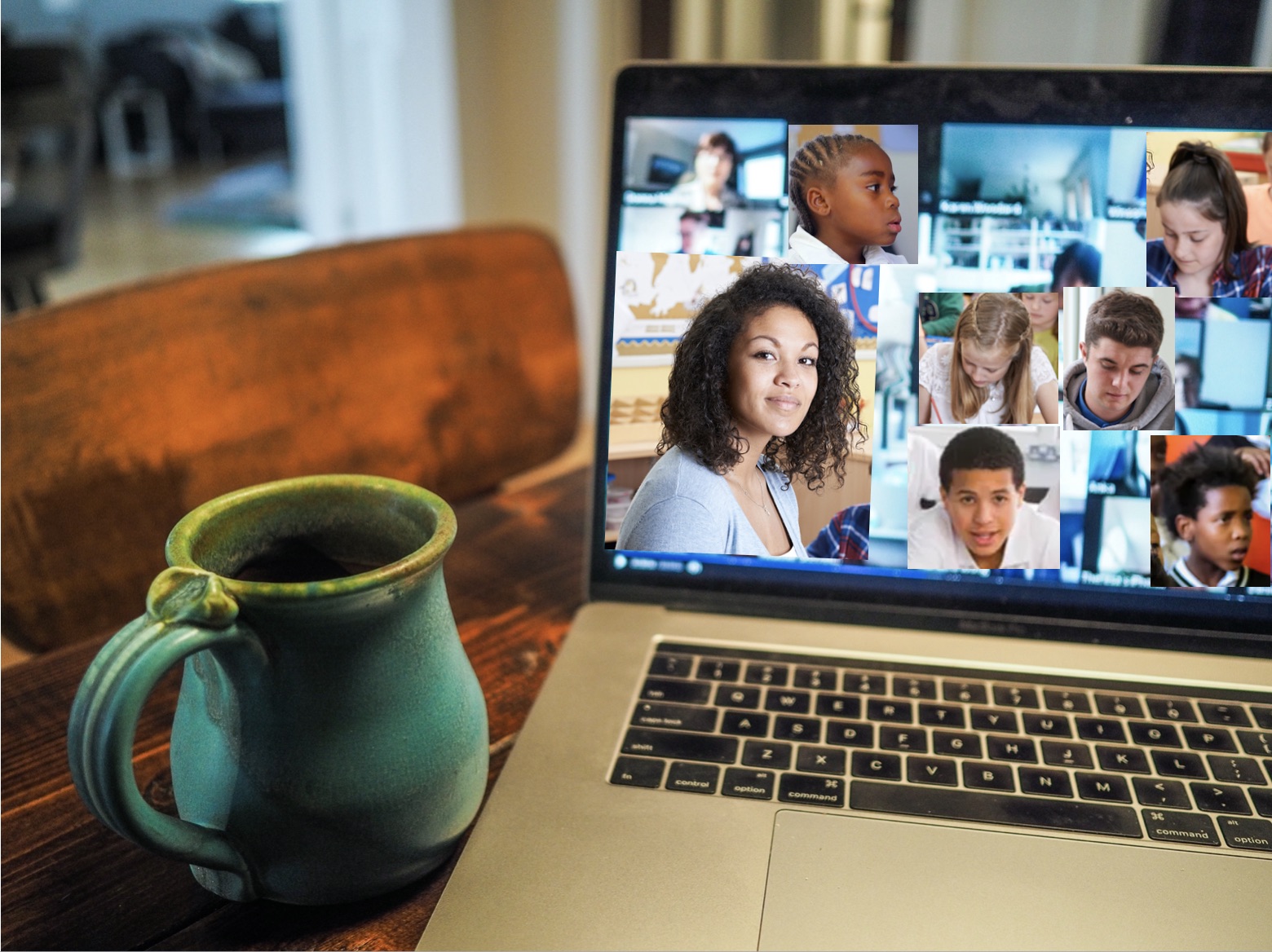
3) Virtual Instruction: Top 5 Pros & Top 5 Cons
Published: October 11


 Views: 622


 Description: Virtual instruction has been a hot button issue this year in the wake of school closings caused by the COVID-19 pandemic. The fact that in-person instruction is more effective has been used as an excuse to keep many schools open when logic, reason and facts would dictate otherwise. However, the kind of in-person instruction being offered in a pandemic is, itself, not as effective as the kind of in-person instruction offered under normal circumstances. Moreover, distance learning is not all bad. It does have some advantages such as it being generally low pressure, more difficult to disrupt class and easier to contact parents. At the same time, it presents unique challenges such as increased student absences, the problem of when and if to keep the camera on and difficulties with special needs students. 

Fun Fact: We desperately need an honest accounting of what is going on with real virtual classrooms around the country and how students and teachers are meeting these challenges. If there was more discussion about how to make distance learning better, the education being provided during the pandemic would be so much more effective than spending all our time and effort trying to reopen school buildings regardless of the risks of infection to all involved.

2) The Ongoing Study of How and When Teachers Should Praise Students

Published: February 2


 Views: 303


 Description: When should teachers praise students and when should they use reprimands? The research is all over the place. Some studies say praise is good but only so much and only in certain circumstances. Others say reprimands are more effective and still others caution against when and how to use them. My own experience has shown that honest praise and thoughtful reprimands are more effective than not.

 Fun Fact: This may seem like a simple issue but it highlights the complexities of teaching. Educators are not working with widgets. We’re working with real, live human beings. There is no simple solution that will work every time with every student. Effective teaching takes good judgement and experience. If we ever want to improve our school system, it is vital that we understand that moving forward.

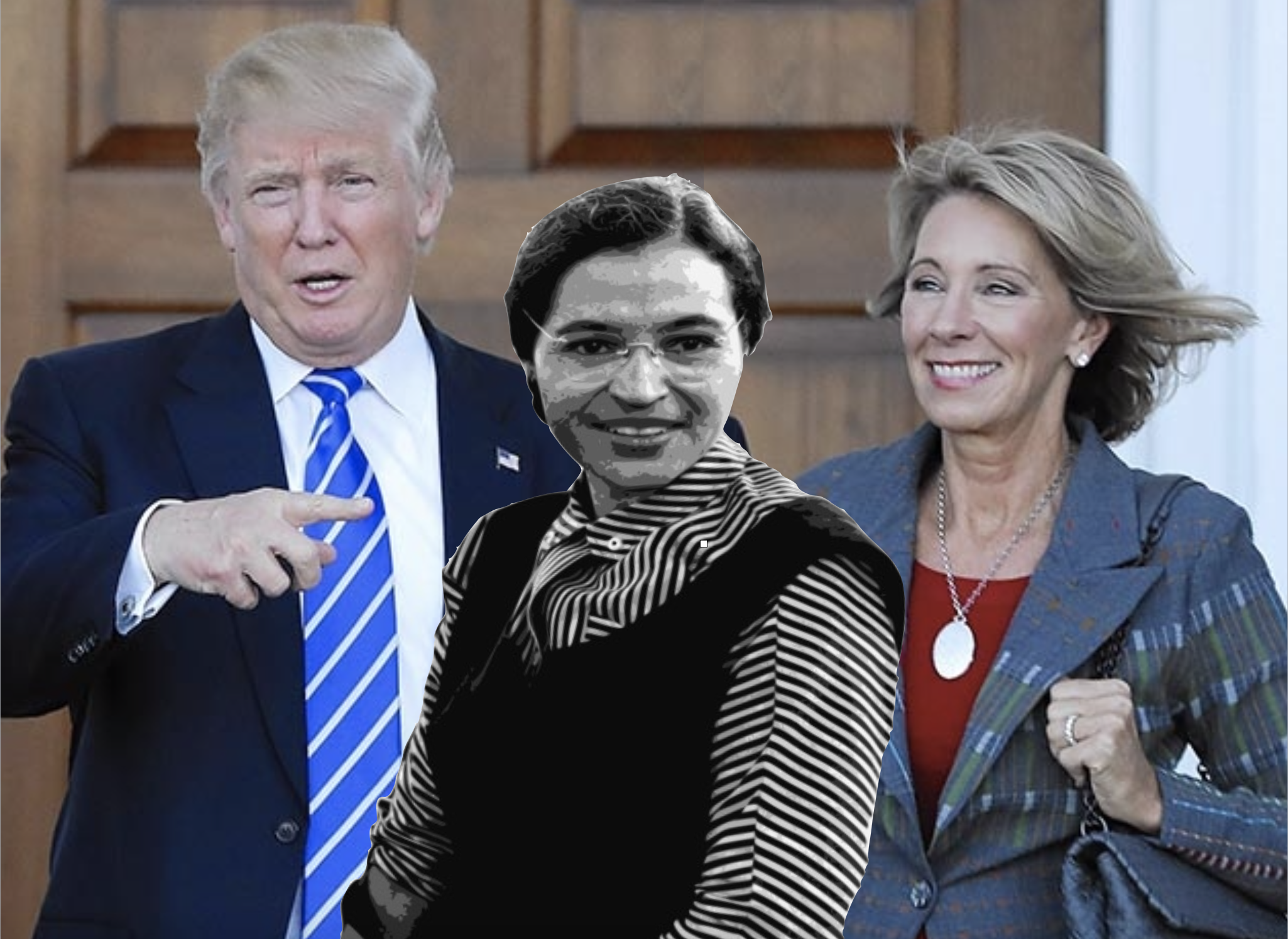
1) Did Rosa Parks Really Support Charter Schools?
Published: January 29


 Views: 233


 Description: Forty years after the Montgomery bus boycott that was sparked by Rosa Park’s refusal to give up her seat to a white man, the civil rights icon lent her name to a charter school proposal in 1997. However, the Detroit school that would have been named for her and her late husband, the Raymond and Rosa Parks Academy for Self Development, was never approved. In any case, Charter school advocates like to pretend this mere proposal means Parks was an early champion of charter schools and thus that school privatization is an extension of the civil rights movement. Yet a closer look at the facts shows a sadder story. At the time of the proposal, Parks was suffering from dementia and under the sway of countless corporate consultants who used her name and clout to enact several projects. It ended in a protracted legal battle after her death between her family and the consultants to whom she willed a treasure trove of civil rights artifacts. 

Fun Fact: I think this is one of the most important articles I wrote in 2020. It’s not a pretty story, but it’s the truth. The school privatization movement likes to co-opt the language of the civil rights movement while violating the civil rights of students and families with substandard education and pocketing tax dollars as profit that were meant to educate children. The exploitation of Parks in this way is symptomatic of what you’ll see in any inner city charter school where entrepreneurs are getting rich off of the children of color whom they pretend to be serving.


Gadfly’s Other Year End Round Ups

This wasn’t the first year I’ve done a countdown of the year’s greatest hits. I usually write one counting down of my most popular articles and one listing articles that I thought deserved a second look (like this one). Here are all my end of the year articles since I began my blog in 2014:


2020:

Outrunning the Pandemic – Racing Through Gadfly’s Top 10 Stories of 2020


2019:

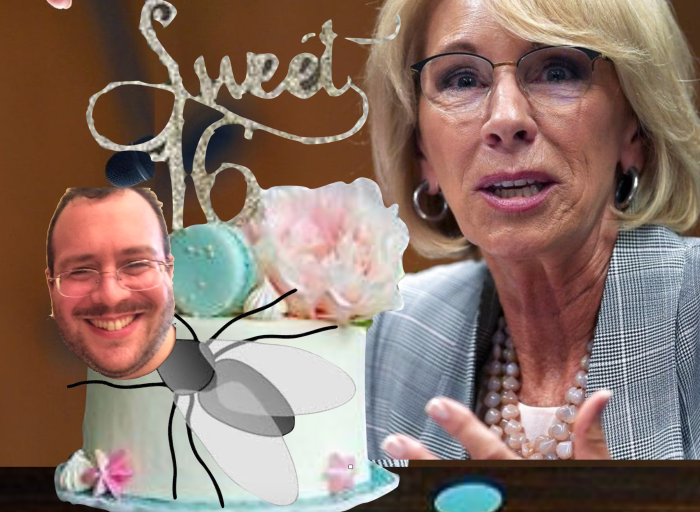
Sixteen Gadfly Articles That Made Betsy DeVos Itch in 2019

Screen Shot 2019-12-28 at 3.51.03 PM


2018:

A Gadfly’s Dozen: Top 13 Education Articles of 2018 (By Me)
thumbnail_IMG_8445


2017:


What’s the Buzz? A Crown of Gadflies! Top 10 Articles (by Me) in 2017


thumbnail_Screen shot 2017-12-26 at 3.44.17 PM


Hidden Gadfly – Top 5 Stories (By Me) You May Have Missed in 2017
 

7fd6a56c2ffc7a03c9fd2f431a543e92


2016

Worse Than Fake News – Ignored News. Top 5 Education Stories You May Have Missed in 2016
 

ignoring-wisdom


Goodbye, 2016, and Good Riddance – Top 10 Blog Post by Me From a Crappy Year


screen-shot-2016-12-27-at-3-29-49-am


2015


Gadfly’s Choice – Top 5 Blogs (By Me) You May Have Missed from 2015


Screen shot 2016-01-02 at 11.01.09 PM


Who’s Your Favorite Gadfly? Top 10 Blog Posts (By Me) That Enlightened, Entertained and Enraged in 2015


Screen shot 2015-12-30 at 12.57.49 AM


2014


Off the Beaten Gadfly – the Best Education Blog Pieces You Never Read in 2014

 

Wonderfull illusion art painting


Top 10 Education Blog Posts (By Me) You Should Be Reading Right Now!

 

computer-people-png-300x202


Like this post?  You might want to consider becoming a Patreon subscriber. This helps me continue to keep the blog going and get on with this difficult and challenging work.

Plus you get subscriber only extras!

Just CLICK HERE.

Patreon+Circle

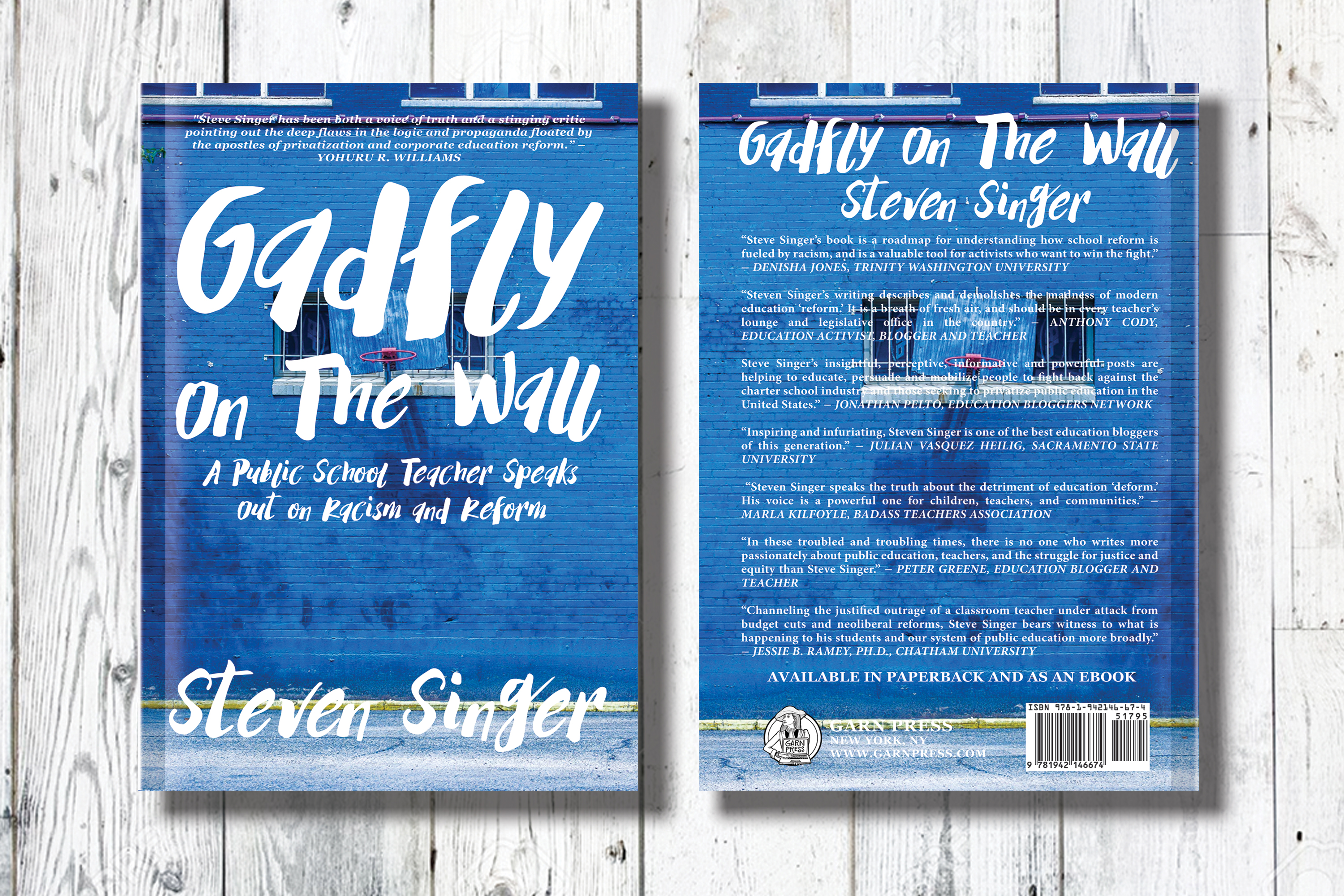
I’ve also written a book, “Gadfly on the Wall: A Public School Teacher Speaks Out on Racism and Reform,” now available from Garn Press. Ten percent of the proceeds go to the Badass Teachers Association. Check it out!

Outrunning the Pandemic – Racing Through Gadfly’s Top 10 Stories of 2020

On most weekends back in the 1980s, you’d probably find me at TILT, the mall’s crowded video game arcade.

When I was about 12 – around ’86 or so – one of my favorite games was “Outrun” by Sega.

Ever play it?

In a cherry red Ferrari convertible with the wind blowing through my virtual hair, I’d race through various summer style environments from beach to forest, to mesa to mountains.

I even got to pick which song to play on the highway – something Latin, Caribbean, or just smooth and easy.

But the real kicker – the thing that really sold this wish fulfillment fantasy – wasn’t the cool car, clement weather or soundtrack.

It was the long haired swimsuit model sitting next to me in the passenger seat.

Not only was I a real badass racing through a summer dream, but I had someone by my side, reclining at ease, sharing the journey.

And if I crashed – which often happened cresting a hill – after the car flipped multiple times in the air – my digital 80s crush and I both ended up somehow unhurt on the road. She’d sit on the white lane marker staring at my dazed avatar with all the reproach that could be programmed into a mere 16 bits.

Sometimes I think that’s a good metaphor for blogging.

I’m still in the drivers seat, steering through the twists and turns of education, equity and politics. Yet sometimes I can’t help but hit an obstacle and go flying. Through it all there’s been one constant: you – my readers – relaxed and belted in for whatever may come.

I’ll admit, this year has been one heck of a bumpy ride.

From the global COVID-19 pandemic to the critical failure of government to deal with it at nearly every level, it’s been like some sort of science fiction fantasy more than anything else.

From the spectacular sore losership of Donald Trump to the science denial of his followers and the death cult of capitalism poisoning all in-between, it’s been a year to test the hopes of just about anyone.

So much pain, confusion and death. So much isolation, betrayal, bone deep exhaustion and depression.

I’d rather imagine myself parked on an overlook, leaning back in my red sports car watching the sun set with a good friend by my side.

Since we’re stopped for the moment waiting for the last zero on the dial to scroll up to a 1 and become that terrifying number of numbers, 2021, let’s take a look back at the year that was in blogging.

I’m not sure how to characterize it other than to say it must have been some kind of success.

About 49,000 more people read my articles this year than in 2019.

The site had around 347,700 hits this year – the most since 2017. My cumulative total in 5 and a half years even hit the 2 million mark (2,080,000 to be more precise).

Not bad for a school teacher, a laptop and a dream.

A lot of what I had to say in this year’s 72 posts focused on the pandemic and how our leaders were blowing it.

That sounds like rational criticism, but it was really just me pointing out what things looked like on the ground and begging the people in power not to put myself and the people I care about in jeopardy – with mixed results.

The other major theme was the Presidential election. The Democrats had their last chance to nominate and elect Bernie Sanders, the candidate best equipped to meet the times we live in. And they blew it again.

Neoliberalism triumphed. Only time will tell the price we’ll have to pay for that blunder. Will we destroy the neofacist architecture of the Trump years only to return to the corporatist utopia of Obama and George W Bush? And if so, will we still have any chance to tear that Hellscape down in favor of a world that actually values the people living in it more than the value they can create for the one percent?

On top of that were a smattering of articles about school issues, equity and how we might fix things.

Over all, I’d say I crashed the Ferrari more often than I navigated the hairpin turns. But every now and then I feel like I was heard, that I helped stop something even worse from coming our way.

And at the end of the day, we made it to the checkpoint.

We got an extended time bonus, and a chance to do it all over again next year.

Hopefully, it will be a more clear path.

Hopefully, we’ll still have a chance to cross the finish line.

And hopefully, you’ll still accept my invitation for another ride into the sunset.

Here are my top 10 articles of 2020 based on popularity:

10) Top 10 Reasons to Vote for Joe Biden in the 2020 General Election

Published: April 10


Views: 5,508


Description: When Bernie Sanders dropped out of the 2020 Democratic Primary, I could think of only these 10 reasons to vote for Joe Biden in the November general election: 1-10 were “He’s not Donald Trump.”


Fun Fact: Apparently, it was enough.

9) Public Schools Can Recover from the COVID-19 Quarantine by Skipping High Stakes Tests

Published: March 15


Views: 6,924


Description: When the COVID-19 pandemic first crashed down on us, I was one of many saying that high stakes testing made no sense as schools nationwide were closing. The best way to allow teachers to make up for lost time with their students was to prioritize learning over assessment.


Fun Fact: It worked. We actually cancelled the big standardized test in 2019-2020. And now here we are a year later in a similar position making similar arguments and the testing companies and their lackeys are fighting against us tooth and nail.


8) For Teachers, “Silence of Our Friends” May be Worst Part of Pandemic

Published: December 5


Views: 7,443


Description: The most depressing thing about the pandemic has been how uniform the attack has been on educators. Demanding a safe work environment for ourselves and our students has been seen as unreasonable by lawmakers, school directors, union leaders and even some public school advocates.

 
Fun Fact: If anything has the potential to unravel the ties made by pro-public school forces in the last few decades, it is this. I know people are scared that closing school buildings in favor of remote learning may give the upper hand to the ed tech industry when the pandemic is over. But if you can’t stand behind teachers’ right to life now, you cannot expect us to continue to fight for the profession, local control and your children later.

7) Covid-19 Has Eroded My Faith in Public Schools

Published: Nov. 14


Views: 7,763


Description: COVID-19 has shown a failure of leadership at every level – including our public schools. The damage has been enough to make anyone doubt everything – including the coherency of the public school project altogether.


Fun Fact: The biggest difference between this and the previous article is that this one is more a mark of despair. The other is more a mark of anger.

6) INCONVENIENT TRUTH: Remote Teaching is Better Than In-Person Instruction During a Pandemic

Published: Nov. 21


Views: 8,678


Description: When more than 19 million people have caught COVID-19 and 330,000 have died, it does not make sense to keep public schools open. This is an airborne virus that can cause life-long debilitating conditions even in those who survive or are asymptomatic. Yet you need a school teacher to explain to you why distance learning is better under these circumstances.


Fun Fact: Simple truths told simply. Ammunition to save lives. The fact that it’s necessary tells us more about human intelligence than any standardized test ever could.

5) There Are No Bernie Bros, Just Diverse Supporters Being Made Into What They’re Not

Published: February 8


Views: 11,775


Description: One of the major media criticisms of the Bernie movement was that it was racist, sexist and homophobic. Yet a substantial portion of supporters were female, racially diverse and/or LGBTQ. For example, women under 45 made up a larger share of Sanders’ base than men of the same age. Two women of color, Ohio state Sen. Nina Turner and San Juan, Puerto Rico Mayor Carmen Yulín Cruz, were co-chairs of the campaign, along with Indian-American Rep. Ro Khanna (D-CA) and Ben & Jerry’s co-founder Ben Cohen. Sanders’ campaign manager was longtime progressive activist Faiz Shakir.

 
Fun Fact: File this in the history books under Gas Lighting.

4) Bernie Sanders Supporters Have Every Right to Be Furious

Published: April 12


Views: 21,984


Description: Don’t tell me this primary was fair. When Bernie was winning state after state, the media acted like it was a literal invasion of brownshirts. Yet when Biden was winning, it was the best news since sliced bread. Bernie was running away with the primary until nearly all the other candidates mysteriously dropped out all at once right before Super Tuesday. And now we find out Barack Obama gave them each a call before hand – putting his finger on the scale. The Democratic National Committee literally pushed to continue primaries in Illinois, Florida and Arizona during the pandemic in case waiting might bolster Bernie – the candidate with policies tailor made to fight COVID-19. And the result was a flood of sick people and a nearly insurmountable delegate lead.


Fun Fact: Was this the moment my heart died? No, I think it was already on life support from 2016. And the subsequent response to the pandemic only took out another ventricle.

3) Trapped On a Runaway Train to a Public School Disaster

Published: June 30


Views: 24,185


Description: When the pandemic began, many of us didn’t expect it to last that long. Certainly we wouldn’t still be in the same situation as summer rapidly came to a close and school was about the begin again! Right? What would we do? What should we even hope for?

 
Fun Fact: Despite heavy doses of despair, I think I saw clearly what needed to be done even this far back. Many policymakers still don’t see it as a New Year is about to dawn.

2) You Can’t Have My Students’ Lives to Restart Your Economy

Published: April 18


Views: 25,003


Description: When the pandemic began, far right ideologues threatened to reopen schools to keep the economy going. Almost everyone jumped on them for being uncaring idiots willing to sacrifice children on the altar of commerce.

 
Fun Fact: What was an unpopular opinion in April became mainstream by the end of August as the media bombarded readers with unsubstantiated (and subsequently disproven) reports about how children couldn’t be hurt by the Coronavirus. Subtext: And who gives a crap about the teachers who would have to put their lives on the line to educate these children?

1) Mask-to-Mask Instruction May Be More Problematic Than Distance Learning

Published: July 11


Views: 33,446


Description: Everyone knows distance learning cannot equal in-person instruction. However, we often ignore the fact that in-person instruction is not the same during the pandemic as it was before COVID-19. Social distancing, limited mobility, plexiglass barriers, cleanliness protocols – all have an impact on academics. Reopening physical school buildings is not returning to the kind of face-to-face instruction students enjoyed as recently as January and February. It is a completely new dynamic that presents as many difficulties – if not maybe more – than learning on-line.

 
Fun Fact: More ammunition to explain the simple truths of this brave new world where we find ourselves these days. Sadly, it has been ignored as often as it has been heeded. Perhaps more.


Like this post?  You might want to consider becoming a Patreon subscriber. This helps me continue to keep the blog going and get on with this difficult and challenging work.

Plus you get subscriber only extras!

Just CLICK HERE.

Patreon+Circle

I’ve also written a book, “Gadfly on the Wall: A Public School Teacher Speaks Out on Racism and Reform,” now available from Garn Press. Ten percent of the proceeds go to the Badass Teachers Association. Check it out!

Covid-19 Has Eroded My Faith in Public Schools

I am a public school advocate.

I teach at a public school.

My daughter goes to a public school.

I have spent most of my professional career fighting for public schools against every form of school privatization imaginable.

But since the beginning of this school year and the incredibly reckless way many public schools have dealt with reopening and keeping students and staff safe, I feel much of that enthusiasm drying up.

It’s not something I’m proud of feeling.

I’m actually kind of embarrassed about it.

But there are so many people I will never be able to look at the same way ever again.

There are so many organizations, unions, school boards, administrators, policy makers who have lost my trust – perhaps forever.

I’m not saying I love charter schools or private schools.

I don’t.

I still think they’re mostly scams bent on using the laws to cash in on kids while taking our tax money and running.

But the idea that public schools are fundamentally better – that idea has suffered tremendously.

I used to believe that local control was something to cherish, that a board made up of neighbors duly elected by the community would more often than not have the best interests of that neighborhood at heart when making decisions.

And, frankly, I just don’t feel that way anymore.

How can you preserve such an ideal in the face of so much evidence to the contrary – so many school boards who vote to open classrooms – and keep them open – despite raging infection rates? Despite students and teachers getting sick? Despite quarantines and warnings from epidemiologists?

SCHOOL BOARDS

McKeesport Area School District, where I live, has had more than 14 cases of Covid among students and staff since September and the school board isn’t even considering closing.

In fact, in October when most of these cases were coming to light and Center for Disease Control (CDC) guidelines suggested schools should temporarily close to ensure the virus wasn’t running out of control, administration chose to ignore the CDC on the basis of advice by the Allegheny County Health Department.

Seriously.

Administrators prioritized local officials telling them what they want to hear over national experts in infectious disease with hard truths. In short, keeping the doors open was considered more important than student safety.

Meanwhile, the district where I work, Steel Valley Schools, smartly decided to open with virtual learning in September. However, the board decided to change to a hybrid model in November to test the waters.

Yes, the board decided to make students and teachers guinea pigs in an experiment to see if they could somehow avoid getting sick while cases surged throughout the country and state.

And after only five days, a high school student tested positive and numerous kids and staff had to quarantine.

Yesterday the state Website announced that our county, Allegheny County, – which had been considered moderate in terms of infections – is now in the substantial category. The incidence rate is 138.7 per 100,000.

Also in the substantial category are nearby Armstrong, Butler, Beaver, Washington, and Westmoreland counties.

Will Western Pennsylvania schools do the right thing and go to remote learning? Will Steel Valley finally give up this in-person experiment? Will McKeesport?

Without a strong leader like a Governor or President to order a shut down and take the heat, I’m not sure local school directors will have the courage to act.

They keep blaming everything on academics, saying they have provide what is best to help students learn – never mind the dangers to child, parent and teachers’ bodies. But even more hypocritically they ignore the well being of huge swaths of their students who refuse to take part in their in-person experiment.

In both districts, about 60% of parents favor in-person schooling and 40% prefer remote.

So the boards are doing what the majority wants, but it’s a slim majority.

There is a significant portion of parents who feel these in-person plans are unsafe and very little is being done to educate their children.

At McKeesport, parents can enroll their kids in the district cyber program. No live teachers. No synchronous lessons on-line. Just a canned credit recovery program through the Edmentum company.

It’s terrible, and administration knows it’s terrible.

I’ve heard Superintendent Dr. Mark Holtzman say as much at school board meetings. But he and most of the board feel they have done all they need to do by providing this option.

They are actually betting that the poor quality of the cyber program will increase the number of parents sending their kids to in-person instruction.

And I’ve heard similar comments among administration at Steel Valley.

There at least we don’t force kids into our (likewise crappy) cyber program. We just have classroom teachers post assignments on-line.

Remote students in K-5 get live teachers instructing on-line. But remote students in 6-12 only get one half day of synchronous instruction on-line a week. The rest is asynchronous worksheets, etc. And somehow that’s supposed to be enough.

We have enough teachers that we could provide more, but why encourage remote learning? Might as well let them eat asynchronous and hope their parents will lose hope and just make them come to school during a global pandemic.

I have zero respect for administrators who think this way. I have zero respect for school board members who vote for it.

So how do I keep my respect for local control and the school board system?

This is very personal to me.

I have heart disease and Crohn’s Disease. My doctors tell me I can’t risk my life going into the school buildings to teach as infections run rampant through the state.

But my district has refused to allow me a safe work environment.

I am not allowed to teach remotely.

I have to burn my sick days so I can stay safe at home. But at the same time, I’m encouraged to take overtime hours to put up remote lessons, grade papers and contact parents.

I’m ready to do that as part of my job, but they won’t let me. They’d rather pay me and a sub who babysits my students in-person while I do what I’m allowed to do remotely at the same time.

So how do you look an administrator in the eye who refuses to lookout for his own employee’s safety?

Answer: you can’t. Ever, ever again.

UNIONS

And the same goes for many in my union.

Let me tell you, I love my union. I’m a union man. I believe in collective bargaining and worker solidarity.

I just wish my local did, too.

Because the leadership is perfectly fine with agreeing for the staff to work in unsafe conditions and no special protections for those like me who are more likely to contract the disease.

Leaders throw up their hands and say “We’re an association not a union,” and “If the boss says you come back to work, you have to come back to work.”

It’s even worse that I work in Homestead – the site of the historic strike.

So how do I look union leaders in the eye who have no problem throwing me to the wolves?

Answer: I can’t. Never, ever again.

And the state and national unions aren’t much better.

To be fair, I was pleasantly surprised when Pennsylvania State Education Association (PSEA) President Rich Askey called for schools in areas with substantial infection rates to follow state guidelines and go to remote learning.

This after months of…. Nothing.

And what is PSEA threatening if districts don’t comply?

Nothing…. So far.

But I guess saying something about it is better than what they were doing before.

The national unions – the National Education Association (NEA) and American Federation of Teachers (AFT) – certainly haven’t taken any hardline stances.

No one wants to rock the boat, but we’re talking about human life here.

There is no place further back to draw the line. We can compromise on salary and benefits but not on health and safety!

My God! That’s a human right!

We’re either unions in solidarity with our members – all our members – or we’re not.

And right now there is no solidarity, no leadership, nothing.

When I say things like this, people tell me I’m angry.

OF COURSE I’M ANGRY!

How many lives are we going to put at risk before it’s enough?

How many children? How many parents? How many staff?

Even if healthy people catch this thing, even if they get over it, they could have lifelong debilitating injuries from it.

That is not worth risking.

EDUCATION ACTIVISTS

And even the education activist community has been complicit in it.

When I tell some of my fellow grassroots organizers that schools should be open remotely, they complain about how that opens an opportunity for ed tech companies, charter and private schools.

They’re afraid teaching on-line will make ed tech companies an eternal part of school curriculum and replace real, live educators.

But that’s obviously false.

We’ve seen during lockdown periods that no one likes asynchronous teaching programs. No one likes these ed tech learning platforms. What works best in these times is curriculum created by classroom teachers taught by those classroom teachers to their students over online platforms like Zoom.

The technology should be merely a tool to connect students and teachers not as a provider of that learning.

The backlash against ed tech has been far greater than any embrace.

Yet some education activists decry how public schools going remote makes privatized schools who don’t look good.

That’s nonsense, too.

Teaching recklessly is bad – no matter who does it. If parents want to endanger their own kids, that’s their prerogative, but in the long run no one will earn brownie points for enabling such negligence.

However, where privatized schools will earn points with parents is for providing high quality remote learning when public schools refuse to do so.

I know all of them aren’t doing that. But some of them are.

And, frankly, they deserve any praise they get for it.

Look, I love public schools, too. But when public schools abandon their duties to their students as so many have done during this crisis, they deserve to have their students stolen. Even if these privatized schools often have more money to work with in the first place.

CONCLUSIONS

Bottom line: This is a crisis the school board system should have been able to overcome.

It’s a crisis the unions should have been able to battle.

It’s a crisis the activist community should have been able to see clearly.

But leadership has failed at every conceivable level. Time and again.

Strangely, that’s the only saving grace of the whole situation.

It isn’t the system that failed. It is the people in power in the system.

I know in my heart that the best way to run a school is still duly elected members of the community.

Just not THESE duly elected members.

I know that unions are vital to protecting workers rights. Just not unions lead by such wishy washy timid officers.

I know that education activism is necessary to keeping school privatization at bay. But activists can’t let their fears of what might be thwart people’s health and safety right now.

That’s the problem with Democracy. The leaders you get are representative of the community.

And our communities are perverted by one overwhelming belief – capitalism.

That’s why the schools are open. School boards are afraid keeping them closed will hurt business in the community.

That’s why administrators make such reckless reopening plans. They’re afraid that if we stay on remote it will become obvious how irrelevant they are to the running of a virtual school.

That’s why union leaders put up next to no resistance. They’re more afraid of furloughs than death or lifelong health consequences.

That’s why some parents support reopening schools – so they have someone to watch their kids while they’re at work. They never spare a moment for how the government is cheating them out of stimulus checks, mortgage relief, rent forgiveness, free testing, hazard pay and healthcare so they don’t have to put their own lives on the line working during a pandemic.

In all honesty, we were a sick country long before COVID-19 hit our shores.

We are sick with outdated and malicious economic ideas.

When you look across the ocean at the more socialist countries, you see much better plans to deal with the pandemic. Not perfect, but better.

When everything isn’t dependent on money changing hands, you can more easily prioritize human life.

So, yes, my faith has been shaken in our public schools.

I still think the idea of a public school is one to be cherished and fought to protect.

But the leaders we have – nearly all of them – should be rejected.

We need an army of citizen activists, parents and teachers to come forward at the first opportunity to replace them.

Anyone in a leadership role this year should have to explain themselves – what did you do to protect students and staff during the pandemic?

If they can’t prove they took real steps to keep people safe and not sacrifice the people they were charged to protect on the altar of capitalism – if they can’t do that they should step down.

They should step down with tears in their eyes and forever have their names sullied by their cowardice and stupidity.

They have failed us all.


Like this post?  You might want to consider becoming a Patreon subscriber. This helps me continue to keep the blog going and get on with this difficult and challenging work.

Plus you get subscriber only extras!

Just CLICK HERE.

Patreon+Circle

I’ve also written a book, “Gadfly on the Wall: A Public School Teacher Speaks Out on Racism and Reform,” now available from Garn Press. Ten percent of the proceeds go to the Badass Teachers Association. Check it out!

I Just Want to Teach, but My District Won’t Let Me Do it Safely

I love teaching.

But I can’t do it if I’m dead.

Therein lies the back to school nightmare I’ve been living through for most of the summer and fall.

The Coronavirus pandemic has affected people unequally.

Folks like me with pre-existing conditions are at greater risk from the virus than others.

I have heart disease and Crohn’s Disease.

My doctors tell me that I am more susceptible to contracting the virus because my medications suppress my immune system. And that also means that if I do contract the disease, I will be more likely to have severe, life-threatening complications from it.

So what am I to do?

The western Pennsylvania district where I work, Steel Valley, is reopening next week with a hybrid model.

The United States recorded more than 98,000 coronavirus cases yesterday – the highest single day count since the pandemic began. Two dozen states – including Pennsylvania – are reporting their worst weeks for new cases — and none are recording improvements.

This is not a good time to be reopening schools.

The district originally opened in September with virtual instruction for all students, and it was a huge success.

I taught my classes online, we’ve bonded and made academic gains I wouldn’t have believed possible with this model just a year ago.

However, starting Wednesday, about 60% of parents in my district have chosen to send their kids back to the buildings.

Of these, half the students will come in during the morning and half in the afternoon. Each will go through all their classes in 20 minute periods. On Fridays, the buildings will be closed and teachers will instruct virtually for half the day and plan during the other half.

The new reopening plan cuts instruction time by half and doesn’t meet parents need for childcare or certainly student safety. But it is better than being open 5-days a week and it provides the possibility of social distancing.

School directors said that this schedule was just a test to see if in-person instruction was feasible. They plan to reevaluate the measure in three weeks and decide whether to fully reopen in December or go back to virtual instruction for all students.

Nevertheless, this experiment presents problems for me.

Being in the school building, being in the classroom in close proximity with tens of middle school students – especially during a time when COVID cases are surging throughout the county – puts my life in danger.

So I went to my principal asking if I could continue to teach online.

I documented my conditions, gave him doctors’ notes, and had my doctors fill out pages and pages of questions from the district’s lawyers.

In the end, my principal told me the district could not meet my request.

Administrators could provide some protections like a plexiglass barrier and take me off hall duty, but they couldn’t let me continue to teach remotely.

Certain teachers in grades K-5 have been given this option, but not secondary teachers like me. Elementary students whose parents don’t want them to return to the building will get full synchronous virtual instruction with a teacher through a video conferencing site like Zoom. Secondary students who do not return to the buildings will only get asynchronous assignments most of the week posted by their classroom teachers.

He suggested I look into taking a leave of absence.

And I guess I can see where he’s coming from.

If administrators let me teach remotely, it’s possible enough students would return to the classroom that the teachers willing to return wouldn’t be enough to meet the load. My absence from the building might necessitate a substitute teacher to be in the physical classroom with students.

Why pay for two teachers when you only need one?

Except…

…I’LL STILL BE PAID WHEN I’M ON LEAVE.

It’s just that then I’d have to sit at home instead of teach my students.

So benching me doesn’t save the district any money.

In fact, it will cost the district MORE money for me to stay home, because I could still do everything they expect of me and more for the sizable number of students whose parents say they aren’t returning.

So I brought this up to my principal figuring he must have overlooked it.

But no. He said he knew all about it.

He said this is what the district’s lawyers were telling him to do so that’s what he was going to do.

I couldn’t believe it.

I went to school board directors I had developed a relationship with teaching their children, going on field trips with them, working with their spouses.

I got the same answer.

So here I am – being asked to choose between my life and my livelihood.

Go to work and risk everything – or sit at home burning my sick days and still collecting a paycheck.

This is not what I want.

It’s not good for anyone.

I teach 8th grade Language Arts. Last year I also taught 7th grade.

So many of my students this year were in my class in the spring. We already know each other.

I’ve already built a rapport with them. I know what their academic deficiencies are and what they missed as we went to remote learning in March when Coronavirus cases were much fewer than they are now.

But more than that, I know what they like and dislike. I know their hopes and fears. I know what motivates them and what supports their individual learning.

I’ve seen tremendous growth the first 9-weeks of school and could really help them overcome the gargantuan hurdles that will be inevitable the rest of the year.

And that’s what I’d really like to do.

I don’t want to sit home collecting the taxpayer’s money when I could be making a difference in these young people’s lives. I don’t want to have to wait for an outbreak to allow me to continue my work.

Being benched like this makes me feel so worthless, and I’m not.

I’m a heck of a teacher! I’m Nationally Board Certified. I was nominated for the Champions of Learning Award from the Consortium for Public Education in 2018. I won the Ken Goodman “In Defense of Good Teaching” Award last year. In fact, the University of Arizona was going to fly me out to Tucson to accept the award but had to cancel due to the pandemic.

I gave a TED talk on education at Central Connecticut University in 2018. I wrote a book called “Gadfly on the Wall: A Public School Teacher Speaks Out on Racism and Reform” in 2017 and have written a nationally recognized blog since 2014.

Wouldn’t everyone be better served with me instructing my students rather than being thrown to the side?

That can’t happen without help.

I’m just a human being like anyone else.

I have people who care about me and whom I care about.

I have a wife and daughter.

I can’t roll the dice with my life or chance taking an infection home to my loved ones.

Is a safe work environment really too much to ask?

I don’t want to sit at home.

I want to teach.


Like this post?  You might want to consider becoming a Patreon subscriber. This helps me continue to keep the blog going and get on with this difficult and challenging work.

Plus you get subscriber only extras!

Just CLICK HERE.

Patreon+Circle

I’ve also written a book, “Gadfly on the Wall: A Public School Teacher Speaks Out on Racism and Reform,” now available from Garn Press. Ten percent of the proceeds go to the Badass Teachers Association. Check it out!
 

An Originalist Reading of Public Schools

Let’s say you went to a restaurant and ordered a big ol’ meat sandwich only to find nothing but straw between two pieces of bread.

“Waiter!” You say, calling over a server.

“What’s wrong, Sir?”

“There’s no meat in my sandwich.”

“Oh, Sir?” He says smiling, examining your plate. “Here at Scalia’s Bar and Grill we adhere to a strict originalist interpretation of language.”

“What does that have to do with my sandwich?”

“Well, Sir, in Old English ‘meat’ meant any solid food, anything other than drink. As in ‘A Journey to the Western Islands of Scotland’ (1775), Samuel Johnson noted, ‘Our guides told us, that the horses could not travel all day without rest or meat.’”

“But that’s not what I ordered!”

“Oh yes it is, Sir. You ordered the meat sandwich. Enjoy your fresh hay and oats.”

In everyday life, you wouldn’t put up with that kind of nonsense.

But for some reason, far right ideologues think it’s exactly the right way to interpret the U.S. Constitution.

The meanings of words change over time.

But ignoring that fact allows disingenuous crackpots to sweep over centuries of judicial precedent in favor of what they pretend to THINK the words meant at the time the law was written.

It’s not even about what the writers of the law SAID it meant. It’s about what today’s justices decide some hypothetical average Joe of the distant past would take certain words to mean.

The most obvious example, according to Pulitzer Prize winning historian Joseph Ellis, is District of Columbia v. Heller, 554 U.S. 570 (2008), which reversed 200 years of precedent on gun regulations.

Before this ruling, the Second Amendment was interpreted to be referring only to service in the militia. The Militia Act of 1792 required each able-bodied male citizen to obtain a firearm (“a good musket or firelock”) so he can participate in the “well regulated militia” the Amendment describes.

It was about the obligation to serve your country, not the right to own a gun. However, Supreme Court Justice Antonin Scalia – the most infamous proponent of judicial originalism – orchestrated the majority opinion in this case changing all that. By doing a thought experiment about what words might have meant in the 1700s, he papered over two centuries of established law. He was so proud of it that he even described it as “my masterpiece.”

THAT’S judicial originalism.

And now that Scalia fanboy and federal judge for not even three whole years, Amy Coney Barrett, is being rammed through Senate Confirmation Hearings, that preposterous ideology is about to have another proponent on the highest court in the land.

Just imagine if we interpreted everything like people living in the 18th Century!

Black people would lose any semblance of equal rights even being forced back into slavery.

Women couldn’t get checking accounts, their own healthcare, make decisions about their own bodies, even vote (least of all hold positions on the Supreme Court).

And our public schools wouldn’t even exist!

After all, there was no widespread, comprehensive system of public education in the country before John Dewey championed it in the 1930s.

Sure, Presidents Washington, Adams, Jefferson and Madison all spoke at length about the importance of education to a free and just democratic society.

But remember, originalists don’t care about the writer’s intent. They only care about what regular people would understand by the terms. And regular people wouldn’t even understand the words “public” and “school” used together as a single concept at the time.

The first school that opened in what would become the United States was The Boston Latin School in 1635.

Its mission, and that of other colonial schools, was not to teach academics like math and literacy. It taught religion, family values and community spirit kind of like many parochial schools today.

Moreover, most schools were for boys only. If they deigned to teach girls at all, they taught them how to read but not write. No reason to give people a voice who weren’t seen as worthy of being heard.

Academics didn’t become something schools were responsible for until the mid-1800s. And even then, how they went about achieving it differed greatly from region to region of the country.

In the South, education rarely had anything to do with anything we’d call a school today. Rich families paid private tutors for their children. Everyone else was expected to work as soon as they were able.

In fact, it wasn’t until the Civil War ended and the Reconstruction era began when public schooling really became a thing in the South.

And even when it did, it didn’t look much like our schools of today. These were often one-room schoolhouses where a single teacher tried to educate children of various ages, grades and abilities.

Moreover, these schools weren’t solely supported by taxes – if at all. These Common Schools were more like private or parochial schools of today. Parents paid tuition, provided housing for the teacher, or contributed other commodities in exchange for their children’s education.

Even then, the learning students received wasn’t nearly as comprehensive as our kids routinely expect in even the most under-funded urban public schools today. And special education services was non-existent. Kids with special needs were routinely left out of education altogether.

Only 31 states passed laws requiring children to go to school by 1900, and kids only went from age 8-14. It wasn’t until 1918 that every state even required elementary school.

But let’s not forget segregation.

It was the law of the land until Brown vs. Board in 1954, and even then it took until the late 1970s to become even moderately enforced.

Subsequent rulings have weakened school integration efforts to such a degree that today many districts are as segregated – if not even more – than they were in the 1950s.

Just imagine if Barrett gets together with the wingnut Republican majority on the court to reevaluate that ruling!

Imagine how many centuries of slow progress she could overturn by appealing to the common man – of 1776.

Imagine if she and the regressive right examined free speech cases! After all, many of these laws were written during the time of the Adams Administration’s Alien and Sedition Acts which radically cracked down on free expression.

We could expect a rush to return to the mire and muck that many of our enlightenment heroes were trying to escape in the first place.

But originalists like Barrett claim only they can interpret what the language in these laws originally meant. Yet their training is in law, not literacy or antiquity. They’re not linguists or historians. They don’t have some shortcut to what people used to mean by these words. They’re just playing with the language to make it mean what they want it to mean so they can rule however they so choose.

Even if they could figure out the original meaning of the words in these laws, that doesn’t guarantee it would make sense in today’s world. How, for example, do the founding fathers views on medicine have anything to do with today’s healthcare system that didn’t exist in the 1700s and that the founders couldn’t even comprehend? How do the founders views on gun rights relate to today’s firearms when they knew only of muskets and not automatic weapons?

Finally, why should we give preference to antiquated ideas over modern concepts? The laws of yesteryear may have been suited to the days in which they were written. However, if a law cannot grow to encompass the world as it exists, it has no right to continue to exist.

Judges are not supposed to overturn precedent based on lingual folderol. They’re supposed to uphold the law based on logic, reason and sound judgement.

Any judge that disagrees has no place in our courts.

It’s ironic that such degeneration would come from the Republican Party.

After all, the GOP platform is certainly different today than it was when Abraham Lincoln was sworn in as their first President.

They used to stand for abolitionism, immigrant rights and progressive values.

Now they’re the party of plutocrat neofascist Christian fundamentalism.

If anything were to revert back to its original meaning, I wish it were the Grand Old Party, which is now neither grand, barely a party and merely old.


Like this post?  You might want to consider becoming a Patreon subscriber. This helps me continue to keep the blog going and get on with this difficult and challenging work.

Plus you get subscriber only extras!

Just CLICK HERE.

Patreon+Circle

I’ve also written a book, “Gadfly on the Wall: A Public School Teacher Speaks Out on Racism and Reform,” now available from Garn Press. Ten percent of the proceeds go to the Badass Teachers Association. Check it out!

Trump Has COVID. What That Means For Public Schools

It had to happen eventually.

Donald Trump, the ultimate science denier, got bit in the butt by science.

He’s got Coronavirus, and is in Walter Reed National Medical Center fighting for his life.

Apparently the virus isn’t a hoax.

You don’t catch it by testing for it.

You don’t treat it with hydroxychloroquine.

It’s a global pandemic, and the only way to fight something like that is with rationality and logic.

You have to wear a face mask, dumb-ass.

You have to practice social distancing.

You can’t just reopen the economy and pretend that this won’t cost hundreds of thousands of lives.

You can’t steamroll over more than 200,000 Americans lost simply because most are elderly, poor and/or brown skinned. And they don’t matter to you.

Eventually your ethos of pretending to be what a weak man thinks a strong man is evaporates into thin air.

Your entire persona is as fake as your elaborate combover.

The lady’s man who has to pay for sex.

The billionaire who’s broke.

The stable genius who refuses to believe the facts.

And while there is a certain poetic justice in this buffoon getting a taste of his own medicine, its ramifications for our country will be dire indeed.

With only four weeks before the election, no one can predict what the outcome will be politically.

Will he live? Will he die? Will this mean a boost for his opponent Joe Biden? Or will people wrap themselves in the flag and come to his side?

No one knows.

But one thing is undeniable – we cannot continue to live this way.

The reality tv rollercoaster must stop, its constant flood of outrages, disasters and season finale moments!

Being a public school teacher, I see its impact on education most clearly.

Long before Trump went from being a clown to a contender, policymakers tried reforming our schools with only wishful thinking and a marketing plan.

High stakes testing, charter schools, voucher plans, value added measures, Teach for America – whether proposed by Democrats or Republicans, it is all nothing but science denial wrapped in a stock portfolio.

These are the ways Wall Street has cashed in on schools pretending to be saviors while hiding the reality of their vulture capitalism.

And Trump has been no different.

Except that his instrument – billionaire heiress Betsy DeVos – made it harder to deny.

She barely even tried to pretend to be anything other than what she is – an unimaginative opportunist dead set on destroying the public in public schools.

Now that her spray tanned master has – through inaction and ineptitude – unleashed a plague upon the nation, our students are suffering worse than ever.

Many schools are shuttered from sea to shinning sea, their students forced to learn via the Internet.

Others are open part time while trying desperately to make shrinking tax revenues pay for the quantum leap in costs to even pretend to keep people safe in their buildings.

In some places, the adults don’t even do that much and just try to run a full day schedule, rolling the dice as outbreaks appear at every turn.

In a few places, the virus is under control and schools function almost as normal – though the fear that one infected child could change all that sits in class with every student and teacher.

Nowhere is there uniformity.

Nowhere is there consensus.

Nowhere do we all admit the simple truth – in areas of moderate to high infection, online learning is the best that can be done to balance safety with academics.

Instead, leaders deify choice – letting us decide between these different models – without a basic understanding of citizenship, governance or economics.

That, I think, is what must change.

After all, if the virus can reach the most powerful person in the world if he doesn’t take adequate precautions, it can get your kids, too.

So now that Trump is receiving an experimental antibody cocktail that would not be available to you or me to fight the disease, we can no longer pretend that personal choice is the answer to every problem.

Freedom is a wonderful thing and should be preserved as much as possible.

But your freedom ends where mine begins.

Your choice not to wear a mask in public increases the infection rate in my community. Your decision to eat in a restaurant, go to a bar or spend a weekend at an amusement park puts not just you and your family at risk, but me and mine as well.

And if you send your child to a school building in an area of moderate to high infection rates, you are increasing the likelihood that someone I care about will get sick and perhaps die.

We have both rights and responsibilities.

If you live out in the woods all by yourself, you don’t need to constrain your personal freedom. You can do whatever you can get away with.

But if you live in a community – as nearly all of us do – you have to give up some of that freedom to the rest of us.

This is simple civics – something you would have known had our schools not stopped teaching it because it wasn’t on the big annual standardized tests.

Just as many of us would have known about how pandemics work if we hadn’t narrowed the curriculum because science doesn’t count on the test, either.

When all knowledge is only instrumentally important because it will get you a certain score, none of it has value.

Science, logic, critical thinking, empathy – all lost because someone thought they could make more money by removing them.

We can’t do that anymore, either.

We have to respect knowledge. We have to respect each other.

And we have to understand economics instead of being slaves to one stunted view of how they operate.

Economics is about how to best divide resources for the survival of communities. In times of scarcity, there are certain best ways and in times of abundance there are others.

However, we live in a time of abundance but continue to use the rules for scarcity. In fact, we create scarcity just to ensure an antiquated and ineffective distribution of resources.

Those with the most have refused changes that would be best for everyone including themselves. And many of us can’t even think outside of the conceptions of economics we’re propagandized to believe.

This has to stop, too.

A new world is possible. In fact, it is inevitable.

We will either all die on a scorched wreck of a planet that we have systematically destroyed so that a few will live longer and in more luxury than the rest.

Or we will all move forward into a new, better world together.

I know times are hard – harder than they’ve ever been in my lifetime.

But this is what I see in the light shinning through the crack in the maelstrom of nonsense we have been living in lately.

We can all come together and create schools that serve everyone regardless of race, religion, creed, sexuality, gender or difference. We can teach facts, thought, history, science, arts and humanities.

And armed with such tools, we can recreate society in that image.

That is the lesson of Trump’s diagnosis.

You can lie and cheat and steal.

You can fool people into believing that you’re not a liar and a cheat and a thief.

But eventually, the truth will catch up to you.

Politics puts blinders on us. Propaganda inculcates us. And stunted education makes it harder to see what’s really there.

However, reality exists independent of our ability to recognize it.

If we stumble forward blindly for long enough, we will fall into the pit before us – irrespective of whether we recognize it is there or not.

How much better to open our eyes!


Like this post?  You might want to consider becoming a Patreon subscriber. This helps me continue to keep the blog going and get on with this difficult and challenging work.

Plus you get subscriber only extras!

Just CLICK HERE.

Patreon+Circle

I’ve also written a book, “Gadfly on the Wall: A Public School Teacher Speaks Out on Racism and Reform,” now available from Garn Press. Ten percent of the proceeds go to the Badass Teachers Association. Check it out!

R.I.P., R.B.G. – The Lesson She Lived

“I ask no favour for my sex. All I ask of our brethren is that they take their feet off our necks.”

US Supreme Court Justice Ruth Bader Ginsburg

There are few people known for their whole name – first, middle and last.

Even fewer known just for their initials.

And maybe no other white, Jewish, woman in history to be christened with an honorific reminiscent of martyred rap royalty.

But Ruth Bader Ginsburg was all that and more.

R.B.G.

The Notorious R.B.G.

Let it never be said that she was given that title out of public relations or pique.

No matter where you stood, she earned the designation “notorious.” Because she WAS. In nearly everything she did.

Whether it was issuing the dissenting opinion on Bush v. Gore or lifting weights in a blue sweatshirt emblazoned with the words, “SUPER DIVA,” she was in your face and indomitable.

She was an icon, a pioneer, a living piece of “that strength which in old days moved earth and heaven,” as Tennyson might say.

And though she made her most indelible mark as a Supreme Court Justice, in a 2018 documentary about her life, RBG, she said she felt like a teacher:

“I did see myself as kind of a kindergarten teacher in those days, because the judges didn’t think sex-discrimination existed. One of the things I tried to plant in their minds was, ‘Think about how you would like the world to be for your daughters and granddaughters.’”

She did eventually teach law at Columbia University where she enumerated the changes in sexual discrimination litigation throughout her career. While in private practice, she won five cases involving women’s rights before donning the Supreme Court robes. At the time, she was quoted in Time magazine as saying her strategy was to “attack the most pervasive stereotype in the law – that men are independent and women are men’s dependents.”

To live at the same time as such a figure is not that uncommon.

We’re often surprised to read obituaries of great historical heroes we hadn’t known were still alive until their passing.

But that such a model was still WORKING, still doing that for which she had built her reputation, still holding together the fragments of our system as it threatened to crumble! That was truly amazing.

She was there. STILL there. For all of us.

Working well into her 80s through colon cancer, pancreatic cancer and lung cancer.

And now she’s gone.

It’s hard to fathom.

This is the horror story we’d been warned about every election season for as long as I can remember. This is the nightmare scenario used to shepherd the Democratic flock together, to keep us all under one big tent while lightning flashed and thunder raged.

And it is here. Now. Today.

I never met Justice Ginsburg. Never talked with her. Never had the honor.

But I don’t think she accepted being used in this way. After all, if her biggest concern was the Chief Executive or even Congressional politics, she could have stepped down near the end of President Barack Obama’s first term and been replaced.

Or could she?

Perhaps she had to rethink her own retirement plans after the whole Merrick Garland affair when Senate Republicans refused to even discuss Obama’s Supreme Court nominee in the wake of Justice Antonin Scalia’s sudden death a full nine months before the election.

There’s no way to know for sure.

But given Ginsburg’s record of tenacious dissent in the face of injustice, I can’t imagine her counseling moderation as solidarity.

She stood for justice when no one else would.

That’s what she did!

In 2007, her dissent in a case involving Lilly Ledbetter – a supervisor for Goodyear Tires – was so compelling it sparked the passage of the Lilly Ledbetter Fair Pay Act. She literally explained why the court was wrong and that this was a case of discriminating against women in employment, and that led to a change in the law two years later!

In 2013, when the court all but struck down the 1965 Voting Rights Act, her dissent was equal parts logic, prophecy and prescription. The majority of the justices made the bizarre argument that the Voting Right Act – and one of its features, known as “preclearance” – had already solved voter suppression.

Ginsburg responded:

“Throwing out preclearance when it has worked and is continuing to work to stop discriminatory changes is like throwing away your umbrella in a rainstorm because you are not getting wet.”

When she read the dissent aloud in court, she went beyond her written remarks quoting Dr. Martin Luther King, Jr.: “The arc of the moral universe is long, but it bends toward justice.” Then she added that it only bends that way, “if there is a steadfast commitment to see the task through to completion.”

Her remarks about what would happen in the wake of this decision have largely proven true with waves of voter suppression sweeping the country – especially in areas where this would have been impossible had the court ruled differently.

There’s a lesson here for all of us.

Dissent should not be dismissed as divisive.

In the presence of injustice, it is the only proper response.

When refugee children are being locked away in cages at the border, there is no other viable response than dissent.

When police are being militarized and used as thugs to violently put down largely nonviolent protests, there is no appropriate response other than dissent.

When the President is lying to us, flouting our laws, and Congress refuses to hold him accountable, there is no other response than dissent.

We must all have the courage of the Notorious R.B.G. to stand up against injustice and call it by its true name – even to its face.

This doesn’t necessarily mean that doing so will somehow be enough to dismantle that injustice.

But we have to try.

And even if we don’t succeed today, we will have saved ourselves from becoming a part of the injustice around us.

Just days before her death, Ginsberg told her granddaughter, Clara Spera:

“My most fervent wish is, that I will not be replaced until a new president is installed.”

If Republicans retreat from their own precedent and push through a new justice 47 days or less before the election, there are still things we can do.

We can fight like Hell to get rid of the worst President in American history, Donald J. Trump, and elect Joe Biden. We can vote like our lives depend on it to get a progressive majority in Congress.

And when we win, we increase the number of justices in the Supreme Court and pack them full of progressives.

We undo all the chicanery Republicans have done for decades – end the filibuster, make Puerto Rico and DC states, end gerrymandering and pass a new Voting Rights Act that actually protects the most important principle of our system of government – the one without which our system is nominal at best.

This and more is the dissent we must wage.

They give us injustice, we respond with its opposite.

We must look this fetid, decaying nation in the eye and say with all the ferociousness of our fallen Supreme Court Justice:

I dissent!

I dissent!

I dissent!


Like this post?  You might want to consider becoming a Patreon subscriber. This helps me continue to keep the blog going and get on with this difficult and challenging work.

Plus you get subscriber only extras!

Just CLICK HERE.

Patreon+Circle

I’ve also written a book, “Gadfly on the Wall: A Public School Teacher Speaks Out on Racism and Reform,” now available from Garn Press. Ten percent of the proceeds go to the Badass Teachers Association. Check it out!

The Everyday Exhaustion of Teaching During a Global Pandemic

Teaching is one of the few things in life that is not concerned with now.

It is essentially about the future.

We put all this time and energy into helping kids learn. Why?

Not so that they’ll be able to do anything today. But so that they’ll be able to do things tomorrow.

Sure they may be able to read better or solve math problems, but the reason we want them to know that isn’t so much about what they’ll do with it as adolescents. It’s how those skills will shape the people they grow up to be.

It’s an investment in their future and ours.

We take a bit of today and invest it in tomorrow.


And during a global pandemic that can be especially hard.

The west is on fire. Storms are threatening our southern coasts. Police brutality is out of control and bands of neofascist thugs are given free rein to beat and murder protesters. We’ve separated immigrant families and put their kids in cages. The President has lied to us, disparaged our troops, bragged about breaking countless laws and the government is powerless to stop him. Our political system and social fabric is coming apart at the seams. And everyone from the average Joe to the lawmakers who represent him can’t get up the gumption to take precautions against the killer virus that has already put more Americans in their graves than every war since WWII.

You look at the raging dumpster fire around you and wonder – how do we invest in the future when we aren’t sure there will be one?

I’ve had students in my on-line class for only two days so far.

And it’s been great.

They show up in record numbers smiling and ready to learn.

We talk, they tell me about their summers, and I remember how much I love teaching.

But I had to fight almost every day from June through August just so the school building wouldn’t become an incubation center for COVID-19 and classes could be conducted through the Internet.

I’m not saying it was all me that did it, but I fought and worried and cajoled and wrote and begged and did everything I could think to do. And it very nearly didn’t happen.

Summer is supposed to be a break after the stresses of a long school year. And 2019-20 was perhaps the most difficult year I’ve ever had teaching.

But 2020-21 has already promised to be much more challenging.

After all, when you have to fight just for the safety of your children and yourself as a prerequisite to everything that happens in your class, how much strength is there left for actual teaching?

My district has committed to being on-line only through September, so the fight continues month-by-month.

Where are the local newspapers that would have reported on each school district as people test positive for the virus and others are contact traced? We closed most of them and downsized the newsrooms of others to make up lost advertising revenue.

If you’re not a supersized district serving millions, they only report on bed bugs, poorly trained security guards or whatever public relations statement the superintendent released today.

So we trudge on in silence just hoping to get through the day.

And what days they are!

Teaching on-line is a heck of a lot more work.

You’ve got to plan for just about everything. You put the assignments on Google Classroom and set up the Zoom meetings and make your handouts into PDFs and try to digitize your books and figure out how classroom policies designed around a physical space can be revised for cyber space. You answer countless questions and concerns, videotaping your lessons for those who can’t be there in person. You try to make things interesting with new apps, new software, new grading systems, new approaches to the same material you’ve been teaching for over a decade.

And it never ends.

By the time the day is supposed to be over, the emails are still rolling in, the assignments are still being submitted, administrators are making pronouncements, and you haven’t even finished all the things you have to do to get ready for tomorrow yet.

When is there time for my family? When do I have time to make dinner or check on my own child’s progress in her own online experience?

What’s worse is that when things go wrong, I’m afraid to bring them up for fear that some decision maker long removed from the classroom will simply shoot from the hip and end on-line instruction.

We had all summer to plan how to do this better, but we spent all that time diddling about WHETHER we should teach on-line or not. We should have just bit the bullet and worked on improving the quality of instruction instead of putting all our chips on the gambit that it wouldn’t be necessary.

Now – as usual – it’s all in the hands of everyday classroom teachers. We’re left to just figure it out.

And we do!

Part of me really enjoys it!

I love finding new ways of doing things and seeing if they’ll work out better. I’m excited about seeing how my students will react to a Bitmoji classroom or a new Kahoot or this video or not being hassled if they keep their cameras off in Zoom.

I know on-line teaching can never really hold a candle to in-person instruction. But that’s not an option right now. And pretending like reality is something different than it is will do no one any good.

But just saying something positive about cyber schooling gets the technophobes coming down on you.

They’re so scared that online teaching will replace real, live educators that they can’t admit of any positive qualities to the new normal.

Don’t get me wrong. My heart is with them. I fear that, too. But it’s a war we have to wage later. Just like the election.

Biden is not great on education. Trump is worse. So we have to support Biden while we prepare to fight him in January. And that’s IF we can both defeat Trump at the polls and somehow avoid a constitutional crisis if he refuses to leave the Oval Office willingly.

Everything is one fight after another. We have to win this battle before we can wage the next one.

No wonder we’re so exhausted.

Everyone is worn out, but no one more so than classroom teachers.

We’re caught at the crossroads of nearly every conflagration in America.

I sit here on a Sunday afternoon and my bones feel like boulders under my skin.

I sleep like a beaten boxer – all bruises under the sheets.

But I’ll wake up on Monday, make myself a cup of tea and trudge back to my computer screen ready to begin again.

Because despite it all, there is a core part of me that still believes.

I still believe in the future.

I still believe in teaching.

I still believe my students are worth it.

Like this post?  You might want to consider becoming a Patreon subscriber. This helps me continue to keep the blog going and get on with this difficult and challenging work.

Plus you get subscriber only extras!

Just CLICK HERE.

Patreon+Circle

I’ve also written a book, “Gadfly on the Wall: A Public School Teacher Speaks Out on Racism and Reform,” now available from Garn Press. Ten percent of the proceeds go to the Badass Teachers Association. Check it out!

Why Does Trump Hate COVID Testing But Love Standardized Testing?

When it comes to COVID-19, Donald Trump sure hates testing.

But when it comes to public schools, his administration simply adores standardized testing.

Why the discrepancy?

Why is testing for a virus during a global pandemic bad, but giving students a multiple choice test during the chaos caused by that pandemic somehow good?

When it comes to the Coronavirus, Trump has made his position clear.

In a June 15 tweet, Trump wrote that testing “makes us look bad.”

Five days later at his infamous campaign rally in Tulsa, he said he had asked his “people” to “slow the testing down, please.”

At one of his White House press briefings, he said, “When you test, you create cases.”

In his infamous Fox News interview with Chris Wallace, he seemed to be saying that the U.S. had just as many new cases now as it did in May. However, since there were fewer tests done in May and more are being done now, it only appears that the infection is spreading when it actually is not.

It’s pure bullshit.

How would he know how many cases existed in May other than through testing?

He is simply trying to gas light the nation into believing that his abysmal job as Commander-in-Chief has nothing to do with the pandemic raging out of control on our shores.

He is trying to distract us from the fact that the US has only 4 percent of the world population but more than 25% of all COVID-19 cases. He wants us to forget that more Americans have died of COVID-19 than in any war other than WWII – 200,000 and counting.

So that, at least, is clear.

Trump hates COVID testing because – as he puts it – it makes him look bad.

So why is his administration pushing for more standardized testing in public schools as those same institutions struggle to reopen during the pandemic?

Education Secretary Betsy DeVos – everyone’s favorite billionaire heiress turned public servant – sent a letter to state education leaders on Thursday saying high stakes testing probably would be required this school year.

They should not expect the Education Department to again waive federal testing requirements as it did last spring while schools were suddenly closing due to the outbreak.

The reason?

DeVos wrote:

“If we fail to assess students, it will have a lasting effect for years to come. Not only will vulnerable students fall behind, but we will be abandoning the important, bipartisan reforms of the past two decades at a critical moment.”

However, this is a rather strange thing to say if you think about it.

Standardized tests are just one of many kinds of assessments students take every year. At best they represent a snapshot of how kids are doing on a given day or week.

But since students are tested all year long by their teachers, they earn end of the year marks, pass on to the next grade or are held back, graduate or not – there are a multitude of measures of student learning – measures that take in an entire year of academic progress in context.

Waiving standardized testing would not make it impossible to tell who learned what. In fact, waiving the tests in the spring did not leave teachers clueless about the students in their classes today.

We still know which students are falling behind because we interact with them, give them assignments, teacher created assessments, etc. And when it comes to vulnerability, standardized tests show us nothing unless we read between the lines.

Students from poorer households tend to score lower on standardized tests. Kids who attend schools with fewer resources and larger class sizes tend to score lower. Minority children tend to score lower.

We don’t need any tests to tell us who these kids are. It’s obvious! Just look at who qualifies for free or reduced meals. Look at school budgets. Look at student ethnographic data. Look at seating charts. Look at classroom grades.

We don’t need standardized tests! We need resources to help these kids overcome the obstacles set before them or to remove those obstacles altogether.

Standardized testing does nothing to achieve this goal nor is there much help from the “bipartisan reforms of the past two decades.”

After all, which reforms exactly do you think DeVos is referring to?

It’s not hard to imagine since her letter was endorsed by far right and neoliberal organizations such as the Center for American Progress, the National Urban League, the Education Trust and the U.S. Chamber of Commerce.

DeVos is talking about charter and voucher schools – the same pet projects she spent her entire adult life either funding or trying to wrest funding away from public schools to fund.

In fact, she just had her ass handed to her for a third time by the federal court system for trying to siphon money to private schools that Congress explicitly earmarked for poor kids.

Congress set aside money in the CARES Act to be distributed among public and private schools based on the number of students from low-income families. However, DeVos said the funds should go to private schools BASED ON TOTAL ENROLLMENT.

Uh-uh, Betsy.

In her ruling this week, Dabney Friedrich, the U.S. District Judge for the District of Columbia (and a Trump appointee) wrote:

“In enacting the education funding provisions of the CARES Act, Congress spoke with a clear voice… that cannot mean the opposite of what it says.”

So why does the Trump Administration support standardized testing?

For a similar reason to why it doesn’t support COVID testing.

Testing for the Coronavirus makes Trump legitimately look bad.

Testing kids with standardized assessments makes the public schools (during a pandemic or otherwise) illegitimately look bad. And that can be used as a justification to close those schools and replace them with private and charter schools.

It’s not about academia or helping vulnerable children.

It’s pure politics. The shock doctrine. Disaster capitalism.

This is another way the Trump administration is trying to rob the American public blind and get away with it.

When it comes to Coronavirus, there are a limited number of tests for infection. Trump is against all of them. He just wants to hide his head in the sand and pretend it will all go away.

When it comes to education, there are multiple measures of student learning. The Trump administration only champions one of them – the standardized variety.

Why? Because that is the assessment most inadequate to measure learning but it’s the easiest to spin into an anti-education narrative.

After all, you can’t use classroom grades or teacher-created tests to support the narrative of failing schools. Those assessments are in context and too clearly show the link between poor achievement and things like lack of resources and inequality. If kids are failing their classes, it’s too obvious when schools are trying to help but stymied by a lack of resources and countless social issues. Shining a light on that will only lead to solving these very real problems.

But if we put the spotlight squarely on standardized test scores, we can spin the narrative that it is the public school system, itself, that is at fault and thus we can better sell the need for privatization in all its profit-driven forms.

That’s the whole reason DeVos took this job in the first place.

And shame on Democrats like Rep. Bobby Scott (D-Va.) and Sen. Patty Murray (D-Wash.) who praised DeVos’s testing pronouncement.

Scott, who serves as chair of the House Education and Labor Committee, said in a statement:

“There is no question that the COVID-19 pandemic is having severe consequences for students’ growth and achievement, particularly for our most vulnerable students. We cannot begin to address these consequences, unless we fully understand them.”’

Um, we do understand them, Congressman. You don’t need a multiple choice assessment to see who is failing or why. It’s due to targeted disinvestment of the poor and children of color.

Murray, the highest ranking Democrat on the Senate education committee, said:

“Especially when it comes to the disparities that harm so many students of color, students with disabilities and students whose families have low incomes, we’ve got to have data that shows us where we’re falling short so we can better support those students.”

How does a single test score from a corporation like Pearson show you more than a year’s worth of academic assessments from a school?

Standardized tests convey ZERO to us about students falling behind or vulnerable students that we don’t already know. And Murray is engaged in pure theater by framing her concern as an issue of racial justice while actual racial justice groups like the National Association for the Advancement of Colored People (NAACP) and the Black Lives Matter movement have explicitly condemned standardized testing.

An assessment system literally designed by eugenicists and pushed by segregationists is NOT a remedy to racial inequality – unless you’re proposing getting rid of it.

In short, Trump and DeVos are two peas in a pod committed to avoiding accountability for themselves but determined to destroy public services like public schools based on bogus accountability measures like standardized testing.

Hopefully the American public will boot them both out on their asses in November so that rational leadership in the Department of Education and elsewhere will do what should have been done years ago – waive standardized testing for this year and every year that follows – Coronavirus or not.


Like this post?  You might want to consider becoming a Patreon subscriber. This helps me continue to keep the blog going and get on with this difficult and challenging work.

Plus you get subscriber only extras!

Just CLICK HERE.

Patreon+Circle

I’ve also written a book, “Gadfly on the Wall: A Public School Teacher Speaks Out on Racism and Reform,” now available from Garn Press. Ten percent of the proceeds go to the Badass Teachers Association. Check it out!


McKeesport School Board Recklessly Votes to Reopen to Half Day In-Person Classes During a Global Pandemic

Screen Shot 2020-08-13 at 1.03.00 AM

 
For a moment there, I thought things might go differently.


With Covid-19 cases exponentially more numerous today than they were when schools closed in March, last night McKeesport Area School Directors voted whether to reopen buildings to half day in-person classes.


And it really looked like they might decide against it.


For about 10 seconds.

 
The first vote was from Jim Brown, and it was a “No.”


Then came Dave Donato.


He has made no secret that he champions in-person reopening. Since no residents came before the board to praise the plan – either at tonight’s meeting or last week’s work session – he read aloud a letter he said he received from someone advocating for it.


But when the time came to vote, Donato stopped. He paused.


And for a moment things looked like they might come out right.


Then he voted in favor of the reopening plan.


The final vote was 7-2 in favor with Brown and Mindy Sturgess voting against.
Donato, Joseph Lopretto, Tom Filotei, Ivan Hampton, Steven Kondrosky, Jim Poston and Diane Elias voted in favor of it.


I was there at the meeting in my hometown western Pennsylvania district, one of four people who signed up to speak.


No one else was allowed in the meeting, but it was streamed live online.


The tone directors took with the public was markedly different.


Last week, no one was turned away even if they weren’t signed up to speak. But tonight, they actually sent two people home.


Also last week school directors didn’t enforce any time limit on public comments. This week, Donato started the meeting with a warning that anyone who spoke for more than 3 minutes would be stopped.


In both cases, there were only a handful of people who signed up to speak. And no one spoke at great length.


The first speaker tonight went over her time but was allowed to finish. The next was brief.


Then it came to me.


I knew my comments asking to start the school year remotely wouldn’t fit in a 3 minute time frame, but I was not about to be silenced.


I made my comments (which I reproduce in full below) and when the timer went off, I kept going.


Superintendent Dr. Mark Holtzman said, “Mr. Singer, your time is up.”


I responded, “I’m sorry. I thought my duly elected representatives would want to hear what I had to say. I’ll continue…”


When I was again challenged, it was Sturgess who came to my defense.


She was fearless the entire meeting with questions and comments about the reopening plan and how she thought it was ill considered.


When she spoke up asking for me to be allowed to finish, Lopretto became visibly upset.


“Mindy, why don’t you just take the president’s seat!?” he said.


Lopretto got into an argument with her about it, which ended when he gave up and allowed me to finish.


It’s surprising that even after such antagonism, board members like Donato later seemed to almost reconsider their votes when the time came.


If anything I said seemed to get through to them, it may have been how I concluded:

“If I’m wrong about this, maybe kids will get a slightly less effective academic experience than they would otherwise. But if you vote for in-person classes and you’re wrong, kids will get sick, teachers will get sick, family members will get sick and many will die.


I can live with the consequences of my decision.


Please consider all these things carefully before casting your vote. There are many lives depending on it.”


In the end, we lost.


The district will reopen to in-person classes.


Frankly, before the meeting I had thought it a lost cause.


But now that it’s over, I think if just a few more parents had come to the meeting and spoken against the plan, we might have won.


If the teachers union had been clearer about educators’ concerns and not allowed the superintendent to rhapsodize on the bravery of district employees putting their lives on the line for students, we might have won.


However, the parents I talked to were too frightened of speaking out, too scared of reprisals against their children, and too certain that they wouldn’t be heard anyway.


The teachers I talked to complained about their comments to administration being gas lit and pushed aside. Fear or reprisal, silencing and the good ol’ boys network.


To be honest, it was not easy to sign up to speak at all.


There was a link online to sign up last week, but I had great difficulty finding it, myself, just seven days later. And if you didn’t have your name down by 3 pm on the day before the meeting, you were told sign ups were closed.


These are not the actions of a school board that welcomes public comment.


If just a few more of us could have persevered, I think we could have changed directors’ minds.


But it was not to be.


All that’s left is to see after you and yours – and remember.


Remember the names of those who voted in favor of reopening. Write them down.


If the epidemic brings a tragedy down on McKeesport, we know who to blame.


MY COMMENTS:


“Thank you for allowing me to address this board for the second week in a row.


I am here again to ask you to reconsider administration’s school reopening plan. I think it is imperative physical classrooms remain closed and students begin the year with distance learning.


South Allegheny and Duquesne City Schools just passed resolutions this week to do exactly that for their students. They join surrounding districts East Allegheny, Woodland Hills, Wilkinsburg and Pittsburgh Public Schools putting the safety of students, staff and families first.


Even the Superintendent of Mt. Lebanon School District has requested his school board reconsider its reopening plan and instead move to remote learning.


If it’s good enough for the rich kids in Mt. Lebanon, I think it’s good enough for McKeesport kids, too.


You have to face the facts.


In the last seven days, 311 new cases of COVID-19 were identified in Allegheny County. In the previous week it was 890 new cases.


That may fall under the bar of Gov. Wolf’s new guidelines for districts to mandate remote learning, but it comes awfully close to hopping over it. And it certainly puts online learning as a viable option for county districts.


Moreover, the Director of the Centers for Disease Control (CDC) Robert Redfield has said the number of cases in the US could be 10 times higher based on antibody tests.


McKeesport Area School District has been hit harder than most. According to the county Website, there have been 189 cases in McKeesport for a case rate of 95.8 per 10,000. There have been an additional 31 cases in White Oak for a case rate of 39.4 per 10,000.


But the death rate in McKeesport is one of the highest in our part of the county. Seven people have died from McKeesport due to this virus.


That’s more than White Oak (0), North Versailles (2), Duquesne (2), West Mifflin (1), Glassport (0), Port Vue (0), Liberty (0), or Elizabeth Township (0).


Jefferson Hills and Baldwin come close with 5 deaths a piece. And Monroeville – which is much more populous than McKeesport – matches us with 7.


Last week, Dr. Mark Holtzman said “We’re very comfortable with the proposal that we’re making.” I don’t see how you can be comfortable with that kind of data.


A new report from the American Academy of Pediatrics found more than 97,000 children tested positive for Covid-19 just in the last two weeks of July.


To put that in context, out of more than 5 million people diagnosed with the virus in the US, approximately 338,000 are children.


And nearly a third of those cases have come as we’ve reopened schools and summer camps, as we’ve increasingly exposed kids to the virus.
Children typically had low infection rates because schools were closed in March and kids were quarantined before the virus had spread through most of the country.


Since June, there have been numerous outbreaks at summer schools. And with some schools now starting their academic year, outbreaks have been even more numerous.

 
The fact is – if we reopen schools to in-person classes, chances are good that kids will get sick. Staff will get sick. And they’ll bring it home to their families.


Last week, Dr. Holtzman told me I was welcome to utilize a virtual option for my daughter and that this personal parental choice is all that should matter.


I disagree for several reasons.


First, the virtual option on offer for parents at this time is not as effective as the online learning the district could provide if all classes were meeting remotely. As Dr. Holtzman outlined, if the buildings were closed, classroom teachers could conduct synchronous lessons online for all students. This would increase social interaction with real, live people and increase learning outcomes.


By contrast, the existent cyber program is asynchronous, do-at-your-own-pace and less socially interactive.


Obviously, in-person classes would be better academically. But (1) they put children at undue risk of death or permanent health problems as a result of complications from the virus, and (2) what is on offer is not traditional in-person schooling but rushed 20 minute classes behind face masks, plexiglass barriers and a cloud of well-earned fear and anxiety.


So if you insist on reopening the school buildings at this time, I will have to enroll my daughter in the cyber program.


However, a decision to have in-person classes will still affect me and my family.

 
There is Coronavirus in our community. If you have in-person classes – even on a half day basis – you would be inviting it into our schools where it could infect others and be brought back to their homes. You would effectively be increasing the amount of infection in our community – both in and out of the schools.


When I go to the local Giant Eagle to do my shopping, I would be more likely to become infected because of what you decide here tonight.


When I go to gas up my car, if I pick up take out, if I even go for a walk in my own neighborhood, I would be more likely to be exposed to a person infected with the Coronavirus and thus get sick, myself, because of your decision tonight.


So don’t tell me that my choice as a parent in this matter is all that should concern me.


Finally, let me speak for the staff because few others seem willing to do so.


The teachers, custodians, bus drivers, secretaries, support staff and others do not get to make a choice. They have to either accept the plan you’re voting on tonight or look for employment elsewhere. They have to decide whether to put – not just themselves – but their own children and families at risk just to continue receiving a paycheck.


They have done so much for us. They are the lifeblood of this district. Don’t they deserve more consideration than this?


Please. Do not start the school year with this hybrid plan.


I know administration has worked tirelessly on it. And that effort has not been wasted.


There will come a time to go to a hybrid reopening plan. But that time is not now.


When the spread has been contained, when everyone who wants to be tested can do so in a timely manner, when we can adequately contract trace infections, hopefully there will be a vaccine but even if not when Allegheny County has had close to zero new cases for two full weeks, then it will be time to start reopening buildings.


But let’s not jump the gun now. Let’s wait and see how things go. Wait until the new year and see what happens at other districts that are not so safety minded. At least wait 9-weeks.


If I’m wrong about this, maybe kids will get a slightly less effective academic experience than they would otherwise. But if you vote for in-person classes and you’re wrong, kids will get sick, teachers will get sick, family members will get sick and many will die.


I can live with the consequences of my decision.


Please consider all these things carefully before casting your vote. There are many lives depending on it.”


DR. HOLTZMAN’S RESPONSE:


“Mr. Singer, I’d like to address you with a few of my own statistics. Allegheny County at this particular point anyone under the age of 40 the mortality rate is zero. Anyone under the age of 50 there’s been two fatalities due to Covid. Currently reference to CDC. There’s a current study on the CDC Website right now that clearly states that children or young adults under the age of 19 are five times more likely to die from the flu than Covid-19. These are statistics that go along with the statistics you’re sharing that are often one-sided when you think about those processes.


I think when you talk about coming to a meeting tonight, going to the grocery store, getting take out, we’re putting ourselves at risk every day. It’s an unfortunate scenario. It’s an unfortunate situation. Many people are having people at their homes, they’re going to Kennywood, they’re playing sports out in the community, and that risk of spread is just as big of a risk without a reward. So I think in our case we’re looking for an opportunity to educate children that need desperately positive adults in their life and the opportunity to be educated. We’re not taking a risk for no reward as many do as they go on vacation this summer and consider the spread differently.


So I would take those as part of your comments about some of the things you shared with us so that we’re both on the same page. There’s no easy answers to this solution. And many districts are doing different things based on their community and their community needs. We’re just trying to do what’s best for children.


I appreciate your comment. I appreciate your continuing to blog about me on social media. I’m not a social media person, but it’s something that you do regularly, and we’re here to do what’s best for your children, my children and all the children in the school district. So thank you.”


FACT CHECK:


  • Moreover, his assertion that “children or young adults under the age of 19 are five times more likely to die from the flu than Covid-19” is misleading because children have been mostly quarantined since March and many who do get infected with Coronavirus are asymptomatic. That’s why there have been fewer reported cases until recently. Former Food and Drug Commissioner Dr. Scott Gottlieb said, “The reality is that flu last year infected 11.8 million kids. We have not infected anywhere near that number of kids with Covid, and we don’t want to find out what it might look like if we did… We really do want to prevent outbreaks in the school setting.”


https://www.youtube.com/watch?v=bDGS8aX-a0o
(My comments are at 29 minutes left in the video.

Holtzman’s response comes at 20 minutes left.

The vote takes place at 10 minutes left.)


Like this post?  You might want to consider becoming a Patreon subscriber. This helps me continue to keep the blog going and get on with this difficult and challenging work.

Plus you get subscriber only extras!

Just CLICK HERE.

Patreon+Circle

I’ve also written a book, “Gadfly on the Wall: A Public School Teacher Speaks Out on Racism and Reform,” now available from Garn Press. Ten percent of the proceeds go to the Badass Teachers Association. Check it out!

book-1