Lobbyists Congratulate Themselves for 20 Years of NCLB Standardized Testing

It’s hard to learn your lesson – especially if doing so costs you money.

Case in point: the U.S. Chamber of Commerce Foundation, the largest lobbying organization in the country, issued a new report examining the impact of No Child Left Behind (NCLB), the George W. Bush era law making standardized testing the centerpiece of K-12 education.

So an organization representing oil companies, pharmaceutical giants and automakers just opined on public school policy as if it were made up of experts.

And guess what?

Business folks don’t know what the heck they’re talking about in education.

Because after sorting through 20 years of NCLB controversy, political shenanigans and factual mistakes, the supply side cabal thinks the law is just fine.

It’s kind of like a judge watching a driver plow his car into a brick wall repeatedly and then instead of taking away his license, awarding him a safe driver certificate.

It doesn’t take a political scientist to figure out why.

Think about it. These are supply side cultists. If our education policy is working just fine as is, then there’s no need to raise taxes on all the business interests the free market fan club represents to fix the problem.

And, moreover, we can keep funneling the education dollars we do spend to corporations (many of whom are represented by the U.S. Chamber of Commerce Foundation) who profit off the law by making tests, grading tests and selling test prep material.

The only thing shocking here (maybe) is the way the media publishes the Foundation’s results as if they were truths handed down from on high.

What’s the matter, journalists? You’ve never heard of a conflict of interest?

An organization like the U.S. Chamber of Commerce Foundation with proven ties to the Koch Brothers and the American Legislative Exchange Council (ALEC) is somehow the epitome of unbiased advocacy!?

The organization’s own report describes the Foundation as “tireless advocates for high-quality academic standards, assessments, and accountability as tools for educational equity.”

By its own admission, then, this is the testing industry evaluating itself. And – surprise – it gave itself a high score!

The report was written by Dan Goldhaber and Michael DeArmond of the Center for the Analysis of Longitudinal Data in Education Research (CALDER) at the American Institutes for Research with a qualitative analysis by Brightbeam CEO Chris Stewart and his staff.

CALDER is a federally-funded nonprofit organization with several testing industry-funded and conservative think-tank members in management, on the advisory board, and working as independent researchers – in case, you thought anything they produced might be fair and balanced.

Brightbeam is a corporate education reform think tank financed by the usual billionaires such as Michael Bloomberg, Alice Walton, Jim Walton, Laurene Jobs Powell and Mark Zuckerberg. And Stewart is a long-time standardized testing and school privatization cheerleader – not exactly the kind of people who can afford to find much fault in NCLB because doing so would put them out of work.

The report highlights eight key findings – four positive and four negative.

First, the authors of the report pat each other on the back because NCLB collected so much yummy data that had been unavailable previously. In particular, the law extracted data from the nation’s schools based on race, socioeconomics and special needs. “No longer were school districts able to hide the performance of some students behind an average,” the report states.

It’s certainly true that NCLB collected a mountain of data. However, such information conceivably could have been gathered without making standardized testing the fulcrum around which schools turn. It could just as easily have been collected based entirely on classroom grades. It’s just that doing so might have been considered invasive and a violation of privacy. You might have had to explain why you wanted such data first – but why explain when you can just take?

Moreover, it’s strange to celebrate NCLB for disallowing hiding student performance behind an average when that’s exactly what it does. Everything is an average now! Average test scores, aggregate passing scores, whether your school made adequate yearly progress… it’s all averages! Oh to go back to the times when you could look at a single student’s academic record without having to compare it to anyone else!

Second, the authors claim student test scores increased because of NCLB especially among Black, Hispanic, and low-income students. However, this depends on how you massage the data.

Test scores have stayed relatively the same throughout the last 20 years with dips here and rises there. No matter the test, the overall trajectory has been pretty flat. You can focus here or focus there to create a picture that supports whatever narrative you want, but taken as a whole, there has not been any significant progress as shown by test scores.

But even if there had been, let’s not forget that no one has ever proven standardized test scores actually have anything to do with real academic progress. Just because you get a good score on a multiple choice test, it doesn’t mean you’ve actually learned to do anything but take a very limited and artificial test that is far removed from the circumstances where anyone actually uses the skills the test purports to be assessing.

Third, the report celebrates the production of “more reliable, comparable education data.” This is a suspect claim.

Are test scores more reliable than classroom grades? That has never been proven. In fact, when it comes to predicting future success in college or careers, there is plenty of evidence that classroom grades do a better job than test scores. After all, tests are based on work done over a relatively few number of days. Grades are based on an entire year’s worth of work.

However, it is true that test scores are more easily comparable because they come from the same assessments. Why this is so important is unclear. Learning is not the same as sports statistics. It is not a competition. Students learn when they’re ready to learn – not based on anyone’s schedule. What matters is if they learn at all.

Fourth, the authors admit “Reforms in teacher evaluation and school turnaround initiatives did not consistently improve student outcomes at scale, in part due to significant variation in quality of implementation.”

It is interesting that even the U.S. Chamber of Commerce can’t spin NCLB into an unquestionable success. But it is almost a cliche among the standardized testing industry that any failures of the big tests are always excused as failures solely of “implementation.” If teachers and districts just tried harder to put the testing industry’s plans into effect, everything would be working perfectly. It’s these darn teachers and schools! Whine! Cry! Sob!

For the negative findings, the report concluded there were unknowns about the impact of NCLB that should be further studied.

First, they were unsure if schools serving minorities and the poor ended up getting more money to improve than they otherwise would have done. SPOILER ALERT: they did not.

The original Elementary and Secondary Education Act passed under Lyndon B. Johnson was focused on equity – the exact concern the authors of the report pretend to be all about. However, when the law was reauthorized as NCLB in 2002 (and reauthorized again in 2015 as the Every Student Succeeds Act) it focused instead on test scores as a gatekeeper to equity. Instead of looking at needs, you had to pass the tests to get the money to meet your needs. And if you had needs, that meant your district and teachers were failing so they had to lose funding to punish them, first. Somehow you were supposed to end up with more funding after all that nonsense.

Second, if schools did get more funding because of test scores, the authors of the report were unsure what schools did with it. SPOILER ALERT: It went to test prep and charter school expansion.

NCLB refocused education on test scores, so if students did badly on the assessments, they needed test prep material. And if the teachers and districts weren’t miraculously overcoming social, economic and special needs of students in impoverished areas, money was given to open competing charter schools.

Did this help? Just the opposite. Now you have two schools vying for an even smaller pot of funding but one of these schools (the charter) doesn’t have to follow the regulations the others school must. So anyone with no background in education can open a school, hire uncertified teachers, make decisions on how to spend tax dollars without an elected school board, etc. Not helpful.

Third, the authors of the report were unsure how many struggling schools became successful under NCLB. SPOILER ALERT: Not many.

You don’t help a malnourished person by starving him even further or making him compete for food. The same with school districts. In almost every case where a school miracle is proposed in which kids simply pull themselves up by their own bootstraps, the reality turns out to be a byproduct of creative accounting or selective data.

That was the entire foundation of NCLB – George W. Bush’s fairy tale about Texas schools during his time as Governor which miraculously improved when you tested the heck out of them. That never happened, and neither did it happen when his dream became national policy.

Take New Orleans, a district often held up by the testing and privatization industry as a success. This is the only all-charter school district in the country. After 2005 and Hurricane Katrina, a predominantly white Republican legislature forced the district’s public schools to become charters – outright experimenting on a majority African American city. The result? School enrollment declined from 65,000 before the hurricane to 48,000 a dozen years later. The most recent state scores rated 49% of the city’s charter schools as D or F, based on their academic performance. The New Orleans district scores are below the state average, and that’s saying something since Louisiana is one of the lowest performing states in the nation.

Not exactly an overwhelming success.

Fourth, the authors wondered if NCLB might have resulted in non-academic improvements – things like a reduction in chronic absences, school climate, etc. SPOILER ALERT: Nope.

A focus on standardized testing does not convince more kids to come to school. Few kids get excited about taking tests. They get excited about broad academic curriculum, arts and extra curricular activities – the kinds of things districts had to cut back on because of NCLB.

So there you have it. The U.S. Chamber of Commerce Foundation is proud of their little report about the impact of NCLB. They give themselves a gold star.

The reality though is much different than what you’ll find on this bit of propaganda.

Any reasonable examination of the last 20 years in education would show this policy is ripe for repeal. We need to forgo standardized testing entirely in our public schools – not double down on them for yet another decade of failure.

Not only should it not be required to determine which schools need what funds, it should be kicked out of our schools like foxes from the henhouse.

And charter schools should be abolished in all 45 states plus the District of Columbia that have been duped into passing laws allowing them.

We need to put the focus back on equity, back on student need.

Let’s get real. Poverty and wealth are the most important factors determining test scores. This shows up on every standardized test. In fact, that’s what the name means – STANDARDIZED test – these assessments are normed on a bell curve reflecting family income and education. Kids from families from higher socioeconomic brackets are at the top of the curve and poor kids are on the bottom.

And consider this: nearly half the students in the U.S. now qualify for free or reduced lunches – the federal measure of poverty. So if we really want to help kids achieve academically, we need to first reduce the impact of poverty on children and families by making sure that they have access to nutrition, medical care, and good housing. Ensure pregnant women get medical care so their children are born healthy.

That’s how you improve education. The federal government should fully fund the schooling of students with disabilities and at least triple the funding for low-income schools. Pay teachers the kinds of wages that will keep them on the job and stop the steady stream of educators out of the field. Teachers should be treated like professionals and never have to work at second or third jobs to make ends meet. Assessment should be a teacher’s job – they should write their own tests as we trusted them to do for generations. And we can use the billions in savings now wasted on standardized testing instead to reduce class sizes so children can get individualized help from their teacher.

In short, don’t give students corporate canned tests. Give them well-maintained schools with nurses, counselors, and libraries with flesh-and-blood librarians. These are just some of the ways we could actually make things better.

It’s been two decades already. People know high stakes testing has failed despite whatever public relations reports are issued by lobbyist organizations. It’s time we had the courage to admit NCLB was a mistake and acted to finally put things right.

It may hurt some businesses that rely on testing to make a buck. It may require big corporations to pay their fair share of taxes. But that is the only way to improve education.

We must put our money where our mouths are – or else be quiet.


Like this post?  You might want to consider becoming a Patreon subscriber. This helps me continue to keep the blog going and get on with this difficult and challenging work.

Plus you get subscriber only extras!

Just CLICK HERE.

Patreon+Circle

I’ve also written a book, “Gadfly on the Wall: A Public School Teacher Speaks Out on Racism and Reform,” now available from Garn Press. Ten percent of the proceeds go to the Badass Teachers Association. Check it out!


Standardized Tests Hurt Asian-American Students, Too, Though Many Get High Scores

Standardized tests are one of America’s most racist institutions.

Year after year, decade after decade, the poor and people of color get fewer school resources, larger class sizes, narrowed curriculum and lower acceptance to colleges.

And all this simply because they tend to score lower on these types of assessments than richer, whiter people.

That’s no accident.

Yet, as defenders of standardized testing (and racist practices in general) love to point out, not all minorities consistently fail these tests.

In particular, Asian-Americans – taken as a whole – score better than white Americans.

So the tests are totally fair, right? Case closed?

Wrong.

Asian-Americans, who make up roughly 5 percent of public school enrollment nationally, are just as much victimized by standardized testing as any other minority. The only difference is their success is held up as an excuse for upholding this deeply inequitable practice.

It’s kind of like if two people were pitted against each other in a race, and one had to run a mile, and the other had to run 1.5 miles – and the second person actually won. Would that make the race fair?

No. Not at all. But the organizers point to the result as proof that running that extra distance in the same amount of time was nondiscriminatory. So stop complaining!

Weighted practices like these have impacts that go far beyond numbers on a page.

Take the SAT. Asian-American students typically score higher than other students on America’s most popular college gatekeeper as they do on other standardized tests. For instance, among high school students who graduated in 2020, Asian students scored an average of 632 on the SAT math section, compared with 547 for white students. The average math score overall was 523 (out of 800).

What does this really mean?

ASIAN AMERICANS ARE NOT A MONOLITH

First of all, when we talk about Asian-American students doing well on standardized tests, we’re generalizing. We don’t mean all Asians – only a certain percentage of certain kinds of these people. After all, Asia is a pretty big continent.

According to the US Census Bureau, there are roughly 23 million Americans of Asian descent, and the largest subgroups are people of Chinese and Indian ancestry with populations of approximately 5 million each. Next comes people of Filipino (4.2 million), Vietnamese (2.2 million), Korean (1.9 million) and Japanese descent (1.5 million). 

But those are just the biggest subgroups. When you add in all Asian-Americans including Pacific Islanders, you get more than 50 different ethnic groups with varying languages, immigration histories and educational experiences. 

Any generalization about such a diverse group will leave out important details, including test scores.

ALL ASIANS DON’T GET HIGH TEST SCORES

For example, high test achievement is not something attained universally by all people who can trace their parentage through that part of the world. It’s actually much more common for East Asians than others. In particular, we’re talking about people of Chinese, Korean and similar heritages.

If you know anything about those countries, it’s easy to understand why this is so. Historically, these areas have had their own kinds of standardized exams for centuries.

In these countries, college admission often is decided on a single high-stakes test – the gaokao in China or the suneung in South Korea. People whose cultures trace back to these parts of the world are used to engaging in intense test prep as a regular feature of teenage life. So many Asian immigrant parents with ties to these countries often see the SAT or ACT as the equivalent of Asia’s admissions tests and thus engage in test prep as a matter of course, regardless of cost or effort.

This goes far in explaining why Chinese- and Korean-Americans have the highest rate of participation in SAT/ACT test prep – even more than people from other Asian ethnicities.

In one study, more than half of Korean-Americans and 42 percent of Chinese-Americans took an SAT prep course before college compared to 35.6 percent of white students, 32.4 percent of Hispanic students and 40.4 percent of black students. This is true regardless of household income. Affluent Asian Americans were more likely to take test prep, but 46.7 percent of low-income Korean-Americans still took a prep course.

Test prep is a double edged sword. The companies providing such services claim to increase test scores hundreds of points, but average gains are more often in the range of 10-30 points.

East Asian-Americans show statistically significant gains from test prep much more often than others. This is partially due to having better access to adequately funded K-12 schools than other minority groups. They are less likely to attend racially segregated, poorly resourced schools, unlike their Black and Hispanic peers. Even Asians from lower socio-economic backgrounds tend to get more out of test prep than others because they are more likely to attend well-resourced schools than their counterparts in the same socio-economic bracket.

And let’s not forget that test prep companies target Asian-American communities. You’ll find them in urban centers like Koreatown in Los Angeles or heavily Asian suburbs such as the San Gabriel Valley. Advertising material for these services are often in multiple languages or displayed in Asian-language newspapers and ethnic media.

Most of New York City’s 411 prep centers are based in Queens and Brooklyn, “with over a quarter of them… most notably in the boroughs’ Asian enclaves of Flushing and Sunset Park in Brooklyn,” The New York Times reported.

“On the opposite coast, 861 such tutoring centers exist in California’s Orange, Santa Clara and Los Angeles counties, all heavy with Asian-American families,” the article states.

So it’s no wonder why certain Asian-American communities – especially East Asian communities – tend to favor test prep and achieve high standardized test scores.

ASIANS ARE HELD TO UNFAIR STANDARDS

But let us not forget that East Asians are not ALL ASIANS. If you’re unlucky enough to be from other parts of that massive continent or the island chains of the Pacific, the US will still paint you with the same broad brush.

All Asian-Americans – whether of East Asian descent or not – are held to a higher standard in things like college admissions where overachievement is considered the norm and little else is tolerated.

A National Study of College Experience led by Espenshade and Radford (2009) showed that a student who self-identifies as Asian will need 140 SAT points higher than whites, 320 SAT points higher than Hispanics, and 450 SAT points higher than African Americans.

This is unfair to East Asians because it expects them to jump through more hoops than white people or other ethnic groups just to be accepted, but it is even worse for other Asian subgroups.

A 2022 study of the nine-campus University of California – the state with the country’s largest Asian-American population – concluded that Filipino, Thai, Native Hawaiian/Pacific Islander and Laotian students were admitted at below-average rates and that many ethnicities including Samoans and Chamorros, were underrepresented in the system.

Why? They had lower test scores than admissions officials expected.

Such an emphasis on standardized testing is not healthy for students of any nationality. The College Board makes millions of dollars every year with assessments like the SAT and ACT holding the scores up as proof that certain students have what it takes to excel in college or universities.

However, standardized tests do not assess things like critical thinking or even consistent academic effort. As such, those admitted mostly because of standardized achievement have a tendency to fizzle out in certain fields that require more creativity or originality to succeed.

This is a rarely mentioned side effect of Asian-American’s standardized testing overachievement. And it may help to explain why – despite scoring well on standardized tests – Asians don’t complete college as often as students from other ethnicities.

According to an analysis of the 23-campus California State University System, all Asian subgroups were less likely than whites to complete their degrees in four years. There were roughly 78,000 Asians attending the university system in 2016, yet their four-year completion rate was 3% below that of all students. Only a few subgroups – Japanese and Asian Indians – had four-year completion rates that exceeded the average.

If test scores and admissions were all it took to achieve post secondary success, you’d expect college completion to be shared by Asian-Americans across the board.

In reality, college attainment varies significantly within the Asian community. While more than half of Japanese and Korean Americans (and nearly 3/4 of Asian Indian Americans) age 24 or older had a bachelor’s degree or higher in 2019, the same was true for less than 1/5 of their Laotian, Hmong and Cambodian counterparts.

CONCLUSIONS

Therefore, it is highly suspect when standardized testing apologists point to Asian-American test scores as proof the system is fair and balanced.

First of all, it conflates the achievements of mostly East Asians with all Americans of eastern heritage. Second, it demands more of one minority group to be accepted as equal to a white majority.

If standardized assessments were fair tests of academic achievement or ability, there would be no need for such contrivances. If they really showed who would de best in colleges or universities, that would be borne out in graduation rates.

Instead, a closer look at the data shows just how unfairly discriminatory these tests and this system is. Standardized tests of this sort were invented in America as a way to privilege white Europeans from other ethnic groups, and even after a century of revisions, they still function the same way.

Standardized testing should be abolished in favor of more accurate assessments of learning such as classroom grades. Teachers should be unshackled from the need to cater to the testing companies and allowed to emphasize critical thinking, originality and creativity in the classroom.

After all, these are the skills necessary for the jobs of the future – as well as for students to self actualize into the adults they want to be.

In any case, the standardized testing industry can no longer hide behind the myth of the Asian-American model minority to justify their shady business practices.


Like this post?  You might want to consider becoming a Patreon subscriber. This helps me continue to keep the blog going and get on with this difficult and challenging work.

Plus you get subscriber only extras!

Just CLICK HERE.

Patreon+Circle

I’ve also written a book, “Gadfly on the Wall: A Public School Teacher Speaks Out on Racism and Reform,” now available from Garn Press. Ten percent of the proceeds go to the Badass Teachers Association. Check it out!


I am a Charter School Abolitionist, and You Should Be, Too 


After three decades, it should be achingly clear.


Charter schools are a terrible idea. 


These types of schools have been around since 1992, a year after Minnesota passed the first law allowing certain public schools to exist under negotiated conditions (or charters). 

 
It works kind of like this. Here are all the rules public schools have to follow in order to be funded by taxpayer dollars – they have to be run by elected school boards, have open records, accept all students from the community, etc. Now here are the tiny set of rules this one particular school has to abide by – it’s charter, if you will.

So there’s one set of rules for authentic public schools and another for each individual charter school.

This means charter schools can be governed by appointed boards of bureaucrats, they don’t have to share their records with the public who are paying the bills, they can even pocket some of that taxpayer money as profit (and in many cases they can still call themselves non-profit). And they don’t even have to accept all students! They can cherrypick whoever is easiest to teach and tell those they rejected that it’s all the result of a lottery – a lottery that they don’t have to share with anyone to prove it was impartial.


No wonder the situation has been a disastrous mess! 

Even today they aren’t nationwide. Only 45 states and the District of Columbia have been duped into accepting these schools and even then they enroll just 6% of the students in the country – roughly three million children.

The five states that do not have charter school laws are Montana, Nebraska, North Dakota, South Dakota, and Vermont.

So after 32 years of trial and error, we’re left with a charter school system that does not get better academic results than authentic public schools (despite being given dramatic advantages in their charter agreements) and in many cases drastically fails by comparison. Not to mention all the fraud, malfeasance and ineptitude you get from removing regulations for any Tom, Dick or Harry who thinks he can open a school.

WHAT DEREGULATING PUBLIC EDUCATION GETS YOU

 Consider that more than a quarter of charter schools close within 5 years of opening. By year 15, roughly 50% of charter schools close. That’s not a stable model of public education.

Moreover, 1,779 charter schools (37 percent that receive federal grants) never opened in the first place or were quickly shut down. Since 1994, the federal government has spent $4 billion on these types of schools. Think of how much money has been wasted that could have been put to better use in our much more dependable authentic public schools!

According to a 2010 Mathematica Policy Research study funded by the federal government, middle-school students who were selected by lottery to attend charter schools performed no better than their peers who lost out in the lottery and attended nearby public schools. And this was the most rigorous and expensive study of charter school performance commissioned by the US Department of Education to date, yet it found no overall positive benefit for charter schools at all.

None. Nada. Zippo.

In the intervening years, the matter has been studied further with similar results.

A 2016 study found that Texas charter schools had no overall positive impact on test scores and, in fact, had a negative impact on students’ earnings later in life. So if you attended a Texas charter school you probably made less money as an adult than someone who attended an authentic public school.

Even a 2020 study by the charter-friendly Center for Research on Education Outcomes (CREDO) found that charter schools do not exceed public schools in most areas of the country. In addition, the study found vast variations in the quality of charter schools – some being better and many being much worse than the norm.

According to a 2018 report by IBM Center Visiting Fellow for Evidence-Based Practices, the things charter schools do that have the best academic outcomes are:

  1. Longer school days or academic years
  2. Zero tolerance and other strict discipline policies associated with rewards and sanctions
  3. Centering the curriculum on improving test scores and test prep.

Not exactly progress and innovation!

And that’s not even getting into how charter schools target children of color, increase segregation and fail to meet the needs of minority children.

WHY ABOLITION?

At this point, any sane person has to at least wonder if we should continue having charter schools at all. 

 
Some folks want to try reform. Let’s fix the rules, they say, so that charter schools are more accountable and less prone to fraud and malfeasance.  

 
However, you can’t reform a system that is at its core inequitable. No matter what you do, charter schools will always play by one set of rules and authentic public schools by another. That is fundamentally unjust.

We need better than just reform – we need abolition

 
Ask yourself: Why are we allowing charter schools in the first place?  

 
Really. 

 
Why SHOULD there be schools paid for with public dollars that don’t have to abide by all the rules?


If there are too many regulations, let’s look at them one-by-one and decide which ones should go and which should stay. But why are we giving special privileges to some schools and not others?  

 
That’s what’s led to the exact catastrophe we find ourselves in today

 
For me, the question is not whether we should have charter schools or not. It’s a question of how best to get rid of them.

I think the best way is as follows. 

HOW ABOLITION?

 
Many charter schools are private businesses.  


They are run by corporations or other private enterprises. In these instances, the schools should be given the choice to stay private or try to transition to the public system. If they choose the former option, they would become authentic private schools.   

 
This would be pretty easy and require no major changes. The charter school could go on exactly as it does now with one exception – it would no longer receive any public money.  


It would be just another private school subject to the whims of the free market. The major difference is the public would no longer be bankrolling it.

And speaking of business, time to pay up your debts. Now that you’ve become a private school, you should have to pay the public system back for any major assets you acquired during your start-up phase.

If the school bought any real estate, purchased buildings, etc. when it was a charter school, it should have to pay the taxpayers back. You want to be a private business now and abide by your own rules? Fine. We can work on a payment plan to reimburse taxpayers for these assets. You think you can just walk away free and clear? Uh-uh.

However, the biggest change for a charter school going through such a transition would probably be the need to charge a tuition fee now for students attending. That’s what private schools do, after all.

 
Perhaps students could get a school voucher or some kind of scholarship tax credit mumbo jumbo (voucher lite) to help fund tuition. I think that’s a terrible waste of tax dollars, too, not to mention unconstitutional, but that’s an argument for another day


TRANSITIONING BACK TO THE PUBLIC SYSTEM

So that takes care of private businesses. Which only leaves those charter schools who deem themselves public enterprises.  

They can try to become authentic public schools (and thus continue to receive taxpayer funding) if they meet certain conditions.

First, they have to start abiding by all those rules they sought to escape when they signed their charter agreements in the first place.

The difficulty of such a transition depends on how much these institutions acted like authentic public schools throughout their existence.

 
Perhaps they have elected school boards and open meetings. Perhaps they run themselves very similarly to an authentic public school. In that case, wonderful! They can pretty much continue to do so… 

 
IF – And I do mean IF – the neighborhood public school board agrees to accept the former charter into the district.  
 

But this time the public gets an actual say whether the charter school gets to exist – unlike how the charter was created at the outset.  

 
Today, charter schools are hardly ever a venture proposed by school boards or the public at large. Very rarely does a group of concerned parents or citizens rise up and demand a charter school in their neighborhood.  


These are ventures proposed primarily by outsiders who see an opportunity for themselves. Maybe they have only good intentions and want to meet this or that need that they see going unmet by the authentic neighborhood school. But instead of asking the public’s permission to follow their self-appointed plan, they barge in and force the opening of a charter school with the additional tax burden this often requires. 
 

Now that we’ve abolished the state’s charter school law, the choice goes back to the community. Do you want this former charter school to remain in your district? Do you want to incorporate it into the district? Do you want to continue supporting it with tax dollars so long as it abides by all the rules all the other public schools need follow?  

 
If the answer is yes, then the school can stay. And I think it perfectly fair to require a series of public hearings before any decision is made so that the community can be heard on the issue. 

 
However, unlike when the charter school was opened, there is no longer any state charter approval board to oversee this processes. There will be no rules requiring school districts to approve charter schools unless certain conditions are meant.  

 
Local communities are perfectly capable of making up their own minds without any interference from the state government. If this former charter school really is an asset to the community, the school board will vote to keep it. If not, the board will vote to close it. 

CONCLUSION

 
So that’s it. 

Charter schools are fundamentally unfair as proven by decades of waste, fraud, abuse, and a spotty academic record at best.

The only way to balance the scales and provide taxpayers with a fair return on their investment as well as provide every child with a quality education is to abolish this failed experiment.

I know it may seem impossible now, but it probably seemed just as impossible in the early ‘90s when the charter school project began. Now it’s time to undo that mistake.

If things can go wrong, we can set them right again. It just takes rational people of conscience to fight for it.

I invite you to join me and become a charter school abolitionist.


Like this post?  You might want to consider becoming a Patreon subscriber. This helps me continue to keep the blog going and get on with this difficult and challenging work.

Plus you get subscriber only extras!

Just CLICK HERE.

Patreon+Circle

I’ve also written a book, “Gadfly on the Wall: A Public School Teacher Speaks Out on Racism and Reform,” now available from Garn Press. Ten percent of the proceeds go to the Badass Teachers Association. Check it out!
When Students Cheat, They Only Hurt Themselves 


Paolo invited me to his desk yesterday.  


“Mr. Singer, take a look at this,” he said and handed me a scrap of paper with a few hastily scribbled lines of poetry on it.  


“What do you think?” he said and smiled up at me hopefully.  


I squinted at the page and said slowly, “I think it’s wonderful. The use of assonance in these lines is perfect…” 


And his smile matured into a grin, until… 


“…if only Edgar Allan Poe hadn’t already written them.” 


Cheating is a part of school.  


It’s probably always been.  


Students copy off of other students, they take quotes from books without giving the author credit, they make crib sheets to consult during the test. 


But since technology has pervaded nearly every aspect of our classrooms, cheating has skyrocketed


Just ask the students. 


According to a survey of 70,000 high school students conducted between 2002 and 2015 across the United States, 95 percent admitted to cheating in one way or another, and 58 percent admitted to plagiarizing papers outright.

According to a 2012 Josephson Institute’s Center for Youth Ethics report, nearly 3/4 of high schoolers said they’d copied a friends’ homework, and more than half said they’d cheated on a test.


It’s hard to blame them. These days there are few things cheaper than information.

Nearly every student – no matter how impoverished – has a smartphone. And even if they don’t, districts supply them with virtually the same features in tablets or laptops. Like never before, students can connect to the Internet anywhere, anytime, and they don’t even have to type in a question – they can simply ask Alexa or Siri.

I can’t tell you how many times I’ve seen children sit in front of shelves stuffed to bursting with dictionaries as they clandestinely whisper into their phones asking how to spell certain words.

Mountains of studies show that technology has made cheating in school easier, increasingly convenient, and more difficult to detect. So much so that many students don’t even consider digital plagiarism to be plagiarism.

Current generations practically were raised on social media and thus have a warped sense of intellectual property. Watching TikTok parody videos, reposting images on Instagram, and repurposing memes on Facebook or Twitter have eroded their sense of what constitutes intellectual property and what counts as original work.

Going back to Paolo, I don’t think he consciously tried to pass off Poe’s poetry as his own. He was trying to complete an assignment using assonance (repetition of vowel sounds in nearby words) in a poem.

He probably asked his district-issued iPad for examples and was directed to a snippet from Poe’s “The Bells.” So he copied it down, changing a word here and there and thought he had created something new.

It wasn’t word-for-word. It was just very close. He didn’t realize that such an exact approximation of an iconic verse would be so obvious.

And it was my understanding – knowing the student, judging his reaction to being caught, and being able to piece together how this act of plagiarism took place – that informed my reaction.

I explained to him that he needed to go further a field – to create his own lines that might be inspired but more distinct from Poe’s. And he did.

This wasn’t the end product; it was a bump in the road.

However, not all cheating is so forgivable.

There are many cases where students know exactly what they’re doing and simply don’t care or feel the risk is worth the reward.

A study from 2021 published in the International Journal for Educational Integrity concluded that students’ emotions and attitudes toward assignments have a lot to do with whether they engage in purposeful cheating.

Students who feel sad, distressed or other negative emotions tend to be more open to plagiarism than those who feel more positive. In fact, one can use student’s negative emotions to predict the chances that they’ll cheat on assignments, according to this research.

The fact that so many aspects of modern day curriculum focus on standardized testing and teaching to the test also factors into the equation.

Students have admitted that drill-and-kill assignments, testing look-a-likes, etc. are seen as worthless and thus they are more prone to cheating on them.

Students will perpetrate fraud even on assignments that they see as valuable, but they are much more likely to do so on standardized curriculum – the kind policymakers and many administrators are increasingly pressuring districts and teachers to include in the classroom.

Educators are under incredible pressure to include the most boring and useless of skills in their lessons – not how to think critically, read thoughtfully or write expressively, but how to take this or that assessment. Then when students rebel by cheating, teachers are admonished to detect it at every corner but not to punish students too severely.

Thus we create an infinite loop of academic dishonesty. And no matter what happens, it’s the teacher’s fault.

The way I look at it, teachers should take steps to stop cheating in the classroom, but without administrative support, they can only go so far. If there aren’t academic consequences for cheating, administrators have tacitly accepted the behavior regardless of what teachers do in the classroom. If there are no consequence – no adequate disincentive – cheating is normalized regardless of the words written in the student handbook.

I’m not saying there shouldn’t be grace and understanding, but there need to be consequences, too. Students feel more free to be authentic and original when they are immersed in a school culture where authenticity is valued over fraud.

After all, even in circumstances where teachers have full support, they can’t catch everything. And I think that’s okay.

Who is most harmed when students cheat? It is not a victimless crime. When students engage in such behavior, they aren’t really hurting anyone other than themselves.

Think about it.

You’re a student in school ostensibly here to learn. If you cheat on an assignment (a valuable assignment) you’re just stopping yourself from achieving the intended learning.

You’re limiting your own knowledge, your own skills and abilities. Instead of grasping how to write and read critically, for instance, you get the grade without the learning.


It would be like going to the doctor and presenting fake bloodwork. That’s not going to harm the physician – it’s going to hurt the patient.

It’s the same for accidental and purposeful cheating.

So what can we do about it?

1) Perhaps the most important thing to discourage the unintentional variety is to teach kids what it is – especially with relation to technology.

Districts have to shift from embracing any technology as a given to being technologically literate. EdTech is like the Internet – a sewer. There’s way more garbage in there than treasure. If the district can’t control its own technosphere, it’s best not to have one at all. Be purposeful about the kinds of hardware and software you allow, and actively teach students how to use it.

A 15-minute crash course once every four to eight years is not enough. At minimum computer etiquette and digital proficiency should be an annual semester course, because students who cannot navigate the new media will be forever slaves to it.

However, that’s only half of the solution.

2) The best way to discourage purposeful cheating is to present students with meaningful work.

If kids actually want to learn what you’re teaching, they’ll be less inclined to fake their way through it.

Of course, this can only be truly effective when educators are allowed a voice in their own curriculum, their expertise is valued, and they are free to determine how best to go about their jobs. But let’s be honest – that’s not going to happen anytime soon.

3) Focus on process more than product.

For example, when my students write an essay, I never give them the prompt and then wait to see the results. We do prewriting together that needs to be approved before they can even begin their first drafts. We discuss it every step of the way until they submit it for a grade – and if it still has issues, I simply don’t accept it. I hand it back with suggestions for changes again and again until it meets the agreed upon standard.

That makes cheating much harder to do. It also puts learning – the journey from point A to B – at the forefront rather than coming up with something arbitrary.

4) Finally, relationships are the bedrock of responsibility.

Nothing in my class is high stakes.

If a student messes up today, there’s always tomorrow. All assignments are accepted late up to a point. All tests can be retaken. Everyone gets another chance to succeed.

It’s a huge burden on me, the teacher, but I think it’s worth it to extend a little grace to students. It’s worth it demonstrating that I value them over their work.

In teaching, relationships are everything, and you’re less likely to get purposeful cheating from students who respect you and whom you respect.

I’m not saying this is perfect or that I have all the answers. But in an age where everyone seems worried about academic integrity without any concern for academic freedom, it’s important to put your priorities front and center.

Cheating may never go away entirely, but at least we can be honest about why it happens and who it hurts.


Like this post?  You might want to consider becoming a Patreon subscriber. This helps me continue to keep the blog going and get on with this difficult and challenging work.

Plus you get subscriber only extras!

Just CLICK HERE.

Patreon+Circle

I’ve also written a book, “Gadfly on the Wall: A Public School Teacher Speaks Out on Racism and Reform,” now available from Garn Press. Ten percent of the proceeds go to the Badass Teachers Association. Check it out!


Finally! PA Court Rules Unfair School Funding is Unconstitutional! 

Welcome to Pennsylvania, where a common-sense judgement takes 8 years in court


And regressive Republicans respond with more illogical nonsense. 

 
A judge in Commonwealth Court finally ruled this week that the state’s school funding system violates the state constitution.  

 
It took school districts, parents, and advocacy groups banding together to file the lawsuit back in 2014, but it was really kind of a no-brainer. 

It basically comes down to whether you can provide a mountain of funding to rich kids while throwing a few pennies at poor kids.

Spoiler alert: You can’t.

The reason? The state Constitution guarantees a “thorough and efficient system of public education to serve the needs of the Commonwealth” – and cake for rich kids while poor kids get crumbs just isn’t thorough or efficient or meets the needs of the Commonwealth.

The problem is that the state funds schools based heavily on local taxes – so rich neighborhoods can afford to pile on the monetary support while poor ones do the best they can but fall far short of their wealthier counterparts.

If the state paid more of the cost of educating Commonwealth children, this would be less of an issue. But Pennsylvania is 43rd in the country when it comes to the share of revenue for local school districts that it pays.

The result is one of the biggest spending gaps between rich and poor kids in the nation.  

Judge Renée Cohn Jubelirer, a Republican, ruled that this was discrimination. In short

“…the Pennsylvania Constitution imposes upon Respondents an obligation to provide a system of public education that does not discriminate against students based on the level of income and value of taxable property in their school districts… 

The disparity among school districts with high property values and incomes and school districts with low property values and incomes is not justified by any compelling government interest nor is it rationally related to any legitimate government objective…

[Therefore] Petitioners and students attending low wealth districts are being deprived of equal protection of law.” 


Unfortunately, no mention was made in the nearly 800-page ruling of exactly how to fix the problem. 

The trial began in November 2021 and lasted more than three months. You’d think the judge had time to toss off a line or two about what to do next, maybe that it’s up to the state to take up the slack or something.  


But no. 


Which leaves room for right wing creeps like the Commonwealth Foundation to crawl out from under a rock and give their own nonsense solution.


Enter Nathan Benefield, senior vice president of the Harrisburg based conservative and libertarian think tank that pushes for the destruction of any common good – especially public schools


Benefield wrote a response to the ruling praising it for leaving the legislature and executive branch to find a solution, rather than “mandating more money to a broken system.” 

Um, Benefield? Buddy? It’s broken mostly because we haven’t paid to keep it in good repair.

But he goes on…

“The only way to ensure that ‘every student receives a meaningful opportunity’ is for education funding to follow the child. Students that are trapped in their zip-code assigned school — especially in low-income and minority communities — often have no alternatives when their academic or social needs are unmet.” 

So the solution to not having enough money is more choice!?

I can’t afford to buy breakfast. Having a choice between raisin bran and pancakes won’t make a difference. I CAN’T AFFORD EITHER ONE!!!!

If every district received fair funding, it wouldn’t matter what your zip code is anymore. That’s the whole freaking point!

But look for neofacists and libertools to start spouting this kind of rhetoric at every turn now that they can’t hide behind the old excuse that it’s somehow fair to steal poor kids lunch money and give it to rich kids.

The next step is not entirely clear.

Some think it likely that the state will appeal the decision to the Pennsylvania Supreme Court. 

However, they would have a pretty weak case if they did, said Maura McInerney, an attorney for the plaintiffs.

“The record is very, very clear that local school districts are not adequately resourced,” she said. “I think it would be extremely difficult to be successful on appeal.” 

Judge Jubilerer wrote in her ruling that she hoped everyone would work together now to find a solution:

“The Court is in uncharted territory with this landmark case. Therefore, it seems only reasonable to allow Respondents, comprised of the Executive and Legislative branches of government and administrative agencies with expertise in the field of education, the first opportunity, in conjunction with Petitioners, to devise a plan to address the constitutional deficiencies identified herein.” 

It may sound naive, but it’s happened in other states – specifically New York and New Jersey. 

A suit filed in 2014 in New York argued that the state never fully funded a 2007 Foundation Aid program. The program was supposed to consider district wealth and student need in order to create an equitable distribution of state funding. 

The Empire State settled in 2021 and is now required to phase-in full funding of Foundation Aid by the 2024 budget. 

New Jersey tackled the issue way back in 1981. A state court ruled officials had to provide adequate K-12 foundational funding, universal preschool and at-risk programs. 

This made New Jersey the first state to mandate early education. The state also undertook the most extensive construction program in the country to improve the quality of school buildings in impoverished neighborhoods, according to the Education Law Center. 

Could such sweeping reforms be coming to the Keystone state?

“For years, we have defunded our public schools at the expense of our students,” said state Sen. Lindsey Williams (D- 38th district), who is the minority chair of the PA Senate education committee. “[The ruling] is game-changing for our students across the Commonwealth.” 

Sen. Vincent Hughes of Philadelphia, the ranking Democrat on the state Senate’s Appropriations Committee, said the state can afford a big boost in aid to the poorest schools right now because we have billions of surplus dollars in the bank. 

This is exactly what is needed.

During the trial, plaintiffs presented evidence that schools are underfunded by $4.6 billion, an estimate that they said does not account for gaps in spending on special education, school buildings and other facilities. 

 Some organizations like PA Schools Work are calling on legislators to act now by adding approximately $4 billion in Basic Education Funding. They even suggest the increase be at the rate of one billion per year over the next four years to make it more feasible. Finally, they propose this money be distributed through the Fair Funding Formula and the Level Up supplement so that it is more equitably distributed to districts in need.

To make matters even more complicated, the state uses an “outdated” formula to calculate how to allocate school funding.  

The legislature developed a new formula based on enrollment numbers and how much it costs to educate students who are living in poverty, English language learners, or have an Individualized Education Plan (IEP).  However, a large chunk of money isn’t distributed using that new formula.

The way I see it, the Commonwealth has a lot of education funding issues to fix.

Hopefully, this ruling finally means we’ve stopped arguing over whether a problem exists and can start focusing on how to solve it.

That, itself, would be a huge victory!


Like this post?  You might want to consider becoming a Patreon subscriber. This helps me continue to keep the blog going and get on with this difficult and challenging work.

Plus you get subscriber only extras!

Just CLICK HERE.

Patreon+Circle

I’ve also written a book, “Gadfly on the Wall: A Public School Teacher Speaks Out on Racism and Reform,” now available from Garn Press. Ten percent of the proceeds go to the Badass Teachers Association. Check it out!

A Private Equity Firm, The Makers of the MAP Test, and an Ed Tech Publisher Join Forces


Prepare to watch more of your tax dollars spiral down the drain of standardized testing. 


A year after being gobbled up by private equity firm Veritas Capital, ed tech company Houghton Mifflin Harcourt (HMH) is acquiring K-12 assessment giant Northwest Evaluation Association (NWEA). 

Let me put that in perspective – a scandal-ridden investment firm that made billions in the wars in Iraq and Afghanistan bought one of standardized testing’s big four and then added the Measures of Academic Progress (MAP) test to its arsenal.

This almost certainly means the cost of state testing is going to increase since the providers of the tests are shrinking. 

“It used to be if you put out a [Request for Proposal] RFP for state assessment, you get five, six, 10 bidders,” said Scott Marion, executive director of the Center for Assessment. “Now you’re lucky to get three. When you’re doing that, there’s maybe not as much expertise and certainly the cost will go up” (emphasis mine).

Under the proposed deal announced in January, the testing company’s assessments and the ed tech company’s test prep materials will become intimately entwined. 

NWEA, best known for its MAP assessment, will operate as a division of HMH. And NWEA’s tests will be aligned with HMH’s curriculum.

You can just imagine how this will affect the marketplace. 

NWEA serves about 10,000 school districts and HMH estimates it works with more than 50 million students and 4 million educators in 150 countries, according to a press release about the proposed acquisition. 

So we can expect districts and even entire states which rely heavily on the MAP test to be encouraged to buy as much HMH curriculum as possible. That way they can teach directly what is on their standardized tests.

That is assuming, of course, the acquisition agreement is approved after a 90-day regulatory review period. 

To be honest, I would be surprised if there are any objections. 


Such cozy relationships already exist with other education companies. For example, Curriculum Associates provides the aforementioned curriculum for its own i-Ready assessment.

It’s ironic that an industry built on standardization – one size fits all – continues to take steps to create books, software and courses aligned with specific tests. It’s almost like individuating information to specific student’s needs is beneficial or something. Weird!

After all, if these sorts of assessments can be gamed by increased access to materials created by the same corporate entities that create and grade the tests, are we really assessing knowledge? Aren’t we just giving students a score based on how many books and software packages their districts bought from the parent company? Is that really education

I remember a time when curriculum was determined by classroom teachers – you know, experts in their fields, not experts in the corporate entity’s test du jour. 

But I guess no one was getting rich that way…

NWEA used to be focused more on formative assessments – tests that you took several times a year before and sometimes even after the big summative state assessment to determine if you were progressing toward passing the high stakes goal. However, in 2021, the company acquired assessment-related technology from Educational Testing Service (ETS) and took over several state contracts from Questar Assessments. This includes contracts for New York, Georgia, Mississippi, and Missouri.

This made NWEA attractive to HMH which had, itself, consolidated into mostly educational technologies and sold off most of its interests in book publishing and assessments. In fact, various versions of the company from Harcourt to Houghton Mifflin Harcourt used to be considered one of the big 4 standardized testing companies until only a decade ago. With revenues of $1.37 billion in fiscal year 2014, for example, the company held a 44% market share including Common Core instructional resources.


However, in 2018 it divested its Riverside clinical and standardized testing (Riverside) portfolio to Alpine Investors, a private equity firm based in San Francisco, for a purchase price of $140 million, and then sold its publishing assets in 2021 to HarperCollins.


Then in February of 2022, New York-based private-equity firm Veritas Capital acquired HMH at a price of $21 per share, or about $2.8 Billion. And under Veritas, HMH acquired NWEA and the two companies will work together to do many of the things that HMH used to do by itself – like a golden dragon perched atop the standardized testing treasure trove.

All for the benefit of Veritas Capital.

Make no mistake, the investment firm wouldn’t have become involved if it couldn’t make a profit off the situation. That’s what it does – through scandal after scandal.

Founded in 1992 by the late investment banker Robert McKeon (who died by suicide after mounting improprieties came to light), Veritas Capital began its life buying up government contractors and forming close ties with former senior government officials. Of the company’s many defense-related investments, the most infamous was its 2005 purchase of DynCorp International, a shady company involved in the US’s Iraq and Afghanistan wars.


Under Veritas ownership, DynCorp benefited from lax oversightfrequently billed the government for work that was never requested, and was embroiled in a sex-trafficking scheme, according to reports. 

Veritas also made headlines when a company it bought in 2008, Global Tel-Link, a telecommunications company that provides telephone services for prison systems, racked up exorbitant fees on calls to inmates

In 2006, the firm acquired MZM Inc., an intelligence contractor, which was investigated for providing bribes to Rep. Duke Cunningham, R-Calif., in exchange for help obtaining Pentagon contracts. 

Throughout its history, Veritas has fostered close ties to government officials. Campaign finance records show executives at the investment firm have given over $100,000 to various politicians, mostly Republicans. In 2014, Veritas paid Bill Clinton $250,000 for a speech.

The New York Times reported in 2001 that numerous retired generals were on Veritas’ payroll and the company used such ties to the Pentagon and frequent appearances in the media to boost Veritas-owned military contractors, including DynCorp.

And now the little investment firm that could has its sights on the standardized testing game.

Why?  

Because there’s gold in them thar tests!

Taxpayer money, that is.

Current Veritas’ CEO and Managing Partner Ramzi Musallam has taken the firm from $2 billion in investments in 2012 to $36 billion in 2021 doing things just like this.

Musallam focuses on technology companies like HMH that operate in sectors dominated by the US federal government such as standardized testing. After all, the only reason public schools throughout the country have to give these assessments is federal law. It’s a captive market paid for by tax dollars.  

We could just let teachers teach and then assess their students in whatever ways seem most accurate and fair. Or we could continue to rely on corporations to do it for us without any real proof that their products are better or even as good as what your local neighborhood educator could provide.

Veritas is banking on the latter.


America spends $6.8 trillion a year on defense, health care and education – markets dominated by the government. 


“These are government-influenced markets, no doubt about it, and being close to how the government thinks about those markets enables us to understand how we can best invest,” Musallam said. 


So this merger of two of the most influential education companies in the US is great news for investors – and terrible news for taxpayers who will be paying the bill. 


For students and teachers – it’s more of the same


Like this post?  You might want to consider becoming a Patreon subscriber. This helps me continue to keep the blog going and get on with this difficult and challenging work.

Plus you get subscriber only extras!

Just CLICK HERE.

Patreon+Circle

I’ve also written a book, “Gadfly on the Wall: A Public School Teacher Speaks Out on Racism and Reform,” now available from Garn Press. Ten percent of the proceeds go to the Badass Teachers Association. Check it out!


Fact Checking Propel Charter Schools – Do They Live Up to Their Own Hype?

The Propel Charter School network has a history of making fabulous claims for its schools – claims not always backed up by reality.

The non-profit chain of 13 schools based in Pittsburgh, Pa, boasts high academics, safe campuses and certified teachers.

At least, that’s what its advertising blitz proclaims from every grocery store cart, newspaper page, radio announcement and billboard. Which just goes to show that anyone will tout your virtues if you pay them enough money – taxpayer money, that is.

Take Propel McKeesport – the franchise located in my own neighborhood.

The other day I saw a bus advertisement bragging:

“Catch Your Star!

#1 Elementary Charter School in the Nation – Just Blocks Away!

Propel McKeesport”

Unfortunately, I couldn’t find any support for this claim anywhere.

When I went to Propel’s own Website, in fact, there was nothing about it. Instead, it claimed Propel McKeesport was:

“…ranked as ONE OF THE BEST charter schools in the nation by U.S. News World Report” (Emphasis mine).

One of the best is not THE best. But it’s still good. Let’s call it embellishing the school’s resume.

According to Propel’s Website, in 2021, the McKeesport location was #11 in the state’s charter elementary schools and #7 in the state’s charter middle schools.


I suppose that is impressive, too, though being one of the best CHARTER SCHOOLS isn’t the same as being one of the best SCHOOLS.

In fact, when compared with all schools in the state, Propel McKeesport is in the bottom half for standardized test scores in both math and reading – one of the main metrics used to calculate its rank by US News and World Report.

The percentage of students achieving proficiency in math was 7% (which is lower than the Pennsylvania state average of 38%) for the 2020-21 school year. The percentage of students achieving proficiency in reading was 34% (which is lower than the Pennsylvania state average of 55%) for the 2020-21 school year.

Moreover, test scores in both subjects were higher at the McKeesport Area School District, the local authentic public school – 17% higher in math and 3.5% higher in reading at the elementary level and 6% higher in math and 2% higher in reading at the middle school level. Propel McKeesport does not teach beyond 8th grade.

So what exactly is Propel celebrating?

Maybe it’s the fact that its McKeesport location achieved these standardized test scores while teaching an intensely racially segregated student body – 86% minority (mostly Black). By comparison, the authentic public schools range from 52-71% minority students (mostly Black).

I’m not sure that’s much of a victory. Wasn’t one of the major tenants of the civil rights movement having racially integrated schools – that doing so would help students of color achieve academically because resources couldn’t be horded away from them?

That still sounds like a worthy goal – and one that is being actively worked against by Propel’s business model.

Moreover, Propel McKeesport is the only school in the charter chain where students of color outscore white students. Across the Propel system, white kids do anywhere from 17.6% better in math at Propel Pitcairn to 32.6% better in science at Propel Braddock Hills.

Not exactly a civil rights victory.

So what about the rest of Propel’s claims?

Since charter schools are paid for with tax dollars but can be privately operated (like Propel), they are free from many of the safety regulations that make authentic public schools great – like elected school boards, and transparent curriculum and finances.

The corporation runs the following schools in Allegheny County: Propel Andrew Street High School, Propel Hazelwood K-8, Propel Montour Middle School, Propel Braddock Hills Elementary School, Propel Homestead K-8, Propel Northside K-8, Propel McKeesport K-8, Propel Pitcairn K-8, Propel Braddock Hills High School, Propel Montour Elementary School, Propel Braddock Hills Middle School, Propel Montour High School, and Propel East K-8.

According to an advertisement in mass circulation, each of the schools in the charter chain provides:

“Safe Learning Environment

Individual Attention


Small Class Size

100% Certified and Qualified Teachers

Award Winning Arts Programs

Leaders in Technology Integration

Uniforms

Tuition Free”

Let’s take a look at each claim in turn.

-Safe Learning Environment

What exactly does that mean?

Propel schools are no more safe than other schools in the area. There certainly isn’t any evidence they are somehow MORE safe.

There have been numerous incidents of arrest, criminality and danger in and around Propel Schools.

In 2021, a security guard at Turtle Creek, Pitcairn and McKeesport Propel Schools was fired after being charged with open lewdness and indecent exposure, according to court documents. North Versailles Police said the suspect was captured on video exposing and fondling himself inside a Walmart. When confronted by police, he allegedly showed officers his Propel School ID badge.

In 2015, two teenagers at Propel Braddock Hills High School were arrested after one allegedly tried to sell guns to another in a bathroom during the school day. Two guns were recovered by police and the students were taken into custody on campus. The rest of the students were placed on lockdown until police cleared the area.

In 2015, a visiting dance instructor at the Propel Middle School in Braddock was fired and arrested after allegedly sexting a 13-year-old female student. He allegedly told the girl not to tell anyone about it. In a statement from Propel, school officials say it happened “after school hours and off of Propel property.”

In 2019, Pitcairn Propel was evacuated when fumes made three teachers and four students nauseous. Roughly 280 teachers and students were evacuated from the school and the affected people were taken to nearby hospitals. Monroeville Borough was doing work on a sewer when fumes got into the school.

In 2019, police arrested four people in connection with a scheme to steal nearly $23,000 from Propel Schools by forging checks in the charter school operator’s name. The Propel Schools Foundation filed a report with police after discovering nearly two dozen fraudulent checks in Propel’s name had been cashed at various places, a Pittsburgh Public Safety spokeswoman said. At least 28 checks drawn against the school’s bank account were counterfeit, the complaint said. The fake checks were cashed using the forged signature of the school’s co-founder, Jeremy Resnick.

So does Propel provide a safe learning environment? Maybe. But not more so than any other district.

Individual Attention and Small Class Size


The problem here is verification.

Charter schools are not nearly as transparent as authentic public schools. They are not required by law to provide as much information about their operations as neighborhood public schools. For instance, nearly every authentic public school district is run by an elected school board which has open meetings and open records.

For Propel it is unclear exactly how members are chosen for its corporate board, but it is difficult for parents and community members to be appointed.

According to an article in Public Source, individuals can only become board members if they are already members of the “Friends of Propel,” but the charter chain did not provide information on this group or how its members are selected.

So for most details we’re really left with just taking Propel’s word without any method of verifying it.

When it comes to class size, most Propel schools report having student-to-teacher ratios slightly smaller or the same as at neighborhood authentic public schools. But who knows? There’s no way to tell whether classes may actually be larger.

However, individual attention is even harder to verify.

Most schools focus on more individual attention these days.

Unfortunately, the network provides very little detailed information about its curriculum.

Even in 2018 when Propel had submitted applications to the state to consolidate its network into a Multiple Charter School Organization, it did not submit its entire curriculum which had been requested to see if it was aligned to state academic standards. The state ultimately denied this request due to insufficient information.

So does Propel provide individual attention? Your guess is as good as mine.

-100% Certified and Qualified Teachers

Authentic public schools need to have certified and qualified teachers by law. To teach math, for example, you usually need someone with at least a 4-year teaching degree or more. Only in the case of shortages can positions by temporarily filled by individuals with emergency certifications. Not so with charter schools. They only have to have certified and qualified teachers in core content areas – English, Math, Science and Social Studies.

So this claim by Propel is a way of bragging that the network doesn’t have to have certified and qualified teachers, but it does so anyway.

Unfortunately, it is definitively false.

According to those US News and World Report spotlights that the charter school network likes to highlight, several Propel schools do not have all certified teachers. For instance, Propel McKeesport only has 92% full-time certified teachers, Propel Homestead only has 94%, Propel Pitcairn only has 96%, etc.

Moreover, a state audit of the Propel network conducted in 2016, found that even in core content areas, Propel charter schools did not have “highly qualified” teachers in accordance with state law.

So does Propel have 100% Certified and Qualified Teachers? Absolutely not.

Award Winning Arts Programs

Kudos to Propel for recognizing that arts are an important part of the curriculum. Or at least using it as a selling point on its advertisements. However, without details of its curriculum submitted to the state and verifiable by audit, there is nothing to back this claim up factually.

In fact, on Propel’s own Website, the only reference I see to awards for art is a brief mention in its after-school program which they label as “award-winning.”

What award did it win? The ‘Propel Presents Itself with an Award’ Award? Is there anything more substantial to this claim?

-Leaders in Technology Integration

Some Propel charter schools do claim to provide laptops to students. However, details are pretty sketchy beyond this point.

Moreover, technology in school is a terrible end in itself. It really matters how it’s being used. There are very few details on this that I can find.

-Uniforms

Yes! Propel does require students to wear blue, black or khaki clothing of a particular type. And you can even buy clothing on the network’s Website.

But is this really such a positive? Standardized testing is bad enough? Do we have to standardized dress, too?

Certainly every school should have a dress code, but can’t students express themselves freely anymore? I just don’t see why emulating the worst qualities of private schools is a great thing – especially when it adds an unnecessary cost for parents.

-Tuition Free

Charter schools are funded with public tax dollars. So, yes, you don’t have to pay a tuition to attend. However, you do have to pay for extras like school uniforms.

Also having multiple schools that provide duplicate services is instrumental in raising your local taxes.

Think about it. You already have an authentic public school you pay to operate. Now here comes Propel, a charter school network, demanding to open up shop. That means an additional tax burden on all residents and a reduction in resources for the neighborhood schools already in service.

In fact, overcoming the unpopularity of charter schools because of the increased expense for taxpayers is cited by Droz Marketing – the company that made all those glossy Propel advertisements – on its Website portfolio as an obstacle the company had to overcome to sell Propel to the masses.

Which brings us back to the beginning.

Does Propel go beyond the facts in its claims for itself?

Certainly.

Many businesses do that these days. And make no mistake – Propel IS a business. If it can cut a corner or find a loophole to put more money in operators’ pockets, it will.

Don’t let its non-profit status fool you.

For instance, in 2016 the state caught Propel stealing $376,922 of your tax dollars to pay for rental fees on properties it already owns. It was literally charging itself an unnecessary fee and paying itself with your money.

Technically, this is not illegal. But it certainly doesn’t help educate children. It just goes to enrich the charter school operators.

Non-profit? Yeah, in name only.

However, let me end with what may be the most telling indicator of what it is like at Propel’s charter schools.

indeed.com is a Website workers use to decide if they should apply at a given job site. Employees anonymously review their current place of employment to let prospective job applicants know what it is like there and if they should consider seeking a job there.

The site has many entries on schools in the Propel network. Some are positive. Some are glowing. But most are incredibly negative.

Here in their own words is what it’s like inside the Propel network from the people who work (or worked) there.

Propel Schools – Insiders’ Accounts:


Students rule.

Para Educator (Former Employee) – Propel East, Turtle Creek – July 19, 2020

Pandering to the cultural climate and using all the right talking points still doesn’t provide a quality education because of the many behavior problems.


Educator (Current Employee) – Pittsburgh, PA – August 4, 2022

Management verbalizes a desire, but does not actively seek to improve diversity within the ranks of educators. The lack of diversity directly impacts how the student body is educated.


Stressful, consuming place to work with little support from administration.

First Grade Teacher (Former Employee) – McKeesport, PA – April 15, 2022
I worked at Propel McKeesport for 9 days before I realized it would negatively affect my mental health greatly if I stayed. Everything about the school was chaotic and unorganized. There is so much asked of the teachers, and they are given little to no support in the process. The people that are put in place to act as supports are spread so thin, that you aren’t able to receive the support necessary. I would have to get to work early and stay late in order to get all of my tasks done. I had no time for my personal life, and I was constantly overwhelmed. Leaving was the best decision I could’ve made for myself and my well being.
Pros
Higher than average starting pay for new teachers, healthcare benefits
Cons
Unorganized, consuming, little support/structure


Hope you have a good therapist if you get hired at the Hazelwood location.

Elementary School Teacher (Former Employee) – Hazelwood, PA – February 3, 2022
My time at Propel Hazelwood was the worst experience I have ever had in a professional setting. The principal, at the time, had all sorts of big ideas, and no clue how to make them actionable. Behavior was managed through a failed token economy… so I’m sure you can imagine what behavior looked like. But good news, they’ll just fire you before you qualify for benefits, and trick the next poor sap. For reference, I was the 3rd of 5 teachers to go through that position in 2 years.

In summary, I hope you line up a therapist before you sign your soul away to Propel. I know I needed one.
Pros
There were no pros. I can’t even make one up.
Cons
Pitiful everything. People, leadership, attitudes, slogans, curriculum (or lack there of). Run away… fast.


Teacher (Former Employee) – McKeesport, PA – September 3, 2021
Propel McKeesport cannot keep their staff members. They have so many open positions because their lesson plan template is 6 pages long, and the work pile-up is more than loving your scholars. The wonderful scholars don’t get a chance to love who you are because you (if you are not a favorite) are swamped with work. The job is a nightmare.
Pros
There is not one pro I can think of.
Cons
Flooded with work. Lies and says it is “Propel-Wide”


Don’t work for them

Janitor (Current Employee) – Pittsburgh, PA – January 3, 2022

Hr treats you bad
Teachers treat you bad
You are less then nothing to everyone even your bosses
Never work for Braddock propel worst school I’ve seen
Pros
Nothing
Cons
You will be treated like you are worthless


Pure and total chaos

Teacher (Former Employee) – Braddock Hills, PA – September 27, 2021
Wow. It sounds good from the outside but is terrible in the inside. High school students were out of control. Administration offered little help. The parents were just as aggressive as their children. The teachers will throw anyone under the bus as soon as possible.
Pros
Great pay. Amazing benefits. Stellar retirement and health insurance.
Cons
Terribly behaved students, aggressive parents, woke and offended staff


Long school day, longer school year, longest time spent working outside of contractual hours

Educator (Current Employee) – Pittsburgh, PA – May 21, 2021
Even though I went in knowing the hours would be long and the school year would be longer, I was not prepared for the lack of work life balance. I have worked with Propel for 3 years and I will say that it is all consuming. I have been expected to not only do my job during building hours, but outside of work as well. This would be fine if it was occasional, but especially during COVID, it has become constant. Not only is the work never ending, but in my buildng we are not given adequate time to eat (25 minutes) or plan (50 minutes, but this time is often taken up by meetings almost daily). On top of limited planning time and expectations that never seem to stop coming, many of us have been forced into taking on additional, unpaid roles that we did not ask or agree to, and “no thank you” is not accepted as an answer. The district struggles to employee substitutes, so teachers are often expected to split classes when other grade level members are out. This has resulted in 30+ students in classrooms during non-COVID times, with one educator.
Pros
Good benefits, reasonable pay for the area, great curriculum
Cons
Short breaks, underqualified building administration, limited support


Schools care for kids but profit can get in the way

Teacher (Current Employee) – Pittsburgh, PA – January 13, 2021
Propel staff does care a lot about the students, but it doesn’t feel like those who are higher up care as much about them. Having a CEO/Superintendent may be the reason for this.
Pros
Dedicated cohorts
Cons
Work-life balance off


Administration had a lack of trust for teachers and lack of discipline for students.

teacher (Former Employee) – Montour, PA – July 24, 2020
There was always a feeling of being watched in a critical way throughout the day. Administration was constantly evaluating teacher performance in the classroom which created a negative work environment.
When a student became disruptive in the classroom administrators were difficult to locate. If an administrator did come to the classroom he/she would coddle the student with candy or a fun activity before returning him/her to the classroom. Needless to say the disruptive behavior would continue within an hour. Positive effective leadership was nonexistent.


Not very friendly

Accounting Manager (Former Employee) – Pittsburgh, PA – March 4, 2020
Did not get the job I was hired to do. Turnover was high. Cannot speak to majority of the the issues that I had due to a clause in my severance package.


Ehhh.

Educator (Former Employee) – Pitcairn, PA – February 3, 2020
Challenging work environment, burn out is high, little support from administration. Propel varies from building to building, but overall its sounds great in theory and in their “plans”, but they’re not able to carry out what they promise to students or staff.


This is a good ole boys system

Principal (Former Employee) – Pittsburgh, PA – January 26, 2020
Pros: Let me start by saying, the students are amazing! The parents can be challenging but they truly want what’s best for their children. Cons: If you aren’t LIKED by the superintendent and assistant superintendent your days with Propel are numbered. From the onset, I was deceived by this organization. I spent 4-months interviewing for a High School principal position. I was offered the position of high school principal only to find out I would be a K-8 principal. This was the first red flag of many. Unfortunately, I wasn’t well liked therefore I received very little of what I needed to effectively lead the school. Instead, I got the unhelpful support they thought I needed and none of which I requested. By Feb. I had lost both my APs – one by choice and the other by force. In March I was given a replacement AP that wasn’t a good fit. Work-life balance does NOT exist at Propel Charter Schools. On average, I worked 12 -14-hour days. Sadly, this is the norm for principals in this network. If you are considering Propel for a position as a school administrator, I would not recommend it.
 
 
Teacher (Former Employee) – Hazelwood, PA – September 18, 2019
The staff is wonderful and very supportive. However, the students there are very disrespectful, rude, and have major problems with authority. As a teacher walking into the classroom, they refuse to listen, talk over you, cuss you, and not a lot is done about it.

Cons

Being cussed at and put down by students daily


Poor working place

Teacher (Former Employee) – Homestead, PA – August 10, 2019
Propel is not ran like a school, it is ran like a business. They do not give the students a fighting chance for a bright future. They are more worried about the name ‘propel’ than anything. The work-life balance is awful. They expect way too much of your own time and when they don’t get it, you are looked down on for it. They create cliques and if you are not in the clique, consider yourself gone. They place you wherever they want, certified or not, and will watch you fail. There is lack of help and support from the administration. The only decent people around are your co-workers. I would never recommend this as a work environment nor for parents to send their kids there. No learning takes place. You constantly deal with behavior problems while the children who want to learn are put on the back burner. They change rules half way into the school year and fudge their data. At the rate they are going, they will never compare to peers across the state for PSSAs due to behavior issues and poor management. Not to mention, your lunch is 20 minutes so I hope you can eat fast and 9X out of 10, your planning time to taken away from you for meetings! Be prepared for meetings!!!

Pros

Good benefits

Cons

Everything
 
 
Teacher (Current Employee) – Pitcairn, PA – May 6, 2017
There was little time to be able to practice individualized teaching practices and spend time working with students. Leaders were only focused on enrollment and test scores, and did not focus on the important needs of the child. Work/Home life balance did not exist, as emails and texts were sent at 9:00 PM at night. Money is the number one focus, and for a school system, it was not what was expected.

Pros

Teaching children, benefits and compensation

Cons

Bad work/home life balance


Like this post?  You might want to consider becoming a Patreon subscriber. This helps me continue to keep the blog going and get on with this difficult and challenging work.

Plus you get subscriber only extras!

Just CLICK HERE.

Patreon+Circle

I’ve also written a book, “Gadfly on the Wall: A Public School Teacher Speaks Out on Racism and Reform,” now available from Garn Press. Ten percent of the proceeds go to the Badass Teachers Association. Check it out!
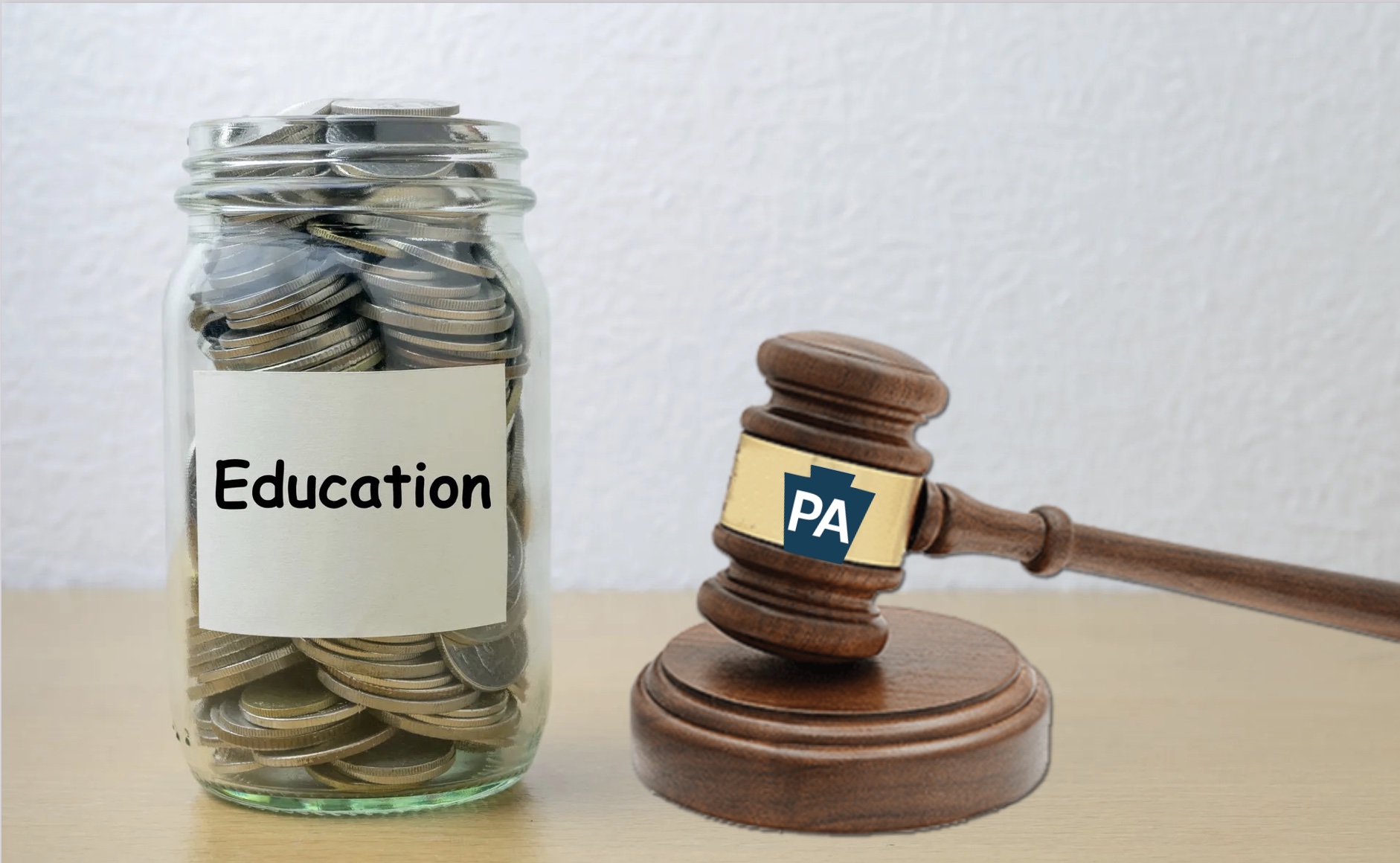
No, Public School Teachers are Not Turning Their Students into Communists

Have you heard the latest Republican lie?

There are so many it’s hard to keep track, but here’s the newest one.

Public school teachers are turning their students into communists.

I’m not kidding.

That’s what they’re saying on far right blogs, podcasts and TV shows.

Everyone from Betsy DeVos to Ron DeSantis and the sober fellows of the Heritage Foundation are up in arms.

All because Mr. Singer wore a red sweater vest one day to class.

Not really, but that might have been a better provocation than the reality – which is all in far right pundits’ heads.

So for the GOP, it’s all about fear – what can you scare voters to believe that will shepherd them to support your agenda?

So to start with, Republicans want you to be terrified of public schools.

The reason?

They want you to have to pay to get your kids educated – but public schools give learning away for free to everyone – just for paying taxes.

Right-wingers would much rather make it all a business where the more you pay, the better the education your kids get. There’d be poor quality charter schools for those who can’t afford the entry fee, but the best of everything would be reserved for the kids of the rich and powerful whose parents would use school vouchers to offset some of their tuition at private institutions.

Public schools would undo all that – especially if they were adequately funded.

Can you imagine a country where EVERYONE was fully educated!?

People might become informed voters and demand freedom and justice for all!

Lawmakers might have to create real policies, a platform, solutions – to actually govern!

So GOP operatives spread hysterical lies about public schools. They call them “government schools” as if that meant some imposed bureaucracy of outsiders and not what it actually does – schools governed by elected members of the community.

The lies and innuendo are never ending. Public school educators teach fake history where the civil rights movement was a good thing. They refuse to instill the truth of Creationism over fake Evolution. Teachers are pedophile groomers – never mind the actual Republican lawmakers charged with pedophilia and rape. And on and on and on.

Which brings us to the latest one – the new red scare that public school teachers are raising the next generation to hate Adam Smith and love Karl Marx.

The whole idea seems to have started with DeVos, the billionaire heiress and former Secretary of Education under President Donald Trump.

Robert Bluey, vice president of publishing for the Heritage Foundation, asked her a question on The Daily Signal Podcast (a Heritage Foundation mouthpiece) about the growing popularity of socialism among young people.

And it’s true, according to a 2018 Gallup poll, Americans aged 18 to 29 are almost as positive about socialism (51%) as they are about capitalism (45%).

So on behalf of the right-wing think tank behind the critical race theory brouhaha, transphobic legislation, climate change denial and a host of other regressive causes, Bluey asked DeVos why young people aren’t as firmly championing capitalism as previous generations.

DeVos, of course, blamed teachers. She responded:

“I recall visiting a classroom not too long ago where one of the teachers was wearing a shirt that said “Find Your Truth,” suggesting that, of course, truth is a very fungible and mutable thing instead of focusing on the fact that there is objective truth and part of learning is actually pursuing that truth.”

This is a rather strange answer. It may be the case that there are absolute truths in the world, but economic theories certainly don’t qualify. In matters of opinion, isn’t it better to tell students the facts and let them think for themselves about their relative virtues?

Not for DeVos. Indoctrination apparently is just fine so long as you’re indoctrinating kids into the right things.

Tell them capitalism is great. Tell them socialism is terrible. Screw critical thinking.

The Heritage Foundation, at least, liked her answer, using it as a template to fund a plethora of stories about public schools – not just leaving the matter up to students to decide – but actually bullying kids into championing communism.

Douglas Blair, a Daily Signal producer, codified the idea in his article “I’m a Former Teacher. Here’s How Your Children Are Getting Indoctrinated in Leftist Ideology.”

In the text of article, Blair admits he was only “in education” for 4 years, but it seems he was not a full-time classroom teacher for most of that time. According to his Linked-In account, he was a French teacher for 9 months in a school in Portland, Oregon. Before that he was an Extracurricular Aide, an English Language Assistant and Language Immersion Counselor at various schools in the US and France.

His evidence of indoctrination reads like “Kids Say the Darndest Things – Republican Edition.”

For example, he says he asked an elementary school girl if she liked Winston Churchill, and she frowned calling Churchill racist.

I’m not sure why that’s so upsetting. Churchill led Great Britain through WWII, but he undeniably WAS a racist, too. Churchill said that he hated people with “slit eyes and pig tails.” To him, people from India were “the beastliest people in the world next to the Germans.” He admitted that he “did not really think that black people were as capable or as efficient as white people.”

So Blair’s examples of indoctrination come out to complaining that kids learned accurate history.

If only the GOP could use history and education to change minds instead of decrying them.

Florida Gov. DeSantis is giving it a try. In 2022, he signed a law requiring schools in the sunshine state to actively teach about the horrors of communism.

That’s right. Whether teachers need to or not, they have to spend at least 45 minutes on it every November.

“We want to make sure that every year folks in Florida, but particularly our students, will learn about the evils of communism. The dictators that have led communist regimes and the hundreds of millions of individuals who suffered and continue to suffer under the weight of this discredited ideology,” DeSantis said, adding that “a lot of young people don’t really know that much” about the political ideology.

At first blush, this may sound like a good idea. More historical knowledge is a good thing, but it’s the context that makes this troubling.

Florida Republicans already have passed a battalion of laws telling educators what they CANNOT teach.

So you can’t teach about racial issues including the history of slavery if it makes any student “feel uncomfortable.” Math books are censored from depicting “prohibited topics.” You can’t talk about a wide range of human sexuality including LGBTQ people because of the infamous “Don’t Say Gay” bill.

But you’d better teach about how bad communism is! Or else!

First, this is the very definition of a GOVERNMENT SCHOOL the legislature dictating what teachers teach on a given day and not trusting them to do their own jobs.

Second, why single out communism? Certainly it has lead to horrors and misery, but so has capitalism. Are we to teach about the terrors of rampant greed, sweatshops, wars for oil, runaway inequality? After all, students in impoverished neighborhoods going to underfunded schools are actual victims of free enterprise, not collectivism. The free hand of the market is soaked in blood, too.

Third, there’s the subtext. This sounds to me like an invitation to conflate communism with socialism (which are two different ideas with different histories) and to champion one ideology over another.

Finally, let’s not forget this all comes from state law. It’s politics, not pedagogy, and in politics it’s only indoctrination when someone else does it.

So are public school teachers really molding their students into young Bolsheviks?

I seriously doubt it.

Economic theory rarely comes up in math, reading or science. Maybe it comes up occasionally in social studies.

In my middle school language arts classes, we discuss all kinds of things that come out of the books we’re reading.

Sometimes economic inequality comes out of S. E. Hinton’s “The Outsiders” or Harper Lee’s “To Kill a Mockingbird.” When we read Lois Lowry’s “The Giver” the concept of distribution of resources is broached.

In each case, I encourage my students to think about the problems from the stories, the solutions offered in the narratives and to discuss the matter with classmates. We hold Socratic Seminars and write critical essays. For “The Giver,” students work in groups to create their own utopias – you’d be surprised how many are socialist, though there are also a number of capitalist republics, dictatorships and anarchies. Kids love anarchy.

And I admit it – I encourage my students to think for themselves. I try not to give them my answers – my truths.

Facts are facts and opinions are opinions.

I would be a bad teacher if I forced my conclusions on my students.

So why ARE young people increasingly more critical of capitalism these days and more friendly toward socialism?

I’d say it’s because of the income inequality they see in the world around them.

Despite Republican’s claims, capitalism is not a perfect system. To be fair, no system is. But criticizing capitalism is not a bad thing, and finding value in aspects of socialism is no crime.

To achieve a better world, we have to do more than simply recreate the one in which we live.

That’s why education is so important. It is one of the chief engines of change, and nothing can truly stop that.

If Republicans think they can, they’re in for a shock.

Perhaps they should have paid more attention in school.

Or exposed their opinions to more rigorous critical thinking…

Nah!

I wonder what lie about public school they’ll try next.


Like this post?  You might want to consider becoming a Patreon subscriber. This helps me continue to keep the blog going and get on with this difficult and challenging work.

Plus you get subscriber only extras!

Just CLICK HERE.

Patreon+Circle

I’ve also written a book, “Gadfly on the Wall: A Public School Teacher Speaks Out on Racism and Reform,” now available from Garn Press. Ten percent of the proceeds go to the Badass Teachers Association. Check it out!

What Democratic Midterm Victories Mean for Pennsylvania’s Schools

We can breathe a sigh of relief.

Fascism was defeated at the polls.

Christian nationalism, snake oil salesmen and angertainment all fell to the power of the ballot at this week’s midterm election in Pennsylvania.

Democrat Josh Shapiro beat far right Republican Doug Mastriano for Governor.

John Fetterman beat reality TV star Dr. Mehmet Oz for Senator.

And a host of local grassroots progressives triumphed from Summer Lee becoming the first black woman ever elected from our state to the House to Lindsay Williams retaining her seat in the state legislature. Even Austin Davis (my state representative) will become the first black Lt. Governor in the Commonwealth.

And most surprising, the state house may have even flipped to Democratic control after decades in Republican hands. (There are still a few races that are too close to call.)

All-in-all, it was a good night. Especially in an election cycle where Republicans had every advantage. The President’s party usually loses seats during the midterms, and just last week it seemed that Joe Biden would be no exception. However, now that the dust has cleared, the losses seem to be minimal to nonexistent.

So what does it all mean for our state’s schools and the future of our kids’ educations?

First, we can expect far fewer insane policy proposals and those that are put forward will have next to zero chance of passing.

No more worries about our already meager education funding being cut in half.

No more fears of Florida’s regressive “Don’t Say Gay” law restricting free speech coming to the Keystone state.

The Critical Race Theory panic (A.K.A. – teaching actual history) will fade to just another wing nut conspiracy theory thrown to the Republican base to generate support instead of an actual policy proposal to restrict academic freedom.

I suspect a lot of the baseless hysteria Republicans had been shouting from the rafters will decrease as pollsters show them how ineffective it was in getting votes that weren’t already staunchly GOP.

For the first time in years, Republicans may have to push toward the center instead of constantly to the lunatic fringe. Otherwise, they’ll continue to lose.

Second, we may actually see some positive education policies make their way through the state legislature.

Shapiro has promised to increase education funding. That and the still pending court decision on a lawsuit against the state demanding adequate funding may be enough to turn the funding faucet on a few cranks. With Democrats holding an increasing share of seats, all it takes is a few moderate Republicans (are they out there?) to join them to get things done.

However, it isn’t all wine and roses.

During the general election, Shapiro came out in favor of some school voucher programs. This puts him to the right of our current Governor Tom Wolf. So we can look forward to our new Governor supporting an increase for tax credit scholarships and other de facto voucher plans that will drain public education coffers just as we’re working to increase them.

It is also anyone’s guess whether a pro-voucher Governor would support charter school reform – something we desperately need and that Wolf championed during his tenure.

And though both Wolf and Shapiro criticized standardized testing, it would take a mightily informed and courageous state politician to go up against the economic powerhouse of the testing industry.

In short, the election mostly means we don’t have to worry about as many flaming meteorites crashing down on our schools.

Things might even get better here and there – especially with additional funding.

However, we will have to monitor our representatives as if they were little kids sulking by the cookie jar. They will almost definitely try to sneak in some garbage legislation to hurt our students and enrich their corporate buddies.

When we look at the national situation, it appears much the same. Even with Fetterman going to the Senate, it’s unclear whether Democrats will have control of either legislative body. Even if they do, the majority will be razor thin.

A robust Democratic Party determined to enact progressive legislation could make much of such a situation, but as we’ve seen in the past, that is not the case with the current leadership.

The most we can realistically hope for is that they put a stop to insane GOP legislation.

The question is whether we can build on such Democratic gains at both the state and national level. Usually that doesn’t happen. But it will have to be the goal moving forward.

Stopping the worst is a worthy aim but it cannot be everything. We must continue to push our representatives to make actual progress and fix the slow and steady drip of fascism, corporatism and Christian nationalism that has dominated our politics for far too long.

So let us celebrate a worthy election cycle while we prepare for all the political battles still to come.

A sigh of relief, a renewed fighting stance and back into the fray.


Like this post?  You might want to consider becoming a Patreon subscriber. This helps me continue to keep the blog going and get on with this difficult and challenging work.

Plus you get subscriber only extras!

Just CLICK HERE.

Patreon+Circle

I’ve also written a book, “Gadfly on the Wall: A Public School Teacher Speaks Out on Racism and Reform,” now available from Garn Press. Ten percent of the proceeds go to the Badass Teachers Association. Check it out!


Standardized Test Scores are Incompatible with Your School’s Equity Plan  


The primary goal of public education is to teach all children fairly.  


But since its inception, the system has never been set up to actually accomplish this.  


So these days you hear a lot of talk about fixing the problem – of how we can ensure students of color and other historically underserved children get the same high-quality education racially and economically privileged kids always have received.


This almost always concludes with two types of plan.  


First, there is the serious venture made up of things like increasing spending to meet student need, wraparound services, early intervention, reducing class size, redistributive justice and cultural competence – a plan that looks the reality in the face and makes bold attempts to come to terms with it. 


Then there is the cheap knockoff proposition – a buzzword-laden scheme where someone is trying to convince you their half hearted proposal is actually a solution to the very real problem of educational inequality. 


And the number one thing you can use to tell the difference between the two is this – standardized test scores


The first plan that is centered around actually fixing disparities makes no mention of test scores – or at least relegates them to obstacles. The second is built all around them – as an essential component of the overall scheme. 


This is because the second feel-good-accomplish-nothing plan is essentially performative.  


Therefore, it is constructed around standardized test scores as a metric of success.  


Planners think: We’re going to do A, B and C to make our schools more equitable. And how will we know we’re doing it right? We’ll use our standardized test scores! 


That’s not accuracy. It’s ostentation. These scores don’t demonstrate anything at all about equity. True, they purport to show readily apparent increases or decreases in academics.  


However, even this is an illusion.  


A rise or fall in test scores is not, in fact, based on authentic academic success but merely success at taking standardized tests designed for very different purposes.  


And anyone who understands the history of these types of assessments and how they still work will know that this mirage is built at the cost of genuine equity.  


In fact, the inequalities plaguing our public school system are due in large part to our national insistence that standardized test scores be the ultimate measure of success.  


So constructing your plan to fix this problem around one of its root causes is like claiming you can fix a sinking ship by drilling more holes in its hull.  


At best, it’s naive. At worst, it’s self-defeating and disingenuous.  


The problem centers around the difference between standardized tests and assessments created by classroom teachers. 


Both types of assessment are supposed to measure what students have learned. But not all learning is equal


For example, a beginning chef needs to know how to use the stove, have good knife skills and how to chop an onion. But if you give her a standardized test, it instead might focus on how to make foie gras – something that would only come in handy at a high end French restaurant.


That’s not as important in your everyday life, but the tests make it important by focusing on it.  


The fact of the matter is that standardized tests do NOT necessarily focus on the most important aspects of a given task. They focus on obscurities – things that most students don’t know.  


This is implicit in the design of these exams and is very different from the kinds of tests designed by classroom teachers.  


When a teacher makes a test for her students, she’s focused on the individuals in her classes. She asks primarily about the most essential aspects of the subject and in such a way that her students will best understand. There may be a few obscure questions, but the focus is on whether the test takers have learned the material or not.  


When psychometricians design a standardized test, on the other hand, they aren’t centered on the student. They aren’t trying to find out if the test taker knows the most important facts or has the most essential skills in each field. Instead, there is a tendency to eliminate the most important test questions so that the test – not the student – will be better equipped to make comparisons between students based on a small set of questions. After all, a standardize test isn’t designed for a few classes – it is one size fits all.  


New questions are field tested. They are placed randomly on an active test but don’t count toward the final score. Test takers aren’t told which questions they’ll be graded on and which are just practice questions being tried out on students for the first time. So students presumably give their best effort to both types. Then when the test is scored, the results of the field test questions determine if they’ll be used again as graded questions on a subsequent test.  


According to W. James Popham, professor emeritus at the University of California and a former president of the American Educational Research Association, standardized test makers take pains to spread out the scores. Questions answered correctly by too many students – regardless of their importance or quality – are often left off the test.  


If 40 to 60 percent of test takers answer the question correctly, it might make it onto the test. But questions that are answered correctly by 80 percent or more of test takers are usually jettisoned.  


He writes:  

   “As a consequence of the quest for score variance in a standardized achievement test, items on which students perform well are often excluded. However, items on which students perform well often cover the content that, because of its importance, teachers stress. Thus, the better the job that teachers do in teaching important knowledge and/or skills, the less likely it is that there will be items on a standardized achievement test measuring such knowledge and/or skills.”  


Think about what this means.  


We are engaged in a system of assessment that isn’t concerned with learning so much as weeding people out. It’s not about who knows what, but about which questions to ask that will achieve the predetermined bell curve.  


This is important when it comes to equity.  


If we are guided in large part by standardized test scores, we aren’t guided by authentic learning. We’re guided by a false picture of learning. Therefore, the most effective way – perhaps the only practical way – of raising test scores is to teach directly to a specific test. And not only the test, but the specific version of the test being given that year.

So if we do somehow manage to raise test scores, we haven’t improved academics at all but a mere semblance of it. And thus the equity we might celebrate in such a situation would be just as false. 


You got a good score on the MAP test. Hurrah! But that doesn’t mean you know anything of real value except how to take this particular MAP test which, itself, will change after the next round of questions are field tested.


This has huge implications for the quality of education being provided at our schools. Since most administrators have drunk deep of the testing Kool-Aid, they now force teachers to educate in just this manner – to use test scores to drive instruction. So since the tests doesn’t focus on the most essential parts of Reading, Writing, Math, and Science, neither does much of our instruction. 

And if we insist on evaluating the equity of our schools on these test scores, we will only make things that much worse. 


We end up chasing the psychometricians. We try to guess which aspects of a subject they think most students don’t know and then we teach our students that to the exclusion of more important information. And since what students don’t know changes, we end up having to change our instructional focus every few years based on the few bread crumbs surreptitiously left for us by the state and the testing corporations.  


That is not a good way to teach someone anything. It’s like teaching your child how to ride a bike based on what the neighbor kid doesn’t know.  


It’s an endless game of catch up that only benefits the testing industry because they cash in at every level. They get paid to give the tests, to grade the tests and when students fail, they get paid to sell us this year’s remediation material before kids take the test again, and – you guessed it – the testing companies get another check!  


It’s a dangerous feedback loop, a cycle that promotes artificially prized snippets of knowledge over constructive wholes. 


And let’s not forget where these tests come from


They were created in the 1910s and 20s by eugenicists to prove the supremacy of white Europeans over other racial and ethnic groups.  


While these original tests are no longer in circulation, the assumptions behind them are an essential part of our modern day standardized tests. 


The very method of question selection in today’s tests builds economic and racial bias into the very fabric of the enterprise.  


According to Prof. Martin Shapiro of Emory University, when test makers select questions with the greatest gaps between high and low scorers, they are selecting against minorities. Think about it – if they pick questions based on the majority getting it right, which minority got it wrong? In many cases, it’s a racial or ethnic minority. In fact, this may explain why white students historically do better on standardized tests than black and Hispanic students.  


This process may factor non-school learning and social background into the questions. They are based on the experiences of white middle-to-upper class children.  


So when we continually push for higher test scores, not only are we ultimately dumbing down the quality of education in our schools, but we’re also explicitly lobbying for greater economic and racial bias in our curriculum trickling down from our assessments.  


As Ibram X. Kendi, author of “How to be an Antiracist” puts it:  


“Standardized tests have become the most effective racist weapon ever devised to objectively degrade Black minds and legally exclude their bodies.”  


This is incompatible with any enterprise aimed at increasing equity.  


You are engaged in a never-ending cycle of teaching to the test at the expense of authentic learning. You’re engaged in making minorities think like their privileged peers – of overcoming who they are just to be accepted into a game.


This is not education. It is assimilation, and it will always put the assimilated at a disadvantage to the majority – those they are being forced to imitate.  


Equity and standardized testing do not go together.  


They CANNOT go together. They are anathema.  


Those who suggest otherwise are either well-meaning fools or duplicitous malefactors.  


There is a multi-billion dollar standardized testing industry dependent on keeping us testing our kids.  


But we can no longer continue feeding that beast and pretending that we can somehow provide equity to our underserved children, too.  


We have to choose – equity or testing.  Fairness or unrestrained capitalism.


Do not believe anyone who tells you to support a plan built on both. 

It does not exist.


Like this post?  You might want to consider becoming a Patreon subscriber. This helps me continue to keep the blog going and get on with this difficult and challenging work.

Plus you get subscriber only extras!

Just CLICK HERE.

Patreon+Circle

I’ve also written a book, “Gadfly on the Wall: A Public School Teacher Speaks Out on Racism and Reform,” now available from Garn Press. Ten percent of the proceeds go to the Badass Teachers Association. Check it out!