“Daddy, are gay people not allowed to get married?”
My daughter was looking at me in confusion as we sat together on the couch watching an old episode of “Top Chef.”
In Season 6, episode two, the chefs were asked to cook for a bachelor party. One of the contestants, Ashley, was indignant that she had to participate in a challenge centered on marriage when she, herself, couldn’t marry another woman.
I was surprised.
It hadn’t occurred to me that the show was so old. It first aired in 2009. Was that really so long ago?
We’ve only had marriage equality in all 50 states since 2015. That’s just seven years ago.
So I explained to my daughter that gay people can marry today, but that it wasn’t always the case.
My 13-year-old thought the idea that people couldn’t marry whoever they wanted to was just too crazy to be believed. And I agreed.
Apparently, the landmark 1973 decision that expanded access to abortion nationwide is about to be overturned by the Republican majority on the Supreme Court.
Did I just sleep through a monologue by Rod Serling?
I’m still seeing things in color but they’re starting to feel very black and white.
These are issues of settled law.
Roe v. Wade is older than I am. Women have been able to terminate unwanted pregnancies for my entire life and the world hasn’t come to an end. In fact, if you read about what life was like before this decision, things have improved.
Women have freedom over their own bodies. They aren’t trapped by the Catch 22 of whether to submit to a forced birth or risk their lives with a back alley procedure.
I remember having a similar moment of cognitive dissonance as my daughter did when I was in high school.
I read the book “An American Tragedy” by Theodore Dreiser and was shocked at what life was like in the 1920s before women had such freedoms. In the book, a couple get pregnant and have to choose between an unwanted marriage while raising an unwanted child or a black market abortion and the freedom to move on. When they can’t agree, the protagonist, Clyde, murders the poor woman.
At the time, the whole situation seemed entirely quaint. It was a series of arguments, examples, and counter examples on an issue that had been decided long ago.
That anyone could think differently struck me as absurd.
In my high school public speaking class, we debated the issue. I argued in favor of reproductive rights, and a girl I had a crush on argued against them.
Let’s cut to the chase. None of this really is about stopping abortions. (If that was the concern, we’d be talking about free birth control, neonatal care and making a better world to raise children in.) Nor is it about safeguarding marriage between a man and a woman – or a white man and a white woman.
It’s about strengthening white supremacy. It’s about bolstering the patriarchy.
Democrats have a majority in both the House and the Senate and we have the Presidency.
If we can’t get 60 votes in the Senate (and we probably can’t) we can end the filibuster and pass it with 50 votes.
I hope with all my heart that we do this.
I will push and organize and protest and electioneer. But I fear it will not be enough.
Just making it to this regressive moment in time seems to indicate that our system is too broken to be fixed that way.
This is not the world I wanted for my daughter. I fear it is the world she will have to fight to overcome.
The battles of our grandparents have become our inheritance to our posterity.
They deserve a much better world.
But all we seem to have for them are reruns.
Like this post? You might want to consider becoming a Patreon subscriber. This helps me continue to keep the blog going and get on with this difficult and challenging work.
The Covid-19 pandemic on top of years of corporate sabotage and propaganda have obscured what public education really means and why it is absolutely necessary to the functioning of our society and any possibility of social, racial or economic justice.
Let’s begin by looking at how the current disaster exacerbated an already difficult situation and then consider why we should care enough to fix the mess.
The Pandemic Effect
Public schools got a bloody nose from the Coronavirus crisis.
Issues of masking, contact tracing, safety of immunocompromised students and staff, and when to open or close buildings (among other issues) lead to inevitable dissatisfaction from all fronts.
However, none of these issues should have been decided at the local level in the first place.
Instead, the CDC made conflicting decisions based more on the needs of the economy than public health (many of which were roundly ignored anyway). Then federal and state governments either refused to decide safety protocols leaving it up to individuals or municipalities, or when they did decide matters, they were embroiled in partisan battles over any kind of restrictions.
In fact, it was the failure of federal, state and even local municipal governments that often made public schools the de facto legislators of last resort. And this is something they were never meant to be.
According to the Bureau of Labor Statistics, there are 567,000 fewer educators in our public schools today than there were before the pandemic. And finding replacements has been difficult. Nationwide, an average of one educator is hired for every two jobs available.
This has left us with a weakened system suffering from more problems than before the pandemic hit.
Why Are Public Schools Important?
Because of what they are and what they represent.
We hear about public education so often – usually in deprecating terms – that we forget exactly what the term signifies.
It is a school where any child can go to get an education.
You don’t have to pay tuition. You don’t have to have a special ability or qualification. You don’t have to be neurotypical, a certain race, ethnicity, belong to a certain faith or socioeconomic status. If you’re living in the US – even if you’re here illegally – you get to go there.
That may seem simple, but it is vitally important and really quite special.
Not all nations have robust systems of public education like we do in the US.
This country has a commitment to every single child regardless of what their parents can afford to pay, regardless of their access to transportation, regardless of whether they can afford uniforms, lunch or even if they have a home.
We simply define education differently. We look at it as a right, not a privilege. And for a full 13 years (counting kindergarten) it’s a right for every child, not just some.
Perhaps even more significant is our commitment to children with special needs.
We have developed a special education system to help children at the edges that many other countries just can’t touch. In some nations these students are simply excluded. In others they are institutionalized. In some countries it’s up to parents to find ways to pay for special services. The United States is one of the only countries where these children are not only included and offered full and free access, but the schools go above and beyond to teach these children well beyond their 12th academic year.
In every authentic public school in the United States these students are included. In math, reading, science and social studies, they benefit from instruction with the rest of the class. And this, in turn, benefits even our neurotypical students who gain lessons in empathy and experience the full range of human abilities.
That isn’t to say the system has ever been perfect. Far from it.
But at least at the very outset what we were trying to do was better than what most of the world takes on. You can’t achieve equity if it isn’t even on the menu.
Without public schools, equity is definitely not on offer.
Public is Better Than Private
That’s really the point.
Charter, cyber and voucher schools are not set up around this ideal.
They are about who is sent away, not about letting everyone in.
The United States is a big country – the third most populous in the world. We have 332,630,000 people and growing. That’s about 50 million students in public schools.
No private system in the world has ever been able to work at that scale. If we lose our public schools, many kids will be left wanting.
It forces students to compete to get into schools and schools to compete for their very existence. Think of how that affects instruction. Schools have to spend a considerable amount of time and money attracting students to enroll. That’s time and money that doesn’t go to education. It goes to advertising.
Moreover, any school that attracts a surplus of students can choose which ones its wants to enroll. The choice becomes the school’s – not the parents’ or students’. In fact, administrators can turn away students for any reason – race, religion, behavior, special needs, how difficult it would be to teach him or her. This is much different from authentic public schools. There, any student who lives in the district may attend regardless of factors such as how easy or difficult he or she is to educate.
It’s a Darwinian model made to benefit the predators, not the prey. It’s a boon for any unselfconscious businessman who doesn’t mind getting rich stealing an education from children.
We Must Fight
That’s why we must fight to keep our public schools.
But you may luck out. Every privatized school isn’t a scam. Just most of them. So if you have found a charter, cyber or voucher school that is working for your child and doesn’t self-destruct in the time your child is enrolled, you may wonder why you should worry about the rest of us – the kids caught up in a web of privatized predation and neglect?
You have to live in this society. Do you really want to live in a country with a large population of undereducated citizens who cannot figure out how to vote in their own interests? Do you really want to live in a society where crime is a better career choice for those who were not properly educated?
That’s why we can’t let public education disappear.
I know it may sound like an insurmountable task, but saving our public schools can be done.
It will require collective action.
We will need to actively participate in our school board elections, go to school board meetings and possibly even run to serve on the board, ourselves.
Many people are upset with what local boards did during the pandemic, but the way to solve this isn’t to flee to schools without democratic principles. It is to seize those principles and make them work for you and your community.
And to do that, we need real political change at every level of government – local, municipal, state and federal.
None of this is easy. All of it takes work.
But it is the fight we must wage if we are ever to keep our democracy.
It is the fight we must win to create the better world our children deserve.
Public schools are worth saving, but it is up to you and me to do it.
Like this post? You might want to consider becoming a Patreon subscriber. This helps me continue to keep the blog going and get on with this difficult and challenging work.
“We also need conservative eyes and ears in the schools. If anyone can substitute even one day a week, the teachers who are activists and indoctrinating children can be revealed. Not all teachers are for [Critical Race Theory] CRT, etc. We need to identify the ones who are pushing the professional development they received over the summer. Are they putting black children’s tests in separate piles and grading them differently? Have they separated the classrooms? We won’t know these things until parents are allowed back into schools, so the best way is to sub.”
They certainly have the time! Legislators from the Keystone State make the third highest salary in the country, and they’re only in session a few weeks every month! They could easily spend a few days a week struggling with overstuffed classes, in-school suspension, hall duty and the like.
Districts that aren’t experiencing a shortage may require a teaching certificate as well, but beggars can’t be choosers. In districts where it is hard to get subs (i.e. those serving poor and minority kids) you can get emergency certified for a year.
But when I made such a suggestion, I naively thought lawmakers might see the problems schools actually have and start to support them.
Fat chance of that!
People with an agenda like Gleim would simply take the most innocent of interactions and pretend they were examples of indoctrination.
In Florida they banned 41% of the math books for being “woke” without a single concrete example and then patted themselves on the back for being transparent. It would be the same here. It would be like the Puritan girls in “The Crucible” finding witches in every classroom and hallway.
This state representative really thinks teachers are putting black children’s tests in separate piles and grading them differently!? As if we’re somehow changing their grades or assessing them more leniently?
NEWS FLASH: Children of color are not suddenly acing all their tests or rocketing to the head of the class. In fact, just the opposite. There has been a racial proficiency gap for decades based on segregation, lack of resources and punitive and biased standardized tests.
But back to her social media tirade. She wonders if there are separated classrooms – by which I assume she means classrooms segregated by race.
BINGO! She got that one right! But it’s not what she seems to think.
A majority of children of color are not getting privileged treatment. They’re being underprivileged. They’re in the lower academic tracks and a majority of the white kids are in the honors courses.
But back to her social media bubble. She wants parents to be allowed “back” into public schools!? Parents have never been excluded. As long as they can pass the background check, they can come in almost any time.
The books are riddled with counter factual claims and political bias in every subject imaginable such as abortion, gay rights and the Endangered Species Act, which one text labels a “radical social agenda.” They disparage religions other than Protestant Christianity and cultures other than those descended from white Europeans.
But that won’t happen because they’re terrified it might lose them a vote. They’re too afraid of being called partisan. Yet there is no middle ground with justice. You either have it or you don’t.
It would require a stance on principle.
So far, it hasn’t happened, and I doubt it will.
So Republicans will continue to take aim at all the usual scapegoats like teachers.
That’s the kind of thing that happened a few years ago at the Tree of Life Synagogue in Pittsburgh. A MAGA gunman was convinced by Trump that Jews were helping immigrants come into the country illegally. So he decided to kill as many Saturday worshipers as he could.
If we don’t stand up to this, it’s only a matter of time before it happens again.
Look. I don’t want to be at the center of this ridiculous culture war.
I just want to teach. I just want to do right by my students and their families.
But as our country burns to the ground, the school house often seems to be the center of the blaze.
I am sick of it.
I am sick of it.
I am just so sick of it.
Like this post? You might want to consider becoming a Patreon subscriber. This helps me continue to keep the blog going and get on with this difficult and challenging work.
To answer that question, we have to understand how we got here in the first place – where these kinds of assessments came from in the US and how they became the guiding policy of our public schools.
From the very start, it had serious consequences for public policy. The results were used to rationalize the forced sterilization of 60,000 to 70,000 people from groups with low test scores, thus preventing them from “polluting” the gene pool.
However, Brigham’s greatest claim to fame was the creation of the Scholastic Assessment Test (SAT) to keep such undesirables out of higher education. These tests were not central to school curriculum and mainly used as gatekeepers with the SAT in particular still in wide use today.
The problem then – as now – is that standardized tests aren’t very good assessments. They work okay for really simple things like rudimentary math. However, the more complex a skill you’re assessing, the more inadequate the tests. For example, imagine just trying to have a conversation with someone where your only choices of reply were limited to four canned responses. That’s a multiple-choice assessment. The result is a testing system that selects against the poor and minorities. At best, it reproduces the economic and racial disparities of society. At worst, it ensures those disparities will continue into the next generation.
That isn’t to say the system went unchallenged. By the 1960s, the junk science and leaps of logic behind standardized testing were obvious and people began fighting back in court. Black plaintiffs began winning innumerable lawsuits against the testing industry.
Perhaps the most famous case is Hobson v. Hansen in 1967, which was filed on behalf of a group of Black students in Washington, DC. The court ruled that the policy of using tests to assign students to tracks was racially biased because the tests were standardized to a White, middleclass group.
So in the 1980s, the Reagan administration published “A Nation at Risk,” a campfire tale about how America’s public schools were failing. Thus, the authors argued we needed standardized testing to make American children competitive in a global marketplace.
For instance, it concluded that average student test scores had decreased but didn’t take into account that scores had actually increased in every demographic group. It compared two decades worth of test scores, but failed to mention that more students took the test at the end of that period than at the beginning, and many of the newer students were disadvantaged. In other words, it compared test scores between an unrepresentative group at the beginning of the comparison with a more representative group at the end and concluded that these oranges were nothing like the apples they started with. Well, duh.
Most people weren’t convinced by the disaster capitalism at work here, but the report marks a significant moment in the standardization movement. In fact, this is really where our modern era began.
It took an additional two decades, until 2001, for President George W. Bush’s No Child Left Behind (NCLB) legislation to require standardized testing in ALL public schools.
With bipartisan support, Bush tied federal funding of schools to standardized test performance and annual academic progress. And from then on, the die was cast. This policy has been upheld through both Republican and Democratic regimes.
From the 1980s to 2022 we’ve had wide scale standardized testing in our schools. That’s roughly 40 years where the entirety of what is done in public school has been organized around these assessments. They drive the curriculum and are the ultimate benchmark by which success or failure is judged. If this policy was ever going to work, it would have done so by now.
However, it has achieved NONE of its stated goals.
NCLB specifically stated that all children would be proficient in reading and math by 2014. That has not happened. Despite spending billions of dollars on remediation and completely reorganizing our schools around the assessments, test scores have remained mostly static or even decreased.
NCLB also championed the idea that competing for test scores would result in better teachers. However, that didn’t happen either. Instead, educators were forced to narrow the curriculum to cover mostly what was assessed, reduce creativity and critical thinking, and teachers who served poor and minority students were even punished for doing so.
If the purpose of standardized testing was all the things the law purported, then it was a decades long failure. It is the policy equivalent of slamming your head into a wall repeatedly and wondering why you aren’t moving forward. (And where did this headache come from?)
If, however, the purpose of standardized testing was to fulfill Friedman’s privatization dreams, then it was a resounding success. Public schools still persist, but they have been drained, weakened and in many ways subverted.
Look at the evidence.
Standardized testing has grown from a $423 million industry before 2001 to a multi-billion dollar one today. If we add in test prep, new text books, software, and consultancy, that figure easily tops the trillion dollar mark.
Huge corporations make the tests, grade the tests and then sell remediation materials when students fail. It’s a huge scam.
But that’s not the only business created by this policy. Test and punish opened entirely new markets that hadn’t existed before. The emphasis on test scores and the “failing schools” narrative stoked unwarranted distrust in the public school system and a demand for more privatized alternatives.
Chief among these was charter schools.
The first charter school law was passed in 1991 in Minnesota. It allowed for the creation of new schools that would have special agreements (or charters) with states or districts to run without having to abide by all the usual regulations. Thus, the school could go without an elected board, pocket public money as private profit, etc. The bill was quickly copied and spread to legislatures across the country by the American Legislative Exchange Council (ALEC).
However, charter schools are rife with fraud and malfeasance. For instance, more than a quarter of charter schools close within 5 years of opening. By year 15, roughly 50% of charter schools close. That’s not a stable model of public education. It’s a get rich quick scheme. And since these types of schools are free from the kinds of regulations, democratic governance and/or transparency that keeps authentic public schools in check, another charter school scandal pops up almost every day.
But let’s not forget school vouchers. Before high stakes testing, the idea of using public money to pay for private or parochial schools was widely considered unconstitutional. Now about 4% of US students go to private and parochial schools some of which are funded with school vouchers. This is an option in 32 states and the District of Columbia, and more than 600,000 students participated in a voucher, scholarship tax credit or education savings account program last school year, according to EdChoice, a pro-voucher and school choice group.
In short, they’re subsidies for wealthier kids at the expense of the middle class and disadvantaged.
Without standardized testing, it is impossible to imagine such an increase in privatization.
High stakes testing is a Trojan horse. It is a way to secretly undermine and weaken public schools so that testing corporations, charter schools and voucher schools can thrive.
Judged by its own metrics of success, standardized testing is an abject failure. Judged by the metric of business and school privatization it is a rousing success.
And that’s why it has been so hard to discontinue.
This is corporate welfare at its finest, and the people getting rich off our tax dollars won’t allow us to turn off the flow of funding without a fight.
On the right, policymakers are often boldly honest about their goals to bolster privatization over public schools. On the left, policymakers still cling to the failed measures of success testing has not been able to meet time-and-again.
However, both groups support the same system. They only give different reasons.
It is past time to wake up and smell the flowers.
If we want to ensure education dollars go to education and not profiteers, we need to end standardized testing.
If we want to help students learn to the best of their abilities, we need to stop gaslighting them with faulty measures of success or failure.
If we want to allow teachers to do the best for their students, we need to stop holding them back with antiquated eugenicist shackles.
And if we truly want to save our public school system, we have to stop propping up privatization.
In short, we need to end standardized testing.
The sooner, the better.
Like this post? You might want to consider becoming a Patreon subscriber. This helps me continue to keep the blog going and get on with this difficult and challenging work.
There are black kids and white kids, Muslim kids and Christian kids, Latinos and Lithuanians, Italians and Iranians, girls, boys and all genders in between.
There are tall kids and short kids. Fat kids and thin kids. And, yes, some kids who like other kids in ways which all adults might not approve.
However, some people are too juvenile to deal with it – they can’t even say the word or can’t even endure someone else saying it!
That’s not so bad when you’re 13 and terrified of your own sexuality, anxious that anyone might question your cis privilege.
You still have time to grow out of such sophomoric hijinks.
Silencing the grown-ups in school won’t change who the kids are. It will just forbid us from mentioning reality. It will permit us to recognize only the tiniest fraction of who our students are and leave a de facto shroud over the rest.
I refuse to turn my classroom into a closet.
It might make the most bigoted adults feel better. It might relieve grown-up fears that just talking about other ways to live is enough to mold someone into something against their nature.
As if such a thing were possible.
But it won’t help the kids.
People don’t become their sexuality. They discover who they were all along – and ultimately no piece of legislation can stop that. It can make that search more difficult, painful and riddled with guilt. But you are who you are.
It’s regressive shame-based norms like these that encourage little boys to bash those who are different.
That make them feel the only safety lies in violence against the other so no one questions who they are, themselves.
That scares them enough to giggle at a three-letter word embedded in a poem.
And speaking of my giggle goose, eventually he got himself under control.
Before the end of the period he came back to the table.
Silently, swiftly, and soberly, he sat down with the rest of us ready to continue discussing “Do Not Go Gentle Into That Goodnight.”
Not a titter or laugh.
It wasn’t until a week later that he turned to me with a smile and asked:
“Mr. Singer, did you have a gay weekend?”
I did, Buddy. I did.
Like this post? You might want to consider becoming a Patreon subscriber. This helps me continue to keep the blog going and get on with this difficult and challenging work.
“The General Assembly shall provide for the maintenance and support of a thorough and efficient system of public education to serve the needs of the Commonwealth.”
“Thorough and efficient.”
Not lavish. Not extravagant. Just complete and productive.
One has brand new facilities, marble columns, and wood paneling scrubbed to a shine with a bustling staff moving to-and-fro.
The other has badly maintained structures, exposed insulation, dusty corners, leaky ceilings and animal droppings while a skeleton crew of adults try their all to do the impossible without the tools to get it done.
The Pennsylvania legislature has been paying less and less of public schools’ budgets over the last four decades. The state used to contribute 54% of all public school costs in the early 1970s. Today it pays just 38% of the cost. Only five states cover a smaller share with the national average at 47%. This leaves local taxpayers to take up the slack. Since districts are not equally wealthy, that increases the disparity of resources between rich and poor districts.
During the trial, the state had tried to argue that money doesn’t matter. Yet poor schools can spend $4,800 less per student than wealthy districts. What’s worse, impoverished students have greater needs than rich ones. They often don’t have books in the home or access to Pre-kindergarten. Poor students often suffer from food insecurity, malnutrition, a lack of neonatal care, worse attendance, are less well rested and have greater special needs and suffer greater traumas than wealthier students. Yet we provide them with fewer resources!?
“What use would a carpenter have for biology? […] What use would someone on the McDonald’s career track have for Algebra 1? […] The question in my mind is, thorough and efficient to what end? To serve the needs of the Commonwealth. Lest we forget, the Commonwealth has many needs. There’s a need for retail workers, for people who know how to flip a pizza crust.”
So the Commonwealth actually argued that inequitable funding is okay because all kids don’t need a thorough education. Some just need the bare minimum to do whatever menial jobs they’re destined to have while the elite kids need more for the high skilled jobs they’re going to get.
I wonder which kids Krill and his defendants in the legislature think deserve less funding. I’ll bet it’s the black and brown kids already suffering most from this disparity.
Luckily, the school districts asking the courts to intervene feel differently.
Six school districts – William Penn, Lancaster, Panther Valley, Greater Johnstown, Shenandoah Valley, and Wilkes Barre Area – filed the suit along with the Pennsylvania Association of Rural and Small Schools, the NAACP PA State Conference, and families whose children attend under-resourced schools.
Essentially, they are asking for two things.
First, for the court to declare the current funding system unconstitutional.
Second, for the court to order the legislature to create and maintain a fair funding system.
You might say, wait. Didn’t the legislature adopt a new Basic Education Funding formula in 2016 that already provides a fairer way to allocate money based on need?
He suggests a $1.75 billion down payment to schools on the $4.6 billion gap.
The state has the money to do this. It just needs to cut wasteful spending elsewhere and close tax loopholes.
For example, the state throws away $240 million a year to The Race Horse Development Fund. These are taxpayer funded subsidies to wealthy horse racing enthusiasts and hobbyists. Since 2004, the legislature has lavished $3 billion on the horse racing industry. Shouldn’t we prioritize school children over cash prizes and inflated pensions for wealthy horse owners, breeders, and trainers? Aren’t kids more important than paying to drug test horses and for racetrack marketing?
If the state was doing its job and looking after kids instead of giving handouts to wealthy oligarchs, you and I wouldn’t feel as much pain in our wallets.
Both parties in the case will file a series of post-trial briefs saying what they believe they proved during the testimony, the “conclusions of law” they are asking the judge to reach, and their analysis of the legal questions presented—such as the meaning of the state Constitution’s “thorough and efficient” education clause.
The final post-trial brief is due on July 6. Then — after oral argument on legal issues at a later date — the court will make its final decision weeks or months later.
In the meantime, the budget is supposed to have been approved by the legislature (one way or another) and signed by the Governor by June 30. If not, funding for some state programs may be delayed. But you never know. The legislature has been late on this before.
So what am I learning from all of this?
The value of hope?
The evil of lawmakers who want to continue shortchanging our children?
The bravery of public school districts that challenge the state to follow its own darn rules?
All of the above.
Like this post? You might want to consider becoming a Patreon subscriber. This helps me continue to keep the blog going and get on with this difficult and challenging work.
Here are some things for school directors and administrators to consider:
–If you don’t require all students and staff to wear masks – don’t blame teachers.
–If you don’t regularly test students and staff for Covid – don’t blame teachers.
–If you don’t require all students and staff to be vaccinated – don’t blame teachers.
–If your classrooms are not well ventilated – don’t blame teachers.
–If you force staff to come into the building for professional development and don’t allow them to attend remotely – don’t blame teachers.
–If you don’t provide K95 masks to all students and staff – don’t blame teachers.
–If you didn’t devise a schedule to keep students socially distanced – don’t blame teachers.
–If you don’t deep clean each classroom and other student spaces between classes – don’t blame teachers.
–If you don’t have lunches outdoors or in some other extremely well-ventilated space – don’t blame teachers.
–If you don’t require a negative Covid test before sick students or staff can return to school – don’t blame teachers.
–If students and staff have steadily been getting sick for weeks and you’ve done nothing to prepare – Don’t Blame Teachers.
–In short, if you haven’t done everything you can do to prevent an outbreak sweeping through your school and your community – DON’T. BLAME. TEACHERS.
BLAME YOURSELF.
Like this post? You might want to consider becoming a Patreon subscriber. This helps me continue to keep the blog going and get on with this difficult and challenging work.
The most popular topic people wanted to read about on my blog this year has been how teachers are dealing with the Covid-19 pandemic.
In short, it’s a mess.
We’re struggling big time.
In the media, they call it a teacher shortage, but it’s really an Exodus away from the profession for educators who are fed up with being treated like crap.
But that’s not the only thing I wrote about in 2021.
At this point in my career with everything crumbling around me, I have no more F’s to give.
I’m laying it all out straight. And this is from a blogger who has often been criticized for not holding anything back BEFORE!
Now I am pointing out all the elephants in the room.
Some of these articles are not for the faint of heart.
If you’re tired of being polite and ignoring all the flaming dumpster fires that well behaved teachers aren’t supposed to mention, then you might enjoy some of these stories.
Description: The title says it all. Stop wasting teachers’ time by making us fill out paperwork that won’t help us do our jobs but will make administrators and principals look good. We make our own plans for ourselves. We don’t need to share with you a bunch of BS with Common Core nonsense and step-by-step blah-blah that will probably have to change in the heat of the moment anyway.
Fun Fact: Teachers in my building rarely say anything to me about my blog. But I got some serious appreciation on my home turf for this one.
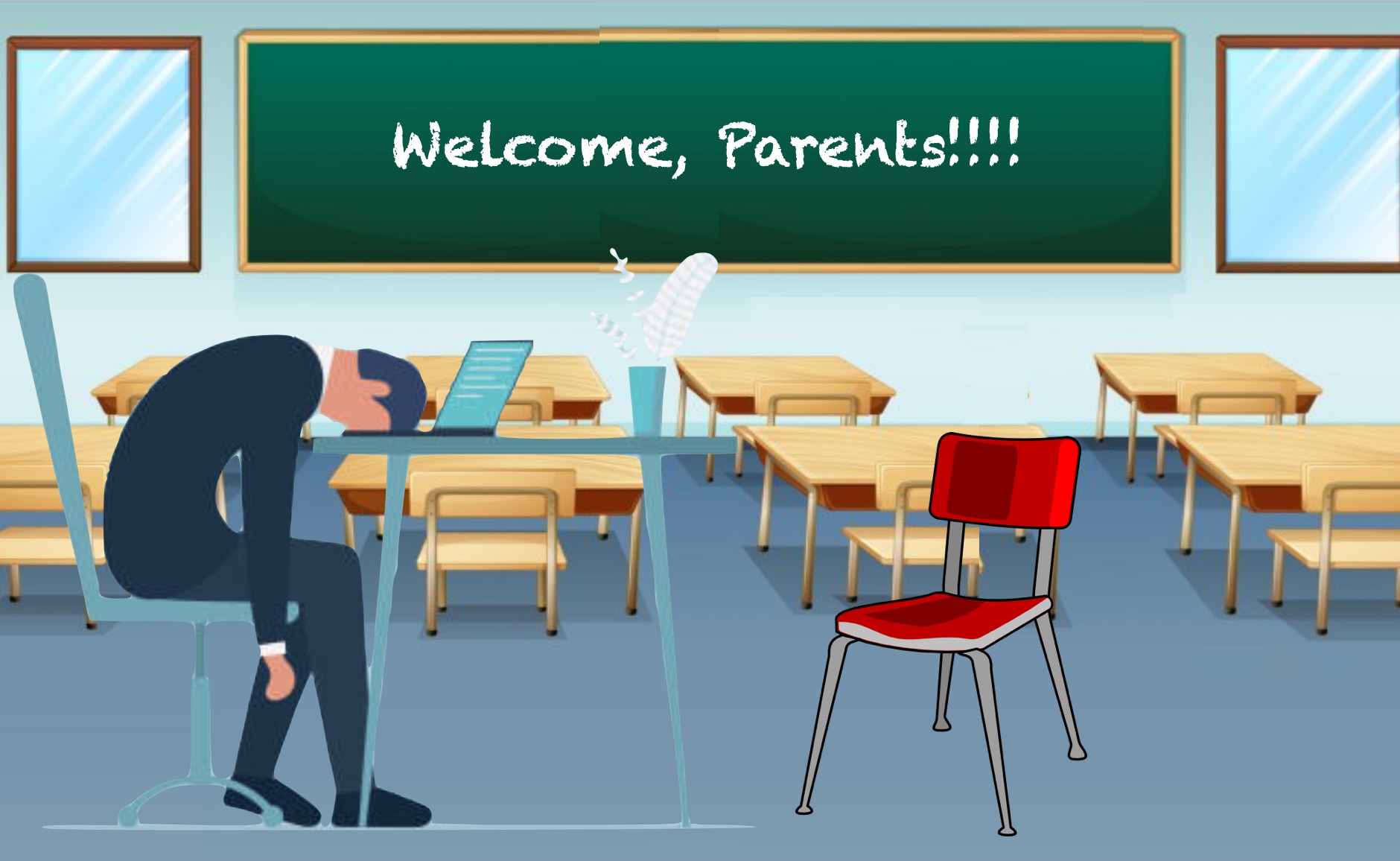
Description: We talk about missing teachers, subs, aides, bus drivers, but not parents or guardians. We should. They are absolutely essential to student learning. I think there are a lot of good reasons why parents don’t participate in their children’s schooling, but they will never get the help they need if we continue to ignore this issue and throw everything on teachers and the school.
Fun Fact: So many liberals lost their minds on this article saying I was attacking parents. I’m not. If people were drowning, you would not be attacking them by pointing that out and demanding help fishing them out of the water. It is not “deficit thinking” to acknowledge that someone needs help. It’s authentic advocacy for both students and parents.
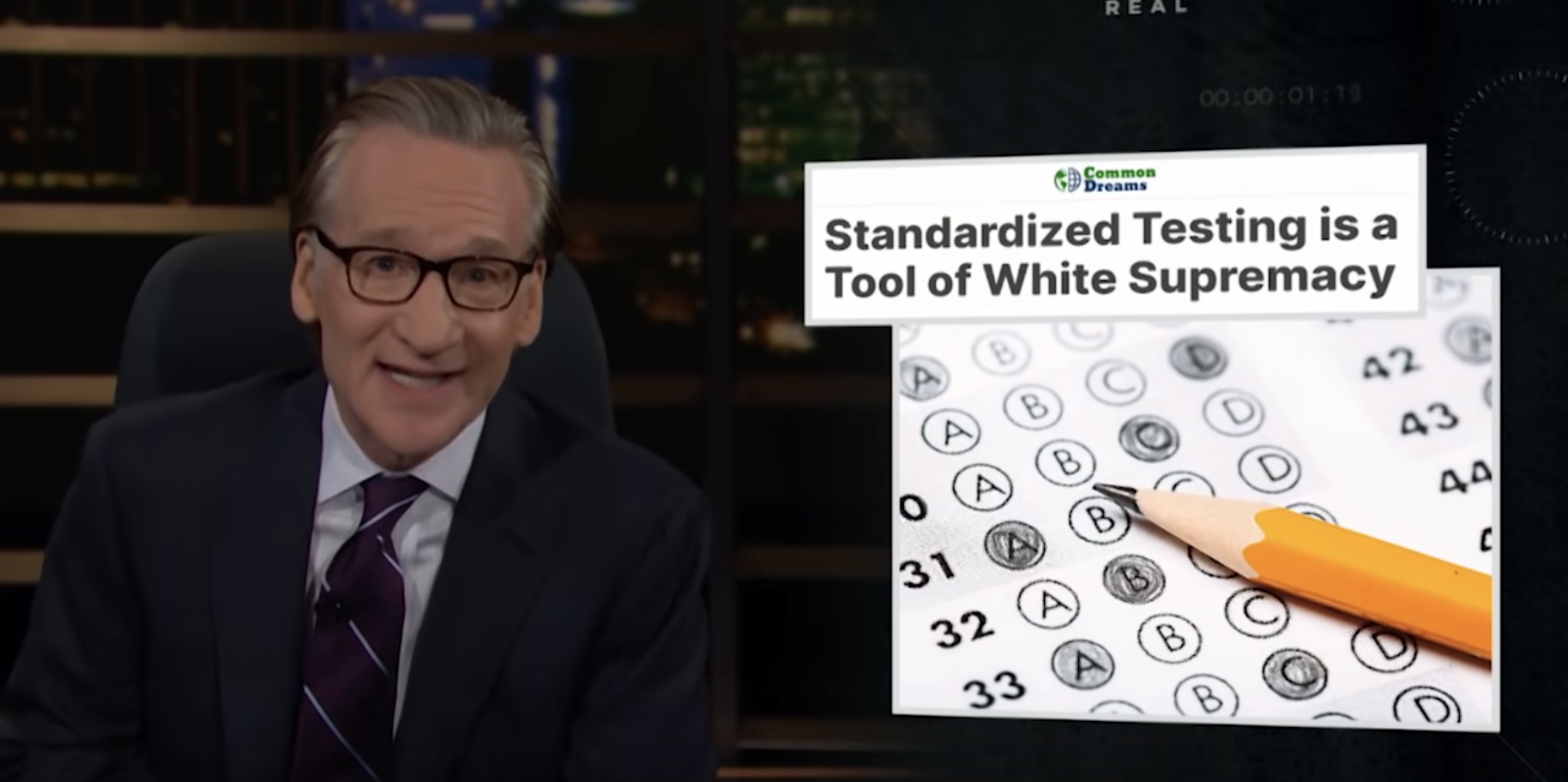
Description: It wasn’t just liberals who were butt hurt by my writing – it was neoliberals, too. Comedian Bill Maher actually mentioned my article “Standardized Testing is a Tool of White Supremacy” on his HBO show. He joked that I was devaluing the term ‘white supremacy.” Sure. These assessments only help white people unfairly maintain their collective boot on the throats of black and brown people. That’s not white supremacy. It’s melanin deficient hegemony. Happy now!?
Fun Fact: Maher’s assertion (I can’t claim it’s an argument because he never actually argued for anything) seems to be popular with neoliberals trying to counter the negative press standardized testing has been receiving lately. We need to arm against this latest corporate talking point and this article and the original give plenty of ammunition. My article was republished on Alternet and CommonDreams.org.
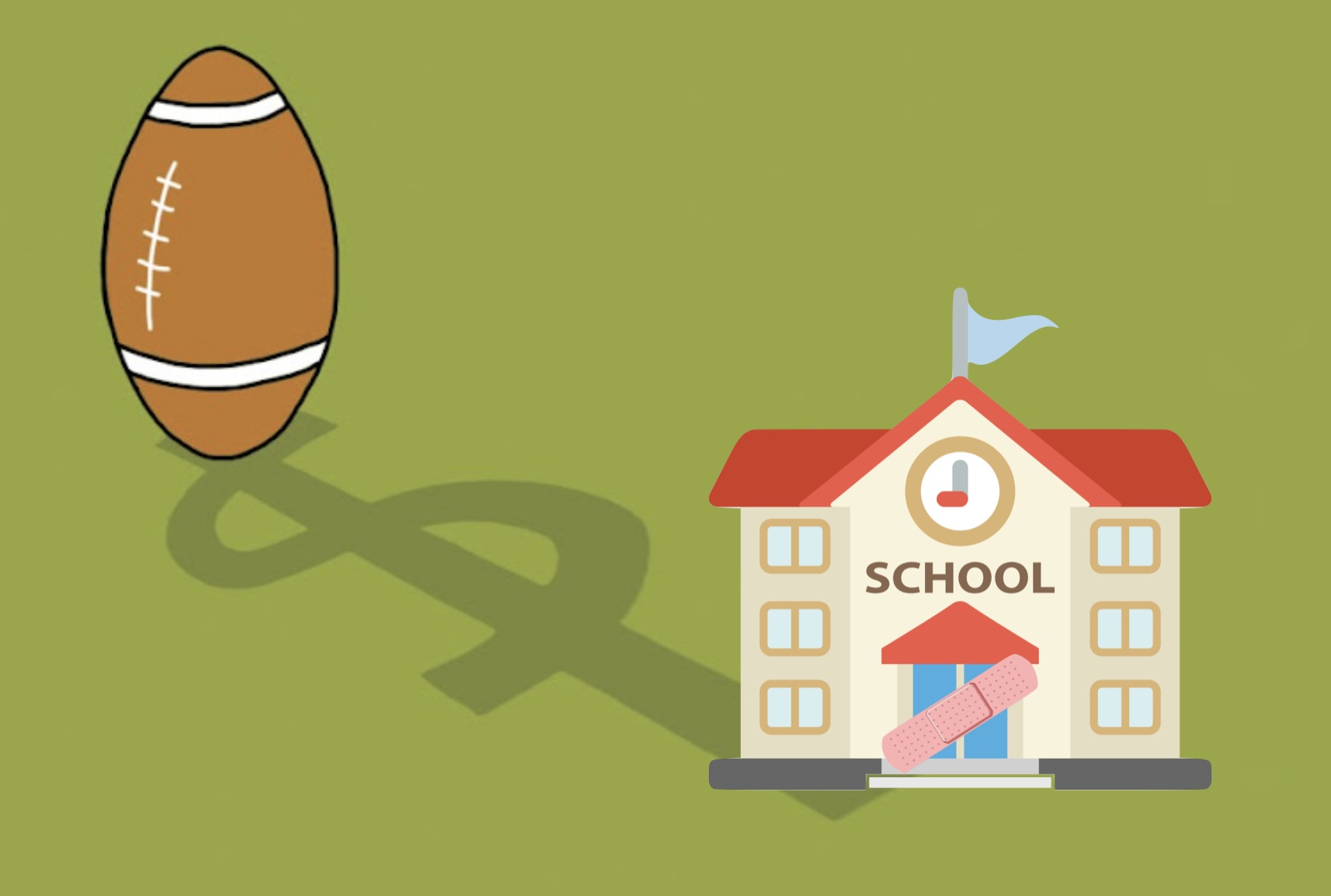
Description: Most of the world does not have competitive after school sports. Kids participate in sports through clubs – not through the schools. I suggested we might do that in the US, too. This would allow schools to use more of their budgets on learning. It would stop crucial school board decisions from being made for the athletics department at the expense of academics. It would remove litigation for serious injuries. Simple. Right?
Fun Fact: So many folks heads simply exploded at this. They thought I was saying we should do away with youth sports. No. Youth sports would still exist, just not competitive sports through the school. They thought poor kids wouldn’t be able to participate. No, sports clubs could be subsidized by the government just as they are in other countries. Some folks said there are kids who wouldn’t go to school without sports. No, that’s hyperbole. True, some kids love sports but they also love socialization, routine, feeling safe, interaction with caring adults and even learning! But I know this is a radical idea in this country, and I have no illusions that anyone is going to take me up on it.
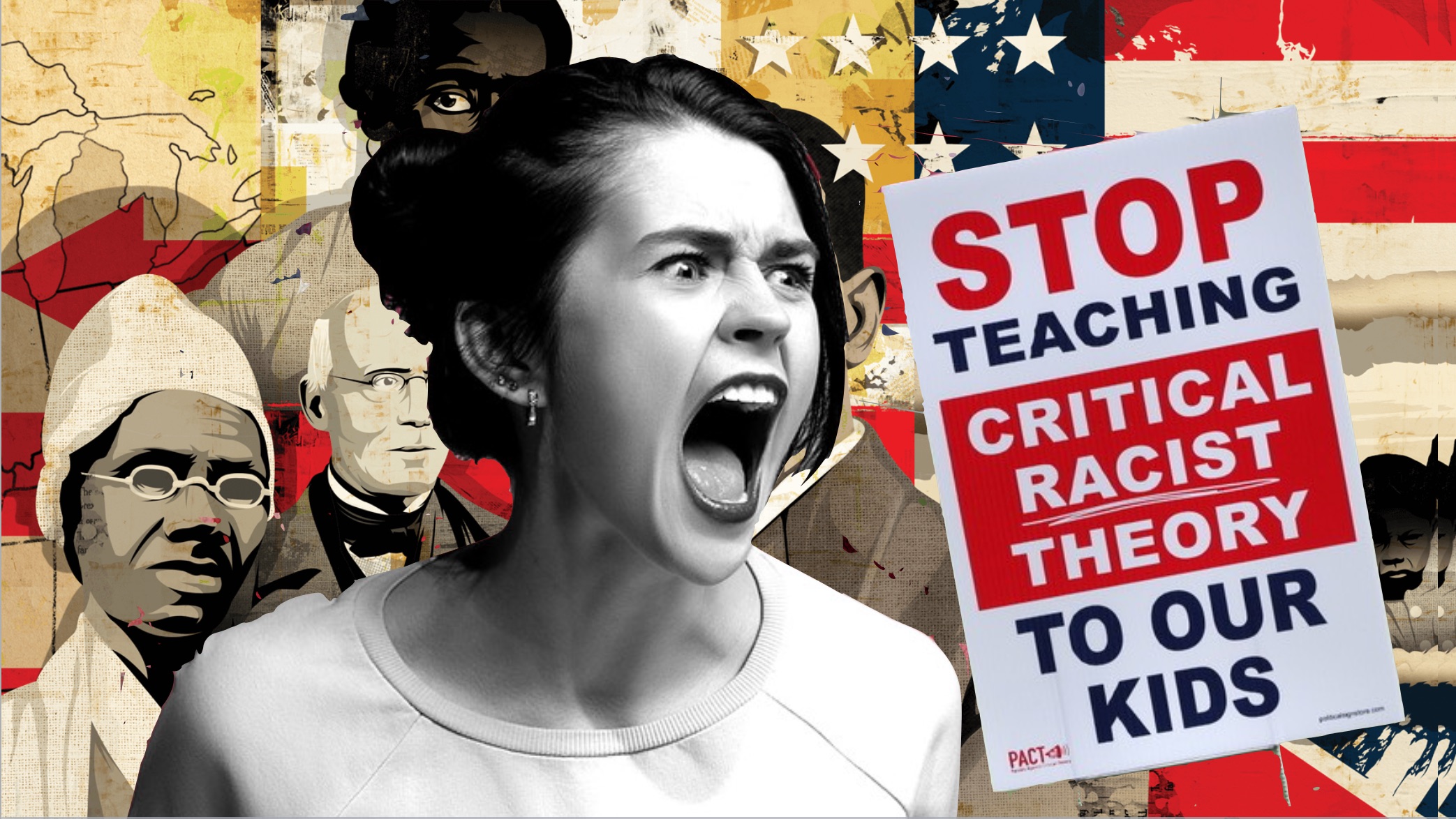
Description: Republicans have a new racist dog whistle. They pretend white people are being taught to hate themselves by reference to a fake history of the US called Critical Race Theory. In reality, schools are teaching the tiniest fraction of the actual history of racism and Republicans need that to stop or else they won’t have any new members in a few generations. I wrote three articles about it this year from different points of view than I thought were being offered elsewhere.
Fun Fact: I’m proud of this work. It looks at the topic from the viewpoint of academic freedom, the indoctrination actually happening (often at taxpayer expense) at private and parochial schools, and the worthy goal of education at authentic public schools. Article B was republished on CommonDreams.org.
Description: I ran for office this year in western Pennsylvania. I tried for Allegheny County Council – a mid-sized position covering the City of Pittsburgh and the rest of the second largest county in the state. Ultimately, I lost, but these three articles document the effort.
Fun Fact: These articles explain why a teacher like me ran for office, how I could have helped public schools, and why it didn’t work out. Article C was republished on CommonDreams.org.
Description: These are terrifying times. In the future people may look back and wonder what happened. These two articles document how I got vaccinated against Covid-19 and my thoughts and feelings about the process, the pandemic, and life in general.
Fun Fact: It hasn’t even been a full year since I wrote these pieces but they somehow feel like they were written a million years ago. So much has changed – and so little.
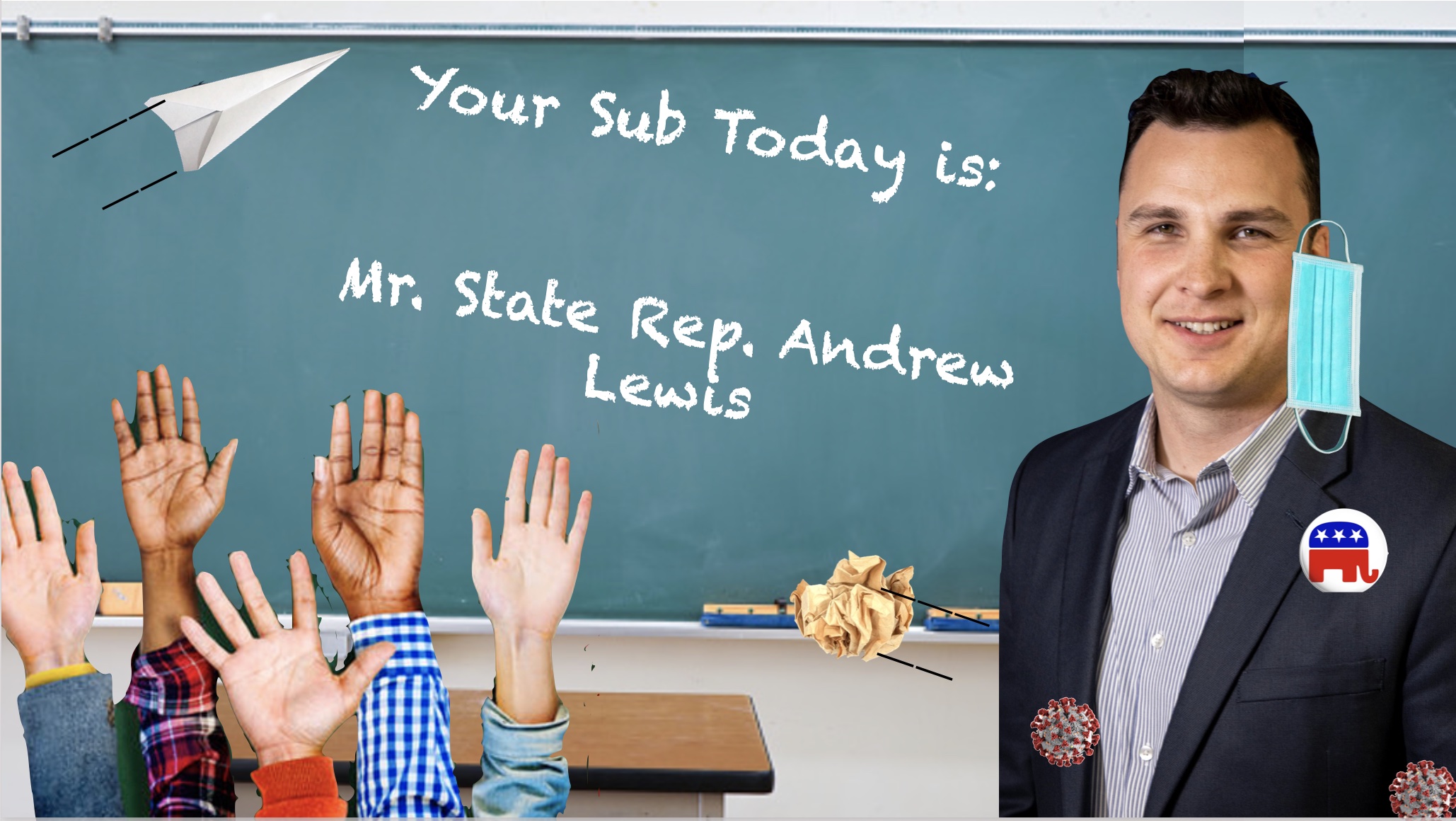
Description: Pennsylvania Republican state legislators were whining that they didn’t know what teachers were doing in public school. So they proposed a BS law demanding teachers spend even more of their never-ending time giving updates. I suggested legislators could just volunteer as subs and see for themselves.
Fun Fact: So far no Republicans have taken me up on the offer and their cute bit of performative lawmaking still hasn’t made it through Harrisburg.
Description: When it comes to stopping a global pandemic, we need federal action. This can’t be left up to the states, or the counties, or the townships or every small town. But all we get from the federal government about Covid mitigation in schools are guidelines. Stand up and do your F-ing jobs! Make some rules already, you freaking cowards!
Fun Fact: As I write this, President Joe Biden just came out and said there is no federal solution to the pandemic. It’s not that I think the other guy would have done better, but this was a softball, Joe. History will remember. If there is a history after all this is over.
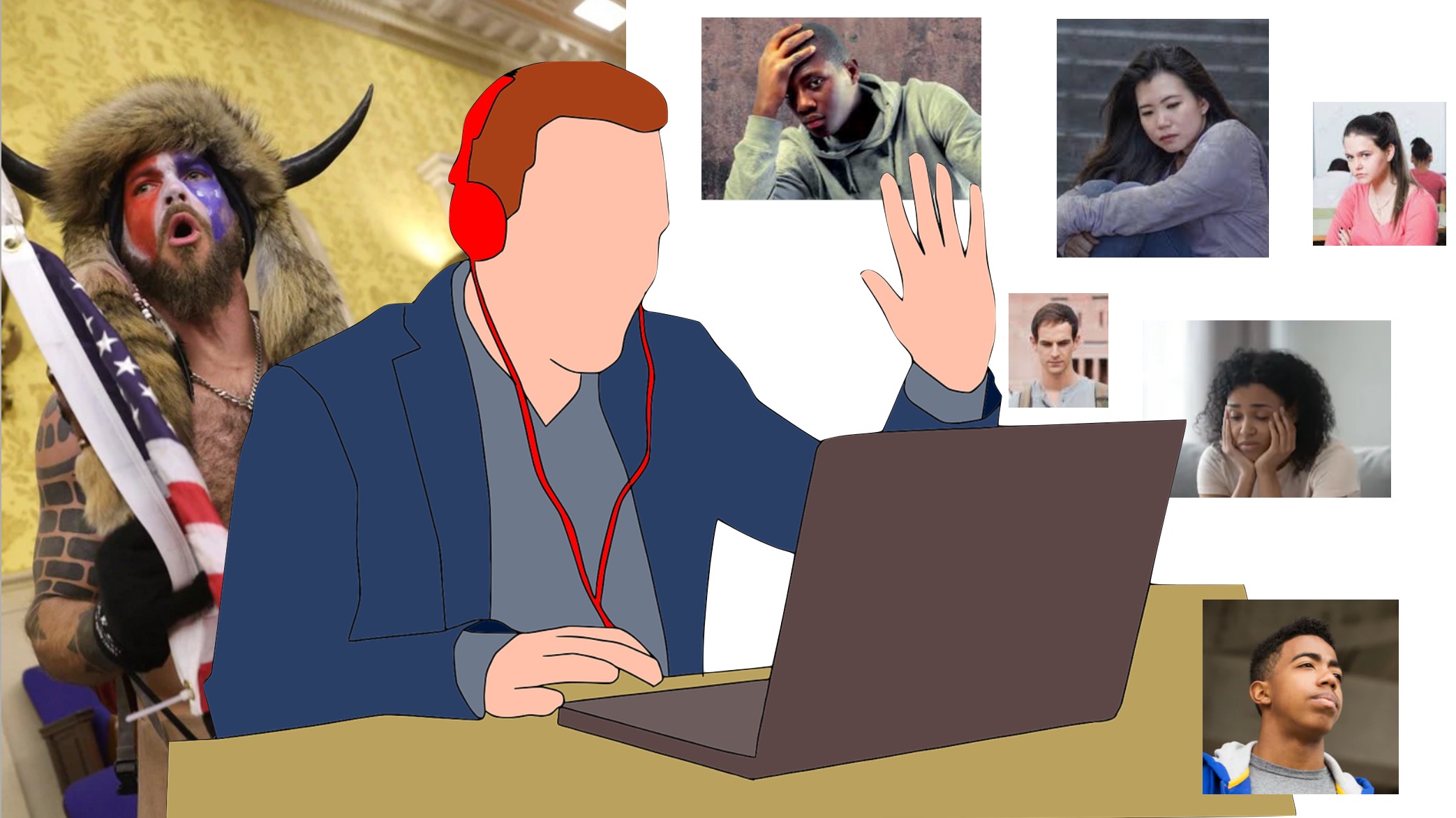
Description: On January 6, a bunch of far right traitors stormed the Capitol. This articles documents what it was like to experience that as a public school teacher with on-line classes during the pandemic.
Fun Fact: Once again, history may want to know. Posterity may have questions. At least, I hope so. The article was republished on CommonDreams.org.
Gadfly’s Other Year End Round Ups
This wasn’t the first year I’ve done a countdown of the year’s greatest hits. I usually write one counting down my most popular articles and one listing articles that I thought deserved a second look (like this one). Here are all my end of the year articles since I began my blog in 2014:
Like this post? You might want to consider becoming a Patreon subscriber. This helps me continue to keep the blog going and get on with this difficult and challenging work.
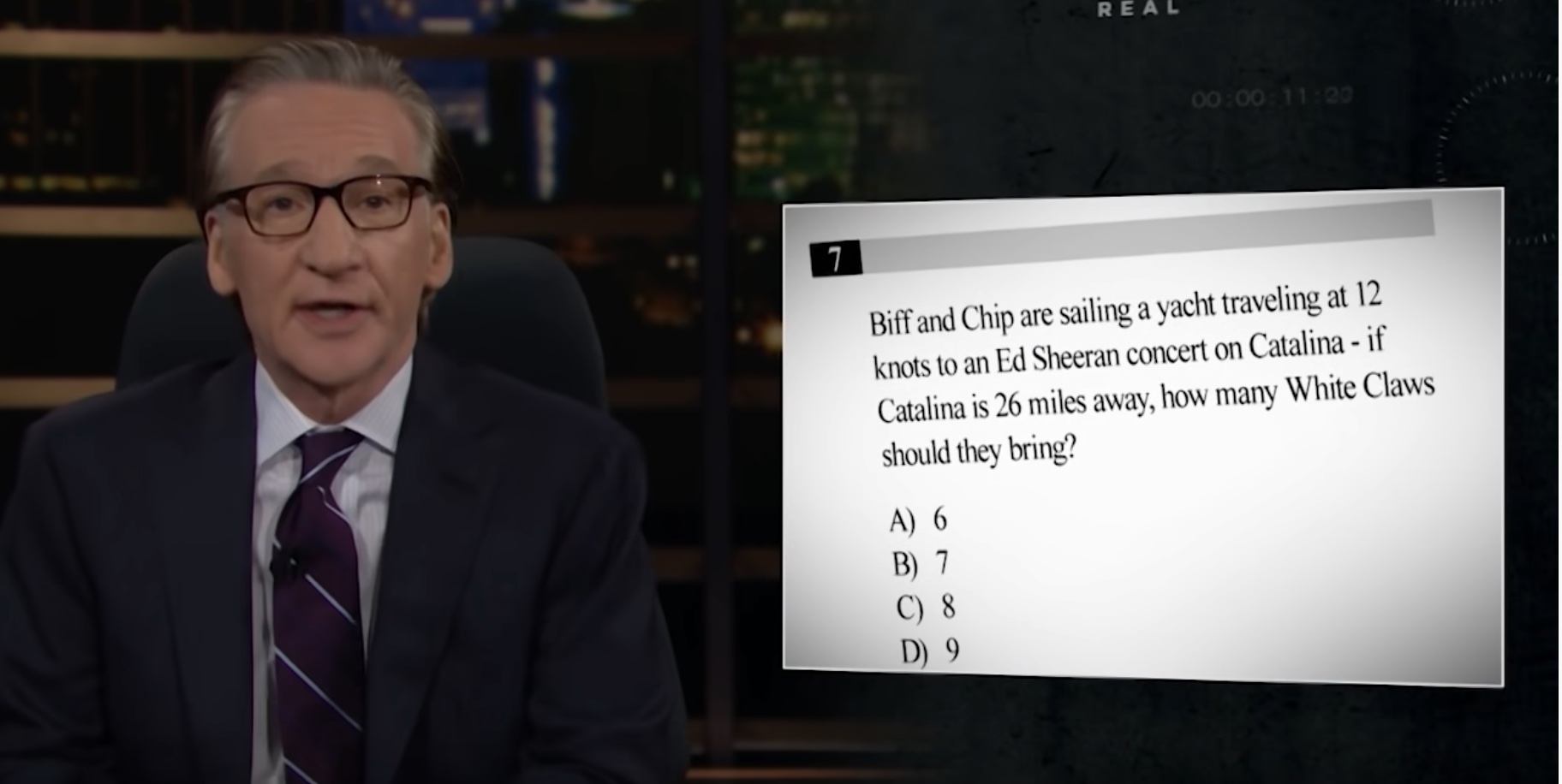
In fact, that was the title of the article, which seems to be about as far as Bill read because he ignored any arguments, facts or historical citations in the piece.
He was content to speak in a smarmy tone and make a pretty lame joke about what a racially biased test question might look like.
In fact, that’s probably why he (and his staff) picked my piece in the first place. They saw it as an opportunity to make a joke and whiffed at it pretty terribly.
Here’s the relevant bit of his monologue:
“In 2010 the New York Times used the term “White Supremacist” on 75 occasions. Last year, over 700 times. Now some of that to be sure is because Trump came along and emboldened the faction of this country that is truly white supremacist. It is of course still a real thing. But it shouldn’t apply to something like – as more than a few have suggested – getting rid of the SAT test. Now if we find the SAT test is slanted in such a way as to stack the deck in favor of Caucasians, if there are questions like Biff and Chip are sailing a yacht traveling at 12 knots to an Ed Sheeran concert on Catalina – if Catalina is 12 miles away, how many White Claws should they bring? Yes, then maybe. But of course the SAT doesn’t have questions like that so it becomes a kind of ludicrous exaggeration that makes lovers of common sense roll their eyes – and then vote for Trump.”
Queue audience laughter and applause.
Funny stuff I guess.
Not the comedy staff’s fake SAT question but Maher’s assurance that “The SAT doesn’t have questions like that.”
It’s a real SAT question famously discussed in the infamous 1994 book, The Bell Curve, by Richard Herrnstein and Charles Murray – a book that tried to use discrepancies in test scores to prove white people are smarter than black people.
The answer is C, and it relies on a test taker’s knowing the meaning of regatta – something more likely to have come up in the daily lives of affluent white students than in the lives of less affluent minority students. If you don’t live by a body of water and/or don’t have much experience with rowing, you’re probably going to fail this question.
It’s the same kind of question Maher’s comedy team came up with – find something white people are more likely to know than black people – but the Real Time writers just pilled it on over-and-over.
It doesn’t take five repetitions of something to make it biased. All it takes is one.
To be fair, my example is from the SAT analogy section, which was removed from the test in 2005. However, that doesn’t mean they got rid of the bias.
It now provides an “adversity score” for poor and minority students to adjust raw SAT scores to account for high schools and neighborhoods “level of disadvantage.”
They are literally trying to make up for how biased their test scores are.
Consider this.
Total SAT scores range from 400 to 1600 – or from 200-800 in both Math and Reading respectively.
According to 2018 data, combined SAT scores for Asian and White students average over 1100, while all other groups average below 1000. Meanwhile, students with family income less than $20,000 score lowest on the test, and those with family income above $200,000 scored highest, according to 2015 data. And the difference is significant – a 433 average Reading score for those with the lowest family incomes compared to an average Reading score of 570 for those with the highest family income. That’s a 137 point difference!
And it holds for racial groups, too. The average Reading score on the SAT was 429 for black students – 99 points behind the average for white students.
However, the College Board is trying to justify this by saying the discrepancy is because poor and minority students are more disadvantaged than white, affluent ones. In other words, it’s not the test that is unfair, but American society in providing better resourced schools with lower class sizes and more resources for white kids than children of color.
Freedle says this is because SAT questions likely reflect the cultural expressions that are used commonly in the dominant (white) society, so white students have an edge based not on education or study skills or aptitude, but because they are most likely growing up around white people.
This makes sense if you examine how test questions are selected for the SAT. In his book How the SAT Creates Built-in-Headwinds, national admissions-test expert, Jay Rosner, explains the process:
“Compare two 1998 SAT verbal [section] sentence-completion items with similar themes: The item correctly answered by more blacks than whites was discarded by the Educational Testing Service, whereas the item that has a higher disparate impact against blacks became part of the actual SAT. On one of the items, which was of medium difficulty, 62% of whites and 38% of African-Americans answered correctly, resulting in a large impact of 24%…On this second item, 8% more African-Americans than whites answered correctly…”
In other words, the criteria for whether a question is chosen for future tests is if it replicates the outcomes of previous exams – specifically tests where students of color score lower than white children. And this is still the criteria test makers use to determine which questions to use on future editions of nearly every assessment in wide use in the US.
But if all this isn’t enough to convince you that standardized tests really are a tool of white supremacy, consider their sordid history.
They are literally the product of the American eugenics movement.
Modern testing comes out of Army IQ tests developed during World War I.
These assessments were based on explicitly eugenicist foundations – the idea that certain races were distinctly superior to others. In 1923, one of the men who developed these intelligence tests, Carl Brigham, took these ideas further in his seminal work A Study of American Intelligence. In it, he used data gathered from these IQ tests to argue the following:
“The decline of American intelligence will be more rapid than the decline of the intelligence of European national groups, owing to the presence here of the negro. These are the plain, if somewhat ugly, facts that our study shows. The deterioration of American intelligence is not inevitable, however, if public action can be aroused to prevent it.”
Eventually Brigham took his experience with Army IQ tests to create a new assessment for the College Board – the Scholastic Aptitude Test – now known as the Scholastic Assessment Test or SAT. It was first given to high school students in 1926 as a gatekeeper. Just as the Army intelligence tests were designed to distinguish the superior from the inferior, the SAT was designed to predict which students would do well in college and which would not. It was meant to show which students should be given the chance at a higher education and which should be left behind.
And unsurprisingly it has always – and continues to – privilege white students over children of color.
Is it ridiculous to describe the century long racial and economic discrepancy in test scores as something that supports white supremacy – especially when these results are shown time and again to be a feature of the tests and not just an artifact that recreates economic inequality?
Is it going too far to call out the racism of the SAT and other standardized tests like it when even the College Board admits its own scores are biased?
Does it devalue the term “White Supremacy” to point out real world white supremacy?
But Maher apparently isn’t interested in these questions.
After a few moments he moved on to another example of the left gone wild.
But I can’t do that because this isn’t just a bit for me.
It’s become cliche for privileged white people like Bill Maher to get cranky when someone points out real world prejudice.
But for those of us in the trenches, it is an everyday reality.
And that’s what triggers me.
Here’s the segment from “Real Time with Bill Maher”: (the relevant bit starts at 4:45)
Like this post? You might want to consider becoming a Patreon subscriber. This helps me continue to keep the blog going and get on with this difficult and challenging work.
This would include a course syllabus or written summary of every class, the state academic standards for each course, and a link or title for every textbook used.
Moreover, the whole thing is really just a political sham to stoke the radical Republican base. The measure has little chance of actually being implemented.
The bill (HB 1332) passed the House largely along party lines last week with a few Republicans joining Democrats against it.
Now it is set for a full vote by the Senate where it will probably sail through with GOP support after which Democratic Governor Tom Wolf has already promised to veto it.
So why is Lewis putting on this dog and pony show?
“Parents need to be in the driver’s seat when it comes to education, not some out-of-state textbook publisher teaching heaven knows what (hint: anti-American socialism) to our students.”
Moreover, I guess no one told him that state law already requires that public schools give parents and guardians access to information about instructional materials.
Even schools in the Keystone state are scrambling to find enough subs.
If you want to know what happens in public schools, you can do better than clicking on some Website. You can actually volunteer to come in and cover an absent teacher’s class!
About eight years ago, 40,000 teachers were graduating from Pennsylvania colleges a year. This past year, it was only 14,000.
That means not only fewer classroom teachers to replace those who retire, but fewer substitute teachers to take over for professional absences.
The situation has gotten so bad that the legislature (on which Lewis serves) had to pass a new measure allowing college students who are studying education to fill in as substitutes.
Many districts such as Erie, Greater Latrobe and State College have increased substitute pay to entice more people to apply for the job.
And, frankly, almost anyone can do it.
Even folks like Lewis and his Republican buddies! Heck! The legislature is only in session a few weeks every month! They have plenty of time to moonlight as substitute teachers and get the low down about what’s really happening in our public schools!
Districts that aren’t experiencing a shortage may require a teaching certificate as well, but beggars can’t be choosers. In districts where it is hard to get subs (i.e. those serving poor and minority kids) you can get emergency certified for a year.
And many states are lowering the bar even further!
Not only would lawmakers have a chance to look over teacher’s lesson plans, but they’d get detailed instructions from the absent teacher about how to actually teach the lesson!
They’d get to interact with principals as they’re told which additional classes they have to cover in their planning periods and which extra duties they’d be responsible for performing.
They’d get to do things like monitor the halls, breakfast and lunch duty, watch over in-school suspension, and – if they’re lucky – they might even get to attend a staff meeting and be front row center for all the educational initiatives being conducted in the school!
If our representatives took this opportunity, they would learn so much!
I mean, sure, we encourage kids to stand for the pledge to the flag and things like that but when it comes to telling them how to think – that’s not a public school thing. That’s a private and parochial school thing.
They’d see that public school lessons give students information on a subject but then ask them to come to their own conclusions about it.
In fact, this would be such an educational experience, I think legislators on both sides of the aisle should take advantage of this unique opportunity.
And not even just those in Harrisburg. What better way for school directors to understand the institutions they’re overseeing than to volunteer as subs? What better way for the mayor and city council to understand the needs of children than putting themselves in the classroom when the teacher can’t be there?
It could make them better public servants who craft legislation that would actually do some good in this world and not – like Lewis – just showboat to enrage partisans and stoke them to vote for people willing to feed their fears and prejudices.
Any takers?
Like this post? You might want to consider becoming a Patreon subscriber. This helps me continue to keep the blog going and get on with this difficult and challenging work.

















 gadflyonthewallblog