Five Reasons to Vote NO on the Allegheny County Children’s Fund

Screen Shot 2018-10-17 at 12.14.03 PM


You can’t raise taxes without a plan of how to spend the money.


But that’s exactly what voters in and around Pittsburgh, Pennsylvania, are being asked to approve this Nov. 6.


Come election day, all voters in Allegheny County will be confronted with what’s been called the Children’s Fund, a referendum asking for a voluntary 5% property tax hike that allegedly would go to pay for early learning, after-school programs and healthy meals for kids.


But there are no details about who will provide these services, who will be responsible for the money, exactly what else the money might be used for or almost anything substantive about it.


It’s just a check with “For Kids” scrawled in the Memo and everything else left blank.


The plan is highly controversial drawing criticism from across the Mon Valley including school directors, education advocates and even progressive groups like the Pennsylvania Interfaith Impact Network (PIIN).


Here are the top five reasons you should vote NO on the referendum:


1) It Raises Taxes Without Stipulating Where the Money Goes


Here’s what we do know.


The Children’s Fund would be financed by 0.25 mills of property tax — $25 on each $100,000 of assessed value, beginning Jan. 1.


That’s expected to generate roughly $18 million a year that would begin to be distributed in 2020.


If approved, it would change the county Home Rule Charter to establish the fund as part of county government. It would create a new office under the supervision of the county manager.

A Citizens’ Advisory Commission would “review and advise” the work of the new office, according to the proposed charter amendment.


However, County Council and County Executive Rich Fitzgerald would have to do the work of actually creating all this stuff. They’d have to pass an ordinance establishing how this all works, what powers the advisory commission has, etc. They would have to determine whether the money goes to existing programs or new ones. They’d have to set up audits of the money every five years, conduct a study to recommend goals and a focus for how the funding is spent.


That’s an awful lot left undecided.


It makes no sense for voters to hand over the money BEFORE we figure all this other stuff out.


It’s not at all how good government works.


You’re supposed to define a problem or need and then come up with a plan to meet that need. You prepare a budget that justifies raising taxes and then you vote on it.


This is exactly the opposite. We’re getting the money before the plan of how to spend it.


That’s a recipe for fraud and financial mismanagement.


2) It’s Unclear Who Would Be In Charge of the Money


Who would be accountable for this money?


We know who gets to decide this – County Council and the Chief Executive. But we don’t know who they will pick or what powers they’ll delegate to these people. Nor do we know what kind of oversight there will be or what kind of regulations will exist for how it can be spent.


This is a blind statement of trust.


It’s like saying – “Here’s $18 million. Go buy us something nice.”


What if they mismanage the money? And what would that even mean for money with so few strings attached? And how would we know? How transparent would this process be?


It’s kind of hard to approve such a plan with so many variables up in the air.


3) The Campaign was Not Grass Roots


To hear supporters talk, you’d think this was a bottom up crusade created by, organized by and conducted by everyday citizens from our communities.


It wasn’t.


Sure, volunteers for the Children’s Fund went door-to-door to collect more than 40,000 signatures from voters last summer.


But they weren’t all volunteers.


Financial documents show that the whole initiative has been funded by various nonprofit organizations that could, themselves, become beneficiaries of this same fund.


According to the Children’s Fund’s own campaign finance report, as of June there were three nonprofit corporations who donated $427,000 to the campaign: the Human Services Center of Turtle Creek gave $160,000, Pressley Ridge Foundation gave $150,000, and Allies for Children gave a donation of $45,000 and another for $72,000.


That’s like McDonalds spending a hundred thousand dollars to fix up the school cafeterias so it could land a multi-million dollar annual contract!


It’s a huge conflict of interest.


At very least, it’s purposefully misleading.


Many of those “volunteers” gathering signatures weren’t working for free. They were part of the $100,000 spent by the campaign to hire Vote Goal Organizing for paid signature collectors.


That doesn’t look like charity. It looks like philanthrocapitalism – when corporations try to disguise grabs for power and profit as philanthropy.


Corporations – even so-called nonprofit corporations – rarely do things out of sheer goodness. They’re acting in the best interest of the company.


I see no reason to think this “Children’s Fund” is any different.


4) It Works Around Instead of With Local Government


Though almost everyone agrees with the stated goals of the Children’s Fund, many organizations and government officials complained that they were not consulted and made a part of the process.


Two Pittsburgh Public School directors went on record in the Pittsburgh Post Gazette about a lack of communication.


“First and foremost, we have not had any conversations with the organizers of the referendum,” board president Regina Holley said. “There are lots of ifs and whats that have not been answered.”


Kevin Carter, another city school director added, “In my role as a school board member, they didn’t talk to us about this at all.”


“When you leave your largest school district in the region out of this conversation, are you doing this around children?” he asked, citing that the district serves 25,000 students daily.


This has been a common thread among officials. No one wants to say they’re against collecting money that’s ostensibly for the benefit of children, but it’s hard to manage the money if you’re not part of the process.


And it’s not just protocol. Many are worried that this lack of communication may be emblematic of how the fund will be run. If organizers aren’t willing to work with local governments to get the job done, how will they know what each community needs? How will they meet those needs? Is that even what the fund will really be about?


Richard Livingston, Clairton school board president, noted concern that the money collected might not be spent evenly throughout the county. For all he knows, it could just be spent in the city or in select areas.


Indeed, this is not the best way to start any endeavor funded by all, for the benefit of all children.


5) It’s Redundant


While it’s true that the county could use more funding to meet the needs of students, numerous organizations already exist that attempt to provide these services.


There are a plethora of Pre-K, after school tutoring and meal services in the Mon Valley. In fact, much of this is done at the county’s various neighborhood schools.


If organizers were only concerned with meeting these needs, why form an office within county government that would have an appointed advisory commission? Why not just increase the funding at the local schools and/or organizations already doing this work?


In fact, this is exactly the reason the Pennsylvania Interfaith Impact Network is against the initiative.


According to the organization’s statement:


“At PIIN, we believe that the faith community is a sacred partner with our public schools, and we have long been supportive of both the community schools model and increasing state funding to provide an excellent, high-quality education to every child in our region. We believe in funding for early childhood learning, after school programs, and nutritious meals. However, we cannot support a ballot initiative that creates an unnecessary entity, with an unknown advisory board, and an unclear process for directing our tax dollars.


This is why we are urging our membership to reject the Allegheny County Children’s Fund Initiative at the polls this November.”


Another related organization, Great Public Schools-Pittsburgh, also released a statement with “several specific concerns” about the potential fund. These include how the money would be distributed, which organizations would benefit from it, and questions about its redundancy.


Several pre-K programs already exist but are not fully funded, the organization noted. Why don’t we just fund them?


The group is a coalition of the Education Rights Network, One Pennsylvania, the Pittsburgh Federation of Teachers, PIIN, and the Service Employees International Union.


The group’s statement noted concerns but fell short of urging an outright NO vote.


The bottom line is that many people are concerned about inadequate funding for children’s programs.


But this “Children’s Fund” is not a solution to that problem.


This is the creation of another bureaucracy that can take our tax dollars and do almost whatever it wants with them.


There is no guarantee it will help kids.


In fact, it looks a lot more like a power and money grab by corporate interests, many of whom would prefer to privatize our school system.


This November, when you go to the polls, do the right thing for our kids.


Vote NO on the Allegheny County Children’s Fund.


IMG_8288


Like this post? I’ve written a book, “Gadfly on the Wall: A Public School Teacher Speaks Out on Racism and Reform,” now available from Garn Press. Ten percent of the proceeds go to the Badass Teachers Association. Check it out!
book-4

Teacher Autonomy – An Often Ignored Victim of High Stakes Testing


Screen Shot 2018-10-12 at 12.12.38 PM


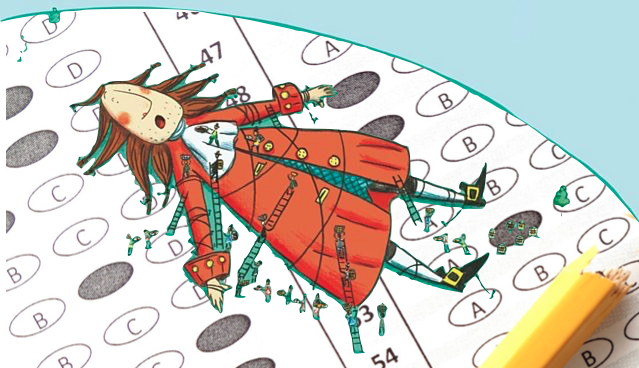
When I think of the modern day public school teacher, I think of Gulliver’s Travels.


Not because I’ve ever taught the Jonathan Swift classic to my students, but because of its most indelible image.


Gulliver is shipwrecked on the island of the Lilliputans – tiny people who have tied the full sized sailor to the ground with thousands of itty bitty strings.


If that is not the picture of a public school teacher, I don’t know what is!


We are constantly restrained – even hogtied – from doing what we know is right.


And the people putting us in bondage – test obsessed lawmakers, number crunching administrators and small-minded government flunkies.


You see, teachers are in the classroom with students day in, day out. We are in the best position to make informed decisions about student learning. The more autonomy you give us, the better we’ll be able to help our students succeed.


But in an age of high stakes testing, Common Core and school privatization run amuck, teacher autonomy has been trampled into the dirt.


Instead, we have a militia of armchair policy hacks who know nothing about pedagogy, psychology or education but who want to tell us how to do our jobs.


It’s almost like we’ve forgotten that educator self-determination ever was a value people thought worth preserving in the first place.


Whereas in generations past it was considered anywhere from merely advisable to absolutely essential that instructors could make up their own minds about how best to practice their craft, today we’d rather they just follow the script written by our allegedly more competent corporate masters.


The way I see it, the reason for this is fivefold:


  1. Testing

    School used to be about curriculum and pedagogy. It was focused on student learning – not how we assess that learning. Now that standardized tests have been mandated in all 50 states as a means of judging whether our schools are doing a good job (and assorted punishments and rewards put in place), it’s changed the entire academic landscape. In short, when you make school all about standardized tests, you force educators to teach with that as their main concern.

  2. Common Core

    Deciding what students should learn used to be the job of educators, students and the community. Teachers used their extensive training and experience, students appeal to their own curiosity, and the community tailored its expectations based on its needs. However, we’ve given up on our own judgment and delegated the job to publishing companies, technology firms and corporations. We’ve let them decide what students should learn based on which pre-packed products they can most profitably sell us. The problem is when you force all academic programs to follow canned academic standards written by functionaries, not educators, you put teachers in a straight jacket constraining them from meeting their students’ individual needs.


3. Grade Promotion Formulas

It used to be that teachers decided which students passed or failed their classes. And when it came to which academic course students took next, educators at least had a voice in the process. However, we’ve standardized grade promotion and/or graduation policies around high stakes test scores and limited or excluded classroom grades. When you’re forced to rely on a formula which cannot take into account the infinite variables present while excluding the judgment of experienced experts in the classroom, you are essentially forbidding educators from one of the most vital parts of the academic process – having a say in what their own courses mean in the scheme of students educational journeys.


4. Scripted Curriculum

Perhaps the most pernicious aspect of this whole process has been the attempted erasure of the teacher – as a thinking human being – from the classroom, itself. Instead of letting us be people who observe and adapt to the realities in front of us, many of us have been forced to read from a script. It should go without saying that when you constrain educators to abide by scripted curriculum – what we used to call “teacher proof curriculum” – or pacing guides, you remove their ability to be teachers, at all.


5. Value Added Evaluations


We used to trust local principals and administrators to decide which of their employees where doing a good job. Now even that decision has been taken away and replaced by junk science formulas that claim to evaluate a teacher’s entire impact on a student’s life with no regard to validity, fairness or efficiency. However, local principals and administrators are there in the school building every day. They know what’s happening, what challenges staff face and even the personalities, skills and deficiencies of the students, themselves. As such, they are in a better position to evaluate teachers’ performance than these blanket policies applied to all teachers in a district or state – things like valued-added measures or other faith based formulas used to estimate or quantify an educator’s positive or negative impact.


It’s no wonder then that teachers are leaving the profession in droves.


You can’t freeze someone’s salary, stifle their rights to fair treatment while choking back their autonomy and still expect them to show up to work everyday eager and willing to do the job.


The National Center for Education Statistics (NCES) conducted a representative sample of more than 37,000 American public school elementary and secondary teachers showing widespread dissatisfaction with the job in general and a lack of autonomy in particular.

In fact, they cited this lack of self-determination as a leading contributor to the nationwide teacher shortage. Having control over how you do your job is essential to being fully satisfied with your work.

Teacher-Autonomy


If you’re just following orders, your accomplishments aren’t really yours. It’s the difference between composing a melody and simply recreating the sounds of an amateur musician with perfect fidelity.

Today’s teachers rarely get to pick the textbooks they use, which content or skills to focus on, which techniques will be most effective in their classrooms, how to discipline students, how much homework to give – and they have next to zero say about how they will be evaluated.

And to make matters worse, sometimes it isn’t that educators are forbidden from exercising autonomy, but that they are given such a huge laundry list of things they’re responsible for that they don’t have the time to actually be creative or original. Once teachers meet the demands of all the things they have to cram into a single day, there is little room for reflection, revision or renewal.

School policy is created at several removes from the classroom. We rarely even ask workaday teachers for input less than allowing them to participate in the decision making process.

We imagine that policy is above their pay grade. They are menial labor. It’s up to us, important people, to make the big decisions – even though most of us have little to no knowledge of how to teach!

Finnish educator and scholar Pasi Sahlberg says that this is exactly the opposite of what we should be doing if we really cared about improving both the teaching profession and the quality of education we provide students.

In the United States, autonomy usually stops at the district or administrative level and results in decision-making that ignores the voices of educators and the community, he says.

Sahlberg continues:

“School autonomy has often led to lessening teacher professionalism and autonomy for the benefit of greater profits for those who manage or own private schools, charter schools or other independent schools. This is perhaps the most powerful lesson the US can learn from better-performing education systems: teachers need greater collective professional autonomy and more support to work with one another. In other words, more freedom from bureaucracy, but less from one another.”

Perhaps the biggest roadblock to increased autonomy is political.

Lawmakers and pundits conflate teacher professionalism and increased decision making with union membership.

And they do have a point. Having a seat at the bargaining table is vital to educators’ self-determination.

In some states, local teachers unions negotiate annual contracts with their districts. However, most states have statewide teacher contracts that are negotiated only by state teachers unions.

These contracts can directly affect exactly how much independence teachers can exercise in the classroom since they can determine things like the specific number of hours that teachers can work each week or limit the roles that teachers can play in a school or district.

There are even some tantalizing schools that are entirely led and managed by teachers. The school does not have formal administrators – teachers assume administrative roles, usually on a revolving basis. But such experiments are rare.

In most places, teacher autonomy is like the last dinosaur.

It represents a bygone age when we envisioned education completely differently.

We could try to regain that vision and go in a different direction.

But if things remain as they are, the dinosaur will go extinct.

Autonomy is a hint at what we COULD be and what we COULD provide students…

…if we only had the courage to stop standardizing and privatizing our country to death.


Like this post? I’ve written a book, “Gadfly on the Wall: A Public School Teacher Speaks Out on Racism and Reform,” now available from Garn Press. Ten percent of the proceeds go to the Badass Teachers Association. Check it out!

WANT A SIGNED COPY?

Click here to order one directly from me to your door!

book-1

FBI Warns EdTech Puts Student Safety at Risk

students-99506_960_720


Pandora’s box may not be a heavy wooden chest.


It might just be a laptop or an iPad.


The Federal Bureau of Investigations (FBI) issued a warning late last week about the proliferation of educational technologies (EdTech) in schools and the dangers they pose to student safety and privacy.


The devices and applications singled out by US domestic intelligence services all involve software that asks for and saves student input.


This includes classroom management tools like Class Dojo and eBackpack as well as student testing and remediation applications like Classroom Diagnostic Tools and StudyIsland.


The alert cautions schools and parents that the widespread collection of student data involved in these applications could cause safety concerns if the information is compromised or exploited.


It’s just such technologies that have proliferated at a breakneck pace in districts throughout the country while legislation, cybersecurity and even awareness of the danger has lagged behind.


The Bureau is concerned about EdTech services because many are “adaptive, personalized learning experiences” or “administrative platforms for tracking academics, disciplinary issues, student information systems, and classroom management programs.”


The Bureau clarified that use of EdTech applications was not, in itself, the problem. They are a tool, and like any tool, they can be used for good or ill.


Advocates say when used correctly, these systems offer the potential for student collaboration, and for teachers to collect and compare information about students to help design better lessons. On the other hand, critics warn that the problems with most EdTech is essential to the way it operates and that it is designed more for the purposes of student data mining and profitization by corporations than with academic success for children in mind.


In either case, the dangers posed by such devices are indisputable.


The amount and kinds of data being collected about students has not been well publicized or understood. Many school boards, administrators, teachers, parents and students may be using EdTech without a full appreciation of how it often surreptitiously collects data on children.


Analysts listed several types of student particulars being stockpiled:


  • “personally identifiable information (PII);


  • biometric data;


  • academic progress;


  • behavioral, disciplinary, and medical information;


  • Web browsing history;


  • students’ geolocation;


  • IP addresses used by students; and


  • classroom activities.”


This is highly sensitive information that could be extremely harmful to students if it fell into the wrong hands.


Pedophiles could use this data to find and abduct children. Criminals could use it to blackmail them. It could even be sold to unscrupulous corporations or exploited by other children to bully and harass classmates.


These concerns are not merely academic. Data breaches have already occurred.


According to the FBI:


“…in late 2017, cyber actors exploited school information technology (IT) systems by hacking into multiple school district servers across the United States. They accessed student contact information, education plans, homework assignments, medical records, and counselor reports, and then used that information to contact, extort, and threaten students with physical violence and release of their personal information. The actors sent text messages to parents and local law enforcement, publicized students’ private information, posted student PII on social media, and stated how the release of such information could help child predators identify new targets.”


Though the Bureau did not mention them by name, it cited two specific cybersecurity failures in 2017 at two large EdTech companies where millions of student’s private information became publicly available.


The FBI seems to be referring to Edmodo and Schoolzilla. Hackers stole 77 million user accounts from Edmodo last year and sold that data to a “dark web” marketplace. Likewise, Schoolzilla stored student information on a publicly accessible server, according to a security researcher, thereby exposing the private information of approximately 1.3 million children.


It was these data breaches that prompted the Department of Education to issue a Cyber Advisory alert in October of 2017 warning that cyber criminals were targeting schools that had inadequate data security. Criminals were trying to gain access to this sensitive material about students to “shame, bully, and threaten children.”


In February, another cybercrime was reported by the Internal Revenue Service. The agency released an “urgent alert” about scammers targeting school districts with W-2 phishing schemes.


Of particular concern to the FBI are school devices connected directly to the Internet. They offer hackers an immediate link to private student information. This is true even if a school device is in the student’s home.


Tablets, laptops or monitoring devices such as cameras or microphones could be exploitable by tech savvy criminals – especially since many EdTech programs allow remote-access capabilities without the user even being aware of what is happening.


Indeed, some EdTech companies collect information on students’ feelings; become student data brokers and use voice-activated speakers in the classroom.


The FBI listed several recommendations for parents and families:


  • “Research existing student and child privacy protections of the Family Educational Rights and Privacy Act (FERPA), the Protection of Pupil Rights Amendment (PPRA), the Children’s Online Privacy Protection Act (COPPA), and state laws as they apply to EdTech services.

  • Discuss with their local districts about what and how EdTech technologies and programs are used in their schools.


  • Conduct research on parent coalition and information-sharing organizations which are available online for those looking for support and additional resources.


  • Research school-related cyber breaches which can further inform families of student data vulnerabilities.


  • Consider credit or identity theft monitoring to check for any fraudulent use of their children’s identity.


  • Conduct regular Internet searches of children’s information to help identify the exposure and spread of their information on the Internet.”


The warning concluded by asking those who have information about cybercrimes or who have been victimized by data breaches to file a complaint with the Internet Crime Complaint Center at www.ic3.gov.


For some, the FBI’s warning highlights the need for greater education funding for cybersecurity.


“While other industries are investing in greater IT security to protect against cyber threats, many schools are facing budget constraints that result in declining resources for IT security programs,” staff members from the Future of Privacy Forum wrote on their blog. “Schools across the country lack funding to provide and maintain adequate security,” they wrote.


Others see the problem as one of antiquated legislation not keeping up with changing technologies.


The FBI memo highlights a need for Congress to update federal student privacy laws, said Rachael Stickland, co-founder and co-chair of the Parent Coalition for Student Privacy.


At present, these issues are covered haphazardly from state to state, a situation Strickland finds intolerably inadequate.


The main federal law safeguarding student data privacy, The Family Educational Rights and Privacy Act, should be updated, she said. It must address exactly which ways districts should be allowed to share data with EdTech companies.


“What we need is a comprehensive approach at the federal level to address these outdated federal laws,” she said. “We really need these modernized to address not only the cybersecurity threats but also the potential misuse of this data.”


However, some critics are skeptical of the very use of EdTech in the classroom, at all.


They see the potential dangers being so massive and difficult to guard against that any remedies to fix the problem would be counterproductive.


Instead of spending millions or billions more on cybersecurity measures, we should use any additional funding for more essential budget items like teachers, tutors, nurses and counselors.


The goal is to provide a quality education – not to provide a quality education with increasingly complex technologies. If the former can be done with the latter, that’s fine. But if we have to choose between the two, we should go with proven methods instead of the latest fads.


EdTech corporations are making staggering profits off public schools while almost every other area goes lacking. In the nexus of business and industry, we may be losing sight of what’s best for students.


The question is have we already opened Pandora’s box, and if we haven’t, can we stop ourselves from doing so?


Like this post? I’ve written a book, “Gadfly on the Wall: A Public School Teacher Speaks Out on Racism and Reform,” now available from Garn Press. Ten percent of the proceeds go to the Badass Teachers Association. Check it out!
WANT A SIGNED COPY?

Click here to order one directly from me to your door!

book-3

Report: US Shortchanged Public Schools by Hundreds of Billions of Dollars Over Decades

taking-candy-from-a-baby


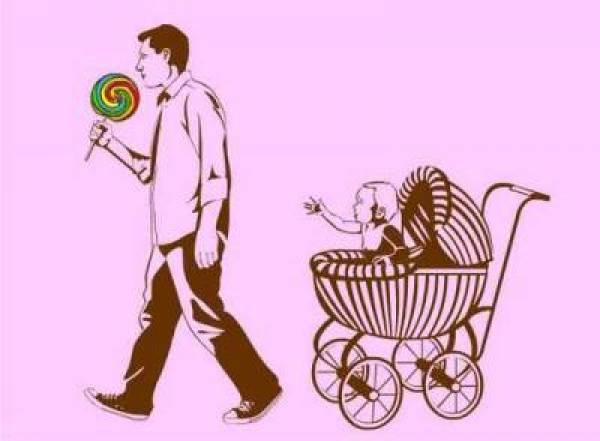
Fun Fact: Between 2005 and 2017, the federal government withheld $580 billion it had promised to spend on students from poor families and students with disabilities.


Fun Fact: Over that same period, the personal net worth of the nation’s 400 wealthiest people ballooned by $1.57 trillion.


So, rich people, consider this the bill.


A new report called “Confronting the Education Debt” commissioned by the Alliance to Reclaim Our Schools (AROS) details the shortfall in minute detail.


For instance:


  • $347 billion owed to educate low-income students most of whom are children of color.


  • $233 billion owed to provide services for students with disabilities.


And this is just the shortfall of the last dozen years! That’s just money due to children who recently graduated or are currently in the school system!


We’ve been cheating our children out of the money we owe them for more than half a century!


Federal education funding levels were first established in 1965 as part of Pres. Lyndon Johnson’s War on Poverty in the landmark education law, the Elementary and Secondary Education Act (ESEA).


That law, which has become little more than a boondoggle for the standardized testing and school privatization industries, originally was passed to address inequality in America’s education funding.


Now this report from a coalition of groups including the Education Justice Research and Organizing Center, the National Education Association, the American Federation of Teachers, Center for Popular Democracy and the Action Center on Race and the Economy points out the multifarious ways we have failed to live up to the standards we set in that original legislation and beyond.


One of the most glaring examples of neglect is Title I funding.


The Johnson administration admitted that schools with a high concentration of students living below the poverty line needed extra support to succeed at the same levels as students from middle class or more affluent backgrounds. So the law promised to provide an additional 40 percent for each poor child above what the state already spent per pupil.


And then it promptly failed to fund it. In 1965 and every year since!


These are not just numbers. With this money, high poverty schools could provide:


  • “health and mental health services for every student, including dental and vision services; and

  • a full-time nurse in every Title I school; and

  • a full-time librarian for every Title I school; and

  • a full-time additional counselor in every Title I school, or

  • a full-time teaching assistant in every Title I classroom.”


A decade later, in 1975, the same thing happened with The Individuals with Disabilities Education Act (IDEA).


Congress told local districts they’d have to do more to help disabled students succeed academically. However, doing so costs money. Lawmakers admitted that disabled students cost more to educate and that local districts often struggle to find the funding to help them succeed.


Once again, Congress pledged to pay up to 40 percent of that additional cost, with local and state funds covering the remainder.


Once again, Congress failed to fund it.


STATE AND LOCAL FAILURE


But it’s not just the federal government that has shirked its duties to school children.


State and local governments also stiffed generations of students out of the resources they deserved – especially if those students have black or brown skin.


Beside the federal government, public schools are funded by their local municipalities and the state. Local governments pay for about 45 percent of school budgets.


However, since most of this allotment is determined by property tax revenues, it ensures the poor get fewer resources than the rich. Kids from rich neighborhoods get lots of resources. Kids from poor areas get the scraps. Inequality is built into the funding formula to ensure that students don’t start out on an even playing field and that economic handicaps are passed on from one generation to the next.


State governments are no better. They provide about 47 percent of school budgets.


As such, they are in the position to right the wrongs of the local community by offsetting the inequality of local governments – but only 11 states do so. Twenty states close their eyes and provide the same funding to each school – rich and poor alike – regardless of need or what each community can afford to provide for its own children. But 17 states are even worse. They actually play Robin Hood in reverse – they funnel more money to wealthier districts than to poor ones.


As a result, schools nationwide serving mostly students of color and/or poor children spend less on each child than districts serving mostly white and/or affluent children.


TAX CUTS


And while our federal, state and local governments have failed to meet their responsibilities to students, they have required fewer taxes from business and industry.


In the late 1940s and 1950s, the top marginal tax rate was more than 90 percent. Today it is 37 percent.


Congress just passed a series of whooping tax cuts that go into effect in 2019. More than half of the benefit of these cuts will go to the richest five percent of taxpayers. The law is expected to cost the federal treasury as much as $1.5 trillion in lost revenues over the next decade.


Nearly every state levies a much greater share of taxes from low- and middle-income families than from the wealthy.


And that’s before we even start talking about corporations!


While the US federal corporate tax is 35 percent, the effective tax rate that corporations pay after loopholes and deductions is only about 14 percent. This costs the federal government at least $181 billion in annual revenue, based on 2013 estimates by the Government Accountability Office. Local and state corporate tax and abatement programs make it even worse.


This is a choice. We are not requiring the rich to pay their fair share.


SCHOOL-TO-PRISON


Instead of investing in ways to help educate children, one of the only areas we’ve increased funding is incarceration.


The private prison industry is booming, fueled in part by a lack of opportunities in schools.


According to the report:


“In 2017, the National Association of School Resource Officers claimed that school policing was the fastest-growing area of law enforcement. The school safety and security industry was reported to be a $2.7 billion market as of 2015. Most of that $2.7 billion is public money now enriching the private security industry instead of providing real supports to students.”


According to the US Department of Education, 1.6 million students go to a school that employs a law enforcement officer but not a guidance counselor.


That is not an unalterable economic reality. It is a failure of priorities. It is the mark of a society that is not willing to help children but will swoop in to punish them if they get out of line.


SCHOOL PRIVATIZATION


Finally, the report identifies school privatization as a contributing factor to this systemic neglect.


Charter schools are legal in 44 states plus Washington, D.C. and Puerto Rico. They have “systematically stripped public school budgets through the creation of parallel structures of privately-operated, publicly-funded schools.”


Cost studies in San Diego, Los Angeles, Nashville, Michigan, Pennsylvania, Durham and other localities have come to the same conclusion: “the privatization of schools has contributed to austerity conditions in traditional public schools.”


Yet Congress continues to appropriate millions of dollars to the Department of Education’s Charter Schools Program (CSP), which funds new charter start-ups and expansions. The program has a budget of $500 million this year, alone. It is the largest single backer of charter schools in the nation.


According to the report, “In other words, the U.S. Department of Education is operating a program that directly undermines public schools.”


SOLUTIONS


But the report isn’t just about what’s wrong. It outlines how we can make it right.


It outlines three policy initiatives:


1)      “Full funding of Title I and IDEA to target federal support to low-income children and students with disabilities.

2)      The creation of 25,000 Sustainable Community Schools by 2025.

3)      A new focus for the U.S. Department of Education, on ensuring and incentivizing equity in public schools across the country.”


And we can pay for it by:


A. “Make the wealthy pay their fair share of taxes.

  • Rescind the 2017 tax code changes, which overwhelmingly favor the top 1 percent of income earners.
  • Close the federal carried interest loophole, a step that could increase federal revenues by between $1.8 and $2 billion annually or, according to some researchers, by as much as $18 billion annually.
  • If the carried interest loophole is not closed at the federal level, states can impose a surcharge on carried interest income at the state level, raising millions for state budgets.
  • Enact so-called “millionaire’s taxes” that increase the tax rate on a state’s highest earners. New York and California have already passed such law.


B. Require wealthy corporations to pay their fair share.

  • End or reduce corporate tax breaks that cost the federal government at least $181 billion annually.

  • Reduce state and local subsidies to businesses for economic development projects and hold school funding immune from tax abatements.

  • Enforce and strengthen programs like Payment in Lieu of Taxes (PILOT) to ensure that wealthy institutions pay their fair share towards local budgets.


C. Divest from the school-to-prison pipeline.

  • School safety and security is now a $2.7 billion industry. Much of that money is public money, going to profitable corporations instead of schools.
  • Divest from expensive security systems, metal detectors and legions of school-based police officers and instead invest in counselors, health and mental-health providers and other supports that make schools safer.


D. Place a moratorium on new charter schools and voucher programs.

  • A moratorium on the federal Charter Schools Program would free up $500 million annually, which could be used to support the creation of Sustainable Community schools.”


The executive summary concludes with the following statistic.


Even a 10 percent increase in funding for each high poverty student maintained through 12 years of public school can dramatically change the likelihood of academic success. It can boost the chances that students will graduate high school, achieve 10 percent higher earnings as adults and a 6 percentage point reduction in the annual incidence of adult poverty, according to a 2015 report.

“Ten percent is pocket-change for a nation that has orchestrated the rise of an unmatched billionaire class. In the richest nation in the world, it is possible to fully fund all our public schools, and to provide Black, Brown and low-income children with the educational resources and additional supports and services they need to achieve at the highest levels.”


The facts are in, folks.


We can no longer gripe and complain about a public education system we fail to support without recognizing the cause. We have failed to meet our responsibilities to our children – especially our children of color.


The solution is simple – equity.


We need to demand the rich do the right thing.


We cannot achieve greatness as a nation when wealth and privilege continue to shirk their duties and our lawmakers do little more than enable greed and corruption.


The bill is here.


Time to settle up.


READ THE WHOLE REPORT.


Like this post? I’ve written a book, “Gadfly on the Wall: A Public School Teacher Speaks Out on Racism and Reform,” now available from Garn Press. Ten percent of the proceeds go to the Badass Teachers Association. Check it out!

WANT A SIGNED COPY?

Click here to order one directly from me to your door!

book-2

There is Virtually No Difference Between Nonprofit and For-Profit Charter Schools

Screen Shot 2018-09-06 at 3.18.04 PM


Stop kidding yourself.


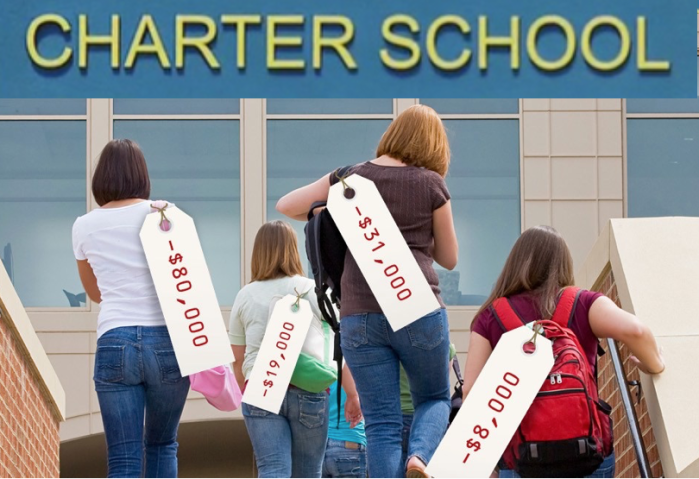
Charter schools are a bad deal.


It doesn’t matter if they’re for-profit or nonprofit.


It doesn’t matter if they’re cyber or brick-and-mortar institutions.


It doesn’t matter if they have a history of scandal or success.


Every single charter school in the United States of America is either a disaster or a disaster waiting to happen.


The details get complicated, but the idea is really quite simple.


It goes like this.


Imagine you left a blank check on the street.


Anyone could pick it up, write it out for whatever amount your bank account could support and rob you blind.


Chances are you’d never know who cashed it, you’d never get that money back and you might even be ruined.


That’s what a charter school is – a blank check.


It’s literally a privately operated school funded with public tax dollars.


Operators can take almost whatever amount they want, spend it with impunity and never have to submit to any real kind of transparency or accountability.


Compare that to a traditional public school – an institution invariably operated by duly elected members of the community with full transparency and accountability in an open forum where taxpayers have access to internal documents, can have their voices heard and even seek an administrative position.


THAT’S a responsible way to handle public money!


Not forking over our checkbook to virtual strangers!


Sure, they might not steal our every red cent. But an interloper who finds a blank check on the street might not cash it, either.


The particulars don’t really matter. This is a situation rife with the possibility of fraud. It is a situation where the deck is stacked against the public in every way and in favor of charter school operators.


But most people don’t want to take such a strong stance. They’d rather find good and bad people on both sides and pretend that’s the same thing as impartiality.


It isn’t.


Sometimes one side is just wrong.


Policymakers may try to feign that there are good and bad charter schools and that the problems I’m talking about only apply to the nefarious ones.


But that’s a delusion.


There is no good way to write a blank check and leave it on the street to the whims of passers-by.


Most apologists want to draw the distinction between for-profit and nonprofit charters.


But as Jeff Bryant, an editor at Education Opportunity Network, puts it, this is a “Distinction without a difference.”


These terms only define an organization’s tax status – not whether it is engaged in gathering large sums of money for investors.


The law is full of loopholes that allow almost any organization – not just charter schools – to claim nonprofit status while enriching those at the top.


We live in an age of philanthrocapitalism, where the wealthy disguise schemes to enrich themselves as benevolence, generosity and humanitarianism.


So-called “nonprofit” charter schools are just an especially egregious example. No matter what label you pin to their name, they all offer multiple means to skim public funding off the top without adding any value for students.


For instance, take the use of management companies.


A for-profit charter school can simply cut services to students and pocket the savings as profit.


A nonprofit charter school can do the same thing after engaging in one additional step.


All I have to do is start a “nonprofit” charter school and then hire a for-profit management company to run it. Then my management company can cut services and pocket the profits!


It’s really that simple! I turn over nearly all of my public tax dollars to the management company that then uses it to operate the school – and keeps whatever it doesn’t spend.


Heck! It doesn’t even matter who owns the company! It could even be me!


The law actually allows me to wear one hat saying I’m nonprofit and then put on a different hat and rake in the cash! The only difference is what hat I’m wearing at the time!


SO I get to claim to be a nonprofit while enjoying all the advantages of being for-profit.


flowchart960
SOURCE: Florida Sun Sentinel


I may even be able to buy things with public tax dollars through my for-profit management company and then if my “nonprofit” school goes belly up, I get to keep everything I bought! Or my management company does.


So the public takes all the risk and I reap all the reward. And I’m still graced with the label “nonprofit.”


Oh, and speaking of spending, being a “nonprofit” doesn’t stop me from the worst kind of real estate shenanigans routinely practiced by the for-profit charter schools.


Both types of privatized institution allow for huge windfalls in real estate. If I own property X, I can sell it to my charter school (or management company) and then pay myself with tax dollars. Who determines how much I pay for my own property? ME! That’s who!


And I can still be a nonprofit.


Think that’s bad? It’s just the tip of the iceberg.


Thanks to some Clinton-era tax breaks, an investor in a charter school can double the original investment in just seven years!

I can even get the public to pay for the same building twice! And even then taxpayers still won’t own it!


But that’s the complicated stuff. There’s an even easier way to get rich off the public with my “nonprofit” charter school, and operators do it all the time: write myself a fat check!


After all, I’ve gotta’ pay, myself, right? And who’s in charge of determining how much I’m worth? ME!


I can even pay myself way more than my counterparts at traditional public schools who oversee exponentially more staff and students.


For instance, as New York City Schools Chancellor, Richard Carranza is paid $345,000 to oversee 135,000 employees and 1.1 million students. Meanwhile, as CEO of Success Academy charter school chain, Eva Moskowitz handles a mere 9,000 students, for which she is paid $782,175.


And this is by no way a unique example.


There are just so many ways to cash in with a charter school even at a so-called “nonprofit” – especially if I want to dip my toe into legally dubious waters!


I could do like the almost exclusively “nonprofit” Gulen charter schools and exist solely as a means to raise money for an out-of-favor political movement in Turkey.


I could use charter funds to finance other businesses. I could decide to discontinue programs that students receive in traditional public schools such as providing free or reduced lunches but keep the cash. I could fake enrollment and have classes full of “ghost students” that the local, state and federal government will pay me to educate.


Fraud and mismanagement are rampant at charter schools because we don’t require them to be as accountable as their traditional public school counterparts.


If a traditional public school tried this chicanery, we’d almost certainly catch it at the monthly meetings or frequent audits. But charter schools don’t have to submit to any of that. They’re public money spent behind closed doors with little to no requirement to explain themselves – ever.


And all of this – nearly every bit of criticism I’ve leveled against the industry – doesn’t even begin to take into account the educational practices at these types of schools.


There is plenty of evidence that charters provide a comparable or worse education than children routinely receive at traditional public schools.


Where it is comparable, the issue is clouded by selective enrollment, inadequately servicing students with special needs and generally encouraging the hardest to teach to get an education elsewhere. Where it is worse, it is colossally worse, robbing children not just of funding but what is likely their only chance at an education.


But we don’t even need to go there.


We only need the issue of fiscal responsibility to bring down this behemoth.


Charter schools are no way to run a school. They are a blatant failure to meet our fiduciary responsibilities.


Traditional public schools are the best way to run a school. They protect the public’s investment of money and resources while providing a quality education to students.


So all this talk about nonprofit and for-profit charter schools is either a mark of supreme ignorance or a ploy for weak willed politicians to weasel their way out of taking a stand on an issue whose merits are obvious to anyone who knows what really happens in our education system.


It’s time to stop wasting taxpayer money on this expensive fraud.


It’s time for the charter school experiment to end.


And it’s way passed time to support fully public schools.


Like this post? I’ve written a book, “Gadfly on the Wall: A Public School Teacher Speaks Out on Racism and Reform,” now available from Garn Press. Ten percent of the proceeds go to the Badass Teachers Association. Check it out!
WANT A SIGNED COPY?

Click here to order one directly from me to your door!

book-1

Public School is Not For Profit. It is For Children.

Screen Shot 2018-08-28 at 4.14.57 PM


Betsy DeVos doesn’t get it.


But neither did Arne Duncan.


Whether right or left or somewhere in between, the person sitting at cabinet level tasked with advising the President on education matters invariably knows nothing about the purpose of public schools.


Duncan thought it had something to do with canned academic standards and standardized tests.


DeVos thinks it involves vouchers to religious or private schools.


But they’re both as wrong as two left shoes.


Public schools exist for one reason and one reason only – to meet the needs of children.


They aren’t there to enrich the private sector or even provide the job market with future employees.


They exist to teach, to counsel, to inspire, to heal.


And all these other schemes favored by Dunce Duncan and Batty Betsy that purport to meet kids needs while somehow enjoying the totally unintended side effect of enriching wealthy investors completely misses the point.


Public schools serve one purpose – to help the kids enrolled in them.


That’s all.


If someone is getting rich off that, there’s a huge problem somewhere.


Unfortunately, the Secretaries of Education of Donald Trump and Barack Obama aren’t the only ones to get it wrong. Policymakers on both sides of the aisle have lost sight of this fact.


So have pundits and media personalities on Fox News, CNN and MSNBC. So have CEOs and tech entrepreneurs and economists and anyone – really – whom our society seems to take seriously.


Don’t believe me?


Take the latest pronouncement from DeVos, our Secretary of Education.


She announced recently that she was looking into using federal funds to buy guns for teachers to better protect their students from school shooters.


It doesn’t take a genius to see that this is not in the best interests of children.


Teachers with guns mean a MORE dangerous environment for children, not less.


It means escalating the chance of friendly fire much more than boosting the possibility of a kindergarten teacher turning into an action hero.


It means heightening the chance of children getting their hands on these firearms and doing themselves or others harm.


And given the disproportionate murders of people of color even at the hands of trained professionals in the police force, it means children of color being legitimately terrified of their mostly white educators – or worse.


The reason given by DeVos may be to make children safer. But the measure she’s proposing really has nothing to do with them at all.


It’s a boondoggle for private industry – one private industry in particular – gun manufacturers.


Instead of sensible regulations on a product that’s at least as dangerous as items that are much more heavily controlled – such as cold medicine and automobiles – DeVos is doing the only thing she can to protect what she really cares about – corporate profits.


She is using money earmarked “safety” to increase danger.


Or as she sees it – she’s using a government apparatus that could harm the gun industry to instead pad its pockets.


You’ll hear some progressives and moderates decry this move with passion and fervor – and for good reason – but what many fail to realize is that it’s not new.


It’s really just a continuation of a sickness that has crept into our society about how we conceptualize the very idea of school.


We have moved away from the proposition that everything must be done in the student’s best interest and have replaced it with an imperative to benefit business and industry.


After all, what is the push for academic accountability through standardized tests and Common Core but corporate welfare for the testing and publishing industry?


What is the push for charter and voucher schools but government subsidies for school privatization?


High stakes standardized testing isn’t about helping students learn. Neither is Common Core, value-added measures or a host of top-down corporate policies championed by lions of the left and supply-side patriots.


They are about creating a problem where one doesn’t exist: accountability.


“How do we make sure students receive a quality education?” As if this has ever been hard to determine.


In general, the schools with greater needs than funding are where students struggle. The schools where everyone has more than they need is where they excel.


But they try to sweep the issue of inequitable funding and resources under the rug by framing the question entirely about teachers and schools.


In short, instead of asking about an obvious inequality, they hide a preconceived answer in the question: “How do we make sure teachers and schools are actually educating kids?”


Wrong question. But here’s the answer, anyway: Administrators observe teachers and determine if they’re doing their jobs. And school boards evaluate administrators.


In general, the staff isn’t the problem. It’s the lack of resources we give them to work with – everything from crumbling buildings, large classes, narrowed curriculum to a lack of wraparound social services.


It doesn’t take much to see we’re shortchanging our neediest students.


You don’t need standardized tests to tell you that. You don’t need new academic standards. You don’t need to evaluate educators on things beyond their control.


But doing so creates a new market, a need that can be filled by corporate interests unrestrained by the conviction that public schools are not supposed to be a profit-making venture.


People providing services for schools are supposed to make a living – not a killing – off the public’s dime.


The same can be said for school privatization.


Public schools are in no way inferior to institutions that are privately managed. Tax dollars administered by duly-elected representatives in the light of day are in no way less effective or more corrupt than the alternative – letting bureaucrats behind closed doors dole out the money however they choose even into their own pockets.


In fact, just the opposite!


Nor have charter or voucher schools ever been shown to increase student learning without also selecting only the best academic students and shunning those most difficult to teach, providing fewer resources for students and/or operating with greater funding.


But pretending that privatization is a better alternative to democratic rule creates a market, it opens the door so the system can be gamed for profit at the expense of student learning and wellbeing.


That’s why we look in awe at LeBron James, an athlete who uses his fortune to open a school providing all the things society refuses for students of color. A basketball player who refuses to usurp the public’s leadership role in administering that fully public school.


He’s a shinning example of actual philanthropy in an age of bogus philanthrocapitalism. But he’s also proof that his solution is not reproducible large scale.


The rich – even if they are well intentioned – cannot save us. Only the public can support all public schools.


And to do that, we must understand the purpose behind these institutions.


Otherwise, we’ll continue to be trapped on a runaway train where the conductor seems to possess no sense of urgency about slowing down.


We would never have been in this situation – and in fact could right the course even now – if we just took the time to clarify what we were doing and why we were doing it.


We could save generations of children if we stopped cashing in on public schools and realized the reason for their existence.


We could ensure both our present and our posterity.


If only we remembered that one thing.


Public schools are not for profit.


They are for children.


Like this post? I’ve written a book, “Gadfly on the Wall: A Public School Teacher Speaks Out on Racism and Reform,” now available from Garn Press. Ten percent of the proceeds go to the Badass Teachers Association. Check it out!
WANT A SIGNED COPY?

Click here to order one directly from me to your door!

book-4

Resistance to High Stakes Testing Persists as Media Celebrates Its End

GettyImages-465529004.0.0


There has never been more opposition to high stakes standardized testing.


Yet the corporate controlled media is pretending that the resistance is over.


Parents are refusing to let their kids take these tests at the same or even greater numbers than ever.


Fewer states require high stakes tests as graduation exams and/or use them to evaluate their teachers. Across the nation, states are cutting the size of standardized tests or eliminating them altogether. And more state legislatures passed laws explicitly allowing parents to opt their children out of the tests.


Yet Education Week published an article a few days ago called “Anti-Test Movement Slows to a Crawl.”


I think we have different definitions of “Slows” and “Crawl.”


That may not be surprising since we also seem to have different definitions of “Anti-Test.”


The Opt Out Movement is not “Anti-Test.” It is anti-high stakes standardized test.


It is against the federal government forcing states to use corporate written, corporate graded and corporate remediated standardized assessments.


It is against the federal government requiring each state to participate in a corporate boondoggle that not only wastes billions of tax dollars that could be better spent to educate children but also unfairly assesses their academic progress and feeds the push to privatize public schools.


Most people against high stakes standardized testing, however, have no problem with authentic teacher-created assessments.


Calling these folks “Anti-Test” is like labeling those pushing for stricter gun regulations “Anti-Gun” or smearing those protesting government corruption as “Anti-Government.”


And that’s just the title!


The author Alyson Klein further misdirects readers by conflating opt out rates and test resistance.


She implied that the only measure of opposition was the percentage of students who opt out. However, as noted above, there are multiple measures of resistance.


Moreover, few states advertise their opt out rates. Especially after the movement began, states made that information harder to come by to dissuade more people from joining it.


Of those states where information is available, Klein puts the most negative possible spin on the facts in order to make her point – a point that it seems to me is not at all justified.


For instance, Klein writes:


“At least some of the steam has gone out of the opt-out movement in states such as New Jersey and New York, considered hotbeds of anti-testing fervor.”


Really?


In New York, Opt out numbers remained at approximately 20% – the same as they have for the past three years.


And New York is one of our most densely populated states. That percentage represents more than 225,000 parents across the Empire State who refused to let their children take the tests despite threats from many administrators and district officials for doing so.


In New Jersey, opt out rates were marginally lower this year than last year. They went from 7% to 5%. But once again New Jersey is a populous state. That percentage represents about 68,500 students.


In addition, this is after massive opt outs three years ago that forced the state to change its federally mandated assessment. Testing boycotts pushed the state education association to get rid of four PARCC assessments and allow students who fail the remaining two tests to take an alternative assessment. And this is in a state where there is no law explicitly allowing parents to opt out of the tests.


I don’t know if I’d call that running out of steam.


Moreover, opt out rates have increased in other states for which we have data. For instance, test refusal is on the rise in heartland states like Minnesota.


And it nearly doubled in Utah over the past two years to about 6%. In some schools in the Beehive State, rates are much higher. According to the Salt Lake Tribune, 1 in 5 students in the Park City school district refused to take the tests.


Though my own state of Pennsylvania has been mum on last year’s opt outs, from my own personal experience as a teacher in suburban Pittsburgh, I never had more students boycott our federally mandated standardized test than I did last year.


There were so many they had to be quarantined in a special room.


Moreover, an increasing number of parents ask me about the issue, express concern and wonder about their rights.


So even when examining just the rate of opt out, I don’t see any reason to assume the movement is slowing down.


On the contrary, it is picking up steam with multiple victories.


As recently as 2012, half of all U.S. states required high school exit exams in order for students to graduate. Today that number has dropped to 12. The reason? Exit exams don’t raise student achievement – they raise the dropout rate. At least that’s what The National Research Council of the National Academy of Sciences tells us.


Another positive sign – seven states have stopped using value added measures (VAM) to judge teachers. This is the highly controversial practice of assessing educators based on their students test scores – a practice that has never been proven fair to teachers or effective in helping students learn. Six states have dropped this requirement altogether: Alaska, Arkansas, Kansas, Kentucky, North Carolina and Oklahoma. Connecticut still gathers the information but cannot use it in the teacher’s “summative rating.” And other states like New Mexico still use value added measures but have reduced the weight given to student test scores.


Moreover, let’s not forget how many states have slashed the size of the high stakes tests they’re giving to students. After the recent wave of opt outs and public outcry, state education departments have ensured that testing at least takes up less time. This includes New York, Maryland, New Mexico, California, Minnesota, Kentucky, Tennessee, Florida, Washington, Illinois, West Virginia, Hawaii, Oklahoma, Ohio, South Carolina, Pennsylvania and Texas. Some of this is because the PARCC test used in 21 states was slashed by 90 minutes.


And when it comes to opt out, two more states – Idaho and North Dakota – now have explicit laws on the books allowing parents to refuse the test for their children – in whole or in part. That brings the total number of states up to 10. It would have been 11, but Georgia Governor Nathan Deal, a Republican, vetoed an opt-out bill. The federal government still wants us to penalize these districts for non-participation in flagrant violation of its authority. But as more states respect parents’ rights on this matter, it will be increasingly difficult for the U.S. Department of Education to continue trampling them.


And speaking of the federal government, some states are taking advantage of the wiggle room in the federal law that governs K-12 education – the newly passed Every Student Succeeds Act (ESSA) – to allow students to avoid standardized testing entirely. Some states are implementation performance assessments instead. Kids can use a portfolio of classwork to demonstrate learning instead of getting a grade on a corporate-written standardized test. New Hampshire, for instance, has pioneered this approach with a program that now involves half the state’s districts.


These are not the signs of a movement that is slowing to a crawl.


It just makes sense that some of the rhetoric of the movement may have become less forceful with the enactment of the federal ESSA.


Many had hoped for a better law – one that did away with federally mandated testing altogether.


And that could still happen sooner than many think. Next year it will be time to reauthorize the law again.


It took Congress six years to reauthorize the federal education law last time. Perhaps our duly elected representatives can be coaxed into doing their jobs a bit quicker this time.


There is already some proposed legislation to make positive changes. Sen. Jon Tester (D-Mont.) and Rep. Krysten Sinema (D-Ariz.) introduced legislation last year to replace annual assessments with grade-span tests. The United States is, after all, one of the only countries in the world – if not the only one – to require students be tested every year. These proposed changes are not nearly enough, but they’re a step in the right direction.


One of the biggest obstacles to abolishing federally mandated testing last time was that some of the oldest and most well funded civil rights organizations opposed it. Many of them get their money and support from the same billionaires who profit off of the standardized testing and privatization industries.


However, that support for testing was short lived. Already the National Association for the Advancement of Colored People (NAACP) has revoked it returning to a call for opposition to testing.


If our nation survives the many crises of the Donald Trump administration, there is no reason our future cannot be bright.


We have the support, we have the tools, we just need the chance to do right by our children.


And the pendulum is swinging back our way.


Like this post? I’ve written a book, “Gadfly on the Wall: A Public School Teacher Speaks Out on Racism and Reform,” now available from Garn Press. Ten percent of the proceeds go to the Badass Teachers Association. Check it out!
WANT A SIGNED COPY?

Click here to order one directly from me to your door!

book-3

Republicans, Democrats – Let’s Scrap Them Both!

abolish-political-parties-49312-560x315


Political parties are a huge mistake.


Our founding fathers knew this.


Though it was their constant squabbling and political power struggles that gave way to the party system in the first place, they also were incredibly vocal about the errors they, themselves, were committing.


Thomas Jefferson and James Madison preferred state power that would protect southern interests including slave-holding. George Washington, John Adams and Alexander Hamilton favored federal authority that would benefit the north and manufacturing.


But in taking sides to protect their own power, they split into the very factions they knew would poison the newborn Republic.


At his farewell address in 1796, Washington put it this way:


“However [political parties] may now and then answer popular ends, they are likely in the course of time and things, to become potent engines, by which cunning, ambitious, and unprincipled men will be enabled to subvert the power of the people and to usurp for themselves the reins of government, destroying afterwards the very engines which have lifted them to unjust dominion.”


His successor, Adams wrote:


“There is nothing which I dread so much as a division of the republic into two great parties, each arranged under its leader, and concerting measures in opposition to each other. This, in my humble apprehension, is to be dreaded as the greatest political evil under our Constitution.”


In 1789, Jefferson put it more succinctly:


“If I could not go to heaven but with a party, I would not go there at all.”


So why do we today enshrine political parties in our system of government?


In short, it keeps the wealthy in power.


Nothing robs democracy of its populism so much as the party system.


Backward legislation and regressive court decisions equating money with speech only make this worse. But they are simply exacerbating a sickness that’s already there.


Political parties condense the world of advertising and commerce to that of government.


Political ideas are sorted and processed until they can become tasty sound bites – one accorded to one group and the corresponding response to another.


Federalism vs. States.


Taxation vs. Business


Guns vs. Regulations


It’s all bullshit.


No one really cares whether rules are made by an aggregation of the entire nation or merely an aggregation from each individual state. We only care that laws are fair and just.


No one really wants businesses to be taxed to death, nor do they want individuals to be unfairly burdened. They want a just system of taxation where everyone pays their fair share and supports an equitable distribution of the wealth.


No one really wants to unilaterally prohibit individual freedoms – including the freedom to own a gun. They want sane regulations so that killers and maniacs can’t as easily destroy innocent lives.


But political parties obscure these simple truths and sort us all into one of two teams. Yet both sides support the same unchangeable status quo.


As writer Gore Vidal put it:


“Officially we have two parties which are in fact wings of a common party of property with two right wings. Corporate wealth finances each. Since the property party controls every aspect of media they have had decades to create a false reality for a citizenry largely uneducated by public schools that teach conformity with an occasional advanced degree in consumerism.”


Part of this is due to our insistence that the party system be limited to two groups – Republicans and Democrats. We make it incredibly difficult – nearly impossible – for any third party candidate to appear on the ballot less than win a major election.


But increasing the party system would only minimize the damage. It wouldn’t stop it.


When issues are divided into political camps, they obscure basic similarities about voters.


Fairness and justice are not political. They are human.


By making them political, we obscure basic truths to convince subsections of the populace onto our side.


And these are rarely legitimate differences of opinion. They are often a matter of truth or falsity.


For instance, take trickle down economics. Either it is a fair and just distribution of wealth or it is not. Either it provides both rich and poor with a means of equitable economic advancement or it does not.


We have tried this policy for decades. There is a plethora of evidence that this system does not work. It unjustly favors the rich and starves the poor.


To understand this, one need not have an advanced degree in political science. A simple understanding of mathematics will suffice.


If there were no political parties, this would be self-evident. But the rich have used both parties to obscure this fact and make it a game of policy football. You support whichever team you’ve signed up for regardless of how doing so impacts you, personally.


It is the victory of tribalism over common sense.


The same goes for almost every issue facing the nation.


Should schools be public or private?


Should LGBT people be allowed the same rights as cis citizens?


Should we spend the majority of our federal budget on the military?


Should there be a path to citizenship for those wishing to immigrate?


Each and every one of these questions could be decided on facts. Instead evidence is hardly mentioned at all. We use the issues to elect the legislators who then can’t do anything about them for fear that action one way or another would upset the political power struggle against them.


Some economists suggest that the principle behind Democrats and Republicans, the principle behind liberals and conservatives, really comes down to economics.


It is an innate psychological reaction to scarcity and abundance.


In times of little food or resources, conservative tendencies are ascendant because they help us survive the lean times. However, in an era where there is enough for all, liberal tendencies flourish because they help the growing population thrive.


Even if this were true, it is a factual question of whether we live in times of abundance or scarcity.


In the 21st Century United States, we have more wealth than we have ever had. There is enough food for everyone. We grow more than we can eat and end up throwing much of it away. Yet a tremendous amount of us live in abject poverty. More than half of public school students live below the poverty line.


This is not because we live in a time of scarcity. We live in a time of abundance where we keep much of that surplus away from the majority in order to create a false sense of scarcity so that the richest among us can horde as much as they possibly can.


That is the ugly truth hidden behind the party system.


It is a truth that could not be maintained without the easy marketing and tribalism of political parties – Republicans, Democrats, Whigs, the Judean Peoples Front or the People’s Front of Judea.


Until we remove the stranglehold of political parties, until we set up a government that makes factionalism difficult, until we establish a government that welcomes candidates regardless of party – our politics will be forever immobilized by wealth, sectarianism and voter apathy.


This could mean holding nonpartisan primaries where all candidates irrespective of party who meet a certain signature threshold are welcome, followed by a general election of the two highest vote-getters. Or it could mean something radically different like not voting at all but filling government with ordinary citizens randomly drafted into public service.


The point is that we can do better than party politics.


If we’re to survive as a nation, we’ll need to find a more just way.


Or as Hamilton put it:


“Nothing could be more ill-judged than that intolerant spirit which has, at all times, characterized political parties.”


Like this post? I’ve written a book, “Gadfly on the Wall: A Public School Teacher Speaks Out on Racism and Reform,” now available from Garn Press. Ten percent of the proceeds go to the Badass Teachers Association. Check it out!
WANT A SIGNED COPY?

Click here to order one directly from me to your door!

ebook-2 (1)

Dear Betsy DeVos, I Will NEVER Report My Students to ICE

4e78f0eb558f3.image 


Teachers fill a lot of roles in our public schools.


We’re mentors to kids in need.


We’re aides to students struggling with new concepts and skills.


We’re homework-givers, pencil-providers, idea-encouragers, lunch-buyers, scrape-bandagers, hand-holders, hug-givers, good listeners, counselors, caregivers and – yes – sometimes even butt-kickers.


It’s no wonder that we occasionally get mistaken for mothers and fathers.


But one thing we will never be is a snitch.


Secretary of Education Betsy DeVos recently intimated that principals and teachers could report their undocumented children to Immigration and Customs Enforcement (ICE).


She’s not going to say what we should do one way or another. She’s just saying that this is something we COULD do if we wanted.


If that results in those kids and their families being deported, well we are a nation of laws, after all.


It’s a remark that sounds so reasonable to some folks.


Luckily, I speak dog whistle.


So did the U.S. Supreme Court back in 1982 when justices ruled in Plyler v. Doe that schools cannot deny children their right to a free education based on immigration status.


When kids are afraid to learn because they or their parents or extended family may be undocumented, that has a smothering affect on the classroom.


When ICE raids a local business, we see a sudden drop in class attendance.


So if students thought their teachers or principals were scrutinizing them to determine their citizenship status, we’d be discouraging many with brown skin or extra-national credentials from ever coming back.


By suggesting that educators have a choice whether to obey established law or to become self-appointed border patrol officers, DeVos actually is prescribing how we should act.


Well, not this teacher, Betsy.


Not now. Not EVER.


No matter who you are – black, white or brown – a public school is a sanctuary. It is where kids of all different races and creeds come to escape from the ravages of poverty, violence and indifference.


Teachers are not the enforcers of our broken, bent and biased immigration policy. It is not our job to oblige xenophobia and bigotry.


It is our job to teach, to protect and inspire.


Sure, I’ve made my fair share of calls to parents, healthcare professionals and Child Protective Services.


I’ve reported abuse, addiction and mental illness.


But I did that to protect my kids. And I do think of them as my kids.


When these little people come toddling into my class, I take a kind of ownership of them.


For the time they’re here, we’re family. I take interest in their lives and they take interest in mine.


They know all about my wife and daughter, my parents and grandparents. And I know about theirs.


We don’t just learn grammar, reading and writing. We share our lives with each other.


We share a mutual trust and respect.


If I reported even a single student for a suspected immigration violation, I would lose that forever.


It’s sad how much things have changed in a little over year.


Hispanic names have become Anglicized. Angelo has becomes Angel. Julio has become Jules. Jorge is now George.


The dulcet melody of Spanish has been silenced. You’ll only hear it in muffled voices if you wander by a few lockers, but never in class.


My kids aren’t even 13 yet, but many of them have already learned to hide.


Don’t appear different. Don’t let anyone know your roots extend beyond national borders.


Be “normal.” Be homogenized, bland American.


That’s the world we’ve built and it’s the one that DeVos is encouraging with her tin pot nationalism.


Some things don’t change when you cross municipal lines – human decency is one of them.


So I won’t be reporting any of my students to ICE.


I won’t help the Gestapo separate parents and children based on citizenship status.


I won’t help set up ethnic checkpoints where armed guards get to ask “suspicious persons” for their papers.


White supremacy was bad enough before Trump was elected. I won’t help the unfortunately named Department of Homeland Security become the protector of a new white trash Fatherland.


I will defend my students. I will stand up for their safety and their rights.


That’s just what we do in public school. We look after our own.


Like this post? I’ve written a book, “Gadfly on the Wall: A Public School Teacher Speaks Out on Racism and Reform,” now available from Garn Press. Ten percent of the proceeds go to the Badass Teachers Association. Check it out!
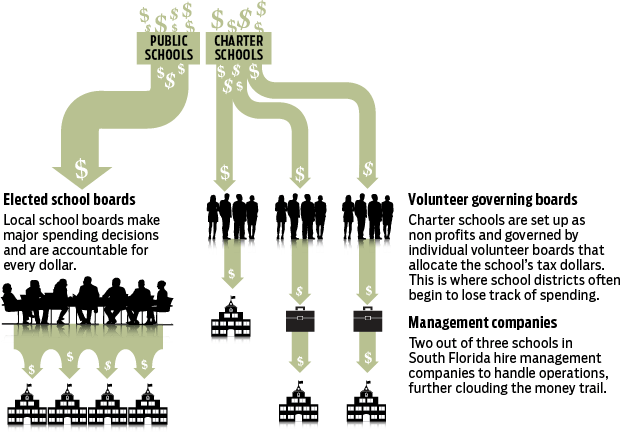
WANT A SIGNED COPY?

Click here to order one directly from me to your door!

book-2

School Vouchers and Runaway EdTech Pave the Way for the Destruction of the Very Concept of School

andres


School is where you learn to learn.


A teacher with an advanced degree and decades of experience devotes her time to figuring out what helps you comprehend the world around you.


And, if she’s good, she imparts that lesson to you as well.


Imagine if we took that away.


Imagine a world where there are no schools – just free range children plopped in front of a computer or an iPad and told to go learn something.


No schools, no teachers, just gangs of students walking the streets, stopping along the way to thumb messages to each other on social media, play a video game or take an on-line test.


That’s the world many EdTech entrepreneurs are trying to build.


And school vouchers are helping them do it.


Take Education Savings Accounts (ESAs) and other market based privatization schemes.


Normally, the federal, state and local government collect taxes to fund an individual child’s education, which is then spent at a public or charter school.


At a public school all that money must be spent on the student. At a charter school some of that money can be pocketed as profit by the private company who runs the school.


Public schools provide a better alternative because the funding must be dedicated to the student, living within a district’s coverage area guarantees enrollment, the school must be managed by an elected school board with open meetings and a plethora of other amenities you won’t find at a privatized institution. But at least the charter school is a school!


However, an ESA or other voucher would allow that money to go elsewhere. It could go to funding the tuition at a private or parochial school where organizers can use it however they like – pocketing some and using the rest to help the child as you’ll find in most charter schools.


But as bad as that is, vulture capitalists want to add another destination for that money – let it pile up in the bank where it can be used for discrete education services provided by the EdTech industry.


It’s almost like homeschooling – without the loving parent being in charge.


It goes by many names – a learning ecosystem, personalized learning, competency based or individualized education.


But it’s really a single person cyber school with little to no guiding principles, management or oversight.


Education is reduced to a series of badges students can earn by completing certain tasks.


Reading a book or an article gives you a badge. Answering a series of multiple-choice questions on a reading earns you more badges. And if you’ve completed a certain task satisfactorily, you can even earn a badge by teaching that same material to others.


It’s the low wage gig economy applied to education. We just transform a crappy job market where workers bounce from a few hours of minimum wage labor here to a few hours of minimum wage toil there – all without benefits or union protections – into learning. Children bouncing from a few hours of Khan Academy videos here to a software package there and Voila! “Modern” education!


In short, it’s school without the school or teachers.


And make no mistake, it’s not about improving the quality of education. It’s about providing the cheapest possible alternative and selling it to rubes as innovation.


The wealthy will still get institutions of learning. They will still be educated by the most qualified teachers in the world. They will still learn how to learn.


The best path to becoming a truly educated person involves human interaction and mentorship. You need experienced professional educators who use the empirical evidence they see in the classroom about your child to tailor lessons to their needs. The wealthy would never dream of making their children learn from the academic equivalent of an automated check out aisle or telemarketer robocall.


It is only the poor and middle class who will be released like chickens into the pasture of a learning ecosystem.


And as an added benefit, the badge structure creates a market where investors can bet and profit off of who gains badges and to what degree on the model of crypto-currencies like Bitcoin! So all the stability of the pre-crash housing market! What could possibly go wrong!?


Let me be clear – this is the ultimate goal of the school privatization movement.


Charter and voucher schools are only the tip of the iceberg. They still require real human beings to act as teachers (though they need not be as well educated or have as much experience as public school teachers). They still require buildings and grounds.


But this depersonalized learning approach allows them to do away with all of that. They can just provide students with an Internet accessible device and some dubious on-line tracking and management system.


Then they can pocket all the rest of the money taxpayers put aside to educate children and call it profit.


And they can use the programs students access to “learn” as a way to gather valuable marketing data about our kids. Everything students do on the device is free market research – every word they input, every keystroke, every site visited down to the slightest eye movement.


This is the logical conclusion of the monetization of education and an economy that only sees value in others as human capital that can be bought, sold and exploited.


This is where the privatization movement is going. And they’re laying the groundwork in legislation being proposed in our state capitals today.


In Pennsylvania, for instance, Senate Bill 2 proposes the creation of just such ESAs. If approved, the immediate result would be to boost private and parochial schools.


However, given a few years to strengthen the technologies and systems needed for a full learning ecosystem, the same law would allow taxpayer money to be used in this way.


And it’s something hardly anyone is talking about.


We’re fighting the privatization systems of today as the plutocrats set up the privatization systems of tomorrow.


Even if school vouchers never take off to the degree necessary to scaffold the most robust learning ecosystems, EdTech lobbyists are trying to install as much of this garbage as they can into our existing schools.


They are using one-to-one iPad initiatives and grants to fund up-to-date computers, Wi-Fi networks and software packages to pave the way for this brave new world of digital exploitation. They are selling our test score obsessed bureaucrats software like iStation and IXL that bridge the gap between test prep and learning ecosystems lite.


You can walk into many schools today where students spend hours on-line earning digital badges for watching videos and taking stealth assessments.


Few people are sounding the alarm because few people understand what’s going on.


This is not conjecture. This is not a conspiracy theory. This is the goal the edtech entrepreneurs will gladly tell you all about hoping you’ll invest.


There are hours of videos, pages of documents, mountains of graphs, charts and graphics about how this scheme will pay off for investment bankers and venture capitalists. (See below)


The only true way to win this battle is a cultural shift away from dehumanizing runaway capitalism.


We need to stop thinking that the private sector is always better than the public good. We need to stop allowing big business and corporations to get away without paying their fair share. We need to increase the voice of citizens and decrease the megaphone of money and privilege.


Otherwise, the science fiction dystopias of books like “Ready Player One” will no longer be fiction.


They will become the reality for every school child in this country.


A reality where school, itself, is a thing of the past.


And education is reduced to the mercenary collection of discrete skills that add up to nothing of value for the students except their own enslavement.


But don’t take my word for it. Here is the learning ecosystems model from the EdTech industry, itself, in corporate officers own words and graphics:

LEARNING IS EARNING – the scariest 6:58 video you’ll ever see.


KNOWLEDGEWORKS Vision for the Future of Education:

IMG_9654

Graphic as a PDF

More on KnowledgeWorks

Listing for PARENTS AS CONSUMERS Symposium

Read all about it here.


FIGHT BACK AGAINST SCHOOL PRIVATIZATION AND RUNAWAY EDTECH:

Like this post? I’ve written a book, “Gadfly on the Wall: A Public School Teacher Speaks Out on Racism and Reform,” now available from Garn Press. Ten percent of the proceeds go to the Badass Teachers Association. Check it out!

WANT A SIGNED COPY?

Click here to order one directly from me to your door!

book-2