
Economists Ate My School – Why Defining Teaching as a Transaction is Destroying Our Society

Screen Shot 2020-01-04 at 11.02.28 AM


Teaching is one of the most misunderstood interactions in the world.


Some people see it as a mere transaction, a job: you do this, I’ll pay you that.


The input is your salary. The output is learning.


These are distinctly measurable phenomena. One is calculated in dollars and cents. The other in academic outcomes, usually standardized test scores. The higher the salary, the more valued the teacher. The higher the test scores, the better the job she has done.


But that’s not all.


If the whole is defined in terms of buying and selling, each individual interaction can be, too.


It makes society nothing but a boss and the teacher nothing but an employee. The student is a mere thing that is passively acted on – molded like clay into whatever shape the bosses deem appropriate.


In this framework, the teacher has no autonomy, no right to think for herself. Her only responsibility is to bring about the outcomes demanded by her employer. The wants and needs of her students are completely irrelevant. We determine what they will become, where they will fit into the burgeoning economy. And any sense of curiosity or creativity is merely an expedient to make children into the machinery of industry and drive the gross domestic product higher to benefit our stock portfolios and lower corporate taxes.


And since this education system is merely a business agreement, it must obey the rules of an ironclad contract. And since we’re trying to seek our own advantage here, it’s incumbent on us to contain our workforce as much as possible. This cannot be a negotiation among equals. We must keep each individual cog – each teacher – separate so that they can’t unionize together in common causeand equal our power. We must bend and subject them to our will so that we pay the absolute minimum and they’re forced to give the absolute maximum.


That’s just good business sense. It’s the best way to establish this relationship.


Moreover, since we see education in terms of pure capital – human financial units flowing through a systemic framework – the same rules that govern business will govern our schools.


We can pit one student against another, one school against another, one district against another, one race, one gender – anything quantifiable can and should be placed in competition. Because that’s how you maximize outputs.


We can initiate hostile takeovers, engage in vulture capitalism where the loser schools are stripped of resources and to the victor go the spoils.


But who is the victor?


It’s getting confusing here. Do we give the plunder to the students at the schools with the highest outcomes? That’s illogical. After all, this whole process isn’t about what’s best for the students, per se. It’s about the system of profit and loss. So any profit squeezed from the defeated should go to the winners – the investor class who put forward the capital to start this whole process.


But that’s not how public school is organized. There are rules and regulations you have to follow – outdated legislation that doesn’t define the process in terms of economics.


We have to redefine those laws, rewrite them so that our goals are aligned. So we can enshrine virtues like choice and disruption over anything as old fashioned and pedestrian as the good of the child.


Thus we invent charter schools – institutions funded with tax dollars but not necessarily subjected to any other regulations – not run by elected school boards, not accountable to the public for how they spend that money or educate the children under their authority. They are subject only to the rules of the free market. The invisible hand guides all.


Thus we invent school vouchers – take that tax money and give it directly to the customer – the parents – to spend however they wish. If they squander it or are fooled by unscrupulous school systems and education purveyors, that is their fault. And, in fact, we will ensure that there are multiple pitfalls, deathtraps, blind alleys and snake oil salesmen in their way. Because competition maximizes profits.


Caveat emptor is the only rule.


Because, you see, the hidden premise in all this nonsense is that you are not the boss.


The community is not in control of this system – the business world is. Everyday people who might be parents or taxpayers or voters or concerned citizens – at best we are just consumers. It’s not our role to do anything but choose the simple, watered down options presented to us. If we try to exercise our rights through collective action – including our right to vote – that’s unfair and will be met with the rule of capital as speech until we’re drowned in it – in fact, drowned out.


This is how many people today envision teaching.


This is what has become of our schools.


This is what is being done to our children.


It’s obvious in the ways our laws are structured, the ways the media covers our schools and the ways our students are mistreated.


And it is mistreatment.


Because teaching is none of those things.


Teaching is not a transaction. It is relational.


Teaching is not about inputs and outputs. It’s about curiosity and knowledge.


It shouldn’t be governed by market forces that dehumanize all those involved into mere widgets to be manipulated in a systemic framework. Teaching should be governed by empathy, art and science.


The driving force behind any education system must be what’s best for the child. And that “best” ultimately must be defined by parents and children.


The goal of education can never be to prepare kids for a career. It must be to eradicate ignorance, to quench curiosity, to aid self-expression and guide students toward becoming whatever it is they want to become.


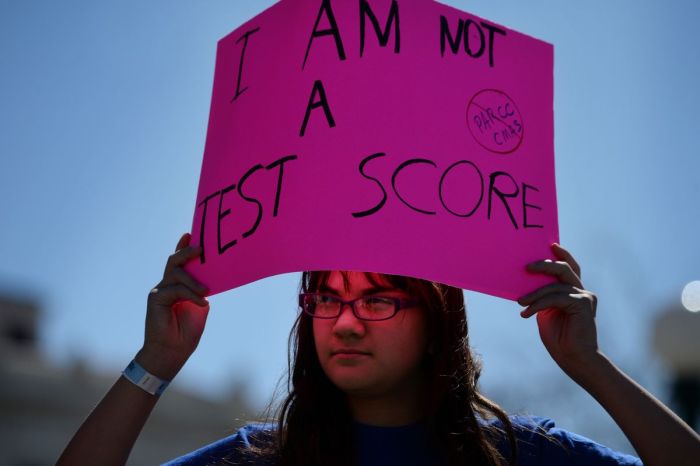
Measuring learning outcomes by standardized test scores can never achieve this goal. That’s like trying to monetize a rainbow or putting the ocean in a cage.


School privatization can never achieve this goal. That’s like treating human beings like cash, like thinking the rules of football can govern architecture.


And treating teachers like worker drones can never achieve this goal. You can’t entrust a whole class of people with the most precious thing you have – your children – and then treat them like dirt.


Teaching is hard to define.


It is messy and unruly and doesn’t fit into many of our society’s preconceptions.


But it is optimism made real.


It is an investment in the future. A mark of value and love.


It is the most vital and important thing a society can do.


And we’re messing it up – big time.


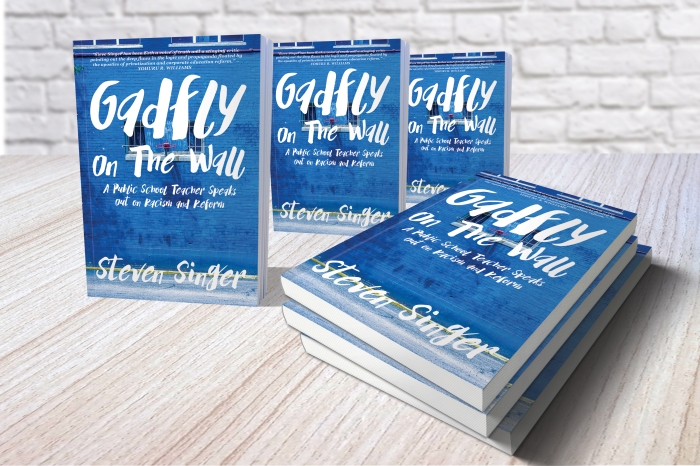
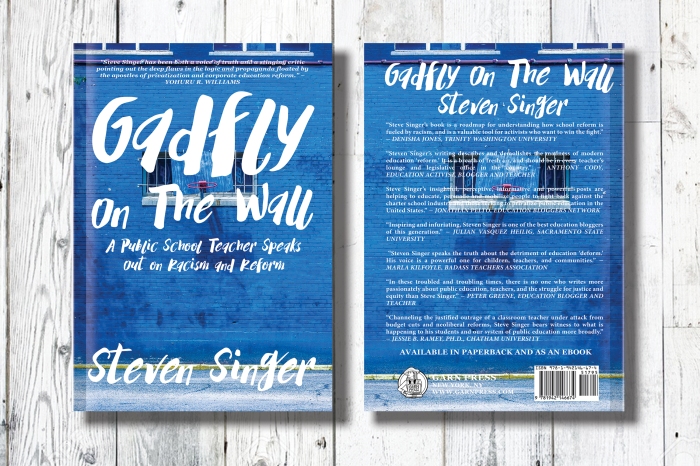
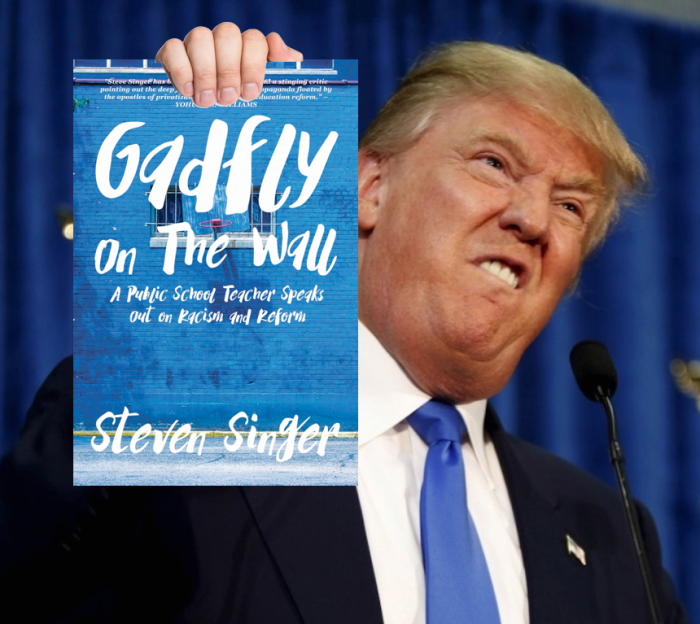
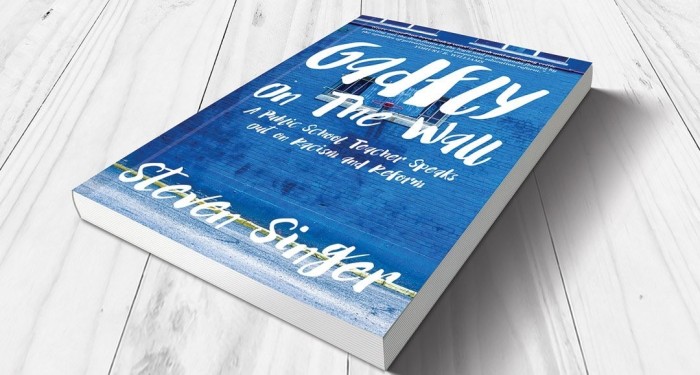
Like this post? I’ve written a book, “Gadfly on the Wall: A Public School Teacher Speaks Out on Racism and Reform,” now available from Garn Press. Ten percent of the proceeds go to the Badass Teachers Association. Check it out!
 

book-1

Public School Teacher Questions for 2020 Dem Presidential Candidates

thumbnail_Screen Shot 2019-12-11 at 1.25.16 PM


What happens when you give a microphone to a public school teacher?


That’s not a rhetorical question. I really want to know, because we so rarely let educators speak in any context other than the classroom.


Maybe that’s why it’s so refreshing that MSNBC is hosting “Public Education Forum 2020: Equity and Justice for All”on Saturday, Dec. 14, in my hometown of Pittsburgh.


Public policy is usually made by billionaires who tell their think tanks what to write up and then give it to legislators to vote it into law.


But ask parents, students, community members or – God forbid! – school teachers about what we should do with something as mundane as education!? That’s crazy talk!


Well, the Democrats, at least, are taking it seriously.


The candidates who are expected to attend Saturday’s forum include: Former Vice President Joe Biden; Mayor Pete Buttigieg of South Bend, Indiana; billionaire businessman Tom Steyer; and Sens. Amy Klobuchar of Minnesota, Bernie Sanders of Vermont and Elizabeth Warren of Massachusetts.


All the presidential candidates who either qualified for the October debate or hold statewide office were invited to attend, according to organizers.


And guess who else will be there?


ME!


Somehow your humble edu-blogger got an invite to the party – limited to an audience of about a thousand.


To be honest, I don’t know if I’ll get the chance to actually ask a question. I might spend the whole time listening, but that would be far from wasted.


Forcing candidates to tell educators to their faces what they intend for public schools is a worthwhile endeavor in itself.


But I must be honest – there is a possibility I may get the microphone and have the opportunity to ask something.


So I’ve prepared the following questions – one for each candidate expected to be at the forum:


Joe Biden


Biden


Your education plan triples the amount of money the federal government spends annually on low-income schools from about $16 billion to about $48 billion. That money is supposed to go to raising teachers’ salaries, Pre-K, and “more rigorous coursework.” My question is this: will you tie federal spending to standardized testing, Common Core and school privatization initiatives like your former boss Barack Obama did, and how does your position differ from Race to the Top and Obama’s other top down corporate education reforms?


Pete Buttigieg 


Mayor-Pete


You are infamous for taking money from some terrible people who want to destroy public schools – Reed Hastings, for example, the billionaire founder of Netflix, who wants to replace authentic public schools with charter-schools so that all schools are run by corporations and not elected school boards. Hastings has hosted fundraisers for you. He set aside $100 million to promote the privatization of public schools by charter-school expansion as well as served on the California State Board of Education, where he used his influence to minimize any regulation of charters. My question to you is this: how are any of us to take you seriously when you allow yourself to be bought and sold by the school privatization industry? How can we believe a thing you say when your vote has so obviously been up for sale to the highest bidder?


Amy Klobuchar


Amy-Klobuchar


You’ve said that you support national testing standards and that schools should be held to the highest benchmarks. You’ve also said you’ll work to help schools better measure comprehensive achievement. My question is this: how much and in what ways does your education policy differ from the reductive and corporate-driven policies of Barack Obama and George W. Bush? Would you continue to use biased and unscientific standardized assessments to measure student learningand then hold schools responsible for scores predicated on economic inequality and white supremacy?


Bernie Sanders


Bernie-Sanders


Along with Sen. Warren, you have one of the most progressive and comprehensive education plans of any candidate running in 2020. In fact, it’s one of the best any candidate who has sought the Democratic nomination has ever put forward. However, the weakest part of your plan concerns standardized testing. As recently as 2015, you voted to keep the same test and punish bogus accountability initiatives as Barack Obama and George W. Bush. My question is this: what happened to change your mind and would you please explain if and exactly how high stakes standardized testing fits in with your education policies?


Elizabeth Warren


Elizabeth-Warren


Along with Sen. Sanders, you have one of the most progressive and comprehensive education plans of any candidate running in 2020. In fact, it’s one of the best of any candidate who has ever sought the Democratic nomination. However, you seem to equivocate on standardized testing and national academic standards. On the one hand, you say that you’re against high stakes testing, but on the other you speak about putting an emphasis on student careers, and aligning high school graduation requirements with that of colleges. You even say you’d direct “the Department of Education to issue guidance on how schools can leverage existing federal programs to facilitate education-to-workforce preparedness.” This sounds a lot like Barack Obama’s Race to the Top which held school funding hostage to regressive reforms and Common Core which used standardized tests to determine what would be taught in schools. My question is this: please explain exactly if and exactly how high stakes standardized testing and Common Core fit in with your education policies?


Tom Steyer


Tom_Steyer_by_Gage_Skidmore


Your campaign Website takes no stand on many issues important to educators, families and students including charter schools and standardized testing. Yet you’re a hedge fund billionaire who has donated at least $100,000 through your foundation to Teach for America in 2009. My question is this: what is your position on these policies – standardized testing, charter schools and Teach for America? Do you still think that a few weeks of a crash course is equal to a full teaching degree? Do you still think we need fake temporary teachers who are only committed to the classroom for a few years? Or is it better to have teaching be a respected vocation with highly educated and valued professionals?


HONORABLE MENTION


Finally, here’s a question I could ask to any and all of the candidates:


I want to ask you about charter schools. Why do we need them at all? Why do we need schools that are publicly funded but privately run? Shouldn’t public schools that accept public money have to accept public administration – elected school boards, transparency and accountability? Shouldn’t all public schools be required to accept all student who live in their coverage areas and not be allowed to cherry pick students? Wouldn’t it be better to close all charter schools that can’t meet the same requirements as authentic public schools and transition those that can to becoming fully public schools?


Well, those are my questions.


If anyone has any other suggestions, please post them in the comments. And if someone else this weekend or later in the campaign season happens to get a chance to query one of the candidates, feel free to use one or all of what I have compiled here.


My hope is that this interest in education isn’t just a political stunt but will translate to better school policies no matter who wins the election in 2020.


Livestream the education forum here on Saturday, Dec. 14, beginning at 9:45 am.


Like this post? I’ve written a book, “Gadfly on the Wall: A Public School Teacher Speaks Out on Racism and Reform,” now available from Garn Press. Ten percent of the proceeds go to the Badass Teachers Association. Check it out!

Screen shot 2018-01-07 at 1.14.14 AM

Pittsburgh School Board Candidate Anna Batista Takes Big Money From Special Interests

Screen Shot 2019-05-13 at 5.14.43 PM

“Few men have virtue to withstand the highest bidder.”

-George Washington


Anna Batista, a corporate consultant at Highstreet Consulting running for Pittsburgh School Board, is taking thousands of dollars in donations from big money interests.


A quick look at campaign finance reports on Allegheny County’s Website shows Batista took beaucoup bucks from school privatization lobbyists, real estate developers, lawyers, and financial advisors.


Meanwhile, her opponent Pam Harbin, a public school watchdog, is supported almost exclusively by grassroots donations.


Both candidates are running for District 4, which serves parts of Squirrel Hill, Point Breeze, Shadyside and North Oakland. Since they’ve cross filed and will appear on both the Republican and Democratic primary ballots, the seat should be decided in the May 21 primary.


Batista and Harbin have raised similar amounts for their campaigns. Harbin has $33,412.95 while Batista has $32,414.


Batista has support from at least two troubling industries – school privatizers and corporate crusaders – which are nowhere to be seen in her opponents financials.


Particularly troubling to me are the charter school and voucher advocates.


Someone shouldn’t be running for a public school board with backing from the same vultures demanding public schools be dismantled and their assets and funding siphoned away to private industry. Charter schools cost the Pittsburgh Public district more than $85 million per year in tuition payments. While the district has no plans to open new public schools, it is forced to open new charter schools every time one of these publicly financed but privately run institutions appeals to the state Charter Appeal Board, further draining resources away from remaining public schools.


In fact, Batista is using “Students First” as a title on her campaign mailers. This is the name of a well-known school privatization group founded by infamous public school saboteur Michelle Rhee. The education justice movement across the country and here in Pittsburgh has been fighting Students First for years. They are infamous for dumping money into Pennsylvania politics to back legislators friendly to school privatization. No one who is serious about education justice would use this title: either Batista does not know about Students First, she knows and doesn’t care, or she is being intentional in signaling to privatizers that she is on their side.


Students First merged with 50CAN, a national group focused on vouchers and school privatization that grew out of ConCAN, started by Connecticut hedge fund managers. Betsy DeVos, now U.S. Secretary of Education, praised the merger and has done similar work for years through her own organization with the same privatization agenda. Here in Pennsylvania, the local branch is PennCAN. Their director, who also sits on the board of a local charter school asking for approval to set up shop in Pittsburgh, is one of Batista’s donors.


The largest donations are noted below. Chief among these are:


-Rachel Amankulor, PennCAN and Catalyst Charter School board member. (Pittsburgh Public School Board denied Catalyst’s application citing problems with its plan to accommodate students with disabilities, among other issues, but the state Charter Appeal Board overturned the board’s decision and the case may now go to Pennsylvania Supreme Court.)


-Catherine Axtman, spouse of William Axtman who sits on the Propel Charter School Board


-Kirk Burkley ($500) and Robert Bernstein ($250), of Bernstein- Burkley, a Pittsburgh law firm specializing in Business Law, Creditors Rights, Oil & Gas, Bankruptcy, & Real Estate. (Burkley ran against school board member Lynda Wrenn in 2015 – a race fought in large part around privatization issues!)


-Allison McCarthy, Vice President of Teach for America; Catalyst Charter School Board Member; and Broad Academy graduate (Eli Broad is a major privatizer who started the Broad Academy of which Devos is a graduate.)


-Nathaniel Yap, spouse of Brian Smith, Catalyst Charter Founder and CEO ($1,000)


And then we come to the big business partisans.


Many of these advocate for tax deferment programs to entice businesses into the Pittsburgh area on the condition that they are allowed to escape paying taxes or pay at a reduced rate for a certain number of years. Programs such as Tax Incremental Financing (TIFs) put a heavier burden on the schools than other public resources. They cost the school district 50% as opposed to the county and city, which only lose 25% of their owed taxes each.


Local politicians like County Executive Rich Fitzgerald and Pittsburgh Mayor Bill Peduto  – though Democrats – are chief advocates of these types of neoliberal, business friendly programs. While the city and county have nothing to do with Pittsburgh Public Schools, they do often expect the School Board to rubber stamp TIFs. The School Board is an independent taxing body, but they are rarely brought to the table at the beginning of the process.


Corporate donors include:


-Friends of Rich Fitzgerald ($500)


-People for Bill Peduto ($2,000)


-Gregg Perelmann, Walnut Capital ($1,000)


-Todd Reidbord, Walnut Capital (Developers of Bakery Square and other projects that have received a number of TIFs)


-Helen Casey, CEO of Howard Hanna


-John Katz, Brandywine Agency ($1,000 plus in-kind) (His office in the Squirrel Hill business district is worth thousands)


-Paul Katz, Brandywine Agency ($250)


-Patricia Katz, Brandywine Agency ($1,000)


-Rod Werstil, McKinney Properties ($500)


-Kevin McKeegan, Meyer, Unkovic & Scott LLP (Pittsburgh Real Estate Law)


-Luke Meyers, Skadden, Arps, Slate, Meagher & Flom LLP and Affiliates (New York Real Estate Law)


-Nancy Finkelstein, Schulte Roth & Zabel (Finkelstein’s Linkedin Profile includes this quote: “I have concentrated my practice on representing private equity funds, investment banks, hedge funds, financial institutions, finance companies and high-net-worth individuals in a wide variety of transactions, including financings, debt restructurings, leveraged acquisitions, and collateralized loan facilities.”)


-Steven Massey, Federated Investors


-Richard Lerach, Gateway Financial


-William Sheridan, Reed Smith LLP (“Represented managed care defendants in obtaining dismissal of antitrust conspiracy and monopolization claims.”)


All of this is truly troubling for someone running to serve as a school board director.


Compare Batista’s financials with that of her opponent Harbin.


In at least two instances, Harbin won endorsements and donations from organizations Batista had been courting.


Pittsburgh Federation of Teachers gave Harbin $5,000 instead of Batista.


Likewise, Unite! Pittsburgh gave Harbin $1,500 over Batista. This is State Rep. Summer Lee’s PAC. The organization supports candidates running on a criminal justice slate who are committed to ending the school-to-prison, poverty-to-prison, and addiction-to-prison pipelines.


Other notable donations to Harbin’s campaign include:


-Women for the Future Pittsburgh ($500)


-Friends of Chelsea Wagner ($500) (Wagner is Allegheny County Controller and one of the founders of Women for the Future Pittsburgh)


-Michael Fine ($2,800) physician for the Veterans Administration


-Kathy Fine ($2,800)  Michael’s wife and long-time education justice activist who fought against the closing of Pittsburgh’s Schenley High School.


-Nancy Bernstein ($1,000) J Street Board Member (J Street organizes and mobilizes pro-Israel, pro-peace Americans who want Israel to be secure and democratic.)


These are exactly the kind of donations you’d expect from a grassroots candidate – labor unions, progressive political promoters and activists.


Full disclosure: Though I live just outside of the Pittsburgh area, I am not unbiased in this race. I consider Harbin a friend and fully support her run for school board.


However, the donations outlined in this article are all facts. Feel free to go to the county Website and see for yourself.


Our children deserve better than Batista – a school director in the employ of the same forces out to sabotage education and pick the remains clean for their own individual ends.


Call me crazy, but I think children should be an end in themselves.


School board candidates who put themselves up for sale like Batista don’t deserve your vote. They’ve already sold theirs to the highest bidder.


Like this post? I’ve written a book, “Gadfly on the Wall: A Public School Teacher Speaks Out on Racism and Reform,” now available from Garn Press. Ten percent of the proceeds go to the Badass Teachers Association. Check it out!
thumbnail_IMG_8249

Classroom Teachers are the Real Scholastic Experts – Not Education Journalists

Screen Shot 2019-05-06 at 4.29.19 PM


When you want an expert on health, you go to a doctor.


When you want an expert on law, you go to a lawyer.


So why is it that when the news media wants an expert on education they go to… themselves!?


That’s right. Education journalists are talking up a storm about schools and learning.


You’ll find them writing policy briefs, editorials and news articles. You’ll find them being interviewed about topics like class size, funding and standardized tests.


But they aren’t primary sources. They are distinctly secondary.


So why don’t we go right to the source and ask those most in the know – classroom teachers!?


According to a Media Matters analysis of education coverage on weeknight cable news programs in 2014, only 9 percent of guests on MSNBC, CNN and Fox News were educators.


This data is a bit out of date, but I couldn’t find a more recent analysis. Moreover, it seems pretty much consistent with what I, myself, have seen in the media.


Take Wyatt Cenac’s “Problem Areas,” a comedy journalism program on HBO. The second season focuses entirely on education issues. Though Cynac interviews numerous people in the first episode (the only one I saw), he put together a panel of experts to talk about the issues that he would presumably return to throughout the season. Unfortunately, only two of these experts were classroom teachers.


There were more students (3), policy writers (3) and education journalists (3). There were just as many college professors (2), civil rights leaders (2), and politicians (2). Plus there was one historian (Diane Ravitch).


I’m not saying Cynac shouldn’t have talked to these other people. From what I’ve seen, his show is a pretty good faith attempt to talk about the issues, but in under representing classroom teachers, we’re left with a false consensus. It’s like having one climate denier debate one scientist. They aren’t equal and should not be equally represented.


And that’s as good as it gets!


Turn to most discussions of education or scholastic policy in the news and the discourse is bound to be dominated by people who are not now and have never been responsible for a class full of K-12 students.


Allowing journalists who cover education to rebrand themselves as “experts” is just not good enough.


Take it from me. Before I became a classroom teacher, I was a newspaperman, myself. Yet it’s only now that I know all that I didn’t know then.


If anyone values good, fact-based reporting, it’s me. But let’s not confuse an investigator with a practitioner. They both have important jobs. We just need to be clear about which job is being practiced when.


Reporters are not experts on the issues they cover. Certainly they know more than the average person or some political flunkey simply towing the party line. But someone who merely observes the work is not as knowledgeable as someone who does it and has done it for decades, someone with an advanced degree, dedication and a vocation in it.


Moreover, there is a chasm between education reporting and the schools, themselves, that is not present between journalists and most fields of endeavor. In the halls of academia, even the most fair-minded outsiders often are barred from direct observation of the very thing they’re trying to describe. We rarely let reporters in to our nation’s classrooms to see what’s happening for themselves. All they can do most of the time is uncritically report back what they’ve been told.


It’s almost as if sportswriters never got to see athletes play or political reporters never got to attended campaign rallies. How could their ideas about these subjects be of the same value as the practitioners in these fields!?


It couldn’t.


Think about it. Journalists are rarely permitted inside our schools to see the day-to-day classroom experience. Legal issues about which students may be photographed, filmed or interviewed, the difficulty of getting parental permissions and the possibility of embarrassment to principals and administrators usually keeps the school doors closed to them.


In many districts, teachers aren’t even allowed to speak on the record to the media or doing so can make them a political target. So reporters often have great difficulty just disclosing the opinions of those most knowledgeable about what is going on.


At best, our nation’s education reporters are like aliens from another galaxy trying to write about human behavior without actually having seen it. It’s like a bad science fiction movie where some alien with plastic ears asks, “What is this thing you call love?”


Sorry. These are not experts. And if we pretend that they are, we are being incredibly dishonest.


Some of this obfuscation is by design.


Education reporting is incredibly biased in favor of market-based solutions to academic problems.


Why? The corporations that own the shrinking number of newspapers, news stations and media outlets are increasingly the same huge conglomerates making money off of these same policies. The line between news and advertising has faded into invisibility in too many places.


Huge corporations make hundreds of millions of dollars off of the failing schools narrative. They sell new standardized tests, new test prep materials, new Common Core books, trainings for teachers, materials, etc. If they can’t demonstrate that our schools are failing, their market shrinks.


Even when they don’t put editorial pressure on journalists to write what the company wants, they hire like-minded people from the get go.


Too many education journalists aren’t out for the truth. They’re out to promote the corporate line.


This is why it’s so important to center any education discussion on classroom teachers. They are the only people with the knowledge and experience to tell us what’s really going on.


And – surprise! – it’s not the same narrative you’re getting from corporate news.


Schools are being defunded and dismantled by the testing and privatization industry. Corporate special interests are allowed to feed off our schools like vultures off road kill. And all the while, it is our children who suffer the results.


High stakes standardized testing must end. Charter and voucher schools must end. Parasitic education technologies must be controlled, made accountable and in many cases barred from our schools altogether.


But that’s a truth you can only find by talking to the real experts – classroom teachers.


Until we prize their voices above all others, we will never know the whole truth.


Like this post? I’ve written a book, “Gadfly on the Wall: A Public School Teacher Speaks Out on Racism and Reform,” now available from Garn Press. Ten percent of the proceeds go to the Badass Teachers Association. Check it out!
book-1

I Used to be a Reporter. Now I’m a Teacher. I’ve Become What I Used to Observe

thumbnail_Screen Shot 2019-02-28 at 12.04.59 PM

A long time ago, in a newsroom far, far away; your humble narrator was a respected journalist.

Today I am a beloved school teacher in a suburban middle school.

Okay. That may be laying it on a bit thick.

Like any human being whose job it is to get children to do their best and learn something, I’m beloved by some and beloathed by others. And if I’m honest, when I was a reporter, I was never all that respected. But I did win several state journalism awards.

The point I’m trying to make is that like a caterpillar into a butterfly or a tadpole into a frog, I made a startling transformation in career paths that flies somewhat in the face of popular wisdom.

F. Scott Fitzgerald wrote, “There are no second acts in American Lives.” Well, I’m on my third or fourth act and nowhere near ready for the curtain to come down yet.

It’s shocking how far I’ve come, though there’s a surprising amount of overlap between my two professions. In fact, the biggest difference is one of orientation.

I used to get up at 4 a.m., weave into the newsroom and type away for a few hours about the previous night’s school board or city council meeting before my deadline came down, the presses rolled and the morning edition went on sale.

Now I get up at 5 a.m., hobble into the classroom and go to meetings, grade papers or otherwise get ready for a 7-hour invasion by 12- and 13-year-olds, followed by more meetings and papers and planning.

I used to go into the classroom to interview teachers and students about special lessons, state and federal programs or standardized tests.

Now I’m in the classroom questioning myself about my students and what works best to help them learn, trying to navigate the state and federal programs so they get the best return and bang my head against the wall about the constant standardized tests.

I used to independently bebop all over my coverage area, asking questions, doing research, discovering things that many people would rather remain secret.

Now I independently plan my lessons, ask my students questions, do research on best practices and discover things about my children and their lives that many people would rather remain secret.

You’ve heard the old chestnut about education being a career for those unable to act. I’m living proof that it’s a lie.

As a journalist, I reported on. As a teacher, I do.

In my former job, I told. In my current one I show.

Perhaps that’s why I now find it so strange that many of my former colleagues have gone into public relations, communications or have become policy analysts.

I’m not surprised. I can’t say I didn’t know that that door was always open. But it’s peculiar.

In the newsroom, we all heard the stories about grizzled newspapermen and women with shelves stuffed full of awards and prized Rolodexes bursting with hard-earned sources who gave it all up for a 9-5 desk job writing the very press releases we disdained.

We all had friends who were making bank managing people like us and trying to get us to write what the company wanted or spin the story in the direction the advertisers liked.

There is no scorn, no disgust, no derision to match that of a journalist for a corporate sellout, and that’s because in our hearts we all secretly wondered if it wasn’t the better deal.

Every good reporter – like every good teacher – is a radical at heart.

You don’t get into either field to support the status quo. You want to rock the boat. You want to shake things up. You want to change the world for the better – all from the comfort of your swivel chair behind your computer screen or from the well worn tread of your classroom carpet.

Journalists live for the scoop, the big story, the article that shouts off the front page above the fold and which has everyone talking. Teachers live for the student epiphany, the moment the light comes on behind a child’s eyes, the transformation from ignorance to knowledge and – dare I say – wisdom.

But being a press agent or policy hack has none of that splendor.

You have to give it up – all for the right to have a chance at a life.

I loved being a reporter. It was one of the best things I’ve ever done. I got to do things, see things, talk to people, be there for things that I never would have been able to access otherwise. But I could barely pay my bills.

I was dirt poor in the newsroom. We all were.

We worked 50-60 hours a week, had no time for a second job, no time for a social life, no time for a family or kids, and we wanted more.

So I understand the allure of the steady paycheck and becoming a housebroken professional communicator of someone else’s message.

But being a teacher is different.

You still don’t get paid much. You still work long hours – though maybe not quite as long. But you can get that second job – often in the school, itself, tutoring students or in a summer or after school program.

And you get union protections that I only dreamed about as a reporter. A safe workspace, clean and tidy, no outrageous demands (or at least an upper limit on them), and a schedule you can predict and plan a life around.

Best of all, you still get to keep your idealism intact. Or you can try to keep it as you dodge this directive and that unfunded mandate and that deeply racist policy passed down from above.

Don’t get me wrong. Becoming a teacher was hard work. I didn’t go about it the easy way – no Teach for America, one-foot-in/one-foot-out, cheating for me. I dove in head first.

I went back to college and took an intensive, accelerated masters program designed exactly for people changing careers. To get there, I had to swallow a few prerequisites I’d missed in college the first time. Then they placed me in a high school where I watched and then took over multiple classes – all while enrolled in education courses at night and in the summers.

By the time it was all over, I still had the most important things left to learn – (1) whether I could actually teach a full schedule, and (2) whether I liked doing so.

For me, the answers were unequivocally positive. I took to it like I’d taken to journalism. I needed lots of fine tuning, but the basics came naturally. And I loved every exhausting minute of it.

I regret nothing about becoming a teacher. It’s the best job I’ve ever had and am ever likely to have.

As a journalist, I got to rock whole communities with exposes about corruption. As an educator, I get to impact individuals.

I no longer get to be the talk of the town, but I get to change lives all the same – one person at a time.

And there’s something deeply satisfying about it – to look in another person’s eyes and see the need right there in front of you, and to be able to heal it even a fraction of the way well.

This world is hard. It takes people, chews them up and spits them out. There is so rarely a helping hand, a smile, understanding. But to be able to offer your hand, to be able to share a smile, to attempt to understand – that’s pure magic.

When the day is done, I know it was well spent.

I’ve come a long way from the newsroom. And in doing so, I’ve broken journalism’s number one rule – don’t become the story.

I no longer report on the action.

I participate in it.

What a way to make a living!


Still can’t get enough Gadfly? I’ve written a book, “Gadfly on the Wall: A Public School Teacher Speaks Out on Racism and Reform,” now available from Garn Press. Ten percent of the proceeds go to the Badass Teachers Association. Check it out!

cropped-book-1.jpg

Bernie Sanders is Running for President, and the Establishment Just Sh!t Its Pants!

Screen Shot 2019-02-20 at 3.27.07 PM
You’ve heard of the shot heard round the world?


Well yesterday we had its fecal equivalent!


When Bernie Sanders said he was running for President for a second time, establishment hacks on the left and right had to make a run for the bathroom.


And after a single day of the Sanders campaign in which it raised almost $6 million of small donations from everyday folks, neoliberals and neofascists of every stripe are a little bit lighter this morning – a little less…. full.


Take our bullshitter in chief.


Donald Trump loves to squeeze out twitter storms in the early morning hours – presumably while sitting on his White House thrown.


This morning, he was moved to thumb out the following:


“Crazy Bernie has just entered the race. I wish him well!”


Like Hell you do, you arrogant xenophobic windbag!


Bernie is running for President – the best candidate situated to take you down.


He’s anti-establishment. A populist. And stands for the opposite of everything you’ve built your rocky neoconfederate administration on.


You wish him well! HA!


Trump is the most transparently fake candidate in history. You know exactly what he’s thinking because you know he always lies.


When ex-Starbucks CEO Howard Schultz threatened to run as an independent and thereby split the Democratic vote, Trump was overjoyed! So much so that he tried – emphasis on the TRY – to use reverse psychology on Schultz.


He tweeted:


“Howard Schultz doesn’t have the ‘guts’ to run for President! Watched him on @60Minutes last night and I agree with him that he is not the ‘smartest person.’


And then he told a televised audience exactly what he was doing – that he was trying to goad Schultz into running!


That’s not how reverse psychology works, Donald.


And now with his “Crazy Bernie” tweet this “very stable genius” wants us to believe he’s happy about that electoral matchup.


The dude better put on a metaphorical diaper.


He is done.
More than all the investigations and media condemnations, Sanders entering the race puts a hard line on when this national nightmare will be over – Tuesday, Nov. 3, 2020 – Election Day.


Barring some sort of extended Constitutional crisis where Republicans suspend voting or the Democrats try some clumsy coup that they’re much less equipped to accomplish this time around, Bernie is set up to win the Democratic primary and then the White House.


The biggest opponent Bernie has is himself. If he suddenly changes his policy positions or admits to being a secret knight of the KKK, he’d be in trouble. Otherwise, he has the best chance – still – to take down the reality show clown sitting in the Oval Office.


Sadly, it wasn’t just neocons who soiled their drawers yesterday.


The corporate Dems were cursed with the political squirts as well.


Many folks who were angry about Hillary Clinton’s loss in 2016 still blame Bernie. How dare he be more popular than the billionaire insider we thought would beat their billionaire insider!


For others, it was the bile of identity politics getting stuck in their throats. People who think a persons gender or skin color or sexual orientation is the main thing to look for in a political candidate – not their actual policy positions.


Frankly, I feel more sympathy for them than the others. They honestly want policy that will benefit everyone – but especially the most at risk. They’re just wrong to think that character traits are the essential mark of authenticity.


Barack Obama was our first black President. Yet he didn’t do so much to make the lives of black people better.


Sure he made them feel better. He made us all feel better about the endless possibilities in store. But when it was time to pass laws, enact policy, he sided with Wall Street over everyday Americans of every type.


But okay. I understand why you don’t want yet another old white male in the White House.


However, Bernie isn’t your typical white male. He’s Jewish. He may be too white for you, but he’s not white enough for the tiki torch crowd who chanted in Charlottesville “Jew will not replace us!” He’s not white enough for the pale neo-Nazi terrorist who shot up a Pittsburgh synagogue.


If you’re ready to ignore that, check your own intersectional privilege.


And speaking of that, can we retire the propaganda nonsense label of the Bernie Bros? Attempts to erase women and minority Bernie supporters are not progressive. They’re the exact opposite of what we’re fighting for.


Heck! Sanders has more support among blacks, Latinos and women than he does among white men!


The time has come for a change.


It’s well past that time.


Bernie Sanders campaign is part of that.


It marks the end of capitalism run amok. It marks the end of colorblind national policy. It marks the end of ignoring the environmental crisis.


What it marks the beginning of … that depends on all of us.


Still can’t get enough Gadfly? I’ve written a book, “Gadfly on the Wall: A Public School Teacher Speaks Out on Racism and Reform,” now available from Garn Press. Ten percent of the proceeds go to the Badass Teachers Association. Check it out!

Screen shot 2018-01-07 at 1.14.14 AM

Yellow Vest Protests Include Resistance to School Corporatization

thumbnail_Paris-closes-tourist-sites-ahead-of-new-yellow-vest-protests-this-weekend


If you want to know what the French Yellow Vest Protests are all about, just refer to the arrest of 153 teenage students this month near Paris.


The kids at a high school in Mantes-La-Jolie were forced to kneel down, hands on their heads or secured behind their backs with zip ties as riot police circled them with assault weapons.


Why did law enforcement take such extreme measures? The students had been protesting their government’s education policies.


“What a well-behaved class!” French police commented ironically on a video documenting the arrest on social media by Violences Policières, a watchdog group.


Yes, how well behaved!


Of course! Children should be seen and not heard. Speaking out for yourself is a definite faux pas.


So is detaining minors without a lawyer, which the officers did and which is illegal in France.


But C’est la vie!


Unfortunately such scenes have been repeated throughout the country since November. Despite police opposition, high school students from a number of French schools have joined the Yellow Vests to protest French President Emmanuel Macron’s education policies – inaccurately dubbed “reforms” – among other austerity measures resulting in stagnant wages and a high cost of living.


Macron was elected in 2017 on a neoliberal platform much like that of Barack Obama. And though he was praised for his demeanor, especially in comparison to the boorish Donald Trump, his policies at first met with criticism and then outright protests in the streets.


Citizens took issue with new labor laws, the rail system and taxes. You can’t save the environment by cutting taxes for the wealthy and raising them for the poor to discourage them from driving. You can’t stomp on workers rights in order to create more low-paying jobs.


Protestors repurposed the yellow vests they are required to keep in their cars in case of an emergency into an iconic image of resistance to the gas tax. Hundreds of thousands demanded not just a repeal of Macron’s policies but a new platform to bolster social services and the economy.


The Macron administration has met these demands by at first violently stifling them and then agreeing to individual points before returning to suppression.


Perhaps it is the administration’s insistence that it is beset by violent “hooligans” while most protestors do no more than block traffic that has resulted in a continued rejection of Macron. Protestors even spray-painted a demand that Macron resign on the Arc de Triomphe, the arch on the Champs-Elysées.


Though the American media has mostly ignored the situation, critics blame widespread police brutality including the use of tear gas and clubs for at least four deaths and 700 people wounded in weeks of political challenges that some have compared to the French Revolution.


In particular, students take issue with at least three components of Macron’s plan: (1) changes to the high school graduation exam, (2) changes to college admissions and (3) a new requirement that all students participate in a lengthy volunteer national service project.


First, protestors oppose changes to the end-of-school exams known as baccalaureate or ‘bac.’ Though the proposal includes positive reforms such as reducing the number of exams and providing a longer time frame to take them, it also changes focus from academics to careers.


Much like Common Core did in the United States, the exams would be revised and rewritten. Instead of being tested on broad subjects such as science, literature or social sciences, students would be assessed on much narrower content.


Macron seems to be taking his queue from US philanthrocapitalists like Bill Gates in order to make French students more “college and career ready.”


The new assessments would push students toward specific degrees sooner. Before their final undergraduate year, high school students would have to choose two specific majors and two specific minors alongside the standard curriculum – similar to American colleges.


Students are against this because of what they call “hyper-specialization.” They say these changes would deprive them of exposure to a wide range of disciplines and force them to make life-long choices too early. This would be especially harmful for poor students because, as Liberation editorialist Laurent Joffrin put it, “Those who have more, know more.” In other words, wealthier students would probably be better prepared to navigate the choices open to them than those in poorer areas.


Next, students also want the repeal of stricter selection criteria to universities – a law passed just last year – which they say increases economic inequality between rich and poor schools.


The government provides free college to any student who passes the high school exit exams. However, just like in the US, corporate interests complain that college students struggle with the increased workload and pressures at universities. The new measure solves this by ensuring that fewer students are admitted.


Students say Macron has it backwards. The government shouldn’t be undermining free access to higher education. It should be investing more in the country’s universities and helping students succeed.


Finally, students want to get rid of a mandate that all 16-year-olds will have to participate in a national civic service program scheduled to begin in 2026.


French youths would have to volunteer in fields like defense, environment, tutoring or culture. During the long school breaks, they would have to undergo a one-month placement, consisting of two weeks in collective housing to promote a “social mix,” and then another two weeks in smaller, more “personalized” groups.


The measure doesn’t go as far as Macron wanted. He originally proposed mandatory military service.


Students object to the plan because they say it’s unnecessary and extremely expensive. The program is estimated to cost $1.8 billion ($1.6 billion Euros) with a $1.98 billion ($1.75 Euro) investment up front.


In addition to these demands, some have included limits on class size. Protestors have demanded no more than 25 students per class from nursery school through high school. Low class size ensures each student gets more personal attention from the teacher and a better chance to ask questions and learn.


What we’re seeing in France is extremely important for those living in the US.


It shows that as terrible as the Trump administration is, there are many flavors of bad government. When your representatives are more interested in seeing to corporate whims than the will of the people, chaos can ensue.


Perhaps the US media has been so adverse to reporting on the Yellow Vests because of corporate fear that protests will jump the pond and land on our shores, as well. We have many similar neoliberal and neofascist policies in the US of A, some passed by Republicans and others passed by Democrats.


Here’s hoping that we all can establish legitimate governments that seek to further the ends of liberty, equality and fraternity.


Like this post? I’ve written a book, “Gadfly on the Wall: A Public School Teacher Speaks Out on Racism and Reform,” now available from Garn Press. Ten percent of the proceeds go to the Badass Teachers Association. Check it out!

book-1

What Happened to 2018 As The Year of the Teacher?

merlin_137374938_25a3513b-8341-4602-8710-910d3500b1d5-jumbo


This year teachers took their mission way beyond the classroom.


Starting in West Virginia, we staged half-a-dozen walkouts in red states across the country demanding a better investment in children’s educations and often getting it.


Then we took that momentum and stormed our state capitals and Washington, DC, with thousands of grassroots campaigns that translated into seats in government.


It was so effective and unprecedented that the story began circulating that 2018 would be known as “The Year of the Teacher.”


And then, just as suddenly, the story stopped.


No more headlines. No more editorials. No more exposes.


So what happened?


The gum in the works seems to have been a story in The Atlantic by Alia Wong called “The Questionable Year of the Teacher Politician.”


In it, she writes that the teacher insurgence was overblown by unions and marks little more than a moment in time and not an authentic movement.


It really comes down to a numbers game. Numerous sources cite high numbers of teachers running for office. Wong disputes them.


National Education Association (NEA) senior political director Carrie Pugh says about 1,800 educators – both Republicans and Democrats – sought seats in state legislatures this year. Likewise, the Democratic Legislative Campaign Committee (DLCC), a group that works to elect Democrats to state legislatures, puts the number at 1,456 educators.


Wong disputes these figures because she says most of these people aren’t currently K-12 classroom teachers.


She writes:


 “The NEA uses the word educator liberally, counting essentially anyone who currently works in or used to work in an education-related job, such as professors, guidance counselors, and school administrators.”


Maddy Will and others at Education Week agree with Wong’s assessment. According to their analysis, out of the thousands of education-related candidates, they could only prove that 177 were K-12 classroom teachers.


And there you have it.


A story about teachers taking over their own destinies is dead in the water.


However, this begs two important questions: (1) Is not being able to corroborate the facts the same as disproving them? And (2) Is being a K-12 classroom teacher a fair metric by which to judge education candidates?


First, there’s the issue of corroboration.


Wong, herself, notes that part of the disparity, “…may come down to the inconsistent ways in which candidate lists are compiled from state to state and organization to organization.” It’s unclear why that, by itself, throws doubt on the NEA’s and DLCC’s numbers. These are verifiable facts. Journalists could – in theory – track down their truth or falsity if their parent companies ponied up the dough for enough staff to do the hard work of researching them. The fact that this hasn’t happened is not proof of anything except low journalistic standards.


Second, there’s the question of whether Wong and Will are holding teachers up to a fair standard.


Since the Great Recession, more than 116,000 educators have been out of work. If roughly 1-2% of them decide to run for office, doesn’t that represent a rising tide of teachers striking back at the very representatives responsible for neglecting schools and students? Aren’t they seeking to right the wrongs that put them out of work in the first place?


Even if we look at just the people currently employed in an education field, why are college professors defined out of existence? Why are guidance counselors and principals not worthy of notice?


Certainly K-12 classroom teachers are at the heart of the day-to-day workings of the education system. But these others are by no means unrelated.


Carol Burris was an award-winning principal at South Side High School in the Rockville Centre School District of New York before becoming Executive Director of the Network for Public Education (NPE). Diane Ravitch, who co-founded NPE, is an education historian and research professor at New York University.


If Wong and Will are to be believed, the work of Burris and Ravitch on behalf of public education should be discounted because they are not currently working in the classroom. That’s just ridiculous.


This isn’t about logic or facts. It’s about controlling the narrative.


The Atlantic and Education Week are artificially massaging the numbers to support the narrative their owners prefer.


And let’s not forget, both publications are in bed with the forces of standardization and privatization that educators of every stripe have been taking arms against this year and beyond.


Though The Atlantic is a 162-year-old pillar of the journalistic establishment, it was purchased on July 28, 2017, by the Emerson Collective. This is Laurne Powell Jobs’ philanthrocapitalist cover organization which she’s been using in a media blitz to reinvent high schools by way of corporate education reform.


Likewise, Education Week has always had a corporatist slant on its editorial page and sometimes even in the way it reports news. Nowhere is this more blatant than the publication’s annual Quality Counts issue which promotes the standards-and-testing industrial school complex of No Child Left Behind, Race to the Top, Common Core, etc.


It’s no wonder that these organizations would want to stop the narrative of insurgent teachers taking a stand against the very things these publications and their owners hold dear.


They want to cast doubt on the record-breaking activism of parents, students, citizens and, yes, teachers.


But the facts tell a very different story.


From West Virginia, Oklahoma, and Kentucky to Colorado and Arizona, educators took to the streets last spring to rally for adequate, equitable and sustainable K–12 funding.


All over the country, we’re demanding properly equipped classrooms, better wages, and stronger public schools.


In Connecticut we sent the first black woman to the legislature from the state, Jahana Hayes, a school administrator and Teacher of the Year.


We took down Wisconsin’s anti-education Governor Scott Walker. Not only that, but we replaced him with the state superintendent of public instruction, Tony Evers, on a platform centered on schools and learning.


And he wasn’t the only educator with a gubernatorial win. Tim Walz, a former high school teacher, became governor of Minnesota.


In Oklahoma, former teachers Carri Hicks, Jacob Rosencrants, and John Waldron all won seats in the state legislature, who along with others riding the pro-school tide increased the state’s “education caucus” – a group of bipartisan lawmakers committed to improving schools – from nine members to 25.


Even where candidates weren’t explicitly educators, mobilizing around the issue of education brought electoral victories. Democratic candidates were able to break the Republican supermajority in North Carolina because of their schools advocacy.


Even in Michigan – home of our anti-education Education Secretary Betsy DeVos – Gretchen Whitmer was elected governor after campaigning against public-school funding cuts.


In Illinois, anti-education governor Bruce Rauner got the boot, while Democrat J.B. Pritzker unseated him on a schools platform.


And in Kansas, not only did school districts successfully sue the state for more funding, Laura Kelly defeated conservative incumbent governor Kris Kobach on a platform of further expanding school funding.


These victories didn’t just happen. They were the result of grassroots people power.


The NEA says even beyond educators seeking office, members and their families showed a 165% increase in activism and volunteering during the midterm election over 2016. This is especially significant because participation tends to flag, not increase, around midterms.


So let’s return to the disputed numbers of teachers who sought election this campaign season.


Of the 1,800 educators the NEA identified, 1,080 of them were elected to their state legislatures. When it comes to the smaller American Federation of Teachers (AFT), 109 of 178 educators won.


If we go by Education Week’s numbers, just 43 of 177 won.


Clearly, this is not the whole picture.


The education insurgency was more than even getting candidates elected. It was also about changes in policy.


In Massachusetts, we successfully repealed the Ban on Bilingual Education so educators will be able to teach English Language Learners in a mix of the students’ native language and English as a bridge to greater English proficiency.


In North Carolina, we successfully lobbied state lawmakers to stop for-profit charter schools from taking over four of five public schools.


And everywhere you look the stranglehold of high stakes standardized testing is losing its grip.


Because of our advocacy, the amount of time spent on these deeply biased assessments has been cut in states like Maryland, New Mexico, West Virginia, Hawaii, and Pennsylvania.


The highly suspect practice of evaluating teachers on student test scores has been dropped in Connecticut and the weight it is given has been reduced in New Mexico.


Now with new policies in Idaho and North Dakota, 10 states have explicit laws on the books allowing parents to opt their children out of some or all of these exams.


Half of New Hampshire’s school districts have replaced standardized tests in most grades with local, teacher-made performance assessments.


I don’t care what corporate journalists are being forced to report by their billionaire owners.


These accomplishments should not be minimized.


Teachers are at the heart of communities fighting the good fight everywhere.


And in most places we’re winning!


We’re teaching our lawmakers what it means to support public education – and if they refuse to learn that lesson, we’re replacing them.


If that’s not “Year of the Teacher,” I don’t know what is.


Like this post? I’ve written a book, “Gadfly on the Wall: A Public School Teacher Speaks Out on Racism and Reform,” now available from Garn Press. Ten percent of the proceeds go to the Badass Teachers Association. Check it out!
book-2

Resistance to High Stakes Testing Persists as Media Celebrates Its End

GettyImages-465529004.0.0


There has never been more opposition to high stakes standardized testing.


Yet the corporate controlled media is pretending that the resistance is over.


Parents are refusing to let their kids take these tests at the same or even greater numbers than ever.


Fewer states require high stakes tests as graduation exams and/or use them to evaluate their teachers. Across the nation, states are cutting the size of standardized tests or eliminating them altogether. And more state legislatures passed laws explicitly allowing parents to opt their children out of the tests.


Yet Education Week published an article a few days ago called “Anti-Test Movement Slows to a Crawl.”


I think we have different definitions of “Slows” and “Crawl.”


That may not be surprising since we also seem to have different definitions of “Anti-Test.”


The Opt Out Movement is not “Anti-Test.” It is anti-high stakes standardized test.


It is against the federal government forcing states to use corporate written, corporate graded and corporate remediated standardized assessments.


It is against the federal government requiring each state to participate in a corporate boondoggle that not only wastes billions of tax dollars that could be better spent to educate children but also unfairly assesses their academic progress and feeds the push to privatize public schools.


Most people against high stakes standardized testing, however, have no problem with authentic teacher-created assessments.


Calling these folks “Anti-Test” is like labeling those pushing for stricter gun regulations “Anti-Gun” or smearing those protesting government corruption as “Anti-Government.”


And that’s just the title!


The author Alyson Klein further misdirects readers by conflating opt out rates and test resistance.


She implied that the only measure of opposition was the percentage of students who opt out. However, as noted above, there are multiple measures of resistance.


Moreover, few states advertise their opt out rates. Especially after the movement began, states made that information harder to come by to dissuade more people from joining it.


Of those states where information is available, Klein puts the most negative possible spin on the facts in order to make her point – a point that it seems to me is not at all justified.


For instance, Klein writes:


“At least some of the steam has gone out of the opt-out movement in states such as New Jersey and New York, considered hotbeds of anti-testing fervor.”


Really?


In New York, Opt out numbers remained at approximately 20% – the same as they have for the past three years.


And New York is one of our most densely populated states. That percentage represents more than 225,000 parents across the Empire State who refused to let their children take the tests despite threats from many administrators and district officials for doing so.


In New Jersey, opt out rates were marginally lower this year than last year. They went from 7% to 5%. But once again New Jersey is a populous state. That percentage represents about 68,500 students.


In addition, this is after massive opt outs three years ago that forced the state to change its federally mandated assessment. Testing boycotts pushed the state education association to get rid of four PARCC assessments and allow students who fail the remaining two tests to take an alternative assessment. And this is in a state where there is no law explicitly allowing parents to opt out of the tests.


I don’t know if I’d call that running out of steam.


Moreover, opt out rates have increased in other states for which we have data. For instance, test refusal is on the rise in heartland states like Minnesota.


And it nearly doubled in Utah over the past two years to about 6%. In some schools in the Beehive State, rates are much higher. According to the Salt Lake Tribune, 1 in 5 students in the Park City school district refused to take the tests.


Though my own state of Pennsylvania has been mum on last year’s opt outs, from my own personal experience as a teacher in suburban Pittsburgh, I never had more students boycott our federally mandated standardized test than I did last year.


There were so many they had to be quarantined in a special room.


Moreover, an increasing number of parents ask me about the issue, express concern and wonder about their rights.


So even when examining just the rate of opt out, I don’t see any reason to assume the movement is slowing down.


On the contrary, it is picking up steam with multiple victories.


As recently as 2012, half of all U.S. states required high school exit exams in order for students to graduate. Today that number has dropped to 12. The reason? Exit exams don’t raise student achievement – they raise the dropout rate. At least that’s what The National Research Council of the National Academy of Sciences tells us.


Another positive sign – seven states have stopped using value added measures (VAM) to judge teachers. This is the highly controversial practice of assessing educators based on their students test scores – a practice that has never been proven fair to teachers or effective in helping students learn. Six states have dropped this requirement altogether: Alaska, Arkansas, Kansas, Kentucky, North Carolina and Oklahoma. Connecticut still gathers the information but cannot use it in the teacher’s “summative rating.” And other states like New Mexico still use value added measures but have reduced the weight given to student test scores.


Moreover, let’s not forget how many states have slashed the size of the high stakes tests they’re giving to students. After the recent wave of opt outs and public outcry, state education departments have ensured that testing at least takes up less time. This includes New York, Maryland, New Mexico, California, Minnesota, Kentucky, Tennessee, Florida, Washington, Illinois, West Virginia, Hawaii, Oklahoma, Ohio, South Carolina, Pennsylvania and Texas. Some of this is because the PARCC test used in 21 states was slashed by 90 minutes.


And when it comes to opt out, two more states – Idaho and North Dakota – now have explicit laws on the books allowing parents to refuse the test for their children – in whole or in part. That brings the total number of states up to 10. It would have been 11, but Georgia Governor Nathan Deal, a Republican, vetoed an opt-out bill. The federal government still wants us to penalize these districts for non-participation in flagrant violation of its authority. But as more states respect parents’ rights on this matter, it will be increasingly difficult for the U.S. Department of Education to continue trampling them.


And speaking of the federal government, some states are taking advantage of the wiggle room in the federal law that governs K-12 education – the newly passed Every Student Succeeds Act (ESSA) – to allow students to avoid standardized testing entirely. Some states are implementation performance assessments instead. Kids can use a portfolio of classwork to demonstrate learning instead of getting a grade on a corporate-written standardized test. New Hampshire, for instance, has pioneered this approach with a program that now involves half the state’s districts.


These are not the signs of a movement that is slowing to a crawl.


It just makes sense that some of the rhetoric of the movement may have become less forceful with the enactment of the federal ESSA.


Many had hoped for a better law – one that did away with federally mandated testing altogether.


And that could still happen sooner than many think. Next year it will be time to reauthorize the law again.


It took Congress six years to reauthorize the federal education law last time. Perhaps our duly elected representatives can be coaxed into doing their jobs a bit quicker this time.


There is already some proposed legislation to make positive changes. Sen. Jon Tester (D-Mont.) and Rep. Krysten Sinema (D-Ariz.) introduced legislation last year to replace annual assessments with grade-span tests. The United States is, after all, one of the only countries in the world – if not the only one – to require students be tested every year. These proposed changes are not nearly enough, but they’re a step in the right direction.


One of the biggest obstacles to abolishing federally mandated testing last time was that some of the oldest and most well funded civil rights organizations opposed it. Many of them get their money and support from the same billionaires who profit off of the standardized testing and privatization industries.


However, that support for testing was short lived. Already the National Association for the Advancement of Colored People (NAACP) has revoked it returning to a call for opposition to testing.


If our nation survives the many crises of the Donald Trump administration, there is no reason our future cannot be bright.


We have the support, we have the tools, we just need the chance to do right by our children.


And the pendulum is swinging back our way.


Like this post? I’ve written a book, “Gadfly on the Wall: A Public School Teacher Speaks Out on Racism and Reform,” now available from Garn Press. Ten percent of the proceeds go to the Badass Teachers Association. Check it out!

WANT A SIGNED COPY?

Click here to order one directly from me to your door!

book-3

It’s Not Rude to Refuse Service to Sarah Huckabee Sanders. It’s the Height of Respect


gettyimages-820400562-h_2017


We’ve all heard the story by now.


Press Secretary Sarah Huckabee Sanders went to the Red Hen restaurant and was refused service because she works for the Trump administration.


But while many far right and mainstream media outlets are decrying the restaurateur’s decision as discourteous, they seem to have missed the point.


Discourteous?


It was exactly the opposite.


There was no greater way to show Sanders respect than to deny her service.


After all, she defended the Supreme Court’s recent ruling for a conservative baker’s right to refuse to make a cake for a gay couple’s wedding.


If Sanders thinks it’s a good thing for this baker to be able to deny service to someone because this potential customer’s lifestyle violates his moral convictions, then she should also support the owner of the Red Hen denying her service because her lifestyle violates the owner’s moral convictions.


And make no mistake – this isn’t a rebuke of Sanders. It’s a celebration.


Twice in the New Testament Jesus, himself, is quoted prescribing what has come to be called The Golden Rule.


In Matthew 7:12:


“Do to others what you want them to do to you. This is the meaning of the law of Moses and the teaching of the prophets.”


In Luke 6:31:


“Do to others what you would want them to do to you.”


Sanders and other Trump Republicans have done onto others in just this manner. Therefore, that is how they must also want to be treated.


Isn’t that exactly what the owner of the Red Hen did?


She knew Sanders was in favor of business owners refusing service based on their own personal religious convictions.


Sanders life violates the owner’s religious convictions.


Therefore, she should deny Sanders service.


What has Sanders done to violate the owner’s ethical beliefs?


Easy.


No matter what immoral and repulsive position Donald Trump takes, Sanders defends it.


Separating undocumented children from their parents in detention centers – she defended it.


Using a racial slur to describe Sen. Elizabeth Warren – Defended it.


Spreading lies that diversity immigrants are not vetted – backed it up.


Assuring us that Trump has never encouraged or promoted violence – she said it.


Backing up Trump’s absurd assertion that President Obama wiretapped him – she backed it up.


Heck! Covfefe!!!!! COVFEFE! She actually told a roomful of adults that a typo on her boss’s Twitter was a hidden message to supporters!


Lies, racism, blood libel, and outright fascism!


What Sanders does everyday in the White House violates just about everyone’s moral code.


So how should we treat her?


I say, with the utmost respect and dignity.


And if we truly want to give Sander’s beliefs the reverence they deserve, we should deny her service. Reporters should stop attending her press conferences. Cable news programs should stop inviting her on the air. And, yes, no more food at chicken restaurants!


But we shouldn’t stop with her.


We should do the same for every member of the Trump administration. THEY believe this stuff. We should honor their convictions and treat them how they apparently want to be treated.


And why stop there? Every MAGA hat wearing Trumpster you see in your everyday life should likewise be denied service.


When they come into our places of business, our houses of worship, our homes, we should ask them politely to leave.


This isn’t punishment.


It’s the most deferential treatment imaginable.


We are showing them that we honor their moral code of reciprocity and individual freedom.


Those who are calling for “civility” don’t seem to understand that patronizing Trumpsters would be the true mark of disrespect.


If they think it is right to treat others like this, then we should treat them the same way.


That is how you show respect for someone’s beliefs – not by denying their code and treating them by your own.


Now I know what some of you are thinking – Didn’t Jesus also say, “If anyone slaps you on the right cheek, turn to him the other also” (Matthew 5:39)?


Yes, he did. And many of US may believe that sentiment, but Trumpsters obviously don’t or else they wouldn’t support the policies they do. Should we really force our beliefs on them? Would that be fair?


I say no. We should treat them by their own code – and refuse them service.


Ah, but I can hear this objection, too – what if treating Trumpsters like this changes their beliefs?


Might attaching social consequences to repugnant political views dissuade people from holding those views?


Perhaps.


But don’t we owe it to these far rightsters to give them that choice?


If being ostracized from society makes them recant their views, then at that point we should stop excluding them. However, this may be exactly the test Trump-servatives are hoping for. Perhaps they want to see which they care more about – being part of a civil society or supporting neo-fascist politics.


The best course is to treat their conviction as serious and to give it the seriousness it deserves.


Doing so treats them as ends in themselves and not merely as a means to social lubrication.


No one wants to rock the boat, but we must.


This is the only truly polite course of action.


You’re welcome, Sarah Huckabee Sanders.


You’re welcome, Donald Trump.


Now get outta here.


Like this post? I’ve written a book, “Gadfly on the Wall: A Public School Teacher Speaks Out on Racism and Reform,” now available from Garn Press. Ten percent of the proceeds go to the Badass Teachers Association. Check it out!
WANT A SIGNED COPY?

Click here to order one directly from me to your door!

book-2