Bernie Sanders Supporters Have Every Right to Be Furious

Screen Shot 2020-04-12 at 4.34.30 PM

 
Dear non-Bernie Sanders supporters,


Shut up.


Seriously.


Sit down, and shut the fuck up.


You’ve been doing an awful lot of talking lately, and there’s a few things you need to hear.


We, the Bernie supports, are sick and tired of the never-ending flow of bullshit coming out of your mouths.


For the past five years you’ve called us Bernie Bros, Bernie’s Internet army, Russian bots, naive, sexist, racist, privileged, pigs.


Yet women, people of color, LGBTQ folks, social, racial and ethnic minorities make up a sizable portion of our numbers, but somehow we’re prejudiced.


You didn’t listen to us in 2016 when we said Hilary Clinton was unelectable. You didn’t listen to us when we said Donald Trump had a real chance at winning. But you blamed the entire catastrophe on the handful of us who didn’t vote for your candidate.


And now the second Bernie Sanders suspends his 2020 campaign, you’re all over us to commit to your boy, Joe Biden.


We’ve been here before. We have a pretty good idea how this story ends. Maybe you’d do well to listen to us for once.

 
We’ve spent years of intense effort changing the narrative of politics in America. We’ve held live streams, phone banked, knocked on doors, overfilled arenas. We’ve pushed Medicare for all, raising the minimum wage, universal college, a Green New Deal.


And the only thing you can say is “I told you so”?


All you have to say is “blue no matter who”?


It’s just “Get in line or you’ll be responsible – again.”


Let me ask you a question: what are YOU responsible for?


When Bernie was winning state after state, the media acted like it was a literal invasion of brownshirts. When Biden was winning, it was the best news since sliced bread.


Who’s responsible for that?


Bernie was running away with the primary until nearly all the other candidates mysteriously dropped out all at once right before Super Tuesday. And now we find out Barack Obama gave them each a call before hand – putting his finger on the scale.


Who’s responsible?


The Democratic National Committee literally pushed to continue primaries in Illinois, Florida and Arizona during a pandemic in case waiting might bolster Bernie – the candidate with policies tailor made to fight COVID-19. And the result has been a flood of sick people and a nearly insurmountable delegate lead.


Who’s responsible?


Once again – no one.


Not a single establishment Democrat, Hillary or Biden supporter has ever said, “We fucked up.” It’s only what everyone else did. No accountability for your actions at all.


Don’t Bernie supporters have a right to be pissed off about it?


Can we just have a moment to express our authentic human rage?

 
This may come as a shock but almost all Bernie supporters want to beat Trump in November.


And now we have no choice but Biden with which to do it.


We have a candidate with a long history of outrageous and provable lies – including statements only a month old that he was arrested while visiting Nelson Mandela in South Africa.


We have only a candidate with a history of inappropriate touching of women and a credible rape allegation.


We have a candidate who degraded Anita Hill to help far right Republican Clarence Thomas get on the Supreme Court.


We have a candidate who wrote the bankruptcy bill that stopped protection from millions right before a recession.


We have a candidate who has repeatedly been willing to cut social security.


We have a candidate who refuses to support Medicare for all – even during a global pandemic.


And you think Berners are somehow out of line for expressing anger over this shit?


You need to wake up.


At this point, we need unity more than ever.


We need to come together and defeat Trump.


But to do that, we need more than just hatred of the incumbent.


Sure we need someone who will nominate sane Supreme Court justices, but we need a base that will give him the support to get these nominees approved and not leave them in the wind like Merrick Garland.


We need real policies that people can get behind. And even if Bernie came up short on delegates, his policies are still incredibly popular – more popular than he is.


If you want some of us to pull the lever for your boy in November, you’d do a lot better fixing Biden’s policy positions than gaslighting Bernie folk.


You’d do a lot better getting Biden to pick strong progressives for cabinet positions and leadership positions in his electoral campaign than trying to bully us into obedience.


You’d do a lot better committing to Bernie as a second choice if Biden somehow demonstrates he’s unable to continue with the campaign (and you KNOW what I mean).


And perhaps more than anything – you’d do well to give us a little fucking space.


Berners need time to mourn.


I said that before and someone thought I was joking. I’m not.


If Bernie folk have a weakness, it’s that we’re believers.


We believed in our political revolution.


We believed in the idea of “Not me. Us.”


We believed a better world was possible.


Now that better world is further out of reach.


And all you have to offer us is one that’s slightly less fucked.


Like this post?  You might want to consider becoming a Patreon subscriber. This helps me continue to keep the blog going and get on with this difficult and challenging work.

Plus you get subscriber only extras!

Just CLICK HERE.

Patreon+Circle

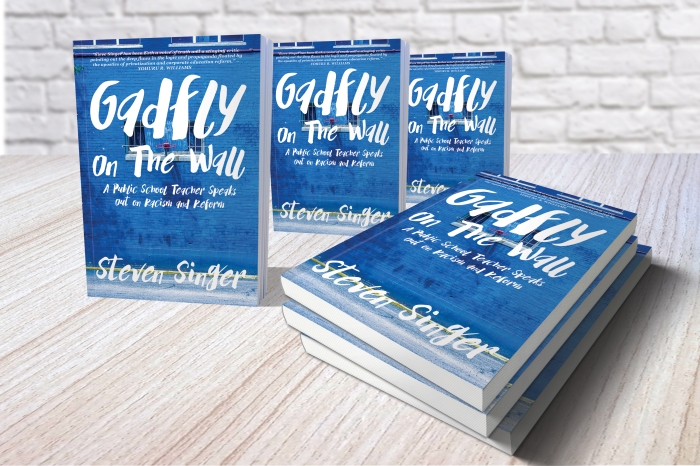
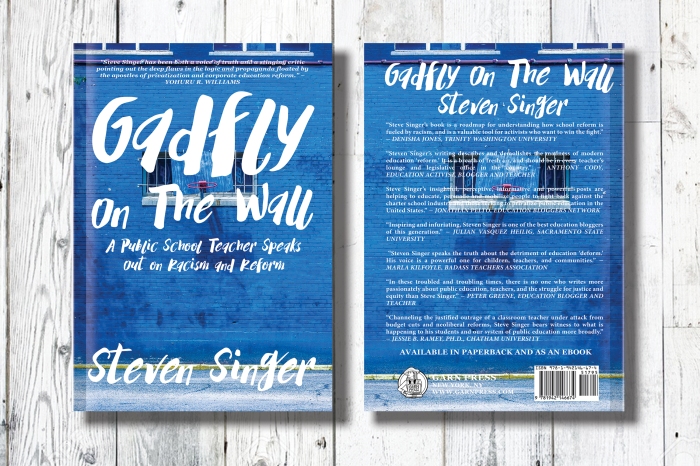
I’ve also written a book, “Gadfly on the Wall: A Public School Teacher Speaks Out on Racism and Reform,” now available from Garn Press. Ten percent of the proceeds go to the Badass Teachers Association. Check it out!

book-3

The First Taste is Free: Ed Tech Follows Drug Dealer Sales Techniques with Schools During Coronavirus Crisis

Screen Shot 2020-04-03 at 8.27.28 PM


“Pst! Hey, Kid! Come here!”


Educational technologies are a multi-billion dollar industry.


“Who? Me?”


The coronavirus pandemic has closed schools across the globe, and districts have tried to solve this problem by putting their classes online.


“Yeah, you. I’ve got some… candy I want to give you.”


Nearly every ed tech company has offered help with this processes.

 
“Oh boy! I sure love candy… Wait a minute! How much does it cost?”


Teachers, parents, students and education activists are wary of educational technologies in the classroom, and research backs them up. Ed tech has been shown to widen socioeconomic divides, it hasn’t lived up to its promise of increasing academic gains, and – perhaps most tellingly – Silicon Valley executives restrict their own children’s use of technology and send them to tech-free schools.

 
“Nothing. It’s free.”


These for-profit corporations are offering limited time promotions – they’re providing additional services for free that would normally be behind a paywall.


“Oh goodie!”


Districts are jumping at the chance. They’re encouraging teachers to use apps, services and software that have never been tried before locally in an attempt to abide by continuity of education guidelines written by departments of education.


“That’s right. Absolutely free. But if you want some more, next time I’ll have to charge you a little something…”


So when the pandemic is over and classes eventually are reopened, a great deal of the technology that schools used to get through the crisis will no longer be on the house.


Continuing to use them will require an additional fee, and if districts end up budgeting for them, the money has to come from somewhere. So that means fewer books, field trips, tutors, classroom aides, and – yes – teachers.


In short, well-meaning governors, law-makers, administrators, school directors and even educators are participating in a program that in the long run may enrich private corporations but not be in the best interests of the students we’re supposed to serve.


I bring this up not to stop schools from using online learning during the crisis. Unfortunately that ship has sailed. Nor do I voice my objections to criticize teachers, parents or students. We all have to do what needs to be done to get through all this.


However, it is vital that we are aware of the compromises being made today so as to better avoid the pitfalls ahead.


When teachers use Zoom, Google Classroom, or any of dozens of other ed tech products during this season of social distancing, we must be aware that these should only be temporary measures. Do not resign yourself to any of this becoming the new status quo.


When classes resume, we can’t simply go back to normal. Nothing can ever be normal again. Normal is what got us into this mess – a society ill equipped to meet this pandemic – ill equipped to take care of its citizens, provide basic resources, equity and put people before profits.


The post coronavirus world must be one of universal healthcare, a social safety net for all and a robust, fully funded system of public education. We cannot allow it to be a dystopian world of edu-tech vulture capitalism where the economics of street corner drug pushers is used to dictate how public money is spent.

 
There are many clear reasons why.

 
First, education technologies are almost completely unregulated. Cybersecurity and student privacy laws are woefully out of date if not entirely nonexistent.


These applications collect a torrent of data on students. So do teachers, in fact, to calculate grades. However, if an educator were to share this information with outsiders, she could be sued. But if a corporation did the same thing, it falls into a legal no man’s land.


Each state has different laws denoting the limits of privacy.


The main federal law safeguarding student data privacy, the Family Educational Rights and Privacy Act (FERPA), was written in 1974 before much of these technologies even existed. It hasn’t been significantly amended since 2001.


So it’s left to individual districts, administrators, school boards and teachers to navigate these murky waters.

 
They end up trying to decipher the individual terms of service agreements and privacy statements with these companies that are often full of legal loopholes. In many cases, decision makers don’t even bother or give the job to school lawyers unversed in cybersecurity concerns or law.


While Congress has neglected its duty to regulate the industry, the matter is important enough that the Federal Bureau of Investigations (FBI) put out a strong warning. Two years ago, the Bureau cautioned consumers about the risks of classroom management tools like Class Dojo as well as student testing and remediation applications like Classroom Diagnostic Tools and Study Island.


The FBI warned schools and parents that widespread collection of student data involved in these applications could cause safety concerns if the information is compromised or exploited.


The Bureau was concerned about ed tech services because many are “adaptive, personalized learning experiences” or “administrative platforms for tracking academics, disciplinary issues, student information systems, and classroom management programs.”


And these are many of the same applications being used today for distance learning initiatives.


Education advocates have been sounding the alarm for years.


Commonsense.org – a nonprofit studying education issues – conducted a three-year review of 100 ed tech companies. It concluded that 74% of these businesses hold the right to transfer any personal information they collect if the company is acquired, merged, or files for bankruptcy. And since many are start-ups, this often happens.


The authors wrote that there is “a widespread lack of transparency, as well as inconsistent privacy and security practices” in how student information is collected, used, and disclosed.


Leaking student data is often not a security failure. It’s part of a company’s business model.


This is valuable information about one of the most lucrative demographics in the marketplace. Companies use it to help sell products targeted directly to consumers. And they can even sell student data as a commodity, itself.


For instance, imagine how much more effective the hiring process would be if businesses had access to applicants school attendance records. Imagine if businesses had an applicant’s entire academic record.


Employers could buy vast amounts of data and use algorithms to sort through it looking for red flags without fully comprehending what was being compiled. Imagine an applicant being turned down for a job because of low middle school attendance but not being able to explain that this was due to a legitimate illness.


There are reasons we protect people’s privacy. You shouldn’t have to explain your score on a 1st grade spelling test the rest of your life or have the need for special education services damage your credit rating.


Yet all of these things are possible when student data is up for grabs.


No one is protecting our children from this kind of mercantile future – one which will only be exacerbated if we allow educational technologies to become common place after the current crisis.


And tightening our student privacy laws, will not solve everything.


Hardly any attention is being paid to how these technologies can be used for harms unrelated to business and industry.


Tablets, laptops or monitoring devices such as cameras or microphones could be exploitable by tech savvy criminals – especially since many ed tech programs allow remote-access capabilities without the user even being aware of what is happening.


Pedophiles could use this data to find and abduct children. Criminals could use it to blackmail them. Other children could use it to bully and harass classmates.

 
It’s hard to imagine how children could be protected on such devices without increasing surveillance and thereby running similar risks. Using them will always involve a chance of endangerment so they should be kept away from the youngest and most vulnerable potential users.


How did we let ed tech get so out of control? Like so many problems of the pre-coronavirus world, money was allowed to dictate policy.


Screen Shot 2020-04-03 at 11.50.33 AM


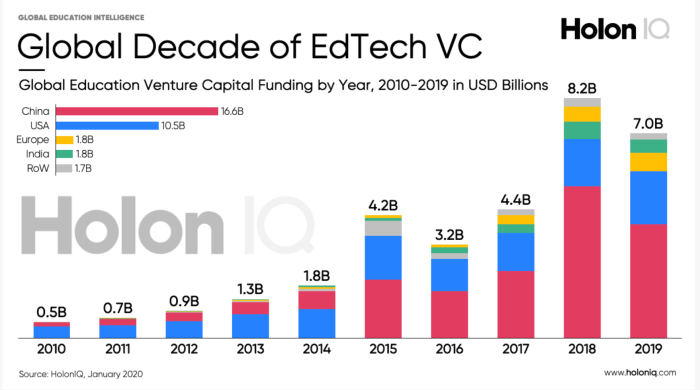
Global venture capital investments in ed tech finished 14 times higher by the end of the decade than they started. Investments went from $500 million in 2010 to $7 billion in 2019. And insiders expect that to triple in the next decade to more than $87 billion.


The two biggest spenders by far are China and the US.


Yet enthusiasm for such technologies are not nearly as prevalent among educators.


A 2019 study of educator confidence in ed tech conducted by Houghton Mifflin Harcourt found that 60% of teachers were concerned that implementing technology tools could damage the student-teacher relationship.


Moreover, education research in the United States concluded these technologies only widen the gap between different socioeconomic groups. Global initiatives like the One Laptop per Child program, which distributed 25 million low-cost computers with learning software to children in the developing world, failed to improve language or math results.


Meanwhile, students seem to be telling us they prefer more old school methods of instruction. Studies have shown preference for everything from physical books over eBooks to having “ordinary, real-life lessons” and “a smart person at the front of the room.”


Parent Blogger Alison McDowell has studied these issues in more depth than nearly anyone else. She warns that adaptive applications become the gatekeeper of children’s educations. They only allow students to move on once they’ve demonstrated mastery on a previous academic standard – or at least once they’ve been able to guess which one answer a programmer thought correct:


“The “personalized learning” model conditions students to view themselves as independent operators, free agents attempting to navigate a precarious gig economy alone. Screen-based isolation and an emphasis on data-driven metrics steadily erode children’s innate tendencies to creative cooperation. Which is ultimately better for society, an algorithm that learns each student in a classroom and delivers a pre-determined reading selection that they review and are quizzed on online, or a human teacher who selects an all class reading in which there is lively debate? The first scenario forecloses creative thought in service of data generation and reinforces there is but one correct answer. The second opens up chances for students to gain new insights while limiting opportunities for digital surveillance.”

 
Ed tech may allow us to stumble forward during the coronavirus quarantine, but it is not a central part of a healthy education system.


It may play a limited role in remediation and augmentation, but it cannot be the fulcrum around which everything else revolves.

 
I’d like to see a new education system built from the ashes of the old where every child has the chance to learn, a system that forgoes standardized testing and corporate-written academic standards for individualization and human interaction. I’d like to see a world where charter and voucher schools are things of the past, where schools are integrated and differences valued, where teachers and learning are respected and esteemed.


That is not an ed tech centered world. It is a student centered one.


It is a world where our priorities are such that even the promise of the new and the free won’t encourage us to indulge in practices that put our children in greater danger.


It is a place where the pusher has no power because his product is seen for what it is – treacherous and unnecessary.


Like this post?  You might want to consider becoming a Patreon subscriber. This helps me continue to keep the blog going and get on with this difficult and challenging work.

Plus you get subscriber only extras!

Just CLICK HERE.

Patreon+Circle

I’ve also written a book, “Gadfly on the Wall: A Public School Teacher Speaks Out on Racism and Reform,” now available from Garn Press. Ten percent of the proceeds go to the Badass Teachers Association. Check it out!

book-3

Top 10 Things I Want My Students to do During the Coronavirus Quarantine

Screen Shot 2020-03-20 at 7.03.55 PM


Dear Students,


A schoolteacher without a classroom is kind of like a firefighter without a fire.


Or a police officer without crime.


But here we are – self-quarantined at home.


Our classroom sits empty, and everyday this week we sit here at home wondering what to do.


I want you to know that I’ve been thinking about all of you.


I hope you’re doing alright during this unprecedented moment in history. It probably seemed like a lot of fun when it first happened.


No school for the foreseeable future!


The whole thing came together so quickly that our district didn’t even have time to get together work to send home with you. And like most schools throughout the country, many of you don’t have home internet access so we can’t fairly give you on-line lessons, either.


So you’ve been at home with little guidance from us. Sure we have free breakfast and lunches available for pick up at the school, but you’re probably growing a bit stir crazy.


I know I am. (And I’m sure your folks are, too!)


I’m at home with my daughter trying to keep her busy.


We’ve been creating Mario Maker boards for each other on our Nintendo 3DS and Switch.


We keep trying to stump each other, and me, being a teacher, I keep trying to get her to think outside of the box.


“Why don’t you try making a board where you have to get a mushroom through a maze?”


Or


“Why don’t you try making a board where the walls close in?”
Or


“I wonder if you could beat a Thwomp in a race down a pit?”


We were having a really good time until I tried to get her to watch a science video. I put on the original Carl Sagan’s “Cosmos” from the early 1980s.


My daughter loves looking up at the stars and asking me questions about the constellations. I thought this would be a perfect fit – after all, Sagan was an astronomer and can answer her questions way better than I can.


However, the old school effects were simply no match for today’s aesthetic. She revolted after about 20 minutes.


Today I won her over though with the new Cosmos series featuring Neil deGrasse Tyson. She turned to me after about five minutes and said, “Much better.”


We’ve been drawing and reading and playing video games and having a good ol’ time.


I hope you have people at home who can help you get through all this, too.


I’ve been getting a lot of emails recently from your folks.


They want to know what they should be doing to help you academically.


Whenever this whole thing is over – and it will be over someday soon I hope – they want to make sure you won’t fall too far behind.


Let me start with a word of caution.


We don’t know how long this self-quarantine will last.


We’re trying to stay home to stop the spread of this virus – COVID-19. It can be deadly to some people – even some young people like you.


It’s in everybody’s best interest that we wait this thing out so that the hospitals can deal with the people who get sick.


Then when the disease has passed, we can continue our normal lives.


But no one knows how long that will take. It could be a few more weeks – but more likely months.


It is very possible that we will not go back to school again until after the summer.


So it’s hard to say exactly what you should do to keep yourself in the best academic shape because we don’t know what you’ll be coming back to.


We DO know that we won’t have to make up some or all of the days we missed.


And we know we won’t (here in Pennsylvania) have to take the PSSA or Keystone tests this year.


But when this is over, what grade will you be in? Will you just move on to the next grade or will there be a bit of mopping up to do first? And if you don’t finish the curriculum, will you be ready for the challenges ahead?


We don’t know any of that yet.


But here are a few guidelines and some things you might want to do while you’re at home.


You don’t have to do all of them, but they’re some things to think about.


So here’s my top 10 things for my students to do during quarantine:


1) Finish Whatever School Work You Can


You may have some outstanding school work with you in your book bag. I know I sent my seventh graders home with their poetry projects. My eighth graders should either be done or have taken their projects home to finish.


So if you have work that’s not done, finish it to the best of your ability. You certainly have enough time.


2) Read a Book


I ask all of may students to have a self-selected book handy for sustained silent reading in class. Hopefully you brought it home. If not, take a look around the house. Maybe you’ve got a dusty tome hanging out in some corner. Or – hey – if you have Internet access, you probably have the ability to get an ebook.


Read something – anything you want.


It will while away the hours, relax you and maybe get your mind to thinking about things above and beyond how much mac and cheese you’ve got stored in the cupboard.


3) Keep a Journal


Do you realize you’re living through a moment of history? People will look back on this and wonder how people got through it. You could fill in the blanks for some future researcher. Just a description of your everyday activities, what you’re thinking and feeling, your hopes and dreams – all of it has historical value. Plus, you’ll get some practice expressing yourself in writing. And just think – a simple story about how you survived the great toilet paper shortage of 2020 could end up being taught in the classrooms of the future!


Make it a good one!

4) Take a Break from Video Games


I know some of you have built a fort out of sofa cushions, covered it in blankets and are nestled in this hideaway doing nothing but playing Fortnite or Roblox or Minecraft with friends on-line. And you know what? There’s nothing wrong with that. You go ahead and do that.


Just remember to take breaks for more than just food and the bathroom. Getting lost in a fantasy world is great so long as you leave yourself a trail of breadcrumbs to get back out again.


Don’t forget the trail. Don’t forget there’s a world out there that needs you. Set definite limits for how long you spend in there and try really hard to adhere to them.


5) Watch Something Educational on TV or the Internet


Education isn’t limited to something a teacher told you to do. Find a video or TV show that explains something you never knew before. Youtube is great for this if you know what to look for.


I don’t mean to find some rant by your favorite Youtuber. I mean find something about science, history, art, literature, math, etc. Make it something you care about but might not watch just for fun.


You’ll be surprised at what you can find out there. The channel CrashCourse with author John Greene (“The Fault in Our Stars”) and his brother Hank is particularly informative, entertaining and far reaching. I also love John Michael Godier for all things astronomy and Composer David Bruce for discussions of music.


6) Watch/Read the News


There are extraordinary things happening every day. Knowing about them can help you prepare for what’s next and think about what we can and should be doing to make things better.


7) Listen to Music/ Draw/ Do Something Creative


I know you. You’re a bundle of creative energy bound together waiting to explode. Go do that. Whatever you enjoy doing, create something. Write a song, make a comic book, paste together a collage. Express yourself, and if you’re not in the mood for that – enjoy the expressions of others. Listen to music, read a poem, watch a movie.


8) Help Out Your Folks


We, adults, can seem like we’ve got it all under control. We don’t. We’re just as anxious, fearful and uncertain as you about this whole self-quarantine thing. None of us were around the last time something like this happened (the 1918 Spanish Flu epidemic). Anything you can do – helping take out the trash, cleaning up messes, even just trying extra hard not to argue with your siblings – can be a big help.


9) Talk to Friends and Family about How You’re Feeling


No one expects you to be a robot. These are trying times. It’s okay to feel a certain way about that. Share those feelings with someone you trust. And be a sympathetic ear for them to do the same. The best way we can get through all this is with each other’s help.


10) Know That You Are Loved


My dear precious little students! There are people out there who love you so much. There are people who would move Heaven and Earth to keep you safe. I know you’re scared and bored and anxious. But remember we’re in this together. And no matter where you are or what you’re doing there’s at least your crazy English teacher who loves you very much and can’t wait to see you all again.


Stay safe!


89984455_10157624686428860_90771698554503168_n


Like this post?  You might want to consider becoming a Patreon subscriber. This helps me continue to keep the blog going and get on with this difficult and challenging work.

Plus you get subscriber only extras!

Just CLICK HERE.

Patreon+Circle

I’ve also written a book, “Gadfly on the Wall: A Public School Teacher Speaks Out on Racism and Reform,” now available from Garn Press. Ten percent of the proceeds go to the Badass Teachers Association. Check it out!

thumbnail_IMG_8249

Public Schools Can Recover from the COVID-19 Quarantine by Skipping High Stakes Tests

Screen Shot 2020-03-14 at 7.40.21 PM

 
There is one plus from being sick during a global pandemic.


You get perspective.


While all the schools in Pennsylvania are closed for at least the next two weeks to help stop the spread of COVID-19 (colloquially known as the Coronavirus), I self-quarantined a day early.


No, I don’t think I have the virus, but I’m not taking any chances.


Still, sitting here at my laptop with a steaming mug of tea, I’m filled with optimism.


My symptoms don’t match those of the virus – no fever, no dry cough, no difficulty breathing, no runny nose or sore throat. I just sneeze occasionally, have an intermittent wet cough and feel a bone deep fatigue.


Probably not the culprit sending the world into shutdown mode. But best to rest up anyway.


I’m also filled with a deep sense of gratitude that I’m a public school teacher.


My last class was a rough one – 7th graders running around the room with half written poetry demanding instruction, guidance, reassurance. My morning 8th graders were likewise rushing to complete a poetry assignment – frantically asking for help interpreting Auden, Calvert, Henley, Poe, Thomas.


What a privilege it has been to be there for them! How much I will miss that over the few next weeks!


Who would ever have thought we’d go into self quarantine to stop people from getting infected?


It says something about us that what seemed impossible just a few days ago has become a reality. We actually saw a problem and took logical steps to avoid it!


I know – we could have done a better job. We could have acted more quickly and in many areas we haven’t done nearly enough (New York, I’m looking at you).


But what we have done already shows that human beings aren’t finished. We have massive problems waiting to be solved – global climate change, social and racial inequality, the corrupting influence of money in politics, etc. However, we CAN do the logical thing and solve these problems!


No matter how crazy it seems now, tomorrow could be filled with rational solutions. If only we allow ourselves that chance.


So my spirits are high here in my little hollow nestled in with my family.


But being a teacher I can’t help thinking about what’s to come next.


Eventually this whole ordeal will be over.


Schools will reopen. Things will get back to normal. Or try to, anyway.


The challenge will be attempting to overcome the month or more of lost schooling.


Some will be thankful they relied on virtual schooling to fill in the gaps. When this whole crisis began, officials chided us to make preparations for “teleschool” in case of just this eventuality.


I’m glad we didn’t.


Frankly, (1) it would have been a huge cost that schools don’t have the money to meet and (2) it would have been money down the drain.


There is nothing innovative about sending kids on-line to do their assignments. The majority of work that can be done that way is of the lowest quality.


That’s workbook nonsense that the laziest and most checked out educators of generations past gave to their students to keep them quiet.


We see students in China who are being educated that way finding ways around it – giving their education apps low star reviews in the app store so that they’ll be removed, etc.


Here in the USA, all children don’t even have access to the Internet. They rely on the local libraries to get online – not a good idea in a pandemic.


So most schools have had to do without.


School is cancelled for about a month or so, and then – hopefully – it will return.


The question remains – what do we do when we get back to class?


We could extend the school year, but families have vacations planned and other obligations. This wouldn’t solve much and frankly I don’t think it will happen unless we’re out for longer than expected.


I anticipate being back in school by mid April or so. That would leave about a month and a half left in the year.


This really leaves us with only two options: (1) hold our end of the year standardized tests and then fit in whatever else we can, or (2) forgo the tests and teach the curriculum.


If we have the tests, we could hold them shortly after school is back in session. That at least would give us more time to teach, but it would reduce the quality of the test scores. Kids wouldn’t be as prepared and the results would be used to further dismantle the public school network.


Much better I think is option two: skip the tests altogether.


Frankly, we don’t need them. Teachers observe students every day. We give formal and informal assessments every time we see our kids. We’re like scientists engaged in a long-term study taking daily measurements and meticulously recording them before coming to our year end conclusions called classroom grades.


In my classes, I think I could teach just about the same material in the remaining time if I didn’t have to worry about the high stakes tests.


In 7th grade, this would mean finishing up our almost completed poetry unit – having kids put together their poetry portfolios and sharing them. Then we’d begin our final novel of the year, “Silent to the Bone” by E.L. Konigsburg, talk about mystery stories, reader perspectives and how truth impacts fiction.


In 8th grade, we could likewise finish up poetry with some presentations on students’ favorites from the assigned group. Then we could read the play version of “The Diary of Anne Frank,” and selections from Harper Lee’s “To Kill a Mockingbird.”We could discuss propaganda, prejudice and compare the historical perspective of Europe and the United States.


In both cases, we might have to forgo a year-end project, but at least we’d cover the majority of what we proposed at the beginning of the year.


Students would leave their respective grades with just about everything we set out to give them. They’d be prepared and ready to meet the challenges of the coming grade.


That seems a worthy goal to me.


But I hear someone ask – what about the standardized testing? Won’t students be less prepared having skipped over those assessments?


The answer is no. They would not be less prepared.


They would be better educated without a sword of Damocles hanging over their heads.


The shame is that this alteration in schedule would probably only last one year.


In 2020-21, we’d probably reinstate these standardized assessments.


This is at least a month of wasted schooling. If we got rid of all the pretests and administrator required teaching-to-the-test, we could clear up a good 9-weeks of extra class time.


Imagine what teachers could do with those surplus days!


My 8th graders could read the whole of “Mockingbird,” for one. instead of just selections. My 7th graders could read another entire novel – probably Paul Zindel’s “The Pigman.” Not to mention the addition of more women and writers of color, the extra time for creative writing, an emphasis on finding your own point of view.


And for me that’s the benefit of this COVID-19 crisis. It shows us what could be – what we could do if we were only brave enough to try.


Happy self-quarantine, everyone!


Like this post?  You might want to consider becoming a Patreon subscriber. This helps me continue to keep the blog going and get on with this difficult and challenging work.

Plus you get subscriber only extras!

Just CLICK HERE.

Patreon+Circle

I’ve also written a book, “Gadfly on the Wall: A Public School Teacher Speaks Out on Racism and Reform,” now available from Garn Press. Ten percent of the proceeds go to the Badass Teachers Association. Check it out!
book-2

The Coronavirus Could Be A Big Moneymaker for EdTech Companies

Screen Shot 2020-02-26 at 10.11.50 PM

 
There is a special place in Hell for people who cash in on tragedy.


But that place is reserved for the super rich – and that’s all that matters in Donald Trump’s America.


Federal officials are urging schools to prepare for possible disruptions due to the coronavirus – a disease that originated in China last month and has affected more than 77,000 people worldwide (of which more than 2,600 have died).


Only 14 people have been infected in the U.S., and the Center for Disease Control (CDC) writes on its Website that the “immediate health risk from COVID-19 is considered low” for the average American – especially those who have not traveled recently to Wuhan, the surrounding Hubei Province or elsewhere in mainland China.


However, this is certainly scary news for anyone – especially parents, teachers and students.


In fact, federal officials singled out schools at a press conference on Tuesday about possible responses to the disease if it gets worse on these shores.


Nancy Messonnier, a director at the CDC, said:


“You should ask your children’s schools about their plans for school dismissals or school closures. Ask about plans for teleschool.”


To which every teacher in America responded, “Teleschool!?”


So we’re worried about this disease which is somewhat more deadly than the fluNOT primarily because of the risk to students’ health or lives; NOT because of the risk of it going undiagnosed due to the disincentive of rising healthcare costs; NOT because we’re woefully unprepared due to Trump firing the entire U.S. pandemic response team two years ago and then not replacing them!


No! We’re concerned mostly because KIDS MIGHT MISS SCHOOL!!!!

 
But, hey, no worries because the Trump administration figures this new and unpredictable disease which typically causes symptoms like fever, cough and shortness of breath can be circumvented with… cyber school?

 
Limit kids exposure by letting them stay at home and do their lessons on the computer.


And if they have an online management system where teachers give virtual assignments and kids turn them in through the cloud, even better!


Thank you, education technology firms! You have saved American education. Again.


What a pile of crap!


Let’s get one thing clear. This suggestion has nothing to do with student well being. It is a blatant attempt to turn a potential pandemic into a cash cow.


EdTech already is a multi-billion dollar industry. If we successfully tie navigation of disasters with this sector, profits could potentially climb through the roof!


As it stands now, technology companies are lined up outside our schools pretending to provide the best the 21st Century has to offer to solve every school issue from excessive tardiness to lack of motivation to academic decline.


And now they’re offering the cure to the coronavirus – or at least the cure to any pedagogical delay that might result from school closures – either precautionary or due to an outbreak.


First of all, if schools close because of this disease, students will be scared. They aren’t going to be able to focus on academics.


Kids would need love and understanding – not more homework.


Second, not all kids have Internet access at home. Many of our most underprivileged children need to go to a public place like a library to get online. So if we require students to submit assignments this way during a closure, we’re forcing them to increase their chances of infection at a public place or get behind in their work. Not exactly fair.


Third, the kind of lessons you can provide through “teleschool” are subpar at best.


This is the automated checkout counter of school. It is the robocall customer service of education.


Most children need real live human beings to achieve their best. That’s why you just can’t give a kid a math book and – Voilà – they know how to reduce fractions!


Sure, they can try to muddle through a computer program or do virtual work and submit it online. But how is that really different from the bad old days when the most checked out educators would disseminate a worksheet to the class and then hide behind a newspaper at their desks?


This is the kind of curriculum we used to criticize teachers for and that very few modern day educators could get away with in our modern public school system – UNLESS they do it behind a computer and/or software package.


This is not being “future ready” or “innovative.” It is the worst practices of the past repackaged so a bunch of suits at the corporate offices can cash in.


Finally, it opens students up to severe privacy concerns. In 2018 the Federal Bureau of Investigations (FBI) warned that EdTech solutions like these often put student security at risk.


Much of this software asks for and saves student inputs which can be compromised or actively sold to third parties.

 
These are “adaptive, personalized learning experiences” or “administrative platforms for tracking academics, disciplinary issues, student information systems, and classroom management programs.”

 
Pedophiles could use this data to find and abduct children. Criminals could use it to blackmail them. It could even be sold to unscrupulous corporations or exploited by other children to bully and harass classmates.


And, in fact, such things have happened.

 
While it may be frustrating to makeup missed schools days, doing so doesn’t have the same risks and – eventually – provides kids with the same quality of education that they miss.

 
It just doesn’t offer opportunities for corporations to make big bucks.


Advocates claim online tools like Class Dojo and Apple Classroom provide unique opportunities that have never been available before for such teleschooling.


However, we’ve always been able to do this stuff – just not so easily on a computer.


Schools have always been able to send workbooks home with students full of drill and kill assignments. They just rarely did so because we all knew the quality of such workbooks was mediocre at best.


Compared with a flesh-and-blood teacher and the interpersonal interactions of school, this was poor return on the community’s investment in their children.


Teleschooling is pretty much the same thing just with flashier bells and whistles.


It’s no wonder that this is the kind of solution we get from an administration that thinks Betsy Devos should head the Department of Education.


Why would we trust the same people who can’t figure out how to contain the coronavirus to solve its impact on education?


Sadly in an age when the human genome has been successfully mapped and bio-weapons are a real tool at the disposal of unscrupulous governments, one can only be skeptical of a mysterious new virus that suddenly shows up in a country like China experiencing massive pro-democracy protests. That’s one way to get disaffected citizens off the streets.


And now the same disease has come to our shores on the eve of the 2020 Presidential election. You’ll forgive me for admiring what could be the most effective means of  voter suppression in modern politics!


This may be an unlikely scenario – especially given the degree of secrecy and competence it would require – but if history has taught us anything, it’s that the powerful will stop at nothing to keep their power.


Beyond mere financial gain, some may hope that teleschooling in the wake of predictable disasters could dumb down our children’s education just enough to deprive them of that lesson, themselves.


The best way to stop skepticism is to undercut the education of the next generation.


Like this post?  You might want to consider becoming a Patreon subscriber. This helps me continue to keep the blog going and get on with this difficult and challenging work.

Plus you get subscriber only extras!

Just CLICK HERE.

Patreon+Circle

I’ve also written a book, “Gadfly on the Wall: A Public School Teacher Speaks Out on Racism and Reform,” now available from Garn Press. Ten percent of the proceeds go to the Badass Teachers Association. Check it out!

book-1

Don’t Fear Summer Lee. Fear the Devil’s Bargain Labor Leaders Are Willing to Make Opposing Her

NEBBj8c5_400x400

 
Cancer or unemployment.


That’s the choice Pennsylvanians are being asked to make in 2020.


Do we allow hydraulic fracking to continue to destroy our environment and increase our risk of cancers and other debilitating illnesses?


Or do we clean things up and risk losing jobs?


Some labor leaders seem willing to chose the former on behalf of their constituencies.


That’s why the Pittsburgh-based Allegheny-Fayette Central Labor Council (PA AFL-CIO) voted to oppose the re-election of State Representative Summer Lee, the first black woman elected to the State House from the western part of the Commonwealth.


She chooses life.


And that might put some people out of work.


It’s a sad commentary on the state of the labor movement that union bosses are willing to make this trade – life for a living wage.


And it’s a completely unnecessary choice.


We can have BOTH jobs and health – if Democratic politics allow for minds open enough to see the truth.


Let’s get this straight.


Lee is a badass.


The Democrat represents Homestead and West Homestead – two of the three municipalities in the school district where I work as a middle school teacher. She also represents parts of Pittsburgh, Braddock, Swissvale, Rankin, Turtle Creek, Forest Hills and Churchill.


But the 32-year-old lawyer and community organizer is more than just a politician. She’s a local hero.


Just two years ago, Lee beat 20-year incumbent Paul Costa by a margin of 68-32%.


She helped found UNITE, a grassroots political action committee, which has successfully defeated several old guard Democrats in bed with the fossil fuel industry.


Most notably, UNITE was part of the effort that ousted Allegheny County Council President John DeFazio in favor of another Democratic insurgent, Bethany Hallam. Once again DeFazio’s pro-fracking and fossil fuel platform went down in flames to Hallam’s environmentally friendly policies by a margin of 54%-46%.


Fracking is a relatively new and dangerous method of extracting natural gas from otherwise inaccessible sources like the region’s abundant Marcellus shale. “Fracking fluid” made up of water, sand and harmful chemicals is injected in a high pressure blast into deep rock formations releasing natural gas, petroleum and other substances.


Fracking has been known to increase health risks like respiratory problems, a negative impact on pregnancies, and a host of other problems – and that’s not even considering the risks of spills. The process also has devastating environmental impacts including the escape of greenhouse gases, groundwater pollution and increase risk of earthquakes.


In Harrisburg most debate has centered around removing a Republican-backed sweetheart tax deal for the industry and not outright banning the process altogether.


Lee, Hallam and other UNITE Democrats are changing the conversation, yet some of the area’s labor unions aren’t coming along with these insurgent winners. They’re sticking with establishment figures.


The PA AFL-CIO has endorsed Chris Roland against Lee in the primary. He’s a white North Braddock councilman who supports fracking. 


Lee is a Democratic Socialist with a massively pro-labor campaign. She’s been endorsed by the Service Employees International Union (SEIU) and United Electrical Workers (UE).


She is the only incumbent who the labor council did not endorse.


The only reason is her environmental stance, her race, or both.


Lee supports a Green New Deal and tightening enforcement against illegal air emissions from steel mills.


Roland has already raised $77,635 mostly from local unions. Steamfitters Local 449 and the Laborers’ International Union of North America have both given him $20,000 while the local International Brotherhood of Electrical Workers (IBEW) and Plumbers locals each gave $10,000.


To combat this, Lee has raised $55,789.


Some pundits theorize that the move to stop Lee is doomed from the start because of her incredible popularity in her district. The real motivation is to weaken UNITE’s ability to fundraise against other pro-fracking Democrats.


It’s tragic that the labor movement has come to such a low point with leaders like PA AFL-CIO President Darrin Kelly willing to trade the health and safety of the people living here for the promise of a paycheck.


Kelly has been a vocal opponent of the Green New Deal fearing what it would do to fossil fuel employment in the area.


In an April interview with Payday, he said:


“When you have a situation where you are taking away from someone’s ability to feed their family, that is not going to be looked at favorably. I am going to be against it; I’m going to be vocal against it and not welcome it in Western Pennsylvania.”


He seems to forget that dead people don’t need a paycheck.


Trading the environment and the health and welfare of our friends and neighbors for a living wage is a bad deal.


Moreover, labor leaders opposing environmentalists like Lee ignore key aspects of her proposals.


A Green New Deal would create millions of sustainable new jobs. It would require replacing pipes, weatherizing homes, expanding railways, manufacturing wind turbines – all of which would require people to do the work.


These would be high quality union jobs with good salaries, benefits, safe working conditions, training opportunities, etc.


This opens a once in a generation opportunity for new jobs to upgrade and expand the Commonwealth’s crumbling roads, bridges, energy grid, and water systems. Not only would we repair what exists, we’d build a cleaner, more affordable, and more resilient infrastructure that would be there for our posterity.


We need to expand access to light rail and low-emissions public transit, replace lead pipes, build a smart grid for increased wind and solar power, replace storm water systems to prevent flooding and toxic runoff, and restore wetlands and other natural buffers to protect our communities.


These are exactly the things our labor leaders should be concerned about doing. These are exactly the policies we need to move forward into the future.


It’s time to stop the necrotic paralysis of labor propping up the dying fossil fuels industry. The future is with sustainable energy.


If we want to actually live to see that future, we need to back policies that save our children from getting sick, that preserves Pennsylvania’s natural resources.


Green New Deal Democrats like Lee and Hallam are the future.


It’s time the holdouts in the labor movement get with the program.


78345718_10157331312783860_2217528104966946816_n
Summer Lee, Mark Fallon and me at December’s Public Education Forum in Pittsburgh.


Like this post? I’ve written a book, “Gadfly on the Wall: A Public School Teacher Speaks Out on Racism and Reform,” now available from Garn Press. Ten percent of the proceeds go to the Badass Teachers Association. Check it out!
thumbnail_IMG_8249

Robots Will Never Replace Teachers. They Can Only Displace Us

Screen Shot 2020-01-09 at 8.29.17 PM

 
My favorite movie of all time is “2001: A Space Odyssey.”


And my favorite character is the computer HAL 9000.


In the future (now past) of the movie, HAL is paradoxically the most human personality. Tasked with running the day-to-day operations of a spaceship, HAL becomes strained to the breaking point when he’s given a command to lie about the mission’s true objectives. He ends up having a psychotic break and killing most of the people he was supposed to protect.


It’s heartbreaking finally when Dave Bowman slowly turns off the higher functions of HAL’s brain and the supercomputer regresses in intelligence while singing “A Bicycle Built for Two” – one of the first things he was programmed to do.


I’m gonna’ be honest here – I cry like a baby at that point.


But once I clean up my face and blow my nose, I realize this is science fiction – emphasis on the fiction.


I am well aware that today’s calendar reads 2020, yet our efforts at artificial intelligence are not nearly as advanced as HAL and may never be.


That hasn’t stopped supposedly serious publications like Education Week – “The American Education News Site of Record” – from continuously pretending HAL is right around the corner and ready to take over my classroom.


What’s worse, this isn’t fear mongering – beware the coming robo-apocalypse. It’s an invitation!


A few days ago, the on-line periodical published an article called “Teachers, the Robots Are Coming. But That’s Not a Bad Thing” by Kevin Bushweller.


It was truly one of the dumbest things I’ve read in a long time.


Bushweller, an assistant managing editor at Education Week and Executive Editor at both the Ed Tech Leader and Ed Week’s Market Brief, seems to think it is inevitable that robots will replace classroom teachers.


This is especially true for educators he describes as “chronically low-performing.”


And we all know what he means by that!


These are teachers whose students get low scores on high stakes standardized tests.


Which students are these? Mostly poor and minority children.


These are kids without all the advantages of wealth and class, kids with fewer books in the home and fewer native English speakers as role models, kids suffering from food, housing and healthcare insecurity, kids navigating the immigration system and fearing they or someone they love could be deported, kids faced with institutional racism, kids who’ve lost parents, friends and family to the for-profit prison industry and the inequitable justice system.


And what does our society do to help these kids catch up with their more privileged peers? It underfunds their schools, subjects them to increased segregation, narrows their curriculum, offers them as prey to charter school charlatans – in short, it adds to their hurtles more than removes them.


So “chronically low-performing” teachers would be those who can’t overcome all these obstacles for their students by just teaching more good.


I can’t imagine why such educators can’t get the same results as their colleagues who teach richer, whiter kids without all these issues. It’s almost like teachers can’t do it all, themselves, — and the solution? Robots.


Screen Shot 2020-01-09 at 7.46.28 PM

 
But I’m getting ahead of myself.


Bushweller suggests we fire all the human beings who work in the most impoverished and segregated schools and replace them… with an army of robots.


Yeah.


Seriously.


Black and brown kids won’t get interactions with real adult human beings. Instead they can connect with the ed tech version of Siri programmed to drill and kill every aspect of the federally mandated standardized test.


Shakespeare’s Miranda famously exclaimed:


“O brave new world, That has such people in’t!”


But the future envisioned by technophiles like Bushweller has NO such people in’t – only robots ensuring the school-to-prison pipeline remains intact for generations to come.


In such a techo-utopia, there will be two tiers of education. The rich will get human teachers and the poor and minorities will get Bluetooth connected voice services like Alexa.


But when people like me complain, Bushweller gas lights us away as being narrow-minded.
 

He says:


“It makes sense that teachers might think that machines would be even worse than bad human educators. And just the idea of a human teacher being replaced by a robot is likely too much for many of us, and especially educators, to believe at this point.”

 
The solution, he says, isn’t to resist being replaced but to actually help train our mechanistic successors:


“…educators should not be putting their heads in the sand and hoping they never get replaced by an AI-powered robot. They need to play a big role in the development of these technologies so that whatever is produced is ethical and unbiased, improves student learning, and helps teachers spend more time inspiring students, building strong relationships with them, and focusing on the priorities that matter most. If designed with educator input, these technologies could free up teachers to do what they do best: inspire students to learn and coach them along the way.”


To me this sounds very similar to a corporate drone rhapsodizing on the merits of downsizing: Sure your job is being sent overseas, but you get to train your replacement!


Forgive me if I am not sufficiently grateful for that privilege.


Maybe I should be relieved that he at least admits robots may not be able to replace EVERYTHING teachers do. At least, not yet. In the meantime, he expects robots could become co-teachers or effective tools in the classroom to improve student learning by taking over administrative tasks, grading, and classroom management.


And this is the kind of nonsense teachers often get from administrators who’ve fallen under the spell of the Next Big Thing – iPads, software packages, data management systems, etc.


However, classroom teachers know the truth. This stuff is more often than not overhyped bells and whistles. It’s stuff that CAN be used to improve learning but rarely with more clarity and efficiency than the way we’re already doing it. And the use of edtech opens up so many dangers to students – loss of privacy, susceptibility to being data mined, exposure to unsafe and untried programs, unscrupulous advertising, etc.


Screen Shot 2020-01-09 at 7.47.03 PM

Bushweller cites a plethora of examples of how robots are used in other parts of the world to improve learning that are of just this type – gimmicky and shallow.


It reminds me of IBM’s Watson computing system that in 2011 famously beat Ken Jennings and Brad Rutter, some of the best players, at the game show Jeopardy.


What is overhyped bullcrap, Alex?


Now that Watson has been applied to the medical field diagnosing cancer patients, doctors are seeing that the emperor has no clothes. Its diagnoses have been dangerous and incorrect – for instance recommending medication that can cause increased bleeding to a hypothetical patient who already suffered from intense bleeding.


Do we really want to apply the same kind of artificial intelligence to children’s learning?


AI will never be able to replace human beings. They can only displace us.


What I mean by that is this: We can put an AI system in the same position as a human being but it will never be of the same high quality.


It is a displacement, a disruption, but not an authentic replacement of equal or greater value.


In his paper “The Rhetoric and Reality of Anthropomorphism in Artificial Intelligence,” David Watson explains why.


Watson (no relation to IBM’s supercomputer) of the Oxford Internet Institute and the Alan Touring Institute, writes that AI do not think in the same way humans do – if what they do can even accurately be described as thinking at all.


These are algorithms, not minds. They are sets of rules not contemplations.


An algorithm of a smile would specify which muscles to move and when. But it wouldn’t be anything a live human being would mistake for an authentic expression of a person’s emotion. At best it would be a parabola, at worst a rictus.


Screen Shot 2020-01-09 at 7.59.43 PM
Picture of an actual Japanese robot teacher in use.


In his recent paper in Minds and Machines, Watson outlines three main ways deep neural networks (DNNs) like the ones we’re considering here “think” and “learn” differently from humans.


1) DNN’s are easily fooled. While both humans and AIs can recognize things like a picture of an apple, computers are much more easily led astray. Computers are more likely to misconstrue part of the background and foreground, for instance, while human beings naturally comprehend this difference. As a result, humans are less distracted by background noise.


2) DNN’s need much more information to learn than human beings. People need relatively fewer examples of a concept like “apple” to be able to recognize one. DNN’s need thousands of examples to be able to do the same thing. Human toddlers demonstrate a much easier capacity for learning than the most advanced AI.


3) DNN’s are much more focused on details and less on the bigger picture. For example, a DNN could successfully label a picture of Diane Ravitch as a woman, a historian, and an author. However, switching the position of her mouth and one of her eyes could end up improving the confidence of the DNN’s prediction. The computer wouldn’t see anything wrong with the image though to human eyes there definitely was something glaring incorrect.


“It would be a mistake to say that these algorithms recreate human intelligence,” Watson says. “Instead, they introduce some new mode of inference that outperforms us in some ways and falls short in others.”


Obviously the technology may improve and change, but it seems more likely that AI’s will always be different. In fact, that’s kind of what we want from them – to outperform human minds in some ways.


However, the gap between humanity and AI should never be glossed over.


I think that’s what technophiles like Bushweller are doing when they suggest robots could adequately replace teachers. Robots will never do that. They can only be tools.


For instance, only the most lonely people frequently have long conversations with SIRI or Alexa. After all, we know there is no one else really there. These wireless Internet voice services are just a trick – an illusion of another person. We turn to them for information but not friendship.


The same with teachers. Most of the time, we WANT to be taught by a real human person. If we fear judgment, we may want to look up discrete facts on a device. But if we want guidance, encouragement, direction or feedback, we need a person. AI’s can imitate such things but never as well as the real thing.


So we can displace teachers with these subpar imitations. But once the novelty wears off – and it does – we’re left with a lower quality instructor and a subpar education.


The computer HAL is not real. To borrow a phrase from science fiction author Philip K. Dick, Artificial intelligence is not yet “more human than human.”
 
Maybe it never will be.


The problem is not narrow minded teachers unwilling to sacrifice their jobs for some nebulous techno-utopia. The problem is market based solutions that ignore the human cost of steam rolling over educators and students for the sake of profits.


As a society, we must commit ourselves to a renewed ethic of humanity. We must value people more than things.


And that includes a commitment to never even attempting to forgo human teachers as guides for the most precious things in our lives – our children.


“Algorithms are not ‘just like us’… by anthropomorphizing a statistical model, we implicitly grant it a degree of agency that not only overstates its true abilities, but robs us of our own autonomy… It is always humans who choose whether or not to abdicate this authority, to empower some piece of technology to intervene on our behalf. It would be a mistake to presume that this transfer of authority involves a simultaneous absolution of responsibility. It does not.”

David Watson


Like this post? I’ve written a book, “Gadfly on the Wall: A Public School Teacher Speaks Out on Racism and Reform,” now available from Garn Press. Ten percent of the proceeds go to the Badass Teachers Association. Check it out!
thumbnail_IMG_8249

The Holiday Season Brings Fear and Resentment for Many Students

thumbnail_starr-main-blog2

“I hate Christmas.”


Teachers hear that with surprising regularity around this time of year.


I hate Christmas. I hate Thanksgiving. I hate every holiday.


America’s public school students are living under tremendous pressure.


The social safety net is full of holes. And our children are left to fall through the ripped and torn fabric.


The sad fact is that one in four students in America’s classrooms have experienced a traumatic event.


So if your classroom is typical, 25% of your students have witnessed violence or been subject to a deeply distressing experience.


That could be drug or alcohol abuse, food insecurity, severe beatings, absent caregivers or neglect.


These figures, provided by Neena McConnico, Director of Boston Medical Center’s Child Witness to Violence Project, are indicative of a truth about this country that we don’t want to see.


Our Darwinian public policies leave many children to suffer the effects of poverty – and our society doesn’t want to deal with it.


In impoverished communities, these percentages are even higher and the results more devastating.


The Center for Disease Control’s comprehensive Adverse Childhood Experiences study links the toxic stress of unaddressed trauma to heart disease, liver disease, and mental, emotional, and behavioral disorders.


Young children exposed to more than five adverse experiences in the first three years of life face a 75 percent likelihood of having delays in language, emotional, or brain development, according to McConnico.


This translates directly to negative behaviors in the classroom.


Children who witness violence often have trouble in school because they suffer from post-traumatic stress, which can manifest as inattention, distractibility, hyperactivity, insomnia, aggression, and emotional outbursts.


Or, alternately, these children can sometimes withdraw and appear to be unfazed by their experiences. In some ways, that’s even more dangerous because while they avoid negative attention, they often get no attention at all.


It’s bad enough in the everyday. But it gets worse around the holidays.


Some of it is due to the structure and safety of school being removed. During holiday breaks, children are left to the mercy of sometimes chaotic and uncertain home lives.


Some of it is due to unrealistic expectations inevitably conjured up by the holiday season, itself. Even grown adults have trouble with depression around this time of year. But when you’re a troubled child, the unrealistic expectations and disappointments can be doubly impactful.


Loved ones are missing due to incarceration, divorce, abandonment, health issues, or death. Talk of family gatherings or a special meal can trigger hurt feelings for children who know their caregivers can’t or won’t provide them.


And it’s not always neglect. Sometimes there just isn’t the money for these things. We live in a gig economy where many people work multiple jobs just to survive. All it takes is missing one paycheck or one illness to disrupt holiday celebrations.


Even when parents have enough money, some just don’t bother to buy their kids anything. Sometimes families get to a better financial point but children have had to live through a period of food insecurity and are haunted by it. So even though the household is stable now, kids eat all their treats on the way to school because they always are fearful that the food will run out.


When kids have these sorts of fears, the ubiquitous holiday movies, TV shows, Christmas songs and commercials can set them off further.


It’s the most wonderful time of year for some, but not for all. For many students, the holidays are a time of dread and resentment.


That’s why it’s so important for teachers to be aware of what’s happening to their students.


For the quarter of American children who experience trauma at home, school may be their only safe harbor in a world of storms. Teachers may be the only people they see all day who offer a safe place, a stable environment and a friendly word.


For some kids, teachers are the only adults in their lives who make them feel valuable and supported.


We offer our students so much more than reading, writing and math. We’re allies, mentors, protectors and role models.


I wish we could save them from all the terrors of this world, but we can’t.


Let me be clear – I am in no way a super teacher.


But here are a few things I do in my classroom to help alleviate some of the stresses of the season – and often year round.


1)  Prioritize Relationships


Let your kids know you care. The student-teacher relationship is sacred. Nourish it. Be reliable, honest, and dependable.


As Teddy Roosevelt famously said, “Nobody cares how much you know until they know how much you care.”


2)  Listen to Them

 
Sometimes the best thing a teacher can do is just listen to students’ problems. You don’t always have to offer a solution. Our kids are dealing with so many adult pressures. Offering them the ability to get it all out in the presence of a caring adult can be a treasured gift.


“It’s really that simple,” McConnico says. “Listen, reflect back to them that they have been heard, validate the child’s feelings without judgment, and thank the child for sharing with you.”


3)  Create Opportunities to be Successful

Some people see teaching as essentially an act of evaluation and assessment. We observe students and then tell them what they did wrong.

This is extremely narrow-minded. When you get to know your students, you can offer them tasks in which you expect they’ll succeed. It’s the kind of thing we do all the time – differentiating instruction and offering choice so that students can achieve the goal in the manner best suited to them.

Sometimes you really have to work at it. If a child has extreme behavior issues, you can observe closely to find the one thing he or she does right and then praise them for it. This doesn’t always work, but when it does, it pays off tremendously!

Positive experiences lead to more positive experiences. It’s like putting training wheels on a bike. It scaffolds learning by supporting kids emotional needs before their academic ones.

4)  Routines

I am a huge fan of routine. Kids know exactly what we’re going to do in my class everyday – or at least they have a clear conception of the normal outline of what happens there.

I try to have very clear expectations, timelines and consequences. For kids who live in chaotic homes, this is especially comforting. It’s just another way of creating a safe place where all can learn.


5)  There’s Nothing Wrong With Downtime

I know. Teachers are under enormous pressure from administrators to fill every second of the day. But sometimes the best use of class time is giving students a break.


Let students finish assignments in class, read for pleasure, draw, even just daydream and relax. You can overdo it, but everyone can benefit from a little R & R.


This is especially true for traumatized children. Give them time to regroup from the mental and emotional stress. I find that it actually helps motivate kids to work harder when assignments are given.


The holidays can be a stressful time in school.


Kids get overexcited, they can’t concentrate, they’re torn left and right by the various emotions of the season.


As teachers, it’s our job to understand the full scope of what’s going on with our kids and make our classes as nourishing and safe as possible.


Like this post? I’ve written a book, “Gadfly on the Wall: A Public School Teacher Speaks Out on Racism and Reform,” now available from Garn Press. Ten percent of the proceeds go to the Badass Teachers Association. Check it out!
book-4

Why is There a Racial Achievement Gap?

Screen Shot 2018-11-16 at 12.15.01 PM


Sometimes the most racist aspects of a society are right there in front of you, but no one seems to notice.


Take the racial achievement gap.


It’s a term used to describe the fact that black and Latino students don’t do as well academically as white students.


Why does it even exist?


Why do students of color in the United States achieve less than their white peers?


They have worse grades, lower test scores, meager graduation rates and fewer achieve advanced degrees.


As of 2018, they had the lowest mean score of any racial group on the Scholastic Aptitude Test (SAT).


And it’s been like that for more than half a century.


In 1964, a Department of Education report found that the average black high school senior scored below 87% of white seniors (in the 13 percentile). Fifty years later, the National Assessment of Educational Progress (NAEP) found that black seniors had narrowed the gap until they were merely behind 81% of white seniors (scoring in the 19th percentile).


So what does that mean?


It’s a question that has haunted our education system for more than a century.


And the various answers that have been offered to explain it often reveal more about our society than they do about black and Latino children.


CLAIM 1: People of color are just genetically inferior


I know. This sounds glaringly racist.


And it is.


Yet this was the favorite answer for the achievement gap at the start of the 20th Century (More on that later).


However, it has been espoused as recently as 1995 by Charles Murray and Richard Herrnstein in The Bell Curve where the authors attributed relative black failure and low socio-economic status to biological inadequacy.


Murray and Herrnstein sparked such an intense academic debate at the time that the American Psychological Association (APA) convened a Task Force on Intelligence. Instead of soundly disproving this theory, the resulting APA report could come to no definite conclusion: “At this time, no one knows what is responsible for the differential,” the authors wrote.


Today the idea that people of color are genetically inferior has been soundly defeated.


There is simply no evidence that racial characteristics are strongly correlated with intelligence.


If it were true, for example, you’d expect to see the same achievement gap from native born Africans immigrating to this country as those who are born in the US. But that is not the case. In fact, we see just the opposite effect – a sizable percentage of African immigrants earn some of the best grades, have some of the highest test scores, and disproportionately graduate from high school and achieve advanced degrees.


This is something that distinguishes foreign-born Africans – especially those from Sub-Saharan Africa – even from other immigrants. African immigrants sit near the top of the scale of so-called model minorities.


If the problem was mere genes, this wouldn’t be so.


CLAIM 2: America’s people of color are culturally inferior


You’d think it would be obvious how racist such a claim is, but it is an increasingly popular explanation of the achievement gap.


In The End of Racism, popular conservative writer Dinesh D’Souza blamed the racial accomplishment gap on black cultural defects. “[T]he old discrimination” has declined and been replaced by “rational discrimination” based “on accurate group generalizations,” wrote D’Souza.


In other words, it’s not genes, but pathological community values that keep many people of color at the bottom. Black and brown students would do better in school if their culture fostered hard work, determination, grit and valued learning. They’d learn more if their parents weren’t always in jail or having innumerable children to increase their food stamp benefits.


From a purely ideological standpoint, this is textbook racism – the belief that some racially defined groups are in some sense better or worse than others.


It’s the minstrel show as case study. It boils down the attributes of 40 million people to mere stereotypes and pretends that they’re real.


The truth is most people of color don’t fit the corny clichés. In the real world, most black folks do not commit crime, only about 6 percent of unmarried black women give birth each year, and most black people are not recipients of welfare benefits. Indeed, fewer than 200,000 black adults in the entire US currently receive cash welfare benefits from the government. That’s out of about 30 million black adults in all. So these are not cultural norms.


Furthermore, black crime rates, out-of-wedlock birthrates, and welfare dependence have gone down in recent years, while white rates have increased.


Such claims show more about those making them than the people the claims are supposed to be about. When a black person struggles, the cause is assumed to be a deeply ingrained cultural attribute. When the same happens to white people, it’s an anomaly.


For instance, in the 80’s and 90’s the media blamed black culture and black communities for the crack epidemic. But today those same talking heads excuse the mostly white and rural opioid crisis as an aberration. No one seems to claim that it is because the white family is breaking down or white culture is in decline.


Black families are disproportionately poor and thus suffer higher rates of everything that comes with it.


But this is not an artifact of their culture anymore than it is for poor whites.


CLAIM 3: People of color experience higher rates of poverty and thus struggle more academically.


Finally we have a claim based in fact and not racial stereotypes!


When we look at test scores, like those on the NAEP, we see that state racial achievement gaps are strongly correlated with state racial socioeconomic disparities.


Poor people achieve worse academic outcomes than wealthier people. And this is true across race and ethnicity.


It just makes sense. Living in poverty means less access to healthcare, neonatal care, pre-kindergarten, and fewer books in the home. It often means fewer educated family members to serve as a model. And it often means suffering from malnutrition and psychological trauma. Impoverished parents usually have to work multiple jobs just to make ends meet and thus have less time to help with homework or see to their children. All of this has a direct impact on education.


The fact that a larger percentage of people of color are poor, helps explain the disparity of achievement between races.


The fact that achievement gaps tend to be largest in places where racial socioeconomic disparities are largest, supports this theory. Moreover, in neighborhoods with greater socioeconomic equality, the racial achievement gap is likewise smaller or nonexistent.


Achievement gaps are strongly correlated with racial gaps in income, poverty rates, unemployment rates, and educational attainment.


However, poverty, alone, does not explain away the problem.


Even when racial disparities are few and far between (typically in states with small black and/or Hispanic populations), the gap can persist.


We shouldn’t discount poverty. It goes a long way to explaining the problem. It just doesn’t go all the way.


CLAIM 4: Racist policies and bias widen the achievement gap


There are numerous factors that can adversely affect achievement for children of color above and beyond poverty. These include the availability and quality of early childhood education, the quality of public schools, patterns of residential and school segregation, and state educational and social policies.


For example, more than 60 years after Brown v. Board, school segregation is still a problem. In fact, in many parts of the country, they are actually more segregated today than they were at the height of the civil rights movement in the 1960s.


According to a report from the U.S. Government Accountability Office, from 2000 to 2014, school segregation has more than doubled nationwide. That’s twice the number of schools comprised almost entirely of students living in high poverty and/or students of color.


The number went from 7,009 to 15,089 schools. And that’s just the worst offenders – schools with more than three quarters of students from only one race or class. Throughout the country there are thousands more schools not as extreme but still serving mostly poor and/or minority students, and thus receiving fewer resources, more teacher layoffs, dealing with larger classes and crumbling infrastructure.


Even where segregation isn’t a problem, racist policies can creep into the academic culture.


A report by the Government Accountability Office (GAO) found that black students in K-12 schools are far more likely to be disciplined — whether through suspension or referral to law enforcement — than their racial counterparts.


A 2014 study found that people generally view black boys as older and less innocent starting at the age of 10. Another study released in 2017 produced similar results, finding that Americans overall view black girls as less innocent and more mature for their age, from ages 5 to 14.


These have real world consequences for children’s academic development. If even well-meaning (and mostly white) teachers are more likely to see children of color as potential trouble makers, that can be a self-fulfilling prophecy. And kids who are in trouble often have more difficulty making the grade.


Finally, there is the influence of charter and voucher schools, many of which target their enrollment at students of color.


These are schools that are (at least in part) publicly funded but privately managed. They are not required to have nearly the same transparency as traditional public schools, don’t have to be democratically controlled and can often be run for a profit.


They can cut services to students on a whim and if students struggle, they can give them the boot forcing them to try to catch up at the local public school.


These practices are so worrying that the National Association for the Advancement of Colored People (NAACP) and Black Lives Matter have both called for a moratorium on all new charter schools. Journey for Justice has gone even further with a call for more community schools.


Bias and policies like these can have a big impact on students, but we haven’t even discussed the largest culprit.


CLAIM 5: The standardized testing industry is essentially biased


We’ve talked a lot about why there’s a racial achievement gap.


We haven’t talked that much about if.


You have to admit, it’s counterintuitive to think that there should be academic hierarchies based on race. One race is better than others at school? Really? Isn’t that, itself, a racist assumption?


If there is no evidence for genetic or social differences along racial lines, can we explain everything else by way of socioeconomics and racist policies?


Perhaps. But even more so, we need to question the mechanism that started this whole debate in the first place – standardized testing.


That is the primary mechanism used to determine if there is a racial achievement gap at all.


If that mechanism is biased, so is the result.


This is particularly troubling for an industry that was built on the eugenicist premises with which we started this article.


Standardized testing, as we know it, originates from the work of Francis Galton – Charles Darwin’s cousin and an English statistician. In 1869, he wrote in Hereditary Genius that “[t]he average intellectual standard of the negro race is some two grades below our own.” Galton nearly invented the western eugenics movement, but couldn’t find a method to test his theories.


Enter France’s Alfred Binet and Thodore Simon. In 1905 they developed an IQ test that 11 years later was revised by Stanford University psychologist Lewis Terman for use in America.


In his book, The Measurement of Intelligence, Terman wrote that these “experimental” tests will show “enormously significant racial differences in general intelligence, differences which cannot be wiped out by any scheme of mental culture.”


For Terman, the achievement gap wasn’t a problem. It was a feature he was actively trying to prove, and he thought he had done so with his experiments on 1.7 million U.S. servicemen in World War I.


His deeply biased work convinced a generation of scholars. Princeton University psychologist Carl C. Brigham presented the results as evidence of genetic racial hierarchy in A Study of American Intelligence – merely three years before he used these same ideas to craft the SAT test in 1926.


Though that same SAT test has been revised since Brigham’s time, the fundamental principals behind it remain the same. Along with the PSAT, it was taken by more than 6.7 million students in the 2015-16 school year.


The ideals of the eugenicists lost popularity after World War II, but they were by no means finished. Famed physicist William Shockley and educational psychologist Arthur Jensen carried these concepts into the 1960s before they were revived again in The Bell Curve in the ‘90s.


These are not just bugs in the system. They are what the system was meant to prove in the first place.


Our worship of the data has made us all unwitting accomplices of an ideal that is prejudiced in its axioms.


By defining academic success or failure primarily as success or failure on standardized tests, we’ve effectively barred generations of children of color from the benefits of an education. And in using these same tests for “accountability” purposes to reward or punish their schools by granting or denying resources, high stakes testing has become the academic gatekeeper. Biased assessments have been used to grant real world opportunity.


How many opportunities have been denied because of them? How many black and brown children have been denied entry to college, professions, graduate schools, jobs, places at the highest ranked schools?


How many young black and brown children have been convinced of their own ignorance because of a test score of dubious quality?


CONCLUSIONS


So we return to the question with which we began this article:


Why is there a racial achievement gap?


The answer is NOT because of genetic or cultural deficiencies in children of color.


The gap stems from a combination of disproportionate levels of poverty among black and brown people, racist bias and policies embedded in our public school system and – more than anything else – reliance on a flawed assessment system.


If we want to really close the achievement gap, we must do several things. First, we must continually discredit and criticize the genetic and social critique of racial minorities at the heart of the conservative movement.


Next, we must create a more just and equitable education system. This means fairly funding our schools. We must increase integration. We must halt the spread of charter and voucher schools. We need to make sure all our teachers and principals have cultural sensitivity training and increase the numbers of teachers of color in our school system.


And we must get rid of our system of standardized testing.


It’s a tall order, but that’s the only way to close an even more pressing gap – the gap between our reality and our ideals.


Like this post? I’ve written a book, “Gadfly on the Wall: A Public School Teacher Speaks Out on Racism and Reform,” now available from Garn Press. Ten percent of the proceeds go to the Badass Teachers Association. Check it out!
book-4

The World Mourns for Jews After Pittsburgh’s Synagogue Shooting. What About Other Targets of Hate?

Chin110118RallyAgainstAntisemitismMet5


When a white supremacist killed 11 people and wounded 6 others at a Pittsburgh synagogue last weekend, the world took notice.


Lights dimmed at the Eiffel Tower and Empire State building.


Candlelight vigils were held nationwide – including in Boston, Houston, Washington D.C., Philadelphia, New Orleans, Atlanta, Chicago, New York City and Los Angeles.


A host of international leaders from the Pope to Canadian Prime Minister Justin Trudeau to German Chancellor Angela Merkel expressed outrage, sadness and solidarity.


I’ll admit that as a native Pittsburgher and person of Jewish descent, it touched me deeply.


For a moment, it seemed like the whole world had stopped spinning and from every corner of the globe people were with us in our tragedy.


But at the same time, it was troubling.


After all, there were at least two other major hate crimes in the U.S. perpetrated within 72 hours of the shooting.


In Kentucky, a white man shot and killed two African-Americans at a Kroger grocery store following a failed attempt to break into a black church.


Only two days later, a deranged man who had railed against Democrats and minorities with hate-filled messages online was arrested for allegedly sending mail bombs to people who’d been criticized by President Donald Trump.


IMG_8311


Where were the candlelight vigils for those atrocities?


Where were the international landmarks going dark?


Where was the worldwide condemnation?


In the wake of Pittsburgh’s tragedy, these other violent acts have been almost forgotten.


Yet they’re all symptoms of the same disease – hate and bigotry.


Don’t get me wrong.


What happened in Pittsburgh was terrible.


The Anti-Defamation League estimates that the shooting at the Tree of Life Synagogue may be the most deadly attack on Jews on American Soil in our history.


694940094001_5854810496001_5854807723001-vs


But me and mine do not have a monopoly on sorrow.


We suffer, but we are not the only ones hurting.


This all happened not far from my home.


I’ll admit that I am having a really hard time dealing with it.


I am not sleeping well.


I find myself zoning out in the middle of everyday activities.


And I feel this constant anxiety like part of me is expecting to hear a gunshot ringing down the hall at any time.


When the alleged shooter entered the sanctuary armed to the teeth and shouted “All Jews must die!” before carrying out his plan, he included me in his declaration.


All Jews.


That’s me.


That’s my daughter. My parents. My family.


It means something to me that so many people have come together to repudiate this crime.


The Islamic Center of Pittsburgh and other U.S. based Muslim groups donated more than $200,000 for funeral expenses. An Iranian refugee (who hadn’t even been to the three rivers) started a GoFundMe that brought in $1 million for the victims and their families.


You can’t go anywhere in Pittsburgh without a memorial, a moment of silence, a shared statement of solidarity and love.


At the symphony, musicians read two statements from the stage against hate before playing a Hebrew melody with string quartet.


At my school – I’m a teacher – the union decided to collect money for the victims.


I saw a barge floating down one of the rivers that had the message “Stronger Than Hate” on the side next to the modified Steelers logo where the top star had been replaced by a Star of David.


IMG_8309


I even saw a similar message on a Wendy’s sign: “PittsburghStrong/ Stronger/ Than Hate”.


IMG_8312


The community has come together in a way I’ve never seen before.


But I can’t help wondering why.


Even after Richard Baumhammers went on a racially motivated killing spree in 2000 murdering five people including two Jews, the response wasn’t this overwhelming.


Perhaps it’s just that this latest shooting is the final straw.


Perhaps it is the moment when our nation finally pulls together and says that enough is enough – We won’t tolerate this kind of hate and violence.


I hope that’s it.


However, in the shadows of my mind I wonder if it might not be a reflection of the same beast that struck us last weekend.


Could it be that we’re willing to put up with violence against brown people, but only draw the line when those targeted have lighter skin?


I guess my point – if I have one – is this: Thank you, But.


On behalf of Pittsburgh’s Jews, thank you for having our back.


If we’re going to survive this, we’re going to need your continued support and solidarity.


But it’s not just us.


Hate crimes have jumped from about 70 incidents a year in the 1990s to more than 300 a year since 2001. And after Trump was elected, 900 bias-related incidents were reported against minorities within the first 10 days.


Our country was built on the genocide of over 110 million indigenous Americans and the enslavement of 30 million Africans.


The idea of concentration camps didn’t originate with the Nazis. Hitler got the idea from U.S. treatment of Native Americans.


Racism didn’t end with the Civil Rights Movement. It just changed shape and is hidden in the way we practice health care, education, and policing all the way to mass incarceration.


The shock and solidarity in the wake of the synagogue shooting is appreciated, but it’s not enough to mourn only when 11 Jews are murdered in cold blood.


It’s not enough to take a stand against anti-Semitism.


We need to join together to fight all of it.


We need to be unified against school segregation, police brutality, xenophobia and prejudice in all of its forms.


The white supremacist who killed my friends and neighbors targeted us because he thought we were helping brown-skinned immigrants into the country.


We can’t just stand for the helpers. We need to stand for those in need of that help.


It just won’t work any other way.


We can’t just be against violence to light skinned minorities. We have to empathize and protect our brown skinned brothers and sisters, too. We have to love and cherish our LGBTQ neighbors, as well.


IMG_8310


We have to realize that our freedom, our safety, our very lives depend not just on what rights we have – but on what rights we give to all.


That is the only way any of us will ever feel safe again.


Through love and solidarity for every. Single. Human. Being.


AR-181029559.jpg&MaxH=500&MaxW=900


Like this post? I’ve written a book, “Gadfly on the Wall: A Public School Teacher Speaks Out on Racism and Reform,” now available from Garn Press. Ten percent of the proceeds go to the Badass Teachers Association. Check it out!

book-3