What I Told My Students About Yesterday’s Attempted Trump Coup

The moment I had been dreading happened.

Student names started popping up on my screen waiting to be admitted into this morning’s first Zoom meeting.

What was I going to say to them?

Yesterday in Washington, DC, thousands of Trump supporters charged into the Capitol Building at his urging in an attempt to stop Congress from certifying his Presidential defeat.

What would I tell my middle schoolers?

What COULD I say?

We can’t offer you equitable resources. We can’t stop judging you with biased standardized tests. We can’t desegregate your schools. We can’t protect you from gun violence. We can’t even give you in-person classes because of a global pandemic the government has given up even trying to control!

And now I’m supposed to say that even the semblance of our democracy is up for grabs?

I started clicking on their names.

I only had a few moments before I had to speak.

I cleared my throat and began welcoming them, one-by-one as always.

And then it was time.

I stared at all these empty black boxes, and began.

“We’ve got to talk about yesterday,” I said.

“Not yesterday in class. That was fine. Everyone did an outstanding job on yesterday’s assignment.

“We have to talk about what happened yesterday in Washington, DC. Does anyone know what that was?”

And I waited.

Eventually I saw a few messages that individuals had their hands raised.

A few kids said that people had charged the Capitol. But that they didn’t know why.

So I explained it to them.

I told them how Trump was refusing to accept the results of the election. That he had lost, but continued to challenge it in the courts. Both Republican and Democratic judges had turned him down saying that he had no proof. So Trump spoke outside of the White House yesterday telling his followers to march on the Capitol, which they did.

At this point I noticed something strange on my screen.

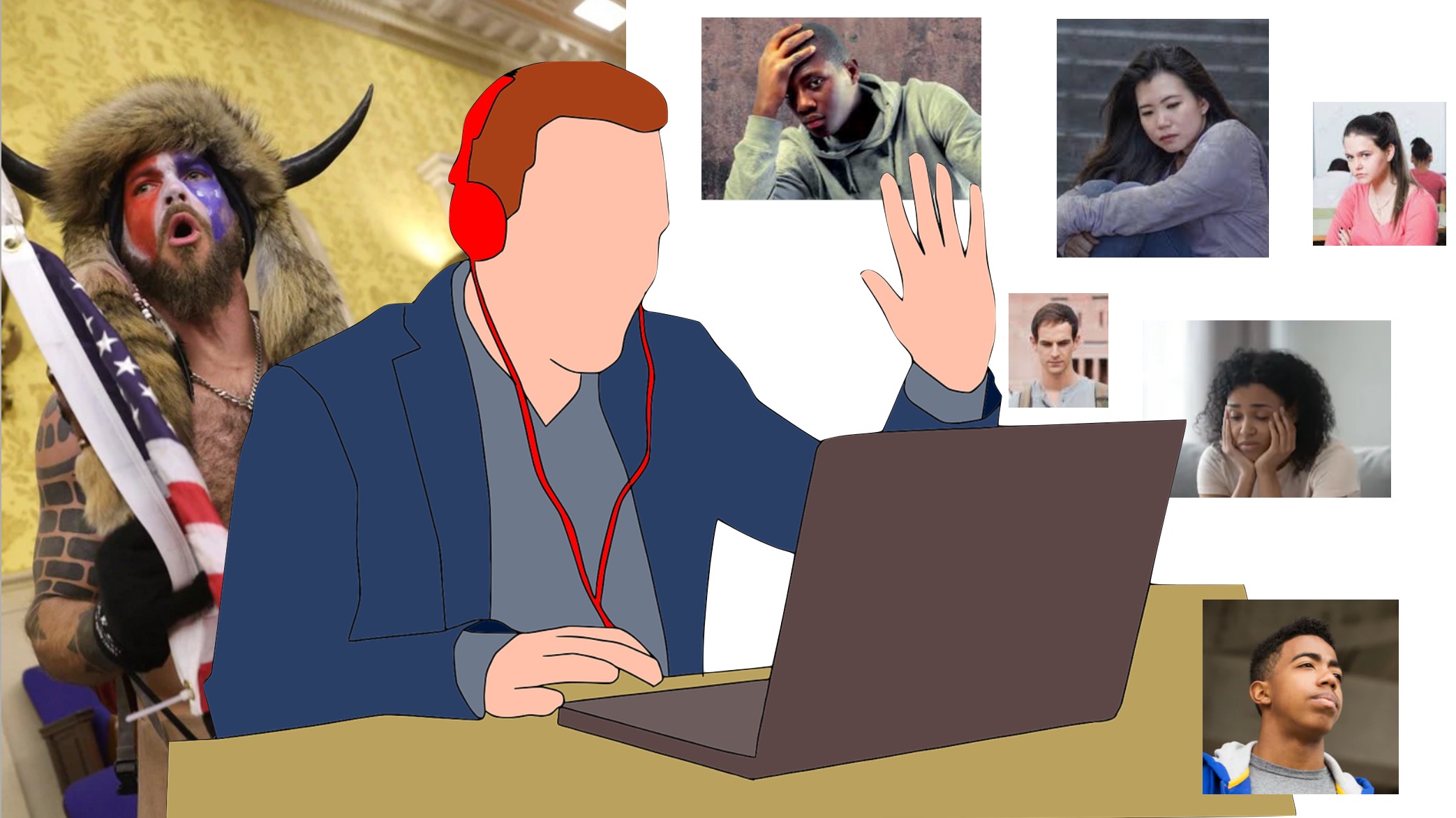
The rows of empty boxes had turned into windows. No more memes or messages or generic names. Most of my kids had turned on their cameras and were meeting my eyes – in some cases – for the first time.

So that’s what Kelsey looks like, I thought. Wow! Marquis is really built. Is that little kid in the grey hoodie really Caulin?

I got flustered and stopped talking, but the students took up the narrative for me.

Some of them mentioned watching videos on-line of the riot. They saw a guy with horns in the President’s chair?

“No, I said. “That was the Vice-President’s chair in the Senate.”

“Wasn’t there someone at someone’s desk?”

“Yes, that was Nancy Pelosi’s desk,” I said. “A rioter broke into her office and put his feet up. She’s the Speaker of the House.”

And so it went on for a few minutes. They brought up things they had seen and I either clarified or supported them.

As a whole, they were wealthy in details but poor in meaning.

Most of the white kids seemed to be taking it ironically. The black and brown kids were more quiet and subdued.

A white boy wrote in the chat that it was “Civil War 2: electric bugaloo.”

I said, “Yes, you’ve hit on an important point. Some of these folks may have been trying to start a new Civil War.”

I tried to put the event in historical context.

I told them how nothing like this had ever happened in my lifetime. That the last time people broke into the Capitol Building like this was during the War of 1812 when the British tried to force the US to become a colony again. However, that was a foreign power invading our country. Wednesday was our own citizens seeking to overturn the results of an election, trying to overwrite the will of the people.

That’s when the first black student spoke up.

“Mr. Singer, why were they waving Confederate flags?”

“Yes! That’s true, Jamal. Many of them DID have Confederate flags and that’s really important.”

Before I could say more I got a series of rapid-fire questions from the same group who had been silent up to this point.

“Why didn’t the police stop them?”

“Why’d they steal stuff? I saw some guy walking away with a podium.”

“Why they so mad?”

I smiled and said that these were all excellent questions.


I asked if any of them knew who George Floyd was.

No one responded.

I told them he was a black guy who was murdered by police when an officer knelt on his neck.

After that happened, there were protests by Black Lives Matter activists and others in several cities including Pittsburgh. The police showed up in riot gear. As these protestors demonstrated almost entirely peacefully – certainly more peacefully than what we saw in DC yesterday – more than 14,000 people were arrested.

“How many people do you think were arrested yesterday?” I asked.

“Didn’t someone die?”

“Yes, a woman was shot in the Capitol and three others died of medical emergencies. How many people were arrested?”

“None,” said a student of color who hadn’t participated before.

“Why none?” I asked.

“Because they was white.”

I told him that he right and wrong. Out of thousands of rioters who broke into the Capitol, thirteen people were arrested. And the reason there were only 13 was because they were white.

I told them that this whole affair needed to be investigated. That we needed to know how and why the police responded the way they did. That we needed to hold the rioters accountable. That we needed to make sure those who instigated this violence were made to pay for it, too.

“Is Trump still President?” Someone asked.

“Yes,” I said. “For about two more weeks. But there are a lot of people who think he should have to step down sooner.”

So we talked about how he could be removed from office. We talked about impeachment and the 25th Amendment. We even talked about how Trump was banned from Twitter and Facebook – how he couldn’t post or tweet but still could send a nuclear missile anywhere he wanted.

And then it quieted down.

I asked them if there was anything more they wanted to know or if there was anything else they wanted to say.

They were still.

A few cameras clicked off.

I told them that I was there if anyone needed anything, that their teachers were here if they were feeling anything and wanted someone to talk to.

And then that was it.

I made one of the most abrupt and inelegant transitions in my career and we returned to our normally scheduled lesson.

Did it help any?

I don’t know, but I told them what I could. I told them the truth as I saw it.

There was a time when I would have been more reticent about it.

But the day after domestic terrorists try to steal our system of government isn’t the time to hold back.

As a teacher, sometimes I feel so helpless.

There’s so much I’d like to do for my students.

I want them to get the resources they need. I want to stop the unfair testing, integrate their schools, keep them safe from gun violence and control Covid-19 so we can return to the classroom.

I want to live in a country where majority rule is cherished and protected, where no one thinks the collective will should be trumped by white privilege.

But when all those things are out of reach, I still have one thing left to give.

The truth.


Like this post?  You might want to consider becoming a Patreon subscriber. This helps me continue to keep the blog going and get on with this difficult and challenging work.

Plus you get subscriber only extras!

Just CLICK HERE.

Patreon+Circle

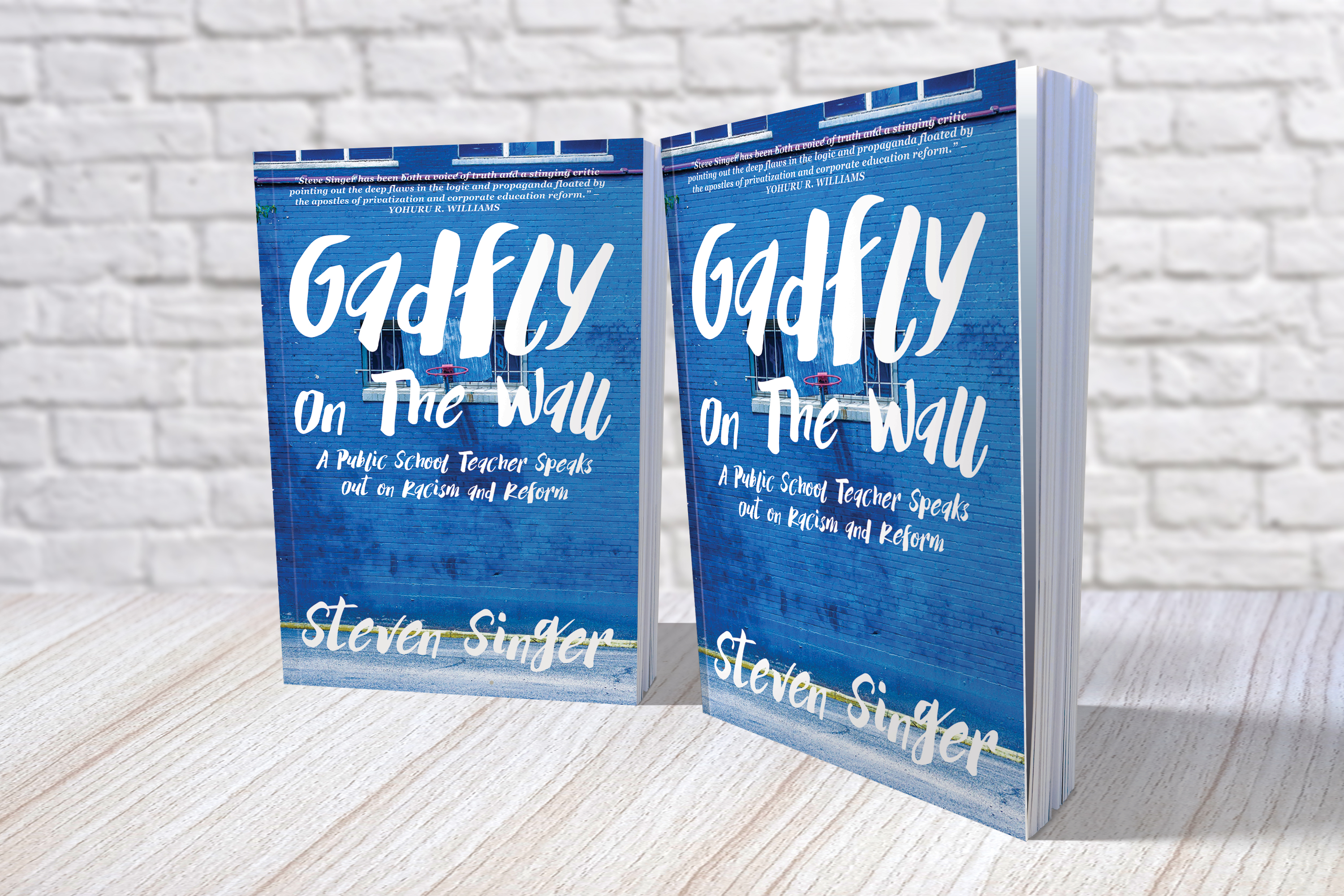
I’ve also written a book, “Gadfly on the Wall: A Public School Teacher Speaks Out on Racism and Reform,” now available from Garn Press. Ten percent of the proceeds go to the Badass Teachers Association. Check it out!

The Most Important Education Articles (By Me) That You Probably Missed in 2020

There were so many explosive stories in 2020.

From the never ending antics of our clown President to the Coronavirus to the continuing rise of White Supremacy, it seemed you couldn’t go more than a few days without some ridiculous headline assaulting your senses.

As a result, there were a lot of worthy, important articles that fell between the cracks – more so this year than any other.

Before we charge into the New Year, it might be a good idea to spare a look over our shoulders at these vital nuggets many of us may have missed.

On my blog, alone, I’ve found at least five posts that I thought were particularly important but that didn’t get the attention they deserved.

So come with me please through this survey of the top 5 education articles (by me) that you probably missed in 2020:

5) The Student-Teacher Relationship is One of the Most Misunderstood and Underrated Aspects of Education

Published: June 13 

Views: 940


 Description: Kids usually spend about 1,000 hours with their teachers in a single year. During that time we build strong relationships. And though just about everyone will tell you this is important, we’re often talking about different things. Some policymakers insist we prioritize an “instrumental focus” with students using their personal information to get them to behave and do their work. The goal is compliance not autonomy or problem solving. However, increasing evidence is showing the value of a more “reciprocal focus” where students and teachers exchanged information to come to a mutual understanding and shared knowledge. Here the goal is free thought, questioning, and engagement with authority figures. I provide my own personal experience to support the latter approach.


 Fun Fact: This post is full of letters my former students wrote to me during the pandemic. They highlight better than any study the value of authentic relationships to both students and their teachers.

4) Standardized Tests Increase School Segregation

Published: June 19 

Views: 690


 Description: The link between standardized testing and segregation is obvious but hardly ever discussed. In short, it goes like this. Even when students from different racial or ethnic groups aren’t physically separated by district boundaries or school buildings, the way we rate and sort these students within the same space causes segregation. This is because our manner of placing kids into classes, itself, is discriminatory, unfairly resulting in more children of color in lower academic tracks and more white kids in advanced placement. If segregation is an evil, so is the standardized testing often used to place kids in remedial, academic or advanced classes.


 Fun Fact: It seems to me this has immediate and important policy implications. There are so many reasons to end the failed regime of high stakes testing. This is just another one.

3) Virtual Instruction: Top 5 Pros & Top 5 Cons

Published: October 11


 Views: 622


 Description: Virtual instruction has been a hot button issue this year in the wake of school closings caused by the COVID-19 pandemic. The fact that in-person instruction is more effective has been used as an excuse to keep many schools open when logic, reason and facts would dictate otherwise. However, the kind of in-person instruction being offered in a pandemic is, itself, not as effective as the kind of in-person instruction offered under normal circumstances. Moreover, distance learning is not all bad. It does have some advantages such as it being generally low pressure, more difficult to disrupt class and easier to contact parents. At the same time, it presents unique challenges such as increased student absences, the problem of when and if to keep the camera on and difficulties with special needs students. 

Fun Fact: We desperately need an honest accounting of what is going on with real virtual classrooms around the country and how students and teachers are meeting these challenges. If there was more discussion about how to make distance learning better, the education being provided during the pandemic would be so much more effective than spending all our time and effort trying to reopen school buildings regardless of the risks of infection to all involved.

2) The Ongoing Study of How and When Teachers Should Praise Students

Published: February 2


 Views: 303


 Description: When should teachers praise students and when should they use reprimands? The research is all over the place. Some studies say praise is good but only so much and only in certain circumstances. Others say reprimands are more effective and still others caution against when and how to use them. My own experience has shown that honest praise and thoughtful reprimands are more effective than not.

 Fun Fact: This may seem like a simple issue but it highlights the complexities of teaching. Educators are not working with widgets. We’re working with real, live human beings. There is no simple solution that will work every time with every student. Effective teaching takes good judgement and experience. If we ever want to improve our school system, it is vital that we understand that moving forward.

1) Did Rosa Parks Really Support Charter Schools?

Published: January 29


 Views: 233


 Description: Forty years after the Montgomery bus boycott that was sparked by Rosa Park’s refusal to give up her seat to a white man, the civil rights icon lent her name to a charter school proposal in 1997. However, the Detroit school that would have been named for her and her late husband, the Raymond and Rosa Parks Academy for Self Development, was never approved. In any case, Charter school advocates like to pretend this mere proposal means Parks was an early champion of charter schools and thus that school privatization is an extension of the civil rights movement. Yet a closer look at the facts shows a sadder story. At the time of the proposal, Parks was suffering from dementia and under the sway of countless corporate consultants who used her name and clout to enact several projects. It ended in a protracted legal battle after her death between her family and the consultants to whom she willed a treasure trove of civil rights artifacts. 

Fun Fact: I think this is one of the most important articles I wrote in 2020. It’s not a pretty story, but it’s the truth. The school privatization movement likes to co-opt the language of the civil rights movement while violating the civil rights of students and families with substandard education and pocketing tax dollars as profit that were meant to educate children. The exploitation of Parks in this way is symptomatic of what you’ll see in any inner city charter school where entrepreneurs are getting rich off of the children of color whom they pretend to be serving.


Gadfly’s Other Year End Round Ups

This wasn’t the first year I’ve done a countdown of the year’s greatest hits. I usually write one counting down of my most popular articles and one listing articles that I thought deserved a second look (like this one). Here are all my end of the year articles since I began my blog in 2014:


2020:

Outrunning the Pandemic – Racing Through Gadfly’s Top 10 Stories of 2020


2019:

Sixteen Gadfly Articles That Made Betsy DeVos Itch in 2019


Screen Shot 2019-12-28 at 3.51.03 PM


2018:

A Gadfly’s Dozen: Top 13 Education Articles of 2018 (By Me)

thumbnail_IMG_8445


2017:


What’s the Buzz? A Crown of Gadflies! Top 10 Articles (by Me) in 2017


thumbnail_Screen shot 2017-12-26 at 3.44.17 PM


Hidden Gadfly – Top 5 Stories (By Me) You May Have Missed in 2017


7fd6a56c2ffc7a03c9fd2f431a543e92


2016

Worse Than Fake News – Ignored News. Top 5 Education Stories You May Have Missed in 2016


ignoring-wisdom


Goodbye, 2016, and Good Riddance – Top 10 Blog Post by Me From a Crappy Year


screen-shot-2016-12-27-at-3-29-49-am


2015


Gadfly’s Choice – Top 5 Blogs (By Me) You May Have Missed from 2015


Screen shot 2016-01-02 at 11.01.09 PM


Who’s Your Favorite Gadfly? Top 10 Blog Posts (By Me) That Enlightened, Entertained and Enraged in 2015


Screen shot 2015-12-30 at 12.57.49 AM


2014


Off the Beaten Gadfly – the Best Education Blog Pieces You Never Read in 2014


Wonderfull illusion art painting


Top 10 Education Blog Posts (By Me) You Should Be Reading Right Now!


computer-people-png-300x202


Like this post?  You might want to consider becoming a Patreon subscriber. This helps me continue to keep the blog going and get on with this difficult and challenging work.

Plus you get subscriber only extras!

Just CLICK HERE.

Patreon+Circle

I’ve also written a book, “Gadfly on the Wall: A Public School Teacher Speaks Out on Racism and Reform,” now available from Garn Press. Ten percent of the proceeds go to the Badass Teachers Association. Check it out!


Outrunning the Pandemic – Racing Through Gadfly’s Top 10 Stories of 2020

On most weekends back in the 1980s, you’d probably find me at TILT, the mall’s crowded video game arcade.

When I was about 12 – around ’86 or so – one of my favorite games was “Outrun” by Sega.

Ever play it?

In a cherry red Ferrari convertible with the wind blowing through my virtual hair, I’d race through various summer style environments from beach to forest, to mesa to mountains.

I even got to pick which song to play on the highway – something Latin, Caribbean, or just smooth and easy.

But the real kicker – the thing that really sold this wish fulfillment fantasy – wasn’t the cool car, clement weather or soundtrack.

It was the long haired swimsuit model sitting next to me in the passenger seat.

Not only was I a real badass racing through a summer dream, but I had someone by my side, reclining at ease, sharing the journey.

And if I crashed – which often happened cresting a hill – after the car flipped multiple times in the air – my digital 80s crush and I both ended up somehow unhurt on the road. She’d sit on the white lane marker staring at my dazed avatar with all the reproach that could be programmed into a mere 16 bits.

Sometimes I think that’s a good metaphor for blogging.

I’m still in the drivers seat, steering through the twists and turns of education, equity and politics. Yet sometimes I can’t help but hit an obstacle and go flying. Through it all there’s been one constant: you – my readers – relaxed and belted in for whatever may come.

I’ll admit, this year has been one heck of a bumpy ride.

From the global COVID-19 pandemic to the critical failure of government to deal with it at nearly every level, it’s been like some sort of science fiction fantasy more than anything else.

From the spectacular sore losership of Donald Trump to the science denial of his followers and the death cult of capitalism poisoning all in-between, it’s been a year to test the hopes of just about anyone.

So much pain, confusion and death. So much isolation, betrayal, bone deep exhaustion and depression.

I’d rather imagine myself parked on an overlook, leaning back in my red sports car watching the sun set with a good friend by my side.

Since we’re stopped for the moment waiting for the last zero on the dial to scroll up to a 1 and become that terrifying number of numbers, 2021, let’s take a look back at the year that was in blogging.

I’m not sure how to characterize it other than to say it must have been some kind of success.

About 49,000 more people read my articles this year than in 2019.

The site had around 347,700 hits this year – the most since 2017. My cumulative total in 5 and a half years even hit the 2 million mark (2,080,000 to be more precise).

Not bad for a school teacher, a laptop and a dream.

A lot of what I had to say in this year’s 72 posts focused on the pandemic and how our leaders were blowing it.

That sounds like rational criticism, but it was really just me pointing out what things looked like on the ground and begging the people in power not to put myself and the people I care about in jeopardy – with mixed results.

The other major theme was the Presidential election. The Democrats had their last chance to nominate and elect Bernie Sanders, the candidate best equipped to meet the times we live in. And they blew it again.

Neoliberalism triumphed. Only time will tell the price we’ll have to pay for that blunder. Will we destroy the neofacist architecture of the Trump years only to return to the corporatist utopia of Obama and George W Bush? And if so, will we still have any chance to tear that Hellscape down in favor of a world that actually values the people living in it more than the value they can create for the one percent?

On top of that were a smattering of articles about school issues, equity and how we might fix things.

Over all, I’d say I crashed the Ferrari more often than I navigated the hairpin turns. But every now and then I feel like I was heard, that I helped stop something even worse from coming our way.

And at the end of the day, we made it to the checkpoint.

We got an extended time bonus, and a chance to do it all over again next year.

Hopefully, it will be a more clear path.

Hopefully, we’ll still have a chance to cross the finish line.

And hopefully, you’ll still accept my invitation for another ride into the sunset.

Here are my top 10 articles of 2020 based on popularity:

10) Top 10 Reasons to Vote for Joe Biden in the 2020 General Election

Published: April 10


Views: 5,508


Description: When Bernie Sanders dropped out of the 2020 Democratic Primary, I could think of only these 10 reasons to vote for Joe Biden in the November general election: 1-10 were “He’s not Donald Trump.”


Fun Fact: Apparently, it was enough.

9) Public Schools Can Recover from the COVID-19 Quarantine by Skipping High Stakes Tests

Published: March 15


Views: 6,924


Description: When the COVID-19 pandemic first crashed down on us, I was one of many saying that high stakes testing made no sense as schools nationwide were closing. The best way to allow teachers to make up for lost time with their students was to prioritize learning over assessment.


Fun Fact: It worked. We actually cancelled the big standardized test in 2019-2020. And now here we are a year later in a similar position making similar arguments and the testing companies and their lackeys are fighting against us tooth and nail.


8) For Teachers, “Silence of Our Friends” May be Worst Part of Pandemic

Published: December 5


Views: 7,443


Description: The most depressing thing about the pandemic has been how uniform the attack has been on educators. Demanding a safe work environment for ourselves and our students has been seen as unreasonable by lawmakers, school directors, union leaders and even some public school advocates.

 
Fun Fact: If anything has the potential to unravel the ties made by pro-public school forces in the last few decades, it is this. I know people are scared that closing school buildings in favor of remote learning may give the upper hand to the ed tech industry when the pandemic is over. But if you can’t stand behind teachers’ right to life now, you cannot expect us to continue to fight for the profession, local control and your children later.

7) Covid-19 Has Eroded My Faith in Public Schools

Published: Nov. 14


Views: 7,763


Description: COVID-19 has shown a failure of leadership at every level – including our public schools. The damage has been enough to make anyone doubt everything – including the coherency of the public school project altogether.


Fun Fact: The biggest difference between this and the previous article is that this one is more a mark of despair. The other is more a mark of anger.

6) INCONVENIENT TRUTH: Remote Teaching is Better Than In-Person Instruction During a Pandemic

Published: Nov. 21


Views: 8,678


Description: When more than 19 million people have caught COVID-19 and 330,000 have died, it does not make sense to keep public schools open. This is an airborne virus that can cause life-long debilitating conditions even in those who survive or are asymptomatic. Yet you need a school teacher to explain to you why distance learning is better under these circumstances.


Fun Fact: Simple truths told simply. Ammunition to save lives. The fact that it’s necessary tells us more about human intelligence than any standardized test ever could.

5) There Are No Bernie Bros, Just Diverse Supporters Being Made Into What They’re Not

Published: February 8


Views: 11,775


Description: One of the major media criticisms of the Bernie movement was that it was racist, sexist and homophobic. Yet a substantial portion of supporters were female, racially diverse and/or LGBTQ. For example, women under 45 made up a larger share of Sanders’ base than men of the same age. Two women of color, Ohio state Sen. Nina Turner and San Juan, Puerto Rico Mayor Carmen Yulín Cruz, were co-chairs of the campaign, along with Indian-American Rep. Ro Khanna (D-CA) and Ben & Jerry’s co-founder Ben Cohen. Sanders’ campaign manager was longtime progressive activist Faiz Shakir.

 
Fun Fact: File this in the history books under Gas Lighting.

4) Bernie Sanders Supporters Have Every Right to Be Furious

Published: April 12


Views: 21,984


Description: Don’t tell me this primary was fair. When Bernie was winning state after state, the media acted like it was a literal invasion of brownshirts. Yet when Biden was winning, it was the best news since sliced bread. Bernie was running away with the primary until nearly all the other candidates mysteriously dropped out all at once right before Super Tuesday. And now we find out Barack Obama gave them each a call before hand – putting his finger on the scale. The Democratic National Committee literally pushed to continue primaries in Illinois, Florida and Arizona during the pandemic in case waiting might bolster Bernie – the candidate with policies tailor made to fight COVID-19. And the result was a flood of sick people and a nearly insurmountable delegate lead.


Fun Fact: Was this the moment my heart died? No, I think it was already on life support from 2016. And the subsequent response to the pandemic only took out another ventricle.

3) Trapped On a Runaway Train to a Public School Disaster

Published: June 30


Views: 24,185


Description: When the pandemic began, many of us didn’t expect it to last that long. Certainly we wouldn’t still be in the same situation as summer rapidly came to a close and school was about the begin again! Right? What would we do? What should we even hope for?

 
Fun Fact: Despite heavy doses of despair, I think I saw clearly what needed to be done even this far back. Many policymakers still don’t see it as a New Year is about to dawn.

2) You Can’t Have My Students’ Lives to Restart Your Economy

Published: April 18


Views: 25,003


Description: When the pandemic began, far right ideologues threatened to reopen schools to keep the economy going. Almost everyone jumped on them for being uncaring idiots willing to sacrifice children on the altar of commerce.

 
Fun Fact: What was an unpopular opinion in April became mainstream by the end of August as the media bombarded readers with unsubstantiated (and subsequently disproven) reports about how children couldn’t be hurt by the Coronavirus. Subtext: And who gives a crap about the teachers who would have to put their lives on the line to educate these children?

1) Mask-to-Mask Instruction May Be More Problematic Than Distance Learning

Published: July 11


Views: 33,446


Description: Everyone knows distance learning cannot equal in-person instruction. However, we often ignore the fact that in-person instruction is not the same during the pandemic as it was before COVID-19. Social distancing, limited mobility, plexiglass barriers, cleanliness protocols – all have an impact on academics. Reopening physical school buildings is not returning to the kind of face-to-face instruction students enjoyed as recently as January and February. It is a completely new dynamic that presents as many difficulties – if not maybe more – than learning on-line.

 
Fun Fact: More ammunition to explain the simple truths of this brave new world where we find ourselves these days. Sadly, it has been ignored as often as it has been heeded. Perhaps more.


Like this post?  You might want to consider becoming a Patreon subscriber. This helps me continue to keep the blog going and get on with this difficult and challenging work.

Plus you get subscriber only extras!

Just CLICK HERE.

Patreon+Circle

I’ve also written a book, “Gadfly on the Wall: A Public School Teacher Speaks Out on Racism and Reform,” now available from Garn Press. Ten percent of the proceeds go to the Badass Teachers Association. Check it out!

Covid-19 Has Eroded My Faith in Public Schools

I am a public school advocate.

I teach at a public school.

My daughter goes to a public school.

I have spent most of my professional career fighting for public schools against every form of school privatization imaginable.

But since the beginning of this school year and the incredibly reckless way many public schools have dealt with reopening and keeping students and staff safe, I feel much of that enthusiasm drying up.

It’s not something I’m proud of feeling.

I’m actually kind of embarrassed about it.

But there are so many people I will never be able to look at the same way ever again.

There are so many organizations, unions, school boards, administrators, policy makers who have lost my trust – perhaps forever.

I’m not saying I love charter schools or private schools.

I don’t.

I still think they’re mostly scams bent on using the laws to cash in on kids while taking our tax money and running.

But the idea that public schools are fundamentally better – that idea has suffered tremendously.

I used to believe that local control was something to cherish, that a board made up of neighbors duly elected by the community would more often than not have the best interests of that neighborhood at heart when making decisions.

And, frankly, I just don’t feel that way anymore.

How can you preserve such an ideal in the face of so much evidence to the contrary – so many school boards who vote to open classrooms – and keep them open – despite raging infection rates? Despite students and teachers getting sick? Despite quarantines and warnings from epidemiologists?

SCHOOL BOARDS

McKeesport Area School District, where I live, has had more than 14 cases of Covid among students and staff since September and the school board isn’t even considering closing.

In fact, in October when most of these cases were coming to light and Center for Disease Control (CDC) guidelines suggested schools should temporarily close to ensure the virus wasn’t running out of control, administration chose to ignore the CDC on the basis of advice by the Allegheny County Health Department.

Seriously.

Administrators prioritized local officials telling them what they want to hear over national experts in infectious disease with hard truths. In short, keeping the doors open was considered more important than student safety.

Meanwhile, the district where I work, Steel Valley Schools, smartly decided to open with virtual learning in September. However, the board decided to change to a hybrid model in November to test the waters.

Yes, the board decided to make students and teachers guinea pigs in an experiment to see if they could somehow avoid getting sick while cases surged throughout the country and state.

And after only five days, a high school student tested positive and numerous kids and staff had to quarantine.

Yesterday the state Website announced that our county, Allegheny County, – which had been considered moderate in terms of infections – is now in the substantial category. The incidence rate is 138.7 per 100,000.

Also in the substantial category are nearby Armstrong, Butler, Beaver, Washington, and Westmoreland counties.

Will Western Pennsylvania schools do the right thing and go to remote learning? Will Steel Valley finally give up this in-person experiment? Will McKeesport?

Without a strong leader like a Governor or President to order a shut down and take the heat, I’m not sure local school directors will have the courage to act.

They keep blaming everything on academics, saying they have provide what is best to help students learn – never mind the dangers to child, parent and teachers’ bodies. But even more hypocritically they ignore the well being of huge swaths of their students who refuse to take part in their in-person experiment.

In both districts, about 60% of parents favor in-person schooling and 40% prefer remote.

So the boards are doing what the majority wants, but it’s a slim majority.

There is a significant portion of parents who feel these in-person plans are unsafe and very little is being done to educate their children.

At McKeesport, parents can enroll their kids in the district cyber program. No live teachers. No synchronous lessons on-line. Just a canned credit recovery program through the Edmentum company.

It’s terrible, and administration knows it’s terrible.

I’ve heard Superintendent Dr. Mark Holtzman say as much at school board meetings. But he and most of the board feel they have done all they need to do by providing this option.

They are actually betting that the poor quality of the cyber program will increase the number of parents sending their kids to in-person instruction.

And I’ve heard similar comments among administration at Steel Valley.

There at least we don’t force kids into our (likewise crappy) cyber program. We just have classroom teachers post assignments on-line.

Remote students in K-5 get live teachers instructing on-line. But remote students in 6-12 only get one half day of synchronous instruction on-line a week. The rest is asynchronous worksheets, etc. And somehow that’s supposed to be enough.

We have enough teachers that we could provide more, but why encourage remote learning? Might as well let them eat asynchronous and hope their parents will lose hope and just make them come to school during a global pandemic.

I have zero respect for administrators who think this way. I have zero respect for school board members who vote for it.

So how do I keep my respect for local control and the school board system?

This is very personal to me.

I have heart disease and Crohn’s Disease. My doctors tell me I can’t risk my life going into the school buildings to teach as infections run rampant through the state.

But my district has refused to allow me a safe work environment.

I am not allowed to teach remotely.

I have to burn my sick days so I can stay safe at home. But at the same time, I’m encouraged to take overtime hours to put up remote lessons, grade papers and contact parents.

I’m ready to do that as part of my job, but they won’t let me. They’d rather pay me and a sub who babysits my students in-person while I do what I’m allowed to do remotely at the same time.

So how do you look an administrator in the eye who refuses to lookout for his own employee’s safety?

Answer: you can’t. Ever, ever again.

UNIONS

And the same goes for many in my union.

Let me tell you, I love my union. I’m a union man. I believe in collective bargaining and worker solidarity.

I just wish my local did, too.

Because the leadership is perfectly fine with agreeing for the staff to work in unsafe conditions and no special protections for those like me who are more likely to contract the disease.

Leaders throw up their hands and say “We’re an association not a union,” and “If the boss says you come back to work, you have to come back to work.”

It’s even worse that I work in Homestead – the site of the historic strike.

So how do I look union leaders in the eye who have no problem throwing me to the wolves?

Answer: I can’t. Never, ever again.

And the state and national unions aren’t much better.

To be fair, I was pleasantly surprised when Pennsylvania State Education Association (PSEA) President Rich Askey called for schools in areas with substantial infection rates to follow state guidelines and go to remote learning.

This after months of…. Nothing.

And what is PSEA threatening if districts don’t comply?

Nothing…. So far.

But I guess saying something about it is better than what they were doing before.

The national unions – the National Education Association (NEA) and American Federation of Teachers (AFT) – certainly haven’t taken any hardline stances.

No one wants to rock the boat, but we’re talking about human life here.

There is no place further back to draw the line. We can compromise on salary and benefits but not on health and safety!

My God! That’s a human right!

We’re either unions in solidarity with our members – all our members – or we’re not.

And right now there is no solidarity, no leadership, nothing.

When I say things like this, people tell me I’m angry.

OF COURSE I’M ANGRY!

How many lives are we going to put at risk before it’s enough?

How many children? How many parents? How many staff?

Even if healthy people catch this thing, even if they get over it, they could have lifelong debilitating injuries from it.

That is not worth risking.

EDUCATION ACTIVISTS

And even the education activist community has been complicit in it.

When I tell some of my fellow grassroots organizers that schools should be open remotely, they complain about how that opens an opportunity for ed tech companies, charter and private schools.

They’re afraid teaching on-line will make ed tech companies an eternal part of school curriculum and replace real, live educators.

But that’s obviously false.

We’ve seen during lockdown periods that no one likes asynchronous teaching programs. No one likes these ed tech learning platforms. What works best in these times is curriculum created by classroom teachers taught by those classroom teachers to their students over online platforms like Zoom.

The technology should be merely a tool to connect students and teachers not as a provider of that learning.

The backlash against ed tech has been far greater than any embrace.

Yet some education activists decry how public schools going remote makes privatized schools who don’t look good.

That’s nonsense, too.

Teaching recklessly is bad – no matter who does it. If parents want to endanger their own kids, that’s their prerogative, but in the long run no one will earn brownie points for enabling such negligence.

However, where privatized schools will earn points with parents is for providing high quality remote learning when public schools refuse to do so.

I know all of them aren’t doing that. But some of them are.

And, frankly, they deserve any praise they get for it.

Look, I love public schools, too. But when public schools abandon their duties to their students as so many have done during this crisis, they deserve to have their students stolen. Even if these privatized schools often have more money to work with in the first place.

CONCLUSIONS

Bottom line: This is a crisis the school board system should have been able to overcome.

It’s a crisis the unions should have been able to battle.

It’s a crisis the activist community should have been able to see clearly.

But leadership has failed at every conceivable level. Time and again.

Strangely, that’s the only saving grace of the whole situation.

It isn’t the system that failed. It is the people in power in the system.

I know in my heart that the best way to run a school is still duly elected members of the community.

Just not THESE duly elected members.

I know that unions are vital to protecting workers rights. Just not unions lead by such wishy washy timid officers.

I know that education activism is necessary to keeping school privatization at bay. But activists can’t let their fears of what might be thwart people’s health and safety right now.

That’s the problem with Democracy. The leaders you get are representative of the community.

And our communities are perverted by one overwhelming belief – capitalism.

That’s why the schools are open. School boards are afraid keeping them closed will hurt business in the community.

That’s why administrators make such reckless reopening plans. They’re afraid that if we stay on remote it will become obvious how irrelevant they are to the running of a virtual school.

That’s why union leaders put up next to no resistance. They’re more afraid of furloughs than death or lifelong health consequences.

That’s why some parents support reopening schools – so they have someone to watch their kids while they’re at work. They never spare a moment for how the government is cheating them out of stimulus checks, mortgage relief, rent forgiveness, free testing, hazard pay and healthcare so they don’t have to put their own lives on the line working during a pandemic.

In all honesty, we were a sick country long before COVID-19 hit our shores.

We are sick with outdated and malicious economic ideas.

When you look across the ocean at the more socialist countries, you see much better plans to deal with the pandemic. Not perfect, but better.

When everything isn’t dependent on money changing hands, you can more easily prioritize human life.

So, yes, my faith has been shaken in our public schools.

I still think the idea of a public school is one to be cherished and fought to protect.

But the leaders we have – nearly all of them – should be rejected.

We need an army of citizen activists, parents and teachers to come forward at the first opportunity to replace them.

Anyone in a leadership role this year should have to explain themselves – what did you do to protect students and staff during the pandemic?

If they can’t prove they took real steps to keep people safe and not sacrifice the people they were charged to protect on the altar of capitalism – if they can’t do that they should step down.

They should step down with tears in their eyes and forever have their names sullied by their cowardice and stupidity.

They have failed us all.


Like this post?  You might want to consider becoming a Patreon subscriber. This helps me continue to keep the blog going and get on with this difficult and challenging work.

Plus you get subscriber only extras!

Just CLICK HERE.

Patreon+Circle

I’ve also written a book, “Gadfly on the Wall: A Public School Teacher Speaks Out on Racism and Reform,” now available from Garn Press. Ten percent of the proceeds go to the Badass Teachers Association. Check it out!
I Just Want to Teach, but My District Won’t Let Me Do it Safely

I love teaching.

But I can’t do it if I’m dead.

Therein lies the back to school nightmare I’ve been living through for most of the summer and fall.

The Coronavirus pandemic has affected people unequally.

Folks like me with pre-existing conditions are at greater risk from the virus than others.

I have heart disease and Crohn’s Disease.

My doctors tell me that I am more susceptible to contracting the virus because my medications suppress my immune system. And that also means that if I do contract the disease, I will be more likely to have severe, life-threatening complications from it.

So what am I to do?

The western Pennsylvania district where I work, Steel Valley, is reopening next week with a hybrid model.

The United States recorded more than 98,000 coronavirus cases yesterday – the highest single day count since the pandemic began. Two dozen states – including Pennsylvania – are reporting their worst weeks for new cases — and none are recording improvements.

This is not a good time to be reopening schools.

The district originally opened in September with virtual instruction for all students, and it was a huge success.

I taught my classes online, we’ve bonded and made academic gains I wouldn’t have believed possible with this model just a year ago.

However, starting Wednesday, about 60% of parents in my district have chosen to send their kids back to the buildings.

Of these, half the students will come in during the morning and half in the afternoon. Each will go through all their classes in 20 minute periods. On Fridays, the buildings will be closed and teachers will instruct virtually for half the day and plan during the other half.

The new reopening plan cuts instruction time by half and doesn’t meet parents need for childcare or certainly student safety. But it is better than being open 5-days a week and it provides the possibility of social distancing.

School directors said that this schedule was just a test to see if in-person instruction was feasible. They plan to reevaluate the measure in three weeks and decide whether to fully reopen in December or go back to virtual instruction for all students.

Nevertheless, this experiment presents problems for me.

Being in the school building, being in the classroom in close proximity with tens of middle school students – especially during a time when COVID cases are surging throughout the county – puts my life in danger.

So I went to my principal asking if I could continue to teach online.

I documented my conditions, gave him doctors’ notes, and had my doctors fill out pages and pages of questions from the district’s lawyers.

In the end, my principal told me the district could not meet my request.

Administrators could provide some protections like a plexiglass barrier and take me off hall duty, but they couldn’t let me continue to teach remotely.

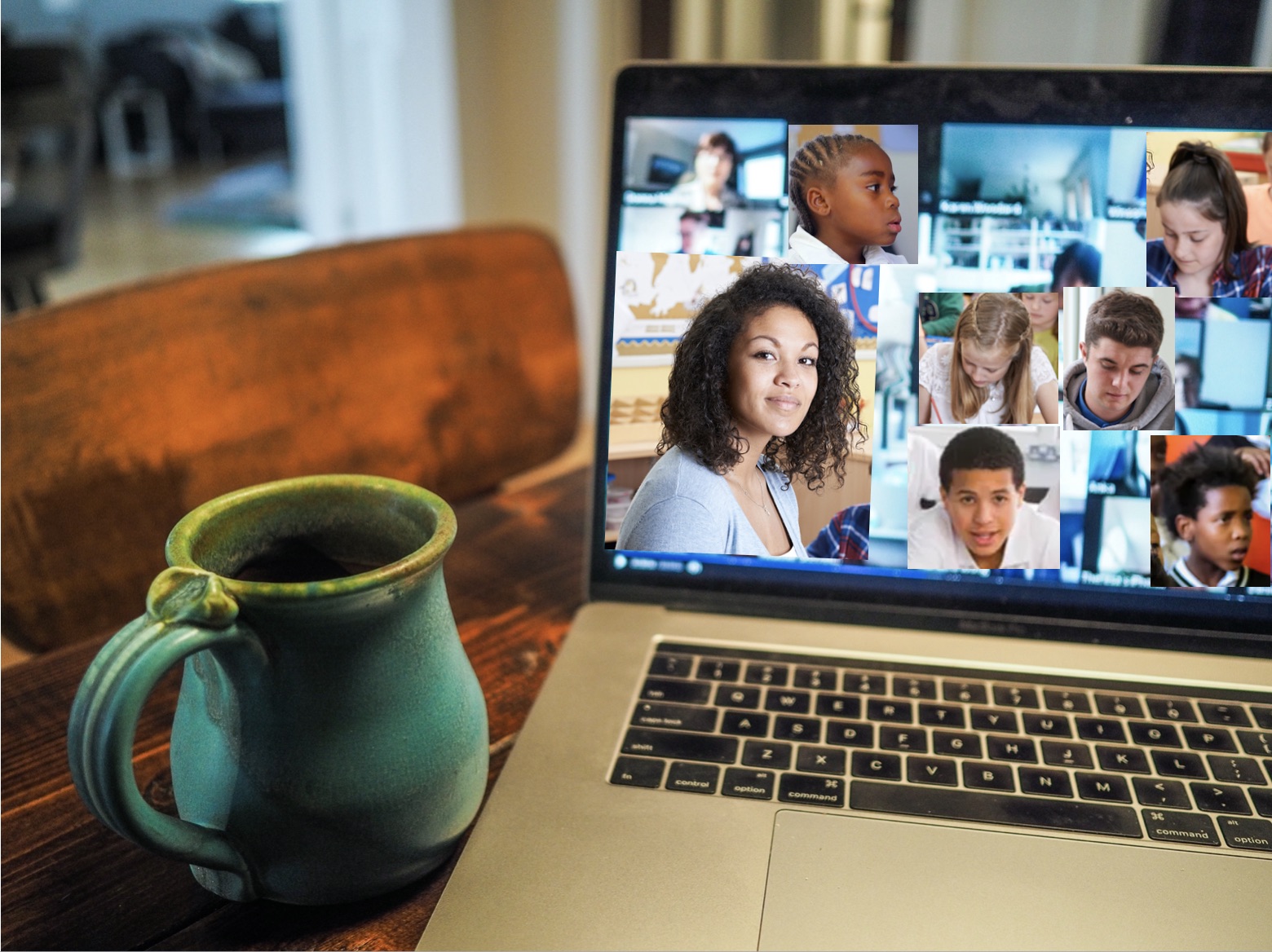
Certain teachers in grades K-5 have been given this option, but not secondary teachers like me. Elementary students whose parents don’t want them to return to the building will get full synchronous virtual instruction with a teacher through a video conferencing site like Zoom. Secondary students who do not return to the buildings will only get asynchronous assignments most of the week posted by their classroom teachers.

He suggested I look into taking a leave of absence.

And I guess I can see where he’s coming from.

If administrators let me teach remotely, it’s possible enough students would return to the classroom that the teachers willing to return wouldn’t be enough to meet the load. My absence from the building might necessitate a substitute teacher to be in the physical classroom with students.

Why pay for two teachers when you only need one?

Except…

…I’LL STILL BE PAID WHEN I’M ON LEAVE.

It’s just that then I’d have to sit at home instead of teach my students.

So benching me doesn’t save the district any money.

In fact, it will cost the district MORE money for me to stay home, because I could still do everything they expect of me and more for the sizable number of students whose parents say they aren’t returning.

So I brought this up to my principal figuring he must have overlooked it.

But no. He said he knew all about it.

He said this is what the district’s lawyers were telling him to do so that’s what he was going to do.

I couldn’t believe it.

I went to school board directors I had developed a relationship with teaching their children, going on field trips with them, working with their spouses.

I got the same answer.

So here I am – being asked to choose between my life and my livelihood.

Go to work and risk everything – or sit at home burning my sick days and still collecting a paycheck.

This is not what I want.

It’s not good for anyone.

I teach 8th grade Language Arts. Last year I also taught 7th grade.

So many of my students this year were in my class in the spring. We already know each other.

I’ve already built a rapport with them. I know what their academic deficiencies are and what they missed as we went to remote learning in March when Coronavirus cases were much fewer than they are now.

But more than that, I know what they like and dislike. I know their hopes and fears. I know what motivates them and what supports their individual learning.

I’ve seen tremendous growth the first 9-weeks of school and could really help them overcome the gargantuan hurdles that will be inevitable the rest of the year.

And that’s what I’d really like to do.

I don’t want to sit home collecting the taxpayer’s money when I could be making a difference in these young people’s lives. I don’t want to have to wait for an outbreak to allow me to continue my work.

Being benched like this makes me feel so worthless, and I’m not.

I’m a heck of a teacher! I’m Nationally Board Certified. I was nominated for the Champions of Learning Award from the Consortium for Public Education in 2018. I won the Ken Goodman “In Defense of Good Teaching” Award last year. In fact, the University of Arizona was going to fly me out to Tucson to accept the award but had to cancel due to the pandemic.

I gave a TED talk on education at Central Connecticut University in 2018. I wrote a book called “Gadfly on the Wall: A Public School Teacher Speaks Out on Racism and Reform” in 2017 and have written a nationally recognized blog since 2014.

Wouldn’t everyone be better served with me instructing my students rather than being thrown to the side?

That can’t happen without help.

I’m just a human being like anyone else.

I have people who care about me and whom I care about.

I have a wife and daughter.

I can’t roll the dice with my life or chance taking an infection home to my loved ones.

Is a safe work environment really too much to ask?

I don’t want to sit at home.

I want to teach.


Like this post?  You might want to consider becoming a Patreon subscriber. This helps me continue to keep the blog going and get on with this difficult and challenging work.

Plus you get subscriber only extras!

Just CLICK HERE.

Patreon+Circle

I’ve also written a book, “Gadfly on the Wall: A Public School Teacher Speaks Out on Racism and Reform,” now available from Garn Press. Ten percent of the proceeds go to the Badass Teachers Association. Check it out!


I Can’t Shield My Daughter From Both Coronavirus AND Edmentum – Our District’s Crappy On-line Learning Platform

Being a parent during a global pandemic means having to make difficult decisions.

The most pressing of which seems to be: from which Coronavirus spawned horror should I shield my child?

As schools slowly reopened in my neck of the woods, it was basically a choice between in-person instruction or remote learning.

Do I allow my child the benefits of a living, breathing teacher but risk the COVID-19 incubator of a physical classroom environment – or do I keep her safe at home but parked in front of a computer all day?

It’s not an easy call.

On the one hand, in-person learning is nearly always more effective than distance learning.

On the other hand, I don’t want her to get sick or become a Typhoid Mary bringing the disease into our house and infecting the rest of the family.

In any sane country, I wouldn’t have to make such a choice. Where infection rates are moderate to high, schools should be closed and all instruction virtual.

But American governance in 2020 is not nearly so rational.

In the absence of strong, sane leadership, each school district is its own fiefdom marching to the beat of its own discordant drum.

Even in Western Pennsylvania, my neighborhood school is leaving it up to parents whether to potentially endanger their children or not.

It doesn’t have to be this way.

We could refuse to take chances. We could keep all students online and that would increase our academic options.

After all, there is more than one way to do remote learning.

We could ask the district’s classroom teachers to design instruction tailor made to their students but merely delivered online.

Or we could use a prepackaged platform to deliver that instruction.

To me, it’s obvious which is better.

One maximizes academic outcomes by making the virtual experience as much like the in-person experience as possible with multiple daily interactions between teachers and students. The other delegates the responsibility of educating to a corporation with minimal social interaction between students and educators.

The teacher led option is the way to go, but it only works at most districts if they give up the myth that they can make in-person instruction feasible during a pandemic that has already infected more than 7 million people in this country and killed 200,000 and counting.

In districts like mine where community leaders and even some school directors are committed to keeping the buildings open so that they can justify keeping open restaurants, bars and other establishments, there is a disincentive to even allow this third option. If the public chooses it, the local economy might suffer.

So they’re committed to giving people a choice – just not THAT choice.

If they can only choose between canned cyber curriculum or fresh but dangerous in-person models, they’re betting parents will choose the latter.

And in many cases they are. But a significant number are not.

In the McKeesport Area School District (MASD), where I’ve lived most of my life, nearly a third of the parents have chosen distance learning for their children instead of a half day hybrid model. One would think that would free up enough classroom teachers to offer synchronous, authentic instruction. Students could have lessons from a certified district employee with years of experience instructing children of that age, grade and subject matter. Kids and teachers could develop trusting and caring relationships and work together to create the best possible learning environment.

Some local districts are actually doing that.

But not McKeesport.

Instead the district is using its existent on-line credit recovery program for all virtual students.

The platform is Calvert Learning, a product of the ed tech giant Edmentum.

This multi-million dollar global company (it was sold for $143 million in 2010) is best known for creating Study Island and other standardized test prep based learning platforms.

The problem is it was never meant to be used as the sole provider of coursework for thousands of students in a single district.

In fact, the specific Edmentum product being used by MASD – Calvert Learning – was originally intended for home school students.

It was created for K-8th grade, but when added to Edmentum’s Coursework platform, the company claims to be able to offer credit recovery – I mean academic classes – for K-12 and beyond.

As a parent who has spent countless hours helping his daughter navigate it, let me tell you – it’s a mess.

The instruction and assignments it provides are developmentally inappropriate, assesses things it hasn’t taught, and are filled with grammatical and spelling errors. Moreover, the pace it prescribes violates the guidelines Edmentum gives to parents about how much time students should spend on-line.

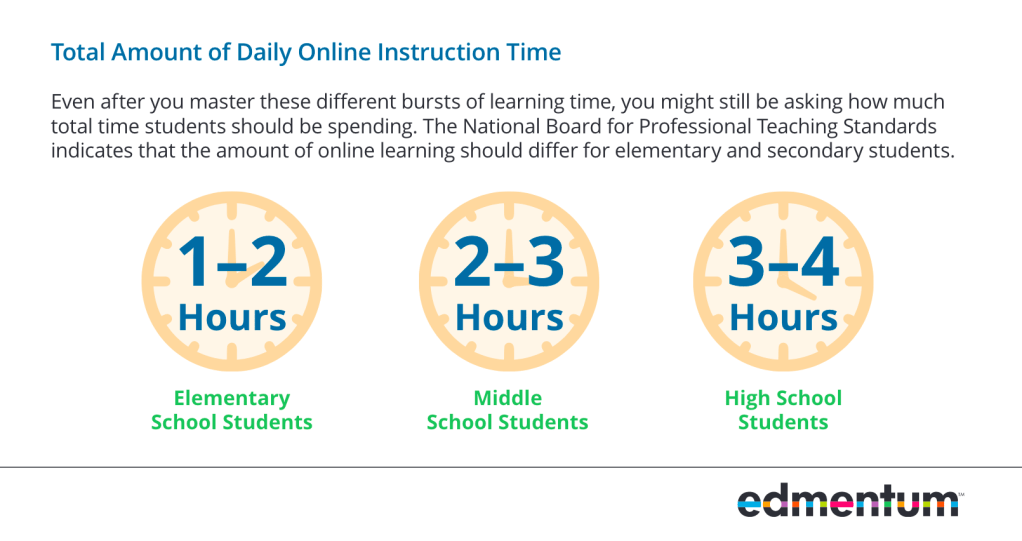
According to “A Parent Guide: Supporting Your Child During Virtual Learning,” provided by Edmentum, cyber students should limit their time online. Elementary students should spend not more than 1-2 hours a day, middle school students 2-3 hours, and high school students 3-4 hours.

My 6th grade daughter typically spends 7-8 hours a day just to barely get things done – and that’s not counting 2-3 hours on the weekends.

I’ve seen her struggle through passages that are written far above her reading level.

For example, she completed a unit on characterization where she was required to read O. Henry’s “The Ransom of Red Chief.”

I know the story well, because as a middle school teacher, I’ve taught it to my 7th grade students from time-to-time. However, the version I’ve used is not the original that O. Henry wrote. It is brought down to the level of a middle schooler and unnecessary attitudes of the time are downplayed.

In the original, one of the characters, Sam, uses big words to show how smart he is. The version I use still has him do that but reduces its frequency so that middle schoolers can understand him. After all, 6th graders shouldn’t have to wrestle with “philoprogenitiveness,” “chawbacon” and “whiskerando” just to grasp a pretty basic plot.

Moreover, the story was published in 1907. The original text throws out numerous instances of casual racism against Native Americans that serve no point in the story. Does my daughter really need to be subjected to dehumanizing native peoples as mere “red skins” just to get a lesson on characterization?

Clearly this unit was not developed with child psychologists, practicing middle school Language Arts teachers or even people of color in the room.

If that weren’t bad enough, the questions are full of grammatical errors and typos.

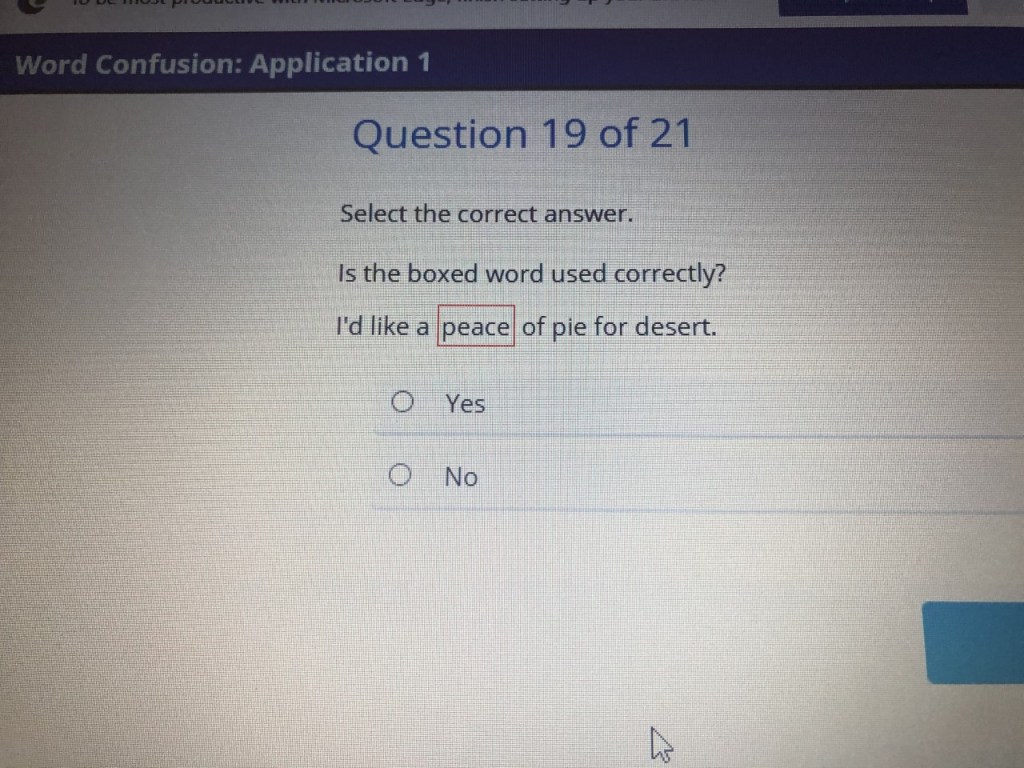
One question about homophones asks students to consider this sentence:

“Select the correct answer.

Is the boxed word used correctly?

I’d like a PEACE of pie for desert?”

Students were asked if “PEACE” is correct – Yes or No. They should know that PIECE is actually the right word.

However, the question made no mention of the misuse of “desert” when the authors clearly meant “dessert.”

That’s the kind of thing that really confuses a student trying to make her way through a program all by herself.

On many assessments, she is asked things that were never taught in the section that was meant to be assessed. I know this is status quo on standardized tests, but is it fair to ask this of a child navigating an online program without even a living teacher to offer support and guidance?

In a social studies assessment on Neolithic peoples, many of the questions had nothing to do with the subject matter. They asked students to infer something based on a passage and none of the multiple choices were entirely correct. You had to pick the option that was least incorrect.

This is some crappy academics being pawned off on parents and students.

And it’s not cheap.

MASD paid $146,302.25 for 40 licenses to Calvert, Exact Path K-5, Courseware for 6-12 and other online services. When hundreds of additional parents asked for their students to be put on the cyber program, the district purchased 500 more licenses from Calvert for a bundled rate of $112,500. That’s $225 per license. Normally they are $450 per license.

Imagine if we put our tax dollars and our teachers to educating these students instead of seeding our responsibility to a corporation for hire.

And we could do it, too.

I work at Steel Valley School District.

Unlike MASD, we began the year with a 100% virtual program for all students. We conduct fully synchronous classes online designed entirely by the classroom teachers. And we post materials on Google Classroom so that students who miss the live Zoom meetings can watch videos of the lesson and do the work.

I’m not saying it hasn’t been difficult or that it’s without problems. Nor is such an endeavor better than in-person learning in a safe environment.

But the teacher-led remote model is the best that can be provided under the circumstances.

Districts that throw students to the whims of corporate educators for hire are shirking their duties.

They should face the realities of the world we live in.

If Coronavirus infections are significant in your county, you should not be offering in-person schooling. You should be offering the best remote option available – and that’s the teacher-led cyber option.

If only my home district knew it.

Meanwhile, my daughter has to struggle through with the cold comfort that at least she won’t get sick jumping through the hoops her school board is too partisan to eliminate for her.

I’m right next to her at the dining room table feeling guilty for putting her through this.

But what else could I do?


Like this post?  You might want to consider becoming a Patreon subscriber. This helps me continue to keep the blog going and get on with this difficult and challenging work.

Plus you get subscriber only extras!

Just CLICK HERE.

Patreon+Circle

I’ve also written a book, “Gadfly on the Wall: A Public School Teacher Speaks Out on Racism and Reform,” now available from Garn Press. Ten percent of the proceeds go to the Badass Teachers Association. Check it out!
The Everyday Exhaustion of Teaching During a Global Pandemic

Teaching is one of the few things in life that is not concerned with now.

It is essentially about the future.

We put all this time and energy into helping kids learn. Why?

Not so that they’ll be able to do anything today. But so that they’ll be able to do things tomorrow.

Sure they may be able to read better or solve math problems, but the reason we want them to know that isn’t so much about what they’ll do with it as adolescents. It’s how those skills will shape the people they grow up to be.

It’s an investment in their future and ours.

We take a bit of today and invest it in tomorrow.


And during a global pandemic that can be especially hard.

The west is on fire. Storms are threatening our southern coasts. Police brutality is out of control and bands of neofascist thugs are given free rein to beat and murder protesters. We’ve separated immigrant families and put their kids in cages. The President has lied to us, disparaged our troops, bragged about breaking countless laws and the government is powerless to stop him. Our political system and social fabric is coming apart at the seams. And everyone from the average Joe to the lawmakers who represent him can’t get up the gumption to take precautions against the killer virus that has already put more Americans in their graves than every war since WWII.

You look at the raging dumpster fire around you and wonder – how do we invest in the future when we aren’t sure there will be one?

I’ve had students in my on-line class for only two days so far.

And it’s been great.

They show up in record numbers smiling and ready to learn.

We talk, they tell me about their summers, and I remember how much I love teaching.

But I had to fight almost every day from June through August just so the school building wouldn’t become an incubation center for COVID-19 and classes could be conducted through the Internet.

I’m not saying it was all me that did it, but I fought and worried and cajoled and wrote and begged and did everything I could think to do. And it very nearly didn’t happen.

Summer is supposed to be a break after the stresses of a long school year. And 2019-20 was perhaps the most difficult year I’ve ever had teaching.

But 2020-21 has already promised to be much more challenging.

After all, when you have to fight just for the safety of your children and yourself as a prerequisite to everything that happens in your class, how much strength is there left for actual teaching?

My district has committed to being on-line only through September, so the fight continues month-by-month.

Where are the local newspapers that would have reported on each school district as people test positive for the virus and others are contact traced? We closed most of them and downsized the newsrooms of others to make up lost advertising revenue.

If you’re not a supersized district serving millions, they only report on bed bugs, poorly trained security guards or whatever public relations statement the superintendent released today.

So we trudge on in silence just hoping to get through the day.

And what days they are!

Teaching on-line is a heck of a lot more work.

You’ve got to plan for just about everything. You put the assignments on Google Classroom and set up the Zoom meetings and make your handouts into PDFs and try to digitize your books and figure out how classroom policies designed around a physical space can be revised for cyber space. You answer countless questions and concerns, videotaping your lessons for those who can’t be there in person. You try to make things interesting with new apps, new software, new grading systems, new approaches to the same material you’ve been teaching for over a decade.

And it never ends.

By the time the day is supposed to be over, the emails are still rolling in, the assignments are still being submitted, administrators are making pronouncements, and you haven’t even finished all the things you have to do to get ready for tomorrow yet.

When is there time for my family? When do I have time to make dinner or check on my own child’s progress in her own online experience?

What’s worse is that when things go wrong, I’m afraid to bring them up for fear that some decision maker long removed from the classroom will simply shoot from the hip and end on-line instruction.

We had all summer to plan how to do this better, but we spent all that time diddling about WHETHER we should teach on-line or not. We should have just bit the bullet and worked on improving the quality of instruction instead of putting all our chips on the gambit that it wouldn’t be necessary.

Now – as usual – it’s all in the hands of everyday classroom teachers. We’re left to just figure it out.

And we do!

Part of me really enjoys it!

I love finding new ways of doing things and seeing if they’ll work out better. I’m excited about seeing how my students will react to a Bitmoji classroom or a new Kahoot or this video or not being hassled if they keep their cameras off in Zoom.

I know on-line teaching can never really hold a candle to in-person instruction. But that’s not an option right now. And pretending like reality is something different than it is will do no one any good.

But just saying something positive about cyber schooling gets the technophobes coming down on you.

They’re so scared that online teaching will replace real, live educators that they can’t admit of any positive qualities to the new normal.

Don’t get me wrong. My heart is with them. I fear that, too. But it’s a war we have to wage later. Just like the election.

Biden is not great on education. Trump is worse. So we have to support Biden while we prepare to fight him in January. And that’s IF we can both defeat Trump at the polls and somehow avoid a constitutional crisis if he refuses to leave the Oval Office willingly.

Everything is one fight after another. We have to win this battle before we can wage the next one.

No wonder we’re so exhausted.

Everyone is worn out, but no one more so than classroom teachers.

We’re caught at the crossroads of nearly every conflagration in America.

I sit here on a Sunday afternoon and my bones feel like boulders under my skin.

I sleep like a beaten boxer – all bruises under the sheets.

But I’ll wake up on Monday, make myself a cup of tea and trudge back to my computer screen ready to begin again.

Because despite it all, there is a core part of me that still believes.

I still believe in the future.

I still believe in teaching.

I still believe my students are worth it.

Like this post?  You might want to consider becoming a Patreon subscriber. This helps me continue to keep the blog going and get on with this difficult and challenging work.

Plus you get subscriber only extras!

Just CLICK HERE.

Patreon+Circle

I’ve also written a book, “Gadfly on the Wall: A Public School Teacher Speaks Out on Racism and Reform,” now available from Garn Press. Ten percent of the proceeds go to the Badass Teachers Association. Check it out!

Parental Choice Won’t Save Us From Unsafe School Reopening Plans

Screen Shot 2020-08-10 at 5.21.25 PM


I am the parent of a public school student.


And I have a choice.


I get to decide whether my daughter will go back to school in-person or online.


That’s the only thing that should matter to me.


At least, that’s what the superintendent of my home district told me when I went before school directors last week asking them to reconsider administration’s unsafe reopening plan.


At McKeesport Area School District (MASD), Dr. Mark Holtzman and administration propose unlocking the doors for half day in-person classes Mondays through Fridays.


Kids would be split into two groups – one attending in the mornings, the other in the afternoons. That way, with buildings at half capacity, there would be enough physical space for social distancing. The remainder of the time, kids would be learning online.


However, if you don’t approve, you can opt out.


Any parent who is uncomfortable with this plan could keep his or her children home and have them participate in the district’s existent cyber program.


The board hasn’t voted on the proposal yet. It won’t do so until Wednesday.


But as I stood up there at the podium last week outlining all the ways this scheme was unsafe and asking my duly-elected representatives to instead consider distance learning for all children, Holtzman told me to be happy I could choose whatever I wanted for my own child and sit back down.


Which brings up the question – is parental choice enough?


Is the fact that I can choose for my daughter the only concern I should have?


Thankfully, no one is forcing me to subject my child to in-person classes. If I don’t think they’re safe, I can keep her away and still have access to an education for her through the Internet.


What else do I want?


Plenty.


First of all, the quality of education offered by the district cyber program is not the same as the district could provide if all students were enrolled in virtual classes.


Dr. Holtzman has outlined what that would look like if school buildings were shut down by the governor or the district were overcome with sick students, teachers and/or family.


Teachers would provide synchronous classes online through video platforms like Zoom. Students would get to interact virtually with each other and their teachers.


By contrast, the existent cyber program is asychronous. Students watch videos and do assignments at their own pace, but human contact and social interaction – even via the Internet – is much harder to come by.


Let’s be honest – both options pale in comparison to face-to-face instruction. But the kind of instruction students will receive in-person during this global pandemic will not be face-to-face. Students will interact behind masks and plexiglass barriers under an ever present shadow of fear and menace. Under the proposed MASD plan, teachers would have a mere 20 minutes a period to try to get something done other than just taking role, attempting to get students to comply with safety precautions and calming their fears.


Both cyber options are preferable because they avoid these problems. But one of them – the synchronous option with a dedicated class and a teacher behind the curriculum – is superior to the one being offered.


Is it selfish to want the better plan for my daughter?


Should I just be glad I have a choice at all? Should I put the individual good of my child aside for the good of others?


No. Because administration’s plan is not in the best interests of other children, either.


If we reopen schools to in-person classes, chances are good that kids will get sick.


A new report from the American Academy of Pediatrics found more than 97,000 children tested positive for Covid-19 just in the last two weeks of July.


To put that in context, out of more than 5 million people diagnosed with the virus in the US, approximately 338,00 are children.


And nearly a third of those cases have come as we’ve reopened schools and summer camps, as we’ve increasingly exposed kids to the virus.


Children typically had low infection rates because schools were closed in March and kids were quarantined before the virus had spread through most of the country.


Since June, there have been numerous outbreaks at summer schools in Massachusetts, Arkansas, Arizona, Connecticut, New York, Wisconsin, Missouri, Michigan, and Hawaii, among others. And with some schools now starting their academic year, outbreaks have been even more numerous.

 
I live in Allegheny County – the western Pennsylvania region around Pittsburgh – where Covid cases have spiked.


Many local school districts like East Allegheny, Woodland Hills and Wilkinsburg have passed plans to start the year with classes being conducted 100% online. South Allegheny and Duquesne City Schools just passed such plans in the last few days. And the biggest district in this part of the state – Pittsburgh Public Schools – has done the same.


If the virus is present in the community – as county health department data shows – opening the schools to students also opens them to Coronavirus.


But with the schools open, the virus will no longer be confined to just a few homes. It will come with kids to class and spread among students and staff before it’s brought to their homes as well.


That’s how epidemics work. Opening the schools will spread the virus throughout the entire community.


And that will affect me, too, regardless of whether I choose a cyber option for my daughter or not.


When I go to the local grocery store, gas up my car, even go for a walk – I will be more likely to come into contact with someone infected with the virus and get sick.


I can make the safe decision for my family but still suffer the consequences of the irresponsible decisions of others – especially school directors.
In fact, it doesn’t even have to be my own local school board. The decisions of school directors in neighboring districts affects me, too.


After all, in my part of the state, school districts are pretty small geographically – not nearly as large as most counties. There are 42 public districts in Allegheny County, alone. So it should be no surprise that I routinely travel through several different districts just running day-to-day errands.


MASD school directors can decide to keep buildings closed (and I hope they will) but if a district just one township or borough over decides differently, we will suffer the consequences in McKeesport, too.


This is why issues of public safety are usually decided at the county, state or federal level. These decisions affect all of us, but these days no one wants to take the responsibility.


It doesn’t even make sense democratically.


Since I don’t live in more than one district, I don’t get a say in what school directors at neighboring districts decide. I just have a say in what happens in my tiny portion of the world. But the consequences are not nearly as respectful of our man-made borders.


For instance, I work as a teacher at a neighboring district. But since I do not live there, I am barred from speaking at the board meetings unless I am invited to speak as an employee of the district.


I can give a report as part of the safety commission if invited by administrators, but I can’t otherwise sign up to speak as an employee concerned about how district policies affects me, my students or their families.


I’m a believer in local control, but sometimes control can be too localized.


This is why you haven’t heard much from many educators. If they’re allowed to speak, they’re often afraid of how doing so will make them a target for reprisals. If they can get their union to back them, they can speak collectively that way, but otherwise, they have no pathway to being heard at all.


As a parent, I get a choice for my child in my district.


But what choice do teachers have – especially if they don’t live where they teach?


If school directors decide to reopen to in-person classes, they’re forcing educators to decide between their employment and their own families. If teachers return to the classroom with their students in a physical setting, they risk not only their own lives but that of their friends and families.


That concerns me even with my choices as a parent.


I’ve had some outstanding teachers. My daughter loves her teachers. Is it okay if I don’t want to see them get sick and their lives cut short? If I worry about my own chances of surviving the pandemic and the demands of my employer?


Finally, what about people of color? The Centers for Disease Control (CDC) says African Americans and other minorities are hospitalized from the virus four to five times more often than white people.


I think their lives matter. But as minorities and people subjected to systemic inequalities, they get less of a say in policy. Should decisions that disproportionately impact their health really be up to a committee? Doesn’t their right to life surpass the decisions making abilities of a handful of elected officials or even middle and upper class parents?


Don’t get me wrong. I’m thankful I have choices as a parent for how my daughter is educated.


But that doesn’t overcome my concerns about a bad school reopening strategy.


School directors need to make reopening decisions that are in the best interests of everyone because we’re all in this together.


That’s what so many folks seem to be forgetting.


Yes, even from a completely selfish point of view, unsafe school reopening will affect each of us.


But epidemics spread through communities. Only communities can effectively combat them.


Dividing ourselves into smaller and smaller fiefdoms only empowers the virus. If we all try to fight Covid-19 individually, we will lose.


We have to understand that what’s good for our friends and neighbors is in our individual interest, too.


We have to care about our fellow human beings.


That’s why I will continue to fight these unsafe plans and ask school directors to reopen schools virtually.


That’s the path I’ve chosen.


Like this post?  You might want to consider becoming a Patreon subscriber. This helps me continue to keep the blog going and get on with this difficult and challenging work.

Plus you get subscriber only extras!

Just CLICK HERE.

Patreon+Circle

I’ve also written a book, “Gadfly on the Wall: A Public School Teacher Speaks Out on Racism and Reform,” now available from Garn Press. Ten percent of the proceeds go to the Badass Teachers Association. Check it out!
book-2

The Student-Teacher Relationship is One of the Most Misunderstood and Underrated Aspects of Education

thumbnail_IMG_9695


When I came back to school for the first time since the Coronavirus closed the building, there were a pile of letters waiting for me in my mailbox.


I took them to my empty classroom and read the first one:


“Hello Mr. Singer, I just thought you should know that you are the greatest teacher I’ve had since Kindergarten all the way to my freshman year of High School and probably will remain that way forever. You always helped me with my work when I was behind and gave me extra time to finish it. Your class was the class I looked forward to every day. You were always a nice and funny man. Thank you for being there for me and everyone else in your classes. I’ll be sure to visit you after school every now and then…”


I picked up another:


“You have no idea how much I miss you… I quite miss our talks after class about video games, movies and musicals. As cheesy as it sounds, I always looked forward to them; especially during the days I was having problems with other students, your wise words always helped…”


And another:


“…we had fun times in your class. There wasn’t one non-fun day that we had because if we was going to have a bad day you made it better and way more fun. You also helped us a lot even when we didn’t ask for it. When people didn’t want to do our work, you got them happy and got them to do their work. Thanks for everything and thanks for helping me be a smarter kid.”


I felt a lump forming in my throat.


My cheeks were hot.


And why was my face wet?


I hadn’t expected any of this.


After a semester of distance learning, I’d come back to school to return all the materials I had hastily marauded from my own filing cabinets and book shelves.


I had stopped in the office merely as a matter of course.


With the school year at a close, I had gathered the odds and ends in my mailbox including this bundle of correspondence.


Now as I sat at my desk smiling, laughing and crying – experiencing each letter like a warm hug on a winters day – I remembered something Ms. Williams had said in an email.


She had assigned a thank you letter to her high school business classes. Her students had to write a formal thank you to a previous teacher. But that was all that was required. Who they wrote to and what they said was entirely up to them.


She had written to me months ago to let me know these letters were coming.
It was just bad luck that the assignment was due just as the global pandemic closed everything down so I was only reading them now.


Kids usually spend about 1,000 hours with their teachers in a single year.


During that time we build strong relationships.


While just about everyone will tell you this is important, we’re often talking about different things.


Some policymakers will insist on limiting that relationship to connections that increase academic outcomes. Others advise a more holistic approach.


Both are backed by research.


A review of 46 educational studies concluded that strong student-teacher relationships are associated with positive outcomes in everything from higher student academic engagement, attendance and grades, better behavior and fewer suspensions to higher graduation rates. And this is true of both short term and long term effects and even after controlling for differences in student backgrounds.


However, many studies disregard everything but standardized test scores. That is the primary goal and arbiter of effectiveness. As such, in those cases the relationship they are looking for is much different than in those with broader aims.


A 2018 study from Arizona State University found a disparity in teacher-training programs that highlighted this difference.


Some programs prioritized an “instrumental focus” with students where teachers were encouraged to use personal information on students to get them to behave and do their work. The goal was compliance not autonomy or problem solving.


Other programs valued a more “reciprocal focus” where students and teachers exchanged information to come to a mutual understanding and shared knowledge. Here the goal was free thought, questioning, and engagement with authority figures.


Moreover, the study found that the differences in focus corresponded to where aspiring teachers were expected to get a job after the training was complete. The instrumental focused teacher prep programs invariably trained incoming educators for low-income and high-minority schools. The reciprocal approach was preferred for teachers preparing for wealthier and whiter students.


So once again the physical segregation of our children becomes “the soft bigotry of low expectations.” But while President George W. Bush used that famous phrase to demonize anyone who thought poverty and racism were barriers to achievement, it is actually a focus on test scores that is bigoted.


We expect teachers to care about their wealthy white students but merely manipulate their poor brown ones.

 
This just goes to justify my own reciprocal approach in the classroom.


Test-obsessed policy makers will tell educators to manage everything with a clipboard and a spreadsheet – for example, to increase the percentage of positive interactions vs negative ones in a given class period. But such a data-centric mindset dehumanizes both student and teacher.


The goal cannot be to maximize numbers whether they be test scores or some other metric. It has to be about the relationship, itself.


Teachers have to care about their students. All teachers. All students.


Or at least we have to try.


A little bit of empathy goes a long way. And not just to get students to jump through hoops.

You have to care about each student as a person.


The goal can never be a test score. It has to be self actualization.


Teachers have to help kids become their best selves. And the definition of what counts as your best self is largely defined by the student, his- or herself.


How telling that we implicitly understand this when it comes to high socioeconomic kids with lighter skin! How pathetic that we lower our sights when it comes to poor kids and children of color.


I teach mostly minority students in a low income school in Western Pennsylvania. Like many of my colleagues, I’ve always fought against this prescription to see student relationships as instrumental to their outcomes.


And the results are evident in what they wrote to me.


“…now that I’m no longer in your class I’ve decided it was about time that I give you a proper thank you for all you did, putting up with me and dealing with me in class… You helped me learn how to write essays. But most important of all, for two years you made school fun for me again, which was something I thought was impossible.”


***


“…Everyday I was always looking forward to having your class because I knew that having your class would be thrilling. I miss having your class because you made me laugh and in return I made you laugh a couple of times.”

***


“…Being in your class made me enjoy learning and reading more. It was almost always something I looked forward to throughout my day. We were always learning about interesting topics and I was never bored in your class… Thank you for being the greatest teacher ever and a cool dude.”


***


“…I’ll never forget you as long as I live.”


***


“You were my favorite teacher because your class was always fun and we were always doing fun things and fun projects in your class and your class was never boring. You also taught us a lot of useful things… we’ve been using them so far this year. You were also never in a bad mood and always were positive in the morning so you always brought my energy up… I never looked forward to a morning class besides your class because I knew that we were going to do something fun.”


***


“…Your class was the only class that I got excited for because we always read good stories and did fun things… I also wanted to say I’m sorry for talking and disrupting the classroom when I was carrying on. I should have been paying attention to what you had to say and what you were trying to teach me.”


***


“It was interesting to have a teacher that wrote a book because not a lot of teachers write books. It was also interesting [you had a] TED Talk…”


***


“You have had some pretty good accomplishments in your life if I may say so. Like your book “Gadfly on the Wall”, and I have to say it’s a pretty good book. I read some of it and I get what you’re saying.”


***


“…middle school was hard for me. I had difficult days with tons of IXLS piled [on from other classes] but instead of you giving them to me you actually taught me by yourself. Also we were able to joke around a lot about books and just random things in class.”


***


“…you taught me how to write and put punctuation in my sentences and in my paragraphs. Coming into your class in the beginning of 7th grade I didn’t know how to read that good or consistent… My vocabulary and speech increased in your class.”

 
***


“…You always had a way to make the class fun or easy. Also you always had a way to keep me on track and prepared… If I didn’t have you for 7th and 8th grade I don’t think I would be able to handle 9th grade… I’m glad to of had you for two years because I learned double the stuff and was double ready for 9th grade. I’m doing well [now] because of you…”

 
***


“I wanted to write to you because you’re honestly my favorite teacher and you kept my spirits up. I had your class for two years [7th and 8th grade]; the first year I wasn’t sure how I felt about you but overtime I realized you’re pretty cool. I loved Socratic Seminars . They were a way to voice your opinion and that’s always fun… You helped me find a few of my favorite books like “The Outsiders”, “To Kill a Mockingbird”, and “The Diary of Anne Frank” which my friends and I still mention to this day… I’m in the musical this year and… without you I don’t think I would have been able to build up the courage to try out… You made me the person I am today. You taught me to challenge things that are unfair and to treat people with respect.”

 
Those are just some of the highlights.


I think more than anything I could say, they prove the point.


But to put a cherry on top, I’ll add one last thing.


In my 8th grade poetry unit, we watch “Dead Poets Society.”


Last year my students threatened to reenact the ending of the film where the kids stand on their desks to honor Mr. Keating, their English teacher who taught them to think for themselves instead of being cogs in the machine.


On the last day of school, they did it, too.


I cautioned against it because I didn’t want anyone to fall and get hurt. But when the last bell rang and emotions ran high, I simply took the compliment.


A year later, they must have remembered the moment as much as I did because many, many of the letters weren’t addressed just to Mr. Singer.


They were addressed to “Oh Captain! My Captain!”


Screen Shot 2020-06-13 at 10.54.46 AM
I wrote each student a personal response and sent it to them via the US Post Office. For many this may be the first actual letter they’ve received.


Like this post?  You might want to consider becoming a Patreon subscriber. This helps me continue to keep the blog going and get on with this difficult and challenging work.

Plus you get subscriber only extras!

Just CLICK HERE.

Patreon+Circle

I’ve also written a book, “Gadfly on the Wall: A Public School Teacher Speaks Out on Racism and Reform,” now available from Garn Press. Ten percent of the proceeds go to the Badass Teachers Association. Check it out!
book-3


The Internet is NOT the Best Place for Kids to Learn After the Coronavirus Pandemic

Screen Shot 2020-05-09 at 12.46.20 PM

 
If the Coronavirus quarantine has taught educators one thing, it’s this.


Online learning is not better than in-person schooling.


After all these years of corporations throwing apps at us and well-meaning administrators providing us with devices and philanthrocapitalists pumping billions of dollars into ed tech first academic schemes, we can all see now that the emperor has no clothes.


When schools nationwide are closed to stop the spread of a global pandemic and learning is restricted to whatever teachers can cobble together on sites like Google Classroom and ZOOM, we can all see the Imperial scepter blowing in the wind.


The problem is that this is only clear to parents, students and teachers.


The people who get to make ed policy decisions are as blind as ever – as witnessed by New York Gov. Andrew Cuomo’s tone deaf insistence that his state reimagine schools with the help of billionaire school saboteur Bill Gates.


But the rest of us – you know, those grounded in reality – can see the problems with remote learning staring us in the face.


Most importantly, the Internet is not a conducive environment for learning.


I don’t mean that learning can’t take place there.


You could learn in a fox hole while being shelled by enemy forces. But if your content extends to something more complex than “Duck” or other survival tactics, this may not be the best place to learn it. After all, environment plays a key role in knowledge acquisition.


Moreover, different people learn things better in different circumstances. And, contrary to our current education policies that view children as stakeholders or consumers, they are in fact people.


There are some children who learn better online than in a brick and mortar classroom. But these kids are few and far between.


In general, the younger the child (both physically and psychologically), the more important it is that he or she be given the opportunity to learn in an actual classroom.


Why?


It really comes down to who controls the environment.


In a classroom, the teacher decides most everything about the physical space and what possibilities there will be. She places the books, hangs the posters, sets the lighting, displays student work, etc.


In a virtual environment, the space is defined to a small degree by the teacher, but it is mostly determined by the ed tech provider and the open world of the Internet.


In short, teachers have much more control over physical classrooms and can remove distractions.


Online, educators have very little control over this.


LINE OF SIGHT

 
For instance, in my physical classroom, if I wanted to see what a student was doing, all I had to do is walk up to him and look.


I controlled what I see, and hiding things from me was difficult.


Online, if I want to see what a student is doing (let’s say on a video communications platform like ZOOM), I have little control over what I see. The student is in control of the camera. If it is pointing at the student or placed so as to hide certain behavior or even if the camera is currently on or not is not in my control. Students are empowered to hide anything they want, and there’s not much I can do about it.


When teaching online, I’ve had students texting on cell phones, playing video games on computers, having side conversations with friends in their bedrooms, playing with pets – and trying to hide this with the way they display themselves on camera.


I’ve had kids mysteriously turn off the camera or point it away from their faces until I ask them to switch it back on or swivel it back to themselves.


DO YOU HEAR WHAT I HEAR?

 
When I first started teaching online a few weeks ago, one of the most powerful tools at my disposal seemed to be the mute button.


If several kids weren’t hearing me because of side chatter, I could simply mute everyone and fill the blessed silence with instruction.


However, I soon discovered that this is deceptive.


Just because you don’t hear the students, doesn’t mean they aren’t talking. Some kids use the online chat stream to continue side chatter. Others forgo that entirely for text and Facebook messaging.


What’s worse, it’s often hard for the teacher to even know whether anything she said is actually being heard.


TOO MUCH CHOICE

 
One of the great strengths of online learning is that it gives students an incredible amount of choice. But that is also its greatest weakness.


I can give assignments through a file sharing site like Google Classroom and let students complete it at their own pace.


The problem is that kids (especially young kids) need their pace monitored.


You can’t give them too much time to get something done because many will procrastinate through the deadline.


In my physical classroom, I would often give an assignment and then provide at least some time for them to start it. The idea was that even if they don’t finish it with me, they are more likely to complete something they already began.


However, online it is completely up to them when to do an assignment. They are responsible for their own time management – and that’s a skill we, as educators, struggle to teach them.


As a result, most students don’t get these assignments done on time – if at all.


Even when they do the work, I’m bombarded by a slew of submissions around midnight or the early hours of the AM.


HOW TO ASK A QUESTION YOU DON’T KNOW YOU HAVE


Then there’s the question of… well… questions.


In my brick and mortar classroom, if a child was unsure of something, all she had to do was raise her hand and ask. Online, there are multiple ways to communicate with me – kids can send me an email, message me or verbally ask me something during a video chat.


The problem is that sometimes they don’t know they’re confused.


In my physical classroom, since all students are working on an assignment together in that same time and space, I can go from desk to desk and see how they’re progressing.


If they’re getting something wrong, I can correct it in real time. I can give suggestions and encouragement even before the work is done.


Online, I’m mostly limited to commenting on the final project. If a student didn’t understand the directions – and didn’t even understand that he didn’t understand the directions – I don’t know until the work is done.


This presents a problem. Do I explain the error and ask him to to do the work all over again? Or do I explain the error but accept the work for what it is?


I’ll admit, I usually do the later.


STUDENTS M.I.A.


Which brings me to mysterious absences.


I don’t mean kids who don’t show up to video conferences – though there are many of those.


I mean kids who for all intents and purposes appear to be there in ZOOM and then suddenly disappear never to return that day.


They could have a device or Internet issue. And if this happens every once in a while, it’s understandable. But what about kids who do this all the time?


If your iPad isn’t charged one day, I guess things happen. But if it isn’t charged everyday, that’s a problem. Your problem – one you need to solve.


I know every district is different in this regard, but my school provides every student with devices and even WiFi if necessary. Even in the physical classroom, using devices always came with a chorus of whines about them not being charged.


Once again, we’re putting this responsibility on students and families. In the days before distance learning, we could question whether that was fair. In the Coronavirus dystopia, we have little choice but to do it.


However, this brave new world even makes an issue out of bathroom breaks.


In the brick and mortar classroom, kids would ask to go to the restroom and then be sent one at a time. Online some kids just turn off their camera or leave it idling on an empty seat or the ceiling. It is next to impossible to tell whether these breaks are genuine or even to estimate their duration.


Some students are gone for the majority of the meeting. In a world where video conferences are few and far between, is it so much to ask that you use the restroom BEFORE going to ZOOM?


INVADERS

 
But let’s not forget unwanted guests.


These platforms require students to know a dedicated Web address and sometimes a password to get in.


Yet these are children. They sometimes share these security measures with people who were not invited.


Even in my physical classroom, sometimes students not on my roster would try to get in to talk with a friend or even just sit in on my amazing lessons. I could stop them at the door and send them on their way.


Online, some sites like ZOOM give me similar power, and others like Kahoot (a game based learning platform) do not. Even when every person entering has to be approved by me, all I see is the name they’ve given their device. If an enterprising stranger wanted to rename their device to that of one of my students, I probably wouldn’t catch it until they were in.


There have been several times when someone with one of my students’ names got into a ZOOM meeting, but either refused or couldn’t turn on their camera. I had no choice but to boot them out.


On some sites like Kahoot, there is no video. I had no idea who was signing in – I just saw the name they input.


So sometimes I had two students with the same name. Or I had let’s say 8 kids in the class but 9 kids were signing on to Kahoot.


It’s maddening!


ASSESSMENTS AND CHEATING

 
Now let’s talk tests.


I don’t like tests. I think they can too easily become cruel games of “guess what the testmaker was thinking.”


But they are a necessary evil to judge what information students have learned. Moreover, a creative teacher can design them to reduce the regurgitation of facts and increase critical analysis backed by facts.


In a physical classroom, teachers can monitor students during test taking. Online, they can’t. So there’s always a question of cheating.


Every scrap of information in human history is available somewhere online. If students try hard enough, they can find the answer to any question with a deft Google search.


However, to be honest I don’t think I’ve had too much trouble with this as yet. My students either don’t care enough to cheat, cannot figure out how to do so effectively or have too much self respect.


Or maybe I just haven’t caught them.


In the physical classroom, I had several students try to pass off others work – essays or poems – as their own. But I haven’t assigned anything so ambitious through distance learning yet.


CONCLUSIONS

 
Perhaps that’s why it drives me nuts when policymakers and media types make statements about what an overwhelming success this has all been.


Teachers and districts have tried their best. Students and families are giving their all. But this experiment does not demonstrate why we should all embrace distance learning once the Coronavirus pandemic is under control.


It shows why we MUST return to the brick and mortar classroom as soon as it is safe to do so.


Reimagining school will not require more ed tech.


It may require much less.


Kids need to be in the presence of physical human beings in a real environment with their peers to maximize their learning.


We need smaller classes, equitable funding, desegregation, social justice, wide curriculum, and an end to high stakes testing, school privatization, science denial and anti-intellectualism.


But more than anything, we need policymakers who are willing to listen to and include the people on the ground when making decisions that affect us all.


Like this post?  You might want to consider becoming a Patreon subscriber. This helps me continue to keep the blog going and get on with this difficult and challenging work.

Plus you get subscriber only extras!

Just CLICK HERE.

Patreon+Circle

I’ve also written a book, “Gadfly on the Wall: A Public School Teacher Speaks Out on Racism and Reform,” now available from Garn Press. Ten percent of the proceeds go to the Badass Teachers Association. Check it out!

book-4