Thursday, Propel teachers and other staff voted 236-82 to join the Pennsylvania State Education Association (PSEA).
The drive took 9 months to achieve. Propel enrolls about 4,000 students at 13 schools in Braddock Hills, Hazelwood, Homestead, McKeesport, Pitcairn, Turtle Creek, Munhall, McKees Rocks and the North Side.
They don’t have to be run by elected school boards. They don’t have to manage their business at public meetings. They don’t have to open their budgets to public review. Heck! They don’t even have to spend all the money they get from taxes on their students.
Nor do they have to accept every student in their coverage area. They can cherry pick whichever students they figure are cheapest to educate and those who they predict will have the highest test scores. And they can hide this discrimination behind a lottery or whatever other smoke screen they want because – Hey! The rules don’t apply to them!
Now you have to pay a living wage. You can’t demand people work evenings and weekends without paying them overtime. You have to provide safe working conditions for students and staff. And if you want to cut student services and pocket the difference, the staff is going to have something to say about that – AND YOU HAVE TO LISTEN!
How much will union power beat back charter bosses?
And how much it does so may depend to a large degree on the individuals working at the school and the degree of solidarity they can exercise against their bosses.
Will the worst financial gamblers abandon school privatization because unions make it too difficult to make handfuls of cash? One can hope.
If it happened, the only charters left standing would be those created without profit as their guiding principle. The goal would really have to be doing the best thing for children, not making shadowy figures in the background a truckload of money.
Do such charter schools even exist? Maybe. With staff continuing to unionize, maybe there will be even more of them.
However, even if all of them become altruistic, there still remains a problem.
Most of the people who work at charter schools are dedicated to their students and want them to succeed. They deserve every opportunity to thrive in a profession centered around children, not profit.
But can a system created to enrich the few ever be fully rehabilitated into one that puts children first?
Like this post? You might want to consider becoming a Patreon subscriber. This helps me continue to keep the blog going and get on with this difficult and challenging work.
This means things like class size, access to tutoring and remediation, extracurricular activities, advanced placement courses, field trips, counseling, even access to a school nurse often depends on how rich of a community kids live in.
It’s a backward and barbaric way of supporting children – a kind of economic Darwinism that gives the richest kids the most advantages from the very start while holding back everyone else.
No matter who has been in power in the Oval Office or held majorities in Congress, national lawmakers don’t seem to care much about public schools unless it has to do with standardized testing or school privatization – policies that only make things worse.
In the Pittsburgh area, we have a solution ready at hand to at least reduce the inequality among rich and poor kids. All we have to do is reach into the trash.
Three years ago we had a ballot initiative called The Children’s Fund. It would have created a voluntary 5% property tax hike to pay for early learning, after-school programs and healthy meals for kids. It was defeated by voters.
And for good reason.
The proposal was an absolute mess.
As a local teacher, education activist and blogger, I advised against the plan because it raised taxes without stipulating where the money would go, it was unclear who would have been in charge of the money and other reasons.
But that doesn’t mean there was nothing of value there.
The idea of county tax revenues being used to help balance the scales of public school funding is not a bad one.
We could fix the problems with the original children’s fund and create a new one.
The 2018 Children’s Fund would have raised taxes by 0.25 mills of property tax — $25 on each $100,000 of assessed value. This would have generated an estimate $18 million a year and gone to a newly created government office under the supervision of the county manager. There would have been an advisory commission but it was really left under the discretion of the County Executive to figure out how all this would work. He’d get to pick who was in charge of the money and where it went.
This was a terrible idea.
We don’t need a big pot of money that a king gets to dole out as he chooses. Nor do we need to created unnecessary bureaucracy.
All we need is a funding formula. Collect X amount of tax revenues and send it to Y schools according to these guidelines prioritizing Title I schools and other institutions serving needy children.
Moreover, the fund doesn’t even need to include a tax increase. Council should first look to cut wasteful spending already in the budget to generate the money needed.
We already have a $2 billion budget. We spend $100 million of it to keep people locked up in the county jail, and 80 percent of them are nonviolent offenders who haven’t been convicted of anything. Many simply can’t pay cash bail, failed a drug test for something like marijuana or violated our ridiculously long parole period.
Finding $18 million might not be too difficult if we took a hard look at our finances and our priorities. And even if we couldn’t find the full amount, we could propose a lower tax increase. And if we do have to increase revenues, we can look to do so by making corporations and the wealthy pay their fair share before putting more burden on residents.
We should at least explore these options before jumping on another across the board tax increase even if the cause is a good one.
Another problem with the 2018 proposal was that it was too broad. For instance, it suggested some of this money be used to offer meals to children in school. However, much of that need has been met by a program called the Community Eligibility Provision which is available nationwide as part of the Healthy, Hunger-Free Kids Act passed in 2010.
We should limit the new children’s fund to increasing pre-K access to needy children, offering funding to school districts to create or fund existent after school tutoring programs, reduce class size and increase teacher salaries at low income schools.
Another problem with the 2018 proposal was that it worked around instead of with local government.
Before enacting any new legislation, County Council should seek input from school districts and pre-K programs. That way, the legislation can be best crafted to meet need.
I care about schools, students and families, but I don’t know everything and neither does County Council or the County Executive. We should be humble enough to listen to what stakeholders tell us they need and then find a way to meet it.
Finally, there’s the question of fraud and mismanagement of funds.
One of the biggest red flags around the 2018 campaign is that it was not grass roots.
Financial documents show that the whole initiative had been funded by various nonprofit organizations that could, themselves, become beneficiaries of this same fund.
We have to make sure that the money is going to help children, not corporate raiders or profit-obsessed philanthrocapitalists.
To ensure this does not happen, we should put some restrictions on how the money can be used.
For example, the federal government is infamous for offering money to schools with strings attached. President Barack Obama’s Race to the Top, for example, was a huge corporate welfare scheme to enrich standardized testing and school privatization corporations. Schools could compete for limited funds by increasing test scores, and then if they won, they’d have to spend that money on test prep or privatization.
We don’t need any of those shenanigans in Allegheny County.
That’s why this new funding should be available at charter schools ONLYif those schools charters are in good standingAND if the charter schools will admit to a yearly public audit of how the money has been spent. Any misappropriation or unaccounted for funding would disqualify the charter school from further funding and prompt an immediate full state audit.
I think if we enacted legislation along those lines, we could really make a difference for the children of our county.
The commonwealth ranks 47th in the nation for the share of K-12 public education funding that comes from the state.
The state ranks 48th nationally in opportunity gaps for high school students of color compared with white students and 47th for Hispanic students, according to a 2018 report from the Philadelphia-based nonprofit Research for Action.
A separate 2016 study found that Pennsylvania has one of the widest gaps between students along racial and socioeconomic divides in the country.
Like this post? You might want to consider becoming a Patreon subscriber. This helps me continue to keep the blog going and get on with this difficult and challenging work.
It’s absurd, like paramedics arriving at a car crash, finding one person in a pool of blood and another completely unscathed – but before they know which person needs first aid, they have to take everyone’s blood pressure.
If the only logical way to make decisions is based on test scores, you should provide those scores to the greatest decision-making body in the country: voters.
After all, student tests are designed to favor answers from privileged white people. Most of these lawmakers are the target demographic already. They passed a standardized test (or paid someone to pass the test for them) as a smokescreen getting into whichever prep school or ivy league college where they were legacy enrollments, anyway.
I’m talking about a new series of standardized tests designed to show how much these lawmakers adhere to the principles of their respective political parties.
So there’d be two versions – one for Republicans and one for Democrats.
A high score means the test taker is a bona fide example of their party’s ideals. A low score means they should probably be booted out on their butts.
For example, a question for Democrats might be:
Which policy is progressive?
A) School privatization B) Fracking on native lands C) Drone strikes D) Universal healthcare
And an example for Republicans:
Which policy is fiscally responsible?
A) School privatization B) Tax cuts for billionaires C) More unnecessary wars D) Investing in infrastructure
The answers are both D and that’s because this test would be in high De-mand! Get it?
They could say, “Vote for Sam Smith. He got an Advanced Score on the Democratic System of Statesperson Assessments (DSSA).”
Or “Don’t vote for Megan Mission. She only scored a Satisfactory on the Partnership for Assessment of Republicanism for Congress or Klan (PARCK).”
What an improvement that would be!
Finally, we wouldn’t have to rely on a politician’s voting record or campaign contributions or platform…. We could just look at the score and vote accordingly.
But who would we get to make and grade the tests?
It couldn’t be the politicians, themselves, or even their respective political parties. That wouldn’t be standardized somehow.
If we can’t let teachers create tests for their own students, we certainly can’t trust politicians to do the same for their fellow campaigners.
I guess we could task the testing corporations with making these assessments, but that’s a conflict of interests. We should instead rely on the educational experts, people with the credentials and the most experience actually giving standardized tests.
And since the teachers would get to grade the assessments, they could make sure the scores are curved so only a very limited number pass each year. We can’t have grade inflation, after all.
What would the teachers do with this money, I wonder?
And all of this just because of standardized testing!
Maybe the lawmakers have the right idea in prioritizing high stakes testing!
Or maybe they understand the value of benefiting from the testing industrial complex and not being subjected to it.
Like this post? You might want to consider becoming a Patreon subscriber. This helps me continue to keep the blog going and get on with this difficult and challenging work.
People seem surprised when I knock on their doors.
Perhaps it’s the fact that they weren’t expecting anyone to drop by.
Perhaps it’s because we’re still in a global pandemic.
But when they peek through their screens or poke their heads out with a quizzical look, the one thing that seems to put them at ease is when I tell them I’m a public school teacher.
Sure, I teach grammar and vocabulary, but we also read “The Diary of Anne Frank.” We read “The Outsiders” and “To Kill a Mockingbird.” We read authors from Edgar Allan Poe to Charles Dickens to Langston Hughes, Toni Cade Bambera and Gwendolyn Brooks.
We have heated discussions about race, class, gender, punishment, justice.
For 17 years I’ve watched my students learn and grow as the resources available to them withered and died. Privatization expanded like a new frontier as constraints upon what counts as learning became more rigid and reductive.
Class sizes got larger every year. Electives, extra curricular activities, tutoring all disappeared.
Many schools reopened unsafely. Not only did people get sick, but the quality of education was subordinate to babysitting services so parents could get back to nonessential jobs that kept their bosses showered in profit.
Too many school directors became like the mayor in Jaws, proudly announcing the beaches were open, then trying desperately to find any excuse for the mangled bodies washing up on shore other than a hungry shark.
If so few people tasked with making the important decisions couldn’t do it, I would offer to do it, myself.
If so many easily corrupted fools could cheer the destruction of democracy, I would do what I could to defend it.
So when the opportunity arose to run for County Council, I took it.
Like I said, it’s a strange position.
Allegheny County is one of the biggest counties in Pennsylvania second only to Philadelphia. Being on council would allow me to have a say in everything from transportation to law enforcement to business to – yes – education.
First, the area where I live – the Mon Valley – is made up of former steel towns left behind by the rest of the county. In most parts of the city, if you need to get somewhere, you can just take a bus. Not in the Mon Valley.
So many Port Authority routes have been cut that getting in to the city on public transportation is nearly an all day affair – if possible at all. I should know. My wife used to ride to work on the bus, but after the latest round of cuts, that become too hard to fathom.
On County Council, I could do something about that.
Then there’s our air quality – some of the worst in the state.
When the steel mills closed, we lost most of the smog and haze, but it didn’t last. With the fracking boom and well-meaning efforts to keep as many mills open as possible, the air became a thick, rusty tasting mess.
On County Council, I could do something about that.
Well-paying union jobs are harder to come by these days, and those that do exist shouldn’t require us to poison the environment. We have all these rivers, all these corridors free from trees or phone lines. We could build wind turbines on the shores and generate more power than we’d know what to do with. We could checker the rooftops with solar panels and not have to worry about the latest thunderstorm knocking out our power.
And doing so would require hiring people to build, maintain and improve this green infrastructure. No more sewage overflowing into the river during flood times. No more pollution from industries not required to monitor and regulate their output. No more lead from flaking paint getting into our food and water.
On County Council, I could do something about that.
About 80% of the people incarcerated there have not been convicted of any crime. They simply can’t afford cash bail, failed a drug test (often for something like marijuana) or violated our county’s inordinately long parole period. It’s ridiculously expensive not to mention inhumane. It costs $100 a day to keep someone in lockup. That’s $100 million a year or 27 cents from every dollar of county taxes collected.
We need to stop this madness, get civilian oversight of police and cut out the military style policing.
On County Council, I could do something about that.
And of course there’s education.
According to state law, community colleges are supposed to be bankrolled completely by the state, the county and student tuition. However, the state and the county have always shortchanged the college, only paying about 20% instead of the 33% they owe. The result has been an increased burden on students and families with rising tuition and fewer services. That’s appalling, especially in a county where one third of all residents have taken at least one class through Community College of Allegheny County (CCAC). I, myself, took a math course there when I was preparing to become a teacher. And my father-in-law was a teacher there until they cut his job.
Moreover, County Council plays a role in appointing people to boards and authorities including those that administer CCAC. Yet council has rarely appointed any educators or people who understand the profession.
On County Council, I could do something about that.
Which brings me to my final point.
What about public schools?
Does the county have any role to play in what happens to them?
In Pennsylvania, as in most states, public schools are primarily funded by local property taxes. So rich communities spend a boatload per student and poor communities scrape together whatever they can afford.
We have a $2 billion budget. We have an awful lot of big corporations that hide behind a non-profit status but act a lot more like for-profit companies.
We wouldn’t have to scrape together much to make a real difference in the lives of underserved students.
On County Council, I could do something about that, too.
So that’s why I’m running for office.
That’s why I’m willing to trade in a few nights from the classroom to the council chambers.
I’d still be a teacher. I wouldn’t be giving up my day job.
But if people see fit to support my candidacy, I could get a seat at the table, a chance to form coalitions to bring real change for the people of my district and the county as a whole.
That’s why I’m going door-to-door, introducing myself and asking for support.
I want to make a difference.
I want to be able to look my students in the eye with the full knowledge that I’m doing everything I can to ensure they have a future.
But I can’t do it alone.
We can only do it together.
Like this post? You might want to consider becoming a Patreon subscriber. This helps me continue to keep the blog going and get on with this difficult and challenging work.
But the flood of emotions I felt that accompanied that tiny pinch in my arm was totally unexpected.
It was like I gasped for breath and hadn’t realized until then that I was suffocating.
I looked up at the volunteer who had injected me to see if she’d noticed, but it’s hard to read someone’s expression under a mask.
So I found myself shrugging the feeling off, giving her a brisk “Thank you” and heading off to file my paperwork, get another stamp on my vaccination card and plopping in a chair for 15 minutes of observation before heading on my way.
As I sat there, I started to feel this growing sense of excitement in my chest.
Some of them have been back in the classroom for weeks now, but I’ve had to stay remote putting up assignments in Google Classroom for the sub to teach.
So instead I spend my daylight hours grading virtual papers and writing digital comments, but I only get to hear student voices on Fridays when all classes are conducted remotely.
Thankfully waiting an extra 7 days isn’t supposed to have any ill effects. But that’s a week more I have to be out of the classroom and burning my sick days, trying to do 40 hours worth of work in the handful of hours the district allows me.
It’s just that this isn’t an anomaly. All through this process those in charge have dropped the ball.
At every step – bungled, mismanaged, and carelessly misjudged.
“Hope is not blind optimism. It’s not ignoring the enormity of the task ahead or the roadblocks that stand in our path. It’s not sitting on the sidelines or shirking from a fight. Hope is that thing inside us that insists, despite all evidence to the contrary, that something better awaits us if we have the courage to reach for it, and to work for it, and to fight for it. Hope is the belief that destiny will not be written for us, but by us, by the men and women who are not content to settle for the world as it is, who have the courage to remake the world as it should be.”
True, much of his domestic agenda was blocked by Republicans. But even when they couldn’t stop him from getting things done, the results were often disappointing. His foreign policy was hawkish full of drone strikes, his immigration policy unduly cruel and his education programs were the fever dreams of Milton Friedman made real – charter schools, high stakes testing and ed tech handouts.
You think Trump was bad!? He was the logical consequence of dashed hopes and neoliberal triumphs. You can’t run, as Obama did, as a once-in-a-lifetime transformational candidate and then legislate to support a status quo that is destroying the majority of Americans.
Everyone is friendly and there’s even a sparkle in their eyes.
What is that sparkle?
Why does everyone smile?
Why did I cry?
There’s only one possibility.
It’s hope.
Goddamit.
It’s hope.
The teardrop that escaped my eye wasn’t a response to any pain from the injection. It was pain at the possibility that all this would end.
It was the feeling – the certainty – that the pandemic was only temporary and that I would come out the other side. We all would.
Because in the part of our hearts where hope grows, the past doesn’t matter.
What’s happened is always past.
The only thing that counts is the future.
And when you have a future you have to hope.
It’s simply built in. There’s no way around it.
It would be easier not to hope. But the only way to do that is to die, and apparently I’m going to live.
So you pick yourself up, you dust off your knees and you get to the work ahead.
Because no matter how disappointing the past, how demoralizing the events you’ve lived through, there is always the possibility that things will be better tomorrow.
If only you work to make it so.
Like this post? You might want to consider becoming a Patreon subscriber. This helps me continue to keep the blog going and get on with this difficult and challenging work.
DeShaun and his little brother Marco got out of bed and threw on their clothes.
Mom was in the other room hastily getting her work bag together.
“Are you two ready yet? We’ve got to go in 20 minutes.”
Marco just yawned, but Deshaun dared to complain about the hour.
“We didn’t used to have to get up so early,” he said.
“That was when you still had school. Now I’ve got to get you all to the daycare by 5 or they’ll be full up.”
DeShaun frowned but got ready anyway. He didn’t want to have to sit outside all day again. There were older kids in the park who got kids like him to run drugs during the day. He could make some money that way, but the only kids he knew who did that got hooked on their own supply. That or arrested.
Heck! He’d been arrested for loitering twice this year already.
“Hurry! Let’s go!” Mom shouted as she handed each child a yogurt and a bag of chips.
The bus was full even at this hour.
DeShaun recognized a bunch of kids who usually went to the daycare.
His best friend, Paul, used to ride the bus, but then his mom got him into the private school in the city. She and his dad had to cash in his entire school voucherAND pay an additional $10,000 a year, but they said it was worth it. Still, DeShaun missed his friend.
Octavia was standing a bit further down the aisle though. She was usually good for a trade. He guessed she’d take his yogurt for some Hot Cheetos.
When they got to the right stop, Mom gave his shoulder a squeeze and told him to watch out for his brother. She’d see him at the end of the day.
He and Marco made it just in time.
He saw Octavia get turned away at the door.
“Dang!” He said. He really wanted those Hot Cheetos.
He and Marco took their seats in the back of the room and got out their iPads.
He wanted to play with the toys in the Reward Room, but no one got in there before lunch.
Marco was crying.
“What’s wrong?” He said.
“I can’t find my iPad.”
“Didn’t you pack it?”
“I think I left it on the charger.”
“You dummy!” DeShaun said and handed Marco his own iPad.
“Take this,” he said. “I can use my phone.”
It had a huge crack on the screen but he could probably read through the jagged edges if he tried hard enough. That probably meant no Reward Room though.
First, he clicked on Edu-Mental. It wanted him to read through some stuff about math and do some problems. He couldn’t really see them but he could hear about them through his earbuds.
Then he didLang-izzy. There was a fun game where you had to shoot all the verbs in these sentences that scrolled across the screen faster and faster. But DeShaun’s timing was off and even though he knew the answers, he couldn’t get a high enough score to get a badge.
He skipped to Sky-ba-Bomb. It had a lot of videos but it was his least favorite. He couldn’t tell which ones were about history and which were advertisements. Plus he got so many pop ups after just a few minutes, he often had to disconnect from the wi-fi or restart his phone.
Oh, what now?
“Miss Lady,” Marco was saying.
The blonde haired new girl came over to him.
“What is it, Sweetie?”
“Can I go to the bathroom?”
She checked her iPad.
“Oh, I’m sorry, Honey. You’ve only been logged on for half an hour. Answer a few more questions and then you can go.”
DeShaun grabbed his shoulder and shook him.
“Why didn’t you go before we left home?”
“I didn’t have-ta go then. I have-ta go NOW!”
He could leave the daycare and go outside. There was even a filthy bathroom at the gas station a few blocks away. But if he left now someone outside was bound to take his spot. And Mom wouldn’t get a refund or nothing.
The blonde was about to walk away when DeShaun stopped her.
“He can take my pass. I’ve been on long enough.”
“That means you won’t get to go until after lunch,” she reminded him.
“I won’t drink anything,” he said.
She shrugged. That seemed to be her main way of communicating with people. She looked barely old enough to be out of daycare, herself.
DeShaun gave Marco his phone and sat there waiting for him to come back.
He remembered back in Mrs. Lemon’s class he could go to the bathroom anytime he wanted. In fact, he’d often wait until her period everyday to go to the bathroom. That way he’d have time to walk halfway around the building and look in all the open doorways and see what everyone was doing.
And if you finished your work, you could draw or read…. Reading…. Yeah they had real books made of paper and everything!
He remembered sitting in a circle in Mr. Sicely’s class and discussing the book they’d read. “The Diary of Anne Frank.” And people got really into it and excited.
We used to complain about the homework, he thought stifling a laugh. What he wouldn’t give for one more day of that homework!
He wondered why they no longer did stuff like that. Why DID the schools close after Covid?
He picked up his iPad that his brother had abandoned on the seat beside him and asked Siri.
Wasn’t that like today, DeShaun thought. But, no, he answered himself. They still taught kids on-line back then. Now there are hardly ever any real people on-line. Kids like him just went from app to app earning various badges in different subjects until they had enough to take the test. Those horrible multiple choice standardized tests!
He could email a question to someone but rarely got an answer back.
When he first started going to daycare, he asked one of the workers a question. There used to be this nice lady, Miss Weathers. She would at least try to answer the kids questions but he thought she got in trouble for doing it and he hadn’t seen her here since.
Marco came back, snatched the iPad and said “Thanks.”
DeShaun just sat there looking at his cracked phone.
Was this really all he had to look forward to, he thought.
He missed school.
He missed teachers.
He missed everything that used to be.
Like this post? You might want to consider becoming a Patreon subscriber. This helps me continue to keep the blog going and get on with this difficult and challenging work.
No, if you’re going to do the least thing possible – the absolute slightest, minimal, tiniest thing you could possibly do – make sure your staff has the chance to be fully vaccinated before thrusting us back in the physical classroom.
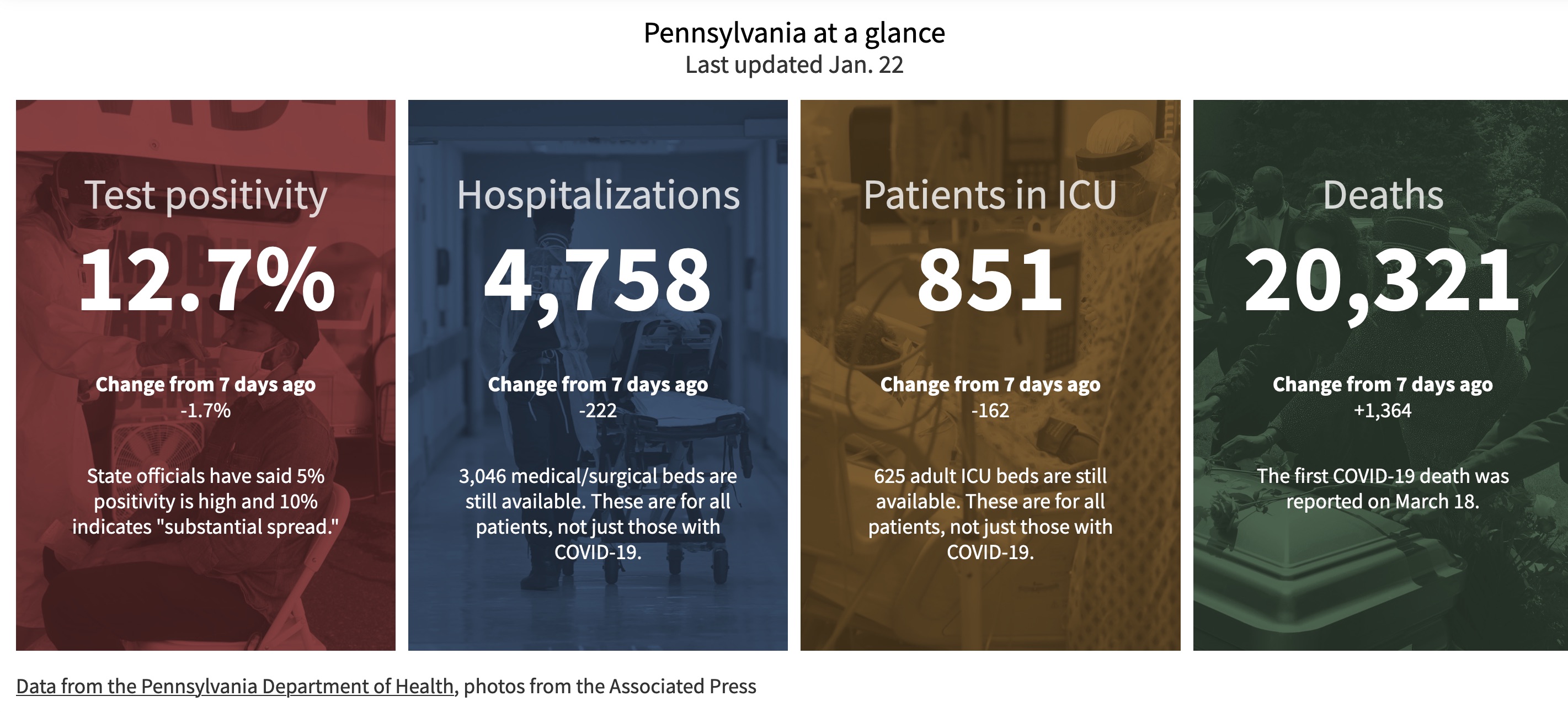
In my home state of Pennsylvania, infections are considered substantial if more than 10% of Covid tests in a county come back positive. As of today, that includes every county in the Commonwealth. In fact, our statewide average is 12.7%!
The danger is real and widespread. It’s just that some districts and communities care more than others for their teachers and the students they serve.
It’s not that districts that remain open to in-person instruction have avoided outbreaks.
My home district of McKeesport, located in western Pennsylvania near Pittsburgh, has been open on and off since September 2.
In any case, decision makers at McKeesport apparently think there’s nothing wrong if every month at least 21 people (adults and children) get the virus, risk their health, and potentially suffer life long consequences.
They don’t mind if moms and dads, grandmas and grandpas, even people with no kids in the district have a greater chance of getting sick because decision makers can’t be bothered to look out for the common good.
That’s not an example anyone should be emulating. It’s one we should be avoiding.
Don’t get me wrong.
It’s not that I don’t want to get back to the classroom. There are few things I’d rather do.
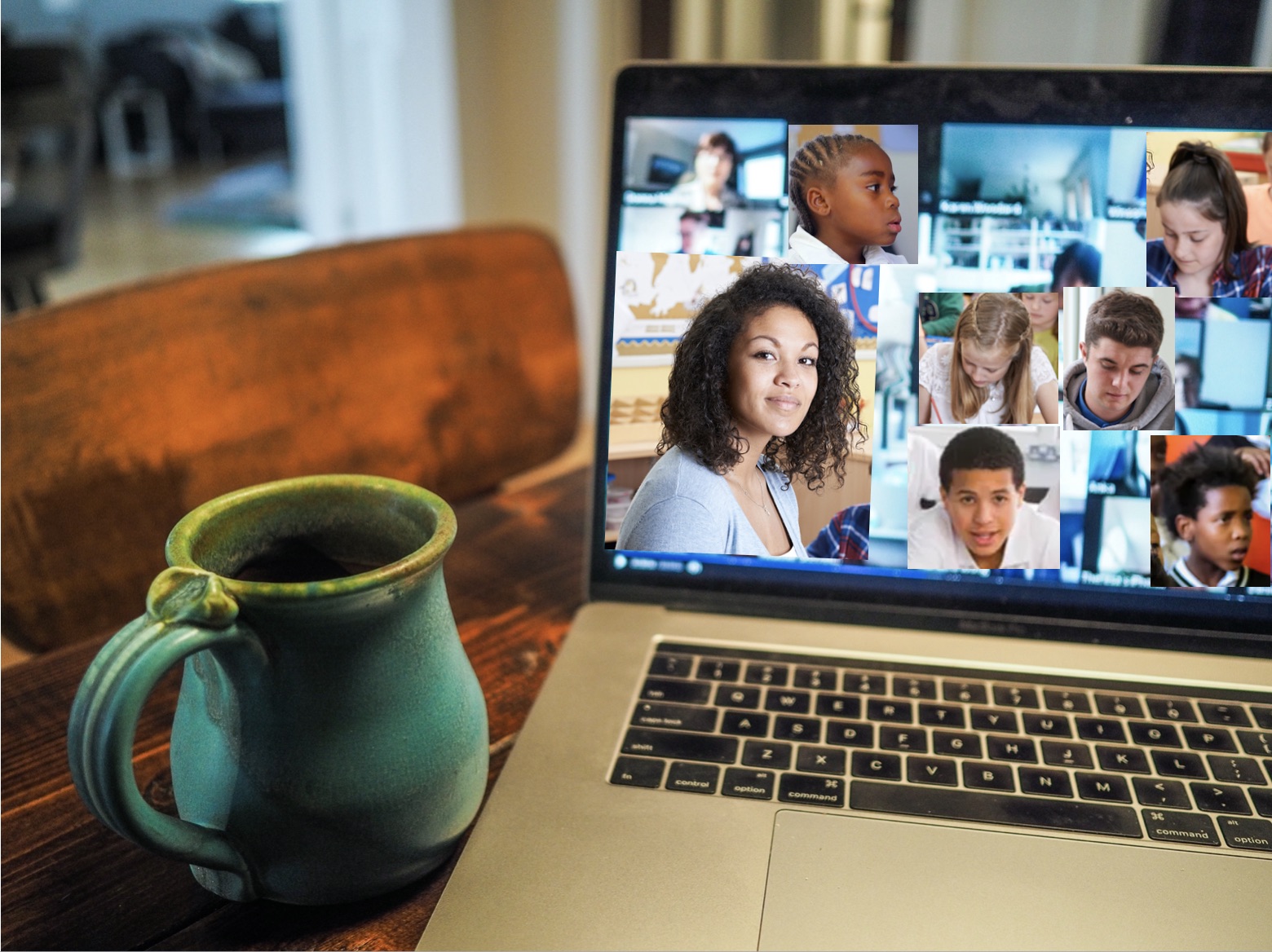
Teaching on-line is awkward and strange. Spending all day talking to blank boxes on your computer screen each one representing a child who may or may not be there at that particular moment in time.
Trying to find or recreate classroom materials and rethink how they can best be used in a virtual environment.
Troubleshooting technological issues, answering hundreds of emails and instant messages a day all while having to attend pop up virtual staff meetings that hardly ever deal with the problems of the day but are instead focused on how to return to an in-person method of instruction without ANY concern for the health and safety of the people who would have to enact it!
You want to get kids back in school buildings? Talk to the people messing up the vaccination process. Don’t shrug and demand teachers take up the slack – AGAIN!
When I took this job it wasn’t to be a police officer or a soldier. I never volunteered to put my health on the line treating sick people in the hospitals.
I mentor needy children. I inspire the dispirited, I stoke the curious, I enlighten the ignorant.
I don’t sacrifice my life because you can’t be bothered to provide the most basic resources possible I need to even attempt to do my job.
That’s not too much to ask.
In fact, it’s not much at all.
I’m not saying vaccines are a panacea.
Just because you take the vaccine doesn’t mean POOF you’re immune. It takes at least a month to reach full 90-95% immunity. Both the Pfizer and Moderna vaccines require you take two doses (at least 21 or 28 days apart, respectively). The level of protection increases dramatically – from 52% to 95% – but you need both doses to get there.
Moreover, there are other more virulent strains of Covid out there. Preliminary studies seem to suggest that these two vaccines are effective against them, but only time and further study will tell for sure.
According to someepidemiological estimates, as many as three-fourths of Americans must become immune to COVID-19 – either by recovering from the disease or by getting vaccinated – to halt the virus’s spread.
However, recent polls suggests that 29% to 37% of Americans plan to refuse a COVID-19 vaccine – even some teachers.
So we can’t just allow educators to be vaccinated. We need to encourage everyone to get one. Otherwise, it may protect individuals but not the community.
Education is vital to ensure that everyone knows the risks and benefits of taking the vaccine and how to protect themselves and their children.
And if you want people to be educated you’re going to need some teachers to do it.
We don’t need a pat on the back or even a “Thank You” to get the job done.
What we need are the basic protections necessary to both meet your expectations and survive the endeavor to teach another day.
So stop the badgering and bullying.
Make sure all teachers have the chance to be fully vaccinated before returning to the in-person classroom.
It is the least you can do.
Like this post? You might want to consider becoming a Patreon subscriber. This helps me continue to keep the blog going and get on with this difficult and challenging work.
From the never ending antics of our clown President to the Coronavirus to the continuing rise of White Supremacy, it seemed you couldn’t go more than a few days without some ridiculous headline assaulting your senses.
As a result, there were a lot of worthy, important articles that fell between the cracks – more so this year than any other.
Before we charge into the New Year, it might be a good idea to spare a look over our shoulders at these vital nuggets many of us may have missed.
On my blog, alone, I’ve found at least five posts that I thought were particularly important but that didn’t get the attention they deserved.
So come with me please through this survey of the top 5 education articles (by me) that you probably missed in 2020:
Description: Kids usually spend about 1,000 hours with their teachers in a single year. During that time we build strong relationships. And though just about everyone will tell you this is important, we’re often talking about different things. Some policymakers insist we prioritize an “instrumental focus” with students using their personal information to get them to behave and do their work. The goal is compliance not autonomy or problem solving. However, increasing evidence is showing the value of a more “reciprocal focus” where students and teachers exchanged information to come to a mutual understanding and shared knowledge. Here the goal is free thought, questioning, and engagement with authority figures. I provide my own personal experience to support the latter approach.
Fun Fact: This post is full of letters my former students wrote to me during the pandemic. They highlight better than any study the value of authentic relationships to both students and their teachers.
Description: The link between standardized testing and segregation is obvious but hardly ever discussed. In short, it goes like this. Even when students from different racial or ethnic groups aren’t physically separated by district boundaries or school buildings, the way we rate and sort these students within the same space causes segregation. This is because our manner of placing kids into classes, itself, is discriminatory, unfairly resulting in more children of color in lower academic tracks and more white kids in advanced placement. If segregation is an evil, so is the standardized testing often used to place kids in remedial, academic or advanced classes.
Fun Fact: It seems to me this has immediate and important policy implications. There are so many reasons to end the failed regime of high stakes testing. This is just another one.
Description: Virtual instruction has been a hot button issue this year in the wake of school closings caused by the COVID-19 pandemic. The fact that in-person instruction is more effective has been used as an excuse to keep many schools open when logic, reason and facts would dictate otherwise. However, the kind of in-person instruction being offered in a pandemic is, itself, not as effective as the kind of in-person instruction offered under normal circumstances. Moreover, distance learning is not all bad. It does have some advantages such as it being generally low pressure, more difficult to disrupt class and easier to contact parents. At the same time, it presents unique challenges such as increased student absences, the problem of when and if to keep the camera on and difficulties with special needs students.
Fun Fact: We desperately need an honest accounting of what is going on with real virtual classrooms around the country and how students and teachers are meeting these challenges. If there was more discussion about how to make distance learning better, the education being provided during the pandemic would be so much more effective than spending all our time and effort trying to reopen school buildings regardless of the risks of infection to all involved.
Description: When should teachers praise students and when should they use reprimands? The research is all over the place. Some studies say praise is good but only so much and only in certain circumstances. Others say reprimands are more effective and still others caution against when and how to use them. My own experience has shown that honest praise and thoughtful reprimands are more effective than not.
Fun Fact: This may seem like a simple issue but it highlights the complexities of teaching. Educators are not working with widgets. We’re working with real, live human beings. There is no simple solution that will work every time with every student. Effective teaching takes good judgement and experience. If we ever want to improve our school system, it is vital that we understand that moving forward.
Description: Forty years after the Montgomery bus boycott that was sparked by Rosa Park’s refusal to give up her seat to a white man, the civil rights icon lent her name to a charter school proposal in 1997. However, the Detroit school that would have been named for her and her late husband, the Raymond and Rosa Parks Academy for Self Development, was never approved. In any case, Charter school advocates like to pretend this mere proposal means Parks was an early champion of charter schools and thus that school privatization is an extension of the civil rights movement. Yet a closer look at the facts shows a sadder story. At the time of the proposal, Parks was suffering from dementia and under the sway of countless corporate consultants who used her name and clout to enact several projects. It ended in a protracted legal battle after her death between her family and the consultants to whom she willed a treasure trove of civil rights artifacts.
Fun Fact: I think this is one of the most important articles I wrote in 2020. It’s not a pretty story, but it’s the truth. The school privatization movement likes to co-opt the language of the civil rights movement while violating the civil rights of students and families with substandard education and pocketing tax dollars as profit that were meant to educate children. The exploitation of Parks in this way is symptomatic of what you’ll see in any inner city charter school where entrepreneurs are getting rich off of the children of color whom they pretend to be serving.
Gadfly’s Other Year End Round Ups
This wasn’t the first year I’ve done a countdown of the year’s greatest hits. I usually write one counting down of my most popular articles and one listing articles that I thought deserved a second look (like this one). Here are all my end of the year articles since I began my blog in 2014:
Like this post? You might want to consider becoming a Patreon subscriber. This helps me continue to keep the blog going and get on with this difficult and challenging work.
“In the End, we will remember not the words of our enemies, but the silence of our friends.” -Martin Luther King Jr
Teachers want a safe place to work.
But in 2020 that is too much to ask.
As the global COVID-19 pandemic rages out of control throughout most parts of the United States, teachers all across the country want to be able to do their jobs in a way that won’t put themselves or their loved ones in danger.
However, numerous leaders and organizations that historically are supportive of teachers have refused to support them here.
The rush to keep classrooms open and thus keep the economy running has overtaken any respect for science, any concern for safety, and any appeal to compassion.
Affected teachers often wonder where their union is, where their progressive representative, where the grassroots activists who were willing to organize against charter schools and high stakes testing.
About 1 in 4 teachers – nearly 1.5 million – have conditions that raise their risk of getting seriously ill from the Coronavirus, according to the Kaiser Family Foundation.
Michael Mulgrew, president of the United Federation of Teachers (UFT) agreed.
He said:
“We are supportive of a phased reopening of schools in other neighborhoods as long as stringent testing is in place. This strategy – properly implemented – will allow us to offer safe in-person instruction to the maximum number of students until we beat the pandemic.”
The plan is predicated on a bogus statistic that kids aren’t getting sick at school or spreading the virus from there, that only 0.2% can be traced back to school buildings.
Why aren’t the unions standing up more for their employees here? Why is the request for a safe work environment too much?
Answer: politics.
With President-elect Joe Biden about to announce his pick for Secretary of Education, few union leaders have the courage to go against the party line and disqualify themselves from consideration.
But she was unafraid to contradict President Donald Trump before the election.
She appeared on CNN and challenged Trump to “sit in a class of 39 sixth graders and breathe that air without any preparation for how we’re going to bring our kids back safely.”
In late April, she took to Twitter saying the NEA is “listening to the health experts and educators on how and when to reopen schools — not the whims of Donald Trump, who boasts about trusting his gut to guide him. Bringing thousands of children together in school buildings without proper testing, tracing, and social isolation is dangerous and could cost lives.”
“The stakes of doing it wrong is that someone dies. It’s not just that someone doesn’t graduate or someone doesn’t learn their times tables — someone could die.”
I wonder what she would say today – and why she hasn’t spoken out as vocally.
“The health and safety of students, staff, and our families must be our top priority,” Askey said. “We call on all school district leaders to follow the state’s guidelines to protect the health and safety of everyone in our school communities.”
However, state guidelines are pretty weak. They suggest mask wearing and that districts close when community infection rates are high. But districts can choose to keep buildings open if they promise to follow safety guidelines to the best of their ability.
Gov. Tom Wolf originally issued an order for all schools to close and go to remote learning last March. However, state Republicans challenged his authority to do so and their position was upheld in court.
I assume Wolf would say he hasn’t done more because his hands are tied.
I assume Askey would say the same.
But such platitudes taste like ashes in your mouth when faced with the everyday reality that almost everyday the state is breaking its previous record for Coronavirus cases. Today we had nearly 13,000 new cases and 149 deaths! Yes, that’s just today!
Will their hands still be tied when daily cases reach 20,000? 50,000? 100,000?
They’re used to deciding whether to remodel the library, buy books from this or that vendor or declare Friday a holiday because the football team won the state championship.
I don’t mean to diminish what they do.
Some have been going above and beyond every day to ensure the health and safety of students, staff and the community.
And these are people from the community. How many times have teachers called them to let them know how their kids were doing in class? How many times have teachers gone with them and their kids on school field trips? How many times have teachers accepted invitations to graduation parties and school board meetings?
However, as much as the silence and disregard of lawmakers, union leaders and school directors hurts – it is the reaction from many education activists that stings the most.
However, instead of standing together and fighting these new challenges as they come (as we’ve always done) many of our activist allies have abandoned us.
One day – I hope it’s soon – it will be safe to return to the classroom and begin again.
But the wreckage of the virus will pale in comparison to the damage we have done to each other and our relationships.
Coalitions may crumble and fall.
Trust may disappear.
And the way forward – if any will be left – may be much different than it was only a year ago.
No one who refuses to defend your right to life is your true ally.
We won’t forget who spoke up and who remained silent.
Like this post? You might want to consider becoming a Patreon subscriber. This helps me continue to keep the blog going and get on with this difficult and challenging work.
But the idea that public schools are fundamentally better – that idea has suffered tremendously.
I used to believe that local control was something to cherish, that a board made up of neighbors duly elected by the community would more often than not have the best interests of that neighborhood at heart when making decisions.
Yes, the board decided to make students and teachers guinea pigs in an experiment to see if they could somehow avoid getting sick while cases surged throughout the country and state.
Will Western Pennsylvania schools do the right thing and go to remote learning? Will Steel Valley finally give up this in-person experiment? Will McKeesport?
They keep blaming everything on academics, saying they have provide what is best to help students learn – never mind the dangers to child, parent and teachers’ bodies. But even more hypocritically they ignore the well being of huge swaths of their students who refuse to take part in their in-person experiment.
In both districts, about 60% of parents favor in-person schooling and 40% prefer remote.
So the boards are doing what the majority wants, but it’s a slim majority.
There is a significant portion of parents who feel these in-person plans are unsafe and very little is being done to educate their children.
They are actually betting that the poor quality of the cyber program will increase the number of parents sending their kids to in-person instruction.
And I’ve heard similar comments among administration at Steel Valley.
There at least we don’t force kids into our (likewise crappy) cyber program. We just have classroom teachers post assignments on-line.
Remote students in K-5 get live teachers instructing on-line. But remote students in 6-12 only get one half day of synchronous instruction on-line a week. The rest is asynchronous worksheets, etc. And somehow that’s supposed to be enough.
We have enough teachers that we could provide more, but why encourage remote learning? Might as well let them eat asynchronous and hope their parents will lose hope and just make them come to school during a global pandemic.
I have zero respect for administrators who think this way. I have zero respect for school board members who vote for it.
So how do I keep my respect for local control and the school board system?
But my district has refused to allow me a safe work environment.
I am not allowed to teach remotely.
I have to burn my sick days so I can stay safe at home. But at the same time, I’m encouraged to take overtime hours to put up remote lessons, grade papers and contact parents.
I’m ready to do that as part of my job, but they won’t let me. They’d rather pay me and a sub who babysits my students in-person while I do what I’m allowed to do remotely at the same time.
So how do you look an administrator in the eye who refuses to lookout for his own employee’s safety?
Because the leadership is perfectly fine with agreeing for the staff to work in unsafe conditions and no special protections for those like me who are more likely to contract the disease.
Leaders throw up their hands and say “We’re an association not a union,” and “If the boss says you come back to work, you have to come back to work.”
And what is PSEA threatening if districts don’t comply?
Nothing…. So far.
But I guess saying something about it is better than what they were doing before.
The national unions – the National Education Association (NEA) and American Federation of Teachers (AFT) – certainly haven’t taken any hardline stances.
The technology should be merely a tool to connect students and teachers not as a provider of that learning.
The backlash against ed tech has been far greater than any embrace.
Yet some education activists decry how public schools going remote makes privatized schools who don’t look good.
That’s nonsense, too.
Teaching recklessly is bad – no matter who does it. If parents want to endanger their own kids, that’s their prerogative, but in the long run no one will earn brownie points for enabling such negligence.
However, where privatized schools will earn points with parents is for providing high quality remote learning when public schools refuse to do so.
I know all of them aren’t doing that. But some of them are.
And, frankly, they deserve any praise they get for it.
Look, I love public schools, too. But when public schools abandon their duties to their students as so many have done during this crisis, they deserve to have their students stolen. Even if these privatized schools often have more money to work with in the first place.
CONCLUSIONS
Bottom line: This is a crisis the school board system should have been able to overcome.
It’s a crisis the unions should have been able to battle.
It’s a crisis the activist community should have been able to see clearly.
That’s why the schools are open. School boards are afraid keeping them closed will hurt business in the community.
That’s why administrators make such reckless reopening plans. They’re afraid that if we stay on remote it will become obvious how irrelevant they are to the running of a virtual school.
That’s why union leaders put up next to no resistance. They’re more afraid of furloughs than death or lifelong health consequences.
That’s why some parents support reopening schools – so they have someone to watch their kids while they’re at work. They never spare a moment for how the government is cheating them out of stimulus checks, mortgage relief, rent forgiveness, free testing, hazard pay and healthcare so they don’t have to put their own lives on the line working during a pandemic.
In all honesty, we were a sick country long before COVID-19 hit our shores.
When you look across the ocean at the more socialist countries, you see much better plans to deal with the pandemic. Not perfect, but better.
When everything isn’t dependent on money changing hands, you can more easily prioritize human life.
So, yes, my faith has been shaken in our public schools.
I still think the idea of a public school is one to be cherished and fought to protect.
But the leaders we have – nearly all of them – should be rejected.
We need an army of citizen activists, parents and teachers to come forward at the first opportunity to replace them.
Anyone in a leadership role this year should have to explain themselves – what did you do to protect students and staff during the pandemic?
If they can’t prove they took real steps to keep people safe and not sacrifice the people they were charged to protect on the altar of capitalism – if they can’t do that they should step down.
They should step down with tears in their eyes and forever have their names sullied by their cowardice and stupidity.
They have failed us all.
Like this post? You might want to consider becoming a Patreon subscriber. This helps me continue to keep the blog going and get on with this difficult and challenging work.



















 gadflyonthewallblog