What I Told My Students About Yesterday’s Attempted Trump Coup

The moment I had been dreading happened.

Student names started popping up on my screen waiting to be admitted into this morning’s first Zoom meeting.

What was I going to say to them?

Yesterday in Washington, DC, thousands of Trump supporters charged into the Capitol Building at his urging in an attempt to stop Congress from certifying his Presidential defeat.

What would I tell my middle schoolers?

What COULD I say?

We can’t offer you equitable resources. We can’t stop judging you with biased standardized tests. We can’t desegregate your schools. We can’t protect you from gun violence. We can’t even give you in-person classes because of a global pandemic the government has given up even trying to control!

And now I’m supposed to say that even the semblance of our democracy is up for grabs?

I started clicking on their names.

I only had a few moments before I had to speak.

I cleared my throat and began welcoming them, one-by-one as always.

And then it was time.

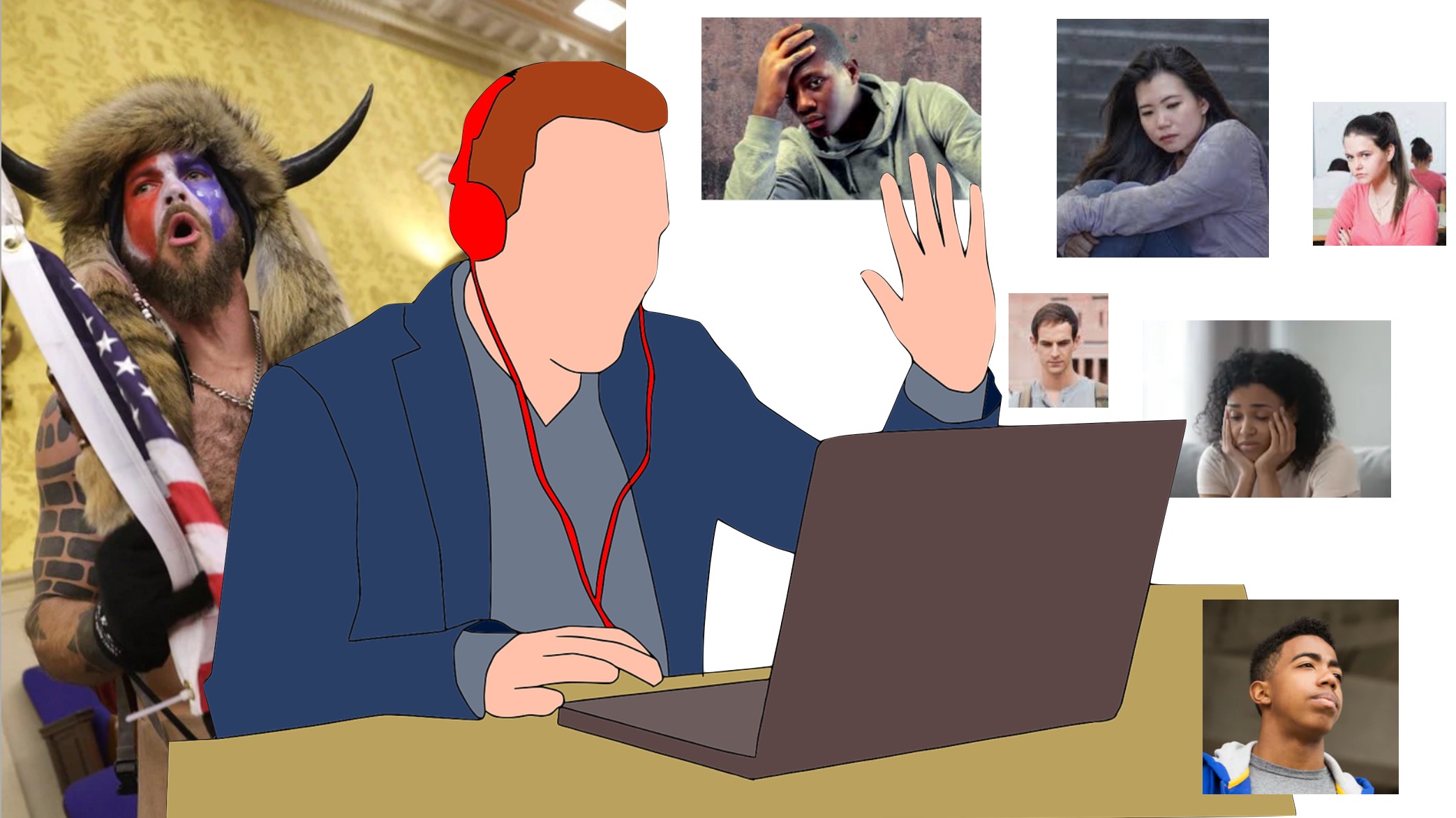
I stared at all these empty black boxes, and began.

“We’ve got to talk about yesterday,” I said.

“Not yesterday in class. That was fine. Everyone did an outstanding job on yesterday’s assignment.

“We have to talk about what happened yesterday in Washington, DC. Does anyone know what that was?”

And I waited.

Eventually I saw a few messages that individuals had their hands raised.

A few kids said that people had charged the Capitol. But that they didn’t know why.

So I explained it to them.

I told them how Trump was refusing to accept the results of the election. That he had lost, but continued to challenge it in the courts. Both Republican and Democratic judges had turned him down saying that he had no proof. So Trump spoke outside of the White House yesterday telling his followers to march on the Capitol, which they did.

At this point I noticed something strange on my screen.

The rows of empty boxes had turned into windows. No more memes or messages or generic names. Most of my kids had turned on their cameras and were meeting my eyes – in some cases – for the first time.

So that’s what Kelsey looks like, I thought. Wow! Marquis is really built. Is that little kid in the grey hoodie really Caulin?

I got flustered and stopped talking, but the students took up the narrative for me.

Some of them mentioned watching videos on-line of the riot. They saw a guy with horns in the President’s chair?

“No, I said. “That was the Vice-President’s chair in the Senate.”

“Wasn’t there someone at someone’s desk?”

“Yes, that was Nancy Pelosi’s desk,” I said. “A rioter broke into her office and put his feet up. She’s the Speaker of the House.”

And so it went on for a few minutes. They brought up things they had seen and I either clarified or supported them.

As a whole, they were wealthy in details but poor in meaning.

Most of the white kids seemed to be taking it ironically. The black and brown kids were more quiet and subdued.

A white boy wrote in the chat that it was “Civil War 2: electric bugaloo.”

I said, “Yes, you’ve hit on an important point. Some of these folks may have been trying to start a new Civil War.”

I tried to put the event in historical context.

I told them how nothing like this had ever happened in my lifetime. That the last time people broke into the Capitol Building like this was during the War of 1812 when the British tried to force the US to become a colony again. However, that was a foreign power invading our country. Wednesday was our own citizens seeking to overturn the results of an election, trying to overwrite the will of the people.

That’s when the first black student spoke up.

“Mr. Singer, why were they waving Confederate flags?”

“Yes! That’s true, Jamal. Many of them DID have Confederate flags and that’s really important.”

Before I could say more I got a series of rapid-fire questions from the same group who had been silent up to this point.

“Why didn’t the police stop them?”

“Why’d they steal stuff? I saw some guy walking away with a podium.”

“Why they so mad?”

I smiled and said that these were all excellent questions.


I asked if any of them knew who George Floyd was.

No one responded.

I told them he was a black guy who was murdered by police when an officer knelt on his neck.

After that happened, there were protests by Black Lives Matter activists and others in several cities including Pittsburgh. The police showed up in riot gear. As these protestors demonstrated almost entirely peacefully – certainly more peacefully than what we saw in DC yesterday – more than 14,000 people were arrested.

“How many people do you think were arrested yesterday?” I asked.

“Didn’t someone die?”

“Yes, a woman was shot in the Capitol and three others died of medical emergencies. How many people were arrested?”

“None,” said a student of color who hadn’t participated before.

“Why none?” I asked.

“Because they was white.”

I told him that he right and wrong. Out of thousands of rioters who broke into the Capitol, thirteen people were arrested. And the reason there were only 13 was because they were white.

I told them that this whole affair needed to be investigated. That we needed to know how and why the police responded the way they did. That we needed to hold the rioters accountable. That we needed to make sure those who instigated this violence were made to pay for it, too.

“Is Trump still President?” Someone asked.

“Yes,” I said. “For about two more weeks. But there are a lot of people who think he should have to step down sooner.”

So we talked about how he could be removed from office. We talked about impeachment and the 25th Amendment. We even talked about how Trump was banned from Twitter and Facebook – how he couldn’t post or tweet but still could send a nuclear missile anywhere he wanted.

And then it quieted down.

I asked them if there was anything more they wanted to know or if there was anything else they wanted to say.

They were still.

A few cameras clicked off.

I told them that I was there if anyone needed anything, that their teachers were here if they were feeling anything and wanted someone to talk to.

And then that was it.

I made one of the most abrupt and inelegant transitions in my career and we returned to our normally scheduled lesson.

Did it help any?

I don’t know, but I told them what I could. I told them the truth as I saw it.

There was a time when I would have been more reticent about it.

But the day after domestic terrorists try to steal our system of government isn’t the time to hold back.

As a teacher, sometimes I feel so helpless.

There’s so much I’d like to do for my students.

I want them to get the resources they need. I want to stop the unfair testing, integrate their schools, keep them safe from gun violence and control Covid-19 so we can return to the classroom.

I want to live in a country where majority rule is cherished and protected, where no one thinks the collective will should be trumped by white privilege.

But when all those things are out of reach, I still have one thing left to give.

The truth.


Like this post?  You might want to consider becoming a Patreon subscriber. This helps me continue to keep the blog going and get on with this difficult and challenging work.

Plus you get subscriber only extras!

Just CLICK HERE.

Patreon+Circle

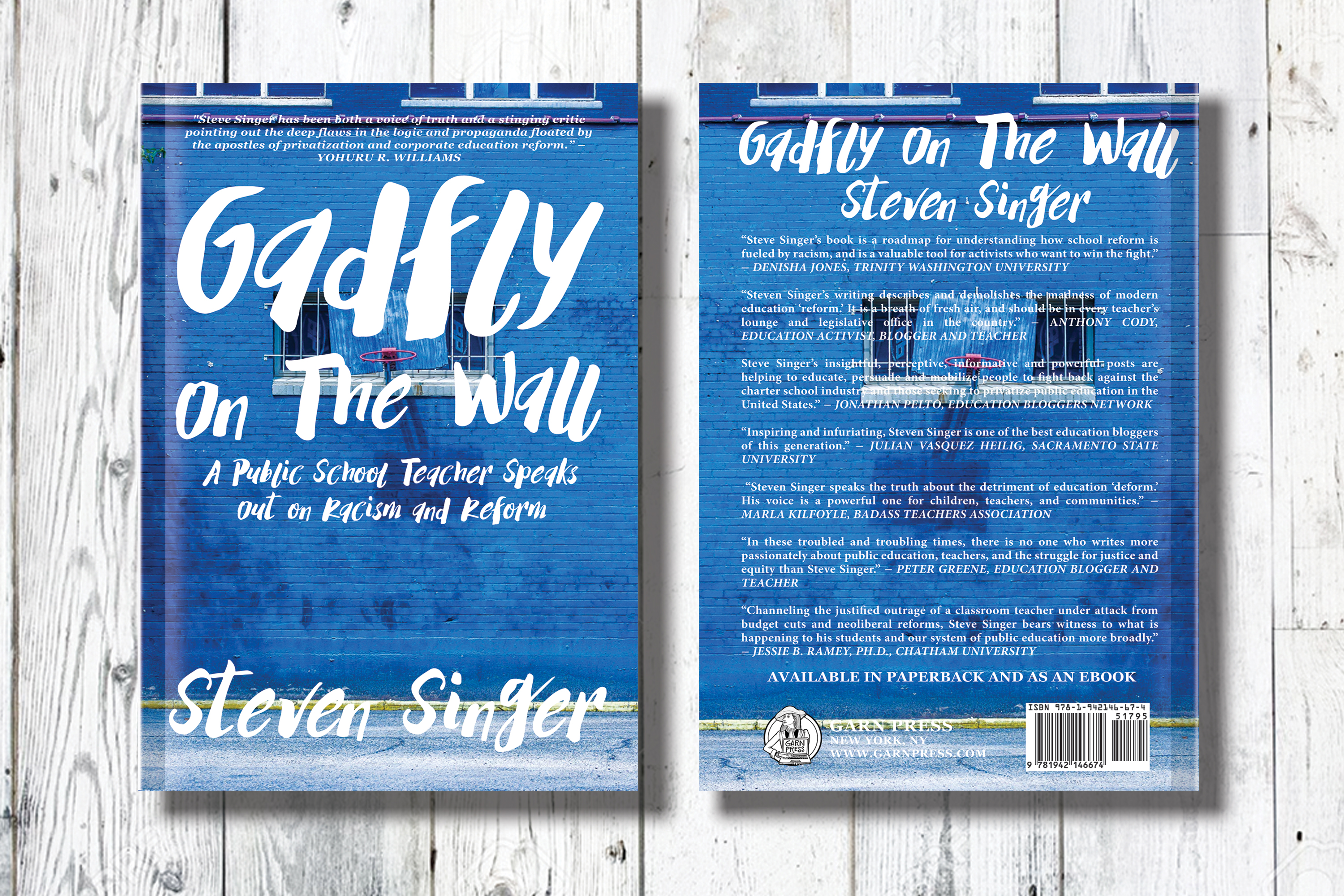
I’ve also written a book, “Gadfly on the Wall: A Public School Teacher Speaks Out on Racism and Reform,” now available from Garn Press. Ten percent of the proceeds go to the Badass Teachers Association. Check it out!

The Most Important Education Articles (By Me) That You Probably Missed in 2020

There were so many explosive stories in 2020.

From the never ending antics of our clown President to the Coronavirus to the continuing rise of White Supremacy, it seemed you couldn’t go more than a few days without some ridiculous headline assaulting your senses.

As a result, there were a lot of worthy, important articles that fell between the cracks – more so this year than any other.

Before we charge into the New Year, it might be a good idea to spare a look over our shoulders at these vital nuggets many of us may have missed.

On my blog, alone, I’ve found at least five posts that I thought were particularly important but that didn’t get the attention they deserved.

So come with me please through this survey of the top 5 education articles (by me) that you probably missed in 2020:

5) The Student-Teacher Relationship is One of the Most Misunderstood and Underrated Aspects of Education

Published: June 13 

Views: 940


 Description: Kids usually spend about 1,000 hours with their teachers in a single year. During that time we build strong relationships. And though just about everyone will tell you this is important, we’re often talking about different things. Some policymakers insist we prioritize an “instrumental focus” with students using their personal information to get them to behave and do their work. The goal is compliance not autonomy or problem solving. However, increasing evidence is showing the value of a more “reciprocal focus” where students and teachers exchanged information to come to a mutual understanding and shared knowledge. Here the goal is free thought, questioning, and engagement with authority figures. I provide my own personal experience to support the latter approach.


 Fun Fact: This post is full of letters my former students wrote to me during the pandemic. They highlight better than any study the value of authentic relationships to both students and their teachers.

4) Standardized Tests Increase School Segregation

Published: June 19 

Views: 690


 Description: The link between standardized testing and segregation is obvious but hardly ever discussed. In short, it goes like this. Even when students from different racial or ethnic groups aren’t physically separated by district boundaries or school buildings, the way we rate and sort these students within the same space causes segregation. This is because our manner of placing kids into classes, itself, is discriminatory, unfairly resulting in more children of color in lower academic tracks and more white kids in advanced placement. If segregation is an evil, so is the standardized testing often used to place kids in remedial, academic or advanced classes.


 Fun Fact: It seems to me this has immediate and important policy implications. There are so many reasons to end the failed regime of high stakes testing. This is just another one.

3) Virtual Instruction: Top 5 Pros & Top 5 Cons

Published: October 11


 Views: 622


 Description: Virtual instruction has been a hot button issue this year in the wake of school closings caused by the COVID-19 pandemic. The fact that in-person instruction is more effective has been used as an excuse to keep many schools open when logic, reason and facts would dictate otherwise. However, the kind of in-person instruction being offered in a pandemic is, itself, not as effective as the kind of in-person instruction offered under normal circumstances. Moreover, distance learning is not all bad. It does have some advantages such as it being generally low pressure, more difficult to disrupt class and easier to contact parents. At the same time, it presents unique challenges such as increased student absences, the problem of when and if to keep the camera on and difficulties with special needs students. 

Fun Fact: We desperately need an honest accounting of what is going on with real virtual classrooms around the country and how students and teachers are meeting these challenges. If there was more discussion about how to make distance learning better, the education being provided during the pandemic would be so much more effective than spending all our time and effort trying to reopen school buildings regardless of the risks of infection to all involved.

2) The Ongoing Study of How and When Teachers Should Praise Students

Published: February 2


 Views: 303


 Description: When should teachers praise students and when should they use reprimands? The research is all over the place. Some studies say praise is good but only so much and only in certain circumstances. Others say reprimands are more effective and still others caution against when and how to use them. My own experience has shown that honest praise and thoughtful reprimands are more effective than not.

 Fun Fact: This may seem like a simple issue but it highlights the complexities of teaching. Educators are not working with widgets. We’re working with real, live human beings. There is no simple solution that will work every time with every student. Effective teaching takes good judgement and experience. If we ever want to improve our school system, it is vital that we understand that moving forward.

1) Did Rosa Parks Really Support Charter Schools?

Published: January 29


 Views: 233


 Description: Forty years after the Montgomery bus boycott that was sparked by Rosa Park’s refusal to give up her seat to a white man, the civil rights icon lent her name to a charter school proposal in 1997. However, the Detroit school that would have been named for her and her late husband, the Raymond and Rosa Parks Academy for Self Development, was never approved. In any case, Charter school advocates like to pretend this mere proposal means Parks was an early champion of charter schools and thus that school privatization is an extension of the civil rights movement. Yet a closer look at the facts shows a sadder story. At the time of the proposal, Parks was suffering from dementia and under the sway of countless corporate consultants who used her name and clout to enact several projects. It ended in a protracted legal battle after her death between her family and the consultants to whom she willed a treasure trove of civil rights artifacts. 

Fun Fact: I think this is one of the most important articles I wrote in 2020. It’s not a pretty story, but it’s the truth. The school privatization movement likes to co-opt the language of the civil rights movement while violating the civil rights of students and families with substandard education and pocketing tax dollars as profit that were meant to educate children. The exploitation of Parks in this way is symptomatic of what you’ll see in any inner city charter school where entrepreneurs are getting rich off of the children of color whom they pretend to be serving.


Gadfly’s Other Year End Round Ups

This wasn’t the first year I’ve done a countdown of the year’s greatest hits. I usually write one counting down of my most popular articles and one listing articles that I thought deserved a second look (like this one). Here are all my end of the year articles since I began my blog in 2014:


2020:

Outrunning the Pandemic – Racing Through Gadfly’s Top 10 Stories of 2020


2019:

Sixteen Gadfly Articles That Made Betsy DeVos Itch in 2019


Screen Shot 2019-12-28 at 3.51.03 PM


2018:

A Gadfly’s Dozen: Top 13 Education Articles of 2018 (By Me)

thumbnail_IMG_8445


2017:


What’s the Buzz? A Crown of Gadflies! Top 10 Articles (by Me) in 2017


thumbnail_Screen shot 2017-12-26 at 3.44.17 PM


Hidden Gadfly – Top 5 Stories (By Me) You May Have Missed in 2017


7fd6a56c2ffc7a03c9fd2f431a543e92


2016

Worse Than Fake News – Ignored News. Top 5 Education Stories You May Have Missed in 2016


ignoring-wisdom


Goodbye, 2016, and Good Riddance – Top 10 Blog Post by Me From a Crappy Year


screen-shot-2016-12-27-at-3-29-49-am


2015


Gadfly’s Choice – Top 5 Blogs (By Me) You May Have Missed from 2015


Screen shot 2016-01-02 at 11.01.09 PM


Who’s Your Favorite Gadfly? Top 10 Blog Posts (By Me) That Enlightened, Entertained and Enraged in 2015


Screen shot 2015-12-30 at 12.57.49 AM


2014


Off the Beaten Gadfly – the Best Education Blog Pieces You Never Read in 2014


Wonderfull illusion art painting


Top 10 Education Blog Posts (By Me) You Should Be Reading Right Now!


computer-people-png-300x202


Like this post?  You might want to consider becoming a Patreon subscriber. This helps me continue to keep the blog going and get on with this difficult and challenging work.

Plus you get subscriber only extras!

Just CLICK HERE.

Patreon+Circle

I’ve also written a book, “Gadfly on the Wall: A Public School Teacher Speaks Out on Racism and Reform,” now available from Garn Press. Ten percent of the proceeds go to the Badass Teachers Association. Check it out!


Kids Are NOT Falling Behind. They Are Surviving a Pandemic


Everyone is worried about how the Coronavirus pandemic is affecting children. 


And it IS affecting them.  


But so much worry is being wasted on the wrong things. 


Instead of agonizing about kids being put in danger of infection at in-person schools where the virus is out of control, we’re told to worry about academic regression. 


Instead of feeling anxiety about abandoning kids at home as outbreaks close their schools and parents still have to go in to work, we’re told to agonize over failing test scores.  


In nearly every case, the reality is papered over by concern trolls clutching their pearls and demanding we point our attention away from the real dangers in favor of papier-mâché boogeymen. 


It’s almost as if the rich and powerful don’t want us to solve the real problems because that would cost them money.  


Stimulus checks, rent moratoriums, universal healthcare, aide to small businesses – none of that is in the interest of the one percent. 


Better to persuade the rest of us it’s better to suck up our pain and that doing so is really for our own good. 


And one of the ways they do it is by crying crocodile tears over our children’s academics. 


Kids are falling behind, they say.  

Hurry up, Kids. Get going.  


You’re behind! 


You have to catch up to where you would be if there hadn’t been a global pandemic! 


Hurry up! We’ve got this time table and you’re falling behind! FALLING BEHIND! 


It’s utter nonsense


I’m not saying that kids are learning today what they would have learned had COVID-19 not spread like wildfire across our shores.  


But the idea that kids are not intellectually where they SHOULD be and that if we don’t do something about it now, they will be irreparably harmed – that is pure fantasy. 


Let’s get something straight: there is no ultimate timetable for learning


At least none that authentically can be set by educators or society.  


People – and kids ARE people – learn when they’re ready to learn. 


And when they’re ready is different for every person out there. 


You can’t stomp around with a stopwatch and tell people they’re late. Your expectations are meaningless. It’s a matter of cognitive development plus environment and a whole mess of other factors that don’t easily line up on your Abacus. 


For example, many kids are ready to learn simple math concepts like addition and subtraction in Kindergarten. Yet some are ready in preschool. 


That doesn’t mean one child is smarter than another. It just means their brains develop at different rates. And it’s perfectly normal.  


Moreover, kids who live in stable, loving households who don’t have to worry about where their next meal is coming from, overcoming neglect or abuse, etc. have a greater chance of being ready more quickly than those trying to manage under a heavier load of problems. 


And if a child isn’t ready today, that doesn’t mean she’ll never be ready. 


The mind does not take ultimatums. You don’t have to fill up every shelf as soon as space becomes available. In fact, you could never fill it all up if you tried. There’s always more room – just maybe not right now. 


If a child doesn’t learn a certain concept or skill as soon as he or she is ready for it, that doesn’t mean he or she will lose out on that opportunity.  


Brains are flexible. They’re almost always ready to grasp SOMETHING. It’s just not up to society what those somethings are or when they’re achievable. 


That’s why Common Core Academic Standards were such a failure. They tried to map what schools teach like a train schedule, and then blamed educators when children’s brains didn’t match up with corporate expectations. 


The key is providing people with the opportunities and the circumstances that maximize the likelihood of learning. Not pedantically checking off skills and benchmarks. 


None of this is new. 


I am not putting forward a radical theory of cognitive development. 


Every teacher with an education degree is taught this in their developmental psychology courses. That’s why so many educational leaders don’t know anything about it.  


Policymakers rarely have actual education degrees. In fact, many of them have never taught a day in their lives – especially at the K-12 level.  


For example, Teach for America takes graduates from other fields of study (often business), gives them a couple weeks crash course in basic schoolology before throwing them in the classroom for a few years. Then they leave pretending to know everything there is about education, ready to advise lawmakers, work at think tanks, or otherwise set policy.  


Imagine how things would change if we expected our educational leaders to actually comprehend the field of study they’re pretending to steer. 


Meanwhile, people with 4-5 year degrees in education, like myself, have internalized things like Maslow’s Hierarchy of Needs.  


We know that learning is best achieved when a person’s foundational necessities are met. At base are physiological prerequisites like food, clothing and shelter as well as the need for safety and security. Then comes psychological requirements like relationships and self-worth. Once all these primary needs have been met, we can most effectively achieve academic goals. 


But for most kids the pandemic has been particularly hard on these primary needs. Food, shelter and safety are not nearly as certain today as they were just a year ago. 


Children’s physiological needs aren’t being met because their parents livelihoods are in jeopardy. And the very idea that children should be sheltered or kept safe is mocked by the economy first concern trolls demanding parents choose between their children or their jobs. 


They pretend to care about our kids so they can get us to do the very things that undermine our children’s safety. And it’s all somehow for our own good. 


In-person school, hybrid or distance learning? They don’t really care. 


The economy is what they’re really worried about. They want to keep it chugging along so they can continue siphoning profit off of the working class and into their pockets.  


And if they have any genuine concern for our children at all, it is merely that our kids get through the academic system and enter the workforce on time so that our kiddos can inject more money (more value) into the gross domestic product.  


We don’t need their disingenuous advice. 


Our children are suffering, but they’re doing as fine as can be expected under the circumstances.  


Yes, their educations have been disrupted by the virus. But a global pandemic will do that.  


You want to fix the problem, nothing short of ending the crisis ultimately will work.  


We can mitigate the damage, but marching kids into the classroom – sending them into a dangerous situation where they may get sick and (even more likely) bring the virus home to friends and family – will not help anyone.  


Schools are not daycare centers. In fact, we shouldn’t have to resort to daycare centers, either, when faced with a deadly airborne virus.  


Parents should be allowed (and encouraged!) to stay home and take care of their own kids. We should literally pay them to do so! 


These appeals to keep the economy running full steam ahead no matter the cost are nothing less than class warfare. And many of us have been brainwashed that we’re on one side when we’re really on the other.


Let’s get one thing straight: none of this means learning will stop.  


Kids are learning quite a lot, thank you.


They see us, adults, fighting over pandemic precautions like wearing face masks when in public. They see us denying science, calling the virus a fake as millions of people get sick and die. They see our President refusing to accept the results of the election. And sometimes they see the same people who should be keeping them safe sending them to school as if nothing is happening


The media mogul marketeers would be wise to fear the lessons this generation is learning about the gullibility of adults and the willingness of the ruling class to sacrifice the common folk.  


But even though much of the curriculum in 2020 has been unscripted, our schools still function.  


In fact, teachers are working harder than ever to provide some continuity. 


Where classrooms are closed, distance learning is taking up the slack


No, it will never be comparable to the quality of instruction you can provide in-person. But even the quality of in-person instruction is not the same during a pandemic. Hybrid models with necessary precautions of social distancing and mask wearing are, themselves, substandard.  


The best that we can do in most cases is learning at a distance.  


Will all kids respond?  


Absolutely not.  


They’ll do the best they can. And this will largely depend on the environmental factors in their homes.  


When you have children left to their own devices forced to navigate a virtual learning platform, they will inevitably hit roadblocks. They need their parents to help navigate the rough spots

Kids are just that – kids. They need adults to put them on a schedule, make sure they wake up on time, have breakfast, and hold them accountable for attending their classes – even if those classes are held on-line.

There’s a reason the kids with the best grades often have the most involved parents – parents with the economic freedom to invest more time into their children.

 
That’s something else the marketeers don’t understand. Most of the problems of Covid America aren’t that different from Pre-Covid America. It’s a matter of degree. 


Schools have always struggled to overcome the socioeconomic problems of their students. The only difference is that now we can’t just point to standardized test scores and blame it all on teachers.  


The problem is systemic. You can only solve it by changing the system, itself.  


A system that places dollars and cents over life and health will never be acceptable. And that’s what we’ve got. Still.  


So don’t buy the latest version of corporate school baloney.  


Our children aren’t falling behind.  


They’re surviving a pandemic.  


Fix the problem and they’ll be fine.  


Fix the system and they’ll THRIVE.  


But beware of know nothing policymakers who don’t have our best interests at heart. 


Pay them no mind and the only thing left behind will be them.


Like this post?  You might want to consider becoming a Patreon subscriber. This helps me continue to keep the blog going and get on with this difficult and challenging work.

Plus you get subscriber only extras!

Just CLICK HERE.

Patreon+Circle

I’ve also written a book, “Gadfly on the Wall: A Public School Teacher Speaks Out on Racism and Reform,” now available from Garn Press. Ten percent of the proceeds go to the Badass Teachers Association. Check it out!

Will PA Schools Ask Parents to Oversee CDT Testing at Home?

Should parents be asked to administer on-line tests to their own children at home?

Back in May someone at Data Recognition Corporation (DRC) had an idea.

Since a global pandemic had shuttered classrooms, no children were being forced to take the multi-billion dollar testing company’s products.

Federally mandated assessments like the Pennsylvania System of School Assessments (PSSA) and Keystone Exams – which are made by DRC – were cancelled.

And local districts weren’t even making students take assessments like the Classroom Diagnostic Tools (CDT) – an optional test to determine if kids were ready to take the mandatory tests.

If someone at DRC didn’t act quickly, the Commonwealth might ask for a refund on the $1.3 billion it spent on standardized testing in the last eight years.


 The Minnesota-based DRC, a division of CTB McGraw-Hill, wasn’t about to issue any refunds.

So someone had to figure out a way to keep children testing even though they were currently at home sheltering in place.

But that’s it!

Tests like the CDTs are taken online anyway. Theoretically, kids could access them in their own homes, they just need someone to help them sign in, navigate the Web portal and make sure they aren’t cheating.

Normally, that would be the job of classroom teachers, but educators can’t do that AND have students test at the same time.

During the pandemic with most schools shuttered, teachers only communicate with students remotely – through applications like video conferencing sites such as Zoom. If teachers proctored the tests, too, that would require students to take the tests on one Web accessible device and have the teachers communicate with them on another.

Can you imagine a child taking a test on her iPad while participating in a Zoom meeting on her cell phone? If she even had both devices? And the bandwidth to run both simultaneously?

That’s where parents come in.

Students can test on their computers or devices with their parents, in-person, troubleshooting and monitoring their behavior.

Thus, a truly stupid idea was born.

To my knowledge, not a single district in the Keystone state has yet taken advantage of this scheme.

And why would they?

Even the most data driven local administrator or test obsessed school director knows that a sure way to infuriate parents is to ask them to do something that is essentially the school’s job.

Moreover, in these difficult times, parents have their hands full just keeping food on the table. If they can somehow get their kids to log in to their online classes every day, that’s a plus. If they can get their kids to actually turn in the assignments, it’s a miracle.

But to add proctoring a test on top of everything else!? Districts would have to be nuts to even try!

However, DRC and the state Department of Education aren’t giving up.

As an increasing number of schools go on-line, the state extended the program through the 2020-21 school year, and some districts are actively considering it.

Here’s how it’s supposed to work.

Classroom teachers would provide parents with testing materials including a log-in ticket for each child in the home taking the test. Students would have to access the test online through the Chrome Internet browser. Then they’d have to copy and past the URL into the browser (which would be provided in the testing materials), and input their usernames and passwords.

Normally, the test is given in writing, science and math, has 50-60 questions and can last between 50 and 90 minutes. However, DRC is recommending districts give a new shorter version of the assessment that has 15-18 questions and can last between 20-30 minutes (10-20 minutes longer for the reading test).

During this time, you should watch your children as they take the tests. It is up to you to make sure they aren’t copying down any information from the test or cheating.


 You can let your child have scratch paper, highlighters and calculators. But no preprinted graphic organizers, cell phones, dictionaries, thesauri, grammar or spell checkers, other computers or devices.

And if you have any technical issues, DRC wants you to know the company has your back. Meaning that they can’t and won’t help – call your local school district.

Here’s what DRC’s Parent/Guardian Test Administration Guide recommends for technical support:

“If technical issues arise during testing, parents/guardians are asked to contact the student’s teacher and/or the student’s school office for technical support. DRC customer service staff cannot directly support issues related to each home’s technology configurations.[Emphasis mine.]


 And this is true even if the test, itself, directs parents to contact the corporation:

“If a student receives an error message during the test administration that includes instructions to contact DRC for technical support, the parent or guardian who is assisting with the test administration should contact the student’s teacher or school office for additional instructions. Parents or students should not attempt to contact DRC’s customer service directly for technical assistance.

Teachers and/or a school’s technology staff will have the information needed to provide parents/guardians with the level of support to resolve most technology issues. If additional support is required, a school or district representative will reach out to DRC to determine a resolution.”


 However, technical problems are never much of an issue with the CDT – and by “never” I mean ALWAYS.

In the past five years that I’ve given the test to my students in the classroom, they are routinely kicked off the program, have trouble accessing it, and their answers are not always counted, requiring them to re-enter inputs numerous times.

Taking this test remotely is certain to put quite a strain on districts since these technological problems will occur not as they normally do within school buildings but potentially miles away in students’ homes.

Let’s be honest – this plan will not work well.

Few students will be able to take the tests and finish.

Of those that do, even fewer will give it their best effort outside of a classroom setting. In fact, there is no quicker way to turn off a student’s curiosity and motivation to learn than sitting them down in front of a standardized test.

Of those that do somehow manage to finish and score well, there will be no certainty that they didn’t cheat.

Many of my students have secondary electronic devices like cell phones that they use in addition to their iPads. In fact, that’s a part of my remote classes.

I often have them play review games like Kahoot where the questions are displayed through their Zoom screens and they input the answers on their cell phones.

A significant percentage of students will inevitably use these secondary devices to define unknown vocabulary, Google facts and anything else to get the right answers – if they care enough about the results.

In my own remote classes, tests are designed to either assess student skills or access information they already compiled in-class on several study guides which they are encouraged to use during the test. In short, cheating is more work than paying attention in class.

These CDTs will not be like that at all. The scores will be completely worthless – more so than usual.

And few parental proctors will be able to fully comprehend, control or participate in the process.

So why not just skip parents and have classroom teachers proctor the tests through Zoom?

Because of the physical distance involved.

On video conferencing sites, teachers can only see what their students are doing if the kids turn their cameras on. They rarely do.

And even if kids DO turn their cameras on, they have complete control over what those cameras are pointed at, how long they stay on, etc.

It would not take a very enterprising student to cheat while a teacher tried to monitor 20 students online at the same time.

So why not wait until in-person classes resume?

Because it is entirely uncertain when it will be safe to do so given rising infection rates across the country.

However, even if it were safe, most schools are running way below capacity and with hybrid schedules. Students have shortened periods or attend on alternate days. Giving a standardized test under these conditions would be piecemeal, disjointed, discourage kids from even attending school and eat up a tremendous amount of very limited class time.

It would be like taking a dehydrated person’s blood instead of giving him a drink of water.

No matter how you look at it, this is a project designed to fail.

Because it is not about academics. It is about economics.

This is about DRC saving its bottom line. That’s all.

And any administrator or school director who can’t see that is incredibly naive.

Why take these tests at all? Especially during a global pandemic?

We already know students are struggling.

Many are checked out and don’t participate in the remote instruction being offered. And many of those who do participate are having a hard time learning without as much social interaction and hands on activities.

We should be focusing on ways to improve remote instruction. We don’t need a standardized test to tell us that. We certainly don’t need a test before the test.

Most districts use CDT data to place kids in their classes the following year. Kids with high test scores are put in advanced classes, kids with low scores in remedial classes, etc.

We already have daily assessments of how kids are doing. They’re called classroom grades. We don’t have to halt all instruction to allow some corporation to take over for days at a time.

Parents should call their local administrators and school directors and demand the CDTs not be given this year.

In fact, not only should the CDTs not be given this year – they should not be given at all – any year. They’re a total waste of time that dampen kids curiosity and drive to learn.

Moreover, the federally mandated tests (in the Commonwealth, the PSSAs and Keystone Exams) should be cancelled again this year for the same reasons. In fact, they should be abolished altogether.

This is another reason why corporate education reformers have been so adamant that schools remain open during the pandemic. Remote learning means increased difficulty in giving standardized assessments. It’s not that pro-testing fanatics value schooling so much – they don’t want to have to go another year without testing companies making huge profits giving these assessments.

The worst school policies are driven by economics, not academics.

And that’s what we have here, too.

So will any district be stupid enough to attempt to save DRC by sacrificing students and parents?

Only time will tell.


Click here to see DRC’s Parent/Guardian Test Administration Guide

Click here to see DRC’s CDT Public Browser Option – Test and Technology Setup Guidance


Like this post?  You might want to consider becoming a Patreon subscriber. This helps me continue to keep the blog going and get on with this difficult and challenging work.

Plus you get subscriber only extras!

Just CLICK HERE.

Patreon+Circle

I’ve also written a book, “Gadfly on the Wall: A Public School Teacher Speaks Out on Racism and Reform,” now available from Garn Press. Ten percent of the proceeds go to the Badass Teachers Association. Check it out!
For Teachers, “Silence of Our Friends” May be Worst Part of Pandemic

“In the End, we will remember not the words of our enemies, but the silence of our friends.”
-Martin Luther King Jr

Teachers want a safe place to work.

But in 2020 that is too much to ask.

As the global COVID-19 pandemic rages out of control throughout most parts of the United States, teachers all across the country want to be able to do their jobs in a way that won’t put themselves or their loved ones in danger.

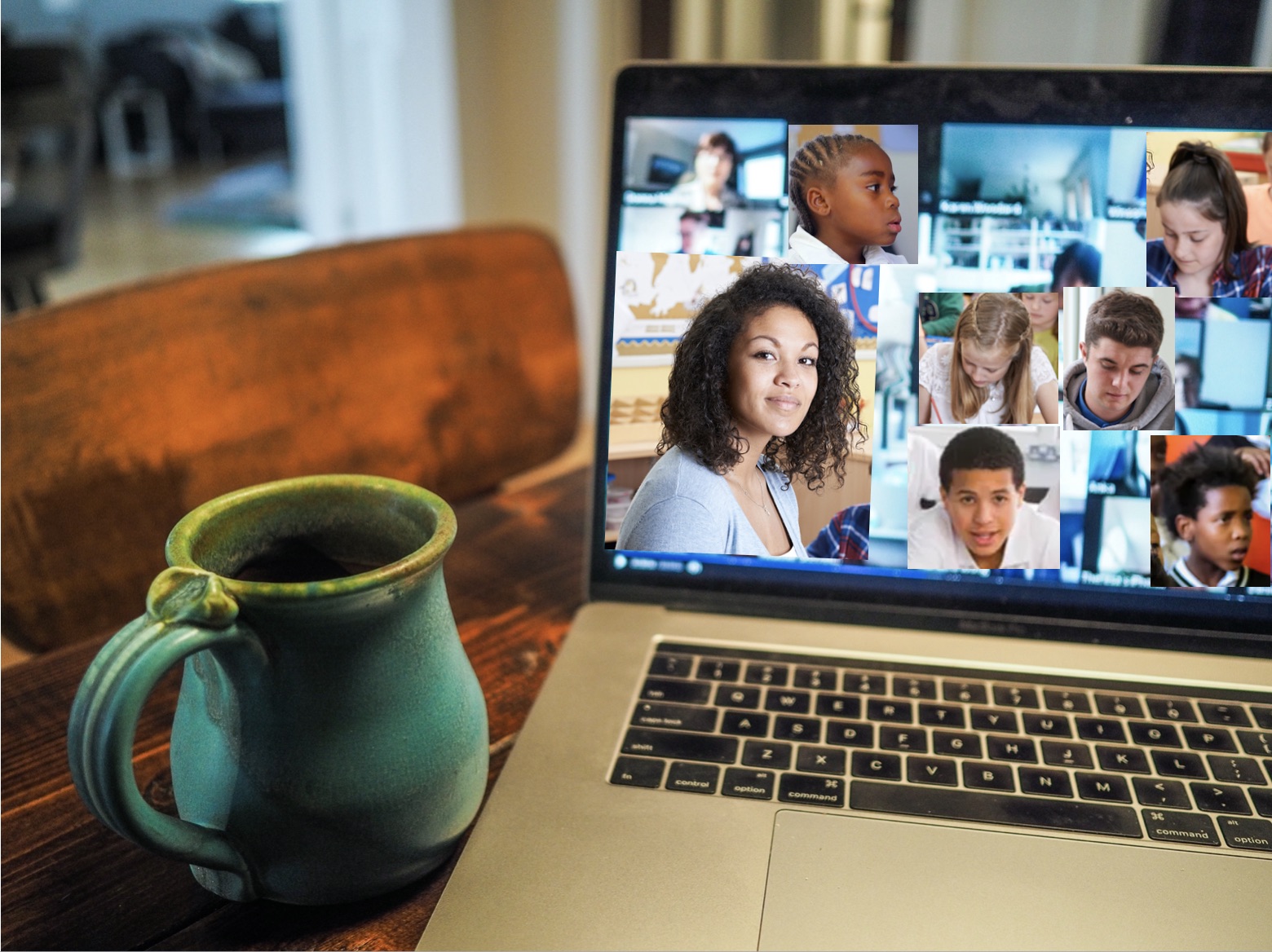
In most cases that means remote instruction – teaching students via the Internet through video conferencing software like Zoom.

However, numerous leaders and organizations that historically are supportive of teachers have refused to support them here.

The rush to keep classrooms open and thus keep the economy running has overtaken any respect for science, any concern for safety, and any appeal to compassion.

Many Democratic lawmakers, school directors, union leaders and even public school advocates have repeatedly turned away, remained silent or promoted policies that would continue to put educators in danger.

Thankfully, some districts have been accommodating, worrying about the safety of children as well as adults.

But many others have refused to go this route even demanding educators with compromised immune systems and other increased risk factors either get in the classroom and teach or seek some sort of financially burdensome leave.

Affected teachers often wonder where their union is, where their progressive representative, where the grassroots activists who were willing to organize against charter schools and high stakes testing.

Answer: crickets.

As a result, more than 300 U.S. teachers and other school employees have died from the virus, according to the Associated Press.

In New York City, alone, 72 school employees died of the virus, according to the city Department of Education.

And since Education Secretary Betsy DeVos has refused to collect data on how the pandemic is affecting schools and school employees, this count is probably woefully under-representative of the full tragedy.

About 1 in 4 teachers – nearly 1.5 million – have conditions that raise their risk of getting seriously ill from the Coronavirus, according to the Kaiser Family Foundation.

In my own Western Pennsylvania community in the last few weeks, we buried high school employee Terri Sherwin, 60, of Greater Latrobe School District and elementary school employee Dana Hall, 56, of Jeannette City School District.

The assertion that children cannot get the disease, which was popularized by the Trump administration, has been proven false.

More than 1 million kids nationwide have been diagnosed with COVID-19 according to a report by the American Academy of Pediatrics .

The Centers for Disease Control (CDC) says most children who get the disease (especially those younger than 10) are asymptomatic or have only mild symptoms but are still capable of transmitting the virus to others. This – along with the lack of a national database – makes it incredibly difficult to accurately trace the source of an outbreak through the schools.

However, in November the CDC quietly removed controversial guidelines from its website promoting in-person learning, and instead lists it as “high risk.”

“As new scientific information has emerged the site has been updated to reflect current knowledge about COVID-19 and schools,” a spokesperson said.

Yet there has been no subsequent change in the policy positions of most lawmakers, school directors, union leaders or education activists.

A prime example of this is New York City’s plan to reopen most schools to in-person learning at the beginning of this month despite rising infection rates and an average of more than 2,000 new cases a day.

The plan has the full support of most teachers unions.

Randi Weingarten, president of the American Federation of Teachers (AFT) said the plan “combines the best of what we have learned nationwide during COVID about how to keep staff and students safe and how to instruct young kids.”

Michael Mulgrew, president of the United Federation of Teachers (UFT) agreed.

He said:

“We are supportive of a phased reopening of schools in other neighborhoods as long as stringent testing is in place. This strategy – properly implemented – will allow us to offer safe in-person instruction to the maximum number of students until we beat the pandemic.”

The plan is predicated on a bogus statistic that kids aren’t getting sick at school or spreading the virus from there, that only 0.2% can be traced back to school buildings.

But we know that contract tracing is inadequate. We know people are getting sick. Hospitals are filling up. People are dying.

Why aren’t the unions standing up more for their employees here? Why is the request for a safe work environment too much?

Answer: politics.

With President-elect Joe Biden about to announce his pick for Secretary of Education, few union leaders have the courage to go against the party line and disqualify themselves from consideration.

Biden’s plan right now seems to be keeping the schools open with an influx of cash.

Former President of the National Education Association (NEA) Lily Eskelsen García hasn’t said much recently on the issue to my knowledge.

But she was unafraid to contradict President Donald Trump before the election.

She appeared on CNN and challenged Trump to “sit in a class of 39 sixth graders and breathe that air without any preparation for how we’re going to bring our kids back safely.”

In late April, she took to Twitter saying the NEA is “listening to the health experts and educators on how and when to reopen schools — not the whims of Donald Trump, who boasts about trusting his gut to guide him. Bringing thousands of children together in school buildings without proper testing, tracing, and social isolation is dangerous and could cost lives.”

In an interview in May she said:

“The stakes of doing it wrong is that someone dies. It’s not just that someone doesn’t graduate or someone doesn’t learn their times tables — someone could die.”

I wonder what she would say today – and why she hasn’t spoken out as vocally.

In my neighborhood, Pennsylvania State Education Association (PSEA) President Rich Askey has continually asked districts to follow state safety guidelines.

“The health and safety of students, staff, and our families must be our top priority,” Askey said. “We call on all school district leaders to follow the state’s guidelines to protect the health and safety of everyone in our school communities.”

However, state guidelines are pretty weak. They suggest mask wearing and that districts close when community infection rates are high. But districts can choose to keep buildings open if they promise to follow safety guidelines to the best of their ability.

Gov. Tom Wolf originally issued an order for all schools to close and go to remote learning last March. However, state Republicans challenged his authority to do so and their position was upheld in court.

Since then, Wolf has issued tons of guidance but not much else.

I assume Wolf would say he hasn’t done more because his hands are tied.

I assume Askey would say the same.

But such platitudes taste like ashes in your mouth when faced with the everyday reality that almost everyday the state is breaking its previous record for Coronavirus cases. Today we had nearly 13,000 new cases and 149 deaths! Yes, that’s just today!

Will their hands still be tied when daily cases reach 20,000? 50,000? 100,000?

The decision about whether to keep buildings open to in-person classes or go with remote instruction has mostly been left with school directors.

And their decisions have been all over the place.

These are not public health officials.

These are not people used to making life and death decisions.

They’re used to deciding whether to remodel the library, buy books from this or that vendor or declare Friday a holiday because the football team won the state championship.

I don’t mean to diminish what they do.

Some have been going above and beyond every day to ensure the health and safety of students, staff and the community.

But far too many pay lip service to that idea while making sure their local business gets to keep operating with employees who don’t have to sit home with their children.

And these are people from the community. How many times have teachers called them to let them know how their kids were doing in class? How many times have teachers gone with them and their kids on school field trips? How many times have teachers accepted invitations to graduation parties and school board meetings?

We should be on the same team, but too many school directors are far too willing to sacrifice our lives and safety to safeguard their own bank accounts.

When will school directors admit the cost is too high? How many staff have to get sick? 20? 50? 100? How many have to die?

However, as much as the silence and disregard of lawmakers, union leaders and school directors hurts – it is the reaction from many education activists that stings the most.

When our schools are attacked by charter schools and voucher schools, we organize and fight it together.

When high stakes testing unfairly labels our children and is used to defund and loot our budgets, we organize and fight together.

No matter what the issue – the school-to-prison pipeline, Common Core, racist discipline policies, value added teacher evaluations, runaway ed tech – we’ve come together to fight as one.

But suddenly when it’s an issue of teachers vs. the economy, our allies go silent.

They’re afraid remote learning will lead to more ed tech solutions, that it will embolden parents to enroll in charter or voucher schools, that it will hurt student learning. And to be fair there is reason to fear.

However, instead of standing together and fighting these new challenges as they come (as we’ve always done) many of our activist allies have abandoned us.

They champion articles about a non-existent consensus that it’s safe to reopen schools. They champion the work of a discredited economist over epidemiologists and virologists. They side with the same neoliberals and corporate education reformers we used to battle together.

Or they simply remain silent.

That’s the one that really hurts the most.

One day this pandemic will end.

One day – I hope it’s soon – it will be safe to return to the classroom and begin again.

But the wreckage of the virus will pale in comparison to the damage we have done to each other and our relationships.

Coalitions may crumble and fall.

Trust may disappear.

And the way forward – if any will be left – may be much different than it was only a year ago.

No one who refuses to defend your right to life is your true ally.

We won’t forget who spoke up and who remained silent.


Like this post?  You might want to consider becoming a Patreon subscriber. This helps me continue to keep the blog going and get on with this difficult and challenging work.

Plus you get subscriber only extras!

Just CLICK HERE.

Patreon+Circle

I’ve also written a book, “Gadfly on the Wall: A Public School Teacher Speaks Out on Racism and Reform,” now available from Garn Press. Ten percent of the proceeds go to the Badass Teachers Association. Check it out!

Contact Tracing Does NOT Prove Schools Are Safe During a Pandemic

“No close contacts were identified within the school district.”

That’s what it says on today’s email from my district reporting that two elementary staff and one student tested positive for COVID-19.

That’s what it said on Tuesday’s email about a different elementary staff member testing positive.

And the email from last Sunday about two elementary staff, and last Monday about a middle school staff member, and the one from Nov. 19 about an entire Kindergarten class and its teachers being quarantined.

Actually, that last email said the outbreak was limited to the Kindergarten class and teachers – that no close contacts were identified beyond its doors, in the building or the wider district as a whole.

However, considering that at least five more elementary teachers and another student tested positive later, I’m not sure I believe it.

All of which prompts the question – how accurate is contact tracing?

How Contact Tracing Works

Let’s say a little girl, Ava, gets COVID-19.

Where did she get it from?

Let’s do some contact tracing to find out.

We ask Ava to think back two days before she showed symptoms up until now. Who was she in close contact with (within six feet for at least 15 minutes)? She doesn’t remember much, but she gives us a list of two or three people who may fit the bill.

We call them, find that none of them are sick, none have been out of the state or country, ask them to quarantine and that’s it.

So where did Ava get the virus? Who did she get it from?

We don’t know.

And contact tracing rarely produces an answer to that question.

In fact, that’s not really its point.

Contact tracing is a key strategy for preventing the further spread of an infectious disease. Its goal is to limit spread beyond this point.

We already know Ava has the virus (or is suspected of having it). We’re trying to find out who she may have spread it to – as much as, if not more than – who she got it from.

In the process of doing that we may be able to trace the spread of the virus back to its source before Ava. But probably not.

Why Does Contract Tracing Often Fail to Lead Us Back to the Source of an Outbreak?

If we had rapid and ubiquitous COVID tests, perhaps we could achieve that goal. But we don’t.

Moreover, we’re relying on individuals to voluntarily cooperate with contact tracers and to provide detailed information about who they came into contact with over a wide period.

At best, people are scared and not as specific as they might be. At worst, they refuse to participate at all.

Michael Huff, Pennsylvania’s director of testing and contact tracing efforts, said that more than 34,000 new cases were reported over the past week, but case investigators were only successful in reaching about 8,332.

And of those they did reach, ninety-six people refused to quarantine.

His response:

“Why? Because people don’t want to answer the phone. Because people do not realize how important it is to give the information we need to make certain we can control disease.”

To make matters worse, most children who get the disease (especially those younger than 10) are asymptomatic or have only mild symptoms, according to the Centers for Disease Control (CDC). Though they are still capable of spreading the disease, they go undetected by contact tracing entirely.

So it is entirely disingenuous to claim contact tracing proves much of anything about how the virus is spread. It’s usefulness is in stopping COVID-19 from going any further.

How Contact Tracing is Used to Make Wild Claims

Students, teachers and other school staff have come down with the virus in significant numbers.

More than 1 million children have been diagnosed with Covid-19 according to a report by the American Academy of Pediatrics released last week.

No such estimate exists for school staff, but about 1 in 4 teachers – nearly 1.5 million – have conditions that raise their risk of getting seriously ill from Coronavirus, according to the Kaiser Family Foundation.

And though many thousands of school staff have contracted the disease, more than 300 district employees have died nationwide from the virus according to the Associated Press.

Where did all these people get COVID-19?

Contact tracing provides no definitive answer, however, policymakers are pretending that means something.

They’re pretending that the failure of contact tracing to find a direct link means there is no link.

Since contact tracing has rarely been able to identify the source of an outbreak to a particular person in school, they assume that means the virus isn’t spreading much in our schools.

Nonsense!

First of all, there have been significant contact tracing studies that have found these direct links.

In fact, the largest contact tracing study ever conducted shows that children and young adults are potentially much more important to transmitting the virus than previous studies had identified.

The study of more than half a million people conducted by researchers at Princeton, John Hopkins and the University of California at Berkeley suggests the role of schools in the spread of the virus is much greater than previously believed.

However, many policymakers overlook this evidence as contrary or inconclusive.

They insist that contact tracing’s inability to consistently find the causal link is enough to disregard the existence of that link.

Balderdash!

That’s like sniffing the air and claiming with absolute certainty that there is no leak of carbon monoxide. The gas is odorless and colorless. A sniff test will never tell you if it’s present. You need special equipment.

The fact is Ava has only been to two places in the last two weeks – home and at school.

At home there’s just Ava, her three brothers and her parents.

At school, there are hundreds of students and 8-9 staff she comes into contact with every day.

She is probably in closer contact with the people at home than at school. But the sheer number of people she is in contact with at school multiplied by the number of hours and then days – is tremendous!

The likelihood that Ava caught the virus at school is quite high – no matter how good the precautions being taken.

Taking Advantage of Our Ignorance

It is ludicrous to assume that the lack of a direct causal link after only a few months of schools being open to reduced capacity means much of anything.

Add to that the absence of a standard national database of school cases, and it’s beyond absurd.

States don’t compile COVID cases at schools. The federal government doesn’t either. In fact, no one really does.

A few self-proclaimed experts have tried to put together what data they can – and used that data to make extreme claims.

Economist Emily Oster has used a mere two weeks worth of data in September to argue that the virus isn’t spreading much in schools.

And policymakers have jumped on that bandwagon all across the country including director of the CDC Dr. Robert Redfield.

Oster is now trying to have it both ways – defending her argument but chiding anyone for taking it too seriously.

Her Website incorporates data that school districts publish voluntarily, along with some data reported directly to the site. However, Oster says it’s far from complete, and she was surprised Dr. Redfield was citing it as fact.

She told CNN:

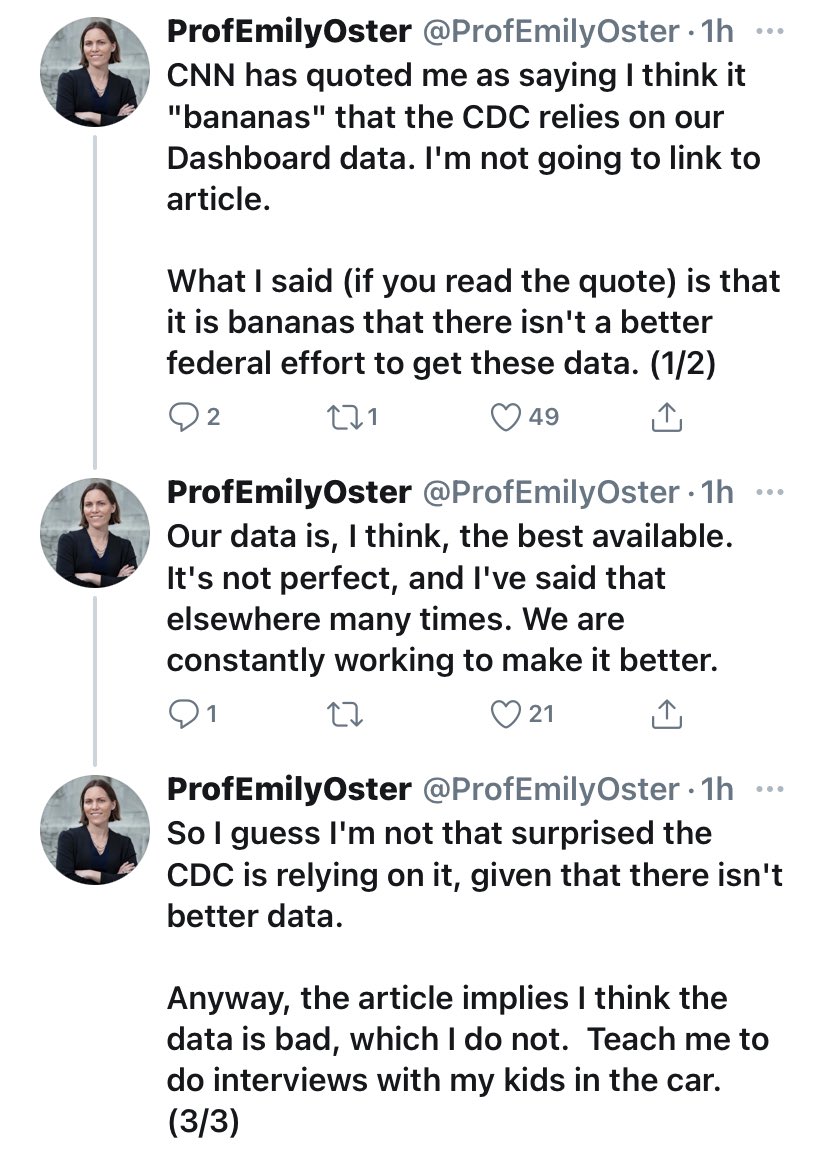
“It is totally bananas. I think we are doing as good a job as we can. This is not my field. It’s crazy.”

She later clarified in a series of Tweets, “…it is bananas that there isn’t a better federal effort to get these data….”

“Our data is, I think, the best available. It’s not perfect, and I’ve said that elsewhere many times…”

Besides the case of COVID-19 in schools, Oster is best known for making outrageous and often disproven claims such as that drinking alcoholic beverages during pregnancy is safe.

What About When Outbreaks Happen?

But it’s not just Oster who wants to have it both ways.

Policymakers say kids aren’t getting COVID at school and then walk back such claims when outbreaks happen in communities with high levels of infection.

Salt Lake City, Utah, had one of the biggest outbreaks in schools in the nation. However, that happened as infection rates reached more than double the level at which the state recommended distance learning.

“You can only open your school safely if you have COVID under control in your community,” said Benjamin Linas, an associate professor of medicine and epidemiology at Boston University School of Medicine who has advocated for opening schools under strict safety measures.

Which kind of disproves his position.

If COVID doesn’t spread much in schools, the infection rate in the community shouldn’t matter. If it does, then the virus can and does spread significantly in schools.

The situation in Utah has been partly attributed to community resistance to safety precautions like mask wearing and social distancing. When parents won’t take precautions, neither will children.

Keeping Schools Open During a Pandemic Increases Reckless Behavior

However, this highlights another danger of keeping schools open while infections are high.

Even if viral spread was low in schools, keeping buildings open minimizes the danger of the pandemic.

If Ava can see her friends in school, why shouldn’t she get together with them after school, too?

In-person learning enables more in-person extra-curricular activities, sporting events, parties and other social gatherings outside of school.

Under normal circumstances, this would be great. When there’s a raging pandemic – not so much.

With kids, it’s not always what you say. It’s what you do. And if it’s safe enough to have in-person schooling, kids aren’t as likely to social distance outside of school.

Conclusions

The point isn’t that school cannot exist during a pandemic.

In communities where infection rates are low, even in-person classes can be conducted in relative safety with proper precautions and adequate funding.

However, if the community infection rate is moderate to high, classes should be conducted remotely.

We have to take the virus and the risks it poses seriously.

We have not been doing that.

Helen Bristow, MPH, program manager of Duke’s ABC Science Collaborative, which guides schools on COVID-19 safety, cautions:

“We’re nine to 10 months into a brand-new disease. We’re regularly learning something we didn’t know before.”

We have to stop pretending that the partial data we have is enough to make broad and reckless decisions about keeping students and staff safe during this crisis.

Decisions should be made with an abundance of caution.

Protecting life and health have to be the overriding concerns.

We need a national database of COVID cases in schools for students and staff.

We need free, quick and ubiquitous viral screenings done frequently for all students and staff.

And darn if a working and safe vaccine wouldn’t be helpful, too.

But in the absence of all of these things, we should not be rushing to open schools to in-person classes.

The virus definitely is spreading in our schools.

In most communities, it’s not where the contact tracing leads. It’s the sheer number of cases, the quarantines, staffing shortages and, yes, even funerals.

For all its faults, remote learning is far preferable while the virus runs free.


Like this post?  You might want to consider becoming a Patreon subscriber. This helps me continue to keep the blog going and get on with this difficult and challenging work.

Plus you get subscriber only extras!

Just CLICK HERE.

Patreon+Circle

I’ve also written a book, “Gadfly on the Wall: A Public School Teacher Speaks Out on Racism and Reform,” now available from Garn Press. Ten percent of the proceeds go to the Badass Teachers Association. Check it out!
INCONVENIENT TRUTH: Remote Teaching is Better Than In-Person Instruction During a Pandemic

Hundreds of teachers have died from Covid-19.

More than 1 million children have been diagnosed with the disease.

Yet a bipartisan group of seven state Governors said in a joint statement Thursday that in-person schools are safe even when community transmission rates are high.

Safe – despite hundreds of preventable deaths of school employees.

Safe – despite mass outbreaks among students.

Safe – despite quarantines, staffing shortages, longterm illnesses and mounting uncertainty about the longterm effects of the disease on children and adults.

State Governors must have a different definition of safety than the rest of us.

The message was signed by New Jersey Governor Phil Murphy, New York Governor Andrew Cuomo, Pennsylvania Governor Tom Wolf, Delaware Governor John Carney, Connecticut Governor Ned Lamont, Rhode Island Governor Gina Raimondo, and Massachusetts Governor Charlie Baker.

Only Baker is a Republican. The rest are all Democrats.

We expect such blatant untruth from the Trump administration, and Vice-President Mike Pence was quick to add his voice to the septet.

But the facts remain.

More than 300 teachers and other school employees have died across the country from the virus, according to the Associated Press.

In fact, 72 school employees died of the virus in New York City, alone, according to the city Department of Education.

More than 1 million children have been diagnosed with Covid-19 according to a report by the American Academy of Pediatrics released Monday.

More than 250,000 people have died nationwide.

More than 11 million Americans have been diagnosed with the disease at an ever increasing rate. One million of those cases came about over just six days last week.

In many states like Pennsylvania, hospitalizations have passed their peak in April.

That is not safety.

And it is beyond reckless that these Governors would make such a counterfactual statement.

FACT: It is NOT safe to have in-person schooling in any community where infections are high.

FACT: It is BETTER to have remote education unless the virus has been contained.

But these are inconvenient truths that business leaders, politicians and policymakers are doing everything in their power to ignore.

The Governors’ statement begins:

“Medical research as well as the data from Northeastern states, from across the country, and from around the world make clear that in-person learning is safe when the appropriate protections are in place, even in communities with high transmission rates.”

This is just not true.

It is based not on research by epidemiologists, not on studies conducted by doctors, scientists or pharmacologists.

It comes from the work of an economist – Emily Oster.

The Brown University professor analyzed data from all 50 states over a two week period in September and came to the conclusion that when students or teachers get Covid, they rarely catch it at school.

And her analysis has become the Gospel truth for supply-side marketeers all over the country.

However, Oster has been wrong before.

Notoriously wrong.

Oster is infamous for publishing a paper advising women that drinking alcohol during pregnancy is safe. WRONG, says the National Organization on Fetal Alcohol Syndrome. WRONG, says a slew of recent studies from the University of Bristol, Oxford, the British Department of Health and the Centers for Disease Control (CDC).

She wrote her dissertation explaining that there were less women in China not because of the one child policy and traditional attitudes toward girl children, but instead because Hepatitis B skewed sex ratios.

And then after that paper made her famous, she published another one proving herself wrong.

Oster is not a serious academic. She is someone who constantly says something controversial to court the media and public opinion.

She is a contrarian, an attention seeker, a celebutante – the economist version of someone who shouts “fire” in a crowded movie theater and then sells fire extinguishers to those rushing for the exits.

It is because of people like her that Mark Twain is reported to have remarked, ”There are three kinds of lies: lies, damned lies, and statistics.”

She was shopping her thesis around about people not catching Covid at school back in May before there was any data one way or another.

Moreover, she homeschools her own children. She has nothing to lose getting us to believe her latest economic whopper.

Since providing this cover story, various county departments of health have claimed that contact tracing rarely indicates students or teachers catch the virus at school. However, these conclusions are based on voluntary anecdotes, not hard data. At the local level, there is often a lot of pressure to find the cause of an outbreak somewhere else when childcare is at stake or administrative coercion involved.

There has, however, been actual science done on the matter that sheds increasing doubt on Oster’s findings and those like her.

A study of more than a half-million people who were exposed to Coronavirus suggests that the virus’ continued spread is driven by only a small percentage of those who become infected.

Moreover, children and young adults were found to be potentially much more important to transmitting the virus than previous studies had identified, according to the study by researchers at Princeton, John Hopkins and the University of California at Berkeley.

This was the largest contact tracing study for any disease ever conducted.

It suggests the role of schools in the spread of the virus is also much greater than previously believed.

The evidence is so convincing that the CDC took down controversial guidance pushing for schools to remain open during periods of increased infections.

This is a lot more important than what some dipshit economist said.

However, the Governors’ statement continues:

“In-person learning is the best possible scenario for children, especially those with special needs and from low-income families. There is also growing evidence that the more time children spend outside of school increases the risk of mental health harm and affects their ability to truly learn.”

Talk about overstating the issue!

So kids can’t learn if their instruction is interrupted? It’s a good thing we never take any time off school, say during the summer months.

And way to use poor and special needs kids as props to drum up support. Funny how you never seem to care so much about them when issuing budget priorities or school funding formulas.

But it’s the callousness with which these governors paper over health concerns that really sounds like Oster, herself.

“There are people who would say if even one teacher acquires COVID at a school and dies, then it would not have been worth it to open schools,” Oster said. “I think that argument is complicated because people are going to suffer tremendously from schools being closed, but that is a tricky calculus.”

One would have hoped only an economist would weigh people’s lives vs the cost of health care and boosting standardized test scores. But apparently Democratic Governors feel the same way.

In-person schooling IS preferable to remote instruction if everything else is equal. But everything else is not equal right now.

What kind of mental health issues do children experience whose teachers die suddenly and preventably? How do kids suffer with the loss of a loved one knowing full well that they may have inadvertently been the cause of that person’s death?

What is the longterm cost to children or adults who have their lungs, digestive system or brains suffer irreparable damage as a result of Covid complications?

This disease was only discovered two years ago.

We cannot make bold statements of certainly about its effects without being deeply dishonest. There’s a lot we don’t know about it and how it affects people. And in light of that uncertainty it makes more sense to be extra cautious than reckless.

The fact is remote learning can be done effectively.

We can focus on ensuring that all students have the technology, infrastructure and training to access instruction on-line.

We can prioritize virtual curriculum created by classroom teachers and taught synchronously over video platforms like zoom instead of canned ed tech credit recovery programs like Edmentum.

Administrators and academic coaches can be of more use helping struggling students stay on track than endlessly spinning their wheels about how best to reopen schools.

Bottom line: No one should have to go to school in an unsafe classroom.

Students shouldn’t feel like the only way to get a quality education is to risk their health and put their families in jeopardy.

Teachers shouldn’t be bullied into working in unsafe environments where they or their loved ones may get sick – especially since educators are more susceptible to the virus and often suffer worse consequences of getting ill.

But despite all these arguments, it is the daily reality of schooling during a pandemic that is winning the argument.

Schools simply can’t operate in-person when large segments of the staff are sick and/or quarantined.

No one is buying the argument that in-person schooling is safe when whole kindergarten classes are quarantined as happened at my district this week.

The problem of childcare and other economic hardships are very real. But we will not solve them by closing our eyes to reality and putting our kids and teachers into unsafe classrooms.

It’s high time our government passed a new round of Covid relief. We need to pay people to stay home so they don’t spread the virus. We need mortgage protection, universal healthcare and a host of services to help people weather the storm.

It is embarrassing that so many Governors don’t have the courage to do that and instead indulge in the deranged fantasies of an economic death cult.

It sad that so many Governors lack the courage to issue real Stay-at-Home orders, close schools, bars and restaurants, and issue stiff penalties for those who disobey them.

We do not need in-person learning while Covid runs wild.

Until the danger has passed, we need quality remote learning conducted, planned and supported by educators.

And we need Governors with the guts to listen to science, not B.S. economists.


Like this post?  You might want to consider becoming a Patreon subscriber. This helps me continue to keep the blog going and get on with this difficult and challenging work.

Plus you get subscriber only extras!

Just CLICK HERE.

Patreon+Circle

I’ve also written a book, “Gadfly on the Wall: A Public School Teacher Speaks Out on Racism and Reform,” now available from Garn Press. Ten percent of the proceeds go to the Badass Teachers Association. Check it out!

As District Covid Cases Increase, McKeesport Schools Remain Open Temporarily

Next week, McKeesport Area School District will go fully remote to keep students safe from an ongoing outbreak of Covid-19 at several district buildings.

Two new cases are suspected today at the western Pennsylvania district, says a source close to the school board.

However all district buildings were open, and administrators say classes will continue in-person Thursday and Friday.

On Monday, the district will close for three days while all students learn on-line. Buildings will remain closed through Thanksgiving Break. Classes are scheduled to begin in-person again on Tuesday, Dec. 1.

Meanwhile, two staff members – one at the high school and one at Founders Hall – were reported having undergone tests for the virus this morning, according to a source close to the school board.

Allegheny County Health Department (ACHD) has not yet returned results for these two staff members.

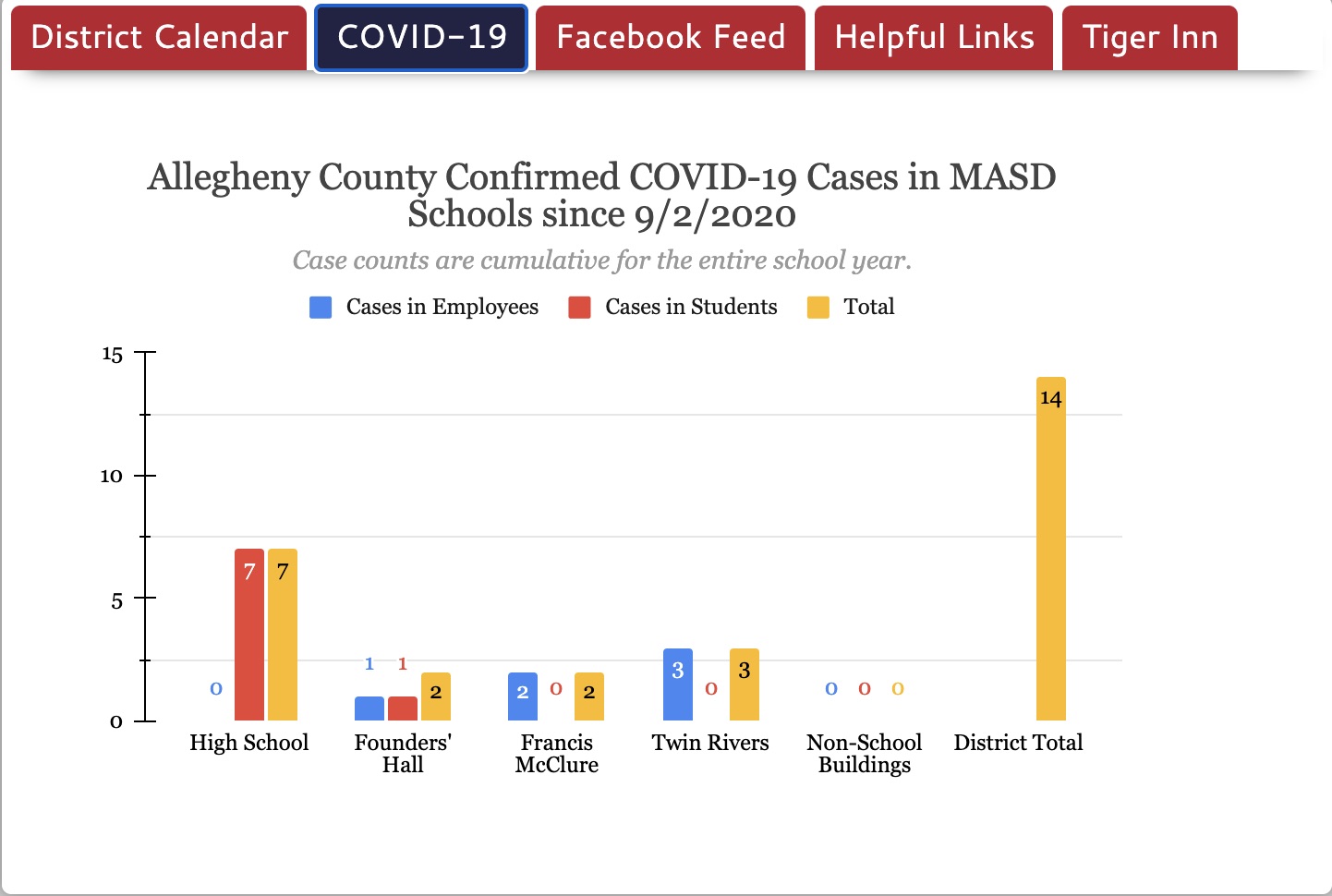
This potentially brings the district total to 21 cases since September – 11 students and 10 staff.

Yesterday, I reported six new cases, four of which were confirmed by ACHD and two which had test results pending.

Since then, one negative test result was returned for a Twin Rivers staff member and one remains pending.

The district’s Covid Tracker on its Website has been updated to include one more case (bringing its total to 15) but district officials have not added the six additional cases reported on this blog over the last few days of which only three are pending test results.

The district Website and Facebook page explain the shortfall thus:

“Our case tracker is live on our website. We receive documentation when a case is confirmed to us by the Allegheny County Health Department. Only after we receive that documentation can we update the tracker.”

However, the county health department does not limit itself so when reporting new Covid cases. It reports a total number and then differentiates between confirmed cases and those pending test results.

For instance, the ACHD reported today that there were 620 new COVID-19 cases in the county. Of those, 506 are confirmed and 114 are probable.

The district should do the same.

Parents cannot wait until cases are confirmed before making decisions about whether to send their children to school buildings or not. The mere fact that additional cases are suspected is enough for some parents to exercise caution.

After all, if your child is swimming in shark infested waters, the mere sight of a dorsal fin might be enough to call him or her back to shore. Cautious parents will not wait to see exactly what shark-like creature is gaining momentum swimming toward their child before removing him or her from danger.

In fact, that’s why many have kept their children in the district cyber program despite a distinctly inferior academic program.

And make no mistake – these are shark infested waters.

Cases are spiking throughout the country, state and county.

The state announced there were 6,339 new COVID cases today – another record for the highest daily increase.

The ACHD is recommending a stay-at-home advisory unless people are going to work, school or need essentials like groceries or medical care.

Given such dangerous conditions, it is surprising the district has only committed to closing buildings for three school days.

The Thanksgiving holiday is unlikely to be a time when infections decrease. Family gatherings and holiday shopping are more likely to do just the opposite.

Many districts are closing through the end of the year or until the end of January – at least.

In any case, the district would better serve parents and the community at large if it were more transparent about exactly what is going on in its buildings.


Like this post?  You might want to consider becoming a Patreon subscriber. This helps me continue to keep the blog going and get on with this difficult and challenging work.

Plus you get subscriber only extras!

Just CLICK HERE.

Patreon+Circle

I’ve also written a book, “Gadfly on the Wall: A Public School Teacher Speaks Out on Racism and Reform,” now available from Garn Press. Ten percent of the proceeds go to the Badass Teachers Association. Check it out!
McKeesport Schools Are Hiding At Least Six More COVID Cases at the High School & Twin Rivers

At least six more cases of COVID-19 have been identified at McKeesport Area School District, but you wouldn’t know it from administrators.

The information at the Western Pennsylvania district is being kept quiet instead of being released to the public.

So at the high school, two students tested positive, and at Twin Rivers Elementary, three staff and one student were identified as having the virus last week, according to a reliable source close to the school board.

Of those, two of the three Twin Rivers staff are awaiting confirmation of their test results from Allegheny County Health Department. The rest have all been tested and their results confirmed.

However, there are a few additional potential cases that remain to be investigated, according to the same source.

The district used to send out telephone, email and conventional mail alerts when students or staff tested positive.

However, the district created a Covid Tracker on its Website in October after I suggested it at a school board meeting.

Though the tracker has not yet been updated to include this information, it is being considered as the sole source of information to the community about cases, according to the school board source.

As of Monday night, the tracker only lists 14 cases in the district since buildings reopened in September – seven students at the high school, a student and a staff member at Founders Hall, two staff at Francis McClure Elementary and three staff at Twin Rivers.

The new cases would bring the district total to 20 – nine at the high school, seven at Twin Rivers with the numbers at other buildings unchanged.

That’s 11 students and 9 staff total – not counting any additional cases that may be coming.

I still think the tracker is a good idea, but it shouldn’t be the sole source of this information.

Parents should not have to check it every day to discover if an outbreak is underway. Administration should continue to provide this data with parents as things happen so parents can make informed decisions about continuing to send their children to in-person classes or not. (Many parents have their children enrolled in the district cyber program instead.)

And school directors should be using this data to determine if it is safe to keep buildings open at all.

Moreover, the tracker has its own glitches.

It does not come up when accessed through certain browsers like Firefox. Unless you use the most reliable browsers like Chrome, you can get nothing but an empty white screen.

With the county in the midst of a steadily increasing surge in Coronavirus cases, now is not the time to hold back on information.

On Sunday, the county broke precedent to report over the weekend an increase of 527 cases of COVID-19, the highest daily number reported since the pandemic began in March.

This followed a week of record-breaking reports from the Pennsylvania Department of Health, with an all-time high of 5,551 cases reported on Saturday throughout the state.

There have been 4,230 cases of COVID-19 in Allegheny County this month, alone.

Nationwide, it took the country 300 days to reach 11 million cases, but over just the last six days, that number increased by another million.

Over the last week, the country has averaged more than 1,080 deaths a day – more than 30% higher than two weeks previous.

The McKeesport community deserves up-to-date information about viral spread in our schools.

Administrators need to step up the transparency.


Like this post?  You might want to consider becoming a Patreon subscriber. This helps me continue to keep the blog going and get on with this difficult and challenging work.

Plus you get subscriber only extras!

Just CLICK HERE.

Patreon+Circle

I’ve also written a book, “Gadfly on the Wall: A Public School Teacher Speaks Out on Racism and Reform,” now available from Garn Press. Ten percent of the proceeds go to the Badass Teachers Association. Check it out!
Covid-19 Has Eroded My Faith in Public Schools

I am a public school advocate.

I teach at a public school.

My daughter goes to a public school.

I have spent most of my professional career fighting for public schools against every form of school privatization imaginable.

But since the beginning of this school year and the incredibly reckless way many public schools have dealt with reopening and keeping students and staff safe, I feel much of that enthusiasm drying up.

It’s not something I’m proud of feeling.

I’m actually kind of embarrassed about it.

But there are so many people I will never be able to look at the same way ever again.

There are so many organizations, unions, school boards, administrators, policy makers who have lost my trust – perhaps forever.

I’m not saying I love charter schools or private schools.

I don’t.

I still think they’re mostly scams bent on using the laws to cash in on kids while taking our tax money and running.

But the idea that public schools are fundamentally better – that idea has suffered tremendously.

I used to believe that local control was something to cherish, that a board made up of neighbors duly elected by the community would more often than not have the best interests of that neighborhood at heart when making decisions.

And, frankly, I just don’t feel that way anymore.

How can you preserve such an ideal in the face of so much evidence to the contrary – so many school boards who vote to open classrooms – and keep them open – despite raging infection rates? Despite students and teachers getting sick? Despite quarantines and warnings from epidemiologists?

SCHOOL BOARDS

McKeesport Area School District, where I live, has had more than 14 cases of Covid among students and staff since September and the school board isn’t even considering closing.

In fact, in October when most of these cases were coming to light and Center for Disease Control (CDC) guidelines suggested schools should temporarily close to ensure the virus wasn’t running out of control, administration chose to ignore the CDC on the basis of advice by the Allegheny County Health Department.

Seriously.

Administrators prioritized local officials telling them what they want to hear over national experts in infectious disease with hard truths. In short, keeping the doors open was considered more important than student safety.

Meanwhile, the district where I work, Steel Valley Schools, smartly decided to open with virtual learning in September. However, the board decided to change to a hybrid model in November to test the waters.

Yes, the board decided to make students and teachers guinea pigs in an experiment to see if they could somehow avoid getting sick while cases surged throughout the country and state.

And after only five days, a high school student tested positive and numerous kids and staff had to quarantine.

Yesterday the state Website announced that our county, Allegheny County, – which had been considered moderate in terms of infections – is now in the substantial category. The incidence rate is 138.7 per 100,000.

Also in the substantial category are nearby Armstrong, Butler, Beaver, Washington, and Westmoreland counties.

Will Western Pennsylvania schools do the right thing and go to remote learning? Will Steel Valley finally give up this in-person experiment? Will McKeesport?

Without a strong leader like a Governor or President to order a shut down and take the heat, I’m not sure local school directors will have the courage to act.

They keep blaming everything on academics, saying they have provide what is best to help students learn – never mind the dangers to child, parent and teachers’ bodies. But even more hypocritically they ignore the well being of huge swaths of their students who refuse to take part in their in-person experiment.

In both districts, about 60% of parents favor in-person schooling and 40% prefer remote.

So the boards are doing what the majority wants, but it’s a slim majority.

There is a significant portion of parents who feel these in-person plans are unsafe and very little is being done to educate their children.

At McKeesport, parents can enroll their kids in the district cyber program. No live teachers. No synchronous lessons on-line. Just a canned credit recovery program through the Edmentum company.

It’s terrible, and administration knows it’s terrible.

I’ve heard Superintendent Dr. Mark Holtzman say as much at school board meetings. But he and most of the board feel they have done all they need to do by providing this option.

They are actually betting that the poor quality of the cyber program will increase the number of parents sending their kids to in-person instruction.

And I’ve heard similar comments among administration at Steel Valley.

There at least we don’t force kids into our (likewise crappy) cyber program. We just have classroom teachers post assignments on-line.

Remote students in K-5 get live teachers instructing on-line. But remote students in 6-12 only get one half day of synchronous instruction on-line a week. The rest is asynchronous worksheets, etc. And somehow that’s supposed to be enough.

We have enough teachers that we could provide more, but why encourage remote learning? Might as well let them eat asynchronous and hope their parents will lose hope and just make them come to school during a global pandemic.

I have zero respect for administrators who think this way. I have zero respect for school board members who vote for it.

So how do I keep my respect for local control and the school board system?

This is very personal to me.

I have heart disease and Crohn’s Disease. My doctors tell me I can’t risk my life going into the school buildings to teach as infections run rampant through the state.

But my district has refused to allow me a safe work environment.

I am not allowed to teach remotely.

I have to burn my sick days so I can stay safe at home. But at the same time, I’m encouraged to take overtime hours to put up remote lessons, grade papers and contact parents.

I’m ready to do that as part of my job, but they won’t let me. They’d rather pay me and a sub who babysits my students in-person while I do what I’m allowed to do remotely at the same time.

So how do you look an administrator in the eye who refuses to lookout for his own employee’s safety?

Answer: you can’t. Ever, ever again.

UNIONS

And the same goes for many in my union.

Let me tell you, I love my union. I’m a union man. I believe in collective bargaining and worker solidarity.

I just wish my local did, too.

Because the leadership is perfectly fine with agreeing for the staff to work in unsafe conditions and no special protections for those like me who are more likely to contract the disease.

Leaders throw up their hands and say “We’re an association not a union,” and “If the boss says you come back to work, you have to come back to work.”

It’s even worse that I work in Homestead – the site of the historic strike.

So how do I look union leaders in the eye who have no problem throwing me to the wolves?

Answer: I can’t. Never, ever again.

And the state and national unions aren’t much better.

To be fair, I was pleasantly surprised when Pennsylvania State Education Association (PSEA) President Rich Askey called for schools in areas with substantial infection rates to follow state guidelines and go to remote learning.

This after months of…. Nothing.

And what is PSEA threatening if districts don’t comply?

Nothing…. So far.

But I guess saying something about it is better than what they were doing before.

The national unions – the National Education Association (NEA) and American Federation of Teachers (AFT) – certainly haven’t taken any hardline stances.

No one wants to rock the boat, but we’re talking about human life here.

There is no place further back to draw the line. We can compromise on salary and benefits but not on health and safety!

My God! That’s a human right!

We’re either unions in solidarity with our members – all our members – or we’re not.

And right now there is no solidarity, no leadership, nothing.

When I say things like this, people tell me I’m angry.

OF COURSE I’M ANGRY!

How many lives are we going to put at risk before it’s enough?

How many children? How many parents? How many staff?

Even if healthy people catch this thing, even if they get over it, they could have lifelong debilitating injuries from it.

That is not worth risking.

EDUCATION ACTIVISTS

And even the education activist community has been complicit in it.

When I tell some of my fellow grassroots organizers that schools should be open remotely, they complain about how that opens an opportunity for ed tech companies, charter and private schools.

They’re afraid teaching on-line will make ed tech companies an eternal part of school curriculum and replace real, live educators.

But that’s obviously false.

We’ve seen during lockdown periods that no one likes asynchronous teaching programs. No one likes these ed tech learning platforms. What works best in these times is curriculum created by classroom teachers taught by those classroom teachers to their students over online platforms like Zoom.

The technology should be merely a tool to connect students and teachers not as a provider of that learning.

The backlash against ed tech has been far greater than any embrace.

Yet some education activists decry how public schools going remote makes privatized schools who don’t look good.

That’s nonsense, too.

Teaching recklessly is bad – no matter who does it. If parents want to endanger their own kids, that’s their prerogative, but in the long run no one will earn brownie points for enabling such negligence.

However, where privatized schools will earn points with parents is for providing high quality remote learning when public schools refuse to do so.

I know all of them aren’t doing that. But some of them are.

And, frankly, they deserve any praise they get for it.

Look, I love public schools, too. But when public schools abandon their duties to their students as so many have done during this crisis, they deserve to have their students stolen. Even if these privatized schools often have more money to work with in the first place.

CONCLUSIONS

Bottom line: This is a crisis the school board system should have been able to overcome.

It’s a crisis the unions should have been able to battle.

It’s a crisis the activist community should have been able to see clearly.

But leadership has failed at every conceivable level. Time and again.

Strangely, that’s the only saving grace of the whole situation.

It isn’t the system that failed. It is the people in power in the system.

I know in my heart that the best way to run a school is still duly elected members of the community.

Just not THESE duly elected members.

I know that unions are vital to protecting workers rights. Just not unions lead by such wishy washy timid officers.

I know that education activism is necessary to keeping school privatization at bay. But activists can’t let their fears of what might be thwart people’s health and safety right now.

That’s the problem with Democracy. The leaders you get are representative of the community.

And our communities are perverted by one overwhelming belief – capitalism.

That’s why the schools are open. School boards are afraid keeping them closed will hurt business in the community.

That’s why administrators make such reckless reopening plans. They’re afraid that if we stay on remote it will become obvious how irrelevant they are to the running of a virtual school.

That’s why union leaders put up next to no resistance. They’re more afraid of furloughs than death or lifelong health consequences.

That’s why some parents support reopening schools – so they have someone to watch their kids while they’re at work. They never spare a moment for how the government is cheating them out of stimulus checks, mortgage relief, rent forgiveness, free testing, hazard pay and healthcare so they don’t have to put their own lives on the line working during a pandemic.

In all honesty, we were a sick country long before COVID-19 hit our shores.

We are sick with outdated and malicious economic ideas.

When you look across the ocean at the more socialist countries, you see much better plans to deal with the pandemic. Not perfect, but better.

When everything isn’t dependent on money changing hands, you can more easily prioritize human life.

So, yes, my faith has been shaken in our public schools.

I still think the idea of a public school is one to be cherished and fought to protect.

But the leaders we have – nearly all of them – should be rejected.

We need an army of citizen activists, parents and teachers to come forward at the first opportunity to replace them.

Anyone in a leadership role this year should have to explain themselves – what did you do to protect students and staff during the pandemic?

If they can’t prove they took real steps to keep people safe and not sacrifice the people they were charged to protect on the altar of capitalism – if they can’t do that they should step down.

They should step down with tears in their eyes and forever have their names sullied by their cowardice and stupidity.

They have failed us all.


Like this post?  You might want to consider becoming a Patreon subscriber. This helps me continue to keep the blog going and get on with this difficult and challenging work.

Plus you get subscriber only extras!

Just CLICK HERE.

Patreon+Circle

I’ve also written a book, “Gadfly on the Wall: A Public School Teacher Speaks Out on Racism and Reform,” now available from Garn Press. Ten percent of the proceeds go to the Badass Teachers Association. Check it out!