Teachers are Being Spied on for Thoughtcrimes

Teachers, be careful.

Big Mother is watching you.

When you post a rainbow flag on your Facebook profile…

When you tweet support for Black Lives Matter…

When you like a YouTube video of someone punching a Nazi…

Big Mother is watching.

Or more specifically, Moms for Liberty is watching.


And, no, the group’s members probably don’t get the irony of their name.

Moms for Liberty (MFL) is a billionaire-funded front group dedicated to spreading disinformation and chaos at public schools across the country.

They’ve offered cash prizes for turning in teachers who dare to educate on topics that go against far right doctrine. They’ve demanded books on similar topics be removed from school libraries and curriculum. And they’ve even stormed school board meetings where they don’t necessary live to complain about every petty grievance Fox News is broadcasting this week.

Now they’re coming after teachers social media.

They’re creating workshops to encourage people to find public educators’ online accounts and report anything they don’t like at school board meetings or in the media, ultimately demanding the offenders be fired.

After all, if Miss Roosevelt has a rainbow flag on her personal Facebook account, what’s to stop her from making her students gay!?

If Mr. Kennedy tweeted in favor of Black Lives Matter, what’s to stop him from making our White children hate themselves because of the color of their skin!?

And if Mrs. Gore liked a YouTube video where a Nazi got punched in the face, how do we know she won’t condone such violence in the classroom!?

MFL is based in Florida, but operates on a county-by-county basis, claiming 200 chapters in 37 states including Pennsylvania (Allegheny, Eerie, Bucks, Lancaster counties, etc).

This is an image advertising one such workshop in Nueces, Texas, but they are popping up everywhere.

One of the many ironies about the situation is how the idea has been pulled almost directly from George Orwell’s dystopian novel, “1984.”

Orwell coined the term “thoughtcrime” to describe a person’s politically unorthodox thoughts – anything that runs counter to the party line. In criminalizing thought and even tasking the Thinkpol (i.e. thought police) with monitoring things people say, write or how they act, Orwell could be describing MFL.

In the fictional country of Oceania, the party controls all speech, actions and thoughts of citizens. This is pretty much what MFL is trying to do here.

It’s a strange way to love “liberty.”

These right-wingers actively harass people on the left for their politics, but cry foul when anyone dares to call them out on theirs.

The Florida-based organization claims to be just “moms on a mission to stoke the fires of liberty.” Yet it’s infamous for encouraging a “mass exodus from the public school system” while disrupting that same system at every turn.

Its members are using culture war shenanigans to intimidate and harass people into silence.

They’re weaponizing fear to coerce people into curtailing political speech of which they don’t approve.

As infuriating as this is, it’s not new.

There have always been a few petty people in nearly every community willing to scroll through teachers feeds looking for trouble. Frankly, it’s why new educators are warned to keep their personal lives off the Internet or to keep their information private.

The only difference now is how concentrated these spying efforts may become.

We’re not talking about just the local crank looking for photos of teachers drinking or engaged in the crime of living an adult life.

We’re talking about well-funded ideologues out to destroy the public school system, one teacher at a time.

Incorporated in 2021, MFL is a 501(c)4 corporation, so it doesn’t have to disclose its donors. However, one of the group’s founders is Bridget Ziegler, wife of the Florida vice chairman of the Republican Party. The organization is affiliated with at least three separate PACs, and has the funds to pay for keynote speakers like Megyn Kelly and Ben Carson at its fundraisers. Some of its biggest supporters are the Koch family, the DeVos family, former Trump officials and The Federalist Society. 

They have the money to go through your Web footprint with a fine toothed comb.

So what should teachers do about it?

As a public school teacher, myself, the way I see it, there are two things we can do:

1) Lock down or disengage from social media


2) Keep doing what you’re doing

Your response will depend on your own situation.

If you live in a so-called Right to Work state or where worker protections are few and far between, you should probably get a tight grip on your online presence.

Make sure your personal Facebook account and any groups you belong to are private and secure. Ensure that anyone invited into these groups is verified through either questions or personal invitation. Check that everyone has agreed not to screen shot any discussions happening – and even then be careful what you post because nothing is ever 100% secure.

Use a privacy audit to make sure you don’t have something embarrassing out there. This guide from Violet Blue is a good starting place to ensure your private information is not easily findable online.

On the other hand, if you live in a state with strong union protections, you have a reliable union at your school, etc., then you have less to worry about.

You can’t be fired for expressing your freedom of speech on your own time on your own social media accounts. As long as you’re not on school devices, using or sharing such accounts in school or with students, you should be fine.

That doesn’t mean someone won’t try to harass you over your digital presence. But if you understand the dangers and feel relatively safe, you probably are.

I’ve been writing on education and civil rights issues for 8 years. I actively TRY to get people to read this stuff.

In that time, there have been a lot of folks mad at me for what I write. I sometimes get hate mail (usually email) calling me everything you can think of and more you can’t. And when some of these folks find out where I work, they sometimes call up to complain and demand I be let go with haste!

Nothing has come of it.

That doesn’t mean it couldn’t happen tomorrow. But I refuse to live in fear.

I am who I am.

I shout it to the world.

And if someone wants to fire me for it, then fine.

There are lots of things I could be doing other than this.

We’re in a national crisis with teachers leaving the profession in droves at least in part because of fascist shenanigans like this.

Bottom line: I love teaching, but I’m not going to change who I am to do it.

Moms for Liberty can rage. They can spend all of Betsy DeVos’ billions trying to fire me and other educators who dare to have thoughts that may deviate from the right-wing.

Big Mother is not MY mom. And I don’t owe her anything.


Like this post?  You might want to consider becoming a Patreon subscriber. This helps me continue to keep the blog going and get on with this difficult and challenging work.

Plus you get subscriber only extras!

Just CLICK HERE.

Patreon+Circle

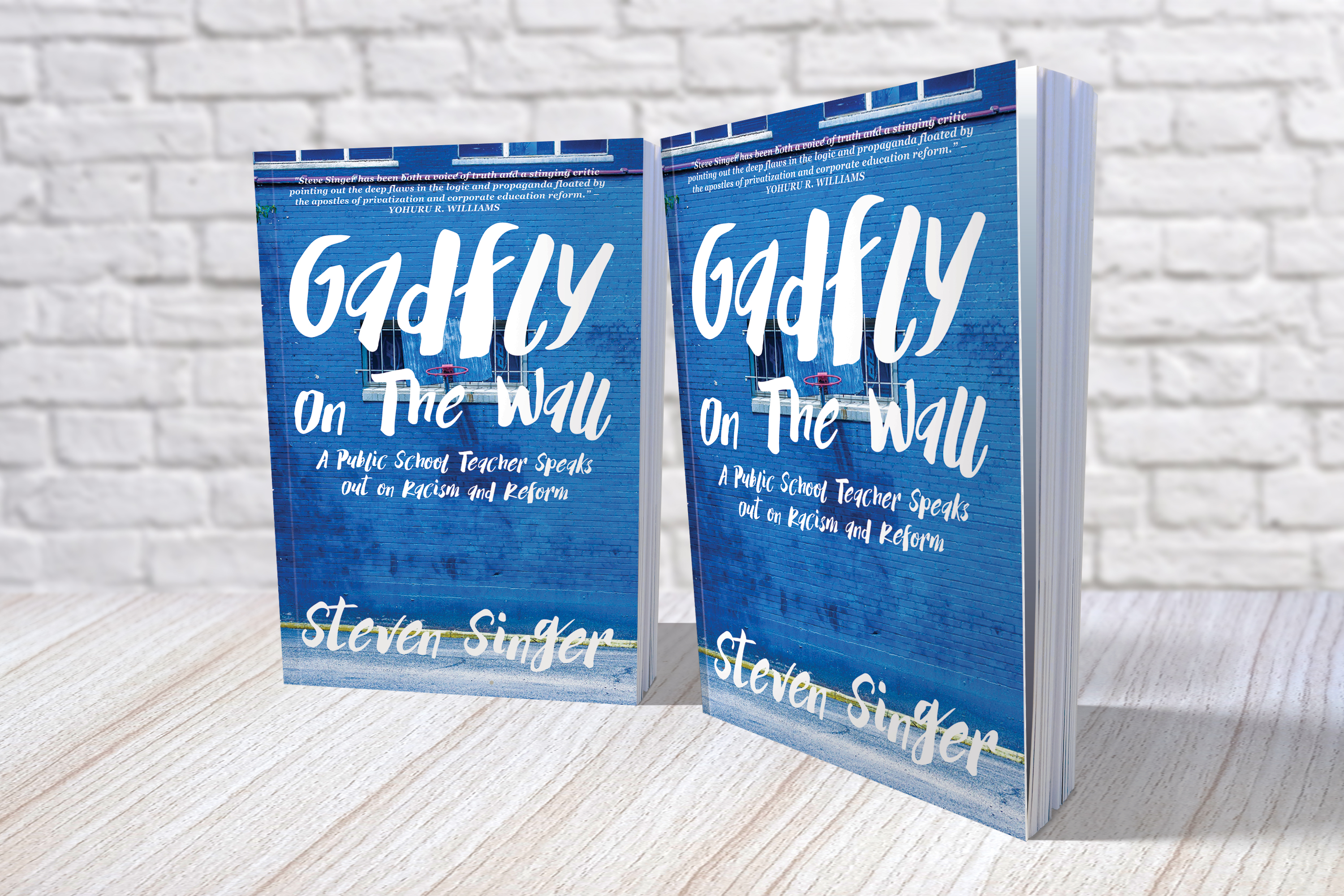
I’ve also written a book, “Gadfly on the Wall: A Public School Teacher Speaks Out on Racism and Reform,” now available from Garn Press. Ten percent of the proceeds go to the Badass Teachers Association. Check it out!

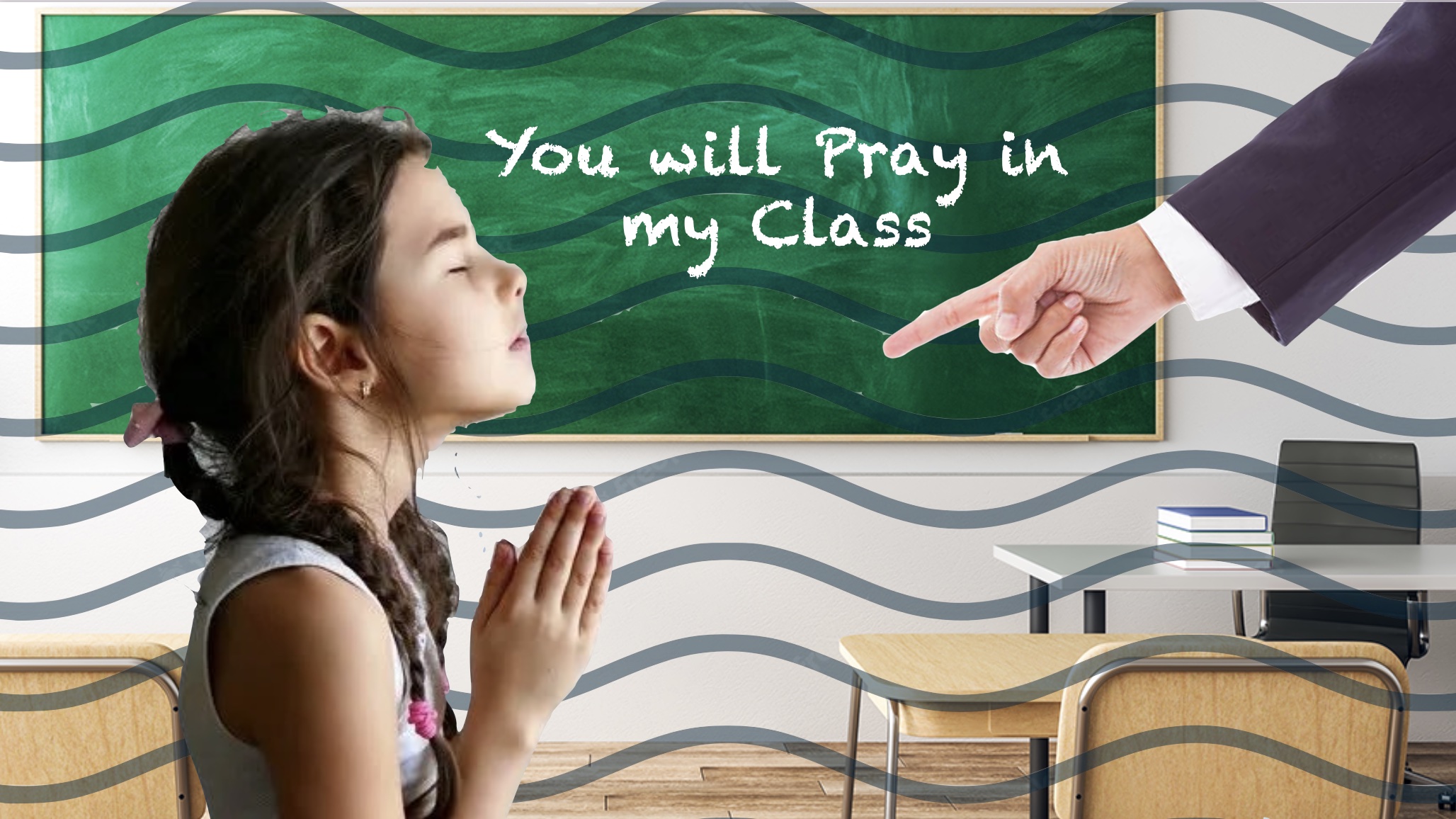
 

I Will NOT Lead My Students in Prayer and Neither Should You

As a public school teacher, I have a responsibility not to bully my students into believing as I do.

In fact, I go out of my way to respect their right to form their own opinions – to think, not just to accept what they’re told.

The US Supreme Court apparently has no idea how this works.

The six Republican members (I refuse to call them justices) paved the way for organized prayer in public schools by ruling this week in support of a high school football coach who lead his team in prayer on the field.

Anyone who has ever been in the minority knows that when an authority figure leads students in an activity, it is not optional – no matter what they say.

I know this from personal experience.

When I was in elementary school, I was one of a handful of Jewish kids in a building of mostly Catholics, Methodists, Presbyterians, etc.

In December, the kids were preparing for a choral concert where we’d sing a slew of holiday songs.

I loved to sing and enjoyed Frosty the Snowman, Jingle Bells and all the other classics…

Except one – Silent Night.

I just didn’t feel right singing things like “Round yon virgin mother and child” and “Christ the savior is born.”

So when we practiced that song, I’d stop singing.

I’d enthusiastically belt out all the other tunes, but I just stood there when it was time for Silent Night.

I didn’t think it would make a difference. There were hundreds of others kids. No one would notice me.

But the choral teacher did.

She pulled me out of line and demanded to know why I wasn’t singing. I told her I was Jewish and didn’t want to sing that song.

She chided me for making everyone else look bad and told me to just move my mouth during the song so it looked like I was singing.

I didn’t want to do that. I didn’t want people to even THINK I was singing things I didn’t believe.

It’s not that I really accepted Santa and his reindeer, either, but this was somehow different. I didn’t want my parents to go to the concert and see me participating in this farce. I didn’t want to be forced to go onstage and before everyone profess the opposite of all I had been taught – to declare myself other than what I really was.

But the other kids were right there listening to this whole conversation and giggling. It was yet another way I was being marked as an outsider, as different – so I gave in and did what she demanded.

In retrospect, I now know I could have complained to my parents and gone to the principal and we could have even taken the matter to court like the aforementioned coach.

However, when you’re a little kid in elementary school you usually just listen to what the adults tell you to do. At least I did.

It took me decades to get over it. Really.

Whenever that song would come on the radio or I’d hear it in a department store, I’d get all tense and upset. Like something had been stolen from me.

So it was with some trepidation many years later that I attended my daughter’s first winter concert when she was in elementary school.

It was with some relief that I noticed no holiday songs like Silent Night. They were all pretty secular and even multicultural.

And my daughter goes to the same district I went to as a child.

We’ve come a long way in the past three decades.

By and large, public school teachers today make an effort not to force their ways onto their students.

It’s a lesson I take to heart, myself, in my middle school classes.

When we discuss things – as you must in Language Arts – I encourage students to agree OR disagree with me or anyone else. Either option is okay so long as they try to explain why they think the way they do.

Moreover, I encourage them not to just speak but to also listen to what their classmates have to say and even be open to revising their original thoughts based on what they’ve heard.

And this includes discussions of religion.

When something Biblical or theological comes out of a book like “To Kill a Mockingbird” or “The Outsiders,” we give it our full attention.

I tell my kids that they can say or think whatever they want about it. If they want to talk about God or religion, that is fine. It’s just me who is constrained. I am not allowed to give them my own opinion on these matters.

Often I tell them that this isn’t necessarily what I believe, but I’ll propose one idea or another to get them thinking.

I remember one year my students were particularly interested in religion, and they complained that they couldn’t pin me down on anything – they couldn’t tell if I was religious or an atheist.

And that’s how it should be.

Kids have never been forbidden from talking about God or praying in school.

It’s just that teachers have been forbidden from telling them what to think or leading them in prayer.

Until now.

However just because an increasingly illegitimate Supreme Court makes a regressive ruling doesn’t mean teachers have to change.

Even if we CAN lead kids in prayer, that doesn’t mean we SHOULD.

I don’t plan on altering a single thing in my classroom, and I don’t think my colleagues should, either.

But there are 3.2 million teachers in public schools. There are bound to be some who will use this ruling as an excuse to give in to their worst tendencies.

So here’s what I suggest we do.

We should not coerce our students to do anything, but we damn well can and SHOULD pressure our colleagues not to indoctrinate their students.

Principals should give crappy assignments to teachers who break this taboo. Keep them away from students if at all possible. After all, they don’t belong in the classroom if they’re going to misuse the trust students have in them.

Teachers should give them the cold shoulder in the faculty room and at the copier.

Want to borrow my grammar unit? Not if you’re going to subject your classes to your faith and encourage them to follow along.

Consenting adults can do what they like on their own time, but this is public school.

When it comes to undue influence, inculcation and alienation of kids who are different, we cannot be bystanders.

We may not have dark money and Christian Nationalists behind us, but until we have a rational Supreme Court to overturn this decision or a Congress with enough guts to codify freedom from religion into law, teachers still have some modicum of power.

We should use it to protect our children.


Like this post?  You might want to consider becoming a Patreon subscriber. This helps me continue to keep the blog going and get on with this difficult and challenging work.

Plus you get subscriber only extras!

Just CLICK HERE.

Patreon+Circle

I’ve also written a book, “Gadfly on the Wall: A Public School Teacher Speaks Out on Racism and Reform,” now available from Garn Press. Ten percent of the proceeds go to the Badass Teachers Association. Check it out!
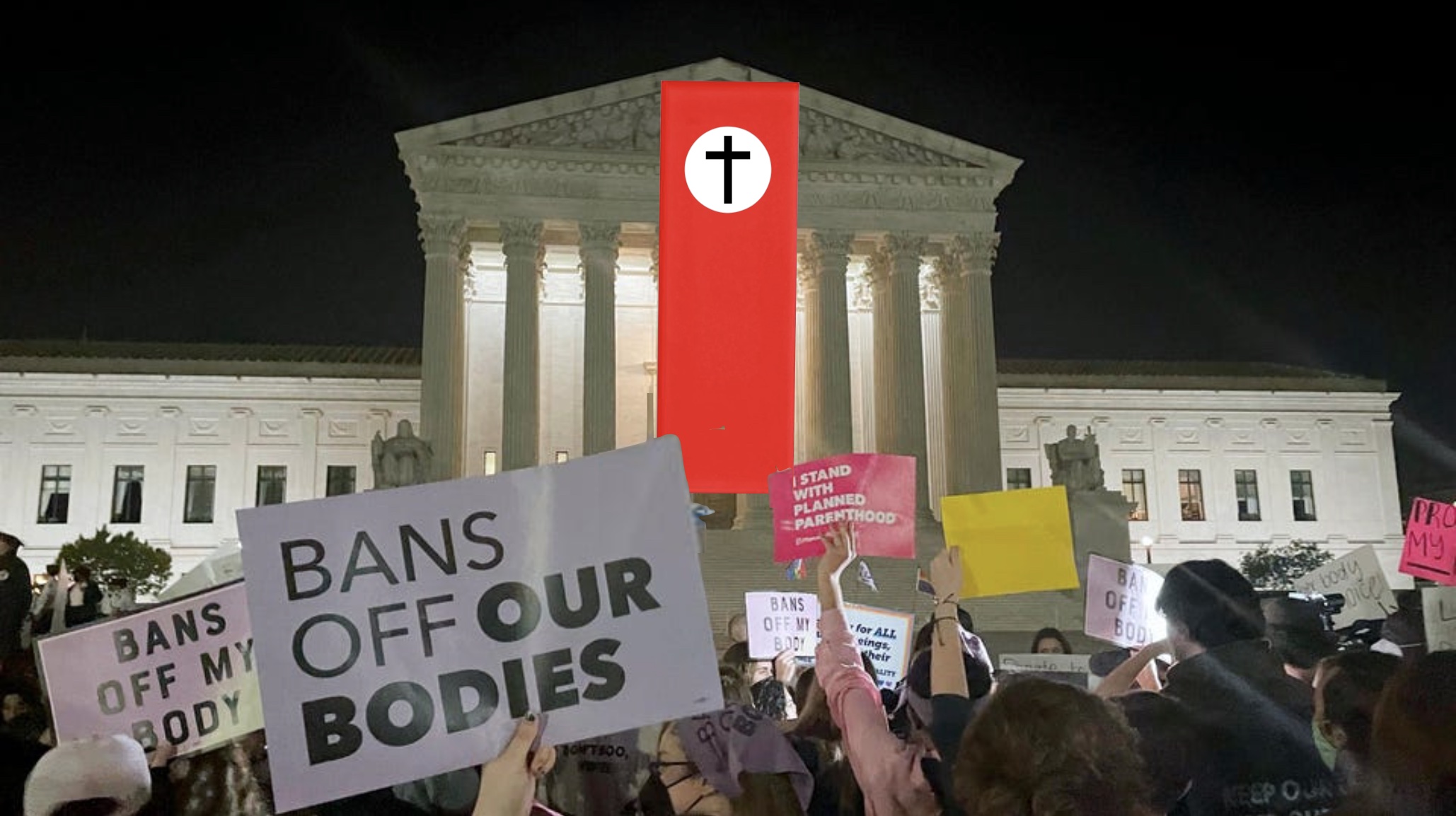
Overturning Abortion Rights is Fascism – Pure and Simple

The US Supreme Court is a fascist organization.

Let me cut right to the chase to explain why.

This week the conservative majority (I won’t call them justices) overturned Roe v. Wade – the landmark 1973 decision that expanded access to abortion nationwide.

This is on top of decisions deeply wounding state’s rights to make gun regulations, to hold police civilly accountable for reading suspects their Miranda rights, and even the separation of Church and State in regard to public funding of parochial schools.

Let me be very clear – this is not about consistency based on legal precedent or interpretation of the law. It is ideology – pure and simple.

In the case of abortion, these four men and one woman did it because they wanted to. That’s all.

And they wanted to for a while now. They each lied to Congress during their confirmation hearings.

Maybe money exchanged hands. Maybe they were influenced by powerful pundits, politicians and ideologues.

But their rulings were certainly not based on logic. After all, in the same week they decided states CAN’T regulate guns but states CAN regulate women’s bodies.

This is inconsistent and irrational.

The right to an abortion is one of the most fundamental rights a person can have.

It is central to the very idea of personal freedom and autonomy.

And no argument based on the rights of the unborn can support this travesty of justice.

Look at the facts.

At the beginning of pregnancy, a fetus is nothing but a cluster of cells.

This cluster is alive but so is cancer. So are insects. So are bacteria.

Being alive is not enough to give it rights over-and-above the person these cells are clustered inside.

Electrical impulses in these cells do not constitute a heartbeat. Nearly every cell has such electrical impulses – the brain, muscles, organs, etc. That doesn’t make them separate organisms.

Your belief that a cluster of cells is a person is not a compelling argument for anything.

There are no facts behind it.

It is purely a matter of a faith.

There is no way to prove either position right or wrong. It is definitional.

It is purely something you believe without any evidence.

It is religion, and in a free society one person’s religion cannot compel someone of another faith or someone of no faith whatsoever.

Catholics can’t make Jews attend midnight mass before Christmas. Jews can’t make Baptists refrain from eating pork. Muslims can’t stop atheists from drawing cartoons of religious figures.

Doing so would be theocracy.

So using your belief as a justification to force people who do not share it to take that cluster of cells to term is a textbook example of fascism.

It clearly violates the First Amendment establishment clause of the Constitution. It forces others to be compelled by your faith-based claims.

Moreover, it violates a person’s right to bodily autonomy.

If you have a right to anything, it is to do whatever you want with your own body. After all, that is you at its most essential.

Without this right, you are the same as livestock or an enslaved person.

No one should be able to force you to do anything with or to your body that you don’t want.

Obviously that right has limits – for example if you intend to use your body to hurt or kill someone else.

But we’ve already established that a fetus – a glob of cells – cannot be assumed to be someone else.

Doing otherwise would be absurd.

So someone has beliefs about what’s happening inside your body. So what?

Imagine if some cult thought your kidneys have souls and must be kept inside you at all costs. Should they be able to pass a law forbidding you from removing one if it gets infected? If you want to donate it to save another person’s life?

They’re your kidneys. And that fetus is your cluster of cells. You can do with it what you want.

Eventually, if you let that cluster of cells develop long enough, it may become something else. It may become viable to live on its own and what almost everyone would agree is a person. But it is not a given at all that this conglomeration of tissue is one yet.

And your insistence that your beliefs about it must compel my actions violates my rights.

Moreover, this argument has been predicated on the believer in the personhood of a clump of cells acting in good faith.

In point of practice, we do not even see that.

The same people in favor of repealing a person’s right to abortion may be in favor of the knot of tissue developing through birth, but they do not support doing anything to help it once it has unequivocally reached personhood.

No universal healthcare. No universal daycare. No neonatal care. No robust education funding. And no protection against gun violence.

This shows that most people professing this belief in the personhood of something inside your body is pure balderdash.

It’s not about that mass growing inside a woman. It’s about the woman, herself – controlling her actions, making her bend to your will, making it harder for her to exercise her autonomy and benefit from her own economic power.

It is about upholding patriarchy. It is about subjugating women – especially poor women and women of color who are more likely to be impacted.

Make no mistake.

This is fascism.

Our Supreme Court is fascist.

And whether you are likely to ever have an abortion or not is beside the point.

Every woman, every man, every person is impacted.

We must fight this kangaroo court and the political power behind it.

We must make them regret such blatant autocracy and totalitarianism.

This is everyone’s fight.

Every PERSON. Everywhere.


Like this post?  You might want to consider becoming a Patreon subscriber. This helps me continue to keep the blog going and get on with this difficult and challenging work.

Plus you get subscriber only extras!

Just CLICK HERE.

Patreon+Circle

I’ve also written a book, “Gadfly on the Wall: A Public School Teacher Speaks Out on Racism and Reform,” now available from Garn Press. Ten percent of the proceeds go to the Badass Teachers Association. Check it out!

Doug Mastriano’s Rootin’ Tootin’ School Shootin’ Prevention Plan in PA

A teenage boy in a black trench coat walks down a school hallway.

A young girl abruptly turns a corner and is about to walk past when she stops and notices an oblong shape in his coat.

He pulls out an AR-15 and points it at her head.

She gasps. He smiles.

“Hold it right there, Patrick.” Says a voice behind him.

“Mr. Callahan?” The boy says starting to bring the barrel around.

‘Uh-uh. Stop right there,” says the voice shoving something in the boy’s back.

“I know what you’re thinking,” the teacher continues. “My homeroom teacher, Mr. Callahan, has a gun in his desk. Did he remember to bring it with him to hall duty? Well to tell you the truth in all this excitement I kinda lost track myself. But being it’s a 500 S&W Magnum, the most powerful handgun in the world and would blow your head clean off, you’ve gotta ask yourself one question: “Do I feel lucky?” Well, do ya, punk?”

Apparently this is how Doug Mastriano thinks school shootings can best be prevented.

The Pennsylvania State Senator and Republican candidate for governor plans to introduce a bill allowing school employees to arm themselves while on school property if they have a concealed carry permit and pass a firearms course.

Not gun control. Not stopping teens from buying assault weapons. Not keeping guns out of the hands of the mentally ill.

Instead, arm the teachers. Arm the principals. Put a piece in the hands of Lunch Lady Doris. Maybe even the custodians will be packing heat with a bucket and mop.

This is not the kind of serious proposal Commonwealth residents deserve from a representative of the legislature or executive branch. It’s not the kind of serious proposal you’d expect from a grown adult. Heck. It’s not what you’d expect from a small child still unable to tie his own shoes.

School shootings are not action movie scenarios. They’re not run-and-gun video games. They’re not cops and robbers. They’re real life.

They’re the cause of elementary kids being decapitated by assault weapons fire.

They’re the cause of fifth grade bodies so unrecognizable they have to be identified by their green Converse sneakers.

They’re the cause of child sized coffins adorned with cartoon doggies and kitties – brightly colored friends to accompany little kids to their final resting places.

Mastriano’s suggestion would be pathetic if it weren’t so dangerous.

He thinks school shooters are attracted to places where they know people aren’t armed.

However, history proves him wrong.

The overwhelming majority of school shootings either involved armed police stationed at the school or police responding quickly thereafter.

Lest we forget, there were police officers on both the campuses of Robb Elementary School in Texas and Stoneman Douglas High School in Parkland, Florida, where shootings cumulatively took the lives of more than 30 students.

According to a 2021 JAMA Network study that looked at 133 school shootings from 1980 to 2019, armed guards did not significantly reduce injuries or deaths during school mass shootings.

In fact, when researchers controlled for location and school characteristic factors, “the rate of deaths was 2.83 times greater in schools with an armed guard present.”

Put simply, school shootings are not rational activities subject to cost benefit analysis from the people contemplating doing them. Would-be shooters do not expect to come out alive. They don’t care if there is armed resistance or not. In fact, the presence of armed resistance only encourages them to bring deadlier weaponry – especially semi-automatic guns.

That’s why police in Uvalde, Texas, were too scared to go into Robb Elementary School and stop the perpetrator armed with an AR-15 – perhaps the most common weapon used in school shootings.

And when trained police are afraid, Mastriano expects better from school staff – teachers, secretaries, aides, and nurses!!!?

A similar proposal permitting the arming of school employees passed the state Senate in June 2017 but it died in a House committee. In the district where I work as a middle school teacher, we talked about the issue at a staff meeting.

The few people who thought it was a good idea and said they would gladly bring a gun with them to school are nice people – but they’re the last ones you’d want armed.

Moreover, we have a school resource officer who said he was not in favor of the measure because it would make things tougher for law enforcement responding to a shooting. It would make it that much more unclear who the shooter was and increase the chances of friendly fire.

It’s hardly surprising Mastriano is making such boneheaded proposals.

If elected governor, he also promises to cut public school funding IN HALF and make it harder for educators to collectively bargain for better salaries, benefits, and working conditions.

He is an extremist who wants to destroy public education in favor or charter and voucher schools, take away people’s freedom to choose what to do with their own bodies, discriminate against anyone with a different sexuality or religious belief and give away as much tax money as possible to private businesses.

Mastriano is either a fool who does not understand the issues or a patsy of the lunatic fringe of his party or both.

He wouldn’t arm teachers with books, funding or resources to teach – just guns.

He is an embarrassment to the people of Franklin County who elected him to the legislature and the Republican base who chose him to represent them in the governor’s race.

I know it’s trendy for the GOP to pick the candidate most likely to piss off the people across the aisle, but this isn’t a game.

Fools like Mastriano are going to get innocent people and their children killed – not to mention the suffering thousands will have to endure if his policies ever see the light of day.

He thinks the answer to school shootings is to turn the school librarian into Yosemite Sam.

If you vote for him in the general election, you will reap what you sow – misery and death.


Like this post?  You might want to consider becoming a Patreon subscriber. This helps me continue to keep the blog going and get on with this difficult and challenging work.

Plus you get subscriber only extras!

Just CLICK HERE.

Patreon+Circle

I’ve also written a book, “Gadfly on the Wall: A Public School Teacher Speaks Out on Racism and Reform,” now available from Garn Press. Ten percent of the proceeds go to the Badass Teachers Association. Check it out!

‘To Kill a Mockingbird’ is Still Relevant Because it Forces Us to Confront Ourselves 


Parris is peering into a crumpled paperback with a huge smile on his face. 


“Mr. Singer, I love this book…” he says.  


He stops, pauses and adds, “I hate what’s happening, but I love the book.” 


In my middle school classroom, that’s a pretty routine reaction to Harper Lee’s classic, “To Kill a Mockingbird.” 


My 8th grade students approach the climax and resolution with equal parts dread and delight.  


But it doesn’t always start that way. 


No book I teach has gone through a greater change in cultural opinion than “Mockingbird.” 


It used to be considered a bastion of anti-racism. Now some folks actually consider it to be racist. 


The story is about Scout and her brother Jem as they grow up in Alabama during the Great Depression. Most of the drama centers on their father, Atticus, who defends a black man, Tom Robinson, in court against trumped up charges of raping a white woman.  


Ever since its publication in 1960, people have tried to ban the book from school libraries and from school curriculum.  


And that’s still true today. However, this used to be the work of the far right. Today there are almost as many objections from the far left – though for very different reasons. 


For 50 years, the biggest complaints came from conservatives about the book’s strong language, discussion of sexuality, rape, and use of the n-word. Though today you’ll find almost as many on the left proclaiming that the book actually perpetuates the racial intolerance it purports to be against. 


Republicans have become more extreme than ever. They see any discussion of race as “Critical Race Theory” – a conflation of a legal framework not actually taught in K-12 schools with any substantive discussion of racial inequality. It’s really just a simple dog whistle to try and shut down any discussion of the racial status quo. 


Teachers have become accustomed to conservatives hyperventilating that discussing racism and prejudice might mean having to admit these things still exist and therefore requiring us to do something about them. They’re terrified their kids might come to different conclusions about the world than their parents, and instead of confronting their own views with the facts, they prefer to sweep reality under the rug to preserve the fictions underlying their ideologies. 


These sort of complaints are typified by the Biloxi Public School Board in Mississippi which in 2017 removed Lee’s Pulitzer Prize-winning novel from its curriculum because, “It makes people uncomfortable.” 


What they don’t seem to realize is that the discomfort is part of the point. 


On the other side of the coin are people on the other pole of the political spectrum. Writers like Kristian Wilson Colyard don’t object to a discussion of racism and prejudice. They think “Mockingbird” doesn’t go far enough – or at least that the discussion it has is framed incorrectly. 


Colyard doesn’t think the book should be banned or removed from libraries, but instead insists it isn’t a good teaching tool.  


She writes


“Lee’s is not the best book to teach white kids about racism, because it grounds its narrative in the experiences of a white narrator and presents her father as the white savior.” 


While I think Colyard has a fair point of literary analysis, I don’t agree with her conclusion.  


At first glance, there is something strange about approaching racism through the lens of white people, but that doesn’t make it invalid. In fact, racism is a product of whiteness. In this country, white people are the ones doing it. Therefore, it makes sense to speak directly to and from the experience of white people. 


 Oppression, after all, is relational. It takes both the experience of the oppressed and the oppressor to fully understand it. And if we want to help end the cycle, it makes sense to show the oppressor how to bring that about. 


Moreover, the book sneaks up on its themes. There’s very little about outright intolerance on the first page or even the first few chapters. The idea creeps up on you as the narrator slowly becomes aware of the prejudices around her and the trial comes deeper into focus. 


As to the question of white saviorism, I think this is more often a buzzword than a legitimate criticism. White people are not heroes for attempting to put right something they put wrong. It is their responsibility, and seeing someone do that in fiction is a really powerful thing.  


Atticus doesn’t think he’s saving his client Tom Robinson. He doesn’t think he’s special for doing so. He’s doing what he thinks is right. Now Scout certainly views this through rose-colored glasses and lionizes him for it, but that’s a character’s point of view. It’s up to the reader to look at all this critically and come to your own judgement about it.  


Frankly, I think that’s one of the real values of the book. It provides a deep narrative, well told, for readers to examine and discuss very complex issues.  


If you think Atticus is given too much credit for what he does, that’s something you can discuss with other readers. I don’t see how doing so cheapens or hurts the cause of antiracism.  


In addition, the problem of centering the story on the white people is rectified by reading more widely in the literature. “Mockingbird” shouldn’t be the only book on the topic you read. To be well-rounded, you should read more from the point of view of people of color subjected to white people’s intolerance. And there are so many wonderful books to choose from – Toni Morrison’s “Beloved,” Ralph Ellison’s “The Invisible Man,” Alice Walker’s “The Color Purple,” etc.  


However, teachers shouldn’t be made to feel like they’ve wasted an opportunity by using “Mockingbird” in the classroom – even if it’s the only book that year they read on this topic. There must be more opportunities in years to come. Racism and prejudice should not be a one-and-done topic in US schools. It is too important for that. 


In my classroom, this book is far from our first discussion of the issue.  


We talk about Fred Hampton and the Black Panther Party. We talk about the 1968 Olympics Black power fist. We talk about Black cowboys like Bass Reeves. We talk about Bessie Coleman, Angela Davis, James Baldwin, and so many others.  


When we read S.E. Hinton’s “The Outsiders,” – a book that almost entirely eschews the topic – I make sure to point out that the narrative takes place in and around Tulsa, Oklahoma, and we discuss Black Wall Street and the massacre of Black people perpetrated by their White neighbors.  


And so when we get to “Mockingbird,” the discussions we have of the text is rich and deep. Students of color feel seen because of the book’s portrayal of the kind of racial injustice they experience in their own lives. Likewise, white students feel empowered to join in the struggle against it. 


When the verdict of the trial comes down, there are real tears and stares of disbelief.  


One of my students this year, Mya said, “I shouldn’t be surprised, but I thought it was going to turn out differently.” 


Me, too. Every time I read it. 


The book confronts students with the world as it is and challenges them to do something about it.  


White or Black, it holds up the reality of injustice and demands we take a side.  


And that’s why this book remains relevant and just as important today as it ever was. 


Like this post?  You might want to consider becoming a Patreon subscriber. This helps me continue to keep the blog going and get on with this difficult and challenging work.

Plus you get subscriber only extras!

Just CLICK HERE.

Patreon+Circle

I’ve also written a book, “Gadfly on the Wall: A Public School Teacher Speaks Out on Racism and Reform,” now available from Garn Press. Ten percent of the proceeds go to the Badass Teachers Association. Check it out!
If You Don’t Support Gun Control, You Support School Shootings

I drove my daughter to school today.

She thanked me for the ride, I wished her a good day, and she toddled off to the middle school doors.

Her khaki pants needed ironing, her pony tail was coming loose and she hefted her backpack onto her shoulder like a sack of potatoes.

All I could do was smile wistfully.

Parents and guardians know that feeling – a little piece of your heart walking away from you.

Imagine what the parents of the 19 children who were killed yesterday at Robb Elementary School in Uvalde, Texas, might have felt.

I wonder if the parents of the two adults killed in the shooting gave a thought to their grown children during what may have seemed like just another busy day at the end of the academic year.

We’re all so preoccupied. We tend to forget that every goodbye could be our last.

This marks the 27th school shooting with injuries or deaths so far in 2022.

It comes just 10 days after a shooting at a Tops supermarket in Buffalo, N.Y., where 10 people were killed.

There’s hardly enough time anymore to mourn one disaster before the next one hits.

One would think we would have done something about these tragedies by now.

After all, they aren’t unpredictable. They aren’t inevitable. They’re man-made.

There have been 119 school shootings since 2018, according to Education Week, a publication that has been tracking such events for the last four years.

This only includes incidents that happen on K-12 school property or on a school bus or during a school sponsored event when classes are in session.

If we broaden our definition, there is much more gun violence in our communities every day.

According to The Gun Violence Archive, an independent data collection organization, there have been 212 mass shootings so far this year.

There were 693 mass shootings last year, 611 the year before and 417 the year before that.

Why don’t we do anything about this?

In Scotland 26 years ago, a gunman killed 16 kids and a teacher in Dunblane Primary School. The United Kingdom (UK) responded by enacting tight gun control legislation. There hasn’t been a school shooting in the UK since.

After 51 worshippers were killed in mass shootings at Christchurch and Canterbury in New Zealand in 2019, the government outlawed most military style semiautomatic weapons, assault rifles like AK15’s, and initiated a buyback program. There hasn’t been a mass shooting there since.

In Australia, following a 1996 mass shooting in which 35 people were killed in Tasmania, Australian states and territories banned several types of firearms and bought back hundreds of thousands of banned weapons from their owners. Gun homicides, suicides, and mass shootings are now much less common in the country.

This is not hard.

The rest of the world has cracked the code. Just not us.

Not the U.S.

Guns are the leading cause of death for American children –  1 out of 10 people who die from guns in this country are 19 or younger.

Firearm deaths are more than 5 times higher than drownings.

But still we do nothing.

There have been 2,032 school shootings in the US since 1970, and these incidents are increasing. We’ve had 948 school shootings since the tragedy at Sandy Hook Elementary School in 2012.

And those who were killed or physically injured aren’t the only young people affected by this. Since the shooting at Columbine High School in 1999, nearly 300,000 students have been on campus during a school shooting.

Imagine what that does to a child.

Imagine what it would do to an adult.

Since Sandy Hook, the only change in policy has been to have lockdowns and school shooter drills in our classrooms. Children have been instructed to throw books at would-be-attackers and cause a distraction so some of them might have a greater chance of escaping.

We’re told to buy bullet-proof backpacks, arm school teachers, and have gun-wielding police patrol our buildings – but our lawmakers refuse to do anything about the firearms, themselves.

The gun industry is making billions of dollars off this cycle of gun violence: mass shooting, fear of regulation, increase in sales. Repeat ad infinitum.

We’re told that gun control is useless because new laws will just be pieces of paper that criminals will ignore. However, by the same logic, why have any laws at all? Congress should just pack it in, the courts should close up. Criminals will do what they please.

We may never be able to stop all gun violence, but we can take steps to make it more unlikely. We can at least make it more difficult for people to die by firearm. And this doesn’t have to mean getting rid of all guns. Just regulate them.

According to the Pew Research Center, when you ask people about specific firearm regulations, the majority is in favor of most of them – both Republicans and Democrats.

We don’t want the mentally ill to be able to buy guns. We don’t want suspected terrorists to be able to purchase guns. We don’t want convicted criminals to be able to buy guns. We want mandatory background checks for private sales at gun shows.

Yet our lawmakers stand by helpless whenever these tragedies occur because they are at the mercy of their donors. The gun industry owns too many elected officials.

In short, we need lawmakers willing to make laws. We need legislators who will represent the overwhelming majority of the public and take sensible action to protect the people of this country.

What we need is real gun control legislation. We need an assault weapons ban. We need to close the gun show loophole. We need buyback programs to get the mountains of firearms off the streets and out of the arsenals of a handful of paranoid “survivalists”.

We don’t need anyone’s thoughts and prayers.  

We need action.  

And we need it yesterday.

At this point there is simply no excuse.

If you don’t support gun control, you support school shootings.


Like this post?  You might want to consider becoming a Patreon subscriber. This helps me continue to keep the blog going and get on with this difficult and challenging work.

Plus you get subscriber only extras!

Just CLICK HERE.

Patreon+Circle

I’ve also written a book, “Gadfly on the Wall: A Public School Teacher Speaks Out on Racism and Reform,” now available from Garn Press. Ten percent of the proceeds go to the Badass Teachers Association. Check it out!

Social-Emotional Learning vs. Classroom Culture 


A student accidentally drops her books in the hall.  


Another student stops and helps her pick them up.  


Then a teacher homes in on the two and gives the helper a little yellow card which can be redeemed for candy.  


This is what social-emotional learning (SEL) looks like in my school. 


Teachers instruct on proper behaviors and then reward students they see going above and beyond to achieve them.  


Here’s another example. 


A student at his lunch table is yelling and throwing food. Nearby another student is sitting quietly and reading a book.  


Then a teacher walks over and gives the quiet child a yellow card which can be used to enter a raffle for a special prize. He might win an Oculus VR game system or tickets to a baseball game.  


That’s social-emotion learning, too.  


Instead of just cracking down on the negative behaviors, we try to reward the positive ones.  


To be fair, it works to a degree.  


But most of the time, it doesn’t. 


The same kids end up with huge stacks of yellow cards and the rest get just one or two. Few students actually change their behavior. They just become virtue signalers whenever an adult is present.  


Moreover, there’s an incredible amount of pressure on teachers to not just instruct but to closely observe every student’s behavior and constantly give positive reinforcement to those doing what should be the norm.  


And that’s not even mentioning the frequent disruptions necessary to reward those children who can best navigate the system. 


But that’s only one way of addressing the problem of bad behavior.  


Especially now (most student’s first full year of in-person classes after the worst of the Covid-19 pandemic), students don’t seem to know how to interact.  


Snubs, insults and instigation seem to be their defaults ways of relating to each other. Some definitely need explicit boundaries and reinforcement.  


But it only goes so far in the halls, the cafeteria and during unstructured times.  


Inside the classroom is another beast altogether – as it always has been. 


Ever since I first started teaching more than two decades ago, it’s been necessary to work to achieve a classroom culture. 


The teacher has to expend significant time and energy with the students as a whole and each student individually to set up a mini-society where each member gets respect by giving respect. 


We try to set up the environment so everyone feels safe and involved, everyone is accepted for who they are, comfortable to be themselves and feels empowered to take the chances necessary to learn. 


It’s not easy, but it’s more about relationships than behaviorism. The reward isn’t something extrinsic – it’s participation in the classroom culture, itself.  


Both approaches attempt to do the same thing – create an environment in which learning is possible.


It reminds me of the famous quote by conductor Leopold Stokowski


“A painter paints pictures on canvas. But musicians paint their pictures on silence.” 


In the same way, you might say that learning in a group requires a canvass of positive behaviors or beneficial social interaction.  


This has always been the case, though today the concept has become elevated to buzzword status – SEL. 


It’s not so much a single program but a loose conglomeration of ideas that have been around forever. 


However, like so much about school these days, the work of teachers and students has become both monetized and demonized. 


For those on the far right, SEL is code for teaching kids how to think and feel.  


They fear leftwing teachers will instill the values of accepting LGBTQ people, different races and cultures.  Why that’s something to be avoided, I don’t know. Perhaps if you want your child to share your own bigotries, public school isn’t for you, no matter what you call the offending programs.  


However, for me the worst part is monetization.  


An army of corporate education consultants are looking for ways to give shallow professional development to teachers (at a cost to the district) and then run complicated programs from afar.  


This means: (1) testing students’ abilities in SEL, (2) holding teachers accountable for student behaviors, and (3) pretending educators are developmental psychologists.  


The problem with testing is multifaceted. First, it almost always comes down to more standardized assessments. Nothing is easier to measure but less accurate than multiple choice assessment created by psychometricians far removed from the reality of the classroom. Kids hate it, this wastes class time and makes the entire educational experience sterile and bland. 


Holding teachers responsible for the way 20 or more kids act at one time is ridiculous. Even parents with one or two children can’t control how they act – nor should that be the ultimate goal. School isn’t the military. It shouldn’t be about obedience. It should be about critical thinking and cognitive growth.


Finally, there is something incredibly unfair about expecting teachers who are already overloaded with jobs and responsibilities to suddenly become psychologists, too. Sure, we have some training in childhood psychology as part of our coursework to get our degrees, but we aren’t experts. We’re practitioners. We’re like auto-mechanics at your local garage. We can fix your car if something’s busted, but we can’t rewire the whole thing for greater efficiency. 


So when it comes to SEL, educators role should be focused and limited.  


We should be fully engaged in the creation of classroom culture.  


That is where we can have the greatest impact in the construction of our own interpersonal relationships with classes and students.  


When it comes to the way students interact outside of the class, teachers should be part of the planning process but the main responsibility of conducting it should be with administrators.  


And, finally, we mustn’t ignore the responsibility of parents and guardians.  


Roughly 60% of academic achievement can be explained by family background – things like income and poverty level. School factors only account for 20% – and of that, teachers account for 15%.  


We must free parents from overwork and professional pressures so they can do more to teach their children how to interact with others.  


It takes a village to raise a child – a village that knows how to communicate with each other and respect each member’s role. 


Like this post?  You might want to consider becoming a Patreon subscriber. This helps me continue to keep the blog going and get on with this difficult and challenging work.

Plus you get subscriber only extras!

Just CLICK HERE.

Patreon+Circle

I’ve also written a book, “Gadfly on the Wall: A Public School Teacher Speaks Out on Racism and Reform,” now available from Garn Press. Ten percent of the proceeds go to the Badass Teachers Association. Check it out!

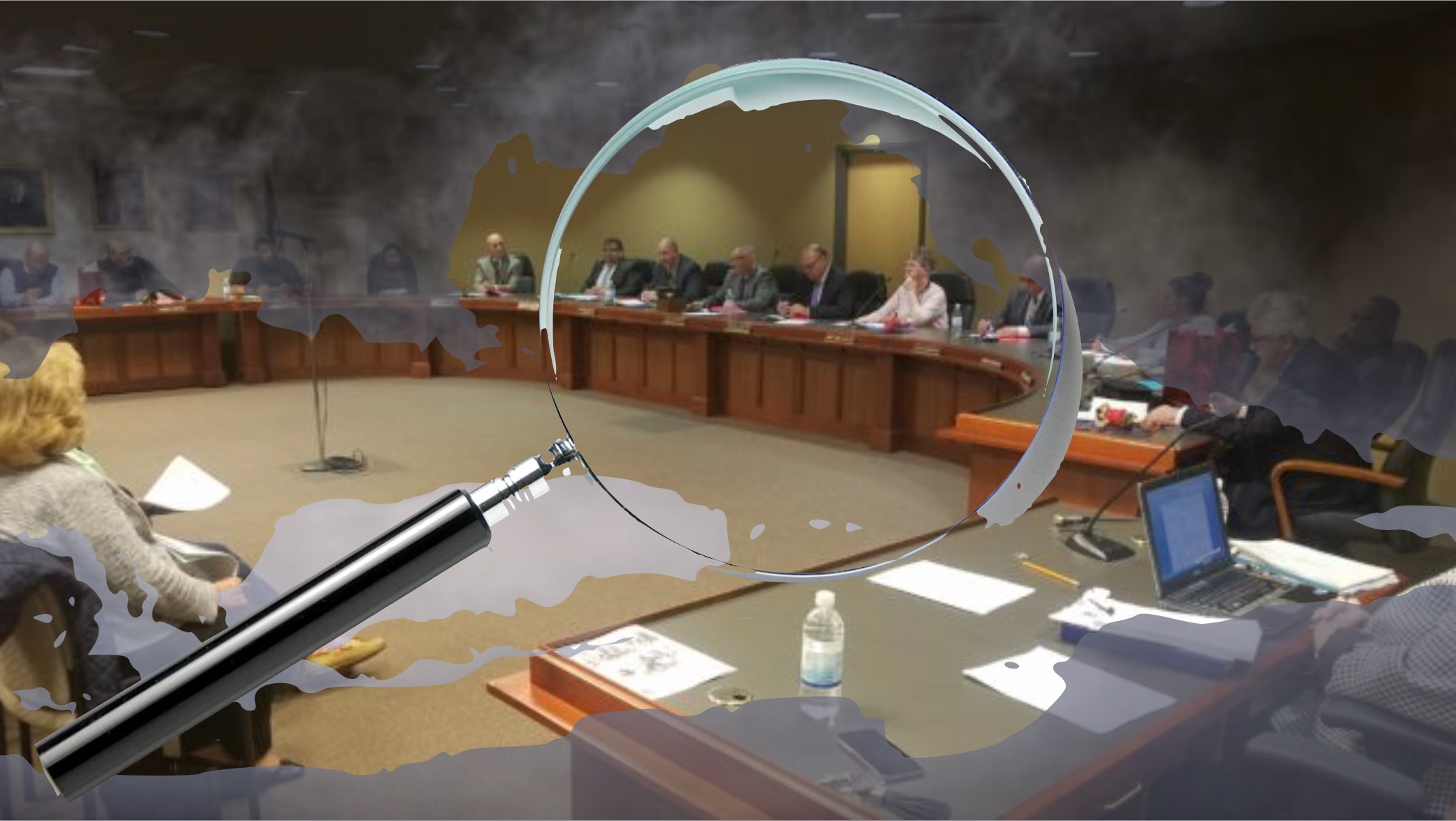
Public School Boards Need to Do Better at Embracing Transparency 


They say sunlight is the best disinfectant.  


So why do so many public school boards hide in the shadows?  


One of the shining virtues of public schools is the requirement that they be transparent and open to the public.  


And they are! 


But too often school directors do so in ways that are unnecessarily burdensome, equivocal or combative.  


Let me give you an example.  


I live in the McKeesport Area School District (MASD) – a community just south of Pittsburgh in Pennsylvania.  


When I heard my school board was considering a proposed district budget for 2022-23 without a tax increase, I wanted to take a look at it. So I went to the district Website and there was a link labelled:  


“Preliminary Budget Information for 2022-23 School Year.”


I clicked on it and got this: 


“The Board of Directors of the McKeesport Area School District has prepared a Preliminary Budget in the amount of funds that will be required by the School District for the fiscal year beginning July 1, 2022. The Proposed Budget is on file in the Office of the Business Manager/Board Secretary, and is available for public inspection in the McKeesport Area School District Administration Building…” [Emphasis mine.


What the heck!?  


Why not just post the preliminary budget on the Internet!? Why make me go all the way to the administration building (during business hours) to see a copy? 


It’s not like I can even turn to my local newspaper to tell me about the district’s budget. With so many cutbacks in local media, our papers rarely even cover school districts anymore unless there’s a big story.  


If I want to know how my district proposes to spend the community’s tax dollars next year, I need to either go to the school board meeting or go to the administration office and look at a copy. Will I be able to take a copy with me to peruse at my leisure? Maybe or maybe not.  


We should be able to do better than this. 


Don’t get me wrong. 


Authentic public schools are way better than privatized schools.  


They’re preferable to anything you’d find at charter or private schools that take school vouchers.  


And one of the biggest reasons why is this requirement of local control, self-government, and a free exchange of information between representatives and the community who elected them.   


Authentic public schools HAVE TO hold public meetings to conduct their business.  


They HAVE TO take comments from the community. 


They HAVE TO make their documentation available to the public.  


And except under extreme circumstances, they HAVE TO be run by elected school boards.


None of that is a given at charter and voucher schools. 


The problem is how too many public school directors meet these obligations. 


MASD, for example, makes its proposed budget available – but not in the most convenient way that it could.  


Let’s be honest. It wouldn’t take much to improve this.  


Posting the full budget online would take just a few seconds. In fact, it’s actually more trouble to have it available in the administration building and task a secretary with presenting it to anyone who comes in-person and asks for it. 


The same thing goes for school board meetings.  


Before I became a public school teacher, I was a journalist often covering public schools.  


I’ve gone to a lot of school board meetings in my life. A LOT.  


And almost every board put unnecessary or onerous restrictions on public comments.  


Residents could come to the meetings and address the board but they often had to sign in before-hand. They couldn’t just show up and speak. They had to let the board know days in advance that they were coming and the subject they planning to speak on.  


If something came up during the meeting unplanned, technically residents weren’t allowed to comment – though I admit I’ve never seen a school board hold to such a policy in the case of unexpected events.


Also there are almost always time limits on public comments.  


Now I know it’s unreasonable to expect members of the public who volunteer to serve as school directors to spend all night listening to rambling or incoherent comments. But these time limits are often way too restrictive – especially when only a handful of people actually turn up to speak.  


Limiting people to two minutes of public comment in a month or even a two-week period is ridiculous.


Then we have the issue of audio visuals at board meetings.  


Many school boards have microphones for people to speak into during the proceedings. This is supposed to allow everyone present to hear what is being said. However, the equipment is often so bad that it actually ends up blurring the speaker’s voice until its incomprehensible or board members who don’t want to be heard simply don’t speak into the microphone.  


Sure – the entire proceedings are being taken down by hand by an administrator for an official written copy of the minutes. But this isn’t even available to the public until a month later when the board votes on last month’s minutes document. The public can’t get a copy of this material until more than a month has passed from it taking place. And it probably isn’t available on-line. 


Finally, we have recordings of the meetings.  


Many school boards now video tape their meetings and stream them live on YouTube, Facebook or some other social media site.  


This is a nice improvement from when community groups had to do this, themselves. And, in fact, it’s really a response to that phenomenon to gain control over what becomes public record. School boards began recording the meetings to discourage others from doing it so the district would have control over this material. And in most cases it worked. 


However, these recordings are almost always of exceedingly poor quality.


Cameras (and microphones) are placed so far away that it is almost impossible to tell what is happening, what is being said or who said it.  


Any teenager with a smart phone and a YouTube channel could do a better job.  


Moreover, these videos often don’t stay posted online for very long. They could easily remain posted so anyone could rewatch them and catch up with what happened at a school board meeting they were unable to attend in-person. But school boards make the express decision to take these videos down so that record is not available. 


Very few of these are accidents. In most cases these are intentional to push the public away at the exact time when they should be inviting them in.  


These are just some examples of how school boards comply with transparency requirements but do so in ways that are inconvenient, onerous or antagonistic. 


It is so unnecessary. 


Things don’t have to be this way.  


School boards should welcome transparency. They should embrace public participation in the process.  


After all, this is one of the major factors that distinguish authentic public schools from privatized ones.  


School directors complain about losing revenue to charter and voucher schools. If they treated the public more like valued members of the decision-making process, they would do a lot to boost their own reputation.  


President James Madison wrote


 “[a] popular Government, without popular information, or­ the means of acquiring it, is but a Prologue to a Farce or a Tragedy.”  


School directors should take this to heart. 


Public schools should not be shadowy corners for school directors to try to sneak through policies under the nose of stake holders.  


They should be shinning centers of the community. 


The sooner school boards understand this, the better it will be for the state of public education and the students, families and communities we are supposed to be serving in the first place. 


Like this post?  You might want to consider becoming a Patreon subscriber. This helps me continue to keep the blog going and get on with this difficult and challenging work.

Plus you get subscriber only extras!

Just CLICK HERE.

Patreon+Circle

I’ve also written a book, “Gadfly on the Wall: A Public School Teacher Speaks Out on Racism and Reform,” now available from Garn Press. Ten percent of the proceeds go to the Badass Teachers Association. Check it out!

Back to the Past with the US Supreme Court 

“Daddy, are gay people not allowed to get married?” 

My daughter was looking at me in confusion as we sat together on the couch watching an old episode of “Top Chef.” 

In Season 6, episode two, the chefs were asked to cook for a bachelor party. One of the contestants, Ashley, was indignant that she had to participate in a challenge centered on  marriage when she, herself, couldn’t marry another woman.  

I was surprised.  

It hadn’t occurred to me that the show was so old. It first aired in 2009. Was that really so long ago? 

We’ve only had marriage equality in all 50 states since 2015. That’s just seven years ago.  

So I explained to my daughter that gay people can marry today, but that it wasn’t always the case.  

My 13-year-old thought the idea that people couldn’t marry whoever they wanted to was just too crazy to be believed. And I agreed. 

It was later that night that I read the article in Politico about Roe v. Wade.  

Apparently, the landmark 1973 decision that expanded access to abortion nationwide is about to be overturned by the Republican majority on the Supreme Court. 

Some folks are even speculating that this could mean the roll back of similar rulings such as ones allowing same sex marriage and even interracial marriage.  

What the heck!?  

Did I just sleep through a monologue by Rod Serling?  

I’m still seeing things in color but they’re starting to feel very black and white.  

These are issues of settled law.  

Roe v. Wade is older than I am. Women have been able to terminate unwanted pregnancies for my entire life and the world hasn’t come to an end. In fact, if you read about what life was like before this decision, things have improved.  

Women have freedom over their own bodies. They aren’t trapped by the Catch 22 of whether to submit to a forced birth or risk their lives with a back alley procedure.  

I remember having a similar moment of cognitive dissonance as my daughter did when I was in high school.  

I read the book “An American Tragedy” by Theodore Dreiser and was shocked at what life was like in the 1920s before women had such freedoms. In the book, a couple get pregnant and have to choose between an unwanted marriage while raising an unwanted child or a black market abortion and the freedom to move on. When they can’t agree, the protagonist, Clyde, murders the poor woman.  

At the time, the whole situation seemed entirely quaint. It was a series of arguments, examples, and counter examples on an issue that had been decided long ago.  

That anyone could think differently struck me as absurd.  

In my high school public speaking class, we debated the issue. I argued in favor of reproductive rights, and a girl I had a crush on argued against them. 

She was certainly passionate about the rights of the unborn. But she seemed startlingly unconcerned with the rights of the already born.  

She wasn’t concerned about the child’s welfare or even the rights of a woman to make decisions about her own body – assuming those decisions were different than those my crush might make for herself.  

As I got older, I met others who felt the same way. For them the guiding principle was a religious fairy tale that didn’t even connect with the Bible but instead some fundamentalists view of gender politics.  

That’s fine if you want it to be the deciding factor in your own life, I guess. But leave the rest of us out of your faith-based world view. 

That such folderol is actually being considered by the highest court in the land is hard to believe. 

This is not the future I imagined back in high school when it occurred to me that I’d probably live into the sci-fi era of the 2000s.  

It’s more like getting stuck in Doc Brown’s Delorean and sent back to the past.  

And that’s exactly what it is.  

So-called conservatives want to return us to a mythical time when all was good with America.  

It says so on their precious red hats.  

But things were never that good in America for most people – unless you were white, Protestant and male. 

Let’s cut to the chase. None of this really is about stopping abortions. (If that was the concern, we’d be talking about free birth control, neonatal care and making a better world to raise children in.) Nor is it about safeguarding marriage between a man and a woman – or a white man and a white woman.  

It’s about strengthening white supremacy. It’s about bolstering the patriarchy.  

This is politics – pure politics.  

And there is a political solution.  

As Sen. Bernie Sanders has already suggested, Congress can codify reproductive rights into the law. There’s nothing the courts could do about it then.  

Democrats have a majority in both the House and the Senate and we have the Presidency.  

If we can’t get 60 votes in the Senate (and we probably can’t) we can end the filibuster and pass it with 50 votes. 

I hope with all my heart that we do this.  

I will push and organize and protest and electioneer. But I fear it will not be enough. 

Just making it to this regressive moment in time seems to indicate that our system is too broken to be fixed that way. 

This is not the world I wanted for my daughter. I fear it is the world she will have to fight to overcome.  

The battles of our grandparents have become our inheritance to our posterity.  

They deserve a much better world.  

But all we seem to have for them are reruns. 


Like this post?  You might want to consider becoming a Patreon subscriber. This helps me continue to keep the blog going and get on with this difficult and challenging work.

Plus you get subscriber only extras!

Just CLICK HERE.

Patreon+Circle

I’ve also written a book, “Gadfly on the Wall: A Public School Teacher Speaks Out on Racism and Reform,” now available from Garn Press. Ten percent of the proceeds go to the Badass Teachers Association. Check it out!


Covid Has Hobbled Public Schools. Here’s Why They’re Worth Saving 


Is public education worth saving? 


That’s the question in the air these days.  


In the last century, the US academic system helped us reach the moon, defeat Communism and become the world’s largest super power.    


However, today our public schools are more damaged than ever before.  


An increasing number of families are leaving them for charter and voucher schools.  


Teachers are quitting their jobs in droves with few people willing to fill the vacancies they leave behind.


And above all, many people seem to think the schools, themselves, are failing


Isn’t it time to move on to something else? 


I’m here to tell you – no, it is not. 


In fact, we need to guard and cherish our public schools more than ever before. Because we face the real possibility of losing them for good.  


The Covid-19 pandemic on top of years of corporate sabotage and propaganda have obscured what public education really means and why it is absolutely necessary to the functioning of our society and any possibility of social, racial or economic justice. 


Let’s begin by looking at how the current disaster exacerbated an already difficult situation and then consider why we should care enough to fix the mess. 


The Pandemic Effect 


Public schools got a bloody nose from the Coronavirus crisis.


After decades of segregation, inequitable funding, incentives to privatize, and federally mandated standardized testing, it took a deadly virus to finally hobble the system.  


Being forced to contend with the uncertainties of Covid-19 damaged people’s faith in public education more than anything that had come before it. 


Issues of masking, contact tracing, safety of immunocompromised students and staff, and when to open or close buildings (among other issues) lead to inevitable dissatisfaction from all fronts.  


However, none of these issues should have been decided at the local level in the first place.  


These were issues of national significance. We needed a unified strategy to fight a global pandemic as it washed over our shores – not scattershot policies by part-time officials unequipped to deal with them


These problems should have been tackled by the Centers for Disease Control (CDC) and enforced by the federal government without deference to big business.  


Instead, the CDC made conflicting decisions based more on the needs of the economy than public health (many of which were roundly ignored anyway). Then federal and state governments either refused to decide safety protocols leaving it up to individuals or municipalities, or when they did decide matters, they were embroiled in partisan battles over any kind of restrictions.  


In fact, it was the failure of federal, state and even local municipal governments that often made public schools the de facto legislators of last resort. And this is something they were never meant to be. 


Public health should be decided by scientists not school directors


The result was widespread dissatisfaction no matter what school boards decided and an exodus of students and faculty. 


Many families, upset at local school board decisions, enrolled their children in charter, cyber or voucher schools.  


Overall, charters saw a 7% increase in enrollment – an influx of roughly 240,000 students -during the 2020-21 school year, according to a new report from the National Alliance for Public Charter Schools. This is the largest increase in five years. By comparison, public school enrollment dropped by 3.3% – or 1.4 million students – in the same period. 


The biggest increases were in cyber charter schools. For example, in Pennsylvania 99.7 percent of the charter enrollment growth occurred in virtual charter schools. Enrollment at the Commonwealth’s 14 cyber charter schools swelled from about 38,000 students in October 2019 to more than 60,000 students in October 2020, according to the Pennsylvania Department of Education. 


But it wasn’t just students leaving our public schools. It was staff, too. 


Teachers and other school employees who felt unsafe or were crushed by the incredible pressure thrust on their shoulders either quit or retired in droves.  


According to the Bureau of Labor Statistics, there are 567,000 fewer educators in our public schools today than there were before the pandemic. And finding replacements has been difficult. Nationwide, an average of one educator is hired for every two jobs available. 


This has left us with a weakened system suffering from more problems than before the pandemic hit.


Why Are Public Schools Important? 


Because of what they are and what they represent.  


We hear about public education so often – usually in deprecating terms – that we forget exactly what the term signifies.  


A public school is a school meant for everybody and anybody.  


It is a school where any child can go to get an education.  


You don’t have to pay tuition. You don’t have to have a special ability or qualification. You don’t have to be neurotypical, a certain race, ethnicity, belong to a certain faith or socioeconomic status. If you’re living in the US – even if you’re here illegally – you get to go there.  


That may seem simple, but it is vitally important and really quite special.  


Not all nations have robust systems of public education like we do in the US. 


This country has a commitment to every single child regardless of what their parents can afford to pay, regardless of their access to transportation, regardless of whether they can afford uniforms, lunch or even if they have a home.  


We simply define education differently. We look at it as a right, not a privilege. And for a full 13 years (counting kindergarten) it’s a right for every child, not just some. 


Perhaps even more significant is our commitment to children with special needs. 


We have developed a special education system to help children at the edges that many other countries just can’t touch. In some nations these students are simply excluded. In others they are institutionalized. In some countries it’s up to parents to find ways to pay for special services. The United States is one of the only countries where these children are not only included and offered full and free access, but the schools go above and beyond to teach these children well beyond their 12th academic year. 


In every authentic public school in the United States these students are included. In math, reading, science and social studies, they benefit from instruction with the rest of the class. And this, in turn, benefits even our neurotypical students who gain lessons in empathy and experience the full range of human abilities. 


That isn’t to say the system has ever been perfect. Far from it. 


There are plenty of ways we could improve. Even before the pandemic, we were incredibly segregated by race and class. Our funding formulas were often regressive and inadequate. Schools serving mostly poor students didn’t have nearly the resources of those serving rich students.


But at least at the very outset what we were trying to do was better than what most of the world takes on. You can’t achieve equity if it isn’t even on the menu. 


Without public schools, equity is definitely not on offer. 


 Public is Better Than Private 


That’s really the point.  


Charter, cyber and voucher schools are not set up around this ideal.  


They are not instruments of inclusion. They are instruments of exclusion.  


They are about who is sent away, not about letting everyone in.  


The United States is a big country – the third most populous in the world. We have 332,630,000 people and growing. That’s about 50 million students in public schools. 


No private system in the world has ever been able to work at that scale. If we lose our public schools, many kids will be left wanting.  


The market-driven approach does not guarantee an education. It guarantees competition for an education


It forces students to compete to get into schools and schools to compete for their very existence. Think of how that affects instruction. Schools have to spend a considerable amount of time and money attracting students to enroll. That’s time and money that doesn’t go to education. It goes to advertising. 


Moreover, any school that attracts a surplus of students can choose which ones its wants to enroll. The choice becomes the school’s – not the parents’ or students’. In fact, administrators can turn away students for any reason – race, religion, behavior, special needs, how difficult it would be to teach him or her. This is much different from authentic public schools. There, any student who lives in the district may attend regardless of factors such as how easy or difficult he or she is to educate. 


Another major change with this approach is how privatized schools are run. Many are operated behind closed doors without the input of a duly-elected school board, without transparency for how they spend tax dollars, without even the guide rails of most regulations


Like in the charter school sector, these schools get almost free reign to do whatever they want.  


This means corporate interests get to run charter schools while cutting services and increasing profits. In fact, administrative costs at charter schools are much higher than at traditional public schools. Students lose, the market wins. 


Moreover, many charter schools provide a sub-par education. To put it more bluntly, they do things that would be impossible for public schools to do. One in Philadelphia literally transformed into a nightclub after dark. Another funneled profits into the CEO’s personal bank account to be used as a slush fund to buy gifts and pay for rent at an apartment for his girlfriend. Another CEO used tax dollars to buy a yacht cheekily called “Fishin’ 4 Schools.”  


And virtual charter schools are even worse. A study found that cyber-charters provide almost less education than not going to school at all. Even brick and mortar charter schools can close on a moments notice leaving students in the lurch. 


It’s a Darwinian model made to benefit the predators, not the prey. It’s a boon for any unselfconscious businessman who doesn’t mind getting rich stealing an education from children. 


We Must Fight 


That’s why we must fight to keep our public schools.  


As flawed and bruised as they are, the public school model is far superior to the alternative.  


But many will look only at their own individual situation and stop there.  


They will say, “At MY charter school we do this…” Or “That’s not the way things are at MY voucher academy…” 


First of all, a well-functioning privatized school is like a castle built precariously on a cliff. Things may work well now, but they could change at any moment and there’s nothing you could do but vote with your feet. When authentic public schools go bad, you have a democratic process to fix the problem.


But you may luck out. Every privatized school isn’t a scam. Just most of them. So if you have found a charter, cyber or voucher school that is working for your child and doesn’t self-destruct in the time your child is enrolled, you may wonder why you should worry about the rest of us – the kids caught up in a web of privatized predation and neglect?  


Because it’s not all about you and your child. Selfishness cannot be the foundation of a just society.


Even a well-functioning charter or voucher school is publicly funded. It splits the funding that would normally go to one school and divides it among two or more. So students at both have to make do with less. 


You have to live in this society. Do you really want to live in a country with a large population of undereducated citizens who cannot figure out how to vote in their own interests? Do you really want to live in a society where crime is a better career choice for those who were not properly educated?  


That’s why we can’t let public education disappear.  


It is a necessary condition for democracy, shared economic prosperity and a just society.  


I know it may sound like an insurmountable task, but saving our public schools can be done.  


It will require collective action. 


We will need to actively participate in our school board elections, go to school board meetings and possibly even run to serve on the board, ourselves. 


Many people are upset with what local boards did during the pandemic, but the way to solve this isn’t to flee to schools without democratic principles. It is to seize those principles and make them work for you and your community. 


We will need to change the way our system treats teachers. If we want to encourage educators to stay on the job and even entice young people to enter the field, we need to make the profession more rewarding. That means higher salaries, more autonomy, more respect, smaller classes, less paperwork, and actually listening to educators on the subject of education.  


We also need to discontinue countless policies and programs that have been dragging our public schools down for decades. We need to eliminate high stakes standardized testing. We need to ensure every school is adequately, equitably and sustainably funded. We need to actively integrate our schools and classrooms. We need to stop supporting privatization through charter and voucher schools and instead support authentic public schools.  


And to do that, we need real political change at every level of government – local, municipal, state and federal.  


None of this is easy. All of it takes work.  


But it is the fight we must wage if we are ever to keep our democracy.  


It is the fight we must win to create the better world our children deserve.  


Public schools are worth saving, but it is up to you and me to do it. 


Like this post?  You might want to consider becoming a Patreon subscriber. This helps me continue to keep the blog going and get on with this difficult and challenging work.

Plus you get subscriber only extras!

Just CLICK HERE.

Patreon+Circle

I’ve also written a book, “Gadfly on the Wall: A Public School Teacher Speaks Out on Racism and Reform,” now available from Garn Press. Ten percent of the proceeds go to the Badass Teachers Association. Check it out!