Dear Non-Voters, Your Country Needs You

Voting.


Four in 10 Americans who were eligible to vote in 2016 didn’t do so.


That’s some 92 million U.S. Citizens.


These people weren’t purged from the polls.


They weren’t barred from voting.


They just didn’t bother.


So, the way I see it, the responsibility for President Donald Trump rests with you.


The United States has a Reality TV Show clown in the oval office.


He is a dimwitted narcissist who panders to racists, sexists and xenophobes to stay in power.


He is an incurious liar who constantly trolls the media and the public.


He is an admirer of dictators and fascists across the globe with no qualms about enriching himself and those like him at the expense of you and me.


Everyday he provides aide and comfort to anti-American regimes from Moscow to Riyadh by diminishing our international stature, withdrawing us from treaties and contracts, leaking sensitive information and otherwise pursuing foreign interests over those of American citizens.


And that’s before we even begin to examine his colossal impact on human rights – emboldening terrorists and white supremacists while his own administration throws children in cages and forcibly separates them from their families.


This is on you, non-voters.


You did this.


A democratic republic is like any other machine – it only functions properly if all of its parts are working.


You can’t have majority rule when 40% of voters shirk their duty.


A study by the Pew Research Center found that not only were non-voters likely to be younger, less educated, less affluent, and nonwhite, but 55% of them were Democrats and Democratic-leaning independents.


Screen Shot 2018-10-26 at 3.23.58 PM


If more non-voters under the age of 30 had gotten their acts together in just a few swing states, we wouldn’t all be living through this national nightmare.


So if you think voting doesn’t make a difference, look around.


Look at your bank account for instance.


Wonder why your wages continue to stagnate while the rich pocket more and more of the economy?


Look at your neighborhood. Wonder why our schools, roads, bridges and other public services are crumbling into disrepair?


It’s because you didn’t vote.


I’m not saying everything would have been great under President Hillary Clinton. But Trump sets an awfully low bar for competency.


You think your vote doesn’t matter?


Republicans disagree with you.


They aren’t working overtime to stop people like you from voting because it makes no difference.


Robert Kennedy put it this way:


“The most significant civil rights problem is voting. Each citizen’s right to vote is fundamental to all the other rights of citizenship and the Civil Rights Act of 1957 and 1960 make it the responsibility of the Department of Justice to protect that right.”


Our courts have given up that responsibility.


Since 2013 when the Supreme Court invalidated a key part of the Voting Rights Act, millions of people have been barred from casting a ballot.


The federal government used to require nine states with a history of racial discrimination to obtain federal approval before making such changes. Now that they no longer need to do so, between 2014 and 2016 there’s been a 33% increase in voter purges in these states.


This isn’t just cleaning the polls of the names of people who’ve died. It’s actively preventing people – especially the poor and people of color – from having their voices heard.


In Arkansas, thousands of voters were erroneously flagged in 2016 under the guise of removing people who had been convicted of felonies. In Virginia, voters were wrongly deleted from the rolls in 2013 under the excuse of removing people who allegedly had moved.


And this election cycle more than one hundred thousand Georgia voters were removed because they didn’t respond to a mailer or there was a typo on their registration form.


To make matters worse, the purge was overseen by Secretary of State Brian Kemp, a Republican candidate for governor. Since most of the people being removed from the polls are people of color, the poor and other Democrats or leaning Democrat voters, the move makes it harder for Democrat Stacey Abrams to challenge him.


Kemp and his Republican buddies wouldn’t be going through all this trouble if voting made no difference.


“Too many people struggled, suffered, and died to make it possible for every American to exercise their right to vote,” said civil rights icon and U.S. Senator John Lewis.


And people have died for the opportunity that millions of people decide not to exercise.


People like James Chaney, Andrew Goodman and Michael Schwerner, who were murdered in 1964 while trying to register black voters in Mississippi. People like Viola Liuzzo, who was murdered a year later by the Ku Klux Klan during the Selma march for voting rights.


When you willingly give up an opportunity that was purchased so dear, you disrespect the memories of the dead.


President Franklin D. Roosevelt put it like this:


“Nobody will ever deprive the American people of the right to vote except themselves and the only way they could do this is by not voting.”


Our country is under attack. Our very freedoms are on the line.


Will you be a willing accomplice by standing idly by and allowing these miscreants to defecate all over the flag?


Or will you take a stand, do your duty and vote!?


“Bad politicians are sent to Washington by good people who don’t vote.”

-William E. Simon


Like this post? I’ve written a book, “Gadfly on the Wall: A Public School Teacher Speaks Out on Racism and Reform,” now available from Garn Press. Ten percent of the proceeds go to the Badass Teachers Association. Check it out!
thumbnail_IMG_8249

Teacher Autonomy – An Often Ignored Victim of High Stakes Testing


Screen Shot 2018-10-12 at 12.12.38 PM


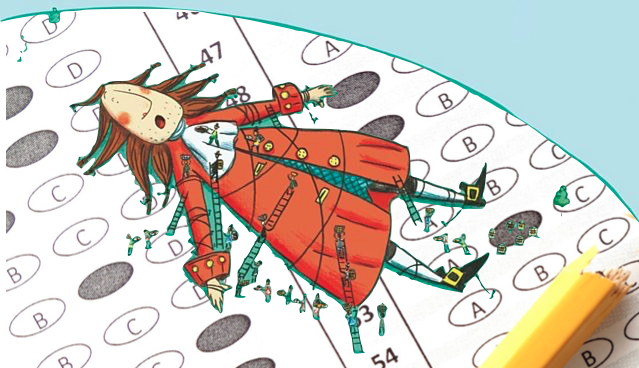
When I think of the modern day public school teacher, I think of Gulliver’s Travels.


Not because I’ve ever taught the Jonathan Swift classic to my students, but because of its most indelible image.


Gulliver is shipwrecked on the island of the Lilliputans – tiny people who have tied the full sized sailor to the ground with thousands of itty bitty strings.


If that is not the picture of a public school teacher, I don’t know what is!


We are constantly restrained – even hogtied – from doing what we know is right.


And the people putting us in bondage – test obsessed lawmakers, number crunching administrators and small-minded government flunkies.


You see, teachers are in the classroom with students day in, day out. We are in the best position to make informed decisions about student learning. The more autonomy you give us, the better we’ll be able to help our students succeed.


But in an age of high stakes testing, Common Core and school privatization run amuck, teacher autonomy has been trampled into the dirt.


Instead, we have a militia of armchair policy hacks who know nothing about pedagogy, psychology or education but who want to tell us how to do our jobs.


It’s almost like we’ve forgotten that educator self-determination ever was a value people thought worth preserving in the first place.


Whereas in generations past it was considered anywhere from merely advisable to absolutely essential that instructors could make up their own minds about how best to practice their craft, today we’d rather they just follow the script written by our allegedly more competent corporate masters.


The way I see it, the reason for this is fivefold:


  1. Testing

    School used to be about curriculum and pedagogy. It was focused on student learning – not how we assess that learning. Now that standardized tests have been mandated in all 50 states as a means of judging whether our schools are doing a good job (and assorted punishments and rewards put in place), it’s changed the entire academic landscape. In short, when you make school all about standardized tests, you force educators to teach with that as their main concern.

  2. Common Core

    Deciding what students should learn used to be the job of educators, students and the community. Teachers used their extensive training and experience, students appeal to their own curiosity, and the community tailored its expectations based on its needs. However, we’ve given up on our own judgment and delegated the job to publishing companies, technology firms and corporations. We’ve let them decide what students should learn based on which pre-packed products they can most profitably sell us. The problem is when you force all academic programs to follow canned academic standards written by functionaries, not educators, you put teachers in a straight jacket constraining them from meeting their students’ individual needs.


3. Grade Promotion Formulas

It used to be that teachers decided which students passed or failed their classes. And when it came to which academic course students took next, educators at least had a voice in the process. However, we’ve standardized grade promotion and/or graduation policies around high stakes test scores and limited or excluded classroom grades. When you’re forced to rely on a formula which cannot take into account the infinite variables present while excluding the judgment of experienced experts in the classroom, you are essentially forbidding educators from one of the most vital parts of the academic process – having a say in what their own courses mean in the scheme of students educational journeys.


4. Scripted Curriculum

Perhaps the most pernicious aspect of this whole process has been the attempted erasure of the teacher – as a thinking human being – from the classroom, itself. Instead of letting us be people who observe and adapt to the realities in front of us, many of us have been forced to read from a script. It should go without saying that when you constrain educators to abide by scripted curriculum – what we used to call “teacher proof curriculum” – or pacing guides, you remove their ability to be teachers, at all.


5. Value Added Evaluations


We used to trust local principals and administrators to decide which of their employees where doing a good job. Now even that decision has been taken away and replaced by junk science formulas that claim to evaluate a teacher’s entire impact on a student’s life with no regard to validity, fairness or efficiency. However, local principals and administrators are there in the school building every day. They know what’s happening, what challenges staff face and even the personalities, skills and deficiencies of the students, themselves. As such, they are in a better position to evaluate teachers’ performance than these blanket policies applied to all teachers in a district or state – things like valued-added measures or other faith based formulas used to estimate or quantify an educator’s positive or negative impact.


It’s no wonder then that teachers are leaving the profession in droves.


You can’t freeze someone’s salary, stifle their rights to fair treatment while choking back their autonomy and still expect them to show up to work everyday eager and willing to do the job.


The National Center for Education Statistics (NCES) conducted a representative sample of more than 37,000 American public school elementary and secondary teachers showing widespread dissatisfaction with the job in general and a lack of autonomy in particular.

In fact, they cited this lack of self-determination as a leading contributor to the nationwide teacher shortage. Having control over how you do your job is essential to being fully satisfied with your work.

Teacher-Autonomy


If you’re just following orders, your accomplishments aren’t really yours. It’s the difference between composing a melody and simply recreating the sounds of an amateur musician with perfect fidelity.

Today’s teachers rarely get to pick the textbooks they use, which content or skills to focus on, which techniques will be most effective in their classrooms, how to discipline students, how much homework to give – and they have next to zero say about how they will be evaluated.

And to make matters worse, sometimes it isn’t that educators are forbidden from exercising autonomy, but that they are given such a huge laundry list of things they’re responsible for that they don’t have the time to actually be creative or original. Once teachers meet the demands of all the things they have to cram into a single day, there is little room for reflection, revision or renewal.

School policy is created at several removes from the classroom. We rarely even ask workaday teachers for input less than allowing them to participate in the decision making process.

We imagine that policy is above their pay grade. They are menial labor. It’s up to us, important people, to make the big decisions – even though most of us have little to no knowledge of how to teach!

Finnish educator and scholar Pasi Sahlberg says that this is exactly the opposite of what we should be doing if we really cared about improving both the teaching profession and the quality of education we provide students.

In the United States, autonomy usually stops at the district or administrative level and results in decision-making that ignores the voices of educators and the community, he says.

Sahlberg continues:

“School autonomy has often led to lessening teacher professionalism and autonomy for the benefit of greater profits for those who manage or own private schools, charter schools or other independent schools. This is perhaps the most powerful lesson the US can learn from better-performing education systems: teachers need greater collective professional autonomy and more support to work with one another. In other words, more freedom from bureaucracy, but less from one another.”

Perhaps the biggest roadblock to increased autonomy is political.

Lawmakers and pundits conflate teacher professionalism and increased decision making with union membership.

And they do have a point. Having a seat at the bargaining table is vital to educators’ self-determination.

In some states, local teachers unions negotiate annual contracts with their districts. However, most states have statewide teacher contracts that are negotiated only by state teachers unions.

These contracts can directly affect exactly how much independence teachers can exercise in the classroom since they can determine things like the specific number of hours that teachers can work each week or limit the roles that teachers can play in a school or district.

There are even some tantalizing schools that are entirely led and managed by teachers. The school does not have formal administrators – teachers assume administrative roles, usually on a revolving basis. But such experiments are rare.

In most places, teacher autonomy is like the last dinosaur.

It represents a bygone age when we envisioned education completely differently.

We could try to regain that vision and go in a different direction.

But if things remain as they are, the dinosaur will go extinct.

Autonomy is a hint at what we COULD be and what we COULD provide students…

…if we only had the courage to stop standardizing and privatizing our country to death.


Like this post? I’ve written a book, “Gadfly on the Wall: A Public School Teacher Speaks Out on Racism and Reform,” now available from Garn Press. Ten percent of the proceeds go to the Badass Teachers Association. Check it out!

WANT A SIGNED COPY?

Click here to order one directly from me to your door!

book-1

College Remediation is Less About Bad Students Than Academic Elitism

51b1a5d1ef37dc704930ac333d90b1b9


Ah, college.


The school on a hill.


The marble columns, wood paneled studies and ivy encrusted gardens.


It’s never really been a place for everybody. But in rhapsodizing the college experience, our lawmakers have pushed for universities to enroll an increasing number of students. The demand for free or reduced tuition – especially for low-income students – has meant more kids putting on a letterman jersey and giving it the ol’ college try.


Teenagers who wouldn’t dream of higher education in previous decades are going for it today.


And the result has been a greater proportion of incoming college freshman taking remedial courses before they can even begin the normal post-secondary track.


According to a 2017 report by the Hechinger Report, more than half a million students at two- and four-year colleges in 44 states had to take such courses.


This costs up to an estimated $7 billion a year.


So, as usual in our country, we’re looking for someone to blame. And look! Here’s our favorite scapegoat – the public school system!


The gripe goes like this: Incoming college freshman wouldn’t need remediation if the public schools had bothered to teach them correctly!


However, the argument ignores several important factors and jumps to a completely unearned conclusion.


1) Public schools don’t decide who is accepted at colleges. College admissions departments do.


If people in higher learning think all these teenagers don’t belong in college, don’t accept them. Period.


But that would mean fewer students, less tuition and forgoing the lucrative revenue stream provided by – surprise! – these same remediation courses!


We pretend that colleges are special places where honor and scholarship rule the day. It isn’t necessarily so.


They are run by people, and like anywhere else, those people can be ethical and egalitarian or petty and materialistic.


Colleges aren’t immune to small mindedness or the economic realities facing institutions of learning everywhere.


Like most schools, they’re starved for funding.


The state and federal government have slashed subsidies to colleges and universities just as they have to public schools. Colleges have to make up the shortfall somewhere.


So they enroll students who don’t meet their own academic standards and then charge them for the privilege of attempting to get up to snuff.


It’s a good deal. You get to blame kids coming in AND reap the rewards.


2) How exactly do we determine that these kids need remediation?


In many schools, they use standardized tests like the SAT or ACT to make this determination. Others give their own pretest to all incoming freshman and assign remediation based on the results.


You’d expect more from institutions of higher learning.


You’d expect them to know how inadequate standardized tests are at assessing student knowledge. After all, most of the mountain of studies that conclude these tests are worthless are conducted at the college level. However, it seems people in admissions don’t always read the scholarly work of their colleagues in the departments of education and psychology.


I remember when I was in college, several classmates were being pressured to take remedial courses but refused. It didn’t stop them from graduating with honors.


3) Let’s say some of this remediation actually is necessary. Why would that be so?


These are high school graduates. What has changed in public schools over the past few decades to increase the need for these additional services at colleges?


It seems to me the answer is three-fold:


1) School budgets have been cut to the bare bone

2) Schools have to fight for limited funding with charter and voucher institutions

3) Standardized testing and Common Core have been dominating the curriculum.


If you cut funding to schools, they won’t be able to prepare students as well.


That’s a pretty simple axiom. I know business-minded number crunchers will extol the virtue of “doing more with less” and other such self-help platitudes, but much of it is nonsense.


You never hear them explain how cutting CEO salaries will mean corporations will run more effectively. It’s only workers and schools that they think deserve tough love and penury.


Look, schools with less funding mean fewer teachers. That means larger class sizes. That means it’s more difficult to learn – especially for students who don’t already come from privileged backgrounds.


None of this is bettered by the addition of charter and voucher schools sucking up the limited money available. We don’t have enough for one school system – yet we’re asking two or more parallel systems to exist on that same amount. And we’re stacking the deck in favor of privatized systems by prioritizing their funding and not holding them to the same accountability and transparency standards as traditional public schools.


It’s like deliberately placing leeches on a runners back and wondering why she’s started going so slowly.


Moreover, it’s ironic that the Common Core revolution was conducted to make students “college and career ready.” It has done just the opposite.


Narrowing the curriculum to weeks and months of test prep has consequences. You can increase students ability to jump through the hoops of your one federally mandated state test. But that doesn’t translate to other assessments. It doesn’t mean they’ll do better on the SAT or other college entrance exams. Nor does it mean they’ll possess the authentic learning we pretend we’re after in the first place.


The bottom line: if we really want to improve student academic outcomes in public schools, we need to fully and equitably fund them. We need to abandon school privatization schemes and fully support public schools. And we need to stop the obsession with standardized assessments, curriculum and – yes – even canned standards, themselves.


That might actually reduce the numbers of students who allegedly need remediation at the college level.


However, there is another aspect that we need to consider that is harder to remedy…


4) Developmental psychology.


Schools – whether they be post-secondary, secondary or primary – are built to meet the needs of human beings. And human beings don’t grow according to a preconceived schedule.


Just because you think someone should be able to do X at a certain age, doesn’t mean they’re developmentally ready to do so.


Speaking from experience, I was a C student in math through high school. It wasn’t until I got to college that I started to excel in that subject and earned top marks.


I didn’t have to take any remedial courses, but I was forced to take a quantitative reasoning course as part of my liberal arts majors.


I’m not alone in this. Many people aren’t cognitively ready for certain concepts and skills until later. That doesn’t make them deficient in any way nor does it betray any problems in their schooling.


That’s just how their brains work. We can whine about it or we can accept human nature and do what we can to help students cope.


And this brings me to my final reason behind the college remediation trend – a problem that is more insidious than all the others combined.


5) The elitism behind the whole post-secondary system.


For centuries, higher learning has been seen as a privilege of the wealthy and the upper class. Sure a few exceptional plebians were let into our hallowed halls just to “prove” how egalitarian we were.


But college was never seen as something fit for everyone.


As such, the attitude has always been that students are on their own. Many who enroll will not end up graduating. And that’s seen as perfectly acceptable. It’s part of the design.


It’s the baby sea turtle school of education – thousands of hatchlings but few survive to adulthood.


However, if you really want to make college the right fit for an increasing number of students, you have to get rid of the elitist attitude.


If students come to college and need remediation, stop whining and provide it.


And it shouldn’t incur an extra cost from students, either. This should just be a normal part of the process.


If a patient comes to the emergency room with heart disease, you don’t penalize him because he didn’t eat heart healthy. You do what you can to help him heal. Period.


That’s how colleges and universities need to approach their students.


You know – the way public schools already do.


SOLUTIONS


In summary, it’s not a case of colleges vs. public schools. And anyone who tells you differently probably has a hidden agenda – the standardization and privatization industry, for instance.


We need to support colleges and universities. We need to support public schools. Both need additional funding and political will.


However, colleges need to become more accepting and supportive of the students enrolled there. They need to meet them where they are and provide whatever they need to succeed.


Moreover, public schools need the autonomy and respect routinely given to college professors.


The answer is a transformation of BOTH institutions.


That’s how you make a better school system for everyone.


That or we could just keep grumbling at each other, forever pointing fingers instead of working together to find solutions.


Like this post? I’ve written a book, “Gadfly on the Wall: A Public School Teacher Speaks Out on Racism and Reform,” now available from Garn Press. Ten percent of the proceeds go to the Badass Teachers Association. Check it out!
book-3

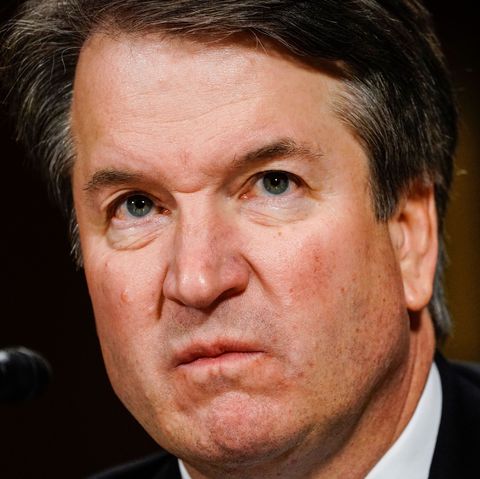
Brett Kavanaugh is the Link Between Rape and Abortion

brett-kavanaugh-blasey-ford-1538096510


I think I will always associate Brett Kavanaugh with the taste of vomit in the back of my throat.


I couldn’t watch his sham of a confirmation hearing without my gag reflex going into overdrive.


Here was one of the most privileged of people on the planet alternatively weeping and raging that he was being denied his due.


Here was a man bemoaning that no matter what happened, his reputation forever would be ruined, but who likewise refused to call for an investigation to exonerate himself.


At least three separate women have accused him of sexual assault, yet Congressional Republicans are still planning to ram through his nomination to the Supreme Court – a lifetime appointment where he will almost certainly be the tie breaking vote to overturn Roe vs. Wade.


How fitting.


What perfect symmetry.


You couldn’t have planned it any more poetically.


A man accused of multiple attempted rapes who is doing everything in his power to make abortion illegal.


An overgrown frat boy crying into his beer that we can’t take away his God given right to take away women’s rights.


A confederacy of almost exclusively male lawmakers ready to discount women’s reports of violence so that they can limit women’s freedom to make decisions about their own bodies.


If there is one good thing to come from this farce, it is the spotlight it has shown on the relationship between rape and the movement to recriminalize abortion.


These two things are essentially intertwined.


On the one hand, we have sexual intercourse carried out under threat of violence, sex without consent or in direct violation of consent – a crime invariably perpetrated by men on women.


On the other hand, we have the removal of female consent from the birthing process.


They are almost the same thing, or at least two sides of the same coin.


In both cases, we’re removing or ignoring female permission, agreement, approval, agency. We’re saying it doesn’t matter what the woman wants. It only matters what men or a patriarchal society wants.


And the justification is an ancient text – the New Testament – that doesn’t mention abortion once. And the Old Testament actually gives instructions on how to conduct an abortion (Numbers 5:11-31).


Not that it really should matter. The United States is not a theocracy.


But it IS a patriarchy.


That’s what this is – an attempt by the most insecure, power hungry men to control women.


It is about keeping and strengthening a caste system where men are allowed to be fully realized people and women are allowed only secondary status.


It is about dehumanization clothed in piety and false morality.


All those people crying for the lost lives of a cluster of cells in female uteruses care not a wit about the thousands of women who will die from unsafe abortions once safe procedures become unlawful.


We’ve been here before. Abortion was illegal in the US from the early 1800s until 1973, and we know what will happen. There is actual history on this – back alley procedures conducted by quacks using sharp implements to pierce the womb – and there is no reason to think it won’t repeat itself.


Changing the law won’t stop abortions. It will just make them unsafe for everyone except rich women who can afford doctors willing to take a chance on going to jail for a big payday.


If these people really wanted to stop abortions, they’d support handing out free contraception. They’d turn every orphanage into a palace. They’d each adopt as many children as they could. They’d make neonatal care free, expand services to help women raise children, increase maternity leave, pay for free childcare, expand education funding.


But they don’t do any of that because despite their crocodile tears, their objection has nothing to do with unborn children.


It has to do with mature women making decisions for themselves. It has to do with conceptualizing them as people equal to men and with minds capable of consent.


It’s about allowing women the right to choose – choose whom to have sex with and what exactly the consequences of that sex will or will not be.


I am so thankful that Dr. Christine Blasey Ford came forward with her testimony. What bravery! What grace under pressure!


To be able to share with an entire nation her personal trauma at the hands of Kavanaugh. Such courage boggles the mind almost as much as those who refuse to accept her story as genuine.


They say that this is political. That it’s a hit job. Yet they pound their fists onto their ears to drown out Kavanaugh’s words in self-defense where he makes it entirely clear how partisan he is and will be once he takes the bench:


“This whole two-week effort has been a calculated and orchestrated political hit, fueled with apparent pent-up anger about President Trump and the 2016 election. Fear that has been unfairly stoked about my judicial record. Revenge on behalf of the Clintons. And millions of dollars in money from outside left-wing opposition groups.”


These are not the words of a fair arbitrator. They are the ravings of someone with an axe to grind.


But they do well to point out the elephant in the room – Donald Trump.


The man who nominated Kavanaugh has had at least 19 women accuse him of sexual assault. He even admitted to it on video in the infamous Access Hollywood tape.


Yet a minority of Americans elected him President through a legislative loophole kept open by centuries of neglect, apathy and moneyed interest.


I don’t know how this all will end. The FBI will conduct a limited investigation this week – probably stymied as much as possible by the Trump administration.


But the road that lead us here is achingly clear.


This is a tantrum of the patriarchy.


It is the weakest, most twisted men and their Stockholm syndrome suffering accomplices.


It is not about defining when life begins.


It’s about defining who gets to count as fully human – who gets the freedom to choose.


Like this post? I’ve written a book, “Gadfly on the Wall: A Public School Teacher Speaks Out on Racism and Reform,” now available from Garn Press. Ten percent of the proceeds go to the Badass Teachers Association. Check it out!

WANT A SIGNED COPY?

Click here to order one directly from me to your door!

book-4

The Six Biggest Problems with Data-Driven Instruction

0


“On the dangers of being data-driven: Imagine driving from A to B ignoring the road, the weather, the traffic around you… only staring at the gauges on the dashboard.”

 – Educator Dan McConnell


“Make your instruction data-driven.”


If you’re a public school teacher, you’ve probably heard this a hundred times.


In the last week.


Principals and administrators use that word – “data-driven” – as if it were inscribed over the front doors of the schoolhouse in stone.


The idea goes like this: All lessons should be based on test scores.


Students take the federally mandated standardized test. Your job is to make sure they get the best possible score. Your class is nothing but a way station between standardized tests.


Pretest your students and then instruct them in such a way that when they take the test again, they’ll get the best possible score.


It’s total nonsense. And it doesn’t take much to see why.


No teacher should ever be data-driven. Every teacher should be student-driven.


You should base your instruction around what’s best for your students – what motivates them, inspires them, gets them ready and interested in learning.


To be sure, you should be data-informed – you should know what their test scores are and that should factor into your lessons in one way or another – but test scores should not be the driving force behind your instruction, especially since standardized test scores are incredibly poor indicators of student knowledge.


No one really believes that the Be All and End All of student knowledge is children’s ability to choose the “correct” answer on a multiple-choice test. No one sits back in awe at Albert Einstein’s test scores – it’s what he was able to do with the knowledge he had. Indeed, his understanding of the universe could not be adequately captured in a simple choice between four possible answers.


As I see it, there are at least six major problems with this dependence on student data at the heart of the data-driven movement.


So without further ado, here is a sextet of major flaws in the theory of data-driven instruction:


  1. The Data is Unscientific

    When we talk about student data, we’re talking about statistics. We’re talking about a quantity computed from a sample or a random variable.

    As such, it needs to be a measure of something specific, something clearly defined and agreed upon.

    For instance, you could measure the brightness of a star or its position in space.

    However, when dealing with student knowledge, we leave the hard sciences and enter the realm of psychology. The focus of study is not and cannot be as clearly defined. What, after all, are we measuring when we give a standardized test? What are the units we’re using to measure it?

    We find ourselves in the same sticky situation as those trying to measure intelligence. What is this thing we’re trying to quantify and how exactly do we go about quantifying it?

    The result is intensely subjective. Sure we throw numbers up there to represent our assumptions, but – make no mistake – these are not the same numbers that measure distances on the globe or the density of an atomic nucleus.

    These are approximations made up by human beings to justify deeply subjective assumptions about human nature.

    It looks like statistics. It looks like math. But it is neither of these things.

    We just get tricked by the numbers. We see them and mistake what we’re seeing for the hard sciences. We fall victim to the cult of numerology. That’s what data-driven instruction really is – the deepest type of mysticism passed off as science.

    The idea that high stakes test scores are the best way to assess learning and that instruction should center around them is essentially a faith based initiative.

    Before we can go any further, we must understand that.

  2. It Has Never Been Proven Effective

    Administrators and principals want teachers to base their instruction around test scores.

    Has that ever been proven an effective strategy for teachers planning lessons or the allocation of resources? Can we prove a direct line from data to better instruction to better test scores?

    The answer is an unequivocal NO.

    In a 2007 study from Gina Schuyler Ikemoto and Julie A. Marsh published in the Yearbook for the National Society for the Study of Education, data driven instruction actually was found to have harmful effects on educator planning and, ultimately, student learning.

    Researchers looked at 36 instances of data use in two districts, where 15 teachers used annual tests to target weaknesses in professional development or to schedule double periods of language arts for English language learners. The result was fewer instances of collective, sustained, and deeper inquiry by groups of teachers and administrators using multiple data sources – test scores, district surveys, and interviews – to reallocate funds for reading specialists or start an overhaul of district high schools.

    Teachers found the data less useful if it was not timely – standardized test scores are usually a year old by the time they get to educators. Moreover, the data was of less value if it did not come with district support and if instructors did not already buy into its essential worth.

    In short, researchers admitted they could not connect student achievement to the 36 instances of basic to complex data-driven decisions in these two districts.

    But that’s just one study.

    In 2009, the federal government published a report (IES Expert Panel) examining 490 studies where schools used data to make instructional decisions.

    Of these studies, the report could only find 64 that used experimental or quasi-experimental designs. Of these it could find only six – yes, six – that met the Institute of Education Sciences standard for making causal claims about data-driven decisions to improve student achievement.

    And when examining these six studies, the panel found “low evidence” to support data-driven instruction. They concluded that the theory that data-driven instructional decisions improve student test scores has not been proven in any way, shape or form.

  3. It’s Harmful – The Stereotype Threat and Motivation

    Data-driven instruction essentially involves grouping students based on their performance on standardized tests.

    You put the low scorers HERE, the students on the bubble who almost reached the next level HERE, and the advanced students HERE. That way you can easily differentiate instruction and help meet their needs.

    However, there is a mountain of psychological research showing that this practice is harmful to student learning. Even if you don’t put students with different test scores in different classes, simply informing them that they belong to one group or another has intense cognitive effects.

    Simply being told that you are in a group with lower test scores depresses your academic outcomes. This is known as the stereotype threat.

    When you focus on test scores and inform students of where they fall on the continuum down to the percentile – of how far below average they are – you can trigger this threat. Simply tracking students in this way can actually make their scores worse.

    It can create negative feelings about school, threatening students’ sense of belonging, which is key to academic motivation.

    But it’s not just the low scorers who are harmed. Even the so-called “advanced” students can come to depend on their privileged status. They define themselves by their achievement, collecting prizes, virtual badges and stickers. These extrinsic rewards then transform their motivation from being driven by the learning and the satisfaction of their curiosity to depending on what high achievement gets them, researchers have found.

    In short, organizing all academics around tests scores is a sure way to lower them.

  4. The Data Doesn’t Capture Important Factors

    Data-driven instruction is only as good as the data being used. But no data system can be all inclusive.

    When we put blinders on and say only these sorts of factors count, we exclude important information.

    For instance, two students do the same long-term project and receive the same grade. However, one student overcame her natural tendency to procrastinate and learned more than in past projects. The other did not put forth his best effort and achieved lower than his usual.

    If we only look at the data, both appear the same. However, good teachers can see the difference.

    Almost every year I have a few students who are chronically tardy to class. A good teacher finds out why – if this is because they aren’t making the best use of the class interval or if they have a greater distance to travel than other students. However, if we judge solely on the data, we’re supposed to penalize students without considering mitigating factors. That’s being data-driven – a poor way to be a fair teacher.

    It has been demonstrated repeatedly that student test scores are highly correlated with parental income. Students from wealthier parents score well and those from more impoverished families score badly. That does not mean one group is smarter or even more motivated than the other. Living in poverty comes with its own challenges. Students who have to take care of their siblings at home, for instance, have less time for homework than those who have nothing but free time.

    A focus solely on the data ignores these factors. When we’re admonished to focus on the data, we’re actually being told to ignore the totality of our students.

  5. It’s Dehumanizing

    No one wants to be reduced to a number or a series of statistics.

    It is extremely insulting to insist that the best way for teachers to behave is to treat their students as anything other than human beings.

    They are people with unique needs, characteristics, and qualities, and should be treated accordingly.

    When one of my students does an amazing job on an assignment or project, my first impulse is not to reduce what they’ve done to a letter grade or a number. I speak my approbation aloud. I write extensive comments on their papers or conference with them about what they’ve done.

    Certainly, I have to assign them a grade, but that is merely one thing educators do. To reduce the relationship to that – and only that – is extremely reductive. If all you do is grade the learner, you jeopardize the learning.

    Every good teacher knows the importance of relationships. Data-driven instruction asks us to ignore these lessons in favor of a mechanistic approach.

    I’m sorry. My students are not widgets and I refuse to treat them as such.

    I am so sick of going to conferences or faculty meetings where we focus exclusively on how to get better grades or test scores from our students. We should, instead, focus on how to see the genius that is already there! We should find ways to help students self-actualize, not turn them into what we think they should be.

    At this point, someone inevitably says that life isn’t fair. Our students will have to deal with standardized tests and data-driven initiatives when they get older. We have to prepare them for it.

    What baloney!

    If the real world is unfair, I don’t want my students to adjust to that. I want to make it better for them.

    Imagine telling a rape victim that that’s just the way the world is. Imagine telling a person brutalized by the police that the world is unfair and you just have to get used to it.

    This is a complete abdication not just of our job as teachers but our position as ethical human beings.

    Schools are nothing without students. We should do everything we can to meet their needs. Period.

  6. It’s Contradictory – It’s Not How We Determine Value in Other Areas

    Finally, there is an inherent contradiction that all instruction must be justified by data.

    We don’t require this same standard for so many aspects of schooling.

    Look around any school and ask yourself if everything you see is necessarily based on statistics.

    Does the athletic program exist because it increases student test scores? Does each student lunch correlate with optimum grades? Do you have computers and iPads because they have a measureable impact on achievement?

    Some administrators and principals DO try to justify these sorts of things by reference to test scores. But it’s a retroactive process.

    They are trying to connect data with things they already do. And it’s completely bogus.

    They don’t suddenly believe in football because they think it will make the team get advanced scores. They don’t abruptly support technology in the classroom because they think it will make the school achieve adequate yearly progress.

    They already have good reasons to think athletics helps students learn. They’ve seen participation in sports help students remain focused and motivated – sometimes by reference to their own lives. Likewise, they’ve seen the value of technology in the classroom. They’ve seen how some students turn on like someone flipped a switch when a lesson has a technological component.

    These aren’t necessarily quantifiable. They don’t count as data but they are based on evidence.

    We come to education with certain beliefs already in place about what a school should do and others are formed based on the empiricism of being there, day-in, day-out. “Data” rarely comes into the decision making process as anything but a justification after the fact.


    And so we can firmly put the insistence on data-driven instruction in the trash bin of bad ideas.

    It is unscientific, unproven, harmful, reductive, dehumanizing and contradictory.

    The next time you hear an administrator or principal pull out this chestnut, take out one of these counterarguments and roast it on an open fire.

    No more data-driven instruction.

    Focus instead on student-driven learning.


Don’t let them co-opt you into the cult of numerology. Remain a difference-maker. Remain a teacher.


Like this post? I’ve written a book, “Gadfly on the Wall: A Public School Teacher Speaks Out on Racism and Reform,” now available from Garn Press. Ten percent of the proceeds go to the Badass Teachers Association. Check it out!

WANT A SIGNED COPY?

Click here to order one directly from me to your door!

book-3

Report: US Shortchanged Public Schools by Hundreds of Billions of Dollars Over Decades

taking-candy-from-a-baby


Fun Fact: Between 2005 and 2017, the federal government withheld $580 billion it had promised to spend on students from poor families and students with disabilities.


Fun Fact: Over that same period, the personal net worth of the nation’s 400 wealthiest people ballooned by $1.57 trillion.


So, rich people, consider this the bill.


A new report called “Confronting the Education Debt” commissioned by the Alliance to Reclaim Our Schools (AROS) details the shortfall in minute detail.


For instance:


  • $347 billion owed to educate low-income students most of whom are children of color.


  • $233 billion owed to provide services for students with disabilities.


And this is just the shortfall of the last dozen years! That’s just money due to children who recently graduated or are currently in the school system!


We’ve been cheating our children out of the money we owe them for more than half a century!


Federal education funding levels were first established in 1965 as part of Pres. Lyndon Johnson’s War on Poverty in the landmark education law, the Elementary and Secondary Education Act (ESEA).


That law, which has become little more than a boondoggle for the standardized testing and school privatization industries, originally was passed to address inequality in America’s education funding.


Now this report from a coalition of groups including the Education Justice Research and Organizing Center, the National Education Association, the American Federation of Teachers, Center for Popular Democracy and the Action Center on Race and the Economy points out the multifarious ways we have failed to live up to the standards we set in that original legislation and beyond.


One of the most glaring examples of neglect is Title I funding.


The Johnson administration admitted that schools with a high concentration of students living below the poverty line needed extra support to succeed at the same levels as students from middle class or more affluent backgrounds. So the law promised to provide an additional 40 percent for each poor child above what the state already spent per pupil.


And then it promptly failed to fund it. In 1965 and every year since!


These are not just numbers. With this money, high poverty schools could provide:


  • “health and mental health services for every student, including dental and vision services; and

  • a full-time nurse in every Title I school; and

  • a full-time librarian for every Title I school; and

  • a full-time additional counselor in every Title I school, or

  • a full-time teaching assistant in every Title I classroom.”


A decade later, in 1975, the same thing happened with The Individuals with Disabilities Education Act (IDEA).


Congress told local districts they’d have to do more to help disabled students succeed academically. However, doing so costs money. Lawmakers admitted that disabled students cost more to educate and that local districts often struggle to find the funding to help them succeed.


Once again, Congress pledged to pay up to 40 percent of that additional cost, with local and state funds covering the remainder.


Once again, Congress failed to fund it.


STATE AND LOCAL FAILURE


But it’s not just the federal government that has shirked its duties to school children.


State and local governments also stiffed generations of students out of the resources they deserved – especially if those students have black or brown skin.


Beside the federal government, public schools are funded by their local municipalities and the state. Local governments pay for about 45 percent of school budgets.


However, since most of this allotment is determined by property tax revenues, it ensures the poor get fewer resources than the rich. Kids from rich neighborhoods get lots of resources. Kids from poor areas get the scraps. Inequality is built into the funding formula to ensure that students don’t start out on an even playing field and that economic handicaps are passed on from one generation to the next.


State governments are no better. They provide about 47 percent of school budgets.


As such, they are in the position to right the wrongs of the local community by offsetting the inequality of local governments – but only 11 states do so. Twenty states close their eyes and provide the same funding to each school – rich and poor alike – regardless of need or what each community can afford to provide for its own children. But 17 states are even worse. They actually play Robin Hood in reverse – they funnel more money to wealthier districts than to poor ones.


As a result, schools nationwide serving mostly students of color and/or poor children spend less on each child than districts serving mostly white and/or affluent children.


TAX CUTS


And while our federal, state and local governments have failed to meet their responsibilities to students, they have required fewer taxes from business and industry.


In the late 1940s and 1950s, the top marginal tax rate was more than 90 percent. Today it is 37 percent.


Congress just passed a series of whooping tax cuts that go into effect in 2019. More than half of the benefit of these cuts will go to the richest five percent of taxpayers. The law is expected to cost the federal treasury as much as $1.5 trillion in lost revenues over the next decade.


Nearly every state levies a much greater share of taxes from low- and middle-income families than from the wealthy.


And that’s before we even start talking about corporations!


While the US federal corporate tax is 35 percent, the effective tax rate that corporations pay after loopholes and deductions is only about 14 percent. This costs the federal government at least $181 billion in annual revenue, based on 2013 estimates by the Government Accountability Office. Local and state corporate tax and abatement programs make it even worse.


This is a choice. We are not requiring the rich to pay their fair share.


SCHOOL-TO-PRISON


Instead of investing in ways to help educate children, one of the only areas we’ve increased funding is incarceration.


The private prison industry is booming, fueled in part by a lack of opportunities in schools.


According to the report:


“In 2017, the National Association of School Resource Officers claimed that school policing was the fastest-growing area of law enforcement. The school safety and security industry was reported to be a $2.7 billion market as of 2015. Most of that $2.7 billion is public money now enriching the private security industry instead of providing real supports to students.”


According to the US Department of Education, 1.6 million students go to a school that employs a law enforcement officer but not a guidance counselor.


That is not an unalterable economic reality. It is a failure of priorities. It is the mark of a society that is not willing to help children but will swoop in to punish them if they get out of line.


SCHOOL PRIVATIZATION


Finally, the report identifies school privatization as a contributing factor to this systemic neglect.


Charter schools are legal in 44 states plus Washington, D.C. and Puerto Rico. They have “systematically stripped public school budgets through the creation of parallel structures of privately-operated, publicly-funded schools.”


Cost studies in San Diego, Los Angeles, Nashville, Michigan, Pennsylvania, Durham and other localities have come to the same conclusion: “the privatization of schools has contributed to austerity conditions in traditional public schools.”


Yet Congress continues to appropriate millions of dollars to the Department of Education’s Charter Schools Program (CSP), which funds new charter start-ups and expansions. The program has a budget of $500 million this year, alone. It is the largest single backer of charter schools in the nation.


According to the report, “In other words, the U.S. Department of Education is operating a program that directly undermines public schools.”


SOLUTIONS


But the report isn’t just about what’s wrong. It outlines how we can make it right.


It outlines three policy initiatives:


1)      “Full funding of Title I and IDEA to target federal support to low-income children and students with disabilities.

2)      The creation of 25,000 Sustainable Community Schools by 2025.

3)      A new focus for the U.S. Department of Education, on ensuring and incentivizing equity in public schools across the country.”


And we can pay for it by:


A. “Make the wealthy pay their fair share of taxes.

  • Rescind the 2017 tax code changes, which overwhelmingly favor the top 1 percent of income earners.
  • Close the federal carried interest loophole, a step that could increase federal revenues by between $1.8 and $2 billion annually or, according to some researchers, by as much as $18 billion annually.
  • If the carried interest loophole is not closed at the federal level, states can impose a surcharge on carried interest income at the state level, raising millions for state budgets.
  • Enact so-called “millionaire’s taxes” that increase the tax rate on a state’s highest earners. New York and California have already passed such law.


B. Require wealthy corporations to pay their fair share.

  • End or reduce corporate tax breaks that cost the federal government at least $181 billion annually.

  • Reduce state and local subsidies to businesses for economic development projects and hold school funding immune from tax abatements.

  • Enforce and strengthen programs like Payment in Lieu of Taxes (PILOT) to ensure that wealthy institutions pay their fair share towards local budgets.


C. Divest from the school-to-prison pipeline.

  • School safety and security is now a $2.7 billion industry. Much of that money is public money, going to profitable corporations instead of schools.
  • Divest from expensive security systems, metal detectors and legions of school-based police officers and instead invest in counselors, health and mental-health providers and other supports that make schools safer.


D. Place a moratorium on new charter schools and voucher programs.

  • A moratorium on the federal Charter Schools Program would free up $500 million annually, which could be used to support the creation of Sustainable Community schools.”


The executive summary concludes with the following statistic.


Even a 10 percent increase in funding for each high poverty student maintained through 12 years of public school can dramatically change the likelihood of academic success. It can boost the chances that students will graduate high school, achieve 10 percent higher earnings as adults and a 6 percentage point reduction in the annual incidence of adult poverty, according to a 2015 report.

“Ten percent is pocket-change for a nation that has orchestrated the rise of an unmatched billionaire class. In the richest nation in the world, it is possible to fully fund all our public schools, and to provide Black, Brown and low-income children with the educational resources and additional supports and services they need to achieve at the highest levels.”


The facts are in, folks.


We can no longer gripe and complain about a public education system we fail to support without recognizing the cause. We have failed to meet our responsibilities to our children – especially our children of color.


The solution is simple – equity.


We need to demand the rich do the right thing.


We cannot achieve greatness as a nation when wealth and privilege continue to shirk their duties and our lawmakers do little more than enable greed and corruption.


The bill is here.


Time to settle up.


READ THE WHOLE REPORT.


Like this post? I’ve written a book, “Gadfly on the Wall: A Public School Teacher Speaks Out on Racism and Reform,” now available from Garn Press. Ten percent of the proceeds go to the Badass Teachers Association. Check it out!
WANT A SIGNED COPY?

Click here to order one directly from me to your door!

book-2

Disowning the Lie of Whiteness

auschwtiztattoo 

The most vivid memory I have of my great-grandfather is the tattoo on his arm.


It wasn’t an anchor or a sweetheart’s name or even the old faithful, “Mom.”


It was just a series of digits scrawled across his withered tan flesh like someone had written a note they didn’t want to forget.


Beneath the copious salt and pepper hairs was a stark number, the darkest stain on his skin.


Gramps is a kindly figure in my mind.


He died before I was even 10-years-old. All I really remember about him are wisps of impressions – his constant smile, a whiff of mothballs, how he always seemed to have butterscotch candies.


And that tattoo.


I think it was my father who told me what it meant.


When he was just a young man, Gramps escaped from Auschwitz. A guard took pity on him and smuggled him out.


His big European family didn’t make it.


My scattered relatives in the United States are all that are left of us.


Those are the only details that have come down to me. And Gramps isn’t here to add anything further.


But his tattoo has never left me.


It’s become a pillar of my subconscious.


The fact that someone could look at my kindly Gramps and still see fit to tattoo a numeric signifier on him as if he were an animal.


A little reminder that he wasn’t human, that he shouldn’t be treated like a person, that he was marked for erasure.


If I look at my own arm, there is no tell-tale integer peeking through the skin. But I am keenly aware of its presence.


I know that it’s there in a very real sense.


It is only the American dream that hides it.


Coming to this country, my family has made a deal, something of a Faustian bargain, but it’s one that most of us have accepted as the price of admission.


It’s called whiteness.


I am white.


Or I get to be white. So long as I suppress any differences to the contrary.


I agree to homogenize myself as much as possible and define myself purely by that signifier.


White. American. No hyphen necessary.


Anything else is secondary. I don’t have to deny it, but I have to keep it hidden until the right context comes to bring it out.


During Octoberfest I have license to be German. When at international village I can root for Poland. And on Saturdays I can wear a Kippah and be Jewish.


But in the normal flow of life, don’t draw attention to my differences. Don’t show everyone the number on my arm.


Because America is a great place, but people here – as in many other places – are drawn to those sorts of symbols and will do what they can to stamp them out.


I learned that in school when I was younger.


There weren’t a lot of Jewish kids where I grew up. I remember lots of cracks about “Jewing” people down, fighting against a common assumption that I would be greedy, etc. I remember one girl I had a crush on actually asked to see my horns.


And of course there were the kids who chased me home from the bus stop. The scratched graffiti on my locker: “Yid.”


The message was clear – “You’re different. We’ll put up with you, but don’t ever forget you are NOT one of us.”


There were a lot more black kids. They didn’t get it any easier but at least they could join together.


It seemed I had one choice – assimilate or face it alone.


So I did. I became white.


I played up my similarities, never talked about my differences except to close friends.


And America worked her magic.


So I’ve always been aware that whiteness is the biggest delusion in the world.


It’s not a result of the color wheel. Look at your skin. You’re not white. You’re peach or pink or salmon or rose or coral or olive or any of a million other shades.


Whiteness has as much to do with color as Red has to do with Communism or Green has to do with environmental protection.


It is the way a lose confederacy of nationalities and ethnicities have banded together to form a fake majority and lord power over all those they’ve excluded.


It’s social protection for wealth – a kind of firewall against the underclass built, manned and protected by those who are also being exploited.


It’s like a circle around the wealthy protecting them from everyone outside its borders. Yet if everyone banded together against the few rich and powerful, we could all have a more equitable share.


But in America, social class has been weaponized and racialized.


You’ll see some media outlets talking about demographics as if white people were in danger of losing their numerical majority in this country in the next few decades. But there’s no way it’s ever going to happen.


Today’s xenophobia is a direct response to this challenge. Some are trying to deport, displace and murder as many black and brown people as possible to preserve the status quo.


But even if that doesn’t work, whiteness will not become a minority. It will do what it has always done – incorporate some of those whom it had previously excluded to keep its position.


Certain groups of Hispanics and Latinos probably will find themselves allowed to identify as white, thereby solidifying the majority.


Because the only thing that matters is that there are some people who are “white” and the rest who are not.


Long ago, my family experienced this.


Before I was born, we got our provisional white card. And if I want, I can use it to hide behind.


I’ve been doing it most of my life.


Every white person does it.


It’s almost impossible not to do it.


How do you deny being white?


At this point, I could throw back my head and shout to the heavens, “I’M NOT WHITE!” and it wouldn’t matter.


Only in a closed environment like a school or a job or in a social media circle can you retain the stigma of appearing pale but still being other.


In everyday life, it doesn’t matter what you say, only how you appear.


I can’t shout my difference all the time. Every moment I’m quiet, I’ll still be seen as white.


It’s not personal. It’s social. It’s not something that happens among individuals. It’s a way of being seen.


The best I can do is try to use my whiteness as a tool. I can speak out against the illusion. I can stand up when people of color are being victimized. I can vote for leaders who will do something to dismantle white supremacy.


Not because I am some kind of savior, but because I know that my own freedom is tied to the freedom of those being oppressed by a system that provides me certain privileges.


But let me be clear: doing so is not the safe way to go.


In defending others you make yourself a target.


I get threats all the time from racists and Nazis of all sorts. They say they can tell just by looking at me that I’m not white at all.


The worst part is I’m not sure what I am anymore.


I don’t go to synagogue. I don’t even believe in God. But I’m Jewish enough to have been rounded up like Gramps was, so I won’t deny that identity. It’s just that I’m more than one thing.


That’s what whiteness tries to reduce you to – one thing.


I don’t want it anymore.


I’m not saying I don’t like the protection, the ability to be anonymous, the easy out.


But it’s not worth it if it has to come with the creation of an other.


I don’t want to live in a world where people of color are considered less than me and mine.


I don’t want to live in a world where they can be treated unfairly, beaten and brutalized so that I can get some special advantage.


I don’t want to live in a world where human beings are tattooed and numbered and sent to their deaths.


Because the Holocaust is not over.


American slavery is not over.


Neither is Jim Crow or lynching or a thousand other marks of hatred and bigotry.


Nazis march unmasked in our streets. Our prisons are the new plantation. And too many of our police use murder and atrocity to ensure the social order.


As long as we allow ourselves to be white, there will be no justice for both ourselves and others.


So consider this my renunciation of whiteness – and I make it here in public.


I know that no matter what I say, I will still be seen as part of the problem. And I will still reap the rewards.


But I will use what power is given me to tear it down.


I’m burning my white card.


I know it’s a symbolic gesture. But I invite my white brothers and sisters to add theirs to the flames.


Let us make a conflagration, a pillar of fire into the sky.


Let whiteness evaporate as the smoke it is.


Let us revel in the natural hues of our faces as we watch it burn.


Like this post? I’ve written a book, “Gadfly on the Wall: A Public School Teacher Speaks Out on Racism and Reform,” now available from Garn Press. Ten percent of the proceeds go to the Badass Teachers Association. Check it out!

WANT A SIGNED COPY?

Click here to order one directly from me to your door!

book-4

There is Virtually No Difference Between Nonprofit and For-Profit Charter Schools

Screen Shot 2018-09-06 at 3.18.04 PM


Stop kidding yourself.


Charter schools are a bad deal.


It doesn’t matter if they’re for-profit or nonprofit.


It doesn’t matter if they’re cyber or brick-and-mortar institutions.


It doesn’t matter if they have a history of scandal or success.


Every single charter school in the United States of America is either a disaster or a disaster waiting to happen.


The details get complicated, but the idea is really quite simple.


It goes like this.


Imagine you left a blank check on the street.


Anyone could pick it up, write it out for whatever amount your bank account could support and rob you blind.


Chances are you’d never know who cashed it, you’d never get that money back and you might even be ruined.


That’s what a charter school is – a blank check.


It’s literally a privately operated school funded with public tax dollars.


Operators can take almost whatever amount they want, spend it with impunity and never have to submit to any real kind of transparency or accountability.


Compare that to a traditional public school – an institution invariably operated by duly elected members of the community with full transparency and accountability in an open forum where taxpayers have access to internal documents, can have their voices heard and even seek an administrative position.


THAT’S a responsible way to handle public money!


Not forking over our checkbook to virtual strangers!


Sure, they might not steal our every red cent. But an interloper who finds a blank check on the street might not cash it, either.


The particulars don’t really matter. This is a situation rife with the possibility of fraud. It is a situation where the deck is stacked against the public in every way and in favor of charter school operators.


But most people don’t want to take such a strong stance. They’d rather find good and bad people on both sides and pretend that’s the same thing as impartiality.


It isn’t.


Sometimes one side is just wrong.


Policymakers may try to feign that there are good and bad charter schools and that the problems I’m talking about only apply to the nefarious ones.


But that’s a delusion.


There is no good way to write a blank check and leave it on the street to the whims of passers-by.


Most apologists want to draw the distinction between for-profit and nonprofit charters.


But as Jeff Bryant, an editor at Education Opportunity Network, puts it, this is a “Distinction without a difference.”


These terms only define an organization’s tax status – not whether it is engaged in gathering large sums of money for investors.


The law is full of loopholes that allow almost any organization – not just charter schools – to claim nonprofit status while enriching those at the top.


We live in an age of philanthrocapitalism, where the wealthy disguise schemes to enrich themselves as benevolence, generosity and humanitarianism.


So-called “nonprofit” charter schools are just an especially egregious example. No matter what label you pin to their name, they all offer multiple means to skim public funding off the top without adding any value for students.


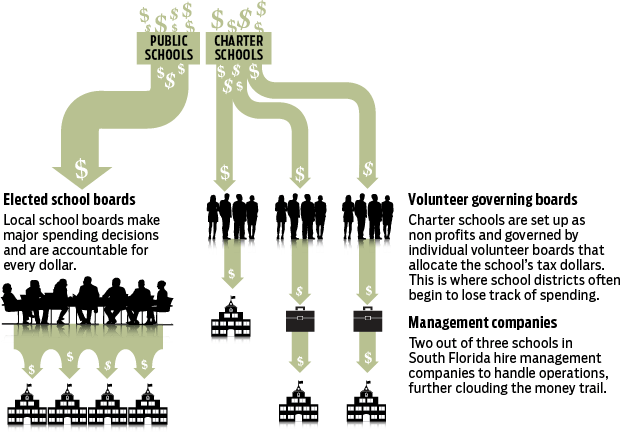
For instance, take the use of management companies.


A for-profit charter school can simply cut services to students and pocket the savings as profit.


A nonprofit charter school can do the same thing after engaging in one additional step.


All I have to do is start a “nonprofit” charter school and then hire a for-profit management company to run it. Then my management company can cut services and pocket the profits!


It’s really that simple! I turn over nearly all of my public tax dollars to the management company that then uses it to operate the school – and keeps whatever it doesn’t spend.


Heck! It doesn’t even matter who owns the company! It could even be me!


The law actually allows me to wear one hat saying I’m nonprofit and then put on a different hat and rake in the cash! The only difference is what hat I’m wearing at the time!


SO I get to claim to be a nonprofit while enjoying all the advantages of being for-profit.


flowchart960
SOURCE: Florida Sun Sentinel


I may even be able to buy things with public tax dollars through my for-profit management company and then if my “nonprofit” school goes belly up, I get to keep everything I bought! Or my management company does.


So the public takes all the risk and I reap all the reward. And I’m still graced with the label “nonprofit.”


Oh, and speaking of spending, being a “nonprofit” doesn’t stop me from the worst kind of real estate shenanigans routinely practiced by the for-profit charter schools.


Both types of privatized institution allow for huge windfalls in real estate. If I own property X, I can sell it to my charter school (or management company) and then pay myself with tax dollars. Who determines how much I pay for my own property? ME! That’s who!


And I can still be a nonprofit.


Think that’s bad? It’s just the tip of the iceberg.


Thanks to some Clinton-era tax breaks, an investor in a charter school can double the original investment in just seven years!

I can even get the public to pay for the same building twice! And even then taxpayers still won’t own it!


But that’s the complicated stuff. There’s an even easier way to get rich off the public with my “nonprofit” charter school, and operators do it all the time: write myself a fat check!


After all, I’ve gotta’ pay, myself, right? And who’s in charge of determining how much I’m worth? ME!


I can even pay myself way more than my counterparts at traditional public schools who oversee exponentially more staff and students.


For instance, as New York City Schools Chancellor, Richard Carranza is paid $345,000 to oversee 135,000 employees and 1.1 million students. Meanwhile, as CEO of Success Academy charter school chain, Eva Moskowitz handles a mere 9,000 students, for which she is paid $782,175.


And this is by no way a unique example.


There are just so many ways to cash in with a charter school even at a so-called “nonprofit” – especially if I want to dip my toe into legally dubious waters!


I could do like the almost exclusively “nonprofit” Gulen charter schools and exist solely as a means to raise money for an out-of-favor political movement in Turkey.


I could use charter funds to finance other businesses. I could decide to discontinue programs that students receive in traditional public schools such as providing free or reduced lunches but keep the cash. I could fake enrollment and have classes full of “ghost students” that the local, state and federal government will pay me to educate.


Fraud and mismanagement are rampant at charter schools because we don’t require them to be as accountable as their traditional public school counterparts.


If a traditional public school tried this chicanery, we’d almost certainly catch it at the monthly meetings or frequent audits. But charter schools don’t have to submit to any of that. They’re public money spent behind closed doors with little to no requirement to explain themselves – ever.


And all of this – nearly every bit of criticism I’ve leveled against the industry – doesn’t even begin to take into account the educational practices at these types of schools.


There is plenty of evidence that charters provide a comparable or worse education than children routinely receive at traditional public schools.


Where it is comparable, the issue is clouded by selective enrollment, inadequately servicing students with special needs and generally encouraging the hardest to teach to get an education elsewhere. Where it is worse, it is colossally worse, robbing children not just of funding but what is likely their only chance at an education.


But we don’t even need to go there.


We only need the issue of fiscal responsibility to bring down this behemoth.


Charter schools are no way to run a school. They are a blatant failure to meet our fiduciary responsibilities.


Traditional public schools are the best way to run a school. They protect the public’s investment of money and resources while providing a quality education to students.


So all this talk about nonprofit and for-profit charter schools is either a mark of supreme ignorance or a ploy for weak willed politicians to weasel their way out of taking a stand on an issue whose merits are obvious to anyone who knows what really happens in our education system.


It’s time to stop wasting taxpayer money on this expensive fraud.


It’s time for the charter school experiment to end.


And it’s way passed time to support fully public schools.


Like this post? I’ve written a book, “Gadfly on the Wall: A Public School Teacher Speaks Out on Racism and Reform,” now available from Garn Press. Ten percent of the proceeds go to the Badass Teachers Association. Check it out!

WANT A SIGNED COPY?

Click here to order one directly from me to your door!

book-1

Nationwide Poll Shows Overwhelming Support for Public Schools in All Areas Except One

5e6d4156-a078-4458-bdec-72746eca6e98


Waylon Jennings classic country hit advises Mama’s not to let their babies grow up to be cowboys.


Now, I guess we can add teachers to that list.


According to the 50th annual PDK Poll of attitudes about public schools, Americans trust and support teachers, but don’t want their own children to join a profession they see as underpaid and undervalued.


In almost every other way, they support public schools and the educators who work there.


When it comes to increasing school funding, increasing teacher salary, allowing teachers to strike, and an abundance of other issues, the poll found a majority of people unequivocally in favor of endeavors meant to bolster learning.


In fact, support for education and educators has never been so high in half a century.


“Two-thirds of Americans say teachers are underpaid, and an overwhelming 78% of public school parents say they would support teachers in their community if they went on strike for more pay,” according to PDK’s Website.


If true, this result illuminates an incredible tone deafness among politicians like Scott Wagner in Pennsylvania who is running for governor on the platform that teachers make too much money. According to the poll, only 6% of Americans agree with him.


Moreover, those who support teachers strikes include 6 in 10 Republicans.


“Those who would be most affected by a teacher walk-out — say they would support teachers in their community if they went on strike for more pay. Among the general public, 73% say they would support a job action for higher wages.”


These are record high results that are also reflected in respondents unwillingness to encourage their own children to become teachers in the current political landscape.


For the first time since the question was asked in 1969, a majority of 54% say they would not want their child to become a teacher.


The reason? Poor pay and benefits.


Moreover, a lack of adequate funding is cited as the most common problem facing public schools – a finding that’s held true since the early 2000s. In fact, for the 17th consecutive year, Americans have named the lack of funding as the biggest problem facing their local schools.


It seems that either or both major political parties could easily pick up broad popular support by doing an about face on education. Instead of backing standardization and privatization, they should get behind public education.


The topic has typically served as a wedge issue between progressives and corporate Democrats while Republicans have almost exclusively backed a strategy to “starve the beast” and promote privatization.


However, Democrats and/or Republicans who ran on respecting and remunerating teachers as well as increasing support for the public schools that employ them would find major support among voters.


The PDK poll is based on responses from 1,042 adults including 515 parents of school-age children. They were randomly and representatively sampled in May 2018 through on-line surveys.


The 2018 results include particular support for the public school system as opposed to charter and voucher schools.


Nearly 8 in 10 people said they prefer reforming the existing public school system rather than finding an alternative approach.


That’s a higher response than any year since the question was first asked 20 years ago. Moreover, it’s not just an opinion about nationwide schooling: 78% say they’d rather reform than replace the local school system, as well.


In addition, there is support among Americans to not only increase funding, but also spend it more equitably.


A majority (60%) support spending more on students who need extra help than spending the same amount on every child (39%).


Responds were more divided on where the influx of funding should come from.


Half of respondents favor raising taxes and half say the schools should spend less on students who require fewer resources.


This is related to public perception of exactly which students are receiving unfair funding. The poll revealed that most people recognize some resource inequality based on race and geographic region but they think most is based on parental wealth: 75% of respondent say public school students serving mostly poor students have fewer resources than those serving rich students.


One of the most interesting findings is always the public’s overall perception of schools.


And this poll – as in previous editions – found a sharp difference in respondents appraisal of schools nationwide vs. the schools in their own neighborhoods.


Fifty-five percent say that on a national scale students today get a worse education than those in previous generations.


However:


The public schools continue to suffer from an image deficit. Among those who know them best, parents of current students, 70% give their oldest child’s school an A or B grade. Among the public more broadly, by contrast, only four in 10 give their local schools an A or B. In results that are typical across the years, far fewer give top grades to the public schools nationally, just 19%.”


In other words, people seem to think that nationally our schools stink. But the schools in our own neighborhoods are pretty good.


The reason is simple. National perception is formed by the media. Local perception is formed by actual empirical evidence.


The forces of school privatization and their propaganda network has pushed the lie of “failing schools” for so long, that people believe it – except in their own neighborhoods where they see it to be false.


But the questions weren’t all about how schools should be run. They also asked about security – a hot topic when school shootings happen at least once a month.


“Parents lack strong confidence that schools can protect their children against a school shooting but favor armed police, mental health screenings, and metal detectors more than arming teachers to protect their children.”


This bodes badly for the Trump administrations plans to push guns on public school teachers instead of enacting common sense gun regulations.


As usual, policymakers are trying to herd Americans to their point of view instead of listening to their constituencies.


And that seems to be the big take away from this year’s poll.


Americans want and support public education.


It’s time our so-called leaders got with the program.


Like this post? I’ve written a book, “Gadfly on the Wall: A Public School Teacher Speaks Out on Racism and Reform,” now available from Garn Press. Ten percent of the proceeds go to the Badass Teachers Association. Check it out!

WANT A SIGNED COPY?

Click here to order one directly from me to your door!

book-2

Public School is Not For Profit. It is For Children.

Screen Shot 2018-08-28 at 4.14.57 PM


Betsy DeVos doesn’t get it.


But neither did Arne Duncan.


Whether right or left or somewhere in between, the person sitting at cabinet level tasked with advising the President on education matters invariably knows nothing about the purpose of public schools.


Duncan thought it had something to do with canned academic standards and standardized tests.


DeVos thinks it involves vouchers to religious or private schools.


But they’re both as wrong as two left shoes.


Public schools exist for one reason and one reason only – to meet the needs of children.


They aren’t there to enrich the private sector or even provide the job market with future employees.


They exist to teach, to counsel, to inspire, to heal.


And all these other schemes favored by Dunce Duncan and Batty Betsy that purport to meet kids needs while somehow enjoying the totally unintended side effect of enriching wealthy investors completely misses the point.


Public schools serve one purpose – to help the kids enrolled in them.


That’s all.


If someone is getting rich off that, there’s a huge problem somewhere.


Unfortunately, the Secretaries of Education of Donald Trump and Barack Obama aren’t the only ones to get it wrong. Policymakers on both sides of the aisle have lost sight of this fact.


So have pundits and media personalities on Fox News, CNN and MSNBC. So have CEOs and tech entrepreneurs and economists and anyone – really – whom our society seems to take seriously.


Don’t believe me?


Take the latest pronouncement from DeVos, our Secretary of Education.


She announced recently that she was looking into using federal funds to buy guns for teachers to better protect their students from school shooters.


It doesn’t take a genius to see that this is not in the best interests of children.


Teachers with guns mean a MORE dangerous environment for children, not less.


It means escalating the chance of friendly fire much more than boosting the possibility of a kindergarten teacher turning into an action hero.


It means heightening the chance of children getting their hands on these firearms and doing themselves or others harm.


And given the disproportionate murders of people of color even at the hands of trained professionals in the police force, it means children of color being legitimately terrified of their mostly white educators – or worse.


The reason given by DeVos may be to make children safer. But the measure she’s proposing really has nothing to do with them at all.


It’s a boondoggle for private industry – one private industry in particular – gun manufacturers.


Instead of sensible regulations on a product that’s at least as dangerous as items that are much more heavily controlled – such as cold medicine and automobiles – DeVos is doing the only thing she can to protect what she really cares about – corporate profits.


She is using money earmarked “safety” to increase danger.


Or as she sees it – she’s using a government apparatus that could harm the gun industry to instead pad its pockets.


You’ll hear some progressives and moderates decry this move with passion and fervor – and for good reason – but what many fail to realize is that it’s not new.


It’s really just a continuation of a sickness that has crept into our society about how we conceptualize the very idea of school.


We have moved away from the proposition that everything must be done in the student’s best interest and have replaced it with an imperative to benefit business and industry.


After all, what is the push for academic accountability through standardized tests and Common Core but corporate welfare for the testing and publishing industry?


What is the push for charter and voucher schools but government subsidies for school privatization?


High stakes standardized testing isn’t about helping students learn. Neither is Common Core, value-added measures or a host of top-down corporate policies championed by lions of the left and supply-side patriots.


They are about creating a problem where one doesn’t exist: accountability.


“How do we make sure students receive a quality education?” As if this has ever been hard to determine.


In general, the schools with greater needs than funding are where students struggle. The schools where everyone has more than they need is where they excel.


But they try to sweep the issue of inequitable funding and resources under the rug by framing the question entirely about teachers and schools.


In short, instead of asking about an obvious inequality, they hide a preconceived answer in the question: “How do we make sure teachers and schools are actually educating kids?”


Wrong question. But here’s the answer, anyway: Administrators observe teachers and determine if they’re doing their jobs. And school boards evaluate administrators.


In general, the staff isn’t the problem. It’s the lack of resources we give them to work with – everything from crumbling buildings, large classes, narrowed curriculum to a lack of wraparound social services.


It doesn’t take much to see we’re shortchanging our neediest students.


You don’t need standardized tests to tell you that. You don’t need new academic standards. You don’t need to evaluate educators on things beyond their control.


But doing so creates a new market, a need that can be filled by corporate interests unrestrained by the conviction that public schools are not supposed to be a profit-making venture.


People providing services for schools are supposed to make a living – not a killing – off the public’s dime.


The same can be said for school privatization.


Public schools are in no way inferior to institutions that are privately managed. Tax dollars administered by duly-elected representatives in the light of day are in no way less effective or more corrupt than the alternative – letting bureaucrats behind closed doors dole out the money however they choose even into their own pockets.


In fact, just the opposite!


Nor have charter or voucher schools ever been shown to increase student learning without also selecting only the best academic students and shunning those most difficult to teach, providing fewer resources for students and/or operating with greater funding.


But pretending that privatization is a better alternative to democratic rule creates a market, it opens the door so the system can be gamed for profit at the expense of student learning and wellbeing.


That’s why we look in awe at LeBron James, an athlete who uses his fortune to open a school providing all the things society refuses for students of color. A basketball player who refuses to usurp the public’s leadership role in administering that fully public school.


He’s a shinning example of actual philanthropy in an age of bogus philanthrocapitalism. But he’s also proof that his solution is not reproducible large scale.


The rich – even if they are well intentioned – cannot save us. Only the public can support all public schools.


And to do that, we must understand the purpose behind these institutions.


Otherwise, we’ll continue to be trapped on a runaway train where the conductor seems to possess no sense of urgency about slowing down.


We would never have been in this situation – and in fact could right the course even now – if we just took the time to clarify what we were doing and why we were doing it.


We could save generations of children if we stopped cashing in on public schools and realized the reason for their existence.


We could ensure both our present and our posterity.


If only we remembered that one thing.


Public schools are not for profit.


They are for children.


Like this post? I’ve written a book, “Gadfly on the Wall: A Public School Teacher Speaks Out on Racism and Reform,” now available from Garn Press. Ten percent of the proceeds go to the Badass Teachers Association. Check it out!

WANT A SIGNED COPY?

Click here to order one directly from me to your door!

book-4