Gadfly’s Most Outrageous Articles in 2021 That You May Have Missed or Been Too Polite to Share

The most popular topic people wanted to read about on my blog this year has been how teachers are dealing with the Covid-19 pandemic.

In short, it’s a mess.

We’re struggling big time.

In the media, they call it a teacher shortage, but it’s really an Exodus away from the profession for educators who are fed up with being treated like crap.

But that’s not the only thing I wrote about in 2021.

At this point in my career with everything crumbling around me, I have no more F’s to give.

I’m laying it all out straight. And this is from a blogger who has often been criticized for not holding anything back BEFORE!

Now I am pointing out all the elephants in the room.

And jaws have been hitting the floor.

Sacred cows? Not here. Have a burger.

So after already publishing a top 10 list of my most popular articles from the past year, I’ve compiled a list of ten more (or so) that didn’t get the acclaim but deserve it.

Some of these articles are not for the faint of heart.

If you’re tired of being polite and ignoring all the flaming dumpster fires that well behaved teachers aren’t supposed to mention, then you might enjoy some of these stories.

So buckle up. Here we go:


10) Lesson Plans Are a Complete Waste of Time 
Published: Sept. 16


 Views: 2,971


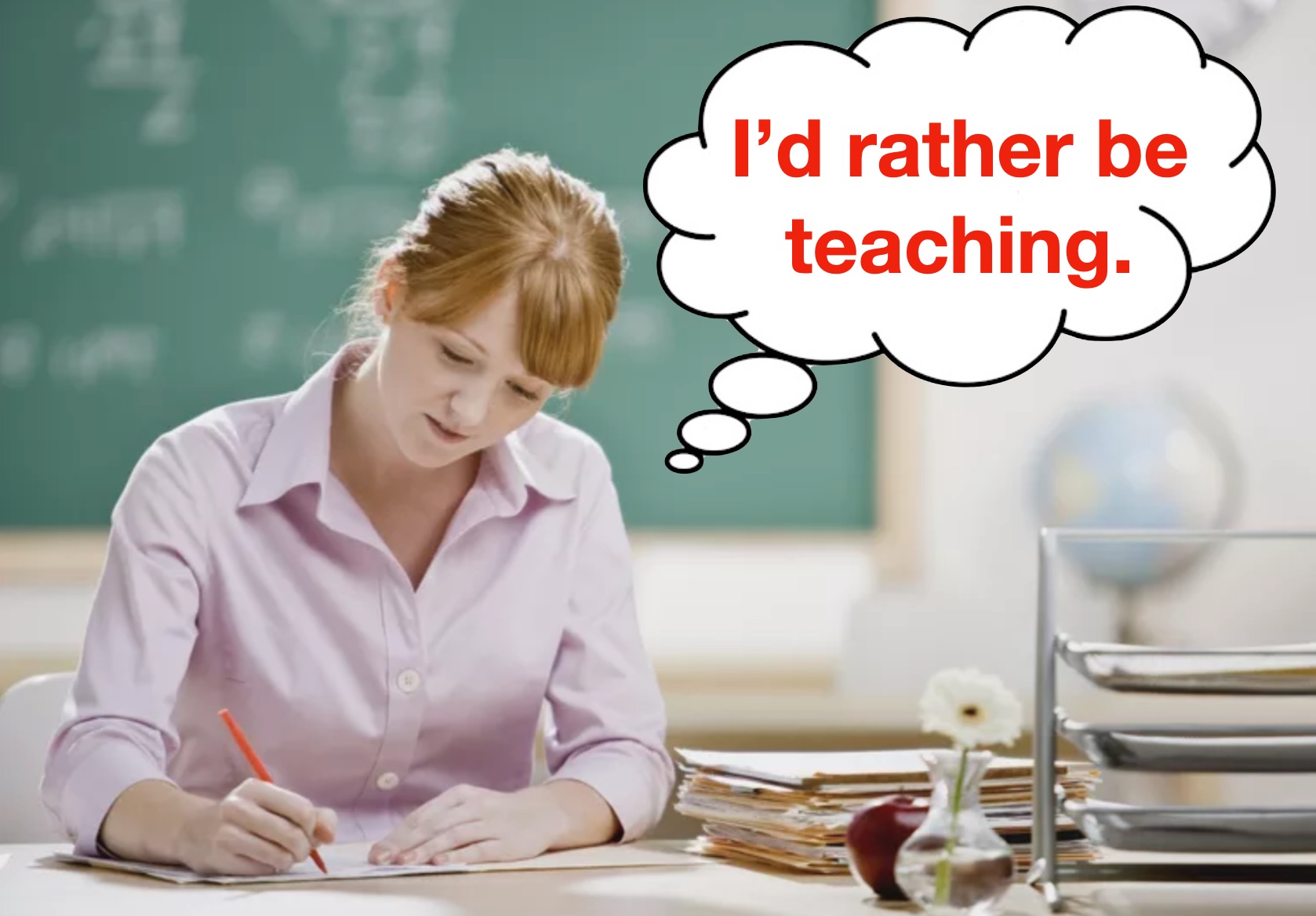
 Description: The title says it all. Stop wasting teachers’ time by making us fill out paperwork that won’t help us do our jobs but will make administrators and principals look good. We make our own plans for ourselves. We don’t need to share with you a bunch of BS with Common Core nonsense and step-by-step blah-blah that will probably have to change in the heat of the moment anyway. 

Fun Fact: Teachers in my building rarely say anything to me about my blog. But I got some serious appreciation on my home turf for this one.


9) Where Are the Parents? The School Shortage We Ignore 
Published: Nov. 17


 Views: 2,997


 Description: We talk about missing teachers, subs, aides, bus drivers, but not parents or guardians. We should. They are absolutely essential to student learning. I think there are a lot of good reasons why parents don’t participate in their children’s schooling, but they will never get the help they need if we continue to ignore this issue and throw everything on teachers and the school.


 Fun Fact: So many liberals lost their minds on this article saying I was attacking parents. I’m not. If people were drowning, you would not be attacking them by pointing that out and demanding help fishing them out of the water. It is not “deficit thinking” to acknowledge that someone needs help. It’s authentic advocacy for both students and parents.


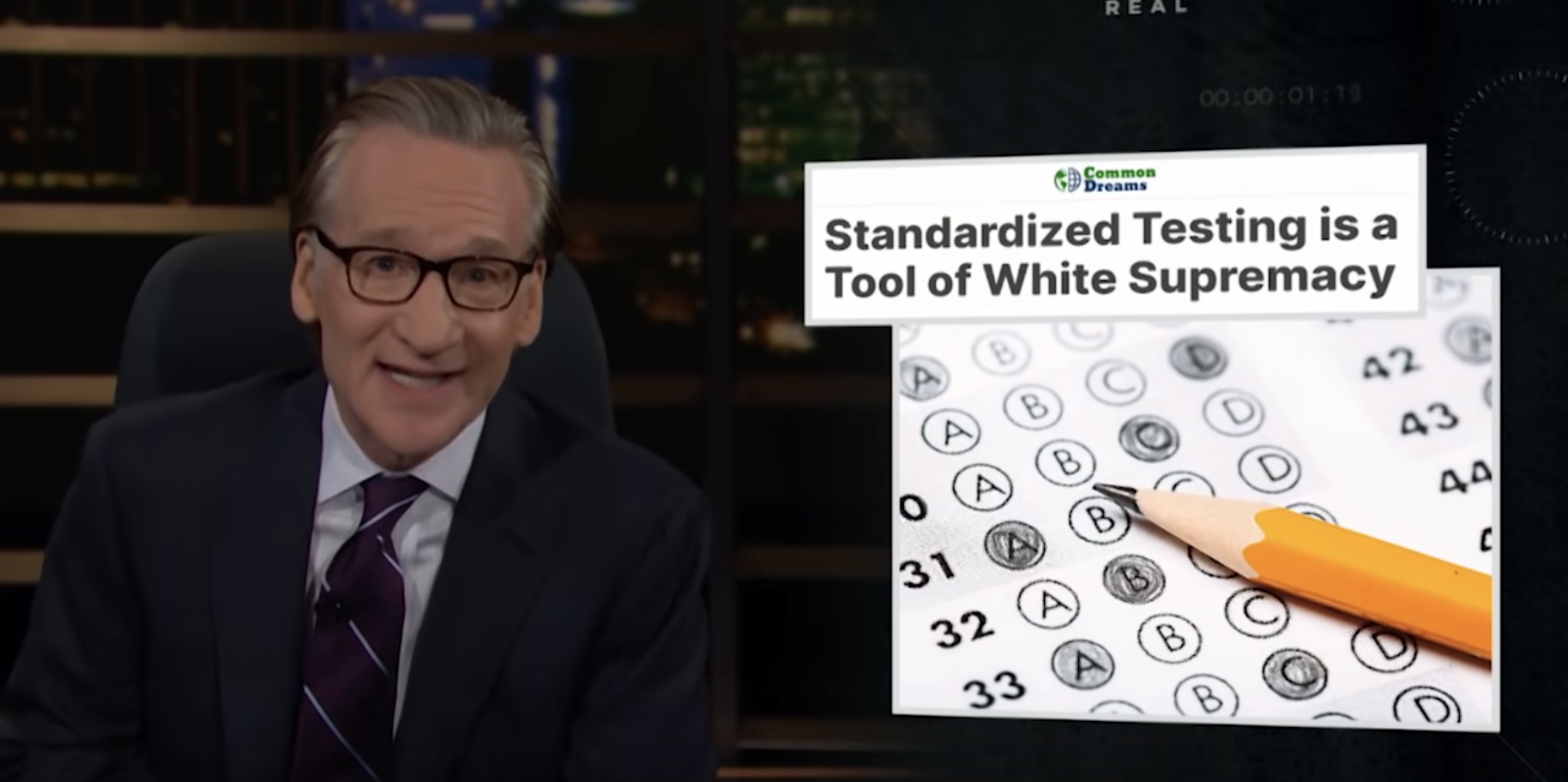
8) I Triggered Bill Maher By Writing About Standardized Testing and White Supremacy 
Published: Nov. 3


 Views: 2,076


 Description: It wasn’t just liberals who were butt hurt by my writing – it was neoliberals, too. Comedian Bill Maher actually mentioned my article “Standardized Testing is a Tool of White Supremacy” on his HBO show. He joked that I was devaluing the term ‘white supremacy.” Sure. These assessments only help white people unfairly maintain their collective boot on the throats of black and brown people. That’s not white supremacy. It’s melanin deficient hegemony. Happy now!?

 Fun Fact: Maher’s assertion (I can’t claim it’s an argument because he never actually argued for anything) seems to be popular with neoliberals trying to counter the negative press standardized testing has been receiving lately. We need to arm against this latest corporate talking point and this article and the original give plenty of ammunition. My article was republished on Alternet and CommonDreams.org.

7) School Sports are Overwhelming Academics. Time to Kick Them Out
Published: Dec. 10


 Views: 2,080


 Description: Most of the world does not have competitive after school sports. Kids participate in sports through clubs – not through the schools. I suggested we might do that in the US, too. This would allow schools to use more of their budgets on learning. It would stop crucial school board decisions from being made for the athletics department at the expense of academics. It would remove litigation for serious injuries. Simple. Right?


 Fun Fact: So many folks heads simply exploded at this. They thought I was saying we should do away with youth sports. No. Youth sports would still exist, just not competitive sports through the school. They thought poor kids wouldn’t be able to participate. No, sports clubs could be subsidized by the government just as they are in other countries. Some folks said there are kids who wouldn’t go to school without sports. No, that’s hyperbole. True, some kids love sports but they also love socialization, routine, feeling safe, interaction with caring adults and even learning! But I know this is a radical idea in this country, and I have no illusions that anyone is going to take me up on it.

6) Critical Race Theory Articles

A) If You’re Afraid Kids Will Learn Racism is Bad, Perhaps Public School is Not For You 

B) Public Schools Are Not Indoctrinating Kids About Racism. Voucher Schools ARE

C) Muzzling America’s Teachers with a Ban on Critical Race Theory is What Orwell Warned Us About

Published: (A) Oct. 14, (B) Jun3 17, (C) July 2


 Views: (A) 1,918, (B) 1,869 , (C) 1,207


 Description: Republicans have a new racist dog whistle. They pretend white people are being taught to hate themselves by reference to a fake history of the US called Critical Race Theory. In reality, schools are teaching the tiniest fraction of the actual history of racism and Republicans need that to stop or else they won’t have any new members in a few generations. I wrote three articles about it this year from different points of view than I thought were being offered elsewhere.


 Fun Fact: I’m proud of this work. It looks at the topic from the viewpoint of academic freedom, the indoctrination actually happening (often at taxpayer expense) at private and parochial schools, and the worthy goal of education at authentic public schools. Article B was republished on CommonDreams.org.

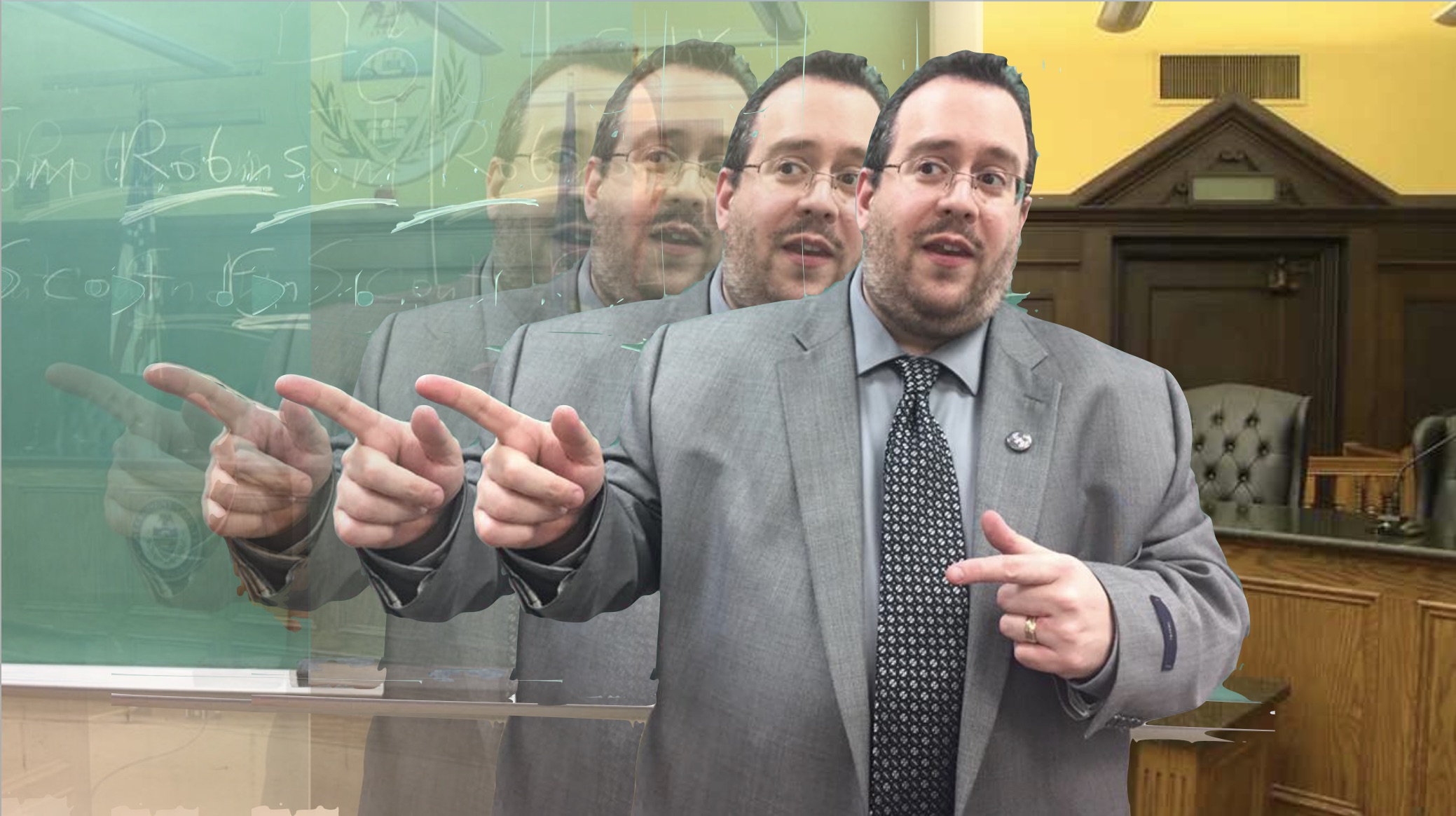
5) County Council Election Articles


A) Why a Public School Teacher is Running for Allegheny County Council

B) A New Children’s Fund – Reducing Student Inequality Through Allegheny County Council


C) I Fought the Do-Nothing-Incumbent, and He Won
Published: (A) March 19, (B) April 2, (C) May 26


 Views: (A) 514 (B) 111 (C) 248


 Description: I ran for office this year in western Pennsylvania. I tried for Allegheny County Council – a mid-sized position covering the City of Pittsburgh and the rest of the second largest county in the state. Ultimately, I lost, but these three articles document the effort. 

Fun Fact: These articles explain why a teacher like me ran for office, how I could have helped public schools, and why it didn’t work out. Article C was republished on CommonDreams.org.

4) Vaccine Articles


A) How I Got the Covid Vaccine: an Immunization Odyssey

B) Hope During a Pandemic is Both Hard and Inescapable


Published: (A) Jan. 30, (B) March 11


 Views: (A) 451 (B) 229

 Description: These are terrifying times. In the future people may look back and wonder what happened. These two articles document how I got vaccinated against Covid-19 and my thoughts and feelings about the process, the pandemic, and life in general.


 Fun Fact: It hasn’t even been a full year since I wrote these pieces but they somehow feel like they were written a million years ago. So much has changed – and so little.

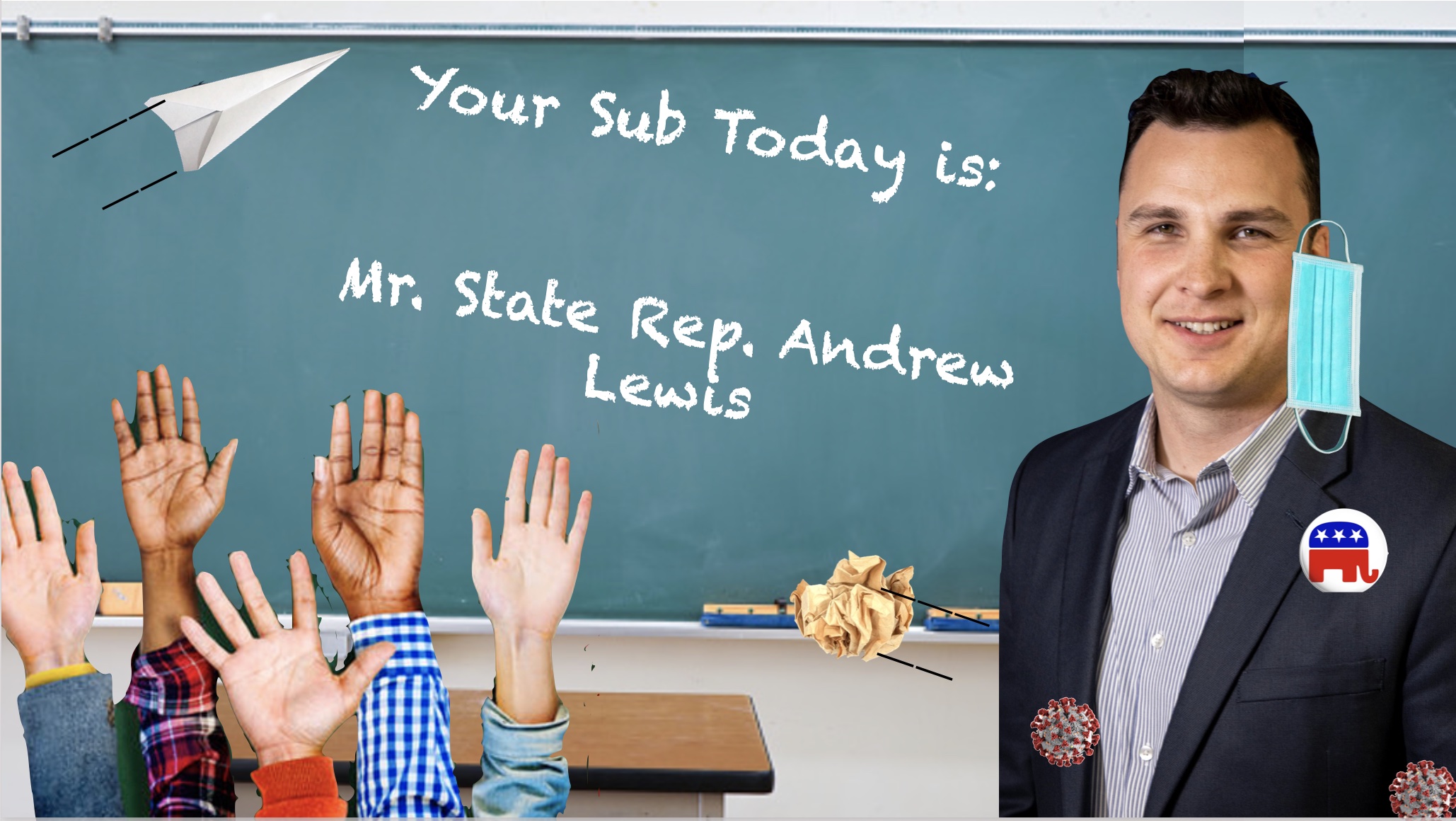
3) What is Taught in Public Schools? Volunteer as a Substitute Teacher and See for Yourself! 
Published: Oct. 20


 Views: 733


Description: Pennsylvania Republican state legislators were whining that they didn’t know what teachers were doing in public school. So they proposed a BS law demanding teachers spend even more of their never-ending time giving updates. I suggested legislators could just volunteer as subs and see for themselves.


 Fun Fact: So far no Republicans have taken me up on the offer and their cute bit of performative lawmaking still hasn’t made it through Harrisburg.

2) We Don’t Need More ADVICE on How to Safely Reopen Schools. We Need RULES.


Published: July 29


 Views: 1,180 

Description: When it comes to stopping a global pandemic, we need federal action. This can’t be left up to the states, or the counties, or the townships or every small town. But all we get from the federal government about Covid mitigation in schools are guidelines. Stand up and do your F-ing jobs! Make some rules already, you freaking cowards!


 Fun Fact: As I write this, President Joe Biden just came out and said there is no federal solution to the pandemic. It’s not that I think the other guy would have done better, but this was a softball, Joe. History will remember. If there is a history after all this is over.


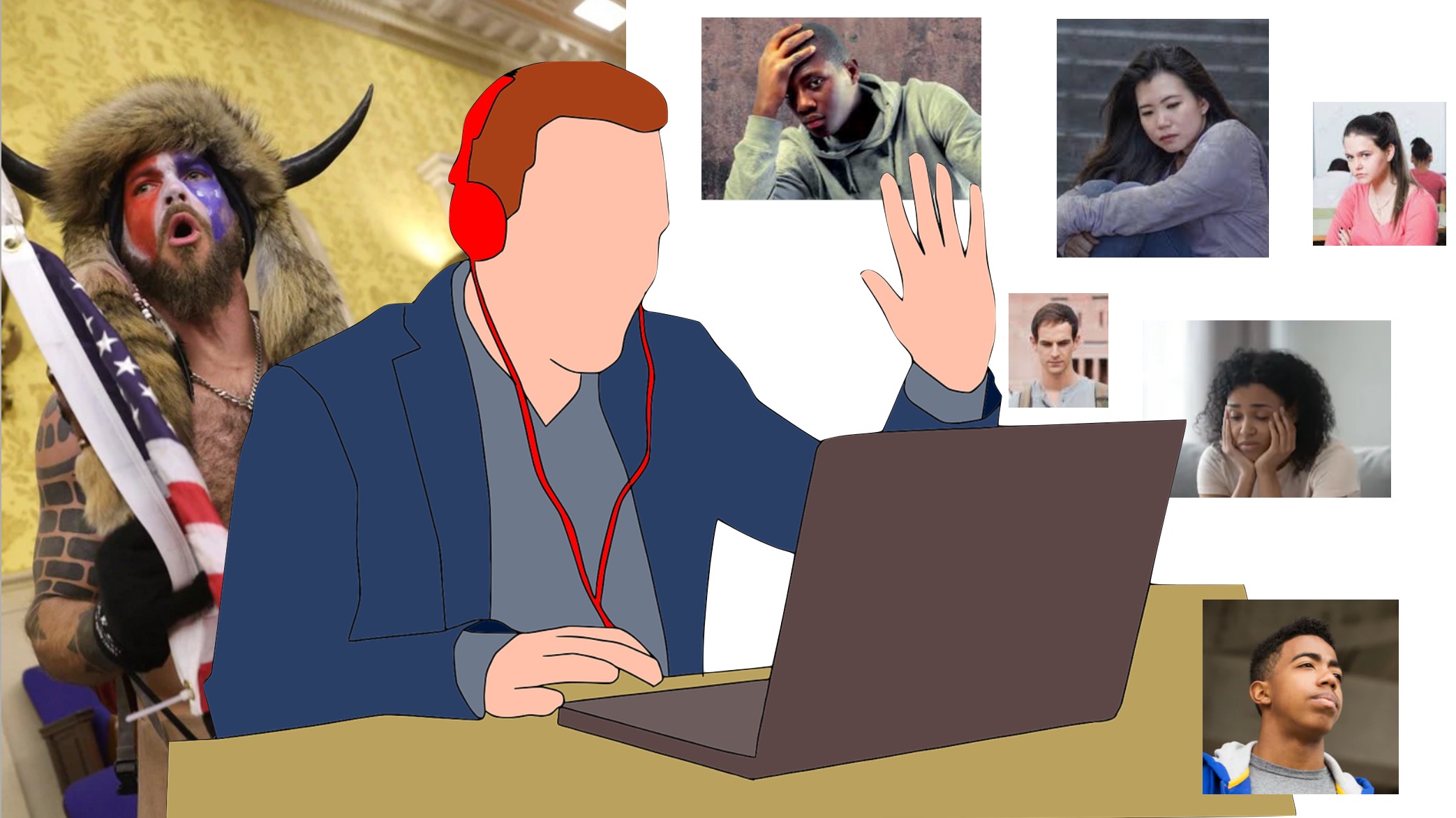
1) What I Told My Students About Yesterday’s Attempted Trump Coup

Published: Jan. 8


 Views: 2,297 

Description: On January 6, a bunch of far right traitors stormed the Capitol. This articles documents what it was like to experience that as a public school teacher with on-line classes during the pandemic.


 Fun Fact: Once again, history may want to know. Posterity may have questions. At least, I hope so. The article was republished on CommonDreams.org.


Gadfly’s Other Year End Round Ups

This wasn’t the first year I’ve done a countdown of the year’s greatest hits. I usually write one counting down my most popular articles and one listing articles that I thought deserved a second look (like this one). Here are all my end of the year articles since I began my blog in 2014:


2021:

Gadfly’s Top 10 Articles of 2021 – Shouts in the Dark

2020:

The Most Important Education Articles (By Me) That You Probably Missed in 2020

Outrunning the Pandemic – Racing Through Gadfly’s Top 10 Stories of 2020


2019:

Sixteen Gadfly Articles That Made Betsy DeVos Itch in 2019

Screen Shot 2019-12-28 at 3.51.03 PM


2018:

A Gadfly’s Dozen: Top 13 Education Articles of 2018 (By Me)

thumbnail_IMG_8445


2017:


What’s the Buzz? A Crown of Gadflies! Top 10 Articles (by Me) in 2017


thumbnail_Screen shot 2017-12-26 at 3.44.17 PM


Hidden Gadfly – Top 5 Stories (By Me) You May Have Missed in 2017
 

7fd6a56c2ffc7a03c9fd2f431a543e92


2016

Worse Than Fake News – Ignored News. Top 5 Education Stories You May Have Missed in 2016
 

ignoring-wisdom


Goodbye, 2016, and Good Riddance – Top 10 Blog Post by Me From a Crappy Year


screen-shot-2016-12-27-at-3-29-49-am


2015


Gadfly’s Choice – Top 5 Blogs (By Me) You May Have Missed from 2015


Screen shot 2016-01-02 at 11.01.09 PM


Who’s Your Favorite Gadfly? Top 10 Blog Posts (By Me) That Enlightened, Entertained and Enraged in 2015


Screen shot 2015-12-30 at 12.57.49 AM


2014


Off the Beaten Gadfly – the Best Education Blog Pieces You Never Read in 2014

 

Wonderfull illusion art painting


Top 10 Education Blog Posts (By Me) You Should Be Reading Right Now!

 

computer-people-png-300x202


Like this post?  You might want to consider becoming a Patreon subscriber. This helps me continue to keep the blog going and get on with this difficult and challenging work.

Plus you get subscriber only extras!

Just CLICK HERE.

Patreon+Circle

I’ve also written a book, “Gadfly on the Wall: A Public School Teacher Speaks Out on Racism and Reform,” now available from Garn Press. Ten percent of the proceeds go to the Badass Teachers Association. Check it out!

I Love Teaching, But…


I love teaching. 


I love greeting the kids as they come into class every day. I love listening to their stories, making them laugh, giving advice, and calming their fears. I love accepting assignments, helping with problems, and making connections about things we talked about last week


I don’t love being perpetually exhausted.  


I don’t love struggling to keep my eyes open as I drive home every day. I don’t love shuffling through the door, dropping my bag on the floor and collapsing into bed for a few hours before I can even think about cooking dinner. I don’t love the paralysis every tiny decision gives me after making thousands of choices all day long in class. I don’t love missing giant chunks of my family’s life. 


I love teaching. 


I love inspiring kids to write. I love coming up with creative and interesting journal topics and poetry assignments. I love explaining the far out concepts – hyperbole, alliteration, onomatopoeia. I love jamming to Blackalicious’ “Alphabet Aerobics,” sharing “Whose Line is it Anyway” videos and trying to write paragraphs to the melodies of Miles Davis. 


I don’t love having so little planning time.  


I don’t love having to fly by the seat of my pants rehashing lessons that were getting stale two years ago but having no time to make them fresh or original. I don’t love trying to fit in as much grading as I can in class, trying to call or email parents on my lunch break. I don’t love having to fill in for missing staff 4 out of 5 days a week, being a glorified security guard in lunch duty, subbing for a teacher who isn’t absent but who has been called into an unnecessary staff meeting for yet another scattershot initiative to fight bogus learning loss.  


I don’t love the impossibly high expectations. 


I don’t love being praised for being the most important factor in school for student learning but bullied to ignore the importance of out of school factors. I don’t love being blamed for a child’s poverty or home life or the bias of standardized test questions. I don’t love being held responsible for everything by people who don’t listen to me and are, themselves, responsible for nothing


I love teaching. 


I love reading books with my students – both together and separately. I love going to the library and helping them find something suited to their tastes – try a Ray Bradbury classic;  maybe a new anime; and when you’re ready, a deep meditation by Toni Morrison. I love reading “The Outsiders” with my classes and experiencing Ponyboy’s story anew every year – feeling the highs, the lows, the losses, the victories. I love seeing the look on children’s faces when the realization dawns that they can no longer honestly say they hate reading, but only that sometimes it’s hard. I love catching them with a book in their bags or the same book on their desks being read over and over again because they love it so much. 


I don’t love the low pay.  


I don’t love that starting salary for most teachers is just $10,000 above the most generous minimum wage. I don’t love that becoming a teacher often means going into debt so you can earn a four-year degree in education and serve an (often unpaid) internship in the classroom just to make 14 percent less than those from professions that require similar levels of education. I don’t love that our salaries start low and grow even more slowly. I don’t love that many of us need a second or third job just to make ends meet. I don’t love that teachers get crap for having summers off (unpaid) but average 53 hours a week during the school year – making up for any downtime in June, July and August. 


I don’t love the lack of autonomy.  


I don’t love having to waste time writing formal lesson plans detailing what I hope to do every minute of every day complete with justifications and references to developmentally inappropriate academic standards written by the testing industry and political hacks. I don’t love being told to differentiate student learning but standardize my assessments. And when things go wrong, I don’t love being forced to enact scripted lessons when everything my students do and ask and feel and care about is unscripted. 


I don’t love the gaslighting. 


I don’t love having my health concerns about Covid-19 ignored as the school board votes to make our buildings mask optional while their children are quietly quarantined in greater numbers. I don’t love explaining to my administrators or principals about how useless standardized tests are and being told that my opinion is wrong. I don’t love how my educated viewpoints based on decades of classroom experience are always silenced by charter school operators, think tank goons and newly minted principals fresh out of prep schools funded by billionaire philanthropists who make money off the standardized testing industry. I don’t love being called a hero if I put my life on the line to keep children safe during a shooting or emergency but vilified if I ask for reforms to make sure it doesn’t happen (again).  


I love teaching.  


I love conferencing with students every step of the way as they write essays. I love providing whole group instruction, mini-lessons, and even reteaching it all at individual desks when they didn’t catch it the first time. I love watching students’ abilities grow with each passing day, with each line they write, with each assignment they turn in. I love cheerleading, championing and boosting their confidence until they can see their own powers increase. 


I don’t love the disrespect – sometimes in the classroom but often outside of it
. I don’t love being told I’m not man enough, not woman enough, too black, too brown, not black enough, not brown enough, not bilingual, not poor enough, too poor, too selfish, too selfless, too anything and everything. I don’t love being blamed for all the evils of society while having none of the power to change anything


I don’t love being used as a political football. I don’t love being scapegoated for the latest scare tactic jargon used to trick people into thinking public education is a failure when it works better than almost any other social program we have and would work even better than it does if we adequately, equitably and sustainably funded it. I don’t love having my work compared to that of teachers in other countries when our public education system teaches everyone and most others are extremely selective about who gets 12 years of schooling. I don’t love having to explain why complaints about per pupil spending in the US are misleading since they’re talking about averages and we don’t spend the money equally – some kids get riches and many get pennies. I don’t love getting hate mail and risking pink slips for teaching honest history or science while politicians foam at the mouth hurling racist dog whistles like “Critical Race Theory.” 


I don’t love getting death threats just for doing my job. I don’t love TikTok challenging students to slap a teacher or encouraging nationwide school bomb threats and shootings.  I don’t love going to trainings where the police offer advice on how to fight back if there’s a shooter because at that point it’s survival of the fittest in the middle school. I don’t love being in class and all of a sudden everything goes quiet and you hear a strange noise in the distance and wonder if this is the moment you have to make sure the door is locked and get the kids to take up their positions in the dark.  


I love teaching. 


I do.  


I really love teaching.  


But all this other stuff makes it hard to keep coming back and doing this thing I love


Like this post?  You might want to consider becoming a Patreon subscriber. This helps me continue to keep the blog going and get on with this difficult and challenging work.

Plus you get subscriber only extras!

Just CLICK HERE.

Patreon+Circle

I’ve also written a book, “Gadfly on the Wall: A Public School Teacher Speaks Out on Racism and Reform,” now available from Garn Press. Ten percent of the proceeds go to the Badass Teachers Association. Check it out!

Where Are the Parents? The School Shortage We Ignore 

Our public schools are suffering from crippling shortages. 


Classroom teachers, substitute teachers, special education aides, even bus drivers are hard to find. 


But of all the essential personnel who have gone missing, the group with the largest impact is the one we least want to mention – parents. 


I’m a middle school Language Arts teacher.  


Every year I look forward to parent-teacher conferences.  


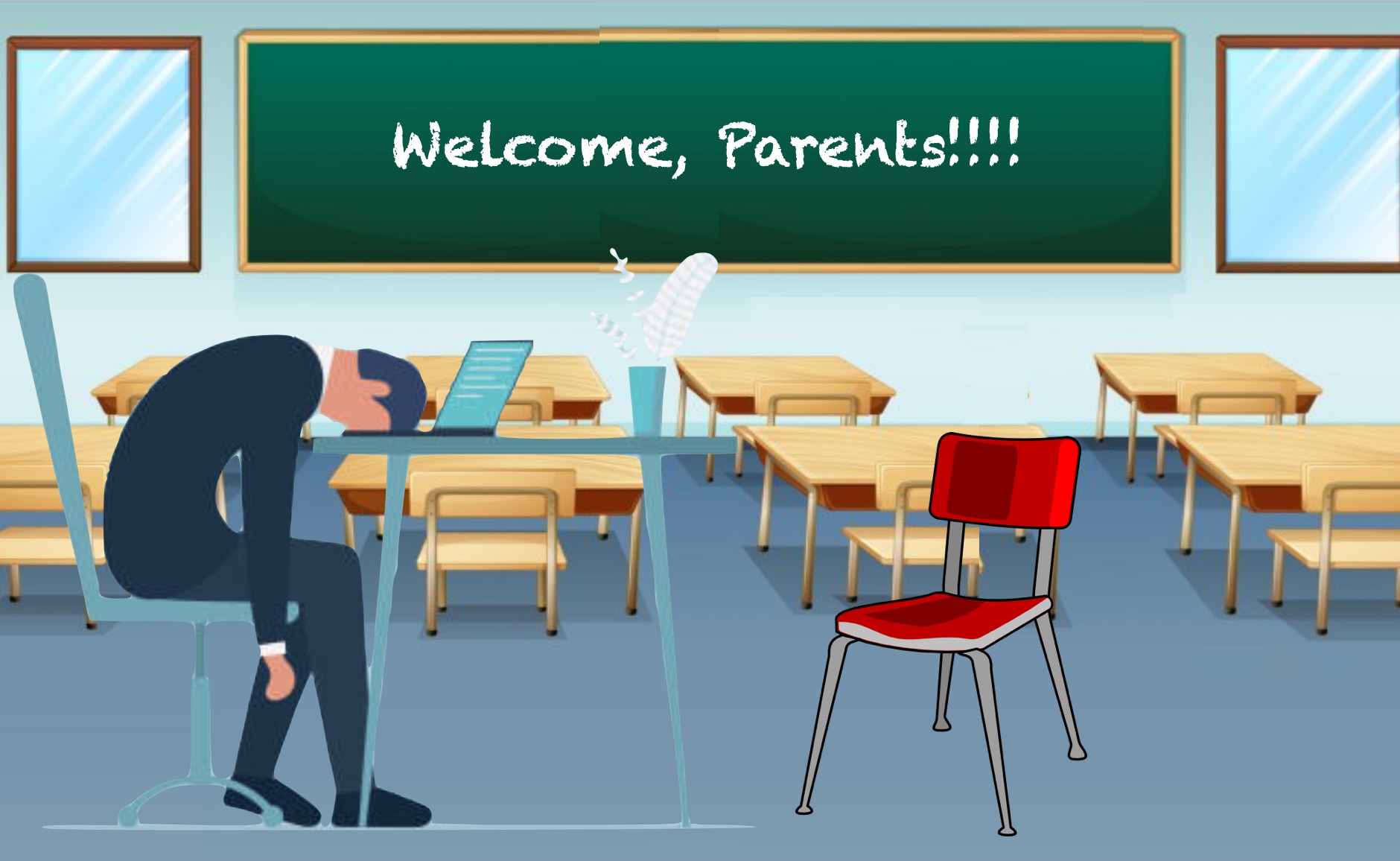
I gather samples of student work, journal entries, drawings and grade reports. I put out a row of chairs in the hall so people have a place to sit if they have to wait for one group to finish before they can see me. And I write in big, bold, colorful chalk on the board, “Welcome, Parents!” 


Then I sit at my desk trying to stay awake as the hours creep by in my empty classroom. 


Where are all the parents?  


Seriously. Where did the moms and dads go? Where are the grandparents, the older siblings, the guardians, the primary or even secondary caregivers? 


On Parent-Teacher Day, they must be somewhere, but they’re not here.  


We typically have a section from noon to 3 and one from 5 to 8 pm so that people with various schedules can come in.  


And every year it’s the same. Only about 20-30% of my students’ parent or guardians usually visit me on these days – and that’s after the promise of bonus points if they come in! 


Even then it’s most often the parents of the kids with the best grades who show up. It’s the parents of kids who say “Please” and “Thank you,” the kids who smile when you walk in the room, the kids who want you to hang up their drawings on the bulletin board.  


The children who are struggling, the ones who don’t know how to behave and look at you out of the corner of their eyes expecting pain and negativity – their parents rarely show up.  


And it’s these bruised and battered kids who are in the majority. 


Where are their parents? 


They’re missing. Gone. Poof. 


We saw this when schools went to on-line learning at the beginning of the Covid-19 pandemic.  


Teachers would turn on their Zoom links to give lessons to their students only to find many of the kids vanished.  


These kids usually were there when school was in-person. But on-line they were MIA. And even if they were technically present, they often hid behind a turned off camera and didn’t hand in their work


Why?  


At school, the teacher was there to make sure these kids took care of business. But at home there simply was no one to hold them accountable. No one to get them up, feed them, and make sure they were online when classes began, ensure they paid attention and did their work.  


That’s why so many kids were absent or otherwise failed the online experience.  


Granted this kind of cyber learning is developmentally inappropriate for most K-12 students – certainly those up through middle school. But with the proper parental support, most children would have done much better.  


It just wasn’t there.  


Now let me be clear about one thing – I am not blaming anybody here.  


It is not my intention to pass judgment on anyone.  


As a parent, myself, I know from experience how difficult the job is – especially during a global pandemic.  


But we have to face the facts. As a whole, parents were the weak link in the chain. And it didn’t start with Covid – they have been the weak link for decades. 


Teachers can’t go to every student’s home and be caregiver as well as educator. The fact that so many children are struggling with basic socialization skills after as much as two years of online schooling goes to show how much of the responsibility for raising children has rested on schools and teachers.  


This year many students don’t know how to talk with each other without instigating a fight. They constantly pick on each other, demand respect they aren’t giving and are starving for any kind of attention they can get.  


Without daily in-person contact with teachers, many children have become socially awkward and need to relearn the basics of interpersonal interaction. That’s how much we’ve come to expect teachers to be co-parents from year-to-year. 


Let me stop again and clarify that I am not talking about all parents.  


Many parents go out of their way to be present in their children’s lives.  


They get their kids up for school, make sure they eat a nutritious breakfast, ensure they catch the bus or get a ride to school, make sure they do their homework after the day is over and establish a healthy bedtime.  


But this should be the norm, not the exception.  


I know how hard it is to do. Waking my daughter up every morning often takes a stick of dynamite. And getting that girl to eat a healthy breakfast is a battle I often lose. But her mother and I make darn sure she does her homework and we even sit down with her to help it get done. And weekday bedtimes are religiously adhered to – no one wants a cranky, fussy child the next morning. 


However, it’s easier for us because we have certain advantages.  


Class, privilege, wealth, upbringing, social status all conspire to give us a boost.  


My wife and I don’t have to work more than one job to make ends meet, for example. It would probably help if we did, but neither of us has the wherewithal, and we get by.  


But many folks are not so lucky.  


They DO have to work multiple jobs. They have work schedules that are less in tune with the school day. They can’t be home to wake up their kids and send them off. They can’t be home when kids are dismissed and don’t have the time to help with homework. Some barely have the education, themselves, to be of much assistance.  


Disadvantaged parents often had bad experiences with school when they were students. So they don’t instill the importance of education to their kids. Nor do they prove good role models since they often don’t read for pleasure, speak in the dominant vernacular or respect teachers.  


All this has tremendous effects on the education children receive. 


In fact, many academic studies have shown that the most important factor in the education process isn’t the school or teachers – it’s the parents. 


Roughly 60% of academic achievement can be explained by family background – things like income and poverty level. School factors only account for 20% – and of that, teachers account for 15%. (see Hanushek et al. 1998; Rockoff 2003; Goldhaber et al. 1999; Rowan et al. 2002; Nye et al. 2004). 


Estimates vary somewhat from study to study, but the basic structure holds. The vast majority of impact on learning comes from the home and out-of-school factors. Teachers are just a small part of the picture. They are the largest single factor in the school building, but the school, itself, is only one of many components. 


Study after study conclude that students with involved parents are more likely to earn higher grades and test scores, have better attendance and social skills, and adapt well to school.  


According to the National Parent Teacher Association (PTA), the most accurate predictors of student achievement in school are the extent to which families create home environments that encourage learning, communicate high yet reasonable expectations, and become involved in the children’s education at school.  


Moreover, when parents are involved, the performance of all the children at school tends to improve – not just the academics of kids with involved parents. The more comprehensive the partnership between school and home, the higher the student achievement.  


Put simply – parents are vital to good learning.  


But our society doesn’t do much to allow parents to parent. 


To some extent, the pandemic is making things worse. 


More than 750,000 Americans have died from COVID-19.   


 According to the CDC, more than 140,000 children in the U.S. have lost a primary or secondary caregiver such as a live-in grandparent or another family member to the virus.   


This is wreaking havoc on kids support systems.  


But an even larger problem is economics.  


When schools went online, employers could have allowed more parents to work from home so they could be there for their children. However, profits were more important.  


Even in non-pandemic times, employers need to provide more time and resources for parent
s. There is too much demand for overtime hours, increased productivity and very little family leave or other such services.  


I truly believe that most parents want to be there for their children but feel like they can’t due to the stresses and strains of work
.  


We live in one of the richest countries in the world. Much of the labor we force people to do is strictly unnecessary. It’s there just to justify our economic system. If we reordered things around people instead of capital, parents could more easily be involved in their children’s educations.  


This is fundamentally the problem with all the educational shortages we’re seeing.  


These are symptoms of an economic failure
. We can continue to prop up this faded machine or create a world that values life over profit.  


But we pretend this isn’t true. 


We’ve been trying to run our schools as if parents weren’t that important and then throwing all the blame on teachers when parents don’t show up.  


This has to stop. 


It’s time to admit how important parents are to their children’s educations and then provide them with the tools necessary to be parents. 


It’s time to include parents in the circle.  


It’s time to expect them to show up. 


Because we can’t continue educating their children without them. 


Like this post?  You might want to consider becoming a Patreon subscriber. This helps me continue to keep the blog going and get on with this difficult and challenging work.

Plus you get subscriber only extras!

Just CLICK HERE.

Patreon+Circle

I’ve also written a book, “Gadfly on the Wall: A Public School Teacher Speaks Out on Racism and Reform,” now available from Garn Press. Ten percent of the proceeds go to the Badass Teachers Association. Check it out!
I Triggered Bill Maher By Writing About Standardized Testing and White Supremacy 


Bill Maher is mad at me. 


And I’ve never even met the man.  


I guess you could say we’re from different worlds. 


He’s on the West Coast. I’m on the East.  


He’s a political comedian. I’m a public school teacher. 


He’s a multimillionaire. I can barely make ends meet. 


What could I possibly do to provoke the ire of this man so much so that he took aim at me on his HBO TV show? 


 As near as I can tell, it started when I wrote a blog.  


Then people read that blog.  


It got popular and was republished throughout the Internet.  


And Maher disagrees with what I wrote.  


In fact, the very idea annoyed him as a prime example of namby-pamby liberals taking their agenda too far. 


What did I write in the article?  


Only that standardized testing is a tool of white supremacy


In fact, that was the title of the article, which seems to be about as far as Bill read because he ignored any arguments, facts or historical citations in the piece.  


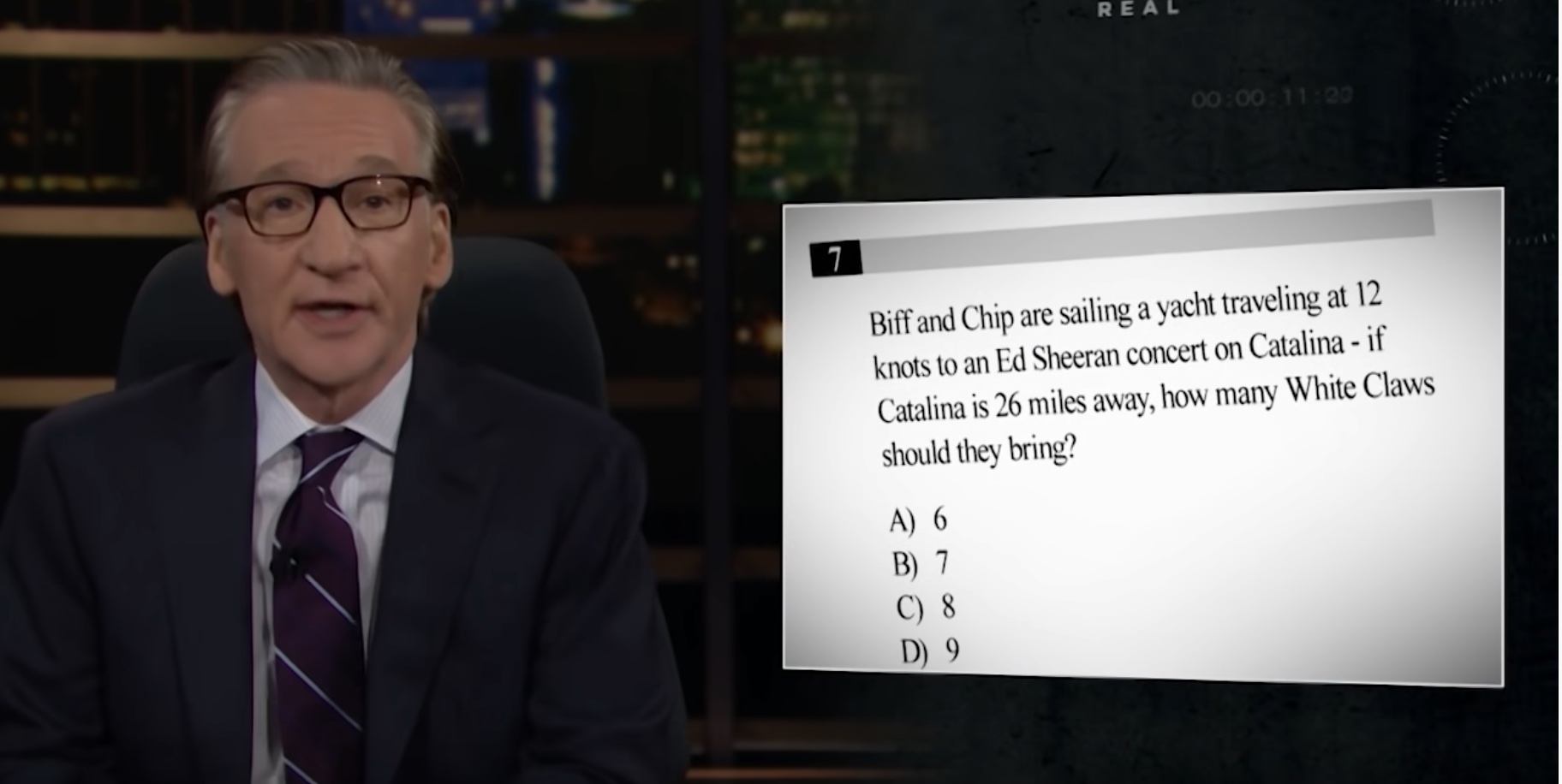
On his show, “Real Time with Bill Maher” this week, he posted the title of the article and the graphic that appeared with it when it was republished on commondreams.org


What he didn’t post was my name. I am the author, after all, but I guess that’s not important.  


The crucial bit was how triggered Bill was by my assertion.  


By connecting such allegedly alien concepts as standardized testing and racism, Maher thinks I devalued the meaning of “white supremacy.” 


Maher never actually examined my claim or what I wrote backing it up. Never mind the arguments I made in favor of my point, the sources I cited, the examples of actual bias or the documented history of standardized testing as a creation of the eugenicist movement.  


He was content to speak in a smarmy tone and make a pretty lame joke about what a racially biased test question might look like.


In fact, that’s probably why he (and his staff) picked my piece in the first place. They saw it as an opportunity to make a joke and whiffed at it pretty terribly. 


Here’s the relevant bit of his monologue: 


“In 2010 the New York Times used the term “White Supremacist” on 75 occasions. Last year, over 700 times. Now some of that to be sure is because Trump came along and emboldened the faction of this country that is truly white supremacist. It is of course still a real thing. But it shouldn’t apply to something like – as more than a few have suggested – getting rid of the SAT test. Now if we find the SAT test is slanted in such a way as to stack the deck in favor of Caucasians, if there are questions like Biff and Chip are sailing a yacht traveling at 12 knots to an Ed Sheeran concert on Catalina – if Catalina is 12 miles away, how many White Claws should they bring? Yes, then maybe. But of course the SAT doesn’t have questions like that so it becomes a kind of ludicrous exaggeration that makes lovers of common sense roll their eyes – and then vote for Trump.”  


Queue audience laughter and applause.  


Funny stuff I guess.  


Not the comedy staff’s fake SAT question but Maher’s assurance that “The SAT doesn’t have questions like that.” 


Really, Bill? 


How about this one? 


Runner: Marathon 
(a) envoy: embassy 
(b) martyr: massacre 
(c) oarsman: regatta 
(d) horse: stable 


It’s a real SAT question famously discussed in the infamous 1994 book, The Bell Curve, by Richard Herrnstein and Charles Murray – a book that tried to use discrepancies in test scores to prove white people are smarter than black people. 


The answer is C, and it relies on a test taker’s knowing the meaning of regatta – something more likely to have come up in the daily lives of affluent white students than in the lives of less affluent minority students. If you don’t live by a body of water and/or don’t have much experience with rowing, you’re probably going to fail this question.  

It’s the same kind of question Maher’s comedy team came up with – find something white people are more likely to know than black people – but the Real Time writers just pilled it on over-and-over.

It doesn’t take five repetitions of something to make it biased. All it takes is one.


To be fair, my example is from the SAT analogy section, which was removed from the test in 2005. However, that doesn’t mean they got rid of the bias. 

In fact, the College Board, the organization that develops and administers the SAT, tacitly admits its test is biased.

It now provides an “adversity score” for poor and minority students to adjust raw SAT scores to account for high schools and neighborhoods “level of disadvantage.”

In other words, they know that poor and minority kids get lower scores so they’re trying to fudge the results to give them a boost.

Which would be entirely unnecessary if the SAT assessed them accurately in the first place.

They are literally trying to make up for how biased their test scores are.

Consider this.

Total SAT scores range from 400 to 1600 – or from 200-800 in both Math and Reading respectively.

According to 2018 data, combined SAT scores for Asian and White students average over 1100, while all other groups average below 1000. Meanwhile, students with family income less than $20,000 score lowest on the test, and those with family income above $200,000 scored highest, according to 2015 data. And the difference is significant – a 433 average Reading score for those with the lowest family incomes compared to an average Reading score of 570 for those with the highest family income. That’s a 137 point difference!

And it holds for racial groups, too. The average Reading score on the SAT was 429 for black students – 99 points behind the average for white students.

However, the College Board is trying to justify this by saying the discrepancy is because poor and minority students are more disadvantaged than white, affluent ones. In other words, it’s not the test that is unfair, but American society in providing better resourced schools with lower class sizes and more resources for white kids than children of color.

And while American society IS unfair to the poor and minorities, several studies indicate that the problem is even deeper than that.

The SAT is biased, too.

Several studies ( Roy Freedle of the Educational Testing Service from 2003, Maria Santelices and Mark Wilson from 2010, etc.) find notable differences between the verbal scores of black and white students whose educational background and skill set suggest that they should get similar scores.

Freedle says this is because SAT questions likely reflect the cultural expressions that are used commonly in the dominant (white) society, so white students have an edge based not on education or study skills or aptitude, but because they are most likely growing up around white people.

This makes sense if you examine how test questions are selected for the SAT. In his book How the SAT Creates Built-in-Headwinds, national admissions-test expert, Jay Rosner, explains the process:


“Compare two 1998 SAT verbal [section] sentence-completion items with similar themes: The item correctly answered by more blacks than whites was discarded by the Educational Testing Service, whereas the item that has a higher disparate impact against blacks became part of the actual SAT. On one of the items, which was of medium difficulty, 62% of whites and 38% of African-Americans answered correctly, resulting in a large impact of 24%…On this second item, 8% more African-Americans than whites answered correctly…”


 In other words, the criteria for whether a question is chosen for future tests is if it replicates the outcomes of previous exams – specifically tests where students of color score lower than white children. And this is still the criteria test makers use to determine which questions to use on future editions of nearly every assessment in wide use in the US.

But if all this isn’t enough to convince you that standardized tests really are a tool of white supremacy, consider their sordid history.

They are literally the product of the American eugenics movement.

Modern testing comes out of Army IQ tests developed during World War I.


 In 1917, a group of psychologists led by Robert M. Yerkes, president of the American Psychological Association (APA), created the Army Alpha and Beta tests. These were specifically designed to measure the intelligence of recruits and help the military distinguish those of “superior mental ability” from those who were “mentally inferior.” 


These assessments were based on explicitly eugenicist foundations – the idea that certain races were distinctly superior to others. In 1923, one of the men who developed these intelligence tests, Carl Brigham, took these ideas further in his seminal work A Study of American Intelligence. In it, he used data gathered from these IQ tests to argue the following: 


“The decline of American intelligence will be more rapid than the decline of the intelligence of European national groups, owing to the presence here of the negro. These are the plain, if somewhat ugly, facts that our study shows. The deterioration of American intelligence is not inevitable, however, if public action can be aroused to prevent it.”


Eventually Brigham took his experience with Army IQ tests to create a new assessment for the College Board – the Scholastic Aptitude Test – now known as the Scholastic Assessment Test or SAT. It was first given to high school students in 1926 as a gatekeeper. Just as the Army intelligence tests were designed to distinguish the superior from the inferior, the SAT was designed to predict which students would do well in college and which would not. It was meant to show which students should be given the chance at a higher education and which should be left behind. 


And unsurprisingly it has always – and continues to – privilege white students over children of color.

Is it an exaggeration to say that assessments specifically designed to favor affluent white people over impoverished minorities still does the same thing?

Is it ridiculous to describe the century long racial and economic discrepancy in test scores as something that supports white supremacy – especially when these results are shown time and again to be a feature of the tests and not just an artifact that recreates economic inequality?

Is it going too far to call out the racism of the SAT and other standardized tests like it when even the College Board admits its own scores are biased?

Does it devalue the term “White Supremacy” to point out real world white supremacy?

But Maher apparently isn’t interested in these questions.

After a few moments he moved on to another example of the left gone wild.


But I can’t do that because this isn’t just a bit for me.  


As I mentioned, I’m a public school teacher.  


I deal with the impact of standardized testing every day.  


I watch my students degraded, depressed and dehumanized by it year after year.  

It’s become cliche for privileged white people like Bill Maher to get cranky when someone points out real world prejudice.

But for those of us in the trenches, it is an everyday reality.

And that’s what triggers me.


Here’s the segment from “Real Time with Bill Maher”: (the relevant bit starts at 4:45)


Like this post?  You might want to consider becoming a Patreon subscriber. This helps me continue to keep the blog going and get on with this difficult and challenging work.

Plus you get subscriber only extras!

Just CLICK HERE.

Patreon+Circle

I’ve also written a book, “Gadfly on the Wall: A Public School Teacher Speaks Out on Racism and Reform,” now available from Garn Press. Ten percent of the proceeds go to the Badass Teachers Association. Check it out!

What is Taught in Public Schools? Volunteer as a Substitute Teacher and See for Yourself! 

Some lawmakers want more transparency in public schools.

Meanwhile, there’s a nationwide substitute teacher shortage.

It seems to me we can solve both problems at once.

PROBLEM 1: BOGUS LEGISLATION

Pennsylvania state Representative Andrew Lewis is terrified that students are being taught things in school.

Things like history and science and – oh my word! – socialism.

To make sure this doesn’t happen, the Republican businessman is sponsoring a bill requiring public schools to post curriculum materials online.

This would include a course syllabus or written summary of every class, the state academic standards for each course, and a link or title for every textbook used.

It sets up a mountain of paperwork for the state’s already overburdened teachers to repeat information that’s readily available elsewhere.

Moreover, the whole thing is really just a political sham to stoke the radical Republican base. The measure has little chance of actually being implemented.

The bill (HB 1332) passed the House largely along party lines last week with a few Republicans joining Democrats against it.

Now it is set for a full vote by the Senate where it will probably sail through with GOP support after which Democratic Governor Tom Wolf has already promised to veto it.

So why is Lewis putting on this dog and pony show?

In a now deleted Facebook post, the 33-year-old Dauphin County man wrote:

“Parents need to be in the driver’s seat when it comes to education, not some out-of-state textbook publisher teaching heaven knows what (hint: anti-American socialism) to our students.”

Apparently Lewis doesn’t understand that parents vote and serve on school boards that, in fact, pick the textbooks which are used in public schools.

Moreover, I guess no one told him that state law already requires that public schools give parents and guardians access to information about instructional materials.

Or that Medicare, Social Security, Minimum Wage and Child Labor Laws are all examples of – GASP! – socialism.

Lewis and other Republicans continue to spread the insinuation that something nefarious is happening behind the closed doors of our public schools.

Well guess what, fellas! Those doors aren’t closed at all.

PROBLEM 2: SUB SHORTAGE

Nationwide there’s a substitute teacher shortage. And you can apply!

Even schools in the Keystone state are scrambling to find enough subs.

If you want to know what happens in public schools, you can do better than clicking on some Website. You can actually volunteer to come in and cover an absent teacher’s class!

“Substitute lists are very small in most districts,” says Mark DicRocco, Executive Director of Pennsylvania Association of School Administrators (PASA).

The organization reports that the Commonwealth is experiencing a dramatic decline in the supply of new teachers. 

The number of state Instructional I licenses granted for all subject areas in grades K-12 has decreased by at least 49% from 2011 to 2018. 

About eight years ago, 40,000 teachers were graduating from Pennsylvania colleges a year. This past year, it was only 14,000. 

That means not only fewer classroom teachers to replace those who retire, but fewer substitute teachers to take over for professional absences.

The situation has gotten so bad that the legislature (on which Lewis serves) had to pass a new measure allowing college students who are studying education to fill in as substitutes.

Many districts such as Erie, Greater Latrobe and State College have increased substitute pay to entice more people to apply for the job.

And, frankly, almost anyone can do it.

Even folks like Lewis and his Republican buddies! Heck! The legislature is only in session a few weeks every month! They have plenty of time to moonlight as substitute teachers and get the low down about what’s really happening in our public schools!

To be a sub in most public school districts in Pennsylvania, essentially all you need is a bachelors degree (it doesn’t even have to be in education) and pass criminal background checks.

Districts that aren’t experiencing a shortage may require a teaching certificate as well, but beggars can’t be choosers. In districts where it is hard to get subs (i.e. those serving poor and minority kids) you can get emergency certified for a year.

And many states are lowering the bar even further!

In Oregon, where the shortage of subs is even worse, the state is even temporarily waiving the need to have a bachelor’s degree!

SOLUTION: VOLUNTEER AS A SUB

Just imagine!

Republicans uneasy about public school can get in there and see it all first hand.

And they’ll even get paid to do it!

Not as much as they make as lawmakers. Pennsylvania’s legislature is paid the third highest salary in the country! Way more than classroom teachers or certainly substitutes. But they’d get remunerated for their time.

All they’d have to do is watch over classes of 30 or more real, live students!

Not only would lawmakers have a chance to look over teacher’s lesson plans, but they’d get detailed instructions from the absent teacher about how to actually teach the lesson!

They’d get to interact with principals as they’re told which additional classes they have to cover in their planning periods and which extra duties they’d be responsible for performing.

They’d get to do things like monitor the halls, breakfast and lunch duty, watch over in-school suspension, and – if they’re lucky – they might even get to attend a staff meeting and be front row center for all the educational initiatives being conducted in the school!

If our representatives took this opportunity, they would learn so much!

They might even understand that this critical race theory thing they’re being warned about on Fox News and on talk radio isn’t actually taught in public schools. It’s a legal framework you only find in colleges and universities, and even there it’s mostly in the law department.

They’d see that indoctrination isn’t really something we do in public schools.

I mean, sure, we encourage kids to stand for the pledge to the flag and things like that but when it comes to telling them how to think – that’s not a public school thing. That’s a private and parochial school thing.

They’d see that public school lessons give students information on a subject but then ask them to come to their own conclusions about it.

They’d see our students struggle with large class sizes, crumbling infrastructure and facilities, and an overabundance of standardized tests.

They’d see kids grappling with social and emotional needs caused by the Covid-19 pandemic, generational poverty, and systemic racism.

They’d see the scarcity of resources available to classroom teachers to meet those needs and the profusion of expectations heaped on them. (For example, the expectation of bills like HB 1332 that they post all their curriculum and daily lessons on-line in addition to everything else they have to do on a daily basis.)

They’d see the dangers of putting themselves on the front line of a global pandemic and in the line of fire of potential school shooters without adequate gun safety laws.

In fact, this would be such an educational experience, I think legislators on both sides of the aisle should take advantage of this unique opportunity.

And not even just those in Harrisburg. What better way for school directors to understand the institutions they’re overseeing than to volunteer as subs? What better way for the mayor and city council to understand the needs of children than putting themselves in the classroom when the teacher can’t be there?

Instead of pontificating about the culture wars, class grievances, business interests or innuendos, lawmakers might actually learn what the real problems are in our public schools and what needs to be done about them.

It could make them better public servants who craft legislation that would actually do some good in this world and not – like Lewis – just showboat to enrage partisans and stoke them to vote for people willing to feed their fears and prejudices.

Any takers?


Like this post?  You might want to consider becoming a Patreon subscriber. This helps me continue to keep the blog going and get on with this difficult and challenging work.

Plus you get subscriber only extras!

Just CLICK HERE.

Patreon+Circle

I’ve also written a book, “Gadfly on the Wall: A Public School Teacher Speaks Out on Racism and Reform,” now available from Garn Press. Ten percent of the proceeds go to the Badass Teachers Association. Check it out!
Why Does Your Right to Unmask Usurp My Child’s Right to a Safe School?

“Daddy, I’m afraid.”

My 12-year-old daughter just had a nightmare, and I was sitting on her bed trying to calm her down.

“What’s wrong, Sweetie?”

“I’m worried about school.”

That’s something with which I can certainly relate.

Even after teaching for 18 years, I always get anxious before the first day of school, and I told her as much.

“Really?” She said.


“Yeah. But I can understand why you might be even more nervous than usual. I’ll be teaching the same thing I’ve taught for years. I’ll be in the same classroom working with the same adults. Only the students will be different. But you will be in a new building with new teachers…. And you haven’t even been in a classroom in over a year.”

“That’s just it, Daddy. What if the other kids make fun of me for wearing a mask? What if I get sick?”

Our local district is reopening in a week with a mask optional policy and no vaccine requirements.

Her question was expected, but I had been dreading it.

I knew my answers and they sounded inadequate – even to me.

I explained how she would be wearing a mask and is fully vaccinated so it will be extremely unlikely for her to get sick. And even if she does, it will be extremely unlikely she’ll get VERY sick.

“And if the other kids make fun of you, just ignore it. You are going to be safe. If they take chances, they’ll just have to suffer the consequences.”

It seemed to satisfy her, but I left her room feeling like a bad parent.

Covid-19 cases are on the rise again.

Nationwide, nearly 94,000 new child Covid cases were reported last week- a substantial increase, according to the American Academy of Pediatrics (AAP) and the Children’s Hospital Association (CHA).

Even in the Pittsburgh region where we live, the number of kids hospitalized with Covid at UPMC Children’s Hospital has nearly doubled in the last week, according to KDKA. That’s 50 hospitalizations in the past month including 20 in the last week.

My daughter is scared? So is her daddy.

I went to the local school directors meeting and asked the board to follow recommendations of the Centers for Disease Control (CDC) and Allegheny County Health Department by requiring masking and vaccinations for eligible students and staff. They refused.

Now I’m stuck in the position of keeping my little girl at home for another year by enrolling her in the district’s terrible on-line program, Edmentum, or rolling the dice with in-person schooling.

I’m told there will be more synchronous teaching this year in the remote program, but I don’t trust it.

Last year, she only made it through because my father-in-law – a former math teacher – and myself basically taught her everything the on-line program struggled to get across.

We just couldn’t do it again this year. It was a full time job – several full-time jobs – too hard on him and me both.

I hope we won’t regret it.

And then there’s my own work situation.

I teach at a neighboring district that looks like it will reopen the same way with masks and vaccines mere options.

I’m fully vaccinated but immunosuppressed. Might I be putting my own health at risk teaching under these conditions?

Last year, even with masks a requirement, students and staff at both districts came down with the virus nearly every week.

With the more infectious and deadly delta variant on the rise, might it be even worse this year – especially if we are lowering precautions?

Last year I burned my sick days waiting to be vaccinated before returning to the physical classroom. This year I could take a leave of absence, but once again my district is making no accommodations for people like me. I have to work or else try to survive on a reduced salary.

When you’re already living paycheck-to-paycheck, that’s not much of an option.

I just don’t understand it.

Don’t my daughter and I have rights?

We hear a lot about the anti-maskers and the anti-vaxxers. A lot about their rights. What about our right to safe schools?

Why is it that the right NOT to wear a mask supersedes the right to go to a school where everyone is required to wear one?

Because it isn’t – as I told my daughter – a matter of everyone having to deal with just the consequences of their own actions. My daughter and I have to deal with the consequences of everyone else’s actions, too.

Or to put it another way – if one person pees in the pool, we’re all swimming in their urine.

If someone else doesn’t wear a mask, hasn’t been vaccinated and hasn’t taken the proper precautions, they can spread the Covid-19 virus through the air and infect whole classrooms of people.

Everyone else could be wearing a mask. It just takes one person who isn’t.

Is it fair that everyone else has to pay the price for one person’s carelessness?

We talk about rights so much we seem to have lost entirely the idea of responsibilities. They go hand-in-hand.

Yes, you have the freedom to do whatever you like so long as it doesn’t hurt another person.

When your actions do hurt others, you have a responsibility to stop. And if you won’t do that, the government has a responsibility to stop you.

But in this anti-intellectual age, we’ve almost completely given up on that idea.

If people take precautions by masking up and getting vaccinated, the worst that will happen is they’ll be unduly inconvenienced. If my daughter and I are forced to exist in the same spaces with people not taking the proper precautions, we could get sick and die.

It’s not like we’re talking about two equal sides here. This is people who believe the overwhelming scientific majority vs. those who get their answers from YouTube videos and political figures. It’s doctors, researchers and immunologists vs. conspiracy theorists, internet trolls and the MyPillow guy.

I’m not even judging – believe what you like so long as it affects only you. But when it affects me, too, then we have a problem.

The lowest common denominator is allowed to run wild. They can do whatever they like and the rest of us just have to put up with it.

That’s why we’re beginning year two and a half of a global pandemic! Not enough of us got the vaccine by the end of the summer.

Now infections are rising and few policy makers have the courage to take a stand and protect those of us who took precautions from those of us who did not.

And don’t tell me our lawmakers don’t have the power. There is a mountain of precedent showing they have.

On the highway, you can’t just go wherever you want, whenever you want. There are lanes, speed limits, traffic lights.

Even vaccines! To enroll in Kindergarten, parents already have to prove their kids have been vaccinated against measles, mumps, rubella and a host of other diseases. Why is Covid-19 any different?

Public safety is a PUBLIC issue not a private one.

It just makes me feel so helpless.

I can’t do anything to protect my students.

I can’t do anything to protect myself.

I can’t do anything to protect my baby girl.

And I can’t wait for the school year to start!


Like this post?  You might want to consider becoming a Patreon subscriber. This helps me continue to keep the blog going and get on with this difficult and challenging work.

Plus you get subscriber only extras!

Just CLICK HERE.

Patreon+Circle

I’ve also written a book, “Gadfly on the Wall: A Public School Teacher Speaks Out on Racism and Reform,” now available from Garn Press. Ten percent of the proceeds go to the Badass Teachers Association. Check it out!
Economists Worry Covid-19 May End Standardized Testing Altogether

The sky is falling for standardized test enthusiasts.

Economists Paul Bruno and Dan Goldhaber published a paper this month worrying that the Coronavirus pandemic may increase pressure to end high stakes testing once and for all.

The paper is called “Reflections on What Pandemic-Related State Test Waiver Requests Suggest About the Priorities for the Use of Tests.” It was written for The National Center for Analysis of Longitudinal Data in Education Research (CALDER) – a Walton funded, pro standardized testing policy concern.

It’s easy to see why Bruno (who also taught middle school) and Goldhaber (who did not) are distressed.

Last school year President Joe Biden forced districts nationwide to give standardized assessments despite the raging Covid-19 pandemic.

Schools could barely keep their doors open and conduct in-person classes. Many educators were still teaching their students on-line or both on-line and in-person at the same time. Hundreds of teachers died from the virus. Thousands of students have lost parents, relatives or became sick, themselves.

Yet the Biden administration refused to give them any relief from the burden of standardized testing as the previous administration had just a year before.

And if increasing cases of the even more contagious Delta Variant continue to spread in 2021-22 while the last 30% of American adults are reluctant to get the vaccine, the situation could be even worse this spring.

For a third year in a row, standardized testing could be yet another unnecessary hurdle for students already overburdened with trauma. Would Biden double down on last year’s mistake or finally see the error of his ways?

The result has been an overwhelming backlash against the already unpopular education policy.

In their paper, Bruno and Goldhaber looked at last year’s waiver requests asking for permission to cancel or modify statewide exams in 11 states and the District of Columbia.

Only the District of Columbia’s waiver was granted. All other states had to give the exams, but there was much leeway in how and when.

In the most revealing part of the paper, the economists explain why they think the US Department of Education seems to have refused blanket waivers last year:

We speculate that there was concern that even temporarily waiving statewide tests would give momentum to those advocating for the elimination of testing all together. That is, [the US Department of Education] USDOE (and perhaps states that did not request that common assessments be waived) may be less interested in what happens with testing this year than worried about a slippery slope toward increasingly lax testing requirements.” [Emphasis mine]

So refusing testing waivers wasn’t about the need for last year’s scores. It wasn’t about making sure struggling students get resources. It was about ensuring that high stakes testing would go on for years to come.

In other words, it was about politics.

Speaking of which, the report then becomes focused on advice for standardized testing advocates to combat mounting pressure to end these mandated federal assessments.

If the public doesn’t see the value in the tests, Bruno and Goldhaber say, policymakers must explain why the tests are important, and not just in generalities. They must explicitly show how standardized test scores improve education and help specific students.

They write:

“We encourage policymakers to think carefully, explicitly, and publicly about how they have tailored their standardized testing policies to achieve various diagnostic, research, and accountability objectives. This will help to ensure that standardized tests have benefits for more schools and students and will bolster fragile political support for statewide tests.”

However, nowhere in the entire paper do Bruno and Goldhaber actually do this, themselves.

How do standardized tests help students?

That’s exactly the question at stake here.

In short, I would argue as I have countless times before that they DO NOT help students.

They DO NOT help allocate resources to struggling students.

They DO NOT help diagnose student learning difficulties.


They DO NOT even do a good job of showing what students have learned.

If the authors had good counterarguments, now would have been a good time.

The authors do say that standardized test scores are predictive of latter student outcomes but they ignore whether other assessments or factors are MORE predictive.

Yes, students with high test scores often graduate, excel in college or trade schools, etc. However, the same can be said with classroom grades. In fact, classroom grades are even more accurate.

This just makes sense. Classroom grades are based on at least 180 days of formal and informal assessment. Standardized tests are merely a snapshot of a few days work.

However, even more predictive is child poverty. The rich kids usually do much better than the poor kids. Same with race, class and the funding each student receives at his or her school.

If you want to help students, that’s where you need to begin – equitable resource allocation. Make sure all students have what they need to succeed, and realize that the more poverty you have, the greater the need, the greater the resources necessary.

Test scores are effectively useless.

If the only hope for testing is for cheerleaders to prove the policy’s efficacy, then have at it. Testing opponents have been demanding substantive answers to that question for decades.

To paraphrase Motown singer Edwin Starr:

“Testing! HUH!

What is it good for? ABSOLUTELY NOTHING!

And while you’re struggling to answer that question in the positive, make sure to explain why an assessment strategy designed by eugenicists is the best way to judge today’s children.

Standardized tests literally were invented to justify bias. They were designed to prove that higher income, higher class, white people were entitled to more than poorer, lower class, brown people. Any defense of the assessments today must explain how the contemporary variety escapes the essential racist assumptions the entire project is based on.

Standardized testing is a multi-billion dollar industry. The tests are written by huge corporations. They are graded by the same corporations. And when students fail, it is often the exact same corporations who provide the remediation materials, software and teacher training.

That is why the Biden administration didn’t waive the tests last year. That’s also why economists like Bruno and Goldhaber are sounding the alarm.

This is about saving an endangered cash cow. It’s protecting the goose that lays golden eggs.

It has nothing to do with helping children learn.

And there is no better image to prove that than forcing kids to take a meaningless test during a global pandemic.


Like this post?  You might want to consider becoming a Patreon subscriber. This helps me continue to keep the blog going and get on with this difficult and challenging work.

Plus you get subscriber only extras!

Just CLICK HERE.

Patreon+Circle

I’ve also written a book, “Gadfly on the Wall: A Public School Teacher Speaks Out on Racism and Reform,” now available from Garn Press. Ten percent of the proceeds go to the Badass Teachers Association. Check it out!

If Pittsburgh Council Really Wants to Help City Schools, There’s an Obvious Solution

Ricky Burgess and Daniel Lavelle really have some nerve.

Back in February, the two Pittsburgh City Council Members proposed an “Education Emergency” at city schools due to Covid-19.

It died.

Now that the pandemic is on the wane, the two were back Wednesday to propose another “Education Emergency” but this time because the schools are “failing.”

I wonder what Fall’s crisis will be.

Let’s get something clear. Pittsburgh Public Schools are NOT in an education emergency, and the district certainly is not failing – though the students, teachers and administrators do have very real problems.

Namely money.

These are inner city schools serving students from very different neighborhoods. Some kids have every benefit possible before they even enter the schoolhouse doors. Others bring more traumas and developmental deficits with them than school books.

Yet Burgess and Lavelle – who aren’t even on the school board (and Bugress’ kids and grandkids attend or attended parochial schools) – want to continually characterize this as something the district is doing wrong.

Fellas, it’s not a matter of the district willfully withholding anything from students. It’s the district not having the resources to provide every student with the help they need.

Even James Fogerty of the sometimes corporate minded A+ Schools organization backed this up.

The district spends about the same on every child regardless of their needs, according to A+ Schools data. However, students with greater needs require more funding to keep up with those who have fewer academic deficits.

It’s like if you have two cars, one already with half its tank full and the other running on fumes. If you give them both an additional half a tank of gasoline, one car is going to go much further than the other one.

That doesn’t mean one car is better than the other. It simply means, you didn’t give BOTH what they needed.

Burgess and Lavelle like grand standing on this issue every few months despite the fact that running the district isn’t in their job description. That’s for the school board to do.

However, as luck would have it, there is something these two City Council Members could do to make a real difference in the lives of students at Pittsburgh Public Schools.

Pay back the $20 million in wage taxes that city schools loaned city government every year since 2004.

That’s right. The City of Pittsburgh continues to take money from the district that the city didn’t get originally and that it doesn’t need.

When the city was on the verge of financial collapse 17 years ago, the school district agreed to help by diverting a portion of its tax revenue to the city.


Now that the city is out of financial distress (and has been since 2018), some folks such as Superintendent Dr. Anthony Hamlet have suggested the city should return that money – not back payments, just stop taking the additional tax revenue. Administrators estimate that would bring in another $20 million for the city school district.


It wouldn’t solve all the district’s financial shortfalls, but it would certainly make a difference.

So Burgess and Lavelle don’t have to continue making these symbolic resolutions. Just do your job and stop the City of Pittsburgh from leeching off of school children.

They could do it today. They could do it tomorrow. They could have done it years ago. But they didn’t. They don’t. They won’t.

Why?

Because they aren’t interested in helping the schools.

They just want an opportunity to hear themselves speak.

This kind of trash talk from City Council used to be kindled by outgoing Mayor Bill Peduto. However, with Ed Gainey beating him in the primary, it looks like Gainey will be the next mayor.

Unfortunately, Gainey has not yet made a statement about returning the wage tax revenue to the district.

Nevertheless, there are encouraging signs. As a State Senator, he served on the Education Committee.

And he has said the following about the relationship between city and district governance:

“I want to be able to come in and begin to build a relationship where we’re working together and we’re building a level of cohesiveness. You can’t build if you’re not talking and so that’s one of the major issues … let’s talk and find out how we can help each other.”


Like this post?  You might want to consider becoming a Patreon subscriber. This helps me continue to keep the blog going and get on with this difficult and challenging work.

Plus you get subscriber only extras!

Just CLICK HERE.

Patreon+Circle

I’ve also written a book, “Gadfly on the Wall: A Public School Teacher Speaks Out on Racism and Reform,” now available from Garn Press. Ten percent of the proceeds go to the Badass Teachers Association. Check it out!

The Year Without Standardized Testing

Last year was the first in nearly two decades that the US did not give standardized tests to virtually every student in public school.

Think about that.

Since 2001 almost every child took the tests unless their parents explicitly demanded they be opted out.

For 19 years almost every child in grades 3-8 and once in high school took standardized assessments.

And then came 2019-20 and – nothing.

No multiple guess fill-in the bubble questions.

No sorting students into classes based on the results.

No evaluating teachers and schools based on the poverty, race and ethnicities of the children they serve.

And all it took to make us stop was a global pandemic.

What are the results of that discontinuity?

We may never really know.

There are so many variables at play.

The Covid-19 pandemic closed school rooms across the nation for various lengths of time. Some are still closed. Some are beginning to close again.

Many classes were conducted remotely through conferencing software like Zoom and file sharing programs like Google Classroom. Others were conducted through a hybrid model combining in-person instruction and cyber instruction. While still others met in-person with numerous mitigation efforts like masks, social distancing and air purifiers.

Many students were absent, struggled to learn and experienced countless traumas due to the isolation, sickness and deaths.

About 561,000 people are dead in the United States because of Covid-19.

That’s more than Americans who died in the attack on Pear Harbor (2,403), the 9/11 terrorists attacks (3,000), WWI (116,000) or WWII (405,000).

Only the Civil War (600,000 – 850,000) has a larger death toll. For now.

As of April 1, nearly 3.47 million children have tested positive for COVID-19, most with mild symptoms, according to the American Academy of Pediatrics. A few hundred have died, mostly children of color. Many more kids probably contracted the virus but were asymptomatic spreaders of the disease to adults.

As a result, between 37,000 and 43,000 children in the United States have lost at least one parent to COVID-19, according to USC research.

How do you sort through all these tragedies and traumas and say THIS was caused by a lack of standardized testing?

You probably can’t.

But you can ask questions.

For example, how many teachers really missed the data the standardized tests would have shown?

How many students and parents agonized over what last year’s test scores would have been?

How many government agencies really wanted to provide resources to schools but couldn’t figure out where they should go because they didn’t have test scores to guide them?

I’m not sure exactly how we could find answers.

We could survey teachers and staff about it.

We could survey parents and students.

We could even subpoena Congresspeople and ask them under oath if a lack of test scores determined their legislative priorities.

But we’re not really doing any of that.

It’s a prime opportunity to find out something valuable about standardized tests – mainly if people really think they’re valuable.

But we’re not going to stop and do it.

Instead we’re rushing back onto the testing treadmill this year while the Coronavirus pandemic still rages.

Is that logical behavior?

Not really.

We already have almost 20 years of data showing that annual testing did not improve student learning nationally. US kids were no better off from 2001-2019 having yearly tests than students in Scandinavia who were tested much less frequently. In fact, the countries with the highest academic achievement give far fewer assessments.

The effectiveness and fairness of standardized testing have come into question since before George W. Bush’s No Child Left Behind legislation enshrined them into law.

They were designed by eugenicists to justify racism and prejudice. Their partiality for wealthier whiter students and discrimination against poorer browner students has been demonstrated time and again.

But in 2001 we created an industry. Huge corporations write the tests, grade the tests and provide the remediation for the tests. Billions of dollars in taxes are funneled into this captive market which creates monetary incentives for our lawmakers to keep the system going.

Yes, some civil rights organizations have waffled back and forth over this as big donors who value the tests make or withhold contributions. Meanwhile, many other more grassroots civil rights organizations such as Journey for Justice Alliance (JJA), a group made up of 38 organizations of Black and Brown parents and students in 23 states, have continuously called for the abolition of high stakes testing.

It should be no surprise then that President Joe Biden – though as a candidate he promised to stop standardized testing if he were elected – did an immediate about face this year and insisted we reinstate the assessments.

A scientific mind would be empirical about this. It would examine the results as much as possible and determine whether moving forward made any sense.

This is especially true as the pandemic health crisis continues to make the act of giving the tests difficult at best and dangerous at worst.


There is no way a logical mind can look at the situation and not come to the conclusion that the status quo on testing is a triumph of capitalism over science and reason.

In a month or so, the year without testing will be just that – a single year.

To paraphrase Winston Churchill:

We shall go on to the end. We shall test during Covid, we shall test in the classes and on-line, we shall test with growing confidence and growing strength wearing masks, we shall defend our industry, whatever the cost may be. We shall test in the homes, we shall fill in bubbles on sanitized desks, we shall test in the fields and in the streets, we shall test in the hospitals; we shall never surrender!


Like this post?  You might want to consider becoming a Patreon subscriber. This helps me continue to keep the blog going and get on with this difficult and challenging work.

Plus you get subscriber only extras!

Just CLICK HERE.

Patreon+Circle

I’ve also written a book, “Gadfly on the Wall: A Public School Teacher Speaks Out on Racism and Reform,” now available from Garn Press. Ten percent of the proceeds go to the Badass Teachers Association. Check it out!

A New Children’s Fund – Reducing Student Inequality Through Allegheny County Council

Public schools are not funded fairly.

Every child does not receive equitable resources or even close to what they need.

The state and federal government provide some funding, but they leave it up to each neighborhood to take the brunt of the burden.

So the majority of funding comes from local tax revenues – rich communities give their kids more than enough and poor ones struggle to give them enough to even get by.

This means things like class size, access to tutoring and remediation, extracurricular activities, advanced placement courses, field trips, counseling, even access to a school nurse often depends on how rich of a community kids live in.

It’s a backward and barbaric way of supporting children – a kind of economic Darwinism that gives the richest kids the most advantages from the very start while holding back everyone else.

It doesn’t have to be this way, but don’t look to the state or federal government to fix it.

No matter who has been in power in the Oval Office or held majorities in Congress, national lawmakers don’t seem to care much about public schools unless it has to do with standardized testing or school privatization – policies that only make things worse.

In Pennsylvania, Gov. Tom Wolf has been working his entire tenure to make the system more fair, but the Republican controlled legislature has blocked him at nearly every turn. And given our hopeless gerrymandered legislative districts, this isn’t about to be rectified anytime soon.

So what are we to do? Give up?

No.

In the Pittsburgh area, we have a solution ready at hand to at least reduce the inequality among rich and poor kids. All we have to do is reach into the trash.

Three years ago we had a ballot initiative called The Children’s Fund. It would have created a voluntary 5% property tax hike to pay for early learning, after-school programs and healthy meals for kids. It was defeated by voters.

And for good reason.

The proposal was an absolute mess.

As a local teacher, education activist and blogger, I advised against the plan because it raised taxes without stipulating where the money would go, it was unclear who would have been in charge of the money and other reasons.

But that doesn’t mean there was nothing of value there.

The idea of county tax revenues being used to help balance the scales of public school funding is not a bad one.

We could fix the problems with the original children’s fund and create a new one.

In fact, that’s one of the reasons I’m running for county council. I want to increase our local investment in children and the future.

Here’s how we do it.

The 2018 Children’s Fund would have raised taxes by 0.25 mills of property tax — $25 on each $100,000 of assessed value. This would have generated an estimate $18 million a year and gone to a newly created government office under the supervision of the county manager. There would have been an advisory commission but it was really left under the discretion of the County Executive to figure out how all this would work. He’d get to pick who was in charge of the money and where it went.

This was a terrible idea.

We don’t need a big pot of money that a king gets to dole out as he chooses. Nor do we need to created unnecessary bureaucracy.

All we need is a funding formula. Collect X amount of tax revenues and send it to Y schools according to these guidelines prioritizing Title I schools and other institutions serving needy children.

Moreover, the fund doesn’t even need to include a tax increase. Council should first look to cut wasteful spending already in the budget to generate the money needed.

We already have a $2 billion budget. We spend $100 million of it to keep people locked up in the county jail, and 80 percent of them are nonviolent offenders who haven’t been convicted of anything. Many simply can’t pay cash bail, failed a drug test for something like marijuana or violated our ridiculously long parole period.

Finding $18 million might not be too difficult if we took a hard look at our finances and our priorities. And even if we couldn’t find the full amount, we could propose a lower tax increase. And if we do have to increase revenues, we can look to do so by making corporations and the wealthy pay their fair share before putting more burden on residents.

We should at least explore these options before jumping on another across the board tax increase even if the cause is a good one.

Another problem with the 2018 proposal was that it was too broad. For instance, it suggested some of this money be used to offer meals to children in school. However, much of that need has been met by a program called the Community Eligibility Provision which is available nationwide as part of the Healthy, Hunger-Free Kids Act passed in 2010.

While food insecurity remains a problem for low income students and their families, I think there are better solutions such as increasing the minimum wage and creating more well-paying union jobs.

We should limit the new children’s fund to increasing pre-K access to needy children, offering funding to school districts to create or fund existent after school tutoring programs, reduce class size and increase teacher salaries at low income schools.

Another problem with the 2018 proposal was that it worked around instead of with local government.

Though almost everyone agreed with the stated goals of the proposal, many organizations and government officials complained that they were not consulted and made a part of the process.

There’s an easy fix for that.

Before enacting any new legislation, County Council should seek input from school districts and pre-K programs. That way, the legislation can be best crafted to meet need.

I care about schools, students and families, but I don’t know everything and neither does County Council or the County Executive. We should be humble enough to listen to what stakeholders tell us they need and then find a way to meet it.

Finally, there’s the question of fraud and mismanagement of funds.

One of the biggest red flags around the 2018 campaign is that it was not grass roots.

Financial documents show that the whole initiative had been funded by various nonprofit organizations that could, themselves, become beneficiaries of this same fund.

We have to make sure that the money is going to help children, not corporate raiders or profit-obsessed philanthrocapitalists.


To ensure this does not happen, we should put some restrictions on how the money can be used.

For example, the federal government is infamous for offering money to schools with strings attached. President Barack Obama’s Race to the Top, for example, was a huge corporate welfare scheme to enrich standardized testing and school privatization corporations. Schools could compete for limited funds by increasing test scores, and then if they won, they’d have to spend that money on test prep or privatization.

We don’t need any of those shenanigans in Allegheny County.

The new Children’s Fund should be barred from use in standardized testing preparation programs, it should not be available to buy new technologies or apps, and it should be used at the K-12 level ONLY at strictly public schools.

County residents cannot afford to bankroll people’s kids to private schools.

This money should not be available at any private schools even if those schools use school vouchers, Educational Improvement Tax Credit (EITC), Opportunity Scholarship Tax Credit (OSTC) programs or other tax scholarship programs that function like school vouchers.

Moreover, county residents shouldn’t be pouring our tax dollars into schools that don’t have the same high fiscal accountability requirements as our fully public schools even if these schools claim to be fully public.

Unlike public institutions, charter schools do not have to be run by elected school boards, do not have to have school board meetings open to the public or even open their budgets to annual public review.

That’s why this new funding should be available at charter schools ONLY if those schools charters are in good standing AND if the charter schools will admit to a yearly public audit of how the money has been spent. Any misappropriation or unaccounted for funding would disqualify the charter school from further funding and prompt an immediate full state audit.

I think if we enacted legislation along those lines, we could really make a difference for the children of our county.

We have to face the facts.

Pennsylvania is one of the worst states in the country when it comes to educational equity for poor and non-white students.

The commonwealth ranks 47th in the nation for the share of K-12 public education funding that comes from the state.

The state ranks 48th nationally in opportunity gaps for high school students of color compared with white students and 47th for Hispanic students, according to a 2018 report from the Philadelphia-based nonprofit Research for Action.

A separate 2016 study found that Pennsylvania has one of the widest gaps between students along racial and socioeconomic divides in the country.

And the list goes on and on.

Only the federal and state government can truly fix the problem long term. But that’s not going to happen anytime soon.

We can sit idly by as our children get left behind or we can stand up and do something about it.

If elected to county council, I will do everything in my power to right this wrong.

Our kids deserve more than governmental dysfunction, class warfare and de facto racism.

Please stand with me to enact a new children’s fund that helps support our kids.

Please help me gain a seat on Allegheny County Council.


Like this post?  You might want to consider becoming a Patreon subscriber. This helps me continue to keep the blog going and get on with this difficult and challenging work.

Plus you get subscriber only extras!

Just CLICK HERE.

Patreon+Circle

I’ve also written a book, “Gadfly on the Wall: A Public School Teacher Speaks Out on Racism and Reform,” now available from Garn Press. Ten percent of the proceeds go to the Badass Teachers Association. Check it out!