You Can’t Have My Students’ Lives to Restart Your Economy


Screen Shot 2020-04-18 at 6.36.25 PM


It’s okay if a few children die to start up the economy.


That is literally the opinion being offered by media influencers and policymakers as Coronavirus social distancing efforts continue passed the 30-day mark.


In the midst of a global pandemic, we’ve closed down all nonessential businesses while people self quarantine at home waiting for the curve of infection to plateau and then drop off. Medical experts tell us this is the only way to ensure there are enough ventilators and hospital beds for those who get sick.


As it is, more than 700,000 Americans have tested positive for COVID-19 and 38,000 have died – more than the wars in Iraq and Afghanistan, the September 11 terrorist attacks, Hurricane Katrina and the Oklahoma City bombing – combined. In fact, the United States has the highest number of Coronavirus deaths in the world.


Screen Shot 2020-04-18 at 4.11.10 PM


Yet there is a concerted effort by the Trump Administration and plutocrats everywhere to get business back up and running. And to do that, they need the schools to reopen so parents can return to work.


They literally want to reopen schools as soon as possible – even if it isn’t 100% safe.


And if that means students, teachers and parents die, at least their sacrifices will have been worth it.


“Schools are a very appetizing opportunity,” said Dr. Mehmet Oz as a guest on Fox News’ Sean Hannity show.

 
“I just saw a nice piece in [British medical journal] The Lancet arguing the opening of schools may only cost us 2 to 3%, in terms of total mortality. Any, you know, any life is a life lost, but … that might be a tradeoff some folks would consider.”

 
Dr. Oz walked back the comment after popular backlash, but I believed him the first time. Many people would find that acceptable.


Dr. Phil McGraw (who unlike Dr. Oz is not a licensed doctor) said the following on Fox News’ The Ingraham Angle:


“The fact of the matter is, the longer this lockdown goes on, the more vulnerable people get. And it’s like there’s a tipping point. There’s a point at which people start having enough problems in lockdown that it will actually create more destruction and actually more deaths across time than the actual virus will itself.”


He then compared coronavirus deaths to deaths from smoking, swimming pools and car crashes – which critics pointed out result from mostly voluntary behavior.


Once again, Dr. Phil walked back his comments after public outrage. And once again, I saw where he was coming from – because it’s clear where these celebrity talking heads are getting their information.


You find the same opinion tucked into many otherwise informative articles about the virus and education.


Education Next published a piece by Walton Family Foundation advisor and American Enterprise Institute fellow John Bailey with this precious little nugget tucked in its middle:


“Currently, the public health benefits of school closures and home quarantining outweigh the costs. But at what point does that equation flip? When do the economic, societal, and educational costs outweigh the public health benefits of these aggressive social distancing actions?”


The rich need the poor to get back to work. And they’re willing to put our lives on the line to do it.


What’s worse, they’re willing to put our children’s lives on the line.


I don’t know about you, but I’m not willing to risk my daughter’s life so that the stock market can open back up.


As a public school teacher, I’m not willing to bet my students lives so that the airlines and cruise industry can get back in the green.


Nor am I willing to gamble with my own life even if it means the NBA, NFL and MLB can start playing games and Hollywood can start premiering first run movies again.


There’s still so much we don’t know about COVID-19.


Initial reports concluded that older people were more susceptible to it, but as infections have played out worldwide, we’ve seen that 40% of patients are between 20-50 years of age. Children seem mostly asymptomatic. However, many immunologists suspect they are acting as carriers spreading the virus to the older people with whom they come into contact.

 
Children have a more difficult time with the constant hand washing and separating themselves at least 6 feet apart recommended by health experts. This is one of the justifications for closing schools in the first place. If we reopen schools too quickly, it could jumpstart another wave of infections.


In fact, that’s exactly what the Imperial College of London found in its own modeling study on likely U.S. and U.K. outcomes.


School closures can be effective to help suppress the transmission rates and flatten the curve, the report concluded, IF CONTINUED OVER FIVE MONTHS.


That’s a long time. But it gets worse.


In the absences of mass vaccinations – which may be as much as two years away – the study found the virus is likely to rebound for a second and third wave.


Screen Shot 2020-04-17 at 11.56.34 PM


So when would it be safe to reopen schools?


Honestly, no one really knows.

 
Former US Food and Drug Administration Commissioner Scott Gottlieb released a more optimistic answer in the “National Coronavirus Response: Roadmap to Reopening.”


The report maintains the need to continue social distancing including school closures until cases peak and we see sustained declines in new cases for 14 days.


That seems to be a fair minimum standard.


However, we are not there yet. The death toll continues to rise in the US and may continue to do so for some time yet.


Despite the science, every state has a different date in mind for when schools will reopen.


Since the beginning of April,a total of 21 state departments of education (including Pennsylvania’s) have decided to keep schools closed for the remainder of the academic year until at least August or September. Six states plus Washington, D.C., still have plans to reopen their schools before the end of the month.


Screen Shot 2020-04-17 at 11.53.43 PM


Beyond the question of WHEN to reopen schools is the even more complicated one of HOW or IF.


President and chief executive of the National Association of State Boards of Education Robert Hull said administrators across the country are asking not how – but if – schools will reopen in the fall.


“Everybody says we hope we return to normal,” Hull said. “It’s not going to return to normal anytime soon because the new normal is going to be different.”


Multiple possibilities are being considered.


A major factor will be how well districts can test incoming students for infection.


The best solution would be quick and cheap Coronavirus screenings. If we could mass produce such tests and distribute them to schools or have the results be a precondition to coming to school, things might be able to run pretty much as normal.


If US schools all had digital thermometers (as they do in Singapore), students temperatures could be taken before letting them in to the building. Anyone running a fever could be sent home.


Some policymakers are even considering spot checking students throughout the day with thermometers and using video cameras to trace the path of any students running a temperature to tell who they may have come into contact with before being identified. However, this seems pretty disruptive to me and – especially in the younger grades – might terrify students and make them conversely feel less safe in school because of the very efforts done to ensure their safety.


In all likelihood, policymakers see to think schools will probably have to run while engaging in some sort of social distancing. And that’s not easy. Nearly everything from the way the academic day is organized to the maturity level of most students goes against this need.


One thought provoking proposal is reducing class size to no more than 10 students.


This would also have educational benefits allowing teachers the ability to give more one-on-one instruction. However, most classes are double or triple this size now. Few school buildings are large enough to double or triple the number of classrooms needed at the same time.


One solution to this is that children could attend on alternate days or on a half day basis – one group in the morning, another in the afternoon. The drawback is that this would reduce the hours students are in class. Lessons would either have to be cut down to essentials or some part of assignments may have to go online.


This might also narrow the curriculum so that the arts, music, and other subjects would be eliminated. Gym classes would probably have to be cancelled and lunches might have to be in the classroom, itself, instead of allowing large groups of students to congregate in the cafeteria.


Just ensuring that students aren’t all in the hallway at the same time would be a challenge. Class dismissals might be staggered or perhaps the teachers would move from room-to-room while the students stay put.


Moreover, the simple act of busing students to-and-from school is likewise complicated. If students sit further apart on the bus, that means each district needs either more buses at the same time or double the time to transport students at arrival and dismissal.


None of this would be cheap. It could necessitate more money on transportation, support staff and teachers. In a country where education budgets haven’t yet recovered from the Great Recession of George W. Bush, reopening schools safely would require an influx of cash.


But without it, the economy cannot get back under way.


When schools closed in March, many districts switched to some kind of distance learning. Teachers put assignments on-line and even teach through Internet meeting sites like ZOOM. Continuing this in some form – for part or all of the day – is also being considered. However, it causes as many problems as it solves.


Parents need to be able to get back to work. Many can’t stay at home taking care of their children indefinitely. And they can’t leave their kids to their own devices while trying to learn via computer, device or app.


Moreover, these cyber schooling efforts come with educational drawbacks. Just about every educational expert acknowledges that learning in-person is preferable. Students with special needs are particularly at risk because many of their individual education plans (IEPs) cannot be met remotely. And even though efforts have been made to help impoverished students gain access to the necessary technology and Internet access, the problem has by no means been universally solved. Not to mention privacy concerns with student data being pirated by unscrupulous ed tech companies.


Another issue is high stakes standardized testing.


With the Coronavirus crisis, the tests were cancelled this year – and no one has really missed them.


If lessons have to be cut to essentials, standardized testing and the need for endless test prep should be the first things to go. In fact, students, educators, parents and college professors will tell you how useless these assessments are. They reflect basic economic inequalities and enforce them by tying education funding to the test scores.


Poor kids score badly and rich kids score well, so the funding becomes a reward for the privileged and a punishment for the underprivileged.


That’s why it’s laughable when Hull laments “issues of equity” including how to measure what students are learning and how to help those who have fallen behind.


Equity is a matter of funding and opportunities – not test scores. Regardless of the problems with reopening schools, we could solve a long standing issue by erasing high stakes testing from the academic map.


But that’s been the elephant in the classroom for a long time.


Economic interests have trumped academic ones for decades.


Will we continue to value money over children? Will we pave the post-Coronavirus future over the bodies of sick children and adults?


Like any crisis, COVID-19 is another opportunity to get things right.


Here’s hoping we have our priorities straight this time.


Here’s hoping schools stay closed until we’re certain reopening them won’t endanger students, teachers and the community.


Like this post?  You might want to consider becoming a Patreon subscriber. This helps me continue to keep the blog going and get on with this difficult and challenging work.

Plus you get subscriber only extras!

Just CLICK HERE.

Patreon+Circle

I’ve also written a book, “Gadfly on the Wall: A Public School Teacher Speaks Out on Racism and Reform,” now available from Garn Press. Ten percent of the proceeds go to the Badass Teachers Association. Check it out!

book-4

Bernie Sanders Supporters Have Every Right to Be Furious

Screen Shot 2020-04-12 at 4.34.30 PM

 
Dear non-Bernie Sanders supporters,


Shut up.


Seriously.


Sit down, and shut the fuck up.


You’ve been doing an awful lot of talking lately, and there’s a few things you need to hear.


We, the Bernie supports, are sick and tired of the never-ending flow of bullshit coming out of your mouths.


For the past five years you’ve called us Bernie Bros, Bernie’s Internet army, Russian bots, naive, sexist, racist, privileged, pigs.


Yet women, people of color, LGBTQ folks, social, racial and ethnic minorities make up a sizable portion of our numbers, but somehow we’re prejudiced.


You didn’t listen to us in 2016 when we said Hilary Clinton was unelectable. You didn’t listen to us when we said Donald Trump had a real chance at winning. But you blamed the entire catastrophe on the handful of us who didn’t vote for your candidate.


And now the second Bernie Sanders suspends his 2020 campaign, you’re all over us to commit to your boy, Joe Biden.


We’ve been here before. We have a pretty good idea how this story ends. Maybe you’d do well to listen to us for once.

 
We’ve spent years of intense effort changing the narrative of politics in America. We’ve held live streams, phone banked, knocked on doors, overfilled arenas. We’ve pushed Medicare for all, raising the minimum wage, universal college, a Green New Deal.


And the only thing you can say is “I told you so”?


All you have to say is “blue no matter who”?


It’s just “Get in line or you’ll be responsible – again.”


Let me ask you a question: what are YOU responsible for?


When Bernie was winning state after state, the media acted like it was a literal invasion of brownshirts. When Biden was winning, it was the best news since sliced bread.


Who’s responsible for that?


Bernie was running away with the primary until nearly all the other candidates mysteriously dropped out all at once right before Super Tuesday. And now we find out Barack Obama gave them each a call before hand – putting his finger on the scale.


Who’s responsible?


The Democratic National Committee literally pushed to continue primaries in Illinois, Florida and Arizona during a pandemic in case waiting might bolster Bernie – the candidate with policies tailor made to fight COVID-19. And the result has been a flood of sick people and a nearly insurmountable delegate lead.


Who’s responsible?


Once again – no one.


Not a single establishment Democrat, Hillary or Biden supporter has ever said, “We fucked up.” It’s only what everyone else did. No accountability for your actions at all.


Don’t Bernie supporters have a right to be pissed off about it?


Can we just have a moment to express our authentic human rage?

 
This may come as a shock but almost all Bernie supporters want to beat Trump in November.


And now we have no choice but Biden with which to do it.


We have a candidate with a long history of outrageous and provable lies – including statements only a month old that he was arrested while visiting Nelson Mandela in South Africa.


We have only a candidate with a history of inappropriate touching of women and a credible rape allegation.


We have a candidate who degraded Anita Hill to help far right Republican Clarence Thomas get on the Supreme Court.


We have a candidate who wrote the bankruptcy bill that stopped protection from millions right before a recession.


We have a candidate who has repeatedly been willing to cut social security.


We have a candidate who refuses to support Medicare for all – even during a global pandemic.


And you think Berners are somehow out of line for expressing anger over this shit?


You need to wake up.


At this point, we need unity more than ever.


We need to come together and defeat Trump.


But to do that, we need more than just hatred of the incumbent.


Sure we need someone who will nominate sane Supreme Court justices, but we need a base that will give him the support to get these nominees approved and not leave them in the wind like Merrick Garland.


We need real policies that people can get behind. And even if Bernie came up short on delegates, his policies are still incredibly popular – more popular than he is.


If you want some of us to pull the lever for your boy in November, you’d do a lot better fixing Biden’s policy positions than gaslighting Bernie folk.


You’d do a lot better getting Biden to pick strong progressives for cabinet positions and leadership positions in his electoral campaign than trying to bully us into obedience.


You’d do a lot better committing to Bernie as a second choice if Biden somehow demonstrates he’s unable to continue with the campaign (and you KNOW what I mean).


And perhaps more than anything – you’d do well to give us a little fucking space.


Berners need time to mourn.


I said that before and someone thought I was joking. I’m not.


If Bernie folk have a weakness, it’s that we’re believers.


We believed in our political revolution.


We believed in the idea of “Not me. Us.”


We believed a better world was possible.


Now that better world is further out of reach.


And all you have to offer us is one that’s slightly less fucked.


Like this post?  You might want to consider becoming a Patreon subscriber. This helps me continue to keep the blog going and get on with this difficult and challenging work.

Plus you get subscriber only extras!

Just CLICK HERE.

Patreon+Circle

I’ve also written a book, “Gadfly on the Wall: A Public School Teacher Speaks Out on Racism and Reform,” now available from Garn Press. Ten percent of the proceeds go to the Badass Teachers Association. Check it out!
book-3

Top 10 Reasons to Vote for Joe Biden in the 2020 General Election

Screen Shot 2020-04-10 at 2.39.40 PM

 
With Bernie Sanders dropping out of the 2020 Democratic Primary, I can think of only these 10 reasons to vote for Joe Biden in the November general election:


10) He’s not Donald Trump.

9) He’s not Donald Trump.

8) He’s not Donald Trump.

7) He’s not Donald Trump.

6) He’s not Donald Trump.

5) He’s not Donald Trump.

4) He’s not Donald Trump.

3) He’s not Donald Trump.

2) He’s not Donald Trump.

1) He’s not Donald Trump.


Like this post?  You might want to consider becoming a Patreon subscriber. This helps me continue to keep the blog going and get on with this difficult and challenging work.

Plus you get subscriber only extras!

Just CLICK HERE.

Patreon+Circle

I’ve also written a book, “Gadfly on the Wall: A Public School Teacher Speaks Out on Racism and Reform,” now available from Garn Press. Ten percent of the proceeds go to the Badass Teachers Association. Check it out!

Screen shot 2018-01-07 at 1.14.14 AM

Virtual Learning Through Quarantine Will Leave Poor and Disabled Students Behind

Screen Shot 2020-03-25 at 9.49.54 AM


In the wake of the coronavirus crisis with most people self quarantined at home, schools across the country are shut down.


Some offer (or are considering offering) distance learning over the Internet.


However, this poses problems.


Not all student services can be provided via computer.


And not all students even have a computer, online compatible device or Internet access.


Should our nation’s public schools soldier on anyway and provide some kind of learning experience for those not thus encumbered at the expense of those who will be left behind?

 
The U.S. Senate’s proposed coronavirus aid package includes a provision to waive existing federal law that requires all schools to provide services to special education students. Removing this specification would allow districts to move forward with virtual learning without having to worry about meeting the needs of their special education students.


Advocates worry that even a temporary suspension of the Individuals with Disabilities Education Act (IDEA) could have devastating long term effects on students with disabilities and ultimately remove the requirement upheld for the last 45 years that they receive a free public education.

 
Education Secretary Betsy DeVos offered a gleeful statement in favor of dispensing with protections for students with autism, cerebral palsy, learning disorders and other special needs:


“It was extremely disappointing to hear that some school districts were using information from the Department of Education as an excuse not to educate kids. This is a time for creativity and an opportunity to pursue as much flexibility as possible so that learning continues. It is a time for all of us to pull together to do what’s right for our nation’s students.


“Nothing issued by this Department should in any way prevent any school from offering educational programs through distance instruction. We need schools to educate all students out of principle, rather than educate no students out of fear. These are challenging times, but we expect schools to rise to the occasion, and the Department stands ready to assist you in your efforts.”


The Department of Education issued a Fact Sheet that went even further:


“To be clear: ensuring compliance with the Individuals with Disabilities Education Act (IDEA), Section 504 of the Rehabilitation Act (Section 504), and Title II of the Americans with Disabilities Act should not prevent any school from offering educational programs through distance instruction.”


This is tantamount to prioritizing the education of some students over others. In short, if we follow DeVos’ guidelines, we will be saying that regular education students are more important than students with special needs.


It is a dangerous precedent.


However, perhaps even more dangerous is the abdication of any responsibility for, even complete erasure of any mention of poor students without Internet access.


This just underlines the importance of legislation. Special education students have IDEA. Poor students have nothing. There is no right to education for them at all.


If there had been some legislation specifically enshrining the rights of the underprivileged, however, it is clear this administration would be likewise proposing measures to dispense with it.


I understand that we are in a crisis. I understand that some think it is better to take half measures so that something gets done rather than nothing.


However, the coronavirus outbreak is expected to be a temporary situation. It may last weeks or months, but it will not last forever.


We want to do things in the best interests of children now, but we also must be aware of later. And trying to meet some kids needs now while writing off a large chunk of the rest would have a huge negative impact later.


If we educate just the privileged kids, we will be worsening the socioeconomic gap between students – a gap that is already too wide.


According to the most recent federal data, nearly 7 million students in the United States do not have Internet access at home. That is about 14 percent of all U.S. students. And of those with online access at home, 18 percent do not have home access to broadband Internet so they would also have difficulty retrieving lessons or participating in Zoom meetings online.

 
Moving to distance learning on the Internet would leave tens of millions of children behind.

 
Is this really what we want to do?


In addition, there is the question of quality.


Few teachers are trained or have experience with distance learning. They will probably be able to provide some kind of learning – but it will almost certainly not be the best they could be providing.


Moreover, there are real questions about the quality of learning that CAN be provided in a virtual environment even under the best of circumstances.


Cyber schools are a perfect fit for some students. Older and more mature students would probably have an easier time adjusting to it.


However, many students – especially younger ones – need the face-to-face interactions of school to get the most out of the experience. Forcing them into a mold that may at best be unsuited to them individually and at worst developmentally inappropriate will only cause them undo trauma.


I understand that everyone wants to appear like they’re doing something to meet the challenges provided by this crisis. However, sometimes the best thing to do is nothing.


One day the quarantine will be lifted. At that point, we can reopen the schools.


This may mean a few months of summer school. Or we could extend the 2020-21 school year to make up the difference.

 
Neither are perfect solutions. But they’re both better than virtual learning.


Neither require us to write off our poor and special education students.


And THAT is the most important thing.


Public schools don’t have to settle for whatever fad is offered from disaster capitalists.


We can still do what’s right for our kids.


All of our kids.


Like this post?  You might want to consider becoming a Patreon subscriber. This helps me continue to keep the blog going and get on with this difficult and challenging work.

Plus you get subscriber only extras!

Just CLICK HERE.

Patreon+Circle

I’ve also written a book, “Gadfly on the Wall: A Public School Teacher Speaks Out on Racism and Reform,” now available from Garn Press. Ten percent of the proceeds go to the Badass Teachers Association. Check it out!
book-4

Bernie Sanders Would Be the First Jewish President – What That Means to Me

5e097191240000c81c5a4809

 
Being Jewish is not something I advertise.


Some of my earliest memories are trying to explain to school friends that no, I didn’t kill Jesus – and, yes, I do eat matzo but it isn’t made with baby’s blood – and would they like to come over to my house and play Legos?


I’ve been called “yid,” “kike,” “heeb,” even just plain “Jew” with the lips curled and the word hurled at me like a knife.


Heck. When I was a kid even the bus driver called me “moneybags,” though my family was far from rich.


So it makes sense to me that Bernie Sanders isn’t running for President as a Jew first.


He’s running on his policies and experience.


But it still hurts when pundits complain that there are now just two white men vying for the democratic nomination.


Um. Okay.
 
Sanders IS Jewish. You know that, right? If he were elected, it would not be business as usual. It would be unprecedented.


Yet that fact is almost always glossed over because it doesn’t fit the media narrative they’re selling.


Sanders is the “crazy socialist,” not the “historic Jew.”


This constant erasure is a slap in the face.


And I mean MY face, not just Sander’s.


I doubt it feels too good to him, either, but it feels personal to me, as well.


My family and I live just outside of Pittsburgh, about a half hour away from the Tree of Life Synagogue in Squirrel Hill where just two years ago 17 people were gunned down in perhaps the worst act of violence against Jews in our nation’s history.


I teach “The Diary of Anne Frank” to middle school children less than 15 minutes away.


I have relatives who belong to that congregation, though I didn’t know any of the 11 people who died.


Let me ask – were they white?


I’ll bet they thought they were, but all it took was an anti-Semite with a gun to challenge that.


Like Bernie, I lost my extended family in the Holocaust – great grandparents, great uncles and aunts, cousins,  who I will never meet. I grew up with only the closest of familial relations.


Before I was old enough to get in to see a PG-13 movie, I knew about mass graves, ghettos, cattle cars and crematoriums.


Generation upon generation of European Jewry never expected to be singled out for extermination. They probably thought of themselves as regular, everyday people, too – an US not a THEM.


Bernie would meet that same standard. Like all of us, he knows we’re white only until someone decides we’re not.


So when talking heads decide to erase the fact of Bernie’s ancestry, they aren’t just playing politics. They’re engaged in naked prejudice.


Let me be clear. I don’t bring this up out of some sense of political tokenism. Bernie shouldn’t be recognized just for appearances sake. He needs to be seen for who and what he is.


This isn’t about identity politics. It’s about basic truth.


When some folks complain about the way Bernie speaks or that he yells too much, they’re really showing a xenophobic bigotry.


Bernie is a Jewish man who grew up in New York.That is how people from there talk.


I’ve known scores of people who speak like that – often at the dinner table during family gatherings. Just because it isn’t a part of your personal experience doesn’t make it acceptable to dismiss.


If you belittled someone for speaking with a Spanish accent, it would be called out for what it is – prejudice.


But by ignoring Bernie’s Judaism, you allow all kinds of discriminatory preconceptions to pass as little more than valid criticisms.


Don’t get me wrong.


I don’t think Bernie’s Judaism is the most important thing about him or his campaign.


I wouldn’t support just any Jew who was running. For example, I wouldn’t back Joe Lieberman or Jared Kushner if they were seeking elected office.


But it DOES mean something that Bernie is in the hunt for the Democratic nomination and is Jewish.


For me, he typifies what is best about us.


He embodies the spirit of doing good for others and trying to make the world a better place. He seeks justice in economic, social, racial, gender and political relationships. He tells truth even when it’s uncomfortable to hear. And that includes the truth about the Israeli government’s reprehensible treatment of the Palestinian people.


In his 30 years in Congress he passed mountains of bipartisan legislation as the amendment king. He refused to support the Iraq War or cuts to social security. He supports unions, workers, public schools and universal healthcare.


Being Jewish does not take precedence to those things. But I hope supporting those things will help redefine what people think of when they think of Judaism.


Like this post?  You might want to consider becoming a Patreon subscriber. This helps me continue to keep the blog going and get on with this difficult and challenging work.

Plus you get subscriber only extras!

Just CLICK HERE.

Patreon+Circle

I’ve also written a book, “Gadfly on the Wall: A Public School Teacher Speaks Out on Racism and Reform,” now available from Garn Press. Ten percent of the proceeds go to the Badass Teachers Association. Check it out!

thumbnail_IMG_8249

The Coronavirus Could Be A Big Moneymaker for EdTech Companies

Screen Shot 2020-02-26 at 10.11.50 PM

 
There is a special place in Hell for people who cash in on tragedy.


But that place is reserved for the super rich – and that’s all that matters in Donald Trump’s America.


Federal officials are urging schools to prepare for possible disruptions due to the coronavirus – a disease that originated in China last month and has affected more than 77,000 people worldwide (of which more than 2,600 have died).


Only 14 people have been infected in the U.S., and the Center for Disease Control (CDC) writes on its Website that the “immediate health risk from COVID-19 is considered low” for the average American – especially those who have not traveled recently to Wuhan, the surrounding Hubei Province or elsewhere in mainland China.


However, this is certainly scary news for anyone – especially parents, teachers and students.


In fact, federal officials singled out schools at a press conference on Tuesday about possible responses to the disease if it gets worse on these shores.


Nancy Messonnier, a director at the CDC, said:


“You should ask your children’s schools about their plans for school dismissals or school closures. Ask about plans for teleschool.”


To which every teacher in America responded, “Teleschool!?”


So we’re worried about this disease which is somewhat more deadly than the fluNOT primarily because of the risk to students’ health or lives; NOT because of the risk of it going undiagnosed due to the disincentive of rising healthcare costs; NOT because we’re woefully unprepared due to Trump firing the entire U.S. pandemic response team two years ago and then not replacing them!


No! We’re concerned mostly because KIDS MIGHT MISS SCHOOL!!!!

 
But, hey, no worries because the Trump administration figures this new and unpredictable disease which typically causes symptoms like fever, cough and shortness of breath can be circumvented with… cyber school?

 
Limit kids exposure by letting them stay at home and do their lessons on the computer.


And if they have an online management system where teachers give virtual assignments and kids turn them in through the cloud, even better!


Thank you, education technology firms! You have saved American education. Again.


What a pile of crap!


Let’s get one thing clear. This suggestion has nothing to do with student well being. It is a blatant attempt to turn a potential pandemic into a cash cow.


EdTech already is a multi-billion dollar industry. If we successfully tie navigation of disasters with this sector, profits could potentially climb through the roof!


As it stands now, technology companies are lined up outside our schools pretending to provide the best the 21st Century has to offer to solve every school issue from excessive tardiness to lack of motivation to academic decline.


And now they’re offering the cure to the coronavirus – or at least the cure to any pedagogical delay that might result from school closures – either precautionary or due to an outbreak.


First of all, if schools close because of this disease, students will be scared. They aren’t going to be able to focus on academics.


Kids would need love and understanding – not more homework.


Second, not all kids have Internet access at home. Many of our most underprivileged children need to go to a public place like a library to get online. So if we require students to submit assignments this way during a closure, we’re forcing them to increase their chances of infection at a public place or get behind in their work. Not exactly fair.


Third, the kind of lessons you can provide through “teleschool” are subpar at best.


This is the automated checkout counter of school. It is the robocall customer service of education.


Most children need real live human beings to achieve their best. That’s why you just can’t give a kid a math book and – Voilà – they know how to reduce fractions!


Sure, they can try to muddle through a computer program or do virtual work and submit it online. But how is that really different from the bad old days when the most checked out educators would disseminate a worksheet to the class and then hide behind a newspaper at their desks?


This is the kind of curriculum we used to criticize teachers for and that very few modern day educators could get away with in our modern public school system – UNLESS they do it behind a computer and/or software package.


This is not being “future ready” or “innovative.” It is the worst practices of the past repackaged so a bunch of suits at the corporate offices can cash in.


Finally, it opens students up to severe privacy concerns. In 2018 the Federal Bureau of Investigations (FBI) warned that EdTech solutions like these often put student security at risk.


Much of this software asks for and saves student inputs which can be compromised or actively sold to third parties.

 
These are “adaptive, personalized learning experiences” or “administrative platforms for tracking academics, disciplinary issues, student information systems, and classroom management programs.”

 
Pedophiles could use this data to find and abduct children. Criminals could use it to blackmail them. It could even be sold to unscrupulous corporations or exploited by other children to bully and harass classmates.


And, in fact, such things have happened.

 
While it may be frustrating to makeup missed schools days, doing so doesn’t have the same risks and – eventually – provides kids with the same quality of education that they miss.

 
It just doesn’t offer opportunities for corporations to make big bucks.


Advocates claim online tools like Class Dojo and Apple Classroom provide unique opportunities that have never been available before for such teleschooling.


However, we’ve always been able to do this stuff – just not so easily on a computer.


Schools have always been able to send workbooks home with students full of drill and kill assignments. They just rarely did so because we all knew the quality of such workbooks was mediocre at best.


Compared with a flesh-and-blood teacher and the interpersonal interactions of school, this was poor return on the community’s investment in their children.


Teleschooling is pretty much the same thing just with flashier bells and whistles.


It’s no wonder that this is the kind of solution we get from an administration that thinks Betsy Devos should head the Department of Education.


Why would we trust the same people who can’t figure out how to contain the coronavirus to solve its impact on education?


Sadly in an age when the human genome has been successfully mapped and bio-weapons are a real tool at the disposal of unscrupulous governments, one can only be skeptical of a mysterious new virus that suddenly shows up in a country like China experiencing massive pro-democracy protests. That’s one way to get disaffected citizens off the streets.


And now the same disease has come to our shores on the eve of the 2020 Presidential election. You’ll forgive me for admiring what could be the most effective means of  voter suppression in modern politics!


This may be an unlikely scenario – especially given the degree of secrecy and competence it would require – but if history has taught us anything, it’s that the powerful will stop at nothing to keep their power.


Beyond mere financial gain, some may hope that teleschooling in the wake of predictable disasters could dumb down our children’s education just enough to deprive them of that lesson, themselves.


The best way to stop skepticism is to undercut the education of the next generation.


Like this post?  You might want to consider becoming a Patreon subscriber. This helps me continue to keep the blog going and get on with this difficult and challenging work.

Plus you get subscriber only extras!

Just CLICK HERE.

Patreon+Circle

I’ve also written a book, “Gadfly on the Wall: A Public School Teacher Speaks Out on Racism and Reform,” now available from Garn Press. Ten percent of the proceeds go to the Badass Teachers Association. Check it out!

book-1

There Are No Bernie Bros, Just Diverse Supporters Being Made Into What They’re Not

bernie_sanders_36

 
It’s time to call the whole “Bernie Bros” phenomenon exactly what it is – racist, sexist, homophobic propaganda.


I don’t mean that Bernie Sanders’ supporters are any of those things.


I mean that the term used to lump us all together is.


There is no monolithic group of angry straight men backing the Vermont Senator’s bid for the Democratic nomination for President in 2020. Nor was there in 2016.


A substantial portion of Sanders’ supporters are female, racially diverse and/or LGBTQ.


Women under 45 make up a larger share of Sanders’ base than do men of the same age, according to February findings from The Economist.


Moreover, women have given more money to his campaign than to any other candidate.


In November, Sanders raised about $17.1 million in itemized contributions, or 40% of his total funds from women, according to Nicole Goodkind of Fortune.


In particular, that’s more than $13 million in small donations from nearly 280,000 suburban women. And he took in more than $2 million more from suburban women in large donations.


Women support him just as much as men do, “if not more,” according to a Vox analysis of polling between November 2018 and March 2019.


But he’s also extremely popular with people of color.


In fact, the same Vox analysis found that Sanders is more popular among people of color than among white people.


Heck! Sanders’ polling numbers with black voters were double that of Sen. Kamala Harris (D-CA) who was also seeking the nomination before dropping out in December, according to a March Morning Consult poll – and Harris actually is a person of color.


Both The Economist’s latest numbers and Univision Noticias poll found Sanders was the second choice of Latino and Hispanic voters after former front runner Joe Biden. Moreover, 39% of Latinos in California said they prefer Sanders, compared to 21% for Biden and 5% for Warren, according to the Public Policy Institute of California.


Meanwhile, he also has strong support in the LGBTQ community.


Sanders is the first-choice for 34 percent of Democratic primary voters who identify as LGBTQ, according to the latest Morning Consult poll. That’s more than Elizabeth Warren at 19%, Joe Biden at 18%, Michael Bloomberg at 7%, even Pete Buttigieg at 12% – and Buttigieg is openly gay.


Sanders has a long record of supporting gay rights. In the 1980s as Burlington mayor, he proclaimed a Gay Pride Day, while during his tenure in the House, he opposed both the Defense of Marriage Act and Don’t Ask, Don’t Tell – a law that barred gay and lesbian military service members from proclaiming their sexual orientation. And in 2009, Sanders endorsed marriage rights for gay couples — three years before then-Vice President Biden did the same.


If that’s not enough, the Sanders campaign has women and people of color in prominent leadership positions.


Two women of color, Ohio state Sen. Nina Turner and San Juan, Puerto Rico Mayor Carmen Yulín Cruz, are co-chairs of the campaign, along with Indian-American Rep. Ro Khanna (D-CA) and Ben & Jerry’s co-founder Ben Cohen. Sanders’ campaign manager is longtime progressive activist Faiz Shakir.


Are all these women and minorities really Bernie Bros?


The term was coined four years ago by Atlantic writer Robinson Meyer to characterize those backing the Vermont Senator as mansplaining internet trolls – a sexist mob who refused to support Hillary Clinton because of her gender and not her neoliberal policies and anti-progressive history.


And that’s really the crux of it.


The Bernie Bros phenomenon is an attempt to use identity politics to minimize the beliefs of people – to paste over their actual identities as real, live women and men, to erase the opinions of diverse people – to create a fake picture of who these people are.


But don’t take my word for it. Take that of Barbara Smith, the black feminist author who coined the term “identity politics” and has thrown her support behind Sanders in 2016 and 2020:


“It was absolutely meaningful for Bernie Sanders or for anyone else to say, ‘No, I’m going to step away from that white-skin privilege, I’m going to interrogate what is going on here around race. And then I’m going to do what most people never do: I’m going to actually put my body on the line and take a stand and work with those whose oppression we are committed to ending,’ That’s what Bernie Sanders did.”


Bernie’s opponents are trying to weaponize the language of civil rights activism against that very same movement.


To dismiss his supporters as “Bernie Bros” is just not true.


It is merely tone policing – an attempt to silence passionate political advocacy because it is too loud, too enthusiastic and – frankly – too nonwhite, lower class and ideologically progressive.


To be sure there are some belligerent Bernie supporters out there – just as there are for every candidate running.


But to suggest that Bernie’s supporters are somehow more ill-tempered, rude or unwilling to compromise is to display your own prejudices.


Clinton is not even running for anything in 2020, yet she misses no opportunity to attack Sanders as unliked and has even said she would not support him if he won the nomination. She repeatedly criticizes him as unsupportive once she locked up the party’s nomination in 2016, yet Sanders relentlessly campaigned for her in the last two months before the election – appearing at 39 rallies in 13 states on her behalf.


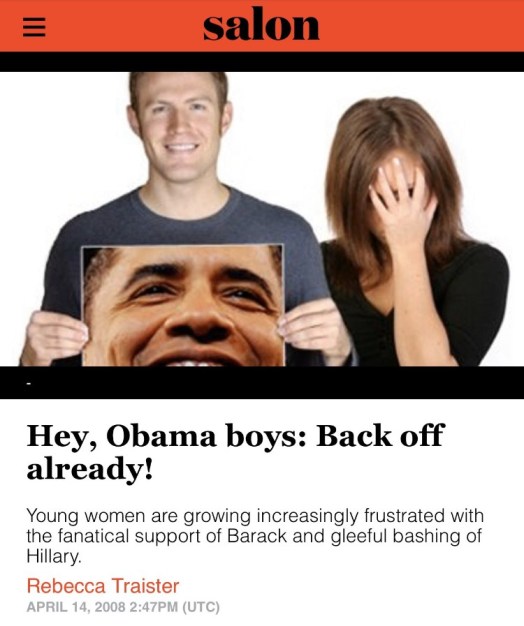
In fact, her supporters tried a similar bit of propaganda back in 2008 when she was running against Barack Obama where Clinton supporter Rebecca Traister ran an article in Salon entitled, “Hey, Obama boys: Back off already!”


thumbnail_IMG_9317


This is just more establishment propaganda meant to divide progressive voters who actually care about social justice issues so that the big money candidates can more easily get the party’s nomination.


It is insinuation, libel and slander. It is racist, sexist and anti-LGBTQ.


And though most of the remaining Democratic candidates are white, Bernie is also a minority. He’s Jewish.


Their carping on his irritating voice and mannerisms border on the anti-Semitic.


But no one talks about that – least of all Bernie who is too busy talking about policies that would benefit us alloften in a Jewish Brooklyn accent.


Moderates complain that regardless of the primary, in the general election we must vote blue no matter who. It is imperative we end the Trump presidency in any way possible.


Erasing the voices of the most energetic and committed constituency in the election is not the way to accomplish this.


A significant share of Sanders supporters — myself included — consider Warren their second choice, and if she wins the party’s nomination, would cast a ballot for her with little to no hesitation. And this despite her own foray into bogus accusations of sexism against Sanders that backfired actually increasing his support among women and minorities.


Sanders’ supporters willingness to consider other nominees besides their top choice will probably depend to a large degree on the fairness with which the primary is conducted.


As we saw in Iowa, the Democratic Party has not committed itself to ensuring this goal.


If anything is likely to derail a Democratic victory in 2020, it is that partisanship and incompetence.


If we want any chance at uniting behind a common candidate – Sanders or otherwise – we need to stop deleting our strongest allies under such a false characterization.


Let the people decide who they want to represent them against Trump.


And when they support Sanders, respect that decision without degrading them behind a prejudicial and politically convenient lie.


Screen Shot 2020-02-08 at 12.42.51 AM


Like this post? I’ve written a book, “Gadfly on the Wall: A Public School Teacher Speaks Out on Racism and Reform,” now available from Garn Press. Ten percent of the proceeds go to the Badass Teachers Association. Check it out!
book-3

Did Rosa Parks Really Support Charter Schools?

Screen Shot 2020-01-28 at 8.36.33 PM


They say history is written by the victors.


But fortunes change, and sometimes you can even reclaim a figure from the past who the last round of winners had cast in an unlikely role.


Take Rosa Parks.


She is universally hailed as a hero of the civil rights movement because of her part in the Montgomery Bus Boycott.


Everyone knows the story. Parks, a black seamstress in Alabama, refused to give up her seat to a white man on a segregated bus and was arrested. Then working with the National Association for the Advancement of Colored People (NAACP), Dr. Martin Luther King, Jr., and many other activists, she helped encourage black people throughout the city to stop riding the buses until they were eventually desegregated.


But did you know that 40 years later after she had moved to Detroit, Parks tried to open a charter school?


It’s true – from a certain point of view.


And school privatization cheerleaders are quick to reference her advocacy.


President Bill Clinton used the anecdote to sell the charter school concept in a speech to the NAACP in Pittsburgh in 1997.


Joe Nathan, one of the authors of the first charter school law, still likes to troll readers of this blog by bringing that factoid up in the comments.


Keri Rodrigues, one of the founders of the Walton front group the National Parents Union, uses it like a trump card on Twitter to shut down privatization critics.


The facts are somewhat more complicated.


CHARTER SCHOOL CRITICISM


Charter schools are funded with tax dollars but not bound by the same regulations as authentic public schools including the need to be run by elected school boards. In fact, they are often operated by appointed business interests.


Today charter schools are roundly criticized for their limited accountability, lack of local control, tendency to profit off the children they serve, ability to cherry pick students enrolled in them, propensity for draining funding from neighborhood public schools, frequently poor academic records, and inclination to increase racial and economic segregation.


Yet lobbyists and industry insiders insist they are civil rights reforms. Being able to tout Parks as a charter pioneer helps them make their case.


But did she really do this?


I mean Parks went to segregated schools, herself, before Brown v. Board. You’re telling me she actually advocated to start a segregated school in Detroit decades later?


THE FACTS


Parks did lend her name to a charter school proposal in 1997 that would have opened an institution named for her and her late husband, the Raymond and Rosa Parks Academy for Self Development.


However, according to Anna Amato, an education consultant who worked with Parks on the proposal, the Detroit Board of Education put the item on their agenda but took no action.


Parks then moved on to other concerns – of which she had many.


She spent most of her life fighting the good fight.


In 1957 she moved with her husband and mother to Detroit, where from 1965 to 1988 she was a member of the staff of Michigan Congressman John Conyers, Jr. She remained active in the NAACP fighting against housing segregation in the city, traveling to support Selma to Montgomery marches, developed “Pathways to Freedom” bus tours of civil rights sights, served on the Board of Advocates for Planned Parenthood, and many other actions.


The proposed charter school wasn’t exactly a highlight. Nor does it seem to fit with her other endeavors.


LEGAL BATTLE


But the Rosa Parks who was involved in that proposal was a very different lady than the one who refused to give up her bus seat all those years ago.


Parks was 84 at the time of the charter school plan and somewhat isolated from close family. When she died in 2005 at the age of 92, her estate was the subject of a bitter legal dispute.


The issue wasn’t the money so much as the priceless historical artifacts associated with her life.


Her will left most of the estate to Elaine Steele, a retired Detroit judge and friend of Parks who was also involved in the charter school proposal. She was co-director of Parks’ after-school program, the Raymond and Rosa Parks Institute for Self Development.


Parks, who was later diagnosed with dementia, had abruptly stopped giving interviews in 1995 and lived a mostly secluded life from then on.


Her family disputed that the will created in July 1998 represented Parks true intentions. They sued to challenge the estate plan, accusing Steele of using undue influence on Parks. After a protracted battle, the courts eventually sided with Steele.


But the picture this paints is not a friendly one.


We have an octogenarian Parks lending her name to numerous projects all under the direction of consultants.


QUESTIONABLE ASSOCIATES, QUESTIONABLE INVOLVEMENT

 
Amato, in particular, seems to have gone on to become a champion of school privatization and education technologies.


She made her name in Detroit pushing these policies for decades.


In 1994 she founded Edtec Central, an organization that helps launch and run charter schools. At one point the company operated “two specialized strict discipline academies and one alternative high school in Michigan” as well as provided support and consulting services to other local charter schools. However, there is very little current information on the organization. It’s unclear whether it is still in operation.


But as of 2017, Amato still was. She wrote an op-ed praising Donald Trump’s Education Secretary Betsy DeVos called “DeVos Is a Hero to Detroit’s At-Risk Kids.”


This appears to be the woman who advised Parks about opening a charter school.


How much Parks was involved is hard to say.


When The New York Times wrote an article about the proposed charter school in 1997 by Halimah Abdullah, Parks either refused to be interviewed or was left out of it. But Amato, Steele and even Nathan were quoted at length.


It’s hard to believe a journalist for the Times could be such a bad writer as just not to include Parks in the article, especially in a piece titled “Rights Hero Presses Plan For School In Detroit.”


It’s much more likely that Parks declined to be included or was purposely left out of the loop by her circle of handlers possibly to hide her slow mental deterioration.


It’s understandable why Parks may have surrounded herself with consultants and caregivers.


In 1994 when she was 81, Parks was robbed and assaulted in her home in central Detroit. The assailant, Joseph Skipper, broke down her door but claimed he had chased away an intruder. He requested a reward and when Parks paid him, he demanded more. Parks refused and he attacked her.


Parks was treated for facial injuries and swelling. Though Skipper, a black man, was eventually caught and prosecuted, the incident left Parks shaken and anxious to the degree that she moved from her house to a secure high-rise apartment.


Another peak into her personal life was revealed in 2002, when Parks received an eviction notice from her apartment for not paying rent. Both the Hartford Memorial Baptist Church and Little Ceasars owner Mike Ilitch claimed to have paid the bill, but Steele says the eviction notice came in error. Parks family blames the incident on financial mismanagement from caregivers. When NBC news reported the story, the network noted she had been diagnosed with dementia.


In total, these events provide a sad look at the last years of a civil rights icon. And it’s during this late period that the charter school project was developed.


Was it one of Parks’ passions? It’s impossible to tell. It is at least as likely that an elderly and suggestible Parks was surrounded by people who may have been using her name to get across their own agenda.


PARKS ON SEGREGATION


Consider how out of character a charter school was to Parks former legacy.


In 1995 (just two years before the charter school proposal) Parks did agree to an interview where she talked about the importance of education and reminisced on the evils of school segregation:


Interviewer: Was there a teacher that influenced you?


Parks: My mother was a teacher and I went to the same school where she was teaching. My very first teacher was Miss Sally Hill, and I liked her very much. In fact, I liked school when I was very young, in spite of the fact that it was a one-room school for students all ages, from the very young to teens, as long as they went to school. It was only a short term for us, five months every year, instead of the regular nine months every year.


Interviewer: What was it like in Montgomery when you were growing up?


Parks: Back in Montgomery during my growing up there, it was completely legally enforced racial segregation, and of course, I struggled against it for a long time. I felt that it was not right to be deprived of freedom when we were living in the Home of the Brave and Land of the Free.”


These do not sound like the words of a woman who two years later would push for a segregated school to be opened in her name.


PARKS ON DESEGREGATION


Moreover, this flies in the face of her work at the Highlander Folk School in 1955. Before she participated in the bus boycott, she took a two-week workshop entitled “Racial Desegregation: Implementing the Supreme Court Decision.”The idea was to learn how she could encourage youth groups to push for desegregation.


The workshop was her first experience of an integrated learning environment. In a 1956 interview she said that she found “for the first time in my adult life that this could be a unified society, that there was such a thing as people of all races and backgrounds meeting and having workshops and living together in peace and harmony… I had heard there was such a place, but I hadn’t been there.”
Parks took copious notes during the sessions, detailing what each speaker said and her reactions to them. In one section she wrote, “Desegregation proves itself by being put in action. Not changing attitudes, attitudes will change.”


Her time there was brief but transformative. It led directly to her refusal to give up her seat and subsequent history of activism. To think that someone so committed to the cause of desegregation would willingly engage in its opposite staggers the mind.


But a lot can happen in the intervening decades.


Maybe she came to think that well resourced segregated charter schools were preferable to poorly resourced integrated public schools. However, she must have realized that when schools are integrated it is harder to withhold resources. Perhaps she gave up on integration in favor of Afrocentric charters, but that would be a fundamental change in her thinking, indeed.


IMPORTANCE FOR TODAY


If Parks did wholeheartedly support the charter school project proposed in her name during her twilight years, does it make a difference?


Not really. After all, lots of people make bad decisions – even civil rights heroes.


We remember these people not because of their biggest mistakes, but because of their biggest victories, how they struggled year-after-year in the cause of human dignity.


More important might be an analysis of whether Parks would likely support charter schools today if she were still alive and cognitively sound.


In truth, it seems unlikely that she would. After all, Parks was active in the NAACP all her life. Along with Black Lives Matter and the Journey for Justice, The NAACP voted almost unanimously just a few years ago to demand a moratorium on all new charter schools because they exploit children of color.


It’s easy to imagine Parks leading that charge.


But some folks will tell you Parks ideas of segregation were different than the dictionary definition and that she would be on the side of Betsy DeVos, not modern day civil rights activists.


MICHIGAN’S CHARTER SCHOOL FAILURES


It’s no accident I bring up DeVos.


Like Parks, DeVos’ home is in Michigan and she has had a tremendous effect on education throughout the state, in Detroit, and nationwide.


When Parks’ charter school proposal was issued, the concept was pretty new. The first charter school law in the nation had only been passed in 1991 in Minnesota. Michigan didn’t jump aboard until three years later.


No one knew then exactly what to expect of the policy or what these schools would end up becoming.


Now charter schools have been in Michigan for more than a quarter century and the results are in.


They are an absolute disaster.


A 2016 report from Education Trust-Midwest, a non-partisan research and advocacy organization, found 80 percent of charter schools in Michigan scored below the state average in math and reading proficiency tests.


Moreover, the state leads the nation in for-profit charter schools, according to research by Western Michigan University professor Gary Miron. Grand Rapids-based National Heritage Academies, alone, operates almost 50 for-profit charters throughout the state.


After an intensive investigation, in 2014 the Detroit Free Press criticized these kinds of schools for their lack of financial transparency and excessive overhead costs.


Maybe it’s my own lack of imagination, but I find it difficult to imagine Parks championing schools that get so much worse academic results than traditional public schools. I find it nearly impossible to imagine her fighting for the right to segregate black children into “separate but equal” schools.


INCONSISTENCIES


Charter school apologists will lump Parks in with Trump and DeVos. Not with the Rev. William Barber II, Jitu Brown, Ibram X. Kendi, Nikole Hannah-Jones, Yohuru Williams, Denisha Jones, and other prominent black people who oppose school privatization.


They tell us that Parks name on an application to start a charter school (her signature does not appear on the document) is enough to prove her support for the concept.


Yet never once that I can find did Parks ever speak out on what was allegedly her own proposal. Others spoke out on her behalf, but she declined to be interviewed when the media came calling and didn’t use her iconic status to get the publicity needed to bring it to completion.


Can you imagine a celebrity today opening a charter school named after themselves without even releasing a statement, not to mention a press conference and media blitz? And this wasn’t in the distant past. It was only 1997.


But the school privatization lobby tells us that this is so. And moreover that Parks – who worked her entire life battling the forces of segregation whether it be in our schools, housing or elsewhere – somehow turned against this aim in her last years to open this school.


It’s quite a story they’re telling.


However, the possibility that a declining Parks was convinced to put her name to a project she didn’t fully understand or support is at least as consistent with the facts as the privatization narrative – in fact, more so because it clarifies many inconsistencies.


SYMBOLISM VS FACTS


In any case, this is all conjecture.


Parks’ opinion – whatever it was – only has symbolic value.


The true measure of charter schools are the facts about how they operate and the results they get for students.


They have failed generations of children across the country.


They truly are a civil rights issue – but not the one the school privatization lobby thinks.


Every child has a right to be freed from charter schools and not subjected to them.


Nothing would be more in keeping with the spirit of Rosa Parks than a boycott of charter schools – just like today’s civil rights organization are demanding.


It’s time we as a nation refuse to give up our seats in the public schools and boycott the forces of privatization and profit.


The only way forward is together – not through segregation and exclusion hoping that at least some of us will make it.


Like this post? I’ve written a book, “Gadfly on the Wall: A Public School Teacher Speaks Out on Racism and Reform,” now available from Garn Press. Ten percent of the proceeds go to the Badass Teachers Association. Check it out!

book-1

Who Will Protect My Right NOT to Pay for Your Child’s Religious Education?

Image: Supreme Court Hears Montana State Tax Credit Case


When I was a kid back in middle school, I had a crush on this girl, let’s call her Patty.


She wasn’t the most popular or beautiful girl in class, but I kinda’ liked her.


Of course, she had no idea I was alive.


Or so I thought, until one day she walked straight up to my desk and started rubbing my hair.


I was shocked at first, but then I just closed my eyes and went with it.


I remember the soft caress of her fingers in my mop of curls. She seemed to massage every inch of my scalp. Then she asked, “Where are they?”


“Where are what?” I asked.


“Your horns,” she said. “I want to see your horns.”


“What?” I said. “I don’t have any horns.”


“Of course you do,” she said. “My pastor said all you Jews have horns but you hide them in your hair. I want to see them.”


I had never even heard that bit of anti-Semitism before Patty. But I knew when I was being ridiculed.


The laughter. The embarrassment. I think I asked to go to the bathroom and stayed until the class was over.


Why bring up such childhood trauma?


It has baring on a case before the US Supreme Court this week –  Espinoza v. Montana Department of Revenue.


Three women are suing the state of Montana for refusing to pay for their kids to attend religious schools through a defunct voucher program.


Backing the effort are far right figures and groups like The Cato Institute, The Council for American Private Education, Billy Graham Evangelistic Association, former Wisconsin Governor Scott Walker and the Center for Education Reform – all of which have filed Amici Curiae briefs arguing that prohibiting religious schools from getting public money is somehow a violation of the First Amendment.


If successful, the case would open the door to publicly-funded private religious education across the country – not to mention siphoning much-needed money away from the public schools.


It’s bad enough that kids learn prejudicial lies from the pulpit and parochial schools. It’s worse if the victims of such prejudice have to pay for their tormentors to be thus indoctrinated.


In the Virginia Statute for Religious Freedom of 1779, Thomas Jefferson wrote “to compel a man to furnish contributions of money for the propagation of opinions which he disbelieves and abhors, is sinful and tyrannical . . . ”


I agree. That is sinful and tyrannical. Especially if those abhorrent beliefs lead to actions detrimental to the health and well-being of those being forced to pay for just such ignorance to be renewed in yet another generation.


The incident with Patty wasn’t the first or last time I suffered through religious persecution. I went to public school but the worst torment usually came from kids who had a year or two of parochial education.


For example, I can’t tell you how many times classmates asked me why I killed Jesus.


Now I’m a middle school teacher, myself.


I do my best to foster understanding and acceptance of all peoples no matter their race, gender, orientation or creed.


That doesn’t mean I squash religious discussion or opinions, either.


Kids are allowed to think and say what they choose. If they want to pray or express a religious belief, that’s fine so long as they don’t hurt others.


Though radical right ideologues decry the loss of religion in public schools, all that really means is that the adults don’t get to express their theologies. The kids have never been thus encumbered.


Even so, religious ignorance is never far away.


Every year before I teach “The Diary of Anne Frank” I go over the history of the Holocaust.


At least one student always raises his or her hand and asks if Hitler was Jewish.


I patiently explain that he wasn’t, but they insist that he must have been. After all, Father Such-And-Such said it, so it must be true.


And this is the kind of nonsense that is often taught as fact at parochial schools.


Private religious institutions are infamous for revisionist history and denying climate science. What’s less well-known is how they often try to normalize racist attitudes.


The American Christian Education (ACE) organization provides fundamentalist school curriculum to thousands of religious schools throughout the country. Included in this curriculum is the A Beka Book and Bob Jones University Press textbooks. A Beka publishers, in particular, reported that about 9,000 schools nationwide purchase their textbooks.


In their pages you’ll find glowing descriptions of the Ku Klux Klan, how the massacre of Native Americans saved many souls, African slaves had really good lives, homosexuals are no better than rapists and child molesters, and progressive attempts at equal rights such as Brown vs. Board of Education were illegal and misguided. You know – all the greatest Donald Trump campaign hits!


Today these claims are uncritically being taught to children at schools receiving school vouchers. We’re using public money to increase the racism and prejudice in the next generation.


In any sane country, a case like Espinoza would be about stopping such nonsense! But the plaintiffs and their billionaire backers actually want to EXPAND IT!


The goal is to destroy facts and promote ignorance. That requires the destruction of public schools.


Kyle Olson said as much in a 2018 op-ed for National School Choice Week – a bit of propaganda he helped create in 2011 through his lobbying firm, the Education Action Group. In fact, he credited Jesus, himself, with anti-public school venom.


Olson wrote:


“I would like to think that, yes, Jesus would destroy the public education temple and save the children from despair and a hopeless future.”


These are the folks complaining that public tax dollars aren’t being allowed to fund parochial schools everywhere and where they are allowed to bankroll such schools they aren’t being allowed to do so enough.


Technically, the First Amendment doesn’t allow the government to support religious schools.


But the Espinoza crowd think that laundering the money through Tax Credit Scholarships somehow makes it all okay. A business or rich donor hands money to families to send their kids to private schools. Except that money makes a stop at a “scholarship” organization first, and the donors get to deduct their contributions from their taxes. Blogger Peter Greene tells us to think of it like this:


“I’m the state, and you owe me $100. I am not allowed to gamble, but if you give that $100 to my bookie instead, I’ll consider us square.”


It’s a shell game that pretends spending tax money before it gets deposited in the government’s account frees our public servants from following the rules.


I don’t care where it’s been, that’s my money as good as if you took it from my wallet because it’s money owed to me and every other taxpayer. That money is owed to the public good, not some ideologue’s Sunday school project, and its absence means I have to pay more to fund things we all need like police, firefighters, public transportation, and public schools.


They’re right about one thing. This is an issue of religious freedom, but it’s not about their freedom. It’s about MY freedom not to support their beliefs.


I say – let them believe what they will. It’s their choice, and they have the right to subject their children to it if they want.


But leave me out of it.


Don’t expect me to foot the bill.


I’m rightly compelled to pay for public education because it benefits everyone. It creates an educated populace capable of keeping the lights on. It creates people who know enough about the world that they can make knowledgeable decisions and vote for good leaders.


But parochial schools are exclusionary by design. Spreading their ignorance does not benefit society. It hurts it.


We talk a lot about the First Amendment, but we seem to forget what it actually says:


“Congress shall make no law respecting an establishment of religion, or prohibiting the free exercise thereof;”


That should be our guiding principle – religious freedom.


Let people practice their faiths however they see fit.


But respect my freedom from religion as much as I respect your freedom of it.


Like this post? I’ve written a book, “Gadfly on the Wall: A Public School Teacher Speaks Out on Racism and Reform,” now available from Garn Press. Ten percent of the proceeds go to the Badass Teachers Association. Check it out!
book-3

Trump Administration’s “Junk Food Loophole” is Symptomatic of School Privatization

Screen Shot 2020-01-21 at 11.16.13 PM
 

Who wants children to eat more junk food?


Apparently the Trump administration does.


This seemed to be the Department of Agriculture’s concern when it announced plans last week to further reduce regulations for healthy meals at the nation’s public schools.


The Department’s new scheme would change the Healthy Hunger-Free Kids Act of 2010 to include what critics call a “junk food loophole” in meals offered at public schools – usually breakfasts and lunches.


Currently, sweets and fried foods are allowed only once in a while as part of a balanced meal. But this new proposal would permit them to be offered every day.


Students could substitute healthy choices like fruits for things like blueberry muffins and replace green vegetables with French fries.


Screen Shot 2020-01-21 at 10.53.10 PM
Source: The National Alliance for Nutrition and Activity.


The media rushed to characterize the changes as an attack on Michelle Obama who championed the original legislation during her husband, Barack’s, administration. And – heck – maybe they’re right seeing as the Trump administration made the proposal on Mrs. Obama’s birthday.


But one needn’t guess at political motivations behind the move when it so obviously fits the pattern of school privatization – a way of conceptualizing education supported by both the Obama’s and Trump.


Let me be clear. School cafeterias generally are not privatized. They’re usually run by local school districts. However, the insistence that such programs turn a profit and make decisions based on sales rather than nutrition are symptomatic of the privatization mindset.


We didn’t always require everything to bring in money. We used to see things like education and journalism as public goods and absolved them from the need to generate financial gain.


But that seems like a long time ago.


The current administration’s claim that it’s rolling back restrictions to stop food waste and help public schools increase lunch profits is a case in point.


If profit is king, that’s all that matters. Who cares whether kids are getting better nutrition or not? What matters is the bottom line.


School lunches are not an opportunity to teach kids better eating habits. They are a financial transaction to enrich district budgets at the expense of the children enrolled there.


If children as young as 5 can’t make that decision on their own – well, caveat emptor.


The same goes with things like charter schools and high stakes standardized tests. It doesn’t matter if these things are better or worse for children. It matters whether they make money.


The invisible hand of the market is our pedagogue in chief.


It turns out that these things are rarely – if ever – in the best interests of children. Charter schools increase the likelihood of fiscal mismanagement, school segregation, prejudicial discipline policies, cherry picking which students to enroll – all while reducing transparency and fiscal accountability. Meanwhile, high stakes testing produces assessments that more clearly illuminate parental wealth than student learning – all while creating captive markets for testing, publishing and software companies.


The “junk food loophole” is just more of the same.


The administration contends that fewer middle and upper class kids are buying lunches at school when the choices are healthier. Meanwhile, among the 30 million students who depend on free and low-cost school lunches that are subsidized by the federal government, they say more are simply throwing away healthy foods than eating them.


The administration maintains that more food would be sold and less thrown out if children were given the choice to buy more cheeseburgers and fries than carrots and yogurt.


There certainly is anecdotal evidence to support this. Kids do seem to like junk food. As a middle school teacher, I’ve seen far too many kids bring Flaming Hot Cheetos and energy drinks for breakfast than take a free box of cereal, juice or even a piece of breakfast pizza.


And the number of kids who throw away fresh fruit because they’re forced to put it on their tray is heartbreaking.


However, we tend to focus on the negative and miss the positive.


This idea that kids don’t choose healthy foods actually flies in the face of the Department of Agriculture’s own research on the effects of the Obama-era rules. In its 2019 “School Nutrition and Meal Cost Study,” the department found no significant changes in the amount of food waste since the healthier rules were put in place, and also found that the healthier choices led to more kids participating in school meal programs.


The study also found scores for the Healthy Eating Index (which measures the quality of the diet) shot up drastically from 49.6 in 2009-2010 to 71.3 in 2014-2015.


So there is evidence that the program is actually increasing students’ healthy eating.


If we valued what’s best for children, we would continue – and maybe even strengthen – the legislation.


However, this newest proposal to weaken the law is the second time in three years that the federal government has undercut this policy.


In 2018, the Department started allowing schools to stop offering foods lower in sodium and higher in whole-grains.

 
That decision is being challenged in court by a coalition of six states and Washington, DC, on the grounds that it endangers student health.


If this second set of rollbacks are implemented, they too may be challenged in court.

 
Unfortunately the problem isn’t limited to mealtimes.


This is indicative of the school privatization mindset.


We must stop allowing the profit principle to function as the arbiter of sound academic policy.


Reducing regulations requiring healthy foods in schools is a bad idea. But so are charter schools, high stakes testing, Common Core, runaway ed tech and a host of other market-based school policies.


We can’t continue to ignore what’s best for children in the name of rampant consumerism.


The purpose of school is to teach children – not to exploit them as a captive market for financial gain.


Like this post? I’ve written a book, “Gadfly on the Wall: A Public School Teacher Speaks Out on Racism and Reform,” now available from Garn Press. Ten percent of the proceeds go to the Badass Teachers Association. Check it out!
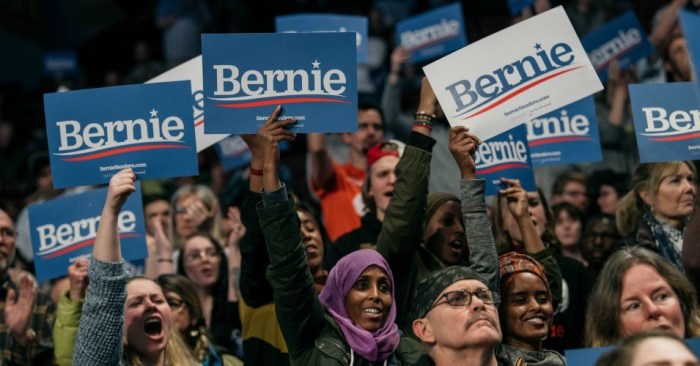
book-4