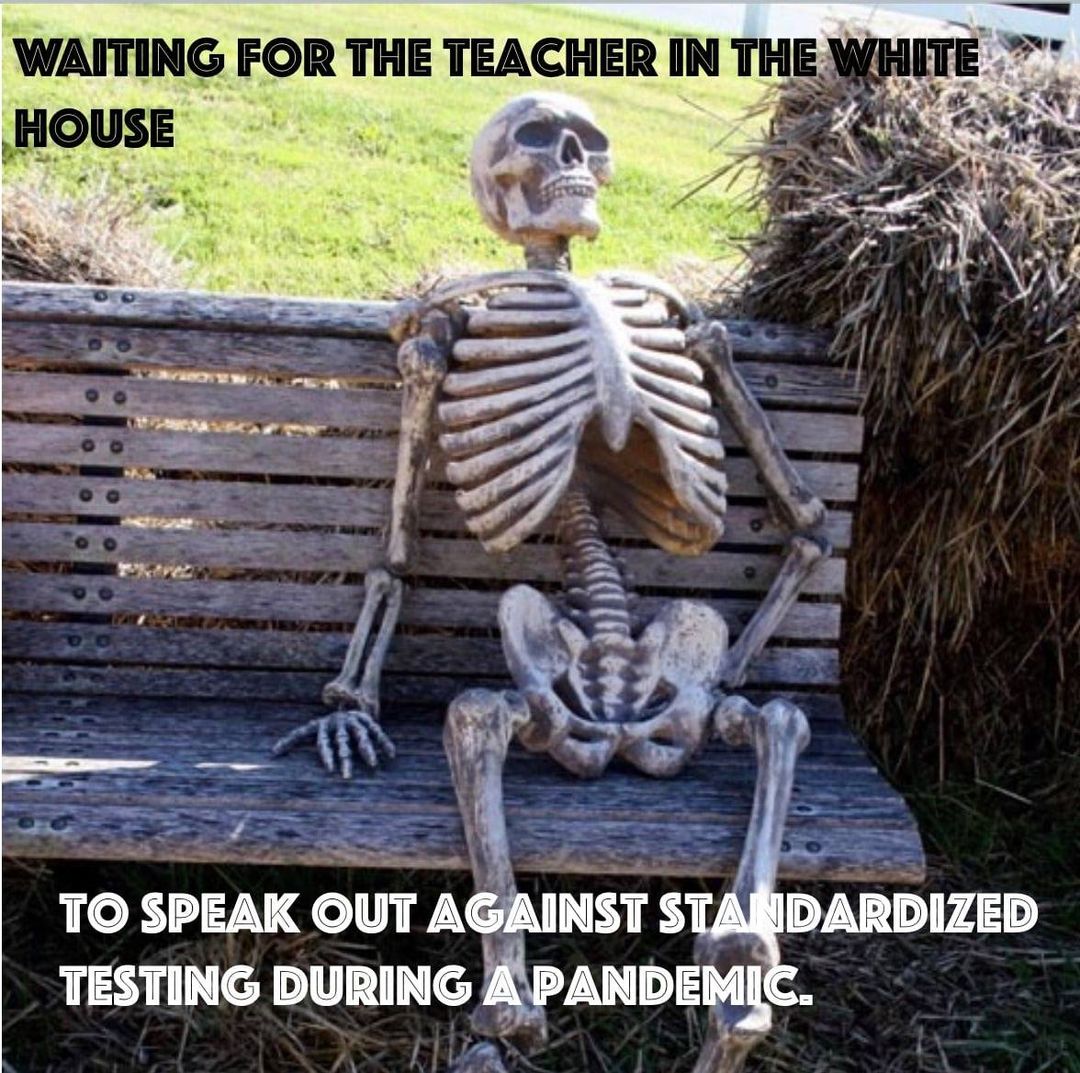
Stop Transforming US Schools into Prisons in the Name of Security

You probably heard about the Texas mom who became Internet famous for posing as her daughter in school last week.

Casey Garcia, 30, was arrested after she was caught attending her 7th grade daughter’s classes while disguised in a hoodie, a mask and thick black glasses.

In a viral video she posted to YouTube, she said the stunt was a “social experiment” to “prove a point.”

“We need better security at our schools,” Garcia said. “I kind of feel that I proved it.”

“There have been one too many mass shootings,” she added, arguing that schools should have metal detectors and possibly ban backpacks.

However, most schools already DO have metal detectors, and the presence of these devices won’t stop a parent like Garcia from posing as a teen during a pandemic when students are often required to cover their faces behind masks.

Hopefully sometime next school year when more teens are vaccinated and mask restrictions disappear, no one will be able to take advantage of pandemic safety precautions to sneak into classes.

Don’t get me wrong, teachers should have caught Garcia last week long before the end of the day, but the El Paso parent did more to prove the necessity of smaller class sizes than additional security.

You can pay millions of dollars on new complicated and time wasting screening processes to enter the building, or you can simply have teachers responsible for fewer kids so they can actually give them all more attention. It’s less costly and would reap educational benefits along with improving safety.

The fact is, we already spend an awful lot on school security. And often those measures and the costs to enact them directly impede teachers ability to teach and students willingness to learn.

Let’s start with cost.

The United States is one of the richest countries in the world. You’d expect that we could afford to buy BOTH security AND education for our students.

However, in practice, it doesn’t work that way.

To put it bluntly – we’re cheap. Especially when it comes to children.

Correction: Especially when it comes to OTHER PEOPLE’S children.

Right wing pundits love to quote exorbitant figures of how much the US spends per student as compared with the rest of the world.

However, they neglect to mention (1) this money is spent unevenly so that we spend much more on rich kids versus poor kids, and (2) we spend that money on services in this country that most other nations do not.

One of those things is security.

It’s not that schools in Europe and other comparable nations don’t concern themselves with keeping students safe. But they typically don’t have metal detectors, armed police, and high tech security systems. While secondary entrances and exits tend to be locked, main entrances usually remain open and unmonitored throughout the day.

Nor do they have the same dangers as we do. In the US, there are more firearms – roughly 400 million – than people. Not true in other countries.

Moreover, even in other nations like Switzerland where gun ownership is high, they have comprehensive background checks that make it much more difficult for criminals or the mentally ill to get a hold of a gun.

In the US, we have a large population that is racially diverse, a history of social strife, runaway income inequality, and a crumbling social safety net. All of which, when mixed together, are a recipe for conflict.

Not so in most other countries.

Moreover, the way most European nations, for example, have addressed safety is completely opposite to the way we do it in the US.

School shootings were on the rise in Europe in the early 2000s, but instead of buying security systems to stop shooters from entering the building, most schools focused on prevention. They realized that the overwhelming majority of shooters were not interlopers from outside but were disgruntled students. So these schools invested in more psychologists, social workers and resources to help children navigate the turmoil of growing up. The result was an almost complete disappearance of shootings.

If you ask me, a similar investment in the US would have similar success. However, given the differences in our societies, I don’t expect it would solve all of our problems.

In fact, emphasis on security certainly hasn’t.

Since 2012, US schools spending on high tech security programs has increased by at least $3 billion – not counting the billions more spent on armed campus police officers — with very little research proving these measures are at all effective, according to the Washington Post.

In fact, there is evidence that these measures don’t work. A federally funded 2016 study by Johns Hopkins University, for instance, concluded there was “limited and conflicting evidence in the literature on the short- and long-term effectiveness of school safety technology.”

But in the United States, when there’s an entire industry lobbying to take advantage of a crisis, that industry will likely be seen as the solution. It might not actually work, but at least huge corporations are making a profit. That’s often enough to justify spending more and more.

Security firms tout their products as the solution just as hammers scream we need more nails. Never mind that buying them will impede our progress and bankrupt us in the process.

Which brings me to education.

Even if heightened security was 100% effective against violence, it has a negative impact on learning.

No one wants to go to a prison for school.

Prisons are not welcoming environments. Children don’t want armed guards watching their every move. They want empathetic teachers and adults to help them understand their world.

This is especially true for low income and students of color. There is already a tendency among white faculty (and others) to criminalize their behaviors. In a punitive environment, this is even more so. Children become not something precious to be protected but the inmates, themselves, whose adolescent behaviors become the excuse for treating them like suspects and criminals.

Even preparing for violent situations can have negative impacts.

Active shooter drills – especially those from the ALICE Training Institute — do more to traumatize students than make them safer. The increasingly popular ALICE program teaches kids to physically confront gunmen under any circumstances. Consultants, school psychologists, safety experts and parents say this is dangerous and irresponsible.

“There is no research/evidence . . . that teaching students to attack a shooter is either effective or safe,” Katherine C. Cowan, spokeswoman for the National Association of School Psychologists, says. “It presumes an ability to transform psychologically from a frightened kid to an attacker in the moment of crisis, the ability to successfully execute the attack on the shooter (e.g., hit the shooter with the book or rock, knock them down, etc.) again in a crisis situation, the ability to not accidentally hurt a classmate, the reality that unsuccessfully going on the attack might make that student a more likely target of the shooter.”

However, the feeling that we are doing SOMETHING that we are at least preparing for a crisis is what keeps programs like this viable.

It’s also why Home Depot and Walmart market $150 bulletproof backpacks to parents. They may not actually help in a real life emergency, but they give the illusion of safety.

That’s what most of this really is – an illusion.

The fact is that the risk of being the victim of gun violence is low.  There are more credible risks traveling to and from school, catching a potentially deadly disease or suffering a life-threatening injury playing interscholastic sports. But we rarely worry about those.

Moreover, the risk of being a victim of gun violence is the same in the US whether you’re in school or not. And it’s higher in this country than in most others. A 2016 study in the American Journal of Medicine found that, among high-income nations, 91 percent of children younger than 15 who were killed by guns lived in the United States. Schools cannot solve that problem. We need sensible gun regulations and background checks in combination with measures for universal healthcare, racial equity and a reduction in income inequality.

However, our public schools are so often left to solve the problems our policymakers refuse to tackle.

If our teachers and administrators weren’t tasked with such a heavy burden and were actually given the funding and support they needed, perhaps they could better do the job of educating students.

That is the central purpose of public schools, after all.

Not gratifying parents to make points on the internet.

Not even security or profiting huge corporations.

It’s to teach kids.

We’d do best to remember that.


Like this post?  You might want to consider becoming a Patreon subscriber. This helps me continue to keep the blog going and get on with this difficult and challenging work.

Plus you get subscriber only extras!

Just CLICK HERE.

Patreon+Circle

I’ve also written a book, “Gadfly on the Wall: A Public School Teacher Speaks Out on Racism and Reform,” now available from Garn Press. Ten percent of the proceeds go to the Badass Teachers Association. Check it out!

Pittsburgh Media Runs Right Wing Propaganda About Public Schools As If It Were Real News

The Commonwealth Foundation is not a reliable news source


It’s a right wing propaganda network that provides the motivation behind American Legislative Exchange Council (ALEC) sponsored bills.  


ALEC writes the laws. The Commonwealth Foundation justifies them. And GOP lawmakers pass them (often with help from neoliberal Democrats). 


So why are otherwise reputable Pittsburgh television and radio stations running stories based on Commonwealth Foundation reports?  


On May 25, WTAE-TV ran a story called “Pennsylvania school districts flush with federal cash, but many still considering tax hikes.” It was a love letter to the Koch Brothers funded ideological network. 

The basic thrust of the story is captured in the headline. It says that public schools throughout Pennsylvania have received an influx of funding to deal with the COVID-19 pandemic but school directors are unnecessarily planning to increase taxes anyway.

For example, Pittsburgh Public Schools has received $161 million in three rounds of federal disaster funding. Yet the district is still projecting a $38 million deficit this year. 


Ideologues at the Harrisburg based Commonwealth Foundation don’t understand how that’s possible. They want to know why districts can’t just use the disaster funding to pay for continuing expenses?

Because it’s illegal. Duh.

Pittsburgh Superintendent Dr. Anthony Hamlet explains:


“That’s one-time dollars. That money cannot supplant the general fund so the general fund is different. These are supplementary dollars that can’t be used for personnel or anything like that.”

Most of those funds will go to pay for after-school or summer school programs to help students with declining academics after they spent much of the past year at home, he continues.

Moreover, if districts spent that money (illegally) to fill pre-existing budget holes, all they’d be doing is kicking the can of funding deficits down the road a year or two.

Ideologues at the Commonwealth Foundation know that.

In fact, later on in the exact same story, they worry about this very thing.

At the beginning of the story, Elizabeth Stelle, Director of Policy Analysis for the Commonwealth Foundation, says, “We see no reason why the federal funding is not more than enough to cover the needs of districts today.”

But then later in the same story she says, “I’m very concerned they’re going to spend that money on ongoing needs and we’ll be in a very difficult situation a couple years from now.”

Well, which is it Stelle? Are you worried about districts REFUSING to use disaster funds to pay for ongoing needs or are you worried that they WILL use disaster funds for this exact purpose?

You can’t have it both ways.

Stelle made headlines in March lobbying to eliminate the minimum wage in Pennsylvania and allowing slave labor.

WTAE should have had the journalistic integrity to ask her about her blatant contradiction in this story and her reprehensible positions on record. Or perhaps have the integrity not to invite such members of the lunatic fringe on their network and legitimize her position with coverage.

Unfortunately, producers are content to broadcast clickbait to get low information voters agitated against schools without any good reason.

I suppose it gets ratings.

If it bleeds it leads, and if it antagonizes it televises.

Sadly, WTAE wasn’t the only local television station to do so.

On march 15, WPXI ran a similar story under the headline, “Study claims Pa. schools don’t need COVID-19 relief money, local districts pushing back.” 

This at least was a more skeptical look at the same Commonwealth Foundation report.

But why run anything on the report to begin with?

Were the Flat Earthers busy? Was Q-anon out of conspiracies? Has no one spotted the Illuminati lately? 

WPXI characterized the report less about COVID funding misuse than additional funds being unnecessary to begin with.

Reporters said the Commonwealth Foundation report concluded that state districts were not hurting from the pandemic in the first place. And then journalists went to local districts who flatly contradicted that statement with facts. 


Gateway School Board President Brian Goppman, for example, said the district cut $3 million from its operating budget due to the pandemic. Moreover, the tax base, itself, has suffered from COVID. When businesses close, that’s less tax revenue to fund social programs like schools.

“Monroeville and especially our district… we get a lot of money from the businesses. Every day that we’re in the pandemic with these restrictions is another day we’re wondering if that business will be around tomorrow,” Goppman said. 

And this doesn’t even factor in additional costs to hire more teachers and support staff to help students deal with a year and a half of less than ideal academics caused by quarantines and other safety measures.

However, the worst of all may have been the report on The KDKA Radio Morning Show with Larry Richert and Kevin Battle from May 27.

They had on Jennifer Stefano, Chief Strategist and Vice President at the Commonwealth Foundation, to talk about public school funding. Stefano is a former Tea Party member and frequent talking head on Fox News and other radical right propaganda networks who famously attacked the Head Start Program that provides early childhood education, health, nutrition, and parent services for low-income families.

She could not have found a more friendly audience in Richert and Battle.

KDKA is one of the oldest commercial broadcasting radio stations in the US with a more than 100 year history. However, in 2017, KDKA Radio split from the television station of the same name and was purchased by radio conglomerate Entercom. Since then it has become increasingly rightwing and reactionary.

Richert and Battle were pathetically begging for relevance and ratings while letting Stefano spout nonsense statistics about public schools for 8 minutes.

This may come as a shock, but a group like the Commonwealth Foundation that advocates for cutting governmental services doesn’t like public schools.

They think schools have too much money. Privatized institutions like charter and voucher schools need and deserve an influx of cash, but those pesky government schools are already rolling in it.  

Of course, this isn’t true at all. 


A real investigative journalist might have just walked into an inner city school to check it out. She would have seen that many schools are literally falling apart.  


Or she could look up actual statistics. A full 35 states provide less overall state funding for education today than they did in 2008. Most states still haven’t recovered from George W. Bush’s Great Recession and the subsequent state and local budget cuts it caused. And schools in 27 of those states actually saw per pupil funding fall even further.  


Moreover, Pennsylvania is one of the worst. The state government pays only 38% of the cost to educate children leaving the majority up to local communities to make up the difference.  That’s the 46th lowest in the country. The national average is 51%. 


In fact, our funding inequality is the worst in the nation. According to the U.S. Department of Education, poor schools in the Commonwealth spend 33 percent less on their students than rich ones. 


These are the reasons why the parents of six school children, six school districts, the NAACP and a rural schools group are suing the state over education funding.  


Not because public schools are “flush with cash” – a characterization right out of the mouth of Donald Trump. 

However, the Commonwealth Foundation plays with the numbers to mask this reality.

For example, they claim the US spends more per student than nearly any other country in the developed world. But that figure varies tremendously by state with some spending much more than others. Moreover, American schools have costs educational institutions in other countries don’t have such as security and other non-instructional costs.

As we’ve seen, even when you look at per pupil spending across the state, you’re masking funding inequalities from district to district. You’re looking at an average of all spending, which ignores how little we spend at lower income schools and how much we spend at districts catering to rich communities.

Moreover, if we compare the percentage of GDP spent on education with other countries, you’ll see the US spends much less than comparable nations. For example, we spend about 5% of our GDP on schools compared with 6.4% in New Zealand, 6.9% in Finland, 7.5% in Iceland and 7.6% in Denmark.

This has been the situation for decades and it relies on one basic fundamental catastrophe – much of American education funding is determined by local property taxes.

If you live in a rich neighborhood, your kids get all the best. If you live in a poor one, you don’t get comparable services.

Trolls like the Commonwealth Foundation feed off this burning dumpster fire by covering the inequity of our taxing system which relies too heavily on the poor and middle class and lets the wealthy get by without paying their fair share.

Instead of pointing out the real problem and demanding the rich do their part, the Commonwealth Foundation covers for their billionaire masters. Partisans at the foundation ignore low taxes on the wealthy and blame high taxes on the poor and middle class on things like public schools.

And stories like these only go to further enrage taxpayers so that they’ll support tearing down the very systems that help keep them and their kids afloat.

No news organization should be falling for these lies.

WTAE, KDKA and WPXI should know better.

They are helping tear down media trust in this post truth age.

How ironic that in doing so they are helping destroy education – the one tool essential to navigating through such a landscape.

Find out more about state education funding shortfalls HERE.


Like this post?  You might want to consider becoming a Patreon subscriber. This helps me continue to keep the blog going and get on with this difficult and challenging work.

Plus you get subscriber only extras!

Just CLICK HERE.

Patreon+Circle

I’ve also written a book, “Gadfly on the Wall: A Public School Teacher Speaks Out on Racism and Reform,” now available from Garn Press. Ten percent of the proceeds go to the Badass Teachers Association. Check it out!

Top 6 Administrative Failures of the Pandemic Classroom

This school year has been a failure in so many ways.

But don’t get me wrong.

I’m not going to sit here and point fingers.

The Covid-19 pandemic has tested the public school system like never before.

Teachers, administrators and school directors have been under tremendous pressure and I believe most really tried their best in good faith to make things work as well as possible.

But as the year comes to a blessed close, we need to examine some of the practices common at many of our schools during this disaster and honestly evaluate their success or failure.

Some things worked well. Many made the best of a bad situation. But even more were blatant failures.

We need to know which was which.

As a classroom teacher with 17 years experience who worked through these times, let me clarify one thing.

I am not talking about things that were specific to individual classrooms.

Teachers struggled and stretched and worked miracles to make things run. We built the plane as we were flying it. As usual, this is where policy meets execution and that can differ tremendously from place-to-place.

What I’m talking about for the most part is policy. Which policies were most unsuccessful regardless of whether some super teachers were able to improve on them or not in their classrooms.

Here are my top six administrative failures of this pandemic school year:

1) SOCIAL DISTANCING

Health officials were clear on one point – keeping space between individuals helps stop the spread of Covid-19.

Exactly how much space we need to keep between people has varied over time.

At first, we were told to keep 6 feet apart. Then as health officials realized there wasn’t enough physical space in school buildings to keep students that far apart AND still have in-person school, they changed it to 3 feet.

The same happened with violating social distancing.

At first, you were considered a close contact only if you were within the designated space for 15 consecutive minutes. Then that was changed to 15 minutes in total even if that time was unconsecutive.

In any case, classes were held in physical spaces. Many schools at least tried to make an effort.

Was it successful? Did we actually keep students socially distanced all day?

Absolutely not.

Walk into nearly any school during a class change and you will see the same crowded halls as you would have seen pre-pandemic. Observe a fire drill, and you’ll see the same students right next to each other, skin against skin as they try to quickly find an exit.

These times generally aren’t 15 minutes consecutively, but think about how many class changes there are a day. If you have 8 or 9 classes, with each class change averaging 3 minutes, that’s 24 to 27 minutes of exposure a day.

If it weren’t for the fact that most children are asymptomatic, what would the result of this have been? How many kids did we expose to Covid-19 because of the sheer difficulty of administering social distancing protocols?

2) MASKING

Health officials told us it was important to wear masks on our faces to stop the spread of respiratory droplets that contain the virus. True there was some discrepancy on this issue at the beginning of the pandemic, but over time it became an agreed upon precaution.

There was also some discrepancy about what kinds of masks to wear and whether one should double mask.

However, putting all that aside, did schools that had in-person classes abide by this policy?

It actually depends on what part of the country you’re in. Some schools were directed to do so and others were not.

However, even in districts where it was an official policy, it rarely worked well.

Not only is it difficult to teach when the most expressive parts of your face are covered, it’s difficult to be heard. And for students, it’s even worse. They are still adolescents, after all. They abided by mask mandates with various degrees of success.

In my own classes, about a quarter of my students could never get their masks over their noses. No matter how many times I reminded them, no matter how often I spoke up, the masks always slipped below their noses – sometimes moments after I made a remark. Sometimes three, four or more times in succession to the point that I gave up.

Administration didn’t seem to take the matter as seriously as the school board written dress code policy, and teachers (including me) didn’t want to come down too hard on kids for neglecting to do something that many of them seemed incapable of doing.

Were we all exposed to respiratory droplets? Definitely. Without a doubt. Especially during lunch periods which were almost exclusively conducted in doors without even the possibility of opening a window.

Did partial masking have some positive effect? Probably. But I do not think we can call this policy a success.

3) CONTACT TRACING

How do you tell if someone has been exposed to Covid-19?

Health officials advised contact tracing. In other words, when someone exhibits symptoms and then tests positive for the virus, you identify people who came into close contact (within 3 feet for 15 minutes total).

However, this was conducted entirely on the honor system. So it was only as accurate as those reporting it were perceptive or honest. If someone was a close contact but didn’t want the hassle of quarantine, they could usually just refrain from reporting themselves.

Even worse was the fact that most children are asymptomatic when infected with Covid-19. Hundreds or thousands of kids could be walking around the school as carriers of the virus and you’d never know with contact tracing.

Random blood tests for Covid-19 and Covid-19 antibodies would have actually solved this problem, but it was never even recommended. This may have been because of costs or fears of inconveniencing students. However, it demonstrates perhaps the worst failure of the entire pandemic.

Any sense of security was completely false. Every week – often every few days – I’d get phone calls and emails from my district about students and staff testing positive for Covid-19 but miraculously there were no close contacts. Districts, administrators, school directors, health officials have lost a tremendous amount of credibility from this which may damage our society much worse than Covid-19 ever did.

4) STANDARDIZED TESTING

We threw caution to the wind and reopened in-person classrooms so children could have live instruction. Then the Biden administration mandated standardized testing which would eat up much of that time.

It’s nonsensical.

My last month of school is divided up almost equally in half between teaching and testing.

I’ve had to cut my curriculum to ribbons just to get a semblance of instruction done by the last day.

And it serves no purpose.

We all know students haven’t had the kind of robust instruction time they normally would. Why do we need tests to show that? It’s like looking at a person bleeding from an open wound and then testing to see if there was blood loss.

Not to mention the fact that these standardized tests have been shown to be bad assessments long before Covid-19 came on the scene.

This is a total policy failure that the kids are paying for with less time to learn.

But at least the testing corporations will get paid.

5) CYBER SCHOOL

Many students spent some or all of the last year on-line. The reasons why are clear and even potentially sound.

Their parents wanted to mitigate infection, and going cyber certainly did that.

However, the quality of instruction provided was variable to say the least.

At best, classroom teachers provided lessons through distance learning platforms like Zoom using accessories like Google Classroom.

At worst, prepackaged cyber curriculum based on credit recovery programs was used as the main provider of curriculum.

Platforms like Edmentum – which my daughter had to use – provided material that was not developmentally appropriate, assessed unfairly, and full of typos.

This just demonstrates the inferiority of cyber programs in general. The more interaction possible between teachers and students, the better. However, even at its best this is not as effective as live instruction.

Those districts that simply gave up and threw students onto fully cyber programs almost abrogated their responsibilities to educate at all.

However, I can certainly see why parents may have chosen this option for their children. After all, I made such a choice for my own daughter.

The best result though would be safety from Covid but somewhat less instructional quality. Either way, it’s a failure, but the degree will vary.

6) HYBRID MODELS

Many districts choose a hybrid education model combining some cyber and some in-person learning.

This tried to strike a balance between keeping children safe and providing the best possible education. However, both models were flawed and thus the hybrid model combines these flaws.

The worst part of this type though was how it often forced educators to educate.

Teachers usually had to instruct both live students in the classroom and cyber students on-line at the same time.

This is nearly impossible to do well. It’s like trying to perform a play to two different audiences at the same time. What works in-person does not work as well on-line and vice versa.

I found myself catering to one group and then another. Often it lead to the on-line students being left more to their own devices. Since most of them had their cameras off and rarely responded to questions, I fear they got an even worse education than under fully cyber circumstances.

In-person students also had to exercise patience as the teacher divided his or her attention to the on-line group.

And the degree of technical wizardry expected of teachers was astronomical.

In every class I was required to post material to a central in class TV screen so my in-person students could see it, while also making sure it was displayed on-line for my cyber kids. Sometimes it wouldn’t work for one group and I’d have to trouble shoot the problem in real time.

There were often instructional videos or examples I wanted to show where the volume or video wouldn’t display for one group or another. And sometimes on-line students couldn’t hear the teacher or their classmates.

Then we had Internet connection issues where cyber students were inexplicably dropped or in-person students couldn’t access materials on Google Classroom.

It was a nightmare – an every day, every period, never ending nightmare.

But teachers just got on with it and achieved amazing things despite all the issues.

CONCLUSIONS

This pandemic year can be characterized by epic failures at all levels.

But each failure contains within it a success.

In short, things could have been much worse.

At each level, these failures were mitigated by everyday classroom teachers who made the best of it.

The school year was not a complete waste academically for most students.

It would have been better under normal circumstances, but these were not normal circumstances.

Likewise, students, their families and educators were put at unnecessary risk of infection. And many paid the price for that with long illnesses, lingering symptoms and even death.

However, it could have been worse. Safety efforts – though insufficient – did protect people and fewer people were infected than might have been otherwise.

As more people are vaccinated against the virus and we move forward with vaccinating those 12 and older, risk should become even less prominent.

I dearly hope infection levels will be legitimately low enough in August that we can dispense with social distancing and masking, that we can have universal in-person classes.

However, we probably will do away with these measures WHETHER IT’S SAFE TO DO SO OR NOT!

And that is the worst problem!

Throughout the Covid pandemic, our policies have demonstrated a blatant disregard for human life and safety. Instead we have prioritized economics and capitalistic pragmatism.

Don’t let anyone tell you “Safety was our number one priority.”

It wasn’t. And it isn’t.

In America, the almighty dollar reigns supreme and your life and the lives of your children come in a distant second.


Like this post?  You might want to consider becoming a Patreon subscriber. This helps me continue to keep the blog going and get on with this difficult and challenging work.

Plus you get subscriber only extras!

Just CLICK HERE.

Patreon+Circle

I’ve also written a book, “Gadfly on the Wall: A Public School Teacher Speaks Out on Racism and Reform,” now available from Garn Press. Ten percent of the proceeds go to the Badass Teachers Association. Check it out!

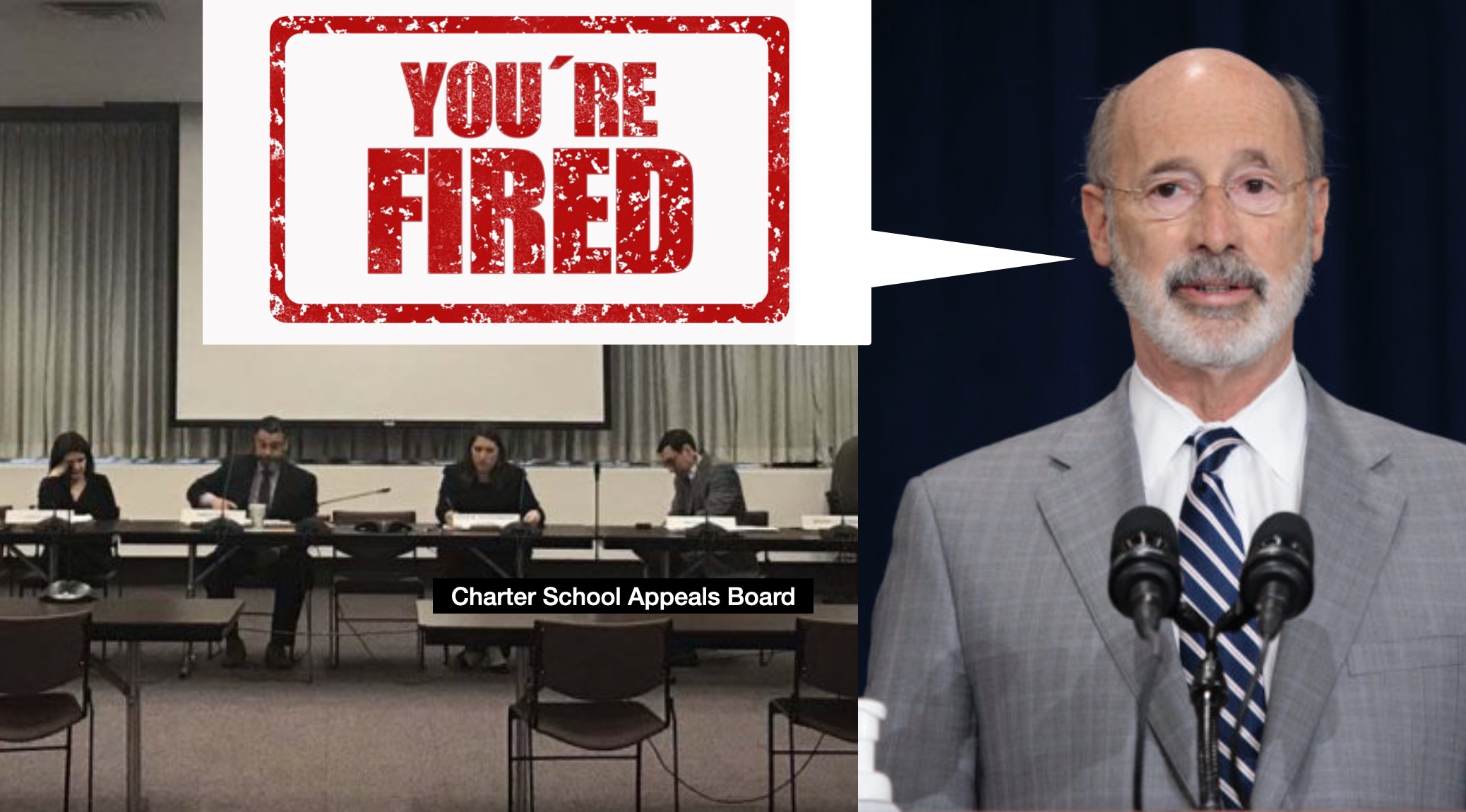
PA Gov. Wolf Fires Charter School Appeals Board. Every. Single. Member.

Being Governor of Pennsylvania must be one of the most thankless but important jobs ever.

With a hopelessly gerrymandered legislature, a majority of Republican lawmakers representing a minority of voters stops nearly anything from getting done for the rest of us.

If it weren’t for a Democratic Governor to act as a check and balance on this lunatic fringe, the state would devolve into chaos.

Case in point: the Charter School Appeals Board (CAB).

It took Gov. Tom Wolf, a Democrat, seven years to fire his predecessor’s appointments and nominate replacements to the CAB.

Yet the GOP legislature is crying crocodile tears that he’s exceeding his authority by doing so.

The board is supposed to be a place where charter schools can challenge decisions made by their local school boards.

Charters are schools that are funded by taxpayer dollars but can be privately operated.

They have to ask the local school board for permission to open a new school in their district. Since the new charter would double services already present at the existent public school and require both schools to split existing funding, there is little incentive for school boards to grant these requests.

But charters can bypass local government by going to the CAB. Or at least they could when the board still had sitting members on it.

The CAB consists of the Secretary of Education and six members who are appointed by the Governor and approved by the state senate.

However, closed door negotiations with the Republican controlled senate over who they would even consider approving over the years continually stopped Wolf from putting people forward as official nominees.

After all, why would Republicans work with Wolf? What incentive did they have to do so?

Refusing to work with the Democratic Governor kept the previous Republican Governor’s appointees in place long after their tenure should have expired.

This kept the CAB ideologically right wing so the members could rubber stamp charter schools left and right bypassing the will of duly elected school boards all over the Commonwealth.

Take the most recent approval in March of the Pennsylvania STEAM Academy – a school founded by Carolyn Dumaresq, former Republican Gov. Tom Corbett’s Education Secretary.

She literally sat on the board and worked with several sitting members of CAB when she was part of the Corbett administration. Now all these years later she appears before CAB for a hearing asking them to overrule the Harrisburg School Board that had originally denied her charter school’s application.

Guess who won?

The CAB unanimously sided with Dumaresq over elected members of the local community.

So Wolf finally gave these privatization zealots their walking papers.

It’s a pattern we’ve become sickeningly familiar with in Pennsylvania.

A problem arises. The GOP legislature does nothing or has no power so the Governor takes action to fix it. Then the GOP throws a hissy fit.

The house was just on fire and you doused the flames! You shouldn’t be allowed a bucket of water!

We saw the same thing with COVID. Wolf closed the state down to stop a global pandemic. And Republicans are still crying “Tyrant” over his use of executive power.

The far right love crying “Wolf” and blaming everything on the Governor, but make no mistake –  gridlock is exactly what they want.

That’s why Wolf’s action on CAB is so clever.

By firing the remaining members of the board, Wolf has functionally erased it from existence.

If the senate wants there to be a charter school appeals board, lawmakers need to vote on his nominees.

Wolf has nominated the following people to the board:

-Jodi Schwartz, a school board member from the Central Bucks School District

-Shanna Danielson, a teacher in the East Pennsboro School District in Cumberland County and former state senate candidate

-Stacey Marten, a teacher in the Hempfield School District in Lancaster County

-Ghadah Makoshi, a business owner and former candidate for Pittsburgh’s school board

-Nathan Barrett, superintendent of the Hanover Area School District in Luzerne County

 
One of the most exciting things about these nominees is how they might interpret the state’s 20-year-old charter school law.

Previous CAB members have refused to let school boards consider the financial impact of opening a new charter school. However, the state constitution requires public schools to provide a quality education to students in their district. Therefore, if opening a new charter school would adversely affect a districts finances, doesn’t the constitutional necessity to provide a quality education take precedence?

Many school privatization critics think it does. Will Wolf’s nominees?

Unfortunately, they have several hurdles to clear before the senate would vote on them and we’d find out.

Senate Republicans are already throwing a tantrum because Wolf placed Pennsylvania in a regional initiative to reduce greenhouse gas emissions.

How dare he endanger short term fossil fuel profits just to provide a cleaner environment for our kids and grandkids!

As a result, they’ve vowed to block the Governor’s appointment to a state utility commission. It’s doubtful they’d let CAB nominees through while blocking Wolf’s other appointment.

Moreover, there will doubtless be legal challenges to the Governor’s firing of previous CAB members.  

In the meantime, there are at least nine cases scheduled to be decided by CAB from Souderton, Southeast Delco, Pittsburgh, Harrisburg and Philadelphia. And that’s not even counting a recent pair of charter schools in Philadelphia where backers said they would appeal the local school board’s decision to deny their request to open.

Republicans may find themselves forced to choose between waiting out protracted legal challenges while their pet charters languish in appeals limbo or swallowing their pride, doing their damn jobs and voting on Wolf’s nominees!


Like this post?  You might want to consider becoming a Patreon subscriber. This helps me continue to keep the blog going and get on with this difficult and challenging work.

Plus you get subscriber only extras!

Just CLICK HERE.

Patreon+Circle

I’ve also written a book, “Gadfly on the Wall: A Public School Teacher Speaks Out on Racism and Reform,” now available from Garn Press. Ten percent of the proceeds go to the Badass Teachers Association. Check it out!

Can Unions Defang Charter School Vampires?

What if a vampire suddenly lost its fangs?

Would it still be a vampire?

That’s the question at the heart of a major change in the largest charter school network in western Pennsylvania.

This week, staff at the Propel network of charter schools voted overwhelmingly to unionize.

So the money men behind the Allegheny County system of charter schools are probably wondering if they’re still investing in charter schools at all.

After all, when encumbered by the need to collectively bargain with employees, can a charter still do all its usual profitizing tricks?

Thursday, Propel teachers and other staff voted 236-82 to join the Pennsylvania State Education Association (PSEA).

The drive took 9 months to achieve. Propel enrolls about 4,000 students at 13 schools in Braddock Hills, Hazelwood, Homestead, McKeesport, Pitcairn, Turtle Creek, Munhall, McKees Rocks and the North Side.

Though PSEA represents staff at about a dozen charters throughout the state, unionization is a rarity at charter schools.

And the reason is pretty obvious.

Charter schools are all about escaping the rules that authentic public schools have to abide by.

Though publicly financed, they are often privately operated.

They don’t have to be run by elected school boards. They don’t have to manage their business at public meetings. They don’t have to open their budgets to public review. Heck! They don’t even have to spend all the money they get from taxes on their students.

They can legally cut services and pocket the savings.

Nor do they have to accept every student in their coverage area. They can cherry pick whichever students they figure are cheapest to educate and those who they predict will have the highest test scores. And they can hide this discrimination behind a lottery or whatever other smoke screen they want because – Hey! The rules don’t apply to them!

I’m not saying every charter school does all this, but they all can. It’s perfectly legal to do so, and we rarely even see it happening until the school goes belly up and taxpayers are left paying the tab.

So how do unions change this system?

Most obviously, they put a check on the nearly limitless power of the charter operators.

Now you have to pay a living wage. You can’t demand people work evenings and weekends without paying them overtime. You have to provide safe working conditions for students and staff. And if you want to cut student services and pocket the difference, the staff is going to have something to say about that – AND YOU HAVE TO LISTEN!

How much will union power beat back charter bosses?

It’s hard to say. But there is no doubt that it will play a moderating influence.

And how much it does so may depend to a large degree on the individuals working at the school and the degree of solidarity they can exercise against their bosses.

One thing is for sure, with a union the gravy train is over.

Wall Street speculators often fawn over the charter industry because it’s possible to double or triple your investment in seven years.

This will probably not be the case in a unionized charter. And the impact of such a reality has yet to be felt.

Will the worst financial gamblers abandon school privatization because unions make it too difficult to make handfuls of cash? One can hope.

If it happened, the only charters left standing would be those created without profit as their guiding principle. The goal would really have to be doing the best thing for children, not making shadowy figures in the background a truckload of money.

Do such charter schools even exist? Maybe. With staff continuing to unionize, maybe there will be even more of them.

However, even if all of them become altruistic, there still remains a problem.

There still remains an authentic public school with which the charter must compete for limited funding.

Even a positive charter school that only does the best for its students still needs money to operate. And most districts barely have enough funding for one education system – certainly not two parallel ones.

This is a problem I don’t think unions can solve.

The state and federal government will have to find a better way to fund education. Relying on local property taxes to make up the largest share as we do in most parts of the country must come to an end.

But even if we figure out how to adequately, equitably and sustainably fund one education system, the presence of a charter school requires we do it twice.

Fiscal watchdogs may object to this as irresponsible, and one can certainly see their point.

However, in a country where we spend more on the military than the next ten nations combined, perhaps it isn’t so much to ask that we more than double spending on education.

Maybe there is something to be gained by having two parallel school systems. But there are certainly dangers.

Obviously the situation would be rife for de facto segregation. Charter schools already increase racial and economic segregation wherever these schools exist. However, if we regulated them to eliminate this risk, it is at least conceivable that these two systems could coexist.

It could certainly solve the problem of large class sizes by decreasing student to teacher ratios.

But will it?

Most of the people who work at charter schools are dedicated to their students and want them to succeed. They deserve every opportunity to thrive in a profession centered around children, not profit.

But can a system created to enrich the few ever be fully rehabilitated into one that puts children first?

When you defang a charter school, are you left with something harmless?

Or have you simply forced the beast to find other ways to feed?


Like this post?  You might want to consider becoming a Patreon subscriber. This helps me continue to keep the blog going and get on with this difficult and challenging work.

Plus you get subscriber only extras!

Just CLICK HERE.

Patreon+Circle

I’ve also written a book, “Gadfly on the Wall: A Public School Teacher Speaks Out on Racism and Reform,” now available from Garn Press. Ten percent of the proceeds go to the Badass Teachers Association. Check it out!

Let the Children Play – My Prescription for Covid “Learning Loss”

Things are different in school these days.

The classes are smaller.

The kids are more subdued.

The teachers are exhausted.

But that’s life as we try to overcome the Covid-19 pandemic and somehow get back to normal.

I come into the room every day and sit behind a glass barrier.

My kids either stumble in from the hall wearing masks (often below their noses) or they log in to Zoom and participate on-line.


It’s far from ideal, but we get things done.

Right now we’re reading the play version of “The Diary of Anne Frank.”

The kids were reticent at first.

With the unreliable schedules of in-person vs remote learning, it took us months to get through our last text, “The Outsiders.”

Now we’re speeding through scenes of the play with each person required to read a part aloud.

The results have been amazing.

In any normal year, I have to stop the class at various points to discuss what’s happening in the play.

This week, the students, themselves, stop us with questions, comments, and more curiosity than I’ve seen since the pandemic hit last year.

It’s as if they’re starving to learn something, and this play is nourishing their hearts and minds.

I laugh because my first thought was to come down on the shouting out and side commenting until a deeper part of me realized this was all okay. They were on-task, if unrestrained.

It’s something, going from the near silence of a Zoom chat room with its black boxes instead of student faces to a classroom full of rambunctious teenagers getting excited by the lesson.

We’re having a great time as we discuss WWII, parental relationships, racism, dating etiquette, and Hitler’s genitalia.


(Hey! They brought it up!)

We only have about a month or so left of actual instruction time because the Biden administration is demanding we take standardized tests.

That’s weeks of class I could be teaching and they could be learning.

But whatever.

I’m tired of fighting for things that make sense in the classroom.

No one listens to teachers. That’s why I’m running for office.

I figure as a member of Allegheny County Council, people will have to listen to me. And I’ll bring all of the concerns of those around me out in the open, too.

But that brings me to the title of this piece:

Let the Children Play – My Prescription for Covid “Learning Loss”

As my students and I are racing to learn something in the classroom, the same folks who demand we waste that precious time on high stakes tests are also bemoaning kids learning loss.

“Oh, woe are the children!” They cry.

“How many years and months are they getting behind because of this pandemic!?”

It’s like a flat Earther complaining that we need to build a fence around the planet’s edges so no one can fall off.

What these fools fail to understand is that there is no learning loss.

Comprehension is not a race. There is no one ahead or behind. Everyone goes at their own pace. And if you try to force someone to go more quickly than is best for them, they’ll stumble and fall.

Or they’ll refuse to go forward at all.

These folks pretend that learning is all about numbers – test scores, specifically.

You need to hit this score before you’re ready for the next grade. That score’s required before high school. This one before college.

It’s all nonsense, and I can prove it with one question:

What do these numbers represent?

What are they measuring?

What is the basic unit of comprehension?

Okay. I lied. That was three questions. But you get the point.

Learning is not quantifiable in the way they pretend it is and teaching is not the hard science they want it to be.

You can’t look into someone’s mind and see what they’ve learned and what they still need to know.

You can give a test that tries to assess understanding of certain subjects. But the more complex the knowledge you’re testing for, the more tenuous the results of that test will be.

And an assessment made by someone miles away who never met the person taking it is less accurate – not more accurate.

But let’s be honest, these learning loss champions are not really worried about children. They’re representatives of the standardized testing industry.

They have a vested interest in selling tests, selling test prep materials, software, etc. It’s just a pity that so many of our lawmakers on both sides of the aisle are persuaded by their arguments (or the hefty campaign contributions that come with that persuasion).

So as the school year rapidly comes to a close, I have a suggestion to make.

I know I’m not qualified to do so.

I’m just a public school teacher with 17 years experience. I’ve never sat on any think tank boards. No testing corporation has ever paid me a dime to hawk one of their high quality remediation products.

But being in the classroom with kids day-in, day-out for all that time, I have observed some things about children and how they learn.

Most importantly – children are people.

I know that’s controversial, but I believe it to be true.

As such, they need down time.

They need time to regroup and recharge.

This pandemic has been hard on everyone.

As of April 1, nearly 3.47 million children have tested positive for COVID-19, most with mild symptoms, according to the American Academy of Pediatrics. A few hundred have died, mostly children of color. Many more kids probably contracted the virus but were asymptomatic spreaders of the disease to adults.

As a result, between 37,000 and 43,000 children in the United States have lost at least one parent to COVID-19, according to USC research.

They have suffered through changes in routine, disruptions in learning, breaks in the continuity of their healthcare, missed significant life events like birthday parties, vacations and graduations. But worst of all they have suffered the loss of safety and security.

We should not be demanding they work harder at a time like this.

We should be providing them with kindness, empathy and love.

In the classroom, I no longer have a thing called “Late Work.”

If a student hands in an assignment passed the due date, there is no penalty. I just grade it. And if it isn’t done correctly, I give them a chance to redo it.

As many chances as they need.

I remediate. I tutor. I offer advice, counseling, a sympathetic ear.

It’s not that much different than any other year, except in how often children need it now.

Kids AND their parents.

I can’t tell you how many adults I’ve counseled in the last several months.

So when the last day of school arrives, I will close my books.

There will be no assignments over the summer from me.

No homework. No requirements. No demands.

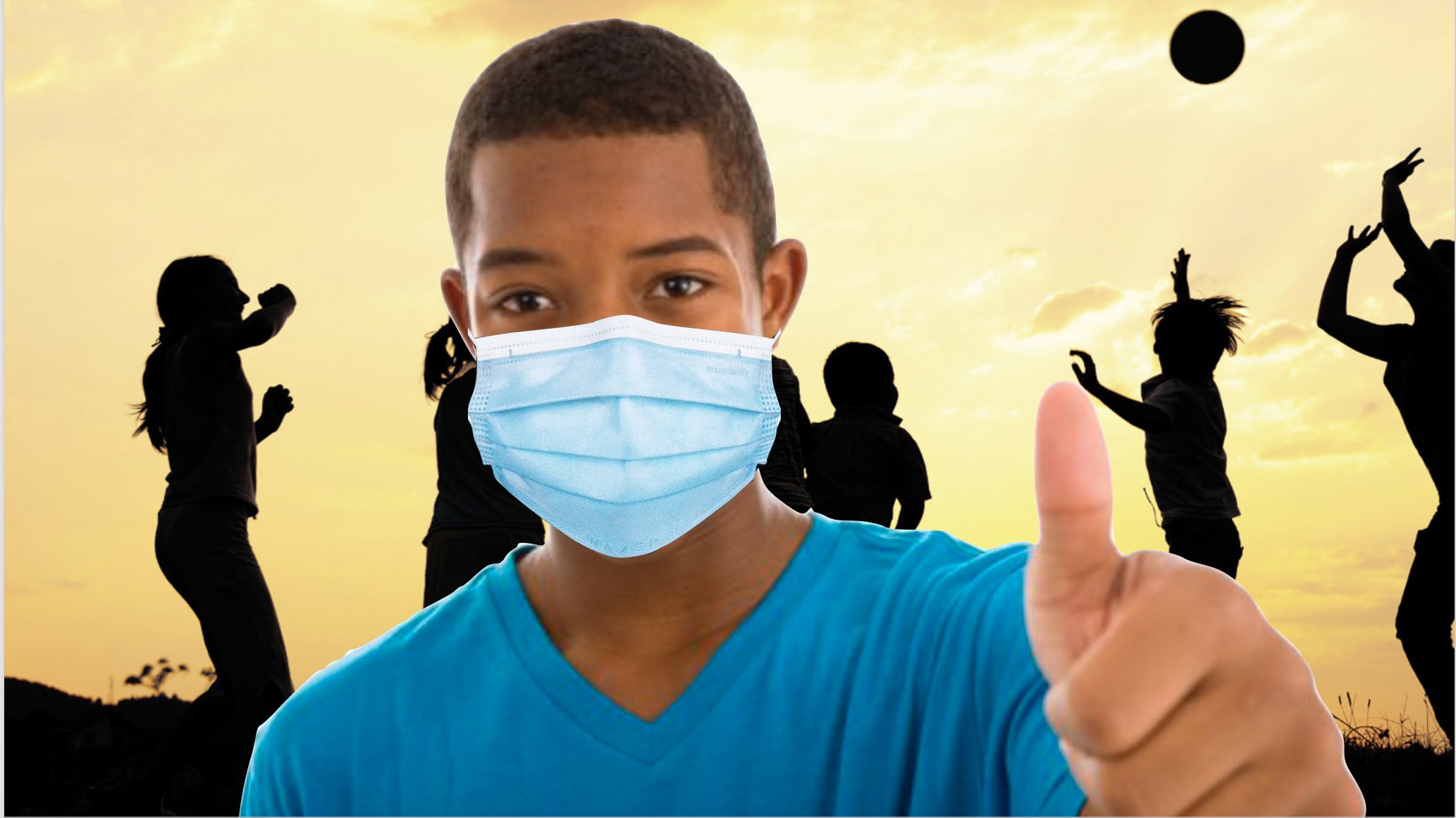
The best things kids can do is go out and play.

Have fun.

Recharge.

The corporate testing drones will tell you that’s a waste of time. Our kids are getting behind doing things like that.

Nonsense.

Play is the best kind of learning kids can do.

It is an independent study in whatever they are curious to discover.

Play is the mind’s way of finding out how things work, what a person can do, how it feels to do this or that.

Honestly, there is not a second wasted in play.

Taken moment-by-moment, there is more learning done during play than in any classroom. Because play is self-directed and driven entirely by curiosity.

I want all of my students to go play this summer.

And I want the children who will be in my class next year to have had a fantastic summer of fun and excitement.

That way they’ll come into the classroom energized and ready to learn what I have to show them.

They won’t be ahead. They won’t be behind.

They’ll just be.

And that’s my prescription for a productive 2021-22.


Like this post?  You might want to consider becoming a Patreon subscriber. This helps me continue to keep the blog going and get on with this difficult and challenging work.

Plus you get subscriber only extras!

Just CLICK HERE.

Patreon+Circle

I’ve also written a book, “Gadfly on the Wall: A Public School Teacher Speaks Out on Racism and Reform,” now available from Garn Press. Ten percent of the proceeds go to the Badass Teachers Association. Check it out!

The Year Without Standardized Testing

Last year was the first in nearly two decades that the US did not give standardized tests to virtually every student in public school.

Think about that.

Since 2001 almost every child took the tests unless their parents explicitly demanded they be opted out.

For 19 years almost every child in grades 3-8 and once in high school took standardized assessments.

And then came 2019-20 and – nothing.

No multiple guess fill-in the bubble questions.

No sorting students into classes based on the results.

No evaluating teachers and schools based on the poverty, race and ethnicities of the children they serve.

And all it took to make us stop was a global pandemic.

What are the results of that discontinuity?

We may never really know.

There are so many variables at play.

The Covid-19 pandemic closed school rooms across the nation for various lengths of time. Some are still closed. Some are beginning to close again.

Many classes were conducted remotely through conferencing software like Zoom and file sharing programs like Google Classroom. Others were conducted through a hybrid model combining in-person instruction and cyber instruction. While still others met in-person with numerous mitigation efforts like masks, social distancing and air purifiers.

Many students were absent, struggled to learn and experienced countless traumas due to the isolation, sickness and deaths.

About 561,000 people are dead in the United States because of Covid-19.

That’s more than Americans who died in the attack on Pear Harbor (2,403), the 9/11 terrorists attacks (3,000), WWI (116,000) or WWII (405,000).

Only the Civil War (600,000 – 850,000) has a larger death toll. For now.

As of April 1, nearly 3.47 million children have tested positive for COVID-19, most with mild symptoms, according to the American Academy of Pediatrics. A few hundred have died, mostly children of color. Many more kids probably contracted the virus but were asymptomatic spreaders of the disease to adults.

As a result, between 37,000 and 43,000 children in the United States have lost at least one parent to COVID-19, according to USC research.

How do you sort through all these tragedies and traumas and say THIS was caused by a lack of standardized testing?

You probably can’t.

But you can ask questions.

For example, how many teachers really missed the data the standardized tests would have shown?

How many students and parents agonized over what last year’s test scores would have been?

How many government agencies really wanted to provide resources to schools but couldn’t figure out where they should go because they didn’t have test scores to guide them?

I’m not sure exactly how we could find answers.

We could survey teachers and staff about it.

We could survey parents and students.

We could even subpoena Congresspeople and ask them under oath if a lack of test scores determined their legislative priorities.

But we’re not really doing any of that.

It’s a prime opportunity to find out something valuable about standardized tests – mainly if people really think they’re valuable.

But we’re not going to stop and do it.

Instead we’re rushing back onto the testing treadmill this year while the Coronavirus pandemic still rages.

Is that logical behavior?

Not really.

We already have almost 20 years of data showing that annual testing did not improve student learning nationally. US kids were no better off from 2001-2019 having yearly tests than students in Scandinavia who were tested much less frequently. In fact, the countries with the highest academic achievement give far fewer assessments.

The effectiveness and fairness of standardized testing have come into question since before George W. Bush’s No Child Left Behind legislation enshrined them into law.

They were designed by eugenicists to justify racism and prejudice. Their partiality for wealthier whiter students and discrimination against poorer browner students has been demonstrated time and again.

But in 2001 we created an industry. Huge corporations write the tests, grade the tests and provide the remediation for the tests. Billions of dollars in taxes are funneled into this captive market which creates monetary incentives for our lawmakers to keep the system going.

Yes, some civil rights organizations have waffled back and forth over this as big donors who value the tests make or withhold contributions. Meanwhile, many other more grassroots civil rights organizations such as Journey for Justice Alliance (JJA), a group made up of 38 organizations of Black and Brown parents and students in 23 states, have continuously called for the abolition of high stakes testing.

It should be no surprise then that President Joe Biden – though as a candidate he promised to stop standardized testing if he were elected – did an immediate about face this year and insisted we reinstate the assessments.

A scientific mind would be empirical about this. It would examine the results as much as possible and determine whether moving forward made any sense.

This is especially true as the pandemic health crisis continues to make the act of giving the tests difficult at best and dangerous at worst.


There is no way a logical mind can look at the situation and not come to the conclusion that the status quo on testing is a triumph of capitalism over science and reason.

In a month or so, the year without testing will be just that – a single year.

To paraphrase Winston Churchill:

We shall go on to the end. We shall test during Covid, we shall test in the classes and on-line, we shall test with growing confidence and growing strength wearing masks, we shall defend our industry, whatever the cost may be. We shall test in the homes, we shall fill in bubbles on sanitized desks, we shall test in the fields and in the streets, we shall test in the hospitals; we shall never surrender!


Like this post?  You might want to consider becoming a Patreon subscriber. This helps me continue to keep the blog going and get on with this difficult and challenging work.

Plus you get subscriber only extras!

Just CLICK HERE.

Patreon+Circle

I’ve also written a book, “Gadfly on the Wall: A Public School Teacher Speaks Out on Racism and Reform,” now available from Garn Press. Ten percent of the proceeds go to the Badass Teachers Association. Check it out!

Lawmakers Backing Standardized Tests Should Practice What They Preach

When it comes to the whip, one side is definitely better than the other.

Everyone wants to hold it by the stock. No one wants to get hit by the lash. 

That’s why politicians as diverse as Donald Trump and Joe Biden have struggled so desperately to defend standardized testing.

They want to keep control of the torture device they’ve inherited from their predecessors without feeling its sting, themselves.

Take the current Covid crisis in our public schools.


Educators are scrambling to teach safely and most lawmakers stand aside unsure how to help.

We can’t figure out which students to assist, they say, without first giving them all a batch of standardized tests.


It’s absurd, like paramedics arriving at a car crash, finding one person in a pool of blood and another completely unscathed – but before they know which person needs first aid, they have to take everyone’s blood pressure. 


I mean come on! We’re living through a global pandemic.  


Nearly every single class has been majorly disrupted by it. 


So just about every single student needs helpBUT SOMEHOW WE NEED DATA TO NARROW THAT DOWN!?  


Our duly-elected decision-makers seem to be saying they can only make decisions based on a bunch of numbers


The fact that they have so little imagination that they can’t visualize the problem without a bar graph is truly disturbing. 


But this isn’t rocket science. They don’t HAVE TO be creative thinkers.  


Just use class attendance to see which students have received consistent instruction and which have been absent all year.


Look at classroom grades, which outline students’ academic performance from day to day.  


Those are numbers. And they clearly show which kids have been impacted the most by Covid-19. 


But for some reason actually using the data we already have is just crazy talk! 


Scores on a standardized test are the ONLY data that counts


Okay.

Then I have a suggestion for these legislators. 


Why don’t you practice what you preach? 


If the only logical way to make decisions is based on test scores, you should provide those scores to the greatest decision-making body in the country: voters.  


Every lawmaker who CHAMPIONS standardized tests should have to TAKE standardized tests.  


I don’t mean the same tests as the students.  


That would be silly.  


After all, student tests are designed to favor answers from privileged white people. Most of these lawmakers are the target demographic already. They passed a standardized test (or paid someone to pass the test for them) as a smokescreen getting into whichever prep school or ivy league college where they were legacy enrollments, anyway.  


I’m talking about a new series of standardized tests designed to show how much these lawmakers adhere to the principles of their respective political parties. 


So there’d be two versions – one for Republicans and one for Democrats.  


A high score means the test taker is a bona fide example of their party’s ideals. A low score means they should probably be booted out on their butts. 


For example, a question for Democrats might be: 


Which policy is progressive? 


A) School privatization 
B) Fracking on native lands 
C) Drone strikes 
D) Universal healthcare 


And an example for Republicans: 


Which policy is fiscally responsible? 


A) School privatization 
B) Tax cuts for billionaires 
C) More unnecessary wars  
D) Investing in infrastructure  


The answers are both D and that’s because this test would be in high De-mand! Get it? 


Think of what we could do with these scores! 


Lawmakers could tout their assessment achievements as they campaign. 


They could say, “Vote for Sam Smith. He got an Advanced Score on the Democratic System of Statesperson Assessments (DSSA).”  


Or “Don’t vote for Megan Mission. She only scored a Satisfactory on the Partnership for Assessment of Republicanism for Congress or Klan (PARCK).” 


What an improvement that would be! 


Finally, we wouldn’t have to rely on a politician’s voting record or campaign contributions or platform….  We could just look at the score and vote accordingly. 


But who would we get to make and grade the tests? 


It couldn’t be the politicians, themselves, or even their respective political parties. That wouldn’t be standardized somehow.  


If we can’t let teachers create tests for their own students, we certainly can’t trust politicians to do the same for their fellow campaigners. 


I guess we could task the testing corporations with making these assessments, but that’s a conflict of interests. We should instead rely on the educational experts, people with the credentials and the most experience actually giving standardized tests. 


And that would be…. Classroom teachers


So these tests should be written by the National Education Association (NEA) and American Federation of Teachers (AFT).  


But, of course, this isn’t free. We’ll have to pay these test-creators, and pay them handsomely.  


That’s billions more dollars spent on assessment. What an expense! What a waste of tax dollars! 


Still, can we really afford not to?  


I’m sure would-be lawmakers would like a leg up on the competition, so the teachers’ unions could make workbooks and software packages and apps and teach remedial courses to help folks pass the tests. That would probably bring in more money than the tests, themselves.  


And since the teachers would get to grade the assessments, they could make sure the scores are curved so only a very limited number pass each year. We can’t have grade inflation, after all.  


What would the teachers do with this money, I wonder?  


Well, they could reinvest it in our schools.  


See? We’ve just solved two problems at once.  


No more under-resourced schools. No more educational inequality. Every school in the country could be like the Taj Mahal!  


And all of this just because of standardized testing! 


Maybe the lawmakers have the right idea in prioritizing high stakes testing! 


Or maybe they understand the value of benefiting from the testing industrial complex and not being subjected to it. 


Like this post?  You might want to consider becoming a Patreon subscriber. This helps me continue to keep the blog going and get on with this difficult and challenging work.

Plus you get subscriber only extras!

Just CLICK HERE.

Patreon+Circle

I’ve also written a book, “Gadfly on the Wall: A Public School Teacher Speaks Out on Racism and Reform,” now available from Garn Press. Ten percent of the proceeds go to the Badass Teachers Association. Check it out!




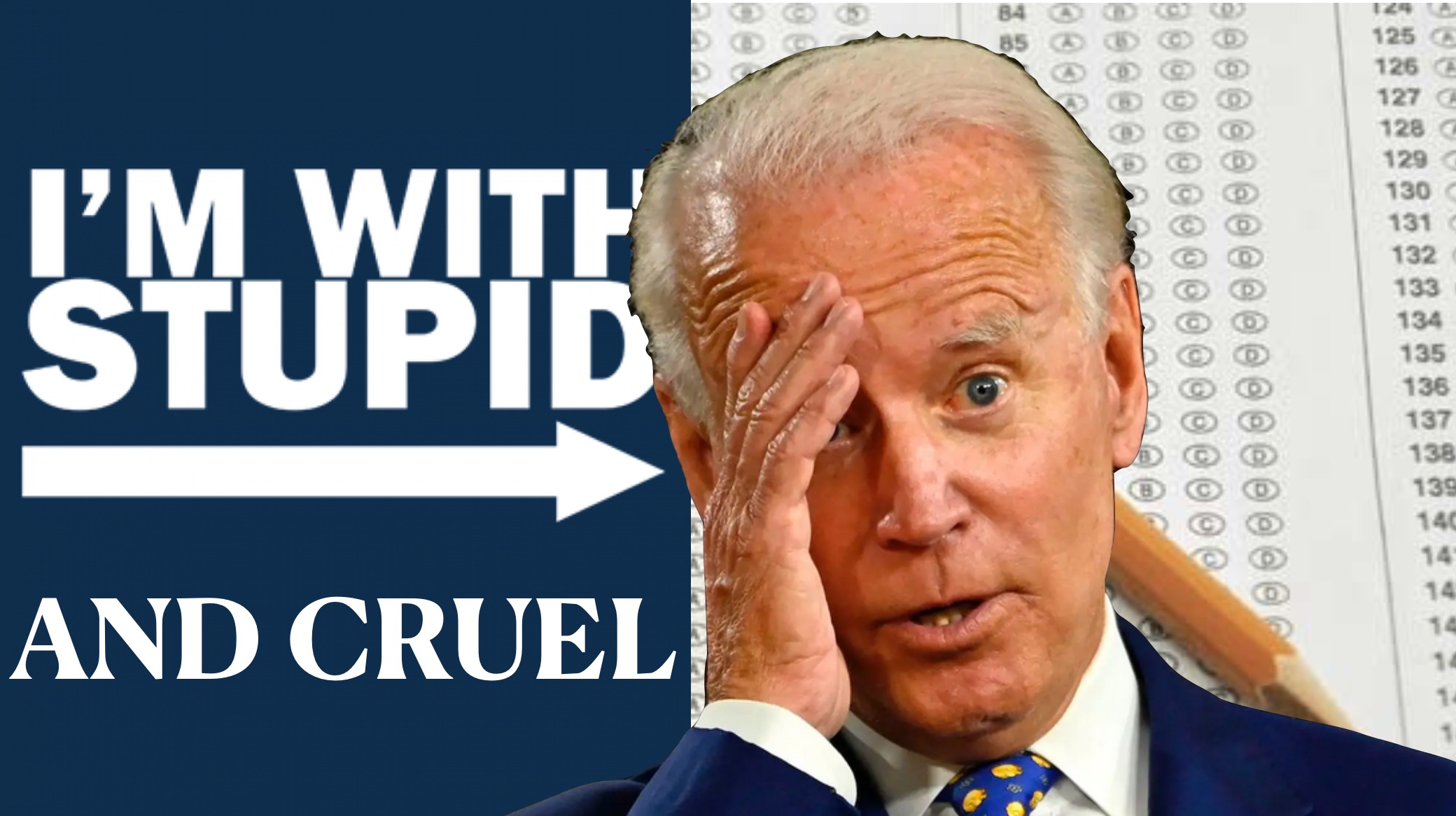
Standardized Testing During a Pandemic is Stupid. And Cruel.

When the Biden administration announced that schools across the nation would have to give standardized tests during the global Coronavirus pandemic this year, America’s teachers let out a collective sigh of disgust.

If it had to be put into words, it might be this:

“I can’t even.”

Imagine a marine biologist being told she had to determine if the water in the dolphin tank is wet.

That’s kind of what the demand to test is like.

Determine if the water is wet and THEN you can feed the dolphin.

Imagine a person on fire being told to measure the temperature of the flames before you could put them out.

Imagine a person staving in the desert being required to take a blood test to determine previous caloric intake before anyone would offer food or water.

It’s literally that dumb.

No, it’s worse.

The reason the Biden administration gave for requiring testing this year was to determine the amount of learning loss students had suffered during the pandemic.

I wrote that in one sentence but it will take several to show how dumb that idea is.

First, there’s the idea of learning loss.

What does it mean?

It’s based on the idea that kids learn on a schedule.

You need to know A, B and C when you’re in 3rd Grade. You need to learn D, E, F in 4th grade. And so on.

And if you miss one of the letters somewhere in there, you’re learning will be disrupted forever.

The Biden administration seems to be worried that kids are not intellectually where they SHOULD be because of the pandemic and that if we don’t do something about it now, they will be irreparably harmed.

It is pure fantasy.

There is no developmental, psychological or neurological basis to it.

Some fool at a standardized testing company just made it up to sell more product.

And it doesn’t take much to prove it wrong.

Do a thought experiment with me.

Imagine you needed directions to the store.

You didn’t get them yesterday. You got them today.

Was your brain irreparably harmed?

You were still able to learn how to get to the store, weren’t you? You just did it one day later. No problem.

It might have stopped you from getting your groceries yesterday, but you can certainly go shopping today.

Now imagine we weren’t talking about directions. Imagine we were talking about addition and subtraction.

Some kids are ready to learn these concepts earlier than others. Does that mean there’s something wrong with them?

No. Absolutely not. It’s just that people’s brains develop at different rates.

And if you don’t learn something one year, that doesn’t mean you can’t learn it a year or two later.

There may be issues with core concepts like language acquisition being delayed too long over larger amounts of time, but these are extreme cases.

Delaying one or two years of school curriculum won’t make or break you.

For most of us, not learning something now doesn’t preclude learning it later.

So learning loss is nonsense.

No child has lost the ability to learn because of the pandemic – except any who died as a result of catching Covid.

That’s perhaps the biggest way the Biden administration’s testing requirement is dumb. It’s justified on assessing something that doesn’t exist.

But if we redefine learning loss into the next best thing that DOES exist – learning – it at least makes sense.

So maybe Joe meant that we need standardized tests to find out how much kids have learned (not what learning they’ve lost).

It’s still deeply stupid, but at least it’s coherent.

Here’s the problem. Standardized tests are completely unnecessary to assess learning. In fact, they’re notoriously terrible at measuring this.


Under normal circumstances, standardized tests don’t show how much a child has learned. They show how well the child can take the test. They show how well the test taker can play the game of test taking.

Most questions on these tests are multiple choice. They limit the possible answers to 4 or 5 choices.

If you’re asking something extremely simple and clear, this is achievable. However, the more complex you get – and by necessity the more subjective the question gets – the more the test taker has to think like the person who wrote the question.

That’s why it’s a standardized test. That’s what it means – conforming to a standard.

Out of all the possible ways to answer the question, the standard test taker will answer like THIS. And whatever that is becomes the correct answer.

The test makers get to decide what kind of person to set the standard as, and most of the time it’s white, male, Eurocentric kids.

This doesn’t matter so much when you’re asking them to calculate 2+2. But when you’re asking them to determine the meaning behind a literary passage or the importance of a historical event or the cultural significance of a scientific invention – it matters.

As a result, kids from richer, whiter homes tend to score better on these tests than those from poorer, browner homes.

And that doesn’t mean poor, brown kids aren’t intelligent. It just means they don’t necessarily think like the standard rich, white kids.

We don’t need to give standardized tests to tell us who gets low scores during a pandemic. It will be the poor minority kids. During a pandemic, during a recession, during a stock market boom, during a revolution, during anything.

Moreover, the idea that the amount of learning children have done in school is a mystery is, itself, a farce.

Of course, most kids have learned less during the pandemic than under normal years.

Schools have been disrupted. Classes have been given remotely, in-person and/or in some hybrid mix of the two. Parents, families, friends have gotten sick, jobs have been lost or put in jeopardy, social interactions have been limited.

You really need a standardized test to tell you that affected learning?

You might as well ask if water’s wet. Or fire’s hot? Or if a starving person is hungry?

But let’s say you needed some independent variable.

Okay. How about looking at the classroom grades students have earned? Look at the amount of learning the teacher has calculated for each student.

After all, most of these kids have been in school to some degree. They have attended some kind of classes. Teachers have done their best to assess what has been learned and to what degree.

Look at teachers’ grades. They will give you 180-some days worth of data.

Look at student attendance. See how often children have been in class. I’m not saying that there aren’t justifiable reasons for missing instruction – there are. But attendance will tell you as lot about how much students have learned.

Ask the parents about their kids. Ask how they think their children are doing. Ask what kind of struggles they’ve gone through this year and how resilient or not their children have been. Ask about the traumas the children have experienced and what solutions they have tried and what kind of help they think they need.

And while you’re at it, make sure to ask the students, themselves. I’m sure they have stories to tell about this year. In fact, many teachers have suggested students keep Covid diaries of what they’ve been going through.

Finally, take a look at the resources each school has. How much do they spend per pupil and how does that compare with surrounding districts? Look at how segregated the school is both in comparison to other districts, other schools in the district and class-by-class within the school. Look at class size, how wide or narrow the curriculum is, how robust the extra curricular activities offered, what kind of counseling and tutoring each school offers. That will tell you a lot about how much learning students have achieved – not just during Covid times but ANYTIME!

If that’s not enough data, I don’t know what to tell you.

There are plenty of measures of student learning this year. Standardized testing is completely unnecessary.

But unfortunately that doesn’t end the stupid.

Now we come to the rationale behind assessing learning in the first place.

The Biden administration says we have to give standardized tests to tell how much students have learned SO THAT WE CAN PROVIDE RESOURCES TO HELP KIDS CATCH UP!

Are you freaking kidding me!?

That’s the reason behind this fool’s errand?

You need something to tell you where to direct the resources?

Let me give you a little advice. If you’ve got a hungry dolphin, stop worrying about the wetness of the water. Feed the dang thing!

If someone’s on fire, put away the thermometer and take out the hose.

If someone’s starving, put away the needle and take out a glass of water and a sandwich.

Because that’s the ultimate problem with test-based accountability.

It purports to offer resources to students in need but never really does so.

There is no additional funding coming to help kids overcome the hurdles of Covid. Just as there were no additional resources to help children of color after many failed standardized assessments.

There’s just a boondoggle to be given to the testing companies on the dubious promise that the next time kids take the tests, they’ll do better.

There’s no money for tutoring or counselors or extra curricular activities or reducing class size. But there’s a treasure chest full of gold doubloons (i.e. tax dollars) for testing companies to give us test prep materials.

Common Core workbooks, standardized test prep software, test look-a-like apps – they’re all there.

It’s all just corporate welfare for the standardized testing industry. It’s not about helping kids learn.

In any normal year, that would be bad enough.

But this year it’s even worse.

Not only will the tests fail to bring any relief to children struggling to learn in a pandemic, they will actually stop them from learning.

Because, after all, one of the most precious resources this year is time. And that’s exactly what these tests will gobble up.

Wasting time on testing is bad in any year, but in a year when school buildings have been closed and learning has been conducted remotely, when we’ve struggled with new technologies and safety precautions, when we’ve seen our friends and neighbors get sick, quarantine and hospitalize… Every second learning is that much more valuable.

Instead of using what few days remain of the academic year to reinforce skills, discuss new concepts or practice problems, the Biden administration insists teachers proctor standardized tests.

That takes time. A lot if it.

Yes, Biden is allowing all kinds of leniency in HOW we take the tests. They can be shortened, taken in school, taken remotely, even taken at a later date – but they must be taken.

So goodbye, time that could have been spent on authentic learning. Hello, hours, days and weeks of test-taking drudgery.

That’s not a trade off many teachers, parents or students think is fair.

So President Biden can stop the charade.

America’s teachers aren’t buying it.

We know how deeply stupid this testing mandate is.

Stupid and cruel.

Paging, Dr. Jill Biden. Paging, Dr. Jill Biden. Where you at?

Like this post?  You might want to consider becoming a Patreon subscriber. This helps me continue to keep the blog going and get on with this difficult and challenging work.

Plus you get subscriber only extras!

Just CLICK HERE.

Patreon+Circle

I’ve also written a book, “Gadfly on the Wall: A Public School Teacher Speaks Out on Racism and Reform,” now available from Garn Press. Ten percent of the proceeds go to the Badass Teachers Association. Check it out!

Standardized Testing During the Pandemic is Corporate Welfare Not Student Equity

We’ve got to be able to tell how badly the pandemic is affecting student learning.

So let’s give standardized tests.

That’s the rationale behind the Biden administration’s mandate that schools across the country still struggling just to keep buildings open somehow manage to proctor standardized assessments.

Nearly 29 million people have contracted Covid-19 in the United States. More than 514,000 people have died from the virus.

Only about half of the nation’s schools are open for in-person learning, and many of those are operating on a hybrid basis. The rest are completely virtual.

Children have lost parents, siblings, family members, friends, teachers. Families are struggling just to survive with some members still recovering from the longterm health consequences of contracting Covid.

It is absurd to claim that only standardized tests can show whether the pandemic has impacted student learning.

It has. Nearly everywhere.

Insisting on testing is like bringing a thermometer into a burning building to tell firefighters where to spray the hose.

But pay attention to the messenger.

In this case, it’s acting education secretary Ian Rosenblum, former executive director of pro-testing organization, the Education Trust.

He sent the letter to state superintendents on behalf of the Biden administration telling them that blanket waivers of the federal testing mandate would not be considered this year as they were in 2019-20.

Let’s be honest. Rosenblum is not an educator.

He is a corporate lobbyist given a government job where he has continued to lobby for his industry.

This has nothing to do with helping students overcome the problems of a pandemic.

It is corporate welfare. Plain and simple.

Standardized testing is a multi-million dollar business.

States spend more than $1.7 billion every year on testing. In 45 states, assessments at the primary level alone cost taxpayers $669 million.

This money isn’t going to mom and pop organizations. The four major testing companies are Wall Street heavy hitters – Harcourt Educational Measurement, CTB McGraw-Hill, Riverside Publishing (a Houghton Mifflin company), and NCS Pearson.

In 2001 the first three agencies accounted for 96% of the tests administered, while Pearson was the leading scoring agency of those tests. And since then the market has exploded.

In 1955 the industry was valued at only $7 million. By 1997 it had ballooned to $263 million. This is a 3ooo% increase. Today the estimated worth of the industry is $700 million.

However, that only takes into account actual assessment.

When you consider that many of these companies (or their parent conglomerates) also provide remedial materials for students who fail the tests, the profits really start rolling in. It’s no coincidence that McGraw-Hill, for example, also publishes books and other materials many of which are used by schools to remediate the same students who fail the company’s tests.

It’s a captive market. The testing company makes and distributes the test (for a fee), scores the test so that a majority fail (for another fee), and then sells schools the materials it claims will help students pass next time (for an even further fee).

However, for the first time in two decades, the pandemic threw a monkey wrench into the machine.

Last year, the Trump administration cancelled all standardized tests as schools were closed to protect students from Covid-19.

Former Education Secretary Betsy DeVos had already signaled that she would not cancel them again this year, but when Trump lost the election, many educators and families had hoped in-coming President Joe Biden would think differently.

He had, in fact, promised that if he were elected he would not continue forcing states to give standardized testing.

I was there at the Education Forum in Pittsburgh in 2020 when my friend Dr. Denisha Jones asked him about it point blank.

You can watch his full answer here, but the crux of it was “Teaching to a standardized test makes no sense.”

Unfortunately, caving to a powerful corporate lobby does. And that’s exactly what Biden has done here.

In fact, it goes a long way to explaining his perplexing rush to reopen schools in his first 100 days regardless of the level of community infection.

Biden, who ran on being friendly to teachers and that his wife Dr. Jill Biden was an educator, has pushed some extremely absurd education policies in his short time in office.

Not only has his administration decided to ignore community infections, he has insisted that schools can be opened safely if districts follow certain safety precautions like universal masking, contact tracing and social distancing.

However, many schools are not following these protocols and even more simply cannot because doing so would be exorbitantly expensive. For example, you can’t have all students return to a cramped school building AND have them be 6 feet apart. There simply isn’t the available space. Moreover, contact tracing doesn’t effectively track Covid cases since most students who contract the virus are asymptomatic.

Then there is the absurd prescription that schools don’t even have to prioritize teachers for the Covid vaccine before reopening. In many states educators aren’t even eligible yet to receive the vaccine. Yet the Biden administration expects them to enter the classroom without necessary protections to keep them, their families and students safe.

These are all perplexing policies until one looks at it from an economic vantage.

Waiting for all teachers to have the opportunity to take a two dose vaccine would take at least a month and a half – that’s if every teacher could start the process today.

In addition, if we wait for community infections of the virus to dissipate, testing season will be far from over. In fact, it’s likely the rest of the school year would be gone.

So if the Biden administration had prioritized safety, it would have been forced to cancel standardized tests again this year.

Instead, it has prioritized the testing-industrial complex.

The economy is more important to the powers that be once again.

As a compromise measure, Biden is allowing flexibility in just about every way the tests are given. They can be shortened. They can be given remotely. They don’t have to be given now – they can be given in the fall.

However, this completely erases any measure of standardization in the processes.

Standardization means conforming to a standard. It means sameness. A test taken by a student at home is not the same as one taken by a student in school. A short version of a test is not the same as a long one. A test taken with 180 days to prepare is not the same as one taken with 250.

And if standardization is not NECESSARY in this case, why can’t we rely on non-standardized assessments teachers are already giving to their students? For example, nearly every teacher gives her students a grade based on the work the child has done. Why isn’t that a good enough measure of student learning?

It’s based on a year’s worth of work, not just a snapshot. It’s in context. And it’s actually more standardized than the hodge podge of assessments the Biden administration is allowing this year.

Why isn’t that allowed?

Because the testing companies won’t make any money.

Moreover, it could ruin their future profits.

If student grades are enough to demonstrate student learning during a pandemic, why aren’t they enough at other times?

The very project of high stakes standardized testing is thrown into question – as it should be.

Educators across the country will tell you how worthless standardized tests are. They’ve been telling people that for decades but policymakers from Republicans to Democrats refuse to listen. It’s almost as if they’re distracted by another sound – the jingle of money perhaps?

Those who claim standardized testing is necessary to determine where students are struggling have the weight of history to overcome.

Standardized assessments were created as a justification of racism and eugenics. They have never shown learning gaps that couldn’t be explained by socio-economics. Impoverished and minority students score poorly on the tests while privileged and white students score well.

If one really wanted to invest more resources where these alleged deficiencies exist, one wouldn’t need standardized assessments. You could just look at the poverty level of the community and the percentage of minority students.

But even more telling is the fact that this has never happened. Testing has never resulted in more resources being provided to needy children other than providing more remedial test prep material purchased from – you guessed it – the testing industry.

Under normal circumstances standardized testing is a scam.

During a pandemic, it’s the most perverse kind of corruption imaginable.


Like this post?  You might want to consider becoming a Patreon subscriber. This helps me continue to keep the blog going and get on with this difficult and challenging work.

Plus you get subscriber only extras!

Just CLICK HERE.

Patreon+Circle

I’ve also written a book, “Gadfly on the Wall: A Public School Teacher Speaks Out on Racism and Reform,” now available from Garn Press. Ten percent of the proceeds go to the Badass Teachers Association. Check it out!