Some people see it as a mere transaction, a job: you do this, I’ll pay you that.
The input is your salary. The output is learning.
These are distinctly measurable phenomena. One is calculated in dollars and cents. The other in academic outcomes, usually standardized test scores. The higher the salary, the more valued the teacher. The higher the test scores, the better the job she has done.
In this framework, the teacher has no autonomy, no right to think for herself. Her only responsibility is to bring about the outcomes demanded by her employer. The wants and needs of her students are completely irrelevant. We determine what they will become, where they will fit into the burgeoning economy. And any sense of curiosity or creativity is merely an expedient to make children into the machinery of industry and drive the gross domestic product higher to benefit our stock portfolios and lower corporate taxes.
And since this education system is merely a business agreement, it must obey the rules of an ironclad contract. And since we’re trying to seek our own advantage here, it’s incumbent on us to contain our workforce as much as possible. This cannot be a negotiation among equals. We must keep each individual cog – each teacher – separate so that they can’t unionize together in common causeand equal our power. We must bend and subject them to our will so that we pay the absolute minimum and they’re forced to give the absolute maximum.
That’s just good business sense. It’s the best way to establish this relationship.
Moreover, since we see education in terms of pure capital – human financial units flowing through a systemic framework – the same rules that govern business will govern our schools.
But that’s not how public school is organized. There are rules and regulations you have to follow – outdated legislation that doesn’t define the process in terms of economics.
Thus we invent charter schools – institutions funded with tax dollars but not necessarily subjected to any other regulations – not run by elected school boards, not accountable to the public for how they spend that money or educate the children under their authority. They are subject only to the rules of the free market. The invisible hand guides all.
Because, you see, the hidden premise in all this nonsense is that you are not the boss.
The community is not in control of this system – the business world is. Everyday people who might be parents or taxpayers or voters or concerned citizens – at best we are just consumers. It’s not our role to do anything but choose the simple, watered down options presented to us. If we try to exercise our rights through collective action – including our right to vote – that’s unfair and will be met with the rule of capital as speech until we’re drowned in it – in fact, drowned out.
“Life can only be understood backwards,” wrote Søren Kierkegaard, “but it must be lived forwards.”
I remember reading the Danish philosopher’s “Fear and Trembling” in my philosophy of religion class back in college.
To be honest I was never a big fan of his work – I thought if the only way to truth was taking a leap of faith, how many madmen have already reached enlightenment?
But he had a point when he wrote about the backwards order of perspective – that we can only understand the meaning of our lives once those moments have passed. How cruel that we must live our lives without knowing the importance of those moments until later.
The only times I remember knowing – really knowing – that I was living through an important moment were when I was married and when my daughter was born.
Other than those few instants of my life, I’ve wandered forward like an infant – unaware of whether this would really leave an indelible mark on the fabric of my reality or not.
And that’s not even mentioning what I’ve done – if anything – that has had an effect – any effect – on our larger shared reality.
It’s the same with writing a blog. I wrote 77 posts in 2019 – a full 32 less than last year. Yet my blog got 297,000 hits – 82,000 more than the year before.
However, which articles – if any – will have any staying power?
Will anything I wrote this year still be read in the days to come? Has any of it made a difference?
Maybe it’s foolish but that is what I’m trying to do.
I sit at my laptop pounding away at the keys as if any of it has an impact on the world.
A few weeks ago at the Education Forum in Pittsburgh – when the leading Democratic candidates for President actually seemed to have heard the education activist community’s concerns – it felt like what I had been writing really HAD made some sort of mark.
Does no one care about school children – if they’re poor and black?
Anyway, to the best of my knowledge, if anything I’ve written this year has made a difference, it was probably one of these articles.
I’ll include the usual top 10 list – a countdown of my most popular works this year – but I’ll end with six honorable mentions. These are articles that I feel personally proud of that wouldn’t qualify based just on sheer numbers alone.
I hope you enjoy this stroll down memory lane, and here’s hoping 2020 will leave the negativity behind while still continuing the positive change that may have crept in this year that was.
Description: Here’s the story of how standardized testing went from the eugenicist movement to the Barack Obama administration to continually enforce white power. High stakes testing is an instance of being color blind – when “post racial” just means racist and ignorant.
Fun Fact: I think the title really captured people’s attention. Black people have been saying this for decades, but the so-called mainstream has refused to listen. This article still gets a lot of readers in its incarnation on commondreams.org. I hope it provides easy proof of this point to stop the constant gas lighting from naysayers in every walk of life who can’t seem to grasp how something so pervasive can be so pernicious to people of color.
Description: One of the most frequent excuses given for high stakes testing is that we can substitute growth for achievement. However, that idea has its own problems.
Fun Fact: A lot of folks have guzzled so much of the testing Kool-Aid that they simply refuse to accept the facts about cognition and development here. Growth has its place – but it doesn’t fit at all in a pedagogy based on standardized testing.
Description: Question – If standardized testing doesn’t assess student learning, what does it assess?Answer – not much. And certainly not what you thought it did.
Fun Fact: There will come a day when standardized tests are rightly considered pseudoscientific. This is my attempt to get this idea across to a larger audience. Audience reactions have ranged from giving me looks like I’m deranged to sighs at how obvious this is.
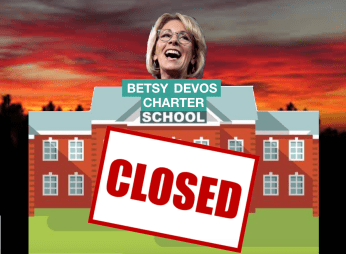
Description: The world finally seems to be realizing that charter schools are deeply problematic. But what to do with them? My answer is to shut them all down and any that actually provide value to their students should be transitioned to becoming authentic public schools.
Fun Fact: This article was partially in response to charter school critics who would say things on Twitter like “No one wants to shut down all charter schools, but…” No. I really do want to shut them all down. I think their time is up. We need to abolish this failed concept and move on to real education policies that actually have a chance at helping students.
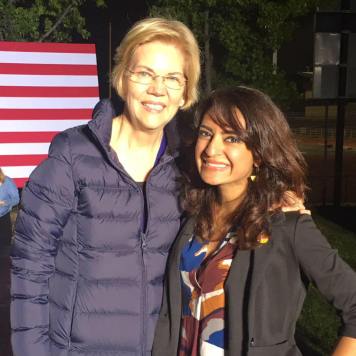
Description: Before Elizabeth Warren introduced her education policy, no one really knew where she stood on the issue. So many of us in the education activist community became worried when she had former charter school teacher Sonya Mehta introduce her at a California Rally.
Description: Teachers can’t make students learn. We can’t even make them grow. We can do lots of things to optimize the conditions for growth, but we are not ultimately responsible for the result. We’re only responsible for what we do to help bring it about.
Fun Fact: Lots of folks hate me for writing this article. Lots of folks love me for writing it. However, it was past time someone said it. Teachers make a huge impact on their students, but we are not magical. When you expect us to be wizards, you end up destroying our ability to do our jobs and you enable all the corporate testing and privatization hacks who build themselves up by tearing down our profession because we’re not magic.
Description: Where did charter schools come from and what was their original purpose? Read here to find the facts.
Fun Fact: I wrote this article because of the common lie that charter schools were created by union president Albert Shanker to empower teachers. WRONG. They were created by Minnesota “policy entrepreneur” Ted Kolderie and privatization cheerleader Joe Nathan. This is an attempt to get the record straight. I hope it succeeds.
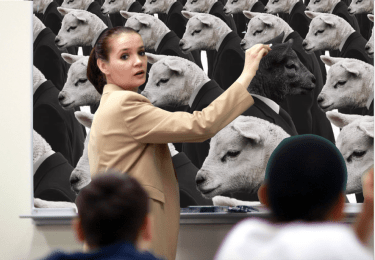
Description: It’s kind of a simple question. Many administrators and school boards treat teachers like robots to be programmed and do what they’re told. But we’re also expected to display a large degree of autonomy. Which one is the real expectation because we can’t ultimately be both.
Fun Fact: This article was republished in the Washington Post and continues to be hugely popular. I think that’s partially because it calls out the elephant in the room in every faculty meeting, school board meeting and education policy session at local, state and the federal government. Maybe allow teachers to be part of the conversation if you really want to bring about positive change.
Description: Answer – on average, teachers make at least 1,500 decisions a day. That comes out to about 4 decisions a minute given six hours of class time.
Fun Fact: This fact has been around since at least the 1980s. It represents the kinds of things we were interested in education before standardized testing and school privatization took over. And it has implications that go on for miles and miles and miles…
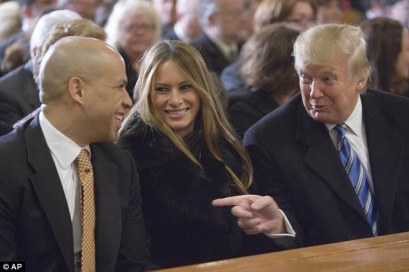
Description: In California, 30,000 Los Angeles teachers were on strike because charter schools are gobbling up their funding without providing the same level of quality services or accountability. Meanwhile in New Orleans, Sen. Cory Booker was giving the keynote address at a charter school rally.
Fun Fact: This raised the question of where the Democrats stand on education policy. And thankfully the Booker branch of neoliberals has been overpowered by the Sanders-Warren wing. We’ll see if this continues through the Presidential nomination and (hopefully) the next administration. Could it be a sea change in Democratic support for real, authentic education policy and away from standardization and privatization? Time will tell.
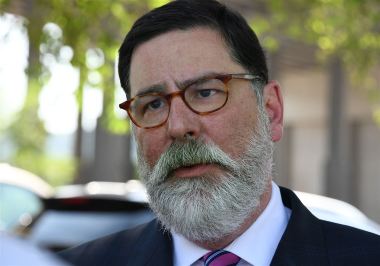
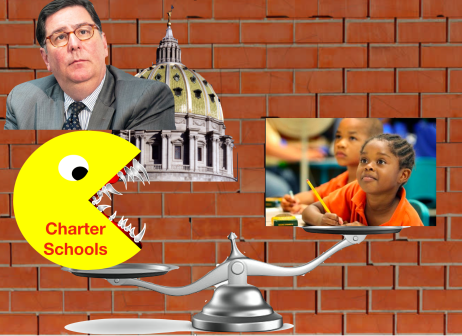
Description: Mayor Bill Peduto refuses to give back millions of dollars in tax revenue to city schools that could help close budget gaps and provide the services students need. The money was given to the city when it was in financial distress, but now that the city situation has improved, the schools are calling for that money to be returned. Just simple fairness.
Fun Fact: This was one of the first times I really addressed Pittsburgh politics especially as it branches out from the schools. Readers were extremely interested and I seemed to have tapped into a real conversation about the mayor’s role in school politics.
Description: The Propel charter school chain keeps getting more and more of Steel Valley Schools budget despite enrolling around the same number of kids. It is expected to get away with 16% of Steel Valley Schools’ entire $37 million yearly budget in the coming year. How is that fair?
Fun Fact: This is one of the first times I have written so openly about the district where I teach. The result was extremely positive. It really got people talking and put together a lot of information that – sadly – our local media has failed to compile. With the loss of neighborhood papers and the consolidation of newspaper budgets, it’s left to bloggers like me to do actual journalism.
Description: Standardized tests only assess ability at taking standardized tests. So if we misconstrue test scores for learning, we’re leaving out the entire universe of concepts and skills that are not and cannot be captured by those tests.
Fun Fact: I think this is an important point that can’t be emphasized enough. It frustrated some readers because they wanted the easy conflation between test scores and learning. But few things in education are that easy. This article outlines exactly where the tests go wrong. It’s a tour of the sausage factory that will leave anyone less hungry for standardization.
Description: We have become too reliant on technology in schools. We’ve welcomed and incorporated it without testing it, or even reflecting upon whether it promises to offer better pathways toward student comprehension and discovery or whether it merely offers flash and novelty devoid of substance. And perhaps even more frightening, we have not investigated the ways in which using these technologies actually puts student privacy and intellectual growth at risk.
Fun Fact: It is essential we question our assumptions – especially about technology. Many teachers fund this article a breath of fresh air. Others condemned me as a technophobe. You be the judge.
Description: I had a stronger connection with last year’s students than any group I’ve ever taught. I was their Language Arts teacher for two consecutive years – 7th and 8th grade. When our time ended, they even re-enacted the closing scene of “The Dead Poet’s Society” – a movie we had watched together in class.
Fun Fact: I will always treasure the two years I had with these children. They changed my life for the better and made me a better teacher. I am honored by their reviews of my teaching.
Description: The dark secret of my district is how deeply segregated our elementary schools are. I wrote about what the problem is and how I think we can solve it. This is about as real and raw as policy making gets.
Fun Fact: Again this was one of the first times I let myself talk so openly about my district and what I thought needed to be done to improve it. Community members have come forward to talk with me about it but the response from anyone in the district has been total silence. I hope we’re actually serious about making a change here. The community is crying out for it. Teachers want to help. Where we go in the future is anyone’s guess.
So the cost of charter schools is 15% of the entire proposed budget. If it were eliminated, the district wouldn’t have a budget deficit at all – it would be running with a dramatic surplus.
Nearly every study has found that charter schools do not produce better academic results than authentic public schools – in fact, many drastically underperform their public school counterparts.
In addition they have been found to increase racial segregation, cherrypick students, increase administrative overhead and discriminate against students with special needs.
But the state passed a law in 1997 allowing charter schools and there is nothing Pittsburgh Public Schools can do but continue to pay for them.
School directors, administrators, teachers, students, parents and concerned citizens can lobby their representatives in Harrisburg to fix these problems, but until they do there is little local districts can do.
However, the fact that charter schools increase local taxes is beyond doubt.
Basically, the legislature stopped paying the bills for nearly two decades.
The state government, local school districts and commonwealth employees are responsible for paying into the pension system. Districts and state workers made all their payments. Employees put aside 7.5% of their salaries every year to pay for their retirement.
But the legislature didn’t make its payments. It pushed them off to the future, and now that the future’s here, a larger percentage of the cost has fallen on local school districts.
It’s a problem of Harrisburg’s making and – frankly – the legislature should be buckling down to find a solution.
What they should do is increase taxes on the wealthy and pay their damn bills.
We had a contract with employees when they were hired. We can’t renege on it now that they’ve retired.
Once again this is something Pittsburgh Public school directors and administrators have no control over. It will take a combined effort by local communities across the Commonwealth to lobby Harrisburg to get off its ass and fix the problem it made.
Now that the city is out of financial distress (and has been since 2018), Dr. Hamlet has suggested the city should return that money – not back payments, just stop taking the additional tax revenue. Administrators estimate that would bring in another $20 million for the city school district.
It wouldn’t heal the budget shortfall all by itself, but it would certainly help.
It’s really a simple matter. The schools lent the city money when it was in distress. The city is no longer in distress, so it should stop taking that additional money.
SOLUTIONS
The first thing that has to be done is for Pittsburgh Public School directors to put on their grown up pants and raise taxes.
Look, I get it. No one wants to raise millage. But sometimes being an adult means doing things you don’t want to do.
The proposed tax increase would mean paying an additional $23 for a property valued at $100,000.
This is not an unbearable burden.
Some complain that it would push city residents to move – but really anywhere else you move will have higher taxes! Anyone who packs up and moves away will not be doing it for financial reasons.
I am thankful that board members Veronica Edwards, Pam Harbin, Devon Taliaferro, and Sylvia Wilson understood that by voting for both the proposed budget and the tax increase.
Kevin Carter, at least approved the spending plan, but he abstained from voting on whether the district should raise taxes, explaining later that he promised his constituents that was something he wouldn’t do.
Board members Cindy Falls, Bill Gallagher, Terry Kennedy, and Sala Udin voted against both measures.
Here’s hoping they find the courage to do what’s right after the holidays.
But even if they do, there is much more we must accomplish – and it requires everyone.
City residents need to rise up and demand their representatives put out the raging dumpster fires they keep lighting.
We need lawmakers willing to make the wealthy pay their fair share so the rest of us get the civil society we deserve – and that includes paying for the pension obligations we’ve already incurred.
And Pittsburgh needs a mayor who isn’t going to rage and foam at the prospect of FairPlay and will return the money Pittsburgh Public lent to the city.
Charter schools are bankrolled with tax dollars but often run by private businesses.
Is it too much to ask these businesses to account for how they spend the money?
Apparently it is because Jeanne Allen has been sending her representatives all over the country to harass Elizabeth Warren, Bernie Sanders and any other candidate with the audacity to demand charter schools be transparent and accountable.
Yesterday she wrote another blistering press release with the title:
“Democratic Candidates Asked to Listen to Voices of Struggling Parents Following Them Across Nation”
Allen is CEO and Founder of the Center for Education Reform – a billionaire backed lobbying firm for school privatization.
States shouldn’t have to rely on teachers unions and the media to shame charters into being accountable. That should be the price of accepting public money.
Unsurprisingly, such far right radicalism didn’t result in an invitation to last weekend’s Education Forum in Pittsburgh for candidates seeking the Democratic 2020 Presidential nomination.
Allen was furious. How dare they leave out charter school flunkies!?
It wasn’t so long ago that Democrats like Barack Obama and Bill Clinton were staunch supporters of school privatization. But many in this new batch of progressives typified by Sanders and Warren are demanding real reform.
According to reports by the Network for Public Education “Asleep at the Wheel” and “Still Asleep at the Wheel,” more than $1 billion in federal funds were wasted on charters that either never opened or closed not long after opening. And now Congress has appropriated $440 million more dollars for the federal Charter School Program, a slush fund to open even more charter schools across the country even in states like New Hampshire that don’t want them.
Isn’t it fair to demand a few receipts?
Thank goodness there’s Republicans like Betsy DeVos who make no such demands. Allen has the entire Trump administration willing to listen to her anytime she wants. But ironically for someone who champions schools be run like businesses, she wants to corner the market and eliminate any political choice or competition.
In yesterday’s press release, Allen demanded the seven leading Democratic candidates at last night’s Los Angeles debate sit down and listen to her particular special interest group.
And – make no mistake – it is a special interest group.
Charter schools are the very definition of special interest.
“A group of people or an organization seeking or receiving special advantages, typically through political lobbying.”
That’s exactly what Allen is trying to do.
She is challenging the request that charter schools meet the same accountability standards as authentic public schools.
She wants charter schools to be held to a lower standard – that they can enroll just the students they choose instead of having to accept everyone in their coverage areas like authentic public schools are required to do. She wants charter schools to be able to narrow the curriculum and get rid of extraneous classes and student services so that the business folks running the place can take the money that had funded these things home as a bonus. She wants to ensure charter schools can continue to operate with appointed bureaucrats and not be required to be managed by elected school boards drawn from everyday citizens in the community.
Authentic public schools aren’t allowed to skirt these rules. Why should charter schools? If they’re public schools, shouldn’t they have to abide by the same safeguards?
Allen claims she’s just looking out for children of color.
“BAEO congratulates Betsy DeVos on becoming our next Secretary of Education. She is a very gifted and well-respected education leader with a proven track record of advancing excellence and equity for students. She has been a strong advocate of parental choice, ensuring that all children regardless of race or economic status have access to excellent schools.
“DeVos has spent much of her life working on behalf of low-income and working class Black families who just want access to better educational options for their children. She will be a strong supporter of parental choice policies and education reform initiatives that we believe will help close the academic achievement gap.”
However, after DeVos championed cutting civil rights guidelines for students, slashing funding for everything other than school vouchers and advised teachers to report their undocumented students to ICE, the civil rights community revolted.
Allen claims charter schools are necessary because of low standardized test scores at public schools.
However, she’s just parroting the same school privatization talking points of the past three decades. Increasing charter schools didn’t raise test scores in the 90s, the 00s or the 10s.
Moreover, the test scores she’s referring to are international comparisons between the US and other industrialized countries that don’t take many relevant factors into account. Most importantly, the US is committed to educating all of its students while many of these other nations are not. They weed out the lower achieving students by middle and high school. They don’t educate all of their students with special needs. And they don’t have the same level or scale of poverty. In short, these are not apples to apples comparisons and have little to tell us about the quality of the American system unless it’s that our ideals are better than most international systems.
The school bell chimed and the class shuffled home.
But the students weren’t little children.
They were Democratic Presidential candidates!
And boy-oh-boy did they get sent packing with a ton of homework!
Teachers, students, parents and community members from all over the country sat them down with instructions on how to improve the public education system.
The fact that it happened at all is almost miraculous.
Who would have thought Presidential hopefuls would care enough about public schools to address education issues and answer our questions?
Who would have thought it would be broadcast live on TV and the Internet?
And – come to think of it – who would have EVER thought it would happen in my hometown of Pittsburgh!?
But it did.
I was there – along with about 1,500 other education activists, stakeholders and public school warriors from around the country.
It was an amazing day which I will never forget.
Perhaps the best part was getting to see so many amazing people in one place – and I’m not talking about the candidates.
There were members of the Badass Teachers Association, the Network for Public Education, Journey for Justice, One Pennsylvania, the American Federation of Teachers, the National Education Association, and so many more!
I wish I could bottle up that feeling of commitment to our children and hope in the future.
Perhaps that’s kind of the point behind this article.
So much happened and there is so much worth noting, let me put my impressions down as a series of takeaways or lessons for us to savor between now and the primary election – maybe even until the general.
But I suppose that doesn’t matter so much because few people know who Michael Bennet is anyway.
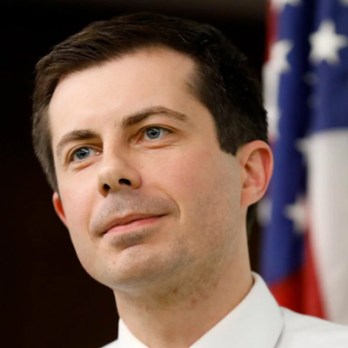
3) Pete Buttigeig is Too Smart Not to Understand Education – Unless He’s Paid Not to Understand
Mayor Pete came off as a very well spoken and intelligent guy. But he also seemed about as credible as wet tissue. He said a bunch of wrongheaded things. For instance, he said that “separate has never, ever been equal,” but he supports charter schools. Separate but equal is their business model.
It’s the kind of misunderstanding that only happens on purpose, and it’s not hard to see why. He’s taken so much money from anti-education billionaires like Netflix Founder Reed Hastings, no one else can trust him. How are we supposed to think he works for us when his salary comes from the super rich? You never recover from ignorance when it’s your job to be ignorant.
4) Gender Neutral Bathrooms Just Make Sense
I used a gender neutral bathroom for the first time at the forum. I figured I just had to pee so it didn’t matter. Inside were nothing but bathroom stalls – no standing urinals. People of all genders were in there using the facilities and it didn’t matter at all. In fact, it just made sense. It only seems strange because of what we’ve grown to expect. Gender neutral is just logical – no one uses the bathroom for anything but… using the bathroom. Try it and you’ll see – it’s the most logical and natural thing in the world.
5) Elizabeth Warren is a Star!
Warren simply electrified the room as soon as she entered it. She was at least as smart and well-spoken as Mayor Pete, but she was credible, too. She said all charter schools should have to meet the same requirements as authentic public schools. She said public school money should stay in public schools. She had detailed plans for how to fix what ails or school systemincluding a two cent wealth tax (three cents if you’re a billionaire) to pay for universal child care, universal pre-kindergarten, better pay for childcare workers, broader pell grants, and SO much more.
I was even more impressed with her in person and she got a standing ovation from the crowd. She would make a great President.
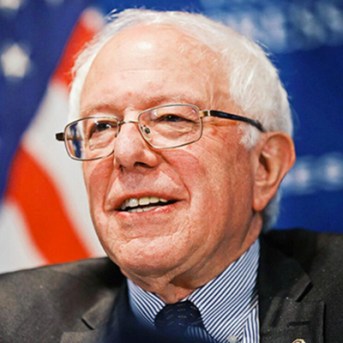
6) Bernie Sanders is a Superstar!
If Warren electrified the audience, Bernie was like a nuclear explosion. I don’t think anyone stayed in their seat when he entered. Fists pumping in the air, applause, chants of “Bernie! Bernie!” It was clear who the audience appreciated most.
And he was amazing. He said we need to break our dependence on property taxes to fund our schools. He said the problem with testing is we spend too much time teaching to the test. There are better ways to assess learning. He said we need a revolution in how we feel about education and learning. We’ve got to respect the educators who provide that education. He talked about criminal justice and unions and a broader range of issues and in more depth than any other candidate.
Steyer is a billionaire self-funding his campaign in a time when voters are sick to death of the rich controlling our politics. He’s like a fox warning us all about foxes. It doesn’t make me want to vote for him. It makes me wonder if he thinks I’m lunch.
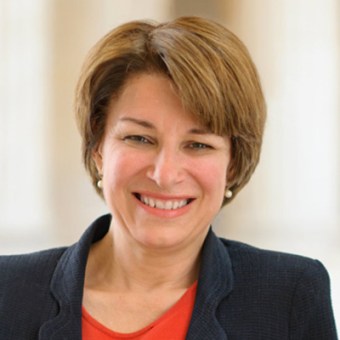
9) Amy Klobuchar is a Better Candidate Than I Expected
And the winner of most improved image is Klobuchar – by a mile. She came off so authentic and honest. She started with an emotional story about her mother – a teacher – which naturally lead into some really smart policy suggestions. And saying that she’d fire Betsy DeVos in seconds after becoming President and replace her with an educator was nice, too. I’m not saying I think she can or should win the nomination, but I’m glad she’s in the race and I hope we see more of her.
10) Joe Biden is Not Going to Beat Donald Trump
Biden came tottering onto the stage late like a friendly but lost old man. He flashed the charm and told us what his policies were but he couldn’t explain why he supported a single one of them.
He was the worst public speaker all day. His words rambled this way and that. At one point he told the audience to stop clapping so he could explain why he wanted to fully fund special education, but then he went off on a digression and got lost. At one point he rhapsodized about all the terrible teachers out there and said teachers touch students’ lives – “metaphorically speaking.”
Dr. Denisha Jones – an amazing activist and friend – asked him a pointed question about standardized testing and whether he was against it? He told her she was “preaching to the choir” but then rambled on for moments more about … something. I don’t know what.
Biden seems more like someone with Alzheimer’s Disease than aspirations to the chief executive. If he won, his wife or someone else would really be making the decisions. He isn’t well. And all you have to do is hear him speak for a few minutes to see it.
Bottom line: I don’t think he could beat Trump.
As terrible as Trump is, he can speak more coherently than Biden. That’s a horrible thing to admit, but it’s true.
So there you have it – my top 10 takeaways from the education forum.
It was a great way to spend a Saturday.
The candidates left knowing exactly where the education community stands. They know what they need to do to get our votes – and many of them are actively trying to do that.
We have several candidates that would make good Presidents – and several who stand a good chance against Trump.
Here’s hoping that we all learn our lessons and use them to win back our government in 2020.
Mark Fallon and MeNetwork for Public Education buddies – Carol Burris, Dan Greenberg, me and Peter Greene.Pittsburgh strong – Kathleen Newman, me and Jesse RameyMitchell Robinson and meKeeping it Local – State Rep Summer Lee (Homestead), Mark Fallon and me.
If you missed the event, you can still watch it here:
The candidates who are expected to attend Saturday’s forum include: Former Vice President Joe Biden; Mayor Pete Buttigieg of South Bend, Indiana; billionaire businessman Tom Steyer; and Sens. Amy Klobuchar of Minnesota, Bernie Sanders of Vermont and Elizabeth Warren of Massachusetts.
All the presidential candidates who either qualified for the October debate or hold statewide office were invited to attend, according to organizers.
To be honest, I don’t know if I’ll get the chance to actually ask a question. I might spend the whole time listening, but that would be far from wasted.
Forcing candidates to tell educators to their faces what they intend for public schools is a worthwhile endeavor in itself.
But I must be honest – there is a possibility I may get the microphone and have the opportunity to ask something.
So I’ve prepared the following questions – one for each candidate expected to be at the forum:
Along with Sen. Sanders, you have one of the most progressive and comprehensive education plans of any candidate running in 2020. In fact, it’s one of the best of any candidate who has ever sought the Democratic nomination. However, you seem to equivocate on standardized testing and national academic standards. On the one hand, you say that you’re against high stakes testing, but on the other you speak about putting an emphasis on student careers, and aligning high school graduation requirements with that of colleges. You even say you’d direct “the Department of Education to issue guidance on how schools can leverage existing federal programs to facilitate education-to-workforce preparedness.” This sounds a lot like Barack Obama’s Race to the Top which held school funding hostage to regressive reforms and Common Core which used standardized tests to determine what would be taught in schools. My question is this: please explain exactly if and exactly how high stakes standardized testing and Common Core fit in with your education policies?
If anyone has any other suggestions, please post them in the comments. And if someone else this weekend or later in the campaign season happens to get a chance to query one of the candidates, feel free to use one or all of what I have compiled here.
My hope is that this interest in education isn’t just a political stunt but will translate to better school policies no matter who wins the election in 2020.
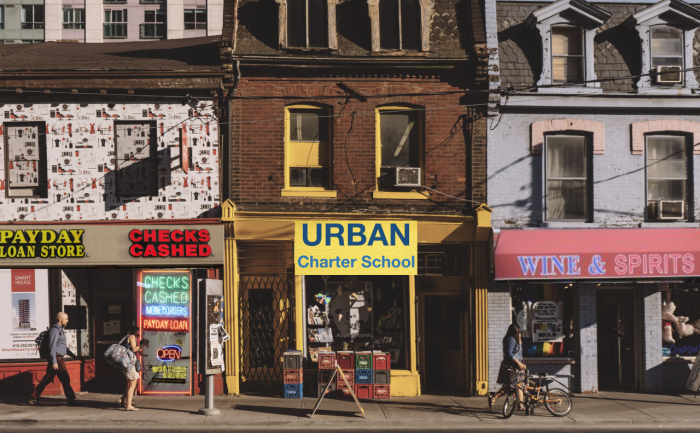
Liquor stores, payday lenders and charter schools.
It is no accident.
In the inner city, the underemployed compete for a shortage of minimum wage jobs, healthcare is minimal, public transportation inadequate and the schools are underfunded and short staffed.
Businesses are on every corner, but they aren’t set up for the convenience of those living there.
Ethnic isolation – whether caused by poverty, legal coercion, safety in numbers or white flight – often puts the segregated at a disadvantage. It creates a quarantined economy set up for profiteers and carpetbaggers to get rich off the misery of the poor.
The system is set up to wring as much blood as it can from people forced to live as stones.
As W.E.B. DuBois described it nearly a century ago, “Murder sat on our doorstep, police were our government, and philanthropy dropped in with periodic advice.”
The economy is glutted with enterprises offering cheap promises of relief but which actually reinforce the status quo.
Yet in higher income black neighborhoods in the same cities, you don’t find these same liquor stores.
They are established in the poorest neighborhoods to offer cheap, temporary respite from the trauma of living in poverty. Yet they increase the likelihood of alcoholism, addiction and violence.
The same goes for payday lenders.
These are basically legal loan sharks who offer ready cash at exorbitant interest rates. Typically these payday loans are meant to last the length between paychecks – approximately two weeks. However, they come with extremely high interest rates. For instance, the average $375 loan ends up costing $520 (139%) in interest.
These businesses aren’t located in the suburbs or wealthy parts of town. You find them typically in the inner cities and poor black neighborhoods. They promise temporary help with one-time purchases and unexpected expenses, but in truth most are used to pay for necessities like rent or food.
They end up trapping users in a debt spiral where they have to take out payday loans to pay off previous payday loans. This is mostly because these loans are made based on the lender’s ability to collect, not the borrower’s ability to repay while meeting other financial obligations.
And these are just two of the most common features of this predatory economy – capitalist enterprises designed to enrich businesses for exploiting consumers beyond their ability to cope.
Others include high priced but limited stock grocery markets, fast food restaurants, gun stores, inner city rental properties and charter schools.
Think about it: (1) charter schools disproportionately locate in poor black communities, (2) offer the promise of relief from inequality but end up recreating or worsening the same unjust circumstances and (3) they are often owned by rich white folks from outside the neighborhood who profit off the venture.
1) LOCATION
Who attends charter schools and where are they located?
The charter sector represents only a tiny fraction of students attending public school.
This doesn’t come close to a majority for any racial group. Consider the fact that authentic public schools enroll approximately:
•7 million black students (14% of the total)
•12 million Hispanic students (24% of the total)
•24 million white students (48% of the total)
NOTE: These figures include charter school students. To get the totals of authentic public school students (above) I subtracted the charter students out. SOURCE:NCES
More students of all ethnicities attend authentic public schools than charter schools – by orders of magnitude. However, those that are enrolled at charter schools are not distributed evenly. Charter schools do educate a disproportionate percentage of students of color – especially among Hispanic students.
Why? Do black and brown families seek them out or is it just the opposite – charters seek out melanin abundant children.
So like liquor stores and payday lenders, charter schools are disproportionately located in highly segregated, urban communities often with a majority black and Hispanic population. And since they are businesses (unlike their authentic public school counterparts), they literally target this demographic because it fits their profit model.
These are the people they think they can sell on the charter model. And they often do.
2) EXPLOITATION
How do charter schools disadvantage the students enrolled there?
Like other vulture capitalist enterprises, they exploit the students they purport to serve by convincing people of color to accept fewer services than they already get at authentic public schools.
Charter schools are permitted to run without elected school boards. Decisions are often made by appointed bureaucrats behind closed doors. They are not required to hold public meetings or present school documents as public records. Parents have no way of having their voices heard except that they can take it or leave it.
Charter schools can cut student services and pocket the savings. This is true regardless of whether they are designated for-profit or non-profit. It’s just a matter of which loopholes you have to go through. In both circumstances there are ways for the business people running charter schools to make financial gains at the expense of the community and its children. And the result is larger class sizes, narrower curriculum, fewer field trips and extra-curricular activities – but also larger salaries and perks for administrators and investors.
Authentic public schools have to accept all students who live within their boundaries.
Charter schools are not required to accept all students who live in their coverage areas or even all who apply for enrollment. They can and often do cherry pick the easiest students to educate. The can dissuade special needs students or students with less stable families from applying by forgoing special services and/or requiring prerequisites like costly uniforms and parental voluntarism. Or they can simply choose whomever they wish from the applicant pool and claim the decision was based on a lottery that never needs to be audited for fairness.
Charters market themselves as providing a superior education, but this is not supported by the facts.
Nearly every study conducted on the matter has found that charter schools do NOT outperform authentic public schools. In fact, many charters get much worse results – especially cyber charter schools.
But that’s just academics. There are even clearer economic indications of how charter schools squander the tax dollars that fund them while authentic public schools are more stable and provide better value for the money.
According to a 2015 report by Wisconsin-based Center for Media and Democracy, dozens of charter schools that have accepted federal funding closed without even opening in the first place! The federal government has spent $3.7 billion to boost the charter sector only to have these “ghost schools” pop up and spirit away our tax dollars.
This includes:
•In 2011 and 2012, the federal government gave $3.7 million in taxpayer dollars to 25 Michigan “ghost” schools that never even opened to students.
•In California, more than $4.7 million in federal taxpayer money was handed out to create charter schools that subsequently closed within a few years.
•In Ohio, out of the 88 schools created by planning and implementation grants under the federal “Charter School Program” (CSP) for state education agencies between 2008 and 2013, at least 15 closed within a few years; a further seven schools never even opened. These charters received more than $4 million in federal taxpayer dollars.
There is even more evidence that charter schools are not nearly as stable as authentic public schools.
So charter schools provide fewer services, worse results, and a greater chance of closure or wasting limited funding without even opening at all – not a good return on investment for students of color.
3) OWNERSHIP
And who owns and operates these charter schools?
There has been very little research on this topic.
The most detailed information I could find comes from the charter school industry, itself, specifically the National Alliance for Public Charter Schools (NAPCS), a nonprofit that describes itself as “committed to advancing the public charter school movement.”
According to the NAPCS, about one-third of charter schools in 2016-17 were operated by management organizations that run multiple schools. This includes KIPP, Success Academy, Green Dot Charter Schools, Uncommon Schools and Rocketship Charter Schools.
The remainder (57%) are owned by what they call freestanding charter schools – which just means organizations that run only one school.
These institutions can be run by a wide range of groups including religious organizations and local business organizations such as chambers of commerce or economic development authorities.
They are a kind of “false consciousness,” an extension of the segregation economy exploiting black and brown children.
They are disproportionately located in poor and minority neighborhoods because operators think they can sell their educational model to people of color fed up with the inequality of their neighborhoods.
Yet they provide fewer services at greater cost to black communities – they convince impoverished minorities to give up the few educational guarantees they already have in favor of a worse situation. And the result is a continuation or worsening of the status quo while enriching vulture capitalists.
It’s a scam, a flimflam ripoff, a bamboozling hoax.
Like the liquor stores and payday lenders that dot the inner city landscape, charter schools are yet another way to exploit black people for the crime of putting their faith once again in capitalism to break their chains.
We need to tear down the systems of inequality that privilege some at the expense of others – and doing that requires a robust system of public education for all.
It is not only a prerequisite for social justice but it is one of the central facets of the fight, itself.
You can’t use capitalism – a system that relies on inequality – as a method to assure equity.
Justice requires fairness. And the road to fairness can only be discerned by enlightenment.
Education is both the path and the goal.
It’s passed time we stop exploiting those who wish to walk that path by convincing them to go another way.
Charter schools siphon money from authentic public schools serving the neediest students creating a deficit spiral. Money gushes out of public districts which have to cut teachers and programs to patch budget gaps which in turn result in even more parents pulling their children out of the public schools and trying to enroll them in charters.
Comments can be as long or short as you want, but here are some suggestions to keep in mind when writing.
1) Begin by telling who you are.
2) Explain the problem with charter schools briefly. Use real world examples if you can. There’s nothing wrong with referring to a newspaper article or blog. And if you can mention specifics from your school district, all the better.
3) Make suggestions for reform. You can address anything, but PDE is specifically looking for comments on these topics:
· Charter school applications: Strong regulations would require the application be comprehensive, set high standards, ensure only operators with needed skills are approved and maintain maximum local control.
· Admissions policies: Strong regulations would ensure charters conduct fair lotteries that don’t allow cherry picking. Schools should be located in areas that are accessible to poor students and those relying on public transportation. Charters should be required to create recruitment plans for specific groups of vulnerable students including EL students, students with disabilities, economically disadvantaged students and students in foster care.
· Accountability for boards of trustees: Strong regulations would aim to prevent financial wrongdoing, eliminate conflicts of interest, and impose stronger penalties for the misuse of public funds.
· Information on charter management companies: Strong regulations would end high fees paid to charter management companies and increase transparency of boards, budgets, costs and contracts.
· Insurance, financial and accounting standards: Strong regulations would ensure there were independent auditors and accountants as well as increased transparency.
· Funding: This is about the subsidy redirection process that forces PDE to pay charters directly when they dispute a bill with a school district. Strong regulations would ensure all disputed funds go into an escrow account rather than just being paid.
· Academic accountability: Strong regulations would ensure all charters should be part of a performance system that is used in renewal and revocation decisions. The lowest performing charter schools should be subject to closure without appeal.
“We are recommending that your comments include the following:
1. We strongly support the Pennsylvania Department of Education’s decision to develop these regulations.
2. The regulations must end the conflicts of interest, financial self-dealing and lack of transparency that occur in the charter sector today. Charters must be held accountable for their performance in operations, finance and academics.
3. We strongly support local control over charter school opening and closing. Elected school boards know the needs of the community the best and are responsible to taxpayers and families.
4. The charter school law acknowledges that charter schools have an impact on the finances of school districts. The districts should be able to consider that impact when making decisions to open or renew a charter.”
Here is the letter I will be sending:
Dear Pedro A. Rivera:
Thank you for seeking comments from Pennsylvania residents about our 22-year-old charter school law.
I live in the Pittsburgh area and am both a public school teacher and the father of a public school student.
I have seen the damage charter schools can do in my career at the Steel Valley School District in Munhall. We have a Propel charter school in our community. Just three years ago, the Propel franchise siphoned away $3.5 million from our district annually. This year, they took $5 million, and next year they’re projected to get away with $6 million. That’s about 16% of our entire $37 million yearly budget.
Meanwhile, enrollment at Propel has stayed constant at about 260-270 students a year since 2015-16. It’s only the amount of money that we have to pay them that has increased.
The state funding formula is a mess. It gives charter schools almost the same amount per regular education student that my district spends but doesn’t require that all of that money actually be used to educate these children.
In the 2015-16 school year, Steel Valley paid the 19th highest amount of its budget to charter schools in the state (9%) and that number is growing.
2000-01 – 2012-13
Non-Special Ed: $9,321
Special Ed: $16,903
2013-14
Non-Special Ed: $9,731
Special Ed: $16,803
2014-15
Non-special Ed: $10,340
Special Ed $20,112
2015-16
Non-Special Ed: $12,326
Special Ed: $25,634
2016-17
Non-Special Ed: $13,879
Special Ed: $29,441
2017-18
Non-Special Ed: $13,484
Special Ed: $25,601
2018-19
Non-special ed: $14,965
Special ed: $32,809
All of this has real world consequences in the classroom. It means fewer teachers and larger class sizes. It means narrowed curriculum and fewer extracurricular activities. It means reduced options and opportunities for all children – just so a new business can duplicate the services already being offered but skim tax dollars off the top.
So here are the reforms I think we need to make.
There is zero reason why there should be charter schools at all. We do not need to spend public tax dollars on schools that are privately operated. If a school takes public money, it should be run by the public – specifically an elected school board. So we should repeal the charter school law in its entirety. We should be like Montana, North and South Dakota, Nebraska, Kentucky and West Virginia and have zero charter schools.
Of course, that leaves us with the question of what to do with the charter schools that already exist here. First, we have to commit to a complete moratorium on any new charter schools – ever. Then we need to decide what to do with those that already exist.
I think we should do a thorough audit of each of them. Any charter school that fails the audit, closes. They should have to prove they haven’t been wasting taxpayer funds and are providing a real service to students and families. They also should not be drawing any kind of profit from their efforts.
If we have any charter schools that meet these stipulations, we should reform them into fully authentic public schools. They should have to be run by elected school boards. They should have to abide by every rule authentic public schools already do – fully transparent, public meetings, accept all students in their coverage areas, etc.
Finally, any funding shortfall caused by keeping these schools in existence would have to be subsidized by the state. They would not get any funding that goes to the existing authentic public school. The charter schools that we are transforming into authentic public schools would have to be funded by an additional revenue stream from the state – and this may require an increase in state taxes. No one wants that but it’s the only fair way and will help reduce the number of ex-charter schools we rehabilitate.
I realize my suggestion goes against what we have always done and may provoke heated opposition. But I think it is what is best.
Moreover, if we have to find a compromise position, this is where we start from. If we must keep charter schools in Pennsylvania, they should be as transparent as authentic public schools, they should have to be run by elected school boards, they should not be able to make a profit (regardless of their tax status), they should have to accept all students in their coverage areas, and they should be fully funded by the state and not as parasites to authentic public schools.
Thank you for considering my position. There are thousands of parents, teachers, students and community members who feel as I do and we will work to support your efforts and/or push you to do right thing.
Thanks again.
Yours,
Steven Singer
If you live in Pennsylvania, I strongly encourage you to send a letter (whether by email or snail mail) today. Feel free to borrow as much as you like from what I have here.
Together we can make a difference for our children and our communities. Please share widely and encourage your commonwealth friends and family to raise their voices as well.
From Pittsburgh to Philadelphia and all places in between, it’s time we were heard.
And as I was anxiously trying to get all this together in time for me to rush to my morning duty when the meeting was over, I quickly took a sip of my tea and tried to listen to what my administrator was saying from the front of the room.
When he got his answer – actually he had to say it himself because none of us were ready to play this game so early in the morning – he offered us an olive branch.
Isn’t that the way of it? Shame then reconciliation. Blame then peace.
Those are just the achievement scores, he said. Admin. generously doesn’t expect us to be able to do much about those. They go up one year and down the next.
The day before the meeting I was conferencing with a student about his essay on Charles Dickens’ “A Christmas Carol.” I pointed out that he had misspelled Christmas as “Crismist.”
He refused to fix it.
Literally refused.
I pointed out that the word was already typed out and spelled correctly in the prompt. All he had to do was erase what he had written and rewrite it correctly.
He said he didn’t care – that it didn’t matter.
So I tried to explain how people who don’t know him would read this paper and make snap judgments about him based on simple mistakes like this.
Well that last one was just too much. We were told that Admin. planned to do just the opposite – to make the Classroom Diagnostic Tools (CDT) testsMORE invasive by changing the schedule to make them appear more like the end of the year state mandated tests.
He said eventually we could look at some of these other ways to change things administratively, but he wanted to put the onus on us. What can WE do to increase growth?
Students need more than another standardized test. And they need more than another teacher who only cares about their test scores – regardless of whether you measure them in growth or achievement.
These kids are stressed out, living under immense pressure, coping with poverty, prejudice, an unstable society, climate change, an uncertain future and an economy that promises them little more than crushing debt as a best case scenario.
If you want to make an impact, a good place to start would be a realistic conception of what it means to be a teacher and what we actually can and should be held responsible for.
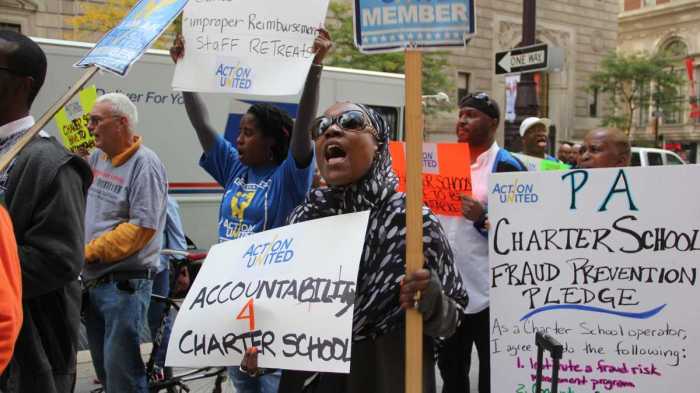
“Frankly suggesting that stronger transparency standards for publicly-funded charter schools would ‘limit parental choice’ is an incoherent talking point that really should not be taken seriously. Increased transparency only ‘limits choice’ if the charter schools themselves refuse to accept higher transparency standards.”
Intercept journalist Ryan Grim, who was present at the rally, noted that the group of protestors was funded by the Waltons.
The group was from Memphis Lift Parent Institute which bused in people from around the country. It was supported by a GoFundMe page showing numerous $1,000 donations from anonymous sources.
While it’s true that you’ll find polls showing strong support for charters among people of color, the overwhelming majority of these polls are conducted by pro-charter groups. They’re like the American Apple Foundation finding high support for U.S. apples – little more than paid advertising.
Billionaires like DeVos, Bill Gates and the Waltons have spent incredible amounts of money to convince the public that school privatization is grassroots, but we have the receipts.
Andre Perry, an education policy expert at the Brookings Institution, describes the Walton foundation as hiding behind black faces to obscure who’s really in charge – they’re exploiting black people for a “white agenda.”
“It’s a sad thing that education reform is about how much money you have and not about what connection you have with black communities,” Perry said.
The Walton Foundation gave $9 million to the United Negro College Fund for a scholarship to the organization’s fellowship program for students interested in education reform. They are literally paying to indoctrinate black people to the ideology that school privatization is in their best interests.
This also includes $530,000 to the Congressional Black Caucus Foundation to sponsor an affiliated education policy advocacy and campaign training workshop and an additional $170,000 to sponsor events.
Walton money has also gone to two other pro-charter groups – nearly $2 million to the 100 Black Men of America campaign and $7.3 million to the National Urban League.
It is up to every thinking American to look at the facts and understand the extent to which we are being bamboozled by white elites at the expense of our black and brown brothers and sisters.



























 gadflyonthewallblog