I got three doses of the Moderna vaccine last winter and summer, and this week I still caught COVID-19.
Now I sit here in self-imposed exile in a room in my own house trying not to infect my family.
I suppose I’m lucky in a way. My symptoms pretty much went away because I took an anti-viral medication. But my medical history is such that I’m extra sensitive to this disease.
It’s not a question of whether I’ll survive in the meantime, but more a matter of if it will ever truly leave me alone.
I wonder if it might not have done me some permanent damage. My heart is already scarred from heart attacks. Will this make it worse?
My intestines are impaired from Crohn’s disease. Will this exacerbate the stabbing pain I sometimes feel just trying to live?
Because of the medications I have to take to help with my many other delightful maladies, I was always more susceptible to catching this disease, but I don’t think getting it is on me.
I was extremely cautious about COVID.
Few people took this situation more seriously.
When I didn’t have to go out, I stayed home. When I did go out, I always wore a mask – ALWAYS.
The only people who have seen my whole face in the flesh in years are my immediate family – wife, daughter and father-in-law.
And one of those times was at a hospital cafeteria waiting for my father to get out of surgery.
Yet when I did unavoidably venture out to get groceries or pick up food from restaurants to eat at home, I’d rarely see the same level of caution from my friends and neighbors.
It made me wonder – where could I have caught this virus?
The most likely option is my cardiologist’s office.
After months of hemming and hawing, I finally agreed to come in and take a stress test.
As I was struggling on the treadmill hooked up to various machines that go ping, I was instructed to take down my mask if it would help me run (they called it walking) faster.
The next day I started to feel really crappy. The day after that it was so bad I called my primary care physician to see me.
I had a 100 degree temperature. My head felt like it was in a vice. I had chills and my muscles felt like I had been run over by a truck.
I took a home COVID test but it got a negative result.
I thought I was just sick or maybe had a sinus infection.
I had a close call months earlier but after several negative home and office tests, I had been diagnosed with a bacterial infection.
However, this time it was different.
Once I told the nurse my symptoms, she said the doctor wouldn’t see me. Instead he got on the phone and said he was getting bombarded by calls from people reporting the same symptoms. These were tell-tale signs of the latest COVID variant.
It probably wouldn’t show up on the test for 12-48 hours more. But since it was early, he wanted me to take Paxlovid – an anti-viral that can reduce the severity of symptoms and rid me of the disease in about a week.
So that’s where I am now – in the low security prison of my own bedroom.
My wife has to sleep in my daughter’s bed or on the couch.
Perhaps it will just add another data point for posterity. Maybe it will be part of a bar graph steadily making its way up or down.
I guess it depends on the trajectory of our collective future.
Like this post? You might want to consider becoming a Patreon subscriber. This helps me continue to keep the blog going and get on with this difficult and challenging work.
Alabama, New Mexico, and Mississippi have already boosted teacher pay, with Florida, Iowa and Kentucky potentially set to do the same. Meanwhile, even US Congress could pass a nationwide measure to heighten teacher salary and encourage educators to stay in the classroom.
According to the Bureau of Labor Statistics, there are 567,000 fewer educators in our public schools today than there were before the pandemic. And that’s on top of already losing 250,000 school employees during the recession of 2008-09 most of whom were never replaced. All while enrollment increased by 800,000 students.
The more impoverished the school where teachers work, the higher the tax credit available to increase their salaries. The bill would also double the educator tax deduction to offset the cost of school supplies, and expand eligibility to early childhood educators.
The bill was introduced by Senator Cory Booker (D-NJ) and U.S. Representatives Adam Schiff (D-CA), Jahana Hayes (D-CT), John Larson (D-CT), and Mark Takano (D-CA). It is supported by a broad coalition of organizations including the American Federation of Teachers (AFT) and the National Education Association (NEA).
Why enter a field where you can’t buy a home or even rent an apartment in most metropolitan areas? Why volunteer for a job where you won’t be able to afford to marry, raise children, or eke out a middle class existence?
Thankfully, Congressional proposals aren’t the only attempt to make teaching more attractive.
Some states have already taken action.
The Alabama Senate passed a budget that would raise minimum salaries for teachers with nine or more years experience. The raises would range from 5% to nearly 21%, depending on years of experience.
A teacher with a bachelor’s degree and 20 years of experience would see their salary rise from $51,810 to $57,214. A teacher with a master’s degree and 25 years experience would see their pay rise from $61,987 to $69,151.
In New Mexico, Gov. Michelle Lujan Grisham signed a bill that would increase base salary levels by an average of 20 percent. This advances minimum salary tiers for educators by $10,000 to $50,000, $60,000 and $70,000.
In Mississippi, Gov. Tate Reeves signed off on an average increase of $5,100 that will raise educator salaries by more than 10 percent.
According to Politico, both Republican and Democratic Governors are proposing teacher salary increases or one-time bonuses as part of budget proposals and legislative priorities.
Such measures are even being proposed in Pennsylvania. Sen. Judith Schwank (D-Berks) recently introduced Senate Bill 1211 to boost starting pay for teachers from the current minimum of $18,500 listed in state law. She proposes increasing it to $45,000 a year. However, the bill sent to the Senate Education Committee has several Democratic co-sponsors but no Republicans, making it doubtful it will progress anytime soon.
After decades of neglect, these plans may not be enough and they may not even come to fruition. However, at least lawmakers seem to understand the problem exists.
It’s gratifying that politicians finally seem to feel a sense of urgency here.
Because this problem didn’t spring up overnight and it won’t go away in a flash.
If we don’t do something to make teaching more attractive, the problem will only be compounded in coming years.
Beginning in 2011, enrollment in such programs and new education certifications in Pennsylvania — my home state— started to decline. Today, only about a third as many students are enrolled in teacher prep programs in the Commonwealth as there were 10 years ago. And state records show new certifications are down by two-thirds over that period.
And it’s not just classroom teachers – substitutes are even harder to find.
The shortage of substitute teachers has gotten so bad in 2021-22, it forced some schools across the country to temporarily move to remote learning. Even Pittsburgh Public Schools was forced to go to cyber learning on Nov. 29 because of a staffing shortage and a lack of substitute teachers.
And it doesn’t look to get better next year.
Last June almost a third of working educators expressed a desire to leave the profession.
According to a survey in June of 2,690 members of the National Education Association, 32% said the pandemic was likely to make them leave the profession earlier than expected. So we don’t have enough teachers now and one in three educators we do have are ready to walk out the door.
A survey by the RAND Corp. reported that the pandemic has increased teacher attrition, burnout and stress. In fact, educators were almost twice as likely as other adult workers to have frequent job-related stress and almost three times more likely to experience depression.
However, the RAND survey went even deeper pinpointing several causes of stressful working conditions. These were (1) a mismatch between actual and preferred mode of instruction, (2) lack of administrator and technical support, (3) technical issues with remote teaching, and (4) lack of implementation of COVID-19 safety measures.
It’s a problem of exploitation and normalization.
Exploitation is when you treat someone unfairly for your own benefit.
Our schools have been doing that to teachers for decades – underpaying them for the high responsibilities they have, expecting each individual to do the work of multiple people and when anything goes wrong, blaming them for it.
We piled on so many extra duties – online teaching, hybrid learning, ever changing safety precautions – these became the proverbial straw that broke educators’ backs.
There are things we can do to alleviate this situation – reducing nonessential tasks, eliminating unnecessary paperwork, refraining from excess staff meetings, forgoing new initiatives, letting teachers work from home on professional development days – anything to give them a break and an opportunity to heal from the years of overburdening.
But we also have to start paying teachers more.
Thankfully our lawmakers are taking this matter to heart and actually getting some results.
Hopefully this trend will continue until every teacher in the nation is adequately, equitably and sustainably compensated for the work done in the classroom.
Like this post? You might want to consider becoming a Patreon subscriber. This helps me continue to keep the blog going and get on with this difficult and challenging work.
However, after months of controversy over the legality of the move, at last night’s special meeting, the board voted to let him go FOR REAL.
Holtzman has accepted a new position at Beaver Area School District, approximately 50 miles northwest of McKeesport.
His last day is June 30. Assistant Superintendent Dr. Tia Wanzo will serve as Acting Superintendent immediately upon his departure.
The controversy stems from a move last year by the outgoing board to retain Hotlzman in McKeesport when he had been poised to accept a new superintendents position at Kiski Area School District. He resigned and was rehired at MASD in order to secure him a new contract with a competitive salary and years of service.
But this didn’t sit well with three board members (Steven Kondrosky, James Brown and Mindy Sturgess) who walked out of the meeting before it was officially called to order.
Lawyer William C. Andrews wrote a letter stating that the measure could be viewed as circumventing the intent of the Pennsylvania school code. The law does not allow such contracts to be extended with more than a year left before they expire. Holtzman still had two years left on his contract.
Holtzman’s own legal council, Mark E. Scott, wrote that the move was, in fact, legal and that it was common practice at other districts.
At a February board meeting where letters from both lawyers were read into the record, Holtzman offered to resign, then and there:
“I will clearly state if they want me to move on, and I’ve said it to them in private, I want a year’s salary and benefits and I will resign tonight. This witch hunt and issue is over, overdone, overstated and we need to move on and once I’m compensated for my attorney fees.”
At the time, it was unclear whether the board could move forward with Holtzman at the head of the district or not.
Apparently Holtzman couldn’t continue to work with them.
A mere three months later, he put in his current resignation.
Holtzman’s tenure at McKeesport was fraught with controversy from the beginning.
Before this, he had been dean of discipline at McKeesport’s vocational department for two years before taking a similar role at West Mifflin Area High School. However, he was mostly known in MASD for his years on the high school football team when he had been a student there (he graduated in 1997) and then at Syracuse University.
His family also had a close relationship with one of the most controversial figures in the Mon-Valley, Pat Risha. The late Risha, who had been a superintendent, himself, at McKeesport, West Mifflin and South Allegheny districts, could have opened many doors, and was heralded as a “power broker” in his obituary.
The district offered a cyber option for students whose parents wanted to keep them safely at home during the worst of the pandemic. Many districts were able to provide live teachers from the child’s grade level to instruct through on-line services like Zoom. However, MASD used the corporate Edmentum program to provide academics. The problem is it wasn’t created for that purpose. It was created for credit recovery, not robust academics. As a result, the district cyber program was developmentally inappropriate, and full of typos and inaccuracies.
Holtzman blamed the problem on a contract with bus company, PA Coach Lines, which didn’t have enough drivers and would cancel the routes just hours before the buses were set to arrive.
The district had to go to court to break the contract and just entered into a new 6-year contract with Krise Transportation out of Penn Hills starting next year.
Holtzman’s controversies predate the pandemic.
In 2019, he refused to allow 11 high school students to create a Black Student Union. He claimed his objection wasn’t due to the organization’s content but the participation of one of the student’s mothers – Fawn Montgomery Walker who was running for McKeesport Mayor at the time and who is lead organizer of Take Action Mon Valley, a community action group.
Here’s hoping MASD has success with Dr. Wanzo or whoever eventually takes the Superintendent’s position on a permanent basis.
Like this post? You might want to consider becoming a Patreon subscriber. This helps me continue to keep the blog going and get on with this difficult and challenging work.
I wonder if the parents of the two adults killed in the shooting gave a thought to their grown children during what may have seemed like just another busy day at the end of the academic year.
We’re all so preoccupied. We tend to forget that every goodbye could be our last.
After all, they aren’t unpredictable. They aren’t inevitable. They’re man-made.
There have been 119 school shootings since 2018, according to Education Week, a publication that has been tracking such events for the last four years.
This only includes incidents that happen on K-12 school property or on a school bus or during a school sponsored event when classes are in session.
If we broaden our definition, there is much more gun violence in our communities every day.
According to The Gun Violence Archive, an independent data collection organization, there have been 212 mass shootings so far this year.
There were 693 mass shootings last year, 611 the year before and 417 the year before that.
In Australia, following a 1996 mass shooting in which 35 people were killed in Tasmania, Australian states and territories banned several types of firearms and bought back hundreds of thousands of banned weapons from their owners. Gun homicides, suicides, and mass shootings are now much less common in the country.
There have been 2,032 school shootings in the US since 1970, and these incidents are increasing. We’ve had 948 school shootings since the tragedy at Sandy Hook Elementary School in 2012.
We’re told that gun control is useless because new laws will just be pieces of paper that criminals will ignore. However, by the same logic, why have any laws at all? Congress should just pack it in, the courts should close up. Criminals will do what they please.
We may never be able to stop all gun violence, but we can take steps to make it more unlikely. We can at least make it more difficult for people to die by firearm. And this doesn’t have to mean getting rid of all guns. Just regulate them.
According to the Pew Research Center, when you ask people about specific firearm regulations, the majority is in favor of most of them – both Republicans and Democrats.
We don’t want the mentally ill to be able to buy guns. We don’t want suspected terrorists to be able to purchase guns. We don’t want convicted criminals to be able to buy guns. We want mandatory background checks for private sales at gun shows.
Yet our lawmakers stand by helpless whenever these tragedies occur because they are at the mercy of their donors. The gun industry owns too many elected officials.
In short, we need lawmakers willing to make laws. We need legislators who will represent the overwhelming majority of the public and take sensible action to protect the people of this country.
What we need is real gun control legislation. We need an assault weapons ban. We need to close the gun show loophole. We need buyback programs to get the mountains of firearms off the streets and out of the arsenals of a handful of paranoid “survivalists”.
We don’t need anyone’s thoughts and prayers.
We need action.
And we need it yesterday.
At this point there is simply no excuse.
If you don’t support gun control, you support school shootings.
Like this post? You might want to consider becoming a Patreon subscriber. This helps me continue to keep the blog going and get on with this difficult and challenging work.
The Covid-19 pandemic on top of years of corporate sabotage and propaganda have obscured what public education really means and why it is absolutely necessary to the functioning of our society and any possibility of social, racial or economic justice.
Let’s begin by looking at how the current disaster exacerbated an already difficult situation and then consider why we should care enough to fix the mess.
The Pandemic Effect
Public schools got a bloody nose from the Coronavirus crisis.
Issues of masking, contact tracing, safety of immunocompromised students and staff, and when to open or close buildings (among other issues) lead to inevitable dissatisfaction from all fronts.
However, none of these issues should have been decided at the local level in the first place.
Instead, the CDC made conflicting decisions based more on the needs of the economy than public health (many of which were roundly ignored anyway). Then federal and state governments either refused to decide safety protocols leaving it up to individuals or municipalities, or when they did decide matters, they were embroiled in partisan battles over any kind of restrictions.
In fact, it was the failure of federal, state and even local municipal governments that often made public schools the de facto legislators of last resort. And this is something they were never meant to be.
According to the Bureau of Labor Statistics, there are 567,000 fewer educators in our public schools today than there were before the pandemic. And finding replacements has been difficult. Nationwide, an average of one educator is hired for every two jobs available.
This has left us with a weakened system suffering from more problems than before the pandemic hit.
Why Are Public Schools Important?
Because of what they are and what they represent.
We hear about public education so often – usually in deprecating terms – that we forget exactly what the term signifies.
It is a school where any child can go to get an education.
You don’t have to pay tuition. You don’t have to have a special ability or qualification. You don’t have to be neurotypical, a certain race, ethnicity, belong to a certain faith or socioeconomic status. If you’re living in the US – even if you’re here illegally – you get to go there.
That may seem simple, but it is vitally important and really quite special.
Not all nations have robust systems of public education like we do in the US.
This country has a commitment to every single child regardless of what their parents can afford to pay, regardless of their access to transportation, regardless of whether they can afford uniforms, lunch or even if they have a home.
We simply define education differently. We look at it as a right, not a privilege. And for a full 13 years (counting kindergarten) it’s a right for every child, not just some.
Perhaps even more significant is our commitment to children with special needs.
We have developed a special education system to help children at the edges that many other countries just can’t touch. In some nations these students are simply excluded. In others they are institutionalized. In some countries it’s up to parents to find ways to pay for special services. The United States is one of the only countries where these children are not only included and offered full and free access, but the schools go above and beyond to teach these children well beyond their 12th academic year.
In every authentic public school in the United States these students are included. In math, reading, science and social studies, they benefit from instruction with the rest of the class. And this, in turn, benefits even our neurotypical students who gain lessons in empathy and experience the full range of human abilities.
That isn’t to say the system has ever been perfect. Far from it.
But at least at the very outset what we were trying to do was better than what most of the world takes on. You can’t achieve equity if it isn’t even on the menu.
Without public schools, equity is definitely not on offer.
Public is Better Than Private
That’s really the point.
Charter, cyber and voucher schools are not set up around this ideal.
They are about who is sent away, not about letting everyone in.
The United States is a big country – the third most populous in the world. We have 332,630,000 people and growing. That’s about 50 million students in public schools.
No private system in the world has ever been able to work at that scale. If we lose our public schools, many kids will be left wanting.
It forces students to compete to get into schools and schools to compete for their very existence. Think of how that affects instruction. Schools have to spend a considerable amount of time and money attracting students to enroll. That’s time and money that doesn’t go to education. It goes to advertising.
Moreover, any school that attracts a surplus of students can choose which ones its wants to enroll. The choice becomes the school’s – not the parents’ or students’. In fact, administrators can turn away students for any reason – race, religion, behavior, special needs, how difficult it would be to teach him or her. This is much different from authentic public schools. There, any student who lives in the district may attend regardless of factors such as how easy or difficult he or she is to educate.
It’s a Darwinian model made to benefit the predators, not the prey. It’s a boon for any unselfconscious businessman who doesn’t mind getting rich stealing an education from children.
We Must Fight
That’s why we must fight to keep our public schools.
But you may luck out. Every privatized school isn’t a scam. Just most of them. So if you have found a charter, cyber or voucher school that is working for your child and doesn’t self-destruct in the time your child is enrolled, you may wonder why you should worry about the rest of us – the kids caught up in a web of privatized predation and neglect?
You have to live in this society. Do you really want to live in a country with a large population of undereducated citizens who cannot figure out how to vote in their own interests? Do you really want to live in a society where crime is a better career choice for those who were not properly educated?
That’s why we can’t let public education disappear.
I know it may sound like an insurmountable task, but saving our public schools can be done.
It will require collective action.
We will need to actively participate in our school board elections, go to school board meetings and possibly even run to serve on the board, ourselves.
Many people are upset with what local boards did during the pandemic, but the way to solve this isn’t to flee to schools without democratic principles. It is to seize those principles and make them work for you and your community.
And to do that, we need real political change at every level of government – local, municipal, state and federal.
None of this is easy. All of it takes work.
But it is the fight we must wage if we are ever to keep our democracy.
It is the fight we must win to create the better world our children deserve.
Public schools are worth saving, but it is up to you and me to do it.
Like this post? You might want to consider becoming a Patreon subscriber. This helps me continue to keep the blog going and get on with this difficult and challenging work.
“The General Assembly shall provide for the maintenance and support of a thorough and efficient system of public education to serve the needs of the Commonwealth.”
“Thorough and efficient.”
Not lavish. Not extravagant. Just complete and productive.
One has brand new facilities, marble columns, and wood paneling scrubbed to a shine with a bustling staff moving to-and-fro.
The other has badly maintained structures, exposed insulation, dusty corners, leaky ceilings and animal droppings while a skeleton crew of adults try their all to do the impossible without the tools to get it done.
The Pennsylvania legislature has been paying less and less of public schools’ budgets over the last four decades. The state used to contribute 54% of all public school costs in the early 1970s. Today it pays just 38% of the cost. Only five states cover a smaller share with the national average at 47%. This leaves local taxpayers to take up the slack. Since districts are not equally wealthy, that increases the disparity of resources between rich and poor districts.
During the trial, the state had tried to argue that money doesn’t matter. Yet poor schools can spend $4,800 less per student than wealthy districts. What’s worse, impoverished students have greater needs than rich ones. They often don’t have books in the home or access to Pre-kindergarten. Poor students often suffer from food insecurity, malnutrition, a lack of neonatal care, worse attendance, are less well rested and have greater special needs and suffer greater traumas than wealthier students. Yet we provide them with fewer resources!?
“What use would a carpenter have for biology? […] What use would someone on the McDonald’s career track have for Algebra 1? […] The question in my mind is, thorough and efficient to what end? To serve the needs of the Commonwealth. Lest we forget, the Commonwealth has many needs. There’s a need for retail workers, for people who know how to flip a pizza crust.”
So the Commonwealth actually argued that inequitable funding is okay because all kids don’t need a thorough education. Some just need the bare minimum to do whatever menial jobs they’re destined to have while the elite kids need more for the high skilled jobs they’re going to get.
I wonder which kids Krill and his defendants in the legislature think deserve less funding. I’ll bet it’s the black and brown kids already suffering most from this disparity.
Luckily, the school districts asking the courts to intervene feel differently.
Six school districts – William Penn, Lancaster, Panther Valley, Greater Johnstown, Shenandoah Valley, and Wilkes Barre Area – filed the suit along with the Pennsylvania Association of Rural and Small Schools, the NAACP PA State Conference, and families whose children attend under-resourced schools.
Essentially, they are asking for two things.
First, for the court to declare the current funding system unconstitutional.
Second, for the court to order the legislature to create and maintain a fair funding system.
You might say, wait. Didn’t the legislature adopt a new Basic Education Funding formula in 2016 that already provides a fairer way to allocate money based on need?
He suggests a $1.75 billion down payment to schools on the $4.6 billion gap.
The state has the money to do this. It just needs to cut wasteful spending elsewhere and close tax loopholes.
For example, the state throws away $240 million a year to The Race Horse Development Fund. These are taxpayer funded subsidies to wealthy horse racing enthusiasts and hobbyists. Since 2004, the legislature has lavished $3 billion on the horse racing industry. Shouldn’t we prioritize school children over cash prizes and inflated pensions for wealthy horse owners, breeders, and trainers? Aren’t kids more important than paying to drug test horses and for racetrack marketing?
If the state was doing its job and looking after kids instead of giving handouts to wealthy oligarchs, you and I wouldn’t feel as much pain in our wallets.
Both parties in the case will file a series of post-trial briefs saying what they believe they proved during the testimony, the “conclusions of law” they are asking the judge to reach, and their analysis of the legal questions presented—such as the meaning of the state Constitution’s “thorough and efficient” education clause.
The final post-trial brief is due on July 6. Then — after oral argument on legal issues at a later date — the court will make its final decision weeks or months later.
In the meantime, the budget is supposed to have been approved by the legislature (one way or another) and signed by the Governor by June 30. If not, funding for some state programs may be delayed. But you never know. The legislature has been late on this before.
So what am I learning from all of this?
The value of hope?
The evil of lawmakers who want to continue shortchanging our children?
The bravery of public school districts that challenge the state to follow its own darn rules?
All of the above.
Like this post? You might want to consider becoming a Patreon subscriber. This helps me continue to keep the blog going and get on with this difficult and challenging work.
Sometimes you can only tell by the vanishing students and teachers or the everyday need to sub for staff members mysteriously absent for days or weeks in a row.
“We have learned that two High School students, two High School staff members, three Middle School students, six Elementary students and one Elementary staff member have tested positive for COVID-19. Close contacts have been identified and notified. Thank you.”
What does it all mean?
One thing’s for sure – we aren’t taking this pandemic very seriously.
Judging by the emails in the last week and a half, alone, there have been at least 60 people in my small western Pennsylvania district who tested positive for Covid. That’s 17 in the high school (10 students and 7 staff), 22 in the middle school (17 students and 5 staff), and 21 in the elementary schools (16 students and 5 staff). And this doesn’t include close contacts.
However, with the new CDC guidelines that people who test positive only need to quarantine for 5 days, some of these people are probably back at school already. Though it is almost certain they will be replaced by more people testing positive today.
I have a student who just came back a day ago who’s coughing and sneezing in the back of the room with no mask. And there’s not a thing I can do – except spray Lysol all over his seating area once he leaves.
Don’t get me wrong. I hated teaching remotely on and off during the last few years. But safety is more important to me than being as effective as I can possibly be.
When the Titanic is sinking, you get in the life boats and don’t worry that doing so might mean you won’t dock on time.
Somewhere along the line in the past few years we’ve come to accept the unacceptable:
–We’re not in this together.
–I don’t have your back. You don’t have mine.
–When it comes to a disease like Covid – you’re on your own.
Like this post? You might want to consider becoming a Patreon subscriber. This helps me continue to keep the blog going and get on with this difficult and challenging work.
Here are some things for school directors and administrators to consider:
–If you don’t require all students and staff to wear masks – don’t blame teachers.
–If you don’t regularly test students and staff for Covid – don’t blame teachers.
–If you don’t require all students and staff to be vaccinated – don’t blame teachers.
–If your classrooms are not well ventilated – don’t blame teachers.
–If you force staff to come into the building for professional development and don’t allow them to attend remotely – don’t blame teachers.
–If you don’t provide K95 masks to all students and staff – don’t blame teachers.
–If you didn’t devise a schedule to keep students socially distanced – don’t blame teachers.
–If you don’t deep clean each classroom and other student spaces between classes – don’t blame teachers.
–If you don’t have lunches outdoors or in some other extremely well-ventilated space – don’t blame teachers.
–If you don’t require a negative Covid test before sick students or staff can return to school – don’t blame teachers.
–If students and staff have steadily been getting sick for weeks and you’ve done nothing to prepare – Don’t Blame Teachers.
–In short, if you haven’t done everything you can do to prevent an outbreak sweeping through your school and your community – DON’T. BLAME. TEACHERS.
BLAME YOURSELF.
Like this post? You might want to consider becoming a Patreon subscriber. This helps me continue to keep the blog going and get on with this difficult and challenging work.
The most popular topic people wanted to read about on my blog this year has been how teachers are dealing with the Covid-19 pandemic.
In short, it’s a mess.
We’re struggling big time.
In the media, they call it a teacher shortage, but it’s really an Exodus away from the profession for educators who are fed up with being treated like crap.
But that’s not the only thing I wrote about in 2021.
At this point in my career with everything crumbling around me, I have no more F’s to give.
I’m laying it all out straight. And this is from a blogger who has often been criticized for not holding anything back BEFORE!
Now I am pointing out all the elephants in the room.
Some of these articles are not for the faint of heart.
If you’re tired of being polite and ignoring all the flaming dumpster fires that well behaved teachers aren’t supposed to mention, then you might enjoy some of these stories.
Description: The title says it all. Stop wasting teachers’ time by making us fill out paperwork that won’t help us do our jobs but will make administrators and principals look good. We make our own plans for ourselves. We don’t need to share with you a bunch of BS with Common Core nonsense and step-by-step blah-blah that will probably have to change in the heat of the moment anyway.
Fun Fact: Teachers in my building rarely say anything to me about my blog. But I got some serious appreciation on my home turf for this one.
Description: We talk about missing teachers, subs, aides, bus drivers, but not parents or guardians. We should. They are absolutely essential to student learning. I think there are a lot of good reasons why parents don’t participate in their children’s schooling, but they will never get the help they need if we continue to ignore this issue and throw everything on teachers and the school.
Fun Fact: So many liberals lost their minds on this article saying I was attacking parents. I’m not. If people were drowning, you would not be attacking them by pointing that out and demanding help fishing them out of the water. It is not “deficit thinking” to acknowledge that someone needs help. It’s authentic advocacy for both students and parents.
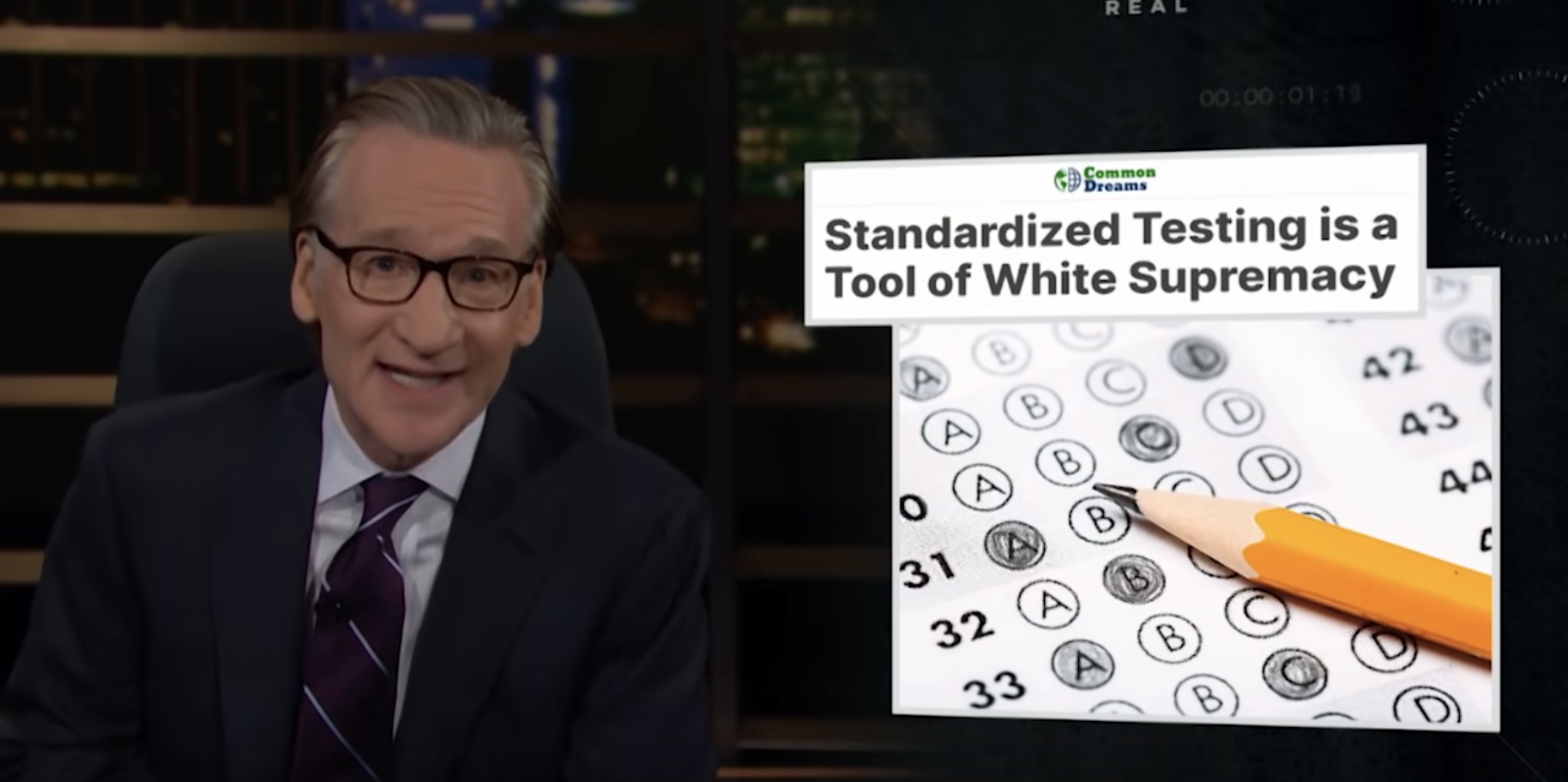
Description: It wasn’t just liberals who were butt hurt by my writing – it was neoliberals, too. Comedian Bill Maher actually mentioned my article “Standardized Testing is a Tool of White Supremacy” on his HBO show. He joked that I was devaluing the term ‘white supremacy.” Sure. These assessments only help white people unfairly maintain their collective boot on the throats of black and brown people. That’s not white supremacy. It’s melanin deficient hegemony. Happy now!?
Fun Fact: Maher’s assertion (I can’t claim it’s an argument because he never actually argued for anything) seems to be popular with neoliberals trying to counter the negative press standardized testing has been receiving lately. We need to arm against this latest corporate talking point and this article and the original give plenty of ammunition. My article was republished on Alternet and CommonDreams.org.
Description: Most of the world does not have competitive after school sports. Kids participate in sports through clubs – not through the schools. I suggested we might do that in the US, too. This would allow schools to use more of their budgets on learning. It would stop crucial school board decisions from being made for the athletics department at the expense of academics. It would remove litigation for serious injuries. Simple. Right?
Fun Fact: So many folks heads simply exploded at this. They thought I was saying we should do away with youth sports. No. Youth sports would still exist, just not competitive sports through the school. They thought poor kids wouldn’t be able to participate. No, sports clubs could be subsidized by the government just as they are in other countries. Some folks said there are kids who wouldn’t go to school without sports. No, that’s hyperbole. True, some kids love sports but they also love socialization, routine, feeling safe, interaction with caring adults and even learning! But I know this is a radical idea in this country, and I have no illusions that anyone is going to take me up on it.
Description: Republicans have a new racist dog whistle. They pretend white people are being taught to hate themselves by reference to a fake history of the US called Critical Race Theory. In reality, schools are teaching the tiniest fraction of the actual history of racism and Republicans need that to stop or else they won’t have any new members in a few generations. I wrote three articles about it this year from different points of view than I thought were being offered elsewhere.
Fun Fact: I’m proud of this work. It looks at the topic from the viewpoint of academic freedom, the indoctrination actually happening (often at taxpayer expense) at private and parochial schools, and the worthy goal of education at authentic public schools. Article B was republished on CommonDreams.org.
Description: I ran for office this year in western Pennsylvania. I tried for Allegheny County Council – a mid-sized position covering the City of Pittsburgh and the rest of the second largest county in the state. Ultimately, I lost, but these three articles document the effort.
Fun Fact: These articles explain why a teacher like me ran for office, how I could have helped public schools, and why it didn’t work out. Article C was republished on CommonDreams.org.
Description: These are terrifying times. In the future people may look back and wonder what happened. These two articles document how I got vaccinated against Covid-19 and my thoughts and feelings about the process, the pandemic, and life in general.
Fun Fact: It hasn’t even been a full year since I wrote these pieces but they somehow feel like they were written a million years ago. So much has changed – and so little.
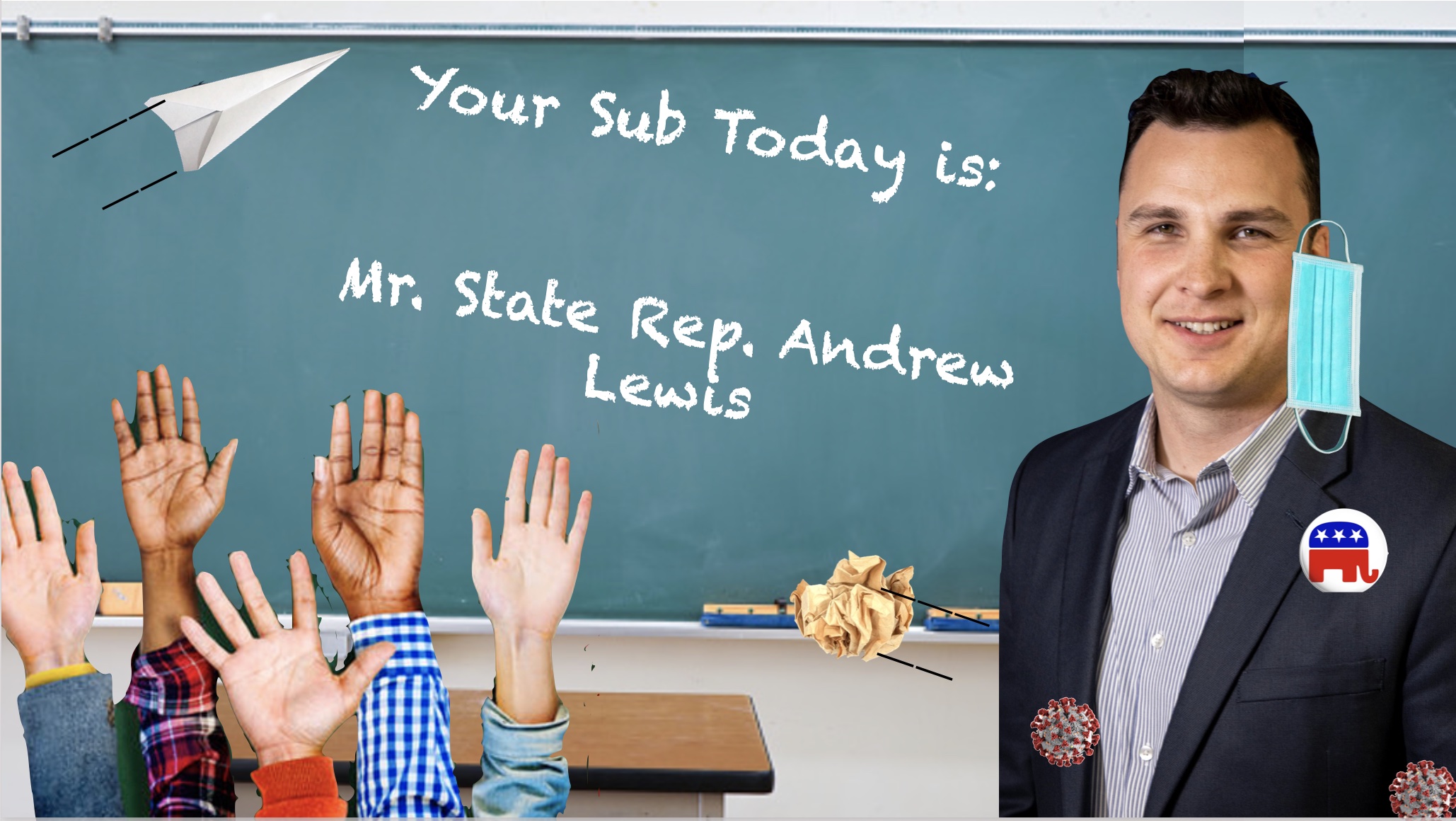
Description: Pennsylvania Republican state legislators were whining that they didn’t know what teachers were doing in public school. So they proposed a BS law demanding teachers spend even more of their never-ending time giving updates. I suggested legislators could just volunteer as subs and see for themselves.
Fun Fact: So far no Republicans have taken me up on the offer and their cute bit of performative lawmaking still hasn’t made it through Harrisburg.
Description: When it comes to stopping a global pandemic, we need federal action. This can’t be left up to the states, or the counties, or the townships or every small town. But all we get from the federal government about Covid mitigation in schools are guidelines. Stand up and do your F-ing jobs! Make some rules already, you freaking cowards!
Fun Fact: As I write this, President Joe Biden just came out and said there is no federal solution to the pandemic. It’s not that I think the other guy would have done better, but this was a softball, Joe. History will remember. If there is a history after all this is over.
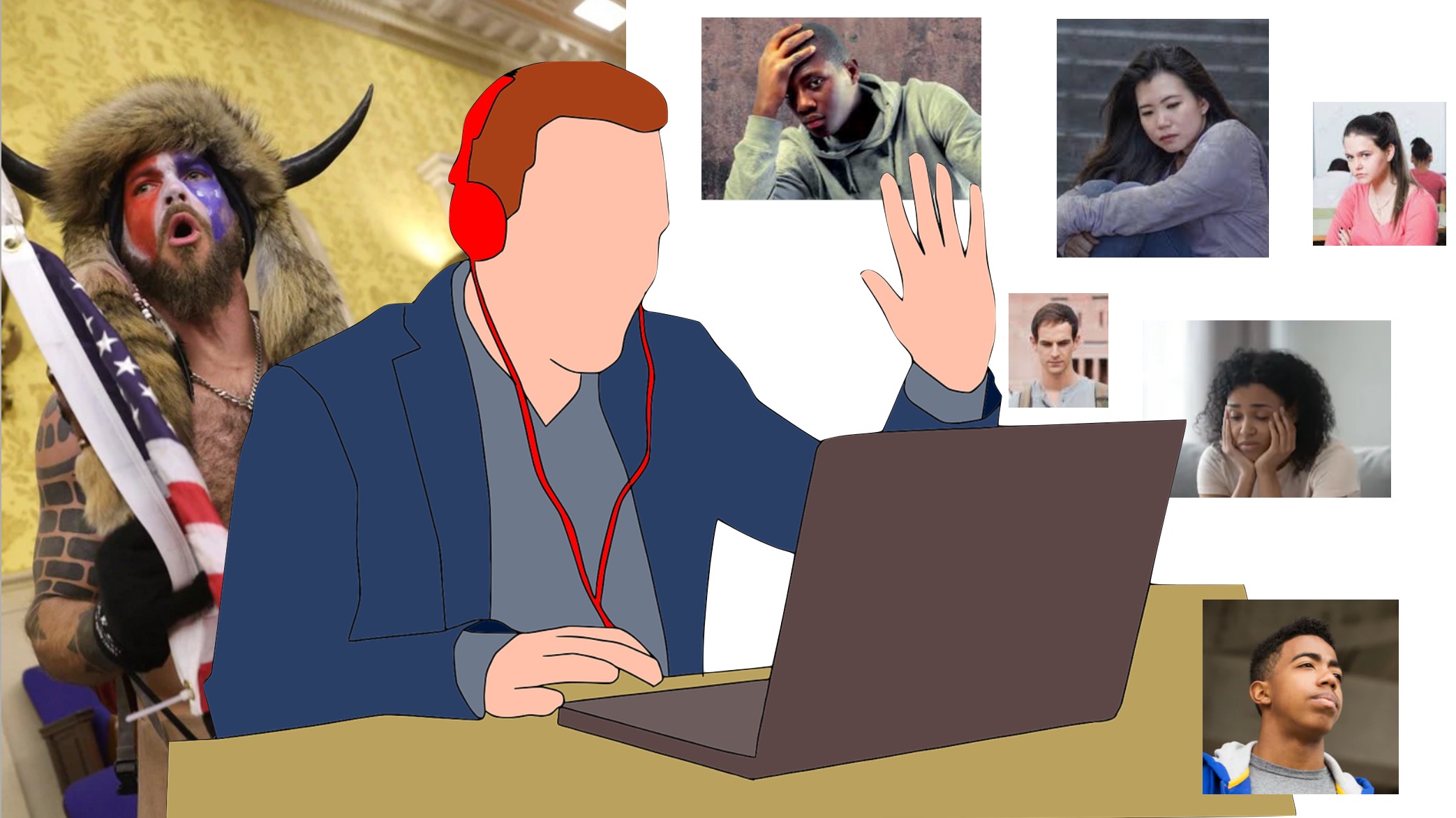
Description: On January 6, a bunch of far right traitors stormed the Capitol. This articles documents what it was like to experience that as a public school teacher with on-line classes during the pandemic.
Fun Fact: Once again, history may want to know. Posterity may have questions. At least, I hope so. The article was republished on CommonDreams.org.
Gadfly’s Other Year End Round Ups
This wasn’t the first year I’ve done a countdown of the year’s greatest hits. I usually write one counting down my most popular articles and one listing articles that I thought deserved a second look (like this one). Here are all my end of the year articles since I began my blog in 2014:
Like this post? You might want to consider becoming a Patreon subscriber. This helps me continue to keep the blog going and get on with this difficult and challenging work.
Even Canada follows this practice with hockey. Young athletes don’t play for their high schools; they play for one of three national hockey leagues – the Ontario Hockey League, the Western Hockey League or the Quebec Major Junior Hockey League.
The way we do things in the US – combining athletics and academics under one roof – ends up making each undertaking enemies.
Kids are unnecessarily injured in the games and indoctrinated in an ethic of dominance. In addition, sports programs gobble up limited resources meant for the classroom, and incentivize bad decisions that prize athletics over everything else.
Let’s look at each in turn:
1) Injuries
School sports began as a way to keep kids safe.
About 120 years ago, schools were not involved in organized athletics.
Perhaps the most dangerous are concussions. These are especially frequent in contact sports like football where athletes bump or smash their heads or bodies into each other. Even with protective equipment like helmets and pads, such collisions can cause traumatic brain injuries that can alter the way brains function for a lifetime.
During the 2005-06 season, high school football players sustained more than half a million injuries nationally, according to the Center for Injury Research and Policy at Columbus Children’s Hospital. While football easily incurs the highest risk, even sports like soccer and baseball are responsible for thousands of injuries to adolescents between the ages of 10 to 14 every year.
And that’s only the most obvious danger. It doesn’t even include increased steroid use, fighting during games, hazing violence, excessive training, verbal abuse, and failure to provide proper care during important matches.
Competitive extracurricular sports can be dangerous to young people’s health. It is certainly valid to question whether schools should be involved in such practices incurring liability and potentially harming their own students.
2) Warrior Mindset
And then there’s the question of whether school sports are healthy for our minds as well as our bodies.
At the turn of the 20th Century, schools started organizing their own teams because they wanted to not just keep kids physically safe, but provide a healthy alternative to the kinds of activities they might be lured into on the streets. Based on the Victorian ideal of “Muscular Christianity,” sports was considered something wholesome that would district American children (especially boys) from social ills like gambling and prostitution.
However, even then it was a manifestation of the period’s xenophobia.
In the early 1900s, the US had just admitted a surge of European immigrants. Some people were worried that immigrant children would overrun the kids already here. Physician and poet Oliver Wendell Holmes Sr. described this class of American-born kids as “stiff-jointed, soft-muscled, paste-complexioned youth.” It was suggested that organized sports would help them become as brawny as those just coming to our shores.
So the driving motives behind the creation of school sports were bigotry and fear.
Sadly, not much has changed in the intervening years.
Sports culture creates understandings of the world and self that are not entirely healthy in a democratic society.
For instance, an emphasis on competition instills the ethic that it is the outcome – winning or losing – that is most important. As kids become adults, this informs the way they frame ethical choices. Moreover, it dampens empathy. You’re discouraged from caring about members of the other team and encouraged to be hostile to anyone considered an other. Even teammates are only worthy of care in so much as they help you win. There is always latent competition because there is a constant danger that one of your teammates could take your place.
Moreover, sports do not value critical thinking or individuality. You listen to your coach or team captain or whoever in the hierarchy is above you. Questioning authority is discouraged. Instead, you’re impressed with the duty to follow and accept the decisions of those in charge.
These values would be more helpful in the development of warriors or soldiers – not democratic citizens. We need people who value tolerance, discussion, justice, caring, and diversity of ideals – exactly the opposite of what organized sports instills.
The world view promoted by organized athletic competition is not healthy for our students.
3) Expense
However, even if school sports didn’t hurt kids physically and mentally, they cost a ridiculous amount of money!
However, this is actually a minority of students, only about 42%. That’s because it often costs parents an additional fee for their kids to play on school teams – between $670 – $1,000 a year. This includes sporting registration fees, uniforms, coaching, and lessons.
Costs to districts are hard to quantify but significant.
Football is easily the most expensive high school sport. Consider that many football teams have half a dozen or more coaches, all of whom usually receive a stipend. And some schools go even further hiring professional coaches at full salaries or designate a teacher as the full-time athletic director. The cost of new bleachers can top half a million dollars – about the same as artificial turf. Even maintaining a grass field can cost more than $20,000 a year. Not to mention annual expenses like reconditioning helmets, which can cost more than $1,500 for a large team. To help offset these costs, some communities collect private donations or levy a special tax for initiatives like new gyms or sports facilities.
There are so many costs people rarely consider. For example, when teachers who also serve as coaches travel for game days, schools need to hire substitute teachers. They also need to pay for buses for the team, the band, and the cheerleaders. And that’s before you even take into account meals and hotels during away games. Even when events are at home, schools typically cover the cost of hiring officials, providing security, painting the lines on the field, and cleaning up afterward.
They often end up spending more per student athlete than they do per pupil in the classroom.
Marguerite Roza, the author of Educational Economics, analyzed the finances of one public high school in the Pacific Northwest. She and her colleagues found that the school was spending $328 a student for math instruction and more than four times that much for cheerleading—$1,348 a cheerleader.
One wonders – can we afford school athletics? Wouldn’t it be better to spend school budgets on learning – something all students participate in – rather than something that only benefits a fraction of the student body?
4) Decision Making
The cost of school sports isn’t measured just in dollars and cents but in the kinds of decisions administrators and school board members make for the sake of athletics – regardless of how it impacts academics.
People are often hired for important school positions based on their sports credentials even when their jobs are supposed to be mainly focused on improving student learning.
This is especially true where I live in Western Pennsylvania.
In my home district of McKeesport, when our superintendent, Dr. Mark Holtzman, was hired, he did not have any proven track record of scholastic success but had been a football star when he was a student here.
Likewise, the district where I work as a teacher, Steel Valley, hired Eddie Wehrer as superintendent without any degree in education but experience as a football coach.
The same goes for principals recommending new staff.
Sometimes administrators will lower their standards and recommend a less qualified applicant if he or she has experience as an athletic coach.
Whether they’ll admit it or not, the prospect of a winning season for the football team is often prioritized over new textbooks, smaller class sizes or other improvements.
The act of running for school board is often seen as a way to have greater control over district athletics. Go to most local school board meetings and you’ll hear much more discussion of various teams and extracurricular activities than academic programs.
National organizations like the NFL, NBA and Major League Baseball recruit most of their players from colleges who recruit most of their players from K-12 schools. It’s a lucrative system with billions of dollars in profit on the line.
If students get an excellent education, that’s seen as a personal benefit to them, alone. But if a student athlete gets signed to a sports contract, that enriches the team and the corporation orders of magnitude more than the athlete.
Schools bask in the reflected glory of successful athletes, teams and programs. Grown adults who are too old to participate, themselves, take vicarious pleasure in these successes.
I understand that this is a very controversial topic.
There is a small minority of students who benefits from school athletics and even come to school primarily just to participate in sports.
However, the negatives far outweigh the benefits.
I think it’s time we begin considering separating sports and schools.
Students who want to participate in such activities can do so through private athletic clubs just like kids all over the world.
And before I’m criticized as being anti-sports, consider that such a separation would benefit both endeavors. Students would have more time and resources to focus on learning, while athletes could concentrate more on their chosen sport and train all year long instead of just during a certain season.
I have no illusions that anyone will take my advice. Sports are way too entrenched in American schools and our elected officials can’t even seem to find the courage to enact obvious reforms like gun control, repealing charter schools, ending standardized testing and funding schools equitably.
However, if we really want the best for US children, we should give them what kids the world over already have – schools separate from organized sports.
Like this post? You might want to consider becoming a Patreon subscriber. This helps me continue to keep the blog going and get on with this difficult and challenging work.


















 gadflyonthewallblog