A Gadfly’s Dozen: Top 13 Education Articles of 2018 (By Me)

thumbnail_IMG_8445


I’m not going to mince words.


This year, 2018, has been a monster.


We’ve been fighting the dumbest and most corrupt President of our lives – Donald Trump. And we’ve been making progress.


Thanks to the midterm election blue wave in the U.S. House, Trump will finally have a check on his power.


We have more black and brown representatives, more women, more nationalities, ethnicities and faiths in the halls of power than ever before.


Charter schools and vouchers are more unpopular today than at any other point in history. High stakes testing is on the decline. And everywhere you look educators and education activists are being heard and making a difference.


But it’s taken an incredible toll on the activist community.


We have had to be out there fighting this ridiculous crap day-in-day-out 365 days a year.


And even then, we’ve suffered devastating losses – family separations at the border, children dying in detention, an increase in hate crimes and gun deaths, all while climate change runs rapidly out of control.


I wish I felt more hopeful. But as I cast my eyes back on the year that was, I’m struck with a sense of bone-deep despair.


I am confident Trump will go down and he will take so many with him.


But the forces of regression, prejudice and stupidity that forced him upon us don’t appear to be going anywhere.


Behind Donald is another Trump waiting to take his place. And behind him another one – like an infinite set of Russian Matryoshka dolls.


Oh, many of them look more appealing than Donald. They dress better, are more articulate and can remember all the words to the National Anthem. But they are just as committed to serving themselves at our expense.


So with that in mind, I invite you to join me on a brief look back at the year that was.


First, let me thank everyone who bought my book, “Gadfly on the Wall: A Public School Teacher Speaks Out on Racism and Reform” from Garn Press. It was amazing to have finally achieved the dream of being published (in paper with a binding and everything)! I never made anyone’s best seller list, but it was gratifying to have hundreds of copies make it into readers’ hands. I hope people found it helpful (and still do because it’s still out there where better books are sold).


Also, I got to check another item off my bucket list with the invitation to film a TED Talk at Central Connecticut State University. My topic was “The Plot to Destroy Public Education.” It’s been viewed almost 1,000 times. I invite you to watch it here.


As to the blog, itself, I’ve been writing now for four and a half years. This year, I’ve had more than 211,000 hits. To be honest, that’s quite a drop. In 2017, I had 366,000 hits. But I’m hearing about similar dips all over the blogosphere. Facebook changed its algorithm this year making it much harder for people to see the work of amateurs like me. Zuckerberg’s multi-billion dollar corporation doesn’t refuse to spread the written word – it just charges a fee that I can’t afford. Moreover, the Federal Communications Commission (FCC) repealed Net Neutrality at about this time last year making things even more dodgy.


However, on the plus side, the blog is up to more than 1,429,000 hits total! That’s pretty good for a publication that’s only been around since July 2014. And it doesn’t count all the readers I get from articles reposted on the Badass Teachers Association Blog, Huffington Post, Commondreams.org, the LA Progressive, Alternet, BillMoyers.com or other sites.


In addition, about 500 more people followed me this year for a total of 13,361.


That should do it for an overview.


One final item before I get to the look back. I’m making a slight change this year to how I do things. Instead of publishing two separate articles – a Top 10 list and a List of Honorable Mentions – I’m combing the two into this one.


I’ll begin with three pieces that didn’t necessarily get the number of hits I thought they were worth. Then I’ll count down my 10 most popular pieces of 2018.


So without further ado, here’s what’s kept Gadfly buzzing this year:


Honorable Mentions


 13) The Necessity and Importance of Teachers


Published: June 29 teacher-elementary-Getty-blog


Views: 520


Description: There’s an increasing (unspoken) insistence that schools do away with teachers and replace them with technology, apps, algorithms and other edtech marvels with more strings attached than your standard marionette. This is my attempt to prove how and why real, live teachers are important.


Fun Fact: How sad this article was and remains necessary.


12) There is Virtually No Difference Between Nonprofit and For-Profit Charter Schools


Published: Sept. 7 Screen Shot 2018-09-06 at 3.18.04 PM


Views: 1,464


Description: You often hear privatization cheerleaders defend charter schools by making a distinction between the good ones and the bad ones. This usually just means those that are for-profit and those that are not-for-profit. But in this article, I show that this distinction is bogus.


Fun Fact: This may be one of the most important facts you can share with someone who’s had a big gulp of the charter school Kool-aide.


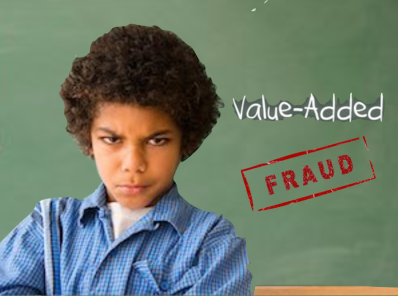
11) Top 10 Reasons You Can’t Fairly Evaluate Teachers on Student Test Scores


Published: Aug. 6 Screen Shot 2018-08-02 at 12.49.24 AM
 

Views: 1,552


Description: Policy makers don’t talk about it as much these days, but there are still plenty of laws on the books requiring states to evaluate teachers on student test scores. It’s called VAM or Value Added Measures. Here’s why it’s totally unfair.


Fun Fact: I’m not sure if anyone else has ever put together all these arguments against VAM. Hopefully, it can serve as a good go-to article when a corporate shill starts rhapsodizing on the benefits of this farce.


Top 10 by Popularity


10) Grit is Sh!t – It’s Just an Excuse to do Nothing for Struggling Students


Published: Nov. 8 Screen Shot 2018-11-08 at 3.29.01 PM


Views: 3,102


Description: Ask a Common Core propagandizer why their canned academic standards haven’t resulted in an increase in test scores and you’ll get this whooper: ‘It’s the students’ fault. They need more grit.’ Here’s why that’s a steaming pile of something that rhymes with grit.


Fun Fact: Some folks hated this article simply because of my potty mouth. But a whole lot of people were as fed up with this particular suit of the Emperor’s new clothes as I am.


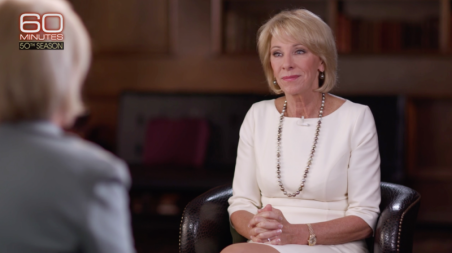
9) Twenty-One Reasons People Hate, Hate, HATE Betsy DeVos


Published: March 12 n7kdmgvgx13jmo6cvmpu
 

Views: 3,824


Description: During Betsy Devos’ 60 Minutes interview, the billionaire heiress turned Education Secretary just couldn’t figure out why people hated her so much. It thought I’d send her a clue – or 21.


Fun Fact: The biggest criticism I got on this article was that I stopped at only 21 reasons. I should have gone on – but then I might still be writing…


8) The Best Charter School Cannot Hold a Candle to the Worst Public School


Published: May 26 Screen Shot 2018-05-24 at 7.43.41 AM

 

Views: 3,929


Description: A question I often get is this: Why do you think Charter Schools are always a bad thing? Here is my answer.


Fun Fact: This article shocked a lot of progressives who backed Obama and Clinton. But it had to be said. Democracy is always better than tyranny just as public schools are always better than charter schools.


7) Few Kids in the World Can Pass America’s Common Core Tests, According to New Study


Published: Jan 23 chinese-children-crush-americans-in-math-thanks-to-a-mindset-americans-only-display-in-one-place-sports

 

Views: 5,061


Description: If all students the world over had to pass America’s Common Core tests, they wouldn’t be able to do it. You’d think that would have implications for how we assess learning in the USA. But nope. Standardized tests are big business. Wouldn’t want to kill that cash cow just because we’re hurting our children, now would we?


Fun Fact: This should have been a bigger story, but we already rewrote our federal education law, the Every Student Succeeds Act, which enshrines standardized testing in most states. So nothing can be done until it comes up for another revision in a few years where lawmakers will again drag their feet and somehow rediscover their love of standardized testing all over again!


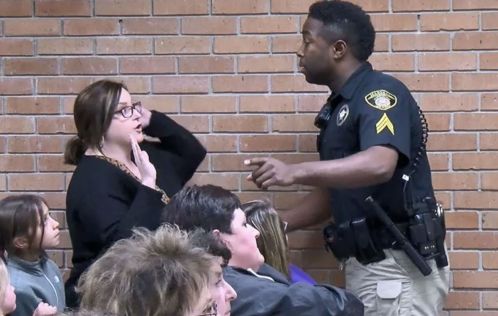
6) When You Mistreat Teachers, Beware the Unintended Lessons for Students


Published: Jan 10 5a552b35785e6.image
 

Views: 7.048


Description: A Louisiana school resource officer threw a school teacher to the ground and arrested her for asking a question at a school board meeting. This was my analysis of what such actions were teaching students.


Fun Fact: A Lafayette judge ruled 10 months later that the school board violated Louisiana’s open meetings law and had to negate the pay raise for the superintendent that the teacher was asking about.


5) The Six Biggest Problems with Data-Driven Instruction


Published: Sept 25 0

 

Views: 7,525


Description: A lot of folks in education think that everything in our schools should be data driven. Here’s why they’re wrong. It should be data-informed but student driven.


Fun Fact: A lot of educators, parents and students were as sick of hearing about “date-driven” instruction as I was. Feel free to use this article on the next fool who brings out this stale chestnut.


4) Teacher Autonomy – An Often Ignored Victim of High Stakes Testing


Published: Oct 12 Screen Shot 2018-10-12 at 12.12.38 PM


Views: 11.405


Description: Standardized testing is terrible in so many ways. It hurts students. It hurts schools. But we often forget how it stops teachers from effectively doing their jobs.


Fun Fact: This one brought a lot of memories to educators – memories of how things are supposed to be and how they’ve changed for the worst. We need to continue asking questions about the purpose of education and how our school policies are betraying that purpose.


3) Billionaire Heiress Lashes Out at Unions Because Her Fortune Didn’t Buy Election


Published: Nov 30
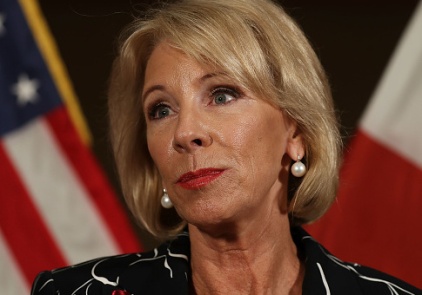
U.S. Education Secretary Betsy DeVos Speaks To Media After Visiting Students At Marjory Stoneman Douglas High School


Views: 11,723


Description: Poor Betsy. She and her family spent a lot of money on this election on regressive candidates who had no intention of working in your best interest. And many of them lost!


Fun Fact: Wouldn’t it be great if everyone got one vote? Wouldn’t it be great if money couldn’t buy elections?


2) Five Reasons to Vote NO on the Allegheny County Children’s Fund


Published: Oct 18 Screen Shot 2018-10-17 at 12.14.03 PM


Views: 18,593


Description: In the Pittsburgh area, we were asked to vote on a referendum to increase spending on children. It sounded like a great idea until you looked at the details. It was just a power grab by the forces of privatization.


Fun Fact: The referendum lost by about as many votes as this article received. I can’t prove my writing changed anyone’s mind, but it was hugely popular here in the ‘Burgh. I’d see people passing around printed copies at council meetings. It was reposted everywhere. I feel like this one made a real difference and helped us stop a bad law. Too bad it couldn’t help us enact a good one.


  1. African Immigrants Excel Academically. Why Don’t African Americans?


Published: June 6 static.politico.com


Views: 20,022


Description: I start with a basic fact about native born African Americans vs. foreign born African Immigrants. Then I try to account for the difference.


Fun Fact: This seems like an important question to me. But it was a controversial one. Some folks were furious I even asked the question. But more people were interested in this piece than anything else I wrote all year.


Gadfly’s Other Year End Round Ups

This wasn’t the first year I’ve done a countdown of the year’s greatest hits. I usually write one counting down my most popular articles (like the one you just read from 2018) and one listing articles that I thought deserved a second look. Here are all my end of the year articles since I began this crazy journey in 2014:


2017:


What’s the Buzz? A Crown of Gadflies! Top 10 Articles (by Me) in 2017


thumbnail_Screen shot 2017-12-26 at 3.44.17 PM


Hidden Gadfly – Top 5 Stories (By Me) You May Have Missed in 2017

 

7fd6a56c2ffc7a03c9fd2f431a543e92


2016

Worse Than Fake News – Ignored News. Top 5 Education Stories You May Have Missed in 2016
 

ignoring-wisdom


Goodbye, 2016, and Good Riddance – Top 10 Blog Post by Me From a Crappy Year


screen-shot-2016-12-27-at-3-29-49-am

2015


Gadfly’s Choice – Top 5 Blogs (By Me) You May Have Missed from 2015

Screen shot 2016-01-02 at 11.01.09 PM


Who’s Your Favorite Gadfly? Top 10 Blog Posts (By Me) That Enlightened, Entertained and Enraged in 2015

Screen shot 2015-12-30 at 12.57.49 AM


2014


Off the Beaten Gadfly – the Best Education Blog Pieces You Never Read in 2014

Wonderfull illusion art painting


Top 10 Education Blog Posts (By Me) You Should Be Reading Right Now!

 

computer-people-png-300x202


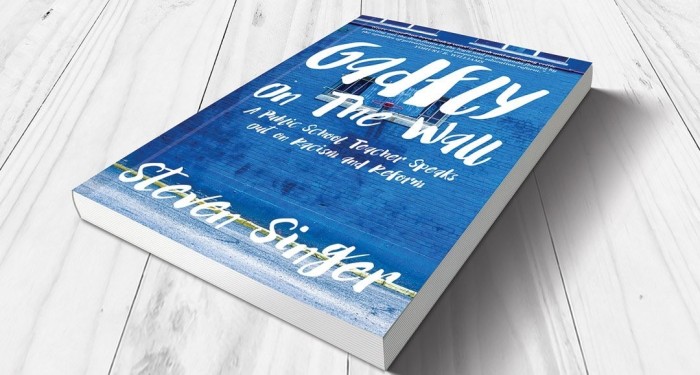
Still can’t get enough Gadfly? I’ve written a book, “Gadfly on the Wall: A Public School Teacher Speaks Out on Racism and Reform,” now available from Garn Press. Ten percent of the proceeds go to the Badass Teachers Association. Check it out!
thumbnail_IMG_8249

What Happened to 2018 As The Year of the Teacher?

merlin_137374938_25a3513b-8341-4602-8710-910d3500b1d5-jumbo


This year teachers took their mission way beyond the classroom.


Starting in West Virginia, we staged half-a-dozen walkouts in red states across the country demanding a better investment in children’s educations and often getting it.


Then we took that momentum and stormed our state capitals and Washington, DC, with thousands of grassroots campaigns that translated into seats in government.


It was so effective and unprecedented that the story began circulating that 2018 would be known as “The Year of the Teacher.”


And then, just as suddenly, the story stopped.


No more headlines. No more editorials. No more exposes.


So what happened?


The gum in the works seems to have been a story in The Atlantic by Alia Wong called “The Questionable Year of the Teacher Politician.”


In it, she writes that the teacher insurgence was overblown by unions and marks little more than a moment in time and not an authentic movement.


It really comes down to a numbers game. Numerous sources cite high numbers of teachers running for office. Wong disputes them.


National Education Association (NEA) senior political director Carrie Pugh says about 1,800 educators – both Republicans and Democrats – sought seats in state legislatures this year. Likewise, the Democratic Legislative Campaign Committee (DLCC), a group that works to elect Democrats to state legislatures, puts the number at 1,456 educators.


Wong disputes these figures because she says most of these people aren’t currently K-12 classroom teachers.


She writes:


 “The NEA uses the word educator liberally, counting essentially anyone who currently works in or used to work in an education-related job, such as professors, guidance counselors, and school administrators.”


Maddy Will and others at Education Week agree with Wong’s assessment. According to their analysis, out of the thousands of education-related candidates, they could only prove that 177 were K-12 classroom teachers.


And there you have it.


A story about teachers taking over their own destinies is dead in the water.


However, this begs two important questions: (1) Is not being able to corroborate the facts the same as disproving them? And (2) Is being a K-12 classroom teacher a fair metric by which to judge education candidates?


First, there’s the issue of corroboration.


Wong, herself, notes that part of the disparity, “…may come down to the inconsistent ways in which candidate lists are compiled from state to state and organization to organization.” It’s unclear why that, by itself, throws doubt on the NEA’s and DLCC’s numbers. These are verifiable facts. Journalists could – in theory – track down their truth or falsity if their parent companies ponied up the dough for enough staff to do the hard work of researching them. The fact that this hasn’t happened is not proof of anything except low journalistic standards.


Second, there’s the question of whether Wong and Will are holding teachers up to a fair standard.


Since the Great Recession, more than 116,000 educators have been out of work. If roughly 1-2% of them decide to run for office, doesn’t that represent a rising tide of teachers striking back at the very representatives responsible for neglecting schools and students? Aren’t they seeking to right the wrongs that put them out of work in the first place?


Even if we look at just the people currently employed in an education field, why are college professors defined out of existence? Why are guidance counselors and principals not worthy of notice?


Certainly K-12 classroom teachers are at the heart of the day-to-day workings of the education system. But these others are by no means unrelated.


Carol Burris was an award-winning principal at South Side High School in the Rockville Centre School District of New York before becoming Executive Director of the Network for Public Education (NPE). Diane Ravitch, who co-founded NPE, is an education historian and research professor at New York University.


If Wong and Will are to be believed, the work of Burris and Ravitch on behalf of public education should be discounted because they are not currently working in the classroom. That’s just ridiculous.


This isn’t about logic or facts. It’s about controlling the narrative.


The Atlantic and Education Week are artificially massaging the numbers to support the narrative their owners prefer.


And let’s not forget, both publications are in bed with the forces of standardization and privatization that educators of every stripe have been taking arms against this year and beyond.


Though The Atlantic is a 162-year-old pillar of the journalistic establishment, it was purchased on July 28, 2017, by the Emerson Collective. This is Laurne Powell Jobs’ philanthrocapitalist cover organization which she’s been using in a media blitz to reinvent high schools by way of corporate education reform.


Likewise, Education Week has always had a corporatist slant on its editorial page and sometimes even in the way it reports news. Nowhere is this more blatant than the publication’s annual Quality Counts issue which promotes the standards-and-testing industrial school complex of No Child Left Behind, Race to the Top, Common Core, etc.


It’s no wonder that these organizations would want to stop the narrative of insurgent teachers taking a stand against the very things these publications and their owners hold dear.


They want to cast doubt on the record-breaking activism of parents, students, citizens and, yes, teachers.


But the facts tell a very different story.


From West Virginia, Oklahoma, and Kentucky to Colorado and Arizona, educators took to the streets last spring to rally for adequate, equitable and sustainable K–12 funding.


All over the country, we’re demanding properly equipped classrooms, better wages, and stronger public schools.


In Connecticut we sent the first black woman to the legislature from the state, Jahana Hayes, a school administrator and Teacher of the Year.


We took down Wisconsin’s anti-education Governor Scott Walker. Not only that, but we replaced him with the state superintendent of public instruction, Tony Evers, on a platform centered on schools and learning.


And he wasn’t the only educator with a gubernatorial win. Tim Walz, a former high school teacher, became governor of Minnesota.


In Oklahoma, former teachers Carri Hicks, Jacob Rosencrants, and John Waldron all won seats in the state legislature, who along with others riding the pro-school tide increased the state’s “education caucus” – a group of bipartisan lawmakers committed to improving schools – from nine members to 25.


Even where candidates weren’t explicitly educators, mobilizing around the issue of education brought electoral victories. Democratic candidates were able to break the Republican supermajority in North Carolina because of their schools advocacy.


Even in Michigan – home of our anti-education Education Secretary Betsy DeVos – Gretchen Whitmer was elected governor after campaigning against public-school funding cuts.


In Illinois, anti-education governor Bruce Rauner got the boot, while Democrat J.B. Pritzker unseated him on a schools platform.


And in Kansas, not only did school districts successfully sue the state for more funding, Laura Kelly defeated conservative incumbent governor Kris Kobach on a platform of further expanding school funding.


These victories didn’t just happen. They were the result of grassroots people power.


The NEA says even beyond educators seeking office, members and their families showed a 165% increase in activism and volunteering during the midterm election over 2016. This is especially significant because participation tends to flag, not increase, around midterms.


So let’s return to the disputed numbers of teachers who sought election this campaign season.


Of the 1,800 educators the NEA identified, 1,080 of them were elected to their state legislatures. When it comes to the smaller American Federation of Teachers (AFT), 109 of 178 educators won.


If we go by Education Week’s numbers, just 43 of 177 won.


Clearly, this is not the whole picture.


The education insurgency was more than even getting candidates elected. It was also about changes in policy.


In Massachusetts, we successfully repealed the Ban on Bilingual Education so educators will be able to teach English Language Learners in a mix of the students’ native language and English as a bridge to greater English proficiency.


In North Carolina, we successfully lobbied state lawmakers to stop for-profit charter schools from taking over four of five public schools.


And everywhere you look the stranglehold of high stakes standardized testing is losing its grip.


Because of our advocacy, the amount of time spent on these deeply biased assessments has been cut in states like Maryland, New Mexico, West Virginia, Hawaii, and Pennsylvania.


The highly suspect practice of evaluating teachers on student test scores has been dropped in Connecticut and the weight it is given has been reduced in New Mexico.


Now with new policies in Idaho and North Dakota, 10 states have explicit laws on the books allowing parents to opt their children out of some or all of these exams.


Half of New Hampshire’s school districts have replaced standardized tests in most grades with local, teacher-made performance assessments.


I don’t care what corporate journalists are being forced to report by their billionaire owners.


These accomplishments should not be minimized.


Teachers are at the heart of communities fighting the good fight everywhere.


And in most places we’re winning!


We’re teaching our lawmakers what it means to support public education – and if they refuse to learn that lesson, we’re replacing them.


If that’s not “Year of the Teacher,” I don’t know what is.


Like this post? I’ve written a book, “Gadfly on the Wall: A Public School Teacher Speaks Out on Racism and Reform,” now available from Garn Press. Ten percent of the proceeds go to the Badass Teachers Association. Check it out!

book-2

Dear Non-Voters, Your Country Needs You

Voting.


Four in 10 Americans who were eligible to vote in 2016 didn’t do so.


That’s some 92 million U.S. Citizens.


These people weren’t purged from the polls.


They weren’t barred from voting.


They just didn’t bother.


So, the way I see it, the responsibility for President Donald Trump rests with you.


The United States has a Reality TV Show clown in the oval office.


He is a dimwitted narcissist who panders to racists, sexists and xenophobes to stay in power.


He is an incurious liar who constantly trolls the media and the public.


He is an admirer of dictators and fascists across the globe with no qualms about enriching himself and those like him at the expense of you and me.


Everyday he provides aide and comfort to anti-American regimes from Moscow to Riyadh by diminishing our international stature, withdrawing us from treaties and contracts, leaking sensitive information and otherwise pursuing foreign interests over those of American citizens.


And that’s before we even begin to examine his colossal impact on human rights – emboldening terrorists and white supremacists while his own administration throws children in cages and forcibly separates them from their families.


This is on you, non-voters.


You did this.


A democratic republic is like any other machine – it only functions properly if all of its parts are working.


You can’t have majority rule when 40% of voters shirk their duty.


A study by the Pew Research Center found that not only were non-voters likely to be younger, less educated, less affluent, and nonwhite, but 55% of them were Democrats and Democratic-leaning independents.


Screen Shot 2018-10-26 at 3.23.58 PM


If more non-voters under the age of 30 had gotten their acts together in just a few swing states, we wouldn’t all be living through this national nightmare.


So if you think voting doesn’t make a difference, look around.


Look at your bank account for instance.


Wonder why your wages continue to stagnate while the rich pocket more and more of the economy?


Look at your neighborhood. Wonder why our schools, roads, bridges and other public services are crumbling into disrepair?


It’s because you didn’t vote.


I’m not saying everything would have been great under President Hillary Clinton. But Trump sets an awfully low bar for competency.


You think your vote doesn’t matter?


Republicans disagree with you.


They aren’t working overtime to stop people like you from voting because it makes no difference.


Robert Kennedy put it this way:


“The most significant civil rights problem is voting. Each citizen’s right to vote is fundamental to all the other rights of citizenship and the Civil Rights Act of 1957 and 1960 make it the responsibility of the Department of Justice to protect that right.”


Our courts have given up that responsibility.


Since 2013 when the Supreme Court invalidated a key part of the Voting Rights Act, millions of people have been barred from casting a ballot.


The federal government used to require nine states with a history of racial discrimination to obtain federal approval before making such changes. Now that they no longer need to do so, between 2014 and 2016 there’s been a 33% increase in voter purges in these states.


This isn’t just cleaning the polls of the names of people who’ve died. It’s actively preventing people – especially the poor and people of color – from having their voices heard.


In Arkansas, thousands of voters were erroneously flagged in 2016 under the guise of removing people who had been convicted of felonies. In Virginia, voters were wrongly deleted from the rolls in 2013 under the excuse of removing people who allegedly had moved.


And this election cycle more than one hundred thousand Georgia voters were removed because they didn’t respond to a mailer or there was a typo on their registration form.


To make matters worse, the purge was overseen by Secretary of State Brian Kemp, a Republican candidate for governor. Since most of the people being removed from the polls are people of color, the poor and other Democrats or leaning Democrat voters, the move makes it harder for Democrat Stacey Abrams to challenge him.


Kemp and his Republican buddies wouldn’t be going through all this trouble if voting made no difference.


“Too many people struggled, suffered, and died to make it possible for every American to exercise their right to vote,” said civil rights icon and U.S. Senator John Lewis.


And people have died for the opportunity that millions of people decide not to exercise.


People like James Chaney, Andrew Goodman and Michael Schwerner, who were murdered in 1964 while trying to register black voters in Mississippi. People like Viola Liuzzo, who was murdered a year later by the Ku Klux Klan during the Selma march for voting rights.


When you willingly give up an opportunity that was purchased so dear, you disrespect the memories of the dead.


President Franklin D. Roosevelt put it like this:


“Nobody will ever deprive the American people of the right to vote except themselves and the only way they could do this is by not voting.”


Our country is under attack. Our very freedoms are on the line.


Will you be a willing accomplice by standing idly by and allowing these miscreants to defecate all over the flag?


Or will you take a stand, do your duty and vote!?


“Bad politicians are sent to Washington by good people who don’t vote.”

-William E. Simon


Like this post? I’ve written a book, “Gadfly on the Wall: A Public School Teacher Speaks Out on Racism and Reform,” now available from Garn Press. Ten percent of the proceeds go to the Badass Teachers Association. Check it out!

thumbnail_IMG_8249

Five Reasons to Vote NO on the Allegheny County Children’s Fund

Screen Shot 2018-10-17 at 12.14.03 PM


You can’t raise taxes without a plan of how to spend the money.


But that’s exactly what voters in and around Pittsburgh, Pennsylvania, are being asked to approve this Nov. 6.


Come election day, all voters in Allegheny County will be confronted with what’s been called the Children’s Fund, a referendum asking for a voluntary 5% property tax hike that allegedly would go to pay for early learning, after-school programs and healthy meals for kids.


But there are no details about who will provide these services, who will be responsible for the money, exactly what else the money might be used for or almost anything substantive about it.


It’s just a check with “For Kids” scrawled in the Memo and everything else left blank.


The plan is highly controversial drawing criticism from across the Mon Valley including school directors, education advocates and even progressive groups like the Pennsylvania Interfaith Impact Network (PIIN).


Here are the top five reasons you should vote NO on the referendum:


1) It Raises Taxes Without Stipulating Where the Money Goes


Here’s what we do know.


The Children’s Fund would be financed by 0.25 mills of property tax — $25 on each $100,000 of assessed value, beginning Jan. 1.


That’s expected to generate roughly $18 million a year that would begin to be distributed in 2020.


If approved, it would change the county Home Rule Charter to establish the fund as part of county government. It would create a new office under the supervision of the county manager.

A Citizens’ Advisory Commission would “review and advise” the work of the new office, according to the proposed charter amendment.


However, County Council and County Executive Rich Fitzgerald would have to do the work of actually creating all this stuff. They’d have to pass an ordinance establishing how this all works, what powers the advisory commission has, etc. They would have to determine whether the money goes to existing programs or new ones. They’d have to set up audits of the money every five years, conduct a study to recommend goals and a focus for how the funding is spent.


That’s an awful lot left undecided.


It makes no sense for voters to hand over the money BEFORE we figure all this other stuff out.


It’s not at all how good government works.


You’re supposed to define a problem or need and then come up with a plan to meet that need. You prepare a budget that justifies raising taxes and then you vote on it.


This is exactly the opposite. We’re getting the money before the plan of how to spend it.


That’s a recipe for fraud and financial mismanagement.


2) It’s Unclear Who Would Be In Charge of the Money


Who would be accountable for this money?


We know who gets to decide this – County Council and the Chief Executive. But we don’t know who they will pick or what powers they’ll delegate to these people. Nor do we know what kind of oversight there will be or what kind of regulations will exist for how it can be spent.


This is a blind statement of trust.


It’s like saying – “Here’s $18 million. Go buy us something nice.”


What if they mismanage the money? And what would that even mean for money with so few strings attached? And how would we know? How transparent would this process be?


It’s kind of hard to approve such a plan with so many variables up in the air.


3) The Campaign was Not Grass Roots


To hear supporters talk, you’d think this was a bottom up crusade created by, organized by and conducted by everyday citizens from our communities.


It wasn’t.


Sure, volunteers for the Children’s Fund went door-to-door to collect more than 40,000 signatures from voters last summer.


But they weren’t all volunteers.


Financial documents show that the whole initiative has been funded by various nonprofit organizations that could, themselves, become beneficiaries of this same fund.


According to the Children’s Fund’s own campaign finance report, as of June there were three nonprofit corporations who donated $427,000 to the campaign: the Human Services Center of Turtle Creek gave $160,000, Pressley Ridge Foundation gave $150,000, and Allies for Children gave a donation of $45,000 and another for $72,000.


That’s like McDonalds spending a hundred thousand dollars to fix up the school cafeterias so it could land a multi-million dollar annual contract!


It’s a huge conflict of interest.


At very least, it’s purposefully misleading.


Many of those “volunteers” gathering signatures weren’t working for free. They were part of the $100,000 spent by the campaign to hire Vote Goal Organizing for paid signature collectors.


That doesn’t look like charity. It looks like philanthrocapitalism – when corporations try to disguise grabs for power and profit as philanthropy.


Corporations – even so-called nonprofit corporations – rarely do things out of sheer goodness. They’re acting in the best interest of the company.


I see no reason to think this “Children’s Fund” is any different.


4) It Works Around Instead of With Local Government


Though almost everyone agrees with the stated goals of the Children’s Fund, many organizations and government officials complained that they were not consulted and made a part of the process.


Two Pittsburgh Public School directors went on record in the Pittsburgh Post Gazette about a lack of communication.


“First and foremost, we have not had any conversations with the organizers of the referendum,” board president Regina Holley said. “There are lots of ifs and whats that have not been answered.”


Kevin Carter, another city school director added, “In my role as a school board member, they didn’t talk to us about this at all.”


“When you leave your largest school district in the region out of this conversation, are you doing this around children?” he asked, citing that the district serves 25,000 students daily.


This has been a common thread among officials. No one wants to say they’re against collecting money that’s ostensibly for the benefit of children, but it’s hard to manage the money if you’re not part of the process.


And it’s not just protocol. Many are worried that this lack of communication may be emblematic of how the fund will be run. If organizers aren’t willing to work with local governments to get the job done, how will they know what each community needs? How will they meet those needs? Is that even what the fund will really be about?


Richard Livingston, Clairton school board president, noted concern that the money collected might not be spent evenly throughout the county. For all he knows, it could just be spent in the city or in select areas.


Indeed, this is not the best way to start any endeavor funded by all, for the benefit of all children.


5) It’s Redundant


While it’s true that the county could use more funding to meet the needs of students, numerous organizations already exist that attempt to provide these services.


There are a plethora of Pre-K, after school tutoring and meal services in the Mon Valley. In fact, much of this is done at the county’s various neighborhood schools.


If organizers were only concerned with meeting these needs, why form an office within county government that would have an appointed advisory commission? Why not just increase the funding at the local schools and/or organizations already doing this work?


In fact, this is exactly the reason the Pennsylvania Interfaith Impact Network is against the initiative.


According to the organization’s statement:


“At PIIN, we believe that the faith community is a sacred partner with our public schools, and we have long been supportive of both the community schools model and increasing state funding to provide an excellent, high-quality education to every child in our region. We believe in funding for early childhood learning, after school programs, and nutritious meals. However, we cannot support a ballot initiative that creates an unnecessary entity, with an unknown advisory board, and an unclear process for directing our tax dollars.


This is why we are urging our membership to reject the Allegheny County Children’s Fund Initiative at the polls this November.”


Another related organization, Great Public Schools-Pittsburgh, also released a statement with “several specific concerns” about the potential fund. These include how the money would be distributed, which organizations would benefit from it, and questions about its redundancy.


Several pre-K programs already exist but are not fully funded, the organization noted. Why don’t we just fund them?


The group is a coalition of the Education Rights Network, One Pennsylvania, the Pittsburgh Federation of Teachers, PIIN, and the Service Employees International Union.


The group’s statement noted concerns but fell short of urging an outright NO vote.


The bottom line is that many people are concerned about inadequate funding for children’s programs.


But this “Children’s Fund” is not a solution to that problem.


This is the creation of another bureaucracy that can take our tax dollars and do almost whatever it wants with them.


There is no guarantee it will help kids.


In fact, it looks a lot more like a power and money grab by corporate interests, many of whom would prefer to privatize our school system.


This November, when you go to the polls, do the right thing for our kids.


Vote NO on the Allegheny County Children’s Fund.


IMG_8288


Like this post? I’ve written a book, “Gadfly on the Wall: A Public School Teacher Speaks Out on Racism and Reform,” now available from Garn Press. Ten percent of the proceeds go to the Badass Teachers Association. Check it out!

book-4

The Six Biggest Problems with Data-Driven Instruction

0


“On the dangers of being data-driven: Imagine driving from A to B ignoring the road, the weather, the traffic around you… only staring at the gauges on the dashboard.”

 – Educator Dan McConnell


“Make your instruction data-driven.”


If you’re a public school teacher, you’ve probably heard this a hundred times.


In the last week.


Principals and administrators use that word – “data-driven” – as if it were inscribed over the front doors of the schoolhouse in stone.


The idea goes like this: All lessons should be based on test scores.


Students take the federally mandated standardized test. Your job is to make sure they get the best possible score. Your class is nothing but a way station between standardized tests.


Pretest your students and then instruct them in such a way that when they take the test again, they’ll get the best possible score.


It’s total nonsense. And it doesn’t take much to see why.


No teacher should ever be data-driven. Every teacher should be student-driven.


You should base your instruction around what’s best for your students – what motivates them, inspires them, gets them ready and interested in learning.


To be sure, you should be data-informed – you should know what their test scores are and that should factor into your lessons in one way or another – but test scores should not be the driving force behind your instruction, especially since standardized test scores are incredibly poor indicators of student knowledge.


No one really believes that the Be All and End All of student knowledge is children’s ability to choose the “correct” answer on a multiple-choice test. No one sits back in awe at Albert Einstein’s test scores – it’s what he was able to do with the knowledge he had. Indeed, his understanding of the universe could not be adequately captured in a simple choice between four possible answers.


As I see it, there are at least six major problems with this dependence on student data at the heart of the data-driven movement.


So without further ado, here is a sextet of major flaws in the theory of data-driven instruction:


  1. The Data is Unscientific

    When we talk about student data, we’re talking about statistics. We’re talking about a quantity computed from a sample or a random variable.

    As such, it needs to be a measure of something specific, something clearly defined and agreed upon.

    For instance, you could measure the brightness of a star or its position in space.

    However, when dealing with student knowledge, we leave the hard sciences and enter the realm of psychology. The focus of study is not and cannot be as clearly defined. What, after all, are we measuring when we give a standardized test? What are the units we’re using to measure it?

    We find ourselves in the same sticky situation as those trying to measure intelligence. What is this thing we’re trying to quantify and how exactly do we go about quantifying it?

    The result is intensely subjective. Sure we throw numbers up there to represent our assumptions, but – make no mistake – these are not the same numbers that measure distances on the globe or the density of an atomic nucleus.

    These are approximations made up by human beings to justify deeply subjective assumptions about human nature.

    It looks like statistics. It looks like math. But it is neither of these things.

    We just get tricked by the numbers. We see them and mistake what we’re seeing for the hard sciences. We fall victim to the cult of numerology. That’s what data-driven instruction really is – the deepest type of mysticism passed off as science.

    The idea that high stakes test scores are the best way to assess learning and that instruction should center around them is essentially a faith based initiative.

    Before we can go any further, we must understand that.

  2. It Has Never Been Proven Effective

    Administrators and principals want teachers to base their instruction around test scores.

    Has that ever been proven an effective strategy for teachers planning lessons or the allocation of resources? Can we prove a direct line from data to better instruction to better test scores?

    The answer is an unequivocal NO.

    In a 2007 study from Gina Schuyler Ikemoto and Julie A. Marsh published in the Yearbook for the National Society for the Study of Education, data driven instruction actually was found to have harmful effects on educator planning and, ultimately, student learning.

    Researchers looked at 36 instances of data use in two districts, where 15 teachers used annual tests to target weaknesses in professional development or to schedule double periods of language arts for English language learners. The result was fewer instances of collective, sustained, and deeper inquiry by groups of teachers and administrators using multiple data sources – test scores, district surveys, and interviews – to reallocate funds for reading specialists or start an overhaul of district high schools.

    Teachers found the data less useful if it was not timely – standardized test scores are usually a year old by the time they get to educators. Moreover, the data was of less value if it did not come with district support and if instructors did not already buy into its essential worth.

    In short, researchers admitted they could not connect student achievement to the 36 instances of basic to complex data-driven decisions in these two districts.

    But that’s just one study.

    In 2009, the federal government published a report (IES Expert Panel) examining 490 studies where schools used data to make instructional decisions.

    Of these studies, the report could only find 64 that used experimental or quasi-experimental designs. Of these it could find only six – yes, six – that met the Institute of Education Sciences standard for making causal claims about data-driven decisions to improve student achievement.

    And when examining these six studies, the panel found “low evidence” to support data-driven instruction. They concluded that the theory that data-driven instructional decisions improve student test scores has not been proven in any way, shape or form.

  3. It’s Harmful – The Stereotype Threat and Motivation

    Data-driven instruction essentially involves grouping students based on their performance on standardized tests.

    You put the low scorers HERE, the students on the bubble who almost reached the next level HERE, and the advanced students HERE. That way you can easily differentiate instruction and help meet their needs.

    However, there is a mountain of psychological research showing that this practice is harmful to student learning. Even if you don’t put students with different test scores in different classes, simply informing them that they belong to one group or another has intense cognitive effects.

    Simply being told that you are in a group with lower test scores depresses your academic outcomes. This is known as the stereotype threat.

    When you focus on test scores and inform students of where they fall on the continuum down to the percentile – of how far below average they are – you can trigger this threat. Simply tracking students in this way can actually make their scores worse.

    It can create negative feelings about school, threatening students’ sense of belonging, which is key to academic motivation.

    But it’s not just the low scorers who are harmed. Even the so-called “advanced” students can come to depend on their privileged status. They define themselves by their achievement, collecting prizes, virtual badges and stickers. These extrinsic rewards then transform their motivation from being driven by the learning and the satisfaction of their curiosity to depending on what high achievement gets them, researchers have found.

    In short, organizing all academics around tests scores is a sure way to lower them.

  4. The Data Doesn’t Capture Important Factors

    Data-driven instruction is only as good as the data being used. But no data system can be all inclusive.

    When we put blinders on and say only these sorts of factors count, we exclude important information.

    For instance, two students do the same long-term project and receive the same grade. However, one student overcame her natural tendency to procrastinate and learned more than in past projects. The other did not put forth his best effort and achieved lower than his usual.

    If we only look at the data, both appear the same. However, good teachers can see the difference.

    Almost every year I have a few students who are chronically tardy to class. A good teacher finds out why – if this is because they aren’t making the best use of the class interval or if they have a greater distance to travel than other students. However, if we judge solely on the data, we’re supposed to penalize students without considering mitigating factors. That’s being data-driven – a poor way to be a fair teacher.

    It has been demonstrated repeatedly that student test scores are highly correlated with parental income. Students from wealthier parents score well and those from more impoverished families score badly. That does not mean one group is smarter or even more motivated than the other. Living in poverty comes with its own challenges. Students who have to take care of their siblings at home, for instance, have less time for homework than those who have nothing but free time.

    A focus solely on the data ignores these factors. When we’re admonished to focus on the data, we’re actually being told to ignore the totality of our students.

  5. It’s Dehumanizing

    No one wants to be reduced to a number or a series of statistics.

    It is extremely insulting to insist that the best way for teachers to behave is to treat their students as anything other than human beings.

    They are people with unique needs, characteristics, and qualities, and should be treated accordingly.

    When one of my students does an amazing job on an assignment or project, my first impulse is not to reduce what they’ve done to a letter grade or a number. I speak my approbation aloud. I write extensive comments on their papers or conference with them about what they’ve done.

    Certainly, I have to assign them a grade, but that is merely one thing educators do. To reduce the relationship to that – and only that – is extremely reductive. If all you do is grade the learner, you jeopardize the learning.

    Every good teacher knows the importance of relationships. Data-driven instruction asks us to ignore these lessons in favor of a mechanistic approach.

    I’m sorry. My students are not widgets and I refuse to treat them as such.

    I am so sick of going to conferences or faculty meetings where we focus exclusively on how to get better grades or test scores from our students. We should, instead, focus on how to see the genius that is already there! We should find ways to help students self-actualize, not turn them into what we think they should be.

    At this point, someone inevitably says that life isn’t fair. Our students will have to deal with standardized tests and data-driven initiatives when they get older. We have to prepare them for it.

    What baloney!

    If the real world is unfair, I don’t want my students to adjust to that. I want to make it better for them.

    Imagine telling a rape victim that that’s just the way the world is. Imagine telling a person brutalized by the police that the world is unfair and you just have to get used to it.

    This is a complete abdication not just of our job as teachers but our position as ethical human beings.

    Schools are nothing without students. We should do everything we can to meet their needs. Period.

  6. It’s Contradictory – It’s Not How We Determine Value in Other Areas

    Finally, there is an inherent contradiction that all instruction must be justified by data.

    We don’t require this same standard for so many aspects of schooling.

    Look around any school and ask yourself if everything you see is necessarily based on statistics.

    Does the athletic program exist because it increases student test scores? Does each student lunch correlate with optimum grades? Do you have computers and iPads because they have a measureable impact on achievement?

    Some administrators and principals DO try to justify these sorts of things by reference to test scores. But it’s a retroactive process.

    They are trying to connect data with things they already do. And it’s completely bogus.

    They don’t suddenly believe in football because they think it will make the team get advanced scores. They don’t abruptly support technology in the classroom because they think it will make the school achieve adequate yearly progress.

    They already have good reasons to think athletics helps students learn. They’ve seen participation in sports help students remain focused and motivated – sometimes by reference to their own lives. Likewise, they’ve seen the value of technology in the classroom. They’ve seen how some students turn on like someone flipped a switch when a lesson has a technological component.

    These aren’t necessarily quantifiable. They don’t count as data but they are based on evidence.

    We come to education with certain beliefs already in place about what a school should do and others are formed based on the empiricism of being there, day-in, day-out. “Data” rarely comes into the decision making process as anything but a justification after the fact.


    And so we can firmly put the insistence on data-driven instruction in the trash bin of bad ideas.

    It is unscientific, unproven, harmful, reductive, dehumanizing and contradictory.

    The next time you hear an administrator or principal pull out this chestnut, take out one of these counterarguments and roast it on an open fire.

    No more data-driven instruction.

    Focus instead on student-driven learning.


Don’t let them co-opt you into the cult of numerology. Remain a difference-maker. Remain a teacher.


Like this post? I’ve written a book, “Gadfly on the Wall: A Public School Teacher Speaks Out on Racism and Reform,” now available from Garn Press. Ten percent of the proceeds go to the Badass Teachers Association. Check it out!

WANT A SIGNED COPY?

Click here to order one directly from me to your door!

book-3

FBI Warns EdTech Puts Student Safety at Risk

students-99506_960_720


Pandora’s box may not be a heavy wooden chest.


It might just be a laptop or an iPad.


The Federal Bureau of Investigations (FBI) issued a warning late last week about the proliferation of educational technologies (EdTech) in schools and the dangers they pose to student safety and privacy.


The devices and applications singled out by US domestic intelligence services all involve software that asks for and saves student input.


This includes classroom management tools like Class Dojo and eBackpack as well as student testing and remediation applications like Classroom Diagnostic Tools and StudyIsland.


The alert cautions schools and parents that the widespread collection of student data involved in these applications could cause safety concerns if the information is compromised or exploited.


It’s just such technologies that have proliferated at a breakneck pace in districts throughout the country while legislation, cybersecurity and even awareness of the danger has lagged behind.


The Bureau is concerned about EdTech services because many are “adaptive, personalized learning experiences” or “administrative platforms for tracking academics, disciplinary issues, student information systems, and classroom management programs.”


The Bureau clarified that use of EdTech applications was not, in itself, the problem. They are a tool, and like any tool, they can be used for good or ill.


Advocates say when used correctly, these systems offer the potential for student collaboration, and for teachers to collect and compare information about students to help design better lessons. On the other hand, critics warn that the problems with most EdTech is essential to the way it operates and that it is designed more for the purposes of student data mining and profitization by corporations than with academic success for children in mind.


In either case, the dangers posed by such devices are indisputable.


The amount and kinds of data being collected about students has not been well publicized or understood. Many school boards, administrators, teachers, parents and students may be using EdTech without a full appreciation of how it often surreptitiously collects data on children.


Analysts listed several types of student particulars being stockpiled:


  • “personally identifiable information (PII);


  • biometric data;


  • academic progress;


  • behavioral, disciplinary, and medical information;


  • Web browsing history;


  • students’ geolocation;


  • IP addresses used by students; and


  • classroom activities.”


This is highly sensitive information that could be extremely harmful to students if it fell into the wrong hands.


Pedophiles could use this data to find and abduct children. Criminals could use it to blackmail them. It could even be sold to unscrupulous corporations or exploited by other children to bully and harass classmates.


These concerns are not merely academic. Data breaches have already occurred.


According to the FBI:


“…in late 2017, cyber actors exploited school information technology (IT) systems by hacking into multiple school district servers across the United States. They accessed student contact information, education plans, homework assignments, medical records, and counselor reports, and then used that information to contact, extort, and threaten students with physical violence and release of their personal information. The actors sent text messages to parents and local law enforcement, publicized students’ private information, posted student PII on social media, and stated how the release of such information could help child predators identify new targets.”


Though the Bureau did not mention them by name, it cited two specific cybersecurity failures in 2017 at two large EdTech companies where millions of student’s private information became publicly available.


The FBI seems to be referring to Edmodo and Schoolzilla. Hackers stole 77 million user accounts from Edmodo last year and sold that data to a “dark web” marketplace. Likewise, Schoolzilla stored student information on a publicly accessible server, according to a security researcher, thereby exposing the private information of approximately 1.3 million children.


It was these data breaches that prompted the Department of Education to issue a Cyber Advisory alert in October of 2017 warning that cyber criminals were targeting schools that had inadequate data security. Criminals were trying to gain access to this sensitive material about students to “shame, bully, and threaten children.”


In February, another cybercrime was reported by the Internal Revenue Service. The agency released an “urgent alert” about scammers targeting school districts with W-2 phishing schemes.


Of particular concern to the FBI are school devices connected directly to the Internet. They offer hackers an immediate link to private student information. This is true even if a school device is in the student’s home.


Tablets, laptops or monitoring devices such as cameras or microphones could be exploitable by tech savvy criminals – especially since many EdTech programs allow remote-access capabilities without the user even being aware of what is happening.


Indeed, some EdTech companies collect information on students’ feelings; become student data brokers and use voice-activated speakers in the classroom.


The FBI listed several recommendations for parents and families:


  • “Research existing student and child privacy protections of the Family Educational Rights and Privacy Act (FERPA), the Protection of Pupil Rights Amendment (PPRA), the Children’s Online Privacy Protection Act (COPPA), and state laws as they apply to EdTech services.

  • Discuss with their local districts about what and how EdTech technologies and programs are used in their schools.


  • Conduct research on parent coalition and information-sharing organizations which are available online for those looking for support and additional resources.


  • Research school-related cyber breaches which can further inform families of student data vulnerabilities.


  • Consider credit or identity theft monitoring to check for any fraudulent use of their children’s identity.


  • Conduct regular Internet searches of children’s information to help identify the exposure and spread of their information on the Internet.”


The warning concluded by asking those who have information about cybercrimes or who have been victimized by data breaches to file a complaint with the Internet Crime Complaint Center at www.ic3.gov.


For some, the FBI’s warning highlights the need for greater education funding for cybersecurity.


“While other industries are investing in greater IT security to protect against cyber threats, many schools are facing budget constraints that result in declining resources for IT security programs,” staff members from the Future of Privacy Forum wrote on their blog. “Schools across the country lack funding to provide and maintain adequate security,” they wrote.


Others see the problem as one of antiquated legislation not keeping up with changing technologies.


The FBI memo highlights a need for Congress to update federal student privacy laws, said Rachael Stickland, co-founder and co-chair of the Parent Coalition for Student Privacy.


At present, these issues are covered haphazardly from state to state, a situation Strickland finds intolerably inadequate.


The main federal law safeguarding student data privacy, The Family Educational Rights and Privacy Act, should be updated, she said. It must address exactly which ways districts should be allowed to share data with EdTech companies.


“What we need is a comprehensive approach at the federal level to address these outdated federal laws,” she said. “We really need these modernized to address not only the cybersecurity threats but also the potential misuse of this data.”


However, some critics are skeptical of the very use of EdTech in the classroom, at all.


They see the potential dangers being so massive and difficult to guard against that any remedies to fix the problem would be counterproductive.


Instead of spending millions or billions more on cybersecurity measures, we should use any additional funding for more essential budget items like teachers, tutors, nurses and counselors.


The goal is to provide a quality education – not to provide a quality education with increasingly complex technologies. If the former can be done with the latter, that’s fine. But if we have to choose between the two, we should go with proven methods instead of the latest fads.


EdTech corporations are making staggering profits off public schools while almost every other area goes lacking. In the nexus of business and industry, we may be losing sight of what’s best for students.


The question is have we already opened Pandora’s box, and if we haven’t, can we stop ourselves from doing so?


Like this post? I’ve written a book, “Gadfly on the Wall: A Public School Teacher Speaks Out on Racism and Reform,” now available from Garn Press. Ten percent of the proceeds go to the Badass Teachers Association. Check it out!

WANT A SIGNED COPY?

Click here to order one directly from me to your door!

book-3

Report: US Shortchanged Public Schools by Hundreds of Billions of Dollars Over Decades

taking-candy-from-a-baby


Fun Fact: Between 2005 and 2017, the federal government withheld $580 billion it had promised to spend on students from poor families and students with disabilities.


Fun Fact: Over that same period, the personal net worth of the nation’s 400 wealthiest people ballooned by $1.57 trillion.


So, rich people, consider this the bill.


A new report called “Confronting the Education Debt” commissioned by the Alliance to Reclaim Our Schools (AROS) details the shortfall in minute detail.


For instance:


  • $347 billion owed to educate low-income students most of whom are children of color.


  • $233 billion owed to provide services for students with disabilities.


And this is just the shortfall of the last dozen years! That’s just money due to children who recently graduated or are currently in the school system!


We’ve been cheating our children out of the money we owe them for more than half a century!


Federal education funding levels were first established in 1965 as part of Pres. Lyndon Johnson’s War on Poverty in the landmark education law, the Elementary and Secondary Education Act (ESEA).


That law, which has become little more than a boondoggle for the standardized testing and school privatization industries, originally was passed to address inequality in America’s education funding.


Now this report from a coalition of groups including the Education Justice Research and Organizing Center, the National Education Association, the American Federation of Teachers, Center for Popular Democracy and the Action Center on Race and the Economy points out the multifarious ways we have failed to live up to the standards we set in that original legislation and beyond.


One of the most glaring examples of neglect is Title I funding.


The Johnson administration admitted that schools with a high concentration of students living below the poverty line needed extra support to succeed at the same levels as students from middle class or more affluent backgrounds. So the law promised to provide an additional 40 percent for each poor child above what the state already spent per pupil.


And then it promptly failed to fund it. In 1965 and every year since!


These are not just numbers. With this money, high poverty schools could provide:


  • “health and mental health services for every student, including dental and vision services; and

  • a full-time nurse in every Title I school; and

  • a full-time librarian for every Title I school; and

  • a full-time additional counselor in every Title I school, or

  • a full-time teaching assistant in every Title I classroom.”


A decade later, in 1975, the same thing happened with The Individuals with Disabilities Education Act (IDEA).


Congress told local districts they’d have to do more to help disabled students succeed academically. However, doing so costs money. Lawmakers admitted that disabled students cost more to educate and that local districts often struggle to find the funding to help them succeed.


Once again, Congress pledged to pay up to 40 percent of that additional cost, with local and state funds covering the remainder.


Once again, Congress failed to fund it.


STATE AND LOCAL FAILURE


But it’s not just the federal government that has shirked its duties to school children.


State and local governments also stiffed generations of students out of the resources they deserved – especially if those students have black or brown skin.


Beside the federal government, public schools are funded by their local municipalities and the state. Local governments pay for about 45 percent of school budgets.


However, since most of this allotment is determined by property tax revenues, it ensures the poor get fewer resources than the rich. Kids from rich neighborhoods get lots of resources. Kids from poor areas get the scraps. Inequality is built into the funding formula to ensure that students don’t start out on an even playing field and that economic handicaps are passed on from one generation to the next.


State governments are no better. They provide about 47 percent of school budgets.


As such, they are in the position to right the wrongs of the local community by offsetting the inequality of local governments – but only 11 states do so. Twenty states close their eyes and provide the same funding to each school – rich and poor alike – regardless of need or what each community can afford to provide for its own children. But 17 states are even worse. They actually play Robin Hood in reverse – they funnel more money to wealthier districts than to poor ones.


As a result, schools nationwide serving mostly students of color and/or poor children spend less on each child than districts serving mostly white and/or affluent children.


TAX CUTS


And while our federal, state and local governments have failed to meet their responsibilities to students, they have required fewer taxes from business and industry.


In the late 1940s and 1950s, the top marginal tax rate was more than 90 percent. Today it is 37 percent.


Congress just passed a series of whooping tax cuts that go into effect in 2019. More than half of the benefit of these cuts will go to the richest five percent of taxpayers. The law is expected to cost the federal treasury as much as $1.5 trillion in lost revenues over the next decade.


Nearly every state levies a much greater share of taxes from low- and middle-income families than from the wealthy.


And that’s before we even start talking about corporations!


While the US federal corporate tax is 35 percent, the effective tax rate that corporations pay after loopholes and deductions is only about 14 percent. This costs the federal government at least $181 billion in annual revenue, based on 2013 estimates by the Government Accountability Office. Local and state corporate tax and abatement programs make it even worse.


This is a choice. We are not requiring the rich to pay their fair share.


SCHOOL-TO-PRISON


Instead of investing in ways to help educate children, one of the only areas we’ve increased funding is incarceration.


The private prison industry is booming, fueled in part by a lack of opportunities in schools.


According to the report:


“In 2017, the National Association of School Resource Officers claimed that school policing was the fastest-growing area of law enforcement. The school safety and security industry was reported to be a $2.7 billion market as of 2015. Most of that $2.7 billion is public money now enriching the private security industry instead of providing real supports to students.”


According to the US Department of Education, 1.6 million students go to a school that employs a law enforcement officer but not a guidance counselor.


That is not an unalterable economic reality. It is a failure of priorities. It is the mark of a society that is not willing to help children but will swoop in to punish them if they get out of line.


SCHOOL PRIVATIZATION


Finally, the report identifies school privatization as a contributing factor to this systemic neglect.


Charter schools are legal in 44 states plus Washington, D.C. and Puerto Rico. They have “systematically stripped public school budgets through the creation of parallel structures of privately-operated, publicly-funded schools.”


Cost studies in San Diego, Los Angeles, Nashville, Michigan, Pennsylvania, Durham and other localities have come to the same conclusion: “the privatization of schools has contributed to austerity conditions in traditional public schools.”


Yet Congress continues to appropriate millions of dollars to the Department of Education’s Charter Schools Program (CSP), which funds new charter start-ups and expansions. The program has a budget of $500 million this year, alone. It is the largest single backer of charter schools in the nation.


According to the report, “In other words, the U.S. Department of Education is operating a program that directly undermines public schools.”


SOLUTIONS


But the report isn’t just about what’s wrong. It outlines how we can make it right.


It outlines three policy initiatives:


1)      “Full funding of Title I and IDEA to target federal support to low-income children and students with disabilities.

2)      The creation of 25,000 Sustainable Community Schools by 2025.

3)      A new focus for the U.S. Department of Education, on ensuring and incentivizing equity in public schools across the country.”


And we can pay for it by:


A. “Make the wealthy pay their fair share of taxes.

  • Rescind the 2017 tax code changes, which overwhelmingly favor the top 1 percent of income earners.
  • Close the federal carried interest loophole, a step that could increase federal revenues by between $1.8 and $2 billion annually or, according to some researchers, by as much as $18 billion annually.
  • If the carried interest loophole is not closed at the federal level, states can impose a surcharge on carried interest income at the state level, raising millions for state budgets.
  • Enact so-called “millionaire’s taxes” that increase the tax rate on a state’s highest earners. New York and California have already passed such law.


B. Require wealthy corporations to pay their fair share.

  • End or reduce corporate tax breaks that cost the federal government at least $181 billion annually.

  • Reduce state and local subsidies to businesses for economic development projects and hold school funding immune from tax abatements.

  • Enforce and strengthen programs like Payment in Lieu of Taxes (PILOT) to ensure that wealthy institutions pay their fair share towards local budgets.


C. Divest from the school-to-prison pipeline.

  • School safety and security is now a $2.7 billion industry. Much of that money is public money, going to profitable corporations instead of schools.
  • Divest from expensive security systems, metal detectors and legions of school-based police officers and instead invest in counselors, health and mental-health providers and other supports that make schools safer.


D. Place a moratorium on new charter schools and voucher programs.

  • A moratorium on the federal Charter Schools Program would free up $500 million annually, which could be used to support the creation of Sustainable Community schools.”


The executive summary concludes with the following statistic.


Even a 10 percent increase in funding for each high poverty student maintained through 12 years of public school can dramatically change the likelihood of academic success. It can boost the chances that students will graduate high school, achieve 10 percent higher earnings as adults and a 6 percentage point reduction in the annual incidence of adult poverty, according to a 2015 report.

“Ten percent is pocket-change for a nation that has orchestrated the rise of an unmatched billionaire class. In the richest nation in the world, it is possible to fully fund all our public schools, and to provide Black, Brown and low-income children with the educational resources and additional supports and services they need to achieve at the highest levels.”


The facts are in, folks.


We can no longer gripe and complain about a public education system we fail to support without recognizing the cause. We have failed to meet our responsibilities to our children – especially our children of color.


The solution is simple – equity.


We need to demand the rich do the right thing.


We cannot achieve greatness as a nation when wealth and privilege continue to shirk their duties and our lawmakers do little more than enable greed and corruption.


The bill is here.


Time to settle up.


READ THE WHOLE REPORT.


Like this post? I’ve written a book, “Gadfly on the Wall: A Public School Teacher Speaks Out on Racism and Reform,” now available from Garn Press. Ten percent of the proceeds go to the Badass Teachers Association. Check it out!

WANT A SIGNED COPY?

Click here to order one directly from me to your door!

book-2

Meet the Test Before the Test – Pennsylvania’s Classroom Diagnostic Tools (CDT)

BoredStudentIPad_iStock_monkeybusinessimages


It’s test time.


My students are dutifully pecking answers onto their iPads before a hand goes up.


“Mr. Singer, I can’t log in to the server.”


Another hand.


“It keeps kicking me out.”


Another.


“Mr. Singer, what does this question mean?”


Then every single hand in the room pops up all at once.


“What’s the matter!?” I say, trying not to let the frustration into my voice.


A lone student in the front offers to speak for the group.


“The Website just kicked us all off.”


If that sounds like the optimum environment to assess student learning, then you must work for Data Recognition Corp (DRC).


It is typical of the company’s Classroom Diagnostic Tools (CDT) test in Pennsylvania.


The assessment, which cannot be taken with pencil and paper but must instead be taken on a computer or personal device, has always been glitchy.


You type in a response and what you typed only appears after a delay.


When moving from one screen to another, you have to wait through a seemingly endless interval until the next screen loads.


And during this year’s first sessions, multiple teachers told me of students whose tests cycled through all the questions without input from the students and then gave them an unalterable grade.


This is not the best way to diagnose students’ abilities in reading, math and science.


Yet that’s what the state Department of Education strongly encourages we use it for – three to five times a year!


This is not a mandatory test.


It’s strongly suggested by administrators in Harrisburg. And that’s enough to make some local principals march wherever they’re told.


Ironically, Gov. Tom Wolf proudly proclaimed that he was reducing the amount of time students in the Keystone state would take standardized tests. But he’s only talking about the federally mandated Pennsylvania System of School Assessment (PSSA) and Keystone Exams which he’s cut by a total of almost 2 hours a year.


There are still a battery of suggested pretests on the state’s wish list – tests that are supposed to predict success on the PSSA or Keystone Exams – tests used to show whether kids are getting the skills they need.


Do you understand it now?


No.


Do you understand it Now?


No.


Do you understand it NOW!!!!!!!?


Of these, the most common is the CDT.


If schools follow the state’s instructions and give students this exam in reading, math and science 3 to 5 times a year, that’s an additional 50-90 minutes per test. That comes to 22.5 hours of additional testing!


So 22.5 hours minus 2 hours equals… NOT A REDUCATION IN TESTING!


Moreover, the CDT test is cumbersome to proctor.


I’ve given my students this test for about seven years now and it never fails to be anywhere from tricky to an outright disaster.


This week, I had a class of students on their iPads unable to log on to their accounts at DRC headquarters. In another group, five students were dropped from the server without warning and couldn’t finish.


Defective software and having to repeatedly log back in to the system are hallmarks of even the most successful CDT session.
Even if you like standardized tests and think they are the best way to assess students, the product and service provided by DRC is extremely low quality.


But keep in mind – you’re paying for it, folks! In the last 8 years alone, taxpayers forked over more than $1 billion for this service and the PSSA and Keystone tests, which DRC also produces.


It’s incredibly frustrating, a waste of classroom time and taxpayer money.


No one does their best when they’re exasperated, and this test is almost designed to make students feel that way.


Yet some local administrators are trying to use the assessment as part of a high stakes matrix to determine classroom placement.


Whether your child is registered in the remedial, general or advanced class could be determined by this shoddy excuse for an assessment. Whether your son or daughter has the advantages and esteem of the advanced class could rest on a malfunctioning data system. Whether he or she has to settle for months of mind numbing test prep instead of authentic education could be decided by defective software.


No matter how you look at it, this doesn’t help the teacher diagnose academic deficiencies and remediate them. That is, unless your idea of remediation is printing out a worksheet of test look-a-like questions based on the ones the student got wrong on the CDT.


This is bad assessment supporting bad pedagogy forced on us by bad policy.


But that’s not even the worst part.


Why are we doing this in the first place?


Have standardized tests ever been proven accurate assessments of student learning? Moreover, has it ever been proven useful to give pre-test after pre-test before we even give the ultimate high-stakes test?


Answer: No.


Most countries don’t test their students nearly as much as we do in the United States. Finland, which has students who routinely return some of the highest scores among developed nations, only makes its children take one standardized test.


One test from K-12!


In addition, countries like those in Scandinavia don’t have nearly the child poverty rate we do. Nor do they fund their schools based on local property taxes. They provide more funding and resources for needy students than rich ones – we do just the opposite.


Numerous studies have shown a strong correlation between parental income and the test scores of their children. In short, kids from wealthy families who go to schools with the best of everything generally score very well on standardized tests. Students from poor homes who go to underprivileged schools do much worse.


So all this testing does nothing to help students learn. It simply reinforces the inequality already in place. And then it’s used as a justification for that same inequality.


High stakes standardized testing is not about increasing student outcomes. It’s about boosting corporate incomes – corporations like Data Recognition Corp.


Finally, there’s another danger we haven’t even hinted at involved with the CDT.


As an on-line test, it collects an awful lot of data about the children taking it. This information is kept in a database for students entire academic career so that it can be compared with subsequent results.


This is private student data in the hands of a private company.


The chances that this information and thus students’ privacy will be violated are extremely high.


We are putting our children’s futures in the hands of a for-profit company with little to no assurance that it is safe. There is little oversight, accountability or even awareness of the issue.


Therefore, any knowledgeable parent would be entirely within his or her rights by refusing to let their child take any of these tests.


Yes, you can refuse to let your child participate in test prep the same way you can opt out of the PSSA and Keystone Exams.


You need refer to the same part of the law:


“PA School Code Chapter 4.4(d)(1)(2)(3):

(d) School entities shall adopt policies to assure that parents or guardians have the following:

(1) Access to information about the curriculum, including academic standards to be achieved, instructional materials and assessment techniques.

(2) A process for the review of instructional materials.

(3) The right to have their children excused from specific instruction that conflicts with their religious beliefs, upon receipt by the school entity of a written request from the parent or guardians.”


That includes the CDT.


Opt Out PA has provided this helpful form letter you can use and modify to meet your needs before sending it to your local principal:


“Dear Principal/Teacher(s):

Pursuant to Pennsylvania Code Title 22 Chapter 4, section 4.4 (d)(1)(2)(3) I am hereby exercising my right as a parent to have my child, [NAME], excused from PSSA test prep, including (but not limited to) CDT’s and Study Island because of religious beliefs.

Sincerely,”


So while Pennsylvania’s lawmakers dither back and forth about the political realities of standardized testing as an accountability measure and as they blithely ignore the threat posed to student privacy by on-line testing, parents can take matters into their own hands.


Your child’s teacher would like nothing better!


Imagine being able to actually teach and not have to spend days of instruction time troubleshooting a Website while corporate lackies cash our check!


Imagine students in school to actually learn something – instead of testing them into oblivion.


Imagine a student raising her hand to ask a question about the curriculum and not the software!


Like this post? I’ve written a book, “Gadfly on the Wall: A Public School Teacher Speaks Out on Racism and Reform,” now available from Garn Press. Ten percent of the proceeds go to the Badass Teachers Association. Check it out!

WANT A SIGNED COPY?

Click here to order one directly from me to your door!

cropped-book-1.jpg

Nationwide Poll Shows Overwhelming Support for Public Schools in All Areas Except One

5e6d4156-a078-4458-bdec-72746eca6e98


Waylon Jennings classic country hit advises Mama’s not to let their babies grow up to be cowboys.


Now, I guess we can add teachers to that list.


According to the 50th annual PDK Poll of attitudes about public schools, Americans trust and support teachers, but don’t want their own children to join a profession they see as underpaid and undervalued.


In almost every other way, they support public schools and the educators who work there.


When it comes to increasing school funding, increasing teacher salary, allowing teachers to strike, and an abundance of other issues, the poll found a majority of people unequivocally in favor of endeavors meant to bolster learning.


In fact, support for education and educators has never been so high in half a century.


“Two-thirds of Americans say teachers are underpaid, and an overwhelming 78% of public school parents say they would support teachers in their community if they went on strike for more pay,” according to PDK’s Website.


If true, this result illuminates an incredible tone deafness among politicians like Scott Wagner in Pennsylvania who is running for governor on the platform that teachers make too much money. According to the poll, only 6% of Americans agree with him.


Moreover, those who support teachers strikes include 6 in 10 Republicans.


“Those who would be most affected by a teacher walk-out — say they would support teachers in their community if they went on strike for more pay. Among the general public, 73% say they would support a job action for higher wages.”


These are record high results that are also reflected in respondents unwillingness to encourage their own children to become teachers in the current political landscape.


For the first time since the question was asked in 1969, a majority of 54% say they would not want their child to become a teacher.


The reason? Poor pay and benefits.


Moreover, a lack of adequate funding is cited as the most common problem facing public schools – a finding that’s held true since the early 2000s. In fact, for the 17th consecutive year, Americans have named the lack of funding as the biggest problem facing their local schools.


It seems that either or both major political parties could easily pick up broad popular support by doing an about face on education. Instead of backing standardization and privatization, they should get behind public education.


The topic has typically served as a wedge issue between progressives and corporate Democrats while Republicans have almost exclusively backed a strategy to “starve the beast” and promote privatization.


However, Democrats and/or Republicans who ran on respecting and remunerating teachers as well as increasing support for the public schools that employ them would find major support among voters.


The PDK poll is based on responses from 1,042 adults including 515 parents of school-age children. They were randomly and representatively sampled in May 2018 through on-line surveys.


The 2018 results include particular support for the public school system as opposed to charter and voucher schools.


Nearly 8 in 10 people said they prefer reforming the existing public school system rather than finding an alternative approach.


That’s a higher response than any year since the question was first asked 20 years ago. Moreover, it’s not just an opinion about nationwide schooling: 78% say they’d rather reform than replace the local school system, as well.


In addition, there is support among Americans to not only increase funding, but also spend it more equitably.


A majority (60%) support spending more on students who need extra help than spending the same amount on every child (39%).


Responds were more divided on where the influx of funding should come from.


Half of respondents favor raising taxes and half say the schools should spend less on students who require fewer resources.


This is related to public perception of exactly which students are receiving unfair funding. The poll revealed that most people recognize some resource inequality based on race and geographic region but they think most is based on parental wealth: 75% of respondent say public school students serving mostly poor students have fewer resources than those serving rich students.


One of the most interesting findings is always the public’s overall perception of schools.


And this poll – as in previous editions – found a sharp difference in respondents appraisal of schools nationwide vs. the schools in their own neighborhoods.


Fifty-five percent say that on a national scale students today get a worse education than those in previous generations.


However:


The public schools continue to suffer from an image deficit. Among those who know them best, parents of current students, 70% give their oldest child’s school an A or B grade. Among the public more broadly, by contrast, only four in 10 give their local schools an A or B. In results that are typical across the years, far fewer give top grades to the public schools nationally, just 19%.”


In other words, people seem to think that nationally our schools stink. But the schools in our own neighborhoods are pretty good.


The reason is simple. National perception is formed by the media. Local perception is formed by actual empirical evidence.


The forces of school privatization and their propaganda network has pushed the lie of “failing schools” for so long, that people believe it – except in their own neighborhoods where they see it to be false.


But the questions weren’t all about how schools should be run. They also asked about security – a hot topic when school shootings happen at least once a month.


“Parents lack strong confidence that schools can protect their children against a school shooting but favor armed police, mental health screenings, and metal detectors more than arming teachers to protect their children.”


This bodes badly for the Trump administrations plans to push guns on public school teachers instead of enacting common sense gun regulations.


As usual, policymakers are trying to herd Americans to their point of view instead of listening to their constituencies.


And that seems to be the big take away from this year’s poll.


Americans want and support public education.


It’s time our so-called leaders got with the program.


Like this post? I’ve written a book, “Gadfly on the Wall: A Public School Teacher Speaks Out on Racism and Reform,” now available from Garn Press. Ten percent of the proceeds go to the Badass Teachers Association. Check it out!

WANT A SIGNED COPY?

Click here to order one directly from me to your door!

book-2

No One Ever Remembered a Teacher for Raising Standardized Test Scores

gradhug


It’s the day before school begins.


I’m out to eat with my family and have just taken a big bite of a juicy beef taco.


That’s when I notice someone standing right next to me at the restaurant.


So I raise my eyes upward, a meat filled tortilla overfilled with lettuce and beans hanging from my mouth, and I’m greeted with a familiar face.


“Mr. Singer!” the woman says with a nervous smile on her lips.


“Do you remember me?”


I think for a moment but realize I have more pressing concerns. I couldn’t reply with an answer to the woman’s question even if I did remember her.


So I chew and swallow and then look again.


“It’s me,” she says. “Tamarind.”


And then it hits me like a flash.


The face in front of me ages backward. The adult eyes soften. The taut cheeks become chubbier. And her whole figure shrinks three feet closer to the ground.


“Oh my God! Tamarind! Of course I remember you!” I say.


She smiles and blushes. I’m surprised by how nervous she is. I’m no one to inspire anxiety. I’m just a guy out with his wife, daughter and father-in-law shoving a taco in his face.


“When I saw you here I just had to come up to you,” she said. “I was in your 6th grade class.”


“I think it was 8th grade, wasn’t it?” I said.


“Yes! That’s right! Eighth grade!”


“How old are you now? My gosh I remember you when you only came up to here off the ground.”


“I’m 22. I’m doing really well. I just wanted you to know that you taught me how to write. If it wasn’t for you I never would have made it anywhere. I just wanted to thank you so much for everything you did for me.”


We chatted a bit more and then she left us to finish our meal.


But, of course, the whole interaction got me thinking.


As a teacher, you are something of a minor public figure.


When you’re out and about – especially if you’re somewhere in your district – you’re bound to be recognized and invariably someone will want to chat.


I remember one time at the bakery counter a former student gave me my order and told me he threw in a few donuts.


I remember laughing and telling him he didn’t need to do that.


“Nah, Mr. Singer, you never wrote me up for falling asleep in your class. You knew I was watching my brothers and sisters at home and never gave me shit for it. You keep those donuts.”


Another time at the theater I was almost late to my movie because I was listening to a former student at the concession stand catch me up on her life and what all of her friends from my class were doing these days.


So many students. So many kids that have now become adults.


You lose track of how many lives you’ve had an impact on.


The first few days of school are always filled with endless administrative meetings. The superintendent welcomes you with testing data. Then your principal breaks it down by building and subject.


You find out which diagnostic exams you have to give your students and when. You find out what your Pennsylvania Value Added Assessment Score (PVAAS) is – how good a teacher you are based on how well your students from last year did on the state standardized test.


On the one hand, I suppose I have no reason to feel like much of a good teacher.


Most of my students didn’t pass the test. They rarely do.


The same number of 7th graders (that’s what I taught last year) passed the reading test as in previous years. However, many more passed that were expected to fail.


The state uses a mystery metric based on Classroom Diagnostic Assessment (CDT) data to come up with a prediction of who they expect to pass and who they expect to fail. No one really knows how they calculate this. For all we know, the state secretary of education could examine a pile of chicken entrails before entering it all into the system.


Does all that data mean I’m a good teacher or not?


I don’t know.


But I do know what Tamarind thinks.


And I know what a host of former students have told me. I know how they react when they see me out in the wild, just living my life.


I’m sure there are probably former students who don’t like me. There must be those who hold a grudge for getting a 59% on an assignment. Or maybe they remember me yelling at them for something. Or – who knows – maybe they just didn’t respond to The Singer Charm.


But an awful lot of people come up to me who don’t have to.


Yesterday was the first day of classes for the year.


For the first time, all my classes were looped. I taught 7th grade Language Arts last year and I’m teaching the 8th grade course this year.


When those kids came into the class on Friday, it was like a homecoming.


So many smiles. So much laughter and joy. And, yes, impromptu hugs.


It felt like a family gathering, not a school function.


As I left the building feeling more exhausted than I have in months, another teacher stopped me.


“Steve! I wanted to catch you before you left!” she said.


She told me that she gave her students a survey in her class as an icebreaker. One of the questions was to name their favorite teacher from last year. My name came up a lot.


What can you say about that?


I’m actually getting choked up just typing this.


In my years in the classroom, I’ve helped a lot of kids get better test scores.


But that’s not why they come up to me. That’s not why they remember me.


I touched their lives in some meaningful way.


And they have done the same for me.


I’m just a guy who should really take smaller bites of his tacos.


But they make me feel like a hero.


I am so grateful.


Like this post? I’ve written a book, “Gadfly on the Wall: A Public School Teacher Speaks Out on Racism and Reform,” now available from Garn Press. Ten percent of the proceeds go to the Badass Teachers Association. Check it out!

WANT A SIGNED COPY?

Click here to order one directly from me to your door!

book-2