Public Schools Can Recover from the COVID-19 Quarantine by Skipping High Stakes Tests

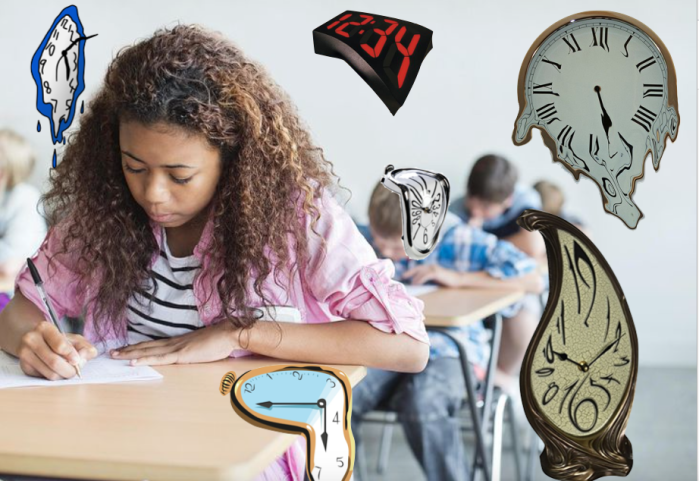
Screen Shot 2020-03-14 at 7.40.21 PM

 
There is one plus from being sick during a global pandemic.


You get perspective.


While all the schools in Pennsylvania are closed for at least the next two weeks to help stop the spread of COVID-19 (colloquially known as the Coronavirus), I self-quarantined a day early.


No, I don’t think I have the virus, but I’m not taking any chances.


Still, sitting here at my laptop with a steaming mug of tea, I’m filled with optimism.


My symptoms don’t match those of the virus – no fever, no dry cough, no difficulty breathing, no runny nose or sore throat. I just sneeze occasionally, have an intermittent wet cough and feel a bone deep fatigue.


Probably not the culprit sending the world into shutdown mode. But best to rest up anyway.


I’m also filled with a deep sense of gratitude that I’m a public school teacher.


My last class was a rough one – 7th graders running around the room with half written poetry demanding instruction, guidance, reassurance. My morning 8th graders were likewise rushing to complete a poetry assignment – frantically asking for help interpreting Auden, Calvert, Henley, Poe, Thomas.


What a privilege it has been to be there for them! How much I will miss that over the few next weeks!


Who would ever have thought we’d go into self quarantine to stop people from getting infected?


It says something about us that what seemed impossible just a few days ago has become a reality. We actually saw a problem and took logical steps to avoid it!


I know – we could have done a better job. We could have acted more quickly and in many areas we haven’t done nearly enough (New York, I’m looking at you).


But what we have done already shows that human beings aren’t finished. We have massive problems waiting to be solved – global climate change, social and racial inequality, the corrupting influence of money in politics, etc. However, we CAN do the logical thing and solve these problems!


No matter how crazy it seems now, tomorrow could be filled with rational solutions. If only we allow ourselves that chance.


So my spirits are high here in my little hollow nestled in with my family.


But being a teacher I can’t help thinking about what’s to come next.


Eventually this whole ordeal will be over.


Schools will reopen. Things will get back to normal. Or try to, anyway.


The challenge will be attempting to overcome the month or more of lost schooling.


Some will be thankful they relied on virtual schooling to fill in the gaps. When this whole crisis began, officials chided us to make preparations for “teleschool” in case of just this eventuality.


I’m glad we didn’t.


Frankly, (1) it would have been a huge cost that schools don’t have the money to meet and (2) it would have been money down the drain.


There is nothing innovative about sending kids on-line to do their assignments. The majority of work that can be done that way is of the lowest quality.


That’s workbook nonsense that the laziest and most checked out educators of generations past gave to their students to keep them quiet.


We see students in China who are being educated that way finding ways around it – giving their education apps low star reviews in the app store so that they’ll be removed, etc.


Here in the USA, all children don’t even have access to the Internet. They rely on the local libraries to get online – not a good idea in a pandemic.


So most schools have had to do without.


School is cancelled for about a month or so, and then – hopefully – it will return.


The question remains – what do we do when we get back to class?


We could extend the school year, but families have vacations planned and other obligations. This wouldn’t solve much and frankly I don’t think it will happen unless we’re out for longer than expected.


I anticipate being back in school by mid April or so. That would leave about a month and a half left in the year.


This really leaves us with only two options: (1) hold our end of the year standardized tests and then fit in whatever else we can, or (2) forgo the tests and teach the curriculum.


If we have the tests, we could hold them shortly after school is back in session. That at least would give us more time to teach, but it would reduce the quality of the test scores. Kids wouldn’t be as prepared and the results would be used to further dismantle the public school network.


Much better I think is option two: skip the tests altogether.


Frankly, we don’t need them. Teachers observe students every day. We give formal and informal assessments every time we see our kids. We’re like scientists engaged in a long-term study taking daily measurements and meticulously recording them before coming to our year end conclusions called classroom grades.


In my classes, I think I could teach just about the same material in the remaining time if I didn’t have to worry about the high stakes tests.


In 7th grade, this would mean finishing up our almost completed poetry unit – having kids put together their poetry portfolios and sharing them. Then we’d begin our final novel of the year, “Silent to the Bone” by E.L. Konigsburg, talk about mystery stories, reader perspectives and how truth impacts fiction.


In 8th grade, we could likewise finish up poetry with some presentations on students’ favorites from the assigned group. Then we could read the play version of “The Diary of Anne Frank,” and selections from Harper Lee’s “To Kill a Mockingbird.”We could discuss propaganda, prejudice and compare the historical perspective of Europe and the United States.


In both cases, we might have to forgo a year-end project, but at least we’d cover the majority of what we proposed at the beginning of the year.


Students would leave their respective grades with just about everything we set out to give them. They’d be prepared and ready to meet the challenges of the coming grade.


That seems a worthy goal to me.


But I hear someone ask – what about the standardized testing? Won’t students be less prepared having skipped over those assessments?


The answer is no. They would not be less prepared.


They would be better educated without a sword of Damocles hanging over their heads.


The shame is that this alteration in schedule would probably only last one year.


In 2020-21, we’d probably reinstate these standardized assessments.


This is at least a month of wasted schooling. If we got rid of all the pretests and administrator required teaching-to-the-test, we could clear up a good 9-weeks of extra class time.


Imagine what teachers could do with those surplus days!


My 8th graders could read the whole of “Mockingbird,” for one. instead of just selections. My 7th graders could read another entire novel – probably Paul Zindel’s “The Pigman.” Not to mention the addition of more women and writers of color, the extra time for creative writing, an emphasis on finding your own point of view.


And for me that’s the benefit of this COVID-19 crisis. It shows us what could be – what we could do if we were only brave enough to try.


Happy self-quarantine, everyone!


Like this post?  You might want to consider becoming a Patreon subscriber. This helps me continue to keep the blog going and get on with this difficult and challenging work.

Plus you get subscriber only extras!

Just CLICK HERE.

Patreon+Circle

I’ve also written a book, “Gadfly on the Wall: A Public School Teacher Speaks Out on Racism and Reform,” now available from Garn Press. Ten percent of the proceeds go to the Badass Teachers Association. Check it out!

book-2

The Coronavirus Could Be A Big Moneymaker for EdTech Companies

Screen Shot 2020-02-26 at 10.11.50 PM

 
There is a special place in Hell for people who cash in on tragedy.


But that place is reserved for the super rich – and that’s all that matters in Donald Trump’s America.


Federal officials are urging schools to prepare for possible disruptions due to the coronavirus – a disease that originated in China last month and has affected more than 77,000 people worldwide (of which more than 2,600 have died).


Only 14 people have been infected in the U.S., and the Center for Disease Control (CDC) writes on its Website that the “immediate health risk from COVID-19 is considered low” for the average American – especially those who have not traveled recently to Wuhan, the surrounding Hubei Province or elsewhere in mainland China.


However, this is certainly scary news for anyone – especially parents, teachers and students.


In fact, federal officials singled out schools at a press conference on Tuesday about possible responses to the disease if it gets worse on these shores.


Nancy Messonnier, a director at the CDC, said:


“You should ask your children’s schools about their plans for school dismissals or school closures. Ask about plans for teleschool.”


To which every teacher in America responded, “Teleschool!?”


So we’re worried about this disease which is somewhat more deadly than the fluNOT primarily because of the risk to students’ health or lives; NOT because of the risk of it going undiagnosed due to the disincentive of rising healthcare costs; NOT because we’re woefully unprepared due to Trump firing the entire U.S. pandemic response team two years ago and then not replacing them!


No! We’re concerned mostly because KIDS MIGHT MISS SCHOOL!!!!

 
But, hey, no worries because the Trump administration figures this new and unpredictable disease which typically causes symptoms like fever, cough and shortness of breath can be circumvented with… cyber school?

 
Limit kids exposure by letting them stay at home and do their lessons on the computer.


And if they have an online management system where teachers give virtual assignments and kids turn them in through the cloud, even better!


Thank you, education technology firms! You have saved American education. Again.


What a pile of crap!


Let’s get one thing clear. This suggestion has nothing to do with student well being. It is a blatant attempt to turn a potential pandemic into a cash cow.


EdTech already is a multi-billion dollar industry. If we successfully tie navigation of disasters with this sector, profits could potentially climb through the roof!


As it stands now, technology companies are lined up outside our schools pretending to provide the best the 21st Century has to offer to solve every school issue from excessive tardiness to lack of motivation to academic decline.


And now they’re offering the cure to the coronavirus – or at least the cure to any pedagogical delay that might result from school closures – either precautionary or due to an outbreak.


First of all, if schools close because of this disease, students will be scared. They aren’t going to be able to focus on academics.


Kids would need love and understanding – not more homework.


Second, not all kids have Internet access at home. Many of our most underprivileged children need to go to a public place like a library to get online. So if we require students to submit assignments this way during a closure, we’re forcing them to increase their chances of infection at a public place or get behind in their work. Not exactly fair.


Third, the kind of lessons you can provide through “teleschool” are subpar at best.


This is the automated checkout counter of school. It is the robocall customer service of education.


Most children need real live human beings to achieve their best. That’s why you just can’t give a kid a math book and – Voilà – they know how to reduce fractions!


Sure, they can try to muddle through a computer program or do virtual work and submit it online. But how is that really different from the bad old days when the most checked out educators would disseminate a worksheet to the class and then hide behind a newspaper at their desks?


This is the kind of curriculum we used to criticize teachers for and that very few modern day educators could get away with in our modern public school system – UNLESS they do it behind a computer and/or software package.


This is not being “future ready” or “innovative.” It is the worst practices of the past repackaged so a bunch of suits at the corporate offices can cash in.


Finally, it opens students up to severe privacy concerns. In 2018 the Federal Bureau of Investigations (FBI) warned that EdTech solutions like these often put student security at risk.


Much of this software asks for and saves student inputs which can be compromised or actively sold to third parties.

 
These are “adaptive, personalized learning experiences” or “administrative platforms for tracking academics, disciplinary issues, student information systems, and classroom management programs.”

 
Pedophiles could use this data to find and abduct children. Criminals could use it to blackmail them. It could even be sold to unscrupulous corporations or exploited by other children to bully and harass classmates.


And, in fact, such things have happened.

 
While it may be frustrating to makeup missed schools days, doing so doesn’t have the same risks and – eventually – provides kids with the same quality of education that they miss.

 
It just doesn’t offer opportunities for corporations to make big bucks.


Advocates claim online tools like Class Dojo and Apple Classroom provide unique opportunities that have never been available before for such teleschooling.


However, we’ve always been able to do this stuff – just not so easily on a computer.


Schools have always been able to send workbooks home with students full of drill and kill assignments. They just rarely did so because we all knew the quality of such workbooks was mediocre at best.


Compared with a flesh-and-blood teacher and the interpersonal interactions of school, this was poor return on the community’s investment in their children.


Teleschooling is pretty much the same thing just with flashier bells and whistles.


It’s no wonder that this is the kind of solution we get from an administration that thinks Betsy Devos should head the Department of Education.


Why would we trust the same people who can’t figure out how to contain the coronavirus to solve its impact on education?


Sadly in an age when the human genome has been successfully mapped and bio-weapons are a real tool at the disposal of unscrupulous governments, one can only be skeptical of a mysterious new virus that suddenly shows up in a country like China experiencing massive pro-democracy protests. That’s one way to get disaffected citizens off the streets.


And now the same disease has come to our shores on the eve of the 2020 Presidential election. You’ll forgive me for admiring what could be the most effective means of  voter suppression in modern politics!


This may be an unlikely scenario – especially given the degree of secrecy and competence it would require – but if history has taught us anything, it’s that the powerful will stop at nothing to keep their power.


Beyond mere financial gain, some may hope that teleschooling in the wake of predictable disasters could dumb down our children’s education just enough to deprive them of that lesson, themselves.


The best way to stop skepticism is to undercut the education of the next generation.


Like this post?  You might want to consider becoming a Patreon subscriber. This helps me continue to keep the blog going and get on with this difficult and challenging work.

Plus you get subscriber only extras!

Just CLICK HERE.

Patreon+Circle

I’ve also written a book, “Gadfly on the Wall: A Public School Teacher Speaks Out on Racism and Reform,” now available from Garn Press. Ten percent of the proceeds go to the Badass Teachers Association. Check it out!
book-1

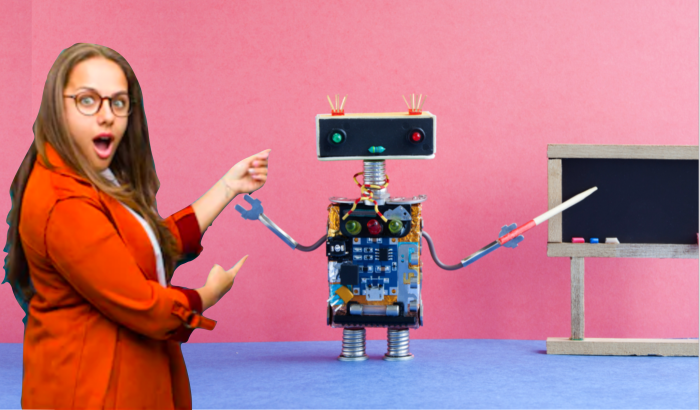
Robots Will Never Replace Teachers. They Can Only Displace Us

Screen Shot 2020-01-09 at 8.29.17 PM

 
My favorite movie of all time is “2001: A Space Odyssey.”


And my favorite character is the computer HAL 9000.


In the future (now past) of the movie, HAL is paradoxically the most human personality. Tasked with running the day-to-day operations of a spaceship, HAL becomes strained to the breaking point when he’s given a command to lie about the mission’s true objectives. He ends up having a psychotic break and killing most of the people he was supposed to protect.


It’s heartbreaking finally when Dave Bowman slowly turns off the higher functions of HAL’s brain and the supercomputer regresses in intelligence while singing “A Bicycle Built for Two” – one of the first things he was programmed to do.


I’m gonna’ be honest here – I cry like a baby at that point.


But once I clean up my face and blow my nose, I realize this is science fiction – emphasis on the fiction.


I am well aware that today’s calendar reads 2020, yet our efforts at artificial intelligence are not nearly as advanced as HAL and may never be.


That hasn’t stopped supposedly serious publications like Education Week – “The American Education News Site of Record” – from continuously pretending HAL is right around the corner and ready to take over my classroom.


What’s worse, this isn’t fear mongering – beware the coming robo-apocalypse. It’s an invitation!


A few days ago, the on-line periodical published an article called “Teachers, the Robots Are Coming. But That’s Not a Bad Thing” by Kevin Bushweller.


It was truly one of the dumbest things I’ve read in a long time.


Bushweller, an assistant managing editor at Education Week and Executive Editor at both the Ed Tech Leader and Ed Week’s Market Brief, seems to think it is inevitable that robots will replace classroom teachers.


This is especially true for educators he describes as “chronically low-performing.”


And we all know what he means by that!


These are teachers whose students get low scores on high stakes standardized tests.


Which students are these? Mostly poor and minority children.


These are kids without all the advantages of wealth and class, kids with fewer books in the home and fewer native English speakers as role models, kids suffering from food, housing and healthcare insecurity, kids navigating the immigration system and fearing they or someone they love could be deported, kids faced with institutional racism, kids who’ve lost parents, friends and family to the for-profit prison industry and the inequitable justice system.


And what does our society do to help these kids catch up with their more privileged peers? It underfunds their schools, subjects them to increased segregation, narrows their curriculum, offers them as prey to charter school charlatans – in short, it adds to their hurtles more than removes them.


So “chronically low-performing” teachers would be those who can’t overcome all these obstacles for their students by just teaching more good.


I can’t imagine why such educators can’t get the same results as their colleagues who teach richer, whiter kids without all these issues. It’s almost like teachers can’t do it all, themselves, — and the solution? Robots.


Screen Shot 2020-01-09 at 7.46.28 PM

 
But I’m getting ahead of myself.


Bushweller suggests we fire all the human beings who work in the most impoverished and segregated schools and replace them… with an army of robots.


Yeah.


Seriously.


Black and brown kids won’t get interactions with real adult human beings. Instead they can connect with the ed tech version of Siri programmed to drill and kill every aspect of the federally mandated standardized test.


Shakespeare’s Miranda famously exclaimed:


“O brave new world, That has such people in’t!”


But the future envisioned by technophiles like Bushweller has NO such people in’t – only robots ensuring the school-to-prison pipeline remains intact for generations to come.


In such a techo-utopia, there will be two tiers of education. The rich will get human teachers and the poor and minorities will get Bluetooth connected voice services like Alexa.


But when people like me complain, Bushweller gas lights us away as being narrow-minded.
 

He says:


“It makes sense that teachers might think that machines would be even worse than bad human educators. And just the idea of a human teacher being replaced by a robot is likely too much for many of us, and especially educators, to believe at this point.”

 
The solution, he says, isn’t to resist being replaced but to actually help train our mechanistic successors:


“…educators should not be putting their heads in the sand and hoping they never get replaced by an AI-powered robot. They need to play a big role in the development of these technologies so that whatever is produced is ethical and unbiased, improves student learning, and helps teachers spend more time inspiring students, building strong relationships with them, and focusing on the priorities that matter most. If designed with educator input, these technologies could free up teachers to do what they do best: inspire students to learn and coach them along the way.”


To me this sounds very similar to a corporate drone rhapsodizing on the merits of downsizing: Sure your job is being sent overseas, but you get to train your replacement!


Forgive me if I am not sufficiently grateful for that privilege.


Maybe I should be relieved that he at least admits robots may not be able to replace EVERYTHING teachers do. At least, not yet. In the meantime, he expects robots could become co-teachers or effective tools in the classroom to improve student learning by taking over administrative tasks, grading, and classroom management.


And this is the kind of nonsense teachers often get from administrators who’ve fallen under the spell of the Next Big Thing – iPads, software packages, data management systems, etc.


However, classroom teachers know the truth. This stuff is more often than not overhyped bells and whistles. It’s stuff that CAN be used to improve learning but rarely with more clarity and efficiency than the way we’re already doing it. And the use of edtech opens up so many dangers to students – loss of privacy, susceptibility to being data mined, exposure to unsafe and untried programs, unscrupulous advertising, etc.


Screen Shot 2020-01-09 at 7.47.03 PM

Bushweller cites a plethora of examples of how robots are used in other parts of the world to improve learning that are of just this type – gimmicky and shallow.


It reminds me of IBM’s Watson computing system that in 2011 famously beat Ken Jennings and Brad Rutter, some of the best players, at the game show Jeopardy.


What is overhyped bullcrap, Alex?


Now that Watson has been applied to the medical field diagnosing cancer patients, doctors are seeing that the emperor has no clothes. Its diagnoses have been dangerous and incorrect – for instance recommending medication that can cause increased bleeding to a hypothetical patient who already suffered from intense bleeding.


Do we really want to apply the same kind of artificial intelligence to children’s learning?


AI will never be able to replace human beings. They can only displace us.


What I mean by that is this: We can put an AI system in the same position as a human being but it will never be of the same high quality.


It is a displacement, a disruption, but not an authentic replacement of equal or greater value.


In his paper “The Rhetoric and Reality of Anthropomorphism in Artificial Intelligence,” David Watson explains why.


Watson (no relation to IBM’s supercomputer) of the Oxford Internet Institute and the Alan Touring Institute, writes that AI do not think in the same way humans do – if what they do can even accurately be described as thinking at all.


These are algorithms, not minds. They are sets of rules not contemplations.


An algorithm of a smile would specify which muscles to move and when. But it wouldn’t be anything a live human being would mistake for an authentic expression of a person’s emotion. At best it would be a parabola, at worst a rictus.


Screen Shot 2020-01-09 at 7.59.43 PM
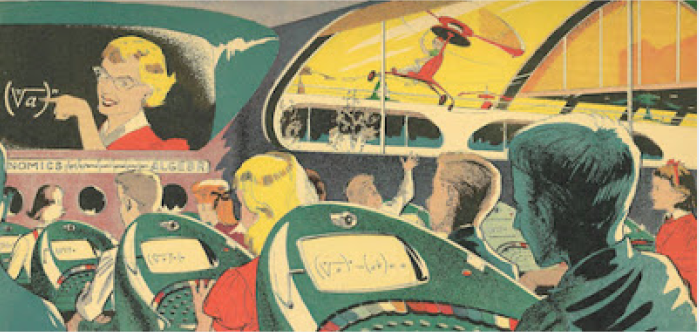
Picture of an actual Japanese robot teacher in use.


In his recent paper in Minds and Machines, Watson outlines three main ways deep neural networks (DNNs) like the ones we’re considering here “think” and “learn” differently from humans.


1) DNN’s are easily fooled. While both humans and AIs can recognize things like a picture of an apple, computers are much more easily led astray. Computers are more likely to misconstrue part of the background and foreground, for instance, while human beings naturally comprehend this difference. As a result, humans are less distracted by background noise.


2) DNN’s need much more information to learn than human beings. People need relatively fewer examples of a concept like “apple” to be able to recognize one. DNN’s need thousands of examples to be able to do the same thing. Human toddlers demonstrate a much easier capacity for learning than the most advanced AI.


3) DNN’s are much more focused on details and less on the bigger picture. For example, a DNN could successfully label a picture of Diane Ravitch as a woman, a historian, and an author. However, switching the position of her mouth and one of her eyes could end up improving the confidence of the DNN’s prediction. The computer wouldn’t see anything wrong with the image though to human eyes there definitely was something glaring incorrect.


“It would be a mistake to say that these algorithms recreate human intelligence,” Watson says. “Instead, they introduce some new mode of inference that outperforms us in some ways and falls short in others.”


Obviously the technology may improve and change, but it seems more likely that AI’s will always be different. In fact, that’s kind of what we want from them – to outperform human minds in some ways.


However, the gap between humanity and AI should never be glossed over.


I think that’s what technophiles like Bushweller are doing when they suggest robots could adequately replace teachers. Robots will never do that. They can only be tools.


For instance, only the most lonely people frequently have long conversations with SIRI or Alexa. After all, we know there is no one else really there. These wireless Internet voice services are just a trick – an illusion of another person. We turn to them for information but not friendship.


The same with teachers. Most of the time, we WANT to be taught by a real human person. If we fear judgment, we may want to look up discrete facts on a device. But if we want guidance, encouragement, direction or feedback, we need a person. AI’s can imitate such things but never as well as the real thing.


So we can displace teachers with these subpar imitations. But once the novelty wears off – and it does – we’re left with a lower quality instructor and a subpar education.


The computer HAL is not real. To borrow a phrase from science fiction author Philip K. Dick, Artificial intelligence is not yet “more human than human.”
 
Maybe it never will be.


The problem is not narrow minded teachers unwilling to sacrifice their jobs for some nebulous techno-utopia. The problem is market based solutions that ignore the human cost of steam rolling over educators and students for the sake of profits.


As a society, we must commit ourselves to a renewed ethic of humanity. We must value people more than things.


And that includes a commitment to never even attempting to forgo human teachers as guides for the most precious things in our lives – our children.


“Algorithms are not ‘just like us’… by anthropomorphizing a statistical model, we implicitly grant it a degree of agency that not only overstates its true abilities, but robs us of our own autonomy… It is always humans who choose whether or not to abdicate this authority, to empower some piece of technology to intervene on our behalf. It would be a mistake to presume that this transfer of authority involves a simultaneous absolution of responsibility. It does not.”

David Watson


Like this post? I’ve written a book, “Gadfly on the Wall: A Public School Teacher Speaks Out on Racism and Reform,” now available from Garn Press. Ten percent of the proceeds go to the Badass Teachers Association. Check it out!
thumbnail_IMG_8249

The Absurdity of Standardized Testing: Caught Between Prediction and Assessment

thumbnail_Screen Shot 2019-09-19 at 2.07.03 PM

 
Standardized testing is truly absurd.

 
It’s both a prediction and an assessment.


You take a test to determine what you’ve learned and that will in turn predict what you will be able to learn in the future.


We hardly ever do this anywhere else in life.


We don’t measure babies’ leg muscles to predict whether they’re ready to walk. We let them do what they do, possibly with some encouragement and positive models of locomotion, and they do it.


There are cognitive and developmental benchmarks we look for, and if children don’t hit them, we provide help. But no further prediction is necessary – certainly not based on artificial markers put together by corporate interests.


In most situations, predictions are superfluous. We just assume that everyone can learn if they so desire – unless something happens to make us think otherwise. And whether someone actually learns something is demonstrated by doing the thing, itself.


The only time we link prediction and assessment so closely is when the consequences of failure are irreversible – like when you’re going solo skydiving for the first time. If you jump out of an airplane and don’t know how to pull the ripcord to get your parachute to work, you probably won’t get a second chance to try again.


But most things in life aren’t so dire.


The world of standardized testing is very different. The high stakes nature of the assessments are what ramp out the consequences and thus the severity.


Testing looks at learning like two points on a map and sets up a gate between points A and B.


In order to cross, you have to determine if you’ve passed through the previous gate. And only then can you be allowed to progress on to point C.


But this is wrong on so many levels.


First, you don’t need a test to determine which point you’re at. If Point B is the ability to add, you can simply add. If it’s the ability to write a complete sentence, you can simply write a sentence.


There is no need to fill out a formal multiple-choice assessment that – depending on the complexity of the task being considered – is completely inadequate to capture the subtleties involved. The task, itself, is enough.


Imagine if you were testing whether someone had learned how to drink a glass of water. You could just give them a cup filled with H2O and see if they can gulp it down. Or you could have them sharpen their number 2 pencil and answer questions about how their throat works, their digestive and excretory systems and the chemical composition of agua – all answers predetermined to A, B, C or D.


Observation of a skill, we are told, is not enough to determine success because it relies on the judgment of an observer. A standardized test replaces the observer with an impersonal, distant testing corporation which then assesses only predetermined markers and makes decisions devoid of any situational context.


This is done to remove observational bias but it doesn’t avoid bias altogether. In setting up the markers and deciding which elements of the task are to be assessed (or in fact can be assessed in such a distant manner), the testing corporation is inserting its own biases into the process. In fact, in any assessment conducted by human beings, this would be inevitable. So going through this maze of perceived objectivity is really just a matter of subterfuge meant to disguise the biases of the corporation.


Second, assessing people in this way is extremely unnatural because very few fields of knowledge can be divided and subdivided into two or more discrete points.


When writing a complex sentence, for example, you need to know not just spelling and grammar but logic, handwriting, subject matter, colloquialisms, literary devices, and a plethora of other cultural and linguistic artifacts.


Moreover, there is not always a natural progression from Point A to B to C. Sometimes A jumps directly to C. Sometimes B leads directly to A. Sometimes A leads to Z.


Knowledge, skills and human cognition are far too complex a web to ever hope to be captured by such a reductive enterprise. But by insisting that we make this complexity fit into such a small box, we end up depriving people of the right to move on. We say predictive models show they aren’t ready to move forward and so we bury them in remediation. Or we deny them access to important opportunities like advanced classes, electives, field trips, extracurricular clubs or even post-secondary education.


Third, this emphasis on knowledge as discrete bits of information or skills (often called standards) leads to bad teaching.


Assessment expert W. James Popham provides a helpful distinction: “curriculum teaching” vs. “item teaching.” Curriculum teachers focus on the full body of knowledge and skills represented by test questions. For instance, if the test is expected to include questions about decimals, the teacher will cover the full range of knowledge and skills related to decimals so students understand what they are, know how to manipulate them, understand how to use them to solve more complex problems, and are able to communicate about them.


By contrast, item teaching involves narrowing instruction, organizing lessons around look-a-like questions that are taken directly from the test or represent the kinds of questions most likely to be found on the test. In this way, the teacher only provides the chunks of knowledge students are most likely to encounter on exams. For instance, item teachers might drill students on a certain set of vocabulary words that are expected to be assessed rather than employing instructional strategies that help students build a rich vocabulary that best contributes to strong reading comprehension.


A focus on standardized testing or even trying to educate in a system where these tests are attached to high stakes, results in an increase in item teaching. We often call it teaching to the test.


I’m not saying that item teaching is always bad. But curriculum teaching is to be much preferred. It is a best practice. The problem is when we resort to endless drills and give students innumerable questions of the exact type we expect to be on the test.


So when we find students who have made dramatic improvements on standardized tests, we often don’t find equal improvements in their over all knowledge or ability.


Test scores are often a false positive. They show students have mastered the art of taking the test but not necessarily the knowledge or skills it was meant to assess.


They are more like trained circus animals who can jump through flaming hoops but would be lost in the wild.


That’s why certain computer modeled artificial intelligences are able to pass standardized tests but would fail preschool.


These reflections have troubling implications for our system of standardized testing.


The false curtain of objectivity we’ve set up in our assessments may also be hiding from us what authentic learning is taking place and it may even hinder such learning from taking place at all.


Any sane society would halt such a system with these drawbacks. It would stop, regroup and devise a better alternative.


To continue with such a pedagogical framework truly would be the most absurd thing of all!


Like this post? I’ve written a book, “Gadfly on the Wall: A Public School Teacher Speaks Out on Racism and Reform,” now available from Garn Press. Ten percent of the proceeds go to the Badass Teachers Association. Check it out!

book-2

What Kind of A—hole Ransoms School Data?

Screen Shot 2019-08-28 at 10.47.05 PM

 
You’ve got to be a grade A sleaze bag to steal from kids’ public schools.


But that’s exactly what a growing number of slime balls are doing when they hack into schools’ computer networks and hold their data for ransom.


Even worse – districts are paying it!


Just this week the Rockville Center School District in New York state paid an $88,000 ransom to get back files that had been encrypted by Ryuk ransomware.


The district negotiated the payment down from $176,000. School directors only decided to pay after realizing it would cost more to hire another firm to fix the problem.


Plus the school had insurance that covered ransomware so it only ended up losing its $10,000 deductible.


But this district isn’t the only one being extorted by these basement dweller bandits.


In July, alone, schools in New Mexico, Nevada, Louisiana, Oklahoma, Alabama, Connecticut and another in New York suffered similar cyber attacks.


Nor do they show any signs of slowing down.


A report by cybersecurity firm Recorded Future concluded that attacks on state and local governments have reached an all time high. There were 170 cyber attacks since 2013, of which 22 occurred just this year.


After years of budget cuts and downsizing, hackers see local governments like wolves see the oldest and weakest animals in the herd – easy pickings.


And schools are particularly vulnerable.


They often have small IT departments, antiquated equipment and the cheapest cybersecurity.


That’s why in recent months schools in Lake City, Fla.; La Porte County, Indiana; and Riviera Beach, Fla. have all paid ransoms to regain access to their data.


If you think about it, data is one of the most financially valuable things schools have.


Districts are responsible for students’ privacy in so many ways – records of special services, grades, accommodations, discipline, etc. In addition, schools are large employers with privileged information on their staffs including healthcare, finances, insurance, social security numbers, etc.


School directors and administrators have a responsibility to safeguard this information. It’s no wonder, then, that many are giving in to these demands, especially when nefarious nonentities ensure payment is cheaper than any other alternative.


Even so, what a monster you have to be to squeeze schools in order to make a buck!


Every dollar you blackmail away from district coffers is a dollar not spent on children’s educations.


That’s less money for teachers, supplies, classes, tutors, nurses, counselors, etc.


You aren’t stealing candy from a baby. You are literally snatching away opportunities for a better future.


Given the stakes involved, it shouldn’t be all up to individual districts to stop cyber thieves. The state and federal government should be flexing their muscles to help.


One thing they can do is toughen laws against using ransomware.


Maryland legislators proposed a law to consider ransomware attacks that resulted in a loss of more than $1,000 as a felony, which would then be subject to a fine of up to $100,000 and 10 years in jail.


Current Maryland laws define such attacks that extort less than $10,000 as misdemeanors, while only a breach that results in a loss of greater than $10,000 is a felony.


But some argue that there are already federal laws on the books criminalizing ransomware such as The Computer Fraud and Abuse Act and the Electronic Communications Privacy Act. Unfortunately, these laws don’t mention ransomware specifically and may be too broad.


Federal and state governments could at least offer grants to update school cybersecurity to make such attacks more difficult. Otherwise, the burden becomes an exponential increase in the cost of doing business for schools which can only be made up by increasing local taxes and/or cutting student services.


Another option would be setting up a federal program to step in whenever schools are victims of ransomware. After all, these are public schools! If they were under attack by armed terrorists, the federal government wouldn’t think twice before jumping in.


With federal resources, perhaps we could stop all schools from ever paying these ransoms again. Because that’s the only way to truly end these cyber attacks.


As long as schools and governments are willing to pay, there will be trolls unscrupulous enough to take advantage.


Public services set up to meet the public good should never have to shortchange society so they can meet some fool’s ransom demand.


Ransomware has been around since at least 2012. The largest incident so far came last year with the WannaCry attack which infected more than 200,000 computers in about 150 countries, including the United Kingdom’s National Health Service, at a cost of about $4 billion.


It’s past time we got serious in dealing with these cowards.


As technology increases, data crimes have become more common. In fact, there are far too many legal ways to pilfer private data.


Schools, in particular, do a bad job of safeguarding student data by entering into unregulated and nefarious contracts with ed tech companies. Contracts with these companies commonly contain loopholes allowing them to take student data at will and sell it.


The situation is worsened by the supply-side economic policies governing public schools. There are already numerous roads to privatize public schools and turn tax dollars into corporate profits. Moreover, the standardized testing industry monetizes learning when their services are mandated by the state and federal government. They conveniently offer to remediate the large numbers of students who don’t score well on these same tests and cash in on both ends.


With so many fully legal ways to steal education dollars from practices and policies that actually help kids learn, it’s no surprise where these shadow dwellers get their ideas.


As repulsive and selfish as these hackers are, they’re only taking the greed of the testing, privatization and ed tech industry to its logical conclusion.


What kind of a—hole ransoms school data?


The a—holes we allow to get away with it.


Like this post? I’ve written a book, “Gadfly on the Wall: A Public School Teacher Speaks Out on Racism and Reform,” now available from Garn Press. Ten percent of the proceeds go to the Badass Teachers Association. Check it out!
book-1

Top 7 Ways Technology Stifles Student Learning in My Classroom

Screen Shot 2019-07-30 at 9.25.31 PM

 
As a middle school teacher, I have real concerns about the ways technology is used in the classroom and the effects it’s having on students.


That does not make me a technophobe.


The fact that you are reading this article on a blog – a regularly updated Website containing personal writings or a weBLOG – should prove that point.


I use technology in my everyday life and in many ways find it indispensable.


However, that does not mean I embrace all uses of technology just as criticizing some forms does not mean I think we should get rid of them all.


But after 17 years of teaching, I have legitimate concerns about what all this technology is doing to our students and our schools.


I have seen technologies come and go. Some – like a computerized grade book – have been extremely helpful, and I would not want to have to do my job without them.


Others have fallen by the wayside, been discontinued or proven a waste of time or even worse – they’ve become impediments rather than assistants to student learning.


In general, I think we have become too reliant on technology in schools. We’ve welcomed and incorporated it without testing it, or even reflecting upon whether it promises to offer better pathways toward student comprehension and discovery or whether it merely offers flash and novelty devoid of substance. And perhaps even more frightening, we have not investigated the ways in which using these technologies actually puts student privacy and intellectual growth at risk.
So, without further ado, here are the top 7 ways technology stifles student learning in my classroom:


1) It Stops Kids from Reading


I’m a language arts teacher. I want my students to read.


I could simply assign readings and hope students do them, but that’s not practical in today’s fast-paced world. When kids are bombarded by untold promises of instant gratification, a ream of paper bordered by cardboard doesn’t hold much of a claim on their attentions.


So like many teachers, I bring reading into the classroom, itself. I usually set aside class time every other day for students to read self-selected books for about 15 minutes. Students have access to the school library and a classroom library filled with books usually popular with kids their age or popular with my previous students. They can pick something from outside these boundaries, but if they haven’t already done so, I have them covered.


In the days before every student had an iPad, this worked fairly well. Students often had books with them they wanted to read or would quickly select one from my collection and give it a try.


Sometimes when there was down time in class, when they had finished assignments or tests early, they would even pick up their self-selected books and read a little.


What a different world it was!


Now that every student has an omnipresent technological device, this has become increasingly impossible. I still set aside 15 minutes, but students often waste the time looking for an eBook on-line and end up reading just the first chapter or two since they’re free. Others read nothing but the digital equivalent of magazine articles or look up disparate facts. And still others try to hide that they’re not reading at all but playing video games or watching YouTube videos.


Even under the best of circumstances, the act of reading on a device is different than reading a printed page.


The act of reading traditional books is slower, closer and more linear. It’s the way teachers really want kids to read and which will most increase comprehension.


Reading on a screen is a product of social media. We scroll or scan through, seeking specific information and clicking on hyperlinks.


The old style of reading was transformative, absorbing and a much deeper and richer experience. The newer style is more superficial, mechanical and extrinsic. (And, Yes, I’m aware of which style of reading you’re engaged in now!)


To be fair, some students actually prefer reading eBooks on devices and may even experience the richness of the original style. But they are few and far between. Usually students use the devices to escape from the deeper kind of reading because they’ve never really done it before and don’t understand what it really is. And when they have this choice, they may never find out.


2) It’s a Distraction


As a teacher, I want my students to be able to focus on one thing at a time. There are situations and assignments that call for multitasking, but usually we need students to be able to look at text closely, examine an argument, identify figurative language or write creatively, etc. They can’t do that if they’re constantly checking their devices.


We have to admit that iPads, laptops, social media, etc. are addictive. If given the chance, many teenagers will spend hours there. Heck, many adults will, too. It’s common for students to rush through assignments to get back to watching videos about the latest on-line gaming trend Fortnite, or listen to music with earbuds, or others such things.


Technology is usually associated in their minds with entertainment, not education. I’m not saying that technologies don’t have their place. If you want to look up information quickly, devices are great. But the most common words I tell my students on any given day are “Apples up.” In others words, turn your iPads face down and focus on the lesson at hand.


3) It’s Unhealthy


For most students, technology is not a novelty. It is something with which they already have a lot of experience. Many studies find that kids between the ages of 13-18 spend up to 18 hours a day in front of a screen.


Why are we adding to that in the classroom?


Children need face-to-face interactions. They need to learn social skills, how to communicate with people, not screen avatars. They need time outdoors, time to get up and move around and interact with the world. Heck! They need unstructured time where they actually experience boredom and have to find ways to cope.


We’re robbing them of these skills by giving in to the electronic nanny. And it’s creating children who are less able to survive without that technological crutch.


As technology has become more widespread in my classes, I’ve noticed attention spans decreasing. So has self control, mindfulness and an ability for critical thinking.


4) It Costs Too Much


Public schools are already grossly underfunded. We have to pick and choose the most effective tools to help kids learn. Technology is often very expensive and takes away valuable money and resources that could be better spent elsewhere.


And the way these technologies are marketed is often reminiscent of the drug trade. The first uses are free. But if you want to expand, it will cost.


Even those that don’t demand briefcasefulls of cash often recoup their costs by collecting and selling student data.


In the school system, we are privy to an enormous amount of information about the children in our care – information that we are tasked with keeping safe. Ed tech software and technologies also routinely collect data on students. But they are not as constrained or legally responsible for it in the way schools and teachers are.


Some of the data technologies collect is indeed necessary for whatever task they perform – tabulating which questions students get correct and incorrect, etc. However, much of it is unnecessary for those tasks – information about student preferences or marketing information.

 
We have no guarantee that this data is secure. The FBI has warned schools, parents and students of information breaches at these ed tech companies. And the contracts these companies have with schools and/or users are shady at best. They don’t guarantee your data will be secure, don’t accept liability and even when they do, they routinely warn that their policies can change at any time without warning – especially if they go bankrupt.


These are costs too expensive to pay.


5) It Has Never Been Proven to Help Kids Learn

Educational technologies’ claims about student learning outcomes are based on faith not facts. There are few (if any) long-term, large scale, peer reviewed studies showing that most technologies are effective educational tools.

 
This is partially because they’re too new to have been around long enough to be adequately tested. Moreover, the field is flooded with “studies” payed for by the same companies or organizations being studied – which is like having McDonald’s tell you the McRib is nutritious. Some small-scale peer reviewed studies have been done, but the results have been inconclusive.


We are literally unleashing these devices and software applications on children without knowing their full effects.


Ed tech is a market-based solution to an academic problem. It is the triumph of big business over pedagogy.


Our children deserve better than this.


6) It Perpetuates Bad Pedagogy and Assessment

Ed tech is almost always organized around standardized testing. It takes the multiple choice test as the ultimate form of assessment and arranges itself around that paradigm.


Software basically teaches to the test. It shows users the kinds of questions that will be asked, how to solve them and then gauges their success by giving them test-based questions.


It’s ironic because the marketing departments of these corporations usually sell this junk as “personalized learning,” “individualized learning,” or “competency” or “proficiency based education.” They want you to think that the program is tailor made to the user when it’s actually just a prepackaged mess. If you can’t answer a question of type A, you don’t get to move on to a question of type B. That’s all.


This can be an effective method for increasing test scores – if students aren’t so tuned out by the experience that they don’t engage with what they’re being presented – which is what I often find with my students when I’ve been forced to subject them to this nonsense.


However, learning how to take a multiple choice test on reading is not the same as learning how to read and understand. It is not the same as interacting with, comprehending and forming an opinion about that reading.


This is not the best way to teach just as having students fill out endless worksheets is not, nor is even having a flesh-and-blood teacher do endless test prep.


It is brainwashing – teaching kids to think like the designers of a test when we should be teaching them how to think for themselves and like themselves.


7) It Undermines Public Schools and Teachers


Ed tech companies are not philanthropies. They are in this business to turn a profit. And the best way to do that is to displace and disrupt the public education system.


There is an entire testing and school privatization industrial complex out there trying to prove that traditional public schools are bad and need replaced with business solutions.


These aren’t just charter schools or private and parochial schools cashing in on vouchers siphoning tax money away from children and into their private pockets. These are ed tech companies, too.


The ultimate goal is to get rid of the very concept of school, itself, and to replace it with on-line cyber schooling that can be accessed anywhere without the need for any living, breathing teachers in the mix. Or at best, they want to reduce the teacher to a mere facilitator. It is the device and the software that teach. It is only the human being’s job to make sure the student is engaging with the technology.


This is not in the best interest of students. It is in the best interests of companies and corporations.


When we give away our responsibilities, our autonomy, and our humanity to these businesses, we are selling out our children.


I’m not saying that all technology is bad or even that it should never be used in the classroom.


But we must approach it with caution and intelligence. We should always know why we’re using it, what end we expect it to have and fully comprehend the consequences.


Otherwise our children will be left to pay for our own shortsightedness.


Like this post? I’ve written a book, “Gadfly on the Wall: A Public School Teacher Speaks Out on Racism and Reform,” now available from Garn Press. Ten percent of the proceeds go to the Badass Teachers Association. Check it out!

ebook-2 (1)

eBackpack Bankruptcy May Put Student & Teacher Data in Peril

kelly-sikkema-266805-660x400@2x

 
Teachers put their assignments into an on-line data base.


Students access them on their computers, iPads or other devices and then submit their work via the Internet.


What could go wrong?


Plenty. Especially when the company that provides this service goes bankrupt.


And that’s exactly what’s happened with Texas-based educational technology company eBackpack.


All those teacher assignments and student works are still there in computer servers somewhere. And now that eBackpack has filed Chapter 7 bankruptcy, all of it has become assets the company could decide to sell off to pay its debts.

 
The company explicitly reserves the right to do so according to its own Privacy Statement:


“The information we collect is used to improve the content of our Web pages and the quality of our service, and is not shared with or sold to other organizations for commercial purposes, except to provide products or services you’ve requested, when we have your permission, or under the following circumstances:


-We transfer information about you if eBackpack or part of it is acquired by or merged with another company. In this event, eBackpack will notify you before information about you is transferred and becomes subject to a different privacy policy.” [Emphasis mine]


Well that’s comforting. I wonder how a company that will no longer exist will have staff to notify former customers about what’s happening to the mountains of data we put in its hands.


Even under the best of circumstances, who will it notify? Teachers? Students? Parents? Or just the administrators or school boards who managed the over all accounts for individual districts?


eBackpack’s Terms of Service Agreement contains several red flags that someone should have noticed before students’ privacy was jeopardized:

 
“-eBackpack may assign its rights and obligations under these Terms to a third party without your consent.


“-You agree to use the Service at your own risk, without any liability whatsoever to eBackpack.


-1.1. Your use of the Service is at your sole risk. The Service is provided on an “as is,” “as available” and “with all faults” basis. The Service is owned and copyrighted by eBackpack and offered through a subscription, not sold, to you.


-10.1. eBackpack reserves the right at any time and from time to time to modify or discontinue, temporarily or permanently, the Service (or any part thereof) with or without notice.


-By submitting Content to eBackpack, you grant eBackpack a perpetual, worldwide, non-exclusive, royalty-free right to copy, display, modify, transmit, make derivative works of, and distribute your Content for the purpose of providing or developing the Service.


-14.2. You consent to eBackpack’s use and/or references to your name, directly or indirectly, in eBackpack’s marketing and training materials. You consent to eBackpack’s use of your communication with eBackpack for marketing and training materials. You may not use eBackpack’s name or trademark without eBackpack’s prior written consent.”

 
It’s not like schools weren’t warned.

 
Less than a year ago, the Federal Bureau of Investigations (FBI) issued a strong statement cautioning consumers that edtech companies put student data at risk.


The bureau advised parents, teachers and administrators to take several steps to safeguard children’s privacy. The organization also pushed for the federal government to revise privacy laws to better protect kids from this industry.


In addition, commonsense.org – a nonprofit studying education issues – conducted a three-year review of 100 edtech companies. It concluded that 74% of these businesses hold the right to transfer any personal information they collect if the company is acquired, merged, or files for bankruptcy.


The authors wrote that there is “a widespread lack of transparency, as well as inconsistent privacy and security practices” in how student information is collected, used, and disclosed.


Why would any company want such student data?


It helps market products and, itself, can be a very marketable product.


For instance, imagine how much more effective the hiring process would be if businesses had access to applicants school attendance records. Imagine if businesses had an applicant’s entire academic record.


Employers could buy vast amounts of data and use algorithms to sort through it looking for red flags without fully comprehending what was being compiled. Imagine an applicant being turned down for a job because of low middle school attendance but not being able to explain that this was due to a legitimate illness.


There are reasons we protect people’s privacy. You shouldn’t have to explain your score on a 3rd grade spelling test the rest of your life or have the need for special education services become a liability on your credit record.


Yet all of these things are possible when student data is up for grabs as it may be in this instance.

 
This is personal to me.


My district uses eBackpack.


Yet it was for these exact reasons that I never jumped on the bandwagon with my own students in my classroom.


I experimented somewhat with the platform, myself, to see what it offered and to weigh whether the advantages canceled out the disadvantages.


If I had decided to move forward, I would have asked parent permission first, but in the end, I decided it wasn’t worth the risk – and boy am I glad!


Yet having interacted with the platform at all, I received the following email from the company yesterday:


“Dear User,


We regret to inform you that this 2018-2019 school year is the last year eBackpack will be operating.  We will not be accepting any renewals going forward and we will not be providing any services past July 31, 2019. All services will be terminated on that date. Please download and save to your own devices any data prior to July 31, 2019. Once the services for eBackpack are turned off, your files and data will no longer be accessible, and we will not have staff available to respond to any customer inquiries. We appreciate your support over the past years and we will truly miss working with you all!

 
If you have any questions or concerns, please feel free to send an email to edison@ebackpack.com or billing@ebackpck.com.
Again, we appreciate your time with us and all of your support.

 
Thank you,
 eBackpack Team”


I haven’t tried to contact the company, but I’m seeing on Reddit that others have been unable to do so.


One customer wrote:


“We use eBackpack and we are unable to pay our bill as no one answers their number or responds to emails. A quick Google search shows recent bankruptcy procedure. Anyone know anything? Am I the only one still using them?”


EBACKPACK, LLC did in fact file a chapter 7 bankruptcy case on Feb 8, according to docket information on-line.

 
Chapter 7 is sometimes called straight bankruptcy or liquidation bankruptcy. In general, the court appoints a trustee to oversee the case, take the company’s assets, sell them and distribute the money to the creditors who file claims. However, the trustee doesn’t take every last bit of company property. Owners are allowed to keep enough  “exempt” property to get a “fresh start.”


This is big business. Venture capitalists have invested more than $1.8 billion in the edtech industry in 2015, alone.

 
At this time, it is still unclear exactly how many students and teachers have been put at risk.


I can’t find information anywhere about how many student or teacher accounts are in jeopardy or how many districts used the platform.

 
Hopefully this will be a wakeup call that the edtech industry needs to be more closely monitored and regulated.

 
We cannot continue to put convenience and profit ahead of student and teacher safety.


Like this post? I’ve written a book, “Gadfly on the Wall: A Public School Teacher Speaks Out on Racism and Reform,” now available from Garn Press. Ten percent of the proceeds go to the Badass Teachers Association. Check it out!

thumbnail_IMG_8249

Classroom Teachers are the Real Scholastic Experts – Not Education Journalists

Screen Shot 2019-05-06 at 4.29.19 PM


When you want an expert on health, you go to a doctor.


When you want an expert on law, you go to a lawyer.


So why is it that when the news media wants an expert on education they go to… themselves!?


That’s right. Education journalists are talking up a storm about schools and learning.


You’ll find them writing policy briefs, editorials and news articles. You’ll find them being interviewed about topics like class size, funding and standardized tests.


But they aren’t primary sources. They are distinctly secondary.


So why don’t we go right to the source and ask those most in the know – classroom teachers!?


According to a Media Matters analysis of education coverage on weeknight cable news programs in 2014, only 9 percent of guests on MSNBC, CNN and Fox News were educators.


This data is a bit out of date, but I couldn’t find a more recent analysis. Moreover, it seems pretty much consistent with what I, myself, have seen in the media.


Take Wyatt Cenac’s “Problem Areas,” a comedy journalism program on HBO. The second season focuses entirely on education issues. Though Cynac interviews numerous people in the first episode (the only one I saw), he put together a panel of experts to talk about the issues that he would presumably return to throughout the season. Unfortunately, only two of these experts were classroom teachers.


There were more students (3), policy writers (3) and education journalists (3). There were just as many college professors (2), civil rights leaders (2), and politicians (2). Plus there was one historian (Diane Ravitch).


I’m not saying Cynac shouldn’t have talked to these other people. From what I’ve seen, his show is a pretty good faith attempt to talk about the issues, but in under representing classroom teachers, we’re left with a false consensus. It’s like having one climate denier debate one scientist. They aren’t equal and should not be equally represented.


And that’s as good as it gets!


Turn to most discussions of education or scholastic policy in the news and the discourse is bound to be dominated by people who are not now and have never been responsible for a class full of K-12 students.


Allowing journalists who cover education to rebrand themselves as “experts” is just not good enough.


Take it from me. Before I became a classroom teacher, I was a newspaperman, myself. Yet it’s only now that I know all that I didn’t know then.


If anyone values good, fact-based reporting, it’s me. But let’s not confuse an investigator with a practitioner. They both have important jobs. We just need to be clear about which job is being practiced when.


Reporters are not experts on the issues they cover. Certainly they know more than the average person or some political flunkey simply towing the party line. But someone who merely observes the work is not as knowledgeable as someone who does it and has done it for decades, someone with an advanced degree, dedication and a vocation in it.


Moreover, there is a chasm between education reporting and the schools, themselves, that is not present between journalists and most fields of endeavor. In the halls of academia, even the most fair-minded outsiders often are barred from direct observation of the very thing they’re trying to describe. We rarely let reporters in to our nation’s classrooms to see what’s happening for themselves. All they can do most of the time is uncritically report back what they’ve been told.


It’s almost as if sportswriters never got to see athletes play or political reporters never got to attended campaign rallies. How could their ideas about these subjects be of the same value as the practitioners in these fields!?


It couldn’t.


Think about it. Journalists are rarely permitted inside our schools to see the day-to-day classroom experience. Legal issues about which students may be photographed, filmed or interviewed, the difficulty of getting parental permissions and the possibility of embarrassment to principals and administrators usually keeps the school doors closed to them.


In many districts, teachers aren’t even allowed to speak on the record to the media or doing so can make them a political target. So reporters often have great difficulty just disclosing the opinions of those most knowledgeable about what is going on.


At best, our nation’s education reporters are like aliens from another galaxy trying to write about human behavior without actually having seen it. It’s like a bad science fiction movie where some alien with plastic ears asks, “What is this thing you call love?”


Sorry. These are not experts. And if we pretend that they are, we are being incredibly dishonest.


Some of this obfuscation is by design.


Education reporting is incredibly biased in favor of market-based solutions to academic problems.


Why? The corporations that own the shrinking number of newspapers, news stations and media outlets are increasingly the same huge conglomerates making money off of these same policies. The line between news and advertising has faded into invisibility in too many places.


Huge corporations make hundreds of millions of dollars off of the failing schools narrative. They sell new standardized tests, new test prep materials, new Common Core books, trainings for teachers, materials, etc. If they can’t demonstrate that our schools are failing, their market shrinks.


Even when they don’t put editorial pressure on journalists to write what the company wants, they hire like-minded people from the get go.


Too many education journalists aren’t out for the truth. They’re out to promote the corporate line.


This is why it’s so important to center any education discussion on classroom teachers. They are the only people with the knowledge and experience to tell us what’s really going on.


And – surprise! – it’s not the same narrative you’re getting from corporate news.


Schools are being defunded and dismantled by the testing and privatization industry. Corporate special interests are allowed to feed off our schools like vultures off road kill. And all the while, it is our children who suffer the results.


High stakes standardized testing must end. Charter and voucher schools must end. Parasitic education technologies must be controlled, made accountable and in many cases barred from our schools altogether.


But that’s a truth you can only find by talking to the real experts – classroom teachers.


Until we prize their voices above all others, we will never know the whole truth.


Like this post? I’ve written a book, “Gadfly on the Wall: A Public School Teacher Speaks Out on Racism and Reform,” now available from Garn Press. Ten percent of the proceeds go to the Badass Teachers Association. Check it out!
book-1

The Best School Innovation Would Be More People

thumbnail_o-TEACHER-COLLABORATION-facebook


Public schools thrive on innovation.


In nearly every classroom around the country you’ll find teachers discovering new ways to reach students and foster skills, understanding and creativity.


But if you pan out to the macro level, the overwhelming majority of innovations aren’t organic. They’re imposed on us by bureaucrats and functionaries from outside the classroom:


Education Technologies.


School privatization.


Standardized tests and Common Core.


For the last two decades, these are the kinds of innovations that have been forced on public schools at gun point.


And each and every one of them is pure bullshit.


They are corporate schemes written by the wealthy to cash in on education dollars for themselves. Big business hands them out to their paid political lapdogs to push through our state and federal legislatures to become laws and policies the rest of us have to obey.


They have nothing to do with helping students learn. Their purpose is to boost profits.


Just look at the difference between the ways the word innovation is defined.


Merriam Webster says the word signifies “the introduction of something new” or  “a new idea, method, or device: Novelty.”


But BusinessDictionary.com finds a tellingly distinct meaning:


“The process of translating an idea or invention into a good or service that creates value or for which customers will pay.”


It is that second business-friendly definition that has dominated our schools and narrowed our view until the only concept of advancement and revolution has been centered exclusively on the profit principle.


It is time to put a stop to all of it.


No more useless iPads, apps, software and so-called “personalized” educational technologies that do little more than allow marketers to steal student data and profit off of a new form of school where everything can be provided by technology at a cost while the quality of services takes a nosedive. No more technology for technology’s sake instead of using it as a tool to promote authentic learning.


No more laughable charter and voucher schools where education budgets become slush funds for corporations who don’t have to provide the same standard of services to students or the community. No more operating without  transparency or accountability.


No more outmoded and disproven standardized tests. No more canned academic standards that strip classroom educators of autonomy while reducing effective teaching behind a smoke screen of test scores that merely conflate the economic situation students live in with their academic abilities. No more corporations creating bogus multiple choice assessments whose only utility is to demonstrate how many more test prep materials we need to buy from the same company or industry.


It’s too bad we’re not interested in that FIRST definition of innovation, or at least innovation tied with the motive of providing quality education for children.


If we were interested in that kind of real, authentic school reform, we would focus on things that really matter. And chief among those would be one main thing, one major innovation that would be easy to accomplish but could change the fabric of our schools from top to bottom – people.


After all, that is what our public schools need the most – more people.


Have you walked into a public school lately? Peak your head into the faculty room. It’s like snatching a glance of the flying Dutchman. There are plenty of students, but at the front of the overcrowded classrooms, you’ll find a skeleton crew.


Today’s public schools employ 250,000 fewer people than they did before the recession of 2008–09. Meanwhile enrollment has increased by 800,000 students. So if we want today’s children to have not better but just the same quality of services kids received in this country only a decade ago, we’d need to hire almost 400,000 more teachers!


Instead, our children are packed into classes of 25, 30 even 40 students!


And the solution is really pretty simple – people not apps. Human beings willing and able to get the job done.


If we were fighting a war, we’d find ways to increase the number of soldiers in our military. Well, this is a war on ignorance – so we need real folks to get in the trenches and win the battle.


We need teachers, counselors, aides and administrators promoted from within and not functionaries from some think tank’s management program.


We need more people with masters or even more advanced teaching degrees – not business students with a three-week crash course in education under their belts who are willing to teach for a few years before becoming a self-professed expert and then writing education policy in the halls of government.


We need people from the community taking a leadership role deciding how our schools should be run, not simply appointing corporate lackeys to these positions at charter or voucher schools and narrowing down the only choices parents have to “Take It” or “Leave It.”


We need people. Real live people who can come into our schools and do the actual work with students.


And that means money. It means cutting the crap boondoggles to corporations and spending on flesh and blood reform.


It means fixing the funding inequality at the heart of nearly every public school in the country. No more spending tens or hundreds of thousands on wealthy students and merely hundreds on poor ones. No more dilapidated school buildings for the poor and palaces for the rich. No more socialistic pulling together for the wealthy and rugged individualism for the poor.


THIS is how you solve our education crisis – a crisis not caused by falling test scores or failing schools. A crisis caused by vulture capitalists preying on our educational institutions and our students as if they were some bloated carcass on the side of the road and not our best hope for the future.


It’s really that simple.


It’s a matter of ideology based on empiricism not “common sense” Laissezfaire maxims of “This is how we’ve always done it.”


We’ve been trying so-called corporate education reform for decades now – through Bush and Obama and now Trump. It doesn’t work.


It’s time we stopped making excuses for failing policies and got back to the best thing that works.


People.


Like this post? I’ve written a book, “Gadfly on the Wall: A Public School Teacher Speaks Out on Racism and Reform,” now available from Garn Press. Ten percent of the proceeds go to the Badass Teachers Association. Check it out!

book-2

I Assign my Students Homework Despite Scant Research It Does Any Good

thumbnail_Homework_debate-e1445976586714

In academic circles the debate over homework rages on.

Does it actually help students learn or does it just cause undue stress and frustration for children and parents?

As a teacher and a parent, I see both sides of the issue.

In class, I assign my students homework every week – Monday through Thursday. Never on the weekends.

My daughter’s teacher does the same. So at home, I’m on the receiving end, spending hours with my little munchkin helping her get through mountains of assignments for her classes the next day.

Perhaps this is what they mean by the proverb – you reap what you sow. Except my daughter isn’t doing the homework I assigned. She isn’t in my class and we don’t even live in the district where I teach.

But it sometimes does feel like payback plodding through seemingly endless elementary worksheets, spelling words and vocabulary.

After a while, even I begin to question whether any of this junk does any good.

As a teacher, I know the research on the subject provides slim support at best.

In fact, the closest we have ever come to an answer is a reformulation of the question.

It really comes down to a matter of causality – a chicken and the egg conundrum with a side of sharpened pencil and crumpled paper.

If we look really hard, we can find a correlation between students who do their homework and those who get good grades.

The problem is we can’t PROVE it’s the homework that’s causing the grades.

It could just be that kids who excel academically also happen to do their homework. If we removed the homework, these kids might still get good grades.

So which comes first – the homework or the grades?

There has been surprisingly little research that goes this deep. And almost all of it is anecdotal.

Even the investigations that found a correlation did so in tight parameters – only in secondary grades and usually just for math.

Some wealthy districts have even reduced the amount of homework without seeing a subsequent drop in learning.

But nothing has been tested across socioeconomic divides or with any consistency and very little has been proven definitively.

This doesn’t mean that there’s no consensus on the matter.

Both the National Education Association (NEA) and the National Parent Teacher Association (NPTA) suggest educators assign no more than a standard of “10 minutes of homework per grade level” per night.

In other words, a first grader should have no more than 10 minutes of homework on a given evening, a second grader no more than 20 minutes, etc.

However, it appears that students – especially in the primary grades – are getting more work than these recommended maximums.

A 2015 study published in The American Journal of Family Therapy surveyed more than 1,100 Rhode Island parents with school age children.

Researchers found that first and second graders received 28 and 29 minutes of homework per night – almost double the recommended maximums. Even more shocking, Kindergarteners – who according to the guideline should receive no homework at all – actually were assigned an average of 25 minutes per night.

That’s a lot of extra time sitting and slogging through practice problems instead of spending time with friends or family.

Though I live in western Pennsylvania, this study is certainly consistent with what I see in my own home. My daughter is in 4th grade but has been assigned between 30 minutes and two hours of homework almost every weekday since she was in Kindergarten.

It’s one of the reasons I try to abide by the guidelines religiously in my own classroom. I give about an hours worth of homework every week – 15 minutes per day for four days. If you add in cumulative assignments like book reports, that number may go up slightly but not beyond the recommended maximums.

I teach 8th graders, so they should not be receiving more than 80 minutes of homework a night. If the teachers in the other three core classes give the same amount of homework as I do, we’d still be below the maximum.

I’m well aware that the consequences of giving too much homework can be severe.

A 2014 Stanford study published in the Journal of Experimental Education found that giving too much homework can have extremely damaging effects on children.

Still this isn’t exactly hard science.

The researchers used survey data to examine perceptions about homework, student well-being and behavioral engagement in a sample of 4,317 students from 10 high-performing high schools in upper-middle-class California neighborhoods. They also used open-ended answers to gauge the students’ views on homework.

They concluded that too much homework was associated with greater stress, reductions in health, and less quality time with friends and family.

So where does that leave us?

We have anecdotal evidence that excessive homework is harmful. And limited evidence that homework may increase academic outcomes in the higher grades in math.

Frankly, if that was all I had to go on, I would never assign another piece of homework ever again.

But I’m a classroom teacher. I don’t have to rely solely on psychological and sociological studies. Everyday in school is an opportunity for action research.

My classroom is a laboratory. I am a scientist. Nearly every decision I make is based on empiricism, hypothesis and testing the results.

Maybe X will help students understand Y – that sort of thing.

This applies to homework, too.

I’ve had more than 15 years to test what works with my students. I’m not saying my results would necessarily be reproducible everywhere, but they’re at least as scientific as the body of research we have on homework. In fact, within these parameters they’re even more rigorous.

So why do I give homework?

For several reasons:

1)  It prepares students for the higher grades.

Most of my career has been spent in the middle school teaching 7th and 8th grade. In my district, high school teachers give a lot of homework. I need my students to get used to that rhythm – homework being assigned and handed in – so that they’ll have a chance at being successful in the upper secondary grades. Too many students go no further academically than 9th grade. Giving homework is my way to help provide the skills necessary to avoid that pitfall.

However, this isn’t a sufficient reason to give homework all by itself. If high school teachers stopped assigning it – and maybe they should if we have no further reason to do so – then I’d have no reason to assign it either.

2)  It makes kids responsible.

There’s something to be said for getting kids used to deadlines. You need to know what work you’re responsible for turning in, getting it done on your own and then handing it in on time. This is an important skill that I won’t apologize for reinforcing. I’m well aware that some students have extended support systems at home that can help them get their assignments done and done correctly, but I design the work so that even if they aren’t so privileged, it should be easily accessible on an individual level. Plus I’m available, myself, as a resource if necessary.

3)  It’s good practice.

In school, we learn. At home, we practice. That pattern is necessary to reinforce almost any skill acquisition. I know it’s trendy to flip the classroom a la Khan Academy with learning done through videos watched on-line at home and practice done in school. But when Internet access in not guaranteed, and home environments often are the least stable places in my students’ lives, it makes little sense to try to move the most essential part of the lesson outside of the classroom. After all, it’s easier to find a place to do some low tech practice than it is to find space, silence and infrastructure for high tech learning.

Don’t get me wrong. We practice in school, too. But there’s only so many hours in the school day. I use homework in my language arts classes for a few select things: increased vocabulary, word manipulation, grammar, self-selected reading and the ability to do work on your own. I think it’s important for my students to increase their vocabularies. Having kids read a self-selected book (both inside and outside of class) helps do that. It’s also a benefit to be able to play with words and language, find words in a puzzle, recognize synonyms and antonyms, etc. Grammar may not be essential, but a rough knowledge of it is certainly useful to increase recognition of context clues and better writing skills. Finally, some students benefit from the simple opportunity to do an assignment by themselves without an adult or even a peer looking over their shoulder.

That being said, I think it is important that the homework I give be seen as something students can achieve.

I’ve had numerous co-workers tell me they don’t assign homework for the simple reason that their students won’t do it.

This isn’t a big problem in my class. Almost all of my students do the homework. Why? Because we go over it and they know it’s something they can do without too much difficulty.

I scaffold assignments building the difficulty progressively as we proceed through the year (or years). I make myself available for extra help. I accept late work (with a penalty).

And most of all – I stress that I’m not expecting anyone to be a genius. I’m looking for hard work.

I tell my students explicitly that anyone who puts in their best effort will pass my class – probably with a B or an A. And that’s exactly what happens.

Homework is a part of that equation. It demonstrates effort. And effort is the first step (the key, in fact) to accomplishment.

Do students complain about the homework?

Sure! They’re children!

I’d probably complain, too, if I were them. No one really wants to be given extra work to do. But it’s all part of the pattern of my classroom.

Students know what to expect and how to meet those expectations.

None of this makes me a super teacher. It certainly doesn’t put me on anyone’s cutting edge.

I’m just doing what educators have done for decades. I’m attempting to use best practices in my classroom with a full knowledge of the academic research and the pitfalls ahead.

I may assign homework, but I made sure to do my own before coming to that decision.


Still can’t get enough Gadfly? I’ve written a book, “Gadfly on the Wall: A Public School Teacher Speaks Out on Racism and Reform,” now available from Garn Press. Ten percent of the proceeds go to the Badass Teachers Association. Check it out!

book-3