Report: US Shortchanged Public Schools by Hundreds of Billions of Dollars Over Decades

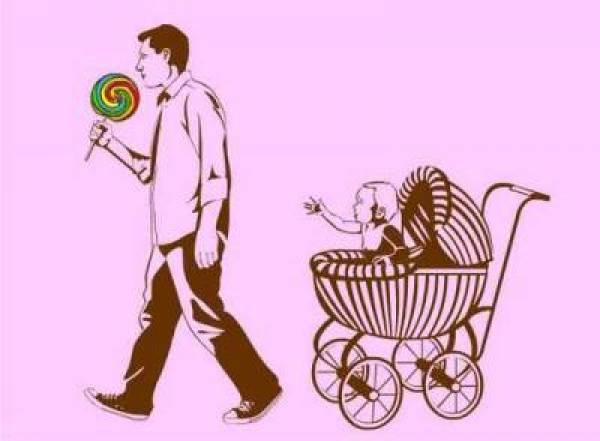
taking-candy-from-a-baby


Fun Fact: Between 2005 and 2017, the federal government withheld $580 billion it had promised to spend on students from poor families and students with disabilities.


Fun Fact: Over that same period, the personal net worth of the nation’s 400 wealthiest people ballooned by $1.57 trillion.


So, rich people, consider this the bill.


A new report called “Confronting the Education Debt” commissioned by the Alliance to Reclaim Our Schools (AROS) details the shortfall in minute detail.


For instance:


  • $347 billion owed to educate low-income students most of whom are children of color.


  • $233 billion owed to provide services for students with disabilities.


And this is just the shortfall of the last dozen years! That’s just money due to children who recently graduated or are currently in the school system!


We’ve been cheating our children out of the money we owe them for more than half a century!


Federal education funding levels were first established in 1965 as part of Pres. Lyndon Johnson’s War on Poverty in the landmark education law, the Elementary and Secondary Education Act (ESEA).


That law, which has become little more than a boondoggle for the standardized testing and school privatization industries, originally was passed to address inequality in America’s education funding.


Now this report from a coalition of groups including the Education Justice Research and Organizing Center, the National Education Association, the American Federation of Teachers, Center for Popular Democracy and the Action Center on Race and the Economy points out the multifarious ways we have failed to live up to the standards we set in that original legislation and beyond.


One of the most glaring examples of neglect is Title I funding.


The Johnson administration admitted that schools with a high concentration of students living below the poverty line needed extra support to succeed at the same levels as students from middle class or more affluent backgrounds. So the law promised to provide an additional 40 percent for each poor child above what the state already spent per pupil.


And then it promptly failed to fund it. In 1965 and every year since!


These are not just numbers. With this money, high poverty schools could provide:


  • “health and mental health services for every student, including dental and vision services; and

  • a full-time nurse in every Title I school; and

  • a full-time librarian for every Title I school; and

  • a full-time additional counselor in every Title I school, or

  • a full-time teaching assistant in every Title I classroom.”


A decade later, in 1975, the same thing happened with The Individuals with Disabilities Education Act (IDEA).


Congress told local districts they’d have to do more to help disabled students succeed academically. However, doing so costs money. Lawmakers admitted that disabled students cost more to educate and that local districts often struggle to find the funding to help them succeed.


Once again, Congress pledged to pay up to 40 percent of that additional cost, with local and state funds covering the remainder.


Once again, Congress failed to fund it.


STATE AND LOCAL FAILURE


But it’s not just the federal government that has shirked its duties to school children.


State and local governments also stiffed generations of students out of the resources they deserved – especially if those students have black or brown skin.


Beside the federal government, public schools are funded by their local municipalities and the state. Local governments pay for about 45 percent of school budgets.


However, since most of this allotment is determined by property tax revenues, it ensures the poor get fewer resources than the rich. Kids from rich neighborhoods get lots of resources. Kids from poor areas get the scraps. Inequality is built into the funding formula to ensure that students don’t start out on an even playing field and that economic handicaps are passed on from one generation to the next.


State governments are no better. They provide about 47 percent of school budgets.


As such, they are in the position to right the wrongs of the local community by offsetting the inequality of local governments – but only 11 states do so. Twenty states close their eyes and provide the same funding to each school – rich and poor alike – regardless of need or what each community can afford to provide for its own children. But 17 states are even worse. They actually play Robin Hood in reverse – they funnel more money to wealthier districts than to poor ones.


As a result, schools nationwide serving mostly students of color and/or poor children spend less on each child than districts serving mostly white and/or affluent children.


TAX CUTS


And while our federal, state and local governments have failed to meet their responsibilities to students, they have required fewer taxes from business and industry.


In the late 1940s and 1950s, the top marginal tax rate was more than 90 percent. Today it is 37 percent.


Congress just passed a series of whooping tax cuts that go into effect in 2019. More than half of the benefit of these cuts will go to the richest five percent of taxpayers. The law is expected to cost the federal treasury as much as $1.5 trillion in lost revenues over the next decade.


Nearly every state levies a much greater share of taxes from low- and middle-income families than from the wealthy.


And that’s before we even start talking about corporations!


While the US federal corporate tax is 35 percent, the effective tax rate that corporations pay after loopholes and deductions is only about 14 percent. This costs the federal government at least $181 billion in annual revenue, based on 2013 estimates by the Government Accountability Office. Local and state corporate tax and abatement programs make it even worse.


This is a choice. We are not requiring the rich to pay their fair share.


SCHOOL-TO-PRISON


Instead of investing in ways to help educate children, one of the only areas we’ve increased funding is incarceration.


The private prison industry is booming, fueled in part by a lack of opportunities in schools.


According to the report:


“In 2017, the National Association of School Resource Officers claimed that school policing was the fastest-growing area of law enforcement. The school safety and security industry was reported to be a $2.7 billion market as of 2015. Most of that $2.7 billion is public money now enriching the private security industry instead of providing real supports to students.”


According to the US Department of Education, 1.6 million students go to a school that employs a law enforcement officer but not a guidance counselor.


That is not an unalterable economic reality. It is a failure of priorities. It is the mark of a society that is not willing to help children but will swoop in to punish them if they get out of line.


SCHOOL PRIVATIZATION


Finally, the report identifies school privatization as a contributing factor to this systemic neglect.


Charter schools are legal in 44 states plus Washington, D.C. and Puerto Rico. They have “systematically stripped public school budgets through the creation of parallel structures of privately-operated, publicly-funded schools.”


Cost studies in San Diego, Los Angeles, Nashville, Michigan, Pennsylvania, Durham and other localities have come to the same conclusion: “the privatization of schools has contributed to austerity conditions in traditional public schools.”


Yet Congress continues to appropriate millions of dollars to the Department of Education’s Charter Schools Program (CSP), which funds new charter start-ups and expansions. The program has a budget of $500 million this year, alone. It is the largest single backer of charter schools in the nation.


According to the report, “In other words, the U.S. Department of Education is operating a program that directly undermines public schools.”


SOLUTIONS


But the report isn’t just about what’s wrong. It outlines how we can make it right.


It outlines three policy initiatives:


1)      “Full funding of Title I and IDEA to target federal support to low-income children and students with disabilities.

2)      The creation of 25,000 Sustainable Community Schools by 2025.

3)      A new focus for the U.S. Department of Education, on ensuring and incentivizing equity in public schools across the country.”


And we can pay for it by:


A. “Make the wealthy pay their fair share of taxes.

  • Rescind the 2017 tax code changes, which overwhelmingly favor the top 1 percent of income earners.
  • Close the federal carried interest loophole, a step that could increase federal revenues by between $1.8 and $2 billion annually or, according to some researchers, by as much as $18 billion annually.
  • If the carried interest loophole is not closed at the federal level, states can impose a surcharge on carried interest income at the state level, raising millions for state budgets.
  • Enact so-called “millionaire’s taxes” that increase the tax rate on a state’s highest earners. New York and California have already passed such law.


B. Require wealthy corporations to pay their fair share.

  • End or reduce corporate tax breaks that cost the federal government at least $181 billion annually.

  • Reduce state and local subsidies to businesses for economic development projects and hold school funding immune from tax abatements.

  • Enforce and strengthen programs like Payment in Lieu of Taxes (PILOT) to ensure that wealthy institutions pay their fair share towards local budgets.


C. Divest from the school-to-prison pipeline.

  • School safety and security is now a $2.7 billion industry. Much of that money is public money, going to profitable corporations instead of schools.
  • Divest from expensive security systems, metal detectors and legions of school-based police officers and instead invest in counselors, health and mental-health providers and other supports that make schools safer.


D. Place a moratorium on new charter schools and voucher programs.

  • A moratorium on the federal Charter Schools Program would free up $500 million annually, which could be used to support the creation of Sustainable Community schools.”


The executive summary concludes with the following statistic.


Even a 10 percent increase in funding for each high poverty student maintained through 12 years of public school can dramatically change the likelihood of academic success. It can boost the chances that students will graduate high school, achieve 10 percent higher earnings as adults and a 6 percentage point reduction in the annual incidence of adult poverty, according to a 2015 report.

“Ten percent is pocket-change for a nation that has orchestrated the rise of an unmatched billionaire class. In the richest nation in the world, it is possible to fully fund all our public schools, and to provide Black, Brown and low-income children with the educational resources and additional supports and services they need to achieve at the highest levels.”


The facts are in, folks.


We can no longer gripe and complain about a public education system we fail to support without recognizing the cause. We have failed to meet our responsibilities to our children – especially our children of color.


The solution is simple – equity.


We need to demand the rich do the right thing.


We cannot achieve greatness as a nation when wealth and privilege continue to shirk their duties and our lawmakers do little more than enable greed and corruption.


The bill is here.


Time to settle up.


READ THE WHOLE REPORT.


Like this post? I’ve written a book, “Gadfly on the Wall: A Public School Teacher Speaks Out on Racism and Reform,” now available from Garn Press. Ten percent of the proceeds go to the Badass Teachers Association. Check it out!

WANT A SIGNED COPY?

Click here to order one directly from me to your door!
book-2

Meet the Test Before the Test – Pennsylvania’s Classroom Diagnostic Tools (CDT)

BoredStudentIPad_iStock_monkeybusinessimages


It’s test time.


My students are dutifully pecking answers onto their iPads before a hand goes up.


“Mr. Singer, I can’t log in to the server.”


Another hand.


“It keeps kicking me out.”


Another.


“Mr. Singer, what does this question mean?”


Then every single hand in the room pops up all at once.


“What’s the matter!?” I say, trying not to let the frustration into my voice.


A lone student in the front offers to speak for the group.


“The Website just kicked us all off.”


If that sounds like the optimum environment to assess student learning, then you must work for Data Recognition Corp (DRC).


It is typical of the company’s Classroom Diagnostic Tools (CDT) test in Pennsylvania.


The assessment, which cannot be taken with pencil and paper but must instead be taken on a computer or personal device, has always been glitchy.


You type in a response and what you typed only appears after a delay.


When moving from one screen to another, you have to wait through a seemingly endless interval until the next screen loads.


And during this year’s first sessions, multiple teachers told me of students whose tests cycled through all the questions without input from the students and then gave them an unalterable grade.


This is not the best way to diagnose students’ abilities in reading, math and science.


Yet that’s what the state Department of Education strongly encourages we use it for – three to five times a year!


This is not a mandatory test.


It’s strongly suggested by administrators in Harrisburg. And that’s enough to make some local principals march wherever they’re told.


Ironically, Gov. Tom Wolf proudly proclaimed that he was reducing the amount of time students in the Keystone state would take standardized tests. But he’s only talking about the federally mandated Pennsylvania System of School Assessment (PSSA) and Keystone Exams which he’s cut by a total of almost 2 hours a year.


There are still a battery of suggested pretests on the state’s wish list – tests that are supposed to predict success on the PSSA or Keystone Exams – tests used to show whether kids are getting the skills they need.


Do you understand it now?


No.


Do you understand it Now?


No.


Do you understand it NOW!!!!!!!?


Of these, the most common is the CDT.


If schools follow the state’s instructions and give students this exam in reading, math and science 3 to 5 times a year, that’s an additional 50-90 minutes per test. That comes to 22.5 hours of additional testing!


So 22.5 hours minus 2 hours equals… NOT A REDUCATION IN TESTING!


Moreover, the CDT test is cumbersome to proctor.


I’ve given my students this test for about seven years now and it never fails to be anywhere from tricky to an outright disaster.


This week, I had a class of students on their iPads unable to log on to their accounts at DRC headquarters. In another group, five students were dropped from the server without warning and couldn’t finish.


Defective software and having to repeatedly log back in to the system are hallmarks of even the most successful CDT session.
Even if you like standardized tests and think they are the best way to assess students, the product and service provided by DRC is extremely low quality.


But keep in mind – you’re paying for it, folks! In the last 8 years alone, taxpayers forked over more than $1 billion for this service and the PSSA and Keystone tests, which DRC also produces.


It’s incredibly frustrating, a waste of classroom time and taxpayer money.


No one does their best when they’re exasperated, and this test is almost designed to make students feel that way.


Yet some local administrators are trying to use the assessment as part of a high stakes matrix to determine classroom placement.


Whether your child is registered in the remedial, general or advanced class could be determined by this shoddy excuse for an assessment. Whether your son or daughter has the advantages and esteem of the advanced class could rest on a malfunctioning data system. Whether he or she has to settle for months of mind numbing test prep instead of authentic education could be decided by defective software.


No matter how you look at it, this doesn’t help the teacher diagnose academic deficiencies and remediate them. That is, unless your idea of remediation is printing out a worksheet of test look-a-like questions based on the ones the student got wrong on the CDT.


This is bad assessment supporting bad pedagogy forced on us by bad policy.


But that’s not even the worst part.


Why are we doing this in the first place?


Have standardized tests ever been proven accurate assessments of student learning? Moreover, has it ever been proven useful to give pre-test after pre-test before we even give the ultimate high-stakes test?


Answer: No.


Most countries don’t test their students nearly as much as we do in the United States. Finland, which has students who routinely return some of the highest scores among developed nations, only makes its children take one standardized test.


One test from K-12!


In addition, countries like those in Scandinavia don’t have nearly the child poverty rate we do. Nor do they fund their schools based on local property taxes. They provide more funding and resources for needy students than rich ones – we do just the opposite.


Numerous studies have shown a strong correlation between parental income and the test scores of their children. In short, kids from wealthy families who go to schools with the best of everything generally score very well on standardized tests. Students from poor homes who go to underprivileged schools do much worse.


So all this testing does nothing to help students learn. It simply reinforces the inequality already in place. And then it’s used as a justification for that same inequality.


High stakes standardized testing is not about increasing student outcomes. It’s about boosting corporate incomes – corporations like Data Recognition Corp.


Finally, there’s another danger we haven’t even hinted at involved with the CDT.


As an on-line test, it collects an awful lot of data about the children taking it. This information is kept in a database for students entire academic career so that it can be compared with subsequent results.


This is private student data in the hands of a private company.


The chances that this information and thus students’ privacy will be violated are extremely high.


We are putting our children’s futures in the hands of a for-profit company with little to no assurance that it is safe. There is little oversight, accountability or even awareness of the issue.


Therefore, any knowledgeable parent would be entirely within his or her rights by refusing to let their child take any of these tests.


Yes, you can refuse to let your child participate in test prep the same way you can opt out of the PSSA and Keystone Exams.


You need refer to the same part of the law:


“PA School Code Chapter 4.4(d)(1)(2)(3):

(d) School entities shall adopt policies to assure that parents or guardians have the following:

(1) Access to information about the curriculum, including academic standards to be achieved, instructional materials and assessment techniques.

(2) A process for the review of instructional materials.

(3) The right to have their children excused from specific instruction that conflicts with their religious beliefs, upon receipt by the school entity of a written request from the parent or guardians.”


That includes the CDT.


Opt Out PA has provided this helpful form letter you can use and modify to meet your needs before sending it to your local principal:


“Dear Principal/Teacher(s):

Pursuant to Pennsylvania Code Title 22 Chapter 4, section 4.4 (d)(1)(2)(3) I am hereby exercising my right as a parent to have my child, [NAME], excused from PSSA test prep, including (but not limited to) CDT’s and Study Island because of religious beliefs.

Sincerely,”


So while Pennsylvania’s lawmakers dither back and forth about the political realities of standardized testing as an accountability measure and as they blithely ignore the threat posed to student privacy by on-line testing, parents can take matters into their own hands.


Your child’s teacher would like nothing better!


Imagine being able to actually teach and not have to spend days of instruction time troubleshooting a Website while corporate lackies cash our check!


Imagine students in school to actually learn something – instead of testing them into oblivion.


Imagine a student raising her hand to ask a question about the curriculum and not the software!


Like this post? I’ve written a book, “Gadfly on the Wall: A Public School Teacher Speaks Out on Racism and Reform,” now available from Garn Press. Ten percent of the proceeds go to the Badass Teachers Association. Check it out!

WANT A SIGNED COPY?

Click here to order one directly from me to your door!

cropped-book-1.jpg

There is Virtually No Difference Between Nonprofit and For-Profit Charter Schools

Screen Shot 2018-09-06 at 3.18.04 PM


Stop kidding yourself.


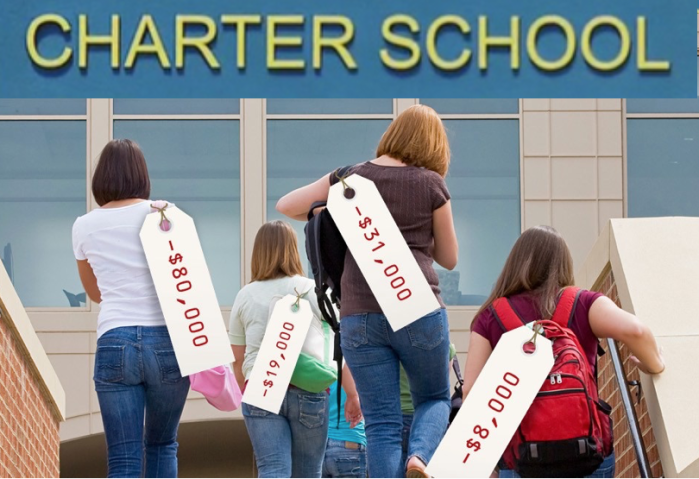
Charter schools are a bad deal.


It doesn’t matter if they’re for-profit or nonprofit.


It doesn’t matter if they’re cyber or brick-and-mortar institutions.


It doesn’t matter if they have a history of scandal or success.


Every single charter school in the United States of America is either a disaster or a disaster waiting to happen.


The details get complicated, but the idea is really quite simple.


It goes like this.


Imagine you left a blank check on the street.


Anyone could pick it up, write it out for whatever amount your bank account could support and rob you blind.


Chances are you’d never know who cashed it, you’d never get that money back and you might even be ruined.


That’s what a charter school is – a blank check.


It’s literally a privately operated school funded with public tax dollars.


Operators can take almost whatever amount they want, spend it with impunity and never have to submit to any real kind of transparency or accountability.


Compare that to a traditional public school – an institution invariably operated by duly elected members of the community with full transparency and accountability in an open forum where taxpayers have access to internal documents, can have their voices heard and even seek an administrative position.


THAT’S a responsible way to handle public money!


Not forking over our checkbook to virtual strangers!


Sure, they might not steal our every red cent. But an interloper who finds a blank check on the street might not cash it, either.


The particulars don’t really matter. This is a situation rife with the possibility of fraud. It is a situation where the deck is stacked against the public in every way and in favor of charter school operators.


But most people don’t want to take such a strong stance. They’d rather find good and bad people on both sides and pretend that’s the same thing as impartiality.


It isn’t.


Sometimes one side is just wrong.


Policymakers may try to feign that there are good and bad charter schools and that the problems I’m talking about only apply to the nefarious ones.


But that’s a delusion.


There is no good way to write a blank check and leave it on the street to the whims of passers-by.


Most apologists want to draw the distinction between for-profit and nonprofit charters.


But as Jeff Bryant, an editor at Education Opportunity Network, puts it, this is a “Distinction without a difference.”


These terms only define an organization’s tax status – not whether it is engaged in gathering large sums of money for investors.


The law is full of loopholes that allow almost any organization – not just charter schools – to claim nonprofit status while enriching those at the top.


We live in an age of philanthrocapitalism, where the wealthy disguise schemes to enrich themselves as benevolence, generosity and humanitarianism.


So-called “nonprofit” charter schools are just an especially egregious example. No matter what label you pin to their name, they all offer multiple means to skim public funding off the top without adding any value for students.


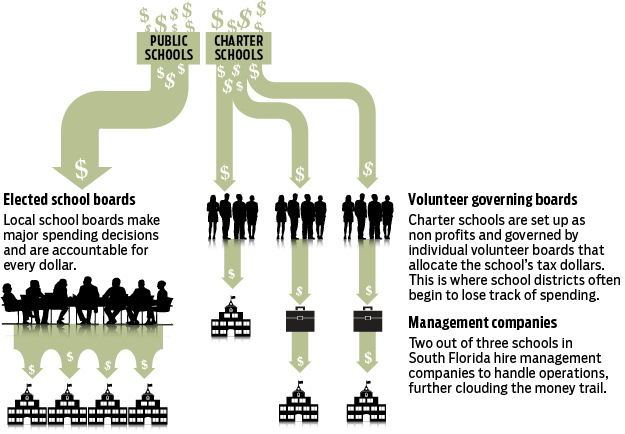
For instance, take the use of management companies.


A for-profit charter school can simply cut services to students and pocket the savings as profit.


A nonprofit charter school can do the same thing after engaging in one additional step.


All I have to do is start a “nonprofit” charter school and then hire a for-profit management company to run it. Then my management company can cut services and pocket the profits!


It’s really that simple! I turn over nearly all of my public tax dollars to the management company that then uses it to operate the school – and keeps whatever it doesn’t spend.


Heck! It doesn’t even matter who owns the company! It could even be me!


The law actually allows me to wear one hat saying I’m nonprofit and then put on a different hat and rake in the cash! The only difference is what hat I’m wearing at the time!


SO I get to claim to be a nonprofit while enjoying all the advantages of being for-profit.


flowchart960
SOURCE: Florida Sun Sentinel


I may even be able to buy things with public tax dollars through my for-profit management company and then if my “nonprofit” school goes belly up, I get to keep everything I bought! Or my management company does.


So the public takes all the risk and I reap all the reward. And I’m still graced with the label “nonprofit.”


Oh, and speaking of spending, being a “nonprofit” doesn’t stop me from the worst kind of real estate shenanigans routinely practiced by the for-profit charter schools.


Both types of privatized institution allow for huge windfalls in real estate. If I own property X, I can sell it to my charter school (or management company) and then pay myself with tax dollars. Who determines how much I pay for my own property? ME! That’s who!


And I can still be a nonprofit.


Think that’s bad? It’s just the tip of the iceberg.


Thanks to some Clinton-era tax breaks, an investor in a charter school can double the original investment in just seven years!

I can even get the public to pay for the same building twice! And even then taxpayers still won’t own it!


But that’s the complicated stuff. There’s an even easier way to get rich off the public with my “nonprofit” charter school, and operators do it all the time: write myself a fat check!


After all, I’ve gotta’ pay, myself, right? And who’s in charge of determining how much I’m worth? ME!


I can even pay myself way more than my counterparts at traditional public schools who oversee exponentially more staff and students.


For instance, as New York City Schools Chancellor, Richard Carranza is paid $345,000 to oversee 135,000 employees and 1.1 million students. Meanwhile, as CEO of Success Academy charter school chain, Eva Moskowitz handles a mere 9,000 students, for which she is paid $782,175.


And this is by no way a unique example.


There are just so many ways to cash in with a charter school even at a so-called “nonprofit” – especially if I want to dip my toe into legally dubious waters!


I could do like the almost exclusively “nonprofit” Gulen charter schools and exist solely as a means to raise money for an out-of-favor political movement in Turkey.


I could use charter funds to finance other businesses. I could decide to discontinue programs that students receive in traditional public schools such as providing free or reduced lunches but keep the cash. I could fake enrollment and have classes full of “ghost students” that the local, state and federal government will pay me to educate.


Fraud and mismanagement are rampant at charter schools because we don’t require them to be as accountable as their traditional public school counterparts.


If a traditional public school tried this chicanery, we’d almost certainly catch it at the monthly meetings or frequent audits. But charter schools don’t have to submit to any of that. They’re public money spent behind closed doors with little to no requirement to explain themselves – ever.


And all of this – nearly every bit of criticism I’ve leveled against the industry – doesn’t even begin to take into account the educational practices at these types of schools.


There is plenty of evidence that charters provide a comparable or worse education than children routinely receive at traditional public schools.


Where it is comparable, the issue is clouded by selective enrollment, inadequately servicing students with special needs and generally encouraging the hardest to teach to get an education elsewhere. Where it is worse, it is colossally worse, robbing children not just of funding but what is likely their only chance at an education.


But we don’t even need to go there.


We only need the issue of fiscal responsibility to bring down this behemoth.


Charter schools are no way to run a school. They are a blatant failure to meet our fiduciary responsibilities.


Traditional public schools are the best way to run a school. They protect the public’s investment of money and resources while providing a quality education to students.


So all this talk about nonprofit and for-profit charter schools is either a mark of supreme ignorance or a ploy for weak willed politicians to weasel their way out of taking a stand on an issue whose merits are obvious to anyone who knows what really happens in our education system.


It’s time to stop wasting taxpayer money on this expensive fraud.


It’s time for the charter school experiment to end.


And it’s way passed time to support fully public schools.


Like this post? I’ve written a book, “Gadfly on the Wall: A Public School Teacher Speaks Out on Racism and Reform,” now available from Garn Press. Ten percent of the proceeds go to the Badass Teachers Association. Check it out!

WANT A SIGNED COPY?

Click here to order one directly from me to your door!

book-1

Public School is Not For Profit. It is For Children.

Screen Shot 2018-08-28 at 4.14.57 PM


Betsy DeVos doesn’t get it.


But neither did Arne Duncan.


Whether right or left or somewhere in between, the person sitting at cabinet level tasked with advising the President on education matters invariably knows nothing about the purpose of public schools.


Duncan thought it had something to do with canned academic standards and standardized tests.


DeVos thinks it involves vouchers to religious or private schools.


But they’re both as wrong as two left shoes.


Public schools exist for one reason and one reason only – to meet the needs of children.


They aren’t there to enrich the private sector or even provide the job market with future employees.


They exist to teach, to counsel, to inspire, to heal.


And all these other schemes favored by Dunce Duncan and Batty Betsy that purport to meet kids needs while somehow enjoying the totally unintended side effect of enriching wealthy investors completely misses the point.


Public schools serve one purpose – to help the kids enrolled in them.


That’s all.


If someone is getting rich off that, there’s a huge problem somewhere.


Unfortunately, the Secretaries of Education of Donald Trump and Barack Obama aren’t the only ones to get it wrong. Policymakers on both sides of the aisle have lost sight of this fact.


So have pundits and media personalities on Fox News, CNN and MSNBC. So have CEOs and tech entrepreneurs and economists and anyone – really – whom our society seems to take seriously.


Don’t believe me?


Take the latest pronouncement from DeVos, our Secretary of Education.


She announced recently that she was looking into using federal funds to buy guns for teachers to better protect their students from school shooters.


It doesn’t take a genius to see that this is not in the best interests of children.


Teachers with guns mean a MORE dangerous environment for children, not less.


It means escalating the chance of friendly fire much more than boosting the possibility of a kindergarten teacher turning into an action hero.


It means heightening the chance of children getting their hands on these firearms and doing themselves or others harm.


And given the disproportionate murders of people of color even at the hands of trained professionals in the police force, it means children of color being legitimately terrified of their mostly white educators – or worse.


The reason given by DeVos may be to make children safer. But the measure she’s proposing really has nothing to do with them at all.


It’s a boondoggle for private industry – one private industry in particular – gun manufacturers.


Instead of sensible regulations on a product that’s at least as dangerous as items that are much more heavily controlled – such as cold medicine and automobiles – DeVos is doing the only thing she can to protect what she really cares about – corporate profits.


She is using money earmarked “safety” to increase danger.


Or as she sees it – she’s using a government apparatus that could harm the gun industry to instead pad its pockets.


You’ll hear some progressives and moderates decry this move with passion and fervor – and for good reason – but what many fail to realize is that it’s not new.


It’s really just a continuation of a sickness that has crept into our society about how we conceptualize the very idea of school.


We have moved away from the proposition that everything must be done in the student’s best interest and have replaced it with an imperative to benefit business and industry.


After all, what is the push for academic accountability through standardized tests and Common Core but corporate welfare for the testing and publishing industry?


What is the push for charter and voucher schools but government subsidies for school privatization?


High stakes standardized testing isn’t about helping students learn. Neither is Common Core, value-added measures or a host of top-down corporate policies championed by lions of the left and supply-side patriots.


They are about creating a problem where one doesn’t exist: accountability.


“How do we make sure students receive a quality education?” As if this has ever been hard to determine.


In general, the schools with greater needs than funding are where students struggle. The schools where everyone has more than they need is where they excel.


But they try to sweep the issue of inequitable funding and resources under the rug by framing the question entirely about teachers and schools.


In short, instead of asking about an obvious inequality, they hide a preconceived answer in the question: “How do we make sure teachers and schools are actually educating kids?”


Wrong question. But here’s the answer, anyway: Administrators observe teachers and determine if they’re doing their jobs. And school boards evaluate administrators.


In general, the staff isn’t the problem. It’s the lack of resources we give them to work with – everything from crumbling buildings, large classes, narrowed curriculum to a lack of wraparound social services.


It doesn’t take much to see we’re shortchanging our neediest students.


You don’t need standardized tests to tell you that. You don’t need new academic standards. You don’t need to evaluate educators on things beyond their control.


But doing so creates a new market, a need that can be filled by corporate interests unrestrained by the conviction that public schools are not supposed to be a profit-making venture.


People providing services for schools are supposed to make a living – not a killing – off the public’s dime.


The same can be said for school privatization.


Public schools are in no way inferior to institutions that are privately managed. Tax dollars administered by duly-elected representatives in the light of day are in no way less effective or more corrupt than the alternative – letting bureaucrats behind closed doors dole out the money however they choose even into their own pockets.


In fact, just the opposite!


Nor have charter or voucher schools ever been shown to increase student learning without also selecting only the best academic students and shunning those most difficult to teach, providing fewer resources for students and/or operating with greater funding.


But pretending that privatization is a better alternative to democratic rule creates a market, it opens the door so the system can be gamed for profit at the expense of student learning and wellbeing.


That’s why we look in awe at LeBron James, an athlete who uses his fortune to open a school providing all the things society refuses for students of color. A basketball player who refuses to usurp the public’s leadership role in administering that fully public school.


He’s a shinning example of actual philanthropy in an age of bogus philanthrocapitalism. But he’s also proof that his solution is not reproducible large scale.


The rich – even if they are well intentioned – cannot save us. Only the public can support all public schools.


And to do that, we must understand the purpose behind these institutions.


Otherwise, we’ll continue to be trapped on a runaway train where the conductor seems to possess no sense of urgency about slowing down.


We would never have been in this situation – and in fact could right the course even now – if we just took the time to clarify what we were doing and why we were doing it.


We could save generations of children if we stopped cashing in on public schools and realized the reason for their existence.


We could ensure both our present and our posterity.


If only we remembered that one thing.


Public schools are not for profit.


They are for children.


Like this post? I’ve written a book, “Gadfly on the Wall: A Public School Teacher Speaks Out on Racism and Reform,” now available from Garn Press. Ten percent of the proceeds go to the Badass Teachers Association. Check it out!

WANT A SIGNED COPY?

Click here to order one directly from me to your door!
book-4

STEM Education Severs the Arts from the Sciences

right-brain-left-brain


What’s the most effective way to dumb down a nation?


Focus on How without Why.


That’s really the biggest problem with the pedagogical fad of STEM education.


There’s nothing objectively wrong with teaching science, technology, engineering and math – the disciplines that make up STEM.


In many cases, doing so is essential to a well-rounded education.


But therein lies the problem – you can’t have a well-rounded education if you purposely leave out some of the most vital aspects of knowledge.


Where’s the art? Where’s the literature? Where’s the social studies, government, citizenship, drawing, painting, music – heck! Where’s the philosophical understanding of life, itself?


STEM initiatives often involve creating two tiers of school subjects. You have the serious disciplines that will earn you respect and a job. And you have the soft, mamby pamby humanities that are no good to anyone.


The problem is one of focus not content.


Corporate-minded bureaucrats who know nothing of human psychology, child development or education look solely at standardized test scores and get hysterical.


The U.S. is falling behind other nations – especially in science and math, they say. So we must do whatever we can to bring those test scores up, Up, UP!


Yet they have never bothered to see that our student test scores have never been at the top of the pack for all the decades we’ve been making international comparisons.


We started contrasting multiple choice assessment results for 13-year-olds in a dozen countries back in 1964. And ever since, America has always been right in the middle.


Yet for those five decades we’ve dominated the world in science, technology, research and innovation.


In that time we sent the first people to the moon, mapped the human genome, and invented the Internet – all while getting middling test scores.


In short, standardized assessments are a fantastically unreliable indicator of national success, just as they are poor indicators of individual learning.


We’ve never been a nation content with picking our answers from four options – A,B,C,D. We blaze new paths!


But number obsessed fools have convinced a public blinded by sports statistics that these tests mean our kids are deficient. And the only cure is to put on blinders and focus almost exclusively on those subjects most featured on the tests.


Even reading and writing are only valuable if they let us guess what a normalized reader is supposed to comprehend from a given passage and if they allow us to express ourselves in the most rudimentary and generic ways.


This is exactly what they do in countries with the highest test scores – countries that are LESS innovative than the U.S.


Asian countries from Singapore to South Korea to India are not blind to this irony. While we are trying to imitate them, they are trying to imitate the kind of broad liberal arts education in which we used to pride ourselves.


“Many painters learn by having fun,” said Jack Ma, founder of one of China’s biggest Internet companies Alibaba.


“Many works of art and literature are the products of having fun. So, our entrepreneurs need to learn how to have fun, too.”


Ma worries that his country is not as innovative as those in the West because China’s educational system focuses too much on the basics and does not foster a student’s complete intelligence, allowing him or her to experiment and enjoy the learning process.


In other words, no matter how good you are at math and science, you still need to know how to learn, think and express yourself.


To be fair, these criticisms of STEM are not new.


Even global pundits like Fareed Zakaria have made similar arguments.


The result has been a hasty addition – change STEM to STEAM by adding in the arts.


Unfortunately, this hasn’t always worked out for the best.


Most of the time, the arts component is either an after thought or merely a sweetener to get students interested in beginning the journey – a journey that is all STEM all the time.


There is still an education hierarchy with the sciences and math at the top and the humanities and social studies at the bottom.


This is extremely unfortunate and will cause long-term detrimental effects to our society.


For instance, we pride ourselves in being democratically ruled. Political power does not come from authority, it comes from the consent of the governed.


This requires a public that knows how to do more than just add and subtract. Voters need to understand the mechanisms of government so they grasp their rights. They need a knowledge of history so they don’t repeat the mistakes of the past. They need to grasp human psychology, anthropology, and sociology to understand how people work in groups and individually.


Moreover, as human beings, they need the humanities. People have thoughts and feelings. They need to know how to express those thoughts and feelings and not just by writing a five-paragraph essay. They need to be able to create works of art. They need to be able to write a story or poem. They need to be able to manipulate images. They need to understand and create music.


Without these things, it can be difficult to become fully actualized people.


That used to be the goal of education. Provide students with the tools to become the best version of themselves.


But this focus on STEM and STEAM only endeavors to make them the best cogs the workforce needs.


We have relinquished our commitment to students and replaced it with a commitment to business and industry.


The idea is that schools owe the job market workers. That could not be further from the truth. We owe our students the tools that will help them live the best lives. And employment is only one small facet of that goal.


I’m not saying we shouldn’t teach math and science. We should – we MUST. But those can’t be prioritized over and above other essential human endeavors.


We need to fund and encourage a broad liberal arts education for all students. As they get older and move on to post-secondary studies including industrial arts they will inevitably specialize in areas that they find most interesting.


But until then, it is our job to give them every opportunity to learn – not to mold them into future wage slaves or boost national pride with arbitrary and meaningless test scores.


Like this post? I’ve written a book, “Gadfly on the Wall: A Public School Teacher Speaks Out on Racism and Reform,” now available from Garn Press. Ten percent of the proceeds go to the Badass Teachers Association. Check it out!

WANT A SIGNED COPY?

Click here to order one directly from me to your door!
book-2

The Only Way to Survive Trump is Together

pam160 


There are days when I feel like a broken man.


And it is Donald Trump who has broken me.


Not his political victories. Not the failures of his opposition.


But the very fact that this piece of shit is President of the United States – that fact sits on my brain like an insect I can’t swat.


On those days my belief in this country wavers and disappears.


Oh, I’ve always recognized its faults, how our reality hardly ever lived up to our ideals. But I also thought that the United States was populated by mostly good people who knew right from wrong.


To run this country we wouldn’t choose an obvious conman, a racist and sexist, a person of low IQ, a man with little to no experience, a reality TV star. We wouldn’t let him pick the next Supreme Court justices. We wouldn’t give him the power to pardon whomever he likes. We wouldn’t give him the ability to write almost whatever he wants into law through signing statements. And we certainly wouldn’t give him the nuclear codes.


But we did.


We did all of that.


Or we allowed it to happen by ignoring a broken electoral system that overturns the popular vote with frightening regularity.


So there he sits in the Oval Office – when he isn’t on vacation at Mar-a-Lago – like a smear of feces on the American flag.


Therapists call this feeling “Trump Anxiety Disorder” and I have it. Boy! Do I have it!


The D.C. Counseling and Psychotherapy Center has identified it as a “collective politically induced anxiety among patients.”


Apparently, Trump’s name comes up frequently in sessions with mental health professionals. Patients say they feel on edge because of the President’s ill-chosen, childish and undiplomatic words, fear of his bad decision making, and anxiety over his xenophobic and prejudicial policies.


Trump Anxiety Disorder is not yet an official diagnosis, but symptoms seem to include lack of sleep, a feeling of losing control and helplessness in an unpredictable political scene, along with endless negative headlines and excessive time spent on social media.


Elisabeth LaMotte, a therapist at the Washington, DC, center, said, “There is a fear of the world ending. It’s very disorienting and constantly unsettling.”


I’m not sure I fear that Armageddon is close at hand, but I certainly feel like the world I thought I knew is unraveling.


Fox News was quick to frame this story as a joke – those silly “libtards” are losing their minds over Trump. But it’s not just people on the left who suffer from the disorder, says LaMotte.


Many Trump supporters feel isolated from friends and family who don’t blindly follow their diminutive Furor. I guess it’s hard to pal around with someone who thinks it’s completely justified to separate children from their parents and lock them up in cages – unless you think the same thing.


Even the American Psychological Association (APA) has recorded a rise in anxiety since the 2016 election that increases depending on how political a person is regardless of affiliation.


The APA also noted that electronic news consumption increases that risk.


In my own case, my symptoms manifested physically on Election Day, itself.


I literally had a heart attack in 2016 after casting my ballot. And I had another one a short while later.


The first one may have had something to do with depression over the political options.


I didn’t know Trump would win. I thought the chances of it were infinitesimal. But I didn’t want Hillary Clinton, either.


I wanted Bernie Sanders, and since I thought the Democratic National Convention stacked the deck against him (and therefore voters) in the primaries, I voted for Jill Stein.


In the months since, I’ve run that decision over in my mind a million times.


Was I right? Was I wrong? Could I have given Trump the margin of victory with my one stupid vote?


When I examine all the information I had at the time, it still makes sense.


The media was telling us that there was no way Trump could win. Clinton was going to come storming into the White House and continue or worsen the neoliberal policies of Barack Obama.


As a school teacher, I was concerned that she would continue to wage war on public education – she would continue to boost charter schools and standardized testing while shrugging at funding inequity, increased segregation and the school-to-prison pipeline.


It’s not that I didn’t realize Trump would be worse. It’s that I didn’t think Clinton would be that much better.


But had she won, I don’t think I would be suffering the same anxiety.


We would have a sane and sensible leader who wouldn’t do anything much to make things better, but certainly wouldn’t be plunging us into an abyss. She wouldn’t betray every single American value while blatantly using her office for personal gain and gaslighting anyone who had the temerity to point out what was happening in plain sight.


So maybe some of it is guilt in my case.


Maybe I caused all this chaos. But I’ve looked at the numbers and that doesn’t add up.


Even if my position as a blogger who criticized Clinton (and Trump) convinced thousands of voters to cast ballots like I did, I could not have significantly affected the outcome.


But on those days of doubt and depression, I still feel guilty.


This is not the world I want to live in.


Things would be different if I thought there were any real hope of change.


Sure Trump may be defeated. If there’s a blue wave in the midterms, the orange one may be impeached. Or he may find it increasingly difficult to continue his corruption and be ousted in 2020.


But long term I don’t see much changing.


The Democrats are almost as corrupt as the Republicans.


Don’t give me this false equivalency crap. I’m not saying they’re the same. The Democrats are unequivocally better. But with the exception of social issues, their policies are almost the same as Republicans. The only difference is timeframe.


Republicans will destroy the world tomorrow. Democrats will destroy it next week.


And the system is just not set up to offer any challenge to the duopoly.


I desperately want to believe that insurgent progressives like Alexandria Ocasio-Cortez and Zephyr Teachout will somehow wrest control of the Democrats and steer the party back to real populist goals, but on most days it’s hard to keep that hope alive.


On those days it seems like the rich and powerful own our government and will never allow us to take it back no matter how many of us try to vote, no matter how often we take to the streets, no matter what we do.


We live in a world of shit.


And none of it will ever change for the better.


I don’t want to feel this way.


I still want to believe that the moral arc of the universe is long but it bends toward justice.


But on most days that feels like an illusion.


Is that a mental disorder? Or do I finally see the world for the way it is?


I have no answers.


Perhaps this article has no point.


I only offer it as a mark of solidarity.


If you’re feeling this way, you are not alone.


There are many more out there like you.


I don’t know how we get through this or even if we can. But this much seems certain.


If we are to survive, the only way is together.


So I send out this missive of hope and fear with all my love and a big virtual hug.


Be kind to each other. We’re all we’ve got.


For a peak at my views on more positive days, see HERE and HERE.


Like this post? I’ve written a book, “Gadfly on the Wall: A Public School Teacher Speaks Out on Racism and Reform,” now available from Garn Press. Ten percent of the proceeds go to the Badass Teachers Association. Check it out!

WANT A SIGNED COPY?

Click here to order one directly from me to your door!
Screen shot 2018-01-07 at 1.14.14 AM

Wannabe Terrorist Attempts to Flood Our Schools & Public Spaces With 3D Printed Guns to Make Common Sense Restrictions Moot

GettyImages_172545206.0


In the United States, we literally have more guns than people.


Yet we’re trying really hard to make even more available with the touch of a button.


It’s not enough that our right to kill is better protected than our right to live, we need to make it EASIER to commit murder. In the land of the drive-by shooting, slaughter needs to be as convenient as ordering a pizza.


Cody Wilson, a wannabe terrorist who apparently believes John Wayne westerns are documentaries, claims to have invented the first gun that can be made almost completely on a 3D printer. And he wants to post the plans on-line so anyone with access to the device can make one.


He was stopped by a U.S. District judge in Seattle who temporarily banned the plans from publication on the Internet this week following a last-minute lawsuit filed by seven state attorneys general.


They argued that 3D-printed firearms would be invisible to metal detectors and could bypass gun restrictions recently adopted after a string of school shootings in some states.


The issue will go back to court on August 10, when the sides will discuss whether a preliminary injunction is needed.


The whole matter was almost settled in 2013 when the Obama administration originally stopped Wilson from putting his plans online with a lawsuit. After years of back and forth, the federal case against the virtual arms merchant seemed like a slam dunk. Then Donald Trump came into office and not only stopped the suit but paid Wilson $40,000 in damages.


So the question remains – why would any sane human being want to post a do-it-yourself gun kit on the Internet where any criminal, psychotic or violent fanatic could easily access it?


Wilson says he’s not in it for financial gain. He wants to make a political point – to flood the world with so many cheap, untraceable guns that the idea of passing any kind of regulations on them would be impossible.


No, really.


As he told Wired:


“All this Parkland stuff, the students, all these dreams of ‘common sense gun reforms’? No. The Internet will serve guns, the gun is downloadable. No amount of petitions or die-ins or anything else can change that.”


Not only that, but the owner and founder of Defense Distributed, an Austin, Texas, based start up that pretends to be a nonprofit organization, says he is prepared to kill police and federal agents if the courts don’t continue seeing things his way.


In the same Wired interview, he says he wasn’t expecting support from the Trump administration. He expected Hillary Clinton would win the White House in 2016 and that she would continue to oppose his 3D printed firearms.


As Wired reported:


“If that happened, as Wilson tells it, he was ready to launch his [3D printed gun] repository, regardless of the outcome of his lawsuit, and then defend it in an armed standoff. “I’d call a militia out to defend the server, Bundy-style,” Wilson says calmly, in the first overt mention of planned armed violence I’ve ever heard him make. “Our only option was to build an infrastructure where we had one final suicidal mission, where we dumped everything into the Internet,” Wilson says.”


So let’s be clear about one thing – the guy pushing for 3D printed firearms is literally a terrorist imitator.


He is an American extremist. He is to us as Osama bin Laden is to mainstream Muslims.


Or at least he wants to be that.


While we’re rounding up brown people and separating them from their children without any workable plan to reunite them on this or that side of the border, we have a US citizen making terroristic threats with the means to carry them out and he’s walking around free.


Oh, but he’s a privileged white dude, so no harm no foul.


If Wilson’s little plastic death dealers do become widely available on-line, they won’t immediately make a huge difference.


It’s hard to make a 3D-printed gun. You need an expensive, top-of-the-line 3D printer and some knowledge of how to work it. And even then the result is a shoddy firearm at best. It may only fire a few bullets before falling apart.


A shooter would have to work extra hard to accomplish his goal with Wilson’s design. It would be much easier to use one of the billions of firearms already available – and much more deadly.


But it wouldn’t take much to make a 3D-printed gun more dangerous.


To comply with federal law, Wilson’s design requires a metal firing pin, which he claims would set off a metal detector. However, it may be relatively easy to bypass that metal part to make his design truly concealable from such devices.


Moreover, technology is always advancing – 3D printers will probably be able to create stronger and more deadly firearms in time. With these sorts of designs readily available, it is easy to imagine a school shooter accessing a device in a tech or computer lab and creating a weapon of mass destruction. He wouldn’t set off any alarms because he wouldn’t have the gun when he entered the building. He’d make it in school.


Some shrug at these dangers saying that they’re inevitable.


Even if we stop Wilson, these sorts of designs will eventually be available in some form on-line. That’s the double-edged sword of mass media – all information is available including easy ways to kill a large number of people.


However, I think this is a cop-out.


For instance, the Internet and computer technology make it fairly easy to mass produce currency as well as firearms. In fact, it’s theoretically much easier.


Yet we don’t see a major influx of counterfeit bills. The reason? Business and industry have collaborated with government to make sure this doesn’t happen.


Programs like Adobe Photoshop include software that restrict the printing of your own money. We could do the same with future 3D printers. We could recall those already in service and retrofit them with such code.


Oh, sure not everyone will comply. There will always be someone who breaks through the safety net. But if all we can do is greatly reduce the spread of 3D-printed firearms, that doesn’t make it futile.


There is a mountain of research proving that the more firearms you have in a country, the greater the number of firearm deaths.


We should be working to restrict guns to responsible people.


But the Wilson’s of the world don’t want to allow us that choice.


They want to force us all to live in a world where guns are even more pernicious than they are today.


Will we let them?


Human beings have such potential, but we seem determined to kill ourselves.


If intelligent aliens came to Earth today and landed in the USA, what would they think of us?


Would they see what we might become or would they only see a pitiful animal struggling to put itself out of its own misery?


Like this post? I’ve written a book, “Gadfly on the Wall: A Public School Teacher Speaks Out on Racism and Reform,” now available from Garn Press. Ten percent of the proceeds go to the Badass Teachers Association. Check it out!

WANT A SIGNED COPY?

Click here to order one directly from me to your door!
book-4

Republicans, Democrats – Let’s Scrap Them Both!

abolish-political-parties-49312-560x315


Political parties are a huge mistake.


Our founding fathers knew this.


Though it was their constant squabbling and political power struggles that gave way to the party system in the first place, they also were incredibly vocal about the errors they, themselves, were committing.


Thomas Jefferson and James Madison preferred state power that would protect southern interests including slave-holding. George Washington, John Adams and Alexander Hamilton favored federal authority that would benefit the north and manufacturing.


But in taking sides to protect their own power, they split into the very factions they knew would poison the newborn Republic.


At his farewell address in 1796, Washington put it this way:


“However [political parties] may now and then answer popular ends, they are likely in the course of time and things, to become potent engines, by which cunning, ambitious, and unprincipled men will be enabled to subvert the power of the people and to usurp for themselves the reins of government, destroying afterwards the very engines which have lifted them to unjust dominion.”


His successor, Adams wrote:


“There is nothing which I dread so much as a division of the republic into two great parties, each arranged under its leader, and concerting measures in opposition to each other. This, in my humble apprehension, is to be dreaded as the greatest political evil under our Constitution.”


In 1789, Jefferson put it more succinctly:


“If I could not go to heaven but with a party, I would not go there at all.”


So why do we today enshrine political parties in our system of government?


In short, it keeps the wealthy in power.


Nothing robs democracy of its populism so much as the party system.


Backward legislation and regressive court decisions equating money with speech only make this worse. But they are simply exacerbating a sickness that’s already there.


Political parties condense the world of advertising and commerce to that of government.


Political ideas are sorted and processed until they can become tasty sound bites – one accorded to one group and the corresponding response to another.


Federalism vs. States.


Taxation vs. Business


Guns vs. Regulations


It’s all bullshit.


No one really cares whether rules are made by an aggregation of the entire nation or merely an aggregation from each individual state. We only care that laws are fair and just.


No one really wants businesses to be taxed to death, nor do they want individuals to be unfairly burdened. They want a just system of taxation where everyone pays their fair share and supports an equitable distribution of the wealth.


No one really wants to unilaterally prohibit individual freedoms – including the freedom to own a gun. They want sane regulations so that killers and maniacs can’t as easily destroy innocent lives.


But political parties obscure these simple truths and sort us all into one of two teams. Yet both sides support the same unchangeable status quo.


As writer Gore Vidal put it:


“Officially we have two parties which are in fact wings of a common party of property with two right wings. Corporate wealth finances each. Since the property party controls every aspect of media they have had decades to create a false reality for a citizenry largely uneducated by public schools that teach conformity with an occasional advanced degree in consumerism.”


Part of this is due to our insistence that the party system be limited to two groups – Republicans and Democrats. We make it incredibly difficult – nearly impossible – for any third party candidate to appear on the ballot less than win a major election.


But increasing the party system would only minimize the damage. It wouldn’t stop it.


When issues are divided into political camps, they obscure basic similarities about voters.


Fairness and justice are not political. They are human.


By making them political, we obscure basic truths to convince subsections of the populace onto our side.


And these are rarely legitimate differences of opinion. They are often a matter of truth or falsity.


For instance, take trickle down economics. Either it is a fair and just distribution of wealth or it is not. Either it provides both rich and poor with a means of equitable economic advancement or it does not.


We have tried this policy for decades. There is a plethora of evidence that this system does not work. It unjustly favors the rich and starves the poor.


To understand this, one need not have an advanced degree in political science. A simple understanding of mathematics will suffice.


If there were no political parties, this would be self-evident. But the rich have used both parties to obscure this fact and make it a game of policy football. You support whichever team you’ve signed up for regardless of how doing so impacts you, personally.


It is the victory of tribalism over common sense.


The same goes for almost every issue facing the nation.


Should schools be public or private?


Should LGBT people be allowed the same rights as cis citizens?


Should we spend the majority of our federal budget on the military?


Should there be a path to citizenship for those wishing to immigrate?


Each and every one of these questions could be decided on facts. Instead evidence is hardly mentioned at all. We use the issues to elect the legislators who then can’t do anything about them for fear that action one way or another would upset the political power struggle against them.


Some economists suggest that the principle behind Democrats and Republicans, the principle behind liberals and conservatives, really comes down to economics.


It is an innate psychological reaction to scarcity and abundance.


In times of little food or resources, conservative tendencies are ascendant because they help us survive the lean times. However, in an era where there is enough for all, liberal tendencies flourish because they help the growing population thrive.


Even if this were true, it is a factual question of whether we live in times of abundance or scarcity.


In the 21st Century United States, we have more wealth than we have ever had. There is enough food for everyone. We grow more than we can eat and end up throwing much of it away. Yet a tremendous amount of us live in abject poverty. More than half of public school students live below the poverty line.


This is not because we live in a time of scarcity. We live in a time of abundance where we keep much of that surplus away from the majority in order to create a false sense of scarcity so that the richest among us can horde as much as they possibly can.


That is the ugly truth hidden behind the party system.


It is a truth that could not be maintained without the easy marketing and tribalism of political parties – Republicans, Democrats, Whigs, the Judean Peoples Front or the People’s Front of Judea.


Until we remove the stranglehold of political parties, until we set up a government that makes factionalism difficult, until we establish a government that welcomes candidates regardless of party – our politics will be forever immobilized by wealth, sectarianism and voter apathy.


This could mean holding nonpartisan primaries where all candidates irrespective of party who meet a certain signature threshold are welcome, followed by a general election of the two highest vote-getters. Or it could mean something radically different like not voting at all but filling government with ordinary citizens randomly drafted into public service.


The point is that we can do better than party politics.


If we’re to survive as a nation, we’ll need to find a more just way.


Or as Hamilton put it:


“Nothing could be more ill-judged than that intolerant spirit which has, at all times, characterized political parties.”


Like this post? I’ve written a book, “Gadfly on the Wall: A Public School Teacher Speaks Out on Racism and Reform,” now available from Garn Press. Ten percent of the proceeds go to the Badass Teachers Association. Check it out!

WANT A SIGNED COPY?

Click here to order one directly from me to your door!
ebook-2 (1)

Wealth – Not Enrollment in Private School – Increases Student Achievement, According to New Study

pq2iPfteRemNHu7D5w9c_richkid


Students enrolled in private schools often get good grades and high test scores.


And there’s a reason for that – they’re from wealthier families.


A new peer-reviewed study from Professors Richard C. Pianta and Arya Ansari of the University of Virginia found that once you take family income out of the equation, there are absolutely zero benefits of going to a private school. The majority of the advantage comes from simply having money and all that comes with it – physical, emotional, and mental well-being, living in a stable and secure environment, knowing where your next meal will come from, etc.


The study published in July 2018 attempts to correct for selection bias – the factors that contribute to a student choosing private school rather than the benefits of the school, itself.


The study’s abstract puts it this way:


“Results from this investigation revealed that in unadjusted models, children with a history of enrollment in private schools performed better on nearly all outcomes assessed in adolescence. However, by simply controlling for the sociodemographic characteristics that selected children and families into these schools, all of the advantages of private school education were eliminated. There was also no evidence to suggest that low-income children or children enrolled in urban schools benefited more from private school enrollment.”


This has major policy implications.


Corporate school reformers from Barack Obama to Donald Trump, from Arne Duncan to Betsy DeVos, from Cory Booker to Charles and David Koch, have proposed increasing privatized school options to help students struggling in public schools.


Whether it be increasing charter schools or vouchers to attend private and parochial schools, the implication is the same – such measures will not help students achieve.


We need programs aimed at poverty, itself, not at replacing public schools with private alternatives.


According to the abstract:


“By and large, the evidence on the impact of school voucher programs casts doubt on any clear conclusion that private schools are superior in producing student performance…


“In sum, we find no evidence for policies that would support widespread enrollment in private schools, as a group, as a solution for achievement gaps associated with income or race. In most discussions of such gaps and educational opportunities, it is assumed that poor children attend poor quality schools and that their families, given resources and flexibility, could choose among the existing supply of private schools to select and then enroll their children in a school that is more effective and a better match for their student’s needs. It is not at all clear that this logic holds in the real world of a limited supply of effective schools (both private and public) and the indication that once one accounts for family background, the existing supply of heterogeneous private schools (from which parents select) does not result in a superior education (even for higher income students).”


Researchers repeatedly noted that this study was not simply a snapshot of student performance. It is unique because of how long and how in depth students were observed.


The study looks at student outcomes at multiple intervals giving it a much longer time frame and much greater detail than other similar investigations. Researchers examined wide ranging family backgrounds and contextual processes to reduce selection bias.


Participants were recruited in 1991 from ten different cities: Little Rock, Arkansas; Irvine, California; Lawrence, Kansas; Boston, Massachusetts; Philadelphia and Pittsburgh, Pennsylvania; Charlottesville, Virginia; Seattle, Washington; Hickory and Morganton, North Carolina; and Madison, Wisconsin. They were followed for 15 years and had to complete a month long home visit. In addition, they submitted to both annual interviews and home, school, and neighborhood observations.


The final analytic sample consisted of 1,097 children – 24% of whom were children of color, 15% had single mothers, and 10% had mothers without a high school diploma.


Moreover, student academic achievement wasn’t the only factor examined.


Researchers also assessed students social adjustment, attitudes, motivation, and risky behavior. This is significant because they noted that no other study of private schools to date has examined factors beyond academics. Also, there is a general assumption that private school has a positive effect on these nonacademic factors – an assumption for which the study could find no evidence.


From the abstract:


“In short, despite the frequent and pronounced arguments in favor of the use of vouchers or other mechanisms to support enrollment in private schools as a solution for vulnerable children and families attending local or neighborhood schools, the present study found no evidence that private schools, net of family background (particularly income), are more effective for promoting student success.”


One reason behind these results may be the startling variation in “the nature and quality of private school classrooms.” There is no consistency between what you’ll get from one private school to the next.


The x-factor appears to be family income and all that comes with it.


We see this again and again in education. For instance, standardized test scores, themselves, are highly correlated with parental wealth. Kids from wealthier families get better test scores than those from poorer families regardless of whether they attend public, charter or private schools.


It’s time our policymakers stop ignoring the effect of income inequality on our nations students.


If we really want to help our children, the solution is not increased privatization. It is increased funding and support for anti-poverty programs, teachers and a robust public school system.


Like this post? I’ve written a book, “Gadfly on the Wall: A Public School Teacher Speaks Out on Racism and Reform,” now available from Garn Press. Ten percent of the proceeds go to the Badass Teachers Association. Check it out!

WANT A SIGNED COPY?

Click here to order one directly from me to your door!


book-3

Five Things I Learned About Ed Tech While Playing ‘Zelda: Breath of the Wild’

the-legend-of-zelda-breath-of-the-wild-guardian-e1489251354463 

I don’t mean to brag, but I just beat “Zelda: Breath of the Wild.”


This summer I sat down with my 9-year-old daughter and together we played the most popular Nintendo Switch game for hours, days, weeks.


And at the end of all that time, I came away victorious – something I wasn’t sure I’d be able to do when I started.


There are so many buttons to learn, two joy sticks, various info screens and menus.


But when it was all over, I had cleared all four divine beasts. I got all 18 captured memories. I completed about 80 shrines. I mastered about 45 side quests. I shredded guardians, lynols and bokoblins. And, yes, I opened a major can of whoop ass on Calamity Gannon.


As the kids say, I’m jelly.


My video game skills are lit.


You can’t handle me, bro.


And so on.


But I’m not a kid. I’m a grown man.


Didn’t I have anything better to do?


Couldn’t I have found a more productive use for all that time?


Maybe. Maybe not. However, beyond the sheer fun, I did learn something from the whole experience.


As a public school teacher, I learned about my students by following in their footsteps.


That’s really why I started playing in the first place – my middle school kids this year loved that game.


I got more Zelda doodles, more Hyrule poetry, more Link fan fiction than you might at first believe.


The world of the game was really important to my children and having even a passing knowledge of that world helped me relate to them.


I even asked for a few tips after class.


One of my best students took her Switch out of her backpack and showed me a prime location to pick hot peppers so I could withstand the cold of Mount Hyrule (Don’t ask).


It was worth doing just for that – I showed my willingness to be the student and for them to be the teachers. I showed them we were all a community of learners.


At least, that’s my hope.


But now that the dog days of summer are here and my video game victory is complete, I keep thinking of the implications of my experience in Hyrule on the world of education.


Specifically, I’m thinking about education technology or Ed Tech.


I’m thinking about how we use various software packages to try to teach students and how they invariably fail at the task.


Well-meaning administrators hear about this program or that classroom management system or an assessment app and they spend beaucoup bucks on it.


We’re instructed to give up valuable instruction time so our kids can sit in front of a computer while a digital avatar attempts to do our job.


Kids listen to a cartoon person instruct them in the rudiments of grammar or literacy, play loose skills exercises and earn digital badges.


It may sound like fun to us, but they hate it.


The reason: nine times out of ten it’s little more than a standardized test given on a computer.


Sure, there are lots of bells and whistles, but the kids catch on mighty quickly. There is no student as bored as a student forced to play an educational video game.


I have real concerns with issues of student privacy and how the data being collected by these apps is used. I have real problems with how this technology facilitates dumbing down the curriculum – narrowing it to only that which can be measured on a multiple choice assessment. I take umbrage that these programs are used by some as “evidence” that human educators and brick and mortar schools are unnecessary. And I shed real tears at the massive amounts of funding being funneled to corporations that could be better spent in our own districts.


But playing this game has given me hope.


In seeing how “Zelda” succeeds with kids – because it succeeded with me – I think we can illuminate some ways ed tech goes awry.


I found five distinct lessons from the game, five areas where “Zelda” succeeds where ed tech fails.


Perhaps these could be used to improve the quality of ed tech devices to make them better at teaching students.


Or they could show why ed tech will never be as effective at teaching as flesh and blood instructors.


In any case, here is what I learned.

1) Focus on Fun


One of the biggest differences between ed tech and “Zelda” was the focus.


The games we make children play at school are designed to teach them something. That is their purpose. It is their raison d’être. The point behind the entire activity is to instruct, test and reward.


By contrast, the purpose of “Zelda” is fun.


Don’t get me wrong. “Zelda” can be very educational.


There are points where the game is actively trying to teach you how to do things usually associated with game play.


You have to learn how to make your character (Link) do what you want him to do. You have to learn how to manipulate him through the world. How to run, how to climb, how to heal, how to use weapons, how to cook and make elixirs, etc.


However, the point behind the entire game is not instructional. It’s fun – pure and simple.


If you have to learn something, it is all in service to that larger goal.


In the world of the game, learning is explicitly extrinsic. It helps you have more fun playing. Only the pursuit of winning is intrinsic or even conceptualized as being so.


In real life, this may not be the right approach to education, but it seems to be a rule of virtual experience. If it is superseded, the game becomes just another class assignment – lifeless, dead, boring.


If educational software is going to be effective in the classroom, it must find a way to bridge this divide. It must either put fun before pedagogy or trick the user into thinking it has done so.


I’m not sure this is possible or desirable. But there it is.


2) Logic and Problem Solving Work but not Curriculum


There are many aspects of “Zelda” one could consider educational.


However, when it comes to things that have importance outside of the game, the biggest would be problem solving and logic games.


A great deal of game play can be characterized under this umbrella.


The ostensible mission is to defeat the bad guy, Calamity Gannon. However, to do so you often have to solve various puzzles in order to have the strength and skills to take him down.


The most obvious of these puzzles are shrines. There are 120 special areas throughout Hyrule that Link needs to find and solve.


Each one involves a special skill and asks the gamer to decipher problems using that skill. For example, one asks you to manipulate fans so that the air flow makes windmills turn in a pattern. Another asks you to get a ball through an obstacle course.


In each case, the emphasis is on logic and critical thinking.


That has tremendous educational value. And it’s something I’ve seen done easily and well in many educational video games.


The problem is it doesn’t teach any particular curriculum. It doesn’t teach math, science, English or social studies – though it does help contribute to all of these pursuits.


Ed tech games are not nearly so coy. They often try to go right for the curriculum with disastrous results. Ed tech software, for instance, will have you find the grammatical error in a sentence or solve an equation in order to move on in the game.


That just doesn’t work. It feels false, extraneous and forced. It’s doesn’t seem like an organic part of the experience. It’s something contrived onto it from outside and reminds the gamer exactly why you’re playing – to learn.


3) Option to Seek Help


One of the most surprising things to me about playing “Zelda” on the Switch was how much of an on-line gaming community has formed around the whole experience.


If you get stuck in a particular area, you can find numerous sites on-line that will help you get passed it. You can even find gamer videos where YouTubers will show you exactly how they solved this or that problem. And they don’t all have the same solution. Some provide elegant, well-detailed advice, and others seem to stumble on it and offer you their videos as proof they could actually get the job done somehow.


It’s a lot different from when I was a kid playing video games. Back then (30 years ago) you had your friends but there were few other places to go for help. There were fan magazines and a few video game companies had tip hotlines. But other than that, you were on your own.


One of my favorite YouTubers this summer was Hyrule Dude. His videos were clear, informative and helpful. However, I didn’t always agree with his solutions. But they invariably helped me find things that would work for me.


It reminded me a bit of Khan Academy and other learning sites.


If kids really want to grasp something today, they have so many places they can go on-line. As educators, it’s hard to incorporate them into a classroom environment because there are certain things we want kids to find out for themselves.


For instance, as a language arts teacher, I want my students to do the assigned readings on their own. Yet I know some of them try to skip to the on-line summaries they can find and use that instead of reading the text. I have no problem if they access good summaries and analysis but I don’t want them to take the place of trying to comprehend the text on their own first.


I think there are ways to use this larger social media community to help support learning without spoiling the hard work kids need to put in on their own. But it’s something we need to think about more and find better ways to incorporate.


4) Open Ended


One of the most striking things about this new “Zelda” is how much choice the gamer has. In most games you have to complete the first board and then the second and so on until you win.


On the Switch, the world you’re thrust into is incredibly open ended. You can do pretty much what you want, when you want. Or at least you can try.


At first, your character is limited to one area of the world – a plateau. But once you complete a certain number of the challenges there, you get the paraglider which allows you to access most of the rest of the world.


It’s a huge area to explore – impossible to travel the entire length of it without spending hours of game play. And it’s entirely up to you where to go and what to do next.


The central mission of the game is to defeat Calamity Gannon in Hyrule Castle. However, that would be incredibly difficult early on. You’re advised to get the four Divine Beasts first. And you can do them in any order you want.


Moreover, I mentioned shrines earlier. When you complete four shrines, you can either increase your hearts (the amount you can be hurt without dying) or your stamina (how long your character can do something hard like climbing or swimming without having to rest). Technically, you don’t have to complete more than a few shrines, but doing so makes your character stronger and better able to get the Divine Beasts and defeat Gannon.


There are also side-quests (totally optional) that reward your character with money, items, etc.


I think this is the secret to the game’s success. It’s why game play is so immersive and addictive.


Ed tech software is exactly the opposite. You must do section A before section B before section C. It’s little more than a multiple choice test with only limited possible answers of which only one is correct.


In “Zelda” there are often multiple ways to achieve the same end. For instance, I would assume the programmers wanted me to fight my way through every room of Hyrule Castle to get to Calamity Gannon. However, I simply climbed over the walls and swan through the moats – a much quicker and efficient method.


If we could recreate this freedom of movement and multifarious solutions within educational software, we might really be onto something. But, frankly, it’s something that even traditional video games have difficulty being able to recreate.


5) Choice to Play or Not


And speaking of choice, there is the choice whether to play or not.


Video games are one of the things kids choose for leisure. When we force kids to play them in school, that choice is gone.


They become a task, a trial, an assignment.


Moreover, not every child enjoys video games.


We can’t mandate kids learn from games – even the best of ed tech games. At best, they should be an option. They could be one tool in the toolbox.


In summary, I think the goal of the ed tech industry is deeply flawed.


Ed tech will never adequately replace brick-and-mortar schools and flesh and blood teachers.


At best, it could provide a tool to help kids learn.


To do so, games would have to primarily be focused on fun – not learning. They would have to be organized around critical thinking and logic – not curriculum. They would need to utilize the on-line community for help but not cheating. They would need to be open ended worlds and not simply repackaged standardized testing. And finally, students would need the choice whether to play them or not.


Unfortunately, I am skeptical that the ed tech industry would even attempt to incorporate these ideas in its products.


They are market driven and not student driven. The corporate creatures behind these products don’t care how well they work. They only want to increase profitability and boost market share.


Cheaper commodities are better – especially when the consumer isn’t the student forced to play the game but the politician or administrator in charge of school policy.


Ed tech’s potential as a positive tool in a school’s toolbox has been smothered by the needs of business and industry. Until we recognize the harm corporations do in the school, we will be doomed to dehumanizing students, devaluing teachers and wasting our limited resources on already wealthy big business.


Like this post? I’ve written a book, “Gadfly on the Wall: A Public School Teacher Speaks Out on Racism and Reform,” now available from Garn Press. Ten percent of the proceeds go to the Badass Teachers Association. Check it out!

WANT A SIGNED COPY?

Click here to order one directly from me to your door!

book-1