Charter School Lobby Silent as Charter Teachers Continue Strike

www.usnews.com


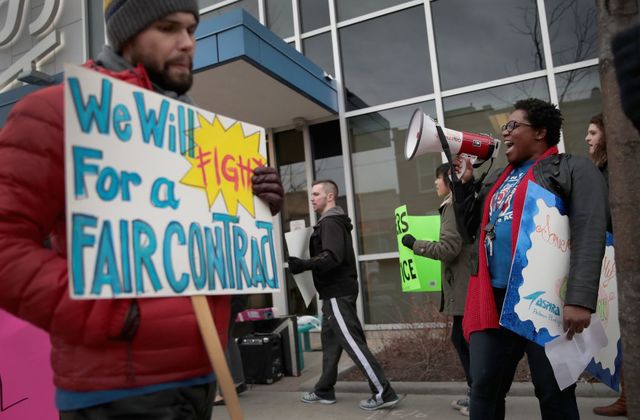
Charter school teachers in Chicago are in their fourth day of a strike.


Yet I wonder why the leaders of the charter movement are quiet.


Where is Peter Cunningham of the Education Post?


Where is Shaver Jeffries of Democrats for Education Reform?


Not a word from Campbell Brown or Michelle Rhee?


Nothing from Bill Gates, Cory Booker, Barack Obama or Hillary Clinton?


Not a peep from Betsy DeVos or Donald Trump?


This is a historic moment. Teachers at various charter schools have unionized before, but it has never come to an outright strikenot once since the federal charter school law was established in 1994.


You’d think the charter cheerleaders – the folks who lobby for this type of school above every other type – would have something to say.


But no.


They are conspicuously silent.


I wonder why.


Could it be that this is not what they imagined when they pushed for schools to be privately run but publicly financed?


Could it be that they never intended workers at these schools to have any rights?


Could it be that small class size – one of the main demands of teachers at the 15 Acero schools – was never something these policymakers intended?


It certainly seems so.


For decades we’ve been told that these types of schools were all about innovation. They were laboratories where teachers and administrators could be freed from the stifling regulations at traditional public schools.


Yet whenever wealthy operators stole money or cut services to maximize profits or engaged in shady real estate deals or collected money for ghost children or cherry picked the best students or fomented “no excuses” discipline policies or increased segregation or denied services to special education kids or a thousand other shady business practices – whenever any of that happened, we were told they were just unfortunate side effects. Malfeasance and fraud weren’t what charters were all about. They were about the children.


And now when charter teachers speak out and demand a better environment for themselves and their students, these ideologues have nothing to say.


Funny.


It’s not hard to figure out what’s going on here.


The latest audit of Acero shows they have $10 million a year in additional revenue that they aren’t spending on the students. Yet they’re cutting the budget by 6 percent annually. Meanwhile, Acero’s CEO Richard Rodriguez is taking home more than $260,000 for overseeing 15 schools while Chicago Public Schools CEO Janice Jackson makes slightly less money for managing more than 500 schools.


If the school privatization lobby cared about kids, it shouldn’t be hard to come out against Acero and in favor of these teachers and students.


But nothing.


Silence.


It seems to prove what charter critics have been saying all along – and how full of crap the privatization lobby has always been.


In short, the charter movement is all about the rich getting richer. It has never been about helping students and families.


Well, maybe it was once upon a time when union leader Albert Shanker backed the plan. But even he turned against it when he saw how it enriched the moneymen and corporations while doing very little for children.


The fact of the matter is that the only people at charters on the side of teachers, parents and students are the people generally associated with opposing them.


I, myself, am a huge foe of school privatization in all its forms – and that includes school vouchers and charter schools.


However, I have nothing against charter students, parents or teachers.


I know many educators who’ve worked at charters. In most cases they are dedicated, caring professionals who’d rather work at a traditional public school but had to settle for employment where they could find it even if that meant less pay, longer hours, and fewer rights.


I know many parents who sent their kids to charter schools because of funding inequalities or rampant high stakes testing at traditional public schools. In every case, they are doing the best they can for their children – navigating a system they hate looking for the best opportunities.


I’ve taught many students who’ve gone to charter schools and then returned to my traditional public school classroom disillusioned from their subpar experience in privatized education. Without exception they are great kids who try their hardest to succeed despite huge deficits from the years lost at charters.


These people are not our enemy. We are their allies.


We are pushing for a better education system for all of us. And this strike is part of that.


If the operators of Acero charter schools in Chicago (formerly UNO’s charter schools) agree to a living wage for teachers and lower class sizes, it sets a standard for the industry. It helps push other charters to do the same. It pushes charter schools to become more like traditional public schools. And that’s a good thing.


The amenities at traditional public schools should not be rarities.


Every school should have an elected school board. Every school should have public meetings, transparency and be accountable for how it spends tax dollars. Every school should have to accept the kids living in its borders and provide them the proper services and respect their rights. Every school should treat its employees like professionals and pay them a fair wage for a fair day’s work.


Ultimately, I think this means the end of the charter school concept. But that doesn’t have to mean the end of all these charter schools. Many of them that can operate effectively and efficiently should become traditional public schools. That may mean incorporation into existing districts or creations of new ones. It may mean additional funding from the state and federal government.


In the case of fly-by-night charters that do nothing but enrich their investors while cheating kids out of an education, they should be closed immediately and the persons responsible should be prosecuted to the full extent of the law (whatever that is, if at all possible).


I don’t have all the answers, and what’s right in one neighborhood may be wrong in another. However, I am confident that there is a solution.


No matter how this strike is resolved, the fact that it exists – and is probably a precursor to more such strikes – points the way to a brighter future for everyone.


It’s a victory for workers over wealth.


And that is a victory for students, too.


Like this post? I’ve written a book, “Gadfly on the Wall: A Public School Teacher Speaks Out on Racism and Reform,” now available from Garn Press. Ten percent of the proceeds go to the Badass Teachers Association. Check it out!


book-3

The Holiday Season Brings Fear and Resentment for Many Students

thumbnail_starr-main-blog2

“I hate Christmas.”


Teachers hear that with surprising regularity around this time of year.


I hate Christmas. I hate Thanksgiving. I hate every holiday.


America’s public school students are living under tremendous pressure.


The social safety net is full of holes. And our children are left to fall through the ripped and torn fabric.


The sad fact is that one in four students in America’s classrooms have experienced a traumatic event.


So if your classroom is typical, 25% of your students have witnessed violence or been subject to a deeply distressing experience.


That could be drug or alcohol abuse, food insecurity, severe beatings, absent caregivers or neglect.


These figures, provided by Neena McConnico, Director of Boston Medical Center’s Child Witness to Violence Project, are indicative of a truth about this country that we don’t want to see.


Our Darwinian public policies leave many children to suffer the effects of poverty – and our society doesn’t want to deal with it.


In impoverished communities, these percentages are even higher and the results more devastating.


The Center for Disease Control’s comprehensive Adverse Childhood Experiences study links the toxic stress of unaddressed trauma to heart disease, liver disease, and mental, emotional, and behavioral disorders.


Young children exposed to more than five adverse experiences in the first three years of life face a 75 percent likelihood of having delays in language, emotional, or brain development, according to McConnico.


This translates directly to negative behaviors in the classroom.


Children who witness violence often have trouble in school because they suffer from post-traumatic stress, which can manifest as inattention, distractibility, hyperactivity, insomnia, aggression, and emotional outbursts.


Or, alternately, these children can sometimes withdraw and appear to be unfazed by their experiences. In some ways, that’s even more dangerous because while they avoid negative attention, they often get no attention at all.


It’s bad enough in the everyday. But it gets worse around the holidays.


Some of it is due to the structure and safety of school being removed. During holiday breaks, children are left to the mercy of sometimes chaotic and uncertain home lives.


Some of it is due to unrealistic expectations inevitably conjured up by the holiday season, itself. Even grown adults have trouble with depression around this time of year. But when you’re a troubled child, the unrealistic expectations and disappointments can be doubly impactful.


Loved ones are missing due to incarceration, divorce, abandonment, health issues, or death. Talk of family gatherings or a special meal can trigger hurt feelings for children who know their caregivers can’t or won’t provide them.


And it’s not always neglect. Sometimes there just isn’t the money for these things. We live in a gig economy where many people work multiple jobs just to survive. All it takes is missing one paycheck or one illness to disrupt holiday celebrations.


Even when parents have enough money, some just don’t bother to buy their kids anything. Sometimes families get to a better financial point but children have had to live through a period of food insecurity and are haunted by it. So even though the household is stable now, kids eat all their treats on the way to school because they always are fearful that the food will run out.


When kids have these sorts of fears, the ubiquitous holiday movies, TV shows, Christmas songs and commercials can set them off further.


It’s the most wonderful time of year for some, but not for all. For many students, the holidays are a time of dread and resentment.


That’s why it’s so important for teachers to be aware of what’s happening to their students.


For the quarter of American children who experience trauma at home, school may be their only safe harbor in a world of storms. Teachers may be the only people they see all day who offer a safe place, a stable environment and a friendly word.


For some kids, teachers are the only adults in their lives who make them feel valuable and supported.


We offer our students so much more than reading, writing and math. We’re allies, mentors, protectors and role models.


I wish we could save them from all the terrors of this world, but we can’t.


Let me be clear – I am in no way a super teacher.


But here are a few things I do in my classroom to help alleviate some of the stresses of the season – and often year round.


1)  Prioritize Relationships


Let your kids know you care. The student-teacher relationship is sacred. Nourish it. Be reliable, honest, and dependable.


As Teddy Roosevelt famously said, “Nobody cares how much you know until they know how much you care.”


2)  Listen to Them

 
Sometimes the best thing a teacher can do is just listen to students’ problems. You don’t always have to offer a solution. Our kids are dealing with so many adult pressures. Offering them the ability to get it all out in the presence of a caring adult can be a treasured gift.


“It’s really that simple,” McConnico says. “Listen, reflect back to them that they have been heard, validate the child’s feelings without judgment, and thank the child for sharing with you.”


3)  Create Opportunities to be Successful

Some people see teaching as essentially an act of evaluation and assessment. We observe students and then tell them what they did wrong.

This is extremely narrow-minded. When you get to know your students, you can offer them tasks in which you expect they’ll succeed. It’s the kind of thing we do all the time – differentiating instruction and offering choice so that students can achieve the goal in the manner best suited to them.

Sometimes you really have to work at it. If a child has extreme behavior issues, you can observe closely to find the one thing he or she does right and then praise them for it. This doesn’t always work, but when it does, it pays off tremendously!

Positive experiences lead to more positive experiences. It’s like putting training wheels on a bike. It scaffolds learning by supporting kids emotional needs before their academic ones.

4)  Routines

I am a huge fan of routine. Kids know exactly what we’re going to do in my class everyday – or at least they have a clear conception of the normal outline of what happens there.

I try to have very clear expectations, timelines and consequences. For kids who live in chaotic homes, this is especially comforting. It’s just another way of creating a safe place where all can learn.


5)  There’s Nothing Wrong With Downtime

I know. Teachers are under enormous pressure from administrators to fill every second of the day. But sometimes the best use of class time is giving students a break.


Let students finish assignments in class, read for pleasure, draw, even just daydream and relax. You can overdo it, but everyone can benefit from a little R & R.


This is especially true for traumatized children. Give them time to regroup from the mental and emotional stress. I find that it actually helps motivate kids to work harder when assignments are given.


The holidays can be a stressful time in school.


Kids get overexcited, they can’t concentrate, they’re torn left and right by the various emotions of the season.


As teachers, it’s our job to understand the full scope of what’s going on with our kids and make our classes as nourishing and safe as possible.


Like this post? I’ve written a book, “Gadfly on the Wall: A Public School Teacher Speaks Out on Racism and Reform,” now available from Garn Press. Ten percent of the proceeds go to the Badass Teachers Association. Check it out!
book-4

Charter School Cheerleaders Elected to Leadership with PA House Dems

img_4466-1484759518-4360


Democratic gains in the midterm elections were a repudiation of the policies of Donald Trump.


Yet holding nearly the same views as Trump’s Education Secretary Betsy DeVos earned two Pennsylvania state representatives high leadership positions with House Democrats.


Rep. Jordan Harris, D-Philadelphia, was elected minority whip – the second highest position after floor leader. Rep. Joanna McClinton, another Philadelphia Democrat, was selected chair of the Democratic Caucus.


Even after making gains in the election, Democrats did not get control of either the state House or Senate from Republicans, but kept control of the Governor’s mansion.


New leadership positions will last for two years, but have many scratching their heads.


Both Harris and McClinton are staunch supporters of charter schools over and above traditional public schools just like DeVos, a Republican megadonor before being selected for Trump’s cabinet.


Harris and McClinton support school vouchers – just like DeVos – if labeled opportunity scholarships. In their relatively short time in Harrisburg they’ve pushed for charter school expansion and even state takeovers of struggling schools serving mostly children of color.


Such strong neoconservative values might make it hard to tell which party the two belong to if it weren’t for one thing – the color of their skin.


Both Harris and McClinton are African American.


In fact, McClinton will make state history as the first woman of color in her leadership position. Harris will be the first black whip since Rep. K. Leroy Irvis in the 1970s.


Even so, their views put them in direct opposition with many civil rights leaders.


The National Association for the Advancement of Colored People (NAACP) and Black Lives Matter have called for a moratorium on new charter schools. Journey for Justice (J4J), a nationwide civil rights collective made up of more than of 38 organizations of Black and Brown parents and students in several cities including Philadelphia and Pittsburgh, has gone even further demanding more community based traditional public schools.


Jitu Brown, national director of J4J, put it this way:


“Who are these bankers and why are they concerned about my school? Isolation is defeat. Privatizers are not reformers. They are colonizers and settlers. We do not negotiate with our executioner. We need to kill the privatization movement. We have worked in silos and adopted the values of our oppressors. You want a seat at the table, but you are on the menu too. We have more in common with each other than any of us do with our oppressors. People will vote against their interest with hatred that they learned centuries ago – but we need to be different. We cannot adopt the language of our oppressors. We don’t have failing schools, we have been failed.”


Perhaps Harris and McClinton’s support has something to do with campaign finance. Both have accepted large sums from the charter school industry.


Harris’s 2012 campaign was funded 58% by school privation business interests – Students First PAC and its associates. That breaks down to $37,295 from Make a Difference PAC, $30,000 directly from Students First PAC and $2,000 from Economic Development PAC.


And he’s still bankrolled mostly by that industry. More recently, he has taken $25,000 from Excellent Schools Pa and $11,500 from Students First Pa PAC.


McClinton has taken $5,250 from Excellent Schools PA and $1,000 from Students First PAC. However, she also received $3,000 from the public school friendly Pennsylvania Federation of Teachers.


Students First PA and Students First PAC are Pennsylvania political action committees associated with the national school privatization lobbying firm American Federation for Children (AFC) which is chaired by DeVos.


What are Democratic House leaders doing taking large campaign contributions from Trump’s Education Secretary?


Moreover, both Harris and McClinton got their start in politics working for state Sen. Anthony “Tony” Williams, D-Philadelphia, the biggest recipient of school privatization money in the entire state. He took at least $5 million from the industry during his failed bid for governor in 2010, and an additional $7 million for a failed run at Philly Mayor in 2015.


Harris was an intern for Williams and McClinton was Williams’ chief counsel.


Even in Harrisburg, some question the two state reps ties to the far right billionaires bankrolling the school privatization industry. After all, these are the same people whose candidates just lost the midterms – and now fresh from an electoral victory Dems are elevating those of their own who are taking money from the same well!?


Student First PAC wasn’t just a main contributor to Harris and McClinton. It contributed $1 million to Republican gubernatorial candidate Scott Wagner before he was defeated by Democrat Tom Wolf. It also contributed boatloads of money to numerous GOP candidates in the Commonwealth running against Democrats just this last election cycle.


So why would the Democratic caucus vote for Harris and McClinton as new faces of party leadership?


Part of the reason seems to be a power struggle inside the party between the two halves of the state.


Leadership had been over-represented by lawmakers from the west – the Pittsburgh region and thereabouts. Harris and McClinton’s new positions go further to balancing the power with the east – the Philadelphia region.


Moreover, there was a legitimate concern that party leadership was too white and male.


However, there were other eastern Democrats, other women and people of color in the chamber who didn’t come with the baggage of Harris and McClinton.


Harris was asked point blank if he’d stop taking charter school money if elected to a leadership position, according to anonymous sources. He gave no indication that he would.


In his role as whip, Harris will have the greater opportunity to work for the charter school industry.


The whip is responsible for making sure that Democratic members attend sessions and generally understand the specifics of legislation and procedural votes in the House.


However, his comments on education policy are extremely biased.


For instance, he took exception when a report by the nonprofit Public Citizens for Children and Youth concluded that Pennsylvania’s charter schools are not outperforming traditional public schools, and the state’s 20-year-old charter law needs to be reformed.


The report says only 21 percent of Pennsylvania’s charters made the grade on the state School Performance Profile versus 54 percent of traditional district schools.


Harris response?


“I think it’s unfair to take all of the traditional public schools in the state and all of the charter schools in the state and compare them to each other.”


Really? Yet you propose we increase the number of charter schools BECAUSE they allegedly produce better academic outcomes. How can you know that if you’re unwilling to compare them? Or are you only unwilling to compare them when the results don’t support the policy positions you’re being paid to promote?


Harris also joined with Republican state Rep. John Taylor (another Philadelphia politician) to allow the state to takeover the lowest performing districts and give them over to charter school operators on the model of New Orleans after Hurricane Katrina.


Almost a third of the state’s most struggling schools — 95, according to PA Department of Education — are located in Philadelphia. Taylor and Harris’s proposal was called the Educational Opportunity and Accountability Act.


Harris and McClinton, who represent adjacent areas of south Philadelphia, have rallied for charter schools and de facto school vouchers together.


“People have told me that I’ve been trying to dismantle public education,” said Harris. “No! I just know what it’s like to grow up in a neighborhood without options.”


The options he’s pushing for will greatly help corporations accepting public tax dollars to run schools at a profit, cherry pick enrollment, cut services and otherwise spend that money behind closed doors without accountability.


Payments to charter schools represent one of the fastest growing portions of the School District of Philadelphia’s budget. These costs are pushing the district toward fiscal uncertainty. Yet Harris and McClinton are pushing for a similar model throughout the Commonwealth.


Harris calls the push for more charter schools a “righteous movement.”


I’m sure Betsy DeVos would agree.


Education advocates in the Keystone state find themselves in a precarious position.


Though many of our candidates won in this midterm election, we will have to keep a close eye on Harrisburg.


Where will Harris and McClinton lead the party?


Will they encourage their colleagues to take money from the school privatization industry – the same industry bankrolling their opponents?


Or will they keep their biases to themselves and work for the betterment of the party and the communities it is sworn to represent?


Like this post? I’ve written a book, “Gadfly on the Wall: A Public School Teacher Speaks Out on Racism and Reform,” now available from Garn Press. Ten percent of the proceeds go to the Badass Teachers Association. Check it out!

book-2

Why is There a Racial Achievement Gap?

Screen Shot 2018-11-16 at 12.15.01 PM


Sometimes the most racist aspects of a society are right there in front of you, but no one seems to notice.


Take the racial achievement gap.


It’s a term used to describe the fact that black and Latino students don’t do as well academically as white students.


Why does it even exist?


Why do students of color in the United States achieve less than their white peers?


They have worse grades, lower test scores, meager graduation rates and fewer achieve advanced degrees.


As of 2018, they had the lowest mean score of any racial group on the Scholastic Aptitude Test (SAT).


And it’s been like that for more than half a century.


In 1964, a Department of Education report found that the average black high school senior scored below 87% of white seniors (in the 13 percentile). Fifty years later, the National Assessment of Educational Progress (NAEP) found that black seniors had narrowed the gap until they were merely behind 81% of white seniors (scoring in the 19th percentile).


So what does that mean?


It’s a question that has haunted our education system for more than a century.


And the various answers that have been offered to explain it often reveal more about our society than they do about black and Latino children.


CLAIM 1: People of color are just genetically inferior


I know. This sounds glaringly racist.


And it is.


Yet this was the favorite answer for the achievement gap at the start of the 20th Century (More on that later).


However, it has been espoused as recently as 1995 by Charles Murray and Richard Herrnstein in The Bell Curve where the authors attributed relative black failure and low socio-economic status to biological inadequacy.


Murray and Herrnstein sparked such an intense academic debate at the time that the American Psychological Association (APA) convened a Task Force on Intelligence. Instead of soundly disproving this theory, the resulting APA report could come to no definite conclusion: “At this time, no one knows what is responsible for the differential,” the authors wrote.


Today the idea that people of color are genetically inferior has been soundly defeated.


There is simply no evidence that racial characteristics are strongly correlated with intelligence.


If it were true, for example, you’d expect to see the same achievement gap from native born Africans immigrating to this country as those who are born in the US. But that is not the case. In fact, we see just the opposite effect – a sizable percentage of African immigrants earn some of the best grades, have some of the highest test scores, and disproportionately graduate from high school and achieve advanced degrees.


This is something that distinguishes foreign-born Africans – especially those from Sub-Saharan Africa – even from other immigrants. African immigrants sit near the top of the scale of so-called model minorities.


If the problem was mere genes, this wouldn’t be so.


CLAIM 2: America’s people of color are culturally inferior


You’d think it would be obvious how racist such a claim is, but it is an increasingly popular explanation of the achievement gap.


In The End of Racism, popular conservative writer Dinesh D’Souza blamed the racial accomplishment gap on black cultural defects. “[T]he old discrimination” has declined and been replaced by “rational discrimination” based “on accurate group generalizations,” wrote D’Souza.


In other words, it’s not genes, but pathological community values that keep many people of color at the bottom. Black and brown students would do better in school if their culture fostered hard work, determination, grit and valued learning. They’d learn more if their parents weren’t always in jail or having innumerable children to increase their food stamp benefits.


From a purely ideological standpoint, this is textbook racism – the belief that some racially defined groups are in some sense better or worse than others.


It’s the minstrel show as case study. It boils down the attributes of 40 million people to mere stereotypes and pretends that they’re real.


The truth is most people of color don’t fit the corny clichés. In the real world, most black folks do not commit crime, only about 6 percent of unmarried black women give birth each year, and most black people are not recipients of welfare benefits. Indeed, fewer than 200,000 black adults in the entire US currently receive cash welfare benefits from the government. That’s out of about 30 million black adults in all. So these are not cultural norms.


Furthermore, black crime rates, out-of-wedlock birthrates, and welfare dependence have gone down in recent years, while white rates have increased.


Such claims show more about those making them than the people the claims are supposed to be about. When a black person struggles, the cause is assumed to be a deeply ingrained cultural attribute. When the same happens to white people, it’s an anomaly.


For instance, in the 80’s and 90’s the media blamed black culture and black communities for the crack epidemic. But today those same talking heads excuse the mostly white and rural opioid crisis as an aberration. No one seems to claim that it is because the white family is breaking down or white culture is in decline.


Black families are disproportionately poor and thus suffer higher rates of everything that comes with it.


But this is not an artifact of their culture anymore than it is for poor whites.


CLAIM 3: People of color experience higher rates of poverty and thus struggle more academically.


Finally we have a claim based in fact and not racial stereotypes!


When we look at test scores, like those on the NAEP, we see that state racial achievement gaps are strongly correlated with state racial socioeconomic disparities.


Poor people achieve worse academic outcomes than wealthier people. And this is true across race and ethnicity.


It just makes sense. Living in poverty means less access to healthcare, neonatal care, pre-kindergarten, and fewer books in the home. It often means fewer educated family members to serve as a model. And it often means suffering from malnutrition and psychological trauma. Impoverished parents usually have to work multiple jobs just to make ends meet and thus have less time to help with homework or see to their children. All of this has a direct impact on education.


The fact that a larger percentage of people of color are poor, helps explain the disparity of achievement between races.


The fact that achievement gaps tend to be largest in places where racial socioeconomic disparities are largest, supports this theory. Moreover, in neighborhoods with greater socioeconomic equality, the racial achievement gap is likewise smaller or nonexistent.


Achievement gaps are strongly correlated with racial gaps in income, poverty rates, unemployment rates, and educational attainment.


However, poverty, alone, does not explain away the problem.


Even when racial disparities are few and far between (typically in states with small black and/or Hispanic populations), the gap can persist.


We shouldn’t discount poverty. It goes a long way to explaining the problem. It just doesn’t go all the way.


CLAIM 4: Racist policies and bias widen the achievement gap


There are numerous factors that can adversely affect achievement for children of color above and beyond poverty. These include the availability and quality of early childhood education, the quality of public schools, patterns of residential and school segregation, and state educational and social policies.


For example, more than 60 years after Brown v. Board, school segregation is still a problem. In fact, in many parts of the country, they are actually more segregated today than they were at the height of the civil rights movement in the 1960s.


According to a report from the U.S. Government Accountability Office, from 2000 to 2014, school segregation has more than doubled nationwide. That’s twice the number of schools comprised almost entirely of students living in high poverty and/or students of color.


The number went from 7,009 to 15,089 schools. And that’s just the worst offenders – schools with more than three quarters of students from only one race or class. Throughout the country there are thousands more schools not as extreme but still serving mostly poor and/or minority students, and thus receiving fewer resources, more teacher layoffs, dealing with larger classes and crumbling infrastructure.


Even where segregation isn’t a problem, racist policies can creep into the academic culture.


A report by the Government Accountability Office (GAO) found that black students in K-12 schools are far more likely to be disciplined — whether through suspension or referral to law enforcement — than their racial counterparts.


A 2014 study found that people generally view black boys as older and less innocent starting at the age of 10. Another study released in 2017 produced similar results, finding that Americans overall view black girls as less innocent and more mature for their age, from ages 5 to 14.


These have real world consequences for children’s academic development. If even well-meaning (and mostly white) teachers are more likely to see children of color as potential trouble makers, that can be a self-fulfilling prophecy. And kids who are in trouble often have more difficulty making the grade.


Finally, there is the influence of charter and voucher schools, many of which target their enrollment at students of color.


These are schools that are (at least in part) publicly funded but privately managed. They are not required to have nearly the same transparency as traditional public schools, don’t have to be democratically controlled and can often be run for a profit.


They can cut services to students on a whim and if students struggle, they can give them the boot forcing them to try to catch up at the local public school.


These practices are so worrying that the National Association for the Advancement of Colored People (NAACP) and Black Lives Matter have both called for a moratorium on all new charter schools. Journey for Justice has gone even further with a call for more community schools.


Bias and policies like these can have a big impact on students, but we haven’t even discussed the largest culprit.


CLAIM 5: The standardized testing industry is essentially biased


We’ve talked a lot about why there’s a racial achievement gap.


We haven’t talked that much about if.


You have to admit, it’s counterintuitive to think that there should be academic hierarchies based on race. One race is better than others at school? Really? Isn’t that, itself, a racist assumption?


If there is no evidence for genetic or social differences along racial lines, can we explain everything else by way of socioeconomics and racist policies?


Perhaps. But even more so, we need to question the mechanism that started this whole debate in the first place – standardized testing.


That is the primary mechanism used to determine if there is a racial achievement gap at all.


If that mechanism is biased, so is the result.


This is particularly troubling for an industry that was built on the eugenicist premises with which we started this article.


Standardized testing, as we know it, originates from the work of Francis Galton – Charles Darwin’s cousin and an English statistician. In 1869, he wrote in Hereditary Genius that “[t]he average intellectual standard of the negro race is some two grades below our own.” Galton nearly invented the western eugenics movement, but couldn’t find a method to test his theories.


Enter France’s Alfred Binet and Thodore Simon. In 1905 they developed an IQ test that 11 years later was revised by Stanford University psychologist Lewis Terman for use in America.


In his book, The Measurement of Intelligence, Terman wrote that these “experimental” tests will show “enormously significant racial differences in general intelligence, differences which cannot be wiped out by any scheme of mental culture.”


For Terman, the achievement gap wasn’t a problem. It was a feature he was actively trying to prove, and he thought he had done so with his experiments on 1.7 million U.S. servicemen in World War I.


His deeply biased work convinced a generation of scholars. Princeton University psychologist Carl C. Brigham presented the results as evidence of genetic racial hierarchy in A Study of American Intelligence – merely three years before he used these same ideas to craft the SAT test in 1926.


Though that same SAT test has been revised since Brigham’s time, the fundamental principals behind it remain the same. Along with the PSAT, it was taken by more than 6.7 million students in the 2015-16 school year.


The ideals of the eugenicists lost popularity after World War II, but they were by no means finished. Famed physicist William Shockley and educational psychologist Arthur Jensen carried these concepts into the 1960s before they were revived again in The Bell Curve in the ‘90s.


These are not just bugs in the system. They are what the system was meant to prove in the first place.


Our worship of the data has made us all unwitting accomplices of an ideal that is prejudiced in its axioms.


By defining academic success or failure primarily as success or failure on standardized tests, we’ve effectively barred generations of children of color from the benefits of an education. And in using these same tests for “accountability” purposes to reward or punish their schools by granting or denying resources, high stakes testing has become the academic gatekeeper. Biased assessments have been used to grant real world opportunity.


How many opportunities have been denied because of them? How many black and brown children have been denied entry to college, professions, graduate schools, jobs, places at the highest ranked schools?


How many young black and brown children have been convinced of their own ignorance because of a test score of dubious quality?


CONCLUSIONS


So we return to the question with which we began this article:


Why is there a racial achievement gap?


The answer is NOT because of genetic or cultural deficiencies in children of color.


The gap stems from a combination of disproportionate levels of poverty among black and brown people, racist bias and policies embedded in our public school system and – more than anything else – reliance on a flawed assessment system.


If we want to really close the achievement gap, we must do several things. First, we must continually discredit and criticize the genetic and social critique of racial minorities at the heart of the conservative movement.


Next, we must create a more just and equitable education system. This means fairly funding our schools. We must increase integration. We must halt the spread of charter and voucher schools. We need to make sure all our teachers and principals have cultural sensitivity training and increase the numbers of teachers of color in our school system.


And we must get rid of our system of standardized testing.


It’s a tall order, but that’s the only way to close an even more pressing gap – the gap between our reality and our ideals.


Like this post? I’ve written a book, “Gadfly on the Wall: A Public School Teacher Speaks Out on Racism and Reform,” now available from Garn Press. Ten percent of the proceeds go to the Badass Teachers Association. Check it out!

book-4

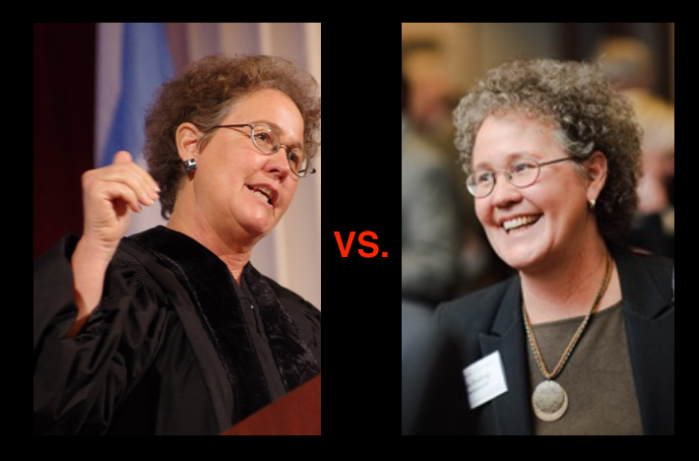
Linda Darling-Hammond vs. Linda-Darling Hammond – How a Once Great Educator Got Lost Among the Corporate Stooges

Screen Shot 2018-11-12 at 7.31.40 AM


Linda Darling-Hammond is one of my education heroes.


Perhaps that’s why her recent article in the Washington Post hurts so much.


In it, she and her think tank buddies slam education advocates Diane Ravitch and Carrol Burris for worrying about who governs schools – as if governance had nothing to do with quality education for children.


I’d expect something like that from Bill Gates.


Or Campbell Brown.


Or Peter Cunningham.


But not Hammond!


She’s not a know-nothing privatization flunky. She’s not a billionaire who thinks hording a bunch of money makes him an authority on every kind of human endeavor.


She’s a bona fide expert on teacher preparation and equity.


She founded the Center for Opportunity Policy in Education at Stanford University, where she is professor emeritus.


And she was the head of Barrack Obama’s education policy working group in 2008 when he was running for President.


In fact, she was the reasons many educators thought Obama was going to be a breath of fresh air for our schools and students. Everyone thought she was a lock for Education Secretary should Hope and Change win the day. But when he won, he threw her aside for people like Arne Duncan and John King who favored school privatization and high stakes standardized testing.


These days she spends most of her time as founder and president of the California-based Learning Policy Institute.


It’s a “nonprofit” think tank whose self-described mission is “to conduct independent, high-quality research to improve education policy and practice.”


The Learning Policy Institute published a report called “The Tapestry of American Public Education: How Can We Create a System of Schools Worth Choosing for All?


The report basically conflates all types of choice within the public school system.


On the one hand, it’s refreshing to have policy analysts admit that there ARE alternatives within the public school system above and beyond charter and voucher schools.


On the other, it’s frustrating that they can’t see any fundamental differences between those that are publicly managed and those outsourced to private equity boards and appointed corporate officers.


Hammond and her colleagues Peter Cookson, Bob Rothman and Patrick Shields talk about magnet and theme schools.


They talk about open enrollment schools – where districts in 25 states allow students who live outside their borders to apply.


They talk about math and science academies, schools focusing on careers in health sciences and the arts, schools centered on community service and social justice, international schools focused on global issues and world languages, and schools designed for new English language learners.


They talk about schools organized around pedagogical models like Montessori, Waldorf and International Baccalaureate programs.


And these are all options within the public school system, itself.


In fact, the report notes that the overwhelming majority of parents – three quarters – select their neighborhood public school as their first choice.


However, Hammond and co. refuse to draw any distinction between these fully public schools and charter schools.


Unlike the other educational institutions mentioned above, charter schools are publicly funded but privately run.


They take our tax dollars and give them to private equity managers and corporate appointees to make all the decisions.


Though Hammond admits this model often runs into problems, she refuses to dismiss it based on the few instances where it seems to be working.


Despite concerns from education advocates, fiscal watchdogs and civil rights warrior across the country, Hammond and co. just can’t get up the nerve to take a stand.


The NAACP and Black Lives Matter have called for a moratorium on all new charter schools in the country. Journey for Justice has requested a focus on community schools over privatization. But Hammond – a once great advocate for equity – can’t get up the moral courage to stand with these real agents of school reform.


She stands with the corporate school reformers – the agents of privatization and profit.


“School choice is a means that can lead to different ends depending on how it is designed and managed…” write Hammond and her colleagues.


In other words, if charters result in greater quality and access for all students, they are preferable to traditional public schools.


However, she admits that charters usually fail, that many provide worse academic outcomes than traditional public schools serving similar students.


She notes that 33% of all charters opened in 2000 were closed 10 years later. Moreover, by year 13, that number jumped to 40%. When it comes to stability, charter schools are often much worse than traditional public schools.


And virtual charter schools – most of which are for-profit – are even worse. They “…have strong negative effects on achievement almost everywhere and graduate fewer than half as many of their students as public schools generally.”


However, after noting these negatives, Hammond and co. go on to provide wiggle room for privatization. They discuss how state governments can do better making sure charter schools don’t go off the rails. They can provide more transparency and accountability. They can outlaw for-profit charters and put caps on the number of charters allowed in given districts and states, set rules on staffing and curriculum – all the kinds of measures already required at traditional public schools.


But the crux of their objection is here:


“In a recent commentary in this column, authors Diane Ravitch and Carol Burris erroneously asserted that our report aims to promote unbridled alternatives to publicly funded and publicly operated school districts. Quite the opposite is true.”


In other words, they continue to lump privatized schools like charters in with fully public schools.


They refuse to make the essential distinction between how a school is governed and what it does. So long as it is funded with public tax dollars, it is a public school.


That’s like refusing to admit there is any difference in the manner in which states are governed. Both democracies and tyrannies are funded by the people living in those societies. It does not then follow that both types of government are essentially the same.


But they go on:


“The report aims to help states and districts consider how to manage the broad tapestry of choices available in public schools in ways that create quality schools with equitable access and integrative outcomes.”


Most tellingly, the authors admonish us to, “Focus on educational opportunities for children, not governance structures for adults” (Emphasis mine).


The way a school is governed is not FOR ADULTS. It is FOR CHILDREN. That is how we do all the other things Hammond and co. suggest.


“Work to ensure equity and access for all.”


That doesn’t just happen. You have to MAKE it happen through laws and regulations. That’s called governance.


“Create transparency at every stage about outcomes, opportunities and resources.”


That’s governance. That’s bureaucracy. It’s hierarchy. It’s one system overlooking another system with a series of checks and balances.


“Build a system of schools that meets all students’ needs.”


Again, that doesn’t just happen. We have to write rules and systems to make it happen.


Allowing private individuals to make decisions on behalf of private organizations for their own benefit is not going to achieve any of these goals.


And even in the few cases where charter schools don’t give all the decisions to unelected boards or voluntarily agree to transparency, the charter laws still allow them to do this. They could change at any time.


It’s like building a school on a cliff. It may be fine today, but one day it will inevitably fall.


I wrote about this in detail in my article “The Best Charter School Cannot Hold a Candle to the Worst Public School.”


It’s sad that Hammond refuses to understand this.


I say “refuse” because there’s no way she doesn’t get it. This is a conscious – perhaps political – decision on her part.


Consider how it stacks up against some of the most salient points she written previously.


For instance:


“A democratic education means that we educate people in a way that ensures they can think independently, that they can use information, knowledge, and technology, among other things, to draw their own conclusions.”


Now that’s a Linda Darling-Hammond who knows the manner in which something (a state) is governed matters. It’s not just funding. It’s democratic principles – principles that are absent at privatized schools.


“Bureaucratic solutions to problems of practice will always fail because effective teaching is not routine, students are not passive, and questions of practice are not simple, predictable, or standardized. Consequently, instructional decisions cannot be formulated on high then packaged and handed down to teachers.”


This Linda Darling-Hammond is a fighter for teacher autonomy – a practice you’ll find increasingly constrained at privatized schools. In fact, charter schools are infamous for scripted education, endless test prep and everything Hammond used to rail against.


“In 1970 the top three skills required by the Fortune 500 were the three Rs: reading, writing, and arithmetic. In 1999 the top three skills in demand were teamwork, problem-solving, and interpersonal skills. We need schools that are developing these skills.”


I wonder what this Linda Darling-Hammond would say to the present variety. Privatized schools are most often test prep factories. They do none of what Hammond used to advocate for. But today she’s emphatically arguing for exactly the kind of school she used to criticize.


“If we taught babies to talk as most skills are taught in school, they would memorize lists of sounds in a predetermined order and practice them alone in a closet.”


Isn’t this how they routinely teach at charter schools? Memorize this. Practice it only in relation to how it will appear on the standardized test. And somehow real life, authentic learning will follow.


“Students learn as much for a teacher as from a teacher.”


Too true, Linda Darling-Hammond. How much learning do you think there is at privatized schools with much higher turnover rates, schools that transform teachers into glorified Walmart greeters? How many interpersonal relationships at privatized institutions replacing teachers with iPads?


“Life doesn’t come with four choices.”


Yes, but the schools today’s Linda Darling-Hammond are advocating for will boil learning down to just that – A,B,C or D.


“We can’t fire our way to Finland.”


Yet today’s Linda Darling-Hammond is fighting for schools that work teachers to the bone for less pay and benefits and then fire them at the slightest pretense.


In short, I’m sick of this new Linda Darling-Hammond. And I miss the old Linda Darling-Hammond.


Perhaps she’s learned a political lesson from the Obama administration.


If she wants a place at the neoliberal table, it’s not enough to actually know stuff and have the respect of the people in her profession.


She needs to support the corporate policies of the day. She needs to give the moneymen what they want – and that’s school privatization.


This new approach allows her to have her cake and eat it, too.


She can criticize all the evils of actual charter schools while pretending that there is some middle ground that allows both the monied interests and the students to BOTH get what they want.


It’s shrewd political gamesmanship perhaps.


But it’s bad for children, parents and teachers.


Like this post? I’ve written a book, “Gadfly on the Wall: A Public School Teacher Speaks Out on Racism and Reform,” now available from Garn Press. Ten percent of the proceeds go to the Badass Teachers Association. Check it out!

cropped-book-1.jpg

Grit is Sh!t – It’s Just an Excuse to do Nothing for Struggling Students

 Screen Shot 2018-11-08 at 3.29.01 PM


Let’s say you’re out in public and you see a crying child alone in the street.


What would you do?


Would you run up to her and help? Or would you just shrug, mutter some derisive comment about the brat and walk on?


Our public school policymakers want us to do the later. In fact, they have a whole pedagogical justification for ignoring the needs of children.


It’s called “academic tenacity,” a “growth mindset” or “grit.”


And it goes something like this:


That child isn’t learning? If she just worked harder, she would.


It’s the political equivalent of “pull yourself up by your own bootstraps” applied to the classroom.


And it’s super helpful for politicians reluctant to allocate tax dollars to actually help kids succeed.


The idea and the euphemisms used to describe it were coined by Carol Dweck as early as 1999. It was subsequently popularized by seventh-grade math teacher and psychologist Angela Duckworth.


In the early 2000s, Duckworth realized that IQ wasn’t the only thing separating successful students from those who struggled. There was also the tendency to overcome adversity or not.


Hey, Angela. Darwin called. He wants his Theory of Natural Selection back.


You know Survival of the Fittest was never meant to be prescriptive. As human beings, we’re supposed to be better than mere animals that typically leave the pack’s sick and injured behind to get eaten by predators.


But whatever.


The term “grit,” is defined as a “passion and perseverance for long-term goals,” according to Frontiers in Psychology. And it’s become one of the buzziest of buzzwords in academia.


So much so, that as you’re reading this, standardized test manufacturers are working to develop an assessment to find it in students.


The agencies that administer the National Assessment of Education Progress (NAEP) and the Program for International Student Assessment (PISA) are close to including character assessments as a measure of student performance.


Oh goody!


They foresee a brave new world where multiple-choice tests will determine not just the entire scope of human knowledge but character as well!


But what no one wants to admit is that grit is… well… shit.


It’s just an excuse for a society that refuses to help those most in need.


In our world, there are haves and have-nots. But if we stop there, we ignore how and why this situation came to be.


Who places kids into segregated schools? WE DO.


Who allocates funding based largely on parental income? US.


We set kids up to succeed or fail before they even enter the school system with an economy that rewards the already rich and punishes generational poverty.


Yet when anyone suggests offering help to even the playing field – to make things more fair – a plethora of policy wonks wag their fingers and say, “No way! They did it to themselves.”


It’s typical “blame the victim” pathology to say that some kids get all the love, time and resources they need while others can do without — they just need more “grit” and a “growth mindset.”


Life’s tough. Get over it.


That’s easy for YOU to say! Because it’s the have’s who make the rules, it’s the people at the top who are telling the people at the bottom they’re to blame for their own suffering.


So you forget all the ways society has helped you and yours. YOU deserve all the credit for your successes.


But for those people over there, let’s forget all the ways society has refused to help and instead blame THEM for not overcoming the obstacles (we put) in their path.


Don’t get me wrong. I’m not saying effort counts for nothing. But it’s part of a complicated matrix of nature and nurture.


Our environments shape us, but we have some control over what we do with what we’re given.


Yet as a society, we can’t simply ignore our responsibilities toward others and throw it all on the individual.


Good teachers know how to get the best out of their students. We know that most kids – if given a safe, encouraging environment – can succeed.


The key often is to scaffold that success. Give them something to do that they can actually master. Then give them something slightly more challenging.


You teach them that they have the ability to succeed and success becomes a self-fulfilling prophecy – and not the opposite.


However, the teacher – and even the school, itself – can only do so much.


As a society, we need to change the environment in which these kids grow up.


We need to fully fund our public schools to meet the needs of all students. That means more funding, services and opportunities for the underserved than for those who already have the best of everything and don’t need to rely as heavily on the school system for support.


We need wraparound services, counseling, tutoring, after school programs, community schools, jobs programs, continuing education for adults and other services to help heal the trauma of growing up poor in America.


But leaving it all to this magical thing called “grit” is just ignoring our responsibilities to our fellow human beings.


When you see someone suffering, you need to help them – not comfort yourself with excuses for ignoring them.


Like this post? I’ve written a book, “Gadfly on the Wall: A Public School Teacher Speaks Out on Racism and Reform,” now available from Garn Press. Ten percent of the proceeds go to the Badass Teachers Association. Check it out!

book-2

Five Reasons to Vote NO on the Allegheny County Children’s Fund

Screen Shot 2018-10-17 at 12.14.03 PM


You can’t raise taxes without a plan of how to spend the money.


But that’s exactly what voters in and around Pittsburgh, Pennsylvania, are being asked to approve this Nov. 6.


Come election day, all voters in Allegheny County will be confronted with what’s been called the Children’s Fund, a referendum asking for a voluntary 5% property tax hike that allegedly would go to pay for early learning, after-school programs and healthy meals for kids.


But there are no details about who will provide these services, who will be responsible for the money, exactly what else the money might be used for or almost anything substantive about it.


It’s just a check with “For Kids” scrawled in the Memo and everything else left blank.


The plan is highly controversial drawing criticism from across the Mon Valley including school directors, education advocates and even progressive groups like the Pennsylvania Interfaith Impact Network (PIIN).


Here are the top five reasons you should vote NO on the referendum:


1) It Raises Taxes Without Stipulating Where the Money Goes


Here’s what we do know.


The Children’s Fund would be financed by 0.25 mills of property tax — $25 on each $100,000 of assessed value, beginning Jan. 1.


That’s expected to generate roughly $18 million a year that would begin to be distributed in 2020.


If approved, it would change the county Home Rule Charter to establish the fund as part of county government. It would create a new office under the supervision of the county manager.

A Citizens’ Advisory Commission would “review and advise” the work of the new office, according to the proposed charter amendment.


However, County Council and County Executive Rich Fitzgerald would have to do the work of actually creating all this stuff. They’d have to pass an ordinance establishing how this all works, what powers the advisory commission has, etc. They would have to determine whether the money goes to existing programs or new ones. They’d have to set up audits of the money every five years, conduct a study to recommend goals and a focus for how the funding is spent.


That’s an awful lot left undecided.


It makes no sense for voters to hand over the money BEFORE we figure all this other stuff out.


It’s not at all how good government works.


You’re supposed to define a problem or need and then come up with a plan to meet that need. You prepare a budget that justifies raising taxes and then you vote on it.


This is exactly the opposite. We’re getting the money before the plan of how to spend it.


That’s a recipe for fraud and financial mismanagement.


2) It’s Unclear Who Would Be In Charge of the Money


Who would be accountable for this money?


We know who gets to decide this – County Council and the Chief Executive. But we don’t know who they will pick or what powers they’ll delegate to these people. Nor do we know what kind of oversight there will be or what kind of regulations will exist for how it can be spent.


This is a blind statement of trust.


It’s like saying – “Here’s $18 million. Go buy us something nice.”


What if they mismanage the money? And what would that even mean for money with so few strings attached? And how would we know? How transparent would this process be?


It’s kind of hard to approve such a plan with so many variables up in the air.


3) The Campaign was Not Grass Roots


To hear supporters talk, you’d think this was a bottom up crusade created by, organized by and conducted by everyday citizens from our communities.


It wasn’t.


Sure, volunteers for the Children’s Fund went door-to-door to collect more than 40,000 signatures from voters last summer.


But they weren’t all volunteers.


Financial documents show that the whole initiative has been funded by various nonprofit organizations that could, themselves, become beneficiaries of this same fund.


According to the Children’s Fund’s own campaign finance report, as of June there were three nonprofit corporations who donated $427,000 to the campaign: the Human Services Center of Turtle Creek gave $160,000, Pressley Ridge Foundation gave $150,000, and Allies for Children gave a donation of $45,000 and another for $72,000.


That’s like McDonalds spending a hundred thousand dollars to fix up the school cafeterias so it could land a multi-million dollar annual contract!


It’s a huge conflict of interest.


At very least, it’s purposefully misleading.


Many of those “volunteers” gathering signatures weren’t working for free. They were part of the $100,000 spent by the campaign to hire Vote Goal Organizing for paid signature collectors.


That doesn’t look like charity. It looks like philanthrocapitalism – when corporations try to disguise grabs for power and profit as philanthropy.


Corporations – even so-called nonprofit corporations – rarely do things out of sheer goodness. They’re acting in the best interest of the company.


I see no reason to think this “Children’s Fund” is any different.


4) It Works Around Instead of With Local Government


Though almost everyone agrees with the stated goals of the Children’s Fund, many organizations and government officials complained that they were not consulted and made a part of the process.


Two Pittsburgh Public School directors went on record in the Pittsburgh Post Gazette about a lack of communication.


“First and foremost, we have not had any conversations with the organizers of the referendum,” board president Regina Holley said. “There are lots of ifs and whats that have not been answered.”


Kevin Carter, another city school director added, “In my role as a school board member, they didn’t talk to us about this at all.”


“When you leave your largest school district in the region out of this conversation, are you doing this around children?” he asked, citing that the district serves 25,000 students daily.


This has been a common thread among officials. No one wants to say they’re against collecting money that’s ostensibly for the benefit of children, but it’s hard to manage the money if you’re not part of the process.


And it’s not just protocol. Many are worried that this lack of communication may be emblematic of how the fund will be run. If organizers aren’t willing to work with local governments to get the job done, how will they know what each community needs? How will they meet those needs? Is that even what the fund will really be about?


Richard Livingston, Clairton school board president, noted concern that the money collected might not be spent evenly throughout the county. For all he knows, it could just be spent in the city or in select areas.


Indeed, this is not the best way to start any endeavor funded by all, for the benefit of all children.


5) It’s Redundant


While it’s true that the county could use more funding to meet the needs of students, numerous organizations already exist that attempt to provide these services.


There are a plethora of Pre-K, after school tutoring and meal services in the Mon Valley. In fact, much of this is done at the county’s various neighborhood schools.


If organizers were only concerned with meeting these needs, why form an office within county government that would have an appointed advisory commission? Why not just increase the funding at the local schools and/or organizations already doing this work?


In fact, this is exactly the reason the Pennsylvania Interfaith Impact Network is against the initiative.


According to the organization’s statement:


“At PIIN, we believe that the faith community is a sacred partner with our public schools, and we have long been supportive of both the community schools model and increasing state funding to provide an excellent, high-quality education to every child in our region. We believe in funding for early childhood learning, after school programs, and nutritious meals. However, we cannot support a ballot initiative that creates an unnecessary entity, with an unknown advisory board, and an unclear process for directing our tax dollars.


This is why we are urging our membership to reject the Allegheny County Children’s Fund Initiative at the polls this November.”


Another related organization, Great Public Schools-Pittsburgh, also released a statement with “several specific concerns” about the potential fund. These include how the money would be distributed, which organizations would benefit from it, and questions about its redundancy.


Several pre-K programs already exist but are not fully funded, the organization noted. Why don’t we just fund them?


The group is a coalition of the Education Rights Network, One Pennsylvania, the Pittsburgh Federation of Teachers, PIIN, and the Service Employees International Union.


The group’s statement noted concerns but fell short of urging an outright NO vote.


The bottom line is that many people are concerned about inadequate funding for children’s programs.


But this “Children’s Fund” is not a solution to that problem.


This is the creation of another bureaucracy that can take our tax dollars and do almost whatever it wants with them.


There is no guarantee it will help kids.


In fact, it looks a lot more like a power and money grab by corporate interests, many of whom would prefer to privatize our school system.


This November, when you go to the polls, do the right thing for our kids.


Vote NO on the Allegheny County Children’s Fund.


IMG_8288


Like this post? I’ve written a book, “Gadfly on the Wall: A Public School Teacher Speaks Out on Racism and Reform,” now available from Garn Press. Ten percent of the proceeds go to the Badass Teachers Association. Check it out!
book-4

College Remediation is Less About Bad Students Than Academic Elitism

51b1a5d1ef37dc704930ac333d90b1b9


Ah, college.


The school on a hill.


The marble columns, wood paneled studies and ivy encrusted gardens.


It’s never really been a place for everybody. But in rhapsodizing the college experience, our lawmakers have pushed for universities to enroll an increasing number of students. The demand for free or reduced tuition – especially for low-income students – has meant more kids putting on a letterman jersey and giving it the ol’ college try.


Teenagers who wouldn’t dream of higher education in previous decades are going for it today.


And the result has been a greater proportion of incoming college freshman taking remedial courses before they can even begin the normal post-secondary track.


According to a 2017 report by the Hechinger Report, more than half a million students at two- and four-year colleges in 44 states had to take such courses.


This costs up to an estimated $7 billion a year.


So, as usual in our country, we’re looking for someone to blame. And look! Here’s our favorite scapegoat – the public school system!


The gripe goes like this: Incoming college freshman wouldn’t need remediation if the public schools had bothered to teach them correctly!


However, the argument ignores several important factors and jumps to a completely unearned conclusion.


1) Public schools don’t decide who is accepted at colleges. College admissions departments do.


If people in higher learning think all these teenagers don’t belong in college, don’t accept them. Period.


But that would mean fewer students, less tuition and forgoing the lucrative revenue stream provided by – surprise! – these same remediation courses!


We pretend that colleges are special places where honor and scholarship rule the day. It isn’t necessarily so.


They are run by people, and like anywhere else, those people can be ethical and egalitarian or petty and materialistic.


Colleges aren’t immune to small mindedness or the economic realities facing institutions of learning everywhere.


Like most schools, they’re starved for funding.


The state and federal government have slashed subsidies to colleges and universities just as they have to public schools. Colleges have to make up the shortfall somewhere.


So they enroll students who don’t meet their own academic standards and then charge them for the privilege of attempting to get up to snuff.


It’s a good deal. You get to blame kids coming in AND reap the rewards.


2) How exactly do we determine that these kids need remediation?


In many schools, they use standardized tests like the SAT or ACT to make this determination. Others give their own pretest to all incoming freshman and assign remediation based on the results.


You’d expect more from institutions of higher learning.


You’d expect them to know how inadequate standardized tests are at assessing student knowledge. After all, most of the mountain of studies that conclude these tests are worthless are conducted at the college level. However, it seems people in admissions don’t always read the scholarly work of their colleagues in the departments of education and psychology.


I remember when I was in college, several classmates were being pressured to take remedial courses but refused. It didn’t stop them from graduating with honors.


3) Let’s say some of this remediation actually is necessary. Why would that be so?


These are high school graduates. What has changed in public schools over the past few decades to increase the need for these additional services at colleges?


It seems to me the answer is three-fold:


1) School budgets have been cut to the bare bone

2) Schools have to fight for limited funding with charter and voucher institutions

3) Standardized testing and Common Core have been dominating the curriculum.


If you cut funding to schools, they won’t be able to prepare students as well.


That’s a pretty simple axiom. I know business-minded number crunchers will extol the virtue of “doing more with less” and other such self-help platitudes, but much of it is nonsense.


You never hear them explain how cutting CEO salaries will mean corporations will run more effectively. It’s only workers and schools that they think deserve tough love and penury.


Look, schools with less funding mean fewer teachers. That means larger class sizes. That means it’s more difficult to learn – especially for students who don’t already come from privileged backgrounds.


None of this is bettered by the addition of charter and voucher schools sucking up the limited money available. We don’t have enough for one school system – yet we’re asking two or more parallel systems to exist on that same amount. And we’re stacking the deck in favor of privatized systems by prioritizing their funding and not holding them to the same accountability and transparency standards as traditional public schools.


It’s like deliberately placing leeches on a runners back and wondering why she’s started going so slowly.


Moreover, it’s ironic that the Common Core revolution was conducted to make students “college and career ready.” It has done just the opposite.


Narrowing the curriculum to weeks and months of test prep has consequences. You can increase students ability to jump through the hoops of your one federally mandated state test. But that doesn’t translate to other assessments. It doesn’t mean they’ll do better on the SAT or other college entrance exams. Nor does it mean they’ll possess the authentic learning we pretend we’re after in the first place.


The bottom line: if we really want to improve student academic outcomes in public schools, we need to fully and equitably fund them. We need to abandon school privatization schemes and fully support public schools. And we need to stop the obsession with standardized assessments, curriculum and – yes – even canned standards, themselves.


That might actually reduce the numbers of students who allegedly need remediation at the college level.


However, there is another aspect that we need to consider that is harder to remedy…


4) Developmental psychology.


Schools – whether they be post-secondary, secondary or primary – are built to meet the needs of human beings. And human beings don’t grow according to a preconceived schedule.


Just because you think someone should be able to do X at a certain age, doesn’t mean they’re developmentally ready to do so.


Speaking from experience, I was a C student in math through high school. It wasn’t until I got to college that I started to excel in that subject and earned top marks.


I didn’t have to take any remedial courses, but I was forced to take a quantitative reasoning course as part of my liberal arts majors.


I’m not alone in this. Many people aren’t cognitively ready for certain concepts and skills until later. That doesn’t make them deficient in any way nor does it betray any problems in their schooling.


That’s just how their brains work. We can whine about it or we can accept human nature and do what we can to help students cope.


And this brings me to my final reason behind the college remediation trend – a problem that is more insidious than all the others combined.


5) The elitism behind the whole post-secondary system.


For centuries, higher learning has been seen as a privilege of the wealthy and the upper class. Sure a few exceptional plebians were let into our hallowed halls just to “prove” how egalitarian we were.


But college was never seen as something fit for everyone.


As such, the attitude has always been that students are on their own. Many who enroll will not end up graduating. And that’s seen as perfectly acceptable. It’s part of the design.


It’s the baby sea turtle school of education – thousands of hatchlings but few survive to adulthood.


However, if you really want to make college the right fit for an increasing number of students, you have to get rid of the elitist attitude.


If students come to college and need remediation, stop whining and provide it.


And it shouldn’t incur an extra cost from students, either. This should just be a normal part of the process.


If a patient comes to the emergency room with heart disease, you don’t penalize him because he didn’t eat heart healthy. You do what you can to help him heal. Period.


That’s how colleges and universities need to approach their students.


You know – the way public schools already do.


SOLUTIONS


In summary, it’s not a case of colleges vs. public schools. And anyone who tells you differently probably has a hidden agenda – the standardization and privatization industry, for instance.


We need to support colleges and universities. We need to support public schools. Both need additional funding and political will.


However, colleges need to become more accepting and supportive of the students enrolled there. They need to meet them where they are and provide whatever they need to succeed.


Moreover, public schools need the autonomy and respect routinely given to college professors.


The answer is a transformation of BOTH institutions.


That’s how you make a better school system for everyone.


That or we could just keep grumbling at each other, forever pointing fingers instead of working together to find solutions.


Like this post? I’ve written a book, “Gadfly on the Wall: A Public School Teacher Speaks Out on Racism and Reform,” now available from Garn Press. Ten percent of the proceeds go to the Badass Teachers Association. Check it out!

book-3

The Best Way to Prepare for School Shootings is to Reduce the Chances They’ll Happen at All

Screen Shot 2018-09-27 at 9.18.21 AM


I participated in yet another active shooter drill at my school this week.


“Death to the infidels!” shouted Mr. O’Grady, one of my fellow teachers, as he stormed the classroom with a Nerf blaster rifle.


I had stuffed myself under a table in another teacher’s reading nook.


But it did no good.


One of the soft yellow balls came sproinging out of the gun and bounced off the carpet into my groin.


Then someone blew a whistle and the scenario was over.


The classroom full of teachers collected ourselves from behind overturned tables and under desks before uncertainly getting to our feet.


“Who got hit?” asked the principal as he poked his head into the room.


A flurry of hands went up including mine.


The students had been dismissed about an hour earlier. The body count was made up entirely of faculty and staff – teachers, administrators, security guards, substitutes, lunch ladies, etc.


The lesson we were supposed to take away from the activity was that hiding was a losing strategy.


“Do something,” one of the police officers conducting the drill said.


They wanted us to swarm the shooter, throw things at him (Nerf balls in our scenario) or make a run for it. Anything but simply staying put and being sitting ducks.


It made me wonder why our lawmakers don’t heed the same advice.


Do something?


Yeah. Why doesn’t Harrisburg do something? Why doesn’t Washington?


That’s where you can make a real difference to keep our schools safe.


Instead of making the world safer for our kids, we’re trying to lock them up in a castle and keep the violence out.


But it’s impossible. You can’t keep out human nature.


The same things that cause shooters to enter the school and go on a killing spree are already in our classrooms.


O’Grady may have imagined he was a member of Al-Qaeda as he pretended to blow his co-workers away, but if a shooter ever enters our building, he’s more likely to be a co-worker, parent or student.


We don’t need more ways to keep them out. We CAN’T keep them out and still do our jobs!


All we can do is try to alleviate the pressure, to counsel mental distress, heal physical trauma, guard against societal hurts.


And if that doesn’t work, we can lower the stakes and limit the amount of damage done.


Turning the school into a prison will not help. Turning teachers into guards (armed or otherwise) will not solve anything.


Back in 1999 in the wake of the Columbine school shooting, the Secret Service and U.S. Department of Education warned against all the things we’re doing now – police officers in the schools, metal detectors, cameras, etc.


Instead, they advised us as follows:


“Specifically, Initiative findings suggest that [school] officials may wish to consider focusing their efforts to formulate strategies for preventing these attacks in two principal areas:


  • developing the capacity to pick up on and evaluate available or knowable information that might indicate that there is a risk of a targeted school attack; and,


  • employing the results of these risk evaluations or “threat assessments” in developing strategies to prevent potential school attacks from occurring.”


That means prevention over disaster prepping. Homeland Security and education officials wanted us to pay close attention to our students, their needs and their struggles.


We keep our schools safe by looking to the humans in them and not new ways to barricade the building or watch the whole disaster unfold on closed circuit TV.


The fact is that our schools are actually much safer than the communities that support them. Numerous studies have concluded that students are more secure in school than on the streets or even in their own homes.


If we want to make the schools safer, we need to make the communities safer.


And, no, I’m not just talking about high poverty neighborhoods populated mostly by people of color. I mean everywhere – in our society, itself.


There are too many guns out there. We have more firearms than people!


According to the Graduate Institute of International and Development Studies in Geneva, Americans now own 40 per cent of all guns in the world – more than the next 25 countries combined. And with every mass shooting and the hysteria trumped up by gun manufacturers with each surge in profits, that number continues to climb.


You can do whatever you want to the schools, but you’ll never increase safety until you deal with THAT problem.


The fact is countries with more guns have more gun deaths. States and Countries with more rigorous gun control have fewer gun deaths.


(If you doubt it, see Florida’s “The Geography of Gun Deaths,” and a 2016 review of 130 studies in 10 countries, published in Epidemiologic Reviews.)


We need sane, sensible gun regulations. We need government buyback programs. And we need to smash the NRA’s stranglehold on our political process.


These ridiculous safety drills are simply whistling in the dark.


They’re not harmless. They’re HARMFUL.


They actually make our schools less safe.


Metal detectors, surveillance cameras, and resource officers do not create safer schools. According to a study released by the National Association of School Psychologists :


“There is no clear research evidence that the use of metal detectors, security cameras, or guards in schools is effective in preventing school violence (Addington, 2009; Borum, Cornell, Modzeleski, & Jimerson, 2010; Casella, 2006; Garcia, 2003). In fact, research has shown that their presence negatively impacts students’ perceptions of safety and even increases fear among some students (Bachman, Randolph, & Brown, 2011; Schreck & Miller, 2003). In addition, studies suggest that restrictive school security measures have the potential to harm school learning environments (Beger, 2003; Phaneuf, 2009).”


At this week’s active shooter drill in my school, one of the student aides asked the principal when he thought the state would be arming teachers.


For him, it wasn’t a matter of if. It was a matter of when.


And if you listen to the cowardly garbage spewing out of our lawmakers mouths, you can certainly understand why he believes that.


However, arming teachers or even adding more armed police to the school will not make our classrooms more secure.


There is overwhelming evidence that it will do just the opposite.


As Melinda Wenner Moyer reports in Scientific American, “guns are associated with an increased risk for violence and homicide”—but not with greater safety.


Just look at the facts.


Security cameras were present at Sandy Hook and Virginia Tech. They didn’t stop anything from happening.


Armed resource officers were present at Columbine and Parkland. That didn’t stop anything from happening.


All these measures do is criminalize our students. It turns them from prospective learners into would-be prison inmates – and as we know, our prisons are not exactly the safest places to be.


“How’d I do?” asked Mr. O’Grady, my co-worker who had posed as the shooter during the last scenario.


“You shot me in the dick,” I said.


He laughed. And I laughed.


But it was the kind of laugh that dies in your throat and leaves a taste of ashes.


School safety is a joke in 2018. Not because of what teachers and districts are doing.


When society fails to meet its obligations – as it does time-and-again – it’s our schools that continually step up to take the slack.


The problem is that we can’t even pretend to do this one on our own.


We can’t keep the schools safe if you won’t do anything about the community – if you won’t reduce poverty, violence and trauma.


We can’t keep the schools safe, if you won’t do something about the river of guns that flow through our nation like a high caliber Mississippi.


Do something?


Take your own advice, America.


Like this post? I’ve written a book, “Gadfly on the Wall: A Public School Teacher Speaks Out on Racism and Reform,” now available from Garn Press. Ten percent of the proceeds go to the Badass Teachers Association. Check it out!
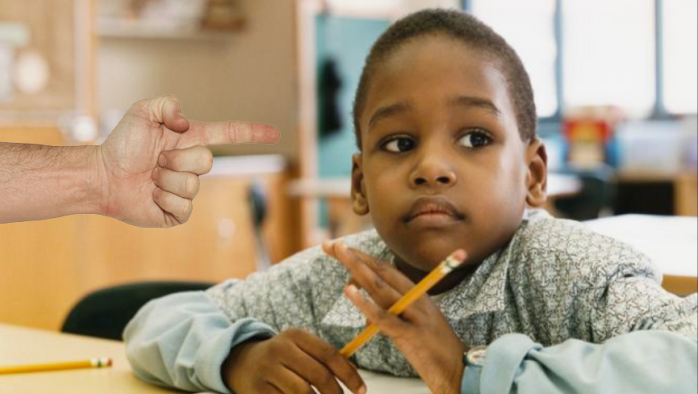
WANT A SIGNED COPY?

Click here to order one directly from me to your door!

book-1

FBI Warns EdTech Puts Student Safety at Risk

students-99506_960_720


Pandora’s box may not be a heavy wooden chest.


It might just be a laptop or an iPad.


The Federal Bureau of Investigations (FBI) issued a warning late last week about the proliferation of educational technologies (EdTech) in schools and the dangers they pose to student safety and privacy.


The devices and applications singled out by US domestic intelligence services all involve software that asks for and saves student input.


This includes classroom management tools like Class Dojo and eBackpack as well as student testing and remediation applications like Classroom Diagnostic Tools and StudyIsland.


The alert cautions schools and parents that the widespread collection of student data involved in these applications could cause safety concerns if the information is compromised or exploited.


It’s just such technologies that have proliferated at a breakneck pace in districts throughout the country while legislation, cybersecurity and even awareness of the danger has lagged behind.


The Bureau is concerned about EdTech services because many are “adaptive, personalized learning experiences” or “administrative platforms for tracking academics, disciplinary issues, student information systems, and classroom management programs.”


The Bureau clarified that use of EdTech applications was not, in itself, the problem. They are a tool, and like any tool, they can be used for good or ill.


Advocates say when used correctly, these systems offer the potential for student collaboration, and for teachers to collect and compare information about students to help design better lessons. On the other hand, critics warn that the problems with most EdTech is essential to the way it operates and that it is designed more for the purposes of student data mining and profitization by corporations than with academic success for children in mind.


In either case, the dangers posed by such devices are indisputable.


The amount and kinds of data being collected about students has not been well publicized or understood. Many school boards, administrators, teachers, parents and students may be using EdTech without a full appreciation of how it often surreptitiously collects data on children.


Analysts listed several types of student particulars being stockpiled:


  • “personally identifiable information (PII);


  • biometric data;


  • academic progress;


  • behavioral, disciplinary, and medical information;


  • Web browsing history;


  • students’ geolocation;


  • IP addresses used by students; and


  • classroom activities.”


This is highly sensitive information that could be extremely harmful to students if it fell into the wrong hands.


Pedophiles could use this data to find and abduct children. Criminals could use it to blackmail them. It could even be sold to unscrupulous corporations or exploited by other children to bully and harass classmates.


These concerns are not merely academic. Data breaches have already occurred.


According to the FBI:


“…in late 2017, cyber actors exploited school information technology (IT) systems by hacking into multiple school district servers across the United States. They accessed student contact information, education plans, homework assignments, medical records, and counselor reports, and then used that information to contact, extort, and threaten students with physical violence and release of their personal information. The actors sent text messages to parents and local law enforcement, publicized students’ private information, posted student PII on social media, and stated how the release of such information could help child predators identify new targets.”


Though the Bureau did not mention them by name, it cited two specific cybersecurity failures in 2017 at two large EdTech companies where millions of student’s private information became publicly available.


The FBI seems to be referring to Edmodo and Schoolzilla. Hackers stole 77 million user accounts from Edmodo last year and sold that data to a “dark web” marketplace. Likewise, Schoolzilla stored student information on a publicly accessible server, according to a security researcher, thereby exposing the private information of approximately 1.3 million children.


It was these data breaches that prompted the Department of Education to issue a Cyber Advisory alert in October of 2017 warning that cyber criminals were targeting schools that had inadequate data security. Criminals were trying to gain access to this sensitive material about students to “shame, bully, and threaten children.”


In February, another cybercrime was reported by the Internal Revenue Service. The agency released an “urgent alert” about scammers targeting school districts with W-2 phishing schemes.


Of particular concern to the FBI are school devices connected directly to the Internet. They offer hackers an immediate link to private student information. This is true even if a school device is in the student’s home.


Tablets, laptops or monitoring devices such as cameras or microphones could be exploitable by tech savvy criminals – especially since many EdTech programs allow remote-access capabilities without the user even being aware of what is happening.


Indeed, some EdTech companies collect information on students’ feelings; become student data brokers and use voice-activated speakers in the classroom.


The FBI listed several recommendations for parents and families:


  • “Research existing student and child privacy protections of the Family Educational Rights and Privacy Act (FERPA), the Protection of Pupil Rights Amendment (PPRA), the Children’s Online Privacy Protection Act (COPPA), and state laws as they apply to EdTech services.

  • Discuss with their local districts about what and how EdTech technologies and programs are used in their schools.


  • Conduct research on parent coalition and information-sharing organizations which are available online for those looking for support and additional resources.


  • Research school-related cyber breaches which can further inform families of student data vulnerabilities.


  • Consider credit or identity theft monitoring to check for any fraudulent use of their children’s identity.


  • Conduct regular Internet searches of children’s information to help identify the exposure and spread of their information on the Internet.”


The warning concluded by asking those who have information about cybercrimes or who have been victimized by data breaches to file a complaint with the Internet Crime Complaint Center at www.ic3.gov.


For some, the FBI’s warning highlights the need for greater education funding for cybersecurity.


“While other industries are investing in greater IT security to protect against cyber threats, many schools are facing budget constraints that result in declining resources for IT security programs,” staff members from the Future of Privacy Forum wrote on their blog. “Schools across the country lack funding to provide and maintain adequate security,” they wrote.


Others see the problem as one of antiquated legislation not keeping up with changing technologies.


The FBI memo highlights a need for Congress to update federal student privacy laws, said Rachael Stickland, co-founder and co-chair of the Parent Coalition for Student Privacy.


At present, these issues are covered haphazardly from state to state, a situation Strickland finds intolerably inadequate.


The main federal law safeguarding student data privacy, The Family Educational Rights and Privacy Act, should be updated, she said. It must address exactly which ways districts should be allowed to share data with EdTech companies.


“What we need is a comprehensive approach at the federal level to address these outdated federal laws,” she said. “We really need these modernized to address not only the cybersecurity threats but also the potential misuse of this data.”


However, some critics are skeptical of the very use of EdTech in the classroom, at all.


They see the potential dangers being so massive and difficult to guard against that any remedies to fix the problem would be counterproductive.


Instead of spending millions or billions more on cybersecurity measures, we should use any additional funding for more essential budget items like teachers, tutors, nurses and counselors.


The goal is to provide a quality education – not to provide a quality education with increasingly complex technologies. If the former can be done with the latter, that’s fine. But if we have to choose between the two, we should go with proven methods instead of the latest fads.


EdTech corporations are making staggering profits off public schools while almost every other area goes lacking. In the nexus of business and industry, we may be losing sight of what’s best for students.


The question is have we already opened Pandora’s box, and if we haven’t, can we stop ourselves from doing so?


Like this post? I’ve written a book, “Gadfly on the Wall: A Public School Teacher Speaks Out on Racism and Reform,” now available from Garn Press. Ten percent of the proceeds go to the Badass Teachers Association. Check it out!

WANT A SIGNED COPY?

Click here to order one directly from me to your door!

book-3