Hope Grows as Argument Ends in PA School Funding Lawsuit 

Is it safe to hope?

That’s what I’m wondering as closing arguments are set to begin tomorrow in the historic Pennsylvania school funding lawsuit.

In my home state, public schools have had to band together and sue the legislature for adequate funding.

Though a final decision may not come until summer or fall, it actually seems possible that things could change for the better. 

I feel cautiously optimistic that Commonwealth Court will decide in favor of the state’s schools and not the legislature. 

But frankly I am also disgusted that it has even come to this.

The schools had to take our own government to court to force lawmakers to pay for kids to get an adequate education.

Can you imagine the kind of person who refuses to care about children?

As a public school teacher and father, I just can’t.

Pennsylvania is one of seven states with a Constitution that specifically requires the state to provide a sufficient education. Some of these other states – like New Jersey – have used similar Constitutional requirements to force their legislatures to increase state funding to public schools.

Specifically, our state Constitution says:

“The General Assembly shall provide for the maintenance and support of a thorough and efficient system of public education to serve the needs of the Commonwealth.” 

“Thorough and efficient.”

Not lavish. Not extravagant. Just complete and productive.

Yet for nearly 8 years getting to court and for three months, 13 weeks, 48 days in court, the state has argued that it already does that.

It’s one of the most absurd assertions I have ever heard. They might as well argue that water is not wet and fire is not hot.

Walk into any wealthy school in the Commonwealth and look around. You’ll see the equivalent of the Taj Mahal. Now walk into any poor district and look around. You’ll see the equivalent of a slum.

One has brand new facilities, marble columns, and wood paneling scrubbed to a shine with a bustling staff moving to-and-fro. 

The other has badly maintained structures, exposed insulation, dusty corners, leaky ceilings and animal droppings while a skeleton crew of adults try their all to do the impossible without the tools to get it done. 

The Pennsylvania legislature has been paying less and less of public schools’ budgets over the last four decades. The state used to contribute 54% of all public school costs in the early 1970s. Today it pays just 38% of the cost. Only five states cover a smaller share with the national average at 47%. This leaves local taxpayers to take up the slack. Since districts are not equally wealthy, that increases the disparity of resources between rich and poor districts.

During the trial, the state had tried to argue that money doesn’t matter. Yet poor schools can spend $4,800 less per student than wealthy districts. What’s worse, impoverished students have greater needs than rich ones. They often don’t have books in the home or access to Pre-kindergarten. Poor students often suffer from food insecurity, malnutrition, a lack of neonatal care, worse attendance, are less well rested and have greater special needs and suffer greater traumas than wealthier students. Yet we provide them with fewer resources!?

According to a benchmark written into state law, public schools need $4.6 billion in additional funding just to give students a shot. And 277 districts – whether they be in cities, small towns or suburbs – need $2,000 in additional funding per student to get up to snuff.

This affects the great majority of our children – 86% of students attend schools that don’t receive adequate resources.

But it’s even worse for children of color. Half of the state’s Black students and 40% of the state’s Latino students go to schools in the bottom 20% for local wealth.

John Krill, a lawyer for the state, sees no problem with this disparity. In fact, he argued in favor of it.

In perhaps the most revealing moment of the trial, Krill, who represents GOP Senate President Pro Tempore Jake Corman, asked:

 
“What use would a carpenter have for biology? […] What use would someone on the McDonald’s career track have for Algebra 1? […] The question in my mind is, thorough and efficient to what end? To serve the needs of the Commonwealth. Lest we forget, the Commonwealth has many needs. There’s a need for retail workers, for people who know how to flip a pizza crust.” 

So the Commonwealth actually argued that inequitable funding is okay because all kids don’t need a thorough education. Some just need the bare minimum to do whatever menial jobs they’re destined to have while the elite kids need more for the high skilled jobs they’re going to get.

I wonder which kids Krill and his defendants in the legislature think deserve less funding. I’ll bet it’s the black and brown kids already suffering most from this disparity.

Luckily, the school districts asking the courts to intervene feel differently.

Six school districts – William Penn, Lancaster, Panther Valley, Greater Johnstown, Shenandoah Valley, and Wilkes Barre Area – filed the suit along with the Pennsylvania Association of Rural and Small Schools, the NAACP PA State Conference, and families whose children attend under-resourced schools.

Essentially, they are asking for two things.

First, for the court to declare the current funding system unconstitutional.

Second, for the court to order the legislature to create and maintain a fair funding system.

You might say, wait. Didn’t the legislature adopt a new Basic Education Funding formula in 2016 that already provides a fairer way to allocate money based on need?

And the answer is – yes, it did, BUT this funding formula is hardly ever used. Lawmakers only apply it to distribute new money, and increases have been few and far between. So the lion’s share of education funding is still inequitably distributed. We need to change that, to make sure everyone is getting their fair share AND that the money is adequate for the task.

Gov. Tom Wolf’s 2022-23 budget proposal has already begun to address this.

He suggests a $1.75 billion down payment to schools on the $4.6 billion gap.

The state has the money to do this. It just needs to cut wasteful spending elsewhere and close tax loopholes.

For example, the state throws away $240 million a year to The Race Horse Development Fund. These are taxpayer funded subsidies to wealthy horse racing enthusiasts and hobbyists. Since 2004, the legislature has lavished $3 billion on the horse racing industry. Shouldn’t we prioritize school children over cash prizes and inflated pensions for wealthy horse owners, breeders, and trainers? Aren’t kids more important than paying to drug test horses and for racetrack marketing?

It’s these kind of shenanigans that forced 57% of school districts to increase taxes this year.

If the state was doing its job and looking after kids instead of giving handouts to wealthy oligarchs, you and I wouldn’t feel as much pain in our wallets.

Moreover, local school districts will pay $2.8 billion in charter school tuition this year. Why does the state keep opening these expensive privatized institutions that have less fiscal accountability than our authentic public schools? Again the ideology of far right lawmakers is funded by you and me with our tax dollars.

So what’s next after closing arguments this week?

Both parties in the case will file a series of post-trial briefs saying what they believe they proved during the testimony, the “conclusions of law” they are asking the judge to reach, and their analysis of the legal questions presented—such as the meaning of the state Constitution’s “thorough and efficient” education clause.

The final post-trial brief is due on July 6. Then — after oral argument on legal issues at a later date — the court will make its final decision weeks or months later.

In the meantime, the budget is supposed to have been approved by the legislature (one way or another) and signed by the Governor by June 30. If not, funding for some state programs may be delayed. But you never know. The legislature has been late on this before.

So what am I learning from all of this?

The value of hope?

The evil of lawmakers who want to continue shortchanging our children?

The bravery of public school districts that challenge the state to follow its own darn rules?

All of the above.


Like this post?  You might want to consider becoming a Patreon subscriber. This helps me continue to keep the blog going and get on with this difficult and challenging work.

Plus you get subscriber only extras!

Just CLICK HERE.

Patreon+Circle

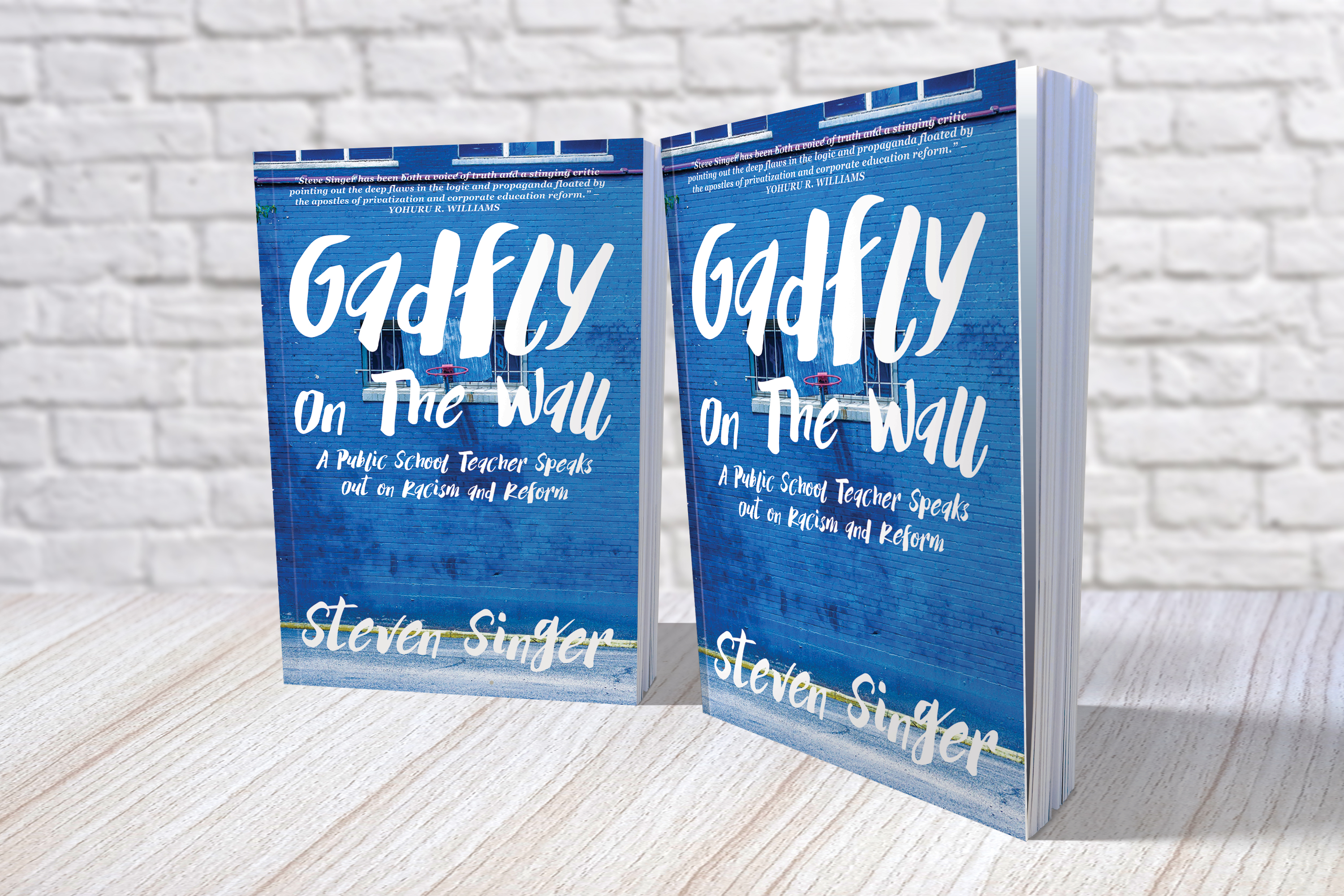
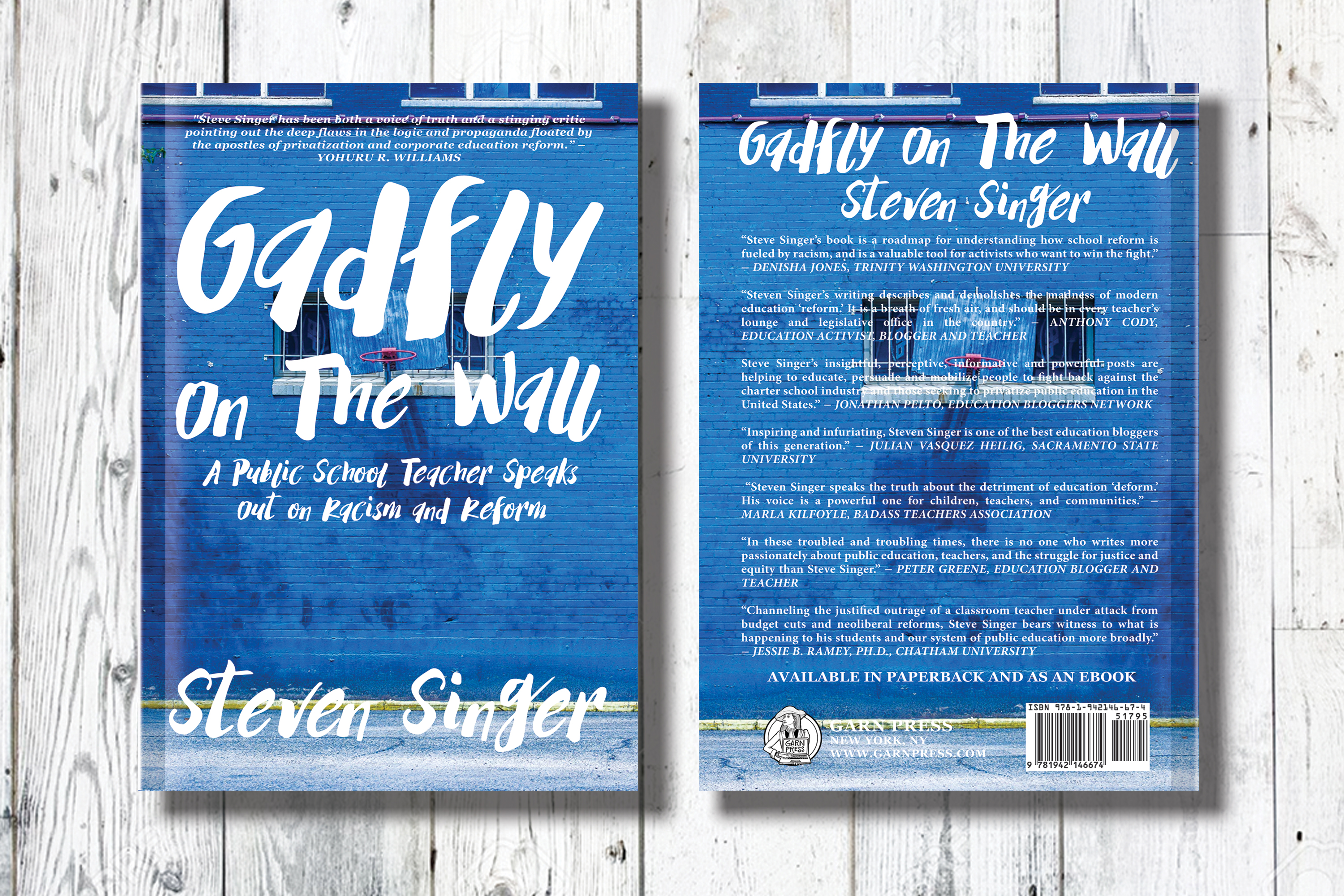
I’ve also written a book, “Gadfly on the Wall: A Public School Teacher Speaks Out on Racism and Reform,” now available from Garn Press. Ten percent of the proceeds go to the Badass Teachers Association. Check it out!


Teaching the War in Ukraine is Fighting the War at Home 


How does one teach about war?  


With pictures or words? 


With speeches or documentation? 


With prayers or curses? 


With laughter or tears? 


I began my class like I always do – with a question


“Has anyone heard about what’s happening in Ukraine?” I asked.  


A few hands, but they had only heard the words. They didn’t know what was happening.  


So I showed my 8th graders a short video that summarized events so far. I drew a map of Europe and Asia on the board. I outlined Ukraine, Russia and the European union. I explained about the Soviet Union and its collapse. I explained about NATO and the struggle for power and prestige.  


When I was done, there was a moment of silence. They were all staring up at me. It was one of those rare moments of stillness, a pregnant pause before the questions started raining down.  


A patter at first, then a storm. 


They asked about what they were hearing at home. They searched for corroboration, explanation and/or other viewpoints. 


One child asked if this was NATO’s fault. If it was President Biden’s doing. 


Another asked how it would affect us and why we should care. 


And yet another asked about nuclear proliferation and whether this war meant the end of the world.  


I couldn’t answer all of their questions, though I tried. When there was something I couldn’t say or didn’t know, I pointed them in a direction where they might find some answers.  


But it led to some interesting discussion.  


Then I asked them if they had talked about any of this in their other classes – perhaps in social studies. They all said no, that a few teachers had promised to get to it after finishing the 13 colonies or another piece of mandated curriculum.  


I was surprised but not shocked. I know the tyranny of the curriculum.  


I was only able to talk about this, myself, because of the scope and sequence of Language Arts. You see, it was poetry time and I was about to introduce my students to Alfred Lord Tennyson and “The Charge of the Light Brigade.” 


For those who don’t recall, the poem tells the true story of the battle of Balaclava during the Crimean War. A cavalry regiment of British troops charged Russian gunners and were mostly shot to pieces.  


It’s a pillar of English poetry and a perfect opportunity to talk about warfare in general and Ukraine in particular since the battle took place in the same general area of the world. 


In the poem, a general mistakenly orders the soldiers on horseback armed only with swords to charge the enemy armed with cannons and guns.  


Tennyson writes


“Theirs not to make reply, 
   Theirs not to reason why, 
   Theirs but to do and die.” 


And after the result is graphically portrayed, the speaker extols their virtue: 


“When can their glory fade? 
O the wild charge they made! 
   All the world wondered. 
Honour the charge they made! 
Honour the Light Brigade, 
   Noble six hundred!” 


So I ask my students what they think about it. Is it a soldier’s duty to follow orders no matter what? Should they question those orders?  


Typically, most of them back up Tennyson.  


And then I present them with an 80s heavy metal video by Iron Maiden of the song “The Trooper.”


The video uses images from a silent movie version of the Tennyson poem while singer Bruce Dickinson wails the story of a single soldier of the Light Brigade being senselessly gunned down and dying alone, forgotten on the battle field. 


It certainly gives them something to think about as they watch black and white horses flung in the air and our spandex clad narrator commenting on the situation with hairspray piled locks.  


Students end up leaving the class continuing the debate with each other about heroism and the waste of war.  


I certainly have my own opinions on the matter, but I keep them to myself.  


The way I see it, this isn’t the time for me to insert my opinion into the class. It’s an opportunity for my students to think through the problem, themselves.  


And, frankly, that’s really the point of most of school.  


It’s not the transmission of knowledge. Teachers can’t magic information into children’s heads.  


Instead, we provide opportunities to learn. We encourage students to think. We’re more like gardeners than anything else. We water, we weed, we make sure the soil is fertile. But it is up to the child to grow and in which direction to strive.  


That’s why far right scare mongers are so ignorant and absurd when they try to constrain teachers from teaching about history or racism.  


These campaigns are not aimed at educators. They are aimed at students.  


The goal is to offer children only one path in which to grow.  


They want to stifle thought, stifle free expression, stifle intellectual freedom by removing the option to think.  


They want to remove the opportunity.  


It may not be as dramatic as Putin invading. “Shot and shell” may not be flying. But the forces of fascism are equally at work on the minds of our children.  


In teaching about the war in Europe, educators are waging a battle against the war at home. 

Zhyvitʹ revolyutsiyeyu!

 
Viva la revolución! 

Long live the revolution!


Like this post?  You might want to consider becoming a Patreon subscriber. This helps me continue to keep the blog going and get on with this difficult and challenging work.

Plus you get subscriber only extras!

Just CLICK HERE.

Patreon+Circle

I’ve also written a book, “Gadfly on the Wall: A Public School Teacher Speaks Out on Racism and Reform,” now available from Garn Press. Ten percent of the proceeds go to the Badass Teachers Association. Check it out!

A Teacher’s Wish


People often ask me what I’d change about education if I could change just one thing.

But they don’t seem to realize that our schools are kind of like Jenga – if you change one thing, you might set off a chain reaction and it all comes tumbling down.

Change one thing – the RIGHT thing – and you may change all of them.

Maybe even for the better!

Why worry about that now?

Monday is my birthday. I’ll be 48.

Old enough to know that birthday wishes don’t come true. Unless maybe you wish for cake and ice cream.

But I can still see myself staring into the candles as friends and family sing the obligatory tune.


The orange flames wave back and forth atop tiny wax fingers threatening to burn down the whole chocolatey confection.  

But before they do, I just might give in and make a wish – a birthday wish – and….

You never know!!!

So here goes.

Candle burn, candle bright,

Let me strive to make things right,

I wish I may, I wish I might,

Have the wish, I wish tonight…

 
I wish there were no more standardized tests.  


No more judging kids entire academic year based on their performance in a few hours of multiple choice Hell.  


No more assessments where a multiplicity of nonacademic factors like parental income, childhood trauma and corporate bias are hidden behind a numeric label.  


No more evaluations based on eugenics and pseudoscience. No more tests supported by the bottom line of corporations who make money creating the tests, grading the tests and selling us the remediation materials to retake the tests.  


That, alone, would make such a difference.  


No more teaching to the test. No more narrowing the curriculum. No more pressure to increase test scores.  


Just the freedom to teach.  


To empirically observe a classroom of students, see what they need and try to help them get it.  


And since I’m overturning that stone, I’ll topple another one. 


I wish schools were budgeted fairly.  


Not equally, mind you, but fairly.  


I wish every student got all the resources necessary to meet his or her needs. No! I wish they got MORE than enough.  


I wish we funded schools the way we fund the military! I wish schools had money flowing through them like a river of gold. I wish school buildings were marble palaces where the community could come together and learn and play and talk and interact. 

Imagine how that would impact class size.

No more 20-30 kids stuffed into a single classroom with just one teacher between them.

No more trying to differentiate, grade, instruct, counsel, and inspire until there’s nothing left of you at the end of the day.

No more being on stage every moment but instead having dedicated times untethered to students where you can actually think about things – how to teach this or that, what students really meant when they made certain comments, how to best help parents…

But wait there goes another pebble!

I wish there was no school privatization!

And I do mean NO school privatization.

There shouldn’t be schools for some kids and schools for others.

We should differentiate by need but not by income bracket. We shouldn’t divide kids up based on race, ethnicity or their parents biases.

No more prep schools. No more parochial schools. No more prestigious academies. No more charter schools. No more home schools.

Just public schools of every shape and size.

Schools funded by everyone to teach everyone’s kids. No place to hide money for some and deprive it from others.

Oops! There goes another stone overturned!

I wish there were no more segregated schools.

No more districts or buildings or classes focusing mostly on white kids, or black kids, or rich kids or poor kids.

Silly privatizer, schools are for ALL kids. All kids mixed together. Because only then can we ensure they all get equity and that they learn the true face of America.

Only then will they learn how to get along, how to understand where they’re coming from and how to embrace their differences.

Uh-oh! Did you hear that!? There went a whole mountain of stones!

No more profiteering off children!

No more data mining!

No more developmentally inappropriate standards!

No union busting!

Teaching could become a calling again.

Educators would no longer be seen as overpaid babysitters but trusted pillars of the community.

They’d be respected – their opinions sought after in educational issues like diamonds.

And the pay! No longer would any teacher need to work more than one job! They’d be compensated like professional athletes. Maybe there’d even be a draft in each state where the most promising prospects out of college would be fought over by schools with children who they think would best be served by their hire.

Imagine a country like that! One that put children first by putting education first!

Imagine how it would change the landscape. Adults who grew up in such a system would be pretty hard to fool because they’d be critical thinkers.

No political charlatan could come in and bamboozle them with nonsense and charisma. No corporation could trick them into pyramid schemes and tax evasion.

No wars for oil.

No climate denial.

No banning books.

No gun ownership without strong regulations.

No lack of social services, public healthcare, public goods!

Ah! It would be a much better world I think if my wish came true.

But…

Oh…

Sigh!

I don’t see it happening.

No even a little of it.

After two decades in the classroom, the wind always seems to be blowing against such things.

But then again, I have a chance to change the wind come Monday.

We all do.

If you’ll help me blow out the candles.


Like this post?  You might want to consider becoming a Patreon subscriber. This helps me continue to keep the blog going and get on with this difficult and challenging work.

Plus you get subscriber only extras!

Just CLICK HERE.

Patreon+Circle

I’ve also written a book, “Gadfly on the Wall: A Public School Teacher Speaks Out on Racism and Reform,” now available from Garn Press. Ten percent of the proceeds go to the Badass Teachers Association. Check it out!

Silencing School Whistleblowers Through Social Media 

 
I used to write a thriving blog. 


A month and a half ago.  


But as soon as the New Year dawned, my readership dropped to the tiniest fraction of what it had been in 2021. 


I went from about 1,000 readers per article to a few hundred.


Overnight.  


How does that happen?  


I suppose it could be that people are sick of me.  


Maybe my writing just isn’t what it was and readers are tired of hearing about the same old topics over and over again.  


Education and civil rights. That stuff is just so 60 days ago! 


Yet look at the reality. School boards are banning Holocaust narratives like Art Spiegleman’s “Maus.” State governments are passing laws to restrict what teachers can say in the classroom or make their jobs more untenable so even more leave the profession.  


I just can’t believe that in light of such a flame dancing ever more quickly down an ever-shorter fuse that people aren’t interested in reading about how to stomp it out. 


From conservative scholars supporting standardized testing to local athletic leagues saying racism is a matter of both sides. From the effect on education of constantly depriving teachers of planning time to the continuing trauma of Coronavirus raging through our schools as decision makers refuse to take necessary precautions to protect students and staff.  


The readership is there.  


It’s the method of distribution that’s the problem.  


And that method is social media.  


It’s been this way since I began the blog back in July of 2014.  


I write an article then I post it to Facebook and Twitter.  


The later platform has never been a huge draw for me. But until recently Facebook was my bread and butter.  


My work was posted on message boards and in online forums and organizations’ pages focused on the issues I write about.  


After the first year, the result was hundreds of thousands of readers annually.  


But then as Facebook began trying to monetize the distribution of posts beyond a person’s local friend circle, those numbers started to drop.  


I went from 446,000 hits in 2015 to 222,000 last year.  


It’s demoralizing but not because of any need for fame. 


I don’t need to have thousands of people hang on my every word. This isn’t about ego.


It’s about change.  


I write this blog to get the word out about what’s really happening in our public schools. And to try to push back against the rising tide trying to destroy my profession.  


Mass media is not particularly kind to educators like me.  


Even when journalists are writing about schools and learning, they rarely ask classroom teachers their opinions. Instead, the media often turns to self-appointed experts, think tank flunkies, billionaire philanthropists or politicians.  


It’s like they can’t even conceive of the fact that someone with a masters degree or higher in education who devotes her whole life to the practice of the discipline has anything worthwhile to say.


So many of us have taken to the blogosphere to circumvent the regular media channels.  


We write out our frustrations. We tell our truths. We give a peek of what it’s like in our public schools, an educated opinion about the ills therein, and how to fix them.  


But as time has worn on, more and more of us are leaving the field. We’re abandoning the classroom and the Web.  


We’re giving up.  


And even those like me who are still desperately sounding the alarm every week are being silenced.  


Frankly, I don’t know what to do about it. 


I know Facebook is trying to pressure me into paying the company to more widely distribute my articles.


If I give them $50-$100 a week, they promise to deliver my work as widely as they used to do when I didn’t have to pay for the privilege.  


Actually, it wasn’t Facebook that delivered it. It was people on Facebook.  


People who really cared about what I had to say would see it and share it with others.  


But now there’s a strict algorithm that determines what you get to see on your page. And if it says you’re invisible, then POOF! You’re gone and the people who would most enjoy your writing and want to pass it on don’t get the chance.


It’s undemocratic in the extreme but totally legal because Facebook is a for-profit company, not a public service.  


It’s not about the free expression of ideas. It’s about making money.  


And so people like Joe Rogan make millions on their podcasts spreading science denial, vaccine disinformation and racist dog whistles.  


A guy like me just trying to make the world a better place?  


I get silenced.  


I guess when money is speech, poverty is the real cancel culture.  


Like this post?  You might want to consider becoming a Patreon subscriber. This helps me continue to keep the blog going and get on with this difficult and challenging work.

Plus you get subscriber only extras!

Just CLICK HERE.

Patreon+Circle

I’ve also written a book, “Gadfly on the Wall: A Public School Teacher Speaks Out on Racism and Reform,” now available from Garn Press. Ten percent of the proceeds go to the Badass Teachers Association. Check it out!

Forget About Quality Instruction When You Take Away Teachers’ Planning Time

Dear Principal, 


You talk a lot about quality instruction.  


We need to do THIS to give students the best quality instruction.  


We can’t do THAT because it will reduce the quality of instruction.  


Yet once again today I have to give up my planning period to sub for an absent teacher! 


Doesn’t THAT impact quality of instruction!? 


We closed the entire district last week because COVID-19 cases were out of control. Then we reopened this week to preserve – say it with me – quality of instruction. 


There has not been a single week so far this school year when I have not had to lose my planning period and sub.  


Not one single week.  


EXCEPT when we were on remote.  


I’m not saying that’s the best model to teach, but at least I get to stop and think about what I’m going to do with my students.  


At least I have time to grade some papers and call some parents and plan out how my next few lessons will fit into each other to form a coherent whole.  


At least I’m not flying by the seat of my pants.  


Which seems to be the norm in the physical school building these days. 


You need to understand something.  


Every time you take away a teacher’s planning period – whether it be to cover an IEP meeting, use a teacher as a security guard in the cafeteria, sending someone to a training or otherwise – you are reducing the quality of instruction that teacher is able to provide that day.  


And if you do it for long enough, you can no longer fairly judge that teacher’s annual performance by the same expectations you would have under normal conditions. 


You need to put an asterisk next to her name for the year.  


Meaning this isn’t the best she could do, but this is the best she could do WITHOUT HER PLAN. 


Imagine an actor going on stage without having the chance to practice the play? Imagine an athlete playing in the championship game without having the chance to warm up or watch tape. Imagine a pilot flying your plane without being able to contact the air traffic controller or plan the route from one airport to another. 


The results would not be ideal.  


You would expect them to be sloppy, haphazard and possibly disastrous.  


In fact, if most other professionals working under these conditions were able to pull out something even passable, we’d celebrate them as prodigies.  


Wow! Did you see Denzel in Hamlet? He didn’t even have a chance to practice! He just did the whole play from memory!  


Oh! And when Brady threw that touchdown pass! He wasn’t even warmed up! He rushed right from his car to the field – and he wasn’t even at training camp all week!  


You should have the same reverence for your teachers who perform miracles every day in the classroom without having the time to plan. 


That’s how amazing this should be.  


It should not be accepted as the status quo.  


But I know what the excuse will be: this is unavoidable.  


There are just too many absences and not enough subs. And to an extent that’s true.  


However, what are you doing to alleviate that situation?  


Have you reached out to local colleges to find teaching students who would relish the experience of subbing? Have you reached out to retired teachers looking for extra pay? Have you lobbied the school board and the legislature for more money to pay subs and teachers? 


Have you done everything you can to support the health and well-being of your staff so that fewer need to take off? Have you cut all unnecessary tasks like formal lesson plans, stopped holding staff meetings unless an urgent need presents itself, refrained from new and unproven initiatives, cut duties where possible to increase teacher planning time? 


If not, then don’t talk to me about inevitability. You have contributed to it.  


What’s happening in education has been a long time coming. Low pay, lack of respect, gas lighting, scapegoating, micromanaging – no wonder so few people want to be an educator anymore.


The people who are left want to be in the classroom because we love teaching. However, with all the nonsense heaped on our shoulders, the job has become less-and-less about that and more preoccupied with ancillary concerns – paperwork, endless meetings where nothing gets done, useless trainings so some corporation can get paid, and outright babysitting.  


When you take away our planning periods, we can’t do our best for our students. And that’s why we’re here! To give our best!  


When you take that away from us, you take away a lot of the satisfaction of the job.  


No one devotes their life to something to do it half-assed.  


Quality of instruction is not an excuse for us. It’s not a cudgel or a catchphrase or a policy decision.  


It is the core of our jobs.  


It is the essence of our calling.  


Don’t take that away from us. 


Like this post?  You might want to consider becoming a Patreon subscriber. This helps me continue to keep the blog going and get on with this difficult and challenging work.

Plus you get subscriber only extras!

Just CLICK HERE.

Patreon+Circle

I’ve also written a book, “Gadfly on the Wall: A Public School Teacher Speaks Out on Racism and Reform,” now available from Garn Press. Ten percent of the proceeds go to the Badass Teachers Association. Check it out!

Remote Teaching is Much Different This Year 

  
I couldn’t believe what was happening.   


It was 8:30 am and nearly all of my students were in class.   


Or technically none of them were.   


It all depends on how you look at it.   


This was a remote teaching day, after all, and the classROOM was empty somewhere across town.  


My middle schoolers and I were all snug in our various homes communicating with each other via Zoom. But through the magic of the Internet, we were all together in one place and ready to get started.   


It was surprising because on most days of in-person learning it takes at least 30 to 40 minutes in the morning for students to stumble in. 


But today it just took a click of the mouse.  


Not only that but we were awake, and chatting, and happy to be together!  


“Hey, Rian! Nice to see you!” I said as I clicked in a student.   


“Morning, Mr. Singer. Did you have a nice weekend?” she responded.  


“You bet. You all staying warm out there?”  


“Nah. I made a snowman with my little brothers. But it was fun.”  


“I’m so excited!” another student offered.  “My mom just had an ultrasound of her new baby. She says its nose looks just like mine.”  


“That’s fantastic,” I said.   


“Yeah. I’m going to be the oldest. There will be 12 years between us.”  


Who were these children and what had they done with my students?  


This is not what I had come to expect of students on-line. 


Through the pandemic, the last two years of on-and-off remote learning were a slog. Most days getting students to respond verbally was like pulling teeth. They’d hide behind screensavers, their cameras off and for all I knew they could be on Mars. 


Admittedly today the screensavers were still in place, but the ebullient chatter was like something you’d hear… well… in school!  


In the physical classroom some of my kids might engage in this kind of banter. But not before 9 or 10 am!  


My language arts students and I went over the homework and the kids even volunteered to read the directions and attempted the questions about prepositional phrases and appositives.   


They wrote in depth answers to thematic questions about the book we’d been reading together, S.E. Hinton’s “The Outsiders.”   


And then we discussed those questions together in a virtual Socratic Seminar.   


These are all things I’d done before in previous years with remote students. But it never came off like today.   


They put up hand raising emojis to indicate they wanted to speak and gave some of the most thoughtful comments I’d heard from them all year.   


They talked about the main character, Ponyboy, and his responsibility to save some kids from a burning church. And others argued that he had no responsibility – it was the adults who should have watched the kids more closely. Or they argued that Ponyboy losing his life wouldn’t have helped the trapped kids any. Or they argued that it didn’t matter whether they saved the kids but whether they were willing to put more good into the world by trying…  


I was astonished. We laughed. We pondered. It was a lot of fun.   


How did this happen on-line?  


I think it was a combination of several factors.  


First, this was a high interest lesson of a high interest text.  


Give kids something meaningful to do and they’ll exceed your expectations more often than not


But even more than that – and this may come as a shock – I think they were actually grateful to be learning on remote. 


That’s not to say they just naturally love the cyber school experience. But it’s been a scary few months in the school building. 


We’d all watched in fear as COVID-19 spread through the district like wildfire. 


All last week students and staff had steadily been going missing.  


We got phone messages daily telling us how many people had tested positive but not who they were or how many additional folks had been quarantined because of close contacts.  


Even several administrators and our building principal mysteriously vanished, and with them so did some of the secrecy.   


One of my students was removed from class with an apparent positive test and the next day students were called to the office in ones and twos not to be seen again. Until the rooms were nearly empty.  


On Friday, my last class of usually 20 had been whittled down to four. 


And of those left was a child who sniffled and coughed  complaining that his mom wouldn’t let him go anywhere after school until he had a negative COVID test.   


So when they finally announced we were going to remote this week, the dominant feeling I had was relief.  


I just wasn’t the only one. 


No one wants to catch this thing.  


You don’t know whether it’s going to manifest as a week-long cold, symptoms that last for months, a stay at the hospital or worse.  


And don’t tell me kids aren’t affected. They may not often get as sick as adults, but they’ve seen the impact of this disease on others.  


They know catching COVID is taking a chance. 


That’s why most of them still wear face masks at school – even after the state Supreme Court overturned the Governor’s mask mandate. Even after school directors chose not to require masks on their own.  


Policymakers roll the dice but it’s the rest of us who pay the tab


I think my students were grateful that for once their safety and that of their families was being put first.


Or there just wasn’t enough staff available to keep the schools open. And not enough students left to teach in-person. 


Don’t get me wrong. Today wasn’t perfect.  


There were a few absent students – though much fewer than on any regular day. 


There were a few who hid behind their screensavers – though less than those who checkout in the classroom. 


Nor do I think remote learning is the best way to teach. Under normal circumstances, in-person is much more effective.  


But these aren’t normal circumstances. And until cases come under control and we take adequate precautions to ensure everyone’s safety, they won’t be normal circumstances. 


My students get that.  


I hope their parents do, too.  


I hope the administrators who’ve been out sick understand it.  


Because they’re going to be back soon, and then it won’t just be a battle with COVID.  


It will be a battle of egos, too.


Like this post?  You might want to consider becoming a Patreon subscriber. This helps me continue to keep the blog going and get on with this difficult and challenging work.

Plus you get subscriber only extras!

Just CLICK HERE.

Patreon+Circle

I’ve also written a book, “Gadfly on the Wall: A Public School Teacher Speaks Out on Racism and Reform,” now available from Garn Press. Ten percent of the proceeds go to the Badass Teachers Association. Check it out!

thumbnail_IMG_8249


Students and Staff are Catching COVID at School. What Does That Mean? 


Everyday people catch Covid-19 at my school


Sometimes you can only tell by the vanishing students and teachers or the everyday need to sub for staff members mysteriously absent for days or weeks in a row.  


Sometimes a student will stop by the room to tell you she’s leaving and will be quarantined for the next five days.  


Sometimes a fellow teacher will cough and sneeze their way through hall duty and then disappear for the next week or so.  


But always, ALWAYS the emails and phone calls: 


“We have learned that two High School students, two High School staff members, three Middle School students, six Elementary students and one Elementary staff member have tested positive for COVID-19.  Close contacts have been identified and notified.  Thank you.” 


What does it all mean? 


One thing’s for sure – we aren’t taking this pandemic very seriously.  


Gone is any attempt to keep people from getting sick


No mask mandate. No vaccine mandate. No random testing to see if anyone even has the disease.


Now it’s a constant game of chicken between you and a global pandemic. 


Will you beat the odds today?  


Given enough time and high infection rates, you probably won’t. And no one seems too worried about that.  


We’re acting like this virus is just a cold. People get sick. They convalesce at home. They come back. No problem.  


But that is just ableism.  


The consequences of getting sick vary from person-to-person.  Some people have symptoms that last for months. Others have permanent damage to their hearts, lungs or other organs.  


And someone like me who is triple vaccinated but immunosuppressed because of existing medical conditions could have severe complications.  


That’s why I’m afraid. I don’t know if getting sick will mean the sniffles, a stay at the hospital or the morgue. 


And no one seems to care.  


In fact, nothing seems to make anyone do a thing about the dangerous conditions in which we’re working.  


Judging by the emails in the last week and a half, alone, there have been at least 60 people in my small western Pennsylvania district who tested positive for Covid. That’s 17 in the high school (10 students and 7 staff), 22 in the middle school (17 students and 5 staff), and 21 in the elementary schools (16 students and 5 staff). And this doesn’t include close contacts. 


However, with the new CDC guidelines that people who test positive only need to quarantine for 5 days, some of these people are probably back at school already. Though it is almost certain they will be replaced by more people testing positive today.  


I have a student who just came back a day ago who’s coughing and sneezing in the back of the room with no mask. And there’s not a thing I can do – except spray Lysol all over his seating area once he leaves.  


The imperative seems to be to keep the building open at all costs. It doesn’t matter who gets sick, how many get sick – as long as we have one or two adults we can shuffle from room-to-room, the lights will be on and school directors can hold their heads high that they weren’t defeated by Covid.  


The daycare center – I mean school – is open and parents can get to work.  


But this isn’t the number one concern of all parents. Many are keeping their kids at home because they don’t want them to get sick.  


We have a Catholic school right next door. It’s closed and classes have moved on-line.  


Don’t get me wrong. I hated teaching remotely on and off during the last few years. But safety is more important to me than being as effective as I can possibly be.  


When the Titanic is sinking, you get in the life boats and don’t worry that doing so might mean you won’t dock on time.  


Somewhere along the line in the past few years we’ve come to accept the unacceptable: 


We’re not in this together. 


I don’t have your back. You don’t have mine. 


When it comes to a disease like Covid – you’re on your own. 


Like this post?  You might want to consider becoming a Patreon subscriber. This helps me continue to keep the blog going and get on with this difficult and challenging work.

Plus you get subscriber only extras!

Just CLICK HERE.

Patreon+Circle

I’ve also written a book, “Gadfly on the Wall: A Public School Teacher Speaks Out on Racism and Reform,” now available from Garn Press. Ten percent of the proceeds go to the Badass Teachers Association. Check it out!

Don’t Blame Teachers for Covid Quarantines and Closures

 
This week the US reported more than a million Covid-19 cases in one day – a new global record! 


As this latest surge in the pandemic hits, schools all over the nation are closing up again and returning to on-line classes.  


People everywhere are wondering if teachers are to blame


Here are some things for school directors and administrators to consider:  


If you don’t require all students and staff to wear masks – don’t blame teachers. 

If you don’t regularly test students and staff for Covid – don’t blame teachers. 


If you don’t require all students and staff to be vaccinated – don’t blame teachers.  


If your classrooms are not well ventilated – don’t blame teachers. 

If you force staff to come into the building for professional development and don’t allow them to attend remotely – don’t blame teachers.


If you don’t provide K95 masks to all students and staff – don’t blame teachers. 


If you didn’t devise a schedule to keep students socially distanced – don’t blame teachers. 


If you don’t deep clean each classroom and other student spaces between classes – don’t blame teachers.  


If you don’t have lunches outdoors or in some other extremely well-ventilated space – don’t blame teachers. 


If you don’t require a negative Covid test before sick students or staff can return to school – don’t blame teachers. 


If students and staff have steadily been getting sick for weeks and you’ve done nothing to prepare – Don’t Blame Teachers. 


In short, if you haven’t done everything you can do to prevent an outbreak sweeping through your school and your community – DON’T. BLAME. TEACHERS.  


BLAME YOURSELF. 


Like this post?  You might want to consider becoming a Patreon subscriber. This helps me continue to keep the blog going and get on with this difficult and challenging work.

Plus you get subscriber only extras!

Just CLICK HERE.

Patreon+Circle

I’ve also written a book, “Gadfly on the Wall: A Public School Teacher Speaks Out on Racism and Reform,” now available from Garn Press. Ten percent of the proceeds go to the Badass Teachers Association. Check it out!


The Same People Who Think Antiracists Have Gone Too Far Think Standardized Testing Hasn’t Gone Far Enough

Some folks are fed up with modern anti-racism.

Why?

For one, all this focus on equity has made it harder to support standardized testing.

That’s a big problem for these folks.

They think that if being against discrimination means also turning against something as obviously innocuous as fill-in-the-bubble tests, maybe it’s today’s brand of anti-racism that has to go.

However, most of us probably don’t see this as a difficult choice.

High stakes testing – like racism – is one of those really bad ideas that just won’t go away.

Since 2001 unless their parents actively opted out their children, standardized tests have been forced on all public school students in 3-8th grade and at least once in high school.

The scores have been used to judge students, teachers, schools – everything except the corporations who make and score the tests and then sell remediation needed to improve failing test scores. Good money if you can get it.

Low test scores have been used to justify closing schools in poor and minority communities, narrowing the curriculum in those communities to just the basics of reading, writing and arithmetic, and increasing racial and economic segregation through charter schools and voucher programs.

Most people can see it’s a scam and a racist one to boot.

In the United States, standardized testing was invented by eugenicists trying to prove white Europeans were better than darker skinned immigrants and thus deserved a privileged position in society. This is no hyperbole – in the early 20th Century they were literally used to justify the forced sterilization of tens of thousands of mostly poor, brown-skinned people.

And today the scores still routinely fail Black and Brown people while passing whites thus barring many people of color from graduation or college entrance.

However, describing such a state of affairs as “racist” has been criticized by a self-described anti-woke backlash.

People as diverse as Fox News correspondents, old school neoliberals and contrarian progressive academicians have taken arms together to fight against what they see as an overstatement of the degree of racism present in modern America and an attack on free speech.

John McWhorter, a linguistics professor at Columbia University, has long been an apologist for standardized testing and included his decades old arguments defending the practice in his new book, “Woke Racism: How a New Religion Has Betrayed Black America.”

Tony Norman, a columnist at the Pittsburgh Post Gazette, writes that McWhorter is:

“…an old-school Black progressive who doesn’t hide his disdain for white liberals and what he considers their Black enablers in academia and the culture. He argues that the anti-racism movement of the “elected” is more performative than intellectually serious and that the white allies who provide the shock troops at universities and street rallies are just as gross as white supremacists because their virtue signaling hides their condescension.”

Ultimately Norman concludes, “I agreed with so much of what the writer had to say about specific hypocrisies of white saviors while disagreeing with much of its premise.”

As a white person, I make no judgment on McWhorter’s overall thesis because I don’t feel qualified to do so.

However, as a classroom educator with more than two decades experience teaching mostly poor and minority students, I feel qualified to address the issue of testing.

After all, I have proctored hundreds of these assessments, seen their impact, studied the history and spoken with hundreds of people of color who oppose the tests and a few like McWhorter who defend them.

The linguist’s main argument can be summed up as follows.

Excusing people of color from the tests because they generally score lower is mere pity. People of color don’t need your pity. Give them the tools necessary to pass the tests like everyone else.

In 2014 he wrote:

“Is it the moral thing to exempt black and Latino kids from the serious competition we consider a normal part of life for all other children, instead of making an effort to prepare them for it?”

However, McWhorter seems to be missing the point.

Critics of standardized testing do not think the tests should be a “serious competition we consider a normal part of life for all other children.” It should be abolished altogether.

First of all, testing should not be about competition. It should be about assessment – telling who knows what, not judging who is worthy of what social and economic position later in life.

Second, it’s not just Black and Brown children who are hurt by the testing. It is ALL children.

These test are not unfair just to students of color. They are unfair to the poor, people from non-white cultures, the neurodivergent, and others.

The very term “standardized test” means an assessment based around a standard. It privileges the kinds of questions white students are more likely to get correct. After all, that’s how test questions are chosen – not based on the quality of the question but on whether the majority (i.e. white people) get the questions right and the minority (i.e. people of color and others) consistently get it wrong.

It’s not just about knowing math. It’s about knowing the cultural terms, shared experiences and assumptions the math question is embedded in.

McWhorter sees nothing wrong in this. He thinks people of color simply need the tools necessary to pass the tests even if that means being taught to respond as a white person would and to make the same linguistic assumptions and have the same cultural knowledge as privileged white people.

I think it’s kind of sad that in McWhorter’s view Black people would have to engage in such a radical and complete double consciousness or more likely give up their own uniqueness and assimilate as much as possible just to be considered the equal of a white person.

However, another thing he doesn’t seem to understand is that even if he got his wish and the playing field were level giving all children the same chances on the tests, it wouldn’t change a thing.

Standardized tests are bad at their job of assessing student learning – even when all test takers are white.

These exams are made up of multiple choice questions. This is not the best way to determine whether learning has taken place on complex topics. How a linguist could ever suppose even the most rudimentary subtleties of meaning could be captured by a simple A, B, C and D is beyond me.

Wittgenstein, Jakobson, Chomsky… all just so you could choose between a narrow set of prewritten answers!?

That seems to be McWhorter’s position because he criticizes proposed remedies to the problem:

“And yet it is considered beyond the pale to discuss getting the kids up to speed: Instead we are to change the standards—the current idea is to bring GPA, performance on a state test, and even attendance into the equation as well. What an honor to black kids to have attendance treated as a measure of excellence. What’s next, rhythm?”

However, it’s not a matter of adding ridiculous or insulting data to the mix to make Black kids look better. It’s about adding enough data to give a clear enough picture of a student’s learning.

At best a standardized test is a snapshot of a student’s learning. It shows what a student answers on a single day or even two or three. By contrast, grade point average (GPA) is made up of student assessments (informal, formal, formative and summative) over the course of 360 some days.

By that metric, alone, you should expect a GPA to be more accurate than a standardized test.

Whether you take other things into account like attendance, poverty level, per pupil spending at the school, etc. – that would just give more information.

It could be argued that some of these things are necessary and some irrelevant. But to consider standardized tests as the ne plus ultra is patently absurd.

In fact, if I were using a metric to accurately assess student learning, I would not include standardized testing at all. I would look at many of these other measures like GPA instead.

Standardized assessments are not being used because they are effective or accurate. They are a money-making scheme that victimizes those groups society doesn’t care about – the poor, people of color, English language learners, etc.

It is yet another system that enables and promotes white supremacy.

But don’t just take my word for it. Look to Black thinkers like Jesse Hagopian, Dr. Denisha Jones, Dr. Yohuru Williams, Jitu Brown, and Dr. Ibram X. Kendi who have spoken out against standardized testing. Look to the NAACP and the Black Lives Matter movement which have called for an end to standardized testing. Look to the Journey for Justice Alliance (JJA), a group made up of 38 organizations of Black and Brown parents and students in 23 states, who have never wavered in their opposition to high stakes standardized testing.

These tests are not just immoral because they’re racist, but they’re bad at the act of fairly assessing.

And part of the reason for that is their embedded prejudice.

An assessment that unfairly singles out certain groups not because of their lack of knowledge of the subject being tested but their different enculturation and lack of similar opportunities as the dominant culture can never be a good assessment.

But even if they didn’t do that, they would be like using a pencil to eat soup.

The systems of our society matter. Using the right tool matters.

Whether we call an appreciation of these facts being “woke,” “antiracist” or anything else does not.


Like this post?  You might want to consider becoming a Patreon subscriber. This helps me continue to keep the blog going and get on with this difficult and challenging work.

Plus you get subscriber only extras!

Just CLICK HERE.

Patreon+Circle

I’ve also written a book, “Gadfly on the Wall: A Public School Teacher Speaks Out on Racism and Reform,” now available from Garn Press. Ten percent of the proceeds go to the Badass Teachers Association. Check it out!

Gadfly’s Most Outrageous Articles in 2021 That You May Have Missed or Been Too Polite to Share

The most popular topic people wanted to read about on my blog this year has been how teachers are dealing with the Covid-19 pandemic.

In short, it’s a mess.

We’re struggling big time.

In the media, they call it a teacher shortage, but it’s really an Exodus away from the profession for educators who are fed up with being treated like crap.

But that’s not the only thing I wrote about in 2021.

At this point in my career with everything crumbling around me, I have no more F’s to give.

I’m laying it all out straight. And this is from a blogger who has often been criticized for not holding anything back BEFORE!

Now I am pointing out all the elephants in the room.

And jaws have been hitting the floor.

Sacred cows? Not here. Have a burger.

So after already publishing a top 10 list of my most popular articles from the past year, I’ve compiled a list of ten more (or so) that didn’t get the acclaim but deserve it.

Some of these articles are not for the faint of heart.

If you’re tired of being polite and ignoring all the flaming dumpster fires that well behaved teachers aren’t supposed to mention, then you might enjoy some of these stories.

So buckle up. Here we go:


10) Lesson Plans Are a Complete Waste of Time 

Published: Sept. 16


 Views: 2,971


 Description: The title says it all. Stop wasting teachers’ time by making us fill out paperwork that won’t help us do our jobs but will make administrators and principals look good. We make our own plans for ourselves. We don’t need to share with you a bunch of BS with Common Core nonsense and step-by-step blah-blah that will probably have to change in the heat of the moment anyway. 

Fun Fact: Teachers in my building rarely say anything to me about my blog. But I got some serious appreciation on my home turf for this one.


9) Where Are the Parents? The School Shortage We Ignore 

Published: Nov. 17


 Views: 2,997


 Description: We talk about missing teachers, subs, aides, bus drivers, but not parents or guardians. We should. They are absolutely essential to student learning. I think there are a lot of good reasons why parents don’t participate in their children’s schooling, but they will never get the help they need if we continue to ignore this issue and throw everything on teachers and the school.


 Fun Fact: So many liberals lost their minds on this article saying I was attacking parents. I’m not. If people were drowning, you would not be attacking them by pointing that out and demanding help fishing them out of the water. It is not “deficit thinking” to acknowledge that someone needs help. It’s authentic advocacy for both students and parents.


8) I Triggered Bill Maher By Writing About Standardized Testing and White Supremacy 

Published: Nov. 3


 Views: 2,076


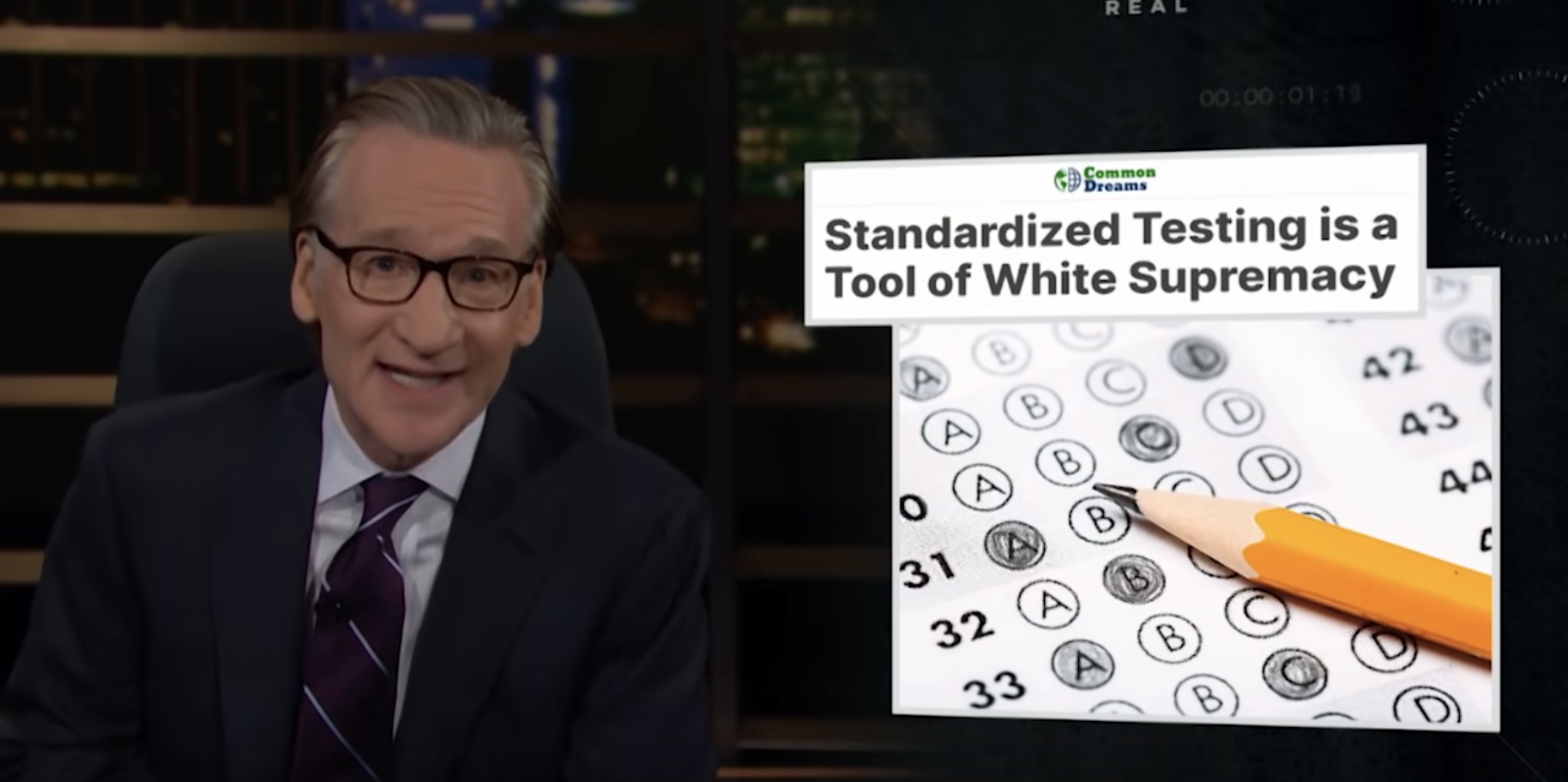
 Description: It wasn’t just liberals who were butt hurt by my writing – it was neoliberals, too. Comedian Bill Maher actually mentioned my article “Standardized Testing is a Tool of White Supremacy” on his HBO show. He joked that I was devaluing the term ‘white supremacy.” Sure. These assessments only help white people unfairly maintain their collective boot on the throats of black and brown people. That’s not white supremacy. It’s melanin deficient hegemony. Happy now!?

 Fun Fact: Maher’s assertion (I can’t claim it’s an argument because he never actually argued for anything) seems to be popular with neoliberals trying to counter the negative press standardized testing has been receiving lately. We need to arm against this latest corporate talking point and this article and the original give plenty of ammunition. My article was republished on Alternet and CommonDreams.org.

7) School Sports are Overwhelming Academics. Time to Kick Them Out

Published: Dec. 10


 Views: 2,080


 Description: Most of the world does not have competitive after school sports. Kids participate in sports through clubs – not through the schools. I suggested we might do that in the US, too. This would allow schools to use more of their budgets on learning. It would stop crucial school board decisions from being made for the athletics department at the expense of academics. It would remove litigation for serious injuries. Simple. Right?


 Fun Fact: So many folks heads simply exploded at this. They thought I was saying we should do away with youth sports. No. Youth sports would still exist, just not competitive sports through the school. They thought poor kids wouldn’t be able to participate. No, sports clubs could be subsidized by the government just as they are in other countries. Some folks said there are kids who wouldn’t go to school without sports. No, that’s hyperbole. True, some kids love sports but they also love socialization, routine, feeling safe, interaction with caring adults and even learning! But I know this is a radical idea in this country, and I have no illusions that anyone is going to take me up on it.

6) Critical Race Theory Articles

A) If You’re Afraid Kids Will Learn Racism is Bad, Perhaps Public School is Not For You 

B) Public Schools Are Not Indoctrinating Kids About Racism. Voucher Schools ARE

C) Muzzling America’s Teachers with a Ban on Critical Race Theory is What Orwell Warned Us About

Published: (A) Oct. 14, (B) Jun3 17, (C) July 2


 Views: (A) 1,918, (B) 1,869 , (C) 1,207


 Description: Republicans have a new racist dog whistle. They pretend white people are being taught to hate themselves by reference to a fake history of the US called Critical Race Theory. In reality, schools are teaching the tiniest fraction of the actual history of racism and Republicans need that to stop or else they won’t have any new members in a few generations. I wrote three articles about it this year from different points of view than I thought were being offered elsewhere.


 Fun Fact: I’m proud of this work. It looks at the topic from the viewpoint of academic freedom, the indoctrination actually happening (often at taxpayer expense) at private and parochial schools, and the worthy goal of education at authentic public schools. Article B was republished on CommonDreams.org.

5) County Council Election Articles


A) Why a Public School Teacher is Running for Allegheny County Council

B) A New Children’s Fund – Reducing Student Inequality Through Allegheny County Council


C) I Fought the Do-Nothing-Incumbent, and He Won

Published: (A) March 19, (B) April 2, (C) May 26


 Views: (A) 514 (B) 111 (C) 248


 Description: I ran for office this year in western Pennsylvania. I tried for Allegheny County Council – a mid-sized position covering the City of Pittsburgh and the rest of the second largest county in the state. Ultimately, I lost, but these three articles document the effort. 

Fun Fact: These articles explain why a teacher like me ran for office, how I could have helped public schools, and why it didn’t work out. Article C was republished on CommonDreams.org.

4) Vaccine Articles


A) How I Got the Covid Vaccine: an Immunization Odyssey

B) Hope During a Pandemic is Both Hard and Inescapable


Published: (A) Jan. 30, (B) March 11


 Views: (A) 451 (B) 229

 Description: These are terrifying times. In the future people may look back and wonder what happened. These two articles document how I got vaccinated against Covid-19 and my thoughts and feelings about the process, the pandemic, and life in general.


 Fun Fact: It hasn’t even been a full year since I wrote these pieces but they somehow feel like they were written a million years ago. So much has changed – and so little.

3) What is Taught in Public Schools? Volunteer as a Substitute Teacher and See for Yourself! 

Published: Oct. 20


 Views: 733


Description: Pennsylvania Republican state legislators were whining that they didn’t know what teachers were doing in public school. So they proposed a BS law demanding teachers spend even more of their never-ending time giving updates. I suggested legislators could just volunteer as subs and see for themselves.


 Fun Fact: So far no Republicans have taken me up on the offer and their cute bit of performative lawmaking still hasn’t made it through Harrisburg.

2) We Don’t Need More ADVICE on How to Safely Reopen Schools. We Need RULES.


Published: July 29


 Views: 1,180 

Description: When it comes to stopping a global pandemic, we need federal action. This can’t be left up to the states, or the counties, or the townships or every small town. But all we get from the federal government about Covid mitigation in schools are guidelines. Stand up and do your F-ing jobs! Make some rules already, you freaking cowards!


 Fun Fact: As I write this, President Joe Biden just came out and said there is no federal solution to the pandemic. It’s not that I think the other guy would have done better, but this was a softball, Joe. History will remember. If there is a history after all this is over.


1) What I Told My Students About Yesterday’s Attempted Trump Coup


Published: Jan. 8


 Views: 2,297 

Description: On January 6, a bunch of far right traitors stormed the Capitol. This articles documents what it was like to experience that as a public school teacher with on-line classes during the pandemic.


 Fun Fact: Once again, history may want to know. Posterity may have questions. At least, I hope so. The article was republished on CommonDreams.org.


Gadfly’s Other Year End Round Ups

This wasn’t the first year I’ve done a countdown of the year’s greatest hits. I usually write one counting down my most popular articles and one listing articles that I thought deserved a second look (like this one). Here are all my end of the year articles since I began my blog in 2014:


2021:

Gadfly’s Top 10 Articles of 2021 – Shouts in the Dark

2020:

The Most Important Education Articles (By Me) That You Probably Missed in 2020

Outrunning the Pandemic – Racing Through Gadfly’s Top 10 Stories of 2020


2019:

Sixteen Gadfly Articles That Made Betsy DeVos Itch in 2019


Screen Shot 2019-12-28 at 3.51.03 PM


2018:

A Gadfly’s Dozen: Top 13 Education Articles of 2018 (By Me)

thumbnail_IMG_8445


2017:


What’s the Buzz? A Crown of Gadflies! Top 10 Articles (by Me) in 2017


thumbnail_Screen shot 2017-12-26 at 3.44.17 PM


Hidden Gadfly – Top 5 Stories (By Me) You May Have Missed in 2017


7fd6a56c2ffc7a03c9fd2f431a543e92


2016

Worse Than Fake News – Ignored News. Top 5 Education Stories You May Have Missed in 2016


ignoring-wisdom


Goodbye, 2016, and Good Riddance – Top 10 Blog Post by Me From a Crappy Year


screen-shot-2016-12-27-at-3-29-49-am


2015


Gadfly’s Choice – Top 5 Blogs (By Me) You May Have Missed from 2015


Screen shot 2016-01-02 at 11.01.09 PM


Who’s Your Favorite Gadfly? Top 10 Blog Posts (By Me) That Enlightened, Entertained and Enraged in 2015


Screen shot 2015-12-30 at 12.57.49 AM


2014


Off the Beaten Gadfly – the Best Education Blog Pieces You Never Read in 2014


Wonderfull illusion art painting


Top 10 Education Blog Posts (By Me) You Should Be Reading Right Now!


computer-people-png-300x202


Like this post?  You might want to consider becoming a Patreon subscriber. This helps me continue to keep the blog going and get on with this difficult and challenging work.

Plus you get subscriber only extras!

Just CLICK HERE.

Patreon+Circle

I’ve also written a book, “Gadfly on the Wall: A Public School Teacher Speaks Out on Racism and Reform,” now available from Garn Press. Ten percent of the proceeds go to the Badass Teachers Association. Check it out!