Top Five Actions to Stop the Teacher Exodus During COVID and Beyond


As the COVID-19 pandemic drags on, schools across the United States are on the brink of collapse
 
There is a classroom teacher shortage. 
 
There is a substitute teacher shortage.  
 
There is a bus driver shortage
 
There is a special education aide shortage.  
 
The people we depend on to staff our public schools are running away in droves.  
 
It’s a clear supply and demand issue that calls for deep structural changes.  
 
However, it’s not really new. We’ve needed better compensation and treatment of school employees for decades, but our policymakers have been extremely resistant to do anything about it.   
 
Instead, they’ve given away our tax dollars to corporations through charter and voucher school initiatives. They’ve siphoned funding to pay for more standardized testing, teaching to the test, and ed tech software.  
 
But the people who actually do the work of educating our youth. We’ve left them out in the cold.  
 
Now with the smoldering pandemic and increased impacts on the health, safety and well-being of teachers and other staff, the exodus has merely intensified.  
 
Frankly, I’m not holding my breath for lawmakers to finally get off their collective asses.  
 
We need a popular, national movement demanding action from our state and federal governments. However, in the meantime, there are several things our local school districts can do to stem the tide of educators fleeing the profession.
 
These are simple, cheap and common sense methods to encourage teachers to stay in the classroom and weather the storm.  
 
However, let me be clear. None of these can solve the problem, alone. And even ALL of these will not stop the long-term flight of educators from our schools without better salaries and treatment.  


1)    Eliminate Unnecessary Tasks 


The list of tasks an average teacher is expected to accomplish every day is completely unrealistic.  
 
Think about it. Just to get through a normal day teachers need to provide instruction, discipline students, grade papers, facilitate classwork, troubleshoot technology, provide written and verbal feedback, counsel disputes, role model correct behavior, monitor the halls, lunches, breakfasts and unstructured time, meet with co-workers, follow Individual Education Plans, scaffold lessons for different learners and learning styles…  
 
The list is truly staggering. 
 
And it never stops. 
 
Researchers have estimated that on average teachers make at least 1,500 decisions a day. That’s about 4 decisions a minute. 
 
No one can keep up that pace, day-in, day-out, without strain. No one can do it without their work suffering.  
 
If we truly want to help teachers feel empowered to stay in the profession, we need to reduce the burden. And the best way to do that is to eliminate everything unnecessary from their plates. 

That means no staff meeting just to have a staff meeting. No shotgun scattered initiatives that teachers are expected to execute and we’ll see what will stick. No reams of paperwork. No professional development that wasn’t specifically requested by teachers or is demonstrably useful.

Nothing that isn’t absolutely necessary.

 
2) No Formal Lesson Plans

The number one offender is formal lesson plans.  
 
I’m not saying we should tell teachers they don’t have to plan what they’re doing in their classes. I’m not sure how an educator could realistically enter a classroom of students and just wing it.  
 
However, the process of writing and handing in formal lesson plans is absolutely unnecessary. 
 
Teachers gain nothing from writing detailed plans about what they expect to do in their classes complete with reference to Common Core Academic Standards. They gain nothing from acting as subordinates to an all knowing administrator who probably has not been trained in their curriculum nor has their classroom experience teaching it.  
 
For educators with at least 3-5 years under their belts, formal lesson plans are nothing but an invitation to micromanagement.  
 
Should administrators monitor what their teachers are doing? Absolutely. But the best way to do that is to actually observe the teacher in the classroom doing the work. And to conference with the teacher before and after the observation with the goal of understanding what they’re doing and how to best help them improve.  
 
Forcing teachers to set aside time from their already overburdened schedules to fill out lesson plans that administrators don’t have time to read and (frankly) probably don’t have the training or experience to fully comprehend is top down managerial madness.  


3)    More Planning Time 

Teachers need time to plan.  

It’s pathetic that I actually have to explain this.  

Education doesn’t just happen.

Parents need called. Papers need graded. Lessons need strategized. IEP’s need to be read, understood and put into practice.

All this can only happen within a temporal framework. If you don’t give teachers that framework – those minutes and hours – you’re just expecting they’ll do it at home, after school or some other time that will have to be stolen from their own families, robbed from their own needs and down time.

Every administrator on the planet preaches the need for self-care, but few actually offer the time to make it a reality.

Even if we could discover exactly how much time was necessary for every teacher to get everything done in a given day – that wouldn’t be enough time. Because teachers are human beings. We need time to process, to evaluate, to think and, yes, to rest.

I know sometimes I have to stop wrestling with a problem I’m having in class because I’m getting nowhere. After two decades in the classroom I’ve learned that sometimes you have to give your brain a rest and approach a problem again later from a different vantage point.

I need to read a scholarly article or even for pleasure. I need to watch YouTube videos that may be helpful to my students. I need to get up and go for a walk, perhaps even just socialize for a moment with my coworkers.

None of that is time wasted because my brain is still working. My unconscious is still trying untie the Gordian knot of my workday and when I finally sit down to revisit the issue, I often find it looser and more easily handled.

Administrators must prioritize teacher planning time.

There is no simpler way to put it.

Do not ask your teacher to sub. Do not ask them to attend meetings. Do not ask them to help you plan building wide initiatives – UNLESS you can guarantee it won’t interfere with their plans.


I know this is difficult right now with so many staff falling ill or being so plowed under that they simply can’t make it to work.

However, the more you push them to give up their plans, the more you diminish returns.

Not only will their work suffer but so will their health and willingness to continue on the job.

Some districts are finding creative ways to increase planning time such as releasing students early one day a week. We did that at my district last year and it was extremely helpful to meet all the additional duties required just to keep our building open. However, as the new school year dawned and decision makers decided to simply ignore continuing pandemic issues, this time went away.

Most teachers are in the profession because it’s a calling. They care about doing the best job they can for their students.

If you take away their ability to do that, why would they stay?


4) Better Communication/ Better COVID Safety  

Communication is a two way street.

You can’t have one person telling everyone else what to do and expect to have a good working relationship.

Administrators may get to make the final decision, but they need to listen to what their teachers tell them and take that into account before doing so.

This means setting aside the proper time to hear what your staff has to say.

Many administrators don’t want to do that because things can devolve into a series of complaints. But you know what? TOUGH.

It is your job to listen to those complaints and take them seriously.

Sometimes just allowing your staff to voice their concerns is helpful all in itself. Sometimes offering them space to speak sparks solutions to problems – and a whole room full of experienced, dedicated educators can solve any problem better than one or two managers locked away in the office.

However, not only do administrators need to listen, they need to speak.

When issues crop up, they need to make sure the staff is aware of what is happening.

This is especially true during the pandemic.

We are so sick of half truths about who has Covid, who is quarantined, what is being done to keep us safe, etc.

No child should return to the classroom after a negative COVID test without the teacher already being appraised.

No child should be placed in quarantine without the teachers knowledge.

No teacher with a prior medical condition should have to serve lunch duty while students eat unmasked.

Safety protocols should be the product of the entire staff’s input. If everyone doesn’t feel safe, no one feels safe.


5) Respect 


 This is really the bottom line.

Teachers need to feel respected.

We need to know that administrators and school board members understand our struggles and are on our side.

I don’t mean taking a day or even one week out of the year to celebrate Teacher Appreciation. I don’t mean free donuts or coupons to Sam’s Club. I don’t even mean a mug with an inspirational message.

I’m talking about every day – day-in, day-out – respect for teachers.

No union bashing.

No snide comments at school board meetings.

No gossipy whispering in the community.

Being a teacher should mean something to district leaders. And they should prove it in every thing they do.

The items I mentioned here go some ways to showing that respect.

Eliminating unnecessary tasks, not requiring formal lesson plans, respecting our planning time, better communicating and safety measures are all necessary to keeping your teachers in the classroom.

But they are not sufficient.

As a nation we need to change our attitude and treatment of teachers.

No profession exists without them. They create every other job that exists.

We need to start paying them accordingly. We need to start treating them as important as they are. We need to ensure that they have the time, tools and satisfaction necessary to be the best they can be.

No district can do that alone. No school director or administrator can do that.

But these are some ways you can start.


Like this post?  You might want to consider becoming a Patreon subscriber. This helps me continue to keep the blog going and get on with this difficult and challenging work.

Plus you get subscriber only extras!

Just CLICK HERE.

Patreon+Circle

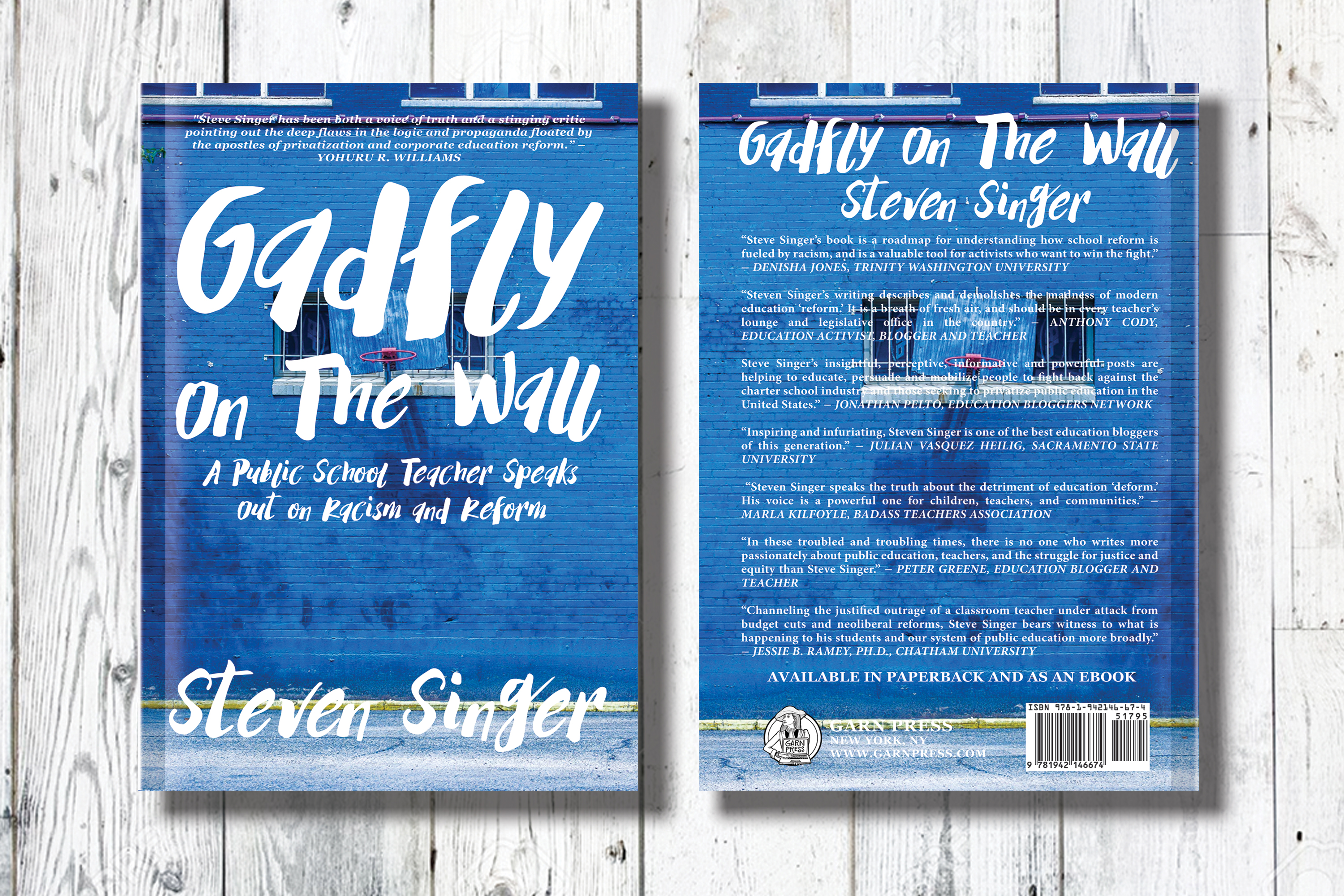
I’ve also written a book, “Gadfly on the Wall: A Public School Teacher Speaks Out on Racism and Reform,” now available from Garn Press. Ten percent of the proceeds go to the Badass Teachers Association. Check it out!
Public Schools Are Not Indoctrinating Kids About Racism. Voucher Schools ARE

Republican frenzy has reached a fever pitch with attacks in at least 16 states on schools that allegedly teach Critical Race Theory.

Right-wingers claim public schools are indoctrinating America’s youth in lies and deception about race and racism – namely the “lie” that these things remain problems.

They grudgingly concede that racism was a (slight) problem in this country before the civil rights movement, but then Rosa sat down and Martin stood up and – POOF – racism was over.

End of story. Let’s move on.

However, there are several things wrong with this besides its basic reductivism.

First, no public school actually teaches Critical Race Theory.

Second, racism is not over in the US, and talking about the facts of history and how they led to our current situation is not indoctrination. It’s education – the job of public schools.

And finally, if you really want to see taxpayer funded indoctrination, look at private and parochial schools accepting taxpayer funding through voucher and tax credit programs.

Let’s start with Critical Race Theory.

It is entirely absent from public school curriculum.

Laughably so.

Critical Race Theory is a legal framework that’s been taught for decades in law schools around the country. And just like torts, contract law, civil forfeiture and a host of other valid topics in law school, the K-12 public schools really don’t cover them much.

But right wing lawmakers and the billionaire funded think tanks that provide their propaganda ideas want to turn Critical Race Theory into a scare tactic to close down discussions of race and racism in America’s classrooms.

Which brings us to the second point – racism is not over in America.

Facts are facts.

In a country where the average Black worker earns just 62% of what the average white worker makes, and where black people are 3.23 times more likely than white people to be killed by police – racism is not over.

One out of every three Black boys born today can expect to be sentenced to prison, compared to 1 out 6 for Latino boys, and one out of 17 for White boys.

Black people are convicted at higher rates and given longer sentences than white people for the same crimes – 5% of illicit drug users are African American, yet Black people represent 29% of those arrested and 33% of those incarcerated for drug offenses. Moreover, African Americans and White people use drugs at similar rates, but the imprisonment rate of African Americans for drug charges is almost 6 times that of White people.

And on and on.

One has to live in a factually neutral bubble to insist that racism no longer exists in this country, but that’s exactly where these right wing lawmakers are coming from.

The GOP is terrified they might actually have to protect voting rights or provide equitable school funding for black kids up to par with white kids, so they have to keep creating scary monsters to frighten the populace into believing their bogus world view.

After all, their base is almost exclusively White. If they can’t find something to rile up these people and make them feel unduly put upon, they won’t come to the polls. And nothing gets people more eager to vote than fear and anger.

Except maybe ignorance.

Which brings us to the third point – indoctrination doesn’t happen at public schools; it happens at taxpayer funded voucher schools.

The last decade has seen a steady, incremental increase in taxpayer funding in most states for private and parochial schools as public school budgets have been robbed and raided to pay for it.

In some states, this comes from outright school voucher programs. In others like Pennsylvania, this comes from tax credit programs like the Educational Improvement Tax Credit (EITC) and Opportunity Scholarship Tax Credit (OSTC) programs.

In essence, they all do the same thing. They take taxpayer money that was (or would have been) put aside for public education and funnel it to parochial or private schools.

The schools that accept this money have little to no oversight in how they spend it nor do they have to follow any of the rules that public schools do.

And many of these schools actually do indoctrinate their students into untruths about science, history and politics. On our dime.

How do we know that? We know which books they use in their curriculum. And many of them are filled with factually incorrect bigotry and bias.

For example, here’s a few justifications of slavery from America: Land I Love, an A Beka Book:

“The slave who knew Christ had more freedom than a free person who did not know the Savior…”

“…Although the slaves faced great difficulties, many found faith in Christ and learned to look to God for strength. By 1860, most slaveholders provided Christian instruction on their plantations.”

“To help them endure the difficulties of slavery, God gave Christian slaves the ability to combine the African heritage of song with the dignity of Christian praise. Through the Negro spiritual, the slaves developed the patience to wait on the Lord and discovered that the truest freedom is from the bondage of sin…”

And here’s a defense of the kindness of most slave owners from United States History for Christian Schools published by Bob Jones University Press (BJU):

“A few slave holders were undeniably cruel. Examples of slaves beaten to death were not common, neither were they unknown. The majority of slave holders treated their slaves well.”

And here’s another excerpt from the same book teaching that black people were just as responsible for slavery as white people and that white people suffered from slavery just as much:

The story of slavery in America is an excellent example of the far-reaching consequences of sin. The sin in this case was greed – greed on the part of the African tribal leaders, on the part of the slave traders, and on the part of slave owners, all of whom allowed their love for profit to outweigh their love for their fellow man. The consequences of such greed and racism extended across society and far into the future. It resulted in untold suffering – most obviously for the black race but for the white race as well.(emphasis mine)

Here’s another excerpt from the same book about the benefits of the KKK:

“[The Ku Klux] Klan in some areas of the country tried to be a means of reform, fighting the decline in morality and using the symbol of the cross. Klan targets were bootleggers, wife-beaters, and immoral movies. In some communities it achieved a certain respectability as it worked with politicians.”

Meanwhile, the Teacher’s Resource Guide to Current Events for Christian Schools published by BJU wrote this about how liberal Democrats and desegregation were bad:

“While the end was a noble one – ending discrimination in schools – the means were troublesome. Liberals were not willing to wait for a political solution.”

As bad as these excerpt are, they focus only on racism.

The books are riddled with counter factual claims and political bias in every subject imaginable such as abortion, gay rights and the Endangered Species Act, which one labels a “radical social agenda.” They disparage religions other than Protestant Christianity and cultures other than those descended from White Europeans.

They teach that humans and dinosaurs lived at the same time, some dinosaurs survive into the present day (i.e. the Loch Ness monster), evolution is a myth disproved by REAL science as is the claim that homosexuality is anything but a choice.

Teaching these things in school is not just educational malpractice, it’s exactly the kind of indoctrination the right is claiming without evidence happens at public schools.

And this kind of brain washing is common at voucher schools.

Along with publisher Accelerated Christian Education, A Beka and BJP are being used in countless taxpayer-funded schools. Nearly 6 million students attend private schools in the United States and about three-quarters of those are Christian schools. And that doesn’t even count the roughly 1.7 million American children who are homeschooled many of whom use these texts.

These books are used almost exclusively at religious schools or through homeschooling. However, that’s the majority of the school voucher program – even the tax credit scholarship programs.

Nearly 80 percent of scholarship students attend religious schools, and most of those institutions are Christian, according to an investigation by the Orlando Sentinel. The books mentioned above all come from a Protestant point of view. However, roughly 16 percent of scholarship schools are Catholic and use their own curriculum as do other schools including Islamic or Jewish institutions (which combined make up about 5 percent of the schools).

It is clear then that this controversy is worse than a tempest in a teacup.

It’s misdirected anger.

Political indoctrination IS going on in the United States, but it is not happening at our public schools.

It is happening at our private and parochial schools through school voucher programs.

If we ban anything, it shouldn’t be Critical Race Theory – It should be school vouchers.

For more on this subject, see the short documentary film, “School Choice: Taxpayer-Funded Creationism, Bigotry and Bias” by Rachel Tabachnick.


Like this post?  You might want to consider becoming a Patreon subscriber. This helps me continue to keep the blog going and get on with this difficult and challenging work.

Plus you get subscriber only extras!

Just CLICK HERE.

Patreon+Circle

I’ve also written a book, “Gadfly on the Wall: A Public School Teacher Speaks Out on Racism and Reform,” now available from Garn Press. Ten percent of the proceeds go to the Badass Teachers Association. Check it out!

Diversity is the Most Important Reason to Save Public Schools

Public schools are under attack.


So what else is new?


It’s been so since the first moment the institution was suggested in this country  by revolutionaries like Thomas Jefferson:

“Education is here placed among the articles of public care… a public institution can alone supply those sciences…”


And John Adams:


“The whole people must take upon themselves the education of the whole people and be willing to bear the expenses of it.


But as the founders saw public education as primarily a means of securing democracy by creating informed citizens able to intelligently vote, that is only one of its many benefits today.


Compared to its main alternatives – charter, voucher, and private schools – public schools are more fiscally responsible, democratically controlled and community oriented.


However, these are not the most important reasons to cherish our system of public schools.


For all the system’s benefits, there is one advantage that outshines all the others – one gleaming facet that makes public schools not just preferable but necessary.


That is diversity. 


Public schools ARE the American Dream


They are the melting pot made real. 

Where else can you go and see so many different races, cultures, ethnicities, religions, abilities and genders learning together side-by-side from adolescence to adulthood?


Nowhere. 


I don’t think you can understate how important that is.


When you grow up with someone, you can’t really remain strangers. Not entirely.


When you sit beside different kinds of people in every class, you learn that you and people like you aren’t the center of the universe. You learn that there are many other ways to be human.


And make no mistake. I’m not talking about mere tolerance. I mean seeing the beauty in difference.


I’m talking about seeing the grace and originality in black names and hairstyles, the fluidity of Arabic writing, the serenity of Asian philosophy…


When you make friends that are diverse, have different beliefs, styles, cultures, you open your mind to different ideas and concepts.


If children are our future, we become that future in school. If we’re educated together in a multifaceted society, we are more at home with our country’s true face, the diversity that truly is America. By contrast, if we become adults in secluded segregation, we find difference to be alien and frightening. We hide behind privilege and uphold our ways as the only ways worth considering.


In fact, privilege is born of segregation. It is nurtured and thrives there.


If we want to truly understand our fellow citizens and see them as neighbors and equals, it is best to come to terms with difference from an early age in school.


Integration breeds multiculturalism, understanding and love. 


I’m not saying this happens in every circumstance. All flowers don’t bloom in fertile soil and not all die in a desert. But the best chance we can give our kids is by providing them with the best possible environment to become egalitarian.


That’s public schools.


Of course, diversity was not there from the beginning. 


Through much of our history, we had schools for boys and schools for girls that taught very different things. We had schools for white children and schools (if at all) for black children – each with very different sets of resources.


But as time has gone on, the ideal embodied by the concept of public schooling has come closer to realization. Brown v. Board took away the legality of blatant segregation and brought us together as children in ways that few could have dreamed of previously.


Unfortunately, a lot as happened since then. That ruling has been chipped at and weakened in subsequent decades and today’s schools still suffer from de facto segregation. In many places our children are kept separate by laws that eschew that name but cherish its intent. Instead of outright racial or economic discrimination, our kids are kept apart by municipal borders, by who goes to which school buildings and even by which classes students are sorted into in the same building.


But it’s really just segregation all over again. The poor black kids are enrolled here and the rich white kids there.


The surprising fact is how much we’ve managed to preserve against this regression. Even with its faults, the degree of diversity in public schools far outshines what you’ll find at any other institution.


That’s no accident. It’s by design. 


Each type of education has a different goal, different priorities that guide the kind of experiences it provides for students.


Privatized schools are by definition discriminatory. They only want those students of a certain type – whatever that is – which they specialize in serving. This is true even if their selection criteria is merely who can pay the entrance fee.


After all, the root word of privatization is “private.” It means “only for some.” Exclusion is baked in from the start.


By contrast, public schools have to take whoever lives in their coverage area. Sure you can write laws to exclude one group or another based on redlining or other discriminatory housing schemes, but you can’t discriminate outright. Yes, you can use standardized testing to keep children of color out of the classes with the best resources, but you need a gatekeeper to be intolerant in your place. You can’t just be openly prejudiced.


That’s because you’re starting from a place of integration. The system of public education is essentially inclusive. It takes work to pervert it.


And I think that’s worth preserving.


It gives us a place from which to start, to strengthen and expand.


There are so many aspects of public schools to cherish. 


But for me it is increased diversity, understanding and integration that is the most important.


What kind of a future would we have as a country if all children were educated in such an environment!?


Like this post?  You might want to consider becoming a Patreon subscriber. This helps me continue to keep the blog going and get on with this difficult and challenging work.

Plus you get subscriber only extras!

Just CLICK HERE.

Patreon+Circle

I’ve also written a book, “Gadfly on the Wall: A Public School Teacher Speaks Out on Racism and Reform,” now available from Garn Press. Ten percent of the proceeds go to the Badass Teachers Association. Check it out!

A New Children’s Fund – Reducing Student Inequality Through Allegheny County Council

Public schools are not funded fairly.

Every child does not receive equitable resources or even close to what they need.

The state and federal government provide some funding, but they leave it up to each neighborhood to take the brunt of the burden.

So the majority of funding comes from local tax revenues – rich communities give their kids more than enough and poor ones struggle to give them enough to even get by.

This means things like class size, access to tutoring and remediation, extracurricular activities, advanced placement courses, field trips, counseling, even access to a school nurse often depends on how rich of a community kids live in.

It’s a backward and barbaric way of supporting children – a kind of economic Darwinism that gives the richest kids the most advantages from the very start while holding back everyone else.

It doesn’t have to be this way, but don’t look to the state or federal government to fix it.

No matter who has been in power in the Oval Office or held majorities in Congress, national lawmakers don’t seem to care much about public schools unless it has to do with standardized testing or school privatization – policies that only make things worse.

In Pennsylvania, Gov. Tom Wolf has been working his entire tenure to make the system more fair, but the Republican controlled legislature has blocked him at nearly every turn. And given our hopeless gerrymandered legislative districts, this isn’t about to be rectified anytime soon.

So what are we to do? Give up?

No.

In the Pittsburgh area, we have a solution ready at hand to at least reduce the inequality among rich and poor kids. All we have to do is reach into the trash.

Three years ago we had a ballot initiative called The Children’s Fund. It would have created a voluntary 5% property tax hike to pay for early learning, after-school programs and healthy meals for kids. It was defeated by voters.

And for good reason.

The proposal was an absolute mess.

As a local teacher, education activist and blogger, I advised against the plan because it raised taxes without stipulating where the money would go, it was unclear who would have been in charge of the money and other reasons.

But that doesn’t mean there was nothing of value there.

The idea of county tax revenues being used to help balance the scales of public school funding is not a bad one.

We could fix the problems with the original children’s fund and create a new one.

In fact, that’s one of the reasons I’m running for county council. I want to increase our local investment in children and the future.

Here’s how we do it.

The 2018 Children’s Fund would have raised taxes by 0.25 mills of property tax — $25 on each $100,000 of assessed value. This would have generated an estimate $18 million a year and gone to a newly created government office under the supervision of the county manager. There would have been an advisory commission but it was really left under the discretion of the County Executive to figure out how all this would work. He’d get to pick who was in charge of the money and where it went.

This was a terrible idea.

We don’t need a big pot of money that a king gets to dole out as he chooses. Nor do we need to created unnecessary bureaucracy.

All we need is a funding formula. Collect X amount of tax revenues and send it to Y schools according to these guidelines prioritizing Title I schools and other institutions serving needy children.

Moreover, the fund doesn’t even need to include a tax increase. Council should first look to cut wasteful spending already in the budget to generate the money needed.

We already have a $2 billion budget. We spend $100 million of it to keep people locked up in the county jail, and 80 percent of them are nonviolent offenders who haven’t been convicted of anything. Many simply can’t pay cash bail, failed a drug test for something like marijuana or violated our ridiculously long parole period.

Finding $18 million might not be too difficult if we took a hard look at our finances and our priorities. And even if we couldn’t find the full amount, we could propose a lower tax increase. And if we do have to increase revenues, we can look to do so by making corporations and the wealthy pay their fair share before putting more burden on residents.

We should at least explore these options before jumping on another across the board tax increase even if the cause is a good one.

Another problem with the 2018 proposal was that it was too broad. For instance, it suggested some of this money be used to offer meals to children in school. However, much of that need has been met by a program called the Community Eligibility Provision which is available nationwide as part of the Healthy, Hunger-Free Kids Act passed in 2010.

While food insecurity remains a problem for low income students and their families, I think there are better solutions such as increasing the minimum wage and creating more well-paying union jobs.

We should limit the new children’s fund to increasing pre-K access to needy children, offering funding to school districts to create or fund existent after school tutoring programs, reduce class size and increase teacher salaries at low income schools.

Another problem with the 2018 proposal was that it worked around instead of with local government.

Though almost everyone agreed with the stated goals of the proposal, many organizations and government officials complained that they were not consulted and made a part of the process.

There’s an easy fix for that.

Before enacting any new legislation, County Council should seek input from school districts and pre-K programs. That way, the legislation can be best crafted to meet need.

I care about schools, students and families, but I don’t know everything and neither does County Council or the County Executive. We should be humble enough to listen to what stakeholders tell us they need and then find a way to meet it.

Finally, there’s the question of fraud and mismanagement of funds.

One of the biggest red flags around the 2018 campaign is that it was not grass roots.

Financial documents show that the whole initiative had been funded by various nonprofit organizations that could, themselves, become beneficiaries of this same fund.

We have to make sure that the money is going to help children, not corporate raiders or profit-obsessed philanthrocapitalists.


To ensure this does not happen, we should put some restrictions on how the money can be used.

For example, the federal government is infamous for offering money to schools with strings attached. President Barack Obama’s Race to the Top, for example, was a huge corporate welfare scheme to enrich standardized testing and school privatization corporations. Schools could compete for limited funds by increasing test scores, and then if they won, they’d have to spend that money on test prep or privatization.

We don’t need any of those shenanigans in Allegheny County.

The new Children’s Fund should be barred from use in standardized testing preparation programs, it should not be available to buy new technologies or apps, and it should be used at the K-12 level ONLY at strictly public schools.

County residents cannot afford to bankroll people’s kids to private schools.

This money should not be available at any private schools even if those schools use school vouchers, Educational Improvement Tax Credit (EITC), Opportunity Scholarship Tax Credit (OSTC) programs or other tax scholarship programs that function like school vouchers.

Moreover, county residents shouldn’t be pouring our tax dollars into schools that don’t have the same high fiscal accountability requirements as our fully public schools even if these schools claim to be fully public.

Unlike public institutions, charter schools do not have to be run by elected school boards, do not have to have school board meetings open to the public or even open their budgets to annual public review.

That’s why this new funding should be available at charter schools ONLY if those schools charters are in good standing AND if the charter schools will admit to a yearly public audit of how the money has been spent. Any misappropriation or unaccounted for funding would disqualify the charter school from further funding and prompt an immediate full state audit.

I think if we enacted legislation along those lines, we could really make a difference for the children of our county.

We have to face the facts.

Pennsylvania is one of the worst states in the country when it comes to educational equity for poor and non-white students.

The commonwealth ranks 47th in the nation for the share of K-12 public education funding that comes from the state.

The state ranks 48th nationally in opportunity gaps for high school students of color compared with white students and 47th for Hispanic students, according to a 2018 report from the Philadelphia-based nonprofit Research for Action.

A separate 2016 study found that Pennsylvania has one of the widest gaps between students along racial and socioeconomic divides in the country.

And the list goes on and on.

Only the federal and state government can truly fix the problem long term. But that’s not going to happen anytime soon.

We can sit idly by as our children get left behind or we can stand up and do something about it.

If elected to county council, I will do everything in my power to right this wrong.

Our kids deserve more than governmental dysfunction, class warfare and de facto racism.

Please stand with me to enact a new children’s fund that helps support our kids.

Please help me gain a seat on Allegheny County Council.


Like this post?  You might want to consider becoming a Patreon subscriber. This helps me continue to keep the blog going and get on with this difficult and challenging work.

Plus you get subscriber only extras!

Just CLICK HERE.

Patreon+Circle

I’ve also written a book, “Gadfly on the Wall: A Public School Teacher Speaks Out on Racism and Reform,” now available from Garn Press. Ten percent of the proceeds go to the Badass Teachers Association. Check it out!


Hope During a Pandemic is Both Hard and Inescapable

I cried when I got my second Covid-19 shot.

Not a lot.

Just a few drops.

But the flood of emotions I felt that accompanied that tiny pinch in my arm was totally unexpected.

It was like I gasped for breath and hadn’t realized until then that I was suffocating.

I looked up at the volunteer who had injected me to see if she’d noticed, but it’s hard to read someone’s expression under a mask.

So I found myself shrugging the feeling off, giving her a brisk “Thank you” and heading off to file my paperwork, get another stamp on my vaccination card and plopping in a chair for 15 minutes of observation before heading on my way.

As I sat there, I started to feel this growing sense of excitement in my chest.

Two weeks, I thought.

In two weeks I will be fully vaccinated.

Moderna is 94.1% effective at preventing infection. That means I should be able to return to school and teach my students in-person. Safely.

Some of them have been back in the classroom for weeks now, but I’ve had to stay remote putting up assignments in Google Classroom for the sub to teach.

My pre-existing health conditions make me too susceptible to the virus to take chances with stuffy classrooms and interacting with tens of students for prolonged periods every day.

So instead I spend my daylight hours grading virtual papers and writing digital comments, but I only get to hear student voices on Fridays when all classes are conducted remotely.

Rarely do I get to see a face in one of those austere Zoom boxes.

It’s a lonely life being sidelined this way.

But there seems to be an end in sight.

I can actually plot it on the calendar.

THAT day I can return.

And I wonder, is this hope?

I haven’t really felt anything like it in quite a while.

The world has been such a mess for so long.

A global pandemic that’s infected nearly 29 million Americans and killed 523,000 is bad enough. But it’s the constant bungling of local, state and federal governments response to the virus that has been absolutely demoralizing.

In fact, my second shot was delayed a week because health officials accidentally gave out the dose that had been set aside for me to someone else.

Thankfully waiting an extra 7 days isn’t supposed to have any ill effects. But that’s a week more I have to be out of the classroom and burning my sick days, trying to do 40 hours worth of work in the handful of hours the district allows me.

It’s just that this isn’t an anomaly. All through this process those in charge have dropped the ball.

At every step – bungled, mismanaged, and carelessly misjudged.

The school board refused to value my health and reopened recklessly even putting the community’s own children in danger. The state refused to mandate almost anything to keep people safe, instead offering a truckload of take-it-or-leave-it suggestions.

Hope, I thought. Is it possible to believe in hope anymore?

Barack Obama made it a campaign slogan. Hope and change.

His book was “The Audacity of Hope.”

He wrote:

“Hope is not blind optimism. It’s not ignoring the enormity of the task ahead or the roadblocks that stand in our path. It’s not sitting on the sidelines or shirking from a fight. Hope is that thing inside us that insists, despite all evidence to the contrary, that something better awaits us if we have the courage to reach for it, and to work for it, and to fight for it. Hope is the belief that destiny will not be written for us, but by us, by the men and women who are not content to settle for the world as it is, who have the courage to remake the world as it should be.”

These words ring so empty today after a presidency full of promises and very little else.

True, much of his domestic agenda was blocked by Republicans. But even when they couldn’t stop him from getting things done, the results were often disappointing. His foreign policy was hawkish full of drone strikes, his immigration policy unduly cruel and his education programs were the fever dreams of Milton Friedman made real – charter schools, high stakes testing and ed tech handouts.

You think Trump was bad!? He was the logical consequence of dashed hopes and neoliberal triumphs. You can’t run, as Obama did, as a once-in-a-lifetime transformational candidate and then legislate to support a status quo that is destroying the majority of Americans.

If you do, you get Trump.

At least now the pendulum has swung back the other way. We’ve got Biden.

Cool, smooth, dependable Biden.

He’s slowly reversing the catastrophes of Trump while quietly committing a few of his own along the way. (Reopening school buildings without mandating the opportunity for teachers to be vaccinated first!? Requiring standardized testing to tell if students have been affected by the pandemic!?)

How does one continue to hope in the wake of such disappointment?

The fabric of our society and our governmental institutions are frayed to the breaking point. They could fall apart any day now.

How does one continue to hope in light of all this?

My phone buzzes. I shake my head to dispel all these gloomy thoughts.

Well! Here’s some good news. Apparently there are no ill effects from the shot. Time to go.

I stand up and look around at the busy vaccination center.

Volunteers continue to welcome patients. They’re much more organized than when I got my first shot only weeks earlier.

Everyone is friendly and there’s even a sparkle in their eyes.

What is that sparkle?

Why does everyone smile?


Why did I cry?

There’s only one possibility.

It’s hope.

Goddamit.

It’s hope.

The teardrop that escaped my eye wasn’t a response to any pain from the injection. It was pain at the possibility that all this would end.

It was the feeling – the certainty – that the pandemic was only temporary and that I would come out the other side. We all would.

Because in the part of our hearts where hope grows, the past doesn’t matter.

What’s happened is always past.

The only thing that counts is the future.

And when you have a future you have to hope.

It’s simply built in. There’s no way around it.

It would be easier not to hope. But the only way to do that is to die, and apparently I’m going to live.

So you pick yourself up, you dust off your knees and you get to the work ahead.

Because no matter how disappointing the past, how demoralizing the events you’ve lived through, there is always the possibility that things will be better tomorrow.

If only you work to make it so.


Like this post?  You might want to consider becoming a Patreon subscriber. This helps me continue to keep the blog going and get on with this difficult and challenging work.

Plus you get subscriber only extras!

Just CLICK HERE.

Patreon+Circle

I’ve also written a book, “Gadfly on the Wall: A Public School Teacher Speaks Out on Racism and Reform,” now available from Garn Press. Ten percent of the proceeds go to the Badass Teachers Association. Check it out!

You’re Going to Miss Us When We’re Gone – What School May Look Like Once All the Teachers Quit

The alarm buzzed at 4:30 am. Time to get up.

DeShaun and his little brother Marco got out of bed and threw on their clothes.

Mom was in the other room hastily getting her work bag together.

“Are you two ready yet? We’ve got to go in 20 minutes.”

Marco just yawned, but Deshaun dared to complain about the hour.

“We didn’t used to have to get up so early,” he said.

“That was when you still had school. Now I’ve got to get you all to the daycare by 5 or they’ll be full up.”

DeShaun frowned but got ready anyway. He didn’t want to have to sit outside all day again. There were older kids in the park who got kids like him to run drugs during the day. He could make some money that way, but the only kids he knew who did that got hooked on their own supply. That or arrested.

Heck! He’d been arrested for loitering twice this year already.

“Hurry! Let’s go!” Mom shouted as she handed each child a yogurt and a bag of chips.

The bus was full even at this hour.


DeShaun recognized a bunch of kids who usually went to the daycare.

His best friend, Paul, used to ride the bus, but then his mom got him into the private school in the city. She and his dad had to cash in his entire school voucher AND pay an additional $10,000 a year, but they said it was worth it. Still, DeShaun missed his friend.

Octavia was standing a bit further down the aisle though. She was usually good for a trade. He guessed she’d take his yogurt for some Hot Cheetos.

When they got to the right stop, Mom gave his shoulder a squeeze and told him to watch out for his brother. She’d see him at the end of the day.

He and Marco made it just in time.


He saw Octavia get turned away at the door.

“Dang!” He said. He really wanted those Hot Cheetos.

He and Marco took their seats in the back of the room and got out their iPads.

He wanted to play with the toys in the Reward Room, but no one got in there before lunch.

Marco was crying.

“What’s wrong?” He said.

“I can’t find my iPad.”

“Didn’t you pack it?”

“I think I left it on the charger.”

“You dummy!” DeShaun said and handed Marco his own iPad.

“Take this,” he said. “I can use my phone.”

It had a huge crack on the screen but he could probably read through the jagged edges if he tried hard enough. That probably meant no Reward Room though.

First, he clicked on Edu-Mental. It wanted him to read through some stuff about math and do some problems. He couldn’t really see them but he could hear about them through his earbuds.

Then he did Lang-izzy. There was a fun game where you had to shoot all the verbs in these sentences that scrolled across the screen faster and faster. But DeShaun’s timing was off and even though he knew the answers, he couldn’t get a high enough score to get a badge.

He skipped to Sky-ba-Bomb. It had a lot of videos but it was his least favorite. He couldn’t tell which ones were about history and which were advertisements. Plus he got so many pop ups after just a few minutes, he often had to disconnect from the wi-fi or restart his phone.

Oh, what now?

“Miss Lady,” Marco was saying.

The blonde haired new girl came over to him.

“What is it, Sweetie?”

“Can I go to the bathroom?”

She checked her iPad.

“Oh, I’m sorry, Honey. You’ve only been logged on for half an hour. Answer a few more questions and then you can go.”

DeShaun grabbed his shoulder and shook him.

“Why didn’t you go before we left home?”

“I didn’t have-ta go then. I have-ta go NOW!”

He could leave the daycare and go outside. There was even a filthy bathroom at the gas station a few blocks away. But if he left now someone outside was bound to take his spot. And Mom wouldn’t get a refund or nothing.

The blonde was about to walk away when DeShaun stopped her.

“He can take my pass. I’ve been on long enough.”

“That means you won’t get to go until after lunch,” she reminded him.

“I won’t drink anything,” he said.

She shrugged. That seemed to be her main way of communicating with people. She looked barely old enough to be out of daycare, herself.

DeShaun gave Marco his phone and sat there waiting for him to come back.

He remembered what it used to be like.

Back before the pandemic, they used to go to school.

Now that had been SOMETHING!

They had real teachers, not just minimum wage babysitters.

He remembered back in Mrs. Lemon’s class he could go to the bathroom anytime he wanted. In fact, he’d often wait until her period everyday to go to the bathroom. That way he’d have time to walk halfway around the building and look in all the open doorways and see what everyone was doing.

There were groups of kids huddled around desks working on projects together. Other times kids would be sitting in their rows of desks with their hands raised asking questions – and actually getting ANSWERS!


Teachers would stand at the front of the room and talk to them – actually talk and wait to hear their answers!

And if you finished your work, you could draw or read…. Reading…. Yeah they had real books made of paper and everything!

He remembered sitting in a circle in Mr. Sicely’s class and discussing the book they’d read. “The Diary of Anne Frank.” And people got really into it and excited.

We used to complain about the homework, he thought stifling a laugh. What he wouldn’t give for one more day of that homework!

He wondered why they no longer did stuff like that. Why DID the schools close after Covid?

He picked up his iPad that his brother had abandoned on the seat beside him and asked Siri.

He got a bunch of articles about teachers being asked to work in unsafe conditions, getting sick and some even died. He read about the CDC saying that schools could reopen “at any level of community transmission” and that vaccinating teachers wasn’t even necessary.

The government – under both Republicans and Democrats – wouldn’t pay people to stay home so they had to keep working even at nonessential jobs, and doing so just spread the disease. And instead of blaming lawmakers, lots of folks blamed teachers for refusing to risk their lives to teach kids in-person.

Wasn’t that like today, DeShaun thought. But, no, he answered himself. They still taught kids on-line back then. Now there are hardly ever any real people on-line. Kids like him just went from app to app earning various badges in different subjects until they had enough to take the test. Those horrible multiple choice standardized tests!

He could email a question to someone but rarely got an answer back.

When he first started going to daycare, he asked one of the workers a question. There used to be this nice lady, Miss Weathers. She would at least try to answer the kids questions but he thought she got in trouble for doing it and he hadn’t seen her here since.

Now there was rarely the same adult here for more than a week or two. And they kept getting younger. Maybe HE could get a job here if he was good.

Marco came back, snatched the iPad and said “Thanks.”

DeShaun just sat there looking at his cracked phone.

Was this really all he had to look forward to, he thought.

He missed school.

He missed teachers.

He missed everything that used to be.


Like this post?  You might want to consider becoming a Patreon subscriber. This helps me continue to keep the blog going and get on with this difficult and challenging work.

Plus you get subscriber only extras!

Just CLICK HERE.

Patreon+Circle

I’ve also written a book, “Gadfly on the Wall: A Public School Teacher Speaks Out on Racism and Reform,” now available from Garn Press. Ten percent of the proceeds go to the Badass Teachers Association. Check it out!

Want to Appreciate Teachers? Vaccinate Us Before Reopening Schools

This year I don’t need a free donut.

I don’t need a Buy One Get One coupon for school supplies.

I don’t need a novelty eraser or a mug with a happy saying on it.

I just need to be vaccinated against Covid-19 before being asked to teach in-person.

You want to say you appreciate teachers? Great! Then provide us with a minimally safe environment to work in.

That is LITERALLY the least you can do.

Not a banner or an advertisement or even a sentimental greeting card.

Give us the minimum protections so we can meet the demands of school directors, administrators and the community.

Not a cookie. A Covid vaccine.

Not a demand that we teach in an unsafe environment or go look for work elsewhere.

Give us the tools we need to meet your demands without putting our lives at unnecessary risk.

And we’re not even talking about ALL the tools necessary.

Minimum 6 feet social distancing? Ha! You know you can’t fit all the students in the building that way!

Low rate of infections throughout the community? Ha! You don’t have the patience to wait for that!

Equitable funding with schools in higher income communities? The freedom and autonomy to forgo high stakes standardized testing? Not having to compete with charter and voucher schools that get to play by different rules skewered in their favor?

Ha!

Ha!

And Ha!

No, if you’re going to do the least thing possible – the absolute slightest, minimal, tiniest thing you could possibly do – make sure your staff has the chance to be fully vaccinated before thrusting us back in the physical classroom.

Many of us have been teaching online for months now. We didn’t survive this long just to be kicked out of quarantine when protections exist but are not yet available.

However, in many districts that is exactly what’s being done.

Though vaccines are slowly being rolled out, few school boards are waiting for staff to be protected before throwing open the doors and restarting in-person instruction.

Some districts never stopped in the first place.

So why the discrepancy?

Why have some districts remained open and why are others refusing to wait before reopening?

It’s not because they’re in communities with lower infection rates. In fact, just the opposite.

In most parts of the country, Covid-19 is on a rampage through our communities making people sick, filling up ICUs and graveyards.

More than 400,000 people nationwide have died already from the disease and many health experts expect that number to reach 500,000 before the end of February.

That’s about 4,000 people a day.

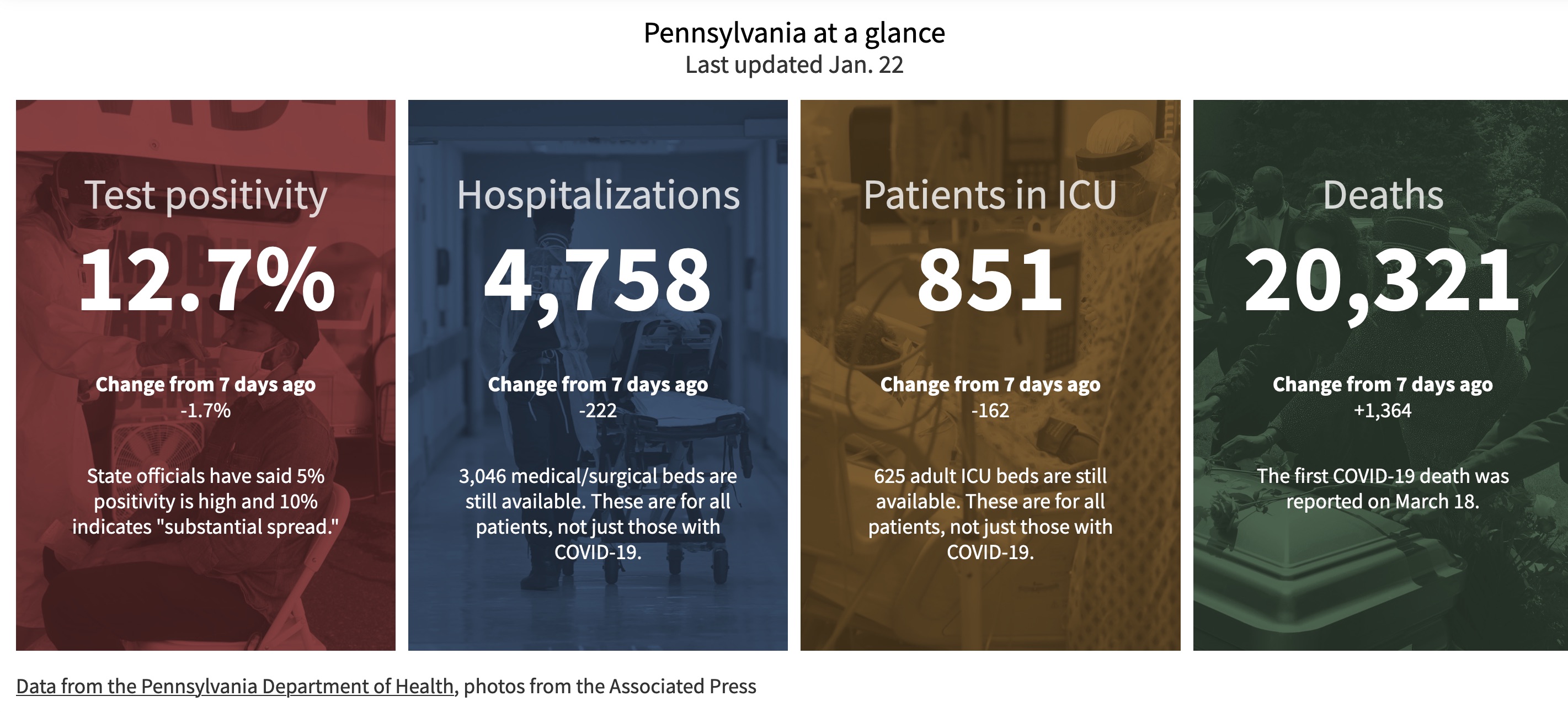
In my home state of Pennsylvania, infections are considered substantial if more than 10% of Covid tests in a county come back positive. As of today, that includes every county in the Commonwealth. In fact, our statewide average is 12.7%!

The danger is real and widespread. It’s just that some districts and communities care more than others for their teachers and the students they serve.

It’s not that districts that remain open to in-person instruction have avoided outbreaks.

My home district of McKeesport, located in western Pennsylvania near Pittsburgh, has been open on and off since September 2.

According to the district’s own Website, out of about 3,000 students and 200 teachers, there have been 106 cases of Covid – 61 among staff and 45 among students.

That’s roughly 21 cases a month.

Keep in mind these numbers don’t include people quarantined or those who get sick and either don’t report it or don’t know it because they’re contagious but asymptomatic. If we added all the people impacted by the decision to keep the district open, the numbers would be much higher.

In any case, decision makers at McKeesport apparently think there’s nothing wrong if every month at least 21 people (adults and children) get the virus, risk their health, and potentially suffer life long consequences.

They don’t mind if having the schools open drives up the infection rate in the community.

They don’t mind if moms and dads, grandmas and grandpas, even people with no kids in the district have a greater chance of getting sick because decision makers can’t be bothered to look out for the common good.

That’s not an example anyone should be emulating. It’s one we should be avoiding.

Don’t get me wrong.

It’s not that I don’t want to get back to the classroom. There are few things I’d rather do.

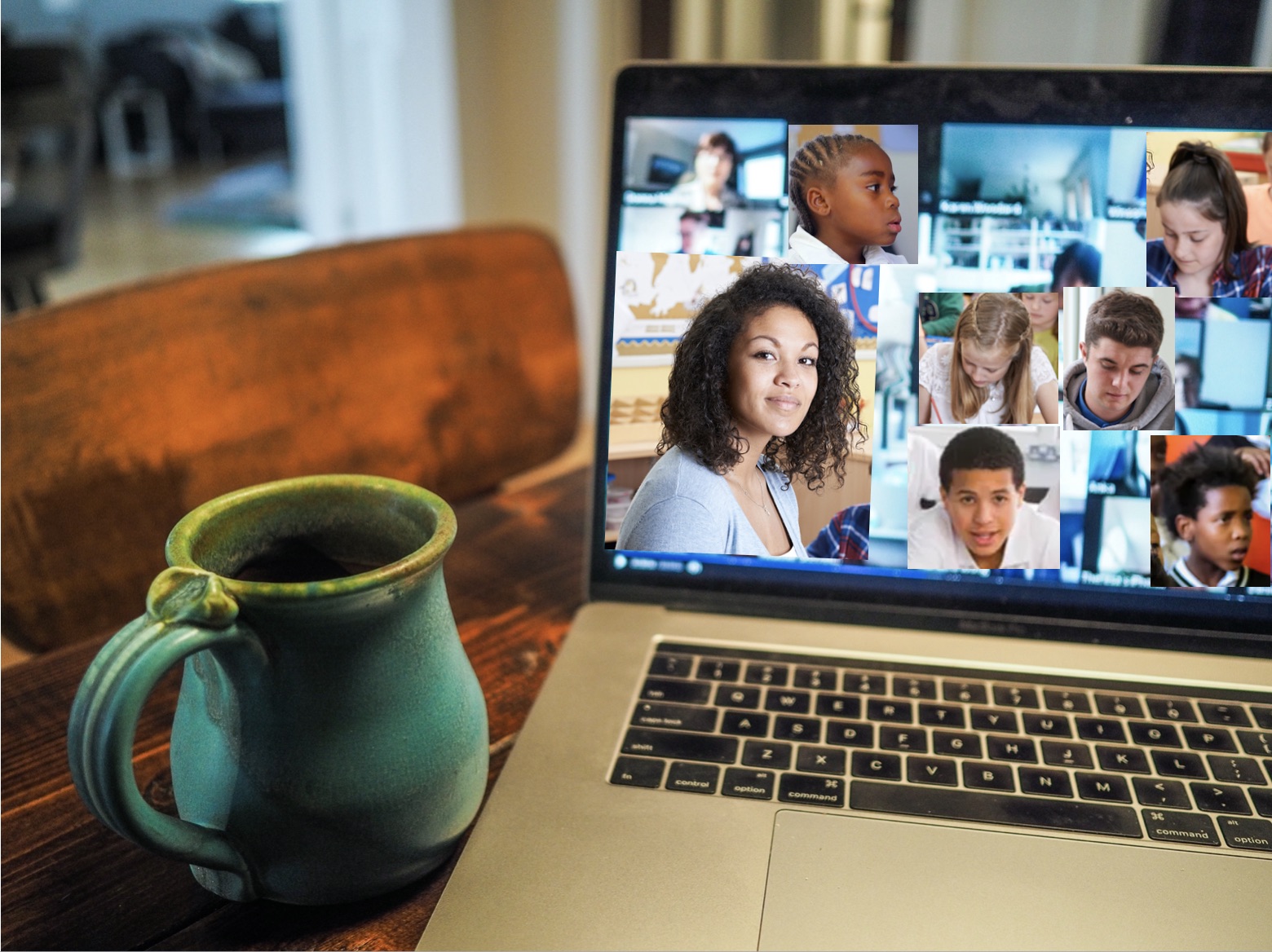
Teaching on-line is awkward and strange. Spending all day talking to blank boxes on your computer screen each one representing a child who may or may not be there at that particular moment in time.

Trying to find or recreate classroom materials and rethink how they can best be used in a virtual environment.

Troubleshooting technological issues, answering hundreds of emails and instant messages a day all while having to attend pop up virtual staff meetings that hardly ever deal with the problems of the day but are instead focused on how to return to an in-person method of instruction without ANY concern for the health and safety of the people who would have to enact it!

If people cared at all about teachers, they wouldn’t demand we do that.

They’d look out for us the same way we look out for their children every day in the classroom whether it be physical or virtual.

But where I live, teachers and other frontline workers aren’t even on the top of the list to be vaccinated. Even those at the top of the list can’t be seen because UPMC, the healthcare agency distributing the vaccine, is giving preference to its own office workers who do not come into contact with infected people.

You want to get kids back in school buildings? Talk to the people messing up the vaccination process. Don’t shrug and demand teachers take up the slack – AGAIN!

When I took this job it wasn’t to be a police officer or a soldier. I never volunteered to put my health on the line treating sick people in the hospitals.

I chose to be a public school teacher.

I mentor needy children. I inspire the dispirited, I stoke the curious, I enlighten the ignorant.

I don’t sacrifice my life because you can’t be bothered to provide the most basic resources possible I need to even attempt to do my job.

That’s not too much to ask.

In fact, it’s not much at all.

I’m not saying vaccines are a panacea.

Just because you take the vaccine doesn’t mean POOF you’re immune. It takes at least a month to reach full 90-95% immunity. Both the Pfizer and Moderna vaccines require you take two doses (at least 21 or 28 days apart, respectively). The level of protection increases dramatically – from 52% to 95% – but you need both doses to get there.

Moreover, there are other more virulent strains of Covid out there. Preliminary studies seem to suggest that these two vaccines are effective against them, but only time and further study will tell for sure.

In addition, being vaccinated protects you, but not your unvaccinated family. You can still be contagious and bring the virus home with you – though studies suggest any disease you spread after vaccination would be of a much weakened form.

Even if every teacher who wanted a vaccine got one, the pandemic would not be over.

According to some epidemiological estimates, as many as three-fourths of Americans must become immune to COVID-19 – either by recovering from the disease or by getting vaccinated – to halt the virus’s spread.

However, recent polls suggests that 29% to 37% of Americans plan to refuse a COVID-19 vaccine – even some teachers.

So we can’t just allow educators to be vaccinated. We need to encourage everyone to get one. Otherwise, it may protect individuals but not the community.

Education is vital to ensure that everyone knows the risks and benefits of taking the vaccine and how to protect themselves and their children.

And if you want people to be educated you’re going to need some teachers to do it.

We don’t need a pat on the back or even a “Thank You” to get the job done.

What we need are the basic protections necessary to both meet your expectations and survive the endeavor to teach another day.

So stop the badgering and bullying.

Make sure all teachers have the chance to be fully vaccinated before returning to the in-person classroom.

It is the least you can do.


Like this post?  You might want to consider becoming a Patreon subscriber. This helps me continue to keep the blog going and get on with this difficult and challenging work.

Plus you get subscriber only extras!

Just CLICK HERE.

Patreon+Circle

I’ve also written a book, “Gadfly on the Wall: A Public School Teacher Speaks Out on Racism and Reform,” now available from Garn Press. Ten percent of the proceeds go to the Badass Teachers Association. Check it out!

The Most Important Education Articles (By Me) That You Probably Missed in 2020

There were so many explosive stories in 2020.

From the never ending antics of our clown President to the Coronavirus to the continuing rise of White Supremacy, it seemed you couldn’t go more than a few days without some ridiculous headline assaulting your senses.

As a result, there were a lot of worthy, important articles that fell between the cracks – more so this year than any other.

Before we charge into the New Year, it might be a good idea to spare a look over our shoulders at these vital nuggets many of us may have missed.

On my blog, alone, I’ve found at least five posts that I thought were particularly important but that didn’t get the attention they deserved.

So come with me please through this survey of the top 5 education articles (by me) that you probably missed in 2020:

5) The Student-Teacher Relationship is One of the Most Misunderstood and Underrated Aspects of Education

Published: June 13 

Views: 940


 Description: Kids usually spend about 1,000 hours with their teachers in a single year. During that time we build strong relationships. And though just about everyone will tell you this is important, we’re often talking about different things. Some policymakers insist we prioritize an “instrumental focus” with students using their personal information to get them to behave and do their work. The goal is compliance not autonomy or problem solving. However, increasing evidence is showing the value of a more “reciprocal focus” where students and teachers exchanged information to come to a mutual understanding and shared knowledge. Here the goal is free thought, questioning, and engagement with authority figures. I provide my own personal experience to support the latter approach.


 Fun Fact: This post is full of letters my former students wrote to me during the pandemic. They highlight better than any study the value of authentic relationships to both students and their teachers.

4) Standardized Tests Increase School Segregation

Published: June 19 

Views: 690


 Description: The link between standardized testing and segregation is obvious but hardly ever discussed. In short, it goes like this. Even when students from different racial or ethnic groups aren’t physically separated by district boundaries or school buildings, the way we rate and sort these students within the same space causes segregation. This is because our manner of placing kids into classes, itself, is discriminatory, unfairly resulting in more children of color in lower academic tracks and more white kids in advanced placement. If segregation is an evil, so is the standardized testing often used to place kids in remedial, academic or advanced classes.


 Fun Fact: It seems to me this has immediate and important policy implications. There are so many reasons to end the failed regime of high stakes testing. This is just another one.

3) Virtual Instruction: Top 5 Pros & Top 5 Cons

Published: October 11


 Views: 622


 Description: Virtual instruction has been a hot button issue this year in the wake of school closings caused by the COVID-19 pandemic. The fact that in-person instruction is more effective has been used as an excuse to keep many schools open when logic, reason and facts would dictate otherwise. However, the kind of in-person instruction being offered in a pandemic is, itself, not as effective as the kind of in-person instruction offered under normal circumstances. Moreover, distance learning is not all bad. It does have some advantages such as it being generally low pressure, more difficult to disrupt class and easier to contact parents. At the same time, it presents unique challenges such as increased student absences, the problem of when and if to keep the camera on and difficulties with special needs students. 

Fun Fact: We desperately need an honest accounting of what is going on with real virtual classrooms around the country and how students and teachers are meeting these challenges. If there was more discussion about how to make distance learning better, the education being provided during the pandemic would be so much more effective than spending all our time and effort trying to reopen school buildings regardless of the risks of infection to all involved.

2) The Ongoing Study of How and When Teachers Should Praise Students

Published: February 2


 Views: 303


 Description: When should teachers praise students and when should they use reprimands? The research is all over the place. Some studies say praise is good but only so much and only in certain circumstances. Others say reprimands are more effective and still others caution against when and how to use them. My own experience has shown that honest praise and thoughtful reprimands are more effective than not.

 Fun Fact: This may seem like a simple issue but it highlights the complexities of teaching. Educators are not working with widgets. We’re working with real, live human beings. There is no simple solution that will work every time with every student. Effective teaching takes good judgement and experience. If we ever want to improve our school system, it is vital that we understand that moving forward.

1) Did Rosa Parks Really Support Charter Schools?

Published: January 29


 Views: 233


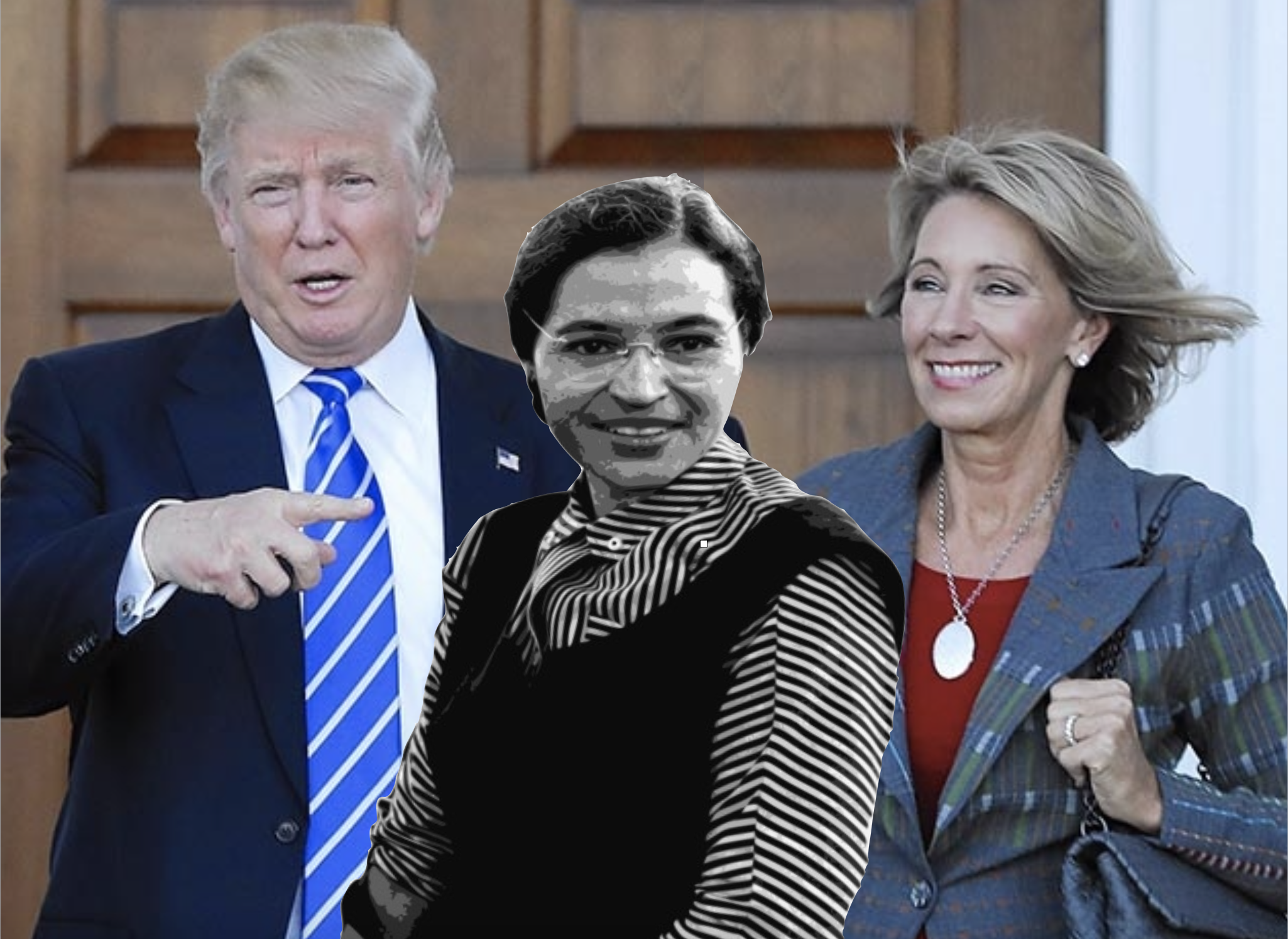
 Description: Forty years after the Montgomery bus boycott that was sparked by Rosa Park’s refusal to give up her seat to a white man, the civil rights icon lent her name to a charter school proposal in 1997. However, the Detroit school that would have been named for her and her late husband, the Raymond and Rosa Parks Academy for Self Development, was never approved. In any case, Charter school advocates like to pretend this mere proposal means Parks was an early champion of charter schools and thus that school privatization is an extension of the civil rights movement. Yet a closer look at the facts shows a sadder story. At the time of the proposal, Parks was suffering from dementia and under the sway of countless corporate consultants who used her name and clout to enact several projects. It ended in a protracted legal battle after her death between her family and the consultants to whom she willed a treasure trove of civil rights artifacts. 

Fun Fact: I think this is one of the most important articles I wrote in 2020. It’s not a pretty story, but it’s the truth. The school privatization movement likes to co-opt the language of the civil rights movement while violating the civil rights of students and families with substandard education and pocketing tax dollars as profit that were meant to educate children. The exploitation of Parks in this way is symptomatic of what you’ll see in any inner city charter school where entrepreneurs are getting rich off of the children of color whom they pretend to be serving.


Gadfly’s Other Year End Round Ups

This wasn’t the first year I’ve done a countdown of the year’s greatest hits. I usually write one counting down of my most popular articles and one listing articles that I thought deserved a second look (like this one). Here are all my end of the year articles since I began my blog in 2014:


2020:

Outrunning the Pandemic – Racing Through Gadfly’s Top 10 Stories of 2020


2019:

Sixteen Gadfly Articles That Made Betsy DeVos Itch in 2019


Screen Shot 2019-12-28 at 3.51.03 PM


2018:

A Gadfly’s Dozen: Top 13 Education Articles of 2018 (By Me)

thumbnail_IMG_8445


2017:


What’s the Buzz? A Crown of Gadflies! Top 10 Articles (by Me) in 2017


thumbnail_Screen shot 2017-12-26 at 3.44.17 PM


Hidden Gadfly – Top 5 Stories (By Me) You May Have Missed in 2017


7fd6a56c2ffc7a03c9fd2f431a543e92


2016

Worse Than Fake News – Ignored News. Top 5 Education Stories You May Have Missed in 2016


ignoring-wisdom


Goodbye, 2016, and Good Riddance – Top 10 Blog Post by Me From a Crappy Year


screen-shot-2016-12-27-at-3-29-49-am


2015


Gadfly’s Choice – Top 5 Blogs (By Me) You May Have Missed from 2015


Screen shot 2016-01-02 at 11.01.09 PM


Who’s Your Favorite Gadfly? Top 10 Blog Posts (By Me) That Enlightened, Entertained and Enraged in 2015


Screen shot 2015-12-30 at 12.57.49 AM


2014


Off the Beaten Gadfly – the Best Education Blog Pieces You Never Read in 2014


Wonderfull illusion art painting


Top 10 Education Blog Posts (By Me) You Should Be Reading Right Now!


computer-people-png-300x202


Like this post?  You might want to consider becoming a Patreon subscriber. This helps me continue to keep the blog going and get on with this difficult and challenging work.

Plus you get subscriber only extras!

Just CLICK HERE.

Patreon+Circle

I’ve also written a book, “Gadfly on the Wall: A Public School Teacher Speaks Out on Racism and Reform,” now available from Garn Press. Ten percent of the proceeds go to the Badass Teachers Association. Check it out!


For Teachers, “Silence of Our Friends” May be Worst Part of Pandemic

“In the End, we will remember not the words of our enemies, but the silence of our friends.”
-Martin Luther King Jr

Teachers want a safe place to work.

But in 2020 that is too much to ask.

As the global COVID-19 pandemic rages out of control throughout most parts of the United States, teachers all across the country want to be able to do their jobs in a way that won’t put themselves or their loved ones in danger.

In most cases that means remote instruction – teaching students via the Internet through video conferencing software like Zoom.

However, numerous leaders and organizations that historically are supportive of teachers have refused to support them here.

The rush to keep classrooms open and thus keep the economy running has overtaken any respect for science, any concern for safety, and any appeal to compassion.

Many Democratic lawmakers, school directors, union leaders and even public school advocates have repeatedly turned away, remained silent or promoted policies that would continue to put educators in danger.

Thankfully, some districts have been accommodating, worrying about the safety of children as well as adults.

But many others have refused to go this route even demanding educators with compromised immune systems and other increased risk factors either get in the classroom and teach or seek some sort of financially burdensome leave.

Affected teachers often wonder where their union is, where their progressive representative, where the grassroots activists who were willing to organize against charter schools and high stakes testing.

Answer: crickets.

As a result, more than 300 U.S. teachers and other school employees have died from the virus, according to the Associated Press.

In New York City, alone, 72 school employees died of the virus, according to the city Department of Education.

And since Education Secretary Betsy DeVos has refused to collect data on how the pandemic is affecting schools and school employees, this count is probably woefully under-representative of the full tragedy.

About 1 in 4 teachers – nearly 1.5 million – have conditions that raise their risk of getting seriously ill from the Coronavirus, according to the Kaiser Family Foundation.

In my own Western Pennsylvania community in the last few weeks, we buried high school employee Terri Sherwin, 60, of Greater Latrobe School District and elementary school employee Dana Hall, 56, of Jeannette City School District.

The assertion that children cannot get the disease, which was popularized by the Trump administration, has been proven false.

More than 1 million kids nationwide have been diagnosed with COVID-19 according to a report by the American Academy of Pediatrics .

The Centers for Disease Control (CDC) says most children who get the disease (especially those younger than 10) are asymptomatic or have only mild symptoms but are still capable of transmitting the virus to others. This – along with the lack of a national database – makes it incredibly difficult to accurately trace the source of an outbreak through the schools.

However, in November the CDC quietly removed controversial guidelines from its website promoting in-person learning, and instead lists it as “high risk.”

“As new scientific information has emerged the site has been updated to reflect current knowledge about COVID-19 and schools,” a spokesperson said.

Yet there has been no subsequent change in the policy positions of most lawmakers, school directors, union leaders or education activists.

A prime example of this is New York City’s plan to reopen most schools to in-person learning at the beginning of this month despite rising infection rates and an average of more than 2,000 new cases a day.

The plan has the full support of most teachers unions.

Randi Weingarten, president of the American Federation of Teachers (AFT) said the plan “combines the best of what we have learned nationwide during COVID about how to keep staff and students safe and how to instruct young kids.”

Michael Mulgrew, president of the United Federation of Teachers (UFT) agreed.

He said:

“We are supportive of a phased reopening of schools in other neighborhoods as long as stringent testing is in place. This strategy – properly implemented – will allow us to offer safe in-person instruction to the maximum number of students until we beat the pandemic.”

The plan is predicated on a bogus statistic that kids aren’t getting sick at school or spreading the virus from there, that only 0.2% can be traced back to school buildings.

But we know that contract tracing is inadequate. We know people are getting sick. Hospitals are filling up. People are dying.

Why aren’t the unions standing up more for their employees here? Why is the request for a safe work environment too much?

Answer: politics.

With President-elect Joe Biden about to announce his pick for Secretary of Education, few union leaders have the courage to go against the party line and disqualify themselves from consideration.

Biden’s plan right now seems to be keeping the schools open with an influx of cash.

Former President of the National Education Association (NEA) Lily Eskelsen García hasn’t said much recently on the issue to my knowledge.

But she was unafraid to contradict President Donald Trump before the election.

She appeared on CNN and challenged Trump to “sit in a class of 39 sixth graders and breathe that air without any preparation for how we’re going to bring our kids back safely.”

In late April, she took to Twitter saying the NEA is “listening to the health experts and educators on how and when to reopen schools — not the whims of Donald Trump, who boasts about trusting his gut to guide him. Bringing thousands of children together in school buildings without proper testing, tracing, and social isolation is dangerous and could cost lives.”

In an interview in May she said:

“The stakes of doing it wrong is that someone dies. It’s not just that someone doesn’t graduate or someone doesn’t learn their times tables — someone could die.”

I wonder what she would say today – and why she hasn’t spoken out as vocally.

In my neighborhood, Pennsylvania State Education Association (PSEA) President Rich Askey has continually asked districts to follow state safety guidelines.

“The health and safety of students, staff, and our families must be our top priority,” Askey said. “We call on all school district leaders to follow the state’s guidelines to protect the health and safety of everyone in our school communities.”

However, state guidelines are pretty weak. They suggest mask wearing and that districts close when community infection rates are high. But districts can choose to keep buildings open if they promise to follow safety guidelines to the best of their ability.

Gov. Tom Wolf originally issued an order for all schools to close and go to remote learning last March. However, state Republicans challenged his authority to do so and their position was upheld in court.

Since then, Wolf has issued tons of guidance but not much else.

I assume Wolf would say he hasn’t done more because his hands are tied.

I assume Askey would say the same.

But such platitudes taste like ashes in your mouth when faced with the everyday reality that almost everyday the state is breaking its previous record for Coronavirus cases. Today we had nearly 13,000 new cases and 149 deaths! Yes, that’s just today!

Will their hands still be tied when daily cases reach 20,000? 50,000? 100,000?

The decision about whether to keep buildings open to in-person classes or go with remote instruction has mostly been left with school directors.

And their decisions have been all over the place.

These are not public health officials.

These are not people used to making life and death decisions.

They’re used to deciding whether to remodel the library, buy books from this or that vendor or declare Friday a holiday because the football team won the state championship.

I don’t mean to diminish what they do.

Some have been going above and beyond every day to ensure the health and safety of students, staff and the community.

But far too many pay lip service to that idea while making sure their local business gets to keep operating with employees who don’t have to sit home with their children.

And these are people from the community. How many times have teachers called them to let them know how their kids were doing in class? How many times have teachers gone with them and their kids on school field trips? How many times have teachers accepted invitations to graduation parties and school board meetings?

We should be on the same team, but too many school directors are far too willing to sacrifice our lives and safety to safeguard their own bank accounts.

When will school directors admit the cost is too high? How many staff have to get sick? 20? 50? 100? How many have to die?

However, as much as the silence and disregard of lawmakers, union leaders and school directors hurts – it is the reaction from many education activists that stings the most.

When our schools are attacked by charter schools and voucher schools, we organize and fight it together.

When high stakes testing unfairly labels our children and is used to defund and loot our budgets, we organize and fight together.

No matter what the issue – the school-to-prison pipeline, Common Core, racist discipline policies, value added teacher evaluations, runaway ed tech – we’ve come together to fight as one.

But suddenly when it’s an issue of teachers vs. the economy, our allies go silent.

They’re afraid remote learning will lead to more ed tech solutions, that it will embolden parents to enroll in charter or voucher schools, that it will hurt student learning. And to be fair there is reason to fear.

However, instead of standing together and fighting these new challenges as they come (as we’ve always done) many of our activist allies have abandoned us.

They champion articles about a non-existent consensus that it’s safe to reopen schools. They champion the work of a discredited economist over epidemiologists and virologists. They side with the same neoliberals and corporate education reformers we used to battle together.

Or they simply remain silent.

That’s the one that really hurts the most.

One day this pandemic will end.

One day – I hope it’s soon – it will be safe to return to the classroom and begin again.

But the wreckage of the virus will pale in comparison to the damage we have done to each other and our relationships.

Coalitions may crumble and fall.

Trust may disappear.

And the way forward – if any will be left – may be much different than it was only a year ago.

No one who refuses to defend your right to life is your true ally.

We won’t forget who spoke up and who remained silent.


Like this post?  You might want to consider becoming a Patreon subscriber. This helps me continue to keep the blog going and get on with this difficult and challenging work.

Plus you get subscriber only extras!

Just CLICK HERE.

Patreon+Circle

I’ve also written a book, “Gadfly on the Wall: A Public School Teacher Speaks Out on Racism and Reform,” now available from Garn Press. Ten percent of the proceeds go to the Badass Teachers Association. Check it out!

An Originalist Reading of Public Schools

Let’s say you went to a restaurant and ordered a big ol’ meat sandwich only to find nothing but straw between two pieces of bread.

“Waiter!” You say, calling over a server.

“What’s wrong, Sir?”

“There’s no meat in my sandwich.”

“Oh, Sir?” He says smiling, examining your plate. “Here at Scalia’s Bar and Grill we adhere to a strict originalist interpretation of language.”

“What does that have to do with my sandwich?”

“Well, Sir, in Old English ‘meat’ meant any solid food, anything other than drink. As in ‘A Journey to the Western Islands of Scotland’ (1775), Samuel Johnson noted, ‘Our guides told us, that the horses could not travel all day without rest or meat.’”

“But that’s not what I ordered!”

“Oh yes it is, Sir. You ordered the meat sandwich. Enjoy your fresh hay and oats.”

In everyday life, you wouldn’t put up with that kind of nonsense.

But for some reason, far right ideologues think it’s exactly the right way to interpret the U.S. Constitution.

The meanings of words change over time.

But ignoring that fact allows disingenuous crackpots to sweep over centuries of judicial precedent in favor of what they pretend to THINK the words meant at the time the law was written.

It’s not even about what the writers of the law SAID it meant. It’s about what today’s justices decide some hypothetical average Joe of the distant past would take certain words to mean.

The most obvious example, according to Pulitzer Prize winning historian Joseph Ellis, is District of Columbia v. Heller, 554 U.S. 570 (2008), which reversed 200 years of precedent on gun regulations.

Before this ruling, the Second Amendment was interpreted to be referring only to service in the militia. The Militia Act of 1792 required each able-bodied male citizen to obtain a firearm (“a good musket or firelock”) so he can participate in the “well regulated militia” the Amendment describes.

It was about the obligation to serve your country, not the right to own a gun. However, Supreme Court Justice Antonin Scalia – the most infamous proponent of judicial originalism – orchestrated the majority opinion in this case changing all that. By doing a thought experiment about what words might have meant in the 1700s, he papered over two centuries of established law. He was so proud of it that he even described it as “my masterpiece.”

THAT’S judicial originalism.

And now that Scalia fanboy and federal judge for not even three whole years, Amy Coney Barrett, is being rammed through Senate Confirmation Hearings, that preposterous ideology is about to have another proponent on the highest court in the land.

Just imagine if we interpreted everything like people living in the 18th Century!

Black people would lose any semblance of equal rights even being forced back into slavery.

Women couldn’t get checking accounts, their own healthcare, make decisions about their own bodies, even vote (least of all hold positions on the Supreme Court).

And our public schools wouldn’t even exist!

After all, there was no widespread, comprehensive system of public education in the country before John Dewey championed it in the 1930s.

Sure, Presidents Washington, Adams, Jefferson and Madison all spoke at length about the importance of education to a free and just democratic society.

But remember, originalists don’t care about the writer’s intent. They only care about what regular people would understand by the terms. And regular people wouldn’t even understand the words “public” and “school” used together as a single concept at the time.

The first school that opened in what would become the United States was The Boston Latin School in 1635.

Its mission, and that of other colonial schools, was not to teach academics like math and literacy. It taught religion, family values and community spirit kind of like many parochial schools today.

Moreover, most schools were for boys only. If they deigned to teach girls at all, they taught them how to read but not write. No reason to give people a voice who weren’t seen as worthy of being heard.

Academics didn’t become something schools were responsible for until the mid-1800s. And even then, how they went about achieving it differed greatly from region to region of the country.

In the South, education rarely had anything to do with anything we’d call a school today. Rich families paid private tutors for their children. Everyone else was expected to work as soon as they were able.

In fact, it wasn’t until the Civil War ended and the Reconstruction era began when public schooling really became a thing in the South.

And even when it did, it didn’t look much like our schools of today. These were often one-room schoolhouses where a single teacher tried to educate children of various ages, grades and abilities.

Moreover, these schools weren’t solely supported by taxes – if at all. These Common Schools were more like private or parochial schools of today. Parents paid tuition, provided housing for the teacher, or contributed other commodities in exchange for their children’s education.

Even then, the learning students received wasn’t nearly as comprehensive as our kids routinely expect in even the most under-funded urban public schools today. And special education services was non-existent. Kids with special needs were routinely left out of education altogether.

Only 31 states passed laws requiring children to go to school by 1900, and kids only went from age 8-14. It wasn’t until 1918 that every state even required elementary school.

But let’s not forget segregation.

It was the law of the land until Brown vs. Board in 1954, and even then it took until the late 1970s to become even moderately enforced.

Subsequent rulings have weakened school integration efforts to such a degree that today many districts are as segregated – if not even more – than they were in the 1950s.

Just imagine if Barrett gets together with the wingnut Republican majority on the court to reevaluate that ruling!

Imagine how many centuries of slow progress she could overturn by appealing to the common man – of 1776.

Imagine if she and the regressive right examined free speech cases! After all, many of these laws were written during the time of the Adams Administration’s Alien and Sedition Acts which radically cracked down on free expression.

We could expect a rush to return to the mire and muck that many of our enlightenment heroes were trying to escape in the first place.

But originalists like Barrett claim only they can interpret what the language in these laws originally meant. Yet their training is in law, not literacy or antiquity. They’re not linguists or historians. They don’t have some shortcut to what people used to mean by these words. They’re just playing with the language to make it mean what they want it to mean so they can rule however they so choose.

Even if they could figure out the original meaning of the words in these laws, that doesn’t guarantee it would make sense in today’s world. How, for example, do the founding fathers views on medicine have anything to do with today’s healthcare system that didn’t exist in the 1700s and that the founders couldn’t even comprehend? How do the founders views on gun rights relate to today’s firearms when they knew only of muskets and not automatic weapons?

Finally, why should we give preference to antiquated ideas over modern concepts? The laws of yesteryear may have been suited to the days in which they were written. However, if a law cannot grow to encompass the world as it exists, it has no right to continue to exist.

Judges are not supposed to overturn precedent based on lingual folderol. They’re supposed to uphold the law based on logic, reason and sound judgement.

Any judge that disagrees has no place in our courts.

It’s ironic that such degeneration would come from the Republican Party.

After all, the GOP platform is certainly different today than it was when Abraham Lincoln was sworn in as their first President.

They used to stand for abolitionism, immigrant rights and progressive values.

Now they’re the party of plutocrat neofascist Christian fundamentalism.

If anything were to revert back to its original meaning, I wish it were the Grand Old Party, which is now neither grand, barely a party and merely old.


Like this post?  You might want to consider becoming a Patreon subscriber. This helps me continue to keep the blog going and get on with this difficult and challenging work.

Plus you get subscriber only extras!

Just CLICK HERE.

Patreon+Circle

I’ve also written a book, “Gadfly on the Wall: A Public School Teacher Speaks Out on Racism and Reform,” now available from Garn Press. Ten percent of the proceeds go to the Badass Teachers Association. Check it out!