Teach for America Promised to Fix the Teacher Exodus Before Anyone Even Noticed There Was One. Now It’s Choking on Its Own Failure

Teach for America (TFA) was a solution to a problem it helped create.

Educators have been leaving the profession for decades due to poor salary, poor working conditions, heavy expectations and lack of tools or respect.

So Wendy Kopp, when in Princeton, created a program to fast track non-education majors into the classroom where they would teach for a few years and then enter the private sector as “experts” to drive public policy.

These college graduates would take a five week crash course in education and commit to at least two years in the classroom thereby filling any vacant teaching positions.

Surprise! It didn’t work.

In fact, it made things worse. Apparently deprofessionalizing education isn’t an incentive to dive into the field.

That isn’t to say everyone who went through the program became a bad teacher. But the few good and committed educators that did come through the program could have done so even more successfully by graduating with a degree in education.

Now the organization created in 1990 is expecting its lowest enrollment in 15 years. TFA anticipates placing slightly less than 2,000 teachers in schools across the country this fall. That’s two-thirds of the number of first-year teachers TFA placed in schools in fall 2019, and just one-third of the number it sent into the field at its height in 2013.

Apparently fewer people than ever don’t want to train for four to five years to become lifelong teachers – and neither do they want to be lightly trained for a few years as TFA recruits, either – even if that means they can pass themselves off as education experts afterwards and get high paying policy positions at think tanks and government.

On the one hand, this is good news.

Watering down what it means to be a teacher is even less popular than actually being an educator.

On the other hand, we have a major crisis that few people are prepared to handle.

The US is losing teachers at an alarming rate.

After decades of neglect only made worse by the Covid-19 pandemic, we’re missing almost a million teachers.

Nationwide, we only have about 3.2 million teachers left!

According to the Bureau of Labor Statistics, there are 567,000 fewer educators in our public schools today than there were before the pandemic. And that’s on top of already losing 250,000 school employees during the recession of 2008-09 most of whom were never replaced. All while enrollment increased by 800,000 students.

Meanwhile, finding replacements has been difficult. Across the country, an average of one educator is hired for every two jobs available.

Not only are teachers paid 20% less than other college-educated workers with similar experience, but a 2020 survey found that 67% of teachers have or had a second job to make ends meet.

It’s no wonder then that few college students want to enter the profession.

Over the past decade, there’s been a major decline in enrollment in bachelor’s degree programs in education.

Beginning in 2011, enrollment in such programs and new education certifications in Pennsylvania — my home state— started to decline. Today, only about a third as many students are enrolled in teacher prep programs in the Commonwealth as there were 10 years ago. And state records show new certifications are down by two-thirds over that period.

To put that more concretely, a decade ago roughly 20,000 new teachers entered the workforce each year in the Commonwealth, while last year only 6,000 did so, according to the state Department of Education (PDE).

But don’t look to most of the so-called experts to solve the problem. A great deal of them are former TFA recruits!

Through programs like TFA’s Capitol Hill Fellows Program, alumni are placed in full-time, paid staff positions with legislators so they can “gain insights into the legislative process by working in a Congressional office” and work “on projects that impact education and opportunities for youth.”


Why do so many lawmakers hire them? Because they don’t cost anything.
 

Their salaries are paid in full by TFA through a fund established by Arthur Rock, a California tech billionaire who hands the organization bags of cash to pay these educational aides’ salaries. From 2006 to 2008, alone, Rock – who also sits on TFA’s board – contributed $16.5 million for this purpose.


This isn’t about helping lawmakers understand the issues. It’s about framing the issues to meet the policy initiatives of the elite and wealthy donors.


It’s about selling school privatization, high stakes testing and ed-tech solutions.


As US Rep. Alexandria Ocasio-Cortez (D-New York) said on a call with Justice Democrats:

“I don’t think people who are taking money from pharmaceutical companies should be drafting health care legislation. I don’t think people who are taking money from oil and gas companies should be drafting our climate legislation.”


I’d like to add the following: people taking money from the testing and school privatization industry shouldn’t be drafting education policy. People who worked as temps in order to give themselves a veneer of credibility should not be treated the same as bona fide experts who dedicate their lives to kids in the classroom.

 The whole point of this scam is to serve the needs of the privatization movement.

Investors want to change public education into a cash cow. They want to alter the rules so that corporations running districts as charter or voucher schools can cut services for children and use the extra cash for profits.

And that starts with teachers.

If we allow privatizers to replace well-prepared and trained teachers with lightly trained temps, we can reduce the salaries we pay instructors. We delegitimize the profession. We redefine the job “teacher.” It’s no longer a highly-trained professional. It’s something anyone can do from off the street – thus we can pay poverty wages.

And the savings from cutting salaries can all go into our corporate pockets!

This kind of flim-flam would never be allowed with our present crop of highly trained professionals because many of them belong to labor unions. We have to give them the boot so we can exterminate their unions and thus provide easy pickings for the profiteers.

This helps explain why so many plans to address the teacher exodus are focused almost exclusively on recruiting new hires while completely ignoring the much larger numbers of experienced teachers looking for the exits.

According to the National Education Association (NEA), it is teachers who are quitting that is driving a significant part of the current educator shortage. More teachers quit the job than those who retire, are laid off, are transferred to other locations, go on disability or die. And this has remained true almost every year for the last decade with few exceptions.

To put it another way, you can’t stop a ship from sinking if you don’t plug up the leak first!

But experienced teachers always have been the biggest obstacle to privatizing public schools and expanding standardized testing.

That’s why replacing them with new educators has been one of the highest priorities of corporate education reform.

After all, it’s much harder to try to indoctrinate seasoned educators with propaganda that goes against everything they learned to be true about their students and profession in a lifetime of classroom practice than to encourage those with no practical experience to just drink the Kool-Aid.

So it should come as no surprise that supply side policymakers are using the current teacher exodus as an excuse to remake the profession in their own image.

As Rahm Emanuel, Chief of Staff to President Barack Obama (Later Chicago Mayor) said:

“You never let a serious crisis go to waste. And what I mean by that [is] it’s an opportunity to do things you think you could not do before.”

If our policymakers really want to solve the problem, we’d spend at least as much time keeping the experienced teachers we have as trying to get new ones to join their ranks.

Research shows that teacher experience matters.

“The common refrain that teaching experience does not matter after the first few years in the classroom is no longer supported by the preponderance of the research,” Tara Kini and Anne Podolsky write in Does Teaching Experience Increase Teacher Effectiveness?

“We find that teaching experience is, on average, positively associated with student achievement gains throughout a teacher’s career.”

Their analysis is based on 30 studies published over the past 15 years and concludes:

1) Experienced teachers on average are more effective in raising student achievement (both test scores and classroom grades) than less experienced ones.

2) Teachers do better as they gain experience. Researchers have long documented that teachers improve dramatically during their first few years on the job. However, teachers make even further gains in subsequent years.

3) Experienced teachers also reduce student absences, encourage students to read for recreational purposes outside of the classroom, serve as mentors for young teachers and help to create and maintain a strong school community. 

The road to keeping experienced teachers isn’t exactly mysterious.

First, there must be an increase in salary. Teacher pay must at least be adequate including the expectation that as educators gain experience, their salaries will rise in line with what college graduates earn in comparable professions. This is not happening now.

In addition, something must be done to improve teachers working conditions. Lack of proper support and supportive administrators is one of the main reasons experienced teachers leave a building or the profession.

And perhaps most obviously, politicians have to stop scapegoating educators for all of society’s problems and even for all of the problems of the school system. Teachers don’t get to make policy. They are rarely even allowed a voice, but they are blamed for everything that happens in and around education.

If we want teachers to work with socially disadvantaged students, they must be provided with the institutional supports needed to be effective and steadily advance their skills. 

But this requires making education a priority and not a political football.

To do that, you would need to stop bankrolling organizations like TFA.

However, the billionaires funding school privatization and the standardized testing industry would never allow it.

So unlike our public schools, as fewer and fewer applicants come to TFA, there will always be money to keep it afloat.

Those who are causing the teacher exodus will never be the ones to fix it.


Like this post?  You might want to consider becoming a Patreon subscriber. This helps me continue to keep the blog going and get on with this difficult and challenging work.

Plus you get subscriber only extras!

Just CLICK HERE.

Patreon+Circle

I’ve also written a book, “Gadfly on the Wall: A Public School Teacher Speaks Out on Racism and Reform,” now available from Garn Press. Ten percent of the proceeds go to the Badass Teachers Association. Check it out!

Florida Attempting to Revive the “Happy Slave” Myth as Real History

Frederick Douglass was widely considered the most photographed American in the 19th century, though he never smiled in a single portrait.

He stares out of the frame with a look of quiet dignity, but never joviality or contentment.

The reason for this is simple – he didn’t want to perpetuate the myth of the “Happy Slave.”

Douglass was born into bondage until he fled to the North at age 20. He was considered a fugitive for nine more years until 1845 when English friends raised $711.66 to buy his freedom. He was already a famous orator, author and abolitionist.

But he knew the power of a picture and how a still image of him grinning ear-to-ear might be used by slaveholders to indicate that people of color enjoyed their own servitude.

Now 158 years after the Civil War, the Florida Department of Education is trying to perpetuate that same myth with its new guidelines for Black history curriculum in public schools.

Among other things, the guidelines suggest that American slavery was not all bad because enslaved people developed skills that “could be applied for their personal benefit.” 

The guidelines say that teachers’ lessons should “examine the various duties and trades performed by slaves (e.g., agricultural work, painting, carpentry, tailoring, domestic service, blacksmithing, transportation).”

This seems like a strange thing to emphasize about people who were engaged in back-breaking, life-shortening fieldwork on the cotton, rice and sugar cane plantations. Putting the focus on the various tasks they completed seems to make slavery little more than another type of “agricultural work” – just one of many “trades.”

But we’re losing sight of the fact that it was forced labor! That seems an essential feature – a defining characteristic!

So enslaved people might acquire skills in bondage that they did not previously possess. They could sometimes become expert artisans who might earn money to buy things.

But they did not own their own bodies! They were property! That limits your buying power in kind of a major way – not to mention your humanity!

No skills, nothing you could purchase could possibly make you cherish your lack of freedom.

In his autobiography, Douglass wrote:

“I have observed this in my experience of slavery, that whenever my condition was improved, instead of its increasing my contentment, it only increased my desire to be free, and set me to thinking of plans to gain my freedom.”

People like to tell stories of enslaved people singing on the plantations to ease their load and as proof of how much they enjoyed their work.

Of this, Douglass wrote:

“Every tone was testimony against slavery, and a prayer to God for deliverance from chains. The hearing of those wild notes always depressed my spirit, and filled me with ineffable sadness. . . . To those songs I trace my first glimmering conception of the dehumanizing character of slavery. . . . The songs of the slave represent the sorrows of his heart; and he is relieved by them, only as an aching heart is relieved by its tears.”

The new education guidelines in the Sunshine state are the latest since the Stop Woke Act was enacted in July 2022. The law says discussions about race must be taught in an “objective manner” and should not be “used to indoctrinate or persuade students to a particular point of view.” It also states that students should not feel guilty for actions taken in the past by people of their same race or origin.

Florida has taken broad measures to align its education standards with Gov. Ron DeSantis’s vision of a state “where woke goes to die,” which constrains teachers to discuss race, gender and sexuality, if at all, only in a way in which the Governor would approve.

The irony is that these guidelines show exactly why teachers need to discuss these subjects more openly and freely – why authentic history MUST be taughtnot some far right fairytale vision of the past.

Not only are these guidelines insensitive at best, state policymakers do not understand the actual record. They seem to believe in Rudyard Kipling’s “white man’s burden” to colonize, civilize, and Christianize non-Europeans – that slavery was a means of protecting and bringing Africans into the civilized era.

But this is pure nonsense – what’s worse it’s antiquated nonsense.

People who were kidnapped from Africa and forced into slavery across the Atlantic were not savages who were civilized by white slavers.

These were people with their own cultures, heritages and, yes, skills.

Most Africans who were abducted to North America were from West Africa and West Central Africa.

Each regional clan or group had professions or crafts such as weaving, basket making, potting, or iron working. They grew agricultural products, made textiles, manufactured goods, music and art. They made traditional foods and had unique customs.

These skills were used by enslaved people in the American South and beyond creating many industries in the US, but their contributions were most often erased.

Take Jack Daniel’s whiskey.

Around 1850, an enslaved man named Nathan “Nearest” Green taught a white man, Jack Daniel, the art of whiskey distillation – though it would take another 150 years before this would be publicly acknowledged.

Daniel was an orphan working as a day laborer on the farm of Dan Call, a Lynchburg preacher, grocer and distiller. Daniel took an interest in the distillery and pleaded to learn the trade. Call eventually introduced him to Green, who he called “the best whiskey maker that I know of,” according to a 1967 biography, Jack Daniel’s Legacy. He instructed the enslaved man to teach the young boy his distilling process.

Green taught Daniel “sugar maple charcoal filtering” (now called the Lincoln County Process), a universally accepted critical step in the making of Tennessee whiskey. This involves filtering the whiskey through wooden charcoal chips before being placed in casks for aging. Food historians believe this was inspired by similar charcoal filtering techniques used to purify water and foods in West Africa. The process imparts a unique flavor that set Jack Daniel’s whiskey apart from its competitors.

After the Emancipation Proclamation, Daniel bought Call’s distillery, renaming it after himself. More than seven generations of the Green family worked either for or with the Jack Daniel’s brand.

It’s important to note that these were skills Green already possessed. They were not learned in bondage. They were brought with him to this country.

Another example of this would be Black cowboys.

Despite the relative lack of Black faces in Hollywood Westerns, Black men made up about 1 in 4 cowboys in the old West.

Men of color handled cattle, tamed horses, worked ranches, encountered outlaws and starred in rodeos. It’s estimated that anywhere from 5,000 to 8,000 Black cowboys were part of the legendary cattle drives of the 1800s.

Many Black cowboys developed their skills in Africa – not America. People abducted from countries such as Ghana and Gambia were already experienced in managing large herds of cattle and their abilities with animals were highly desirable.

During the Civil War, some Texas ranchers who fought with the Confederacy left enslaved people behind to maintain their ranches.

Once again these were skills brought to this country just as the people possessing them were – by force.

The Cotton Gin offers a more contentious example.

Eli Whitney, a white man, is given credit for inventing the machine that revolutionized the production of cotton by greatly speeding up the process of removing seeds from cotton fiber.

However, there is much debate about where he got the idea.

Some historians believe Catherine Greene, a woman he was living with, devised the cotton gin and Whitney merely built it and applied for the patent, since at that time women were not allowed to do this. Others believe the idea was Whitney’s but Greene played an important role as both designer and financier.

However, according to the University of Houston’s College of Engineering, Whitney got the idea from an enslaved person known to history only as Sam. Sam’s father came up with a kind of comb to get the seeds out of a cotton boll. Whitney heard about the idea and simply mechanized it.

Whether Sam or his father were able to invent the cotton gin because of skills learned in America or Africa is hard to say, but they certainly didn’t profit off of them. If they were given any remuneration, it was nothing in comparison to Whitney.

Ironically, this device made the mass cultivation of cotton profitable. The result was that the enslaved population in the United States jumped from about 250,000 around the time of the Revolutionary War to around 4 million at the time of the Civil War.

Sadly, this is far from the only example of white people getting the credit for the intellectual work of enslaved people.

Jo Anderson came up with the idea or at least co-invented a reaping machine that revolutionized agriculture. But the credit went to Cyrus McCormick, the white man who owned him.

Cutting wheat in the early 1800s was slow, difficult and labor-intensive. Workers had to walk and cut the stalks with scythes, and laborers (also called “binders”) walking behind them gathered and tied the stalks into sheaves. The reaper was a device that sheared a wide path of grain. A worker would just need to rake the cut stalks off the machine’s bed onto the ground in ready-to-bind stacks.

In the 1850s, Benjamin Montgomery invented a steamboat propeller designed for shallow water. But since he was enslaved, his invention could not be patented in his name. His owners – future Confederate President Jefferson Davis and his brother Joseph – then tried to patent the propeller in their names but the request was denied since they were not the inventors. It went unpatented.

In 1831, a freed slave named Henry Boyd invented a “Tester Bed” that used wooden side rails. However, he had to let a white man, George Porter, patent his design for him since he could not do it, himself.

Free Black men were technically allowed to patent inventions but it could be incredibly difficult to do so. Often they ended up putting patents in the names of their white lawyers to give them a better shot at acceptance.

While some of these skills may have been learned in servitude, Black people rarely got to experience the rewards they deserved for using them.

It should be achingly obvious that being kidnapped and enslaved did not in the final analysis profit Black people even if they may have occasionally learned skills or earned a little money. Any suggestion otherwise is pure fantasy.

It is a political fiction that is being revived to stop any attempts at actual justice in this country.

Though they are no longer enslaved, African Americans still suffer from the after affects of our peculiar institution. Jim Crow laws continued until the 1960s and the Civil Rights Movement. Even then policies like red lining, discriminatory hiring practices, and over-policing of Black neighborhoods continued. Though progress has been made at each step along the way, Black people still suffer from institutional racism of which Florida’s new educational guidelines are a prime example.

Just in our public education system, children of color are more likely to find themselves in under-funded schools with fewer opportunities, narrowed curriculum and subjected to evaluation by biased standardized tests. They are targeted by fly-by-night charter schools which often have no elected school boards and worse academic records than neighborhood authentic public schools.

Florida’s new guidelines are another attempt to erase the problem without fixing it – to make even stating the racial realities impossible for teachers in the classroom and thus unlikely to be learned by anyone who doesn’t experience this type of inequity first hand.

As Douglass said in a speech in Cork, Ireland:

“The people of America deprive us [Black people] of every privilege—they turn round and taunt us with our inferiority!—they stand upon our necks, they impudently taunt us, and ask the question, why we don’t stand up erect? They tie our feet, and ask us why we don’t run? That is the position of America in the present time. The laws forbid education, the mother must not teach her child the letters of the Lord’s prayer; and then while this unfortunate state of things exist they turn round and ask, why we are not moral and intelligent; and tell us, because we are not, that they have the right to enslave [us].”

It’s no wonder he did not smile in his photographs.

I doubt his expression would change much, If he were alive today and presented with Florida’s idea of Black history.


Like this post?  You might want to consider becoming a Patreon subscriber. This helps me continue to keep the blog going and get on with this difficult and challenging work.

Plus you get subscriber only extras!

Just CLICK HERE.

Patreon+Circle

I’ve also written a book, “Gadfly on the Wall: A Public School Teacher Speaks Out on Racism and Reform,” now available from Garn Press. Ten percent of the proceeds go to the Badass Teachers Association. Check it out!

Will PA Finally Hold Cyber Charter Schools Accountable?

Pennsylvania pays more than $1 billion every year for its 14 cyber charter schools.

And overpays them by more than $450 million each year.

Now – after half a decade of legislative shenanigans – a new bill actually has the possibility of being passed to hold these types of schools accountable.

Last week House Bill 1422 passed by a vote of 122-81, with all Democrats voting for it, joined by 20 Republicans. Democratic Gov. Josh Shapiro would likely sign the legislation if it comes to his desk.

So now it goes to its biggest hurdle – the Republican-controlled Senate.

The state GOP has held up every cyber charter reform measure since the previous Democratic Gov. Tom Wolf suggested it. However, now that Democrats hold a slim majority in the House, Republicans can no longer stymie it completely.

One of the largest problems centers on the cost of doing business. Cyber charter schools educate students online via computer. So why do local public schools have to pay cyber charters the same money as brick and mortar schools to educate students living in their boundaries? Cyber charters don’t have nearly the brick and mortar – no athletic fields, busing, etc. And the physical structures they do have are much smaller. The result is underfunded public schools and cyber charters bursting with cash.

That means higher public school taxes for you and me while cyber charters spend money like it’s going out of style.

The new measure would stop that by telling public schools exactly how much they must pay cyber charters – $8,000 per student not receiving special education services. Most schools currently spend approximately $10,000.

In addition, cyber charter schools would no longer be given more funding for special education students than authentic public schools. Tuition for special education students would be aligned with the system used for authentic public school districts. These measures, alone, are expected to result in about $456 million in savings.

But that’s not all!

The legislation also seeks additional transparency, eliminating conflicts of interest and requiring cyber charters to comply with the state’s ethics and open records law as authentic public schools are already required to do. It would ban enrollment incentives, restrict advertising and event sponsorships.

Gov. Wolf’s original proposal went even further. He had asked the General Assembly to place a moratorium on new cyber charter schools and cap enrollment in low-performing charter schools until they improve. None of that appears in the current legislation.

The bill’s primary sponsor, Rep. Joe Ciresi, D-Montgomery, said the goal was not to close cyber charter programs, but to stop overfunding them. He said:

“We’re looking to put money back into the public schools and also leave the choice that’s there. We should have choice in this state. We’re asking that it’s a fair playing field.”

A lot of the prohibitions in the new legislation seem to have been inspired by real practices by current cyber charter schools like Commonwealth Charter Academy (CCA), the largest school of this type in the state.

For example, CCA spent approximately $19 million on marketing over a two-year period, including a float featuring Jerold the Bookworm for a Thanksgiving Parade.

The proposed law would prohibit all public schools from paying to sponsor public events such as parades and professional sporting events. Moreover, it would require all public schools who advertise to state that the cost of tuition and other costs are covered by taxpayer dollars.

CCA also uses tax dollars to provide $200 for monthly field trips that can be of debatable educational value. They’ve gone to petting zoos, laser tag, bowling and kayaking. A parent of a CCA student even bragged on Facebook about using these funds for Dave and Busters Arcade, a Motley Crue concert, Eagles tickets, and family vacations to Universal Studios and Disney, according to Education Voters of Pa.

The new bill would prohibit cyber charter schools from paying or reimbursing parents/guardians from educational or field trips as well as offering any cash, gifts or other incentives for enrolling or considering enrolling in a cyber charter school.

It would also force these types of schools to be more financially accountable by requiring them to approve an annual budget by June 30th each year, and make the budget available, as well as imposing fund balance limits so they couldn’t horde taxpayer money – all things already required of authentic public schools.

Charter schools – institutions that are publicly financed but often privately run and not subject to the same rules and regulations as authentic public schools – are still controversial despite the first charter school law being passed in 1991 and having spread through at least 45 states. However, only 27 states also allow CYBER charters like this – schools that teach mostly (or entirely) distance learning through the Internet.

Nationwide, Pennsylvania and Ohio have the largest cyber charter enrollment. In 2020-21, the Keystone State enrolled 61,000 students in cyber charters – and roughly 21,000 attend CCA.

A 2022 report by Children First found that of the states with cyber charters, Pennsylvania spends the most but has the “weakest systems to ensure students and taxpayers are getting their money’s worth.” Moreover, of the roughly $1 billion state taxpayers spend on these schools, several reports suggest that the money comes from the poorest districts, where cyber student academic performance is much lower than at neighboring authentic public schools. These are the students most in need of help.

Many provisions in the proposed bill read like such common sense initiatives, it’s chilling that they aren’t already in place.

The bill would require cyber charter schools to verify the residency of enrolling students, report the number of newly enrolled students and how many of those students have been identified as needing special education. Since cyber charter teachers meet with students online, they would need to visibly see and communicate with enrolled students at least once per week to verify the student’s well-being.

There are also many rules about how a cyber charter school can be governed. You could not have a school director from another school district or a trustee from another charter school serving on the board of the cyber charter school. Boards would require a quorum and a majority vote to take action. They would have to comply with the Sunshine Law, Right-to-Know Law, and the Ethics Act. Cyber charter school boards would need to have at least seven non-related members, at least one of whom must be a parent/guardian of an enrolled student.

But let’s not forget the many ways this new law would make cyber charters more transparent. Cyber charter schools could not lease a facility from a foundation or management company – unfortunately a common practice that allows the school to bill the public for a service to itself multiple times. Any conflicts of interest between the cyber charter school and a foundation or management company would need to be disclosed. Cyber charters would not be allowed to have administrators and their family members serving on the board of a charter school foundation that supports the charter school. No charter school trustee could be employed by the cyber charter school, a foundation that supports the school, or a management company that serves the school. The state Department of Education would need to have access to the records and facilities of any foundation and/or management companies associated with the school. Foundations associated with these schools would need to make budgets, tax returns and audits available.

The overwhelming majority of these regulations simply hold cyber charter schools to the same standard we already use for authentic public schools.

However, what often gets left unsaid is how terribly students do academically at cyber charters – something completely left out of this proposed legislation.

Study after study consistently shows that cyber charters are much less effective than traditional public schools – heck! They’re even less effective than brick and mortar charter schools!

A nationwide study by Stanford University found that cyber charters provide 180 days less of math instruction and 72 days less of reading instruction than traditional public schools.

Keep in mind that there are only 180 days in an average school year. So cyber charters provide less math instruction than not going to school at all.

The same study found that 88 percent of cyber charter schools have weaker academic growth than similar brick and mortar schools.

Student-to-teacher ratios average about 30:1 in online charters, compared to 20:1 for brick and mortar charters and 17:1 for traditional public schools.

Researchers concluded that these schools have an “overwhelming negative impact” on students.

And these results were duplicated almost exactly by subsequent studies from Penn State University in 2016 (enrolling a student in a Pennsylvania cyber charter school is equal to “roughly 90 fewer days of learning in reading and nearly 180 fewer days of learning in math”) and the National Education Policy Center in 2017 (cyber charters “performed significantly worse than feeder schools in both reading and math”).

The legislation being considered here does the important work of holding cyber charters financially accountable. However, there still remains the very real question of whether this type of educational institution is viable under normal circumstances.


It will be interesting to see if Republicans find even accountability a prospect worthy of a vote in the state Senate. Lobbyists for charter school networks like K12 Inc. and Connections Education have spent billions of dollars against something like this ever happening.

I guess we’ll soon see who the Commonwealth GOP really listens to – voters or corporate interests.


Like this post?  You might want to consider becoming a Patreon subscriber. This helps me continue to keep the blog going and get on with this difficult and challenging work.

Plus you get subscriber only extras!

Just CLICK HERE.

Patreon+Circle

I’ve also written a book, “Gadfly on the Wall: A Public School Teacher Speaks Out on Racism and Reform,” now available from Garn Press. Ten percent of the proceeds go to the Badass Teachers Association. Check it out!

What Can Educators Learn from “Zelda: Tears of the Kingdom”?

So there I was, stranded at the bottom of a pit in the depths.

Shadows all around me, puddles of glowing purple gloom everywhere, the burbles of monsters slowly approaching…

No time to climb out – let’s build a hover bike!

And before you know it, I was zooming up and outta there!

Until I ran out of battery and went careening back to the ground. But I was out of the pit!

“The Legend of Zelda: Tears of the Kingdom” is a really great game – even for a nearly 50-year-old public school teacher like me.

As classes dwindled down in June and the summer approached, I noticed some of my students who had finished their work bringing the game in on their portable Nintendo Switch consoles.

Like me, they were enthralled by the level of choice the newly released game presents.

Rarely is there one answer to a problem.

The previous Zelda game in the series, “Breath of the Wild” (2017), threw the doors wide by giving players an open world to explore. No longer did you have to go down a linear path of which dungeons to complete in which order to defeat the bad guy. You could go in whatever direction you wanted, doing almost anything in whatever order you pleased.

The new game takes that even further. “Tears of the Kingdom” gives you three open worlds to explore and offers you the ability to build a wide range of contraptions to create your own solutions to problems.

For example, when I was stuck in that pit, I could have tried to climb out, I could have stood my ground, or I could have built almost anything imaginable that might help.

It’s that kind of increased choice that makes this game special and of particular interest to educators.

After all, this is something many of our students enjoy doing in their free time. The game sold 10 million copies in its first three days, becoming the fastest selling Nintendo game in history. That’s roughly $700 million and growing.

This doesn’t mean edtech companies should rush in to take over. Teachers and public schools are still the best way to educate students.

But the way I see it, if teachers can make learning more intrinsic and exciting, it’s a plus. These are my three major takeaways from the experience:

1) Power of the Sandbox

There are many types of video games.

Some are focused on action – such as shooting down the most enemies. Some focus more on puzzles to solve. Yet others are focused on building things like farms or homes or even civilizations.

Sandbox games are more self-directed. The idea is to create a space where gamers can do pretty much whatever they want. There’s no imposed objective. You’re given simple tools that you can easily see how to manipulate and you’re left to decide how to use them.

It’s based on the metaphor of leaving small children in a sandbox and just letting them play.

The most popular model is the game Minecraft. In it, players are thrust into a world made entirely of blocks that can be combined and recombined to build anything they want. It’s almost like a virtual world of LEGO bricks.

Players build structures like dream homes or space ships. Some tell stories. Some recreate real or imagined structures like the Eiffel Tower or the Death Star from “Star Wars.”

While there are also dungeons you can fight through to get more materials for your creations, the main emphasis seems to be on building.

Minecraft, in itself, is a very popular game and has been so since 2011.

However, “Tears of the Kingdom” takes this a step further by making the sandbox a tool in a world with a specific objective.

Like most Zelda games, you play as a character, Link, who has to save the princess, Zelda, and the kingdom of Hyrule from a bad guy, Gannondorf. The difference is that one of your tools to do that in this game is an ability to combine certain items together into structures.

These aren’t just blocks. They can be as complex as fans or lasers.

You can try to build a flying machine, but you have to make sure the fans or rockets or whether you’re using to propel them are pointing exactly where you want them, don’t consume too much battery, etc.

It takes design, testing, a knowledge of basic physics, etc.

For example, one of my first attempts at a plane kept flipping over. The reason – my fans were placed in opposite directions so that the lift given by one was counteracted by the other. Another device only went straight up. The reason – rockets only provide lift in one direction and quickly give out.

Players can easily get lost in building things. Sometimes that can seem way more interesting than the overall objective of beating the bad guy and winning the game.

However, there are certain game objectives that help you become a better builder – give you longer battery life, etc. So the game rewards you for progressing along each route – the story objective and the sandbox.

It’s a fascinating game loop that may keep this adventure fresh with replayability long after the main objective is complete.

So how does that impact education?

We know students like self-directed learning. If they are at all interested in the subject, giving them the power of following their natural curiosity can lead to amazing results.

This is often used in STEM lessons, where kids are given an objective and various tools and told to try to figure out how to achieve that objective. Who can build the highest tower that won’t fall over? Who can build the fastest race car on this track? Who can build a boat out of cardboard and duct tape that will float longest in a swimming pool? Etc.

However, it can also be done in other disciplines. You might study how the writer Langston Hughes communicates his message in a poem like “Mother to Son” and then ask students to do the same kind of thing in their own poem. You might read several stories and poems by a single author like Edgar Allan Poe and then ask students to find similarities between the author’s work and life.

In each instance, it’s not about just giving students tools and leaving them alone to discover what to do with them. It’s up to the teacher to provide a goal or a direction in which to go. The students take it from there.

The freedom of the sandbox by itself can be thrilling to some students in certain disciplines. But it can also be terrifying. Both aspects are necessary to reach the most students. When learning can be both intrinsic but directed, that’s when students get the greatest results.

We often pretend that students can do just as well without instruction – and there can be marvelous gains by some students in this way. However, teachers are there for a reason. We know the curriculum and many avenues to understanding it. We can point students many ways to understanding that they might not discover on their own.

Games like “Tears of the Kingdom” show the importance of both choice and direction.

2) Importance of a Learning Community

One of the things I was surprised about the most in “Breath of the Wild” and this new Zelda game is the way each created an online gaming community.

In particular with “Tears”, I found several YouTubers who focused on the game and made videos about nearly every aspect of it.

There were walk-throughs of various parts of the game: how to find different armor, defeat bosses and mini-bosses, build the best things, etc. However, there were also videos focused just on individual’s personal experiences with the game and even conjectures on the lore.

It is unclear how some of the elements from the first game impact the second that the developers kept intentionally vague. The community of players stepped in to fill in these gaps with theories that would put the best literary analysis to shame.

For example, the first game was full of Sheika Shrines. In the second game, the shrines were gone from most of the same locations. Instead there were new Zonai shrines in disparate locations. Why the discrepancy? There seems to be a growing consensus that the Sheika shrines were either dismantled by the Hyrulians and/or destroyed by Gannondorf when he reawakened to begin the current upheaval.

All of this really enhances the gaming experience. Not only do you feel less isolated, but you feel validated. You’re part of the act of making meaning out of the whole experience – listening to others, adding to the conversation, etc.

For example, there are certain enemies that just scared the heck out of me – chief among them were Gloom Hands. These are puddles of slime that come out of nowhere and shoot hands out at your character that can squeeze you to death in seconds.

Then I saw several videos where YouTubers explained how Gloom Hands freaked them out, too, (some complete with funny videos of them screaming when being ambushed by these creatures) and how to deal with them.

By watching these videos, I got to be much better at the game than I would have been otherwise. Some vloggers were so calm and reassuring when they said these sorts of creatures were easy to deal with and nothing to panic over that I felt way more confident. Moreover, if I did come across something that gave me trouble, I knew where to turn for help and guidance.

How important this is in the classroom!

Teachers often fill this role, but if we can create a community in the classroom, itself, that is even better. When students can discuss assignments and help each other through obstacles, that is so much better than the teacher being the only person in a position to help.

I try to foster as much discussion as possible in my classes through Socratic Seminars and informal groups. However, if you can get small group work to function while still being focused and productive, you can increase this aspect, too.

It’s all about the classroom you can create. You need shared values, empathy and students who understand how to best interact with each other. It’s easier said than done but a worthy goal for sure.

3) The Danger of Outside Assessment

This may be the most overlooked lesson from games to the classroom.

One of the biggest differences between the gaming and school experience is whether someone is looking over your shoulder or not.

In a video game, the player decides what he or she wants to get out of the experience. Do you want to simply beat the game? Or do you want to 100% it – achieve every goal the programmers put into it.

How long you take and how much you complete is up to you.

Sometimes the gaming community can contribute to this by giving opinions about which goals are worthy of completion, etc. However, whether you have achieved everything you want and the ultimate assessment of such things are really up to the individual.

Things are different in class.

On one level, students are assessed by their teachers. They grade assignments, give tests, etc. However, this is similar to the game, itself. When you fight Gannondorf, the game tells you whether you’ve beaten him and sometimes how well this is accomplished.

For example, there are a few different endings to the game that you can get depending on how well (or completely) you achieved certain objectives.

I think that’s similar to what the classroom teacher does. It’s part of the experience taken in context and (hopefully) well understood by the student.

The difference comes from forces outside the classroom.

Students don’t just achieve grades. They are also subject to standardized tests. These are assessments created out of context of the classroom, graded by hired hands, that are used to determine how well the curriculum has been learned.

They are artificial, biased and politically motivated.

Imagine if after playing a video game someone from the government had to come in and give you a score. Imagine if they made you play another (different) game to determine how well you did on this one. Maybe you feel like you aced “Tears of the Kingdom” but they said you didn’t do so well on “MarioKart” and thus failed the experience.

Outside assessment can kill intrinsic learning. It can make everything extrinsic – will this be on the test? What do I need to pass the test? Etc.

It would poison the video game experience as it poisons the classroom one.

We only allow it because of strange outdated ideas about learning and psychology. We pretend it’s all behaviorism – students given this stimuli should produce this response. We know that’s not how the human mind works, but politics and capitalism refuse to let us move beyond it.

Someone is making money off of this and we can’t disrupt that with real reform.

Perhaps if we looked more closely at how things function in the world of video games, we’d have a better idea of how to change things for the better in the classroom.

To better understand learning, we should look to the whole child – and the whole child’s experience outside of school.

This includes Zelda, Gannondorf and Link.


Like this post?  You might want to consider becoming a Patreon subscriber. This helps me continue to keep the blog going and get on with this difficult and challenging work.

Plus you get subscriber only extras!

Just CLICK HERE.

Patreon+Circle

I’ve also written a book, “Gadfly on the Wall: A Public School Teacher Speaks Out on Racism and Reform,” now available from Garn Press. Ten percent of the proceeds go to the Badass Teachers Association. Check it out!

Absurd School Voucher Proposal Stalls PA Budget

How do you stop the other team from making a goal when you aren’t even sure your own team’s goalie will try to block the shot?

Pennsylvania House Democrats find themselves in that uncomfortable position as they refuse to pass a Republican supported 2023-24 budget on time.

The problem? School vouchers.

Democrats generally oppose them and Republicans love them. But in the commonwealth, new Gov. Josh Shapiro, ostensibly a Democrat, has let it be known that he likes vouchers under certain conditions.

So Republicans designed a bill exactly along those lines hoping that if they can get it through both legislative bodies, the Governor will give it his signature. (Under the previous Democratic administration, Gov. Tom Wolf blocked the worst the GOP could throw at him, stopping all kinds of horrible policies from getting through.)

A budget encrusted with voucher giveaways passed the Republican-controlled Senate on Thursday, but the House – where Democrats now hold a slim majority – refused to go along with it.

So Republicans are holding the entire budget hostage. As usual.

In a time when the state is flush with cash from inflation-juiced tax collections and federal pandemic subsidies, legislators still couldn’t pass a budget on time.

And it all comes down to our schizophrenic education policies.

Fact: the Commonwealth shortchanges public school students.

The state Supreme Court said so after an 8 year legal battle.

Now lawmakers in Harrisburg are rushing to fix the problem by tearing public schools apart and giving the pieces to private and parochial schools.

It’s called the Lifeline Scholarship Program – throw a lifeline of $100 million to failing edu-businesses and religious indoctrination centers on the excuse that that will somehow help kids from impoverished neighborhoods.

You could just increase funding at the poorest public schools – but that would make too much sense.

Better to give taxpayer money to private interests with little to no accountability or track record and just hope it works!

During the election, Shapiro admitted he liked the concept of these kinds of vouchers, but back then the only other choice was Doug Mastriano, a raving MAGA insurrectionist Republican. The Democrat could have said he had developed a taste for human flesh and he would have been the better alternative.

This means only the slim Democratic majority is left to uphold public schools over this wrongheaded policy nightmare.

House Democrats swear the bill is destined to fail.

House Majority Leader Matt Bradford, D-Montgomery, put it this way:

“There are not the votes for it. It’s not coming up, and if it comes up, it will be defeated.”

This seems to be the case. Yesterday, the House Rules Committee voted against sending the tuition voucher bill to the full House for a vote. So it is not scheduled for a vote at all.

However, now that the June 30th deadline has been blown, lawmakers probably will try to use this newest school voucher bid as a bargaining chip to get a spending plan – any spending plan – passed. This could drag on for months – it certainly has in the past.

The current voucher iteration is a taxpayer funded tuition subsidy for students attending private schools.

Under this bill, students in the lowest 15% of schools in the commonwealth (as determined by standardized test scores) would be eligible.

So what’s wrong with school vouchers?

  1) Vouchers have nothing to do with helping kids escape struggling public schools.  

   School vouchers overwhelmingly go to kids who already attend private or parochial schools.

This is true even when the law explicitly stipulates the money should only go to poor and needy children.  

In the states that have released their data, more than three quarters of families who apply for vouchers for their children already send their kids to private schools. That’s 75% of voucher students in Wisconsin, 80% in Arizona, and 89% in New Hampshire. So these kids didn’t need our tax dollars in the first place.  We’re just paying for services they’re already receiving.

 Moreover, the very idea is absurd. If the school where the student is enrolled is struggling, why wouldn’t you simply invest in that school to make it better and fix the underlying problem? Why disrupt children’s educations by moving them to another school in another system that is entirely unproven, itself? 

2) Using taxpayer money to send your child to a private or parochial school has got nothing to do with getting a quality education.  

  If we look at the facts, using a school voucher to go from a public school to a private one actually hurts kids academically.  

  Large-scale independent studies in Indiana, Louisiana, Ohio and Washington, D.C., show that students who used vouchers were as negatively impacted as if they had experienced a natural disaster. Their standardized test scores went down as much or more than students during the Covid-19 pandemic or Hurricane Katrina in 2005.  

 This should come as no surprise. When we give children school vouchers, we’re removing their support systems already in place.

  They lose the friends, teachers, and communities where they grew up. It’s like yanking a sapling from out of the ground and transplanting it to another climate with another type of soil which may not be suited to it at all.  


   3) Vouchers have nothing to do with more efficient schools.  

  Let’s get one thing straight – voucher schools are businesses, often new businesses just opening up. And like any other start-up, the failure rate is extremely high. According to Forbes, 90% of start-ups fail – often within the first few years.  

 The same is true here. Like charter schools (another privatized education scheme), most voucher schools close in the first few years after they open. In Wisconsin, for example, 41% of voucher-receiving schools have opened and subsequently closed since public funding began in the early 1990s.  

  Yet when they close, they take our tax dollars with them leaving less funding available to educate all kids in the community.  

 Public schools, by contrast, are community institutions that usually last (and have been around) for generations. Their goal isn’t profit – it’s providing a quality education

  4) Vouchers have nothing to do with freedom or choice.  

   Unless it’s the choice to be a bigot and indoctrinate your child into your own bigotry. 

      Vouchers are about exclusion – who gets to attend these PRIVATE schools –  and indoctrination – what nonsense they can teach that public schools cannot.  

   Private schools can and do discriminate against children based on religion, race, gender, sexuality, special needs – you name it – even if those schools take public money.   

  For example, in Florida, Grace Christian School, a private institution that refuses to enroll LGBTQ kids has received $1.6 million so far in taxpayer funding. In Indiana, more than $16 million has gone to schools banning LGBTQ kids—or even kids with LGBTQ parents! That’s roughly 1 out of every 10 private schools in the state with just this one discriminatory enrollment.  

   Meanwhile thousands of parochial schools that receive public funding use textbooks provided by The American Christian Education (ACE) group. This includes the A Beka Book and Bob Jones University Press textbooks. A Beka publishers, in particular, reported that about 9,000 schools nationwide purchase their textbooks.  

    In their pages you’ll find glowing descriptions of the Ku Klux Klan, how the massacre of Native Americans saved many souls, African slaves had really good lives, homosexuals are no better than rapists and child molesters, and progressive attempts at equal rights such as Brown vs. Board of Education were illegal and misguided. You know – all the greatest Trump/MAGA hits!  

  Call me crazy, but I don’t think that’s a curriculum worthy of taxpayer dollars. I think if you’re going to take public money, you should have to accept all of the public, and you shouldn’t be allowed to teach counterfactual claims and prejudice as if they were fact.  

To be fair, this voucher program is not supposed to take money directly from the public system – one of Shapiro’s requirements for his support – but the money has to come from somewhere.

The state treasury would be responsible for managing the program, and it can’t just print money. This is taxpayer funding. We won’t allocate the money to support the schools we have, but we’re willing to send $100 million to schools we have no responsibility for now!? With no fiscal accountability!?

Lots of other states have enacted vouchers like this and surprise, surprise! The program expands enormously. For instance, in New Hampshire, voucher supporters predicted their program would cost taxpayers about $130,000, but within two years the cost had ballooned to more than $14 million.

Pennsylvania schools have monetary needs – but this voucher program is not one of them.

Lawmakers have been tasked by the state Supreme Court with increasing education funding.

That’s education funding for public schools – PUBLIC. Schools.

If they want to give away our tax dollars to their buddies in the private education industry or support religious indoctrination, that’s a different matter entirely.

And shame on Shapiro for giving the most reckless policymakers in the commonwealth on the other side of the aisle hope that these shenanigans will work.


Like this post?  You might want to consider becoming a Patreon subscriber. This helps me continue to keep the blog going and get on with this difficult and challenging work.

Plus you get subscriber only extras!

Just CLICK HERE.

Patreon+Circle

I’ve also written a book, “Gadfly on the Wall: A Public School Teacher Speaks Out on Racism and Reform,” now available from Garn Press. Ten percent of the proceeds go to the Badass Teachers Association. Check it out!
 

Student Projects are Better Than Tests 


The class was silent. 


Students were hunched over their desks writing on paper, looking in books, consulting planners.  


I stood among them ready to help but surprised at the change that had overcome them.  


Maybe 10 minutes before I had heard groans, complaints and the kind of whining you only get from students at the end of the year.  


“Do we have to keep doing work!?” 


“Can’t we just watch a movie!?” 


“Ms. X- isn’t doing anything with her students!” 


And then I dropped the bomb on them.  


We had less than 3 weeks left in the school year. We had just finished our last text. In 8th grade that was “To Kill a Mockingbird” by Harper Lee. In 7th grade it was “Silent to the Bone” by E.L. Konigsburg.  


Now was the time for the infamous final project.  


Some kids asked me about it at the beginning of the year having heard about it from a brother or sister who had already graduated from my class. 


“Mr. Singer,” they’d say, “Is it true you give a 1,000 point project at the end of the year?” 


I’d laugh and ask who told them that, or if that sounded credible.  


“Do you really think I’d give a 1,000 point project!?” I’d say in my most incredulous voice, and they’d usually laugh along with me.  


But some of them still believed it.  


That was nearly 9 months ago. Yet it all came flooding back when I passed out the assignment sheet.  


In the world of education there are few truths more self-evident than this


Projects are better than tests. 


Just think about it for a minute. 


On the one hand you have a project – an extended group of related assignments demonstrating learning and culminating in a product of some sort – a paper, a poster, a movie, a presentation or some mix of these. 


On the other hand you have a test – a quick snapshot of skills taken out of context.  


Which do you think is the better assessment? 


Imagine a musician.  


You could have her answers questions about notation, rhythm and theory…. Or you could just have her play music.  


Which would best demonstrate that she can play? 


It’s the same with other subjects.  


Take a test on reading – or actually read.  


Take a test on writing – or actually write.  


Take a test on math – or actually….  


You get the picture.  


And so did my students.  


I place a huge emphasis on writing in my English Language Arts classes. In 8th grade, my students have already written at least a dozen single paragraph and two multi-paragraph essays. So they’re pretty familiar with the format. I try to get them to internalize it so that it’s almost second nature.  


So when the final project comes along, it’s really a culmination of everything we’ve done.  


In Harper Lee’s book, there is the symbol of the mockingbird: 


“Your father’s right,” she said. “Mockingbirds don’t do one thing but make music for us to enjoy. They don’t eat up people’s gardens, don’t nest in corncribs, they don’t do one thing but sing their hearts out for us. That’s why it’s a sin to kill a mockingbird.” 


We already discussed how several characters in the book could count as mockingbirds – Tom Robinson, Atticus Finch, Boo Radley, etc.  


So I have students write about mockingbirds in all of the texts we’ve read this year. That includes “The Outsiders” by S. E. Hinton, “The Diary of Anne Frank” and several short stories.  


In 7th grade, we’re at a slightly different place. 


At the end of the year, students have written nearly as many single paragraph essays but no multi-paragraph ones yet. I use the final project to introduce them to the concept and explain how it’s the culmination of what we’ve done before.  


Students write about characters that they like from all the stories we’ve read throughout the year. These would be characters from texts as diverse as the one by Konigsburg, “The Giver” by Lois Lowery, “A Christmas Carol” by Charles Dickens and several short stories.  


As projects go, it’s kind of narrow.  


In the past, I’ve had students make movies together interviewing various characters from their texts. I’ve had them design posters extolling various aspects of the Civil Rights movement. I’ve had them design graphics explaining the difference between internal and external conflict.  


But this is the end of the year – time to keep it simple.  


There’s actually a lot of research supporting this kind of assessment. 


Two separate studies were published by Lucas Education Research with Michigan State University (MSU), the University of Southern California (USC), and the University of Michigan. Researchers took either high school students or third graders and put them through a Project Based Learning (PBL) curriculum. 


The high school experiment conducted by MSU and USC involved 6,000 students in science and humanities from 114 schools about half of which were from low-income households. Students who were taught Advanced Placement (AP) U.S. Government and Politics and AP Environmental Science with a PBL approach outperformed their peers on AP exams by 8 percentage points in the first year and were more likely to earn a passing score of 3 or above, giving them a chance to receive college credit. In the second year, the gap widened to 10 percentage points. One key finding of the study, which included large urban school districts, was that the higher scores were seen among both students of color and those from lower-income households. 


The experiment with third-graders produced similar results. Students from a variety of backgrounds in PBL classrooms scored 8 percentage points higher than peers on a state science test. These results held regardless of a student’s reading level. 


In some ways, this should be obvious.  


When you put assessment in context it is more accurate. When you divorce it from its academic context (as you do with tests) it’s more abstract and less accurate. 


The problem is one of time and ease of execution. 


Put simply – tests are easy to give and grade. Projects are difficult.  


Even designing a good project can take lots of trial and error. Tests are often prepackaged and easy to design – you just have questions clustered around whatever skills you were hoping students would learn. 


It is very difficult for teachers to design entire courses with projects at every step of the way. Some might say it isn’t even desirable since such a course would probably not be able to cover as much material as traditional curriculum and it is generally preferable to use different modes of assessment in a single course. Let’s not forget that some students excel at tests and would suffer academically if the only kind of assessments were project based.  


My personal philosophy is one of moderation. Use projects when you can and when appropriate – but not always. And if you’re going to test, a teacher created assessment is orders of magnitude more valuable than a standardized one. 


And in terms of projects, the best is at the end. What better way to demonstrate the cumulative learning of a course than through a cumulative project?  


My students seem to agree. 


After the initial anxiety of such a hefty project, my kids in both grades settle down pretty quickly and get to work. I think they find the project comfortable because they’ve been exposed to almost every part of it before. This just brings it all together under one project.  


It’s the opposite of learned helplessness. Students already know they can do it. All they have to do is step up and get it done. 


That’s also why I make the project worth such a huge amount of points.  


I already double points for the last grading period. Doing that and having such a hefty final project sends the message to kids that they can’t slack off now. The work they do in the closing days of school will have an outsized impact on their grade. If kids care at all about that – and most still do in middle school – they’ll make the effort.  


It also helps fill the last few days and weeks with a focus on process. Nothing has to be memorized. Nothing is beyond anyone’s ability. We’re going to work together – each student and me – to make sure the final project gets done.  


Usually they accomplish it with flying colors.  


It’s something they often remember and pass on in legend to their younger siblings who bring it up in hushed tones when they enter my classroom for the first time. 


Like this post?  You might want to consider becoming a Patreon subscriber. This helps me continue to keep the blog going and get on with this difficult and challenging work.

Plus you get subscriber only extras!

Just CLICK HERE.

Patreon+Circle

I’ve also written a book, “Gadfly on the Wall: A Public School Teacher Speaks Out on Racism and Reform,” now available from Garn Press. Ten percent of the proceeds go to the Badass Teachers Association. Check it out!
 

Disaster Capitalists Try Ending the Teacher Exodus by Erasing Experienced Educators

“You never let a serious crisis go to waste. And what I mean by that [is] it’s an opportunity to do things you think you could not do before.”

Rahm Emanuel, Chief of Staff to President Barack Obama (Later Chicago Mayor); Nov. 19, 2008

Experienced teachers always have been the biggest obstacle to privatizing public schools and expanding standardized testing.

That’s why replacing them with new educators has been one of the highest priorities of corporate education reform.

After all, it’s much harder to try to indoctrinate seasoned educators with propaganda that goes against everything they learned to be true about their students and profession in a lifetime of classroom practice than to encourage those with no practical experience to just drink the Kool-Aid.

So it should come as no surprise that supply side policymakers are using the current teacher exodus as an excuse to remake the profession in their own image.

Schools are facing a shortage of 300,000 teachers and staff, according to the National Education Association (NEA), the country’s largest teachers union.

The Bureau of Labor Statistics puts the number closer to 567,000 fewer educators in America’s public schools today than there were before the pandemic. That’s 0.57 new hires for every open position – completely unsustainable.

This was exacerbated by the Covid pandemic, but the slow march of teachers out of the classroom has been going on for at least a decade. The federal government and most states have been either unwilling or unable to act – until now.

But it’s instructive to see exactly what it is they’re doing.

They haven’t even attempted to turn the tide. Nor have they simply tried to stop losing more educators. Instead they’ve taken steps to recruit new teachers while doing nothing to stop the loss of experienced professionals running for the exits.

In my home state of Pennsylvania, the state Department of Education (PDE) put forward a plan with the help of Teach Plus, a national 501(c)(3) nonprofit organization that works to select and train teachers to push its political agenda.

That agenda includes:

1) Embracing the practice of widespread staff firings as a strategy for school improvement.

2) Mandating that test scores be a significant part of teacher evaluation.

3) Advocating against seniority and pushing the false narrative that unions stifle innovation.

Unsurprisingly, Teach Plus has received more than $27 million from the Gates Foundation and substantial donations from the Walton Family Foundation.

And so we see nothing but policies to bring in new blood to the Commonwealth’s teaching force with no help to the veterans already in the field.

The minimum teacher salary in the Commonwealth stands at $18,500 — and has since 1989.

Newly elected Democratic Gov. Josh Shapiro proposed a tax credit in his budget of $24.7 million in its first year for police, nurses and teachers.

If approved by the legislature, newly certified members of those three professions would be eligible to receive up to $2,500 off their state income taxes.

However, the credit would be nonrefundable — recipients would save only the amount of tax they would have paid rather than also receiving the unused portion of the credit as a refund.

According to an Associated Press analysis in March, to receive the full $2,500 annual benefit with the state’s 3.07 flat income tax rate, a teacher (nurse or police officer) would have to make almost $82,000 — far above the normal starting wage for those professions.

The proposal, which seems unpopular on both sides of the aisle, doesn’t even do much to increase recruitment.  It should have been used to raise the base salary of teachers instead of focusing on just newbies.

But its intent was clear – get more teachers in the door.

We see the same concerns in the state’s new guidelines for antiracist teacher training programs.

PDE is putting forward a new program starting in July called Culturally Relevant and Sustaining Education (CRSE) which includes 49 cultural competence standards to encourage teachers to be more aware of racial issues in our schools.

They were created by the previous Democratic Gov. Tom Wolf’s administration with help from The New America Foundation. In fact, most of these guidelines come directly from the foundation by use of a creative commons attribution.  

This is a left-leaning DC think tank with ties to President Barack Obama’s administration. Why does that matter? Look at who funds the organization – The Bill and Melinda Gates Foundation, Bloomberg Family Foundation, JPMorgan Chase Foundation, etc.  

 These are the architects of the most dominant education policies of the last two decades – high stakes standardized testing, charter schools, etc.  

The impetus behind enacting these standards is to help recruit more new teachers of color. It’s a worthy goal considering how few teachers are non-white in the Commonwealth. However, increased salary, prestige and autonomy would go a lot farther than this kind of whitewashing.

After all, if the state, the New America Foundation or the billionaire philanthropists backing them actually wanted to decrease racism, they’d be much more successful attacking racist structures than random interactions – reversing the neoliberal policies (charter schools, high stakes testing, etc.) that they, themselves, promote.

However, new teachers won’t know any of this context.  They’ll be perfectly happy trying to change the world, themselves, while many of those responsible for it cheer them on safely hidden behind their performative group of standards.

The excuse constantly given for such an emphasis on recruiting new teachers is that so few graduates are entering the profession.
A decade ago, roughly 20,000 new teachers entered the workforce each year in the Commonwealth, while last year only 6,000 did so, according to the state Department of Education (PDE).

However, recruitment is only part of the picture.

Nationally, our teaching workforce is already more inexperienced than in the past. In 2008, more than one in four of America’s teachers – 28 percent – had less than five years of experience. This is especially true in underprivileged areas where schools often have much higher proportions of novices in the classroom.


According to the NEA, educators quitting is driving a significant part of the current educator shortage. More teachers quit the job than those who retire, are laid off, are transferred to other locations, go on disability or die. And this has remained true almost every year for the last decade with few exceptions.

If our government really wanted to solve the problem, it would spend at least as much time keeping the experienced teachers we have as trying to get new ones to join their ranks.

Research shows that teacher experience matters.

“The common refrain that teaching experience does not matter after the first few years in the classroom is no longer supported by the preponderance of the research,” Tara Kini and Anne Podolsky write in Does Teaching Experience Increase Teacher Effectiveness?

“We find that teaching experience is, on average, positively associated with student achievement gains throughout a teacher’s career.”

Their analysis is based on 30 studies published over the past 15 years and concludes:


1) Experienced teachers on average are more effective in raising student achievement (both test scores and classroom grades) than less experienced ones.

2) Teachers do better as they gain experience. Researchers have long documented that teachers improve dramatically during their first few years on the job. However, teachers make even further gains in subsequent years.

3) Experienced teachers also reduce student absences, encourage students to read for recreational purposes outside of the classroom, serve as mentors for young teachers and help to create and maintain a strong school community. 

The road to keeping experienced teachers isn’t exactly mysterious.

First, there must be an increase in salary. Teacher pay  must at least be adequate including the expectation that as educators gain experience, their salaries will rise in line with what college graduates earn in comparable professions. This is not happening now.


In addition, something must be done to improve teachers working conditions. Lack of proper support and supportive administrators is one of the main reasons experienced teachers leave a building or the profession.


And perhaps most obviously, politicians have to stop scapegoating educators for all of society’s problems and even for all of the problems of the school system. Teachers don’t get to make policy. They are rarely even allowed a voice, but they are blamed for everything that happens in and around education.

If we want teachers to work with socially disadvantaged students, they must be provided with the institutional supports needed to be effective and steadily advance their skills. 

But this requires making education a priority and not a political football.

As it is now, the same disaster capitalist shenanigans echo over-and-over again in the halls of our country’s education history with disastrous consequences for students.

Perhaps the most obvious example is in New Orleans.

In 2005, the state and federal government didn’t rebuild the city’s public schools following Hurricane Katrina. Instead, they ushered out as many of the local teachers of color as possible so they could create an entirely new system of charter schools without opposition from the grassroots educators who would oppose such a grand experiment on poor and minority children.

The disaster took place under George W. Bush, but Obama’s Education Secretary Arne Duncan certainly approved, even going so far as to say, ”I think the best thing that happened to the education system in New Orleans was Hurricane Katrina.”

Republicans, Democrats – it doesn’t matter. They both champion nearly the same education policies of standardized testing and school privatization.

Thus it should come as no surprise that our contemporary policy makers are using the current crisis – an ongoing teacher exodus – as an excuse to remodel the education workforce into a more ignorant and malleable one.

When will they ever learn?

When will we ever learn not to trust them?


Like this post?  You might want to consider becoming a Patreon subscriber. This helps me continue to keep the blog going and get on with this difficult and challenging work.

Plus you get subscriber only extras!

Just CLICK HERE.

Patreon+Circle

I’ve also written a book, “Gadfly on the Wall: A Public School Teacher Speaks Out on Racism and Reform,” now available from Garn Press. Ten percent of the proceeds go to the Badass Teachers Association. Check it out!


When Our Students Leave Us

Being a teacher is kind of like being a time traveler.  


So much of what you do and say changes those around you, and the effects can shoot off into the distant horizon far beyond your line of sight. 


I sometimes wonder what happened to certain students, if they continued to become the people they wanted to be or if time and circumstance caught up to them. 


As a public school teacher with more than two decades experience, sometimes the years sneak up on me. 


Students whom I remember as little children in middle school desks have grown into adults since they left.  


Not that I usually get to see their grown-up faces. Often times their lives never intersect with mine again and I never know what become of them.  


But occasionally an invitation, a chance encounter or an article in the local news gives a glimpse of who they are or where they end up. 


For example, a few months ago I was invited to a ceremony where one of my former students was being awarded the rank of Eagle Scout. He was getting ready to graduate high school now, and in the picture on the invitation he looked about ready to burst out of his scouting uniform – but he had the same smile, the same glimmer of mischief in the eye. 


At first, I wasn’t sure if I should attend – if after four years the student – let’s call him Doug – really wanted me to be there. But then he stopped by my classroom after school one day. He must have remembered that I’d still be there grading papers, rewriting lessons, making myself available if needed.  


“Are you going to come to the ceremony, Mr. Singer?” he asked in a way that left no doubt how important this was to him.  


I remembered Doug in class. He was always such a prankster. He was the first person to crack a joke – even reciting some classic but inappropriate standup routines as if they were his own. I’d shared with him some old Doctor Demento tapes and we’d had a few laughs.  


“I asked Mr. Kimble to come, too, but he said he was busy. He’s dead to me now,” he said with a smirk.  


It was a joke, but it struck me hard. Did it still matter to me whether I disappointed this child? The answer came back immediately – it still did. 


So I ventured out of the house on the weekend dressed as my weekday self. I sat through the speeches and solemn rites. I listened to his speech and finally understood why he wanted me there.  


He wanted me to see how far he’d come – that as dedicated to humor and jollity as he was, Doug could be serious as stone when need be. He had led his fellow scouts in refurbishing a local veterans memorial and showed himself to be a real leader. If he wanted the world to laugh, it was only in service of making it a better place.  


Several weeks later I found myself in a similar situation with another former student. 


Unlike the scenario with Doug, I wasn’t expecting anything. In fact, it took me a few moments to even recognize the boy through the man he had become.  


I was at a local movie theater with a section of my school’s Dungeons and Dragons club. I started the extracurricular club and am lead sponsor. During the week, we get together and play the tabletop role playing game. I try to have them both organize the adventures and play through them. Some kids function as Dungeon Masters and others have characters like warriors, wizards, elves, orcs and dragon-borns.  


On this weekend, one of our local families had paid for the group to see the “Dungeons and Dragons: Honor Among Thieves” movie. I was herding the kids together in front of the movie poster to take a picture of the event when this full-grown man walks up to me and says, “Hey! Mr. Singer!” 


I squinted at him, but he had a huge grin on his face and seemed happy to see me. Then I noticed that one of my club members was at his waist pulling on his sleeve asking for some popcorn.  


We shook hands and he introduced himself as Jamal’s big brother. Then he asked if his brother was good in class or bad like he had been.  


That’s when it came together. I saw through the adult and to the kid he had been – a kid pretty similar to his brother Jamal. 


It must have been 10 years ago. He had been a diminutive boy in a class of kids who had hit puberty a few months before him. He had been shy and often got picked on. He tried hard on his assignments – at least the ones he turned in.  


The adult version chatted with me as his brother went to the concessions stand with the money he had given him. Though he lived a few neighborhoods away these days, he tried his best to come back to the district to look out for his brother.  


He didn’t go into many details, but it was obvious he had gone through a lot in the intervening years. He had a limp and smelled of musty pine trees. But he was clearly there for Jamal when no one else was.  


Before the movie, there was a preview for a documentary about Malala Yousafzai, a Pakistani education advocate and winner of the Noble Peace Prize. Several students, including Jamal, turned to me in my corner in the back and chanted her name because we had talked about her in class. 


Jamal’s big brother was still smiling, proud that his little brother knew who this brave woman is before the film had explained it. 


If you saw him on the street, you might not think him a success story. He seemed an average person just doing what he could to get by. But I knew (at least some) of the journey he had taken to get there. I knew how hard won his peace was. And I recognized that smile still on his face – so rare when he had been in class but now a permanent feature. I think that is success, too. 


But the last former student I want to talk about is Marquis.  


He was in one of my first classes. I remember him as a gawky middle schooler with string bean arms and legs below a sullen face.  


When I started, if there was one student sent to the office that day – it was him. If there was one kid shouting out a swear word or picking a fight, it was Marquis. This was an angry kid who demanded attention – positive, negative, it didn’t matter. 


I used to make badly behaved students stay 15 minutes after school for detention. It’s not something I do so much these days but I was a new teacher then – strict and consumed with reciprocal justice. In fact, students had to WORK during my detentions. No sleeping or even doing homework. They had to copy definitions out of the dictionary for the full time. If they slacked off, I added more time. Some days a 15-minute detention could last an hour, because if I reported that they hadn’t satisfied me, the principal would keep them on the weekend or in a longer detention during the week with an administrator. 


I remember Marquis whining and complaining as he copied definitions. He’d spend more time whining than working – but eventually he learned.  


Eventually he’d come in, sit up straight in his seat and copy those definitions from start to finish like a machine. He did it so well, his scores on my vocabulary quizzes started to improve. But he still ended up getting detentions – at least twice a week.  


One day he finished the definitions and I told him he could go. “Can I stay?” he said.  


“What?” 


“Can I stay and copy definitions a little longer?” 


I almost started to cry – right then and there. 


So THAT’S why he always got detentions. He wanted somewhere to go after school. He wanted someone to talk to, someplace safe to wait so he could walk home unmolested by the other kids.  


He never got detention again because I told him he could stay with me any day he wanted after school for as long as he wanted. And he did. Sometimes we’d talk. Sometimes he’d do work. It didn’t matter, but his behavior in my class improved.  


At the end of the year, when he passed English Language Arts – one of very few classes he managed to get a C or better in that year and the first time he had passed ELA in middle school – I told him how proud I was of him. And he smiled the biggest smile I’ve ever seen.  


He continued building on that success, too. He went up to the high school and got better and better grades. He kept out of trouble and became one of those kids everyone seems to know and most people seem to like. He was the kind of kid that every teacher had an anecdote about.  


I hadn’t thought about him in some time, but then an item appeared in the local news.  


Drive-by Shooting Kills Area Man. It was Marquis.  


He had just been walking along the street helping some younger kids to the basketball courts. By all accounts he has straightened up his life, got a college degree and was just starting on a career as a social worker in the same community where he grew up.  


It was a shock.  


I turned to my files and I saw I still had a folder with his name on it – back when I used to collect such things. Inside were a few old write ups, and pages and pages of vocabulary words in his childish handwriting.  


We never know what will happen to the kids in our classrooms.  


We never know who will be successful, who will be happy, who will live fulfilling lives.  


But we try – we try SO HARD – to give our kids everything we can. 


Doug had a straight path, and so far he’s walked it without incident.  


Jamal’s brother had a lot of bumps on the road, but he’s still walking it.  


And poor Marquis. He walked as far as he could. I wish we could have made for him an easier road – and a longer one. 


“Count no man happy until the end is known,” wrote the ancient Greek story-teller Herodotus


Known as the father of history, he meant that you never know if someone is truly happy until their death, because even a seemingly happy person today could have a tragedy befall them tomorrow taking away everything that made them happy. 


I think about that sometimes when considering the fate of my former students. 


After more than two decades in the classroom, it seems to me that the quality of the journey is more important than whether it may all disappear tomorrow. 


After all, knowing the fate of any of our students wouldn’t really change what we do for them. We’re teachers – will give them our all no matter what.  


Because that’s the road we’ve chosen to walk


Like this post? I’ve written a book, “Gadfly on the Wall: A Public School Teacher Speaks Out on Racism and Reform,” now available from Garn Press. Ten percent of the proceeds go to the Badass Teachers Association. Check it out!

book-2

Forgotten Pre-Covid Report Reveals Standardized Testing Weaknesses in PA

The majority of teachers and principals in Pennsylvania hate standardized tests.

An increasing number of parents are refusing to allow their kids to take the tests.

And there may be better alternatives to the state’s Keystone Exams.

These were just some of the key findings of a blockbuster report from June 2019 by the state General Assembly’s Legislative Budget and Finance Committee.

The report, “Standardized Tests in Public Education” was published about 9 months before the Covid-19 pandemic hit.

It effectively got lost in the chaos that followed the global pandemic.

However, now that things are returning to some semblance of normalcy, it seems that bureaucrats from the state Department of Education (PDE) are taking the wrong lessons from the report while the legislature seems to have forgotten it entirely.

The report was conducted because of legislation written by state Sen. Ryan P. Aument (R-Lancaster County). It directed the Legislative Budget and Finance Committee to “study the effectiveness of standardized testing, including the Keystone Exams and SATs, and their use as indicators of student academic achievement, school building performance, and educator effectiveness.”

The key findings are as follows:

1)The majority of principals and teachers disapprove of the state’s standardized tests – both the Pennsylvania System of School Assessment (PSSA) tests given in grades 3-8 and Keystone Exams given in high school. They think these tests are ineffective, expensive and harmful to district curriculum and students.

2) State law allows parents to opt their children out of testing for one reason only – religious grounds. Parents are using this religious exemption in increasing numbers. This puts districts in danger of violating federal participation and accountability standards.

3) It has been suggested that the state allow two additional reasons for parents to opt their children out of testing – philosophical grounds and health concerns. It is unclear whether doing so would increase overall opt outs or not.

4) The federal Every Student Succeeds Act (ESSA) passed in 2015 allows the use of the SAT and/or ACT test to take the place of high school standardized testing. It has been suggested the Commonwealth replace the Keystone Exams with these tests. The report finds the ACT and/or SAT would successfully determine college readiness and reduce the overall amount of standardized testing. However, this would not allow other uses of current state tests like evaluating teacher effectiveness and school building performance.This may not matter though because the report also casts doubt on whether the current tests (PSSA and Keystone Exams) do an adequate job of assessing teacher or building performance now or even if student tests can be accurately used to evaluate teachers and schools.

There’s a lot of information here. Let’s look at each finding in turn.

1) PA Educators Hate Standardized Tests

When it comes to the PSSAs, 67% of principals and 76% of teachers said the tests were ineffective indicators of student achievement.

There was slightly more support for the Keystone Exams. This time 45% of principals said the test was an ineffective indicator of student achievement (with 27% saying the tests were effective). Meanwhile, 60% of teachers said the test was ineffective.

Both principals and teachers said their curriculum had been narrowed to prepare students for PSSAs and Keystone Exams. Instead of going into more depth on regular classwork or learning new skills, the focus shifts to teaching to the tests.

Most principals (approximately 80-90%) said that students are taught test-taking skills, and their schools administered practice tests, bench-mark tests, and/or diagnostic tests to prepare students for the PSSA exams. This held for teachers, too, with 81-88% saying they teach test-taking skills and administer practice tests. Principals also said the costs of this additional test prep varied from $200 to more than $100,000.

Taking the tests also eats up valuable class time. Administering the assessments takes between 5.7 to 8 days for each kind of test – the PSSA and the Keystone Exams, according to Principals.

In addition, the report details the cost of giving these tests. In fiscal year 2017-2018, PDE paid $42.17 million for these tests. This is part of a national trend:

“Standardized tests and test preparation have subsequently become big business and that multibillion dollar business continued to grow since the enactment of NCLB and the subsequent enactment of ESSA. According to the Pew Center on the States, annual state spending on standardized tests increased from $423 million before the NCLB (enacted in 2002) to upwards of $1.1 billion in 2008 (to put this in perspective this reflects a 160 percent increase compared to a 19.22 percent increase in inflation during the same time period). A more recent study by the Brown Center on Education Policy at Brooking put the cost at upwards of $1.7 billion in 2011 related to state spending on standardized tests.”

2) Opt Outs on the Rise

Many states allow parents to opt their children out of standardized testing. Some do so in cases of a physical disability, medical reasons, or emergencies. A few allow opt-outs based on religious objection – like Pennsylvania. Some states allow opt-outs for any reason whatsoever.

The religious exemption is not used widespread throughout the state and most schools meet the 95% participation rate required by the federal government. However, use of the religious exemption is definitely on the rise – enough so that the authors of the report find it alarming:

“Meanwhile, as previously indicated in this section, schools throughout the country are experiencing and grappling with an increase in the number of parents seeking to have their children opt-out of standardized testing now that new state assessments have been implemented pursuant to the federal requirements. Pennsylvania is no exception to this trend and is also experiencing an increase in the number of parents utilizing the religious opt-out.”

For the PSSA tests, opt outs increased from 2013-14 to 2016-17. However, total numbers in school year 2017-18 decreased sightly.

Opt outs went from 1,886 to 6,425 to 15,644 to 19,012 to 16,961.

During the same time period for the Keystone Exams, opt outs steadily increased each year but were at lower overall rates.

For the high school test, opt outs went from 382 to 666 to 1,000 to 1,313 to 1,633.

These are vitally important figures because opt out data is rarely tabulated and released to the public. Many media accounts actually state the opposite of the data in this report – in particular that opting out has decreased since Congress passed the ESSA in 2015. Apparently the media got this one wrong.

Though the religious opt-out is the only reason specifically allowed in state Chapter 4 regulations, PDE reports there are five additional ways that students end up not taking the tests:

1) Other Parental Request – parents simply refusing to let their kids participate but not objecting based on specifically religious reasons.

2) No Attempt and No Exclusion Marked – students who are given the test but do not answer enough questions to receive a score.

3) No Test – no test record on file for unknown reasons.

4) Extended Absence – a student missed the testing and make-up window due to absences.

5) Other – does not fit any of the other categories.

Federal law – in particular No Child Left Behind (NCLB) and subsequent reauthorizations of that legislation – requires states to use student participation in standardized testing as a factor in a state’s accountability system. According to the report, any district with less than 95% of students taking the test should be “addressed.”

The report does not go into any further detail about what this means, other than to say that falling under 95% can:

“…ultimately result in a reduced achievement/proficiency measure… If the student participation rate falls below 95 percent, states are required to calculate student achievement/proficiency by dividing the number of students scoring proficiently by no less than 95 percent of the total students (which effectively assigns a score of “0” to all nonparticipants once the participation rate has fallen below 95 percent).”

In effect, the district gets a bad mark on a piece of paper. So what?

Under NCLB, schools with poor performance could receive sanctions like state takeover or lower funding. However, this is extremely unlikely – especially since the passing of ESSA. This newest reauthorization of the law gives states leeway in designing their accountability systems. It leaves the enforcement of this 95% participation rate up to the states, requiring them to develop an accountability plan in the event that a school or district fails to meet this standard.

So a school would only be punished if the state decided to do so. If a state legislature decided to allow parents to opt their children out for any reason at all, they would not have to take any punitive measures. Since the ESSA, the buck stops at the state house door on this one. California, for example, takes note of low participation rates but these rates are not factored into a school’s rating. On the other hand, Florida mandates direct intervention from the state’s Department of Education until participation rates are met.

3) Impact of New Reasons to Opt Out

This is where things get a bit sticky.

The report mentions the idea of expanding the options for opting-out of statewide assessments (e.g., PSSA and Keystone Exams) to include objections based on philosophical grounds or due to health issues.

On the one hand, the authors write “The impact of adding opt-out categories may be minimal.” They don’t know if more people would use the expanded options or if the same numbers who use the religious exemption today might simply divide themselves up among all three options.

The authors worry, however, that new pathways to opt out may increase the total number of people refusing the tests for their children and would reduce Pennsylvania’s participation rate in standardized testing.

This is a particularly troubling paragraph:

“The existence of opt-outs (religious or otherwise) has the potential to negatively impact a state’s participation rates and may potentially impact a state’s [Local Education Agency (LEAs)] and schools achievement/proficiency rate and ultimately the ability of a state to be in compliance with federally required assessments and accountability measures. Furthermore, providing opt-outs and giving parents notice of such has the potential to conflict with the message about the importance of standardized testing. Ultimately placing the state departments of education and local school districts in the potentially awkward position of having to explain why it is important for students to participate in testing (given the federal requirements), while also giving and notifying parents of the opt-out options for their children. In 2015, US Department of Education sent out letters to a dozen states flagging their low participation rates (statewide, or at the district or subgroup level) on the 2014-15 school year assessments and indicated that they needed to create a plan to reduce opt-outs due to low participation rates.”

This seems to be the order of the day at PDE. It’s why earlier this year, school administrators were advised by state officials to crack down on parents opting their children out of standardized tests.

For the first time in 8 years, I, myself, had to jump through several hoops to opt my own daughter out this year when in the past a simple phone call had sufficed.

I was asked to send in a letter, sign a confidentiality statement and go to the school to examine the test before they would excuse my little girl from the tests. It was an unnecessary hassle meant to discourage parents from doing what they thought was right and exercise their rights through state law.

And all of it is based on a cowardly and incomplete understanding of federal law. If Commonwealth schools fall below 95% participation in the test and get a bad mark on a worthless metric, it doest have to matter. No matter how many letters the federal government sends to the state legislature or PDE, the law is clear. The state is in charge here. Our legislature can choose to side with taxpayers, residents, and citizens or with civil servants and strongly worded letters.

4) Replacing the Keystone Exams

There’s not much more to add to this than the initial finding.

The authors of the report say there would be no problem with replacing the Keystone Exams with the ACT or SAT because these national tests would properly assess students’ college and career readiness.

The report is actually pretty shoddy in this regard not really examining the claims of the College Board which makes both tests. The authors just pretty much accepted the College Board’s word wholesale. Nor was their any evaluation of what teachers and principals thought about these tests like there had been for the PSSA and Keystone Exams.

However, the report does make a good point about test reduction. Many students already take the SAT or ACT test, so eliminating the Keystones would reduce the over all amount of tests they had to take.

Also the authors deserve credit for writing about how using student test scores to evaluate teachers and schools is seriously bad practice.

According to the report, 77 percent of principals and 93 percent of teachers said PSSA tests were not effective indicators for teacher evaluations, with similar figures for the Keystone Exams and building performance evaluations.

While everything in the report may not be 100% accurate, it includes important information that should be wider known.

In particular, it matters that the majority of teachers and principals throughout the state disapprove of standardized testing. If we trust our educators at all, we should take steps to reduce or abolish high stakes testing – not continue the same dismal policy that has achieved nothing positive in 20 years of NCLB.

In addition, the report has trustworthy data about opt outs throughout the Commonwealth. Unlike what has been reported in the media, opting out is not on the decline, it is on the rise.

If we value parents and their autonomy to make decisions for their own children, we should at very least expand their ability to refuse the test for their children without having to give anyone a reason. Being parents is reason enough.

The Keystone Exams should be thrown in the trash, because that’s what they are – trash. At very least they should be replaced with the SAT or ACT. Even better to remove any requirement for standardized tests wholesale – and that includes the PSSA.

The ESSA allows states a lot of leeway about how and what accountability system they use. There is no need to worry about some imperial federal power invading Pennsylvania to force our hand with standardized testing. We should call their bluff on this. I’ll bet that if we did so, many other states would do the same.

Standardized testing is another failed education policy. Our legislators would do good to read this report and make up their own minds about it.

Though a few years and disasters have happened since its publication, it doesn’t deserve to be forgotten by the very people who ordered it to be written in the first place.


Like this post?  You might want to consider becoming a Patreon subscriber. This helps me continue to keep the blog going and get on with this difficult and challenging work.

Plus you get subscriber only extras!

Just CLICK HERE.

Patreon+Circle

I’ve also written a book, “Gadfly on the Wall: A Public School Teacher Speaks Out on Racism and Reform,” now available from Garn Press. Ten percent of the proceeds go to the Badass Teachers Association. Check it out!
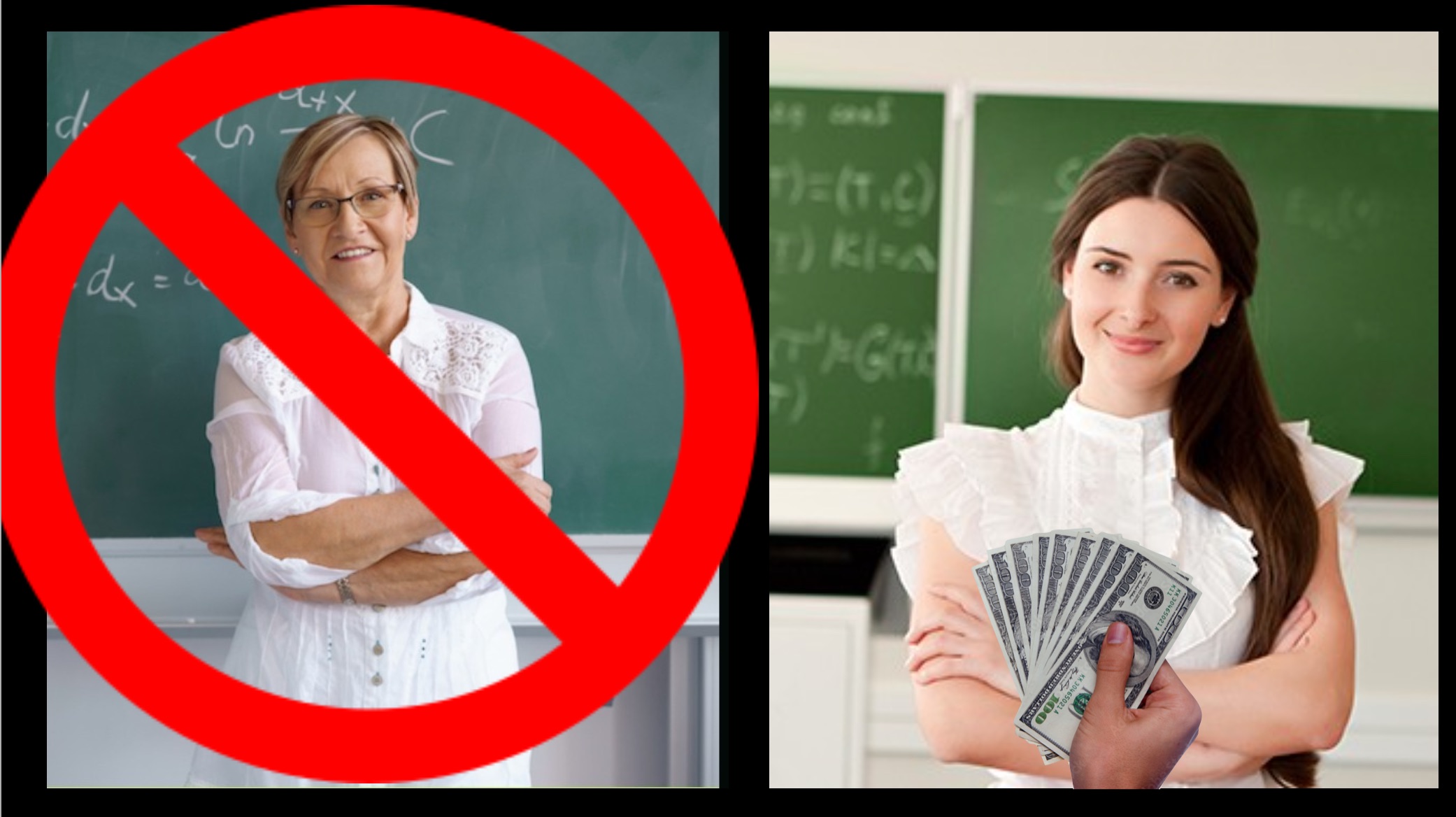
 

Lobbyists Congratulate Themselves for 20 Years of NCLB Standardized Testing

It’s hard to learn your lesson – especially if doing so costs you money.

Case in point: the U.S. Chamber of Commerce Foundation, the largest lobbying organization in the country, issued a new report examining the impact of No Child Left Behind (NCLB), the George W. Bush era law making standardized testing the centerpiece of K-12 education.

So an organization representing oil companies, pharmaceutical giants and automakers just opined on public school policy as if it were made up of experts.

And guess what?

Business folks don’t know what the heck they’re talking about in education.

Because after sorting through 20 years of NCLB controversy, political shenanigans and factual mistakes, the supply side cabal thinks the law is just fine.

It’s kind of like a judge watching a driver plow his car into a brick wall repeatedly and then instead of taking away his license, awarding him a safe driver certificate.

It doesn’t take a political scientist to figure out why.

Think about it. These are supply side cultists. If our education policy is working just fine as is, then there’s no need to raise taxes on all the business interests the free market fan club represents to fix the problem.

And, moreover, we can keep funneling the education dollars we do spend to corporations (many of whom are represented by the U.S. Chamber of Commerce Foundation) who profit off the law by making tests, grading tests and selling test prep material.

The only thing shocking here (maybe) is the way the media publishes the Foundation’s results as if they were truths handed down from on high.

What’s the matter, journalists? You’ve never heard of a conflict of interest?

An organization like the U.S. Chamber of Commerce Foundation with proven ties to the Koch Brothers and the American Legislative Exchange Council (ALEC) is somehow the epitome of unbiased advocacy!?

The organization’s own report describes the Foundation as “tireless advocates for high-quality academic standards, assessments, and accountability as tools for educational equity.”

By its own admission, then, this is the testing industry evaluating itself. And – surprise – it gave itself a high score!

The report was written by Dan Goldhaber and Michael DeArmond of the Center for the Analysis of Longitudinal Data in Education Research (CALDER) at the American Institutes for Research with a qualitative analysis by Brightbeam CEO Chris Stewart and his staff.

CALDER is a federally-funded nonprofit organization with several testing industry-funded and conservative think-tank members in management, on the advisory board, and working as independent researchers – in case, you thought anything they produced might be fair and balanced.

Brightbeam is a corporate education reform think tank financed by the usual billionaires such as Michael Bloomberg, Alice Walton, Jim Walton, Laurene Jobs Powell and Mark Zuckerberg. And Stewart is a long-time standardized testing and school privatization cheerleader – not exactly the kind of people who can afford to find much fault in NCLB because doing so would put them out of work.

The report highlights eight key findings – four positive and four negative.

First, the authors of the report pat each other on the back because NCLB collected so much yummy data that had been unavailable previously. In particular, the law extracted data from the nation’s schools based on race, socioeconomics and special needs. “No longer were school districts able to hide the performance of some students behind an average,” the report states.

It’s certainly true that NCLB collected a mountain of data. However, such information conceivably could have been gathered without making standardized testing the fulcrum around which schools turn. It could just as easily have been collected based entirely on classroom grades. It’s just that doing so might have been considered invasive and a violation of privacy. You might have had to explain why you wanted such data first – but why explain when you can just take?

Moreover, it’s strange to celebrate NCLB for disallowing hiding student performance behind an average when that’s exactly what it does. Everything is an average now! Average test scores, aggregate passing scores, whether your school made adequate yearly progress… it’s all averages! Oh to go back to the times when you could look at a single student’s academic record without having to compare it to anyone else!

Second, the authors claim student test scores increased because of NCLB especially among Black, Hispanic, and low-income students. However, this depends on how you massage the data.

Test scores have stayed relatively the same throughout the last 20 years with dips here and rises there. No matter the test, the overall trajectory has been pretty flat. You can focus here or focus there to create a picture that supports whatever narrative you want, but taken as a whole, there has not been any significant progress as shown by test scores.

But even if there had been, let’s not forget that no one has ever proven standardized test scores actually have anything to do with real academic progress. Just because you get a good score on a multiple choice test, it doesn’t mean you’ve actually learned to do anything but take a very limited and artificial test that is far removed from the circumstances where anyone actually uses the skills the test purports to be assessing.

Third, the report celebrates the production of “more reliable, comparable education data.” This is a suspect claim.

Are test scores more reliable than classroom grades? That has never been proven. In fact, when it comes to predicting future success in college or careers, there is plenty of evidence that classroom grades do a better job than test scores. After all, tests are based on work done over a relatively few number of days. Grades are based on an entire year’s worth of work.

However, it is true that test scores are more easily comparable because they come from the same assessments. Why this is so important is unclear. Learning is not the same as sports statistics. It is not a competition. Students learn when they’re ready to learn – not based on anyone’s schedule. What matters is if they learn at all.

Fourth, the authors admit “Reforms in teacher evaluation and school turnaround initiatives did not consistently improve student outcomes at scale, in part due to significant variation in quality of implementation.”

It is interesting that even the U.S. Chamber of Commerce can’t spin NCLB into an unquestionable success. But it is almost a cliche among the standardized testing industry that any failures of the big tests are always excused as failures solely of “implementation.” If teachers and districts just tried harder to put the testing industry’s plans into effect, everything would be working perfectly. It’s these darn teachers and schools! Whine! Cry! Sob!

For the negative findings, the report concluded there were unknowns about the impact of NCLB that should be further studied.

First, they were unsure if schools serving minorities and the poor ended up getting more money to improve than they otherwise would have done. SPOILER ALERT: they did not.

The original Elementary and Secondary Education Act passed under Lyndon B. Johnson was focused on equity – the exact concern the authors of the report pretend to be all about. However, when the law was reauthorized as NCLB in 2002 (and reauthorized again in 2015 as the Every Student Succeeds Act) it focused instead on test scores as a gatekeeper to equity. Instead of looking at needs, you had to pass the tests to get the money to meet your needs. And if you had needs, that meant your district and teachers were failing so they had to lose funding to punish them, first. Somehow you were supposed to end up with more funding after all that nonsense.

Second, if schools did get more funding because of test scores, the authors of the report were unsure what schools did with it. SPOILER ALERT: It went to test prep and charter school expansion.

NCLB refocused education on test scores, so if students did badly on the assessments, they needed test prep material. And if the teachers and districts weren’t miraculously overcoming social, economic and special needs of students in impoverished areas, money was given to open competing charter schools.

Did this help? Just the opposite. Now you have two schools vying for an even smaller pot of funding but one of these schools (the charter) doesn’t have to follow the regulations the others school must. So anyone with no background in education can open a school, hire uncertified teachers, make decisions on how to spend tax dollars without an elected school board, etc. Not helpful.

Third, the authors of the report were unsure how many struggling schools became successful under NCLB. SPOILER ALERT: Not many.

You don’t help a malnourished person by starving him even further or making him compete for food. The same with school districts. In almost every case where a school miracle is proposed in which kids simply pull themselves up by their own bootstraps, the reality turns out to be a byproduct of creative accounting or selective data.

That was the entire foundation of NCLB – George W. Bush’s fairy tale about Texas schools during his time as Governor which miraculously improved when you tested the heck out of them. That never happened, and neither did it happen when his dream became national policy.

Take New Orleans, a district often held up by the testing and privatization industry as a success. This is the only all-charter school district in the country. After 2005 and Hurricane Katrina, a predominantly white Republican legislature forced the district’s public schools to become charters – outright experimenting on a majority African American city. The result? School enrollment declined from 65,000 before the hurricane to 48,000 a dozen years later. The most recent state scores rated 49% of the city’s charter schools as D or F, based on their academic performance. The New Orleans district scores are below the state average, and that’s saying something since Louisiana is one of the lowest performing states in the nation.

Not exactly an overwhelming success.

Fourth, the authors wondered if NCLB might have resulted in non-academic improvements – things like a reduction in chronic absences, school climate, etc. SPOILER ALERT: Nope.

A focus on standardized testing does not convince more kids to come to school. Few kids get excited about taking tests. They get excited about broad academic curriculum, arts and extra curricular activities – the kinds of things districts had to cut back on because of NCLB.

So there you have it. The U.S. Chamber of Commerce Foundation is proud of their little report about the impact of NCLB. They give themselves a gold star.

The reality though is much different than what you’ll find on this bit of propaganda.

Any reasonable examination of the last 20 years in education would show this policy is ripe for repeal. We need to forgo standardized testing entirely in our public schools – not double down on them for yet another decade of failure.

Not only should it not be required to determine which schools need what funds, it should be kicked out of our schools like foxes from the henhouse.

And charter schools should be abolished in all 45 states plus the District of Columbia that have been duped into passing laws allowing them.

We need to put the focus back on equity, back on student need.

Let’s get real. Poverty and wealth are the most important factors determining test scores. This shows up on every standardized test. In fact, that’s what the name means – STANDARDIZED test – these assessments are normed on a bell curve reflecting family income and education. Kids from families from higher socioeconomic brackets are at the top of the curve and poor kids are on the bottom.

And consider this: nearly half the students in the U.S. now qualify for free or reduced lunches – the federal measure of poverty. So if we really want to help kids achieve academically, we need to first reduce the impact of poverty on children and families by making sure that they have access to nutrition, medical care, and good housing. Ensure pregnant women get medical care so their children are born healthy.

That’s how you improve education. The federal government should fully fund the schooling of students with disabilities and at least triple the funding for low-income schools. Pay teachers the kinds of wages that will keep them on the job and stop the steady stream of educators out of the field. Teachers should be treated like professionals and never have to work at second or third jobs to make ends meet. Assessment should be a teacher’s job – they should write their own tests as we trusted them to do for generations. And we can use the billions in savings now wasted on standardized testing instead to reduce class sizes so children can get individualized help from their teacher.

In short, don’t give students corporate canned tests. Give them well-maintained schools with nurses, counselors, and libraries with flesh-and-blood librarians. These are just some of the ways we could actually make things better.

It’s been two decades already. People know high stakes testing has failed despite whatever public relations reports are issued by lobbyist organizations. It’s time we had the courage to admit NCLB was a mistake and acted to finally put things right.

It may hurt some businesses that rely on testing to make a buck. It may require big corporations to pay their fair share of taxes. But that is the only way to improve education.

We must put our money where our mouths are – or else be quiet.


Like this post?  You might want to consider becoming a Patreon subscriber. This helps me continue to keep the blog going and get on with this difficult and challenging work.

Plus you get subscriber only extras!

Just CLICK HERE.

Patreon+Circle

I’ve also written a book, “Gadfly on the Wall: A Public School Teacher Speaks Out on Racism and Reform,” now available from Garn Press. Ten percent of the proceeds go to the Badass Teachers Association. Check it out!