A Private Equity Firm, The Makers of the MAP Test, and an Ed Tech Publisher Join Forces


Prepare to watch more of your tax dollars spiral down the drain of standardized testing. 


A year after being gobbled up by private equity firm Veritas Capital, ed tech company Houghton Mifflin Harcourt (HMH) is acquiring K-12 assessment giant Northwest Evaluation Association (NWEA). 

Let me put that in perspective – a scandal-ridden investment firm that made billions in the wars in Iraq and Afghanistan bought one of standardized testing’s big four and then added the Measures of Academic Progress (MAP) test to its arsenal.

This almost certainly means the cost of state testing is going to increase since the providers of the tests are shrinking. 

“It used to be if you put out a [Request for Proposal] RFP for state assessment, you get five, six, 10 bidders,” said Scott Marion, executive director of the Center for Assessment. “Now you’re lucky to get three. When you’re doing that, there’s maybe not as much expertise and certainly the cost will go up” (emphasis mine).

Under the proposed deal announced in January, the testing company’s assessments and the ed tech company’s test prep materials will become intimately entwined. 

NWEA, best known for its MAP assessment, will operate as a division of HMH. And NWEA’s tests will be aligned with HMH’s curriculum.

You can just imagine how this will affect the marketplace. 

NWEA serves about 10,000 school districts and HMH estimates it works with more than 50 million students and 4 million educators in 150 countries, according to a press release about the proposed acquisition. 

So we can expect districts and even entire states which rely heavily on the MAP test to be encouraged to buy as much HMH curriculum as possible. That way they can teach directly what is on their standardized tests.

That is assuming, of course, the acquisition agreement is approved after a 90-day regulatory review period. 

To be honest, I would be surprised if there are any objections. 


Such cozy relationships already exist with other education companies. For example, Curriculum Associates provides the aforementioned curriculum for its own i-Ready assessment.

It’s ironic that an industry built on standardization – one size fits all – continues to take steps to create books, software and courses aligned with specific tests. It’s almost like individuating information to specific student’s needs is beneficial or something. Weird!

After all, if these sorts of assessments can be gamed by increased access to materials created by the same corporate entities that create and grade the tests, are we really assessing knowledge? Aren’t we just giving students a score based on how many books and software packages their districts bought from the parent company? Is that really education

I remember a time when curriculum was determined by classroom teachers – you know, experts in their fields, not experts in the corporate entity’s test du jour. 

But I guess no one was getting rich that way…

NWEA used to be focused more on formative assessments – tests that you took several times a year before and sometimes even after the big summative state assessment to determine if you were progressing toward passing the high stakes goal. However, in 2021, the company acquired assessment-related technology from Educational Testing Service (ETS) and took over several state contracts from Questar Assessments. This includes contracts for New York, Georgia, Mississippi, and Missouri.

This made NWEA attractive to HMH which had, itself, consolidated into mostly educational technologies and sold off most of its interests in book publishing and assessments. In fact, various versions of the company from Harcourt to Houghton Mifflin Harcourt used to be considered one of the big 4 standardized testing companies until only a decade ago. With revenues of $1.37 billion in fiscal year 2014, for example, the company held a 44% market share including Common Core instructional resources.


However, in 2018 it divested its Riverside clinical and standardized testing (Riverside) portfolio to Alpine Investors, a private equity firm based in San Francisco, for a purchase price of $140 million, and then sold its publishing assets in 2021 to HarperCollins.


Then in February of 2022, New York-based private-equity firm Veritas Capital acquired HMH at a price of $21 per share, or about $2.8 Billion. And under Veritas, HMH acquired NWEA and the two companies will work together to do many of the things that HMH used to do by itself – like a golden dragon perched atop the standardized testing treasure trove.

All for the benefit of Veritas Capital.

Make no mistake, the investment firm wouldn’t have become involved if it couldn’t make a profit off the situation. That’s what it does – through scandal after scandal.

Founded in 1992 by the late investment banker Robert McKeon (who died by suicide after mounting improprieties came to light), Veritas Capital began its life buying up government contractors and forming close ties with former senior government officials. Of the company’s many defense-related investments, the most infamous was its 2005 purchase of DynCorp International, a shady company involved in the US’s Iraq and Afghanistan wars.


Under Veritas ownership, DynCorp benefited from lax oversightfrequently billed the government for work that was never requested, and was embroiled in a sex-trafficking scheme, according to reports. 

Veritas also made headlines when a company it bought in 2008, Global Tel-Link, a telecommunications company that provides telephone services for prison systems, racked up exorbitant fees on calls to inmates

In 2006, the firm acquired MZM Inc., an intelligence contractor, which was investigated for providing bribes to Rep. Duke Cunningham, R-Calif., in exchange for help obtaining Pentagon contracts. 

Throughout its history, Veritas has fostered close ties to government officials. Campaign finance records show executives at the investment firm have given over $100,000 to various politicians, mostly Republicans. In 2014, Veritas paid Bill Clinton $250,000 for a speech.

The New York Times reported in 2001 that numerous retired generals were on Veritas’ payroll and the company used such ties to the Pentagon and frequent appearances in the media to boost Veritas-owned military contractors, including DynCorp.

And now the little investment firm that could has its sights on the standardized testing game.

Why?  

Because there’s gold in them thar tests!

Taxpayer money, that is.

Current Veritas’ CEO and Managing Partner Ramzi Musallam has taken the firm from $2 billion in investments in 2012 to $36 billion in 2021 doing things just like this.

Musallam focuses on technology companies like HMH that operate in sectors dominated by the US federal government such as standardized testing. After all, the only reason public schools throughout the country have to give these assessments is federal law. It’s a captive market paid for by tax dollars.  

We could just let teachers teach and then assess their students in whatever ways seem most accurate and fair. Or we could continue to rely on corporations to do it for us without any real proof that their products are better or even as good as what your local neighborhood educator could provide.

Veritas is banking on the latter.


America spends $6.8 trillion a year on defense, health care and education – markets dominated by the government. 


“These are government-influenced markets, no doubt about it, and being close to how the government thinks about those markets enables us to understand how we can best invest,” Musallam said. 


So this merger of two of the most influential education companies in the US is great news for investors – and terrible news for taxpayers who will be paying the bill. 


For students and teachers – it’s more of the same


Like this post?  You might want to consider becoming a Patreon subscriber. This helps me continue to keep the blog going and get on with this difficult and challenging work.

Plus you get subscriber only extras!

Just CLICK HERE.

Patreon+Circle

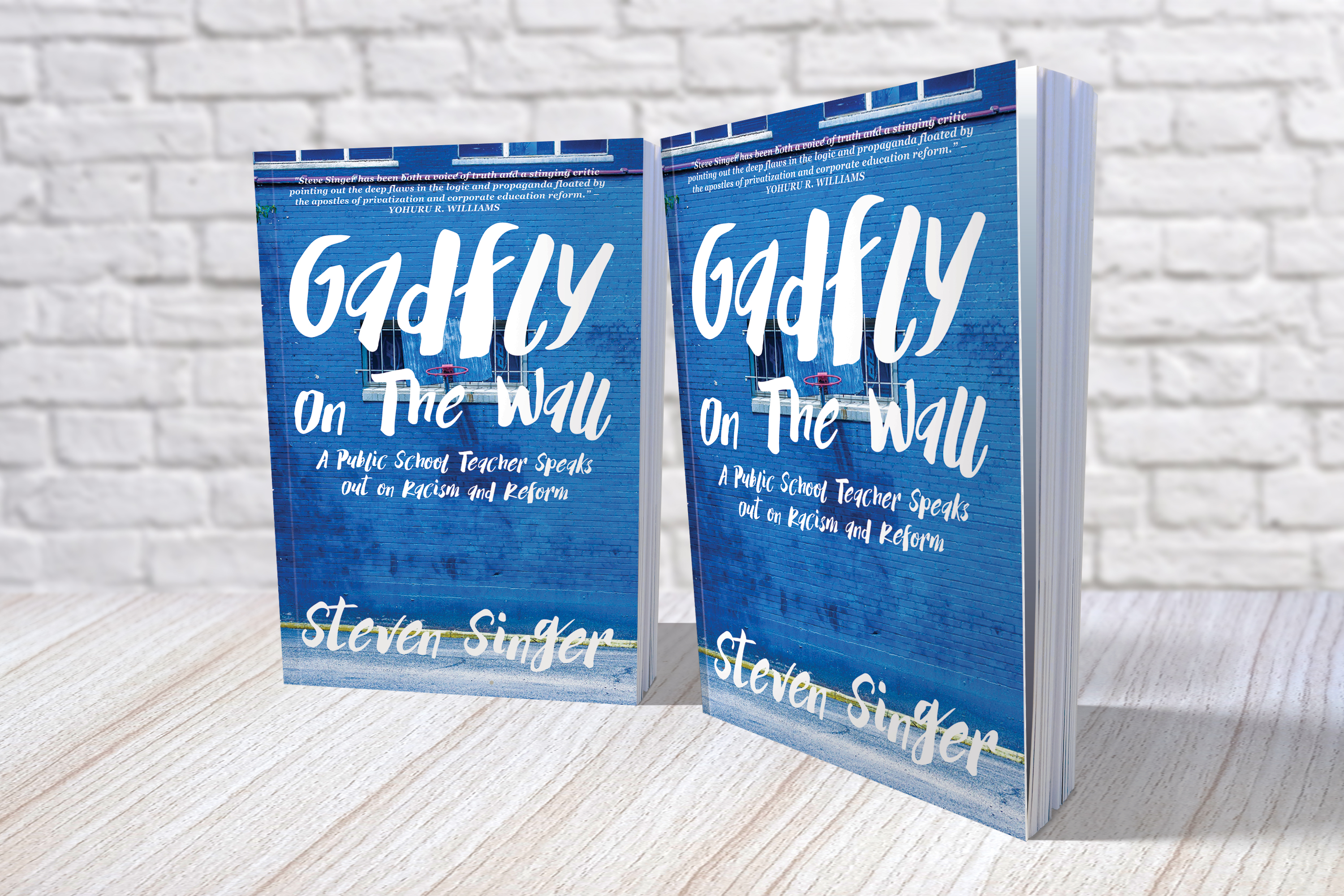
I’ve also written a book, “Gadfly on the Wall: A Public School Teacher Speaks Out on Racism and Reform,” now available from Garn Press. Ten percent of the proceeds go to the Badass Teachers Association. Check it out!
 

Reading for Pleasure – One of The Most Important Lessons in School

“Children should learn that reading is pleasure, not just something that teachers make you do in school.”

― Beverly Cleary

If you ask most middle school children whether they like to read, the answer is usually no.

However, for the last few weeks, my 7th graders have been coming into my class and remarking about the 8th grade books they find left on their desks.

“Oh! The Outsiders! I hear that’s a really good book!”

“When are we going to read this, Mr. Singer?”

“Can I take this home?”

That’s what you get when you pique a student’s interest – even a reluctant reader.

The problem is one of speed and instant gratification.

Today’s children have a multitude competing for their attention.

Video games, social media, TikTok videos – they haven’t the time to sit down with a book.

Doing so seems like something an old person would do or at least something too hard for them to enjoy.

I remember when I was growing up, my father always read Stephen King paperbacks. I still remember the covers of some of those books. The snarling Saint Bernard of “Cujo.” The empty boy’s face of “The Shining.” And “Night Shift” with its creepy bandaged hand slowly coming unraveled to reveal eyes growing under a knuckle…

I wanted nothing more than to read these books and understand what it was that lurked inside the covers.

But today a lot of novels are eBooks. If they have covers, they aren’t visible in the hands of those reading them. They aren’t left on display on a shelf. They’re nearly invisible.

The very idea of books seems like something beyond the reach of many adolescents.

That’s where teachers come in.

We need to dispel these myths, to help our students overcome them.

That means (1) reading books together in class, and (2) allowing kids self-selected reading.

First, we have to actively show kids that reading can be fun.

This means picking the right books to read as a class and trying to make the experience pleasurable.

Luckily there are some classics of young adult literature that rarely disappoint – S. E. Hinton’s “The Outsiders”, Lois Lowery’s “The Giver”, Ellen Raskin’s “The Westing Game”, Louis Sachar’s “Holes”, etc.

If you can catch a child’s imagination and place it in a community of learners, the result is both an individual and a social phenomenon.

Each child has his or her own experience, but it is enhanced by the thoughts and comments of others. Trying to solve the secrets of the society in “The Giver” isn’t just something you do alone – it’s a shared endeavor with your peers. Trying to decide what you’d do in the place of Ponyboy from “The Outsiders” isn’t just an academic thought experiment – it’s a way of expressing your thoughts and values and seeing them reflected, absorbed or enhanced by those around you.

However, this can’t always be done in a group setting. And the teacher can’t be the only person guiding the experience.

You have to give students the respect to make their own choices about what they read, too.

Let them choose books from the library and read them silently in class. There can be a culminating assignment like a book report or a book circle at the end of the month, but it has to be driven by individual curiosity.

This is all easier said than done.

Some years the books I pick for my students are a hit. Some years they aren’t.

Things are especially difficult now as we’re just healing from the Covid-19 pandemic. Students are just starting to get back on track and relearn all the social and academic skills they lost in years of quarantine and uncertainty.

I’m finding “The Giver” to be a harder sell this year than in most previous years. Many students want a more immediate and personal story. But some are entranced by the mystery and way the society deals with budding adolescence.

“The Outsiders”, though, is a raging success. My students don’t want to put it down or stop discussing the story. In fact, their enthusiasm is turning into rumors that have spread from grade-to-grade. However, they also aren’t as interested in racing through it toward the end as students from others years have been.

The biggest challenge is always silent reading.

The very idea of sitting down with a book and quietly reading it is entirely alien to some kids. They look around the room or try to sneak their cell phones out of their pockets – anything but turn their eyes to the pages in front of them.

It comes down to (1) finding a book that will interest the individual, and (2) one that they can easily read.

Unless you’re a librarian, it can be really hard to match students and books. As a classroom teacher I know some books that other students have enjoyed in the past and even have a few handy. For example, “Tears of a Tiger” by Sharon Draper is a story a lot of my more mature readers have gotten into – especially children of color. It tells the story of a boy who is dealing with the death of a friend who was riding in the boy’s car while he was driving drunk.

However, I don’t know the entire spectrum of children’s literature as well as a dedicated middle school librarian would. My school used to have one of those and she was brilliant at accomplishing the goal of suggesting books to students. These days, though, we have one librarian for the middle school and high school. That’s just too much ground to cover for any individual. Moreover, when you don’t dedicate your library to reading or research, you lose an incredible resource. There is far too much time when the library is closed for standardized testing or the librarian is asked to teach a class or proctor a study hall.

When it comes to matching a student to a book with a proper reading level, there are tools like Accelerated Reader which gives each book a level and tests students to find out their ability. However, the last thing we need is more standardized testing and computer software. An actual living, breathing librarian who has the time to know students and the literature is better than any technology in the world.

The point, though, is that no matter the challenges, we, as teachers, have to try.

It isn’t our job to simply teach children HOW to read. We have to encourage them TO read. We have to SHOW them that reading can be one of the most enjoyable pastimes in the world.

It may be out of touch with our modern society, but that is why it is so valuable.

Through books we can access any place – even places that never existed. Through books, we can talk with anyone in the entire history of time – even people who were never born.

And in doing so we gain access to that secret part of our own mind – our imagination – and build it into something strong and vibrant.

Few things are more important.

Creating lifelong readers – not a bad way to spend a teaching career.

“One child, one teacher, one pen, and one book can change the world.”

-Malala Yousafzai


Like this post?  You might want to consider becoming a Patreon subscriber. This helps me continue to keep the blog going and get on with this difficult and challenging work.

Plus you get subscriber only extras!

Just CLICK HERE.

Patreon+Circle

I’ve also written a book, “Gadfly on the Wall: A Public School Teacher Speaks Out on Racism and Reform,” now available from Garn Press. Ten percent of the proceeds go to the Badass Teachers Association. Check it out!

No, Public School Teachers are Not Turning Their Students into Communists

Have you heard the latest Republican lie?

There are so many it’s hard to keep track, but here’s the newest one.

Public school teachers are turning their students into communists.

I’m not kidding.

That’s what they’re saying on far right blogs, podcasts and TV shows.

Everyone from Betsy DeVos to Ron DeSantis and the sober fellows of the Heritage Foundation are up in arms.

All because Mr. Singer wore a red sweater vest one day to class.

Not really, but that might have been a better provocation than the reality – which is all in far right pundits’ heads.

So for the GOP, it’s all about fear – what can you scare voters to believe that will shepherd them to support your agenda?

So to start with, Republicans want you to be terrified of public schools.

The reason?

They want you to have to pay to get your kids educated – but public schools give learning away for free to everyone – just for paying taxes.

Right-wingers would much rather make it all a business where the more you pay, the better the education your kids get. There’d be poor quality charter schools for those who can’t afford the entry fee, but the best of everything would be reserved for the kids of the rich and powerful whose parents would use school vouchers to offset some of their tuition at private institutions.

Public schools would undo all that – especially if they were adequately funded.

Can you imagine a country where EVERYONE was fully educated!?

People might become informed voters and demand freedom and justice for all!

Lawmakers might have to create real policies, a platform, solutions – to actually govern!

So GOP operatives spread hysterical lies about public schools. They call them “government schools” as if that meant some imposed bureaucracy of outsiders and not what it actually does – schools governed by elected members of the community.

The lies and innuendo are never ending. Public school educators teach fake history where the civil rights movement was a good thing. They refuse to instill the truth of Creationism over fake Evolution. Teachers are pedophile groomers – never mind the actual Republican lawmakers charged with pedophilia and rape. And on and on and on.

Which brings us to the latest one – the new red scare that public school teachers are raising the next generation to hate Adam Smith and love Karl Marx.

The whole idea seems to have started with DeVos, the billionaire heiress and former Secretary of Education under President Donald Trump.

Robert Bluey, vice president of publishing for the Heritage Foundation, asked her a question on The Daily Signal Podcast (a Heritage Foundation mouthpiece) about the growing popularity of socialism among young people.

And it’s true, according to a 2018 Gallup poll, Americans aged 18 to 29 are almost as positive about socialism (51%) as they are about capitalism (45%).

So on behalf of the right-wing think tank behind the critical race theory brouhaha, transphobic legislation, climate change denial and a host of other regressive causes, Bluey asked DeVos why young people aren’t as firmly championing capitalism as previous generations.

DeVos, of course, blamed teachers. She responded:

“I recall visiting a classroom not too long ago where one of the teachers was wearing a shirt that said “Find Your Truth,” suggesting that, of course, truth is a very fungible and mutable thing instead of focusing on the fact that there is objective truth and part of learning is actually pursuing that truth.”

This is a rather strange answer. It may be the case that there are absolute truths in the world, but economic theories certainly don’t qualify. In matters of opinion, isn’t it better to tell students the facts and let them think for themselves about their relative virtues?

Not for DeVos. Indoctrination apparently is just fine so long as you’re indoctrinating kids into the right things.

Tell them capitalism is great. Tell them socialism is terrible. Screw critical thinking.

The Heritage Foundation, at least, liked her answer, using it as a template to fund a plethora of stories about public schools – not just leaving the matter up to students to decide – but actually bullying kids into championing communism.

Douglas Blair, a Daily Signal producer, codified the idea in his article “I’m a Former Teacher. Here’s How Your Children Are Getting Indoctrinated in Leftist Ideology.”

In the text of article, Blair admits he was only “in education” for 4 years, but it seems he was not a full-time classroom teacher for most of that time. According to his Linked-In account, he was a French teacher for 9 months in a school in Portland, Oregon. Before that he was an Extracurricular Aide, an English Language Assistant and Language Immersion Counselor at various schools in the US and France.

His evidence of indoctrination reads like “Kids Say the Darndest Things – Republican Edition.”

For example, he says he asked an elementary school girl if she liked Winston Churchill, and she frowned calling Churchill racist.

I’m not sure why that’s so upsetting. Churchill led Great Britain through WWII, but he undeniably WAS a racist, too. Churchill said that he hated people with “slit eyes and pig tails.” To him, people from India were “the beastliest people in the world next to the Germans.” He admitted that he “did not really think that black people were as capable or as efficient as white people.”

So Blair’s examples of indoctrination come out to complaining that kids learned accurate history.

If only the GOP could use history and education to change minds instead of decrying them.

Florida Gov. DeSantis is giving it a try. In 2022, he signed a law requiring schools in the sunshine state to actively teach about the horrors of communism.

That’s right. Whether teachers need to or not, they have to spend at least 45 minutes on it every November.

“We want to make sure that every year folks in Florida, but particularly our students, will learn about the evils of communism. The dictators that have led communist regimes and the hundreds of millions of individuals who suffered and continue to suffer under the weight of this discredited ideology,” DeSantis said, adding that “a lot of young people don’t really know that much” about the political ideology.

At first blush, this may sound like a good idea. More historical knowledge is a good thing, but it’s the context that makes this troubling.

Florida Republicans already have passed a battalion of laws telling educators what they CANNOT teach.

So you can’t teach about racial issues including the history of slavery if it makes any student “feel uncomfortable.” Math books are censored from depicting “prohibited topics.” You can’t talk about a wide range of human sexuality including LGBTQ people because of the infamous “Don’t Say Gay” bill.

But you’d better teach about how bad communism is! Or else!

First, this is the very definition of a GOVERNMENT SCHOOL the legislature dictating what teachers teach on a given day and not trusting them to do their own jobs.

Second, why single out communism? Certainly it has lead to horrors and misery, but so has capitalism. Are we to teach about the terrors of rampant greed, sweatshops, wars for oil, runaway inequality? After all, students in impoverished neighborhoods going to underfunded schools are actual victims of free enterprise, not collectivism. The free hand of the market is soaked in blood, too.

Third, there’s the subtext. This sounds to me like an invitation to conflate communism with socialism (which are two different ideas with different histories) and to champion one ideology over another.

Finally, let’s not forget this all comes from state law. It’s politics, not pedagogy, and in politics it’s only indoctrination when someone else does it.

So are public school teachers really molding their students into young Bolsheviks?

I seriously doubt it.

Economic theory rarely comes up in math, reading or science. Maybe it comes up occasionally in social studies.

In my middle school language arts classes, we discuss all kinds of things that come out of the books we’re reading.

Sometimes economic inequality comes out of S. E. Hinton’s “The Outsiders” or Harper Lee’s “To Kill a Mockingbird.” When we read Lois Lowry’s “The Giver” the concept of distribution of resources is broached.

In each case, I encourage my students to think about the problems from the stories, the solutions offered in the narratives and to discuss the matter with classmates. We hold Socratic Seminars and write critical essays. For “The Giver,” students work in groups to create their own utopias – you’d be surprised how many are socialist, though there are also a number of capitalist republics, dictatorships and anarchies. Kids love anarchy.

And I admit it – I encourage my students to think for themselves. I try not to give them my answers – my truths.

Facts are facts and opinions are opinions.

I would be a bad teacher if I forced my conclusions on my students.

So why ARE young people increasingly more critical of capitalism these days and more friendly toward socialism?

I’d say it’s because of the income inequality they see in the world around them.

Despite Republican’s claims, capitalism is not a perfect system. To be fair, no system is. But criticizing capitalism is not a bad thing, and finding value in aspects of socialism is no crime.

To achieve a better world, we have to do more than simply recreate the one in which we live.

That’s why education is so important. It is one of the chief engines of change, and nothing can truly stop that.

If Republicans think they can, they’re in for a shock.

Perhaps they should have paid more attention in school.

Or exposed their opinions to more rigorous critical thinking…

Nah!

I wonder what lie about public school they’ll try next.


Like this post?  You might want to consider becoming a Patreon subscriber. This helps me continue to keep the blog going and get on with this difficult and challenging work.

Plus you get subscriber only extras!

Just CLICK HERE.

Patreon+Circle

I’ve also written a book, “Gadfly on the Wall: A Public School Teacher Speaks Out on Racism and Reform,” now available from Garn Press. Ten percent of the proceeds go to the Badass Teachers Association. Check it out!

Top 11 Education Articles of 2022 Hidden by Facebook, Buried by Twitter, and Written by a Gadfly

If you’ve stumbled across this article on social media, congratulations!

You’re one of the few people allowed to read it!

This blog, Gadfly on the Wall, used to be read by at least half a million people each year. Now it’s seen by barely 100,000.

The reason? Poor writing? Flagging interest in the subject?

I don’t think so.

Education is still as important today as it was in 2014 when I started this venture. And as to my writing ability, it’s no worse now than it was 8 years ago.

The difference it seems to me is the rise of social media censorship – not in the name of fact checking or peer review. After all, I’m a nationally board certified classroom teacher with a masters in education writing about the field where I’ve been employed for two decades.

However, the tech bros who gate keep what could have been the free exchange of information on the Internet insist they get paid for access.

You want your voice to be heard? You’ve got to pay like any other advertiser – even if your product is simply your opinion backed by facts.

So this year, my blog had the fewest hits since I started – 124,984 in 2022. By comparison, last year I had 222,414.

I’d write an article, post it on social media and see it reposted again and again. You’d think that would mean it was popular, but no. The people who saw it liked it enough to suggest it to others, but it went little further. With each share, fewer people saw it. Like someone put up a wall in front of it.

In truth, I’m lucky as many people had the opportunity to read my work as did.

The question is where do I go from here?

Should I continue, knowing only a select few will get to hear me? Should I try paying the billionaire tech bros to let more readers in?

My work isn’t a product and no one is paying me to do it.

Oh well…

In any case, here’s a look back at my most popular articles from the year that was and one honorable mention:

HONORABLE MENTION

11) WPIAL is Wrong! Racist Taunts at a Football Game are NOT a Matter of Both Sides

Published: Feb. 4

Views: 301

Description: My school’s football team is mostly black. They played a mostly white football team and were greeted by racial slurs and an allegedly intentional injury to one of our players. However, the Western Pennsylvania Interscholastic Athletic League (WPIAL) blamed both sides for the incident.

Fun Fact: It’s one of those decidedly local stories that community newspapers used to cover before almost all went bankrupt or were sold to the media giants. Having this platform allowed me to call out an injustice when most voices were silenced. The injured player’s mother thanked me for doing so. Stories like this keep me going.

10) Federal or State Legislature May Raise Teacher Salaries so Schools Have Enough Staff to Reopen

Published: June 8

 Views: 1,468

 Description: At the beginning of the summer, governments were so shaken by the exodus of teachers from the classroom that they were discussing raising our salaries or giving us bonuses. Parents were so adamantly against distance learning they demanding in-person classes with real, live human teachers. What a shock to the super elite education “experts” who had been pushing ways to eliminate teachers for decades and ignoring our consistent march out of the field under these conditions.

 Fun Fact: The federal government is still discussing pay raises with a bill to increase the minimum salary nationwide. Will this lead to any action? Who knows? It’s actually surprising that legislators even recognize the issue exists.

9) Why Even the Best Charter Schools are Fundamentally Inequitable

Published: Sept. 17

 Views: 1,514

 Description: Charter schools are inequitable because they have charters. These are special agreements that they don’t have to follow all the rules other authentic public schools funded by tax dollars must follow. That’s unfair and it applies to EVERY charter school because every one has a charter. Hence, the name.


 Fun Fact: Criticism of charter schools in general usually degrades to defense of individual charter schools avoiding whatever general criticism is leveled against the industry. The argument in this article has the benefit of avoiding any such evasion. All charter schools are guilty of this (and many are guilty of much more). All of them.

8) Every Teacher Knows

Published: March 17

 Views: 1,675

 Description: Just a list of many things classroom teachers know about schools and education but that the general public often ignores. These are the kinds of things missing from the education debate because we rarely include teachers in the discussion about the field where they are the experts.


 Fun Fact: For a few hours people were talking about this article far and wide. And then – boom – it got shut down with a bang. This one was so universal it should have been popular for weeks. But it just disappeared.

7) With the Death of Queen Elizabeth II, the US Should End Its Biggest Colonial Enterprise – Charter Schools

Published: Sept. 10

 Views: 1,817

 Description: Charter schools are colonial enterprises. They loot and pillage the local tax base but without having to be governed by school boards made up of community members – otherwise known as local taxpayers. They can be run by appointed boards often made up of people who do not come from the community in question. They are outsiders come merely for personal profit. These invaders are quite literally taking local, community resources and liquidating them for their own use – the maximization of personal profit. The public is removed from the decision-making process about how its own resources are utilized and/or spent.

 Fun Fact: It’s an argument from consistency. If we’re against the colonial enterprise, we must be against charter schools, too. I’m particularly proud of the graphic (above) I created to go with this article.

6) Holtzman Resigns as MASD Superintendent After Questions Over Contract Shenanigans

Published: May 26

 Views: 1,933

 Description: Dr. Mark Holtzman, the Superintendent from the district where I live, left under strange circumstances. He resigned and took a new contract in a matter of hours so he could get a raise from a lame duck school board without having to wait for the people the community elected to decide the matter to take office first. Then when it all came to light, he left the district for greener pastures.


 Fun Fact: More than any other news source, I documented what happened in detail. Without a series of articles I wrote on this, most people would have had very little idea what happened. It would have just been rumors. This is why we need local journalism. It shouldn’t be left to bloggers like me.

5) Silencing School Whistleblowers Through Social Media 

Published: Feb. 12

 Views: 2,065

 Description: This was social media’s latest crackdown on edu-bloggers and other truth tellers. I used to get 1,000 readers a week. Now I’m lucky to get a few hundred. There’s a strict algorithm that determines what people get to see on their Facebook pages. And if it says you’re invisible, then POOF! You’re gone and the people who would most enjoy your writing and want to pass it on don’t get the chance. It’s undemocratic in the extreme but totally legal because Facebook is a for-profit company, not a public service. Money wins over free exchange of ideas. 

 Fun Fact: There used to be so many other education bloggers like me out there. Now there are just a handful. This is why.

4) If Standardized Tests Were Going to Succeed, They Would Have Done So By Now

Published: April 7

 Views: 2,478

 Description: Standardized tests were supposed to improve our public schools. They were supposed to ensure all students were getting the proper resources. They were supposed to ensure all teachers were doing their best for their students. But after more than four decades, these assessments have not fulfilled a single one of these promises. In fact, all they’ve done is make things worse at public schools while creating a lucrative market for testing companies and school privatization concerns.  

 Fun Fact: Pundits still talk about standardized testing as if it were innovative. It’s not. It’s the status quo. Time to end this failed experiment.

3) Top 5 Charter School Myths Debunked 

Published: April 15

 Views: 3,604

 Description: Let’s examine some charter school propaganda – one piece at a time – and see if there’s any truth to these marketing claims. Charter schools are actually not public schools in the same way as other taxpayer funded schools. They do not save money – they waste it. Their students do not outperform authentic public school students. They are not innovative – they are regressive. They do not protect children’s civil rights – they violate them.


 Fun Fact: I designed the title and picture to trick readers into thinking this was a pro-charter school article. So many people were butt hurt when they read it! I just hope it helped clarify the matter to those who were undecided.

2) The MAP Test – Selling Schools Unnecessary Junk at Student Expense

Published: Aug 27

 Views: 3,937

 Description: The Measures of Academic Progress (MAP) test is an assessment made by Northwest Evaluation Association (NWEA), a so-called non-profit organization out of Portland, Oregon. Some states require the MAP as part of their standardized testing machinery. However, in my home state of Pennsylvania, the MAP is used as a pre-test or practice assessment by districts that elect to pay for it. What a waste! Why do we need a test BEFORE the test? The assessment’s job is to show how our students are doing in Reading, Math and Science compared with an average test taker. How does that help? I don’t teach average test takers. I teach human beings. Students learn at their own rates – sometimes faster, sometimes slower. We don’t quicken the timescale with needless comparisons.

 Fun Fact: I think this article was as popular as it was because people could relate. So many teachers told me how relieved they were to hear someone else expressing all the frustrations they were experiencing in their own districts with the MAP and other tests like it. If administrators and school boards would just listen to teachers! If they’d even bother asking them!

1) Posting Learning Objectives in the Classroom is Still a Dumb Idea

Published: Nov. 25

 Views: 7,285

 Description: When it comes to dumb ideas that just won’t go away, there is a special place in the underworld for the demand that teachers post their learning objectives prominently in the classroom. It presupposes that teachers control everything their students learn in the classroom and can offer it to them on a silver platter. It’s not just a useless waste of time but a dangerous misunderstanding of what actually happens in the learning process.


 Fun Fact: This isn’t exactly news, but teachers were relieved to hear their truth finally given voice. So many of us still have to abide by this nonsense when we could be doing something that actually makes a difference. It’s nice to have your sanity and frustration confirmed. If only administrators could admit they were wrong and stop demanding this crap!


Gadfly’s Other Year End Round Ups

This wasn’t the first year I’ve done a countdown of the year’s greatest hits. I usually write one counting down my most popular articles and one listing articles that I thought deserved a second look. Here are all my end of the year articles since I began my blog in 2014:


2021:

Gadfly’s Most Outrageous Articles in 2021 That You May Have Missed or Been Too Polite to Share

Gadfly’s Top 10 Articles of 2021 – Shouts in the Dark

2020:

The Most Important Education Articles (By Me) That You Probably Missed in 2020

Outrunning the Pandemic – Racing Through Gadfly’s Top 10 Stories of 2020


2019:

Sixteen Gadfly Articles That Made Betsy DeVos Itch in 2019


Screen Shot 2019-12-28 at 3.51.03 PM


2018:

A Gadfly’s Dozen: Top 13 Education Articles of 2018 (By Me)

thumbnail_IMG_8445


2017:


What’s the Buzz? A Crown of Gadflies! Top 10 Articles (by Me) in 2017


thumbnail_Screen shot 2017-12-26 at 3.44.17 PM


Hidden Gadfly – Top 5 Stories (By Me) You May Have Missed in 2017


7fd6a56c2ffc7a03c9fd2f431a543e92


2016

Worse Than Fake News – Ignored News. Top 5 Education Stories You May Have Missed in 2016


ignoring-wisdom


Goodbye, 2016, and Good Riddance – Top 10 Blog Post by Me From a Crappy Year


screen-shot-2016-12-27-at-3-29-49-am


2015


Gadfly’s Choice – Top 5 Blogs (By Me) You May Have Missed from 2015


Screen shot 2016-01-02 at 11.01.09 PM


Who’s Your Favorite Gadfly? Top 10 Blog Posts (By Me) That Enlightened, Entertained and Enraged in 2015


Screen shot 2015-12-30 at 12.57.49 AM


2014


Off the Beaten Gadfly – the Best Education Blog Pieces You Never Read in 2014


Wonderfull illusion art painting


Top 10 Education Blog Posts (By Me) You Should Be Reading Right Now!


computer-people-png-300x202


Like this post?  You might want to consider becoming a Patreon subscriber. This helps me continue to keep the blog going and get on with this difficult and challenging work.

Plus you get subscriber only extras!

Just CLICK HERE.

Patreon+Circle

I’ve also written a book, “Gadfly on the Wall: A Public School Teacher Speaks Out on Racism and Reform,” now available from Garn Press. Ten percent of the proceeds go to the Badass Teachers Association. Check it out!


Artificially Intelligent Chatbots Will Not Replace Teachers

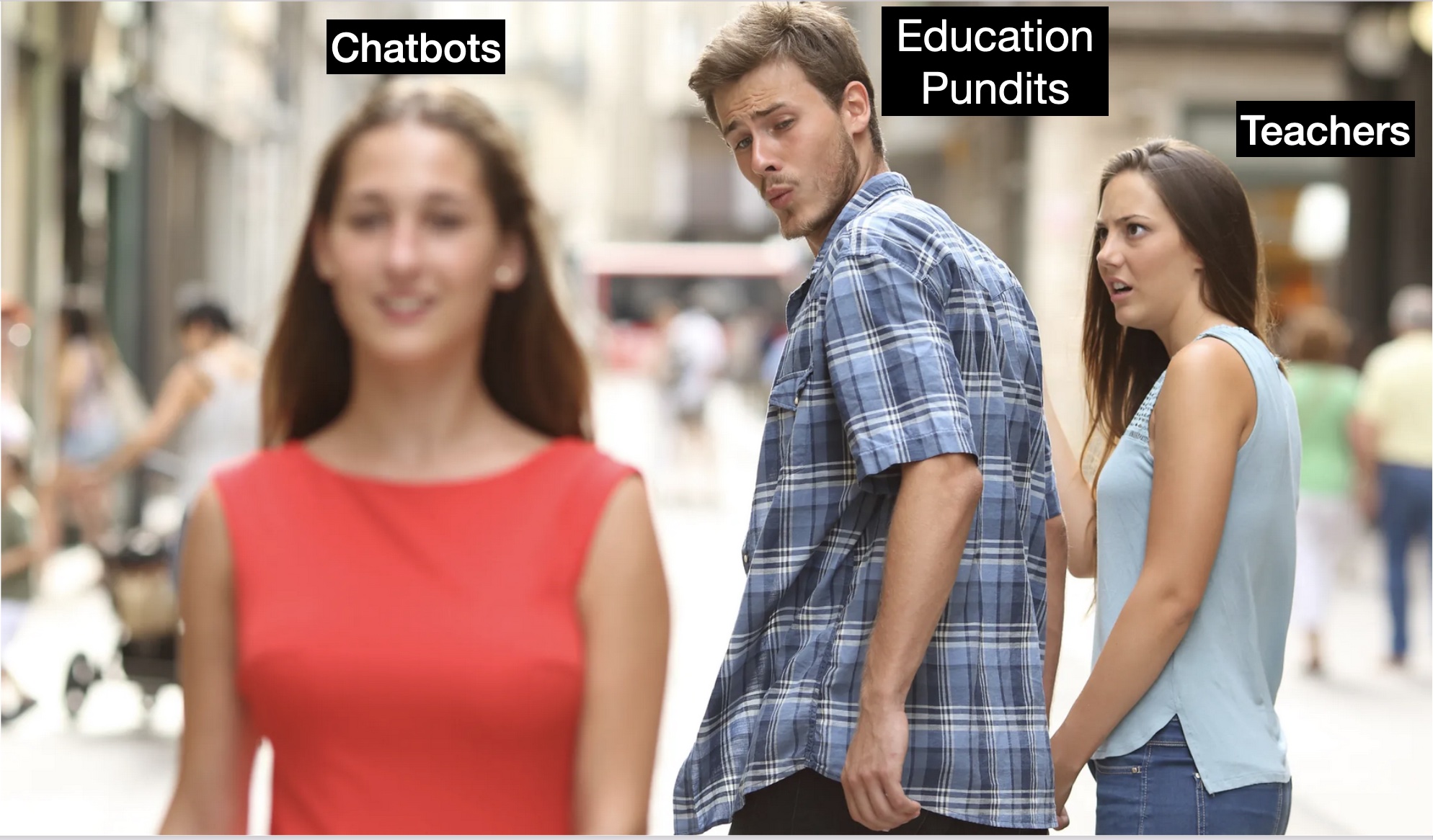
Education pundits are a lot like the guy in the “Distracted Boyfriend”meme.

They’re walking with teachers but looking around at the first thing possible to replace them.

This weekend it’s AI chatbots.

If you’ve ever had a conversation with Siri from Apple or Alexa from Amazon, you’ve interacted with a chatbot.

Bill Gates already invested more than $240 million in personalized learning and called it the future of education.

And many on social media were ready to second his claim when ChatGPT, a chatbot developed by artificial intelligence company OpenAI, responded in seemingly creative ways to users on-line.

It answered users requests to rewrite the 90s hit song, “Baby Got Back,” in the style of “The Canterbury Tales.” It wrote a letter to remove a bad account from a credit report (rather than using a credit repair lawyer). It explained nuclear fusion in a limerick.

It even wrote a 5-paragraph essay on the novel “Wuthering Heights” for the AP English exam.

Josh Ong, the Twitter user who asked for the Emily Bronte essay, wrote, “Teachers are in so much trouble with AI.”

But are they? Really?

Teachers do a lot more than provide right answers. They ask the right questions.

They get students to think and find the answers on their own.

They get to know students on a personal level and develop lessons individually suited to each child’s learning style.

That MIGHT involve explaining a math concept as a limerick or rewriting a 90’s rap song in Middle English, but only if that’s what students need to help them learn.

It’s interpersonal relationships that guide the journey and even the most sophisticated chatbot can’t do that yet and probably never will have that capacity.

ChatGPT’s responses are entertaining because we know we’re not communicating with a human being. But that’s exactly what you need to encourage the most complex learning.

Human interaction is an essential part of good teaching. You can’t do that with something that is not, in itself, human – something that cannot form relationships but can only mimic what it thinks good communication and good relationships sound like.

Even when it comes to providing right answers, chatbots have an extremely high error rate. People extolling these AI’s virtues are overlooking how often they get things wrong.

Anyone who has used Siri or Alexa knows that – sometimes they reply to your questions with non sequiturs or a bunch of random words that don’t even make sense.

ChatGPT is no different.

As more people used it, ChatGPT’s answers became so erratic that Stack Overflow – a Q&A platform for coders and programmers – temporarily banned users from sharing information from ChatGPT, noting that it’s “substantially harmful to the site and to users who are asking or looking for correct answers.”

The answers it provides are not thought out responses. They are approximations – good approximations – of what it calculates would be a correct answer if asked of a human being.

The chatbot is operating “without a contextual understanding of the language,” said Lian Jye Su, a research director at market research firm ABI Research.

“It is very easy for the model to give plausible-sounding but incorrect or nonsensical answers,” she said. “It guessed when it was supposed to clarify and sometimes responded to harmful instructions or exhibited biased behavior. It also lacks regional and country-specific understanding.”

Which brings up another major problem with chatbots. They learn to mimic users, including racist and prejudicial assumptions, language and biases.

For example, Microsoft Corp.’s AI bot ‘Tay’ was taken down in 2016 after Twitter users taught it to say racist, sexist and offensive remarks. Another developed by Meta Platforms Inc. had similar problems just this year. 

Great! Just what we need! Racist Chatbots!

This kind of technology is not new, and has historically been used with mixed success at best.

ChatGPT may have received increased media coverage because its parent company, OpenAI, was co-founded by Tesla Inc. CEO Elon Musk, one of the richest men in the world.

Eager for any headline that didn’t center on his disastrous takeover of Twitter, Musk endorsed the new AI even though he left the company in 2018 after disagreements over its direction.

However, AI and even chatbots have been used in some classrooms successfully.

Professor Ashok Goel secretly used a chatbot called Jill Watson as an assistant teacher of online courses at the Georgia Institute of Technology. The AI answered routine questions from students, while professors concentrated on more complicated issues. At the end of the course, when Goel revealed that Jill Watson was a chatbot, many students expressed surprise and said they had thought she was a real person.

This appears to be the primary use of a chatbot in education.

“Students have a lot of the same questions over and over again. They’re looking for the answers to easy administrative questions, and they have similar questions regarding their subjects each year. Chatbots help to get rid of some of the noise. Students are able to get to answers as quickly as possible and move on,” said Erik Bøylestad Nilsen from BI Norwegian Business School.

However, even in such instances, chatbots are expensive as yet to install, run and maintain, and (as with most EdTech) they almost always collect student data that is often sold to businesses.

Much better to rely on teachers.

You remember us? Warm blooded, fallible, human teachers.

The best innovation is still people.


Like this post?  You might want to consider becoming a Patreon subscriber. This helps me continue to keep the blog going and get on with this difficult and challenging work.

Plus you get subscriber only extras!

Just CLICK HERE.

Patreon+Circle

I’ve also written a book, “Gadfly on the Wall: A Public School Teacher Speaks Out on Racism and Reform,” now available from Garn Press. Ten percent of the proceeds go to the Badass Teachers Association. Check it out!


Posting Learning Objectives in the Classroom is Still a Dumb Idea

One of the worst problems in education is that we never let bad ideas die.

There’s always some know-nothing hack from another field who pokes his nose into the profession and makes pronouncements like he’s an expert.

And since he’s so successful at X (usually something in technology or business) we take these pronouncements like they’re holy writ.

This is why we never get rid of standardized testing, charter schools, evaluating teachers on student test scores, and a hundred other practices that have demonstrably failed over-and-over again.

However, perhaps the most annoying of these zombie practices is the demand for teachers to post their learning objectives prominently in the classroom.

This is beyond stupid and a waste of time.

Now don’t get me wrong.

I’m not saying teachers should go into the classroom with no idea of what they hope their students will learn everyday.

But the idea that we have so much control over our students that we can tell them with pinpoint accuracy exactly what knowledge and/or skills will be implanted in their skulls on any given day is so reductively stupid as to be laughable.

Anyone who still thinks teachers can post A on the wall and A is what will be accomplished has no business in the teaching profession.

Because, Brother, you don’t understand how teaching works!

So let’s begin with the reasons why this idea is still attractive.

First, we want to let students know what they’ll be experiencing in class on a day-by-day basis.

It’s a reasonable request to a degree. How many times have students walked into the classroom and the first thing that comes out of their mouths are, “What are we doing today?”

However, experienced classroom teachers know that this isn’t the real question. Most of the time when a student asks this they aren’t interested in what we are doing. They’re interested in what we AREN’T doing.

They want to know if we’re writing an essay, or if we’re reading a text or something that they specifically don’t feel like doing that day.

I hear this question most often in my last period classes because the students are exhausted from a full day of academics. They want to know if I’m going to tire them further or if there might be a chance at a breather here and there.

The second reason this practice is attractive is for principals.

Today’s principal is a frightening thing. After decades of educational malpractice at colleges and universities in creating new school administrators, principals no longer understand what their job truly is.

They think it’s to be a toady to the Superintendent or higher level administrators. They think they have to demonstrate their performance to their bosses with whatever data is available at every turn. (This is also what they expect teachers to do for them.)

This is why they tend to turn everything into something less important but quantifiable.

So demanding teachers to post learning objectives in their classrooms every day is something concrete and tangible that can be checked on and checked off on a clipboard. They can say to their bosses, “Look at what a good principal I am! My teachers post their learning objectives everyday!”

When I think of how principals used to manage their buildings and create an environment conducive for learning – for teachers to best impact their students – it makes me want to cry.

I miss real principals.

In any case, we can see why this demand is attractive.

However, it’s also really, really dumb.


Here’s why.

First, you have to understand how teaching works.

It’s not behavioralism. It’s not the 1920s anymore.

Students will be able to… WRONG! Students will have the OPPORTUNITY to, they will be ENCOURAGED to, their ENVIRONMENT will be altered to make it most conducive to…

You can’t rob them of agency. And if you think you can, you’re a fool.

No teacher – no matter how skilled or experienced – acts on her students like Gandalf or Dumbledore. Teaching is not magic and students are not passive objects.

You can’t say “Learn how to use nouns!” And WOOSH students can distinguish nouns from pronouns with pinpoint accuracy. You can’t put hands on a student’s head and say “Reading Comprehension!” And suddenly they pick up a book and start reading Shakespeare with absolute fidelity.

Yes, you can post these things on the wall. But what good does it do?

Students may see it and think to themselves, “So that’s what the teacher is trying to get me to know!” But how does that help?

When I took piano lessons, my teacher never told me the lesson was on the chromatic scale. She just gave me a few pieces to practice and helped me over the parts where I was stumbling.

Moreover, even if she had told me that, it wouldn’t have meant anything to me. Because I didn’t know what the chromatic scale was!

So much of education is skill based. We learn HOW to do something. We don’t spend much time on WHAT it is or any theories of how it all comes together. And even if we did, that would come at the end, not the beginning.

This is one of the major reasons why I resent the very notion of posting my learning objectives in the classroom. It ruins the surprise!

Teaching is an art at least as much as it is a science. We aren’t programing our kids like you would a computer.

When I teach my students how to write a single paragraph essay, for example, I have them write three drafts – a prewriting, a first draft (heavily scaffolded with a planner) and a final copy.

They often complain that this is a lot of writing and want to know why I’m making them do all this when they feel they could probably skip one or two steps and still come to almost as good of a final project.

I ask them to trust me. I tell them this is the best way, and that they’ll understand later. And since I’ve spent so much time creating a relationship of give-and-take, of trust, they often just get on with the work.

What I’m really doing with all these drafts is getting the format of the single paragraph essay embedded in their minds. They’re memorizing it without even knowing it.

Moreover, writing multiple drafts is good practice when you get to more complicated and longer essays. It forces you to re-evaluate what you wrote previously and it encourages you to improve it before you are finished.

Finally, it instills a process into your mind. You start to feel like this is the right way to do something and you resist taking the easier road because the way you were taught has lead to success in the past (and it will probably serve you well in the future as things get more complex).

Do you really think I should stop and explain all that to my students before we begin? Do you think it would help?

Absolutely not! Children (like tech entrepreneurs and business tycoons) often think they know everything when they really know nothing. If you explain everything to them at the beginning, they can get contrary and refuse to do all you ask to demonstrate they know better. This often leads to dead ends and reteaching – if possible.

These are things teachers like me have learned after decades in the classroom. So when a new administrator starts spouting the shallow dictums they were taught in a corporate dominated college course, it’s beyond frustrating.

Education is the one field where experience is considered a detriment. Classroom teachers are all fools. We must control educators top down with administrators full of ideology and little to no actual practical knowledge.

Teachers have far too much to do already without kowtowing to a worthless mandate to post their learning objectives in the classroom.

That, along with writing formal lesson plans, endless faculty meetings and thrown together professional development, compound to make a teacher’s workload unmanageable.

With so many experienced teachers running for the door these days, wouldn’t it be better to stop and listen to them once in a while?

Maybe it might help encourage some of them to stay in the profession?

Maybe that might actually help student learning?

Huh? Maybe?


Like this post?  You might want to consider becoming a Patreon subscriber. This helps me continue to keep the blog going and get on with this difficult and challenging work.

Plus you get subscriber only extras!

Just CLICK HERE.

Patreon+Circle

I’ve also written a book, “Gadfly on the Wall: A Public School Teacher Speaks Out on Racism and Reform,” now available from Garn Press. Ten percent of the proceeds go to the Badass Teachers Association. Check it out!


What Democratic Midterm Victories Mean for Pennsylvania’s Schools

We can breathe a sigh of relief.

Fascism was defeated at the polls.

Christian nationalism, snake oil salesmen and angertainment all fell to the power of the ballot at this week’s midterm election in Pennsylvania.

Democrat Josh Shapiro beat far right Republican Doug Mastriano for Governor.

John Fetterman beat reality TV star Dr. Mehmet Oz for Senator.

And a host of local grassroots progressives triumphed from Summer Lee becoming the first black woman ever elected from our state to the House to Lindsay Williams retaining her seat in the state legislature. Even Austin Davis (my state representative) will become the first black Lt. Governor in the Commonwealth.

And most surprising, the state house may have even flipped to Democratic control after decades in Republican hands. (There are still a few races that are too close to call.)

All-in-all, it was a good night. Especially in an election cycle where Republicans had every advantage. The President’s party usually loses seats during the midterms, and just last week it seemed that Joe Biden would be no exception. However, now that the dust has cleared, the losses seem to be minimal to nonexistent.

So what does it all mean for our state’s schools and the future of our kids’ educations?

First, we can expect far fewer insane policy proposals and those that are put forward will have next to zero chance of passing.

No more worries about our already meager education funding being cut in half.

No more fears of Florida’s regressive “Don’t Say Gay” law restricting free speech coming to the Keystone state.

The Critical Race Theory panic (A.K.A. – teaching actual history) will fade to just another wing nut conspiracy theory thrown to the Republican base to generate support instead of an actual policy proposal to restrict academic freedom.

I suspect a lot of the baseless hysteria Republicans had been shouting from the rafters will decrease as pollsters show them how ineffective it was in getting votes that weren’t already staunchly GOP.

For the first time in years, Republicans may have to push toward the center instead of constantly to the lunatic fringe. Otherwise, they’ll continue to lose.

Second, we may actually see some positive education policies make their way through the state legislature.

Shapiro has promised to increase education funding. That and the still pending court decision on a lawsuit against the state demanding adequate funding may be enough to turn the funding faucet on a few cranks. With Democrats holding an increasing share of seats, all it takes is a few moderate Republicans (are they out there?) to join them to get things done.

However, it isn’t all wine and roses.

During the general election, Shapiro came out in favor of some school voucher programs. This puts him to the right of our current Governor Tom Wolf. So we can look forward to our new Governor supporting an increase for tax credit scholarships and other de facto voucher plans that will drain public education coffers just as we’re working to increase them.

It is also anyone’s guess whether a pro-voucher Governor would support charter school reform – something we desperately need and that Wolf championed during his tenure.

And though both Wolf and Shapiro criticized standardized testing, it would take a mightily informed and courageous state politician to go up against the economic powerhouse of the testing industry.

In short, the election mostly means we don’t have to worry about as many flaming meteorites crashing down on our schools.

Things might even get better here and there – especially with additional funding.

However, we will have to monitor our representatives as if they were little kids sulking by the cookie jar. They will almost definitely try to sneak in some garbage legislation to hurt our students and enrich their corporate buddies.

When we look at the national situation, it appears much the same. Even with Fetterman going to the Senate, it’s unclear whether Democrats will have control of either legislative body. Even if they do, the majority will be razor thin.

A robust Democratic Party determined to enact progressive legislation could make much of such a situation, but as we’ve seen in the past, that is not the case with the current leadership.

The most we can realistically hope for is that they put a stop to insane GOP legislation.

The question is whether we can build on such Democratic gains at both the state and national level. Usually that doesn’t happen. But it will have to be the goal moving forward.

Stopping the worst is a worthy aim but it cannot be everything. We must continue to push our representatives to make actual progress and fix the slow and steady drip of fascism, corporatism and Christian nationalism that has dominated our politics for far too long.

So let us celebrate a worthy election cycle while we prepare for all the political battles still to come.

A sigh of relief, a renewed fighting stance and back into the fray.


Like this post?  You might want to consider becoming a Patreon subscriber. This helps me continue to keep the blog going and get on with this difficult and challenging work.

Plus you get subscriber only extras!

Just CLICK HERE.

Patreon+Circle

I’ve also written a book, “Gadfly on the Wall: A Public School Teacher Speaks Out on Racism and Reform,” now available from Garn Press. Ten percent of the proceeds go to the Badass Teachers Association. Check it out!


Standardized Test Scores are Incompatible with Your School’s Equity Plan  


The primary goal of public education is to teach all children fairly.  


But since its inception, the system has never been set up to actually accomplish this.  


So these days you hear a lot of talk about fixing the problem – of how we can ensure students of color and other historically underserved children get the same high-quality education racially and economically privileged kids always have received.


This almost always concludes with two types of plan.  


First, there is the serious venture made up of things like increasing spending to meet student need, wraparound services, early intervention, reducing class size, redistributive justice and cultural competence – a plan that looks the reality in the face and makes bold attempts to come to terms with it. 


Then there is the cheap knockoff proposition – a buzzword-laden scheme where someone is trying to convince you their half hearted proposal is actually a solution to the very real problem of educational inequality. 


And the number one thing you can use to tell the difference between the two is this – standardized test scores


The first plan that is centered around actually fixing disparities makes no mention of test scores – or at least relegates them to obstacles. The second is built all around them – as an essential component of the overall scheme. 


This is because the second feel-good-accomplish-nothing plan is essentially performative.  


Therefore, it is constructed around standardized test scores as a metric of success.  


Planners think: We’re going to do A, B and C to make our schools more equitable. And how will we know we’re doing it right? We’ll use our standardized test scores! 


That’s not accuracy. It’s ostentation. These scores don’t demonstrate anything at all about equity. True, they purport to show readily apparent increases or decreases in academics.  


However, even this is an illusion.  


A rise or fall in test scores is not, in fact, based on authentic academic success but merely success at taking standardized tests designed for very different purposes.  


And anyone who understands the history of these types of assessments and how they still work will know that this mirage is built at the cost of genuine equity.  


In fact, the inequalities plaguing our public school system are due in large part to our national insistence that standardized test scores be the ultimate measure of success.  


So constructing your plan to fix this problem around one of its root causes is like claiming you can fix a sinking ship by drilling more holes in its hull.  


At best, it’s naive. At worst, it’s self-defeating and disingenuous.  


The problem centers around the difference between standardized tests and assessments created by classroom teachers. 


Both types of assessment are supposed to measure what students have learned. But not all learning is equal


For example, a beginning chef needs to know how to use the stove, have good knife skills and how to chop an onion. But if you give her a standardized test, it instead might focus on how to make foie gras – something that would only come in handy at a high end French restaurant.


That’s not as important in your everyday life, but the tests make it important by focusing on it.  


The fact of the matter is that standardized tests do NOT necessarily focus on the most important aspects of a given task. They focus on obscurities – things that most students don’t know.  


This is implicit in the design of these exams and is very different from the kinds of tests designed by classroom teachers.  


When a teacher makes a test for her students, she’s focused on the individuals in her classes. She asks primarily about the most essential aspects of the subject and in such a way that her students will best understand. There may be a few obscure questions, but the focus is on whether the test takers have learned the material or not.  


When psychometricians design a standardized test, on the other hand, they aren’t centered on the student. They aren’t trying to find out if the test taker knows the most important facts or has the most essential skills in each field. Instead, there is a tendency to eliminate the most important test questions so that the test – not the student – will be better equipped to make comparisons between students based on a small set of questions. After all, a standardize test isn’t designed for a few classes – it is one size fits all.  


New questions are field tested. They are placed randomly on an active test but don’t count toward the final score. Test takers aren’t told which questions they’ll be graded on and which are just practice questions being tried out on students for the first time. So students presumably give their best effort to both types. Then when the test is scored, the results of the field test questions determine if they’ll be used again as graded questions on a subsequent test.  


According to W. James Popham, professor emeritus at the University of California and a former president of the American Educational Research Association, standardized test makers take pains to spread out the scores. Questions answered correctly by too many students – regardless of their importance or quality – are often left off the test.  


If 40 to 60 percent of test takers answer the question correctly, it might make it onto the test. But questions that are answered correctly by 80 percent or more of test takers are usually jettisoned.  


He writes:  

   “As a consequence of the quest for score variance in a standardized achievement test, items on which students perform well are often excluded. However, items on which students perform well often cover the content that, because of its importance, teachers stress. Thus, the better the job that teachers do in teaching important knowledge and/or skills, the less likely it is that there will be items on a standardized achievement test measuring such knowledge and/or skills.”  


Think about what this means.  


We are engaged in a system of assessment that isn’t concerned with learning so much as weeding people out. It’s not about who knows what, but about which questions to ask that will achieve the predetermined bell curve.  


This is important when it comes to equity.  


If we are guided in large part by standardized test scores, we aren’t guided by authentic learning. We’re guided by a false picture of learning. Therefore, the most effective way – perhaps the only practical way – of raising test scores is to teach directly to a specific test. And not only the test, but the specific version of the test being given that year.

So if we do somehow manage to raise test scores, we haven’t improved academics at all but a mere semblance of it. And thus the equity we might celebrate in such a situation would be just as false. 


You got a good score on the MAP test. Hurrah! But that doesn’t mean you know anything of real value except how to take this particular MAP test which, itself, will change after the next round of questions are field tested.


This has huge implications for the quality of education being provided at our schools. Since most administrators have drunk deep of the testing Kool-Aid, they now force teachers to educate in just this manner – to use test scores to drive instruction. So since the tests doesn’t focus on the most essential parts of Reading, Writing, Math, and Science, neither does much of our instruction. 

And if we insist on evaluating the equity of our schools on these test scores, we will only make things that much worse. 


We end up chasing the psychometricians. We try to guess which aspects of a subject they think most students don’t know and then we teach our students that to the exclusion of more important information. And since what students don’t know changes, we end up having to change our instructional focus every few years based on the few bread crumbs surreptitiously left for us by the state and the testing corporations.  


That is not a good way to teach someone anything. It’s like teaching your child how to ride a bike based on what the neighbor kid doesn’t know.  


It’s an endless game of catch up that only benefits the testing industry because they cash in at every level. They get paid to give the tests, to grade the tests and when students fail, they get paid to sell us this year’s remediation material before kids take the test again, and – you guessed it – the testing companies get another check!  


It’s a dangerous feedback loop, a cycle that promotes artificially prized snippets of knowledge over constructive wholes. 


And let’s not forget where these tests come from


They were created in the 1910s and 20s by eugenicists to prove the supremacy of white Europeans over other racial and ethnic groups.  


While these original tests are no longer in circulation, the assumptions behind them are an essential part of our modern day standardized tests. 


The very method of question selection in today’s tests builds economic and racial bias into the very fabric of the enterprise.  


According to Prof. Martin Shapiro of Emory University, when test makers select questions with the greatest gaps between high and low scorers, they are selecting against minorities. Think about it – if they pick questions based on the majority getting it right, which minority got it wrong? In many cases, it’s a racial or ethnic minority. In fact, this may explain why white students historically do better on standardized tests than black and Hispanic students.  


This process may factor non-school learning and social background into the questions. They are based on the experiences of white middle-to-upper class children.  


So when we continually push for higher test scores, not only are we ultimately dumbing down the quality of education in our schools, but we’re also explicitly lobbying for greater economic and racial bias in our curriculum trickling down from our assessments.  


As Ibram X. Kendi, author of “How to be an Antiracist” puts it:  


“Standardized tests have become the most effective racist weapon ever devised to objectively degrade Black minds and legally exclude their bodies.”  


This is incompatible with any enterprise aimed at increasing equity.  


You are engaged in a never-ending cycle of teaching to the test at the expense of authentic learning. You’re engaged in making minorities think like their privileged peers – of overcoming who they are just to be accepted into a game.


This is not education. It is assimilation, and it will always put the assimilated at a disadvantage to the majority – those they are being forced to imitate.  


Equity and standardized testing do not go together.  


They CANNOT go together. They are anathema.  


Those who suggest otherwise are either well-meaning fools or duplicitous malefactors.  


There is a multi-billion dollar standardized testing industry dependent on keeping us testing our kids.  


But we can no longer continue feeding that beast and pretending that we can somehow provide equity to our underserved children, too.  


We have to choose – equity or testing.  Fairness or unrestrained capitalism.


Do not believe anyone who tells you to support a plan built on both. 

It does not exist.


Like this post?  You might want to consider becoming a Patreon subscriber. This helps me continue to keep the blog going and get on with this difficult and challenging work.

Plus you get subscriber only extras!

Just CLICK HERE.

Patreon+Circle

I’ve also written a book, “Gadfly on the Wall: A Public School Teacher Speaks Out on Racism and Reform,” now available from Garn Press. Ten percent of the proceeds go to the Badass Teachers Association. Check it out!


The Teacher Exodus Continues Whether You Care or Not

Remember when federal, state and local governments actually seemed poised to do something about the great teacher exodus plaguing our schools?

With an influx of money earmarked to help schools recover from the pandemic, many expected pay raises and bonuses to keep experienced teachers in the classroom.

Ha! That didn’t happen!

Not in most places.

In fact, the very idea seems ludicrous now – and this was being discussed like it was a foregone conclusion just a few months ago at the beginning of the summer.

So what happened?

We found a cheaper way.

Just cut requirements to become a teacher.

Get more college students to enter the field even if they’re bound to run away screaming after a few years in.

It doesn’t matter – as long as we can keep them coming.

The young and dumb.

Or the old and out of options.

Entice retired teachers to come back and sub. Remove hurdles for anyone from a non-teaching field to step in and become a teacher – even military veterans because there’s so much overlap between battlefield experience and second grade reading.

And in the meantime, more and more classroom teachers with decades of experience under their belts are throwing up their hands and leaving.

Stop and think for a moment.

This is fundamentally absurd.

If you have a hole in your pocket and you keep losing your keys, wallet and other vital things from out of your pants, the first thing you do is sew up the hole! You don’t keep putting more things in your pocket!

But that’s only true if you’re actually interested in solving the problem.

Maybe you prefer the status quo. Maybe you even like it or see it as an opportunity to change your wardrobe entirely.

It’s a simple matter of cost.

The educators who have been in the classroom the longest are also the highest paid. So if we just let them go, we can save some money for other things.

Of course the problem of getting excellent teachers in the classroom is only compounded by such thinking. You don’t get more seasoned teachers by letting them leave and putting increasing pressure on those who stay.

And make no mistake – experienced teachers are incredibly valuable. That’s not to say new teachers don’t have their own positive aspects, but the profession’s expert practitioners are its heart and soul.

Think about it.

Like any other profession, the longer you practice it, the better you usually get. For example, no one going under heart surgery would willingly choose a surgeon who had never operated before over a seasoned veteran who has done this successfully multiple times.

But we don’t value the work teachers do nearly as much as we do surgeons. Or lawyers. Or almost anything else that requires a comparable level of education.

That’s really the core issue.

We don’t care about quality teaching. In fact, in many cases we actively don’t want it to occur.

Republicans are literally running a political platform on weakening teachers, schools and education because they need the poorly educated to make up their voting base.

When Trump was President, he actually praised the badly educated because they supported him more than any other demographic.

And even those who aren’t actively against education are more concerned with privatizing the public system for profit. They like it when public education fails because it gives them an excuse to push for more charter schools, more school vouchers, more cyber schools – anything where they can siphon away tax dollars earmarked for education into their own private pocketbooks (and no holes in there even to pay their own taxes)!

So the teacher exodus isn’t being fixed on purpose.

It is a political and economic plot against increasing the average intelligence and knowledge of voters, stealing government funding for personal gain and refusing to increase the quality of a government sponsored service.

In the meantime, more teachers are leaving every day.

A February 2022 report from the US Bureau of Labor Statistics said the numbers of public school teachers had gone from approximately 10.6 million in January 2020 to 10 million — a net loss of around 600,000 teachers.

In August, the national Education Association (NEA) sounded the alarm that an additional 300,000 educators had left since the report was issued. And it’s only getting worse. An NEA union poll found that 55% of educators were considering leaving education earlier than they had originally planned.

In my own district, there are several teachers who have taken leaves of absence or are sick and had to be temporarily replaced with long term subs. We’re located in western Pennsylvania south of Pittsburgh, just across the river from a plethora of colleges and universities with teacher prep programs. Yet it was pretty difficult to find anyone to fill these positions or serve as day-to-day subs.

There is so much we could be doing to encourage seasoned teachers to stay in the classroom beyond increased pay.

You could cut all unnecessary tasks like formal lesson plans, stop holding staff meetings unless an urgent need presents itself, refrain from new and unproven initiatives, and/or cut duties where possible to increase teacher planning time

And that’s before we even get to the lack of respect, gas lighting, scapegoating, and micromanaging teachers go through on a daily basis.

What we have here is a crisis that cuts to the very heart of America’s identity as a nation.

What do we want to be? A capitalist experiment in school privatization whose only regulation is the free hand of the market? Or a nation supported by a secure system of education that took us to the moon and made us the greatest global superpower the world has ever known?

What do we want to be? A nation of dullards who can be easily manipulated by any passing ideologue? Or a country of critical thinkers who can accept new evidence and make rational decisions based on facts?

There is a cost to becoming a great nation and not just emblazoning the idea on a hat.

That cost is education. It is paying, supporting and respecting veteran teachers.

Are we still willing to pay it?


Like this post?  You might want to consider becoming a Patreon subscriber. This helps me continue to keep the blog going and get on with this difficult and challenging work.

Plus you get subscriber only extras!

Just CLICK HERE.

Patreon+Circle

I’ve also written a book, “Gadfly on the Wall: A Public School Teacher Speaks Out on Racism and Reform,” now available from Garn Press. Ten percent of the proceeds go to the Badass Teachers Association. Check it out!
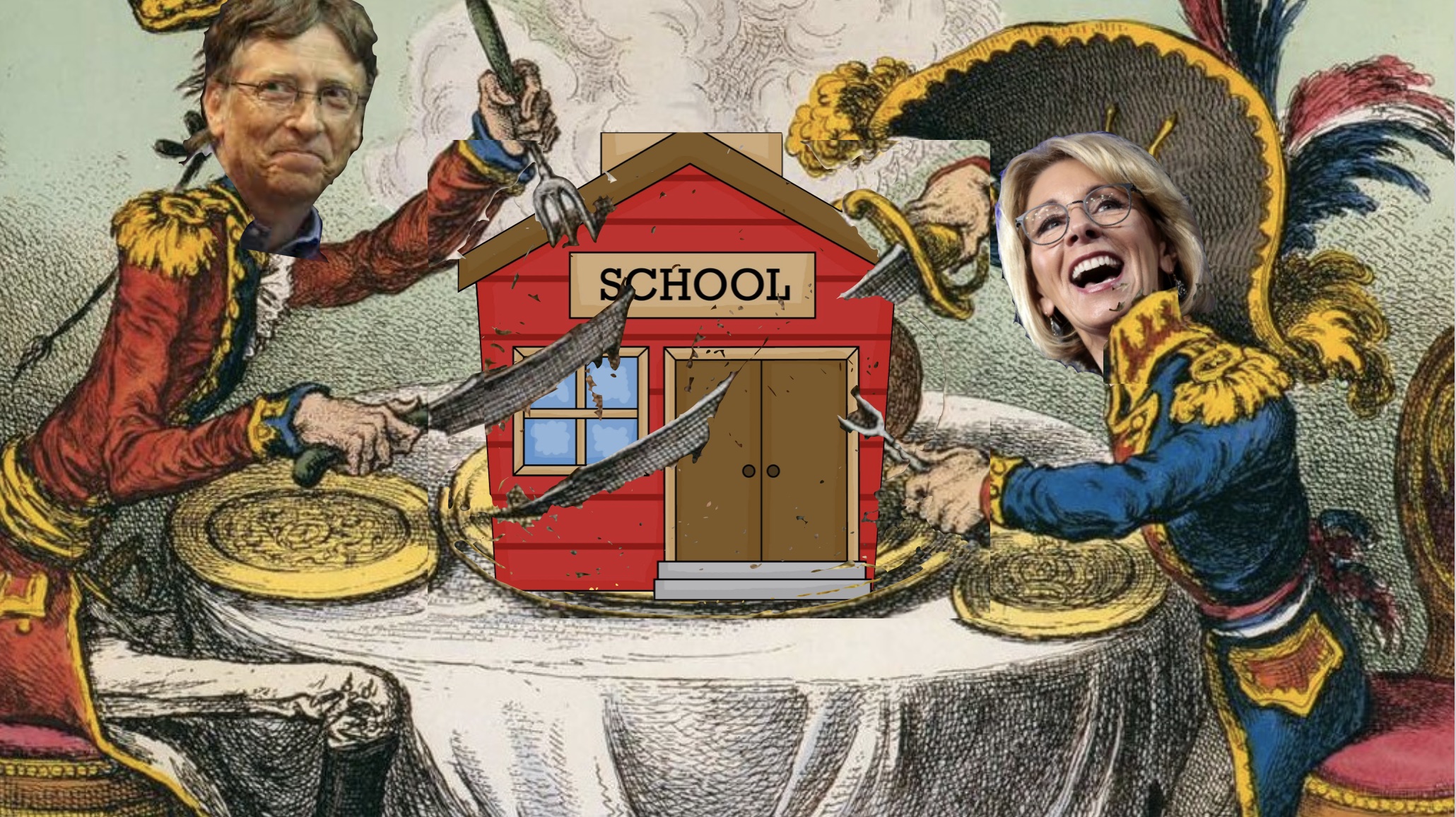
Will We Even Try to Keep Students and Teachers Safe from Gun Violence? Or Just Keep Preparing for the Worst?

“Teachers, we are operating on a lockdown. Please keep your doors locked until we tell you it has been lifted.”

Before me a sea of wide eyes and scared faces.

I slowly walked toward the door continuing the lesson I had been giving before the announcement. The door was already shut and secured but I nonchalantly turned the extra deadbolt.

“Click!” it sounded like a gunshot across the suddenly silent room.

I continued talking while making my way back to the blackboard pretending that nothing out of the ordinary was happening.

That’s just life in the classroom these days.

According to Eduction Week, there have been 38 school shootings in the US this year resulting in injuries or deaths. That’s up from 34 last year and the highest it’s been since the media source began tracking such things in 2018.

During the height of the Covid-19 pandemic, there were only 10 such shootings in 2020, and 24 each in 2019 and 2018.

That comes to a total of 130 school shootings in the last five years.

“Mr. Singer, can I go to the bathroom?” DeVon asked.

“I’m sorry,” I said. “We’re still under lockdown. I’ll write you a pass as soon as it’s lifted.”

It seems like nowhere is safe.

Three of this year’s shootings were in my home state of Pennsylvania.

The first was on January 19 at Pittsburgh’s Oliver Citywide Academy, a special education school.

A 15-year-old boy waiting in a van to go home was shot and killed after at least one person opened fire outside the school.


The second was on April 5 at Erie High School. A 16-year-old student was shot and injured at the school.

The third was on Sept 27 at Roxborough High School in Philadelphia.

A 14-year-old student was killed and four others wounded (ages 17, 15, 14, and 14) in a shooting near the high school athletic field after a football scrimmage.

“Mr. Singer, what’s happening?” Olivia asked.

I turned to her confused at first then I realized what she meant.

“The lockdown? Let me check my laptop. No…. Nothing. I really don’t know, Honey. But I’m sure whatever it is, it will be over soon. Why don’t you get back to the assignment?”

“Okay.”

Such violence isn’t limited to schools.

On Sept 24 three people were shot in Kennywood Park, a popular amusement park in West Mifflin.


Two years ago in September a 15-year-old boy was killed and another was wounded in a shooting at the Haunted Hills Hayride in North Versailles.

In 2020 a man was shot and killed at Monroeville Mall. In 2015, a 17-year-old entered the men’s department on the lower level of Macy’s department store in the evening and shot his intended target and two bystanders, leaving two with critical injuries.

Is there anywhere safe anymore?

You can’t go to the mall. You can’t go on a haunted hayride. You can’t go to an amusement park.

I had students who were hiding in the mall during the 2015 shooting. My daughter wasn’t involved in any shootings but she went to Kennywood this summer.

Where does it stop?

Why are we doing so little?

A few weeks ago my school had another active shooter training for teachers while the students, thankfully, had a day off.

Every few years we do this. Teachers huddle in classrooms and try to react to a shooting scenario. We either barricade ourselves in our classrooms or try to find an escape route. We help train police and local medical personnel.

At this years training, teachers were given a talk by a law enforcement “expert” who regaled us with his time working as a Blackwater mercenary in Afghanistan. He told us how difficult it was to make decisions under fire but that sometimes you had to make the hard decisions.

“Some of you teachers have kids in wheelchairs in your classrooms. You think you’re going to get your whole class out of the building and to safety!? You have to ask yourself, how are you going to get that kid in the wheelchair out? What are you going to do if a child flips out or is too scared to move? I know it’s not nice to think about, but sometimes you have to make decisions that will save the most people – not necessarily everyone.”

It made me want to vomit. But he wasn’t telling me anything I didn’t already know.

I like to believe I’d pick the child up out of his wheelchair, throw him over my shoulder and carry him to safety. I hope I could calm down a child having a panic attack and whisk her out of the building.

But could I really? Alone?

We do everything we can to prepare ourselves in case something like this happens – but as a society we do nothing – NOTHING – to prevent shootings from happening in the first place.

Where’s increased gun regulations to make sure these weapons aren’t getting into the hands of criminals or the mentally unstable?

Where are bans on assault weapons and other weapons of mass destruction and war?

Where is increased liability for those recklessly selling firearms?

Where is anything we could be doing to make our schools, malls and places of entertainment safer?

“Mr. Singer, I really have to go to the bathroom.”

“You can’t hold it just a little longer, DeVon?”

“No,” he said hoping from foot to foot.

“Number 1 or number 2?”

He giggled and held up one finger.

I reluctantly pointed to the trash can.

“Take it over there to the corner. I’ll stand in front of you so…”

“Attention teachers! The lockdown has now been lifted. You may continue as normal.”

I sighed, unlocked the door and wrote DeVon a bathroom pass.

We never did find out what triggered the lockdown. One time it was a gunshot in the surrounding neighborhood. Another time it was an unauthorized adult seeking access to the building.

It could be much worse. And it will happen again.

The chances of it being a school shooter are low.

The chances of myself or my students being hurt or killed is even lower.

But it’s still too high.

Living under the constant shadow of this threat is creating a trauma that we’ve given up trying to solve and just call normal.

It is unacceptable.

We need to do more.

Not just on the days when one of these tragedies strike – but every day.

It is not safe for students and teachers – it will NEVER be completely safe, but it can be safer.

That’s the point – how safe can we make it?

And why aren’t we doing anything to reach that goal other than preparing for the worst?


Like this post?  You might want to consider becoming a Patreon subscriber. This helps me continue to keep the blog going and get on with this difficult and challenging work.

Plus you get subscriber only extras!

Just CLICK HERE.

Patreon+Circle

I’ve also written a book, “Gadfly on the Wall: A Public School Teacher Speaks Out on Racism and Reform,” now available from Garn Press. Ten percent of the proceeds go to the Badass Teachers Association. Check it out!