Disowning the Lie of Whiteness

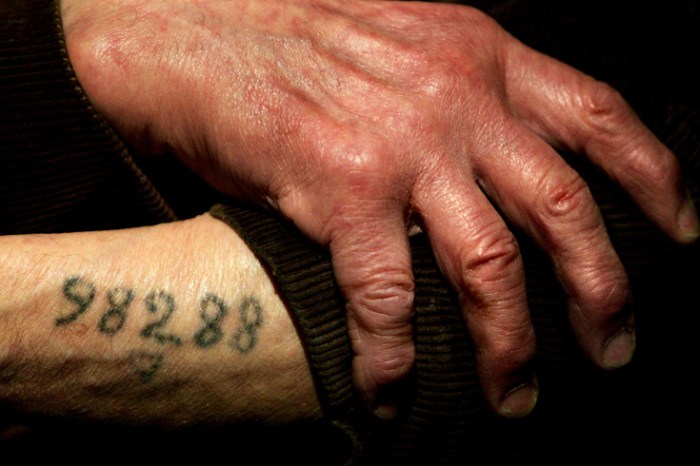
auschwtiztattoo 

The most vivid memory I have of my great-grandfather is the tattoo on his arm.


It wasn’t an anchor or a sweetheart’s name or even the old faithful, “Mom.”


It was just a series of digits scrawled across his withered tan flesh like someone had written a note they didn’t want to forget.


Beneath the copious salt and pepper hairs was a stark number, the darkest stain on his skin.


Gramps is a kindly figure in my mind.


He died before I was even 10-years-old. All I really remember about him are wisps of impressions – his constant smile, a whiff of mothballs, how he always seemed to have butterscotch candies.


And that tattoo.


I think it was my father who told me what it meant.


When he was just a young man, Gramps escaped from Auschwitz. A guard took pity on him and smuggled him out.


His big European family didn’t make it.


My scattered relatives in the United States are all that are left of us.


Those are the only details that have come down to me. And Gramps isn’t here to add anything further.


But his tattoo has never left me.


It’s become a pillar of my subconscious.


The fact that someone could look at my kindly Gramps and still see fit to tattoo a numeric signifier on him as if he were an animal.


A little reminder that he wasn’t human, that he shouldn’t be treated like a person, that he was marked for erasure.


If I look at my own arm, there is no tell-tale integer peeking through the skin. But I am keenly aware of its presence.


I know that it’s there in a very real sense.


It is only the American dream that hides it.


Coming to this country, my family has made a deal, something of a Faustian bargain, but it’s one that most of us have accepted as the price of admission.


It’s called whiteness.


I am white.


Or I get to be white. So long as I suppress any differences to the contrary.


I agree to homogenize myself as much as possible and define myself purely by that signifier.


White. American. No hyphen necessary.


Anything else is secondary. I don’t have to deny it, but I have to keep it hidden until the right context comes to bring it out.


During Octoberfest I have license to be German. When at international village I can root for Poland. And on Saturdays I can wear a Kippah and be Jewish.


But in the normal flow of life, don’t draw attention to my differences. Don’t show everyone the number on my arm.


Because America is a great place, but people here – as in many other places – are drawn to those sorts of symbols and will do what they can to stamp them out.


I learned that in school when I was younger.


There weren’t a lot of Jewish kids where I grew up. I remember lots of cracks about “Jewing” people down, fighting against a common assumption that I would be greedy, etc. I remember one girl I had a crush on actually asked to see my horns.


And of course there were the kids who chased me home from the bus stop. The scratched graffiti on my locker: “Yid.”


The message was clear – “You’re different. We’ll put up with you, but don’t ever forget you are NOT one of us.”


There were a lot more black kids. They didn’t get it any easier but at least they could join together.


It seemed I had one choice – assimilate or face it alone.


So I did. I became white.


I played up my similarities, never talked about my differences except to close friends.


And America worked her magic.


So I’ve always been aware that whiteness is the biggest delusion in the world.


It’s not a result of the color wheel. Look at your skin. You’re not white. You’re peach or pink or salmon or rose or coral or olive or any of a million other shades.


Whiteness has as much to do with color as Red has to do with Communism or Green has to do with environmental protection.


It is the way a lose confederacy of nationalities and ethnicities have banded together to form a fake majority and lord power over all those they’ve excluded.


It’s social protection for wealth – a kind of firewall against the underclass built, manned and protected by those who are also being exploited.


It’s like a circle around the wealthy protecting them from everyone outside its borders. Yet if everyone banded together against the few rich and powerful, we could all have a more equitable share.


But in America, social class has been weaponized and racialized.


You’ll see some media outlets talking about demographics as if white people were in danger of losing their numerical majority in this country in the next few decades. But there’s no way it’s ever going to happen.


Today’s xenophobia is a direct response to this challenge. Some are trying to deport, displace and murder as many black and brown people as possible to preserve the status quo.


But even if that doesn’t work, whiteness will not become a minority. It will do what it has always done – incorporate some of those whom it had previously excluded to keep its position.


Certain groups of Hispanics and Latinos probably will find themselves allowed to identify as white, thereby solidifying the majority.


Because the only thing that matters is that there are some people who are “white” and the rest who are not.


Long ago, my family experienced this.


Before I was born, we got our provisional white card. And if I want, I can use it to hide behind.


I’ve been doing it most of my life.


Every white person does it.


It’s almost impossible not to do it.


How do you deny being white?


At this point, I could throw back my head and shout to the heavens, “I’M NOT WHITE!” and it wouldn’t matter.


Only in a closed environment like a school or a job or in a social media circle can you retain the stigma of appearing pale but still being other.


In everyday life, it doesn’t matter what you say, only how you appear.


I can’t shout my difference all the time. Every moment I’m quiet, I’ll still be seen as white.


It’s not personal. It’s social. It’s not something that happens among individuals. It’s a way of being seen.


The best I can do is try to use my whiteness as a tool. I can speak out against the illusion. I can stand up when people of color are being victimized. I can vote for leaders who will do something to dismantle white supremacy.


Not because I am some kind of savior, but because I know that my own freedom is tied to the freedom of those being oppressed by a system that provides me certain privileges.


But let me be clear: doing so is not the safe way to go.


In defending others you make yourself a target.


I get threats all the time from racists and Nazis of all sorts. They say they can tell just by looking at me that I’m not white at all.


The worst part is I’m not sure what I am anymore.


I don’t go to synagogue. I don’t even believe in God. But I’m Jewish enough to have been rounded up like Gramps was, so I won’t deny that identity. It’s just that I’m more than one thing.


That’s what whiteness tries to reduce you to – one thing.


I don’t want it anymore.


I’m not saying I don’t like the protection, the ability to be anonymous, the easy out.


But it’s not worth it if it has to come with the creation of an other.


I don’t want to live in a world where people of color are considered less than me and mine.


I don’t want to live in a world where they can be treated unfairly, beaten and brutalized so that I can get some special advantage.


I don’t want to live in a world where human beings are tattooed and numbered and sent to their deaths.


Because the Holocaust is not over.


American slavery is not over.


Neither is Jim Crow or lynching or a thousand other marks of hatred and bigotry.


Nazis march unmasked in our streets. Our prisons are the new plantation. And too many of our police use murder and atrocity to ensure the social order.


As long as we allow ourselves to be white, there will be no justice for both ourselves and others.


So consider this my renunciation of whiteness – and I make it here in public.


I know that no matter what I say, I will still be seen as part of the problem. And I will still reap the rewards.


But I will use what power is given me to tear it down.


I’m burning my white card.


I know it’s a symbolic gesture. But I invite my white brothers and sisters to add theirs to the flames.


Let us make a conflagration, a pillar of fire into the sky.


Let whiteness evaporate as the smoke it is.


Let us revel in the natural hues of our faces as we watch it burn.


Like this post? I’ve written a book, “Gadfly on the Wall: A Public School Teacher Speaks Out on Racism and Reform,” now available from Garn Press. Ten percent of the proceeds go to the Badass Teachers Association. Check it out!

WANT A SIGNED COPY?

Click here to order one directly from me to your door!
book-4

The Only Way to Survive Trump is Together

pam160 


There are days when I feel like a broken man.


And it is Donald Trump who has broken me.


Not his political victories. Not the failures of his opposition.


But the very fact that this piece of shit is President of the United States – that fact sits on my brain like an insect I can’t swat.


On those days my belief in this country wavers and disappears.


Oh, I’ve always recognized its faults, how our reality hardly ever lived up to our ideals. But I also thought that the United States was populated by mostly good people who knew right from wrong.


To run this country we wouldn’t choose an obvious conman, a racist and sexist, a person of low IQ, a man with little to no experience, a reality TV star. We wouldn’t let him pick the next Supreme Court justices. We wouldn’t give him the power to pardon whomever he likes. We wouldn’t give him the ability to write almost whatever he wants into law through signing statements. And we certainly wouldn’t give him the nuclear codes.


But we did.


We did all of that.


Or we allowed it to happen by ignoring a broken electoral system that overturns the popular vote with frightening regularity.


So there he sits in the Oval Office – when he isn’t on vacation at Mar-a-Lago – like a smear of feces on the American flag.


Therapists call this feeling “Trump Anxiety Disorder” and I have it. Boy! Do I have it!


The D.C. Counseling and Psychotherapy Center has identified it as a “collective politically induced anxiety among patients.”


Apparently, Trump’s name comes up frequently in sessions with mental health professionals. Patients say they feel on edge because of the President’s ill-chosen, childish and undiplomatic words, fear of his bad decision making, and anxiety over his xenophobic and prejudicial policies.


Trump Anxiety Disorder is not yet an official diagnosis, but symptoms seem to include lack of sleep, a feeling of losing control and helplessness in an unpredictable political scene, along with endless negative headlines and excessive time spent on social media.


Elisabeth LaMotte, a therapist at the Washington, DC, center, said, “There is a fear of the world ending. It’s very disorienting and constantly unsettling.”


I’m not sure I fear that Armageddon is close at hand, but I certainly feel like the world I thought I knew is unraveling.


Fox News was quick to frame this story as a joke – those silly “libtards” are losing their minds over Trump. But it’s not just people on the left who suffer from the disorder, says LaMotte.


Many Trump supporters feel isolated from friends and family who don’t blindly follow their diminutive Furor. I guess it’s hard to pal around with someone who thinks it’s completely justified to separate children from their parents and lock them up in cages – unless you think the same thing.


Even the American Psychological Association (APA) has recorded a rise in anxiety since the 2016 election that increases depending on how political a person is regardless of affiliation.


The APA also noted that electronic news consumption increases that risk.


In my own case, my symptoms manifested physically on Election Day, itself.


I literally had a heart attack in 2016 after casting my ballot. And I had another one a short while later.


The first one may have had something to do with depression over the political options.


I didn’t know Trump would win. I thought the chances of it were infinitesimal. But I didn’t want Hillary Clinton, either.


I wanted Bernie Sanders, and since I thought the Democratic National Convention stacked the deck against him (and therefore voters) in the primaries, I voted for Jill Stein.


In the months since, I’ve run that decision over in my mind a million times.


Was I right? Was I wrong? Could I have given Trump the margin of victory with my one stupid vote?


When I examine all the information I had at the time, it still makes sense.


The media was telling us that there was no way Trump could win. Clinton was going to come storming into the White House and continue or worsen the neoliberal policies of Barack Obama.


As a school teacher, I was concerned that she would continue to wage war on public education – she would continue to boost charter schools and standardized testing while shrugging at funding inequity, increased segregation and the school-to-prison pipeline.


It’s not that I didn’t realize Trump would be worse. It’s that I didn’t think Clinton would be that much better.


But had she won, I don’t think I would be suffering the same anxiety.


We would have a sane and sensible leader who wouldn’t do anything much to make things better, but certainly wouldn’t be plunging us into an abyss. She wouldn’t betray every single American value while blatantly using her office for personal gain and gaslighting anyone who had the temerity to point out what was happening in plain sight.


So maybe some of it is guilt in my case.


Maybe I caused all this chaos. But I’ve looked at the numbers and that doesn’t add up.


Even if my position as a blogger who criticized Clinton (and Trump) convinced thousands of voters to cast ballots like I did, I could not have significantly affected the outcome.


But on those days of doubt and depression, I still feel guilty.


This is not the world I want to live in.


Things would be different if I thought there were any real hope of change.


Sure Trump may be defeated. If there’s a blue wave in the midterms, the orange one may be impeached. Or he may find it increasingly difficult to continue his corruption and be ousted in 2020.


But long term I don’t see much changing.


The Democrats are almost as corrupt as the Republicans.


Don’t give me this false equivalency crap. I’m not saying they’re the same. The Democrats are unequivocally better. But with the exception of social issues, their policies are almost the same as Republicans. The only difference is timeframe.


Republicans will destroy the world tomorrow. Democrats will destroy it next week.


And the system is just not set up to offer any challenge to the duopoly.


I desperately want to believe that insurgent progressives like Alexandria Ocasio-Cortez and Zephyr Teachout will somehow wrest control of the Democrats and steer the party back to real populist goals, but on most days it’s hard to keep that hope alive.


On those days it seems like the rich and powerful own our government and will never allow us to take it back no matter how many of us try to vote, no matter how often we take to the streets, no matter what we do.


We live in a world of shit.


And none of it will ever change for the better.


I don’t want to feel this way.


I still want to believe that the moral arc of the universe is long but it bends toward justice.


But on most days that feels like an illusion.


Is that a mental disorder? Or do I finally see the world for the way it is?


I have no answers.


Perhaps this article has no point.


I only offer it as a mark of solidarity.


If you’re feeling this way, you are not alone.


There are many more out there like you.


I don’t know how we get through this or even if we can. But this much seems certain.


If we are to survive, the only way is together.


So I send out this missive of hope and fear with all my love and a big virtual hug.


Be kind to each other. We’re all we’ve got.


For a peak at my views on more positive days, see HERE and HERE.


Like this post? I’ve written a book, “Gadfly on the Wall: A Public School Teacher Speaks Out on Racism and Reform,” now available from Garn Press. Ten percent of the proceeds go to the Badass Teachers Association. Check it out!

WANT A SIGNED COPY?

Click here to order one directly from me to your door!

Screen shot 2018-01-07 at 1.14.14 AM

Democrats for Education Reform Think Being Progressive Means Mirroring Betsy DeVos


 Screen Shot 2018-08-08 at 12.24.47 PM


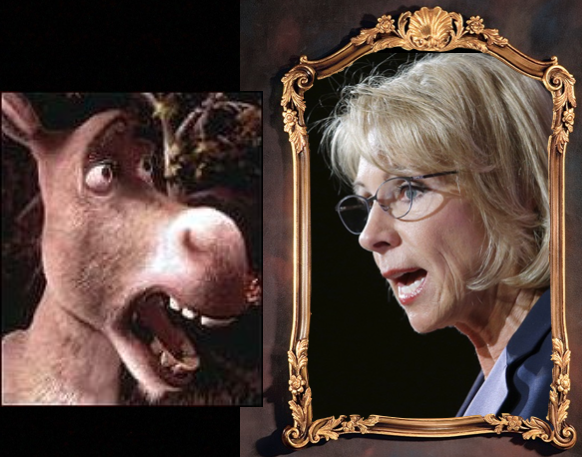
Democrats for Education Reform (DFER) put out a new video about what they think it means to be an education progressive.


And by the political action committee’s definition, Betsy DeVos may be the most “progressive” education secretary ever.


She champions “public charter schools.” Just like them!


She is in favor of evaluating teachers on student test scores. Just like them!


She is a booster for “holding schools accountable” through the use of standardized tests. Just like them!


And she loves putting public tax dollars into private hands to run schools “more efficiently” by disbanding school boards, closing public debate and choosing exactly which students get to attend privatized schools. Just like… you get the idea.


But perhaps the most striking similarity between DeVos and DFER is their methodologies.


DFER announced it again was going to flood Democratic races with tons of campaign cash to bolster candidates who agreed with them. That’s exactly how DeVos gets things done, too!


She gives politicians bribes to do her bidding! The only difference is she pays her money mostly to Republicans while DFER pays off Democrats. But if both DeVos and DFER are paying to get would-be lawmakers to enact the same policies, what is the difference!?


Seriously, what is the difference between Betsy DeVos and Democrats for Education Reform?


Progressives in Colorado and California say it is only the word “Democrat.”


Democratic party conferences in both states passed resolutions asking DFER to stop using the name “Democrat” because the privatization lobbying firm does not represent party ideals or goals.


It is degrading what the party stands for and hurting the brand.


Why do some progressives vote third party? Because of groups like DFER.


Voters think something like – if this charter school advocacy group represents what Democrats are all about, I can’t vote Democrat. I need a new party. Hence the surge of Green and other third party votes that is blamed for hurting Democratic candidates.


The Democrats have always been a big tent party, but the canvas can’t shelter the most regressive far right bigotry without destroying the organization’s identity as an opposition party.


It is entirely incoherent to oppose Republicans by pushing for almost the same agenda.


The reason for the confusion is that DFER is not a grassroots organization. It is funded by Wall Street hedge fund managers.


It is not an authentic expression of the public’s wants and desires. It is another avenue for the mega-rich to use their power and influence to tell the rest of us what they want us to believe.


Yet DFER tries to hide this fact with various forms of propaganda. In effect, they’re trying to convince us that their ideas are what we actually believe.


For instance, the group is now offering a nationwide poll from Benson Strategy Group as proof that Democratic voters agree with DFER’s goals.


However, the questions asked to about 2,000 people on the phone are laughably biased:


“Do you believe we have a responsibility to do everything we can to give every child a great education, and does that mean we need faster change in our schools to prepare students for the future?”


Of course people are going to agree with that! It doesn’t mean people want to privatize public schools. We SHOULD do everything – including closing failing charter schools and boosting funding at struggling public schools!


“Do you agree that we can’t go back to the way things used to be in schools? Do you think we need to keep bringing in new ideas and finding new ways to improve schools?”


Of course we need new ideas, but charter schools and standardized tests aren’t new ideas! We’ve been doing that nonsense for decades and they haven’t helped a bit. In fact, they’ve made things worse!


“Do you think funding alone is enough to give our children the education they deserve? Do you also want to see new ideas and real changes to the way public schools operate?”


Of course schools need more than just additional funding. But let’s not minimize funding equity. Students of color will never get an equitable education until we pay for the resources they need to succeed. The poor will never catch up to the rich without money to provide the services they need to learn.


Moreover, blanket statements disparaging public schools before asking about school privatization invites bias against public schools and bias in favor of privatization.


When you couch privatization as “more options” and “choice,” who doesn’t want that? But it’s not what you’re offering.


Giving administrators the ability to accept or deny my child into their school is not “more options” for me. It is greater choice for them.


Slashing funding at the public school because its finances got gobbled up by the neighborhood charter is not “choice” for me. It is providing alternative revenue for the corporations that run the charter school while my only option is to accept fewer resources for my child.


None of this is progressive. None of this is truly supported by grassroots people or organizations.


Civil rights groups like Journey for Justice and even the National Association for the Advancement of Colored People (NAACP) oppose school privatization and high stakes testing.


This is the meat and potatoes of DFER.


The only difference between these alleged Democrats and DeVos is that the Trump administration also champions school vouchers.


But both charters and vouchers involve sending public tax dollars to schools that are privately run. Both involve stripping taxpayers of control over how that money is spent until all we have are parents moving their children from school-to-school in a desperate attempt to find one that does a good job and will also accept their child.


That is not the progressive ideal.


Progressives want to make every public school excellent. They want all children to have the resources they need to succeed. They want to assess students, teachers and the system fairly to clearly understand what children are learning, what educators are doing to help them learn and how administrators and school directors are enabling that success. They want innovation – not the same old corporate-minded top-down policy failures of the past decades. They want technology as a tool to bridge understanding and not as an end in itself to drive the curriculum. They want an end to the school-to-prison pipeline. They want truly integrated schools, not the current segregated system where Cadillac funding goes to rich white districts and the scraps are thrown to the poor brown ones.


Yet DFER, these so-called Democrats, support none of this.


And they’re spending millions of dollars to convince our lawmakers not to support it either.


Politicians can’t keep accepting their dirty money and expecting grassroots voters to continue to support them.


To paraphrase Matthew, no one can serve two masters. If lawmakers are taking sacks of cash from billionaire hedge fund mangers, they aren’t going to listen to you or me.


They can serve their constituents or mammon. Not both.


So if Democrats want strong support in the coming elections, they need to do the progressive thing.


Stop accepting bribes from dark money influence peddlers like DFER.


Like this post? I’ve written a book, “Gadfly on the Wall: A Public School Teacher Speaks Out on Racism and Reform,” now available from Garn Press. Ten percent of the proceeds go to the Badass Teachers Association. Check it out!

WANT A SIGNED COPY?

Click here to order one directly from me to your door!
book-2

Thank You, Wealthy Robber Barons, for the Freedom to be a Free Rider!


wealhty-myths-business-man_large


Wow! I now have a real choice when it comes to my union!


At least, that’s what the email I got from the Mackinac Center says!


Now that the Supreme Court ruled 5-4 in the Janus vs. AFSCME case, I don’t have to pay any of my hard earned cash to my union!


I can be a free rider! I can get all the advantages of belonging to a union – higher salary, better benefits, better safety precautions – and I can leave it to the rest of the membership to pay for me!


That’s amazing!


And what’s even more amazing is who is sending this email to me!


I mean the Mackinac Center is funded by Betsy DeVos and her family, the Koch Brothers, Eli Broad, the Scaifes, and the Walton family!


Who would have ever thought some of the richest people in the world would take an interest in my union membership!?


How nice of them!


I’m merely a public school teacher! In my more than a decade in the classroom, they’ve spent billions of dollars to weaken my profession!


They lobbied for education funding nationwide to be gutted so they could get another tax cut!


They invested in charter and voucher schools and then demanded we build more of these privatized institutions with little to no accountability so they could rake in record profits!


They’ve weakened education at schools serving the highest populations of students of color and then benefited when those same kids turned to crime and were incarcerated in their private prisons!


Instead of holding politicians accountable for inequitable funding and instead of supporting teacher autonomy, they forced high stakes standardized testing and Common Core on me and my students!


They demanded my administrators undervalue what I actually do in the classroom but instead evaluate me based on my student test scores – so being given struggling students means I’m somehow a worse teacher than the person across the hall with the honors class!


They did all that but suddenly they’re concerned about my freedom to withhold union dues!?


Well Golly!


Jeepers!


Gee Willikers!


Goodness gracious and bless my soul!


I must have been wrong about these fellers and these ladies all along!


They really DO care about little people like me!


Did you know that a 2011 study by researchers at Harvard and the University of Washington concluded that higher union membership encourages higher pay across the economy!?


It’s true!


They said the decline of unions accounts for as much as one-third of the increase in wage inequality since the 1970s!


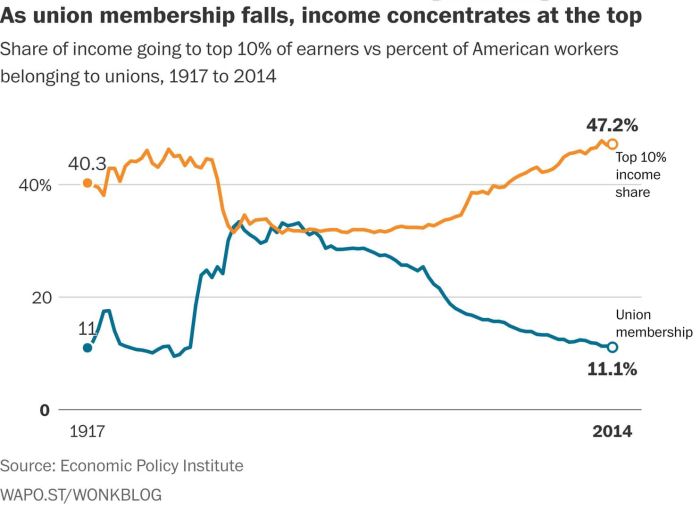
According to the Economic Policy Institute, when union membership goes down, the wealthy make more money! Conversely, the more union membership goes up, the less money goes to the wealthy!


6BILJESJ744BVLL2QVZYGJRNCM


And despite all that, the rich are concerned that I have the right to stop paying union dues!


I mean if I stop paying my dues and my fellow working stiffs stop paying their dues, then my union might just have to close up shop!


And that would mean my wages would go down!


But these same rich people who just sent me an email would see their investments go up!


They’d take home sacks of cash! So much money that they’d probably drop some and maybe I might be able to pick up a few pennies they leave on the curb!


Isn’t that great!?


You know public sector employees including firefighters and police, and teachers like me are the largest sector left of the workforce still represented by unions!


According to BLS statistics, 38 percent of public sector employees are represented by unions!


It’s true!


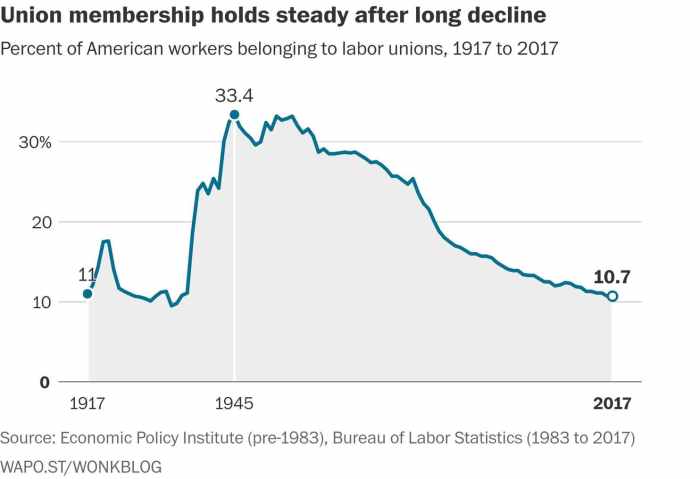
Back in 1945, union membership nationwide was at its highest rate of 33.4%! That means back then about a third of all American workers belonged to a union!


Last year it was down to 10.7 percent!


YC4GHPZ5MI5DHNQVM2TN4E4JZI


In the intervening years, manufacturing jobs have declined, blue collar jobs have been outsourced and both political parties have passed laws making it harder to unionize and collectively bargain!


But thank goodness I now have the right to get something for nothing from my union!


That’s going to perk things right up!


Sure, numerous studies have shown that declining union membership is one of the major causes why middle class wages have remained basically flat! But I get to keep a hundred bucks in my pocket so everything’s square!


One thing worries me, though!


I’m not sure many union workers are going to take advantage of this new freedom!


Don’t get me wrong – I don’t agree with everything my union does! No one could say that!


I don’t agree with everything my government does, either, but I still pay taxes!


And I wouldn’t stop paying taxes even if I could! I like being an American citizen, and I like much of what my government provides by way of our military, infrastructure and social programs!


It’s the same with my union!


I mean I LIKE earning higher wages! I LIKE getting better benefits! I LIKE knowing I work in a safe environment!


And when I have a better working environment, my students have a better learning environment!


I doubt many of my co-workers are going to stop paying their dues just because they can!


UWLMMCVEKY3ZFDE5K6LGDY42PE


We’re not stupid! We know that if you want union benefits, you have to pay union dues! The Supreme Court can say whatever it likes! It can’t legislate passed reality!


Moreover, who would want to associate with a co-worker who refuses to pull his or her own weight!?


If I found out one of my colleagues was leaving it to me to pay for both of us, I’d throw a fit! I wouldn’t associate with that person!


If he or she came to my room asking for advice, I’d tell them to get lost! I wouldn’t eat with them at lunch, I wouldn’t chat about their day, I’d give them their walking papers, myself!


Frankly, the social cost would be higher than just paying your union dues!


So thanks anyway, Mackinac Center! Thanks anyway, Charles and David Koch! Thanks anyway, Betsy DeVos!


I’m sticking with my union.


36468177_10156001729458860_2645036208874323968_n


Like this post? I’ve written a book, “Gadfly on the Wall: A Public School Teacher Speaks Out on Racism and Reform,” now available from Garn Press. Ten percent of the proceeds go to the Badass Teachers Association. Check it out!

WANT A SIGNED COPY?

Click here to order one directly from me to your door!
 

book-2


I Voted for Jill Stein. Was I Wrong?

jill-stein-green-placard


On November 8, 2016, I had a heart attack.


That’s not a metaphor.


I went to vote. I went to the doctor. I was sent to the hospital.


How much of that was a result of the Presidential election? I will never know.


But whenever I think back on that day, I am filled with a sense of bone-deep sadness.


After only a little more than a year in office, Donald Trump is already the worst President of my lifetime – and that’s saying something after the disaster that was George W. Bush.


Yet today our country is separating parents and children seeking asylum on the border and locking them away in detention centers. Nearly every cabinet secretary is an incompetent plutocrat put in office to dismantle the department in which they’re in charge. Meanwhile, Trump insults traditional allies and consorts with dictators all over the globe. And nationwide white supremacists of all stripes are emboldened, on the rise, and openly running for office.


I wish there is something I could do to go back in time and change the results of that day. I wish there was something I could do to stop Donald Trump from being elected President. And though I did not vote for her, I would do anything to have Hillary Clinton defeat him.


On that day, though, I voted for Jill Stein.


There’s nothing I can do about that now.


I imagine going back in time and telling myself not to do it. “Go vote for Hillary,” I imagine Future Me telling an ailing younger version.


Yet even now, I’m not sure if I’d say that to myself.


Go vote for Hillary? Would it have made a difference?


Factually, no. One more vote wouldn’t have put her over the top in my home state of Pennsylvania.


But I wrote articles advising readers to do like me and vote Jill Stein. Does that mean I’m responsible for every Stein vote cast in the Keystone state?


No, not really. I may have influenced some people. But I certainly didn’t influence them all.


I suppose the bigger question is this: did Stein spoil the 2016 election for Clinton?


Let’s look at some numbers.


In Pennsylvania, the results went like this:


Screen Shot 2018-06-20 at 10.21.41 AM
Source: New York Times.


Trump got 2,970,733 votes.


Clinton got 2,926,441 votes.


So he won the state by 44,292 votes.


Stein got 49,941 votes – 5,649 more than Trump’s margin of victory.


So if every Stein voter had cast a ballot for Clinton, she would have won the state – though she’d still lose the Presidency by 10 electoral votes.


But if the same process were repeated even in a few other swing states Clinton lost, the result would change. Clinton would have won and be sitting in the Oval Office right now.


Those are just facts. Or at least they’re facts manipulated in a game with counterfactuals.


If this had happened, then this other thing would have happened, too.


However, it is rarely so clear even with numbers.


For instance, Stein ran in 2012, too. She ran against Obama and Romney. She got 20,710 votes in Pennsylvania.


Screen Shot 2018-06-20 at 10.22.27 AM
Source: New York Times


That’s tens of thousands of Green voters who didn’t cast a ballot for centrist Obama. I don’t think it’s fair to assume they would have voted for centrist Clinton, either.


So if we subtract that 20,000 from Stein’s 2016 totals, (49,941 – 20,710) you get 29,231 new people who voted Green who didn’t do so in 2012.


That’s less than Trump’s margin of victory (44,292).


So even if every NEW Stein voter cast a ballot for Clinton, Trump still would have won the state.


The point?


I don’t think it’s factual or fair to assume Stein or Stein voters gave Trump the election.


If I had voted for Clinton, even if I had advised my readers to vote for her, the end result probably would have been the same.


These are the things I think about in the middle of the night when sleep won’t come.


Is there anything I could have done to change things? In trying to make things better, did I make things worse?


I don’t assume I have that much power – either way.


I’m just a school teacher with a blog.


And that’s why I voted for Stein.


Hillary Clinton made her name politically going against teachers unions. She and her husband have done quite a lot to weaken my profession and the school my daughter attends.


The national teachers unions may have supported her run for President, but they did so without fairly polling members. Her entire nomination process was marred by unfair and undemocratic practices by the Democratic Party that left many progressive voters who favored Bernie Sanders feeling left out and silenced.


I still think THAT more than any scribbling on my blog contributed to her loss.


Compared to Trump, Barack Obama was one of the best Presidents we’ve ever had. But compared to Trump, so was George W. Bush. So would be an inanimate carbon rod!


However, Obama was not particularly good for education. He and the corporate Democrats favored every anti-union, pro-privatization scheme they could. What a missed opportunity!


You’d think our first African American President might do something about school segregation – which has been on the rise in the last few decades. Instead, he helped make it worse by promoting charter schools. You’d think he might do something to stop the school-to-prison pipeline. Instead he helped lubricate it by championing high stakes standardized tests.


I think that’s another reason Clinton lost. Many of us were fed up with Obama’s neoliberal policies and wanted a candidate who might change course. Clinton promised only more of the same.


Don’t get me wrong. In retrospect, more of the same sounds lovely. Give me that old time Obama neoliberalism over Trump’s neo-fascism, any day!


But back in 2016 I thought we had a chance for something more – real hope and change. Was I wrong to vote for a candidate who promised to end high stakes testing and school privatization? Was I wrong to vote for a candidate who promised to fairly fund public schools, provide free college for all and end all student debt?


Maybe.


I suppose I should have been more frightened of Trump back then. But my anger at the Democrats who continually stabbed me and other progressives in the back outweighed my fear of this buffoon.


Perhaps I was wrong in that.


I don’t think it’s too much of an assumption to say we all underestimated Trump. We all underestimated how many people in this country would vote for him.


So was I wrong to vote for Jill Stein?


I still don’t know.


I’m sure many people will criticize me for this article. They’ll blame me for every horrible thing Trump does. If I have any point here, it’s that there’s plenty of blame to go around.


Perhaps we’d do better fighting against Trump than fighting amongst ourselves.


I still believe there is a silent majority of Americans for whom the status quo is unacceptable. Most of us don’t want a wall on our border – we want healthcare for all. Most of us don’t want families separated and undocumented immigrants scapegoated and rounded up – we want a path toward citizenship. Most of us don’t want our democracy subverted and the wealthy to have a greater say in our policies – we want freedom and justice for all.


We just need a way to find each other again. We need to find a way to look past any political, social, racial, gender or cultural differences and find a common humanity.


What better way to do that than in a common cause?


I hope you’ll join me by stopping the recriminations and take on the fight.


We may never fully solve the riddle that was the 2016 election.


There are political and social lessons to be had. But the most important thing is to remember the value of unity and to hold on to each other tight.


We’re all we’ve got.


Like this post? I’ve written a book, “Gadfly on the Wall: A Public School Teacher Speaks Out on Racism and Reform,” now available from Garn Press. Ten percent of the proceeds go to the Badass Teachers Association. Check it out!

WANT A SIGNED COPY?

Click here to order one directly from me to your door!
book-4

African Immigrants Excel Academically. Why Don’t African Americans?

static.politico.com


The presence of melanin in your skin shouldn’t affect your academics.

But in America, it does.

On average, black students achieve less academically than white students. They have worse grades, lower test scores, meager graduation rates and fewer achieve advanced degrees.

The question is – why?

Why does pigmentation matter so much in this country? What about it brings such negative academic consequences?

This is especially apt since it doesn’t apply to foreign born black students who come here to study or those who recently emigrated here.

In fact, they see just the opposite effect – they earn some of the best grades, have some of the highest test scores, and disproportionately graduate from high school and achieve advanced degrees.

This is something that distinguishes foreign-born Africans – especially those from Sub-Saharan Africa – even from other immigrants. African immigrants sit near the top of the scale of so-called model minorities.

According to a report by Christine Gambino and associates at the Census Bureau, 41% of the African-born immigrant population earned a bachelor degree compared with 28% of the overall foreign-born population in the US.

The four African birth countries with the highest percentages of bachelor and higher degrees among their expat populations in the US are Egypt at 64%, Nigeria at 61%, South Africa at 57% and Kenya at 47%.

So why the difference?

Obviously, it’s not skin color.

Part of it seems to be qualities selected for in the immigration process, itself.

We don’t let just anyone come to the U.S. We have rigorous qualifications and prerequisites that have to be met. For instance, students who want to study here must get high marks on the SAT, Act and/or the TOFFEL – the language proficiency test. To do that, they need the money and resources to study for these exams. They are already some of the best achievers in their native countries.

Moreover, there is a huge cultural difference coming from Africa as opposed to coming from the United States. Native-born Africans have to deal with the effects of post-colonialism. It wasn’t so long ago that European nations conquered and plundered the African continent for gold and resources. That era has mostly ended, but those living there still have to deal with lingering consequences. This has an effect on everything from gender, ethnicity, class, language, family relationships, professions, religions and nation states.

However, native-born Africans do not have to navigate the world of American white supremacy. The affects of being black in this country may be much more harmful than negotiating post-colonialism.

For instance, most mainland Africans enjoy intact cultures. They are not the product of families that were torn apart, religions that were displaced and entire belief systems, world views and genealogies that were stolen.

Nigerian cultures, in particular, highlight the importance of learning.

One typical Nigerian saying goes like this:

“The best inheritance that a parent can give you is not jewelry or cash or material things, it is a good education.”

This is why academics in Nigeria are widely supported, mandatory and free.

Meanwhile, in America native-born black students grow up in a much more stressful and unstable environment. This translates to academic struggles.

For one, they are the victims of educational apartheid. Brown v. Board is more than 60 years old, but American schools have become increasingly segregated by race and class. Black students receive fewer resources than whites and their schools struggle to provide the same quality of education. Moreover, they are the target – either directly or indirectly – of privatization schemes that result in less control over their own schools and the further reduction of resources through charter and voucher schools that can cut services and pocket the savings as profit.

However, the problem is not just systemic. I hate to say it, but sometimes even American teachers put up obstacles to black students success due to (often unconscious) bias.

Most teachers are white. They have certain societally reinforced expectations of black students. When these children struggle, they are more often put into special education and stigmatized for their differences.

It is no doubt that black students are more often disciplined and suspended than white students – numerous studies have shown this.

I think this is due at least partially to white teachers’ expectations. It is tempting to see black student behavior as negative in the default. We too often label them “bad kids” and then try to find evidence to support it instead of giving them the benefit of the doubt or assuming they’re smart and well-behaved until proven otherwise.

African immigrants don’t have to deal with these stigmas to nearly the same degree. They don’t get the same negative label. They have more support from close-knit families. They have more positive role models including more college graduates in the family.

Another obstacle for American born black students is a cultural imputation against academic achievement. Doing well in school can be seen as “acting white.” In order to maintain popularity and prestige, they are steered away from the exact things that immigrant Africans are steered toward.

The poverty of American blacks plays a huge factor, too. Even in moderately successful African American homes, parents or guardians are often working multiple jobs or long hours to make ends meet. This reduces their ability to oversee their children’s homework and monitor academic progress.

It seems then that the so-called proficiency gap between native-born black and white students in this country is due to generational poverty, white racism and coping mechanism in their own culture.

If we want to help American-born black students, we need to realize, first, that this problem is not due to inherent racial deficiencies. It is the product of class warfare and white supremacy.

As such, it can be cured through progressive economic policies and anti-racist efforts.

The strongest argument for reparations comes from a recognition of the lingering effects of our history of slavery, segregation, Jim Crow and the prison industrial complex.

These are daunting problems, but they can be solved.

It just takes an honest appraisal of the issues and the social will to make things right.


Like this post? I’ve written a book, “Gadfly on the Wall: A Public School Teacher Speaks Out on Racism and Reform,” now available from Garn Press. Ten percent of the proceeds go to the Badass Teachers Association. Check it out!

WANT A SIGNED COPY?

Click here to order one directly from me to your door!

book-4

Let’s Hear It For Black Girls!

Natural-Hair-600x398


“Sisters are more than the sum of their relative disadvantages: they are active agents who craft meaning out of their circumstances and do so in complicated and diverse ways.”

-Melissa Harris-Perry, Sister Citizen (2011)


Let’s hear it for black girls!


They are beautiful, bold, irrepressible and – above all – so incredibly strong.


Black girls will outlast any struggle, face down any adversary, and – more often than not – triumph in the face of adversity.


I know. I’m a public school teacher, and many of my best students are black and female.


That doesn’t necessarily mean they get the best grades. Some earn A’s and some don’t. But when it comes to pure willpower and the courage to stand up for themselves, no one beats a black girl.


Those are rare qualities nowadays. Sometimes it doesn’t make these girls easy to have in class. But think about how important they are.


As a teacher, it sure makes your life easier when students do whatever they’re told. But in life, we don’t want citizens who simply follow orders. We want people who think for themselves, people who question directives and do only what they think is right.


In short, we need people who act more like black girls.


As a white male, it’s taken me some time to come to an appreciation of black womanhood. But after about 15 years teaching in public schools serving mostly poor, minority students, appreciate them I do.


Think of the challenges they face and often overcome. Not only are they subject to the same racism as black males, they also have to function under the burden of male patriarchy and the quiet sexism that pervades American society.


According to a study entitled Unlocking Opportunity for African American Girls by the NAACP and the National Women’s Law Center, African-American girls suffer from higher rates of sexual violence and intimate partner violence than white women, high rates of sexual harassment in school, and they are more vulnerable to sex trafficking than any other group.


In addition, more than one-third of black female students did not graduate on time in 2010, compared to 19 percent of white female students. However, there has been progress. Despite a lingering graduation gap, black girls have actually increased their graduation rate by 63% in the past 50 years, according to the National Coalition on Black Civic Participation. Unfortunately, this hasn’t meant they’ve built up more wealth. In 2010, single black women’s median wealth was just $100 compared to single white women’s wealth, which was $41, 500.


And it only gets worse the closer we look at it. Black women are the only group whose unemployment rate remained stagnant at 10.6%, while the overall rate for workers in the United States dropped from 7.2% to 6.1% between August 2013 and August 2014, according to a National Women’s Law Center report on jobs data. More than a quarter of black women live in poverty, according to the Center for American Progress, despite making up a larger portion of the workforce than white and Latina women.


Despite such problems, black women start businesses at six times the national average, according to the Center for American Progress. And this is even more startling when you realize they are also more likely to be denied small business loans and federal contracts.


It’s one of the reasons black girls are so special. Those who somehow survive the incredible pressures society puts them under often become super achievers. They can do almost anything.


Perhaps it’s an internalization of the advice black women often get from their mothers. They’re frequently told they have to work harder and do more just to be noticed, and they often do. In my classes, I’ve had more black girls achieve grades over the 100% mark than any other group. And that’s not easy to do. But it’s typical black girl power – they try to be more than perfect.


However, it takes a toll.


They are more likely to die of breast cancer than any other racial group, according to the Centers for Disease Control and Prevention. The reasons are complex, but include the fact that black women experience delays in diagnosis and treatment. Like many oppressed people, they often internalize that oppression – they don’t take care of themselves and the stress can be a killer.


And for those who can’t overcome the unfair pressures we place them under, the results are even worse. In school, I’ve seen precious and valuable girls thrown into a sometimes cruel and uncaring disciplinary system – a system from which it can be hard to extract yourself.


Some teachers and schools when faced with the independence and forthrightness of black girls don’t know how to handle them. In such cases, these girls are often disciplined out of all proportion to their population size in school districts. For example, in New York City, black girls made up only 28% of the student body during the 2011-2012 school year, but were 90% of all girls expelled that year from the city’s schools, according to the “Black Girls Matter” report by the African American Policy Forum. Similarly, black girls made up only 35% of the Boston public school population that same year, but accounted for 63% of all girls expelled.


In short, we’ve got a lot of work to do to dismantle a national system of racism and white privilege. But even beyond that, as a society we need to recognize and appreciate black girls. A little bit would go a long way.


We need to acknowledge the unique talents and skills of these amazing young women. And so much of it starts with a matter of conceptualization in the white adult mind.


Instead of seeing them as defiant, we need to recognize their independence. Instead of seeing them as challenging your authority, you need to see them as asserting themselves and standing up for their beliefs.


Those are all such positive qualities. How many times do adults complain that kids today don’t care enough about things – their apathy, their entitlement, their indifference. As a group, black girls are nothing like that! They are exactly the opposite! But instead of praising them for it, instead of valuing them, white adults often feel threatened and respond by trying to crush what they perceive as a rebellious and disruptive element in their classrooms or in society.


That’s why I love the Black Girl Magic movement.


It was created by CaShawn Thompson to celebrate the beauty, power and resilience of black women. It started as a simple social media hashtag – #BlackGirlMagic.


It embodies a theme I’ve already touched on – the irrepressible spirit of black women, how they are faced with an overwhelming mountain of challenges but somehow manage to overcome them and become tremendous overachievers! It’s a celebration of everything good and positive about the black female experience.


I think it’s just wonderful.


How can you not look at someone like Misty Copeland and not appreciate her success? She’s the first ever black principal at the American Ballet Theatre. She has shot to the top of one of the whitest, wealthiest and most elitist arts you can pursue.


Or how about Gabby Douglas? You can’t watch videos of the amazing Olympic gymnast, who at only 17, absolutely wowed the world with gold medals despite internet trolls hating on her hair.


And if we’re talking undue hate and criticism, no woman in recent memory has suffered as much as Michelle Obama. Whatever you think of her husband’s Presidency, you have to admit Michelle was a model of grace under pressure. How many times did haters pick apart her appearance while she just got on with the business of making school lunches healthier and being a tremendous role model for children of color and women of all races and creeds.


Or Ava DuVernay, the amazing director snubbed at the Oscars for her film “Selma.” What did she do? She made another amazing film “13th” about how the 13th Amendment ended slavery but opened the door to the prison industrial complex.


That’s Black Girl Magic. And it’s actually pretty common.


So come on, fellow white people. Let’s celebrate black girls.


Stop trying to touch their hair or compare them with Eurocentric standards of beauty. Stop, pause and actually see them. See them for who and what they are.


Black girls are amazing and make the world a better place.


Here’s to all the incredible and irreplaceable black girls in my classes and in my life!


You go, girls!

What If Clinton and Trump Debated Education Policy?

bbxdrs0-img

The second Presidential debate was a bust for the millions of Americans who care about public schools.


Instead, we got Donald Trump mansplaining away his vagina-grabbing days. We got Hillary Clinton blaming Machiavellian duplicity on a movie about Abraham Lincoln. But not a word about K-12 education.


After all these debates in the primary and only one more debate left in the general, it seems a pattern is emerging. The media just doesn’t ask the kind of questions parents, teachers and students really care about. After all, there is no defined position staked out by each political party on schools and schooling. Both sides are kind of the same. Asking about it wouldn’t support the usual narratives about so-called “conservatives” and “liberals.”


So once again I appeal to the power of education bloggery to give you what I imagine a debate on this subject might sound like from Clinton and Trump.


Hold on to your pussies. Here goes…


Me: Thank you, Secretary Clinton and Mr. Trump, for being here today to talk about education issues.


Clinton: You’re very welcome.


Trump: (sniff) Yes. I am very glad to be here. No one cares more about education than me. Okay?


Clinton: Well, hold on there, Donald. I’ve spent my entire career fighting for kids and families…


Trump: (sniff. sniff.) What about the kids and families of Benghazi?


Me: O-kay! Let’s begin. Shall we? This question is for both of you. How would you describe your education vision? Mr. Trump, you won the coin toss, so you go first.


Trump: Thank you, Steven. And let me just say I have lots of education vision. My education vision is just tremendous. I think public schools are the most important thing in our country. The taxes we pay for them are just incredibly high. No one pays more taxes for schools than we do. Not the French. Not the Chinese. Not the Russians. And as President I would make America great again by cutting taxes on schools. The business community doesn’t need this. It hurts competition and that hurts education. And there are too many taxes for you regular people out there, too. Unlike my opponent, she’s just terrible. Isn’t she, folks? I’d cut taxes while she would raise them.


Me: Your time is up, Mr. Trump.


Trump: …and I just want to say this one last thing, Steven. Hillary Clinton is a liar. And I would never lie like her. Ask Bernie Sanders about that.


Me: Thank you, Mr. Trump. Secretary Clinton? Same question.


Clinton: Thank you, Steven. I want to take this opportunity to thank you, personally, for being here. As a country, we don’t appreciate teachers enough. You are our number one resource. And a renewable resource. Right? You can clap here, People. Ha! Ha! But seriously my vision for education is a strong one. I’ve fought for children and families all my life as First lady of Arkansas, as First Lady of the United States, as a U.S. Senator and as Secretary of State. You might say that I am the most qualified candidate for President in U.S. history.


Me: Thank you. Madame Secretary. Though I wish you had answered the question.


Clinton: Oh I will answer the question. That’s why I have been endorsed by the largest teachers unions in the country…


Me: Next question. Secretary Clinton, you mention your experience. Some have criticized you for putting the needs of Wall Street ahead of working families. How would you prioritize the needs of students and parents over the corporations and edu-tech industry?


Clinton: As you said, Steven, I’ve been around a long time. I’ve seen a thing or two. Like you, I’ve raised a daughter and know how to navigate the pitfalls of our education system. And, honestly, I don’t think we have to have a conflict of interests between business and education.


Trump: Crazy Bernie says differently.


Clinton: …I see our public schools and public charter schools working together hand-in-hand to provide our children with a world class education. You know my husband and I have long supported…


Trump: You should be in jail.


Clinton: Donald, I think this is my time. Is this my time, Steven?


Me: Yes, Mr. Trump. Please stop interrupting. You’ll have a chance to respond.


Trump: Sorry, Steven. I’m just not used to a woman talking for so long. It’s exhausting.


Clinton: Anyway, I’ve always been a booster for higher academic standards. And as President I would do everything I can to make sure our students get the best education possible.


Me: Mr. Trump. Same question.


Trump: What was that question again, Steven? I kind of forgot while I was listening to that long speech she just gave. Talk. Talk. Talk. This isn’t the Bengazhi commission, Hillary, but I wish it was. Trey Gowdy…


Me: Mr. Trump. The question was “How would you prioritize the needs of students and parents over the corporations and edu-tech industry?”


Trump: Students and parents? They’re just wonderful. We need more students, but I guess that’s where parents come in. That’s why I had so many kids, and they’re all so successful. We didn’t stop with just one. We raised one, two, three… a whole bunch of them. And they’re just tremendous. So I would definitely make sure their needs were being met. Their needs are my needs and so, of course, I would make sure they were being met. You know, perhaps she should have spent more time meeting her husbands needs. Do you know what I mean?


Me: Mr. Trump, the question was about corporations servicing public schools.


Trump: (sniff.) In that case, I’d service corporations. I believe in business. I’ve been a businessman all my life. Very successful. No one knows success like Trump. And I’ve just got to say we all might have been better off in the ‘90s if she had serviced her husband more. I have to tell you.


Me: You are disgusting.


Trump: (shrugs) This debate is rigged.


Me: The next question is for you, Mr. Trump. Whenever you’ve spoken out on education issues, you’ve consistently criticized Common Core. As President, what would you do about Common Core and what role do you think is appropriate for a President in setting national education policy?


Trump: Common Core? I’m against it. It’s no secret. I think it’s been just terrible. It’s been a disaster. A national disaster. And one of the first things I’d do – well the first thing I’d do is throw you in jail…


Clinton: Donald, I…


Trump: But after that I’d get rid of Common Core. There would be no more Common Core. Our kids don’t need Fed Ed. Period. They need more choice. Parents should get to pick the schools they send their kids to. We should stand back and let the parents choose. That’s what I did for Ivanka and my other children and they turned out just fine. Don’t you think they turned out fine, folks? You all saw them on my hit TV shows ‘The Apprentice’ and ‘Celebrity Apprentice.’ Those were great shows. Award-winning TV. Must See Television. Those were good days.


Me: Secretary Clinton. Same question.


Clinton: Thank you, Steven. I appreciate the quality of your questions. It’s clear that this debate has been put together by educators and not representatives of the media. Though I thoroughly support the field of journalism as a profession and a calling.


Trump: You never had a TV show.


Clinton: As to Common Core, I just want to ask Donald something.


Trump: (pops a Tic Tac) It’s surprising you’re going to give up your time to let me talk. I have to say. This is the first time you’ve let somebody else talk…


Clinton: How do you propose to get rid of Common Core when the Every Student Succeeds Act (ESSA) gives that power back to the states?


Trump: (sniff.) E-S-S-A? Never heard of it. I’ll have to ask Mike Pence about it. But the President can do what he wants. You know the old saying, folks: it’s good to be the king.


Clinton: You talk a good game about states rights, Donald, but when you propose getting rid of Common Core, you’re proposing a federal policy that takes away states rights. Every state legislature has the power to change academic standards or retain…


Me: Secretary Clinton, that may be true, but the question was meant for you. What would YOU do about Common Core as President?


Clinton: Nothing. I would respect the law.


Trump: THAT’S a first!


Clinton: I would encourage states to adopt high academic standards and if those standards were the same as Common Core then so be it.


Me: How would you encourage them? By withholding federal grant money like the Obama administration did?


Clinton: I… I think the federal government has a strong role to play in the education of our children. But I would not violate the spirit of the ESSA, unlike Donald. He says he’s for states rights but he calls for a bigger federal power grab than anything my party has ever participated in.


Trump: (sniff.) Wrong.


Me: Okay. Next question. Since we’re talking about the federal role in education, let me ask you both what role you see for the U.S. Department of Education under your administration and whom would you nominate as Education Secretary? Secretary Clinton. You go first.


Clinton: Thank you, Steven. As I said, I believe in the Department of Education. I believe in the Secretary of Education. I believe in teachers. And if we’re going to give our students a leg up – all of our students – then we need to strengthen our public schools and public charter schools. That’s where the Department of Education comes in. Not to enforce education policy but to set the agenda. It helps the states get things done through competitive grants, research and data collection.


Me: So whom would you nominate to head the department?


Clinton: I would have to talk about that with my advisors…


Me: Give us the shortlist.


Clinton: Perhaps someone like John King.


Me: John King!?


Clinton: He’s already there and as my daddy said, if it ain’t broke do not fix it.


Me: Mr. Trump. Same question. What in your opinion is the federal role in national education policy?


Trump: Well, Steven, I don’t think there is one. You know the government that governs best governs least. I learned that from my good friend, Gary Busey. You know? Come to think of it, he’d make a pretty good Secretary of Education, but no. One of the first things I would do is completely disband the Department of Education. On day one. Gone.


Me: So what would happen to Pell Grants, for example, and all the federal money that helps buoy our public schools?


Trump: Do we need it? I was able to raise my family without any help from the federal government.


Clinton: Unless you count your nine bankruptcies, and using loopholes to avoid paying any federal income taxes for over a decade at least.


Trump: I did it all on my own. My father gave me a loan but I made it pay out for me so I could build the Trump empire.


Me: Didn’t you inherit most of your money?


Trump: I’m surprised at you, Steven. I expect something like that from her. She’s bleeding from her… whatever. But you should know better. You think Americans are stupid. And I just think they are strong enough to do it on their own. They don’t need the government to help. We don’t need the regulation, the taxation. Parents can use state money to choose and that will be good enough. Let the free market decide.


Me: Okay. Next question. Standardized testing has come under fire for assessing children’s economic situation more than what they’ve learned. Would you continue to mandate annual testing for all public schools? Mr. Trump?


Trump: I dunno. I’ll have to ask Pence on this one.


Me: You have to ask your vice president what to think on standardized testing!?


Trump: Yes. I mean no. I’m not really sure. Could you make this one multiple choice?


Me: Secretary Clinton? Same question.


Clinton: Standardized testing has been an important part of how we hold school districts accountable. While I understand the concern about over-testing, I think it is important we keep testing our children in grades 3-8 and once in high school. It helps us make sure our schools are meeting all our students’ needs and not violating their civil rights. Many of my former colleagues in the Senate expressed the same concern you mention, Steven, but changed their minds when they were approached by various civil rights organizations…


Me: Many prominent civil rights organizations such as Journey for Justice and various chapters of the NAACP still oppose testing. Why do you chose to side with the organizations who are beholden to the testing industry for their funding?


Clinton: I think… maybe we can give the situation more study and find solutions that would satisfy both the civil rights organizations and testing critics. But it is imperative that schools are held accountable…


Me: What about politicians? Shouldn’t they be held accountable for adequately funding our public schools? That’s why schools struggle. They serve poor populations and don’t have the resources to help their kids excel.


Clinton: This is something you’re obviously passionate about. I have always listened to teachers and with the NEA and AFT would strive to work together to find a solution that’s mutually beneficial to everyone.


Me: Okay. Last question. Since you brought up civil rights, Secretary Clinton, one of the biggest issues facing our schools today is segregation. Many modern schools are as segregated or more segregated by race and socio-economic status than they were before Brown vs. Board. What would you do about that?


Clinton: That is a problem. We must make sure that all our students needs are being met. We cannot let our schools revert to old bad habits. We cannot have schools for blacks and schools for whites. Black lives matter – even when they’re in school. As President, I would make sure everyone had the opportunity to go to the best schools possible. Students who don’t get what they need at school end up on the streets. They feed the school-to-prison pipeline. They end up lost, and many of them become super-predators.


Trump: (laughs)


Me: Isn’t that the term you used as First Lady to describe black youth when your husband’s mandatory sentencing policies expanded our prison population exponentially?


Clinton: Yes and I stand by that statement. We need to help minorities rise above their circumstances. We need to give them a helping hand. They deserve all the same amenities my daughter had, because all lives matter…. Oh shit.


Me: Mr. Trump? Your response?


Trump: Do I have to?


Me: Yes.


Trump: Okay then. Let me just say that segregation is a bad thing. It’s terrible. I’m not exactly sure why but that’s what I’m hearing. We need to make sure only the best students get to go to the best schools and the worst students get their own schools, schools that are right for them. That’s why we need school choice to weed out the worst kids and let them go to the schools that are right for them.


Me: Isn’t that just segregation?


Trump: N…No. That was a really stupid thing to say. Too many people are just stupid today. That’s why I’m going to make America great again. We’re going to have the best schools. You won’t even believe it. They’ll be just the best anyone has ever seen. Okay?


Me: But they’ll be separate schools for blacks and whites? Rich and poor?


Trump: I’d like to pass, Steven.


Me: Okay. That’s all the time we have for today. I’d like to thank both candidates for coming…


Trump: Steven, I just want to say one last thing.


Me: O-kay.


Trump: I… uh… I never grabbed anyone’s pussy. That was just locker room talk.


Clinton: Oh please! It’s just that kind of talk that empowers rapists…


Me: Thank you both for coming…


Trump: Your husband certainly understands this, Hillary. Men like us with such big hands, we’ve never had any complaints. You know? Here let me show you. (reaches into pants.)


Me: Cut their microphones please. Call security on, Mr. Trump. Thank you, everyone, for coming. We’ll see you at the polls in November. Just remember, you picked these two assholes. We could have had Bernie Sanders but we’re left with these two tools. This is your democracy at work. We should have let Jill Stein in here to class up the joint. Oh well. Goodnight and good luck.

What My Black Student Taught Me, His White Teacher, About Black Lives

student_081910-thumb-640xauto-704

I can’t tell you how many times Darnell was in detention.

After a while, it didn’t feel right if he wasn’t staying at least an hour after school.

Darnell was late to class.

Darnell swore at another student.

Darnell copied someone’s paper.

Darnell did just about everything and anything that came to his mind. And it earned him time after school with me, his newly-minted 8th grade language arts teacher.

In a class full of mostly brown and black students, many living in an impoverished high crime Pittsburgh suburb, Darnell was the standout. Or at least his misbehavior was.

At first, he complained, but I had his mom on speed dial, and she fully supported my holding him accountable.

He wanted to do his homework during this time, but I made him do busy work instead. The way I looked at it as a young teacher just starting out, if I gave him time to do his school work, it would be a reward, not a punishment.

So I made him copy down dictionary definitions, clean the tables or put up the chairs.

And once he realized there was no way out, he did it all uncomplainingly.

But an hour is a long time, so after a while I let him work on his homework, too.

I had an awful lot of work to do, myself, during these times – piles of papers to grade and lessons to plan – so whatever would keep him quiet would be okay with me.

Unfortunately, Darnell didn’t work that way. He had questions. So many questions.

I had no time, but what else was I gonna’ do?

I answered him. With frustration at first while sitting at my desk.

Then I found myself walking over to him and standing at his table. Then I sat down next to him. And pretty soon we were doing the homework together.

But an hour is a long time, so sometimes he’d finish early. I offered to let him go.

He didn’t want to.

He’d stay and talk: “Did you see the football game, Mr. Singer?”

Or “Did you hear the new Beyoncé album, Mr. Singer?”

Or “How many kids do you have at home, Mr. Singer?”

One day I remember the last bell ringing and looking up to see Darnell at his desk doing homework. I looked back at my stack of papers before I realized – Darnell didn’t have detention today.

I laughed. “You can go home, Buddy,” I said.

“I know,” he replied. “Is it okay if I stay and get this done?”

I shouldn’t have been so surprised. But I was.

I nodded, and he stayed.

I won’t say Darnell ever became a perfect student. He just didn’t have the patience for detailed work. He was more of a big picture guy.

But after months of never turning in homework – years, really – he began to turn all of it in. And I mean all of it!

He wasn’t a great speller, but he started ending all of his sentences with punctuation. And he started all of his sentences with a capitalized word.

He wasn’t a great reader, but he did crack open a few books. Nothing too difficult or complex, but it was more than any teacher I talked to had ever seen him read previously.

At the end of the year, I remember pausing by his desk and praising him.

“Darnell, that’s some mighty fine work you did in here this year,” I said.

And he got this big ol’ grin on his face like he used to get before he was about to engage in some random act of mischief.

“Thanks, Mr. Singer. You’re a really good teacher.”

I smiled and said, “No, Darnell. You’re a good student.”

I remember looking him in the eye to emphasize it. This was a kid with a reputation. I’ll bet few teachers had ever commended him on his school work before.

Then the year ended, and he was gone.

He went on to 9th grade and did even better than in my class. The same in 10th, 11th and 12th.

Oh, sure. He was still a handful and got himself in trouble lots of times. But he did his work and didn’t fail his classes.

I kept an eye on him like I do all my students when they leave me. I try to keep tabs, but there’s always a new bunch just waiting for you at the beginning of the year.

You remember anytime you think about it, which isn’t much.

So it was years later when I heard the news.

Teachers were shaking their heads in the faculty room. The principal held a meeting to tell us about it in case any of our current students were upset, in case any of us had Darnell’s cousins, brothers, sisters, or friends.

He was only 18 when he was murdered.

Shot down in the streets from a passing car.

Police still don’t know whether he was the shooter’s target or if he was just at the wrong place at the wrong time.

The high school teachers, who knew Darnell best, said he had really straightened up his act. He had gotten into community college, wanted to be an engineer.

And they shook their heads. What else was there to say?

I walked back to my classroom and opened a file cabinet.

Inside was a bunch of dusty manila folders – one for each child I had ever made serve a detention.

It didn’t take long to spot Darnell’s. It was one of the thickest.

I opened it up and took out the stack of papers inside.

There were doodles of monsters and basketball players. There were lists of badly spelled vocabulary words in his adolescent handwriting. And there were these halting paragraphs about what he’d done to get detention and how he’d never do it again.

“I’m sorry I wuz late 2 class. I will ask to use bathrom before going.”

“i will not copy LaRonns paper. i will do it myself.”

I read through them all. Every one. I read them again and again until long after everyone else but the janitors had left the building.

I had spent so much time with Darnell.

I had poured my soul into that kid.

But what had it truly accomplished?

He is dead. A victim of his environment. Nothing but a number, a statistic, a footnote.

Just not to me.

By all accounts he had been trying to do good, trying to make something of himself. But it wasn’t enough. Bullets don’t discriminate between the hardworking and the lazy. They just do what they do.

In my mind I tried to see him walking home, a stack of books weighing him down, making him slow. I saw him walking past those ramshackle apartments and slums, that shady park with the broken benches, the street corners where you could buy heroin or pills or weed.

If he was white, would it have been different? If he was white and didn’t live in the “bad neighborhood,” would it have mattered?

If his mom didn’t have to work two or three jobs, would it have helped? If he had someone at home to watch him instead of a bunch of younger siblings and cousins to watch, would things be different?

I don’t know.

But I DO know that there is a list of dead children in my community – some of them my former students – and almost all of them are black.

Darnell wasn’t killed by a policeman, but I’m sure they knew his name. He used to tell me how the cops would often follow him and his friends into the grocery store. “Why they always be doin’ that?” he’d ask me. And I’d just shrug thinking about all the times he’d wait until I wasn’t looking before slapping another child on the neck.

But if Darnell had been white, would we have had different expectations of him? Would we have given him the benefit of the doubt to begin with – like we do white kids?

I wasn’t a very good teacher to Darnell. Every scrap of respect I gave him he had to earn. Why didn’t I give him that respect at the start? Why didn’t I expect the best and then change my expectations as the situation dictated? Why did I instead expect the worst and alter my expectations from there?

I never questioned if or why Darnell was seeking my attention. I just thought of his bad behavior. It was something I wanted to change, so here’s a punishment.

I never offered Darnell my help. I offered help to the class as a whole but not to Darnell individually. Not until he wore me down. Not until helping him was easier than arguing with him.

I never thought about Darnell’s needs. I thought about MY needs of Darnell. I need him to behave so I can teach. Never Darnell’s needs to behave so he can learn.

And there are so many other kids out there like him. I’ve taught so many other little Darnells.

I approach them differently now. It’s a lesson he taught me.

I may have bestowed upon him some spelling and grammar. He taught me humanity. Who is the better teacher?

He taught me to look at black children in a different way.

He taught me to come to them on their terms. To begin anew with an expectation that they will do well no matter what they’ve done in the past. He taught me to look beyond their behaviors and see them as little people. It’s a lesson I’ve never forgotten, and it informs my teaching to this day.

As I sat there with that stack of dusty folders, I realized it doesn’t end at the classroom door.

I used to think being a parent, myself, I had an interest in the future. But that’s not entirely true. Being a parent is one of the most rewarding things you can do, but it isn’t selfless. It only means you care about your child. Not all children.

And that’s where being a teacher is different. After a while, you can’t be selfish anymore. You can’t care for only some people’s futures. You are essentially invested in a future for all, for everyone.

You can try to draw a line in the sand and say “I only care about THESE kids,” but it doesn’t work. You find yourself caring about all of them, all of the children who will become our world when we crumble to dust.

That’s how it should be for everyone.

As a human being, it is my responsibility to fight to make this world a better place for people like Darnell. It’s my responsibility to make sure they all have a future.

But it goes beyond even that. I’m not just any person. I’m a white person.

All the things stacked against a kid like Darnell were stacked in my favor. I lived in a good neighborhood. Police never followed me anywhere. No matter how much I misbehaved, it was always expected I wouldn’t cause any trouble – unless I did.

So it’s my responsibility as a white person to fight my privileged place in society. It’s my responsibility to ensure that black people aren’t held back by entitlements I have not earned and handicaps they do not deserve.

As a white teacher, it is my responsibility to see the best in my children – in ALL of my children. It is my responsibility to meet them where they are and give them support and nurturing and love.

To do so I must see beyond the walls of invisible prejudice. I must see the hurdles, the traps, the maze so I can help them overcome it.

Because Darnell never got to go to college. He never got to become an engineer.

But his life mattered.

Big Money Fails to Oust In-Coming Pittsburgh Schools Superintendent

DSC-4973-1

Democracy 1, Oligarchy 0.

That might be the score in the latest contest between corporate education reformers and the Pittsburgh Public School Board.

Special interest groups and the media had stirred up controversy for months over one line in newly hired superintendent Anthony Hamlet’s resume.

Last night the board voted to let the 46-year-old African American start his job as planned Friday morning.

The board voted 7-2 not to cancel his contract. He will be sworn in tomorrow to start a 5-year commitment in the city.

He had been unanimously hired May 18 from the Palm Beach County district in Florida where he had distinguished himself with an excellent record of leadership and enacting authentic reforms.

Though critics cited one line in his resume as too similar to a statement in a Washington Post article, the real reasons for the dispute are ideological.

Put simply, Hamlet favors reforms that have nothing to do with teaching to the test, charter school expansion, closing schools and other market driven policies.

This put him at odds with the usual gang of corporate sycophants:

1) The Campaign for Quality Schools Pittsburgh – a PAC recently formed to Make City Schools Great Again by promoting charter schools and other failed neoliberal reforms.

2) A+ Schools, an advocacy organization that used to champion the same kinds of authentic reforms school directors are trying to enact with Dr. Hamlet’s help. However, after getting a fat check from the Gates Foundation, the group has became a cheerleader for privatization and disaster capitalism.

3) Various foundations who immediately offered to pay for a new superintendent search if the district dismissed Dr. Hamlet – a measure that probably would have meant paying him at least a year’s salary to sit at home.

Why?

In short, they want a superintendent who thinks like them who they can control. They want to undermine our elected school board and community input process. They want to further THEIR agenda – not the education of our children.

Pittsburgh school directors are to be congratulated for not giving in to the monied interests.

Even the two directors who voted to remove Hamlet did so for good reasons. Though I thoroughly disagree with them, I think Terry Kennedy and Lynda Wrenn truly have the best interests of students at heart. They have always voted that way before.

It’s easy to write a blog about a district where you don’t live, as I do. They, however, are accountable to their constituents. I’m just a doofus with a WordPress account. They had a lot of information to process and made a tough decision. Thankfully, the other seven board members didn’t see it their way.

But that’s the beauty of it. This was democracy at work! At so many other urban districts throughout the country – even in similarly troubled Philadelphia – decision making “by and for the people” has become disbarred.

Many schools like Pittsburgh’s with a shrinking tax base, large pockets of crippling poverty and a history of state disinvestment are taken over by the state. Bureaucrats and flunkies make these decisions not members of a duly elected school board held accountable by the voters.

In fact, many calling for Hamlet’s dismissal were surely cheerleading just such a move in Pittsburgh. They were hoping to show that democracy doesn’t work in the Three Rivers community and must be replaced with … THEMSELVES.

The defeat of that position is the biggest victory here.

Now Hamlet and the board will get a chance to enact authentic reforms to help the children of Pittsburgh get the best possible education.

Now Hamlet will get to strengthen the restorative justice project already under way at 20 city schools. Instead of simply assigning detention or suspension for student misbehavior, administrators are encouraged to make students set things right after doing wrong.

In Florida Hamlet made a name for himself partnering with the criminology department at Florida Atlantic University on this same project.

It’s widely acknowledged in education circles that suspensions can have lasting impacts especially on black students making them more likely to enter the school-to-prison pipeline. Finding an approach to increase discipline without adversely affecting students’ prospects is imperative. This is especially true since Pittsburgh Public Schools have been known to suspend black students at a rate four times higher than white students.

Hamlet also will get to enact measures to transform Pittsburgh’s schools into a central part of the community and not apart from it. Like many on the board, he is an advocate for community schools. That means pushing for social services to help students and the community to make the schools the center of the neighborhood.

Hamlet has received support from all over the city including from the Pittsburgh Federation of Teachers.

However, in an unexpected move, some educators came out individually in favor of Dr. Hamlet even though doing so might mean putting targets of their backs from corporate forces.

High School teacher Jon Parker even wrote a blog about the issue where he pulled no punches:

“While the [Pittsburgh] Post-Gazette is complicit in this scheme to defame and destroy Dr. Hamlet, the real enemy here, as always, is A+ Schools. They simply cannot pursue their Gatesian agenda with a superintendent who believes in community schools. They need one who believes in firing teachers. They can’t pursue their agenda if the superintendent believes in collaboration rather than stacked ranking. And they can’t pursue their agenda of closing schools and turning them into charter profit factories if the narrative in our schools shifts away from “achievement” being measured by high stakes tests. Simply put, Anthony Hamlet is not their style, and they can’t stand that Pittsburgh’s community, through real grassroots activism and real community empowerment, elected a school board which genuinely engaged its community in a selection process that produced a once-in-a-lifetime superintendent selection.”


Erin P. Breault, a district teacher with three children who graduated from Pittsburgh Public, wrote to the Post Gazette to praise Dr. Hamlet:

“First, he will be a fine superintendent who will work to foster community schools, increase student learning outcomes and graduation rates. He will be an especially welcome breath of fresh air, not beholden to corporate “reformers” agenda. Second, I am especially alarmed about growing calls for his contract to be dissolved and if it is not, that our democratically elected school board be replaced by an appointed system.

This is outrageous. These attacks on Mr. Hamlet and on the process of the search need to be viewed in context. There are powerful interests including the Pittsburgh foundations, A+ Schools and Students First who are upset that their vision of privatization of our public schools has been challenged by our school district.

They have leapt into action, using their money, and political clout to engage into what amounts to character assassination.”


Kathy M. Newman, an associate professor of English at Carnegie Mellon University, wrote to the Post Gazette to school them on the definition of plagiarism:

“Mr. Hamlet’s resume is not a copyrighted work of art or nonfiction, such as a novel or a work of history. Nor is it a work of journalism. He was not trying to “pass off” (a legal term) the work of another artist or historian or journalist as his own.

…the outrage over Mr. Hamlet’s resume doesn’t acknowledge why it is that we demand citations from students and historians, or why artists might sue those who have appropriated their work. As the scholar Steven Dutch has argued, in an article called “Sense and Nonsense about Plagiarism,” citations “allow readers to check the accuracy of facts, gauge the credibility of the ideas being presented, know whether an idea is solidly established, controversial or hypothetical, and find further information.” When Mr. Hamlet borrowed a sentence from a Washington Post editorial to express his educational philosophy he did not, to use another phrase from Mr. Dutch, diminish the “credibility of the ideas being presented.”

Finally, the furor over Mr. Hamlet’s resume has had a tone of moral outrage so hysterical that I have been concerned about the toxic mixture of sanctimony and glee expressed by many people I otherwise like and respect. Again, according to Mr. Dutch, “the institutional hysteria over plagiarism [can become] a ‘witch-hunt.’ … Charges of plagiarism are fast becoming the blood sport of choice among academic bottom-feeders.”

Ouch. But perhaps the most incendiary remarks came from Churchill resident Lorraine Turner. In the Post Gazette, she accused the paper of outright racism in its criticism of Dr. Hamlet:

“As an African-American, we are taught this particular lesson many moons ago (along with the talk about police) growing up in, “Pittsburgh, Mississippi.” That lesson is: Black people must run twice as fast and jump twice as high as their white competitors. Black people must be exceptional with every “i” dotted and every “t” crossed. The comparison of President Barack Obama and Donald Trump will highlight this lesson…

…The editorial goes on using language to highlight nearly every antiquated, racist stereotype referencing black men: Mr. Hamlet made a “perfunctory apology” (he didn’t bow his head and say, “I’se so sorry), Mr. Hamlet “sounded like a nervous student” (just call him boy), then “a bad superintendent” (black is bad), “a good superintendent” (one approved by someone white), Mr. Hamlet “prefers recalcitrance to transparency’ (recalcitrance is when one is stubbornly resistant to authority or guidance — he thinks he’s actually going to have the power of the superintendent!)…

… I hope the board quotes a line from “The Wizard of Oz,” and tells your good ol’ boy editorial staff what the Good Witch of the East told the Bad Witch of West: “Go away, you have no power here!”

In the end, the power of the monied elites evaporated against the power of good ol’ fashioned democracy.

Because the fight against corporate education reform is a fight for representative government.

And the winners of today’s battle are as always our children, our grandchildren, our posterity.