McKeesport Area School Directors voted at a special meeting on Tuesday to give Superintendent Dr. Mark Holtzman a new five year contract – a day after he had resigned from the position.
A video of the entire five minute meeting was published on Youtube by the Pennsylvania district located just south of Pittsburgh.
The five board members who voted in favor of the new contract were Board President Joseph Lopretto, Vice President Diane Elias, Ivan Hampton, Jim Poston and Tom Filotei.
In fact, they were the only school directors at the meeting. Steven Kondrosky, James Brown and Mindy Sturgess walked out of the meeting before it was officially called to order. Dave Donato was absent.
Holtzman’s new contract goes from July 7, 2021, to June 30, 2026.
Solicitor Gary Matta explained on the video that according to the state school code, the board couldn’t extend Holtzman’s old contract because he had more than a year left on it. The only way was for him to resign and then be given a new contract.
However, much about Holtzman’s performance and his new contract remain unclear.
The board had not yet completed an evaluation for the Superintendent for this school year and much about his new contract was not disclosed.
Many are speculating that this move was done to circumvent a change in power on the board after November.
Three of the five school directors voting for Holtzman’s new contract will be stepping down from the board in 2022.
Hampton, Poston and Filotei all will be replaced in January. They either lost re-election during the May primary or decided to step down. The other two board members – Lopretto and Elias – will be up for re-election in two years.
With five new candidates still in contention for four seats, much could happen politically.
Even if Matthew Holtzman, the Superintendent’s brother, wins a seat on the board in the fall, he wouldn’t be able to vote on the Superintendent’s contract because it would be a conflict of interest.
On the YouTube video, it is announced that the meeting was advertised as being about “personnel.” Nothing more.
While that is true, it certainly goes against the spirit of the Sunshine Act. Most districts at least give the public a chance to comment on renewing a Superintendent’s contract.
Holding a last minute meeting right after a holiday with hardly any information about what is being voted on is not what most people would call good governmental transparency.
If the board had been secure that the public approved of Dr. Holtzman’s performance and wholeheartedly wanted his contract extended, it is doubtful any of these shenanigans would have been necessary.
Whether Dr. Holtzman did a good or bad job in his first contract with McKeesport will forever be overshadowed now by the shady way in which mostly lame duck school directors forced through his new contract.
Voters in the McKeesport Area School District deserve better.
Like this post? You might want to consider becoming a Patreon subscriber. This helps me continue to keep the blog going and get on with this difficult and challenging work.
Let’s get something clear. Pittsburgh Public Schools are NOT in an education emergency, and the district certainly is not failing – though the students, teachers and administrators do have very real problems.
Yet Burgess and Lavelle – who aren’t even on the school board (and Bugress’ kids and grandkids attend or attended parochial schools) – want to continually characterize this as something the district is doing wrong.
Fellas, it’s not a matter of the district willfully withholding anything from students. It’s the district not having the resources to provide every student with the help they need.
The district spends about the same on every child regardless of their needs, according to A+ Schools data. However, students with greater needs require more funding to keep up with those who have fewer academic deficits.
It’s like if you have two cars, one already with half its tank full and the other running on fumes. If you give them both an additional half a tank of gasoline, one car is going to go much further than the other one.
That doesn’t mean one car is better than the other. It simply means, you didn’t give BOTH what they needed.
Burgess and Lavelle like grand standing on this issue every few months despite the fact that running the district isn’t in their job description. That’s for the school board to do.
However, as luck would have it, there is something these two City Council Members could do to make a real difference in the lives of students at Pittsburgh Public Schools.
Pay back the $20 million in wage taxes that city schools loaned city government every year since 2004.
That’s right. The City of Pittsburgh continues to take money from the district that the city didn’t get originally and that it doesn’t need.
Now that the city is out of financial distress (and has been since 2018), some folks such as Superintendent Dr. Anthony Hamlet have suggested the city should return that money – not back payments, just stop taking the additional tax revenue. Administrators estimate that would bring in another $20 million for the city school district.
It wouldn’t solve all the district’s financial shortfalls, but it would certainly make a difference.
So Burgess and Lavelle don’t have to continue making these symbolic resolutions. Just do your job and stop the City of Pittsburgh from leeching off of school children.
They could do it today. They could do it tomorrow. They could have done it years ago. But they didn’t. They don’t. They won’t.
Why?
Because they aren’t interested in helping the schools.
They just want an opportunity to hear themselves speak.
“I want to be able to come in and begin to build a relationship where we’re working together and we’re building a level of cohesiveness. You can’t build if you’re not talking and so that’s one of the major issues … let’s talk and find out how we can help each other.”
Like this post? You might want to consider becoming a Patreon subscriber. This helps me continue to keep the blog going and get on with this difficult and challenging work.
Right-wingers claim public schools are indoctrinating America’s youth in lies and deception about race and racism – namely the “lie” that these things remain problems.
They grudgingly concede that racism was a (slight) problem in this country before the civil rights movement, but then Rosa sat down and Martin stood up and – POOF – racism was over.
End of story. Let’s move on.
However, there are several things wrong with this besides its basic reductivism.
First, no public school actually teaches Critical Race Theory.
Second, racism is not over in the US, and talking about the facts of history and how they led to our current situation is not indoctrination. It’s education – the job of public schools.
It is entirely absent from public school curriculum.
Laughably so.
Critical Race Theory is a legal framework that’s been taught for decades in law schools around the country. And just like torts, contract law, civil forfeiture and a host of other valid topics in law school, the K-12 public schools really don’t cover them much.
One out of every three Black boys born today can expect to be sentenced to prison, compared to 1 out 6 for Latino boys, and one out of 17 for White boys.
Black people are convicted at higher rates and given longer sentences than white people for the same crimes – 5% of illicit drug users are African American, yet Black people represent 29% of those arrested and 33% of those incarcerated for drug offenses. Moreover, African Americans and White people use drugs at similar rates, but the imprisonment rate of African Americans for drug charges is almost 6 times that of White people.
And on and on.
One has to live in a factually neutral bubble to insist that racism no longer exists in this country, but that’s exactly where these right wing lawmakers are coming from.
After all, their base is almost exclusively White. If they can’t find something to rile up these people and make them feel unduly put upon, they won’t come to the polls. And nothing gets people more eager to vote than fear and anger.
The last decade has seen a steady, incremental increase in taxpayer funding in most states for private and parochial schools as public school budgets have been robbed and raided to pay for it.
“The slave who knew Christ had more freedom than a free person who did not know the Savior…”
“…Although the slaves faced great difficulties, many found faith in Christ and learned to look to God for strength. By 1860, most slaveholders provided Christian instruction on their plantations.”
“To help them endure the difficulties of slavery, God gave Christian slaves the ability to combine the African heritage of song with the dignity of Christian praise. Through the Negro spiritual, the slaves developed the patience to wait on the Lord and discovered that the truest freedom is from the bondage of sin…”
“A few slave holders were undeniably cruel. Examples of slaves beaten to death were not common, neither were they unknown. The majority of slave holders treated their slaves well.”
And here’s another excerpt from the same book teaching that black people were just as responsible for slavery as white people and that white people suffered from slavery just as much:
“The story of slavery in America is an excellent example of the far-reaching consequences of sin. The sin in this case was greed – greed on the part of the African tribal leaders, on the part of the slave traders, and on the part of slave owners, all of whom allowed their love for profit to outweigh their love for their fellow man. The consequences of such greed and racism extended across society and far into the future. It resulted in untold suffering – most obviously for the black race but for the white race as well.” (emphasis mine)
Here’s another excerpt from the same book about the benefits of the KKK:
“[The Ku Klux] Klan in some areas of the country tried to be a means of reform, fighting the decline in morality and using the symbol of the cross. Klan targets were bootleggers, wife-beaters, and immoral movies. In some communities it achieved a certain respectability as it worked with politicians.”
“While the end was a noble one – ending discrimination in schools – the means were troublesome. Liberals were not willing to wait for a political solution.”
As bad as these excerpt are, they focus only on racism.
The books are riddled with counter factual claims and political bias in every subject imaginable such as abortion, gay rights and the Endangered Species Act, which one labels a “radical social agenda.” They disparage religions other than Protestant Christianity and cultures other than those descended from White Europeans.
Nearly 80 percent of scholarship students attend religious schools, and most of those institutions are Christian, according to an investigation by the Orlando Sentinel. The books mentioned above all come from a Protestant point of view. However, roughly 16 percent of scholarship schools are Catholic and use their own curriculum as do other schools including Islamic or Jewish institutions (which combined make up about 5 percent of the schools).
It is clear then that this controversy is worse than a tempest in a teacup.
It’s misdirected anger.
Political indoctrination IS going on in the United States, but it is not happening at our public schools.
It is happening at our private and parochial schools through school voucher programs.
If we ban anything, it shouldn’t be Critical Race Theory – It should be school vouchers.
Like this post? You might want to consider becoming a Patreon subscriber. This helps me continue to keep the blog going and get on with this difficult and challenging work.
Hopefully sometime next school year when more teens are vaccinated and mask restrictions disappear, no one will be able to take advantage of pandemic safety precautions to sneak into classes.
Don’t get me wrong, teachers should have caught Garcia last week long before the end of the day, but the El Paso parent did more to prove the necessity of smaller class sizes than additional security.
You can pay millions of dollars on new complicated and time wasting screening processes to enter the building, or you can simply have teachers responsible for fewer kids so they can actually give them all more attention. It’s less costly and would reap educational benefits along with improving safety.
The fact is, we already spend an awful lot on school security. And often those measures and the costs to enact them directly impede teachers ability to teach and students willingness to learn.
Let’s start with cost.
The United States is one of the richest countries in the world. You’d expect that we could afford to buy BOTH security AND education for our students.
Right wing pundits love to quote exorbitant figures of how much the US spends per student as compared with the rest of the world.
However, they neglect to mention (1) this money is spent unevenly so that we spend much more on rich kids versus poor kids, and (2) we spend that money on services in this country that most other nations do not.
One of those things is security.
It’s not that schools in Europe and other comparable nations don’t concern themselves with keeping students safe. But they typically don’t have metal detectors, armed police, and high tech security systems. While secondary entrances and exits tend to be locked, main entrances usually remain open and unmonitored throughout the day.
Nor do they have the same dangers as we do. In the US, there are more firearms – roughly 400 million – than people. Not true in other countries.
Moreover, even in other nations like Switzerland where gun ownership is high, they have comprehensive background checks that make it much more difficult for criminals or the mentally ill to get a hold of a gun.
In the US, we have a large population that is racially diverse, a history of social strife, runaway income inequality, and a crumbling social safety net. All of which, when mixed together, are a recipe for conflict.
Not so in most other countries.
Moreover, the way most European nations, for example, have addressed safety is completely opposite to the way we do it in the US.
School shootings were on the rise in Europe in the early 2000s, but instead of buying security systems to stop shooters from entering the building, most schools focused on prevention. They realized that the overwhelming majority of shooters were not interlopers from outside but were disgruntled students. So these schools invested in more psychologists, social workers and resources to help children navigate the turmoil of growing up. The result was an almost complete disappearance of shootings.
If you ask me, a similar investment in the US would have similar success. However, given the differences in our societies, I don’t expect it would solve all of our problems.
In fact, emphasis on security certainly hasn’t.
Since 2012, US schools spending on high tech security programs has increased by at least $3 billion – not counting the billions more spent on armed campus police officers — with very little research proving these measures are at all effective, according to the Washington Post.
In fact, there is evidence that these measures don’t work. A federally funded 2016 study by Johns Hopkins University, for instance, concluded there was “limited and conflicting evidence in the literature on the short- and long-term effectiveness of school safety technology.”
But in the United States, when there’s an entire industry lobbying to take advantage of a crisis, that industry will likely be seen as the solution. It might not actually work, but at least huge corporations are making a profit. That’s often enough to justify spending more and more.
Security firms tout their products as the solution just as hammers scream we need more nails. Never mind that buying them will impede our progress and bankrupt us in the process.
Which brings me to education.
Even if heightened security was 100% effective against violence, it has a negative impact on learning.
Prisons are not welcoming environments. Children don’t want armed guards watching their every move. They want empathetic teachers and adults to help them understand their world.
This is especially true for low income and students of color. There is already a tendency among white faculty (and others) to criminalize their behaviors. In a punitive environment, this is even more so. Children become not something precious to be protected but the inmates, themselves, whose adolescent behaviors become the excuse for treating them like suspects and criminals.
Even preparing for violent situations can have negative impacts.
Active shooter drills – especially those from the ALICE Training Institute — do more to traumatize students than make them safer. The increasingly popular ALICE program teaches kids to physically confront gunmen under any circumstances. Consultants, school psychologists, safety experts and parents say this is dangerous and irresponsible.
“There is no research/evidence . . . that teaching students to attack a shooter is either effective or safe,” Katherine C. Cowan, spokeswoman for the National Association of School Psychologists, says. “It presumes an ability to transform psychologically from a frightened kid to an attacker in the moment of crisis, the ability to successfully execute the attack on the shooter (e.g., hit the shooter with the book or rock, knock them down, etc.) again in a crisis situation, the ability to not accidentally hurt a classmate, the reality that unsuccessfully going on the attack might make that student a more likely target of the shooter.”
However, the feeling that we are doing SOMETHING that we are at least preparing for a crisis is what keeps programs like this viable.
It’s also why Home Depot and Walmart market $150 bulletproof backpacks to parents. They may not actually help in a real life emergency, but they give the illusion of safety.
Moreover, the risk of being a victim of gun violence is the same in the US whether you’re in school or not. And it’s higher in this country than in most others. A 2016 study in the American Journal of Medicine found that, among high-income nations, 91 percent of children younger than 15 who were killed by guns lived in the United States. Schools cannot solve that problem. We need sensible gun regulations and background checks in combination with measures for universal healthcare, racial equity and a reduction in income inequality.
However, our public schools are so often left to solve the problems our policymakers refuse to tackle.
If our teachers and administrators weren’t tasked with such a heavy burden and were actually given the funding and support they needed, perhaps they could better do the job of educating students.
That is the central purpose of public schools, after all.
Not gratifying parents to make points on the internet.
Not even security or profiting huge corporations.
It’s to teach kids.
We’d do best to remember that.
Like this post? You might want to consider becoming a Patreon subscriber. This helps me continue to keep the blog going and get on with this difficult and challenging work.
My opponent took majorities in nearly every community, nearly every ward or precinct. However, it was close in many of them. I even whipped him in a few places – mostly in White Oak and West Mifflin – my home town and his respectively.
But 41% to 58% just wasn’t enough to carry the day.
And if you’re wondering why that doesn’t equal 100%, there were about 1% write in voters, many of whom scribbled my opponent’s name so he could launch a Republican write-in challenge in the general election should he lose the primary.
That’s politics, I guess.
It wouldn’t be so bad if I hadn’t worked so hard.
Or if I had seen him getting out there, too, and actively fighting for votes.
However, other than a single mailer, some signs and a few ads, he didn’t seem to do much more than he does on council – which is to say nothing.
I definitely outworked him.
I knocked on more than a thousand doors. During Covid. With a pre-existing health condition. I’d be surprised if he knocked on one.
I sent out several mailers, posted signs all over, made more than 1,600 texts, hundreds of phone calls. And I went to more events, rallies and Meet the Candidate Forums.
At the closest thing we had to a debate, the Take Action Mon-Valley Candidate’s Forum – one of only two events he even attended – I mopped the floor with him. I’m not bragging about it. Watch the video. It is an objective fact.
He couldn’t get his camera to work in the Zoom meeting, when he finally got his audio to work, he couldn’t finish his sentences and when he did, he invariably stuck his foot in his mouth.
He literally told an audience of black voters that all lives matter.
That on top of his whining about not having the power to do anything in office so please vote for him.
I actually felt embarrassed for him.
That anyone could watch that forum and choose him is stupefying.
But only a few hundred voters saw it just days before the election.
I offered hope and change. He offered what? A familiar name and incompetence?
When it was all over, he called me.
Actually he returned my call when I offered my concession.
He was still complaining about someone he heard was passing out my cards on election day who he thought should have been committed to him. As if I knew what all of my supporters were doing and ruled them with an iron fist.
They were just a loose confederation of people who wanted more from county government. I wasn’t telling them what to do. Actually it was just the opposite.
But I’ll give him this – he’s a friendly cuss, the kind of guy with whom you’d probably enjoy having a beer.
Just not a person who should be representing people’s interests on council.
And he’s not representing voters’ interests. Not really.
County Council is supposed to be the legislative arm of county government. It’s supposed to be a check and balance on the County Executive.
Seems to me there’s a conflict of interest when year-after-year County Executive Rich Fitzgerald is your biggest donor.
But that’s just how we roll here.
Bias and impropriety grease the wheels of government.
Speaking of which, wasn’t this supposed to be a Democratic Primary?
My opponent and I were both seeking the party’s nomination.
We have closed primaries, which means only party members get to vote on each ticket.
So why are there Donald Trump supporters on the county Democratic Committee?
Really! According to an expose by the Washington Post, Allegheny County’s Democratic Committee is full of countless members in good standing whose social media accounts are full of right wing Trump memes and slanders on prominent Democrats. This includes the chair of the committee, herself.
There are 2,400 elected members – more than my opponent’s 1,800 margin of victory.
Sure, our district was the only part of the county that went to Trump in the last two Presidential elections – though just slightly.
However, nearly every elected official is a Democrat. Has been for as long as I can recall.
That doesn’t make sense.
Democrats don’t fill every legislative seat in districts that lean Republican…
Unless they’re not really Democrats.
Do right wing Democrats thrive here and Progressives like me face an uphill battle because the Democratic Committee has been compromised?
I don’t know.
I really don’t.
But I guess most people don’t seem to mind it much.
If they did, they missed their chance to do something about it.
For now…
Like this post? You might want to consider becoming a Patreon subscriber. This helps me continue to keep the blog going and get on with this difficult and challenging work.
This school year has been a failure in so many ways.
But don’t get me wrong.
I’m not going to sit here and point fingers.
The Covid-19 pandemic has tested the public school system like never before.
Teachers, administrators and school directors have been under tremendous pressure and I believe most really tried their best in good faith to make things work as well as possible.
But as the year comes to a blessed close, we need to examine some of the practices common at many of our schools during this disaster and honestly evaluate their success or failure.
Some things worked well. Many made the best of a bad situation. But even more were blatant failures.
We need to know which was which.
As a classroom teacher with 17 years experience who worked through these times, let me clarify one thing.
I am not talking about things that were specific to individual classrooms.
Teachers struggled and stretched and worked miracles to make things run. We built the plane as we were flying it. As usual, this is where policy meets execution and that can differ tremendously from place-to-place.
What I’m talking about for the most part is policy. Which policies were most unsuccessful regardless of whether some super teachers were able to improve on them or not in their classrooms.
Here are my top six administrative failures of this pandemic school year:
1) SOCIAL DISTANCING
Health officials were clear on one point – keeping space between individuals helps stop the spread of Covid-19.
Exactly how much space we need to keep between people has varied over time.
At first, we were told to keep 6 feet apart. Then as health officials realized there wasn’t enough physical space in school buildings to keep students that far apart AND still have in-person school, they changed it to 3 feet.
The same happened with violating social distancing.
At first, you were considered a close contact only if you were within the designated space for 15 consecutive minutes. Then that was changed to 15 minutes in total even if that time was unconsecutive.
In any case, classes were held in physical spaces. Many schools at least tried to make an effort.
Was it successful? Did we actually keep students socially distanced all day?
Absolutely not.
Walk into nearly any school during a class change and you will see the same crowded halls as you would have seen pre-pandemic. Observe a fire drill, and you’ll see the same students right next to each other, skin against skin as they try to quickly find an exit.
These times generally aren’t 15 minutes consecutively, but think about how many class changes there are a day. If you have 8 or 9 classes, with each class change averaging 3 minutes, that’s 24 to 27 minutes of exposure a day.
If it weren’t for the fact that most children are asymptomatic, what would the result of this have been? How many kids did we expose to Covid-19 because of the sheer difficulty of administering social distancing protocols?
2) MASKING
Health officials told us it was important to wear masks on our faces to stop the spread of respiratory droplets that contain the virus. True there was some discrepancy on this issue at the beginning of the pandemic, but over time it became an agreed upon precaution.
There was also some discrepancy about what kinds of masks to wear and whether one should double mask.
However, putting all that aside, did schools that had in-person classes abide by this policy?
It actually depends on what part of the country you’re in. Some schools were directed to do so and others were not.
However, even in districts where it was an official policy, it rarely worked well.
In my own classes, about a quarter of my students could never get their masks over their noses. No matter how many times I reminded them, no matter how often I spoke up, the masks always slipped below their noses – sometimes moments after I made a remark. Sometimes three, four or more times in succession to the point that I gave up.
Administration didn’t seem to take the matter as seriously as the school board written dress code policy, and teachers (including me) didn’t want to come down too hard on kids for neglecting to do something that many of them seemed incapable of doing.
Were we all exposed to respiratory droplets? Definitely. Without a doubt. Especially during lunch periods which were almost exclusively conducted in doors without even the possibility of opening a window.
Did partial masking have some positive effect? Probably. But I do not think we can call this policy a success.
3) CONTACT TRACING
How do you tell if someone has been exposed to Covid-19?
Health officials advised contact tracing. In other words, when someone exhibits symptoms and then tests positive for the virus, you identify people who came into close contact (within 3 feet for 15 minutes total).
However, this was conducted entirely on the honor system. So it was only as accurate as those reporting it were perceptive or honest. If someone was a close contact but didn’t want the hassle of quarantine, they could usually just refrain from reporting themselves.
Random blood tests for Covid-19 and Covid-19 antibodies would have actually solved this problem, but it was never even recommended. This may have been because of costs or fears of inconveniencing students. However, it demonstrates perhaps the worst failure of the entire pandemic.
Platforms like Edmentum – which my daughter had to use – provided material that was not developmentally appropriate, assessed unfairly, and full of typos.
This just demonstrates the inferiority of cyber programs in general. The more interaction possible between teachers and students, the better. However, even at its best this is not as effective as live instruction.
Those districts that simply gave up and threw students onto fully cyber programs almost abrogated their responsibilities to educate at all.
However, I can certainly see why parents may have chosen this option for their children. After all, I made such a choice for my own daughter.
The best result though would be safety from Covid but somewhat less instructional quality. Either way, it’s a failure, but the degree will vary.
6) HYBRID MODELS
Many districts choose a hybrid education model combining some cyber and some in-person learning.
This tried to strike a balance between keeping children safe and providing the best possible education. However, both models were flawed and thus the hybrid model combines these flaws.
The worst part of this type though was how it often forced educators to educate.
This is nearly impossible to do well. It’s like trying to perform a play to two different audiences at the same time. What works in-person does not work as well on-line and vice versa.
I found myself catering to one group and then another. Often it lead to the on-line students being left more to their own devices. Since most of them had their cameras off and rarely responded to questions, I fear they got an even worse education than under fully cyber circumstances.
In-person students also had to exercise patience as the teacher divided his or her attention to the on-line group.
And the degree of technical wizardry expected of teachers was astronomical.
In every class I was required to post material to a central in class TV screen so my in-person students could see it, while also making sure it was displayed on-line for my cyber kids. Sometimes it wouldn’t work for one group and I’d have to trouble shoot the problem in real time.
There were often instructional videos or examples I wanted to show where the volume or video wouldn’t display for one group or another. And sometimes on-line students couldn’t hear the teacher or their classmates.
Then we had Internet connection issues where cyber students were inexplicably dropped or in-person students couldn’t access materials on Google Classroom.
It was a nightmare – an every day, every period, never ending nightmare.
But teachers just got on with it and achieved amazing things despite all the issues.
CONCLUSIONS
This pandemic year can be characterized by epic failures at all levels.
However, it could have been worse. Safety efforts – though insufficient – did protect people and fewer people were infected than might have been otherwise.
As more people are vaccinated against the virus and we move forward with vaccinating those 12 and older, risk should become even less prominent.
I dearly hope infection levels will be legitimately low enough in August that we can dispense with social distancing and masking, that we can have universal in-person classes.
However, we probably will do away with these measures WHETHER IT’S SAFE TO DO SO OR NOT!
And that is the worst problem!
Throughout the Covid pandemic, our policies have demonstrated a blatant disregard for human life and safety. Instead we have prioritized economics and capitalistic pragmatism.
Don’t let anyone tell you “Safety was our number one priority.”
It wasn’t. And it isn’t.
In America, the almighty dollar reigns supreme and your life and the lives of your children come in a distant second.
Like this post? You might want to consider becoming a Patreon subscriber. This helps me continue to keep the blog going and get on with this difficult and challenging work.
Being Governor of Pennsylvania must be one of the most thankless but important jobs ever.
With a hopelessly gerrymandered legislature, a majority of Republican lawmakers representing a minority of voters stops nearly anything from getting done for the rest of us.
If it weren’t for a Democratic Governor to act as a check and balance on this lunatic fringe, the state would devolve into chaos.
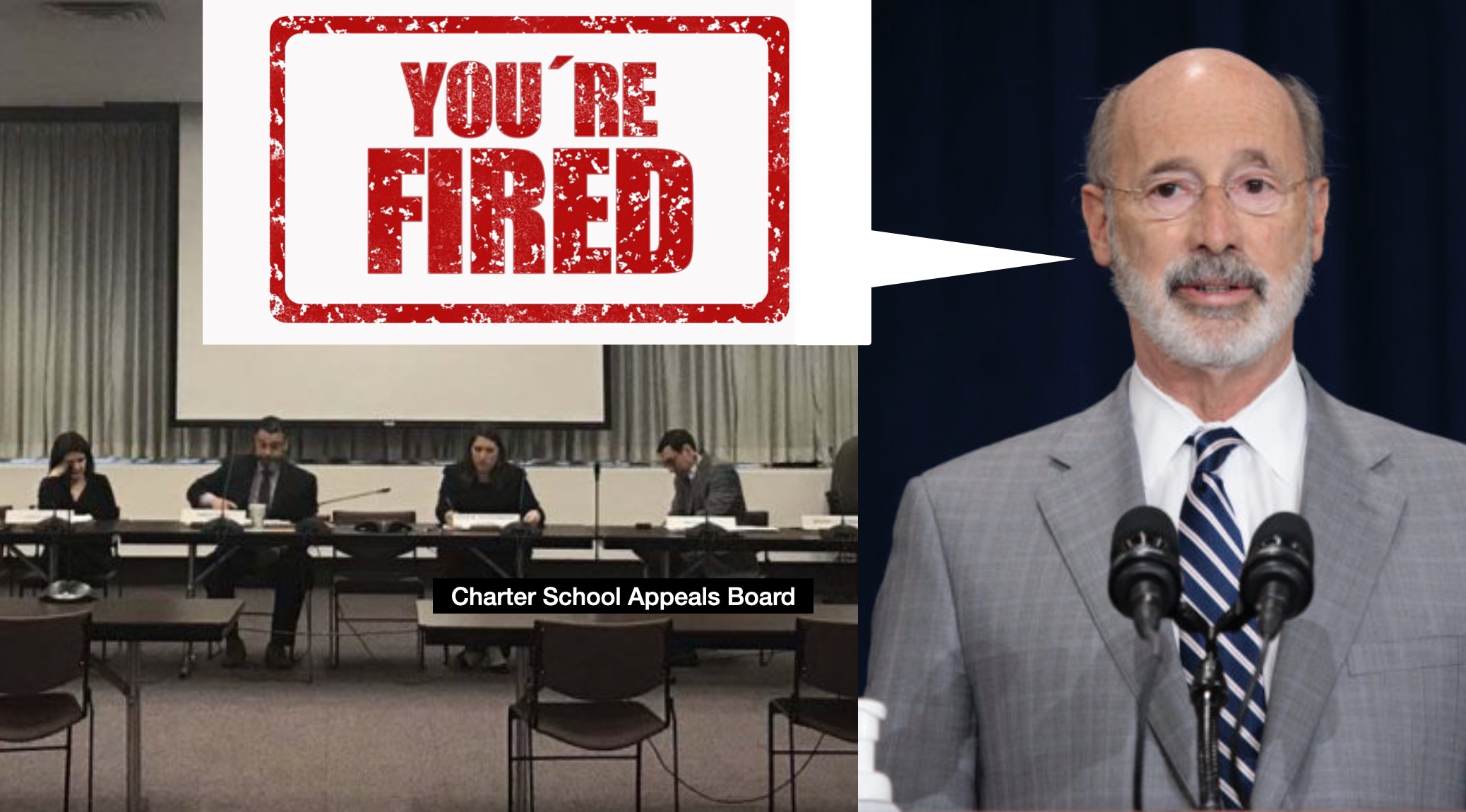
Case in point: the Charter School Appeals Board (CAB).
After all, why would Republicans work with Wolf? What incentive did they have to do so?
Refusing to work with the Democratic Governor kept the previous Republican Governor’s appointees in place long after their tenure should have expired.
This kept the CAB ideologically right wing so the members could rubber stamp charter schools left and right bypassing the will of duly elected school boards all over the Commonwealth.
She literally sat on the board and worked with several sitting members of CAB when she was part of the Corbett administration. Now all these years later she appears before CAB for a hearing asking them to overrule the Harrisburg School Board that had originally denied her charter school’s application.
Guess who won?
The CAB unanimously sided with Dumaresq over elected members of the local community.
So Wolf finally gave these privatization zealots their walking papers.
It’s a pattern we’ve become sickeningly familiar with in Pennsylvania.
Previous CAB members have refused to let school boards consider the financial impact of opening a new charter school. However, the state constitution requires public schools to provide a quality education to students in their district. Therefore, if opening a new charter school would adversely affect a districts finances, doesn’t the constitutional necessity to provide a quality education take precedence?
Many school privatization critics think it does. Will Wolf’s nominees?
Unfortunately, they have several hurdles to clear before the senate would vote on them and we’d find out.
How dare he endanger short term fossil fuel profits just to provide a cleaner environment for our kids and grandkids!
As a result, they’ve vowed to block the Governor’s appointment to a state utility commission. It’s doubtful they’d let CAB nominees through while blocking Wolf’s other appointment.
Moreover, there will doubtless be legal challenges to the Governor’s firing of previous CAB members.
In the meantime, there are at least nine cases scheduled to be decided by CAB from Souderton, Southeast Delco, Pittsburgh, Harrisburg and Philadelphia. And that’s not even counting a recent pair of charter schools in Philadelphia where backers said they would appeal the local school board’s decision to deny their request to open.
Republicans may find themselves forced to choose between waiting out protracted legal challenges while their pet charters languish in appeals limbo or swallowing their pride, doing their damn jobs and voting on Wolf’s nominees!
Do you live in Allegheny County, Pennsylvania? I’m running for County Council in District 9
Like this post? You might want to consider becoming a Patreon subscriber. This helps me continue to keep the blog going and get on with this difficult and challenging work.
Thursday, Propel teachers and other staff voted 236-82 to join the Pennsylvania State Education Association (PSEA).
The drive took 9 months to achieve. Propel enrolls about 4,000 students at 13 schools in Braddock Hills, Hazelwood, Homestead, McKeesport, Pitcairn, Turtle Creek, Munhall, McKees Rocks and the North Side.
They don’t have to be run by elected school boards. They don’t have to manage their business at public meetings. They don’t have to open their budgets to public review. Heck! They don’t even have to spend all the money they get from taxes on their students.
Nor do they have to accept every student in their coverage area. They can cherry pick whichever students they figure are cheapest to educate and those who they predict will have the highest test scores. And they can hide this discrimination behind a lottery or whatever other smoke screen they want because – Hey! The rules don’t apply to them!
Now you have to pay a living wage. You can’t demand people work evenings and weekends without paying them overtime. You have to provide safe working conditions for students and staff. And if you want to cut student services and pocket the difference, the staff is going to have something to say about that – AND YOU HAVE TO LISTEN!
How much will union power beat back charter bosses?
And how much it does so may depend to a large degree on the individuals working at the school and the degree of solidarity they can exercise against their bosses.
Will the worst financial gamblers abandon school privatization because unions make it too difficult to make handfuls of cash? One can hope.
If it happened, the only charters left standing would be those created without profit as their guiding principle. The goal would really have to be doing the best thing for children, not making shadowy figures in the background a truckload of money.
Do such charter schools even exist? Maybe. With staff continuing to unionize, maybe there will be even more of them.
However, even if all of them become altruistic, there still remains a problem.
Most of the people who work at charter schools are dedicated to their students and want them to succeed. They deserve every opportunity to thrive in a profession centered around children, not profit.
But can a system created to enrich the few ever be fully rehabilitated into one that puts children first?
Like this post? You might want to consider becoming a Patreon subscriber. This helps me continue to keep the blog going and get on with this difficult and challenging work.
If you’re like me, you don’t want these questions to come as a surprise on May 18 or before (if you’re casting a mail in ballot).
These queries can change the state for better or worse in dramatic ways, yet for some reason, they don’t write these things in the way everyday people talk.
This is lawyer speak. You have to wear a long black robe and put on a white haired wig (called a peruke) just to understand these things.
But don’t get your gavel in a tizzy.
As a public service, I’m going to translate each question and make a suggestion on how you should vote.
QUESTION 1:
“Shall the Pennsylvania Constitution be amended to change existing law and increase the power of the General Assembly to unilaterally terminate or extend a disaster emergency declaration—and the powers of Commonwealth agencies to address the disaster regardless of its severity pursuant to that declaration—through passing a concurrent resolution by simple majority, thereby removing the existing check and balance of presenting a resolution to the Governor for approval or disapproval?”
Translation:Allow the legislature to second guess the governor and terminate an emergency disaster declaration without just cause
We have three branches of government for a reason – checks and balances. Robbing the executive to boost a dysfunctional legislature would make the declaration of emergencies and natural disasters a matter or politics not facts.
Emergencies could be terminated at a moment’s notice without cause sending our first responders into chaos. Emergency managers could lose precious time and resources, communities could lose relief and recovery funding from the state and federal governments, all while our chuckleheaded legislature debates reality.
The Covid-19 pandemic may not be over yet. We’re working overtime to distribute vaccines and combat threats from emerging variants. The last thing we need is a political show prematurely eliminating masking, social distancing and other safety precautions so performative ideologues can win points on Fox News.
QUESTION 2:
“Shall the Pennsylvania Constitution be amended to change existing law so that: a disaster emergency declaration will expire automatically after 21 days, regardless of the severity of the emergency, unless the General Assembly takes action to extend the disaster emergency; the Governor may not declare a new disaster emergency to respond to the dangers facing the Commonwealth unless the General Assembly passes a concurrent resolution; the General Assembly enacts new laws for disaster management?”
Translation:Limit an emergency disaster declaration to 21 days regardless of the severity of the emergency
Suggestion: VOTE NO
Disasters do not come with time limits. But randomly limiting them all to 21 days again takes power away from the Governor and gives it to the legislature. The only way to extend emergency declarations would be passage of a resolution by the state House and Senate.
Do we really want our emergency responses tied to the endless back and forth of legislators who rarely even pass their annual budgets on time? This is unnecessary bureaucracy so politicians can grandstand while emergency personnel wait for the go ahead to save lives.
QUESTION 3:
“Shall the Pennsylvania Constitution be amended by adding a new section providing that equality of rights under the law shall not be denied or abridged because of an individual’s race or ethnicity?”
Translation: Make it illegal to deny or cut short anyone’s rights because of race or ethnicity
Suggestion: VOTE YES
This should be a no brainer. No one should be able to deny a person’s civil rights because of race or ethnicity. Or any other reason!
However, we just lived through four years of a reality TV show President who packed the federal courts with dozens of questionable and unqualified judges who made their careers discriminating against people of color, people of different creeds, religions, etc.
So it makes sense to enshrine equal protection for all at the state level and protect Commonwealth residents from federally sanctioned prejudice especially focused around workers’ rights, criminal justice reform, housing and healthcare.
Moreover, as a part of the state Constitution, this amendment would stop even our own state legislature from passing any laws inconsistent with it.
QUESTION 4:
“Do you favor expanding the use of the indebtedness authorized under the referendum for loans to volunteer fire companies, volunteer ambulance services and volunteer rescue squads under 35 PA.C.S. §7378.1 (related to referendum for additional indebtedness) to include loans to municipal fire departments or companies that provide services through paid personnel and emergency medical services companies for the purpose of establishing and modernizing facilities to house apparatus equipment, ambulances and rescue vehicles, and for purchasing apparatus equipment, ambulances and rescue vehicles, protective and communications equipment and any other accessory equipment necessary for the proper performance of the duties of the fire companies and emergency medical services companies?”
Translation: Allow municipal fire departments and EMS companies to apply for state loans to modernize critical safety equipment
Suggestion: VOTE YES
Both municipal fire departments and EMS companies with paid employees and volunteer departments and companies would be able to apply for state loans.
This vital funding could be used to modernize or purchase necessary safety equipment for first responders. It would keep fire fighters up to date and able to serve residents – especially those in rural areas. It would make sure every fire department could have up to date equipment.
Question 5 (Allegheny County Only):
“Shall the Allegheny County Code, Chapter 205. Allegheny County Jail, be amended and supplemented to include a new Article III, as set forth below, which shall set forth standards governing conditions of confinement in the Allegheny County Jail?”
Translation: Should we prohibit solitary confinement at Allegheny County Jail except in extreme emergencies?
Suggestion: VOTE YES!
Solitary confinement is cruel and unusual punishment. A lawsuit filed in September by ACJ inmates alleges that solitary confinement was being used as a punishment against inmates seeking mental health care. Recent research from Cornell University demonstrates that even a short amount of time in solitary confinement can increase recidivism rates, as well as unemployment rates.
Question 6 (Pittsburgh residents only):
“Shall the Pittsburgh Home Rule Charter be amended and supplemented by adding a new Article 10: Powers of the Pittsburgh Police, containing Section 1001, which shall bar employees of the Pittsburgh Bureau of Police from executing warrants at any residence without knocking and announcing themselves?”
Translation: Should we eliminate no-knock warrants?
Suggestion: VOTE YES!
This would require all Pittsburgh Police to physically knock and announce themselves before gaining entry to execute a warrant.
No knock warrants are dangerous and often a component of racial discrimination in law enforcement.
Briana Taylor’s death in Louisville, KY, during the execution of a “no knock” warrant clearly shows how this practice recklessly endangers human life. Many municipalities now have banned no-knock warrants including Louisville, KY. Pittsburgh City Council also introduced legislation to ban the use of no-knock warrants by Pittsburgh Police officers.
So those are my suggestions for this race’s ballot initiatives.
NO. NO.YES. YES. YES.
And if you happen to be a Democrat living in Allegheny County’s District 9, please vote for me for County Council.
Together we can build a better world.
Do you live in Allegheny County, Pennsylvania? I’m running for County Council in District 9
Like this post? You might want to consider becoming a Patreon subscriber. This helps me continue to keep the blog going and get on with this difficult and challenging work.
This means things like class size, access to tutoring and remediation, extracurricular activities, advanced placement courses, field trips, counseling, even access to a school nurse often depends on how rich of a community kids live in.
It’s a backward and barbaric way of supporting children – a kind of economic Darwinism that gives the richest kids the most advantages from the very start while holding back everyone else.
No matter who has been in power in the Oval Office or held majorities in Congress, national lawmakers don’t seem to care much about public schools unless it has to do with standardized testing or school privatization – policies that only make things worse.
In the Pittsburgh area, we have a solution ready at hand to at least reduce the inequality among rich and poor kids. All we have to do is reach into the trash.
Three years ago we had a ballot initiative called The Children’s Fund. It would have created a voluntary 5% property tax hike to pay for early learning, after-school programs and healthy meals for kids. It was defeated by voters.
And for good reason.
The proposal was an absolute mess.
As a local teacher, education activist and blogger, I advised against the plan because it raised taxes without stipulating where the money would go, it was unclear who would have been in charge of the money and other reasons.
But that doesn’t mean there was nothing of value there.
The idea of county tax revenues being used to help balance the scales of public school funding is not a bad one.
We could fix the problems with the original children’s fund and create a new one.
The 2018 Children’s Fund would have raised taxes by 0.25 mills of property tax — $25 on each $100,000 of assessed value. This would have generated an estimate $18 million a year and gone to a newly created government office under the supervision of the county manager. There would have been an advisory commission but it was really left under the discretion of the County Executive to figure out how all this would work. He’d get to pick who was in charge of the money and where it went.
This was a terrible idea.
We don’t need a big pot of money that a king gets to dole out as he chooses. Nor do we need to created unnecessary bureaucracy.
All we need is a funding formula. Collect X amount of tax revenues and send it to Y schools according to these guidelines prioritizing Title I schools and other institutions serving needy children.
Moreover, the fund doesn’t even need to include a tax increase. Council should first look to cut wasteful spending already in the budget to generate the money needed.
We already have a $2 billion budget. We spend $100 million of it to keep people locked up in the county jail, and 80 percent of them are nonviolent offenders who haven’t been convicted of anything. Many simply can’t pay cash bail, failed a drug test for something like marijuana or violated our ridiculously long parole period.
Finding $18 million might not be too difficult if we took a hard look at our finances and our priorities. And even if we couldn’t find the full amount, we could propose a lower tax increase. And if we do have to increase revenues, we can look to do so by making corporations and the wealthy pay their fair share before putting more burden on residents.
We should at least explore these options before jumping on another across the board tax increase even if the cause is a good one.
Another problem with the 2018 proposal was that it was too broad. For instance, it suggested some of this money be used to offer meals to children in school. However, much of that need has been met by a program called the Community Eligibility Provision which is available nationwide as part of the Healthy, Hunger-Free Kids Act passed in 2010.
We should limit the new children’s fund to increasing pre-K access to needy children, offering funding to school districts to create or fund existent after school tutoring programs, reduce class size and increase teacher salaries at low income schools.
Another problem with the 2018 proposal was that it worked around instead of with local government.
Before enacting any new legislation, County Council should seek input from school districts and pre-K programs. That way, the legislation can be best crafted to meet need.
I care about schools, students and families, but I don’t know everything and neither does County Council or the County Executive. We should be humble enough to listen to what stakeholders tell us they need and then find a way to meet it.
Finally, there’s the question of fraud and mismanagement of funds.
One of the biggest red flags around the 2018 campaign is that it was not grass roots.
Financial documents show that the whole initiative had been funded by various nonprofit organizations that could, themselves, become beneficiaries of this same fund.
We have to make sure that the money is going to help children, not corporate raiders or profit-obsessed philanthrocapitalists.
To ensure this does not happen, we should put some restrictions on how the money can be used.
For example, the federal government is infamous for offering money to schools with strings attached. President Barack Obama’s Race to the Top, for example, was a huge corporate welfare scheme to enrich standardized testing and school privatization corporations. Schools could compete for limited funds by increasing test scores, and then if they won, they’d have to spend that money on test prep or privatization.
We don’t need any of those shenanigans in Allegheny County.
That’s why this new funding should be available at charter schools ONLYif those schools charters are in good standingAND if the charter schools will admit to a yearly public audit of how the money has been spent. Any misappropriation or unaccounted for funding would disqualify the charter school from further funding and prompt an immediate full state audit.
I think if we enacted legislation along those lines, we could really make a difference for the children of our county.
The commonwealth ranks 47th in the nation for the share of K-12 public education funding that comes from the state.
The state ranks 48th nationally in opportunity gaps for high school students of color compared with white students and 47th for Hispanic students, according to a 2018 report from the Philadelphia-based nonprofit Research for Action.
A separate 2016 study found that Pennsylvania has one of the widest gaps between students along racial and socioeconomic divides in the country.
Like this post? You might want to consider becoming a Patreon subscriber. This helps me continue to keep the blog going and get on with this difficult and challenging work.








 gadflyonthewallblog