Sometimes you can only tell by the vanishing students and teachers or the everyday need to sub for staff members mysteriously absent for days or weeks in a row.
“We have learned that two High School students, two High School staff members, three Middle School students, six Elementary students and one Elementary staff member have tested positive for COVID-19. Close contacts have been identified and notified. Thank you.”
What does it all mean?
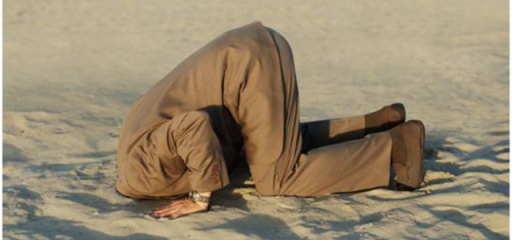
One thing’s for sure – we aren’t taking this pandemic very seriously.
Judging by the emails in the last week and a half, alone, there have been at least 60 people in my small western Pennsylvania district who tested positive for Covid. That’s 17 in the high school (10 students and 7 staff), 22 in the middle school (17 students and 5 staff), and 21 in the elementary schools (16 students and 5 staff). And this doesn’t include close contacts.
However, with the new CDC guidelines that people who test positive only need to quarantine for 5 days, some of these people are probably back at school already. Though it is almost certain they will be replaced by more people testing positive today.
I have a student who just came back a day ago who’s coughing and sneezing in the back of the room with no mask. And there’s not a thing I can do – except spray Lysol all over his seating area once he leaves.
Don’t get me wrong. I hated teaching remotely on and off during the last few years. But safety is more important to me than being as effective as I can possibly be.
When the Titanic is sinking, you get in the life boats and don’t worry that doing so might mean you won’t dock on time.
Somewhere along the line in the past few years we’ve come to accept the unacceptable:
–We’re not in this together.
–I don’t have your back. You don’t have mine.
–When it comes to a disease like Covid – you’re on your own.
Like this post? You might want to consider becoming a Patreon subscriber. This helps me continue to keep the blog going and get on with this difficult and challenging work.
Here are some things for school directors and administrators to consider:
–If you don’t require all students and staff to wear masks – don’t blame teachers.
–If you don’t regularly test students and staff for Covid – don’t blame teachers.
–If you don’t require all students and staff to be vaccinated – don’t blame teachers.
–If your classrooms are not well ventilated – don’t blame teachers.
–If you force staff to come into the building for professional development and don’t allow them to attend remotely – don’t blame teachers.
–If you don’t provide K95 masks to all students and staff – don’t blame teachers.
–If you didn’t devise a schedule to keep students socially distanced – don’t blame teachers.
–If you don’t deep clean each classroom and other student spaces between classes – don’t blame teachers.
–If you don’t have lunches outdoors or in some other extremely well-ventilated space – don’t blame teachers.
–If you don’t require a negative Covid test before sick students or staff can return to school – don’t blame teachers.
–If students and staff have steadily been getting sick for weeks and you’ve done nothing to prepare – Don’t Blame Teachers.
–In short, if you haven’t done everything you can do to prevent an outbreak sweeping through your school and your community – DON’T. BLAME. TEACHERS.
BLAME YOURSELF.
Like this post? You might want to consider becoming a Patreon subscriber. This helps me continue to keep the blog going and get on with this difficult and challenging work.
The most popular topic people wanted to read about on my blog this year has been how teachers are dealing with the Covid-19 pandemic.
In short, it’s a mess.
We’re struggling big time.
In the media, they call it a teacher shortage, but it’s really an Exodus away from the profession for educators who are fed up with being treated like crap.
But that’s not the only thing I wrote about in 2021.
At this point in my career with everything crumbling around me, I have no more F’s to give.
I’m laying it all out straight. And this is from a blogger who has often been criticized for not holding anything back BEFORE!
Now I am pointing out all the elephants in the room.
Some of these articles are not for the faint of heart.
If you’re tired of being polite and ignoring all the flaming dumpster fires that well behaved teachers aren’t supposed to mention, then you might enjoy some of these stories.
Description: The title says it all. Stop wasting teachers’ time by making us fill out paperwork that won’t help us do our jobs but will make administrators and principals look good. We make our own plans for ourselves. We don’t need to share with you a bunch of BS with Common Core nonsense and step-by-step blah-blah that will probably have to change in the heat of the moment anyway.
Fun Fact: Teachers in my building rarely say anything to me about my blog. But I got some serious appreciation on my home turf for this one.
Description: We talk about missing teachers, subs, aides, bus drivers, but not parents or guardians. We should. They are absolutely essential to student learning. I think there are a lot of good reasons why parents don’t participate in their children’s schooling, but they will never get the help they need if we continue to ignore this issue and throw everything on teachers and the school.
Fun Fact: So many liberals lost their minds on this article saying I was attacking parents. I’m not. If people were drowning, you would not be attacking them by pointing that out and demanding help fishing them out of the water. It is not “deficit thinking” to acknowledge that someone needs help. It’s authentic advocacy for both students and parents.
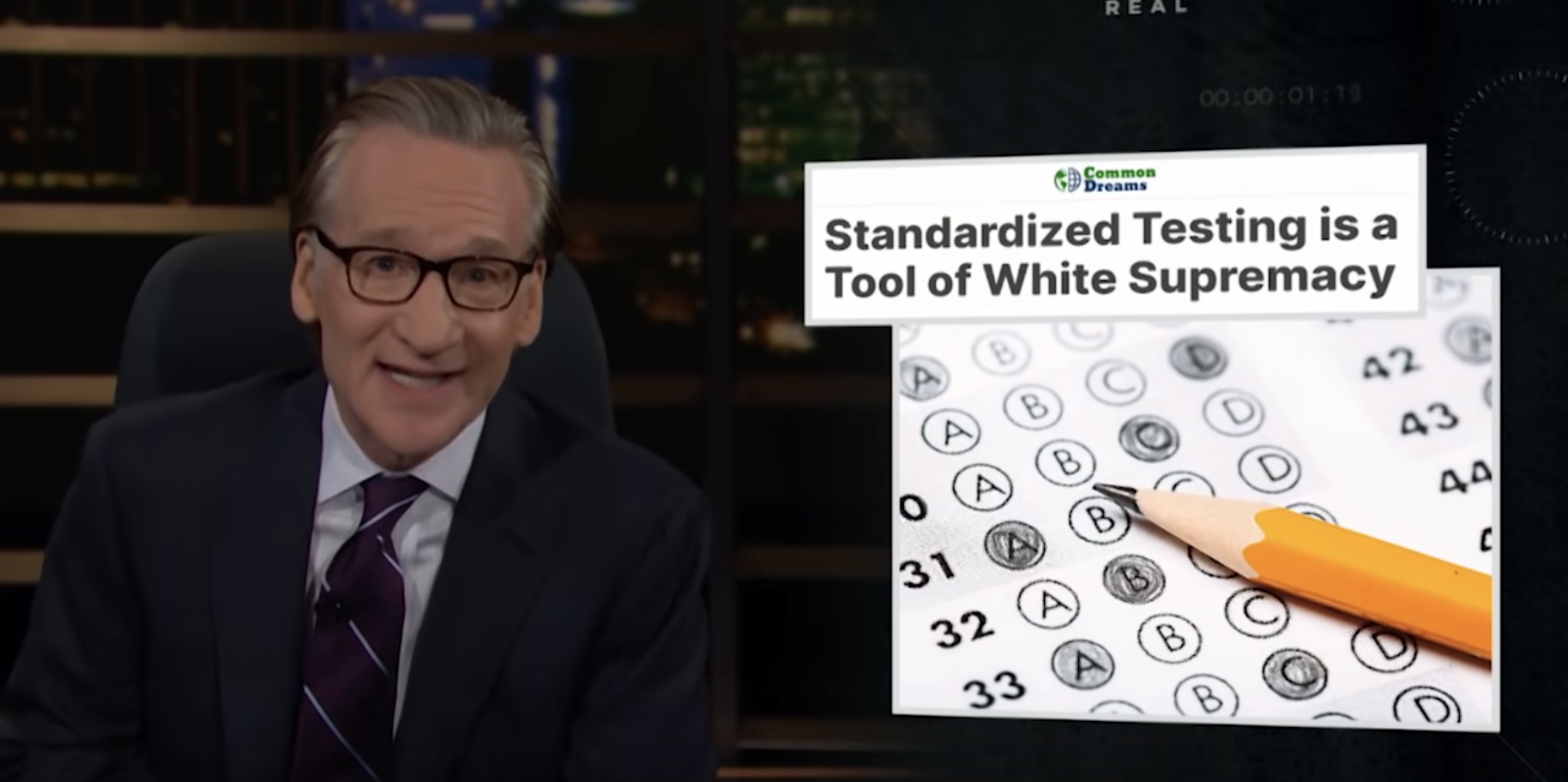
Description: It wasn’t just liberals who were butt hurt by my writing – it was neoliberals, too. Comedian Bill Maher actually mentioned my article “Standardized Testing is a Tool of White Supremacy” on his HBO show. He joked that I was devaluing the term ‘white supremacy.” Sure. These assessments only help white people unfairly maintain their collective boot on the throats of black and brown people. That’s not white supremacy. It’s melanin deficient hegemony. Happy now!?
Fun Fact: Maher’s assertion (I can’t claim it’s an argument because he never actually argued for anything) seems to be popular with neoliberals trying to counter the negative press standardized testing has been receiving lately. We need to arm against this latest corporate talking point and this article and the original give plenty of ammunition. My article was republished on Alternet and CommonDreams.org.
Description: Most of the world does not have competitive after school sports. Kids participate in sports through clubs – not through the schools. I suggested we might do that in the US, too. This would allow schools to use more of their budgets on learning. It would stop crucial school board decisions from being made for the athletics department at the expense of academics. It would remove litigation for serious injuries. Simple. Right?
Fun Fact: So many folks heads simply exploded at this. They thought I was saying we should do away with youth sports. No. Youth sports would still exist, just not competitive sports through the school. They thought poor kids wouldn’t be able to participate. No, sports clubs could be subsidized by the government just as they are in other countries. Some folks said there are kids who wouldn’t go to school without sports. No, that’s hyperbole. True, some kids love sports but they also love socialization, routine, feeling safe, interaction with caring adults and even learning! But I know this is a radical idea in this country, and I have no illusions that anyone is going to take me up on it.
Description: Republicans have a new racist dog whistle. They pretend white people are being taught to hate themselves by reference to a fake history of the US called Critical Race Theory. In reality, schools are teaching the tiniest fraction of the actual history of racism and Republicans need that to stop or else they won’t have any new members in a few generations. I wrote three articles about it this year from different points of view than I thought were being offered elsewhere.
Fun Fact: I’m proud of this work. It looks at the topic from the viewpoint of academic freedom, the indoctrination actually happening (often at taxpayer expense) at private and parochial schools, and the worthy goal of education at authentic public schools. Article B was republished on CommonDreams.org.
Description: I ran for office this year in western Pennsylvania. I tried for Allegheny County Council – a mid-sized position covering the City of Pittsburgh and the rest of the second largest county in the state. Ultimately, I lost, but these three articles document the effort.
Fun Fact: These articles explain why a teacher like me ran for office, how I could have helped public schools, and why it didn’t work out. Article C was republished on CommonDreams.org.
Description: These are terrifying times. In the future people may look back and wonder what happened. These two articles document how I got vaccinated against Covid-19 and my thoughts and feelings about the process, the pandemic, and life in general.
Fun Fact: It hasn’t even been a full year since I wrote these pieces but they somehow feel like they were written a million years ago. So much has changed – and so little.
Description: Pennsylvania Republican state legislators were whining that they didn’t know what teachers were doing in public school. So they proposed a BS law demanding teachers spend even more of their never-ending time giving updates. I suggested legislators could just volunteer as subs and see for themselves.
Fun Fact: So far no Republicans have taken me up on the offer and their cute bit of performative lawmaking still hasn’t made it through Harrisburg.
Description: When it comes to stopping a global pandemic, we need federal action. This can’t be left up to the states, or the counties, or the townships or every small town. But all we get from the federal government about Covid mitigation in schools are guidelines. Stand up and do your F-ing jobs! Make some rules already, you freaking cowards!
Fun Fact: As I write this, President Joe Biden just came out and said there is no federal solution to the pandemic. It’s not that I think the other guy would have done better, but this was a softball, Joe. History will remember. If there is a history after all this is over.
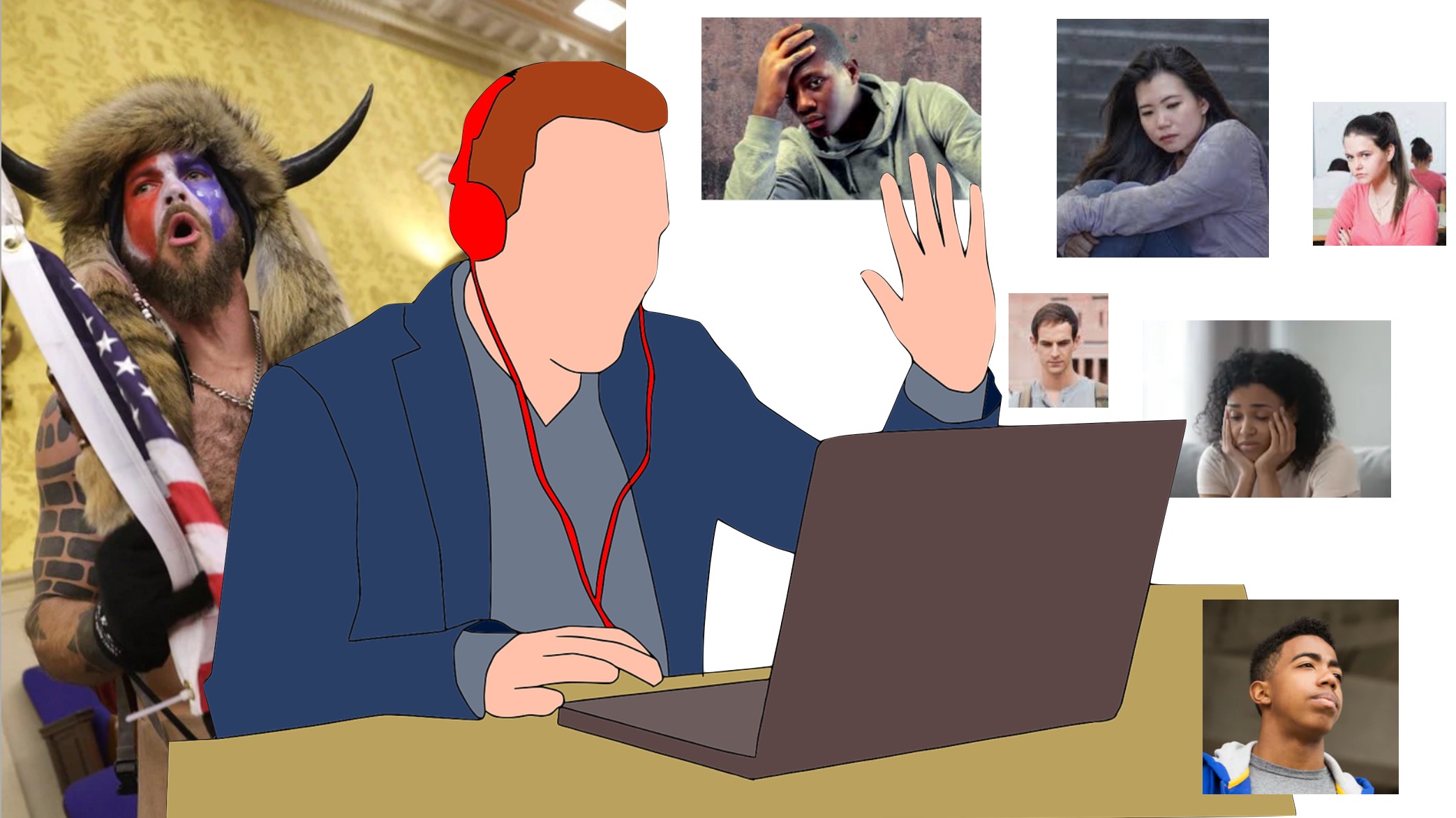
Description: On January 6, a bunch of far right traitors stormed the Capitol. This articles documents what it was like to experience that as a public school teacher with on-line classes during the pandemic.
Fun Fact: Once again, history may want to know. Posterity may have questions. At least, I hope so. The article was republished on CommonDreams.org.
Gadfly’s Other Year End Round Ups
This wasn’t the first year I’ve done a countdown of the year’s greatest hits. I usually write one counting down my most popular articles and one listing articles that I thought deserved a second look (like this one). Here are all my end of the year articles since I began my blog in 2014:
Like this post? You might want to consider becoming a Patreon subscriber. This helps me continue to keep the blog going and get on with this difficult and challenging work.
It’s not exactly easy to fit in so many articles – 53 so far this year – between teaching full time.
And I’ve been doing it for 8 years – since July 2014.
In that time, this site has earned 2.3 million hits – 218,603 just this year.
I’m proud of the work I’ve done here.
I haven’t changed the world, but I’ve been heard. Occasionally.
As a classroom teacher, that’s really what I’m trying to do. In my everyday work, few people whose grade I’m not calculating actually listen to me. And even then it’s not always a given.
I want to believe my words have an impact – that policymakers read what I write and consider it before offering new measures and revising old ones.
But as time goes on, I wonder if any of that actually happens. These days my writing feels more like a shout in the dark than anything else.
At best, from the comments I often get on my articles (and the fact that 14,887 people have signed up to follow my work), it seems at least that I am not shouting alone.
We are all yearning to be heard.
These are the cries that most of us seemed to have in common this year:
Description: This is a postmortem on the 2020-21 school year. Here are the six policies that really weren’t working from social distancing, to cyber school, hybrid models, and more.
Fun Fact: I had hoped that laying out last year’s failures might stop them from being tried again this year or at least we might revise them into policies that worked. In some instances – like cyber school – there seems to have been an attempt to accomplish this. In others – like standardized testing – we just can’t seem to stop ourselves from repeating the same old mistakes.
Description: It seemed like a pretty easy concept when I first learned it back in civics class. Your right to freedom ends when it comes into conflict with mine. But in 2021, that’s all out the window. Certain people’s rights to comfort (i.e. being unmasked) are more important than other people’s right to life (i.e. being free from your potential Covid).
Description: Demands on teachers are out of control – everything from new scattershot initiatives to more paperwork to having to forgo our planning periods and sub for missing staff nearly every day. And the worse part is that each time it’s done, it becomes the new normal. Teaching should not be death by a million cuts.
Fun Fact: This was another in what seemed to be a series of articles about how teaching has gotten more intolerable this year. If anyone ever wonders what happened to all the teachers once we all leave, refer to this series.
Description: Teachers are leaving the profession at an unprecedented rate this year. So what do we do about it? Here are five simple things any district can do that don’t require a lot of money or political will. They just require wanting to fix the problem. These are things like eliminating unnecessary tasks and forgoing formal lesson plans while increasing planning time.
Fun Fact: Few districts seems to be doing any of this. It shows that they really don’t care.
Description: This is almost a poem. It’s just a description of many of the things I love about teaching and many of the things I don’t. It’s an attempt to show how the negatives are overwhelming the positives.
Fun Fact: This started as a Facebook post: “I love teaching. I don’t love the exhaustion, the lack of planning & grading time, the impossibly high expectations & low pay, the lack of autonomy, the gaslighting, the disrespect, being used as a political football and the death threats.”
Description: Policymakers and pundits keep saying students are suffering learning loss from last year and the interrupted and online classes required during the pandemic. It’s total nonsense. Students are suffering from a lack of social skills. They don’t know how to interact with each other and how to emotionally process what’s been going on.
Fun Fact: This idea is so obvious to anyone who’s actually in school buildings that it has gotten through somewhat to the mass media. However, the drum of bogus learning loss is still being beaten by powerful companies determined to make money off of this catastrophe.
Description: Imagine a world without teachers. You don’t have to. I’ve done it for you. This is a fictional story of two kids, DeShaun and Marco, and what their educational experience may well be like once we’ve chased away all the education professionals.
Description: How many times have teachers had to go to their administrators and school directors asking for policies that will keep them and their students safe? How many times have we been turned down? How many times can we keep repeating this cycle? It’s like something out of Kafka or Gogol.
Description: This was my first attempt to discuss how much worse 2021-2022 is starting than the previous school year. Teachers are struggling with doing their jobs and staying healthy. And no one seems to care.
Fun Fact: My own health was extremely poor when I wrote this. I was in and out of the hospital. Though I feel somewhat better now, not much has changed. This article was republished in the Washington Post, on CommonDreams.org, and discussed on Diane Ravitch’s blog.
Description: Being there for students who are traumatized by the pandemic makes teachers subject to vicarious trauma, ourselves. We are subject to verbal and physical abuse in the classroom. It is one of the major factors wearing us down, and there appears to be no help in site – nor does anyone even seem to acknowledge what is happening.
Fun Fact: This one really seemed to strike a nerve with my fellow teachers. I heard so many similar stories from educators across the country who are going through these same things.
Like this post? You might want to consider becoming a Patreon subscriber. This helps me continue to keep the blog going and get on with this difficult and challenging work.
I love inspiring kids to write. I love coming up with creative and interesting journal topics and poetry assignments. I love explaining the far out concepts – hyperbole, alliteration, onomatopoeia. I love jamming to Blackalicious’ “Alphabet Aerobics,” sharing “Whose Line is it Anyway” videos and trying to write paragraphs to the melodies of Miles Davis.
I don’t love having so little planning time.
I don’t love having to fly by the seat of my pants rehashing lessons that were getting stale two years ago but having no time to make them fresh or original. I don’t love trying to fit in as much grading as I can in class, trying to call or email parents on my lunch break. I don’t love having to fill in for missing staff 4 out of 5 days a week, being a glorified security guard in lunch duty, subbing for a teacher who isn’t absent but who has been called into an unnecessary staff meeting for yet another scattershot initiative to fight bogus learning loss.
I love reading books with my students – both together and separately. I love going to the library and helping them find something suited to their tastes – try a Ray Bradbury classic; maybe a new anime; and when you’re ready, a deep meditation by Toni Morrison. I love reading “The Outsiders” with my classes and experiencing Ponyboy’s story anew every year – feeling the highs, the lows, the losses, the victories. I love seeing the look on children’s faces when the realization dawns that they can no longer honestly say they hate reading, but only that sometimes it’s hard. I love catching them with a book in their bags or the same book on their desks being read over and over again because they love it so much.
Like this post? You might want to consider becoming a Patreon subscriber. This helps me continue to keep the blog going and get on with this difficult and challenging work.
Even Canada follows this practice with hockey. Young athletes don’t play for their high schools; they play for one of three national hockey leagues – the Ontario Hockey League, the Western Hockey League or the Quebec Major Junior Hockey League.
The way we do things in the US – combining athletics and academics under one roof – ends up making each undertaking enemies.
Kids are unnecessarily injured in the games and indoctrinated in an ethic of dominance. In addition, sports programs gobble up limited resources meant for the classroom, and incentivize bad decisions that prize athletics over everything else.
Let’s look at each in turn:
1) Injuries
School sports began as a way to keep kids safe.
About 120 years ago, schools were not involved in organized athletics.
Perhaps the most dangerous are concussions. These are especially frequent in contact sports like football where athletes bump or smash their heads or bodies into each other. Even with protective equipment like helmets and pads, such collisions can cause traumatic brain injuries that can alter the way brains function for a lifetime.
During the 2005-06 season, high school football players sustained more than half a million injuries nationally, according to the Center for Injury Research and Policy at Columbus Children’s Hospital. While football easily incurs the highest risk, even sports like soccer and baseball are responsible for thousands of injuries to adolescents between the ages of 10 to 14 every year.
And that’s only the most obvious danger. It doesn’t even include increased steroid use, fighting during games, hazing violence, excessive training, verbal abuse, and failure to provide proper care during important matches.
Competitive extracurricular sports can be dangerous to young people’s health. It is certainly valid to question whether schools should be involved in such practices incurring liability and potentially harming their own students.
2) Warrior Mindset
And then there’s the question of whether school sports are healthy for our minds as well as our bodies.
At the turn of the 20th Century, schools started organizing their own teams because they wanted to not just keep kids physically safe, but provide a healthy alternative to the kinds of activities they might be lured into on the streets. Based on the Victorian ideal of “Muscular Christianity,” sports was considered something wholesome that would district American children (especially boys) from social ills like gambling and prostitution.
However, even then it was a manifestation of the period’s xenophobia.
In the early 1900s, the US had just admitted a surge of European immigrants. Some people were worried that immigrant children would overrun the kids already here. Physician and poet Oliver Wendell Holmes Sr. described this class of American-born kids as “stiff-jointed, soft-muscled, paste-complexioned youth.” It was suggested that organized sports would help them become as brawny as those just coming to our shores.
So the driving motives behind the creation of school sports were bigotry and fear.
Sadly, not much has changed in the intervening years.
Sports culture creates understandings of the world and self that are not entirely healthy in a democratic society.
For instance, an emphasis on competition instills the ethic that it is the outcome – winning or losing – that is most important. As kids become adults, this informs the way they frame ethical choices. Moreover, it dampens empathy. You’re discouraged from caring about members of the other team and encouraged to be hostile to anyone considered an other. Even teammates are only worthy of care in so much as they help you win. There is always latent competition because there is a constant danger that one of your teammates could take your place.
Moreover, sports do not value critical thinking or individuality. You listen to your coach or team captain or whoever in the hierarchy is above you. Questioning authority is discouraged. Instead, you’re impressed with the duty to follow and accept the decisions of those in charge.
These values would be more helpful in the development of warriors or soldiers – not democratic citizens. We need people who value tolerance, discussion, justice, caring, and diversity of ideals – exactly the opposite of what organized sports instills.
The world view promoted by organized athletic competition is not healthy for our students.
3) Expense
However, even if school sports didn’t hurt kids physically and mentally, they cost a ridiculous amount of money!
However, this is actually a minority of students, only about 42%. That’s because it often costs parents an additional fee for their kids to play on school teams – between $670 – $1,000 a year. This includes sporting registration fees, uniforms, coaching, and lessons.
Costs to districts are hard to quantify but significant.
Football is easily the most expensive high school sport. Consider that many football teams have half a dozen or more coaches, all of whom usually receive a stipend. And some schools go even further hiring professional coaches at full salaries or designate a teacher as the full-time athletic director. The cost of new bleachers can top half a million dollars – about the same as artificial turf. Even maintaining a grass field can cost more than $20,000 a year. Not to mention annual expenses like reconditioning helmets, which can cost more than $1,500 for a large team. To help offset these costs, some communities collect private donations or levy a special tax for initiatives like new gyms or sports facilities.
There are so many costs people rarely consider. For example, when teachers who also serve as coaches travel for game days, schools need to hire substitute teachers. They also need to pay for buses for the team, the band, and the cheerleaders. And that’s before you even take into account meals and hotels during away games. Even when events are at home, schools typically cover the cost of hiring officials, providing security, painting the lines on the field, and cleaning up afterward.
They often end up spending more per student athlete than they do per pupil in the classroom.
Marguerite Roza, the author of Educational Economics, analyzed the finances of one public high school in the Pacific Northwest. She and her colleagues found that the school was spending $328 a student for math instruction and more than four times that much for cheerleading—$1,348 a cheerleader.
One wonders – can we afford school athletics? Wouldn’t it be better to spend school budgets on learning – something all students participate in – rather than something that only benefits a fraction of the student body?
4) Decision Making
The cost of school sports isn’t measured just in dollars and cents but in the kinds of decisions administrators and school board members make for the sake of athletics – regardless of how it impacts academics.
People are often hired for important school positions based on their sports credentials even when their jobs are supposed to be mainly focused on improving student learning.
This is especially true where I live in Western Pennsylvania.
In my home district of McKeesport, when our superintendent, Dr. Mark Holtzman, was hired, he did not have any proven track record of scholastic success but had been a football star when he was a student here.
Likewise, the district where I work as a teacher, Steel Valley, hired Eddie Wehrer as superintendent without any degree in education but experience as a football coach.
The same goes for principals recommending new staff.
Sometimes administrators will lower their standards and recommend a less qualified applicant if he or she has experience as an athletic coach.
Whether they’ll admit it or not, the prospect of a winning season for the football team is often prioritized over new textbooks, smaller class sizes or other improvements.
The act of running for school board is often seen as a way to have greater control over district athletics. Go to most local school board meetings and you’ll hear much more discussion of various teams and extracurricular activities than academic programs.
National organizations like the NFL, NBA and Major League Baseball recruit most of their players from colleges who recruit most of their players from K-12 schools. It’s a lucrative system with billions of dollars in profit on the line.
If students get an excellent education, that’s seen as a personal benefit to them, alone. But if a student athlete gets signed to a sports contract, that enriches the team and the corporation orders of magnitude more than the athlete.
Schools bask in the reflected glory of successful athletes, teams and programs. Grown adults who are too old to participate, themselves, take vicarious pleasure in these successes.
I understand that this is a very controversial topic.
There is a small minority of students who benefits from school athletics and even come to school primarily just to participate in sports.
However, the negatives far outweigh the benefits.
I think it’s time we begin considering separating sports and schools.
Students who want to participate in such activities can do so through private athletic clubs just like kids all over the world.
And before I’m criticized as being anti-sports, consider that such a separation would benefit both endeavors. Students would have more time and resources to focus on learning, while athletes could concentrate more on their chosen sport and train all year long instead of just during a certain season.
I have no illusions that anyone will take my advice. Sports are way too entrenched in American schools and our elected officials can’t even seem to find the courage to enact obvious reforms like gun control, repealing charter schools, ending standardized testing and funding schools equitably.
However, if we really want the best for US children, we should give them what kids the world over already have – schools separate from organized sports.
Like this post? You might want to consider becoming a Patreon subscriber. This helps me continue to keep the blog going and get on with this difficult and challenging work.
It’s almost the poster child for why we shouldn’t ban books in the first place. The story is set in a dystopian society where everyone is raised to be the same and people are discouraged from questioning things or having deep feelings.
The book is most often challenged because parents don’t want their children to have to wrestle with its deep social criticism.
”Submitting to censorship is to enter the seductive world of ‘The Giver’: the world where there are no bad words and no bad deeds. But it is also the world where choice has been taken away and reality distorted. And that is the most dangerous world of all.”
Nothing is graphic or developmentally inappropriate for middle schoolers, but the very idea of children thinking about S-E-X and challenging authority is enough to put it afoul of some censors.
Which is exactly why my students love it.
Too often teachers give students short passages taken from standardized tests where the only reason to read is to hunt for multiple choice answers. It’s dry, boring and meaningless to their everyday lives.
It’s a classic detective story where the characters try to discover why a young teen, Branwell, refuses to speak after his baby sister suffers a potentially life threatening injury.
The plot grabs readers from the beginning and students find themselves really invested in unraveling the mystery. But to do so they come face-to-face with topics ranging from family, divorce, death, bigotry, sexuality and exploitation.
Again the narrative is written for middle school readers but the concepts get them thinking and enthusiastic.
As we come to the big reveal, I’ve had students turn to me with huge smiles saying they can’t believe we’re actually reading about this stuff in school.
In an age where they usually communicate with emojis, I’m just glad that they’re reading.
It can get uncomfortable, but by the end I definitely feel like I’ve reached them.
The plot centers on Anne, a historical Jewish girl in 1940s Amsterdam who with her family and others hid from the Nazis before eventually being captured and dying in a concentration camp.
Like most teachers, I eschew the actual diary for the play version by Frances Goodrich and Albert Hackett.
At first glance, it’s hard to imagine why this book would be banned. After all, it’s a true story of the Holocaust written by one of the people who lived it.
For example, in Act II, scene 1, she mentions getting her period for the first time:
“There is one great change, however. A change within myself. I read somewhere that girls of my age don’t feel quite certain of themselves. That they become quiet within and begin to think of the miracle that is taking place in their bodies. I think what is happening to me is so wonderful… not only what can be seen, but what is taking place inside. Each time it has happened I have the feeling that I have a sweet secret… and in spite of any pain, I long for that time when I shall feel that secret within me again.”
My students often read over this passage without comment. I usually have to draw their attention to it and ask them what Anne is talking about before someone gets it.
You might be surprised at how freeing this kind of discourse is. Menstruation is a natural part of life for nearly half the population, but it’s something we don’t often talk about.
It’s not central to the story and Anne certainly goes into greater detail in her actual diary. However, even this little digression goes to further humanize her and make her relatable, especially to people like my students who are nearly the same age she was when she wrote it.
She becomes so much more than a victim. She’s someone we know – inside and out.
It tells the story of Atticus Finch, a white lawyer in the 1930s Alabama who defends Tom Robinson, a black man, of a crime he did not commit. The story is told from the point of view of the lawyer’s children who go from blissful naivety to uncomfortable understanding.
It’s still an issue, and I make sure not to have myself or any of the students read these parts aloud. We only hear it on an audiobook as we follow along in the text. And even this only comes after we discuss how hurtful that word is.
However, the language isn’t the book’s biggest sticking point today. It’s more often objected to these days on the basis of white saviorism. Critics complain that the narrative should be centered on Tom, the black man accused of the crime, and not Atticus, the defense attorney and his children.
By the end of the book, my whole class – regardless of race – is devastated by what happens to Tom and furious at the injustice he experiences. To be honest, that might not happen to the same degree in a book that signals its message right from the beginning.
In my classroom, the book allows us to discuss so many intersectional issues – gender, economics, belief systems, etc. Plus it gives my students more cultural capital than other texts would. Having read “Mockingbird” allows them to understand more and talk to more people than other more modern books.
In any case, the school board has not approved any similar texts at that grade level. If I put aside “Mockingbird,” it would mean not discussing the issue at all. I think that would be much worse.
Conclusions
So this is how I teach.
I know there are some adults out there who would rather my students not read these books.
I know some grownups would rather my kids not think about these things and not come to their own conclusions.
They’d rather children be seen and not heard – like furniture.
But my students know it, too. And they’d rather be treated like actual human beings – even if that means… yuck… reading.
In my experience the bigger threat isn’t prohibition, it’s indifference.
As Ray Bradbury famously said, “You don’t have to burn books to destroy a culture. Just get people to stop reading them.”
Focusing on banned books helps me keep reading real and relevant in my classroom.
Like this post? You might want to consider becoming a Patreon subscriber. This helps me continue to keep the blog going and get on with this difficult and challenging work.
Every year I look forward to parent-teacher conferences.
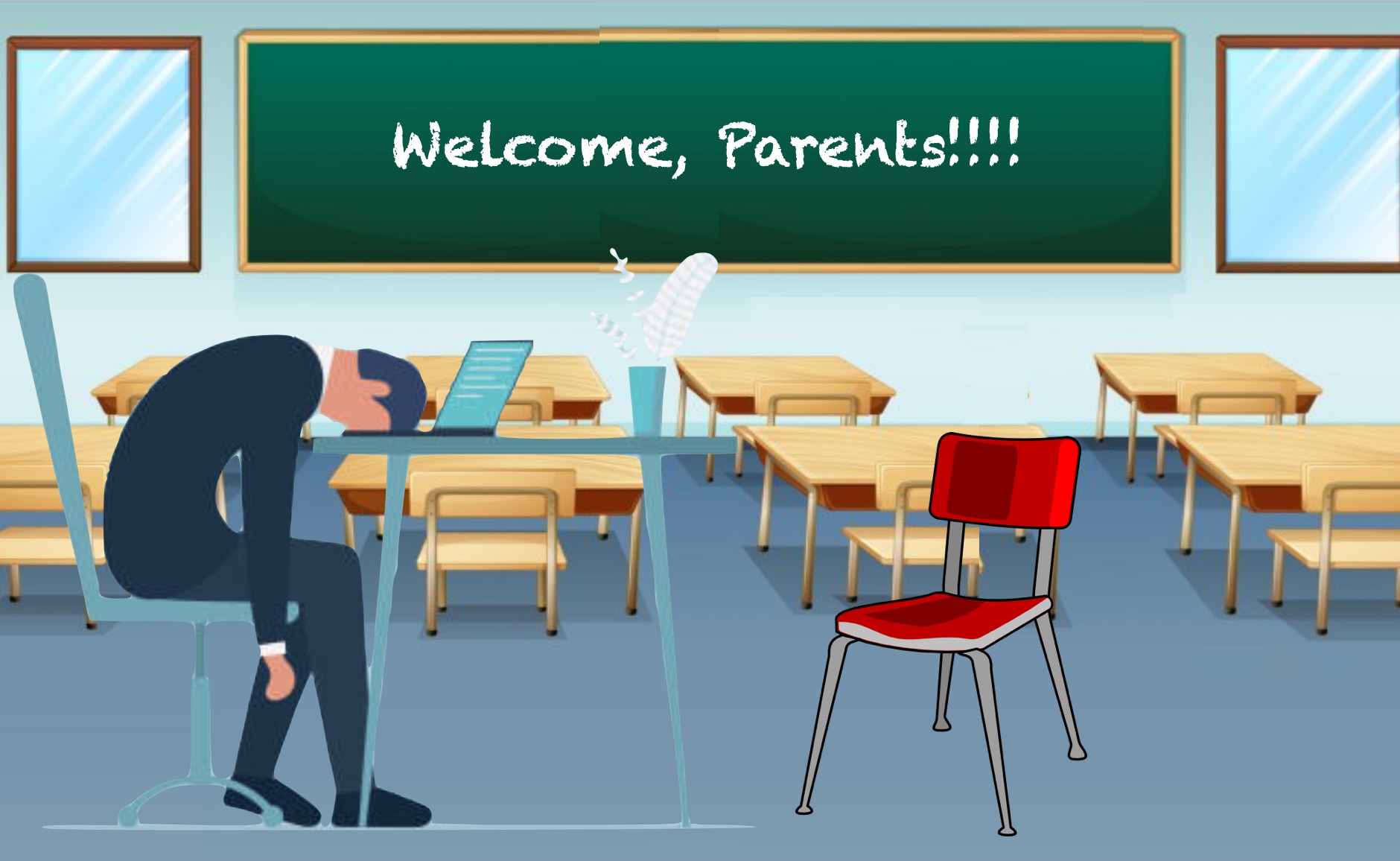
I gather samples of student work, journal entries, drawings and grade reports. I put out a row of chairs in the hall so people have a place to sit if they have to wait for one group to finish before they can see me. And I write in big, bold, colorful chalk on the board, “Welcome, Parents!”
Then I sit at my desk trying to stay awake as the hours creep by in my empty classroom.
Seriously. Where did the moms and dads go? Where are the grandparents, the older siblings, the guardians, the primary or even secondary caregivers?
On Parent-Teacher Day, they must be somewhere, but they’re not here.
We typically have a section from noon to 3 and one from 5 to 8 pm so that people with various schedules can come in.
And every year it’s the same. Only about 20-30% of my students’ parent or guardians usually visit me on these days – and that’s after the promise of bonus points if they come in!
Even then it’s most often the parents of the kids with the best grades who show up. It’s the parents of kids who say “Please” and “Thank you,” the kids who smile when you walk in the room, the kids who want you to hang up their drawings on the bulletin board.
Now let me be clear about one thing – I am not blaming anybody here.
It is not my intention to pass judgment on anyone.
As a parent, myself, I know from experience how difficult the job is – especially during a global pandemic.
But we have to face the facts. As a whole, parents were the weak link in the chain. And it didn’t start with Covid – they have been the weak link for decades.
Let me stop again and clarify that I am not talking about all parents.
Many parents go out of their way to be present in their children’s lives.
They get their kids up for school, make sure they eat a nutritious breakfast, ensure they catch the bus or get a ride to school, make sure they do their homework after the day is over and establish a healthy bedtime.
But this should be the norm, not the exception.
I know how hard it is to do. Waking my daughter up every morning often takes a stick of dynamite. And getting that girl to eat a healthy breakfast is a battle I often lose. But her mother and I make darn sure she does her homework and we even sit down with her to help it get done. And weekday bedtimes are religiously adhered to – no one wants a cranky, fussy child the next morning.
My wife and I don’t have to work more than one job to make ends meet, for example. It would probably help if we did, but neither of us has the wherewithal, and we get by.
But many folks are not so lucky.
They DO have to work multiple jobs. They have work schedules that are less in tune with the school day. They can’t be home to wake up their kids and send them off. They can’t be home when kids are dismissed and don’t have the time to help with homework. Some barely have the education, themselves, to be of much assistance.
According to the National Parent Teacher Association (PTA), the most accurate predictors of student achievement in school are the extent to which families create home environments that encourage learning, communicate high yet reasonable expectations, and become involved in the children’s education at school.
According to the CDC, more than 140,000 children in the U.S. have lost a primary or secondary caregiver such as a live-in grandparent or another family member to the virus.
This is wreaking havoc on kids support systems.
But an even larger problem is economics.
When schools went online, employers could have allowed more parents to work from home so they could be there for their children. However, profits were more important.
We live in one of the richest countries in the world. Much of the labor we force people to do is strictly unnecessary. It’s there just to justify our economic system. If we reordered things around people instead of capital, parents could more easily be involved in their children’s educations.
This is fundamentally the problem with all the educational shortages we’re seeing.
We’ve been trying to run our schools as if parents weren’t that important and then throwing all the blame on teachers when parents don’t show up.
This has to stop.
It’s time to admit how important parents are to their children’s educations and then provide them with the tools necessary to be parents.
It’s time to include parents in the circle.
It’s time to expect them to show up.
Because we can’t continue educating their children without them.
Like this post? You might want to consider becoming a Patreon subscriber. This helps me continue to keep the blog going and get on with this difficult and challenging work.
This would include a course syllabus or written summary of every class, the state academic standards for each course, and a link or title for every textbook used.
Moreover, the whole thing is really just a political sham to stoke the radical Republican base. The measure has little chance of actually being implemented.
The bill (HB 1332) passed the House largely along party lines last week with a few Republicans joining Democrats against it.
Now it is set for a full vote by the Senate where it will probably sail through with GOP support after which Democratic Governor Tom Wolf has already promised to veto it.
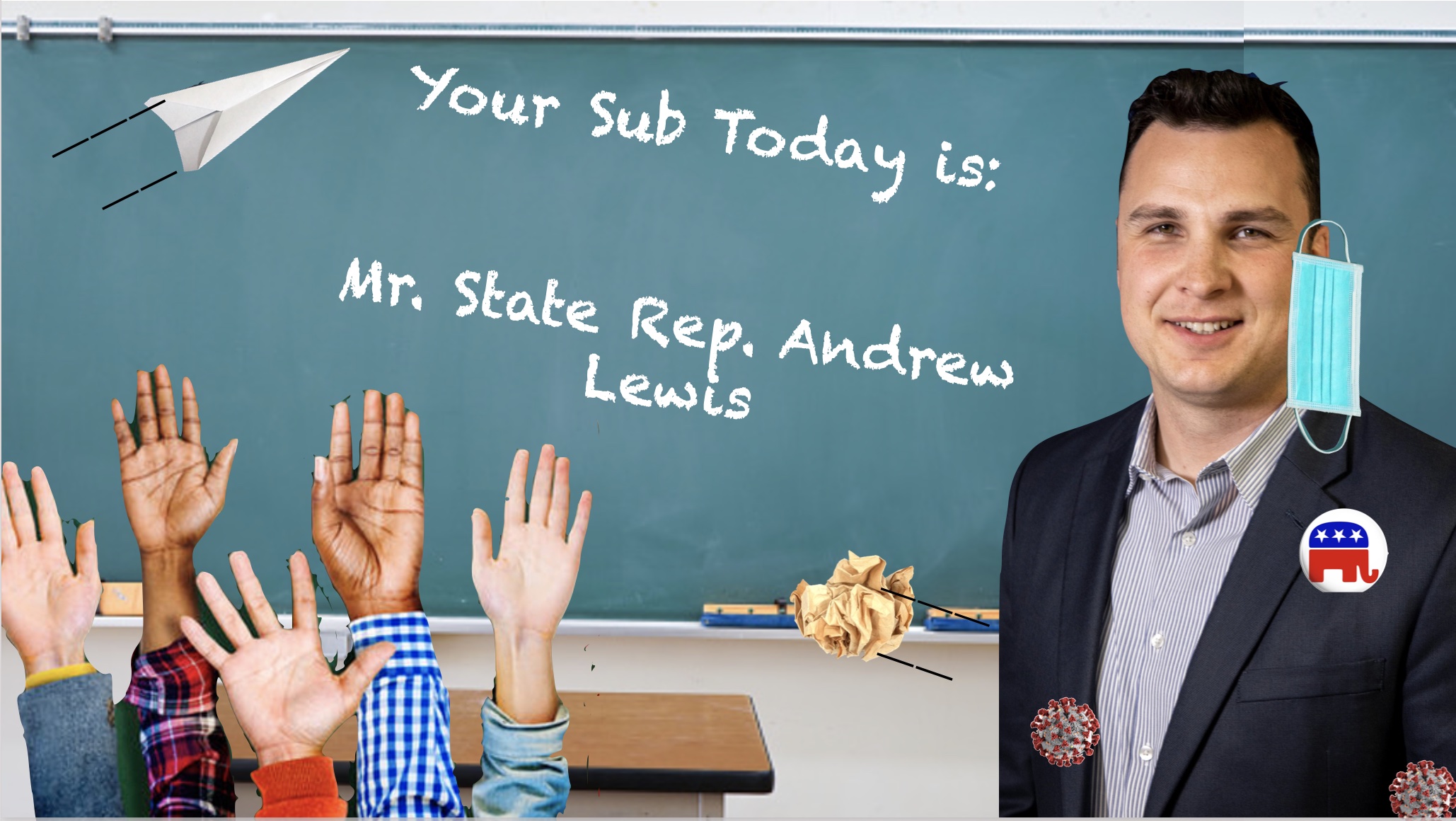
So why is Lewis putting on this dog and pony show?
“Parents need to be in the driver’s seat when it comes to education, not some out-of-state textbook publisher teaching heaven knows what (hint: anti-American socialism) to our students.”
Moreover, I guess no one told him that state law already requires that public schools give parents and guardians access to information about instructional materials.
Even schools in the Keystone state are scrambling to find enough subs.
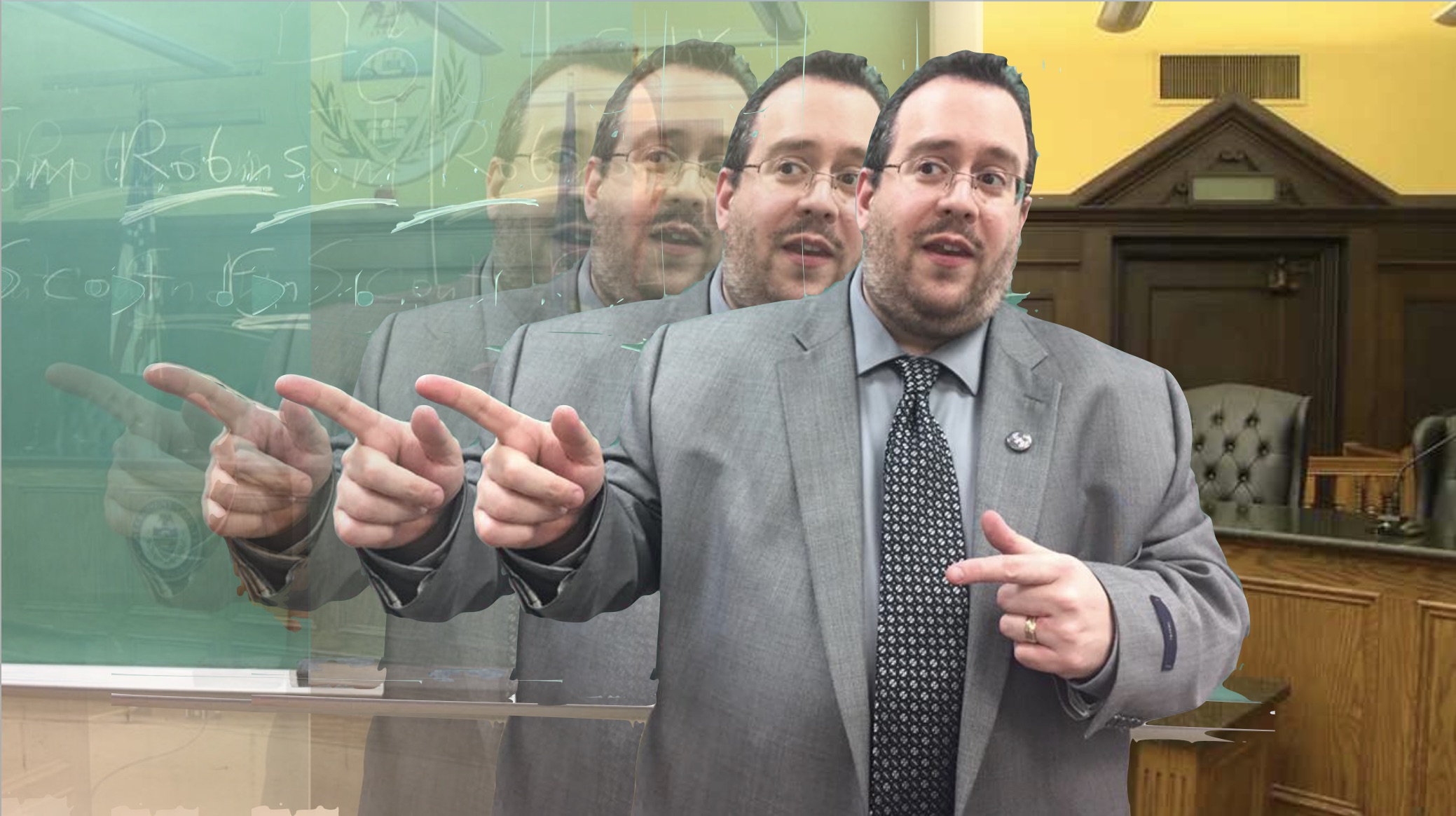
If you want to know what happens in public schools, you can do better than clicking on some Website. You can actually volunteer to come in and cover an absent teacher’s class!
About eight years ago, 40,000 teachers were graduating from Pennsylvania colleges a year. This past year, it was only 14,000.
That means not only fewer classroom teachers to replace those who retire, but fewer substitute teachers to take over for professional absences.
The situation has gotten so bad that the legislature (on which Lewis serves) had to pass a new measure allowing college students who are studying education to fill in as substitutes.
Many districts such as Erie, Greater Latrobe and State College have increased substitute pay to entice more people to apply for the job.
And, frankly, almost anyone can do it.
Even folks like Lewis and his Republican buddies! Heck! The legislature is only in session a few weeks every month! They have plenty of time to moonlight as substitute teachers and get the low down about what’s really happening in our public schools!
Districts that aren’t experiencing a shortage may require a teaching certificate as well, but beggars can’t be choosers. In districts where it is hard to get subs (i.e. those serving poor and minority kids) you can get emergency certified for a year.
And many states are lowering the bar even further!
Not only would lawmakers have a chance to look over teacher’s lesson plans, but they’d get detailed instructions from the absent teacher about how to actually teach the lesson!
They’d get to interact with principals as they’re told which additional classes they have to cover in their planning periods and which extra duties they’d be responsible for performing.
They’d get to do things like monitor the halls, breakfast and lunch duty, watch over in-school suspension, and – if they’re lucky – they might even get to attend a staff meeting and be front row center for all the educational initiatives being conducted in the school!
If our representatives took this opportunity, they would learn so much!
I mean, sure, we encourage kids to stand for the pledge to the flag and things like that but when it comes to telling them how to think – that’s not a public school thing. That’s a private and parochial school thing.
They’d see that public school lessons give students information on a subject but then ask them to come to their own conclusions about it.
In fact, this would be such an educational experience, I think legislators on both sides of the aisle should take advantage of this unique opportunity.
And not even just those in Harrisburg. What better way for school directors to understand the institutions they’re overseeing than to volunteer as subs? What better way for the mayor and city council to understand the needs of children than putting themselves in the classroom when the teacher can’t be there?
It could make them better public servants who craft legislation that would actually do some good in this world and not – like Lewis – just showboat to enrage partisans and stoke them to vote for people willing to feed their fears and prejudices.
Any takers?
Like this post? You might want to consider becoming a Patreon subscriber. This helps me continue to keep the blog going and get on with this difficult and challenging work.
We need a popular, national movement demanding action from our state and federal governments. However, in the meantime, there are several things our local school districts can do to stem the tide of educators fleeing the profession.
These are simple, cheap and common sense methods to encourage teachers to stay in the classroom and weather the storm.
However, let me be clear. None of these can solve the problem, alone. And even ALL of these will not stop the long-term flight of educators from our schools without better salaries and treatment.
1) Eliminate Unnecessary Tasks
The list of tasks an average teacher is expected to accomplish every day is completely unrealistic.
Think about it. Just to get through a normal day teachers need to provide instruction, discipline students, grade papers, facilitate classwork, troubleshoot technology, provide written and verbal feedback, counsel disputes, role model correct behavior, monitor the halls, lunches, breakfasts and unstructured time, meet with co-workers, follow Individual Education Plans, scaffold lessons for different learners and learning styles…
If we truly want to help teachers feel empowered to stay in the profession, we need to reduce the burden. And the best way to do that is to eliminate everything unnecessary from their plates.
That means no staff meeting just to have a staff meeting. No shotgun scattered initiatives that teachers are expected to execute and we’ll see what will stick. No reams of paperwork. No professional development that wasn’t specifically requested by teachers or is demonstrably useful.
I’m not saying we should tell teachers they don’t have to plan what they’re doing in their classes. I’m not sure how an educator could realistically enter a classroom of students and just wing it.
However, the process of writing and handing in formal lesson plans is absolutely unnecessary.
Teachers gain nothing from writing detailed plans about what they expect to do in their classes complete with reference to Common Core Academic Standards. They gain nothing from acting as subordinates to an all knowing administrator who probably has not been trained in their curriculum nor has their classroom experience teaching it.
For educators with at least 3-5 years under their belts, formal lesson plans are nothing but an invitation to micromanagement.
Forcing teachers to set aside time from their already overburdened schedules to fill out lesson plans that administrators don’t have time to read and (frankly) probably don’t have the training or experience to fully comprehend is top down managerial madness.
3) More Planning Time
Teachers need time to plan.
It’s pathetic that I actually have to explain this.
Parents need called. Papers need graded. Lessons need strategized. IEP’s need to be read, understood and put into practice.
All this can only happen within a temporal framework. If you don’t give teachers that framework – those minutes and hours – you’re just expecting they’ll do it at home, after school or some other time that will have to be stolen from their own families, robbed from their own needs and down time.
Every administrator on the planet preaches the need for self-care, but few actually offer the time to make it a reality.
Even if we could discover exactly how much time was necessary for every teacher to get everything done in a given day – that wouldn’t be enough time. Because teachers are human beings. We need time to process, to evaluate, to think and, yes, to rest.
I know sometimes I have to stop wrestling with a problem I’m having in class because I’m getting nowhere. After two decades in the classroom I’ve learned that sometimes you have to give your brain a rest and approach a problem again later from a different vantage point.
I need to read a scholarly article or even for pleasure. I need to watch YouTube videos that may be helpful to my students. I need to get up and go for a walk, perhaps even just socialize for a moment with my coworkers.
None of that is time wasted because my brain is still working. My unconscious is still trying untie the Gordian knot of my workday and when I finally sit down to revisit the issue, I often find it looser and more easily handled.
Do not ask your teacher to sub. Do not ask them to attend meetings. Do not ask them to help you plan building wide initiatives – UNLESS you can guarantee it won’t interfere with their plans.
I know this is difficult right now with so many staff falling ill or being so plowed under that they simply can’t make it to work.
Not only will their work suffer but so will their health and willingness to continue on the job.
Some districts are finding creative ways to increase planning time such as releasing students early one day a week. We did that at my district last year and it was extremely helpful to meet all the additional duties required just to keep our building open. However, as the new school year dawned and decision makers decided to simply ignore continuing pandemic issues, this time went away.
If you take away their ability to do that, why would they stay?
4) Better Communication/ Better COVID Safety
Communication is a two way street.
You can’t have one person telling everyone else what to do and expect to have a good working relationship.
Administrators may get to make the final decision, but they need to listen to what their teachers tell them and take that into account before doing so.
This means setting aside the proper time to hear what your staff has to say.
Many administrators don’t want to do that because things can devolve into a series of complaints. But you know what? TOUGH.
It is your job to listen to those complaints and take them seriously.
Sometimes just allowing your staff to voice their concerns is helpful all in itself. Sometimes offering them space to speak sparks solutions to problems – and a whole room full of experienced, dedicated educators can solve any problem better than one or two managers locked away in the office.
However, not only do administrators need to listen, they need to speak.
When issues crop up, they need to make sure the staff is aware of what is happening.
Being a teacher should mean something to district leaders. And they should prove it in every thing they do.
The items I mentioned here go some ways to showing that respect.
Eliminating unnecessary tasks, not requiring formal lesson plans, respecting our planning time, better communicating and safety measures are all necessary to keeping your teachers in the classroom.
But they are not sufficient.
As a nation we need to change our attitude and treatment of teachers.
No profession exists without them. They create every other job that exists.
We need to start paying them accordingly. We need to start treating them as important as they are. We need to ensure that they have the time, tools and satisfaction necessary to be the best they can be.
No district can do that alone. No school director or administrator can do that.
But these are some ways you can start.
Like this post? You might want to consider becoming a Patreon subscriber. This helps me continue to keep the blog going and get on with this difficult and challenging work.























 gadflyonthewallblog