Charter Schools Were Never a Good Idea. They Were a Corporate Plot All Along

Screen Shot 2019-09-14 at 6.02.02 PM


America has been fooled by the charter school industry for too long.


The popular myth that charter schools were invented by unions to empower teachers and communities so that students would have better options is as phony as a three dollar bill.


The concept always was about privatizing schools to make money.


It has always been about stealing control of public education, enacting corporate welfare, engaging in union busting, and an abiding belief that the free hand of the market can do no wrong.


Charter schools are, after all, institutions run privately but paid for with tax dollars. So operators can make all decisions behind closed doors without public input or accountability. They can cut student services and pocket the difference. And they can enroll whoever the heck they want without providing the same level of education or programs you routinely get at your neighborhood public school.


In essence, charter schools are a scheme to eliminate the public from public education paid for at public expense.


But whenever anyone brings up these facts, they are confronted by the bedtime story of Albert Shanker and his alleged advocacy of the industry.

 
So grab your teddy bear and put on your jammies, because here’s how it goes:

 
Once upon a time, hero president of the American Federation of Teachers (AFT) Al Shanker had an idea. He wanted to make laboratory schools where educators would be freed of regulations so they could experiment and find new pedagogies that worked. Then these innovations could spread to the rest of the school system.


One day in 1988, he gave a speech at the National Press Club and subsequently published a column in the New York Times advancing this idea.


And he called it – Dum, Dum, DUM! – charter schools!
The second act of the story opens in the mid-1990s when Shanker had largely turned against the idea after it had been co-opted by business interests.


He dreamed of places where unionized teachers would work with union representatives on charter authorizing boards, and all charter proposals would include plans for “faculty decision-making.” But instead he got for-profit monstrosities that didn’t empower workers but busted their unions.


If only we’d stuck with Shanker’s bold dream!


Or at least, that’s how the story goes.


Unfortunately it’s just a story.


It’s not true. Hardly a word of it.


Shanker did not come up with the idea of charter schools. He wasn’t part of the plan to popularize them. He didn’t even come up with the term “charter school.”


If anything, he was a useful patsy in this stratagem who worked tirelessly to give teachers unions a seat at the table where he then discovered they were also on the menu.


The real origin of charter schools goes back decades to at least the 1950s and the far right push for deregulation.


When the afterglow of the atomic bomb and the allied victory in Europe had faded, there was political backlash at home to roll back the amazing economic successes of the New Deal. Social security, strong banking regulations, deposit insurance, a minimum wage, job programs that put millions of people to work – all of that had to go in favor of right wing ideology.


A cabal of mostly wealthy, privileged elites wanted to do away with these policies in the name of the prosperity it would bring to themselves and their kind. They claimed it would be for the good of everyone but it was really just about enriching the already rich who felt entitled to all economic goods and that everyone else should have to fight over the crumbs.


Never mind that it was just such thinking that burst economic bubbles causing calamities like the Great Depression in the first place and made the conditions ripe for two world wars.


Show me the money!


However, this really didn’t go anywhere until it was combined with that most American of institutions – racism.


Even before the Supreme Court’s 1954 Brown vs. Board decision struck down school segregation, many white people said they’d never allow their children to go to school with black children.


In the South, several districts tried “freedom of choice” plans to allow white kids to transfer out of desegregated schools.


In 1952 and ’57, governments in two states – Georgia and Virginia – tried out what became known as the “private school plan.” Georgia Gov. Herman Talmadge and community leaders in Prince Edward County, Virginia, tried to privatize public schools to avoid any federal desegregation requirements. Each student would be given a voucher to go to whatever school would enroll them – segregated by race.
The plan was never implemented in Georgia and struck down by the federal government in Virginia after only one year as a misuse of taxpayer funds.


But these failed plans got the attention of one of the leading deregulation champions, economist Milton Friedman.


He sided with the segregationists citing their prejudice and racism as merely “market forces.”


In his seminal 1955 tract, “The Role of Government in Education,” he wrote:


“So long as the schools are publicly operated, the only choice is between forced nonsegregation and forced segregation; and if I must choose between these evils, I would choose the former as the lesser. Privately conducted schools can resolve the dilemma … Under such a system, there can develop exclusively white schools, exclusively colored schools, and mixed schools.”


Throughout the 1970s, school voucher proposals were widely understood as a means to preserve school segregation, according to education historian Diane Ravitch. But they couldn’t gain any traction until privatizers came up with a new wrinkle in the formula – the charter school.


Charter schools are really just school vouchers with more money and regulations.


In the case of vouchers, we use tax dollars to pay for a portion of student enrollment at private and parochial schools. In the case of charters, we use tax dollars to pay for all of a student’s enrollment at a school that is privately managed. The only difference is how much taxpayer money we give to these privatized schools and how much leeway we give them in terms of pedagogy.


Charter schools can do almost whatever they want but they can’t blatantly teach religion. Voucher schools can.


Other than that, they’re almost the same thing.


In order to get the public to support school privatization, Friedman thought we’d need to convince them that they didn’t need the burden of self-government. This was especially true of minorities.


In his 1981 book Free to Choose, Friedman and his wife Rose suggested the necessity of convincing black voters that they didn’t need Democracy. School privatization could be pitched as a system that would “free the black man from dominion by his own political leaders.”


The opportune moment came in 1983 with the publication of the Reagan administration’s propaganda piece A Nation at Risk. Using bogus statistics and outright lies, the report painted our public school system as a failure and set up the false urgency that school deregulationists needed.


From this point forward, a series of supply side lawmakers, policy wonks, economists, billionaires and CEOs came out of the woodwork to push for school privatization which culminated in the first charter school law in 1991 in Minnesota.


In the middle of all this tumult came Shanker’s National Press Club speech in 1988.


Ronald Reagan was still in office and it’s hard to overstate the threat he posed to unions having infamously fired more than 11,000 striking air traffic controllers.


Shanker was trying to ride the tide of public opinion in favor of deregulation and privatization. He accepted the bogus criticisms of schools in A Nation At Risk and offered to restructure schools to fix the problem. Like so many union leaders after him, Shanker gave away much of the power of his people-driven movement so as not to come across as obstructionist. He didn’t think teachers unions could oppose the rising tide of privatization without offering innovations of their own.


It’s true that he called these reforms “charter schools” but he didn’t invent the term. He borrowed it from a little-known Massachusetts educator, Ray Budde, who meant by it something very different from what it has become. Budde thought school boards could offer “charters” directly to teachers allowing them to create new programs or departments.


Shanker’s proposal wasn’t nearly the first time a public figure had suggested restructuring public schools.


In the late 1960s after helping provide justification for school desegregation, sociologist Kenneth Clark advocated for alternative school systems that could be run by groups as diverse as universities to the Department of Defense.


Shanker’s contribution was not nearly as powerful as subsequent apologists have claimed. He was one voice among many. Though his comments were useful to the deregulators, they ignored everything of substance he had said beyond the myth that he supported their efforts at school privatization.


According to journalist Rachel Cohen, the true architect of the charter school concept as it appears today wasn’t Shanker, Budde or Clark. It was Minnesota “policy entrepreneur” Ted Kolderie.


He was at the heart of the issue pushing for school privatization from the 1970s through the 1990s.


Throughout the 1970s, Kolderie lobbied for a plethora of ways for private industry to provide government services – including education – through an initiative known as Public Service Options (PSO). By 1981, the focus narrowed almost exclusively to education.


In several reports, he blamed the bogus failure of public schools on the democracy of the school boards. Though he didn’t use the term “charter school,” his conception was essentially the same as the modern charter school: independent schools accountable only through market forces and a set of contractual obligations. He thought they could be run by almost anyone – universities, corporations, nonprofits— even public school districts – if state law could be amended to allow it.


That’s pretty much a charter school – a privately run learning institution that’s publicly financed.


Why doesn’t Kolderie get the credit? Why the emphasis on Shanker who had very little to do with what ultimately became law?


Because Kolderie and others wanted to hide behind the union. They wanted their policy to have a friendlier public image than that of a shadowy puppet master.


Shanker walked right into their trap.


He even agreed to give another speech in favor of charter schools in October 1988 at the Minneapolis Foundation’s annual Itasca Seminar for political and business leaders.


With continued lobbying from the corporate sector and right wing ideologues, three years later the state was the first to pass a charter school law.


And the die was cast.


Sure charter school cheerleaders like to give Shanker the credit today, but the legislation that was eventually passed and funneled to other states through the American Legislative Exchange Council (ALEC) had little resemblance to anything Shanker said.


It was the deregulation and privatization model first conceived in the 1950s, funneled through Friedman and now Kolderie.


And make no mistake – the overall plot wasn’t simply to enact charter schools. That was merely the foothold that enabled subsequent school voucher bills and tax scholarship plans (vouchers lite). The end game was made clear by Friedman time and again – the complete destruction of public schools.


While speaking to rightwing lawmakers at a 2006 ALEC meeting, Friedman explained that school privatization was always about “abolishing the public school system.”


Here is an excerpt from Friedman’s ALEC speech:


“How do we get from where we are to where we want to be—to a system in which parents control the education of their children? Of course, the ideal way would be to abolish the public school system and eliminate all the taxes that pay for it. Then parents would have enough money to pay for private schools, but you’re not gonna do that. So you have to ask, what are politically feasible ways of solving the problem. The answer, in my opinion, is choice…”

When Minnesota proposed the first charter school law, the state teachers union fought against it. But tellingly Shanker refused to speak out during legislative debates.


And this was due in part to the rise of the neoliberals.


School privatization was the brainchild of the far right. But as the ‘80s gave way to the ‘90s, so dawned a new type of political figure – the social progressive with distinctly right wing economic views.


In 1989 when the Democratic Leadership Council (DLC) named Bill Clinton as chairman, it also founded its own think tank—the Progressive Policy Institute. Kolderie worked closely with the DLC and even wrote its first policy paper on school privatization.


Clinton was an immediate convert, embracing Kolderie’s proposals as he traveled around the country making speeches even though he knew it was unpopular with teachers unions. Clinton ruffled so many feathers that Shanker, himself, commented, “It is almost impossible for us to get President Clinton to stop endorsing [charters] in all his speeches.”


Though the first charter school law came a year later, in 1990 Wisconsin passed the first school voucher program. Since it was pushed through with mostly Republican support, this provided cover for neoliberal charter supporters. Though there was little difference between the two policies, neoliberals could distinguish themselves by criticizing school vouchers while endorsing their ideological cousins the charter schools.


So we had the two major political parties both supporting different flavors of the same school privatization.


It allowed Democrats to stop supporting more funding for social programs and schools while weakening the main driver of such policies – labor unions. This allowed the neoliberals to be economically as conservative as their “adversaries” across the aisle while publicly pretending to support progressivism.


Today, there are charter schools in 43 states and the District of Columbia educating nearly three million students.


This does not now – and never did – represent any ideal offered by Shanker or unions.


His dream of teacher-run schools as laboratories of innovation may or may not have merit, but not at the expense of making different rules for different schools. Where regulation is important, it is important for all schools. Where it is too restrictive, all schools should be freed from its requirements. All teachers should be allowed to innovate and take a leadership role in their schools.


When Shanker spoke about “charter schools,” he was not a visionary. He was leading us down a dead end. He was foolishly offering an olive branch to an inferno. That doesn’t mean he started the blaze or even that it was his idea.


Yet even now you can read propaganda that says otherwise on the AFT’s own Website – “Restoring Shanker’s Vision for Charter Schools” by Richard D. Kahlenberg and Halley Potter. It’s funny how Potter, a former charter school teacher, and Kahlenberg, a senior fellow at the Century Foundation – which loves charter schools – both want to keep the happy face on an ugly idea. And sad that one of the largest teachers unions can’t face up to one of its heroes biggest mistakes.


If charter schools have a face, it should be Kolderie’s or Friedman’s – or perhaps it should be the industry’s most famous modern champion Betsy Devos.
Charter schools are no progressive dream.


They are the corporate paradise of spending tax dollars with zero accountability, zero transparency and as much deregulation as possible. They are the continued destabilization of public education in the knowledge that the edifice cannot stand without support indefinitely.


Public education will crumble and fall just as the architects of school privatization always knew it would.


Unless we take a stand and take back our power.


To do that we need to understand where charter and voucher schools came from and who is responsible.


Charter schools do NOT represent a good idea that was perverted by the corporate world. It is an essentially bad policy that should be abolished immediately.


NOTE: This article owes a debt to the reporting of Rachel Cohen.


Like this post? I’ve written a book, “Gadfly on the Wall: A Public School Teacher Speaks Out on Racism and Reform,” now available from Garn Press. Ten percent of the proceeds go to the Badass Teachers Association. Check it out!


thumbnail_IMG_8249

Every Charter School Must Be Closed Down – Every. Single. One.

Screen Shot 2019-09-07 at 11.17.21 PM

 
The problem with charter schools isn’t that they have been implemented badly.


Nor is it that some are for-profit and others are not.


The problem is the concept, itself.


Put simply: charter schools are a bad idea. They always were a bad idea. And it is high time we put an end to them.


I am overjoyed that lawmakers on both sides of the aisle are starting to hear the criticisms leveled against the charter school industry in the face of the naked greed and bias of the Trump administration and its high priestess of privatization, Betsy DeVos. However, I am also disappointed in the lack of courage displayed by many of these same lawmakers when proposing solutions.


Charter schools enroll only 6 percent of students nationwide yet they gobble up billions of dollars in funding. In my home state of Pennsylvania, they cost Commonwealth taxpayers more than $1.8 billion a year and take more than 25 percent of the state’s basic education funding. That’s for merely 180 schools with 135,000 students!


Charter schools are privately run but publicly financed. They are what happens when the public abrogates its responsibility to run a school and signs that right away (in a charter agreement) with another entity, usually a business or corporation.
As such, these schools are not held to the same standards as authentic public schools. Unlike your neighborhood school, charters are not required to be run by elected boards, to have public meetings, to have open records, or to spend all their money in the service of their students. Nor do they have to provide the same standard of services for students – even children with special needs. Nor do they have to accept all students within their coverage area who enroll. And that’s to say nothing of how they increase racial segregation, are susceptible to fraud and malfeasance, often produce much worse academic results, close without notice, hire many uncertified teachers, trample workers rights and destabilize the authentic neighborhood public schools.


These are not problems that can be solved by fiddling around the edges.


We cannot simply constrain them from stealing AS MUCH from authentic public schools and consider it a victory.


We need to address the issue head on – and that issue is the very concept of charter schools.


Why would the public give up its schools to a private entity? Why allow someone else to take our money and do whatever they want with it behind closed doors? Why allow anyone to give our children less of an education than we’re already providing at our own schools?


We must end this failed experiment. Nothing less will do. It will only provide more breathing room so  that this unjust situation can drag on for another generation.


In Pennsylvania, Gov. Tom Wolf has proposed sweeping reforms via executive order that would make real progress toward holding charter schools accountable. He has asked that the state senate and house take the next step with legislation to finish the job.


Just this past week, Wolf visited Twin Rivers Elementary School in McKeesport along with state Senator Jim Brewster and state Reps Austin Davis and Jake Wheatley to listen to resident and teachers’ concerns and propose solutions.


Such a move is unprecedented and represents a seismic shift in the political landscape. However, I am concerned that lawmakers are too timid to fix the real problem here.


No one has the bravery to come out and say what I’ve said here.


Consider this statement from Brewster, my state Senator:


I have legislation to address some of these issues, but it’s not an indictment on charter school teachers. It’s not an indictment on the charter school concept. It’s an indictment on the process that was put in place 20 some years ago that has put in a playing field that’s not level. Together I believe if we get the charter school folks to the table we can iron this out, we can fix several things that need to be fixed – the funding formula, the capacity, the cap and those sort of things – and when we do that, then the mission statements of the charter schools and the public schools are the same – educate our children, bring their skill sets out, help them achieve their dreams.”


I am deeply grateful for Brewster’s support and willingness to take on the charter industry. And he is right about many things. But not all of them.


He is right, for example, about the financial impact of charter schools on authentic neighborhood public schools.


At the same meeting, McKeesport superintendent Mark Holtzman said, “Charter schools are depleting our resources with no accountability or without being financially responsible. Taxpayer money is being used to flood the media with commercials and billboards right before the start of school so that they can take our students.”


There are roughly 500 students living in the McKeesport district enrolled in brick-and-mortar charter schools and 100 students enrolled in cyber charters. The district spends about $7 million — or 10% of its budget — on charter school payments, according to Holtzman.


It’s roughly the same at other districts in the Mon-Valley. Steel Valley Schools, where I work as a middle school teacher, has budgeted a $6 million payment to charter schools this year – 16% of our spending plan.


Again, I am extremely grateful that Wolf and other state Democrats recognize this fact and are willing to take measures to make matters more fair. I hope many Republicans will join them in this.


However, fixing the way charters are funded alone will not correct the problem.


Charter schools are a parallel service to authentic public schools. If you’re suggesting we fund them both, you’re asking taxpayers to pay for two complete and separate school systems.


Why should we do that? Why should we waste our money on it? I don’t think the people of Pennsylvania – or any state of the union – have money to spare on a pointless duplication of services.


It is a politically impossible position that has zero justification – especially when you consider all the inequitable practices charter schools are allowed to get away with.


In his executive orders, Wolf proposes putting a stop to some of this.


For example, he wants to require charter schools to stop turning away students based on race, ethnicity, gender, disability, intellectual deficits, or other factors. He wants to make charter schools as transparent as authentic public schools. He wants to stop conflicts of interests for charter school board members and operating companies so that they can’t make decisions on behalf of the school that would enrich themselves, their families and/or friends.


These are excellent suggestions and I hope he is able to make them a reality.


However, these “fixes” are all things that authentic public schools already do. They don’t discriminate in enrollment. They are financially accountable and transparent. They aren’t allowed to engage in conflicts of interest.


Why bother making charter schools act like authentic public schools when we already have authentic public schools? That’s like genetically engineering your cat to have a longer snout and say “woof.” Why bother when you already have a dog?


The same could be said about for-profit and non-profit charter schools.


Apologists want to pretend that the former is the “bad” type of charter and the latter is the “good” type.


Wrong.


As Jeff Bryant, an editor at Education Opportunity Network, puts it, this is a “Distinction without a difference.”


These terms only define an organization’s tax status – not whether it is engaged in gathering large sums of money for investors.


With a knowledgeable accountant or hedge fund manager, almost anyone can claim nonprofit status while still enriching yourself. It happens all the time.


For instance, take the use of management companies.


A for-profit charter school can simply cut services to students and pocket the savings as profit.

A nonprofit charter school can do the same thing after engaging in one additional step.

All they have to do is start a “nonprofit” charter school and then hire a for-profit management company to run it. Then the management company can cut services and pocket the profits!


Yet we call such a school “nonprofit.” It’s meaningless.


It doesn’t even matter who owns the for-profit management company. It could even be the same people who own the nonprofit charter school.


The law actually allows you to wear one hat saying you’re nonprofit and then put on a different hat and rake in the cash! The only difference is what hat you’re wearing at the time! You get to claim to be a nonprofit while enjoying all the advantages of being for-profit.


You can even buy things with public tax dollars through your for-profit management company and then if your “nonprofit” school goes bankrupt, you get to keep everything you bought! Or your management company does.


So the public takes all the risk and you reap all the reward. And you’re still called a “nonprofit.”


But let’s not forget real estate shenanigans.


If I own property X, I can sell it to my own charter school and pay myself whatever I want. And I can do the same thing with a nonprofit charter school, I just need to sell it to my for-profit management company which will still buy my property for whatever I decide to pay myself.


Face it – charter schools are a scam.


They are a failed policy initiative.


It’s time they were ended.


But don’t get me wrong. I’m not suggesting we simply throw away the people who work there or the students who are enrolled there.


We need to look at each charter on a case-by-case basis and decide how best to transition them to an authentic public school system.


In some cases, it may make sense to rehabilitate charters into fully public schools with all the transparency and regulations that means. However, in most cases it will mean eventually closing them.


If there are any charters that actually provide valuable services for students and their families wish to keep children enrolled there, we should allow these students to finish their academic careers there. But let the present classes be the last.


In schools that do not offer better outcomes than the neighborhood public school (i.e. the overwhelming majority) students should be transitioned back to the neighborhood schools.


If there are any charters that do not wish to abide by such changes, they should have the opportunity to become what they already are except in name – private schools. The only difference is that taxpayers will no longer take up the tab.


And when it comes to charter school teachers, they should not be punished for having worked in the industry. In fact, we should find ways to bring them into the authentic public schools.


Our public schools need more teachers. Charter teachers who are fully certified should be given first chance to fill some of those vacancies. And charter teachers who are not certified should be given the opportunity to go back to school and complete their education degrees.


Any sane solution to the charter school mess would include these measures with the ultimate goal of ending school privatization in all its forms financed at public expense.


We don’t want privatized prisons. We don’t want privatized mercenary armies like Blackwater. We don’t want privatized schools.


Tax dollars should go to our authentic neighborhood public schools so that we can make them even better than they already are.


Our students deserve the best we can give them – and we can’t give them the best when we’re needlessly paying for two separate school systems and passing legislation with more of an eye on private investors than the welfare of the next generation.


It is my sincere hope that this push for real charter school reform becomes an effort to solve this problem once and for all.


Are we brave enough to do it?


Do we have the courage and conviction to take that on?


Like this post? I’ve written a book, “Gadfly on the Wall: A Public School Teacher Speaks Out on Racism and Reform,” now available from Garn Press. Ten percent of the proceeds go to the Badass Teachers Association. Check it out!

cropped-book-1.jpg

Inside Bill Gates’ Hubris: Propaganda to Make America Neoliberal Again

Screen Shot 2019-08-31 at 11.16.53 PM

 
Once upon a time, the world was run by rich men.


And all was good.


But then the world was conquered by other rich men.


And that is something the first group of rich men could not allow.


That is the reason behind Netflix’s new film “Inside Bill’s Brain: Decoding Bill Gates.”


The three-part documentary goes live on Sept. 20. But the film’s aims are clear from the trailer.


It’s a vanity project about Bill Gates, the second richest man in the world.
By examining his mind and motivations, director and executive producer Davis Guggenheim will show us how Gates deserves his billionaire status and that we should allow him to use his philanthrocapitalist ventures to rule the world.


After all, shouldn’t the best and richest among us make all the decisions?


It’s a cry for oligarchy in an age of idiocracy, a love letter to neoliberalism in a time of neofascism.


The pity is that Donald Trump and the “Make America Great Again” crowd have goose stepped all over their new world order.


But instead of showing the world why we need to return to democratic principles, strengthen the common good and empower the people to govern themselves, some would rather continue the same plutocracy just with a different set of plutocrats at the wheel.


In the days of Obama, the Bushes and Clinton, it wasn’t membership in the same political party that defined the ruling class. It was holding the same ideology.


It’s not that neoliberals were so much wiser, ethical or empathetic than Trump. They just kept their greed a secret or tried to make it seem a virtue. They told better lies and didn’t incite as much violence on our shores, and they were better at manipulating markets to make themselves richer while keeping the rest of us relatively poorer.


The MAGA insurgents are also rich men, but their greed is transparent. They lie and no one expects them to tell the truth. They can freely dismantle the social safety net because they stoke our prejudices and keep us fighting over race, gender and abortion so much we forget they’re robbing us blind. And when the market crashes, they don’t have to care because they’ve stolen everything of value and can weather the economic depression that will destroy the nation.


Neofacism is certainly worse – but it’s only a difference of degree, not of kind.


It’s no wonder then that the neoliberals want to make us nostalgic for their brand of simmering destruction instead of Trump’s rapid boil disasters.


And Gates is the perfect poster child for old style neoliberalism.


He’s the former CEO of Microsoft and – together with his wife – the founder of the Bill and Melinda Gates Foundation.
In the trailer, Gates confides that his deepest fear is that one day his brain will “stop working.”


Gates is a “multiprocessor” says his wife Melinda. “He will be reading something else but then processing at the same time. It’s chaos!”


Gates “thrives on complexity,” Melinda says. “He makes a framework in his mind, then he starts slotting in the information. If something doesn’t line up, he gets really frustrated.”


“It’s scary,” says Melinda. “But when Bill stills himself, he can pull ideas together that other people can’t see.”


Thus we gain a picture of a brilliant man striding over a world populated by intellectual inferiors. How foolish we would be to question his authority!


And since his intelligence has enabled him to hoard more money than almost anyone else in the world, why shouldn’t we let him use this economic power to change it for our benefit?


It’s truly one of the most patronizing, paternal and insulting pieces of propaganda I’ve ever seen in my life. And that includes Guggenheim’s previous movies.


Guggenheim is, after all, the man behind the most notorious propaganda film of modern times, “Waiting for Superman.” Back in 2010, he popularized the school privatization of Bill Clinton, George W. Bush and Barack Obama. He made charter schools cool until Betsy DeVos came along and made them uncool again.

 
Though I can’t imagine what could possibly be cool about for-profit schools run by appointed bureaucrats that can discriminate against students in enrollment, skimp on special education services and cut academic programs for students while pocketing the savings! All while gobbling up funding for the public schools that try to educate everyone!

 
More recently, he tried to pull the same sleight of hand for education technology firms in 2013 with the film “Teach,” but by then no one was really paying attention to him.


And for all that time his ventures have been backed by the richest neoliberals out there – Netflix CEO Reed Hasgtings, Amazon founder and CEO Jeff Bezos, eBay founder Jeff Skoll, and Salman Khan of Khan Academy.


Sure these folks are usually identified as Democrats, but their philosophy is completely in line with The Walton Family Foundation, Charles Koch, Walden Media (run by creationist Philip Anschutz), and lobbying groups such as the Lumina Foundation, the New American Foundation, and others.


Oh! And let’s not forget Bill Gates, himself, who has bankrolled a number of Guggenheim’s projects including “Waiting for Superman.”


It’s no wonder Guggenheim is making a fawning tribute to Gates. He owes the man!


It’s time to pay back his sugar daddy with what he does best – agitprop public relations.


Yes, Gates is a very intelligent person.


But he is also a very stupid one.


When it comes to computers, few people can beat him. But like so many overprivileged people, he takes excellence in one area to mean excellence in all areas.


And that’s just not how things work.


The ancient Greek philosopher Socrates famously bragged that he was the wisest person in Athens – not because he knew so much more than everyone else but because he was the only person who knew that he didn’t know anything.


Gates could have learned something from that humility, because it’s the trait he is most lacking.


Take public education.


No one has had a greater negative impact on public schools than Gates. With his so-called philanthropic contributions, he has steered the course of education policy away from research-based pedagogy to a business-minded approach favored by corporate raiders.

 
He didn’t come up with Common Core State Standards, but he did bankroll them. He bribed the state and federal government to force their schools to adopt the same or similar academic standards for all students. Not good standards. Not standards developed by classroom teachers, psychologists or experts. But standards created by the standardized testing industry.


The result has been more high stakes standardized tests, narrowing the curriculum, shrinking education budgets for the poor and minorities, and an increase in developmentally inappropriate approaches to education. Nearly every parent with a school age child will tell you horror stories of attempting to do homework with their children and having to relearn basic math and English skills just to untwist the needlessly complex knot that children are expected to unsnarl in order to grasp the bare basics of academia.


Gates poured billions of dollars into that failed initiative, spent hundreds of millions of dollars for development and promotion and influenced trillions of taxpayer dollars to be flushed down the drain on it. All to no avail.


But it’s not his only education policy failure.


Gates now admits that the approximate $2 billion he spent pushing us to break up large high schools into smaller schools was a bust.

 
Then he spent $100 million on inBloom, a corporation he financed that would quietly steal student data and sell it to the corporate world. However, that blew up when parents found out and demanded their children be protected.


He also quietly admits that the $80 million he spent pushing for teachers to be evaluated on student test scores was a mistake. However, state, federal and local governments often still insist on enacting it despite all the evidence against it. Teachers have literally committed suicide over these unfair evaluations, but it hasn’t stopped Gates from continuing to experiment on the rest of humanity with his money.


And he’s still at it.


His new plan has been to spend $1.7 billion over five years to develop new curriculums and networks of schools, use data to drive continuous improvement, and give out grants to high needs schools to do whatever he says.


There’s nothing wrong with someone wanting to help improve public schools. But the best way to do that is to listen to the people most knowledgeable and invested and then give them the tools they need to succeed.


But Gates doesn’t play that way. He reads up on a subject and then comes up with his own harebrained schemes.


“It would be great if our education stuff worked, but that we won’t know for probably a decade,” he said during a speech at Harvard in 2014.


Lots of people know, Bill. Teachers, students, parents, psychologists, professors. You just won’t listen to us.


You just insist the rest of us listen to you despite the fact that you have no idea what you’re talking about.


You’re rich and you think that makes you better than us.


And Guggenheim’s documentary purports to support this position by reference to Gates’ incredible brain.

He is a smart guy. No one would really contradict it.


He was a National Merit Scholar who scored a 1590 out of 1600 on his SATs. But he also comes from a very privileged upbringing.


He didn’t grow up on the mean streets of urban America while attending a neighborhood public school. He went to an elite preparatory school since he was 13.


At Harvard he wasn’t a polymath. He excelled in subjects he cared about, but neglected others that weren’t immediately interesting. According to a college friend:


“Gates was a typical freshman in many ways, thrown off pace by the new requirements and a higher level of competition. He skipped classes, spent days on end in the computer lab working on his own projects, played poker all night, and slept in a bed without sheets when he did go
 to bed. Other students recall that he often went without sleep for 18 to 36 hours.”


Gates was no genius. He earned good grades in the subjects he liked and significantly less so in classes he didn’t. Nor was his heart in his studies. Gates joined few college activities unless someone dragged him off to a party.


School was of little interest to him. He dropped out of Harvard before getting a degree to start his computer software company.


Imagine how privileged you have to be to feel empowered to do that!


Nothing much was at stake for him at school so he could do whatever he liked with little to no real life consequences.


You want to decode Bill’s brain? Look at his family’s wealth. Look at his upbringing. Look at his medical records.


But the moral of the story of Bill Gates is not that rich elites should rule the world.


It is that everyone – EVERYONE – should practice humility and not deign to think they have all the answers.


It is a paean to the need for collaboration to solve problems, the need to listen to all voices and decide the best course together.


And more than anything it is a desperate cry for democracy and social goods – not to defeat Trump through Gates’ example – but to lead to real human flourishing by smashing through the fallacies supporting Trump and Gates together.


Like this post? I’ve written a book, “Gadfly on the Wall: A Public School Teacher Speaks Out on Racism and Reform,” now available from Garn Press. Ten percent of the proceeds go to the Badass Teachers Association. Check it out!

book-2

What Kind of A—hole Ransoms School Data?

Screen Shot 2019-08-28 at 10.47.05 PM

 
You’ve got to be a grade A sleaze bag to steal from kids’ public schools.


But that’s exactly what a growing number of slime balls are doing when they hack into schools’ computer networks and hold their data for ransom.


Even worse – districts are paying it!


Just this week the Rockville Center School District in New York state paid an $88,000 ransom to get back files that had been encrypted by Ryuk ransomware.


The district negotiated the payment down from $176,000. School directors only decided to pay after realizing it would cost more to hire another firm to fix the problem.


Plus the school had insurance that covered ransomware so it only ended up losing its $10,000 deductible.


But this district isn’t the only one being extorted by these basement dweller bandits.


In July, alone, schools in New Mexico, Nevada, Louisiana, Oklahoma, Alabama, Connecticut and another in New York suffered similar cyber attacks.


Nor do they show any signs of slowing down.


A report by cybersecurity firm Recorded Future concluded that attacks on state and local governments have reached an all time high. There were 170 cyber attacks since 2013, of which 22 occurred just this year.


After years of budget cuts and downsizing, hackers see local governments like wolves see the oldest and weakest animals in the herd – easy pickings.


And schools are particularly vulnerable.


They often have small IT departments, antiquated equipment and the cheapest cybersecurity.


That’s why in recent months schools in Lake City, Fla.; La Porte County, Indiana; and Riviera Beach, Fla. have all paid ransoms to regain access to their data.


If you think about it, data is one of the most financially valuable things schools have.


Districts are responsible for students’ privacy in so many ways – records of special services, grades, accommodations, discipline, etc. In addition, schools are large employers with privileged information on their staffs including healthcare, finances, insurance, social security numbers, etc.


School directors and administrators have a responsibility to safeguard this information. It’s no wonder, then, that many are giving in to these demands, especially when nefarious nonentities ensure payment is cheaper than any other alternative.


Even so, what a monster you have to be to squeeze schools in order to make a buck!


Every dollar you blackmail away from district coffers is a dollar not spent on children’s educations.


That’s less money for teachers, supplies, classes, tutors, nurses, counselors, etc.


You aren’t stealing candy from a baby. You are literally snatching away opportunities for a better future.


Given the stakes involved, it shouldn’t be all up to individual districts to stop cyber thieves. The state and federal government should be flexing their muscles to help.


One thing they can do is toughen laws against using ransomware.


Maryland legislators proposed a law to consider ransomware attacks that resulted in a loss of more than $1,000 as a felony, which would then be subject to a fine of up to $100,000 and 10 years in jail.


Current Maryland laws define such attacks that extort less than $10,000 as misdemeanors, while only a breach that results in a loss of greater than $10,000 is a felony.


But some argue that there are already federal laws on the books criminalizing ransomware such as The Computer Fraud and Abuse Act and the Electronic Communications Privacy Act. Unfortunately, these laws don’t mention ransomware specifically and may be too broad.


Federal and state governments could at least offer grants to update school cybersecurity to make such attacks more difficult. Otherwise, the burden becomes an exponential increase in the cost of doing business for schools which can only be made up by increasing local taxes and/or cutting student services.


Another option would be setting up a federal program to step in whenever schools are victims of ransomware. After all, these are public schools! If they were under attack by armed terrorists, the federal government wouldn’t think twice before jumping in.


With federal resources, perhaps we could stop all schools from ever paying these ransoms again. Because that’s the only way to truly end these cyber attacks.


As long as schools and governments are willing to pay, there will be trolls unscrupulous enough to take advantage.


Public services set up to meet the public good should never have to shortchange society so they can meet some fool’s ransom demand.


Ransomware has been around since at least 2012. The largest incident so far came last year with the WannaCry attack which infected more than 200,000 computers in about 150 countries, including the United Kingdom’s National Health Service, at a cost of about $4 billion.


It’s past time we got serious in dealing with these cowards.


As technology increases, data crimes have become more common. In fact, there are far too many legal ways to pilfer private data.


Schools, in particular, do a bad job of safeguarding student data by entering into unregulated and nefarious contracts with ed tech companies. Contracts with these companies commonly contain loopholes allowing them to take student data at will and sell it.


The situation is worsened by the supply-side economic policies governing public schools. There are already numerous roads to privatize public schools and turn tax dollars into corporate profits. Moreover, the standardized testing industry monetizes learning when their services are mandated by the state and federal government. They conveniently offer to remediate the large numbers of students who don’t score well on these same tests and cash in on both ends.


With so many fully legal ways to steal education dollars from practices and policies that actually help kids learn, it’s no surprise where these shadow dwellers get their ideas.


As repulsive and selfish as these hackers are, they’re only taking the greed of the testing, privatization and ed tech industry to its logical conclusion.


What kind of a—hole ransoms school data?


The a—holes we allow to get away with it.


Like this post? I’ve written a book, “Gadfly on the Wall: A Public School Teacher Speaks Out on Racism and Reform,” now available from Garn Press. Ten percent of the proceeds go to the Badass Teachers Association. Check it out!

book-1

Blaming Schools for Student Absences is Like Denouncing Doctors for Disease

12-22-18-Attendance-1-tle-1100x682

 
If something is wrong with children, it must be the school’s fault.


Right?


If kids can’t read, write and do ‘rithmetic, the teachers must not have taught ’em right.


It couldn’t have anything to do with home life, generational poverty, economic inequality and systemic racism.


Except that it almost always does.


Inextricably.

 
The fact is children who don’t live in safe, loving homes have much greater difficulty concentrating and caring about academics. Kids with impoverished parents are much more likely to go to underfunded schools and sit in classrooms that are racially segregated.


None of that is under the control of teachers or schools, but a focus on high stakes standardized testing, school privatization and dangerously unregulated ed tech hides the problem.

 
It’s not that teachers don’t teach. Inequality, prejudice and privatization – these are the root causes and the reason we do nothing about them generation after generation is that we have an easy scapegoat in the public schools in general and public school teachers in particular.

 
Take student absences.


It’s a huge problem.


When kids don’t show up to school, they learn less. It’s a simple concept.


Yet just four years ago when we had a chance to rewrite the federal law governing public education to actually DO SOMETHING about the problems we’re facing, we dropped the ball. Again!


The Every Student Succeeds Act (ESSA) requires states to include five indicators measuring school performance: four based on academic achievement, and a fifth, “non-academic” measure of student success.


Most states have adopted chronic student absenteeism as this “fifth indicator.”


So we take those five indicators, weight them and combine them together to get overall school scores that are used to sort and rank educational institutions. That way we can prioritize funding to the highest performers and withhold it from the lowest.


It’s the same supply side nonsense we’ve been doing for years with a few numbers moved around and given a different name.


Schools overflowing with resources serving rich white kids get a sticker. Schools starving for resources serving poor brown kids get a kick.


And somehow that’s supposed to help things get better.


Don’t get me wrong. Absenteeism is important.


Nearly 8 million students missed 15 or more days of school in 2015-16 — an increase from the 6.8 million who missed the same amount in 2013-14, when the federal Department of Education began tracking the data. And there’s a mountain of research that links chronic absenteeism with poor academic performance, delayed graduation, and increased dropout rates.


But putting it all on neighborhood schools and local districts is a huge abrogation of responsibility.


By and large, public schools do not cause students to be absent. Nor do they have the resources to ensure these students start attending.


But we’ve found someone to blame and that’s really all this whole exercise was about in the first place.


It’s like denouncing your doctor for your disease. It won’t cure you, but it might make you feel justified as you die.


The reasons students are chronically absent have little to do with individual schools.


According to Attendance Works, a non-profit focusing on ways to improve student attendance, the main causes of chronic absences are:


•Chronic disease or lack of health care and/or dental care.


•The need to care for siblings or other family members.


•Unmet basic needs: transportation, housing, food, clothing, etc.


•Trauma.


•Feeling unsafe getting to school.


•Academic or social struggles.


•Being teased or bullied.


•Poor school climate or unsafe schools.


•Parents had negative school experience.


•Lack of engaging and relevant instruction.


•Peer pressure to be with peers out of school vs. in school.


•No meaningful relationships with adults in school.


•High suspension rates and disproportionate school discipline.


Certainly some of these things are under the control of school directors, administrators, and teachers.


Schools can and should provide safe ways for students to get to and from school. They should work to reduce bullying and make school a welcoming place for all children. They should provide engaging instruction, fair discipline policies and reach out to parents and the community.


But most schools are already doing that – or certainly trying to do that within the confines of their budgets.


My own Western Pennsylvania district has been flagged by the Commonwealth for increasing chronic absences. In the state, this is defined as students with 10 or more unexcused absences. We’ve been put on an improvement plan – which basically means an employee at the state Department of Education wagging his finger and telling us to get better or else.


However, the overarching problem and solution are easy to see. We are a district without busing.


The high school and middle school sit on top of a hill. Students who live in the poorer sections of town at the bottom of the hill have to walk or take public transportation daily to get to school.


It’s no wonder that some of them don’t do that every day and stay home instead.


However, we serve a mostly impoverished population. Decades ago, school directors decided it would be more cost effective to save money on busing so they could provide greater services for students. Yet as the economy has continued to stagnate and funding has become even more hard to come by, attendance has worsened.


So what are we to do? Cut services and add buses?


Doing so would mean we’d have to bus students to local charter schools as well, increasing the burden on taxpayers and the amount of muscle and bone we’d have to cut from our own academic programs.


It’s all very well and good to have the federal government tell us that attendance is important – but where is the help to improve it?


As with everything else in education, we get threats and the promise of economic sanctions but nothing in the way of assistance, aide or intervention.


We could be working together to try to solve this and other social issues. We could pool resources and construct social programs to help parents get jobs, set up stable homes, fund robust systems of public transportation, and a host of social services for students and their families such as tutoring, counseling, child care, and continuing education classes. We could end discriminatory policies such as school segregation, school privatization and high stakes standardized testing.


But doing so would mean abandoning the blame game and nothing has worked better to shield the rich from paying their fair share than pointing fingers at the less privileged and those who dedicate their lives to help them.


In truth, the problems with public schools are rarely the teachers.


It’s that society has written them off and refuses to take responsibility for its own role in supporting the next generation.


Like this post? I’ve written a book, “Gadfly on the Wall: A Public School Teacher Speaks Out on Racism and Reform,” now available from Garn Press. Ten percent of the proceeds go to the Badass Teachers Association. Check it out!

book-4

Six Problems with a Growth Mindset in Education

Screen Shot 2019-08-12 at 1.34.29 AM


Sometimes the truth is not enough.


Especially if you misunderstand its meaning.


That seems to be the main problem with a growth mindset.


It’s one of the trendiest concepts in education today, and – though it’s based on an authentic insight into how kids learn – it’s been shackled and monetized into an excuse to support a sterile status quo.


The basic idea goes like this: academic ability isn’t something students have or do not have. It’s a skill that gets better depending on how hard they work at it.


And up to that point, it’s correct and valuable.


But when we try to take that insight and weave it into current education policies, it becomes a shadow of itself.


As a middle school language arts teacher, I’m confronted with this most often in the context of standardized test scores.

 
I am constantly being told not to pay attention to the scores. Instead, I’m told to pay attention to growth – how much this year’s scores have improved from last year’s scores. And the best way to do this, I’m told, is by paradoxically examining the scores in the most minute detail and using them to drive all instruction in the classroom.


To me that seems to misunderstand the essential psychological truth behind a growth mindset.


Instead of focusing on the individuality of real human students, we’re zeroing in on the relics of a fixed mindset – test scores – and relegating the growth mindset to happy talk and platitudes.


1*PQBc8JCD5yu4x2wxCCGU1g

 
B leads to A, and if we really want A, we just need to emphasize B.


To be clear, I don’t think there’s anything wrong with the idea that learning is a skill that can be strengthened with hard work. I do, however, take issue with how that observation has been used to support the status quo of test-and-punish and strategic disinvestment in public schools. I take issue with the idea that growth is the ONLY factor in student learning and how we are ignoring the multitudinous ways the human mind works and what that means for education.


In short, I think making the growth mindset a magic bullet has ended up shooting us in the foot.


Here are six problems I have with the growth mindset model:


1) It Has Not Been Proven to Make an Appreciable Difference in Student Academic Achievement.


How exactly do you use growth to drive achievement?


You make the concept of growth explicit by teaching it. You actively teach kids this idea that anyone can learn with hard work, and the theory goes that they’ll achieve more.


Does it actually work?


The results have been pretty inconclusive.


It’s been tested numerous times in various ways – some showing success, some showing nothing or even that it hurts learning.


The best success has come from Carol Dweck, a Stanford education professor who’s made a name for herself promoting the growth mindset model in books and TED talks.


Just this month, she co-authored the largest nationwide study concluding that a growth mindset can improve student results.


About 12,500 ninth grade students from 65 public and private schools were given an online training in the concept during the 2015-16 school year.


The study published in the journal Nature concluded that on average lower-achieving students who took the training earned statistically significant higher grades than those who did not.


However, results were “muted” when students were less encouraged to seek challenges – such as when they had fewer resources and support.


Despite this success, Dweck’s peers haven’t been able to reproduce her results.


A large-scale study of 36 schools in the United Kingdom published in July by the Education Endowment Foundation concluded that the impact on students directly receiving this kind of training did not have statistical significance. And when teachers were given the training, there were no gains at all.


In a 2017 study, researchers gave the training to university applicants in the Czech Republic and then compared their results on a scholastic aptitude test. They found that applicants who got the training did slightly worse than those who hadn’t received it at all.


In 2018, two meta-analyses conducted in the US found that claims for the growth mindset may have been overstated, and that there was “little to no effect of mindset interventions on academic achievement for typical students.”


A 2012 review looking at students attitudes toward education in the UK found “no clear evidence of association or sequence between pupils’ attitudes in general and educational outcomes, although there were several studies attempting to provide explanations for the link (if it exists)”.


In short, there is little evidence that any current approaches to turning the growth mindset into a series of practices that increase learning at scale has succeeded.


2) It Doesn’t Fit with Current Education Policies

 
We live in a fixed mindset world.


That’s how we define academic achievement – test scores, grades, projects, etc.


We tabulate data, compile numbers and information and pretend that draws an accurate picture of students.


It doesn’t.


But the concept that student achievement isn’t one of these things – is, in fact, something changeable with enough effort – runs counter to everything else in this world view.


If data points don’t tell us something essential about students but only their effort, connecting them with high stakes is incredibly unfair.


Moreover, it’s incoherent.


How can you convince a student that test scores, for example, don’t tell us something essential about her when we put so much emphasis on them?


It’s almost impossible for students in today’s schools to keep a belief in a growth mindset when test scores and our attitude toward them confirm their belief in a fixed mindset.


In a world of constant summative testing, analysis and ranking of students, it is nearly impossible to believe in a growth mindset. It’s merely a platitude between the fixed academic targets we demand students hit.


This doesn’t exactly take anything away from the concept, but it shows that it cannot be implemented within our current educational framework.


If we really believed in it, we’d throw away the testing and data-centricity and focus on the students, themselves.


3) It Ignores Student Needs and Resources


When we try to force the growth mindset onto our test-obsessed world, we end up with something very much like grit.


After all, if the only factor students need to succeed is effort, then those who don’t succeed must be responsible for their own failures because they didn’t try hard enough.


And while this is true in some instances, it is not true in all of them.


Effort may be a necessary component of academic success but it is not in itself sufficient. There are other factors that need to be present, too, such as the presence of proper resources and support.


And most – if not all – of these factors are outside of students’ control. They have no say whether they are well fed, live in safe homes, have their emotional needs met. Nor have they any say whether they go to a well-resourced school with a wide curriculum, extracurricular activities, school nurses, tutors, mentors, psychologists and a host of other services.


Putting everything on growth is extremely cruel to students – much like the phenomenon of grit.


Education policy should help raise up struggling students, not continue to support their marginalization through poverty, racism and/or socioeconomic disadvantages.


4) It Can Make Kids Feel Disrespected and Disparaged

 
No child wants to be remediated.


It makes them feel small, inadequate and broken. And if they’re already feeling that way, it reinforces that helplessness instead of helping.


Context is everything. Well-meaning educators may gather all the students with low test scores in one place to tell them the good news about how they can finally achieve if they put in enough effort. But students may recognize this for what it is and instinctively turn away.


The best way to teach someone is often not to lecture, not to even let on that you’re teaching at all.


David Yeager and Gregory Walton at Stanford claimed in 2011:


“…if adolescents perceive a teacher’s reinforcement of a psychological idea as conveying that they are seen as in need of help, teacher training or an extended workshop could undo the effects of the intervention, not increase its benefits.”


Teachers cannot set themselves up as saviors because that reinforces the idea that students are broken and thus need saved.


I don’t think this is an insurmountable goal, but many growth mindset interventions are planned and conceived by non-teachers. As such, they often walk right into this trap.


5) It is Not Suitable For All Kids

 
Everyone’s minds don’t work alike.


When you tell some kids that anyone can achieve with enough hard work, it makes them discouraged because they thought that their academic successes marked them as special.


According to a 2017 study published by the American Psychological Association, growth mindset training can backfire especially with high achieving students for exactly this reason.


Hard work just isn’t enough for some students. Their self-esteem relies on the idea that they are good at school because of fixed qualities about themselves.


When we take that belief away, we can damage their self esteem and thus their motivation to do well in school.


The point isn’t that a growth mindset is wrong, but that as an intervention it is not appropriate for all students. In fact, perhaps we shouldn’t be using it as an intervention at all.


6) It Should Not be a Student Intervention. It Should Be a Pedagogical Underpinning for Educators


We’ve got this growth mindset thing all wrong.


It’s not a tool to help students learn. It’s a tool for teachers to better understand their students and thus better help them learn. It’s a tool for administrators, parents and policymakers to better understand what grades and test scores mean.


If you want to teach a student any skill, let’s call it X, you shouldn’t begin by telling them that anyone can learn it with enough effort.


Just teach X. And when you succeed, that will become all the motivation students need to learn the next thing.


Education is an incremental process. Success breeds success just as failure breeds failure.


As every teacher knows, you start small, scaffold your lessons from point A to B to C and make whatever changes you need along the way.


If we really want to help students in this process, we can start by ridding ourselves of the fixed mindset that current education policy is rooted in.


Growth mindset is a psychological observation about how human minds work. It’s not pedagogy. It’s empiricism.


We can use it to help design policy, lessons and assessment. But it has limited value – if any – being taught directly to students.

 
The growth mindset model has value, but not in the way it has typically been used in our school system.


Instead of providing justification for equitable resources and tearing down the testocracy, it’s been used to gaslight educators into obeying the party line.


It is not a magic cure all, but one factor among many that provides insight into learning.


If we can disentangle it from the profit-driven mire of corporate education, perhaps it can help us achieve an authentic pedagogy that treats every student as an individual and not an economic incentive for billionaires to pocket more tax money.


Like this post? I’ve written a book, “Gadfly on the Wall: A Public School Teacher Speaks Out on Racism and Reform,” now available from Garn Press. Ten percent of the proceeds go to the Badass Teachers Association. Check it out!
book-1

The Welcome Back Letter I’d Love to Give My Students – But Can’t

high-school-teacher-gives-student-a-high-five-893988494-5a72007bba61770037b681bf

 
I’m a very lucky guy.


I get to teach language arts in an amazing urban middle school in Western Pennsylvania.


I have reasonable autonomy, opportunities to collaborate with my co-workers and strong union protections.


Even so, I know there are a lot of teachers out there who don’t have those things.


Yet even after counting all my blessings, I still can’t do whatever I want. I can’t even do everything that my years of academic training and experience tells me would be best for my students.


Every year I’m told that my worth as a professional is mainly defined by student test scores – that I should use those scores to drive my entire class, that my major goal should be increasing the scores and my every waking moment should be spent examining past scores.

 
Every year I have to watch out for this data metric and do that much more work because my district has lost even more funding to the vampire charter school in our neighborhood. Or lawmakers have compromised away another several hours of my time to do meaningless paperwork – time that I either have to take away from my students or my family.


I see all this and I just want to scream.


I want to tell everyone what’s happening so that they can help stop the madness.


And I do scream into the whirl of cyberspace on my blog.


But I can’t do the same in my district. I can’t tell those right in front of me – my school board, my administrators, the parents or students.


Doing so would put everything I do have in jeopardy.


I know this because it already has.


Every year on the first day of school, I give my students a welcome letter.

 
This is the kind of letter I’d love to give them – but don’t dare:


Dear Students,


In a matter of weeks you will be invited back to school and I wanted to let you in on a little secret.


We missed you.


That’s right. Your teachers missed the heck out of you over the summer.


Don’t get me wrong. We enjoyed our time at home with our own children, time on vacation, time spent continuing to refine our craft, and/or time spent working another job. (Hey! Those extra pencils, papers, books and supplies aren’t going to buy themselves! Right?)


Here’s another little secret – your teachers come to school every day not because we have to, but because we want to.


We literally could do anything else with our lives but we’ve devoted our time to you.


Why? Because we love you.


I know that’s mushy talk, but it’s true.


Another secret: We know you’re nervous about your first day back. But – heck – so are we!


Don’t forget you’re young. We’re old!


We know you’re wondering who your teachers will be this year, what they’ll require you to do, which friends will be in your classes, who will sit with you at lunch…


We wonder if we’re still going to be able to do all the things we need to do to help you learn? Are we going to be able to provide a safe, secure environment for you? Will we be able to keep you engaged, and excited to learn? Will we be able to actually teach everything you want and need to know?


This is going to be a challenging year for all of us.


But that’s a good thing.


We’re in this together.


That’s kind of an important point.


You see, we know you’ll probably be asked to take high stakes standardized tests. Just know that it’s not us who’s asking. It’s the state and federal government. Lawmakers seem to think that your answers on multiple choice tests are very, very important.


Another secret: they aren’t.


We don’t care how you score on these tests. Not really. We don’t even care if you take them at all – and if your parents decide not to have you sit through this garbage, we will honor their wishes, because they are the ultimate authority on you – their children.


We know that standardized tests don’t assess how much you learn. The tests your teachers make do that – the work that you do in class every day shows it better than any canned corporate exam.


We know those scores don’t define who you are. We see you every day. We see your creativity, your intelligence, your fire, your verve, your passion.


We want to stoke that fire and help you become the people you always wanted to be.


And none of that can be shown on a standardized test.


THAT’S our job – not to turn you into great test takers but into the kind of people you most want to be.


Oh. By the way, please thank your parents for us.


Thank them for ignoring the hype about the flashy charter school that hedge fund managers opened on the hill – the school sucking up our funding, cutting services for students and making its investors very rich.


Thank them for declining the shiny school voucher to Pastor Dan’s Creationism, Anti-vaxxor, Climate Denial Academy. Thank them for passing up the tax rebate to Ivy Laurel Prep – where the rich white kids go.

 
Thank them for trusting us with the most precious things in their lives – you.


You really mean a lot to all of us.


So rest up and try to have fun for the remainder of your summer. We’ll do the same.


And before you know it, we’ll be back together in class expanding minds, expressing hearts and having a great time!


Love you all!


Your Teachers


That’s the kind of welcome back letter I would love to give my students – but can’t.


It was partially inspired by a REAL welcome back letter given by a New York Superintendent.

 
Around this time last year, he gave it to 11 principals and about 600 teachers in the
Patchogue-Medford School District before someone posted it online and it went viral.


His audience was teachers, but his message was the same:


Aug. 14, 2018


Dear….


Once again… this letter is too let you know I DO NOT CARE what your state growth score is. Let me be clear… I DO NOT CARE. It does not define you. You are more than a score. I’m hoping you know by now that the children and parents you serve appreciate your talents and the ability to make a difference in their lives. Keep your head up and your eye on what is most important… your students and your teaching craft.


The Patchogue-Medford School District fully supports you as an educator, regardless of what this meaningless, invalid and inhumane score states. You have my permission to throw it out, or use it for any creative ways you may think of. I have a feeling divergent thinking will be at an all-time high at Pat-Med. Let me know if you need anything and it is my sincere hope you have an outstanding year.


With Warmest Regards,


Michael J. Hynes, Ed. D.
Superintendent of Schools


image

38014006_10156079233558860_7115622694678167552_n

 
Cheers to Superintendent Hynes!


If only every teacher, administrator and school board member could be that brave and honest!

 
Here’s another letter given to year six students at Barrowford Primary School in Lancashire, England, along with their results from a recent standardized exam:


“Please find enclosed your end of KS2 test results. We are very proud of you as you demonstrated huge amounts of commitment and tried your very best during this tricky week.


However, we are concerned that these tests do not always assess all of what it is that make each of you special and unique. The people who create these tests and score them do not know each of you- the way your teachers do, the way I hope to, and certainly not the way your families do.


They do not know that many of you speak two languages. They do not know that you can play a musical instrument or that you can dance or paint a picture. They do not know that your friends count on you to be there for them or that your laughter can brighten the dreariest day.


They do not know that you write poetry or songs, play or participate in sports, wonder about the future, or that sometimes you take care of your little brother or sister after school.


They do not know that you have traveled to a really neat place or that you know how to tell a great story or that you really love spending time with special family members and friends.


They do not know that you can be trustworthy, kind or thoughtful, and that you try, every day, to be your very best… the scores you get will tell you something, but they will not tell you everything.


So enjoy your results and be very proud of these but remember there are many ways of being smart.”


BskDhaPIYAAMdpd


Here’s another one to parents from a principal in Singapore:


“The exams of your child are to start soon. I know you are all really anxious for your child to do well.


But, please do remember, amongst the students who will be sitting for the exams there is an artist, who doesn’t need to understand Math… There is an entrepreneur, who doesn’t care about History or English literature…There is a musician, whose Chemistry marks won’t matter…There’s an athlete…whose physical fitness is more important than Physics… If your child does get top marks, that’s great! But if he or she doesn’t…please don’t take away their self-confidence and dignity from them. Tell them it’s OK, its just an exam! They are cut out for much bigger things in life. Tell them, no matter what they score…you love them and will not judge them.


Please do this, and when you do… watch your children conquer the world. One exam or low mark won’t take away…their dreams and talent. And please, do not think that doctors and engineers…are the only happy people in the world.”

PrincipalsLetterToParents

 
If teachers and principals were allowed to speak freely, I bet there’d be a lot more of these kinds of letters.


School should not be centered on testing and test scores. It should be centered on students.


Like this post? I’ve written a book, “Gadfly on the Wall: A Public School Teacher Speaks Out on Racism and Reform,” now available from Garn Press. Ten percent of the proceeds go to the Badass Teachers Association. Check it out!

book-2

Top 7 Ways Technology Stifles Student Learning in My Classroom

Screen Shot 2019-07-30 at 9.25.31 PM

 
As a middle school teacher, I have real concerns about the ways technology is used in the classroom and the effects it’s having on students.


That does not make me a technophobe.


The fact that you are reading this article on a blog – a regularly updated Website containing personal writings or a weBLOG – should prove that point.


I use technology in my everyday life and in many ways find it indispensable.


However, that does not mean I embrace all uses of technology just as criticizing some forms does not mean I think we should get rid of them all.


But after 17 years of teaching, I have legitimate concerns about what all this technology is doing to our students and our schools.


I have seen technologies come and go. Some – like a computerized grade book – have been extremely helpful, and I would not want to have to do my job without them.


Others have fallen by the wayside, been discontinued or proven a waste of time or even worse – they’ve become impediments rather than assistants to student learning.


In general, I think we have become too reliant on technology in schools. We’ve welcomed and incorporated it without testing it, or even reflecting upon whether it promises to offer better pathways toward student comprehension and discovery or whether it merely offers flash and novelty devoid of substance. And perhaps even more frightening, we have not investigated the ways in which using these technologies actually puts student privacy and intellectual growth at risk.
So, without further ado, here are the top 7 ways technology stifles student learning in my classroom:


1) It Stops Kids from Reading


I’m a language arts teacher. I want my students to read.


I could simply assign readings and hope students do them, but that’s not practical in today’s fast-paced world. When kids are bombarded by untold promises of instant gratification, a ream of paper bordered by cardboard doesn’t hold much of a claim on their attentions.


So like many teachers, I bring reading into the classroom, itself. I usually set aside class time every other day for students to read self-selected books for about 15 minutes. Students have access to the school library and a classroom library filled with books usually popular with kids their age or popular with my previous students. They can pick something from outside these boundaries, but if they haven’t already done so, I have them covered.


In the days before every student had an iPad, this worked fairly well. Students often had books with them they wanted to read or would quickly select one from my collection and give it a try.


Sometimes when there was down time in class, when they had finished assignments or tests early, they would even pick up their self-selected books and read a little.


What a different world it was!


Now that every student has an omnipresent technological device, this has become increasingly impossible. I still set aside 15 minutes, but students often waste the time looking for an eBook on-line and end up reading just the first chapter or two since they’re free. Others read nothing but the digital equivalent of magazine articles or look up disparate facts. And still others try to hide that they’re not reading at all but playing video games or watching YouTube videos.


Even under the best of circumstances, the act of reading on a device is different than reading a printed page.


The act of reading traditional books is slower, closer and more linear. It’s the way teachers really want kids to read and which will most increase comprehension.


Reading on a screen is a product of social media. We scroll or scan through, seeking specific information and clicking on hyperlinks.


The old style of reading was transformative, absorbing and a much deeper and richer experience. The newer style is more superficial, mechanical and extrinsic. (And, Yes, I’m aware of which style of reading you’re engaged in now!)


To be fair, some students actually prefer reading eBooks on devices and may even experience the richness of the original style. But they are few and far between. Usually students use the devices to escape from the deeper kind of reading because they’ve never really done it before and don’t understand what it really is. And when they have this choice, they may never find out.


2) It’s a Distraction


As a teacher, I want my students to be able to focus on one thing at a time. There are situations and assignments that call for multitasking, but usually we need students to be able to look at text closely, examine an argument, identify figurative language or write creatively, etc. They can’t do that if they’re constantly checking their devices.


We have to admit that iPads, laptops, social media, etc. are addictive. If given the chance, many teenagers will spend hours there. Heck, many adults will, too. It’s common for students to rush through assignments to get back to watching videos about the latest on-line gaming trend Fortnite, or listen to music with earbuds, or others such things.


Technology is usually associated in their minds with entertainment, not education. I’m not saying that technologies don’t have their place. If you want to look up information quickly, devices are great. But the most common words I tell my students on any given day are “Apples up.” In others words, turn your iPads face down and focus on the lesson at hand.


3) It’s Unhealthy


For most students, technology is not a novelty. It is something with which they already have a lot of experience. Many studies find that kids between the ages of 13-18 spend up to 18 hours a day in front of a screen.


Why are we adding to that in the classroom?


Children need face-to-face interactions. They need to learn social skills, how to communicate with people, not screen avatars. They need time outdoors, time to get up and move around and interact with the world. Heck! They need unstructured time where they actually experience boredom and have to find ways to cope.


We’re robbing them of these skills by giving in to the electronic nanny. And it’s creating children who are less able to survive without that technological crutch.


As technology has become more widespread in my classes, I’ve noticed attention spans decreasing. So has self control, mindfulness and an ability for critical thinking.


4) It Costs Too Much


Public schools are already grossly underfunded. We have to pick and choose the most effective tools to help kids learn. Technology is often very expensive and takes away valuable money and resources that could be better spent elsewhere.


And the way these technologies are marketed is often reminiscent of the drug trade. The first uses are free. But if you want to expand, it will cost.


Even those that don’t demand briefcasefulls of cash often recoup their costs by collecting and selling student data.


In the school system, we are privy to an enormous amount of information about the children in our care – information that we are tasked with keeping safe. Ed tech software and technologies also routinely collect data on students. But they are not as constrained or legally responsible for it in the way schools and teachers are.


Some of the data technologies collect is indeed necessary for whatever task they perform – tabulating which questions students get correct and incorrect, etc. However, much of it is unnecessary for those tasks – information about student preferences or marketing information.

 
We have no guarantee that this data is secure. The FBI has warned schools, parents and students of information breaches at these ed tech companies. And the contracts these companies have with schools and/or users are shady at best. They don’t guarantee your data will be secure, don’t accept liability and even when they do, they routinely warn that their policies can change at any time without warning – especially if they go bankrupt.


These are costs too expensive to pay.


5) It Has Never Been Proven to Help Kids Learn

Educational technologies’ claims about student learning outcomes are based on faith not facts. There are few (if any) long-term, large scale, peer reviewed studies showing that most technologies are effective educational tools.

 
This is partially because they’re too new to have been around long enough to be adequately tested. Moreover, the field is flooded with “studies” payed for by the same companies or organizations being studied – which is like having McDonald’s tell you the McRib is nutritious. Some small-scale peer reviewed studies have been done, but the results have been inconclusive.


We are literally unleashing these devices and software applications on children without knowing their full effects.


Ed tech is a market-based solution to an academic problem. It is the triumph of big business over pedagogy.


Our children deserve better than this.


6) It Perpetuates Bad Pedagogy and Assessment

Ed tech is almost always organized around standardized testing. It takes the multiple choice test as the ultimate form of assessment and arranges itself around that paradigm.


Software basically teaches to the test. It shows users the kinds of questions that will be asked, how to solve them and then gauges their success by giving them test-based questions.


It’s ironic because the marketing departments of these corporations usually sell this junk as “personalized learning,” “individualized learning,” or “competency” or “proficiency based education.” They want you to think that the program is tailor made to the user when it’s actually just a prepackaged mess. If you can’t answer a question of type A, you don’t get to move on to a question of type B. That’s all.


This can be an effective method for increasing test scores – if students aren’t so tuned out by the experience that they don’t engage with what they’re being presented – which is what I often find with my students when I’ve been forced to subject them to this nonsense.


However, learning how to take a multiple choice test on reading is not the same as learning how to read and understand. It is not the same as interacting with, comprehending and forming an opinion about that reading.


This is not the best way to teach just as having students fill out endless worksheets is not, nor is even having a flesh-and-blood teacher do endless test prep.


It is brainwashing – teaching kids to think like the designers of a test when we should be teaching them how to think for themselves and like themselves.


7) It Undermines Public Schools and Teachers


Ed tech companies are not philanthropies. They are in this business to turn a profit. And the best way to do that is to displace and disrupt the public education system.


There is an entire testing and school privatization industrial complex out there trying to prove that traditional public schools are bad and need replaced with business solutions.


These aren’t just charter schools or private and parochial schools cashing in on vouchers siphoning tax money away from children and into their private pockets. These are ed tech companies, too.


The ultimate goal is to get rid of the very concept of school, itself, and to replace it with on-line cyber schooling that can be accessed anywhere without the need for any living, breathing teachers in the mix. Or at best, they want to reduce the teacher to a mere facilitator. It is the device and the software that teach. It is only the human being’s job to make sure the student is engaging with the technology.


This is not in the best interest of students. It is in the best interests of companies and corporations.


When we give away our responsibilities, our autonomy, and our humanity to these businesses, we are selling out our children.


I’m not saying that all technology is bad or even that it should never be used in the classroom.


But we must approach it with caution and intelligence. We should always know why we’re using it, what end we expect it to have and fully comprehend the consequences.


Otherwise our children will be left to pay for our own shortsightedness.


Like this post? I’ve written a book, “Gadfly on the Wall: A Public School Teacher Speaks Out on Racism and Reform,” now available from Garn Press. Ten percent of the proceeds go to the Badass Teachers Association. Check it out!

ebook-2 (1)

America’s New School Lunch Policy: Punishing Hungry Students for Their Parents’ Poverty

170510-lunch-shaming

 
There are few things as bad as a hungry child.


Hunched over an aching stomach as the school day creeps toward its end, one in six children go hungry in America today.


It’s harder to learn when you’re malnourished and in pain – especially for children.


It should be harder for adults to let them go hungry.


Yet for many policymakers, nothing is as bad as feeding children and letting their parents avoid the bill.


About 75% of US school districts report students who end the year owing large sums for lunches, according to the School Nutrition Association. And of those districts, 40.2% said the number of students without adequate funds increased last school year.


In fact, that has become the central issue – not child hunger but lunch debt.


Policymakers at the federal, state and school district level are finding new ways to force impoverished parents to pay for their children’s meals even if doing so means penalizing the children.

 
Just yesterday the Trump administration announced a plan to tighten eligibility requirements for the Supplemental Nutrition Assistance Program (SNAP) that could result in hundreds of thousands of the poorest children losing automatic eligibility for free school lunches.


In my home state of Pennsylvania, a district made headlines by threatening to send kids to foster care if their parents didn’t pay up.


The state legislature even voted in June to reinstate lunch shaming – the practice of denying lunch or providing low-cost meals to students with unpaid lunch bills.

 
That is how America treats its children.


Progressive Approaches and Challenges


Throughout the country, students whose families meet federal income guidelines can receive free or discounted lunches. However, many families don’t know how to apply to the program or that they can do so at any point in the school year. Moreover, districts can minimize debt if they help families enroll.


Unfortunately, too many school administrators are opting on coercion and threats instead of help.


In the poorest districts, a federal program called community eligibility has been providing relief.


When 40 percent of children in a district or school qualify for free or reduced meals, the federal government steps in to provide free breakfasts and lunches to all students in the district or school regardless of parental income.


It’s an enormously successful program that avoids the pitfalls of penalizing or shaming students for their economic circumstances.


But it’s exactly what’s come under fire by the Trump administration.


The Department of Agriculture’s new proposed limits on which students should qualify for free meals could change the status of 265,000 children. This would cause a chain reaction at many districts making them unqualified for community eligibility.


It would literally take away free meals from whole neighborhoods of youngsters.


The Agriculture Department will accept public comments on the proposed rule, called revision of categorical eligibility in the SNAP, for 60 days.

 
This measure is exactly the opposite of what’s being proposed by the most progressive Democratic challenger to Trump – Vermont Senator Bernie Sanders.


Instead of reducing the numbers of children who can get free meals, Sanders wants to increase the numbers to include everyone.


As part of his Thurgood Marshall Plan, the lawmaker seeking the Democratic nomination for President promises to enact a federal program to feed all students year-round.


This means free breakfast, lunch and even snacks. The program would be open to every child, regardless of parental wealth.


No one would be shamed because they are the only ones eligible for these free meals, and we wouldn’t be stuck wondering why needy kids have difficulty learning on an empty stomach.


Providing school meals, even at cost, is a losing proposition. The price of unpaid lunches and the cost to complete mountains of paperwork involved in collecting the money is put on the backs of local taxpayers.

 
Sanders is offering a truly humane approach to the problem that would eliminate administrative threats and even bolster district budgets.


This is how good government responds to the needs of its citizens – not by terrifying and degrading parents and children due to economic hardships.


And it flies in the face of nearly every other measure offered to deal with the problem.


Regressive Policies


One of the worst offenders is Wyoming Valley West School District in Pennsylvania.


Though one of the poorest in the state as measured by per-pupil spending, administrators sent letters to dozens of families demanding they pay their children’s school lunch debt or their kids could be taken away on the basis of neglect.

 
The former coal mining community fed poor children but felt bad about it. School administrators were so incensed that these kids parents didn’t pay, they resorted to fear and intimidation to get the money owed.


Children can’t control whether their parents can pay their bills. But that didn’t stop administrators from taking out their disdain for impoverished parents on these youngsters.


In the Valley district, parents had run up approximately $22,000 in breakfast and lunch debt. This is a fraction of the school district’s $80 million annual budget and could have been reduced had administrators concentrated on helping parents navigate the system.


Instead they simply demanded parents pay – or else.


After sending mailers, robocalls, personal calls and letters to families, administrators took more drastic measures.


About 40 families whose children owed $10 or more were sent a letter signed by Joseph Muth, director of federal programs for the district, which said:


“Your child has been sent to school every day without money and without a breakfast and/or lunch. This is a failure to provide your child with proper nutrition and you can be sent to Dependency Court for neglecting your child’s right to food. If you are taken to Dependency court, the result may be your child being removed from your home and placed in foster care.”


When the story hit the national media, experts from across the country weighed in that this was a bogus claim. Parents cannot have their children taken away because they can’t pay for school lunches.


And district officials have apologized and vowed not to make these kinds of threats in the future.


Perhaps the best news is that the district’s increasing poverty has qualified it to take part in community eligibility in the Fall.


All students would get free meals regardless of their parents income – unless, of course, the Trump administration’s new SNAP eligibility goes into place.


In that case, the district could continue to twist parents arms in a futile attempt to get blood from a stone.


State Dysfunction

 
But don’t look for help from Harrisburg.

 
In June the state legislature voted on annual revisions to its school code which brought back lunch shaming.


Now districts that aren’t poor enough for community eligibility will be able to deny lunches to students who can’t pay or provide them a lower quality meal until parents settle any lunch debts.


It’s a surprising about-face from a legislature who only two years ago voted to end this policy. Now lawmakers are going back to it.


Why?


Republicans are claiming this is a solution to districts racking up thousands of dollars in lunch debt. Democrats are claiming ignorance.


Many state representatives and state senators are saying they didn’t read the full bill before voting on it.


Lawmakers are actually saying they were surprised that lunch shaming was back. Yet it was many of these same lawmakers who voted for the omnibus bill that reinstates it.

 
The only difference between the old lunch shaming bill and the new one is the threshold for inclusion. The old measure allowed schools to provide “alternative meals” to children with $25 or more in unpaid lunch bills. The new measure inserted into the school code allows alternative meals for students who owe $50 or more. Students could be fed these lower quality meals until the balance is paid or until their parents agree to a repayment plan.


The Shame of a Nation


Stories about student lunch debt have been all over the news.


Yogurt company Chobani paid off a large chunk of a Rhode Island districts $77,000 lunch debt in May after administrators threatened to feed kids sunflower seed butter and jelly sandwiches until their debt was paid.


The same month a New Hampshire lunchroom employee was fired for letting a student take food without paying. The employee said the student owed $8 and she was confident the child would eventually pay her back.


A Minnesota high school even tried to stop students with lunch debt from attending graduation.


Will America continue to prioritize late-stage capitalism over ethical treatment of children?


Or will we rise up to the level of our ideals?


That has been the challenge for this country since its founding.


And the answer is far from assured.


Like this post? I’ve written a book, “Gadfly on the Wall: A Public School Teacher Speaks Out on Racism and Reform,” now available from Garn Press. Ten percent of the proceeds go to the Badass Teachers Association. Check it out!
book-4

Student Test Scores May Play a Smaller Role in Future PA Teacher Evaluations

Group Of Elementary Age Children In Art Class With Teacher


Pennsylvania lawmakers may have finally realized that treating teachers like crap isn’t a good way to improve public schools.


Across the country it’s getting harder to fill teaching positions with qualified educators. And that’s because of the way we treat the people who volunteer to educate the next generation.


You can’t raise expectations while taking away resources, union protections, and fair ways to evaluate their work.


And to his credit, state Sen. Ryan Aument seems to have finally seen the light.


In 2012, the Republican from Lancaster County was one of the leading proponents of the Commonwealth’s new teacher evaluation system which drastically increased the amount student test scores are used to assess educators.


But now Aument and other Republicans are proposing new legislation to cut back on these same measures.


Under the current system, only 50 percent of state teachers annual evaluations come from observations of what they actually do in the classroom. The rest comes from student test scores and other factors that are out of their control.


The proposed legislation would increase teacher observations to 70 percent of their evaluations and try to account for student poverty – in addition to student test scores – in the remaining 30 percent.


If passed, the new evaluation system would begin in the 2021-22 school year.


Screen Shot 2019-07-19 at 12.17.23 AM
Source: PSEA

The proposed legislation – Senate Bill 751passed in the Senate by a vote of 38-11.


However, the identical House Bill 1607 proposed by Rep. Jesse Topper (R-Bedford County) was not considered in time before the legislative session ended. It is expected to come up for a vote in the fall.


J.J. Abbott, a spokesperson for Democratic Gov. Tom Wolf, said that the governor generally supports the proposal. It has also been endorsed by the Pennsylvania State Education Association (PSEA) and the Pennsylvania Association of School Administrators (PASA).


Each year teachers are judged either Distinguished, Proficient, Needs Improvement or Failing. The first two are passing scores. The last two are not and require teachers to be more closely monitored, more frequently evaluated, complete a performance improvement plan and if improvements are not made, they can be fired.


If approved, the new bill would shorten the window when teachers are penalized for bad evaluations.


Under the current system, teachers who get two “Needs Improvement” ratings in 10 years can be sacked. The new bill shortens that period to four years. This incentivizes improvement and doesn’t hold a bad evaluation over a teacher’s head for a decade.


Moreover, the current law only allows principals to judge a very small percentage of their staff as Distinguished – the top of the scale. The proposed law puts no cap on this allowing them to give more honest and accurate evaluations.


Finally, there’s the issue of Student Learning Outcomes or SLOs. These are cumbersome and time consuming evaluations teachers are currently required to create and submit to their administrators for approval before conducting complicated performance measures of their classes that must be reviewed a second time by administrators as part of the annual evaluation.


I can’t find anywhere in either bill that spells out that these SLOs would be discontinued, but that does appear to be the case. There is no mention of them whatsoever in the new proposals where in the current law they make up 20% of the total evaluation.


The only thing I see that’s even close to the SLO is the requirement under Section 1138.7. Overall performance rating. Part II:


“A classroom teacher shall provide documented input to an evaluator on the development of teacher-specific data measures and annual results of data. The documented input shall be included with documentation of the classroom teacher’s overall annual rating.”


However, I don’t think this is the same thing.


Despite bipartisan support, there are important groups calling for caution on the proposal.


Teachers in the Philadelphia and Pittsburgh districts – the areas of the state with the highest percentage of impoverished students – say that they weren’t consulted on the bill and have not had time to fully consider it. Both groups belong to the American Federation of Teachers (AFT).


They worry that the poverty index included in the bill may not accurately account for  economic disparities and whether the proposal really reduces the influence of standardized testing on teacher evaluations. After all, test scores are part of the teacher specific evaluation which under the proposal would go from 15-20 percent of educator’s evaluations. It may be the elimination of the SLOs which rely on student performance that ultimately reduce student outcomes from the evaluation while slightly increasing standardized test scores.


In any case, educators and advocates should scour the proposed legislation in the summer months to ensure that legislators know the full impact of what they’ll be asked to vote on as early as September.


The proposal may have been initiated in part to deal with the nationwide plague of teachers walking off the job due to unfair legislative practices and the demonization of educators. Since 1996, the number of undergraduate education majors has declined by 55 percent. And, according to the Pennsylvania Department of Education, the number of newly issued instructional teaching certificates in the Commonwealth has dropped by 71 percent since 2009. The state used to issue more than 14,000 new teachers licenses  annually. In 2016-17, the state only gave out 4,412.


Perhaps offering educators more equitable evaluations may help stem the tide – otherwise we’ll soon find our classrooms filled with students that no one is willing to teach.


Another reason behind the new proposal may be a reaction to previous bad legislation in Harrisburg.


It seems to be an attempt to numb some of the sting from a 2017 bill that ended seniority-based teacher layoffs in the Commonwealth and instead tied those decisions to these teacher evaluations.


Now teachers who receive Unsatisfactory evaluations – even if that only means they need improvement – are the first to go. It allows administrators to stack the deck against teachers they don’t like, teachers at the top of the pay scale or who advocate for policies different than those favored by the bosses.


Frankly, it’s a lawsuit waiting to happen.


That bill was passed mostly by the Republican majority and though Wolf could have vetoed it, he chose to let it become law without his signature.


As bad as it is, it set a fire under legislators to at least create a better system for teacher evaluation which they seem to have actually taken seriously.


One concern lawmakers have with the current system is that it tends to penalize the best teachers and buoy the worst ones.


The best teachers get their evaluations dragged down if they work in low performing districts just as struggling teachers get theirs pushed up if they work in high performing ones.


It’s hoped that judging teachers more on what they actually do and trying to account for the poverty level of the students they teach will avoid this trap.


In truth, it’s unfair to judge teachers on student test scores at all. Mountains of research have concluded that such so-called Value-Added Measures (VAM) are inaccurate and discriminatory.


Relying on these measures even to a lessor degree opens the state and individual districts up to legal challenges as has happened in other states.


But at least this new suggestion improves over the present system in many ways.


We’ll have to see if Philadelphia and Pittsburgh teachers end up endorsing the plan and whether the House finally passes the measure and Wolf signs it.


Stay tuned.


Like this post? I’ve written a book, “Gadfly on the Wall: A Public School Teacher Speaks Out on Racism and Reform,” now available from Garn Press. Ten percent of the proceeds go to the Badass Teachers Association. Check it out!
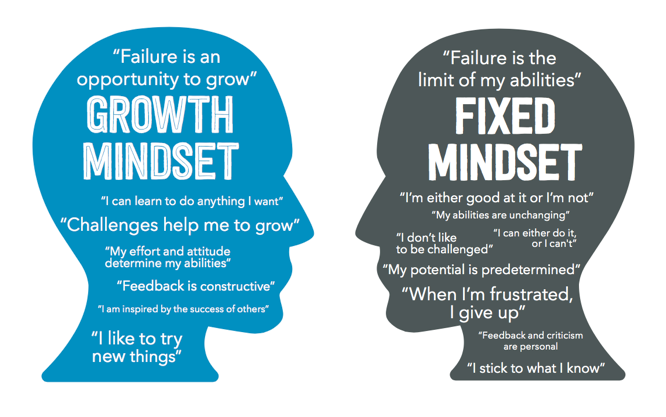
book-2