Pam Harbin Wants to Go From Pittsburgh School Board Watchdog to School Board Member

Screen Shot 2019-03-12 at 4.24.44 PM


My friend Pam Harbin is trying to undergo a startling metamorphosis.


She wants to transform from an education activist into a Pittsburgh School Director.


Now that Board President Lynda Wrenn is stepping down after 4 years, city voters in District 4 will have to decide whether Harbin can make the change. The election is on May 21.


Residents in parts of Squirrel Hill, Point Breeze, Shadyside and North Oakland already know Harbin as a fierce warrior for children’s civil rights, the plight of disabled kids and authentic public schools.

 
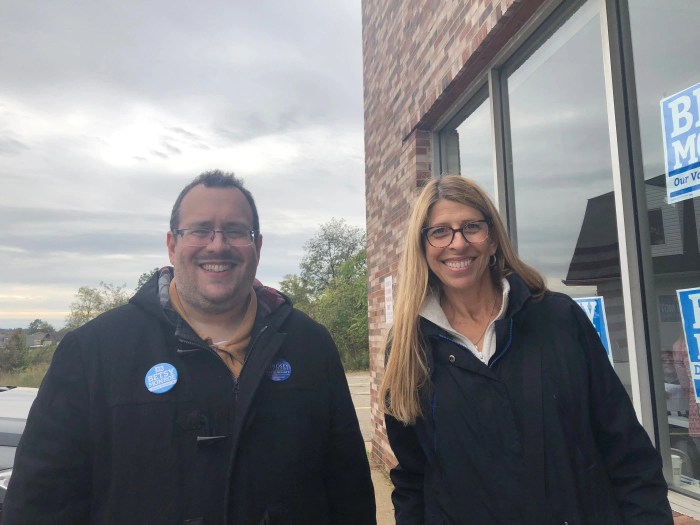
I’ve known Pam, personally, for years in my own role as an education activist. Though I don’t live in the city, I’ve participated in numerous collective actions to fight for the schools all our children deserve. And right beside me in every case – often in front of me – was Pam.


img_8279

 
I may not live in the district, but I wish I could vote for her. Harbin is an amazing leader with boundless energy, piercing intelligence, a deep knowledge of education policy, an advanced degree in finance and marketing, and an impressive track record of education justice achievements.

 
“I am deeply concerned for our system of public education,” she says. “The status quo isn’t working for all children. Thankfully, there are many people here in Pittsburgh and across the country who are fighting for investment in, and transformation of, our public schools. Unfortunately, their efforts are hindered by the well-funded organizations who fight for public school disinvestment, privatization, and for the elimination of teachers’ right to unionize.”


For the past 12 years, Harbin has been at the forefront of every major battle for the future of Pittsburgh’s public schools and the rights of its students.

 
Harbin was instrumental in pushing city school board directors to enact a suspension ban from Pk-2nd grade for minor non-violent conduct. She successfully fought to stop the district from implementing a physical restraint protocol that wasn’t trauma informed. She successfully fought against a policy that would have allowed school police officers to carry guns. She supported a successful Sanctuary Schools Policy for immigrant students. She also supported changes to the districts policies that would better welcome and include Pittsburgh’s LGBTQ students, including a change that allows students to use the bathroom that best fits their own gender identity.

 
Harbin and her coalition of local activists even made national news when they stopped the district from contracting with Teach for America, stopped the closing of 10 schools (after 23 were previously closed), pushed the board to hire a new Superintendent using an inclusive process that relied heavily on community input, and led the fight for a Community School Policy and the creation of 8 Community Schools.

 
Harbin has two challengers in the election: Anna Batista, a corporate consultant at Highstreet Consulting and Ashley Priore, a 19-year-old first year student at the University of Pittsburgh studying Business and English, who started a successful after school chess program for girls.

 
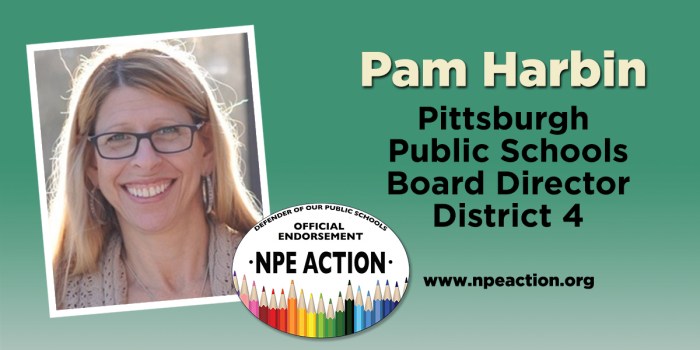
But despite facing a crowded field, Harbin has earned every organizational endorsement she has sought thus far, including the Allegheny County Democratic Committee, the Young Democrats of Allegheny County, the Stonewall Democrats and the Network for Public Education—an organization that frequently reposts my own writing as an education blogger and which is on the frontlines of education justice nationwide.


Pam-HarbinEndorsement-1


Harbin is one of the most experienced education leaders ever to run for school board in the city. She co-founded the Education Rights Network (ERN), a parent-led organization working for fully resourced, inclusive and quality education for students throughout Pennsylvania. The ERN is part of One Pennsylvania, an organization that unites low income and working class activists to tackle the fundamental economic justice and political problems of local communities.

 
“Our members are workers, students, parents, seniors, people with disabilities, and retirees who are excited to learn, collaborate, and build power,” she says. “We follow the money, confront the power, and make the change.”


ERN is a member of Great Public Schools Pittsburgh, a coalition of community, faith, and labor organizations working together to create sustainable public schools in Pittsburgh—an alliance which Harbin also helped to found in 2013. Great Public Schools is affiliated on the national level with the Journey for Justice Alliance, the Dignity in Schools Campaign, and the Alliance to Reclaim our Schools.

 
Harbin is also a member and past Co-Chair of the Pittsburgh Local Task Force on the Right to Education (LTF), a parent-majority organization that works with administrators of Pittsburgh Public Schools and community agencies to improve services for students with disabilities.

 
And she serves on the board of directors and was past President of Evolve Coaching (formerly Arts for Autism Foundation of Pittsburgh), supporting individuals with disabilities and their communities through education, employment, and the arts.

 
No one else in the race—and maybe in the whole city—has a resume like Harbin’s.

 
Harbin believes her years of leadership for and service to Pittsburgh students and families have provided her with the needed foundation for a transition from community leader to school board member. She has attended or streamed more than 2,000 hours of school board meetings. She has served on Pittsburgh Public Schools (PPS) district-wide advisory committees, including the Community Schools Steering Committee, Envisioning Educational Excellence Advisory Committee, Parental Involvement Policy Committee, Excellence for All Steering Committee, and the Special Education Delivery Model Advisory Committee. And through these many committees and organizations Harbin has helped more than 100 individual families secure an IEP or a 504 plan for their children—in part because she understands better than most the byzantine world of public school special education services.

 
No one is better suited to this position than Harbin. I literally wish we could clone her and have her fill every vacancy on the board. She is that qualified, that experienced, and that effective.

 
If this sounds a bit like a love letter, it kind of is.


Screen Shot 2019-03-12 at 4.23.29 PM

 
I have many fond memories of fighting the power alongside Pam Harbin. I remember organizing events through Yinzercation with Pam, even canvasing local candidates door-to-door with her and my (then) 9-year-old daughter. No matter what, you could always count on Pam to be there for children.

 
“When our public schools are strong, our children and community thrive,” she says. “We have many great Pittsburgh Public Schools, teachers, and programs. But, in each school, there are children who can’t excel because their individual needs have not been met. We must do better.”


“We must remove the barriers that keep all of our children from fulfilling their dreams. This requires transformational, sustainable change in policy and practice at the local, state, and national level.”


If anyone can make that change happen, it’s Harbin. As someone who has a degree in finance, who is an experienced negotiator and a proven coalition builder, she is uniquely qualified to do so from within the board as she has been successful doing so from outside of it.


She has an ambitious set of goals and priorities if elected:


-Strengthening relationships between all stake-holders with an emphasis on child wellness.


-Defining success beyond standardized test scores to include authentic education practices, addressing trauma, disengagement, hunger, the quality of school food programs, the condition of our buildings and bathrooms, and children’s need for exercise and play.


-Achieving smaller class sizes and a smaller ratio of kids to adults in each building with more teachers, counselors, social workers, paraprofessionals, nurses, librarians, and other staff that keeps the building functioning at its best.


-Restoring funding to art, music, physical education, and other programming that keep kids wanting to come to school.


-Stopping criminalization and over-policing of students, and stopping the use of ineffective punishments that keep children away from their learning and put them on the track to drop out, to jail, and to poverty.


-Intentionally recruiting, retaining, and supporting educators of color and those who identify as LGBTQ.


-Working to make teacher mentoring, new teacher induction, and professional development better to make the very best use of teachers’ time and address key gaps in preparation to teach the wide spectrum of students in the district.


-Making teacher evaluation fair and consistent, not based solely on test scores or value added models.


-Ensuring teachers (and all school staff) are well paid, treated fairly, and valued for the critical work they do for children every day.


-Protecting collective bargaining rights so teachers (and all staff) have a voice to improve their schools – because teaching conditions are students’ learning conditions.


-Investing in the proven Community Schools model and work collaboratively with community partners to bring resources to each school.


-Working at the state level to force our legislators to finally provide adequate, equitable, and sustainable funding for public education and stop efforts to dismantle public education through vouchers and other privatization schemes.


-Building coalitions to improve the flawed state Charter School Law – Charter Schools must have more accountability for the delivery of education to all students, including disabled children, English Language Learners, and kids who are homeless or who are in foster care.


angel and pam


I could literally go on about Pam for another 10,000 words. Easy.


But let me close with this.


Harbin began her journey as an education leader when she started advocating for her own children at their first elementary school—Liberty elementary in the Shadyside neighborhood of Pittsburgh. She found that she could make a difference for a few children at a time by throwing herself into volunteer work at the school.


But then she realized that if she wanted to make a difference for more than just a few children that she needed to work with others. Indeed, to do this work effectively Pam has had to work with people of different backgrounds, races, opinions and ideologies. She has had to listen to others, to compromise, to build bridges, and to prioritize common goals in each of her coalitions. In short, she gets things done.


And she’s been doing that for more than a dozen years.


Not because she has no choice. Not because anyone is paying her to do so. Not because doing so is bringing her any riches or fame.


But because it has been the right thing to do.


And that’s the best endorsement I can imagine.


NOTE: Special thanks to Professor Kathleen M. Newman who helped edit this article.


Click HERE to join Pam’s campaign!


Like this post? I’ve written a book, “Gadfly on the Wall: A Public School Teacher Speaks Out on Racism and Reform,” now available from Garn Press. Ten percent of the proceeds go to the Badass Teachers Association. Check it out!
thumbnail_IMG_8249

I Used to be a Reporter. Now I’m a Teacher. I’ve Become What I Used to Observe

thumbnail_Screen Shot 2019-02-28 at 12.04.59 PM

A long time ago, in a newsroom far, far away; your humble narrator was a respected journalist.

Today I am a beloved school teacher in a suburban middle school.

Okay. That may be laying it on a bit thick.

Like any human being whose job it is to get children to do their best and learn something, I’m beloved by some and beloathed by others. And if I’m honest, when I was a reporter, I was never all that respected. But I did win several state journalism awards.

The point I’m trying to make is that like a caterpillar into a butterfly or a tadpole into a frog, I made a startling transformation in career paths that flies somewhat in the face of popular wisdom.

F. Scott Fitzgerald wrote, “There are no second acts in American Lives.” Well, I’m on my third or fourth act and nowhere near ready for the curtain to come down yet.

It’s shocking how far I’ve come, though there’s a surprising amount of overlap between my two professions. In fact, the biggest difference is one of orientation.

I used to get up at 4 a.m., weave into the newsroom and type away for a few hours about the previous night’s school board or city council meeting before my deadline came down, the presses rolled and the morning edition went on sale.

Now I get up at 5 a.m., hobble into the classroom and go to meetings, grade papers or otherwise get ready for a 7-hour invasion by 12- and 13-year-olds, followed by more meetings and papers and planning.

I used to go into the classroom to interview teachers and students about special lessons, state and federal programs or standardized tests.

Now I’m in the classroom questioning myself about my students and what works best to help them learn, trying to navigate the state and federal programs so they get the best return and bang my head against the wall about the constant standardized tests.

I used to independently bebop all over my coverage area, asking questions, doing research, discovering things that many people would rather remain secret.

Now I independently plan my lessons, ask my students questions, do research on best practices and discover things about my children and their lives that many people would rather remain secret.

You’ve heard the old chestnut about education being a career for those unable to act. I’m living proof that it’s a lie.

As a journalist, I reported on. As a teacher, I do.

In my former job, I told. In my current one I show.

Perhaps that’s why I now find it so strange that many of my former colleagues have gone into public relations, communications or have become policy analysts.

I’m not surprised. I can’t say I didn’t know that that door was always open. But it’s peculiar.

In the newsroom, we all heard the stories about grizzled newspapermen and women with shelves stuffed full of awards and prized Rolodexes bursting with hard-earned sources who gave it all up for a 9-5 desk job writing the very press releases we disdained.

We all had friends who were making bank managing people like us and trying to get us to write what the company wanted or spin the story in the direction the advertisers liked.

There is no scorn, no disgust, no derision to match that of a journalist for a corporate sellout, and that’s because in our hearts we all secretly wondered if it wasn’t the better deal.

Every good reporter – like every good teacher – is a radical at heart.

You don’t get into either field to support the status quo. You want to rock the boat. You want to shake things up. You want to change the world for the better – all from the comfort of your swivel chair behind your computer screen or from the well worn tread of your classroom carpet.

Journalists live for the scoop, the big story, the article that shouts off the front page above the fold and which has everyone talking. Teachers live for the student epiphany, the moment the light comes on behind a child’s eyes, the transformation from ignorance to knowledge and – dare I say – wisdom.

But being a press agent or policy hack has none of that splendor.

You have to give it up – all for the right to have a chance at a life.

I loved being a reporter. It was one of the best things I’ve ever done. I got to do things, see things, talk to people, be there for things that I never would have been able to access otherwise. But I could barely pay my bills.

I was dirt poor in the newsroom. We all were.

We worked 50-60 hours a week, had no time for a second job, no time for a social life, no time for a family or kids, and we wanted more.

So I understand the allure of the steady paycheck and becoming a housebroken professional communicator of someone else’s message.

But being a teacher is different.

You still don’t get paid much. You still work long hours – though maybe not quite as long. But you can get that second job – often in the school, itself, tutoring students or in a summer or after school program.

And you get union protections that I only dreamed about as a reporter. A safe workspace, clean and tidy, no outrageous demands (or at least an upper limit on them), and a schedule you can predict and plan a life around.

Best of all, you still get to keep your idealism intact. Or you can try to keep it as you dodge this directive and that unfunded mandate and that deeply racist policy passed down from above.

Don’t get me wrong. Becoming a teacher was hard work. I didn’t go about it the easy way – no Teach for America, one-foot-in/one-foot-out, cheating for me. I dove in head first.

I went back to college and took an intensive, accelerated masters program designed exactly for people changing careers. To get there, I had to swallow a few prerequisites I’d missed in college the first time. Then they placed me in a high school where I watched and then took over multiple classes – all while enrolled in education courses at night and in the summers.

By the time it was all over, I still had the most important things left to learn – (1) whether I could actually teach a full schedule, and (2) whether I liked doing so.

For me, the answers were unequivocally positive. I took to it like I’d taken to journalism. I needed lots of fine tuning, but the basics came naturally. And I loved every exhausting minute of it.

I regret nothing about becoming a teacher. It’s the best job I’ve ever had and am ever likely to have.

As a journalist, I got to rock whole communities with exposes about corruption. As an educator, I get to impact individuals.

I no longer get to be the talk of the town, but I get to change lives all the same – one person at a time.

And there’s something deeply satisfying about it – to look in another person’s eyes and see the need right there in front of you, and to be able to heal it even a fraction of the way well.

This world is hard. It takes people, chews them up and spits them out. There is so rarely a helping hand, a smile, understanding. But to be able to offer your hand, to be able to share a smile, to attempt to understand – that’s pure magic.

When the day is done, I know it was well spent.

I’ve come a long way from the newsroom. And in doing so, I’ve broken journalism’s number one rule – don’t become the story.

I no longer report on the action.

I participate in it.

What a way to make a living!


Still can’t get enough Gadfly? I’ve written a book, “Gadfly on the Wall: A Public School Teacher Speaks Out on Racism and Reform,” now available from Garn Press. Ten percent of the proceeds go to the Badass Teachers Association. Check it out!

cropped-book-1.jpg

Hey, Teachers’ Unions, Let’s Get This One Right – No Early Presidential Endorsements & Lots of Membership Engagement

52448056_1332568296885727_443989310761336832_n
Let’s not mince words.


The last Presidential election was a cluster.


And we were at least partially to blame for it.


The Democratic primary process was a mess, the media gave free airtime to the most regressive candidate, and our national teachers unions – the National 
Education Association (NEA) and American Federation of Teachers (AFT) – endorsed a Democratic challenger too early and without getting membership support first.


This time we have a chance to get it right.


Edu-blogger Peter Greene spoke my feelings when he took to Twitter:


“Just so we’re clear, and so we don’t screw it up again—- NEA and AFT, please wait at least a couple more weeks before endorsing a Democratic Presidential candidate for 2020.”


52059561_10218928805835758_8289688834384330752_n

 
He’s being snarky.

 
No one would endorse two years before people actually enter a voting booth.

 
But fairness. Evenhandedness. Moderation.

 
Let’s be honest. That didn’t happen in 2015.

 
So let’s take a brief trip down memory lane and review our history for just a moment in order to prevent these same mistakes.


The NEA represents 3 million educators. It is the largest labor union in the country. However only about 180 people made the decision to back Hillary Clinton last time around.


In October of 2015, the NEA Board of Directors voted 118 to 39 in favor of the endorsement with 8 abstentions and 5 absences.


The 74 member PAC Council voted to endorse Clinton with 82% in favor, 18% against and some of the largest delegations – California and New Jersey – abstaining.


Check my math here. So 61 PAC votes plus 118 Directors plus one President Lily Eskelsen Garcia equals 180 in favor.


That’s about .00006% of the membership.


We may call it such, but that is not an endorsement.


We need more than just the leadership to support a candidate. We need that to translate to actual votes.


When you circumvent membership, you see the result – Donald Trump.


To be fair, some NEA directors may have polled state union leaders. But according to NEA by-laws, the organization need go no further to obtain input from individual members for a primary endorsement. Even these straw polls are a formality.
The 8,000 strong Representative Assembly (RA) did not get a say. This larger body representing state and local affiliates did get to vote on an endorsement in the general election when the field was narrowed down to only two major candidates.


But anything like a poll of individual members was apparently not desired by leadership – now or later.


We can’t do that again.


The process at the AFT was likewise perplexing.

The AFT endorsed Clinton in July of 2015 – a half year before the primaries and more than a year before the general election.


This much seems certain:


1) The AFT executive board invited all of the candidates to meet with them and submit to an interview. No Republican candidates responded.


2) Democrats including Bernie Sanders, Martin O’Malley and Clinton were interviewed in private.


3) The executive committee voted to endorse Clinton.


4) THEN the interviews were released to the public.


How can the AFT claim its endorsement was a result of membership opinion when the organization didn’t even release the interviews to members until AFTER the endorsement?


Ostensibly, the executive council used these interviews to help make its decision. Shouldn’t that same information have been available to rank and file members of the union before an endorsement was made?


Which brings up another question: were AFT members asked AT ALL about who to endorse before the executive council made the final decision?


According to the AFT press release, they were:


“The AFT has conducted a long, deliberative process to assess which candidate would best champion the issues of importance to our members, their families and communities. Members have been engaged online, through the “You Decide” website, through several telephone town halls, and through multiple surveys—reaching more than 1 million members.

Additionally, over the past few weeks, the AFT has conducted a scientific poll of our membership on the candidates and key issues. The top issues members raised were jobs and the economy and public education. Seventy-nine percent of our members who vote in Democratic primaries said we should endorse a candidate. And by more than a 3-to-1 margin, these members said the AFT should endorse Clinton.”


So the AFT claims union members said to endorse Clinton on-line, on telephone town halls, surveys and a scientific poll of membership.


But did they really?


I’m not a member of the AFT but I know many teachers who are. Very few of them have ever been surveyed.


The press release says AFT members preferred Clinton 3-1. Yet to my knowledge they never released the raw data of any polls or surveys of membership.
This can’t happen again.

 
AFT President Randi Weingarten said something similar during an interview Friday on C-SPAN.


She said the executive council passed a four step process just last week to ensure members were behind whoever the union eventually endorsed this time around:


“Our Executive Council just passed a process last week which has four components. Number One is what do the members want? What are their aspirations? What are their needs in terms of Presidential candidates? And so we will be doing a lot of listening and engaging with members.


Number Two – There’s a lot of candidates that want access to our membership. What we would like them to spend a day with our members. We would like them to see the challenges in classrooms. The challenges that nurses have. [The AFT also represents nurses.] Listen to the challenges of adjunct professors who have student loan debt that is well beyond what salaries they get per month.


Number Three – People are really active these days. So we don’t want them to wait until there is a nationwide endorsement to involve or get engaged with candidates. So there’s going to be an ability to be involved or engaged as delegates to do these kinds of things.


Number Four – At one point or another we’ll get to an endorsement.”


Frankly, this seems kind of vague to me. I hope this new process gets better results than the last one.

 
We need to be able to trust our unions.

 
Don’t get me wrong. I love my union. I bleed collective bargaining and labor rights.

 
I teach in Homestead, Pennsylvania, just a few miles away from the site of the famous steel strike.

 
I want a union that represents me and my colleagues.

 
We must do better this time around.

 
We need a candidate that has broad popular support of members, not just leadership. Broad popular support will lead to engaged members at the polls and that engagement will translate into actual votes for our endorsed candidate.

 
So NEA and AFT leaders, your members want to know:
What is your process for selecting our next U.S. presidential candidate?

 
What questions will you ask potential candidates?

 
How will members have a democratic voice in the process?

 
Please be transparent and publish your process to share with members through multiple sources.

 
And my union brothers and sisters, get involved. Engage in the endorsement process now! Call on our NEA and AFT leadership to invite early and widespread, as well as transparent, involvement in the endorsement process.


52308654_10218930369994861_6486342344374222848_n
Do you know your NEA Board Members?

http://www.nea.org/home/1686.htm


NEA Leadership Contact INFO here:

http://www.nea.org/home/49809.htm


AFT Leadership:

https://www.aft.org/about/leadership


AFT Contact Info:

https://www.aft.org/contact

 
Let’s get it right this time.

 
Everything is riding on it.

 
Our vote is our future.


Special Thanks to Susan DuFresne for inspiring this article.


Still can’t get enough Gadfly? I’ve written a book, “Gadfly on the Wall: A Public School Teacher Speaks Out on Racism and Reform,” now available from Garn Press. Ten percent of the proceeds go to the Badass Teachers Association. Check it out!

book-3

A Gadfly’s Dozen: Top 13 Education Articles of 2018 (By Me)

thumbnail_IMG_8445


I’m not going to mince words.


This year, 2018, has been a monster.


We’ve been fighting the dumbest and most corrupt President of our lives – Donald Trump. And we’ve been making progress.


Thanks to the midterm election blue wave in the U.S. House, Trump will finally have a check on his power.


We have more black and brown representatives, more women, more nationalities, ethnicities and faiths in the halls of power than ever before.


Charter schools and vouchers are more unpopular today than at any other point in history. High stakes testing is on the decline. And everywhere you look educators and education activists are being heard and making a difference.


But it’s taken an incredible toll on the activist community.


We have had to be out there fighting this ridiculous crap day-in-day-out 365 days a year.


And even then, we’ve suffered devastating losses – family separations at the border, children dying in detention, an increase in hate crimes and gun deaths, all while climate change runs rapidly out of control.


I wish I felt more hopeful. But as I cast my eyes back on the year that was, I’m struck with a sense of bone-deep despair.


I am confident Trump will go down and he will take so many with him.


But the forces of regression, prejudice and stupidity that forced him upon us don’t appear to be going anywhere.


Behind Donald is another Trump waiting to take his place. And behind him another one – like an infinite set of Russian Matryoshka dolls.


Oh, many of them look more appealing than Donald. They dress better, are more articulate and can remember all the words to the National Anthem. But they are just as committed to serving themselves at our expense.


So with that in mind, I invite you to join me on a brief look back at the year that was.


First, let me thank everyone who bought my book, “Gadfly on the Wall: A Public School Teacher Speaks Out on Racism and Reform” from Garn Press. It was amazing to have finally achieved the dream of being published (in paper with a binding and everything)! I never made anyone’s best seller list, but it was gratifying to have hundreds of copies make it into readers’ hands. I hope people found it helpful (and still do because it’s still out there where better books are sold).


Also, I got to check another item off my bucket list with the invitation to film a TED Talk at Central Connecticut State University. My topic was “The Plot to Destroy Public Education.” It’s been viewed almost 1,000 times. I invite you to watch it here.


As to the blog, itself, I’ve been writing now for four and a half years. This year, I’ve had more than 211,000 hits. To be honest, that’s quite a drop. In 2017, I had 366,000 hits. But I’m hearing about similar dips all over the blogosphere. Facebook changed its algorithm this year making it much harder for people to see the work of amateurs like me. Zuckerberg’s multi-billion dollar corporation doesn’t refuse to spread the written word – it just charges a fee that I can’t afford. Moreover, the Federal Communications Commission (FCC) repealed Net Neutrality at about this time last year making things even more dodgy.


However, on the plus side, the blog is up to more than 1,429,000 hits total! That’s pretty good for a publication that’s only been around since July 2014. And it doesn’t count all the readers I get from articles reposted on the Badass Teachers Association Blog, Huffington Post, Commondreams.org, the LA Progressive, Alternet, BillMoyers.com or other sites.


In addition, about 500 more people followed me this year for a total of 13,361.


That should do it for an overview.


One final item before I get to the look back. I’m making a slight change this year to how I do things. Instead of publishing two separate articles – a Top 10 list and a List of Honorable Mentions – I’m combing the two into this one.


I’ll begin with three pieces that didn’t necessarily get the number of hits I thought they were worth. Then I’ll count down my 10 most popular pieces of 2018.


So without further ado, here’s what’s kept Gadfly buzzing this year:


Honorable Mentions


 13) The Necessity and Importance of Teachers


Published: June 29 teacher-elementary-Getty-blog


Views: 520


Description: There’s an increasing (unspoken) insistence that schools do away with teachers and replace them with technology, apps, algorithms and other edtech marvels with more strings attached than your standard marionette. This is my attempt to prove how and why real, live teachers are important.


Fun Fact: How sad this article was and remains necessary.


12) There is Virtually No Difference Between Nonprofit and For-Profit Charter Schools


Published: Sept. 7 Screen Shot 2018-09-06 at 3.18.04 PM


Views: 1,464


Description: You often hear privatization cheerleaders defend charter schools by making a distinction between the good ones and the bad ones. This usually just means those that are for-profit and those that are not-for-profit. But in this article, I show that this distinction is bogus.


Fun Fact: This may be one of the most important facts you can share with someone who’s had a big gulp of the charter school Kool-aide.


11) Top 10 Reasons You Can’t Fairly Evaluate Teachers on Student Test Scores


Published: Aug. 6 Screen Shot 2018-08-02 at 12.49.24 AM


Views: 1,552


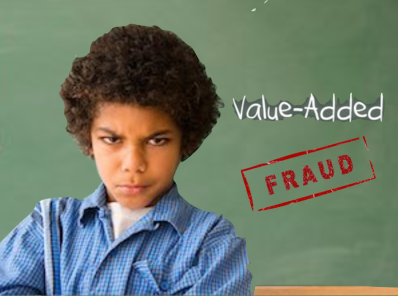
Description: Policy makers don’t talk about it as much these days, but there are still plenty of laws on the books requiring states to evaluate teachers on student test scores. It’s called VAM or Value Added Measures. Here’s why it’s totally unfair.


Fun Fact: I’m not sure if anyone else has ever put together all these arguments against VAM. Hopefully, it can serve as a good go-to article when a corporate shill starts rhapsodizing on the benefits of this farce.


Top 10 by Popularity


10) Grit is Sh!t – It’s Just an Excuse to do Nothing for Struggling Students


Published: Nov. 8 Screen Shot 2018-11-08 at 3.29.01 PM


Views: 3,102


Description: Ask a Common Core propagandizer why their canned academic standards haven’t resulted in an increase in test scores and you’ll get this whooper: ‘It’s the students’ fault. They need more grit.’ Here’s why that’s a steaming pile of something that rhymes with grit.


Fun Fact: Some folks hated this article simply because of my potty mouth. But a whole lot of people were as fed up with this particular suit of the Emperor’s new clothes as I am.


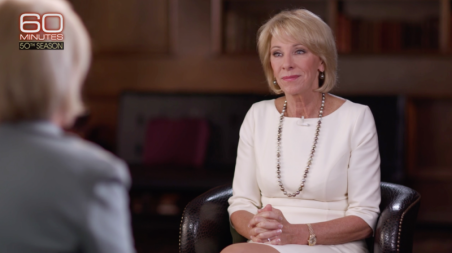
9) Twenty-One Reasons People Hate, Hate, HATE Betsy DeVos


Published: March 12 n7kdmgvgx13jmo6cvmpu


Views: 3,824


Description: During Betsy Devos’ 60 Minutes interview, the billionaire heiress turned Education Secretary just couldn’t figure out why people hated her so much. It thought I’d send her a clue – or 21.


Fun Fact: The biggest criticism I got on this article was that I stopped at only 21 reasons. I should have gone on – but then I might still be writing…


8) The Best Charter School Cannot Hold a Candle to the Worst Public School


Published: May 26 Screen Shot 2018-05-24 at 7.43.41 AM


Views: 3,929


Description: A question I often get is this: Why do you think Charter Schools are always a bad thing? Here is my answer.


Fun Fact: This article shocked a lot of progressives who backed Obama and Clinton. But it had to be said. Democracy is always better than tyranny just as public schools are always better than charter schools.


7) Few Kids in the World Can Pass America’s Common Core Tests, According to New Study


Published: Jan 23 chinese-children-crush-americans-in-math-thanks-to-a-mindset-americans-only-display-in-one-place-sports


Views: 5,061


Description: If all students the world over had to pass America’s Common Core tests, they wouldn’t be able to do it. You’d think that would have implications for how we assess learning in the USA. But nope. Standardized tests are big business. Wouldn’t want to kill that cash cow just because we’re hurting our children, now would we?


Fun Fact: This should have been a bigger story, but we already rewrote our federal education law, the Every Student Succeeds Act, which enshrines standardized testing in most states. So nothing can be done until it comes up for another revision in a few years where lawmakers will again drag their feet and somehow rediscover their love of standardized testing all over again!


6) When You Mistreat Teachers, Beware the Unintended Lessons for Students


Published: Jan 10 5a552b35785e6.image


Views: 7.048


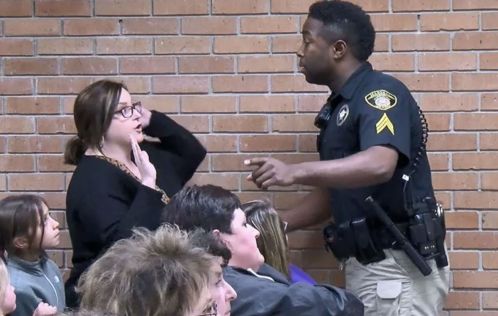
Description: A Louisiana school resource officer threw a school teacher to the ground and arrested her for asking a question at a school board meeting. This was my analysis of what such actions were teaching students.


Fun Fact: A Lafayette judge ruled 10 months later that the school board violated Louisiana’s open meetings law and had to negate the pay raise for the superintendent that the teacher was asking about.


5) The Six Biggest Problems with Data-Driven Instruction


Published: Sept 25 0


Views: 7,525


Description: A lot of folks in education think that everything in our schools should be data driven. Here’s why they’re wrong. It should be data-informed but student driven.


Fun Fact: A lot of educators, parents and students were as sick of hearing about “date-driven” instruction as I was. Feel free to use this article on the next fool who brings out this stale chestnut.


4) Teacher Autonomy – An Often Ignored Victim of High Stakes Testing


Published: Oct 12 Screen Shot 2018-10-12 at 12.12.38 PM


Views: 11.405


Description: Standardized testing is terrible in so many ways. It hurts students. It hurts schools. But we often forget how it stops teachers from effectively doing their jobs.


Fun Fact: This one brought a lot of memories to educators – memories of how things are supposed to be and how they’ve changed for the worst. We need to continue asking questions about the purpose of education and how our school policies are betraying that purpose.


3) Billionaire Heiress Lashes Out at Unions Because Her Fortune Didn’t Buy Election


Published: Nov 30

U.S. Education Secretary Betsy DeVos Speaks To Media After Visiting Students At Marjory Stoneman Douglas High School


Views: 11,723


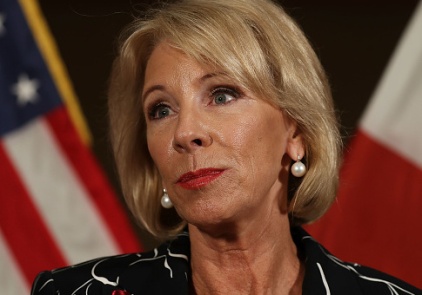
Description: Poor Betsy. She and her family spent a lot of money on this election on regressive candidates who had no intention of working in your best interest. And many of them lost!


Fun Fact: Wouldn’t it be great if everyone got one vote? Wouldn’t it be great if money couldn’t buy elections?


2) Five Reasons to Vote NO on the Allegheny County Children’s Fund


Published: Oct 18 Screen Shot 2018-10-17 at 12.14.03 PM


Views: 18,593


Description: In the Pittsburgh area, we were asked to vote on a referendum to increase spending on children. It sounded like a great idea until you looked at the details. It was just a power grab by the forces of privatization.


Fun Fact: The referendum lost by about as many votes as this article received. I can’t prove my writing changed anyone’s mind, but it was hugely popular here in the ‘Burgh. I’d see people passing around printed copies at council meetings. It was reposted everywhere. I feel like this one made a real difference and helped us stop a bad law. Too bad it couldn’t help us enact a good one.


  1. African Immigrants Excel Academically. Why Don’t African Americans?


Published: June 6 static.politico.com


Views: 20,022


Description: I start with a basic fact about native born African Americans vs. foreign born African Immigrants. Then I try to account for the difference.


Fun Fact: This seems like an important question to me. But it was a controversial one. Some folks were furious I even asked the question. But more people were interested in this piece than anything else I wrote all year.


Gadfly’s Other Year End Round Ups

This wasn’t the first year I’ve done a countdown of the year’s greatest hits. I usually write one counting down my most popular articles (like the one you just read from 2018) and one listing articles that I thought deserved a second look. Here are all my end of the year articles since I began this crazy journey in 2014:


2017:


What’s the Buzz? A Crown of Gadflies! Top 10 Articles (by Me) in 2017


thumbnail_Screen shot 2017-12-26 at 3.44.17 PM


Hidden Gadfly – Top 5 Stories (By Me) You May Have Missed in 2017


7fd6a56c2ffc7a03c9fd2f431a543e92


2016

Worse Than Fake News – Ignored News. Top 5 Education Stories You May Have Missed in 2016


ignoring-wisdom


Goodbye, 2016, and Good Riddance – Top 10 Blog Post by Me From a Crappy Year


screen-shot-2016-12-27-at-3-29-49-am

2015


Gadfly’s Choice – Top 5 Blogs (By Me) You May Have Missed from 2015

Screen shot 2016-01-02 at 11.01.09 PM


Who’s Your Favorite Gadfly? Top 10 Blog Posts (By Me) That Enlightened, Entertained and Enraged in 2015

Screen shot 2015-12-30 at 12.57.49 AM


2014


Off the Beaten Gadfly – the Best Education Blog Pieces You Never Read in 2014

Wonderfull illusion art painting


Top 10 Education Blog Posts (By Me) You Should Be Reading Right Now!


computer-people-png-300x202


Still can’t get enough Gadfly? I’ve written a book, “Gadfly on the Wall: A Public School Teacher Speaks Out on Racism and Reform,” now available from Garn Press. Ten percent of the proceeds go to the Badass Teachers Association. Check it out!

thumbnail_IMG_8249

What Happened to 2018 As The Year of the Teacher?

merlin_137374938_25a3513b-8341-4602-8710-910d3500b1d5-jumbo


This year teachers took their mission way beyond the classroom.


Starting in West Virginia, we staged half-a-dozen walkouts in red states across the country demanding a better investment in children’s educations and often getting it.


Then we took that momentum and stormed our state capitals and Washington, DC, with thousands of grassroots campaigns that translated into seats in government.


It was so effective and unprecedented that the story began circulating that 2018 would be known as “The Year of the Teacher.”


And then, just as suddenly, the story stopped.


No more headlines. No more editorials. No more exposes.


So what happened?


The gum in the works seems to have been a story in The Atlantic by Alia Wong called “The Questionable Year of the Teacher Politician.”


In it, she writes that the teacher insurgence was overblown by unions and marks little more than a moment in time and not an authentic movement.


It really comes down to a numbers game. Numerous sources cite high numbers of teachers running for office. Wong disputes them.


National Education Association (NEA) senior political director Carrie Pugh says about 1,800 educators – both Republicans and Democrats – sought seats in state legislatures this year. Likewise, the Democratic Legislative Campaign Committee (DLCC), a group that works to elect Democrats to state legislatures, puts the number at 1,456 educators.


Wong disputes these figures because she says most of these people aren’t currently K-12 classroom teachers.


She writes:


 “The NEA uses the word educator liberally, counting essentially anyone who currently works in or used to work in an education-related job, such as professors, guidance counselors, and school administrators.”


Maddy Will and others at Education Week agree with Wong’s assessment. According to their analysis, out of the thousands of education-related candidates, they could only prove that 177 were K-12 classroom teachers.


And there you have it.


A story about teachers taking over their own destinies is dead in the water.


However, this begs two important questions: (1) Is not being able to corroborate the facts the same as disproving them? And (2) Is being a K-12 classroom teacher a fair metric by which to judge education candidates?


First, there’s the issue of corroboration.


Wong, herself, notes that part of the disparity, “…may come down to the inconsistent ways in which candidate lists are compiled from state to state and organization to organization.” It’s unclear why that, by itself, throws doubt on the NEA’s and DLCC’s numbers. These are verifiable facts. Journalists could – in theory – track down their truth or falsity if their parent companies ponied up the dough for enough staff to do the hard work of researching them. The fact that this hasn’t happened is not proof of anything except low journalistic standards.


Second, there’s the question of whether Wong and Will are holding teachers up to a fair standard.


Since the Great Recession, more than 116,000 educators have been out of work. If roughly 1-2% of them decide to run for office, doesn’t that represent a rising tide of teachers striking back at the very representatives responsible for neglecting schools and students? Aren’t they seeking to right the wrongs that put them out of work in the first place?


Even if we look at just the people currently employed in an education field, why are college professors defined out of existence? Why are guidance counselors and principals not worthy of notice?


Certainly K-12 classroom teachers are at the heart of the day-to-day workings of the education system. But these others are by no means unrelated.


Carol Burris was an award-winning principal at South Side High School in the Rockville Centre School District of New York before becoming Executive Director of the Network for Public Education (NPE). Diane Ravitch, who co-founded NPE, is an education historian and research professor at New York University.


If Wong and Will are to be believed, the work of Burris and Ravitch on behalf of public education should be discounted because they are not currently working in the classroom. That’s just ridiculous.


This isn’t about logic or facts. It’s about controlling the narrative.


The Atlantic and Education Week are artificially massaging the numbers to support the narrative their owners prefer.


And let’s not forget, both publications are in bed with the forces of standardization and privatization that educators of every stripe have been taking arms against this year and beyond.


Though The Atlantic is a 162-year-old pillar of the journalistic establishment, it was purchased on July 28, 2017, by the Emerson Collective. This is Laurne Powell Jobs’ philanthrocapitalist cover organization which she’s been using in a media blitz to reinvent high schools by way of corporate education reform.


Likewise, Education Week has always had a corporatist slant on its editorial page and sometimes even in the way it reports news. Nowhere is this more blatant than the publication’s annual Quality Counts issue which promotes the standards-and-testing industrial school complex of No Child Left Behind, Race to the Top, Common Core, etc.


It’s no wonder that these organizations would want to stop the narrative of insurgent teachers taking a stand against the very things these publications and their owners hold dear.


They want to cast doubt on the record-breaking activism of parents, students, citizens and, yes, teachers.


But the facts tell a very different story.


From West Virginia, Oklahoma, and Kentucky to Colorado and Arizona, educators took to the streets last spring to rally for adequate, equitable and sustainable K–12 funding.


All over the country, we’re demanding properly equipped classrooms, better wages, and stronger public schools.


In Connecticut we sent the first black woman to the legislature from the state, Jahana Hayes, a school administrator and Teacher of the Year.


We took down Wisconsin’s anti-education Governor Scott Walker. Not only that, but we replaced him with the state superintendent of public instruction, Tony Evers, on a platform centered on schools and learning.


And he wasn’t the only educator with a gubernatorial win. Tim Walz, a former high school teacher, became governor of Minnesota.


In Oklahoma, former teachers Carri Hicks, Jacob Rosencrants, and John Waldron all won seats in the state legislature, who along with others riding the pro-school tide increased the state’s “education caucus” – a group of bipartisan lawmakers committed to improving schools – from nine members to 25.


Even where candidates weren’t explicitly educators, mobilizing around the issue of education brought electoral victories. Democratic candidates were able to break the Republican supermajority in North Carolina because of their schools advocacy.


Even in Michigan – home of our anti-education Education Secretary Betsy DeVos – Gretchen Whitmer was elected governor after campaigning against public-school funding cuts.


In Illinois, anti-education governor Bruce Rauner got the boot, while Democrat J.B. Pritzker unseated him on a schools platform.


And in Kansas, not only did school districts successfully sue the state for more funding, Laura Kelly defeated conservative incumbent governor Kris Kobach on a platform of further expanding school funding.


These victories didn’t just happen. They were the result of grassroots people power.


The NEA says even beyond educators seeking office, members and their families showed a 165% increase in activism and volunteering during the midterm election over 2016. This is especially significant because participation tends to flag, not increase, around midterms.


So let’s return to the disputed numbers of teachers who sought election this campaign season.


Of the 1,800 educators the NEA identified, 1,080 of them were elected to their state legislatures. When it comes to the smaller American Federation of Teachers (AFT), 109 of 178 educators won.


If we go by Education Week’s numbers, just 43 of 177 won.


Clearly, this is not the whole picture.


The education insurgency was more than even getting candidates elected. It was also about changes in policy.


In Massachusetts, we successfully repealed the Ban on Bilingual Education so educators will be able to teach English Language Learners in a mix of the students’ native language and English as a bridge to greater English proficiency.


In North Carolina, we successfully lobbied state lawmakers to stop for-profit charter schools from taking over four of five public schools.


And everywhere you look the stranglehold of high stakes standardized testing is losing its grip.


Because of our advocacy, the amount of time spent on these deeply biased assessments has been cut in states like Maryland, New Mexico, West Virginia, Hawaii, and Pennsylvania.


The highly suspect practice of evaluating teachers on student test scores has been dropped in Connecticut and the weight it is given has been reduced in New Mexico.


Now with new policies in Idaho and North Dakota, 10 states have explicit laws on the books allowing parents to opt their children out of some or all of these exams.


Half of New Hampshire’s school districts have replaced standardized tests in most grades with local, teacher-made performance assessments.


I don’t care what corporate journalists are being forced to report by their billionaire owners.


These accomplishments should not be minimized.


Teachers are at the heart of communities fighting the good fight everywhere.


And in most places we’re winning!


We’re teaching our lawmakers what it means to support public education – and if they refuse to learn that lesson, we’re replacing them.


If that’s not “Year of the Teacher,” I don’t know what is.


Like this post? I’ve written a book, “Gadfly on the Wall: A Public School Teacher Speaks Out on Racism and Reform,” now available from Garn Press. Ten percent of the proceeds go to the Badass Teachers Association. Check it out!

book-2

Dear Lawmakers, Please Hire Teachers as Education Aides – Not TFA Alumni

thumbnail_IMG_8375


Dear freshmen lawmakers,


We did it!


After a fiercely contested election, we have finally begun to turn the tide back toward progressive politics.


Midterms usually are sparsely attended, but this year we had an unprecedented turnout.  A total of 23 states had double-digit percentage-point increases compared with their 1982-2014 midterm election averages.


And the result is one of the largest and most diverse groups of freshman Congresspeople ever!


We got rid of a ton of incumbents – 104 lawmakers won’t be returning to Washington, DC, in January, making this the third-highest turnover since 1974.


And those taking their place will be largely female. Out of 256 women who ran for U.S. House or Senate seats, 114 have won so far (Some races are still too close to call), according to the Center for American Women and Politics at Rutgers University. That makes the 116th Congress the largest class of female lawmakers ever.


Moreover, this incoming group will be incredibly diverse.


We have Jahana Hayes, a nationally-recognized teacher, who will be the first Black Congresswoman from Connecticut. Ayanna Presley, the first black Congresswoman from Massachusetts.


Angie Craig will be the first out LGBTQ Congresswoman from Minnesota. Chris Pappas, the first openly gay Congressman from New Hampshire.


Sharice Davids and Deb Haaland from Kansas and New Mexico will be the first Native American women elected to Congress – ever. And Davids will also be the first openly LGBTQ Congresswoman from the Sunflower State.


Ilhan Omar and Rashida Tlaib will be the first-ever Muslim women in Congress. Omar, a former refugee, will also be the first Somali-American and Tlaib will be the first Palestinian-American woman in Congress. This is especially noteworthy because there have only been two other Muslims to serve in the legislative branch, both men: Rep. Keith Ellison and Rep. André Carson.


And let’s not forget New York’s Alexandria Ocasio-Cortez. Not only is she a Democratic Socialist, but the 29-year-old will be the youngest woman ever elected to Congress!


With so many new faces and so much more representation, is it too much to ask for a change in the way things are done in Washington?


Many progressives are hoping not.


After all, it was people power that propelled these new lawmakers into government.


We marched in the rain, licked envelopes, made phone calls, wrote letters, and knocked on doors. We went to rallies and bake sales and stood by the polls with our little signs and fliers.


And we did it, because we wanted a change.


So, incoming lawmakers, that’s why I’m writing to you.


As a public school teacher, a father of a school-age child, an education activist and a concerned citizen, it really matters to me what happens to our schools.


Yet so many politicians – Republicans and Democrats – have turned a blind eye to our concerns for years.


No matter their party affiliation, they’ve pushed for increasing school privatization – charter and voucher schools. They’ve hammered us with biased and unscientific standardized tests and used the results to justify any number of atrocities including school closures, withholding funding and even stealing the democratic process from taxpayers. Instead of listening to the concerns of teachers and parents, they’ve followed the caprice of every bored billionaire who thinks they know how to better our schools with halfcocked schemes that cost us billions in taxpayer dollars while wasting children’s time and depriving them of an authentic education.


They’ve chased every new technological fad without regard to how it affects students or their privacy. They’ve let our schools become increasingly more segregated and made deals with private prison companies and unscrupulous security and business interests that made our schools a gateway to incarceration as much as they are to college or careers. They’ve actively engaged or silently stood by as classroom teachers lost autonomy, rights and professionalism. And finally, though many of them talk a good game, they haven’t done nearly enough to ensure that every student gets the same opportunities, resources and equitable funding.


Why?


Often the answer is ignorance.


They don’t properly understand the issues facing our schools. They don’t hear from parents, teachers and students – the rank and file. They only hear from the wealthy businesses and philanthrocapitalists preying on our schools like vultures over road kill.


In many cases this is because of the poor quality of education aides on Capital Hill.


Several years ago, I went to DC with other education advocates to ask our representatives to change course. Though we made reservations to speak with our duly-elected lawmakers months in advance, very few of them had the guts to see us face-to-face. We were almost always sent to education aides – well meaning and fresh faced kids only a few years out of college – who wrote down our concerns and sent us on our way with rarely any follow up from the people we’d come to see.


And more often than not, these eager young go-getters were Teach for America (TFA) alumni.


I’m not sure if you know what that means.


TFA is a nefarious neoliberal organization more interested in busting unions and influencing policy than helping kids learn.


They recruit people in college who didn’t major in education to become teachers for a few years before moving on to bigger and better things.


Often these rookies have only a few weeks training and just hours of experience before taking over their own classrooms. And unlike education majors, they only need to commit to the job for two years.


This not only does our children a disservice, it does very little to make these former teaching temps into education experts.


But that’s how they’re treated on Capital Hill.


Through programs like TFA’s Capitol Hill Fellows Program, alumni are placed in full-time, paid staff positions with legislators so they can “gain insights into the legislative process by working in a Congressional office” and work “on projects that impact education and opportunities for youth.”


Why do so many lawmakers hire them? Because they don’t cost anything.


Their salaries are paid in full by TFA through a fund established by Arthur Rock, a California tech billionaire who hands the organization bags of cash to pay these educational aides’ salaries. From 2006 to 2008, alone, Rock – who also sits on TFA’s board – contributed $16.5 million for this purpose.


This isn’t about helping lawmakers understand the issues. It’s about framing the issues to meet the policy initiatives of the elite and wealthy donors.


It’s about selling school privatization, high stakes testing and ed-tech solutions.


As Ocasio-Cortez said on a recent call with Justice Democrats, “I don’t think people who are taking money from pharmaceutical companies should be drafting health care legislation. I don’t think people who are taking money from oil and gas companies should be drafting our climate legislation.”


I’d like to add the following: people taking money from the testing and school privatization industry shouldn’t be drafting education policy. People who worked as temps in order to give themselves a veneer of credibility should not be treated the same as bona fide experts who dedicate their lives to kids in the classroom.


But that’s what many lawmakers of both parties have been enabling.


It’s not hard to find authentic experts on education.


There are 3.2 million public school teachers working in this country.


There are still 116,000 fewer public education jobs than there were before the recession of 2007, according to a report by the Economic Policy Institute, a progressive nonprofit think tank.


If we add the number of teaching jobs needed to keep up with growing enrollment, we’re missing 389,000 educators.


So that’s hundreds of thousands of laid off and retired teachers out there – a huge brain trust, a plethora of professionals who know – really know – what goes on in our schools, what they need to succeed and what policies could fix them.


THAT’S where you should go to find your educational aides – not TFA.


And these experts are not hard to find. You can contact the teachers unions – the National Education Association and American Federation of Teachers. Or, better yet, contact the various education activist groups focused on policy – the Badass Teachers Association or the Network for Public Education. And if you want experts at the crossroads of education and equity, you can contact civil rights groups who focus on our schools like Journey for Justice, a nationwide collective of more than 38 organizations of Black and Brown parents and students in several cities.


Or you can give education bloggers (many of whom are teachers or former teachers) a call – people like Peter Greene, Mercedes Schneider, Nancy Flanagan, Jose Luis Vilson, Julian Vasquez-Helig, and others.


Heck! You can give me a shout out.


We’re here.


We want to help.


So congratulations on your election victories. Let’s work together to transform them into intelligent policies for all our children everywhere.


Like this post? I’ve written a book, “Gadfly on the Wall: A Public School Teacher Speaks Out on Racism and Reform,” now available from Garn Press. Ten percent of the proceeds go to the Badass Teachers Association. Check it out!

book-3

The NAACP Once Again Opposes High Stakes Standardized Testing!

cps_teaching_not_over_testing_sarah_ji


The nation’s oldest and largest civil rights organization has come out against high stakes standardized testing.


The National Association for the Advancement of Colored People (NAACP) distributed an issue brief yesterday at its national convention in San Antonio, Texas, titled “NAACP OPPOSES HIGH-STAKES EDUCATIONAL TESTING.”


The brief stated that the organization has concerns about using a single standardized test as a graduation requirement, as a prerequisite for advancement to the next grade or otherwise blocking students from receiving various educational opportunities. In its place, the organization favors the use of multiple measures, which may include standardized testing but should also include other assessments such as student grades and teacher evaluations.


In short, the brief concluded:


“Using a single standardized test as the sole determinant for promotion, tracking, ability grouping and graduation is not fair and does not foster equality or opportunity for students regardless of race, income, or gender.”


This is a huge policy shift from where the organization was just three years ago.


In 2015, the NAACP along with several other larger and older civil rights groups changed its position against testing to one in favor of it.


At the time, Congress was getting ready to pass a new education law, the Every Student Succeeds Act (ESSA). The civil rights organizations – many of whom had just asked Congress a year earlier to reduce standardized testing – suddenly demanded it be kept a federal accountability standard and that taking these tests was, itself, a civil right.


At the time, many education activists were shocked by the turnaround obviously coerced by the standardized testing and school privatization industry. For instance, see this email from Teach for America alum Liz King giving organizations an ultimatum to sign.


The new issue brief is more in-line with the NAACP’s history of opposition and activism against corporate education reform.


Once again we have the NAACP that advocated against standardized testing in the Debra P v. Turlington case (1981), where the Florida legislature made passing a single standardized test a graduation requirement. The NAACP supported black students who had a disproportionate failing rate on the test and claimed the Florida legislature was violating the Fourteenth Amendment. The courts eventually ruled against the plaintiffs but the issue has remained contentious to this day.


The new issue brief isn’t just a return to form. It builds on concerns that are still plaguing our schools.


Of particular note in the new issue brief is the caution that, “…when standardized tests are used by schools and school districts, that the tests be valid and reliable, measure what the student was taught and provide appropriate accommodations for disabled children.”


Many would argue that the new batch of Common Core aligned tests being used by states do not meet this requirement. They do not test what students have been taught – they test students’ ability to spit back the same kind of thinking of the person who wrote the test. Moreover, special needs students are rarely afforded the same accommodations on federally mandated standardized test day that they are allowed during every other assessment they take during the school year.


The brief continues:


“Furthermore, the NAACP is opposed to individual students being unfairly denied critical educational opportunities because of their performance on a single, standardized test.


This, itself, is a nationwide problem. Administrators are pressured to make district policies “data-driven” and thus deny students the chance to take advanced classes or go on special field trips because of performance on one multiple choice test.


The NAACP certainly could go farther in its criticism of high stakes testing.


Organizations like the Journey for Justice Alliance (JJA), a group made up of 38 organizations of Black and Brown parents and students in 23 states, have never wavered in their opposition to high stakes standardized testing. In 2015 while the NAACP and other well established groups defended testing, JJA was joined by 175 other national and local grassroots community, youth and civil rights organizations asking Congress to stop requiring standardized tests at all.


Standardized testing violates students civil rights – especially the poor and students of color.


It is nice to see the NAACP returning to the activism on which it built its justly deserved reputation.


What follows is the full text of the new NAACP issue brief:


“ISSUE BRIEF


Date: Summer, 2018


To: Concerned Parties


From: Hilary O. Shelton, Director, Washington Bureau


NAACP OPPOSES HIGH-STAKES EDUCATIONAL TESTING


THE ISSUE


Many states are relying on a single examination to determine decisions (such as graduating from high school or promoting students to the next grade), despite the fact that leading education experts nationwide recommend multiple measures of student performance for such decisions. While these “high-stakes” tests serve an important role in education settings, they are not perfect and when used improperly can create real barriers to educational opportunity and progress. Furthermore, one-time, standardized tests may have a disparate impact on students of color, many of whom have not had the benefit of high quality teaching staff (urban school districts have the greatest challenge in attracting and keeping high qualified teachers), adequate classroom resources, or instruction on the content and skills being tested by the standardized tests. Considering additional measures of student achievement, such as grades and teacher evaluations, adds not only to the fairness of a decision with major consequences for students but also increases the validity of such high stakes decisions.


Due to our concerns about the fairness of such testing, as well as the potential impact these tests have on the lives of our children, the NAACP has supported legislation in the past that would require that States follow the recommendation of the National Academy of Sciences and the National Research Council of the National Academy of Sciences. Specifically, the bills require that High Stakes decisions be based upon multiple measures of student performance and, when standardized tests are used by schools and school districts, that the tests be valid and reliable, measure what the student was taught and provide appropriate accommodations for disabled children. Furthermore, the NAACP is opposed to individual students being unfairly denied critical educational opportunities because of their performance on a single, standardized test.


The NAACP will continue to promote the initiatives that ensure equal opportunity, fairness, and accuracy in education by coupling standardized tests with other measures of academic achievement. Using a single standardized test as the sole determinant for promotion, tracking, ability grouping and graduation is not fair and does not foster equality or opportunity for students regardless of race, income, or gender.”


img_3315


Special thanks to Dr. Julian Vasquez Heilig who first released the issue brief on his education blog.


Like this post? I’ve written a book, “Gadfly on the Wall: A Public School Teacher Speaks Out on Racism and Reform,” now available from Garn Press. Ten percent of the proceeds go to the Badass Teachers Association. Check it out!

WANT A SIGNED COPY?

Click here to order one directly from me to your door!


book-2

I Voted for Jill Stein. Was I Wrong?

jill-stein-green-placard


On November 8, 2016, I had a heart attack.


That’s not a metaphor.


I went to vote. I went to the doctor. I was sent to the hospital.


How much of that was a result of the Presidential election? I will never know.


But whenever I think back on that day, I am filled with a sense of bone-deep sadness.


After only a little more than a year in office, Donald Trump is already the worst President of my lifetime – and that’s saying something after the disaster that was George W. Bush.


Yet today our country is separating parents and children seeking asylum on the border and locking them away in detention centers. Nearly every cabinet secretary is an incompetent plutocrat put in office to dismantle the department in which they’re in charge. Meanwhile, Trump insults traditional allies and consorts with dictators all over the globe. And nationwide white supremacists of all stripes are emboldened, on the rise, and openly running for office.


I wish there is something I could do to go back in time and change the results of that day. I wish there was something I could do to stop Donald Trump from being elected President. And though I did not vote for her, I would do anything to have Hillary Clinton defeat him.


On that day, though, I voted for Jill Stein.


There’s nothing I can do about that now.


I imagine going back in time and telling myself not to do it. “Go vote for Hillary,” I imagine Future Me telling an ailing younger version.


Yet even now, I’m not sure if I’d say that to myself.


Go vote for Hillary? Would it have made a difference?


Factually, no. One more vote wouldn’t have put her over the top in my home state of Pennsylvania.


But I wrote articles advising readers to do like me and vote Jill Stein. Does that mean I’m responsible for every Stein vote cast in the Keystone state?


No, not really. I may have influenced some people. But I certainly didn’t influence them all.


I suppose the bigger question is this: did Stein spoil the 2016 election for Clinton?


Let’s look at some numbers.


In Pennsylvania, the results went like this:


Screen Shot 2018-06-20 at 10.21.41 AM
Source: New York Times.


Trump got 2,970,733 votes.


Clinton got 2,926,441 votes.


So he won the state by 44,292 votes.


Stein got 49,941 votes – 5,649 more than Trump’s margin of victory.


So if every Stein voter had cast a ballot for Clinton, she would have won the state – though she’d still lose the Presidency by 10 electoral votes.


But if the same process were repeated even in a few other swing states Clinton lost, the result would change. Clinton would have won and be sitting in the Oval Office right now.


Those are just facts. Or at least they’re facts manipulated in a game with counterfactuals.


If this had happened, then this other thing would have happened, too.


However, it is rarely so clear even with numbers.


For instance, Stein ran in 2012, too. She ran against Obama and Romney. She got 20,710 votes in Pennsylvania.


Screen Shot 2018-06-20 at 10.22.27 AM
Source: New York Times


That’s tens of thousands of Green voters who didn’t cast a ballot for centrist Obama. I don’t think it’s fair to assume they would have voted for centrist Clinton, either.


So if we subtract that 20,000 from Stein’s 2016 totals, (49,941 – 20,710) you get 29,231 new people who voted Green who didn’t do so in 2012.


That’s less than Trump’s margin of victory (44,292).


So even if every NEW Stein voter cast a ballot for Clinton, Trump still would have won the state.


The point?


I don’t think it’s factual or fair to assume Stein or Stein voters gave Trump the election.


If I had voted for Clinton, even if I had advised my readers to vote for her, the end result probably would have been the same.


These are the things I think about in the middle of the night when sleep won’t come.


Is there anything I could have done to change things? In trying to make things better, did I make things worse?


I don’t assume I have that much power – either way.


I’m just a school teacher with a blog.


And that’s why I voted for Stein.


Hillary Clinton made her name politically going against teachers unions. She and her husband have done quite a lot to weaken my profession and the school my daughter attends.


The national teachers unions may have supported her run for President, but they did so without fairly polling members. Her entire nomination process was marred by unfair and undemocratic practices by the Democratic Party that left many progressive voters who favored Bernie Sanders feeling left out and silenced.


I still think THAT more than any scribbling on my blog contributed to her loss.


Compared to Trump, Barack Obama was one of the best Presidents we’ve ever had. But compared to Trump, so was George W. Bush. So would be an inanimate carbon rod!


However, Obama was not particularly good for education. He and the corporate Democrats favored every anti-union, pro-privatization scheme they could. What a missed opportunity!


You’d think our first African American President might do something about school segregation – which has been on the rise in the last few decades. Instead, he helped make it worse by promoting charter schools. You’d think he might do something to stop the school-to-prison pipeline. Instead he helped lubricate it by championing high stakes standardized tests.


I think that’s another reason Clinton lost. Many of us were fed up with Obama’s neoliberal policies and wanted a candidate who might change course. Clinton promised only more of the same.


Don’t get me wrong. In retrospect, more of the same sounds lovely. Give me that old time Obama neoliberalism over Trump’s neo-fascism, any day!


But back in 2016 I thought we had a chance for something more – real hope and change. Was I wrong to vote for a candidate who promised to end high stakes testing and school privatization? Was I wrong to vote for a candidate who promised to fairly fund public schools, provide free college for all and end all student debt?


Maybe.


I suppose I should have been more frightened of Trump back then. But my anger at the Democrats who continually stabbed me and other progressives in the back outweighed my fear of this buffoon.


Perhaps I was wrong in that.


I don’t think it’s too much of an assumption to say we all underestimated Trump. We all underestimated how many people in this country would vote for him.


So was I wrong to vote for Jill Stein?


I still don’t know.


I’m sure many people will criticize me for this article. They’ll blame me for every horrible thing Trump does. If I have any point here, it’s that there’s plenty of blame to go around.


Perhaps we’d do better fighting against Trump than fighting amongst ourselves.


I still believe there is a silent majority of Americans for whom the status quo is unacceptable. Most of us don’t want a wall on our border – we want healthcare for all. Most of us don’t want families separated and undocumented immigrants scapegoated and rounded up – we want a path toward citizenship. Most of us don’t want our democracy subverted and the wealthy to have a greater say in our policies – we want freedom and justice for all.


We just need a way to find each other again. We need to find a way to look past any political, social, racial, gender or cultural differences and find a common humanity.


What better way to do that than in a common cause?


I hope you’ll join me by stopping the recriminations and take on the fight.


We may never fully solve the riddle that was the 2016 election.


There are political and social lessons to be had. But the most important thing is to remember the value of unity and to hold on to each other tight.


We’re all we’ve got.


Like this post? I’ve written a book, “Gadfly on the Wall: A Public School Teacher Speaks Out on Racism and Reform,” now available from Garn Press. Ten percent of the proceeds go to the Badass Teachers Association. Check it out!

WANT A SIGNED COPY?

Click here to order one directly from me to your door!

book-4

Facebook is Censoring Your Favorite Bloggers

finally-thumbs-down-things-you-dislike-facebook.1280x600-970x546

Have you seen me?


Probably not.


In fact, you’re probably not even seeing this right now.


Though you may have read and enjoyed my articles in the past, though you may still want to have the opportunity to see and enjoy my posts in the future, you probably aren’t seeing them anymore.


The reason? Facebook has employed a new algorithm to determine exactly what you’re allowed to see on your news feed.


Like a parent or a government censor, they are scanning your content for certain words, judging your posts based on interactions, and otherwise making choices on your behalf without your consent.


Unless someone pays them to do otherwise. Then they’ll spam you with nonsense – fake news, lies, propaganda: it doesn’t matter so long as money is changing hands.


So homegrown blogs like this one are left in the dust while corporations and lobbyists get a megaphone to shout their ideas across social media.


Look, I don’t mean to minimize what Facebook does. There’s a ton of information that comes through the network that COULD be displayed on your screen. The company uses an algorithm – a complex set of steps – to determine exactly what to show you and when. But instead of basing that solely on who you’ve friended and what you’re interested in, they’ve prioritized businesses and shut down the little guy.


Since Facebook made the change in January, my blog only gets about 40% of the hits it did in years passed. And I’m not alone. Other edu-bloggers and organizations dedicated to fighting school privatization and standardization are reporting the same problems – our voices are being silenced.


And all this is happening after a series of Facebook scandals.


After the whole Cambridge Analytica outrage where Facebook gave the data of 87 million users – without their consent – to a political analysis firm that used it to help elect Trump…


After Facebook sold more than $100,000 in advertisements to Russian bots in 2016 who used them to spread propaganda to help elect Trump…


After enabling the spread of hate speech in Myanmar which allowed the military to engage in “ethnic cleansing” of the Rohingya Muslim minority – which has forced 700,000 people from their homes and across the border into neighboring Bangladesh…


After all that, Facebook still pretends that changing its algorithm is simply a way to crack down on “fake news.”


It’s not.


They are controlling information.


They are policing free expression.


They are NOT cracking down on falsehoods and deception.


In fact, much of what they’re doing is completely devoid of ideology. It’s business – pure and simple.


They’re monetizing the platform. They’re finding new and creative ways to squeeze content providers to gain access to users’ news feeds.


This won’t stop propaganda and fabrications. It just charges a fee to propagate them.


It’s the same thing that allowed those Russian bots to spread Trump-friendly lies in 2016.


It’s pay-to-play. That’s all.


Founder and CEO Mark Zuckerberg characterized the change in January of 2018 as prioritizing content from “friends, family and groups.”


Zuckerberg admitted this means it will be harder for brands and publishers to reach an audience on the social media platform – unless they pay for the privilege. That’s significant because even though organic reach had been diminishing for some time, this is the first time the company admitted it.


Zuckerberg wrote:


“As we roll this out, you’ll see less public content like posts from businesses, brands, and media. And the public content you see more will be held to the same standard—it should encourage meaningful interactions between people.”


What are “meaningful interactions”?


Apparently, what the company calls active interactions are more important than passive ones. So commenting and sharing is more important than just liking something.


In practice that means if you comment on someone’s post, you’re more likely to see things by that person in the future. And if they respond to your comment, their post gets seen by even more people.


Reactions matter, too, as does the intensity of those reactions. If people take the time to hit “Love” for a post, it will be seen by more people than if they hit “Like.” But whatever you do, don’t give a negative reaction like “Sad” or “Angry.” That hurts a post’s chances of being seen again.


I know it’s weird. If someone shares a sad story about their mother with cancer, the appropriate response is a negative reaction. But doing so will increase the chances the post will be hidden from other viewers. Facebook wants only happy little lab rats.


Sharing a post helps it be seen, but sharing it over messenger is even better. And just sharing it is not enough. It also needs to be engaged in by others once you share it.


Video is also prioritized over text – especially live video. So pop out those cell phone cameras, Fellini, because no one wants to read your reasoned argument against school privatization. Or they may want to, but won’t be given a chance. Better to clutter up your news feed with auto-playing videos about your trip to Disneyworld. I suppose us, social justice activists, need to become more comfortable with reading our stuff on camera.


And if you do happen to write something, be careful of the words you use to describe it. The algorithm is looking for negative words and click bait. For example, if you ask readers to like your posts or comment, that increases the chances of Facebook hiding it from others. And God forbid you say something negative even about injustice or civil rights violations. The algorithm will hide that faster than you can say “Eric Garner.” So I guess try to be positive when writing about inequality?


Do you happen to know someone famous or someone who has a lot of Facebook followers? If they engage in your posts, your writing gets seen by even more folks. It’s just like high school! Being seen with the cool kids counts.


One of the best things readers can do to make sure they see your content is having them follow you or your page. But even better is to click the “Following” tab and then select “See First.” That will guarantee they see your posts and they aren’t hidden by the algorithm.


Facebook-News-Feed-update-620x570


I know. I know.


This is all kind of silly, but Facebook is a private corporation. It should be allowed to control speech however it likes. Right?


Wrong.


The social media giant collects a ton of data about its users and sells that to advertisers. As a user, you have to make that Faustian bargain in order to gain free access to the platform. However, as we’ve seen, that data can be used by political organizations for nefarious ends. Private business cannot be trusted with it.


Moreover, there is the echo chamber effect. Facebook controls what users see. As such, the company has tremendous power to shape public opinion and even our conception of reality. This used to be the province of a free and independent press, but after media conglomeratization and shrinking advertising revenues, our press has become a shadow of its former self.


In order to maintain a democratic system that is not under the sway of any one party, faction or special interest group, it is essential that social media providers like Facebook become public utilities.


It must be regulated and free from manipulation by those who would use it for their own ends.


The way things are going, this seems more unlikely than ever.


Our democracy is a fading dream. Fascism is on the rise.


But if we want even a chance of representative government, we need to reclaim social media for ourselves. We need control over what we get to see on Facebook – whether that be a school teacher’s blog or your cousin’s muffin recipe.


In the meantime, do what you can to take back your own news feed.


If you want to keep seeing this blog, follow me on Facebook and click “See First.” Hit “Love” on my content. Comment and share.


The only thing standing in our way right now is a brainless computer algorithm. We can outsmart it, if we work together.


Hope to be seeing you again real soon.

Burning Down the House at TEDxCCSU – Speaking Truth to Power with a BOOM!

31265515_10157264415409018_6319846807568384_n


There’s a reason our society rarely hands teachers the microphone.

We’ll tell you the truth.

Oh, we’re too good mannered to be brazen about it. We’d rather encourage you for trying than criticize you for getting something wrong.

But if you ask us for truth, that’s usually what you’ll get.

Just ask any first grader.

“Is my finger painting good, Miss Pebbles?”

“Oh my, it is!”

“Really?”

“Why yes. I love what you did with that smear of yellow and blue in the corner. Where they overlap, it turns green.”

“Do you think it’s good enough to compete against the seniors in the high school?”

“Maybe you’d better practice a bit more, Dear. At least wait until you can spell your name correctly before devoting your life to art.”

That’s why I was so delighted to get an invitation to do a TED talk.

Here was my chance to tell it like it is.

Sure, some people look to TED for encouragement and life affirming inspiration.

But the way I see it, the only real affirmation is honesty.

Otherwise, it’s just a bromide, a deception, an intellectual hard candy to plop into your skull and let your cranium suck on until all the sugar is gone.

We’ve all seen these TED talks on YouTube or the Internet – some well-dressed dude or dudette standing in front of a crowd with a headset microphone and a grin offering anecdotes and words of wisdom to a theater full of eager listeners.

But after hundreds of thousands of talks in scores of countries, the format has almost become a parody of itself. At many of these events, you’re just as likely to find some Silicon Valley tech millionaire waxing philosophic about his casual Friday’s management style as you are to hear something truly novel.

No, the way I see it, the TED extravaganzas are just asking for a bundle of truth wrapped in a plain brown box – quiet, unassuming and ticking!

For me, doing one was a long time coming.

The first I heard about it was at United Opt Out’s Education and Civil Rights Summit in Houston, Texas, two years ago.

I was rooming with Jesse “The Walking Man” Turner – an education professor at Central Connecticut University and famed social justice activist. He’s been involved with everyone from Moral Monday’s to S.O.S. Save Our Schools. But he’s most well-known for walking from Hartford to Washington, DC, to protest school privatization and standardization  – a feat he did not once, but twice!

Anyway, one night as I was fading into sleep, he whispered to me from across the room, “Steve, you ever thought about doing a TED talk?”

“Huh? Whas tha, Jesse?”

“A TED talk. You ever thought about doing one?”

“Oh I don’t know. That would be pretty cool, I guess.”

“I organize an independent TED event at my school every year. We should get you on the schedule.”

And that was it.

I think. If there was any more to that conversation my conscious mind wasn’t involved in it.

But then the following year I got a call from Jesse asking if I was ready to come to Connecticut.

I wasn’t. I’d just had two mild heart attacks and wasn’t in a condition to go anywhere. I could barely gather the strength to go to school and teach my classes.

What followed was a year of recovery.

I dedicated myself to my students and my blog and made it through the year. In the summer, I put together my favorite on-line articles into a book for Garn Press – “Gadfly on the Wall: A Public School Teacher Speaks Out on Racism and Reform.”

After it was published in November, I worked to promote it, going from event-to-event, book store-to-book store lecturing, signing, and listening. I was even invited to Chatham College to address their graduating class of teaching students.

Then another surprise. I was one of three educators in western Pennsylvania nominated for a Champions of Learning Award in Teaching from the Consortium for Public Education. In the final analysis, I didn’t end up winning the award, but it was a huge honor.

And then to top it all off, Jesse called me back and asked me if I was ready to come to Hartford and give the TED talk another try.

I jumped on it.

How could I say no?

This year has been like a second chance, a new lease on life. I’ve been eating healthier, exercising, losing weight and taking nothing for granted.

But that comes with certain responsibilities.

I couldn’t go there and just mouth platitudes and self-help advice. I couldn’t just tell some touchy-feely stories from my classroom and conclude about how great it is to be a teacher.

Even though it is great – the best job in the world.

But our profession is under attack.
Public schools are being targeted for destruction. The powers that be are using segregation, targeted disinvestment and standardized testing to destabilize public schools and replace them with privatized ones.

The school house is on fire! This is no time for heart-warming stories. It’s time for anger, agitation and activism!

So that’s what I decided to speak about.

Frankly, that wasn’t what I originally planned.

At first, I was going to talk about how society expects too much of teachers – how we expect educators to do it all.

But then the opportunity came to “practice” my speech in front of my entire school building.

I thought to myself, is THIS really what I want to talk about?

If I only get one shot at this – and I probably will get only one shot – do I really want to spend it on society’s unfair expectations?

That’s when I scrapped what I had and started over, this time focusing on “The Plot to Destroy Public Education.”

I must have rewritten my presentation at least five times.

Jesse said I’d have no more than 15 minutes so I practiced just about every night to make sure I was within that time.

The word may have gotten out around my school because the invitation to speak to the entire building quickly evaporated. Maybe there really was a scheduling mix up. Maybe not.

But it didn’t matter. My presentation was ready like a bomb – no hand holding, no concessions, just the truth.

The weeks flew by.

Before I knew it, it was time to fly to Connecticut. I couldn’t believe it was really happening.

When I got there, Jesse picked me up from the airport. He was a consummate host. He couldn’t have treated me better if I was royalty. He paid for my hotel, paid for most meals, drove me everywhere, kept me in good company and entertainment and even gave me a “Walking Man” mug as a token of his appreciation.

I was the only person flying in from outside of the Hartford area. Most of the other seven speakers were from there or had roots in the community.

All but two others were PhDs. The list of names, vocations and stories were impressive. Dr. Dorthy Shaw, a famed education and women’s studies professor, talked about surviving cancer. Dr. Noel Casiano, a sociologist, criminal justice expert and marriage counselor, told a heartbreaking personal story about the three people who mentored him from troubled teen to successful adult. Dr. Kurt Love, a CCSU professor focusing on social justice and education, talked about the greed underlying our economic and social problems. Dr. Barry Sponder, another CCSU professor focusing on technology in education, talked about flipped classrooms. Dr. Johnny Eric Williams, a sociology professor, talked about the myth of whiteness and how it corrupts how we speak about race.

Elsa Jones and her son Brian Nance were the only other non-PhDs. Jones is an early education consultant and the daughter of the Rev. Dr. William Augustus Jones, Jr., a famed civil rights leader who worked with Dr. Martin Luther King, Jr.

They were the ones I bonded with the most. All four of us went out for pizza after the talks.

But when I first entered the Welte Auditorium in the Central Connecticut State University campus, it was truly frightening.

The building could hold hundreds, perhaps thousands of people. Yet organizers had limited the audience to only a hundred. All the seats were up on the stage.

There was a little circular rug where we were to stand and the camera people were setting everything up.

Behind us, a ceiling high blue-purple backdrop would showcase the TED logo and any slides we had prepared.

31392968_10155840677638860_1951634311957953781_n

Which brings up an interesting distinction.

This was not a corporate TED event organized by the TED conference and sanctioned by their foundation. It was a TED “X” event, which means it was independently organized.

TED licenses its name for these grassroots X-events. There are a list of rules that organizers must follow. For example, all tickets to the event must be free. Contrast that with the corporate TED events where tickets go for thousands of dollars.

I was glad I was where I was. This was going to be the real deal – a thoughtful discussion of authentic issues. And somehow I was up there with these incredible thinkers and activists.

The moment came. Drs. Shaw and Casiano had already spoken. I got up from my seat in the front row to get my lapel microphone attached.

Jesse gave me a warm introduction letting everyone in on the secret of my tie – the design was a picture of my daughter repeated to infinity.

So I walked to my mark and started speaking.

It seems there was some sort of technical difficulty with the microphone. My voice didn’t appear to be coming from the speakers – or if it was, it wasn’t projecting very well. So I spoke louder.

Then Jesse came from the wings and gave me a hand mic and a music stand for my notes.

It took a moment to get used to handling the microphone, the clicker for my slides and my iPad (where I had my notes), but I got the hang of it.

And I was off and running.

I said it. I said it all.

The audience certainly didn’t seem bored. All eyes were on me. A few heads were nodding in agreement. Some faces seemed stunned.

When I ended, there was universal applause. A few folks patted me on the back when I got back to my seat and shook my hand.

And that was it.

I thoroughly enjoyed the remaining presentations but it was hard to concentrate in the post-TED elation.

Jones and Nance were probably the closest to what I was talking about and we got along like we’d known each other for years.

When I got back to the hotel, I felt elation and exhaustion in equal measure.

I had done it.

After months, years of planning, it was over.

Jesse tells me the video will be on-line in a matter of weeks. (I’ll revise this post with the video when it goes live.) Though he did mention that one point in my presentation made him a bit nervous – I had called out Bill Gates for his role in the destruction of public schools. However, Gates is a big donor to TEDs. Jesse half-jokingly said that the TED folks might take issue with that and refuse to upload my speech.

But whatever. I told the truth. If that gets me censored, so be it.

This will be something I’ll never forget.

I’m sorry this article has gone on so long, but there was much to tell. It’s not every day that someone like me gets such a stage and such a potential audience.

Hopefully, my video and my speech will be seen by many people who have never heard of this fight before. Hopefully it will open minds and stoke people to act.

And hopefully the mic issues at the opening won’t be distracting.

Thank you for following my blog and being there with me on this incredible journey.

I left nothing important unsaid. I gave it my all.

Now to see where it goes.


The video is available on YouTUBE and directly on the TED Website.