It’s Open Season on Teachers – Again  

  
I am so sick of being a scapegoat.  


But Republican lawmakers seem to think they can’t get elected without finding some boogeyman with which to terrify their base.  


Whether it’s climate scientists or Hollywood elites or a mythical caravan of brown people determined to burst through our southern border, the GOP cannot function without someone to cast as the monster. 


For a political party that scornfully calls others snowflakes, you will never find a more concentrated gathering of self-proclaimed victims than today’s GOP.   


Now they’re turning their attention once again to teachers like me.  


Across the country, Republican politicians are refusing to let educators give an accurate recounting of history. 


In Florida, the GOP is banning math books.   


And on Fox News, Tucker Carlson is even calling for mad dads to storm the school and “thrash” the teacher.   


In my home state of Pennsylvania, it’s no different.  


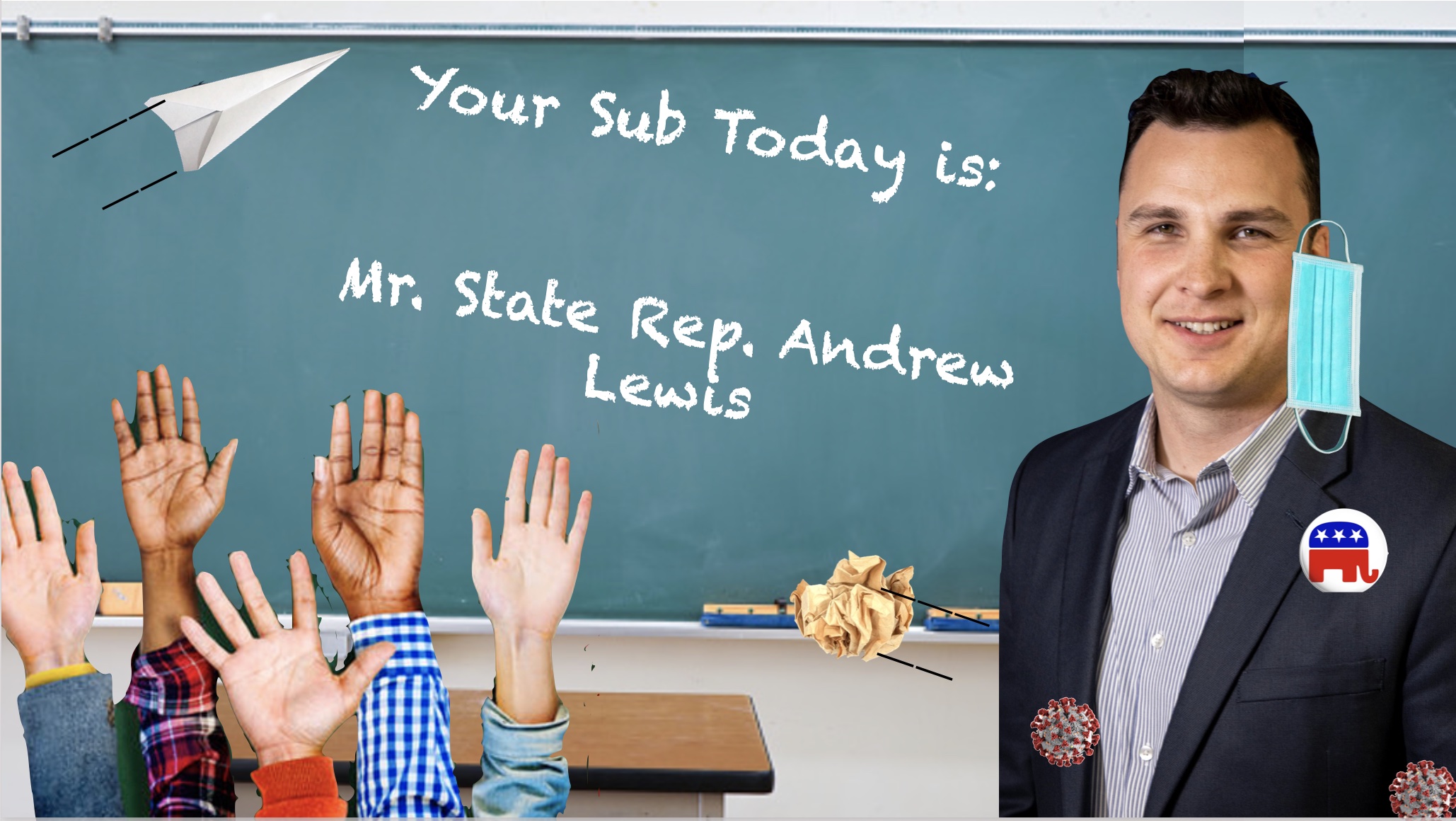
State Rep. Barbara Gleim (R – Cumberland County) stoked the flames in the Commonwealth this week with the following message to her social media crew:  


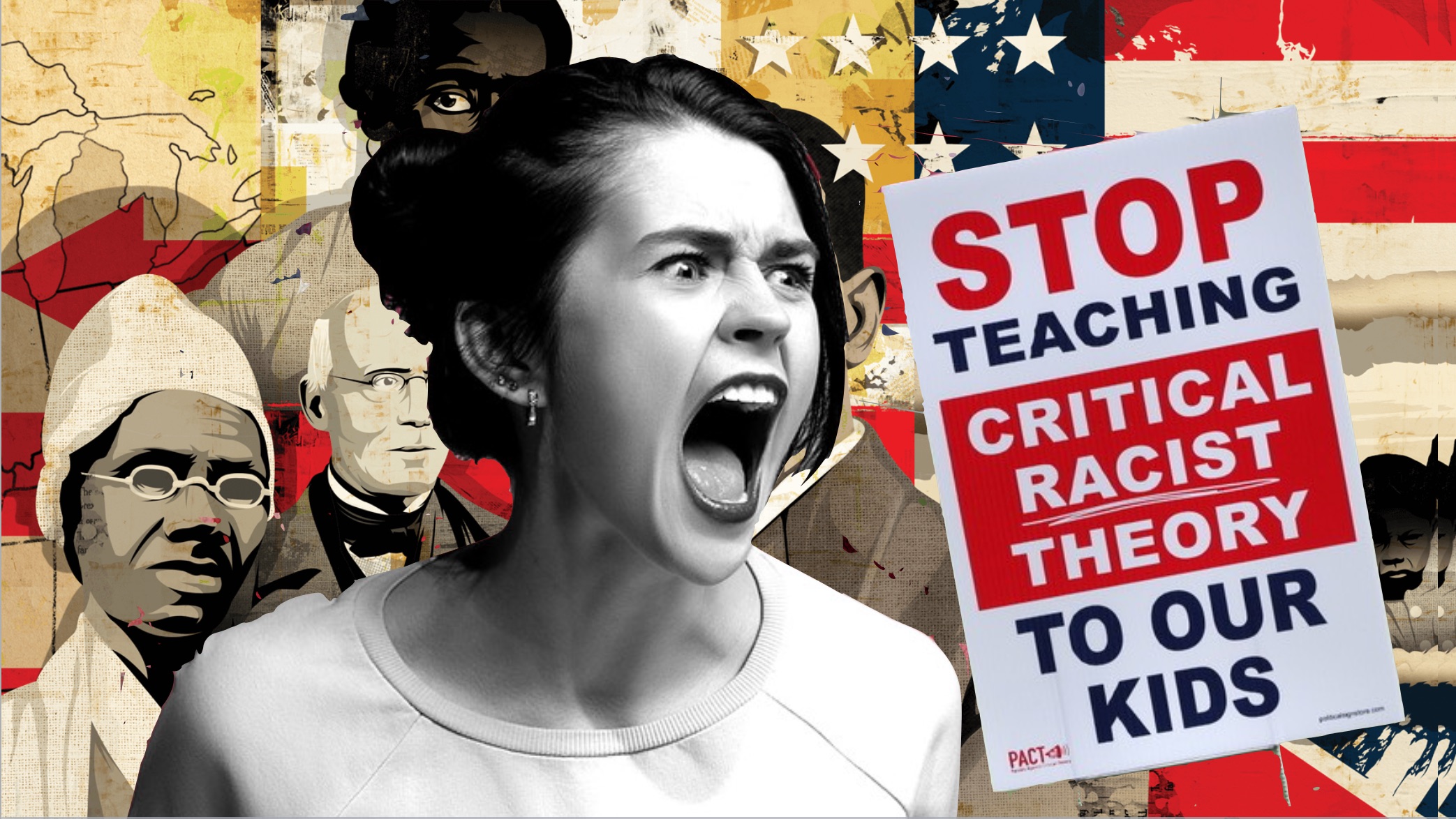
“We also need conservative eyes and ears in the schools. If anyone can substitute even one day a week, the teachers who are activists and indoctrinating children can be revealed. Not all teachers are for [Critical Race Theory] CRT, etc. We need to identify the ones who are pushing the professional development they received over the summer. Are they putting black children’s tests in separate piles and grading them differently? Have they separated the classrooms? We won’t know these things until parents are allowed back into schools, so the best way is to sub.”  


What a load of crap! 


Pennsylvania’s public schools are experiencing a sub shortage. I WISH people would volunteer to sub in our public schools.  


In fact, back in October I even suggested lawmakers like Gleim volunteer to sub a few times a week to see what’s going on in the classroom instead of pulling vacuous lies out of their butts.  


They certainly have the time!  Legislators from the Keystone State make the third highest salary in the country, and they’re only in session a few weeks every month! They could easily spend a few days a week struggling with overstuffed classes, in-school suspension, hall duty and the like. 


To be a sub in most public school districts in Pennsylvania, essentially all you need is a bachelors degree (it doesn’t even have to be in education) and pass criminal background checks. 


Districts that aren’t experiencing a shortage may require a teaching certificate as well, but beggars can’t be choosers. In districts where it is hard to get subs (i.e. those serving poor and minority kids) you can get emergency certified for a year. 


But when I made such a suggestion, I naively thought lawmakers might see the problems schools actually have and start to support them.  


Fat chance of that! 


People with an agenda like Gleim would simply take the most innocent of interactions and pretend they were examples of indoctrination.  


In Florida they banned 41% of the math books for being “woke” without a single concrete example and then patted themselves on the back for being transparent. It would be the same here. It would be like the Puritan girls in “The Crucible” finding witches in every classroom and hallway.  


This state representative really thinks teachers are putting black children’s tests in separate piles and grading them differently!? As if we’re somehow changing their grades or assessing them more leniently?


NEWS FLASH: Children of color are not suddenly acing all their tests or rocketing to the head of the class. In fact, just the opposite. There has been a racial proficiency gap for decades based on segregation, lack of resources and punitive and biased standardized tests. 


For decades teachers like me have been screaming for change but lawmakers like Gleim either shrug or double down on it. 


But back to her social media tirade. She wonders if there are separated classrooms – by which I assume she means classrooms segregated by race. 


BINGO! She got that one right! But it’s not what she seems to think.  


A majority of children of color are not getting privileged treatment. They’re being underprivileged. They’re in the lower academic tracks and a majority of the white kids are in the honors courses.  


Using standardized tests to sort students into academic tracks has hurt minority children and benefited richer white kids.  


But back to her social media bubble. She wants parents to be allowed “back” into public schools!? Parents have never been excluded. As long as they can pass the background check, they can come in almost any time.  


And if they want to know what’s going on, they can come to any school board meeting and be in the room where all things are decided and be heard during public comment periods. They can even run for school board and make those decisions, themselves.  


But way better to pretend a grievance where no such problem exists.  


Public schools do not indoctrinate kids.  


We teach them to think and come to their own conclusions.  


Yes, we teach history, science, English and math. But it’s up to kids to decide what to make of it all.  


However, if she wants to see REAL indoctrination all she has to do is look at the private and parochial schools who accept school vouchers – a policy her party usually supports.  


These schools use books like America: Land I Love, an A Beka Book; United States History for Christian Schools; and the Teacher’s Resource Guide to Current Events for Christian Schools, the last two published by Bob Jones University Press (BJU). 


The books are riddled with counter factual claims and political bias in every subject imaginable such as abortion, gay rights and the Endangered Species Act, which one text labels a “radical social agenda.” They disparage religions other than Protestant Christianity and cultures other than those descended from white Europeans. 


They teach that humans and dinosaurs lived at the same time, some dinosaurs survive into the present day (i.e. the Loch Ness monster), evolution is a myth disproved by REAL science as is the claim that homosexuality is anything but a choice. 


Teaching these things in school is not just educational malpractice, it’s exactly the kind of indoctrination the right is claiming without evidence happens at public schools. 


And this kind of brain washing is common at voucher schools. 


If there’s one thing we need to understand about today’s GOP leaders, it’s this: their accusations are always admissions.  


They accuse Democrats of the pedophilia Republican congresspeople like Matt Gaetz are already under investigation for.  


They accuse Democrats of fixing elections while the last GOP President actually tried to steal an election. 


They accuse public schools of indoctrination while private schools routinely do that already


Or as the old proverb puts it: 


“I looked, and looked, 
 And this I came to see:  
That what I thought was you and you, 
 Was really me and me.”   


We could stop these shenanigans if the rest of society actually took it seriously.  


But that would require news sources to point out the hypocrisy above every time a MAGA supporter started making these sorts of claims.  


And that won’t happen because modern media is committed to giving equal measure to both sides of a story – even if one is patently false. They’re too afraid to appear biased to report the truth.  


It would stop if the Democrats actually prosecuted the former President and his cronies for the Jan. 6 insurrection.  


But that won’t happen because they’re terrified it might lose them a vote. They’re too afraid of being called partisan. Yet there is no middle ground with justice. You either have it or you don’t. 


It would require a stance on principle.  


So far, it hasn’t happened, and I doubt it will.  


So Republicans will continue to take aim at all the usual scapegoats like teachers.  


Like when Chris Christie threatened to punch educators in the face.  


Their base will get fired up – perhaps maybe even too fired up – and someone will walk into a school with gun-in-hand to take down all these indoctrinating teachers.  


That’s the kind of thing that happened a few years ago at the Tree of Life Synagogue in Pittsburgh. A MAGA gunman was convinced by Trump that Jews were helping immigrants come into the country illegally. So he decided to kill as many Saturday worshipers as he could. 


If we don’t stand up to this, it’s only a matter of time before it happens again.


Look. I don’t want to be at the center of this ridiculous culture war.  


I just want to teach. I just want to do right by my students and their families.


But as our country burns to the ground, the school house often seems to be the center of the blaze.  


I am sick of it. 


I am sick of it.  


I am just so sick of it. 


Like this post?  You might want to consider becoming a Patreon subscriber. This helps me continue to keep the blog going and get on with this difficult and challenging work.

Plus you get subscriber only extras!

Just CLICK HERE.

Patreon+Circle

I’ve also written a book, “Gadfly on the Wall: A Public School Teacher Speaks Out on Racism and Reform,” now available from Garn Press. Ten percent of the proceeds go to the Badass Teachers Association. Check it out!

Top 5 Charter School Myths Debunked 

If there’s one thing people love to argue about, it’s charter schools.

Go to any school board meeting, PTA forum or editorial page, and you’re bound to see folks from all different walks of life getting red in the face over these institutions.

But what are they anyway? And why do they generate so much passionate disagreement?

To answer these questions and many more, I’m going to examine five of the most pernicious myths about charter schools, debunk the fallacies and come to the simple truths.

1. Charter Schools are Public Schools 

That’s what charter school supporters say, anyway. But it’s only partially true.

In short, charter schools are schools that were opened by special arrangement (or charter) with a state or authentic public school district that allows them to exist without having to abide by all the rules and regulations that govern all the other schools. Thus, the charter school can go without an elected board, it can pocket public money as private profit, hire uncertified teachers, refuse to admit special education students, etc. The degree of latitude depends on the special arrangement.

Is that a public school? In one way it most certainly is. All charter schools are funded by public tax dollars. Everything else is up for grabs.

They don’t even have to accept all the students in their coverage area like authentic public schools do. You still have to support them with your taxes though.

Is that a public school?

QUICK ANSWER: NO.

2. Charter Schools Save Money 

This is another claim by the charter school industry that has been in contention for their entire 30 year existence.

Charter schools were invented in 1991 and only exist in 43 states and the District of Columbia. They enroll about 6% of the students in the country – roughly three million children.

However, the idea that they could save money is pretty absurd. They duplicate services that already exist at neighborhood public schools. When you pay for two providers to do the same thing, that doesn’t lower the cost.

It drains money from the existing public schools and often forces school directors to raise taxes so they can continue to provide the same services as before.

However, not only do charter schools increase costs, they often waste the extra money taxpayers are forced to provide.

Consider that more than a quarter of charter schools close within 5 years of opening. By year 15, roughly 50% of charter schools close. That’s not a stable model of public education.

Moreover, 1,779 charter schools (37 percent that receive federal grants) never opened in the first place or were quickly shut down. Since 1994, the federal government has spent $4 billion on these types of schools. Think of how much money has been wasted that could have been put to better use in our much more dependable authentic public schools!

To be fair, some charter defenders will argue that since they are free from the same regulations as public schools, they can cut costs WITHIN their institutions and provide the same services for less. However, they never return that savings to the taxpayers. They simply cut services for their students and then pocket the savings. Lowering quality may be a way to cut costs, but it’s not exactly an innovation – and certainly not something to be envied.

This may be cost effective to the bureaucrats and profiteers running charter schools, but it is not a savings to you and me – to speak nothing of how it hurts the students hoping to receive a quality education.

So do charter schools save money?

QUICK ANSWER: NO!


3. Students do Better Academically in Charter Schools 

This is what it says on all those charter school advertisements you see popping up everywhere. But is it true?

The problem with answering that is one of apples and oranges. How do you fairly compare charter and public school students when each group is so different?

Charter schools can legally cherry pick their students. They serve far fewer students with disabilities and English Language Learners. If a student is hard to teach, they “convince” them to go somewhere else.

Meanwhile, authentic public schools can’t do that. They take all comers.

As a result, charter schools can APPEAR to do better for their students but that appearance is due to privileged rules not better teaching or academic programs.

However, even with such advantages, charter schools have failed to show consistent results over authentic public schools on comparative studies.

According to a 2010 Mathematica Policy Research study funded by the federal government, middle-school students who were selected by lottery to attend charter schools performed no better than their peers who lost out in the lottery and attended nearby public schools. This was the most rigorous and most expensive study of charter school performance commissioned by the US Department of Education, and it found no overall positive benefit for charter schools.

And there have been many others. A 2016 study found that Texas charter schools had no overall positive impact on test scores and, in fact, had a negative impact on students’ earnings later in life.

Even a 2020 study by the charter-friendly Center for Research on Education Outcomes (CREDO) found that charter schools are not exceeding public schools in most areas of the country. In addition, the study found vast variations in the quality of charter schools – some being better and many being much worse than the norm.

So, taken as a whole, do charter schools outperform authentic public schools?

QUICK ANSWER: NO!

 
4. Charter Schools are About Innovation 

This was, in fact, one of the selling points of the charter school concept when it was first proposed. Being freed of the regulations that authentic public schools have to abide by would allow charter schools to be laboratories for innovation.

However, after 31 years, practices at charter schools can be seen as somewhat different than at authentic public schools, but are they innovative?

According to a 2018 report by IBM Center Visiting Fellow for Evidence-Based Practices, the practices connected with most positive academic outcomes at charter schools are:

1) Longer school days or academic years


2) Zero tolerance and other strict discipline policies associated with rewards and sanctions


3) Centering the curriculum on improving test scores and test prep.

These are pretty much the opposite of what developmental psychologists, education experts and civil rights activists want for children.

Forcing adolescents to spend more time in the classroom is the exact opposite of what other high achieving countries (like those in Scandinavia) do. Treating children like prisoners with harsh punishments for not conforming to strict rules is not considered best for developing young minds. And narrowing the curriculum to drill and kill reading and math test prep may improve scores but it certainly doesn’t create well-rounded adults with strong critical thinking skills.

Moreover, those few charter schools that do engage in creative practices such as organizing the curriculum around a theme like creative arts or racial justice issues aren’t doing anything that isn’t already being done at authentic public schools – specifically magnet and lab schools.

The creativity and innovation you find at most charter schools is in the accounting department – finding new ways to reduce the services students would find at the neighborhood public school and redefining the savings as profit. That and circumventing conflict of interest regulations to allow the corporation that manages the charter school to buy properties from itself at a hefty mark up.

Is any of this innovation?

QUICK ANSWER: NO!

 
5. Charter Schools Improve Civil Rights 

This is perhaps the most often cited benefit of charter schools. In fact, the impression has been that charters are the choice of people of color and serve them better than their neighborhood public school.

However, the facts show a somewhat different reality.

Yes, charter schools do serve a disproportionately high percentage of children of color. According to 2016 data from the National Center for Education Statistics, 26% of all charter school students are black (832,000) compared with 33% of Hispanics (1,056,000) and 32% of whites (1,024,000).

However, approximately 57% of charter schools are located in cities compared to only 25% of authentic public schools.

So black people aren’t selecting charter schools more often as much as charter schools are deciding to locate in areas where more black people live and are often marketing their services directly to black and brown populations.

Are these schools doing a better job of meeting the needs of these children? A 2016 report from UCLA casts doubt on this idea.

Charter schools are notorious for suspending their black students at much higher rates than their white students. While suspensions for students of color are high at public schools as well, they are much more extreme at charter schools.

More than 500 charter schools suspended Black students 10 percent more often than white students. Moreover, the same figure holds for students with disabilities at 1,093 charter schools. In fact, 374 charter schools suspended 25% of their entire student bodies at least once.

Charter schools are also notorious for increasing racial segregation in the neighborhoods where they locate. Nearly half of all Black secondary charter school students attended a charter schools that was hyper-segregated (80% Black) and where the aggregate Black suspension rate was 25%.

However, this increased segregation isn’t just something that affects Black charter school students. It affects white charter school students, as well.

A 2018 report by The Hechinger Report found that 10 percent of charter schools enrolled a disproportionately high number of White students as compared to the racial demographics of the district at large. Writer Kimberly Quick calls these “White-Flight Charters”. 

In the first case, the charter schools end up with a disproportionate percentage of Black students and the white students are left in the public schools. In the later case, the Black students are left in the authentic public schools and the white kids flee to the charter schools.

Both cases are not good for civil rights. They allow students of color to be targeted for disinvestment and reductive curriculum while further privileging the white students.

Don’t Black students deserve the right to an education where corporations can’t teach them on the cheap? Don’t they deserve educations free from developmentally inappropriate long days, harsh discipline policies and narrowed curriculum? Don’t their parents deserve the right to participate in the running of their schools through elected school boards?

The idea that it is somehow in the best interest of children of color to be provided with schools containing fewer safety precautions is kind of insulting.

Far from improving civil rights, charter schools too often violate them.

This is why the NAACP has repeatedly called for a moratorium on new charter schools. Members of the organization’s educational task force released a statement saying:

“With the expansion of charter schools and their concentration in low-income communities, concerns have been raised within the African American community about the quality, accessibility and accountability of some charters, as well as their broader effects on the funding and management of school districts that serve most students of color.”

Black Lives Matter organizers also called for a charter school moratorium. Charters, they wrote, represent a shift of public funds and control to private entities. Along with “an end to the privatization of education,” the Movement for Black Lives organizers are demanding increased investments in traditional community schools and the health and social services they provide.

Moreover, the Journey for Justice Alliance – a coalition of grassroots community, youth, and parent-led organizations in over 30 cities – has gone even further calling for an end to all school privatization.

The organization posted on it’s Website:

“The evidence is clear and aligns with the lived experience of parents, students and community residents in America’s cities: school privatization has failed in improving the education outcomes for young people. There is no such thing as “school choice” in Black and Brown communities in this country. We want the choice of a world class neighborhood school within safe walking distance of our homes. We want an end to school closings, turnarounds, phase-outs, and charter expansion.”

So do charters improve civil rights?

QUICK ANSWER: NO!


There are a lot of myths spread about charter schools – many of them being propagated by the charter school industry, itself.

Most of these are not facts; they are marketing.

While there are some charter schools that do a decent job educating children, the charter school concept is deeply flawed.

Authentic public schools are far from perfect, but taken as a whole they are much more effective, reliable, economical, transparent and democratic than the alternatives.

We should take steps to end the charter school model and transition those schools that are working back to the authentic public school system that has served our students well for more than a century.


Like this post?  You might want to consider becoming a Patreon subscriber. This helps me continue to keep the blog going and get on with this difficult and challenging work.

Plus you get subscriber only extras!

Just CLICK HERE.

Patreon+Circle

I’ve also written a book, “Gadfly on the Wall: A Public School Teacher Speaks Out on Racism and Reform,” now available from Garn Press. Ten percent of the proceeds go to the Badass Teachers Association. Check it out!

We Say “Gay” in My Classroom


There are some giggles you dread as a middle school teacher.  


Like when one of your students loses all control over a line of poetry. 


It happened most recently over these lines of Dylan Thomas


“Grave men, near death, who see with blinding sight

Blind eyes could blaze like meteors and be gay,

Rage, rage against the dying of the light.”


There it was. The G-A-Y word. The one thing with which adolescent boys and Florida Governors cannot contend. 

One of my 8th graders thought it was the height of hilarity. 


“You know that word here just means ‘Happy,” I said.  


And he lost it some more.  


I tried logic. 


“I’m gay. You’re gay. Sometimes we’re all gay.” 


A renewed outburst.  


“You’re probably the gayest student in my class.” 


And the laughter stopped.  


“No, you come in here laughing and gay just about every day,” I said.  


The frown on his face was serious.  


“Me, too. I’m hoping to have a really gay weekend.”  


Which seemed to break him. He got up, walked to the other side of the room and sat silently in the corner.  


Not exactly the reaction I was hoping for


Some people just can’t take the truth. 


Like the fact that there are gay kids in middle school.  


And, no, I don’t just mean “Happy.” 


There are gay kids. 


 And straight kids. 


 And trans kids


 And all kinds of kids.  


There are black kids and white kids, Muslim kids and Christian kids, Latinos and Lithuanians, Italians and Iranians, girls, boys and all genders in between.  


There are tall kids and short kids. Fat kids and thin kids. And, yes, some kids who like other kids in ways which all adults might not approve. 


However, some people are too juvenile to deal with it – they can’t even say the word or can’t even endure someone else saying it!  


That’s not so bad when you’re 13 and terrified of your own sexuality, anxious that anyone might question your cis privilege.  


 You still have time to grow out of such sophomoric hijinks.  


But it’s worse when you’re a counterfactual zealot like Ron DeSantis passing laws like the “Don’t Say Gay Bill.” 

I’m glad I don’t live in the Sunshine state, but you know ALEC will bring their own copycat version of this fascism to the rest of us sooner or later.


Forbid teachers from talking about gender identity and sexual orientation?  


Allow parents to sue schools for any comment they take offense to? 


Things are tough enough in middle school simply because we’re not such cowards. 


We say “gay” and embrace all its multiple meanings – often at once.  


 “We Don’t Talk About Bruno” but we talk about everything else.  


And we have to! 


It is incumbent on teachers to acknowledge the reality before them.  


We have to recognize our students for who they are.  


That doesn’t mean labeling them. It doesn’t mean trying to convince them of anything in particular about their identities.  


But it does mean admitting that identity exists. And it means refusing to accept the intolerance of those who refuse to accept others for who they are. 


When a student tells you their pronouns, you listen


When a student draws a pride flag on their notebook, you tell them it’s beautiful.

When a student tells you in confidence that they feel ugly, hurt or broken because of what their pastor or parent or classmate said, you tell them they’re marvelous and not to change a thing!

Because we don’t have the luxury to be judgmental. 

It’s not in our job description.

We teach our kids no matter who they are. We love them for who they are. And if DeSantis or any other adult has a problem with that, they can just fuck off! 


Silencing the grown-ups in school won’t change who the kids are. It will just forbid us from mentioning reality. It will permit us to recognize only the tiniest fraction of who our students are and leave a de facto shroud over the rest.   


I refuse to turn my classroom into a closet.  


It might make the most bigoted adults feel better. It might relieve grown-up fears that just talking about other ways to live is enough to mold someone into something against their nature.  


As if such a thing were possible.  

But it won’t help the kids.


People don’t become their sexuality. They discover who they were all along – and ultimately no piece of legislation can stop that. It can make that search more difficult, painful and riddled with guilt. But you are who you are.   


It’s regressive shame-based norms like these that encourage little boys to bash those who are different.


That make them feel the only safety lies in violence against the other so no one questions who they are, themselves.  


That scares them enough to giggle at a three-letter word embedded in a poem.


And speaking of my giggle goose, eventually he got himself under control.  


Before the end of the period he came back to the table.

Silently, swiftly, and soberly, he sat down with the rest of us ready to continue discussing “Do Not Go Gentle Into That Goodnight.” 

Not a titter or laugh. 


It wasn’t until a week later that he turned to me with a smile and asked: 


“Mr. Singer, did you have a gay weekend?” 


I did, Buddy. I did. 


Like this post?  You might want to consider becoming a Patreon subscriber. This helps me continue to keep the blog going and get on with this difficult and challenging work.

Plus you get subscriber only extras!

Just CLICK HERE.

Patreon+Circle

I’ve also written a book, “Gadfly on the Wall: A Public School Teacher Speaks Out on Racism and Reform,” now available from Garn Press. Ten percent of the proceeds go to the Badass Teachers Association. Check it out!

Every Teacher Knows

I tried to compile a list of things that every teacher knows. I thought it might be helpful to see what kinds of things all teachers understand but that the general public probably doesn’t grasp.

Here’s my list.

Every teacher knows:  

You can’t force students to learn.  

You can’t control what students learn or think. You can only encourage them to learn and think. 

All students can learn something. Most will not learn everything you’re trying to teach

Relationships are more important than curriculum. 

Race, ethnicity, gender, sexuality, identity all matter in the classroom.  

Students who feel safe and cared for engage more in the process of schooling than those who don’t. 

Home life affects academics – positively and negatively. 

Almost all parents want the best for their kids, but most are struggling to achieve it. 

The best teacher cannot make up for an absent or abusive parent. 

It is important to differentiate instruction but there is only so much differentiation a single person can do effectively. 

Special education is vitally important but it is an unfunded mandate that demands teachers and schools provide services without providing the funding or tools to get things done. 

Class size is important, and most classes would be better with fewer students. 

Education is more of an art than a science

Learning is not quantifiable. It cannot be measured like a physical quantity.  

Standardized tests are poor ways to assess learning. Teacher created tests are better ways to assess learning. Student projects are often the best way to assess learning. 

Student test scores are poor ways to assess teachers. The best way is peer observation of teachers in a classroom context with the nonpunitive goal of improving instruction. 

Per pupil spending has a positive impact on academic outcomes. And in general the more per pupil spending, the better. 

Teachers get no respect

Politicians are afraid of the power teachers have over the next generation. 

Education is a pawn in the culture war. Most things politicians and policymakers say about education are untrue. 

Decision makers rarely listen to teachers

There are very few bad teachers who last beyond 3-5 years in the classroom. There are many bad administrators who spent very little time in the classroom. 

Public school teachers with 4-year (or more) degrees are generally better at their jobs than teachers with emergency certifications, Teach for America temps and uncertified charter school teachers

Teachers’ working conditions are students’ learning conditions. 

Teachers absorb student trauma. Whether intentionally or not, students often hurt their teachers – emotionally and/or physically. Teachers sometimes hurt their students. 

Teachers’ safety, well-being and health are not valued by most school districts. 

Teachers are not paid a fair wage for the work they do, the amount of education required to get the job, and the impact they have on the lives of their students. 

Teachers are not able to use the bathroom during most of the school day

Teachers do not have enough time untethered to students to plan, collaborate and speak to parents effectively. 

Most paperwork teachers are required to complete, most meetings teachers are required to attend, and most professional development teachers are required to undergo is meaningless. 

Teachers are expected to put their students before their own children and families. 

Teachers are expected to take work home every day, and they often feel guilty if they don’t. 

Teachers are expected to correct the wrongs of every level of society – and accept all the blame. 

Teaching is one of the most important jobs in the world. 

Teachers make a difference every day. 

Many teachers who love their jobs are considering leaving at the first opportunity


Like this post?  You might want to consider becoming a Patreon subscriber. This helps me continue to keep the blog going and get on with this difficult and challenging work.

Plus you get subscriber only extras!

Just CLICK HERE.

Patreon+Circle

I’ve also written a book, “Gadfly on the Wall: A Public School Teacher Speaks Out on Racism and Reform,” now available from Garn Press. Ten percent of the proceeds go to the Badass Teachers Association. Check it out!

Hope Grows as Argument Ends in PA School Funding Lawsuit 

Is it safe to hope?

That’s what I’m wondering as closing arguments are set to begin tomorrow in the historic Pennsylvania school funding lawsuit.

In my home state, public schools have had to band together and sue the legislature for adequate funding.

Though a final decision may not come until summer or fall, it actually seems possible that things could change for the better. 

I feel cautiously optimistic that Commonwealth Court will decide in favor of the state’s schools and not the legislature. 

But frankly I am also disgusted that it has even come to this.

The schools had to take our own government to court to force lawmakers to pay for kids to get an adequate education.

Can you imagine the kind of person who refuses to care about children?

As a public school teacher and father, I just can’t.

Pennsylvania is one of seven states with a Constitution that specifically requires the state to provide a sufficient education. Some of these other states – like New Jersey – have used similar Constitutional requirements to force their legislatures to increase state funding to public schools.

Specifically, our state Constitution says:

“The General Assembly shall provide for the maintenance and support of a thorough and efficient system of public education to serve the needs of the Commonwealth.” 

“Thorough and efficient.”

Not lavish. Not extravagant. Just complete and productive.

Yet for nearly 8 years getting to court and for three months, 13 weeks, 48 days in court, the state has argued that it already does that.

It’s one of the most absurd assertions I have ever heard. They might as well argue that water is not wet and fire is not hot.

Walk into any wealthy school in the Commonwealth and look around. You’ll see the equivalent of the Taj Mahal. Now walk into any poor district and look around. You’ll see the equivalent of a slum.

One has brand new facilities, marble columns, and wood paneling scrubbed to a shine with a bustling staff moving to-and-fro. 

The other has badly maintained structures, exposed insulation, dusty corners, leaky ceilings and animal droppings while a skeleton crew of adults try their all to do the impossible without the tools to get it done. 

The Pennsylvania legislature has been paying less and less of public schools’ budgets over the last four decades. The state used to contribute 54% of all public school costs in the early 1970s. Today it pays just 38% of the cost. Only five states cover a smaller share with the national average at 47%. This leaves local taxpayers to take up the slack. Since districts are not equally wealthy, that increases the disparity of resources between rich and poor districts.

During the trial, the state had tried to argue that money doesn’t matter. Yet poor schools can spend $4,800 less per student than wealthy districts. What’s worse, impoverished students have greater needs than rich ones. They often don’t have books in the home or access to Pre-kindergarten. Poor students often suffer from food insecurity, malnutrition, a lack of neonatal care, worse attendance, are less well rested and have greater special needs and suffer greater traumas than wealthier students. Yet we provide them with fewer resources!?

According to a benchmark written into state law, public schools need $4.6 billion in additional funding just to give students a shot. And 277 districts – whether they be in cities, small towns or suburbs – need $2,000 in additional funding per student to get up to snuff.

This affects the great majority of our children – 86% of students attend schools that don’t receive adequate resources.

But it’s even worse for children of color. Half of the state’s Black students and 40% of the state’s Latino students go to schools in the bottom 20% for local wealth.

John Krill, a lawyer for the state, sees no problem with this disparity. In fact, he argued in favor of it.

In perhaps the most revealing moment of the trial, Krill, who represents GOP Senate President Pro Tempore Jake Corman, asked:

 
“What use would a carpenter have for biology? […] What use would someone on the McDonald’s career track have for Algebra 1? […] The question in my mind is, thorough and efficient to what end? To serve the needs of the Commonwealth. Lest we forget, the Commonwealth has many needs. There’s a need for retail workers, for people who know how to flip a pizza crust.” 

So the Commonwealth actually argued that inequitable funding is okay because all kids don’t need a thorough education. Some just need the bare minimum to do whatever menial jobs they’re destined to have while the elite kids need more for the high skilled jobs they’re going to get.

I wonder which kids Krill and his defendants in the legislature think deserve less funding. I’ll bet it’s the black and brown kids already suffering most from this disparity.

Luckily, the school districts asking the courts to intervene feel differently.

Six school districts – William Penn, Lancaster, Panther Valley, Greater Johnstown, Shenandoah Valley, and Wilkes Barre Area – filed the suit along with the Pennsylvania Association of Rural and Small Schools, the NAACP PA State Conference, and families whose children attend under-resourced schools.

Essentially, they are asking for two things.

First, for the court to declare the current funding system unconstitutional.

Second, for the court to order the legislature to create and maintain a fair funding system.

You might say, wait. Didn’t the legislature adopt a new Basic Education Funding formula in 2016 that already provides a fairer way to allocate money based on need?

And the answer is – yes, it did, BUT this funding formula is hardly ever used. Lawmakers only apply it to distribute new money, and increases have been few and far between. So the lion’s share of education funding is still inequitably distributed. We need to change that, to make sure everyone is getting their fair share AND that the money is adequate for the task.

Gov. Tom Wolf’s 2022-23 budget proposal has already begun to address this.

He suggests a $1.75 billion down payment to schools on the $4.6 billion gap.

The state has the money to do this. It just needs to cut wasteful spending elsewhere and close tax loopholes.

For example, the state throws away $240 million a year to The Race Horse Development Fund. These are taxpayer funded subsidies to wealthy horse racing enthusiasts and hobbyists. Since 2004, the legislature has lavished $3 billion on the horse racing industry. Shouldn’t we prioritize school children over cash prizes and inflated pensions for wealthy horse owners, breeders, and trainers? Aren’t kids more important than paying to drug test horses and for racetrack marketing?

It’s these kind of shenanigans that forced 57% of school districts to increase taxes this year.

If the state was doing its job and looking after kids instead of giving handouts to wealthy oligarchs, you and I wouldn’t feel as much pain in our wallets.

Moreover, local school districts will pay $2.8 billion in charter school tuition this year. Why does the state keep opening these expensive privatized institutions that have less fiscal accountability than our authentic public schools? Again the ideology of far right lawmakers is funded by you and me with our tax dollars.

So what’s next after closing arguments this week?

Both parties in the case will file a series of post-trial briefs saying what they believe they proved during the testimony, the “conclusions of law” they are asking the judge to reach, and their analysis of the legal questions presented—such as the meaning of the state Constitution’s “thorough and efficient” education clause.

The final post-trial brief is due on July 6. Then — after oral argument on legal issues at a later date — the court will make its final decision weeks or months later.

In the meantime, the budget is supposed to have been approved by the legislature (one way or another) and signed by the Governor by June 30. If not, funding for some state programs may be delayed. But you never know. The legislature has been late on this before.

So what am I learning from all of this?

The value of hope?

The evil of lawmakers who want to continue shortchanging our children?

The bravery of public school districts that challenge the state to follow its own darn rules?

All of the above.


Like this post?  You might want to consider becoming a Patreon subscriber. This helps me continue to keep the blog going and get on with this difficult and challenging work.

Plus you get subscriber only extras!

Just CLICK HERE.

Patreon+Circle

I’ve also written a book, “Gadfly on the Wall: A Public School Teacher Speaks Out on Racism and Reform,” now available from Garn Press. Ten percent of the proceeds go to the Badass Teachers Association. Check it out!


Teaching the War in Ukraine is Fighting the War at Home 


How does one teach about war?  


With pictures or words? 


With speeches or documentation? 


With prayers or curses? 


With laughter or tears? 


I began my class like I always do – with a question


“Has anyone heard about what’s happening in Ukraine?” I asked.  


A few hands, but they had only heard the words. They didn’t know what was happening.  


So I showed my 8th graders a short video that summarized events so far. I drew a map of Europe and Asia on the board. I outlined Ukraine, Russia and the European union. I explained about the Soviet Union and its collapse. I explained about NATO and the struggle for power and prestige.  


When I was done, there was a moment of silence. They were all staring up at me. It was one of those rare moments of stillness, a pregnant pause before the questions started raining down.  


A patter at first, then a storm. 


They asked about what they were hearing at home. They searched for corroboration, explanation and/or other viewpoints. 


One child asked if this was NATO’s fault. If it was President Biden’s doing. 


Another asked how it would affect us and why we should care. 


And yet another asked about nuclear proliferation and whether this war meant the end of the world.  


I couldn’t answer all of their questions, though I tried. When there was something I couldn’t say or didn’t know, I pointed them in a direction where they might find some answers.  


But it led to some interesting discussion.  


Then I asked them if they had talked about any of this in their other classes – perhaps in social studies. They all said no, that a few teachers had promised to get to it after finishing the 13 colonies or another piece of mandated curriculum.  


I was surprised but not shocked. I know the tyranny of the curriculum.  


I was only able to talk about this, myself, because of the scope and sequence of Language Arts. You see, it was poetry time and I was about to introduce my students to Alfred Lord Tennyson and “The Charge of the Light Brigade.” 


For those who don’t recall, the poem tells the true story of the battle of Balaclava during the Crimean War. A cavalry regiment of British troops charged Russian gunners and were mostly shot to pieces.  


It’s a pillar of English poetry and a perfect opportunity to talk about warfare in general and Ukraine in particular since the battle took place in the same general area of the world. 


In the poem, a general mistakenly orders the soldiers on horseback armed only with swords to charge the enemy armed with cannons and guns.  


Tennyson writes


“Theirs not to make reply, 
   Theirs not to reason why, 
   Theirs but to do and die.” 


And after the result is graphically portrayed, the speaker extols their virtue: 


“When can their glory fade? 
O the wild charge they made! 
   All the world wondered. 
Honour the charge they made! 
Honour the Light Brigade, 
   Noble six hundred!” 


So I ask my students what they think about it. Is it a soldier’s duty to follow orders no matter what? Should they question those orders?  


Typically, most of them back up Tennyson.  


And then I present them with an 80s heavy metal video by Iron Maiden of the song “The Trooper.”


The video uses images from a silent movie version of the Tennyson poem while singer Bruce Dickinson wails the story of a single soldier of the Light Brigade being senselessly gunned down and dying alone, forgotten on the battle field. 


It certainly gives them something to think about as they watch black and white horses flung in the air and our spandex clad narrator commenting on the situation with hairspray piled locks.  


Students end up leaving the class continuing the debate with each other about heroism and the waste of war.  


I certainly have my own opinions on the matter, but I keep them to myself.  


The way I see it, this isn’t the time for me to insert my opinion into the class. It’s an opportunity for my students to think through the problem, themselves.  


And, frankly, that’s really the point of most of school.  


It’s not the transmission of knowledge. Teachers can’t magic information into children’s heads.  


Instead, we provide opportunities to learn. We encourage students to think. We’re more like gardeners than anything else. We water, we weed, we make sure the soil is fertile. But it is up to the child to grow and in which direction to strive.  


That’s why far right scare mongers are so ignorant and absurd when they try to constrain teachers from teaching about history or racism.  


These campaigns are not aimed at educators. They are aimed at students.  


The goal is to offer children only one path in which to grow.  


They want to stifle thought, stifle free expression, stifle intellectual freedom by removing the option to think.  


They want to remove the opportunity.  


It may not be as dramatic as Putin invading. “Shot and shell” may not be flying. But the forces of fascism are equally at work on the minds of our children.  


In teaching about the war in Europe, educators are waging a battle against the war at home. 

Zhyvitʹ revolyutsiyeyu!

 
Viva la revolución! 

Long live the revolution!


Like this post?  You might want to consider becoming a Patreon subscriber. This helps me continue to keep the blog going and get on with this difficult and challenging work.

Plus you get subscriber only extras!

Just CLICK HERE.

Patreon+Circle

I’ve also written a book, “Gadfly on the Wall: A Public School Teacher Speaks Out on Racism and Reform,” now available from Garn Press. Ten percent of the proceeds go to the Badass Teachers Association. Check it out!

Don’t Blame Teachers for Covid Quarantines and Closures

 
This week the US reported more than a million Covid-19 cases in one day – a new global record! 


As this latest surge in the pandemic hits, schools all over the nation are closing up again and returning to on-line classes.  


People everywhere are wondering if teachers are to blame


Here are some things for school directors and administrators to consider:  


If you don’t require all students and staff to wear masks – don’t blame teachers. 

If you don’t regularly test students and staff for Covid – don’t blame teachers. 


If you don’t require all students and staff to be vaccinated – don’t blame teachers.  


If your classrooms are not well ventilated – don’t blame teachers. 

If you force staff to come into the building for professional development and don’t allow them to attend remotely – don’t blame teachers.


If you don’t provide K95 masks to all students and staff – don’t blame teachers. 


If you didn’t devise a schedule to keep students socially distanced – don’t blame teachers. 


If you don’t deep clean each classroom and other student spaces between classes – don’t blame teachers.  


If you don’t have lunches outdoors or in some other extremely well-ventilated space – don’t blame teachers. 


If you don’t require a negative Covid test before sick students or staff can return to school – don’t blame teachers. 


If students and staff have steadily been getting sick for weeks and you’ve done nothing to prepare – Don’t Blame Teachers. 


In short, if you haven’t done everything you can do to prevent an outbreak sweeping through your school and your community – DON’T. BLAME. TEACHERS.  


BLAME YOURSELF. 


Like this post?  You might want to consider becoming a Patreon subscriber. This helps me continue to keep the blog going and get on with this difficult and challenging work.

Plus you get subscriber only extras!

Just CLICK HERE.

Patreon+Circle

I’ve also written a book, “Gadfly on the Wall: A Public School Teacher Speaks Out on Racism and Reform,” now available from Garn Press. Ten percent of the proceeds go to the Badass Teachers Association. Check it out!


I Love Teaching, But…


I love teaching. 


I love greeting the kids as they come into class every day. I love listening to their stories, making them laugh, giving advice, and calming their fears. I love accepting assignments, helping with problems, and making connections about things we talked about last week


I don’t love being perpetually exhausted.  


I don’t love struggling to keep my eyes open as I drive home every day. I don’t love shuffling through the door, dropping my bag on the floor and collapsing into bed for a few hours before I can even think about cooking dinner. I don’t love the paralysis every tiny decision gives me after making thousands of choices all day long in class. I don’t love missing giant chunks of my family’s life. 


I love teaching. 


I love inspiring kids to write. I love coming up with creative and interesting journal topics and poetry assignments. I love explaining the far out concepts – hyperbole, alliteration, onomatopoeia. I love jamming to Blackalicious’ “Alphabet Aerobics,” sharing “Whose Line is it Anyway” videos and trying to write paragraphs to the melodies of Miles Davis. 


I don’t love having so little planning time.  


I don’t love having to fly by the seat of my pants rehashing lessons that were getting stale two years ago but having no time to make them fresh or original. I don’t love trying to fit in as much grading as I can in class, trying to call or email parents on my lunch break. I don’t love having to fill in for missing staff 4 out of 5 days a week, being a glorified security guard in lunch duty, subbing for a teacher who isn’t absent but who has been called into an unnecessary staff meeting for yet another scattershot initiative to fight bogus learning loss.  


I don’t love the impossibly high expectations. 


I don’t love being praised for being the most important factor in school for student learning but bullied to ignore the importance of out of school factors. I don’t love being blamed for a child’s poverty or home life or the bias of standardized test questions. I don’t love being held responsible for everything by people who don’t listen to me and are, themselves, responsible for nothing


I love teaching. 


I love reading books with my students – both together and separately. I love going to the library and helping them find something suited to their tastes – try a Ray Bradbury classic;  maybe a new anime; and when you’re ready, a deep meditation by Toni Morrison. I love reading “The Outsiders” with my classes and experiencing Ponyboy’s story anew every year – feeling the highs, the lows, the losses, the victories. I love seeing the look on children’s faces when the realization dawns that they can no longer honestly say they hate reading, but only that sometimes it’s hard. I love catching them with a book in their bags or the same book on their desks being read over and over again because they love it so much. 


I don’t love the low pay.  


I don’t love that starting salary for most teachers is just $10,000 above the most generous minimum wage. I don’t love that becoming a teacher often means going into debt so you can earn a four-year degree in education and serve an (often unpaid) internship in the classroom just to make 14 percent less than those from professions that require similar levels of education. I don’t love that our salaries start low and grow even more slowly. I don’t love that many of us need a second or third job just to make ends meet. I don’t love that teachers get crap for having summers off (unpaid) but average 53 hours a week during the school year – making up for any downtime in June, July and August. 


I don’t love the lack of autonomy.  


I don’t love having to waste time writing formal lesson plans detailing what I hope to do every minute of every day complete with justifications and references to developmentally inappropriate academic standards written by the testing industry and political hacks. I don’t love being told to differentiate student learning but standardize my assessments. And when things go wrong, I don’t love being forced to enact scripted lessons when everything my students do and ask and feel and care about is unscripted. 


I don’t love the gaslighting. 


I don’t love having my health concerns about Covid-19 ignored as the school board votes to make our buildings mask optional while their children are quietly quarantined in greater numbers. I don’t love explaining to my administrators or principals about how useless standardized tests are and being told that my opinion is wrong. I don’t love how my educated viewpoints based on decades of classroom experience are always silenced by charter school operators, think tank goons and newly minted principals fresh out of prep schools funded by billionaire philanthropists who make money off the standardized testing industry. I don’t love being called a hero if I put my life on the line to keep children safe during a shooting or emergency but vilified if I ask for reforms to make sure it doesn’t happen (again).  


I love teaching.  


I love conferencing with students every step of the way as they write essays. I love providing whole group instruction, mini-lessons, and even reteaching it all at individual desks when they didn’t catch it the first time. I love watching students’ abilities grow with each passing day, with each line they write, with each assignment they turn in. I love cheerleading, championing and boosting their confidence until they can see their own powers increase. 


I don’t love the disrespect – sometimes in the classroom but often outside of it
. I don’t love being told I’m not man enough, not woman enough, too black, too brown, not black enough, not brown enough, not bilingual, not poor enough, too poor, too selfish, too selfless, too anything and everything. I don’t love being blamed for all the evils of society while having none of the power to change anything


I don’t love being used as a political football. I don’t love being scapegoated for the latest scare tactic jargon used to trick people into thinking public education is a failure when it works better than almost any other social program we have and would work even better than it does if we adequately, equitably and sustainably funded it. I don’t love having my work compared to that of teachers in other countries when our public education system teaches everyone and most others are extremely selective about who gets 12 years of schooling. I don’t love having to explain why complaints about per pupil spending in the US are misleading since they’re talking about averages and we don’t spend the money equally – some kids get riches and many get pennies. I don’t love getting hate mail and risking pink slips for teaching honest history or science while politicians foam at the mouth hurling racist dog whistles like “Critical Race Theory.” 


I don’t love getting death threats just for doing my job. I don’t love TikTok challenging students to slap a teacher or encouraging nationwide school bomb threats and shootings.  I don’t love going to trainings where the police offer advice on how to fight back if there’s a shooter because at that point it’s survival of the fittest in the middle school. I don’t love being in class and all of a sudden everything goes quiet and you hear a strange noise in the distance and wonder if this is the moment you have to make sure the door is locked and get the kids to take up their positions in the dark.  


I love teaching. 


I do.  


I really love teaching.  


But all this other stuff makes it hard to keep coming back and doing this thing I love


Like this post?  You might want to consider becoming a Patreon subscriber. This helps me continue to keep the blog going and get on with this difficult and challenging work.

Plus you get subscriber only extras!

Just CLICK HERE.

Patreon+Circle

I’ve also written a book, “Gadfly on the Wall: A Public School Teacher Speaks Out on Racism and Reform,” now available from Garn Press. Ten percent of the proceeds go to the Badass Teachers Association. Check it out!

What is Taught in Public Schools? Volunteer as a Substitute Teacher and See for Yourself! 

Some lawmakers want more transparency in public schools.

Meanwhile, there’s a nationwide substitute teacher shortage.

It seems to me we can solve both problems at once.

PROBLEM 1: BOGUS LEGISLATION

Pennsylvania state Representative Andrew Lewis is terrified that students are being taught things in school.

Things like history and science and – oh my word! – socialism.

To make sure this doesn’t happen, the Republican businessman is sponsoring a bill requiring public schools to post curriculum materials online.

This would include a course syllabus or written summary of every class, the state academic standards for each course, and a link or title for every textbook used.

It sets up a mountain of paperwork for the state’s already overburdened teachers to repeat information that’s readily available elsewhere.

Moreover, the whole thing is really just a political sham to stoke the radical Republican base. The measure has little chance of actually being implemented.

The bill (HB 1332) passed the House largely along party lines last week with a few Republicans joining Democrats against it.

Now it is set for a full vote by the Senate where it will probably sail through with GOP support after which Democratic Governor Tom Wolf has already promised to veto it.

So why is Lewis putting on this dog and pony show?

In a now deleted Facebook post, the 33-year-old Dauphin County man wrote:

“Parents need to be in the driver’s seat when it comes to education, not some out-of-state textbook publisher teaching heaven knows what (hint: anti-American socialism) to our students.”

Apparently Lewis doesn’t understand that parents vote and serve on school boards that, in fact, pick the textbooks which are used in public schools.

Moreover, I guess no one told him that state law already requires that public schools give parents and guardians access to information about instructional materials.

Or that Medicare, Social Security, Minimum Wage and Child Labor Laws are all examples of – GASP! – socialism.

Lewis and other Republicans continue to spread the insinuation that something nefarious is happening behind the closed doors of our public schools.

Well guess what, fellas! Those doors aren’t closed at all.

PROBLEM 2: SUB SHORTAGE

Nationwide there’s a substitute teacher shortage. And you can apply!

Even schools in the Keystone state are scrambling to find enough subs.

If you want to know what happens in public schools, you can do better than clicking on some Website. You can actually volunteer to come in and cover an absent teacher’s class!

“Substitute lists are very small in most districts,” says Mark DicRocco, Executive Director of Pennsylvania Association of School Administrators (PASA).

The organization reports that the Commonwealth is experiencing a dramatic decline in the supply of new teachers. 

The number of state Instructional I licenses granted for all subject areas in grades K-12 has decreased by at least 49% from 2011 to 2018. 

About eight years ago, 40,000 teachers were graduating from Pennsylvania colleges a year. This past year, it was only 14,000. 

That means not only fewer classroom teachers to replace those who retire, but fewer substitute teachers to take over for professional absences.

The situation has gotten so bad that the legislature (on which Lewis serves) had to pass a new measure allowing college students who are studying education to fill in as substitutes.

Many districts such as Erie, Greater Latrobe and State College have increased substitute pay to entice more people to apply for the job.

And, frankly, almost anyone can do it.

Even folks like Lewis and his Republican buddies! Heck! The legislature is only in session a few weeks every month! They have plenty of time to moonlight as substitute teachers and get the low down about what’s really happening in our public schools!

To be a sub in most public school districts in Pennsylvania, essentially all you need is a bachelors degree (it doesn’t even have to be in education) and pass criminal background checks.

Districts that aren’t experiencing a shortage may require a teaching certificate as well, but beggars can’t be choosers. In districts where it is hard to get subs (i.e. those serving poor and minority kids) you can get emergency certified for a year.

And many states are lowering the bar even further!

In Oregon, where the shortage of subs is even worse, the state is even temporarily waiving the need to have a bachelor’s degree!

SOLUTION: VOLUNTEER AS A SUB

Just imagine!

Republicans uneasy about public school can get in there and see it all first hand.

And they’ll even get paid to do it!

Not as much as they make as lawmakers. Pennsylvania’s legislature is paid the third highest salary in the country! Way more than classroom teachers or certainly substitutes. But they’d get remunerated for their time.

All they’d have to do is watch over classes of 30 or more real, live students!

Not only would lawmakers have a chance to look over teacher’s lesson plans, but they’d get detailed instructions from the absent teacher about how to actually teach the lesson!

They’d get to interact with principals as they’re told which additional classes they have to cover in their planning periods and which extra duties they’d be responsible for performing.

They’d get to do things like monitor the halls, breakfast and lunch duty, watch over in-school suspension, and – if they’re lucky – they might even get to attend a staff meeting and be front row center for all the educational initiatives being conducted in the school!

If our representatives took this opportunity, they would learn so much!

They might even understand that this critical race theory thing they’re being warned about on Fox News and on talk radio isn’t actually taught in public schools. It’s a legal framework you only find in colleges and universities, and even there it’s mostly in the law department.

They’d see that indoctrination isn’t really something we do in public schools.

I mean, sure, we encourage kids to stand for the pledge to the flag and things like that but when it comes to telling them how to think – that’s not a public school thing. That’s a private and parochial school thing.

They’d see that public school lessons give students information on a subject but then ask them to come to their own conclusions about it.

They’d see our students struggle with large class sizes, crumbling infrastructure and facilities, and an overabundance of standardized tests.

They’d see kids grappling with social and emotional needs caused by the Covid-19 pandemic, generational poverty, and systemic racism.

They’d see the scarcity of resources available to classroom teachers to meet those needs and the profusion of expectations heaped on them. (For example, the expectation of bills like HB 1332 that they post all their curriculum and daily lessons on-line in addition to everything else they have to do on a daily basis.)

They’d see the dangers of putting themselves on the front line of a global pandemic and in the line of fire of potential school shooters without adequate gun safety laws.

In fact, this would be such an educational experience, I think legislators on both sides of the aisle should take advantage of this unique opportunity.

And not even just those in Harrisburg. What better way for school directors to understand the institutions they’re overseeing than to volunteer as subs? What better way for the mayor and city council to understand the needs of children than putting themselves in the classroom when the teacher can’t be there?

Instead of pontificating about the culture wars, class grievances, business interests or innuendos, lawmakers might actually learn what the real problems are in our public schools and what needs to be done about them.

It could make them better public servants who craft legislation that would actually do some good in this world and not – like Lewis – just showboat to enrage partisans and stoke them to vote for people willing to feed their fears and prejudices.

Any takers?


Like this post?  You might want to consider becoming a Patreon subscriber. This helps me continue to keep the blog going and get on with this difficult and challenging work.

Plus you get subscriber only extras!

Just CLICK HERE.

Patreon+Circle

I’ve also written a book, “Gadfly on the Wall: A Public School Teacher Speaks Out on Racism and Reform,” now available from Garn Press. Ten percent of the proceeds go to the Badass Teachers Association. Check it out!

If You’re Afraid Kids Will Learn Racism is Bad, Perhaps Public School is Not For You   

Some people are terrified that kids will learn about racism.   
  
Especially white people.   
  
Especially that white KIDS might learn about it.   
  
How would that affect a white child’s self-esteem, they say.   
  
Imagine learning that racism existed in the United States.   
  
A country founded by white people.   
  
(Taken from brown people.   
  
Made largely profitable by the enslavement of black people.) 
  
Wouldn’t that make white kids feel bad?   
  
It’s a strange question.  
 
First of all, wouldn’t it make the black and brown kids feel worse than the white kids?  
 
After all, it was their ancestors who were brutalized and subjugated.  
  
Second of all, what does history have to do with your feelings? 
 
This isn’t aroma therapy or yoga. It’s the past.   
  
We never worry about how learning any other subject will impact a student’s emotional states.   
  
It makes me wonder about all the sentiments pedagogues ignore when designing curriculum.  
  
Does learning to read harm a happy illiterate’s self-respect?  
  
Does learning science make a know-it-all feel less confident?  
  
How does learning fractions dispel a person’s sense of the oneness of being?  
  
No. We never even stop to consider such things.   
  
We don’t bother with emotions or feelings. We just fuss over whether it’s true.   
  
Moreover, how would one even teach American history without talking about racism?  
  
This is the United States – a country that built much of its economy on the backs of black people kidnapped from their homes across the sea and then bought and sold here as property.  
  
Not only that but the very land we stand on was once the domain of dark-skinned indigenous people.  
  
People who were tricked, coerced and killed if they did not give up this land – if they did not move on to ever shrinking corners of the continent until they were almost all dead, assimilated or stashed away on reservations.  
   
  
What would it do to a white child to learn all this?   
  
Provide an accurate account of events, I suppose.   
  
These people terrified that children will learn about racism – I don’t think it’s facts that they’re trying to deny. 
 
I mean I’m sure they would certainly like to gloss over the ugliest atrocities committed by their ancestors, but they don’t really seem to dispute the story of conquest that makes up our founding. It’s more the way the facts are being presented.  
  
History is written by the winners and these white people won.  
  
That’s not what they want to hide.  
  
It’s the TONE in which the story is told.  
  
If we talked about the ingenuity of white people in colonizing these others, they might find that tolerable.   
  
If we talked about how great the white people were and how bad the brown and black people were, that might be acceptable.   
  
Even if we spun a tall tale about how subjugating these others was really in their best interests in the long run, that would be okay.   
  
After all, that’s what they do in many private and parochial schools.   
  
They use textbooks that frame the history of our country just like that – books from The American Christian Education group, the A Beka Book and Bob Jones University Press textbooks. A Beka publishers, in particular, report that about 9,000 schools nationwide purchase their textbooks.  
  
So it’s not the story, it’s the way it’s told.  
 
We can’t focus on the victims.   
  
We can’t humanize them by looking at things from their point of view.   
  
We can’t empathize or admit wrongdoing in any way.  
  
In fact, that’s the problem, they say, with public schools. 
  
That’s what they object to. 
  
Public schools teach what it was like to live as an enslaved person. How you could be beaten and murdered with no cause. How you had no rights to anything. How your own children were likewise doomed to a life of servitude and could even be taken away from you never to be seen again.   
  
And not just that but they’re teaching about Jim Crow. They’re teaching about how even after slavery, black people’s rights were almost nonexistent. How they were denied an education, kept in menial jobs, red-lined into ghettos, and often lynched without the slightest provocation.   
  
When children hear about all that, they start to get ideas.   
 
Even the white kids. 
  
It’s not just the history of racism these children are learning, but they’re starting to think that racism is WRONG.   
  
And that’s a problem because it has an impact on how we view the modern world today.   
  
Because there are still black and brown people in the United States.   
  
They make up about 40% of the population and still protest the way they’re treated.  
  
They say it’s harder to get well-paying jobs than whites with the same education and experience. They say their neighborhoods and schools are segregated. They say their right to vote is being suppressed. They say they’re incarcerated at greater rates even though they don’t commit more crimes. They say they’re being killed by police at greater rates even though they aren’t more violent.   
  
And the facts back them up!  
  
So if we teach the history of racism, how do we justify saying that it ever ended?   
  
How do we not admit that it merely evolved into the status quo?  
  
That’s really the issue.   
 
Not the past but the present. 
   
It’s not the racism of the antebellum South or even the pre-civil rights period North of the Mason-Dixon line.  
  
It’s the everyday racism of today that they want to ignore.  
  
It’s voter ID laws spreading across the country.   
  
It’s military style policing, especially in neighborhoods housing mostly people of color.  
  
It’s providing less education funding to schools serving mostly brown and black students than those serving mostly white kids.  
  
The people complaining about teaching the history of racism don’t want to have to do anything about all that.  
  
They want to ensure that the extra rights and privileges given to people like them don’t come to an end. Especially as more black and brown people are born and white skin becomes less common.  
  
This is not about educational transparency.   
  
It’s not about history, truth or pedagogy.   
  
It’s about indoctrination.   
  
They want to ensure that white kids ARE indoctrinated into the world view of their parents – a world of white nationalism.  
  
We can do two things about this.   
  
One, we can give in to them and water down the public school curriculum until it contains nothing of any importance about our history of racial subjugation and white hegemony.   
  
Two, we can ignore them and teach the truth.   
  
The way I see it, the second is our only real option.   
  
There are many reasons for this, but perhaps the most obvious is representation.  
 
Everyone doesn’t want to whitewash our history. Most people want us to actually teach the facts.  
  
Some of these people even have white skin.   
  
Moreover, public schools serve a large population of students of color. They certainly don’t want to be denied an accurate record of how we got to this time and place.  
  
Public schools serve the public, and these history censors are a small minority of the whole.  
  
Moreover, even if we gave in to them, it wouldn’t be enough.  
 
At their best, public schools don’t actively inculcate kids. We don’t tell students what to think. We tell them the facts and then exhort them TO think.   
  
The conclusions are all up to them.   
  
Even if we did as these people want, it would still be up to their kids to make the same twisted conclusions as their parents. They don’t just want us to refrain from pointing in any given direction, but to stop providing counter examples and facts so their kids can’t come to an educated decision. 
 
And that is unacceptable. 
  
As a public school system, it is our responsibility to provide those facts.   
  
We must provide children with the truth about what came before them. We must show them how things were and what injustices occurred.  
  
We must even point out how the inequalities of the past lead to the wrongs of today.   
  
What kids make of all this is up to them.   
  
If after knowing the truth, they still decide that today’s racist practices are acceptable, that is their right.   
  
But we cannot hide the reality from them.  
  
If that is objectionable to some people, then perhaps public school is not for them.   
  
Perhaps a system of education where truth is considered a human right is not what they’re looking for.   
  
In that case, there are plenty of private and parochial schools that will indoctrinate their children into whatever shape they’d like.   
  
That’s where they’ll probably send them anyway.  
  
And public schools are foolish to try and court the kinds of people with value systems antithetical to them.   
 
If you want to abolish public schools, if you don’t share the community values of truth and independent thinking, perhaps public school is not for you. 


Like this post?  You might want to consider becoming a Patreon subscriber. This helps me continue to keep the blog going and get on with this difficult and challenging work.

Plus you get subscriber only extras!

Just CLICK HERE.

Patreon+Circle

I’ve also written a book, “Gadfly on the Wall: A Public School Teacher Speaks Out on Racism and Reform,” now available from Garn Press. Ten percent of the proceeds go to the Badass Teachers Association. Check it out!