Teachers Are Not Responsible for Student Growth or Achievement

thumbnail_Screen Shot 2019-11-21 at 8.55.01 AM

 
Earlier this week, I was rushed to another urgent early morning staff meeting at my school.


I had my laptop with me and was frantically trying to get everything ready that I’d need for the day.


Text dependent analysis question? Check.


Discussion guide to introduce the concept of science fiction? Check.


Questions on literacy, analogy, vocabulary and sentence structure suitable for 7th grade? Check.


The same suitable for 8th grade? Check.


And as I was anxiously trying to get all this together in time for me to rush to my morning duty when the meeting was over, I quickly took a sip of my tea and tried to listen to what my administrator was saying from the front of the room.


He handed out two white sheets of paper with a compilation of standardized test scores – last year’s and those from the year before.


He asked us what we noticed about these two sets of scores and I almost spit out my tea.


“THIS IS WHAT YOU BROUGHT US HERE FOR!?” I wanted to shout.


“THIS IS WHAT YOU’RE STOPPING US FROM DOING OUR WORK TO DISCUSS!?”


But I choked down my response and waited for someone to tell him what he wanted to hear.


The scores have gone down in the preceding year.


Nothing drastic but enough.


When he got his answer – actually he had to say it himself because none of us were ready to play this game so early in the morning – he offered us an olive branch.


Isn’t that the way of it? Shame then reconciliation. Blame then peace.


Those are just the achievement scores, he said. Admin. generously doesn’t expect us to be able to do much about those. They go up one year and down the next.


But look at these growth scores!


That’s where we can have an impact!


And again I felt my throat convulse and a mouthful of Earl Grey came back up my gullet.


Growth!?


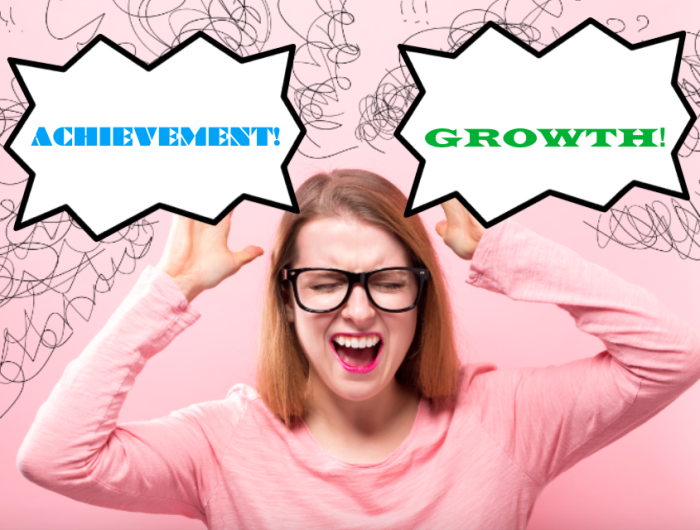
It doesn’t make that much difference whether you look at growth or achievement. If you’re holding teachers accountable for either, you’re expecting us to be able to do things beyond our powers as mere mortal human beings.


I hate to break it to you, but teachers are not magical.


We cannot MAKE things happen in student brains.


Nothing we say or do can cause a specific reaction inside a human mind.


That’s just not how learning and teaching works.


We can INFLUENCE learning.
 
We can try to create some kind of optimum condition that is most likely to spark learning.


But we cannot make it happen like turning on a switch or lighting a candle.


Let me give you a real world example.


The day before the meeting I was conferencing with a student about his essay on Charles Dickens’ “A Christmas Carol.” I pointed out that he had misspelled Christmas as “Crismist.”


He refused to fix it.


Literally refused.
 
I pointed out that the word was already typed out and spelled correctly in the prompt. All he had to do was erase what he had written and rewrite it correctly.


He said he didn’t care – that it didn’t matter.


So I tried to explain how people who don’t know him would read this paper and make snap judgments about him based on simple mistakes like this.


I told him that I knew he was smart, that I had heard his verbal discussion of the story and was impressed by his arguments about Scrooge’s character. He had made good points about Scrooge’s guilt being motivated by fear and that once the ghosts were gone he might return to his old ways.


But no one was going to get that far or give him the benefit of the doubt if he didn’t even try to spell Christmas correctly!
 
And he still wouldn’t do it.


That is literally where I was yesterday – yet today my administrator wanted to hold ME accountable for this kid’s growth!


As this child’s teacher, it IS my responsibility to try to reach him.


I am responsible for providing him with every tool I know how that can help him succeed.


I am responsible for trying to motivate, inspire and explain. I am responsible for knowing what are best practices and using them.


By all means – evaluate me on that.


But I can do nothing about what a student actually does with all I give him.


To paraphrase the old adage about horses, I can lead a student to knowledge, but I can’t make him think.


And, moreover, I shouldn’t be forced, myself, only to be able to acknowledge certain kinds of thinking. If a student’s ideas don’t fit neatly into a multiple choice framework, I shouldn’t be impelled to ignore or constrain them.


That may seem simple or even obvious with reflection, but it also goes counter to nearly every teacher evaluation system in practice in the United States.


Because that’s really what’s motivating my administrator’s directives here.
 
He’s just being real, he said. This is what we’ll be evaluated on and it’s something we can impact.


Then he asked us what each of us can do to better impact student growth.


Hands went flying into the air to offer suggestions about how administration could help us better accomplish these goals.


How about some consistency in which courses we’re instructed to teach from year-to-year?


How about not splitting up classes so that students leave one room to have a special and then return to finish a course already in progress?


How about mandating fewer diagnostic tests so there’d be more instruction time?


Well that last one was just too much. We were told that Admin. planned to do just the opposite – to make the Classroom Diagnostic Tools (CDT) tests MORE invasive by changing the schedule to make them appear more like the end of the year state mandated tests.


He said eventually we could look at some of these other ways to change things administratively, but he wanted to put the onus on us. What can WE do to increase growth?


A hand went up.
 
If we help a student grow this year, won’t there be less room for him to grow next year – at least within a given academic standard? Don’t we reach a point of diminishing returns?


To which I wanted to add – where are we measuring growth from? One standardized test to another? That’s not authentic learning – it’s assessing how well students take a test and how well they think like the corporation that makes and grades it.


But the meeting was already over.


The bell rang and we had to rush to our duties.


I scrambled back to my classroom to deposit my computer before getting to the cafeteria just as student breakfast began.


This is madness, I thought.


Growth and achievement. It’s all just gas lighting educators for not being superhuman.


The decision makers either don’t understand how learning works or they don’t care to understand.


They are putting everything on teachers and students without providing either of us with the tools we need to succeed.


Students need more than another standardized test. And they need more than another teacher who only cares about their test scores – regardless of whether you measure them in growth or achievement.


These kids are stressed out, living under immense pressure, coping with poverty, prejudice, an unstable society, climate change, an uncertain future and an economy that promises them little more than crushing debt as a best case scenario.


Educators are supposed to wade into all that, say a few incantations and it will all just go away?


Many parents are struggling so much to provide for their kids they don’t have time to help with homework, provide guidance or support. And you think I’ve somehow got the secret sauce in my teacher’s bag?


Wake up, America.


It’s time we faced a truth about our schools.


Teachers can’t do it all alone.
 
Growth, achievement, whatever.


Until society commits to supporting its children with equitable resources, social justice and an evaluation system that’s more valid than standardized testing, the next generation will continue to struggle.


If you want to make an impact, a good place to start would be a realistic conception of what it means to be a teacher and what we actually can and should be held responsible for.


Like this post? I’ve written a book, “Gadfly on the Wall: A Public School Teacher Speaks Out on Racism and Reform,” now available from Garn Press. Ten percent of the proceeds go to the Badass Teachers Association. Check it out!


book-2

Are Teachers Allowed to Think for Themselves?

thumbnail_Screen Shot 2019-10-30 at 3.35.07 PM

 
As a public school teacher, I am often told what to do and how to do it.


Go teach this class.


Report to lunch duty at this time.


Monitor this student’s progress in this way, that student’s progress in another way, differentiate the following, document this medical condition, write up this behavior, check for that kind of hall pass, post and teach these academic standards, etc., etc., etc.


Some of these directives I agree with and others I do not. But that is treated as an irrelevance because the one thing I’m never told to do is to think for myself.  The one thing that seems to be expressly forbidden – is that I think for myself.


In fact, it’s such a glaring omission, I often wonder if it’s actually prohibited or so obviously necessary that it goes without saying.


Am I expected to think or just follow directions?


Does society want me to be a fully conscious co-conspirator of student curiosity or a mindless drone forcing kids to follow a predetermined path to work-a-day conformity?


Most days, it feels like the later.


Every last detail of my job is micromanaged and made “foolproof” to the degree that one wonders if the powers that be really consider teachers to be fools in need of proofing.


Teaching may be the only profession where you are required to get an advanced degree including a rigorous internship only to be treated like you have no idea what you’re doing.


And the pay is entirely uncompetitive considering how much you had to do to qualify for the position and how much you’re responsible for doing once you get hired.


It makes me wonder – why did I take all those courses on the history of education if I was never supposed to have the autonomy to apply them? Why did I have to learn about specific pedagogies if I was never to have the opportunity to create my own curriculum? Why was I instructed how to assess student learning if I was never meant to trust my own judgment and rely instead solely on prepackaged, canned standardized tests?


And now after 16 years in the classroom, I’m routinely told by my principal to use student testing data to drive my instruction. And, moreover, to document how I am doing so in writing.


But what if I don’t trust the student testing data in the first place?


What if – in my professional opinion – I don’t agree that the state should have purchased this standardized assessment from some corporate subsidiary? What if I don’t think it does a good job evaluating a child’s aptitude as a prediction of subsequent achievement on the next test? What if I don’t think the test provides valuable data for actual, authentic learning? What if I want to do more than just improve test scores from one standardized assessment to another? What if I want to actually teach something that will affect students’ whole lives? What if I want to empower them to think for themselves? What if my goals are higher for them than the expectations thrown on me as shackles on an educator’s waist, hands and feet?


Because it seems to me that there is a bit of a mixed message here.


On the one hand, teachers are given so many directives there’s no room for thought. On the other, teachers can’t do their jobs without it.


So what exactly do they want from me?


The principal can’t educate classes from his desk in the administrative office. The school board director can’t do it from his seat in council chambers. Lawmakers can’t do it from Washington, DC, or the state capital. Only the teacher can do it from her place in the classroom, itself.


You have to see, know and interact with your students to be able to tell what their needs are. No standardized test can tell you that – it requires human interaction, knowledge and – dare I say it – discernment.


You need to gauge student interest, background knowledge, life skills, special needs, psychology and motivation. And you need to design a curriculum that will work for these particular students at this particular time and place.


That can’t be done at a distance through any top-down directive. It must be accomplished in the moment using skill, empiricism and experience.


The fact that so many lawmakers, pundits, and administrators don’t know this, itself, has a devastating impact on the education kids actually receive.


Instead of helping teachers do their jobs, policymakers are accomplishing just the opposite. They are standing in the way and stopping us from getting things done.


We’re given impossible tasks and then impeded from doing them. At least get out of the way and leave us to it.


It’s ironic. The act of removing teacher autonomy results in dampening our effectiveness.


So as many of these same bureaucrats complain about “failing schools” and “ineffective teachers,” it is these very same complaints and the efforts taken in their name that result in ineffectiveness.


If we trusted teachers to do their jobs, they would be empowered to accomplish more. And I don’t mean blind trust. I don’t mean closing our eyes and letting teachers do whatever they want unimpeded, unadvised and unappraised. I mean letting teachers do the work in the full light of day with observation by trained professionals that know the same pedagogy, history and psychology we do – trained administrators who are or were recently teachers, themselves.


That would be both accountable and effective instead of the present situation, which is neither.


Moreover, it might incentivize policymakers to realize teachers can’t do everything themselves. Hold us accountable for what we do – not what you’d like us to do but over which we have no control.


After all, home life has a greater impact on students than anything that happens in class. And helping students to self-actualize into mature, productive members of society requires we equip them with the ability to work things out independently.


However, that does not seem to be the goal.


We don’t want free thinking students just as we don’t want free thinking teachers.


We don’t want a school system that produces independent thinkers. We want it to simply recreate the status quo. We want the lower classes to stay put. We want social mobility and new ideas to be tightly controlled and kept only within certain boundaries.


And that is why our school system keeps teachers so tightly constrained – because we want status quo students.


Educators have always been the enemy of standardization, privatization and conformity. We are on the side of liberty, emancipation and release.


Which side are you on?


Like this post? I’ve written a book, “Gadfly on the Wall: A Public School Teacher Speaks Out on Racism and Reform,” now available from Garn Press. Ten percent of the proceeds go to the Badass Teachers Association. Check it out!
book-1

NAEP Test Scores Show How Stupid We Are… To Pay Attention to NAEP Test Scores

thumbnail_Taking-a-test-567860523df78ccc15365b27
 
Brace yourselves!


America’s NAEP test scores in 2019 stayed pretty much the same as they were in 2018!


And the media typically set its collective hair on fire trying to interpret the data.


Sometimes called the Nations Report Card, the National Assessment of Educational Progress (NAEP) test is given to a random sampling of elementary, middle and high school students in member countries to compare the education systems of nations.


And this year there was one particular area where US kids did worse than usual!


Our scores went down in 8th grade reading!


To be honest, scores usually go up or down by about one or two points every year averaging out to about the same range.


But this year! Gulp! They went down four points!


FOUR POINTS!


What does that mean?


Absolutely nothing.


They’re standardized test scores. They’re terrible assessments of student learning.


You might as well compare the relative body temperatures of randomly selected students and wonder why we aren’t bridging the body warmth gap with the somber hummingbird! I mean it has an average  temperature of 114 F! And the best we can do is a measly 98.6 F! Why won’t enough kids get a fever for America!?


If test scores have any meaning at all – it’s parental wealth. Rich kids tend to score higher than poor kids. That’s partially because of the inequality of resources each receive, but also because of racial, cultural and economic bias embedded in the questions.


So the NAEP shows us what any study of parental income would show. America has a lot of poor kids and underfunded schools.


Thanks, NAEP! There’s no way we could ever have figured that out without you!


But having this information come to us via test scores allows us to deflect from the real problem and instead continually blame the victim.


Why can’t these poor kids from impoverished schools score as well as kids from richer countries with more well-funded schools?


I can’t imagine!


Typically politicians used the results to push their pet policies.


Education Secretary Betsy DeVos used the scores to wash her hands of the entire public education system. I know – isn’t her job to safeguard public schools? It’s like a zoo keeper complaining that the penguins aren’t bringing in enough visitors and then refusing to feed them.


DeVos proposed we improve test scores by cutting $4.8 billion from public schools in 2020 and instead pumping $5 billion to a tax credit school voucher scheme that props up private schools.


I know that sounds dumb, but before you judge her, realize she also proposed cutting federal funding for afterschool programs, teacher professional development, student support and enrichment programs.


So there.


Education Blogger Peter Greene claims that this move is based on a reading comprehension problem the Education Secretary is having, herself.


She says that the NAEP results mean that 2/3 of American students read below grade level. However, Greene points out that she is conflating two different things – grade level proficiency and NAEP proficiency.


Here’s what the NAEP wrote:


“The NAEP Proficient achievement level does not represent grade-level proficiency, but rather competency over challenging subject matter. NAEP Achievement levels are to be used on a trial basis and should be interpreted and used with caution.”

 
Which kind of begs the question of why we need these scores in the first place.


There is much clearer data out there.


A study by the Center on Budget and Policy Priorities concluded that 29 states spent less per student in 2015 than they had before the Great Recession.


And the federal government has done little to help. Since 2011, spending on major K-12 programs – including Title I grants for underprivileged students and special education – has been basically flat.


According to the Economic Policy Institute in Washington, today’s public schools employ at least 250,000 fewer people than they did before the recession of 2008–09. Meanwhile enrollment has increased by at least 800,000 students.


So to ensure our students had the same quality of service children received only a decade ago, we’d need to hire almost 400,000 more teachers!


That’s how you cut class size down from the 20, 30, even 40 students packed into a room that you can routinely find in some districts today.


If we looked at realities like these instead of test scores – which at best provide us data at several removes – we might actually be motivated to reach solutions.


For instance, the U.S. is one of the only countries in the world – if not probably the ONLY country – that funds schools based largely on local taxes. Other developed nations either equalize funding or provide extra money for kids in need. In the Netherlands, for example, national funding is provided to all schools based on the number of pupils enrolled. But for every guilder allocated to a middle-class Dutch child, 1.25 guilders are allocated for a lower-class child and 1.9 guilders for a minority child – exactly the opposite of the situation in the U.S.


If we want to compare the US to other countries, this is a perfect place to start.


But a focus on test scores obscures the differences.


Virtually all of the top scoring countries taking these exams have much less child poverty than the U.S. If they had the same percentage of poor students that we do, their scores would be lower than ours. Likewise, if we had the same percentage of poor students that they do, our scores would go through the roof! We would have the best scores in the world!


These scores just mirror back to us our child poverty rate – that more than 1/3 of our students live below the poverty line and more than half of public school students qualify for free or reduced lunches.


But this myopic focus on standardized tests also blinds us to the ways our system is superior to that of many other countries.


We do something that many international systems do not. We educate everyone! Foreign systems often weed children out by high school. They don’t let every child get 13 years of grade school (counting kindergarten). They only school their highest achievers.


So when we compare ourselves to these countries, we’re comparing ALL of our students to only SOME of theirs – their best academic pupils, to be exact. Yet we still hold our own given these handicaps!

 
This suggests that the majority of problems with our public schools are monetary. Pure and simple.


At least House Democrats passed a Labor-HHS-Education funding bill to increase public school funding by $3.5 billion. Even if it were somehow passed by the Republican controlled Senate, that’s a drop in the bucket after decades of neglect – but it’s something!


It’s certainly better than DeVos who claims that funding somehow doesn’t matter for public schools – only for her pet charter and voucher schools.


A 2018 review by Northwestern University found that in 12 out of 13 studies increased spending had a positive effect on student outcomes. And that result has been verified by studies since then in California, Texas, Wisconsin and other states.

 
Money makes a difference.


Money spent on students – not more testing.


So why the drop in this year’s 8th grade reading scores?


Who knows? It could be a spike in the rate or effect of child poverty in the middle school years.


It could be the impact of decades of high stakes testing on middle school curriculum – narrowing what is taught and muscling out authentic instruction.


Frankly it doesn’t matter because the data is suspect.


Standardized testing will never give us an accurate picture of what is going on with our students or our schools.


And until we, as a society, finally realize that and focus on things that actually matter, we will continue to fail the only test that matters – how well we provide for our children.


Like this post? I’ve written a book, “Gadfly on the Wall: A Public School Teacher Speaks Out on Racism and Reform,” now available from Garn Press. Ten percent of the proceeds go to the Badass Teachers Association. Check it out!

book-4

Greater Test Scores Often Mean Less Authentic Learning

Screen Shot 2019-10-04 at 4.25.32 PM

 
The main goal of schooling is no longer learning.


It is test scores.


Raising them. Measuring growth. Determining what each score means in terms of future instruction, opportunities, class placement, special education services, funding incentives and punishments, and judging the effectiveness of individual teachers, administrators, buildings and districts.


We’ve become so obsessed with these scores – a set of discrete numbers – that we’ve lost sight of what they always were supposed to be about in the first place – learning.


In fact, properly understood, that’s the mission of the public school system – to promote the acquisition of knowledge and skills. Test scores are just supposed to be tools to help us quantify that learning in meaningful ways.

 
Somewhere along the line we’ve misconstrued the tool for the goal. And when you do that, it should come as no surprise that you achieve the goal less successfully.


There are two kinds of standardized assessment – aptitude and achievement tests. Both are supposed to measure scholarship and skill – though in different ways.


Aptitude tests are designed to predict how well a student will do in the future. Achievement tests are designed to determine how much a student knows now.


There is, of course, intense overlap between these two types because aptitude tests base their predictions on assessment of achievements. So they’re basically achievements tests that go one step further. They ask questions designed to give more information than just the present state but also about whether a student has progressed to a state which is most likely to then give way to another state in the future.


Either way, standardized assessments are supposed to be based on what students have learned. But the problem is that not all learning is equal.


For example, a beginning chef needs to know how to use the stove, have good knife skills and how to chop an onion. But if you give her a standardized test, it instead might focus on how long to stir the risotto.


That’s not as important in your everyday life, but the tests make it important by focusing on it.


The fact of the matter is that standardized tests do NOT necessarily focus on the most important aspects of a given task. They focus on obscurities – things that most students don’t know.


This is implicit in the design of these exams and is very different from the kinds of tests designed by classroom teachers.


When a teacher makes a test for her students, she’s focused on the individuals in her classes. She asks primarily about the most essential aspects of the subject and in such a way that her students will best understand. There may be a few obscure questions, but the focus is on whether the test takers have learned the material or not.


When psychometricians design a standardized test, on the other hand, they aren’t centered on the student. They aren’t trying to find out if the test taker knows the most important facts or has the most essential skills in each field. Instead, there is a tendency to eliminate the most important test questions so that the test – not the student – will be better equipped to make comparisons between students based on a small set of questions. After all, a standardize test isn’t designed for a few classes – it is one size fits all.


New questions are field tested. They are placed randomly on an active test but don’t count toward the final score. Test takers aren’t told which questions they’ll be graded on and which are just practice questions being tried out on students for the first time. So students presumably give their best effort to both types. Then when the test is scored, the results of the field test questions determine if they’ll be used again as graded questions on a subsequent test.


According to W. James Popham, professor emeritus at the University of California and a former president of the American Educational Research Association, standardized test makers take pains to spread out the scores. Questions answered correctly by too many students – regardless of their importance or quality – are often left off the test.


If 40 to 60 percent of test takers answer the question correctly, it might make it onto the test. But questions that are answered correctly by 80 percent or more of test takers are usually jettisoned.


He writes:


“As a consequence of the quest for score variance in a standardized achievement test, items on which students perform well are often excluded. However, items on which students perform well often cover the content that, because of its importance, teachers stress. Thus, the better the job that teachers do in teaching important knowledge and/or skills, the less likely it is that there will be items on a standardized achievement test measuring such knowledge and/or skills.”


Think about what this means.


We are engaged in a system of assessment that isn’t concerned with learning so much as weeding people out. It’s not about who knows what, but about which questions to ask that will achieve the predetermined bell curve.


We talk about leaving no child left behind, and making sure all students do better on standardized tests, but these tests are norm-referenced. By definition, all students cannot score well no matter how great their knowledge or skills. If you gave a standardized test to a class of genius-level intellects, there would still be the same percentage of failures and outstanding scores with the majority clustered in the middle. That’s how the tests are designed.


And if this highly suspect method of question selection, alone, doesn’t achieve that end, the test companies have a way to correct the scores at the end of the process through the way they grade them.


These tests are graded with cut scores. In other words, the state or the testing company or the graders, themselves, decide anew each year which scores are passing and which failing.


One year a 1200 might be proficient. Another year it’s basic. It all depends on what the decision makers come up with on a given year.


What do they base this on? No one has ever given a definitive answer. In fact, I doubt there is one. In each case, the deciding body just makes it up.


We’ve seen countless times when state scores are criticized for being too low one year, and then they miraculously bounce up the next. It’s not that students score differently, it’s that the cut score was raised. Why? Perhaps to stifle questions about the test’s validity. After all, people are less angry when more students pass.


The goal is always getting the bell curve. That is what validates the tests. But it’s a human construction, not a function of assessment. It says less about the test takers than the test makers and their enablers.


This has huge implications for the quality of education being provided at our schools. Since most administrators have drunk deep of the testing Kool-Aid, they now force teachers to use test scores to drive instruction. So since the tests don’t focus on the most essential parts of Reading, Writing, Math, and Science, neither does much of our instruction.


We end up chasing the psychometricians. We try to guess which aspects of a subject they think most students don’t know and then we teach our students that to the exclusion of more important information. And since what students don’t know changes, we end up having to change our instructional focus every few years based on the few bread crumbs surreptitiously left for us by the state and the testing corporations.


That is not a good way to teach someone anything. It’s like teaching your child how to ride a bike based on what the neighbor kid doesn’t know.


It’s an endless game of catch up that only benefits the testing industry because they cash in at every level. They get paid to give the tests, to grade the tests and when students fail, they get paid to sell us this year’s remediation material before kids take the test again, and – you guessed it – the testing companies get another check!


It’s a dangerous feedback loop, a cycle that promotes artificially prized snippets of knowledge over constructive wholes. But this degradation of education isn’t even the worst part.


The same method of question selection also builds economic and racial bias into the very fabric of the enterprise.


According to Prof. Martin Shapiro of Emory University, when test makers select questions with the greatest gaps between high and low scorers, they are selecting against minorities. Think about it – if they pick questions based on the majority getting it right, which minority got it wrong? In many cases, it’s a racial minority. In fact, this may explain why white students historically do better on standardized tests than black and Hispanic students.


This process may factor non-school learning and social background into the questions. They are based on the experiences of white middle-to-upper class children.


So when we continually push for higher test scores, not only are we ultimately dumbing down the quality of education in our schools, but we’re also explicitly lobbying for greater economic and racial bias in our curriculum trickling down from our assessments.


As Ibram X. Kendi, author of “How to be an Antiracist” puts it:


“Standardized tests have become the most effective racist weapon ever devised to objectively degrade Black minds and legally exclude their bodies.”


71087927_10157069943303860_6347601423106048000_n

Popham is less critical of high stakes testing. He sees more of a problem in using student test scores to assess teacher performance. But even he thinks the tests and the scores are being over valued and misunderstood in a wider context.


He writes:


“Merely because these test scores are reported in numbers (sometimes even with decimals!) should not incline anyone to attribute unwarranted precision to them. Standardized achievement test scores should be regarded as rough approximations of a student’s status with respect to the content domain represented by the test.”


I’d go even further.


Standardized test scores are tools used by big business to make money. That is as far as their validity goes.


And the fact that we make so many vital educational decisions on them is nothing less than criminal.


The tests are bogus nonsense at best and a conspiracy against the poor and minorities at worst.


When well-meaning people let themselves get wrapped up in knots over low scores and what that means for student learning, they are actually hurting the very thing that they value.


Student learning is not bettered by higher test scores. It is often made worse by them.


High test scores don’t mean greater learning. They often mean learning the knowledge du jour to the detriment of what’s really important. They mean biased education against the poor and minorities.


And they make those with real concerns complicit in a sham being perpetrated on our children and our society.


Like this post? I’ve written a book, “Gadfly on the Wall: A Public School Teacher Speaks Out on Racism and Reform,” now available from Garn Press. Ten percent of the proceeds go to the Badass Teachers Association. Check it out!

book-4


The Absurdity of Standardized Testing: Caught Between Prediction and Assessment

thumbnail_Screen Shot 2019-09-19 at 2.07.03 PM

 
Standardized testing is truly absurd.

 
It’s both a prediction and an assessment.


You take a test to determine what you’ve learned and that will in turn predict what you will be able to learn in the future.


We hardly ever do this anywhere else in life.


We don’t measure babies’ leg muscles to predict whether they’re ready to walk. We let them do what they do, possibly with some encouragement and positive models of locomotion, and they do it.


There are cognitive and developmental benchmarks we look for, and if children don’t hit them, we provide help. But no further prediction is necessary – certainly not based on artificial markers put together by corporate interests.


In most situations, predictions are superfluous. We just assume that everyone can learn if they so desire – unless something happens to make us think otherwise. And whether someone actually learns something is demonstrated by doing the thing, itself.


The only time we link prediction and assessment so closely is when the consequences of failure are irreversible – like when you’re going solo skydiving for the first time. If you jump out of an airplane and don’t know how to pull the ripcord to get your parachute to work, you probably won’t get a second chance to try again.


But most things in life aren’t so dire.


The world of standardized testing is very different. The high stakes nature of the assessments are what ramp out the consequences and thus the severity.


Testing looks at learning like two points on a map and sets up a gate between points A and B.


In order to cross, you have to determine if you’ve passed through the previous gate. And only then can you be allowed to progress on to point C.


But this is wrong on so many levels.


First, you don’t need a test to determine which point you’re at. If Point B is the ability to add, you can simply add. If it’s the ability to write a complete sentence, you can simply write a sentence.


There is no need to fill out a formal multiple-choice assessment that – depending on the complexity of the task being considered – is completely inadequate to capture the subtleties involved. The task, itself, is enough.


Imagine if you were testing whether someone had learned how to drink a glass of water. You could just give them a cup filled with H2O and see if they can gulp it down. Or you could have them sharpen their number 2 pencil and answer questions about how their throat works, their digestive and excretory systems and the chemical composition of agua – all answers predetermined to A, B, C or D.


Observation of a skill, we are told, is not enough to determine success because it relies on the judgment of an observer. A standardized test replaces the observer with an impersonal, distant testing corporation which then assesses only predetermined markers and makes decisions devoid of any situational context.


This is done to remove observational bias but it doesn’t avoid bias altogether. In setting up the markers and deciding which elements of the task are to be assessed (or in fact can be assessed in such a distant manner), the testing corporation is inserting its own biases into the process. In fact, in any assessment conducted by human beings, this would be inevitable. So going through this maze of perceived objectivity is really just a matter of subterfuge meant to disguise the biases of the corporation.


Second, assessing people in this way is extremely unnatural because very few fields of knowledge can be divided and subdivided into two or more discrete points.


When writing a complex sentence, for example, you need to know not just spelling and grammar but logic, handwriting, subject matter, colloquialisms, literary devices, and a plethora of other cultural and linguistic artifacts.


Moreover, there is not always a natural progression from Point A to B to C. Sometimes A jumps directly to C. Sometimes B leads directly to A. Sometimes A leads to Z.


Knowledge, skills and human cognition are far too complex a web to ever hope to be captured by such a reductive enterprise. But by insisting that we make this complexity fit into such a small box, we end up depriving people of the right to move on. We say predictive models show they aren’t ready to move forward and so we bury them in remediation. Or we deny them access to important opportunities like advanced classes, electives, field trips, extracurricular clubs or even post-secondary education.


Third, this emphasis on knowledge as discrete bits of information or skills (often called standards) leads to bad teaching.


Assessment expert W. James Popham provides a helpful distinction: “curriculum teaching” vs. “item teaching.” Curriculum teachers focus on the full body of knowledge and skills represented by test questions. For instance, if the test is expected to include questions about decimals, the teacher will cover the full range of knowledge and skills related to decimals so students understand what they are, know how to manipulate them, understand how to use them to solve more complex problems, and are able to communicate about them.


By contrast, item teaching involves narrowing instruction, organizing lessons around look-a-like questions that are taken directly from the test or represent the kinds of questions most likely to be found on the test. In this way, the teacher only provides the chunks of knowledge students are most likely to encounter on exams. For instance, item teachers might drill students on a certain set of vocabulary words that are expected to be assessed rather than employing instructional strategies that help students build a rich vocabulary that best contributes to strong reading comprehension.


A focus on standardized testing or even trying to educate in a system where these tests are attached to high stakes, results in an increase in item teaching. We often call it teaching to the test.


I’m not saying that item teaching is always bad. But curriculum teaching is to be much preferred. It is a best practice. The problem is when we resort to endless drills and give students innumerable questions of the exact type we expect to be on the test.


So when we find students who have made dramatic improvements on standardized tests, we often don’t find equal improvements in their over all knowledge or ability.


Test scores are often a false positive. They show students have mastered the art of taking the test but not necessarily the knowledge or skills it was meant to assess.


They are more like trained circus animals who can jump through flaming hoops but would be lost in the wild.


That’s why certain computer modeled artificial intelligences are able to pass standardized tests but would fail preschool.


These reflections have troubling implications for our system of standardized testing.


The false curtain of objectivity we’ve set up in our assessments may also be hiding from us what authentic learning is taking place and it may even hinder such learning from taking place at all.


Any sane society would halt such a system with these drawbacks. It would stop, regroup and devise a better alternative.


To continue with such a pedagogical framework truly would be the most absurd thing of all!


Like this post? I’ve written a book, “Gadfly on the Wall: A Public School Teacher Speaks Out on Racism and Reform,” now available from Garn Press. Ten percent of the proceeds go to the Badass Teachers Association. Check it out!

book-2

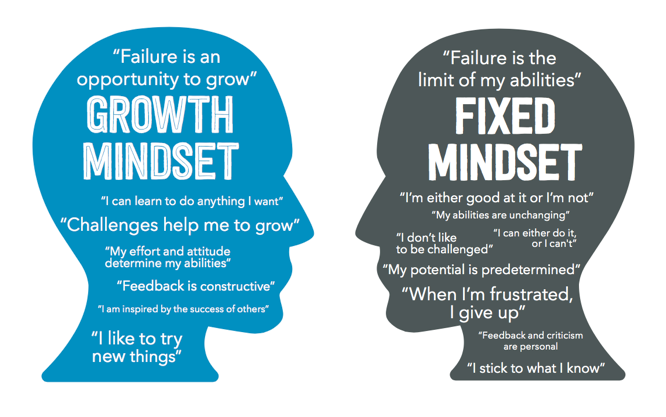
Six Problems with a Growth Mindset in Education

Screen Shot 2019-08-12 at 1.34.29 AM


Sometimes the truth is not enough.


Especially if you misunderstand its meaning.


That seems to be the main problem with a growth mindset.


It’s one of the trendiest concepts in education today, and – though it’s based on an authentic insight into how kids learn – it’s been shackled and monetized into an excuse to support a sterile status quo.


The basic idea goes like this: academic ability isn’t something students have or do not have. It’s a skill that gets better depending on how hard they work at it.


And up to that point, it’s correct and valuable.


But when we try to take that insight and weave it into current education policies, it becomes a shadow of itself.


As a middle school language arts teacher, I’m confronted with this most often in the context of standardized test scores.

 
I am constantly being told not to pay attention to the scores. Instead, I’m told to pay attention to growth – how much this year’s scores have improved from last year’s scores. And the best way to do this, I’m told, is by paradoxically examining the scores in the most minute detail and using them to drive all instruction in the classroom.


To me that seems to misunderstand the essential psychological truth behind a growth mindset.


Instead of focusing on the individuality of real human students, we’re zeroing in on the relics of a fixed mindset – test scores – and relegating the growth mindset to happy talk and platitudes.


1*PQBc8JCD5yu4x2wxCCGU1g

 
B leads to A, and if we really want A, we just need to emphasize B.


To be clear, I don’t think there’s anything wrong with the idea that learning is a skill that can be strengthened with hard work. I do, however, take issue with how that observation has been used to support the status quo of test-and-punish and strategic disinvestment in public schools. I take issue with the idea that growth is the ONLY factor in student learning and how we are ignoring the multitudinous ways the human mind works and what that means for education.


In short, I think making the growth mindset a magic bullet has ended up shooting us in the foot.


Here are six problems I have with the growth mindset model:


1) It Has Not Been Proven to Make an Appreciable Difference in Student Academic Achievement.


How exactly do you use growth to drive achievement?


You make the concept of growth explicit by teaching it. You actively teach kids this idea that anyone can learn with hard work, and the theory goes that they’ll achieve more.


Does it actually work?


The results have been pretty inconclusive.


It’s been tested numerous times in various ways – some showing success, some showing nothing or even that it hurts learning.


The best success has come from Carol Dweck, a Stanford education professor who’s made a name for herself promoting the growth mindset model in books and TED talks.


Just this month, she co-authored the largest nationwide study concluding that a growth mindset can improve student results.


About 12,500 ninth grade students from 65 public and private schools were given an online training in the concept during the 2015-16 school year.


The study published in the journal Nature concluded that on average lower-achieving students who took the training earned statistically significant higher grades than those who did not.


However, results were “muted” when students were less encouraged to seek challenges – such as when they had fewer resources and support.


Despite this success, Dweck’s peers haven’t been able to reproduce her results.


A large-scale study of 36 schools in the United Kingdom published in July by the Education Endowment Foundation concluded that the impact on students directly receiving this kind of training did not have statistical significance. And when teachers were given the training, there were no gains at all.


In a 2017 study, researchers gave the training to university applicants in the Czech Republic and then compared their results on a scholastic aptitude test. They found that applicants who got the training did slightly worse than those who hadn’t received it at all.


In 2018, two meta-analyses conducted in the US found that claims for the growth mindset may have been overstated, and that there was “little to no effect of mindset interventions on academic achievement for typical students.”


A 2012 review looking at students attitudes toward education in the UK found “no clear evidence of association or sequence between pupils’ attitudes in general and educational outcomes, although there were several studies attempting to provide explanations for the link (if it exists)”.


In short, there is little evidence that any current approaches to turning the growth mindset into a series of practices that increase learning at scale has succeeded.


2) It Doesn’t Fit with Current Education Policies

 
We live in a fixed mindset world.


That’s how we define academic achievement – test scores, grades, projects, etc.


We tabulate data, compile numbers and information and pretend that draws an accurate picture of students.


It doesn’t.


But the concept that student achievement isn’t one of these things – is, in fact, something changeable with enough effort – runs counter to everything else in this world view.


If data points don’t tell us something essential about students but only their effort, connecting them with high stakes is incredibly unfair.


Moreover, it’s incoherent.


How can you convince a student that test scores, for example, don’t tell us something essential about her when we put so much emphasis on them?


It’s almost impossible for students in today’s schools to keep a belief in a growth mindset when test scores and our attitude toward them confirm their belief in a fixed mindset.


In a world of constant summative testing, analysis and ranking of students, it is nearly impossible to believe in a growth mindset. It’s merely a platitude between the fixed academic targets we demand students hit.


This doesn’t exactly take anything away from the concept, but it shows that it cannot be implemented within our current educational framework.


If we really believed in it, we’d throw away the testing and data-centricity and focus on the students, themselves.


3) It Ignores Student Needs and Resources


When we try to force the growth mindset onto our test-obsessed world, we end up with something very much like grit.


After all, if the only factor students need to succeed is effort, then those who don’t succeed must be responsible for their own failures because they didn’t try hard enough.


And while this is true in some instances, it is not true in all of them.


Effort may be a necessary component of academic success but it is not in itself sufficient. There are other factors that need to be present, too, such as the presence of proper resources and support.


And most – if not all – of these factors are outside of students’ control. They have no say whether they are well fed, live in safe homes, have their emotional needs met. Nor have they any say whether they go to a well-resourced school with a wide curriculum, extracurricular activities, school nurses, tutors, mentors, psychologists and a host of other services.


Putting everything on growth is extremely cruel to students – much like the phenomenon of grit.


Education policy should help raise up struggling students, not continue to support their marginalization through poverty, racism and/or socioeconomic disadvantages.


4) It Can Make Kids Feel Disrespected and Disparaged

 
No child wants to be remediated.


It makes them feel small, inadequate and broken. And if they’re already feeling that way, it reinforces that helplessness instead of helping.


Context is everything. Well-meaning educators may gather all the students with low test scores in one place to tell them the good news about how they can finally achieve if they put in enough effort. But students may recognize this for what it is and instinctively turn away.


The best way to teach someone is often not to lecture, not to even let on that you’re teaching at all.


David Yeager and Gregory Walton at Stanford claimed in 2011:


“…if adolescents perceive a teacher’s reinforcement of a psychological idea as conveying that they are seen as in need of help, teacher training or an extended workshop could undo the effects of the intervention, not increase its benefits.”


Teachers cannot set themselves up as saviors because that reinforces the idea that students are broken and thus need saved.


I don’t think this is an insurmountable goal, but many growth mindset interventions are planned and conceived by non-teachers. As such, they often walk right into this trap.


5) It is Not Suitable For All Kids

 
Everyone’s minds don’t work alike.


When you tell some kids that anyone can achieve with enough hard work, it makes them discouraged because they thought that their academic successes marked them as special.


According to a 2017 study published by the American Psychological Association, growth mindset training can backfire especially with high achieving students for exactly this reason.


Hard work just isn’t enough for some students. Their self-esteem relies on the idea that they are good at school because of fixed qualities about themselves.


When we take that belief away, we can damage their self esteem and thus their motivation to do well in school.


The point isn’t that a growth mindset is wrong, but that as an intervention it is not appropriate for all students. In fact, perhaps we shouldn’t be using it as an intervention at all.


6) It Should Not be a Student Intervention. It Should Be a Pedagogical Underpinning for Educators


We’ve got this growth mindset thing all wrong.


It’s not a tool to help students learn. It’s a tool for teachers to better understand their students and thus better help them learn. It’s a tool for administrators, parents and policymakers to better understand what grades and test scores mean.


If you want to teach a student any skill, let’s call it X, you shouldn’t begin by telling them that anyone can learn it with enough effort.


Just teach X. And when you succeed, that will become all the motivation students need to learn the next thing.


Education is an incremental process. Success breeds success just as failure breeds failure.


As every teacher knows, you start small, scaffold your lessons from point A to B to C and make whatever changes you need along the way.


If we really want to help students in this process, we can start by ridding ourselves of the fixed mindset that current education policy is rooted in.


Growth mindset is a psychological observation about how human minds work. It’s not pedagogy. It’s empiricism.


We can use it to help design policy, lessons and assessment. But it has limited value – if any – being taught directly to students.

 
The growth mindset model has value, but not in the way it has typically been used in our school system.


Instead of providing justification for equitable resources and tearing down the testocracy, it’s been used to gaslight educators into obeying the party line.


It is not a magic cure all, but one factor among many that provides insight into learning.


If we can disentangle it from the profit-driven mire of corporate education, perhaps it can help us achieve an authentic pedagogy that treats every student as an individual and not an economic incentive for billionaires to pocket more tax money.


Like this post? I’ve written a book, “Gadfly on the Wall: A Public School Teacher Speaks Out on Racism and Reform,” now available from Garn Press. Ten percent of the proceeds go to the Badass Teachers Association. Check it out!

book-1

PA Officials Want to Replace Bad Keystone Exams with Bad College Entrance Exams

Screen Shot 2019-07-15 at 8.34.43 AM

 
Pennsylvania officials are scandalized that the Commonwealth is wasting more than $100 million on unnecessary and unfair Keystone Exams.

 
They’d rather the state spend slightly less on biased college entrance exams.

 
State Auditor General Eugene DePasquale and State Sen. Andy Dinniman held a joint press conference last week to introduce a new report compiled by DePasquale’s office on the subject which concludes with this recommendation.


Replacing bad with bad will somehow equal good?

 
Under the proposal, elementary and middle school students would still take the Pennsylvania System of School Assessment (PSSA) tests. However, instead of requiring all high school students to take the Keystone Exams in Algebra I, Literature and Science, the report proposes the same students be required to take the SAT or ACT test at state expense.


This is certainly an improvement over what the state demands now, but it’s really just replacing one faulty test with another – albeit at about a $1 million annual cost savings to taxpayers.


The report does a good job of outlining the fiscal waste, lack of accountability and dubious academic merits of the Keystone Exams, but it fails to note similar qualities in its own proposal.


From 2008 to 2019, the state already paid Minnesota-based Data Recognition Corp. more than $426 million for the PSSAs, Keystone Exams and Classroom Diagnostic Tools (an optional pretesting program). The federal government paid the company more than an additional $106 million. Officials wonder if this money couldn’t have been better spent elsewhere, like in helping students actually learn.


DePasquale, who recently launched a congressional bid, puts it like this:


“When the federal law changed in 2015, why didn’t Pennsylvania begin to phase out Keystone Exams? I could understand if they use them for a short period of time after that, but it’s been four years, and will cost taxpayers nearly $100 million by the end of the contract for tests our students do not even need to take.”


The federal government dropped its mandate four years ago and the state legislature did the same last year.


Originally, state lawmakers intended to make the Keystone Exams a graduation requirement, but in 2018 they passed legislation to make the assessments one of many avenues to qualify for graduation starting in 2021-22. Students can instead pass their core courses and get into college among other things.


“The Department of Education itself said they [the Keystone Exams] are not an accurate or adequate indicator of career or academic readiness,” Dinniman said. “So what I’m always surprised about is, they said it and then they continue to use it. These tests have faced opposition from almost every educational organization that exists. And when we got rid of the requirement and put in [more] pathways to graduation, this was passed unanimously by both the Senate and the House.”


The federal government also changed its testing mandate. It used to require all public school students to take state-specific assessments in grades 3-8 and once in high school.


When Congress reauthorized the federal law overseeing education in 2015, it offered states more flexibility in this regard. Elementary and middle school students still have to take a state-specific test. But now the high school portion can be fulfilled with college admissions tests – and, in fact, a dozen other states legislate just such a requirement.

 
Democrats DePasquale and Dinniman think the SAT and ACT test are an improvement because students who taken them are more likely to go to college. But that’s a classic case of confusing correlation and causation.


Students motivated to go to college often take these exams because they are required to get in to a lot of these schools. Taking these tests doesn’t make students MORE motivated and determined to enroll in post-secondary education. They’re ALREADY motivated and determined.


Moreover, one of the faults the report finds with the Keystone Exams is that the assessments measure student’s parental income more than children’s academics.


Kids in wealthier districts almost always do better on the Keystone Exams than those in poorer districts. In fact, the report notes that of the 100 state schools with the highest scores, only five were located in impoverished districts —where the average household income is below $50,000.


Yet the report fails to note that this same discrepancy holds for the SAT and ACT tests. Poor kids tend to get low scores and rich kids get the highest scores.


In fact, the College Board – the corporation that makes and distributes the SAT – recently started adjusting scores on its test in an attempt to counteract this effect thereby accounting for high schools and neighborhoods “level of disadvantage.”


Does this creative scoring actually work? Who knows – but it’s kind of like being forced to swallow poison and an antidote at the same time when any sensible person would simply refuse to swallow poison in the first place.


And that’s the best solution state officials have for our children.


They’re suggesting we replace discriminatory Keystone Exams with discriminatory college entrance exams.


To be fair, DePasquale and Dinniman are somewhat constrained by boneheaded federal law here.


Though the Every Student Succeeds Act (ESSA) is an improvement over No Child Left Behind, it still requires all high school students to take standardized tests.


Given what we know about the limits and biases of these assessments, policymakers should remove that hurdle altogether. But until the federal government gets its act together, one could argue that DePasquale and Dinniman’s policy suggestion may be the best available.


When you can’t do right, maybe it’s best to do less wrong.


But we must acknowledge that this isn’t the ultimate solution, it’s only a stopgap. We must continue to push for intelligent assessment policy that’s best for our children.


Standardized testing should be eliminated altogether – especially in high stakes situations. Instead we should rely on classroom grades, portfolios of student work and/or other authentic measures of what children have learned in school.


Accountability – the typical reason given behind these assessments – should be determined by the resources provided to students, not a highly dubious score given by a corporation making a profit off of its testing, test prep and ed tech enterprises.


The most we can expect from DePasquale and Dinniman’s program if it is even considered by the legislature is a band-aid on a gaping wound.


Read the full report, Where Did Your Money Go? A Special Report on Improving Standardized Testing in Pennsylvania.


Like this post? I’ve written a book, “Gadfly on the Wall: A Public School Teacher Speaks Out on Racism and Reform,” now available from Garn Press. Ten percent of the proceeds go to the Badass Teachers Association. Check it out!

book-1

Will This Be On The Test?

Screen Shot 2019-07-12 at 12.30.13 AM


As a public school teacher, I’m confronted with an awful lot of urgent questions.


Sometimes all at once and in rapid fire succession.


But perhaps the most frequent one I get is this:


“Mr. Singer, will this be on the test?”


Seriously?


Will this be on the test?


In 8th grade Language Arts, we’re discussing the relative merits of the death penalty vs. life imprisonment – or the history behind the Nazi invasion of Holland – or the origin of Dill Harris’ obsession with Boo Radley — and this little kid wants to know if any of it is going to be on the test!?


What in the almighty universe does he think we’re doing here!?


I pause, take a deep breath and reflect.
After all, it could be worse. The kiddo could have interrupted the flow just to ask to go to the bathroom.


So I try to put a positive spin on the inquiry.


It does give me some important information about this student. It tells me that he is really concerned about doing well in my class.


The kids that don’t care about that, the ones who are more preoccupied with survival or fear or malnutrition or a thousand other adult cares foisted too early on childish shoulders – those are the ones I really worry about.


But this kid isn’t like that at all. He just wants to know the rules.


On the other hand, it also tells me that he really doesn’t care about what we’re talking about.


Oh, this student cares about getting a good grade, to be judged proficient and to move on to the next task in a series of Herculean labors. But does he care about the tasks or does he just want to end the labor?


He sees school like a tiger sees a circus – a series of hoops to jump through in order to get a juicy hunk of meat as a reward at the end of the day.
For him, our class contains no magic, no mystery – it’s just a pure extrinsic transaction.


I tell you X and then you spit it back up again. Then I’m supposed to give you a gold star and send you on your way to do things that really matter.


And I suppose it bothers me this much because it’s a way of looking at things that ignores the larger context of education.


If we must see things as either assignments or tests, as either work toward a goal or a reward for working toward a goal – well, then isn’t everything in life a test, really?


After all, every action has its own rewards and significance.


Looked at from that vantage point, one can feel almost sorry for these sorts of students. Because in a matter of minutes the bell will ring and they will leave the classroom to encounter this awesome experience we call life.


It’s a collection of majesty and the mundane that will be unfiltered through bell schedules and note taking, homework and assignments.


It will just be.


And no matter what it consists of these children will be tried, tested and judged for it.


Some of it will be tests of skill. They’ll encounter certain obstacles that they’ll have to overcome.


Can they express themselves in writing? Can they compose an email, a text, a Facebook post that gets across what they’re really trying to say?


Presumably, they’ll want to apply for a job someday. That requires typing a cover letter, a resume, and being able to speak intelligently during an interview.


But even beyond these professional skills, they’ll come into contact with other human beings. And what they say and how they interact will be at least partially determined by what they’ve learned both in and out of the classroom.


People will judge them based on what kind of person they think they are – is this someone knowledgeable about the world, do they have good judgement, can they think logically and solve a problem, do they have enough background knowledge about the world to be able to make meaning and if they don’t know something (as inevitably everyone must) do they know where to find the answers they seek?


When they come into social contact with others, will they have digested enough knowledge and experience to form interesting, empathetic characters and thus will they be able to experience deep relationships?


Will they be victims of their own ignorance, able to be pushed around and tricked by any passing intellect or will they be the masters of their own inner space, impervious to easy manipulation?


Will they be at the mercy of history and politics or will they be the captains of consciousness and context molding educated opinions about justice, ethics and statecraft?


Because for these students all of that, all of their lives really, is an assessment in a way. And the grades aren’t A, B, C, D or F. There is no Advanced, Proficient, Basic or Below Basic. It is not graded on a curve.


It’s a test that’s timed in the minutes they breath and in each pump their hearts push blood throughout their bodies.


This exam will assess everything they do, everything they think, everything that’s done to them and every action they do or think in response.


This is an evaluation with the highest stakes. They will not get to take it again. And if they fail, their grade will be final.


But what they don’t seem to realize is that no matter how they score, the result will be the same as it is for everyone who’s ever been born – it will be terminal.


Because each of these students, and only these students, as they grow and mature will have the power to determine ultimately what that score will be.


We are all judged and evaluated, but it is our own judgements that we have to live with – and this passive acceptance of being tested and this petty goal of grade grubbing your life away, it denies your individual agency, your freedom of thought.


So, you ask if this will be on the test?


The answer is yes.


Everything is on the test.


But you’re asking the wrong question.

 
That’s what I really want to say.

 
That’s what I want to shout at a world that sees learning as nothing but a means to a job and education as nothing but the fitting of cogs to a greasy machine.


Yet invariably, when the question comes I usually narrow it all down to just this simple answer.


“Yes.


It will.”


NOTE: This article owes a debt to the author and YouTube personality John Green. It was partially inspired by a speech he gave to introduce his video about The Agricultural Revolution:


“Will this be on the test?
The test will measure whether you’re an informed, engaged, productive citizen of the world.


It will take place in schools and bars and hospitals and in dorm rooms and in places of worship.


You will be tested on first dates, in job interviews, while watching football and while scrolling through your twitter feed.


The test will test your ability to think about things other than celebrity marriages, whether you’ll be easily persuaded by empty political rhetoric and whether you’ll be able to place your life and your community in a broader context.


The test will last your entire life and it will be comprised of the millions of decisions that when taken together make your life, yours.


And everything, everything will be on it.


I know right, so pay attention.”


Like this post? I’ve written a book, “Gadfly on the Wall: A Public School Teacher Speaks Out on Racism and Reform,” now available from Garn Press. Ten percent of the proceeds go to the Badass Teachers Association. Check it out!

book-4

Top 10 Reasons Bernie Sanders’ Education Policies Are Light Years Ahead of Everyone Else’s

Screen Shot 2019-06-18 at 11.07.04 AM


For most of my life, the United States has been neglecting its public school children – especially the black and brown ones.


Since the mid 1970s, instead of integrating our schools, we’ve been slowly resegregating them on the basis of race and social class.


Since the 1980s, instead of measuring academic success by the satisfaction of an individuals curiosity and authentic learning, we’ve been slowly redefining it to mean nothing but achievement on standardized tests.


And since the 1990s, instead of making sure our schools meet the needs of all students, we’ve been slowly allowing charter schools to infect our system of authentic public education so that business interests are education’s organizing principle.


But now, for the first time in at least 60 years, a mainstream political candidate running for President has had the courage to go another way.


And that person is Bernie Sanders.


We didn’t see this with Barack Obama. We didn’t see it with Bill Clinton. We certainly didn’t see it with any Republican Presidents from Reagan to the Bushes to Trump.


Only Sanders in his 2020 campaign. Even among his Democratic rivals for the party’s nomination – Warren, Biden, Harris, Booker and a host of others – he stands apart and unique. Heck! He’s even more progressive today on this issue than he was when he ran in 2015.


It doesn’t take a deep dive into the mass media to find this out. You don’t have to parse disparate comments he made at this rally or in that interview. If you want to know what Bernie thinks about education policy, you can just go on his campaign Website and read all about it.


The other candidates barely address these issues at all. They may be open about one or even two of them, but to understand where they stand on education in total – especially K-12 schooling – you have to read the tea leaves of who they’ve selected as an education advisor or what they wrote in decades old books or what offhand comments they made in interviews.


In almost every regard, only Sanders has the guts to tell you straight out exactly what he thinks. And that’s clear right from the name of his proposal.


He calls it “A Thurgood Marshall Plan for Public Education.”


Why name his agenda after the first black Supreme Court justice? Because prior to accepting a nomination to the highest court in the land, Marshall argued several cases before that court including the landmark Brown v. Board of Education. He also founded the NAACP Legal Defense and Education Fund. Not only did Marshall successfully argue that school segregation violated the equal protection clause of the U.S. Constitution, but he spent his life fighting for civil rights.


Sanders is the only candidate out there today brave enough to connect those dots. The fight against segregation, high stakes testing and school privatization is a fight for civil rights.


That is clear in nearly every aspect of his plan.


I’m not saying it’s perfect. He doesn’t go as far as he might in some areas – especially against high stakes testing. But his plan is so far advanced of anything anyone else has even considered, it deserves recognition and strong consideration.


So without further ado, I give you the top 10 reasons Bernie Sanders’ education platform is the most progressive in modern American history:


1) He Proposes Fighting School Segregation and Racial Discrimination


Sanders understands that many of our public schools today are more segregated than they were 65 years ago when Brown v. Board was decided. Only 20 percent of our teachers are nonwhite – even in schools that serve a majority of black and brown children. Implicit racial bias puts these students at risk of higher suspensions, unfair discipline policies and an early introduction into the criminal justice system through the school-to-prison pipeline.


Bernie proposes we increase funding to integrate schools, enforce desegregation orders and appoint federal judges who will support these measures. He wants to triple Title I funding for schools serving poor and minority children and increase funding for English as a Second Language programs. He even suggests racial sensitivity training for teachers and better review of civil rights complaints and discipline policies.


This could have an amazingly positive impact on our schools. Imagine a school system where people of all different races, nationalities, sexualities and creeds could meet and get to know one another. It’s harder to be racist and prejudiced adults when as children you learned not to consider people different than you as an other. It’s also harder to withhold funding and opportunities to minority populations when you mix all children together in the same schools.


2) He Would Ban For-Profit Charter Schools


This is a case of Bernie just listening to what educators, school directors and civil rights organizations like the NAACP are already saying. Charter schools are publicly funded but privately operated. Though this differs somewhat from state to state, in general it means that charters don’t have to abide by the same rules as the authentic public schools in the same neighborhoods. They can run without an elected school board, have selective enrollment, don’t have to provide the same services for students especially those requiring special education, and they can even cut services for children and pocket the savings as profit.


Moreover, charters increase segregation – 17 percent of charter schools are 99 percent minority, compared to 4 percent of traditional public schools.
To reverse this trend, Bernie would ban for-profit charter schools and impose a moratorium on federal dollars for charter expansion until a national audit was conducted. That means no more federal funds for new charter schools.


Moving forward, charter schools would have to be more accountable for their actions. They would have to comply with the same rules as authentic public schools, open their records about what happens at these schools, have the same employment practices as at the neighborhood authentic public school, and abide by local union contracts.


I know. I know. I might have gone a bit further regulating charter schools, myself, especially since the real difference between a for-profit charter school and a non-profit one is often just its tax status. But let’s pause a moment here to consider what he’s actually proposing.


If all charter schools had to actually abide by all these rules, they would almost be the same as authentic public schools. This is almost tantamount to eliminating charter schools unless they can meet the same standards as authentic public schools.


I think we would find very few that could meet this standard – but those that did could – with financial help – be integrated into the community school system as a productive part of it and not – as too many are now – as parasites.


Could Bernie as President actually do all of this? Probably not considering that much of charter school law is controlled by the states. But holding the bully pulpit and (with the help of an ascendant Democratic legislature?) the federal purse strings, he could have a transformative impact on the industry. It would at least change the narrative and the direction these policies have been going. It would provide activists the impetus to make real change in their state legislatures supporting local politicians who likewise back the President’s agenda.


3) He’d Push for Equitable School Funding


Bernie understands that our public school funding system is a mess. Most schools rely on local property taxes to make up the majority of their funding. State legislatures and the federal government shoulder very little of the financial burden. As a result, schools in rich neighborhoods are well-funded and schools in poor neighborhoods go wanting. This means more opportunities for the already privileged and less for the needy.


Bernie proposes rethinking this ubiquitous connection between property taxes and education, establishing a nationwide minimum that must be allocated for every student, funding initiatives to decrease class size, and supporting the arts, foreign language acquisition and music education.


Once again, this isn’t something the President can do alone. He needs the support of Congress and state legislatures. But he could have tremendous influence from the Oval Office and even putting this issue on the map would be powerful. We can’t solve problems we don’t talk about – and no one else is really talking much about this. Imagine if the President was talking about it every day on the news.


4) He’d Provide More Funding for Special Education Students

Students with special needs cost more to educate than those without them. More than four decades ago, the federal government made a promise to school districts around the country to fund 40 percent of the cost of special education. It’s never happened. This chronic lack of funding translates to a shortage of special education teachers and physical and speech therapists. Moreover, the turnover rate for these specialists is incredibly high.


Bernie wants to not only fulfill the age old promise of special education funding but to go beyond it. He proposes the federal government meet half the cost for each special needs student. That, alone, would go a long way to providing financial help to districts and ensuring these children get the extra help they need.

5) He Wants to Give Teachers a Raise


Teachers are flooding out of the classroom because they often can’t survive on the salaries they’re being paid. Moreover, considering the amount of responsibilities heaped on their shoulders, such undervaluing is not only economically untenable, it is psychologically demoralizing and morally unfair. As a result, 20 percent of teachers leave the profession within five years – 40 percent more than the historical average.


Bernie suggests working with states to ensure a minimum starting salary of $60,000 tied to cost of living, years of service, etc. He also wants to protect and expand collective bargaining and tenure, allow teachers to write off at least $500 of expenses for supplies they buy for their classrooms, and end gender and racial discrepancies in teacher salaries.


It’s an ambitious project. I criticized Kamala Harris for proposing a more modest teacher pay raise because it wasn’t connected to a broad progressive education platform like Sanders. In short, we’ve heard neoliberal candidates make good suggestions in the past that quickly morphed into faustian bargains like merit pay programs – an initiative that would be entirely out of place among Sanders initiatives.


In Harris’ case, the devil is in the details. In Sanders, it’s a matter of the totality of the proposal.

6) He Wants to Expand Summer School and After School Programs


It’s no secret that while on summer break students forget some of what they’ve learned during the year and that summer programs can help reduce this learning loss. Moreover, after school programs provide a similar function throughout the year and help kids not just academically but socially. Children with a safe place to go before parents get home from work avoid risky behaviors and the temptations of the streets. Plus they tend to have better school attendance, better relationships with peers, better social and emotional skills, etc.


Under the guidance of Betsy Devos, the Trump administration has proposed cutting such programs by $2 billion. Bernie is suggesting to increase them by $5 billion. It’s as simple as that. Sanders wants to more than double our current investment in summer and after school programs. It’s emblematic of humane and rational treatment of children.


7) He Wants to Provide Free Meals for All Students Year-Round


One in six children go hungry in America today. Instead of shaming them with lunch debts and wondering why they have difficulty learning on an empty stomach, Bernie wants to feed them free breakfast, lunch and even snacks. In addition, he doesn’t want to shame them by having the needy be the only ones eligible for these free meals. This program would be open to every child, regardless of parental wealth.


It’s an initiative that already exists at many Title I schools like the one where I teach and the one where my daughter goes to school. I can say from experience that it is incredibly successful. This goes in the opposite direction of boot strapped conservatives like Paul Ryan who suggested a free meal gives kids an empty soul. Instead, it creates a community of children who know that their society cares about them and will ensure they don’t go hungry.


That may seem like a small thing to some, but to a hungry child it can make all the difference.


8) He Wants to Transform all Schools into Community Schools


This is a beautiful model of exactly what public education should be.


Schools shouldn’t be businesses run to make a profit for investors. They should be the beating heart of the communities they serve. Bernie thinks all schools should be made in this image and provide medical care, dental services, mental health resources, and substance abuse prevention. They should furnish programs for adults as well as students including job training, continuing education, art spaces, English language classes and places to get your GED.
Many schools already do this. Instead of eliminating funding for these types of schools as the Trump administration has suggested, Bernie proposes providing an additional $5 billion in annual funding for them.


9) He Would Fix Crumbling Schools


America’s schools, just like her roads and bridges, are falling into disrepair. A 2014 study found that at least 53 percent of the nation’s schools need immediate repair. At least 2.3 million students, mostly in rural communities, attend schools without high-speed internet access. Heating and cooling systems don’t work. 
Some schools have leaks in their roofs. This is just not acceptable.


Bernie wants to fix these infrastructure issues while modernizing and making our schools green and welcoming.


10) He Wants to Ensure All Students are Safe and Included


Our LGBTQ students are at increased risk of bullying, self harm and suicide. We need schools where everyone can be safe and accepted for who they are.


Bernie wants to pass legislation that would explicitly protect the rights of LGBTQ students and protect them from harassment, discrimination and violence. He is also calling for protection of immigrant students to ensure that they are not put under surveillance or harassed due to their immigration status. Finally, this project includes gun violence prevention to make school shootings increasingly unlikely.


There are a lot of issues that fall under this umbrella, but they are each essential to a 21st Century school. Solutions here are not easy, but it is telling that the Sanders campaign includes them as part of his platform.
So there you have it – a truly progressive series of policy proposals for our schools.
Not since Lyndon Johnson envisioned the Elementary and Secondary Education Act (ESEA) has there been a more far reaching and progressive set of education initiatives.


What About High Stakes Testing?


Unfortunately, that also highlights Sanders biggest weakness.


Johnson’s signature legislation which had been focused on addressing funding disparities in 1965 became under George W. Bush in the 2000s a way of punishing poor schools for low standardized test scores.


The glaring omission from Sanders plan is anything substantive to do with high stakes testing.


The Thurgood Marshall plan hardly mentions it at all. In fact, the only place you’ll find testing is in the introduction to illustrate how far American education has fallen behind other countries and in this somewhat vague condemnation:


“We must put an end to high-stakes testing and “teaching to the test” so that our students have a more fulfilling educational life and our teachers are afforded professional respect.”


However, it’s troubling that for once Bernie doesn’t tie a political position with a specific policy. If he wants to “end high-stakes testing,” what exactly is his plan to do so? Where does it fit within his education platform? And why wasn’t it a specific part of the overall plan?


Thankfully, it is addressed in more detail on FeelTheBern.org – a Website not officially affiliated with Sanders but created by volunteers to spread his policy positions.


After giving a fairly good explanation of the problems with high stakes testing, it references this quote from Sanders:


“I voted against No Child Left Behind in 2001, and continue to oppose the bill’s reliance on high-stakes standardized testing to direct draconian interventions. In my view, No Child Left Behind ignores several important factors in a student’s academic performance, specifically the impact of poverty, access to adequate health care, mental health, nutrition, and a wide variety of supports that children in poverty should have access to. By placing so much emphasis on standardized testing, No Child Left Behind ignores many of the skills and qualities that are vitally important in our 21st century economy, like problem solving, critical thinking, and teamwork, in favor of test preparation that provides no benefit to students after they leave school.”


The site suggests that Bernie supports more flexibility in how we determine academic success. It references Sanders 2015 vote for the Every Child Achieves Act which allows for states to create their own accountability systems to assess student performance.


However, the full impact of this bill has not been as far reaching as advocates claimed it would be. In retrospect, it seems to represent a missed opportunity to curtail high stakes testing more than a workaround of its faults.


In addition, the site notes the problems with Common Core and while citing Sanders reticence with certain aspects of the project admits that he voted in early 2015 against an anti-Common Core amendment thereby indicating opposition to its repeal.


I’ll admit this is disappointing. And perplexing in light of the rest of his education platform.


It’s like watching a vegan buy all of his veggies at Whole Foods and then start crunching on a slice of bacon, or like a gay rights activist who takes a lunch break at Chick-fil-a.


My guess is that Sanders hasn’t quite got up to speed on the issue of standardized testing yet. However, I can’t imagine him supporting it because, frankly, it doesn’t fit in with his platform at all.


One wonders what the purpose of high stakes testing could possibly be in a world where all of his other education goals were fulfilled.


If it were up to me, I’d scrap high stakes testing as a waste of education spending that did next to nothing to show how students or schools were doing. Real accountability would come from looking at the resources actually provided to schools and what schools did with them. It would result from observing teachers and principals to see what education they actually provided – not some second hand guessing game based on the whims of corporations making money on the tests, the grading of the tests and the subsequent remediation materials when students failed.


For me, the omission of high stakes testing from Sanders platform is acceptable only because of the degree of detail he has already provided in nearly every other aspect. There are few areas of uncertainty here. Unlike any other candidate, we know pretty well where Sanders is going.


It is way more likely that advocates could get Sanders to take a more progressive and substantial policy stand on this issue than that he would suddenly become a standardized testing champion while opposing everything else in the school privatization handbook.


Conclusion


So there it is.


Bernie Sanders has put forth the most progressive education plan in more than half a century.


It’s not perfect, but it’s orders of magnitude better than the plans of even his closest rival.


This isn’t to say that other candidates might not improve their education projects before the primary election. I hope that happens. Sanders has a knack for moving the conversation further left.


However, he is so far ahead, I seriously doubt that anyone else will be able to catch him here.


Who knows what the future will bring, but education advocates have a clear first choice in this race – Bernie Sanders.


He is the only one offering us a real future we can believe in.


Like this post? I’ve written a book, “Gadfly on the Wall: A Public School Teacher Speaks Out on Racism and Reform,” now available from Garn Press. Ten percent of the proceeds go to the Badass Teachers Association. Check it out!

book-4

SAT Adversity Score is an Antidote to Poison None of Us Need Take

Screen Shot 2019-05-26 at 7.40.58 PM


Let’s say someone gave you a vial of poison.


Would you drink it? Of course not.


What if he gave you the antidote, too. Would you take the poison then?


Heck no!


Why would anyone knowingly ingest poison even if they knew they could counteract its effects?


But that’s pretty much the situation high school students across the country are in today with the SAT test.


The College Board has admitted that the test unfairly assesses students – especially poor and minority students. However, if we add an “adversity score” to the raw score, then voila! Fairness!

 
The organization is piloting a program at 150 colleges and universities to adjust SAT scores to account for high schools and neighborhoods “level of disadvantage.”

The program is called the “Environmental Context Dashboard” and has been in the works since 2015 at the request of colleges. It provides admissions officers with information about students’ neighborhoods and high schools, such as the poverty level and the availability of challenging coursework. This is supposed to allow them to put raw scores into context before making admissions decisions.

 
But even if this actually remedies the inherent racial and economic biases inherent in the 93-year-old assessment, why take the bloody thing in the first place!?


The College Board is a 119-year-old organization boasting 6,000 member colleges, universities and other organizations. And despite its nonprofit status, it does make an awful lot of money.

 
The organization’s annual revenue is more than $750 million, according to its most recent publicly available 990 form. The organization’s CEO David Coleman makes $750,000 a year, its President Gaston Caperton makes more than $1.5 million a year, and 22 other employees earn at least $200,000.


Nice work if you can get it.


As such, the College Board needs to ensure millions of teenagers keep taking its moneymaking test as they apply to institutions of higher education. But more than 1,200 colleges and universities no longer require students seeking enrollment to take the SAT and among those that do the upstart ACT test is gaining popularity and market share.


The SAT’s new adversity score is a marketing tool – nothing more.


It’s the act of rats trapped in a corner. They’re admitting everything critics always said about them and offering a white flag.


We have no need to take it. In fact, we would be incredibly stupid to do so.


What the world needs is not an adversity score to counteract all the bad things the SAT does. It needs the absence of the SAT and all such standardized gatekeeper assessments.


Coleman is infamous as the father of a number of failed education reforms including the Common Core.


It’s absolutely hilarious to hear him admitting the biases of standardized testing since he’s been one of its leading proponents since the 1990s. It’s like hearing Colonel Sanders admit he doesn’t really like fried chicken all that much.


In the case of the SAT, he said colleges need to recognize student qualities that the test can’t capture, such as resourcefulness. Essays, letters of recommendation, and the “profiles” most high schools post sometimes capture the challenges and circumstances students face, he said, but in many cases colleges don’t find this information because they’re blinded by students’ tests scores.


Without a tool like the dashboard, he said, “the SAT could be misleading.”


YOU DON’T SAY!


“To warrant that the playing field is now level isn’t right or just,” Coleman added. “In the America we live in … the vast majority of students are working with a lot less than the top third. To then say that the SAT is enough to reflect what you can do, no, it isn’t.”

 
All of which begs the question of why we need the SAT test at all.


Why not just look at those essays and letters of recommendation. Look at student extra curricular activities, employment record – heck! – grades!


Classroom grades represent 180 days worth of data compiled by multiple educators over at least 12-13 years.


Admittedly, they aren’t completely objective but neither are standardized test scores. We do not have the power to crack open children’s skulls and see what’s going on in their brains. But classroom grades offer exponentially more data and of a much more equitable kind.


If all of that isn’t enough to make admissions decisions, then nothing will ever be.


But let’s be honest. This isn’t about the needs of schools or students.


It’s about the needs of big business enterprises like the College Board and the standardized testing companies; it’s about their need to turn a profit.


THAT is what this adversity score is out to save.


We’ve been criticizing the SAT and similar standardized assessments since they were first implemented in 1926. They were the creation of group of psychologists led by Robert M. Yerkes and Carl Brigham.


They were eugenicists who believed that white Europeans were superior to all others and used their pseudoscientific assessments to “prove” their biases. If there’s any doubt of that, I refer you to this passage from Brigham’s seminal work A Study of American Intelligence:

“The decline of American intelligence will be more rapid than the decline of the intelligence of European national groups, owing to the presence here of the negro. These are the plain, if somewhat ugly, facts that our study shows. The deterioration of American intelligence is not inevitable, however, if public action can be aroused to prevent it.”


Yerkes added:


“We should not work primarily for the exclusion of intellectual defectives but rather for the classification of men in order that they may be properly placed.”

 
It’s no wonder that the SAT is biased. Its creators were, and their assumptions about human nature still underlie the entire standardized testing enterprise.


No adversity score will ever undue that.


There comes a time when we need to simply stop the stupid racist crap we’ve been doing for generations – not try to prettify it so we can keep cashing in.


These sorts of conversions of scores have been tried before and routinely criticized as inaccurate.


The College Board tried something similar in the late 90s called the “striver’s tool.” It identified students who scored higher than expected based on racial, socioeconomic, and other data.


But it was shut down after it became a political football comparable to that of affirmative action – the same that has happened among certain conservatives with the new adversity score.


We’ve been engaged in unfair standardized testing for almost a century now.


Isn’t it time we admitted our mistake and moved on?


Or should we just keep drinking our poison and chasing it with a dubious antidote while our betters count their dirty money?


Like this post? I’ve written a book, “Gadfly on the Wall: A Public School Teacher Speaks Out on Racism and Reform,” now available from Garn Press. Ten percent of the proceeds go to the Badass Teachers Association. Check it out!
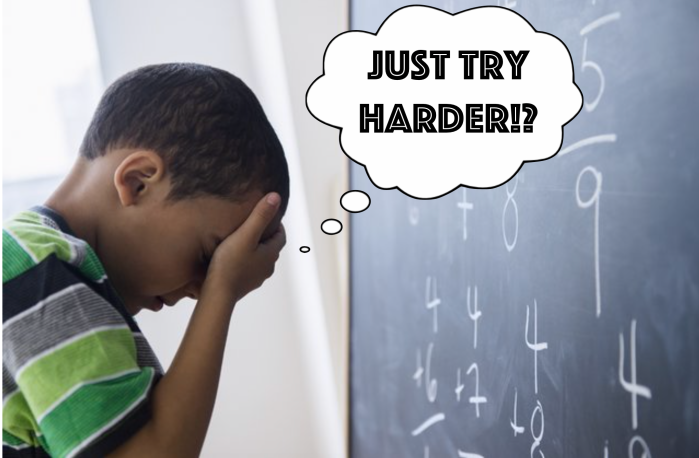
book-3