Who’s Afraid of Public Schools?

Screen Shot 2019-03-15 at 7.51.00 PM


Public schools are the bogeymen of American life.

 
We so often hear the bedtime story of “Failing Schools” that it’s no wonder some folks will do anything to ensure their kids get in elsewhere.

 
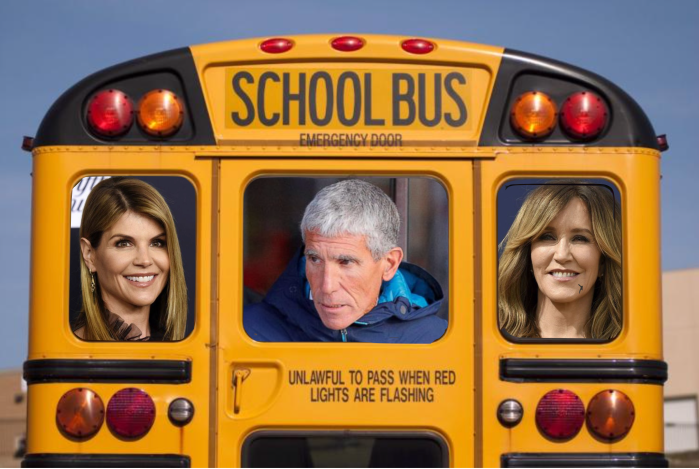
And let’s be honest. It’s the same impulse behind the latest college admissions cheating scandal.

 
A group of wealthy – though not too wealthy – parents thought their children should be able to enroll in the most prestigious schools.

 
So they bribed college admissions officers, cheated on standardized tests or paid coaches or other officials to accept their children as college athletes even if their kids had never played the sport.

 
We see the same kind of thing everyday in public schools – a confederacy of white parents terrified that their kids might have to go to class with black kids. So they dip into their stock portfolios to pay for enrollment at a private or parochial school.

 
Or they take advantage of a tax scholarship or school voucher to avoid an institution with low test scores by enrolling in one where students don’t have to take the tests at all.

 
Or they cross their fingers and enter their kid in a lottery to a charter school praying their precious progeny will escape the horrors of being treated just like everyone else’s kids.

 
And they call it a meritocracy!

 
What a joke!

 
They pretend that their children have earned special treatment.

 
WRONG.

 
No child deserves favoritism – paradoxically –  because all children do!

 
There are really two important but related points here:

 
1)  The children of the privileged don’t deserve a better education than anyone else’s.


2)  Children who come from wealthy families (and or from privileged social circumstances) don’t do anything to distinguish themselves from the underprivileged.

 
But these nouveau riche parents tried to bribe the way forward for their kids anyway even though to do so they had to launder the money through a fake “charity.” They didn’t care that doing so would earn them a tax deduction and thus result in even less money for the underprivileged. They didn’t care about the underlying inequalities in the system. No. They only wanted their children to remain in the class of America’s chosen few.

 
And the best way to do that is with cold, hard cash.

 
America doesn’t run on Dunkin. It runs on greenbacks. Dinero. Swag. Bling. The prosperity doctrine made physical, quantifiable and mean.

 
No one really denies that there are two Americas anymore. We just lie to ourselves about how you get placed in one or the other.

 
And that lie is called excellence, quality, worth – the ultimate in class war gaslighting.

 
It’s a deception that this scandal has shattered to pieces.

 
The privileged don’t earn their privilege. It’s not something they possess on the basis of intelligence or hard work shown through test scores. They don’t have it because of drive, determination or grit – once again shown through test scores. They have it based on wealth – the kind of wealth that buys time and resources to either pass the tests or bribe the gatekeepers to change the scores.

 
Think about it.

 
George W. Bush got into Yale and Harvard and graduated with a 2.35 GPA. Why? Not because he had the grades and demonstrated his worth. He was a legacy. Like at least one third of all admissions to Ivy League schools, he got in purely because he had family who graduated from there.

 
You think Donald Trump threatened the College Board not to release his grades because they were all A’s!?

 
According to one account, his scores were merely “respectable.” Yet he still dropped out of the prestigious Fordham University and transferred to the University of Pennsylvania after two years based on family connections and the reputation of his father, Fred Trump, one of the wealthiest businessmen in New York at the time.

 
Moreover, his kids, Don Jr. and Ivanka, were both enrolled at Penn around the same time as their father made hefty contributions. They began classes in 1996 and 2000, respectively, just as the university and its private Manhattan clubhouse received more than $1.4 million in pledged donations from Trump, the school newspaper reported.


This is not merit. This has nothing to do with what these people deserve. It is money – a pure transaction, you scratch my back and I’ll scratch yours.

 
The only thing that separates what the Trumps and the Bushes did with this latest scandal – the so-called Operation Varsity Blues – is the amount of wealth involved.
If you’re super rich, you can get away with it. If you’re just rich, you’d better not get caught.

 
And if you’re poor or middle class, you’d better stay in your lane.

 
But there shouldn’t be any lanes on this highway. Or at least they should only be in place to maximize fairness and student success.

 
We sneer at the idea of Affirmative Action but only because it’s directed at people of color. No one says anything about the real Affirmative Action that’s been in place since before our country even began – the system of reciprocity and privilege keeping wealthy white families in positions of power like Lords and Ladies while the rest of us serfs scramble for their leavings.

 
All children deserve the same opportunities to succeed. All children deserve the chance to get an excellent education. All children should attend a first class school filled with highly educated and experienced teachers who can draw on plenty of resources, wide curriculum, tutoring, counseling and support.

 
And the only way we’ll ever achieve that is through a robust system of public schools.

 
I’m not saying they’re perfect. In many neighborhoods, they’ve been sabotaged and surgically dismantled, but that’s a problem with an easy solution. Invest in public schools!

 
Because the stated purpose of public education, the reason it exists at all, is equity.
The alternatives – private and charter schools – are essentially unequal.  That’s their raison d’êtreto create a market that justifies their existence.

 
In order for charter and private schools to be a thing, there must be schools that don’t otherwise meet students’ needs. There must be an unreasonable demand that schools indoctrinate students into parents’ religious beliefs. There must be schools that aren’t as well funded or that have to meet ridiculous federal and state mandates.

 
The result is a two-tiered system. Schools for the haves and for the have-nots.
It’s an apparatus that perverts the public to make room for the private.

 
In the public system, students are segregated into communities based on race and class and then their community schools are funded based on what their parents can afford. The rich shower their children with the best of everything. The poor do what they can.

 
Then the federal government pretends to hold everyone “accountable” by forcing students to take standardized tests that merely recreate the economic and racial disparities already present in their districts and neighborhoods. In turn, this provides the justification for charter and voucher schools that further erode public school budgets and increases the downward spiral of disinvestment.


Meanwhile, few notice how the equity built into authentic public schools gets left behind by those enrolling in privatized alternatives. No more open meetings. No more elected school boards. No more public comment or even a voice in how the money is spent.
 

So long as there are two Americas, the fear of being in the wrong one will motivate the privileged to cheat and steal their way to the top. They will horde resources and wealth for themselves and their children while denying it to others.

 
It is a self-perpetuating system – a loop that we’re all caught in.
We must break the chain. We must recognize our common humanity and stop the zero sum game.

 
And perhaps the best way to begin is by supporting authentic public schools and not privatization.

 
We have been taught to fear public education, because it is really our only hope.


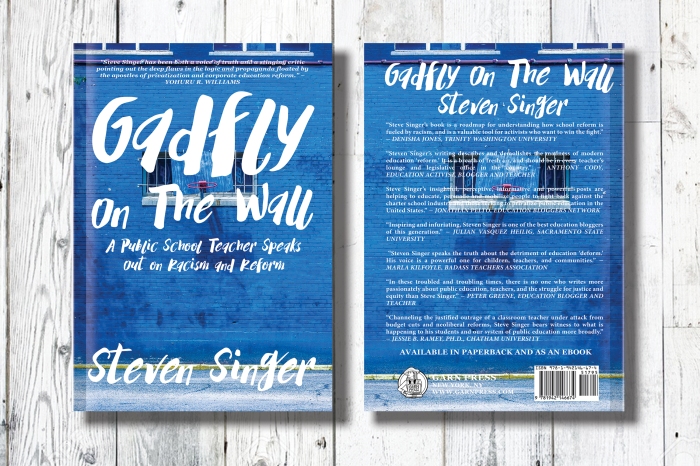
Like this post? I’ve written a book, “Gadfly on the Wall: A Public School Teacher Speaks Out on Racism and Reform,” now available from Garn Press. Ten percent of the proceeds go to the Badass Teachers Association. Check it out!
book-4

Pam Harbin Wants to Go From Pittsburgh School Board Watchdog to School Board Member

Screen Shot 2019-03-12 at 4.24.44 PM


My friend Pam Harbin is trying to undergo a startling metamorphosis.


She wants to transform from an education activist into a Pittsburgh School Director.


Now that Board President Lynda Wrenn is stepping down after 4 years, city voters in District 4 will have to decide whether Harbin can make the change. The election is on May 21.


Residents in parts of Squirrel Hill, Point Breeze, Shadyside and North Oakland already know Harbin as a fierce warrior for children’s civil rights, the plight of disabled kids and authentic public schools.

 
I’ve known Pam, personally, for years in my own role as an education activist. Though I don’t live in the city, I’ve participated in numerous collective actions to fight for the schools all our children deserve. And right beside me in every case – often in front of me – was Pam.


img_8279

 
I may not live in the district, but I wish I could vote for her. Harbin is an amazing leader with boundless energy, piercing intelligence, a deep knowledge of education policy, an advanced degree in finance and marketing, and an impressive track record of education justice achievements.

 
“I am deeply concerned for our system of public education,” she says. “The status quo isn’t working for all children. Thankfully, there are many people here in Pittsburgh and across the country who are fighting for investment in, and transformation of, our public schools. Unfortunately, their efforts are hindered by the well-funded organizations who fight for public school disinvestment, privatization, and for the elimination of teachers’ right to unionize.”


For the past 12 years, Harbin has been at the forefront of every major battle for the future of Pittsburgh’s public schools and the rights of its students.

 
Harbin was instrumental in pushing city school board directors to enact a suspension ban from Pk-2nd grade for minor non-violent conduct. She successfully fought to stop the district from implementing a physical restraint protocol that wasn’t trauma informed. She successfully fought against a policy that would have allowed school police officers to carry guns. She supported a successful Sanctuary Schools Policy for immigrant students. She also supported changes to the districts policies that would better welcome and include Pittsburgh’s LGBTQ students, including a change that allows students to use the bathroom that best fits their own gender identity.

 
Harbin and her coalition of local activists even made national news when they stopped the district from contracting with Teach for America, stopped the closing of 10 schools (after 23 were previously closed), pushed the board to hire a new Superintendent using an inclusive process that relied heavily on community input, and led the fight for a Community School Policy and the creation of 8 Community Schools.

 
Harbin has two challengers in the election: Anna Batista, a corporate consultant at Highstreet Consulting and Ashley Priore, a 19-year-old first year student at the University of Pittsburgh studying Business and English, who started a successful after school chess program for girls.

 
But despite facing a crowded field, Harbin has earned every organizational endorsement she has sought thus far, including the Allegheny County Democratic Committee, the Young Democrats of Allegheny County, the Stonewall Democrats and the Network for Public Education—an organization that frequently reposts my own writing as an education blogger and which is on the frontlines of education justice nationwide.


Pam-HarbinEndorsement-1


Harbin is one of the most experienced education leaders ever to run for school board in the city. She co-founded the Education Rights Network (ERN), a parent-led organization working for fully resourced, inclusive and quality education for students throughout Pennsylvania. The ERN is part of One Pennsylvania, an organization that unites low income and working class activists to tackle the fundamental economic justice and political problems of local communities.

 
“Our members are workers, students, parents, seniors, people with disabilities, and retirees who are excited to learn, collaborate, and build power,” she says. “We follow the money, confront the power, and make the change.”


ERN is a member of Great Public Schools Pittsburgh, a coalition of community, faith, and labor organizations working together to create sustainable public schools in Pittsburgh—an alliance which Harbin also helped to found in 2013. Great Public Schools is affiliated on the national level with the Journey for Justice Alliance, the Dignity in Schools Campaign, and the Alliance to Reclaim our Schools.

 
Harbin is also a member and past Co-Chair of the Pittsburgh Local Task Force on the Right to Education (LTF), a parent-majority organization that works with administrators of Pittsburgh Public Schools and community agencies to improve services for students with disabilities.

 
And she serves on the board of directors and was past President of Evolve Coaching (formerly Arts for Autism Foundation of Pittsburgh), supporting individuals with disabilities and their communities through education, employment, and the arts.

 
No one else in the race—and maybe in the whole city—has a resume like Harbin’s.

 
Harbin believes her years of leadership for and service to Pittsburgh students and families have provided her with the needed foundation for a transition from community leader to school board member. She has attended or streamed more than 2,000 hours of school board meetings. She has served on Pittsburgh Public Schools (PPS) district-wide advisory committees, including the Community Schools Steering Committee, Envisioning Educational Excellence Advisory Committee, Parental Involvement Policy Committee, Excellence for All Steering Committee, and the Special Education Delivery Model Advisory Committee. And through these many committees and organizations Harbin has helped more than 100 individual families secure an IEP or a 504 plan for their children—in part because she understands better than most the byzantine world of public school special education services.

 
No one is better suited to this position than Harbin. I literally wish we could clone her and have her fill every vacancy on the board. She is that qualified, that experienced, and that effective.

 
If this sounds a bit like a love letter, it kind of is.


Screen Shot 2019-03-12 at 4.23.29 PM

 
I have many fond memories of fighting the power alongside Pam Harbin. I remember organizing events through Yinzercation with Pam, even canvasing local candidates door-to-door with her and my (then) 9-year-old daughter. No matter what, you could always count on Pam to be there for children.

 
“When our public schools are strong, our children and community thrive,” she says. “We have many great Pittsburgh Public Schools, teachers, and programs. But, in each school, there are children who can’t excel because their individual needs have not been met. We must do better.”


“We must remove the barriers that keep all of our children from fulfilling their dreams. This requires transformational, sustainable change in policy and practice at the local, state, and national level.”


If anyone can make that change happen, it’s Harbin. As someone who has a degree in finance, who is an experienced negotiator and a proven coalition builder, she is uniquely qualified to do so from within the board as she has been successful doing so from outside of it.


She has an ambitious set of goals and priorities if elected:


-Strengthening relationships between all stake-holders with an emphasis on child wellness.


-Defining success beyond standardized test scores to include authentic education practices, addressing trauma, disengagement, hunger, the quality of school food programs, the condition of our buildings and bathrooms, and children’s need for exercise and play.


-Achieving smaller class sizes and a smaller ratio of kids to adults in each building with more teachers, counselors, social workers, paraprofessionals, nurses, librarians, and other staff that keeps the building functioning at its best.


-Restoring funding to art, music, physical education, and other programming that keep kids wanting to come to school.


-Stopping criminalization and over-policing of students, and stopping the use of ineffective punishments that keep children away from their learning and put them on the track to drop out, to jail, and to poverty.


-Intentionally recruiting, retaining, and supporting educators of color and those who identify as LGBTQ.


-Working to make teacher mentoring, new teacher induction, and professional development better to make the very best use of teachers’ time and address key gaps in preparation to teach the wide spectrum of students in the district.


-Making teacher evaluation fair and consistent, not based solely on test scores or value added models.


-Ensuring teachers (and all school staff) are well paid, treated fairly, and valued for the critical work they do for children every day.


-Protecting collective bargaining rights so teachers (and all staff) have a voice to improve their schools – because teaching conditions are students’ learning conditions.


-Investing in the proven Community Schools model and work collaboratively with community partners to bring resources to each school.


-Working at the state level to force our legislators to finally provide adequate, equitable, and sustainable funding for public education and stop efforts to dismantle public education through vouchers and other privatization schemes.


-Building coalitions to improve the flawed state Charter School Law – Charter Schools must have more accountability for the delivery of education to all students, including disabled children, English Language Learners, and kids who are homeless or who are in foster care.


angel and pam


I could literally go on about Pam for another 10,000 words. Easy.


But let me close with this.


Harbin began her journey as an education leader when she started advocating for her own children at their first elementary school—Liberty elementary in the Shadyside neighborhood of Pittsburgh. She found that she could make a difference for a few children at a time by throwing herself into volunteer work at the school.


But then she realized that if she wanted to make a difference for more than just a few children that she needed to work with others. Indeed, to do this work effectively Pam has had to work with people of different backgrounds, races, opinions and ideologies. She has had to listen to others, to compromise, to build bridges, and to prioritize common goals in each of her coalitions. In short, she gets things done.


And she’s been doing that for more than a dozen years.


Not because she has no choice. Not because anyone is paying her to do so. Not because doing so is bringing her any riches or fame.


But because it has been the right thing to do.


And that’s the best endorsement I can imagine.


NOTE: Special thanks to Professor Kathleen M. Newman who helped edit this article.


Click HERE to join Pam’s campaign!


Like this post? I’ve written a book, “Gadfly on the Wall: A Public School Teacher Speaks Out on Racism and Reform,” now available from Garn Press. Ten percent of the proceeds go to the Badass Teachers Association. Check it out!
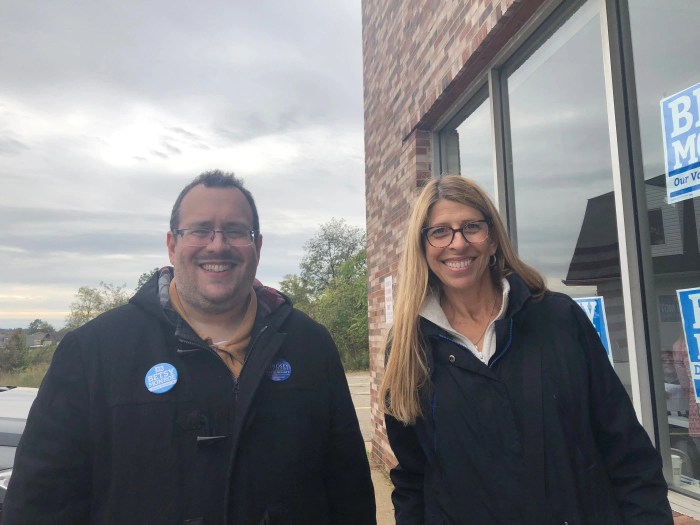
thumbnail_IMG_8249

Betsy DeVos’s Right Wing School Indoctrination Program

Betsy DeVos

 
What do you do when thinking people reject your political ideology?

 
You get rid of thinking people.

 
That’s Betsy DeVos’ plan to rejuvenate and renew the Republican Party.

 
The billionaire heiress who bought her position as Donald Trump’s Education Secretary plans to spend $5 billion of your tax dollars on private, religious and parochial schools.

 
This would be federal tax credits to fund scholarships to private and religious institutions – school vouchers in all but name.


It’s a federal child indoctrination program to ensure that the next generation has an increasing number of voters who think science is a lie, white supremacy is heritage and the Bible is history – you know, people just gullible enough to believe a reality show TV star who regularly cheats on his many wives with porn stars is God’s chosen representative on Earth. A measure to make child kidnapping, imprisonment and wrongful death seem like a measured response to backward immigration policy. A measure to make collusion and fraternization with the world’s worst dictators and strongmen seem like global pragmatism.

 
To make matters even more galling, consider the timing of DeVos’ proposal.


In the beginning of February, Donald Trump Jr. criticized “loser teachers” who he said were indoctrinating school children into – gasp – socialism.

 
At the end of that same month, DeVos proposed funding Christian madrasas from sea-to-shinning-sea.

 
Apparently indoctrination is just fine for conservatives so long as it’s the right kind of indoctrination.

 
But even beyond the blatant hypocrisy, this betrays a fundamental misunderstanding of the differences between public and private schools.

 
Florida’s GOP Governor Ron DeSantis tweeted that if a school receives public funding – whether it be a charter or voucher institution – it is a public school.

 
To which DeVos tweeted her glowing approval.

 
This makes a few things strikingly clear: either (1) these folks have no idea what happens at authentic public schools or (2) they’re pretending not to know so as to further their political and financial ambitions.

 
Authentic public schools do not indoctrinate children into socialism or any other ideology.

 
They’ll teach what socialism is and how it has functioned historically without commenting on its merits or deficiencies. It’s up to individual students to decide whether it’s a good thing or not.

 
Public schools are supposed to be ideologically neutral.

 
At most, they teach children how to think. They teach media literacy, skepticism and critical thinking skills.


If that leads kids away from Republican orthodoxy, it’s not the fault of the teacher or the child. It’s a problem with your orthodoxy.

 
You can’t proclaim the benefits of a marketplace of ideas and then decry that too many ideas are on display.

 
Nor can you conflate the way a school is funded with what that school actually does and how it teaches.

 
There is a world of difference between authentic public schools and their market based alternatives – especially the parochial and religious variety.

 
It’s the difference between telling students the answer and getting them to think about the answer. It’s the difference between total certainty and doubt, between trite truths and useful skills that can help you arrive at deeper truths.

 
When you ask children to think, you never know what conclusions they’ll draw. When you tell children what to think, you know exactly what conclusions you want them to hold.


Authentic public schools do not indoctrinate. Conservatives graduate from these hallowed halls the same as liberals, moderates and the politically checked out. The difference is that in a world where facts are prized and logic is exercised, conservatism becomes less appealing.


I’m not saying liberalism or progressivism is guaranteed, but they are certainly more fact-based world views than their opposites.

 
The same cannot be said of the kinds of institutions DeVos wants to bankroll.

 
They educate kids behind closed doors with little to no transparency for the public about how their money is being spent. But word seeps out of the cracks in the system.

 
We’ve seen the textbooks they use to teach. Their graduates have returned to the public square to tell us about the instruction they received.

 
The American Christian Education (ACE) group provides fundamentalist school curriculum to thousands of religious schools throughout the country. Included in this curriculum is the A Beka Book and Bob Jones University Press textbooks. A Beka publishers, in particular, reported that about 9,000 schools nationwide purchase their textbooks.


In their pages you’ll find glowing descriptions of the Ku Klux Klan, how the massacre of Native Americans saved many souls, African slaves had really good lives, homosexuals are no better than rapists and child molesters, and progressive attempts at equal rights such as Brown vs. Board of Education were illegal and misguided. You know – all the greatest Trump campaign hits!

 
We should not be funding the spread of such ignorance.


Frankly, DeVos’ ambitions have little chance of coming to fruition.

 
Two years ago, when Republicans controlled both houses of Congress, she wanted to spend $20 billion on the same nonsense. Her party refused to back her.

 
Now with Democrats in control of the House, it seems even more unlikely that her plan will pass.

 
But sadly smaller scale versions of it have been allowed by state legislatures throughout the country – often with full support from Democrats.

 
My own state of Pennsylvania spends $125 million in taxpayer dollars on the Educational Improvement Tax Credit (EITC) and Opportunity Scholarship Tax Credit (OSTC) programs to send children to private/religious schools. And every year legislators ask for more.


Why any Democrat would support conservative indoctrination programs is beyond me.

 
And this is true even though indoctrination is sometimes unavoidable.

 
To a limited degree, it may even be desirable. You might even say it’s a normal part of growing up.


Even the most fair-minded parents often want their children to hold at least some of the same values as they do. They want to be able to relate to their kids and view them as a continuation of the kinds of lives they lived.

 
But what’s okay for parents is not okay for governments.

 
If Mom and Dad want their kids to have a Biblical education, they should pay for it. The burden should not be shouldered by society since it’s not in society’s interest.

 
Governments have no right taking public money and using it to prop up private interests. And that’s exactly what this is.

 
It is political and religious interest. It is a way to circumvent skepticism and free thought.

 
It’s a way to ensure that in a time where information flows freely and dogmas crumble, people like Donald Trump continue to be elected.


Still can’t get enough Gadfly? I’ve written a book, “Gadfly on the Wall: A Public School Teacher Speaks Out on Racism and Reform,” now available from Garn Press. Ten percent of the proceeds go to the Badass Teachers Association. Check it out!
book-2

Tying Kids’ Lunch Money to Test Scores? It’s No Crueler Than High Stakes Testing

Screen Shot 2019-02-22 at 9.06.34 PM


UPDATED


Most people agree that the best way to get kids to read isn’t by threatening to take away their lunch.

 
But an Arkansas state Representative is threatening to do just that – sort of.


Rep. Alan Clark, a West Memphis Republican, proposed a bill that would cut “Lunch Funding” for impoverished children in state schools where students struggle with standardized reading tests.


However, he’s not proposing we take away kids’ food.


If passed, the bill would reduce a district’s National School Lunch funding – a state mechanism that distributes extra resources to schools with high concentrations of students who qualify for free lunch programs – if student test scores don’t rise over a period of time. This would cut things like professional development and tutoring.


However, this has been confused with the federal program of the same name and drawn almost universal condemnation.


“I would never starve kids,” Clark said. But he would starve their schools of resources.


Either way, his proposal is obviously unfair.


Only a monster would think you can incentivize reading comprehension by threats and coercion.


It’s like saying “You’d better understand this complex puzzle OR ELSE!


Learning doesn’t work that way.


But Clark sees things from a different perspective – that of business and industry. He told KTHV, a state television network:


“In most businesses I would be laughed at for suggesting such a small goal. But sadly many educators act like I have asked them to storm the beaches at Normandy… It appears I have much more faith in our schools than many of our educators do.”


This is what happens when you elect people without empathy or intelligence to public office.


I wonder if Clark would do a better job representing the people of his state if they threatened to lower his salary based on his popularity polls.


It says a lot about us that people react so viscerally to the inaccurate idea that Clark is suggestion we withhold food from bad test takers. That’s unthinkable. But it isn’t really that much more cruel than the way we actually treat students.


Our entire federal education policy is based on just such inhuman treatment of children.


After all, we still hold kids, schools and teachers “accountable” by student test scores. The consequences though aren’t an empty belly. They’re crowded classrooms and fewer tutors.


In every state of the union, students are required to take high stakes standardized tests in reading and math. If they don’t do well, we take away their resources.


Sure, we don’t deny them food, but we deny them many other things they need to learn.


We lower funding to their schools so that they have larger class sizes, fewer teachers, narrowed curriculum, etc. We threaten to withhold their diplomas and any chance of ever earning more than minimum wage. In many cases we tie teachers salaries, reputations and even employment to these same scores. Sometimes we even take away their parents right to govern their children’s schools so that all administrative decisions are made by state flunkies. Or we force their authentic public schools to become charter institutions so that spending decisions happen behind closed doors without accountability and even whether a student can enroll or not becomes a decision of the private management company and not simply something that is the students’ by right of living in the district.


It may not be as severe as the idea of Test Scores for Food, but it’s the same in kind.


In both cases, we tell kids – “Increase test scores, OR ELSE!” It’s just a difference of consequence.


Call me crazy, but that’s nearly as cruel and wrongheaded.


Keep in mind, all of this takes for granted that standardized tests are adequate and fair assessments of student learning in the first place. This has never been proven. In fact, it has been cast in serious doubt after more than a century of academic study. Ask anyone to narrow their thinking down to four prepackaged choices and you’ll find them trying to guess what the test-maker wanted more than what the truth is. Critical thinking, analysis, innovation – these escape any multiple choice exam.


But even if we go with this empty assumption, it flies in the face of everything we know about the way human beings acquire knowledge and demonstrate skills.


When kids struggle with learning, you can’t get them to do better with threats. Or at least you can only do that if those children are doing poorly on purpose.


Kids who just aren’t trying hard enough might be incentivized by threats. But even then it transforms learning into a means to an end. Once you do that, you destroy their natural curiosity. Learning will never again be an end in itself. It will be a menial task you only do to get something else that you really want.


However, in most cases kids don’t struggle because they’re just lazy. They don’t need an incentive. They need help. They need resources.


It’s no wonder that children in rich and middle class neighborhoods have less trouble getting higher test scores. They have lower class sizes, more teachers, wider curriculum, more extra curricular activities, access to tutors, counselors, nurses and after school programs.


Poor kids don’t. THAT’S why they struggle.


And what do we do when that happens? We take away the meager resources they have!


If a teacher tried any of this crap in her classroom, she’d be fired for dereliction of duty – and she’d deserve it!


Just imagine if you told the kids who were struggling in your class that they didn’t deserve tutoring. Instead you were going to give extra help to the kids who got the best scores on the exam!


And if the struggling children continued to do poorly, you took away their desks. Now they had to sit on the floor!


THIS is the kind of thing we’re doing to our children nationwide.


It’s called TEST AND PUNISH, and it’s federal policy – often backed up by state and local law.


Moreover, it’s supported by both Republicans and Democrats alike.


We may not be  denying poor kids a meal, but we are denying them an equal opportunity at an education just the same.


It’s way past time that we wake up and see that.


We can point and jeer at what we thought this regressive Arkansas nitwit was doing, but we’re really pointing and jeering at ourselves.


NOTE: An earlier version of this story – like many in the state and national press – wrongly suggested that Clark wanted to withhold lunches from poor children based on test scores.


Still can’t get enough Gadfly? I’ve written a book, “Gadfly on the Wall: A Public School Teacher Speaks Out on Racism and Reform,” now available from Garn Press. Ten percent of the proceeds go to the Badass Teachers Association. Check it out!

book-3


Pittsburgh Christian Academy Tries to Become a Charter School to Cash in on Taxpayer Funding

thumbnail_IMG_8528


The line between public and private school is getting awfully thin in Pittsburgh.


City public school directors received a request from Imani Christian Academy, a religious school in the East Hills, to be allowed to transform into Imani Academy Charter School for the Fall term of 2019.


Though parochial schools have metamorphosed into charter schools in Florida, Tennessee and Washington, D.C., this would be the first such transformation in Pennsylvania, according to Ana Meyers, executive director of the Pennsylvania Coalition of Public Charter Schools.


The change would require Imani to give up its religious curriculum in exchange for being fully funded by taxpayer dollars.


However, there are numerous red flags in the school’s application that make one wonder if operators are being entirely honest about giving up a faith-based curriculum.


First, there is the proposal by the school, itself.


The application does not specify that religious values will be taught in the classroom. However, its personnel budget lists a comparative religion teacher on staff. The list of proposed teachers also includes a middle/high school religious studies teacher.


That’s not exactly common practice at most public schools though teaching about religion in a secular context is allowed.


According to the Anti-defamation League’s Website:


“Public schools may not teach religion, although teaching about religion in a secular context is permitted. The Bible may be taught in a school, but only for its historical, cultural or literary value and never in a devotional, celebratory or doctrinal manner, or in such a way that encourages acceptance of the Bible as a religious document.”


Even so, it’s awfully convenient that a school whose mission statement currently includes “We share Christ with our children daily and seek to help them grow into mature Christians” would somehow magically become secular overnight.


If Imani’s charter is approved, it would be required to discontinue any religious component in its curriculum. The state school code requires even charter schools to be “nonsectarian in all operations.” The proposed academy would not be permitted to display any religious objects or symbols on the premises.


Yet one wonders who will check to make sure this actually happens.


Charter schools are not required to be nearly as transparent as fully public schools. They are not required to have open meetings of school directors, release their documents for public inspection or any of a host of other safeguards that you’ll find standard at the state’s hundreds of fully public districts.


Pennsylvania charter schools have had operators embezzle millions of dollars from taxpayers to buy private jets, apartments and jewelry. It took investigators years to uncover such graft.


Will the few auditors tasked with keeping charter schools honest even be equipped to determine whether parochial schools suddenly turned charter actually refrain from ministering to students?


According to Public Source, a nonprofit digital newspaper covering the Pittsburgh area, one of the qualities Imani is looking for in an operator for its charter school is the ability to use the school building after-school hours for religious instruction and activities.


So during the day, there will be an entirely secular K-12 school at the site of the present day parochial school that just happens to teach comparative religious studies. Then at a certain time of day, it will transform into an optional religious school offering church functions!?


This is a violation of the Separation of Church and State waiting to happen.


But it’s not only the establishment clause of the U.S. Constitution that is in danger of being trampled.


Imani’s proposal is not fiscally responsible.


The charter application proposes its CEO/head of school be paid a salary of $145,000 a year for an institution that would enroll merely 230 students.


Pittsburgh Public School Superintendent Dr. Anthony Hamlet earns a salary of $210,000 a year and he oversees a district with 24,652 students!


The proposed academy would also employ a principal at $85,000 annual salary.


That’s not exactly good reimbursement of services for the outlay of cash taxpayers are expected to pay.


Imani has struggled financially for several years.


In 2014, the school had more than $400,000 in additional expenses over its revenue, according to its form 990 filed with the IRS. The very next year, it had a budget surplus of almost the same amount. By 2016 – the most recent year on file – its expenses again were more than its revenue – this time by more than $500,000.


Imani CEO and Head of School Paulo Nzambi explained  the up and down budgeting to state officials in 2017 this way. The parochial school relied on the state’s defacto school voucher program – the Education Improvement Tax Credit. However, payments were delayed resulting in the use of a line of credit to pay bills.


It’s just such financial uncertainties that are pushing Imani to become a charter school in the first place. Even with school vouchers, parochial schools rely heavily on tuition from parents. However, you always know where the money is coming from in a charter school. Like religious and private schools, these institutions are privately managed – but like public schools they’re funded entirely by taxpayers.


Before setting up shop, any new charter school in Pennsylvania must get the approval of the school board from the district where it would be located. If the board does not approve the application, charter school administrators can appeal to the state Charter Appeals Board.


Pittsburgh school board held a public hearing on Imani’s application in December and earlier this month. Next, the district’s review team will offer its suggestions on the application. District solicitor Ira Weiss says the board is scheduled to vote on the matter at its Feb. 27 meeting.


If approved, the district would be required to pay for each student at the new charter school based on the district’s per-student spending formula.


The Pittsburgh district already pays approximately $82.8 million – about 13 percent of its total budget – for charter school tuition.


Imani Christian Academy currently operates out of the former East Hills Elementary School building, which it purchased from the city school district for $1 million in 2008.


The objections brought up here are really just the tip of the iceberg.


The proposal leaves many questions unanswered. For instance, though the new academy would be located within the geographical boundaries of the Pittsburgh Public School District, where would it get its students from? Would current students at the religious school get preferential enrollment – and what if they don’t already live in and pay taxes to Pittsburgh?


Let’s hope Pittsburgh school directors do the right thing and deny this request.


Still can’t get enough Gadfly? I’ve written a book, “Gadfly on the Wall: A Public School Teacher Speaks Out on Racism and Reform,” now available from Garn Press. Ten percent of the proceeds go to the Badass Teachers Association. Check it out!

thumbnail_IMG_8249


Ten of 15 Cyber Charter Schools in PA Are Operating Without a Charter – Close Them All

thumbnail_screen shot 2019-01-29 at 1.38.10 pm


Cyber charter schools are an experiment that failed.


It’s time to pull the plug and recoup our losses.


First, let’s get straight exactly what we’re talking about here.


Like all charter schools, these are contracted institutions. In fact, that’s what charter means – they’re independent businesses that sign a deal with the state to teach kids.


So they’re publicly financed but privately run. And in the case of cyber charters, they agree to educate children online without the benefit of a physical building.


Students access lessons via computer or other device, submit work electronically, get virtual feedback and assessment.


At best, these institutions are the grade school equivalent of the University of Phoenix – good only for independent, self-motivated learners. At worst, they’re the kiddie version of Trump University – a total scam.


In Pennsylvania, 10 of the state’s 15 cyber charter schools are operating with expired charters, according to a report by the Philadelphia Inquirer.


That’s incredibly significant – especially for an industry that enrolls about 35,000 students across the state.


These are charter schools operating without a charter. They only get the right to operate because a local school district or the state has signed a contract allowing them to do so.


If you hire a plumber to fix your toilet, you give him the right to enter your house and do what needs to be done. That doesn’t mean the plumber can walk in anytime he feels like it. There is a limited term of service. Once that term is up, the plumber needs to get out.


In the case of these cyber charters, the authorizer is the Pennsylvania Department of Education (PDE).


Charters are initially issued for three to five years. They are an essential contract between the schools and the supervisory body. The school details how it will operate, what curriculum and education strategies will be used, etc.


The state has the option to revoke the charter if the school violates its agreement or fails to meet requirements for student performance or fiscal management.


After the initial period, charters must be renewed every five years in the state.


Yet for the majority of the Keystone state’s cyber charter schools, this has not happened. The charter agreements have been left to lapse without any decision being made by state officials to renew or cancel them.


Some of the reluctance to decide may stem from the fact that the state Charter Appeal Board – the body which decides on appeals of charter applications – are all serving out expired terms, themselves.  They were all appointed by the previous governor, Republican Tom Corbett, a notable privatization ideologue.


The current Governor Tom Wolf, a Democrat now elected to his second term of office, still hasn’t gotten around to appointing new ones.


Another issue gumming up the works could be staffing issues at PDE that make it impossible to handle the reviews in a timely manner. It could be because the cyber charter schools have not provided all the data required of them by the state for the review to be completed on time. Or it could be because state officials are struggling with a fair and adequate metric with which to assess these schools.


CYBER CHARTER’S DISMAL ACADEMIC RECORD


To be frank, the latter option has to weigh heavily on state auditors. After all, it’s no secret that these schools are an educational disaster. On-line schools in Ohio, Georgia, Indiana, Nevada and New Mexico are all being closed by their respective states.


Study after study consistently shows that cyber charters are much less effective than traditional public schools – heck! They’re even less effective than brick and mortar charter schools!


A recent nationwide study by Stanford University found that cyber charters provide 180 days less of math instruction and 72 days less of reading instruction than traditional public schools.


Keep in mind that there are only 180 days in an average school year. So cyber charters provide less math instruction than not going to school at all.


The same study found that 88 percent of cyber charter schools have weaker academic growth than similar brick and mortar schools.


Student-to-teacher ratios average about 30:1 in online charters, compared to 20:1 for brick and mortar charters and 17:1 for traditional public schools.


Researchers concluded that these schools have an “overwhelming negative impact” on students.


And these results were duplicated almost exactly by subsequent studies from Penn State University in 2016 (enrolling a student in a Pennsylvania cyber charter school is equal to “roughly 90 fewer days of learning in reading and nearly 180 fewer days of learning in math”) and the National Education Policy Center in 2017 (cyber charters “performed significantly worse than feeder schools in both reading and math”).


Even the state’s own data shows lower graduation rates and standardized test scores at cyber charters than at traditional public schools.


According to a 2015-16 state PDE report, about 86 percent of public school students across the Commonwealth finished high school in four years. During the same time, only about 48 percent of cyber charter school students graduated in four-years.

CYBER CHARTER’S COST TOO MUCH


But providing such a poor service to Pennsylvania students is only one reason these schools are problematic. They’re also ruinously expensive.


They cost taxpayers more than $463 million in 2016-17 alone.


The state charter law grants these schools as much money per pupil as brick and mortar schools, yet their costs are much less having forgone a physical building and all that goes with it.


So cyber charters get whatever the local per-pupil expenditure is. It doesn’t matter if a district spends $8,000 on each student or $20,000. Whatever the amount, that goes to the cyber charter.


However, the cost of educating kids is drastically reduced online. Their programs are bare bones compared with what you get at a traditional public school. Most online charters don’t have tutors or teacher aides. They don’t offer band, chorus or extra-curricular activities. You don’t have to pay for any building costs, grounds, upkeep, large staff, etc. But the funding formula ignores this completely. Cyber charters get to keep the difference – whatever it is. In fact, they have an incentive to keep as much as possible because they can do almost whatever they want with it. That includes putting it into operators’ pockets as profit!


And when it comes to special education funding, it gets worse. In Pennsylvania, our funding formula is so out of whack that charters schools of all stripes including cyber charters often end up with more funding for students with special needs than traditional public schools get. However, because of this loophole in the Commonwealth, Pennsylvania online charters have been increasing the number of special education students they enroll and even working to label as many of their students as possible as needing special services on the flimsiest of pretexts.


According to a report by the Pennsylvania Association of School Administrators (PASA), tuition for special education students is often twice as much at cyber charter schools than at traditional public schools.


CYBER CHARTER FRAUD


Unsurprisingly, these conditions have lead to rampant fraud and malfeasance.


Just this past year (2018) the head of the largest cyber charter chain in the state was sentenced to jail for siphoning $8 million from his school into his own pockets.


PA Cyber Charter founder Nicholas Trombetta was found guilty of tax fraud in relation to the theft of public funds. He used that money to buy an airplane, a $900,000 condo, houses for his girlfriend and mother, and nearly $1 million in groceries and personal expenses, according to the grand jury. Trombetta allegedly set up numerous for-profit and nonprofit businesses to provide goods and services to the cyber charter. Federal investigators filed 11 fraud and tax conspiracy charges against him and indicted others in the case.


Another cyber charter founder, June Brown, was also indicted for theft of $6.5 million. Brown ran the Agora Cyber Charter School, which was part of the K12 Inc. empire of virtual charters. She and her executives were indicted on 62 counts of wire fraud, obstruction of justice and witness tampering. She was well known for student test scores and had a reputation for claiming large salaries and filing suits against parents who questioned her, the Philadelphia Inquirer reports.


WHAT TO DO ABOUT IT


It’s no wonder the state has been tardy renewing these schools’ charters!


Frankly, there is no good reason to continue lavishing taxpayer dollars on a system of education that provides  subpar services at an exorbitant expense and is subject to runaway fraud.


But lawmakers have always been reluctant to do the right thing.


After all, there are a slew of wealthy investors who want to make sure the money train of taxpayer dollars keeps flowing to their shady businesses. And lawmakers who enable them are assured hefty campaign contributions.


The only chance we have of saving our children from this monstrous abuse of power and saving our wallets from this shameful waste of funding is if voters make their intentions known.


The people of Pennsylvania need to stand up and demand an end to the cyber charter school experiment.


We need lawmakers with the guts to stand up to big money and rewrite the state’s charter school law.


And that’s part of the problem. The law is a joke.


It’s more than 20 years old and was only amended once in 2002 to allow cyber charters.


Subsequent attempts at requiring more accountability have resulted in horrible compromise bills that would have made the situation much worse and – ultimately – no vote.


With Ohio and California, Pennsylvania was in the “big three” cyber-charter states in 2016, accounting for half of cyber charter enrollment nationally, according to the industry’s authorizers’ association. While 35 states and the District of Columbia allow full-time cyber charter schools, eight do not, including neighboring New Jersey.


The right course is clear.


We just need a people-powered movement to force our lawmakers to do it.


Either that or replace them with those who will.


Still can’t get enough Gadfly? I’ve written a book, “Gadfly on the Wall: A Public School Teacher Speaks Out on Racism and Reform,” now available from Garn Press. Ten percent of the proceeds go to the Badass Teachers Association. Check it out!
cropped-book-1.jpg

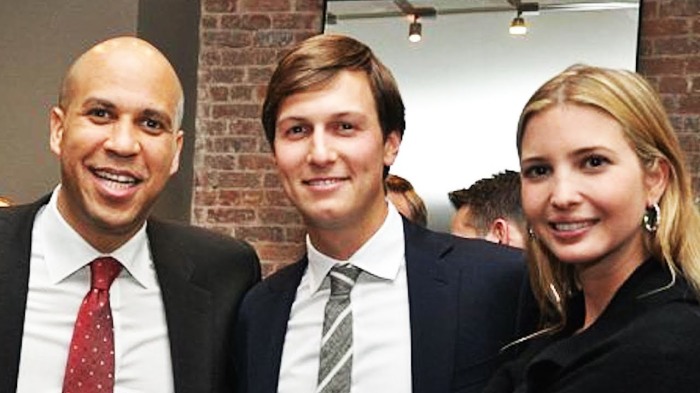
As LA Teachers Strike Over Charter Schools, Democrat Cory Booker Speaks at Pro-Charter Rally

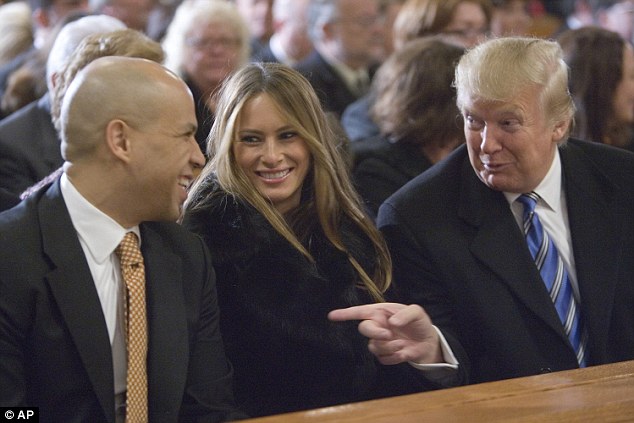
thumbnail_corydonaldtrump


What a slap in the face!


In California, 30,000 Los Angeles teachers are on strike because charter schools are gobbling up their funding without providing the same level of quality services or accountability.


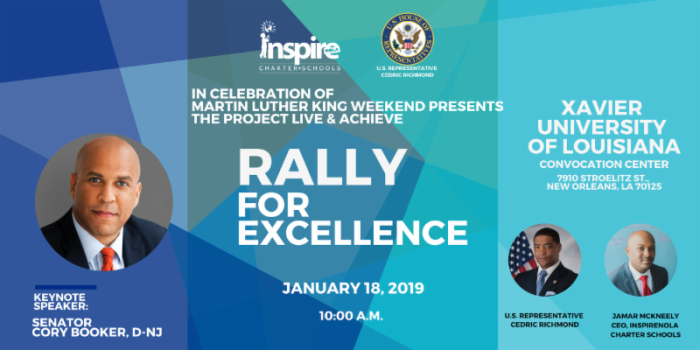
Meanwhile in New Orleans, Sen. Cory Booker is giving the keynote address at a charter school rally.


That wouldn’t be surprising if Booker was a Republican.


Donald Trump’s Education Secretary Betsy DeVos is a big time champion of school privatization over public schools.


But like LA Superintendent Austin Beutner, Booker – a New Jersey lawmaker – is supposed to be a Democrat.


The party is supposed to stand for social goods, doing what’s best for everyone not just the few.


However, when Booker gave the keynote address at the “Project LIVE & Achieve” Rally for Excellence today, he made it clear whose side he’s on. And it’s not parents, children or communities.


booker_mlk


Organizers estimate 5,000 students from more than 20 city charter schools attended the rally instead of attending their classes.


Traditional public schools aren’t allowed to spend tax dollars or waste class time by forcing students to attend political rallies. But since charter schools like all of New Orleans schools after Hurricane Katrina don’t have to follow the same rules, this is your tax dollars at work.


The rally was hosted by InspireNOLA Charter Schools and U.S. Representative Cedric Richmond, a Louisiana Democrat.


The charter network’s Website describes the rally as part of InspireNOLA’s celebration of Martin Luther King weekend.


What a disgrace!

thumbnail_b16c81fc7a8b7c203e0f6a706700260d

Dr. Yohuru Williams, a professor of history at Fairfield University in Connecticut and an MLK scholar, has written extensively about how school privatization and high stakes testing are in direct contradiction with Dr. King’s writings and speeches.


“While it seeks to claim the mantle of the [civil rights] movement and Dr. King’s legacy, corporate education reform is rooted in fear, fired by competition and driven by division,” says Williams. “It seeks to undermine community rather than build it and, for this reason, it is the ultimate betrayal of the goals and values of the movement.”


Dr. King certainly wouldn’t have approved of today’s rally. After all, King said:


“To save man from the morass of propaganda is one of the chief aims of education. Education must enable one to sift and weigh evidence, to discern the true from the false, the real from the unreal, and the facts from the fiction.”


Forcing children to go to a political rally and then pretending their mandatory presence is somehow a show of support is exactly the kind of propaganda King was railing against.


“The function of education,” King explained in 1947, “is to teach one to think intensively and to think critically.”


Booker, who clearly has ambitions of a Presidential run, has violated those principles time and again.


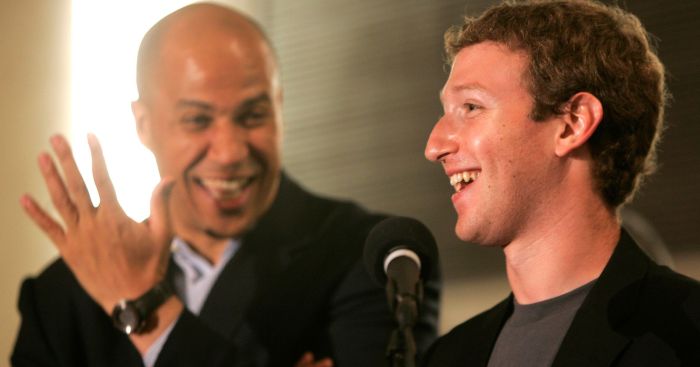
Before he became a U.S. Senator, he was Newark mayor. In that position he accepted a $100 million donation from Facebook founder Mark Zuckerberg to implement a series of drastic reforms in city schools.


The people of Newark only found out about it on Oprah Winfrey’s TV show when Booker was a guest and announce the grant. Almost all of that money went to charter schools, according to the New Republic.


thumbnail_maxresdefault


Such publicity stunts and mugging for the cameras may be why The Gaurdian even described Booker as a “neoliberal egomaniac.”


While numerous corporate Democrats like Booker share his love of charter schools, his positions go even further to the right. Like DeVos, with whom he sat on the board of pro-privatization Alliance for School Choice, he also is a proponent of school vouchers. This despite any credible evidence that voucher programs actually create better educational outcomes for students.


And Devos isn’t the only radical right privatization-monger in Booker’s circle. Michelle Rhee, the former DC schools chancellor known for union busting and a series of reforms that resulted in a citywide cheating scandal, is someone Booker calls “a friend of mine”


Though as a Senator, Booker held the party line and voted against his long-time friend DeVos’ nomination as Education Secretary, he told CNN that he hadn’t changed his position on school privatization:


“When it comes to my record of supporting what I believe that any child born in any zip code in America should have a high quality school and I don’t care if that’s a charter school or a traditional district school. If it’s a bad school I’m going to fight against it just like I supported charter school closures in Newark that weren’t serving the genius of my kids. So I haven’t changed one iota.”


Yet his record flies in the face of his rhetoric.


As Newark Mayor he privileged charter schools and helped them spread throughout the city while underfunding traditional public schools. And though he continually brings up the “amazing” academic record of Newark’s charter schools, he strangely omits the a cheating scandal they experienced similar to Rhee’s.


636588408131916332-mark019


According to a report by the state Department of Education’s Office of Fiscal Accountability and Compliance, testing documents were not secured at these schools. State investigators flagged at least 15 charter schools for further inquiry because some tests had unusually high rates of wrong-to-right erasure marks. One school had rates more than three times greater than the state average.


Charter schools are often run by appointed officials and not elected school boards. They meet behind closed doors and never have to explain how and why they’re spending taxpayer dollars. Though much hand wringing has been done over charters that are explicitly run for a profit, even those designated “not for profit” can cut students services and pocket the difference. There are a multitude of ways these schools can cheat students out of the resources and educations they deserve while protecting the administrators and business people making a buck off them.


In LA, administrators like Buetner – who has no experience with education but is a millionaire investor in school privatization – actually sabotage the public schools in order to feed the profit-making machine of charters.


And now the opposition to these shenanigans is spilling into the streets in both red and blue states. There have been seven major teacher protests in the last year in states like Arizona, Oklahoma, West Virginia, and now California.


It’s past time for Democrats to take a stand along with them and oppose school privatization in all of its forms.


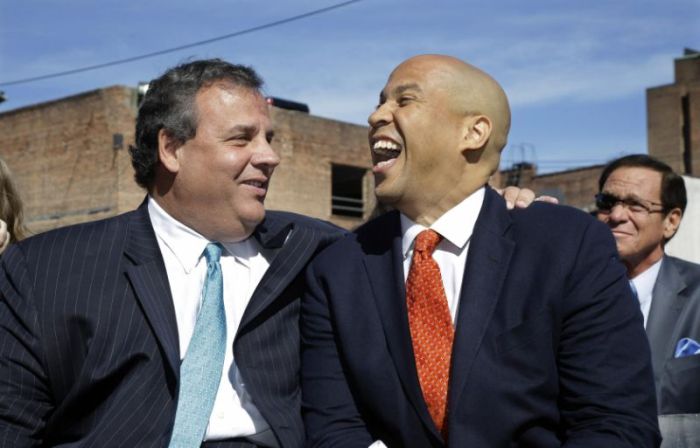
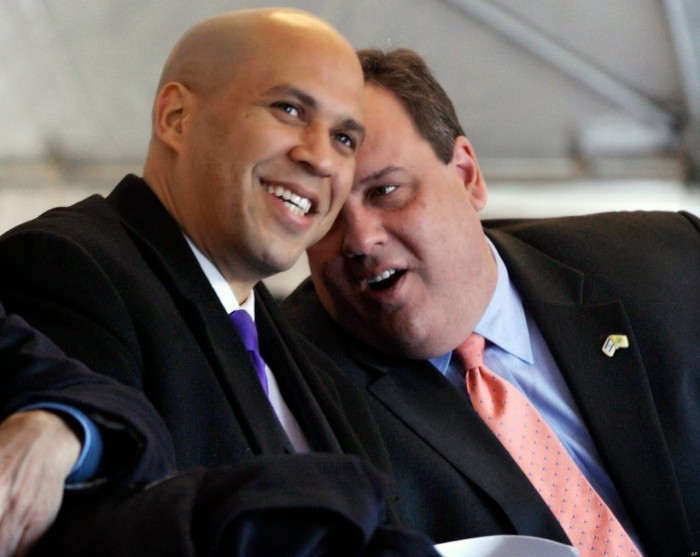
thumbnail_o-cory-booker-chris-christie-facebook


Yet when The Intercept asked all 47 members of the Senate Democratic Caucus to weigh in on the LA Teacher strike and charter school proliferation, only 7 responded.


Rep. Alexandria Ocasio-Cortez, D-N.Y., and Rep. Ro Khanna, D-Calif. have made no bones about the connection. Sen. Bernie Sanders, I-Vt., also expressed support for striking teachers, even tweeting a link to a Jacobin article about school privatization. Though didn’t mention charter’s directly, he has  spoken out about school privatization before, including last year when Puerto Rico announced its plans to open charter schools in the wake of Hurricane Maria.


The problem is that many Democrats won’t go that far. They’ll say they support LA Teachers but won’t admit that school privatization is the cause of their woes. They refuse to take a stand against the billionaire backers of the industry and side with the grassroots parents and children fighting for fully public schools.


However, few go as far as Booker to openly champion the industry.


At least, few Democrats.


Still can’t get enough Gadfly? I’ve written a book, “Gadfly on the Wall: A Public School Teacher Speaks Out on Racism and Reform,” now available from Garn Press. Ten percent of the proceeds go to the Badass Teachers Association. Check it out!

book-1

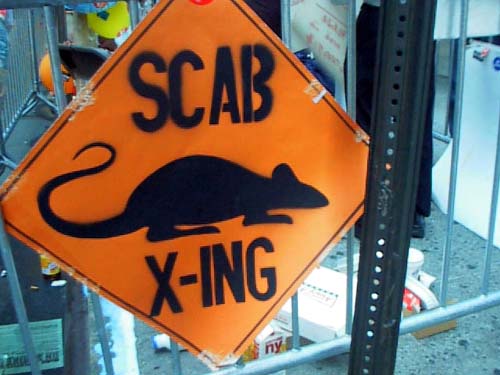
There Are Few Things As Reprehensible as a Scab

scabrat


There is a special place in Hell for strikebreakers.


Some people kill. Some steal.


But only a filthy, disgusting scab can do all of that in one.


When you take someone else’s job, you’re stealing their bargaining power and killing the community’s chances for their kids.


This week as 30,000 teachers at Los Angeles Unified School District walked out demanding support for their students and their professions, a few slimy worms have crossed the picket line to keep some of the district’s 900 schools open.


Most parents have kept their children home, but some don’t have that choice. And the district is trying to use that opportunity to justify larger class sizes and fewer resources. While sitting on $2 billion in the bank, they pull out their pockets and play dumb. In the richest state in the country, they want you to believe there isn’t enough money to waste on children.


At least not on these black and brown children!


And whether they mean to or not, the craven, no account, flatulent scabs back them up 100%.


According to the LA Times, the district has students cloistered in holding areas while administrators tell them to fill in workbooks or go on their cell phones or iPads to learn via app.


Among these yes-men, you’ll find a handful of substitute teachers who put their own yellow bellies over solidarity with their fellows.


Not only is this sniveling, groveling behavior suitable only to strip the self-respect from the most base criminal, they aren’t even getting thirty pieces of silver for it.


According to the Times, at one school scabs are only being paid $160 a day – less than subs normally make. Yet for each of these fill-ins, the district is paying the Charter Substitute Teacher Network – an outside agency providing these miserable miscreants – $250 a day, which is in fact more than the usual sub rate!


How transparent! The district doesn’t even value its scabs! It would rather pay the corporation that provides these amoral dupes than the dupes, themselves!


How low a weasel do you have to be to take such a job? What kind of dung beetle? What piece of excrement could stoop so low?


No. Wait. That’s an insult to weasels, dung beetles and excrement!


Working people have one thing of value in this economy – their labor.


When you rob a person of the right to withhold that labor, you take away her power. You turn her into little more than a slave whose only choice is take it or leave it.


But when people are given the dignity to join together as one, to unify as one solid whole, they can equal the power of the wealthy and privileged.


They can stand together on their own two feet and demand a fair share.


And in these terrible times, when the powerful look at even public schooling as little more than an opportunity to further enrich themselves through no account charter schools and high stakes testing and endless ed tech bells and whistles – who is left to stand up for our children?


I’ll tell you who! The teachers!


The parents!


The students!


The community!


We are all here united as one. We have drawn a line in the sand – and woe to the pustulent, putrid, pissant who dares cross it!


You want to make America great?


You want to make this country into something we, the people can be proud of?


Don’t cross any picket lines.


Show some backbone, even if it hurts to stand up straight for once.


The only way forward, the only way to create a society worthy of our children, is to join hands and walk toward the promised land – together.


“After God finished the rattlesnake, the toad, the vampire, He had some awful substance left with which He made a scab … When a scab comes down the street, men turn their backs and angels weep in heaven, and the Devil shuts the gates of Hell to keep him out. No man has a right to scab so long as there is a pool of water to drown his carcass in, or a rope long enough to hang his body with.”

Jack London


Still can’t get enough Gadfly? I’ve written a book, “Gadfly on the Wall: A Public School Teacher Speaks Out on Racism and Reform,” now available from Garn Press. Ten percent of the proceeds go to the Badass Teachers Association. Check it out!
book-4

LA Teachers Strike is About Charter Schools and High Stakes Testing

utla-strike


On Monday more than 30,000 teachers at 900 schools in Los Angeles, California, will be on strike.


And unlike the wave of teachers strikes last year in red states like West Virginia, this time educators are taking to the streets due to the policies of Democrats.


At issue are things like lowering class sizes and providing more nurses, librarians and counselors.


But behind these issues lies one of the most important facts about our country.


When you get right down to it, there is very little difference between many Democratic policymakers and their Republican counterparts.


You think Betsy Devos is the opposite of Arne Duncan? Wrong.


You think Barack Obama is the opposite of Donald Trump? Wrong again.


Though there are differences, those often amount to differences of degree.


Corporate Democrats like almost all Republicans support the same education policies – school privatization and high stakes testing – that are robbing the LA Unified School District of the funding it needs to meet the needs of its students.


THAT’S why class sizes have ballooned to more than 45 students in secondary schools; 35 students in upper elementary grades; and 25 students in lower elementary grades.


THAT’S why the district does not have nearly enough counselors, psychologists or librarians to give students the support they need.


THAT’S why 80% of schools don’t have full-time nurses.


The second largest district in the country has more charter schools than any other. The overwhelming majority of them are operated by corporate chains and have expanded by 287% over the last 10 years.


These are publicly funded but privately run schools. They don’t have to meet the same standards of accountability or transparency about how they spend taxpayer dollars – all while gobbling up $600 million a year!


That is money that parents and community members are forced to pay but about which they have very little say. It’s money that can – and often does – go right into the pockets of charter school operators without providing its full value to the students it was meant help educate. It’s money set aside for all children but given to educate merely a handful of students chosen by those same businesspeople who run these charters because they think these children will be cheaper and easier to educate.


That’s not Democracy. No self-respecting Democrat should support such a thing – but you’ll find luminaries from Obama to the Clintons to Cory Booker who will tell you what a great idea it is. Along with DeVos, Trump, Jeb Bush and the Koch Brothers.


LA Superintendent Austin Beutner is a Democrat, but he’s also a multimillionaire with experience in corporate downsizing and none in education.


According to an op-ed by President of United Teachers Los Angeles (UTLA) Alex Caputo-Pearl published in the LA Times:


“…Beutner has moved ahead with what we believe is his agenda to dismantle the district. Through an outside foundation, he has brought on firms that have led public school closures and charter expansion in some districts where they have worked, from New Orleans to Washington, D.C. This approach, drawn from Wall Street, is called the “portfolio” model, and it has been criticized for having a negative effect on student equity and parent inclusion.”


These are policies in direct opposition to the progressive ideals at the heart of the Democratic Party. They are, in fact, bedrock Republican ideology and demonstrate the vast divide among Democrats.


New Democrats oppose them. Grassroots Democrats oppose them. Democratic voters oppose them. And it will be telling whether the policymakers in our halls of power will follow the lead of the people or try to shepherd the power behind the party into doing what the patricians think best.


That’s why this strike is important way beyond California. Whatever happens will send echoes throughout the country, because school districts from sea to shining sea are facing similar issues.


In the meantime, the LA Unified District has a $1.8 Billion budget surplus it can use to help meet these needs. But the solutions to the district’s woes require a long-term commitment to public education.


Certainly the state of California needs to increase its per pupil spending. It’s the richest state in the country, yet ranks 43rd out of 50 in this regard.


This would help the district raise teacher salaries to match those of surrounding districts.


But the root problem is a lack of ideological support among policymakers.


Too many Democrats inside and outside the district don’t support the very idea of public schools. They’d rather boost privatization.


Too many Democrats support unnecessary and harmful high stakes standardized testing which not only unfairly paints the district as a failure for the poverty of its students but forces out things of real education value like the arts and ethnic studies.


Too many Democrats have no problem doing this in a district that serves a majority of students of color while providing only the best for middle class white kids.


That’s why today the American people stand with the UTLA as they go on strike.


It’s why we always stand with educators – You can’t put students first if you put teachers last.


Democrats need to get their priorities straight.


It’s time to decide if they’re going to continue being Trump lite or reclaim their progressive heritage and rejoin the rest of the nation.


Still can’t get enough Gadfly? I’ve written a book, “Gadfly on the Wall: A Public School Teacher Speaks Out on Racism and Reform,” now available from Garn Press. Ten percent of the proceeds go to the Badass Teachers Association. Check it out!

book-2

Public School Students are Being Erased From TV, Movies and Other Media

thumbnail_img_8471


Ninety percent of America’s students go to public schools.


But you wouldn’t know that if you opened a book, turned on the TV or went to a movie.


The media is engaged in a disinformation campaign erasing public schools and public school students from our entertainments.


It’s another way marketing and advertising is forced down our throats and into our leisure hours.


Not only do the multi-billion dollar corporations who fund these entertainments want to convince us we need this pill, that appliance, those technological doo-hickeys — they need to cajole and inveigle us that we need school privatization, too.


And what better way to do that than to give us heroes that  – what-do-you-know – just happen to go to charter, voucher and private schools?


No one takes Betsy DeVos, the billionaire heiress who bought her position as education secretary to tear down public schools, seriously. But we certainly do when it comes to Hollywood, the Boob Tube and Young Adult literature.


Take Miles Morales, an Afro-Latino Spiderman, who just made his big screen debut in Marvel’s “Spiderman: Into the Spiderverse.”


It’s refreshing to see the iconic Spideysuite worn by a character of color, but why change his alma mater, too?


The original webslinger, Peter Parker, was an everyperson teen who went to a public school. But Morales goes to a private school in the movie and a charter school in the comic books on which the film is loosely based.


Then we have “The Kid Who Would Be King” a modern day retelling of the King Arthur legend. In the film, Alex finds Excalibur and becomes king – while attending a British academy, the U.K.’s version of an American charter school.


And let’s not forget “The Hate U Give.” In both the book and the movie, the protagonist, 16-year-old African American Starr Carter, deals with a white police officer murdering her black friend. And her struggle is worsened by the incomprehension she meets at her mostly white, privileged private school.


Why are all these stories taking place where a tiny sliver of kids are educated?


What happened to all the public school students?


It’s not like privatized education has ever been starving for representation in the mass media.


If anything, private schools have historically been overrepresented – Lord of the Flies, A Separate Peace, Dead Poets Society, Catcher in the Rye, etc.


At least in the past you could count on the default setting for kids to be public school. Unless it was an integral part of the plot, it was just assumed that everyday kids went to everyday public schools.


John Travolta and Olivia Newton John dreamed of those summer nights, but they went to Rydell High.


Molly Ringwald and the rest of the Breakfast Club attended Saturday detention, but during the week they were in class at Shermer High.


Sarah Michelle Gellar’s Buffy and co. fought off vampires, but they had homework at Sunnydale High.


Even Bella Swann navigated her vampire-werewolf love triangle at Forks High!


But today’s fictional teens wouldn’t be caught dead in one of those traditional institutions.


And nothing could be more unrealistic!


We’re whitewashing the reality to make America’s children and parents feel deficient for the schools they actually attend and – for the most part – are quite satisfied with.


It’s not about representation for the 10 percent enrolled in privatized schools. It’s about expanding the market to get more children and families to abandon public schools and pony up the dough (or siphon off the taxes) to enroll in these institutions, too.


Or at least TRY to enroll.


MILES MORALES


Back in 2011, when writer Brian Bendis and artist Sara Pichelli created Morales for Marvel comics, he was a reaction to the election of Barack Obama. As such, even his schooling had to reflect that.


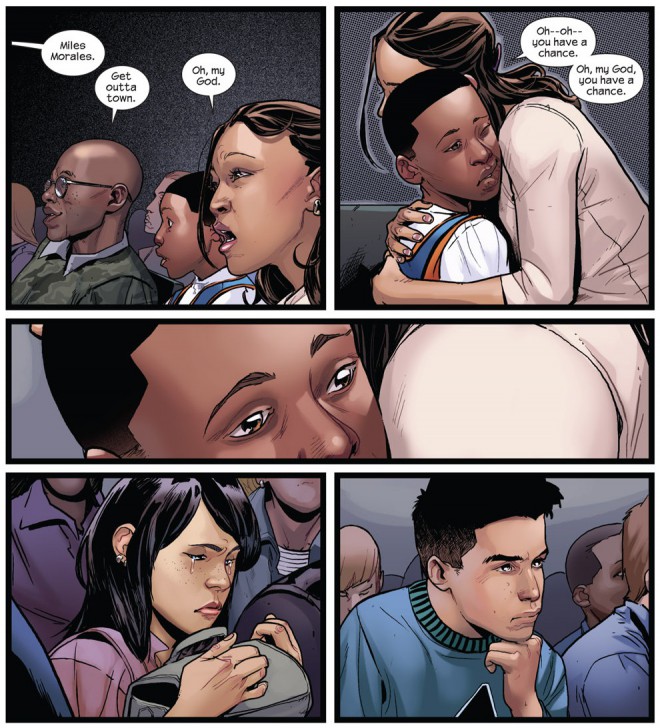
In Ultimate Comics Spider-Man, he is shown winning the last spot in a charter school lottery to enroll in Brooklyn Visions Academy.


The comic book panels mirror almost frame-for-frame the school privatization propaganda film “Waiting for Superman.” Pro-charter school Obama becomes pro-privatization Spider-man.


1otro

miles-gets-in

miles-morales-gets-in

It’s almost like the big corporations who own the super heroes can’t tell who the good guys and the bad guys are anymore.


Here we have an American icon hawking a solution to child education that increases segregation, does away with duly-elected school boards, does away with the kinds of regulations that protect kids’ rights and instead allows unscrupulous charter operators to reduce services for children and pocket the difference.


It’s like watching Mickey Mouse explain how your folks should invest all their money with Bernie Madoff.


For some reason, in the movie version Morales’ charter school is rewritten as a private school for smart kids. I wonder why they made the change. It’s almost like there’s no appreciable difference between private schools and charter schools. And there isn’t!


THE KID WHO WOULD BE KING


Speaking of which, let’s examine the strange case of “The Kid Who Would be King.” The movie is technically not out yet, so it’s hard to see if it will make much use of its apparent Academy setting.


However, the trailer includes lots of shots of kids in traditional prep school dress with a stylized formal crest on blazers and pants. It almost seems like the setting is little more than an excuse to embrace a certain aesthetic in the costumes more than a plot point.


Or perhaps the marketing department just wants moviegoers to associate the film with the Harry Potter movies.


After all, Hogwarts is the ultimate in quasi-privatization. Special kids go to a special school where they are taught special classes. It’s never quite clear how it’s all paid for, though the kids do have to buy their own supplies.


Would “The Kid Who Would Be King” be any better if the kids in it went to public schools? They certainly would be more relatable to the average child.


First conceived in the early 2000s, British academies are not bound by national rules for staffing and curriculum, and receive more money from the government for administration while reducing funding to the traditional schools nearby.  However, according to a new peer-reviewed study by the London School of Economics, primary academies have not been able to meet the promise of increasing test scores.


The authors conclude:


“The English government has radically restructured its school system under an assumption that academisation delivers benefits to schools and students. There is neither any sign of a positive effect nor any suggestion that benefits might be increasing with years of exposure. If anything, the opposite is the case.”


Oh whatever! The blazers look nice!


THE HATE U GIVE


And that brings me to “The Hate U Give.”


Starr’s private school does at least seem to be important to the plot. After her best friend is gunned down by a gangbanger, a 10-year-old Starr is sent to Williamson Prep, a private school in the white suburbs. The family remains in the neighborhood and even takes great pride in living among other black people. But for some reason the idea of public school and the trauma of this event are entwined in their minds. They want more for Starr than just a public school experience.


Consider this bit of narration:


“The high school is where you go to get jumped, high or pregnant. We don’t go there. Williamson is another world. So when I’m here, I’m Starr version 2. Basically Williamson Starr doesn’t give anyone a reason to call her ghetto. And I hate myself for doing it.”


Years later, she’s one of very few African American students at the private school. When another black friend is subsequently murdered by the police before her eyes during a traffic stop, her white privileged classmates don’t understand what she’s going through.


I wonder if things would have been different at a public school. I wonder if by enrolling her in private school her parents hadn’t taken away the kind of support system she could have used to help deal with the tragedy.


Starr overcomes it all, and symbolically pulls a “Rest in Peace Khalil” T-shirt over her school uniform signaling her refusal to be a divided person any longer. It might have been even stronger had she re-enrolled in her public school, too.


Let me be clear: I’m not saying these are bad movies, books or comics. I actually quite like most of them. But I wonder if most people realize that when they consume this stuff they’re getting something a little extra with their entertainment – corporate propaganda.


It doesn’t seem to be an accident that so few schools are being so overrepresented in the mass media.


The global conglomerates are always looking for a way to make a buck, and product placement has always been a surefire way to do it.


Unfortunately, such underhand tricks can have a large impact on the cultural landscape.


If we continue to be bombarded by unsubstantiated images of public schools not being good enough and privatized education as the savior for our children, we will lose our system of public education.


Schools will no longer be funded by tax dollars. Parents will have to pay for them out of their own pockets.


At very least this will result in an even more stratified education system where wealth not only buys comfort and resources but knowledge, as well.


Still can’t get enough Gadfly? I’ve written a book, “Gadfly on the Wall: A Public School Teacher Speaks Out on Racism and Reform,” now available from Garn Press. Ten percent of the proceeds go to the Badass Teachers Association. Check it out!
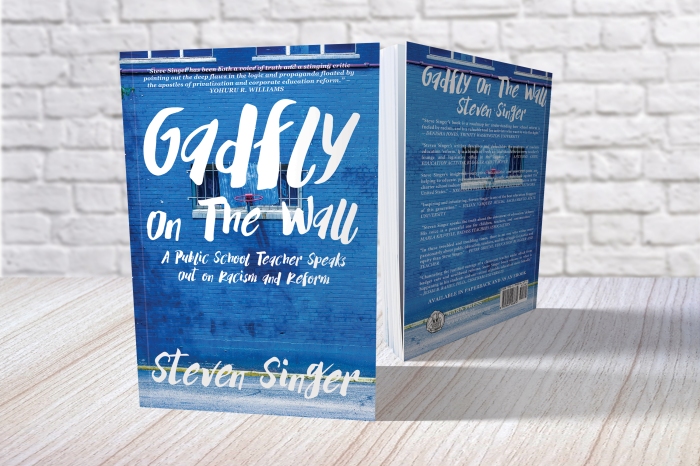
book-1